Università della Svizzera italiana (USI)
Lugano, Switzerland · Urban
LUGANO, SWITZERLAND
USI Admissions Guide for International Students
Università della Svizzera italiana is Switzerland's only Italian-language public university — a young, ambitious institution founded in 1996 that punches well above its size. With roughly two-thirds of its 4,000 students arriving from outside Switzerland, USI has built a genuinely cosmopolitan campus on the shores of Lake Lugano, where Mediterranean warmth meets Swiss academic rigour.
Home to a celebrated Architecture Academy founded by Mario Botta, an Informatics faculty co-located with the world-leading IDSIA artificial-intelligence lab, and an emerging Biomedical Sciences campus, USI offers a rare combination: cutting-edge research infrastructure, unusually low Swiss-public tuition, and a setting that bridges Italian and Northern-European academic cultures. For international students who want global-quality education at a fraction of UK or US costs — in one of the world's most liveable countries — USI deserves serious attention.
Campus
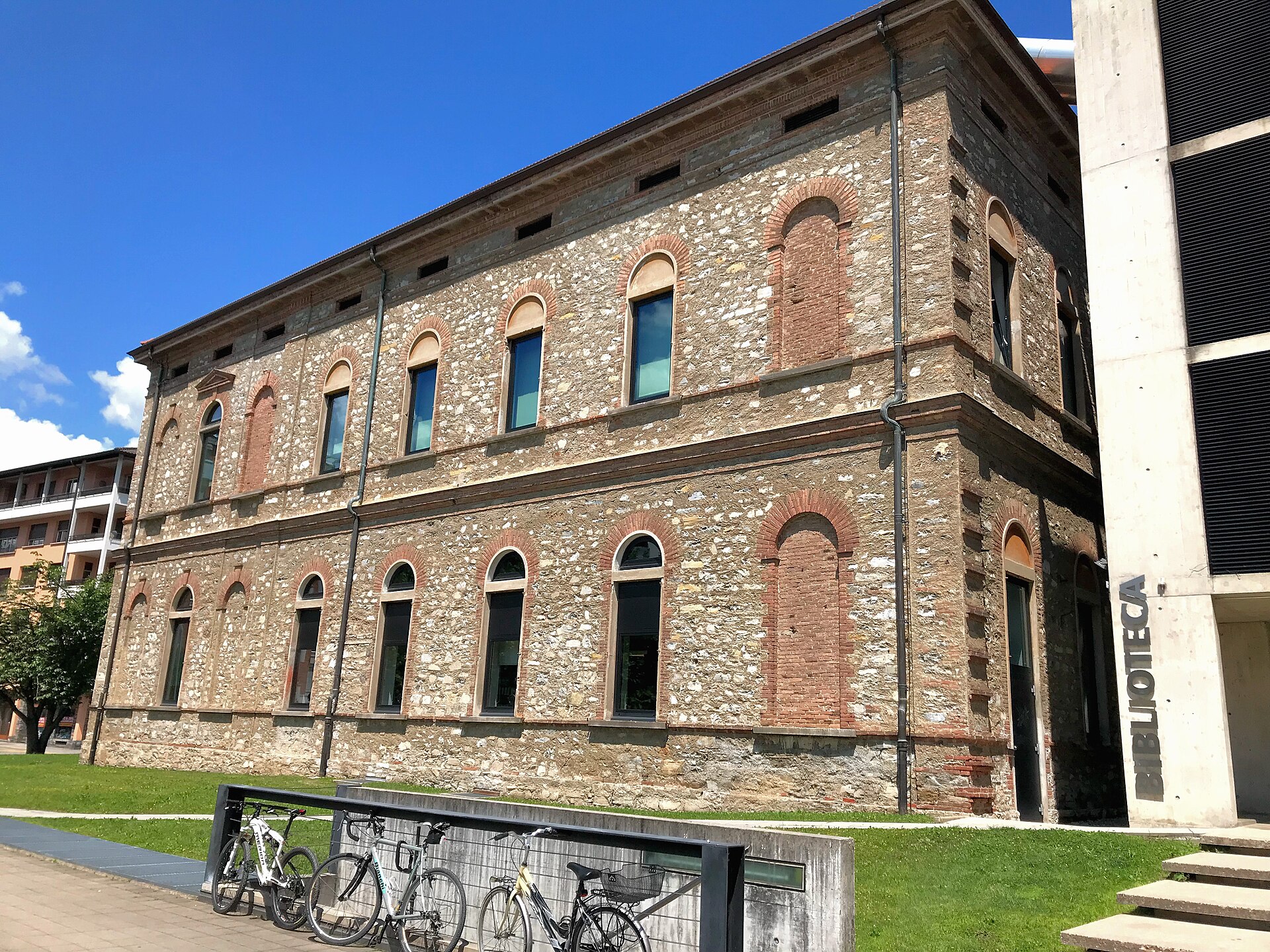
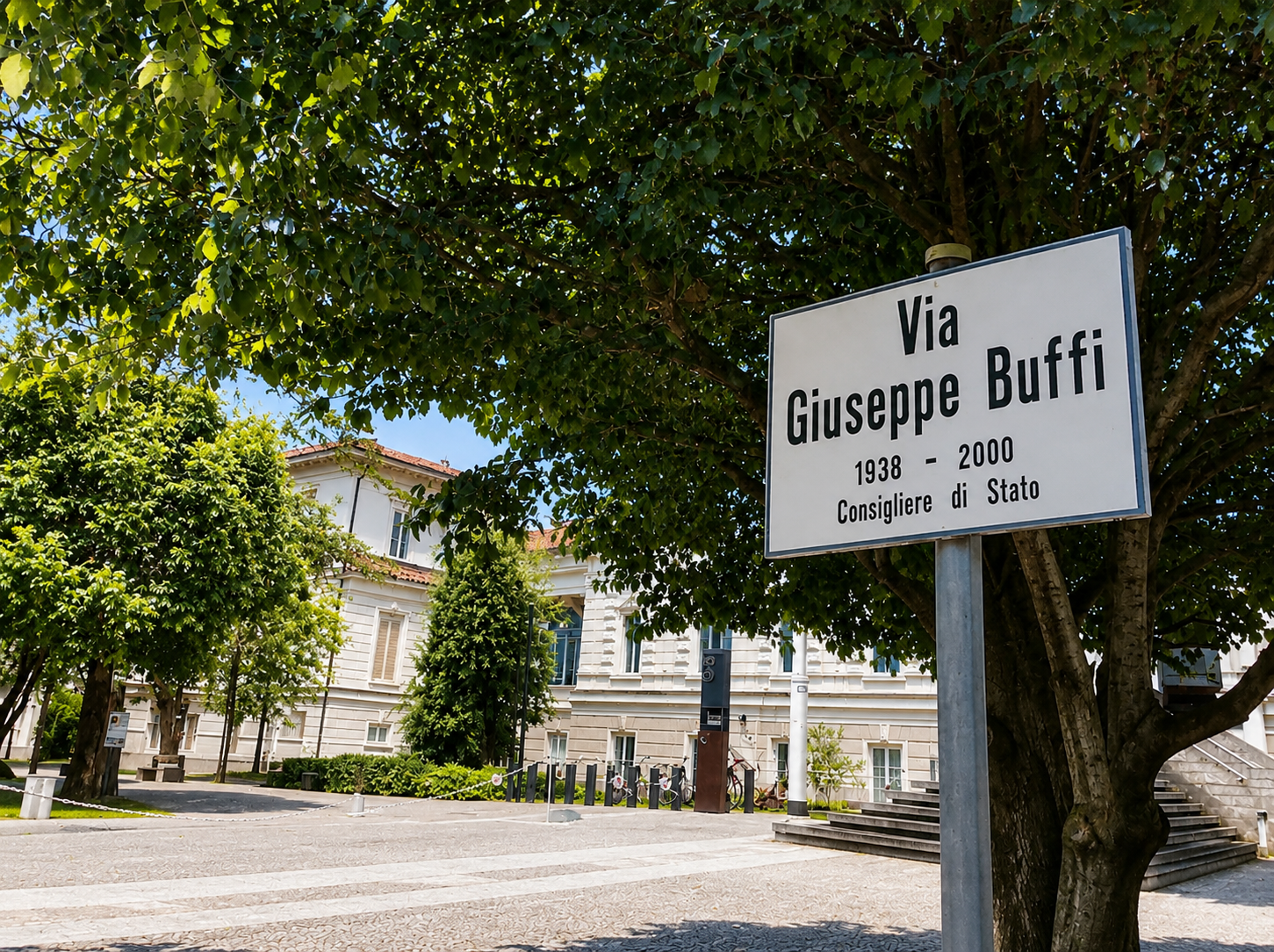
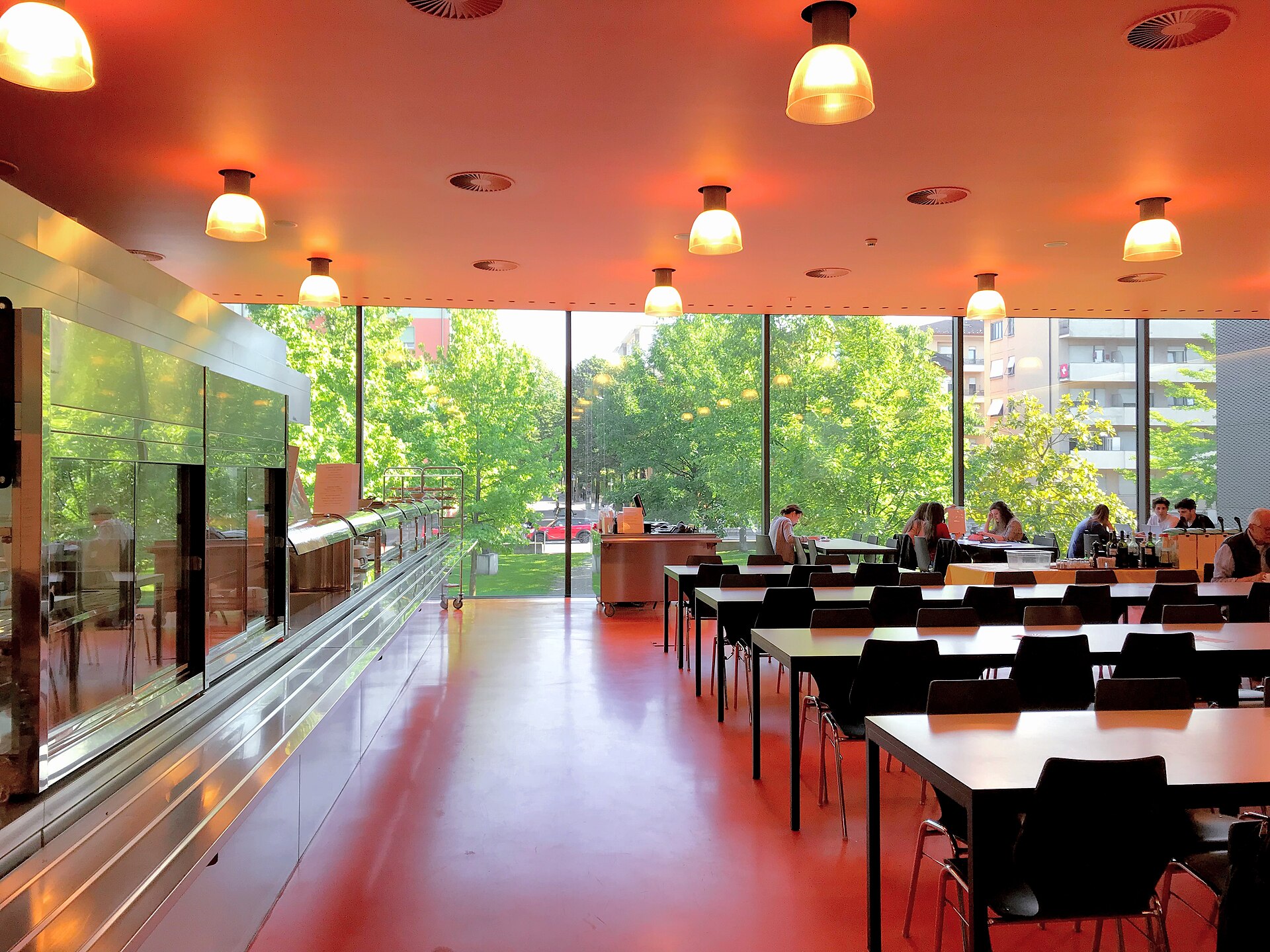
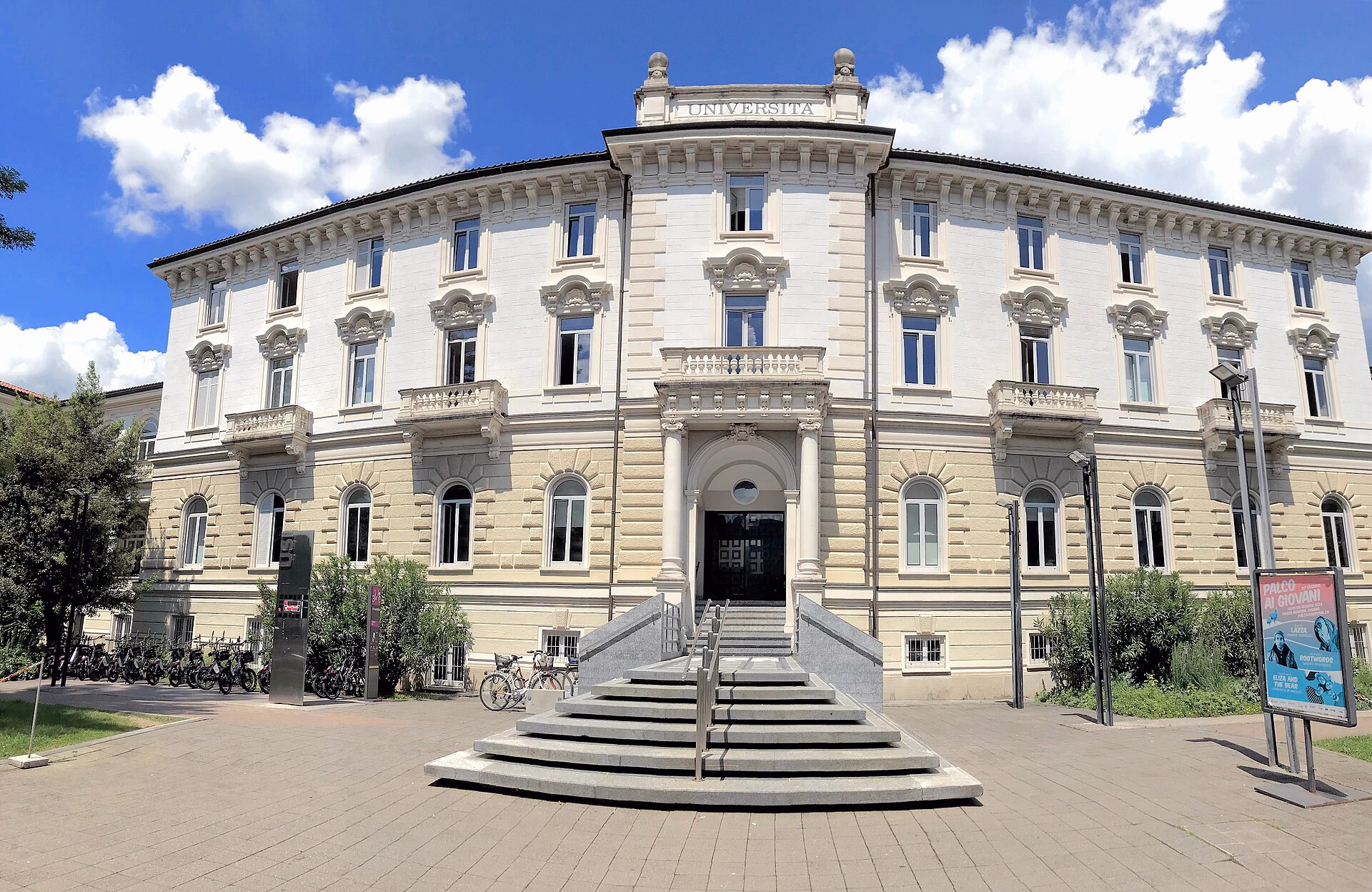
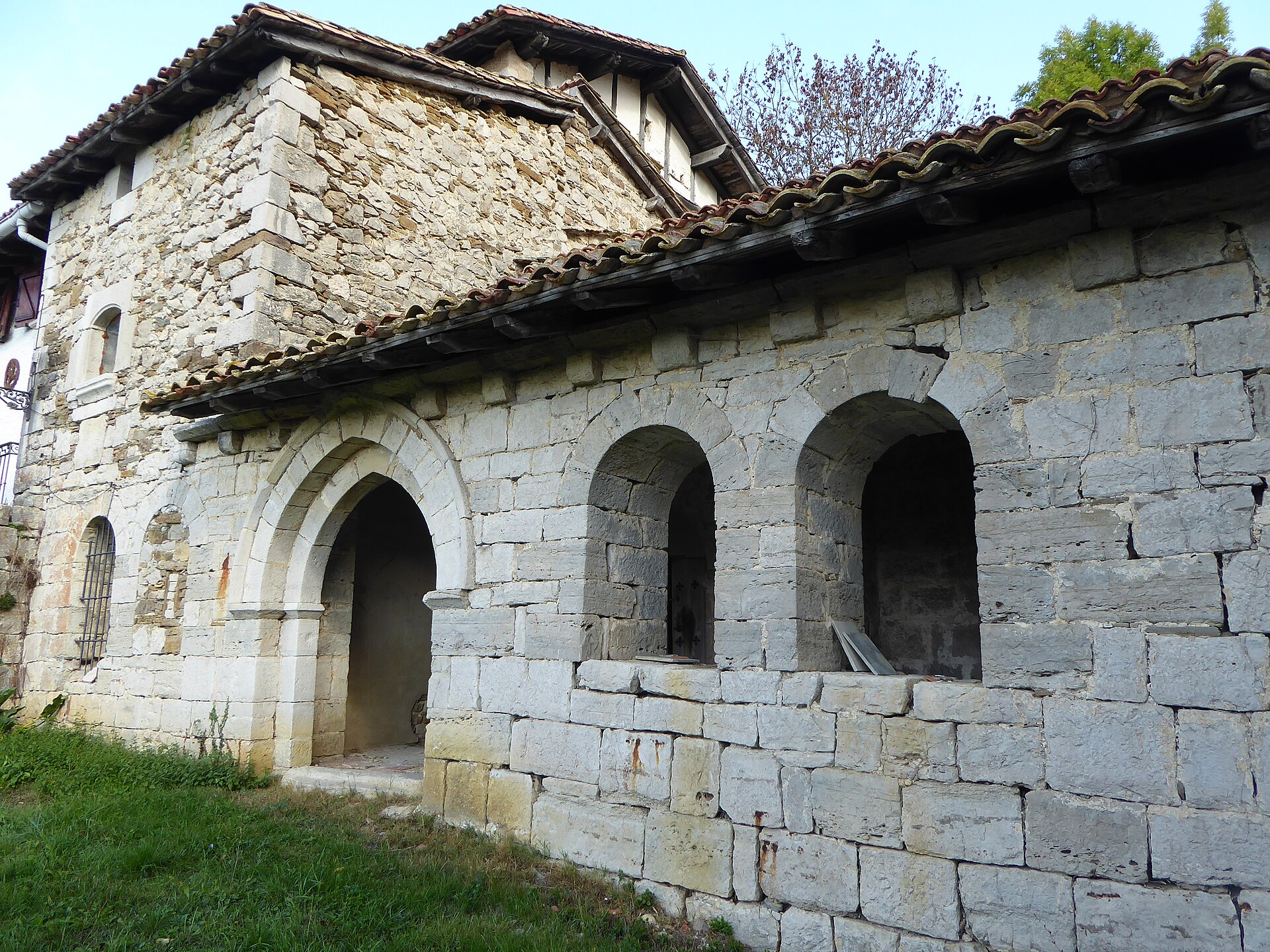
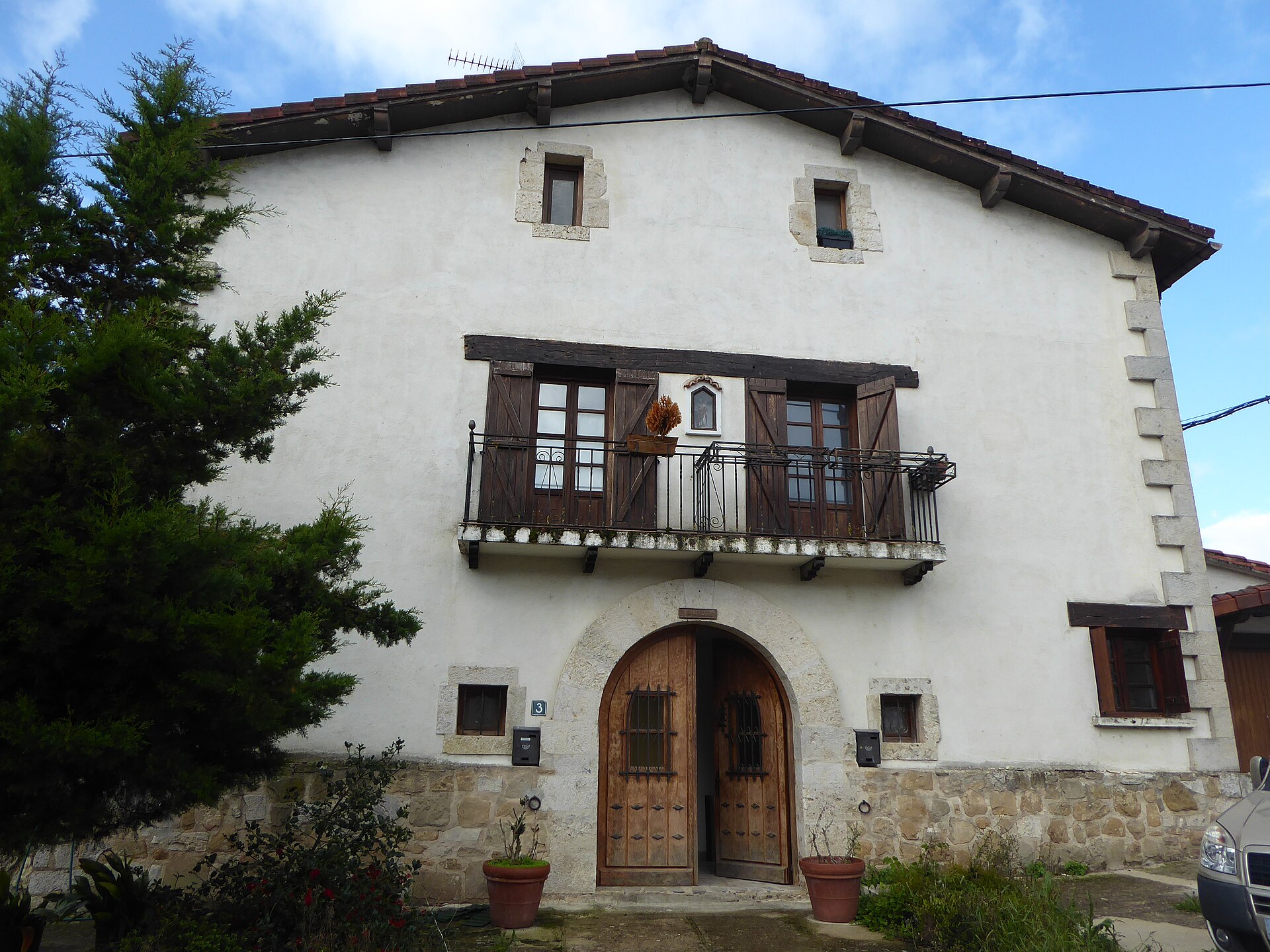
Università della Svizzera italiana (USI) — campus in pictures
Real, freely-licensed photographs of the campus (via Wikimedia Commons).
Why Choose USI — Research, Diversity & Exceptional Value
USI is not a household name outside Switzerland, but that obscurity masks a genuinely distinctive offer: rigorous public-university education in a bilingual (Italian + English) environment, at fees that most European universities cannot match.
SELECTIVITY
Acceptance Rate & Admission Profile
USI is moderately selective by Swiss-university standards, accepting approximately 45% of applicants. However, acceptance rates vary considerably by faculty: Architecture and Informatics/AI programmes are more competitive than Economics and Communication programmes. The IB benchmark of 32 points reflects a threshold of solid academic preparation rather than the extreme scores demanded by US or UK elite institutions.
Swiss universities admit on the basis of qualification recognition and language proficiency rather than holistic review. A strong secondary leaving certificate (including the International Baccalaureate, A-Levels, Indian board results, or equivalent), together with English or Italian language documentation, forms the core of an application. Students who meet the formal requirements and can demonstrate linguistic readiness are generally admitted — but competitive programmes may apply additional selection criteria.
AT A GLANCE
Quick Facts
WHAT YOU SUBMIT
Application Components
USI uses a direct online application system — there is no Common App, UCAS, or central clearing portal. You apply at apply.usi.ch and submit documents directly to the university's admissions office. The application is qualification-driven: the key question is whether your secondary (and in the case of Master's applicants, bachelor's) credentials are formally recognised by Swiss authorities.
ADMISSIONS PHILOSOPHY
What USI Looks For
Unlike US or UK holistic admissions, Swiss universities — including USI — primarily evaluate whether applicants meet formally defined qualification thresholds. There is no points-based offer system like UCAS, and no holistic review of extracurriculars in the US sense. That said, competitive programmes (Informatics, Architecture, AI, Data Science) pay close attention to academic trajectory, subject choices, and the quality of the motivation letter.
Across all faculties, USI values intellectual curiosity, international outlook, and clear academic direction. The ideal applicant has: (1) a strong and relevant secondary or undergraduate record; (2) genuine motivation for the specific programme — not just 'Switzerland' as a destination; (3) linguistic readiness to engage in the language of instruction from day one.
DATES & ROUNDS
Application Deadlines
USI operates on a semester system with an autumn (September) and spring (February/March) intake. Most bachelor's programmes start in the autumn semester only; some master's programmes offer both intakes. Application windows typically open several months before the semester start. Deadlines below are indicative — always verify on the official USI admissions page before applying.
Deadline information is based on published USI guidance and may change. Verify exact dates at usi.ch before submitting.
| Intake | Application_opens | Deadline | Decision |
|---|---|---|---|
| Autumn (September) | January | Typically 30 April (non-EU) / 31 May (EU/Swiss) | June–July |
| Spring (February/March) | September | Typically 30 November | December–January |
CAMPUS & CITY
Student Life in Lugano
USI's main campus spreads across two sites in Lugano — the West Campus in the city centre (administration, Economics, Communication) and the newer East Campus in Viganello (Informatics, Biomedical Sciences, opened 2021) — plus the standalone Academy of Architecture in Mendrisio and research institutes in Bellinzona. The campuses are compact, walkable, and linked by public transport.
Lugano itself is a mid-size Swiss-Italian city of around 65,000, stretched along the northern shore of Lake Lugano beneath alpine peaks. The climate is the mildest in Switzerland — warm summers, mild winters — giving the city a genuinely Mediterranean atmosphere. Students swim and sail on the lake in summer, and ski in the Alps in winter, both within an hour's reach. The city has a lively old-town café culture, a strong contemporary arts scene (LAC museum), and easy rail access to Milan (90 min) and Zurich (2h 30min).
AFTER GRADUATION
Career Outcomes
USI's 92% graduate employment rate and average starting salary of USD 75,000 reflect a favourable combination: Swiss employment conditions (among the highest salaries globally), strong programme-industry links, and a small graduating cohort that receives personalised career support.
Informatics and AI graduates typically enter software engineering, data science, and research roles at Swiss, German, and Italian tech companies, with notable placement in consulting and banking (IDSIA's industry partners include UBS, Novartis, Mastercard). Economics, Banking & Finance, and Management graduates pursue careers in Lugano and Zurich banking, asset management, and multinational consulting. Architecture graduates from the Mendrisio Academy join practices across Europe, often winning early recognition at international design competitions. Communication Sciences graduates move into media, PR, digital marketing, and NGO communications across Italy, Switzerland, and beyond.
FREQUENTLY ASKED
FAQs for International Applicants
Is USI a recognised, accredited public university?+
Yes. USI is a Swiss public university established by cantonal law (Ticino) and recognised by swissuniversities, the national rectors' conference. Its degrees carry the same legal standing as those from ETH Zurich, University of Zurich, or University of Geneva.
Do I need to speak Italian to study at USI?+
Not necessarily. Several programmes — including Informatics (BSc/MSc), Data Science (MSc), Artificial Intelligence (MSc), Banking and Finance (MSc), and Management (MSc) — are taught entirely in English. Architecture and Italian Literature programmes require Italian. Communication Sciences and Economics have mixed or predominantly Italian instruction; check the specific programme page. Even for English-taught programmes, daily life in Lugano benefits greatly from basic Italian.
How does an IB Diploma qualify me for USI?+
The IB Diploma is formally recognised by swissuniversities as a qualifying secondary certificate for direct entry. A total score of 32 or above is the recommended benchmark; individual faculties may specify minimum scores in relevant subjects. Confirm subject requirements for your chosen programme on the official admissions page.
Can I apply with Indian board results (CBSE / ISC)?+
Yes, but Indian class XII results alone may not grant unconditional access — the Swiss recognition process may require an entrance examination (Eignungsprüfung) depending on your mark-sheet profile. We recommend contacting USI admissions directly to assess your specific qualifications before applying.
Is a student visa required?+
Students from outside the EU/EFTA area require a Swiss student residence permit (Aufenthaltsbewilligung). The university provides an admission letter to support the visa application; proof of financial means and accommodation are required. The Swiss visa process can take several months — apply well in advance of your intended semester start.
Is financial aid available to international students?+
USI offers limited merit-based and need-based support. Approximately 20% of students receive some form of aid. The Swiss federal government also offers the Swiss Government Excellence Scholarships (ESKAS) for postgraduate applicants, which covers tuition and provides a monthly stipend. Check the current cycle deadlines on the ESKAS portal.
What is the campus like? Is it large?+
USI is intentionally small — around 4,000 students across all campuses and programmes. This means small class sizes, easy access to faculty, and a community feel rare in European public universities. The trade-off is fewer elective breadth options compared to large research universities.
Can I switch from a bachelor's to a master's at USI or another Swiss university?+
Yes. A USI bachelor's degree qualifies you for USI master's programmes and for application to master's programmes at other swissuniversities institutions, including ETH Zurich (with competitive admission requirements). Many USI Informatics graduates transition to ETH for specialised master's study.
ACADEMIC EXPECTATIONS
What USI Expects Academically from International Students
USI operates within the Swiss higher-education framework: admission is qualification-driven, not holistic. The primary academic bar is formal recognition of your secondary certificate combined with demonstrable competence in the language of instruction. Once admitted, the academic environment is internationally rigorous — small seminars, strong research integration, and direct faculty interaction.
The faculty most relevant to international IB and A-Level students — Informatics, Economics, Communication Sciences, Biomedical Sciences — all have English-taught master's programmes and some English-taught bachelor options. Understanding the academic expectations before you arrive, and tailoring your senior year choices accordingly, gives you a material advantage at application and in the classroom.
BENCHMARKS
Academic Profile of Admitted Students
USI does not publish band-by-band admitted student profiles in the way US universities do. The figures below are sourced from the facts file; qualitative context draws on published swissuniversities guidance and USI faculty pages.
STANDARDISED TESTS
Test Policy
USI is test-blind for standardised tests such as SAT and ACT. There is no expectation that international applicants submit SAT, ACT, GRE, or GMAT scores for bachelor's admission (some executive or MBA programmes may differ — always check the specific programme requirements). Admission rests on your secondary or undergraduate academic credentials.
This is standard practice for Swiss public universities. Your secondary leaving certificate (IB, A-Levels, Swiss Matura, or national equivalent) is the primary academic document. Language proficiency is demonstrated through a dedicated certificate (IELTS, TOEFL, Cambridge, or Italian C1 for Italian-taught programmes) — not through SAT/ACT verbal or writing sections.
SAT / ACT
SAT & ACT — Not Required
USI does not require or consider SAT or ACT scores. If you are currently preparing these tests for US university applications in parallel, there is no benefit to submitting them to USI — they play no role in the Swiss direct-admission framework.
The energy you might spend on SAT/ACT prep is better directed, for a USI application, toward: (1) ensuring your secondary certificate scores are as strong as possible in relevant subjects; (2) obtaining an IELTS or TOEFL certificate early; and (3) drafting a focused, programme-specific motivation letter. These three elements are the actual drivers of a successful USI application.
IB & A-LEVELS
IB Diploma and A-Level Recognition
The International Baccalaureate Diploma is formally recognised by swissuniversities as an equivalent of the Swiss Matura, granting direct access to Swiss universities including USI. A total score of 32 or above is the commonly cited minimum; competitive programmes (Informatics, Architecture, Biomedical Sciences) may look for scores in the 34–38 range, particularly in relevant HL subjects.
A-Level students (UK, international A-Levels, Cambridge A-Levels): the A-Level certificate is also recognised, but the swissuniversities framework requires a minimum number of subjects and specific coverage (first language, second language, mathematics or science, humanities). Confirm your combination meets the Swiss access requirements before applying. AP courses do not function as a primary qualification in Switzerland but can strengthen your academic profile alongside another certificate.
SUBJECT RIGOUR
Academic Preparation by Faculty
USI's disciplinary breadth means the ideal preparation varies significantly by faculty. Align your senior-year subject choices with your target programme early — by Year 11 at the latest.
LANGUAGE REQUIREMENTS
English & Italian Proficiency
Language of instruction varies by programme. English proficiency certificates are mandatory for English-taught programmes; Italian proficiency for Italian-taught ones. The requirements below apply to non-native speakers; students educated in the language of instruction at an accredited secondary school may be exempt.
| Test | Minimum_score | Notes |
|---|---|---|
| IELTS Academic | 6.5 | Required for English-taught programmes |
| TOEFL iBT | 90 | Required for English-taught programmes |
| Italian (CELI / CILS / PLIDA) | B2–C1 | Required for Italian-taught programmes (e.g. Architecture, Italian Literature) |
| Cambridge C1 Advanced / C2 | C1 or above | Accepted in lieu of IELTS/TOEFL |
YEAR-BY-YEAR PLAN
Building Your Academic Profile for USI
Swiss university admission is more straightforward than US holistic review, but requires deliberate preparation — particularly for students outside the Swiss/EU system whose qualifications must pass a formal recognition test.
COMMON PITFALLS
Academic Mistakes to Avoid
- Assuming your national certificate automatically grants direct entry — always verify recognition on the swissuniversities or USI admissions website for your specific country and qualification.
- Underestimating the Italian requirement for Italian-taught programmes: arriving for Architecture or Communication Sciences without functional Italian will severely limit your academic and social experience.
- Submitting a generic motivation letter that could apply to any European university. USI admissions staff read hundreds of letters — specificity about USI's research environment, faculty, or location is what makes yours memorable.
- Leaving financial documentation to the last minute. Swiss student visa processing requires proof of funds and a departure guarantee; delays in obtaining these documents are the most common cause of late or failed enrolment.
- Choosing subject combinations in Year 11–12 that are too narrow. The Swiss recognition framework has explicit breadth requirements; a four-subject A-Level or IB combination that omits humanities or a second language can create recognition obstacles.
- Not starting the IELTS or TOEFL process early enough. Sitting the test in Year 13 Term 2 leaves little time to re-sit if you narrowly miss the 6.5 / 90 benchmark.
- Conflating USI's Biomedical Sciences programme with a medical degree pathway. These are distinct academic tracks — confirm the exact programme scope before committing.
COST & FINANCIAL AID
The Real Cost of Studying at USI Honest Framing for Internationals
Switzerland is one of the world's most expensive countries to live in — but USI's tuition is remarkably low by any international comparison. The total cost of attendance, dominated by Lugano's cost of living rather than fees, is roughly USD 31,000 per year, with tuition accounting for under a third of that figure.
For families comparing European universities, USI offers an unusual profile: public-university tuition rates (comparable to German, Dutch, or Belgian universities) in a Swiss environment that, while expensive, is considerably cheaper than Zurich, Geneva, or Basel. For IB students from India, Southeast Asia, or the Middle East weighing US vs. European options, USI's total cost is typically 30–50% below flagship US private universities — while offering Swiss quality of life and employment access.
ANNUAL COSTS
Cost Breakdown (Annual Estimates)
All figures below are in USD equivalents sourced from the university's facts file. Actual amounts depend on the CHF/USD exchange rate. Costs are per academic year.
| Component | Annual_usd | Notes |
|---|---|---|
| Tuition & University Fees | $9,000 | Approx. CHF 4,000 per semester; same for Swiss and international students |
| Cost of Living (accommodation, food, transport, personal) | $21,000 | Lugano is mid-range by Swiss standards; estimate CHF 1,600–2,000/month |
| Total Cost of Attendance | $31,000 | All-in estimate including tuition and living |
| Application Fee | $110 | One-time, paid at application |
FINANCIAL AID
Financial Aid for International Students
As a Swiss public university, USI's primary financial-aid instrument is its low tuition — the same fee applies to both Swiss and non-Swiss students, which is unusual among Swiss cantonal universities. Beyond this, approximately 20% of students receive some form of institutional support, according to university data.
Need-based aid for international students is limited compared to US universities. USI does not have a large endowment-funded financial aid programme. The most reliable route to significant funding for international students is through external scholarships — particularly the Swiss Government Excellence Scholarships (ESKAS), which are administered by the State Secretariat for Education, Research and Innovation (SERI) and provide full tuition coverage plus a stipend for postgraduate applicants.
Confirm current aid availability directly with the USI financial aid office, as programmes can change between academic cycles.
SCHOLARSHIPS
Scholarships & Funding Sources
Named, externally verified scholarships for USI-bound students include the following. Always confirm availability and deadlines on the official source URL.
NET PRICE REALITY
Affordability in Context
USI's tuition-to-outcome ratio is strong. Paying USD 9,000 per year for a degree from a Swiss public university ranked in the world top 330 (QS) or top 280 (THE), in a country with average graduate salaries near USD 75,000, represents a substantially better financial proposition than comparable-cost programmes at lower-ranked institutions in the UK, Australia, or North America.
Living costs in Lugano are the largest financial variable. Students who choose shared accommodation, cook regularly, use regional transport passes, and take advantage of student discounts can live on approximately CHF 1,600–1,800 per month. Lugano is noticeably cheaper than Zurich or Geneva, while remaining more expensive than most German, Italian, or Spanish university cities. Part-time work is permitted for students on Swiss residence permits (up to 15 hours per week during term); the local job market for English-speaking students is primarily in hospitality, retail, and English tutoring, with research assistant opportunities available to high-performing students within USI itself.
HOW TO APPLY FOR FUNDING
Steps to Secure Funding
COST FAQs
Cost & Aid Frequently Asked Questions
Is USI tuition the same for Swiss and international students?+
Yes. Unlike UK universities — where domestic and international fees differ enormously — USI charges the same tuition to all students regardless of nationality. This is standard for Swiss cantonal public universities. The approximate fee is CHF 4,000 per semester (roughly USD 4,500), totalling about USD 9,000 per year.
Does USI offer need-blind admission for internationals?+
No. USI does not have a formal need-blind admissions policy for international students. Admission decisions are primarily qualification-based, but financial means are assessed as part of the Swiss student visa and enrolment process.
Can I work part-time in Switzerland as a student?+
Yes, up to 15 hours per week during term is permitted on a standard Swiss student residence permit. You must obtain a work permit (B or L permit covering student employment) from the cantonal migration authorities. Summer and intersemester work is also possible. Income from part-time work can meaningfully offset living costs.
Is health insurance included in the cost of attendance?+
No — Swiss law requires all residents, including students, to purchase compulsory health insurance (Grundversicherung / assurance de base). Annual premiums for young adults in Ticino are approximately CHF 2,400–3,600 per year depending on the insurer and deductible chosen. Budget for this separately from the tuition and living estimates above.
Are there bursaries for students in financial difficulty during their studies?+
USI and the Canton of Ticino have emergency support mechanisms for students facing unexpected financial hardship. Contact the USI Student Services office (Servizi agli studenti) in the first instance — they can advise on cantonal grants, emergency loans, and other resources.
How does USI's cost compare to UK or Australian alternatives?+
Favourably for most international students. UK universities typically charge international students GBP 20,000–40,000 per year in tuition alone. Australian universities charge AUD 30,000–50,000 per year. USI's USD 9,000 tuition, combined with Lugano's lower-than-Zurich living costs, typically results in a total cost of attendance that is 40–60% below UK or Australian alternatives for comparable programme quality.
MOTIVATION LETTER & APPLICATION
The USI Application Statement Switzerland's Direct Admissions Model
USI does not use the Common App, UCAS, or any US-style supplemental essay system. The primary expressive component of a USI application is the Motivation Letter (lettera di motivazione) — a direct, programme-specific statement submitted as part of the university's own online application portal.
Unlike US university essays — which invite personal storytelling, self-revelation, and narrative craft — the Swiss motivation letter is expected to be focused, purposeful, and academically grounded. It is closer to a cover letter for a competitive academic position than to a US Common App personal essay. This distinction matters: applicants who approach the USI motivation letter with US-essay techniques (vivid anecdotes, emotional arcs, epiphany moments) often produce letters that read as off-genre. The Swiss expectation is clear articulation of who you are academically, what you want to do at USI, and why you are the right fit for this programme.
APPLICATION COMPONENTS
What You Write — and What You Don't
The USI direct application requires one primary written document: the Motivation Letter. There are no 'Why This Major', 'Diversity Essay', or 'Additional Information' supplemental prompts in the Common App sense. The CV (curriculum vitae) is a second written document and should be treated with similar care.
MOTIVATION LETTER GUIDE
How to Frame Your Motivation Letter
Because USI does not publish fixed essay prompts, the guidance below outlines the content and structure that Swiss university admissions offices consistently value. This is based on standard Swiss higher-education practice and USI's own published guidance on application documents. Verify any specific requirements on the official admissions page.
LANGUAGE & TONE
Tone and Language — Swiss Expectations vs. US Norms
The most common mistake international students make when writing a USI motivation letter is applying US-essay conventions: emotional self-disclosure, elaborate narrative structures, and personal anecdotes as the primary vehicle of argument. Swiss academic culture values restraint, precision, and substance over style.
The ideal USI motivation letter is: (1) direct — state your main argument in the first paragraph; (2) specific — every claim should be supported by a concrete example or piece of evidence; (3) forward-looking — more focused on what you will do at USI than on what has happened to you in the past; (4) concise — one to two A4 pages is the norm; three pages is too long; (5) formally professional in register — no slang, contractions, or casual tone.
If your target programme is taught in Italian, your motivation letter must be written in Italian. A letter in English for an Italian-taught programme is a red flag. If your Italian is not yet at the level where you can write a polished academic letter, consider delaying application or targeting an English-taught programme while continuing Italian study.
CV STRATEGY
Making Your CV Work for You
In a Swiss application, the CV carries more comparative weight than it does in a US process (where the activities list has a fixed format and essays carry the narrative). Your CV is a document admissions readers look at alongside the motivation letter — treat it as a strategic, curated document, not an afterthought.
WHAT TO WRITE ABOUT
Choosing Your Motivation Letter Focus
The open format of the Swiss motivation letter means you must choose your own focus — which is both a freedom and a challenge. The most effective letters we have seen from students admitted to Swiss universities (including USI and ETH) share one characteristic: they are rooted in a specific intellectual problem or question, not in a general statement of interest in a field.
WHAT NOT TO DO
Motivation Letter Pitfalls
- Writing about Switzerland generically — mentioning watches, neutrality, or alpine scenery is a cliché that signals surface-level research.
- Translating a US Common App personal essay into Italian or English without rewriting it for the Swiss genre. The emotional, narrative-first approach of US essays reads as immature in a Swiss direct-application context.
- Exceeding two A4 pages. Swiss readers appreciate concision. A three-page letter is not 'thorough' — it signals an inability to edit.
- Writing in the wrong language. If your programme is taught in Italian, write in Italian. Submitting an English letter for an Italian-taught programme is a disqualifying error for many faculties.
- Focusing entirely on past achievements without explaining what you intend to do at USI. The motivation letter is forward-looking — it asks 'why this programme now' not 'what have you done'.
- Vague connections to USI: 'I was impressed by USI's international reputation' is not a specific reason. Name the faculty, the research group, the programme structure, or the city environment that specifically draws you.
- Poor proofreading in the language of instruction. A motivation letter with grammatical errors in Italian (for Italian-taught programmes) or stilted, unnatural English (for English-taught programmes) undermines the case for language readiness — which is itself an admission criterion.
APPLICATION FAQs
Motivation Letter & Application FAQs
Does USI use the Common App or any centralised portal?+
No. USI has its own online application portal at apply.usi.ch. You apply directly to USI and submit all documents (including your motivation letter and CV) through that system. There is no Common App, UCAS, or Studielink equivalent for Swiss universities.
Is there a word limit for the motivation letter?+
USI does not publish a specific word count limit for the motivation letter, but one to two A4 pages (approximately 400–800 words) is the standard expectation in Swiss academic applications. Some faculties (Architecture, Biomedical Sciences) may specify different requirements — check the specific programme page.
Can I write my motivation letter in English for any programme?+
Only if the programme is taught in English. For Italian-taught programmes — including the Academy of Architecture and Italian Language and Literature — the motivation letter must be in Italian. For mixed-language programmes (some Economics and Communication tracks), confirm the expected letter language with the faculty.
Do I need academic references / recommendation letters?+
USI does not typically require recommendation letters for bachelor's admission through the standard qualification-recognition pathway. Some master's programmes and PhD applications may request academic references. Confirm requirements for your specific programme on the faculty admissions page.
Does the Architecture Academy require a portfolio?+
The Academy of Architecture at Mendrisio typically assesses applicants' creative and spatial aptitude. The exact portfolio requirement — what to submit, format, and when — should be confirmed directly on the Academy of Architecture's official admissions page (accademia.usi.ch), as requirements can change between admission cycles.
Can I reuse the same motivation letter for multiple USI programmes?+
Technically yes, but practically unwise. A motivation letter that references the IDSIA AI research environment will read as disconnected if submitted for an Architecture programme. If you are applying to two different USI faculties (permitted in some circumstances), write separate, programme-specific letters.
What happens after I submit my application?+
USI admissions reviews your file for completeness, then forwards it to the relevant faculty for assessment. You will receive confirmation of receipt by email. For autumn admission, decisions are typically communicated in June or July. If additional documents are required, you will be contacted — monitor your email closely after submission.
Courses — schools, degrees & intake
9 degrees across 6 groupings.
Academy of Architecture (Accademia di architettura) — Mendrisio · 1 degrees
Bachelor in Architecture
Faculty of Communication, Culture and Society · 2 degrees
Bachelor in Communication
Bachelor in Italian Language, Literature and Culture
Faculty of Economics · 1 degrees
Bachelor in Economics
Faculty of Informatics · 2 degrees
BSc in Informatics
BSc in Data Science
Faculty of Biomedical Sciences · 1 degrees
Bachelor of Medicine
Facoltà di Teologia di Lugano (Faculty of Theology of Lugano, affiliated to USI) · 2 degrees
Bachelor of Theology
Bachelor in Philosophy
Want your real chances at Università della Svizzera italiana (USI)?
Create a free TYCHR account for your personalised admit-chance, a shortlist you can track, exact entry requirements, and essay + counselling help.