Universidad Politécnica de Madrid
Madrid, Spain · Urban
ADMISSIONS GUIDE · SPAIN
Universidad Politécnica de Madrid — For International Students
Spain's flagship technical university, heir to royal engineering schools dating back to the 18th century, UPM is the training ground for the country's top aerospace, civil, industrial, and telecommunications engineers. Spread across Madrid's storied Ciudad Universitaria campus and the modern Montegancedo technology park, it combines deep European engineering tradition with growing international ambitions — and tuition fees a fraction of comparable universities in the UK or North America.
If you are drawn to engineering, architecture, or applied sciences and want to study in one of Europe's most liveable capitals, UPM offers an academically rigorous, affordably priced pathway. Most undergraduate programmes are taught in Spanish, so language preparation is essential — but the university's growing portfolio of English-taught courses and international master's programmes increasingly opens doors for non-Spanish speakers.
Campus
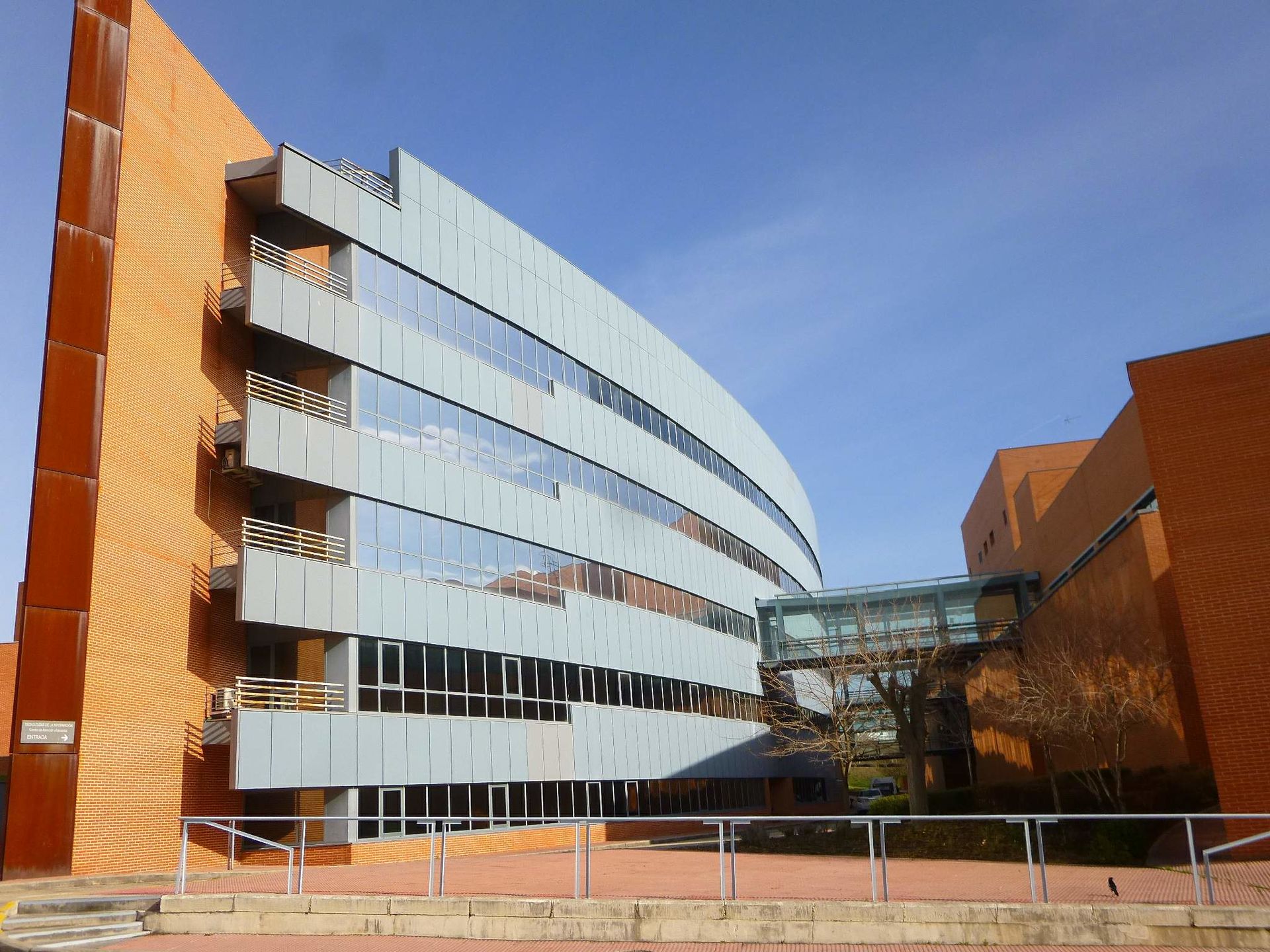
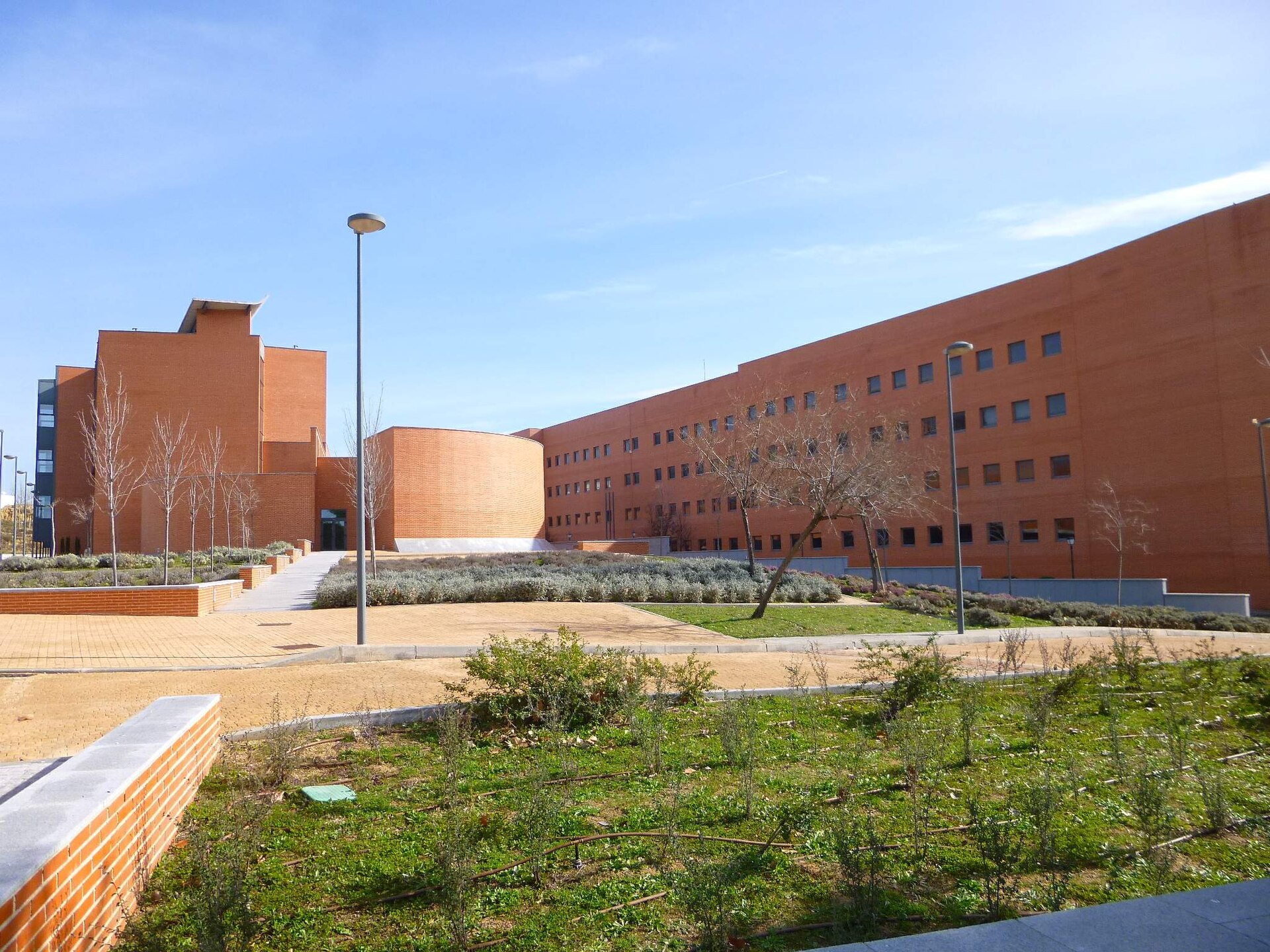
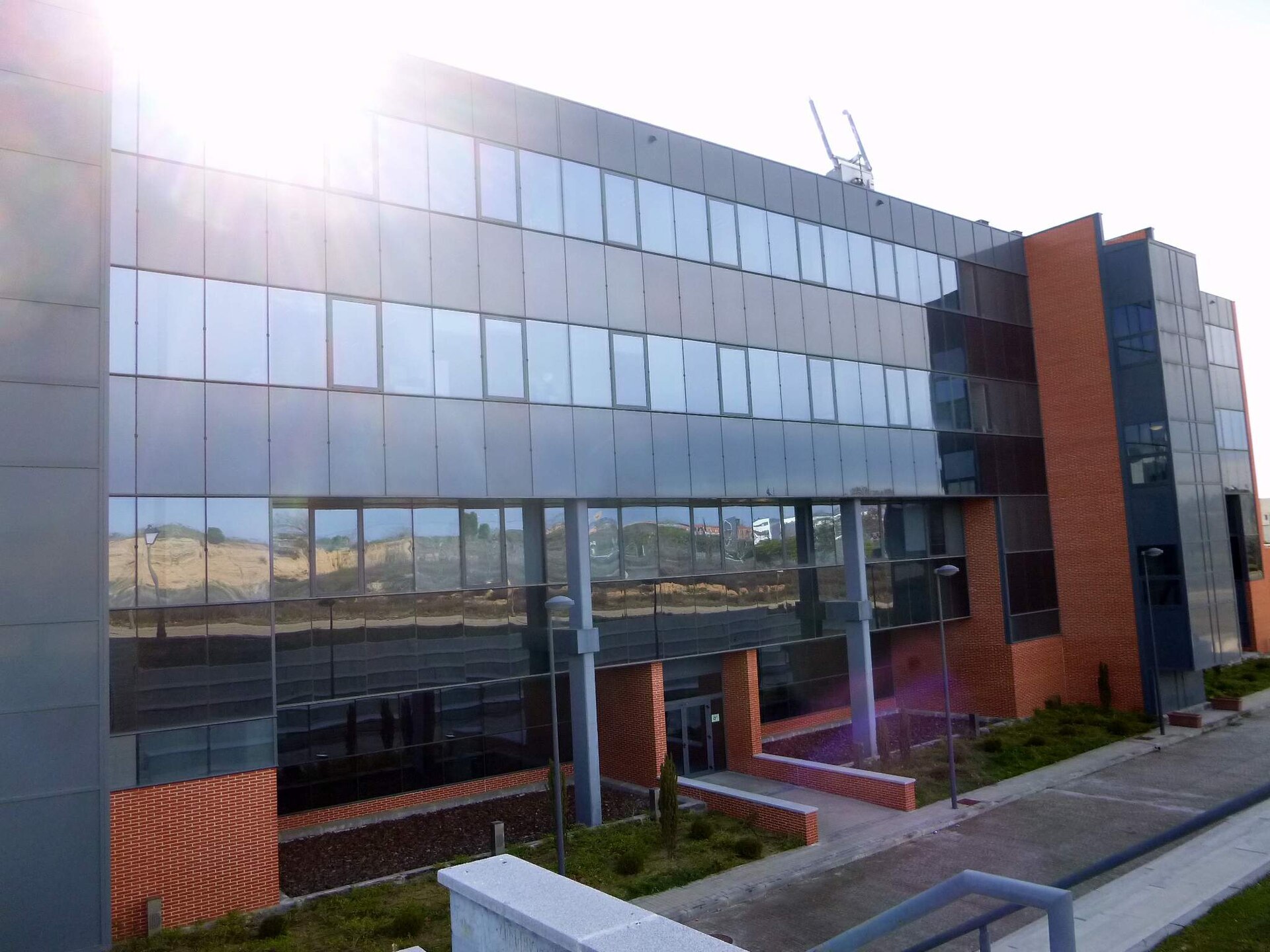
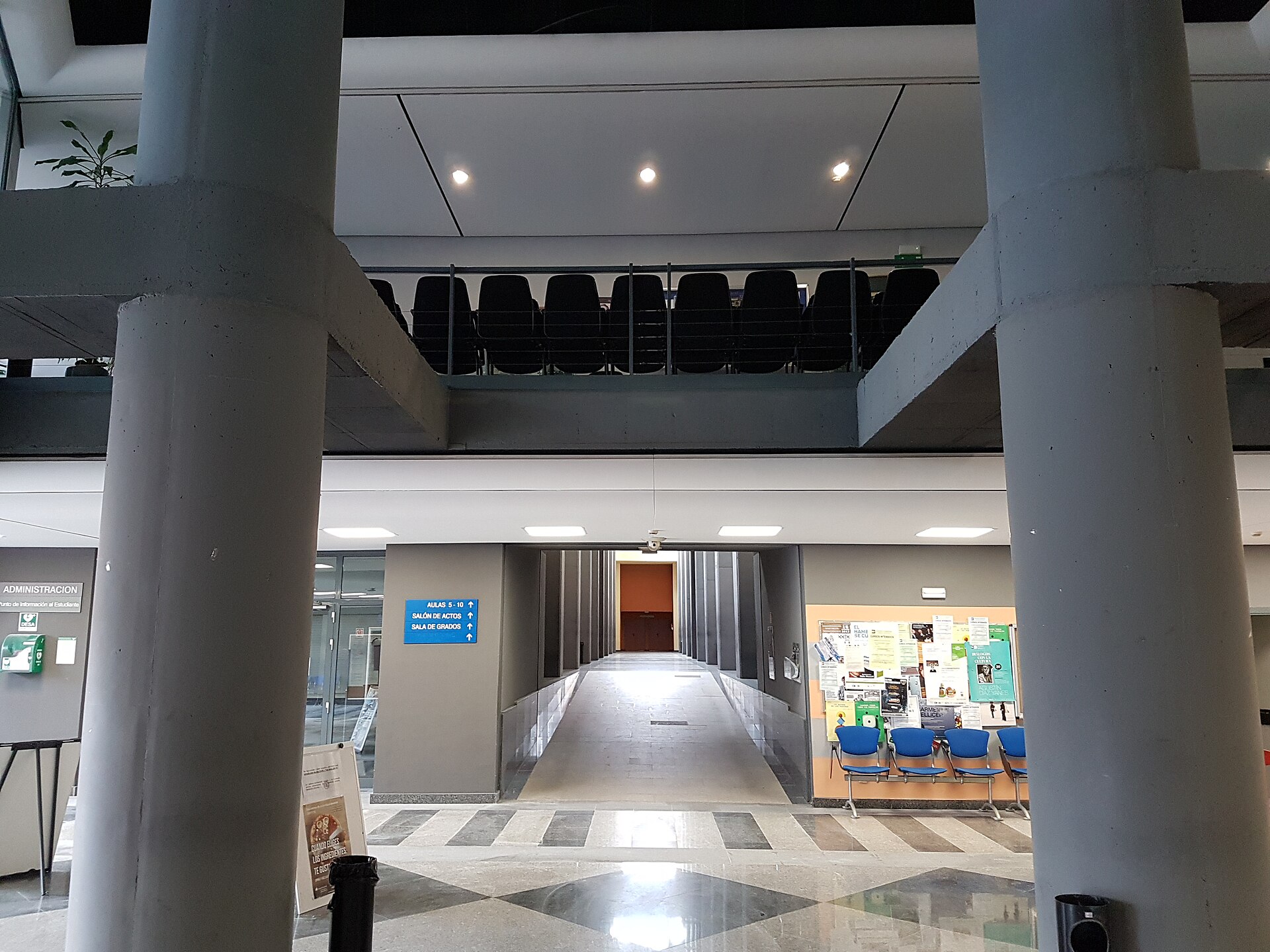
Universidad Politécnica de Madrid — campus in pictures
Real, freely-licensed photographs of the campus (via Wikimedia Commons).

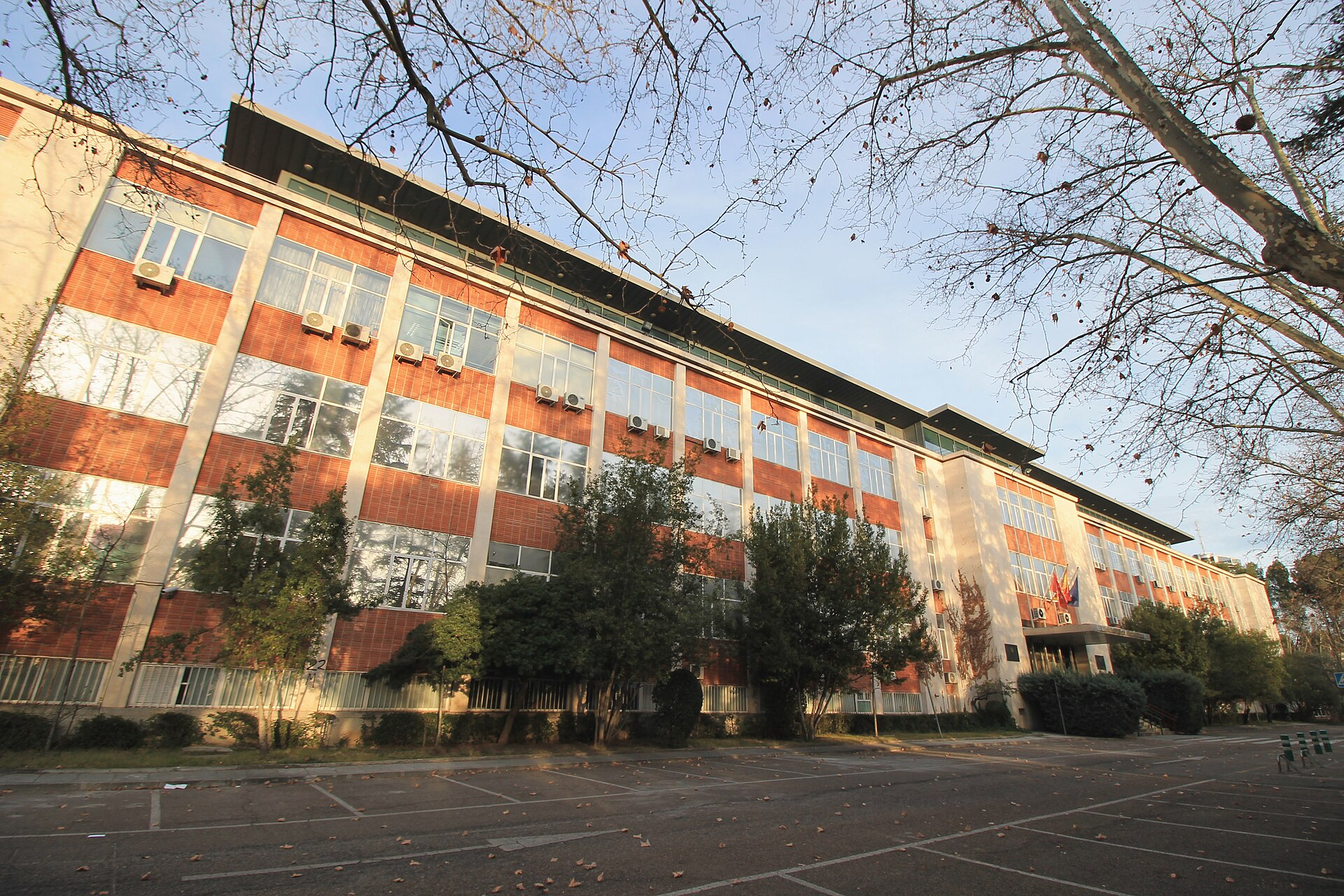
Why UPM — Engineering Heritage, European Location & Affordable Excellence
Universidad Politécnica de Madrid is not a generalist university — it is Spain's dedicated technical powerhouse, purpose-built for engineering and architecture. For international students with a clear STEM vocation, these are the reasons it stands out.
SELECTIVITY
UPM Acceptance Profile
UPM's overall acceptance rate of approximately 55% reflects the Spanish public university model — access is primarily determined by academic credentials and cut-off scores (notas de corte) set per programme each year, not by holistic review. Competitive programmes such as Aerospace Engineering, Architecture, and Industrial Engineering carry significantly higher entry thresholds and are much harder to enter than the headline figure suggests.
International students are assessed against equivalent academic records from their home country. IB diploma holders with a minimum score around 31 points are generally considered for admission, with higher scores required for the most competitive schools. Because UPM uses test-blind admissions, standardised tests such as SAT or ACT play no formal role.
AT A GLANCE
Quick Facts
WHAT YOU NEED TO APPLY
Application Components
UPM's admissions process for international students is credential-driven and direct — there is no Common App, UCAS, or central portal. You apply directly to the university (or through Spain's university pre-enrolment system) with your academic transcripts as the primary decision factor.
ADMISSION PROFILE
The Student UPM Admits
UPM is a technical specialist institution — it primarily selects students with strong STEM academic records and a clear commitment to engineering, architecture, or applied science. Unlike holistic-review universities, UPM's selection is primarily grade-driven.
APPLICATIONS & DEADLINES
When and How to Apply
UPM's academic year begins in late September/early October. International students typically have two pre-enrolment windows: a main period in spring (February–June) for the following October start, and sometimes a secondary period in July–August for remaining places. Exact dates change each year — always verify on the official admissions portal.
Deadlines listed are approximate and based on typical Spanish university calendar patterns. Always confirm the exact dates for your cycle on UPM's official portal (admision.upm.es) before applying.
| Phase | Timing | Notes |
|---|---|---|
| Credential Equivalence / UNED PACE Registration | January – April | Non-EU students must arrange credential recognition or register for UNED PACE early |
| Main Pre-Enrolment Window | February – June | Primary application period; competitive programmes fill quickly |
| Admission Decisions | July | Results notified; ranked list by score |
| Secondary Pre-Enrolment (if applicable) | July – August | For remaining places in less competitive programmes |
| Matriculation / Enrolment | September | Confirmed students complete formal enrolment |
| Academic Year Start | Late September / October | Orientation and semester 1 begin |
CAMPUS & CITY
Student Life at UPM and in Madrid
UPM is a multi-campus university spread across several Madrid locations, most notably the historic Ciudad Universitaria in the northwest of the city and the Montegancedo technology campus in Pozuelo de Alarcón. Both offer very different experiences.
Ciudad Universitaria is one of Europe's great university campuses — a planned academic city built in the 1930s, featuring grand faculty buildings, green spaces, sports facilities, and a lively student atmosphere. The campus sits just minutes from central Madrid via metro, making the entire city easily accessible. Montegancedo, by contrast, is a modern research and tech park on the city's outskirts, focused on innovation-intensive programmes and industry partnerships.
CAREERS & OUTCOMES
Where UPM Graduates Go
With a 91% graduate employment rate and an average starting salary of approximately $33,000 (reflecting Spanish engineering market conditions), UPM graduates are among the most employment-ready engineers in Spain. The university's proximity to Madrid's industrial, aerospace, and technology sectors is a structural advantage.
UPM's strongest career pipelines are in aerospace engineering (Iberia, Airbus Spain, Boeing Spain, SENER, Indra), civil infrastructure (Acciona, Ferrovial, ACS), industrial engineering and manufacturing, telecoms (Telefónica, Ericsson Spain), and energy (Iberdrola, Endesa, Acciona Energía). Architecture graduates from ETSAM are among the most respected in Spain and increasingly sought across Latin America.
Salaries reflect Spanish engineering market rates and are notably lower than equivalent US or UK roles. However, adjusted for Madrid's cost of living, purchasing power is competitive. Many UPM graduates pursue further study via European master's programmes or Spanish research doctorates.
Cards
Stats
FAQs
Frequently Asked Questions
Do I need to speak Spanish to study at UPM?+
For most undergraduate programmes, yes — Spanish is the language of instruction. A B2 level minimum is effectively required to follow lectures and complete coursework. Some undergraduate courses and a growing number of master's programmes are offered entirely in English. Always check the language of instruction for your specific programme before applying.
Can international students apply with an IB diploma?+
Yes. IB diploma holders are generally accepted for admission to UPM. Your diploma is assessed for equivalence to the Spanish Bachillerato. An IB score of around 31 points meets the general minimum threshold, though competitive programmes require higher scores. Some students may still need to complete UNED PACE subject-specific tests depending on their home country and programme choice — verify with UPM's international admissions office.
How does the Spanish university admission system work?+
Spanish public university admission is primarily based on academic grades. Local students use the EBAU (formerly Selectividad) scores. International students either obtain credential equivalence (homologación) from the Spanish Ministry of Education or take the UNED PACE exams. Programmes have annual cut-off scores (notas de corte) — your equivalent score must meet or exceed the cut-off for your chosen programme.
Is there a single campus or multiple campuses?+
UPM has multiple campuses across Madrid. The main academic campus is Ciudad Universitaria in northwest Madrid (metro line 6). The Montegancedo campus hosts research-intensive and tech-focused schools. Some schools have their own buildings in other parts of the city. Confirm your specific school's location when planning accommodation.
What scholarships are available for international students?+
Key funding sources include the Spanish Government's MAEC-AECID scholarships for international students from certain countries, Erasmus Mundus joint master's scholarships, and UPM's own institutional aid programmes. Non-EU students typically pay the same or similar fees as EU students at public Spanish universities. Aid covers roughly 15% of costs for those who receive it — most students are self-funded.
How does UPM's tuition compare to other European technical universities?+
UPM's tuition of approximately $6,500 per year is among the lowest for a world-ranked engineering university. It compares very favourably to ETH Zurich, TU Munich, or UK Russell Group engineering programmes, which can cost two to five times as much annually for international students.
What English-taught programmes does UPM offer?+
UPM has been expanding its English-taught offering, including a catalogue of English-medium undergraduate courses and an increasing number of English-taught master's programmes. The new Master in Advanced Motorsport Engineering (MIAM-UPM) launches in 2026. Check the current programme catalogue on the UPM website for the most up-to-date list, as the offering evolves each year.
Is UPM a good choice for Erasmus exchange students?+
Yes. UPM is a very popular Erasmus+ destination, receiving hundreds of exchange students annually. Engineering and architecture students from across Europe particularly value a semester at UPM for the combination of academic rigour, Madrid's quality of life, and relatively low living costs compared to Western European capitals.
ACADEMIC EXPECTATIONS
What It Takes to Thrive at UPM Academically
Universidad Politécnica de Madrid is a specialist technical institution. Its schools are rigorous, mathematically demanding, and built on deep engineering science foundations. International students who succeed here are those who arrive with genuinely strong maths and science preparation — not just adequate grades, but real conceptual grounding.
UPM's undergraduate programmes typically run five years (grado + integrated master in some schools), reflecting the European engineering tradition. The workload is heavy and the curriculum technically dense. If you are considering UPM, be honest with yourself about your maths and physics foundations — they will be tested from day one.
ENTRY BENCHMARKS
Academic Profile of Admitted Students
Admission thresholds at UPM are set annually per programme based on available places and applicant pool quality. The figures below represent the general benchmarks from the facts file; competitive programmes routinely require stronger profiles.
STANDARDISED TESTS
Test Policy — Test-Blind
UPM operates a test-blind admissions policy. Standardised tests such as the SAT, ACT, or GRE play no formal role in undergraduate admissions. Admission is determined by your secondary school academic record and its Spanish equivalence score.
This is a structural feature of the Spanish public university system, not a temporary accommodation. International students should focus all their energy on achieving the strongest possible academic results in their home curriculum — whether IB, A-Levels, the Indian CBSE/ISC boards, the American high school diploma, or another recognised secondary qualification.
INTERNATIONAL QUALIFICATIONS
IB, A-Levels & International Qualifications
UPM and the Spanish university system accept a wide range of international secondary qualifications. How they are processed depends on your country of origin and the recognition agreements Spain has in place.
SUBJECT PREPARATION
What to Study Before You Arrive
UPM's engineering and architecture programmes make very specific demands on your subject preparation. These are the areas that determine whether you thrive or struggle in year one.
LANGUAGE REQUIREMENTS
English & Spanish Language Requirements
Language requirements at UPM depend entirely on the programme's language of instruction. The facts file does not specify minimum IELTS, TOEFL, or Duolingo scores for English-taught programmes — always verify the exact requirements directly with the programme you are applying to.
The specific English proficiency test minimums are set at the programme level and may vary. Contact the relevant school's admissions office for confirmation.
| Language | Requirement | Applies_to |
|---|---|---|
| Spanish | B2 minimum (DELE or equivalent) | All Spanish-taught programmes (the majority of UPM's undergraduate offer) |
| English | B2–C1 level — test and score vary by programme | English-taught master's and select undergraduate courses |
YEAR-BY-YEAR STRATEGY
Building Your Academic Profile for UPM
UPM's selection is primarily academic. Here is a grade-by-grade strategy for international students targeting a 2027 or 2028 entry.
COMMON PITFALLS
Mistakes International Students Make When Applying to UPM
Items
- Underestimating the Spanish language requirement — most programmes are entirely in Spanish, and arriving without solid B2 Spanish is the single most common reason international students struggle or drop out
- Leaving credential recognition (homologación) or UNED PACE registration too late — the Spanish bureaucratic process has fixed windows and long processing times
- Applying to a highly competitive programme (Aerospace, Architecture) with a borderline academic profile without a backup plan
- Assuming SAT or ACT scores will matter — UPM is test-blind; those scores carry zero weight in the selection process
- Not verifying the language of instruction for their specific programme before applying — some courses advertised as available in English may have limited sections
- Overlooking the five-year programme length — many Spanish engineering degrees are longer than UK/US equivalents; this affects visa planning, funding, and career timelines
- Failing to account for campus geography — different schools are on different campuses; accommodation near the wrong campus adds significant daily commute time
Faqs
Can I transfer to UPM from another university?+
Credit transfer between universities is possible in the Spanish system but can be complex for international students. Contact UPM's academic secretariat of the relevant school directly to assess whether your completed credits are transferable. Partial credit recognition is more common than full transfer into an advanced year.
Does UPM offer a foundation or pathway programme for international students?+
UPM does not operate its own foundation year in the way some UK universities do. International students who do not meet direct entry requirements typically need to fulfil the UNED PACE pathway or obtain credential equivalence. Some language preparation programmes are offered, including an August intensive Spanish course.
FEES & FUNDING
Cost of Studying at UPM — Exceptional Value for World-Ranked Engineering
As a Spanish public university, UPM charges some of the lowest tuition fees of any QS top-400 engineering institution in the world. Non-EU international students pay a modest premium over domestic rates, but even the all-in cost of attendance — roughly $20,500 per year including accommodation and living expenses in Madrid — is well below the cost of comparable engineering programmes in the UK, Australia, or North America.
Affordability is one of UPM's genuine structural advantages for international students. However, securing merit or need-based support requires active research and early application — most scholarships have competitive deadlines months before programme start. Plan your funding strategy well in advance.
COST BREAKDOWN
Annual Cost Estimates
All figures are annual estimates in USD, sourced from the university's facts file. Actual costs may vary by programme, residency status (EU vs. non-EU), and individual lifestyle.
Tuition for non-EU international students may be higher than the listed figure in some programmes. Verify exact fees with UPM's student services office for your specific programme and nationality.
| Component | Estimated_cost_usd | Notes |
|---|---|---|
| Annual Tuition | $6,500 | Public university rate; varies by school and credits |
| Cost of Living (Madrid) | $13,500 | Accommodation, food, transport, personal expenses |
| Total Cost of Attendance | $20,500 | Annual all-in estimate |
| Application Fee | $50 | One-time, non-refundable |
FINANCIAL AID
Financial Aid for International Students
UPM's institutional financial aid covers approximately 15% of costs on average for students who receive it. The Spanish public university system does not offer need-blind admissions or the large need-based grant programmes common at US private universities. Most international students at UPM are self-funded.
However, several meaningful funding channels exist — both from the Spanish government and from UPM directly. International students should investigate all available sources before and immediately after receiving an admission offer. Aid applications have their own deadlines, often running parallel to (or ahead of) enrolment.
SCHOLARSHIPS
Funding Sources for International Students
The following funding sources are commonly available to international students at UPM. Always verify current availability, amounts, and deadlines directly with the relevant awarding body — scholarship terms change annually.
VALUE REALITY CHECK
Putting the Numbers in Context
At roughly $20,500 total annual cost, UPM competes on value with few rivals at its quality level. A comparable engineering education at a UK Russell Group university would cost £30,000–£35,000+ per year for international students. At a top Australian university, AUD 45,000–55,000+. At a US state flagship, $50,000–$65,000+ including living costs.
Madrid's cost of living, while rising, remains notably lower than London, Sydney, or Boston. A student on a modest budget can live comfortably near campus for $900–$1,100/month including rent, food, and transport. UPM's university residences provide a lower-cost option with the added benefit of immediate community for first-year students.
The five-year programme length (standard for integrated engineering degrees in Spain) means total study costs over the full degree are still lower than a three-year UK engineering degree at international rates. Factor programme length into your financial planning.
ACTION PLAN
Steps to Secure Funding for UPM
COST FAQs
Cost & Aid — Frequently Asked Questions
Do non-EU international students pay more than EU students?+
Spanish public universities charge higher fees to non-EU students compared to EU students, but the difference is relatively modest by international standards. Exact fee structures vary by school and programme. The $6,500 annual tuition figure in the facts file represents a general estimate — verify the specific fee for your programme and nationality with UPM's administration.
Can I get a student loan to study at UPM?+
Spanish government student loans (préstamos Renta Universidad) are generally not available to non-EU international students. Students from countries with bilateral agreements may have limited access. Most international students rely on savings, family funding, scholarships, or home-country student loans.
How much should I budget for accommodation in Madrid?+
Accommodation costs vary significantly. A place in UPM's university residences can cost €400–€600/month. A room in a shared flat in Moncloa or Argüelles (near Ciudad Universitaria) typically runs €450–€700/month depending on size and location. Budget €600–€900/month as a realistic mid-range estimate for accommodation alone.
Is health insurance compulsory?+
Non-EU international students on a student visa in Spain are required to hold private health insurance as a condition of the visa unless they have a European Health Insurance Card (EHIC). Budget approximately €400–€800/year for basic international student health coverage. Some universities partner with insurers for group rates — check with UPM's student services.
Are there tuition fee waivers for excellent students?+
UPM and Spain's education system does not operate a US-style merit scholarship tuition waiver programme for new international students at the undergraduate level. Institutional aid is primarily need-based and available after enrolment. Competitive external scholarships (AECID, Erasmus Mundus) are the main merit-based funding route.
APPLICATION & STATEMENT
Applying to UPM — No Personal Essays, but Documentation Matters
Universidad Politécnica de Madrid follows the Spanish public university admissions model. Unlike US universities that require Common App personal statements and supplemental essays, or UK universities that use the UCAS personal statement, UPM's undergraduate admissions are primarily grade-based. There are no application essays in the US or UK sense.
However, this does not mean the written components of your application are unimportant. For master's and doctoral programmes, a motivation letter is standard and often decisive. Even for undergraduate applications, the way you present your documentation package — translated, certified, clearly organised — reflects your seriousness and can influence how your application is processed. This guide walks you through what you actually need to submit and how to present it effectively.
APPLICATION OVERVIEW
The Spanish Application System — What to Expect
Spain uses a direct university application system for undergraduate entry. There is no central personal statement portal like UCAS. Admission is primarily determined by your academic score and its Spanish equivalence. Here is what the written and documentary components of your application actually look like.
MASTER'S APPLICATIONS
Writing Your Motivation Letter for UPM
The motivation letter (carta de motivación or carta de presentación) is your main written opportunity in the UPM application process — particularly for master's programmes. It is typically one to two pages and should be specific, honest, and focused on the intersection of your background and the programme you are applying to.
Unlike a US personal statement, the UPM motivation letter is not expected to be a narrative life story. It should be professional and direct: who you are academically, what technical skills and experiences you bring, why this specific programme at UPM, and what you plan to do with the degree. Spanish academic culture values directness and concrete evidence over rhetorical flourish.
DOCUMENTATION
Getting Your Documents Right
For UPM undergraduate and master's applications, the quality and completeness of your documentation package is essential. Missing or improperly certified documents are the most common cause of application delays or rejections.
PROGRAMME-SPECIFIC ENTRY
Special Admissions Processes at Specific UPM Schools
While most UPM programmes use purely grade-based admission, some schools have additional selection components. Be aware of these before assuming standard academic-only entry applies to your chosen school.
FOR MASTER'S APPLICANTS
Choosing What to Write in Your Motivation Letter
Master's applicants face a genuine writing task. Choosing the right focus for your motivation letter significantly affects your chances in competitive programmes. Here is how to approach the selection process.
COMMON MISTAKES
Documentation and Application Pitfalls
- Submitting uncertified or informally translated documents — all academic documents must have sworn (jurado) translations into Spanish
- Missing the apostille on foreign academic certificates — documents without apostilles are typically rejected outright
- Starting the credential homologation or UNED PACE process too late — these have fixed windows months before programme start
- Writing a generic motivation letter for master's applications — failing to research the specific programme, faculty, and research context is the most common weakness
- Applying for a Spanish-taught programme without verified Spanish proficiency — this creates an immediate crisis on arrival
- Not verifying the application deadline for your chosen school directly — UPM's schools sometimes have independent deadlines
- Assuming the process is identical to US or UK applications — Spain's admission system is fundamentally different; do not use UK or US guides as a template
APPLICATION FAQs
Application & Statement — Frequently Asked Questions
Do I need a personal statement to apply to UPM's undergraduate programmes?+
No. UPM's undergraduate admissions do not use a personal statement or application essay in the UK or US sense. Admission is determined by your academic grade equivalence. Focus your energy on maximising your academic profile and ensuring your credential documentation is complete and correctly certified.
Is a motivation letter required for all master's programmes?+
Most UPM master's programmes require a motivation letter as part of the application package, alongside academic transcripts and CV. Some programmes may also ask for reference letters. Check the specific requirements of your target programme directly on UPM's programme page.
How long should a motivation letter for UPM be?+
One to two pages is the standard expectation. Be concise, professional, and technically specific. Spanish academic committees do not expect the literary personal narrative style of UK or US personal statements — they expect a clear, direct account of your background, your reasons for choosing the programme, and your goals.
Can I write the motivation letter in English?+
For English-taught master's programmes, yes — and you should write it in English. For Spanish-taught programmes, writing in Spanish demonstrates language competence and is generally expected. If your Spanish is not strong enough to write a coherent professional letter, reconsider whether you are ready for a Spanish-taught programme.
Does UPM conduct admissions interviews?+
Most undergraduate and many master's programmes at UPM do not conduct admissions interviews. Some research-intensive doctoral or specialised master's programmes may involve an informal conversation with a potential supervisor. Confirm with the specific programme whether an interview is part of the process.
Do reference letters matter for UPM applications?+
For master's programmes, some programmes request one or two academic or professional reference letters. These should be from people who can speak specifically to your technical competence and academic potential — a university lecturer, thesis supervisor, or direct manager in a relevant technical role. Generic reference letters from distant acquaintances add little value.
How do I apply for UPM's PhD programmes as an international student?+
Doctoral applications at UPM require contacting potential supervisors before submitting a formal application. Identify faculty whose research aligns with your interests, email them with a clear, brief description of your background and proposed research direction, and attach your CV and any published work. A supervisor willing to take you on is typically a prerequisite for doctoral admission. The formal application then follows through UPM's doctoral school.
Courses — schools, degrees & intake
57 degrees across 18 groupings.
ETSI Aeronáutica y del Espacio · 3 degrees
Grado en Ingeniería Aeroespacial
Grado en Ingeniería en Tecnologías Aeroespaciales
Grado en Gestión y Operaciones del Transporte Aéreo
ETSI Agronómica, Alimentaria y de Biosistemas · 5 degrees
Grado en Biotecnología
Grado en Ciencias Agrarias y Bioeconomía
Grado en Ingeniería Agrícola
Grado en Ingeniería Agroambiental
Grado en Ingeniería Alimentaria
ETSI Montes, Forestal y del Medio Natural · 3 degrees
Grado en Ingeniería Forestal
Grado en Ingeniería del Medio Natural
Grado en Ingeniería en Tecnologías Ambientales
ETS Arquitectura · 1 degrees
Grado en Fundamentos de la Arquitectura
ETS Edificación · 2 degrees
Grado en Edificación
Doble Grado en Edificación y Administración y Dirección de Empresas
ETSI Caminos, Canales y Puertos · 3 degrees
Grado en Ingeniería Civil y Territorial
Doble Grado en Ingeniería Civil y Territorial y en Administración y Dirección de Empresas
Grado en Ingeniería de Materiales
ETSI Topografía, Geodesia y Cartografía · 3 degrees
Grado en Ingeniería Geomática
Grado en Ingeniería de las Tecnologías de la Información Geoespacial
Doble Grado en Ingeniería Geomática y en Ingeniería de las Tecnologías de la Información Geoespacial
ETSI Industriales · 4 degrees
Grado en Ingeniería en Tecnologías Industriales
Grado en Ingeniería de la Energía
Grado en Ingeniería de Organización
Grado en Ingeniería Química
ETS Ingeniería y Diseño Industrial · 6 degrees
Grado en Ingeniería en Diseño Industrial y Desarrollo de Producto
Grado en Ingeniería Eléctrica
Grado en Ingeniería Electrónica Industrial y Automática
Grado en Ingeniería Mecánica
Doble Grado en Ingeniería en Diseño Industrial y Desarrollo de Producto y en Ingeniería Mecánica
Doble Grado en Ingeniería Eléctrica y en Ingeniería Electrónica Industrial y Automática
ETSI Navales · 2 degrees
Grado en Arquitectura Naval
Grado en Ingeniería Marítima
ETSI Minas y Energía · 4 degrees
Grado en Ingeniería Geológica
Grado en Ingeniería Mineralúrgica y Metalúrgica de las Materias Primas
Grado en Ingeniería de los Recursos Energéticos, Combustibles y Explosivos
Grado en Ingeniería en Tecnología Minera
ETSI Informáticos · 4 degrees
Grado en Ingeniería Informática
Grado en Matemáticas e Informática
Grado en Ciencia de Datos e Inteligencia Artificial
Doble Grado en Ingeniería Informática y en Administración y Dirección de Empresas
ETSI Sistemas Informáticos · 4 degrees
Grado en Ingeniería de Computadores
Grado en Ingeniería del Software
Grado en Sistemas de Información
Grado en Tecnologías para la Sociedad de la Información
ETS Ingeniería y Sistemas de Telecomunicación · 7 degrees
Grado en Ingeniería Electrónica de Comunicaciones
Grado en Ingeniería de Sistemas de Telecomunicación
Grado en Ingeniería de Sonido e Imagen
Grado en Ingeniería Telemática
Grado en Ingeniería y Sistemas de Datos
Doble Grado en Ingeniería Electrónica de Comunicaciones y en Ingeniería Telemática
Doble Grado en Ingeniería y Sistemas de Datos y en Ingeniería Telemática
ETSI Telecomunicación · 2 degrees
Grado en Ingeniería de Tecnologías de Telecomunicación
Grado en Ingeniería Biomédica
Facultad de Ciencias de la Actividad Física y del Deporte (INEF) · 1 degrees
Grado en Ciencias de la Actividad Física y del Deporte
Centro Superior de Diseño de Moda de Madrid · 2 degrees
Grado en Diseño de Moda
Doble Titulación Interuniversitaria en Diseño de Moda (UPM) y Comercio (UCM)
Escuela Politécnica de Enseñanza Superior (EPES) · 1 degrees
Grado en Matemáticas
Want your real chances at Universidad Politécnica de Madrid?
Create a free TYCHR account for your personalised admit-chance, a shortlist you can track, exact entry requirements, and essay + counselling help.