Universidad Nacional Autónoma de México
Mexico City, Mexico · Urban
MEXICO'S FLAGSHIP PUBLIC UNIVERSITY
Universidad Nacional Autónoma de México Admissions Guide for International Students
UNAM is Latin America's largest and most prestigious university — a UNESCO World Heritage campus in Mexico City that combines world-class research, Nobel-laureate alumni, and remarkably affordable tuition. For international students seeking a genuinely immersive Spanish-language education at a recognised global institution ranked in the QS Top 100, UNAM offers an extraordinary proposition. Understanding how to navigate its distinctive, exam-centred admissions process is the key to unlocking it.
Campus
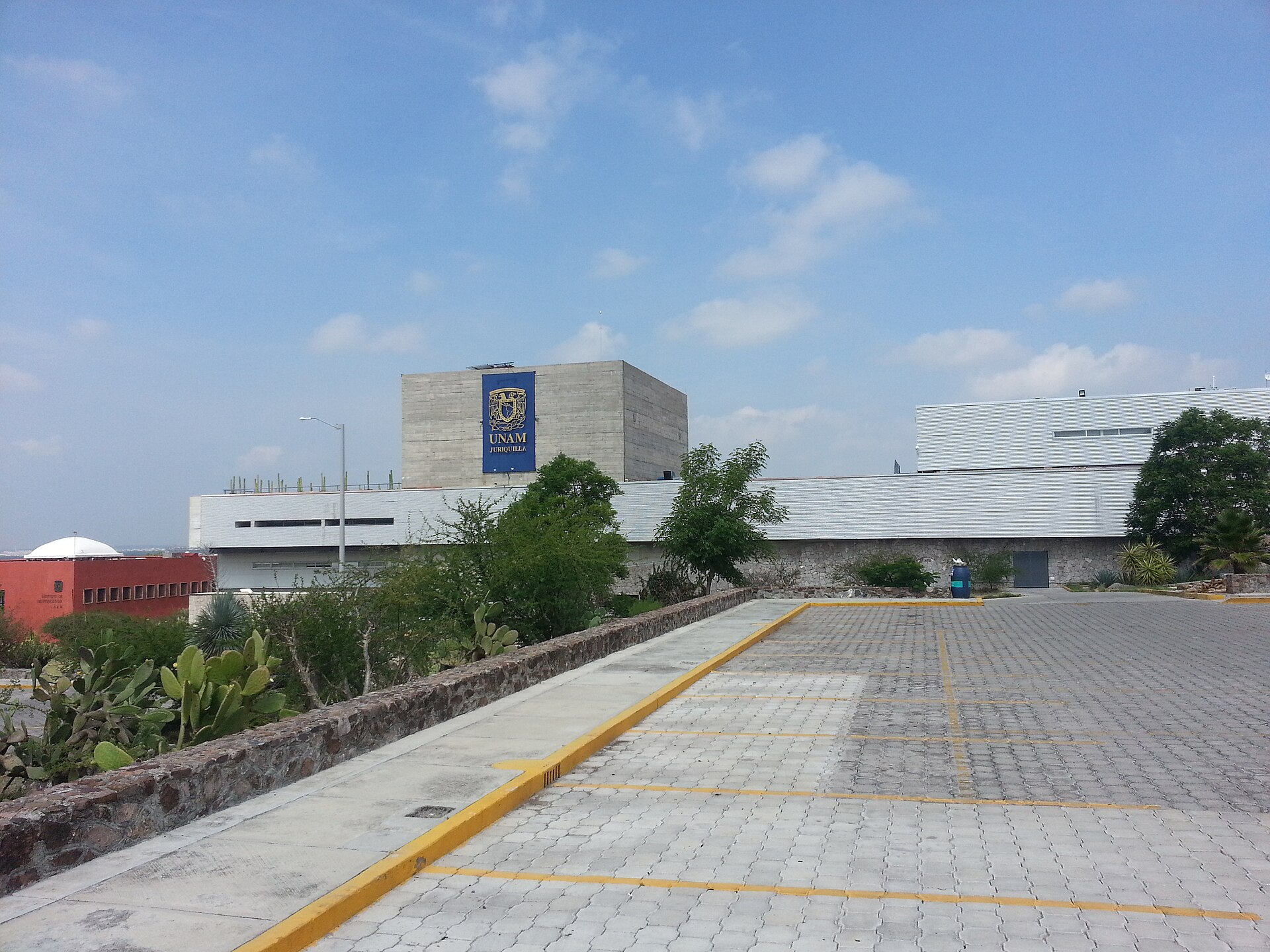
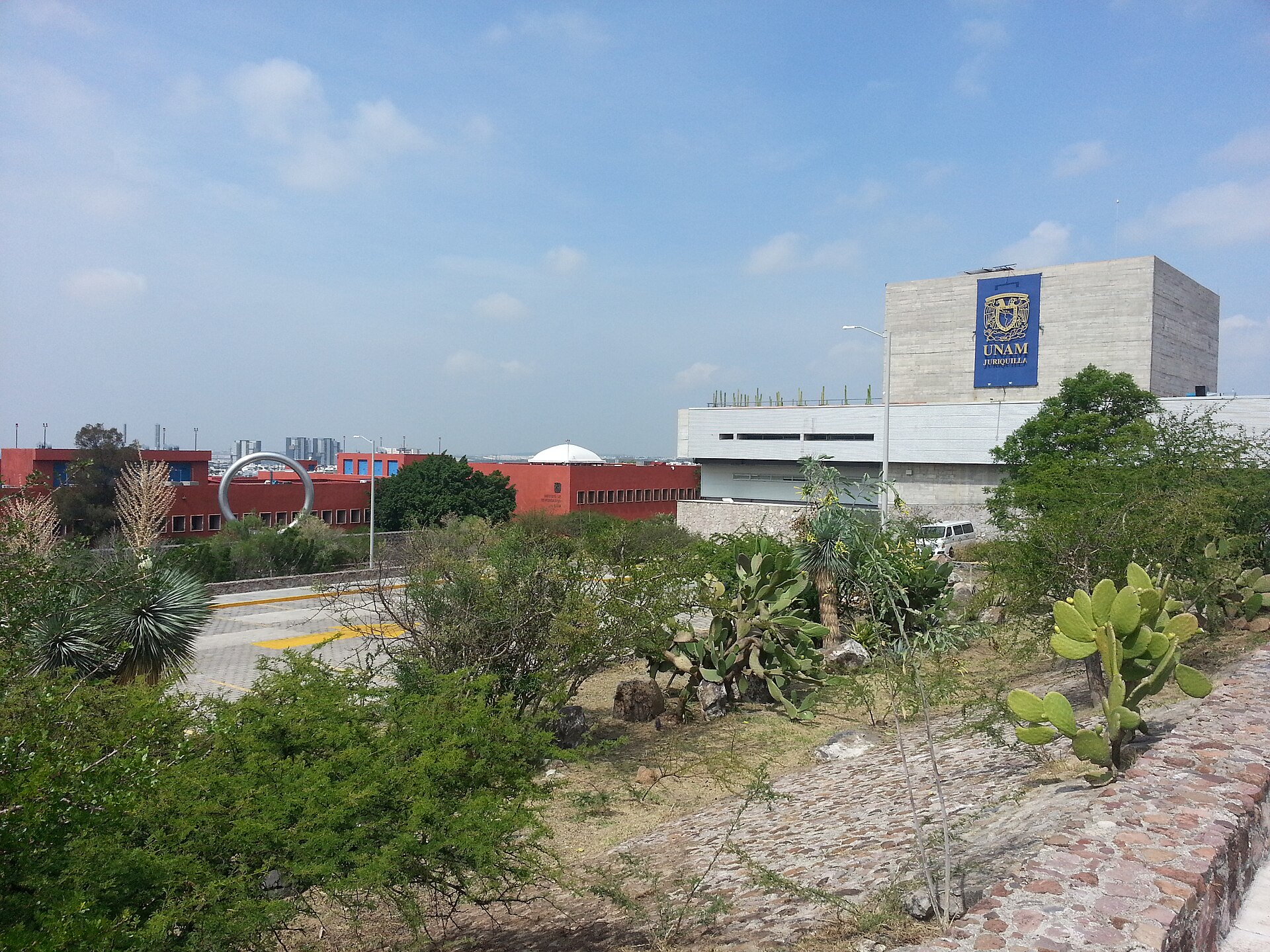
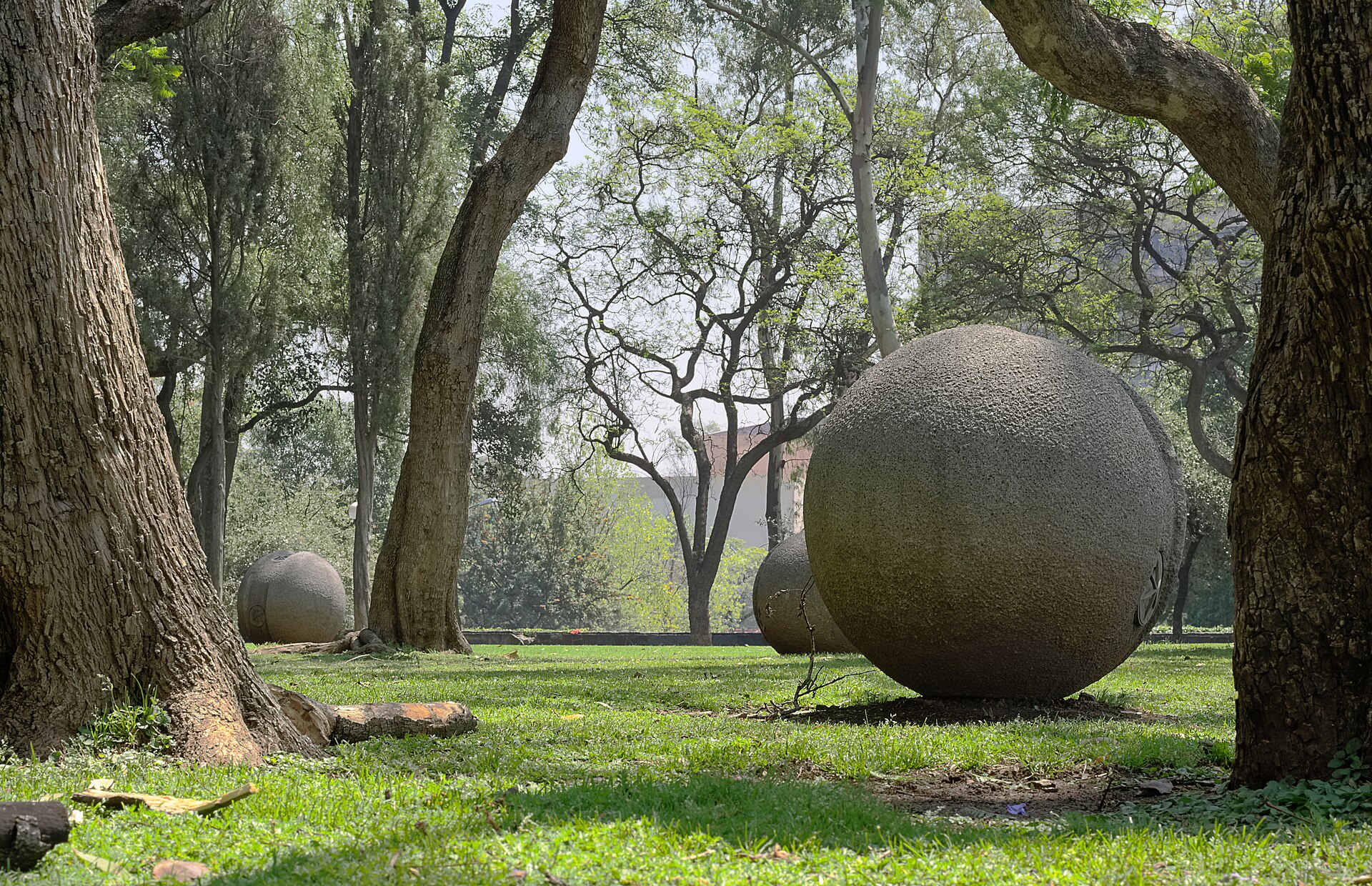
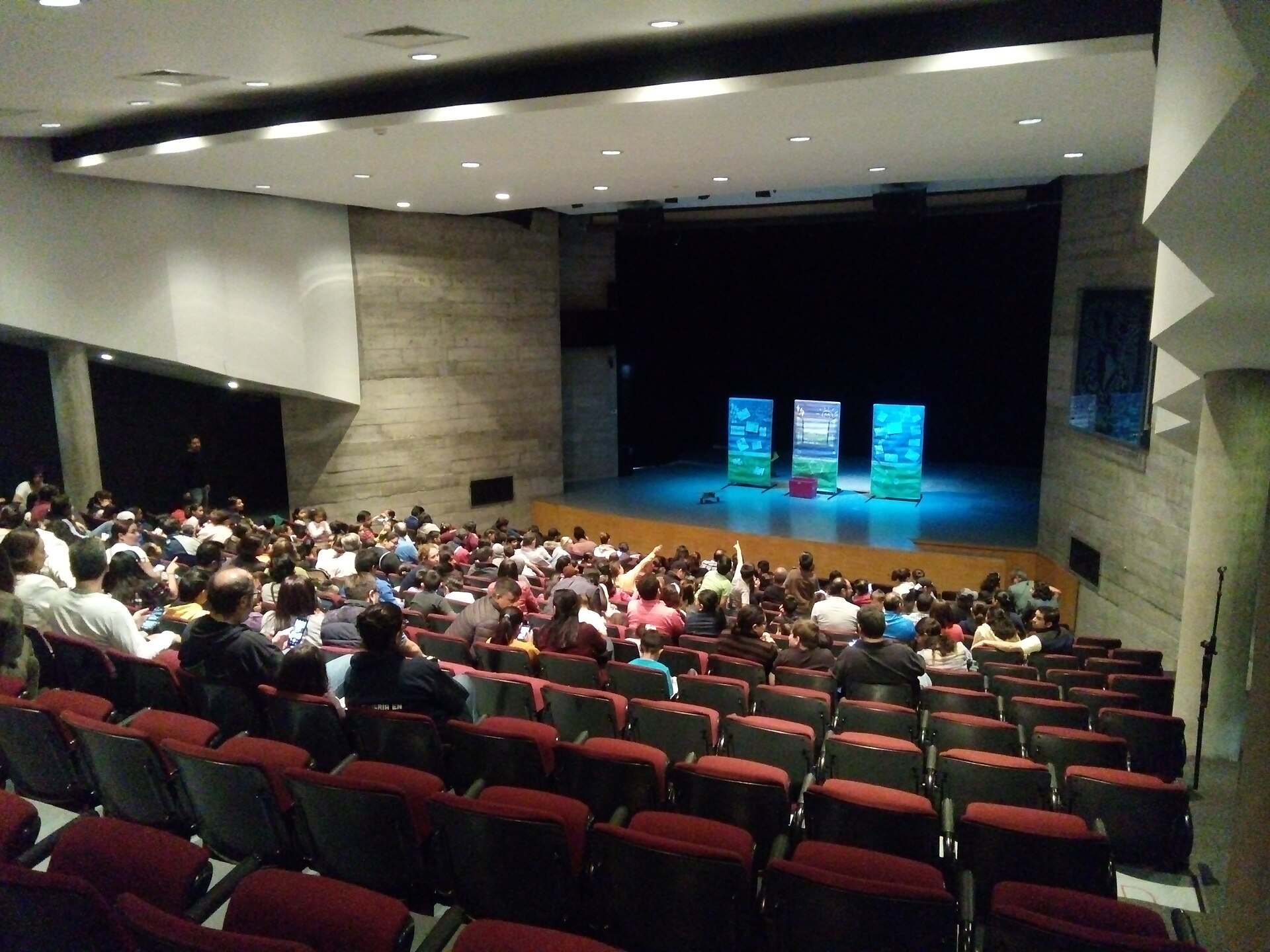
Universidad Nacional Autónoma de México — campus in pictures
Real, freely-licensed photographs of the campus (via Wikimedia Commons).
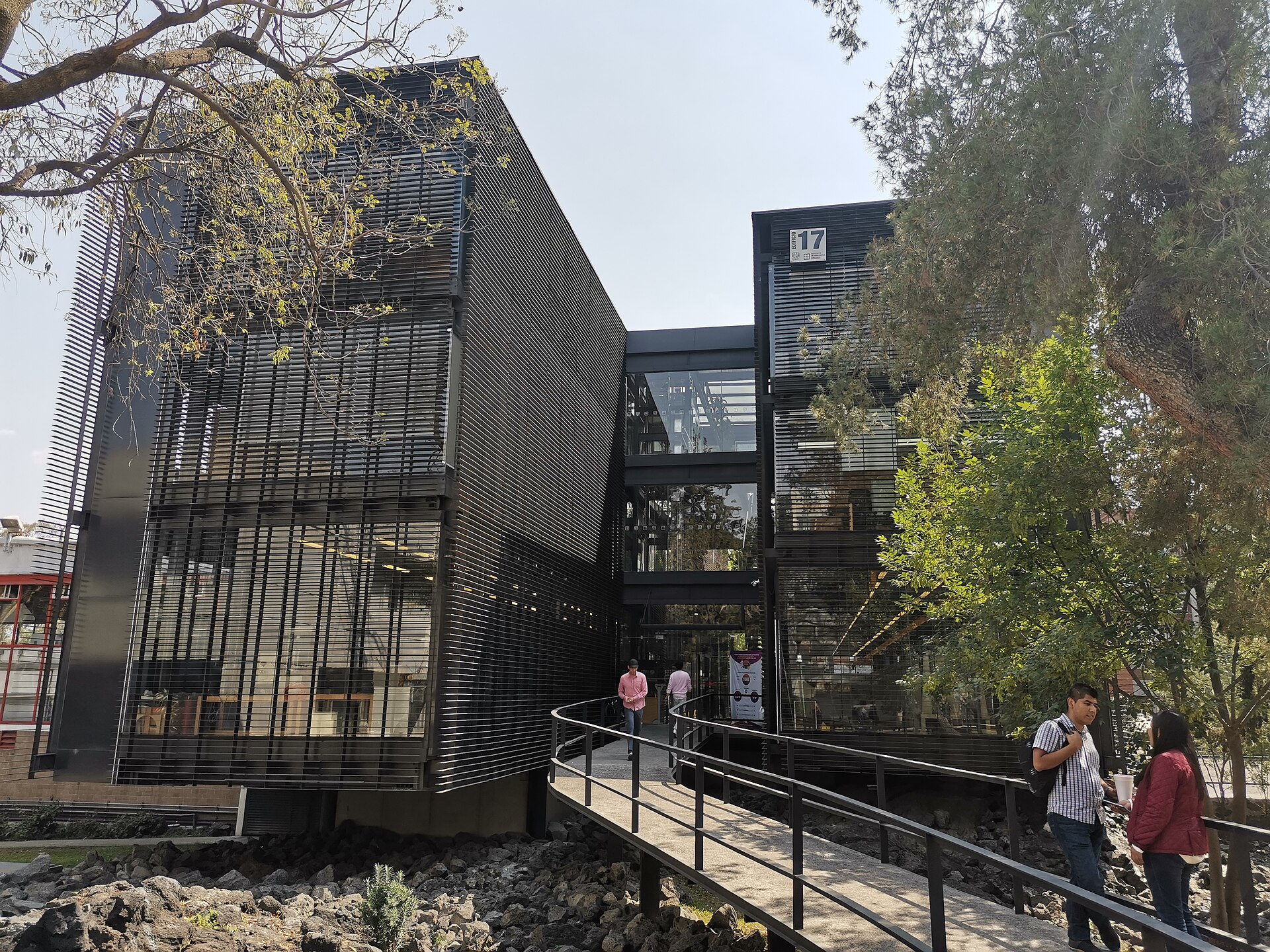
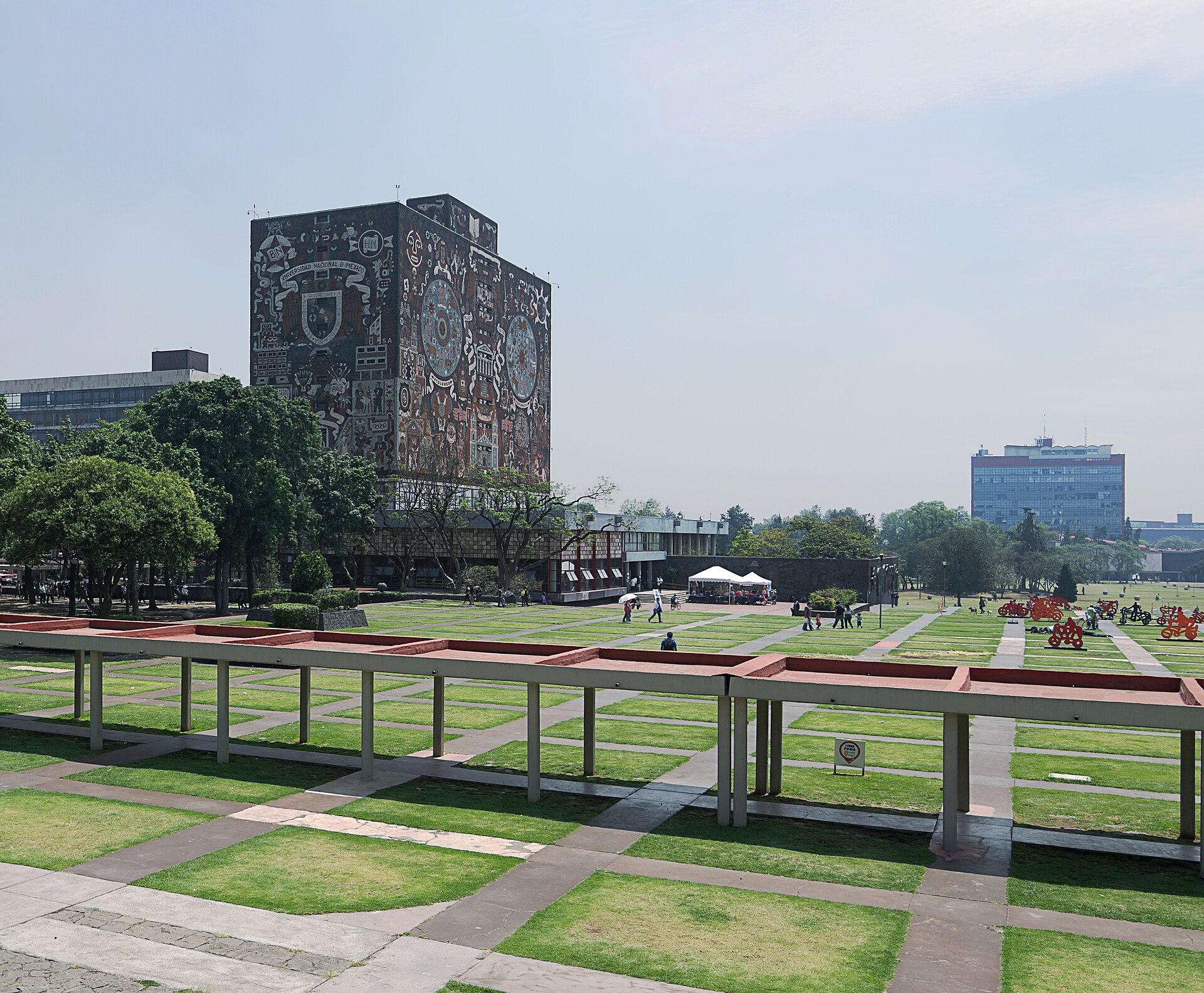
Why Choose UNAM — Global Rank, Cultural Depth & Unbeatable Value
UNAM sits at the intersection of academic prestige, cultural richness, and accessibility. For the ambitious international student, few institutions in the world offer this combination.
HOW COMPETITIVE IS UNAM?
Acceptance Rate & Admissions Profile
UNAM is highly selective. Entry is determined almost entirely by performance on a competitive entrance exam, not by a holistic review of essays and extracurriculars. Admission to the most sought-after programmes — Medicine, Law, Architecture, Engineering — is substantially more competitive than the overall figure suggests.
UNAM's 8% acceptance rate reflects fierce domestic competition for a limited number of undergraduate places. For international students, the path in is different — most arrive via bilateral exchange agreements, special international student quotas, or graduate-programme direct applications. If you are seeking direct undergraduate enrolment as a foreign national, contact UNAM's Dirección General de Incorporación y Revalidación de Estudios (DGIRE) for the most current requirements, as pathways evolve.
AT A GLANCE
Quick Facts
HOW TO APPLY
Admissions Components
UNAM's admissions model is fundamentally exam-based, not essay-based. The pathway varies significantly depending on whether you are applying as a domestic candidate, an international exchange student, or a direct-entry international student.
THE ADMITTED PROFILE
What UNAM Looks For
Because undergraduate admissions is primarily exam-driven, UNAM's selection is meritocratic and transparent — your test score is the primary signal. For graduate programmes and international student tracks, the criteria broaden.
APPLICATION TIMELINE
Application Deadlines & Process
UNAM operates on a distinct academic calendar. Deadlines for international students depend on the pathway — always confirm the most current dates directly with UNAM. The information below reflects typical patterns; verify at unam.mx.
Always confirm current deadlines directly with UNAM's admissions offices. Timelines shift year to year.
| Track | Typical Period | Notes |
|---|---|---|
| Domestic Undergraduate Exam | February–March (exam); June (results) | Concurso de Selección; international equivalents handled via DGIRE |
| Exchange Programme (incoming) | March (August intake); September (February intake) | Apply through home university bilateral office |
| Graduate / Postgraduate Direct | Varies by faculty; typically March–April | Apply directly to faculty or research institute |
| International Student Direct Enrolment | Contact DGIRE for current cycle | unam.mx — DGIRE office |
CAMPUS & CITY
Student Life at UNAM
Studying at UNAM means living in one of the world's most culturally rich cities, on a campus that is itself a masterwork of 20th-century architecture and public art.
Ciudad Universitaria (CU), the main campus, spans 730 hectares in the south of Mexico City and is a city within a city — home to libraries, museums, theatres, the Estadio Olímpico Universitario, botanical gardens, and murals by Mexico's greatest painters. The campus has its own ecosystem of cafeterias, sports facilities, a cinema circuit, bookstores, and public plazas where intellectual and social life unfolds continuously. Mexico City itself offers everything a student could need: a world-class metro system, an extraordinary culinary scene from street tacos to fine dining, dozens of museums (including the unmissable Museo Nacional de Antropología), a vibrant arts and nightlife culture, and neighbourhoods — from Coyoacán (where Frida Kahlo lived) to Roma and Condesa — that are among the most charming urban environments in the Americas. Housing options near UNAM include university-affiliated residences and the many affordable private rentals in the surrounding Pedregal, Copilco, and Coyoacán areas. International students are advised to secure accommodation before arrival, as options close to campus fill quickly each semester.
GRADUATE OUTCOMES
Career Outcomes & Graduate Employment
A UNAM degree carries substantial prestige in Mexico and across Latin America, and the university's alumni network spans every sector of Mexican public and private life.
UNAM graduates hold dominant positions across Mexico's government, judiciary, medicine, engineering, technology, arts, and academia. The Faculty of Law produces a large proportion of Mexico's senior judges and legislators; the School of Medicine is the primary training ground for the country's medical profession; and the engineering and sciences faculties supply talent to major infrastructure, energy, and technology firms. For international students, the career value of a UNAM degree is strongest in Spanish-speaking markets — Mexico, Latin America, and Spain — and in international organisations where Spanish-language expertise and Latin American regional knowledge are prized. UNAM graduate degrees (especially doctorates) are recognised for applications to faculty positions and research roles globally.
COMMON QUESTIONS
Frequently Asked Questions
Can international students study at UNAM without speaking Spanish?+
The vast majority of UNAM's programmes are taught exclusively in Spanish. International students without strong Spanish proficiency can begin with UNAM's Centre for Teaching Foreign Languages (CEPE), which offers intensive Spanish courses, and transition to degree or exchange programmes once their Spanish is sufficient. A small number of postgraduate courses and short programmes are available in English — verify specific availability with your faculty of interest.
Is UNAM free for international students?+
UNAM's tuition is nominal — among the lowest of any world-ranked university. According to available data, annual tuition for international students is approximately $1,000 USD, with a total estimated cost of attendance around $7,000 USD per year. This makes UNAM one of the most affordable QS Top 100 institutions in the world.
Do I need to take the entrance exam (Concurso de Selección) as an international student?+
The standard domestic entrance exam is for Mexican nationals competing for undergraduate places. International students typically access UNAM through exchange agreements, special international student quotas, or direct postgraduate applications — not through the general Concurso de Selección. Contact UNAM's DGIRE office for the current direct-enrolment procedure.
Does UNAM offer scholarships for international students?+
UNAM itself has limited scholarship funding specifically for international undergraduates. However, students may be eligible for scholarships through their home country's government, the Mexican government (AMEXCID scholarships for some countries), or CONACyT/CONAHCYT for postgraduate research. Check the official AMEXCID website and your country's Mexican embassy for current opportunities.
What is Ciudad Universitaria (CU) like as a campus?+
CU is extraordinary — a 730-hectare UNESCO World Heritage site in southern Mexico City, featuring murals by Diego Rivera and David Alfaro Siqueiros, an Olympic stadium, botanical gardens, multiple museums, theatres, libraries, and thousands of faculty and research buildings. It has its own ecosystem and students frequently describe it as a transformative place to study.
Is UNAM recognised internationally for graduate study?+
Yes — UNAM's graduate degrees, particularly doctoral degrees, are recognised by universities worldwide. UNAM is ranked #100 in QS World Rankings and is the leading research institution in Latin America by many measures. Graduate alumni regularly access international academic positions and research roles.
How large is UNAM and will I feel lost?+
With 360,000 students, UNAM is one of the largest universities in the world by enrolment. The scale can feel overwhelming at first. New international students are strongly encouraged to connect with UNAM's international student services, engage with the DGIRE office, and find their faculty's student union or association early to build community.
What is safety like in Mexico City for international students?+
Mexico City, like all large cities, has areas that require more caution than others. The zones near UNAM — Coyoacán, Copilco, Pedregal — are considered among the safer and more pleasant residential areas of the city. Most international students at UNAM report feeling comfortable and well-integrated. Standard urban safety precautions apply.
ACADEMICS
Academic Expectations for International Students at UNAM
UNAM's academic culture is rigorous, research-led, and deeply rooted in the Mexican and Latin American intellectual tradition. For international students, succeeding academically requires not just intellectual preparation, but genuine Spanish language capability and cultural adaptability.
UNAM operates one of the most diverse academic ecosystems in Latin America — spanning medicine, law, engineering, sciences, humanities, arts, economics, and more across multiple campuses and research institutes throughout Mexico City and beyond. The academic year runs in two semesters (August–December and February–June), and the teaching style across faculties leans toward structured instruction, strong theoretical foundations, and — particularly in the sciences — significant laboratory and research involvement from early in the degree.
SELECTIVITY
Academic Profile of Admitted Students
UNAM does not use SAT, ACT, or IB scores as primary admissions criteria. Selection for the undergraduate Concurso de Selección is based on the university's own entrance exam. For graduate programmes and international tracks, academic record is the primary signal.
SAT/ACT/IB band data is not applicable to UNAM's primary admissions process. International students are assessed on their prior academic qualifications and, where applicable, performance on UNAM's own evaluation criteria.
TEST POLICY
Standardised Test Policy
UNAM does not require SAT, ACT, or international standardised test scores for admission. The admissions process for domestic students is governed entirely by the Concurso de Selección exam. For international students on direct-enrolment or postgraduate tracks, the equivalent is submission of your academic transcripts and, in some cases, a UNAM-specific entrance assessment. SAT/ACT scores are neither required nor submitted.
This makes UNAM fundamentally different from US institutions — your IB diploma, A-Levels, national board results, or international baccalaureate equivalent will be evaluated through DGIRE's credential validation process, not compared to SAT/ACT bands. Focus your energy on your actual academic performance, Spanish language preparation, and, for postgraduate applicants, your research proposal and letters of recommendation.
ENTRANCE EXAM
UNAM's Entrance Examination System
For domestic undergraduate applicants, UNAM uses its own Concurso de Selección — a competitive aptitude and knowledge exam. Performance on this exam, relative to all other applicants for the same programme, determines admission.
INTERNATIONAL QUALIFICATIONS
IB, A-Level & Other International Qualifications
UNAM evaluates international qualifications through its DGIRE (Dirección General de Incorporación y Revalidación de Estudios) office, which assesses the equivalency of foreign secondary and university credentials to the Mexican system.
If you have an IB Diploma, A-Levels, or another international secondary qualification, UNAM's DGIRE will assess whether your credentials meet the requirements for the programme you wish to enter. Strong IB results (typically 30+ points) or good A-Level grades in relevant subjects demonstrate the academic foundation needed, but there is no publicly stated IB or A-Level band requirement equivalent to those used by US or UK universities. For exchange applicants, your home institution's equivalency determination generally suffices. For direct-enrolment applicants, contact DGIRE early in the process — credential validation can take several weeks and should be initiated well before any application deadline.
UNAM does not publish official IB or A-Level cut-offs. The DGIRE equivalency process is the correct channel for international credential evaluation.
SUBJECT PREPARATION
Subject Preparation by Faculty
The right academic preparation in secondary school depends heavily on which UNAM faculty you are targeting. Below is an honest guide to subject emphasis across key programme areas.
LANGUAGE REQUIREMENTS
Language Requirements
UNAM's primary language of instruction is Spanish. IELTS, TOEFL, or Duolingo scores are not required for standard admission — but Spanish language proficiency is the practical prerequisite for almost all degree programmes.
International students without strong Spanish should consider beginning with CEPE (Centro de Enseñanza Para Extranjeros), UNAM's language and culture school for foreigners, before pursuing degree programmes.
| Requirement | Standard | Notes |
|---|---|---|
| Spanish Language | Advanced / Fluent | Required for nearly all degree programmes; no formal test score threshold, but functional fluency is essential to succeed in coursework |
| IELTS | Not required | Not applicable for standard UNAM admissions |
| TOEFL | Not required | Not applicable for standard UNAM admissions |
| English proficiency (some graduate programmes) | Varies | Some research institutes require reading/writing proficiency in English for doctoral study; verify with individual faculty |
TIMELINE
Building Your Profile: Grade 9 to University
For international students aiming at UNAM, preparation looks different from US or UK pathways — the focus is on academic foundations, Spanish language, and research readiness.
COMMON PITFALLS
Academic Mistakes to Avoid
- Assuming your SAT/ACT/IB score alone is an admissions ticket — UNAM does not use these as primary criteria.
- Underestimating the Spanish requirement — attempting a full degree programme without strong Spanish leads to academic failure. Be honest about your current proficiency.
- Applying without confirming your specific international-student pathway — the route for exchange students, direct-enrolment students, and postgraduate applicants is different. Contacting DGIRE early prevents wasted applications.
- Ignoring credential validation timelines — DGIRE's equivalency process takes time and must be completed before enrolment. Do not leave this to the last minute.
- Choosing a programme based on prestige alone — Medicine and Law at UNAM are extraordinary, but they are also conducted entirely in Spanish, within the Mexican legal and medical context. Consider whether the programme genuinely fits your career trajectory.
- Not engaging with the academic calendar — UNAM's semester structure (August and February intakes) differs from northern hemisphere norms. Plan your logistics accordingly.
COST & FINANCIAL AID
Cost of Attending UNAM One of the World's Most Affordable QS Top 100 Universities
UNAM's tuition structure is one of the most remarkable in global higher education. As a Mexican public institution, its fees are nominal by international standards — making it accessible to students from all economic backgrounds. For international students, this makes UNAM a genuinely transformative option: top-100 global education at a fraction of the cost of North American or European peers.
The figures below are drawn directly from available data and reflect annual estimates. Mexico City's cost of living — while rising — remains substantially lower than comparable university cities in the US, UK, or Western Europe, further strengthening UNAM's affordability proposition.
COST BREAKDOWN
Annual Cost Estimate
All figures are approximate annual estimates in USD. Actual costs depend on your programme, lifestyle, accommodation choice, and current exchange rates.
These figures are estimates based on available data. Always confirm current tuition and fee schedules with UNAM's administrative offices before making financial plans.
| Component | Estimated Annual Usd | Notes |
|---|---|---|
| Tuition & Fees | ~$1,000 | Nominal for all students; among lowest of any QS Top 100 university |
| Total Cost of Attendance | ~$7,000 | Inclusive of tuition, housing, food, transport, and personal costs |
| Cost of Living (Mexico City) | ~$8,000 | Annual living costs; varies by lifestyle and neighbourhood |
| Application Fee | Minimal / verify | Contact DGIRE for current international student application fee |
FINANCIAL AID
Financial Aid for International Students
UNAM's institutional financial aid programme is primarily designed for Mexican domestic students. International students have access to a more limited but meaningful set of external funding options.
Because UNAM's tuition is already nominal, the primary financial concern for international students is covering living costs in Mexico City rather than tuition. The main avenues for international student financial support are external scholarships — from home-country governments, bilateral programmes, or Mexican government schemes — rather than UNAM-internal grants. Mexico's AMEXCID (Agencia Mexicana de Cooperación Internacional para el Desarrollo) operates scholarship and fellowship programmes for international students from eligible countries. These can cover tuition (minimal in UNAM's case) and a living stipend. Check the AMEXCID website and your country's Mexican embassy for current eligibility.
SCHOLARSHIPS
Scholarship Opportunities for International Students
Named scholarship funding specifically for international undergraduates at UNAM is limited — the institution's primary accessibility mechanism is its low tuition. However, the following funding channels are worth pursuing.
THE REAL PICTURE
Affordability: The UNAM Proposition
UNAM's affordability is its most distinctive feature in the QS Top 100. Understanding what this means in practice helps international students plan effectively.
With annual tuition of approximately $1,000 USD and total estimated annual costs around $7,000–$8,000 USD, UNAM offers a cost profile more commonly associated with tuition-free European universities — but with the added advantage of being in a major global city with a vibrant student life. For comparison, a year at a comparable-ranked US or UK university typically costs $50,000–$80,000 in total for international students. UNAM's all-in cost is 80–90% lower, while delivering globally recognised research training, a UNESCO World Heritage campus experience, and a degree that carries strong weight throughout Latin America and in internationally-focused careers. The trade-off is clear: most of UNAM's teaching is in Spanish, and the degree's strongest career value is in Spanish-speaking markets. For students who speak Spanish (or are willing to become fluent) and who want to build careers with a Latin American dimension, the value proposition is unmatched.
HOW TO APPLY FOR AID
Steps to Secure Funding
COST FAQS
Cost & Aid FAQs
How much does UNAM actually cost per year for international students?+
UNAM's tuition is nominal — approximately $1,000 USD per year based on available data. Total cost of attendance including living costs in Mexico City is estimated at $7,000–$8,000 USD annually. These figures make it one of the most affordable QS Top 100 universities globally.
Does UNAM offer need-based aid to international students?+
UNAM's institutional need-based aid is primarily directed at Mexican students. However, because tuition is already very low, the main financial need for internationals is a living stipend — which external scholarships (AMEXCID, home-government programmes) may address.
Are there scholarships specifically for international students at UNAM?+
UNAM itself has limited dedicated international scholarships at undergraduate level. The main opportunities are through AMEXCID (Mexican government), CONAHCYT (for postgraduates), bilateral agreements, and home-country mobility grants. Exchange students should check their home institution's mobility funding.
Is Mexico City expensive to live in?+
Mexico City is more affordable than comparable capital cities in North America or Europe. Students living near UNAM (Coyoacán, Copilco) typically spend $500–800 USD per month on accommodation, food, transport, and personal costs, depending on lifestyle.
Is there an application fee for international students?+
Application fee information for international direct-enrolment candidates should be confirmed with UNAM's DGIRE office, as it is not uniformly published and may vary by pathway. Exchange students typically do not pay a separate UNAM application fee.
APPLICATION & STATEMENT
Applying to UNAM — No Essays, But Strategy Still Matters
UNAM does not use US-style application essays or UK-style personal statements as its primary admissions tool. Undergraduate selection is exam-based; graduate admissions rely on academic record, research proposals, and interviews. The 'essay' work you do for UNAM is different — but no less important.
Understanding what UNAM actually requires — and not projecting a US Common App or UCAS framework onto a Mexican public university — is the first strategic insight. This guide explains the written and personal communication components that do matter: the letter of intent for postgraduate applicants, the motivation letter for some exchange programmes, and how to communicate your profile effectively to UNAM's admissions offices.
WHAT UNAM REQUIRES
Application Requirements Overview
UNAM's application process for international students is not essay-driven. The written components that exist are more similar to formal letters and research proposals than to narrative personal essays.
WRITTEN COMPONENTS
Key Written Documents
The following are the primary written components for UNAM applicants. Note that UNAM does not use standardised essay prompts in the US sense — these are formal application documents.
STRATEGY
Writing in Spanish: The Core Requirement
For UNAM, the most important writing skill is not crafting a US-style narrative essay — it is demonstrating sophisticated written Spanish. Every formal document you submit should be in fluent, professional Spanish.
Whether writing a carta de motivos, a research proposal, or a brief personal profile, UNAM's admissions readers are implicitly evaluating your Spanish language capability as they read your application documents. A letter full of grammatical errors, awkward phrasing, or obvious machine-translation artefacts signals that you are not yet ready for Spanish-medium academic study. If Spanish is not your first language, invest in having your written application materials reviewed by a native Spanish speaker — ideally someone with academic or professional writing experience. Do not submit first drafts. Your carta de motivos in particular should go through at least three revisions before submission. For international students at the undergraduate level, the written component of the application is less central. But your ability to write clearly and correctly in Spanish will matter from Day 1 of your coursework.
DOCUMENT STRATEGY
How to Approach Each Application Document
FOR POSTGRADUATE APPLICANTS
Choosing Your Research Focus
If you are applying to a UNAM postgraduate programme, your research focus is your application — choose it with care.
UNAM's research institutes and faculties have particular strengths. Before deciding on a research question, spend time reading recent publications from UNAM researchers in your field — available through SciELO México, the UNAM institutional repository, and CONAHCYT's databases. Identify two or three professors whose work genuinely interests you and whose research trajectory aligns with yours. Contact potential supervisors directly by email before applying — this is standard practice in Latin American graduate admissions, and a supervisor willing to take you substantially strengthens your application. Your research proposal should be narrow enough to be genuinely feasible within a doctoral timeframe, yet significant enough to contribute to ongoing debates in the field. Avoid proposing research that is too broad ('I want to study economics in Latin America'), too dependent on resources UNAM lacks, or that duplicates existing UNAM research without adding clear value.
COMMON MISTAKES
Application Mistakes to Avoid
- Submitting a carta de motivos in English — UNAM is a Spanish-language institution and expects written materials in Spanish.
- Writing a generic motivation letter that could apply to any Latin American university — name specific UNAM researchers, institutes, and programmes.
- Underestimating credential validation timelines — starting the DGIRE process late can push your enrolment back an entire semester.
- Applying to a doctoral programme without first contacting a potential supervisor — this dramatically reduces your chances of admission.
- Assuming UNAM has a Common App portal or a centralised international application system — it does not. Navigate directly through DGIRE and individual faculty offices.
- Submitting a research proposal that is too broad or too vague — doctoral programmes reject applicants whose proposals lack focus and feasibility.
- Neglecting Spanish language preparation — a strong academic record paired with weak Spanish results in a poor UNAM experience regardless of how impressive your credentials are.
- Applying for programmes where Mexican professional accreditation context matters (Medicine, Law) without understanding the career implications — a UNAM Medicine degree trains you within the Mexican healthcare system and context.
APPLICATION FAQS
Application & Essays FAQs
Does UNAM use the Common App or any centralised application platform?+
No. UNAM does not use Common App, Coalition App, or UCAS. International students apply directly through UNAM's DGIRE office for direct enrolment, through bilateral exchange agreements coordinated by their home institution, or directly to individual faculties for postgraduate programmes.
Do I need to write essays to apply to UNAM?+
Not in the US or UK sense. Undergraduate admissions is exam-based. Postgraduate applicants write a carta de motivos (letter of intent) and, for doctoral programmes, a research proposal. These are formal application documents, not narrative personal essays.
Should my carta de motivos be in Spanish or English?+
Spanish. UNAM is a Spanish-language institution. All formal application documents should be submitted in Spanish. If Spanish is not your first language, have your letter reviewed by a native Spanish speaker before submission.
How long should a carta de motivos be?+
Typically one to two pages. It should cover: why UNAM specifically, why this programme or faculty, your relevant academic background, and your goals after the degree. For doctoral applicants, also reference specific supervisors and how your research proposal connects to their work.
Can I contact potential supervisors before applying?+
Yes — and for doctoral programmes you should. Email potential supervisors with a brief description of your research interests and your CV. A positive response from a supervisor before you submit your formal application significantly strengthens your candidacy.
What makes a strong research proposal for a UNAM doctoral application?+
Specificity, feasibility, and grounding in existing literature — especially literature from UNAM researchers. A good anteproyecto identifies a clear gap in the knowledge, proposes a credible methodology, and situates the research within UNAM's existing strengths. It should be 3–5 pages and cite relevant recent sources.
Courses — schools, degrees & intake
92 degrees across 13 groupings.
Facultad de Ciencias · 9 degrees
Actuaría
Biología
Ciencias de la Computación
Física
Física Biomédica
Matemáticas
Matemáticas Aplicadas y Computación
Neurociencias
Ciencia Forense
Facultad de Ingeniería · 15 degrees
Ingeniería Aeroespacial
Ingeniería Civil
Ingeniería Geomática
Ingeniería Ambiental
Ingeniería Eléctrica-Electrónica
Ingeniería en Computación
Ingeniería en Telecomunicaciones
Ingeniería Geológica
Ingeniería Geofísica
Ingeniería Petrolera
Ingeniería de Minas y Metalurgia
Ingeniería en Sistemas Biomédicos
Ingeniería Mecánica
Ingeniería Mecatrónica
Ingeniería Industrial
Facultad de Química · 6 degrees
Ingeniería Química
Ingeniería Química Metalúrgica
Química
Química de Alimentos
Química e Ingeniería en Materiales
Química Farmacéutico Biológica
Facultad de Medicina · 5 degrees
Médico Cirujano
Ciencia de la Nutrición Humana
Fisioterapia
Investigación Biomédica Básica
Neurociencias
Facultad de Arquitectura · 4 degrees
Arquitectura
Arquitectura de Paisaje
Diseño Industrial
Urbanismo
Facultad de Derecho · 1 degrees
Derecho
Facultad de Psicología · 1 degrees
Psicología
Facultad de Odontología · 1 degrees
Cirujano Dentista
Escuela Nacional de Lenguas, Lingüística y Traducción (ENALLT) · 2 degrees
Lingüística
Traducción
Facultad de Estudios Superiores Acatlán (FES Acatlán) · 17 degrees
Actuaría
Arquitectura
Ciencia de Datos
Ciencias Políticas y Administración Pública
Comunicación
Derecho
Diseño Gráfico
Economía
Enseñanza de Inglés
Filosofía
Historia
Ingeniería Civil
Lengua y Literatura Hispánicas
Matemáticas Aplicadas y Computación
Pedagogía
Relaciones Internacionales
Sociología
Facultad de Estudios Superiores Cuautitlán (FES Cuautitlán) · 16 degrees
Administración
Bioquímica Diagnóstica
Contaduría
Diseño y Comunicación Visual
Farmacia
Informática
Ingeniería Agrícola
Ingeniería en Alimentos
Ingeniería en Telecomunicaciones, Sistemas y Electrónica
Ingeniería Industrial
Ingeniería Mecánica Eléctrica
Ingeniería Química
Medicina Veterinaria y Zootecnia
Química
Química Industrial
Tecnología
Facultad de Estudios Superiores Iztacala (FES Iztacala) · 6 degrees
Biología
Cirujano Dentista
Enfermería
Médico Cirujano
Optometría
Psicología
Facultad de Estudios Superiores Zaragoza (FES Zaragoza) · 9 degrees
Biología
Cirujano Dentista
Desarrollo Comunitario para el Envejecimiento
Enfermería
Ingeniería Química
Médico Cirujano
Nutriología
Psicología
Química Farmacéutico Biológica
Want your real chances at Universidad Nacional Autónoma de México?
Create a free TYCHR account for your personalised admit-chance, a shortlist you can track, exact entry requirements, and essay + counselling help.