Universidad de Granada
Granada, Spain · Urban
SPAIN'S ERASMUS CAPITAL
Universidad de Granada — Europe's Gateway for International Students
Founded in 1531 under Emperor Charles V, the Universidad de Granada (UGR) is one of Spain's oldest and most distinguished public universities, home to 56,000 students in one of Europe's most atmospheric student cities. Nestled beneath the Alhambra palace in Andalusia, UGR has earned Europe's top Erasmus destination status — receiving more incoming Erasmus students than any other European university — while maintaining world-class research across medicine, translation, computer science, and the humanities at an exceptionally accessible cost of study.
For international students seeking a full immersion in Spanish language and culture, access to a research-intensive public university, and a rich social environment at one of Europe's lowest costs, UGR offers an unmatched proposition. Whether you are pursuing an undergraduate degree or a postgraduate programme, Granada delivers academic rigour, extraordinary history, and a genuinely global student community.
Campus
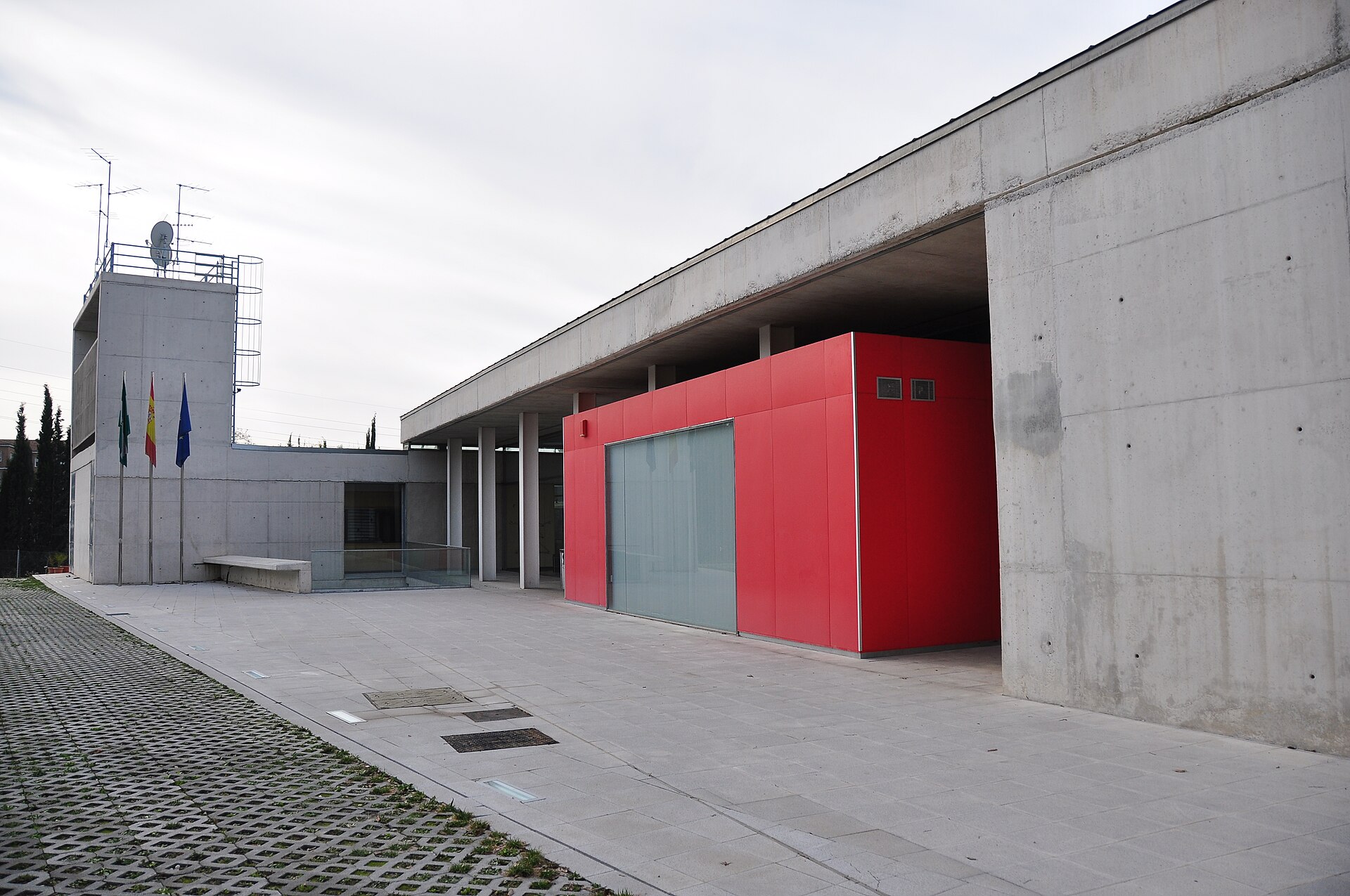
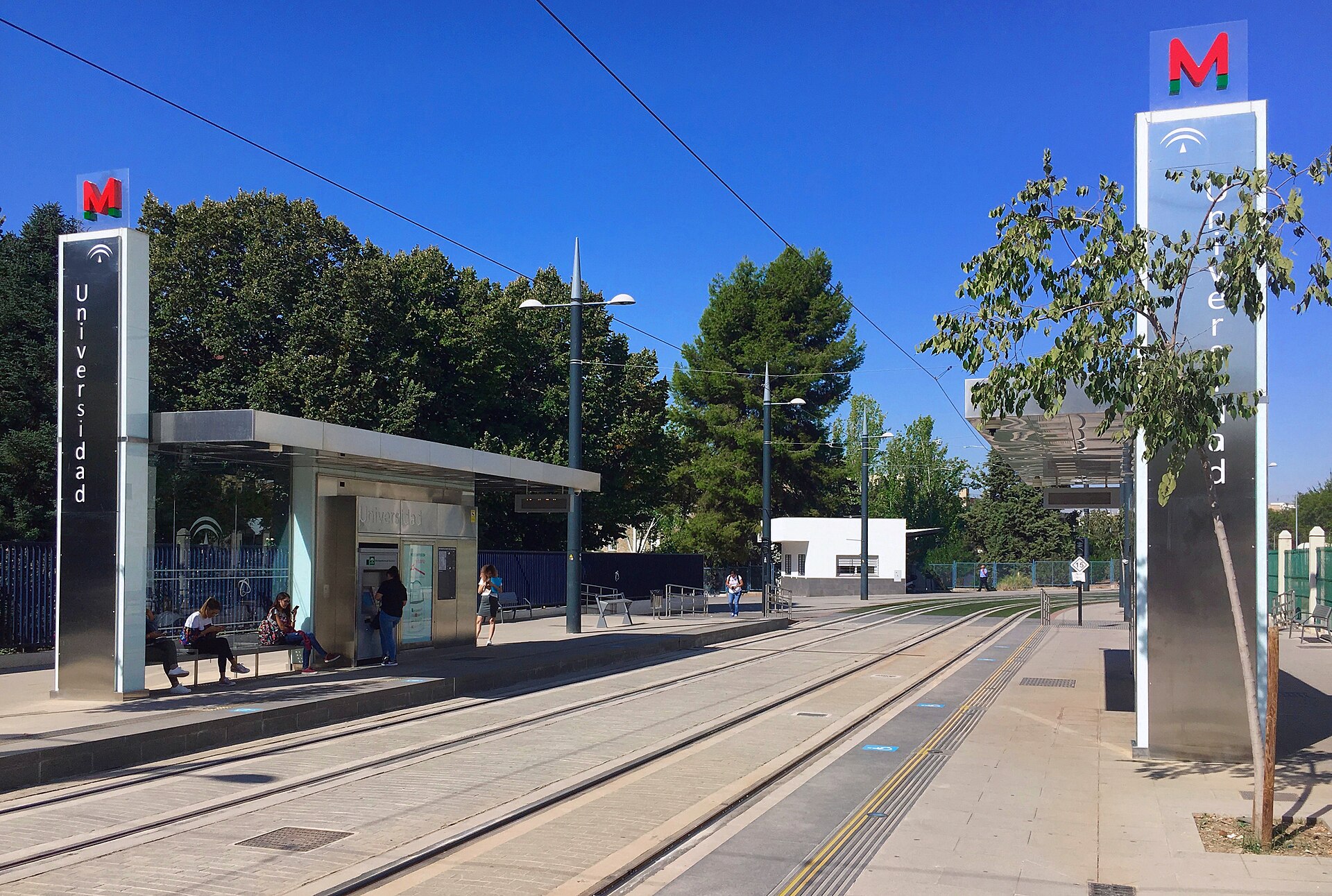
Universidad de Granada — campus in pictures
Real, freely-licensed photographs of the campus (via Wikimedia Commons).




WHY UGR
Why Choose the Universidad de Granada
UGR is not merely a historic institution — it is a living, internationally connected university whose reputation in language, medicine, law, and computer science is recognised across Europe and beyond. Here is what makes it stand out for ambitious international students.
ADMISSIONS OVERVIEW
Acceptance Rate & Admissions Profile
UGR is an open-access public university in the Spanish tradition, with a relatively high overall acceptance rate that masks significant variation by programme. Competitive programmes such as Medicine, Law, and Computer Engineering have far more selective entry through the Spanish university access system (EVAU/Selectividad equivalent or credential homologation for non-EU students). International students should research the specific programme they are applying to, as entry requirements differ substantially across faculties.
The university does not use standardised tests like the SAT or ACT — admission is credential-based, assessed by the quality of your secondary education and, for international students, the process of homologating your qualifications through Spain's Ministry of Education.
AT A GLANCE
Universidad de Granada — Key Facts
HOW TO APPLY
What Your Application Consists Of
International students applying for degree programmes at UGR follow Spain's direct-entry system rather than a US-style Common App. The process is credentials-first: there are no personal essays at undergraduate level, and the weight of your application rests on your academic record and the recognition of your qualifications.
ADMISSIONS PROFILE
What Universidad de Granada Looks For
UGR's undergraduate admissions are primarily merit-based on academic credentials, consistent with Spain's public university tradition. There is no holistic assessment of extra-curriculars or character essays at undergraduate level. However, highly competitive programmes reward students who have taken rigorous academic preparation.
APPLICATION TIMELINE
Application Deadlines & Key Dates
UGR's application deadlines for international students are set by Spain's university admissions calendar and may shift slightly each year. The timelines below are indicative — always confirm exact dates on the official admissions office website and the Spanish Ministry of Education portal for credential homologation, as processing times for non-EU qualifications can take several months.
Non-EU students should begin the credential homologation process at least 6 months before their intended start date, as the MEFP process can be slow. EU students with A-Level, IB, or equivalent qualifications typically face a faster application route.
| Phase | Period | Notes |
|---|---|---|
| Credential homologation (non-EU) | Starting from January | Apply to MEFP; allow 3–6 months |
| Pre-registration (international direct-entry) | February – May | Via UGR's online portal; check programme-specific dates |
| Admissions decisions | June – July | Varies by faculty and programme |
| Enrolment & matriculation | July – September | Semester 1 starts October; Semester 2 starts February |
| Spanish language preparation | Year-round | UGR Language Centre courses available online before arrival |
CAMPUS & CITY LIFE
Student Life in Granada
Granada is not simply a beautiful backdrop for your studies — it is an active, affordable, and culturally rich student city where over 65,000 students, academics, and researchers live, creating a genuinely youthful urban energy. With the Alhambra visible from the hills above the city, and centuries of Islamic, Jewish, and Christian heritage woven into its streets, Granada offers an education beyond the lecture hall.
The university operates across multiple campuses: the historic city-centre campus houses humanities and social sciences faculties, while the Cartuja campus holds sciences and technology. The Health Sciences campus focuses on medicine and pharmacy. All are well-connected by public transport within a compact, walkable city.
GRADUATE OUTCOMES
Career Outcomes & Employment Prospects
UGR graduates enter the workforce with a strong foundation built on one of Spain's most respected public university degrees. The employment rate among graduates stands at 80%, with an average starting salary of approximately $26,000 USD — consistent with Spanish graduate market conditions in sectors where UGR excels.
UGR's Employment and Work Placement Office (CEP) provides one-to-one career counselling, access to a curated job database, internship placements, and professional development workshops including mock interviews. Over 70% of graduates completed at least one internship during their studies. The university itself is Granada's largest employer, giving students direct professional exposure on campus.
Cards
Stats
FREQUENTLY ASKED
International Students — Common Questions
Do I need to speak Spanish to study at UGR?+
For most undergraduate programmes, yes — the vast majority of UGR's undergraduate degrees are taught entirely in Spanish. You should reach B2 Spanish proficiency before starting. UGR's Language Centre offers Spanish courses (including intensives) that can help you prepare. Some postgraduate programmes and doctoral research can be conducted in English — verify each programme's language of instruction on the official programme page.
Is an IB Diploma accepted for admission?+
Yes. The International Baccalaureate Diploma is accepted at UGR. The minimum IB band for general access consideration is 27 points, though competitive programmes (Medicine, Computer Engineering, Law) typically require higher scores. Your IB results are assessed through the Spanish credential equivalency system.
What is credential homologation and do I need it?+
Homologation (homologación) is the process by which Spain's Ministry of Education (MEFP) officially recognises your foreign secondary school qualifications as equivalent to Spain's Bachillerato. Non-EU international students need this before applying to most undergraduate degree programmes. The process can take several months, so begin it well before your intended start date. EU students with compatible qualifications may follow a faster route.
Does UGR use the Common App or UCAS?+
No. UGR operates a direct application system through its own online portal. There is no involvement of Common App, UCAS, or any third-party centralised admissions platform. You apply directly to the university, specifying your programme of choice.
How affordable is studying at UGR?+
Very affordable by international standards. Annual tuition is approximately $1,500 USD. Total cost of attendance including living expenses is around $11,500 USD per year. Shared student accommodation in Granada costs just €200–300 per month per room. Compared to UK, US, or Australian universities, UGR offers dramatically lower costs for a world-ranked education.
Can I work while studying in Spain?+
EU students are entitled to work in Spain without restriction. Non-EU students on a student visa can typically work part-time (up to 20 hours per week during term). UGR's Career Services office can advise on part-time opportunities available on and around campus.
Is UGR a good university for postgraduate study?+
Yes — UGR is particularly strong at master's and doctoral level, where a higher proportion of programmes are offered in English (verify per programme). Approximately 20% of master's students are international. The university's research output and Coimbra Group membership provide strong foundations for doctoral research, especially in health sciences, linguistics, and computer science.
What is the Erasmus Gold Star, and what does it mean for me?+
UGR holds the Erasmus Gold Star (awarded 2007) for being Europe's leading destination for incoming Erasmus exchange students. For degree-seeking international students, this means a genuinely international campus atmosphere, extensive support infrastructure for non-Spanish speakers, and a social environment where meeting students from 80+ countries is the norm rather than the exception.
ACADEMIC EXPECTATIONS
Academic Life at UGR — What International Students Should Know
Studying at a Spanish public university means joining an academically serious, exam-focused environment where independent study and continuous assessment both play important roles. UGR's academic model differs from UK or US universities in structure, but not in rigour — particularly in competitive programmes like Medicine, Law, and Computer Engineering.
For international students, the most important preparation is linguistic: unless you enrol in one of UGR's postgraduate English-taught programmes, your studies will be conducted almost entirely in Spanish. Academic success at UGR therefore depends as much on your language confidence as on your subject knowledge. Plan to reach at least B2 Spanish before your first semester.
ACADEMIC BENCHMARKS
Entry Profile & Academic Standards
UGR does not require standardised tests (SAT/ACT) from any applicant. Entry is credential-based — the strength of your secondary school qualification and its equivalency under the Spanish system determines your programme eligibility. The benchmarks below apply to credential assessment.
TEST POLICY
Standardised Tests — Not Required at UGR
UGR operates a test-blind policy: the SAT, ACT, and equivalent standardised tests are neither required nor considered in admissions decisions. This is standard across Spanish public universities, which rely on national qualification equivalency rather than external standardised tests.
This test-blind approach is not a shortcut — it means the quality of your secondary education transcript carries the full weight of your application. A strong IB Diploma, A-Level set, or equivalent national qualification is the route to competitive programmes.
IB & INTERNATIONAL QUALIFICATIONS
IB Diploma, A-Levels & International Credentials
UGR accepts international secondary school qualifications including the IB Diploma and Cambridge A-Levels through Spain's credential recognition framework. These are converted to a Spanish nota de acceso (access score) that determines your eligibility for specific programmes.
For IB Diploma holders, a total score of 27 is the general minimum for access consideration. Highly competitive programmes — Medicine, Dentistry, Computer Engineering — typically attract successful applicants with significantly higher scores. IB Higher Level (HL) subjects in relevant disciplines (Biology and Chemistry for Medicine; Mathematics and Physics for Engineering) carry particular weight in the equivalency calculation.
Cambridge A-Level holders follow a similar process. Your A-Level grades are converted to an equivalent score within the Spanish university access system. Three A-Levels at strong grades (B or above) in relevant subjects generally provide a competitive application for most programmes.
SUBJECT PREPARATION
Subject Preparation by Programme Area
UGR's most competitive programmes have clear subject-preparation profiles. Even where formal subject prerequisites are not listed, students who have taken relevant disciplines at advanced level are better placed academically upon arrival.
LANGUAGE REQUIREMENTS
Language Requirements for International Students
Most undergraduate programmes at UGR are delivered entirely in Spanish. Prospective international students must carefully verify the language of instruction for their chosen programme. English-taught programmes exist primarily at postgraduate level.
UGR's own facts file does not list specific IELTS or TOEFL minimum scores. English language requirements are set programme-by-programme. The information below reflects general UGR policy — always check the specific programme admission requirements page.
| Language | Requirement | Applicable |
|---|---|---|
| Spanish | B2 minimum (DELE B2 or equivalent) | All Spanish-taught programmes (most undergraduate degrees) |
| English (IELTS) | Typically 6.0–6.5 (verify per programme) | English-taught master's and some doctoral programmes |
| English (TOEFL iBT) | Typically 79–90 (verify per programme) | English-taught master's programmes |
| Other languages | Programme-specific | Translation & Interpreting programmes require multiple languages |
PREPARATION ROADMAP
Building Your Academic Profile — Year by Year
UGR's admissions are grade-focused, but a strong international applicant also invests in language preparation and cultural readiness. Here is how to build the optimal profile across your secondary school years.
COMMON PITFALLS
Academic Mistakes to Avoid When Applying to UGR
- Underestimating the Spanish language requirement — most degrees are fully in Spanish; arriving without solid B2 proficiency sets you up for a very difficult first semester.
- Leaving credential homologation to the last minute — non-EU applicants who start this process in summer for an October start often find themselves delayed by a full academic year.
- Applying for a programme without checking the specific nota de acceso threshold — overall acceptance rates are high, but competitive programmes (Medicine, Computer Engineering) are genuinely selective.
- Confusing Erasmus exchange study with degree-seeking admission — UGR's Erasmus fame relates to exchange students, not direct-entry degree programmes. The admissions process for degree-seekers is entirely separate.
- Not researching language of instruction — assuming your master's programme is in English without verifying on the programme page can lead to an expensive last-minute change of plans.
- Overlooking postgraduate options — UGR's master's and doctoral programmes often have more English-language offerings and can be a smarter entry point for non-Spanish speakers who still want a UGR qualification.
- Ignoring the cost advantage — some students dismiss UGR as a budget option without recognising that its national ranking (#9 in Spain), research output, and Coimbra Group membership make it a genuinely prestigious choice at a fraction of the cost of UK or Australian alternatives.
COST & AFFORDABILITY
Studying at UGR — One of Europe's Most Affordable Ranked Universities
The Universidad de Granada offers one of the most compelling cost-to-quality ratios in European higher education. As a Spanish public university, tuition fees are among the lowest of any QS Top 350 institution globally, while Granada itself is one of Spain's cheapest student cities.
For international students comparing UGR to UK, US, Australian, or even some other European alternatives, the financial case is compelling: world-ranked education, a rich international community, and full immersion in Spanish — all for a total annual cost that many competitors charge for tuition alone.
ANNUAL COSTS
Cost Breakdown — Annual Estimates
The figures below are drawn from UGR's verified data. All amounts are approximate annual estimates in USD and will fluctuate with exchange rates. Note that non-EU students may face different tuition bands set by the Junta de Andalucía — verify current rates on the official UGR fees page.
| Component | Annual Usd | Notes |
|---|---|---|
| Tuition fees | ~$1,500 | Public university rate; non-EU may differ — verify |
| Total cost of attendance | ~$11,500 | Including tuition, accommodation, food, transport, personal |
| Cost of living (excluding tuition) | ~$9,500 | Accommodation (€200–300/room) + daily expenses |
| Application fee | ~$50 | One-time, non-refundable |
| Accommodation (shared room) | €200–300/month | Piso compartido (shared flat); most popular option |
FINANCIAL AID
Financial Aid for International Students
UGR offers some financial aid to international students, with an average aid percentage of approximately 15% for those who qualify. Financial support for international degree-seeking students at Spanish public universities typically comes through a combination of Spanish government scholarships (MEFP), regional Junta de Andalucía grants, and the university's own support funds.
Because UGR tuition is already exceptionally low by international standards, the financial barrier is more about living costs than fees. Students should assess their total cost of attendance and explore scholarship options before assuming they need significant aid. Many international students find UGR affordable without scholarships compared to their alternatives.
Verify all aid availability and eligibility on the official UGR scholarship pages and the Spanish Ministry of Education's scholarship portal (becas.educacion.gob.es). Aid conditions, eligibility criteria, and award levels change annually.
SCHOLARSHIPS
Named Scholarships & Funding Sources
International students at UGR can access scholarships from multiple sources: the university itself, the Spanish government, the Junta de Andalucía, and international bodies. The list below covers well-established programmes — verify current availability and amounts on official sources before applying.
NET PRICE REALITY
The Real Cost of Studying at UGR vs. Alternatives
The financial proposition at UGR is genuinely exceptional. At approximately $11,500 per year total cost of attendance, UGR costs less annually than one semester's tuition at most UK Russell Group universities, and a fraction of the cost of US private universities. For students whose primary goal is academic quality in a global environment at manageable cost, UGR is one of the strongest cases in Europe.
It is worth noting that UGR's low tuition reflects Spain's public university funding model — not a reduction in academic quality. The university is ranked #302 globally by QS and #9 nationally, with strong research investment and internationally recognised programmes. The cost advantage is structural, not a trade-off.
HOW TO APPLY FOR AID
Steps to Secure Financial Support
COST FAQS
Cost & Aid — Common Questions
How much does it actually cost to study at UGR per year?+
Total cost of attendance is approximately $11,500 USD per year, including tuition (~$1,500), accommodation (€200–300/month shared room), food, transport, books, and personal expenses. This is one of the lowest total costs among globally-ranked universities.
Do non-EU students pay higher tuition?+
Public university tuition in Spain is regulated by regional government. Non-EU students may be subject to different tuition rates set by the Junta de Andalucía for UGR. Verify the current fee structure for your nationality and programme on UGR's official fees page — the $1,500 figure reflects the standard public rate.
Are there scholarships specifically for non-EU international students?+
Yes — the Spanish government (MEFP) offers scholarships to international students in specific circumstances, and UGR participates in European mobility funding programmes. Your best first step is contacting UGR's International Welcome Centre and simultaneously checking the Spanish Ministry of Education scholarship portal.
Can I work part-time to support myself during my studies?+
EU students may work without restriction. Non-EU students on a student visa can generally work up to 20 hours per week. Given Granada's cost of living, even modest part-time income can meaningfully offset living expenses.
Is health insurance provided or do I need to arrange it separately?+
EU students with a valid European Health Insurance Card (EHIC) are covered for essential medical care in Spain. Non-EU students will typically need to obtain health insurance as part of their visa requirements. UGR's student services office can advise on insurance options.
How does the cost compare to other ranked Spanish universities?+
Public university tuition across Spain is similarly low at other institutions (Universidad Complutense de Madrid, University of Barcelona, etc.). UGR's advantage is specifically its combination of national ranking (#9), international reputation, Erasmus standing, and Granada's cost of living — which is lower than Madrid or Barcelona.
APPLICATION & STATEMENT
Applying to UGR — No Essays, But Your Preparation Still Matters
Unlike US or UK universities, the Universidad de Granada does not require a personal essay or personal statement for undergraduate admissions. Admission is based on academic credentials and the quality of your qualifications. This guide explains what you do need — and how to present the strongest possible application within Spain's direct-entry system.
For postgraduate (master's and doctoral) applications, a motivation letter is typically expected. This is a different document from a US personal statement or UK personal statement — it is shorter, more direct, and focuses on academic and professional rationale rather than personal narrative. This tab covers both contexts honestly.
APPLICATION SYSTEM
How UGR Applications Actually Work
Spain's university admissions system is credential-based and direct. There are no application essays for undergraduate programmes. The system works as follows:
POSTGRADUATE APPLICATIONS
The UGR Motivation Letter — What It Is and How to Write It
If you are applying to a master's or doctoral programme at UGR, the motivation letter is your primary opportunity to distinguish yourself from other applicants with similar academic profiles. Unlike a US personal statement, it should be concise, academic in tone, and programme-specific.
A strong UGR motivation letter typically runs 400–600 words and covers three elements: your relevant academic and professional background; your specific reasons for choosing this programme and UGR; and your professional or research goals upon graduation. Personal storytelling is less expected than in US applications — focus on intellectual rationale and programme fit.
DOCUMENT STRATEGY
Strengthening Your Application Beyond the Letter
Since UGR undergraduate admissions are credential-based, your 'strategy' lies in ensuring your supporting documents are impeccably prepared and your overall academic profile is as strong as possible. For postgraduate applicants, the quality and specificity of supporting documents matters significantly.
PROGRAMME FIT
Choosing the Right Programme — Getting It Right at UGR
Because UGR does not ask you to justify your programme choice in an essay at undergraduate level, students sometimes under-research their programme selection. This is a mistake — the wrong programme choice in Spain's credit-based system can be costly to change mid-study.
COMMON MISTAKES
Application Pitfalls to Avoid
- Submitting untranslated documents — all documents not in Spanish must be translated by a certified sworn translator (traductor jurado). Machine-translated documents are not accepted.
- Missing the apostille requirement — many countries' documents need an Apostille stamp for official recognition in Spain. Check what is required for your country and qualification type well in advance.
- Applying without starting the homologation process — non-EU students who apply to UGR without a homologation certificate (or without having initiated the process) will face significant delays.
- Writing a generic motivation letter for postgraduate applications — referencing specific programmes, faculty members, or research groups at UGR demonstrates genuine interest and dramatically improves your chances.
- Assuming English proficiency is enough — unless your programme is specifically listed as English-taught, you will study in Spanish. English proficiency is an entry requirement only for English-taught programmes.
- Failing to verify programme availability — not all programmes have international intake; some have strict quotas for non-EU students. Confirm with UGR's admissions office before investing significant time in your application.
- Neglecting Spanish language preparation until after admission — by the time you receive your offer, you should already be at B1 Spanish minimum. Starting from zero after receiving your offer puts you under enormous pressure before classes begin.
APPLICATION FAQS
Application Questions — Answered
Do I need to write a personal essay to apply to UGR?+
No — not for undergraduate programmes. Undergraduate admission at UGR is credential-based: your grades, qualification equivalency, and language certificates do the work. A motivation letter is required for most master's and doctoral programmes, but it is not the same as a US personal statement.
What should a motivation letter for UGR master's applications include?+
Focus on three things: your relevant academic and professional background; why you are applying to this specific programme at UGR (be specific about the curriculum, faculty, or research focus); and your goals after graduation. Keep it to 400–600 words. Avoid personal storytelling in favour of academic rationale.
Does UGR conduct admissions interviews?+
Interviews are not a standard part of UGR's undergraduate or most postgraduate admissions processes. Some doctoral programmes and research-based master's may include an informal conversation with a potential supervisor, but this is not universal. Confirm with the specific programme.
Can I apply to multiple programmes simultaneously?+
UGR's application system allows students to indicate programme preferences. However, credential homologation is programme-specific in how it is evaluated, so ensure your qualifications are appropriate for each programme you list. Prioritise carefully.
Is there a portfolio requirement for Architecture or Arts programmes?+
Architecture and fine arts-adjacent programmes may require a portfolio of creative work. Check the specific programme's admissions requirements on UGR's official page, as this varies by faculty and is not standard across all creative disciplines.
How can I strengthen my application if my grades are borderline?+
At undergraduate level, UGR's credential-based admissions leave limited room for supplementary materials to compensate for grades. If your grades fall below the programme's typical threshold, consider: studying additional qualifications, applying to a less competitive programme first, or exploring UGR's postgraduate routes as an entry point after completing a degree elsewhere.
Is the application process in Spanish or English?+
UGR's online application portal is primarily in Spanish. Key documents must be in Spanish (or translated by a sworn translator). International students should ensure they have sufficient Spanish to navigate the portal, or seek assistance from UGR's International Welcome Centre.
Courses — schools, degrees & intake
65 degrees across 5 groupings.
Artes y Humanidades (Arts and Humanities) · 16 degrees
Grado en Arqueología (Archaeology)
Grado en Bellas Artes (Fine Arts)
Grado en Conservación y Restauración de Bienes Culturales (Conservation and Restoration of Cultural Heritage)
Grado en Estudios Árabes e Islámicos (Arab and Islamic Studies)
Grado en Estudios Franceses (French Studies)
Grado en Estudios Ingleses (English Studies)
Grado en Filología Clásica (Classical Philology)
Grado en Filología Hispánica (Hispanic Philology)
Grado en Filosofía (Philosophy)
Grado en Historia (History)
Grado en Historia del Arte (History of Art)
Grado en Historia y Ciencias de la Música (History and Science of Music)
Grado en Industrias del Español y sus Culturas (Spanish Language Industries and Cultures)
Grado en Lenguas Modernas y sus Literaturas (Modern Languages and their Literatures)
Grado en Literaturas Comparadas (Comparative Literature)
Grado en Traducción e Interpretación (Translation and Interpreting)
Ciencias (Sciences) · 11 degrees
Grado en Biología (Biology)
Grado en Bioquímica (Biochemistry)
Grado en Biotecnología (Biotechnology)
Grado en Ciencia y Tecnología de los Alimentos (Food Science and Technology)
Grado en Ciencias Ambientales (Environmental Sciences)
Grado en Estadística (Statistics)
Grado en Física (Physics)
Grado en Geología (Geology)
Grado en Matemáticas (Mathematics)
Grado en Óptica y Optometría (Optics and Optometry)
Grado en Química (Chemistry)
Ciencias de la Salud (Health Sciences) · 9 degrees
Grado en Enfermería (Nursing)
Grado en Farmacia (Pharmacy)
Grado en Fisioterapia (Physiotherapy)
Grado en Logopedia (Speech Therapy)
Grado en Medicina (Medicine)
Grado en Nutrición Humana y Dietética (Human Nutrition and Dietetics)
Grado en Odontología (Dentistry)
Grado en Psicología (Psychology)
Grado en Terapia Ocupacional (Occupational Therapy)
Ciencias Sociales y Jurídicas (Social Sciences and Law) · 20 degrees
Grado en Administración y Dirección de Empresas (Business Administration and Management)
Grado en Antropología Social y Cultural (Social and Cultural Anthropology)
Grado en Ciencias de la Actividad Física y del Deporte (Sports Science)
Grado en Ciencias Políticas y de la Administración (Political Science and Public Administration)
Grado en Comunicación Audiovisual (Audiovisual Communication)
Grado en Criminología (Criminology)
Grado en Derecho (Law)
Grado en Economía (Economics)
Grado en Educación Infantil (Early Childhood Education)
Grado en Educación Primaria (Primary Education)
Grado en Educación Social (Social Education)
Grado en Finanzas y Contabilidad (Finance and Accounting)
Grado en Geografía y Gestión del Territorio (Geography and Territory Management)
Grado en Información y Documentación (Information and Documentation)
Grado en Marketing e Investigación de Mercados (Marketing and Market Research)
Grado en Pedagogía (Education / Pedagogy)
Grado en Relaciones Laborales y Recursos Humanos (Labour Relations and Human Resources)
Grado en Sociología (Sociology)
Grado en Trabajo Social (Social Work)
Grado en Turismo (Tourism)
Ingeniería y Arquitectura (Engineering and Architecture) · 9 degrees
Grado en Ciencia de Datos e Inteligencia Artificial (Data Science and Artificial Intelligence)
Grado en Edificación (Building Construction)
Grado en Estudios de Arquitectura (Architecture Studies)
Grado en Ingeniería Biomédica (Biomedical Engineering)
Grado en Ingeniería Civil (Civil Engineering)
Grado en Ingeniería de Tecnologías de Telecomunicación (Telecommunications Technology Engineering)
Grado en Ingeniería Electrónica Industrial (Industrial Electronic Engineering)
Grado en Ingeniería Informática (Computer Engineering)
Grado en Ingeniería Química (Chemical Engineering)
Want your real chances at Universidad de Granada?
Create a free TYCHR account for your personalised admit-chance, a shortlist you can track, exact entry requirements, and essay + counselling help.