UCSI University
Kuala Lumpur, Malaysia · Urban
KUALA LUMPUR, MALAYSIA
UCSI University Admissions Guide for International Students
UCSI University is one of Malaysia's most internationally diverse private universities, ranked among the world's top 300 by QS. Known for its exceptional medicine, pharmacy, and contemporary music programmes, and a distinctive co-operative education system that integrates real-world industry placements into every degree, UCSI offers a genuinely global campus experience in the heart of Kuala Lumpur — at a fraction of the cost of Western equivalents.
Campus
UCSI University — campus in pictures
Real, freely-licensed photographs of the campus (via Wikimedia Commons).
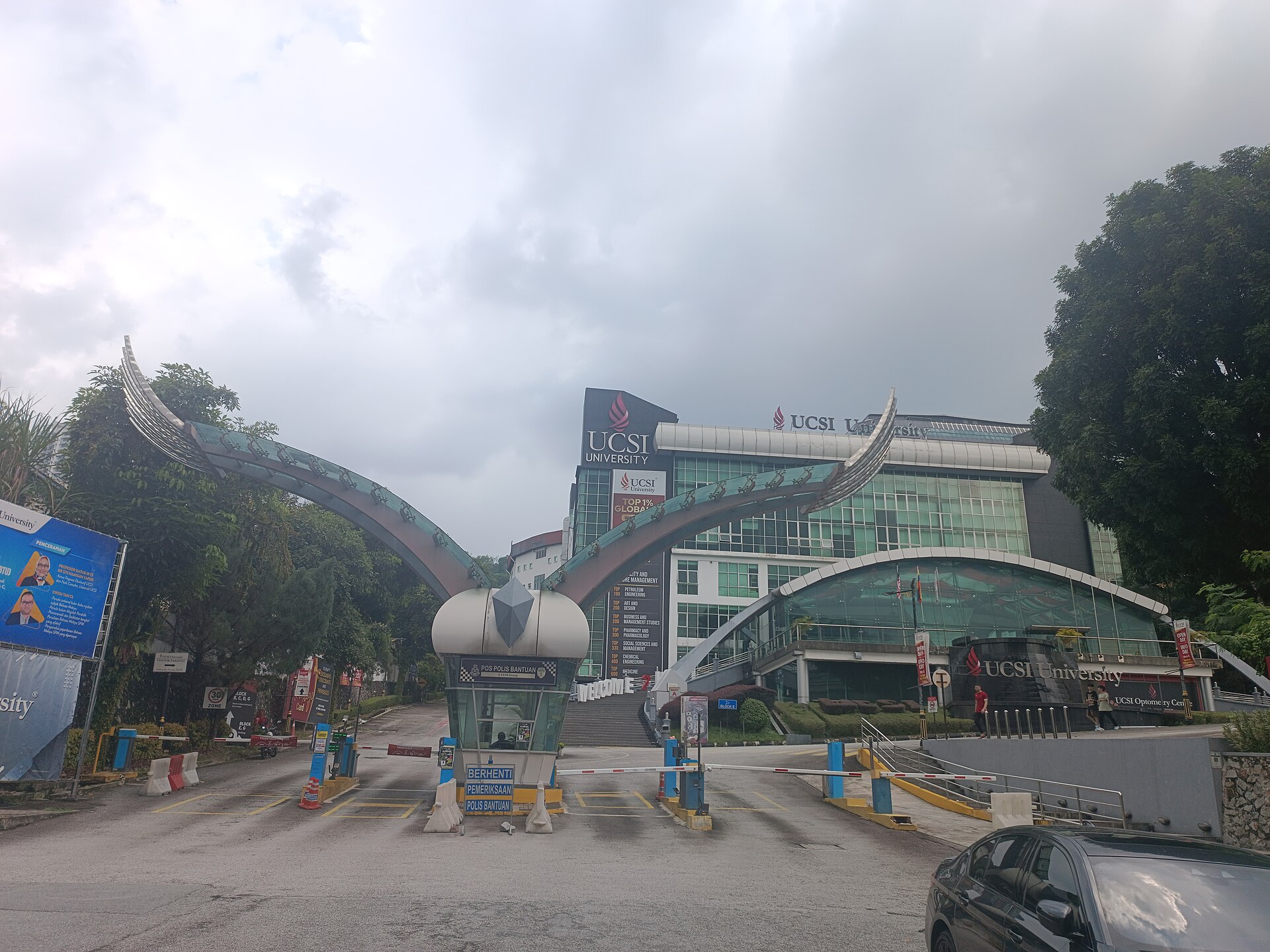
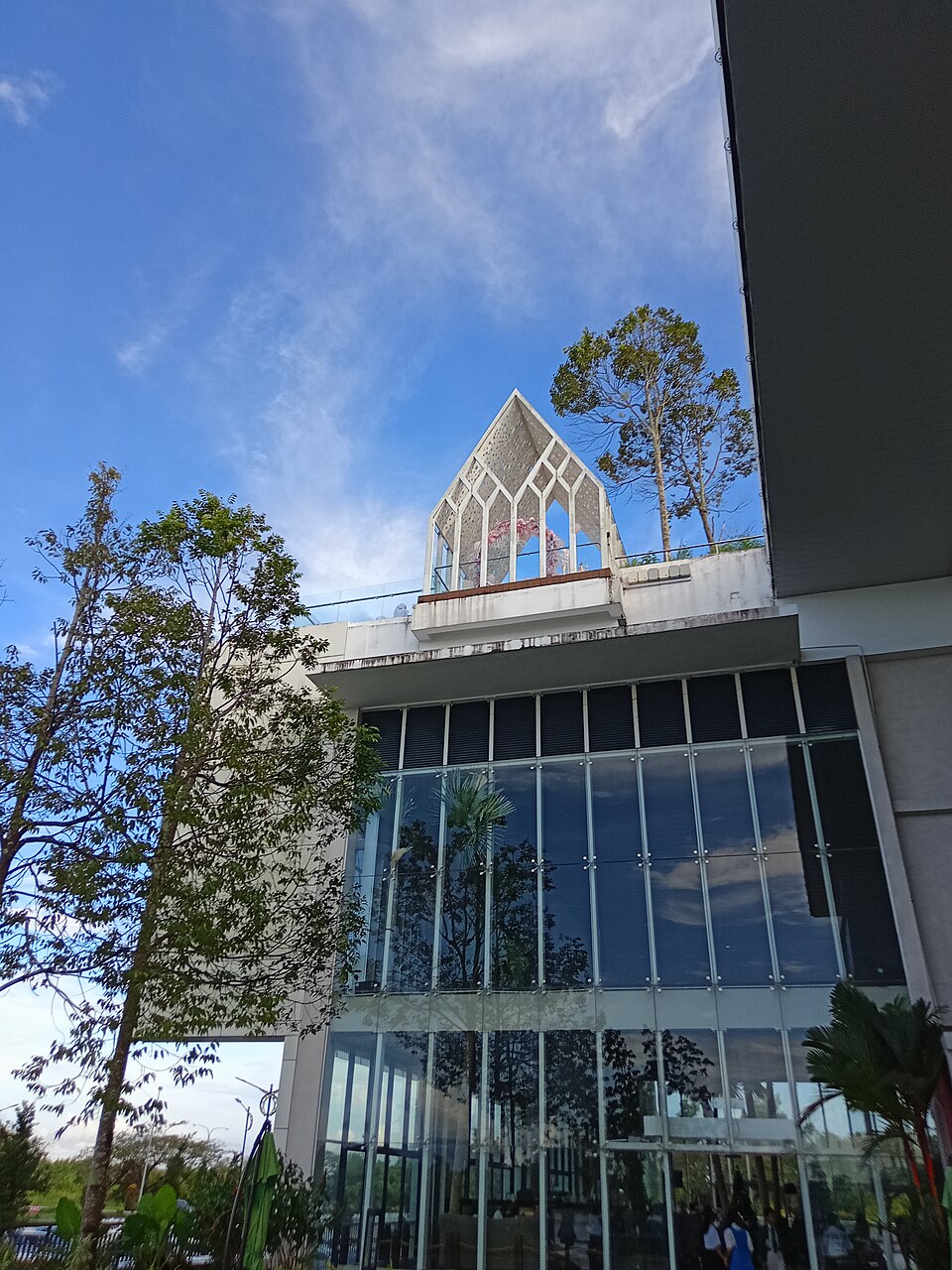
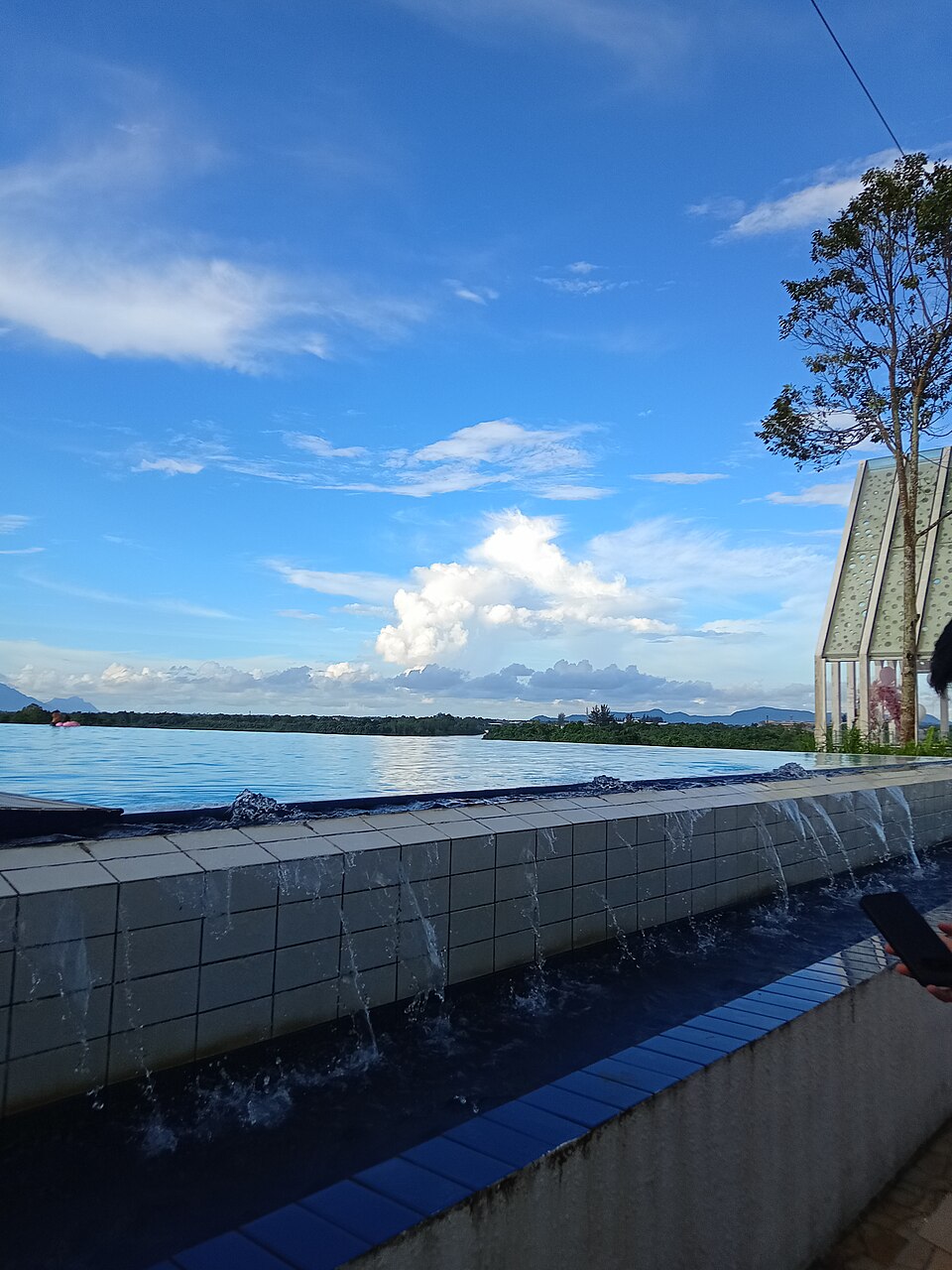
Why Choose UCSI — Rankings, Diversity & Real-World Learning
UCSI is rare among Malaysian private universities: QS-ranked globally, home to a full medical school, and built around a co-operative education philosophy that puts students in industry before they graduate.
SELECTIVITY
Who Gets In — Acceptance Profile
UCSI is accessible relative to top Western universities but maintains meaningful academic standards, particularly for competitive health and engineering programmes. With a 75% overall acceptance rate, the university is seeking students who meet subject-specific thresholds rather than simply filtering by raw selectivity.
Acceptance rate varies significantly by programme. Medicine, pharmacy, and nursing are substantially more competitive than the overall figure suggests — these faculties impose minimum grades in specific science subjects and often conduct interviews. Business, engineering, and hospitality programmes are more accessible for qualified applicants. International students are evaluated against the same academic thresholds as local students, with English proficiency a gating requirement.
AT A GLANCE
UCSI University — Quick Facts
UCSI operates four campuses: the main Kuala Lumpur campus (Cheras), a Sarawak campus in Kuching, a Springhill campus in Negeri Sembilan, and an international branch campus in Bangladesh — the first foreign university branch in that country. The university type is private non-profit, operating in an urban setting with strong public transport access in KL.
APPLICATION CHECKLIST
What Your Application Must Include
UCSI uses a direct online application system — there is no central Malaysian portal equivalent to UCAS or Common App. International students apply directly through the UCSI admissions portal.
ADMISSIONS CRITERIA
The Profile UCSI Admits
UCSI's admissions philosophy centres on academic readiness for the chosen programme, English competency, and the potential to contribute to the university's diverse community. Unlike highly selective Western institutions, UCSI does not employ a 'holistic' evaluation of extracurricular achievements for most programmes — academic credentials and English proficiency are the primary gates.
APPLICATION DEADLINES
Intake Periods & Application Timeline
UCSI typically offers two main intakes annually — February/March and September/October — with some programmes offering a July intake as well. Unlike US universities, there are no binding Early Decision rounds. Applications are reviewed on a rolling basis; apply early to secure your place and maximise scholarship eligibility.
Exact intake dates vary by programme and year. Always confirm current deadlines directly on the UCSI admissions page at ucsiuniversity.edu.my before applying.
| Intake | Application Open Approx | Application Deadline Approx | Notes |
|---|---|---|---|
| February / March | September–October (prior year) | December–January | Main intake for most programmes |
| July (select programmes) | March–April | May–June | Not all faculties; verify |
| September / October | April–May | July–August | Second main intake; strong for health sciences |
CAMPUS & CITY LIFE
Student Life at UCSI & in Kuala Lumpur
UCSI's main campus is located in Cheras, a southern suburb of Kuala Lumpur, well-connected by the MRT and bus network. The campus is compact but complete — with facilities for health sciences, a dedicated music building, engineering labs, and a residential college.
Kuala Lumpur is one of the most international and affordable capital cities in Asia for students. Street food is legendary (and extremely cheap), public transport covers the city well, and the social scene spans night markets, malls, hiking trails, and a genuinely diverse food culture. The cost of living is low by regional standards, with many students living comfortably on a tight budget. On campus, student clubs and societies are active across academic, cultural, and sporting lines. The international student community is well-supported — UCSI has an International Student Services office that assists with visa applications, EMGS (Education Malaysia) registration, and cultural orientation. Many students describe UCSI's campus atmosphere as genuinely multicultural, particularly in the residential colleges where local and international students live side by side.
OUTCOMES
Career Outcomes & Graduate Employment
UCSI reports an 82% graduate employment rate, supported by its co-operative education programme which places students in industry before graduation. The university's relationships with employers in healthcare, engineering, music, and business are a key differentiator.
Graduates enter sectors aligned with UCSI's strongest programmes: healthcare (hospitals and clinics across Southeast Asia), engineering (particularly in Malaysia and the Middle East), music production and performance, architecture and design, hospitality, and business and finance. UCSI's co-op alumni network is an informal but active pipeline into Kuala Lumpur's professional ecosystem. Medical and pharmacy graduates are registered and licensed to practise in Malaysia and typically eligible for registration processes in other countries after additional steps.
FAQs
Frequently Asked Questions
Is UCSI University accredited?+
Yes. UCSI is accredited by the Malaysian Qualifications Agency (MQA). Individual programmes — particularly medicine and pharmacy — hold additional accreditations from professional bodies such as the Malaysian Medical Council (MMC). Verify accreditation status for your specific programme on the MQA website.
Can I study at UCSI in English?+
All programmes at UCSI are taught in English. This makes it one of Malaysia's most accessible universities for international students who do not speak Bahasa Malaysia.
What is the student visa process for Malaysia?+
International students require a Student Pass issued by the Malaysian Immigration Department through the Education Malaysia Global Services (EMGS) system. UCSI's International Student Services office guides admitted students through the EMGS application, which begins after you receive your offer letter. Allow several months for the full visa process.
Does UCSI offer on-campus accommodation?+
Yes. UCSI operates residential colleges on or near the main Kuala Lumpur campus. Places are available for both local and international students on a first-come basis. Off-campus accommodation in the Cheras area is also affordable and widely available.
Is my IB Diploma accepted for entry?+
Yes. The IB Diploma is widely recognised by Malaysian private universities including UCSI. The minimum IB band for undergraduate entry is 26 overall, though competitive programmes (medicine, pharmacy) typically require higher scores and specific subject performance in sciences.
Are there scholarship opportunities for international students?+
Yes. UCSI offers several merit-based scholarship schemes for international students. These typically cover partial tuition and are awarded at the time of offer. Apply early — scholarship funds are limited and disbursed on a first-eligible basis.
What are the campuses like and which should I choose?+
The main Kuala Lumpur (Cheras) campus is the largest and home to the full programme range including medicine, pharmacy, and music. The Sarawak (Kuching) campus is smaller and offers selected programmes. Most international students are enrolled at the KL campus. Confirm your programme's campus with admissions before applying.
What is UCSI's co-operative education programme?+
UCSI's Pro-Ed (Professional Edge) programme is a compulsory co-operative education component built into most undergraduate degrees. Students undertake structured industry placements — typically 6–12 months across the degree — with UCSI-affiliated employers. It's one of UCSI's most distinctive features and a key reason for its strong graduate employment rate.
ACADEMIC STANDARDS
What UCSI Expects Academically from International Students
UCSI University is accessible compared to elite Western institutions, but the academic bar is real — particularly for health sciences and engineering. International students must demonstrate subject-specific competency, English proficiency, and readiness to engage in an English-medium programme from day one.
ACADEMIC BENCHMARKS
Academic Profile — What to Aim For
These are minimum thresholds, not typical admitted profiles. For medicine, pharmacy, and nursing, successful applicants typically hold substantially stronger results — strong science grades at A-Level or IB Higher Level are a practical requirement, not just a guideline. For competitive programmes, treat the minimums as a floor, not a target.
STANDARDISED TESTS
SAT, ACT & Standardised Test Policy
UCSI does not require the SAT or ACT for undergraduate admission. Standardised US test scores are neither required nor typically evaluated as part of the standard application for Malaysian university entry. Academic credentials from your national or international qualification system (IB, A-Levels, national boards) are the primary academic evidence reviewed.
This is consistent with Malaysian private university practice generally. If you hold strong SAT or ACT scores, you may include them to bolster your application profile, but they will not substitute for the standard academic credential requirements, and their absence creates no disadvantage.
IB & A-LEVELS
How IB Diploma & A-Levels Are Evaluated
Both the IB Diploma and Cambridge A-Levels (and O-Levels for pre-university foundation) are widely accepted and well-understood by Malaysian private universities. UCSI's admissions team is experienced with evaluating these qualifications.
STRATEGY
Malaysian University Admissions — No SAT/ACT Required
Unlike US universities, Malaysian institutions including UCSI evaluate candidates primarily on national or international school-leaving qualifications. Your IB or A-Level results are the primary academic credential.
International students applying to UCSI should ensure their school-leaving qualification meets the subject-specific requirements for their chosen programme. Academic planning from Year 11/12 should focus on taking the right subjects at the right level — particularly for health sciences and engineering, where specific HL/A-Level subjects are effectively compulsory.
ENGLISH PROFICIENCY
English Language Requirements
As all instruction is in English, an officially recognised English proficiency score is mandatory for students whose prior education was not in English. Exemptions may apply for students who have studied in English-medium schools for a minimum period — verify directly with UCSI admissions.
| Test | Minimum Score | Notes |
|---|---|---|
| IELTS Academic | 5.5 | Overall band; some programmes may require higher |
| TOEFL iBT | 60 | Internet-based total score |
| Duolingo English Test | 95 | Accepted as per UCSI policy |
| English-medium school exemption | Varies | Contact admissions to confirm eligibility |
SUBJECT PREPARATION
How to Prepare Academically by Programme Area
YEAR-BY-YEAR ROADMAP
Building Your Profile — Year 9 to 12
COMMON PITFALLS
Academic Mistakes to Avoid
- Applying with missing subject prerequisites — especially for medicine and engineering. Check the faculty-specific requirements, not just the university-wide minimums.
- Submitting unofficial or uncertified transcripts. UCSI requires certified copies; unsigned printouts will delay or invalidate your application.
- Underestimating the English proficiency requirement. IELTS 5.5 is the minimum, not the target. Aim for 6.0–6.5 to be competitive and avoid conditional admission delays.
- Leaving the English test to the last minute. Visa timelines in Malaysia are strict — any delay in final admissions steps (awaiting English scores) can push you to the next intake.
- Choosing the wrong campus. Not all programmes are available at all campuses. Confirm your programme is offered at your preferred campus before applying.
- Ignoring programme-specific interviews. Medicine and music require additional steps beyond the standard academic review. Applicants who don't prepare for the interview or audition risk rejection despite meeting academic thresholds.
COST & FINANCIAL AID
Cost of Studying at UCSI — Honest Numbers for International Students
UCSI University is significantly more affordable than comparable Western universities — especially for medicine and health sciences, where Malaysian private universities offer accredited MBBS programmes at a fraction of UK or Australian costs. Combined with Kuala Lumpur's low cost of living, UCSI represents strong value for international students seeking a quality English-medium degree in Asia.
COST BREAKDOWN
Estimated Annual Costs for International Students
All figures are approximate USD equivalents and vary by programme and year of study. Tuition for medicine and pharmacy is higher than the university average. Always verify current fees in Malaysian Ringgit (MYR) directly with UCSI admissions.
Malaysia's Ringgit is significantly weaker than USD; tuition quoted in MYR on the UCSI website will appear much lower in local currency. Always compare in your home currency.
| Item | Estimated U S D | Notes |
|---|---|---|
| Annual Tuition (average) | USD 8,500 | Varies by programme; health sciences higher |
| Total Cost of Attendance | USD 13,500 | Tuition + living + fees |
| Cost of Living (annual) | USD 4,500 | Accommodation, food, transport, personal |
| Application Fee | USD 100 | Non-refundable, paid at application |
FINANCIAL AID
Financial Aid for International Students
UCSI is a private university and does not receive Malaysian government subsidies that lower public university fees. However, UCSI does offer institutional scholarship and financial assistance programmes for eligible international students. On average, students receiving aid see approximately 20% of tuition covered through scholarship or bursary support.
International students are not eligible for Malaysian government-backed student loans (PTPTN), which are reserved for Malaysian citizens. Aid options are therefore limited to UCSI's own scholarship schemes, external government scholarships from your home country, and private sponsorships. It is strongly recommended to plan financially for the full cost of attendance and treat scholarship awards as a welcome reduction rather than a guaranteed source of funding.
SCHOLARSHIPS
Scholarship Opportunities at UCSI
UCSI offers institutional merit scholarships for international students. Exact scholarship names, coverage amounts, and eligibility criteria should be confirmed directly with UCSI's scholarship office, as these change annually. The following reflects the general structure of UCSI's scholarship programmes — verify current offerings at ucsiuniversity.edu.my.
All scholarship details below are qualitative. Confirm current names, amounts, and eligibility on the official UCSI scholarships page before applying.
AFFORDABILITY
Net Cost Reality — What International Students Actually Pay
UCSI's tuition is significantly below comparable programmes in the UK, Australia, Canada, or the US. A full MBBS programme at a Malaysian private university costs a fraction of the equivalent in Western countries, which is a primary draw for international students in health sciences.
Kuala Lumpur's cost of living is low by global capital city standards. Students on a careful budget can manage accommodation, food, transport, and personal expenses on approximately USD 4,500 per year — or less if living in university residential colleges. The city's street food culture makes eating well extremely affordable. Even without scholarship support, UCSI represents strong value for money relative to equivalent English-medium programmes in Western destinations. Students from weaker-currency countries (many in South and Southeast Asia, Africa, and the Middle East) find that USD 13,500 per year total cost of attendance is extremely competitive. The university's employment outcomes — 82% employment rate and structured co-op placements — further improve the return on investment.
HOW TO FUND YOUR DEGREE
Steps to Secure Funding Before You Arrive
COST FAQs
Frequently Asked Questions — Costs & Aid
Is UCSI cheaper than studying medicine in the UK or Australia?+
Significantly so. MBBS programmes in the UK and Australia typically cost USD 30,000–60,000 per year for international students. Malaysian private university MBBS programmes — including at UCSI — are a fraction of that, with total annual costs (including living) typically under USD 15,000. UCSI's MMC-accredited medical degree is widely recognised in the region.
Can I work part-time while studying in Malaysia?+
International students on a student pass in Malaysia may work part-time (typically up to 20 hours per week during semester, full-time during official breaks) subject to immigration approval. This can offset living costs. Confirm current regulations with UCSI's international student services office as policies may change.
Are scholarship decisions announced before I accept my offer?+
Typically yes — UCSI includes scholarship awards in or shortly after the offer letter. However, the timeline can vary. Contact the scholarship office proactively if you need the scholarship decision before your offer acceptance deadline.
Does tuition increase between years of study?+
Private Malaysian universities typically implement modest annual tuition increases. Confirm UCSI's fee progression policy — whether the fee is fixed for the cohort or subject to annual revision — directly with the finance office before enrolling.
Are there additional fees beyond tuition?+
Yes. Expect additional annual fees for student services, resource fees, examination fees, and (for residential college) accommodation charges. These are separate from tuition and should be factored into your total budget. The USD 13,500 cost of attendance estimate is designed to cover all of these.
APPLICATION & PERSONAL STATEMENT
How Applications Work at UCSI — A Direct Application System
UCSI University uses a direct application model — there is no UCAS, Common App, or central Malaysian portal equivalent. International students apply directly through the UCSI admissions website. Unlike US universities, the application does not require formal supplemental essays or Common App personal statements. However, a personal statement or letter of motivation is required for most programmes and carries real weight in competitive faculties.
HOW IT WORKS
The UCSI Application — What You're Actually Writing
Malaysian universities do not use the US model of multiple scored essays. The writing requirement at UCSI is a personal statement — typically a short letter of motivation — submitted as part of the online application. Its importance varies by programme:
WHAT TO WRITE
Personal Statement — What UCSI Looks For
UCSI does not publish a specific set of fixed essay prompts in the way US universities do. The personal statement is a free-format letter of motivation. The following reflects the expected content based on UCSI's admissions guidance and Malaysian private university practice — verify any updated requirements on the official admissions page.
UCSI does not prescribe fixed prompt texts. The following are content guidance points, not verbatim prompts. Always confirm requirements on the official admissions page before submitting.
STRATEGY
Writing a Strong Personal Statement for UCSI
There is no 650-word Common App essay or UCAS three-question format here. Your personal statement is typically a free-form document of 300–600 words (check the UCSI application form for any specified length). This brevity means every sentence must earn its place.
Open with a specific moment, observation, or question — not 'Since childhood, I have always wanted to be a doctor.' Malaysian admissions readers read hundreds of statements that begin this way. What makes you readable is specificity: a patient you observed during a hospital visit, a piece of music that changed your understanding of composition, a structural problem you encountered building something that made you think about engineering differently. The middle section should establish your preparation — your academic choices, your relevant experiences, and why you're ready for the rigour of your chosen programme at UCSI. Be honest about where you are in your journey; applicants who overly inflate achievements are transparent to experienced readers. Close by connecting your UCSI degree to a clear professional trajectory. You don't need a fully formed career plan — but you need to demonstrate that you've thought seriously about what you'll do with this degree.
PROGRAMME-SPECIFIC
Additional Requirements by Programme
TOPIC GUIDANCE
Choosing What to Write About
Your personal statement is not a CV recitation — it is a window into your thinking and motivation. The most effective statements do one or two things well rather than listing everything you've done.
COMMON MISTAKES
Personal Statement Pitfalls to Avoid
- Writing a generic statement that doesn't mention UCSI, Malaysia, or your specific programme. Admissions readers can tell when a statement was recycled from a UK or US application.
- Exceeding the stated word limit. If the application specifies a maximum, respect it precisely. Malaysian university admissions offices follow up on non-compliant documents.
- Using AI-generated text without personalisation. AI-drafted statements are identifiable by their pattern of generality and tend to be the weakest submissions. Your personal experiences cannot be generated.
- Focusing only on achievements without explaining motivation. A list of competitions won tells the reader what you've done, not why you want to study this subject at UCSI.
- Ignoring English quality. Your personal statement is also an informal English proficiency assessment. Poor grammar, wrong tenses, or awkward phrasing will undermine an otherwise strong academic profile. Have a fluent English speaker review your statement before submission.
- Submitting without reading the programme's specific requirements. Music, medicine, and architecture have additional application steps. A student who submits only a personal statement and misses the audition or portfolio requirement will not advance.
FAQs
Personal Statement & Application FAQs
Does UCSI use the Common App?+
No. UCSI uses its own direct application portal. There is no Common App, Coalition App, or UCAS process for UCSI. Apply directly through the UCSI admissions website.
How long should my personal statement be?+
UCSI does not mandate a fixed length publicly, but 300–600 words is the practical norm for a Malaysian private university personal statement. Check the specific field or upload instructions in the application form for any stated limit.
Is the personal statement really read?+
Yes — especially for competitive programmes (medicine, music, architecture, pharmacy). For more accessible programmes, it is read but carries less weight than academic grades and English proficiency.
Can I submit the same personal statement to multiple Malaysian universities?+
You can, but you should not submit it unchanged. Each university has specific strengths and programmes — a statement that mentions UCSI's co-op programme or specific faculty will read as more genuine than one that uses generic language.
Is there an interview for all programmes?+
No. Interviews are primarily associated with health sciences (medicine, pharmacy, nursing) and may occur for music and some competitive engineering tracks. Most business, social science, and general arts programmes do not involve an interview.
How should I submit my portfolio for music or architecture?+
Contact the relevant faculty directly — the Faculty of Music & Performing Arts and the Faculty of the Built Environment each have their own submission guidelines for auditions and design portfolios. These are typically submitted online, though live auditions for music are also possible. Confirm the current submission format directly with faculty admissions.
Courses — schools, degrees & intake
47 degrees across 10 groupings.
Faculty of Applied Sciences · 4 degrees
Bachelor of Science (Hons) in Biotechnology
Bachelor of Science (Hons) in Food Science
Bachelor of Science (Hons) in Nutrition
Bachelor of Science (Hons) in Marine Science and Oceanography
Faculty of Business and Management · 8 degrees
Bachelor of Business Administration (Hons)
Bachelor of Accountancy (Hons)
Bachelor of Finance (Hons)
Bachelor of Marketing (Hons)
Bachelor of Science (Hons) in Actuarial Science
Bachelor of Economics (Hons)
Bachelor of Industrial Management (Hons)
Bachelor of Transport Management and Logistics (Hons)
Faculty of Computing and Information Technology · 6 degrees
Bachelor of Science (Hons) in Computer Science
Bachelor of Science (Hons) in Information Technology
Bachelor of Science (Hons) in Business Computing
Bachelor of Science (Hons) in Computer Networks and Security
Bachelor of Science (Hons) in Multimedia Computing
Bachelor of Engineering (Hons) in Telecommunications Engineering
Faculty of Engineering, Technology and Built Environment · 9 degrees
Bachelor of Engineering (Hons) in Chemical Engineering
Bachelor of Engineering (Hons) in Civil Engineering
Bachelor of Engineering (Hons) in Electrical and Electronic Engineering
Bachelor of Engineering (Hons) in Mechanical Engineering
Bachelor of Engineering (Hons) in Petroleum and Gas Engineering
Bachelor of Architecture (Hons)
Bachelor of Science (Hons) in Construction Management
Bachelor of Quantity Surveying (Hons)
Bachelor of Interior Architecture and Design (Hons)
Faculty of Hospitality, Tourism and Culinary Arts · 3 degrees
Bachelor of International Hotel Management (Hons)
Bachelor of Tourism Management (Hons)
Bachelor of Culinary Arts and Food Service Management (Hons)
Faculty of Medicine and Health Sciences · 4 degrees
Bachelor of Medicine and Bachelor of Surgery (MBBS)
Bachelor of Nursing (Hons)
Bachelor of Science (Hons) in Health Sciences
Bachelor of Optometry (Hons)
Faculty of Pharmaceutical Sciences · 1 degrees
Bachelor of Pharmacy (Hons)
Faculty of Social Sciences and Liberal Arts · 6 degrees
Bachelor of Arts (Hons) in English
Bachelor of Arts (Hons) in Psychology
Bachelor of Arts (Hons) in Mass Communication
Bachelor of Arts (Hons) in Advertising and Publicity
Bachelor of Arts (Hons) in Fashion Design
Bachelor of Education (Hons) in TESL
Institute of Music · 3 degrees
Bachelor of Music (Hons) in Performance
Bachelor of Music (Hons) in Contemporary Music
Bachelor of Music Education (Hons)
Institute of Creative Arts and Design · 3 degrees
Bachelor of Graphic Design (Hons)
Bachelor of Fine Arts (Hons)
Bachelor of Digital Animation (Hons)
Want your real chances at UCSI University?
Create a free TYCHR account for your personalised admit-chance, a shortlist you can track, exact entry requirements, and essay + counselling help.