TU Wien (Vienna University of Technology)
Vienna, Austria · Urban
VIENNA, AUSTRIA · PUBLIC TECHNICAL UNIVERSITY
TU Wien Admissions Guide for International Students
TU Wien — Vienna University of Technology — is Austria's largest and most prestigious technical university, founded in 1815 in the heart of one of Europe's most livable cities. Ranked #191 globally by QS and #2 in Austria, TU Wien trains engineers, scientists, and technologists who shape industries from AI and quantum computing to sustainable infrastructure and advanced manufacturing. For ambitious international students seeking a world-class technical education at remarkably low cost, TU Wien offers a compelling alternative to pricier English-speaking destinations.
Campus
TU Wien (Vienna University of Technology) — campus in pictures
Real, freely-licensed photographs of the campus (via Wikimedia Commons).
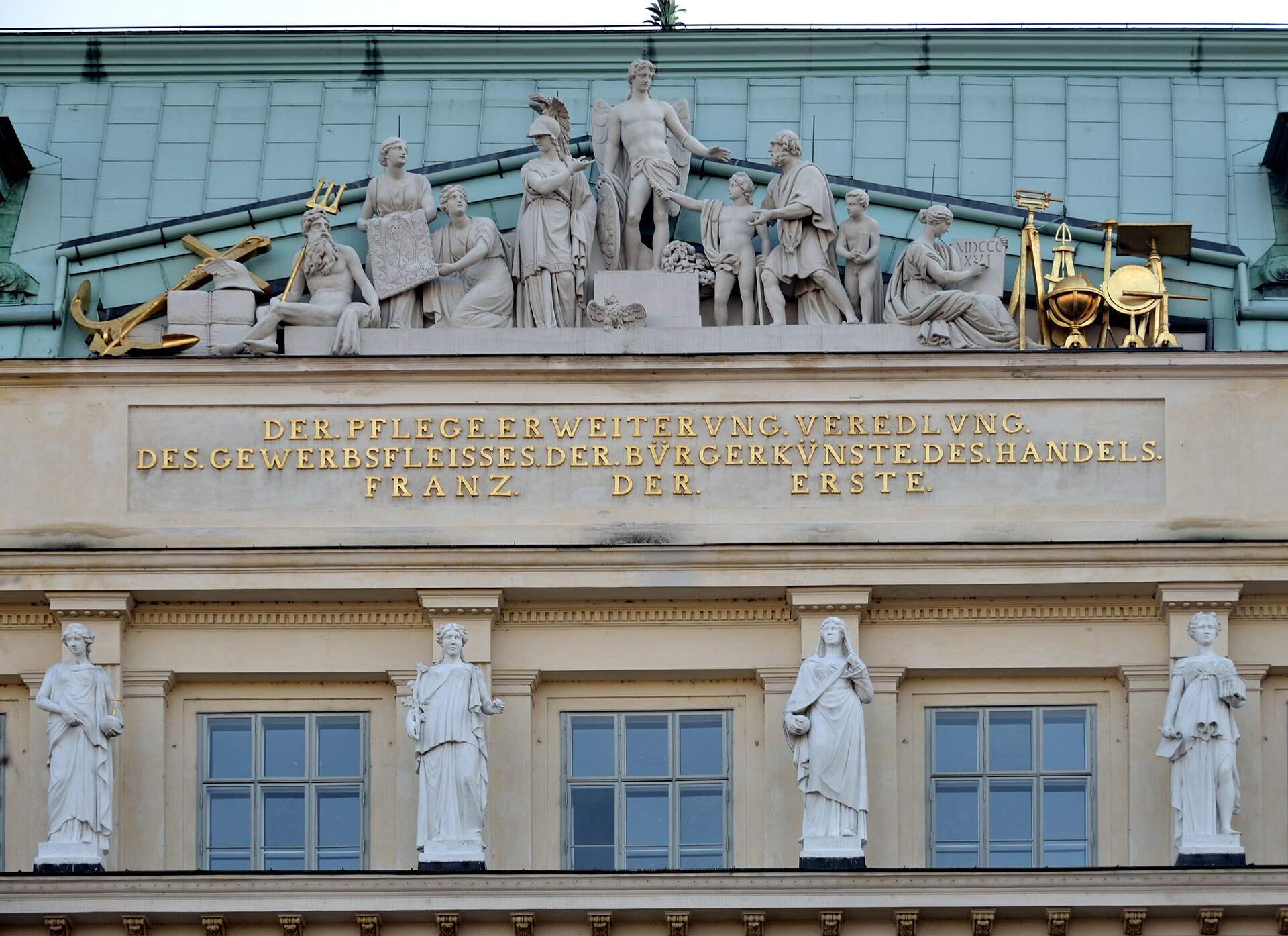
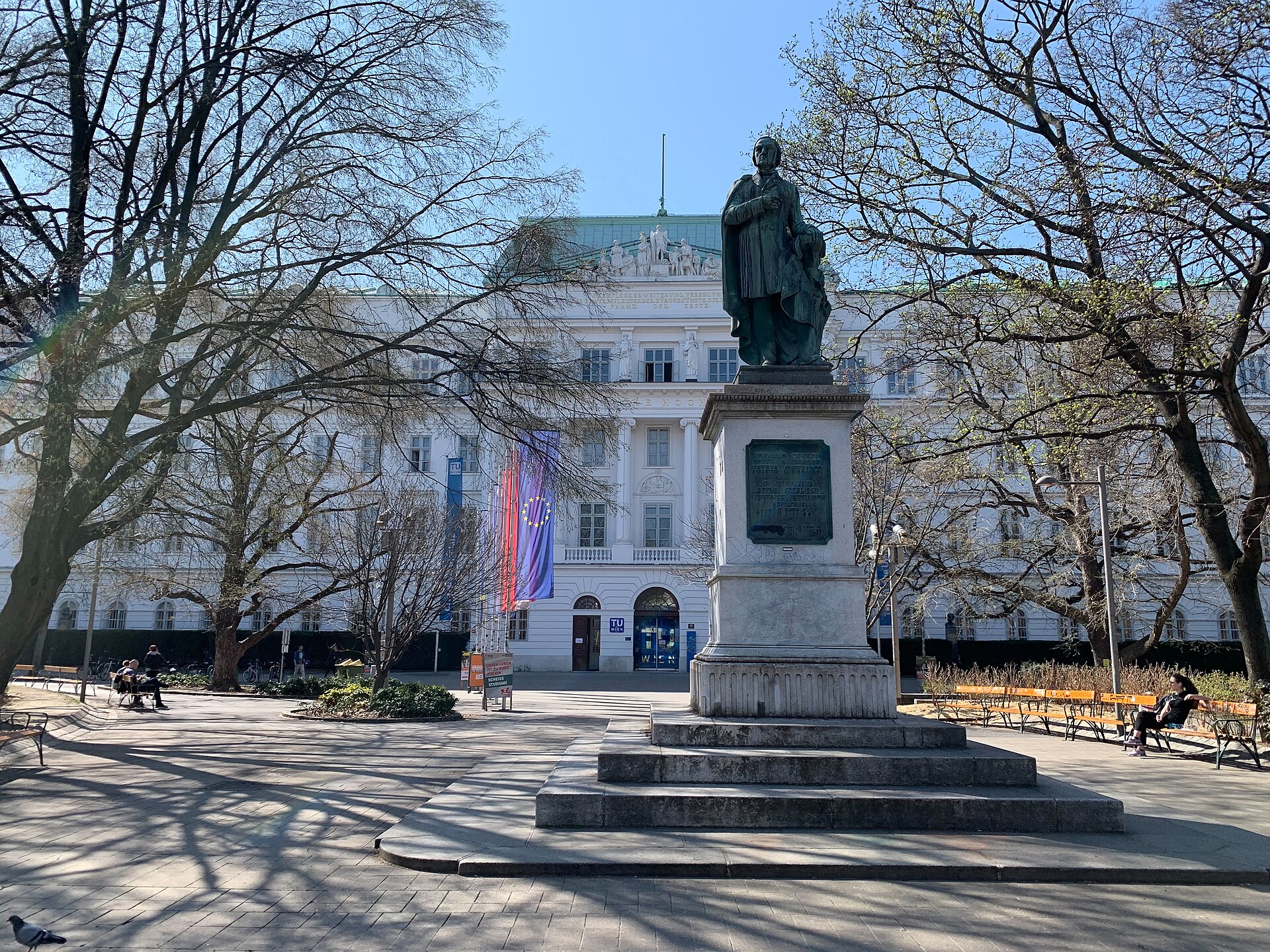
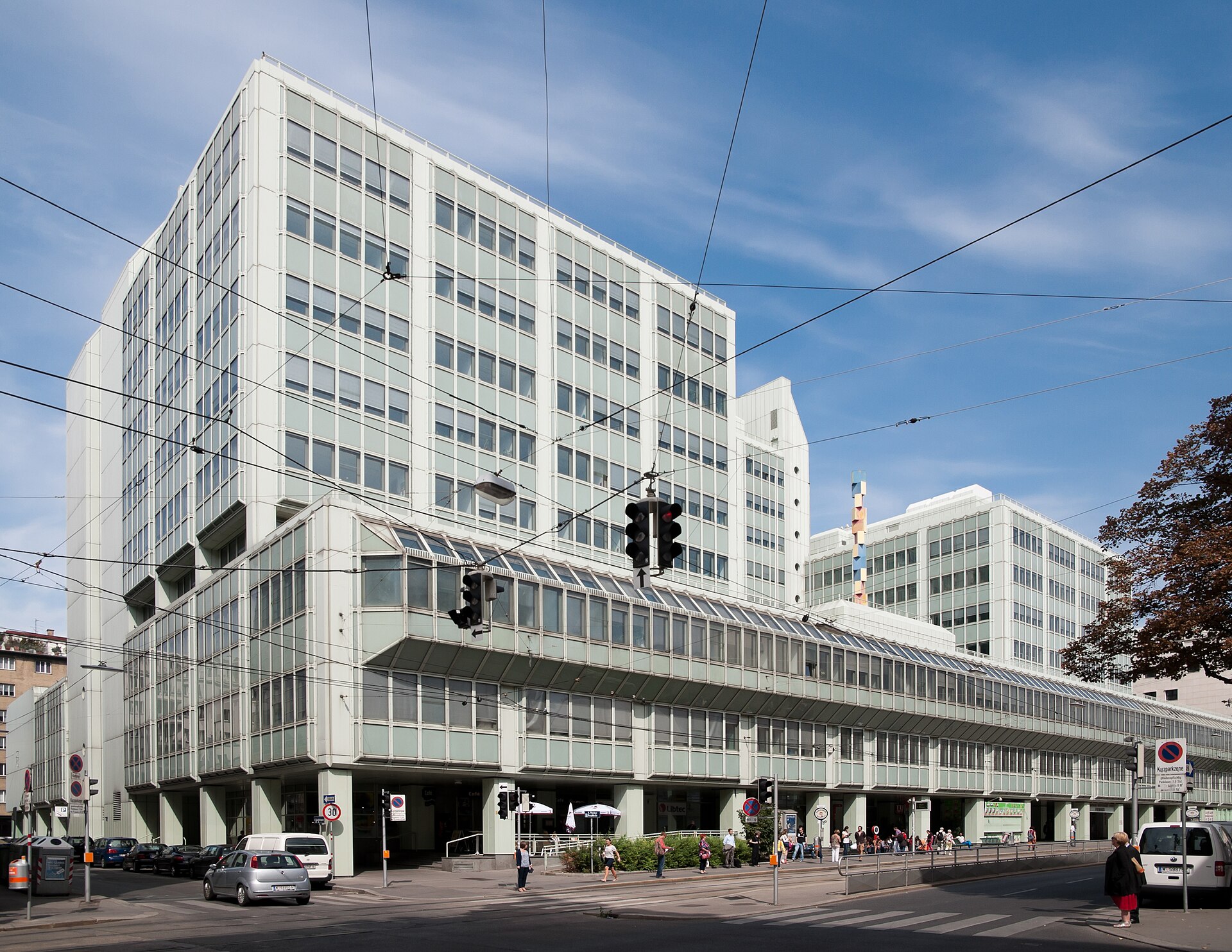
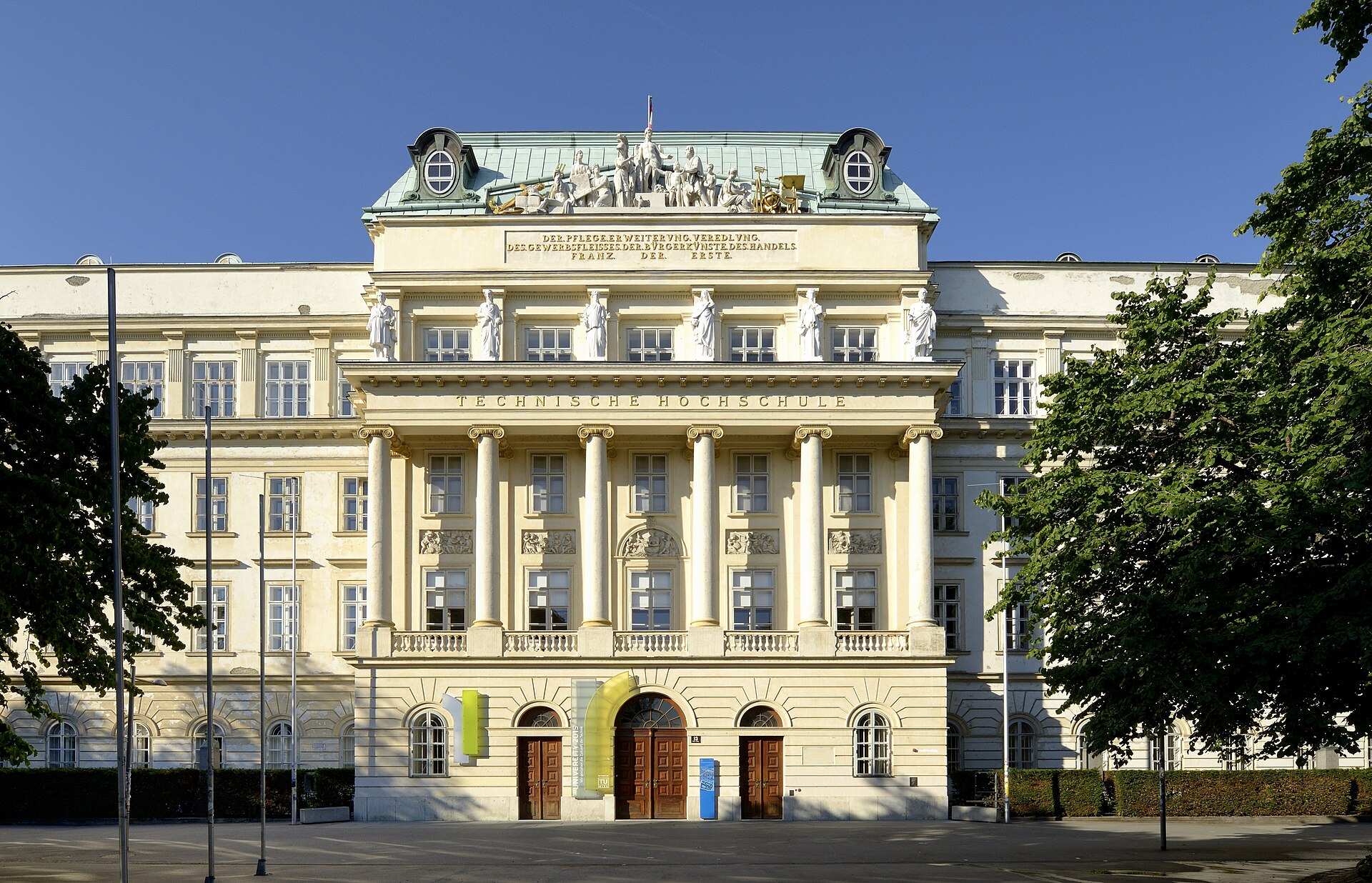
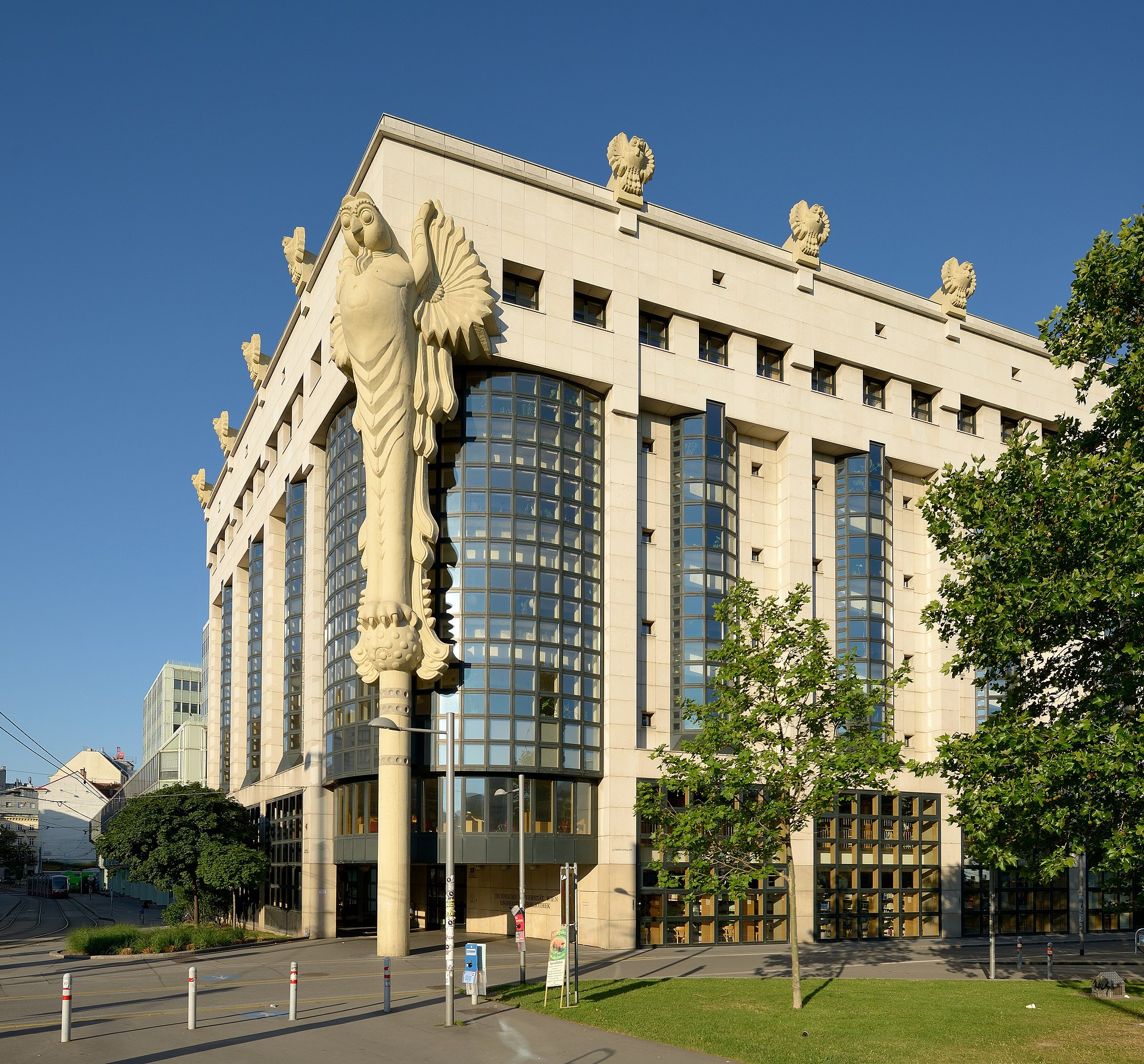
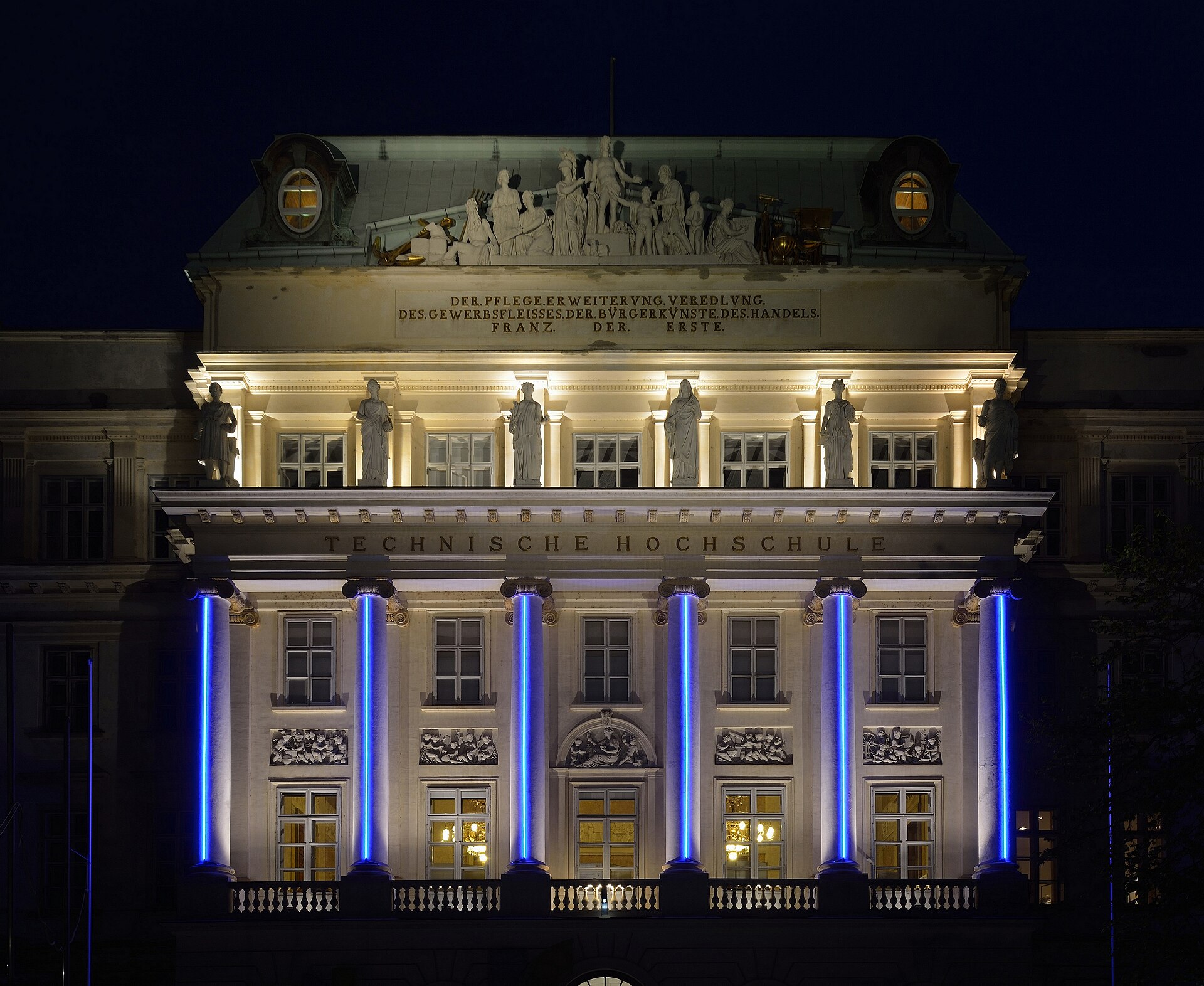
WHY TU WIEN
Five Reasons to Choose TU Wien
SELECTIVITY
Acceptance Rate & Admission Profile
TU Wien is moderately selective overall, with an acceptance rate of approximately 35%. However, selectivity varies significantly by programme. Entrance exams apply to Computer Science (Informatics), Architecture, and Spatial Planning — these gateway programmes are considerably more competitive. Many other programmes are open-admission for applicants who hold a recognised secondary school qualification equivalent to the Austrian Matura.
AT A GLANCE
TU Wien Quick Facts
APPLICATION COMPONENTS
What TU Wien Looks at in Your Application
TU Wien does not use a holistic US-style application. Admission is primarily qualification-based: you must show your secondary-school certificate (for bachelor's) or degree transcript (for master's) is equivalent to the Austrian standard. The system is transparent and criteria-driven.
ADMISSION CRITERIA
Who TU Wien Admits
TU Wien's admissions philosophy differs fundamentally from US institutions. Admission is principally criteria-based rather than holistic: if your qualification is formally recognised as equivalent to Austrian standards, and you meet the programme's prerequisites, you are eligible to enrol. For programmes with entrance exams, your performance in that exam determines admission. For master's with selection procedures, your academic record and motivation letter are assessed together.
APPLICATION TIMELINE
When to Apply to TU Wien
TU Wien uses a semester-based academic calendar (winter semester starting October; summer semester starting March). Non-EU/EEA applicants face a special earlier admission period — check the TU Wien academic calendar and TISS portal for current-cycle exact dates. The below represents the general structure; always verify deadlines at the official admission page before applying.
Non-EU/EEA students must apply significantly earlier to allow time for credential assessment and Austrian visa processing. Always confirm current deadlines directly with TU Wien's Admissions Office or via the official academic calendar.
| Intake | Eu Eea Deadline | Non Eu Deadline | Notes |
|---|---|---|---|
| Winter Semester (Oct) | Early September (typical) | Late June / early July (verify) | Main intake; all programmes available |
| Summer Semester (Mar) | Early February (typical) | November (verify) | Limited programmes; fewer new intakes |
| Entrance Exam Programmes | Pre-registration months before exam | Same pre-registration window | Informatics, Architecture, Spatial Planning only |
CAMPUS & CITY LIFE
Living & Studying in Vienna
TU Wien's main buildings are clustered around Karlsplatz and the 4th district of Vienna — a vibrant, walkable neighbourhood steps from the Vienna State Opera, Museum Quarter, and the historic Ringstrasse. The campus is not a closed residential quad; it is embedded in the city itself, which is a feature, not a limitation.
CAREER OUTCOMES
Where TU Wien Graduates Go
TU Wien graduates enjoy strong employment outcomes in Vienna's technology, engineering, and consulting sectors, as well as across the EU. Austria's engineering labour market is robust, with demand particularly high in digital transformation, sustainable energy, mechatronics, and software development.
Stats
Cards
FREQUENTLY ASKED QUESTIONS
TU Wien FAQs for International Students
Do I need to speak German to study at TU Wien?+
For bachelor's programmes, yes — almost all are taught in German and entrance exams are conducted in German (at least B2 CEFR recommended). However, over 20 master's programmes are fully taught in English, meaning fluent English is sufficient for master's-level study. Check the language of instruction for your specific programme before applying.
Is TU Wien tuition-free?+
Not entirely free, but extremely affordable. EU/EEA students pay only the ÖH student union contribution (~€23 per semester). Non-EU/EEA students pay tuition of approximately €800 per semester, which remains one of Europe's lowest for a globally ranked technical university.
How do I apply to TU Wien as an international student?+
All applications go through TU Wien's TISS portal (tiss.tuwien.ac.at). You pre-register online, then submit your documents to the Admissions Office (Studienabteilung) either in person or by post. Non-EU/EEA students have an earlier special admission deadline to allow time for credential assessment.
Will my IB Diploma be accepted?+
Yes. The IB Diploma is recognised as an equivalent qualification to the Austrian Matura. An IB score of 30 or above is the indicative minimum, though competitive programmes may expect higher. Confirm subject-specific prerequisites with the Admissions Office for your chosen faculty.
Are there entrance exams at TU Wien?+
Entrance exams are required only for three bachelor's programmes: Computer Science (Informatics), Architecture, and Spatial Planning. These exams are conducted in German. All other bachelor's and master's programmes do not require an entrance exam beyond credential assessment.
Can I apply for the winter and summer semester?+
Both semesters are technically available, but the winter semester (starting October) is the main intake with the full range of programmes. Some programmes only admit students in winter semester. The summer semester (starting March) has more limited availability.
Does TU Wien offer scholarships to international students?+
TU Wien itself has limited scholarship offerings for incoming international students. Most funding comes from external sources: the Austrian government's OeAD scholarships, your home country's bilateral agreements, or Erasmus+ (for European exchange students). Check the OeAD (oead.at) for Austria-specific funding opportunities.
How do I get a student visa for Austria?+
Non-EU/EEA students need a student visa (Type D) or residence permit for Austria before arriving. The Austrian embassy or consulate in your home country handles the application. You will need your TU Wien admission confirmation, proof of financial means, and health insurance. Begin the visa process well before your programme starts.
ACADEMICS
Academic Expectations at TU Wien
TU Wien is a rigorous technical university. Academic demands are high, the curriculum is mathematically intensive, and students are expected to take significant ownership of their learning. International students who succeed here bring not only strong grades, but genuine curiosity and preparation in science and mathematics. Understanding the academic context before you apply — and what you need to prepare — is essential.
ACADEMIC PROFILE
What Academic Credentials Are Expected
TU Wien does not use standardised tests like the SAT or ACT in its admissions process. Admission is based on your secondary school certificate (for bachelor's) or prior degree transcript (for master's). The IB Diploma is recognised as equivalent to the Austrian Matura at a total score of approximately 30 or above, though individual subject requirements and higher competitive programme thresholds may apply.
TEST POLICY
Standardised Tests at TU Wien
TU Wien does not require or consider the SAT, ACT, GRE, or GMAT for any programme. The university's test policy is 'optional' in the sense that these exams play no role in admissions. The only 'tests' that matter are TU Wien's own programme-specific entrance examinations (for Informatics, Architecture, and Spatial Planning at bachelor's level), which test subject-specific knowledge rather than general aptitude. For English-taught programmes, an English proficiency test (IELTS, TOEFL, or Duolingo) is required.
SAT / ACT
SAT & ACT: Not Relevant for TU Wien
Unlike US universities, TU Wien does not use the SAT or ACT at any stage of admission. Submitting these scores will have no impact on your application. Time spent preparing SAT or ACT scores for a TU Wien application is time that could be better spent strengthening your German language skills (for bachelor's programmes), your mathematics and science foundation, or your English proficiency for testing (IELTS/TOEFL).
IB / A-LEVELS
How IB and A-Levels Are Assessed at TU Wien
TU Wien accepts the IB Diploma and UK A-Levels as recognised international qualifications equivalent to the Austrian Matura. Here is how they are typically assessed:
SUBJECT PREPARATION
What to Study Before Applying
ENGLISH REQUIREMENTS
English Proficiency Requirements for International Students
English proficiency tests are required for English-taught master's programmes only. German-taught programmes require German proficiency rather than English testing. The table below shows TU Wien's minimum accepted scores for English-language programmes.
Native English speakers and applicants who completed their bachelor's entirely in English may be exempt. Confirm exemption eligibility with the relevant faculty or Admissions Office.
| Test | Minimum Score | Notes |
|---|---|---|
| IELTS Academic | 6.5 | Overall band; no subscore below 6.0 (verify with faculty) |
| TOEFL iBT | 88 | Internet-based test |
| Duolingo English Test | 105 | Accepted by TU Wien |
| Cambridge C1 Advanced / C2 Proficiency | C1 grade C or above | Accepted as equivalent; verify with programme |
YEAR-BY-YEAR PLAN
Building Your Profile for TU Wien
COMMON PITFALLS
Academic Mistakes to Avoid When Applying to TU Wien
- Applying to a German-taught bachelor's programme without adequate German language preparation — you will struggle immediately from the first lecture.
- Underestimating the mathematical rigour: TU Wien courses assume strong calculus and algebra from day one. Arriving under-prepared in mathematics leads to high dropout rates.
- Missing the non-EU/EEA special admission deadline — it is significantly earlier than the EU/EEA deadline and cannot be extended.
- Failing to have your qualification assessed early: credential recognition can take time. Do not wait until the last minute to submit your documents.
- Choosing a German-taught programme thinking you will 'pick up' German once you arrive — bachelor's instruction and exams are entirely in German from the start.
- Not checking language-of-instruction for your specific master's programme: just because TU Wien offers English-taught programmes does not mean every master's is in English.
- Ignoring Austrian visa requirements: non-EU/EEA students must obtain a student visa before arriving. The process takes time and requires the admission confirmation letter.
- Overlooking entrance exam requirements for Informatics, Architecture, and Spatial Planning — many applicants are caught off-guard by the exam registration deadlines.
COST & AID
The Real Cost of Studying at TU Wien
TU Wien offers one of the most compelling value propositions in global higher education: a top-200 globally ranked technical university, located in one of Europe's great capitals, at a fraction of the cost of comparable institutions in the US, UK, or Australia. Tuition is exceptionally low by international standards, and Vienna's cost of living, while not cheap, is far more manageable than London, Zurich, or most major US cities. The honest picture: a TU Wien education is genuinely affordable for most international families, especially compared to alternatives.
COST BREAKDOWN
Annual Cost Estimate for International Students
The following estimates are based on TU Wien's published data. All figures are annual estimates in USD. Note that EU/EEA students pay only the ÖH student union fee (approximately €46/year or €23/semester), while non-EU/EEA students pay additional tuition of ~€800/semester.
Living costs in Vienna are manageable but real. Budget approximately €700–€1,200/month for accommodation, food, public transport, and personal expenses. A subsidised student transport pass significantly reduces commuting costs.
| Component | Annual Usd | Notes |
|---|---|---|
| Tuition (Non-EU/EEA) | ~$1,570 | ~€800/semester; EU/EEA pay ~€46/year only |
| Cost of Living (Vienna) | ~$14,000 | Housing, food, transport, personal |
| Total Cost of Attendance | ~$16,000 | Approximate annual total (non-EU/EEA) |
| Application Fee | $0 | No application fee at TU Wien |
| Health Insurance | ~$500–$1,000 | Required; varies by provider and home country |
FINANCIAL AID POLICY
Financial Aid for International Students
TU Wien does not operate a large institutional need-based financial aid programme equivalent to US universities. The university's contribution to affordability is primarily through its extraordinarily low tuition rather than grant disbursements. Most financial support for international students at TU Wien comes through external channels:
TU Wien's published avgAidPct data is not available. There is no institutional need-blind or need-based grant programme analogous to US colleges. The university's affordability case rests on its low tuition, not on grant disbursements.
SCHOLARSHIPS
Scholarships Available to TU Wien Students
While TU Wien does not publish a large portfolio of institutional scholarships for incoming international students, several external funding routes are well-established for students at Austrian technical universities.
AFFORDABILITY
Is TU Wien Affordable?
By any global benchmark, yes — TU Wien is one of the most affordable high-ranked technical universities in the world for international students. With annual tuition of approximately $1,570 and total estimated costs of $16,000 per year, TU Wien's price tag is comparable to attending a modest community college in the US, while offering a top-200 QS-ranked education and access to one of Europe's strongest engineering job markets.
For context: a comparable engineering master's at a UK Russell Group university costs £30,000–£40,000 ($38,000–$50,000) per year. At a US top-50 engineering school, the total annual cost easily exceeds $70,000. TU Wien's total annual cost of approximately $16,000 — including living expenses in a major European capital — is transformatively lower. Students who might struggle to afford Anglophone English-speaking destinations can access a globally recognised qualification at TU Wien.
The key trade-off is language: bachelor's programmes are almost entirely in German, requiring language investment. English-taught master's programmes remove this barrier but require an existing bachelor's degree. Plan accordingly.
HOW TO SECURE FUNDING
Steps to Fund Your TU Wien Studies
COST FAQs
Cost & Aid Questions Answered
How much does TU Wien cost per year for a non-EU student?+
Approximately $16,000 USD per year in total, including tuition (~$1,570), living costs (~$14,000), and other expenses. This is among the lowest annual costs for a globally ranked technical university.
Do EU/EEA students pay tuition at TU Wien?+
EU/EEA students pay only the ÖH (student union) contribution of approximately €23 per semester (~€46 per year). There is no additional tuition for EU/EEA students — effectively free beyond the union fee.
Is there a TU Wien application fee?+
No. TU Wien does not charge an application fee. The only upfront cost is the ÖH semester contribution paid upon enrollment.
Can I get a scholarship from TU Wien directly?+
TU Wien's own institutional scholarships for incoming international students are limited. Most external funding comes via OeAD (Austrian agency) or bilateral country agreements. Research and teaching assistant stipends are available at master's and doctoral level through individual faculties.
How much does student housing in Vienna cost?+
OeAD student dormitory rates typically range from approximately €300–€600 per month depending on the accommodation and room type. Private flat shares (WG) in Vienna generally cost €400–€800 per month for a room. Apply early — subsidised dormitory places are limited and fill quickly.
Are part-time jobs available for international students in Vienna?+
Yes. Non-EU/EEA students on Austrian student visas may generally work up to 20 hours per week. Vienna's technology sector has many 'Werkstudent' (working student) positions. The TU Wien career centre and online job boards like karriere.at and Stepstone Austria list relevant opportunities.
APPLICATION & MOTIVATION
Applying to TU Wien: What You Need to Write
TU Wien does not use US-style supplemental essays, nor the UK UCAS personal statement format. As an Austrian technical university, TU Wien's admissions process is primarily credential-based: your school certificate, degree transcript, and language qualifications do the core work. However, for select master's programmes with formal selection procedures, a Motivation Letter (Motivationsschreiben) is required — and for those programmes, it matters significantly. This tab explains when writing is required, what it should contain, and how to approach it strategically.
WRITING REQUIREMENTS
When Writing Is Required at TU Wien
Most TU Wien programmes do not require any written personal statement or essay. Here is an honest breakdown of when writing is and is not required:
MOTIVATION LETTER
Writing Your Motivation Letter (Motivationsschreiben)
For programmes that require it, the Motivation Letter at TU Wien is an academic document — not a personal narrative essay. It should be focused, specific, and professional. Here is what to include and how to approach it.
STRATEGY
Getting Your Motivation Letter Right
The TU Wien Motivation Letter is read by academic faculty, not admissions counsellors. The tone should be professional and technical, not conversational or emotive. Think of it as a letter to a potential supervisor, not a university admissions office.
DOCTORAL APPLICATIONS
Research Proposals for Doctoral Study at TU Wien
If you are targeting a doctoral programme at TU Wien, the process is different from bachelor's and master's entry. Contact potential supervisors directly before formally applying. Most doctoral students at TU Wien are supported through research project funding — meaning a supervisor must agree to take you on before you can realistically enrol.
TOPIC SELECTION
Choosing What to Write About in Your Motivation Letter
For the programmes at TU Wien that require a Motivation Letter, topic selection is less of a creative challenge and more of a strategic one. You are not choosing a 'topic' the way you would for a US Common App essay. You are selecting which aspects of your academic and professional trajectory best demonstrate fitness for this specific programme.
COMMON MISTAKES
What Weakens a TU Wien Motivation Letter
- Writing a personal narrative ('from a young age I dreamed of…') when the faculty wants a focused academic statement.
- Being vague about why you chose this specific programme — 'TU Wien is a top university' is not a reason.
- Listing your CV in prose form rather than explaining how your experience is relevant to this master's.
- Exceeding two pages — brevity and precision signal good academic communication skills.
- Submitting a letter originally written for a different university without updating the specific programme, faculty, or course references.
- Ignoring the language of instruction — submitting a German-language motivation letter with visible grammar errors signals poor readiness for a German-taught programme.
- Overconfident tone about your future contributions without grounding it in evidence from your existing work.
- Not researching the TU Wien faculty or institute you are applying to — references to specific professors or research groups demonstrate genuine interest.
APPLICATION FAQs
Application & Writing Questions Answered
Does TU Wien require a personal statement for all programmes?+
No. Most TU Wien programmes — both bachelor's and master's — do not require a personal statement or essay. Only selected master's programmes with formal selection procedures (e.g., Building Science and Environment, Green Chemistry) require a Motivation Letter. Always check your specific programme's requirements in TISS.
Should I write my Motivation Letter in English or German?+
Write in the language of instruction of your chosen programme. For English-taught programmes, write in English. For German-taught programmes, write in German. A well-written letter in the programme's language demonstrates your readiness for that language-of-instruction environment.
How long should a TU Wien Motivation Letter be?+
One to two pages is the standard expectation. TU Wien faculty are academic reviewers, not admissions counsellors — they value clarity and precision over length. A focused, well-structured one-page letter can be more effective than a rambling two-page one.
Can I use the same Motivation Letter for multiple TU Wien programmes?+
Not without significant customisation. Each programme you apply to should receive a letter specifically referencing that programme's curriculum, research areas, and faculty. Generic letters are identifiable and weaken your candidacy.
What should I do if my bachelor's is in a different field?+
Be transparent about the transition. Explain what you have done to build relevant knowledge (courses, online learning, self-study, work experience) and articulate clearly why you are now pursuing this master's direction. A credible rationale for a disciplinary transition is perfectly acceptable.
Is there an interview process at TU Wien?+
Interviews are not a standard part of TU Wien's admissions process for most programmes. Some doctoral supervisors may conduct informal discussions before accepting a PhD student, but formal admissions interviews are uncommon at bachelor's and master's level.
How important is the Motivation Letter compared to my academic record?+
For programmes that require it, the Motivation Letter and academic record are assessed together. A strong academic record with a weak or generic Motivation Letter will underperform its potential. In practice, the academic record is the primary filter, but for competitive programmes with selection procedures, the letter can make the difference.
Courses — schools, degrees & intake
16 degrees across 8 groupings.
Faculty of Architecture and Planning · 2 degrees
Architecture
Spatial Planning
Faculty of Civil and Environmental Engineering · 2 degrees
Civil Engineering
Environmental Engineering
Faculty of Electrical Engineering and Information Technology · 1 degrees
Electrical Engineering
Faculty of Informatics · 2 degrees
Informatics
Business Informatics
Faculty of Mechanical and Industrial Engineering · 2 degrees
Mechanical Engineering
Mechanical Engineering – Management
Faculty of Mathematics and Geoinformation · 4 degrees
Technical Mathematics
Statistics and Mathematical Methods in Economics
Financial and Actuarial Mathematics
Geodesy and Geoinformation
Faculty of Physics · 1 degrees
Technical Physics
Faculty of Technical Chemistry · 2 degrees
Technical Chemistry
Chemical and Process Engineering
Want your real chances at TU Wien (Vienna University of Technology)?
Create a free TYCHR account for your personalised admit-chance, a shortlist you can track, exact entry requirements, and essay + counselling help.