Trinity College Dublin, The University of Dublin
Dublin, Ireland · Urban
IRELAND'S OLDEST UNIVERSITY
Trinity College Dublin Admissions Guide for International Students
Founded in 1592 on a 47-acre campus in the heart of Dublin, Trinity is Ireland's most prestigious university and one of Europe's great ancient institutions. As a non-EU international student, you will apply directly to Trinity — not through Ireland's CAO system — making this a more personal, document-driven process that rewards academic excellence and a clear sense of purpose. Trinity sits in the top 100 globally (QS #87) and is the only Irish university in the League of European Research Universities. If you want an English-speaking, EU-based education with genuine historic character, world-class research, and a vibrant capital-city campus, Trinity belongs at the top of your list.
Campus
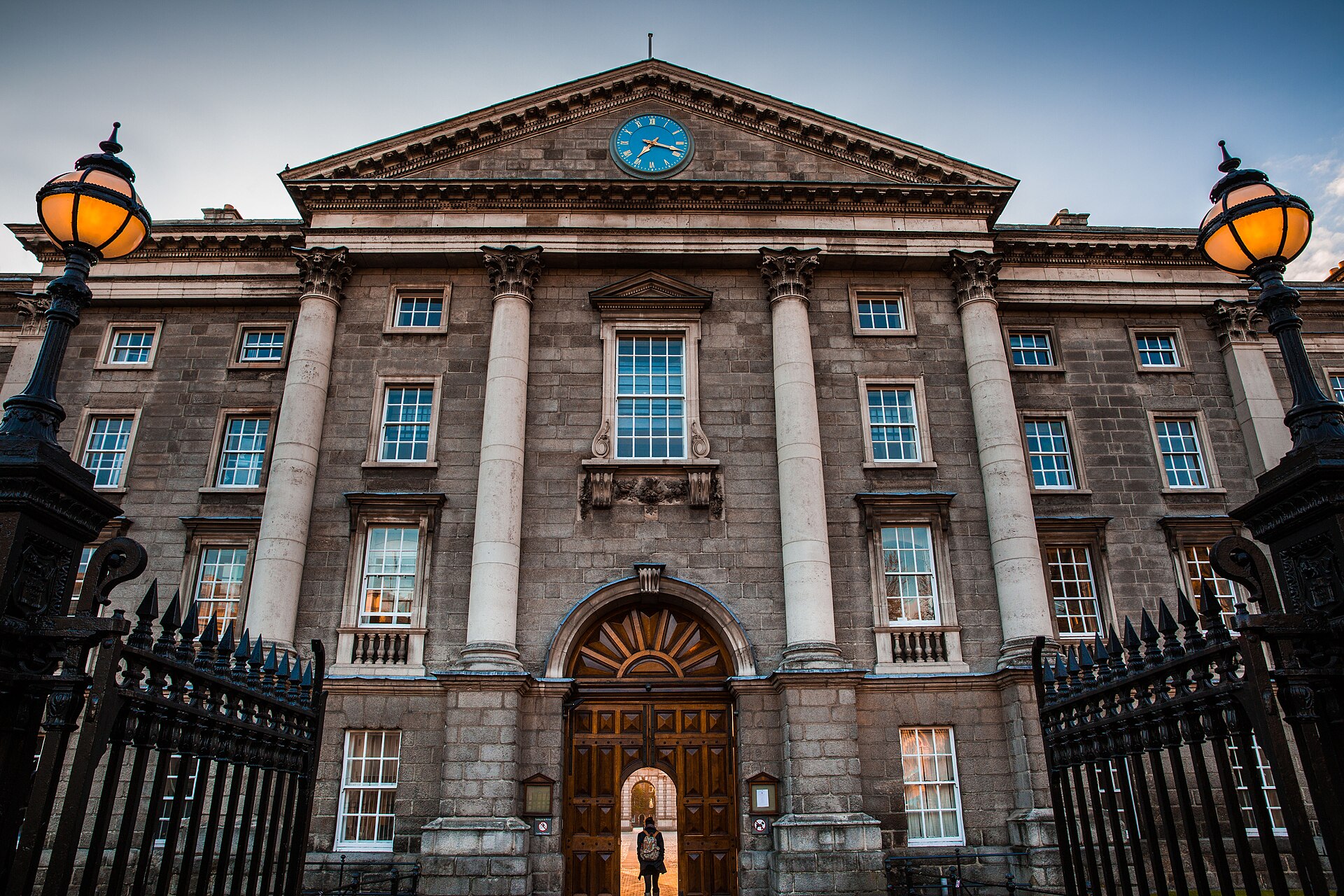
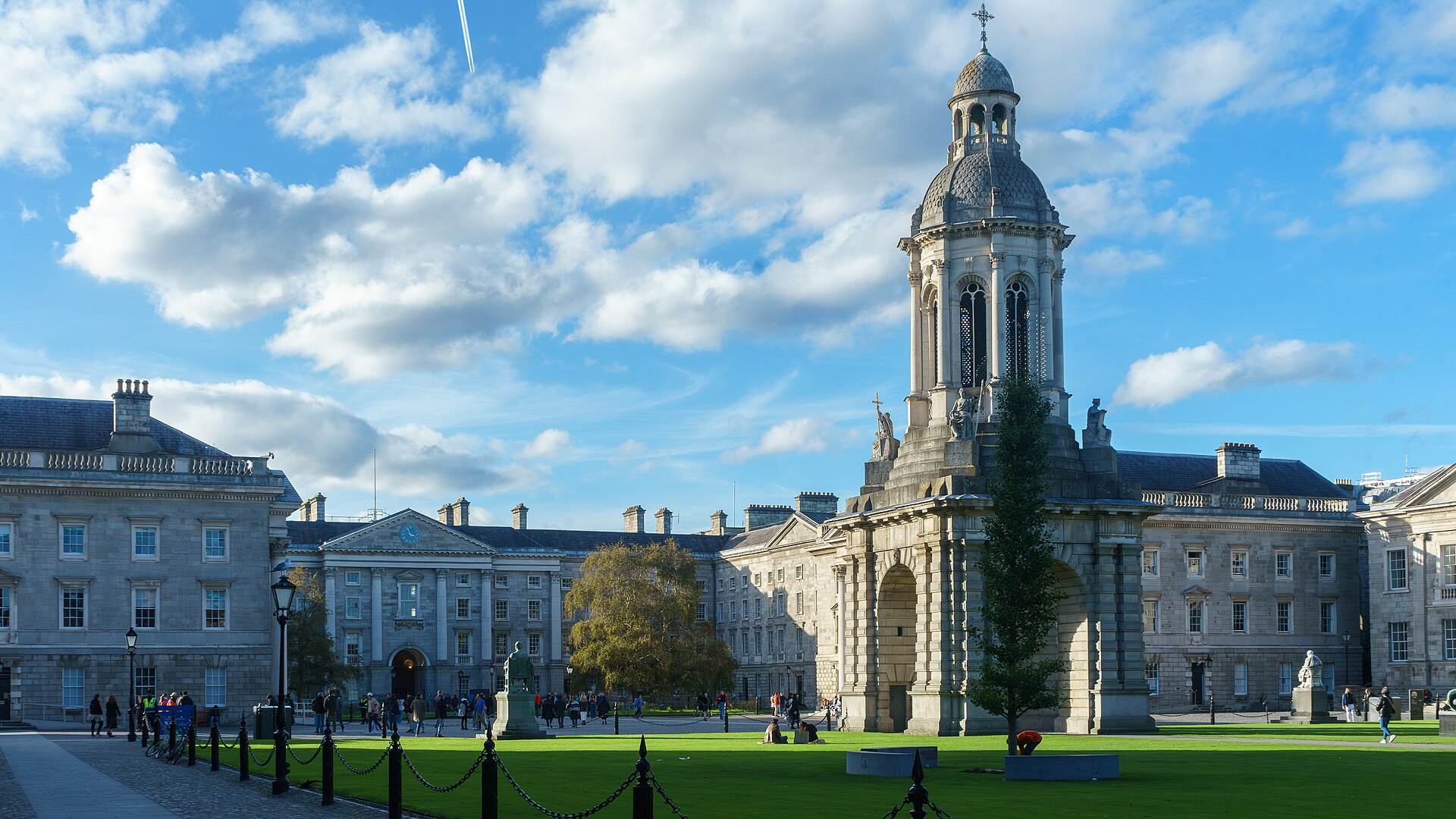
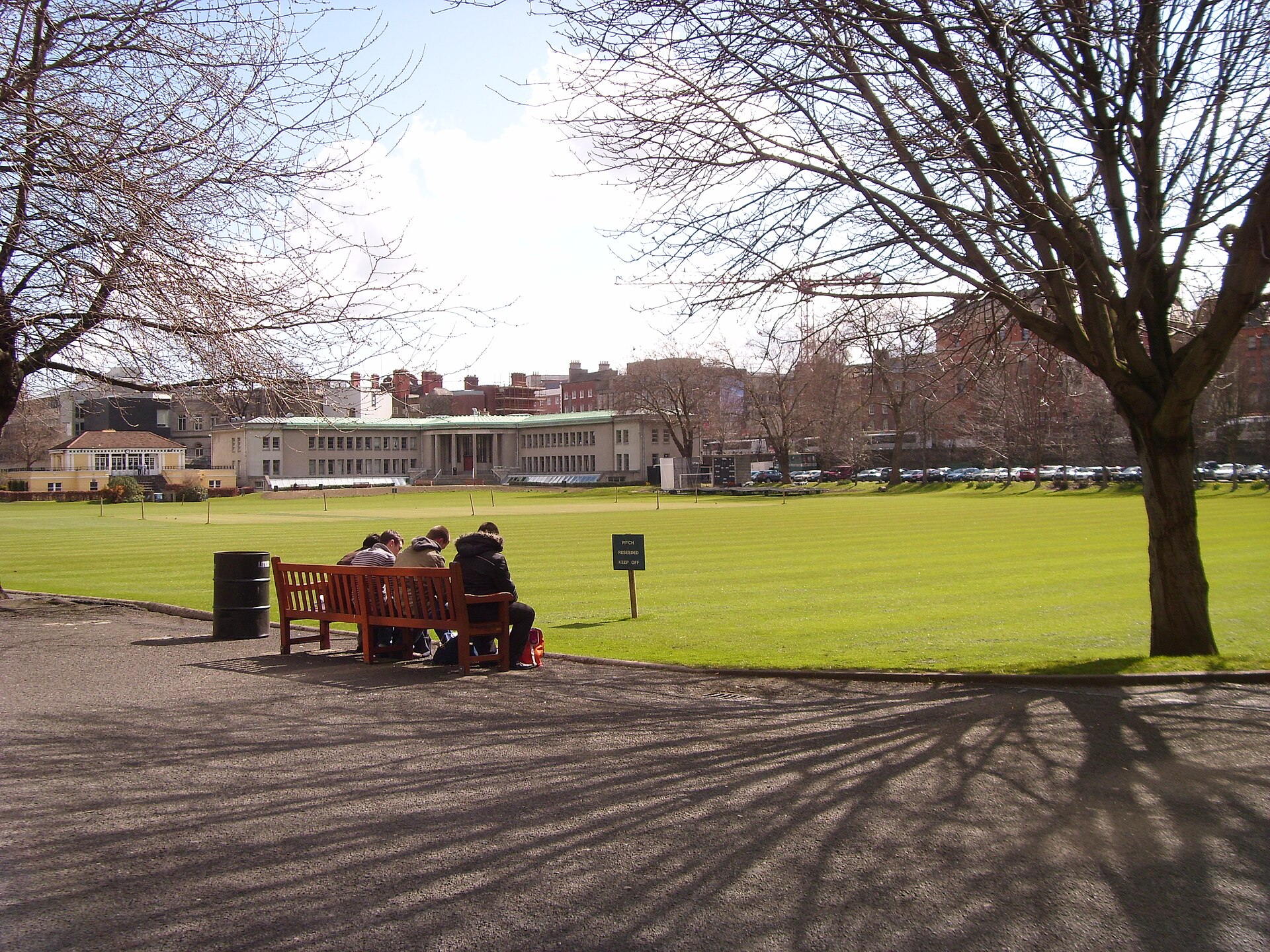
Trinity College Dublin, The University of Dublin — campus in pictures
Real, freely-licensed photographs of the campus (via Wikimedia Commons).



Why Trinity — Ancient Prestige, Modern Opportunity
Trinity is not simply Ireland's oldest university — it is a globally recognised research powerhouse embedded in one of Europe's most dynamic capital cities. For international students, it represents a rare combination: an English-language, EU-based degree with historic gravitas, strong graduate outcomes, and genuine affordability relative to US and UK peer institutions.
SELECTIVITY
Trinity Acceptance Rate & Admissions Profile
Trinity accepts approximately 33% of all applicants across its undergraduate programmes. That headline figure, however, masks significant variation by course: highly competitive programmes such as Medicine, Law, and Computer Science are considerably more selective, while some humanities programmes admit a larger share. For non-EU applicants applying directly, the effective bar is set by your predicted or final academic grades and — for qualitative courses — your personal statement. Trinity does not use holistic review in the US sense; strong grades are the primary lever.
AT A GLANCE
Trinity College Dublin — Quick Facts
THE APPLICATION
What the Trinity Application Consists Of
Non-EU international undergraduate applicants apply directly to Trinity through the my.tcd.ie applicant portal — not through Ireland's CAO system. The application is a nine-stage online form. Unlike US Common App institutions, there are no extracurricular activity lists, no short-answer supplements, and no standardised test score requirement (SAT/ACT are optional for US/Canadian applicants). The application is academic-records-led and personal-statement-supported.
THE PROFILE
What Trinity Looks For in International Applicants
That said, for programmes with interviews or portfolio requirements (Medicine, Dental Science, Music, Fine Art), additional components matter significantly. For all applicants, the personal statement signals intellectual seriousness and intentionality — a vague or generic statement can undermine an otherwise strong academic file.
Trinity's selection for non-EU undergraduates is primarily grades-led. The admissions process does not employ the holistic, personality-weighted review common to US elite universities. Your academic record — the subjects you studied, the level at which you studied them, and the grades you achieved — is the primary determinant of an offer.
KEY DATES
Application Deadlines for Non-EU Students
Applications open in November of the year prior to entry. Trinity processes direct applications on a rolling basis — submitting early significantly increases your chances, as popular programmes can fill by early spring. There is no Early Decision equivalent; all non-EU applications are assessed as they are received.
| Programme | Opens | Deadline | Notes |
|---|---|---|---|
| Most undergraduate programmes | 1 November | 30 June | Rolling review; early submission strongly advised |
| Medicine (MB BCh BAO) | 1 November | 1 February | Hard deadline; late applications not considered |
| Dental Science | 1 November | 1 February | Hard deadline; subject to interview |
| Drama Studies | 1 November | 1 February | Audition/portfolio component |
| Music Education | 1 November | 1 February | Performance audition required |
STUDENT LIFE
Life at Trinity and in Dublin
Student life on campus revolves around Trinity's almost 170 clubs and societies, spanning academic, cultural, political, debating, sports, music, and international communities. The on-campus Sports Centre includes a pool, fitness suite, sports hall, and climbing wall. The Student 2 Student (S2S) programme matches every new international student with a trained peer mentor — a practical support that accelerates settling in. The SU Café and Global Room are social anchors for the diverse student body.
Trinity's 47-acre campus is a living piece of European history — cobblestoned squares, Georgian buildings, cricket pitches, and the 18th-century Old Library housing the Book of Kells. Yet the campus is emphatically not a cloistered bubble: step through the Front Arch and you are in the middle of central Dublin, within walking distance of museums, restaurants, music venues, and the offices of the world's largest technology companies.
Accommodation: Trinity operates a dedicated application window for new non-EU entrants (March–July) through the accommodation.tcd.ie portal. On-campus housing is available but limited; early application is essential. Dublin has a competitive private rental market, and the university's accommodation team provides guidance on off-campus options.
CAREERS & OUTCOMES
Career Outcomes for Trinity Graduates
Trinity is ranked 91st globally for graduate employability, and 85% of graduates are in employment within a defined period after graduation. The average starting salary for Trinity graduates stands at approximately $40,000 USD per year. Trinity is also recognised as Europe's leading university for producing venture-backed entrepreneurs — making it an exceptional launchpad for students interested in the startup economy.
Trinity graduates enter one of Europe's most concentrated employment markets for high-skill roles. Dublin is the European headquarters of Google, Meta, LinkedIn, Airbnb, Stripe, Accenture, and many of the world's leading financial and pharmaceutical firms — and Trinity sits at the geographic and reputational centre of that ecosystem.
Stats
Cards
FREQUENTLY ASKED QUESTIONS
Trinity Admissions — FAQs for International Students
Do non-EU students apply through CAO or directly to Trinity?+
Non-EU/international students apply directly to Trinity through the my.tcd.ie applicant portal. CAO (the Central Applications Office) is only used by Irish and EU applicants. The direct application is a separate nine-stage online form submitted and tracked through my.tcd.ie.
Is Trinity test-optional? Do I need SAT or ACT scores?+
SAT and ACT scores are optional for all applicants. US and Canadian applicants may submit them as part of their application, but they are not required. Irish, IB, A-Level, and most international qualifications are the primary academic criteria.
What IB score do I need for admission?+
The minimum IB requirement for undergraduate entry is 3 subjects at grade 5 at Higher Level and 3 subjects at grade 4 at Standard Level, and you must include English, Mathematics, and another language. Competitive programmes typically require scores of 35 or above overall, though specific course requirements vary. Check each course's individual entry requirements on the Trinity website.
Does Trinity require a personal statement?+
Yes. The direct application includes a personal statement in which you explain why you have chosen Trinity, what you hope to gain academically from your chosen courses, and what you can contribute during your time there. This is your only narrative opportunity in the application — make it course-specific and Trinity-specific.
Can I apply to Trinity before I have my final grades?+
Yes. You can apply with certified predicted grades, and Trinity will make a conditional offer based on those predictions. Once final results are received, the offer is confirmed or withdrawn based on whether conditions are met.
What if my qualifications don't meet the direct entry requirements?+
Trinity offers an International Foundation Programme for students who are unable to enter an undergraduate degree directly. Successful completion of the Foundation Programme provides a pathway into Trinity's undergraduate courses. Contact nvarga@tcd.ie for Foundation Programme admissions.
Is financial aid available for non-EU students at Trinity?+
Trinity does not offer large-scale, needs-based financial aid for non-EU students of the kind available at US institutions. Several named scholarships exist (Global Excellence Undergraduate Scholarships, E3 Scholarship, country-specific awards) but the number of awards is limited. Most international students are expected to fund their own studies.
Can I work while studying at Trinity?+
Non-EU students studying in Ireland on a student visa are generally permitted to work part-time during term and full-time during holiday periods, subject to immigration conditions. Dublin's large services and technology sectors provide substantial part-time employment opportunities.
ACADEMICS
What Trinity Expects Academically from International Students
Trinity College Dublin's academic reputation rests on rigorous undergraduate education within a research-intensive environment. For international applicants, the expectation is clear and consistent: strong grades in challenging subjects, including English, Mathematics, and a second language. Trinity does not use a holistic model where extracurriculars or essays compensate for weaker academics — the academic record is the primary filter. Arriving prepared for university-level independent study, critical thinking, and long-form writing will set you apart in your first year.
ACADEMIC BENCHMARKS
Typical Academic Profile of Admitted Students
The following benchmarks represent the minimum or typical requirements for non-EU undergraduate entry. Individual programmes — particularly Medicine, Law, and Computer Science — may have higher effective thresholds based on competition for places.
STANDARDISED TESTS
Trinity's Test Policy
Trinity operates a test-optional policy for standardised tests such as the SAT and ACT. These tests are neither required nor disadvantage applicants who do not submit them. For US and Canadian applicants, they may be submitted as supplementary evidence, but your high school GPA and the strength of your secondary school courses remain the primary academic evaluation criteria.
Trinity does NOT require SAT Subject Tests. The primary focus for all international applicants is the strength and breadth of your secondary school qualification — IB, A-Levels, US High School Diploma, Indian Class XII, or equivalent national systems.
SAT & ACT
SAT and ACT at Trinity
While SAT and ACT are optional at Trinity, US and Canadian applicants sometimes include them as supplementary evidence, particularly if their high school GPA sits at the lower bound of Trinity's minimum (3.3 unweighted). If submitted, Trinity notes a minimum SAT of 1250 across any two of the three sections (each section minimum 500) and an ACT composite minimum of 27 for most courses (28 for some). These are floor minimums, not competitive targets — strong applicants in the context of a US high school transcript typically exceed these comfortably.
IB & A-LEVELS
How Trinity Reads IB, A-Level, and AP Qualifications
SUBJECT RIGOUR
The Subjects That Strengthen Your Trinity Application
Trinity's undergraduate programmes span the full academic spectrum, but every competitive applicant should demonstrate meaningful strength in three areas:
ENGLISH REQUIREMENTS
English Language Proficiency Requirements
All non-native English speakers must provide official evidence of English proficiency. Trinity operates a band system: Band B (standard) applies to most undergraduate courses. Results must be issued within two years of the course start date. The following table shows Trinity's Band B standard requirements — the threshold applicable to the majority of undergraduate programmes.
| Test | Overall | Component Minimum | Notes |
|---|---|---|---|
| IELTS Academic | 6.5 | 6.0 in each band | Standard undergraduate entry (Band B) |
| TOEFL iBT | 90 | 21 in each section | Pre-January 2026 scale |
| Duolingo English Test | 120 | 100 in each subscore | Band B standard |
| Cambridge Advanced / Proficiency | 180 | No score below 170 | CAE or CPE accepted |
| PTE Academic | 69 | 59 in each section | Pearson Test of English |
PLANNING AHEAD
Building an Academic Profile for Trinity — Year by Year
Trinity's direct application rewards consistent, rigorous academic performance. Unlike some institutions where a compelling ninth-grade narrative can be resurrected by a strong personal essay, Trinity is focused on your final academic record. The most important strategic move is choosing the right subjects — and excelling in them — before you ever start writing a personal statement.
AVOID THESE ERRORS
Academic Mistakes That Sink Trinity Applications
- Omitting English, Mathematics, or a second language — these three components are mandatory at minimum passing level for every course and cannot be waived.
- Applying to Medicine, Dental Science, or Music Education after the 1 February deadline — these programmes have a hard cut-off with no exceptions.
- Choosing IB SL Mathematics when your intended course (Engineering, Computer Science, Physical Sciences) requires or strongly prefers HL Mathematics — SL maths is a consistent weakness in these applications.
- Submitting IELTS or TOEFL scores that are more than two years old at the time of course start — expired scores disqualify the application at verification stage.
- Treating the personal statement as an afterthought — for courses where multiple applicants have similar grade profiles, the personal statement is the tiebreaker.
- Not certifying translations — all documents in languages other than English must include certified English translations; uncertified translations cause processing delays.
- Applying late in the cycle for popular programmes — Trinity's rolling admissions mean that a June application for a course that filled in March will not be considered.
COST & FUNDING
The Real Cost of Trinity for International Students
For non-EU international students, Trinity College Dublin charges fees significantly above the Irish government-subsidised EU rate. The annual non-EU tuition is approximately $27,000 USD, with total cost of attendance (tuition + living) reaching around $41,000 per year. By the standards of US Ivy-League or UK Russell Group peer institutions, this is genuinely more affordable — but Trinity offers limited needs-based financial aid for international students, meaning most will need to plan for full self-funding or identify external scholarships. Dublin's cost of living is higher than other Irish cities but lower than London or comparable European capitals.
COST BREAKDOWN
Annual Cost Estimates for Non-EU Students
The following figures are annual estimates for non-EU undergraduate students. Tuition varies by programme; the figure below is a general indicative rate. Actual programme-specific tuition should be confirmed via the Academic Registry fees portal.
| Item | Annual Usd | Notes |
|---|---|---|
| Non-EU undergraduate tuition | $27,000 | Indicative annual rate; programme-specific fees vary |
| Cost of living (Dublin) | $16,000 | Accommodation, food, transport, personal expenses |
| Total cost of attendance (est.) | $41,000 | Tuition + living; books and travel additional |
| Application fee | $60 | One-time, non-refundable, at time of application |
FINANCIAL AID
Financial Aid for Non-EU International Students
Non-EU students seeking financial support should focus primarily on the named scholarship programmes that Trinity does offer, as well as government scholarships from their home countries, international foundations, and external sources such as the Aga Khan Scholarship, Commonwealth Scholarship schemes, or national-government-funded programmes. Applying for all available external funding well in advance of the application deadline is strongly advised.
Trinity does not operate a large-scale needs-based financial aid programme for non-EU international students of the kind available at need-blind US institutions. The university's main financial support system for undergraduate students is the SUSI grant scheme, which is only available to Irish and EU-resident students. The average aid percentage for non-EU students is not publicly reported.
The facts available do not specify an average aid percentage for non-EU students at Trinity. Treat Trinity as a primarily self-funded destination unless you are actively applying for one of the named scholarship programmes below.
SCHOLARSHIPS
Named Scholarships Available to International Students
Trinity offers several named scholarship programmes specifically for international undergraduate students. Specific award amounts and annual quotas for these scholarships are not publicly disclosed on the Trinity website and should be verified directly with the Academic Registry or the relevant scholarship page at tcd.ie/study/international/scholarships/undergraduate/.
AFFORDABILITY
Trinity in the Context of International Higher Education
Within Ireland, Trinity is also the most expensive of the Irish universities for non-EU students, though the difference with University College Dublin or University College Cork is typically modest. The value proposition of Trinity over other Irish institutions is its ranking, its Dublin location, and its reputational weight for employers and graduate schools internationally. Students considering Ireland purely on cost grounds may find peer institutions slightly more affordable while still obtaining a recognised Irish degree.
At approximately $41,000 per year (tuition + living), Trinity represents meaningfully better value for international students than comparable-ranked US or UK institutions. MIT, Cambridge, and UCL all carry higher total costs of attendance — often by $15,000–$30,000 per year — while Trinity's QS ranking (#87) places it in the same tier as many US universities charging $70,000+ annually. For internationally mobile students, this cost differential is a real structural advantage.
Note: The average financial aid percentage for non-EU students is not disclosed by Trinity. No needs-based aid calculator is publicly available. Budget for full-pay unless you secure a named scholarship.
HOW TO FUND YOUR DEGREE
Steps to Securing Funding for Trinity
COST FAQS
Frequently Asked Questions — Cost & Aid
How much does Trinity cost per year for a non-EU student?+
The indicative annual non-EU undergraduate tuition is approximately $27,000 USD. Total cost of attendance — tuition plus estimated living costs in Dublin — is approximately $41,000 per year. Individual programme fees can be higher (e.g. Medicine); always confirm with the Academic Registry.
Does Trinity offer need-based aid to international students?+
Trinity does not operate a large need-based financial aid system for non-EU international students. Aid availability is limited to named scholarship programmes, most of which are merit-based. Non-EU students should plan for full-pay and apply separately for external scholarships.
Are scholarships automatically considered when I apply?+
For most named scholarships, you must apply separately — acceptance to Trinity does not automatically enter you for scholarship consideration. Check each scholarship's specific application process on the Trinity scholarships page.
Is the application fee refundable if I am rejected?+
No. The Trinity direct application fee is explicitly non-refundable, regardless of the admissions outcome.
Are there scholarships specifically for students from my country?+
Yes. Trinity maintains country-specific scholarship programmes for students from China, Japan, Brazil, and other countries. Visit tcd.ie/study/international/scholarships/undergraduate/ and contact academic.registry@tcd.ie to confirm what is available for your country in the current cycle.
What is Dublin's cost of living compared to other student cities?+
Dublin is one of the more expensive cities in Europe for students — more expensive than Edinburgh, Berlin, or most continental European cities, but less expensive than London and comparable to Zurich or Amsterdam. The indicative cost of living figure from Trinity's published data is approximately $16,000 per year, covering accommodation, food, transport, and personal expenses.
THE APPLICATION NARRATIVE
Writing Your Trinity Direct Application Personal Statement
Trinity College Dublin's admissions process is primarily grades-led — but for non-EU students applying directly, a personal statement is a required component of the application. Unlike the US Common App personal essay (which can be about almost anything) or UCAS personal statements (which are heavily academic in focus), Trinity's personal statement has a specific, threefold brief: why you chose Trinity, what you hope to gain academically from your chosen courses, and what you can contribute to the Trinity community. This is not a platform for personal narrative or storytelling in the US admissions sense. It is a focused, purposeful academic statement — and the closer you stick to those three questions, the stronger it will read.
OVERVIEW
How Many Essays and What System
Trinity College Dublin is NOT a Common App, Coalition App, or UCAS institution for non-EU applicants. Non-EU students apply directly through the my.tcd.ie portal using a nine-stage online application form. There is one personal statement, no supplemental essays, no 'Why Trinity?' supplement as a separate form — the entire personal statement IS the Why Trinity question. There are no short-answer responses or activities lists in the application. The personal statement is where your application voice lives entirely.
THE PROMPT
Trinity Personal Statement — Official Brief
STATEMENT STRATEGY
How to Think About the Trinity Personal Statement
The most effective Trinity personal statements are structured rather than flowing. Many successful applicants write clear, paragraph-per-question responses. Why Trinity first — with named, course-specific reasons for this institution in particular. What you hope to gain second — concrete academic and professional goals. What you contribute third — the community value you bring, whether intellectual (your perspective in seminars), extracurricular (leadership of a society), or personal (a background that enriches classroom discussion). Avoid grand generalities. 'Trinity is a world-class university in a vibrant city' tells the reader nothing they didn't already know. 'I want to study in the School of Natural Sciences because of Trinity's partnership with the AMBER research centre in materials science, and I hope to undertake a final-year research project there' shows you have done real homework.
The Trinity personal statement is fundamentally different from the US Common App personal essay or UCAS personal statement, and confusing the three formats is one of the most common mistakes international students make. The Common App essay invites you to reveal character through personal narrative. The UCAS personal statement focuses heavily on academic passion and subject-specific interest. The Trinity statement is somewhere in between — but it is anchored by the three specific questions above and should not drift into pure storytelling.
There is no word limit published by Trinity, but admissions staff read hundreds of statements. 500–800 focused words outperform 1,200 scattered words every time. Write a tight first draft, then cut anything that does not directly answer one of the three prompt questions.
STRUCTURE YOUR STATEMENT
Structuring Each Part of the Statement
CHOOSING YOUR ANGLE
How to Choose What to Write About
The most important decision in your Trinity personal statement is not what to include — it is what to leave out. You have a three-part brief. Stay on task.
AVOID THESE
Personal Statement Mistakes That Hurt Trinity Applications
- Writing a US Common App-style personal narrative — Trinity's prompt is not asking for your formative life story. Answer the three questions directly.
- Generic praise of Trinity without course-specific substance — 'Trinity is Ireland's oldest and most prestigious university' adds nothing the reader doesn't know.
- Failing to address all three prompt components — applicants who only answer 'Why Trinity' and neglect the contribution element leave their statement incomplete.
- Copying a UCAS personal statement — UCAS statements are written for multiple UK universities simultaneously and lack the Trinity-specific focus the direct application requires.
- Using vague future ambitions without grounding them in the course — 'I want to help people' is not a reason to study Law at Trinity. 'I want to practise international human rights law and Trinity's Law School is one of few in Europe with a dedicated public international law clinic' is.
- Exceeding the natural reading length without proportional value — longer statements are not stronger statements. Aim for focused depth over comprehensive breadth.
- Not having the statement reviewed by a native English speaker or academic mentor — grammar and expression errors in a statement that is also evaluating your English proficiency are doubly damaging.
ESSAY FAQS
Frequently Asked Questions — Personal Statement
How long should the Trinity personal statement be?+
Trinity does not publish an official word limit. Most strong statements fall in the 500–800 word range. This is long enough to address all three prompt components with specificity but short enough to maintain the reader's attention. Statements exceeding 1,000 words often dilute the key messages.
Can I submit the same personal statement I wrote for UCAS?+
No — or at least, not without significant revision. UCAS personal statements are structured for the UK system's expectation of academic passion and subject-specific discussion. They typically do not address 'what you can contribute to the university' as a distinct prompt, and they are often written for multiple universities simultaneously. Your Trinity statement must be specifically directed at Trinity and must answer all three prompt questions.
Is the personal statement weighted heavily in admissions decisions?+
Less heavily than grades, but meaningfully. Trinity's admissions process is primarily academic-record-driven. However, where two applicants have similar grade profiles, the personal statement is the differentiator. For qualitative courses (Law, History, English) the statement carries slightly more weight than for purely technical courses where grades alone tend to determine offers.
Should I mention specific professors or researchers at Trinity in my statement?+
If you can do so authentically and accurately, yes — it signals that you have researched the department and have a genuine academic interest in what is being done there. However, name-dropping without substantive engagement reads as insincere. Only reference specific faculty or research if you have actually read their work or can explain why their research area connects to your academic goals.
Do I need a separate statement for each course I apply to?+
Trinity's direct application form allows you to list multiple course preferences. Your personal statement should be written with your primary course in mind — writing a statement that attempts to justify multiple unrelated courses simultaneously almost always produces a weaker, less focused result.
What is the biggest mistake students make in the Trinity personal statement?+
Treating it as a US Common App essay. The US admissions personal narrative — a formative story about a significant life event — is almost never the right structure for a Trinity statement. The Trinity brief is direct and purposeful: answer three specific questions about your relationship to this institution and this course. Students who nail the brief concisely and specifically perform far better than students who write eloquent but off-brief personal narratives.
Courses — schools, degrees & intake
71 degrees across 6 groupings.
Faculty of Arts, Humanities and Social Sciences · 24 degrees
Acting
Ancient and Medieval History and Culture
Ancient History and Archaeology
Classics, Ancient History and Archaeology
Classical Civilisation
Classical Languages
Drama and Theatre Studies
Drama Studies
Early and Modern Irish
English Studies
European Studies
Film
Geography and Geoscience
History
History of Art and Architecture
Linguistics
Middle Eastern and European Languages and Cultures
Middle Eastern, Jewish and Islamic Civilisations
Modern Language
Music
Music Education
Philosophy
Religion
Stage Management and Technical Theatre
Faculty of Business, Economics and Social Studies · 14 degrees
Business, Economics and Social Studies
Business Studies and French
Business Studies and German
Business Studies and Polish
Business Studies and Russian
Business Studies and Spanish
Economics
Global Business
Management Science and Information Systems Studies
Philosophy, Political Science, Economics and Sociology
Political Science
Social Policy
Social Studies
Sociology
School of Law · 3 degrees
Law
Law and French
Law and German
Faculty of Science · 8 degrees
Biological and Biomedical Sciences
Chemical Sciences
Computer Science
Computer Science Linguistics and a Language
Mathematics
Physical Sciences
Theoretical Physics
Environmental Science and Engineering
School of Engineering · 3 degrees
Engineering
Engineering with Management
Electronic and Computer Engineering
Faculty of Health Sciences · 19 degrees
Medicine
Dental Science
Pharmacy
Clinical Speech and Language Studies
Deaf Studies
Human Health and Disease
Human Nutrition and Dietetics
Nursing - General Nursing
Nursing - Intellectual Disability Nursing
Nursing - Mental Health Nursing
Integrated Children's and General Nursing
Midwifery
Occupational Therapy
Physiotherapy
Psychology
Radiation Therapy
Dental Hygiene
Dental Nursing
Dental Technology
Want your real chances at Trinity College Dublin, The University of Dublin?
Create a free TYCHR account for your personalised admit-chance, a shortlist you can track, exact entry requirements, and essay + counselling help.