Tohoku University
Sendai, Japan · Urban
SENDAI, JAPAN · NATIONAL RESEARCH UNIVERSITY
Tohoku University Admissions Guide for International Students
Japan's third Imperial University and one of Asia's premier research institutions, Tohoku University has welcomed international students since its founding in 1907 — earlier than most Japanese universities. Ranked #110 globally by QS and #3 in Japan, Tohoku is the destination for ambitious students who want to conduct world-class research in materials science, engineering, disaster science, and the natural sciences while experiencing life in Sendai, a vibrant northern Japanese city.
For international students, Tohoku offers two main pathways: fully English-taught undergraduate programmes in chemistry, marine biology, and engineering; and, from April 2027, the new Gateway College — an interdisciplinary English-medium undergraduate programme. If you are willing to study in Japanese, the broader undergraduate curriculum across ten faculties opens up further. Whichever path you choose, Tohoku's research-first culture, affordable national-university tuition, and strong scholarship ecosystem make it one of the most compelling universities in Asia for international applicants.
Campus
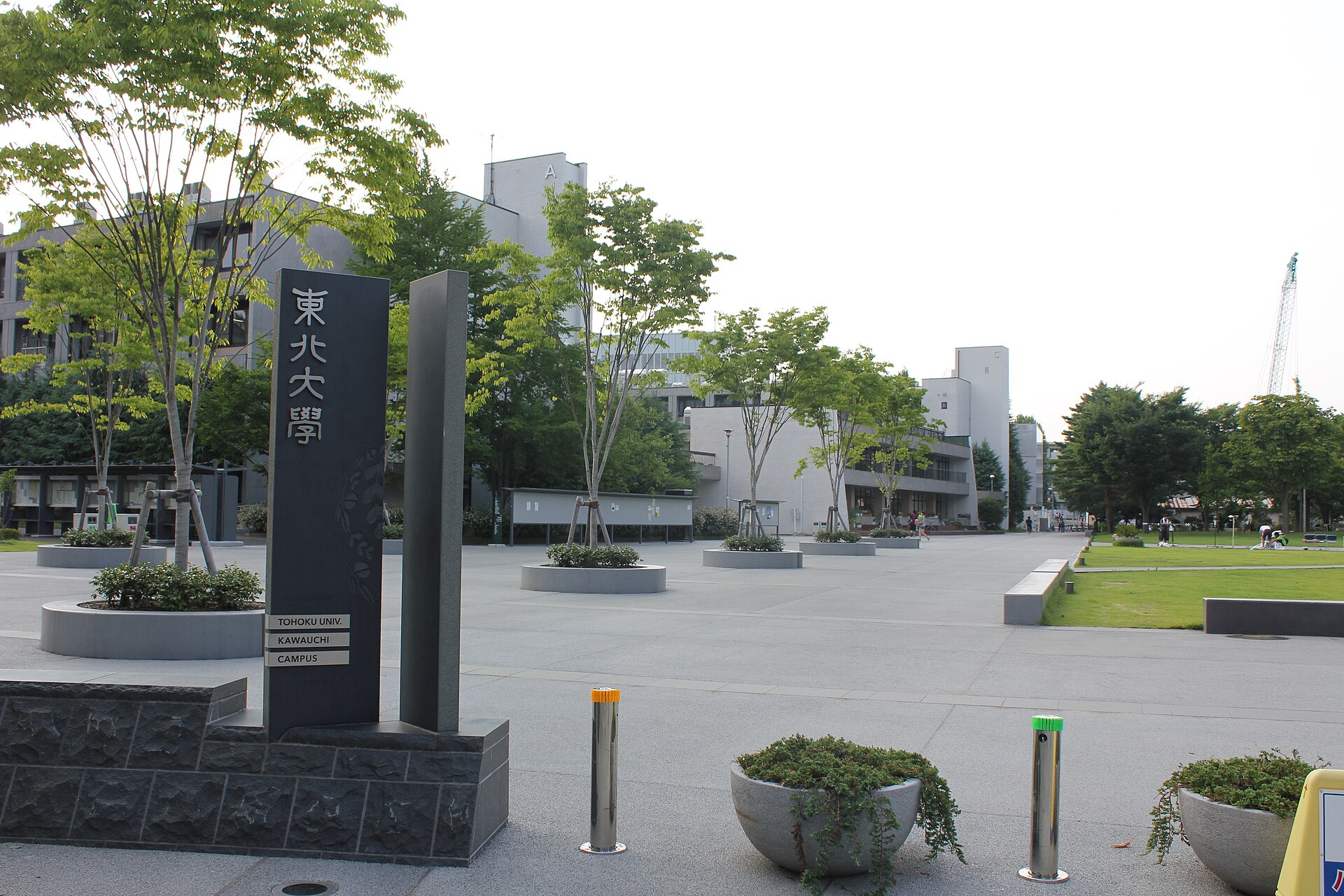
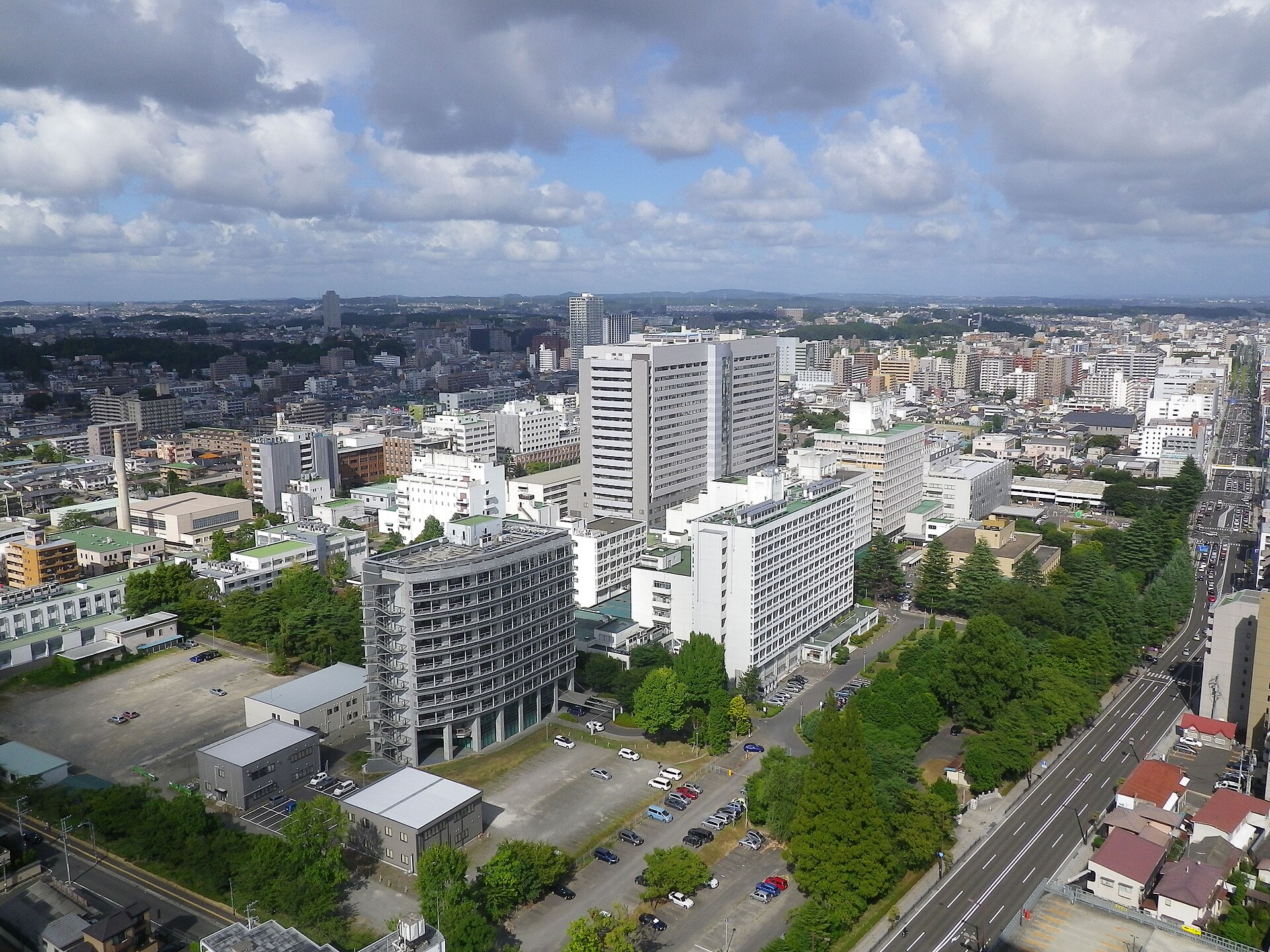
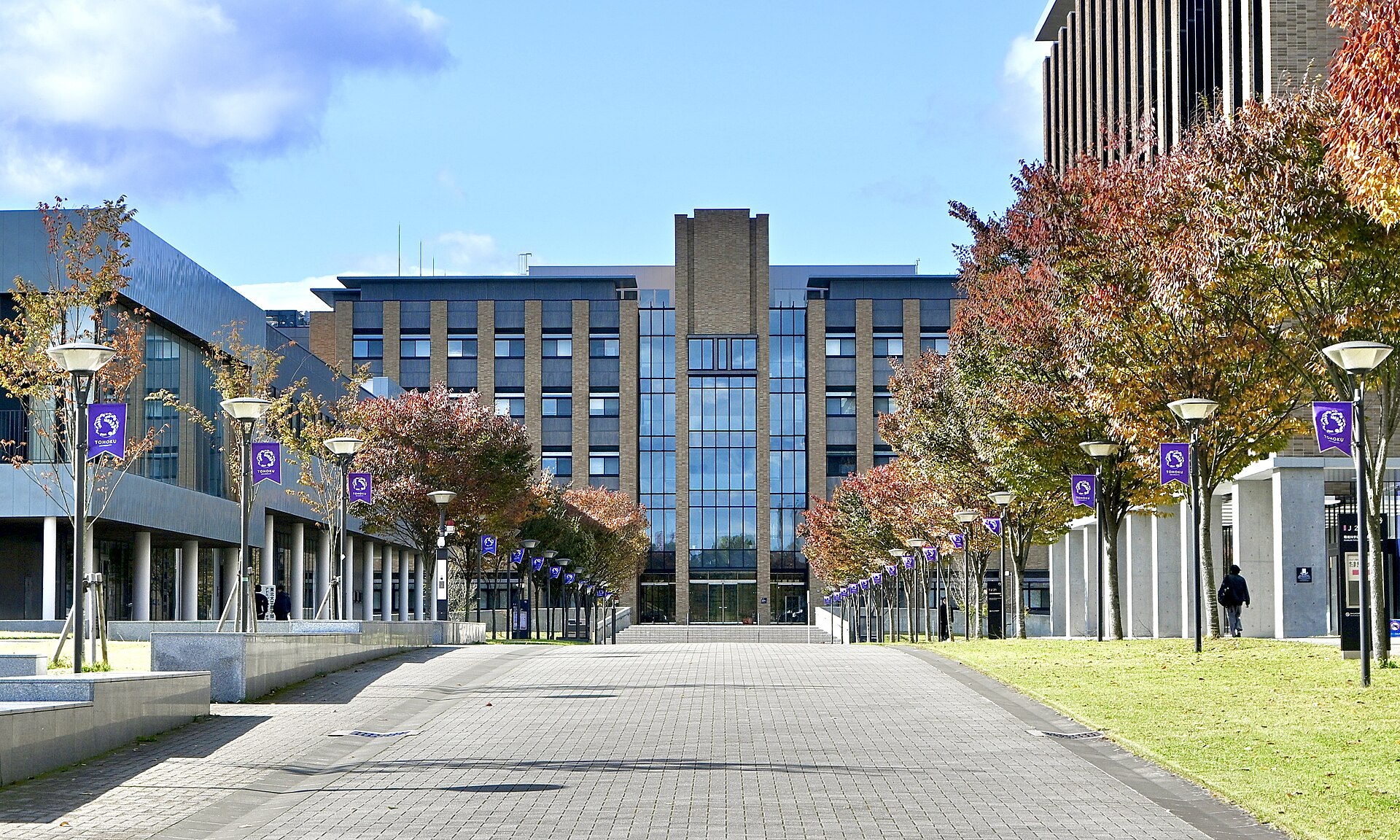
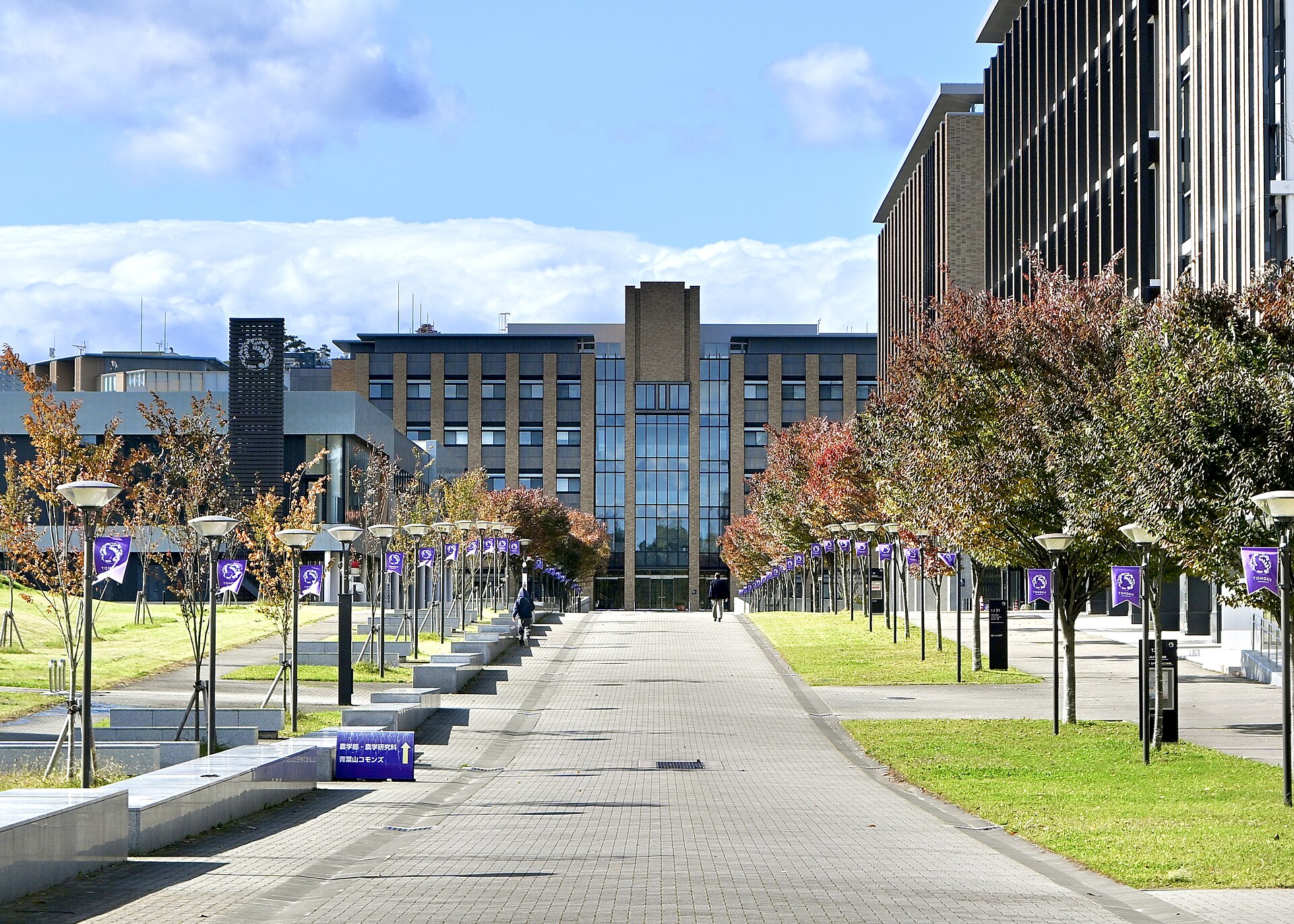
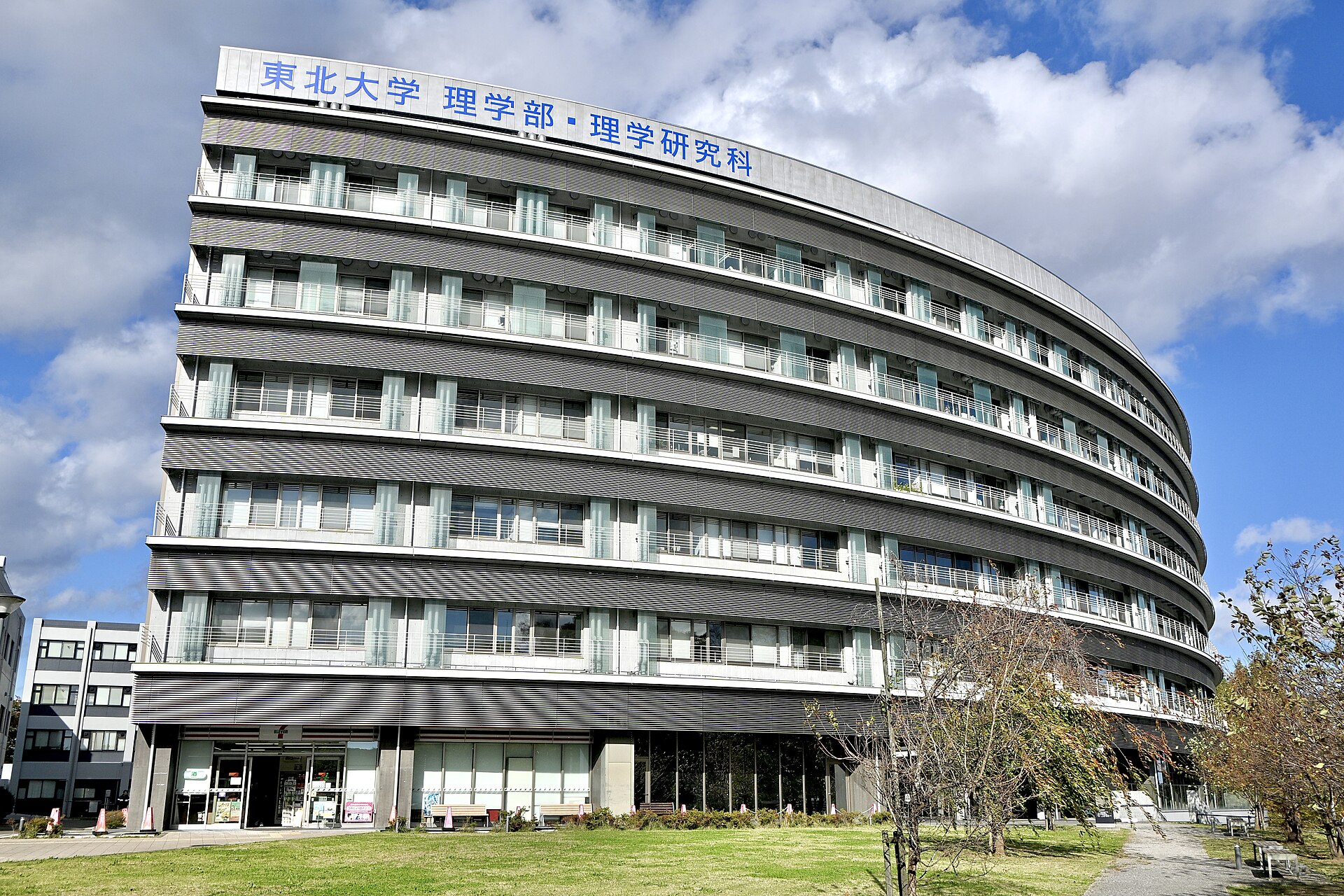
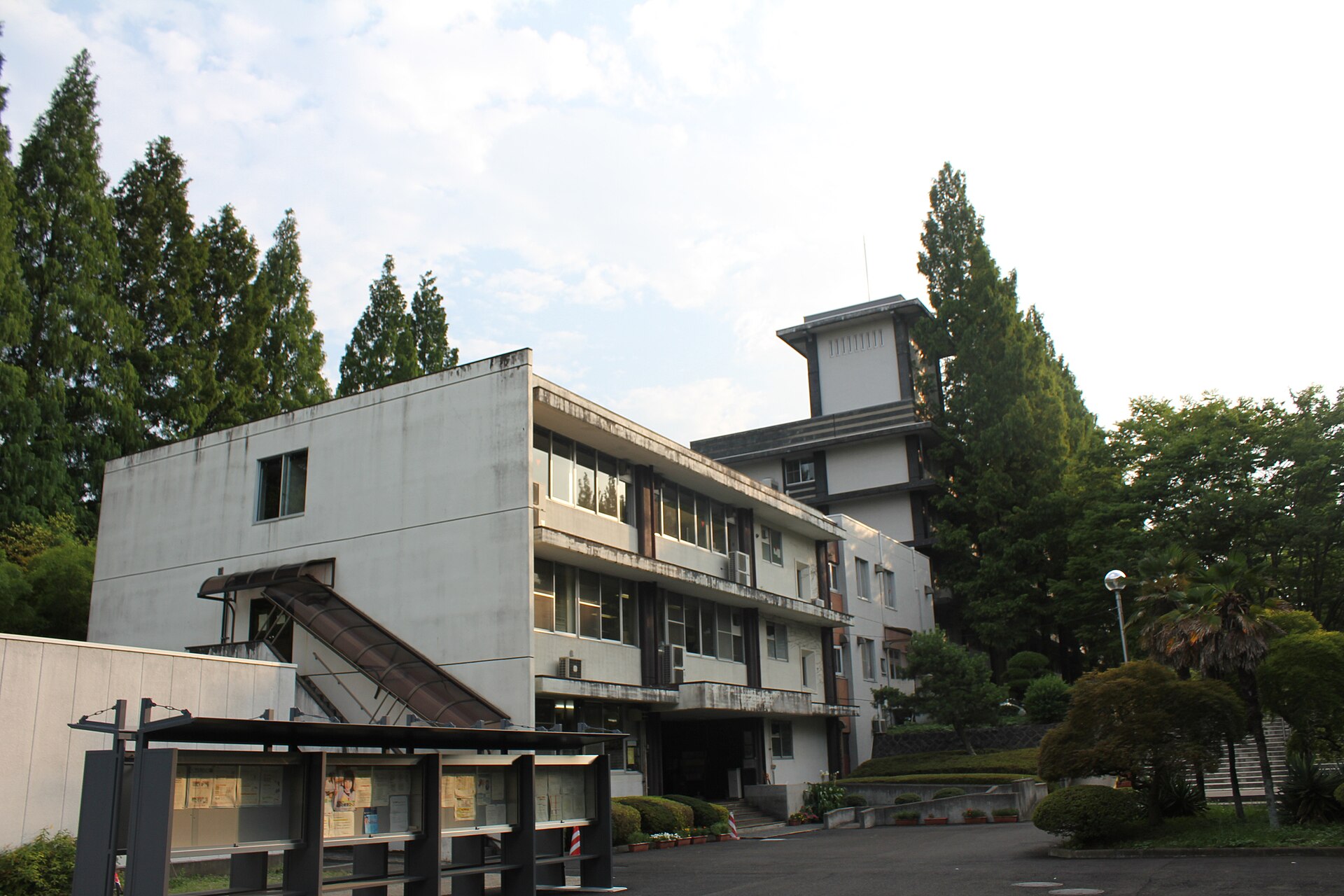
Tohoku University — campus in pictures
Real, freely-licensed photographs of the campus (via Wikimedia Commons).
Why Tohoku — Research Excellence, Pioneering History & Sendai
Tohoku University is not merely one of Japan's top-ranked institutions — it is the university that invented materials that changed the world, opened its doors to women and international students before almost any other Japanese university, and continues to lead global research in fields from disaster science to nanotechnology.
SELECTIVITY
Tohoku University Acceptance Profile
Tohoku University's overall acceptance rate for undergraduate entry is approximately 35%, though selectivity varies considerably by faculty and programme. The highly competitive English-taught FGL programmes (AMC, IMAC-U, AMB) attract strong international applicants and are more selective. From 2027, the Gateway College will introduce its own admissions criteria. For Japanese-medium programmes, the EJU (Examination for Japanese University Admission) is central to selection.
AT A GLANCE
Tohoku University Quick Facts
WHAT YOU SUBMIT
Components of the Tohoku Application
Tohoku University's application for international students is document-based and evaluated holistically. The precise requirements vary by programme (English-taught FGL vs. Japanese-medium) and admission cycle, so always verify on the official admissions portal before applying.
ADMISSION PHILOSOPHY
What Tohoku University Looks For
Tohoku University's founding philosophy — 'Research First, Open Doors, Practice-Oriented' — directly shapes what the admissions committee values. They seek students who are genuinely motivated to contribute to humanity's knowledge, not merely to obtain a credential.
APPLICATION TIMELINE
Application Deadlines and Key Dates
Tohoku University operates on an April and/or October intake cycle depending on programme. The English-taught FGL programmes (AMC, IMAC-U, AMB) have historically offered April entry; the Gateway College (launching April 2027) has announced both April and October entry windows. Japanese-medium international student admissions follow a separate calendar tied to the EJU examination schedule. Always verify current-cycle dates on the official admissions portal, as they may shift year-to-year.
Key reference points for planning: the EJU is offered in June and November each year. For April entry, applications are typically received in the autumn of the preceding year (October–December window). For October entry (where available), the application window typically falls in spring (March–May). The Gateway College Term II (Fall Enrollment) application requirements were released in July 2026 — check tu-gwc.tohoku.ac.jp for updated schedules.
All deadlines are subject to change. Confirm every date on the official Tohoku University Admissions Center website before submitting any application materials.
| Pathway | Intake | Application_window | Exam |
|---|---|---|---|
| FGL Programme (AMC/IMAC-U/AMB) | April | Typically Oct–Dec (prior year) | TOEFL iBT / IELTS + written test/interview |
| Japanese-Medium (Privately Financed) | April | Aligned with EJU Nov sitting | EJU (June or November) |
| Gateway College (from 2027) | April & October | Check tu-gwc.tohoku.ac.jp | English proficiency + academic review |
CAMPUS & CITY
Life at Tohoku University and Sendai
Tohoku University's four campuses — Katahira, Kawauchi, Aobayama, and Seiryo — each have their own character, connected by a free university shuttle. The Aobayama campus hosts the main science and engineering faculties; Kawauchi is home to the humanities and social sciences; Katahira houses several research institutes; and Seiryo hosts the medical school.
Campus life is genuinely international. The Student Friendship Association coordinates an extraordinary range of clubs — from a satellite-building club (yes, students actually launch satellites) to the Sendai Jazz Festival ensemble and traditional sumo and martial arts. Cherry blossom viewing (hanami) along the Hirose River is a university institution each April.
OUTCOMES
Career Outcomes and Employment
Tohoku University graduates are highly sought by Japanese industry and increasingly by global employers, particularly in technology, manufacturing, pharmaceuticals, and financial services. The university's strong ties to Tohoku region's semiconductor and automotive manufacturing sector — home to facilities run by Sony, Toyota, and numerous electronics firms — create direct pathways from campus to industry.
For international graduates, Tohoku's designation as a University for International Research Excellence (UREX1) and its membership in the RU11 group of Japan's leading research universities carries strong brand recognition across East and Southeast Asia. Graduate-level study at Tohoku is a common pathway for high-achieving international undergraduates before moving into R&D roles.
Starting salary figures reflect Japanese domestic norms and may be lower than equivalent roles in the US, UK, or Australia. International graduates who return to their home countries often command higher compensation benchmarks. Tohoku's graduate degree programmes are typically more lucrative than undergraduate entry-level roles in Japan.
FREQUENTLY ASKED QUESTIONS
FAQs for International Applicants
Do I need to speak Japanese to study at Tohoku University?+
Not for the English-taught pathways. The FGL programme (AMC, IMAC-U, AMB) and the forthcoming Gateway College (from 2027) are conducted entirely in English. However, for Japanese-medium programmes — which cover the broader range of ten faculties — Japanese language proficiency and EJU performance are essential. Even English-programme students benefit greatly from learning basic Japanese for daily life in Sendai.
What is the FGL programme and is it still accepting students?+
The Future Global Leadership (FGL) programme is Tohoku's English-taught undergraduate initiative comprising three courses: AMC (molecular chemistry), IMAC-U (mechanical and aerospace engineering), and AMB (applied marine biology). The FGL programme's 2026 enrollment was announced as its last cohort, with the Gateway College replacing it from April 2027. If you are applying for entry in 2026, check the FGL admissions site; for 2027 onwards, refer to the Gateway College portal at tu-gwc.tohoku.ac.jp.
What is the Gateway College?+
The Gateway College is a new interdisciplinary undergraduate programme launching in April 2027, conducted primarily in English. It will offer three undergraduate programmes and around 60 graduate programmes. It is designed to 'transcend faculty boundaries and embrace a global approach to learning.' Application requirements for Fall 2027 entry were released in July 2026 — check tu-gwc.tohoku.ac.jp for current details.
Is the acceptance rate of 35% representative of all programmes?+
The overall acceptance rate reflects the full university across all Japanese-medium and English-medium programmes. The English-taught FGL and Gateway College programmes are more internationally competitive. Your realistic acceptance probability depends heavily on your specific programme choice, academic profile, and the strength of your application materials.
Can I apply if I have completed the IB Diploma?+
Yes. The International Baccalaureate Diploma is accepted as a qualifying qualification for international student admissions at Tohoku. An IB score of 36 represents a competitive benchmark for the English-taught programmes. Specific subject requirements (Higher Level vs. Standard Level) vary by faculty — verify these on the official admissions portal.
Is Tohoku University expensive compared to UK or US universities?+
Significantly less so. Annual tuition is approximately $3,430 USD (¥535,800), and total estimated cost of attendance including living is around $15,000 USD per year. This is a fraction of comparable US private universities and even most UK universities. Sendai also has a lower cost of living than Tokyo, making it one of the most affordable destinations for a top-100 world university education.
Are there scholarships for international students?+
Yes. The primary route is the Japanese Government (MEXT) scholarship, which covers tuition and provides a monthly stipend. Tohoku University itself offers tuition fee waivers (one-third to full tuition) for students demonstrating financial need or academic excellence. The university has also announced new financial support projects for doctoral students. Check the International Support Center for the full current scholarship catalogue.
What is the campus like and where is Sendai?+
Sendai is the largest city in the Tohoku (northern Honshu) region, about 90 minutes from Tokyo by Shinkansen bullet train. It is a mid-sized, highly liveable Japanese city with a vibrant food and cultural scene, low crime, and easy access to mountains and coastline. Tohoku's four campuses are linked by a free shuttle bus. The university's clubs, research culture, and international student community make for a rich campus experience.
ACADEMIC EXPECTATIONS
Academic Profile for International Applicants
Tohoku University is a research-intensive national university with rigorous academic standards. International applicants are evaluated on the strength of their secondary education record, standardised test scores (where applicable), and evidence of genuine intellectual depth — particularly in the core sciences for STEM-focused programmes.
Unlike US research universities, Tohoku does not use a holistic points-based formula. The evaluation is document-based and considers your academic trajectory across your full secondary education, not just final-year grades. Students who have pushed themselves with the most challenging available curriculum — IB Diploma, A-Levels, national advanced programmes — are viewed most favourably.
ACADEMIC BENCHMARKS
Competitive Academic Profile
The following benchmarks are drawn from official facts data for Tohoku University. Hard numbers are given only where verified; qualitative guidance is offered where data is not available.
SAT and ACT scores are not required or directly used in Tohoku University admissions. These tests are not a feature of the Japanese university admissions ecosystem.
TEST REQUIREMENTS
Standardised Test Policy
Tohoku University's test requirements differ significantly from US universities and depend entirely on which programme you are applying to.
For English-taught programmes (FGL: AMC, IMAC-U, AMB; and the forthcoming Gateway College), an English proficiency test — TOEFL iBT or IELTS Academic — is required. There is no requirement for SAT or ACT scores. For Japanese-medium programmes under the privately-financed international student admission pathway, the EJU (Examination for Japanese University Admission) is the central standardised assessment. The EJU tests Japanese language proficiency and subject knowledge (mathematics, science, humanities/social studies) in Japanese.
Do not submit SAT or ACT scores hoping they will strengthen your application for Japanese-medium programmes — they are not evaluated in this system. Focus instead on the EJU and your English proficiency certification.
EJU & ENGLISH TESTS
The EJU and English Proficiency Tests Explained
IB & A-LEVEL APPLICANTS
How IB, A-Levels, and Other Qualifications Are Evaluated
Tohoku University accepts the International Baccalaureate Diploma, A-Levels, Advanced Placement (AP) examinations, and other internationally-recognised secondary qualifications as part of the application for privately-financed international student admission.
An IB score of 36 represents a competitive benchmark for the English-taught FGL programmes. For STEM programmes (IMAC-U, AMC), strong performance in Higher Level Mathematics and the relevant sciences (Chemistry for AMC; Physics and Mathematics for IMAC-U; Biology and Chemistry for AMB) is particularly important. A-Level applicants should aim for AAA or better in relevant subjects. Tohoku does not require specific IB subject combinations by official policy, but the programme context makes certain Higher Levels effectively necessary for success in the curriculum.
If your qualification is not listed in Tohoku's official recognition table, contact the admissions office directly to confirm eligibility before preparing your application. Some national curricula (particularly from South and Southeast Asia) may require additional documentation or examination scores.
SUBJECT RIGOUR
Recommended Academic Preparation by Programme
ENGLISH PROFICIENCY
English Language Requirements
The following minimum scores apply to English-taught programmes at Tohoku University. These are minimum thresholds — competitive applicants typically exceed them.
Native English speakers and applicants from countries where English is the official medium of instruction may be eligible for exemption — confirm with the admissions office.
| Test | Minimum_score | Notes |
|---|---|---|
| TOEFL iBT | 80 | Test Date scores only; no MyBest composite |
| IELTS Academic | 6.5 | Overall band; verify sub-score requirements per programme |
| Duolingo English Test | 105 | Verify acceptance for specific programme before applying |
FOUR-YEAR PLAN
Building a Competitive Profile: Grade 9 to 12
COMMON PITFALLS
Academic Mistakes to Avoid
- Applying to Japanese-medium programmes without genuine EJU-level Japanese proficiency — the entrance examination and coursework are conducted entirely in Japanese.
- Submitting SAT or ACT scores expecting them to substitute for EJU or English proficiency tests — they are not used in the Japanese admissions system.
- Sitting TOEFL or IELTS too late — test dates near application deadlines risk score delivery delays that disqualify an otherwise strong application.
- Underestimating subject prerequisite depth: IMAC-U and AMC require mastery of HL-level mathematics and science, not just a pass.
- Choosing Standard Level IB subjects in maths and sciences while targeting STEM programmes at Tohoku — this creates a structural disadvantage against competitors who took HL.
- Failing to verify whether the FGL programme or Gateway College is the correct application pathway for your target year — the transition from FGL to Gateway College is occurring now and requirements differ.
- Neglecting to check official deadlines each cycle — Tohoku's calendar can shift between years, and missing the EJU registration deadline eliminates your pathway for that cycle.
COST & FINANCIAL AID
Understanding the Cost of Studying at Tohoku University
Tohoku University is a Japanese national university, meaning tuition is set by the national government and is dramatically lower than private universities in the US, UK, or Australia. For international students who budget carefully and tap available scholarships, a world-class education at a top-100 global university is genuinely achievable at a fraction of the cost of comparable Western institutions.
Total annual cost of attendance — tuition, living expenses, health insurance, materials, and miscellaneous — is estimated at approximately $15,000 USD. In Japan's currency (yen), costs have become especially favourable for students paying in stronger foreign currencies in recent years. However, costs are denominated in yen, so exchange-rate movements can affect the effective price.
ANNUAL COSTS
Cost of Attendance Breakdown
All figures are annual estimates in USD, based on data from the Tohoku University facts file and official fee schedules. Actual costs in JPY: tuition ¥535,800/year; application fee ¥17,000 (undergraduate). Exchange rates fluctuate — budget in yen for accuracy.
| Component | Estimated_usd | Notes |
|---|---|---|
| Annual Tuition | $3,430 | Same for all students at national universities; set by Japan's Ministry of Education |
| Admission Fee (one-time) | ~$1,800 | ¥282,000; paid once on enrollment; partial waivers possible |
| Application Fee | $120 | ¥17,000 undergraduate; non-refundable |
| Living Expenses (Sendai) | $11,000 | Accommodation, food, transport, utilities — annual estimate |
| Health Insurance | ~$200–400 | National health insurance mandatory for all residents; low cost |
| Books, Materials & Miscellaneous | ~$500–800 | Laboratory fees for science programmes may vary |
| Total Estimated Annual Cost | ~$15,000 | Tuition + living; one-time admission fee additional in Year 1 |
FINANCIAL SUPPORT
Financial Aid for International Students
Unlike US need-blind institutions that meet 100% of demonstrated need, Tohoku University's financial aid system operates primarily through scholarship programmes (MEXT government scholarships) and university-administered fee reduction schemes.
The university offers tuition fee waivers covering one-third to the full amount of annual tuition for students in financial difficulty or with outstanding academic achievement. These waivers are applied for separately after enrollment and are renewed based on continued academic performance. The university has also announced new financial support projects for doctoral students, including monthly stipends and research grants — making graduate study particularly attractive for outstanding international scholars.
Unlike the US need-based aid system, Tohoku does not publish income-band aid tables or commit to meeting a specific percentage of demonstrated financial need for international students. Aid is limited in quantity and competitive. Plan your finances conservatively and treat scholarships as a welcome supplement rather than a guaranteed offset.
SCHOLARSHIPS
Scholarships Available to International Students
REAL COST REALITY
How Affordable is Tohoku University Really?
At approximately $15,000 USD total annual cost of attendance, Tohoku University represents extraordinary value for a top-110 global university. By comparison, private US universities at comparable rank cost $75,000–$90,000 per year; UK universities charge international students $30,000–$50,000; and Australian Go8 universities charge $35,000–$50,000.
Sendai's cost of living is meaningfully lower than Tokyo, Osaka, or Kyoto — making it one of the most cost-effective major Japanese cities for student life. University dormitory accommodation, where available, reduces housing costs further. Students who secure even a partial MEXT or university fee waiver can reduce their annual outgoings substantially. For families from countries with strong currencies relative to the yen, current exchange rates have made Japan even more affordable.
The primary financial uncertainty is the JPY/home currency exchange rate. The yen has fluctuated significantly in recent years. Budget with a conservative (stronger yen) assumption and set aside a currency buffer.
HOW TO SECURE FUNDING
Steps to Maximise Financial Support
COST FAQs
Cost and Financial Aid FAQs
Is Tohoku University cheaper than private Japanese universities?+
Yes. As a national (public) university, Tohoku's tuition is set by the Japanese government at ¥535,800 per year — the same rate as Tokyo University or Kyoto University. Private Japanese universities such as Waseda or Keio charge significantly more. Tohoku's combination of research excellence and national-university pricing is one of its most compelling features for international students.
Do international students pay the same tuition as Japanese students?+
Yes. There is no international student surcharge at Japanese national universities. All students pay the nationally-set tuition fee of ¥535,800 per year, regardless of nationality. This is fundamentally different from the UK, Australia, and US systems where international students typically pay significantly higher fees.
How much does it cost to live in Sendai?+
Estimated annual living costs in Sendai are approximately $11,000 USD (based on facts file data), which covers accommodation, food, transport, utilities, and miscellaneous expenses. University dormitories, where available, are subsidised and reduce this figure. Sendai is meaningfully cheaper than Tokyo for students on a budget.
Can I work part-time to support my studies?+
International students on a Student visa in Japan are permitted to work up to 28 hours per week during term time and full-time during academic holidays. Part-time work is common among international students in Japan and can help cover living expenses. However, language ability is typically required for most part-time roles — basic Japanese will significantly expand your employment options.
Is the MEXT scholarship worth applying for?+
Absolutely — if you qualify. MEXT covers full tuition plus a monthly living stipend (approximately ¥117,000–¥144,000) plus return airfare. It effectively makes a Tohoku education almost free. The scholarship is highly competitive, and the application process is intensive, but the return on effort is exceptional. Begin the process at least 12–18 months before your intended start.
APPLICATION STATEMENT
Your Written Application at Tohoku University
Tohoku University is a Japanese national university with a document-based admissions process — not a US-style essay-driven system. There are no Common App personal essays, no supplemental prompts, and no 650-word limit responses. Instead, the written component of your application typically takes the form of a personal statement or motivation letter that you submit alongside your academic transcripts and test scores.
This distinction matters: the goal is not literary storytelling but a clear, evidence-based articulation of your academic interests, research motivations, and reasons for choosing Tohoku and your specific programme. Brevity and precision are valued over narrative arc. If the Gateway College or a specific programme requires a more structured written submission, details will be published on the programme's official admissions page — always verify before writing.
WHAT IS REQUIRED
Written Application Components at Tohoku
The written components of the Tohoku international student application vary by programme and intake year. The structure below reflects what has been typically required — always confirm current requirements on the official admissions portal.
The Gateway College (launching April 2027) may introduce new written application components. Check tu-gwc.tohoku.ac.jp for current application guidance before preparing your materials.
STATEMENT GUIDANCE
What to Address in Your Personal Statement
Tohoku does not publish specific prompts in the US supplemental essay format. The personal statement for English-taught programmes is typically an open-form submission. The following reflects what the university's own admissions criteria suggest should be covered — not verbatim prompts.
Current-cycle specific requirements and any formal prompts should be confirmed on the official programme admissions page. The above is based on Tohoku University's published selection criteria and typical Japanese university application practice.
WRITING STRATEGY
Writing Your Motivation Statement for Tohoku
The Tohoku personal statement or motivation letter is not a US Common App essay. Do not write a personal narrative about your life story or a formative childhood experience unless it is directly and specifically relevant to your academic programme. The selection committee is composed of academics and researchers — write for an audience that values intellectual precision.
Structure your statement logically: begin with your academic background and the specific intellectual question or field that drives you; move to your reasons for choosing Tohoku and this programme specifically; conclude with your goals and how Tohoku's resources will enable them. Keep every sentence purposeful. One page of genuinely relevant, specific content is more effective than three pages of well-intentioned generality.
If the programme is in the sciences (AMC, IMAC-U, AMB), demonstrate that you can write clearly about technical ideas in accessible English. Admissions committees for engineering and science programmes notice candidates who can explain complex ideas clearly — this signals the communication skills that matter in research environments.
APPLICATION MATERIALS
Making Your Full Application Package Strong
WHAT TO WRITE ABOUT
Choosing What to Focus Your Statement On
The most effective Tohoku personal statements are specific, intellectually grounded, and honest about what draws the applicant to both the programme and Japan. The worst statements are generic, could have been written for any university, and are heavy on emotional language but light on substance.
Strong topics include: a specific scientific problem you have been grappling with (and how the AMC, IMAC-U, or AMB curriculum addresses it); a research experience — however small — that shaped your understanding of your field; a concrete connection to Tohoku's research strengths (e.g., interest in disaster-resilient engineering connected to the International Research Institute of Disaster Science); or a thoughtful reason for choosing Japan as a research destination that goes beyond 'I like Japanese culture.'
Avoid: writing exclusively about your personal hardships unless directly relevant to your academic path; name-dropping Nobel laureates without specific connection to your interests; and claiming deep knowledge of a field you have only surface-level familiarity with — research faculty read these and will notice.
PITFALLS TO AVOID
Common Written Application Mistakes
- Writing a US-style personal narrative essay when a clear, structured academic motivation statement is what the admissions committee expects.
- Being generic: statements that could apply to any top Japanese university (or any university at all) are the most common reason for rejection at the written stage.
- Overstating Japanese language ability or cultural connection without evidence — admissions staff are experienced at identifying this.
- Failing to mention your target programme or faculty by name — your statement must demonstrate that you know what you are applying to study.
- Exceeding recommended length without adding proportional value — concise, substantive writing is valued.
- Submitting a statement written for another university without adapting it — Tohoku-specific content (research institutes, specific faculty, Gateway College) is immediately detectable when present or absent.
- Ignoring grammar and clarity — for non-native English speakers, a polished, proofread statement in clear English demonstrates the writing skills needed for an English-medium academic programme.
- Requesting information about specific essay prompts that are not publicly published — read the official programme page first; the information you need is there or you must contact the admissions office directly.
APPLICATION FAQS
Written Application FAQs
Does Tohoku University use the Common App?+
No. Tohoku University does not use the Common Application, Coalition Application, or any US-style centralised application portal. Applications are submitted directly to Tohoku's admissions office or, for Japanese-medium international students, through the university's own international student application system. Always apply through the official Tohoku admissions portal.
Is there a personal essay requirement like US universities?+
Not in the US supplemental essay format. The written component is typically a personal statement or motivation letter — a structured document rather than a narrative essay. It addresses academic background, programme choice, and goals. Some programmes may have more specific application form questions, but there are no 650-word creative prompts.
Can I write my personal statement in my native language?+
For English-taught programmes (FGL, Gateway College), the personal statement must be in English. For Japanese-medium programmes, it will typically be in Japanese. Submitting in any other language without prior confirmation from the admissions office is not advisable.
How important is the personal statement relative to academic scores?+
In the Japanese national university admissions context, academic qualifications and test scores are the primary screening criteria. The personal statement matters most for borderline cases and for demonstrating genuine motivation and fit with the programme. A brilliant personal statement cannot compensate for scores below threshold — but a weak statement can eliminate an otherwise strong candidate.
Should I mention specific professors or research groups?+
Yes — specifically and accurately. Research Tohoku's faculty in your area and identify one or two researchers whose work genuinely interests you and connects to your stated goals. Name them and reference their work accurately. This shows genuine preparation and intellectual seriousness. Do not include names if you have not actually read the relevant research.
What happens if I apply to the wrong programme (FGL vs. Gateway College)?+
The FGL programme (AMC, IMAC-U, AMB) and the Gateway College have separate application processes, timelines, and intake years. Applying to the wrong programme for your target year will result in your application being processed under incorrect criteria or returned. Confirm which programme is accepting applications for your intended entry year before submitting anything.
Courses — schools, degrees & intake
29 degrees across 11 groupings.
Faculty of Arts and Letters · 1 degrees
Humanities and Social Sciences
Faculty of Education · 1 degrees
Educational Science
Faculty of Law · 1 degrees
Law
Faculty of Economics · 2 degrees
Economics
Business Administration
Faculty of Science · 8 degrees
Mathematics
Physics
Astronomy and Geophysics
Chemistry
Geoenvironmental Science
Earth and Planetary Materials Science
Biology
Advanced Molecular Chemistry (AMC) — English-Taught
Faculty of Medicine · 2 degrees
Medical Sciences
Health Sciences
Faculty of Dentistry · 1 degrees
Dentistry
Faculty of Pharmaceutical Sciences · 2 degrees
Pharmacy
Pharmaceutical Sciences
Faculty of Engineering · 6 degrees
Mechanical and Aerospace Engineering
International Mechanical and Aerospace Engineering (IMAC-U) — English-Taught
Electrical, Information and Physics Engineering
Applied Chemistry, Chemical Engineering and Biomolecular Engineering
Materials Science and Engineering
Civil Engineering and Architecture
Faculty of Agriculture · 3 degrees
Applied Bio-Sciences
Applied Biological Chemistry
Applied Marine Biology (AMB) — English-Taught
Gateway College (from 2027) · 2 degrees
Gateway College — Humanities and Social Sciences Track
Gateway College — STEM Track
Want your real chances at Tohoku University?
Create a free TYCHR account for your personalised admit-chance, a shortlist you can track, exact entry requirements, and essay + counselling help.