← All universities

The University of Warwick

Coventry, United Kingdom · Suburban

Russell GroupPublicResearch
Acceptance
14.0%
QS World
#69
Tuition/yr
$35,400
Students
29,000
Founded
1965

RUSSELL GROUP · COVENTRY, UK

The University of Warwick Admissions Guide for International Students

The University of Warwick is one of Britain's most dynamic research universities — founded in 1965, yet consistently ranked among the UK's top ten. Its rapid ascent is built on academic seriousness: world-leading Economics, a flagship business school (WBS), internationally recognised Mathematics, and a culture of research that bleeds into undergraduate teaching from day one.

For international students, Warwick offers a compelling combination: genuine global prestige, a highly international campus community (35% of students are international), and strong employment outcomes in finance, consulting, and technology — all at a campus that balances rigour with an energetic student life. This guide tells you honestly what it takes to earn a Warwick offer.

Campus

The University of Warwick — campus in pictures

Real, freely-licensed photographs of the campus (via Wikimedia Commons).

Maths foyer, Warwick University
Maths foyer, Warwick UniversityRwendland · CC BY-SA 3.0 · via Wikimedia Commons
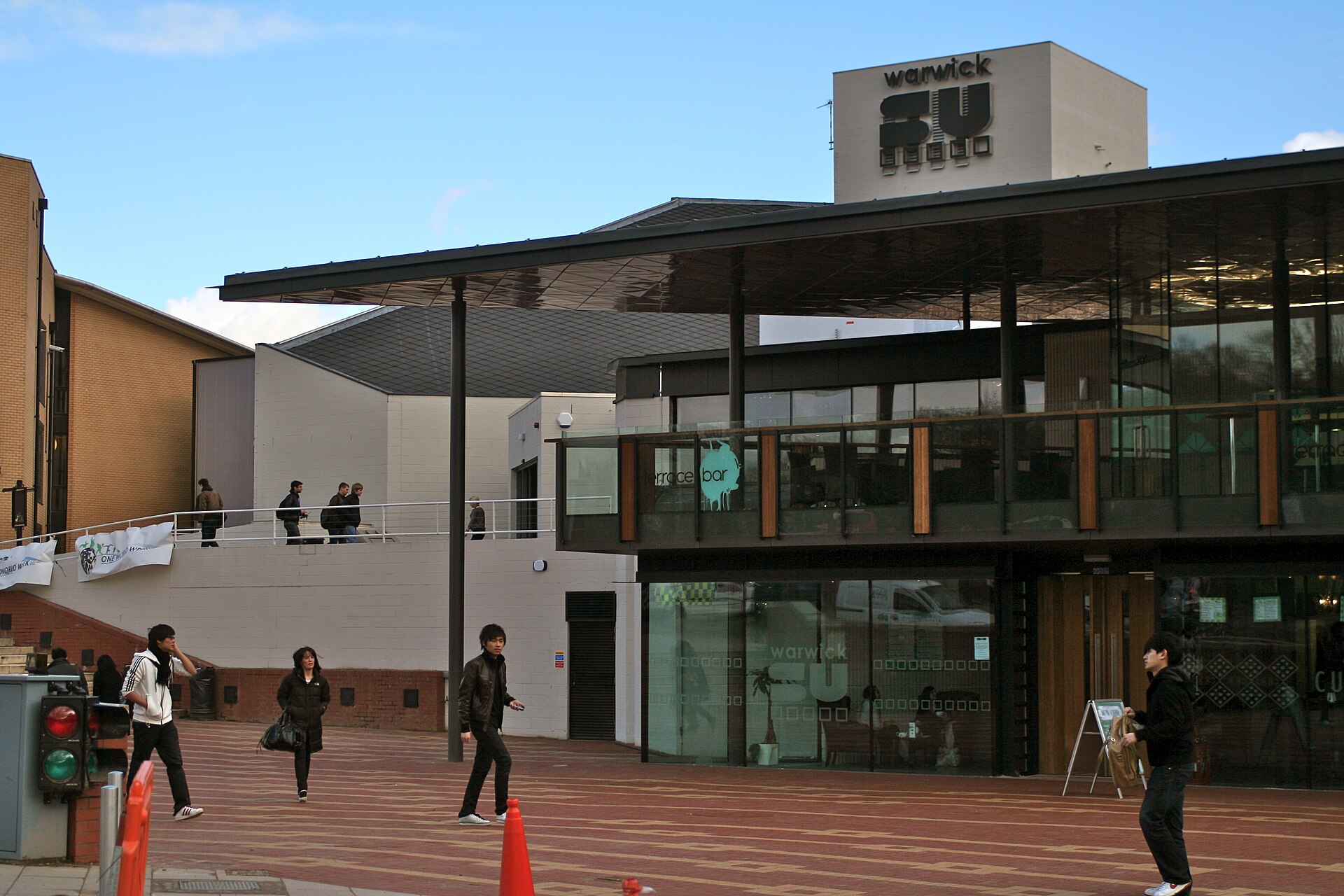
wikipedia:University of Warwick Students' Union
wikipedia:University of Warwick Students' UnionBen Firshman · CC BY-SA 3.0 · via Wikimedia Commons
Library Under Construction 1965
Library Under Construction 1965University of Warwick · CC BY-SA 4.0 · via Wikimedia Commons
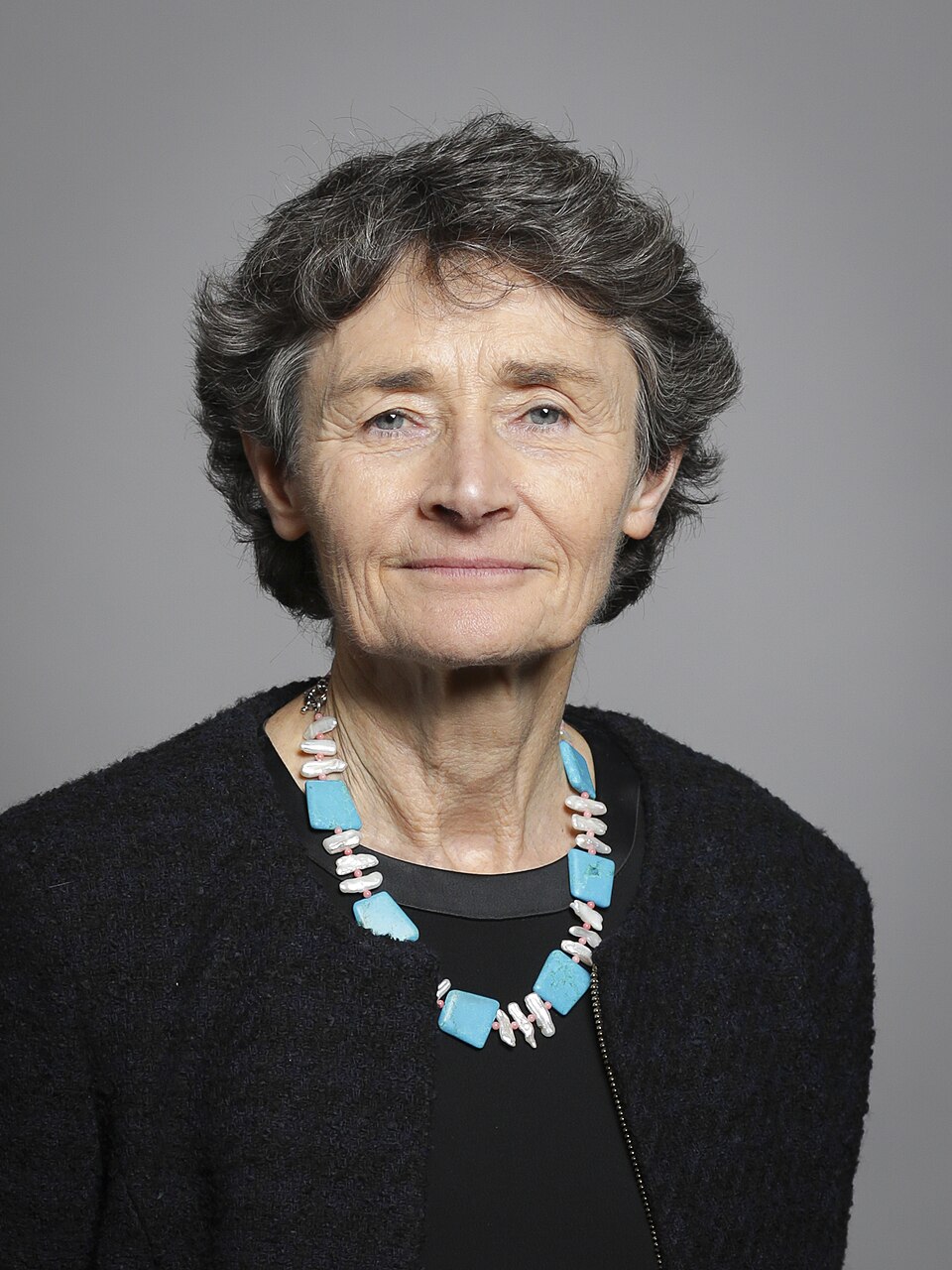
Official portrait of Baroness Morris of Yardley
3×4 portrait of Baroness Morris of Yardley
Official portrait of Baroness Morris of Yardley 3×4 portrait of Baroness Morris of YardleyRoger Harris · CC BY 3.0 · via Wikimedia Commons
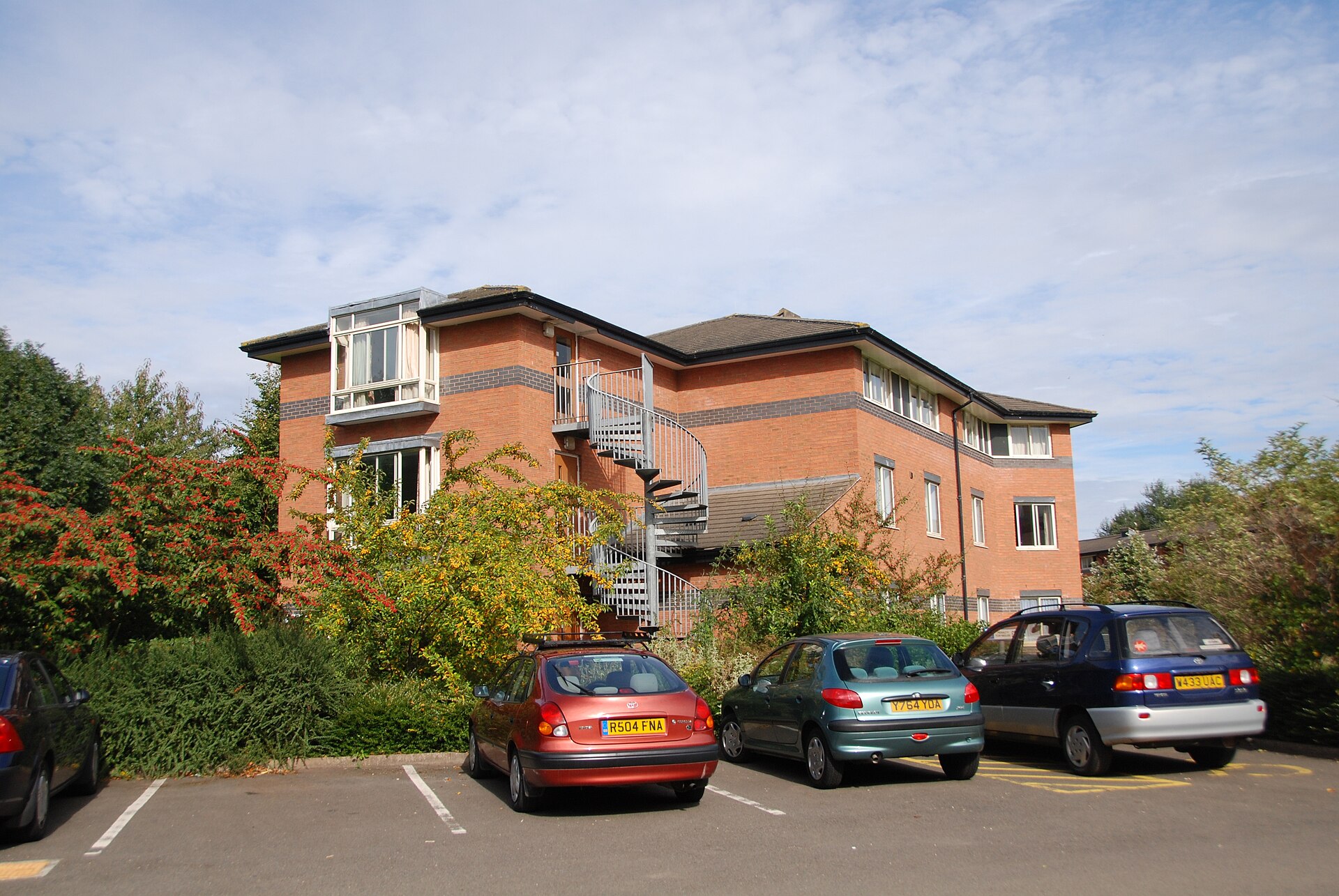
Claycroft residences at the University of Warwick, Coventry, England.
Claycroft residences at the University of Warwick, Coventry, England.Kyrosho at English Wikipedia · CC BY-SA 3.0 · via Wikimedia Commons
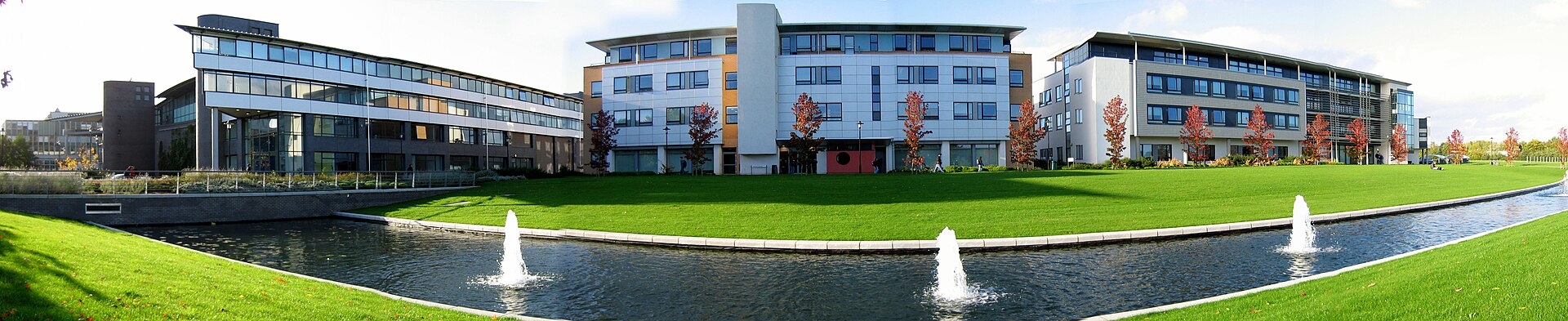
Warwick university buildings panoramic   Manufacturing and CS and Maths
Warwick university buildings panoramic Manufacturing and CS and MathsMike1024 · Public domain · via Wikimedia Commons

WHY WARWICK

Why The University of Warwick — Rankings, Research & Real-World Outcomes

Warwick was built on ambition. Founded in 1965, it reached the UK top 10 faster than any British university before or since. Today it is a globally recognised research institution with particular strength in quantitative disciplines, business, and social sciences — and a graduate employment record that employers consistently rank among the UK's best.

1Top UK Research University
Ranked 10th in the UK (QS 2027) and member of the Russell Group. 92% of Warwick's research was rated 'world-leading or internationally excellent' in REF 2021 — and undergraduates work alongside those researchers from Year 1.
2Number One for Economics in the UK
Warwick Economics is ranked 1st in the UK (Good University Guide 2026) and among the global top 20. Its MORSE degree — combining Mathematics, Operational Research, Statistics and Economics — is one of the most distinctive and employable degrees in British higher education.
3Warwick Business School
WBS is ranked 3rd in the UK and among the top 20 in Europe. The school is triple-accredited (AACSB, EQUIS, AMBA) and produces graduates who disproportionately enter investment banking, management consulting, and corporate finance.
4Graduate Employability
Warwick is the 4th most targeted university by top UK employers (High Fliers 2026). Goldman Sachs, McKinsey, Deloitte, HSBC, and the major tech firms recruit heavily on campus. The employment rate within 15 months of graduation stands at 92%.
5Intensely International Community
With 35% of students from outside the UK and ranked 28th most international university globally (Times Higher Education 2026), Warwick's campus is genuinely diverse — not performatively so. You will study alongside peers from 150+ countries.
6Purpose-Built Campus & Location
Warwick is a self-contained campus university — almost uniquely in the UK, the whole university is in one place, creating an intense, close-knit community. It sits between Coventry and Leamington Spa with fast rail links to London (under 1 hour), Birmingham, and Oxford.

SELECTIVITY

How Selective is Warwick? Acceptance Rate & Admitted Profile

Warwick admits approximately 14% of applicants overall — but this figure masks significant variation by course. For flagship programmes like Economics, Mathematics, and WBS Business, competition is considerably more intense. Warwick makes offers based primarily on academic qualifications and predicted grades; personal statements play a secondary but real role in close decisions.

International students compete in the same pool as home applicants, on the same academic criteria. There are no separate international quotas. The strength of your academic qualifications and the credibility of your predicted grades determine whether you receive an offer.

14%
Overall acceptance rate
38+
IB typical band
35%
International students
10th
UK national rank

QUICK FACTS

Warwick at a Glance

1965
Founded
29,000
Students
35%
International students
13:1
Student:faculty ratio
#69
QS World Rank
#106
THE World Rank

APPLICATION COMPONENTS

What a Warwick Application Consists Of

All undergraduate applications to Warwick are made through UCAS (Universities and Colleges Admissions Service). The institution code is W20. UCAS allows you to apply to up to five universities on one application.

01REQUIREDUCAS Application
All applications are submitted via UCAS. Your application includes personal information, qualification details, and predicted grades reported by your school or college. Applications open each year in September.
02REQUIREDAcademic Qualifications & Predicted Grades
Your current and predicted grades are the most important component of your Warwick application. Admissions tutors read your grade trajectory alongside your predicted results. Strong upward momentum is noted; a declining record raises questions.
03REQUIREDUCAS Personal Statement
For 2026 entry onwards, the personal statement uses a new three-question format (4,000 characters total). At Warwick, the personal statement is secondary to academic results — but it is read carefully for joint honours students and when grades are equal between candidates.
04REQUIREDAcademic Reference
Your school or teacher must submit a reference through UCAS. Warwick's guidance specifically asks that your referee addresses why you want to study your chosen subject — not just your general academic ability.
05COURSE-DEPENDENTAdmissions Tests (TMUA / STEP)
Several Warwick courses require or consider the TMUA (Test of Mathematics for University Admission). Mathematics and Computer Science courses may require TMUA or STEP. Economics students are encouraged but not required to sit the TMUA. These must be arranged separately — UCAS does not handle them.
06IF REQUIREDEnglish Language Qualification
International students whose first language is not English must demonstrate proficiency through IELTS Academic, TOEFL iBT, Duolingo English Test, or PTE Academic. Minimum requirements vary by course band. See the English Requirements section for details.
https://warwick.ac.uk/study/undergraduate/applying/how-to-apply/

WHAT WARWICK WANTS

What Warwick Admissions Officers Look For

Warwick is explicit: academic performance comes first. Unlike some universities where extracurricular achievements or personal stories carry significant weight, Warwick's admissions process is primarily grade-led. Knowing this shapes how you should build and present your application.

This is not a cynical observation — it reflects Warwick's genuine belief that intellectual seriousness and academic preparation are the best predictors of success in its programmes. The personal statement and reference matter most at the margins: when two candidates are equally qualified, or when a student is applying for joint honours and must demonstrate interest in both subjects.

01Academic Excellence Above All
Warwick wants the top achievers in every qualification system they accept. For A-Level applicants, this typically means A* and A grades. For IB students, a total of 38+ points with strong results at Higher Level. Predicted grades from your school carry enormous weight — a credible A* prediction from a school with a track record at Warwick is taken seriously.
02Subject Fit and Intellectual Commitment
For competitive courses — Economics, Mathematics, Computer Science — Warwick wants to see that your subject choices build logically toward your intended degree. Taking Mathematics and Further Mathematics for Economics; Computer Science or Mathematics for CS; History and Politics for PAIS. Your course selection tells a story before you write a word.
03Quantitative Preparation (where relevant)
For Economics, MORSE, Mathematics, Statistics, Computer Science, and WBS courses, strong mathematical preparation is non-negotiable. Mathematics A-Level or IB Higher Level Mathematics (Analysis and Approaches preferred for mathematical degrees) is required or strongly expected. The TMUA gives Warwick additional signal about mathematical ability beyond predicted grades.
04Academic Integrity and Context
Warwick is experienced at reading international qualifications. They assess your grades relative to what is standard in your educational system and at your specific school. Contextual factors — school performance, personal circumstances reported through the extenuating circumstances process — are read by admissions tutors who are trained to interpret them.
05Genuine Subject Enthusiasm
The personal statement at Warwick is not the place for a life narrative. Warwick wants evidence that you have engaged with your subject beyond the classroom — a paper you read, a debate that interested you, a concept you explored independently. Keep it focused, academic, and honest.

DEADLINES

Warwick Application Deadlines

Warwick operates its own equal-consideration deadline of 14 January — earlier than the general UCAS deadline. Applications received after 14 January may still be considered but do not receive equal consideration, and some courses may be full.

Warwick's institution code on UCAS is W20. You may apply to up to five universities on a single UCAS application. You do not need to list Warwick as your first choice — UCAS does not reveal your preference order to universities.

EventDateNotes
UCAS applications open2 September (annually)Begin early — strong applications take months to build
Warwick equal-consideration deadline14 January (18:00 UK time)Submit by this date for guaranteed equal consideration
Admissions decisions issuedBy 13 MayFor applications received by 14 January
Qualification verification deadline23 JulyEvidence of qualifications (excluding August results)
A-Level results day / Clearing opens13 AugustConditional offers confirmed; Clearing opens for remaining places
August results confirmation31 AugustDeadline for qualifications released in August
https://warwick.ac.uk/study/undergraduate/applying/dates/

CAMPUS LIFE

Student Life at Warwick Campus, Community & Coventry

Warwick is one of very few UK universities built as a single, self-contained campus — and this shapes the student experience profoundly. When your lectures, accommodation, library, gym, arts centre, and social spaces are all within walking distance of each other, university life feels unusually integrated. The Warwick campus is a community unto itself.

The Warwick Students' Union (SU) is among the most active in the UK, running more than 300 clubs and societies spanning culture, sport, politics, arts, and academia. The campus hosts the Warwick Arts Centre — one of the largest arts centres outside London, with a concert hall, two theatres, cinema, gallery, and studio space — making cultural life part of everyday campus experience.

Accommodation
Warwick guarantees university accommodation for all first-year students. The campus has multiple residence villages including Cryfield, Tocil, Rootes, and Jack Martin. Most first-years choose on-campus accommodation, which places them immediately in the community. In later years, students typically move to private housing in Coventry, Kenilworth, or Leamington Spa.
The Union & Societies
With 300+ societies and 60+ sports clubs, Warwick's student life is exceptionally rich. The SU runs its own nightclub (Copper Rooms), multiple bars, a shop, and organises regular events. Warwick is also home to the internationally recognised Model United Nations conference and a thriving student media ecosystem.
International Student Community
At 35% international, Warwick is among the most internationally diverse campus communities in the UK. The International Student Advisory Service (ISAS) supports visa, wellbeing, and adjustment needs. Most halls and societies integrate home and international students — the campus does not feel segregated.
Coventry & the Midlands
Warwick's campus straddles the Coventry-Warwickshire border, 10 minutes by bus from Coventry city centre and 20 minutes from Leamington Spa. Coventry is a young, multicultural city with affordable living. London is under 1 hour by train from Coventry; Birmingham under 20 minutes. The cost of living is significantly lower than London or Oxford.
Warwick Arts Centre
One of the UK's largest campus arts venues — hosting opera, ballet, international touring theatre, film, and visual arts year-round. Discounted student tickets make it genuinely accessible. Music, theatre, and film societies collaborate with the Arts Centre throughout the year.

GRADUATE OUTCOMES

Career Outcomes & Graduate Employability

Warwick's graduate employment record is among the strongest in the UK. The 4th most targeted university by top employers (High Fliers Graduate Market Report 2026), it consistently outperforms institutions of comparable size in placement into finance, consulting, and technology.

Stats

92%
Employed or in further study within 15 months
$37,000
Average starting salary (USD)
4th
UK employer targeting rank

Cards

Finance & Investment Banking
Goldman Sachs, Morgan Stanley, JP Morgan, Barclays, HSBC, and the major UK and international banks have significant Warwick recruiting pipelines. WBS and Economics graduates are particularly well-placed. Many students complete the Warwick Spring Week programme, which feeds into summer internships and graduate roles.
Management Consulting
McKinsey, BCG, Bain, Deloitte, PwC, KPMG, and Accenture all recruit at Warwick. The combination of analytical rigour (Mathematics, MORSE, Economics) and WBS's applied business curriculum makes Warwick graduates attractive consulting hires across all major firms.
Technology
Google, Amazon, Meta, Microsoft, and a wide range of UK and European tech companies recruit Computer Science, Mathematics, and MORSE graduates. Warwick's Department of Computer Science has a strong startup and research culture that feeds into engineering and product roles.
Graduate Study & Research
A significant share of Warwick graduates proceed to postgraduate study — at Warwick, Oxford, Cambridge, LSE, and leading international universities. Economics and Mathematics graduates are strongly represented in graduate economics programmes and PhD entry.

FREQUENTLY ASKED QUESTIONS

Warwick Admissions — FAQs for International Students

Does Warwick interview international applicants?+

Most Warwick courses do not conduct interviews. Exceptions exist for some programmes — check the individual course page. Unlike Oxford and Cambridge, where interviews are a decisive part of the process, most Warwick offers are made purely on the basis of your academic qualifications, personal statement, and reference.

How does Warwick view the IB Diploma vs A-Levels?+

Warwick accepts both equally and is experienced at reading both. The typical IB offer across most courses is around 38 points. For Mathematics Higher Level, Warwick specifies whether both Analysis & Approaches and Applications & Interpretation are accepted, or if only AA is recognised for courses requiring higher-level maths — check your specific course page.

Can I apply to Warwick if my school doesn't offer A-Levels or IB?+

Yes. Warwick accepts a wide range of international qualifications. Indian CBSE/ISC students, students with Indian State Board qualifications, students with US-style transcripts and AP exams, and students from European national systems are all regularly admitted. The Undergraduate Admissions Team can advise on equivalency for your specific qualification.

Does applying to Warwick as my first or only UCAS choice give me an advantage?+

No. UCAS does not reveal your order of preference to universities. Warwick cannot see whether you've listed them first or fifth. Decisions are based on academic merit, not expressed preference. You may apply to up to five universities on a single UCAS form.

What is the Warwick International Foundation Programme?+

The Warwick International Foundation Programme (WIFP) is a pre-degree pathway for international students who do not meet direct entry requirements or whose qualifications are not directly recognised. Successful completion guarantees progression to certain Warwick undergraduate degrees. It is taught on the Warwick campus.

Are there scholarships specifically for international students?+

Yes. The Warwick Undergraduate Global Excellence Scholarship is the university's primary merit-based award for international fee-paying undergraduates. Warwick also recommends that students explore funding from the British Council, their home government, and other national scholarship schemes. Visit warwick.ac.uk/study/undergraduate/fees-and-funding/scholarships-and-bursaries for current awards.

How competitive is the TMUA for Warwick Maths and Economics?+

The TMUA is required for BSc/MMath Mathematics and Computer Science at Warwick. For Economics, it is optional — but submitting a strong TMUA score meaningfully strengthens an Economics application. The test has two 75-minute sections of 20 multiple-choice questions each, testing mathematical thinking and reasoning under time pressure.

What is the difference between Band B and Band C English requirements at Warwick?+

Warwick assigns most undergraduate courses to Band B (IELTS 6.5, minimum 6.0 per component). Some courses — typically those requiring advanced written work, such as English Literature or Law — may require Band C (IELTS 7.0, minimum 6.5 per component). Check your specific course page to confirm which band applies.

ACADEMIC REQUIREMENTS

Warwick Academic Requirements — The Honest Breakdown for International Students

Warwick is academically demanding and primarily grade-led in its admissions process. Here is what you actually need — by qualification type, by course, and by admissions test — to have a realistic chance of receiving an offer.

14%
Acceptance rate
38+
Typical IB offer
3.5
Minimum GPA equivalent
Maths & CS
TMUA required for

ACADEMIC PROFILE

What Kind of Academic Profile Gets a Warwick Offer?

Warwick's admissions process is explicitly grade-first. The typical Warwick offer requires performance in the top tier of your qualification system — but the specific grade target varies significantly by course.

A standard Warwick offer ranges from ABB at the lower end (for less competitive courses) to A*A*A for the most selective programmes such as Mathematics, MORSE, Economics, and Computer Science. For IB students, typical offers range from 36 to 40+ points depending on the course. The key is that your academic profile must match the course you're applying for — Warwick rarely makes below-standard offers.

38
Typical IB band
3.5
Min GPA equivalent

TEST POLICY

Standardised Tests at Warwick

Warwick does not require SAT or ACT scores. The UK does not use these tests in its admissions process. If you are applying from a US-style curriculum, your AP examination results and high school GPA or transcript are the relevant academic evidence.

What Warwick does use are UK-specific admissions tests for certain mathematical disciplines — principally the TMUA (Test of Mathematics for University Admission) and in some cases STEP (Sixth Term Examination Paper). These are not general ability tests; they are subject-specific mathematical reasoning tests designed to differentiate among very strong applicants.

TMUA & STEP

Admissions Tests at Warwick — TMUA and STEP

Unlike most UK universities, Warwick uses admissions tests as a formal part of its process for mathematical and computing courses. Understanding which test applies to which course — and how to prepare — is essential for competitive applications.

TMUA preparation: the test covers mathematical reasoning and mathematical thinking — topics that extend somewhat beyond standard A-Level or IB curricula. Practice papers are available through the TMUA website and Cambridge Assessment Admissions Testing. Allow 6–8 weeks of structured preparation.

MATHEMATICS & COMPUTER SCIENCETMUA Required
The TMUA is required for: BSc Mathematics (G100), MMath Mathematics (G103), BSc Computer Science (G400), MEng Computer Science (G403), BSc Computer Science with Business Studies (GN42), BSc Discrete Mathematics (G190), MEng Discrete Mathematics (G4G3). Applicants eligible for Contextual Offers may be exempt. Test dates: mid-October or early January annually. Cost: £78 (UK/Ireland), £133 (international).
ECONOMICS & STATISTICSTMUA Optional (Strengthens Application)
The TMUA is optional but recommended for: BSc Economics (L100), BSc Economics and Management (LN12), BSc/BA Economics Politics and International Studies (LLD2), BSc Mathematics and Statistics (GG13), MORSE (GLN0/G0L0), BSc Data Science (7G73), MSci Data Science (G304), MMathStat (GGC3). A strong TMUA score can meaningfully differentiate your Economics application in a competitive pool.
MATHEMATICSSTEP (Mathematics Alternative)
For Mathematics courses, STEP (Sixth Term Examination Paper) is accepted as an alternative to TMUA. STEP papers are essay-format, proof-based mathematics examinations used by Cambridge and Warwick. STEP II and STEP III are the relevant papers. Preparation requires significant independent mathematical study beyond the standard A-Level or IB curriculum.
NOT REQUIREDNo UCAT, LNAT, or Other Tests
Warwick does not require UCAT (for Medicine), LNAT (for Law), or any other general admissions test for non-mathematical courses. For Law, Computer Science (beyond TMUA), Business, Politics, Engineering, and all humanities and social science courses, no additional test is required beyond standard qualifications.
https://warwick.ac.uk/study/undergraduate/applying/admissions-tests/

IB & A-LEVELS

IB Diploma and A-Levels at Warwick What the Offers Actually Look Like

Warwick accepts both the IB Diploma and A-Levels, and is experienced at comparing the two systems. Below is guidance on what typical offers look like across Warwick's main subject areas — note that specific offers are set by individual departments and stated on course pages.

TYPICAL RANGE 36–42IB Diploma
Warwick's typical IB offer across most courses is in the range of 36–40 points. For the most competitive courses — Mathematics, MORSE, Economics — offers at the top of this range are standard. Higher Level subject choices matter: for Mathematics and Economics, HL Mathematics Analysis & Approaches is expected (and for pure Mathematics, AA is typically required over AI). Warwick specifies per course which HL Mathematics option it accepts. For science and engineering courses, HL sciences alongside HL Mathematics are expected.
Note: for courses requiring Higher Level Mathematics, Warwick's course pages specify whether both Analysis & Approaches and Applications & Interpretation are accepted, or only AA. Check your specific course before submitting.
TYPICAL RANGE ABB–A*A*AA-Levels
A-Level offers at Warwick range from ABB for broader humanities and social science programmes to A*A*A for the most mathematically intensive courses (Mathematics, MORSE, Computer Science). Economics typically requires A*AA with A* in Mathematics. WBS Business courses typically require AAA or A*AA. Predicted grades are critical — Warwick trusts predicted grades from schools with a track record of accuracy, so your teacher's predictions must be realistic and justified.
Further Mathematics at A-Level: not formally required for most courses, but strongly advised for Mathematics, MORSE, and Computer Science applicants. It demonstrates the mathematical ambition Warwick rewards.
ACCEPTEDOther International Qualifications
Warwick accepts a wide range of international qualifications beyond IB and A-Level: Indian CBSE/ISC (typically 90%+ in relevant subjects for competitive courses), US AP exams with high school transcripts, European Baccalaureate, French Baccalaureate, German Abitur, and national systems from across Africa, Asia, and the Americas. All qualifications are evaluated relative to their national norms. Contact the Undergraduate Admissions Team for equivalency guidance specific to your qualification.
https://warwick.ac.uk/study/undergraduate/applying/entry-requirements/

SUBJECT PREPARATION

Subject-Specific Preparation for Warwick's Top Courses

Warwick's most competitive courses require more than strong grades — they require the right subject combination and, in some cases, specific levels of preparation that go beyond the standard curriculum.

Mathematics & MORSE
A-Level Mathematics (and preferably Further Mathematics) or IB HL Mathematics Analysis & Approaches. TMUA or STEP required. For MORSE specifically, the combination of Maths and Statistics thinking is central — students who have explored statistics, probability, or economics alongside pure maths are well-prepared. Competition mathematics (national olympiads, UKMT) is a genuine differentiator.
Economics
Mathematics is the critical subject. A-Level Economics is not required and is not weighted above Mathematics. Economics applicants should have the strongest mathematical preparation available to them. TMUA is optional but a strong score strengthens the application meaningfully. Reading widely in economic theory — even introductory academic economics, not just A-Level content — demonstrates genuine subject engagement.
Computer Science
Mathematics is required. For BSc and MEng CS, TMUA is required. Prior programming experience is not formally required but is strongly expected — most successful CS applicants have independent coding experience (personal projects, competitive programming, or equivalent). Warwick CS has a strong theoretical and mathematical culture, distinct from more applied CS programmes.
Warwick Business School (WBS)
WBS is among the UK's most selective business programmes. Strong mathematics is expected — many WBS applicants take A-Level Mathematics. Economics and Business A-Level or IB subjects demonstrate subject interest. WBS looks for analytical capability alongside commercial awareness; the personal statement should demonstrate both.
Law
Warwick Law does not require specific A-Level subjects, but expects very high grades. History, English, Politics, and Essay-based subjects are common choices. Critical reading and strong written argument are what law departments assess in the personal statement. No LNAT is required at Warwick.
Engineering
WMG (Warwick Manufacturing Group) and Engineering courses require strong Mathematics and science. Physics and Mathematics at A-Level or IB HL are standard. WMG's international trade and manufacturing programmes have specific quantitative requirements. Check individual course pages for exact subject requirements.

ENGLISH LANGUAGE

English Language Requirements at Warwick

All applicants — regardless of visa requirements — must demonstrate English language proficiency. Warwick uses three bands (A, B, C) with most undergraduate courses requiring Band B.

Most undergraduate courses at Warwick require Band B. Courses with intensive written work (English, Law, certain Social Sciences) may require Band C. Tests must have been taken within 2 years and 1 month of the course start date. Only the most recent test result is accepted.

TestBand ABand BBand C
IELTS Academic6.0 (min 5.5/component)6.5 (min 6.0/component)7.0 (min 6.5/component)
TOEFL iBT (pre-Jan 2026)87 overall92 overall100 overall
Duolingo English Test110 (min 100/component)120 (min 110/component)130 (min 120/component)
PTE Academic60 overall69 overall75 overall
https://warwick.ac.uk/study/undergraduate/applying/english-language-requirements/

PROFILE BUILDING

Building a Competitive Warwick Profile — Year by Year

The ideal Warwick applicant builds subject focus and academic strength progressively. Because Warwick's process is grade-led, the foundation is laid in Years 10 and 11 and then executed in the qualification years.

1Years 10–11: Choose the Right Subjects
For students planning to apply to Warwick's most competitive courses, subject choices at GCSE/IGCSE or IB MYP level set the foundation. Strong mathematics is non-negotiable for Economics, MORSE, CS, and Mathematics. Science subjects matter for Engineering and WMG. Humanities provide the essay-writing skills valued in Law, Politics, and social sciences.
2Year 12: Build the Strongest A-Level or IB Combination
Choose the most demanding subjects available to you that align with your intended degree. For quantitative courses: Mathematics (and Further Mathematics if available) or IB HL Mathematics AA. For Warwick, Further Mathematics is not required but is strongly expected by the mathematics and CS departments for competitive applicants.
3Year 12: Register and Prepare for TMUA or STEP
If you are applying for Mathematics, Computer Science, or considering Economics, register for the TMUA in Year 12. TMUA is offered in October and January — a Year 12 sitting gives you time to resit. STEP requires longer preparation; most students begin STEP work from the start of Year 12.
4Year 12–13: English Language Test
If English is not your first language, sit your IELTS Academic, TOEFL, or Duolingo test in Year 12 or early Year 13. Most courses require Band B (IELTS 6.5 overall). Sitting early leaves time to resit if needed. Tests are valid for 2 years.
5Year 13: Write a Focused Personal Statement
Begin your UCAS personal statement in September of Year 13. The 2026-onwards format uses three separate questions. Focus on genuine subject engagement — specific ideas, texts, or intellectual moments that shaped your interest. Avoid generic enthusiasm. Warwick's guidance explicitly says the statement is secondary to grades — but it can be the deciding factor for joint honours students or when candidates are equally qualified.
6January (Year 13): Submit Before 14 January
Submit your UCAS application by 14 January (18:00 UK time) for equal consideration at Warwick. Applications after this date may still be processed but without the equal consideration guarantee. Secure your academic reference early — teachers need adequate time to write a strong, specific reference.

COMMON MISTAKES

Academic Application Mistakes at Warwick

  • Applying for Economics without strong Mathematics — Warwick Economics is highly quantitative; A* in A-Level Mathematics or IB HL Mathematics AA is the standard expectation.
  • Choosing Applications & Interpretation over Analysis & Approaches for courses that require the latter — always check whether your specific course accepts both HL Mathematics options.
  • Skipping TMUA registration for Computer Science or Mathematics — the test is required, not optional, for these courses. Missing the registration window (typically July–September) means you cannot apply for that cycle.
  • Applying after 14 January expecting equal consideration — Warwick is explicit that applications after their own deadline are not guaranteed equal treatment.
  • Inflated predicted grades — Warwick admissions tutors have detailed school-level data. If your school rarely achieves A* at A-Level but your teacher predicts you A*A*A, this creates doubt. Honest, well-supported predictions are more credible than aspirational ones.
  • Writing a generic personal statement about 'passion for learning' — Warwick prioritises grades, but a vague, non-subject-specific statement signals low engagement. Name actual ideas, texts, or experiences.
  • Not mentioning your Mathematics HL option in your personal statement when it matters — for joint honours courses where the HL Mathematics question is relevant, proactively addressing which option you are taking (AA or AI) and why removes ambiguity for the admissions tutor.

COST & FUNDING

Cost of Studying at Warwick — An Honest Framing for International Students

Warwick's international tuition is competitive by UK research university standards — and the UK, unlike the US, does not offer institution-level need-based aid to international undergraduates in the same form. Understanding what you will pay, and what funding exists, before applying is essential.

For international (Overseas fee-status) students, Warwick charges annual tuition fees that vary by course type. The UK cost of living, while lower than London, is a real budget consideration. The good news: Warwick offers merit-based scholarships for international undergraduates, and external scholarship sources — British Council, home-government programmes, national foundations — can substantially offset costs for the most academically outstanding candidates.

COST BREAKDOWN

Annual Cost Estimates for International Students

All figures below are annual estimates. Tuition figures are from the facts file (USD equivalent). Course-specific fee bands are set by Warwick in GBP and converted — check warwick.ac.uk/study/undergraduate/fees-and-funding/course-costs for the current GBP figures.

Living costs in Coventry are significantly lower than London. University-owned accommodation (guaranteed for first-years) typically costs less than equivalent private housing.

ItemAnnualNotes
Tuition (international/overseas fees)$35,400Varies by course band; check GBP figure on course page
Total cost of attendance (estimated)$50,600Tuition + living costs combined
Living costs (estimated)$14,000Accommodation, food, transport, personal expenses
UCAS application fee$35One-time; per UCAS application (up to 5 universities)

TUITION FEE STRUCTURE

Warwick's Two Tuition Fee Bands for International Students

Warwick charges international (Overseas fee-status) students fees in two bands, determined by course type. These are the 2026–27 annual GBP figures from Warwick's official fees page.

Fees for 2027–28 entry had not been set at time of writing. Confirm current fees on Warwick's official fees page before applying. Some courses have additional costs for field trips, materials, or placement year programmes.

£27,870/YEARBand 1 — Classroom-Based Courses
Applies to: Humanities courses and most Social Science courses (excluding Economics and WBS-related programmes). Includes Politics and International Studies, History, Law, Philosophy, Sociology, English Literature, Theatre Studies, Film Studies, and similar.
£35,530/YEARBand 2 — Laboratory & Quantitative Courses
Applies to: laboratory-based science courses, plus Mathematics, Statistics, Theatre and Performance Studies, Economics, and all courses provided by Warwick Business School. Also includes Engineering, Computer Science, Physics, Chemistry, and Life Sciences. This is the higher fee band and covers Warwick's most internationally sought-after degrees.
https://warwick.ac.uk/study/undergraduate/fees-and-funding/course-costs/

FINANCIAL AID

Financial Aid for International Students at Warwick

Unlike leading US universities (which offer need-blind, full-need-met financial aid to international undergraduates), UK universities — including Warwick — do not typically offer institutional need-based financial aid to international students. There are no income-tested bursaries for Overseas fee-status students equivalent to US financial aid programmes.

What Warwick does offer for international students is merit-based scholarship funding, primarily through the Warwick Undergraduate Global Excellence Scholarship, plus access to a small number of other awards. Students are also strongly encouraged to seek external funding from their home country's government, the British Council, and national scholarship schemes.

The avgAidPct for international students at Warwick is not published — described qualitatively as merit-based and competitive, not need-based and universal.

SCHOLARSHIPS

Scholarships for International Students at Warwick

Warwick offers merit-based scholarships specifically for international (Overseas fee-status) undergraduate students. Awards are competitive and typically do not cover full tuition — but they provide meaningful financial support for the most academically outstanding candidates.

MERIT-BASEDWarwick Undergraduate Global Excellence Scholarship
The university's flagship scholarship for international undergraduate students. Designed to ensure that 'there should be no barrier to talent' for 'gifted, ambitious international learners.' Specific award amounts and the full eligibility criteria are set each cycle — visit warwick.ac.uk/study/undergraduate/fees-and-funding/scholarships-and-bursaries for current details including application deadlines and award values. Awards are competitive and typically tied to academic excellence.
POSTGRADUATE — REFERENCEWarwick Chancellors International Scholarship
Warwick offers significant scholarship funding at postgraduate level too. Students who perform exceptionally well at undergraduate level are competitive for continuation scholarships into Warwick postgraduate programmes. Planning ahead — treating your undergraduate years as a scholarship pipeline — is a worthwhile strategy.
EXTERNALBritish Council Scholarships
The British Council administers scholarship programmes in many countries for students wishing to study in the UK. Commonwealth Scholarship and Fellowship Plan (CSFP) awards are available in eligible Commonwealth countries. Chevening Scholarships support postgraduate study — but beginning your Chevening track record at undergraduate level is valuable for future eligibility.
EXTERNALHome Government & National Programmes
Many governments fund their most academically outstanding students at UK universities. Examples include: India's Ministry of Education scholarships, Singapore's government study awards, Malaysian government scholarship schemes, Gulf country higher education grants, and many others. Eligibility typically requires top academic performance and often a bond to return to work in your home country.
https://warwick.ac.uk/study/undergraduate/fees-and-funding/scholarships-and-bursaries/

AFFORDABILITY

Warwick vs Other UK and Global Options

On a cost-adjusted basis, Warwick competes favourably with other leading UK and global options. Its fees are broadly comparable to other Russell Group universities (Oxford, Cambridge, Imperial, UCL, LSE all charge similar or higher international rates). The UK's three-year undergraduate degree structure also means that total degree cost is lower than the US four-year model — even at similar annual rates.

The cost of living in Coventry is materially lower than London (where UCL, LSE, Imperial, and King's College London are located), which meaningfully affects total cost of attendance. Students who receive guaranteed on-campus accommodation in first year benefit from Warwick's managed housing costs. For Year 2 and 3, Leamington Spa — a highly liveable market town 15 minutes from campus — is a popular and relatively affordable option compared to major UK city rents.

HOW TO FUND YOUR DEGREE

Steps to Secure Funding for Warwick as an International Student

1Research Warwick's Own Scholarships Early
Visit warwick.ac.uk/study/undergraduate/fees-and-funding/scholarships-and-bursaries before you apply. Deadlines for institutional scholarships often align with or immediately follow the admissions decision timeline. Some awards require a separate application; others are automatically considered.
2Apply for Your Home Government's Scholarship
If your government has a UK university scholarship programme, apply simultaneously with your UCAS application. Many government awards require proof of university admission — so the Warwick offer letter becomes part of your scholarship application.
3Explore the British Council in Your Country
The British Council operates in 100+ countries and administers multiple scholarship programmes for UK study. Contact your country's British Council office for current awards — these vary significantly by country and year.
4Contact Warwick's Fees and Funding Team
Once you receive your offer, contact Warwick's Student Funding team directly. They can advise on any awards you might not have found on the website and help you understand bursary eligibility. Email: studentfunding@warwick.ac.uk.
5Plan Your Total Budget for Three Years
UK undergraduate degrees are three years (four for integrated Masters programmes). Planning a total three-year budget — tuition, accommodation, living costs, travel home, course materials — before you arrive avoids mid-degree financial stress. The Warwick fees page includes a living cost estimator.

COST FAQS

Cost & Funding FAQs — Warwick for International Students

Does Warwick offer need-based financial aid to international undergraduates?+

Not in the way US universities do. Warwick does not offer need-based bursaries to Overseas fee-status undergraduate students. Funding for international students is merit-based (scholarships) or must be sourced externally (home government programmes, British Council, national foundations). This is standard across UK universities.

Are there tuition fee discounts for international students who excel academically?+

Merit scholarships like the Global Excellence Scholarship provide fee reductions or awards for the most academically outstanding international applicants. These are competitive and not guaranteed — applying early and submitting strong academic evidence is essential.

How much does it actually cost to live at Warwick per year?+

Estimated living costs (from the facts file) are approximately $14,000 per year. This covers accommodation, food, travel, and personal expenses. First-year students in Warwick's on-campus halls may find accommodation costs vary from under £100/week (basic) to £160+/week (en-suite or superior rooms). Coventry is significantly cheaper to live in than London.

Do international students pay more than UK students at Warwick?+

Yes, significantly more. UK (Home) students pay £9,535/year (2025–26 regulated rate). International (Overseas) students pay £27,870 (Band 1) or £35,530 (Band 2) per year. This disparity is standard across the UK higher education system and reflects government policy — UK domestic fees are regulated, international fees are set freely by universities.

Can I work part-time while studying at Warwick on a student visa?+

Yes. International students on a UK Student Visa are generally permitted to work up to 20 hours per week during term time and full-time during vacations. This can offset living costs. However, working should be treated as supplementary income — it should not be relied upon to cover tuition.

UCAS PERSONAL STATEMENT

The UCAS Personal Statement for Warwick — What It Is, What It's Not, and How to Write It

Warwick is transparent: your personal statement is secondary to your academic qualifications. But secondary does not mean irrelevant. In a field of equally-qualified candidates, the personal statement is what separates an offer from a rejection. Here is how to write one that works.

From 2026 entry onwards, UCAS replaced the traditional single 4,000-character personal statement with a three-question format. Each question has a minimum of 350 characters, and the total across all three responses cannot exceed 4,000 characters. This structure rewards clarity and depth over general narrative.

FORMAT OVERVIEW

The New UCAS Personal Statement Format (2026 Onwards)

UCAS replaced the single personal statement with three separate questions from the 2026 admissions cycle. Every UK university — including Warwick — receives the same three responses. You cannot write a Warwick-specific personal statement; you write one set of answers that all five of your UCAS choices will read.

This new structure is significant. Where the old format rewarded storytelling and narrative flow, the new format rewards precision: each question has a specific purpose, and admissions tutors will read each response looking for evidence of the exact thing the question asks for. Vagueness or topic drift within a question is more visible than it was in the old format.

Three Questions, One Submission
Your three responses are submitted together as your personal statement through UCAS. All five universities on your application receive identical responses. The total character limit is 4,000 characters — approximately 600–700 words. Each question requires a minimum of 350 characters.
Warwick's Priority: Academic Evidence
Warwick uses the personal statement most actively for joint honours applications (where interest in both subjects must be demonstrated) and when choosing between candidates with identical or near-identical academic profiles. For single-subject applications where your grades clearly meet the requirements, the statement confirms — rather than creates — the case.
What Warwick Explicitly Values
Warwick's guidance states that personal statements help them assess commitment to the subject, are particularly important for joint honours applicants, and are used to identify candidates for interview (on courses where interviews are held). Concentrate your statement on subject-specific intellectual engagement, not general achievements.
https://warwick.ac.uk/study/undergraduate/applying/personal-statement/

THE THREE QUESTIONS

UCAS Personal Statement — The Three Questions and How to Answer Them

REQUIRED · MINIMUM 350 CHARACTERSQuestion 1 — Subject Interest
Official Text: Why do you want to study this subject or combination of subjects? What sparked your interest? Tell us about topics, themes, debates, or ideas that have engaged you — through books, podcasts, documentaries, wider reading, or your own thinking.
Strategic Guide: This is your most important question — it is the one Warwick cares about most. For Warwick Economics, cite an economic argument or concept you encountered outside school and engaged with genuinely. For Mathematics, name a problem or mathematical idea that drew you in. For Law, describe a legal principle or case that raised a real question for you. Be specific: name the paper, the author, the debate, the moment. 'I have always been interested in mathematics' is not an answer — 'Reading Marcus du Sautoy's work on symmetry groups made me want to understand why Galois theory works the way it does' is an answer.
REQUIRED · MINIMUM 350 CHARACTERSQuestion 2 — Academic Preparation
Official Text: How has your formal education prepared you for this subject? Discuss topics you've studied that are relevant, qualifications like EPQ, and skills you've developed through your academic work.
Strategic Guide: For Warwick, this question is where you address your qualification profile directly. If you are taking A-Level Mathematics and Further Mathematics for an Economics application, say so — and say why those subjects connect to your intended degree. If you completed an EPQ on an economics or statistics topic, mention it here. If you are sitting the TMUA, say so and describe your preparation. For IB students, explain your HL choices and how they relate to your degree. This question is not about listing subjects — it is about explaining why your academic path builds toward what you intend to study.
REQUIRED · MINIMUM 350 CHARACTERSQuestion 3 — External Preparation
Official Text: What have you done outside formal education that has prepared you for or deepened your interest in this subject? This could include work experience, volunteering, independent reading, extracurricular projects, or gap year plans.
Strategic Guide: This is where work experience, summer schools, independent projects, and extended reading belong. For a Warwick Economics application, describe any exposure to economic data, analysis, or real-world economic phenomena — not generically ('I attended a business event') but specifically ('I analysed price elasticity data from a local market as part of a school economics project'). For Computer Science, describe a coding project you built independently and what you learned from building it. Warwick's guidance says to go beyond listing examples — explain how each experience shaped your understanding or commitment. Quality over quantity: two well-explained experiences are stronger than six surface-level ones.
https://warwick.ac.uk/study/undergraduate/applying/personal-statement/

STRATEGY

How to Approach the Warwick Personal Statement

Because Warwick's admissions process is grade-first, the strategic role of the personal statement differs from US university essays. You are not trying to tell your life story — you are demonstrating that you understand your subject at a depth that goes beyond the classroom, and that your preparation is genuine.

The single most important thing a Warwick personal statement can do is to demonstrate intellectual engagement with the subject you are applying for. Not enthusiasm — engagement. Enthusiasm is 'I love economics.' Engagement is 'Reading Ha-Joon Chang's critique of comparative advantage made me question assumptions I had accepted from my A-Level course, which led me to read Krugman's work on new trade theory and eventually to build a simple model comparing their predictions.' One of these tells an admissions tutor that you have a living relationship with the subject. The other does not.

Warwick explicitly states that purely AI-generated content should not be submitted. The university uses similarity-detection tools (UCAS similarity detection flags statements that match other submissions or published content). Write in your own voice — your personal statement should read like a specific person thinking, not like a generic template.

QUESTION-BY-QUESTION GUIDE

Writing Each UCAS Question for a Warwick Application

Getting the Subject Focus Right (Q1)
Your degree subject is the focus — not your general intellectual interests. If you are applying for Economics, write about Economics. If you are applying for Mathematics, write about Mathematics. Avoid the temptation to write about the intersection of your subject with 'current events' or 'society' in a way that is really just describing news articles. Go deeper and narrower: a specific idea, a specific thinker, a specific question.
Connecting Qualifications to Your Degree (Q2)
Be explicit: name your subjects, explain the connection, and — if relevant — name your TMUA or STEP preparation. Admissions tutors appreciate applicants who are clear about what they have studied and why it is relevant. For joint honours applicants, this question is particularly important: you must demonstrate preparation and interest in both subjects.
Making External Experiences Count (Q3)
The most powerful entries in this section are: independent reading that led to genuine intellectual conclusions; real work experience that exposed you to your subject in practice; competitive academic achievement (maths olympiad, essay prizes, debate competitions); and online or summer courses that deepened your understanding. Avoid listing experiences that sound impressive but add no intellectual content.
Character Limits as Editorial Discipline
4,000 characters total is tight. Draft each answer at twice the length, then cut viciously. Every sentence should either demonstrate intellectual engagement or demonstrate preparation — if it does neither, cut it. Warwick tutors are reading hundreds of statements; every wasted line reduces the impact of the rest.

WHAT TO WRITE ABOUT

Choosing What to Include in Your Warwick Personal Statement

The strongest Warwick personal statements are focused and specific. Here is a framework for deciding what to include and what to leave out.

Include: Specific Intellectual Encounters
A book you read and disagreed with. A lecture or podcast that changed how you think about something. A mathematical problem you couldn't let go. An economic event you analysed using concepts from your course. These are the entries that distinguish a specific, engaged student from a generic one.
Include: Your TMUA or STEP Story (if relevant)
If you are preparing for the TMUA or STEP, mentioning this — and why the mathematical preparation has deepened your engagement with your subject — gives the admissions tutor useful information and shows you understand what Warwick is looking for.
Include: Joint Degree Connections (if applicable)
For MORSE, Economics and Politics, Law with Business Studies, or any joint honours programme, you must demonstrate genuine engagement with both subjects. Assign explicit attention in your Q1 and Q2 responses to show you are not just defaulting to one side.
Avoid: Activity Laundry Lists
Warwick's guidance explicitly warns against listing activities without explaining their relevance. A sentence saying 'I have attended three university open days and two economics lectures' tells the admissions tutor nothing. A sentence saying 'Attending Warwick's undergraduate open day lecture on game theory raised a question I researched for three weeks afterward' tells them something real.
Avoid: Non-Subject Material
Sport, music, volunteering, and personal achievements that are unconnected to your subject belong at the margins at best. Warwick values subject engagement. Time spent on non-subject material is time not spent demonstrating why you deserve a place in their Economics or Mathematics cohort.

COMMON MISTAKES

Personal Statement Mistakes That Cost Warwick Applicants

  • Writing enthusiastically but not specifically — 'I have always been passionate about economics' contributes nothing that distinguishes you from the other 15,000 Economics applicants.
  • Relying on AI-generated content — UCAS and Warwick use similarity-detection tools; AI-generated prose is increasingly identifiable and is explicitly discouraged by Warwick's own guidance.
  • Spending too much of the Q3 response on activities with no intellectual substance — work experience at a bank for two weeks reads very differently if you describe what you observed and what economic concept it connected to.
  • Ignoring the Q2 question's invitation to link your qualification choices to your degree — this is the most underused opportunity in the new three-question format.
  • Applying for Economics or Mathematics without addressing the TMUA (if sitting it) anywhere in the statement — if you are sitting a relevant admissions test, mention it.
  • Writing the same personal statement for multiple very different subject applications — UCAS allows you to apply to five different courses, but you write one statement. If your five choices are genuinely different subjects, you face a real problem: you cannot write a coherent, subject-specific statement for five different departments. Apply to closely related subjects.
  • Submitting a statement that reads like a CV rather than a piece of thinking — Warwick wants evidence of how your mind works, not a list of your achievements formatted into prose.

ESSAY FAQS

Personal Statement FAQs — Warwick Applicants

How much does the personal statement actually matter at Warwick?+

Less than at most US universities — but more than many applicants think. Warwick is grade-first, and for single-subject applicants who clearly meet requirements, the statement confirms the application rather than makes it. But for joint honours students, borderline academic profiles, or heavily oversubscribed courses where many candidates hold identical predicted grades, the personal statement becomes decisive.

Should I write the personal statement to each university on my UCAS list?+

No — UCAS sends the same statement to all five universities you apply to. You cannot write a Warwick-specific statement separately. This is why applying to closely related courses (e.g. Economics, Economics and Management, MORSE, Mathematics and Economics) is strategically important — a single statement can be genuinely relevant to all of them.

How long should each question be?+

The total is 4,000 characters across all three questions, with a minimum of 350 per question. There is no perfect split — but many advisers suggest roughly 40% / 30% / 30% (subject interest / academic prep / external prep). Allocate more characters where you have more genuinely interesting content. Draft long and cut.

Can I use AI tools to help write my personal statement?+

Warwick's official guidance says you should not rely on purely AI-generated content and that UCAS monitors for similarity and AI-generated prose. You can use AI tools to brainstorm, organise your ideas, or get feedback on drafts — but the final submission must be your own voice and your own genuine thoughts. Admissions tutors are experienced readers; a voice that doesn't match the rest of the application raises questions.

What if my extenuating circumstances affected my predicted grades?+

Do not put extenuating circumstances in the personal statement — use Warwick's dedicated extenuating circumstances form. The personal statement is for subject engagement and preparation. Your school reference can also address contextual factors. Mixing personal hardship into the subject statement dilutes both.

Does Warwick give feedback on rejected personal statements?+

No. Warwick, like all UK universities, does not provide individual feedback on unsuccessful applications. The UCAS personal statement is not reviewed by the applicant after submission — you get one chance. This is why careful drafting, peer review, and teacher feedback before submission are important.

Courses — schools, degrees & intake

126 degrees across 18 groupings.

Department of Mathematics · 13 degrees

Mathematics (BSc)

BachelorsEntry IB 38; A*A*A at A-level (inc. Maths)Deadline 2026-01-14

Mathematics (MMath)

Integrated MastersEntry IB 38; A*A*A at A-level (inc. Maths)Deadline 2026-01-14

Mathematics and Statistics (BSc)

BachelorsEntry IB 38; A*A*A at A-level (inc. Maths)Deadline 2026-01-14

Mathematics and Statistics (MMathStat)

Integrated MastersEntry IB 38; A*A*A at A-level (inc. Maths)Deadline 2026-01-14

Mathematics and Physics (BSc)

BachelorsEntry IB 38; A*AA at A-level (A* Maths, A Further Maths, A Physics)Deadline 2026-01-14

Mathematics and Physics (MMathPhys)

Integrated MastersEntry IB 38; A*AA at A-level (A* Maths, A Further Maths, A Physics)Deadline 2026-01-14

Mathematics and Philosophy (BA/BSc)

BachelorsEntry IB 38; A*A*A at A-level (inc. Maths)Deadline 2026-01-14

MORSE (Mathematics, Operational Research, Statistics and Economics) (BSc)

BachelorsEntry IB 38; A*AA at A-level (inc. Maths)Deadline 2026-01-14

MORSE (MMORSE)

Integrated MastersEntry IB 38; A*AA at A-level (inc. Maths)Deadline 2026-01-14

Discrete Mathematics (BSc)

BachelorsEntry IB 38; A*A*A at A-level (inc. Maths)Deadline 2026-01-14

Discrete Mathematics (MEng)

Integrated MastersEntry IB 38; A*A*A at A-level (inc. Maths)Deadline 2026-01-14

Data Science (BSc)

BachelorsEntry IB 38; A*AA at A-level (inc. Maths)Deadline 2026-01-14

Data Science (MSci)

Integrated MastersEntry IB 38; A*AA at A-level (inc. Maths)Deadline 2026-01-14

Department of Computer Science · 5 degrees

Computer Science (BSc)

BachelorsEntry IB 38; A*AA at A-level (inc. Maths)Deadline 2026-01-14

Computer Science (MEng)

Integrated MastersEntry IB 38; A*AA at A-level (inc. Maths)Deadline 2026-01-14

Computer Systems Engineering (BEng)

BachelorsEntry IB 38; A*AA at A-level (inc. Maths)Deadline 2026-01-14

Computer Systems Engineering (MEng)

Integrated MastersEntry IB 38; A*AA at A-level (inc. Maths)Deadline 2026-01-14

Computer Science with Business Studies (BSc)

BachelorsEntry IB 38; A*AA at A-level (inc. Maths)Deadline 2026-01-14

School of Engineering · 9 degrees

Automotive Engineering (BEng/MEng)

BachelorsEntry IB 38; A*AA at A-level (inc. Maths and Physics or Further Maths)Deadline 2026-01-14

Biomedical Systems Engineering (BEng/MEng)

BachelorsEntry IB 38; A*AA at A-level (inc. Maths and Physics or Further Maths)Deadline 2026-01-14

Civil Engineering (BEng/MEng)

BachelorsEntry IB 38; A*AA at A-level (inc. Maths and Physics or Further Maths)Deadline 2026-01-14

Electrical and Electronic Engineering (BEng/MEng)

BachelorsEntry IB 38; A*AA at A-level (inc. Maths and Physics or Further Maths)Deadline 2026-01-14

Engineering Business Management (BEng)

BachelorsEntry IB 38; A*AA at A-level (inc. Maths)Deadline 2026-01-14

General Engineering (BEng/MEng)

BachelorsEntry IB 38; A*AA at A-level (inc. Maths and Physics or Further Maths)Deadline 2026-01-14

Manufacturing and Mechanical Engineering (BEng/MEng)

BachelorsEntry IB 38; A*AA at A-level (inc. Maths and Physics or Further Maths)Deadline 2026-01-14

Mechanical Engineering (BEng/MEng)

BachelorsEntry IB 38; A*AA at A-level (inc. Maths and Physics or Further Maths)Deadline 2026-01-14

Systems Engineering (BEng/MEng)

BachelorsEntry IB 38; A*AA at A-level (inc. Maths and Physics or Further Maths)Deadline 2026-01-14

Department of Physics · 5 degrees

Physics (BSc)

BachelorsEntry IB 38; A*AA at A-level (inc. Physics and Maths)Deadline 2026-01-14

Physics (MPhys)

Integrated MastersEntry IB 38; A*AA at A-level (inc. Physics and Maths)Deadline 2026-01-14

Physics with Astrophysics (BSc)

BachelorsEntry IB 38; A*AA at A-level (inc. Physics and Maths)Deadline 2026-01-14

Physics with Astrophysics (MPhys)

Integrated MastersEntry IB 38; A*AA at A-level (inc. Physics and Maths)Deadline 2026-01-14

Physics with Business and Management (BSc)

BachelorsEntry IB 38; A*AA at A-level (inc. Physics and Maths)Deadline 2026-01-14

Department of Chemistry · 6 degrees

Chemistry (BSc)

BachelorsEntry IB 38; A*AA at A-level (inc. Chemistry and Maths)Deadline 2026-01-14

Chemistry (MChem)

Integrated MastersEntry IB 38; A*AA at A-level (inc. Chemistry and Maths)Deadline 2026-01-14

Chemistry with Industrial Placement (MChem)

Integrated MastersEntry IB 38; A*AA at A-level (inc. Chemistry and Maths)Deadline 2026-01-14

Chemistry with International Placement (MChem)

Integrated MastersEntry IB 38; A*AA at A-level (inc. Chemistry and Maths)Deadline 2026-01-14

Chemistry with Medicinal Chemistry (BSc)

BachelorsEntry IB 38; A*AA at A-level (inc. Chemistry and Maths)Deadline 2026-01-14

Chemistry with Medicinal Chemistry (MChem)

Integrated MastersEntry IB 38; A*AA at A-level (inc. Chemistry and Maths)Deadline 2026-01-14

School of Life Sciences · 16 degrees

Biochemistry (BSc)

BachelorsEntry IB 38; A*AA at A-level (inc. Chemistry and one of Biology/Maths/Physics)Deadline 2026-01-14

Biochemistry with Placement Year (BSc)

BachelorsEntry IB 38; A*AA at A-level (inc. Chemistry and one of Biology/Maths/Physics)Deadline 2026-01-14

Biochemistry (MBio)

Integrated MastersEntry IB 38; A*AA at A-level (inc. Chemistry and one of Biology/Maths/Physics)Deadline 2026-01-14

Biochemistry with Industrial Placement (MBio)

Integrated MastersEntry IB 38; A*AA at A-level (inc. Chemistry and one of Biology/Maths/Physics)Deadline 2026-01-14

Biological Sciences (BSc)

BachelorsEntry IB 38; A*AA at A-level (inc. Biology or Chemistry)Deadline 2026-01-14

Biological Sciences with Placement Year (BSc)

BachelorsEntry IB 38; A*AA at A-level (inc. Biology or Chemistry)Deadline 2026-01-14

Biological Sciences (MBio)

Integrated MastersEntry IB 38; A*AA at A-level (inc. Biology or Chemistry)Deadline 2026-01-14

Biological Sciences with Industrial Placement (MBio)

Integrated MastersEntry IB 38; A*AA at A-level (inc. Biology or Chemistry)Deadline 2026-01-14

Biomedical Sciences (BSc)

BachelorsEntry IB 38; A*AA at A-level (inc. Biology or Chemistry)Deadline 2026-01-14

Biomedical Sciences with Placement Year (BSc)

BachelorsEntry IB 38; A*AA at A-level (inc. Biology or Chemistry)Deadline 2026-01-14

Biomedical Sciences (MBio)

Integrated MastersEntry IB 38; A*AA at A-level (inc. Biology or Chemistry)Deadline 2026-01-14

Biomedical Sciences with Industrial Placement (MBio)

Integrated MastersEntry IB 38; A*AA at A-level (inc. Biology or Chemistry)Deadline 2026-01-14

Neuroscience (BSc)

BachelorsEntry IB 38; A*AA at A-level (inc. Biology or Chemistry)Deadline 2026-01-14

Neuroscience with Placement Year (BSc)

BachelorsEntry IB 38; A*AA at A-level (inc. Biology or Chemistry)Deadline 2026-01-14

Neuroscience (MBio)

Integrated MastersEntry IB 38; A*AA at A-level (inc. Biology or Chemistry)Deadline 2026-01-14

Neuroscience with Industrial Placement (MBio)

Integrated MastersEntry IB 38; A*AA at A-level (inc. Biology or Chemistry)Deadline 2026-01-14

Department of Psychology · 4 degrees

Psychology (BSc)

BachelorsEntry IB 38; AAA at A-levelDeadline 2026-01-14

Psychology with Linguistics (BSc)

BachelorsEntry IB 38; AAA at A-levelDeadline 2026-01-14

Psychology with Education (BSc)

BachelorsEntry IB 38; AAA at A-levelDeadline 2026-01-14

Psychology and Global Sustainable Development (BASc)

BachelorsEntry IB 38; AAA at A-levelDeadline 2026-01-14

Warwick Manufacturing Group (WMG) · 2 degrees

Robotics Engineering with Artificial Intelligence (BEng)

BachelorsEntry IB 38; A*AA at A-level (inc. Maths and Physics or Further Maths)Deadline 2026-01-14

Cyber Security (BSc)

BachelorsEntry IB 38; A*AA at A-level (inc. Maths)Deadline 2026-01-14

Warwick Medical School · 2 degrees

Health and Medical Sciences (BSc)

BachelorsEntry IB 38; AAA at A-level (inc. Biology or Chemistry)Deadline 2026-01-14

Medicine (MB ChB) — Graduate Entry

BachelorsEntry IB 38; degree-level qualification required; accepts arts and science graduatesDeadline 2026-01-14

Department of Economics · 4 degrees

Economics (BSc)

BachelorsEntry IB 38; A*AA at A-level (inc. Maths)Deadline 2026-01-14

Economics, Politics and International Studies (BSc/BA)

BachelorsEntry IB 38; A*AA at A-levelDeadline 2026-01-14

Economics and Management (BSc)

BachelorsEntry IB 38; A*AA at A-level (inc. Maths)Deadline 2026-01-14

Economics, Psychology and Philosophy (BA/BSc)

BachelorsEntry IB 38; A*AA at A-levelDeadline 2026-01-14

Department of Philosophy · 8 degrees

Philosophy (BA)

BachelorsEntry IB 38; AAA at A-levelDeadline 2026-01-14

Philosophy, Politics and Economics (BA/BSc)

BachelorsEntry IB 38; AAA at A-levelDeadline 2026-01-14

Philosophy and Politics (BA)

BachelorsEntry IB 38; AAA at A-levelDeadline 2026-01-14

Philosophy with Psychology (BA)

BachelorsEntry IB 38; AAA at A-levelDeadline 2026-01-14

Philosophy and Literature (BA)

BachelorsEntry IB 38; AAA at A-levelDeadline 2026-01-14

Philosophy, Literature and Classics (BA)

BachelorsEntry IB 38; AAA at A-levelDeadline 2026-01-14

History and Philosophy (BA)

BachelorsEntry IB 38; AAA at A-levelDeadline 2026-01-14

Philosophy and Global Sustainable Development (BASc)

BachelorsEntry IB 38; AAA at A-levelDeadline 2026-01-14

Department of Politics and International Studies (PAIS) · 10 degrees

Politics and International Studies (BA)

BachelorsEntry IB 38; AAA at A-levelDeadline 2026-01-14

Politics (BA)

BachelorsEntry IB 38; AAA at A-levelDeadline 2026-01-14

Politics and Sociology (BA)

BachelorsEntry IB 38; AAA at A-levelDeadline 2026-01-14

Politics, International Studies and French (BA)

BachelorsEntry IB 38; AAA at A-level (inc. French)Deadline 2026-01-14

Politics, International Studies and German (BA)

BachelorsEntry IB 38; AAA at A-level (inc. German or willingness to start from scratch)Deadline 2026-01-14

Politics, International Studies and Hispanic Studies (BA)

BachelorsEntry IB 38; AAA at A-levelDeadline 2026-01-14

Politics, International Studies and Italian (BA)

BachelorsEntry IB 38; AAA at A-levelDeadline 2026-01-14

Politics, International Studies with Chinese (BA)

BachelorsEntry IB 38; AAA at A-levelDeadline 2026-01-14

Global Politics with Integrated Year Abroad in Brussels (BA)

BachelorsEntry IB 38; AAA at A-levelDeadline 2026-01-14

Politics, International Studies, and Global Sustainable Development (BA)

BachelorsEntry IB 38; AAA at A-levelDeadline 2026-01-14

School of Law · 8 degrees

Law (LLB) — 3 Year

BachelorsEntry IB 38; AAA at A-levelDeadline 2026-01-14

Law (LLB) — 4 Year

BachelorsEntry IB 38; AAA at A-levelDeadline 2026-01-14

Law with Study Abroad in English (LLB)

BachelorsEntry IB 38; AAA at A-levelDeadline 2026-01-14

Law with French (LLB)

BachelorsEntry IB 38; AAA at A-level (inc. French)Deadline 2026-01-14

Law with German (LLB)

BachelorsEntry IB 38; AAA at A-level (inc. German)Deadline 2026-01-14

Law with Humanities (BA)

BachelorsEntry IB 38; AAA at A-levelDeadline 2026-01-14

Law and Sociology (BA)

BachelorsEntry IB 38; AAA at A-levelDeadline 2026-01-14

Politics, Philosophy and Law (BA)

BachelorsEntry IB 38; AAA at A-levelDeadline 2026-01-14

Department of Sociology · 5 degrees

Sociology (BA)

BachelorsEntry IB 38; AAA at A-levelDeadline 2026-01-14

Sociology and Criminology (BA)

BachelorsEntry IB 38; AAA at A-levelDeadline 2026-01-14

Human, Social, and Political Sciences (BA)

BachelorsEntry IB 38; AAA at A-levelDeadline 2026-01-14

Social Sciences with Data Science (BA/BSc)

BachelorsEntry IB 38; AAA at A-level (inc. Maths)Deadline 2026-01-14

Sociology and Global Sustainable Development (BASc)

BachelorsEntry IB 38; AAA at A-levelDeadline 2026-01-14

Department of English and Comparative Literary Studies · 3 degrees

English Literature (BA)

BachelorsEntry IB 38; AAA at A-level (inc. English Literature)Deadline 2026-01-14

English and Theatre Studies (BA)

BachelorsEntry IB 38; AAA at A-level (inc. English Literature)Deadline 2026-01-14

English and History (BA)

BachelorsEntry IB 38; AAA at A-level (inc. English Literature)Deadline 2026-01-14

Department of History · 9 degrees

History (BA)

BachelorsEntry IB 38; AAA at A-level (inc. History or a related Humanities subject)Deadline 2026-01-14

History (BA) — Part-Time

BachelorsEntry IB 38; AAA at A-levelDeadline 2026-01-14

History and Politics (BA)

BachelorsEntry IB 38; AAA at A-levelDeadline 2026-01-14

History and Sociology (BA)

BachelorsEntry IB 38; AAA at A-levelDeadline 2026-01-14

History and Global Sustainable Development (BASc)

BachelorsEntry IB 38; AAA at A-levelDeadline 2026-01-14

French and History (BA)

BachelorsEntry IB 38; AAA at A-level (inc. French)Deadline 2026-01-14

German and History (BA)

BachelorsEntry IB 38; AAA at A-levelDeadline 2026-01-14

Hispanic Studies and History (BA)

BachelorsEntry IB 38; AAA at A-levelDeadline 2026-01-14

History and Italian (BA)

BachelorsEntry IB 38; AAA at A-levelDeadline 2026-01-14

School of Modern Languages and Cultures · 8 degrees

French Studies (BA)

BachelorsEntry IB 38; AAA at A-level (inc. French)Deadline 2026-01-14

German Studies (BA)

BachelorsEntry IB 38; AAA at A-levelDeadline 2026-01-14

Hispanic Studies (BA)

BachelorsEntry IB 38; AAA at A-levelDeadline 2026-01-14

Italian Studies (BA)

BachelorsEntry IB 38; AAA at A-levelDeadline 2026-01-14

Modern Languages (BA)

BachelorsEntry IB 38; AAA at A-level (inc. at least one modern language)Deadline 2026-01-14

Modern Languages with Translation and Transcultural Studies (BA)

BachelorsEntry IB 38; AAA at A-level (inc. at least one modern language)Deadline 2026-01-14

German and Business Studies (BA)

BachelorsEntry IB 38; AAA at A-levelDeadline 2026-01-14

Modern Languages and Linguistics (BA)

BachelorsEntry IB 38; AAA at A-levelDeadline 2026-01-14

School of Creative Arts, Performance and Visual Cultures (SCAPVC) · 9 degrees

Film and Television Studies (BA)

BachelorsEntry IB 38; AAA at A-levelDeadline 2026-01-14

Theatre and Performance Studies (BA)

BachelorsEntry IB 38; AAA at A-levelDeadline 2026-01-14

History of Art (BA)

BachelorsEntry IB 38; AAA at A-levelDeadline 2026-01-14

Creative Writing (BA)

BachelorsEntry IB 38; AAA at A-levelDeadline 2026-01-14

History of Art and Italian (BA)

BachelorsEntry IB 38; AAA at A-levelDeadline 2026-01-14

Theatre Studies and French (BA)

BachelorsEntry IB 38; AAA at A-level (inc. French)Deadline 2026-01-14

Theatre Studies and German (BA)

BachelorsEntry IB 38; AAA at A-levelDeadline 2026-01-14

Theatre Studies and Hispanic Studies (BA)

BachelorsEntry IB 38; AAA at A-levelDeadline 2026-01-14

Theatre Studies and Italian (BA)

BachelorsEntry IB 38; AAA at A-levelDeadline 2026-01-14

Want your real chances at University of Warwick?

Create a free TYCHR account for your personalised admit-chance, a shortlist you can track, exact entry requirements, and essay + counselling help.