The University of Tokyo
Tokyo, Japan · Urban
JAPAN'S #1 UNIVERSITY
The University of Tokyo Admissions Guide for International Students
Founded in 1877 and ranked among the world's top 35 universities, The University of Tokyo — known as Todai — is Japan's most prestigious research institution and the gateway to the country's highest corridors of power and innovation. For international students, the path to Todai is uniquely structured, with English-taught programmes offering a rare window into one of Asia's greatest academic environments. This guide explains exactly how to navigate it.
Todai's undergraduate landscape for non-Japanese speakers has historically centred on the PEAK programme (Programs in English at Komaba) — a fully English-taught liberal-arts degree. As of 2026, PEAK has concluded new admissions; future pathways for international undergraduates include the Global Science Course (GSC) transfer route and the university's growing suite of Japanese-language programmes. This guide covers what international applicants need to know about academic expectations, costs, scholarships, and how to build the strongest possible application.
Campus
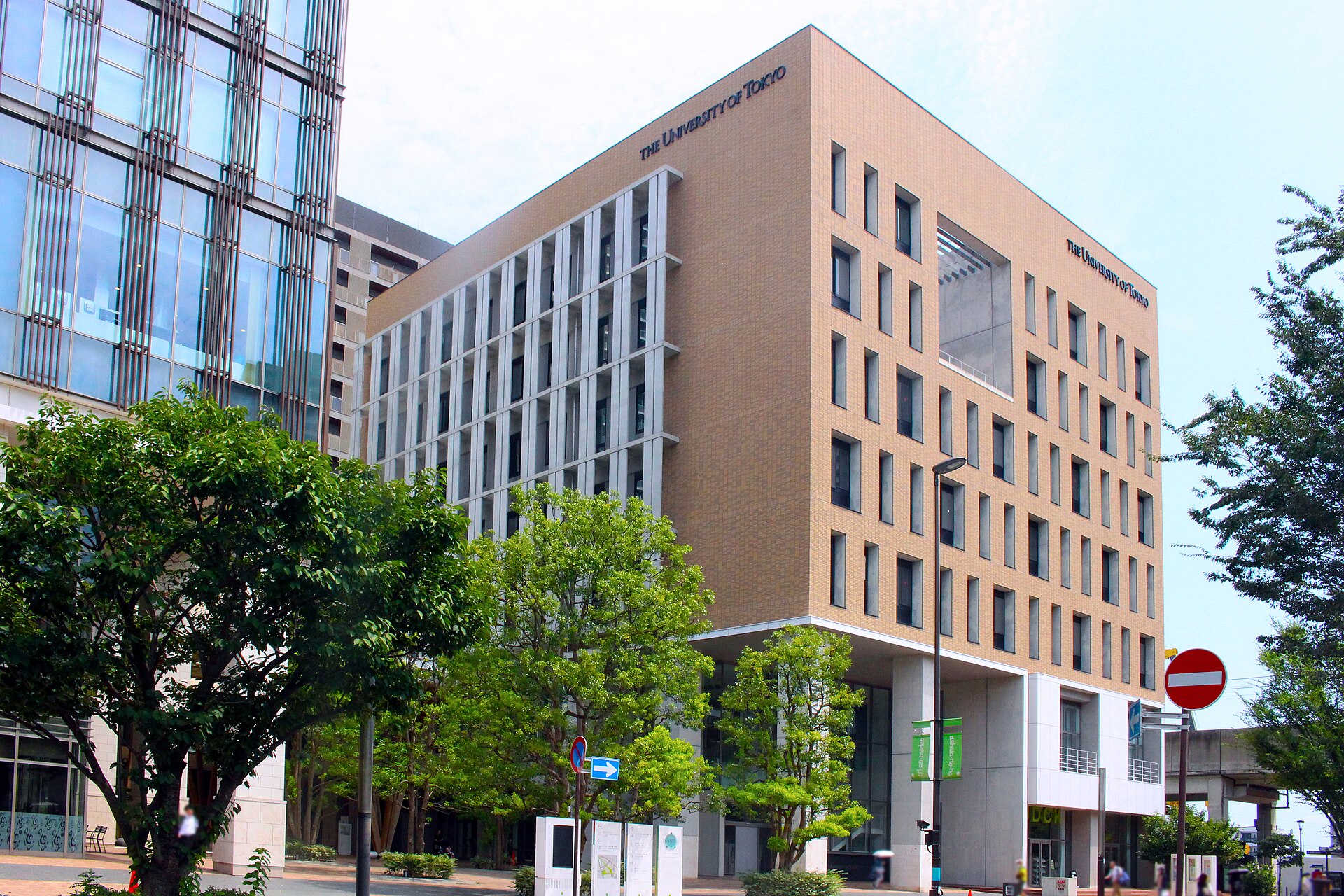
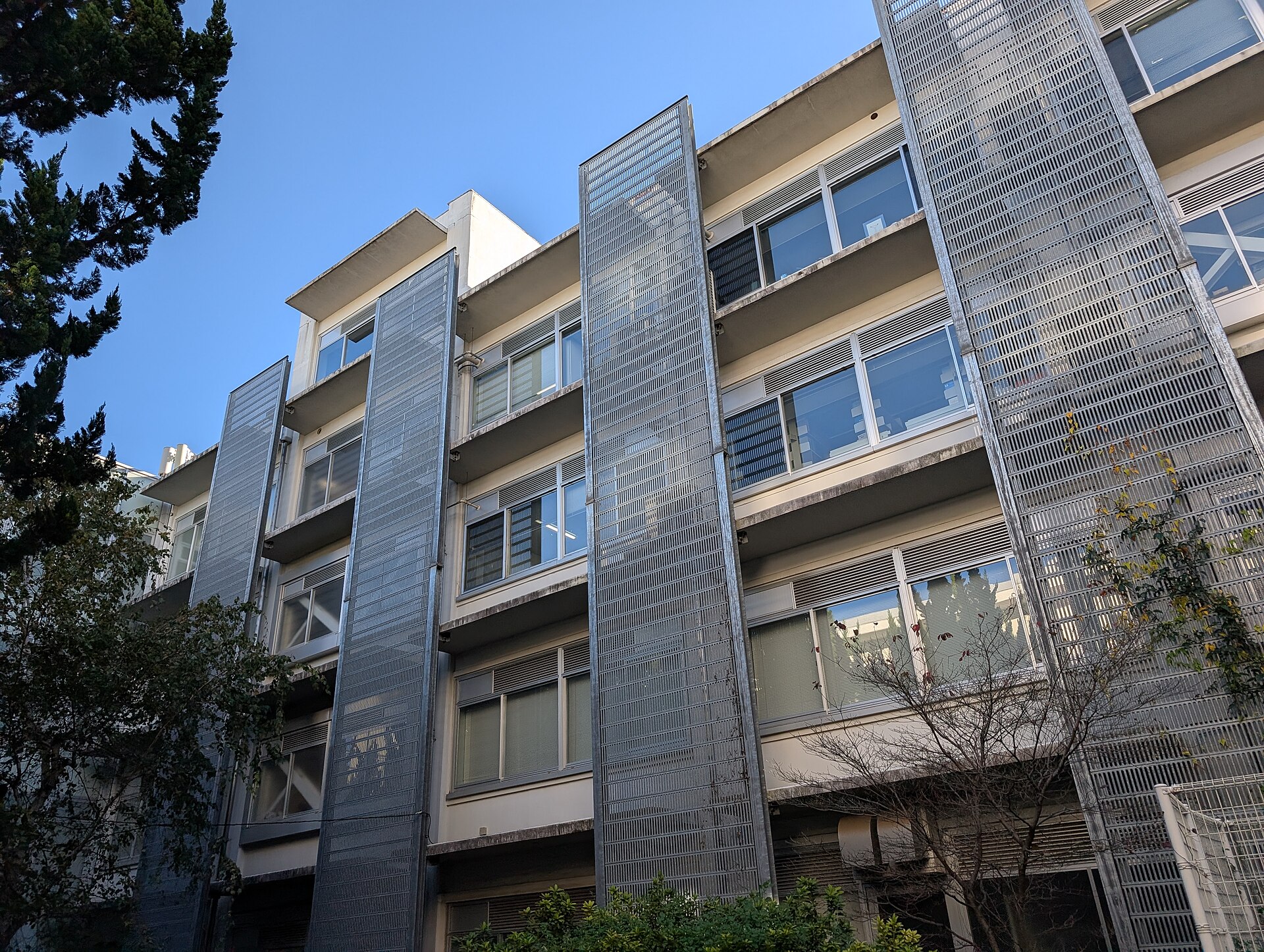
The University of Tokyo — campus in pictures
Real, freely-licensed photographs of the campus (via Wikimedia Commons).



WHY TODAI
Why The University of Tokyo — Prestige, Research & Asia's Most Powerful Network
Todai is not merely Japan's top university — it is the intellectual and civic centre of East Asia's largest economy. Its graduates have led Japan's government, science, and industry for 150 years. For international students who commit to this environment, the rewards are extraordinary.
SELECTIVITY
How Selective Is Todai?
The University of Tokyo is highly selective. Its overall undergraduate acceptance rate across all programmes is approximately 34% — but this reflects the large domestic Japanese-language cohort, where entry is governed by national centre examinations. For international students applying to English-taught pathways (PEAK and GSC), selectivity was substantially higher: PEAK admitted only a small cohort of students globally each year, making it extremely competitive. The IB minimum benchmark used for international applicants is 38 points.
The 34% acceptance rate applies primarily to domestic students competing via the national entrance examination system. International applicants to English-taught tracks should treat Todai as highly selective, equivalent in competitiveness to top-30 universities globally.
AT A GLANCE
Todai — Quick Facts
PATHWAYS FOR INTERNATIONAL UNDERGRADUATES
English-Taught Programmes — What You Need to Know
The landscape for international undergraduate applicants at Todai changed significantly in 2026. Here is an honest overview of the current pathways.
APPLICATION COMPONENTS
What a Todai Application Consists Of
For the GSC (the primary continuing English-taught undergraduate pathway), assessment is rigorous and multi-stage. Applicants are evaluated holistically across academic record, written work, and interview performance.
IDEAL APPLICANT PROFILE
Who Gets Into Todai's English-Taught Programmes?
Todai seeks students who combine intellectual rigour with genuine curiosity and cross-cultural awareness. The profile that succeeds is not just academically outstanding — it reflects someone who has thought carefully about why Japan and East Asia matter to their intellectual goals.
CAMPUS & CITY LIFE
What Life at Todai Looks Like
Todai has three main campuses: Hongo (the historic main campus, home to most faculties), Komaba (where first- and second-year undergraduates study, including PEAK students), and Kashiwa (science and technology research). All are integrated into Tokyo's world-class public transit network.
Tokyo offers an extraordinary quality of life — extraordinarily safe, culturally dense, technologically sophisticated, and internationally connected. The cost of living is substantial compared to other Japanese cities but remains reasonable by the standards of London, New York, or Sydney. On-campus housing (dormitories) is available for international students, though competition is high: on average, 15–30% of applicants secure university accommodation. Most international students live off campus in shared apartments or private rooms in Komaba or Hongo neighbourhoods, typically within 20 minutes of campus by train.
CAREER OUTCOMES
Where Todai Graduates Go
Todai's employment outcomes are among the strongest of any university in Asia. The graduate employment rate is 90%, and the average starting salary for graduates is approximately USD 40,000 annually — a figure that reflects Japanese corporate starting salaries, which typically grow substantially with seniority in major firms.
Major Japanese corporations — Sony, Toyota, Mitsubishi UFJ, SoftBank, NTT, and every major trading house — prioritise Todai graduates. Many international graduates leverage their Todai degree for careers in consulting, finance, and technology in both Japan and globally. Graduate school at Todai (or abroad at top-20 universities) is the common route for students targeting research, academia, or international organisations such as the UN, World Bank, and Asian Development Bank.
FREQUENTLY ASKED QUESTIONS
Your Questions About Todai, Answered
Is PEAK still accepting applications?+
No. The PEAK (Programs in English at Komaba) concluded new student recruitment with September 2026 enrollment. The final cohort has been admitted. Future international undergraduates should explore the GSC transfer programme or Japanese-language degree pathways.
What is the GSC and how do I apply?+
The Global Science Course (GSC) is an English-taught transfer programme admitting students who have completed at least two years of undergraduate study abroad into Year 3 of Todai's Faculty of Science. GSC includes a scholarship of ¥150,000/month. Check the official GSC admissions page for current deadlines.
Do I need to speak Japanese to attend Todai?+
For the GSC, English is the primary language of instruction, though Japanese language study is encouraged. For the full range of Todai's undergraduate programmes, Japanese proficiency (typically JLPT N1 or equivalent) is required.
What is the tuition fee for international students?+
As a Japanese national university, tuition is set nationally at approximately ¥535,800 per year (around USD 3,975). This applies equally to domestic and international students — an extraordinarily low rate by global standards.
Can I get a scholarship to study at Todai?+
Yes. The MEXT (Japanese Government) Scholarship fully covers tuition and provides a monthly living stipend. The JASSO scholarship and UTokyo's own University of Tokyo Fellowship are also available. Scholarships are competitive; strong academic records and early research are essential.
What IB score do I need?+
The facts-based benchmark for international applicants is 38 IB points. Many successful PEAK and GSC applicants scored 40–45. A score of 38 is the floor — not a guarantee of admission.
Is there on-campus housing for international students?+
Todai's Housing Office provides dormitories for international students, but competition is high: only 15–30% of applicants on average secure a room. Start the housing application process the moment you receive your acceptance. Off-campus apartments in Komaba and Hongo are a well-worn fallback.
What graduate schools are best for international students at Todai?+
Several graduate schools have strong English-taught tracks: the Graduate School of Public Policy (GraSPP), the Graduate School of Engineering, the Graduate School of Arts and Sciences, and the Graduate School of Frontier Sciences. Many have dedicated international application rounds.
ACADEMIC EXPECTATIONS
Academic Standards at The University of Tokyo What You Need to Be Ready For
Todai sets the academic standard for Japan and ranks among the most intellectually rigorous universities in Asia. For international applicants, the expectation is unambiguous: your academic record must be outstanding, your subject preparation must be deep, and your intellectual curiosity must extend well beyond classroom performance.
ACADEMIC BENCHMARKS
Academic Profile — What the Numbers Say
The following benchmarks are drawn from official facts. They represent minimums or central benchmarks, not guarantees.
TEST POLICY
Standardised Tests — Optional but Strategic
Todai's policy for international applicants is test-optional: SAT and ACT scores are not required. However, submitting strong scores can meaningfully strengthen an application, particularly if other academic documents are from a less familiar educational system.
If you are an IB student or A-Level student with strong predicted/achieved grades, standardised test scores are unlikely to be the deciding factor. If your school transcript is from a less internationally recognised system, a high SAT or ACT score can provide additional evidence of academic preparation. The decision should be strategic: submit if your scores are genuinely strong, and withhold if they are below the competitive range for a top-30 global university.
IB / A-LEVEL / AP
How Todai Reads IB, A-Level, and AP Credentials
The University of Tokyo explicitly accepts IB Diploma, A-Level, and other international qualifications as evidence of academic preparation for English-taught programmes. IB is the most commonly cited framework, with an official benchmark of 38 points.
SAT / ACT
SAT and ACT — Optional, Strategic
No SAT or ACT data is published in the facts file for Todai, reflecting that these tests are not a standard component of the application. If you choose to submit, aim for the range competitive at a top-30 global university (SAT 1500+ / ACT 34+). Do not submit scores below these thresholds.
For students applying from US-curriculum high schools (where IB or A-Level are not available), SAT or ACT scores become more important context for evaluating academic preparation. In this case, treat them as a meaningful signal and aim for the highest scores you can achieve.
SUBJECT PREPARATION
Subject Rigour — What Todai Expects
The subjects you take in secondary school signal the intellectual preparation Todai expects. Match your subject choices to your intended programme.
ENGLISH PROFICIENCY
English Language Requirements
English proficiency tests are required for all international applicants unless they have completed at least four years of full-time secondary education in English medium. Test scores must be recent.
If you completed all four years of secondary school at an English-medium institution, contact the admissions office to confirm whether a test waiver is available.
| Test | Minimum | Notes |
|---|---|---|
| IELTS Academic | 7.0 overall | No sub-score requirements specified; balanced scores recommended |
| TOEFL iBT | 100 total | Internet-Based Test only; paper-based not accepted |
| Duolingo English Test | Not specified | Confirm with official admissions office before submitting |
YEAR-BY-YEAR ROADMAP
Building a Todai-Worthy Profile — Grade 9 to 12
COMMON PITFALLS
Academic Mistakes That Cost Applicants Their Todai Place
- Applying with an IB predicted score below 38 — the floor is real and the selection process is unforgiving at the document stage.
- Submitting a generic IELTS or TOEFL score close to the minimum (7.0 / 100) when competing against applicants with 7.5–8.0 / 105–115.
- Choosing IB SL Mathematics when HL Mathematics is expected for the science or environmental sciences track — this signals under-preparation.
- Not preparing for the interview: Todai's online interviews assess academic depth, not just personality. You should be able to discuss your subject area seriously.
- Using AI assistance for the essay — PEAK explicitly prohibited this and the writing quality check in interviews can surface it.
- Neglecting Japanese-language study entirely and then struggling with daily life, campus culture, and academic integration once enrolled.
- Waiting until Grade 12 to research Todai and scrambling to build a Japan-related narrative — genuine engagement shows, and it cannot be faked under interview conditions.
COST & FINANCIAL AID
The Cost of Studying at The University of Tokyo Among the Most Affordable World-Class Universities
The University of Tokyo's status as a Japanese national university means tuition is set by the government at a level that is genuinely low by global standards. For international students, this is one of the most compelling financial propositions in world higher education — particularly when combined with available scholarships.
ANNUAL COST ESTIMATES
Cost of Attendance — What to Budget
All figures below are annual estimates based on official facts data. Costs are expressed in USD for comparability; actual figures are incurred in Japanese Yen and fluctuate with exchange rates.
Tokyo is an expensive city by Japanese standards but mid-tier by global-city comparisons. Students who secure university housing substantially reduce living costs.
| Component | Estimated U S D | Notes |
|---|---|---|
| Tuition (annual) | ~$3,975 | Set by Japanese government for national universities; same for all students |
| Total cost of attendance | ~$17,000 | Includes tuition, living, and incidental costs (annual estimate) |
| Cost of living (annual) | ~$14,000 | Housing, food, transport, personal expenses in Tokyo |
| Application fee | ~$110 | Payable at time of application submission |
FINANCIAL AID FOR INTERNATIONALS
Financial Aid Policy
Unlike US universities, The University of Tokyo does not offer need-based institutional financial aid to international undergraduate students in the US sense. There is no FAFSA equivalent and no institutional grant programme. The financial support framework is entirely scholarship-based.
International undergraduates seeking financial support should focus on the MEXT Government Scholarship (which fully covers tuition and provides a living stipend), the JASSO scholarship (partial living support for privately financed students), and institutional scholarships such as the University of Tokyo Fellowship. Scholarships are awarded competitively on academic merit; financial need alone does not determine eligibility for most programmes.
SCHOLARSHIPS
Named Scholarships for International Students
The following scholarships are officially documented for international students at The University of Tokyo. Verify current details, amounts, and application deadlines directly with the UTokyo scholarship office.
THE BIG PICTURE
The True Cost Proposition
For most international students, The University of Tokyo represents a rare opportunity: world-top-35 education at national-university tuition rates. Even without a scholarship, the all-in cost of attending Todai — approximately USD 17,000 per year — is lower than the tuition alone at most US or UK universities of equivalent prestige.
The realistic challenge for international undergraduates is not tuition but living costs in Tokyo and the cost of travelling to Japan from home annually. A part-time work allowance is available under Japanese student visa rules (up to 28 hours per week during term time), which many students use to supplement their living budget. GSC students who receive the ¥150,000/month scholarship ($1,000+) can cover a significant share of their living costs from the scholarship alone.
Exchange rate fluctuations affect USD equivalents significantly. All figures should be treated as estimates; confirm current rates with the UTokyo Finance Office.
HOW TO SECURE FUNDING
Steps to Apply for Scholarships
COST FAQs
Frequently Asked Questions — Costs and Aid
Is Todai free for international students?+
No, but it is genuinely affordable. The annual tuition is approximately ¥535,800 (around USD 3,975). With scholarships such as MEXT or the GSC scholarship, many international students effectively study with tuition waived and a living stipend.
Can I work part-time while studying at Todai?+
Yes. Student visas in Japan permit up to 28 hours of part-time work per week during term time, and unlimited hours during academic vacations. Many international students take part-time work in English teaching, service, or research assistance.
Does Todai offer need-blind financial aid like US universities?+
No. There is no institutional need-based grant programme. Financial support is entirely through competitive scholarships. Start your scholarship research at the same time as your academic preparation.
How much does it actually cost to live in Tokyo as a student?+
Budget approximately ¥100,000–¥140,000 per month (around USD 700–1,000) for housing, food, transport, and daily expenses. University dormitories are cheaper than the private market; securing one materially reduces costs.
Is the MEXT scholarship available through UTokyo?+
Yes. UTokyo participates in the University Recommendation route for the MEXT Scholarship. Eligibility and timing should be confirmed with UTokyo's International Student Services office once you have received a conditional admission offer.
APPLICATION & STATEMENT
Applying to The University of Tokyo — The Written Statement and Interview
The University of Tokyo does not use the Common App, UCAS, or any multi-university platform. All English-taught undergraduate pathways involve a direct application to UTokyo's own portal, a focused written essay, and (for shortlisted candidates) an online interview. This tab explains exactly what that process demands — and how to approach it as an international student.
Japan's higher education system for domestic students is entrance-exam driven, not essay-driven. But for English-taught international programmes (PEAK, historically; GSC, ongoing), the written statement is a genuine, high-weight component of selection. Your essay and interview are your primary means of differentiating yourself from equally qualified applicants.
OVERVIEW
What the Application Requires
The English-taught international undergraduate application at Todai (historically PEAK; ongoing GSC) follows a two-stage process:
WRITTEN ESSAY
The Application Essay
PEAK historically required a focused essay of 500–600 words. The GSC application has similar written components. Because PEAK is now closed and GSC essay prompts are confirmed for each intake on the official admissions page, no specific verbatim prompt is reproduced here — verify the current prompt on the UTokyo official site before applying.
LETTERS OF EVALUATION
Two Evaluation Letters — Critical Supporting Material
Two letters of evaluation (from teachers or professors who know your academic work) are required and form a significant part of the Stage 1 document review. Choose evaluators who can speak specifically to your intellectual capabilities — not just your character.
ONLINE INTERVIEW
Preparing for the Todai Interview
The UTokyo online interview is academic in nature. It is not a personality test or a chance to charm your way in. Prepare to discuss your subject area with rigour.
CHOOSING YOUR ANGLE
How to Find Your Essay Topic
The strongest Todai essays do not begin with 'I have always wanted to study in Japan.' They begin with an intellectual problem, a specific question, or a real experience that connects the applicant's mind to the programme's subject matter.
ESSAY PITFALLS
Mistakes That Undermine Strong Applications
- Using AI to write or substantially draft the essay — UTokyo has made this prohibition explicit. The interview exists partly to verify that the essay represents your genuine voice and thinking.
- Writing a generic 'I love Japan' essay without specific intellectual content — admissions readers can tell the difference between fascination and genuine engagement.
- Exceeding the word count or ignoring formatting requirements — signals you cannot follow instructions.
- Submitting evaluation letters from people who don't know your academic work (a family friend, a community leader with no academic context) — the letters must speak to your intellectual capability.
- Preparing for the interview as if it were a motivational speech — this is an academic interview. Substantive knowledge matters more than enthusiasm.
- Not verifying the current essay prompt from the official admissions page — prompts can change by cycle, and writing to an outdated prompt is a serious error.
- Applying without researching the specific programme curriculum — if you cannot explain in the interview what the Japan in East Asia or Environmental Sciences programme specifically covers, you have not done sufficient preparation.
ESSAY FAQs
Frequently Asked Questions — Application & Essays
How long should my essay be?+
PEAK required 500–600 words. GSC may differ. Always follow the specific word count in the official guidelines for your intake year. Writing significantly more or less is a red flag.
Can I use AI to help write my essay?+
No. UTokyo explicitly prohibits AI assistance in the essay. The essay must be factually true, entirely your own work, and written without help from other persons or AI. The interview is used partly to verify this.
How important is the essay relative to grades?+
Both matter. Stage 1 assessment considers both academic achievement and essay quality. A perfect IB score with a weak essay can result in rejection; a borderline IB score with an exceptional essay is unlikely to save an application that falls below the academic benchmark.
What should my recommendation letters say?+
They should provide specific examples of your academic work — papers you wrote, intellectual contributions to class, research you conducted, or mathematical/scientific problems you solved. Generic character endorsements are not useful.
Is the interview in Japanese?+
No. The interview for English-taught programmes (PEAK / GSC) is conducted in English. You do not need Japanese for the interview, but demonstrating any Japanese language knowledge is viewed positively.
Is PEAK still worth applying to?+
PEAK is no longer accepting new applications. The September 2026 enrollment was the final intake. If you are reading this guide for future planning, focus on the GSC (transfer route) or graduate school pathways for English-taught options at Todai.
Where do I find the official application for GSC?+
Visit the official UTokyo prospective students page at www.u-tokyo.ac.jp/en/prospective-students/undergraduate_english.html for current GSC application information, deadlines, and required documents.
Courses — schools, degrees & intake
83 degrees across 10 groupings.
Faculty of Law · 2 degrees
General Legal Studies
Political Science
Faculty of Economics · 3 degrees
Economics
Business Administration
Finance
Faculty of Engineering · 16 degrees
Civil Engineering
Architecture
Urban Engineering
Mechanical Engineering
Mechano-Informatics
Aeronautics and Astronautics
Precision Engineering
Information and Communication Engineering
Electrical and Electronic Engineering
Applied Physics
Mathematical Engineering and Information Physics
Materials Engineering
Applied Chemistry
Chemical System Engineering
Chemistry and Biotechnology
Systems Innovation
Faculty of Letters · 26 degrees
Philosophy
Chinese Thought and Culture
Indian Philosophy and Buddhist Studies
Ethics
Religious Studies
Aesthetics and Art History
Islamic Studies
Japanese History
Oriental History
Western History
Archaeology
Art History
Linguistics
Japanese Language and Literature
Chinese Language and Literature
Indian Language and Literature
English and American Literature
German Language and Literature
French Language and Literature
Slavic Language and Literature
Italian Language and Literature
Contemporary Literary Theory
Western Classical Studies
Psychology
Social Psychology
Sociology
Faculty of Science · 10 degrees
Physics
Astronomy
Earth and Planetary Science — Earth and Planetary Physics
Earth and Planetary Science — Earth and Planetary Environmental Science
Chemistry
Biological Sciences — Biophysics and Biochemistry
Biological Sciences — Biological Sciences
Biological Sciences — Bioinformatics and Systems Biology
Mathematics
Information Science
Faculty of Agriculture · 15 degrees
Biological Chemistry and Biotechnology
Applied Biology
Forest Life Science
Aquatic Life Science
Animal Life Sciences
Biobased Materials Chemistry
Landscape Ecology and Planning
Forest Environmental and Resource Science
Aquatic Production and Environmental Science
Wood Science and Timber Engineering
Biological and Environmental Engineering
Agricultural and Resource Economics
Field Science
International Sustainable Agriculture Development
Veterinary Medical Sciences
Faculty of Medicine · 2 degrees
Medicine (MD)
Comprehensive Health Sciences
Faculty of Pharmaceutical Sciences · 2 degrees
Pharmaceutical Sciences
Pharmacy
Faculty of Education · 5 degrees
Education
Comparative Education and Sociology
Educational Practice and Policy
Educational Psychology
Physical and Health Education
College of Arts and Sciences · 2 degrees
Liberal Arts (First-Year Foundation)
Interdisciplinary Sciences (Advanced Liberal Arts)
Want your real chances at University of Tokyo?
Create a free TYCHR account for your personalised admit-chance, a shortlist you can track, exact entry requirements, and essay + counselling help.