← All universities

The University of Texas at Austin

Austin, United States · Urban

Public IvyPublicResearch
Acceptance
26.6%
QS World
#58
Tuition/yr
$42,554
Students
52,000
Founded
1883

FLAGSHIP PUBLIC RESEARCH UNIVERSITY — PUBLIC IVY

The University of Texas at Austin Admissions Guide for International Students

The University of Texas at Austin is the flagship of the UT System and one of the most comprehensive research universities in the United States — ranked #58 globally (QS) and #30 nationally. Anchored in Austin, America's fastest-growing tech capital, UT Austin offers international students elite programmes in computer science, engineering, business, natural sciences, and law alongside an unmatched alumni network of more than 500,000 Longhorns worldwide.

This guide gives international students an honest, strategic picture of UT Austin: what it takes to gain admission to competitive programmes like CS, McCombs Business, and Cockrell Engineering; how the Common App application works; what the essays require; and how to plan realistically for cost. UT Austin's headline 26.6% acceptance rate conceals how competitive it truly is for international applicants — and for the most sought-after majors.

Campus

The University of Texas at Austin — campus in pictures

Real, freely-licensed photographs of the campus (via Wikimedia Commons).
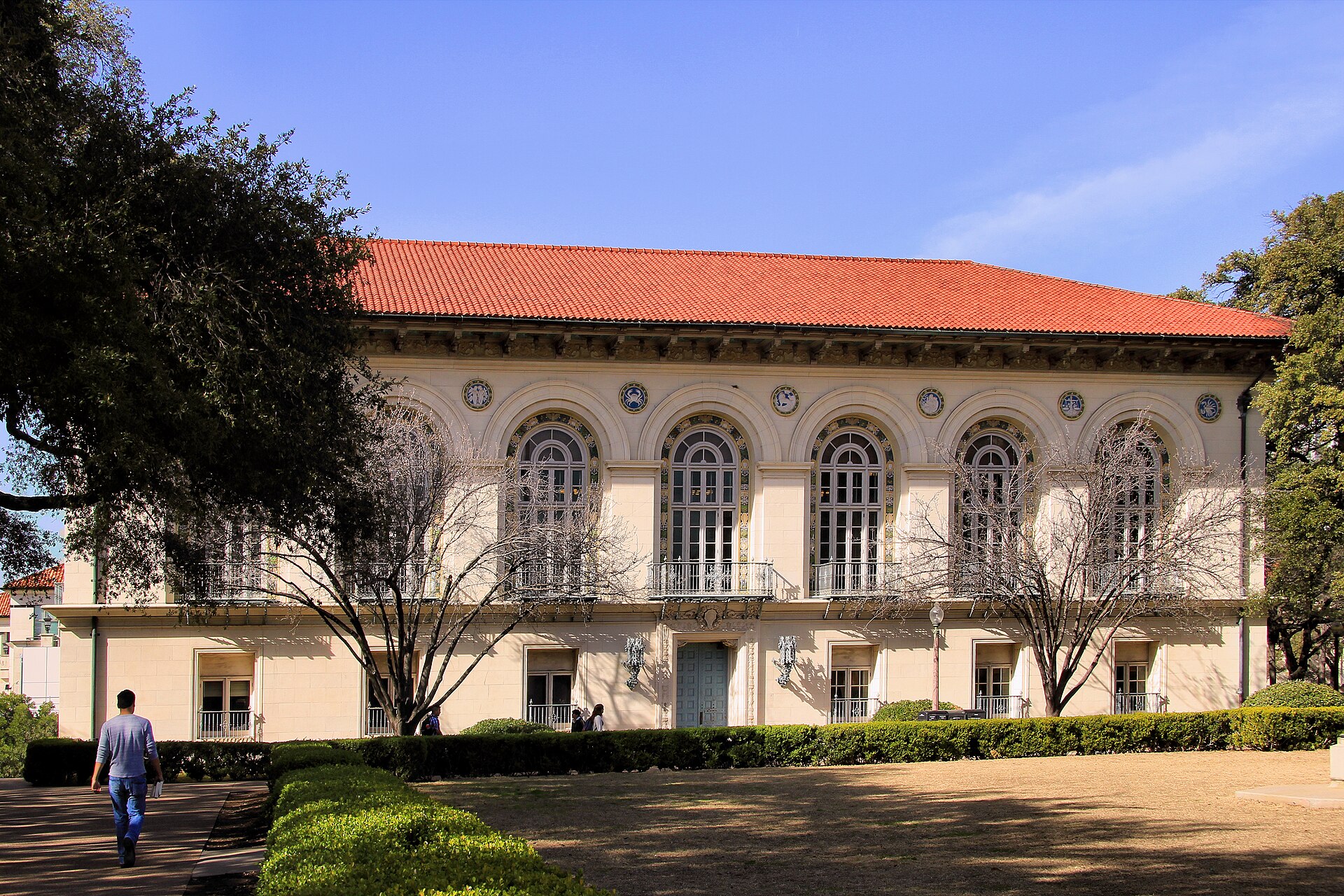
Battle hall 2014
Battle hall 2014Larry D. Moore · CC BY 4.0 · via Wikimedia Commons
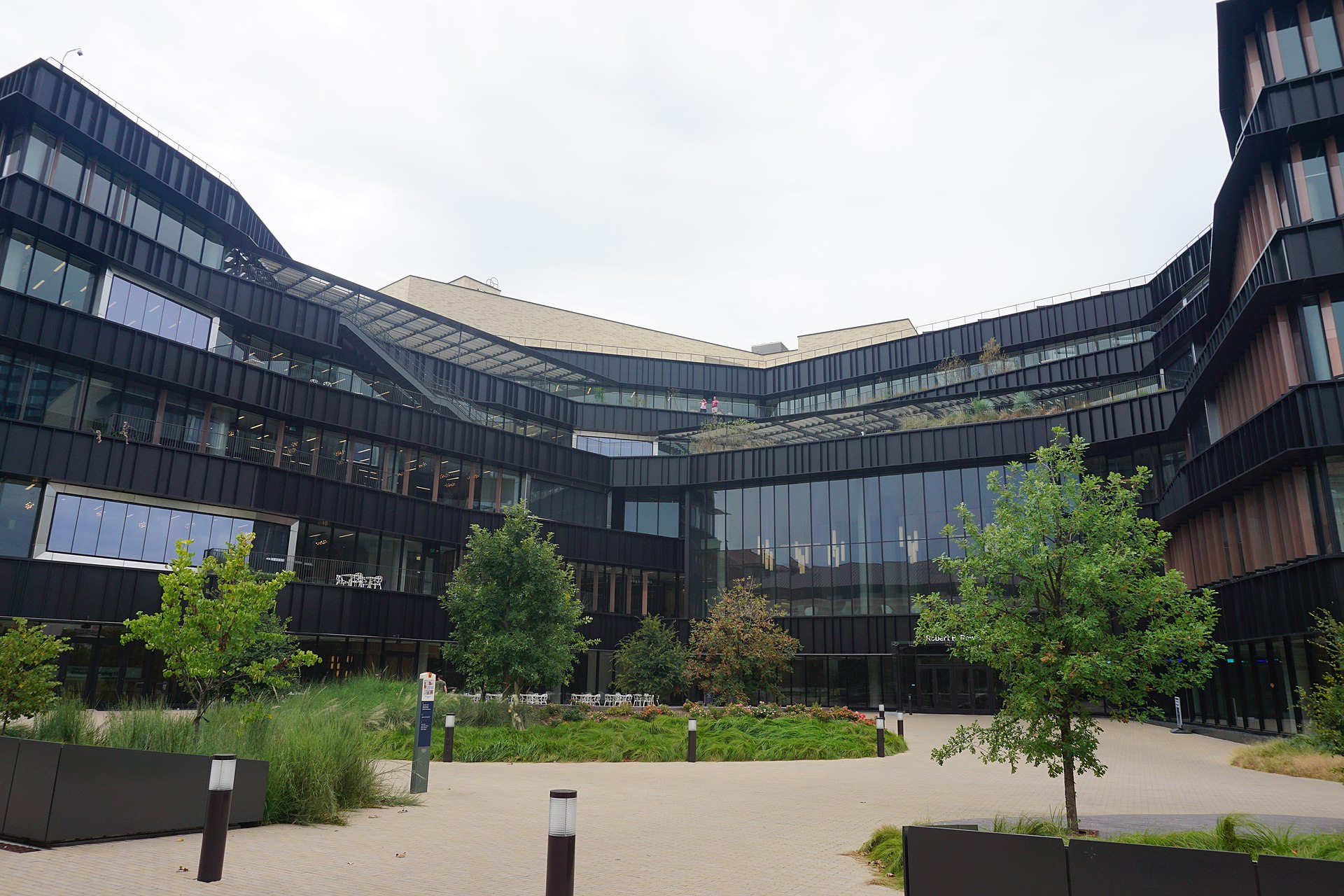
Robert B. Rowling Hall on the campus of the University of Texas at Austin in Austin, Texas (United States).
Robert B. Rowling Hall on the campus of the University of Texas at Austin in Austin, Texas (United States).Michael Barera · CC BY-SA 4.0 · via Wikimedia Commons
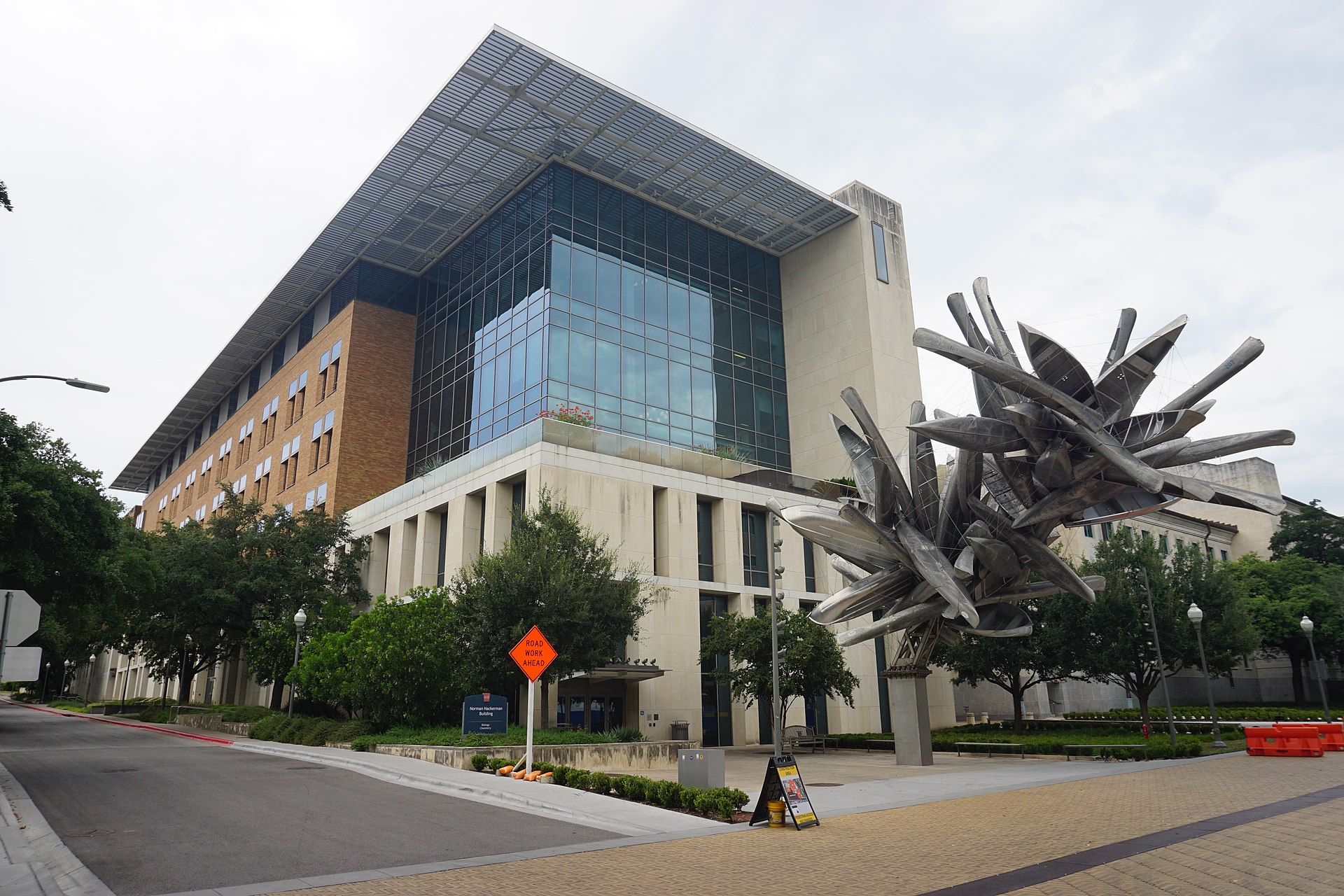
The Norman Hackerman Building on the campus of the University of Texas at Austin in Austin, Texas (United States).
The Norman Hackerman Building on the campus of the University of Texas at Austin in Austin, Texas (United States).Michael Barera · CC BY-SA 4.0 · via Wikimedia Commons
Photo of the architecture library at UT Austin, inside Battle Hall on the main campus.
Photo of the architecture library at UT Austin, inside Battle Hall on the main campus.Jr1038 · CC BY-SA 3.0 · via Wikimedia Commons
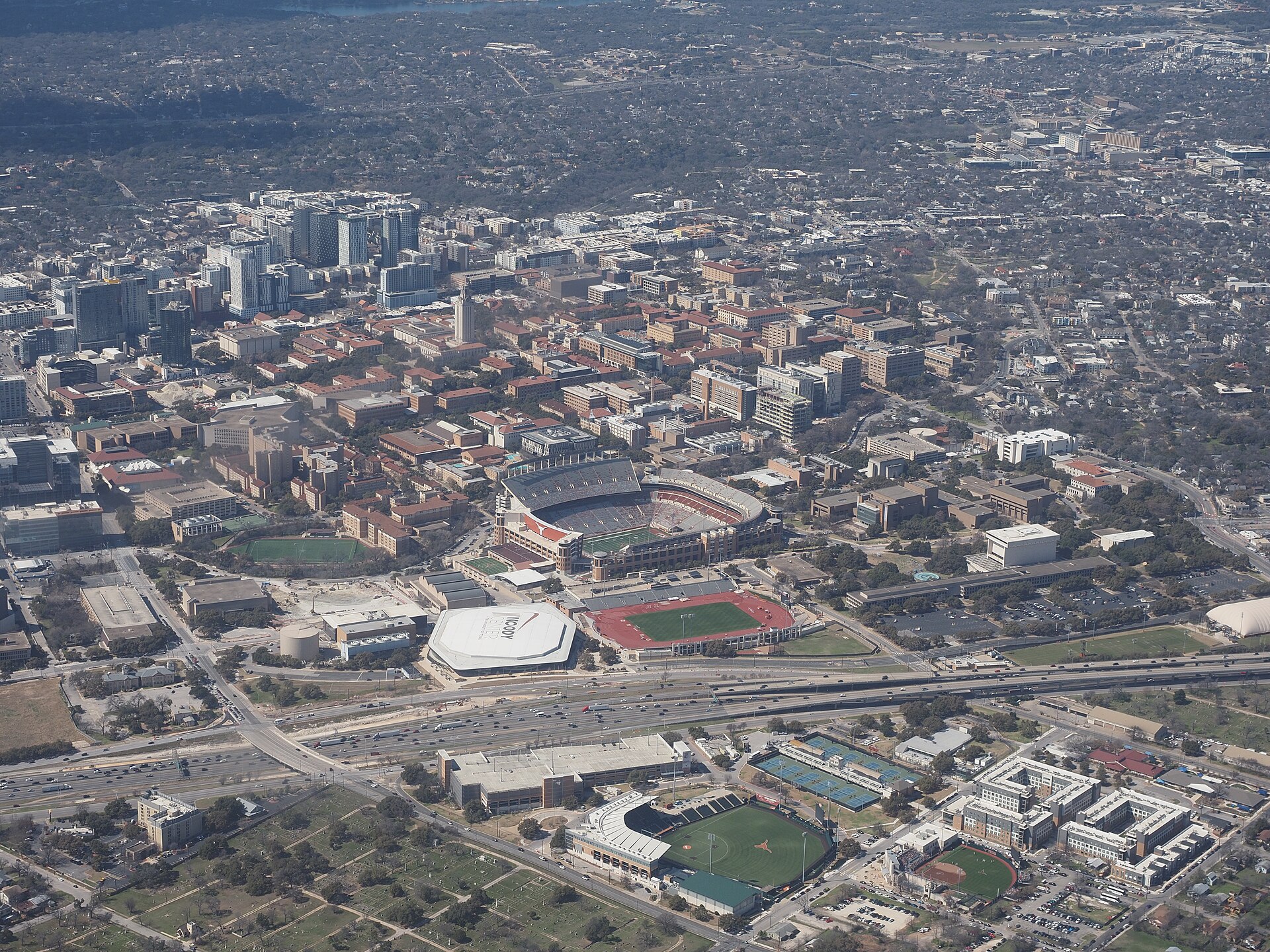
Aerial view of University of Texas at Austin Main Campus
Aerial view of University of Texas at Austin Main CampusInsightwm · CC BY-SA 4.0 · via Wikimedia Commons
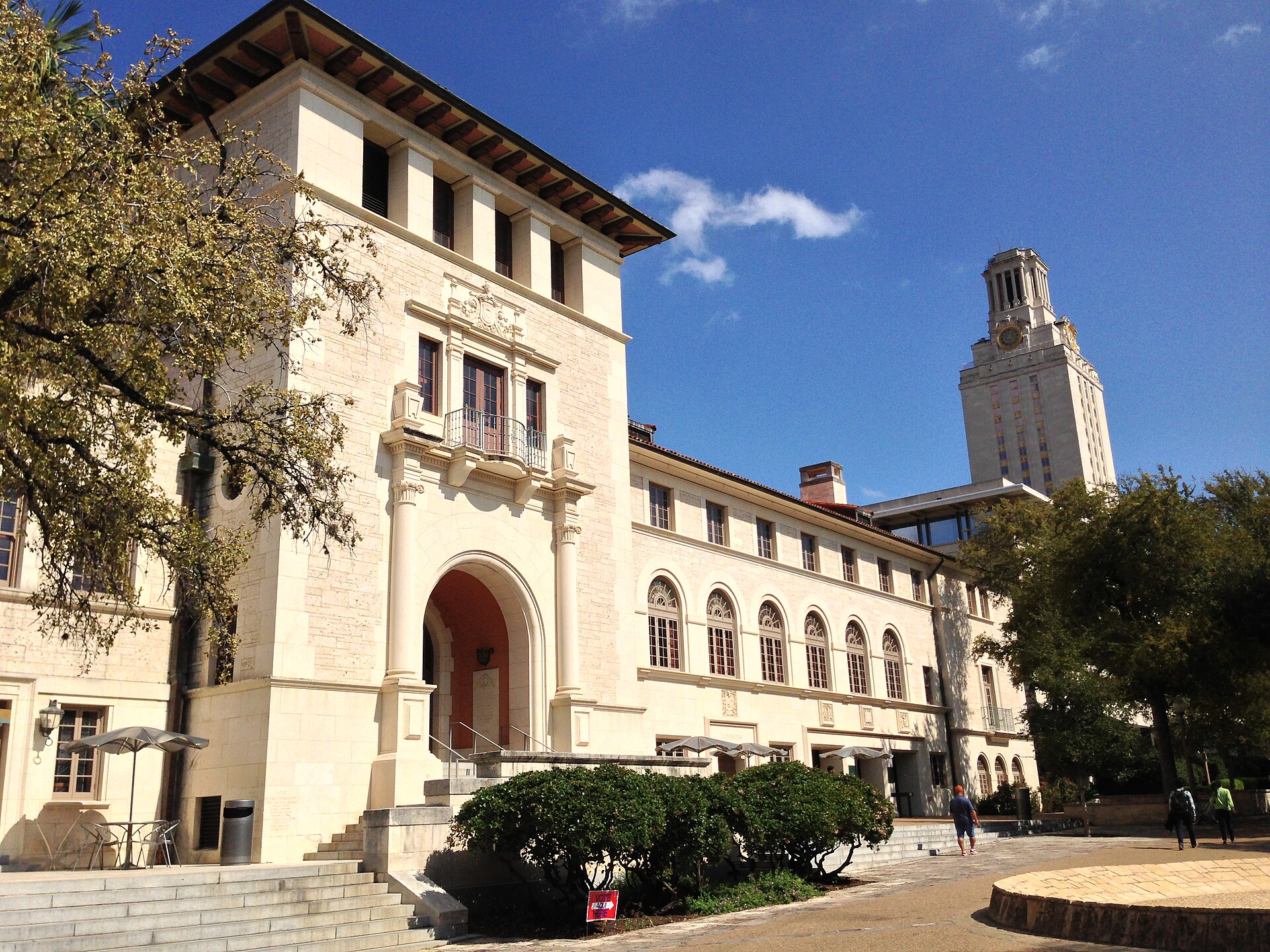
The Texas Union with the Tower in background
The Texas Union with the Tower in backgroundGuðsþegn · CC BY-SA 3.0 · via Wikimedia Commons

Why UT Austin — Austin Tech Scene, Research Depth & Longhorn Alumni

UT Austin is one of the defining research universities of the 21st century. Its rise from strong regional university to global research powerhouse tracks directly with Austin's own transformation into America's premier technology and innovation hub. For international students, UT Austin offers something rare: a globally ranked, resource-rich, research-intensive education at a cost below comparable private universities — in a city that is genuinely one of the most exciting in the United States.

1Public Ivy Prestige
Ranked #58 globally by QS and #30 nationally by US News, UT Austin is firmly established in the Public Ivy category — the group of public universities that deliver academic credentials rivalling elite private institutions. In engineering, CS, business, law, and natural sciences, the UT Austin degree is genuinely elite.
2Austin: America's Tech Capital
Austin hosts major operations of Apple, Dell, Google, Meta, Tesla, Amazon, and Oracle — plus thousands of high-growth startups. UT Austin students are in the middle of this ecosystem, with internship pipelines, co-op opportunities, and alumni connections embedded in the local industry fabric from Day 1.
3Elite CS & Engineering
The Department of Computer Science (UTCS) and the Cockrell School of Engineering are consistently ranked among the top ten in the United States. UTCS faculty lead in AI, machine learning, systems, and algorithms. Cockrell's petroleum, electrical, and biomedical engineering programmes are globally recognised.
4McCombs School of Business
One of the top-ranked undergraduate business schools in the US, McCombs feeds Wall Street banks, Big 4 consulting firms, and Texas-based financial institutions with remarkable consistency. The Business Honors Programme (BHP) is among the most selective business tracks in the country.
5Academic Scale & Research Access
With 52,000 students, 18 colleges, and more than 170 fields of study, UT Austin offers academic breadth that rivals entire university systems. Undergraduate research access, interdisciplinary programmes, and a $1B+ annual research enterprise create genuine opportunity from the first year.
6The Longhorn Network
More than 500,000 living alumni — one of the four largest university alumni networks in the United States. The Longhorn network is dense in technology, energy, law, media, and government, with active chapters in every major city globally. Hook 'em.

ADMISSIONS PROFILE

UT Austin Acceptance Rate & Admitted Student Profile

UT Austin's headline acceptance rate of 26.6% requires careful interpretation for international students. Texas state law requires UT Austin to admit the top 6% of graduates from every Texas public high school automatically — filling a substantial portion of each incoming class before holistic review begins. International applicants are not eligible for this pathway and compete entirely through holistic review. For the most competitive programmes (CS, Engineering, McCombs Business), effective acceptance rates are significantly lower than the headline figure.

International students do not benefit from Texas automatic admission. Your application competes in holistic review regardless of your academic standing. Treat UT Austin as a selective university — not an easy admit — especially for high-demand programmes.

26.6%
Overall acceptance rate
1250–1510
SAT middle 50%
27–33
ACT middle 50%
34+
Typical IB score

QUICK FACTS

UT Austin at a Glance

1883
Founded
52,000
Total enrolment
10%
International students
18:1
Student:faculty ratio
#58
QS World Ranking
#30
National Ranking

APPLICATION COMPONENTS

What the UT Austin Application Consists Of

UT Austin uses the Common Application for freshman summer/fall admission. Every component of a complete international application is listed below — required and optional — with strategic notes for each.

01REQUIREDCommon Application
UT Austin accepts the Common App for summer and fall freshman admission. The application opens August 1 each year. International applicants — defined as students who are neither US citizens nor permanent residents and did not graduate from a Texas high school — use this pathway.
02REQUIRED · 500–650 WORDSPersonal Essay
One essay of 500–650 words on any topic of your choice. The Common App personal essay fulfills this requirement — you may submit an essay you have already written, one that responds to a different prompt, or an entirely original piece.
03REQUIRED · ~250–300 WORDSShort Answer 1 — Interest in Major
Why are you interested in your chosen major? This short answer (~250–300 words) is evaluated by the specific programme or college you are applying to — write with specificity and genuine intellectual engagement.
04REQUIRED · ~250–300 WORDSShort Answer 2 — Most Meaningful Activity
Describe the extracurricular activity, volunteer work, employment, or family responsibility that has been most meaningful to you, and explain why. Depth and reflection matter more than the prestige of the activity.
05REQUIREDSAT or ACT Score
UT Austin requires at least one official standardised test score sent directly from the testing agency. SAT code: 6882; ACT code: 4240. UT Austin is not test-optional — all applicants, including international students, must submit scores.
06REQUIREDHigh School Transcripts
Official transcripts covering grades 9–12, sent directly from your school. International transcripts are accepted. Certified English translations are required for documents in other languages.
07REQUIRED IF APPLICABLEEnglish Proficiency Test
Required for international applicants whose primary language of instruction is not English. UT Austin accepts TOEFL (minimum 79), IELTS (minimum 6.5), or the Duolingo English Test (minimum 110).
08OPTIONALCircumstances Essay
A short (~250–300 word) optional essay to explain any circumstances that affected your academic performance. Use this when there is a genuine gap, disruption, or hardship that your transcript does not otherwise explain.
https://admissions.utexas.edu/apply/international-students

HOLISTIC REVIEW

What UT Austin Admissions Officers Look For

UT Austin conducts a holistic review for international applicants. The university evaluates the full profile — not just grades and scores — with particular attention to major-specific preparation and authentic personal character.

01Academic Strength & Rigour
Your GPA (minimum 3.7 for competitive consideration) and the rigour of your curriculum. UT Austin asks whether you challenged yourself relative to what was available — IB Higher Level courses, A-Levels, or equivalent rigorous preparation are viewed positively.
02Major-Specific Preparation
Admission to UT Austin is admission to a specific college or programme — not to a general UT Austin pool. Engineering applicants need demonstrably strong maths and science records. CS applicants need quantitative depth and ideally coding experience. McCombs applicants need a coherent business narrative. Misalignment between your profile and your stated major is a red flag.
03Leadership & Extracurricular Depth
Demonstrated impact in activities outside the classroom. UT Austin values depth — showing sustained commitment over time, concrete outcomes, and genuine leadership — over a long list of surface-level memberships.
04Essay Quality & Voice
Both the personal essay and short answers are read carefully. Admissions officers want to know who you are beyond your transcript. Specificity, honesty, and a clear individual voice are more valuable than impressive-sounding but generic narratives.
05Personal Context & Resilience
Family background, educational context, and life circumstances are all read as part of your story. If you have navigated real challenges — educational disruption, economic hardship, family responsibility — the optional context essay is the mechanism to explain them.
06Character & Longhorn Spirit
UT Austin's community is defined by its 'What starts here changes the world' ethos — ambition, service, collegiality, and a genuine commitment to making an impact. Admissions officers ask: what will this student contribute to our campus, our classrooms, and the world after UT?

DEADLINES

UT Austin Application Deadlines & Rounds

UT Austin offers two application rounds: Early Action (non-binding, non-restrictive) and Regular Decision. Applying Early Action is strongly recommended — it signals genuine interest, provides earlier notification, and allows more time to plan housing and finances.

The application fee is $90 (non-refundable). Fee waivers are not available for international students. The application opens August 1 each year via the Common Application.

RoundDeadlineDecisionNotes
Early ActionOctober 15January 15Non-binding, non-restrictive — strongly recommended
Regular DecisionDecember 1February 15Final round; same application via Common App
https://admissions.utexas.edu/apply/international-students

STUDENT LIFE

Campus Life at UT Austin — Austin, Athletics & Community

UT Austin is a university of genuine scale and genuine energy. With 52,000 students, more than 1,000 student organisations, and a campus embedded in one of America's most exciting cities, student life at UT is rich, diverse, and genuinely immersive. For international students, Austin's warmth, diversity, and size make it one of the most welcoming American university cities.

Austin — 'The Live Music Capital of the World'
Austin is among the fastest-growing cities in the United States — a dynamic blend of technology industry, music culture, food, outdoor life, and creative energy. South Congress Avenue, Barton Springs, Zilker Park, and 6th Street are all minutes from campus. The city has retained its cultural identity even as it has grown into a major metropolitan centre — and its diversity makes international students genuinely welcome.
1,000+ Student Organisations
UT Austin's student organisation landscape mirrors the university's academic scale. From country-specific cultural associations to startup accelerators, engineering competition teams, debate societies, and the nation's most read student newspaper (The Daily Texan) — there is a community for every interest and background.
Longhorn Athletics — A Cultural Institution
UT Austin competes at the highest level of NCAA Division I athletics across 20 varsity sports. Longhorn football — played at Darrell K Royal–Texas Memorial Stadium with capacity for over 100,000 fans — is not merely sport; it is a shared experience that bonds 52,000 students, hundreds of thousands of alumni, and the entire state of Texas.
Housing & Campus
On-campus dormitory housing for freshmen is offered on a first-come, first-served basis — apply early. The West Campus area directly adjacent to UT offers extensive private student housing. The physical campus itself — anchored by the iconic UT Tower, the South Mall, and the LBJ Presidential Library — is one of the most beautiful in the United States.
International Student Community
With approximately 10% international students, UT Austin has a substantial global campus community. The International Office, the International Student Association, and dozens of country-specific cultural clubs provide structure and belonging. Austin's international community extends beyond campus — the city itself is home to significant diaspora communities from across South Asia, Latin America, East Asia, and Europe.

CAREER OUTCOMES

Career Outcomes & the Longhorn Alumni Network

UT Austin graduates enter an exceptional combination of institutional reputation, alumni network density, and geographic advantage. Austin's emergence as a technology capital means that for CS and engineering graduates in particular, the path from UT to a major tech role is shorter than from almost any other university in the country.

Stats

90%
Employment rate within 6 months of graduation
$70,000
Average starting salary

Cards

Technology & Engineering
Dell Technologies (Austin headquarters), Apple Austin Campus, Google, Meta, Amazon, and Tesla all recruit directly and heavily from UT Austin. Cockrell Engineering and UTCS graduates are among the most hired at major technology companies nationally. The Austin tech ecosystem means internship pipelines often convert directly to full-time roles.
Finance, Consulting & Business
McCombs School of Business has deep recruiting relationships with Goldman Sachs, JPMorgan, McKinsey, BCG, Deloitte, and major energy-sector finance firms. The Business Honors Programme sends graduates to Wall Street and global consulting at rates competitive with Ivy League business schools.
Energy — Oil, Gas & Renewables
Texas's energy sector — the largest in the United States and one of the largest in the world — draws extensively from UT Austin. The Jackson School of Geosciences and Cockrell Engineering feed the traditional energy sector. UT Austin is also a major research centre for renewable energy transition, with growing placement in clean energy firms.
Law, Government & Media
UT Austin School of Law is one of the top public law schools in the country. The Lyndon B. Johnson School of Public Affairs feeds government and policy institutions. Moody College of Communication is one of the most respected journalism schools in the US, placing graduates in major national and international media organisations.

FAQS

Frequently Asked Questions — UT Austin International Admissions

Does the Texas top 6% automatic admission law apply to international students?+

No. Texas state law requires UT Austin to automatically admit students who graduate in the top 6% of their Texas public high school class — but this applies exclusively to Texas residents. International applicants are not eligible and are evaluated entirely through holistic review.

Is UT Austin test-optional for international students?+

No. UT Austin requires at least one official SAT or ACT score from all applicants, including international students. Scores must be sent directly from the testing agency. There is no test-optional pathway at UT Austin.

Is admission to UT Austin the same as admission to my chosen major?+

No — and this is essential to understand. UT Austin admits students to specific colleges and programmes, not to a general university pool. Programmes like Computer Science, McCombs Business, and Cockrell Engineering are significantly more competitive than the overall 26.6% acceptance rate implies. If you are not admitted to your first-choice programme, you may be offered admission to an alternative college or redirected to a pathway programme.

Can I apply Early Action to UT Austin and to other universities simultaneously?+

Yes. UT Austin's Early Action round is non-binding and non-restrictive — you are free to apply Early Action or Early Decision to other universities at the same time. This is different from Restrictive Early Action schools like Harvard, MIT, or Yale.

How competitive is UTCS (Computer Science) for international students?+

UTCS is among the most competitive undergraduate programmes at UT Austin and in the United States. The international applicant pool is exceptionally strong. Competitive applicants typically present SAT scores at or above the 75th percentile (1510+), very strong maths preparation, and demonstrated computing experience through projects, coursework, or competitions like USACO.

Is there meaningful financial aid for international students at UT Austin?+

Financial aid for international students at UT Austin is very limited. As a public university, UT Austin does not offer the same level of need-based international aid as elite private universities. International students are not eligible for US federal aid (FAFSA) or Texas state aid. Some merit scholarships exist but are competitive and cover only a portion of costs. Plan your finances assuming full tuition and total cost of attendance.

What is the CAP (Coordinated Admissions Program) and does it apply to international students?+

CAP is an alternative pathway for students who are not admitted to UT Austin's main campus — they spend their first year at a UT System regional campus, meet specified academic requirements, and then transfer to UT Austin. CAP is primarily designed for Texas residents. International students should contact UT Austin admissions directly to confirm eligibility before treating CAP as a fallback.

Does UT Austin offer Early Decision (binding)?+

No. UT Austin's Early Action round (October 15 deadline) is non-binding. You are not obligated to enroll if admitted Early Action and are free to compare financial aid offers and admissions decisions from other universities before committing to UT Austin.

ACADEMIC REQUIREMENTS

UT Austin Academic Requirements — The Honest Picture for International Students

UT Austin's academic bar is high — and programme-specific. The 26.6% headline acceptance rate obscures the reality: for Computer Science, McCombs Business, and Cockrell Engineering, competitive international applicants present academic profiles comparable to those at elite private universities. This section gives you the honest benchmarks: what scores admitted students actually have, how UT reads international curricula, and what to prioritise from Grade 9 through 12.

Unlike most elite private universities, UT Austin requires standardised test scores from all applicants. Your SAT or ACT score cannot be withheld — it must be strong.

ADMITTED STUDENT PROFILE

Academic Profile of Admitted UT Austin Students

The figures below reflect the admitted freshman class broadly. Students targeting highly competitive programmes — UTCS, Cockrell Engineering, or McCombs — should aim for the 75th percentile or above of these bands.

3.7
Minimum competitive GPA
1250–1510
SAT middle 50%
27–33
ACT middle 50%
34+
Typical IB score

TEST POLICY

UT Austin Test Policy — Standardised Tests Are Required

UT Austin requires at least one official SAT or ACT score from every applicant. This is a firm policy that applies to international students. Unlike many selective private universities that adopted test-optional policies, UT Austin has maintained a test-required stance. A strong score is a meaningful positive signal; a weak score cannot be withheld.

Required — Not Optional
All applicants, including international students, must submit at least one official SAT or ACT score sent directly from the testing agency (SAT code: 6882; ACT code: 4240). Self-reported scores are accepted in the MyStatus portal while official scores are in transit, but official scores must arrive by the posted deadline.
No Essay, Writing, or Subject Tests Required
UT Austin does not require the SAT Essay section, ACT Writing section, ACT Science section, or SAT Subject Tests. Your composite score is the relevant metric.
Strategic Implication
Because scores are required and cannot be withheld, plan to sit the SAT or ACT at least twice — ideally three times with structured preparation between sittings. For competitive programmes, aim for the upper band: SAT 1400+ for Engineering and CS, ACT 31+ for Business. Leaving insufficient time before the October 15 Early Action deadline is a common and costly mistake.
https://admissions.utexas.edu/apply/international-students

SAT & ACT

SAT & ACT at UT Austin — Bands, Strategy & Preparation

The wide SAT and ACT bands at UT Austin reflect the full range of programmes and pathways. For international students targeting competitive majors, aim for the upper half of each band.

SAT — Middle 50%: 1250–1510
The SAT range spans a broad field. Students admitted to UTCS and Cockrell Engineering typically cluster at the higher end. A strong Math subscore (700+) is particularly important for STEM applicants — it signals the quantitative capability those programmes directly require.
ACT — Middle 50%: 27–33
ACT 33+ is the competitive target for CS and Engineering. An ACT 31+ is competitive for McCombs. The ACT Science section is not required to be submitted to UT Austin, but if your Science score is strong, it provides additional evidence of analytical readiness.
SAT vs. ACT — Which Should You Choose?
UT Austin accepts both equally. Take a diagnostic of each before committing. Students with strong maths and reading precision tend to perform better on the SAT; students who work quickly and are comfortable with science data interpretation often prefer the ACT.
Preparation & Timing
Begin test preparation by the end of Grade 10. Aim for your first full SAT or ACT sitting in Grade 11, with a second sitting by the summer before Grade 12. UT Austin superscores the SAT — submit all sittings where individual section scores contribute to a higher composite. Leave at least 8 weeks between sittings for focused preparation.

INTERNATIONAL CURRICULA

IB Diploma, A-Levels & AP at UT Austin

UT Austin is experienced reading international curricula from around the world. IB Diploma, A-Level, and AP students are each evaluated in their own academic context — what matters is rigour relative to what was available to you.

IBIB Diploma
A total score of 34+ is the competitive benchmark for UT Austin broadly. For UTCS, Cockrell Engineering, or McCombs Business, aim for 36–38+. HL courses in Mathematics (Analysis & Approaches strongly preferred over Applications & Interpretation for STEM), Sciences, or Economics significantly strengthen STEM and business applications. Strong HL grades (6s and 7s in relevant subjects) matter more than a high point total alone. The Extended Essay is reviewed and can demonstrate genuine intellectual independence.
A-LEVELA-Levels
UT Austin reads A-Levels with knowledge of the UK and international system. For competitive programmes: AAB–AAA minimum, with A* performance in Maths and further Maths or Physics for Engineering/CS applicants. Predicted grades and AS results are both reviewed. Strong IGCSE/GCSE results supporting strong predicted A-Level grades are expected. Students applying with three A-Level subjects should demonstrate exceptional results — breadth is less important than depth and excellence.
APAP Courses
Students in AP-based curricula (including US-curriculum international schools) should target 5s in subjects relevant to their intended major. For Engineering/CS: AP Calculus BC, AP Physics C (Mechanics and Electricity & Magnetism), AP Computer Science A. For Business: AP Calculus AB/BC, AP Economics (Micro and Macro), AP Statistics. UT Austin awards college credit for AP scores of 3 or above in many subjects, allowing students to skip introductory courses and reach advanced coursework earlier.

SUBJECT PREPARATION

Academic Preparation by Programme — What Each College Expects

Because UT Austin admits to specific programmes, your subject preparation must align with your intended major. The more competitive the programme, the more precisely your academic profile needs to demonstrate readiness.

Computer Science (UTCS)
Strong mathematics at the highest level available — Calculus, Statistics, discrete mathematics or equivalents — is non-negotiable. Demonstrated coding or computing experience through personal projects, competitive programming (USACO, IOI), coursework, or independent study strengthens your application significantly. UTCS is one of the most competitive CS programmes in the United States and its international applicant pool is particularly strong.
Cockrell School of Engineering
All Cockrell Engineering programmes require the highest-level mathematics and sciences available to you. IB HL Maths (AA) and HL Physics as a minimum; A-Level Maths + Physics (A*/A); or AP Calculus BC + AP Physics C with 5s. Petroleum Engineering, Electrical Engineering, and Aerospace Engineering are among the most competitive tracks internationally. Engineering competition experience (Olympiads, FIRST Robotics, Science Olympiad) adds meaningful profile distinction.
McCombs School of Business
Strong quantitative preparation (Maths, Economics, Statistics) combined with demonstrated leadership and business-adjacent activities. The Business Honors Programme (BHP) requires an exceptionally competitive academic profile. Finance, Accounting, and Management Information Systems (MIS) are among the most popular tracks. International business experience, entrepreneurial ventures, or community leadership initiatives distinguish competitive McCombs applicants.
College of Natural Sciences
Biology, Biochemistry, Chemistry, Physics, Mathematics, and Computer Science are housed in CNS. Pre-medical students pursuing Biology or Biochemistry require both a very strong academic profile and a compelling narrative about their clinical or research motivations. Physics and Mathematics programmes attract a sophisticated quantitative applicant pool.
College of Liberal Arts & Moody Communication
Government, Economics, Psychology, History, Sociology, and English attract competitive international applicants with strong analytical and writing preparation. Moody College of Communication's Journalism, Advertising, and Public Relations programmes are nationally respected. Strong writing ability, demonstrated engagement in your field (debate, research, writing, journalism), and intellectual curiosity are valued.

ENGLISH PROFICIENCY

English Language Requirements for International Applicants

International students whose primary language of instruction was not English must demonstrate English proficiency through an approved test. UT Austin accepts three tests, each with a published minimum score.

Students who attended an English-medium secondary school for at least three years may qualify for an exemption. Verify exemption criteria on the UT Austin international admissions page. For competitive programme admission, aim well above the minimums — particularly in reading and writing subscores.

TestMinimumNotes
TOEFL iBT79Official score sent directly from ETS to UT Austin
IELTS Academic6.5Official score sent directly from IELTS
Duolingo English Test (DET)110Accepted for undergraduate freshman admission
https://admissions.utexas.edu/apply/international-students

FOUR-YEAR ROADMAP

Building Your UT Austin Profile — Grade 9 to Grade 12

A competitive UT Austin application — especially for CS, Engineering, or Business — is constructed deliberately over four years. This is the strategic roadmap.

1Grade 9: Foundation & Curriculum Choice
Establish strong academic habits across core subjects. Choose the most rigorous curriculum available at your school — IB Diploma Programme, A-Level track, or full AP sequence. Begin exploring genuine interests through clubs, coding, sports, arts, or research — not for the resume, but for the direction they provide.
2Grade 10: Depth & Specialisation
Begin to develop your specialisation in the direction of your intended major. If aiming for Engineering or CS: prioritise higher-level maths and sciences; start a meaningful project or competition. Begin standardised test preparation (SAT/ACT diagnostic). Achieve a strong IGCSE/GCSE profile or equivalent.
3Grade 11: Peak Academic Rigour
Grade 11 grades are the most scrutinised in your application — they represent your most recent full academic year at time of application. Take the hardest courses available. Sit your first SAT or ACT. Pursue a leadership role in at least one activity. Begin narrowing your university list and conducting college research.
4Grade 12: Test, Write & Submit
Finalise test scores by August or September. Begin essay drafts in August — the personal essay and both short answers require multiple iterations to reach quality. Submit Early Action by October 15 if UT Austin is a genuine priority. Continue performing academically: mid-year grade reports are requested by UT Austin for admitted students.

PITFALLS TO AVOID

Academic Mistakes That Cost UT Austin Applicants Admission

  • Treating UT Austin as a safety school — for international students targeting CS, Engineering, or Business, UT Austin is a genuinely competitive admission requiring a serious application strategy
  • Applying to UTCS or McCombs without a truly competitive academic and extracurricular profile — these programmes are far more selective than the overall 26.6% acceptance rate implies
  • Underestimating the test requirement — UT Austin is not test-optional; your SAT or ACT score will appear in your application and a weak score cannot be withheld
  • Choosing easier courses to protect GPA — 'rigour of secondary school record' is one of the most important academic factors; taking easy courses for high grades is transparent to experienced admissions readers
  • Applying late in the cycle — submit Early Action by October 15 to maximise your chances and receive a decision by January 15
  • Choosing an alternative major as your 'safety' without researching whether that programme is also competitive — some seemingly less-prominent UT Austin programmes are themselves highly competitive
  • Leaving the optional context essay blank when there is a genuine academic disruption or hardship to explain — unexplained transcript anomalies are interpreted negatively
  • Not sitting the English proficiency test until late in the application cycle — official scores must arrive from the testing agency by the posted deadline

COST & FINANCIAL AID

Understanding the True Cost of UT Austin for International Students

UT Austin charges the non-resident tuition rate to all international students — significantly above the in-state Texas rate. As a public university, UT Austin provides very limited need-based financial aid to international students. Families should plan for full cost of attendance. That said, UT Austin remains substantially more affordable than comparable elite private universities in the US, and Austin's cost of living — while rising — remains below that of San Francisco, New York, or Boston.

This section gives you an honest financial picture of what UT Austin costs for international students, what aid realistically exists, and how to plan a funding strategy.

COST BREAKDOWN

Annual Cost of Attendance — International Students

Figures below are annual estimates for international undergraduate students based on the facts published for UT Austin. Actual costs vary by programme, housing choice, and personal lifestyle.

ItemAnnual CostNotes
Tuition & Mandatory Fees$42,554International (non-resident) rate
Total Cost of Attendance$64,204Full estimated annual cost including all expenses
Estimated Cost of Living (Austin)$16,000Personal expenses, transportation, food, incidentals
Application Fee$90One-time; non-refundable; no waiver for international applicants

FINANCIAL AID

Financial Aid for International Students — An Honest Assessment

UT Austin's financial aid model for international students differs fundamentally from elite private universities. International students are not eligible for US federal aid (FAFSA) or Texas state aid (TASFA). Need-based grants for international students are extremely limited and cannot form the basis of a financial plan.

No Significant Need-Based Aid for Internationals
Unlike Harvard, Princeton, or MIT — which meet 100% of demonstrated financial need regardless of nationality — UT Austin does not offer substantial need-based financial aid to international students. This reflects its identity as a public institution primarily funded to serve Texas residents. Do not assume that a strong application will be paired with financial support. Plan for full cost of attendance.
Limited Merit Scholarships
UT Austin awards a limited number of merit-based scholarships to incoming freshmen, with some available to international students. These are typically awarded automatically during the admissions review — no separate application is required. Amounts are competitive but partial; they supplement rather than eliminate the financial burden.
Home-Government & External Scholarships
Many UT Austin international students supplement institutional funding through home-government scholarships and foundation awards. Research programmes from your home country — many governments (including India, Gulf states, Malaysia, and various European nations) offer funded study programmes in the United States. These often require nomination 12–18 months before university entry.
On-Campus Employment
International students on an F-1 student visa are generally permitted to work on-campus up to 20 hours per week during the academic year. This provides useful supplemental income and US work experience, but will not materially reduce the overall cost of attendance. Off-campus employment is restricted under F-1 status until CPT or OPT eligibility begins.

SCHOLARSHIPS

Scholarship Opportunities at UT Austin

UT Austin offers institutional merit scholarships to incoming freshmen, typically awarded through the admissions review process without a separate application. Individual colleges (Cockrell, McCombs, Natural Sciences) administer additional college-specific merit awards. Because scholarship details and international eligibility change annually, verify current offerings at utexas.edu/scholarships.

No specific scholarship amounts or award names are listed here, as they change year to year and international eligibility varies by award. Verify current scholarships and eligibility criteria directly with the UT Austin Office of Scholarships and Financial Aid.

University-Level Merit Awards
UT Austin's central scholarships programme distributes merit awards to admitted students — typically without a separate application. Selection happens during the admissions review. Amounts vary; awards are typically partial, covering a portion rather than the full cost of tuition.
College-Specific Scholarships
Individual colleges — Cockrell, McCombs, the College of Natural Sciences, and others — administer their own scholarship programmes for incoming students. Explore each college's financial aid pages separately; some college-level awards are substantial and competitive.
External & Government Scholarships
Many international students supplement UT Austin funding through home-government programmes. Fulbright (US State Department), the Rotary Foundation, DAAD (Germany), Commonwealth Scholarships, ICCR (India), and Gulf state government scholarships are all used by UT Austin's international community. Research early — most require applications 12–18 months before intended enrollment.

AFFORDABILITY

Is UT Austin Affordable for International Students?

Relative to elite private universities of comparable prestige — where total cost of attendance often exceeds $85,000–$90,000 per year before aid — UT Austin at approximately $64,204 per year in total cost of attendance represents meaningful value. For families who can pay full cost, UT Austin delivers a globally ranked, research-intensive education at a fraction of private university costs.

The honest picture for families who cannot pay full cost: UT Austin is not the right choice unless alternative funding — home-government scholarships, external awards, family savings, or campus employment — bridges the gap. There is no reliable safety net of institutional need-based aid for international students here. Build your university list strategically: include institutions with strong international need-based programmes (Harvard, MIT, Amherst, Williams, Princeton) alongside UT Austin, and compare financial aid packages before making a final commitment.

FUNDING PLAN

How to Fund Your UT Austin Education — A Strategic Plan

1Calculate the True Four-Year Cost
Total cost of attendance is approximately $64,204 per year. Plan for approximately $260,000 over four years before any aid or scholarships. Build this into your family's financial planning from Grade 10 onward.
2Research Home-Country Scholarships 18 Months Early
Begin exploring government-sponsored and foundation scholarships from your country of citizenship at least 18 months before your intended enrolment. Many require government nominations, faculty endorsements, or formal applications with long lead times.
3Build the Strongest Possible Academic Profile
Merit scholarships from UT Austin are awarded during the admissions process. The strongest academic profiles — high GPA, high SAT/ACT, strong extracurriculars — are most likely to attract available institutional merit awards. There is no separate scholarship application for most awards.
4Plan for On-Campus Work
Budget for 10–20 hours per week of on-campus employment under F-1 status. This will not cover your total cost but provides useful supplemental income throughout the academic year.
5Build a Financially Diverse University List
If cost is a significant constraint, build a university list that includes institutions with strong need-based international aid (Harvard, MIT, Princeton, Amherst) alongside UT Austin. Receiving and comparing financial aid packages before committing to UT Austin is the right approach — do not commit before you have a complete financial picture.

COST FAQS

Cost & Financial Aid — Frequently Asked Questions

Does UT Austin offer need-based financial aid to international students?+

Very limited. As a public university, UT Austin does not offer substantial need-based aid to international students. International students are not eligible for US federal or Texas state financial aid. Some university funds may provide limited need-based assistance, but it cannot be relied upon for financial planning.

What is the estimated total cost per year for an international student?+

The estimated total cost of attendance is approximately $64,204 per year, which includes tuition and fees ($42,554) and additional living, housing, and personal expenses. Actual costs vary by programme and lifestyle.

Are international students eligible for merit scholarships at UT Austin?+

Yes, some institutional merit scholarships at UT Austin are available to international students, typically awarded during the admissions process without a separate application. The number and value of awards available to international students is limited — treat any scholarship as a welcome supplement, not a financial plan.

Can international students work on campus?+

Yes. F-1 visa holders can work on-campus up to 20 hours per week during the academic year and full-time during official university breaks. This provides supplemental income but will not materially reduce the cost of attendance. Off-campus work authorisation (CPT/OPT) becomes available later in your studies.

How does UT Austin's cost compare to elite private US universities?+

Significantly lower. Elite private universities (Harvard, MIT, Yale, Stanford) often have total cost of attendance of $85,000–$95,000 per year before aid. UT Austin at approximately $64,204 per year is meaningfully less expensive — though it is important to note that those private universities often provide substantial aid that reduces the net cost to below UT Austin's sticker price for qualifying families.

ESSAYS

UT Austin Essays — Why They Matter for International Applicants

For international applicants reviewed entirely through holistic review, UT Austin's essays are the primary mechanism through which you demonstrate who you are beyond your transcript. Because admission is programme-specific, your essays must align your identity and preparation with your intended major. The combination of one personal essay and two short answers gives admissions officers approximately 1,100–1,250 words to understand your academic passion, your most meaningful commitment, and your authentic voice.

UT Austin's essays are not difficult to write in the sense of technical complexity — they are difficult to write well. The open-ended prompts require you to make deliberate, specific choices. This section tells you exactly what UT Austin is looking for and how to deliver it.

ESSAY OVERVIEW

How Many Essays Does UT Austin Require?

UT Austin uses the Common Application. The essay requirement consists of three writing components — one personal essay and two required short answers — plus one optional short answer. Total writing required is approximately 1,000–1,250 words.

01REQUIRED · 500–650 WORDSPersonal Essay — Any Topic
Write on any topic of your choice (500–650 words). The Common App personal essay fulfills this requirement. You may submit an essay you have already written, one responding to another prompt, or an entirely original piece.
02REQUIRED · ~250–300 WORDSShort Answer 1 — Interest in Major
Why are you interested in the major you selected? This short answer is read by the specific programme you applied to. Write with specificity and genuine engagement — generic answers about 'passion for technology' or 'wanting to help people' do not distinguish you.
03REQUIRED · ~250–300 WORDSShort Answer 2 — Most Meaningful Activity
Describe the extracurricular activity, volunteer experience, employment, or family responsibility that has been most meaningful to you and explain why. Depth and honest reflection matter more than the prestige of the activity.
04OPTIONAL · ~250–300 WORDSContext Essay — Special Circumstances
Describe any circumstances that affected your academic performance (optional). Use this only when there is a genuine story — a disruption, gap, illness, hardship, or change in educational system that your transcript does not otherwise explain.
https://admissions.utexas.edu/apply/essays

OFFICIAL PROMPTS

UT Austin Essay Prompts — Official Text & Strategic Guidance

REQUIRED · 500–650 WORDSPersonal Essay — Open Topic
Official Text: Share an essay on any topic of your choice. It can be one you've already written, one that responds to a different prompt, or one of your own design.
Strategic Guide: The open prompt is both a freedom and a responsibility. Use it to tell the story only you can tell. For international students, the open format is a particular advantage — your life experiences, cultural context, family story, and formative encounters are inherently different from those of the domestic pool. The strongest essays do not announce their themes ('I am resilient,' 'I value family') — they show a specific moment, relationship, or realisation and let the meaning emerge. Write about something small and specific, not something impressive and abstract. An essay about a precise memory, a named person, or an actual intellectual encounter will be remembered; a generic overcoming-adversity essay will not.
REQUIRED · ~250–300 WORDSShort Answer 1 — Interest in Your Major
Official Text: Why are you interested in the major you indicated as your first-choice major?
Strategic Guide: This prompt is directly evaluated by the programme or college you applied to. For UTCS, Cockrell Engineering, and McCombs, faculty and admissions specialists read it with particular attention. Do not write about why the field matters to the world — write about what drew you to it personally. Name specific courses, projects, competitions, books, or professional encounters. UTCS applicants: describe something you have actually built or computed. Cockrell applicants: describe a specific engineering problem that changed how you think. McCombs applicants: connect your interest to a real business decision you analysed, a venture you participated in, or a problem in your community you approached with business thinking.
REQUIRED · ~250–300 WORDSShort Answer 2 — Most Meaningful Activity
Official Text: Describe the extracurricular activity, employment, volunteer experience, or family responsibility that has been most meaningful to you and explain why.
Strategic Guide: This prompt rewards depth over prestige. An international student who built a robotics club in a resource-limited environment, who tutored younger students in a village school, who maintained a critical family responsibility while sustaining academic performance — these are more memorable than an executive role in a well-resourced school club. Focus on what you actually did (not what the organisation does), how you contributed, and what it revealed to you about yourself or your direction. Be honest about scale and impact. Exaggeration is immediately apparent to experienced readers.
https://admissions.utexas.edu/apply/essays

PERSONAL ESSAY STRATEGY

Writing the UT Austin Personal Essay — Strategy for International Students

The 500–650 word personal essay is your primary narrative investment. For international students, the open-ended prompt creates a genuine opportunity — your perspective, your context, and your experiences are not the same as the domestic applicant pool UT Austin primarily serves.

Write toward what only you can write. The most effective essays for international applicants often work from a highly specific local detail — a particular place, a named relationship, a precise intellectual encounter — and draw out its larger meaning without announcing it. Avoid the temptation to write an 'international student essay' that explains your culture to an American reader. Instead, write from inside your experience, in the way you would write for someone who already understands your world and wants to understand you specifically.

The Common App personal essay is submitted to every university on your Common App list. Write it first and foremost as an honest representation of who you are — not as a tailored pitch to UT Austin. The short answers are where you demonstrate UT-specific fit. The personal essay demonstrates character.

SHORT ANSWER STRATEGY

Approaching UT Austin's Short Answers — Programme-Specific Writing

Short Answer 1: Be Specific About Your Programme
The 'interest in major' short answer must go beyond the generic. In ~250–300 words, you have enough space to name one or two concrete experiences that shaped your direction and connect them to what you want to study at UT Austin specifically. If you are applying to UTCS, name something you have computed or built. If McCombs, name a business problem you engaged with. If Engineering, name a system or design challenge that fascinated you. Specificity distinguishes every strong response from every weak one.
Short Answer 2: Choose One Thing and Go Deep
The 'most meaningful activity' prompt is your opportunity to show depth of commitment. Do not attempt to compress your entire activity list. Choose one activity — the one where you can show sustained effort over time, meaningful personal growth, and a concrete impact. The most memorable responses describe what the applicant actually did (not what the club or team does generally) and explain honestly what it meant to them — including what they learned about their own limitations or direction.
The Optional Context Essay: Use It When It Applies
The optional context essay is consistently underused by international students. If your academic trajectory was affected by a genuine circumstance — COVID disruption, school closure, family illness, a change of country or educational system, economic hardship — this is the mechanism to explain it clearly and briefly. Admissions officers read context essays with genuine understanding for legitimate disruptions. Without context, unexplained dips in grades or inconsistencies in your record are interpreted negatively.

TOPIC SELECTION

Choosing What to Write About — A Framework

Before writing a word of your personal essay, answer these five questions about your intended topic:

The best personal essay topic is not the most impressive one. It is the one you can write most truthfully, most specifically, and most memorably. For international students writing in English as a second or third language: a simpler topic written with precise, honest language consistently outperforms an ambitious topic written with strained vocabulary or borrowed phrases.

  • Does this topic reveal something specific about who I am that my transcript, activities list, and short answers do not already show?
  • Can I write this essay with concrete, specific detail — a real moment, a real person, a real experience — rather than abstract generalisation?
  • Would a reader remember this essay after reading 300 others? Or does it sound like an essay they have read before?
  • Does this topic allow me to show how I think, not just what I have accomplished?
  • If writing about my home country, culture, or family experience — am I writing from the inside, with specific honesty, rather than explaining my difference for an imagined American reader?

ESSAY PITFALLS

The Most Common UT Austin Essay Mistakes

  • Writing a generic personal essay that could have been written by any applicant — admissions officers read thousands; generality is invisible and unmemorable
  • Using Short Answer 1 to explain the field generally ('Computer Science is transforming the world') instead of describing your own specific intellectual journey in the subject
  • Writing about an activity in Short Answer 2 that is already described in detail elsewhere in your application — missed opportunity to add a new dimension
  • Ignoring the optional context essay when there is a legitimate academic disruption to explain — unexplained anomalies in your record are noticed and interpreted negatively
  • Over-editing the personal essay until all individual voice is polished out — authenticity that is clearly genuine is harder to fake than grammatically perfect prose
  • Submitting all four pieces at exactly the same word count — vary your rhythm; the short answers should feel tight and pointed, not padded to the maximum
  • Writing 'I want to study engineering because I want to solve the world's problems' — connect your interest to something real and particular, not a universal aspiration
  • Not proofreading for English-language errors — for international students, repeated grammatical errors in the essays can undermine the overall impression of language readiness, particularly for language-intensive programmes

ESSAY FAQS

UT Austin Essays — Frequently Asked Questions

Can I use my Common App personal essay for UT Austin?+

Yes. The Common App personal essay you write for all your Common App universities is the same essay UT Austin reads. You do not need to write a separate personal statement for UT Austin.

Does UT Austin have a separate supplement like Harvard or Stanford?+

No. UT Austin does not use a traditional supplemental essay system. Instead, the two required short answers — interest in major and most meaningful activity — function as the UT Austin-specific writing component alongside the Common App personal essay.

How important are the short answers relative to the personal essay?+

Both matter significantly. The 'interest in major' short answer may carry particular weight for programme-specific admissions to UTCS, Engineering, and McCombs, because it is read directly by programme specialists. The personal essay demonstrates character and voice; the short answers demonstrate programme readiness and depth.

Should international students write about their home country or cultural background?+

Only if it is the most authentic and specific thing to write about. Cultural background is not inherently an advantage or disadvantage — what matters is specificity and honesty. A generic essay about resilience learned from your culture is far weaker than a specific, honest story that happens to take place in a particular country or cultural context.

Can I use the same short answer for UT Austin and other universities?+

Short Answer 1 (interest in your major) is specific to UT Austin and your chosen programme — it should be tailored. Short Answer 2 (most meaningful activity) may be adaptable to other universities' activity-related prompts, but always review whether the specific question wording requires a unique response.

What is the ideal length for each piece of writing?+

The personal essay should use the full 500–650 word range if you need it — do not artificially truncate a strong narrative. The short answers are capped at approximately 40 lines (~250–300 words) — aim for the upper end while staying purposeful and tight. Padding is immediately apparent and counterproductive.

Courses — schools, degrees & intake

111 degrees across 12 groupings.

School of Architecture · 3 degrees

Architecture

BachelorsEntry SAT 1250–1510, ACT 27–33, IB 34, GPA 3.7 (holistic review; TX Top 10% automatic admission)Deadline 2025-12-01

Architectural Studies

BachelorsEntry SAT 1250–1510, ACT 27–33, IB 34, GPA 3.7 (holistic review; TX Top 10% automatic admission)Deadline 2025-12-01

Interior Design

BachelorsEntry SAT 1250–1510, ACT 27–33, IB 34, GPA 3.7 (holistic review; TX Top 10% automatic admission)Deadline 2025-12-01

McCombs School of Business · 9 degrees

Accounting

BachelorsEntry SAT 1250–1510, ACT 27–33, IB 34, GPA 3.7 (holistic review; TX Top 10% automatic admission)Deadline 2025-12-01

Business Analytics

BachelorsEntry SAT 1250–1510, ACT 27–33, IB 34, GPA 3.7 (holistic review; TX Top 10% automatic admission)Deadline 2025-12-01

Canfield Business Honors Program

BachelorsEntry SAT 1250–1510, ACT 27–33, IB 34, GPA 3.7 (holistic review; TX Top 10% automatic admission)Deadline 2025-12-01

Finance

BachelorsEntry SAT 1250–1510, ACT 27–33, IB 34, GPA 3.7 (holistic review; TX Top 10% automatic admission)Deadline 2025-12-01

International Business

BachelorsEntry SAT 1250–1510, ACT 27–33, IB 34, GPA 3.7 (holistic review; TX Top 10% automatic admission)Deadline 2025-12-01

Management

BachelorsEntry SAT 1250–1510, ACT 27–33, IB 34, GPA 3.7 (holistic review; TX Top 10% automatic admission)Deadline 2025-12-01

Management Information Systems

BachelorsEntry SAT 1250–1510, ACT 27–33, IB 34, GPA 3.7 (holistic review; TX Top 10% automatic admission)Deadline 2025-12-01

Marketing

BachelorsEntry SAT 1250–1510, ACT 27–33, IB 34, GPA 3.7 (holistic review; TX Top 10% automatic admission)Deadline 2025-12-01

Supply Chain Management

BachelorsEntry SAT 1250–1510, ACT 27–33, IB 34, GPA 3.7 (holistic review; TX Top 10% automatic admission)Deadline 2025-12-01

Cockrell School of Engineering · 12 degrees

Aerospace Engineering

BachelorsEntry SAT 1250–1510, ACT 27–33, IB 34, GPA 3.7 (holistic review; TX Top 10% automatic admission)Deadline 2025-12-01

Architectural Engineering

BachelorsEntry SAT 1250–1510, ACT 27–33, IB 34, GPA 3.7 (holistic review; TX Top 10% automatic admission)Deadline 2025-12-01

Biomedical Engineering

BachelorsEntry SAT 1250–1510, ACT 27–33, IB 34, GPA 3.7 (holistic review; TX Top 10% automatic admission)Deadline 2025-12-01

Chemical Engineering

BachelorsEntry SAT 1250–1510, ACT 27–33, IB 34, GPA 3.7 (holistic review; TX Top 10% automatic admission)Deadline 2025-12-01

Civil Engineering

BachelorsEntry SAT 1250–1510, ACT 27–33, IB 34, GPA 3.7 (holistic review; TX Top 10% automatic admission)Deadline 2025-12-01

Computational Engineering

BachelorsEntry SAT 1250–1510, ACT 27–33, IB 34, GPA 3.7 (holistic review; TX Top 10% automatic admission)Deadline 2025-12-01

Electrical and Computer Engineering

BachelorsEntry SAT 1250–1510, ACT 27–33, IB 34, GPA 3.7 (holistic review; TX Top 10% automatic admission)Deadline 2025-12-01

Environmental Engineering

BachelorsEntry SAT 1250–1510, ACT 27–33, IB 34, GPA 3.7 (holistic review; TX Top 10% automatic admission)Deadline 2025-12-01

Geosystems Engineering

BachelorsEntry SAT 1250–1510, ACT 27–33, IB 34, GPA 3.7 (holistic review; TX Top 10% automatic admission)Deadline 2025-12-01

Materials Science and Engineering

BachelorsEntry SAT 1250–1510, ACT 27–33, IB 34, GPA 3.7 (holistic review; TX Top 10% automatic admission)Deadline 2025-12-01

Mechanical Engineering

BachelorsEntry SAT 1250–1510, ACT 27–33, IB 34, GPA 3.7 (holistic review; TX Top 10% automatic admission)Deadline 2025-12-01

Petroleum Engineering

BachelorsEntry SAT 1250–1510, ACT 27–33, IB 34, GPA 3.7 (holistic review; TX Top 10% automatic admission)Deadline 2025-12-01

College of Fine Arts · 14 degrees

Acting

BachelorsEntry SAT 1250–1510, ACT 27–33, IB 34, GPA 3.7 (holistic review; TX Top 10% automatic admission)Deadline 2025-12-01

Art Education

BachelorsEntry SAT 1250–1510, ACT 27–33, IB 34, GPA 3.7 (holistic review; TX Top 10% automatic admission)Deadline 2025-12-01

Art History

BachelorsEntry SAT 1250–1510, ACT 27–33, IB 34, GPA 3.7 (holistic review; TX Top 10% automatic admission)Deadline 2025-12-01

Arts and Entertainment Technologies

BachelorsEntry SAT 1250–1510, ACT 27–33, IB 34, GPA 3.7 (holistic review; TX Top 10% automatic admission)Deadline 2025-12-01

Dance: Performance and Choreography (BFA)

BachelorsEntry SAT 1250–1510, ACT 27–33, IB 34, GPA 3.7 (holistic review; TX Top 10% automatic admission)Deadline 2025-12-01

Dance: Dance Education (BFA)

BachelorsEntry SAT 1250–1510, ACT 27–33, IB 34, GPA 3.7 (holistic review; TX Top 10% automatic admission)Deadline 2025-12-01

Design

BachelorsEntry SAT 1250–1510, ACT 27–33, IB 34, GPA 3.7 (holistic review; TX Top 10% automatic admission)Deadline 2025-12-01

Jazz Studies

BachelorsEntry SAT 1250–1510, ACT 27–33, IB 34, GPA 3.7 (holistic review; TX Top 10% automatic admission)Deadline 2025-12-01

Music (B.A.)

BachelorsEntry SAT 1250–1510, ACT 27–33, IB 34, GPA 3.7 (holistic review; TX Top 10% automatic admission)Deadline 2025-12-01

Music Composition (B.M.)

BachelorsEntry SAT 1250–1510, ACT 27–33, IB 34, GPA 3.7 (holistic review; TX Top 10% automatic admission)Deadline 2025-12-01

Music Performance (B.M.)

BachelorsEntry SAT 1250–1510, ACT 27–33, IB 34, GPA 3.7 (holistic review; TX Top 10% automatic admission)Deadline 2025-12-01

Music Education (B.M.E.)

BachelorsEntry SAT 1250–1510, ACT 27–33, IB 34, GPA 3.7 (holistic review; TX Top 10% automatic admission)Deadline 2025-12-01

Studio Art

BachelorsEntry SAT 1250–1510, ACT 27–33, IB 34, GPA 3.7 (holistic review; TX Top 10% automatic admission)Deadline 2025-12-01

Theatre Education

BachelorsEntry SAT 1250–1510, ACT 27–33, IB 34, GPA 3.7 (holistic review; TX Top 10% automatic admission)Deadline 2025-12-01

Jackson School of Geosciences · 5 degrees

Climate System Science

BachelorsEntry SAT 1250–1510, ACT 27–33, IB 34, GPA 3.7 (holistic review; TX Top 10% automatic admission)Deadline 2025-12-01

Environmental Science (Geosciences track)

BachelorsEntry SAT 1250–1510, ACT 27–33, IB 34, GPA 3.7 (holistic review; TX Top 10% automatic admission)Deadline 2025-12-01

General Geology

BachelorsEntry SAT 1250–1510, ACT 27–33, IB 34, GPA 3.7 (holistic review; TX Top 10% automatic admission)Deadline 2025-12-01

Geophysics

BachelorsEntry SAT 1250–1510, ACT 27–33, IB 34, GPA 3.7 (holistic review; TX Top 10% automatic admission)Deadline 2025-12-01

Hydrology and Water Resources

BachelorsEntry SAT 1250–1510, ACT 27–33, IB 34, GPA 3.7 (holistic review; TX Top 10% automatic admission)Deadline 2025-12-01

College of Liberal Arts · 37 degrees

African and African Diaspora Studies

BachelorsEntry SAT 1250–1510, ACT 27–33, IB 34, GPA 3.7 (holistic review; TX Top 10% automatic admission)Deadline 2025-12-01

American Studies

BachelorsEntry SAT 1250–1510, ACT 27–33, IB 34, GPA 3.7 (holistic review; TX Top 10% automatic admission)Deadline 2025-12-01

Anthropology

BachelorsEntry SAT 1250–1510, ACT 27–33, IB 34, GPA 3.7 (holistic review; TX Top 10% automatic admission)Deadline 2025-12-01

Asian American Studies

BachelorsEntry SAT 1250–1510, ACT 27–33, IB 34, GPA 3.7 (holistic review; TX Top 10% automatic admission)Deadline 2025-12-01

Asian Cultures and Languages

BachelorsEntry SAT 1250–1510, ACT 27–33, IB 34, GPA 3.7 (holistic review; TX Top 10% automatic admission)Deadline 2025-12-01

Asian Studies

BachelorsEntry SAT 1250–1510, ACT 27–33, IB 34, GPA 3.7 (holistic review; TX Top 10% automatic admission)Deadline 2025-12-01

Behavioral and Social Data Science

BachelorsEntry SAT 1250–1510, ACT 27–33, IB 34, GPA 3.7 (holistic review; TX Top 10% automatic admission)Deadline 2025-12-01

Classical Studies

BachelorsEntry SAT 1250–1510, ACT 27–33, IB 34, GPA 3.7 (holistic review; TX Top 10% automatic admission)Deadline 2025-12-01

Economics

BachelorsEntry SAT 1250–1510, ACT 27–33, IB 34, GPA 3.7 (holistic review; TX Top 10% automatic admission)Deadline 2025-12-01

English

BachelorsEntry SAT 1250–1510, ACT 27–33, IB 34, GPA 3.7 (holistic review; TX Top 10% automatic admission)Deadline 2025-12-01

European Studies

BachelorsEntry SAT 1250–1510, ACT 27–33, IB 34, GPA 3.7 (holistic review; TX Top 10% automatic admission)Deadline 2025-12-01

French Studies

BachelorsEntry SAT 1250–1510, ACT 27–33, IB 34, GPA 3.7 (holistic review; TX Top 10% automatic admission)Deadline 2025-12-01

Geography

BachelorsEntry SAT 1250–1510, ACT 27–33, IB 34, GPA 3.7 (holistic review; TX Top 10% automatic admission)Deadline 2025-12-01

German

BachelorsEntry SAT 1250–1510, ACT 27–33, IB 34, GPA 3.7 (holistic review; TX Top 10% automatic admission)Deadline 2025-12-01

Government

BachelorsEntry SAT 1250–1510, ACT 27–33, IB 34, GPA 3.7 (holistic review; TX Top 10% automatic admission)Deadline 2025-12-01

Health and Society

BachelorsEntry SAT 1250–1510, ACT 27–33, IB 34, GPA 3.7 (holistic review; TX Top 10% automatic admission)Deadline 2025-12-01

History

BachelorsEntry SAT 1250–1510, ACT 27–33, IB 34, GPA 3.7 (holistic review; TX Top 10% automatic admission)Deadline 2025-12-01

Human Dimensions of Organizations

BachelorsEntry SAT 1250–1510, ACT 27–33, IB 34, GPA 3.7 (holistic review; TX Top 10% automatic admission)Deadline 2025-12-01

Humanities

BachelorsEntry SAT 1250–1510, ACT 27–33, IB 34, GPA 3.7 (holistic review; TX Top 10% automatic admission)Deadline 2025-12-01

International Relations and Global Studies

BachelorsEntry SAT 1250–1510, ACT 27–33, IB 34, GPA 3.7 (holistic review; TX Top 10% automatic admission)Deadline 2025-12-01

Italian

BachelorsEntry SAT 1250–1510, ACT 27–33, IB 34, GPA 3.7 (holistic review; TX Top 10% automatic admission)Deadline 2025-12-01

Jewish Studies

BachelorsEntry SAT 1250–1510, ACT 27–33, IB 34, GPA 3.7 (holistic review; TX Top 10% automatic admission)Deadline 2025-12-01

Latin American Studies

BachelorsEntry SAT 1250–1510, ACT 27–33, IB 34, GPA 3.7 (holistic review; TX Top 10% automatic admission)Deadline 2025-12-01

Linguistics

BachelorsEntry SAT 1250–1510, ACT 27–33, IB 34, GPA 3.7 (holistic review; TX Top 10% automatic admission)Deadline 2025-12-01

Mexican American and Latina/o Studies

BachelorsEntry SAT 1250–1510, ACT 27–33, IB 34, GPA 3.7 (holistic review; TX Top 10% automatic admission)Deadline 2025-12-01

Middle Eastern Studies

BachelorsEntry SAT 1250–1510, ACT 27–33, IB 34, GPA 3.7 (holistic review; TX Top 10% automatic admission)Deadline 2025-12-01

Philosophy

BachelorsEntry SAT 1250–1510, ACT 27–33, IB 34, GPA 3.7 (holistic review; TX Top 10% automatic admission)Deadline 2025-12-01

Plan II Liberal Arts Honors

BachelorsEntry SAT 1250–1510, ACT 27–33, IB 34, GPA 3.7 (holistic review; TX Top 10% automatic admission)Deadline 2025-12-01

Psychology

BachelorsEntry SAT 1250–1510, ACT 27–33, IB 34, GPA 3.7 (holistic review; TX Top 10% automatic admission)Deadline 2025-12-01

Religious Studies

BachelorsEntry SAT 1250–1510, ACT 27–33, IB 34, GPA 3.7 (holistic review; TX Top 10% automatic admission)Deadline 2025-12-01

Rhetoric and Writing

BachelorsEntry SAT 1250–1510, ACT 27–33, IB 34, GPA 3.7 (holistic review; TX Top 10% automatic admission)Deadline 2025-12-01

Russian, East European and Eurasian Studies

BachelorsEntry SAT 1250–1510, ACT 27–33, IB 34, GPA 3.7 (holistic review; TX Top 10% automatic admission)Deadline 2025-12-01

Sociology

BachelorsEntry SAT 1250–1510, ACT 27–33, IB 34, GPA 3.7 (holistic review; TX Top 10% automatic admission)Deadline 2025-12-01

Spanish

BachelorsEntry SAT 1250–1510, ACT 27–33, IB 34, GPA 3.7 (holistic review; TX Top 10% automatic admission)Deadline 2025-12-01

Sustainability Studies

BachelorsEntry SAT 1250–1510, ACT 27–33, IB 34, GPA 3.7 (holistic review; TX Top 10% automatic admission)Deadline 2025-12-01

Urban Studies

BachelorsEntry SAT 1250–1510, ACT 27–33, IB 34, GPA 3.7 (holistic review; TX Top 10% automatic admission)Deadline 2025-12-01

Women's and Gender Studies

BachelorsEntry SAT 1250–1510, ACT 27–33, IB 34, GPA 3.7 (holistic review; TX Top 10% automatic admission)Deadline 2025-12-01

College of Natural Sciences · 17 degrees

Astronomy

BachelorsEntry SAT 1250–1510, ACT 27–33, IB 34, GPA 3.7 (holistic review; TX Top 10% automatic admission)Deadline 2025-12-01

Biochemistry

BachelorsEntry SAT 1250–1510, ACT 27–33, IB 34, GPA 3.7 (holistic review; TX Top 10% automatic admission)Deadline 2025-12-01

Biology

BachelorsEntry SAT 1250–1510, ACT 27–33, IB 34, GPA 3.7 (holistic review; TX Top 10% automatic admission)Deadline 2025-12-01

Chemistry

BachelorsEntry SAT 1250–1510, ACT 27–33, IB 34, GPA 3.7 (holistic review; TX Top 10% automatic admission)Deadline 2025-12-01

Computer Science

BachelorsEntry SAT 1250–1510, ACT 27–33, IB 34, GPA 3.7 (holistic review; TX Top 10% automatic admission)Deadline 2025-12-01

Human Development and Family Sciences

BachelorsEntry SAT 1250–1510, ACT 27–33, IB 34, GPA 3.7 (holistic review; TX Top 10% automatic admission)Deadline 2025-12-01

Informatics

BachelorsEntry SAT 1250–1510, ACT 27–33, IB 34, GPA 3.7 (holistic review; TX Top 10% automatic admission)Deadline 2025-12-01

Linguistics and Computer Science

BachelorsEntry SAT 1250–1510, ACT 27–33, IB 34, GPA 3.7 (holistic review; TX Top 10% automatic admission)Deadline 2025-12-01

Mathematics

BachelorsEntry SAT 1250–1510, ACT 27–33, IB 34, GPA 3.7 (holistic review; TX Top 10% automatic admission)Deadline 2025-12-01

Medical Laboratory Science

BachelorsEntry SAT 1250–1510, ACT 27–33, IB 34, GPA 3.7 (holistic review; TX Top 10% automatic admission)Deadline 2025-12-01

Neuroscience

BachelorsEntry SAT 1250–1510, ACT 27–33, IB 34, GPA 3.7 (holistic review; TX Top 10% automatic admission)Deadline 2025-12-01

Neuroscience and Computer Science

BachelorsEntry SAT 1250–1510, ACT 27–33, IB 34, GPA 3.7 (holistic review; TX Top 10% automatic admission)Deadline 2025-12-01

Nutrition

BachelorsEntry SAT 1250–1510, ACT 27–33, IB 34, GPA 3.7 (holistic review; TX Top 10% automatic admission)Deadline 2025-12-01

Physics

BachelorsEntry SAT 1250–1510, ACT 27–33, IB 34, GPA 3.7 (holistic review; TX Top 10% automatic admission)Deadline 2025-12-01

Public Health

BachelorsEntry SAT 1250–1510, ACT 27–33, IB 34, GPA 3.7 (holistic review; TX Top 10% automatic admission)Deadline 2025-12-01

Statistics and Data Science

BachelorsEntry SAT 1250–1510, ACT 27–33, IB 34, GPA 3.7 (holistic review; TX Top 10% automatic admission)Deadline 2025-12-01

Textiles and Apparel

BachelorsEntry SAT 1250–1510, ACT 27–33, IB 34, GPA 3.7 (holistic review; TX Top 10% automatic admission)Deadline 2025-12-01

Moody College of Communication · 7 degrees

Advertising

BachelorsEntry SAT 1250–1510, ACT 27–33, IB 34, GPA 3.7 (holistic review; TX Top 10% automatic admission)Deadline 2025-12-01

Communication and Leadership

BachelorsEntry SAT 1250–1510, ACT 27–33, IB 34, GPA 3.7 (holistic review; TX Top 10% automatic admission)Deadline 2025-12-01

Communication Studies

BachelorsEntry SAT 1250–1510, ACT 27–33, IB 34, GPA 3.7 (holistic review; TX Top 10% automatic admission)Deadline 2025-12-01

Journalism

BachelorsEntry SAT 1250–1510, ACT 27–33, IB 34, GPA 3.7 (holistic review; TX Top 10% automatic admission)Deadline 2025-12-01

Public Relations

BachelorsEntry SAT 1250–1510, ACT 27–33, IB 34, GPA 3.7 (holistic review; TX Top 10% automatic admission)Deadline 2025-12-01

Radio-Television-Film

BachelorsEntry SAT 1250–1510, ACT 27–33, IB 34, GPA 3.7 (holistic review; TX Top 10% automatic admission)Deadline 2025-12-01

Speech, Language, and Hearing Sciences

BachelorsEntry SAT 1250–1510, ACT 27–33, IB 34, GPA 3.7 (holistic review; TX Top 10% automatic admission)Deadline 2025-12-01

College of Education · 3 degrees

Applied Learning and Development (BS in Education)

BachelorsEntry SAT 1250–1510, ACT 27–33, IB 34, GPA 3.7 (holistic review; TX Top 10% automatic admission)Deadline 2025-12-01

Kinesiology and Health (BS)

BachelorsEntry SAT 1250–1510, ACT 27–33, IB 34, GPA 3.7 (holistic review; TX Top 10% automatic admission)Deadline 2025-12-01

Sport Management

BachelorsEntry SAT 1250–1510, ACT 27–33, IB 34, GPA 3.7 (holistic review; TX Top 10% automatic admission)Deadline 2025-12-01

School of Nursing · 1 degrees

Nursing (BSN)

BachelorsEntry SAT 1250–1510, ACT 27–33, IB 34, GPA 3.7 (holistic review; TX Top 10% automatic admission)Deadline 2025-12-01

School of Social Work · 1 degrees

Social Work (BSW)

BachelorsEntry SAT 1250–1510, ACT 27–33, IB 34, GPA 3.7 (holistic review; TX Top 10% automatic admission)Deadline 2025-12-01

School of Civic Leadership · 2 degrees

Civics Honors

BachelorsEntry SAT 1250–1510, ACT 27–33, IB 34, GPA 3.7 (holistic review; TX Top 10% automatic admission)Deadline 2025-12-01

Great Books Honors

BachelorsEntry SAT 1250–1510, ACT 27–33, IB 34, GPA 3.7 (holistic review; TX Top 10% automatic admission)Deadline 2025-12-01

Want your real chances at University of Texas at Austin?

Create a free TYCHR account for your personalised admit-chance, a shortlist you can track, exact entry requirements, and essay + counselling help.