The University of Sydney
Sydney, Australia · Urban
AUSTRALIA'S FIRST UNIVERSITY · GROUP OF EIGHT · QS RANK #25
The University of Sydney Admissions Guide for International Students
Founded in 1850 as Australia's first university, the University of Sydney sits at the heart of one of the world's most liveable cities — its sandstone Gothic revival Quadrangle a landmark recognised globally. As a Group of Eight member and a QS top-25 institution, Sydney combines deep research intensity with a uniquely open admissions culture: entry is grades-based, intake is twice yearly, and the campus is nearly half international.
For ambitious international students, Sydney offers something rare — world-class academic rigour, a genuinely cosmopolitan campus of 74,000 students, and a city that is itself a career launchpad. With 450+ courses across 10 faculties and two intakes every year (February and July/August), the path to Sydney is structured to suit students across the Asia-Pacific and beyond.
Campus
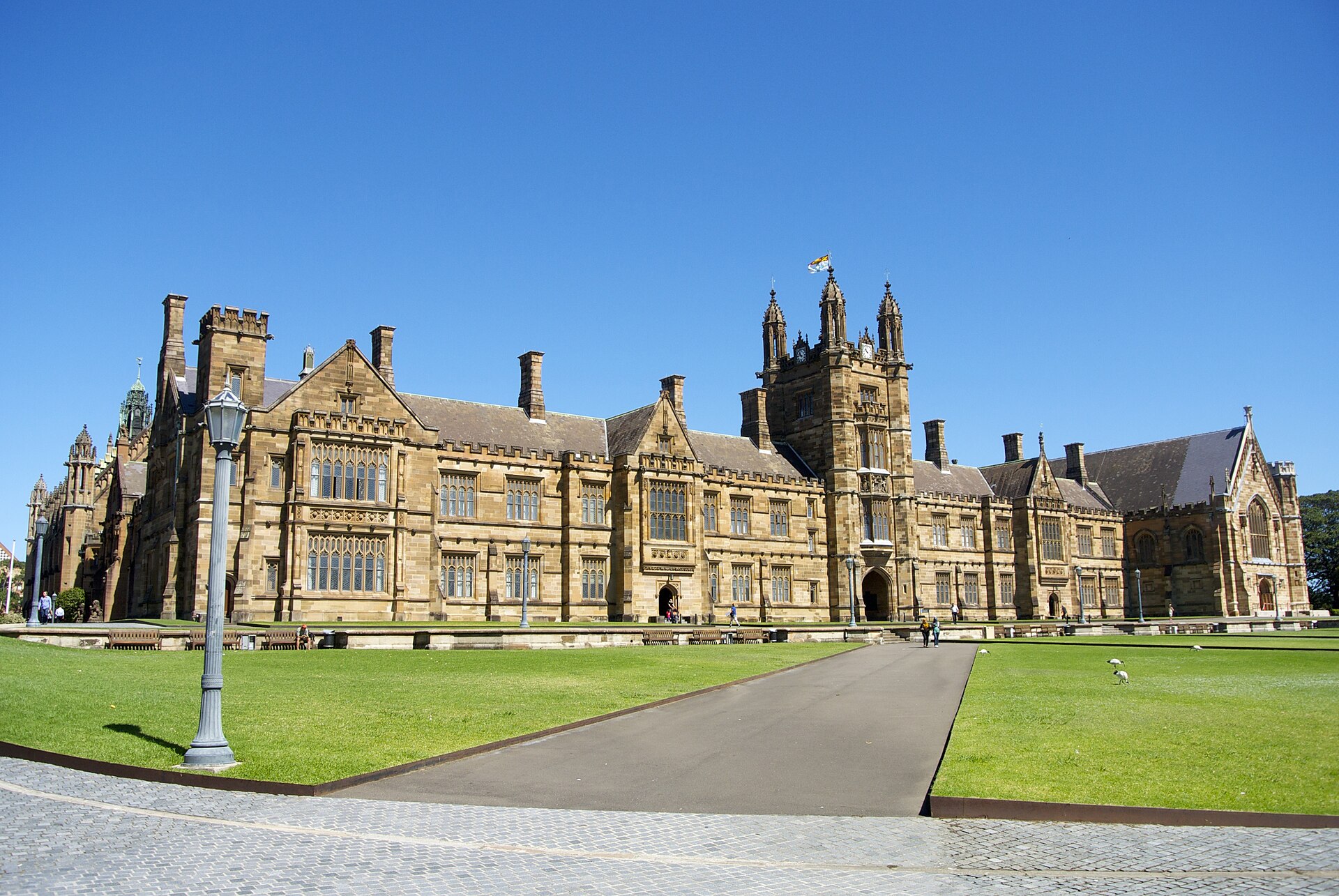
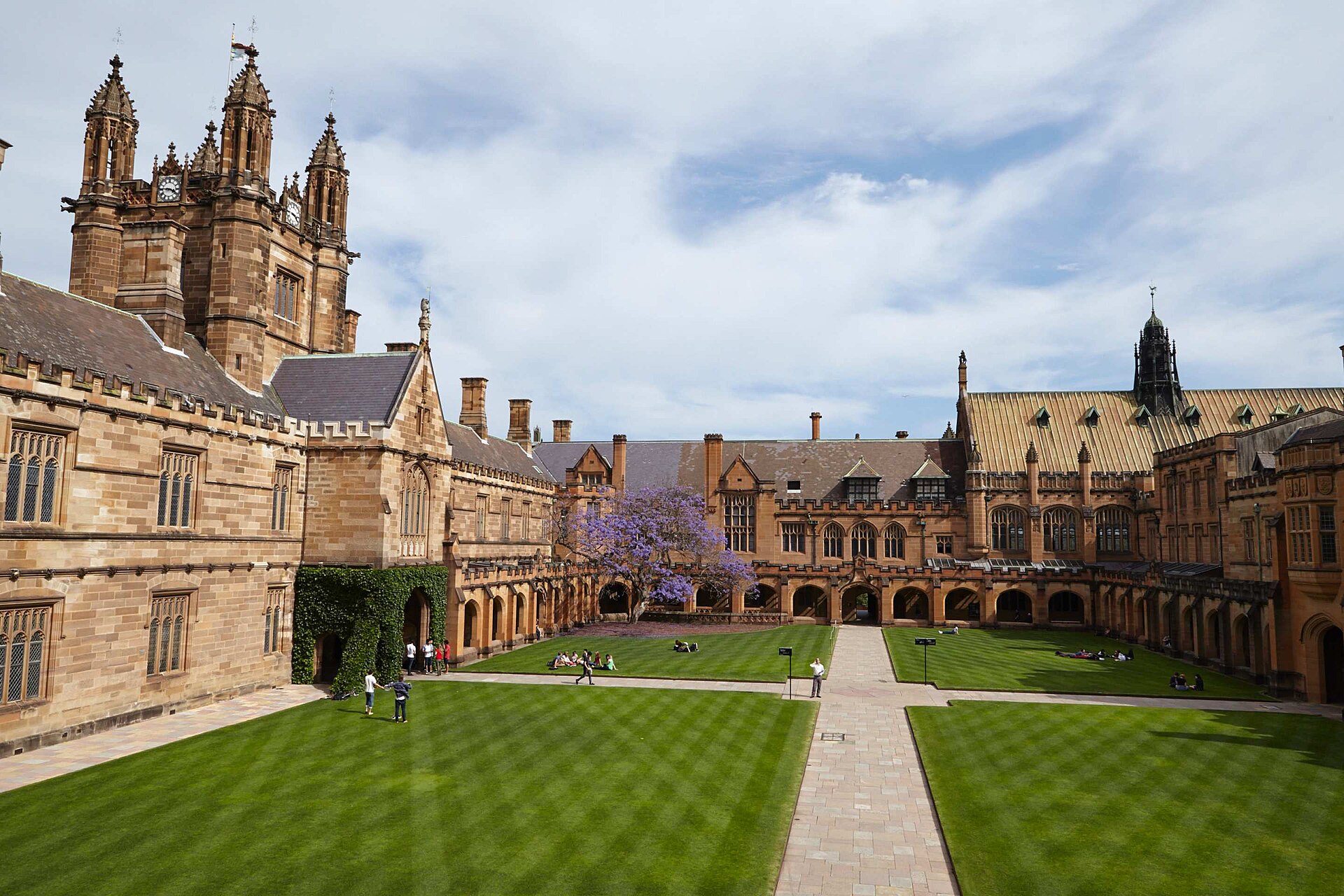
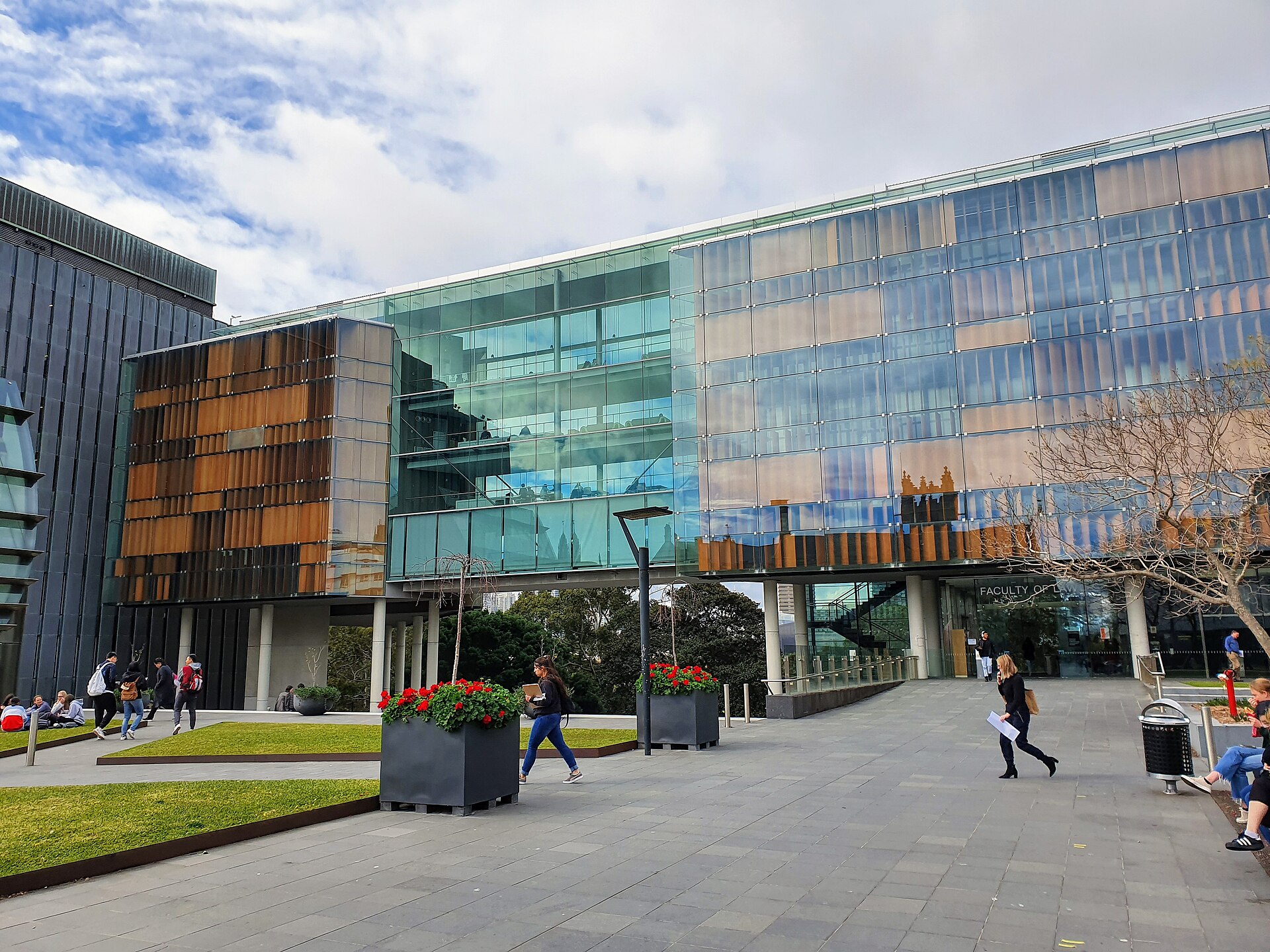
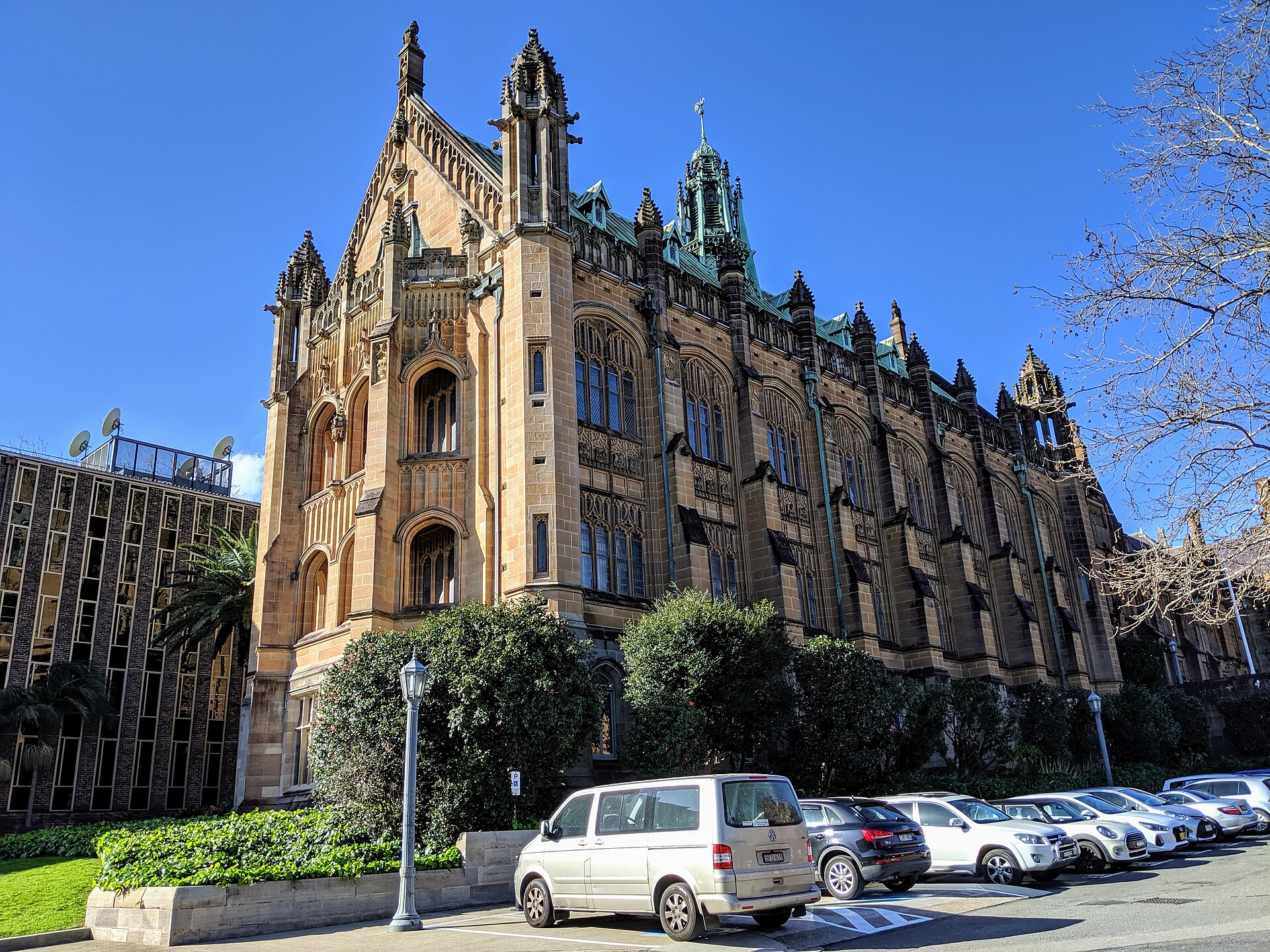
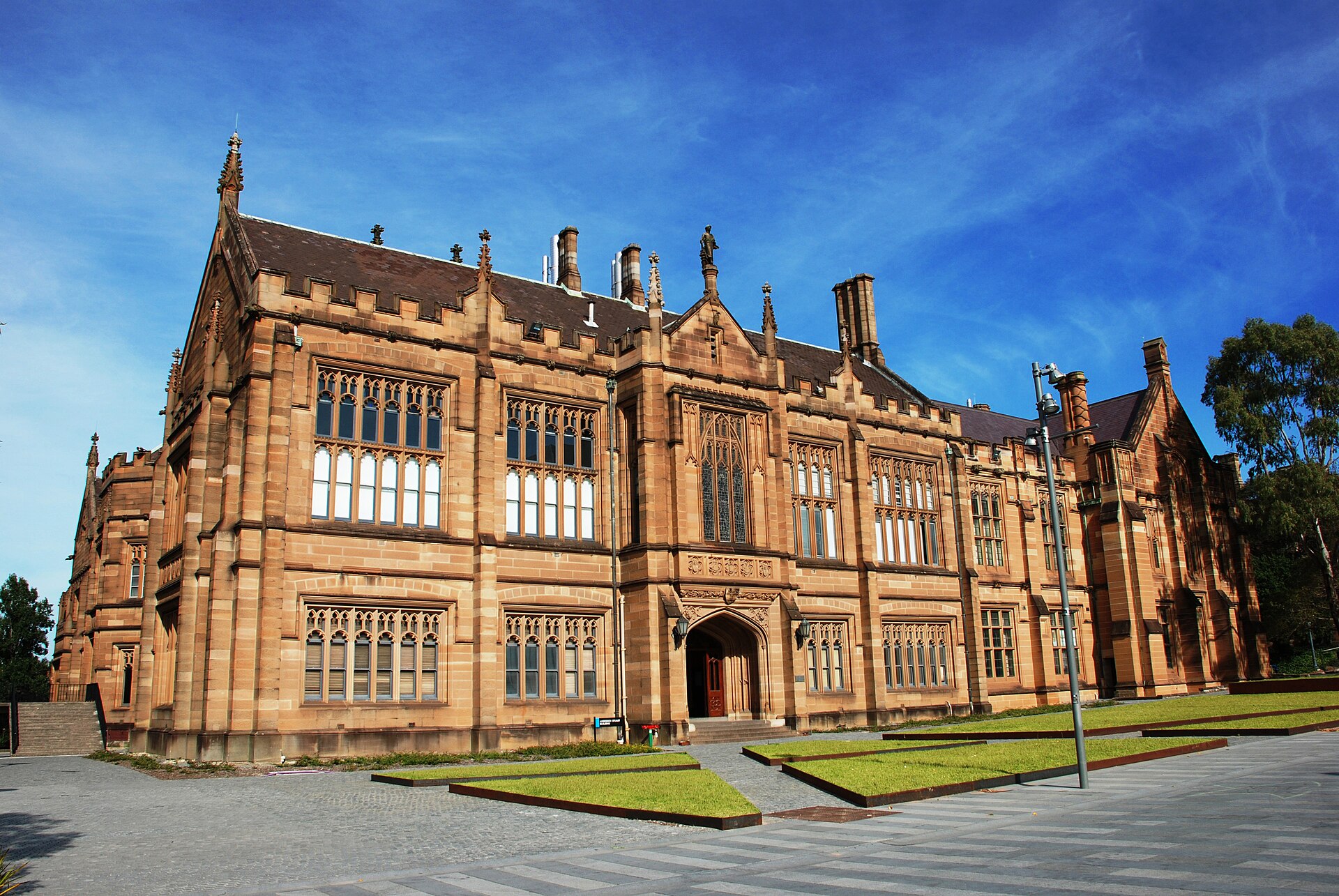
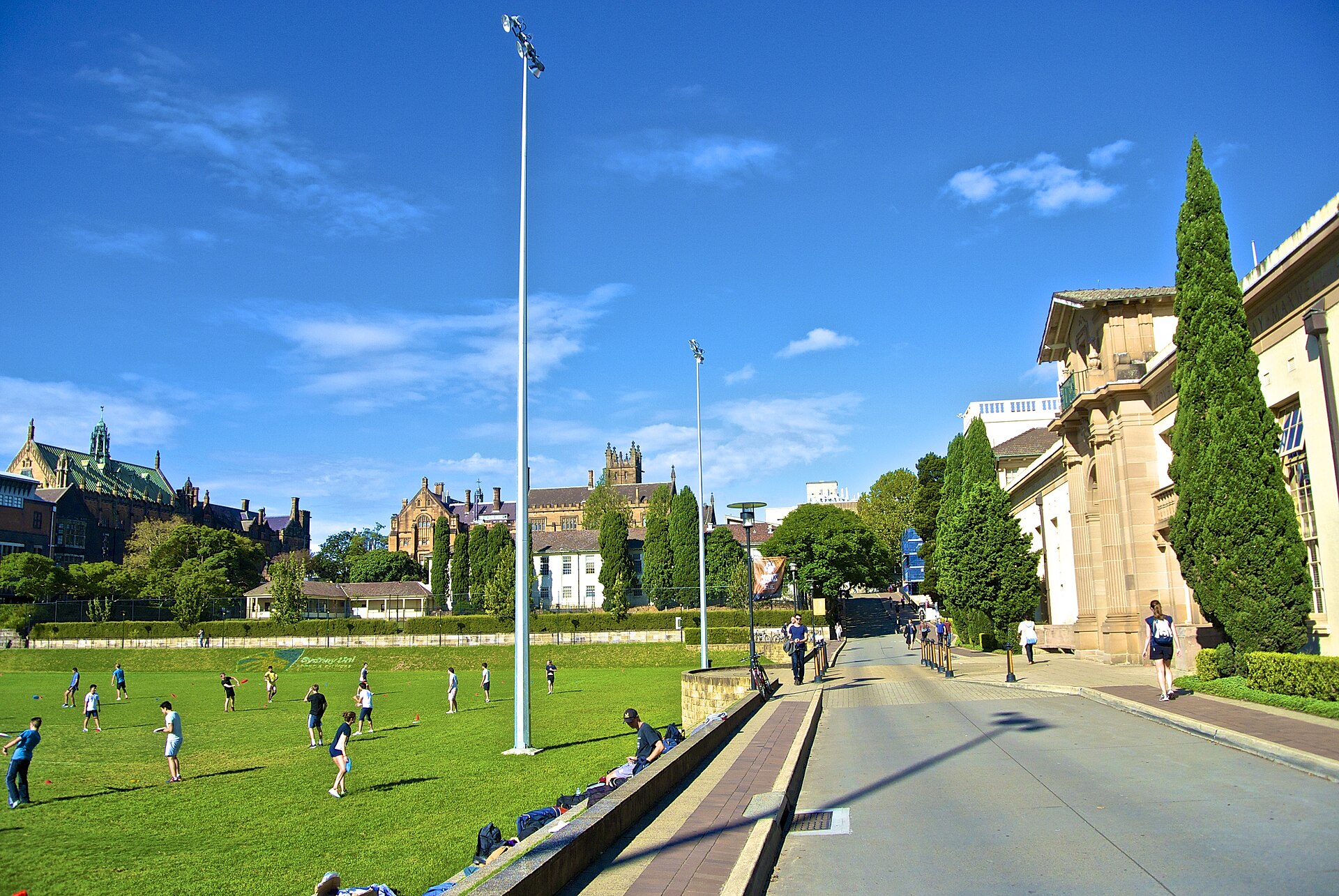
The University of Sydney — campus in pictures
Real, freely-licensed photographs of the campus (via Wikimedia Commons).
WHY SYDNEY
Why The University of Sydney — Sandstone Prestige, City Location & Research Depth
The University of Sydney is not just Australia's oldest institution — it is consistently one of the top 25 universities on Earth, and a founding member of the Group of Eight. Here is what makes it distinct from every other research university in the Asia-Pacific.
SELECTIVITY
University of Sydney Acceptance Rate & Admissions Profile
Sydney's admissions are grades-based: entry is determined primarily by your secondary school academic score, converted to a Combined Rank (Australia's equivalent of ATAR). There is no personal essay review, no alumni interview, and no holistic evaluation of extracurriculars for most degrees. Your academic record is the primary determinant of an offer.
The 30% acceptance rate reflects relatively broad access compared to highly selective US institutions — but this headline figure conceals wide variation by course. Competitive degrees including Medicine, Dentistry, Law, and some Engineering programs are significantly more selective, requiring near-top secondary school performance. The indicative IB score of 38 is a university-wide median — it is a baseline benchmark, not a guarantee of admission to any specific program. Always verify the indicative entry score for your specific course on the Admissions tab at sydney.edu.au.
Individual course entry scores vary significantly. The acceptance rate and IB score above are university-wide figures from the facts file and do not reflect the requirements of specific degrees.
AT A GLANCE
University of Sydney — Quick Facts
APPLICATION COMPONENTS
University of Sydney Application Components — What International Students Submit
The University of Sydney uses a direct application system for international students. There is no Common App, no UCAS, and — for most courses — no personal essays. Entry is determined by academic merit. Below are the standard components of a complete application.
ASSESSMENT CRITERIA
What the University of Sydney Looks For in International Applicants
Unlike US universities with holistic review, Sydney's standard admissions process is primarily academic-merit-based. Your secondary school score is converted to a Combined Rank and measured against each course's indicative entry score. Beyond the score, several factors shape a competitive profile.
INTAKES & DEADLINES
University of Sydney Application Deadlines — International Students
Sydney offers two intakes per year for most undergraduate degrees. Applications should be submitted well ahead of the closing date — allow 6–8 weeks before the semester start for visa processing. Scholarship consideration (particularly the VCIS) is tied to how early you receive an unconditional offer.
Some courses set earlier closing dates than the university-wide deadline. Applications are accepted year-round for most degrees, but earlier submission improves scholarship consideration timing under the VCIS automatic review rounds.
| Intake | Semester_start | Application_deadline | Notes |
|---|---|---|---|
| Semester 1 | Late February | 1 December (prior year) | Primary intake; the majority of undergraduate courses available |
| Semester 2 | Late July / Early August | 29 May (same year) | Many courses available; not all degrees offer Semester 2 entry — check course page |
STUDENT LIFE
Life at the University of Sydney — Campus, City & Community
The University of Sydney's Camperdown and Darlington campuses form one of the most beautiful urban university campuses in the world — sandstone Gothic revival architecture set alongside modern research facilities, minutes from Sydney's CBD. The campus is embedded in inner Sydney: surrounded by culturally rich suburbs (Newtown, Glebe, Erskineville) and connected by train and bus to the city, hospitals, and beaches.
Nine residential colleges sit on or adjacent to campus — including St Andrew's, St John's, St Paul's, Wesley, Women's College, Sancta Sophia, and Mandelbaum House. These colleges offer three catered meals daily, laundry, social programmes, and academic support. With histories stretching back over 150 years, they are among the most storied residential communities in Australia and have produced generations of prominent Australians in every field. For students moving to Sydney from abroad, the colleges provide an immediate community that is hard to replicate in off-campus living.
CAREER OUTCOMES
Career Outcomes and Graduate Employment
University of Sydney graduates benefit from the combination of a top-25 global brand, access to Australia's most dynamic city economy, and the Group of Eight alumni network — one of Australia's most valuable professional communities. Employment outcomes are strong across all faculties.
Stats
Cards
FREQUENTLY ASKED QUESTIONS
University of Sydney International Admissions — FAQs
Do I need to write essays to apply to the University of Sydney?+
For most undergraduate courses, no. Standard admissions are grades-based — your academic qualification is the primary criterion. There are no personal essays for regular admission to most degrees. However, the Sydney International Student Award (scholarship) requires a three-section personal statement, and some courses require supplementary materials such as auditions, portfolios, or questionnaires.
Can I start in July rather than February?+
Yes — the University of Sydney offers Semester 1 (late February, deadline 1 December prior year) and Semester 2 (late July/August, deadline 29 May) intakes for most degrees. Not all degrees are available in both intakes. Check the Admissions tab on your specific course page to confirm Semester 2 availability.
What IB score do I need for the University of Sydney?+
The indicative IB entry score is 38 points university-wide, but this varies significantly by course. Medicine, Dentistry, Law, and high-demand Engineering programs require higher scores; some Arts and Humanities programs have lower thresholds. Always consult the Admissions tab on your specific course page at sydney.edu.au for the indicative entry score applicable to your qualification.
Does the University of Sydney accept SAT or ACT scores?+
SAT and ACT scores are recognised but are not the primary admissions basis for most international students. Your IB Diploma, A-Levels, or national secondary qualification is the standard assessment tool. SAT/ACT scores can be submitted as supplementary academic evidence alongside your primary qualification.
What English test scores do I need?+
The university minimum is IELTS 6.5 overall, TOEFL iBT 85, or Duolingo 120. However, many competitive courses require higher scores — Law, Medicine, and Business commonly require IELTS 7.0 or above. Students who completed all secondary schooling in English may be exempt. Always verify on your specific course page.
Is there financial support available for international undergraduates?+
Yes. The Vice-Chancellor's International Scholarships Scheme (VCIS) automatically considers all eligible students with unconditional offers — no separate application needed, awards from $5,000 to $60,000 AUD. The Sydney International Undergraduate Academic Excellence Scholarship covers full tuition for up to 4 years (approximately 20 awards globally per year). The Sydney International Student Award provides a 20% tuition reduction for students from select markets. Need-based aid in the US sense is not available.
Do I apply through an agent or directly?+
Both are possible. International students can apply directly through the university's course page. Using an authorised education agent is optional. If you completed an IB diploma inside Australia, apply through UAC (Universities Admissions Centre) rather than directly.
What makes Sydney different from other Go8 universities like Melbourne or ANU?+
Sydney's primary differentiator is its location — inner Sydney is Australia's most globally connected city, with the strongest concentration of Asia-Pacific corporate headquarters, legal chambers, hospitals, and tech companies. Its sandstone heritage, 46% international student body, and residential college system also create a campus culture that is distinct. ANU is stronger for policy and public service research; Melbourne has a slightly different academic structure. Sydney tends to be the preferred choice for law, medicine, and those seeking direct engagement with Sydney's commercial economy.
ACADEMIC EXPECTATIONS · INTERNATIONAL STUDENTS
University of Sydney Academic Requirements — The Honest Breakdown for International Students
Sydney's admissions model is fundamentally different from US and UK institutions. Entry is determined by academic merit — your secondary school score converted to a Combined Rank. There are no holistic essay reviews, no alumni interviews, and no extracurricular assessments in the standard process. Your IB score, A-Level grades, or national qualification is what matters most.
For international students, this has a direct implication: academic preparation is everything. Unlike the US admissions model where a compelling personal essay can compensate for a slightly lower GPA, at Sydney, academics are the application. The upside is clarity — if your academic profile meets the indicative entry score for your course, you have a strong basis for an offer.
ADMISSIONS PROFILE
University of Sydney — Academic Profile at a Glance
The IB score of 38 represents the typical entry profile across all of Sydney's courses, but the range is wide. Less competitive programs in Arts and some Humanities may have lower thresholds; Medicine, Dentistry, Law, and high-demand Engineering programs set significantly higher entry scores. The 30% acceptance rate should not be read as a reliable indicator of competitiveness for any specific program. Always consult the indicative entry score on your chosen course page — this is the single most important number for your application planning.
TEST POLICY
Standardised Testing at the University of Sydney — The Australian Admissions Model
Australia's undergraduate admissions system does not rely on SAT or ACT scores as the primary assessment tool. Your secondary school qualification — IB Diploma, A-Levels, Gaokao, Indian Board results, or equivalent — is converted to a selection rank and compared directly to each course's indicative entry score. Standardised tests such as the SAT and ACT are recognised as supplementary evidence.
For international students who have SAT or ACT scores, they can be included in your application as supporting academic evidence. They are most useful as a secondary signal when your primary qualification is from a system that may be less familiar to the admissions office — but they do not replace or override your primary qualification. The university's test policy is 'optional' for SAT/ACT, meaning submission is voluntary, not required.
International English language proficiency tests (IELTS, TOEFL, Duolingo) are separately required for most international students and are not optional — they are part of the core application requirements.
IB & A-LEVEL CREDENTIALS
IB Diploma and A-Levels at the University of Sydney
The University of Sydney has extensive experience evaluating international qualifications and is a major destination for IB Diploma graduates from across Asia-Pacific and beyond. IB scores are converted to a Combined Rank (equivalent to ATAR) through the Universities Admissions Centre (UAC). A-Level grades from GCE-comparable systems are directly recognised.
SUBJECT PREPARATION
Subject-Level Preparation for Competitive Programs
Sydney does not mandate specific subject combinations for every degree, but competitive programs have assumed knowledge or formal prerequisites that effectively require certain subject choices. Planning your IB or A-Level subject selection with your intended Sydney program in mind — as early as Year 10 — is critical.
ENGLISH REQUIREMENTS
English Language Requirements — University of Sydney
International students must demonstrate English language proficiency unless all previous schooling was conducted in English. The university sets minimum thresholds, but individual courses — particularly in Law, Medicine, and Business — commonly require higher scores than the university minimum.
Students who completed all secondary schooling at an institution where the language of instruction was English may be exempt from English language tests. Exemption is not automatic — verify on your specific course page. Always aim for at least half a band above the minimum for your target course.
| Test | Minimum | Notes |
|---|---|---|
| IELTS (Academic) | 6.5 overall | No band below 6.0; Law and Medicine commonly require 7.0+ |
| TOEFL iBT | 85 total | No individual section below minimum equivalent |
| Duolingo English Test | 120 | Accepted for undergraduate entry |
| Pearson PTE Academic | 58 | Widely accepted; confirm on course page |
YEAR-BY-YEAR ROADMAP
Building Your Academic Profile for the University of Sydney
Sydney's grades-based admissions model means academic decisions made early in secondary school have a direct impact on your application outcome. Here is a structured roadmap for students targeting competitive programs.
COMMON PITFALLS
Academic Mistakes That Cost International Students Offers
Items
- Applying without verifying subject prerequisites — meeting the overall IB score total is not enough if your HL subjects don't meet the assumed knowledge requirements for your chosen degree
- Treating the indicative entry score as a target rather than a floor — in competitive intakes, you need a margin above the indicative score, not just the score itself
- Not checking whether your target degree offers Semester 2 entry — assuming all courses have a July intake when many are Semester 1 only
- Underestimating course-specific English requirements — the university minimum of IELTS 6.5 does not apply to Law, Medicine, or Business courses, which routinely require 7.0+
- Submitting an incomplete application — missing documents (untranslated transcripts, no English test score) delay processing and can push you into a later scholarship consideration round
- Accepting a conditional offer on inflated predicted grades — if your final IB results don't meet the conditions, the offer lapses and you may miss your target intake
- Not allowing enough time for Australian student visa processing — allow a minimum of 6–8 weeks before semester start; do not book flights before you have a visa
- Relying on the university-wide acceptance rate as a proxy for your specific program's competitiveness — the 30% figure averages across all degrees and is not meaningful for Medicine or Law
Faqs
Is there a foundation pathway if my scores are not high enough for direct entry?+
Yes. Taylors College Sydney offers a University of Sydney Foundation Studies programme as an official preparation pathway. This is a common and legitimate route for students who need an additional year of preparation before entering undergraduate study. On successful completion, students can progress into first year of their undergraduate degree.
Can I transfer between courses after arriving at Sydney?+
Internal transfers are possible but not guaranteed, and depend on meeting the entry requirements for the new course and the availability of places. Medicine and Dentistry are essentially impossible to transfer into from other undergraduate degrees. Plan your initial course selection carefully rather than assuming a transfer pathway exists.
What happens if my final IB results are lower than my predicted grades?+
If you received a conditional offer and your final results do not meet the conditions, the offer may be withdrawn. Some cases may be negotiated with the university's admissions office, but there is no guarantee. Always ensure predicted grades are realistic rather than optimistic — the consequences of unmet conditions are serious.
COST & FINANCIAL SUPPORT · INTERNATIONAL STUDENTS
The True Cost of a University of Sydney Education — Fees, Scholarships & Financial Reality
For international students, the University of Sydney is among Australia's more expensive universities — and Sydney is one of Australia's most expensive cities. Understanding the full cost before committing is essential. The good news: the university's scholarship portfolio is substantial, and the most widely distributed award — the Vice-Chancellor's International Scholarships Scheme — considers all eligible students automatically.
Tuition fees at Sydney vary significantly by faculty, with Engineering, Medicine, and Business programmes at the upper end of the range. Living costs in inner Sydney are real and high. However, between the VCIS automatic consideration, the Academic Excellence Scholarship, and the Sydney International Student Award, several meaningful funding pathways are available to international undergraduates who plan ahead.
ANNUAL COST BREAKDOWN
Annual Cost Estimates for International Undergraduate Students
All figures below are annual estimates. Official AUD tuition fees are from the university's 2026 published fee schedule. USD figures are reference conversions based on the university facts file; exchange rates fluctuate. Fees increase annually.
AUD tuition figures are official 2026 data from the university's international fee schedule. The USD cost-of-attendance figure of $56,300 in the facts file represents the approximate baseline (Arts tuition + living). Engineering and Medicine total costs will be higher. Fees increase approximately 5% per year.
| Component | Aud_annual | Usd_approx | Notes |
|---|---|---|---|
| Tuition (Arts, Humanities, Music) | A$49,200–$56,300 | ~$36,300 | 2026 official schedule; lower band for Arts |
| Tuition (Commerce, Economics, Law) | A$56,300–$60,600 | ~$41,000–$44,000 | 2026 official; Business at upper end |
| Tuition (Engineering & Computer Science) | A$60,600 | ~$44,000 | 2026 flat rate for Engineering/CS |
| Tuition (Medicine, Dentistry, Health Sciences) | A$60,600–$65,900 | ~$44,000–$48,000 | 2026 highest fee band |
| Estimated cost of living (Sydney) | A$27,000–$30,000 | ~$20,000 | Housing, food, transport; inner-city figure |
| Application processing fee | ~A$120 | ~$90 | One-time, non-refundable |
| Total estimated (Arts + living) | A$76,000–$86,000 | ~$56,300 | Rough total; tuition + cost of living |
FINANCIAL AID POLICY
Financial Aid for International Students — What Is and Isn't Available
The University of Sydney does not offer need-based financial aid in the manner of US Ivy League institutions. There are no income-based aid formulas and no means-tested grant packages for international undergraduates. Aid for international students is exclusively merit-based, through the scholarship programmes described below.
The University of Sydney awards over $84 million in scholarships annually. A portion of this flows to international undergraduate students through named merit awards. The average aid figure of approximately 15% of tuition reflects scholarship support for those who receive awards — it is not a universal benefit. International students are not eligible for Australian government student loans (HECS-HELP). Plan your finances assuming full fees — treat scholarships as a potential benefit, not a guaranteed offset.
If financial need is a significant constraint, the Academic Excellence Scholarship (full tuition, ~20 per year globally) is the highest-value award worth targeting. It requires a separate application and is highly competitive but has no fixed deadline.
SCHOLARSHIPS
Scholarships for International Undergraduate Students at Sydney
Three primary scholarship programmes are available to international students entering undergraduate study at the University of Sydney. All values are in Australian dollars.
AFFORDABILITY
The Real Cost of Living and Studying in Sydney
Sydney is one of Australia's most expensive cities. Housing, food, and transport costs are high by global standards, and budget planning is not optional — it is essential for international students without local family support.
On-campus residential colleges provide housing, three catered meals daily, and an immediate social community at an annual cost that, while substantial, is competitive with inner-Sydney private renting when meals and utilities are factored in. Independent university residences offer more affordable accommodation without the college programme. Off-campus renting in suburbs adjacent to the university (Newtown, Glebe, Camperdown) is competitive and expensive; further suburbs reduce rent but add commute time and cost.
International students on student visas in Australia are permitted to work up to 48 hours per fortnight. At a research-intensive university with a full academic load, relying heavily on part-time work is impractical — plan for tuition plus living costs from your primary source of funding, with part-time work as supplementary income only.
FUNDING STRATEGY
Step-by-Step Guide to Securing Financial Support at Sydney
COST FAQs
Frequently Asked Questions — Costs, Fees, and Scholarships
Does the University of Sydney offer need-based financial aid to international students?+
No. Need-based aid in the US sense — where aid is calculated on family income — is not available to international undergraduates at the University of Sydney. All international student support is merit-based scholarships. International students are also not eligible for Australian government student loans (HECS-HELP).
How will I know if I was awarded a VCIS scholarship?+
If you received an unconditional offer before a VCIS round deadline, you were automatically considered. Scholarship notifications are communicated separately from or alongside your offer. Contact the university's scholarships office if you have not received communication after receiving your offer.
Can I hold more than one scholarship at the University of Sydney?+
Generally, scholarships that each cover tuition costs cannot be stacked — for example, holding the Academic Excellence Scholarship (full tuition) and also receiving a VCIS tuition-offset award simultaneously would not apply. Check the terms of each award carefully. Faculty-specific scholarships may have different stacking rules. Contact the scholarships office for guidance on your specific situation.
What does it actually cost to live in Sydney as an international student?+
Budget a minimum of AUD $27,000–$30,000 per year for living costs, and potentially more depending on accommodation choices. Inner-city housing is expensive. Residential college fees — which cover accommodation and full catering — provide a full package that is worth comparing to the cost of independent renting plus groceries. Budget carefully and don't rely on part-time work as a primary income source.
Are there scholarships specifically for students from India, China, or Southeast Asia?+
The Sydney International Student Award includes students from South Asia, East Asia, and Southeast Asia in its eligible markets. The VCIS and Academic Excellence Scholarship are open globally. Some faculties have country-specific partnerships. External government scholarship programmes from Singapore, Malaysia, Indonesia, and India also regularly fund University of Sydney study.
APPLICATIONS & PERSONAL STATEMENTS · UNIVERSITY OF SYDNEY
University of Sydney Essays & Applications — An Honest Guide for International Students
Most international students applying to the University of Sydney do not write any essays at all. Standard admission to the vast majority of undergraduate degrees is grades-based: your IB score, A-Level grades, or equivalent qualification is the primary — and often only — criterion assessed. There is no personal statement, no supplementary essay, and no admissions interview required for most degrees.
However, writing does matter in several specific contexts at Sydney: the Sydney International Student Award requires a personal statement; the Academic Excellence Scholarship has an application process; and portfolio or performance courses require creative submissions. This guide covers all the scenarios where writing matters at Sydney, the specific prompts you will encounter, and how to approach each one effectively.
DO I NEED TO WRITE ESSAYS?
What Writing — If Any — Does a University of Sydney Application Require?
Here is the honest picture for international students applying to undergraduate degrees at the University of Sydney.
PERSONAL STATEMENT GUIDE
The Sydney International Student Award — Personal Statement Prompts and Strategy
The three-section personal statement for the Sydney International Student Award is the most significant written component of any standard international undergraduate application to the University of Sydney. Each section is approximately 200 words — short by any standard, which demands precision.
WRITING STRATEGY
How to Write the Sydney International Student Award Personal Statement
Three sections, 200 words each — approximately 600 words total. This is shorter than most single US college supplemental essays. The brevity is not a relief; it is a higher bar. Short formats require more editing, more precision, and more ruthlessness about what stays and what goes.
Each section is a standalone response with one clear purpose: Section 1 is character; Section 2 is fit with Sydney specifically; Section 3 is direction and purpose. They should tell a coherent story together without repeating information across sections. If you mention something in Section 1, don't restate it in Section 3 — each section must add new information to your overall picture.
The opening sentence of each section is your most important sentence. At 200 words, you have approximately 15 sentences per section — the first one determines whether the reader is engaged or already moving to the next application. Do not waste it on context-setting, platitudes, or background that the reader doesn't yet need. Start with something specific, true, and interesting.
CREATIVE SUBMISSIONS
Portfolio and Audition Requirements for Creative and Performing Arts
For students applying to Music, Architecture, or Visual Arts programs, the creative submission is the evaluated element that differentiates applicants with similar academic scores — it is the functional equivalent of the essay in these disciplines.
WHAT TO WRITE ABOUT
Choosing Your Personal Statement Topics
For the Sydney International Student Award, topic selection matters because the scholarship committee is looking for evidence of three things: that you are a distinctive individual (Section 1), that you have genuinely researched Sydney and this program (Section 2), and that your goals are realistic and connected to your academic plan (Section 3).
The most common mistake is writing for the committee's expectations rather than writing what is actually true about you. Scholarship readers have a sharp instinct for performance — statements that sound like they were written to impress rather than to communicate are immediately recognisable. The strongest personal statements read as if they couldn't have been written by anyone else.
- Strong for Section 1: A formative moment that changed how you think about your field — specific, personal, not a general cliché
- Strong for Section 1: A tension or contradiction in your experience that shaped your perspective — honest complexity is more interesting than smooth achievement narratives
- Strong for Section 2: A specific course unit, research centre, professor, clinical placement, or curriculum feature that only exists at Sydney
- Strong for Section 2: A connection between Sydney's city location and your specific professional goals — particularly for law, finance, medicine, or engineering
- Strong for Section 3: A realistic, named next step after your degree — a specific role, training pathway, or contribution that your Sydney education uniquely enables
- Weak for any section: Generic references to rankings, global reputation, 'excellent facilities', or 'world-class professors' without specificity
- Weak for Section 1: A list of academic achievements — these are visible on your transcript and add nothing to your personal statement
MISTAKES TO AVOID
Common Mistakes in Sydney Applications and Personal Statements
- Assuming no writing is required without checking — the Sydney International Student Award personal statement is part of the standard admissions application for eligible-country students
- Writing generic 'why this university' content based on rankings and prestige language rather than specific features of Sydney's programs, research, or city location
- Exceeding the 200-word limit per section — the word limit is a constraint that tests your ability to communicate clearly and concisely, not a suggestion
- Repeating information across sections — each section must contribute new information to the overall picture; repetition wastes your limited word count
- Writing aspirationally about goals without grounding them in the specific program and realistic career pathways your degree enables
- Not verifying that your country is on the Sydney International Student Award's 'select markets' list before investing time in the personal statement
- Applying for the Academic Excellence Scholarship late — there is no fixed deadline, but with only approximately 20 awards globally per year, early, strong applications have a significant advantage
- Reusing a personal statement written for a UK UCAS or US Common App application without substantial revision — the prompts and context are fundamentally different
APPLICATION FAQs
Frequently Asked Questions — Applications and Personal Statements
Is a personal statement required for regular undergraduate admission to the University of Sydney?+
No. For most undergraduate degrees, standard international admission requires only academic documents (transcripts, certificates), an English language test score, and proof of identity. No personal statement is required for regular admission. The personal statement only arises in the context of specific scholarship applications.
How should I approach the 'Why University of Sydney?' section?+
Be specific and research-grounded. Avoid ranking references and generic prestige language. Name something real: a specific course unit, research centre (Charles Perkins Centre, Sydney Nano, Brain and Mind Centre), clinical affiliation, faculty member's published research, or curriculum feature that is distinctive to Sydney. The scholarship committee reads applications from many students who all say they chose Sydney because it is 'world-class' — specific, researched reasons stand out immediately.
How competitive is the Sydney International Student Award compared to the Academic Excellence Scholarship?+
The Sydney International Student Award (20% tuition reduction) is more widely distributed — it targets students from specific geographic markets and its selection pool is defined accordingly. The Academic Excellence Scholarship (full tuition, ~20 per year globally) is among the most competitive awards at the university, with a very small number of places spread across all faculties and both intakes worldwide. The VCIS is the most accessible, being automatic for eligible students with unconditional offers.
Do I need a portfolio for Architecture at Sydney?+
Architecture, Design and Planning admissions requirements — including any portfolio or supplementary materials — should be confirmed directly on the faculty's course admissions page at sydney.edu.au. Requirements can change and are course-specific. Do not assume based on general information about other universities.
Does the quality of my written English in the personal statement affect my scholarship chances?+
Yes, for scholarship personal statements, clarity and quality of written English matters. You should draft, revise, and ideally have your personal statement reviewed by a strong English writer before submission. This is not about native-speaker fluency; it is about clear, precise, well-organised communication of ideas. Unclear or disorganised writing is disadvantageous regardless of the quality of the ideas within it.
Can I reuse a personal statement I wrote for a UK university or US college?+
Not directly. UK UCAS personal statements and US Common App essays address different prompts and serve different purposes. The Sydney International Student Award has three specific sections — about yourself, why Sydney specifically, and your goals — that require Sydney-specific responses. You may draw on material from other statements for Section 1 (about yourself), but Sections 2 and 3 must be written fresh and specifically for the University of Sydney.
Courses — schools, degrees & intake
73 degrees across 8 groupings.
Faculty of Arts and Social Sciences · 18 degrees
Bachelor of Arts
Bachelor of Arts and Bachelor of Advanced Studies
Bachelor of Arts and Bachelor of Advanced Studies (Dalyell Scholars)
Bachelor of Arts (Dual Degree: Sciences Po, France)
Bachelor of Politics, Philosophy and Economics
Bachelor of Languages
Bachelor of International Studies
Bachelor of Media and Communications
Bachelor of Visual Arts
Bachelor of Visual Arts and Bachelor of Advanced Studies
Bachelor of Economics
Bachelor of Economics and Bachelor of Advanced Studies
Bachelor of Economics (Dual Degree: Sciences Po, France)
Bachelor of Education (Early Childhood)
Bachelor of Education (Primary)
Bachelor of Education (Secondary)
Bachelor of Education (Health and Physical Education)
Bachelor of Social Work
University of Sydney Business School · 5 degrees
Bachelor of Commerce
Bachelor of Commerce and Bachelor of Arts
Bachelor of Commerce and Bachelor of Science
Bachelor of Advanced Computing and Bachelor of Commerce
Bachelor of Engineering Honours and Bachelor of Commerce
Faculty of Engineering · 13 degrees
Bachelor of Engineering Honours (Aeronautical Engineering)
Bachelor of Engineering Honours (Biomedical Engineering)
Bachelor of Engineering Honours (Chemical and Biomolecular Engineering)
Bachelor of Engineering Honours (Civil Engineering)
Bachelor of Engineering Honours (Electrical Engineering)
Bachelor of Engineering Honours (Environmental Engineering)
Bachelor of Engineering Honours (Mechanical Engineering)
Bachelor of Engineering Honours (Mechatronic Engineering)
Bachelor of Engineering Honours (Software Engineering)
Bachelor of Engineering Honours with Space
Bachelor of Engineering Honours (Dalyell Scholars)
Bachelor of Advanced Computing
Bachelor of Project Management
Sydney Law School · 5 degrees
Bachelor of Arts and Bachelor of Laws
Bachelor of Commerce and Bachelor of Laws
Bachelor of Economics and Bachelor of Laws
Bachelor of Engineering (Honours) and Bachelor of Laws
Bachelor of Science and Bachelor of Laws
Faculty of Science · 4 degrees
Bachelor of Science
Bachelor of Science and Bachelor of Advanced Studies
Bachelor of Science and Bachelor of Arts
Bachelor of Science and Doctor of Medicine
Sydney School of Architecture, Design and Planning · 5 degrees
Bachelor of Architecture and Environments
Bachelor of Design in Architecture
Bachelor of Design in Architecture and Master of Architecture
Bachelor of Design (Interaction Design)
Bachelor of Design and Bachelor of Advanced Studies (Interaction Design)
Faculty of Medicine and Health · 19 degrees
Bachelor of Biomedicine and Health
Bachelor of Science (Medical Science)
Bachelor of Science and Bachelor of Advanced Studies (Medical Science)
Bachelor of Oral Health
Bachelor of Applied Science (Diagnostic Radiography)
Bachelor of Applied Science (Exercise and Sport Science)
Bachelor of Applied Science (Exercise Physiology)
Bachelor of Applied Science (Occupational Therapy)
Bachelor of Applied Science (Physiotherapy)
Bachelor of Applied Science (Speech Pathology)
Bachelor of Science (Health)
Bachelor of Science and Bachelor of Advanced Studies (Health)
Bachelor of Science and Master of Nutrition and Dietetics
Bachelor of Nursing (Advanced Studies)
Bachelor of Nursing (Honours)
Bachelor of Pharmacy (Honours) and Master of Pharmacy Practice
Bachelor of Pharmacy and Management (Honours) and Master of Pharmacy Practice
Bachelor of Arts and Doctor of Medicine
Bachelor of Arts and Master of Nursing
Sydney Conservatorium of Music · 4 degrees
Bachelor of Music (Performance)
Bachelor of Music (Composition)
Bachelor of Music (Music Education)
Bachelor of Music
Want your real chances at University of Sydney?
Create a free TYCHR account for your personalised admit-chance, a shortlist you can track, exact entry requirements, and essay + counselling help.