The University of Edinburgh
Edinburgh, United Kingdom · Urban
UNIVERSITY OF EDINBURGH ADMISSIONS GUIDE
The University of Edinburgh — Admissions Guide for International Students
Founded in 1583 and ranked #27 in the world by QS, the University of Edinburgh is one of the oldest and most prestigious universities in the English-speaking world. A founding member of the UK's Russell Group and a league member of the League of European Research Universities (LERU), Edinburgh sits at the intersection of ancient scholarly tradition and cutting-edge research — from the School of Informatics, which founded Europe's first AI laboratory in 1963, to world-leading medicine and veterinary science.
For international students, Edinburgh offers something genuinely distinctive: a Scottish four-year degree structure built around breadth in your first year, a UNESCO World Heritage campus embedded in one of the world's great festival cities, and a 44% international student community that makes it one of the most globally diverse universities in the UK. This guide gives you everything you need to build a competitive application.
Campus
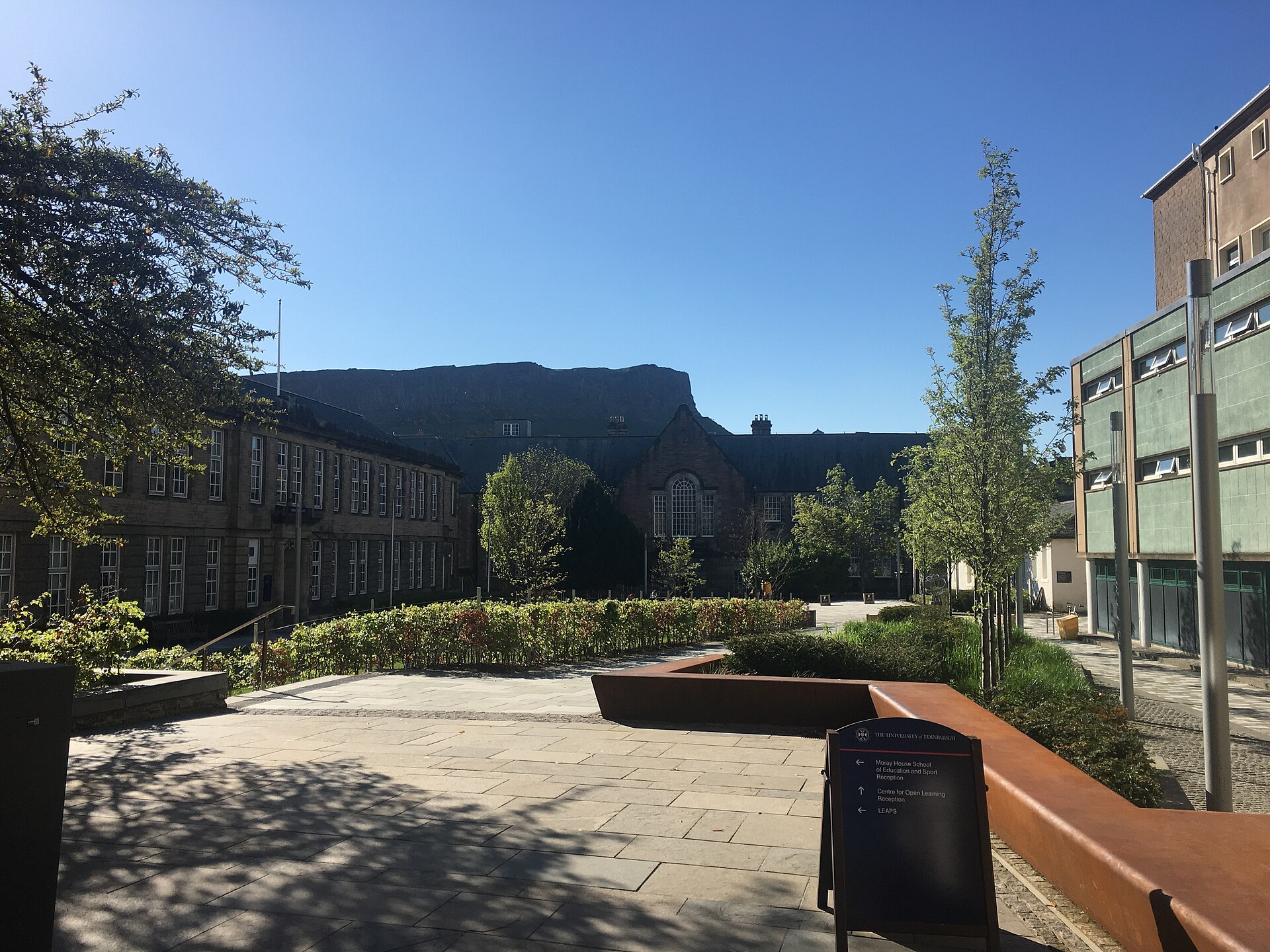
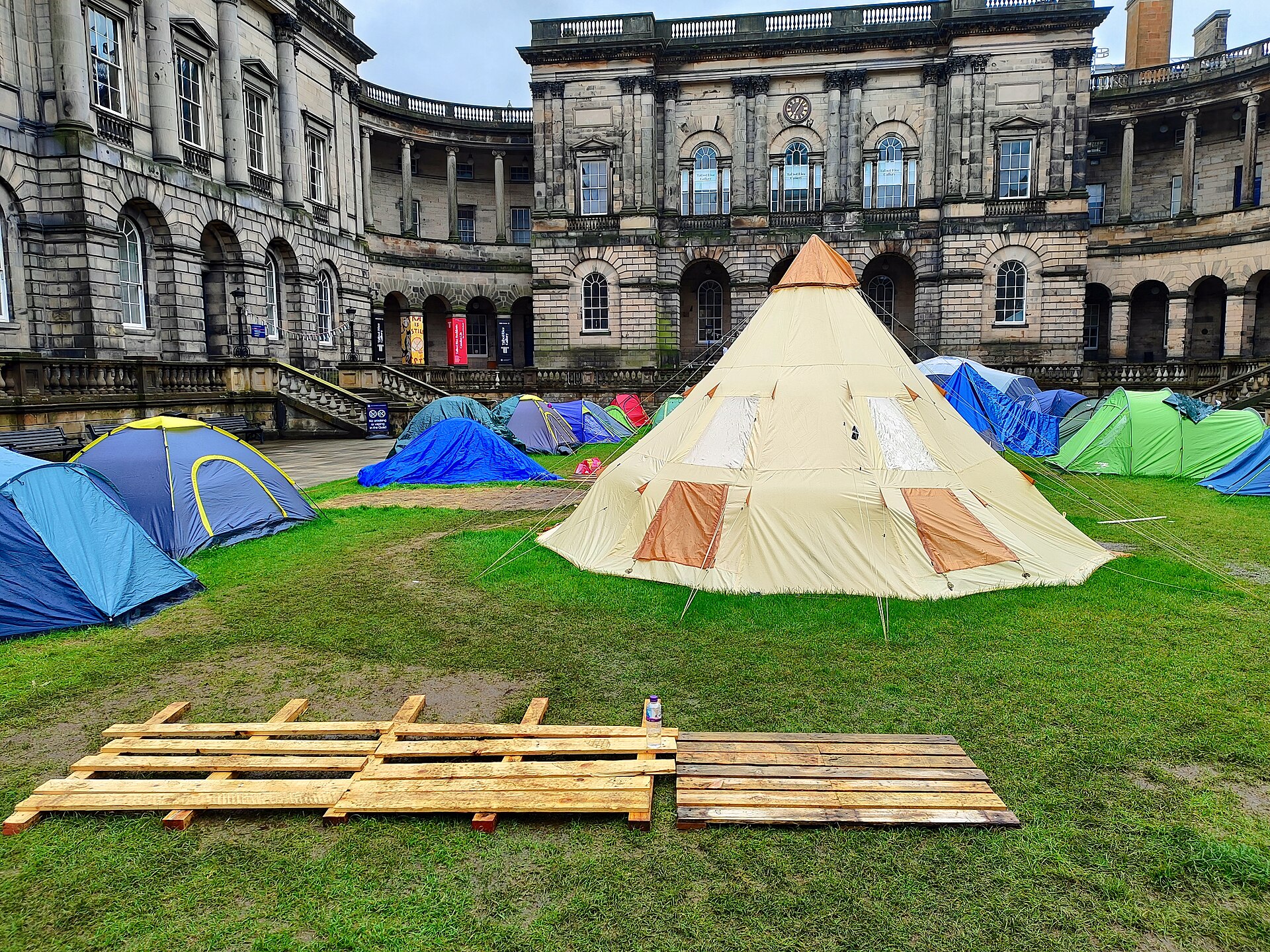
The University of Edinburgh — campus in pictures
Real, freely-licensed photographs of the campus (via Wikimedia Commons).




Why Edinburgh — Ancient Prestige, World-Class Research, and a City Like No Other
Edinburgh is not simply a prestigious degree — it is a transformative four-year experience in one of the most remarkable cities in Europe, surrounded by a research culture that has shaped fields from philosophy and medicine to artificial intelligence.
SELECTIVITY & ADMISSIONS PROFILE
Edinburgh Acceptance Rate & Admissions Profile
Edinburgh's overall acceptance rate is 53% — higher than Oxbridge or the very top US universities, but this headline figure is misleading for international applicants. Acceptance rates vary dramatically by programme: Medicine and Veterinary Medicine are among the most competitive undergraduate programmes in the UK, while programmes in Arts, Social Sciences, and some Sciences admit a higher proportion of qualified applicants. What drives selection is whether your predicted grades meet or exceed programme-specific entry requirements, not a holistic admissions lottery.
Edinburgh uses a primarily grade-based admissions process through UCAS. Unlike US holistic admissions, the academic offer is the cornerstone of the decision. Once an offer is made, it is conditional — you must meet the grade requirements in your final exams. Understanding the programme-specific entry requirements is therefore the most important strategic task for any Edinburgh applicant.
AT A GLANCE
Edinburgh — Quick Facts
APPLICATION COMPONENTS
Edinburgh Application Components — UCAS, Personal Statement & Requirements
Edinburgh undergraduate applications are submitted entirely through UCAS (Universities and Colleges Admissions Service) — the UK's centralised admissions platform. There is no separate supplement, portfolio, or additional Edinburgh-specific form for most programmes. The UCAS application comprises academic records, predicted grades, a personal statement, and a school reference.
WHAT EDINBURGH LOOKS FOR
How Edinburgh Evaluates International Applicants
Edinburgh's admissions process is primarily academic — your predicted and achieved grades in IB, A-Levels, or equivalent qualifications are the most important factor. Unlike US holistic admissions, Edinburgh does not use extracurricular activities or letters of recommendation in the traditional sense. The UCAS personal statement and school reference add qualitative context, but academic credentials are the foundation.
APPLICATION DEADLINES
Edinburgh UCAS Deadlines — When to Apply
Edinburgh uses the UCAS system with UCAS-set deadlines. The most important date for most applicants is the equal consideration deadline in January. Applications received by this date receive equal consideration — there is no early decision advantage for standard programmes. Medicine and Veterinary Medicine have a significantly earlier October deadline.
Deadlines above reflect the 2027 entry cycle. Always verify the exact date for your entry year on the UCAS website and Edinburgh's own admissions pages, as the specific date can shift slightly between cycles.
| Programme | Deadline | Notes |
|---|---|---|
| Medicine & Veterinary Medicine | 15 October | UCAS must be submitted by this date. UCAT must be completed before applying for Medicine. |
| Most undergraduate programmes | Mid-January (UCAS equal consideration) | Applications received by this date are considered equally. Check UCAS for the exact date for your entry year. |
| BA Childhood Practice | 31 March | For September entry of the same year. |
| Late applications | After equal consideration deadline | Considered individually where spaces remain. Not guaranteed consideration. Early applications are strongly advised for competitive programmes. |
STUDENT LIFE & THE CITY
Living and Studying in Edinburgh
Edinburgh is one of the most distinctive student cities in the world — a UNESCO World Heritage city where medieval Old Town cobblestones meet cutting-edge research institutes. For international students, the combination of a compact, safe, walkable city and a campus woven into the fabric of it creates an unusually immersive experience.
The city hosts approximately 100,000 students, making it one of the most student-dense cities in Europe relative to its population. Student areas including Marchmont, Newington, and Leith offer a range of accommodation and social life options within easy reach of the main campus at Bristo Square and the George Square precinct.
CAREER OUTCOMES
Career Outcomes & the Edinburgh Network
Edinburgh's graduate outcomes are strong across all major sectors. The university's combination of Russell Group prestige, research intensity, and international student community creates meaningful career advantages, particularly in the UK, Europe, and for students returning to their home countries.
Edinburgh graduates are recruited by leading organisations across finance (Standard Life, RBS, KPMG, Deloitte), technology (Amazon, Google, Microsoft, DeepMind), law (Clifford Chance, Linklaters), life sciences (AstraZeneca, MSD), and public policy. The School of Informatics produces a particularly strong pipeline into AI research, tech start-ups, and computational roles globally. Medicine and Veterinary Medicine graduates benefit from direct career pathways in NHS Scotland and international health systems.
Edinburgh has a Graduate Visa route that allows international graduates to stay and work in the UK for two years (three years for PhD graduates) after completing their degree — a significant advantage for career development in the UK and Europe.
FREQUENTLY ASKED QUESTIONS
Edinburgh Admissions — FAQs for International Students
Does Edinburgh consider extracurricular activities in admissions?+
Not in the way US universities do. Edinburgh's admissions is primarily grade-based. However, relevant extracurricular engagement — reading, research experience, work experience, competitions — can be discussed in your UCAS personal statement to demonstrate genuine motivation for your subject. Activities unrelated to your chosen degree carry less weight than in US holistic admissions.
Can I apply to more than one Edinburgh programme on UCAS?+
No — each UCAS choice is one programme at one university. You can list Edinburgh once (or not at all) and apply to up to 5 universities/programmes total on your UCAS application. If you want to apply to multiple Edinburgh programmes, be aware that the personal statement is shared across all UCAS choices.
What is the Scottish four-year degree and how does it affect my application?+
Most Edinburgh undergraduate degrees are four years long, following the Scottish tradition. In Year 1, you study three subjects before specialising. This is not a disadvantage — it is a feature. International students apply to specific programmes (e.g. Computer Science, Economics, History of Art) and enter directly into that four-year structure. The entry requirements and application process are the same as for English three-year degrees.
When do I need to take IELTS or TOEFL for Edinburgh?+
If your first language is not English and you're not studying in an English-medium school system, you'll need an English language qualification such as IELTS (minimum 6.5 overall) or TOEFL iBT (minimum 92) or Duolingo (minimum 120). These should be completed before your UCAS application is submitted, or at latest before conditional offers are confirmed. Some programmes require higher scores — check the specific programme requirements.
Is there a separate Edinburgh application or supplement?+
No. Edinburgh undergraduate applications go entirely through UCAS. There is no Edinburgh-specific supplement, essay, or portal for standard undergraduate degrees. The only exceptions are Medicine (UCAT required), Veterinary Medicine (Work Experience Summary form), and Art and Design (portfolio).
How competitive is Medicine at Edinburgh for international students?+
Medicine at Edinburgh (MBChB, six years) is extremely competitive internationally. All applicants must sit the UCAT before applying, and the UCAS deadline is 15 October. Edinburgh places significant weight on UCAT scores, interview performance, and academic grades. For international students, competition is intense — typically only candidates with very strong academic records and high UCAT scores receive interview invitations.
Can I change my degree programme after arriving at Edinburgh?+
Yes — Edinburgh's four-year Scottish degree structure makes changing your programme in Year 1 or between Year 1 and Year 2 more feasible than in most English universities. The broad first year means you may discover a strong interest in a different subject. Programme transfers are subject to capacity and grade requirements but are a recognised and used pathway.
Does Edinburgh offer scholarships for international undergraduates?+
Edinburgh has a limited number of scholarships for international undergraduates — including the Edinburgh Global Undergraduate Mathematics Scholarship, scholarships for Olympiad medallists (BIG/Global Talent Fund), and country-specific awards. However, Edinburgh does not have a broad need-based aid programme for international undergraduates comparable to US need-blind universities. Most international students pay full fees.
ACADEMIC REQUIREMENTS
Edinburgh Academic Requirements — The Honest Breakdown for International Students
Edinburgh's admissions is grade-first. Understanding the specific entry requirements for your chosen programme — and ensuring your predicted and achieved grades meet them — is the most critical part of your application strategy. Here is an honest breakdown of what Edinburgh expects academically, and how international qualifications are read.
ACADEMIC BENCHMARKS
What Grades Do Edinburgh Applicants Need?
Edinburgh does not use a holistic admissions process in the US sense. Academic grades — specifically predicted and achieved scores in IB, A-Levels, Scottish Highers, or equivalent international qualifications — are the primary admissions criterion. The following benchmarks reflect typical requirements across programmes.
Entry requirements vary significantly by programme. Highly competitive programmes such as Medicine, Informatics, Law, and Business typically require candidates who exceed minimum published requirements, since many more qualified students apply than there are places. For competitive programmes, treat minimum requirements as a floor, not a target.
STANDARDISED TESTING
SAT, ACT & Standardised Tests at Edinburgh
Edinburgh does not use the SAT or ACT as part of its standard undergraduate admissions process. As a UK institution, Edinburgh evaluates international students on IB, A-Levels, and national school-leaving qualifications — not US college entrance exams. The SAT/ACT are not required, not expected, and not factored into admissions decisions for standard undergraduate entry.
The primary academic assessments Edinburgh uses are: the IB Diploma (with specific HL requirements by programme), UK A-Levels (with specific grade and subject requirements), and certified equivalents from major school systems worldwide. For Medicine applicants, the UCAT (University Clinical Aptitude Test) is required — this is an aptitude and reasoning test used specifically for UK medical school admissions and is distinct from the SAT/ACT.
If you are an international student from a US-curriculum school and have SAT/ACT scores, you may include them on your UCAS form, but Edinburgh will primarily evaluate you on your AP courses, predicted IB results if applicable, or other secondary school qualifications. SAT/ACT scores alone are not sufficient for entry.
IB & A-LEVELS AT EDINBURGH
IB Diploma and A-Level Requirements — Programme by Programme
Edinburgh evaluates IB Diploma and A-Level applicants with reference to specific programme requirements. The following reflects typical requirements across Edinburgh's most popular programmes for international students. Always verify exact requirements using Edinburgh's degree finder.
These are indicative requirements. Edinburgh publishes exact entry requirements per programme in its degree finder. For highly competitive programmes, many applicants exceed these minimums — published requirements should be treated as minimum thresholds, not competitive benchmarks.
THE SCOTTISH DEGREE STRUCTURE
Edinburgh's Four-Year Degree — What International Students Need to Know
Edinburgh follows the Scottish tradition of four-year undergraduate degrees. This structure is genuinely different from English three-year programmes and offers specific advantages — particularly for international students who may be uncertain about their specialism on entry.
In Year 1, most Edinburgh students study three subjects. You may choose from related fields or experiment across disciplines — for example, studying Economics, Philosophy, and Italian simultaneously before deciding your focus. By Year 2, you narrow your options. Years 3 and 4 are your honours years, where you specialise deeply, culminating in a dissertation that represents original research in your field. Arts and Humanities students graduate with a Scottish MA (Master of Arts) — a first degree, not a postgraduate qualification. Science, Engineering, and Medicine students graduate with BSc, MEng, BVM&S, or MBChB.
SUBJECT PREPARATION
Academic Preparation by Field
Edinburgh is research-intensive. Successful applicants — especially to competitive programmes — demonstrate not just grade achievement but genuine intellectual engagement with their field. Here is what strong preparation looks like across Edinburgh's most popular subject areas for international students.
ENGLISH LANGUAGE
English Language Requirements
All international applicants whose first language is not English must demonstrate English language proficiency as a condition of entry. Edinburgh's minimum requirements are set per programme — the figures below are the standard minimums; some programmes (particularly Medicine, Law, and programmes in the College of Arts, Humanities, and Social Sciences) require higher scores.
If you have studied in an English-medium school for at least three years with English as the medium of instruction, you may be exempt from additional English language tests — but Edinburgh will specify this on a case-by-case basis. Always confirm your status with Edinburgh's admissions team.
| Test | Minimum | Notes |
|---|---|---|
| IELTS Academic | 6.5 overall | No band below 6.0 (standard); some programmes require 7.0 overall |
| TOEFL iBT | 92 total | Some programmes require higher component scores |
| Duolingo English Test | 120 | Accepted as an alternative to IELTS/TOEFL |
| Cambridge English (C1 Advanced / C2 Proficiency) | Grade B (C1 Advanced) | Also accepted; check programme page for specifics |
| IB English (First Language or HL) | Grade 5 at SL minimum | Meeting this within your IB Diploma may satisfy the requirement |
BUILDING YOUR APPLICATION
The Year-by-Year Edinburgh Preparation Ladder
Edinburgh admissions is grades-led, but a strong UCAS personal statement is built from years of genuine engagement with your subject. Here is how to build a competitive Edinburgh profile from Year 9 onward.
COMMON MISTAKES
Academic Application Mistakes at Edinburgh
Edinburgh's straightforward grade-based process means mistakes are often simple to avoid — but their consequences are significant. These are the most common reasons strong students fail to receive Edinburgh offers.
- Applying with the wrong subjects: Computer Science applicants who lack HL or A-Level Mathematics, or Medicine applicants without HL Chemistry, will be rejected regardless of their overall grade profile. Verify subject requirements before finalising your IB or A-Level subject choices.
- Underestimating predicted grade requirements: Edinburgh makes conditional offers. If your school predicts lower grades than the programme requires, you will not receive an offer. Ensure your school's predicted grades are both accurate and realistic — challenge your teacher if your working level supports higher predictions.
- Applying to Medicine without taking UCAT: UCAT registration closes before the 15 October UCAS deadline. Applying to Edinburgh Medicine without a valid UCAT score is not possible. Register and sit the UCAT by September of your application year.
- Writing a personal statement that is too general: Edinburgh admissions tutors can tell immediately whether a personal statement was written for UCAS generically or with genuine knowledge of the subject. A personal statement that could apply to any university — or any subject — is a missed opportunity.
- Applying to highly competitive programmes with minimum-level predicted grades: Edinburgh's published minimum IB or A-Level requirements are exactly that — minimums. For Informatics, Medicine, Law, and Business, the average accepted applicant typically exceeds minimums. Know the realistic competitive benchmark for your programme, not just the published floor.
- Missing the October deadline for Medicine and Vet: No exceptions are made for late Medicine or Vet applications. A missed 15 October deadline means waiting another full year.
COST & FINANCIAL AID
Understanding the Cost of Edinburgh — An Honest Overview for International Students
Edinburgh is a world-ranked research university in a UNESCO World Heritage city — and for international students, it carries international tuition fees. Scotland's universities do not charge domestic students (UK residents) the same fees as international students. Understanding the full cost of attendance, and what financial support is genuinely available, is essential before applying.
The honest picture for most international students: Edinburgh's international fees are substantial, financial aid for international undergraduates is limited in scope compared to US need-based programmes, and the cost of living in Edinburgh — while lower than London — has risen in recent years. Plan your finances carefully, apply early for any available scholarships, and explore all funding sources including your home country's government scholarships and bilateral programmes.
COST BREAKDOWN
Annual Cost Estimates for International Undergraduates
The figures below are annual estimates. Tuition fees vary by programme (science, engineering, and medical programmes typically carry higher fees than arts and humanities). Living costs reflect Edinburgh city estimates and vary significantly by lifestyle and accommodation choice.
All figures are estimates in USD equivalent. Actual fees are set in GBP and will vary with exchange rates. Always check Edinburgh's current fee schedule on the official website for your specific programme and entry year.
| Component | Amount | Notes |
|---|---|---|
| International tuition fees (estimated annual) | ~$35,000 | Programme fees vary; Medicine/Engineering typically higher |
| University accommodation (first year, estimated annual) | Included in CoA | Range from catered to self-catered; first-year guarantee available |
| Living costs (food, transport, personal) | ~$16,000 | Annual estimate; Edinburgh is lower cost than London but rising |
| Total estimated cost of attendance (annual) | ~$52,000 | Tuition + living; books, travel, and extras additional |
| UCAS application fee | ~$30 | Per UCAS application (covers all university choices) |
FINANCIAL AID POLICY
Financial Aid for International Undergraduates
Edinburgh does not offer a broad need-based financial aid programme for international undergraduates comparable to US need-blind institutions like Harvard, Princeton, or MIT. There is no institutional guarantee that demonstrated financial need will be met. Most international undergraduate students at Edinburgh pay full tuition fees.
The University does offer a limited number of scholarships and bursaries for international students — largely merit-based or targeted at specific countries or academic fields. These are competitive and do not come close to covering full tuition for the majority of recipients. International students are also excluded from Scottish Government funding (which covers fees for Scottish-domiciled students) and standard UK student loans.
The most common funding routes for international Edinburgh undergraduates are: home-country government scholarships (Chevening, Commonwealth Scholarships, bilateral awards), employer/company sponsorships, family savings, and Edinburgh-specific merit awards where eligible. Research your home country's government scholarship availability — many countries offer competitive scholarships specifically for UK university study.
SCHOLARSHIPS
Edinburgh Scholarships for International Undergraduates
Edinburgh has a range of scholarships for international undergraduate students. These are competitive, limited in number, and primarily merit-based or targeted. Apply for every eligible scholarship simultaneously — deadlines vary.
AFFORDABILITY
Edinburgh vs. US Tuition — Affordability Perspective
For many international students, Edinburgh's total cost of attendance (~$52,000/year) is comparable to or slightly below a US private research university — but without the robust need-based financial aid programmes that US institutions sometimes offer. The four-year degree means total programme cost is approximately $208,000 before aid.
Edinburgh's cost advantage over US peers lies in its reputation quality-to-cost ratio: a QS #27 degree at roughly equivalent cost to a mid-tier US university, but with significantly lower total cost compared to the US Ivy League over four years if financial aid is not substantial. For students who qualify for significant home-country scholarship funding (e.g. Chevening, Commonwealth, national government schemes), Edinburgh becomes very competitive on total cost.
Edinburgh city offers meaningfully lower living costs than London — typically 20–30% cheaper for accommodation and day-to-day expenses. Students who choose self-catered accommodation from Year 2 onward and manage budgets carefully can reduce annual living costs below the $16,000 estimate.
FUNDING STRATEGY
How to Fund an Edinburgh Degree — A Step-by-Step Plan
COST & AID FAQs
Cost & Aid FAQs for Edinburgh International Students
Does Edinburgh offer need-based financial aid like US universities?+
No. Edinburgh does not have a broad institutional need-based aid programme for international undergraduates. There is no process equivalent to US need-blind admissions or FAFSA. Financial need is not systematically assessed as part of the admissions process, and full-fee waivers are not available through institutional aid for most students.
Can I apply for a UK student loan as an international student?+
UK government student loans are not available to most international students. Scottish Government funding (which covers tuition fees for Scottish-domiciled students) is also unavailable to international students. UK student loans require UK domicile status.
What is Edinburgh's application fee?+
The UCAS application fee is approximately £30 (around $30 USD), paid once per UCAS cycle regardless of how many universities you apply to. Edinburgh does not charge a separate application fee.
Are Edinburgh's fees in pounds or dollars?+
All Edinburgh fees are set in GBP (British pounds). The USD figures in this guide are approximate equivalents and will fluctuate with exchange rates. Always check Edinburgh's official website for current GBP fee schedules.
Is Edinburgh cheaper than studying in England?+
For international students, tuition costs at Edinburgh are broadly similar to other top UK research universities. The cost-of-living advantage over London is real — Edinburgh is materially cheaper to live in than London, which affects total cost of attendance significantly over a four-year degree.
Are there emergency funds if I face financial hardship during my degree?+
Yes. Edinburgh operates a Student Hardship Fund open to all enrolled students, including international students. This provides one-off financial support for students facing unexpected financial difficulties. Access through Student Administration.
UCAS PERSONAL STATEMENT
Your UCAS Personal Statement — Edinburgh's Single Most Important Qualitative Document
Edinburgh's admissions is grade-led — but for highly competitive programmes where many applicants meet the grade requirements, your UCAS personal statement is the document that determines whether you receive an offer over another equally qualified candidate. Even for less competitive programmes, a weak personal statement signals a lack of genuine motivation — the one quality Edinburgh admissions tutors universally cite as the differentiator between similar academic profiles.
From 2026 entry, UCAS replaced its traditional single 4,000-character free-form essay with a new three-question format. This is a significant change: the questions give you a structure but also demand that you engage honestly with each dimension of your application. The questions are not prompts for three separate mini-essays — they are a logical progression through your intellectual journey toward your chosen subject.
THE UCAS SYSTEM
How the UCAS Personal Statement Works
Edinburgh, like all UK universities, receives your personal statement through UCAS. It is submitted once and shared with all universities you apply to — which means it must serve your intended programme across all your UCAS choices simultaneously. For Edinburgh, you are applying to a specific programme (e.g. Artificial Intelligence, Philosophy, Medicine) — and your personal statement must be targeted at that subject area, not a general academic statement.
The 2026 three-question personal statement has a total character limit of 4,000 characters (approximately 550–600 words), with a minimum of 350 characters required per question. Unlike the old format, you cannot spend 3,000 characters on one answer and token content on the others — the structure enforces some balance across all three questions. Plan your word allocation carefully.
Because the personal statement is shared across all five possible UCAS choices, do not name specific universities in your personal statement. If you are applying to Edinburgh for Computer Science and Oxford for Computer Science and Imperial for EEE, your personal statement should speak to Computer Science as a discipline — not to any one institution.
THE THREE QUESTIONS
New UCAS Personal Statement Questions (2026 Entry Onwards)
The new UCAS format requires you to answer three structured questions within a 4,000-character total (minimum 350 characters per question). The questions are designed to guide you through your intellectual motivation, academic preparation, and broader engagement with your subject.
OVERALL STRATEGY
Personal Statement Strategy for Edinburgh
Edinburgh's admissions culture rewards intellectual honesty and academic depth. The personal statement for Edinburgh is not a marketing document — it is a demonstration that you understand your chosen field and have engaged with it seriously. The following principles apply across all three questions.
Edinburgh admissions tutors are academic specialists, not general admissions readers. A tutor in the School of Philosophy has read a thousand personal statements that mention Plato. A tutor in Informatics has read a thousand that mention a passion for coding. What they notice — and remember — is specificity: the student who read Hofstadter's Gödel, Escher, Bach and can say precisely what it taught them about formal systems. The student who built a language model and can articulate what it could not do. Write your personal statement as if your reader knows more about your subject than you do — because they will.
The shared personal statement means you are writing for multiple Edinburgh programme selectors simultaneously only if you apply to Edinburgh multiple times — which is not possible (you only have one UCAS choice per university). Your personal statement should therefore be written with your single Edinburgh programme in mind as the primary audience, while remaining coherent for your other UCAS choices in similar subjects.
QUESTION-BY-QUESTION STRATEGY
How to Approach Each Question
TOPIC SELECTION
Choosing What to Write About
The most common personal statement mistake is writing what you think sounds impressive rather than what is genuinely true. Edinburgh's admissions tutors are skilled at identifying statements that are constructed rather than authentic — generic phrases, ideas borrowed from tutoring guides, and experiences that are mentioned without genuine reflection all signal inauthenticity.
COMMON PITFALLS
Personal Statement Mistakes Edinburgh Sees Too Often
- Opening with 'I have always been passionate about...' — Edinburgh tutors have read this opener thousands of times. It immediately signals a generic statement rather than a specific one.
- Writing about activities that are not related to your subject — your personal statement for an academic degree at Edinburgh must be about your intellectual engagement with that field. Listing hobbies, sports, or unrelated community service uses limited character space ineffectively.
- Naming Edinburgh or any other specific university in the text — your personal statement is shared with all your UCAS choices. Naming a university makes the statement read as lazy and can actively disadvantage you at other institutions.
- Vague descriptions of work experience or reading without reflection — 'I did work experience at a hospital' is worth nothing without specificity: what did you observe, what did it make you think, what question did it leave you with?
- Padding the three questions with repetition — the three-question format is designed so that each question addresses a distinct dimension of your application. Repeating the same points across questions wastes characters and signals a lack of reflection.
- Describing achievements rather than ideas — 'I won a mathematics competition' is less interesting to Edinburgh's admissions tutors than 'The problem that surprised me most in competition mathematics was...' Lead with ideas, use achievements as evidence.
- Leaving UCAS personal statement drafting until December — for Medicine and Vet applications, the deadline is 15 October. Your personal statement must be complete by late September. For all other Edinburgh programmes, starting in September and revising in October gives you the strongest result.
PERSONAL STATEMENT FAQs
Edinburgh UCAS Personal Statement — FAQs
Does Edinburgh interview undergraduate applicants?+
Not routinely for most programmes. Edinburgh Medicine conducts Multiple Mini Interviews (MMIs) for selected applicants. Veterinary Medicine may also include an interview component. For most arts, science, and engineering programmes, Edinburgh makes offers based on UCAS application alone — without a formal interview. Your personal statement is therefore even more important since it is the only direct communication of your voice.
How much does the personal statement matter relative to grades?+
Grades come first. If your predicted grades do not meet Edinburgh's requirements for your programme, your personal statement cannot compensate. However, for programmes where many applicants meet the grade requirements — particularly Informatics, Law, Business, and Biomedical Sciences — the personal statement and school reference become key differentiators. Think of grades as the entry ticket and the personal statement as the deciding factor among qualified applicants.
Can I write about the same topics in all three UCAS questions?+
You should not repeat yourself across questions — UCAS's structure is designed to elicit different dimensions. Question 1 is about intellectual motivation, Question 2 is about academic preparation, and Question 3 is about extracurricular engagement. Overlap is normal, but the same experience or argument appearing identically in multiple answers wastes your limited character allowance.
What is the character limit for the new UCAS personal statement?+
4,000 characters total across all three questions, with a minimum of 350 characters per question. This is approximately 550–600 words. Plan your allocation before you start writing — a rough guide is 1,400 characters for Q1, 1,200 for Q2, and 1,000 for Q3, adjusted for your specific subject and experiences.
Should I write differently for Edinburgh than for other UK universities?+
Your personal statement is shared with all UCAS choices, so you write one document for all. However, you should write with your primary intended programme in mind — in Edinburgh's case, that means writing for an academic specialist reader who will evaluate your subject knowledge and intellectual motivation carefully. Edinburgh's research-intensive culture means depth and intellectual curiosity matter more than breadth.
How important is my IB Extended Essay in the personal statement?+
If your EE is directly related to your programme of study, it is valuable material for Question 2 — it demonstrates independent research in your field at a level above standard curriculum. Reference it specifically: what question you asked, what methodology you used, what you found, and what it taught you about the limits of your approach. A well-used EE reference is one of the stronger academic signals an IB student can provide.
Do I need to mention specific Edinburgh research or professors?+
No — unlike US supplement essays, the UCAS personal statement is not the place for 'Why Edinburgh' content. Edinburgh does not ask for a supplement. Your personal statement should be entirely about your intellectual relationship with your subject, not with any particular university. References to Edinburgh faculty or research programmes belong in potential interviews, not in the shared UCAS document.
Courses — schools, degrees & intake
90 degrees across 16 groupings.
School of Informatics · 6 degrees
Computer Science BSc (Hons)
Artificial Intelligence BSc (Hons)
Artificial Intelligence and Computer Science BSc (Hons)
Computer Science and Mathematics BSc (Hons)
Software Engineering BEng (Hons)
Informatics MInf (5-year Integrated Masters)
School of Engineering · 9 degrees
Engineering BEng/MEng (Hons)
Chemical Engineering BEng/MEng (Hons)
Civil Engineering BEng/MEng (Hons)
Mechanical Engineering BEng/MEng (Hons)
Electronics and Electrical Engineering BEng/MEng (Hons)
Electrical and Mechanical Engineering BEng/MEng (Hons)
Electronics and Computer Science BEng/MEng (Hons)
Structural and Fire Safety Engineering BEng/MEng (Hons)
Structural Engineering with Architecture BEng/MEng (Hons)
School of Mathematics · 6 degrees
Mathematics BSc (Hons)
Mathematics MMath (Hons)
Applied Mathematics BSc (Hons)
Mathematics and Physics BSc (Hons)
Mathematics and Statistics BSc (Hons)
Mathematics and Business BSc (Hons)
School of Physics and Astronomy · 6 degrees
Physics BSc (Hons) / MPhys
Astrophysics BSc (Hons) / MPhys
Theoretical Physics BSc (Hons) / MPhys
Mathematical Physics BSc (Hons) / MPhys
Computational Physics BSc (Hons) / MPhys
Physics with Meteorology BSc (Hons) / MPhys
School of Chemistry · 4 degrees
Chemistry BSc (Hons)
Chemistry MChem
Medicinal and Biological Chemistry BSc (Hons)
Chemical Physics BSc (Hons) / MChemPhys
School of Biological Sciences · 7 degrees
Biological Sciences BSc (Hons)
Biological Sciences (Biochemistry) BSc (Hons)
Biological Sciences (Genetics) BSc (Hons)
Biological Sciences (Ecology) BSc (Hons)
Biological Sciences (Zoology) BSc (Hons)
Biological Sciences (Plant Science) BSc (Hons)
Biological Sciences MBiol
School of GeoSciences · 4 degrees
Earth Sciences BSc (Hons) / MEarthSci
Earth Science and Physical Geography BSc (Hons) / MEarthSci
Environmental Geoscience BSc (Hons)
Geophysics BSc (Hons)
Edinburgh Medical School · 6 degrees
MBChB Medicine (6-year programme)
Biomedical Sciences BSc (Hons)
Anatomy and Development BSc (Hons)
Neuroscience BSc (Hons)
Pharmacology BSc (Hons)
Infectious Diseases BSc (Hons)
Royal (Dick) School of Veterinary Studies · 1 degrees
Veterinary Medicine BVM&S (5-year programme)
School of Law · 6 degrees
Law LLB (Ordinary and Honours)
Law and Business LLB (Hons)
Law and Accountancy LLB (Hons)
Law and International Relations LLB (Hons)
Law and History LLB (Hons)
Global Law LLB (Hons)
Edinburgh Business School (Business School) · 6 degrees
Business Management MA (Hons)
International Business MA (Hons)
Business and Economics MA (Hons)
Finance and Business MA (Hons)
Business with Marketing MA (Hons)
Business and Law MA (Hons)
School of Economics · 6 degrees
Economics MA (Hons)
Economics and Mathematics MA (Hons)
Economics and Statistics MA (Hons)
Economics and Politics MA (Hons)
Economics with Finance MA (Hons)
Economics and Accounting MA (Hons)
School of History, Classics and Archaeology · 5 degrees
History MA (Hons)
History and Archaeology MA (Hons)
History and Classics MA (Hons)
History and History of Art MA (Hons)
History and Politics MA (Hons)
School of Philosophy, Psychology and Language Sciences · 7 degrees
Philosophy MA (Hons)
Philosophy and Economics MA (Hons)
Philosophy and Mathematics MA (Hons)
Philosophy and Politics MA (Hons)
Psychology BSc (Hons)
Philosophy and Psychology MA (Hons)
Linguistics MA (Hons)
School of Social and Political Science · 5 degrees
Politics MA (Hons)
International Relations MA (Hons)
Politics, Philosophy and Economics MA (Hons)
Social Anthropology MA (Hons)
Sociology MA (Hons)
Edinburgh College of Art · 6 degrees
Fine Art BA (Hons)
Architecture BA/MA (Hons)
Interior Design BA (Hons)
Architectural History and Heritage MA (Hons)
Music BMus
Acoustics and Music Technology BSc (Hons)
Want your real chances at University of Edinburgh?
Create a free TYCHR account for your personalised admit-chance, a shortlist you can track, exact entry requirements, and essay + counselling help.