← All universities

The Ohio State University

Columbus, United States · Urban

Association of American UniversitiesBig TenPublicStateResearchCoed
Acceptance
51.0%
QS World
#175
Tuition/yr
$40,500
Students
60,000
Founded
1870

One of America's largest and most academically comprehensive universities, Ohio State combines Big Ten scale with AAU research strength, a nationally ranked Fisher College of Business, the Wexner Medical Centre, and a Columbus campus embedded in one of the Midwest's fastest-growing tech and innovation economies. With 200+ majors, 1,400+ student organisations, and a global alumni network of more than 600,000, Ohio State rewards students who are ready to build their own path — and grow into it.

Ohio State University Admissions Guide for

Campus

The Ohio State University — campus in pictures

Real, freely-licensed photographs of the campus (via Wikimedia Commons).

A portion of Ohio State University's north campus area, as viewed from a top floor of Dreese Laboratories.
A portion of Ohio State University's north campus area, as viewed from a top floor of Dreese Laboratories.Kevin Payravi · CC BY-SA 4.0 · via Wikimedia Commons
Daytime view of The Ohio State University South Campus Central Chiller Plant
Daytime view of The Ohio State University South Campus Central Chiller PlantJrbarc! · CC BY-SA 4.0 · via Wikimedia Commons
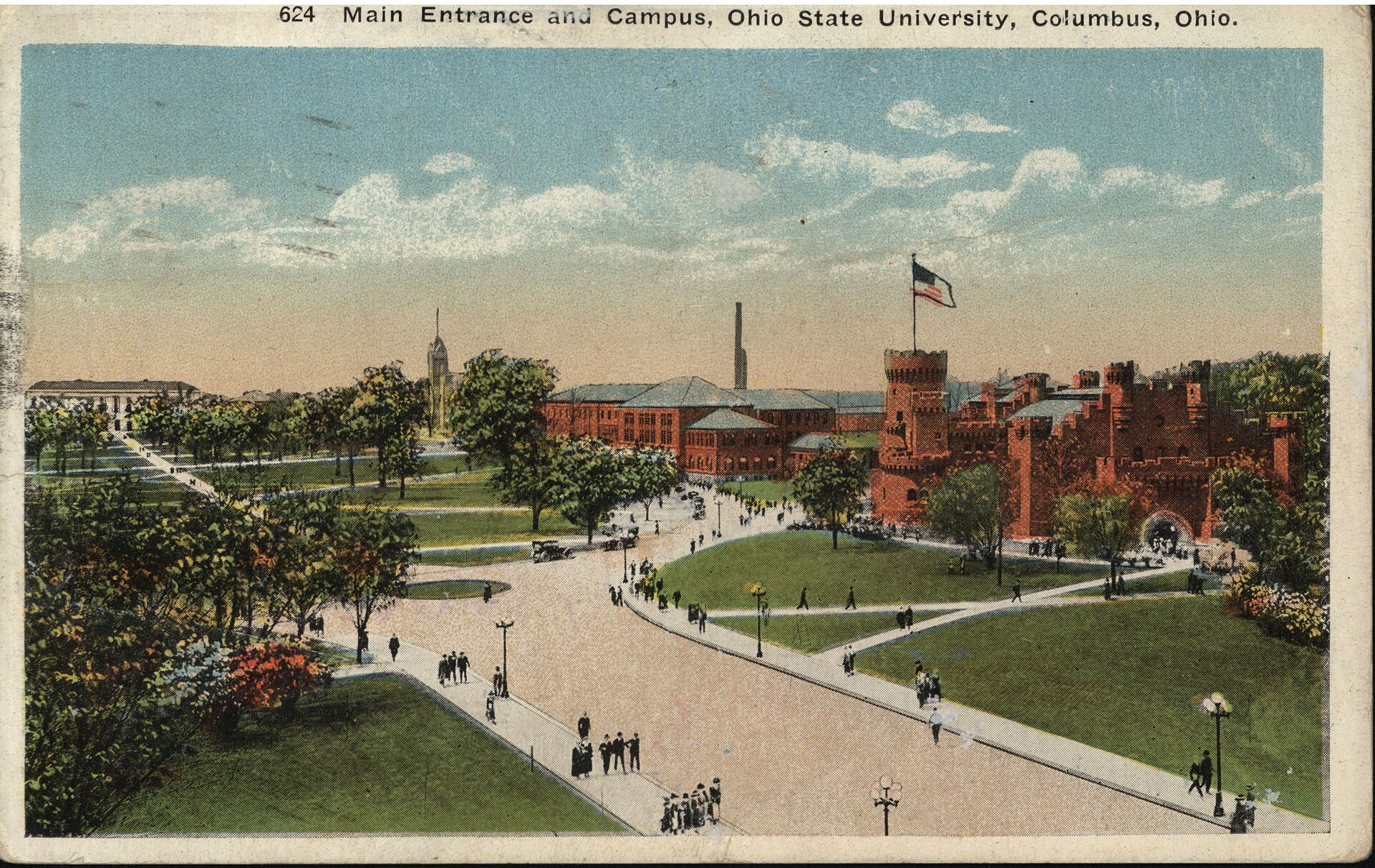
Main entrance and campus, Ohio State University, Columbus, Ohio.   DPLA   ca39deec26ce20a2195d3c648ca8ee61 (page 1)
Main entrance and campus, Ohio State University, Columbus, Ohio. DPLA ca39deec26ce20a2195d3c648ca8ee61 (page 1)DPLA bot · Public domain · via Wikimedia Commons
Color postcard of a scene from the campus of Ohio State University in Columbus.
Color postcard of a scene from the campus of Ohio State University in Columbus.DPLA bot · Public domain · via Wikimedia Commons
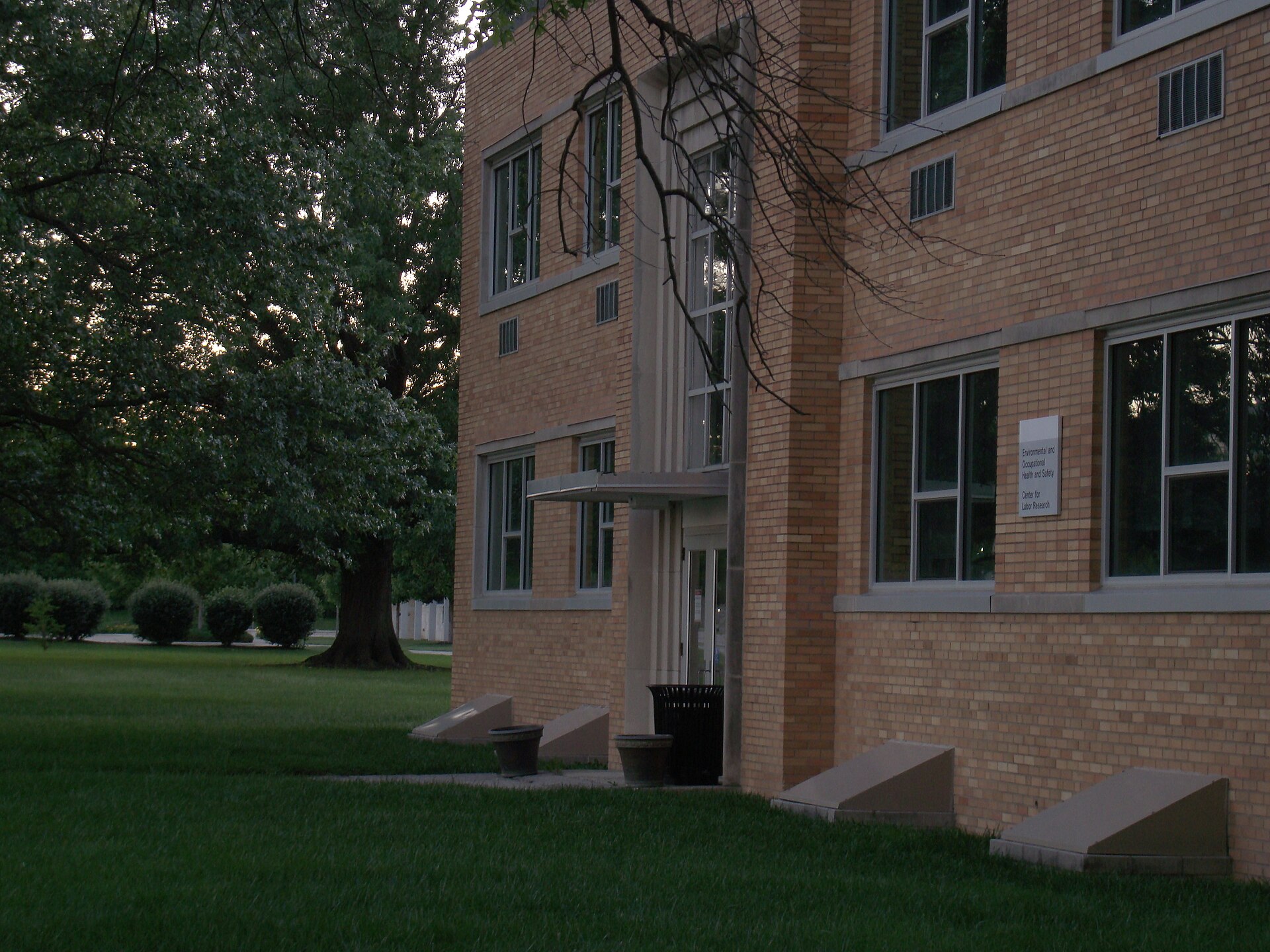
Ohio State West Campus Research Center   South Entrance
Ohio State West Campus Research Center South EntranceNobody's soup · CC BY 4.0 · via Wikimedia Commons
Ohio State West Campus Research Center
Ohio State West Campus Research CenterNobody's soup · CC BY 4.0 · via Wikimedia Commons

Why Ohio State — Research, Business, and the Columbus Advantage

Ohio State is not just a large public university — it is one of the most comprehensively resourced research institutions in the United States, operating at a scale that creates opportunities few universities can match. For international students who want genuine career momentum alongside a rigorous education, Ohio State's combination of research strength, Fisher Business, Wexner Medical Centre, and the Columbus economy is a genuinely distinctive proposition.

01AAU Research University
Ohio State is one of only 71 universities in the Association of American Universities — the top tier of North American research institutions. Undergraduates access funded research, clinical trials, and faculty labs from Year 1 across 200+ programmes spanning medicine, engineering, and the social sciences.
02Fisher College of Business — Top Public
The Max M. Fisher College of Business is consistently ranked among the best public business schools in the United States. Finance, accounting, supply-chain, and marketing programmes deliver graduates recruited heavily by Fortune 500 companies and global consulting firms.
03Columbus: A Rising Tech and Finance Hub
Columbus is the fastest-growing major city in the Midwest. Home to JPMorganChase's largest US campus, Nationwide Insurance, Huntington Bank, Honda of America, and a thriving startup ecosystem, it offers international students one of the richest internship and employment pipelines of any US college city.
04600,000+ Alumni Network
Ohio State's alumni network spans every continent and every industry. Buckeye alumni culture is notoriously active — an advantage in career networking, professional mentorship, and post-graduation employment that begins the moment students arrive on campus.

Ohio State Acceptance Rate & Admitted Student Profile

Stats

~60,000+
Total Applications
51%
Overall Acceptance Rate
~7,500
Class Size

Profile Stats

1260–1440
SAT Middle 50%
28–32
ACT Middle 50%
34
IB Typical Band
10%
International Students
3.4
Published Min GPA
91%
Employment Rate (6 months)
Admitted Student Profile — Academic Benchmarks

Rea Vs Rd

Rd Label: Regular Decision
Rd Value: February 1
Rea Label: Early Action
Rea Value: November 1

Ohio State Admissions Requirements — GPA, Testing & International Profile

GPA & Academic Record
Value: 3.4+ GPA
  • Published minimum is 3.4; competitive applicants typically 3.7+
  • Course rigour in maths, science, and English evaluated directly
  • IB Diploma, A-Levels, AP courses all assessed in context
  • Upward grade trajectory valued — senior-year performance matters
Ohio State's published minimum GPA is 3.4 on a US 4.0 scale. In practice, competitive international applicants present considerably higher averages, combined with rigorous curriculum choices. The transcript is the single most important element of the application.
SAT / ACT (Optional)
Value: 1260–1440 / 28–32
  • Test-optional — not submitting carries no penalty
  • SAT middle 50%: 1260–1440 if submitted
  • ACT middle 50%: 28–32 if submitted
  • Submit if your score is in or above the middle 50% range
Ohio State is test-optional. Students with strong scores (SAT 1350+ or ACT 30+) are encouraged to submit; those below the 25th percentile are generally better served by withholding. Strong scores reinforce an already competitive academic picture.
International Qualifications
Value: IB: 34+
  • IB Diploma band: 34 typical admitted score
  • Aim for 36+ for Engineering, Nursing, or Fisher Business
  • HL subject rigour matters — maths and science HLs valued for STEM
  • A-Level: AAA or above in relevant subjects is competitive
IB Diploma holders should target 34 or above for general admission, and 36+ for competitive programmes. A-Level students in relevant subjects at AAA or above are well positioned. CBSE, ICSE, and other national curricula are evaluated case-by-case within Ohio State's holistic review.
https://undergrad.osu.edu/apply/freshman/requirements

Ohio State Application Components — Common App, Essays & Requirements

Ohio State uses the Common Application for first-year admissions. The application is holistic — academic record is the primary factor, but essays, activities, and context all contribute to the review.

01RequiredCommon Application
Ohio State accepts the Common App. The platform opens August 1 each year. Begin early — international students should have all components ready before October 15 to avoid late pressure.
02RequiredHigh School Transcript
Your complete secondary school record is the primary admissions credential. Ohio State evaluates course rigour, academic performance across all years, and performance in core subjects: English, mathematics, science, social studies, and a foreign language.
03Required · 650 WordsCommon App Personal Statement
Choose from seven Common App prompts — or an open topic. This is your primary narrative voice. It should reveal how you think and what genuinely matters to you, not summarise your activity list.
04Required · ShortOhio State Supplemental Essay
Ohio State requires at least one supplemental response through the Common App, typically addressing why you want to attend Ohio State and how the university connects to your goals. Verify the current-cycle prompt text at undergrad.osu.edu.
05OptionalStandardised Test Scores
Ohio State is test-optional. Submit SAT or ACT scores if they strengthen your application. Self-reported scores are accepted at application; official scores required only upon enrolment.
06Not RequiredLetters of Recommendation
Ohio State does not require letters of recommendation for first-year applicants. You may submit one optional letter if it adds meaningful context not captured elsewhere in your application.
07$70 USDApplication Fee
A non-refundable application fee of $70 is required. Fee waivers are available for applicants who qualify under Common App criteria.
https://www.commonapp.org/explore/ohio-state-university

Ohio State Essays — Writing the Common App and Supplement

Tips

Be specific about Ohio State — not generic
The supplement is a 'Why Ohio State?' question. Name specific programmes, named learning communities, Columbus employers, or faculty research areas. Generic responses about 'research opportunities and diverse campus' will not differentiate you.
Your personal statement goes everywhere — write it for you
The Common App personal statement goes to every school on your list. Do not mention Ohio State by name here. Instead, write the essay that reveals who you genuinely are — the supplement handles the school-specific dimension.
Short does not mean easy
Ohio State's supplement is concise. A short response with no filler requires more craft than a long response. Every sentence must earn its place. Draft longer, then cut viciously.
International perspective is an asset — not a problem to solve
Ohio State values global diversity and explicitly seeks students who bring international perspectives to campus. Frame your international background as a dimension of who you are, not an obstacle you overcame.

Prompts

Common App Personal Statement
Choose from 7 prompts or write your own topic. 650 words maximum. Ohio State reads the essay as part of holistic review.
Ohio State Supplement — Why OSU?
Ohio State's supplemental prompt has historically addressed why you want to attend Ohio State and how the university's programmes, resources, or community connect to your academic and personal goals. Verify the current prompt at commonapp.org before applying.
Programme-Specific Supplements (If Applicable)
Some direct-admit programmes (Engineering, Nursing) may require additional short-answer responses specific to that programme. Check the college's admissions page for supplementary requirements.
The most common Ohio State essay mistake. Writing a 'Why Ohio State?' response that could apply to Michigan, Penn State, or Indiana with a name change — specificity is the entire point.

What Ohio State Admissions Officers Are Looking For

Ohio State uses holistic review across all applicant files. While academic performance is the primary factor, admissions officers read the whole application — essays, activities, context, and trajectory. Understanding what reviewers are weighing is foundational to a strong application strategy.

01Rigorous Academic Preparation
Ohio State expects strong performance in a challenging secondary curriculum — IB Diploma, A-Levels, AP, or a national honours track. Performance in mathematics, science, and English carries particular weight, especially for competitive programmes.
02Consistent Upward Trajectory
A record that improves from Year 10 onward signals genuine academic development. A weak Year 9 is far less damaging than declining senior-year grades. Ohio State looks for students on an upward arc.
03Meaningful Engagement
Depth over breadth. Four years of real commitment to one or two pursuits — research, sport, community service, entrepreneurship — registers more strongly than a scattered list of titles. What impact have you had?
04Articulated Fit with Ohio State
'Why Ohio State?' is a genuinely meaningful question at a university this large. Students who can name specific programmes, learning communities, faculty research, or Columbus-based opportunities they want to pursue are substantially more compelling.
05Character and Community Contribution
Ohio State's 60,000-student campus is built on the energy students bring to it. Admissions officers look for applicants who will actively contribute — to clubs, research, athletics, cultural life, and the Columbus community.
06Context of Opportunity
Ohio State evaluates performance in context. An applicant from a school with limited advanced coursework is assessed differently from one with full IB access. Taking the most challenging options available to you matters more than the absolute level.

Ohio State Financial Aid & Scholarships for International Students

Ohio State does not meet full demonstrated financial need for international applicants and is not need-blind in its admissions process. International students are ineligible for US federal financial aid. The most significant institutional funding for international students comes through competitive merit scholarships — most of which require applying by the November 1 Early Action deadline.

Aid figures are from Ohio State's published cost of attendance data. Individual scholarship awards depend on the competitive process and cycle-specific criteria. Verify current amounts at sfa.osu.edu.

Stats

~30%
of students receive some form of aid
$40,500
international tuition per year
$62,000
total cost of attendance (annual estimate)
Morrill
most prestigious merit programme

Contribution Tiers

NoteRangePercentPercent Value
Highly competitive; covers substantial costMorrill ScholarshipCompetitive80
Ohio State's most selective award — small cohortEminence FellowsFull Cost100
Varies by college; requires declared majorCollege-Specific AwardsPartial40
Available for Honors/Scholars communitiesHonors & Scholars AwardsPartial30
What This Means for International Applicants. Unlike the most selective private universities with no-loan policies, Ohio State does not guarantee to meet full financial need for international students. However, Ohio State offers more merit-based scholarship opportunity for international students than most US public universities of comparable size, particularly through the Morrill Scholarship Programme and the Eminence Fellows Programme.

Key Dates

Early Action Deadline
Date: Nov 1
EA Decision Released
Date: Mid-January
Regular Decision Deadline
Date: Feb 1
RD Decisions Released
Date: March

Advantages

  • Access to all major merit scholarships (Morrill, Eminence, Honors, Scholars)
  • Eligible for direct-admit programmes in Engineering and Nursing
  • Earlier decision — mid-January notification
  • Non-binding — you retain full freedom to compare offers from other schools
  • Demonstrates genuine first-choice or high-priority interest to admissions

Disadvantages

  • Application must be complete — essays, scores, and all documents — by November 1
  • Less time to strengthen senior-year grades or re-sit standardised tests
  • Requires earlier scholarship application planning
  • If deferred, you wait until March without a binding commitment
Early Action vs Regular Decision. Unlike Harvard's Restrictive Early Action, Ohio State's Early Action is fully non-binding and allows simultaneous early applications to other schools. The November 1 deadline is the most consequential single decision in the Ohio State application process for international students.
Tychr's Early Action Recommendation. Apply Early Action without exception if Ohio State is a serious option for you. The non-binding nature means zero downside risk: you lose nothing by applying early, and you gain access to the full range of merit scholarship and honours programme opportunities that are unavailable to February applicants. Submit well before October 25 to allow time for technical issues.
Ohio State Early Action — Pros, Cons & Strategy
https://undergrad.osu.edu/apply/freshman/deadlines

Ohio State Admissions — No Interview Required

Ohio State does not conduct admissions interviews for first-year undergraduate applicants. The application is reviewed holistically based on the written materials submitted. For international students, this means the essays and academic record carry the full weight of the 'who you are' dimension of the review — there is no interview conversation to compensate for a weak personal statement or a thin activities section.

Meta

Ohio State does not conduct undergraduate admissions interviews
Format
Holistic review of transcript, essays, activities, and context
Application Review
Essays, recommendation (optional), and demonstrated interest
What Replaces the Interview
Campus tours and virtual info sessions available — encouraged but not evaluative
Information Sessions

Questions

Why Ohio State? — (supplement essay question)
Tip: Name specific programmes, research centres, or Columbus employers. Generic 'research opportunities' answers are the most common and least effective.
Scholarship application essays (Morrill, Eminence Fellows)
Tip: For scholarship applications (Morrill, Eminence), essays often ask about leadership, impact, or values. These competitive processes involve essays and sometimes additional review.
Campus visits and virtual tours (optional — not evaluated)
Tip: Ohio State's campus visit and virtual information sessions are not evaluative but build genuine familiarity with the university — which strengthens the 'why OSU?' essay.
Optional recommendation letter
Tip: The optional letter of recommendation, if submitted, should add something not captured elsewhere in your application — a specific skill, context, or character dimension.
Personal statement as proxy for 'who you are'
Tip: Your personal statement is your only chance to give Ohio State's admissions team a sense of your voice and character. It carries more weight here than at schools with many supplemental essays.

Ohio State's Residential Life — Scholars, Honors & Campus Housing

Ohio State does not have a house system in the Harvard residential college sense. Instead, students choose between traditional residence halls, themed Scholars communities, and the selective Honors Academic Year programme. Most freshmen live on campus and are encouraged to join a Scholars or Honors community that aligns with their academic interests.

Houses

Business Scholars
Tag: Scholars
Fisher College focus; finance, consulting, entrepreneurship
Engineering Scholars
Tag: Scholars
College of Engineering cohort; STEM culture
Health Sciences Scholars
Tag: Scholars
Pre-health and nursing focus; Wexner access
Global Arts & Sciences Scholars
Tag: Scholars
Interdisciplinary; humanities, social sciences, sciences
Arts Scholars
Tag: Scholars
Creative disciplines; design, music, theatre
Honors Academic Year
Tag: Honors
Selective; small seminars, research access, priority course registration
University Scholars
Tag: Honors
Discipline-based; 35+ programmes, faculty mentoring
South Campus Halls
Tag: Residence Hall
Traditional first-year experience; large dining commons
North Campus Halls
Tag: Residence Hall
Closer to engineering and sciences; suite-style options
Lincoln Tower
Tag: Residence Hall
High-rise; diverse mix of first-year students

Lottery Steps

  • All incoming freshmen are invited to apply for Scholars communities during the admissions process
  • Scholars communities group students by academic interest and live together in designated residence halls
  • The Honors Academic Year is more selective — admitted by application; involves smaller seminars and priority registration
  • University Scholars is the broadest Honors pathway — 35+ programmes, each tied to a specific academic discipline
  • Students not in a Scholars or Honors community are assigned to general residential halls, which are social and well-supported
  • After Year 1, most students move off campus or into campus apartments
How Ohio State's Residential Placement Works

Ohio State Colleges & Academic Programmes

College of Arts & Sciences
Label: Largest College — 200+ Majors
  • {"label":"Departments","value":"80+"}
  • {"label":"Undergraduate programmes","value":"200+"}
  • {"label":"Nobel & National Academy faculty","value":"Multiple"}
  • {"label":"Research centres","value":"50+"}
From Biology and Political Science to Data Analytics and Philosophy, the College of Arts & Sciences is the academic heart of Ohio State, encompassing the widest range of disciplines.
College of Engineering
Label: Top Public Engineering School
  • {"label":"Engineering disciplines","value":"12+"}
  • {"label":"Direct-admit available","value":"Yes — Nov 1"}
  • {"label":"Research expenditure","value":"Hundreds of millions"}
  • {"label":"Industry partnerships","value":"Intel, Boeing, Honda"}
Ohio State Engineering offers Aerospace, Computer Science & Engineering, Mechanical, Civil, Chemical, Electrical, Industrial, and Biomedical Engineering — all with active industry partnerships and research pipelines.
Max M. Fisher College of Business
Label: Top Ranked Public Business School
  • {"label":"National rank (public)","value":"Top Tier"}
  • {"label":"Flagship undergraduate programme","value":"Bachelor of Science in Business"}
  • {"label":"Major recruiters","value":"Big 4, Goldman Sachs, P&G"}
  • {"label":"Specialisations","value":"Finance, Accounting, Marketing, SCM"}
Fisher is one of the most respected undergraduate business schools in the US public sector. Admissions are direct-admit for the most competitive students and competitive-transfer for others. Applying directly to Fisher by November 1 is strongly recommended.
College of Nursing
Label: Direct-Admit BSN Programme
  • {"label":"Programme type","value":"Direct-admit BSN"}
  • {"label":"Clinical site","value":"Wexner Medical Centre"}
  • {"label":"NCLEX pass rate","value":"High"}
  • {"label":"Application timing","value":"November 1 recommended"}
Ohio State's Nursing programme is a direct-admit BSN with clinical training at the Wexner Medical Centre, one of the largest academic medical centres in the US. A highly competitive programme with a separate direct-admission process.
The Ohio State Wexner Medical Centre
Label: Major Academic Medical Centre
  • {"label":"Hospital beds","value":"1,300+"}
  • {"label":"Clinical research trials","value":"Hundreds ongoing"}
  • {"label":"Undergraduate access","value":"Research, shadowing, volunteering"}
  • {"label":"Medical school affiliation","value":"College of Medicine"}
Pre-health and pre-med undergraduates at Ohio State gain clinical research exposure, shadowing access, and volunteer opportunities at Wexner that would require years of external networking at most peer institutions. A major differentiator for health-track applicants.
College of Education and Human Ecology
Label: Graduate & Undergraduate Programmes
  • {"label":"Undergraduate programmes","value":"Multiple"}
  • {"label":"Graduate reputation","value":"Nationally recognised"}
  • {"label":"Teacher licensure","value":"Ohio state-approved"}
  • {"label":"Sport & exercise science","value":"Major programme"}
Covering education, human nutrition, family science, kinesiology, and sport and exercise science — with strong teacher preparation pipelines and research connections to Wexner for health-related programmes.

Research & Extracurricular Opportunities at Ohio State

Undergraduate Research Office
Category: Undergraduate Research
Ohio State's Undergraduate Research Office connects students to faculty-mentored research in every discipline. Students can engage in research from their first year, with competitive funding available through the STEP (Scholars programme) and the Undergraduate Research Scholarship.
Honors & Scholars Communities
Category: Academic Excellence
The Honors Academic Year and University Scholars programmes give high-achieving students access to small-seminar learning, faculty mentors, priority registration, and research pipelines — a small-college experience inside a 60,000-student university.
1,400+ Student Organisations
Category: Student Life
From the Ohio State Lantern (student newspaper) and Model UN to engineering design teams, multicultural fraternities, and entrepreneurship clubs — Ohio State has one of the most active student-organisation ecosystems in US higher education. Every interest is represented.
Big Ten Athletics
Category: Athletics & Campus Culture
Ohio State's Buckeyes compete in 36 varsity sports at the Division I level in the Big Ten Conference — one of the most competitive athletic conferences in the US. Game days in Ohio Stadium (capacity 102,000+) are a defining element of campus culture.
Scroll right to explore Ohio State's research programmes and student life opportunities.

Career Outcomes & Ohio State Alumni Network

Ohio State graduates enter the workforce with strong career support from the Career Connection, embedded in every college, and from an alumni network of 600,000+ Buckeyes who actively mentor and recruit from their alma mater. Columbus's growing status as a Midwest tech, finance, and healthcare hub creates a genuine on-campus recruiting pipeline that benefits international students with OPT eligibility.

Stats

91%
Employed or in graduate school within 6 months
$62,000
Average starting salary across all majors
600,000+
Living alumni
100+
Countries represented by alumni
175
QS World University Rank
41
US News National Rank

Categories

Finance & Consulting
JPMorganChase, Nationwide Insurance, Huntington Bank, Ernst & Young, Deloitte — Ohio State's Fisher College produces graduates placed directly into major finance, consulting, and insurance roles in Columbus and beyond.
Engineering & Technology
Intel, Honda, Boeing, Battelle — Ohio State Engineering graduates feed directly into aerospace, semiconductor, automotive, and advanced manufacturing roles, anchored by Ohio's industrial base and Columbus's growing tech sector.
Healthcare & Medicine
Ohio State Wexner Medical Centre, Nationwide Children's Hospital, Mount Carmel, OhioHealth — pre-med and nursing graduates transition directly into one of the largest healthcare systems in the US Midwest.

Our Ohio State Admissions Track Record & Student Success Stories

Priya S.
Tychr helped me see that my 'Why Ohio State?' essay was completely generic — it could have been sent to any large public university. After two rewrites that named specific programmes at Fisher and the JPMorganChase internship pipeline, my application felt genuinely mine. I was admitted with a merit scholarship.
Country: India
Program: Ohio State — Finance (Fisher College)
Class Year: Class of 2026
Residential: Business Scholars Community
Academic Profile: IB 37 · GPA 3.9
Daniel O.
I was borderline on test scores — my ACT was 30, right at the middle of the range. Tychr advised me to submit and focus my application energy on my engineering research project and the supplement. I was admitted directly to the College of Engineering.
Country: Nigeria
Program: Ohio State — Computer Science & Engineering
Class Year: Class of 2027
Residential: Engineering Scholars
Academic Profile: ACT 30 · GPA 3.8
Lin M.
Ohio State's Wexner Medical Centre was the specific reason I chose Ohio State over two other universities. Tychr pushed me to articulate that in the supplement rather than writing about research in general. The specificity made the essay work — and I now volunteer in a clinical lab as a sophomore.
Country: China
Program: Ohio State — Biology / Pre-Medicine
Class Year: Class of 2025
Residential: Health Sciences Scholars
Academic Profile: SAT 1380 · GPA 3.95

Faqs

Is Ohio State test-optional for international students?+

Yes. Ohio State is test-optional for all applicants, including international students. Not submitting SAT or ACT scores carries no penalty. If you do submit, self-reported scores are accepted at application; official scores are required only upon enrolment. Submit if your SAT is 1350+ or ACT is 30+; withhold if below the 25th percentile of admitted students (SAT 1260 / ACT 28).

Why is the November 1 Early Action deadline so important?+

Applying by November 1 makes you eligible for Ohio State's major merit scholarships — the Morrill Scholarship Programme, Eminence Fellows, Honors Academic Year, University Scholars, and college-specific awards. It also qualifies you for direct-admit consideration in Engineering and Nursing. Missing November 1 means you can still apply by February 1, but most major scholarship opportunities are no longer available. There is no application strategy more impactful for Ohio State than submitting on November 1.

Does Ohio State require a TOEFL or IELTS for international applicants?+

Yes, if your first language is not English. Ohio State requires a minimum TOEFL iBT score of 79, IELTS Academic of 6.5, or Duolingo English Test of 105. Students who have completed at least two consecutive years of full-time secondary schooling where English was the sole language of instruction may be waived. Confirm your eligibility on the official international admissions page.

What is the Morrill Scholarship Programme?+

The Morrill Scholarship is Ohio State's most prestigious undergraduate merit award, recognising exceptional academic performance, leadership, and community commitment. It is open to all admitted students regardless of residency status. Recipients join a named community of scholars and receive significant financial support. Applying by November 1 is a prerequisite. Verify current award details and the separate application process at morrill.osu.edu.

How competitive is admission for international students?+

International students apply in a separate pool. While the overall acceptance rate across all applicants is approximately 51%, international admit rates are typically lower. Competitive programmes — Engineering, Nursing, Fisher Business — have meaningfully lower acceptance rates than the university average. The strongest international applicants substantially exceed the minimum published requirements and apply by November 1.

Can international students get need-based financial aid from Ohio State?+

Ohio State does not meet full demonstrated financial need for international students and is not need-blind in its admissions process. International students are ineligible for US federal financial aid (FAFSA). Approximately 30% of students receive some form of institutional aid, but for international students, merit-based scholarships are the primary institutional funding source. Plan your finances against the full cost of attendance ($62,000/year) and treat any scholarship as a positive deviation, not a baseline assumption.

Does Ohio State interview undergraduate applicants?+

No. Ohio State does not conduct admissions interviews for first-year undergraduate applicants. The application is reviewed holistically based on your transcript, essays, activities, and the overall picture of your application. For international students, this means the quality of your essays — particularly the 'Why Ohio State?' supplement — carries the full weight of the character and fit dimension of your review.

What GPA do I need to be a competitive Ohio State applicant?+

Ohio State publishes a minimum GPA of 3.4 on a 4.0 US scale, but this is a floor, not a competitive target. Competitive international applicants typically present a 3.7 or above, alongside rigorous curriculum choices (IB Diploma, A-Levels, or a national honours programme). GPA context — your school's grading system and the rigour of your coursework — matters as much as the raw number.

Book a Free Ohio State Admissions Strategy Session

In 60 minutes our Ohio State admissions specialists will evaluate your academic profile, identify your application strengths and gaps, develop your essay and activity strategy, determine whether the November 1 or February 1 deadline is right for your timeline, and identify which scholarship programmes you are best positioned to pursue.

  • No commitment required
  • Ohio State specialists with deep programme knowledge
  • Personalised strategy — not generic public university advice
Getting into Ohio State's best programmes is not about meeting the minimum — it's about building the application that makes the most of what you bring.

Ohio State Academic Requirements

Ohio State Academic Requirements, The Complete Picture for International Students

What GPA, test scores, and academic profile do Ohio State's admitted international students actually need? How does Ohio State read the IB Diploma, A-Levels, CBSE, and other international curricula? And which academic preparation gives you the strongest competitive position?

3.4
Minimum GPA
Published floor; competitive applicants typically 3.7+
1260–1440
SAT Middle 50%
If submitted (test-optional)
28–32
ACT Middle 50%
If submitted (test-optional)
34
IB Typical Band
Typical admitted score
51%
Acceptance Rate
All applicants; competitive programmes lower
Optional
Test Policy
No penalty for not submitting

GPA & Class Rank

Ohio State and GPA — What the Data Shows

Ohio State publishes a minimum GPA of 3.4 on a 4.0 US scale — but this is a threshold for consideration, not a target for competitiveness. In practice, admitted international students present considerably higher averages, particularly for the university's competitive programmes.

A strong GPA is necessary but not sufficient. Ohio State's admissions team reads the transcript in context — what courses were taken, how the school grades, and whether the student challenged themselves relative to what was available at their institution.

3.4
Published minimum GPA (4.0 scale)
3.7+
Typical competitive international applicant GPA
What this means for international students. Ohio State's admissions office is experienced at evaluating international transcripts. Students from IB, A-Level, CBSE, ICSE, and other national systems are assessed with full awareness of grading conventions. A converted US GPA equivalence is calculated, but the raw international marks and the rigour of the course selection are reviewed directly. There is no universally equivalent conversion — context matters.
Grade trajectory matters. A student whose grades improved substantially from Year 10 to Year 12 reads very differently from one whose grades plateaued or declined in senior year. Ohio State's admissions team looks for evidence of sustained academic development, not just a snapshot. A meaningful upward trajectory in the final two years is a positive signal — especially if accompanied by increasingly rigorous course choices.

Academic Context

Class Rank and School Context — How Ohio State Reads Academic Performance

Ohio State does not require class rank, and many international schools do not provide it. The admissions office is equipped to evaluate academic performance from a wide range of educational systems without rank as a primary indicator.

How Ohio State contextualises your academic record
Every application is evaluated with reference to the specific school's curriculum, grading norms, and course availability. A student at a school that offers full IB Diploma access is evaluated differently from one at a school with no advanced coursework — but both can be competitive if they have made the most of what was available to them. School profiles submitted through the Common App help admissions officers understand each applicant's academic environment.
Rigour over raw score
Taking the most rigorous curriculum available at your specific school is more important than achieving perfect grades in easier options. Ohio State, like most selective US universities, explicitly evaluates the strength of the applicant's secondary school record — which includes both grades and course rigour. An IB student with a 37 total in demanding HLs may be evaluated more favourably than one with a 41 in easier subject combinations.
For students at less well-known international schools. Your school counsellor's letter — submitted through the Common App — provides Ohio State with the institutional context needed to evaluate your academic record fairly. For students at less well-known international schools, a strong counsellor letter that describes the school's curriculum, grading system, and your rank within the class is particularly valuable. Tychr coaches international school counsellors on how to provide this context effectively.

Standardised Testing

SAT Scores at Ohio State — What You Actually Need

Ohio State SAT Data — Admitted Students

LabelScorePercent
25th percentile126055
75th percentile144085
Target for competitive applicants1350+72
The SAT Math subscore for STEM applicants. For STEM applicants — particularly Engineering and Computer Science — a strong Math subscore (700+) is a meaningful signal. Ohio State's Engineering and CS programmes are rigorous from the first semester; a high Math score provides direct evidence of quantitative capability alongside your secondary school maths record.
SAT Preparation. Tychr's structured SAT preparation programme averages 100–150 point improvement over 8–12 weeks. Students targeting Ohio State's competitive programmes should aim for a composite of 1350+ before considering submission. A score at or above 1400 positions you solidly within the upper half of admitted students.
Submitting vs. withholding — the decision. Ohio State is test-optional — you are not required to submit SAT scores. For international students, Tychr generally recommends submitting scores that are clearly above the 25th percentile (1260). Scores between 1260 and 1350 are judgment calls — weigh them against the overall strength of your profile. Scores below 1260 are typically better withheld.

Standardised Testing

ACT Scores at Ohio State — The Data and the Strategy

Ohio State ACT Data — Admitted Students

Metrics

25th percentile
Score: 28
75th percentile
Score: 32

Comparison Cards

SAT and ACT equally accepted
Ohio State accepts both equally. Choose the test that plays to your individual strengths — take a diagnostic of both before committing.
SAT rewards
Careful reading comprehension and precise mathematical reasoning across two scored sections.
ACT rewards
Speed, breadth across four sections, and comfort with the Science section's data interpretation format.
ACT score policy. Ohio State accepts the ACT. Students should report the single highest composite score from any ACT sitting. Unlike the SAT, the ACT does not superscore across sittings — submit your best single sitting. If you have taken the ACT multiple times, the highest composite score is what matters.
Tychr's recommendation. Take a diagnostic of both tests before committing to either. If your ACT diagnostic is 29 or above, it is worth pursuing. If your ACT Science section is a consistent weakness, the SAT may be a stronger vehicle. An ACT composite of 30+ places you near the upper half of the admitted band — a solid position for submission.

Testing Strategy

Ohio State Test-Optional Policy — The Strategic Decision Explained

Ohio State adopted a test-optional policy and continues it for incoming classes. Understanding what test-optional actually means — and when submitting or withholding scores is in your interest — is an important strategic decision for international applicants.

Submit Items

Your SAT is 1350 or above — submitting puts you in the upper half of the admitted SAT range.
Your ACT is 30 or above — submitting places you solidly in the upper portion of the admitted ACT range.
You're an international student from a system less familiar to Ohio State's admissions team — a strong test score provides a standardised academic signal that supports your transcript.

Withhold Items

Your score is below 1260 (SAT) or below 28 (ACT) — submitting below the 25th percentile draws attention to your weakest credential.
Submitting would shift focus to a dimension of your profile that is significantly weaker than the rest of your application.
Current policy. Ohio State does not penalise applicants who choose not to submit standardised test scores. Applications are reviewed holistically whether or not scores are included. Self-reported scores are accepted at the time of application; official scores are required only from students who choose to enrol.
The misconception. 'Test-optional' does not mean 'test-irrelevant.' Students who submit strong scores receive a positive academic signal. Students who don't submit remove that signal, which means the rest of the academic profile — transcript, course rigour, and essays — must carry more weight. For international students whose secondary transcripts may be less familiar to US admissions readers, a strong test score can add useful context that the transcript alone cannot.

Curricula

IB and A-Levels at Ohio State — Specific Benchmarks

IB Diploma
Note: Ohio State values IB rigour: HL subject selection that demonstrates genuine intellectual ambition in relevant fields registers clearly. The Extended Essay is reviewed as supplementary evidence of research capability. IB students aiming for Engineering or Nursing direct-admit should target 36+ with strong HL Maths and Science scores.
  • {"label":"Typical admitted IB score","value":"34"}
  • {"label":"Target for competitive programmes","value":"36+ with 6–7s at HL in relevant subjects"}
  • {"label":"HL recommendations (STEM)","value":"HL Maths (AA), HL Physics/Chemistry or Biology"}
  • {"label":"Extended Essay","value":"Reviewed as supplementary research evidence"}
A-Levels
Note: A-Level predicted grades are understood by Ohio State's admissions office. A profile of AAA or above in relevant subjects is competitive. For STEM programmes, A/A* in Mathematics, Further Mathematics, Physics, Chemistry, or Computer Science demonstrates clear preparation. Ohio State is familiar with UK, Singapore, Sri Lanka, and other A-Level systems.
  • {"label":"Competitive range","value":"AAA or above"}
  • {"label":"STEM subject recommendations","value":"Mathematics, Further Mathematics, Physics or Chemistry"}
  • {"label":"Humanities recommendations","value":"English Literature, History, Economics, Languages"}
  • {"label":"AS results","value":"Reviewed alongside predicted A-Level grades as additional evidence"}

Advanced Placement

AP Courses at Ohio State — What Counts and How Credit Works

For students in the US curriculum or at schools offering AP courses, Advanced Placement performance is a significant component of the academic profile — both as an admissions signal and as a source of college credit that can save time and tuition at Ohio State.

What Ohio State is looking for
AP 4s and 5s in rigorous subjects relevant to your intended major; course selection that shows genuine intellectual ambition beyond the minimum; AP performance that is consistent with or higher than school grades in the same subject.
AP credit at Ohio State
Ohio State awards college credit for qualifying AP exam scores — typically a 4 or 5. This allows students to skip introductory courses, pursue higher-level work earlier, and potentially reduce the overall number of semesters needed. Check Ohio State's Credit by Examination chart for subject-by-subject credit details.
No SAT Subject Tests required
Ohio State does not require or use SAT Subject Tests (discontinued in 2021). AP exams are the primary external credential for domestic students demonstrating subject-level mastery.
Ohio State's Credit by Examination chart is available at registrar.osu.edu. For IB students, similar credit is available for HL exam scores of 5 or above in most subjects — review the IB credit chart before applying to understand how your IB results translate to course credit.
International students at schools that do not offer AP courses should not artificially pursue AP exams. IB Diploma and A-Level qualifications are appropriate for your educational context and are evaluated on the same basis. AP credit is most relevant for students already in an AP-offering school system — it is not an advantage international students should specifically seek out.

Academic Rigour

Rigour of Secondary School Record — Ohio State's Most Important Academic Signal

Ohio State, like all selective US universities, evaluates the strength of the applicant's secondary school record as a distinct academic factor — not just the GPA or grades, but the rigour of the courses the student chose to take.

Taking the most challenging courses available at your school, in the subjects relevant to your intellectual interests and intended major.

The contextual element. Rigour is always evaluated relative to what was available. A student at a school offering only four AP courses who took all four is demonstrating more academic ambition than one at a school offering 30 APs who took five. Ohio State's admissions readers review school profiles to understand what each applicant's institution made available — and how thoroughly the student took advantage of it.
What rigour means in practice. This does not mean taking every possible challenging course simultaneously. It means demonstrating genuine academic ambition in the subjects most relevant to your intended direction — without sacrificing performance across the board. A student with IB HL Maths, HL Chemistry, and HL Biology simultaneously signals academic seriousness that a less demanding combination cannot replicate.
What Ohio State is looking for. Ohio State's admissions team wants to see that you challenged yourself — not that you played it safe for the GPA. For Engineering applicants: HL or A* in Maths and a hard science. For Business applicants: Economics and Maths at the highest available level. For Nursing applicants: Biology and Chemistry at the highest available level. The course selection should be coherent with the major being applied to.

Subject Preparation

Subject Preparation — What Ohio State Expects by Field

While Ohio State has no universal prerequisites (students are admitted to a college and major, not to the university broadly), the most competitive applicants in each area demonstrate clear preparation in the core quantitative and analytical subjects of their field.

Mathematics
Four years of secondary mathematics through precalculus or calculus is expected for any quantitative programme. For Engineering and Computer Science applicants, HL Maths AA (IB) or A-Level Mathematics and Further Mathematics is the strong preparation benchmark. Competition mathematics experience (AMC/AIME, National Maths Olympiad) is a meaningful additional signal.
Sciences
For Engineering, Science, Nursing, and Pre-Medicine applicants, completed laboratory sciences at the secondary level are essential. IB HL Biology, Chemistry, or Physics (with 6–7 scores) or A-Level equivalents at A/A* are the benchmarks. Ohio State's first-year science sequence is demanding — students who arrive unprepared frequently struggle.
English & Writing
Ohio State requires undergraduate-level academic writing from the first semester. The First-Year English Composition sequence is mandatory for all undergraduates. Students whose secondary education was not primarily in English should demonstrate written fluency through their personal statement quality, IB English HL performance, or TOEFL/IELTS scores well above the minimum.

Language Proficiency

English Language Requirements for International Ohio State Applicants

Ohio State requires demonstrated English proficiency from international students whose primary language of instruction was not English. The university accepts multiple test formats and publishes specific minimum scores for each.

Meeting the minimum TOEFL of 79 satisfies the university's formal requirement, but the minimum is not a competitive target. For most international applicants in competitive programmes, a TOEFL of 90+ or IELTS of 7.0+ is a stronger position. The personal statement quality also serves as evidence of written English fluency — a compelling, well-written essay does more to demonstrate English competence than a borderline TOEFL score.

Test: TOEFL iBT
Score: 79
Test: IELTS Academic
Score: 6.5
Test: Duolingo English Test
Score: 105
Test: PTE Academic
Score: Verify at undergrad.osu.edu/apply/international
Practical guidance — waiver eligibility. Students who have completed at least two consecutive years of full-time secondary schooling where English was the sole language of instruction are eligible for a waiver of the English proficiency requirement. This applies to students at English-medium schools in India, Singapore, Nigeria, Kenya, and other countries where instruction is in English. Confirm waiver eligibility with Ohio State's International Admissions Office before assuming you qualify.
https://undergrad.osu.edu/apply/international

By Major

Academic Requirements by Major — What Different Programmes Expect

Ohio State admits students to specific colleges and programmes, not to the university generally. The academic profile should be coherent with your intended major — applying to Engineering with weak maths preparation is significantly less competitive than applying with strong maths preparation.

SignalsExpectationConcentration
AMC/AIME; proof-based maths experience; competitive programmingHL Maths AA 7 / A-Level Further Maths A or A*Computer Science & Engineering
Design or robotics projects; physics competition; lab researchHL Maths + HL Physics or ChemistryMechanical / Aerospace Engineering
Accounting/finance internship; quantitative courseworkHL Maths AA + HL Economics or equivalentFinance / Accounting (Fisher)
Clinical volunteering; research lab; HOSA participationHL Biology + HL Chemistry or equivalentPre-Medicine / Biology
CNA certification; hospital volunteering; HOSABiology, Chemistry at high level; direct-admit applicationNursing (Direct-Admit)
Data projects; statistical research; programming portfolioStrong maths background; coding experience advantageousData Analytics
Policy writing; MUN; community leadershipStrong humanities and social sciences profilePolitical Science / International Studies
Market research; campaign experience; communication portfolioBalanced academic profile; strong EnglishMarketing / Communication

International Systems

Ohio State and International Education Systems — How Your Curriculum Is Evaluated

IB Diploma
Well understood and valued. Ohio State's admissions team is experienced with IB transcripts — they can distinguish a rigorous HL combination from a grade-optimised one. The Extended Essay and TOK are reviewed as supplementary academic signals. IB Diploma holders are a significant fraction of Ohio State's international applicant pool.
A-Levels (Cambridge / Edexcel / OCR)
Fully understood. A-Level subject combinations and predicted grades are evaluated with awareness of the UK and international A-Level grading convention. Strong GCSE/IGCSE results support the predicted grade argument. Students from Singapore, Hong Kong, Sri Lanka, and other A-Level systems are assessed on the same basis.
Indian Boards (CBSE / ISC / State Boards)
Evaluated on a converted GPA basis with contextual awareness of grading norms. Ohio State is experienced with CBSE and ICSE applicants. High board percentages (95%+ in core subjects for competitive programmes) and supplementary evidence — JEE performance, Olympiad results, or research — strengthen the academic picture.
Chinese National Curriculum / Gaokao
Evaluated with contextual awareness. Chinese applicants who have supplemented their academic preparation with IB coursework, A-Level study, or strong SAT/ACT scores alongside Gaokao performance tend to have more rounded international academic profiles for US admissions.
African National Curricula (WAEC / KCSE / Matric)
Nigerian, Kenyan, Ghanaian, South African, and other African national curricula are evaluated case-by-case. Strong WAEC, NECO, KCSE, or Matric results in relevant subjects are understood. Supplementary evidence — including language test scores and course-level documentation — helps admissions readers contextualise the record.

Roadmap

Building an Academic Profile for Ohio State — What to Do at Each Stage

Grade 9–10Lay the foundation
Year: Grade 9–10
  • Select IGCSE or pre-IB subjects that preserve the widest possible options for Year 11–12 advanced courses.
  • Identify your strongest academic interests — the subjects you would pursue even without a grade incentive.
  • Begin building genuine depth in one or two extracurricular areas rather than sampling broadly.
Grade 11The critical academic year
Year: Grade 11
  • IB HL subject selection or A-Level combination finalised — choose rigorously, not defensively.
  • Begin SAT or ACT preparation if planning to submit scores; take a diagnostic of both to determine which test fits better.
  • Research Ohio State-specific programmes — Honors, Scholars, Morrill Scholarship, Eminence Fellows — and understand their criteria.
  • Explore summer research or professional opportunities for the upcoming summer.
Summer Before Grade 12Build the evidence
Year: Summer Before Grade 12
  • Pursue a meaningful summer activity — internship, research programme, creative project, or community initiative — that connects authentically to your intended major.
  • Finalise SAT/ACT preparation if submitting; sit your exam no later than October of Grade 12.
  • Draft initial brainstorming notes for both the Common App personal statement and the Ohio State supplement.
Grade 12 — September to OctoberApplication year
Year: Grade 12 — September to October
  • Write and revise the Common App personal statement and Ohio State supplement.
  • Research specific programmes, faculty, Columbus employers, and named communities to make the supplement specific and credible.
  • Ensure all components — transcript, test scores if submitting, essays, optional recommendation — are complete well before October 25.
  • Submit the full application by November 1 to maximise scholarship and programme eligibility.

Common Pitfalls

Academic Mistakes That Cost Ohio State Applications — And How to Avoid Them

Missing the November 1 deadline
The November 1 Early Action deadline is not just an admission deadline — it is the scholarship deadline. Missing it removes access to the Morrill Scholarship, Eminence Fellows, Honors Academic Year, and college-specific merit awards. This single error can cost more than any application strategy can recover.
Underloading on rigour to protect grades
Ohio State's admissions team reads many international applications from students who took IB SL across the board or chose A-Level combinations that minimised challenge. For Engineering, Nursing, or Business applicants, these choices signal a weaker academic preparation than competitors with demanding HL or A* coursework.
Submitting below-range test scores unnecessarily
A 1200 SAT submitted when you could have gone test-optional shifts the reader's attention to your weakest credential. Ohio State's test-optional policy exists to help applicants — withholding a below-range score is not a disadvantage when the rest of your profile is strong.
Misunderstanding the overall acceptance rate
Ohio State's 51% overall acceptance rate is the average across all 60,000+ applicants. Direct-admit programmes in Engineering, Nursing, and Fisher Business are considerably more competitive. Applying to these programmes without understanding their separate selectivity leads to underestimating the application required.
Applying undecided when you have a clear direction
Ohio State does not have a fixed GPA minimum for competitive programmes — declaring a specific major and demonstrating relevant preparation (coursework, experience, activities) is expected. Listing 'undecided' when you have a clear interest misses the opportunity to have college-level considerations work in your favour.

Real Outcomes

What Academic Profiles Tychr's Ohio State-Admitted Students Had

The following profiles represent the academic backgrounds of students Tychr has helped gain Ohio State admission, including competitive programme direct-admit and scholarship awards. They illustrate the range of academic preparation that succeeds — and what made each application compelling.

Profile 1 — Engineering Direct-Admit
HL Maths AA (7), HL Physics (6), HL Chemistry (6). Extended Essay in materials engineering. AMC competitor. Applied directly to College of Engineering.
Stats: IB 38 · SAT 1420 · Engineering
Takeaway: The IB score was solid but not exceptional — the HL combination, the engineering-focused EE, and the AMC participation made the academic profile coherent and compelling for Engineering direct-admit.
Profile 2 — Fisher Business
A-Level: Mathematics A*, Economics A*, Business Studies A. Strong GCSE results. Summer internship at a financial services firm. Applied to Fisher College of Business.
Stats: A-Levels A*AA · ACT 31
Takeaway: The A* in Mathematics and a genuine finance internship created a coherent profile for Fisher. The ACT 31 (near the 75th percentile) was submitted and added to the picture — the supplement named specific Fisher programmes and Columbus financial sector employers.
Profile 3 — Pre-Medicine Track
CBSE 97% aggregate (PCB subjects). Hospital volunteering (200+ hours). Pre-health club president. TOEFL 108. Applied to Biology/Pre-Medicine.
Stats: CBSE 97% · TOEFL 108 · Wexner research goal
Takeaway: High board scores in science subjects, substantial clinical exposure, and a supplement that specifically named the Wexner Medical Centre and clinical research access made this profile compelling. The TOEFL 108 was well above minimum and removed any language concern.

Faqs

Is a 3.4 GPA enough to get into Ohio State?+

It satisfies the published minimum, but competitive international applicants typically present a 3.7 or above. For direct-admit programmes in Engineering, Nursing, or Fisher Business, the academic bar is higher. GPA context — the rigour of your curriculum and your school's grading system — is evaluated alongside the raw number.

What IB score do I need for Ohio State?+

Ohio State's typical admitted IB score is 34. For general admission, this is a reasonable benchmark. For competitive direct-admit programmes (Engineering, Nursing, Fisher Business), aiming for 36 or above with 6–7s at HL in relevant subjects is more appropriate.

Does Ohio State prefer SAT or ACT?+

No preference. Both are accepted equally. Take a diagnostic of each before committing. If your ACT diagnostic is 29 or above, it's worth pursuing. If the ACT Science section is a weakness, the SAT may produce a stronger result.

Can I apply to Ohio State without test scores?+

Yes. Ohio State is test-optional. Not submitting carries no penalty. For international students, Tychr generally recommends submitting scores above the 25th percentile (SAT 1260 / ACT 28), as strong scores provide a standardised academic signal that complements international transcripts.

Is Ohio State hard to get into for international students?+

The overall acceptance rate is approximately 51%, but this masks variation. International students apply in a separate pool, and admit rates are typically lower than the overall rate. For competitive direct-admit programmes (Engineering, Nursing, Fisher), the effective admit rate is meaningfully lower than the university average. Strong academic preparation, Early Action timing, and a specific, researched 'Why Ohio State?' essay are the keys to competitive positioning.

Cost & Financial Aid

What Ohio State Actually Costs for International Students — The Honest Picture

Ohio State is a prestigious research university — but for international students, 'public university' does not mean affordable by default. Non-resident tuition is $40,500 per year, and the total cost of attendance is approximately $62,000. Here is the complete breakdown, the merit scholarship landscape, and what families should realistically plan for.

Merit Scholarships Available
Morrill, Eminence, and college-specific awards open to internationals
Apply by November 1
Early Action deadline unlocks all major scholarship eligibility

Cost Transparency

What Ohio State Actually Costs — The Full Annual Figure

Columbus is significantly more affordable than coastal US university cities. Off-campus housing, food, and transport costs after Year 1 can meaningfully reduce the total cost below the on-campus estimate. Students who move off campus typically spend less on room and board than the on-campus estimate — making Ohio State's true cost of living lower than at comparable universities in Boston, New York, or Los Angeles.

Tuition (non-resident / international)
Cost: $40,500
Room (on-campus residence hall)
Cost: Varies
Board (meal plan)
Cost: Varies
Books and supplies
Cost: Estimate
Personal expenses and transportation
Cost: Estimate
Total cost of attendance (annual estimate)
Cost: $62,000
Columbus Advantage. Lower Cost City
Annual List Price. $62,000
Ohio State Cost of Attendance — International Students (Annual Estimate)
Off-campus costs in Columbus are lower than coastal equivalents — meaningful across four years.
The published annual cost of attendance for international students.

Aid Policy for International Students

Ohio State Financial Aid for International Students — The Honest Policy

Ohio State is not need-blind for international students and does not guarantee to meet full demonstrated financial need. International students are ineligible for US federal financial aid (FAFSA) or state grants. Approximately 30% of Ohio State students receive some institutional aid, but the availability for international students is more limited than for domestic students, and is primarily merit-based rather than need-based.

Ohio State vs. Need-Blind Universities. Unlike Harvard, Princeton, or MIT — which are need-blind and meet 100% of demonstrated need globally — Ohio State's aid for international students is primarily competitive and merit-based. This is the norm for US public universities. Families should plan their finances against the full cost of attendance and treat any scholarship or aid award as a positive supplement, not a baseline assumption.
What Happens After Admission. After admission, international students can apply for college-specific merit scholarships, the Morrill Scholarship Programme, and the Eminence Fellows Programme — all of which involve separate competitive processes and require applying by the November 1 Early Action deadline. Need-based aid from Ohio State for international students is minimal.
Need-aware admissions means that for some applicants — particularly international students — the university's admissions decision may be influenced by the applicant's ability to pay. While Ohio State does not explicitly penalise low-income international applicants, demonstrated financial need from international students does not unlock the same institutional support it would at a need-blind private university.

Ohio State's Institutional Strength

Why Ohio State's Merit Scholarships Matter — and How to Access Them

Merit Scholarship Investment
Ohio State's endowment and state funding support one of the most active merit scholarship programmes among US public universities. The Morrill Scholarship, Eminence Fellows, Honors communities, and college-specific awards collectively provide meaningful financial support for competitive international applicants who engage the scholarship process fully.
Subtitle: Multiple Competitive Programmes
Growing International Investment
Ohio State has expanded its merit scholarship programmes and international student services over the past decade. The Eminence Fellows programme, in particular, provides comprehensive support for an elite cohort. The trajectory has been toward greater investment in high-achieving international students, not less.
Subtitle: Expanding Merit Programmes
Active Student Organisations. Ohio State's campus supports more than 1,400 student organisations, 36 varsity sports, and a community of 60,000+ students — an environment that generates both academic and social returns on the investment of attending.
"Ohio State is committed to excellence and accessibility, ensuring that talented students from around the world have the opportunity to pursue their education here."

Financial Aid Walkthrough

Applying for Ohio State Scholarships and Aid — Step by Step

Ohio State's merit scholarship process requires proactive steps after admission. Financial aid for international students is primarily merit-based — here is the complete process.

01Apply by November 1 — Early Action
  • Submit your complete Common App application by November 1
  • Ensure all essays, scores (if submitting), and required materials are complete before the deadline
  • November 1 is the scholarship eligibility deadline — not just an admissions deadline
The most important step for scholarship access is submitting your complete application by November 1. Missing this deadline removes eligibility for the Morrill Scholarship, Eminence Fellows, and most college-specific merit awards.
02Review Your Admission Decision
  • Ohio State EA decisions are typically released mid-January
  • Admitted students receive information about scholarship eligibility with or shortly after the admission decision
  • Set up your Ohio State student portal account to track scholarship opportunities
After receiving your admission decision, review what scholarship processes you are eligible for based on your programme and the timing of your application.
03Apply for the Morrill Scholarship Programme
  • A separate competitive application is required after receiving an offer of admission
  • The Morrill application typically includes essays, a review of your full profile, and may include an interview or competition phase
  • Deadlines are announced at morrill.osu.edu — monitor this immediately after receiving your admission offer
The Morrill Scholarship requires a separate competitive application following admission. Begin preparing as soon as you receive your admission offer.
04Apply for Eminence Fellows (If Eligible)
  • Eminence is Ohio State's most selective scholarship programme
  • Applications open following initial university admission and require separate essays and materials
  • Only a small cohort is selected; preparation should reflect the highest level of your application
If you believe you are competitive for Eminence based on exceptional leadership and academic achievement, pursue this application in parallel with any other scholarship processes.
05Prepare Financial and Visa Documentation
  • Ohio State requires proof of financial ability to cover costs before issuing an I-20 for your F-1 student visa
  • Prepare bank statements, sponsor letters, and any scholarship award letters
  • Gather documents in US dollars at the time of I-20 request
Regardless of scholarship outcomes, Ohio State requires proof of financial resources before issuing your I-20 visa document. Prepare this documentation well in advance of your matriculation date.

INTERNATIONAL AID REALITY

Ohio State Financial Aid for International Students — How It Actually Works

Ohio State's financial aid policy for international students differs substantially from what need-blind private universities like Harvard, Princeton, or MIT offer. Understanding this distinction is essential for accurate financial planning.

No access to US federal or state aid
International students on F-1 visas are ineligible for FAFSA (US federal financial aid), Pell Grants, or Ohio state grants. These programmes are restricted to US citizens and permanent residents. Ohio State's institutional scholarships are the primary — and often only — source of aid from the university itself.
Merit-based, not need-based
Ohio State's aid for international students is almost entirely merit-based — awarded for academic excellence, leadership, and demonstrated achievement through competitive processes. Need-based grants of the kind Harvard or MIT offer to international students are not available at Ohio State.
The November 1 deadline governs access
Access to every major Ohio State scholarship programme is contingent on applying by November 1 Early Action. This is the single most important financial planning decision for international applicants. Applying in February does not simply delay scholarship consideration — it typically eliminates it.
On-campus work is permitted
International students on F-1 visas may work on campus for up to 20 hours per week during the academic year and full-time during official university breaks. Ohio State's scale means on-campus positions — research assistant, dining, library, athletics support — are widely available.

SCHOLARSHIP LANDSCAPE

Ohio State Merit Scholarships — What Is Available and Who Qualifies

Merit Award Types for International Students

Scholarship amounts and eligibility criteria are updated each cycle. Verify current award values and application processes at morrill.osu.edu, eminence.osu.edu, and sfa.osu.edu before applying.

Ohio State does not publish income-band financial aid tables for international students, and we do not fabricate them. The honest picture: for international students, merit-based scholarships — particularly Morrill and Eminence — are the primary institutional funding source. The awards are competitive and require separate applications after initial admission.

GrantIncomeContribution
Significant — verify at morrill.osu.eduMorrill ScholarshipAll admitted students — competitive process after admission
Substantial — full-cost coverage possibleEminence FellowsExceptional leadership + academic profile — very small cohort
Varies by collegeCollege-Specific Merit AwardsDeclared major in the college; November 1 deadline
Partial — varies by programmeHonors/Scholars Programme AwardsSeparate application after admission; programme-specific

Table Headers

Grant: Award Level (Verify at sfa.osu.edu)
Income: Scholarship Programme
Contribution: Eligibility

MERIT SCHOLARSHIPS

Ohio State Merit Scholarships — What Exists and Who Qualifies

Ohio State does offer merit-based scholarships that are available to international students. Unlike Harvard (which is entirely need-based, no merit), Ohio State's scholarship model explicitly rewards academic excellence and leadership through competitive programmes.

Morrill Scholarship Programme
The Morrill Scholarship Programme is one of the most prestigious merit awards at any US public university. It is open to all admitted students regardless of residency, awarded through a competitive process separate from the admissions decision. Academic excellence, leadership, and community engagement are all evaluated.
Eminence Fellows Programme
Eminence is Ohio State's highest-prestige scholarship — a very small cohort of students selected for exceptional leadership potential and academic ability. Recipients receive substantial support covering cost of attendance and participate in a structured leadership development programme. Competition is intense; only a handful of students are selected per year.
College-Specific Merit Awards
The College of Engineering, Fisher College of Business, College of Nursing, and other colleges offer college-specific merit scholarships to incoming students. These typically require a declared major in the college at application, strong academic performance, and the November 1 Early Action deadline.
Honors and Scholars Programme Awards
Students admitted to Ohio State's Honors Academic Year, University Scholars, or other Scholars communities may receive scholarship awards tied to their programme participation. These require separate applications after initial university admission.

EXTERNAL FUNDING

External Scholarships — Additional Funding for Ohio State International Students

International students at Ohio State frequently supplement institutional merit awards with external scholarships from home governments, bilateral education agreements, or international foundations. These can meaningfully reduce the net cost for qualifying students.

Home country government scholarships
India (ICCR), Nigeria (various), Kenya (various), UAE, and many other countries offer scholarships for citizens attending accredited US universities. Research your home country's ministry of education scholarship landscape.
Rotary Foundation Scholarships
International students with strong community service records and leadership may qualify for Rotary Foundation vocational training grants or ambassadorial scholarships.
Field-Specific International Fellowships
Engineering: AAAS, SWE. Business: Forté Foundation (women in business). Health: various global health foundations. Research your intended field for international fellowship opportunities.
Bilateral Education Agreements
Some countries have formal bilateral agreements with US universities or state governments that provide partial scholarship support. Check if your home country has relevant agreements in place.
Tychr's scholarship guidance: As part of every full admissions programme for Ohio State applicants, Tychr identifies external scholarship opportunities relevant to the student's country of origin, intended field, and academic profile. This guidance is provided alongside the Ohio State scholarship application coaching.
Stacking scholarships: External scholarships awarded to Ohio State students may or may not reduce existing institutional merit awards, depending on the scholarship and the college. Confirm Ohio State's current policy on scholarship stacking directly with the Student Financial Assistance office.
Many governments offer scholarships for citizens attending strong US research universities like Ohio State. These vary enormously — some cover full costs, others provide supplementary funding. Tychr maintains awareness of major country-specific programmes and advises relevant students during the application process.

LOAN POLICY

Loans and Ohio State — What International Students Need to Know

Unlike Harvard's no-loan policy, Ohio State's financial aid packages for international students may include loan components alongside any grants or scholarships. Understanding the distinction between grants (money you keep), scholarships (money you keep), and loans (money you repay with interest) is essential for financial planning.

No federal loans for internationals
International students on F-1 visas are ineligible for US federal student loans (Stafford, PLUS). This is both a limitation — federal loans are a major source of aid for domestic students — and a protection, since federal loan terms and interest rates are relatively favourable compared to private alternatives.
Private loan alternatives
Some private international student loans are available through US lenders for students attending accredited US universities, typically requiring a US citizen or permanent resident co-signer. Tychr does not recommend private loans as a primary funding strategy — they carry higher interest rates and lack the consumer protections of federal loans.
Recommended financial planning model
The most sustainable financial model for international Ohio State students is: full cost of attendance covered by family savings + any merit scholarship award received. External scholarships, on-campus employment income, and CPT/OPT employment during the degree provide supplementary funding but should not be assumed as reliable primary sources.
On-campus work and OPT
International students on F-1 visas can work on campus up to 20 hours per week during the academic year and full-time during official breaks. OPT (Optional Practical Training) allows 12 months of work authorisation after graduation, extendable to 36 months for STEM majors — a significant post-graduation financial benefit for qualifying fields.

STUDENT EMPLOYMENT

On-Campus Work at Ohio State — What International Students Should Know

International students at Ohio State on F-1 visas are permitted to work on campus for up to 20 hours per week during the academic year and full-time during official university breaks (summer, winter). Given Ohio State's size, on-campus positions are widely available.

  • Research assistant positions in faculty labs — common for STEM students, providing both income and research experience
  • Library and administrative roles across the university
  • Dining services — widely available given Ohio State's campus dining scale
  • Athletics and recreation facility roles
  • Tutoring and academic support centres
  • Student government and student organisation administrative roles
  • IT support and computing services
On-campus employment is not automatic — students must find and apply for positions through Ohio State's student employment portal and through individual departments. Ohio State's career services office and departmental HR channels list available positions each semester. Research assistant positions often require an initial conversation with a faculty member.
At approximately $12–$15/hour for typical on-campus positions, 20 hours per week generates $450–$600/month during the academic year — a meaningful supplement to living expenses. Research assistant positions may offer higher rates depending on the lab and funding source.
On-campus work is entirely optional for international students — unlike domestic work-study, which may be a component of an institutional aid package. International students choose to work based on personal financial planning. For STEM students in particular, a research assistant position provides both income and the research experience that strengthens graduate school or industry applications.

BENCHMARKING

Ohio State vs. Peer Universities — Financial Aid Comparison for International Students

PolicySchoolNo LoansTypical Cost
Need-blind, full-need, no loans (global)HarvardYes$0–$10,000 for many families
Need-blind, full-need, no loans (global)PrincetonYes$0–$10,000 for many families
Need-blind, full-need, no loans (global)MITYes$0–$10,000 for many families
Need-aware for internationals; merit awards availableOhio State (with Morrill/Eminence)N/A — merit-basedVaries by award
Need-aware for internationals; merit awardsOhio State (no merit award)N/A~$62,000/year
Need-aware; limited international aidUniversity of Michigan (out-of-state)No~$75,000/year
Need-aware; limited international aidPenn State (out-of-state)No~$65,000/year
For international applicants considering binding Early Decision at peer schools, Ohio State's non-binding Early Action is a meaningful advantage — you apply early, gain scholarship access, and retain the freedom to compare offers from every school before committing.
Ohio State competes well on merit scholarship access among US public universities. For international students who secure a Morrill Scholarship or Eminence Fellowship, Ohio State's net cost can become genuinely competitive with or better than less prestigious alternatives. The key is engaging the scholarship process early and fully — beginning with the November 1 application deadline.

COST ANALYSIS

Ohio State vs. Alternatives — What You Actually Pay

Without a merit scholarship, Ohio State's $62,000/year cost is at the lower to mid-range of comparable US research university costs for international students, but substantially above UK or European alternatives. The analysis changes significantly if a Morrill Scholarship or Eminence Fellowship is awarded — which is why the November 1 deadline and the scholarship application process matter so much.

PolicySchoolContributionFour Year Cost
Full-cost merit scholarshipOhio State — Eminence Fellows~$0~$0
Significant merit awardOhio State — Morrill ScholarshipReduced (verify at morrill.osu.edu)Reduced over 4 years
No institutional awardOhio State — No scholarship~$62,000/year~$248,000 (4 years at current rates)
Need-blind, full-need, no loansHarvard — family income $75K~$0~$0
Need-aware, out-of-state; limited international aidUniversity of Michigan~$75,000/year~$300,000
UK undergraduate (international rate)University of Manchester or similar~$30,000–$35,000/year~$120,000–$140,000
Illustrative Comparison: International Student, No Financial Aid

FINANCIAL APPEALS

Appealing an Ohio State Financial Aid Decision — When and How

If your financial circumstances change after submitting your application, or if Ohio State's financial package does not accurately reflect your family's situation, there may be options to request a review. Ohio State's Student Financial Assistance office reviews aid appeals case-by-case.

The honest reality: Ohio State's need-based aid for international students is limited, and appeals based on financial need alone are unlikely to result in significant additional institutional support. Appeals are most productive when based on a genuine change in circumstances (job loss, family medical crisis) or when addressing an error in your scholarship application.

How To Appeal

  • Contact Ohio State's Student Financial Assistance office directly (sfa.osu.edu)
  • Submit a written appeal explaining the specific change in circumstances or the basis for the appeal
  • Provide documentation supporting the appeal — income changes, medical costs, family circumstances

When To Appeal

  • Family financial circumstances have changed significantly since the initial application (job loss, major medical expense, family crisis)
  • A scholarship application contained an error or missed component
  • A competing university offer is substantially different and you can document it
  • College-specific scholarship consideration was missed due to a procedural issue (contact the college's aid office directly)
Ohio State's Student Financial Assistance team reviews appeals individually. Response timelines vary. The most actionable outcome from an appeal is typically a review of scholarship consideration processes, not a fundamental change in institutional need-based aid for international students.

TIMELINE & PLANNING

Planning for Ohio State Costs — What to Do and When

Research the real cost and scholarship landscape
Timeframe: Grade 10–11
Use Ohio State's cost of attendance figures and the published scholarship programme descriptions to build a realistic financial plan. The full cost of attendance for international students is approximately $62,000/year. Identify which scholarship programmes you might be competitive for — Morrill, Eminence, college-specific — and understand their criteria.
Submit your application by November 1
Timeframe: Grade 12, October
The November 1 Early Action deadline is the most important financial planning deadline for Ohio State. Submitting by this date is the prerequisite for every major merit scholarship and honours programme. Prepare all application components — essays, transcript, test scores if submitting — well before October 25.
Monitor scholarship application processes after admission
Timeframe: Grade 12, January–February
After receiving your admission decision (typically mid-January for EA applicants), immediately research the separate application processes for the Morrill Scholarship, Eminence Fellows, and any college-specific awards. Each has its own deadline, essay requirements, and competitive review process. Set calendar reminders and prepare separate application materials.
Prepare I-20 financial documentation
Timeframe: Grade 12, after admission
Ohio State requires proof of financial ability to cover costs before issuing your I-20 (the document required for your F-1 student visa). Prepare bank statements showing sufficient funds, sponsor letters if a family member is sponsoring your education, and any scholarship award letters. Having scholarship awards confirmed before requesting the I-20 reduces the financial documentation burden.
Annual aid renewal and CPT/OPT planning
Timeframe: Ongoing
Merit scholarship awards at Ohio State are typically renewable annually, subject to maintaining GPA and programme requirements. Understand renewal conditions for any award you receive. Plan ahead for CPT (Curricular Practical Training) and OPT (Optional Practical Training) — work authorisation that allows paid internships and post-graduation employment, which can significantly offset your total educational investment over time.

ESSAYS

Ohio State Essays — Writing the Common App and Supplement for International Students

Ohio State uses the Common Application. In addition to the Common App personal statement, Ohio State requires at least one supplemental essay. Unlike highly selective private universities with multiple long supplements, Ohio State's essay requirements are concise — which puts extra pressure on quality. A short essay has no room for filler.

Essays are your best tool to differentiate yourself in a pool of applicants who may have very similar academic statistics. The Common App personal statement reveals who you are as a person and thinker. The Ohio State supplement answers a specific question about why you want to attend Ohio State. Both must do precise, purposeful work — and both require genuine research and investment to do it well.

ESSAY OVERVIEW

What Essays Ohio State Requires

Ohio State participates in the Common Application. The following summarises all essay components. Always verify current prompt text and word limits directly on the Common App portal or at undergrad.osu.edu before writing — prompts and requirements may change between application cycles.

REQUIRED · UP TO 650 WORDSCommon App Personal Statement
All Common App schools receive your personal statement — it is one essay submitted everywhere on your list. Ohio State reads it as part of holistic review. Choose from the seven Common App prompts or write about a topic of your choice. This essay should reveal who you are, how you think, and what has shaped you — not primarily summarise your academic achievements.
REQUIRED · SHORTOhio State Supplemental Essay
Ohio State requires at least one short supplemental response through the Common App. Based on recent cycles, this prompt addresses your reasons for choosing Ohio State and how the university connects to your academic and personal goals. Specific word limits and current prompt text must be confirmed on the Common App portal for the cycle you are applying in.
VARIES BY PROGRAMMEProgramme-Specific Supplements
Some direct-admit programmes — including the College of Engineering and the College of Nursing — may require additional essay or short-answer responses specific to that programme. If you are applying to one of these programmes, check the college's admissions page for requirements beyond the university-level application.
IF APPLYING FOR AWARDSMorrill and Eminence Scholarship Essays
If you apply for the Morrill Scholarship Programme or the Eminence Fellows Programme after receiving your admission offer, those competitive scholarship applications include their own separate essay components. These are submitted after you are admitted — they are not part of your initial admission application.
https://www.commonapp.org/explore/ohio-state-university

SUPPLEMENTAL ESSAY

The Ohio State Supplement — Strategy and Current Approach

Ohio State's supplemental prompt has historically focused on 'why Ohio State' — why this university specifically, what draws you here, and how Ohio State connects to your goals. The exact prompt text and word limit change between cycles. Do not use the characterisation below as a substitute for confirming the actual current prompt on the Common App portal before you write.

VERIFY CURRENT PROMPT AT COMMONAPP.ORGWhy Ohio State?
Official Text: Ohio State's supplemental prompt typically asks about your reasons for choosing The Ohio State University and how the university's specific programmes, resources, or community align with your academic and personal goals. The exact wording and word limit must be confirmed on the Common App for the application cycle you are targeting.
Strategic Guide: The most important rule for the 'Why Ohio State?' response: be specific about Ohio State, not generic about large research universities. Name programmes by their actual names (Fisher College's specific specialisations, not just 'business school'), reference Columbus as a professional environment (specific industries, employers, or sectors you want to access), and connect your background to specific resources the university offers. Admissions readers see thousands of responses that describe Ohio State's size and research reputation without naming a single specific feature — those essays do not differentiate. Research the Honors Academic Year, specific faculty whose published work interests you, named Scholars communities, or a Columbus employer that connects to your intended career. The response should read as if it could only have been written about Ohio State — not copied to Michigan or Penn State with a name change.
Source: https://www.commonapp.org/explore/ohio-state-university

PERSONAL STATEMENT

The Common App Personal Statement — Strategy for Ohio State

The Common App personal statement is read by every school on your list, including Ohio State. It is not the place to say 'why Ohio State' — save that for the supplement. Instead, use the personal statement to reveal the texture of who you are as a person and thinker. For international students applying to Ohio State, the personal statement is also an opportunity to provide cultural context — how your background, country, family, or educational system has shaped your values, intellectual interests, or way of engaging with challenges. Ohio State has a globally diverse campus and values international perspectives; your background is an asset, not something to minimise or explain away. Choose the Common App prompt that gives you the most natural entry into a story that is genuinely yours. The open 'topic of your choice' option is equally valid to the seven named prompts — use whichever framing serves your story best. Length should be close to the 650-word maximum; anything under 400 words signals insufficient investment. Avoid: listing accomplishments already visible on your activity sheet; writing about what you want to study (save that for the supplement); producing a generic 'overcoming adversity' arc with no specific detail; writing about a famous person rather than yourself; mentioning Ohio State by name (the personal statement goes everywhere — keep it school-agnostic).

https://www.commonapp.org/apply/essay-prompts

SUPPLEMENT STRATEGY

How to Write a Winning 'Why Ohio State?' Response

Research First — Then Write
Before writing a single word, spend 30 minutes on Ohio State's academic programme pages, specific college websites, and Columbus business and civic news. The best responses reference specific named things — a faculty member's research lab, a named Scholars or Honors community, a Columbus employer you want to intern with, a specific interdisciplinary programme — that can only come from genuine research.
Connect Your Story to Specific Ohio State Resources
The formula: what do I want to do → what specific Ohio State resource makes that possible → why Ohio State specifically and not just any large research university. Example: 'My interest in healthcare systems draws me to the intersection of Fisher's supply-chain management programme and the clinical research environment at Wexner Medical Centre — a combination I have not found at peer institutions.'
Use Columbus, Not Just the Campus
Ohio State's location in Columbus is a genuine differentiator. If your programme connects to finance, insurance, technology, or healthcare — major Columbus industries — mention specific companies, sectors, or internship pipelines you want to access. JPMorganChase, Nationwide, Intel's Ohio investment, Cardinal Health, and a growing startup sector are all legitimate and impressive research to include.
Avoid Generic Flattery
Phrases like 'Ohio State's world-class faculty,' 'diverse student body,' and 'unparalleled research opportunities' appear in thousands of supplements annually. If your response would make equal sense sent to Michigan, Penn State, or Indiana with a name change, it needs rewriting. Every sentence should be something only a student who specifically researched Ohio State could write.

TOPIC SELECTION

Choosing What to Write About

The most common mistake in the Ohio State supplement is treating it as a general statement of purpose. The prompt is asking about fit — your fit with this specific institution, in this city, with these programmes. The strongest responses are specific and researched. For the personal statement, avoid topics that are too common — sports achievements without unexpected insight, standard service-trip narratives, or topics centred on a famous mentor rather than the writer. The strongest topics tend to be specific, sensory, and revealing of how the applicant's mind works — not necessarily dramatic or exceptional on the surface. For international students, a topic that honestly captures your educational background, cultural context, or the specific challenges and advantages of your international experience can be powerful — provided it keeps you as the subject and agent, not a passive recipient of circumstance.

  • Pick a topic for your personal statement that reveals how you think — not just what you have done
  • Let your genuine, researched enthusiasm for Ohio State programmes show in the supplement — specific enthusiasm is persuasive; generic compliments are not
  • If applying to a specific college (Engineering, Fisher Business, Nursing), connect your 'Why Ohio State?' directly to that college's specific offerings
  • Your international background is an asset — frame it as perspective and agency, not as hardship for its own sake
  • Avoid repeating your activities list in essay form — the essay should add qualitative dimension, not quantitative summary

ESSAY MISTAKES

Essay Pitfalls to Avoid at Ohio State

  • Writing a 'Why Ohio State?' supplement that could apply to any large research university — specificity is the entire point of this essay
  • Using the personal statement to explain why you want to study your intended major — that belongs in the supplement, not the personal statement
  • Describing Ohio State's ranking or size in the supplement without naming a single specific programme, professor, community, or Columbus resource
  • Writing under the word limit in the personal statement — 500 words or fewer signals insufficient investment in a 650-word allotment
  • Using AI-generated language that sounds polished but generic — Ohio State admissions readers can identify essays that lack a genuine individual voice
  • Making the personal statement a list of achievements — it should read as a narrative, not a curriculum vitae
  • Ignoring programme-specific essay requirements for direct-admit programmes (Engineering, Nursing) if those are your target — missing these requirements can prevent direct admission to the competitive programme even when the rest of the application is strong
  • Forgetting to verify the current cycle's exact prompt text and word limit before submitting — prompt language changes between cycles, and writing to an outdated prompt is an avoidable error

ESSAY FAQs

Frequently Asked Questions — Ohio State Essays

How many supplemental essays does Ohio State require?+

Ohio State typically requires one supplemental essay through the Common App, in addition to the Common App personal statement. Some direct-admit programmes (Engineering, Nursing) may have additional short-answer requirements. Verify the current-cycle essay requirements directly on the Common App portal or at undergrad.osu.edu before applying — requirements can change between cycles.

What is the word limit for the Ohio State supplement?+

Ohio State's supplement has historically been a short-answer response — significantly shorter than the 650-word personal statement. The exact word limit for the current cycle must be confirmed on the Common App. Do not assume the word limit from previous cycles; it can change.

Can I use the same personal statement for Ohio State and other universities?+

Yes. The Common App personal statement is a single essay submitted to all your Common App schools. You write it once. Only the supplemental essays are Ohio State-specific. This is why your personal statement should not mention Ohio State by name — it goes to every school on your list simultaneously.

Does Ohio State read essays carefully, or is it primarily a numbers-based admission?+

Ohio State's admissions process is formally holistic, and the essays are read. As a large public university processing tens of thousands of applications, the academic record (transcript, GPA, course rigour) is the primary filter. Essays matter most at the margins — for applicants who are academically competitive but not statistically overwhelming, or for those applying to direct-admit programmes where the essay helps differentiate a qualified pool.

Should my personal statement address being an international student?+

Only if it is genuinely central to your story. Your international identity can be a powerful personal statement subject — but only if it gives rise to a specific, genuine narrative, not a generic 'I learned to appreciate diversity' arc. Many international students write about entirely different topics that happen to reflect their values and perspective without framing them explicitly as 'international experiences.'

How should I write about 'Why Ohio State?' if I am applying primarily for cost reasons or because it is a backup option for me?+

Do not mention cost or backup-school logic in the essay. Research Ohio State genuinely and find one or two things that are authentically interesting to you — a programme, a research centre, a Columbus employer, a named faculty member. Write from that angle. Admissions readers are not expecting you to have chosen Ohio State over Harvard; they are looking for evidence that you have actually thought about what you will do there and why Ohio State specifically is right for you.

What tone should I use in the Ohio State supplement?+

Clear, direct, and specific. Ohio State's supplement is short — there is no room for preamble or general statements. Open with the specific thing about Ohio State that genuinely interests you, explain why it connects to your goals, and close with what you will contribute. Concrete over abstract; specific over general; researched over generic.

Courses — schools, degrees & intake

120 degrees across 9 groupings.

College of Arts and Sciences · 56 degrees

Actuarial Science

BachelorsEntry GPA ≥ 3.4 (middle 50%); SAT 1260–1440 / ACT 28–32 (test-optional); IB ~34 typicalDeadline 2026-11-01

African American and African Studies

BachelorsEntry GPA ≥ 3.4 (middle 50%); SAT 1260–1440 / ACT 28–32 (test-optional); IB ~34 typicalDeadline 2026-11-01

Anthropology

BachelorsEntry GPA ≥ 3.4 (middle 50%); SAT 1260–1440 / ACT 28–32 (test-optional); IB ~34 typicalDeadline 2026-11-01

Art

BachelorsEntry GPA ≥ 3.4 (middle 50%); SAT 1260–1440 / ACT 28–32 (test-optional); IB ~34 typicalDeadline 2026-11-01

Art Education

BachelorsEntry GPA ≥ 3.4 (middle 50%); SAT 1260–1440 / ACT 28–32 (test-optional); IB ~34 typicalDeadline 2026-11-01

Arts Management

BachelorsEntry GPA ≥ 3.4 (middle 50%); SAT 1260–1440 / ACT 28–32 (test-optional); IB ~34 typicalDeadline 2026-11-01

Astronomy and Astrophysics

BachelorsEntry GPA ≥ 3.4 (middle 50%); SAT 1260–1440 / ACT 28–32 (test-optional); IB ~34 typicalDeadline 2026-11-01

Atmospheric Sciences

BachelorsEntry GPA ≥ 3.4 (middle 50%); SAT 1260–1440 / ACT 28–32 (test-optional); IB ~34 typicalDeadline 2026-11-01

Biochemistry

BachelorsEntry GPA ≥ 3.4 (middle 50%); SAT 1260–1440 / ACT 28–32 (test-optional); IB ~34 typicalDeadline 2026-11-01

Biology

BachelorsEntry GPA ≥ 3.4 (middle 50%); SAT 1260–1440 / ACT 28–32 (test-optional); IB ~34 typicalDeadline 2026-11-01

Chemistry

BachelorsEntry GPA ≥ 3.4 (middle 50%); SAT 1260–1440 / ACT 28–32 (test-optional); IB ~34 typicalDeadline 2026-11-01

Communication

BachelorsEntry GPA ≥ 3.4 (middle 50%); SAT 1260–1440 / ACT 28–32 (test-optional); IB ~34 typicalDeadline 2026-11-01

Computer and Information Science

BachelorsEntry GPA ≥ 3.4 (middle 50%); SAT 1260–1440 / ACT 28–32 (test-optional); IB ~34 typicalDeadline 2026-11-01

Criminology and Criminal Justice Studies

BachelorsEntry GPA ≥ 3.4 (middle 50%); SAT 1260–1440 / ACT 28–32 (test-optional); IB ~34 typicalDeadline 2026-11-01

Dance

BachelorsEntry GPA ≥ 3.4 (middle 50%); SAT 1260–1440 / ACT 28–32 (test-optional); IB ~34 typicalDeadline 2026-11-01

Data Analytics

BachelorsEntry GPA ≥ 3.4 (middle 50%); SAT 1260–1440 / ACT 28–32 (test-optional); IB ~34 typicalDeadline 2026-11-01

Design

BachelorsEntry GPA ≥ 3.4 (middle 50%); SAT 1260–1440 / ACT 28–32 (test-optional); IB ~34 typicalDeadline 2026-11-01

Earth Sciences

BachelorsEntry GPA ≥ 3.4 (middle 50%); SAT 1260–1440 / ACT 28–32 (test-optional); IB ~34 typicalDeadline 2026-11-01

Economics

BachelorsEntry GPA ≥ 3.4 (middle 50%); SAT 1260–1440 / ACT 28–32 (test-optional); IB ~34 typicalDeadline 2026-11-01

English

BachelorsEntry GPA ≥ 3.4 (middle 50%); SAT 1260–1440 / ACT 28–32 (test-optional); IB ~34 typicalDeadline 2026-11-01

Evolution and Ecology

BachelorsEntry GPA ≥ 3.4 (middle 50%); SAT 1260–1440 / ACT 28–32 (test-optional); IB ~34 typicalDeadline 2026-11-01

Film Studies

BachelorsEntry GPA ≥ 3.4 (middle 50%); SAT 1260–1440 / ACT 28–32 (test-optional); IB ~34 typicalDeadline 2026-11-01

Geography

BachelorsEntry GPA ≥ 3.4 (middle 50%); SAT 1260–1440 / ACT 28–32 (test-optional); IB ~34 typicalDeadline 2026-11-01

Geographic Information Science

BachelorsEntry GPA ≥ 3.4 (middle 50%); SAT 1260–1440 / ACT 28–32 (test-optional); IB ~34 typicalDeadline 2026-11-01

History

BachelorsEntry GPA ≥ 3.4 (middle 50%); SAT 1260–1440 / ACT 28–32 (test-optional); IB ~34 typicalDeadline 2026-11-01

History of Art

BachelorsEntry GPA ≥ 3.4 (middle 50%); SAT 1260–1440 / ACT 28–32 (test-optional); IB ~34 typicalDeadline 2026-11-01

International Studies

BachelorsEntry GPA ≥ 3.4 (middle 50%); SAT 1260–1440 / ACT 28–32 (test-optional); IB ~34 typicalDeadline 2026-11-01

Journalism

BachelorsEntry GPA ≥ 3.4 (middle 50%); SAT 1260–1440 / ACT 28–32 (test-optional); IB ~34 typicalDeadline 2026-11-01

Linguistics

BachelorsEntry GPA ≥ 3.4 (middle 50%); SAT 1260–1440 / ACT 28–32 (test-optional); IB ~34 typicalDeadline 2026-11-01

Mathematics

BachelorsEntry GPA ≥ 3.4 (middle 50%); SAT 1260–1440 / ACT 28–32 (test-optional); IB ~34 typicalDeadline 2026-11-01

Microbiology

BachelorsEntry GPA ≥ 3.4 (middle 50%); SAT 1260–1440 / ACT 28–32 (test-optional); IB ~34 typicalDeadline 2026-11-01

Molecular Genetics

BachelorsEntry GPA ≥ 3.4 (middle 50%); SAT 1260–1440 / ACT 28–32 (test-optional); IB ~34 typicalDeadline 2026-11-01

Moving-Image Production

BachelorsEntry GPA ≥ 3.4 (middle 50%); SAT 1260–1440 / ACT 28–32 (test-optional); IB ~34 typicalDeadline 2026-11-01

Music

BachelorsEntry GPA ≥ 3.4 (middle 50%); SAT 1260–1440 / ACT 28–32 (test-optional); IB ~34 typicalDeadline 2026-11-01

Neuroscience

BachelorsEntry GPA ≥ 3.4 (middle 50%); SAT 1260–1440 / ACT 28–32 (test-optional); IB ~34 typicalDeadline 2026-11-01

Philosophy

BachelorsEntry GPA ≥ 3.4 (middle 50%); SAT 1260–1440 / ACT 28–32 (test-optional); IB ~34 typicalDeadline 2026-11-01

Philosophy, Politics and Economics

BachelorsEntry GPA ≥ 3.4 (middle 50%); SAT 1260–1440 / ACT 28–32 (test-optional); IB ~34 typicalDeadline 2026-11-01

Physics

BachelorsEntry GPA ≥ 3.4 (middle 50%); SAT 1260–1440 / ACT 28–32 (test-optional); IB ~34 typicalDeadline 2026-11-01

Political Science

BachelorsEntry GPA ≥ 3.4 (middle 50%); SAT 1260–1440 / ACT 28–32 (test-optional); IB ~34 typicalDeadline 2026-11-01

Psychology

BachelorsEntry GPA ≥ 3.4 (middle 50%); SAT 1260–1440 / ACT 28–32 (test-optional); IB ~34 typicalDeadline 2026-11-01

Sociology

BachelorsEntry GPA ≥ 3.4 (middle 50%); SAT 1260–1440 / ACT 28–32 (test-optional); IB ~34 typicalDeadline 2026-11-01

Spanish

BachelorsEntry GPA ≥ 3.4 (middle 50%); SAT 1260–1440 / ACT 28–32 (test-optional); IB ~34 typicalDeadline 2026-11-01

Speech and Hearing Science

BachelorsEntry GPA ≥ 3.4 (middle 50%); SAT 1260–1440 / ACT 28–32 (test-optional); IB ~34 typicalDeadline 2026-11-01

Statistics

BachelorsEntry GPA ≥ 3.4 (middle 50%); SAT 1260–1440 / ACT 28–32 (test-optional); IB ~34 typicalDeadline 2026-11-01

Theatre

BachelorsEntry GPA ≥ 3.4 (middle 50%); SAT 1260–1440 / ACT 28–32 (test-optional); IB ~34 typicalDeadline 2026-11-01

Women's, Gender and Sexuality Studies

BachelorsEntry GPA ≥ 3.4 (middle 50%); SAT 1260–1440 / ACT 28–32 (test-optional); IB ~34 typicalDeadline 2026-11-01

Zoology

BachelorsEntry GPA ≥ 3.4 (middle 50%); SAT 1260–1440 / ACT 28–32 (test-optional); IB ~34 typicalDeadline 2026-11-01

Ancient History and Classics

BachelorsEntry GPA ≥ 3.4 (middle 50%); SAT 1260–1440 / ACT 28–32 (test-optional); IB ~34 typicalDeadline 2026-11-01

Comparative Studies

BachelorsEntry GPA ≥ 3.4 (middle 50%); SAT 1260–1440 / ACT 28–32 (test-optional); IB ~34 typicalDeadline 2026-11-01

Forensic Anthropology

BachelorsEntry GPA ≥ 3.4 (middle 50%); SAT 1260–1440 / ACT 28–32 (test-optional); IB ~34 typicalDeadline 2026-11-01

French and Francophone Studies

BachelorsEntry GPA ≥ 3.4 (middle 50%); SAT 1260–1440 / ACT 28–32 (test-optional); IB ~34 typicalDeadline 2026-11-01

German

BachelorsEntry GPA ≥ 3.4 (middle 50%); SAT 1260–1440 / ACT 28–32 (test-optional); IB ~34 typicalDeadline 2026-11-01

Islamic Studies

BachelorsEntry GPA ≥ 3.4 (middle 50%); SAT 1260–1440 / ACT 28–32 (test-optional); IB ~34 typicalDeadline 2026-11-01

Medical Anthropology

BachelorsEntry GPA ≥ 3.4 (middle 50%); SAT 1260–1440 / ACT 28–32 (test-optional); IB ~34 typicalDeadline 2026-11-01

Religious Studies

BachelorsEntry GPA ≥ 3.4 (middle 50%); SAT 1260–1440 / ACT 28–32 (test-optional); IB ~34 typicalDeadline 2026-11-01

World Politics

BachelorsEntry GPA ≥ 3.4 (middle 50%); SAT 1260–1440 / ACT 28–32 (test-optional); IB ~34 typicalDeadline 2026-11-01

Fisher College of Business · 11 degrees

BSBA – Accounting

BachelorsEntry GPA ≥ 3.4 (middle 50%); SAT 1260–1440 / ACT 28–32 (test-optional); IB ~34 typicalDeadline 2026-11-01

BSBA – Aviation Management

BachelorsEntry GPA ≥ 3.4 (middle 50%); SAT 1260–1440 / ACT 28–32 (test-optional); IB ~34 typicalDeadline 2026-11-01

BSBA – Economics

BachelorsEntry GPA ≥ 3.4 (middle 50%); SAT 1260–1440 / ACT 28–32 (test-optional); IB ~34 typicalDeadline 2026-11-01

BSBA – Finance

BachelorsEntry GPA ≥ 3.4 (middle 50%); SAT 1260–1440 / ACT 28–32 (test-optional); IB ~34 typicalDeadline 2026-11-01

BSBA – Human Resources

BachelorsEntry GPA ≥ 3.4 (middle 50%); SAT 1260–1440 / ACT 28–32 (test-optional); IB ~34 typicalDeadline 2026-11-01

BSBA – Information Systems

BachelorsEntry GPA ≥ 3.4 (middle 50%); SAT 1260–1440 / ACT 28–32 (test-optional); IB ~34 typicalDeadline 2026-11-01

BSBA – International Business

BachelorsEntry GPA ≥ 3.4 (middle 50%); SAT 1260–1440 / ACT 28–32 (test-optional); IB ~34 typicalDeadline 2026-11-01

BSBA – Logistics Management

BachelorsEntry GPA ≥ 3.4 (middle 50%); SAT 1260–1440 / ACT 28–32 (test-optional); IB ~34 typicalDeadline 2026-11-01

BSBA – Marketing

BachelorsEntry GPA ≥ 3.4 (middle 50%); SAT 1260–1440 / ACT 28–32 (test-optional); IB ~34 typicalDeadline 2026-11-01

BSBA – Operations Management

BachelorsEntry GPA ≥ 3.4 (middle 50%); SAT 1260–1440 / ACT 28–32 (test-optional); IB ~34 typicalDeadline 2026-11-01

BSBA – Real Estate

BachelorsEntry GPA ≥ 3.4 (middle 50%); SAT 1260–1440 / ACT 28–32 (test-optional); IB ~34 typicalDeadline 2026-11-01

College of Engineering · 12 degrees

Aerospace Engineering

BachelorsEntry GPA ≥ 3.4 (middle 50%); SAT 1260–1440 / ACT 28–32 (test-optional); IB ~34 typicalDeadline 2026-11-01

Biomedical Engineering

BachelorsEntry GPA ≥ 3.4 (middle 50%); SAT 1260–1440 / ACT 28–32 (test-optional); IB ~34 typicalDeadline 2026-11-01

Chemical Engineering

BachelorsEntry GPA ≥ 3.4 (middle 50%); SAT 1260–1440 / ACT 28–32 (test-optional); IB ~34 typicalDeadline 2026-11-01

Civil Engineering

BachelorsEntry GPA ≥ 3.4 (middle 50%); SAT 1260–1440 / ACT 28–32 (test-optional); IB ~34 typicalDeadline 2026-11-01

Computer Engineering

BachelorsEntry GPA ≥ 3.4 (middle 50%); SAT 1260–1440 / ACT 28–32 (test-optional); IB ~34 typicalDeadline 2026-11-01

Computer Science and Engineering

BachelorsEntry GPA ≥ 3.4 (middle 50%); SAT 1260–1440 / ACT 28–32 (test-optional); IB ~34 typicalDeadline 2026-11-01

Electrical Engineering

BachelorsEntry GPA ≥ 3.4 (middle 50%); SAT 1260–1440 / ACT 28–32 (test-optional); IB ~34 typicalDeadline 2026-11-01

Environmental Engineering

BachelorsEntry GPA ≥ 3.4 (middle 50%); SAT 1260–1440 / ACT 28–32 (test-optional); IB ~34 typicalDeadline 2026-11-01

Industrial and Systems Engineering

BachelorsEntry GPA ≥ 3.4 (middle 50%); SAT 1260–1440 / ACT 28–32 (test-optional); IB ~34 typicalDeadline 2026-11-01

Materials Science and Engineering

BachelorsEntry GPA ≥ 3.4 (middle 50%); SAT 1260–1440 / ACT 28–32 (test-optional); IB ~34 typicalDeadline 2026-11-01

Mechanical Engineering

BachelorsEntry GPA ≥ 3.4 (middle 50%); SAT 1260–1440 / ACT 28–32 (test-optional); IB ~34 typicalDeadline 2026-11-01

Welding Engineering

BachelorsEntry GPA ≥ 3.4 (middle 50%); SAT 1260–1440 / ACT 28–32 (test-optional); IB ~34 typicalDeadline 2026-11-01

Knowlton School of Architecture · 3 degrees

Architecture

BachelorsEntry GPA ≥ 3.4 (middle 50%); SAT 1260–1440 / ACT 28–32 (test-optional); IB ~34 typicalDeadline 2026-11-01

Landscape Architecture

BachelorsEntry GPA ≥ 3.4 (middle 50%); SAT 1260–1440 / ACT 28–32 (test-optional); IB ~34 typicalDeadline 2026-11-01

City and Regional Planning

BachelorsEntry GPA ≥ 3.4 (middle 50%); SAT 1260–1440 / ACT 28–32 (test-optional); IB ~34 typicalDeadline 2026-11-01

College of Food, Agricultural, and Environmental Sciences · 18 degrees

Agribusiness and Applied Economics

BachelorsEntry GPA ≥ 3.4 (middle 50%); SAT 1260–1440 / ACT 28–32 (test-optional); IB ~34 typicalDeadline 2026-11-01

Agricultural Communication

BachelorsEntry GPA ≥ 3.4 (middle 50%); SAT 1260–1440 / ACT 28–32 (test-optional); IB ~34 typicalDeadline 2026-11-01

Agricultural Systems Management

BachelorsEntry GPA ≥ 3.4 (middle 50%); SAT 1260–1440 / ACT 28–32 (test-optional); IB ~34 typicalDeadline 2026-11-01

Agriscience Education

BachelorsEntry GPA ≥ 3.4 (middle 50%); SAT 1260–1440 / ACT 28–32 (test-optional); IB ~34 typicalDeadline 2026-11-01

Animal Sciences

BachelorsEntry GPA ≥ 3.4 (middle 50%); SAT 1260–1440 / ACT 28–32 (test-optional); IB ~34 typicalDeadline 2026-11-01

Construction Systems Management

BachelorsEntry GPA ≥ 3.4 (middle 50%); SAT 1260–1440 / ACT 28–32 (test-optional); IB ~34 typicalDeadline 2026-11-01

Entomology

BachelorsEntry GPA ≥ 3.4 (middle 50%); SAT 1260–1440 / ACT 28–32 (test-optional); IB ~34 typicalDeadline 2026-11-01

Environment, Economy, Development and Sustainability

BachelorsEntry GPA ≥ 3.4 (middle 50%); SAT 1260–1440 / ACT 28–32 (test-optional); IB ~34 typicalDeadline 2026-11-01

Environmental Policy and Decision Making

BachelorsEntry GPA ≥ 3.4 (middle 50%); SAT 1260–1440 / ACT 28–32 (test-optional); IB ~34 typicalDeadline 2026-11-01

Environmental Science

BachelorsEntry GPA ≥ 3.4 (middle 50%); SAT 1260–1440 / ACT 28–32 (test-optional); IB ~34 typicalDeadline 2026-11-01

Food Business Management

BachelorsEntry GPA ≥ 3.4 (middle 50%); SAT 1260–1440 / ACT 28–32 (test-optional); IB ~34 typicalDeadline 2026-11-01

Food Science and Technology

BachelorsEntry GPA ≥ 3.4 (middle 50%); SAT 1260–1440 / ACT 28–32 (test-optional); IB ~34 typicalDeadline 2026-11-01

Food, Agricultural and Biological Engineering

BachelorsEntry GPA ≥ 3.4 (middle 50%); SAT 1260–1440 / ACT 28–32 (test-optional); IB ~34 typicalDeadline 2026-11-01

Forestry, Fisheries and Wildlife

BachelorsEntry GPA ≥ 3.4 (middle 50%); SAT 1260–1440 / ACT 28–32 (test-optional); IB ~34 typicalDeadline 2026-11-01

Horticulture and Crop Science

BachelorsEntry GPA ≥ 3.4 (middle 50%); SAT 1260–1440 / ACT 28–32 (test-optional); IB ~34 typicalDeadline 2026-11-01

Natural Resource Management

BachelorsEntry GPA ≥ 3.4 (middle 50%); SAT 1260–1440 / ACT 28–32 (test-optional); IB ~34 typicalDeadline 2026-11-01

Plant Pathology

BachelorsEntry GPA ≥ 3.4 (middle 50%); SAT 1260–1440 / ACT 28–32 (test-optional); IB ~34 typicalDeadline 2026-11-01

Professional Golf Management

BachelorsEntry GPA ≥ 3.4 (middle 50%); SAT 1260–1440 / ACT 28–32 (test-optional); IB ~34 typicalDeadline 2026-11-01

College of Education and Human Ecology · 16 degrees

Middle Childhood Education

BachelorsEntry GPA ≥ 3.4 (middle 50%); SAT 1260–1440 / ACT 28–32 (test-optional); IB ~34 typicalDeadline 2026-11-01

Primary Education (P-5)

BachelorsEntry GPA ≥ 3.4 (middle 50%); SAT 1260–1440 / ACT 28–32 (test-optional); IB ~34 typicalDeadline 2026-11-01

Special Education

BachelorsEntry GPA ≥ 3.4 (middle 50%); SAT 1260–1440 / ACT 28–32 (test-optional); IB ~34 typicalDeadline 2026-11-01

Integrated Language Arts Education

BachelorsEntry GPA ≥ 3.4 (middle 50%); SAT 1260–1440 / ACT 28–32 (test-optional); IB ~34 typicalDeadline 2026-11-01

Integrated Social Studies Education

BachelorsEntry GPA ≥ 3.4 (middle 50%); SAT 1260–1440 / ACT 28–32 (test-optional); IB ~34 typicalDeadline 2026-11-01

Science and Mathematics Education

BachelorsEntry GPA ≥ 3.4 (middle 50%); SAT 1260–1440 / ACT 28–32 (test-optional); IB ~34 typicalDeadline 2026-11-01

Career and Technical Education

BachelorsEntry GPA ≥ 3.4 (middle 50%); SAT 1260–1440 / ACT 28–32 (test-optional); IB ~34 typicalDeadline 2026-11-01

Family and Consumer Sciences Education

BachelorsEntry GPA ≥ 3.4 (middle 50%); SAT 1260–1440 / ACT 28–32 (test-optional); IB ~34 typicalDeadline 2026-11-01

World Language Education

BachelorsEntry GPA ≥ 3.4 (middle 50%); SAT 1260–1440 / ACT 28–32 (test-optional); IB ~34 typicalDeadline 2026-11-01

Human Development and Family Science

BachelorsEntry GPA ≥ 3.4 (middle 50%); SAT 1260–1440 / ACT 28–32 (test-optional); IB ~34 typicalDeadline 2026-11-01

Dietetics

BachelorsEntry GPA ≥ 3.4 (middle 50%); SAT 1260–1440 / ACT 28–32 (test-optional); IB ~34 typicalDeadline 2026-11-01

Nutrition Sciences

BachelorsEntry GPA ≥ 3.4 (middle 50%); SAT 1260–1440 / ACT 28–32 (test-optional); IB ~34 typicalDeadline 2026-11-01

Hospitality Management

BachelorsEntry GPA ≥ 3.4 (middle 50%); SAT 1260–1440 / ACT 28–32 (test-optional); IB ~34 typicalDeadline 2026-11-01

Sport Industry

BachelorsEntry GPA ≥ 3.4 (middle 50%); SAT 1260–1440 / ACT 28–32 (test-optional); IB ~34 typicalDeadline 2026-11-01

Exercise Science Education

BachelorsEntry GPA ≥ 3.4 (middle 50%); SAT 1260–1440 / ACT 28–32 (test-optional); IB ~34 typicalDeadline 2026-11-01

Health Promotion, Nutrition and Exercise Science

BachelorsEntry GPA ≥ 3.4 (middle 50%); SAT 1260–1440 / ACT 28–32 (test-optional); IB ~34 typicalDeadline 2026-11-01

College of Nursing · 1 degrees

Bachelor of Science in Nursing

BachelorsEntry GPA ≥ 3.4 (middle 50%); SAT 1260–1440 / ACT 28–32 (test-optional); IB ~34 typicalDeadline 2026-11-01

College of Pharmacy · 1 degrees

Pharmaceutical Sciences

BachelorsEntry GPA ≥ 3.4 (middle 50%); SAT 1260–1440 / ACT 28–32 (test-optional); IB ~34 typicalDeadline 2026-11-01

John Glenn College of Public Affairs · 2 degrees

Public Management, Leadership and Policy

BachelorsEntry GPA ≥ 3.4 (middle 50%); SAT 1260–1440 / ACT 28–32 (test-optional); IB ~34 typicalDeadline 2026-11-01

Public Policy Analysis

BachelorsEntry GPA ≥ 3.4 (middle 50%); SAT 1260–1440 / ACT 28–32 (test-optional); IB ~34 typicalDeadline 2026-11-01

Want your real chances at Ohio State University?

Create a free TYCHR account for your personalised admit-chance, a shortlist you can track, exact entry requirements, and essay + counselling help.