The London School of Economics and Political Science (LSE)
London, United Kingdom · Urban
LSE ADMISSIONS GUIDE FOR INTERNATIONAL STUDENTS
London School of Economics Admissions Guide
The London School of Economics and Political Science is the world's foremost specialist social science university — a compact, urban powerhouse in the heart of London that has shaped global economic thought, political theory, and international policy for over a century. With 70% of its student body drawn from outside the UK, LSE is not merely international in outlook — it is international by design. If you are an ambitious student driven by economics, law, politics, sociology, or international relations, LSE is in a category of its own.
This guide is designed for high-achieving international applicants who want to understand what LSE actually looks for, how the UCAS process works, and how to position themselves for one of the most competitive social-science admissions processes in the world.
Campus
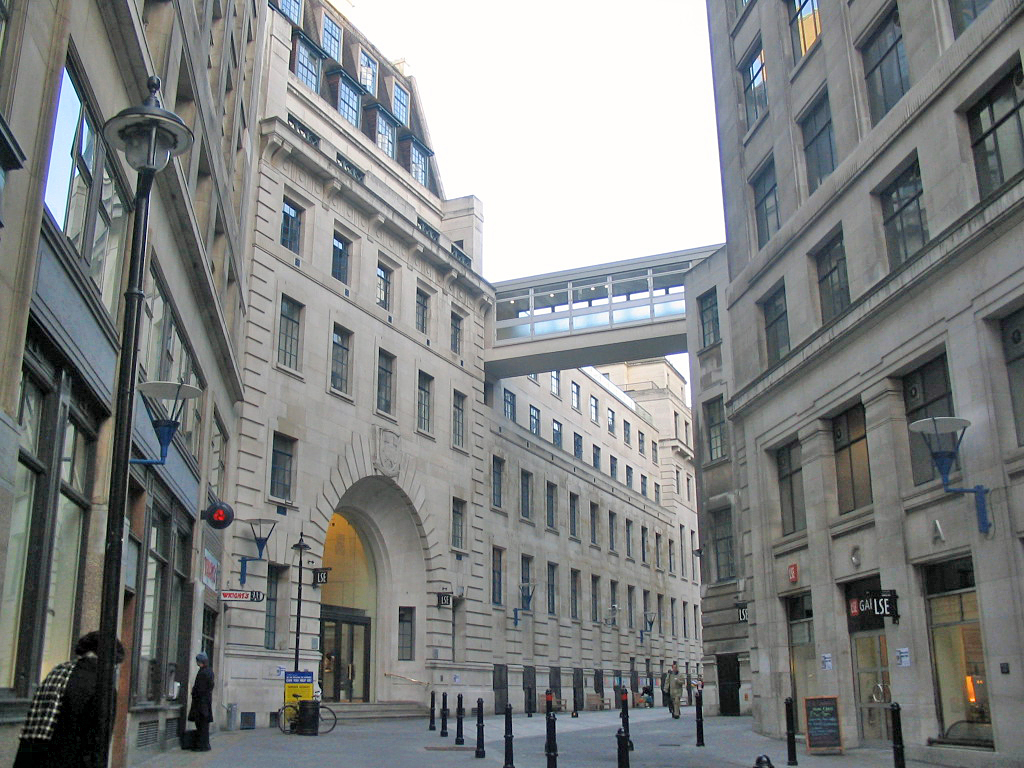
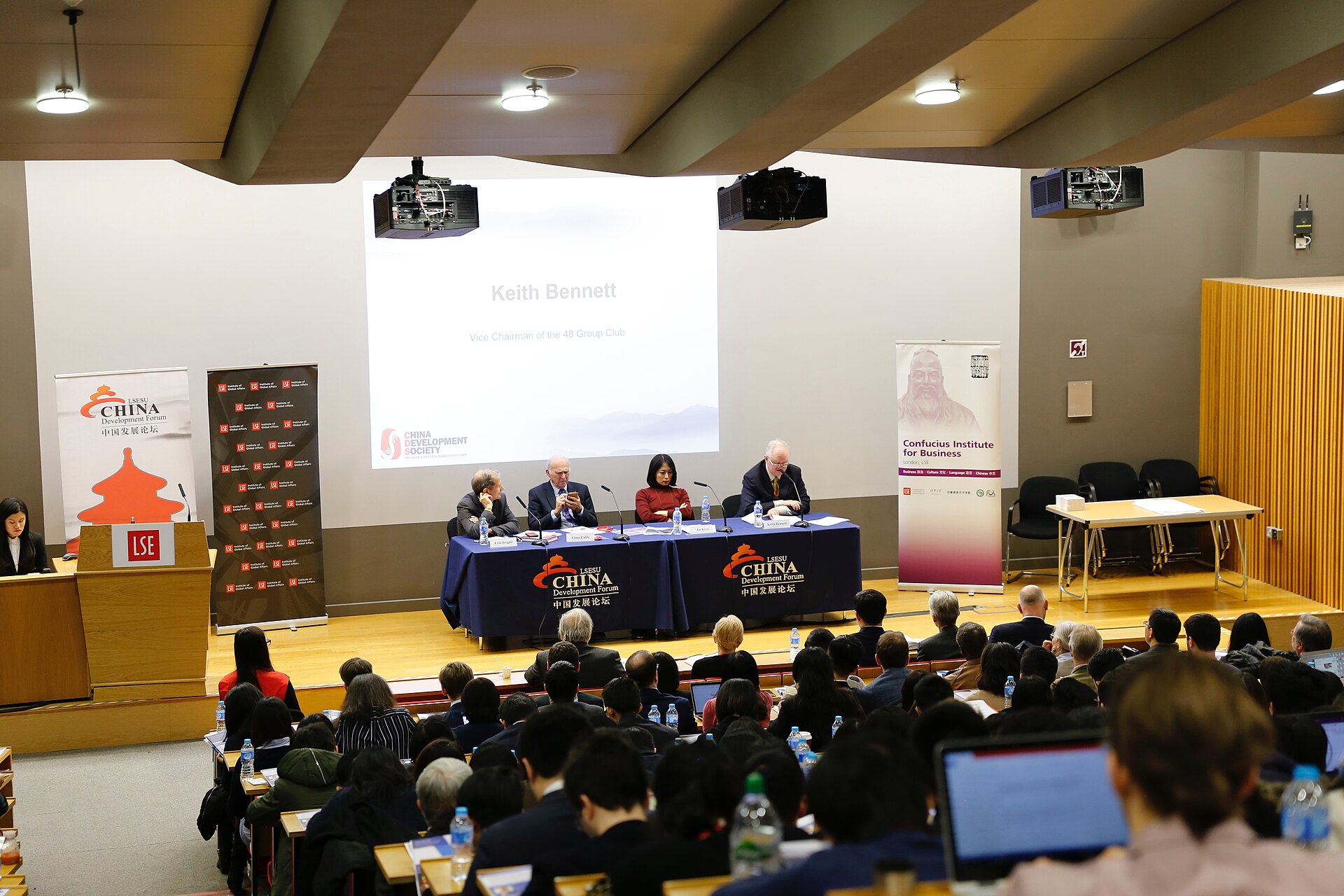
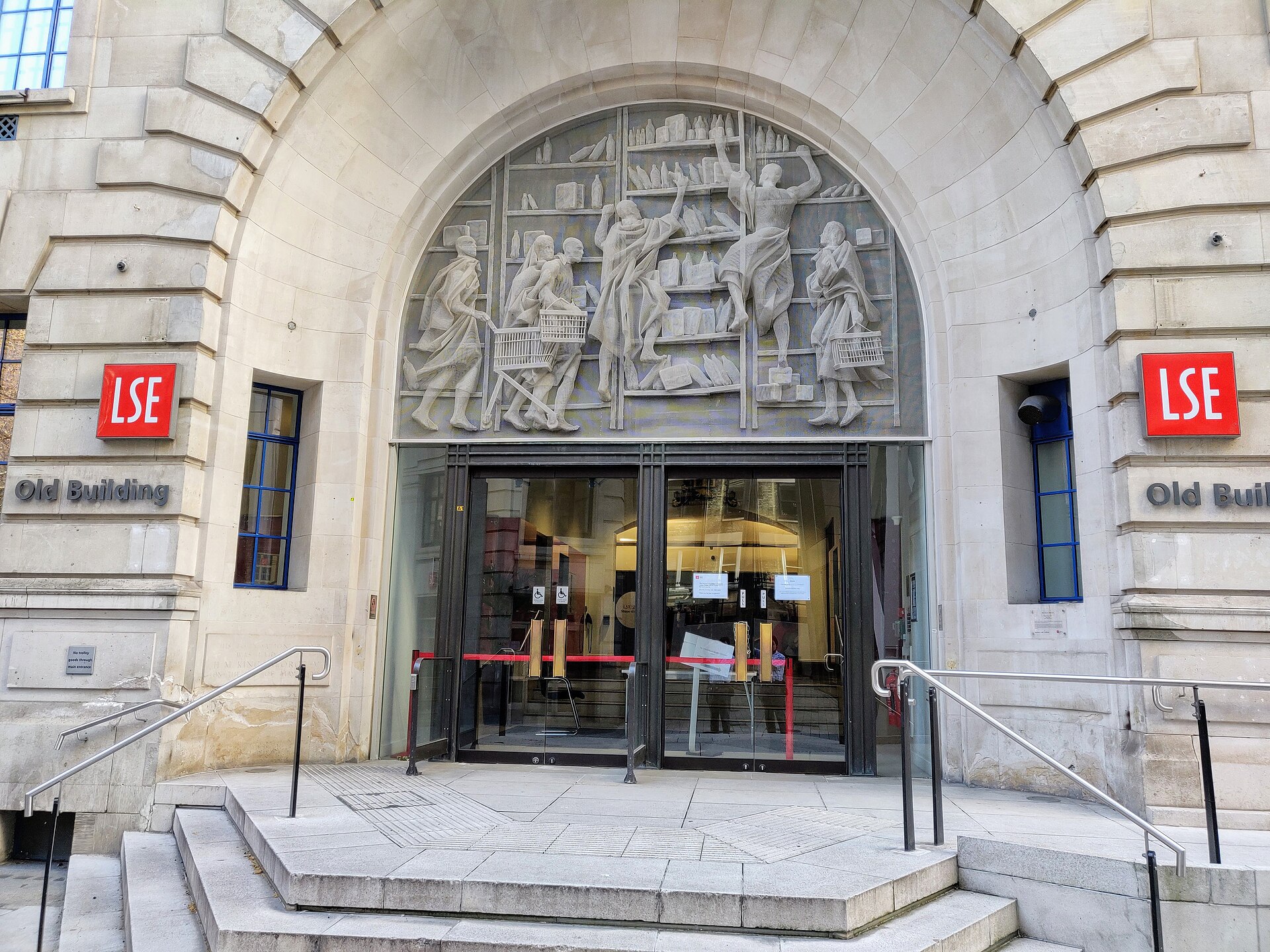
The London School of Economics and Political Science (LSE) — campus in pictures
Real, freely-licensed photographs of the campus (via Wikimedia Commons).



Why Choose LSE — The Case for a Specialist Social Science Degree
LSE occupies a unique space in global higher education. It is not a generalist research university — it is the world's leading specialist institution in the social sciences, where every department, every research centre, and every faculty member is focused on understanding society, economy, and governance. For students pursuing these fields, that focus is a profound advantage.
SELECTIVITY
LSE Acceptance Rate & Admissions Profile
LSE receives approximately 30,000 applications for around 1,900 undergraduate places — an acceptance rate of approximately 7%. However, the competitive landscape is sharper than that headline figure suggests: meeting standard offer grades does not guarantee admission. In highly competitive programmes such as BSc Economics and LLB Law, effective acceptance rates for international applicants can be considerably lower.
LSE does not publish SAT or ACT data — it is a UCAS-based institution and these US tests are not part of the admissions assessment. International applicants are evaluated on their predicted or achieved A-Level, IB, or equivalent national qualifications, their personal statement, and their academic reference. High grades are necessary but not sufficient: LSE explicitly states that meeting standard offer grades does not guarantee an offer, particularly for its most sought-after programmes.
AT A GLANCE
LSE — Quick Facts
APPLICATION COMPONENTS
What Makes Up an LSE Application
LSE uses the UCAS application system exclusively — all undergraduate applications are submitted through UCAS, not directly to the School. LSE's institution code is L72. Below are every component of a complete LSE application, with strategic notes for international applicants.
WHAT LSE WANTS
What LSE Looks for in an Applicant
LSE does not interview — which means its selectors form their entire impression of you from your UCAS form alone. This concentrates the evaluation on a small number of signals. Understanding exactly what LSE's academic selectors are assessing is the foundation of a competitive application.
KEY DATES
LSE Application Deadlines & Admissions Calendar
LSE operates through the standard UCAS cycle. The UCAS deadline for LSE falls in January — for 2027 entry, BSc Economics lists a deadline of 13 January 2027. All applications received by the January deadline receive equal consideration. International applicants can technically apply until 30 June but are strongly advised to apply by the January deadline. LSE does not participate in UCAS Extra or Clearing.
LSE explicitly does not interview applicants for any undergraduate programme. There is no interview stage to prepare for.
| Event | Date | Notes |
|---|---|---|
| UCAS Hub opens | Early September | For next-year entry |
| UCAS application deadline (equal consideration) | Mid-January (e.g. 13–14 Jan) | Check UCAS/LSE for exact date each cycle |
| LNAT deadline (Law applicants) | 31 December | Must be completed before LSE deadline |
| TMUA registration and test | Autumn (Oct/Nov) | Mandatory for BSc Economics and Econometrics |
| LSE decisions begin | November onwards | Weekly batches; most by early March |
| UGAA invitations (if applicable) | Early March | For non-traditional qualification holders |
| All LSE decisions released | By mid-May | Per UCAS regulations |
| UCAS reply deadline (accept/decline offers) | Early June | Offer holders must respond by UCAS deadline |
LIFE AT LSE
Student Life — London, Community & Culture
LSE's campus is compact and urban — a cluster of buildings in Holborn, Central London, bounded by the Strand, Kingsway, and Lincoln's Inn Fields. This is not a pastoral campus retreat; it is a deliberately urban, intellectually intense environment at the heart of one of the world's great cities.
The LSE Students' Union (LSESU) runs over 250 clubs and societies — covering academic and professional networks, cultural societies, sports clubs, and social groups spanning every background imaginable in a 140-country student body. The SU is one of the most active in the UK and runs a full social calendar throughout the year.
OUTCOMES
Career Outcomes & the LSE Network
LSE's career outcomes reflect its specialist focus: graduates disproportionately enter finance, international organisations, law, policy, and consulting. The LSE Careers Service is one of the best-resourced in the UK and maintains deep relationships with top-tier employers globally.
The sectors that recruit most heavily from LSE are consistent with its academic strengths: investment banking and asset management (Goldman Sachs, JP Morgan, BlackRock), strategy consulting (McKinsey, BCG, Bain), international organisations (UN, IMF, World Bank, OECD), law firms (Magic Circle and global firms), government and civil service (UK Government Fast Stream and equivalents globally), and major technology firms with policy or economics functions.
Stats
Cards
FAQs
Frequently Asked Questions — LSE Admissions
Does LSE interview applicants?+
No. LSE explicitly states it does not interview applicants for any of its undergraduate programmes. The admissions decision is made entirely on the basis of your UCAS application — your academic record, personal statement, and reference. This makes your personal statement the single most important piece of writing in your LSE application.
Can I apply to two LSE programmes on my UCAS form?+
Yes, you may list two LSE programmes on your UCAS application. However, LSE will only make you one offer — you will not receive two offers from LSE simultaneously. LSE advises caution when applying to multiple programmes, as your personal statement must address a specific subject and a split focus can weaken it.
Does LSE consider SAT or ACT scores?+
LSE does not use SAT or ACT scores in its admissions process. It is a UCAS institution and evaluates applicants on their A-Level, IB, or national qualification results. International students from countries where SAT/ACT is the standard examination should check LSE's list of accepted international qualifications to understand what equivalent they should submit.
Is LSE good for international students?+
LSE is arguably the most internationally oriented undergraduate institution in the world. Seventy percent of its student body comes from outside the UK. Its programmes — especially in economics, international relations, and law — are designed with an inherently global perspective. Many LSE graduates go on to careers in international organisations, foreign governments, and global firms specifically because of this international character.
What is the TMUA and do I need to take it?+
The Test of Mathematics for University Admission (TMUA) is mandatory for applicants to BSc Economics and BSc Econometrics at LSE, and recommended for several other maths-intensive programmes. It assesses mathematical thinking and reasoning. Registration opens in the summer and tests are typically held in October-November — well before the January UCAS deadline. Check LSE's admissions pages for the current cycle's dates.
Does LSE offer financial aid to international students?+
Yes. LSE offers a range of scholarships and bursaries to overseas (international) fee-status students, including the LSE Undergraduate Support Scheme, Uggla Family Scholars Programme, and several other named awards. All are awarded primarily on financial need, with academic merit as a secondary criterion. Eligible students submit a single LSE Undergraduate Scholarship Application and are automatically considered for all awards they qualify for. Amounts and eligibility vary annually.
What is the LNAT and do I need to take it for LSE Law?+
Yes. All applicants to the LLB Laws programme at LSE must sit the LNAT (Law National Admissions Test) — a two-part test including a multiple-choice comprehension section and an argumentative essay. The LNAT must be completed by 31 December for LSE (before the January UCAS deadline). It is used alongside your UCAS application, not instead of it. Prepare specifically for the LNAT essay — LSE sees both your score and your essay.
How competitive is BSc Economics at LSE compared to other programmes?+
BSc Economics is one of the most competitive undergraduate programmes in the UK. The standard A-Level offer is A*AA with A* in Mathematics; the IB offer is 39 points with 7 in Higher Level Mathematics. The TMUA is mandatory and your TMUA result is a significant differentiating factor among applicants who all present near-identical top grades. Prepare for the TMUA as thoroughly as you would for any admissions test.
ACADEMIC REQUIREMENTS
LSE Academic Standards — What International Students Must Know
LSE receives more applications per place than any other major UK university outside of Oxford and Cambridge, and its academic bar is correspondingly high. International applicants need to understand not just the grade thresholds, but the specific tests, subject choices, and academic signals that distinguish successful applications.
LSE admits to specific programmes, not to a broad arts or sciences faculty. This means your academic profile must be explicitly aligned with your chosen subject. An economics applicant without strong Mathematics A-Level or HL IB results will not receive an offer regardless of overall grade average. This guide breaks down exactly what LSE expects for each major subject area.
ACADEMIC BENCHMARKS
LSE Academic Profile — Entry Standards
These are programme-level ranges — not a single floor. The most competitive programmes (Economics, Law, Mathematics and Economics) sit at the top of these ranges, while broader programmes (Social Policy, Sociology) may accept at the lower end. Meeting the stated offer is necessary but not sufficient in competitive cycles.
STANDARDISED TESTS
SAT, ACT & LSE — What You Need to Know
LSE is a UCAS institution and does not use SAT or ACT scores in its admissions process. Unlike US universities, which rely heavily on standardised test scores, UK universities — including LSE — evaluate applicants primarily on their national or international qualifications: A-Levels, IB Diploma, or country-specific equivalents. Submitting SAT or ACT scores to LSE will not benefit your application and is not part of the UCAS form.
What replaces standardised tests at LSE are programme-specific admissions assessments. These are not optional extras — for certain programmes, they are mandatory and carry significant weight. If your programme requires the TMUA or LNAT, treat preparation for these tests as seriously as you would treat SAT preparation for a US application.
IB & A-LEVEL
IB and A-Level at LSE — Specific Benchmarks by Programme
LSE makes programme-specific offers and expects subject-specific alignment. The table below summarises verified offer levels for key LSE programmes. All figures are standard offers — contextual offers (for UK applicants from under-represented backgrounds) are typically one to two grades lower.
All offer levels should be verified against LSE's current programme pages before application. Offers can change cycle to cycle based on competition levels.
| Programme | A Level | Ib | Notes |
|---|---|---|---|
| BSc Economics | A*AA (A* in Maths) | 39 pts; 766 HL; 7 in Maths | TMUA mandatory |
| BSc International Relations | AAA | 38 pts; 766 HL | Broad essay-based subjects preferred |
| LLB Law | A*AA | 38–39 pts | LNAT mandatory by 31 Dec |
| BSc Management | AAA | 38 pts | Mathematics desirable |
| BSc Mathematics and Economics | A*A*A (Maths + Further Maths) | 39 pts; 7 in HL Maths AA | TMUA recommended |
| BSc Politics | AAA | 37–38 pts | Traditional academic subjects preferred |
| BSc Data Science | A*AA (A* in Maths) | 38–39 pts; 7 in HL Maths | Strong mathematical foundation required |
| BSc Sociology | AAB | 37 pts | Social sciences or humanities background |
SUBJECT ALIGNMENT
Subject Preparation — What LSE Expects by Discipline
Because LSE admits to specific programmes, your choice of A-Level or IB Higher Level subjects is one of the most important application decisions you make. Here is what each major subject area requires.
ENGLISH LANGUAGE
English Language Requirements for International Applicants
International students whose first language is not English, or who have not spent at least three years of secondary education (in the three years immediately before starting their degree) being taught in English, are required to provide an approved English language qualification. All tests must be from within two years of your September programme start date and taken in a single sitting.
Duolingo English Test is not listed as an accepted qualification on LSE's official English language requirements page. Verify the current list on LSE's admissions website before taking a language test.
| Test | Minimum | Components | Notes |
|---|---|---|---|
| IELTS Academic | 7.0 overall | 7.0 in each individual component | Single sitting; Academic version only |
| TOEFL iBT | 100 overall | 27 Writing, 25 Reading, 24 Listening, 24 Speaking | Single sitting |
| Cambridge C1 Advanced (CAE) | 185 overall | 185 in each component | Grade A or B typically required |
| Cambridge C2 Proficiency (CPE) | 185 overall | 185 in each component | Single sitting |
| Pearson Test of English Academic | 70 overall | 70 in all components | PTE Academic only |
| Trinity College London ISE III | Distinction | Distinction in each component | Integrated Skills in English |
PROFILE BUILDING
Building Your LSE Profile — Year by Year
LSE's application is primarily assessed at the point of submission, but the strongest profiles are built systematically over Years 10–13. Here is a realistic timeline for international students targeting LSE.
COMMON MISTAKES
Academic Application Mistakes at LSE
The following mistakes are consistently observed in unsuccessful LSE applications. Avoiding them does not guarantee admission, but making them makes a competitive application much harder.
- Applying to Economics without A-Level Mathematics (A-Level) or IB Higher Level Mathematics: Analysis and Approaches — Mathematics is mandatory and no exceptions are made.
- Applying to Law without sitting the LNAT before 31 December — this makes your application automatically incomplete.
- Applying to Economics or Econometrics without registering for the TMUA — it is mandatory and must be sat in the autumn before your UCAS submission.
- Treating LSE like a US university and including SAT/ACT scores — these are not part of UCAS and irrelevant to the UK admissions process.
- Choosing A-Level or IB subjects for grade optimisation rather than subject alignment — a student with A*A*A* in non-quantitative subjects cannot compensate for lacking Maths in an Economics application.
- Including re-sits without context in your application — LSE explicitly prefers first-attempt high grades. If you have re-sits, your personal statement and reference should address them directly.
- Applying to two very different LSE programmes on one UCAS form — your personal statement cannot convincingly address both BSc Economics and BSc Sociology simultaneously. Focus on one or choose carefully.
COST & FINANCIAL AID
The Real Cost of LSE for International Students
LSE is not cheap — but it is one of the most internationally funded universities in the UK when it comes to scholarship support for overseas students. Understanding the true cost picture, and the support available, is essential before applying.
International (overseas fee-status) students pay different tuition rates from UK students, and government student loan schemes are not available to most international applicants. However, LSE offers a structured scholarship programme for overseas students funded through private donations, awarded primarily on financial need. This section gives you an honest picture of costs and what help is available.
ANNUAL COSTS
LSE Cost of Attendance — Annual Estimates
The figures below are drawn from the university facts file and converted estimates. LSE sets tuition annually each spring for the following academic year; the figures below are representative and should be verified against LSE's current Table of Fees. All costs are annual estimates.
LSE's cost of attendance in USD is a conversion estimate. Actual costs are in GBP; exchange rate fluctuations will affect the dollar equivalent significantly. Always budget in GBP and plan for currency risk.
| Component | Annual Usd | Notes |
|---|---|---|
| Tuition fees (international students) | $41,000 | Set annually; verify on LSE Table of Fees |
| Accommodation (halls of residence) | Included in living estimate | Varies by hall and room type |
| Living costs (accommodation + food + travel + personal) | $22,000 | LSE estimates min £1,550/month; London is expensive |
| UCAS application fee | $35 | One-time, paid through UCAS; covers up to 5 choices |
| Total estimated cost of attendance (annual) | $65,000 | Tuition + living; does not include travel or personal extras |
FINANCIAL AID
Financial Aid for International LSE Students
LSE does not operate a need-blind admissions policy for international students, and average aid percentage data is not published. However, the School explicitly states it provides 'generous financial support in the form of bursaries and scholarships to overseas fee-status students.' This support is funded through private donations and varies annually in value and number of awards.
All LSE overseas scholarships share one important feature: applicants submit a single LSE Undergraduate Scholarship Application and are automatically considered for every award they are eligible for. You do not apply separately to each scholarship. Awards are made primarily on financial circumstances and secondarily on academic merit. The timing of the scholarship application follows the admissions cycle — applicants who receive offers are typically invited to apply for scholarship support.
Unlike Harvard or Princeton, LSE does not publish income-band aid tables or guarantee to meet full demonstrated need. Aid is competitive and supply-limited. Plan your finances conservatively and treat scholarship support as a positive outcome, not a budgeted certainty.
NAMED AWARDS
LSE Scholarships Available to International Students
LSE publishes nine named scholarship programmes for overseas undergraduate students. The number, value, and specific eligibility criteria vary year to year based on private donor funding. Verify current details on LSE's dedicated financial support pages before applying.
AFFORDABILITY
Planning Your LSE Budget — An Honest Picture
LSE in London is one of the more expensive undergraduate environments in the world. Tuition for international students is substantial, and London's cost of living — particularly accommodation — is among the highest of any major university city globally. A realistic budget requires careful planning.
LSE estimates that students should budget at least £1,550 per month for all living expenses. In practice, London costs can run higher — particularly for accommodation outside of LSE halls, which many students occupy from Year 2 onwards. International students applying for UK visas must demonstrate they have sufficient funds to cover their full programme — check UKVI requirements carefully as part of your application preparation.
LSE guarantees accommodation in halls of residence to first-year international students who accept their offer by the required date. From Year 2, most students move into private accommodation in London, where costs vary significantly by area. Factoring private accommodation costs from Year 2 is essential for a three-year budget plan.
HOW TO APPLY FOR AID
How to Apply for LSE Financial Support
The LSE scholarship application process is separate from your UCAS application but closely tied to the admissions timeline. Here is the step-by-step process for international students.
COST FAQs
Cost & Aid FAQs — LSE International Students
Can I access UK government student loans as an international student?+
In most cases, no. UK government tuition and maintenance loans through Student Finance England and its equivalents are not available to international (overseas fee-status) students. A small number of international students with specific UK residency statuses (e.g., settled status, certain visa categories) may be eligible — check with LSE's Student Financial Support team if you believe this applies to you.
Does LSE guarantee scholarships to all international admits?+
No. LSE's overseas scholarships are competitive and supply-limited. Not all international students who receive and accept LSE offers will receive scholarship support. The number of awards and their values vary each year based on private donor funding. Plan your finances assuming you will not receive a scholarship, and treat any award as a bonus.
Is it cheaper to study at LSE as a UK student?+
Yes, significantly. UK home-fee students pay the UK regulated tuition fee (currently £9,535 per year for 2025 entry and subject to government policy) and can access government tuition loans. International students pay full overseas fees of approximately $41,000 (USD) annually — roughly four times more in some cases. The financial experience of UK and international students at LSE is substantially different.
How much does accommodation cost at LSE?+
LSE operates halls of residence across central and inner London — costs vary by hall, room type, and meal plan. LSE does not publish a fixed accommodation fee in USD terms; all costs are in GBP. Budget the £1,550/month living cost estimate as a floor, not a ceiling, for London. Check LSE Accommodation's current rates for the most accurate figures.
Are there external scholarships I can combine with LSE's own support?+
Yes. International students from specific countries often have access to government scholarships, bilateral awards, or national merit scholarships that can be combined with LSE support. Examples include Chevening Scholarships (postgraduate), Commonwealth Scholarships, and various national scholarship programmes. For undergraduate study, check your home government's international education scholarship scheme and organisations like the British Council.
UCAS PERSONAL STATEMENT
The LSE Personal Statement — Your Only Chance to Speak
LSE does not interview. This single fact transforms the personal statement from an important application component into the most critical piece of writing in your entire LSE application. Your grades tell selectors whether you can succeed at LSE. Your personal statement tells them why you want to, and whether you have genuinely engaged with your subject.
From 2026 entry onwards, UCAS replaced its traditional free-text 4,000-character personal statement with a structured three-question format. Each question targets a specific dimension of your application. LSE's academic selectors — all active researchers in their discipline — use this document to assess subject motivation, depth of preparation, and intellectual character. There is no substitute for genuine engagement with your subject: selectors at LSE read hundreds of applications and recognise the difference immediately.
FORMAT
The 2026 UCAS Personal Statement Format — An Overview
The new UCAS personal statement format was introduced for students applying from the 2025/26 application cycle onwards (for September 2026 entry and beyond). It replaces the single 4,000-character free-text essay with three structured questions, each addressing a distinct dimension of your application. All five UCAS choices see the same personal statement.
The three-question structure benefits LSE applicants in one important respect: it separates academic subject motivation from broader experiences — meaning selectors can quickly locate your intellectual engagement with your subject in Question 1, without having to parse it from extracurricular content. For LSE, where subject motivation is paramount, a well-crafted Question 1 carries exceptional weight.
Because you submit one personal statement to all your UCAS choices (up to five universities), and LSE admits to a specific programme rather than a broad faculty, your personal statement must be written with your target subject as its clear and consistent focus. Students applying to both an LSE programme and a very different subject at another university face a structural challenge — the statement cannot serve both equally.
QUESTION STRATEGY
LSE Personal Statement — Question-by-Question Strategy
The following strategic guidance applies to each of the three UCAS questions as read by LSE academic selectors. The officialText represents the character of each question as introduced in the 2026 UCAS format; verify exact wording and character limits on the UCAS website before writing.
LSE-SPECIFIC STRATEGY
Writing the LSE Personal Statement — Core Principles
LSE personal statements succeed or fail on subject specificity. Here is the fundamental strategic logic you need to apply to every sentence you write.
WHAT TO WRITE
Choosing Your Personal Statement Focus — By Subject
The most effective LSE personal statements share a common architecture: one central intellectual thread — a question, idea, or problem in your discipline — that runs from Question 1 through Question 3. Here is how to find that thread for each major LSE subject area.
AVOID THESE
The Most Common LSE Personal Statement Mistakes
- Opening with a generic enthusiasm statement ('From a young age I have been fascinated by economics') instead of immediately signalling intellectual engagement.
- Using your personal statement to list achievements rather than demonstrate thinking — LSE already sees your grades; the statement should tell them how you think, not what you have done.
- Splitting your focus between your LSE programme and a very different subject at another university — the personal statement must be focused on one academic subject.
- Name-dropping books or thinkers you have not genuinely engaged with — LSE selectors are subject experts and can identify superficial references immediately.
- Spending too much of Question 3 on extracurricular activities with no academic relevance — every activity mentioned should be explicitly connected to your subject.
- Writing about your gap year, travel, or personal development journey as the main focus — these can feature, but must be framed in terms of academic and intellectual development, not personal growth.
- Submitting without having your personal statement reviewed by someone expert in your target subject — ideally an academic or someone currently studying/researching in the field.
- Confusing writing quality with writing quantity — strong personal statements make every sentence earn its place. The structured UCAS format rewards density and precision over padding.
ESSAY FAQs
Personal Statement FAQs — LSE Applications
How heavily does LSE weight the personal statement compared to grades?+
LSE has stated that the personal statement is a significant component of the admissions decision — particularly because LSE does not interview. In a pool of applicants with near-identical top grades, the personal statement becomes the primary differentiator. It is not a formality to fill in after submitting your grades — it is a central piece of academic assessment.
Should I tailor my personal statement specifically to LSE?+
Your UCAS personal statement goes to all five of your university choices simultaneously — you cannot submit a different statement to each. However, you should write with your primary programme in mind. If LSE is your first choice, write for LSE's selectors. A statement focused on the specific intellectual debates in your discipline will serve LSE better than a generic one — and will also serve other subject-specific universities well.
Should I mention specific LSE faculty, research centres, or courses in my personal statement?+
Use caution. Because the same personal statement goes to all your UCAS choices, naming LSE specifically can disadvantage you at other institutions. Instead, reference intellectual themes, research debates, or specific questions in your discipline that are associated with LSE-style social science thinking without naming LSE directly. This demonstrates subject engagement without creating a hostage to fortune.
How many words / characters should I write for each of the three UCAS questions?+
UCAS sets character limits for each question in the new format. Verify the current limits on the UCAS website before writing — they may be adjusted between cycles. As a strategy principle: treat each question as its own mini-essay with a clear focus. Don't pad to reach the limit; write as much as you genuinely need to demonstrate your point, and stop.
Can I write about extracurricular activities in a personal statement for LSE?+
Yes, but only in Question 3 (wider experiences) and only if explicitly connected to your academic subject. LSE does not value extracurricular activity for its own sake the way US universities might — the connection to your academic discipline is the test of relevance. A work experience placement at a policy think tank is highly relevant for a Politics or Economics applicant; sports captaincy is only relevant if you can make a genuine academic connection.
Does LSE require a separate application essay or supplement beyond the UCAS personal statement?+
No. LSE does not ask for any additional essays, supplementary writing samples, or personal statements beyond what is included in the standard UCAS application. Some programmes require admissions tests (LNAT for Law, TMUA for Economics) but these are separate from the personal statement. There is no LSE-specific supplement analogous to those required by US universities.
How early should I start writing my personal statement?+
Ideally, begin substantive reading in the summer before Year 13, and begin drafting in September when the UCAS cycle opens. The January deadline seems far away in September, but strong personal statements require multiple full rewrites — not edits but structural reconceptions. Factor in your teacher's availability for review, and your own academic workload in the autumn of Year 13. Starting in November is too late for LSE-quality output.
Courses — schools, degrees & intake
27 degrees across 16 groupings.
Department of Economics · 2 degrees
BSc Economics
BSc Econometrics and Mathematical Economics
Department of Accounting · 1 degrees
BSc Accounting and Finance
Department of Finance · 1 degrees
BSc Finance
Department of Statistics · 4 degrees
BSc Actuarial Science
BSc Actuarial Science (with a Placement Year)
BSc Data Science
BSc Mathematics, Statistics and Business
Department of Mathematics · 1 degrees
BSc Mathematics and Economics
Department of Government · 3 degrees
BSc Politics
BSc Politics and Economics
BSc Politics and International Relations
Department of International Relations · 1 degrees
BSc International Relations
Department of Management · 1 degrees
BSc Management
Department of Philosophy, Logic and Scientific Method · 3 degrees
BSc Philosophy, Logic and Scientific Method
BSc Philosophy and Economics
BSc Philosophy, Politics and Economics
Department of Sociology · 1 degrees
BSc Sociology
Department of Social Policy · 1 degrees
BSc International Social and Public Policy
Department of Economic History · 2 degrees
BSc Economic History
BSc Economic History and Geography
Department of Geography and Environment · 2 degrees
BA Geography
BSc Geography with Economics
Department of International History · 1 degrees
BA History
Department of Anthropology · 2 degrees
BA Social Anthropology
BA Anthropology and Law
LSE Law School · 1 degrees
LLB Bachelor of Laws
Want your real chances at London School of Economics and Political Science (LSE)?
Create a free TYCHR account for your personalised admit-chance, a shortlist you can track, exact entry requirements, and essay + counselling help.