The Chinese University of Hong Kong
Hong Kong, Hong Kong SAR · Suburban
CUHK is Asia's only collegiate-system research university, where every undergraduate joins one of nine residential colleges and studies at a QS Top 40 institution with a 180-hectare hillside campus overlooking Hong Kong. For ambitious international students, it offers something genuinely rare: Nobel-level research faculty, a bilingual academic environment, and a campus community that shapes character as much as intellect.
Campus
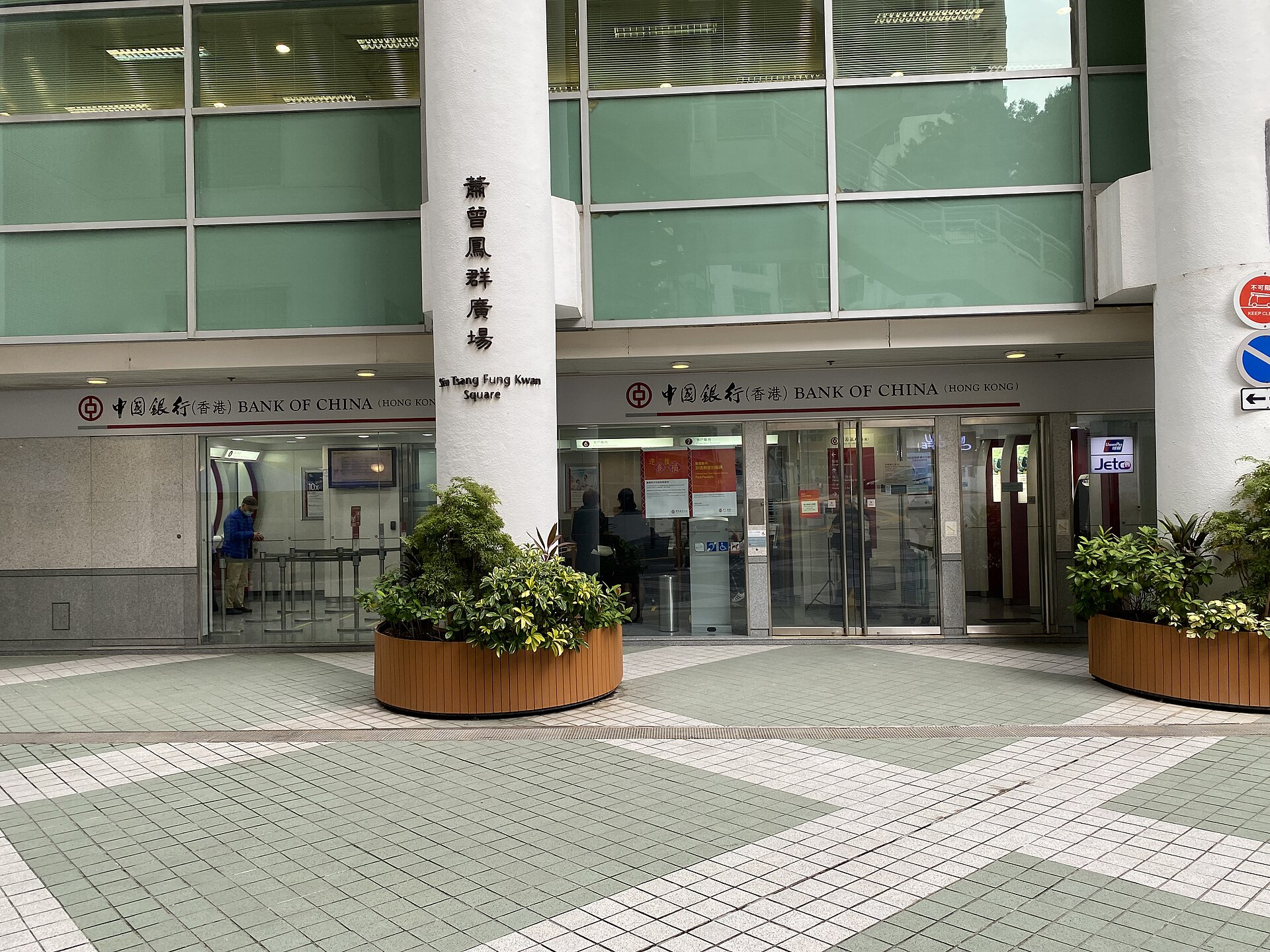
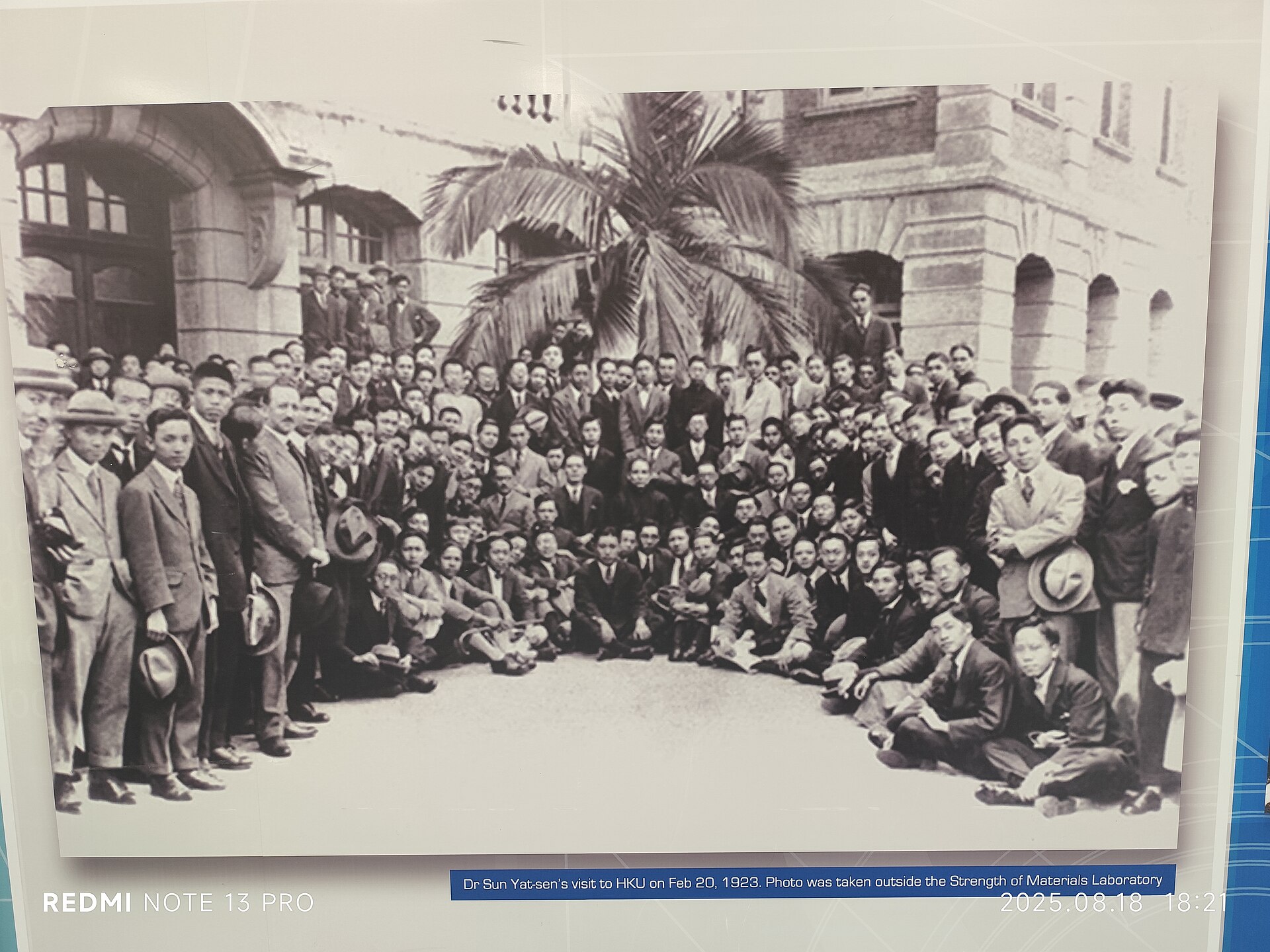
The Chinese University of Hong Kong — campus in pictures
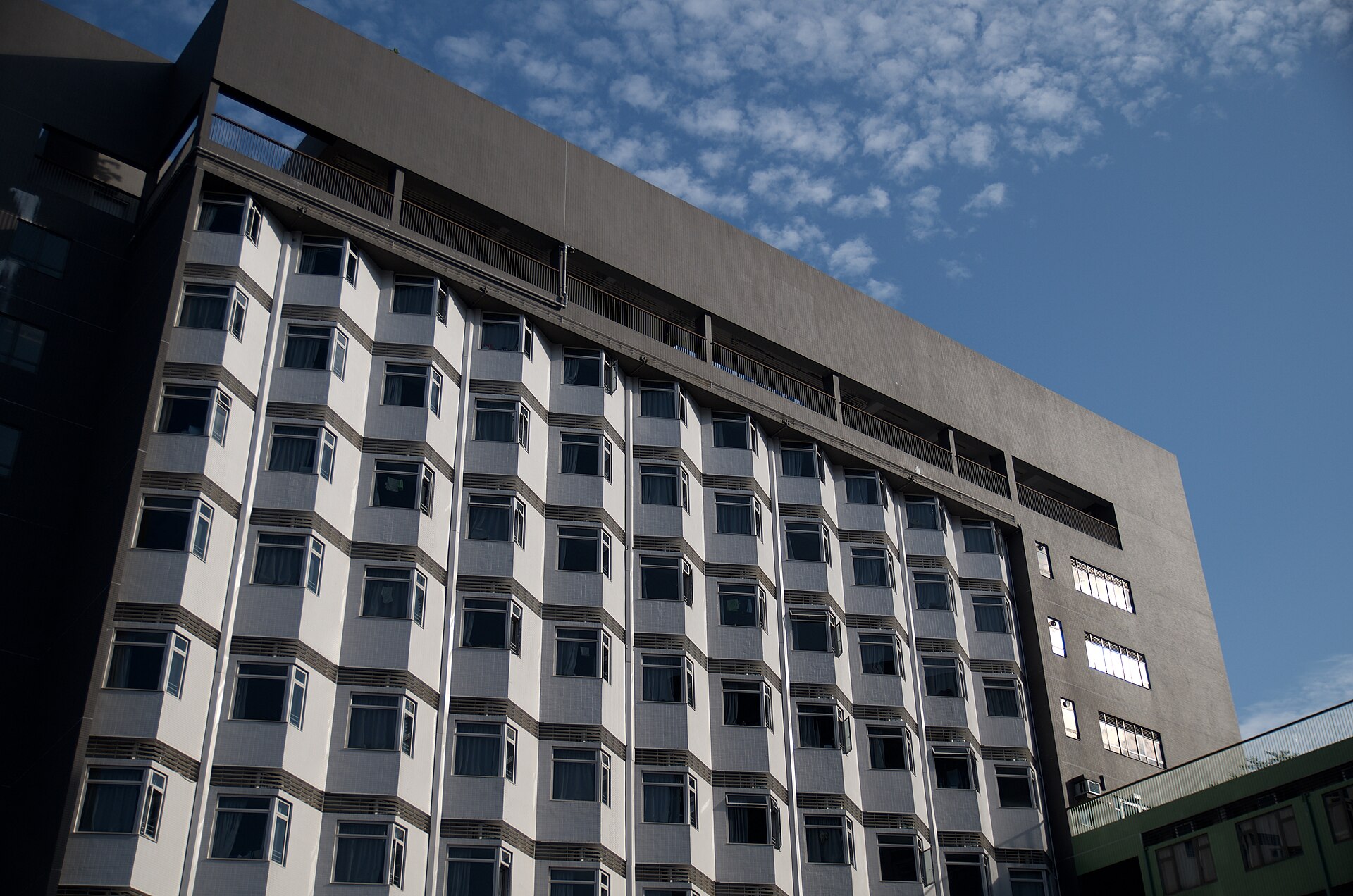
Real, freely-licensed photographs of the campus (via Wikimedia Commons).

Why CUHK — Asia's Collegiate Research University
CUHK occupies a category of its own in Asian higher education: a comprehensive research university where every student also belongs to a residential college community, positioned at the intersection of Chinese and international scholarship in one of the world's most consequential cities.
CUHK Acceptance Rate & Admissions Profile
Stats
Profile Stats
Rea Vs Rd
CUHK Admissions Requirements — IB, A-Level & English Proficiency
- IB 38+ competitive for most programmes; 40+ for Business and Medicine
- A-Level AAA minimum; A*A*A or A*AA for Medicine and top Business programmes
- HL subjects must match faculty requirements (HL Maths for Engineering/Business)
- Predicted grades accepted at application; final results required before enrolment
- SAT and ACT are not required — CUHK's test policy is optional
- IB and A-Level results carry the full weight of academic evaluation
- American-curriculum students without IB/A-Level may submit SAT/ACT as supporting evidence
- If submitting, aim for SAT 1400+ or ACT 32+ for competitive programmes
- IELTS Academic: minimum 6.5 overall
- TOEFL iBT: minimum 79
- Duolingo English Test: minimum 120
- Applicants whose secondary education was in English are typically exempt
CUHK Application Components — Direct Portal, Personal Statement & Documents
CUHK uses its own direct online application system — not Common App, UCAS, or any centralised platform. Below are all required components of a complete CUHK application, with strategic notes for each.
CUHK Personal Statement — Writing a Statement That Gets Noticed
Tips
Prompts
What CUHK Admissions Is Looking For
CUHK's admissions process is primarily results-led at the screening stage, but holistic factors — personal statement, recommendations, and (for Medicine) interview — are genuine determinants among academically qualified candidates. Understanding what CUHK looks for at each stage is essential to a strong application.
CUHK Financial Aid & Scholarships for International Students
CUHK does not operate a large need-based financial aid programme for international undergraduates comparable to US need-blind universities. Funding for international students is primarily merit-based. At ~USD 27,400 in annual tuition, CUHK is substantially more affordable than comparable universities in the US, UK, or Australia — particularly for a QS Top 40 institution in a world-class city.
Cost estimates are approximate annual figures in USD. Actual billing is in HKD (approximately 7.8 HKD per USD). Verify all figures on the official CUHK admissions and finance pages before budgeting.
Stats
Contribution Tiers
| Note | Range | Percent | Percent Value |
|---|---|---|---|
| Per academic year; Medicine may differ slightly | Tuition | ~$27,400 | 77 |
| Housing, food, transport, personal expenses | Cost of Living | ~$15,000 | 42 |
| University estimate — on-campus hostel reduces this | Total Cost of Attendance | ~$35,700 | 100 |
Key Dates
Advantages
- Early certainty — decisions released mid-January
- First-mover advantage in scholarship consideration
- Strong applicants may be prioritised for merit award review
- Reduces uncertainty during A-Level / IB final year
- Demonstrates commitment to CUHK as a priority choice
Disadvantages
- Application must be complete and strong by November
- Less time to include final Grade 12 results
- If not offered, must reapply or wait for Regular Round decision
- Medicine does not participate — separate timeline applies
CUHK Interview — When It Happens and How to Prepare
For most CUHK programmes, interviews are not routinely required. The significant exception is Medicine (MBChB), where a mandatory interview is a formal part of the selection process for shortlisted applicants. The interview is structured, panel-based, and evaluates communication, ethical reasoning, clinical motivation, and awareness of the Hong Kong healthcare environment. It carries significant weight in Medicine admissions — comparable in importance to academic results.
Meta
Questions
CUHK's Collegiate System — Nine Colleges, One University
Every full-time CUHK undergraduate belongs to one of nine constituent colleges — their pastoral home and social community for their entire undergraduate experience. Each college has its own residential hostels, dining facilities, scholarship schemes, exchange and leadership programmes, and distinct cultural identity. The collegiate system is what makes CUHK unique in Hong Kong and rare in Asia: it is not just a university, it is a community of communities.
Houses
Lottery Steps
- All incoming undergraduates are allocated to one of the nine colleges before arrival
- Incoming students may express college preferences on the application form — allocation depends on available places
- International students are fully eligible for all nine colleges
- Each college has its own hostel allocation process — apply early through your college
- The college becomes your pastoral, social, and co-curricular home for all four years of undergraduate study
CUHK Faculties & Undergraduate Programmes
- {"label":"Programmes include","value":"Chinese Studies, English, History, Philosophy, Music, Translation"}
- {"label":"Language of instruction","value":"English and Chinese"}
- {"label":"Chinese Studies rank","value":"World-leading"}
- {"label":"Key feature","value":"Bilingual academic environment"}
- {"label":"Accreditations","value":"AACSB, EQUIS, AMBA"}
- {"label":"Key programmes","value":"BBA, Global Business Studies, QF & Risk Management"}
- {"label":"Asia rank","value":"Top tier"}
- {"label":"Recruiter presence","value":"HSBC, Goldman Sachs HK, McKinsey, Big 4"}
- {"label":"Key programmes","value":"Computer Science & Engineering, Biomedical Engineering, Electronic Engineering, Systems Engineering"}
- {"label":"Entry requirement","value":"HL Maths (preferred: Analysis & Approaches)"}
- {"label":"Industry links","value":"Greater Bay Area tech sector"}
- {"label":"Research centres","value":"15+"}
- {"label":"Flagship programme","value":"MBChB (6 years)"}
- {"label":"Interview","value":"Mandatory"}
- {"label":"Hospital affiliations","value":"Prince of Wales Hospital and others"}
- {"label":"Application round","value":"Separate from standard rounds"}
- {"label":"Language of instruction","value":"English"}
- {"label":"Legal system","value":"Common Law (Hong Kong)"}
- {"label":"Qualification","value":"PCLL pathway to HK bar"}
- {"label":"Key strength","value":"Greater China law and arbitration"}
- {"label":"Key programmes","value":"Economics, Psychology, Biochemistry, Mathematics, Physics, Statistics"}
- {"label":"Research intensity","value":"University Research Committee-funded"}
- {"label":"Nobel connections","value":"Faculty Nobel laureates in Chemistry and Physics"}
- {"label":"Undergraduate research","value":"Available from Year 1"}
Research & Extracurricular Life at CUHK
Career Outcomes & CUHK Alumni Network
CUHK's location in Hong Kong — Asia's premier international finance and professional services hub — means the on-campus recruiter ecosystem is exceptionally strong. The Career Planning and Development Centre runs on-campus recruitment drives, internship matching, and alumni mentoring programmes that connect current students with CUHK's 200,000+ graduate network across Hong Kong, mainland China, the UK, Australia, and Southeast Asia.
Stats
Categories
Our CUHK Admissions Track Record & Student Success Stories
Faqs
Is SAT/ACT required for CUHK?+
No. CUHK operates a test-optional admissions policy. SAT and ACT scores are not required and are not a primary evaluation criterion. Most international applicants are assessed on IB, A-Level, or equivalent international qualifications. If you have strong SAT/ACT scores and lack IB or A-Level results, submitting them may provide useful supporting evidence.
What IB score do I need for CUHK?+
A competitive IB score for most programmes is 38 or above. Business programmes and Medicine typically expect higher scores (40+) given the greater competition for places. The 38-point benchmark is a threshold, not a guarantee — other factors (subject choices, personal statement, recommendations) matter at the margin. Always check the specific programme's stated requirements on the CUHK admissions site.
Does CUHK conduct interviews?+
Interviews are mandatory for Medicine (MBChB) applicants who are shortlisted. For most other programmes, interviews are not routinely required, though individual faculties may occasionally invite borderline candidates for an informal discussion. The Medicine interview is a formal evaluation component — prepare seriously for it.
Which college will I join?+
CUHK allocates all full-time undergraduates to one of the nine constituent colleges. You may express preferences, but allocation is not guaranteed and depends on available places. International students are fully eligible for all nine colleges. Your college becomes your pastoral and social home for your entire undergraduate career.
Are all CUHK programmes taught in English?+
The majority of undergraduate programmes at CUHK are taught in English. A small number of programmes in the Faculty of Arts and the Chinese language stream operate primarily or partly in Chinese. CUHK's bilingual mission means some courses incorporate both Chinese and English materials. Always verify the language of instruction for your specific programme before applying.
Can international students receive scholarships at CUHK?+
Yes. CUHK's Admission Scholarships automatically consider all high-achieving applicants — no separate application is required. Awards can cover full or partial tuition. Individual colleges also operate scholarship and bursary schemes for enrolled members. CUHK does not operate a need-blind system, but merit scholarships can significantly offset costs for strong academic performers.
How many programme choices can I list?+
You may list up to five programme choices in order of preference on the CUHK application form. Choices are considered in order — CUHK will offer you a place in the highest-preference programme for which you qualify. Think carefully about your ordering: mixing very selective programmes with slightly less competitive ones as lower choices is a sensible strategy.
Does CUHK use Common App or UCAS?+
Neither. CUHK has its own Online Application System at admission.cuhk.edu.hk. You apply directly — there is no intermediary platform. This means your personal statement is written specifically for CUHK's direct application, not repurposed from a Common App or UCAS submission.
Book a Free CUHK Admissions Strategy Session
In 60 minutes, Tychr's CUHK admissions specialists will evaluate your academic profile, identify your qualification strengths relative to CUHK's requirements, develop your personal statement angle and supporting document strategy, and advise on the optimal application round for your situation.
- No commitment required
- CUHK and Hong Kong admissions specialists
- Personalised strategy — not generic advice
CUHK Academic Requirements
CUHK Academic Preparation — The Honest Breakdown for International Students
What IB score, A-Level grades, and academic profile do CUHK's admitted students actually have? And what does CUHK's admissions process mean for international students from different curriculum systems?
GPA & Academic Standards
CUHK and GPA — What the Numbers Mean
CUHK publishes a minimum GPA equivalent of 3.3 (on a US 4.0 scale) for international applicants. In practice, the competitive threshold for most programmes is considerably higher — particularly for Business, Engineering, and Medicine.
A GPA at the minimum threshold is a floor, not a competitive position. The most competitive CUHK applicants — especially for Business, Engineering, and Medicine — typically present academic profiles significantly above this minimum.
Academic Context
Class Rank and School Context — How CUHK Reads Academic Performance
CUHK evaluates academic performance in the context of the applicant's specific qualification system and school environment. The admissions team is experienced at reading IB, A-Level, CBSE, Gaokao, and a wide range of other international credentials.
SAT at CUHK
SAT Scores at CUHK — Optional, Not a Primary Criterion
CUHK does not publish SAT bands for admitted students, and SAT scores are not a required component of the CUHK application. There is no established middle-50% SAT data for CUHK.
| Label | Score | Percent |
|---|---|---|
| Required? | No | 0 |
| Primary qualification evaluated | IB / A-Level | 100 |
| If submitting (US curriculum applicants) | Aim 1400+ | 70 |
ACT at CUHK
ACT Scores at CUHK — Optional and Supplementary
Like SAT scores, ACT results are not required by CUHK. The test-optional policy applies equally to both standardised tests.
Metrics
Comparison Cards
Testing Strategy
CUHK Test-Optional Policy — What It Actually Means
CUHK operates a genuine test-optional admissions policy for international undergraduates. SAT and ACT are not required, are not a primary evaluation factor, and are not expected by the admissions committee for applicants presenting IB or A-Level results.
Submit Items
Withhold Items
IB & A-Level Benchmarks
IB and A-Levels at CUHK — Specific Benchmarks and Subject Expectations
- {"label":"Competitive range","value":"38+ points (most programmes); 40+ for Business and Medicine"}
- {"label":"HL expectations","value":"Subject-specific: HL Maths (AA preferred) for Engineering/Business/Science; HL Biology + Chemistry for Medicine; strong humanities HL for Law/Arts"}
- {"label":"Subject rigour","value":"HL Mathematics Analysis & Approaches preferred over Applications & Interpretation for STEM programmes"}
- {"label":"Extended Essay","value":"Reviewed as additional evidence of research capability; a strong EE in your intended subject area strengthens the application"}
- {"label":"Competitive range","value":"AAA for most programmes; A*AA or A*A*A for Medicine and highly competitive Business programmes"}
- {"label":"Subject match","value":"Mathematics (and Further Mathematics for the most competitive STEM applications), Biology and Chemistry for Medicine, strong humanities for Law and Arts"}
- {"label":"AS results","value":"Reviewed alongside predicted A2 grades — strong AS performance supports the predicted grade narrative"}
AP Courses
AP Courses at CUHK — What Counts for American Curriculum Applicants
AP courses are not the primary qualification evaluated by CUHK, but for American-curriculum students applying without IB or A-Level results, AP scores are a meaningful component of the academic profile alongside GPA.
Academic Rigour
Rigour of Your Secondary School Record — Why Subject Choice Matters at CUHK
CUHK, like all serious research universities, evaluates the rigour of your secondary school record as an independent dimension of your application — not just your grades, but what you chose to study and how hard you pushed yourself.
Choosing the most demanding subjects available at your school, in the disciplines most relevant to your intended faculty — and performing well in them.
Subject Preparation by Faculty
What CUHK Expects by Subject Area
CUHK has explicit subject prerequisites for several faculties, particularly Medicine, Engineering, and Science. Beyond prerequisites, competitive applicants typically demonstrate academic preparation significantly above the minimum.
English Language Requirements
English Language Requirements for International CUHK Applicants
CUHK requires evidence of English proficiency for applicants whose secondary education was not conducted primarily in English. The minimum thresholds published in the facts file are the floor, not the competitive target.
Applicants who completed secondary education in English — through an IB programme delivered in English, UK A-Levels, or equivalent — are typically exempt from submitting a separate language test. Confirm exemption status with the CUHK admissions office before the application deadline.
By Programme
Academic Requirements by Programme — What Different Paths Expect
CUHK admits students to specific faculties and programmes, not to the university broadly. Subject requirements vary by faculty. Always verify the exact requirements for your chosen programme and year of entry on the official CUHK admissions website.
| Signals | Expectation | Concentration |
|---|---|---|
| Mathematics Olympiad; advanced maths competitions | HL Maths AA / A-Level Further Maths | Mathematics |
| Programming projects; USACO/IOI; hackathon results | HL Maths + CS background | Computer Science & Engineering |
| Quantitative projects; finance internship | HL Maths AA + Economics | Quantitative Finance & Risk Management |
| Business experience; econometric projects | HL Maths + Economics | Business Administration / Economics |
| Clinical experience; research; science competitions | HL Biology + HL Chemistry (IB) or A-Level equivalents at A/A* | Medicine (MBChB) |
| Biomedical research; biology Olympiad | HL Biology + HL Chemistry | Biomedical Engineering |
| Moot court; debate; legal essay competitions | Strong English; humanities profile | Law |
| Chinese language proficiency; cultural engagement | Strong language arts; bilingual capacity | Chinese Studies / Translation |
| Architectural portfolio; design projects | Creative portfolio + strong academics | Architecture |
International Curriculum Systems
How CUHK Evaluates Different International Education Systems
Year-by-Year Roadmap
Building Your CUHK Academic Profile — What to Do at Each Stage
- If your school offers IB, commit fully and select IGCSE/MYP subjects that leave the widest subject options for HL.
- Prioritise mathematics alongside strong performance in your intended faculty's subject area.
- Begin reading beyond the curriculum in your intended discipline — intellectual curiosity is a tangible differentiator in CUHK applications.
- Select HL subjects that align with your intended CUHK faculty — do not choose for GPA optimisation at the cost of subject fit.
- For Engineering/Business: HL Maths Analysis and Approaches is the correct choice; do not take Applications and Interpretation.
- Begin entering academic competitions in your strongest subject area.
- Research CUHK's specific faculties and college system — generic interest in 'studying in Hong Kong' is immediately visible to readers.
- For Medicine: arrange clinical shadowing, hospital volunteering, or public health exposure.
- For Business: seek internship or entrepreneurial experience, even informally.
- For Engineering/CS: build projects, enter hackathons, pursue research if available.
- Visit CUHK's Open Day if possible; engage with specific college communities and faculty.
- Draft your personal statement in September — give it multiple revision cycles before the November Advance Offer Round deadline.
- Request recommendation letters early (August/September) from teachers who know your academic work deeply.
- Submit by the Advance Offer Round (~13 November) for maximum strategic advantage.
- Ensure all documents — transcripts, predicted grades, passport, personal statement, referee nominations — are complete and accurate.
Common Pitfalls
Academic Mistakes That Weaken CUHK Applications — And How to Avoid Them
Real Outcomes
Academic Profiles of Tychr-Advised CUHK Students
The following profiles represent academic backgrounds of students Tychr has helped gain admission to CUHK or comparable Hong Kong universities. They illustrate the range of preparation that works — and what made each application compelling.
Faqs
What IB score do I need for CUHK?+
The competitive IB threshold at CUHK is 38+ for most programmes. This is not a guarantee of admission — it is the benchmark above which applications become genuinely competitive. Medicine and top Business programmes typically require higher scores (40+). Aim above the threshold, not at it.
Does CUHK prefer IB Maths Analysis or Applications?+
IB Mathematics Analysis and Approaches (HL) is the preferred choice for Engineering, Computer Science, Business, and Finance programmes. Applications and Interpretation (HL) is considered weaker preparation for these faculties. If you intend to apply to STEM or Business programmes, the AA/AI choice at the start of your IB programme can significantly affect your application competitiveness.
What GPA does CUHK require?+
A 3.3 GPA is the published minimum equivalent. Most competitive programme admits present academic profiles above this threshold. The 3.3 floor is a screen, not a target — treat it as the lower boundary, not the goal.
Can I apply to CUHK without SAT/ACT scores?+
No. CUHK is test-optional. If you have strong SAT/ACT results you may include them, but they are not required and carry far less weight than your IB, A-Level, or equivalent qualification results.
Which application round should I apply in?+
The Advance Offer Round (approximately 13 November deadline) gives applicants earlier certainty and priority consideration. The Regular Round (approximately 8 January) is fully competitive and admits the main intake. Apply in the Advance Offer Round if your application is complete and strong; the Regular Round if you need more time to finalise materials.
Cost & Scholarships
CUHK May Be More Affordable Than You Expect — Here Is the Full Picture.
CUHK is a QS Top 40 research university with significantly lower tuition than comparable institutions in the US, UK, or Australia. Understanding the full cost picture — tuition, living, and scholarship opportunities — is essential to planning your application strategically.
Cost Transparency
What CUHK Actually Costs — The Full Annual Figure
All figures are approximate USD conversions. CUHK bills in HKD at approximately 7.8 HKD per USD. Living costs vary significantly by lifestyle and housing choice — on-campus college hostel accommodation reduces costs substantially compared to private Hong Kong rental rates.
CUHK's tuition is substantially lower than comparable-ranking universities in the US (where Ivy-equivalent institutions charge USD 60,000–87,000 in tuition alone) and UK (where Russell Group universities charge GBP 22,000–35,000+ for international students). For a QS Top 40 institution in a world-class financial centre, the value proposition is exceptionally strong.
Financial Aid Policy
CUHK's Financial Aid Policy for International Students — What to Expect
Unlike US need-blind universities, CUHK does not operate a large need-based financial aid programme for international undergraduates. The primary support mechanism is merit-based scholarships — awarded on the strength of academic results, personal statement, and recommendations, without reference to financial need.
Value Proposition
Why CUHK's Cost Structure Makes Sense for International Students
Scholarship Application Guide
Applying for CUHK Scholarships — The Process Step by Step
CUHK's primary undergraduate scholarship is merit-based and automatic — no separate application is required. Here is the complete strategy for maximising your scholarship and funding outcomes.
- The Admission Scholarship is merit-based and automatically considered — no separate application is required
- The strongest applications (highest academic results, strongest personal statement, best recommendations) receive scholarship consideration
- Apply in the Advance Offer Round for the earliest scholarship review
- Many governments offer scholarships for citizens studying at top-ranked Asian universities
- Research scholarship schemes in your home country at least 12–18 months before your intended entry
- Application cycles often open September–November of the penultimate year of secondary school
- College hostel accommodation is significantly cheaper than private Hong Kong rentals
- Apply for your college's hostel as early as possible after receiving your college allocation
- Living on campus keeps annual costs within the estimated $35,700 range
- Each of the nine colleges operates its own scholarship and bursary schemes
- Faculty departments offer named scholarships based on academic performance
- These are typically announced in Year 1 or 2 — attend department orientations and speak to your academic advisor
- Some colleges offer bursary support for enrolled students experiencing unexpected financial hardship
- Enquire directly with your college student affairs office — do not assume support is unavailable
- Hong Kong also has community support organisations that assist international students in hardship
International Student Funding
How Funding Works for International CUHK Students — An Honest Overview
CUHK's approach to international student funding is fundamentally different from US need-blind universities. Understanding this clearly allows applicants to plan funding strategically rather than making assumptions based on the US model.
Scholarship Expectations
CUHK Scholarship Expectations by Academic Profile
Indicative Scholarship Probability by Academic Strength
No specific scholarship award amounts or probabilities are published by CUHK. This table represents indicative expectations based on publicly available information. Actual awards are determined by the admissions committee on a case-by-case basis.
CUHK's scholarship awards are merit-based and not publicly quantified with specific income-band data. The strongest academic applicants receive the highest probability of merit award consideration. There is no equivalent to the US income-band grant table — plan for the sticker cost and treat any scholarship award as upside.
| Grant | Income | Contribution |
|---|---|---|
| Partial to full tuition scholarship possible | Exceptional academic profile (IB 42+/A*A*A) | Reduced substantially |
| Partial tuition scholarship considered | Strong academic profile (IB 38–41/AAA) | Majority of tuition + living costs |
| College/departmental awards after enrolment | Threshold academic profile (IB 35–37/AAB) | Full tuition + living costs |
| External (home-country) scholarships only | Below CUHK competitive threshold | Full costs — external funding required |
Table Headers
Merit vs Need
CUHK Scholarships — What Exists, Who Qualifies, and What to Do
Unlike Harvard (need-based only) or many US universities (mix of merit and need), CUHK's primary undergraduate scholarship mechanism is merit-based. Understanding the distinction clarifies what to optimise for.
External Funding Sources
External Scholarships for CUHK Students — Additional Funding Sources
Home-country government and external scholarships are a major funding source for international CUHK students. CUHK's QS Top 40 status and strong Asian reputation make it an eligible institution for many national scholarship programmes.
Loan & Grant Policy
CUHK's Grant-Only Scholarship Policy — What It Means for Funding
CUHK does not include loan components in its scholarship packages — all CUHK institutional support comes as grants or bursaries that do not need to be repaid. However, this does not mean CUHK covers all costs for international students: it means that what CUHK does give is grant-based.
Student Employment
Part-Time Work and Campus Employment at CUHK
Unlike Harvard's formal work-study programme embedded in financial aid packages, CUHK does not operate a structured campus work-study scheme. However, part-time and on-campus employment opportunities exist for enrolled students.
- Research assistant positions in faculty labs (popular with STEM students; provides both income and research experience)
- Library and administrative roles across the university
- Teaching assistant or tutorial positions in later years of study
- Campus services roles through individual colleges
- Internships in Hong Kong (available year-round given Hong Kong's dense professional market)
- Student organisation leadership stipends (limited; competitive)
Benchmarking
CUHK vs Alternatives — Financial Aid Comparison
| Policy | School | No Loans | Typical Cost |
|---|---|---|---|
| Merit scholarships; need-neutral admissions | CUHK (Hong Kong) | Grants only (no institutional loans) | ~$20,000–$27,400/year after potential scholarship |
| Merit & need-based; competitive | HKU (Hong Kong) | Grants only | Broadly comparable to CUHK |
| Government-subsidised; MOE Tuition Grant + bond | NUS / NTU (Singapore) | Grant with service bond | ~$12,000–$16,000 (subsidised) + 3-year work bond |
| Need-blind; full-need; no loans | Harvard (US) | Yes — grants only | $0 for families under $85K/year |
| Need-aware for internationals; limited grants | Typical US Top 50 (non-Ivy) | Mix of grants and loans | ~$30,000–$50,000/year (international) |
| No need-based aid for internationals | UK Russell Group (London) | No institutional aid for most internationals | ~$30,000–$40,000/year tuition alone |
True Cost Analysis
CUHK vs Alternatives — What You Actually Pay Over Four Years
For international students who cannot access US need-blind aid (because their family income is too high, or because they are applying to need-aware schools), CUHK's ~$27,400 tuition at QS #36 represents substantially better value than a comparable US or UK institution charging $30,000–$55,000+ per year. Singapore is cheaper in pure tuition terms but carries a mandatory work bond that constrains post-graduation choices.
| Policy | School | Contribution | Four Year Cost |
|---|---|---|---|
| Merit scholarship; no bond; QS #36 | CUHK | ~$20,000–$27,400/year | ~$80,000–$110,000 |
| Government-subsidised; 3-year work bond | NUS / NTU (Singapore) | ~$12,000–$16,000/year | ~$48,000–$64,000 + bond |
| Need-blind; full-need; no loans (family under $85K) | Harvard / Princeton / MIT | ~$0/year | ~$0 |
| Limited international aid | UK Russell Group (top tier) | ~$30,000–$40,000/year | ~$120,000–$160,000 |
| Limited international aid; higher tuition | US Top 50 (non-need-blind) | ~$35,000–$55,000/year | ~$140,000–$220,000 |
Scholarship Appeals
Appealing a CUHK Scholarship Decision — Options and Approach
CUHK's scholarship decisions are merit-based and made by the admissions committee. There is no formal need-based aid appeal process equivalent to the US CSS Profile appeals system. However, if you believe your scholarship offer does not reflect the strength of your application, or if circumstances have changed significantly after your initial offer, there are steps you can take.
The honest picture: CUHK's merit scholarship decisions reflect the committee's assessment of the academic file. Appeals based on financial need alone are unlikely to change a merit-based decision. The most effective intervention is proactive — building the strongest possible application before submission.
How To Appeal
- Contact the CUHK Undergraduate Admissions office directly if you have a specific query about your scholarship assessment
- If your final academic results (IB or A-Level) are significantly higher than your predicted grades, inform the admissions office — improved results may affect scholarship consideration
- Enquire with your allocated college about college-level scholarship and bursary schemes available after enrolment
When To Appeal
- Your final IB or A-Level results are significantly higher than the predicted grades submitted with your application
- You have received a scholarship or award from an external body that may interact with your CUHK offer
- Your family financial circumstances have changed materially after application
Financial Planning Timeline
Planning for CUHK Costs — What to Do and When
APPLICATION & PERSONAL STATEMENT
The CUHK Personal Statement — Your Voice in a Direct Admissions Process
CUHK does not use Common App, UCAS, or any centralised application portal. You apply directly via CUHK's own Online Application System. In an application that is primarily evidence-led — grades, transcripts, qualifications — the personal statement is your one opportunity to speak in your own voice, to demonstrate intellectual motivation, and to explain specifically why CUHK is the right place for your undergraduate journey. This guide covers exactly how to use that opportunity well.
APPLICATION SYSTEM
How the CUHK Application Works — Direct, Document-Led, One Statement
The CUHK application includes: the online form (up to five programme choices in priority order); academic documents (transcripts, qualification results or predicted grades); a personal statement; and recommendation letters from up to three referees. Medicine (MBChB) applicants complete a separate ~250-word personal statement specific to that programme, in addition to the general personal statement. There are no departmental supplemental essays, no 'Why CUHK?' short answers, and no activity lists in the Common App style. The personal statement is the sole written qualitative signal beyond your academic documents.
CUHK uses a direct application system — you apply through the CUHK Undergraduate Admissions portal at admission.cuhk.edu.hk. There is no Common App, no UCAS, no Coalition App. You are applying directly and exclusively to CUHK with one set of materials. This is a fundamentally different process from the US (Common App + supplements) or UK (UCAS + personal statement) systems that most international students are familiar with.
PERSONAL STATEMENT
The CUHK Personal Statement — What You Are Asked to Write
CUHK does not publish specific essay prompts with fixed word counts in the manner of US universities. The personal statement is an open-ended motivational piece. The guidance below is distilled from CUHK's official admissions materials. Always verify current format and word-count requirements on the official CUHK application portal before submitting.
WRITING STRATEGY
How to Write a Strong CUHK Personal Statement
The structure that works at CUHK: open with a specific moment or observation (not an aspiration — a concrete event that prompted a concrete thought); develop the intellectual journey through two or three concrete examples that show how your thinking about the subject has evolved; demonstrate specific knowledge of CUHK's programme — the faculty's research areas, notable professors, distinctive curriculum features, or the collegiate system — and explain why that specific environment is right for your specific trajectory; close with a credible forward-looking statement about what you intend to pursue and why CUHK is the place to pursue it. The most common failure mode is writing a statement that could be submitted to any of twenty universities without changing a word. CUHK tutors recognise this within two sentences.
The CUHK personal statement is your chance to add a human, intellectual dimension to a file that is otherwise dominated by numbers and grades. Because it is the only open-format qualitative component in the application, it carries proportionally more weight than a supplemental essay at a US university that also reviews many other written pieces. The strongest personal statements do not try to be impressive — they try to be true.
BEYOND THE PERSONAL STATEMENT
Other Application Components That Carry Significant Weight
CUHK does not require US-style supplemental essays. However, several other components of the application are genuine qualitative signals that deserve strategic attention. Treat each one with the same care as the personal statement.
TOPIC & FRAMING
What to Write About — And What to Avoid
Strong topic approaches by faculty: For Medicine — a specific patient encounter, clinical observation, or public health issue that deepened your understanding of what medicine involves. For Business — a real economic, entrepreneurial, or financial experience or insight, not a generic aspiration to work 'in finance'. For Engineering and CS — a technical project, problem, or competition that revealed how you think when faced with an open-ended challenge. For Law — a specific legal question, injustice, or case that prompted you to think carefully about the role of law in society. For Chinese Studies — a particular text, historical period, or cultural tradition that drew you into the discipline, not a vague interest in Chinese culture.
The personal statement for CUHK should emerge from your genuine intellectual motivation — not from a calculation of what admissions tutors want to read. The question to ask is: what has actually shaped my thinking about this subject? What book, experience, problem, question, or encounter moved me from casual interest to genuine commitment? What does CUHK specifically offer — in terms of programme structure, research environment, faculty, or college culture — that makes it the right place for the next stage of that journey?
Avoid writing primarily about family hardship or personal adversity unless it directly and demonstrably shaped your intellectual motivation for the specific subject you are applying to study. Admissions committees at research universities respond most strongly to intellectual engagement — not to appeals for sympathy or admiration.
COMMON ESSAY MISTAKES
Personal Statement Mistakes That Weaken CUHK Applications
- Writing a statement that contains no mention of CUHK, Hong Kong, or anything specific to the university — generic motivation essays are immediately recognisable and carry no persuasive weight in a CUHK context.
- Submitting a recycled UCAS personal statement or Common App essay without substantial rewriting — different systems, different readers, different expectations. CUHK tutors know a repurposed UK or US statement quickly.
- Opening with a cliché: 'Ever since I was a child…', 'The world is facing unprecedented challenges…', 'I have always been passionate about…' — these openings waste the most valuable real estate in the statement.
- For Medicine applicants: spending 200 of your 250 words on why medicine in general is important, without reference to any specific clinical experience or anything distinctive about CUHK's Faculty of Medicine.
- Listing achievements and extracurriculars rather than reflecting on their intellectual significance — the personal statement is not a CV; it is a window into how you think.
- Failing to explain why CUHK specifically — the collegiate system, the bilingual environment, specific faculty research strengths, or the Hong Kong location — is the right fit for your particular trajectory.
- Submitting a first draft — the personal statement should go through at least three to five revision cycles, with feedback from a trusted teacher, counsellor, or Tychr coach who understands what CUHK looks for.
- Ignoring the bilingual context — if you have Chinese language ability, genuine curiosity about engaging in a bilingual academic environment, or career goals that connect to Greater China, these are directly relevant to CUHK's mission and should be included.
- Writing the same personal statement for all five programme choices when those choices span very different faculties — a statement focused on your passion for medicine cannot credibly also explain your interest in architecture.
PERSONAL STATEMENT FAQS
CUHK Personal Statement & Application FAQs
Does CUHK use Common App or UCAS?+
Neither. CUHK has its own Online Application System at admission.cuhk.edu.hk. You apply directly to CUHK — there is no intermediary platform, no Common App supplement, and no UCAS personal statement format.
How long should the CUHK personal statement be?+
CUHK does not always publish a fixed word count for the general personal statement — the format and length guidance is specified within the online application system itself. Check the application portal for current requirements before writing. The Medicine (MBChB) personal statement is approximately 250 words and separate from the general statement.
Can I use my UCAS personal statement for CUHK?+
Only as a very rough starting point — and only after substantial rewriting. A UCAS personal statement is structured for UK university admissions tutors who assess students against specific A-Level grade offers. CUHK tutors read for intellectual trajectory and programme-specific fit in a different academic context. A UCAS statement submitted without substantial adaptation will read as generic and miss the CUHK-specific content that matters.
Are there supplemental essays for specific CUHK programmes?+
No US-style supplemental essays are required by individual CUHK programmes. The standard application includes one personal statement field. Medicine additionally requires a ~250-word MBChB-specific personal statement. There are no 'Why CUHK?' short prompts, no activity description essays, and no additional required written pieces.
How important is the personal statement versus grades?+
For most programmes, academic results are the primary filter — the personal statement is a secondary differentiator among academically qualified candidates. For borderline candidates or in competitive programmes where many applicants have similar scores, the personal statement and recommendations can be decisive. Medicine treats the interview as a major selection component alongside academic results.
Should I mention the collegiate system in my statement?+
Yes, if it genuinely motivates you. CUHK's collegiate system is its most distinctive feature. Articulating specifically why you are drawn to the collegiate community model — and ideally which college or colleges appeal to you and why — demonstrates that you have researched CUHK specifically and are choosing it for substantive reasons, not just ranking.
Can my personal statement cover multiple programme choices?+
Be careful. If your five programme choices span very different faculties, a single personal statement cannot credibly speak to all of them. Focus your statement on your primary first-choice programme. This is also a signal to reconsider whether very divergent programme choices reflect a coherent application strategy — CUHK admissions tutors notice extreme divergence in choice lists.
Does CUHK value Chinese language ability in applicants?+
CUHK is the only bilingual (Chinese-English) university in Hong Kong by institutional mission. Students who demonstrate genuine engagement with Chinese language or culture — or who articulate why they want to learn in a bilingual academic environment — are meaningfully differentiated. This is not a formal requirement, but it is a real differentiator for applicants who have it and choose to include it authentically in their personal statement.
Courses — schools, degrees & intake
65 degrees across 8 groupings.
Faculty of Arts · 11 degrees
Bachelor of Arts in Anthropology
Bachelor of Arts in Chinese Language and Literature
Bachelor of Arts in Cultural and Religious Studies
Bachelor of Arts in English
Bachelor of Arts in Fine Arts
Bachelor of Arts in History
Bachelor of Arts in Japanese Studies
Bachelor of Arts in Linguistics and Modern Languages
Bachelor of Arts in Music
Bachelor of Arts in Philosophy
Bachelor of Arts in Translation
Faculty of Business Administration · 9 degrees
BBA in Integrated BBA
BBA in Global Business Studies
BBA in Hospitality and Real Estate
BBA in Insurance, Financial and Actuarial Analysis
BBA in Professional Accountancy
BSc in Quantitative Finance
BSc in Global Economics and Finance
BSc in Quantitative Finance and Risk Management Science
BSc in Biotechnology, Entrepreneurship and Healthcare Management
Faculty of Education · 1 degrees
Bachelor of Education
Faculty of Engineering · 12 degrees
BEng in Biomedical Engineering
BEng in Artificial Intelligence – Systems and Technologies
BEng in Computer Engineering
BSc in Computer Science
BSc in Computational Data Science
BEng in Electronic Engineering
BEng in Information Engineering
BSc in Mathematics and Information Engineering
BEng in Mechanical and Automation Engineering
BEng in Systems Engineering and Engineering Management
BEng in FinTech
BEng in Materials Science and Engineering
Faculty of Law · 2 degrees
Bachelor of Laws (LLB)
BBA-JD Double Degree
Faculty of Medicine · 7 degrees
MBChB (Bachelor of Medicine and Bachelor of Surgery)
Bachelor of Nursing Science
BSc in Biomedical Sciences
BChiMed (Chinese Medicine)
BPharm (Pharmacy)
BSc in Public Health
BSc in Community Gerontology
Faculty of Science · 12 degrees
BSc in Biochemistry
BSc in Biology
BSc in Cell and Molecular Biology
BSc in Chemistry
BSc in Earth and Environmental Sciences
BSc in Food and Nutritional Sciences
BSc in Mathematics
BSc in Molecular Biotechnology
BSc in Physics
BSc in Risk Management Science
BSc in Statistics
BSc in Biology and Chemistry
Faculty of Social Science · 11 degrees
BSocSc in Architectural Studies
BSocSc in Urban Studies
BSocSc in Economics
BSocSc in Geography and Resource Management
BSocSc in Journalism and Communication
BSocSc in Global Communication
BSocSc in Governance and Public Administration
BSocSc in Psychology
BSocSc in Social Work
BSocSc in Sociology
BSocSc in Diplomacy and International Studies
Want your real chances at Chinese University of Hong Kong?
Create a free TYCHR account for your personalised admit-chance, a shortlist you can track, exact entry requirements, and essay + counselling help.