← All universities

Texas A&M University

College Station, United States · Suburban

Association of American UniversitiesSoutheastern ConferencePublicResearchLand-grant
Acceptance
63.0%
QS World
#158
Tuition/yr
$40,139
Students
74,000
Founded
1876

Texas A&M is one of the largest and most consequential public research universities in the United States — a land-, sea-, and space-grant institution with one of the most fiercely loyal alumni networks in the world. For international students, it offers AAU-calibre research in engineering, agriculture, and energy, a campus culture unlike anywhere else, and career outcomes that rival private universities at a public university price.

Texas A&M University Admissions Guide for

Campus

Texas A&M University — campus in pictures

Real, freely-licensed photographs of the campus (via Wikimedia Commons).

The George Bush Presidential Library on the campus of Texas A&M University. 9x3 stitched panorama
The George Bush Presidential Library on the campus of Texas A&M University. 9x3 stitched panoramaJujutacular · CC BY-SA 3.0 · via Wikimedia Commons
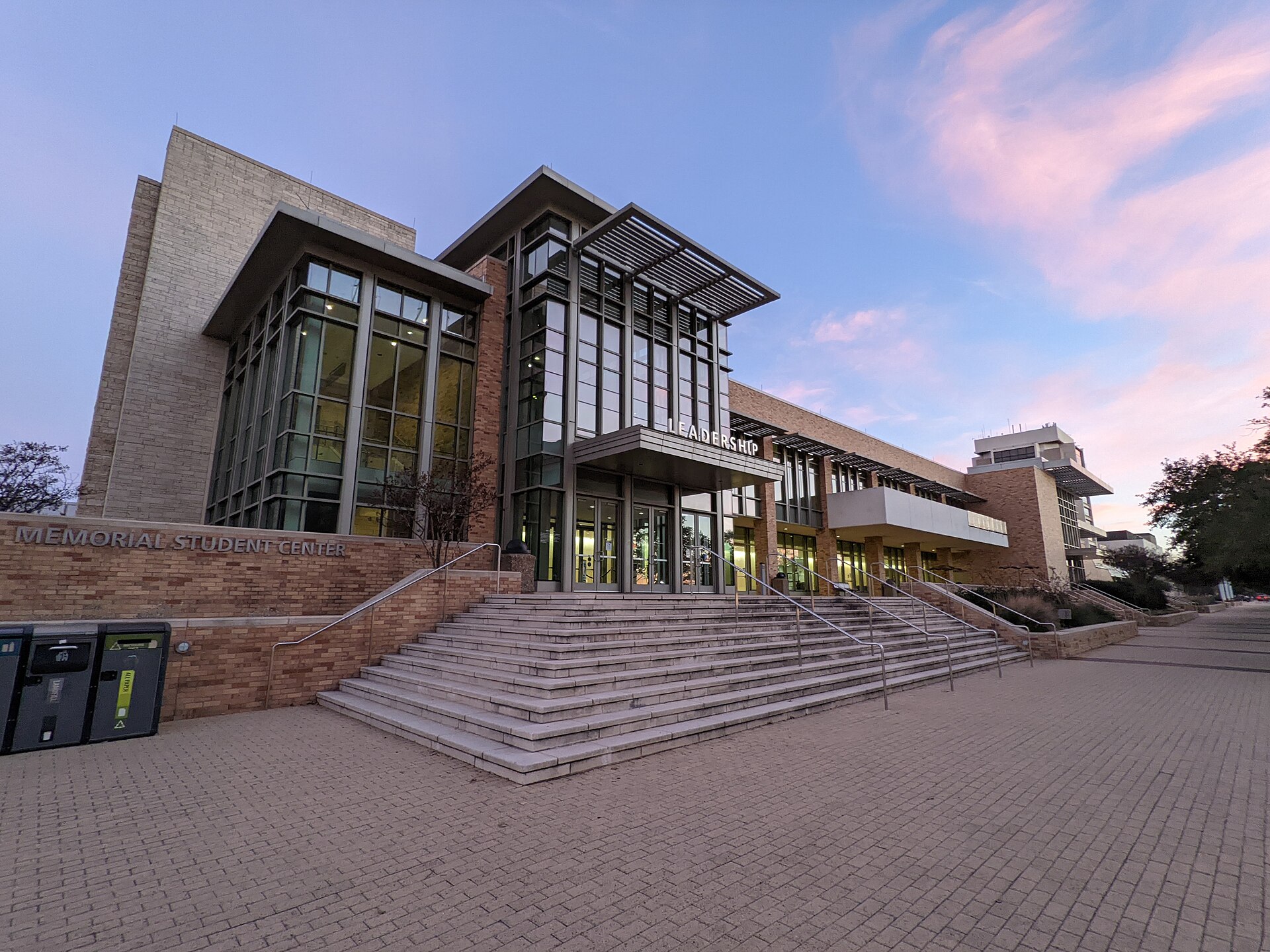
Texas A&M University Memorial Student Center
Texas A&M University Memorial Student CenterOldag07 · CC BY-SA 4.0 · via Wikimedia Commons
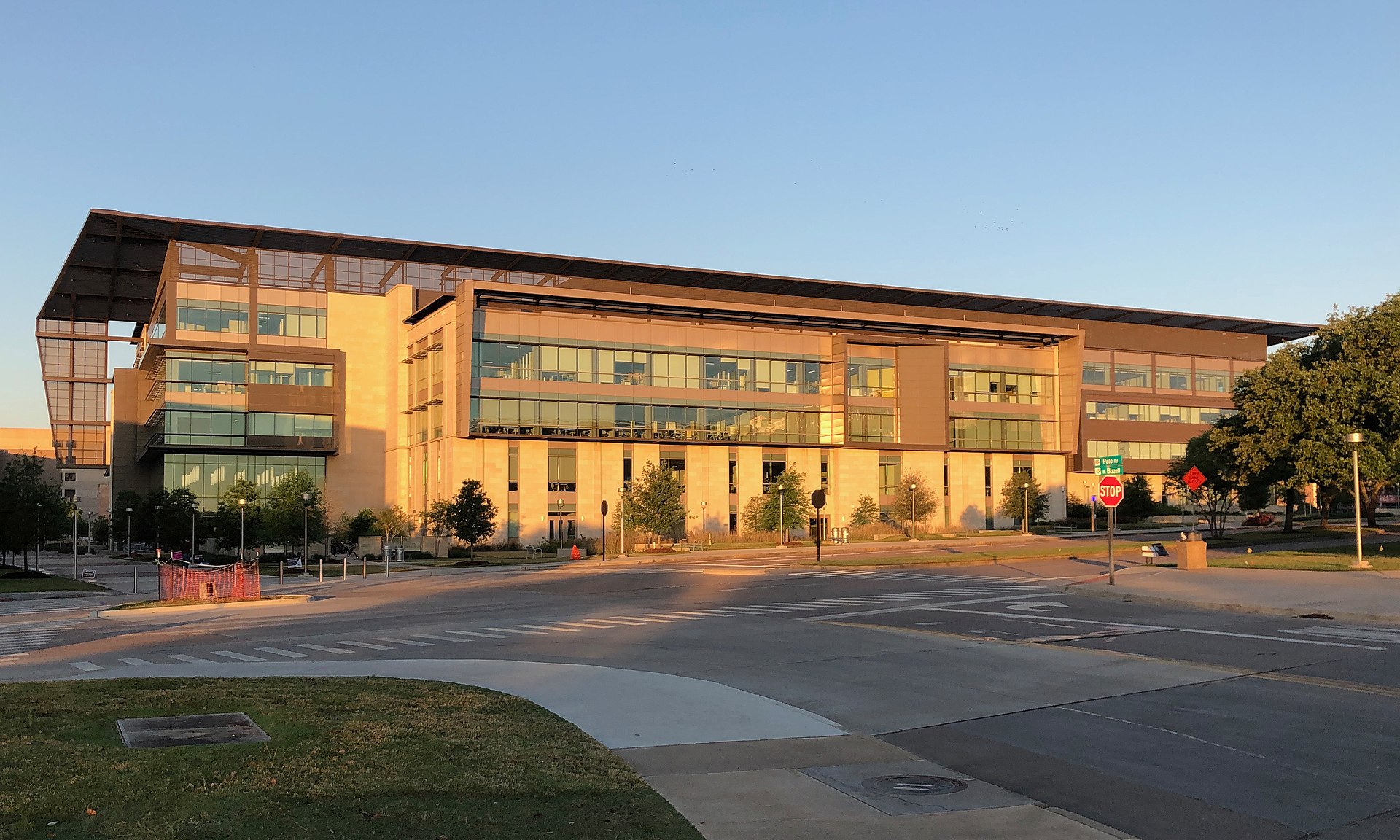
Zachry Engineering Education Complex – Texas A&M University, College Station, Texas
Zachry Engineering Education Complex – Texas A&M University, College Station, TexasJasonanaggie · CC BY-SA 4.0 · via Wikimedia Commons
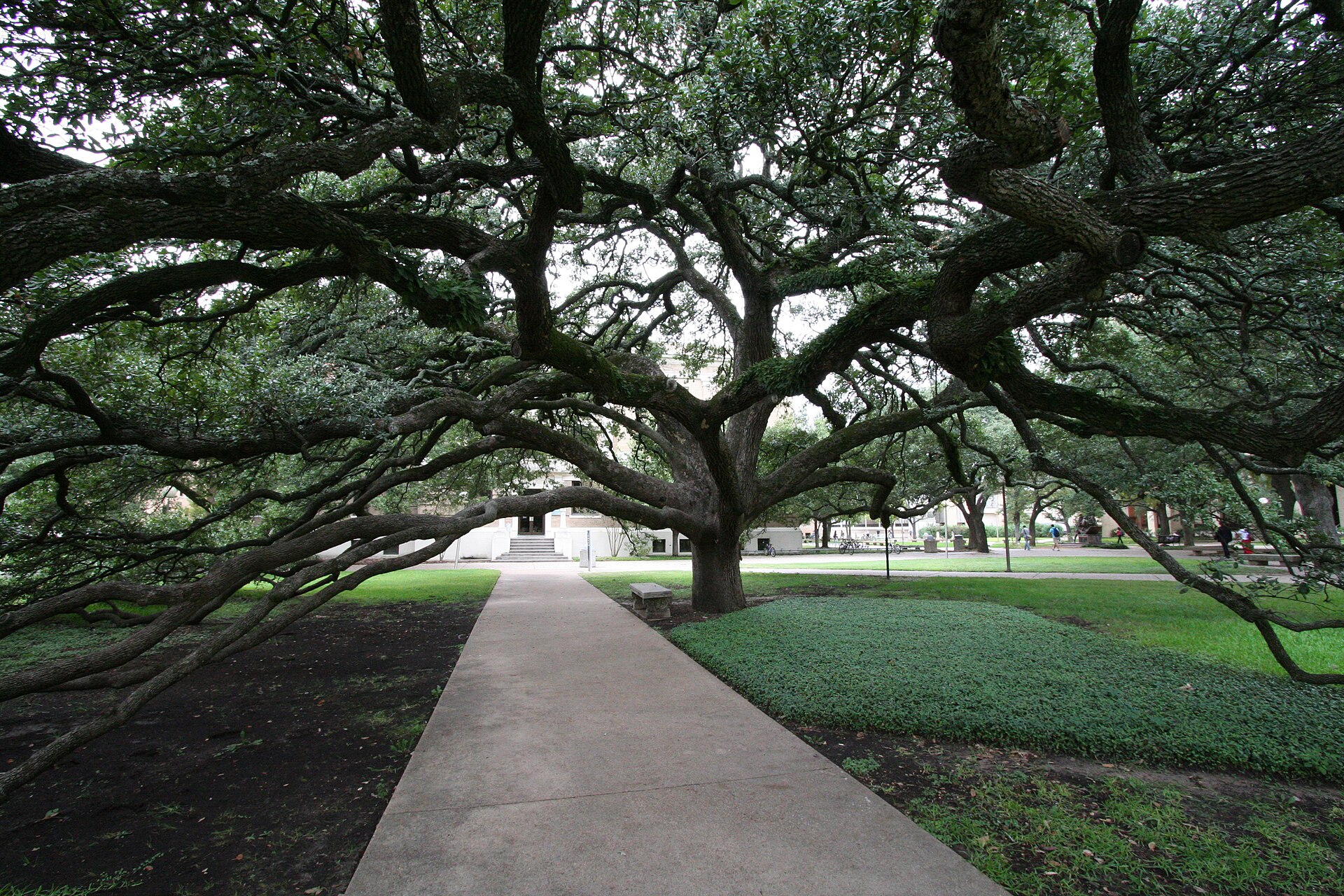
Century Tree
Century TreeEd Schipul · CC BY-SA 2.0 · via Wikimedia Commons
Halftime at the 2007 Maroon & White Football Game during Parent's Weekend at Texas A&M University
Halftime at the 2007 Maroon & White Football Game during Parent's Weekend at Texas A&M UniversityStuart Seeger from College Station, Texas, USA · CC BY 2.0 · via Wikimedia Commons
Colleges and Universities   Texas Agricultural and Mechanic College   Agricultural and Mechanical College of Texas, campus   NARA   26428200
Colleges and Universities Texas Agricultural and Mechanic College Agricultural and Mechanical College of Texas, campus NARA 26428200Unknown authorUnknown author or not provided · Public domain · via Wikimedia Commons

Why Texas A&M — Research, Network & Aggie Spirit

Texas A&M is not simply a large public university. It is a distinctive institution built on six core values — loyalty, integrity, excellence, leadership, selfless service, and respect — that shape every dimension of student life and professional outlook. For ambitious international students who want research depth, industry access, and a community that will invest in them for life, Texas A&M delivers at a public-university price point.

01AAU Research Powerhouse
Texas A&M holds membership in the Association of American Universities — one of only 71 leading research institutions in North America. Annual research expenditures exceed $1 billion, giving undergraduates hands-on access to labs across engineering, life sciences, energy, and geoscience.
02World-Class Engineering & Energy
The College of Engineering is consistently ranked among the top 15 in the US, with programmes in petroleum, aerospace, chemical, and electrical engineering that feed directly into Houston's energy corridor and Austin's technology sector.
03Mays Business School
Mays is among 2% of business schools worldwide with dual AACSB accreditation in business and accounting. Goldman Sachs, JPMorgan, Deloitte, ExxonMobil, and Amazon recruit on campus each year.
04The Aggie Network
500,000+ living alumni in all 50 US states and 150+ countries. Aggies hire Aggies — the network is one of the most active alumni communities in the world and a documented career advantage for graduates worldwide.

Texas A&M Acceptance Rate & Admitted Class Profile

Stats

70,000+
Applications (approx.)
8%
International Students
74,000+
Total Enrolment

Profile Stats

1140–1380
SAT Middle 50%
25–31
ACT Middle 50%
32
IB Score Benchmark
8%
International Students
3.5
Min GPA (4.0 scale)
93%
Employment Within 6 Months
Overall acceptance rate — college-specific rates vary significantly

Rea Vs Rd

Rd Label: Regular Decision
Rd Value: ~63%
Rea Label: Priority (Early Action)
Rea Value: Higher Rate

Texas A&M Admissions Requirements — Academics, SAT/ACT & International Profile

GPA & Coursework
Value: 3.5+ GPA
  • Minimum 3.5 on a 4.0 scale — aim higher for Engineering and Business
  • Course rigour evaluated alongside GPA — IB HL or equivalent expected
  • Upward grade trajectory is noted positively
  • College-specific bars are higher than the university average
Texas A&M expects a minimum GPA of 3.5 and evaluates the difficulty of your coursework alongside your grades. Students targeting the College of Engineering or Mays Business School should aim for the upper end of the academic profile.
SAT / ACT
Value: 1140–1380 SAT / 25–31 ACT
  • SAT middle 50%: 1140–1380 — target 1300+ for selective colleges
  • ACT middle 50%: 25–31 — target 29+ for Engineering and Business
  • Texas A&M currently requires standardised test scores
  • Strong scores signal academic readiness alongside English proficiency
Texas A&M requires standardised test scores as part of the freshman application — a distinction from many peer universities. The middle 50% SAT band is 1140–1380 and ACT is 25–31. Confirm the current policy at admissions.tamu.edu.
International Grades
Value: 32 IB / AAB A-Levels
  • IB Diploma: 32 points competitive benchmark; HL Mathematics strongly preferred for STEM
  • A-Levels: AAB or above is generally competitive
  • CBSE/ISC: strong percentage in relevant subjects required
  • Other curricula: official transcripts with certified English translations required
Texas A&M has established processes for evaluating international qualifications. The IB Diploma benchmark is approximately 32 points; A-Level AAB or above is competitive. All international transcripts must be accompanied by certified English translations.

Texas A&M Application Components — Common App, Essays & Transcripts

Texas A&M accepts applications through the Common App platform. The application is intentionally streamlined — no recommendation letters are required — which means your academic record and essays carry even more weight.

01RequiredCommon Application
Texas A&M is a Common App member. Complete your profile, activities list, and Texas A&M-specific questions. A non-refundable application fee of $75 applies; fee waivers are available.
02RequiredStandardised Test Scores
Texas A&M requires SAT or ACT scores submitted directly from the testing agency. Middle 50%: SAT 1140–1380, ACT 25–31. Always confirm the current policy at admissions.tamu.edu.
03RequiredOfficial Transcripts
International applicants must submit official transcripts from all secondary schools attended, in their original language with a certified English translation. Self-reported grades are not sufficient for international applicants.
04RequiredEssays & Short Answers
The Common App personal essay (650 words) plus Texas A&M-specific short-answer questions. These typically address your intended major and your connection to the Aggie community. Confirm current prompts in your Common App account.
05Required for InternationalsEnglish Proficiency Scores
Citizens of non-English-speaking countries must submit official TOEFL iBT (min 80), IELTS Academic (min 6.0), or Duolingo English Test (min 105) scores. Scores must be sent directly from the testing agency.
06Not RequiredLetters of Recommendation
Texas A&M does not require letters of recommendation for freshman admission — a notable advantage for international applicants. Your academic record, test scores, and essays carry the full weight of the application.
https://www.commonapp.org/explore/texas-am-university

Texas A&M Essays — Writing the Perfect Common App & Supplements

Tips

Be specific about Texas A&M — not just engineering
The supplemental question asks why Texas A&M. Generic answers about wanting a 'great engineering programme' read as interchangeable. Reference the specific college, relevant labs, the Aggie Network, or traditions that genuinely drew you. Admissions officers can tell the difference.
Connect to the Six Core Values authentically
Loyalty, integrity, excellence, leadership, selfless service, and respect are not marketing slogans at Texas A&M — they are genuinely embedded in campus culture. If your background or experiences reflect these values, say so with evidence, not assertion.
Short answers demand precision
Texas A&M's supplemental questions are typically shorter than those of elite private universities. Every sentence must earn its place. Draft at twice the word limit, then cut to the most essential and specific content.
The personal essay is your only unrestricted space
Unlike many peer universities, Texas A&M does not require recommendation letters. Your essays — especially the Common App personal statement — are the primary window into who you are as a person. Do not use this space to repeat your résumé.

Prompts

Common App Personal Essay
Choose from 7 Common App prompts or write your own topic. 650 words maximum. Texas A&M reads all prompts equally — choose the one that lets you write most authentically.
Intended Major / Field (Supplemental)
Texas A&M typically asks about your intended major or field of study — why you chose it and what you plan to do with it. Verify the current exact wording in your Common App account.
Why Texas A&M (Supplemental)
Texas A&M typically asks what specifically draws you to Aggieland and what you will contribute to the community. This is your opportunity to demonstrate genuine fit. Verify current wording in your Common App account.
The most common Texas A&M essay mistake. Writing a generic 'why engineering' essay that could apply to any university — without demonstrating any knowledge of what makes Texas A&M, its college, and its culture specifically the right fit for you.
https://www.commonapp.org/explore/texas-am-university

What Texas A&M Admissions Officers Are Looking For

Texas A&M's holistic review process evaluates every application across six dimensions. Understanding what the admissions committee values — and why — is the foundation of a strong application strategy for international students.

01Academic Rigour
Texas A&M evaluates the difficulty of your coursework alongside your grades. A student who chose challenging IB HL subjects and earned a B in each reads differently from one who took easier courses and earned all As. Course rigour is a distinct evaluation factor.
02Intended College Fit
Texas A&M admits by college — Engineering, Business, Agriculture, etc. Demonstrating a genuine intellectual direction toward your intended college, with supporting evidence in your coursework and activities, is central to a strong application.
03Aggie Core Values Alignment
Texas A&M's six core values — loyalty, integrity, excellence, leadership, selfless service, and respect — are not rhetorical. The admissions committee looks for evidence of these values in your activities, essays, and choices. Cultural fit is a real factor.
04Depth of Commitment
Quality over quantity in extracurriculars. Texas A&M values students who have made a real impact in one or two areas over those with a long list of superficial involvements. Leadership roles and community impact carry particular weight.
05Contribution to the Aggie Community
Texas A&M is asking not only 'who are you?' but 'what will you add to Aggieland?' International students who can articulate what they will bring — a different perspective, a specific expertise, a cross-cultural experience — stand out.
06Context of Achievement
Texas A&M reviews academic performance in the context of your school and country. A strong record from a school with limited resources or in an educationally underserved region is read with appropriate context.

Texas A&M Financial Aid & Scholarships for International Students

International students at Texas A&M pay non-resident tuition and are not eligible for US federal financial aid. The university does offer institutional scholarships for which international students may qualify, and many international students secure funding through government scholarships from their home countries. Planning your financing strategy early is essential.

International students are not eligible for US federal financial aid. Institutional and external scholarships require separate applications. Plan your finances on the basis of full cost of attendance and treat scholarships as a potential supplement.

Stats

$40,139
Annual international tuition & fees
~$60,000
Total cost of attendance (estimated)
~$16,000
Estimated annual living cost (College Station)
93%
Employment rate within 6 months

Contribution Tiers

NoteRangePercentPercent Value
Research your home country's education ministry or cultural mission — Saudi SACM, Chinese CSC, UAE, Malaysia, Indonesia, and many others sponsor students at Texas A&MHome Government ScholarshipsFull or partial coverage80
Texas A&M institutional merit scholarships — apply by Priority (Dec 1) deadline; eligibility for international students varies by awardA&M Institutional ScholarshipsCompetitive — apply early40
College and department-specific awards — contact your intended college's scholarship coordinator after admissionCollege/Department AwardsVaries by college30
F-1 visa holders may work on campus up to 20 hours per week during term — dining, libraries, labs, and administrative roles availableOn-Campus EmploymentUp to 20 hrs/week20
No federal aid; F-1 visa requires proof of full funding — document bank statements or scholarship letters before I-20 is issuedFederal Aid (FAFSA)Not available to internationals0
Affordability vs. Private Universities. Unlike elite private universities such as Harvard or Princeton, Texas A&M does not have a blanket no-loan or need-blind policy for international students. However, at approximately $60,000 per year total cost of attendance, Texas A&M is substantially more affordable than comparable private research universities, which often exceed $80,000–$90,000 annually. The Aggie Network's career outcomes — 93% employment, $60,000 average starting salary — mean the investment returns are strong.

Key Dates

Priority (Early Action) Deadline
Date: 1 Dec
Priority Decisions Released
Date: Mid-Jan onward
Regular Decision Deadline
Date: 15 Jan
Regular Decision Decisions
Date: March–April

Advantages

  • Larger pool of available spaces — A&M fills a significant portion of the class in the Priority round
  • Earlier decision — some notifications from mid-January
  • More time for F-1 visa processing before the August enrollment date
  • Earlier scholarship consideration — institutional awards closely tied to Priority cycle
  • Demonstrates genuine commitment to Texas A&M

Disadvantages

  • Earlier deadline (December 1) means less time to strengthen senior-year grades
  • Less time to take the SAT or ACT if scores are not yet where you need them
  • Non-binding — you can still apply elsewhere; but compare your financial options carefully
Priority vs Regular Decision. Texas A&M's non-binding Priority round is the recommended application route for international students. A larger proportion of the class is filled in the Priority cycle, and earlier admission gives critical additional lead time for F-1 visa processing.
Tychr's Priority Recommendation. Apply by December 1. The Priority round is non-binding — unlike Harvard REA or Columbia ED, you are not committing to attend. There is no strategic reason to wait for the January Regular Decision deadline unless your application is significantly incomplete in December. The additional time for visa processing alone makes Priority the right choice for most international applicants.
Why Apply Priority (Early Action) — Advantages
Texas A&M Early Action vs Regular Decision — Strategy for International Students
https://www.tamu.edu/admissions/how-to-apply/apply-as-international.html

Texas A&M Interviews — What to Expect

Texas A&M does not conduct interviews as part of the standard freshman admissions process. Your application materials — academic record, test scores, and essays — are evaluated without an interview component. Some competitive merit scholarships may include an interview after admission is granted; check the specific scholarship requirements. If you have the opportunity to visit campus or attend a Texas A&M information session, it is worth doing — demonstrated interest can signal commitment even if not formally scored.

Meta

No — Texas A&M does not require freshman interviews
Interview Required
Some merit scholarships have interview components after admission
Scholarship Interviews
Essays, academic record, and activities carry the full weight
How to Stand Out
Campus visits and Aggie tours noted but not formally evaluated
Demonstrated Interest

Questions

Why Texas A&M and your intended college specifically?
Tip: Prepare by researching the specific college — its programmes, research centres, and industry connections. Generic answers underperform.
What has shaped your interest in your intended field?
Tip: Connect your academic direction to real experiences — a project, a course, a problem that engaged you. Avoid abstract statements about passion.
What will you contribute to the Aggie community?
Tip: Reference the Six Core Values authentically. Loyalty, selfless service, and leadership are particularly resonant in Aggie culture.

Texas A&M Residential Life

Unlike Harvard's famous House system, Texas A&M does not assign students to residential colleges. Instead, the university operates a range of residence halls and apartment-style housing across its 5,200-acre campus in College Station. First-year international students are encouraged to live on campus to build community quickly — International Student & Scholar Services (ISSS) provides dedicated programming and support for residents.

Houses

Hullabaloo Hall
Tag: On-Campus
Modern residence hall, popular with freshmen
Mosher Hall
Tag: On-Campus
Coed hall, engineering community programming
Lechner Hall
Tag: On-Campus
First-year focused, strong community events
Walton Hall
Tag: Corps
Corps of Cadets wing — leadership tradition
Legett Hall
Tag: Corps
Corps of Cadets wing — military structure
University Apartments
Tag: Off-Campus
Apartment-style housing for upperclassmen
The Grove & White Creek
Tag: Off-Campus
On-campus apartment complexes — more independence

Lottery Steps

  • Applications open in early spring for the following fall — first-year international students should apply as soon as admitted
  • A range of residence hall styles are available: traditional double rooms, suite-style, and apartment-style
  • Corps of Cadets students are typically housed in designated Corps halls (Walton, Legett, and others) with a structured residential programme
  • Upperclassmen commonly move to off-campus apartments in College Station — a college town with affordable housing relative to most US university cities
  • Living Learning Communities (LLCs) are available for students in specific programmes — including engineering, business, and honours — allowing residents to live alongside peers in the same academic field

Texas A&M Colleges & Undergraduate Programmes

College of Engineering
Label: Top 15 US Engineering School
  • {"label":"Undergraduate engineering programmes","value":"25+"}
  • {"label":"Flagship research arm","value":"TEES"}
  • {"label":"Annual research expenditure (university-wide)","value":"$1B+"}
  • {"label":"Petroleum Engineering ranking","value":"Top 5 US"}
Aerospace, Petroleum, Chemical, Electrical, Civil, Biomedical, and Mechanical Engineering — among the largest and most research-active engineering schools in the US, with deep Houston-corridor industry ties.
Mays Business School
Label: AACSB Dual-Accredited
  • {"label":"Flagship undergraduate programme","value":"BBA"}
  • {"label":"Accreditation","value":"AACSB (Business + Accounting)"}
  • {"label":"Top employer recruiters","value":"Goldman, Deloitte, ExxonMobil"}
  • {"label":"Graduate programme","value":"MBA (Mays MBA)"}
One of the most respected business schools in the American South. Finance, Accounting, Marketing, Management, and Information & Operations Management programmes with a strong regional employer network.
College of Agriculture & Life Sciences
Label: Land-Grant Heritage
  • {"label":"Research system","value":"Texas A&M AgriLife"}
  • {"label":"Number of departments","value":"12+"}
  • {"label":"Flagship graduate programme","value":"MS & PhD in Ag Sciences"}
  • {"label":"Global food security focus","value":"Yes"}
The founding college of Texas A&M — world-class in agricultural sciences, food science, nutrition, soil & crop sciences, and animal science. AgriLife Research is a nationally recognised extension system.
College of Veterinary Medicine & Biomedical Sciences
Label: Top Vet School
  • {"label":"Veterinary programme","value":"DVM"}
  • {"label":"Biomedical Sciences undergraduate","value":"BS BIMS"}
  • {"label":"AVMA accreditation","value":"Full"}
  • {"label":"Research areas","value":"Infectious disease, oncology"}
One of the most respected veterinary schools in the US. The Biomedical Sciences (BIMS) undergraduate degree is a popular pre-med pathway with excellent medical school placement outcomes.
Bush School of Government & Public Service
Label: Policy & Leadership
  • {"label":"Flagship graduate programme","value":"Master of Public Service and Administration"}
  • {"label":"Founded","value":"1997"}
  • {"label":"Named for","value":"President George H.W. Bush"}
  • {"label":"International affairs focus","value":"Yes"}
A graduate school of public policy and international affairs named for President George H.W. Bush. Undergraduates interested in public service often concentrate in Political Science while accessing Bush School resources.
College of Architecture
Label: Design & Built Environment
  • {"label":"Flagship programme","value":"B.Environmental Design"}
  • {"label":"NAAB accreditation","value":"Yes"}
  • {"label":"Specialisations","value":"Architecture, Landscape, Visualisation"}
  • {"label":"Study-abroad integration","value":"European studios"}
A distinctive programme integrating environmental design, architecture, landscape architecture, and construction science — strong studio culture with international study options.

Research & Extracurricular Opportunities at Texas A&M

Texas A&M Engineering Experiment Station (TEES)
Category: Undergraduate Research
TEES is one of the nation's largest university research agencies, encompassing more than 40 research centres. Undergraduates can participate in ongoing research programmes across petroleum, aerospace, chemical, and civil engineering — from their first year through the LAUNCH undergraduate research programme.
Texas A&M AgriLife Research
Category: Agriculture & Life Sciences
The AgriLife Research system operates research centres across Texas, working on food security, crop science, water resources, and sustainable agriculture. Undergraduates in COALS and related colleges engage with one of the most active land-grant research systems in the country.
Cyclotron Institute
Category: Physics & Nuclear Science
A national user facility for nuclear physics and science research. Undergraduates interested in physics, chemistry, and related fields can engage with cutting-edge nuclear science research available at very few universities worldwide.
800+ Student Organisations
Category: Extracurricular Life
Texas A&M has more than 800 registered student organisations — from the International Student Council and regional cultural associations (Indian Students Association, Chinese Students Association, and many others) to engineering honour societies (Tau Beta Pi, Eta Kappa Nu), the Student Government Association, the Corps of Cadets, and 65+ intramural sports. The scale of Aggieland means every international student finds their community.
Scroll right to explore Texas A&M's research programmes and student life opportunities.

Career Outcomes & the Aggie Network

The Aggie Network is one of the most active alumni communities in the world — and it is not a cliché. Aggies hire Aggies. The cultural norm of supporting fellow graduates is real and documented. For international students building US careers, having Aggie alumni mentors and connections in your target industry is a genuine differentiator from day one.

Stats

93%
Employed or in graduate school within 6 months
$60,000
Average starting salary
500K+
Living alumni in 50+ states and 150+ countries
#158
QS World University Ranking
#47
US National University Ranking
71
AAU member institutions

Categories

Energy
ExxonMobil, Chevron, Halliburton, Baker Hughes, Shell, ConocoPhillips — Texas A&M's petroleum and chemical engineering programmes feed directly into the world's largest energy corridor in Houston.
Technology & Aerospace
Amazon, Google, Microsoft, Apple, Texas Instruments, Dell, Lockheed Martin, Boeing, Raytheon — computer science and engineering programmes with direct pipeline to Austin tech and Houston aerospace.
Finance & Consulting
Goldman Sachs, JPMorgan, Deloitte, PwC, KPMG, Bank of America — Mays Business School's Houston finance network is one of the strongest of any public university in the South.

Our Texas A&M Admissions Track Record & Student Success Stories

Priya S.
Tychr helped me understand that Texas A&M admits by college — and that my essays needed to speak directly to the College of Engineering, not just to engineering in general. The specificity in my supplemental answer made all the difference. I referenced TEES and the petroleum engineering industry connection to Houston, and I felt the essay finally said something real.
Country: India
Program: Texas A&M — Petroleum Engineering
Class Year: Class of 2027
Residential: On-Campus Housing
Academic Profile: 1320 SAT · 3.9 GPA · IB 36
Ahmed K.
Coming from Saudi Arabia, I had heard about the Aggie Network — but Tychr helped me understand how to activate it before I even arrived. My counsellor connected me with Saudi Aggie alumni who guided my internship search from my first semester. The network is real.
Country: Saudi Arabia
Program: Texas A&M — Mechanical Engineering
Class Year: Class of 2026
Residential: Off-Campus
Academic Profile: 29 ACT · 3.8 GPA · SACM Scholarship
Mei L.
My personal essay was technically good but lacked a specific connection to Aggie culture. My Tychr counsellor pushed me to write about a real experience with leadership and selfless service that connected to the Six Core Values. The admissions committee told me at orientation that my essay stood out because it felt genuine, not performed.
Country: China
Program: Texas A&M — Mays Business School
Class Year: Class of 2025
Residential: On-Campus
Academic Profile: 1350 SAT · A-Levels AAB

Faqs

Does Texas A&M require standardised tests for international applicants?+

Texas A&M lists test scores as required in its current admissions policy. The SAT middle 50% for admitted students is 1140–1380 and ACT is 25–31. Always verify the current policy at admissions.tamu.edu before applying, as policies can change between cycles.

Is Texas A&M competitive if I'm interested in engineering?+

Absolutely. The College of Engineering is among the top 15 in the US, with petroleum, aerospace, and chemical engineering consistently highly ranked. The Houston energy corridor provides unmatched internship and employer access. International students should target SAT 1300+ or ACT 29+ for competitive Engineering admission.

What is the Aggie Network and will it help me as an international student?+

The Aggie Network — 500,000+ living alumni in 150+ countries — is one of the most active alumni communities in the world. The cultural norm of Aggies helping Aggies is real and documented. For international students seeking US careers, Aggie alumni connections in energy, technology, and finance are a genuine and practical differentiator.

Can international students apply for financial aid or scholarships?+

International students are not eligible for US federal financial aid (FAFSA). However, Texas A&M does offer institutional merit scholarships for which international students may qualify. Additionally, many students secure government scholarships from their home countries — SACM (Saudi Arabia), CSC (China), and various bilateral programmes that cover Texas A&M tuition. Apply by the Priority (December 1) deadline to maximise scholarship consideration.

How competitive is admission to specific colleges like Engineering or Business?+

The overall 63% acceptance rate masks significant variation. The College of Engineering and Mays Business School are meaningfully more selective than the university average. International students targeting these colleges should aim for the upper band of test scores (SAT 1300+, ACT 29+) and a GPA well above 3.5.

What is campus life like for international students at A&M?+

Texas A&M has a dedicated International Student & Scholar Services (ISSS) office, an International Student Council, and dozens of cultural associations. With 74,000 students from 130+ countries, you will find your community. College Station is a college town — life revolves around the university, which creates a strong sense of belonging but requires some adjustment if you're accustomed to a large city.

Does Texas A&M accept the IB Diploma for admission?+

Yes. Texas A&M recognises the IB Diploma and awards credit for Higher Level subjects with scores of 4 or above (exact credit policies vary by college and subject). A competitive IB score for admission is approximately 32 points. Students targeting Engineering should prioritise IB HL Mathematics.

How early should I apply as an international student?+

Apply by the December 1 Priority deadline. This gives you access to a larger pool of available spaces, earlier scholarship consideration, and critically — more time to process your US student visa (F-1) before the August enrolment date. Do not wait for the January Regular Decision deadline if you can avoid it.

Book a Free Texas A&M Admissions Strategy Session

In 60 minutes our Texas A&M admissions specialists will evaluate your academic profile, identify your application strengths and gaps, develop your essay strategy for the Aggie community, and determine whether the Priority or Regular Decision round gives you the best odds.

  • No commitment required
  • Texas A&M specialists with proven results
  • Personalised strategy — not generic advice
Getting into Texas A&M is not just about scores — it's about showing the Aggie community you belong in it.

Texas A&M Admissions Requirements

Texas A&M Academic Requirements — The Honest Breakdown for International Students

What GPA, test scores, and academic profile do Texas A&M's admitted students actually have? And what does A&M's holistic review mean for students from IB, A-Level, AP, and other international curricula?

3.5
Minimum GPA
On a 4.0 scale — target higher
1140–1380
SAT Middle 50%
Target 1300+ for Engineering
25–31
ACT Middle 50%
Target 29+ for selective colleges
32
IB Benchmark
Competitive reference point
AAB+
A-Level Benchmark
In relevant subjects
63%
Acceptance Rate
Overall — college-specific varies

GPA & Class Rank

Texas A&M and GPA — What the Data Shows

The honest picture: Texas A&M publishes a minimum GPA of 3.5 on a 4.0 scale. In practice, competitive applicants — especially for Engineering and Business — are well above this threshold, and the admissions committee evaluates course rigour alongside the GPA number.

A 3.5 GPA is the published floor, not the competitive target. For the most selective colleges within Texas A&M — Engineering and Business — applicants should aim for 3.8 or above, combined with rigorous coursework in the relevant disciplines.

3.5
Minimum GPA requirement (4.0 scale)
3.8+
Target GPA for Engineering and Mays Business applicants
What this means for international students. International students from systems without a formal 4.0 GPA scale (IB, UK A-Levels, CBSE, and others) are evaluated based on their performance in their national system, with reference to the school's known performance range and the difficulty of the curriculum chosen.
Grade trajectory matters. A student with an upward grade trajectory — improving from a 3.5 to a 3.9 over four years of secondary school — reads differently from one whose grades have declined. Texas A&M's holistic review considers trajectory, not just endpoint.

Academic Context

Class Rank and School Context — How Texas A&M Reads International Academic Performance

Texas A&M does not require class rank for admission, and many international schools do not provide it. Texas A&M's international admissions team is experienced at evaluating academic performance across widely different school systems and national curricula.

How Texas A&M contextualises your academic record
Every application is evaluated with reference to the specific school's curriculum, grading norms, and course availability. A student at a school that offers only a national curriculum without IB or A-Levels is evaluated differently from one at a school with full IB Diploma access. Texas A&M's international admissions advisors are familiar with most major national qualification systems.
What this means practically
Taking the most rigorous courses available at your specific school is more important than achieving perfect grades in easier options. Texas A&M values course rigour as a distinct factor — a student who takes IB HL Mathematics and earns a 6 reads better than one who takes Standard Level and earns a 7, all else being equal.
For students at less well-known international schools. If you attend a less well-known international school, contact Texas A&M's international admissions advisors directly to confirm how your qualification is evaluated. Texas A&M has regional advisors for most parts of the world who can provide specific guidance.

Standardised Testing

SAT Scores at Texas A&M — What You Actually Need

Texas A&M SAT Data — Admitted Class

LabelScorePercent
25th percentile114055
75th percentile138085
Competitive target (Engineering/Business)1300+75
The SAT Math subscore for Engineering applicants. For STEM-focused applicants — engineering, computer science, mathematics — a strong Math subscore (720–800) is important. Texas A&M's engineering programmes assume calculus readiness from day one; a high Math SAT subscore corroborates this preparation.
Preparation. Tychr's structured SAT preparation programme averages 150+ point improvement over 8–12 weeks. Students targeting Texas A&M's Engineering or Business colleges should aim for a composite score of 1300+ before submitting.
Strategy for test-required applicants. Texas A&M currently requires standardised test scores. With a test-required policy, submitting the best possible score is in every applicant's interest. Students scoring in the 1140–1200 range should consider retaking before the December Priority deadline. A score of 1300+ places you above the midpoint and is the target for competitive colleges.

Standardised Testing

ACT Scores at Texas A&M — The Data and the Strategy

Texas A&M ACT Data — Admitted Class

Metrics

25th percentile
Score: 25
75th percentile
Score: 31

Comparison Cards

Both accepted equally
Texas A&M accepts both equally. The choice should be based on which test plays to your specific strengths — take a diagnostic of both before committing.
SAT rewards
Careful reading, grammar precision, and evidence-based reasoning — strong for students with advanced English reading skills.
ACT rewards
Speed and data interpretation in the Science Reasoning section — the Science section tests no actual science knowledge, only data analysis skills that international STEM students often find accessible.
Retake and superscore policy. Confirm Texas A&M's current superscore policy at admissions.tamu.edu. For the ACT, the university typically uses the highest composite score from any single sitting. Taking the test more than once is advisable if your first score falls below your target.
Tychr's recommendation. Take a diagnostic of both tests before committing to either. If your ACT Science and Math sections are strong, the ACT composite of 29+ is a solid target for selective colleges. If your verbal and reading skills are stronger in a structured reading format, the SAT may be a better vehicle. Either is accepted equally at Texas A&M.

Testing Strategy

Texas A&M Test Policy — What Test-Required Means for International Applicants

Unlike many peer universities that moved to test-optional policies during and after COVID-19, Texas A&M has maintained a test-required policy for freshman admissions. Understanding what this means for your application strategy is important.

Submit Items

Submit the best score you have achieved — there is no reason to withhold scores in a test-required environment.
If your score falls below the 25th percentile (SAT 1140 / ACT 25), consider retaking before the December Priority deadline.
A strong score at or above the 75th percentile (SAT 1380 / ACT 31) is a meaningful positive signal for selective colleges within A&M.

Withhold Items

Not applicable — withholding scores is not an option at Texas A&M. Ensure you sit the SAT or ACT early enough to have official scores ready by the Priority deadline.
Current policy: Test-Required. Texas A&M requires SAT or ACT scores from all freshman applicants, including international students. Applications without official test scores will be considered incomplete. Confirm the current policy at admissions.tamu.edu before submitting your application, as policies can be updated.
The common misconception. Some international students assume that a strong academic record and strong English proficiency test scores (TOEFL/IELTS) can substitute for SAT/ACT scores at Texas A&M. They cannot. The SAT or ACT is a separate, required component of the application at this institution.
What to do in a test-required environment

Curricula

A-Levels and IB at Texas A&M — Specific Benchmarks

IB Diploma
Note: What Texas A&M values in IB applicants: course selection that demonstrates intellectual ambition and preparation for your intended college. Engineering applicants should prioritise HL Mathematics (Analysis & Approaches), HL Physics, and HL Chemistry. Business applicants benefit from HL Mathematics and HL Economics. Texas A&M awards credit for HL subjects with scores of 4 or above — students often enter with significant advanced standing.
  • {"label":"Competitive benchmark","value":"32 points"}
  • {"label":"HL recommendations for Engineering","value":"HL Mathematics AA, HL Physics, HL Chemistry (or equivalent sciences)"}
  • {"label":"HL recommendations for Business","value":"HL Mathematics, HL Economics"}
  • {"label":"IB credit","value":"HL subjects with score 4+ receive course credit — confirm with specific college"}
A-Levels
Note: A-Level qualifications are well understood by Texas A&M's international admissions team. Submit predicted grades at application time and final grades once available. A-Level Mathematics and Further Mathematics are strong preparation for Engineering and Computer Science programmes.
  • {"label":"Competitive range","value":"AAB – AAA"}
  • {"label":"Subject recommendations for Engineering","value":"Mathematics, Further Mathematics, Physics or Chemistry"}
  • {"label":"Subject recommendations for Business","value":"Mathematics, Economics, a third analytical subject"}
  • {"label":"A-Level credit","value":"Credit awarded for A-Level performance — confirm with specific college after admission"}

Advanced Placement

AP Courses at Texas A&M — What Counts and What Credit You Can Earn

For students in the US system or at schools that offer AP courses, Advanced Placement performance is a meaningful component of the academic profile and a direct route to course credit at Texas A&M.

What Texas A&M is looking for
AP 4s and 5s across rigorous subjects relevant to your intended college — Calculus AB/BC, Physics 1/2/C, Chemistry, Biology, Computer Science A, Statistics for STEM; Economics, English Language, Government for Business and Liberal Arts. The pattern of AP choices and consistency of performance both matter.
AP credit at Texas A&M
Texas A&M awards credit for AP scores of 3, 4, or 5 depending on the subject and college. Engineering typically requires a 4 or 5 for credit in mathematics and sciences. Credit policies vary by college — confirm after admission.
Grade validity and reinforcement
Strong AP scores reinforce the grade record and confirm academic preparation for college-level work at a large research university. For international students at schools with AP access, submitting scores above 4 is always beneficial.
Texas A&M awards significant AP course credit, allowing students to skip introductory courses and accelerate their degrees. Engineering students with AP Calculus BC (5) and AP Physics C (5) can enter directly into second-year mathematics and physics sequences. Confirm the credit policy for your specific college at registrar.tamu.edu.
International students at schools that do not offer AP should not pursue AP artificially. The IB Diploma or A-Level system is the appropriate qualification for their context and is evaluated accordingly. Texas A&M's international admissions team is well-equipped to evaluate IB and A-Level credentials.

Academic Rigour

Course Rigour — Texas A&M's Most Important Academic Factor

Texas A&M evaluates the rigour of your secondary school record as a distinct factor alongside your grades. Taking the most challenging courses available — and performing well in them — is more important than optimising for a higher GPA through easier choices.

Taking the most challenging courses available at your specific school, in the subjects most relevant to your intended college.

The contextual element. Rigour is always evaluated relative to what was available. A student at a school that offers only a national curriculum is evaluated differently from one with full IB access. What matters is whether the student challenged themselves relative to what was possible at their school.
What rigour means for Texas A&M applicants. For Engineering applicants, this means HL Mathematics, HL Physics, and HL Chemistry (IB) — or A-Level Mathematics, Further Mathematics, and Physics — rather than choosing lower-level options. For Business applicants, it means HL Mathematics and HL Economics (IB) or equivalent. Course selection that aligns with your intended college signals genuine intellectual direction.
What Texas A&M is looking for. A student who took IB HL Mathematics (Analysis & Approaches), HL Physics, and HL Chemistry simultaneously signals the academic preparation that Texas A&M's Engineering programmes expect. The admissions committee can identify grade-optimised course selection — choosing easier options to protect GPA — and evaluates it accordingly.

Subject Preparation

Mathematics, Science, and English Preparation — What Texas A&M Expects

Texas A&M has specific academic preparation expectations for its flagship programmes. Students who arrive underprepared in the relevant disciplines — particularly mathematics and sciences for STEM programmes — face significant challenges in first-year coursework.

Mathematics
HL Mathematics (Analysis & Approaches) or A-Level Further Mathematics is the expected preparation for Engineering programmes. Engineering assumes calculus proficiency from day one. Business programmes are increasingly quantitative; HL Mathematics or AP Calculus BC is strongly recommended for Mays applicants.
Sciences
HL Physics and HL Chemistry (IB) or A-Level equivalents are expected for most Engineering disciplines. Biomedical Sciences and pre-med students should prioritise HL Biology and HL Chemistry. Laboratory experience at secondary level is a meaningful differentiator in applications.
English & Academic Writing
Texas A&M instruction is entirely in English, and writing-intensive requirements apply across all colleges. Strong academic writing skills are essential from the first week. Non-native English speakers should invest in academic writing preparation alongside TOEFL or IELTS preparation.

Language Proficiency

English Language Requirements for International Texas A&M Applicants

Citizens of non-English-speaking countries must submit official English proficiency test scores directly from the testing organisation. These are the published minimums — for competitive programmes, aim meaningfully higher.

The TOEFL minimum of 80 and IELTS minimum of 6.0 are institutional floors. For academic success in Engineering, Business, or any writing-intensive programme, students should aim for TOEFL 100+ or IELTS 7.0+. The minimum gets you admitted; a higher score reflects genuine English academic readiness.

Test: TOEFL iBT
Score: 80 minimum
Test: IELTS Academic
Score: 6.0 minimum
Test: Duolingo English Test
Score: 105 minimum
Exemptions and practical guidance. Citizens of countries where English is the sole official medium of instruction may be exempt from English proficiency requirements. Confirm exemption eligibility with the International Admissions office before assuming you are exempt — exemption rules vary by country and programme.
https://www.tamu.edu/admissions/how-to-apply/apply-as-international.html

By College

Academic Requirements by College — What Different Paths at Texas A&M Expect

Texas A&M admits by college (Engineering, Business, Agriculture, etc.), not by major. The academic profile should be coherent with the student's intended college and stated interests. The rows below reflect the academic preparation most relevant for each college or field.

SignalsExpectationConcentration
Strong Math SAT subscore; AP Calculus 5; competition mathematics; coding projectsHL Maths AA / A-Level Further Maths + strong PhysicsEngineering (all disciplines)
USACO; original projects; CS AP 5; coding bootcamp completionHL Maths + CS background or AP CS AComputer Science & Engineering
HL Economics 6-7; quantitative projects; AP Statistics 5HL Maths + HL EconomicsBusiness / Finance (Mays)
HL Chemistry + Biology 6-7; pre-med volunteer; research experienceHL Chemistry + HL BiologyBiomedical Sciences / Pre-Med
FFA (Future Farmers of America) or agricultural experience; environmental researchStrong sciences; biology/chemistry focusAgricultural Sciences / COALS
Design portfolio; architecture interest; spatial reasoning strengthMathematics + arts/design backgroundArchitecture
MUN; policy writing; history/political science strength; debateStrong humanities; English and social sciencesPolitical Science / Bush School pathway

International Systems

Texas A&M and International Education Systems — How Your Curriculum Is Evaluated

IB Diploma
Well understood and valued. Texas A&M's international admissions team is experienced with IB transcripts. HL subject choices, EE grade, and TOK are evaluated as evidence of intellectual depth. Credit is awarded for HL scores of 4 or above in most subjects — students often enter with advanced standing worth one semester or more.
A-Levels (Cambridge and Edexcel)
Well understood and evaluated carefully. A-Levels are among the strongest international qualifications recognised by Texas A&M. Predicted grades submitted at application time are reviewed; final grades confirmed after results are released. A-Level Mathematics and Further Mathematics are recognised as excellent preparation for Engineering and Business programmes.
Indian Boards (CBSE / ISC)
Accepted and evaluated based on percentage scores in relevant subjects. Texas A&M is aware of marking conventions in Indian boards. Strong CBSE or ISC performance (95%+) in Mathematics and Sciences is evaluated positively for Engineering and Science programmes. JEE performance or Olympiad achievements are valuable supplementary evidence.
Chinese High School / Gaokao-track
Accepted. Chinese applicants typically submit Gaokao results alongside their high school transcript. A strong Gaokao score in the relevant academic track is evaluated as academic evidence. Additional evidence of English academic readiness through TOEFL or IELTS (above the minimum) is important for Chinese applicants.
Homeschooled students
Texas A&M accepts applications from homeschooled students. Externally validated qualifications (IB, AP, A-Level, CLEP) are required alongside the standard application. Contact the International Admissions office directly for homeschool applicant guidance.

Roadmap

Building an Academic Profile for Texas A&M — What to Do at Each Stage

Grade 9 (Year 10)Lay the foundation
Year: Grade 9 (Year 10)
  • Enrol in the most rigorous mathematics and sciences available at your school.
  • Identify your intended college at Texas A&M early — Engineering, Business, Agriculture — and research what preparation it expects.
  • Join science, engineering, or business clubs to build your activity profile.
  • Begin developing academic English writing skills.
Grade 10 (Year 11)Strengthen and focus
Year: Grade 10 (Year 11)
  • Take a diagnostic SAT or ACT to benchmark your testing trajectory.
  • Finalise your IB HL or A-Level subject choices — prioritise subjects relevant to your intended Texas A&M college.
  • Take on a leadership role in an organisation you care about.
  • Explore Texas A&M's specific programmes and research centres online; develop your understanding of why A&M specifically is the right fit.
Grade 11 (Year 12)Build the evidence
Year: Grade 11 (Year 12)
  • Peak academic year — achieve your best grades in the most rigorous available courses.
  • Sit the SAT or ACT in the spring; aim for a result that meets or exceeds the 75th percentile (1380 SAT / 31 ACT).
  • If pursuing research, engineering competitions, or notable academic achievements, this is the year to pursue them.
  • Begin researching Texas A&M's institutional and departmental scholarships for international students.
  • Draft your personal application narrative — the story of why your intended college at Texas A&M is the right next step.
Grade 12 (Year 13)Application year
Year: Grade 12 (Year 13)
  • Finalise and submit your Common App by December 1 (Priority deadline) — do not wait for January.
  • Retake SAT or ACT if needed by October or November.
  • Maintain grades — Texas A&M can and does rescind offers for significant grade drops.
  • Submit official TOEFL, IELTS, or Duolingo scores directly from the testing agency.
  • Track application status through the Howdy Portal.

Common Pitfalls

Academic Mistakes That Cost Texas A&M Applications — And How to Avoid Them

Choosing IB SL Maths when HL is available and you want Engineering
Choosing Standard Level Mathematics when Higher Level is available and you intend to study Engineering, Computer Science, or Business. HL Mathematics is virtually expected for competitive programmes, and SL signals reduced ambition to the admissions committee.
Underestimating verbal preparation for a test-required institution
Texas A&M requires SAT or ACT scores. Students who spend insufficient time on test preparation — particularly on the verbal and reading sections, which international STEM students tend to underestimate — submit scores that underrepresent their actual academic ability.
Targeting selective colleges with a minimum-bar GPA
Applying to the College of Engineering or Mays Business with a GPA at or near the university minimum of 3.5. These colleges have meaningfully higher competitive thresholds — aim for 3.8+ if you want one of these colleges.
Meeting the exact minimum English proficiency score and stopping there
Submitting TOEFL (80) or IELTS (6.0) at exactly the minimum required. These scores meet the technical requirement but are below the level needed for genuine academic success in writing-intensive programmes. Aim for TOEFL 100+ or IELTS 7.0+.
Missing the test-retake window before the Priority deadline
Missing the October/November test window leaves no opportunity to retake before the December Priority deadline. Schedule your tests early enough to retake if needed.

Real Outcomes

What Academic Profiles Tychr's Texas A&M-Admitted International Students Had

The following profiles represent illustrative academic backgrounds of international students Tychr has helped gain Texas A&M admission. They show the range of academic preparation that succeeds — and what made each application compelling.

Profile 1 — Engineering (India)
HL Maths AA (7), HL Physics (6), HL Chemistry (6). TOEFL 108. Strong performance in national physics olympiad.
Stats: IB 37 · SAT 1320 · GPA 3.9
Takeaway: The academic profile was strong but not exceptional — the physics olympiad achievement and a clear narrative about petroleum engineering and the Houston energy corridor elevated the application significantly.
Profile 2 — Mays Business (UK/Nigeria)
A-Levels: Mathematics (A*), Economics (A), Business Studies (A). IELTS 7.5. Internship at local family business.
Stats: A-Levels A*AA · ACT 29
Takeaway: The A-Level profile was coherent and well-evidenced. The business internship provided concrete evidence of the interest in Mays, and the essay specifically referenced Mays' dual AACSB accreditation and recruiter network.
Profile 3 — Computer Science (India)
CBSE 96.4% (Mathematics, Physics, Chemistry, English, Computer Science). TOEFL 102. CodeChef and Codeforces competitive programming.
Stats: CBSE 96.4% · SAT 1350
Takeaway: Strong board scores combined with visible competitive programming achievement gave the admissions committee concrete evidence of CS aptitude. The essay specifically referenced A&M's CSCE programme and the Austin tech pipeline.

Faqs

Is a 3.5 GPA enough for Texas A&M?+

A 3.5 GPA meets the published minimum but is not the competitive target, especially for Engineering and Business. Aim for 3.8+ if you want one of A&M's more selective colleges. The admissions committee evaluates course rigour alongside the GPA number — a 3.8 in rigorous IB HL subjects reads very differently from a 3.8 in standard courses.

What IB score do I need for Texas A&M?+

Competitive IB applicants for Texas A&M typically target 32 points or above. Students applying to the College of Engineering should prioritise HL Mathematics (Analysis & Approaches), HL Physics, and HL Chemistry. An IB score in the low 30s can be competitive if combined with strong test scores and a coherent engineering narrative.

Does Texas A&M prefer SAT or ACT?+

No preference — both are accepted equally. Take a diagnostic of both before committing. For many international students with strong mathematics backgrounds, the ACT Science Reasoning section (which tests data interpretation, not science knowledge) is accessible. Others prefer the SAT's more structured reading format.

Can I apply to Texas A&M without test scores?+

No. Texas A&M currently requires standardised test scores (SAT or ACT) as part of the freshman application. Applications without official test scores are considered incomplete. Confirm the current policy at admissions.tamu.edu before applying.

Does Texas A&M award course credit for IB or A-Level results?+

Yes, through the established equivalency tables. HL subjects with scores of 4 or above typically receive credit — allowing you to skip introductory courses and potentially accelerate your degree. Credit policies vary by college and subject; confirm with the specific college after admission at registrar.tamu.edu.

Cost & Financial Aid

Texas A&M Costs Less Than You Think — Relative to Private Universities. Here Is the Full Picture.

Texas A&M is significantly less expensive than comparable private research universities. At approximately $60,000 per year total cost of attendance, it offers Association of American Universities membership, top-15 engineering programmes, and the Aggie Network at a public university price. Here is exactly what it costs, what aid is available, and how to fund your degree.

~$60,000/year
Estimated total cost of attendance for international students
No Federal Aid
F-1 students are not eligible for FAFSA-based federal grants or loans

Cost Transparency

What Texas A&M Actually Costs — The Full Annual Figure for International Students

College Station is a college town with significantly lower living costs than major university cities. Housing, food, and transportation are meaningfully cheaper than Boston, New York, Chicago, or California. The $16,000 annual cost of living estimate is realistic for modest living in College Station — and the total cost of attendance of ~$60,000 is substantially below the $80,000–$90,000 typical of elite private research universities.

International Tuition & Fees
Cost: $40,139
Room & Board (on-campus estimate)
Cost: ~$12,000–$14,000
Books & Supplies
Cost: ~$1,200
Personal & Transportation
Cost: ~$3,000–$4,000
Health Insurance (international student plan, estimated)
Cost: ~$1,500
Total Estimated Annual Cost
Cost: ~$60,000
Cost vs. Private Peers. $20K–$30K Less
International Tuition. $40,139
Texas A&M Estimated Annual Cost of Attendance — International Students
Texas A&M's total cost is typically $20,000–$30,000 lower per year than elite private research universities.
Non-resident tuition and fees — the largest component of annual cost.

Aid Policy

Financial Aid at Texas A&M — What International Students Need to Know

International students (F-1 visa holders) are not eligible for US federal financial aid (FAFSA). Texas A&M's need-based aid programmes are primarily designed for domestic students. However, institutional merit scholarships and external funding options are available to international students who apply strategically.

Texas A&M vs. Highly-Endowed Private Universities. Unlike Harvard, Princeton, or MIT — which are need-blind for international students and provide full-need grants — Texas A&M does not have a comparable need-blind international aid policy. International students should plan for the full cost of attendance and treat any institutional awards as a potential supplement to self-funding or government scholarships from their home country.
What to Do After Admission. After admission, international students should contact the Office of Scholarships & Financial Aid (financialaid.tamu.edu) to inquire about institutional merit scholarships for which they may qualify. Separately, contact your intended college's scholarship coordinator — many colleges administer their own awards. Do not assume aid will be offered without actively seeking it.
Texas A&M does not practice need-blind admissions for international students in the same way elite private universities do. Financial need does not weigh against admission, but the university also does not guarantee to meet full need for international applicants. The funding landscape is meaningfully different from highly-endowed private universities.

Value Proposition

Why Texas A&M Is One of the Best Values in US Higher Education

AAU Research at a Public University Price
Texas A&M is a member of the Association of American Universities — one of 71 leading North American research universities. Annual research expenditures exceed $1 billion. At ~$60,000 total annual cost, you access AAU-calibre research infrastructure, a top-15 engineering school, and the Aggie Network at a price point approximately $20,000–$30,000 below comparable private research universities.
Subtitle: Top Research Quality, Public University Cost
Career Outcomes That Justify the Investment
Texas A&M reports 93% employment within six months of graduation and an average starting salary of $60,000. Engineering and business graduates often earn significantly above the university average. The Aggie Network — 500,000+ alumni worldwide — actively facilitates job placements and mentorships. The return on investment is strong by any measure.
Subtitle: 93% Employment · $60K Average Starting Salary
Average Starting Salary for Texas A&M Graduates. Texas A&M graduates earn an average starting salary of $60,000 — with engineering and business graduates often earning significantly more. Combined with a total cost of attendance approximately $20,000–$30,000 below comparable private universities, the net investment is meaningfully lower while career outcomes are comparable.
"The mission of Texas A&M University is to develop leaders of character dedicated to serving the greater good."

Financial Aid Walkthrough

How to Fund Your Texas A&M Degree — The Step-by-Step Process

Funding a Texas A&M degree as an international student requires proactive strategy — aid is not automatic. Here is the complete step-by-step approach.

01Research Home Country Government Scholarships (Grade 11)
  • Identify your home country's education ministry or cultural mission — many sponsor students at Texas A&M
  • Common programmes: SACM (Saudi Arabia), CSC (China), LPDP (Indonesia), various UAE programmes
  • Application timelines often open 12–18 months before your intended enrollment
For most international students, government scholarships from their home country are the primary route to significant funding. Research these before and during your senior year of secondary school — not after admission.
02Apply by the Priority Deadline (December 1)
  • Texas A&M's institutional scholarship consideration is closely tied to the Priority admission cycle
  • Applying in December gives you the best access to institutional scholarship pools
  • Earlier admission also allows more time to apply for college-specific awards
Submit your application by December 1 to maximise access to institutional scholarships and allow time for F-1 visa processing.
03Complete College & Department Scholarship Applications (January–March)
  • After admission, contact your intended college's scholarship coordinator
  • Many colleges (Engineering, Business, Agriculture) administer separate scholarship funds
  • Deadlines vary by college — confirm with financialaid.tamu.edu and your college's financial aid page
After receiving your admission decision, actively seek out college-specific and departmental scholarships. These are not automatic — separate applications are typically required.
04Explore External Scholarships
  • EducationUSA advisors in your country can identify bilateral and foundation scholarships
  • Rotary Foundation, AFS, and regional foundations offer scholarships to qualified international students
  • Some foundations have relationships specifically with Texas A&M
External scholarships — from foundations, governments, and bilateral programmes — can significantly supplement institutional aid.
05Document Proof of Financial Support
  • F-1 visa requires documented evidence of financial support for full cost of attendance
  • Gather bank statements, scholarship letters, and family financial documentation
  • Documentation required before Texas A&M issues your I-20
Before your I-20 is issued, you must demonstrate financial support for the full cost of attendance. Prepare this documentation early — the visa process takes additional time.

INTERNATIONAL STUDENTS AID

Texas A&M Financial Aid for International Students — The Real Picture

International students at Texas A&M face a different financial aid landscape than domestic students. Understanding the actual options — and their limitations — is essential for realistic financial planning.

No federal aid for F-1 students
F-1 visa holders are not eligible for FAFSA-based federal grants, subsidised loans, Pell Grants, or federal work-study. This is a US federal rule, not a Texas A&M policy. Do not apply to Texas A&M expecting federal financial aid to reduce your cost.
Institutional scholarships — apply actively
Texas A&M does offer institutional merit scholarships for which international students may qualify. These are administered through the Office of Scholarships & Financial Aid and, in many cases, through individual colleges. They are competitive and not guaranteed — contact financialaid.tamu.edu and your intended college after admission.
Home country government scholarships are the primary route
For many international students at Texas A&M, government scholarships from their home country are the most significant funding source. Saudi Arabia's SACM, China's CSC, Indonesia's LPDP, Malaysia's JPA, and bilateral scholarship programmes from dozens of countries sponsor students specifically at Texas A&M. Research your home government's higher education funding programmes as a first priority.
On-campus employment is permitted
F-1 students may work on campus up to 20 hours per week during term time. On-campus jobs at Texas A&M span research assistant positions, dining services, library roles, administrative offices, and the career centre. This provides supplemental income but is not sufficient to cover the primary cost of attendance.

AID OVERVIEW

Financial Aid Reality for International Students at Texas A&M

Funding Sources by Type

No average aid percentage for international students is published by Texas A&M. The table above reflects general guidance, not guaranteed amounts. Contact financialaid.tamu.edu for current international student aid information.

Unlike Harvard or Princeton, Texas A&M does not publish income-band aid tables for international students because need-based international aid is not a structured institutional programme. The primary funding routes are home government scholarships and competitive merit awards. Plan finances on the basis of full cost of attendance (~$60,000/year) unless a scholarship is confirmed.

GrantIncomeContribution
Primary funding sourceHome government scholarship holdersFull or partial coverage depending on programme
Competitive — varies by collegeInstitutional merit scholarship recipientsPartial reduction of tuition; amount not published
Up to ~$8,000–$10,000/yearOn-campus employment (20 hrs/week)Supplemental only
Not availableUS federal aid (FAFSA)N/A — F-1 students are ineligible
Because no federal aid is available and institutional need-based aid for international students is limited, international applicants should treat the full cost of attendance (~$60,000/year) as the baseline planning figure, with government scholarships and merit awards as potential reductions.

Table Headers

Grant: Funding Available
Income: Funding Type
Contribution: Coverage Level

SCHOLARSHIP LANDSCAPE

Merit and Need-Based Opportunities at Texas A&M — What Exists and Who Qualifies

Unlike elite private universities such as Harvard (which award only need-based aid, not merit scholarships), Texas A&M offers merit-based scholarships alongside the limited need-based support available to international students.

Merit scholarships — what exists
Texas A&M offers merit scholarships administered through the Office of Scholarships & Financial Aid and individual colleges. These are awarded based on academic achievement — GPA, test scores, and sometimes additional criteria. International student eligibility for specific awards varies; confirm directly with the scholarship office.
Maximising merit scholarship access
Apply by the Priority (December 1) deadline. Most institutional scholarship consideration is tied to the Priority admission cycle. Applying in January for Regular Decision may reduce access to the scholarship pool.
The Regents' Scholarship
The Regents' Scholarship is one of Texas A&M's most prestigious merit awards for incoming freshmen. Specific amounts and international student eligibility should be confirmed at financialaid.tamu.edu.
National Merit Scholarship
Texas A&M is a corporate sponsor of the National Merit Scholarship Programme. National Merit Finalists who designate Texas A&M as their first choice may receive a university-sponsored award. International students who sat the PSAT through a US school may qualify — confirm with the scholarship office.

EXTERNAL FUNDING

External Scholarships for Texas A&M International Students

For most international students at Texas A&M, external scholarships — from home governments, bilateral programmes, and international foundations — are the primary route to significant funding. These should be researched as a first priority, not an afterthought.

Saudi Cultural Mission (SACM)
Major scholarship sponsor for Saudi citizens at Texas A&M — covers tuition, living expenses, and more for qualifying Saudi students. Research at sacm.org.
Chinese Scholarship Council (CSC)
Funds Chinese citizens at select international universities including Texas A&M. Requires nomination from a Chinese university; research the application process at csc.edu.cn.
Indonesia Endowment Fund for Education (LPDP)
Indonesia's premier government scholarship for postgraduate and some undergraduate study at international universities. Research at lpdp.kemenkeu.go.id.
Country-of-origin bilateral programmes
Malaysia (JPA), UAE, Nigeria, Nigeria (various), India (ICCR and state-level schemes), South Korea (NIIED), and many others. Research your home country's education ministry as a first step.
Tychr's scholarship guidance: As part of every full admissions programme, Tychr identifies external scholarship opportunities relevant to the student's country of origin, intended field, and academic profile — and advises on application timelines, which often open well before senior year.
Scholarship stacking: If you receive both an external scholarship and a Texas A&M institutional award, check with the scholarship office about how they interact. External scholarships may reduce institutional aid dollar-for-dollar, or they may stack — the policy depends on the specific awards.
Contact your country's cultural mission in the United States or your home government's ministry of education for the most current information on scholarship programmes that apply to Texas A&M. The university is a recognised institution for most major government scholarship schemes worldwide.

LOAN POLICY

Loans and Debt at Texas A&M — What International Students Need to Know

Unlike elite private universities that have eliminated loans from financial aid packages, Texas A&M does not offer a formal no-loan aid programme. However, the financial reality for international students is distinct from domestic students — and the options for minimising debt are real.

No federal loans available to international students
F-1 visa holders are not eligible for federal student loans (Stafford, PLUS, or Perkins loans). This means international students cannot take on federally subsidised debt to fund their education at Texas A&M — unlike domestic students who may borrow up to the cost of attendance through federal loan programmes.
Private loan options
Some private lenders offer international student loans without a US cosigner. These carry higher interest rates than federal loans and should be approached carefully. Research current offerings from lenders such as MPOWER Financing and Prodigy Finance, which specialise in international student lending at recognised US universities.
The silver lining for international students
Because F-1 students cannot access federal loans, many international students at Texas A&M graduate with lower debt than domestic students who borrow heavily through federal programmes. Government scholarship recipients may graduate with zero debt. The absence of easy federal borrowing can be a forcing mechanism for sound financial planning.
On-campus employment as a debt-reduction tool
F-1 students may work on campus up to 20 hours per week during term time. This on-campus employment — typically earning $12–$18 per hour — provides supplemental income that reduces reliance on external funding sources.

STUDENT EMPLOYMENT

On-Campus Employment at Texas A&M — What to Expect

F-1 visa holders at Texas A&M are permitted to work on campus for up to 20 hours per week during term time, and full-time during official university breaks. This is a legal right under F-1 status, not a financial aid programme — but it can meaningfully supplement your funding.

  • Research assistant positions in faculty labs — highly valuable for engineering, science, and agriculture students seeking both income and research experience
  • Dining services (Texas A&M has multiple dining facilities across the large campus)
  • Library and information services roles
  • Administrative and office support positions across departments
  • Texas A&M Recreational Sports facilities (popular with students)
  • The Office of Admissions — campus tour guide and ambassador roles
  • International Student & Scholar Services (ISSS) — student assistant positions
  • Information technology and computing support
On-campus jobs at Texas A&M are listed through the Texas A&M career portal (careercenter.tamu.edu) and individual department websites. Students search and apply independently — on-campus employment is not automatically included in any aid package. Start your job search early in the semester, as popular positions fill quickly.
Working 15–20 hours per week at $14–$18 per hour generates approximately $10,000–$14,000 per academic year — a meaningful supplement that can reduce dependence on savings or family support. Research assistant positions in particular offer both income and academic value that benefits your graduate school or career applications.
On-campus employment is entirely optional for F-1 students and is not tied to any financial aid package. Students who choose to work on campus are responsible for finding and obtaining their own positions. Off-campus employment is not permitted without CPT or OPT authorisation from ISSS.

BENCHMARKING

Texas A&M vs. Peer Universities — Financial Aid Comparison for International Students

PolicySchoolNo LoansTypical Cost
Need-blind (intl), full-need, no loansHarvardYes$0–$10K (low income)
Need-blind (intl), full-need, no loansPrincetonYes$0–$10K (low income)
Need-blind (intl), full-need, no loansMITYes$0–$10K (low income)
Need-aware for intl; institutional grantsTop private universities (Ivy peer)Varies$20K–$50K+/year
No need-blind intl; merit scholarships availableTexas A&MN/A (loans not applicable to intl)~$60K/year (before scholarships)
No need-blind intl; limited aidOther top US public universitiesN/A$45K–$65K/year
Unlike ED at private universities, Texas A&M's Priority round is non-binding. Applying Priority does not prevent you from comparing aid offers from other universities — it simply gives you earlier access to A&M's institutional scholarship consideration.
For international students with significant financial need and strong enough academic profiles to compete at Harvard, Princeton, or MIT — which are need-blind for international students — the financial calculation strongly favours those institutions. Texas A&M's value proposition is strongest for students with confirmed government scholarship funding, or those whose profiles make the top three need-blind universities unlikely targets.

COST ANALYSIS

Texas A&M True Cost — What You Actually Pay by Scenario

For international students with a confirmed home government scholarship, Texas A&M can be among the most affordable US university options — with zero or near-zero out-of-pocket cost. Without a scholarship, the full ~$60,000/year cost of attendance applies, making early scholarship research the single most important financial planning step.

PolicySchoolContributionFour Year Cost
No need-blind intl; merit scholarships; no federal aidTexas A&M (no scholarship)~$60,000/year~$240,000
Texas A&M + home government scholarshipTexas A&M (with SACM/CSC/full govt award)$0–$5,000/year~$0–$20,000
Texas A&M + partial institutional merit awardTexas A&M (with partial merit scholarship)~$45,000–$55,000/year~$180,000–$220,000
Need-blind, full-need, no loansHarvard/Princeton/MIT (low income family)$0–$10,000/year~$0–$40,000
High tuition + limited aid for internationalsComparable private university (non-need-blind)~$70,000–$90,000/year~$280,000–$360,000
Illustrative Comparison: International Student Funding Scenarios

FINANCIAL APPEALS

Appealing a Texas A&M Financial Aid Decision — When and How

Texas A&M's financial aid appeals process is primarily relevant to domestic students seeking adjustments to need-based awards. For international students, appeals are most relevant to institutional merit scholarship decisions.

The honest note: most financial aid at Texas A&M is merit-based rather than need-based for international students. If you believe your institutional merit scholarship decision does not accurately reflect your academic profile — for example, if there were errors in the assessment — contact the Office of Scholarships & Financial Aid directly. Appeals based on changes in family financial circumstances are more relevant for domestic need-based aid recipients.

How To Appeal

  • Contact the Office of Scholarships & Financial Aid (financialaid.tamu.edu) directly in writing
  • Describe the specific basis for your appeal — academic profile error, change in circumstances, or other documented reason
  • Provide documentation supporting the appeal — updated transcripts, scholarship letters, or other relevant evidence
  • Allow 2–4 weeks for a decision; follow up if you do not receive a response

When To Appeal

  • You believe your institutional merit scholarship award does not accurately reflect your academic profile
  • Your financial circumstances have changed significantly since your application (documentation required)
  • You received a scholarship offer from another university and believe Texas A&M might match or approach it
  • There was an administrative error in the processing of your application
Texas A&M's financial aid office reviews appeals individually. Response timelines vary; contact the office directly at financialaid.tamu.edu for current processing times. Not all appeals result in changed awards, but a well-documented appeal citing specific factual grounds is worth pursuing.

TIMELINE & PLANNING

Planning for Texas A&M Costs — What to Do and When

Research government scholarship programmes (Grade 11)
Timeframe: Grade 11
Begin researching your home country's government scholarship programmes for international study. Most major scholarship programmes (SACM, CSC, LPDP, and others) have application timelines that open 12–18 months before your intended enrolment. Missing these deadlines means waiting an additional year. Use Texas A&M's EducationUSA network advisors in your country to identify relevant programmes.
Apply by the Priority Deadline (December 1)
Timeframe: Grade 12, December 1
Submit your Texas A&M application by December 1. This is the Priority deadline — the admission cycle through which institutional scholarships are primarily awarded. Applying in January for Regular Decision may reduce access to the scholarship pool significantly.
Apply for college and departmental scholarships (January–March)
Timeframe: Grade 12, January–March
After receiving your admission decision, contact your intended college's scholarship coordinator and the Office of Scholarships & Financial Aid. Complete any required separate scholarship applications. Deadlines vary by college — check financialaid.tamu.edu and the specific college website immediately after admission.
Prepare financial documentation for the I-20
Timeframe: Grade 12, Spring
Before Texas A&M can issue your I-20 (required for the F-1 student visa application), you must demonstrate financial support for the full cost of attendance. Prepare bank statements, scholarship letters, or family financial documentation well in advance. The visa process takes additional weeks — early documentation preparation prevents delays.
Annual scholarship renewal and planning
Timeframe: Ongoing
Government scholarships and institutional awards typically require annual renewal — academic performance requirements apply. Maintain your GPA and meet any reporting requirements. Track your financial situation each year and investigate additional departmental awards as you advance through your degree.

ESSAYS & APPLICATION

Writing Your Way Into Aggieland

Texas A&M uses the Common App platform. Your application consists of the Common App personal essay (650 words) plus Texas A&M-specific short-answer questions designed to assess your fit with the Aggie community, your intended college, and your personal values. Unlike many peer universities, no letters of recommendation are required — your essays carry more relative weight.

Texas A&M's essay requirements are shorter and fewer than many comparable US universities, but they are not cosmetic. The admissions committee is genuinely trying to understand who you are and whether you will thrive as an Aggie. Your essays should be specific, honest, and connected to Texas A&M's culture and your chosen field.

https://www.commonapp.org/explore/texas-am-university

WHAT YOU WRITE

The Texas A&M Essay Requirements

Texas A&M is a Common App member. The full essay requirement consists of the Common App personal essay and Texas A&M-specific questions within the Common App. The exact prompts and word count limits for supplemental questions can change each cycle. Always retrieve the current prompts directly from your Common App account after adding Texas A&M to your college list.

Verify the exact current-cycle prompts and word limits by opening your Common App account and viewing the Texas A&M-specific questions. Prompt text and requirements can change between cycles.

650 WORDSCommon App Personal Essay
Choose from one of the Common App's essay prompts (typically 7 options covering topics from identity and background to challenges and intellectual interests). This essay is shared with every Common App institution you apply to — make it authentic and human, not a résumé in prose.
SUPPLEMENTALTexas A&M Short-Answer Questions
Texas A&M's supplemental questions typically ask about your intended major or field of study and your reasons for choosing Texas A&M. The questions are designed to assess intellectual direction and genuine fit with Aggie values. Specific prompts and word limits should be verified in your Common App account for the current cycle.
https://www.commonapp.org/explore/texas-am-university

ESSAY PROMPTS

The Application Questions

The prompts below reflect Texas A&M's typical supplemental question types, based on well-established patterns from recent cycles. Verify current exact wording in your Common App account before writing.

REQUIRED · 250–650 WORDSCommon App Personal Essay
Official Text: Choose one of the following prompts: (1) Some students have a background, identity, interest, or talent that is so meaningful they believe their application would be incomplete without it. (2) The lessons we take from obstacles we encounter can be fundamental to later success. Describe a time that you faced a challenge, setback, or failure. (3) Reflect on a time when you questioned or challenged a belief or idea. (4) Reflect on something that someone has done for you that has made you feel welcome, included, or valued. (5) Discuss an accomplishment, event, or realisation that sparked a period of personal growth and a new understanding of yourself or others. (6) Describe a topic, idea, or concept you find so engaging that it makes you lose all track of time. (7) Share an essay on any topic of your choice.
Strategic Guide: The prompt you choose matters less than how genuinely and specifically you write. For international students, the background/identity prompt or the intellectual engagement prompt are often particularly powerful — you have a rich well of experience to draw from. Avoid common tropes: the mission trip, the sports victory, the generic leadership essay. The best Common App essays for Texas A&M reveal a specific, human, three-dimensional person who would be a genuine addition to the Aggie community.
Source: https://www.commonapp.org/apply/essay-prompts
SUPPLEMENTAL — VERIFY CURRENT WORDINGWhy Texas A&M / Intended Major
Official Text: Texas A&M typically asks about your intended major/field of study and/or why you are choosing to apply to Texas A&M. The exact wording and word limits should be confirmed in your Common App account for the current cycle.
Strategic Guide: This is your chance to show you understand what makes Texas A&M unique — not just as a large research university, but as a place with a specific culture. Reference the Aggie Core Values, the specific college and programmes you want to pursue, industry connections relevant to your goals (Houston energy corridor, Austin tech corridor), and what you will contribute to and take from the Aggie community. Generic 'I want to make a difference' language falls flat here. Name specific resources, labs, programmes, or traditions that drew you to A&M.
Source: https://www.commonapp.org/explore/texas-am-university

THE PERSONAL ESSAY

Writing Your Common App Personal Essay

The Common App personal essay is the most important piece of writing in your Texas A&M application. It is the one place where you are not a set of numbers — you are a person. At Texas A&M, which receives tens of thousands of applications, your essay is your best tool for making the admissions committee stop and remember you.

Start with a Specific Scene
The strongest essays open with a specific, concrete moment — not a broad generalisation. 'When I was 14, I stayed up until 2 a.m. disassembling my family's broken router' is more engaging than 'I have always been passionate about technology.' Ground your essay in a real moment the reader can visualise.
Show Growth, Not Just Achievement
Texas A&M's core values include selfless service and integrity — values that emerge through challenge and reflection, not just success. Essays about overcoming obstacles, changing your mind, or serving others resonate strongly. Avoid essays that read as a résumé narration.
Let Your Voice Come Through
Write in a voice that sounds like you — not like what you think a university wants to hear. Admissions officers read thousands of essays. Authenticity stands out. International students sometimes over-polish their essays into sterile prose. The best essays feel like a person talking, not a document.
Connect to Texas A&M Naturally
You do not need to mention Texas A&M in your personal essay (the supplemental questions handle that). Let the personal essay stand on its own as a window into who you are. The connection to Aggie values should emerge implicitly through your story, not through name-dropping.

SUPPLEMENTAL STRATEGY

Answering Texas A&M's Specific Questions

Texas A&M's supplemental questions are typically shorter than those of elite private universities — which means you must be precise and efficient. Every sentence should earn its place.

Be Specific About Your College
Texas A&M admits by college. Name the College of Engineering, Mays Business School, the College of Agriculture & Life Sciences, etc. Show that you understand what that college offers and why it is the right environment for your goals. Vague answers about 'wanting to study STEM' will not distinguish you.
Reference Texas A&M's Unique Resources
Texas A&M has specific assets worth naming: the Bush School of Government and Public Service, the Texas A&M AgriLife Research system, the Cyclotron Institute, the Mitchell Institute for Fundamental Physics and Astronomy, the Engineering Experiment Station (TEES). Research which resources connect to your stated goals and reference them genuinely.
Connect to Aggie Values
Texas A&M's six core values (loyalty, integrity, excellence, leadership, selfless service, respect) are not just rhetoric — they are genuinely embedded in the culture. If your background or experiences have cultivated one or more of these values in you, say so clearly. The admissions committee will be moved by evidence, not assertion.
The Aggie Community Angle
Texas A&M is not just a degree factory — it is a community with distinctive traditions and a culture of belonging. For international students, this is a powerful angle: what specifically draws you to the Aggie community? What will you contribute to it? Acknowledging that Texas A&M's culture resonated with you — and why — signals cultural fit.

FINDING YOUR STORY

How to Choose Your Essay Topic

The best essay topic for Texas A&M is the one that most authentically represents who you are — particularly in relation to your intended field, your values, and what you want from the Aggie community. International students often have uniquely compelling stories but sometimes underestimate them.

Stories That Work Well
Cross-cultural experiences that shaped your worldview; intellectual passions that led you to pursue your intended major; community service or leadership in a context Texas A&M's American-majority applicant pool might not share; overcoming systemic obstacles to educational access; family experiences that connect to A&M's agricultural, engineering, or military heritage.
Stories That Fall Flat
Trophy-case essays listing achievements without reflection; essays about how a famous person inspired you; generic 'I have always loved science' narratives without specific evidence; essays that describe what you did in an activity rather than what you learned; essays translated from another language that preserve non-English idioms.
The 'Why This Major' Angle
Because Texas A&M admits by college, demonstrating genuine intellectual direction toward your intended field is unusually important. If you want to study petroleum engineering, show a real engagement with energy systems, not just a vague interest in 'engineering.' Ground your motivation in specific experiences, questions, or projects.
The International Perspective Advantage
You come from a different country, educational system, and cultural background. These are assets, not obstacles. Texas A&M is a global institution with strong international alumni networks. Your different vantage point on engineering challenges, agricultural systems, business practices, or global events can make for a genuinely distinctive essay — do not sand away what makes you you.

WHAT TO AVOID

Essay Mistakes That Hurt Applications

  • Writing a generic 'why I want to study engineering' essay that could apply to any US university — the supplemental question asks specifically why Texas A&M
  • Not reading Texas A&M's six core values before writing — applications that don't reflect even an awareness of Aggie culture can feel generic
  • Exceeding word limits — stay within them; going over is viewed negatively
  • Submitting an essay that was written primarily for another university and lightly edited for Texas A&M
  • Using overly formal or translated-sounding language — write in natural, clear English
  • Describing activities rather than reflecting on what they meant or taught you
  • Failing to do specific research on the college you're applying to within Texas A&M — the College of Engineering has different culture and resources than Mays Business
  • Leaving the supplemental questions to the last day — they are short but require genuine reflection on your fit with A&M specifically

ESSAY FAQs

Your Essay Questions Answered

Can I write my Common App personal essay about something unrelated to my intended major?+

Yes. The personal essay does not need to connect to your major. It should reveal who you are as a person. Texas A&M's supplemental questions address your academic and professional direction; the personal essay addresses your character and story.

How important are the supplemental essays relative to grades and test scores?+

Texas A&M is primarily an academic-credentials-first institution. Your GPA, class rank, and test scores are the foundation. The essays provide context and differentiation — they matter most when applicants are academically similar or when the committee needs to understand the story behind numbers.

Should I mention the Corps of Cadets in my essays if I'm interested?+

Yes — if you are genuinely interested in the Corps, mentioning it is highly appropriate and signals genuine engagement with Texas A&M's unique culture. The Corps of Cadets is one of A&M's most distinctive features. Do not mention it tokenistically if you are not interested — it may come across as manufactured.

Should I write about being an international student?+

You can, but only if it is genuinely the most important thing about you for this application. Being from another country is not itself a compelling story — the specific experiences, challenges, or perspectives that your background has given you are what matter. Show, don't just tell.

Do I need to address any gaps or weaknesses in my application in my essays?+

Texas A&M provides an additional information section in the Common App for context around unusual circumstances or weaknesses. If you have a grade drop, exam reschedule, or other notable gap, address it briefly and factually there rather than using your main essay to explain it.

Are there currently any interview requirements at Texas A&M?+

Texas A&M does not require interviews for freshman admission. Some scholarship programmes may have an interview component — check the specific scholarship requirements after admission.

Can I apply to multiple colleges within Texas A&M simultaneously?+

You declare one intended college at the time of application. Contact the admissions office directly if you are uncertain whether it is possible to indicate a second-choice college. The admissions team for international students can advise on this.

Courses — schools, degrees & intake

73 degrees across 12 groupings.

College of Agriculture and Life Sciences · 14 degrees

Agricultural Economics

BachelorsEntry SAT 1140–1380 / ACT 25–31 / IB 32 / GPA 3.5; holistic reviewDeadline 2026-12-01

Animal Science

BachelorsEntry SAT 1140–1380 / ACT 25–31 / IB 32 / GPA 3.5; holistic reviewDeadline 2026-12-01

Biochemistry

BachelorsEntry SAT 1140–1380 / ACT 25–31 / IB 32 / GPA 3.5; holistic reviewDeadline 2026-12-01

Biological and Agricultural Engineering

BachelorsEntry SAT 1140–1380 / ACT 25–31 / IB 32 / GPA 3.5; holistic reviewDeadline 2026-12-01

Ecology and Conservation Biology

BachelorsEntry SAT 1140–1380 / ACT 25–31 / IB 32 / GPA 3.5; holistic reviewDeadline 2026-12-01

Entomology

BachelorsEntry SAT 1140–1380 / ACT 25–31 / IB 32 / GPA 3.5; holistic reviewDeadline 2026-12-01

Food Science and Technology

BachelorsEntry SAT 1140–1380 / ACT 25–31 / IB 32 / GPA 3.5; holistic reviewDeadline 2026-12-01

Horticultural Sciences

BachelorsEntry SAT 1140–1380 / ACT 25–31 / IB 32 / GPA 3.5; holistic reviewDeadline 2026-12-01

Hospitality, Hotel Management, and Tourism

BachelorsEntry SAT 1140–1380 / ACT 25–31 / IB 32 / GPA 3.5; holistic reviewDeadline 2026-12-01

Nutrition

BachelorsEntry SAT 1140–1380 / ACT 25–31 / IB 32 / GPA 3.5; holistic reviewDeadline 2026-12-01

Plant Pathology and Microbiology

BachelorsEntry SAT 1140–1380 / ACT 25–31 / IB 32 / GPA 3.5; holistic reviewDeadline 2026-12-01

Poultry Science

BachelorsEntry SAT 1140–1380 / ACT 25–31 / IB 32 / GPA 3.5; holistic reviewDeadline 2026-12-01

Rangeland, Wildlife, and Fisheries Management

BachelorsEntry SAT 1140–1380 / ACT 25–31 / IB 32 / GPA 3.5; holistic reviewDeadline 2026-12-01

Soil and Crop Sciences

BachelorsEntry SAT 1140–1380 / ACT 25–31 / IB 32 / GPA 3.5; holistic reviewDeadline 2026-12-01

College of Architecture · 4 degrees

Architecture

BachelorsEntry SAT 1140–1380 / ACT 25–31 / IB 32 / GPA 3.5; holistic review; portfolio may be requiredDeadline 2026-12-01

Construction Science

BachelorsEntry SAT 1140–1380 / ACT 25–31 / IB 32 / GPA 3.5; holistic reviewDeadline 2026-12-01

Landscape Architecture

BachelorsEntry SAT 1140–1380 / ACT 25–31 / IB 32 / GPA 3.5; holistic reviewDeadline 2026-12-01

Urban and Regional Planning

BachelorsEntry SAT 1140–1380 / ACT 25–31 / IB 32 / GPA 3.5; holistic reviewDeadline 2026-12-01

College of Arts and Sciences · 18 degrees

Anthropology

BachelorsEntry SAT 1140–1380 / ACT 25–31 / IB 32 / GPA 3.5; holistic reviewDeadline 2026-12-01

Atmospheric Sciences

BachelorsEntry SAT 1140–1380 / ACT 25–31 / IB 32 / GPA 3.5; holistic reviewDeadline 2026-12-01

Biology

BachelorsEntry SAT 1140–1380 / ACT 25–31 / IB 32 / GPA 3.5; holistic reviewDeadline 2026-12-01

Chemistry

BachelorsEntry SAT 1140–1380 / ACT 25–31 / IB 32 / GPA 3.5; holistic reviewDeadline 2026-12-01

Communication and Journalism

BachelorsEntry SAT 1140–1380 / ACT 25–31 / IB 32 / GPA 3.5; holistic reviewDeadline 2026-12-01

Economics

BachelorsEntry SAT 1140–1380 / ACT 25–31 / IB 32 / GPA 3.5; holistic reviewDeadline 2026-12-01

English

BachelorsEntry SAT 1140–1380 / ACT 25–31 / IB 32 / GPA 3.5; holistic reviewDeadline 2026-12-01

Geography

BachelorsEntry SAT 1140–1380 / ACT 25–31 / IB 32 / GPA 3.5; holistic reviewDeadline 2026-12-01

Geology and Geophysics

BachelorsEntry SAT 1140–1380 / ACT 25–31 / IB 32 / GPA 3.5; holistic reviewDeadline 2026-12-01

Global Languages and Cultures

BachelorsEntry SAT 1140–1380 / ACT 25–31 / IB 32 / GPA 3.5; holistic reviewDeadline 2026-12-01

History

BachelorsEntry SAT 1140–1380 / ACT 25–31 / IB 32 / GPA 3.5; holistic reviewDeadline 2026-12-01

Mathematics

BachelorsEntry SAT 1140–1380 / ACT 25–31 / IB 32 / GPA 3.5; holistic reviewDeadline 2026-12-01

Oceanography

BachelorsEntry SAT 1140–1380 / ACT 25–31 / IB 32 / GPA 3.5; holistic reviewDeadline 2026-12-01

Philosophy

BachelorsEntry SAT 1140–1380 / ACT 25–31 / IB 32 / GPA 3.5; holistic reviewDeadline 2026-12-01

Physics and Astronomy

BachelorsEntry SAT 1140–1380 / ACT 25–31 / IB 32 / GPA 3.5; holistic reviewDeadline 2026-12-01

Psychological and Brain Sciences

BachelorsEntry SAT 1140–1380 / ACT 25–31 / IB 32 / GPA 3.5; holistic reviewDeadline 2026-12-01

Sociology

BachelorsEntry SAT 1140–1380 / ACT 25–31 / IB 32 / GPA 3.5; holistic reviewDeadline 2026-12-01

Statistics

BachelorsEntry SAT 1140–1380 / ACT 25–31 / IB 32 / GPA 3.5; holistic reviewDeadline 2026-12-01

Mays Business School · 5 degrees

Accounting

BachelorsEntry SAT 1140–1380 / ACT 25–31 / IB 32 / GPA 3.5; holistic review; competitive internal admission to MaysDeadline 2026-12-01

Finance

BachelorsEntry SAT 1140–1380 / ACT 25–31 / IB 32 / GPA 3.5; holistic review; competitive internal admission to MaysDeadline 2026-12-01

Information and Operations Management

BachelorsEntry SAT 1140–1380 / ACT 25–31 / IB 32 / GPA 3.5; holistic review; competitive internal admission to MaysDeadline 2026-12-01

Management

BachelorsEntry SAT 1140–1380 / ACT 25–31 / IB 32 / GPA 3.5; holistic review; competitive internal admission to MaysDeadline 2026-12-01

Marketing

BachelorsEntry SAT 1140–1380 / ACT 25–31 / IB 32 / GPA 3.5; holistic review; competitive internal admission to MaysDeadline 2026-12-01

College of Education and Human Development · 5 degrees

Kinesiology

BachelorsEntry SAT 1140–1380 / ACT 25–31 / IB 32 / GPA 3.5; holistic reviewDeadline 2026-12-01

Sport Management

BachelorsEntry SAT 1140–1380 / ACT 25–31 / IB 32 / GPA 3.5; holistic reviewDeadline 2026-12-01

Educational Psychology

BachelorsEntry SAT 1140–1380 / ACT 25–31 / IB 32 / GPA 3.5; holistic reviewDeadline 2026-12-01

Human Resource Development

BachelorsEntry SAT 1140–1380 / ACT 25–31 / IB 32 / GPA 3.5; holistic reviewDeadline 2026-12-01

Teaching, Learning, and Culture

BachelorsEntry SAT 1140–1380 / ACT 25–31 / IB 32 / GPA 3.5; holistic reviewDeadline 2026-12-01

College of Engineering · 15 degrees

Aerospace Engineering

BachelorsEntry SAT 1140–1380 / ACT 25–31 / IB 32 / GPA 3.5; holistic reviewDeadline 2026-12-01

Biomedical Engineering

BachelorsEntry SAT 1140–1380 / ACT 25–31 / IB 32 / GPA 3.5; holistic reviewDeadline 2026-12-01

Chemical Engineering

BachelorsEntry SAT 1140–1380 / ACT 25–31 / IB 32 / GPA 3.5; holistic reviewDeadline 2026-12-01

Civil Engineering

BachelorsEntry SAT 1140–1380 / ACT 25–31 / IB 32 / GPA 3.5; holistic reviewDeadline 2026-12-01

Computer Engineering

BachelorsEntry SAT 1140–1380 / ACT 25–31 / IB 32 / GPA 3.5; holistic reviewDeadline 2026-12-01

Computer Science

BachelorsEntry SAT 1140–1380 / ACT 25–31 / IB 32 / GPA 3.5; holistic reviewDeadline 2026-12-01

Electrical Engineering

BachelorsEntry SAT 1140–1380 / ACT 25–31 / IB 32 / GPA 3.5; holistic reviewDeadline 2026-12-01

Environmental Engineering

BachelorsEntry SAT 1140–1380 / ACT 25–31 / IB 32 / GPA 3.5; holistic reviewDeadline 2026-12-01

Industrial and Systems Engineering

BachelorsEntry SAT 1140–1380 / ACT 25–31 / IB 32 / GPA 3.5; holistic reviewDeadline 2026-12-01

Materials Science and Engineering

BachelorsEntry SAT 1140–1380 / ACT 25–31 / IB 32 / GPA 3.5; holistic reviewDeadline 2026-12-01

Mechanical Engineering

BachelorsEntry SAT 1140–1380 / ACT 25–31 / IB 32 / GPA 3.5; holistic reviewDeadline 2026-12-01

Nuclear Engineering

BachelorsEntry SAT 1140–1380 / ACT 25–31 / IB 32 / GPA 3.5; holistic reviewDeadline 2026-12-01

Ocean Engineering

BachelorsEntry SAT 1140–1380 / ACT 25–31 / IB 32 / GPA 3.5; holistic reviewDeadline 2026-12-01

Petroleum Engineering

BachelorsEntry SAT 1140–1380 / ACT 25–31 / IB 32 / GPA 3.5; holistic reviewDeadline 2026-12-01

Engineering Technology and Industrial Distribution

BachelorsEntry SAT 1140–1380 / ACT 25–31 / IB 32 / GPA 3.5; holistic reviewDeadline 2026-12-01

Bush School of Government and Public Service · 2 degrees

International Affairs

BachelorsEntry SAT 1140–1380 / ACT 25–31 / IB 32 / GPA 3.5; holistic reviewDeadline 2026-12-01

Political Science

BachelorsEntry SAT 1140–1380 / ACT 25–31 / IB 32 / GPA 3.5; holistic reviewDeadline 2026-12-01

College of Dentistry · 1 degrees

Dental Hygiene

BachelorsEntry SAT 1140–1380 / ACT 25–31 / IB 32 / GPA 3.5; holistic review; competitive prerequisite coursework requiredDeadline 2026-12-01

College of Nursing · 1 degrees

Nursing

BachelorsEntry SAT 1140–1380 / ACT 25–31 / IB 32 / GPA 3.5; holistic review; competitive admission to upper-division nursing programDeadline 2026-12-01

College of Performance, Visualization and Fine Arts · 5 degrees

Dance Science

BachelorsEntry SAT 1140–1380 / ACT 25–31 / IB 32 / GPA 3.5; holistic review; audition requiredDeadline 2026-12-01

Music

BachelorsEntry SAT 1140–1380 / ACT 25–31 / IB 32 / GPA 3.5; holistic review; audition requiredDeadline 2026-12-01

Theatre

BachelorsEntry SAT 1140–1380 / ACT 25–31 / IB 32 / GPA 3.5; holistic review; audition or portfolio may be requiredDeadline 2026-12-01

Visualization

BachelorsEntry SAT 1140–1380 / ACT 25–31 / IB 32 / GPA 3.5; holistic review; portfolio requiredDeadline 2026-12-01

Performance and Visual Studies

BachelorsEntry SAT 1140–1380 / ACT 25–31 / IB 32 / GPA 3.5; holistic reviewDeadline 2026-12-01

College of Marine Sciences and Maritime Studies · 2 degrees

Marine Biology

BachelorsEntry SAT 1140–1380 / ACT 25–31 / IB 32 / GPA 3.5; holistic reviewDeadline 2026-12-01

Maritime Studies

BachelorsEntry SAT 1140–1380 / ACT 25–31 / IB 32 / GPA 3.5; holistic reviewDeadline 2026-12-01

College of Veterinary Medicine and Biomedical Sciences · 1 degrees

Biomedical Sciences

BachelorsEntry SAT 1140–1380 / ACT 25–31 / IB 32 / GPA 3.5; holistic review; highly competitive for pre-vet/pre-med studentsDeadline 2026-12-01

Want your real chances at Texas A&M University?

Create a free TYCHR account for your personalised admit-chance, a shortlist you can track, exact entry requirements, and essay + counselling help.