← All universities

Tel Aviv University

Tel Aviv, Israel · Urban

PublicCoedResearch
Acceptance
50.0%
QS World
#230
Tuition/yr
$16,000
Students
30,000
Founded
1956

Tel Aviv University is Israel's largest and most comprehensive research university — a 30,000-student institution embedded in one of the world's great startup cities. For international students, TAU International (the Lowy International School) opens a curated set of fully English-taught programmes, placing you inside a top-250 global research environment while exposing you to the Israeli innovation ecosystem, Mediterranean city life, and an alumni network that has co-founded some of the world's most successful technology companies.

Campus

Tel Aviv University — campus in pictures

Real, freely-licensed photographs of the campus (via Wikimedia Commons).

Naftali Building, June 2023
Naftali Building, June 2023דוד שי · CC BY-SA 4.0 · via Wikimedia Commons
Life Sciences Building in Tel Aviv University
Life Sciences Building in Tel Aviv Universityמיכאל יעקובסון · Attribution · via Wikimedia Commons
The Porter School of Environmental Studies Building - Tel Aviv University
The Porter School of Environmental Studies Building - Tel Aviv Universityדוג'רית · CC BY-SA 4.0 · via Wikimedia Commons
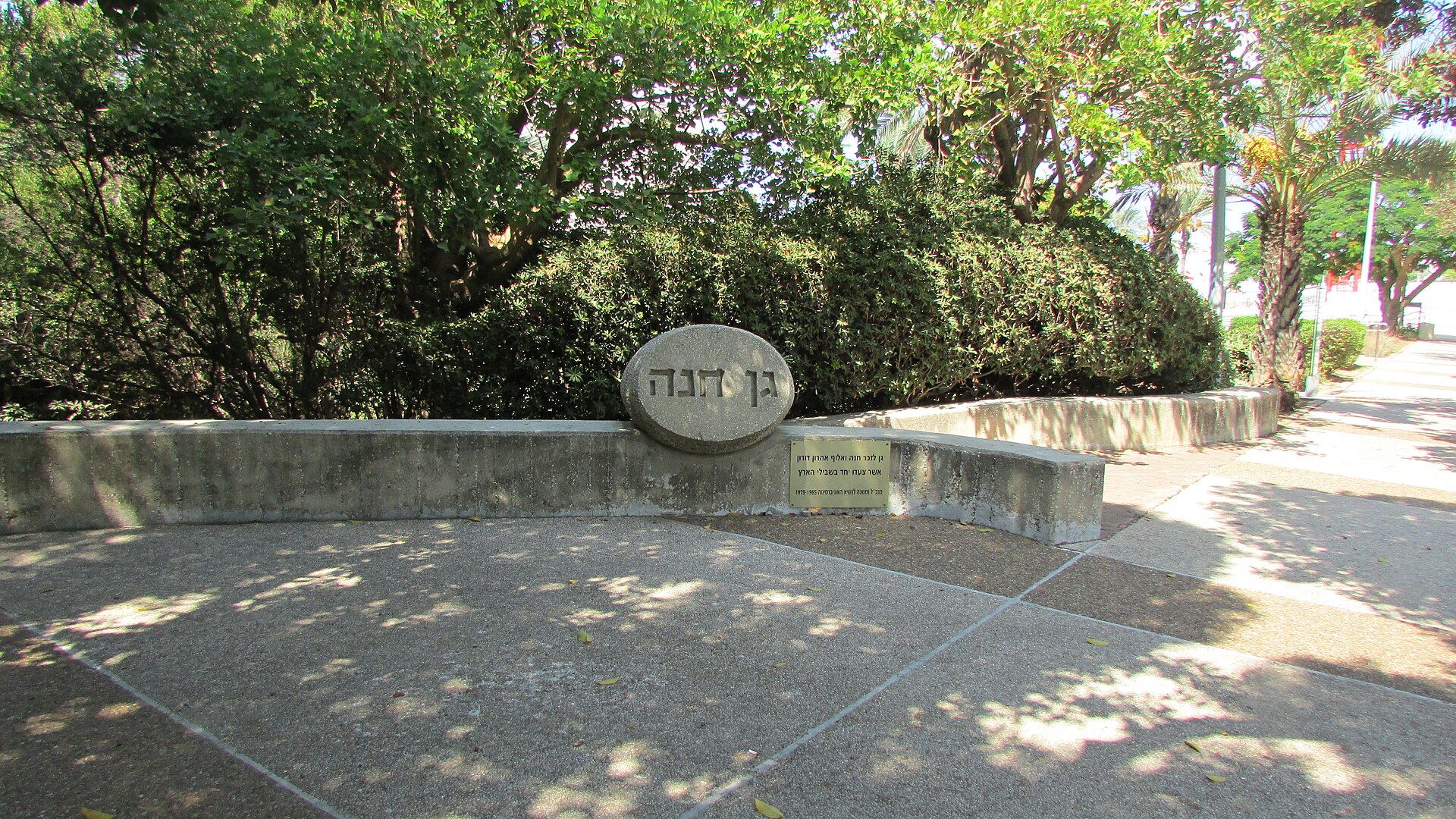
Tel Aviv University campus
Tel Aviv University campusיעקב · CC BY-SA 4.0 · via Wikimedia Commons
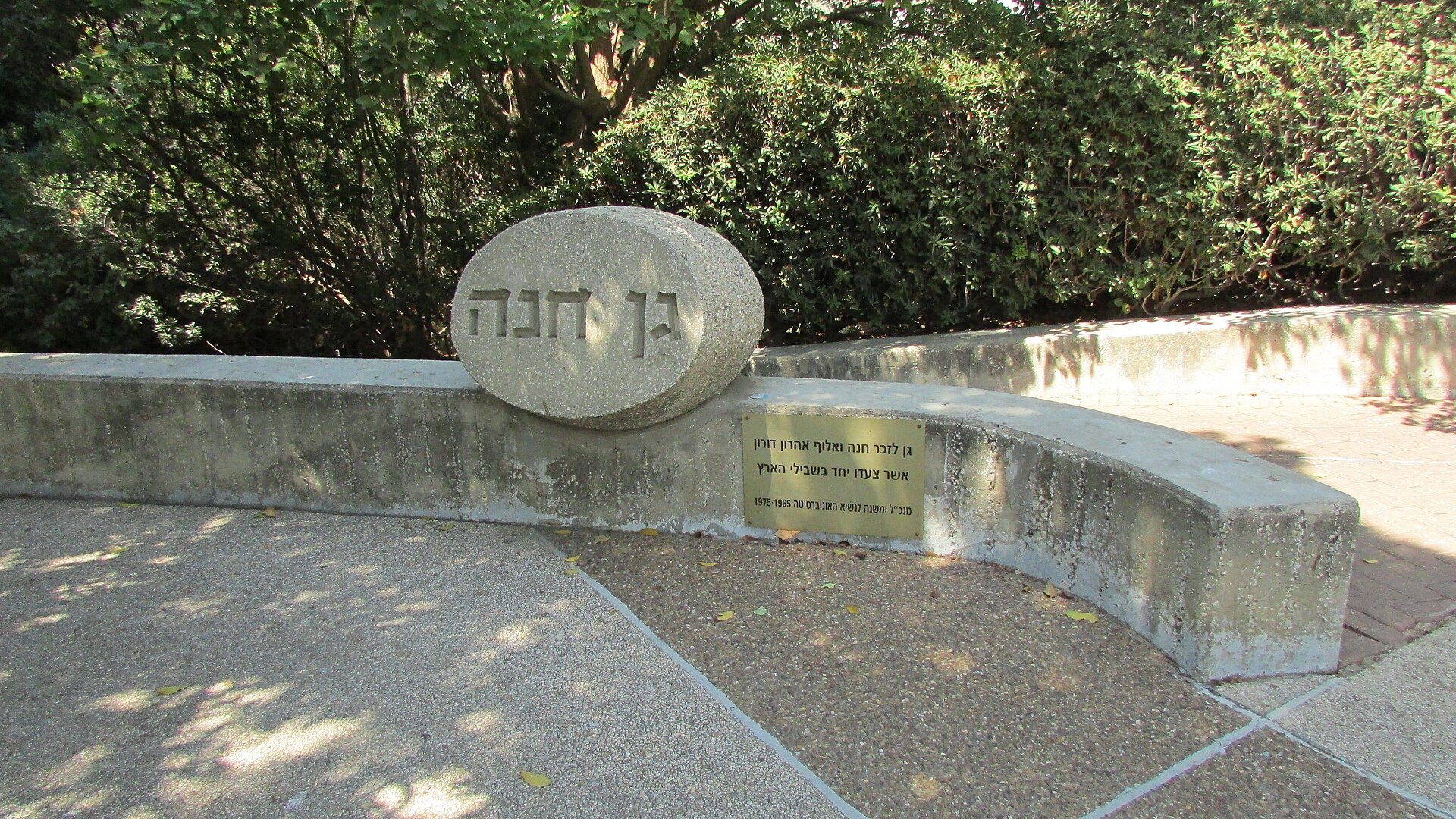
Tel Aviv University campus
Tel Aviv University campusיעקב · CC BY-SA 4.0 · via Wikimedia Commons
Tel Aviv University campus
Tel Aviv University campusיעקב · CC BY-SA 4.0 · via Wikimedia Commons

Why Tel Aviv University — Research, Innovation & the Tel Aviv Advantage

TAU is not a conventional destination for international students — it is an unconventional one, and that is precisely what makes it compelling. Studying here puts you inside Israel's research and innovation ecosystem, in a city that has reinvented itself as a global hub, at a university with 30,000 students and faculty who are defining the next generation of science, technology, and culture.

01Top-250 Global Research University
Ranked #230 by QS and #225 by Times Higher Education, TAU is among the most research-intensive universities in the world and Israel's most prolific generator of academic publications and patents.
02Silicon Wadi at Your Door
Tel Aviv is ranked among the world's top startup ecosystems. TAU alumni co-founded Waze, Fiverr, and Mobileye. Students access incubators, investor networks, and Israel's tech industry from Day 1 through Ramot, the university's technology transfer company.
03English-Taught International Programmes
TAU International (Lowy International School) offers fully English-taught undergraduate and graduate degrees — from Liberal Arts to Business to Computer Science — with no Hebrew required for international tracks.
04Breadth Across Every Discipline
From exact sciences and medicine to law, film, psychology, and a world-class conservatoire, TAU's academic span is extraordinary. A dual-degree partnership with Columbia University (BA in Liberal Arts) gives ambitious undergraduates a path to two degrees at once.
05Tel Aviv — A City Unlike Any Other
The New York Times called it 'the capital of Mediterranean cool.' A UNESCO-listed Bauhaus city, Michelin-starred food scene, world-class arts venues, and beaches — all within a 20-minute ride from the Ramat Aviv campus.
06Affordable by Global Standards
Tuition for international students is approximately $16,000 per year — roughly half the cost of comparable UK, Australian, or North American research universities — with an all-in cost of attendance around $30,000.

TAU Acceptance Rate & Admissions Profile

Stats

30,000
Total Students
9%
International Students
#230
QS World Rank

Profile Stats

3.0
Minimum GPA
32+
IB Diploma Minimum Band
6.5
IELTS Minimum
89
TOEFL iBT Minimum
#3
National Rank (Israel)
89%
Graduate Employment Rate
Academic Benchmarks — International Applicants
Overall acceptance rate — varies significantly by programme

Rea Vs Rd

Rd Label: Competitive Programmes (CS / Medicine / Law)
Rd Value: Highly selective
Rea Label: Liberal Arts & Social Sciences
Rea Value: More accessible

TAU Admissions Requirements — GPA, Language & Personal Statement

Academic Record
Value: 3.0+ GPA
  • Competitive programmes (CS, Medicine, Law) expect 3.5+ or equivalent
  • IB Diploma: 32+ overall minimum recommended
  • British A-Levels: typically ABB–AAA depending on programme
  • Course rigour in subjects relevant to your intended programme matters
A minimum GPA of 3.0 on a 4.0 scale is the published threshold for TAU International undergraduate programmes. In practice, competitive faculties expect significantly stronger records — Computer Science, Medicine, and Law applicants should aim for 3.5+ or IB 36+.
Language Proficiency
Value: IELTS 6.5 / TOEFL 89
  • IELTS Academic: 6.5 overall (no individual band below 6.0 recommended)
  • TOEFL iBT: 89 minimum (institution code 2929)
  • Native English speakers and English-medium school graduates may be exempt
  • SAT/ACT are optional — not required for TAU International programmes
English proficiency certification is a hard requirement for all English-taught TAU International programmes. IELTS 6.5 or TOEFL iBT 89 are the published minimums. Your motivation letter also serves as an implicit language sample — admissions staff read it with this in mind.
Personal Statement
Value: Motivation Letter
  • Free-form, typically 400–800 words
  • Must clearly address: Why this programme? Why TAU? Why now?
  • Programme-specific content strongly recommended
  • For graduate/doctoral applicants: name specific potential supervisors
Unlike US applications, TAU does not use fixed essay prompts. Your motivation letter or personal statement is a free-form document that admissions staff use to assess your academic purpose, cultural fit, and intellectual readiness. It is the human face of your application.

TAU Application Components — Direct Portal, Documents & Statement

Tel Aviv University's international admissions are handled directly — no third-party application platform. The application is documentation-centred, with your academic record and language certification carrying the most weight. Below is every component of a complete TAU International application.

01RequiredOnline Application Form
Submit directly via the TAU International student portal at international.tau.ac.il. No Common App, no UCAS — TAU uses its own system. You select your programme, create a profile, and upload all documents.
02RequiredOfficial Academic Transcripts
Certified high school transcripts (for undergraduates) or university transcripts (for graduates). A minimum cumulative GPA of 3.0 on a 4.0 scale is required; competitive programmes expect more.
03RequiredEnglish Proficiency Certificate
IELTS Academic 6.5+ or TOEFL iBT 89+ for all English-taught programmes. Submit official scores directly to TAU (TOEFL institution code: 2929). Native English speakers may request exemption.
04RequiredPersonal Statement / Motivation Letter
A free-form statement of 400–800 words explaining your academic interests, why you chose TAU and this specific programme, and your post-study goals. No fixed prompt — write directly to the programme's admissions committee.
05RequiredLetters of Recommendation
Typically one to two academic letters for undergraduate applications; two letters for graduate. Choose referees who can specifically comment on your academic capability and research or intellectual potential.
06RequiredPassport Copy
A valid passport is required for identity verification and, once admitted, for student visa processing. Non-Israeli citizens will need an A/2 student visa — TAU International provides the documentation to apply.
07OptionalPortfolio / Audition Materials
Required for selective creative programmes: the Steve Tisch School of Film & Television and the Buchmann-Mehta School of Music require portfolio samples or a formal audition. Check the specific programme page for format.
https://international.tau.ac.il/apply-to-international-programs-at-tel-aviv-university

TAU Motivation Letter — Writing a Statement that Gets Noticed

Tips

Answer the three questions first
Every strong TAU motivation letter answers: Why this programme? Why TAU specifically? Why now in your academic journey? Draft answers to these three before you write a single sentence of the actual document.
Name TAU specifically — not generically
Mention a specific research centre, faculty member, programme element, or TAU initiative that genuinely draws you. The Blavatnik School of Computer Science, the Sagol School of Neuroscience, the Buchmann-Mehta conservatoire — specificity shows research.
Address Israel honestly
Admissions readers notice if you avoid the question of why Israel. Whether your reason is cultural, intellectual, geopolitical, or professional — be direct about it. Authentic engagement with the destination is a positive signal.
This is not a US personal essay
TAU does not want a narrative arc or an emotional turning point. It wants evidence that you are a prepared, motivated, and intellectually serious candidate. Lead with your academic purpose, not your personal story.

Prompts

TAU International Personal Statement
No fixed prompt. Write a free-form motivation letter of approximately 400–800 words addressed to the admissions committee of your chosen programme. Address why this programme, why TAU, and what you will contribute.
Liberal Arts — Motivation Framing
For the BA in Liberal Arts: articulate your intellectual range, your specific major interests (e.g. Middle Eastern Studies, Jewish & Israel Studies, Digital Culture, Philosophy), and why you want to study in Israel.
STEM Programmes — Technical Focus
For STEM programmes (CS, Engineering, Sciences): lead with your technical background — specific projects, competitions, and research experience — and name the TAU research area or faculty group that interests you.
Graduate / Doctoral Research Statement
For graduate and doctoral applicants: state your research question, reference existing literature in the field, name specific potential supervisors at TAU by name, and explain how your prior work prepares you for this research.
The most common TAU application mistake. Writing a US-style personal narrative instead of a focused academic motivation letter — TAU wants intellectual purpose and programme fit, not your life story.

What TAU International Admissions Is Looking For

TAU International uses a holistic but academically centred evaluation. Grades and language certification are the primary filters; your motivation letter provides the human context that enables the admissions committee to distinguish between candidates with similar academic profiles. Understanding what matters — and in what order — is the foundation of a strong application.

01Academic Preparation
A GPA of 3.0+ is the minimum; competitive programmes expect significantly more. The rigour of your curriculum — IB, A-Levels, AP — is reviewed in context of what was available to you.
02Programme-Specific Readiness
TAU evaluates whether your academic background matches the demands of your chosen programme. A CS applicant without strong Mathematics will struggle regardless of overall GPA. Align your subject choices with your intended programme.
03English Proficiency
English is the medium of instruction for TAU International programmes. IELTS 6.5 or TOEFL 89 are the minimums, but the quality of your motivation letter also implicitly demonstrates your writing capability.
04Clarity of Academic Purpose
TAU values applicants who can clearly articulate why they are applying — to this programme, at this university, in this country. Vague or generic motivation is a weakness. Specific, informed reasoning is a strength.
05Genuine Engagement with Israel
Not a requirement, but a differentiator. Applicants who demonstrate curiosity about Israel's academic culture, startup ecosystem, history, or geopolitical context stand out. You do not need Jewish heritage — intellectual or professional motivation is equally valid.
06Potential to Contribute
TAU International builds a community of international students who enrich the campus with their perspectives. Demonstrating what you will bring — intellectually, culturally, professionally — strengthens your application.

TAU Financial Aid & Scholarships for International Students

Tel Aviv University's financial aid for international students is more limited than elite US universities but more generous than many non-US institutions. The combination of lower tuition ($16,000 vs $60,000+ at comparable US universities), partial need-based grants, US loan access for American students, and external scholarships (MASA) makes TAU genuinely accessible for motivated international students from a range of financial backgrounds.

Aid figures are estimates based on TAU International's published guidelines. Individual aid packages depend on documented financial need, programme, and available funding in any given cycle. Verify current figures at international.tau.ac.il.

Stats

~20%
of students receive some form of aid
$16,000
approximate annual tuition (international)
~$30,000
total cost of attendance (estimated)
Yes
US Federal Loans available to eligible US citizens

Contribution Tiers

NoteRangePercentPercent Value
Full tuition + living costs before any aidNo aid received~$30,000100
Typical recipient of TAU International need-based grantTAU Need-Based Aid Recipient~$24,00080
TAU grant plus MASA programme funding (qualifying students)TAU Aid + MASA Grant~$18,000–$22,00065
US citizen with FAFSA loans covering gapUS Citizen with Federal LoansLoan-funded50
External + TAU grant stacked — best-case scenarioFull External + TAU Aid Stack~$12,000–$18,00045
Grants vs. Loans — What TAU Offers. Unlike Harvard's full no-loan guarantee, TAU does not have a universal no-loan policy. However, US citizens may access US Federal Student Loans (FAFSA) at TAU, which is a Title IV participating institution. Additionally, TAU International provides need-based grants to eligible applicants — these are real grants, not loans, covering an average of approximately 20% of costs for recipients.
Estimated Annual Cost by Funding Scenario

Key Dates

Applications open for following Fall intake
Date: Nov–Dec
Recommended submission deadline (Fall)
Date: April–May
Typical rolling decision timeline after submission
Date: 6–8 weeks
Fall intake begins (main international intake)
Date: October

Advantages

  • Earlier decisions give more time for visa processing (critical — Israeli A/2 visas take time)
  • Housing allocation is first-come, first-served — early applicants have much better dormitory access
  • Scholarship and financial aid consideration is typically tied to earlier application cycles
  • More time to prepare before arrival — Hebrew crash courses, accommodation search, flights
  • Earlier admission confirmation lets you withdraw from other university processes cleanly

Disadvantages

  • Applying too early (before final IB/A-Level grades are confirmed) means submitting predicted grades
  • Less time to strengthen your application — if Grade 12 starts well, waiting captures that improvement
  • Spring intake (February/March) is available for some programmes — this is a genuine alternative if you need time
  • Rolling process means you may wait 6–8 weeks regardless of when you submit in the window
When to Apply. Tel Aviv University does not have US-style Early Action or Regular Decision rounds. It operates a rolling admissions process, decisions come as applications are reviewed. But timing still matters enormously — for housing, visas, and scholarships.
Tychr's Timing Recommendation. Apply as early as April–May for a Fall (October) intake. Do not wait until summer. The rolling process means your application sits in a queue — earlier submission means earlier decision, earlier housing access, and earlier scholarship consideration. If your final grades are not yet confirmed, submit predicted grades and update your file when results arrive.
TAU Rolling Admissions — Timing Strategy for International Students

TAU Admissions — Does Tel Aviv University Interview Students?

Most TAU International undergraduate programmes do not conduct formal admissions interviews. Your motivation letter, transcripts, and recommendation letters are the complete picture. The exceptions are the Steve Tisch School of Film & Television and the Buchmann-Mehta School of Music, which both require creative evaluation (portfolio review or live audition) as a formal part of the admissions process.

Meta

No formal interview for most undergraduate programmes
Format
Portfolio review / audition required
Film & Music
Informal supervisor conversation possible
Graduate applicants
Your motivation letter is the primary personal evaluation
What replaces it

Questions

What does a strong motivation letter look like?
Tip: The most important document in your application. It must answer three questions: Why this programme? Why TAU? Why now? Be specific and avoid generic language.
How do I show genuine interest in TAU without an interview?
Tip: Research a specific TAU faculty member, research centre, or programme offering and reference it by name. 'The Blavatnik School's work in X' is stronger than 'TAU's excellent CS department.'
I'm applying to Film or Music — what should I know?
Tip: For Film & Television: portfolio quality and artistic vision are evaluated. For Music: audition performance. These matter more than any other application component for these two schools.
I'm applying for a graduate degree — how do I connect with a supervisor?
Tip: For PhD applicants: email a potential supervisor before submitting your application. Express your research interest clearly and ask about their group's current work. A supervisor who knows you is a significant advantage.
Why does TAU not conduct interviews for most applicants?
Tip: A strong motivation letter is a written interview. TAU's admissions team reads it as a direct window into your thinking, language, purpose, and personality. Treat it with the same seriousness.

TAU Residential Life — Housing & Student Villages

Tel Aviv University does not operate a residential college system like Harvard or Oxford. Housing is organized through the university's dormitories (Einstein and Broshim) and private off-campus accommodation in Ramat Aviv and central Tel Aviv. International students of the Lowy International School are prioritized for on-campus housing — but spaces are limited and allocated on a first-come, first-served basis, so housing applications should be submitted as early as possible after receiving an offer of admission.

Houses

Einstein Residence Hall
Tag: On-Campus
Established international student housing, priority given to Lowy International School students. Rooms are single or shared. Close to faculty buildings and university services.
Broshim Student Village
Tag: On-Campus
Modern dormitories popular with both domestic and international students. Independent-living style with shared kitchens. Social atmosphere with a mix of nationalities.
Ramat Aviv Neighbourhood
Tag: Off-Campus
The university's immediate neighbourhood. Shared apartments are popular for 2nd and 3rd-year students. Short walk or bus ride to campus. Comparable or lower cost to on-campus options.
Tel Aviv City
Tag: Off-Campus
Many students live further into central Tel Aviv — Dizengoff, Florentin, or the Port area. Bus and light rail connect to campus. More city life, longer commute.

Lottery Steps

  • Receive your offer of admission from TAU International
  • Submit the housing application and deposit through the TAU housing portal (deadline published with your admission letter)
  • Housing is allocated to international students on a priority basis — earlier applications receive better choices
  • Einstein and Broshim both offer international students independent-living accommodation close to campus
  • Off-campus housing in Ramat Aviv is an alternative popular with returning students — shared apartments typically cost less than on-campus rooms
  • TAU International provides housing orientation support and connects new students with housing coordinators before arrival

TAU Faculties & International Programmes

Lowy International School (TAU International)
Label: International Undergraduate Programmes
  • {"label":"Main language of instruction","value":"English"}
  • {"label":"Key undergraduate programmes","value":"BA Liberal Arts, BA Management & Liberal Arts"}
  • {"label":"Partner university dual degree","value":"Columbia University"}
  • {"label":"Who applies here","value":"Most non-Israeli international students"}
The gateway for international undergraduate students. Two flagship English-medium BA degrees — Liberal Arts and Management & Liberal Arts — plus a selective dual degree with Columbia University. The Lowy School also serves as the support hub for international students in other faculties.
Blavatnik School of Computer Science
Label: Exact Sciences
  • {"label":"Programme language","value":"Hebrew (primary) / English (some courses)"}
  • {"label":"Global recognition","value":"Among top CS departments in the world"}
  • {"label":"Industry links","value":"Google, Intel, Microsoft Israel R&D"}
  • {"label":"Entry requirement","value":"Highly competitive; Psychometric + Hebrew typically required"}
One of the world's leading computer science departments, home to research in algorithms, AI, cybersecurity, and computational biology. International students typically need Hebrew proficiency for the full BSc programme; some Master's programmes are offered in English.
Sackler Faculty of Medicine
Label: Health Sciences
  • {"label":"Primary affiliation","value":"Tel Aviv Sourasky (Ichilov) Medical Center"}
  • {"label":"International entry","value":"Selective; contact faculty directly"}
  • {"label":"Language","value":"Hebrew-medium; English postgraduate tracks exist"}
  • {"label":"Research output","value":"Among Israel's highest in life sciences"}
Israel's leading medical school by research output, affiliated with Tel Aviv Sourasky (Ichilov) Medical Center. Entry for international students to the Hebrew-medium MD programme is highly competitive and requires Hebrew proficiency. English-taught Master's programmes in life sciences are available through TAU International.
Steve Tisch School of Film & Television
Label: Arts
  • {"label":"Programme type","value":"Portfolio + academic application"}
  • {"label":"Notable alumni","value":"International directors, screenwriters, producers"}
  • {"label":"Language","value":"Hebrew-medium; international tracks vary"}
  • {"label":"Reputation","value":"Top film school in the Middle East"}
The Steve Tisch School is one of the most celebrated film schools in the Middle East and has produced internationally acclaimed directors and screenwriters. Admission is competitive and includes a portfolio review. International students should contact the school directly about English-track availability.
Buchmann-Mehta School of Music
Label: Performing Arts
  • {"label":"Entry process","value":"Formal audition required"}
  • {"label":"Instruction level","value":"Conservatoire standard"}
  • {"label":"Alumni achievement","value":"Major international orchestras and ensembles"}
  • {"label":"Language","value":"Instruction in Hebrew; international students welcome"}
One of the Middle East's finest music conservatoires. Admission requires a formal audition. Graduates perform with major orchestras worldwide. International students should contact the school directly about language and admission requirements.
Coller School of Management
Label: Business & Economics
  • {"label":"English-taught option","value":"BA Management & Liberal Arts (TAU International)"}
  • {"label":"Graduate programme","value":"MBA and specialist Masters"}
  • {"label":"Industry connection","value":"Tel Aviv startup and finance ecosystem"}
  • {"label":"Global ranking","value":"Ranked among top business schools in the region"}
The Coller School is embedded in Israel's business and entrepreneurship culture. For international undergraduates, the BA in Management and Liberal Arts (offered through TAU International in English) is the primary entry point. Graduate business programmes offer additional English-taught tracks.

Research & Extracurricular Opportunities at Tel Aviv University

Ramot — TAU's Technology Transfer Company
Category: Innovation & Startups
Ramot is TAU's technology transfer arm — the commercial engine that has spun off over 1,800 patents and numerous startup companies. Students in STEM can connect to research commercialisation from early in their studies through lab placements and entrepreneurship programmes.
Research Centres & Institutes
Category: Academic Research
TAU has over 130 research institutes and centres, including the Sagol School of Neuroscience, the Porter School of Environment and Earth Sciences, the Tami Steinmetz Center for Peace Research, and the Shasha Center for Strategic Studies. Undergraduate and graduate students can engage with these through seminars, RA positions, and thesis work.
Student Organisations & Cultural Life
Category: Student Life
TAU has an active student union and hundreds of student clubs spanning political groups, cultural associations, academic societies, and sports teams. International students are welcomed into the broader campus community — the Lowy International School also organizes orientation events, cultural excursions, and peer-pairing programmes.
Arts, Culture & the City
Category: Cultural Engagement
The Genia Schreiber University Art Gallery on campus hosts regular exhibitions. The university's proximity to Tel Aviv's world-class museums (Tel Aviv Museum of Art, Eretz Israel Museum), concert venues, and film festivals means students live inside one of the world's richest cultural ecosystems.
Scroll right to explore TAU's research programmes and student life.

Career Outcomes & TAU Alumni Network

TAU's graduate employment rate of 89% and average starting salary of approximately $48,000 reflect the university's strong integration with Israel's high-technology economy. The university's Career Development Center runs a biannual job fair — a winter technology fair and a spring general fair — connecting students with Israeli and multinational employers. TAU's global alumni network is particularly powerful in technology, life sciences, and finance.

Stats

89%
Graduate employment rate (within one year)
$48,000
Estimated average starting salary
30,000
Total student body
#230
QS World Rank
Waze, Fiverr, Mobileye
Companies co-founded by TAU alumni
#3
Israel national rank

Categories

Technology & Startups
TAU's location at the heart of 'Silicon Wadi' means students graduate into one of the world's densest technology ecosystems. Alumni have co-founded Waze (acquired by Google), Mobileye (acquired by Intel), and Fiverr — with TAU's CS and Engineering faculties feeding directly into the Israeli tech industry and global companies with Israeli R&D centres (Google, Microsoft, Intel, Apple).
Medicine & Life Sciences
TAU's Sackler Faculty of Medicine and its life sciences research centres produce graduates who enter clinical medicine, biotech research, and pharmaceutical development in Israel, Europe, and North America. The affiliated Ichilov Medical Center is one of Israel's premier clinical research sites.
Law, Policy & Public Service
TAU graduates enter government, law, international organisations (UN, EU), NGOs, and policy research bodies across Israel, the US, and Europe. The university's Law School and Department of Political Science have strong alumni in Israeli public life and international institutions.

Our TAU Admissions Track Record & Student Success Stories

Priya S.
Tychr helped me see that my motivation letter was trying to do too much — it covered my whole life story instead of answering why TAU's Computer Science faculty specifically. After restructuring it to lead with my actual research interest in computational biology and naming a specific TAU lab, I got my offer within five weeks.
Country: India
Program: TAU — Computer Science (MSc)
Class Year: Class of 2025
Residential: Broshim Student Village
Academic Profile: IB 40 · GPA 3.9
Marcus T.
I was uncertain whether TAU's BA in Liberal Arts was 'serious enough' as an international destination. Tychr's counsellors gave me a clear picture of TAU's real research standing and the Columbia dual degree option, which changed my perspective entirely. I'm now in my second year and about to start the Columbia transfer.
Country: United States
Program: TAU–Columbia Dual Degree — Liberal Arts
Class Year: Class of 2026
Residential: Einstein Hall
Academic Profile: GPA 3.85 · SAT 1480
Anna K.
Applying to an Israeli university from Europe felt daunting — the visa process, the cultural context, the question of safety. Tychr walked me through every step, connected me with a current TAU student from my country, and helped me write a motivation letter that genuinely reflected why I wanted to study in Tel Aviv. Acceptance came eight weeks after I applied.
Country: Germany
Program: TAU — BA Management & Liberal Arts
Class Year: Class of 2025
Residential: Off-campus, Ramat Aviv
Academic Profile: Abitur 1.3 · IELTS 7.5

Faqs

Do I need to speak Hebrew to study at TAU?+

Not for English-taught programmes through TAU International (Lowy International School). The BA in Liberal Arts, BA in Management and Liberal Arts, and most graduate programmes offered through TAU International are fully delivered in English. Hebrew-medium programmes require proficiency certification — always check the specific programme.

Is it safe to study in Israel?+

TAU and the Israeli government take student safety seriously. The situation in Israel changes over time, and prospective students should review current advisories from their home country's foreign ministry. TAU International provides orientation, security briefings, and ongoing support for international students throughout their studies.

What visa do I need?+

Non-Israeli international students typically require an A/2 student visa. TAU International provides admitted students with the invitation letter and documentation required to apply at an Israeli consulate. Processing timelines vary significantly by country — apply as early as possible, ideally two to three months before your intended arrival.

Is there a dual degree with Columbia University?+

Yes. TAU offers a Dual Degree in Liberal Arts with Columbia University — years 1–2 at TAU, years 3–4 at Columbia. This is a selective programme with its own admissions criteria. Check the TAU International website for current availability, requirements, and application process.

Can US students use federal student loans at TAU?+

Yes. TAU International is a US Title IV participating institution, which means US citizens and eligible non-citizens may be able to access US Federal Student Loans (via FAFSA). VA educational benefits may also apply. Contact the TAU International financial aid office at admissions@telavivuniv.org for current eligibility details.

What is TAU's overall acceptance rate and does it vary by programme?+

TAU's overall acceptance rate is approximately 50%, but this masks enormous variation by programme. Computer Science, Medicine, Law, and Film are significantly more competitive. Liberal Arts and Management programmes are more accessible for well-prepared international applicants. Always assess selectivity at the programme level, not the university level.

Does TAU recognise the IB Diploma?+

Yes. The IB Diploma is well-recognised by TAU. A minimum total score of 32 is the published benchmark, though competitive programmes in Medicine, CS, and Engineering may expect higher scores. Subject-level results at Higher Level in subjects relevant to your programme are also reviewed.

When should I apply for the best chances?+

TAU uses rolling admissions. For a Fall (October) start, applying by April–May is recommended — earlier if possible. Early applicants receive earlier decisions and have much better access to on-campus housing (which is limited and allocated first-come, first-served) and scholarship consideration.

Book a Free TAU Admissions Strategy Session

In 60 minutes, our TAU admissions specialists will evaluate your academic profile, map the right TAU programme for your goals, develop your motivation letter strategy, guide you through the rolling admissions timeline, and identify financial aid and scholarship opportunities specific to your background.

  • No commitment required
  • Israel and TAU specialists with on-the-ground knowledge
  • Personalised strategy — motivation letter, timeline, financial aid, and visa
Studying at TAU is not the obvious path — and that is exactly what makes it the right one for the students who choose it deliberately.

TAU Academic Requirements

Tel Aviv University Academic Standards — The Honest Breakdown for International Students

What GPA, IB score, and academic profile do TAU International's admitted students need? And how does TAU's holistic review work for IB, A-Level, AP, and other international curricula?

3.0
Minimum GPA
4.0 scale; competitive programmes higher
32+
IB Minimum Band
STEM / Medicine: 36+
6.5
IELTS Minimum
Academic band
89
TOEFL iBT Minimum
Institution code 2929
Optional
Test Policy
SAT / ACT not required
#230
QS World Rank
Top 250 globally

GPA & Academic Record

TAU and GPA — What the Data Shows

Tel Aviv University publishes a minimum GPA of 3.0 on a 4.0 scale as the threshold for TAU International undergraduate programmes. In practice, the bar varies significantly by faculty and programme — and 3.0 is a floor, not a target.

A 3.0 GPA meets the threshold but will not distinguish your application. For competitive programmes, a 3.5+ or IB 36+ is a more realistic target. What distinguishes admitted students in competitive faculties is the combination of strong grades in rigorous courses plus relevant subject preparation.

3.0
Published minimum GPA for TAU International programmes
3.5+
Recommended for competitive programmes (CS, Medicine, Engineering)
What this means for international students. International students from systems without a 4.0 GPA (IB, UK A-Levels, German Abitur, French Baccalauréat) are evaluated on their native qualification against TAU's knowledge of those systems. An IB score of 32 is the published minimum; the Abitur, Baccalauréat, and A-Level equivalents are assessed individually by the admissions office.
Grade trajectory matters. If your academic record shows a clear upward trajectory — from moderate early performance to strong later results — this context matters and should be addressed in your motivation letter. TAU is interested in where you are heading, not only where you started.

Academic Context

School Context and International Qualifications — How TAU Reads Academic Performance

TAU International evaluates international academic credentials against the university's knowledge of each educational system. The admissions office has experience reading IB, A-Level, AP, and national curricula from across Europe, Asia, and the Americas.

How TAU contextualises your academic record
TAU does not require a third-party credential evaluation service for most major international qualifications (IB, UK A-Levels, US High School + AP, German Abitur, French Baccalauréat). For less common national qualifications, the TAU Registration Office may request additional documentation or credential evaluation. Contact galinar@tauex.tau.ac.il for credential evaluation queries.
What this means practically
For IB students, course selection matters alongside the total score. A student with 34 points including HL Mathematics: Analysis & Approaches, HL Chemistry, and HL Biology sends a different signal for a Medicine application than a student with 36 points across less rigorous subject combinations. The rigour of your course selection is visible to an experienced admissions reader.
For students from less well-known schools. For students from less well-known schools or countries with unfamiliar curricula, a strong motivation letter that contextualises your academic environment — explaining the rigour of your programme relative to national norms — can help admissions staff evaluate your record fairly. If applying from a country with limited TAU familiarity, a brief note on your school's national standing or ranking is useful.

Standardised Testing

SAT Scores at TAU — Optional, Not Required

TAU does not require SAT or ACT scores for international students applying via TAU International. Your high school transcript, IB or A-Level results, and English proficiency tests (IELTS/TOEFL) are the primary academic metrics.

LabelScorePercent
Required for TAU International programmesNo0
Optional — may be submitted if strongYes50
Typical SAT range if submittedNot published0
When SAT Math matters. If you have a strong SAT Math score (750+) and are applying to a STEM programme, including it may add marginal positive context to your academic profile — particularly if your transcript does not otherwise showcase mathematical strength. But it is never expected and rarely decisive.
TAU's approach — what this means for you. TAU's test-optional policy is genuine — the admissions office has stated explicitly that SAT/ACT are not part of the standard international application. Focus your preparation on IELTS or TOEFL, on strengthening your transcript, and on your motivation letter.
Students who have prepared for the SAT or ACT as part of their US application process may include those scores at TAU if they are strong. If your scores are below average for competitive international programmes, it is better to omit them and let your IB/A-Level record speak for itself.

Standardised Testing

ACT Scores at TAU — The Policy and the Strategy

Like the SAT, the ACT is not required for TAU International undergraduate admissions. International students from the US system who have ACT scores may include them, but they carry the same optional, non-decisive weight as SAT scores.

Metrics

Required
Score: No
Optional
Score: Yes — if strong

Comparison Cards

SAT vs. ACT at TAU — no preference
Neither SAT nor ACT is preferred or required at TAU. The choice is entirely the applicant's — only submit if your scores are strong and add positive context.
IB students — focus on IB, not tests
IB Diploma total score and Higher Level results are the primary academic benchmarks for IB students at TAU. A strong IB score (36+) is far more important than any SAT/ACT result.
US curriculum students
US High School students applying with a GPA and AP courses should ensure their GPA, AP scores, and IELTS/TOEFL are strong. SAT/ACT adds minor context but is not determinative.
Score submission guidance. TAU does not publish superscore policies since SAT/ACT are not standard components of the TAU International application. If you submit scores voluntarily, submit your best result — there is no formal superscore consideration.
Tychr's recommendation. For most TAU-bound students, time spent preparing for the SAT or ACT is better redirected toward IELTS/TOEFL preparation (if needed), strengthening IB or A-Level performance, or drafting a strong motivation letter. Only consider SAT/ACT prep if you are simultaneously applying to US universities that require them.

Testing Strategy

TAU Test Policy — What 'Optional' Actually Means

Tel Aviv University operates a genuinely test-optional policy for international students applying via TAU International. The Psychometric Entrance Test (PET) — Israel's national entrance exam — is used for Hebrew-medium domestic programmes but is generally not required for English-taught TAU International programmes.

Submit Items

Your SAT is 1400+ or ACT is 31+ and you are applying to a STEM programme — scores may add marginal positive context.
You are simultaneously applying to US universities and have scores available — include them if strong, omit if weak.

Withhold Items

Your SAT or ACT is below average for competitive international applicants — withholding is the better strategy.
You have not sat any standardised tests — there is no expectation that you have.
Current policy. TAU International has explicitly stated that SAT, ACT, and PET scores are not required for international students applying to English-taught programmes. Decisions are based on academic transcripts, IB/A-Level results, English proficiency certificates (IELTS/TOEFL), and the motivation letter.
The key misconception. Some international students assume that submitting SAT or ACT scores to TAU will strengthen their application, as it might at US universities. At TAU International, this is not the case. The IELTS or TOEFL is the English-language assessment TAU cares about — not the SAT. Ensure your English proficiency test is strong; optional standardised tests are a secondary consideration.

International Qualifications

IB Diploma and A-Levels at TAU — Specific Benchmarks

IB Diploma
Note: TAU's admissions office is experienced with the IB curriculum. The total score matters, but so does the pattern of Higher Level subjects relative to your intended programme. A student with HL Maths: Analysis & Approaches, HL Chemistry, and HL Biology sends a strong signal for Medicine or Life Sciences regardless of total score; HL subject selection should reflect your intended programme.
  • {"label":"Published minimum","value":"32 total points"}
  • {"label":"Competitive programmes (CS, Medicine, Engineering)","value":"36–40 points"}
  • {"label":"HL subject expectation","value":"Higher Level courses relevant to your intended programme (e.g. HL Maths AA for STEM)"}
  • {"label":"Extended Essay","value":"Noted but not formally weighted; a strong EE in a relevant subject adds positive context"}
British A-Levels
Note: TAU accepts British A-Levels as a standard undergraduate qualification. Three A-Levels are typically required. For competitive STEM programmes, AAA in relevant subjects is a reasonable benchmark. Contact the specific faculty or TAU International directly for programme-by-programme A-Level requirements, as these are not centrally published.
  • {"label":"Typical requirement","value":"Three A-Levels; ABB–AAA depending on programme"}
  • {"label":"STEM competitive range","value":"AAA in Mathematics, Physics, Chemistry, or Biology as relevant"}
  • {"label":"Humanities range","value":"ABB–AAB in relevant humanities subjects"}
  • {"label":"AS results","value":"Reviewed alongside predicted/final A-Level grades"}

US Curriculum

AP Courses at TAU — What They Signal and What They Don't

Advanced Placement (AP) courses are accepted as part of the US High School Diploma qualification by TAU International. They are not separately required but provide useful context about academic rigour for US-curriculum applicants.

What TAU looks for in AP results
Strong AP scores (4–5) in subjects relevant to your intended TAU programme — particularly in Mathematics, Sciences, Computer Science, and Economics — are a positive signal. They help TAU contextualise the rigour of your US High School curriculum alongside your GPA.
Credit recognition
AP courses can also provide course credit recognition at TAU once admitted, potentially allowing you to take more advanced courses in your first year. Check with the specific TAU faculty about credit transfer policies.
If you have no AP courses
US-curriculum students who have not taken AP courses should ensure their GPA is strong (3.5+ for competitive programmes) and their IELTS/TOEFL score meets the minimum. AP is supplementary context, not a replacement for a strong transcript.
TAU may recognise AP scores of 4 or 5 for course credit in some departments, allowing students to skip introductory coursework. This is programme-dependent — confirm with the relevant TAU faculty before enrolling.
International students from IB, A-Level, or national curriculum systems should not pursue AP separately for TAU's benefit. Your existing qualification is appropriate for your context and is evaluated accordingly. AP is relevant only for students who studied in the US curriculum.

Academic Rigour

Rigour of Secondary Record — TAU's Primary Academic Criterion

TAU's admissions office evaluates the rigour of your secondary school record in context — not as an absolute measure, but relative to what was available to you and what your intended programme demands. Choosing rigorous courses in relevant subjects is the clearest signal of academic preparation.

A student with a 3.5 GPA from a rigorous IB programme with relevant HL subjects is stronger for Computer Science than a student with a 3.9 GPA from a less demanding curriculum.

Rigour is always relative to context. For IB students: taking HL Maths: Analysis & Approaches, HL Physics, and HL Computer Science simultaneously for a CS application demonstrates the academic ambition and subject-specific preparation TAU values. For A-Level students: three relevant subjects at the highest level available to you is the expected baseline. For US curriculum students: a combination of AP courses in relevant subjects alongside a strong GPA tells the clearest story.
What rigour means at TAU. Rigour means taking the most demanding version of the subjects most relevant to your intended programme — not simply the most courses available. A student who took IB Standard Level Maths for a Computer Science application is at a disadvantage relative to one who took HL Maths: Analysis & Approaches, regardless of total IB score.
What TAU is looking for. TAU's admissions readers are experienced with international qualifications. They can identify whether a student challenged themselves academically or optimised for the highest achievable grade. The pattern of subject choices — which HL subjects an IB student selected, which A-Level subjects a UK student chose — tells a clear story about intellectual ambition and programme readiness.

Programme Preparation

Subject Preparation by Programme — What TAU Expects

Tel Aviv University's English-taught international programmes span a range of disciplines. Each has different academic expectations. The consistent thread is that your secondary school record should demonstrate genuine preparation for the intellectual demands of your chosen field.

Computer Science & Engineering
Strong Mathematics is essential. IB Maths: Analysis & Approaches HL or A-Level Mathematics (with Further Mathematics ideal) is the expected preparation. A background in Computer Science or programming (formal or self-taught) is strongly advantageous. CS olympiad participation (USACO, IOI national selection) is a meaningful signal for the most competitive applicants.
Medicine & Life Sciences
Biology and Chemistry at Higher Level (IB) or A-Level are required or strongly recommended. Physics is advantageous for biomedical or engineering-adjacent tracks. Research experience in a relevant field — even informal — strengthens the application considerably.
Business & Economics
Mathematics at standard or higher level is expected. Economics, Business Studies, and Statistics add useful context. For the BA in Management and Liberal Arts, a broad and intellectually curious academic profile is valued alongside quantitative foundation.
Liberal Arts & Humanities
No strict subject prerequisites for the Liberal Arts BA. A broad, rigorous academic record across humanities and social sciences is the baseline. Strong essay-writing skills and evidence of critical engagement with texts, history, or social issues — demonstrated through your motivation letter — matter significantly.

Language Proficiency

English Language Requirements for TAU International Students

English language proficiency is a hard requirement for TAU International programmes. TAU publishes minimum scores and requires official certification from recognised test providers. Students from English-medium schools may apply for exemption.

Your motivation letter is an implicit English language test. Admissions staff in English-taught programmes read your statement as a direct sample of your written English capability. A student whose IELTS is 6.5 but whose motivation letter demonstrates sophisticated, clear academic writing reassures the admissions committee far more than a score alone.

Test: IELTS Academic
Score: 6.5+
Test: TOEFL iBT
Score: 89+
Test: Duolingo English Test
Score: Not confirmed — verify with TAU
Exemptions and practical guidance. Students whose secondary education was delivered entirely in English (at an English-medium school in a non-English-speaking country, or at a school in the US, UK, Australia, Canada, or Ireland) may be eligible for an exemption from the IELTS/TOEFL requirement. Contact the TAU International admissions office to request an exemption and provide documentation of your English-medium schooling.
https://international.tau.ac.il/apply-to-international-programs-at-tel-aviv-university

By Programme

Academic Requirements by Programme — What Each TAU Track Expects

TAU does not formally evaluate intended programme during admissions for all tracks — students apply to a specific programme directly. Academic requirements vary by faculty. The table below summarises expected preparation for TAU's key English-taught and international programme tracks.

SignalsExpectationConcentration
Programming projects; CS olympiad participation; prior CS courseworkHL Maths AA or A-Level Further Maths; CS backgroundComputer Science
Physics/engineering projects; competition results; quantitative researchHL Maths + HL Physics; or A-Level Maths + PhysicsElectrical Engineering
Research experience; lab work; science olympiad resultsHL Biology + HL Chemistry; or A-Level equivalentsLife Sciences / Biology
Statistical projects; economics research; quantitative data workHL Maths + Economics; or A-Level equivalentsEconomics / Business
Essay competitions; broad humanities reading; interdisciplinary interestsStrong broad academic record; rigorous humanities profileLiberal Arts (BA)
Portfolio of prior film/visual work; knowledge of film history; artistic visionStrong academic record + portfolio (audition required)Film & Television
Research experience; statistics background; clinical or social science engagementStrong general academic record; sciences or social sciences advantageousPsychology
Audition performance; musical achievement; conservatoire-level preparationFormal audition + strong general academic recordMusic (Buchmann-Mehta)

International Education Systems

TAU and International Education Systems — How Your Curriculum Is Evaluated

IB Diploma
The IB Diploma is well understood and valued at TAU. Admissions staff are experienced readers of IB transcripts. Total score, Higher Level subject choices, and Extended Essay subject all provide useful signals. The standard interpretation of 32 as the minimum and 36+ for competitive programmes applies, with individual assessment of HL subject choices relative to the intended programme.
A-Levels (Cambridge, Edexcel, OCR)
British A-Levels are a standard and accepted qualification. Three A-Levels in relevant subjects are the baseline. TAU is familiar with the UK system and evaluates predicted and achieved grades alongside GCSE/IGCSE context. A-Level students who also have GCSE results should include them.
US High School Diploma + AP
The US High School Diploma with AP courses is accepted for TAU International programmes. GPA (on a 4.0 scale) is the primary metric, with AP scores providing additional context. SAT/ACT scores are optional. Students from US curriculum schools should ensure their GPA and AP profile clearly reflect academic strength in subjects relevant to their intended TAU programme.
Indian Boards (CBSE / ISC)
The Indian Class 12 (CBSE or ISC) is accepted by TAU. Credential evaluation may be requested for some applicants. Strong percentage scores (85%+) in relevant subjects are the baseline. Indian students applying to STEM programmes should highlight any JEE scores, Olympiad results, or research experience in their application — these are meaningful context for TAU's admissions readers.
European National Qualifications (Abitur, Baccalauréat, etc.)
The German Abitur, French Baccalauréat, and other European national qualifications are accepted and well-understood by TAU. Strong results relative to national averages are the expected baseline. The TAU Registration Office evaluates European qualifications individually where the standard grade-equivalent mapping is not straightforward.

Roadmap

Building an Academic Profile for TAU — What to Do at Each Stage

Grade 9–10Lay the foundation
Year: Grade 9–10
  • Choose the most rigorous curriculum available — IB, A-Level, AP, or your national equivalent.
  • Excel in mathematics and the core subjects relevant to your intended field.
  • Begin exploring Israeli culture, language, and academic life — even informally. This authenticity matters in your motivation letter.
Grade 11Demonstrate depth and direction
Year: Grade 11
  • For IB students: finalise your Higher Level subject choices with your intended TAU programme in mind.
  • For A-Level students: confirm your three subjects and pursue the most rigorous versions available.
  • Take your IELTS or TOEFL — banking a strong score early reduces pressure in Grade 12.
  • Begin researching specific TAU programmes, research centres, and faculty. Authenticity in your motivation letter comes from genuine prior research.
Grade 12 (first half)Prepare your application
Year: Grade 12 (first half)
  • Open your application on the TAU International portal from November onwards.
  • Draft your motivation letter — allow time for multiple revisions.
  • Request academic reference letters well in advance (at least six weeks notice for referees).
  • Confirm your IELTS or TOEFL score is on file and meets the minimum threshold.
Grade 12 (spring)Submit and follow up
Year: Grade 12 (spring)
  • Submit your application by April–May for the best chance at housing and scholarship consideration.
  • Apply for housing simultaneously with or immediately after your academic application.
  • Apply for external scholarships (MASA, home government programmes) in parallel.
  • If you receive your IB or A-Level results after applying, update your TAU file immediately.

Common Pitfalls

Academic Mistakes That Cost TAU Applications — And How to Avoid Them

Assuming the overall acceptance rate reflects your programme
The university's overall acceptance rate of approximately 50% is misleading. Computer Science, Medicine, and Law have much lower effective acceptance rates for competitive applicants, while other faculties are more accessible. Always research the specific programme, not the university-wide figure.
Applying without verifying the language of instruction
Not all TAU programmes are delivered in English. Applying to a Hebrew-medium programme without Hebrew proficiency — or without verifying the language of instruction — leads to rejections that could have been avoided with basic research.
Submitting below-threshold English proficiency scores
IELTS 6.5 and TOEFL 89 are hard minimums. Submitting a score below these thresholds, or assuming an exemption applies without formally requesting one, is a common and avoidable reason for rejection.
Choosing easier IB options to protect the total score
For IB students applying to STEM programmes: choosing Standard Level Mathematics — or a less demanding maths track — to protect your GPA is a significant disadvantage. TAU's STEM faculty readers notice whether you took the more rigorous maths option and will compare you against applicants who did.
Missing the effective housing application window
TAU International housing is limited and allocated first-come, first-served. Students who apply to a programme in summer for an October start often find no on-campus housing available. Apply as early as April–May — and submit the housing application simultaneously with or immediately after your academic application.

Real Outcomes

Academic Profiles of Tychr-Advised TAU International Students

The following profiles represent the academic backgrounds of students Tychr has helped gain admission to TAU International programmes. They illustrate the range of preparation that works, and what made each application compelling.

Profile 1 — CS / STEM Focus
HL Maths: Analysis & Approaches (6), HL Physics (6), HL Computer Science (7). Strong motivation letter focusing on TAU's Blavatnik School and Israeli AI research. Cited specific professors and referenced prior coding projects in algorithmic trading.
Stats: IB 38 · IELTS 7.0 · GPA equivalent 3.8
Takeaway: The IB score was solid but not exceptional. The application was distinguished by programme-specific research and a motivation letter that demonstrated genuine knowledge of TAU's CS research environment.
Profile 2 — Liberal Arts (European Qualification)
German Abitur 1.4 (equivalent to strong A grades). IELTS 7.5. No standardised tests submitted. Strong interest in Middle Eastern Studies and Jewish history explained clearly in motivation letter. Applied for Columbia dual degree.
Stats: Abitur 1.4 · IELTS 7.5
Takeaway: European qualifications are well understood by TAU. The motivation letter's direct engagement with Israel as a study destination — including a planned Hebrew language course after arrival — was a differentiating factor.
Profile 3 — Graduate Life Sciences (US Curriculum)
US High School Diploma, GPA 3.85. AP Biology (5), AP Chemistry (5), AP Statistics (4). TOEFL 104. Applying for Life Sciences Master's with a research statement naming a specific TAU neuroscience lab and citing their published work.
Stats: GPA 3.85 · TOEFL 104 · AP scores 4–5
Takeaway: Graduate admissions at TAU are heavily research-focused. Naming a specific supervisor and demonstrating familiarity with their published work transformed this from a generic graduate application to a targeted, credible one.

Faqs

Is a 3.0 GPA enough for TAU International programmes?+

Yes, absolutely. The minimum is 3.0, but a 3.0 GPA will only work for less competitive TAU International programmes (Liberal Arts, Management). For Computer Science, Life Sciences, or Engineering, a 3.5+ or IB equivalent is a more realistic target. Know your programme's effective bar, not just the university minimum.

What IB score do I need for TAU?+

IB 32 is the published minimum across TAU International. For competitive programmes (CS, Medicine, Engineering), 36–40 is a more realistic benchmark. An IB score of 32 with the right HL subjects and a strong motivation letter can be competitive for Liberal Arts and Management programmes.

Do I need SAT or ACT scores for TAU?+

No. TAU International does not require SAT or ACT scores. These tests are entirely optional. The primary academic evidence is your high school transcript, IB/A-Level results, and English proficiency certificate (IELTS/TOEFL).

What IELTS or TOEFL score do I need?+

IELTS 6.5 or TOEFL 89 are the published minimums. A higher score (IELTS 7.0+, TOEFL 100+) will strengthen your application, particularly for competitive programmes, as it provides clearer evidence of academic English capability.

When should I apply to TAU International?+

Apply as early as you have a complete application — typically April–May for a Fall (October) start. TAU's rolling admissions process means earlier applications receive earlier decisions. More importantly, housing and scholarship consideration is often tied to earlier application windows.

Financial Aid & Scholarships

TAU's Tuition Is Low by Global Standards — Here's the Full Picture.

At approximately $16,000 in tuition and $30,000 total cost of attendance, Tel Aviv University is among the most affordable top-250 research universities in the world for international students. Here is what it actually costs, how the aid system works, and what you need to do to access funding.

~$30,000 Total Annual Cost
Tuition + living in Tel Aviv — less than half of comparable US/UK research universities
US Federal Loans Available
TAU is a Title IV institution — eligible US citizens can access FAFSA loans

Cost Transparency

What TAU Actually Costs — The Full Annual Figure

The $30,000 total annual cost of attendance is significantly below the $80,000–$90,000 at elite US research universities, the £35,000–£45,000 at top UK universities, and the A$40,000–$50,000 at leading Australian universities. For students and families comparing international research university options on a cost basis, TAU is one of the most compelling values in global higher education.

Tuition (TAU International programmes)
Cost: ~$16,000
Student fees and services
Cost: Included in estimate
On-campus housing (Einstein / Broshim)
Cost: Varies
Living costs — food, transport, personal (Tel Aviv)
Cost: ~$14,000
Books and academic materials
Cost: ~$500–$1,000
Application fee (one-time, non-refundable)
Cost: $100
Total estimated annual cost of attendance
Cost: ~$30,000
For aid recipients. ~$24,000
Full Sticker Price. ~$30,000
TAU International — Estimated Annual Cost of Attendance (USD)
Approximate all-in cost after a typical TAU International need-based grant (average ~20% of costs).
The estimated annual cost before any financial aid or scholarships.

Aid Policy

TAU's Financial Aid for International Students — What Exists and How to Access It

TAU International offers need-based financial aid to a portion of its international student population. On average, recipients receive aid equivalent to approximately 20% of their cost of attendance. Aid is competitive and availability varies by academic cycle — it is not guaranteed. Students should apply for financial aid at the same time as their academic application to maximise eligibility.

TAU Aid vs. US University Aid — An Honest Comparison. Unlike Harvard's need-blind, full-need model, TAU's financial aid for internationals is limited in total pool and partial in coverage. The university's strength is its low base tuition — $16,000 versus $60,000+ at comparable US institutions — not a deep aid endowment. Most international students who require significant funding will need to stack TAU grants with external scholarships, home-government funding, or (for US citizens) Federal Loans.
What Happens After Admission. Once admitted, eligible students who applied for financial aid will receive notification of any grant offer alongside their academic offer letter or shortly after. The grant is applied to tuition costs. Students must accept their academic offer and pay any required deposit before aid is confirmed.
Need-Based Aid Available to International Students
TAU International's need-based grants are awarded based on documented financial need submitted during the application process. Recipients typically see a reduction of approximately 20% of their costs — a meaningful but partial contribution. The application window is tied to the admission application cycle.

Institutional Context

Why TAU Is Affordable — Structure, Not Endowment

Public University, Public Pricing
As a public Israeli research university, TAU's tuition is set by the Israeli Council for Higher Education and is significantly lower than private or foreign university equivalents. This structural cost advantage — not a deep aid endowment — is the primary reason TAU is affordable by global standards. International students pay a higher rate than Israeli domestic students, but still significantly less than at comparable institutions in the US, UK, or Australia.
Subtitle: Structurally lower cost base
Growing International Investment
TAU International has progressively expanded its English-taught programme offering and its financial support infrastructure for international students, including US loan access (Title IV), MASA partnership for qualifying students, and a growing scholarship endowment. The trend has been toward greater accessibility for international students.
Subtitle: Expanding aid and programme access
QS World Rank. TAU ranks #230 globally (QS) and #225 (THE) — placing it firmly in the world's top 250 research universities. At $30,000 total annual cost of attendance, it offers this research access at a price point well below most peer institutions globally.
"A world-class research university in the heart of one of the world's most innovative cities — accessible to international students at a fraction of the cost of comparable institutions."

Financial Aid Walkthrough

Applying for TAU Financial Aid — Step by Step

TAU International financial aid is tied to the admission application process. Unlike US universities where financial aid applications are separate (CSS Profile, FAFSA), TAU's need-based grant process begins when you indicate financial need in your academic application.

01Indicate Financial Need in Your Application
  • Tick or select the financial aid option in your TAU International online application
  • Submit any initial financial information requested at the time of application
Financial aid consideration begins with your academic application. Indicate your need for financial support during the initial application process at the TAU International portal.
02Submit Financial Documentation
Notes: Documents typically required: proof of household income (tax returns, payslips, or equivalent for your country), bank statements, and any documentation of unusual financial circumstances.
  • Proof of family income (most recent tax returns or equivalent)
  • Bank account statements
  • Documentation of any unusual financial circumstances (medical bills, single-parent household, etc.)
  • Details of any other scholarships or funding sources you are applying for
TAU International will request supporting financial documents from applicants who have indicated need. Submit these promptly — delays can affect aid consideration.
03Apply for External Scholarships Simultaneously
Do not wait for TAU's aid decision before applying for external scholarships. MASA Israel Journey, home-government schemes, and bilateral funding sources all have their own deadlines — apply in parallel.
04US Students: File FAFSA
US citizens should file FAFSA listing Tel Aviv University as a school. TAU International is a Title IV participating institution. Contact admissions@telavivuniv.org or +1-212-742-9030 for US-specific financial aid guidance.
05Confirm Your Full Funding Before Enrolling
Do not accept an offer of admission until you have a clear picture of your full funding — TAU grant, external scholarships, loans, and family contribution. Contact the TAU International financial aid office to confirm all awards before paying your enrolment deposit.

International Aid Details

TAU Financial Aid for International Students — How It Works in Practice

TAU International's financial aid for non-Israeli international students is modest compared to elite US institutions, but it is real, and it is worth pursuing. The combination of low base tuition and partial grants can make a TAU education genuinely accessible for students from a wide range of financial backgrounds.

Need-based grants from TAU International
TAU International awards need-based grants from its own endowment to admitted international students who demonstrate financial need. On average, recipients receive aid equivalent to approximately 20% of their annual costs — a partial but meaningful contribution.
How TAU evaluates international financial need
TAU's financial aid team reviews family income and asset documentation from applicants' home countries. Income is assessed in the context of the applicant's home country's cost of living and economic norms — a family income that appears modest in US dollar terms may be evaluated differently depending on local context.
US Federal Student Loans for US citizens
TAU International is a US Title IV participating institution. This means US citizens (and some eligible non-citizens) can access US Federal Student Loans via FAFSA at TAU. This is a significant benefit for US-passport holders who need to finance part of their cost of attendance.
MASA Israel Journey programme
MASA Israel Journey is a government-supported programme that provides grants to qualifying international participants in Israel-based educational programmes, including some TAU International programmes. Students who meet MASA eligibility criteria (often those of Jewish heritage, though not exclusively) should explore MASA funding as a supplement to TAU aid.

Aid Estimates

What TAU Financial Aid Looks Like — Estimated Scenarios

TAU Aid by Approximate Income Band (Illustrative Only)

These figures are illustrative estimates based on TAU International's published average aid percentage (approximately 20% of costs for recipients). Individual aid awards depend on documented financial need, programme, and available funding in a given cycle. Verify current aid levels with the TAU International financial aid office.

TAU International's average aid covers approximately 20% of costs for recipients. This means aid recipients typically pay around $24,000 per year all-in, versus the $30,000 full cost. The reduction is meaningful — but students who need substantial funding should stack TAU grants with external scholarships and, where eligible, US Federal Loans or MASA grants.

GrantIncomeContribution
~$6,000Lower income households~$24,000/year
~$3,000–$6,000Middle income households~$24,000–$27,000/year
Less likelyHigher income households~$30,000/year (full cost)
TAU's aid is a flat grant rather than an income-indexed sliding scale. The primary determinant is demonstrated financial need as evidenced by supporting documentation, not a formula tied to specific income bands.

Table Headers

Grant: Estimated TAU Grant
Income: Approximate Family Income Level
Contribution: Estimated Annual Out-of-Pocket Cost

Qualification Criteria

TAU Scholarships — What Exists, Who Qualifies, and How to Apply

TAU International awards both need-based and merit-based aid to international students. Unlike Harvard (which offers only need-based grants), TAU has a merit component — strong academic applicants may be considered for merit recognition alongside or independent of financial need.

Need-based grants
TAU International's need-based grants are awarded based on documented financial need. On average, recipients receive aid equivalent to approximately 20% of their annual costs. Apply for financial aid during the academic application process — late applications are disadvantaged.
Merit recognition
Some TAU International merit awards are available to exceptional academic applicants — students with outstanding IB/A-Level results, significant research achievements, or distinguished artistic or professional backgrounds. These are typically competitive and limited in number. Indicate any exceptional academic achievements clearly in your application.
Named fellowships (graduate level)
The Irwin Cotler Fellowship and other named awards at TAU support graduate and doctoral students. These are competitive fellowships awarded at admission or after for exceptional research candidates. Verify current availability and amounts on the TAU International Scholarships page.
Stacking with external scholarships
External scholarships — MASA grants, home-government funding, bilateral agreements — can be stacked with TAU's own aid in many cases. Stacking multiple funding sources is the most effective financial strategy for students who need significant support.

External Funding

External Scholarships — Additional Funding for TAU Students

While TAU's own scholarship pool is limited compared to large US university endowments, external funding sources can significantly reduce the cost of a TAU education. The most important of these are MASA Israel Journey (for qualifying students), home-government scholarships, and US Federal Loans for US citizens.

MASA Israel Journey
Government-supported grants for qualifying participants in Israel-based programmes. Eligibility varies; students of Jewish heritage often qualify. Visit masa.org.il for current programme eligibility.
Irwin Cotler Fellowship
Named fellowship for graduate, PhD, and postdoctoral students at TAU. Named after the Canadian human rights lawyer and former Minister of Justice. Verify current availability and amounts on the TAU International Scholarships page.
TAU International Merit & Need Awards
Competitive internal awards from TAU International's endowment. Indicate your financial need and academic achievements clearly in your application to be considered.
Home-government scholarships
Many national governments offer study-abroad scholarships that apply to accredited Israeli universities. Check your government's education ministry or equivalent. TAU International maintains a directory of known external funding sources — consult the Scholarships page.
Tychr's scholarship guidance: As part of every full admissions programme, Tychr identifies external scholarship opportunities relevant to the student's country of origin, intended field, and financial background. This guidance is provided alongside motivation letter coaching and application strategy.
Stacking scholarships: External scholarships awarded to TAU students may or may not reduce TAU's own grant, depending on the nature of each award. Check with the TAU International financial aid office about the interaction between external awards and TAU grants for the specific cycle you are applying in.
Country-specific government scholarships for Israel study vary significantly. Some governments have bilateral education agreements with Israel; others offer general study-abroad grants that can be applied to any accredited institution. Tychr advises relevant students on home-country scholarship landscape as part of the admissions support process.

Loan Policy

Loans at TAU — What US Students Can Access and What Others Should Know

TAU International does not have a formal no-loan policy. However, US citizens and eligible non-citizens can access US Federal Student Loans at TAU through FAFSA, since TAU is a Title IV participating institution. Non-US international students may have access to private loan options or home-country student loan programmes.

US Federal Loans at TAU — what this means
A US citizen who receives a Federal Student Loan to study at TAU receives those funds as a loan that must be repaid after graduation — not a grant. US Federal Loans at TAU work the same as at any other Title IV institution: subsidised and unsubsidised loan amounts are determined by FAFSA, and standard repayment terms apply.
Non-US international students
Non-US international students do not have access to US Federal Loans. They may be eligible for private student loans from banks or lenders in their home countries that cover study abroad, or from international student loan providers. Verify with potential lenders whether TAU is an eligible institution before applying for any private loan.
Loan responsibility
US students who use Federal Loans at TAU are building debt that must be repaid on standard terms. Factor this into your long-term financial planning. At TAU's tuition level of approximately $16,000/year, loan debt is more manageable than at higher-tuition institutions — but it is still a financial obligation.
TAU's own aid is grant-based
TAU International's own financial aid is awarded as grants — not loans. The ~20% average aid for recipients is a genuine reduction in cost, not a deferred payment.

Part-Time Work

Working While Studying at TAU — What International Students Should Know

International students on an A/2 student visa in Israel may face restrictions on paid employment. The rules governing work permissions for international student visa holders in Israel change periodically. Always confirm current rules with the TAU International office and the Israeli Ministry of Interior before relying on part-time work as part of your budget.

  • Research assistant positions in faculty labs (available for graduate students especially; provides both income and research experience)
  • Teaching assistant roles in relevant departments (for graduate students with strong academic records)
  • Campus administrative roles through the Student Employment office
  • Tutoring and academic support services
  • On-campus retail and hospitality positions
On-campus employment opportunities at TAU are available through the university's student employment channels. For international students on A/2 visas, on-campus work may be permitted under certain conditions — but this is subject to Israeli immigration regulations that can change. Always obtain written confirmation of your work permissions from the TAU International office before starting any paid work.
Tel Aviv offers a vibrant job market in technology, media, and hospitality — but off-campus work for international students may be restricted by visa conditions. If part-time work is important to your financial plan, discuss it explicitly with the TAU International admissions office during the application process and confirm the current legal position for your visa type.
Part-time work is not a formal component of any TAU financial aid package (unlike Harvard's work-study expectation). Any work done by international students is voluntary and subject to visa permissions. Do not count on work income as a significant part of your budget without first confirming your work authorisation.

Benchmarking

TAU vs. Global Alternatives — Cost and Aid Comparison

PolicySchoolNo LoansTypical Cost
Need-based grants (~20% of CoA for recipients); US loans for US citizensTel Aviv UniversityOwn aid is grants; US loans available to US citizens~$24,000–$30,000/year
Limited international aid; low base tuitionHebrew University of JerusalemOwn aid is grants~$20,000–$28,000/year (estimate)
Need-blind, full-need, no loans (for internationals)Harvard University (US)Yes — no loans in aid packages$0 for qualifying families
Need-aware for internationals; partial aidTop UK Russell Group (London)Minimal aid for international undergrads£27,000–£35,000/year
Limited international scholarships; high tuitionTop US State University (out-of-state)Primarily loans$40,000–$60,000/year
Limited international aid; moderate tuitionAustralian Group of EightPrimarily loans or self-fundedA$35,000–$50,000/year
Unlike US universities where applying Early Decision before comparing aid packages can be a financial risk, TAU's rolling admissions means students can apply to multiple institutions simultaneously and compare offers before committing. This flexibility is a genuine advantage of the Israeli direct-application system.
For students who need significant financial aid, the honest picture is that Harvard, Princeton, and MIT — with their need-blind, full-need, no-loan models — are more generous than TAU. However, those institutions admit fewer than 5% of applicants. TAU's accessibility (50% overall acceptance rate) combined with its low base tuition makes it a genuinely competitive option on a cost-per-quality-of-research basis.

Cost Analysis

TAU vs. Global Alternatives — What You Actually Pay

TAU's $30,000 annual cost of attendance is low compared to comparable private US or UK universities, but higher than European public universities. The value proposition is clear: a top-250 global research university in a world-class city at a fraction of the cost of US or UK equivalents — particularly compelling for students who are not eligible for Harvard-level need-blind aid.

PolicySchoolContributionFour Year Cost
Public university tuition; need-based grants availableTel Aviv University~$24,000–$30,000~$96,000–$120,000
Need-blind, full-need, no loansHarvard University~$0~$0
Need-aware for internationals; moderate aidTop UK University (London)£27,000–£35,000/year£108,000–£140,000
Limited international aid; high tuitionTop US University (private, need-aware for internationals)$45,000–$65,000/year$180,000–$260,000
Government-subsidised tuition; minimal aidTop European University (public)€2,000–€8,000/year€8,000–€32,000
Illustrative Comparison: Typical International Student, No Major Scholarship

Financial Appeals

Appealing a TAU Financial Aid Decision — When and How

If TAU International's financial aid offer does not adequately reflect your family's financial situation, or if your circumstances have changed since you submitted your financial documentation, you can contact the TAU International financial aid office to discuss your case.

TAU's financial aid pool for international students is limited. Appeals are most likely to succeed when they are based on a genuine change in circumstances (job loss, medical emergency, family crisis) or a clear error or omission in the initial submission. A general disagreement with the amount offered is less likely to result in an increase.

How To Appeal

  • Contact the TAU International financial aid office directly by email or phone (admissions@telavivuniv.org or +1-212-742-9030 for US contacts)
  • Submit a written explanation of why you are appealing and what circumstances have changed or were not captured in your original submission
  • Provide updated financial documentation to support your appeal (revised income statements, evidence of changed circumstances)

When To Appeal

  • Family financial circumstances have changed significantly since you submitted your financial documentation (job loss, divorce, medical costs)
  • Your initial financial documentation contained an error or omission that understated your need
  • You have received a competing financial aid offer from another university and wish TAU to review its offer in that context
  • Your initial offer seems significantly lower than you expected given your documented financial situation
TAU International financial aid appeals are reviewed on a case-by-case basis. Response timelines vary. Not all appeals result in increased aid, but a well-documented and timely appeal that accurately reflects a changed or miscalculated financial situation has a reasonable prospect of success.

Timeline & Planning

Planning for TAU Costs — What to Do and When

Research TAU's costs and aid early
Timeframe: Grade 10–11
Use the estimated cost of attendance ($30,000/year) as a planning baseline. Research MASA eligibility, your home government's study-abroad scholarship schemes, and whether your family might qualify for US Federal Loans (if you are a US citizen). Build a realistic financial model before committing to TAU as a target.
Indicate financial need during application
Timeframe: Grade 12 — when you apply (typically April–May for Fall intake)
TAU International's financial aid consideration begins with your academic application. Indicate your financial need explicitly and be prepared to submit supporting documentation promptly. The sooner you submit complete financial documentation, the sooner you receive an aid determination.
Apply for external scholarships in parallel
Timeframe: Grade 12 — simultaneously with TAU application
Apply for MASA grants, home-government study-abroad scholarships, and any other external funding sources as soon as their application windows open. External scholarship deadlines are typically earlier than the TAU rolling admissions cycle — do not wait for a TAU offer before applying externally.
Receive and review your funding picture
Timeframe: 6–8 weeks after TAU application submission
TAU's rolling process means you receive an academic decision within 6–8 weeks. Financial aid offers are typically communicated at or shortly after the academic offer. Review the complete picture: TAU grant + external scholarships + family contribution + any loan component.
Annual financial planning
Timeframe: Ongoing throughout your studies
TAU aid is not automatically renewed each year — confirm renewal requirements with the financial aid office. Update your financial documentation annually if your circumstances change. Plan your annual budget around confirmed funding, not anticipated aid.

APPLICATION WRITING

Your TAU Motivation Letter — Writing a Statement That Gets Noticed

Tel Aviv University does not use the Common App, UCAS, or any standardised essay platform. International students apply directly to TAU International with a personal statement or motivation letter — a free-form document that serves a different function from the American personal essay. It rewards academic clarity, intellectual purpose, and genuine engagement with Israel as a study destination. Here is everything you need to know to write it well.

Israel is not the US. TAU is not a liberal arts college looking for your most authentic self expressed in 650 words. Your motivation letter should answer three questions with clarity and specificity: Why this programme? Why Tel Aviv University? Why now in your academic journey? Admissions staff are evaluating whether you are a serious, prepared, and motivated candidate — not looking for a compelling narrative arc. That said, specificity and genuine engagement with TAU's research environment will distinguish your application from generic submissions.

APPLICATION SYSTEM

How International Students Apply to TAU — Direct Application, No Common App

Tel Aviv University's international student application is submitted directly via the TAU International online portal at international.tau.ac.il. There is no Common App, no UCAS, and no Coalition App. The application requires: an online application form, official transcripts, English proficiency certification (IELTS/TOEFL), a personal statement or motivation letter, and one or two letters of recommendation. The personal statement is not a standardised essay with fixed prompts — it is a free-form document, typically 400–800 words, addressed directly to the admissions committee of your chosen programme.

DIRECT APPLICATIONDirect Application Portal
All components of the TAU International application are submitted through the university's own portal at international.tau.ac.il. You create a profile, select your programme, and upload all documents digitally. The platform is straightforward — the challenge is in the quality of your documents, not the technology.
REQUIREDPersonal Statement / Motivation Letter
A free-form written statement of typically 400–800 words. There is no standardised prompt — you write about your academic interests, your specific reasons for choosing TAU and this programme, your prior academic preparation, and your post-study goals. Check your specific programme page for any format guidance.
1–2 REQUIREDLetters of Recommendation
Typically one to two letters from academic referees (teachers or university professors who know your academic work). Graduate and doctoral applications usually require two letters. Choose referees who can speak specifically and substantively about your academic ability and research potential.
https://international.tau.ac.il/apply-to-international-programs-at-tel-aviv-university

THE MOTIVATION LETTER

Writing Your TAU Personal Statement — Structure, Content, and Strategy

Unlike a US college personal essay with fixed prompts, your TAU motivation letter is a self-structured professional document. Think of it as a letter to the programme admissions committee explaining your case for admission in clear, academic prose. The letter should be substantive — not a narrative of who you are, but a case for why you are ready for this programme at this university.

Open with Your Academic Purpose
Begin with the intellectual field or research question that drives you — not a biographical anecdote or a childhood story. 'I want to study Computer Science at TAU's Blavatnik School because...' is a stronger opening than a narrative introduction. Be direct and specific from the first sentence.
Explain Why TAU Specifically
Generic statements about 'world-class facilities' mean nothing to an admissions reader who has seen thousands of applications. Name specific TAU research centres (the Sagol School of Neuroscience, the Blavatnik School of Computer Science, the Porter School of Environment), faculty members whose work interests you, or programme features that drew you. Show that you have genuinely researched the institution.
Address Why Israel
This is a question many applicants avoid — and admissions readers notice. Whether your reason is intellectual (interest in the Middle East, Israeli technology culture, Hebrew language), cultural, professional (Silicon Wadi, startup ecosystem), or personal, be honest and direct about it. Authentic engagement with Israel as a study destination is always better than generic omission.
Demonstrate Academic Readiness
Reference specific courses, projects, competitions, or research you have done that are directly relevant to your intended programme. For STEM applicants: cite specific topics, tools, or problems. For humanities applicants: reference texts, debates, or intellectual traditions you have engaged with. The letter should read like it was written by someone who has already begun thinking as a student in this field.
Close with a Forward-Looking Statement
What do you hope to do after TAU? How does this programme fit into a larger intellectual or professional trajectory? Admissions staff at a research university want students who will go on to contribute — to their field, their country, or the world. Show that you are thinking beyond the degree itself.

STRATEGY

The TAU Motivation Letter vs. the US Personal Essay — What's Different and Why It Matters

Students who apply to both US universities (via Common App) and TAU simultaneously need to understand the fundamental difference between the two documents. The Common App personal essay is a narrative document — story-driven, personal, designed to reveal character and voice. The TAU motivation letter is an academic document — purpose-driven, informational, designed to demonstrate readiness and intent. Writing the same essay for both audiences is a mistake.

The Common App Personal Essay
650 words. One of seven prompts or an open topic. Designed to reveal who you are beyond grades and test scores. Story-driven. Emotional resonance matters. Harvard, Yale, Stanford admissions officers spend up to 30 minutes reading each application — the essay is expected to be polished and personal.
The TAU Motivation Letter
400–800 words. No fixed prompt. Designed to demonstrate why you are prepared for this specific programme at this specific institution. Purpose-driven. Academic substance matters. TAU admissions staff are assessing fit and readiness — not looking for narrative vulnerability.
What They Share
Both documents should be specific, well-written, and genuinely reflective of who you are as an academic. In both cases, generic language is the most common weakness. Both should avoid starting with a dictionary definition, a famous quote, or 'Ever since I was a child...' openings.
Tychr's Approach
Tychr's advisors help students applying to both US and Israeli universities develop two distinct documents — a Common App personal essay and a TAU motivation letter — using overlapping source material (the same authentic experiences and intellectual interests) but shaped into the appropriate genre for each audience.

PROGRAMME-SPECIFIC STRATEGY

Tailoring Your Statement — By TAU Programme

BA in Liberal Arts
Focus on the breadth of your intellectual interests and your specific curiosity about one or more of the Liberal Arts majors (Middle Eastern Studies, Jewish & Israel Studies, Philosophy, Literature, Digital Culture, Psychology, Political Science, Communication). Explain why a multi-disciplinary framework appeals to you and what specific intellectual questions you want to pursue. If applying for the Columbia Dual Degree, address both the TAU and the Columbia dimensions of the programme explicitly.
BA in Management and Liberal Arts
Demonstrate genuine interest in both business thinking and broader intellectual inquiry. Reference Israel's entrepreneurship ecosystem — be specific about why you want to engage with it. Show that the liberal arts dimension is intellectually meaningful to you, not just a bonus attached to a business degree. Cite specific aspects of the programme structure or faculty that drew you.
Computer Science & Engineering
Lead with your technical background: specific programming projects, competitions (USACO, national olympiads, hackathons), and the areas of CS or engineering that genuinely fascinate you. Name a specific TAU research group or faculty member you want to work with (Blavatnik School). For graduate applicants, your research statement must identify a specific research question and potential supervisor.
Film & Television (Steve Tisch School)
A portfolio of prior film, video, or visual work is required alongside your statement. The written statement should address your artistic vision, the films and filmmakers that have shaped your thinking, and what you hope to create or study at TAU. Intellectual engagement with cinema — its history, language, and cultural role — distinguishes competitive applicants from those who simply love watching films.
Music (Buchmann-Mehta School)
The statement accompanies a formal audition and must articulate your musical development, your specific performance goals, and why you seek conservatoire-level training at Buchmann-Mehta specifically. Name the faculty member or ensemble tradition at Buchmann-Mehta that draws you. Audition preparation matters more than prose here — but the statement should not be an afterthought.
Graduate & Doctoral Research
A strong graduate or doctoral statement must name a specific research question, reference existing published work in the field, identify potential supervisors at TAU by name and explain why their work connects to yours, and demonstrate how your prior academic or professional work prepares you for this project. Vague statements about wanting to contribute to the field or expand your knowledge are the weakest category of graduate application. Be precise.

CHOOSING YOUR FOCUS

What to Write About — And What to Avoid

Unlike a US college personal essay, your TAU motivation letter does not require a single compelling narrative thread. It requires clarity, specificity, and intellectual substance. The following guidance will help you decide what to include and what to leave out.

Write About: Specific Academic Interests
Concrete intellectual content — a topic, a discipline, a research question, a specific problem in your field — is the strongest backbone for a TAU motivation letter. The more specific you are about what you want to study and why it matters, the more credible and compelling your application reads.
Write About: Your Connection to TAU or Israel
Whether through prior research into TAU's faculty, visits to Israel, cultural or historical interest in the region, professional interest in the startup ecosystem, or Jewish heritage — some genuine and specific connection to TAU and Israel as a study destination adds authenticity and differentiates you from applicants who chose TAU by process of elimination.
Write About: Relevant Academic Achievements
Academic prizes, research projects, relevant work experience, extracurricular intellectual engagement — mention these in the context of your intellectual development, not as a trophy list. What did you learn? How did it shape your direction? What questions did it open up?
Avoid: Generic Praise of TAU
'Tel Aviv University is a world-class institution with an excellent faculty and outstanding facilities' tells an admissions reader nothing. Every applicant can say this. Replace generic institutional praise with specific, researched references to TAU's actual research programmes, faculty, or unique characteristics that genuinely drew you.
Avoid: Ignoring the Specific Programme
Some applicants write engaging statements about themselves but fail to connect their background to the specific TAU programme they are applying for. The admissions committee reads applications to a specific programme — show that you understand exactly what you are applying for and why it is the right fit.
Avoid: Political Commentary
If your programme is not directly related to Middle Eastern politics, security studies, or political science, avoid making political statements about Israel or the region in your motivation letter. This is true for statements in any direction. Political commentary that is not directly relevant to your academic interests reads as a red flag, not a differentiator.

COMMON PITFALLS

Motivation Letter Mistakes — What Costs TAU Applications

  • Writing a US-style personal narrative (story arc, emotional turning point, lessons learned) when TAU expects a focused academic motivation letter
  • Being vague about which programme you are applying to and why TAU specifically — admissions readers can tell when an application was adapted from a generic draft
  • Avoiding any mention of Israel or why you want to study there — admissions readers notice when applicants seem indifferent to their study destination
  • Exceeding 800 words without adding substance — quality and focus over length, always
  • Using the same statement for different TAU programmes without tailoring it to each — CS and Liberal Arts applicants send fundamentally different documents
  • Making unsupported claims about skills or achievements — everything should be substantiated by something in your transcript or prior experience
  • Poor written English — since English proficiency is a core admission criterion for English-taught programmes, your motivation letter functions as an implicit English language sample alongside your IELTS or TOEFL
  • Submitting a statement that only summarises what you have done, without explaining what you want to do at TAU and why this programme, at this university, is the right context for your goals

APPLICATION FAQs

Motivation Letter — Frequently Asked Questions

Is there a specific prompt for the TAU personal statement?+

No. TAU International does not publish a fixed essay prompt. You write a free-form motivation letter — typically 400–800 words — addressed to the admissions committee of your chosen programme. Check the specific programme page or contact the programme coordinator for any format guidance on word count or structure.

How long should my personal statement be?+

Aim for 400–800 words unless the specific programme specifies otherwise. Be concise and substantive. Longer is not better — admissions staff read hundreds of motivation letters and will not reward padding. A focused 500-word letter that answers all three key questions clearly is stronger than a rambling 900-word document.

Should I write about Israel's political situation?+

Only if it is directly relevant to your academic interests (Middle Eastern Studies, Political Science, Security Studies, Law). If you are applying to Computer Science, Medicine, Music, or Business, the geopolitical situation is generally not relevant to your statement and should be omitted. Avoid making political statements in either direction.

Can I use the same motivation letter for multiple TAU programmes?+

No — or at minimum, you should tailor it significantly for each programme. A Liberal Arts application letter and a Computer Science application letter should be fundamentally different documents, even if they draw on the same person's background. Programme-specific language and research is non-negotiable.

Should I mention the TAU–Columbia dual degree in my statement?+

If you are specifically applying to the dual degree programme, yes — and explain why both the TAU and the Columbia legs matter to your goals. If you are applying to a standard TAU programme, referencing the dual degree without applying to it is irrelevant and may confuse the admissions committee.

How important is the motivation letter relative to grades?+

Grades and language proficiency are the primary admission filters at TAU. The motivation letter becomes most important when your academic record is borderline, or when applying to highly selective programmes (Film, Music, specific research tracks) where fit and intellectual purpose matter alongside GPA. For applicants with strong academic records, a weak motivation letter can still cost an offer — it signals lack of preparation and seriousness.

Should I contact a programme coordinator before applying?+

For graduate and doctoral applications: yes, strongly recommended. Emailing a potential supervisor before you apply shows serious intent and gives you specific research context to include in your statement. For undergraduate applications, it is less critical — but a brief email to the programme coordinator clarifying any specific requirements can be valuable and signals genuine interest.

Do I need to mention Hebrew language ability?+

For English-taught TAU International programmes, Hebrew is not required and you do not need to address it in your statement. However, if you have any Hebrew exposure or plan to take Hebrew language classes during your studies (which TAU International facilitates), mentioning this briefly can be a positive signal of cultural engagement and commitment to integrating into campus life.

Courses — schools, degrees & intake

52 degrees across 9 groupings.

Faculty of Engineering · 7 degrees

Electrical Engineering

BachelorsEntry IB 32; GPA 3.0; IELTS 6.5 / TOEFL 89Deadline 2026-04-30

Computer Engineering

BachelorsEntry IB 32; GPA 3.0; IELTS 6.5 / TOEFL 89Deadline 2026-04-30

Mechanical Engineering

BachelorsEntry IB 32; GPA 3.0; IELTS 6.5 / TOEFL 89Deadline 2026-04-30

Industrial Engineering & Management

BachelorsEntry IB 32; GPA 3.0; IELTS 6.5 / TOEFL 89Deadline 2026-04-30

Biomedical Engineering

BachelorsEntry IB 32; GPA 3.0; IELTS 6.5 / TOEFL 89Deadline 2026-04-30

Materials Science and Engineering

BachelorsEntry IB 32; GPA 3.0; IELTS 6.5 / TOEFL 89Deadline 2026-04-30

Digital Sciences for Hi-Tech

BachelorsEntry IB 32; GPA 3.0; IELTS 6.5 / TOEFL 89Deadline 2026-04-30

Faculty of Exact Sciences · 7 degrees

Computer Science

BachelorsEntry IB 32; GPA 3.0; IELTS 6.5 / TOEFL 89Deadline 2026-04-30

Mathematics

BachelorsEntry IB 32; GPA 3.0; IELTS 6.5 / TOEFL 89Deadline 2026-04-30

Statistics and Data Science

BachelorsEntry IB 32; GPA 3.0; IELTS 6.5 / TOEFL 89Deadline 2026-04-30

Physics

BachelorsEntry IB 32; GPA 3.0; IELTS 6.5 / TOEFL 89Deadline 2026-04-30

Physics and Electrical Engineering

BachelorsEntry IB 32; GPA 3.0; IELTS 6.5 / TOEFL 89Deadline 2026-04-30

Chemistry

BachelorsEntry IB 32; GPA 3.0; IELTS 6.5 / TOEFL 89Deadline 2026-04-30

Geosciences

BachelorsEntry IB 32; GPA 3.0; IELTS 6.5 / TOEFL 89Deadline 2026-04-30

Faculty of Life Sciences · 5 degrees

Biology

BachelorsEntry IB 32; GPA 3.0; IELTS 6.5 / TOEFL 89Deadline 2026-04-30

Biology with Biotechnology Emphasis

BachelorsEntry IB 32; GPA 3.0; IELTS 6.5 / TOEFL 89Deadline 2026-04-30

Biology with Ecology and Evolution Emphasis

BachelorsEntry IB 32; GPA 3.0; IELTS 6.5 / TOEFL 89Deadline 2026-04-30

Life Sciences and Medicine

BachelorsEntry IB 32; GPA 3.0; IELTS 6.5 / TOEFL 89Deadline 2026-04-30

Life Sciences and Computer Science with Bioinformatics

BachelorsEntry IB 32; GPA 3.0; IELTS 6.5 / TOEFL 89Deadline 2026-04-30

Faculty of Humanities · 14 degrees

Arabic and Islamic Studies

BachelorsEntry IB 32; GPA 3.0; IELTS 6.5 / TOEFL 89Deadline 2026-04-30

Archaeology and Ancient Near East Cultures

BachelorsEntry IB 32; GPA 3.0; IELTS 6.5 / TOEFL 89Deadline 2026-04-30

Classical Studies

BachelorsEntry IB 32; GPA 3.0; IELTS 6.5 / TOEFL 89Deadline 2026-04-30

East Asian Studies

BachelorsEntry IB 32; GPA 3.0; IELTS 6.5 / TOEFL 89Deadline 2026-04-30

English and American Studies

BachelorsEntry IB 32; GPA 3.0; IELTS 6.5 / TOEFL 89Deadline 2026-04-30

French Studies

BachelorsEntry IB 32; GPA 3.0; IELTS 6.5 / TOEFL 89Deadline 2026-04-30

Geography and Human Environment

BachelorsEntry IB 32; GPA 3.0; IELTS 6.5 / TOEFL 89Deadline 2026-04-30

Hebrew Culture and Jewish Thought

BachelorsEntry IB 32; GPA 3.0; IELTS 6.5 / TOEFL 89Deadline 2026-04-30

History

BachelorsEntry IB 32; GPA 3.0; IELTS 6.5 / TOEFL 89Deadline 2026-04-30

Jewish History

BachelorsEntry IB 32; GPA 3.0; IELTS 6.5 / TOEFL 89Deadline 2026-04-30

Linguistics

BachelorsEntry IB 32; GPA 3.0; IELTS 6.5 / TOEFL 89Deadline 2026-04-30

Literature

BachelorsEntry IB 32; GPA 3.0; IELTS 6.5 / TOEFL 89Deadline 2026-04-30

Philosophy

BachelorsEntry IB 32; GPA 3.0; IELTS 6.5 / TOEFL 89Deadline 2026-04-30

International BA in Liberal Arts

BachelorsEntry IB 32; GPA 3.0; IELTS 6.5 / TOEFL 89Deadline 2026-04-30

Faculty of Social Sciences · 7 degrees

Psychology

BachelorsEntry IB 32; GPA 3.0; IELTS 6.5 / TOEFL 89Deadline 2026-04-30

Political Science

BachelorsEntry IB 32; GPA 3.0; IELTS 6.5 / TOEFL 89Deadline 2026-04-30

Communication Studies

BachelorsEntry IB 32; GPA 3.0; IELTS 6.5 / TOEFL 89Deadline 2026-04-30

Economics

BachelorsEntry IB 32; GPA 3.0; IELTS 6.5 / TOEFL 89Deadline 2026-04-30

Labor Studies

BachelorsEntry IB 32; GPA 3.0; IELTS 6.5 / TOEFL 89Deadline 2026-04-30

Sociology and Anthropology

BachelorsEntry IB 32; GPA 3.0; IELTS 6.5 / TOEFL 89Deadline 2026-04-30

Social Work

BachelorsEntry IB 32; GPA 3.0; IELTS 6.5 / TOEFL 89Deadline 2026-04-30

Faculty of Arts · 6 degrees

Architecture

BachelorsEntry IB 32; GPA 3.0; IELTS 6.5 / TOEFL 89Deadline 2026-04-30

Music

BachelorsEntry IB 32; GPA 3.0; IELTS 6.5 / TOEFL 89Deadline 2026-04-30

Theatre Arts

BachelorsEntry IB 32; GPA 3.0; IELTS 6.5 / TOEFL 89Deadline 2026-04-30

Film and Television

BachelorsEntry IB 32; GPA 3.0; IELTS 6.5 / TOEFL 89Deadline 2026-04-30

Art History

BachelorsEntry IB 32; GPA 3.0; IELTS 6.5 / TOEFL 89Deadline 2026-04-30

Multidisciplinary Program in the Arts

BachelorsEntry IB 32; GPA 3.0; IELTS 6.5 / TOEFL 89Deadline 2026-04-30

Coller School of Management · 1 degrees

International BA in Management and Liberal Arts

BachelorsEntry IB 32; GPA 3.0; IELTS 6.5 / TOEFL 89Deadline 2026-04-30

Faculty of Law · 1 degrees

Bachelor of Laws (LLB)

BachelorsEntry IB 32; GPA 3.0; IELTS 6.5 / TOEFL 89Deadline 2026-04-30

Faculty of Medical and Health Sciences · 4 degrees

Nursing

BachelorsEntry IB 32; GPA 3.0; IELTS 6.5 / TOEFL 89Deadline 2026-04-30

Occupational Therapy

BachelorsEntry IB 32; GPA 3.0; IELTS 6.5 / TOEFL 89Deadline 2026-04-30

Physical Therapy

BachelorsEntry IB 32; GPA 3.0; IELTS 6.5 / TOEFL 89Deadline 2026-04-30

Communication Disorders

BachelorsEntry IB 32; GPA 3.0; IELTS 6.5 / TOEFL 89Deadline 2026-04-30

Want your real chances at Tel Aviv University?

Create a free TYCHR account for your personalised admit-chance, a shortlist you can track, exact entry requirements, and essay + counselling help.