Technion - Israel Institute of Technology
Haifa, Israel · Urban
Known as 'Israel's MIT,' the Technion is the oldest and most prestigious science and technology university in the Middle East — the engine of the Start-Up Nation, where Nobel laureates teach alongside entrepreneurs and engineers graduate to build companies, not just careers.
Campus
Technion - Israel Institute of Technology — campus in pictures
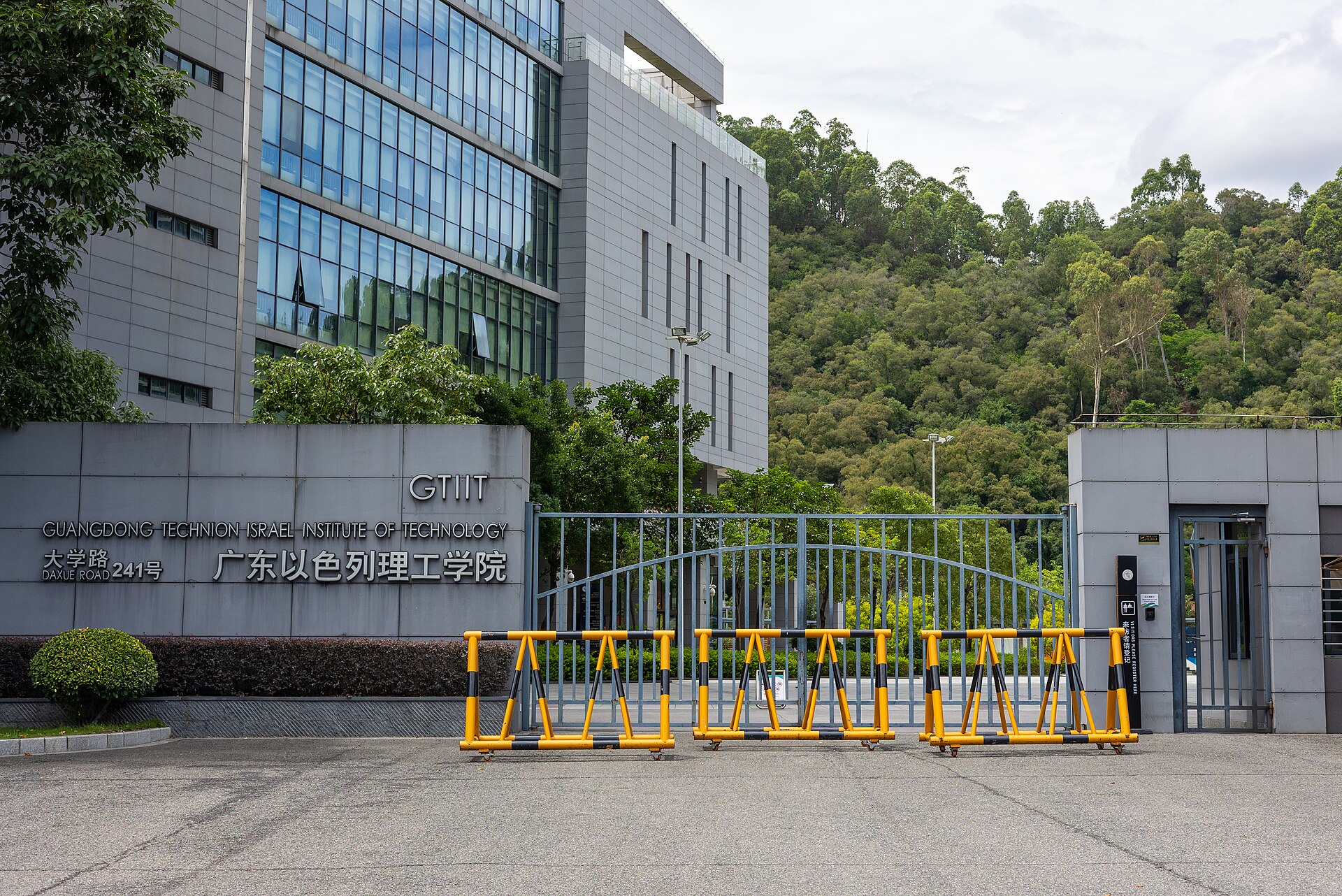
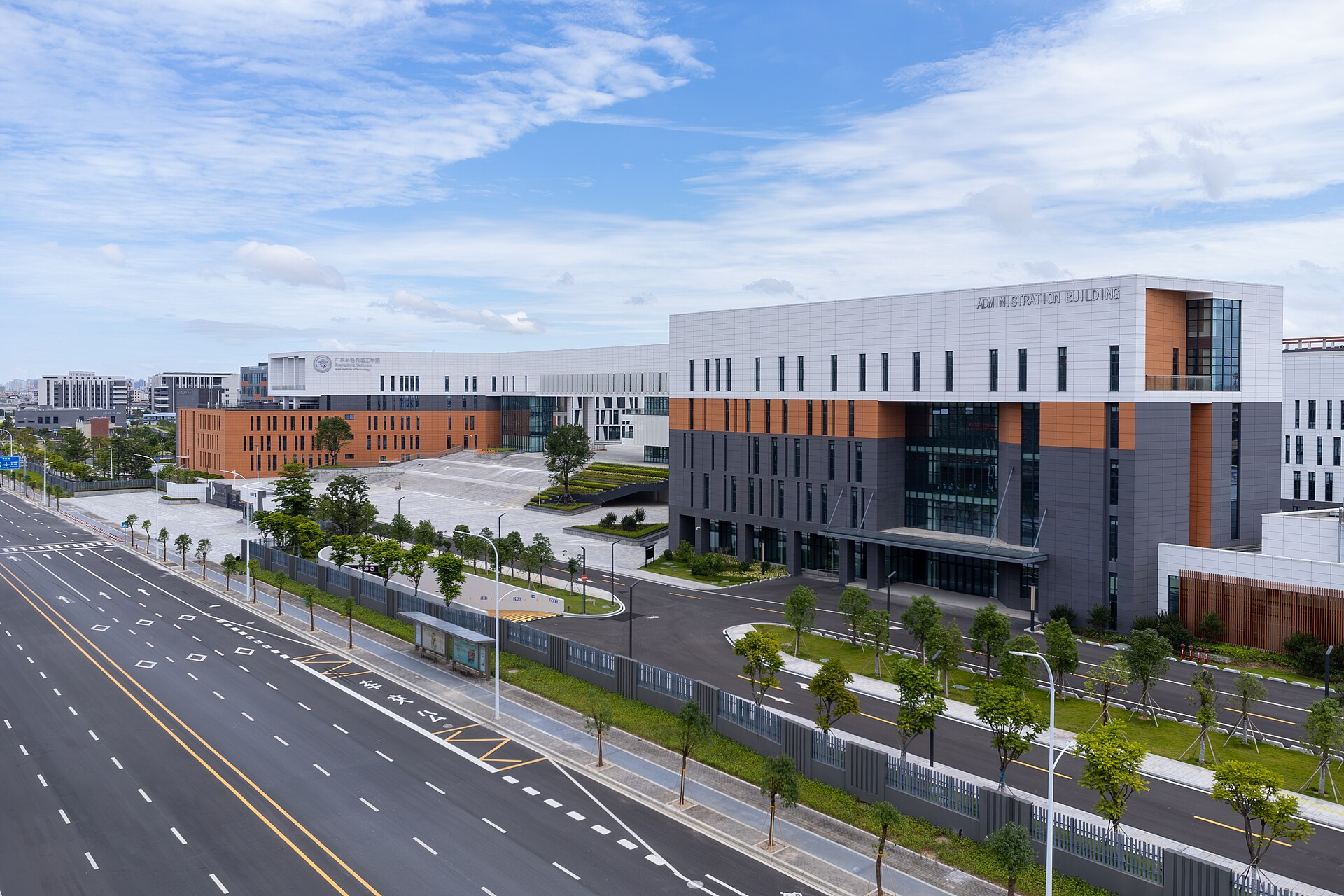
Real, freely-licensed photographs of the campus (via Wikimedia Commons).




Why Technion — Nobel Prizes, Start-Up Nation & Global Value
The Technion is not just Israel's top engineering university — it is one of the defining institutions of the global technology economy. Its graduates have shaped Silicon Valley, built Israeli unicorns, and won Nobel Prizes. For international students, it represents a rare combination: world-class research, strong English-taught pathways, and a dramatically lower cost of attendance than peer institutions.
Technion Acceptance Rate & Admitted Student Profile
Stats
Profile Stats
Rea Vs Rd
Technion Admissions Requirements — Mathematics, Sciences & Profile
- HL Mathematics is effectively required for engineering
- Physics and Chemistry at highest available level
- Course rigour in STEM subjects weighted heavily
- Upward trajectory in science subjects valued
- No published SAT/ACT band for international cohort
- SAT Math 750+ strongly recommended if submitting
- Israeli Psychometric Test (PET) also accepted
- Strong maths scores provide decisive evidence
- HL Mathematics (AA or AI) effectively required for engineering
- HL Physics or Chemistry expected for most programmes
- A-Levels: AAA minimum for competitive engineering programmes
- Science Olympiad and competition results carry real weight
Technion Application Components — Direct Portal, Documents & Tests
Technion uses a direct institutional application for international students — no personal statement, no recommendation letters, no essays as standard. The application is document-focused. Below is every component of a complete Technion application with strategic notes.
Technion Application — No Essays, But Strategy Still Matters
Tips
Prompts
What Technion Admissions Officers Are Looking For
Technion's admissions process is fundamentally different from US holistic review — it is merit-based and heavily weighted towards STEM academic performance. But for international students, additional dimensions signal that you are ready for what the international track actually demands.
Technion Financial Aid & Scholarships for International Students
Technion offers merit-based scholarships for outstanding international students. The average aid percentage for recipients is approximately 25% of total costs. Aid is not need-blind — it is primarily awarded on academic merit, with some need-sensitive elements. Students who make Aliya (Jewish immigration to Israel) are eligible for substantial additional state support.
Aid figures are from the facts file and official sources. Individual packages vary. Verify current amounts with apply@int.technion.ac.il before making financial commitments.
Stats
Contribution Tiers
| Note | Range | Percent | Percent Value |
|---|---|---|---|
| Outstanding merit scholarship candidates — contact admissions early | Top academic performers | Up to 25% | 25 |
| Aliya (Jewish immigration) entitles students to substantial additional state support | Eligible Aliya applicants | Significant | 50 |
| Most international applicants — plan to be self-funded | General international students | Variable | 15 |
Key Dates
Advantages
- Priority in admission consideration
- Dormitory priority for first-year international students
- More time for the admissions office to process and consider your application
- Greater chance of scholarship consideration for outstanding candidates
- More time to prepare Hebrew before departure
Disadvantages
- Less time to strengthen senior-year grades before applying
- Final qualification results may not be available in February
- Application fee paid earlier in the cycle
Technion Interview — Format & What to Expect
Technion does not conduct formal admissions interviews for standard BSc applicants. Admission decisions are made based on academic documents, test scores, and qualification certificates alone. For scholarship consideration, informal or formal interviews may occur — verify current practice with apply@int.technion.ac.il. This contrasts with US universities like Harvard where alumni interviews are near-universal.
Meta
Questions
Technion Housing & Residential Life
Unlike Harvard's residential house system, Technion does not operate a college system. Housing for international students is arranged through the university's dormitory service, with on-campus priority given to first-year international BSc students. The Technion International unit runs an orientation and buddies programme to ease the transition.
Houses
Lottery Steps
- Apply for dormitory housing through the Technion International portal at the time of application
- Priority is given to early applicants — apply in February–April to secure dormitory placement
- First-year international students are housed together on campus, facilitating peer bonding in the English-track cohort
- From Year 2, most students move to private apartments in Haifa — housing costs remain well below Tel Aviv
- The Technion International Buddies Programme pairs new international students with Israeli student mentors
Technion Faculties & Academic Programmes
- {"label":"Programme language (Year 1)","value":"English"}
- {"label":"Programme language (Year 2+)","value":"Hebrew"}
- {"label":"QS Subject Rank","value":"Top 100 globally"}
- {"label":"Key strength","value":"AI, algorithms, systems"}
- {"label":"Programme size","value":"Largest faculty"}
- {"label":"Key strength","value":"Signal processing, VLSI, communications"}
- {"label":"Industry links","value":"Intel, Qualcomm, Mobileye"}
- {"label":"Research centres","value":"Multiple affiliated"}
- {"label":"Key strength","value":"Thermodynamics, robotics, manufacturing"}
- {"label":"Research links","value":"Aerospace & defence industry"}
- {"label":"Programme type","value":"4-year BSc"}
- {"label":"International track","value":"Yes"}
- {"label":"Key strength","value":"Aerodynamics, propulsion, space"}
- {"label":"Industry","value":"IAI, Rafael, Elbit"}
- {"label":"Programme type","value":"4-year BSc"}
- {"label":"International track","value":"Yes"}
- {"label":"Programme type","value":"6-year MD"}
- {"label":"Language","value":"Hebrew"}
- {"label":"Clinical training","value":"Rambam Medical Centre"}
- {"label":"Note","value":"International BSc track does not lead directly to MD"}
- {"label":"Key strength","value":"Medical devices, imaging, bio-systems"}
- {"label":"Research links","value":"Rambam Medical Centre"}
- {"label":"Programme type","value":"4-year BSc"}
- {"label":"International track","value":"Yes"}
Research & Extracurricular Opportunities at Technion
Career Outcomes & Technion Alumni Network
Technion's 93% employment rate understates its actual impact. Graduates are disproportionately represented in the founding teams of the world's most successful tech companies and carry a degree that is exceptionally well recognised in any market that values STEM excellence.
Stats
Categories
Our Technion Admissions Track Record & Student Success Stories
Faqs
Do I need to speak Hebrew to study at the Technion?+
Not when you arrive. The international BSc track conducts instruction in English during the first year while providing intensive Hebrew language training. From Year 2, most courses are taught in Hebrew. Commitment to acquiring Hebrew is not optional for long-term study at the Technion.
Is the Technion safe for international students?+
Haifa has historically been one of Israel's most stable and multicultural cities. The Technion has strong campus security and a well-resourced international student support office. The broader regional security situation in Israel is dynamic — consult the Technion International Office at apply@int.technion.ac.il and review travel advisories from your home country before committing.
How does an IB score of 36 translate in the Technion's evaluation?+
A score of 36 is a threshold, not a guarantee. The Technion evaluates IB results with particular attention to scores in HL Mathematics and HL Physics or Chemistry. A score of 36 with strong marks in these subjects is competitive; a score of 36 with weak science HL marks is not. HL Mathematics is effectively required for engineering applicants.
Is the SAT required for international applicants?+
SAT and ACT are listed as optional for international students. However, strong standardised test scores — especially in the mathematics section — can strengthen your application, particularly if your secondary school system is less familiar to the admissions office. SAT Math 750+ is meaningfully differentiating.
What financial aid is available to international students?+
Merit-based scholarships for outstanding international candidates are available. The average aid percentage is approximately 25% for recipients. The Schulich Leaders Programme may be available to eligible applicants. Students who make Aliya (Jewish immigration to Israel) receive substantial additional state support. Contact apply@int.technion.ac.il directly to understand current availability.
Is the Technion recognised by employers and graduate schools internationally?+
Yes, very strongly in STEM fields. The Technion is ranked #175 globally by THE and #220 by QS, and is exceptionally well known in technology and engineering industries. Its alumni network is particularly powerful in the US tech sector and across Europe.
Can I study at the Technion entirely in English?+
Only partially. The first year of the international BSc is primarily in English, but Years 2–4 are predominantly in Hebrew. The international track is a bridge to full Hebrew-medium study, not a full English-medium programme.
How does Technion compare to other Israeli universities for international students?+
Technion is Israel's premier engineering and science university (#2 nationally). For STEM fields, it is universally regarded as the top choice. The Weizmann Institute is graduate-only; Ben-Gurion and Tel Aviv University are broader multi-disciplinary institutions with different strengths.
Book a Free Technion Admissions Strategy Session
In 60 minutes our Technion admissions specialists will evaluate your STEM academic profile, identify your application strengths and gaps, advise on the Hebrew language pathway, and determine whether your application is ready for the priority window.
- No commitment required
- Technion STEM specialists with Israel admissions knowledge
- Personalised strategy — document review, timing, and scholarship guidance
Technion Academic Requirements
Technion Academic Requirements — The Honest Breakdown for International Students
What grades, test scores, and academic profile do Technion's admitted international students actually have? And what does the Israeli university admission process mean for students from IB, A-Level, AP, and other international curricula?
GPA & Academic Benchmarks
Technion and GPA — What the Data Shows
The honest picture: Technion publishes a minimum GPA of 3.4 (US-equivalent). In practice, admitted international students for engineering programmes consistently present stronger records — particularly in mathematics and physics.
A GPA of 3.4 is a floor, not a target. Competitive international applicants present significantly stronger records — particularly in mathematics and the physical sciences. A student with a 3.4 overall GPA but 7s in IB HL Mathematics and HL Physics will be read more favourably than one with a 3.8 overall but weaker STEM scores.
Academic Context
School Context and Academic Record — How Technion Reads International Qualifications
Technion does not operate a class rank requirement. International students are evaluated on their qualification results relative to their school system, with the admissions office experienced at contextualising IB, A-Level, AP, and major national examination results.
Standardised Testing
SAT Scores at Technion — What You Actually Need
Technion SAT Data — No Published Band for International Cohort
| Label | Score | Percent |
|---|---|---|
| SAT policy | Optional | 50 |
| SAT Math — recommended if submitting | 750+ | 75 |
| Published middle-50% band | Not available | 0 |
Standardised Testing
ACT Scores at Technion — The Data and the Strategy
Technion ACT Data — Optional for International Students
Metrics
Comparison Cards
Testing Strategy
Technion Test-Optional Policy — The Strategic Decision Explained
Technion lists standardised tests as 'optional' for international applicants. However, the strategic calculus at a STEM-focused university like Technion is different from at a US liberal arts institution — the mathematics score carries a specific and significant weight.
Submit Items
Withhold Items
Curricula
A-Levels and IB at Technion — Specific Benchmarks
- {"label":"Minimum total points","value":"36"}
- {"label":"HL Mathematics","value":"Required for engineering — Analysis & Approaches strongly preferred"}
- {"label":"HL Sciences","value":"Physics and/or Chemistry expected for most engineering programmes"}
- {"label":"Extended Essay","value":"A technical EE in Mathematics, Physics, or Computer Science is viewed favourably"}
- {"label":"Competitive grade range","value":"AAA minimum"}
- {"label":"Required subjects","value":"Mathematics; Physics for engineering; Further Mathematics strengthens the profile"}
- {"label":"AS results","value":"Reviewed alongside A-Level predictions where available"}
- {"label":"STEP / TMUA","value":"Not required but evidence of advanced mathematical preparation is valued"}
Advanced Placement
AP Courses at Technion — What Counts and What to Take
For US-based applicants or students at schools that offer AP courses, Advanced Placement performance can support a Technion application — though it is evaluated alongside, not instead of, school grades.
Academic Rigour
Rigour of Secondary School Record — Technion's Most Important Academic Factor
The rigour of your secondary school mathematics and science curriculum is the single most important academic signal for a Technion application. This is not about the prestige of your school — it is about what you chose to study and how hard you pushed yourself in STEM subjects.
Taking the most challenging mathematics and science courses available at your specific school, in the subjects most relevant to your intended engineering or science programme.
STEM Preparation
Mathematics and Science Preparation — What Technion Expects
Technion's first-year engineering and science curriculum assumes a strong foundation in calculus-level mathematics and classical physics. Students who arrive underprepared face a compounded challenge alongside Hebrew language acquisition. There is no remedial pathway.
Language Proficiency
English Language Requirements for International Technion Applicants
English proficiency is required for the international BSc track, where Year 1 instruction is delivered primarily in English. Technion also administers an internal English placement test (AMIR) upon arrival to determine appropriate course placement.
English proficiency is a prerequisite, not a differentiating factor. A score of IELTS 7.5+ signals strong English capability; 6.5 is the minimum threshold. Students from fully English-medium secondary schools (IB at an English-language school, A-Levels in the UK or comparable) should apply for an English requirement exemption — confirm eligibility with the admissions office.
By Programme
Academic Requirements by Programme — What Different Paths Expect at Technion
Technion admits students to specific faculties, not to a general college (unlike Harvard). The academic profile should be directly aligned with the programme you apply to. Applying to Aerospace Engineering without HL Physics is a red flag — the admissions office will notice the mismatch.
| Signals | Expectation | Concentration |
|---|---|---|
| IMO/national Olympiad; proof-level thinking; competition results | HL Maths AA 7 or A-Level Further Maths A* | Mathematics |
| Competitive programming (IOI, USACO); original projects; strong algorithms background | HL Maths + CS background; programming experience | Computer Science |
| IPhO medal/national team; robotics; engineering competition results | HL Maths + HL Physics 6–7 | Electrical & Computer Engineering |
| Robotics competition; design projects; manufacturing interest | HL Maths + HL Physics | Mechanical Engineering |
| Aviation interest; IAF-adjacent activities; physics competition | HL Maths + HL Physics; strong analytical skills | Aerospace Engineering |
| IChO medal; chemistry Olympiad; materials research | HL Chemistry + HL Maths | Chemical Engineering / Materials Science |
| Medical device interest; biology research; clinical exposure | HL Chemistry + HL Biology or HL Maths | Biomedical Engineering |
| Biology competition; environmental research; ecology interest | HL Biology + HL Chemistry | Biology / Environmental Engineering |
International Systems
Technion and International Education Systems — How Your Curriculum Is Evaluated
Roadmap
Building an Academic Profile for Technion — What to Do at Each Stage
- Choose the most advanced mathematics stream your school offers — this is the most important academic decision for a future Technion applicant.
- If in the IB, select HL Mathematics Analysis & Approaches. If in A-Levels, select Mathematics and, if available, Further Mathematics.
- Begin programming — Python or C as a starting point. Even 2 hours per week of structured coding practice builds meaningful capability over three years.
- Identify science Olympiad opportunities: International Mathematical Olympiad (IMO) national selection, Physics Olympiad, Chemistry Olympiad, or national equivalents.
- Take the most advanced Physics and Chemistry available. For IB, aim for HL Physics and HL Chemistry alongside HL Mathematics.
- Enter science and mathematics competitions. Technion genuinely values competition performance — even national-level participation, not just medals, is worth documenting.
- Build something: a software project, a hardware prototype, a science fair entry. The Technion culture values builders over passive achievers.
- Begin basic Hebrew study — even 15 minutes per day on an app creates a foundation for the intensive ulpan in Year 1.
- Take IELTS or TOEFL by late Grade 11 or early Grade 12 — well before the July–August document deadline. If eligible for an English-medium exemption, gather evidence.
- If taking SAT, aim for completion by April of your application year to ensure scores arrive before the document deadline.
- Research Hebrew language courses: ulpan programmes, formal language schools, or community classes at a local Jewish cultural centre.
- Ensure all transcripts are official and ready in certified form. Non-English/non-Hebrew documents need certified translations.
- The portal opens in February. Apply in February or March for dormitory priority and best scholarship consideration.
- Email apply@int.technion.ac.il when you submit — introduce yourself, mention your programme of interest, and ask about scholarship availability.
- Monitor your application portal actively and respond to any requests within 48 hours.
- Continue Hebrew study — even Aleph-Bet literacy and basic vocabulary gives you a measurable head start on the Year 1 ulpan.
Common Pitfalls
Academic Mistakes That Cost Technion Applications — And How to Avoid Them
Real Outcomes
What Academic Profiles Tychr's Technion-Admitted Students Had
The following profiles represent the academic backgrounds of students Tychr has helped navigate the Technion admissions process. They illustrate the range of preparation that works — and the common thread between all successful applicants.
Faqs
Is an IB score of 36 enough for Technion?+
An IB score of 36 is a minimum threshold, not a guarantee. Technion evaluates the score with particular attention to HL Mathematics and HL Physics or Chemistry grades. A score of 36 with 7s in HL Maths and HL Physics is competitive; the same score with Standard Level Mathematics is not.
Do I need IB Higher Level Mathematics for Technion?+
Yes — HL Mathematics Analysis & Approaches is effectively required for engineering programmes. Students who choose Standard Level Mathematics face a very significant disadvantage. HL Mathematics Applications & Interpretation is less valued than Analysis & Approaches for engineering applicants.
Does Technion prefer SAT or ACT?+
No. The Technion does not prefer SAT over ACT. Both are accepted equally as optional supplementary evidence. The choice should be based on which test better reflects your mathematical strengths. SAT is slightly more commonly submitted at Technion.
Can I apply to Technion without knowing any Hebrew?+
Yes. The international BSc programme does not require prior Hebrew. However, intensive Hebrew instruction begins in Year 1 and is compulsory. From Year 2, most academic instruction is in Hebrew. Applicants who have not considered this reality often struggle from Year 2 onwards.
Is a Technion degree recognised outside Israel?+
Yes, strongly in STEM fields. The Technion is ranked #175 globally by THE and #220 by QS. It is exceptionally well known in technology and engineering sectors globally, and its alumni network is particularly strong in the US tech industry, European engineering, and Israeli startups.
Cost & Financial Aid
Technion May Be the Best-Value Top-200 STEM Degree in the World.
At approximately $15,000 in annual tuition and $26,000 all-in, Technion offers an internationally recognised STEM degree at a fraction of the cost of MIT, ETH Zurich, or Imperial College London. Here's exactly what it costs, how aid works, and how to fund your degree.
Cost Transparency
What Technion Actually Costs — The Full Annual Figure
At $26,000 USD per year all-in, Technion costs approximately 30–40% of a comparable programme at MIT (approximately $85,000+ per year for internationals) or ETH Zurich. For quality-adjusted value in STEM education — a top-175 globally ranked institution with Nobel laureates and a proven entrepreneurship ecosystem — this is an exceptional proposition.
Financial Aid Policy
Technion's Financial Aid Policy for International Students
The Technion does not operate a need-blind or full-need financial aid programme equivalent to Harvard, Princeton, or MIT. Aid for international BSc students is primarily merit-based, with some need-sensitive elements. The average aid for qualifying students is approximately 25% of total costs.
Institutional Value
Why Technion's Cost-Quality Ratio Is Exceptional
Financial Aid Walkthrough
Applying for Technion Financial Aid — The Process Step by Step
Technion financial aid for international students requires proactive pursuit — it is not applied for through a centralised system like the US CSS Profile. Here is the complete step-by-step approach.
- Submit your application via int.technion.ac.il in February or March
- Early application is the most important prerequisite for scholarship consideration
- Contact apply@int.technion.ac.il
- Briefly describe your academic background and ask specifically about scholarship availability for international BSc students in your programme and intake year
- Mention any particularly strong academic achievements (Olympiad results, high standardised test scores, top-of-cohort IB/A-Level results)
- Contact the Jewish Agency or Nefesh B'Nefesh for guidance on Aliya financial benefits
- Students who immigrate to Israel under the Law of Return receive substantial tuition subsidies and absorption allowances
- Aliya support can dramatically reduce the effective cost of a Technion degree for eligible Jewish international students
- Many governments fund STEM students studying at internationally ranked universities
- Technion's QS (#220) and THE (#175) rankings typically qualify it for government and foundation scholarship programmes
- Research your home country's ministry of education, development banks, and private foundations
- Use $26,000 USD per year as your planning baseline — do not plan based on receiving aid
- Factor in one-time costs: visa fees, flights, health insurance, initial setup, and deposit for accommodation
- Build a first-semester financial buffer — aid, if awarded, may arrive after semester begins
INTERNATIONAL AID
Technion Financial Aid for International Students — How It Actually Works
The financial aid landscape for international students at Technion is meaningfully different from top US universities. Understanding this accurately — rather than assuming US-style need-blind aid — is essential for financial planning.
AID CALCULATIONS
What Technion Financial Aid Actually Looks Like
Aid Availability by Student Profile
Aid figures are based on the facts file (25% average for recipients). Individual awards vary. Verify current availability with apply@int.technion.ac.il before making financial commitments. Costs are in USD and subject to ILS/USD exchange rate fluctuations.
For most international students without exceptional academic merit or Aliya eligibility, the effective cost is approximately $26,000 USD per year. Outstanding candidates should contact the admissions office directly and early to understand scholarship availability.
| Grant | Income | Contribution |
|---|---|---|
| Contact admissions for current amounts | Outstanding academic merit (top Olympiad results, 7s in HL Maths & Science) | Potential reduction up to ~25% |
| Potentially substantial — research Nefesh B'Nefesh | Jewish students making Aliya | Can be significant reduction |
| Home-country scholarships may supplement | Most international BSc students | Full ~$26,000 USD/year |
Table Headers
QUALIFICATION CRITERIA
Technion Scholarships — What Exists and Who Qualifies
Technion's financial aid model is fundamentally merit-based, in contrast to Harvard's purely need-based model. Academic achievement — particularly in mathematics and the sciences — is the primary determinant of scholarship eligibility.
EXTERNAL FUNDING
External Scholarships — Additional Funding for Technion International Students
External scholarship opportunities can meaningfully supplement Technion's institutional aid. Many governments, foundations, and bilateral organisations fund STEM students studying at top-ranked universities globally — and Technion's QS and THE rankings typically qualify it.
DEBT & LOAN POLICY
Technion and Student Loans — What You Need to Know
Technion does not operate a formal no-loan policy equivalent to Harvard or Princeton. There is no institutional guarantee that aid will be provided as grants rather than loans. However, the low base cost of attendance ($26,000/year all-in) significantly reduces the total borrowing required compared to US or UK equivalents.
STUDENT EMPLOYMENT
Working While Studying at Technion — What to Expect
Technion does not operate a formal work-study programme equivalent to US universities. However, international students on appropriate visa categories may be eligible to work part-time in Israel during their studies — both on and off campus.
- Research assistant positions in faculty labs (from Year 2 onwards — provides both income and research experience)
- Teaching assistant roles in foundational mathematics and physics courses (typically available from Year 2–3)
- Technion's student services and administrative offices
- Israeli startups and tech companies in the Matam Park adjacent to campus often hire Technion students for part-time technical roles
- On-campus tutoring and academic support services
BENCHMARKING
Technion vs. Global STEM Universities — Cost and Aid Comparison
| Policy | School | No Loans | Typical Cost |
|---|---|---|---|
| Need-blind, full-need, no loans | MIT | Yes | ~$0 (low-income families) |
| Need-blind, full-need, no loans | Harvard | Yes | ~$0 (families under $85K) |
| Need-blind, full-need, no loans | Princeton | Yes | ~$0 (low-income families) |
| Merit-based aid, low base cost | Technion | No formal policy | ~$26,000 (no aid) / ~$19,500 (with 25% merit aid) |
| Limited international aid | ETH Zurich | No | ~$7,000 tuition + ~$20,000 living = ~$27,000 |
| Limited international aid | Imperial College London | No | ~$45,000–$55,000/year |
| Limited international aid | Caltech | Some | ~$85,000+/year |
COST ANALYSIS
Technion vs. Global Alternatives — What You Actually Pay
For a self-funding international STEM student who cannot access need-blind US aid, Technion offers a comparable four-year cost to ETH Zurich at a similar or higher global ranking, with significantly stronger entrepreneurship ecosystem access and lower cost of living than London or Zurich.
| Policy | School | Contribution | Four Year Cost |
|---|---|---|---|
| Need-blind, full-need, no loans | Harvard/MIT/Princeton | ~$0 (low-income) | ~$0–$20,000 |
| Merit-based, low base cost | Technion (with 25% merit aid) | ~$19,500/yr | ~$78,000 |
| Low base cost, minimal aid | Technion (no aid) | ~$26,000/yr | ~$104,000 |
| Low public tuition + high living | ETH Zurich | ~$27,000/yr | ~$108,000 |
| Higher tuition, limited aid | Imperial College London | ~$50,000/yr | ~$200,000 |
| High sticker, limited intl aid | Caltech / top US private | ~$85,000/yr | ~$340,000 |
FINANCIAL APPEALS
Revisiting Technion Financial Aid — When and How to Follow Up
If you have received a scholarship decision that you believe does not accurately reflect your academic profile, or if your financial circumstances have changed significantly, you can make a direct inquiry to the Technion International Office.
The honest note: Technion's scholarship pool for international BSc students is limited, and appeals are most successful when based on a genuine change in circumstances (a scholarship from Year 1 that was not renewed, a family financial crisis) or on new information that was not available at the time of original consideration (a late Olympiad result, a newly published competition ranking).
How To Appeal
- Contact apply@int.technion.ac.il with a clear, professional email stating the specific basis for your request
- Provide any new academic achievements, competition results, or evidence of financial circumstances not previously submitted
- Be specific about what you are asking for and why your situation justifies reconsideration
When To Appeal
- You have received a significant new academic achievement (Olympiad medal, high standardised test score) after the initial scholarship decision
- Your family financial circumstances have changed materially since your application
- You believe your initial scholarship consideration did not account for all your academic achievements
- A competing offer from a peer institution represents a significantly different financial proposition
TIMELINE & PLANNING
Planning for Technion Costs — What to Do and When
Application Strategy
Applying to Technion — Everything You Need to Know About the Application Process.
Technion does not require personal statement essays in the US or UK sense. But the application strategy still matters — timing, document quality, email communication, and Hebrew preparation all meaningfully affect your outcome.
Application Overview
Technion Application Requirements — The Full Picture
Technion's application for international BSc students is processed through a direct institutional portal at int.technion.ac.il. It is not submitted through Common App, UCAS, or any central clearinghouse. There is no personal statement, supplemental essay, or formal writing requirement. Admission is assessed on academic documents and test scores.
Optional Items
Required Items
No Personal Statement
Technion Has No Personal Statement — But Communication Strategy Still Matters
Unlike Harvard, where the 650-word Common App essay is the centrepiece of the application, Technion conducts its admissions evaluation entirely on academic documents and test scores. There is no personal statement, no 'why this university' essay, and no formal narrative writing component. This is both a simplification and a constraint — your documents must tell your entire story.
At Technion, your academic documents ARE your application essay. Every grade in HL Mathematics, every competition result, every official certificate tells the story of your readiness. The strategic challenge is not what to write — it is ensuring your documents are complete, official, translated where needed, and submitted early enough to be considered for both admission and scholarships.
Tired Of List
- Generic emails to the admissions office that don't demonstrate specific knowledge of Technion
- Applications from students with Standard Level IB Mathematics who expected an exception
- Late registrations in August from students who found Technion at the last minute
- Students who have not researched the Hebrew language pathway before applying
Looking For List
- A clear, strong mathematics and science academic record — the documents speak for themselves
- Specific, demonstrated understanding of why Technion and why this programme in any direct communication
- Evidence of genuine STEM initiative: competition results, projects, research experience
- Students who have already begun preparing for the Hebrew immersion pathway
Strategic Presentation
How to Present Your Application — The Decision That Shapes Your Technion Candidacy
The strategy for presenting your Technion application effectively is different from US or UK applications — it is less about crafting a narrative and more about ensuring your documents are complete, coherent, and submitted early. But within that framework, strategic choices still matter.
Criteria
Caution Topics
- Applying with Standard Level IB Mathematics and expecting that total points will compensate
- Submitting unofficial or uncertified copies of documents — only official documents are processed
- Applying to a programme (e.g. Aerospace Engineering) without the required subject background (HL Physics)
- Waiting until June or later to apply without a compelling reason — dormitory priority and scholarship windows close
No Formal Supplement
Technion's Application Communication — What to Write and When
Technion has no formal supplemental essays. However, the informal communication channels — your email to the admissions office, your scholarship inquiry, and any proactive sharing of supplementary achievements — function as the informal equivalent of a supplement. Approach them with the same care you would give a formal essay.
Application Documents
Writing Your Application Materials — Correspondence and Communication
The only writing Technion evaluates is your correspondence with the admissions office and the formal details on your application form. Neither is graded as an essay — but both are read by admissions staff. Clear, professional, specific communication in both creates a positive impression that supports your formal academic credentials.
Supporting Materials
Additional Materials That Can Strengthen Your Technion Application
While Technion has no formal mechanism for supplementary materials, the following can be shared proactively via email to apply@int.technion.ac.il. Contact the office first to confirm how to submit each type.
Hebrew Language
The Hebrew Language Requirement — What Every Technion Applicant Must Understand
In Year 1, most instruction is delivered in English, and you simultaneously take intensive Hebrew language courses (ulpan-style, approximately 8–10 hours per week). By the end of Year 1, you are expected to have achieved sufficient Hebrew proficiency to follow academic lectures, participate in tutorials, and complete written assessments in Hebrew. From Year 2, the majority of engineering and science instruction is in Hebrew. Students who resist or defer the Hebrew pathway fall behind progressively and find Year 2 significantly harder than Year 1.
The Hebrew language pathway is the single most misunderstood and most underestimated aspect of studying at Technion as an international student. It is not a peripheral requirement — it is central to your academic experience from Year 2 onwards, and it affects whether you can realistically complete your degree.
Evaluation Process
How Technion Evaluates International Applications — The Process Explained
Technion's admissions evaluation for international BSc students is document-centric and relatively transparent. The admissions office reviews your secondary school transcripts, qualification certificates, and any standardised test scores, evaluating them against the published minimum thresholds and in comparison to the rest of the international applicant pool.
What Makes Applications Stand Out
What Makes a Technion International Application Stand Out
In the absence of essays, what distinguishes the strongest Technion international applications is the combination of exceptional STEM academic records and clear evidence of technical initiative beyond the classroom.
- HL Mathematics Analysis & Approaches 7 (or A-Level Further Mathematics A*) — the single strongest academic signal
- Science Olympiad participation at national or international level — particularly Mathematics, Physics, or Informatics
- Significant technical projects: a deployed software application, a hardware build, a published research paper, or a competition win
- Application submitted in February or March — early applicants are statistically more likely to receive scholarship consideration
- Evidence of Hebrew preparation before arrival — even a beginner ulpan certificate distinguishes committed applicants
- A specific, researched email to the admissions office that demonstrates genuine knowledge of Technion's programmes and research culture
Common Mistakes
Application Mistakes to Avoid at Technion
- Applying without HL Mathematics when it was available — this is a disqualifying choice for most engineering programmes and the most common avoidable mistake.
- Submitting documents without certified translations — non-English/Hebrew documents without certified translations cannot be processed.
- Missing the document deadline (typically July–August) — scores and transcripts received late may push your decision into the following cycle.
- Applying to a programme without the required subject background — the mismatch between your academic profile and programme choice is immediately visible.
- Assuming Year 1 is entirely in English — Hebrew ulpan begins immediately and is compulsory. Students who resist the Hebrew pathway fall behind from Year 2.
- Not asking about scholarships at the time of application — there is no separate scholarship application cycle; eligibility is assessed alongside admission. If you do not ask, you may not be considered.
- Applying in the late registration window (June–September) without understanding the trade-offs — late applicants have lower dormitory priority and may face fewer programme slots.
- Failing to research Israel's security context — while Technion and Haifa are well-regarded for safety, ignoring the broader regional situation is not due diligence. Research honestly and discuss with your family before committing.
Application Timeline
Technion Application Timeline — Month by Month
How Tychr Helps
How Tychr Supports Technion Applicants
Unlike US or UK admissions where Tychr coaches essay writing extensively, Technion admissions support focuses on document strategy, academic profile review, timing, scholarship pursuit, and Hebrew preparation planning. Our Technion specialists help applicants maximise what matters at a document-centric STEM university.
Application Examples
What a Strong Technion Application Looks Like — Examples
Because Technion has no essays, 'application examples' means understanding what complete, well-prepared document applications look like in practice.
International Student Notes
Technion Application Notes for Specific International Backgrounds
Technion's international application experience varies meaningfully depending on your home school system. Here are specific notes for common international backgrounds.
Faqs
Does the Technion require a personal statement or application essay?+
No. The standard international BSc application does not require a personal statement, supplemental essays, or any formal written narrative. Admission is assessed on academic transcripts, qualification certificates, and test scores.
How do I apply as an international student?+
Apply through the Technion International portal at int.technion.ac.il. The portal opens in February each year. Submit your application with all supporting documents — transcripts, qualification certificates, English test scores, and certified translations where needed. Contact apply@int.technion.ac.il for guidance.
Do I need to learn Hebrew before applying?+
No prior Hebrew is required for admission to the international BSc English-track. However, intensive Hebrew instruction begins in Year 1 and is compulsory. From Year 2, most academic instruction is in Hebrew. Starting basic Hebrew study before arrival gives you a measurable and meaningful advantage.
Are letters of recommendation required?+
Letters of recommendation are not required for standard admission. For scholarship consideration in exceptional circumstances, you may submit them proactively — confirm with the admissions office before doing so.
How competitive is the international BSc programme?+
The international track is selective. Admitted students typically present strong performance in mathematics and sciences, with IB scores at or above 36 (with strong HL Mathematics and Science results) or A-Level AAA+ in relevant STEM subjects. The small size of the international cohort means limited spots are available each year.
Can I defer my Technion admission?+
Deferral policies vary by year and programme. Contact apply@int.technion.ac.il to ask about deferral options if you need a gap year. This is not guaranteed but can sometimes be arranged for compelling reasons.
Is there an interview as part of the admission process?+
No formal interview is part of the standard international BSc admission process. For scholarship evaluation in some cases, informal or formal interviews may be conducted. Confirm current practice with the admissions office.
What documents need certified translation?+
All official documents not in English or Hebrew must be accompanied by certified translations. This includes transcripts, qualification certificates, and supporting documents. Ensure translations are from a certified translator — notarised where required by the admissions office.
Courses — schools, degrees & intake
29 degrees across 18 groupings.
Viterbi Faculty of Electrical and Computer Engineering · 2 degrees
BSc in Electrical Engineering
BSc in Computer Engineering
Henry and Marilyn Taub Faculty of Computer Science · 1 degrees
BSc in Computer Science
Faculty of Aerospace Engineering · 2 degrees
BSc in Aerospace Engineering
BSc in Aerospace Engineering and Physics
Faculty of Mechanical Engineering · 1 degrees
BSc in Mechanical Engineering
Faculty of Civil and Environmental Engineering · 2 degrees
BSc in Civil Engineering
BSc in Environmental Engineering
Faculty of Chemical Engineering · 2 degrees
BSc in Chemical Engineering
BSc in Biochemical Engineering
Faculty of Materials Science and Engineering · 4 degrees
BSc in Materials Engineering
BSc in Materials Engineering and Physics
BSc in Materials Engineering and Chemistry
BSc in Materials Engineering and Biology
Faculty of Biomedical Engineering · 2 degrees
BSc in Biomedical Engineering
BSc in Biomedical Engineering and Physics
Faculty of Biotechnology and Food Engineering · 1 degrees
BSc in Biotechnology and Food Engineering
Rappaport Faculty of Medicine · 1 degrees
MD in Medicine
Faculty of Architecture and Town Planning · 2 degrees
BSc in Architecture
Bachelor of Landscape Architecture (BLA)
Faculty of Mathematics · 1 degrees
BSc in Mathematics
Faculty of Physics · 1 degrees
BSc in Physics
Faculty of Biology · 2 degrees
BSc in Biology
BSc in Chemistry and Biology
Schulich Faculty of Chemistry · 2 degrees
BSc in Chemistry
BSc in Chemistry and Materials Science and Engineering
Faculty of Industrial Engineering and Management · 1 degrees
BSc in Industrial Engineering and Management
Faculty of Data Science and Decisions · 1 degrees
BSc in Data Science and Engineering
Faculty of Education in Science and Technology · 1 degrees
BSc in Science and Technology Education
Want your real chances at Technion - Israel Institute of Technology?
Create a free TYCHR account for your personalised admit-chance, a shortlist you can track, exact entry requirements, and essay + counselling help.