← All universities

Swinburne University of Technology

Melbourne, Australia · Urban

PublicTechnologicalResearchCoed
Acceptance
65.0%
QS World
#285
Tuition/yr
$23,800
Students
34,000
Founded
1908

MELBOURNE, AUSTRALIA

Swinburne University of Technology Admissions Guide for International Students

Founded in 1908 in Melbourne's inner-east suburb of Hawthorn, Swinburne University of Technology has built a distinctive identity as a technology-forward research university with deep industry connections, a world-class astrophysics research centre, and one of Australia's strongest reputations for cooperative education and work-integrated learning. With 30% international students drawn from over 100 countries, Swinburne is genuinely global in character — and its urban Melbourne campus places you in one of the world's most liveable cities, just minutes from the CBD.

For international students, Swinburne offers a compelling blend: a research university (QS rank 285, THE rank 325, national rank 21 in Australia) with a vocational ethos that has made it especially sought-after in engineering, IT, design, and games. Its co-op-style industry placement model means graduates leave with real work experience embedded in their degree — a significant differentiator in the Australian job market and a key reason its 86% graduate employment rate consistently ranks above the national average.

Campus

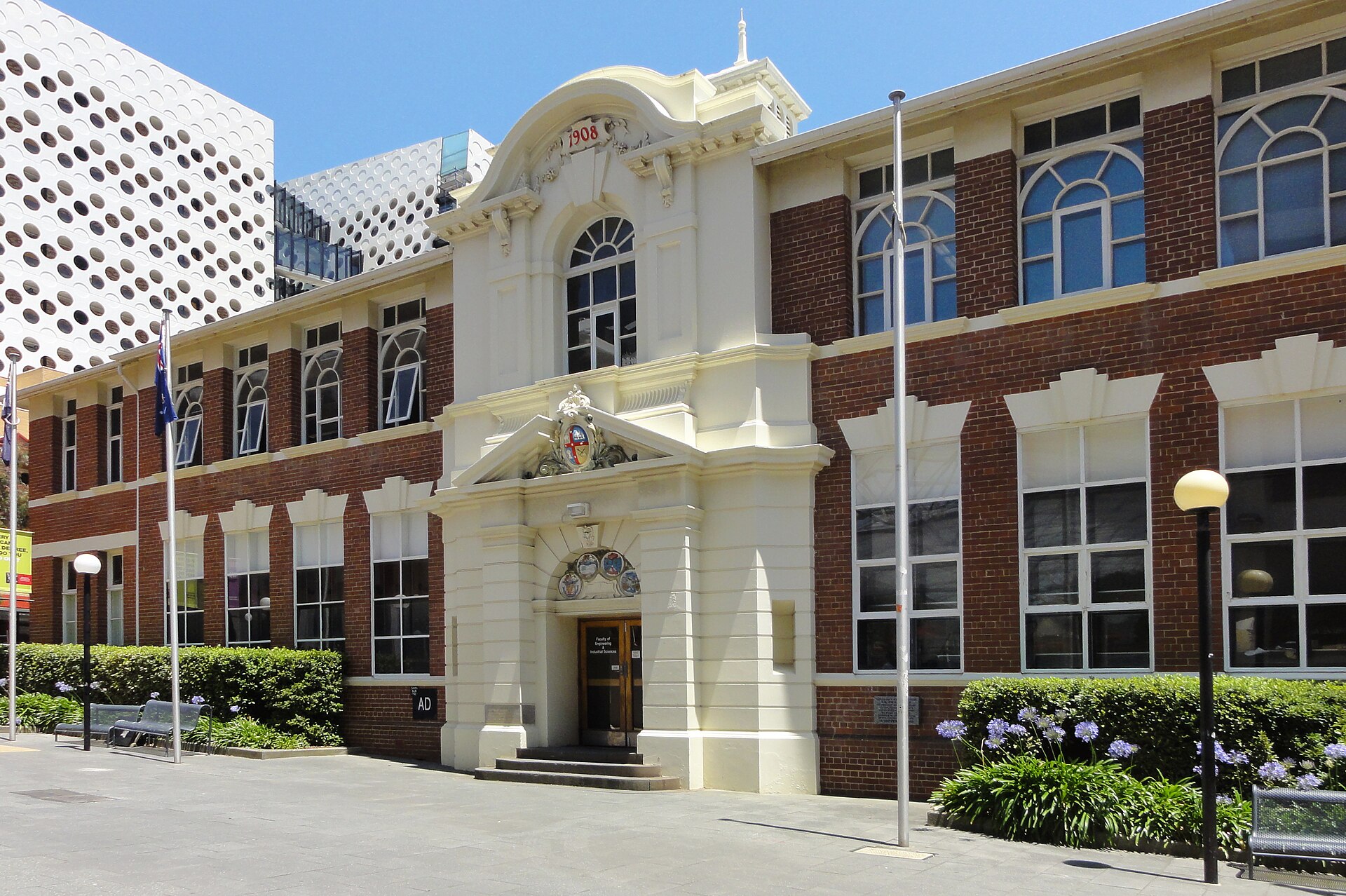
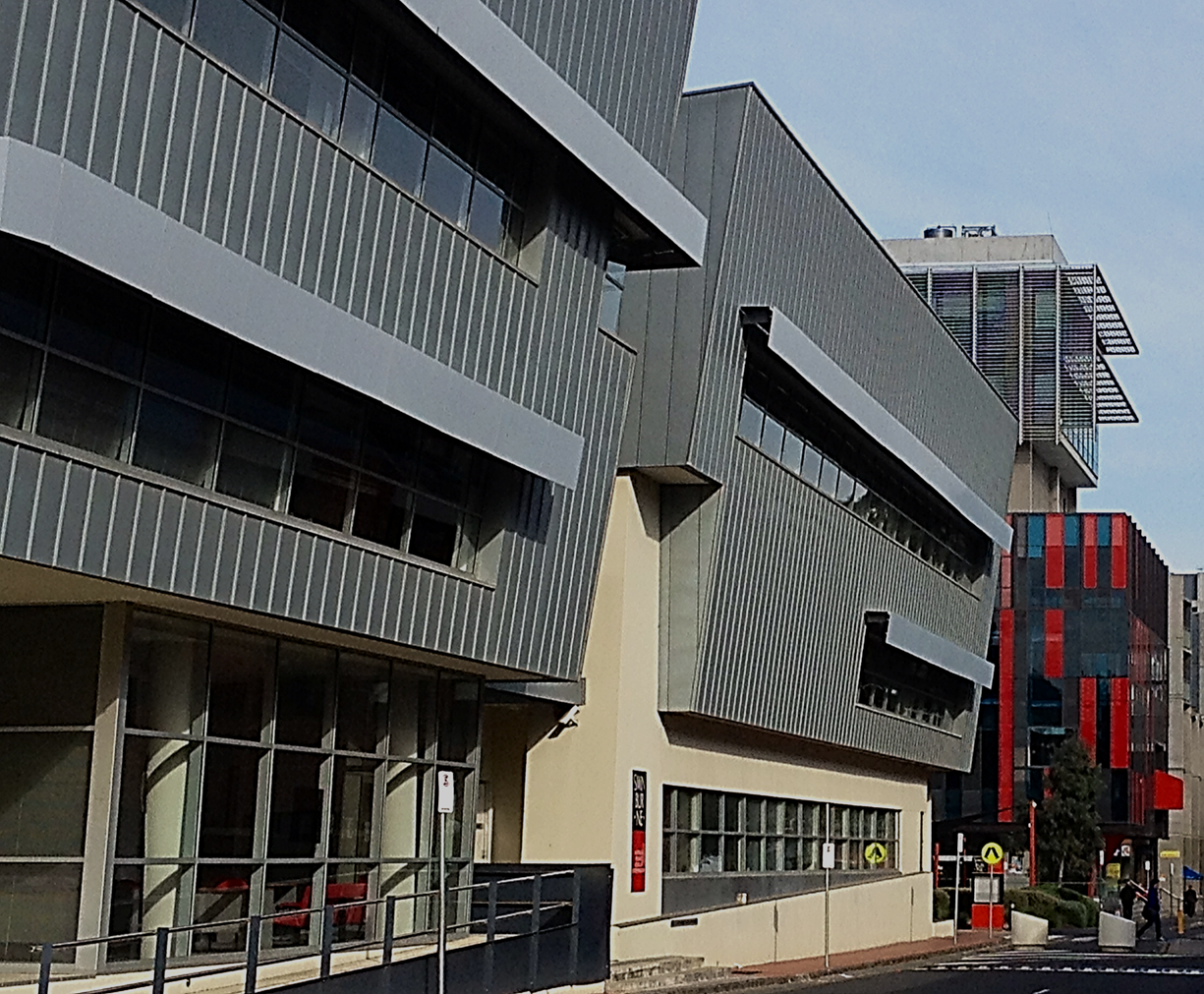
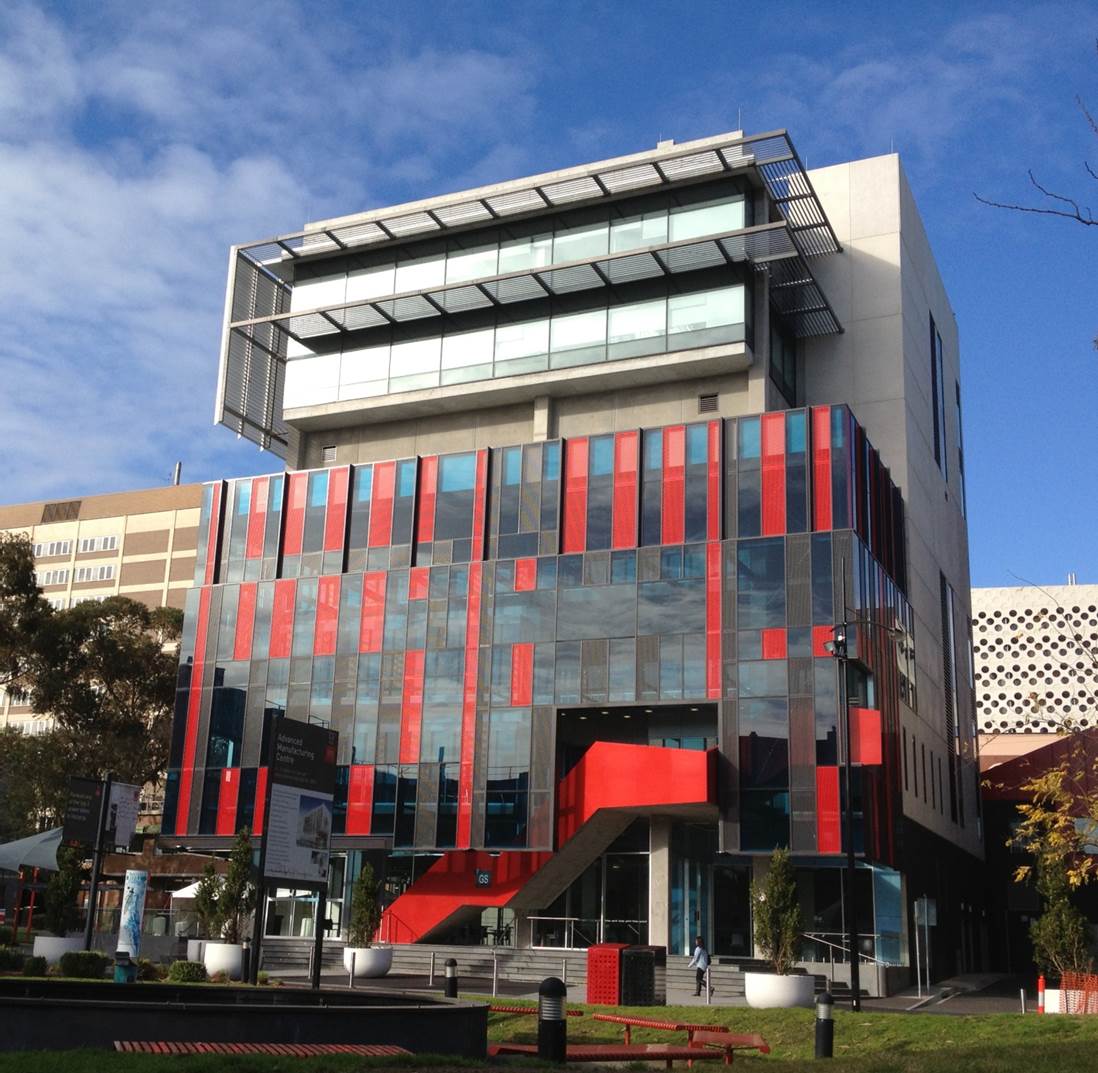
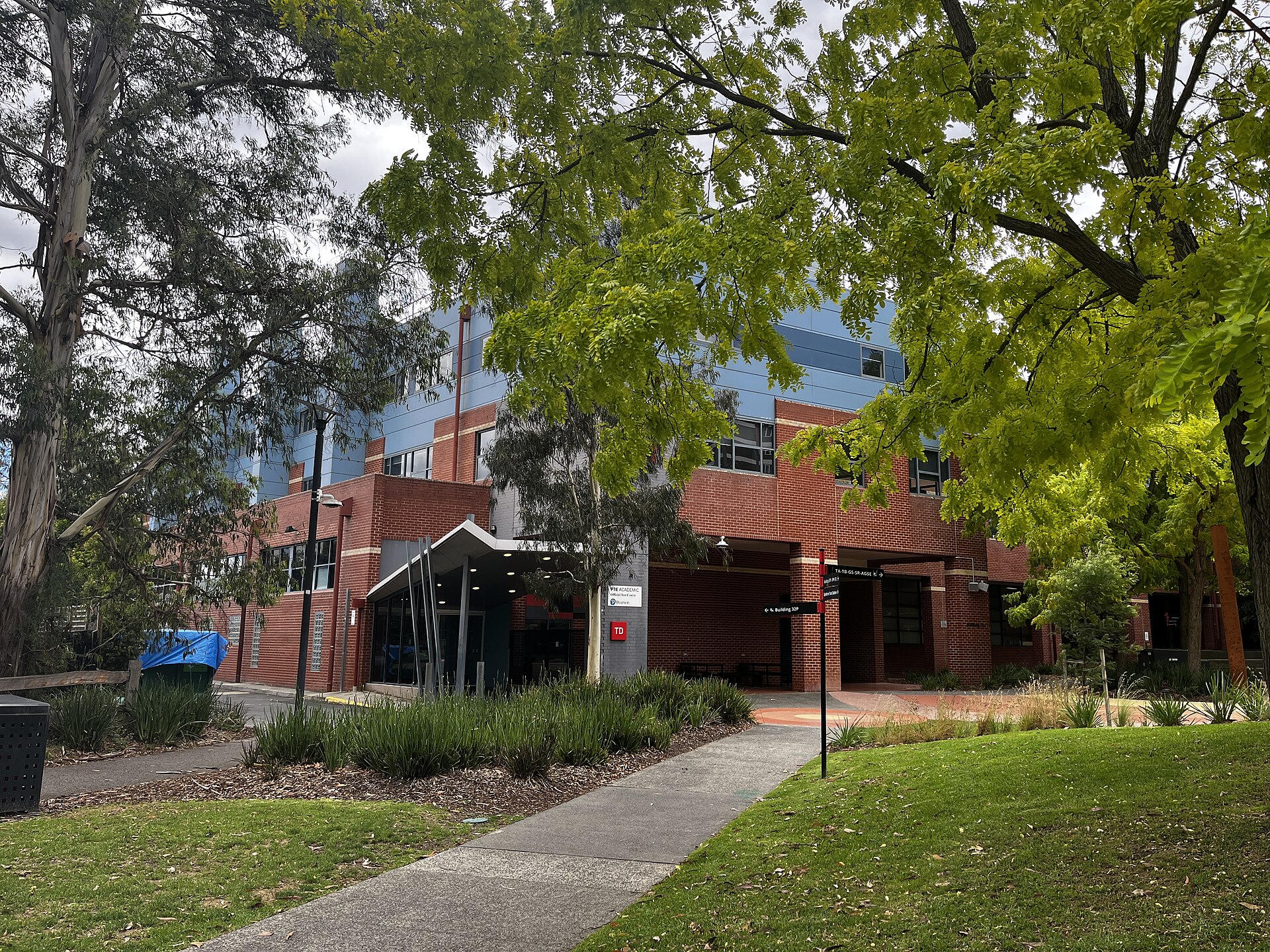
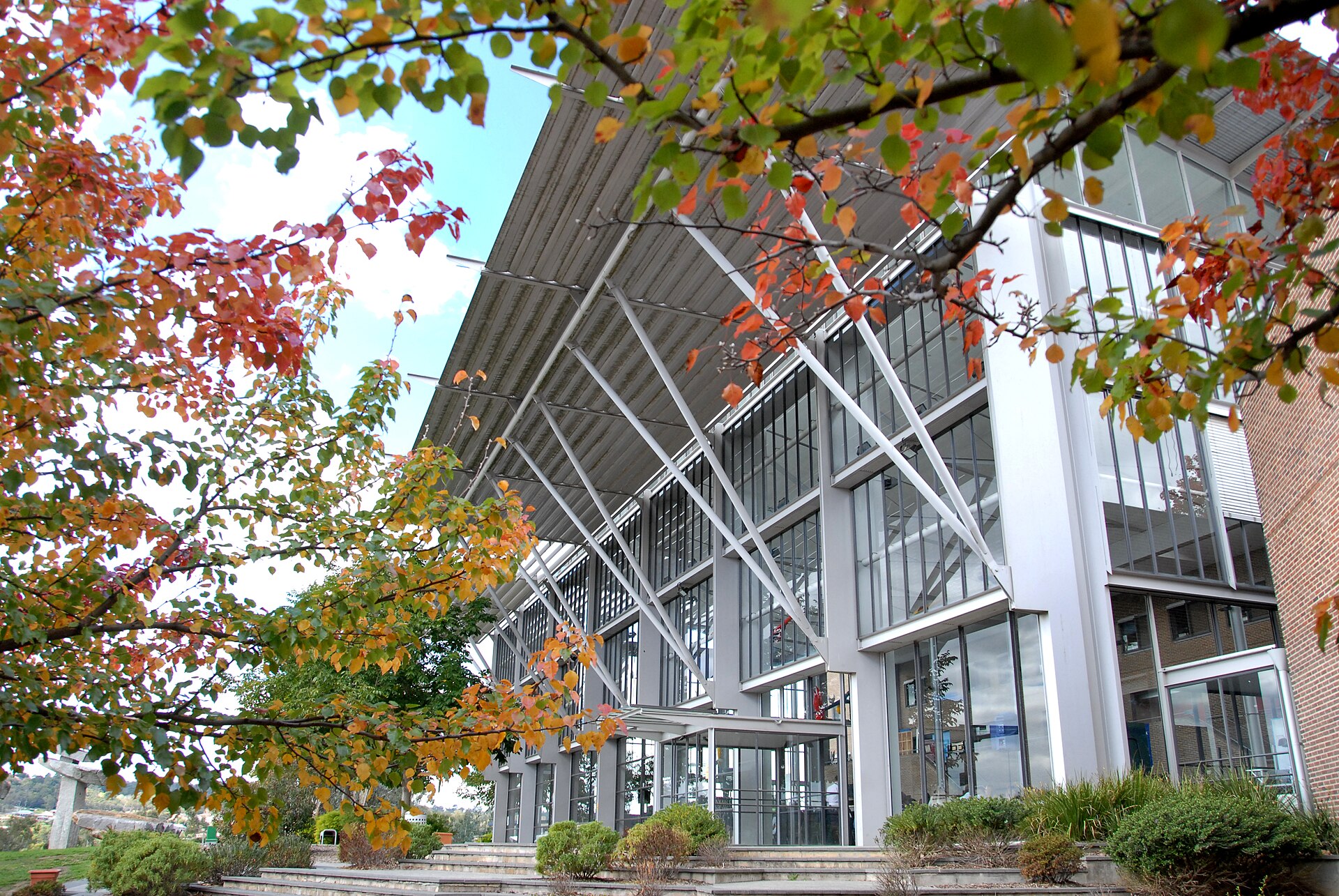
Swinburne University of Technology — campus in pictures

Real, freely-licensed photographs of the campus (via Wikimedia Commons).
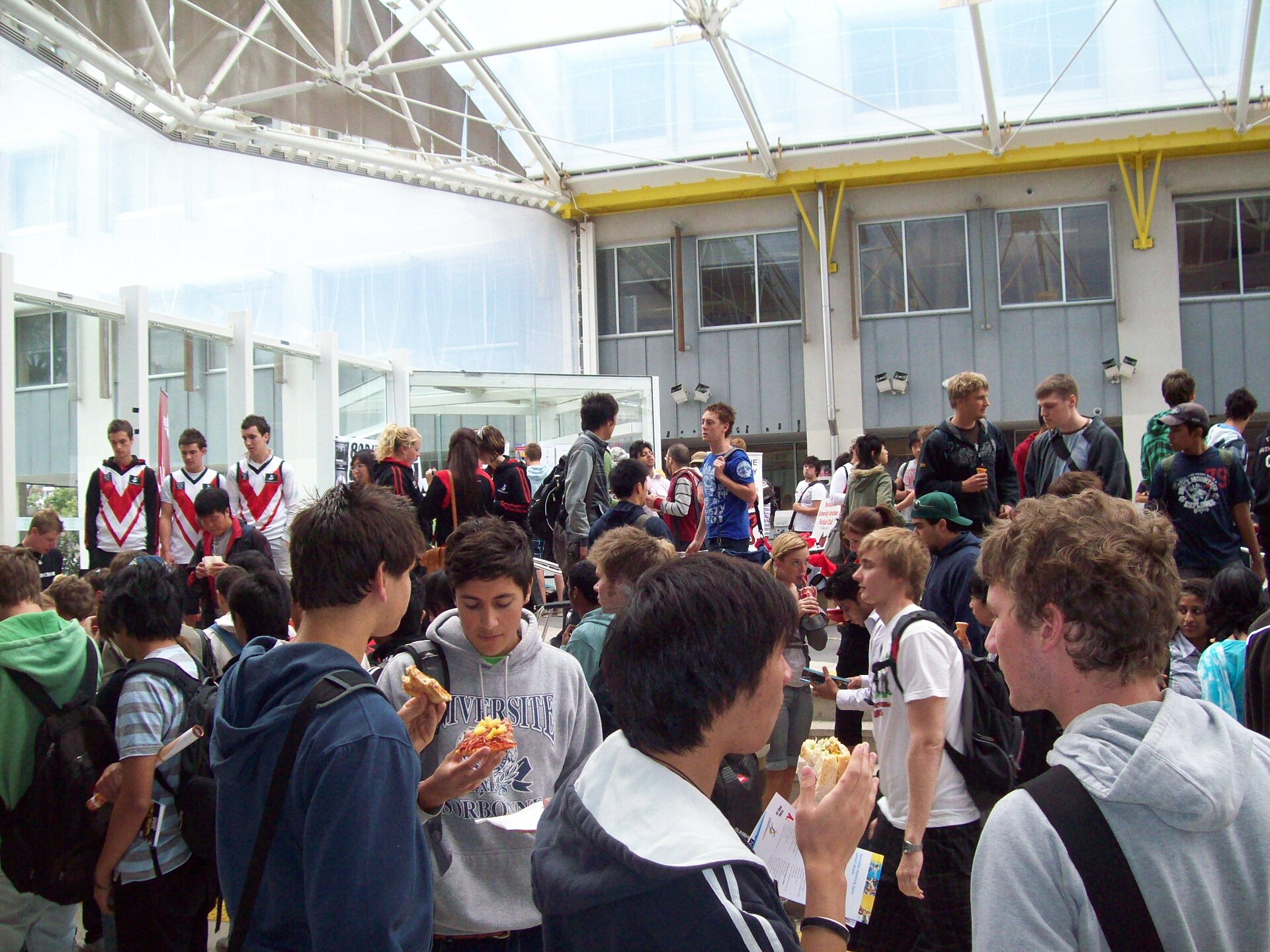
Swinburne hawthorn campus3
Swinburne hawthorn campus3SwinburneUniversity · CC BY 3.0 · via Wikimedia Commons
Swinburne University - Administration Building
Swinburne University - Administration BuildingCon Tassios · CC BY 3.0 · via Wikimedia Commons
Swinburne University of Technology Australian Graduate School of Entrepreneurship AGSE Building, Hawthorn Campus, 2013
Swinburne University of Technology Australian Graduate School of Entrepreneurship AGSE Building, Hawthorn Campus, 2013GarryRasmussen1 · Public domain · via Wikimedia Commons
The George Building at Swinburne University of Technology's Hawthorn campus is the location of many of the university's student services.
The George Building at Swinburne University of Technology's Hawthorn campus is the location of many of the university's student services.GarryRasmussen1 · CC0 · via Wikimedia Commons
Swinburne University of Technology campus in Hawthorn, Victoria, December 2024
Swinburne University of Technology campus in Hawthorn, Victoria, December 2024Aliceinthealice · CC0 · via Wikimedia Commons
Swinburne lilydale campus
Swinburne lilydale campusSwinburneUniversity · CC BY 3.0 · via Wikimedia Commons

Why Swinburne — Technology, Industry & Melbourne

Swinburne is not a generalist university trying to be everything. It has made deliberate, high-conviction bets on technology, design, and research — and those bets have compounded into genuine strengths that serve ambitious international students particularly well.

01Work-Integrated Learning at Scale
Swinburne's Professional Experience Year (PEY) and co-op placement programmes embed paid industry work directly into degree structures, particularly in Engineering, IT, and Business. Graduates enter the Australian job market with a proven track record, not just a transcript.
02Astrophysics & Space Research
Swinburne hosts the Centre for Astrophysics and Supercomputing — one of the world's leading astrophysics groups, responsible for key pulsar and Fast Radio Burst discoveries. For students interested in physics, astronomy, or computational science, this is a genuine world-class research environment.
03Design, Games & Creative Technology
Swinburne's games and interactivity programme is among Australia's most respected, with strong links to Melbourne's growing games and creative-tech industry. The design school integrates technology and creativity in ways few Australian universities match.
04Melbourne — A World-Class Student City
Swinburne's Hawthorn campus is 6 km from Melbourne's CBD, accessible by tram and train. Melbourne has been ranked among the world's most liveable cities for over a decade — offering unmatched cultural diversity, a thriving tech and startup scene, and one of Australia's strongest graduate job markets.
05Strong International Community
With 30% international students drawn from over 100 countries, Swinburne has built genuine infrastructure for international student success: pre-arrival orientation, dedicated international student advisors, peer-mentoring programmes, and pathway partnerships with colleges worldwide.
06Practical, Employment-Focused Outcomes
Swinburne's 86% graduate employment rate reflects its industry-integrated curriculum and employer partnerships across engineering, IT, aviation, and business sectors. Industry advisory boards shape curriculum in real time, ensuring graduates learn skills employers actually need.

Swinburne Acceptance Rate & Admissions Profile

Swinburne admits the majority of qualified applicants who meet course-specific entry requirements — it is an accessible research university, not a highly selective filter institution. The emphasis is on meeting minimum academic thresholds per programme rather than competing in a zero-sum admissions pool.

Competitive programmes such as Aviation, Nursing, and Engineering co-op tracks may have higher effective cut-offs. Always check individual course entry requirements on the Swinburne admissions website.

Stats

~34,000 enrolled
Applications Annually
30%
International Students
285
QS World Rank

Profile Stats

27 pts
IB Minimum Entry
30%
International Students
86%
Graduate Employment Rate
~10% fees
Average Scholarship Aid
Overall acceptance rate (course-entry based)
https://www.swinburne.edu.au/study/international/

Rea Vs Rd

Rea Label: Semester 1 (February)
Rea Value: Apply Oct–Nov
Rd Label: Semester 2 (July)
Rd Value: Apply Apr–May

Swinburne Admissions Requirements — IB, A-Levels & International Qualifications

IB Diploma
Value: 27+ IB Points
Minimum 27 IB points overall for undergraduate entry. Competitive programmes expect higher. HL Mathematics required for Engineering and Physics programmes.
  • Minimum 27 points for general undergraduate entry
  • Engineering/CS: HL Mathematics (AA preferred) expected
  • Science programmes: relevant HL sciences strengthen application
  • Full IB Diploma required — certificates not accepted for direct entry
A-Levels (UK/Cambridge)
Value: BBB–ABB
A-Level results are directly accepted. Three A-Level subjects required; grade combinations vary by programme (typically BBB to ABB). Subject prerequisites apply for STEM programmes.
  • Three A-Level subjects typically required
  • Mathematics A-Level for Engineering, IT, Physics programmes
  • BBB entry for many programmes; ABB for competitive courses
  • AS-Levels alone generally insufficient for direct entry
US / International Grades
Value: GPA 2.8+
Minimum GPA of 2.8 on a 4.0 scale for US-system applicants. AP courses in relevant subjects are favourably regarded. Other international qualifications assessed case-by-case via equivalency tables.
  • US High School Diploma: may need some college-level/AP coursework
  • AP scores of 3+ in relevant subjects favourably regarded
  • Indian boards (CBSE/ISC): 70–85%+ in relevant subjects for STEM
  • Chinese Gaokao, Malaysian STPM, Sri Lanka A/L: equivalency tables apply

Swinburne Application Components — Documents, English & Process

Swinburne's international admissions process is direct and qualification-based. There are no standardised tests required, no holistic review essays for most programmes, and no ranking-based competition. Your application is assessed primarily on academic qualifications relative to your chosen course's entry requirements.

01RequiredOnline Application
Apply directly through Swinburne's International Student Application Portal at swinburne.edu.au/study/international/apply. Applications are typically processed within 2–4 weeks. Direct applications and agent-submitted applications are equally assessed.
02RequiredAcademic Transcripts
Certified copies of all secondary and (if applicable) tertiary academic results. For IB students, predicted grades are accepted initially; final results must be submitted before enrolment. Official translation required for non-English documents.
03RequiredEnglish Language Proficiency
IELTS Academic (6.5 overall, 6.0 each band), TOEFL iBT (79), or Duolingo English Test (110). Requirements are higher for Nursing, Teaching, and some health programmes. Native English speakers from approved countries are exempt.
04RequiredPassport / Identity Documents
A copy of your current passport is required. This is used to verify identity and to issue your Confirmation of Enrolment (CoE) for your student visa application.
05Course-SpecificPortfolio (Creative Programmes)
A portfolio of creative work is required for Design, Fine Arts, Architecture, and Games programmes. Format and content requirements vary by course — check the specific course page carefully.
06OptionalScholarship Statement
If applying for merit-based scholarships, a separate scholarship application or personal statement may be required. Scholarship consideration is automatic for some awards upon course application — check the Swinburne scholarships page for current requirements.
07Post-OfferStudent Visa (Subclass 500)
After receiving your offer and paying the initial deposit, apply for a student visa through Australia's Department of Home Affairs. You must demonstrate financial capacity and obtain Overseas Student Health Cover (OSHC) before visa grant.
https://www.swinburne.edu.au/study/international/apply/

Swinburne Application & Scholarship Statements

Swinburne is an Australian university — most undergraduate programmes require no application essay. The admissions process is document-based: your academic results and English proficiency are the primary review criteria. Written communication matters most in scholarship applications and creative portfolio programmes.

Prompts

Scholarship Statement (Academic & Programme Choice)
Scholarship applications typically ask you to outline your academic background, explain your programme choice, and describe your career goals. Confirm the exact prompts on the official Swinburne scholarship application form. Word limits are typically 250–500 words.
Creative Portfolio Artist Statement
Design, Games, and Fine Arts applicants typically submit a short written statement (200–400 words) alongside their portfolio, explaining their creative practice and interest in the programme.
No Essay for Standard Undergraduate Entry
The standard Swinburne undergraduate application for most programmes requires no personal statement or essay. Assessment is based on academic transcripts, English proficiency, and course prerequisites.

Tips

Be specific about why Swinburne
The single most effective thing you can do in a Swinburne scholarship statement is articulate a specific, genuine reason for choosing Swinburne — the co-op engineering model, the astrophysics research centre, the games programme's industry links. Generic statements are filtered out quickly.
Connect your subjects to your programme
Scholarship reviewers see your predicted grades — they want to understand why you chose those subjects and how they lead to this programme. Make the link explicit and specific.
State a realistic career goal
A clear, plausible career goal demonstrates serious thinking. 'I want to work in cyber security in Southeast Asia' is more convincing than 'I want to use technology for good.' Connect the goal to Swinburne's specific strengths.
Keep it concise — 250–500 words is tight
Australian scholarship reviewers value clarity over length. Every sentence should earn its place. Exceeding word limits signals poor communication skills — the opposite of what you want to demonstrate.
The most common Swinburne scholarship statement mistake. Writing a generic statement that could apply to any Australian university, with no Swinburne-specific details, no named programmes, and no concrete reasons for the choice.
Writing Strategy for Scholarship Statements

What Swinburne Admissions Officers Are Looking For

Unlike highly selective US or UK universities, Swinburne's undergraduate admissions are primarily merit-based on your academic qualifications relative to each course's entry requirements. There is no holistic 'whole-person' review for most programmes. However, understanding what signals strength — beyond minimum entry — is important for scholarship applicants and students entering competitive programmes.

01Meeting Course Prerequisites
The most important factor: your academic qualifications must meet or exceed the specific entry requirements for your chosen programme. Engineering requires HL Mathematics; Nursing requires Biology. Failing to meet prerequisites is the primary reason applications are unsuccessful.
02English Proficiency
All applicants from non-English-medium backgrounds must demonstrate English proficiency at or above the minimum threshold. For most programmes this is IELTS 6.5 overall (6.0 per band). Some health, education, and social work programmes require 7.0+.
03Academic Trajectory
For competitive programmes and scholarship consideration, Swinburne reviewers look beyond minimum thresholds at the overall strength of your academic record — particularly in subjects directly relevant to your programme. An upward trajectory in relevant subjects is positive context.
04Genuine Programme Alignment
For scholarship applications and niche programmes, demonstrating that your course choice connects to a coherent academic and career direction matters. Why engineering, why Swinburne, why Melbourne — these questions have specific, convincing answers for the strongest scholarship applicants.
05Industry & Technical Engagement
For Swinburne's Professional Experience Year and co-op tracks, evidence of work-readiness — through internships, technical projects, competitions, or relevant employment — signals you will thrive in industry placements and get more from the programme.
06Context of Your Qualifications
Swinburne International Admissions assesses international qualifications against established equivalency tables. They understand that different school systems have different grade scales — your results are evaluated in the context of your specific qualification type.

Swinburne Financial Aid & Scholarships for International Students

Australia's university system does not provide need-based financial aid to international students from general funds. Swinburne's financial support for international students comes primarily through merit scholarships — automatic or application-based fee reductions. Understanding what is available, and how to maximise your scholarship eligibility, is the key financial planning task for incoming international students.

Scholarship amounts and eligibility criteria are subject to annual review. Always confirm current scholarship offerings on the official Swinburne International Scholarships page before applying.

Stats

~10%
average scholarship aid of total fees
20%
tuition reduction — Swinburne International Scholarship
30%
tuition reduction — George Swinburne Excellence Scholarship
0
no need-based aid available to international students

Contribution Tiers

RangePercentPercent ValueNote
Swinburne International Scholarship20% off tuition20Automatic consideration on course application — merit based
George Swinburne International Excellence Scholarship30% off tuition30High academic performance — automatic consideration
Australia Awards (Government)Full scholarship100For eligible students from Indo-Pacific developing countries
No Need-Based Aid — What This Means. Unlike Harvard or Princeton, Swinburne does not offer need-based grants to international students. Scholarships are merit-based fee reductions — they lower your tuition cost but do not cover living costs or personal expenses. Budget for the full cost of attendance and treat any scholarship as a meaningful but partial reduction.
https://www.swinburne.edu.au/study/international/scholarships/

Key Dates

Open scholarship applications for Semester 1
Date: Aug–Oct
Semester 1 (February) application deadline
Date: Oct–Nov
Conditional offers issued for Semester 1
Date: Dec–Jan
Open scholarship applications for Semester 2
Date: Mar–Apr
Semester 2 (July) application deadline
Date: Apr–May
Conditional offers issued for Semester 2
Date: May–Jun

Advantages

  • Full academic year — you start at the same time as domestic students
  • More scholarship funding available in Semester 1 intake pool
  • Larger cohort means more student life activity and club involvement
  • On-campus accommodation more available when booked early
  • Graduates after November — prime hiring season in Australia

Disadvantages

  • If your IB or A-Level results are released in July, Semester 2 avoids a six-month gap
  • If Semester 1 application is missed, Semester 2 is a legitimate option
  • Some programmes run only specific topics in particular semesters
  • Smaller intake — potentially more individual attention from staff
Semester 1 vs Semester 2 Entry. Unlike US universities with Early Action and Regular Decision rounds, Swinburne offers two main intake periods per year. The key strategic decision is not which round but when within each round to apply — particularly for scholarship consideration and on-campus accommodation.
Tychr's Intake Recommendation. Apply for Semester 1 (February) if at all possible. Submit your application in August–October — well before the November deadline — to maximise scholarship eligibility and secure on-campus accommodation. IB students whose results come in July should time their application for Semester 2, not defer for six months unnecessarily.
Swinburne Intake Strategy — When to Apply and Why
Why Apply for Semester 1 (February) — Advantages

Swinburne Interview — Is There One?

Swinburne does not conduct interviews as part of the standard undergraduate international admissions process. Assessment is based entirely on academic documents and English proficiency evidence. There is no alumni interview network and no admissions interview as part of a competitive selection process.

Meta

No interview required
Standard Undergraduate
Portfolio review, not interview
Creative Programmes
Some programmes may interview
Competitive Postgraduate
Written statement, not interview
Scholarship Applications

Questions

What replaces the interview at Swinburne?
Tip: Your scholarship personal statement is the closest equivalent — it is the one place in the application where your voice, reasoning, and genuine motivation are assessed directly.
Do creative programme applicants face a portfolio review?
Tip: Yes. For Design, Games, Fine Arts, and Architecture, a portfolio review replaces both interview and essay in communicating your capability and potential. It is taken seriously and should be prepared with the same rigour you would give an interview at a more selective institution.
Are there interviews for postgraduate professional programmes?
Tip: Some postgraduate programmes — particularly the MBA and selected health science graduate degrees — may conduct interviews. Confirm with the specific programme's admissions team before assuming none is required.

Swinburne's Residential Life & Accommodation

Swinburne does not have the residential house or college system found at Oxbridge or US universities. Student accommodation is managed through a combination of on-campus residences and Swinburne-recommended off-campus housing. Most international students live in shared accommodation in Hawthorn and surrounding suburbs.

Lottery Steps

  • Apply for on-campus accommodation as early as possible — ideally immediately on receiving your offer
  • On-campus places are limited and allocated on a first-come, first-served basis for each intake
  • International students are given priority consideration for on-campus residence places
  • Hawthorn campus residences include self-catered studio, single, and twin-share options
  • Most international students in later years move to private share housing in Hawthorn, Kew, Camberwell, or Richmond

Houses

Swinburne Student Union Housing (Hawthorn)
Tag: On-Campus
Self-catered on-campus rooms; studio and shared options
Hawthorn Campus Residences
Tag: On-Campus
Walking distance to all Hawthorn campus buildings
Hawthorn / Kew / Camberwell
Tag: Off-Campus
Inner-east suburbs; 10–20 min tram to campus; popular with Swinburne students
Richmond / Collingwood
Tag: Off-Campus
Trendy, vibrant suburbs; 20–30 min tram; typically lower cost than Hawthorn
Melbourne CBD
Tag: Off-Campus
For students who prefer city living; 20–30 min tram to campus

Swinburne's Schools & Undergraduate Programmes

Swinburne Business School
Label: Business, Finance & Management
Accounting, Finance, Business Administration, Marketing, Supply Chain Management, Human Resource Management. Strong links with Melbourne's financial services sector and Big Four accounting firms.
  • {"label":"Key programmes","value":"Accounting, Finance, MBA"}
  • {"label":"Accreditation","value":"CPA, CA ANZ recognised"}
  • {"label":"Industry links","value":"Big Four, ASX corporates"}
  • {"label":"Placement model","value":"Industry mentoring integrated"}
School of Engineering
Label: Engineering & Construction
Civil, Mechanical, Aerospace, Electrical, Chemical, and Biomedical Engineering. Professional Experience Year (PEY) embeds paid industry work in the degree. Engineers Australia accredited programmes.
  • {"label":"Accreditation","value":"Engineers Australia"}
  • {"label":"Work placement","value":"PEY — 12 months industry"}
  • {"label":"Flagship research","value":"FLAIR, aerospace, robotics"}
  • {"label":"IB prerequisite","value":"HL Mathematics expected"}
Department of Computing Technologies
Label: Computer Science, IT & Cyber Security
Computer Science, Software Engineering, Cyber Security, Data Science, Artificial Intelligence. Swinburne has invested heavily in computing infrastructure and has strong industry partnerships with Melbourne's technology sector.
  • {"label":"Key majors","value":"CS, Cyber Security, Data Science, AI"}
  • {"label":"Industry partners","value":"IBM, Telstra, Accenture"}
  • {"label":"Research centre","value":"Centre for Transformative Innovation"}
  • {"label":"Entry prerequisite","value":"HL Mathematics (IB)"}
Centre for Astrophysics & Supercomputing
Label: World-Class Research in Physics & Astronomy
Swinburne's astrophysics group is internationally ranked, known for discoveries in pulsars, Fast Radio Bursts, and gravitational wave astronomy. Undergraduate students in Physics and Astrophysics can engage with real research from Year 2.
  • {"label":"Research ranking","value":"Global top tier (pulsars/FRBs)"}
  • {"label":"IB prerequisite","value":"HL Mathematics + HL Physics"}
  • {"label":"Undergraduate access","value":"Research projects from Year 2"}
  • {"label":"Key discovery","value":"First detected Fast Radio Bursts"}
School of Design & Art
Label: Design, Games & Creative Technology
Industrial Design, Communication Design, Interior Architecture, Fine Art, Games and Interactivity. One of Australia's most respected design schools, with industry links across Melbourne's creative and games sectors.
  • {"label":"Flagship programme","value":"Games and Interactivity"}
  • {"label":"Portfolio required","value":"Yes — for design/art entry"}
  • {"label":"Industry links","value":"Melbourne games studio network"}
  • {"label":"Location advantage","value":"Melbourne creative hub"}
School of Health Sciences
Label: Health, Nursing & Allied Health
Nursing, Paramedicine, Public Health, Occupational Therapy, Physiotherapy, Biomedical Science. Clinical placement integrated into health degrees. Note: direct Medicine is not offered — most pathways go through undergraduate health science followed by graduate-entry medicine.
  • {"label":"Key programme","value":"Nursing, Paramedicine, OT"}
  • {"label":"IELTS requirement","value":"7.0+ (higher than general minimum)"}
  • {"label":"Clinical placement","value":"Integrated in all health degrees"}
  • {"label":"Note","value":"No direct-entry undergraduate Medicine"}

Research & Extracurricular Opportunities at Swinburne

Centre for Astrophysics & Supercomputing
Category: World-Class Research
Swinburne's astrophysics group is globally recognised. Undergraduate physics and astrophysics students can work with research teams on pulsar timing, gravitational wave astronomy, and Fast Radio Burst detection. Undergraduate research projects are available from Year 2.
Professional Experience Year (PEY)
Category: Industry Placement
Swinburne's flagship co-op model embeds 12 months of paid industry work into Engineering, IT, and Business degrees. PEY students work full-time at partner companies — earning real wages and building a professional track record before graduation.
Swinburne Student Union (SSU)
Category: 50+ Clubs & Societies
SSU runs over 50 clubs and societies spanning cultural, academic, sports, and special-interest groups. The International Student Association, engineering clubs, game development clubs, and cultural societies are particularly active, with regular events throughout the academic year.
Game Jams & Design Competitions
Category: Creative Competitions
Swinburne's games and design community hosts regular hackathons, game jams, and creative competitions in partnership with Melbourne's industry. These events build portfolios, foster industry connections, and frequently lead to part-time studio work during study.
Scroll right to explore Swinburne's research programmes and student life opportunities.

Career Outcomes & Swinburne Graduate Network

Swinburne's industry-linked curriculum produces graduates who are employment-ready from day one. The university's location in Melbourne and its corporate partnerships give graduates access to employers across engineering, IT, aviation, business, and the creative industries. Australia's Temporary Graduate visa (subclass 485) also gives international graduates 2–4 years of post-study work rights — a genuine pathway to long-term career development in Australia.

Stats

86%
Graduate employment rate within 4 months
$42,000
Average starting salary (USD equivalent)
30%
International students in total enrolment
285
QS World University Rank
2 years
Post-study work visa for Bachelor's graduates
21
National rank in Australia

Categories

Engineering & Technology
Major Australian and multinational firms in aerospace, civil, mechanical, electrical, and software engineering recruit from Swinburne. The PEY placement model significantly shortens the path to full professional accreditation with Engineers Australia.
IT, Cyber Security & Data
Melbourne's technology sector — home to ANZ Banking Group, Telstra, IBM, Accenture, and a thriving startup ecosystem — absorbs Swinburne IT and Cyber Security graduates. Australia's national cyber security investment continues to drive demand for qualified graduates.
Design & Games
Swinburne design and games graduates have entered studios such as Mighty Kingdom, League of Geeks, and Tin Man Games. Melbourne's growing presence as an Asia-Pacific games hub gives Swinburne graduates proximity to real industry from day one of study.
https://www.swinburne.edu.au/study/international/

Our Swinburne Admissions Track Record & Student Success Stories

Priya S.
Tychr helped me understand exactly which IB Higher Level subjects Swinburne's Engineering programme required. I'd originally chosen HL History as my third HL — switching to HL Physics before IB choices were finalised saved me from a blocked entry situation. I got my conditional offer within three weeks of submitting.
Country: India
Program: Swinburne — Bachelor of Engineering (Mechanical)
Class Year: Class of 2026
Academic Profile: IB 36 · HL Maths AA · HL Physics
Wei X.
I was applying to both Swinburne and a UK university. Tychr's guidance helped me understand that for Swinburne, my scholarship statement needed to be specific — mentioning the Professional Experience Year and Swinburne's astrophysics group specifically. My George Swinburne Excellence Scholarship gave me 30% off fees.
Country: China
Program: Swinburne — Bachelor of Computer Science
Class Year: Class of 2025
Academic Profile: IB 39 · George Swinburne Excellence Scholarship
Arjun M.
The portfolio requirement for Swinburne's Games programme was the part I almost missed. Tychr helped me understand what the selection panel is actually looking for — not just polished final pieces but process documentation. My prototype game concept document was what they responded to most.
Country: India
Program: Swinburne — Bachelor of Games and Interactivity
Class Year: Class of 2027
Academic Profile: IB 32 · Design portfolio submitted

Faqs

Can I apply directly to Swinburne as an international student, or must I use an agent?+

You can apply directly through Swinburne's International Student Application Portal at no extra cost. Swinburne also works with a large network of registered education agents worldwide — but direct applications are equally accepted and there is no disadvantage to applying without an agent.

Does Swinburne accept IB (International Baccalaureate) results?+

Yes. IB is explicitly accepted for undergraduate entry. A minimum of 27 IB points overall is required, but individual programmes may have higher requirements. Specific Higher Level subject prerequisites apply to Engineering, Physics, Computing, and health programmes — check your chosen course's entry requirements before finalising your IB subject selection.

Are there two entry points per year?+

Yes. Swinburne offers Semester 1 (February) and Semester 2 (July) intakes for most undergraduate programmes. Some postgraduate and select undergraduate programmes also offer a Summer intake. This flexibility means a missed Semester 1 deadline doesn't require waiting a full year.

Is work experience required for admission?+

No, work experience is not required for undergraduate entry to most programmes. Some postgraduate professional programmes (e.g. MBA) expect relevant professional experience. For undergraduate applicants, demonstrating relevant experience strengthens scholarship applications but is not an admissions requirement.

Does Swinburne have pathway programmes if my results don't meet direct-entry requirements?+

Yes. Swinburne College offers English language courses and Diploma pathway programmes that articulate into Swinburne University degrees with guaranteed entry upon successful completion. This is a well-established route for international students who need to bridge academic or English language requirements.

What is Melbourne like for international students?+

Melbourne is consistently ranked among the world's most liveable cities. Its multicultural character — with large Indian, Chinese, South-East Asian, and European communities — makes it particularly welcoming for international students. Public transport, food culture, arts events, and a thriving tech and startup scene make Melbourne a genuinely exciting base for your student years.

Can I stay in Australia and work after graduating from Swinburne?+

Yes. Australia's Temporary Graduate visa (subclass 485) allows international graduates to remain in Australia after completing their degree. Bachelor's degree holders receive 2 years of post-study work rights; Master's holders typically 3 years; PhD holders 4 years. Melbourne's job market across engineering, IT, and business makes this a particularly valuable pathway for Swinburne graduates.

Does Swinburne offer automatic scholarship consideration?+

Yes. The Swinburne International Scholarship (20% tuition reduction) and the George Swinburne International Excellence Scholarship (30% tuition reduction) are both considered automatically when you submit your course application. No separate scholarship application is required for these awards. More targeted scholarships and the Australia Awards government scholarship require separate applications.

Book a Free Swinburne Admissions Strategy Session

In 60 minutes our Swinburne and Australia-specialist admissions consultants will evaluate your academic profile, check your IB or A-Level prerequisites against your target programme, identify your scholarship eligibility, and map out your application timeline for Semester 1 or Semester 2 entry.

  • No commitment required
  • Australia-specialist advisors with Swinburne knowledge
  • Personalised strategy — not generic advice
Getting into Swinburne with the right programme and the right scholarship requires knowing the system — we do.

Academic Requirements — Swinburne International

Swinburne Academic Requirements, The Honest Breakdown for International Students

What IB score, A-Level grades, and academic profile do you need for Swinburne? And how does Australia's qualification-based admissions system differ from the holistic processes at US and UK universities?

27
IB Minimum
Points overall; course may vary
2.8
Min GPA (4.0 scale)
US equivalency; course may vary
6.5
IELTS Minimum
Overall; 6.0 each band
~65%
Acceptance Rate
Qualification-based
Optional
Test Policy
SAT/ACT not required
285
QS World Rank
2024 rankings

GPA & Academic Standards

Swinburne and GPA — What the Entry Requirements Show

Swinburne publishes a minimum GPA equivalent of 2.8 on a 4.0 US scale for general undergraduate entry. This is a floor, not the typical admitted profile. For competitive programmes — Engineering, Computer Science, Aviation, Nursing — the effective academic standard is meaningfully higher, and strong performance in prerequisite subjects matters more than overall GPA.

Unlike US Ivy League admissions where a 4.0 GPA is a baseline expectation among tens of thousands of applicants, Swinburne's 2.8 minimum reflects its role as an accessible research university. The real academic filter at Swinburne is not overall GPA but performance in specific prerequisite subjects — Mathematics and Sciences for STEM programmes, Biology for health sciences.

2.8
Minimum GPA for general undergraduate entry
3.0–3.5+
Effective academic standard for competitive STEM programmes
What this means for international students. International students from systems without a 4.0 GPA (IB, A-Level, Indian boards, Chinese Gaokao, Malaysian qualifications) are evaluated against published equivalency tables. Your IB score of 27 corresponds approximately to Swinburne's minimum entry threshold. A score of 35+ puts you in competitive scholarship territory.
Grade trajectory in prerequisites. For programmes with specific prerequisite subjects, performance in those subjects matters more than cumulative average. A student with IB 30 points overall who has a 7 in HL Mathematics is better positioned for Engineering than a student with IB 34 points but Standard Level Mathematics — because they meet the prerequisite, while the other may not.

Academic Context

How Swinburne Reads Your Academic Record in Context

Swinburne International Admissions assesses international qualifications against established equivalency tables developed by Australian universities collectively. Unlike US admissions offices that evaluate academic performance holistically with extensive human judgment, Swinburne's assessment is primarily structured and systematic — your qualifications are mapped to established Australian equivalents.

The ATAR equivalency system
Australian universities use an Australian Tertiary Admission Rank (ATAR) equivalency framework to assess international qualifications. Your IB score, A-Level grades, or Indian board percentage is converted to an ATAR-equivalent score, which is then assessed against the course's minimum ATAR. A Swinburne IB minimum of 27 points corresponds to approximately ATAR 60. For competitive programmes, effective ATARs may be in the 70–85 range.
What this means practically
The equivalency assessment is relatively transparent — you can use Swinburne's online entry requirements tool to check your specific qualification type against specific programmes. There is less room for 'context' or 'narrative' to elevate a below-threshold academic profile than at selective US or UK universities. Meeting the threshold is the binary question; scholarships then reward stronger academic profiles above it.
For students at less well-known international schools. If your school is not widely known to Australian universities, having your qualification assessed early — and potentially getting a written equivalency opinion from Swinburne's International Admissions team — is advisable before finalising your application. The direct contact number for international enquiries is listed on the official entry requirements page.

Standardised Testing

SAT Scores at Swinburne — Not Required, Not Evaluated

Swinburne does not use SAT scores in its undergraduate admissions decisions. Australia's university system is qualification-based, not standardised-test-based. If you have taken the SAT for US university applications, you do not need to submit those scores to Swinburne — they play no role in the admissions decision.

What US applicants should know. For US-curriculum students applying to Swinburne, the relevant academic evidence is your High School Diploma plus AP course results (and SAT II subject tests if taken), not the general SAT. Strong AP results in relevant subjects — particularly AP Calculus, AP Physics, AP Computer Science — can demonstrate prerequisite-level competence for Swinburne STEM programmes.
How to optimise your application without SAT. Focus your academic preparation on maximising performance in your actual qualification (IB Diploma, A-Levels, AP courses) in subjects directly relevant to your target programme. A strong IB HL Mathematics result matters far more to Swinburne Engineering admissions than any standardised test score.
Submitting scores — guidance. Do not submit SAT or ACT scores in your Swinburne application unless specifically requested. Including unrequested test scores does not add value and may create confusion in the document review process. Let your qualification results speak for themselves.

Standardised Testing

ACT Scores at Swinburne — Not Used in Admissions

Like the SAT, the ACT plays no role in Swinburne's international admissions process. Swinburne does not evaluate, request, or weight ACT scores for undergraduate entry.

Australian university system
Qualification-based admissions using ATAR or international equivalencies. No standardised test requirement for undergrad entry. English proficiency tested separately via IELTS/TOEFL/Duolingo.
US university system
Test-optional or test-required SAT/ACT as part of holistic review. Tests serve as a common benchmark across different school systems. Different philosophical approach to admissions.
What this means for dual-applicants
Students applying to both Australian and US universities can pursue both simultaneously. Focus SAT/ACT preparation time on US applications only. Swinburne application effort should focus on your IB/A-Level profile and scholarship statement.
English proficiency testing at Swinburne. The only required test for Swinburne international applicants is an English proficiency test — IELTS, TOEFL, Duolingo, or PTE Academic. This is a separate, specific test for English language competence — distinct from standardised academic tests like SAT/ACT. Minimum scores are published and must be met before enrolment.
Tychr's guidance for international applicants. Prioritise IELTS or TOEFL preparation over SAT/ACT for Swinburne applications. A strong IELTS score (6.5+ or 7.0+ for health programmes) is the single most impactful test result you can submit to Swinburne.
Australian University Testing vs US University Testing

Testing Strategy

Swinburne Test Policy — Australia's Qualification-Based System Explained

Swinburne's test policy is straightforward: SAT, ACT, GRE, and GMAT are not required or evaluated for undergraduate admission. The only required test is English language proficiency (IELTS, TOEFL, Duolingo, or PTE). This is a fundamentally different approach to admissions than the US university system, and understanding it helps you focus your preparation correctly.

Submit Items

Maximise your IB Diploma score — especially in Higher Level subjects required for your programme.
Achieve IELTS 6.5+ (overall) with 6.0 minimum per band, or TOEFL iBT 79+, well before the application deadline.
For scholarship consideration: aim for IB 35+ or A-Level ABB/AAB — the stronger your results above the minimum, the more scholarship-competitive you are.
For creative programmes: invest preparation time in developing your portfolio — it is the equivalent of standardised tests in the Swinburne design/games admissions context.

Withhold Items

Do not take the SAT or ACT specifically for Swinburne — it will not strengthen your application.
Do not submit unsolicited test scores in your application — they add no value.
Official policy. Swinburne assesses international students based on their secondary or tertiary qualifications (IB Diploma, A-Levels, High School Diploma, Indian boards, etc.) and English language proficiency. No additional academic standardised tests are required or accepted as substitutes for academic qualifications.
The common misconception. Students applying from countries where US-style standardised testing is normalised (India, South Korea, China) sometimes assume the SAT or ACT is a universal academic credential. It is not — Australian universities have no use for SAT/ACT data and evaluate academic preparation entirely through your school-based qualifications.

International Qualifications

A-Levels and IB at Swinburne — Specific Entry Benchmarks

IB Diploma
  • {"label":"Minimum entry","value":"27 points overall"}
  • {"label":"Engineering/Physics","value":"HL Mathematics (AA preferred) required"}
  • {"label":"Computer Science","value":"HL Mathematics expected"}
  • {"label":"Health Sciences","value":"Relevant HL sciences (Biology/Chemistry) expected"}
  • {"label":"Full diploma required","value":"IB certificates not accepted for direct undergraduate entry"}
Note: What Swinburne values in IB applicants: alignment between Higher Level subject choices and your target programme. A student with HL Maths AA and HL Physics applying to Engineering demonstrates subject readiness clearly. The Extended Essay in a relevant subject adds useful context but is not formally evaluated in the admissions decision.
A-Levels (UK / Cambridge)
  • {"label":"Minimum entry","value":"Typically BBB across three subjects"}
  • {"label":"Engineering","value":"Mathematics A-Level required; Physics recommended"}
  • {"label":"Business/Arts","value":"Any three relevant A-Level subjects"}
  • {"label":"Predicted grades","value":"Accepted initially; final results confirmed pre-enrolment"}
Note: A-Level results are directly assessed against programme equivalencies. AS-Level results alone are insufficient for direct undergraduate entry. Students should confirm their specific A-Level combination against their target programme's entry requirements before applying.

US Curriculum Applicants

AP Courses at Swinburne — How the US Curriculum Is Assessed

For students on a US curriculum (Advanced Placement), Swinburne's admissions require both a High School Diploma and evidence that the student has studied at a level equivalent to the final year of an Australian secondary qualification. AP courses and scores are the primary mechanism through which US curriculum students demonstrate this readiness.

AP courses and Swinburne entry
Swinburne generally expects US-curriculum applicants to have completed some AP coursework — particularly in subjects relevant to the target programme. AP Calculus BC, AP Physics, and AP Computer Science are particularly relevant for STEM programmes. AP scores of 3+ in relevant subjects are favourably regarded.
How many APs?
There is no published minimum number of AP courses. The emphasis is on relevance to the target programme rather than quantity. Two or three strong AP results in directly relevant subjects are more convincing than six AP results in unrelated fields.
Confirming eligibility
US-curriculum students should contact Swinburne International Admissions directly with their specific transcript and AP profile to confirm whether they meet direct entry requirements, or whether a transition year or pathway course is advised.
Swinburne does not offer the same AP credit system found at US universities. AP courses demonstrate prerequisite readiness but do not automatically translate into credit exemptions for Swinburne course units.
Students on IB, A-Level, or non-US curricula should not artificially pursue AP courses for Swinburne applications — their native qualification systems are better understood and more straightforwardly assessed by Swinburne International Admissions.

Academic Rigour

Rigour of Secondary School Record — What Swinburne Looks For

In Australia's qualification-based admissions system, 'rigour' manifests differently than in the US holistic model. Rather than being evaluated as a qualitative dimension, academic rigour at Swinburne is assessed through whether you took the required subjects at the required level — particularly whether you chose Higher Level subjects (IB) or full A-Level subjects that genuinely prepare you for tertiary study in your field.

Choosing the subject level that genuinely prepares you for your target programme — not the level that protects your grade average.

What academic rigour means for Swinburne applicants. For an Engineering applicant, this means choosing HL Mathematics (Analysis & Approaches, not Applications & Interpretation) — even if Standard Level Maths would be easier to score well in. For a Nursing applicant, this means completing HL Biology and HL Chemistry. The programme's prerequisites define what 'rigour' means in each context.
The trade-off international students face. Students sometimes choose lower-level prerequisite subjects to protect their overall IB score. This is a false economy for Swinburne: a student with IB 32 who has HL Mathematics meets the Engineering prerequisite; a student with IB 36 who chose SL Mathematics does not. Meeting prerequisites is binary — it is the hard constraint that determines admission.
What Swinburne is looking for. Evidence that your subject choices reflect genuine commitment to your intended programme area, not grade optimisation. For scholarship consideration in particular, a profile where Higher Level subject choices align coherently with the target programme signals intellectual seriousness and long-term academic direction.

Subject-Level Preparation

Mathematics and Science Preparation — What Swinburne Expects by Programme

Swinburne's technology and engineering focus means that mathematical and scientific preparation is critical for its strongest programmes. Below is a subject-by-subject guide to what each major programme area expects at entry level.

Engineering (all disciplines)
IB Higher Level Mathematics (Analysis & Approaches strongly preferred over Applications & Interpretation) or A-Level Mathematics required. HL Physics beneficial for mechanical, civil, and aerospace engineering. HL Chemistry beneficial for chemical and biomedical engineering. Standard Level Mathematics is generally insufficient for direct Engineering entry.
Computer Science & Software Engineering
HL Mathematics (IB) or A-Level Mathematics minimum. Prior programming experience (Python, Java, C++) is not strictly required but provides a significant first-semester advantage. Students with independent software projects, competition programming experience, or relevant coursework adapt most quickly to Swinburne's CS curriculum.
Physics & Astrophysics
IB HL Mathematics and HL Physics are both strongly expected. Swinburne's astrophysics programme is internationally recognised — students pursuing Centre for Astrophysics and Supercomputing research opportunities will need strong quantitative foundations from semester one. This is one of Australia's most academically demanding physics environments.
Design & Games
No specific STEM prerequisite for design, architecture, or games programmes, but a portfolio of relevant creative work is required. Prior experience in visual design, game development, 3D modelling, or interactive media is expected — not just interest. For games programmes, a demonstrated technical component (basic programming or game engine experience) strengthens the portfolio.
Health Sciences & Nursing
IB HL Biology and HL Chemistry (or equivalents) are expected for health science and Nursing entry. Note that Nursing has a higher English proficiency requirement (IELTS 7.0 minimum, not 6.5). There is no direct-entry undergraduate Medicine programme at Swinburne — students interested in medicine typically pursue a health science bachelor's and then apply to graduate-entry Medicine programmes separately.

English Language Proficiency

English Language Requirements for International Swinburne Applicants

All applicants whose primary language of instruction is not English must demonstrate English proficiency before enrolment. Swinburne accepts multiple recognised English tests, with different minimum scores for different programme types.

IELTS 6.5 is a real minimum, not a comfortable margin. Students who score exactly 6.5 overall often have at least one band in the 6.0 range — which meets the minimum but may not feel comfortable in an English-medium academic environment. Tychr generally recommends targeting 7.0+ for academic confidence, even if 6.5 meets the entry requirement.

Test: IELTS Academic
Score: 6.5 overall
Test: IELTS (per band)
Score: 6.0 minimum
Test: TOEFL iBT
Score: 79
Test: Duolingo English Test
Score: 110
Test: Pearson PTE Academic
Score: 58 overall
Test: Cambridge C1 Advanced
Score: C grade
Higher requirements for specific programmes. Nursing, Teaching, Social Work, and some allied health programmes require higher English proficiency than the general 6.5 minimum — often IELTS 7.0 overall with no band below 7.0. Always check your specific course's English requirements, not just the university-level minimum. Submitting a score that meets the university minimum but not your programme's specific minimum will result in a conditional offer that cannot be converted to unconditional without re-testing.
https://www.swinburne.edu.au/study/international/apply/english-requirements/

By Programme Area

Academic Requirements by Programme — What Each Path Expects

Swinburne applies specific subject prerequisites per programme. The table below reflects established entry requirements — always confirm on the official Swinburne course finder as requirements are subject to annual review.

ConcentrationExpectationSignals
Engineering (all)HL Maths AA (IB) / A-Level MathsMaths olympiad; physics competition; technical projects
Computer ScienceHL Mathematics (IB) / A-Level MathsProgramming projects; USACO/competitive coding; hackathon wins
Cyber SecurityHL Mathematics; CS background beneficialCTF competitions; networking certifications; security projects
Data Science / AIHL Mathematics; statistics background valuedIndependent data projects; Kaggle; ML coursework
Astrophysics / PhysicsHL Maths + HL Physics (IB)Physics olympiad; astronomy club; research project
Business / AccountingGeneral entry; Maths SL (IB) advantageousEnterprise competitions; leadership roles; economics study
Design / ArchitecturePortfolio required; no STEM prerequisitePortfolio quality; creative competition wins; design projects
Games & InteractivityPortfolio; basic programming beneficialGame jam entries; independent game builds; design documentation
Nursing / Health ScienceHL Biology + HL Chemistry (IB) / equivalentsClinical volunteering; health sciences coursework; IELTS 7.0+

International Systems

How Swinburne Evaluates International Education Systems

IB Diploma
Well understood and directly mapped. Swinburne uses published IB-to-ATAR equivalency tables. A score of 27 corresponds to approximately ATAR 60; a score of 38+ corresponds to approximately ATAR 95. Higher Level subject prerequisites are clearly defined and strictly applied. The Extended Essay and TOK are not formally evaluated in the admissions decision.
A-Levels (Cambridge and Edexcel)
Directly assessed against programme grade requirements. Three A-Level subjects are the standard expectation. Strong GCSEs or equivalent support the predicted A-Level grades. AS-Levels alone are insufficient. UK students are among the most straightforwardly assessed international applicants at Swinburne.
Indian Boards (CBSE / ISC)
Assessed via percentage equivalency. Typically 70–85% in relevant subjects for general STEM entry; higher for competitive programmes. The high grade inflation in some board contexts is understood by Swinburne — they apply equivalency tables based on collective Australian university experience with these qualifications. JEE results, if available, add useful supplementary evidence of mathematical competence.
Chinese Gaokao
Assessed against published Gaokao-to-ATAR equivalency tables. Chinese students often combine Gaokao results with additional English language preparation. The alternative pathway through Swinburne College's diploma year is commonly used by Chinese students who need additional English or academic preparation before direct degree entry.
Malaysian qualifications (STPM / UEC)
STPM (Sijil Tinggi Persekolahan Malaysia) and UEC (Unified Examination Certificate) are both recognised and assessed against equivalency tables. Malaysia is one of Swinburne's largest international student source countries and the admissions team has extensive experience with these qualifications.

Year-by-Year Roadmap

Building an Academic Profile for Swinburne — What to Do at Each Stage

Year 9–10Lay the foundation
Year: Year 9–10
  • Choose IGCSE/MYP subjects that leave the widest options for your IB or A-Level subject selection.
  • Prioritise Mathematics and Sciences if you are considering STEM programmes at Swinburne.
  • Begin researching Swinburne's programmes and the specific subject prerequisites for your target degree.
  • Explore engineering, computing, or design projects independently — these become portfolio or scholarship material later.
Year 11The critical subject selection year
Year: Year 11
  • If on the IB, select Higher Level subjects that match your target programme's prerequisites — not subjects that protect your grade.
  • Confirm that your HL combination meets Swinburne's stated entry requirements for your target course.
  • Begin IELTS/TOEFL preparation — targeting 7.0+ gives you a comfortable margin above the 6.5 minimum.
  • Research Swinburne's scholarship criteria and what academic profile the George Swinburne Excellence Scholarship requires.
Year 12 (first half)Build your evidence
Year: Year 12 (first half)
  • Pursue projects, competitions, or extracurricular work in your intended field — these strengthen scholarship statements.
  • For design/games programmes, begin developing your portfolio with Tychr guidance on what Swinburne's selection panels are looking for.
  • Sit IELTS/TOEFL and confirm your score meets programme requirements before submitting your application.
  • Identify which Swinburne scholarships you are eligible for and check their application requirements.
Year 12 (Semester 1 application)Apply — October to November
Year: Year 12 (Semester 1 application)
  • Submit your Swinburne application in October–November for February (Semester 1) entry.
  • Include all required documents: certified transcripts, IELTS/TOEFL results, passport copy.
  • Apply for on-campus accommodation simultaneously — places fill quickly.
  • Submit scholarship statement (if required) by the scholarship deadline — often before the general application deadline.

Common Pitfalls

Academic Mistakes That Cost Swinburne Applications — And How to Avoid Them

Choosing Standard Level Mathematics for an Engineering or CS programme
This is the most costly mistake IB students make when targeting Swinburne STEM programmes. SL Mathematics is insufficient for Engineering and most CS programmes at Swinburne. Switching HL subjects after Year 11 is difficult or impossible — this decision must be made early.
Applying without checking course-specific prerequisites
General university entry requirements (IB 27, GPA 2.8) differ from course-specific prerequisites. Engineering, Nursing, and Physics have additional requirements. Submitting an application that doesn't meet course prerequisites wastes your application fee and delays your enrolment by a semester.
Underestimating the English proficiency requirement
IELTS 6.5 is the floor, not a comfortable margin. Some health and education programmes require 7.0+. Submitting a score that meets the university minimum but not the programme-specific minimum results in an offer that cannot convert without retesting. Target 7.0 to have headroom.
Applying too late for Semester 1 scholarships
Scholarship funds are typically allocated earlier than the general application deadline. Students who submit in December for a February start often miss scholarship consideration entirely. Apply in August–October for the best scholarship eligibility.
Submitting a thin or generic scholarship statement
The scholarship statement is the one place in a Swinburne application where your voice and reasoning are evaluated. A statement that doesn't mention Swinburne specifically, doesn't reference your programme's particular appeal, and doesn't connect your academic background to your career direction will not be competitive for the George Swinburne Excellence Scholarship.

Real Profiles

What Academic Profiles Tychr's Swinburne-Admitted Students Had

The following profiles illustrate the academic backgrounds of students Tychr has helped prepare for Swinburne entry. They show the range of preparation that works across different programmes and qualification systems.

Profile 1 — Engineering (IB)
Stats: IB 34 · HL Maths AA (6) · HL Physics (6) · IELTS 7.0
HL Mathematics (Analysis & Approaches), HL Physics, HL Economics. Applied for PEY Engineering (Mechanical). Robotics competition background, independent Arduino projects documented in portfolio.
Takeaway: The HL subject combination was the critical factor — meeting the Engineering prerequisite clearly and demonstrating applied interest through the robotics background helped secure a George Swinburne scholarship.
Profile 2 — Computer Science (Indian Board)
Stats: CBSE 92% · Mathematics 98% · IELTS 7.5
CBSE with 92% overall, 98% in Mathematics, 95% in Computer Science. Self-taught Python developer with two published apps. Applied directly to Bachelor of Computer Science.
Takeaway: The above-average Mathematics score (the prerequisite subject) and the independent development portfolio together presented a strong case. The IELTS 7.5 gave comfortable margin above the 6.5 minimum.
Profile 3 — Games & Interactivity (A-Level)
Stats: A-Levels: BBB · Portfolio: 15-piece digital game concept
A-Levels in Art & Design, Media Studies, Computer Science. Portfolio of 15 creative pieces including a fully documented game concept with mechanics design, narrative, and prototype. Unity experience demonstrated.
Takeaway: For design programmes, the portfolio is the academic equivalent of the score. This student's portfolio was compelling enough that their B-grade academic results were sufficient — Swinburne's design admissions genuinely evaluate creative evidence.

Faqs

What IB score do I need for Swinburne?+

The minimum IB score for general undergraduate entry is 27 points. However, individual programmes have higher effective requirements — Engineering and Computing programmes typically expect closer to 30–35 points, particularly with HL Mathematics. For scholarship consideration (the George Swinburne International Excellence Scholarship), aim for 35+.

Does Swinburne require SAT or ACT scores?+

No. Swinburne does not require or evaluate SAT or ACT scores for undergraduate admission. Australia's admissions system is qualification-based. Your IB, A-Level, or national board results are the relevant academic evidence.

Can I apply to Swinburne if I'm still completing my IB Diploma?+

Yes. Swinburne issues conditional offers based on predicted IB grades. Your predicted scores must meet the programme's entry requirements. The conditional offer converts to an unconditional offer once final IB results are received and confirmed to meet entry requirements.

My HL subject combination doesn't perfectly match Swinburne's prerequisites — what are my options?+

If your HL subjects don't meet a specific programme's prerequisites, options include: (1) applying to a related programme with prerequisites you do meet, (2) enrolling in Swinburne College's diploma pathway which may have different prerequisite requirements, or (3) taking a bridging unit if available. Contact Swinburne International Admissions with your specific situation.

How are IB scores converted for Australian university entry?+

Australian universities use an ATAR equivalency framework. An IB score of 27 is approximately equivalent to an ATAR of 60–65; a score of 35 is approximately equivalent to ATAR 85+; a score of 40+ is approximately ATAR 95+. Swinburne publishes its own equivalency guidance — use the official online tool on the Swinburne International Admissions page.

Cost & Aid for International Students

What Studying at Swinburne Actually Costs — The Full, Honest Picture for International Students.

Australia is a high-quality but moderately costly study destination. As an international student at Swinburne, you will pay international tuition fees and fund your own living costs in Melbourne. Here is exactly what Swinburne costs, what scholarship support is available, and how to plan realistically for a degree in one of the world's most liveable cities.

Merit Scholarships Available
Automatic consideration on application for 20–30% tuition reduction
Part-Time Work Rights
48 hrs/fortnight on student visa during sessions

Cost Transparency

What Swinburne Actually Costs — The Full Annual Figure

Swinburne's published tuition figure of ~$23,800 per year is an average across all programmes. Engineering and IT degrees typically cost more (approximately AUD $36,000–$40,000 per year); Business and Arts degrees are typically lower. Always verify your specific programme's annual tuition on the Swinburne course finder, as fees differ significantly between disciplines.

International tuition (annual average)
Cost: ~$23,800
Living costs (accommodation, food, transport, personal)
Cost: ~$16,000
Overseas Student Health Cover (OSHC, mandatory)
Cost: ~$550–700
Textbooks & study materials
Cost: ~$500–800
Personal expenses
Cost: ~$1,200–2,000
Total estimated annual cost of attendance
Cost: ~$39,800
Indicative Sticker Price. ~$39,800/year
With 30% Excellence Scholarship. ~$32,500/year
Swinburne International Student Cost of Attendance (Annual Estimate, USD)
Scholarship reduces tuition cost only — living costs are unchanged.
Full cost of attendance before any scholarship reduction.
https://www.swinburne.edu.au/study/international/tuition-fees/

Aid Policy

Swinburne Financial Aid Policy — What Is and Isn't Available to International Students

Unlike Harvard (need-blind, full-need grants) or many UK universities (limited bursaries for international students), Swinburne and all Australian universities charge international students the full cost of attendance and provide only merit-based support. There is no financial aid application equivalent to FAFSA or CSS Profile. Your financial capacity is assessed for visa purposes only — not for aid eligibility.

What 'average 10% aid' means in practice. The facts indicate that Swinburne's average aid package covers approximately 10% of fees. This reflects the reality that the Swinburne International Scholarship (20% tuition reduction) is the most widely awarded scholarship, while the George Swinburne International Excellence Scholarship (30% reduction) goes to a smaller pool of high-achieving applicants. Budget for the full cost of attendance; treat any scholarship as a meaningful but partial reduction.
What happens after you receive your offer. Upon receiving a conditional or unconditional offer, Swinburne automatically considers your application for merit scholarships based on your academic results. You do not need to submit a separate financial aid application. Scholarship notification typically accompanies or follows your offer letter. Some specialist scholarships may require a separate statement — check the scholarship page.
Australia does not provide need-based financial aid to international students from government or university general funds. Swinburne's financial support for international students is exclusively merit-based — scholarships that reduce tuition fees based on academic performance, not family income.
No need-based aid — why this matters for your planning

Institutional Context

Why Swinburne Can't Do What Harvard Does — The Endowment Reality

The Australian higher education funding model
Subtitle: Public university, no endowment equivalent
Australian public universities receive government funding for domestic students but are required to fund international student education through tuition fees. There is no large philanthropic endowment generating investment returns that could fund need-based international aid. This structural difference — not lack of generosity — explains why need-based aid to internationals is not available.
What Swinburne invests in instead
Subtitle: Industry partnerships and scholarships
Swinburne invests its resources in industry partnerships (enabling the Professional Experience Year), research infrastructure (the Centre for Astrophysics, advanced manufacturing facilities), and merit-based scholarships for international students. These represent genuine value for students — industry connections and scholarship support in a context where need-based aid is structurally unavailable.
Estimated Swinburne annual research income — far below US Ivy endowments. Harvard's $53 billion endowment generates enough annual return to subsidise undergraduate education completely for qualifying families. Australian public universities like Swinburne operate under a fundamentally different financial model — public funding, government-regulated domestic fees, and full cost-recovery for international students.
"Swinburne seeks to produce graduates who are industry-ready, globally connected, and equipped for lifelong learning."

Scholarship Application Process

How to Access Swinburne's Scholarship Support — Step by Step

There is no separate 'financial aid application' at Swinburne. Scholarship consideration is largely automatic — the process is to apply for your course, perform strongly academically, and check whether any specific scholarships require additional statements or documentation.

01Apply for Your Course Online
Submit your course application through the Swinburne International Student Application Portal with all required documents.
  • Apply at swinburne.edu.au/study/international/apply
  • Include all required documents: transcripts, IELTS/TOEFL results, passport
  • Apply early — scholarship consideration is stronger for early applicants
02Automatic Scholarship Consideration
Upon application, Swinburne automatically considers you for the Swinburne International Scholarship (20% off) and the George Swinburne International Excellence Scholarship (30% off) based on your academic results.
  • No separate scholarship application needed for these two awards
  • Assessment is based on your submitted academic results
  • Higher academic results increase likelihood of the Excellence tier
03Check for Additional Scholarship Opportunities
Some Swinburne scholarships and all government scholarships (Australia Awards, etc.) require separate applications with deadlines that may precede the general application deadline.
  • Visit the Swinburne Scholarships page at swinburne.edu.au/study/international/scholarships
  • Check eligibility for government-funded Australia Awards or country-specific awards
  • Note separate deadlines — often August–October for February entry
04Receive Your Offer and Scholarship Notification
Your offer letter will indicate your scholarship status. Review the offer carefully to understand exactly which tuition reduction applies and for how long.
  • Scholarships are typically awarded for the standard course duration
  • Scholarship maintenance requires satisfactory academic progress (typically passing grades)
  • Contact the scholarships team if you have questions about your notification
05Explore External Scholarships in Parallel
Investigate government and home-country scholarship programmes simultaneously. Australia Awards and country-specific awards have separate timelines and eligibility.
  • Australia Awards: apply through your home country's Australia Awards office
  • Check bilateral scholarship agreements between Australia and your home country
  • Home-country education loans (India: Vidya Lakshmi; Malaysia: MARA/PTPTN) for tuition funding

International Students

Financial Aid for International Students at Swinburne — The Complete Picture

International students at Swinburne are not eligible for domestic Australian government financial support (HECS-HELP, Commonwealth Scholarships). The aid landscape for international students is limited to Swinburne's own merit scholarships and external government or private scholarships available to citizens of specific countries.

What is available
Swinburne International Scholarship (20% tuition reduction, automatic merit consideration), George Swinburne International Excellence Scholarship (30% tuition reduction, higher academic threshold), ELICOS+ Scholarship (for students combining English language study with a degree), and Australia Awards government scholarships for eligible Indo-Pacific country citizens.
What is not available
Need-based grants. HECS-HELP loan deferral (domestic students only). Any Australian government financial assistance for international students. Means-tested bursaries or hardship grants from general university funds.
The part-time work option
Australian student visas (subclass 500) permit up to 48 hours of work per fortnight during academic sessions and unlimited hours during scheduled breaks. Melbourne's minimum wage (approximately AUD $24/hour as of 2026) means consistent part-time work can offset a meaningful portion of living costs — typically AUD $8,000–$12,000 per year with regular part-time employment.
Home-country education loans
Many countries have bank or government education loan programmes for students studying abroad. Indian students should investigate public sector bank scholar loans and the Vidya Lakshmi portal. Malaysian students can explore PTPTN and MARA. These can fund tuition upfront — confirm eligibility in your home country before applying.

Scholarship Tiers

Swinburne's Scholarship Tiers — What You Can Expect to Receive

Merit Scholarships Available to International Undergraduate Students

Scholarship names, amounts, and eligibility criteria are subject to annual review. Always confirm current offerings on the official Swinburne International Scholarships page. The following reflects published scholarship information at the time of writing.

For most international students, the Swinburne International Scholarship (20% fee reduction) is the baseline available. The George Swinburne Excellence Scholarship (30% reduction) rewards genuinely strong academic results. At $23,800 average annual tuition, a 30% reduction saves approximately $7,140 per year — meaningful over a 3–4 year degree.

IncomeGrantContribution
Swinburne International Scholarship20% off tuition fees80% tuition + full living costs
George Swinburne International Excellence Scholarship30% off tuition fees70% tuition + full living costs
ELICOS+ ScholarshipUp to 10 weeks ELICOS tuition refundedFull tuition after ELICOS offset + living costs
Australia Awards (eligible countries only)Full tuition + living allowance + airfares$0 for eligible recipients
On $23,800 annual tuition: 20% scholarship = $4,760/year saving; 30% scholarship = $7,140/year saving. Over a 3-year degree: $14,280–$21,420 total saving on tuition. Scholarships do not reduce living costs ($16,000/year), which remain your full responsibility.
https://www.swinburne.edu.au/study/international/scholarships/

Table Headers

Income: Scholarship
Grant: Award
Contribution: Remaining Student Responsibility

Scholarship Landscape

Swinburne Scholarships — What Exists and Who Qualifies

Swinburne offers only merit-based scholarships — there are no need-based grants for international students. All awards are based on academic performance and some on programme-specific criteria. The most important thing to know: the two main Swinburne scholarships (International Scholarship and George Swinburne Excellence Scholarship) are automatically considered — you do not need to submit a separate application.

Swinburne International Scholarship — 20% fee reduction
Automatically considered upon course application. Available to first-time international students commencing undergraduate, postgraduate, or pathway courses at the Hawthorn campus. Not available for Aviation, Nursing, Physiotherapy, Occupational Therapy, or research/doctorate degrees. Awarded for the standard course duration subject to satisfactory academic progress.
George Swinburne International Excellence Scholarship — 30% fee reduction
Automatically considered upon course application. Requires high academic performance — the specific threshold is not published but reflects the upper tier of Swinburne's international applicant pool. Same programme exclusions as the International Scholarship. The distinction between which scholarship is awarded appears to be based on academic results submitted at application.
ELICOS+ Scholarship
For students combining English language (ELICOS) study with an undergraduate or postgraduate degree programme — i.e., students who don't initially meet English proficiency requirements and enter through an English pathway. Provides up to 10 weeks of ELICOS tuition refunded across the first three semesters of the principal degree.
Australia Awards
Not a Swinburne scholarship — funded by the Australian Government (DFAT). Full scholarship covering tuition, living allowance, and airfares. Available to eligible students from Indo-Pacific developing countries. Highly competitive; application process is country-specific. If eligible, this is the most financially valuable scholarship option available for Swinburne study. See australiaawards.gov.au.

External Funding

External Scholarships for Swinburne Students — Additional Funding Options

While Swinburne itself offers only tuition-reduction scholarships, a range of government and private external scholarships can provide additional funding for eligible international students studying at Swinburne.

Australia Awards Scholarships
Full scholarship for eligible Indo-Pacific country citizens. Apply through your country's Australia Awards office — not through Swinburne. australiaawards.gov.au
Destination Australia Scholarships
Australian Government scholarships for international students studying in regional Australia. Not directly applicable to Swinburne's Hawthorn (Melbourne) campus. Check eligibility carefully.
Home-Country Government Scholarships
India: ICCR scholarships; Malaysia: MARA Overseas Scholarship; Indonesia: LPDP; South Korea: GKS program. Country-specific — research what your home government offers for study in Australia.
Private Foundation Awards
Various private foundations offer scholarships for STEM, design, or community leadership. Tychr maintains awareness of relevant awards for students from major sending countries.
Tychr's scholarship guidance: As part of every Swinburne admissions programme, Tychr identifies external scholarship opportunities relevant to the student's country of origin, intended field, and eligibility profile — including government bilateral scholarships and private foundation awards not widely known in the student's home country.
Stacking with Swinburne scholarships: External scholarships awarded to Swinburne students are generally compatible with Swinburne's merit scholarships — the Swinburne scholarship reduces your tuition invoice, and an external scholarship provides additional funds. Confirm the specific interaction with Swinburne's Finance team if you receive an external award.
Country-specific government scholarships vary enormously in value and eligibility. Some cover full costs, others provide supplementary funding. Students from India, Malaysia, Indonesia, Vietnam, and China are particularly well-served by their governments' overseas study scholarship programmes — these should be investigated alongside the Swinburne scholarship application.

Loans & Debt Policy

Loans at Swinburne — What You Need to Know as an International Student

International students at Swinburne cannot access Australia's HECS-HELP loan scheme — which allows domestic students to defer tuition until earning above an income threshold. International students must pay tuition upfront each semester. This is a fundamental difference from domestic Australian students and from the student loan landscape in many home countries.

No HECS-HELP access for international students
Australia's Higher Education Contribution Scheme (HECS-HELP) is exclusively available to eligible domestic students. International students pay tuition in full at or before the start of each semester. This creates an upfront funding requirement that must be planned for before arriving in Australia.
Home-country education loans
Many countries have bank or government education loan programmes for students studying abroad. These can provide the upfront funding required for Swinburne tuition. Indian students should investigate public sector bank scholar loans through the Vidya Lakshmi portal. Malaysian students can explore PTPTN and MARA loans. Research your home country's options before applying.
Swinburne's position on payment plans
Swinburne typically requires tuition to be paid upfront before or at the start of each semester. Payment plan arrangements are not standard for international students. Contact Swinburne's Finance team to enquire about any available flexibility for your specific situation.
Visa financial requirement
Australia's student visa (subclass 500) requires proof of financial capacity — currently approximately AUD $21,041 per year for living costs, plus tuition. This financial evidence must be provided before the visa is granted. Start preparing financial documentation (bank statements, loan letters, scholarship notifications) well in advance of visa application.

Part-Time Work Rights

Working While Studying at Swinburne — Australia's Part-Time Work Entitlement

Australian student visas (subclass 500) include part-time work rights — a significant benefit that can meaningfully offset living costs during your degree. Understanding the rules, the realistic earnings, and how to manage work alongside study is important for financial planning.

  • Hospitality and food service — Melbourne's cafe and restaurant culture creates consistent part-time opportunities
  • Retail — particularly in Melbourne's inner east and CBD commercial areas
  • On-campus roles — library, student services, tutoring and peer mentoring
  • IT and technical roles for CS and Engineering students — Melbourne's tech sector offers casual and part-time technical positions
  • Gaming and creative industry casual work for Games and Design students
Student visa holders can work up to 48 hours per fortnight (approximately 24 hours per week) during academic sessions. During scheduled breaks and holidays, there is no work limit — full-time work is permitted. This is a legal right attached to your visa, not a Swinburne-specific policy.
At Melbourne's minimum wage (approximately AUD $24/hour as of 2026), working 15–20 hours per week during semester and more during breaks can generate AUD $15,000–$22,000 per year. This can cover most or all of living costs — though relying primarily on work income is risky if academic performance suffers as a result.
Part-time work is not required — Swinburne does not include a work requirement in any formal academic structure. It is a financial supplement, not a degree requirement. Tychr's recommendation is to budget conservatively without work income, treat work earnings as a financial buffer, and prioritise academic performance — particularly in the first semester of adjustment to a new country and university environment.

Benchmarking

Swinburne vs. Other Australian Universities — Financial Aid Comparison

SchoolPolicyNo LoansTypical Cost
Swinburne (Melbourne)Merit scholarships onlyNo HECS for internationals$23,800 tuition + $16,000 living
RMIT (Melbourne)Merit scholarships onlyNo HECS for internationalsSimilar tuition; similar Melbourne living costs
Monash (Melbourne)Merit scholarships; more scholarship fundingNo HECS for internationalsSlightly higher tuition for some programmes
University of MelbourneMore generous scholarship landscapeNo HECS for internationalsHigher tuition (Group of Eight premium)
Deakin (Melbourne/Geelong)Merit scholarships; lower tuitionNo HECS for internationalsLower tuition; Geelong campus lower living costs
UNSW (Sydney)Merit scholarships; strong scholarship programmeNo HECS for internationalsSimilar tuition; higher Sydney living costs
All Australian public universities operate under the same funding model — no need-based aid for international students, merit scholarships only. The comparison below reflects the landscape across comparable Australian universities. The key variables are tuition level, scholarship generosity, and living cost by city.
Unlike US Early Decision applicants who commit before seeing financial aid offers, Swinburne applicants receive scholarship notification with or shortly after their offer letter. You can compare scholarship offers across multiple Australian universities before making a final enrolment decision.

Real Cost Analysis

Swinburne vs. Alternatives — What You Actually Pay Over a 3-Year Degree

For high-income families, Swinburne's total cost over three years (~$105,000–$120,000) compares favourably with UK Russell Group universities and is lower than most US private universities where financial aid is limited for international students. The Excellence Scholarship brings it below AUD $150,000 over three years at current exchange rates.

SchoolPolicyContributionFour Year Cost
Swinburne (Melbourne)International tuition + Melbourne living~$39,800/year~$119,400 (3 years)
Swinburne + International Scholarship20% tuition reduction~$35,040/year~$105,120 (3 years)
Swinburne + Excellence Scholarship30% tuition reduction~$32,660/year~$97,980 (3 years)
University of Melbourne (Group of Eight)Higher tuition; stronger scholarship~$45,000–$55,000/year~$135,000–$165,000 (3 years)
UK Russell Group (London)GBP tuition; London living~$40,000–$50,000/year~$120,000–$150,000 (3–4 years)
Harvard (need-blind, full-need, family income $100K)Need-based grant covering most costs~$10,000–$15,000/year~$40,000–$60,000 (4 years)
Illustrative Comparison: Three-Year Undergraduate Degree, No Scholarship

Scholarship Appeals

Appealing a Scholarship Decision at Swinburne — When and How

If you believe your scholarship notification does not reflect your academic results accurately — or if your results have changed since your initial application — there is a process to request a scholarship review.

The honest note: Swinburne's scholarship system is primarily automated based on submitted academic results. Appeals are most likely to be successful when based on a genuine improvement in results (e.g., final IB results significantly better than predicted grades submitted at application) or a clear error in the assessment of your qualifications.

When To Appeal

  • Your final IB or A-Level results are significantly better than the predicted grades used in your initial application
  • You believe your qualification was incorrectly assessed or equivalency was applied inaccurately
  • You have received a competing scholarship offer from another comparable university
  • Your financial circumstances have changed materially since initial application

How To Appeal

  • Contact Swinburne International Admissions or the Scholarships team directly
  • Submit a written request explaining the specific grounds for the review
  • Provide supporting documentation (updated results, competing offer letter, or evidence of equivalency error)
Swinburne's response timeline is not publicly published. Allow 2–4 weeks for a response. Keep your provisional acceptance in place while any review is in process — do not withdraw before a new decision is communicated.

Financial Planning Timeline

Planning for Swinburne Costs — What to Do and When

Understand the full cost picture
Timeframe: Year 11 (18+ months before entry)
Use Swinburne's online course finder to identify the annual tuition for your specific programme (not just the average). Calculate the 3–4 year total. Investigate Australia Awards eligibility for your home country. Research home-country education loans that can fund overseas study.
Submit your application early for maximum scholarship consideration
Timeframe: Year 12 (August–October, for Semester 1 entry)
Apply in August–October for Semester 1 (February) entry. Early applications have stronger scholarship consideration. Gather financial documentation simultaneously: bank statements showing AUD $21,041+ for visa, or loan/scholarship letters that demonstrate financial capacity.
Receive offer and scholarship notification
Timeframe: Year 12 (November–December)
Review your offer letter carefully for scholarship details — which tier you have been awarded (20% or 30%), for how long, and any conditions. If your results improve significantly (e.g., strong IB mock results before final exams), contact the scholarships team about the potential for a higher tier.
Secure all pre-departure funding requirements
Timeframe: Before departure
Pay your enrolment deposit to secure your place. Purchase Overseas Student Health Cover (OSHC) — mandatory for visa. Prepare and submit student visa application with financial evidence. Budget for first 3–6 months including upfront rent deposit (typically 4 weeks rent in Melbourne), setup costs, and semester tuition.
Annual scholarship maintenance and renewal
Timeframe: Ongoing (each semester)
Swinburne merit scholarships are awarded for the standard course duration subject to satisfactory academic progress. Confirm what 'satisfactory progress' means for your specific scholarship — typically passing grades across all enrolled units. If you face academic difficulty, engage with Swinburne's student support services early.

Application & Scholarship Statements

Applying to Swinburne — A Grades-First Process with a Scholarship Statement Strategy.

Swinburne is an Australian university that admits international students based primarily on academic qualifications — not personal essays or a holistic review process. For most programmes, there is no application essay. Where written communication matters is in scholarship applications — and this tab guides you through making the most of those opportunities.

Application System

Swinburne Essay Requirements — The Full Picture

Swinburne does not use the Common App, UCAS, or any multi-university application system. International students apply directly through Swinburne's International Student Application Portal. Unlike the US (essays required) or UK (UCAS personal statement required), most Australian undergraduate programmes require no written statement at standard application stage.

Required Items

RequiredAcademic Transcripts
Word Count: Not applicable
The primary admissions document. Certified copies of all relevant secondary qualifications. For IB students, predicted grade reports accepted initially.
RequiredEnglish Proficiency Test Result
Word Count: Not applicable
IELTS, TOEFL, Duolingo, or PTE Academic result. This is the mandatory test for all non-English-medium background applicants — the only required test in the Swinburne admissions process.

Optional Items

Course-SpecificCreative Portfolio
Required for Design, Games, Fine Arts, and Architecture programmes. The portfolio is the primary creative evaluation for these programmes — a 10–20 piece collection of relevant work with optional written artist's statement.
Scholarship-SpecificScholarship Personal Statement
Some Swinburne scholarship applications require a personal statement (typically 250–500 words) on academic background, programme choice, and career goals. The George Swinburne International Excellence Scholarship may require supporting documentation — confirm on the scholarship page.

Scholarship Statement Themes

What Swinburne Scholarship Applications Ask

Swinburne scholarship statements vary in their requirements — some request a written statement, others evaluate academic merit alone. Because scholarship prompts are updated annually, always confirm current requirements on the official Swinburne Scholarships page before writing. The following reflects the typical themes that Swinburne scholarship statements address.

CORE THEMEAcademic Achievement & Programme Choice
Official Text: Scholarship applications typically ask you to outline your academic background and explain why you have chosen your specific Swinburne programme. Confirm the exact prompt on the official scholarship application form at swinburne.edu.au/study/international/scholarships.
Strategic Guide: Be specific: name the programme, explain what draws you to this field, and connect your IB or A-Level subject choices to your future study direction. Generic statements about 'passion for technology' are weak. Concrete details — a specific project, competition, or experience that sparked your interest — are strong. Mention Swinburne specifically: its co-op model, the Centre for Astrophysics, the games design reputation, or whatever genuinely drew you to this institution over others.
Source: https://www.swinburne.edu.au/study/international/scholarships/
CORE THEMECareer Goals & Impact
Official Text: Scholarship applications often ask about your career aspirations and how a Swinburne degree advances them. Confirm the exact prompt on the official scholarship application form.
Strategic Guide: Describe a realistic, specific career goal — not 'I want to help society' but 'I want to work in renewable energy engineering in Southeast Asia, and Swinburne's Engineering degree with the Professional Experience Year gives me the technical skills and Australian industry experience to compete for these roles.' Connect your goal to Swinburne's particular strengths — its industry partnerships, work-integrated learning, location in Melbourne's tech sector, or its research centres.
Source: https://www.swinburne.edu.au/study/international/scholarships/
SECONDARY THEMELeadership & Community Contribution
Official Text: Some Swinburne scholarships ask about leadership experience or community involvement. Confirm exact requirements on the specific scholarship application form.
Strategic Guide: Australian scholarship reviewers value tangible evidence of initiative and positive impact over titles. Focus on what you actually did — organising a school STEM club, leading a community service project, winning a mathematics olympiad — rather than positions held. Link this to who you will be as a Swinburne student: an active contributor to its engineering society, game jam teams, or International Student Association.
Source: https://www.swinburne.edu.au/study/international/scholarships/

Writing Your Scholarship Statement

How to Write a Strong Swinburne Scholarship Statement

Scholarship statements for Australian universities are shorter and more direct than US Common App essays or UK UCAS personal statements. Aim for clarity, specificity, and honesty over rhetorical flourish. Reviewers are evaluating whether you are likely to succeed academically and professionally — and whether you have a genuine reason for choosing Swinburne and Australia.

The scholarship statement is short (250–500 words) and must accomplish three things efficiently: establish your academic credibility, explain your specific choice of Swinburne and programme, and demonstrate a plausible career trajectory. Every sentence must earn its place. Unlike a 650-word US personal essay, there is no room for scene-setting or extended narrative — get to the substance quickly.

Looking For List

  • A specific, genuine reason for choosing Swinburne — not Australia in general
  • A connection between your IB/A-Level subject choices and your target programme
  • A realistic, concrete career goal that Swinburne is positioned to help you achieve
  • Evidence that you have researched Swinburne's specific strengths (PEY, astrophysics centre, games industry links)

Tired Of List

  • Generic statements that could apply to any Australian university
  • Vague career goals ('I want to use technology for good') without specificity
  • Opening sentences about being passionate about a field since childhood
  • Reciting Swinburne's rankings or general reputation without demonstrating real knowledge of the university

Creative Portfolio Strategy

Portfolio Requirements for Swinburne Design & Creative Courses

If you are applying to Swinburne's design, fine arts, architecture, or games and interactivity programmes, a portfolio of creative work is required. This is the creative analogue of an essay — it is your most important application component alongside your academic results, and it is evaluated by programme specialists who know what they are looking for.

What to IncludePortfolio Content
Official Text: Include 10–20 examples of your strongest work relevant to the programme. Confirm specific portfolio requirements for your course at swinburne.edu.au/study/courses.
Strategic Guide: For design: show a range of problem-solving and visual communication. For games: include digital or physical prototypes, concept art, or game design documents. For architecture: present drawings, models, or built work alongside process documentation. Australian design schools value evidence of your thinking process — sketches, iteration, and how you move from concept to outcome — not just polished final pieces.
FormatPortfolio Submission Format
Official Text: Most programmes accept digital PDF portfolios submitted through the admissions portal. Confirm format requirements on your specific course page.
Strategic Guide: Present as a PDF with clear labels and brief captions for each piece. Include a short artist's statement (200–400 words) explaining your creative practice and interest in the programme. Aim for quality over quantity — 10 exceptional pieces present more strongly than 20 mediocre ones. Keep the PDF under 20MB for easy upload.
Artist StatementWritten Artist Statement
Official Text: A short written statement explaining your creative practice and why you have chosen this programme is typically requested alongside the portfolio.
Strategic Guide: Keep it focused: what you make, why you make it, what influences your creative decisions, and why Swinburne's specific programme is the right environment for your development. Avoid abstract statements about creativity — be concrete about your practice and your goals. Mention one or two Swinburne-specific elements (a specific programme feature, faculty area, or industry connection) to demonstrate genuine research.

Strategy

Choosing What to Write About in Your Scholarship Statement

Because Swinburne scholarship statements are short (typically 250–500 words), topic selection is critical. You do not have space to tell your full story — choose the one or two experiences or ideas that most directly connect your past, your programme choice, and your future goals.

Choose specificity over breadth
One concrete, specific story or achievement is more compelling than a list of many activities. 'I spent two years developing a mobile app that helped my school's robotics team log sensor data' is more memorable than 'I am interested in technology and have many achievements.' Specificity is a proxy for authenticity — reviewers can feel the difference.
Make the Swinburne connection genuine
The most effective scholarship statements articulate a genuine reason for choosing Swinburne specifically — not just Australia, not just 'a good engineering school.' Research Swinburne's specific programmes, faculty areas, or facilities before writing, and reference them honestly. The Professional Experience Year, the Centre for Astrophysics and Supercomputing, the games programme's Melbourne industry connections — which of these genuinely draws you?
Connect subjects to programme to career
Build a logical chain: 'I chose HL Mathematics and HL Physics (IB) because I am genuinely interested in computational modelling of physical systems → Swinburne's Engineering programme with the PEY gives me both the theoretical foundation and industry experience → I want to work in aerospace engineering in the Indo-Pacific region.' This chain, in 400 words, is more effective than three paragraphs about being passionate about engineering.
Avoid clichés
Avoid opening with: 'Since I was young, I have always been passionate about…' or 'In today's rapidly changing world…' Start with a concrete moment, fact, or question that captures your specific interest. Australian scholarship reviewers have significant experience identifying generic, AI-assisted, or unspecific writing — the bar is authenticity, not eloquence.

Common Mistakes

Application & Statement Mistakes to Avoid at Swinburne

  • Submitting an incomplete application — missing one required document (IELTS results, certified transcript) delays processing significantly. Check Swinburne's document checklist carefully before submitting.
  • Applying too late for Semester 1 scholarship consideration — scholarship funds are allocated earlier than the general application deadline. Applying in December for a February start is typically too late for scholarship consideration. Apply in August–October.
  • Writing a scholarship statement generic enough to apply to any university — Swinburne reviewers can tell when statements mention no Swinburne-specific details. If your statement would work for RMIT, Deakin, and Swinburne equally, rewrite it.
  • Confusing domestic and international application processes — VTAC (Victoria's central admissions centre) is for domestic Australian students. International students apply directly via Swinburne's International portal — a separate process.
  • Neglecting the portfolio for creative programme applications — submitting a thin or poorly formatted portfolio is the primary reason creative programme applications are unsuccessful. The portfolio is your essay equivalent and must be prepared with the same care.
  • Choosing Standard Level Mathematics when the target STEM programme expects Higher Level — this is the most costly IB subject choice error for Swinburne applicants and cannot be undone once IB subject selections are finalised.
  • Underestimating IELTS requirements for health and education programmes — 6.5 is not sufficient for Nursing, Teaching, or Physiotherapy. These programmes require 7.0 or higher. Check your specific programme's English requirement, not just the general university minimum.
  • Failing to budget for OSHC (Overseas Student Health Cover) as a pre-departure cost — it is mandatory for your student visa and must be purchased before your CoE is issued. Factor approximately AUD $700–800 per year into your pre-arrival budget.

Frequently Asked Questions

Application & Statement FAQs

Do I need to write a personal statement to apply to Swinburne as an international student?+

For most undergraduate programmes, no — the standard application is document-based (transcripts, English proficiency, passport). A personal statement is required for some scholarship applications and for creative portfolio programmes. Check your specific course and any scholarships you are applying for before assuming no written component is needed.

How does Australian university admissions differ from the US and UK systems?+

Australian universities including Swinburne admit primarily on academic qualifications — your IB score, A-Level grades, or equivalent. There is no SAT/ACT requirement, no Common App personal statement, no UCAS personal statement for most programmes, and no rolling holistic review. Applications are assessed against minimum course entry requirements. It is more transparent, more predictable, and less competitive than the US system — but also less opportunity to stand out through non-academic qualities.

Is there a word limit for Swinburne scholarship statements?+

This varies by scholarship. Most Swinburne scholarship statements are 250–500 words. Always follow the specific word limit on the scholarship application form. Exceeding the limit signals an inability to communicate concisely — the opposite of what you want to demonstrate to a scholarship panel.

Can I apply to multiple programmes at Swinburne?+

Yes. You can submit separate applications for different programmes. Each application requires the application fee ($45 USD). Consider your programme choices carefully rather than applying broadly — a focused application to the right programme is more effective than a scattershot approach.

When will I receive my offer from Swinburne?+

Processing time for international applications is typically 2–4 weeks after submission of complete documents. Conditional offers are issued based on predicted grades; final (unconditional) offers follow once final results are confirmed and received by Swinburne. During peak application periods (October–November for Semester 1), processing may take slightly longer.

Does Swinburne interview international applicants?+

No. Interviews are not part of the standard undergraduate international admissions process at Swinburne. Some competitive postgraduate programmes (MBA, select health science programmes) may involve an interview — confirm with the relevant faculty. The portfolio review for creative programmes serves as the equivalent evaluative step.

Can I defer my Swinburne offer to the following intake?+

Deferral policies vary by programme. Some allow a one-intake deferral (Semester 1 to Semester 2, or to the following year's Semester 1) — this must be requested in writing and is not guaranteed. Scholarship eligibility may be affected by a deferral. Contact Swinburne International Admissions with your specific situation before accepting or deferring your offer.

How is the Swinburne application different from applying to a Group of Eight university (Melbourne, Monash, UNSW)?+

The application process is broadly similar across Australian universities — direct application, qualification-based assessment, no holistic essays for most programmes. The key differences are in tuition levels (Group of Eight universities are typically more expensive), scholarship generosity (Group of Eight often have larger scholarship pools), and selectivity (Group of Eight programmes have higher effective ATAR equivalencies for competitive courses). Swinburne's distinctive advantage is its industry integration (PEY) and specialised research strengths in astrophysics, engineering, and design.

Courses — schools, degrees & intake

68 degrees across 13 groupings.

School of Engineering · 9 degrees

Bachelor of Engineering (Honours) – Architectural

BachelorsEntry 27Deadline 2026-09-23

Bachelor of Engineering (Honours) – Biomedical

BachelorsEntry 27Deadline 2026-09-23

Bachelor of Engineering (Honours) – Civil

BachelorsEntry 27Deadline 2026-09-23

Bachelor of Engineering (Honours) – Electrical and Electronic

BachelorsEntry 27Deadline 2026-09-23

Bachelor of Engineering (Honours) – Mechanical

BachelorsEntry 27Deadline 2026-09-23

Bachelor of Engineering (Honours) – Product Design

BachelorsEntry 27Deadline 2026-09-23

Bachelor of Engineering (Honours) – Robotics and Mechatronics

BachelorsEntry 27Deadline 2026-09-23

Bachelor of Engineering (Honours) – Software

BachelorsEntry 27Deadline 2026-09-23

Bachelor of Construction Management (Honours)

BachelorsEntry 27Deadline 2026-09-23

School of Science, Computing and Engineering Technologies · 7 degrees

Bachelor of Computer Science – Artificial Intelligence

BachelorsEntry 27Deadline 2026-09-23

Bachelor of Computer Science – Cyber Security

BachelorsEntry 27Deadline 2026-09-23

Bachelor of Computer Science – Data Science

BachelorsEntry 27Deadline 2027-02-24

Bachelor of Computer Science – Games Development

BachelorsEntry 27Deadline 2027-02-24

Bachelor of Computer Science – Internet of Things

BachelorsEntry 27Deadline 2027-02-24

Bachelor of Computer Science – Software Development

BachelorsEntry 27Deadline 2027-02-24

Bachelor of Information and Communication Technology

BachelorsEntry 27Deadline 2026-09-23

Swinburne Business School · 8 degrees

Bachelor of Business – Accounting

BachelorsEntry 27Deadline 2026-09-23

Bachelor of Business – Business Analytics

BachelorsEntry 27Deadline 2027-02-24

Bachelor of Business – Entrepreneurship

BachelorsEntry 27Deadline 2027-02-24

Bachelor of Business – Finance

BachelorsEntry 27Deadline 2027-02-24

Bachelor of Business – Marketing

BachelorsEntry 27Deadline 2027-02-24

Bachelor of Business – Human Resource Management

BachelorsEntry 27Deadline 2027-02-24

Bachelor of Business – Logistics and Supply Chain Management

BachelorsEntry 27Deadline 2027-02-24

Bachelor of Artificial Intelligence in Business

BachelorsEntry 27Deadline 2027-02-24

School of Design and Architecture · 4 degrees

Bachelor of Design

BachelorsEntry 27Deadline 2026-09-23

Bachelor of Design (Industrial Design) (Honours)

BachelorsEntry 27Deadline 2027-02-24

Bachelor of Design (Architecture)

BachelorsEntry 27Deadline 2027-02-24

Bachelor of Design (Interior Architecture) (Honours)

BachelorsEntry 27Deadline 2027-02-24

School of Science · 9 degrees

Bachelor of Science – Astronomy and Astrophysics

BachelorsEntry 27Deadline 2027-02-24

Bachelor of Science – Applied Mathematics

BachelorsEntry 27Deadline 2027-02-24

Bachelor of Science – Biochemistry

BachelorsEntry 27Deadline 2027-02-24

Bachelor of Science – Biotechnology

BachelorsEntry 27Deadline 2027-02-24

Bachelor of Science – Chemistry

BachelorsEntry 27Deadline 2027-02-24

Bachelor of Science – Environmental Science

BachelorsEntry 27Deadline 2027-02-24

Bachelor of Science – Physics

BachelorsEntry 27Deadline 2027-02-24

Bachelor of Science – Space Technology

BachelorsEntry 27Deadline 2027-02-24

Bachelor of Biomedical Science

BachelorsEntry 27Deadline 2027-02-24

School of Health Sciences · 4 degrees

Bachelor of Health Science

BachelorsEntry 27Deadline 2027-02-24

Bachelor of Exercise and Sport Science

BachelorsEntry 27Deadline 2027-02-24

Bachelor of Nutrition

BachelorsEntry 27Deadline 2027-02-24

Bachelor of Nursing

BachelorsEntry 27Deadline 2027-02-24

Department of Psychological Sciences · 4 degrees

Bachelor of Psychological Sciences

BachelorsEntry 27Deadline 2027-02-24

Bachelor of Psychology (Honours)

BachelorsEntry 27Deadline 2027-02-24

Bachelor of Psychology and Cognitive Neuroscience

BachelorsEntry 27Deadline 2027-02-24

Bachelor of Forensic Psychological Science

BachelorsEntry 27Deadline 2027-02-24

School of Law · 4 degrees

Bachelor of Criminal Justice and Criminology

BachelorsEntry 27Deadline 2027-02-24

Bachelor of Laws / Bachelor of Computer Science

BachelorsEntry 27Deadline 2027-02-24

Bachelor of Laws / Bachelor of Criminal Justice and Criminology

BachelorsEntry 27Deadline 2027-02-24

Bachelor of Laws / Bachelor of Arts

BachelorsEntry 27Deadline 2027-02-24

School of Arts, Social Sciences and Humanities · 5 degrees

Bachelor of Arts

BachelorsEntry 27Deadline 2027-02-24

Bachelor of Arts / Bachelor of Business

BachelorsEntry 27Deadline 2027-02-24

Bachelor of Arts / Bachelor of Psychological Sciences

BachelorsEntry 27Deadline 2027-02-24

Bachelor of Arts / Bachelor of Science

BachelorsEntry 27Deadline 2027-02-24

Bachelor of Arts / Bachelor of Applied Innovation

BachelorsEntry 27Deadline 2027-02-24

School of Media, Film and Journalism · 3 degrees

Bachelor of Media and Communication

BachelorsEntry 27Deadline 2027-02-24

Bachelor of Media and Communication / Bachelor of Business

BachelorsEntry 27Deadline 2027-02-24

Bachelor of Film and Television (Honours)

BachelorsEntry 27Deadline 2027-02-24

School of Games, Animation and Creative Technologies · 4 degrees

Bachelor of Games and Interactivity

BachelorsEntry 27Deadline 2026-09-23

Bachelor of Animation

BachelorsEntry 27Deadline 2027-02-24

Bachelor of Games and Interactivity / Bachelor of Animation

BachelorsEntry 27Deadline 2027-02-24

Bachelor of Games and Interactivity / Bachelor of Computer Science

BachelorsEntry 27Deadline 2027-02-24

School of Education · 3 degrees

Bachelor of Education (Early Childhood and Primary)

BachelorsEntry 27Deadline 2027-02-24

Bachelor of Education (Early Childhood Teaching)

BachelorsEntry 27Deadline 2027-02-24

Bachelor of Education (Primary)

BachelorsEntry 27Deadline 2027-02-24

School of Aviation · 4 degrees

Bachelor of Aviation

BachelorsEntry 27Deadline 2027-02-24

Bachelor of Aviation and Piloting

BachelorsEntry 27Deadline 2027-02-24

Bachelor of Aviation Management – Aviation Operations

BachelorsEntry 27Deadline 2027-02-24

Bachelor of Aviation Management – Uncrewed Aircraft Systems

BachelorsEntry 27Deadline 2027-02-24

Want your real chances at Swinburne University of Technology?

Create a free TYCHR account for your personalised admit-chance, a shortlist you can track, exact entry requirements, and essay + counselling help.