← All universities
SU

Sungkyunkwan University (SKKU)

Seoul, South Korea · Urban

PrivateResearch
Acceptance
23.0%
QS World
#123
Tuition/yr
$8,500
Students
28,000
Founded
1398

Founded in 1398 as a royal Confucian academy, SKKU is one of the oldest educational institutions in the world and one of South Korea's most prestigious private universities. With a powerful Samsung partnership, two campuses in Seoul and Suwon, and a rising global profile — QS #123, THE #145, nationally ranked #4 — SKKU offers international students a rare combination of historical depth and cutting-edge research in semiconductors, AI, business, and the natural sciences.

Sungkyunkwan University (SKKU) Admissions Guide for

Campus

Sungkyunkwan University (SKKU) — campus in pictures

Real, freely-licensed photographs of the campus (via Wikimedia Commons).
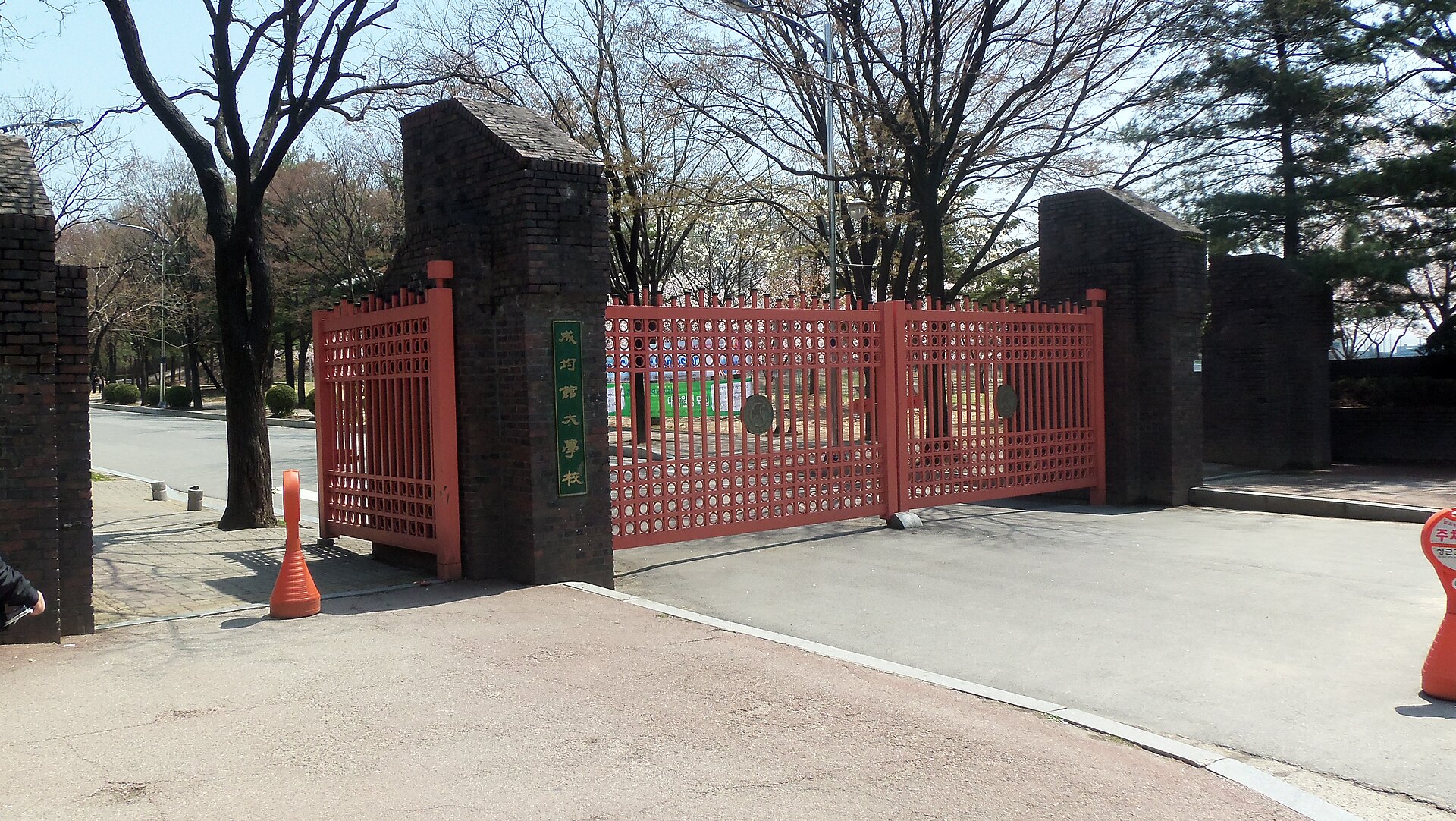
The main gate of Sungkyunkwan University's campus in Suwon.
The main gate of Sungkyunkwan University's campus in Suwon.Christian Bolz · CC BY-SA 3.0 · via Wikimedia Commons
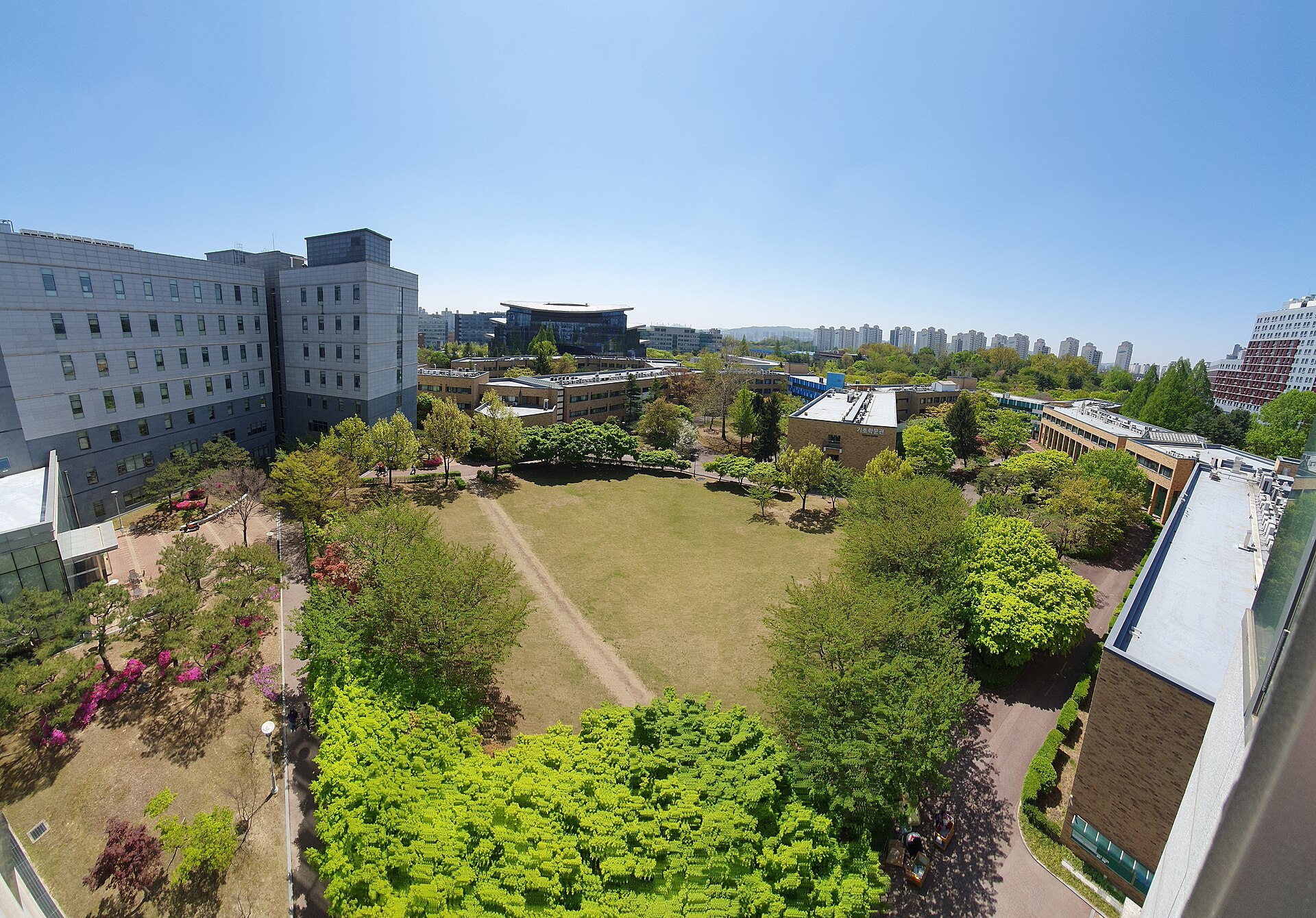
SKKU Natural Sciences Campus seen from the Industry Cooperation Centre
SKKU Natural Sciences Campus seen from the Industry Cooperation CentreJpbarrass · CC BY-SA 4.0 · via Wikimedia Commons
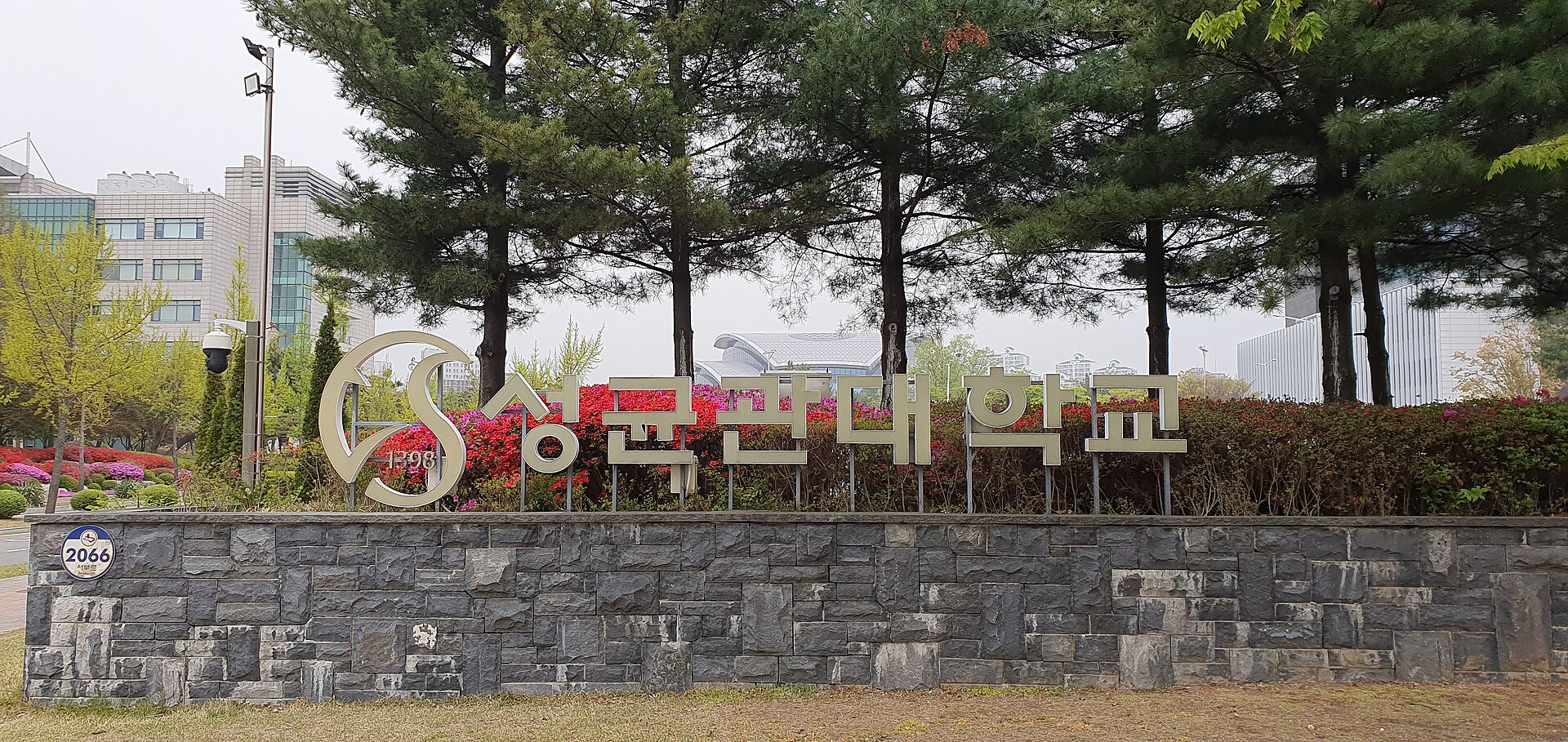
SKKU's Natural Sciences Campus entrance sign
SKKU's Natural Sciences Campus entrance signJpbarrass · CC BY-SA 4.0 · via Wikimedia Commons
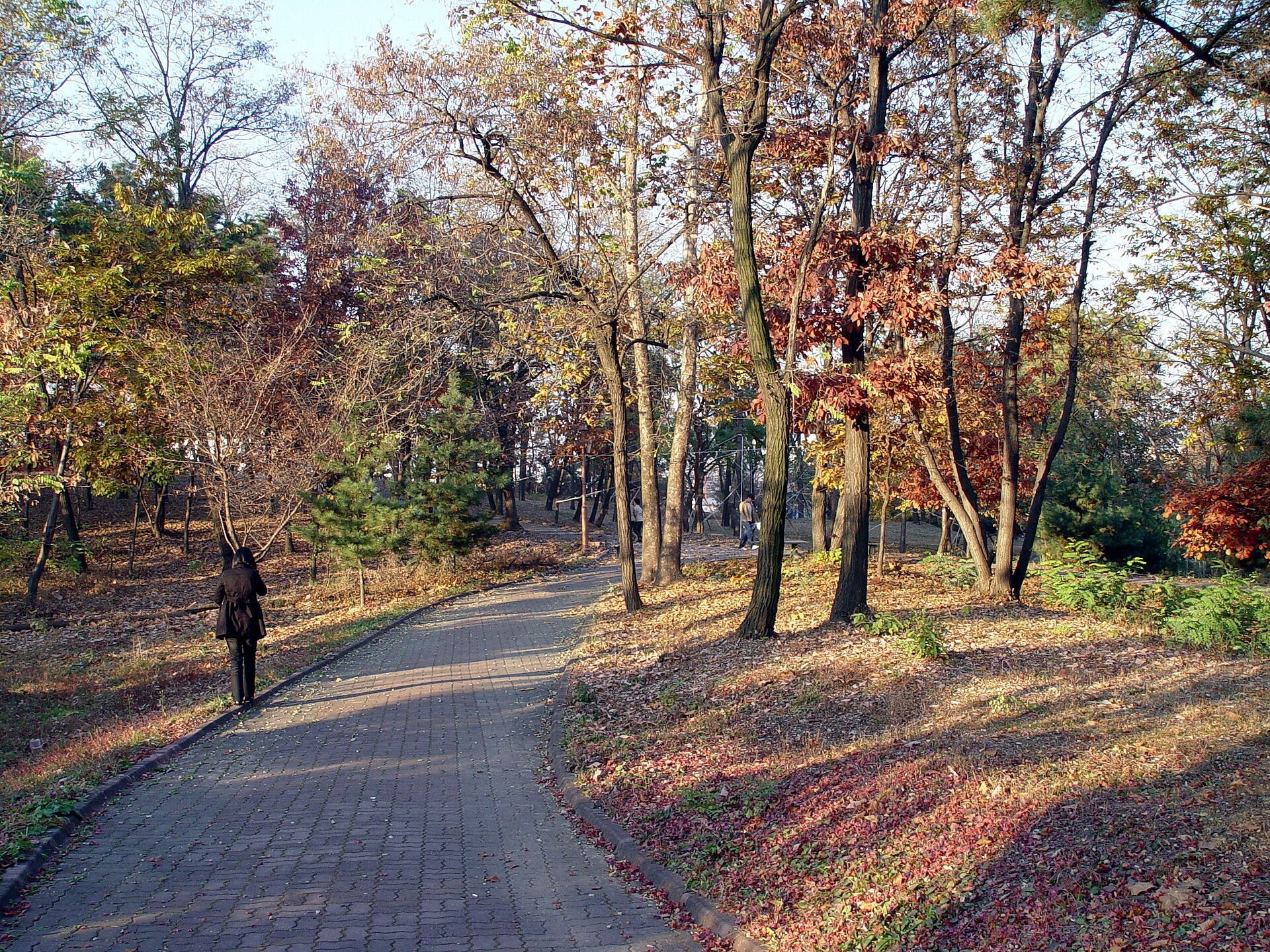
Campus Hill, SKKU, Suwon
Campus Hill, SKKU, SuwonJpbarrass · Public domain · via Wikimedia Commons
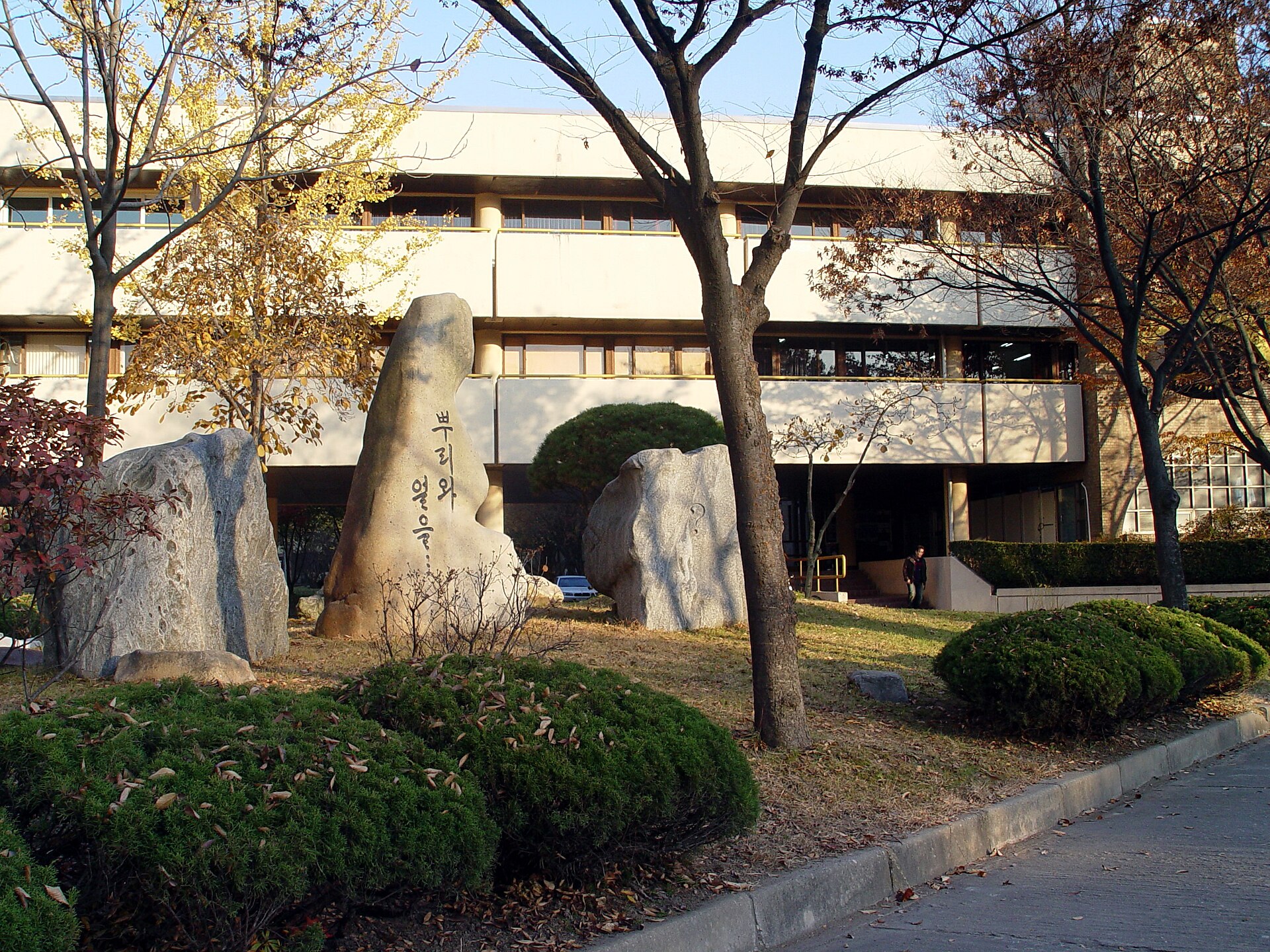
Natural Sciences Building, SKKU, Suwon
Natural Sciences Building, SKKU, SuwonJpbarrass · Public domain · via Wikimedia Commons
Natural Sciences Building from 2nd Engineering Building, SKKU, Suwon
Natural Sciences Building from 2nd Engineering Building, SKKU, SuwonJpbarrass · Public domain · via Wikimedia Commons

Why SKKU — History, Samsung & Global Rankings

Sungkyunkwan University is not merely one of Korea's oldest institutions — it is the university that most directly bridges Korea's Confucian scholarly tradition with the demands of the 21st-century semiconductor and AI economy. For international students seeking a globally ranked research university at a fraction of Western tuition costs, with a direct line into Korea's dominant technology industries, SKKU is a uniquely compelling choice.

01Global Rankings & Historical Prestige
QS #123, THE #145, and Korea's #4 nationally — SKKU pairs six centuries of academic tradition with a strong modern research identity. Korean employers and graduate schools hold SKKU in the same breath as the SKY universities.
02Samsung Research Partnership
SKKU's formal relationship with Samsung Group gives engineering and business students direct access to industry-sponsored labs, co-research projects, and one of Asia's strongest graduate recruitment pipelines in semiconductors and electronics.
03Dual-Campus Research Ecosystem
The Seoul campus (Jongno-gu, steps from Gyeongbokgung Palace) hosts Humanities, Social Sciences, and Business. The Suwon campus is a dedicated STEM hub for Engineering, Natural Sciences, and Pharmacy — purpose-built research environments in each discipline.
04English Track — Accessible Without Korean
Select undergraduate programmes in Engineering and Human Sciences are taught entirely in English. Many graduate programmes are fully English-medium. SKKU is among the most internationally accessible universities in Korea for non-Korean speakers.

SKKU Acceptance Rate & International Applicant Profile

Stats

23%
Overall Acceptance Rate
28,000
Total Students
10%
International Students

Profile Stats

36+
IB Score — Competitive Benchmark
3.0
Minimum GPA (4.0 scale)
6.5
IELTS Minimum (English Track)
80
TOEFL iBT Minimum
10%
International Student Share
#123
QS World Rank
Overall acceptance rate across all programmes

Rea Vs Rd

Rd Label: Fall Intake (Rounds 1–3)
Rd Value: Mar–Jul
Rea Label: Spring Intake
Rea Value: Sep–Oct

SKKU Admissions Requirements — Academics, Language & Profile

Academic Record
Value: 3.0+ GPA
  • Minimum 3.0 on a 4.0 scale; competitive admits typically higher
  • IB applicants: 36+ points competitive benchmark
  • Strong subject alignment with chosen programme required
  • Upward grade trajectory viewed favourably
SKKU's stated minimum GPA is 3.0/4.0, but competitive applicants for Engineering, CS, and Business programmes typically present stronger academic profiles. Course rigour in your intended discipline matters — IB HL subjects, A-Level choices, or equivalent advanced coursework in relevant fields.
Language Proficiency
Value: IELTS 6.5 / TOEFL 80
  • IELTS 6.5 or TOEFL 80 is the minimum for English Track
  • IELTS 7.0 / TOEFL 95 can qualify for 50% tuition scholarship
  • IELTS 8.0 / TOEFL 110 can qualify for full tuition waiver
  • Duolingo English Test: minimum 110
For the English Track, language proficiency is both a requirement and a scholarship trigger. Meeting the minimum gets you in; exceeding it pays for your education. Begin IELTS or TOEFL preparation early — this is the highest-return investment in your SKKU preparation.
International Qualifications
Value: IB 36+ / A-Level ABB+
  • IB: 36+ with HL subjects aligned to your programme
  • A-Level: ABB minimum; AAB-AAA for competitive programmes
  • AP: scores of 4–5 in relevant subjects are valued
  • Other qualifications assessed case-by-case
SKKU is experienced in evaluating IB, A-Level, AP, CBSE, and other international qualifications. An IB score of 36+ with strong HL performance in discipline-relevant subjects is the established competitive benchmark for international applicants.

SKKU Application Components — Direct Portal, Personal Statement & Documents

SKKU international undergraduate applications are submitted via the university's dedicated global admissions portal. The application is document-based — thorough, official documentation is as important as academic results. Below is every component of a complete SKKU international application.

01RequiredOnline Application via Global Portal
SKKU uses its own international admissions portal at admission-global.skku.edu — no Common App, UCAS, or Coalition App. Begin early and allow time for document preparation.
02RequiredAcademic Transcripts & Graduation Certificate
Official transcripts from all secondary school years plus a graduation (or expected graduation) certificate. Documents must be apostilled or Korean-embassy legalised if issued outside Korea — allow 4–8 weeks for this process.
03RequiredLanguage Proficiency Score
IELTS, TOEFL iBT, or Duolingo for English Track; TOPIK Level 4+ for Korean Track. This is both an admission requirement and the direct trigger for merit scholarships.
04RequiredPersonal Statement / Study Plan
A written statement of academic motivation, programme rationale, and future goals. Certain programmes (CS, Theatre, Sport Science) have department-specific questions; others choose from provided topics.
05RequiredPassport Copy
A copy of your valid passport is required as proof of nationality for all international applicants.
06RequiredApplication Fee
A non-refundable application fee of USD 80 (equivalent in KRW) is payable at online submission.
07Programme-DependentLetters of Recommendation
Some programmes and scholarship pathways request recommendation letters from teachers or school principals. Confirm requirements for your specific department before applying.
https://admission-global.skku.edu/eng/index.html

SKKU Personal Statement — Writing the Application That Gets Read

Tips

Write a motivation letter, not a personal narrative
SKKU expects a professional academic statement — specific, purposeful, forward-looking. A coming-of-age personal story is the wrong register for a Korean university admissions context.
Name SKKU's specific assets
Generic praise ('highly ranked, great reputation') is the single most common weakness. Reference the Samsung partnership, specific research labs, named faculty, or the English-track curriculum for your programme.
Connect your academic background to your programme explicitly
SKKU admissions readers want to see a coherent line from your secondary school preparation to your chosen programme at SKKU to your post-graduation goals. Make each step visible.
Write in a formal academic register
Colloquial or overly casual English is inappropriate. SKKU is a formal Korean academic institution. Your written language should reflect the seriousness of the context.

Prompts

Academic Background & Study Motivation
Describe your academic background and your reasons for applying to your chosen programme at SKKU. (Prompt presented within the application portal — confirm current wording at admission-global.skku.edu)
Future Goals & Career Plan
Describe your future academic and career goals and how studying at SKKU will help you achieve them. (Prompt presented within the application portal — confirm current wording at admission-global.skku.edu)
Programme-Specific Questions (CS / Theatre / Sport Science)
CS, Theatre, and Sport Science applicants answer department-specific questions set by each faculty. Access the current questions by beginning an application at admission-global.skku.edu.
The most common SKKU statement mistake. Writing what you think SKKU wants to read — generic academic ambition — rather than a precise, specific account of why this programme, at this university, serves your particular intellectual and professional goals.

What SKKU Admissions Is Looking For

SKKU's international admissions is primarily academic and document-based. Unlike US holistic review, there is no formal extracurricular scoring system. But within the academic and documentary evaluation, the personal statement and demonstrated subject expertise create real differentiation between applications with similar grade profiles.

01Academic Strength in the Chosen Field
SKKU's primary evaluation criterion is academic performance. Strong grades in subjects directly relevant to your intended programme — not a broad all-rounder profile — are what the admissions office is looking for first.
02Language Proficiency
More than a checkbox — language proficiency determines both admission eligibility and scholarship tier. The most prepared applicants treat their IELTS or TOEFL score as a strategic priority, not an afterthought.
03Focused, Credible Motivation
Korean university admissions culture values clarity of purpose. A student who knows why they want to study Semiconductor Engineering at SKKU specifically — and can articulate it without generic language — stands out from the pool.
04Subject-Specific Depth
SKKU values intellectual depth within a chosen field over broad extracurricular diversity. Academic competitions, research projects, and subject-specific achievements carry weight in a way that unrelated activities do not.
05Complete, Properly Authenticated Documents
Document quality is a real evaluation dimension at SKKU. Apostilled transcripts, correctly certified translations, and a complete file submitted on time are prerequisites — incomplete documentation is one of the most common rejection reasons.
06Genuine Interest in Korea
SKKU wants students who will thrive in and contribute to its academic community — which means students who have thought seriously about living and studying in South Korea, not just those who see Korean education as a convenient ranked option.

SKKU Financial Aid & Scholarships for International Students

SKKU's financial profile for international students is distinct from US or UK universities: tuition is low by global standards, and merit scholarships tied to language proficiency can eliminate it entirely. The result is that the highest-value preparation step is not boosting your IB score by one point — it is clearing the IELTS 7.0 or 8.0 threshold.

Scholarship thresholds and amounts should be confirmed at admission-global.skku.edu each application cycle as they may be revised. Tuition is denominated in KRW; USD amounts fluctuate with exchange rates.

Stats

~$8,500
Annual tuition (approx. USD)
~$18,000
Total annual cost of attendance
100%
Full tuition waiver — IELTS 8.0 / TOEFL 110
50%
50% tuition scholarship — IELTS 7.0 / TOEFL 95

Contribution Tiers

NoteRangePercentPercent Value
IELTS 6.5 / TOEFL 80 minimum — admission only, no tuition reductionMinimum Threshold0%0
IELTS 7.0 / TOEFL 95 — 50% tuition scholarship at admission50% Scholarship Tier50%50
IELTS 8.0 / TOEFL 110 — full tuition waiver at admissionFull Scholarship Tier100%100
GKS covers tuition + living stipend + airfare — government administeredGlobal Korea ScholarshipFull Funding100
How SKKU Aid Differs from US Universities. SKKU does not operate a US-style need-blind financial aid programme. All institutional scholarships for international undergraduates are merit-based, linked to language proficiency at admission. For comprehensive funding, the Korean government's Global Korea Scholarship (GKS) covers tuition, living costs, and airfare — the most significant funding available to international students in Korea.
https://admission-global.skku.edu/eng/index.html

Key Dates

Fall Intake — Round 1 Application Period
Date: Mar–Apr
Fall Intake — Round 2 Application Period
Date: May–Jun
Fall Intake — Round 3 Application Period
Date: Jun–Jul
Spring Intake Application Period
Date: Sep–Oct

Advantages

  • Widest scholarship availability — most merit funding is allocated early
  • Maximum seat availability across competitive programmes
  • Longest lead time to prepare documents and apostille certificates
  • First-round applicants signal commitment and preparedness
  • Time to address any document deficiencies before later rounds close

Disadvantages

  • Transcripts and apostille certificates must be ready earlier
  • Less time to retake language proficiency tests for a higher scholarship tier
  • Exam results (IB predicted/final) may not yet be available for very early round
Round 1 vs Later Rounds. Unlike US Early Action or Early Decision, SKKU's multiple rounds are not binding — but Round 1 gives you the best access to scholarships and competitive programme seats. Always verify current cycle dates at admission-global.skku.edu.
Tychr's Round Strategy Recommendation. Apply in Round 1 if your documents are ready and your language score meets or exceeds the 7.0/95 scholarship threshold. If your language score is below the scholarship threshold and you have time to resit before Round 2, a deliberate delay to improve your score can be worth it — a higher IELTS result pays dividends for all four years of tuition.
SKKU Application Rounds — Strategy for International Applicants
https://admission-global.skku.edu/eng/index.html

SKKU Interview — Format, Programmes & Preparation

Interviews at SKKU are programme-dependent rather than universally required. Most departments — including Engineering and Business — do not conduct interviews for international undergraduate applicants. However, Computer Science, Theatre, and Sport Science require either a department interview or a written examination. Confirm your programme's requirements when you access the application portal.

Meta

Varies by programme — not universally required
Format
CS, Theatre, Sport Science, and some graduate programmes
Who requires it
Subject knowledge, academic motivation, language ability
What it evaluates
In-person or online panel interview, or written examination
Format type

Questions

What draws you to Computer Science — and to this programme at SKKU specifically?
Tip: Be specific about the technical direction — AI systems, algorithms, software engineering. Reference SKKU's specific CS research groups or labs if you can.
Describe a technical problem you have worked on and how you approached it.
Tip: Have a substantive answer that connects to a specific project, course, or research experience — not a childhood story about technology.
What do you intend to do with your degree after SKKU?
Tip: Korean institutions value professional clarity. Have a specific, credible answer about an industry, company type, or research direction — not a vague global impact statement.
Why SKKU rather than another Korean or international university?
Tip: Reference SKKU's Samsung partnership, specific labs, or programme-specific strengths — not just rankings. Show you have researched the university genuinely.
What have you read, built, or researched outside school in your field of interest?
Tip: Korean academic culture values discipline-specific depth. Show engagement with your field beyond classroom requirements.

SKKU Campuses & Residential Life

SKKU does not use a house or college system in the Harvard or Oxbridge sense. Instead, residential life is organised around two physically distinct campuses — each with its own dormitories, dining facilities, and student community. Your campus is determined by your programme, not by a lottery.

Houses

Humanities & Social Sciences Dormitory
Tag: Seoul
On the Seoul (Jongno) campus, serving Humanities, Law, and Social Sciences students
Business School Dormitory
Tag: Seoul
Adjacent to the Business School buildings on the Seoul campus
Natural Sciences & Engineering Dormitory
Tag: Suwon
Main residential block for STEM students on the Suwon campus
Pharmacy & Life Sciences Dormitory
Tag: Suwon
Residential block close to pharmacy and life sciences laboratories
International House
Tag: Both
Dedicated international student housing with additional language and cultural support services

Lottery Steps

  • Seoul Campus (Jongno-gu): Humanities, Social Sciences, Law, Economics, Business — located in the historic heart of Seoul, steps from Gyeongbokgung Palace
  • Suwon Campus (Gyeonggi-do): Natural Sciences, Engineering, Semiconductor Engineering, Pharmacy, Information & Communication Engineering — a purpose-built STEM research hub about 45 minutes from Seoul by subway
  • On-campus dormitories are available on both campuses and are prioritised for international students
  • Applications for dormitory housing should be submitted as early as possible — spaces are competitive
  • Off-campus housing (hasukjip, officetel, shared apartments) is widely available and generally affordable in both locations
  • International students often choose International House for its dedicated support infrastructure and proximity to international student services

SKKU Colleges, Schools & Programmes for International Students

College of Engineering
Label: Suwon Campus — STEM Hub
  • {"label":"Flagship department","value":"Semiconductor Engineering"}
  • {"label":"Samsung partnership","value":"Direct research collaboration"}
  • {"label":"English Track available","value":"Select programmes"}
  • {"label":"National engineering rank","value":"Top 5"}
Electronic & Electrical Engineering, Semiconductor Engineering, Chemical Engineering, Mechanical Engineering, Civil & Environmental Engineering, and Nano Engineering — Korea's most direct pipeline into the semiconductor and electronics industry.
School of Computing
Label: AI, Software, Computer Science
  • {"label":"Key programmes","value":"AI, Software Engineering, Computer Science"}
  • {"label":"Industry connection","value":"Samsung, Kakao, Naver"}
  • {"label":"Interview required","value":"Yes — department-specific"}
  • {"label":"Campus","value":"Suwon"}
One of Korea's leading computing schools, with rapidly growing AI and machine learning research. CS applicants undergo a department-specific supplementary evaluation.
SKK Graduate School of Business (SKK GSB)
Label: Seoul Campus — Business & Economics
  • {"label":"Flagship undergrad programme","value":"Global Business Administration"}
  • {"label":"Language of instruction","value":"Partially English"}
  • {"label":"Industry network","value":"Samsung, Hyundai, SK, LG"}
  • {"label":"Graduate offering","value":"AACSB-accredited MBA"}
Global Business Administration is one of SKKU's most competitive undergraduate programmes for international students. SKKU Business is AACSB-accredited and has the strongest corporate recruitment network in Korea after SKY business schools.
College of Natural Sciences
Label: Suwon Campus — Sciences
  • {"label":"Key departments","value":"Mathematics, Physics, Chemistry, Biology"}
  • {"label":"Research focus","value":"Materials science, biomedical, pharma"}
  • {"label":"Campus","value":"Suwon"}
  • {"label":"Graduate pathways","value":"Strong PhD and research track"}
Strong research output in materials science and the life sciences, with direct links to the Suwon campus pharmaceutical and biomedical engineering cluster.
School of Pharmacy
Label: Suwon Campus
  • {"label":"Programme type","value":"6-year PharmD track"}
  • {"label":"Competitive entry","value":"Very selective"}
  • {"label":"Industry pathway","value":"Korean & global pharma"}
  • {"label":"Campus","value":"Suwon"}
One of Korea's leading pharmacy schools, with strong industry ties to domestic and multinational pharmaceutical companies. Entry is highly competitive.
College of Humanities & Social Sciences
Label: Seoul Campus
  • {"label":"Key departments","value":"Korean Studies, History, Economics, Sociology"}
  • {"label":"Historic strength","value":"Confucian scholarship tradition"}
  • {"label":"Campus","value":"Seoul (Jongno)"}
  • {"label":"Language","value":"Primarily Korean-medium"}
SKKU's Confucian roots make it uniquely strong in Korean Studies, East Asian history, and related humanities. Most instruction is in Korean; international students should have TOPIK Level 4+ for Korean-track programmes.

Research & Extracurricular Opportunities at SKKU

Samsung Advanced Technology Training Institute (SATI)
Category: Industry Research
SKKU's partnership with Samsung includes access to joint research programmes and industry-sponsored laboratory projects, particularly in semiconductor engineering, advanced materials, and electronics. Engineering undergraduates can participate through departmental research assistant programmes.
SKKU AI Research Institute
Category: AI & Computing Research
A dedicated research centre for artificial intelligence, machine learning, and data science. Undergraduate research participation is available through faculty-led projects, particularly for students in the School of Computing and related STEM disciplines.
International Exchange & Study Abroad
Category: Global Mobility
SKKU has formal exchange partnerships with over 600 universities worldwide. Students can spend one or two semesters abroad from their second year. The programme is competitive and GPA-dependent; early planning is essential.
Student Clubs & Organisations
Category: Campus Life
Hundreds of recognised student organisations span academic, cultural, arts, and sports activities. International students are actively encouraged to join Korean student clubs — the most direct pathway to language acquisition and genuine cultural immersion. The annual SKKU Festival is a major campus highlight.
Scroll right to explore SKKU's research programmes and student life opportunities.

Career Outcomes & SKKU Alumni Network

SKKU's 92% employment rate and average starting salary of USD 38,000 reflect the strength of Korea's top-four university pipeline into its dominant industries — technology, finance, pharmaceuticals, and consulting. The Samsung partnership is SKKU's most direct differentiator: every year, SKKU graduates in engineering and business join Samsung Electronics and affiliated companies through dedicated recruitment channels.

Stats

92%
Employment rate within 6 months of graduation
USD 38K
Average starting salary
28K+ students
Total student alumni network
#123
QS World Rank
#4
National Rank (Korea)
Samsung
Top employer partner

Categories

Technology & Semiconductors
Samsung Electronics, Samsung SDI, SK Hynix, LG Electronics — SKKU's engineering graduates, especially from Semiconductor and Electronic Engineering, are among Korea's most recruited technical talent. The Samsung partnership creates a direct pipeline that few universities globally can match in this industry.
Business & Finance
Samsung Life, Kakao, Naver, Hyundai, SK Group — SKKU business graduates are strongly placed across Korea's largest conglomerates (chaebol) and the growing Korean tech startup ecosystem. Seoul is increasingly an East Asian financial and tech hub.
International Careers
For international students, SKKU's brand carries weight across East and Southeast Asia, where Korean university rankings are well understood. Graduate pathways across Japan, China, Singapore, and Southeast Asian markets are supported by SKKU's growing international alumni community.

Our SKKU Admissions Track Record & Student Success Stories

Amir K.
I initially planned to target UK universities. Tychr showed me that SKKU's Semiconductor Engineering programme — with the Samsung connection — was actually a better pathway into the chip industry than most UK options at a quarter of the cost. My IELTS 8.0 gave me a full tuition waiver. I am now in my second year on the Suwon campus.
Country: Kazakhstan
Program: SKKU — Semiconductor Systems Engineering
Class Year: Class of 2027
Residential: Suwon Campus
Academic Profile: IB 38 · IELTS 8.0
Priya S.
The SKKU personal statement caught me off-guard — it is nothing like a US supplement. Tychr's coaches helped me understand that SKKU wanted a precise professional motivation, not a personal story. My revised statement focused entirely on SKKU's AI research institute and my specific interest in computer vision. I received an admission offer in Round 1.
Country: India
Program: SKKU — Artificial Intelligence
Class Year: Class of 2028
Residential: Suwon Campus
Academic Profile: CBSE 97.4% · TOEFL 112
Rafael M.
Seoul was not on my radar. After Tychr introduced me to SKKU's Global Business Administration programme and its direct links to Korean conglomerates, I could see a career pathway I could not get from a mid-tier European business school. The total cost — with my language scholarship — was less than a single year of tuition in the UK.
Country: Brazil
Program: SKKU — Global Business Administration
Class Year: Class of 2026
Residential: Seoul Campus
Academic Profile: A-Levels AAB · IELTS 7.5

Faqs

Do I need to speak Korean to study at SKKU?+

Not necessarily. SKKU offers an English Track for select undergraduate programmes including certain Engineering disciplines (Chemical Engineering, Advanced Materials Science, Mechanical Engineering, Nano Engineering) and Human Science and Society. However, daily life in Seoul is significantly easier with some Korean, and most Korean-track programmes and the broader social environment will be Korean-language. If applying to the Korean Track, TOPIK Level 4 is required.

How does the Samsung partnership actually benefit students?+

The Samsung connection is real and active. It manifests in joint research projects, industry-sponsored labs on the Suwon campus, exclusive internship pipelines, and very strong graduate recruitment. Engineering and business students benefit most directly. For semiconductor engineering students in particular, the SKKU-Samsung relationship is one of the strongest university-industry partnerships in Asia.

What are my chances of a full scholarship as an international student?+

Two full-funding pathways exist. SKKU's own Excellent English Language Professionals Scholarship offers a full tuition waiver for applicants with IELTS 8.0 or TOEFL iBT 110 — automatic at admission for qualifying scores. The Korean government's Global Korea Scholarship (GKS) provides full funding (tuition, living costs, airfare) for selected international students at Korean universities including SKKU, applied for through your home country's Korean embassy.

Which campus would I be on — Seoul or Suwon?+

It depends on your programme. Humanities, Social Sciences, Law, and Business programmes are based on the Seoul campus (Jongno-gu). Natural Sciences, Engineering, Pharmacy, AI, and Information & Communication Engineering are based on the Suwon campus (Gyeonggi-do, about 45 minutes from Seoul by subway).

How do I get my documents apostilled for the SKKU application?+

Transcripts and graduation certificates issued outside Korea must be either apostilled (if your country is a Hague Convention signatory) or legalised by the Korean embassy in your country. This process can take several weeks — begin at least 6–8 weeks before your intended application deadline. Missing this requirement is one of the most common causes of application failure.

Can I work part-time while studying at SKKU?+

Yes. International students on a D-2 (student) visa are permitted to work part-time up to 20 hours per week during the semester and full-time during vacation periods, subject to obtaining a part-time employment permit from the immigration office. Many international students tutor English or work in Seoul's extensive service and hospitality sectors.

How competitive is SKKU's Computer Science programme for international students?+

Very competitive. Computer Science and Artificial Intelligence are among SKKU's most oversubscribed programmes for international applicants. In addition to the standard academic and language requirements, CS applicants undergo a department-specific evaluation. A strong mathematics background, relevant coding experience, and a well-prepared supplementary statement are all important.

Does SKKU accept transfer students?+

Yes. SKKU accepts international transfer applicants for entry into the 2nd or 3rd year of undergraduate programmes. Transfer applicants need at least one year of credit from a recognised university and must meet the same language and GPA requirements as freshmen applicants. Contact the international admissions office (fore@skku.edu) for the current transfer cycle deadlines.

Book a Free SKKU Admissions Strategy Session

In 60 minutes our SKKU admissions specialists will evaluate your academic profile, identify your language score targets and scholarship tier, develop your personal statement strategy, and determine the optimal application round for your situation.

  • No commitment required
  • SKKU and Korean university specialists
  • Personalised strategy — document checklist, language score targets, scholarship roadmap
Getting into SKKU is not just about grades — it is about presenting the right academic profile, at the right language threshold, with a statement that shows you understand exactly what SKKU can give you.

SKKU Academic Requirements

SKKU Academic Requirements: The Honest Breakdown for International Students

What GPA, language scores, and academic profile do SKKU's admitted international students actually need? And how does SKKU read IB, A-Level, AP, and other international qualifications?

36+
IB Competitive Benchmark
International applicant target
3.0
Minimum GPA
On a 4.0 scale
6.5
IELTS Minimum
English Track entry
80
TOEFL Minimum
iBT for English Track
23%
Acceptance Rate
Overall; competitive programmes more selective
#123
QS World Rank
QS World University Rankings

GPA & Academic Standards

SKKU and GPA — What the Standards Mean

SKKU states a minimum GPA of 3.0 on a 4.0 scale for international undergraduate applicants. In practice, competitive applicants to engineering, computer science, and business programmes present significantly stronger academic profiles.

A 3.0 GPA is an eligibility threshold, not a competitive profile. The most successful international applicants combine strong academic results in discipline-relevant subjects with high language proficiency — the latter being SKKU's most distinctive scholarship trigger.

3.0 / 4.0
Stated minimum GPA for international applicants
36+
IB score competitive benchmark
What this means for international students. International students from systems without a formal 4.0 GPA (IB, UK A-Levels, many Asian curricula) are evaluated by conversion frameworks. SKKU's international admissions office has experience with major international qualifications and will assess your profile in the context of your specific educational system.
Grade trajectory and subject alignment. SKKU evaluates your complete secondary school record. A strong Grade 11 and 12 trajectory — particularly in subjects directly relevant to your chosen programme — is more important than an even performance across all years. Improving performance in senior years is a positive signal.

Academic Context

How SKKU Reads International Academic Records

SKKU does not require class rank from international applicants and is experienced in evaluating academic performance across widely different school systems. Your educational context matters.

How SKKU contextualises your academic record
Every application is evaluated with reference to the student's specific school and curriculum. An applicant from an IB World School is assessed on IB criteria; an A-Level student on UK criteria; a CBSE student on Indian board performance. SKKU's international admissions office understands these systems and does not mechanically compare raw grades across systems.
Course rigour in your discipline matters
Taking the most rigorous courses available in your chosen field matters. A student who pursued IB HL Mathematics and HL Physics for Engineering demonstrates academic seriousness. A student who avoided higher-level mathematics to protect their GPA sends a different signal — one that will matter when they arrive in SKKU's demanding Engineering curriculum.
For students from less well-known international schools. For students at less well-known international schools, a strong personal statement that explicitly describes the academic context of your school — what courses were available, what the grading system means — can provide useful context for admissions readers. Tychr counsellors who work with SKKU applicants advise on how to frame school context effectively.

Standardised Testing

SAT at SKKU — Optional, Not a Primary Criterion

SKKU does not publish SAT score bands for international admits because SAT is not a primary evaluation criterion. The university's test policy is genuinely optional, and admission is primarily transcript and language-score based.

LabelScorePercent
SAT policyOptional0
Recommended threshold if submitting1400+70
SAT Math — STEM applicants750+ recommended80
If you submit: the Math score matters. For STEM applicants who choose to submit SAT scores, the Math section carries the most relevance. SKKU's Engineering and Science programmes are mathematically demanding. A high Math subscore (750–800) provides independent evidence of quantitative readiness that complements the academic transcript.
Preparation priority. Tychr does not recommend spending significant preparation time on SAT for SKKU-focused applicants at the expense of IELTS or TOEFL preparation. Language proficiency scores have a direct financial return (scholarship tiers); SAT scores are optional extras.
Submitting vs. not submitting. Submit your SAT if your composite is 1400 or above, or if you have taken the exam as part of a broader US university application strategy. If SAT preparation would come at the cost of IELTS preparation, prioritise IELTS — it is a harder requirement and directly determines your scholarship eligibility.

Standardised Testing

ACT at SKKU — Optional and Secondary

The ACT is accepted at SKKU on an optional basis alongside the SAT. As with SAT, it is not a primary evaluation criterion and is not required for admission.

Metrics

ACT policy
Score: Optional
Recommended threshold if submitting
Score: 31+

Comparison Cards

SAT vs. ACT for SKKU
SKKU accepts both equally. For SKKU-focused applicants, the choice between SAT and ACT should be based on which test suits your strengths — but both are significantly less important than your IELTS or TOEFL score.
When ACT Science adds value
The ACT Science section's data interpretation format can be useful evidence for Natural Sciences or Biomedical Engineering applicants if scores are strong.
Time allocation priority
If your ACT or SAT preparation competes with time for IELTS/TOEFL preparation, language tests take priority — their scores directly determine scholarship eligibility.
Score reporting. SKKU does not publish a superscore policy for ACT. If submitting, provide your best single sitting composite. There is no documented preference between SAT and ACT at SKKU.
Tychr's recommendation. For students who have already taken ACT as part of a broader university strategy, submit scores of 31 or above. For students applying primarily to SKKU, do not prepare specifically for ACT — invest preparation time in language proficiency instead.

Testing Strategy

SKKU Test-Optional Policy — The Strategic Reality

SKKU's test-optional policy for international undergraduates is genuine — SAT and ACT are not required, and the primary academic evaluation is based on transcripts and language proficiency. Understanding when to submit (and when not to) is straightforward.

Submit Items

Your SAT composite is 1400 or above, or your ACT composite is 31 or above — submit.
You are applying to multiple universities including US schools and have invested in SAT/ACT preparation — submit to SKKU as well.
Your Math score is particularly strong (SAT 750+ or ACT Math 34+) and you are applying to a STEM programme — submitting adds value.

Withhold Items

Your score is below 1400 SAT or 31 ACT — withholding is generally the better strategy.
Standardised test preparation has come at the expense of IELTS/TOEFL preparation — your language score is the higher-priority metric.
Current policy. SKKU accepts SAT and ACT scores from international applicants but does not require them. Applications are assessed without standardised test scores with no stated penalty. This is a fundamentally different framework from US Ivy League test-optional policies — SKKU was always primarily transcript-based and the 'optional' policy reflects the system honestly.
The key distinction from US test-optional. At SKKU, 'test-optional' is the natural state — these tests were never required for Korean university international admissions. Unlike US universities where test-optional creates a complex strategic calculation, SKKU's admissions has always been primarily transcript and language-proficiency based. The real test that matters at SKKU is IELTS or TOEFL.

International Qualifications

IB and A-Level at SKKU — Specific Benchmarks

IB Diploma
Note: What SKKU values in IB applicants: strong HL subject selection in the discipline you are applying to. An Engineering applicant with HL Mathematics (Analysis & Approaches), HL Physics, and HL Chemistry signals genuine preparation. The Extended Essay grade and subject provide useful context about research interest and academic depth.
  • {"label":"Competitive benchmark","value":"36+ points overall"}
  • {"label":"HL expectations","value":"5–7s in HL subjects relevant to your programme"}
  • {"label":"Subject alignment","value":"HL Mathematics (A&A preferred for STEM), HL sciences for Engineering/Natural Sciences, HL Economics/Business for Business"}
  • {"label":"Extended Essay","value":"B or above; subject should align with intended programme"}
A-Levels
Note: A-Level applicants: three passes with strong grades in discipline-relevant subjects. SKKU is experienced in reading UK qualifications. Predicted grade letters and UCAS references are not part of the SKKU process — you submit your own certified transcripts and certificates directly.
  • {"label":"Competitive range","value":"ABB – AAA in relevant subjects"}
  • {"label":"Subject rigour","value":"Mathematics + Physics/Chemistry for STEM; Economics/Business + Mathematics for Business"}
  • {"label":"AS results","value":"Reviewed if available; strong AS performance supports the profile"}

AP Courses

AP Courses at SKKU — What Counts and Who Benefits

AP courses and exam scores are accepted as evidence of academic rigour for students from American-curriculum schools or schools that offer the AP programme. SKKU does not require AP and does not publish specific AP score thresholds.

What SKKU values in AP results
Scores of 4 or 5 in subjects directly relevant to your intended programme. AP Calculus BC, AP Statistics, AP Physics C, AP Chemistry, and AP Biology carry the most weight for SKKU's competitive STEM programmes. AP Economics or AP Microeconomics is relevant for Business applicants.
How many APs?
SKKU does not publish expected AP exam counts. For students from AP-heavy schools, the quality and subject alignment of your AP profile matters more than the number of exams.
AP as validation of subject preparation
Strong AP scores in STEM subjects provide an independent validation of quantitative preparation — particularly useful when submitting alongside a strong IELTS or TOEFL score.
SKKU does not publish a formal AP credit policy for incoming undergraduates in the way US universities do. Credit transfer for AP results should be discussed directly with your intended department after admission.
International students at schools that do not offer AP should not pursue it artificially. The IB Diploma or A-Level system is the appropriate qualification for their context and is evaluated accordingly at SKKU.

Academic Rigour

Rigour of Secondary School Record — SKKU's Core Academic Criterion

SKKU evaluates academic rigour relative to what was available to you. Students at schools offering IB or A-Level are expected to have taken appropriately advanced options in their chosen discipline. Subject alignment — the match between your secondary school courses and your intended university programme — is a key criterion.

Taking the most demanding courses available in the subjects most relevant to your programme of study — not grade-optimising by choosing easier options.

The contextual element. Rigour is always evaluated relative to what was available at your specific school. A student at a school offering only limited IB or advanced courses is not disadvantaged if they took everything available. What matters is whether you challenged yourself within the options you had.
What rigour means for SKKU applicants. For Engineering applicants: Higher-Level Mathematics and at least one physical science are expected. For Business: quantitative coursework — Mathematics, Economics, Statistics — at the highest available level. For Natural Sciences: HL or equivalent in the relevant science disciplines. The alignment between what you studied and what you want to study must be visible in your transcript.
What SKKU is looking for. SKKU's admissions readers — familiar with Korean academic culture's emphasis on disciplinary depth — look for students who made serious, focused subject choices. A student who took IB HL Mathematics, HL Physics, and HL Chemistry simultaneously demonstrates academic preparation for a rigorous engineering curriculum in a way that a broader, less focused course selection does not.

Subject Preparation

Mathematics and Science Preparation — What SKKU Programmes Expect

SKKU has no formal subject prerequisites for all programmes — international applicants declare their programme at the time of application. However, the most competitive programmes have implicit academic prerequisites that are clearly signalled by admitted students' profiles.

Mathematics
For Engineering, Computer Science, Semiconductor Engineering, AI, and Natural Sciences: higher-level mathematics is essential. IB Mathematics: Analysis & Approaches HL, A-Level Further Mathematics or Mathematics A*, or AP Calculus BC with a score of 5 are the expected preparation levels. Students weak in mathematics will find SKKU's STEM programmes extremely demanding.
Sciences (Physics, Chemistry, Biology)
Engineering and Natural Sciences applicants should have strong secondary school preparation in the sciences relevant to their programme. Semiconductor and Electronic Engineering: Physics. Pharmacy and Biomedical Engineering: Chemistry and Biology. Nano Engineering: both Physics and Chemistry. HL or A-Level performance in these subjects is the expected standard.
English Language
For English-track applicants: English language proficiency is not just an entry requirement — it determines your scholarship tier and your ability to function effectively in your programme. Begin IELTS or TOEFL preparation early. A student targeting IELTS 8.0 should allow 6–12 months of structured preparation.

Language Proficiency

English Language Requirements for SKKU International Applicants

English proficiency requirements at SKKU are both an admission gate and a scholarship trigger — understanding both dimensions is essential for effective preparation.

The most important academic test for SKKU-focused applicants is IELTS or TOEFL — not SAT or ACT. Every band point above the minimum has a direct financial return: IELTS 6.5 is admission only; 7.0 is a 50% tuition reduction; 8.0 is a full tuition waiver. Plan and prepare accordingly.

Test: IELTS Academic
Score: 6.5 minimum
Test: IELTS (50% scholarship)
Score: 7.0+
Test: IELTS (full waiver)
Score: 8.0+
Test: TOEFL iBT
Score: 80 minimum
Test: TOEFL (50% scholarship)
Score: 95+
Test: TOEFL (full waiver)
Score: 110+
Test: Duolingo English Test
Score: 110 minimum
Test: TOPIK (Korean Track)
Score: Level 4 minimum
Exemption from language requirements. Students from countries where English is the primary medium of instruction may be exempt from the language proficiency requirement. Confirm your exemption eligibility with the admissions office (fore@skku.edu) before submitting without a language test score. Native English speakers and graduates of recognised English-medium international schools are typically exempt.
https://admission-global.skku.edu/eng/index.html

By Programme

Academic Requirements by Programme — What Each Field Expects

SKKU international applicants declare their intended programme at the time of application. The following shows the implicit academic expectations by discipline, based on curriculum requirements and the profile of competitive admitted students.

SignalsExpectationConcentration
HL Mathematics; competition maths preferredHL Maths AA / Further Maths A*Mathematics / Statistics
Coding projects; CS olympiad experienceHL Maths + CS backgroundComputer Science / AI
HL Physics + Maths; circuits or robotics projectsHL Maths + HL PhysicsElectronic & Electrical Engineering
Samsung interest; semiconductor courseworkHL Maths + HL Physics/ChemistrySemiconductor Engineering
HL Chemistry + Biology; research interestHL Chemistry + Biology A*sPharmacy / Biomedical Engineering
Economics/Business HL; quantitative projectsHL Economics + MathsGlobal Business Administration
Research interest; materials science backgroundHL Chemistry + PhysicsChemical / Nano Engineering
Broad science preparation; research experienceStrong science profileNatural Sciences

International Systems

SKKU and International Education Systems — How Your Curriculum Is Evaluated

IB Diploma
Well-understood and valued. SKKU's admissions readers are familiar with the IB Diploma programme. The HL/SL distinction, the Extended Essay, and the CAS component are all understood. Applicants are assessed on total score, HL subject alignment with their intended programme, and the demonstrated rigour of their course selection.
A-Levels
Widely recognised. A-Level qualifications are understood and respected at SKKU. Three strong A-Level passes in subjects relevant to your programme form a credible application. Unlike UCAS, there is no predicted grade letter in the SKKU process — you submit certified results directly.
Indian Boards (CBSE / ISC)
Accepted and assessed case-by-case. Strong CBSE or ISC board results (typically 90%+ in relevant subjects for competitive programmes) are competitive. Supplementary evidence of subject depth — olympiad results, research projects, high JEE performance — can strengthen the academic picture.
Chinese Gaokao
Korean universities understand the Chinese Gaokao but it is primarily relevant for ethnic Chinese students. International Chinese students more commonly apply via IB or A-Level qualifications alongside SAT scores, which provide a clearer international benchmark.
Other National Qualifications
Malaysian, Indonesian, Nigerian, Pakistani, and other national qualifications are reviewed on a case-by-case basis. Contact fore@skku.edu to confirm how your specific qualification will be assessed before applying.

Roadmap

Building an Academic Profile for SKKU — What to Do at Each Stage

Grade 9–10Choose your subject path early
Year: Grade 9–10
  • Identify your intended discipline for SKKU and ensure your subject selection trajectory supports it.
  • Prioritise mathematics and sciences if STEM is your direction; quantitative subjects if Business.
  • Begin exploring Korea's academic and cultural context — genuine interest in Korea is visible in your application.
Grade 10–11Begin English proficiency preparation
Year: Grade 10–11
  • Start IELTS or TOEFL preparation no later than Grade 10 for students whose first language is not English.
  • Aim to sit your first official exam in Grade 11, leaving time for a resit if needed.
  • Set IELTS 7.0 / TOEFL 95 as a minimum target; IELTS 8.0 / TOEFL 110 as your scholarship goal.
Grade 11Deepen subject expertise
Year: Grade 11
  • Take the highest available level in your intended discipline — HL subjects, A-Level full course, or AP with strong scores.
  • Seek research opportunities, academic competitions, or project work that demonstrates genuine engagement.
  • Consider basic Korean language learning — even a foundation level improves daily life quality on campus.
Grade 11–12Prepare application documents
Year: Grade 11–12
  • Identify which documents require apostille or Korean embassy legalisation and begin the process (4–8 weeks minimum).
  • Write and refine your personal statement — start earlier than you think necessary.
  • Apply in Round 1 for maximum scholarship and programme seat availability.
Grade 12Submit and follow up
Year: Grade 12
  • Submit your online application with all documents uploaded by the portal deadline.
  • Mail original certified documents by the separate postal deadline — do not miss this.
  • Monitor your application status via the SKKU international admissions portal.

Common Pitfalls

Academic Mistakes That Cost SKKU Applications — And How to Avoid Them

Submitting without properly authenticated documents
One of the most common reasons for application rejection or delay is missing, incorrectly legalised, or poorly translated documentation. Begin the apostille or embassy legalisation process at least 6–8 weeks before your deadline.
Stopping at the language minimum instead of the scholarship threshold
Many applicants meet the IELTS 6.5 minimum without realising that a 7.0 or 8.0 unlocks 50% or 100% tuition reductions. The difference of 0.5–1.5 IELTS bands can represent years of tuition costs.
Assuming the English Track covers all programmes
Not all programmes are offered in English. Choosing the English Track requires confirming your specific programme has an English-medium option. A student who assumes all SKKU programmes are accessible in English and applies without verifying will face a fundamental curriculum problem after admission.
Writing a generic personal statement
Statements that do not reference SKKU's specific strengths — Samsung partnership, named research labs, programme-specific curriculum — are a red flag. Generic motivation is clearly visible to admissions readers.
Applying in a later round without a strategic reason
Round 1 gives you the best access to scholarship funding and programme seats. Waiting until Round 3 or the Spring intake reduces both your scholarship prospects and your choice within competitive programmes.
Underestimating Korean language for daily life
Even for English-track students, daily life — administration, signage, socialising, navigating the city — is primarily in Korean. Arriving in Seoul or Suwon with zero Korean is a real quality-of-life disadvantage.

Real Outcomes

What Academic Profiles Tychr's SKKU-Admitted Students Had

The following profiles illustrate the academic backgrounds of Tychr-supported students who gained SKKU admission. They show the realistic range of academic preparation and what made each application compelling.

Profile 1 — Semiconductor Engineering
HL Mathematics AA (6), HL Physics (7), HL Chemistry (6). Strong interest in semiconductor fabrication; completed an online course in VLSI design. IELTS 8.0 secured full tuition waiver.
Stats: IB 38 · IELTS 8.0
Takeaway: The academic profile was not exceptional by the highest standards, but the combination of subject alignment, IELTS 8.0, and a laser-focused personal statement on SKKU's Samsung research partnership produced a strong offer with full tuition funding.
Profile 2 — Pharmacy
A-Level Mathematics A*, Chemistry A*, Biology A. Research interest in pharmaceutical biochemistry. TOEFL 107. Applied Round 1.
Stats: A-Levels A*A*A · TOEFL 107
Takeaway: Strong subject alignment for Pharmacy (Mathematics, Chemistry, Biology at A-Level) and a TOEFL score close to the full-scholarship threshold. Round 1 application maximised both seat availability and scholarship prospects.
Profile 3 — Computer Science / AI
CBSE 96.4% in core subjects. Prior competitive programming experience. IELTS 7.5. Department-specific CS evaluation completed. Applied to both Computer Science and AI.
Stats: CBSE 96.4% · IELTS 7.5
Takeaway: The CS department evaluation was the key differentiator — the student prepared specifically for it with a structured coding assessment practice programme. The IELTS 7.5 secured a 50% tuition scholarship.

Faqs

What IB score is competitive for SKKU?+

The established competitive benchmark for international IB applicants is 36 or above, with strong HL scores in subjects relevant to your programme. For the most competitive programmes (CS, Semiconductor Engineering, Pharmacy), a higher score combined with strong subject alignment is needed.

Is SKKU genuinely test-optional for SAT/ACT?+

Yes. SAT and ACT are genuinely optional. SKKU's admission evaluation is primarily based on academic transcripts and language proficiency scores. If you have strong SAT/ACT scores, submitting them can add value — but they are not required and are not the primary academic signal.

Does SKKU require IB predicted grades?+

SKKU's international admissions process uses actual (or expected) grades as declared in your documents — not a formal predicted grade letter in the UCAS sense. If you are applying before final IB results, you will submit your transcript to date and declared expected grades. Contact the admissions office for the specific documentation format.

Which language test is best for SKKU — IELTS or TOEFL?+

Both are widely accepted and carry the same scholarship thresholds. Choose the test you can perform best on. IELTS is slightly more common among SKKU's international applicants; TOEFL is also well-recognised. Take a diagnostic of both before committing to significant preparation in one.

Can I apply to SKKU with a GPA between 3.0 and 3.5?+

Yes — 3.0 is the stated minimum and you are eligible. Whether you are competitive for your target programme depends on the strength of your language proficiency score, your course rigour, and your personal statement. A strong IELTS score and focused statement can compensate for a lower GPA in some programmes.

Cost & Financial Aid

SKKU May Be the Most Affordable QS Top-150 University in the World — Here's the Full Picture.

Annual tuition of approximately USD 8,500, a cost of living in Seoul well below comparable global cities, and merit scholarships that can eliminate tuition entirely. Here is exactly what SKKU costs, how the scholarship system works, and what to do to access it.

~USD 8,500 Annual Tuition
Fraction of comparable-ranked Western universities
Full Tuition Waiver Available
For applicants with IELTS 8.0 or TOEFL 110

Cost Transparency

What SKKU Actually Costs — The Full Annual Figure

At approximately USD 18,000 total annual cost of attendance, SKKU is among the most affordable QS top-150 universities in the world. A comparable-ranked UK or Australian university might cost USD 35,000–50,000 per year. A comparable US private university can exceed USD 75,000. SKKU's language-linked scholarship system then reduces this further — in some cases to living costs only.

Annual Tuition
Cost: ~USD 8,500
On-campus Dormitory (double room)
Cost: ~USD 3,000–4,000
Food & Meals (including university cafeteria)
Cost: ~USD 2,000–3,000
Transport (Seoul metro, commuting)
Cost: ~USD 1,000–1,500
Books, supplies, personal expenses
Cost: ~USD 1,000–1,500
Mobile, internet, insurance
Cost: ~USD 500–1,000
Total Estimated Annual Cost
Cost: ~USD 18,000
With IELTS 8.0 / TOEFL 110. ~USD 9,500 / year
Full Sticker Price. ~USD 18,000
SKKU Annual Cost of Attendance — Approximate USD Estimates
Living costs only — tuition eliminated by language scholarship.
Total annual cost at list price, before any scholarship.

Aid Policy

SKKU's Financial Aid Policy for International Students — The Honest Picture

SKKU does not operate a need-blind or comprehensive need-based aid programme for international undergraduate students. The primary financial support mechanism is merit-based scholarship linked to language proficiency at admission. This is fundamentally different from the US Ivy League model, and it is important to understand the difference.

SKKU vs. US Universities on Financial Aid. Unlike Harvard or Princeton, where financial aid is based on family income and can cover full costs for low-income families regardless of test scores, SKKU's institutional scholarships are awarded for demonstrated language proficiency. A student from a low-income family does not automatically qualify for more aid. However, the Korean government's Global Korea Scholarship (GKS) does consider financial and demographic factors, and represents the most significant full-funding option available to international undergraduates in Korea.
What Happens After Admission — Maintaining Scholarships. After admission, scholarship renewals typically require maintaining a minimum GPA — often 2.0 or higher, with higher requirements for academic excellence scholarships. Monitor your academic standing throughout your studies, as losing scholarship eligibility significantly changes the financial picture.
SKKU's Aid System is Primarily Merit-Based
SKKU's language-linked merit scholarships are automatic at admission for applicants who meet the thresholds — no separate scholarship application is required. The scholarship is embedded in the admission decision.

Institutional Context

Why SKKU Can Offer Full Tuition Waivers — The Institutional Basis

Samsung Partnership & Financial Foundation
SKKU is a private university with a formal partnership with Samsung Group. Samsung's continued investment in SKKU — particularly in engineering research and facilities — underpins the university's financial strength and enables ongoing scholarship provision for international students.
Subtitle: Korea's Strongest University-Industry Link
Korean Government Commitment to International Access
Korea's government actively supports international student enrolment at top Korean universities through the Global Korea Scholarship (GKS) programme. This government-funded full-scholarship initiative covers tuition, living expenses, Korean language training, and airfare for selected international students — an institutional commitment at the national level.
Subtitle: GKS — Government-Funded Full Scholarships
Annual Tuition. SKKU's tuition is among the lowest of any QS top-150 university in the world — a function of Korea's broader philosophy of maintaining affordable tertiary education at the national level, combined with Samsung's institutional investment in SKKU specifically.
"SKKU seeks to develop leaders who contribute to society through research and education, guided by the founding values of benevolence, righteousness, propriety, and wisdom."

Financial Aid Walkthrough

Applying for SKKU Financial Support — The Process Step by Step

SKKU's language-linked scholarships are automatic at admission — no separate scholarship application is needed for the institutional scholarships. The GKS requires a separate application process through your home country's Korean embassy.

01Prepare Your Language Proficiency Test
  • Sit IELTS Academic or TOEFL iBT well before your application deadline
  • Target IELTS 7.0 / TOEFL 95 as minimum scholarship goal (50% waiver)
  • Aim for IELTS 8.0 / TOEFL 110 for full tuition waiver
Language proficiency is the primary scholarship trigger at SKKU. Your IELTS or TOEFL score at the time of application determines which scholarship tier, if any, you receive — no separate application is needed.
02Apply via the SKKU Global Admissions Portal
  • Visit admission-global.skku.edu
  • Select your intake (Fall or Spring) and round
  • Upload all required documents including language score report
The language scholarship is embedded in the admission decision. When you submit your IELTS or TOEFL result with your application, the admissions office applies the scholarship automatically if you meet the threshold.
03Apply Separately for the Global Korea Scholarship (GKS)
  • GKS is administered by NIIED (Korea's National Institute for International Education), not SKKU directly
  • Apply through your home country's Korean embassy or the NIIED portal (www.niied.go.kr)
  • GKS deadlines are typically February–March for Fall entry — earlier than SKKU's direct admissions deadlines
  • Some countries have fixed quotas; check eligibility early
The GKS is the most comprehensive funding available. It covers tuition, a monthly living stipend, Korean language training, and airfare. SKKU is a designated GKS institution.
04Enquire About Departmental Scholarships After Admission
  • Contact your intended department directly after receiving an admission offer
  • Some research-active departments offer additional funding for strong international students
  • Research assistantship funding may be available for graduate students
Some SKKU departments offer additional financial support beyond institutional scholarships. These are not publicly advertised and must be enquired about directly.
05Maintain GPA for Scholarship Renewal
  • Continuing scholarships typically require maintaining a minimum GPA — confirm the specific requirement for your scholarship type
  • Academic excellence scholarships may require a higher GPA threshold
  • Monitor your standing each semester
Scholarship retention requires meeting ongoing academic performance standards. Losing scholarship eligibility mid-degree significantly changes the financial calculation.

International Student Aid

SKKU Financial Aid for International Students — How It Works

Understanding how SKKU's financial support system works for international students is important before applying — it operates very differently from US or UK university aid programmes.

Language-linked merit scholarships
SKKU's primary financial support mechanism for international undergraduates is tied directly to your IELTS or TOEFL score at the time of admission. There is no need-based calculation, no CSS Profile, no financial documentation required. The scholarship trigger is purely your language proficiency result.
Automatic — not a separate application
If your IELTS or TOEFL score at admission meets the scholarship threshold, the award is included in your admission offer automatically. You do not need to apply separately for SKKU's institutional language scholarships.
Korean government funding (GKS) is the full-need equivalent
For students who need full financial support, the Korean government's Global Korea Scholarship is the functional equivalent of a need-based scholarship. It covers tuition, living costs, and airfare. It is administered by the Korean government (NIIED), not SKKU, and requires a separate application process through your home country.
Part-time work is permitted and practical
International students on a D-2 visa can work up to 20 hours per week during the semester and full-time during vacations. Korea's cost of living being relatively moderate means that part-time income can meaningfully offset living expenses.
https://admission-global.skku.edu/eng/index.html

Scholarship Tiers

SKKU Scholarship Tiers — What You Pay at Each Language Level

SKKU Annual Cost by Language Proficiency Score

Scholarship thresholds and tuition amounts are stated in approximate USD equivalents. Tuition is denominated in Korean Won (KRW); USD equivalent fluctuates with exchange rates. Verify current KRW amounts and scholarship thresholds at admission-global.skku.edu for each application cycle.

A student who achieves IELTS 8.0 or TOEFL 110 attends SKKU — a QS #123 university with a Samsung research partnership — for approximately USD 9,500 per year in living costs only. For the four-year degree, that represents a saving of approximately USD 34,000 in tuition compared to full sticker price.

TierLanguage ScoreScholarshipAnnual Cost
Minimum thresholdIELTS 6.5 / TOEFL 80None (admission only)~USD 18,000
50% tuition scholarshipIELTS 7.0 / TOEFL 95~USD 4,250/year waived~USD 13,750
Full tuition waiverIELTS 8.0 / TOEFL 110~USD 8,500/year waived~USD 9,500 (living costs only)
Global Korea Scholarship (GKS)Varies by countryTuition + living stipend + airfare~USD 0 (full funding)
https://admission-global.skku.edu/eng/index.html

Table Headers

Tier: Scholarship Tier
Language Score: Language Score Required
Scholarship: Annual Scholarship Value
Annual Cost: Estimated Annual Cost to Student

Scholarship Landscape

SKKU Scholarships — What Exists and Who Qualifies

SKKU does not operate a need-blind or comprehensive need-based aid programme for international undergraduates. Understanding what types of scholarships exist — and who qualifies — is essential for financial planning.

Language Merit Scholarships (Most Accessible)
SKKU's Excellent English Language Professionals Scholarship is automatic at admission for applicants meeting the IELTS 7.0/8.0 or TOEFL 95/110 thresholds. This is the most directly actionable scholarship available — it requires no separate application and is determined entirely by your language score.
SKKU Global Leader Scholarship
SKKU's Global Leader Scholarship is a merit award for international students that considers nationality, academic performance, and programme of study. Eligibility criteria and specific award amounts should be confirmed directly with the international admissions office, as details are not publicly detailed on the main portal.
Korean Language Professionals Scholarship (Korean Track)
Korean Track applicants have access to a parallel full-tuition scholarship for exceptional Korean language proficiency. This is distinct from the English Track scholarships and administered separately.
Departmental and Research Scholarships
Some SKKU departments and research centres offer additional scholarship or research assistant funding for strong international students, particularly at the graduate level. These are not widely publicised and must be enquired about directly with the relevant department after admission.

External Funding

External Scholarships for SKKU-Bound International Students

Beyond SKKU's own institutional scholarships, several external funding sources are available to international students planning to study in Korea.

Global Korea Scholarship (GKS / KGSP)
The Korean government's flagship full-funding programme for international students at designated Korean universities including SKKU. Applied through your home country's Korean embassy or NIIED portal. Covers tuition, living stipend, Korean language training, and round-trip airfare.
Home Country Government Scholarships
Many governments award scholarships for study abroad at globally ranked universities. Research the specific scholarship landscape in your home country early — these often have deadlines before SKKU's own application rounds.
SKKU Alumni Foundation Scholarships
SKKU's alumni network occasionally funds additional scholarships for exceptional international students, particularly in engineering and business. Enquire with the international admissions office for current availability.
Korean Cultural Scholarships
Several Korean cultural foundations and private organisations fund scholarships for international students studying in Korea, particularly those with demonstrated interest in Korean culture, language, or bilateral relations. Research opportunities via the Korean embassy in your home country.
Tychr's SKKU preparation programme includes an audit of country-specific scholarship opportunities available to the student based on their nationality, field of study, and financial situation. This guidance is provided alongside application strategy coaching.
Stacking scholarships: If you receive an external scholarship alongside an SKKU institutional scholarship, contact the international admissions office to understand how the awards interact. In some cases, external scholarship funding may affect institutional scholarship calculations.
Country-specific government support: Many governments recognise SKKU's QS ranking and national prestige and offer study-abroad scholarships applicable to SKKU. Availability varies significantly by country — some have formal bilateral scholarship programmes with Korea, others do not. Tychr maintains awareness of major country-specific programmes and advises relevant students.

Loan Policy

SKKU and Student Loans — What You Need to Know

SKKU does not offer institutional student loans. The concept of institutional student debt in the Harvard or UK-style student loan model does not apply at SKKU. International students either pay from their own resources, access scholarship funding, or apply for the GKS — there is no SKKU loan programme to navigate.

No institutional debt
There are no institutional loans to repay. Unlike UK or Australian students who graduate with substantial student debt, or US students with federal loan obligations, SKKU international students graduate debt-free in the institutional sense. The financial calculation is straightforward: total costs minus scholarships equals out-of-pocket payment.
Commercial loans: limited access for internationals
Korean commercial banks offer student loans to domestic Korean students. International students on D-2 visas have limited access to Korean bank lending. Do not assume that commercial loan access will supplement insufficient scholarship coverage — financial planning should assume all costs must be covered from scholarships and family resources.
Practical alternative: permitted part-time work
Part-time work income on a D-2 visa (up to 20 hours per week during term, full-time during vacation) is the most practical supplement to scholarship funding. Korea's part-time employment market — English tutoring, hospitality, retail — is accessible to international students and meaningful at Seoul's living cost level.

Work & Earnings

Working While Studying at SKKU — What International Students Can Do

Unlike Harvard's formal work-study component embedded in financial aid packages, SKKU does not have a structured on-campus work-study programme. However, international students are permitted to work and on-campus employment opportunities are available.

  • Teaching assistant and tutoring roles within departments (for high-performing students in their 2nd year and above)
  • Student ambassador and international affairs office support roles
  • Library and administrative assistant positions
  • University cafeteria and facilities support
  • Research assistant positions in faculty labs (typically from 2nd year; often provide both income and research experience)
International students on a D-2 (student) visa must obtain a part-time work permit from the Korean immigration service (HiKorea portal) before beginning employment. The permit allows up to 20 hours per week during the academic semester and full-time during vacation periods. Most international students work off-campus in English tutoring, hospitality, or service roles; on-campus employment is available but competitive.
At 15–20 hours per week and Korea's minimum wage level, part-time work can realistically generate USD 5,000–8,000 per year — meaningful coverage toward the annual USD 9,500–13,000 living costs at SKKU, especially when combined with scholarship tuition reductions.
Work is entirely optional and not embedded in any scholarship or financial aid package. It is a practical supplement, not a required component. Students who need to work should plan their academic schedule around the time commitment from the start of their degree.

Value Benchmarking

SKKU vs. Other Global Universities — Financial Aid Comparison

SchoolAnnual CostAid TypeAid Availability
SKKU (IELTS 8.0 / TOEFL 110)~USD 9,500Merit — language proficiencyAutomatic at admission
SKKU (IELTS 7.0 / TOEFL 95)~USD 13,750Merit — language proficiencyAutomatic at admission
SKKU (no scholarship)~USD 18,000NoneN/A
SKKU via GKS~USD 0Government — GKS full fundingCompetitive — apply via embassy
UK Russell Group (mid-rank)~USD 30,000–40,000Very limited for internationalsCompetitive merit-only
Australian Go8 University~USD 28,000–40,000Limited merit awardsCompetitive
US Top-100 Private University~USD 40,000–75,000Need-based (limited for internationals)Need-aware; limited
SKKU has no binding early decision equivalent. Applying in Round 1 does not commit you financially or lock you out of comparing other offers.
For international students, SKKU is the most financially accessible QS top-150 university in the world when language scholarship thresholds are met. The full sticker price of USD 18,000 is already lower than the aid-reduced cost at most comparable Western universities.

True Cost Analysis

SKKU vs. Alternatives — What You Actually Pay Over Four Years

An SKKU student with IELTS 8.0 or TOEFL 110 pays approximately USD 38,000 over four years for a QS #123, Samsung-partnered degree — less than one year of tuition at a comparable US private university. The total cost argument for SKKU, given achievable language scholarship thresholds, is compelling by any international comparison.

ScenarioAnnual CostFour Year CostNotes
SKKU — no scholarship~USD 18,000~USD 72,000Full sticker price, no language scholarship
SKKU — IELTS 7.0 scholarship~USD 13,750~USD 55,00050% tuition waiver at admission
SKKU — IELTS 8.0 scholarship~USD 9,500~USD 38,000Full tuition waiver; living costs only
SKKU via GKS~USD 0~USD 0Full government scholarship — competitive
UK Russell Group (comparable rank)~USD 35,000~USD 140,000Tuition + living; minimal international aid
US Top-100 Private (no aid)~USD 70,000+~USD 280,000+Sticker price; limited international aid
Four-Year Cost Comparison — USD Estimates

Appeals & Adjustments

Scholarship Appeals and Financial Adjustments at SKKU

SKKU's scholarship system is largely fixed at admission based on language scores — there is no income-based aid formula to appeal in the Harvard sense. However, there are specific situations where re-evaluation or additional support may be available.

SKKU's institutional scholarships for international undergraduates are objective and score-based — if you met the language threshold, you received the scholarship; if you did not, you did not. An appeal on grounds of financial need alone is unlikely to result in institutional scholarship uplift. The most effective 'appeal' is resitting your IELTS or TOEFL and reapplying.

How To Appeal

  • Contact the SKKU Office of International Student Services directly (fore@skku.edu)
  • Submit a written explanation of your circumstances with supporting documentation
  • Ask specifically about departmental scholarship availability for your programme
  • Enquire about the SKKU Global Leader Scholarship if you have not already been considered

When To Appeal

  • Your financial circumstances have changed significantly since admission (family emergency, loss of income)
  • You believe a language score was not correctly applied to your scholarship determination
  • You scored just below the scholarship threshold and have since achieved a higher score on a resit
  • You have received GKS funding that you believe should affect your institutional scholarship calculation
SKKU's international admissions and student services teams respond to scholarship queries individually. Language and timelines will vary. For urgent financial difficulties after enrolment, the Office of International Student Services can advise on emergency support mechanisms available through the university or Korean government student welfare programmes.

Timeline & Planning

Planning for SKKU Costs — What to Do and When

Understand the financial landscape before applying
Timeframe: Grade 10–11
Research SKKU's total cost of attendance, scholarship thresholds, and the GKS programme. Calculate the realistic total cost at your expected language proficiency level. Set a financial target — IELTS 8.0 or TOEFL 110 for full tuition waiver — and build your preparation timeline around it.
Sit language proficiency tests with scholarship thresholds in mind
Timeframe: Grade 11–12
Sit IELTS or TOEFL at least 6 months before your intended application round. If your first result is below the 7.0/95 or 8.0/110 thresholds, allow time for a resit. The financial return on improving from IELTS 6.5 to 7.0, or from 7.0 to 8.0, is substantial over four years.
Research and apply for GKS in parallel
Timeframe: Grade 12, Jan–Feb
GKS applications through Korean embassies typically open in February–March for Fall entry — earlier than SKKU's own Round 1 window. Research your home country's GKS quota and eligibility requirements in Grade 11. The GKS and direct SKKU admission are not mutually exclusive — you can pursue both simultaneously.
Apply in Round 1 for maximum scholarship access
Timeframe: Grade 12, Mar–Apr
Round 1 applicants have access to the widest scholarship availability. Submit your application — including your strongest available language score — as early as possible within the round window.
Confirm scholarship details in admission offer
Timeframe: After admission
Review your admission offer carefully for the specific scholarship award and its renewal conditions. Contact the admissions office if any aspect of the financial offer is unclear — particularly the GPA maintenance requirement for continued scholarship eligibility.

APPLICATION & PERSONAL STATEMENT

The Personal Statement & Application Strategy for SKKU

Unlike US universities, SKKU does not use the Common Application or require a traditional college essay. South Korean university admissions for international students are primarily document-based — transcripts and language scores lead the evaluation. However, a personal statement (학업계획서 / study plan) is a required component and is your primary opportunity to demonstrate focused academic motivation and genuine interest in SKKU.

A complete guide to what SKKU's application actually asks for, how admissions reads your written materials, and the specific strategies that produce statements which differentiate your application in a competitive international pool.

APPLICATION SYSTEM

How SKKU's International Admissions Works

SKKU operates its own international admissions portal (admission-global.skku.edu), entirely separate from Korean domestic admissions systems like SUNEUNG or CSAT. There is no UCAS, Common App, or Coalition App involvement.

The application is form-based and document-heavy. The written element — the personal statement — is relatively concise compared to US supplement essays but is genuinely read and evaluated. For competitive programmes (CS, Semiconductor Engineering, Business), a well-articulated study plan can meaningfully differentiate applications with similar academic profiles.

ONLINE DIRECTApplication Portal
Submit at admission-global.skku.edu. The portal manages online form submission, document upload, and application status tracking.
REQUIREDPersonal Statement / Study Plan
A required written component for all international applicants. Applicants to Theatre, Computer Science, and Sport Science answer programme-specific questions. Applicants to other programmes typically choose from several provided topics covering academic motivation, future goals, and reasons for choosing SKKU.
PROGRAMME-DEPENDENTInterview / Written Test
Some departments require an interview or written examination as part of the admissions process. This varies by programme and round — check the specific requirements for your department when preparing your application.
https://admission-global.skku.edu/eng/index.html

PERSONAL STATEMENT

The SKKU Personal Statement — What to Expect

SKKU does not publish a single universal personal statement prompt visible to prospective students before they access the application portal. The questions are presented within the portal at the time of application and vary by programme. Based on available information, prompts typically cover three theme areas. Always verify the exact current prompts within the application system.

The exact prompt wording changes between cycles. Access the current prompts by beginning an application at admission-global.skku.edu — you can review the questions without submitting.

CORE THEMEAcademic Background & Study Motivation
Official Text: Describe your academic background and your reasons for applying to your chosen programme at SKKU. (Exact wording confirmed within the application portal — verify at admission-global.skku.edu for the current cycle)
Strategic Guide: This is where you connect your academic preparation to the programme you are applying to. Be specific: if you are applying to Semiconductor Engineering, explain what sparked your interest in semiconductors — a project, a course, a book, or Korea's role in the global chip industry. If applying to Business, articulate why SKKU's Samsung partnership and Seoul's position as a global business hub match your goals. Vague statements ('I have always loved science') are not competitive. Specificity and genuine intellectual engagement distinguish strong answers.
CORE THEMEFuture Goals & Career Plan
Official Text: Describe your future academic and career goals and how studying at SKKU will help you achieve them. (Exact wording confirmed within the application portal — verify at admission-global.skku.edu for the current cycle)
Strategic Guide: Be realistic and specific about your post-graduation vision. Korean universities value focused, career-oriented thinking. If your goal is to work in Korea's technology sector, say so explicitly and reference the industry connections SKKU offers. If you intend to pursue graduate study, identify the research direction and explain how SKKU's faculty or labs align with it. Avoid generic statements about 'making a positive impact on the world' — Korean admissions readers respond better to concrete professional visions.
PROGRAMME-SPECIFICProgramme-Specific Questions (CS, Theatre, Sport Science)
Official Text: Applicants to Computer Science, Theatre, and Sport Science answer specific supplementary questions set by the respective departments. Exact prompts are presented within the application portal.
Strategic Guide: For Computer Science: expect questions about your programming background, specific CS interests (AI, systems, algorithms), and how you envision applying CS skills. Mention relevant projects, competitions, or coursework. For Theatre: artistic practice, productions you have been involved in, and your creative philosophy will be central. For Sport Science: athletic background and research interests in the field are likely focal points. Tailor your answer directly to the programme's specific research culture and academic environment at SKKU.
https://admission-global.skku.edu/eng/index.html

WRITING STRATEGY

How to Write a Strong SKKU Personal Statement

The SKKU personal statement differs from a US Common App essay in tone, structure, and purpose. It is closer to a European or Asian-style motivation letter: purposeful, specific, and professionally oriented — not a narrative personal story.

Strong SKKU statements are organised around three pillars: what you have done academically (your preparation), what you intend to do (your goals), and why SKKU specifically (the bridge between the two). The most common weakness in international applicants' statements is the final pillar — generic praise for SKKU ('highly ranked, great reputation') that could be cut-and-pasted into any application. Instead, reference specific SKKU assets: the Samsung Advanced Technology Training Institute (SATI) collaboration, named research laboratories, specific faculty members whose work aligns with yours, or the English-track programme's specific curriculum.

Length and format: follow the specific guidance in the application portal. Statements are typically 500–1,000 words. Write clearly and formally — flowery or colloquial English is inappropriate for a Korean academic institution's admissions context.

STATEMENT COMPONENTS

Building Each Part of Your Statement

Academic Background
Lead with your strongest academic achievements directly relevant to your programme. Avoid listing all your subjects — focus on two or three high points that demonstrate depth in your intended field. If you took HL Mathematics and HL Physics for IB, and you are applying to Engineering, foreground those specifically.
Why This Programme
Articulate the intellectual and professional pull of the specific discipline. For Semiconductor Engineering: Korea's central role in global chipmaking and SKKU's unique Samsung research infrastructure. For Global Business Administration: the intersection of Korean corporate culture, East Asian economic dynamics, and SKKU's international business network. Make the argument specific to SKKU.
Why SKKU
Distinguish SKKU from other Korean universities and other universities globally. Its Samsung partnership is the most distinctive differentiator. Its historical prestige and national rank matter to Korean employers. Its dual-campus structure puts Engineering students in a dedicated STEM environment. Reference whichever of these is most relevant to your goals.
Future Goals
Close with a concrete, believable vision: a career aspiration, a research direction, or a graduate programme pathway that your SKKU education will enable. Ambitious but grounded goals are more persuasive than grand vague aspirations.

CHOOSING YOUR ANGLE

How to Choose Your Statement's Focus

Most SKKU applicants have solid transcripts and language scores — the personal statement is where you create differentiation. Consider what genuinely connects you to South Korea, to your programme, and to SKKU specifically.

The SKKU-Samsung Connection
If your goal involves the semiconductor, electronics, or technology industry, the Samsung research partnership is a compelling reason to choose SKKU over other Korean or international options. This is an honest and powerful angle for Engineering and CS applicants.
Korea's Global Position
For business, economics, and social science applicants, Korea's emergence as a global economic and cultural power is a genuine academic draw. SKKU's Seoul location and corporate connections make it a credible lens for studying Asian business, international economics, or technology policy.
Historical and Academic Tradition
SKKU's 600-year history as a Confucian academy that produced Korea's leading scholars and officials is unique. Applicants interested in Korean studies, history, philosophy, or Asian educational systems have a genuinely distinctive reason to choose SKKU over newer Korean universities.
Research Opportunity
If you have a specific research interest, identify SKKU faculty or labs working in that area. A statement that references a specific professor's published work or a research centre's mission signals serious preparation and genuine intellectual engagement that generic statements cannot replicate.

PITFALLS

Personal Statement Mistakes to Avoid

  • Writing a US-style narrative personal essay (coming-of-age story, overcoming adversity) — SKKU expects a professional academic motivation statement, not a personal story.
  • Generic praise for SKKU ('globally ranked, excellent reputation') without specific, programme-relevant reasons — this is the single most common weakness in international applications and is immediately visible to admissions readers.
  • Failing to align your stated goals with the specific programme you are applying to — admissions readers can tell when a statement was written for a different university or a different major.
  • Ignoring Korea and SKKU's specific context — the Samsung partnership, the dual-campus structure, the English-track curriculum, the research labs — these are differentiators that should appear in your statement.
  • Using overly casual or colloquial English — SKKU is a formal Korean academic institution; your written language should reflect that register.
  • Writing more than the specified length — Korean university admissions contexts value clarity and concision over exhaustive self-description.
  • Not having the statement reviewed by a fluent English speaker or advisor — grammatical errors and unclear syntax in a document that signals English proficiency are particularly damaging.
  • Submitting the same statement for multiple Korean universities without customisation — each university has distinct strengths; a customised statement for SKKU that references Samsung, the Suwon STEM campus, or specific faculty is more effective than a generic 'Korea study' motivation.

APPLICATION FAQS

Essays & Application: Frequently Asked Questions

Does SKKU require a Common App personal essay?+

No. SKKU does not use the Common Application. You apply directly via SKKU's international admissions portal (admission-global.skku.edu). The written component is a personal statement / study plan submitted within that portal.

How important is the personal statement vs. my academic record?+

Your academic record (transcripts, GPA, IB/A-Level scores) and language proficiency score are the primary evaluation criteria at SKKU. The personal statement is secondary but meaningful — it can differentiate applicants with similar academic profiles, particularly for competitive programmes where many applicants meet the academic threshold.

Are there interviews as part of the application process?+

Some programmes conduct interviews or written examinations as part of the admissions process. This varies by department and admission round. Computer Science, Theatre, and Sport Science are known to require department-specific evaluations. Confirm whether your specific programme requires an interview by contacting fore@skku.edu or checking the application portal.

Can I apply to multiple programmes at SKKU?+

Check the current application guidelines on the admissions portal, as SKKU's policies on multiple-programme applications may vary by intake round and programme type. Contact the admissions office for clarification before submitting.

What language should the personal statement be written in?+

For English-track applicants, the personal statement should be written in English. For Korean-track applicants, it may be required in Korean. Confirm the language requirement for your specific programme in the application portal.

Is there any portfolio or creative submission required?+

For Fine Arts, Theatre, and some design-adjacent programmes, portfolio submissions or auditions may be required in addition to the standard personal statement. Check programme-specific requirements carefully before applying.

How long should my SKKU personal statement be?+

Statements are typically 500–1,000 words, but the specific guidance in the application portal for your programme takes precedence. Do not exceed the stated limit. Korean academic culture values clarity and concision — write to the stated length, not beyond it.

Can Tychr help me write my SKKU personal statement?+

Yes. Tychr's SKKU specialists have guided applicants through the personal statement for multiple programmes including Semiconductor Engineering, Computer Science, Global Business Administration, and Natural Sciences. We help you identify the right strategic angle, structure your statement in the professional register SKKU expects, and review the final draft for language quality and content alignment.

Courses — schools, degrees & intake

68 degrees across 16 groupings.

College of Confucian Studies and Eastern Philosophy · 1 degrees

Confucian and Oriental Studies

BachelorsEntry IB 36Deadline 2026-08-21

College of Liberal Arts · 10 degrees

Korean Language and Literature

BachelorsEntry IB 36Deadline 2026-08-21

English Language and Literature

BachelorsEntry IB 36Deadline 2026-08-21

French Language and Literature

BachelorsEntry IB 36Deadline 2026-08-21

Chinese Language and Literature

BachelorsEntry IB 36Deadline 2026-08-21

German Language and Literature

BachelorsEntry IB 36Deadline 2026-08-21

Russian Language and Literature

BachelorsEntry IB 36Deadline 2026-08-21

Korean Literature in Classical Chinese

BachelorsEntry IB 36Deadline 2026-08-21

History

BachelorsEntry IB 36Deadline 2026-08-21

Philosophy

BachelorsEntry IB 36Deadline 2026-08-21

Library and Information Science

BachelorsEntry IB 36Deadline 2026-08-21

College of Social Sciences · 9 degrees

Public Administration

BachelorsEntry IB 36Deadline 2026-08-21

Political Science and Diplomacy

BachelorsEntry IB 36Deadline 2026-08-21

Media and Communication

BachelorsEntry IB 36Deadline 2026-08-21

Sociology

BachelorsEntry IB 36Deadline 2026-08-21

Social Welfare

BachelorsEntry IB 36Deadline 2026-08-21

Psychology

BachelorsEntry IB 36Deadline 2026-08-21

Consumer Science

BachelorsEntry IB 36Deadline 2026-08-21

Child Psychology and Education

BachelorsEntry IB 36Deadline 2026-08-21

Global Leader

BachelorsEntry IB 36Deadline 2026-08-21

College of Economics · 3 degrees

Economics

BachelorsEntry IB 36Deadline 2026-08-21

Statistics

BachelorsEntry IB 36Deadline 2026-08-21

Global Economics

BachelorsEntry IB 36Deadline 2026-08-21

School of Business · 2 degrees

Business Administration

BachelorsEntry IB 36Deadline 2026-08-21

Global Business Administration

BachelorsEntry IB 36Deadline 2026-08-21

College of Education · 4 degrees

Education

BachelorsEntry IB 36Deadline 2026-08-21

Education in Classical Chinese

BachelorsEntry IB 36Deadline 2026-08-21

Mathematics Education

BachelorsEntry IB 36Deadline 2026-08-21

Computer Education

BachelorsEntry IB 36Deadline 2026-08-21

School of Art · 6 degrees

Fine Art

BachelorsEntry IB 36Deadline 2026-08-21

Design

BachelorsEntry IB 36Deadline 2026-08-21

Dance

BachelorsEntry IB 36Deadline 2026-08-21

Film, Television and Multimedia

BachelorsEntry IB 36Deadline 2026-08-21

Theater

BachelorsEntry IB 36Deadline 2026-08-21

Fashion Design

BachelorsEntry IB 36Deadline 2026-08-21

College of Science · 4 degrees

Biological Sciences

BachelorsEntry IB 36Deadline 2026-08-21

Mathematics

BachelorsEntry IB 36Deadline 2026-08-21

Physics

BachelorsEntry IB 36Deadline 2026-08-21

Chemistry

BachelorsEntry IB 36Deadline 2026-08-21

College of Information and Communication Engineering · 4 degrees

Electronic and Electrical Engineering

BachelorsEntry IB 36Deadline 2026-08-21

Semiconductor Systems Engineering

BachelorsEntry IB 36Deadline 2026-08-21

Material-Component Convergence Engineering

BachelorsEntry IB 36Deadline 2026-08-21

Semiconductor Convergence Engineering

BachelorsEntry IB 36Deadline 2026-08-21

College of Computing and Informatics · 6 degrees

Computer Science and Engineering

BachelorsEntry IB 36Deadline 2026-08-21

Intelligent Software

BachelorsEntry IB 36Deadline 2026-08-21

Artificial Intelligence

BachelorsEntry IB 36Deadline 2026-08-21

Data Science

BachelorsEntry IB 36Deadline 2026-08-21

Applied Artificial Intelligence

BachelorsEntry IB 36Deadline 2026-08-21

Culture and Technology

BachelorsEntry IB 36Deadline 2026-08-21

College of Engineering · 8 degrees

Chemical Engineering

BachelorsEntry IB 36Deadline 2026-08-21

Advanced Materials Science and Engineering

BachelorsEntry IB 36Deadline 2026-08-21

Mechanical Engineering

BachelorsEntry IB 36Deadline 2026-08-21

Civil, Architectural Engineering and Landscape Architecture

BachelorsEntry IB 36Deadline 2026-08-21

Systems Management Engineering

BachelorsEntry IB 36Deadline 2026-08-21

Architecture

BachelorsEntry IB 36Deadline 2026-08-21

Nano Engineering

BachelorsEntry IB 36Deadline 2026-08-21

Quantum Information Engineering

BachelorsEntry IB 36Deadline 2026-08-21

School of Pharmacy · 2 degrees

Pharmacy

BachelorsEntry IB 36Deadline 2026-08-21

Biopharmaceutical and Regulatory Science

BachelorsEntry IB 36Deadline 2026-08-21

College of Biotechnology and Bioengineering · 3 degrees

Food Science and Biotechnology

BachelorsEntry IB 36Deadline 2026-08-21

Bio-Mechatronic Engineering

BachelorsEntry IB 36Deadline 2026-08-21

Integrative Biotechnology

BachelorsEntry IB 36Deadline 2026-08-21

College of Sport Science · 1 degrees

Sport Science

BachelorsEntry IB 36Deadline 2026-08-21

School of Medicine · 1 degrees

Medicine

BachelorsEntry IB 36Deadline 2026-08-21

Institute for Cross-disciplinary Studies (ICS) · 4 degrees

Biomedical Engineering

BachelorsEntry IB 36Deadline 2026-08-21

Applied AI Convergence

BachelorsEntry IB 36Deadline 2026-08-21

Energy Engineering

BachelorsEntry IB 36Deadline 2026-08-21

Battery Science and Engineering

BachelorsEntry IB 36Deadline 2026-08-21

Want your real chances at Sungkyunkwan University (SKKU)?

Create a free TYCHR account for your personalised admit-chance, a shortlist you can track, exact entry requirements, and essay + counselling help.