Sun Yat-sen University
Guangzhou, China (Mainland) · Urban
Founded in 1924 by revolutionary leader Dr. Sun Yat-sen, SYSU is one of China's elite Project 985 and Double First-Class universities, with major campuses spanning Guangzhou, Zhuhai, and Shenzhen. Ranked #10 nationally and #170 globally by Times Higher Education, it offers international students a rare combination of affordable excellence, rich cultural immersion, and access to one of the world's fastest-growing economic regions.
Campus
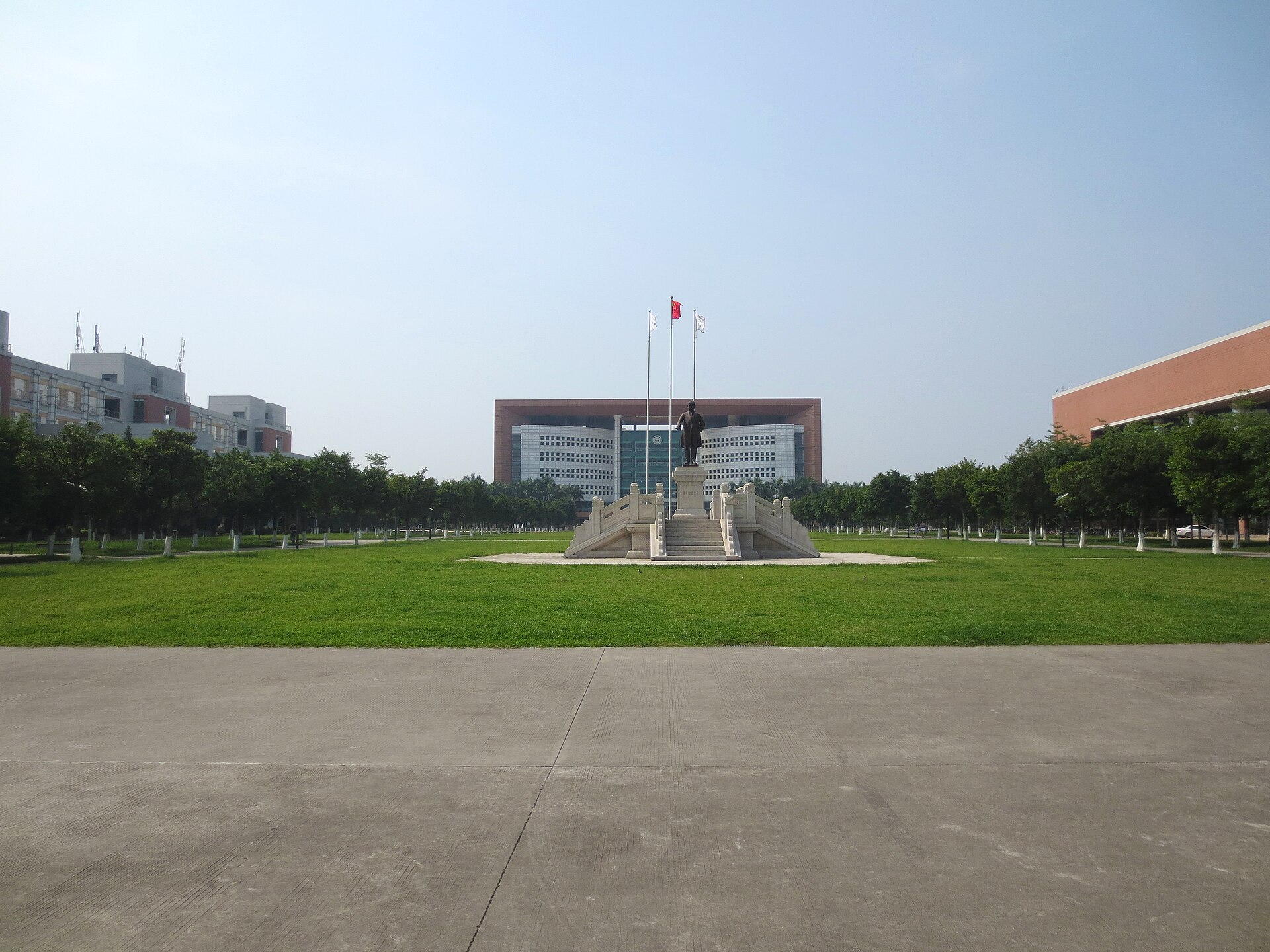
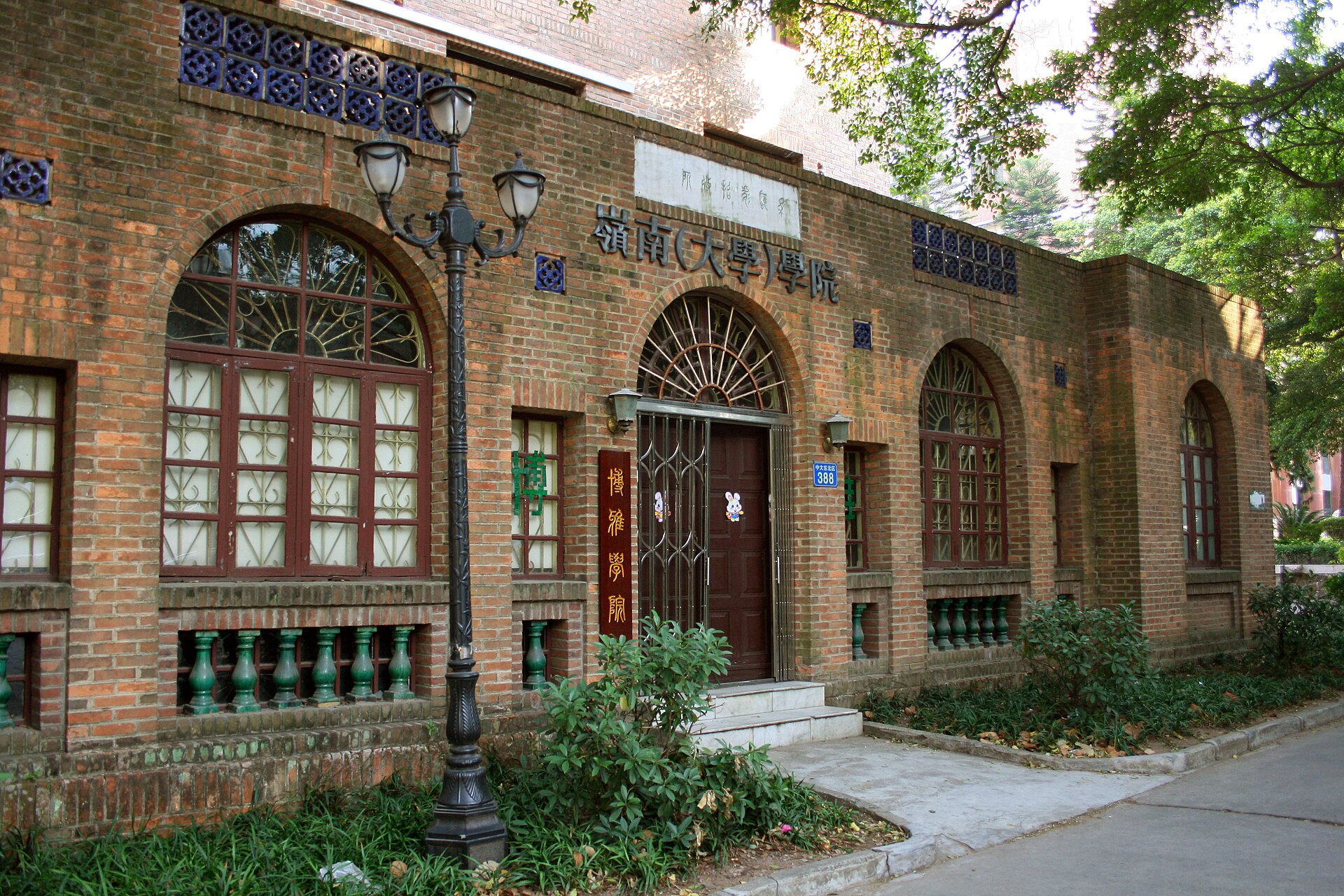
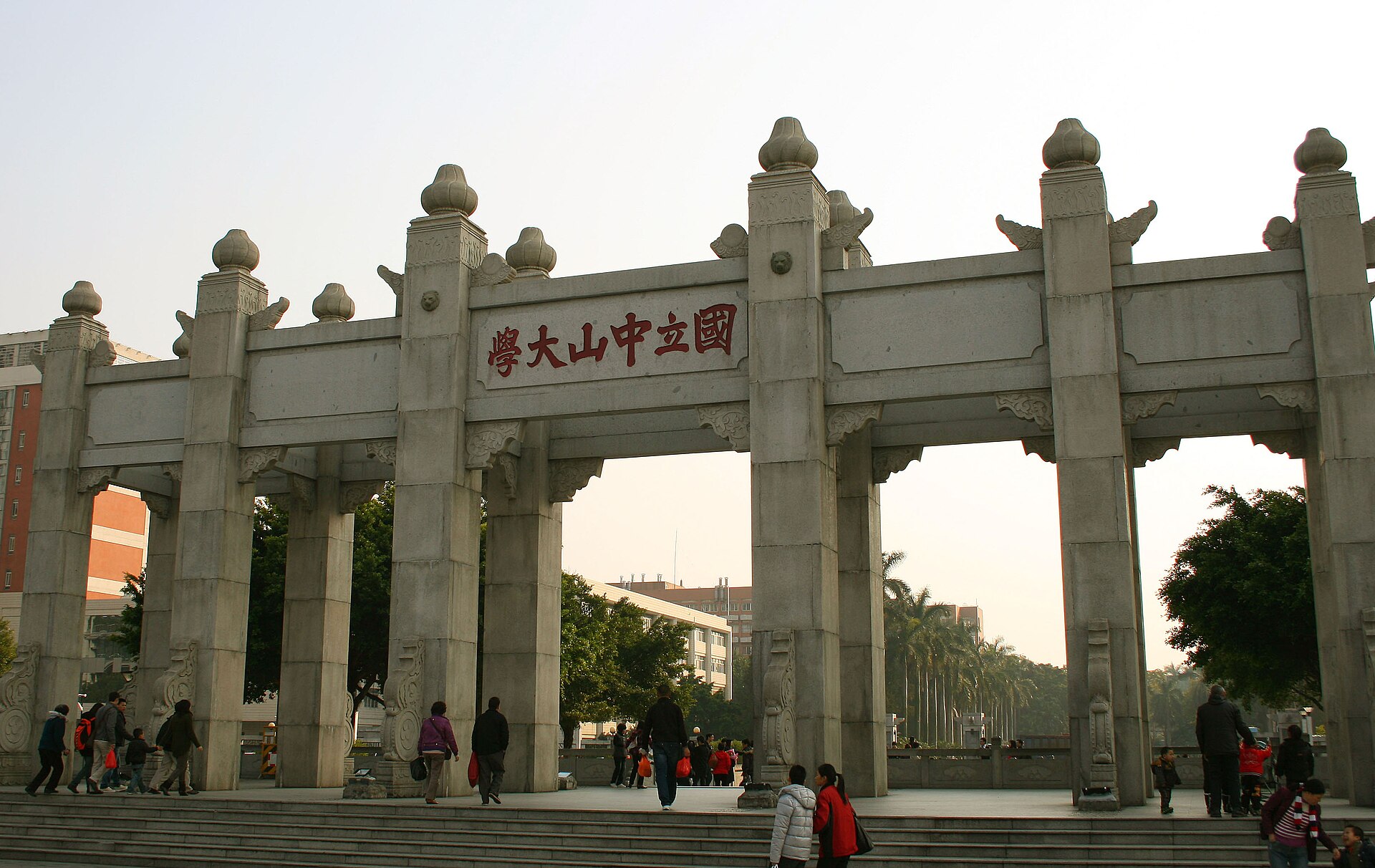
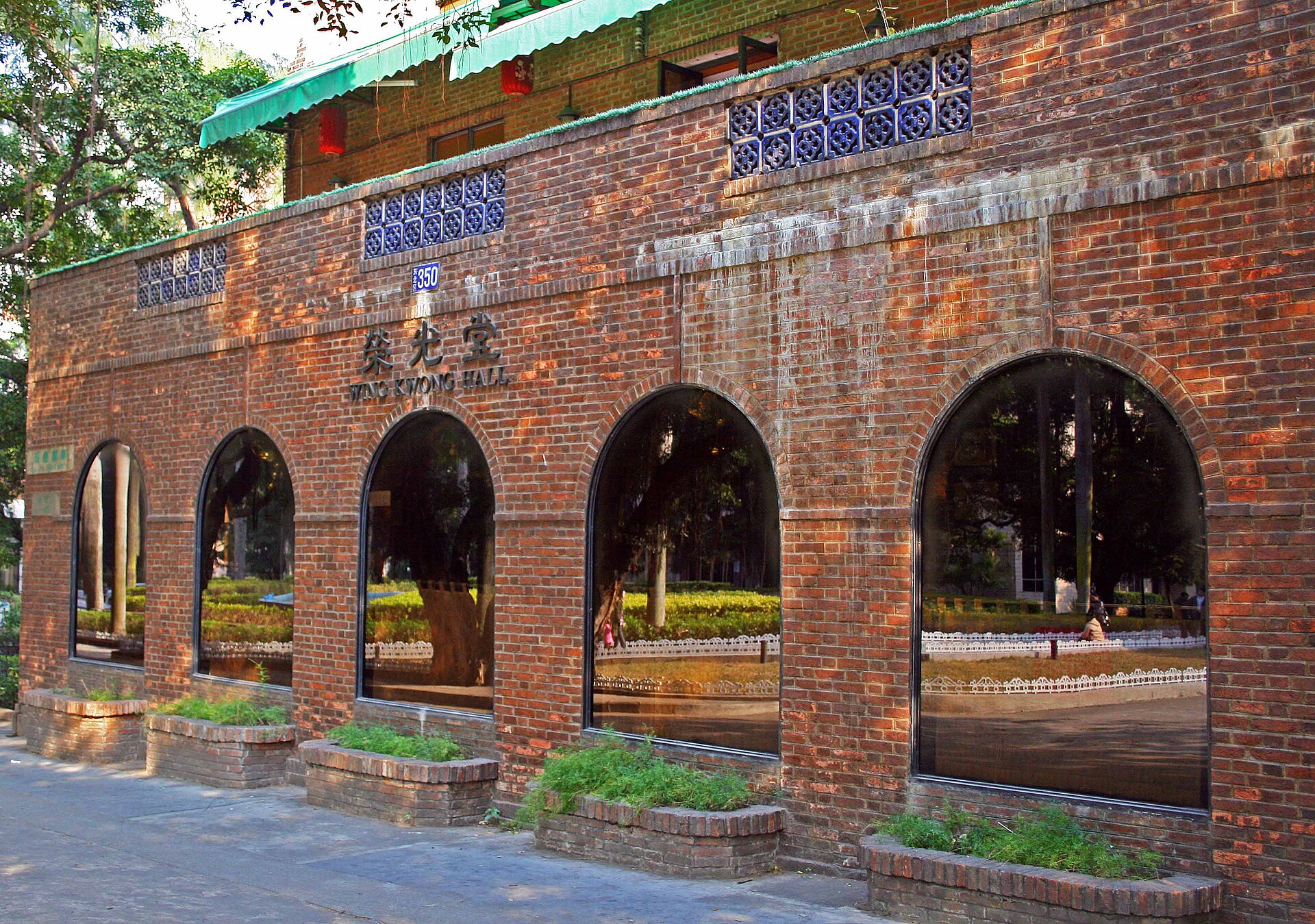
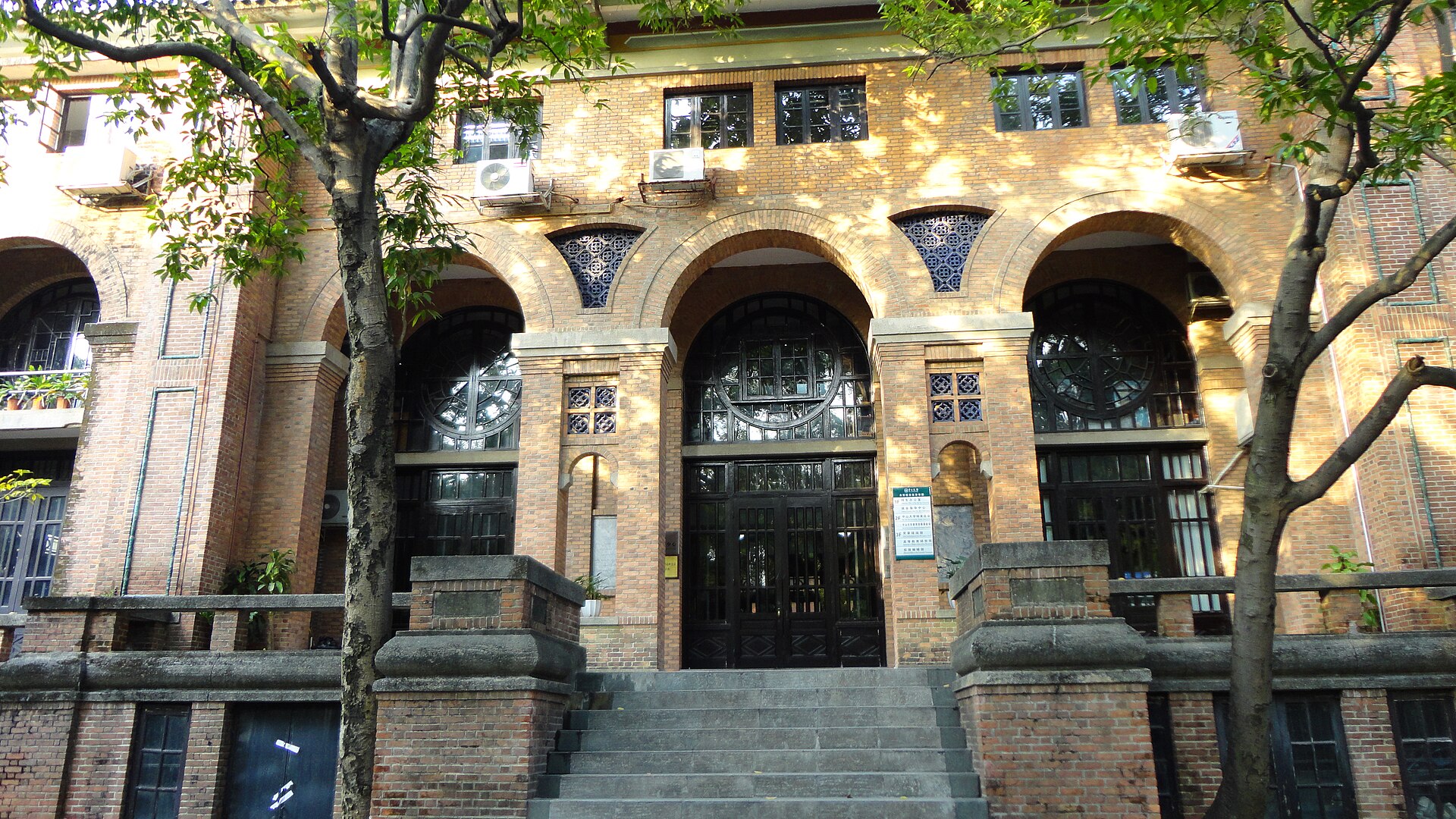
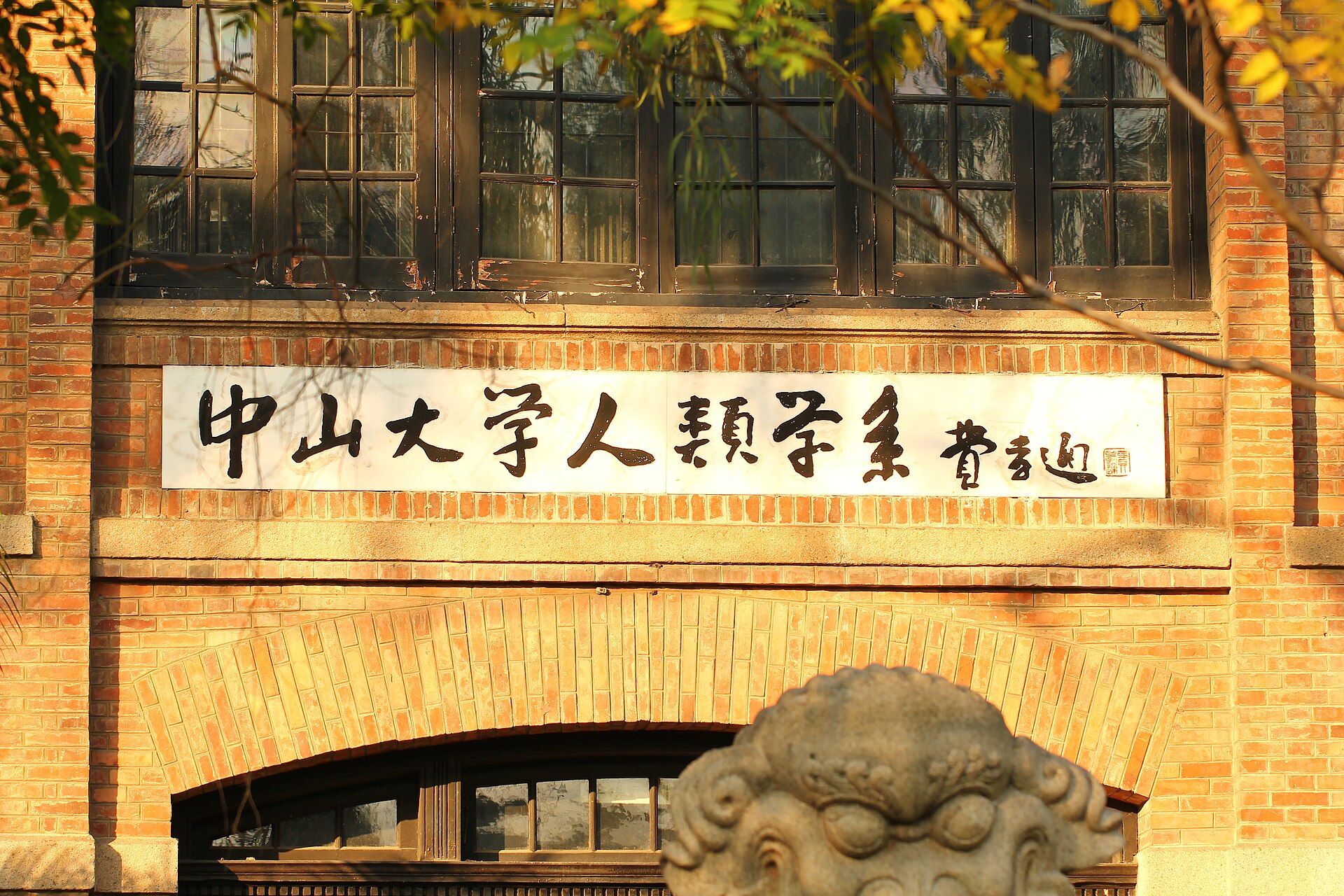
Sun Yat-sen University — campus in pictures
Real, freely-licensed photographs of the campus (via Wikimedia Commons).
Why SYSU — Elite Research, Affordability & Greater Bay Area
Sun Yat-sen University occupies a unique position in Chinese higher education: a century-old institution with cutting-edge research, a sprawling multi-campus geography, and deep ties to southern China's booming technology and financial sectors. For international students, it represents the highest convergence of academic rigour, affordability, and career opportunity in the Greater Bay Area.
SYSU Acceptance Rate & International Applicant Profile
Stats
Profile Stats
Rea Vs Rd
SYSU Admissions Requirements — Academics, Language & Profile
- Admitted students to competitive programmes typically present considerably higher averages
- IB students: 34+ total points; 36+ for Clinical Medicine and Engineering
- A-Level students: BBB minimum; ABB–AAB for competitive programmes
- Upward grade trajectory is viewed positively
- IELTS Academic: 6.0 overall minimum
- TOEFL iBT: 80 minimum
- SAT/ACT: not required (test-optional)
- Native English speakers from recognised countries may apply for waiver
- Chinese-medium programmes require HSK certification instead
- IB: 34+ points, higher for Clinical Medicine/Engineering
- A-Level: BBB minimum; ABB–AAA for top programmes
- AP courses recognised; confirm equivalency with ISO
- French Baccalaureate and other qualifications accepted
SYSU Application Components — Portal, Statement & Documents
International students apply directly through SYSU's online application portal. Unlike US or UK applications, there is no Common App or UCAS — each document is submitted directly to the university. Below is every component of a complete SYSU application.
SYSU Personal Statement — Writing Your Application for China's Elite
Tips
Prompts
What SYSU Admissions Officers Are Looking For
SYSU's international admissions process is academically focused — test scores and transcripts carry significant weight, and the personal statement is evaluated for genuine institutional fit. Understanding what each part of your application communicates is the foundation of a strong SYSU strategy.
SYSU Financial Aid & Scholarships for International Students
SYSU participates in multiple scholarship programmes for international students. Approximately 25% of international students receive some form of financial support. The flagship Chinese Government Scholarship (CSC) is a full-ride award; additional provincial and institutional scholarships offer partial support.
Figures are approximate estimates based on available data. Individual scholarship awards are determined by the China Scholarship Council, Guangdong Government, and SYSU's own scholarship committee. Verify current amounts on the official ISO scholarship page.
Stats
Contribution Tiers
| Note | Range | Percent | Percent Value |
|---|---|---|---|
| Self-funded; tuition ~USD 4,200 | SYSU (no scholarship) | ~USD 11,000 total CoA | 11 |
| CSC full-ride; tuition + board + stipend | SYSU (CSC scholarship) | ~USD 0 net cost | 0 |
| International student fees vary | Fudan / Tongji (Shanghai) | ~USD 10,000–14,000 | 12 |
| Significantly higher international fees | NUS Singapore | ~USD 18,000–22,000 | 20 |
| Much higher for international students | UK Russell Group | ~USD 30,000–45,000 | 37 |
Key Dates
Advantages
- CSC application closes before standard admissions — apply in January–March
- Applying early signals seriousness and gives more processing time
- Autumn intake (September) is the primary cycle with the widest programme availability
- CSC and SYSU scholarship applications run concurrently — apply to both
- Scholarship results are typically communicated by May–June alongside admissions
Disadvantages
- Spring intake (February) is offered for limited programmes only — verify availability
- CSC scholarship is available for autumn intake primarily
- Missing the February–March CSC window means waiting a full year for that funding
- Some high-demand programmes (Clinical Medicine) accept autumn intake only
- Late applications risk missing dormitory allocation alongside admissions
SYSU Interview — Does SYSU Interview International Students?
Sun Yat-sen University does not conduct interviews for all international applicants as a standard part of undergraduate admissions. However, for competitive postgraduate programmes and Clinical Medicine, the relevant faculty department may request an online interview as part of the selection process. For most undergraduate applicants, the application materials — transcripts, personal statement, and recommendations — carry the full evaluative weight.
Meta
Questions
SYSU Campuses & Residential Life
Unlike Harvard's residential house system, SYSU organises student life by campus rather than by college. Each campus has its own character, academic focus, and dormitory facilities. International students are housed in dedicated international student dormitories on their assigned campus, typically within walking distance of academic buildings.
Houses
Lottery Steps
- Campus assignment: your programme determines which campus you attend — students do not choose their campus independently
- International student dormitories are available on all main campuses and allocated by the ISO alongside your admissions offer
- Guangzhou South (Haizhu): main campus for medicine and law; dense urban setting in China's third-largest city
- Zhuhai campus: self-contained coastal campus popular with international students for its amenities and quieter environment
- Shenzhen campus: newest campus; oriented towards innovation; proximity to Huawei, Tencent, and DJI headquarters
- Dormitory applications are submitted through the ISO — apply promptly once admitted, as international dormitory places are limited
SYSU Schools, Faculties & Key Programmes
- {"label":"Affiliated hospitals","value":"12+"}
- {"label":"National ranking in Medicine","value":"Top 5 China"}
- {"label":"International MBBS programme","value":"English-taught"}
- {"label":"Campus","value":"Guangzhou South"}
- {"label":"Key programmes","value":"MBA, Finance, Economics"}
- {"label":"Language options","value":"Chinese and some English"}
- {"label":"Primary campus","value":"Zhuhai / Guangzhou"}
- {"label":"Industry links","value":"GBA financial sector"}
- {"label":"Primary campus","value":"Guangzhou / Shenzhen"}
- {"label":"Research focus","value":"AI, Networks, Software"}
- {"label":"Industry proximity","value":"Huawei, Tencent, DJI"}
- {"label":"Language","value":"Primarily Chinese-medium"}
- {"label":"Research focus","value":"South China Sea ecology"}
- {"label":"Facilities","value":"Research vessels, marine labs"}
- {"label":"Campus","value":"Zhuhai (coastal)"}
- {"label":"National standing","value":"Top-ranked in China"}
- {"label":"Primary campus","value":"Guangzhou South"}
- {"label":"Focus areas","value":"Chinese law, International law"}
- {"label":"Language","value":"Chinese-medium"}
- {"label":"National standing","value":"Top-tier China"}
- {"label":"National standing","value":"Top 3 China"}
- {"label":"Research links","value":"WHO, China CDC"}
- {"label":"Language","value":"Chinese and English options"}
- {"label":"Campus","value":"Guangzhou"}
Research & Extracurricular Opportunities at SYSU
Career Outcomes & SYSU Alumni Network
SYSU's graduate employment rate of 93% reflects strong domestic demand in the Greater Bay Area. The average starting salary of approximately USD 14,000 reflects Chinese domestic norms but carries strong purchasing power in the region. Many international graduates leverage the SYSU network to secure positions at global firms with China offices or at Chinese multinationals with international operations.
Stats
Categories
Our SYSU Admissions Track Record & Student Success Stories
Faqs
Does Sun Yat-sen University offer English-taught degree programmes?+
Yes, but the English-taught offering is more limited than at some Hong Kong or Singapore universities. SYSU has English-medium programmes particularly at postgraduate level, and some undergraduate programmes including the MBBS for international students and some Business programmes. The majority of undergraduate programmes are taught in Mandarin Chinese. Always verify the language of instruction on the specific programme page before applying.
How do I apply to SYSU as an international student?+
Applications are made directly through the SYSU International Student Online Application Portal at apply.sysu.edu.cn. There is no Common App or UCAS. You submit all documents — transcripts, personal statement, recommendation letters, and language test scores — through this portal. Contact admissions@mail.sysu.edu.cn for programme-specific guidance.
What scholarships are available and when do I need to apply?+
The three main routes are: (1) Chinese Government Scholarship (CSC) — a full-ride award covering tuition, accommodation, and living stipend, administered by the China Scholarship Council; deadlines typically February–March. (2) Guangdong Provincial Government Scholarship — partial support for Guangdong-based universities. (3) SYSU Institutional Scholarship — reviewed alongside your standard admissions application. Apply for the CSC first as it closes earliest.
Do I need Mandarin Chinese to study at SYSU?+
It depends on your programme. English-taught programmes do not require Mandarin, though basic conversational Chinese greatly enhances daily life in Guangzhou. For Chinese-medium programmes — the majority of SYSU's undergraduate offering — HSK certification at the required level is mandatory. SYSU offers a Chinese language preparation track for incoming students with limited proficiency.
What IB score do I need for SYSU?+
An IB Diploma total of 34 or above is the indicative competitive minimum for SYSU's international programmes. Students applying to Clinical Medicine or Engineering programmes should target 36+ with strong scores in relevant Higher Level subjects (Biology/Chemistry for Medicine; Mathematics/Physics for Engineering). Conditional offers may be made pending final IB results.
Can international students live on campus?+
Yes. SYSU maintains dedicated international student dormitories on all main campuses. Accommodation is comfortable, affordable, and within walking distance of academic buildings. Application for campus housing is made through the International Students Office alongside your admissions application.
How does SYSU compare to Fudan or Tongji for international students?+
SYSU is particularly strong for students drawn to southern China, the Greater Bay Area career ecosystem, clinical medicine, and marine sciences. It offers more campus variety (Guangzhou/Zhuhai/Shenzhen) than most comparably ranked peers. Students choosing between SYSU, Fudan, or Tongji should weigh location (Guangzhou vs. Shanghai), specific programme strengths, and scholarship availability.
Is a Chinese student visa required and how do I get one?+
Yes. Admitted international students receive an Admission Notice and a JW201 or JW202 form, used to apply for an X1 (long-term) or X2 (short-term) student visa at the Chinese embassy or consulate in your home country. SYSU's ISO provides full guidance on the visa process upon admission. Allow 4–6 weeks for visa processing.
Book a Free SYSU Admissions Strategy Session
In 60 minutes our SYSU admissions specialists will evaluate your academic profile, identify your scholarship eligibility, clarify the CSC and SYSU scholarship timelines, develop your personal statement strategy, and help you decide whether to apply for autumn or spring intake.
- No commitment required
- SYSU and China specialist guidance
- CSC scholarship timeline and strategy
- Personalised personal statement approach
SYSU Academic Requirements
SYSU Academic Requirements — The Honest Breakdown for International Students
What grades, language scores, and academic profile do competitive SYSU admits actually present? And what does SYSU's evaluation mean for students from IB, A-Level, AP, and other international curricula?
GPA & Academic Standards
SYSU and GPA — What the Standards Actually Mean
The honest picture: SYSU states a minimum GPA of 3.0 on a 4.0 scale. In practice, admitted students to competitive programmes present considerably stronger academic records — and scholarship candidates must demonstrate significantly higher performance.
A 3.0 GPA is a floor, not a target. Competitive applicants — particularly those pursuing Clinical Medicine, Engineering, or CSC scholarship eligibility — should present academic records well above this minimum. The scholarship competition is considerably more demanding than standard admissions.
Academic Context
How SYSU Reads Academic Performance — Context and Curriculum
SYSU does not rely on a single standardised ranking system to evaluate international applicants. The admissions office evaluates academic performance relative to the curriculum and school system the student came from.
SAT at SYSU
SAT Scores at SYSU — Not Required, Contextually Optional
SYSU does not require SAT scores from international applicants. SAT results are not solicited, weighted, or used as an admissions factor at SYSU.
| Label | Score | Percent |
|---|---|---|
| SAT required | No | 0 |
| SAT accepted as supporting material | Optional | 50 |
ACT at SYSU
ACT Scores at SYSU — How SYSU Evaluates International Qualifications Instead
SYSU does not require ACT scores. As with SAT, ACT results are not part of the standard international admissions process at SYSU.
Metrics
Comparison Cards
Test Policy
SYSU's Test Policy — What Test-Optional Really Means Here
SYSU's test-optional policy for standardised tests (SAT/ACT) is not a recent COVID-era adjustment — it reflects the standard practice of Chinese universities for international student admissions. The evaluation framework is built around academic transcripts and international qualifications, not US standardised tests.
Submit Items
Withhold Items
International Qualifications
IB and A-Level at SYSU — What the Standards Actually Are
- {"label":"Competitive total","value":"34+ points"}
- {"label":"Medicine / Engineering","value":"36+ recommended; relevant HL subjects essential"}
- {"label":"HL expectations","value":"6s and 7s in subjects relevant to the intended programme"}
- {"label":"Extended Essay","value":"A or B grade adds supporting evidence of research orientation"}
- {"label":"Competitive range","value":"BBB minimum; ABB–AAB for competitive programmes"}
- {"label":"Medicine applicants","value":"Biology + Chemistry essential; third subject flexible"}
- {"label":"Engineering applicants","value":"Mathematics + Physics expected; Further Mathematics advantageous"}
- {"label":"AS results","value":"Reviewed alongside predicted A-Level grades"}
Advanced Placement at SYSU
AP Courses at SYSU — How International Curriculum Results Are Evaluated
Advanced Placement (AP) results are recognised by SYSU for international applicants from the US curriculum or schools that offer AP courses. However, AP is not the primary qualification frame for SYSU — the IB Diploma and A-Level results are more directly understood and weighted in the admissions process.
Academic Rigour
Rigour of Secondary School Record — A Primary Academic Factor at SYSU
SYSU evaluates the rigour of your secondary school record as a primary academic factor — not just grades, but the challenge of the courses you chose and whether your subject selection aligns with your intended programme.
Taking the most challenging programme available to you in subjects directly relevant to what you want to study at SYSU.
Subject Preparation
Subject-Level Preparation — What SYSU Expects by Field
SYSU has specific, programme-dependent academic preparation expectations. The following represents the academic readiness that SYSU's strongest programmes look for — not stated minimums, but the level at which admitted students can genuinely succeed.
Language Requirements
English Language Requirements for International SYSU Applicants
English language proficiency requirements at SYSU are stated minimums, not targets. For English-medium programmes, IELTS 6.0 and TOEFL iBT 80 are the floors — scholarship-competitive candidates typically present higher scores.
The IELTS and TOEFL scores are the formal gate. But language readiness at SYSU extends beyond the test: students in English-medium programmes must engage with lectures, seminars, and assessments in English, in a predominantly Chinese-speaking campus environment. Students who present minimum scores and struggle with academic English will find the transition significantly harder.
By Programme
Academic Requirements by Programme — What Different Fields Expect
The following reflects the academic preparation that competitive SYSU applicants in each field typically present. Programme requirements may be confirmed on the SYSU ISO website or by contacting the relevant department.
| Signals | Expectation | Concentration |
|---|---|---|
| HL/A-Level Biology + Chemistry; research or clinical exposure | IB 36+ or A-Level ABB+ in sciences | Clinical Medicine (MBBS) |
| Mathematics + Physics; engineering projects or Olympiad | HL Maths + Physics; IB 34+ or ABB+ | Engineering |
| Maths background; coding or programming projects | HL/A-Level Mathematics essential | Computer Science |
| Quantitative coursework; economics projects | HL/A-Level Maths + Economics | Business / Economics |
| Biology + Chemistry + fieldwork; science projects | IB 34+ or BBB+ in sciences | Marine Sciences |
| HSK 5+; strong humanities profile | High academic humanities profile + HSK | Law (Chinese-medium) |
| Biology + statistics; public health interest | Sciences profile; IB 34+ or BBB+ | Public Health |
Curriculum Evaluation
SYSU and International Education Systems — How Your Curriculum Is Read
Academic Roadmap
Building Your SYSU Application — What to Do at Each Stage
- Select IGCSE or MYP subjects that leave the widest options for IB or A-Level relevant to your intended programme.
- Begin basic Mandarin Chinese study if you intend to pursue a Chinese-medium programme or want to thrive in daily life in Guangzhou.
- Identify whether Clinical Medicine, Engineering, Marine Science, or Business is your intended path — subject choices from this point should build toward that programme.
- Choose IB Higher Levels or A-Level subjects aligned with your target SYSU programme — not for grade optimisation, but for genuine programme preparation.
- Begin IELTS or TOEFL preparation if English is not your first language. Aim for 6.5+ by the end of Grade 11.
- If targeting Chinese-medium programmes, begin structured HSK preparation — HSK 4 by Grade 12 is a realistic and necessary target.
- Identify research, project, or fieldwork opportunities in your field.
- Submit your CSC scholarship application in January–March — this is the most important deadline in the SYSU application cycle.
- Submit your SYSU standard application through apply.sysu.edu.cn in February–April for autumn intake.
- Finalise your personal statement with SYSU-specific details: reference a specific research centre, faculty member, or programme feature.
- Secure two strong academic recommendation letters — brief them on what to emphasise.
- Receive conditional or unconditional offer (typically May–June).
- Apply for Chinese Student Visa (X1) once the Admission Notice and JW form arrive.
- If time allows, complete an intensive Mandarin preparation course before departure — even for English-medium students.
- Apply for on-campus dormitory through the ISO promptly — international housing is limited.
Common Pitfalls
Academic Mistakes That Cost SYSU Applications — And How to Avoid Them
Student Profiles
Academic Profiles That Work for SYSU — Illustrative Examples
The following profiles represent the academic backgrounds of students Tychr has supported in SYSU applications and China-focused admissions pathways. They illustrate the range of preparation that works, and what made each application compelling.
Faqs
Is a 3.0 GPA enough for SYSU?+
A 3.0 GPA is the floor, not the target. For Clinical Medicine or Engineering, competitive applicants present considerably stronger records. For scholarship eligibility, aim significantly above the minimum.
What IB score do I need for SYSU?+
IB 34 is the indicative minimum. For Clinical Medicine and Engineering, target IB 36 or above with strong Higher Level scores in relevant subjects. Scholarship candidates should aim higher still.
Do I need to submit SAT or ACT scores for SYSU?+
Completely test-optional. SAT and ACT are not part of the SYSU admissions process. Focus on IB or A-Level results and language proficiency scores instead.
Can I get a full scholarship at SYSU as an international student?+
Yes — but apply in January–March for the autumn intake. The CSC scholarship window closes before the standard admissions deadline. Missing this window means waiting a full year for the next cycle.
Do I need to learn Mandarin to study at SYSU?+
Yes — for most of the undergraduate programme catalogue. English-taught programmes are available primarily at postgraduate level and in specific undergraduate tracks (MBBS, some Business programmes). Verify for your specific programme before applying.
Cost & Financial Aid
SYSU May Cost Far Less Than You Think — Here's the Full Picture.
At approximately USD 11,000 per year in total cost of attendance — and with full-ride CSC scholarships available — Sun Yat-sen University is one of the most compelling value propositions in global higher education. Here's exactly what SYSU costs, what aid is available, and how to access it.
Cost Transparency
What SYSU Actually Costs — The Full Annual Figure
SYSU's tuition is set by China's Ministry of Education for international students at state universities, keeping it dramatically below comparable research universities in English-speaking countries. The living cost in Guangzhou is moderate by global standards — on-campus meals at SYSU canteens cost USD 2–4, and public transport is inexpensive and excellent.
Scholarship-Based Aid
SYSU's Financial Support System — Merit Scholarships, Not Need-Based Grants
The CSC scholarship is available to eligible international students from all countries with diplomatic relations with China. SYSU participates in the CSC programme and is listed as a host institution on the China Scholarship Council's official allocation roster.
Institutional Context
Why SYSU Costs So Little — The Context Behind the Price
Scholarship Application Walkthrough
Applying for SYSU Scholarships — The Process Step by Step
SYSU scholarship support is not automatic — it requires separate, early applications. The CSC scholarship in particular must be applied for through a different system and on an earlier timeline than standard admissions. Here is the complete step-by-step process.
- Chinese Government Scholarship (CSC) — most comprehensive; administered by China Scholarship Council at csc.edu.cn
- Guangdong Government Scholarship — provincial-level partial support
- SYSU Institutional Scholarship — reviewed alongside admissions application
- Official transcripts (certified translation into Chinese or English)
- Language test scores (IELTS/TOEFL or HSK)
- Two to three recommendation letters from academic supervisors or teachers
- Personal statement or research proposal
- Physical examination report (required by CSC — must use the official Chinese government form)
- Copy of valid passport
Aid for International Students
SYSU Financial Support for International Students — How It Works
SYSU's scholarship ecosystem for international students is one of the most accessible in Asia — but it operates on fundamentally different principles from Western financial aid. Understanding those differences is essential for planning your funding strategy.
Scholarship Coverage
What SYSU Scholarship Support Actually Looks Like
SYSU Aid by Scholarship Type (Approximate Annual Coverage)
Figures are approximate. Scholarship stipend amounts vary by degree level and are updated by the China Scholarship Council annually. Verify current amounts at csc.edu.cn.
The CSC full scholarship effectively makes SYSU free. Partial scholarships cover tuition but leave living costs to the student — approximately USD 6,000 per year in Guangzhou. Without any scholarship, the total annual cost is approximately USD 11,000.
| Grant | Income | Contribution |
|---|---|---|
| Full tuition + accommodation + monthly stipend | Any (merit-based, not income-based) | ~USD 0 |
| Tuition coverage only (partial) | Any | ~USD 4,200–6,000 (living costs) |
| Living stipend supplement | Any | Tuition + partial living |
| No scholarship | Any | ~USD 11,000 total CoA |
Table Headers
Merit Scholarships
SYSU Scholarships — What Exists and Who Qualifies
All scholarship support at SYSU is merit-based. There is no need-based financial aid equivalent to the US FAFSA system or the UK's Student Finance programme. Understanding how merit is assessed is essential for positioning your application competitively.
External Funding
External Scholarships — Additional Funding Routes for SYSU Students
Beyond the CSC and SYSU's own awards, a number of external and bilateral scholarship routes provide additional or alternative funding for international students at SYSU.
Loan Policy
Student Loans at SYSU — What Is and Isn't Available
SYSU does not offer student loans to international students. There is no institutional loan programme, and Chinese student loans (domestic programmes) are not available to international students. All funding is cash-based: either from family resources, from scholarships, or from a combination of both.
On-Campus Work
Work Opportunities for International Students at SYSU
SYSU does not operate a formal work-study programme equivalent to the US model. Chinese visa regulations restrict international students' off-campus work rights. On-campus opportunities exist but are limited and informal.
- Research assistantships in faculty labs (most common; provides academic experience alongside modest income)
- Teaching assistant roles for Chinese language learners or international student orientation programmes
- International Students Office ambassador or peer support roles
- University-affiliated tutoring programmes for domestic students learning English
- Campus cafe, sporting, or cultural event roles through student associations
Cost Benchmarking
SYSU vs. Global Peers — Financial Aid and Cost Comparison
| Policy | School | No Loans | Typical Cost |
|---|---|---|---|
| Merit scholarships (CSC, provincial, institutional) | SYSU (Sun Yat-sen University) | N/A — no loans offered | ~USD 0 (CSC) or ~USD 11,000 (self-funded) |
| Merit scholarships (similar CSC pathway) | Fudan University (Shanghai) | N/A | ~USD 0 (CSC) or ~USD 12,000–15,000 |
| MOE Tuition Grant + service bond | NUS / NTU Singapore | Partial | ~USD 8,000–12,000 after MOE Grant |
| Need-blind, full-need, no loans | Harvard University (US) | Yes | ~USD 0 for qualifying income bands |
| Fee loan + maintenance loan | UK Russell Group | No — loan-based | ~USD 30,000–45,000/year (repaid after) |
| Direct fees; limited scholarship | Australian Group of Eight | Limited | ~USD 30,000–40,000/year |
True Cost Analysis
SYSU vs. Alternatives — What You Actually Pay Over Four Years
A self-funded SYSU degree costs approximately USD 44,000 over four years — less than a single year at many UK or Australian universities. With a CSC scholarship, the cost approaches zero. For cost-conscious international students, SYSU is genuinely one of the highest-value degrees in the world.
| Policy | School | Contribution | Four Year Cost |
|---|---|---|---|
| Merit scholarships (CSC full ride) | SYSU — CSC Scholarship | ~USD 0 | ~USD 0 |
| Self-funded (no scholarship) | SYSU — Self-Funded | ~USD 11,000/yr | ~USD 44,000 |
| MOE Tuition Grant (bond required) | NUS Singapore | ~USD 10,000/yr | ~USD 40,000 |
| Need-blind, full-need, no loans | Harvard (qualifying income) | ~USD 0 | ~USD 0 |
| High fees, limited aid | UK Russell Group | ~USD 35,000–45,000/yr | ~USD 140,000–180,000 |
| High fees, limited scholarship | Australian Group of Eight | ~USD 30,000–40,000/yr | ~USD 120,000–160,000 |
Scholarship Queries
Scholarship Questions and Reconsideration at SYSU
SYSU does not operate a formal financial aid appeal process equivalent to the CSS Profile appeal at US universities. However, scholarship reconsideration and admissions-adjacent queries can be directed to the relevant office.
The honest note: SYSU's merit-based scholarship system does not have a formal appeals mechanism. The most effective approach is to apply to multiple scholarship tracks simultaneously (CSC, Guangdong Government, SYSU institutional) rather than relying on appeal after rejection from one.
How To Appeal
- Contact the SYSU International Students Office (ISO) directly: iso.sysu.edu.cn
- For CSC scholarship queries, contact the China Scholarship Council directly at csc.edu.cn
- Submit a written request explaining changed circumstances or requesting reconsideration
- Provide updated documentation if academic results have improved since the original application
When To Appeal
- Final IB or A-Level results are significantly stronger than predicted grades submitted at application time
- You have received a new academic award or recognition since the application was submitted
- A genuine error was made in the submission of documents
- You received admission without scholarship and want to be considered for an institutional scholarship in a subsequent cycle
Timeline & Planning
Planning for SYSU Costs — What to Do and When
Application & Personal Statement
SYSU Application Writing — Everything You Need to Know.
Sun Yat-sen University does not use the Common App, UCAS, or supplemental essays. The written heart of the SYSU application is a single personal statement submitted directly through the SYSU portal — and a research proposal for postgraduate applicants. This guide explains exactly how to write both.
Requirement Overview
SYSU Written Requirements — The Full Picture
Unlike US universities (Common App + supplements) or UK universities (UCAS personal statement in three sections), SYSU uses a direct application system with simpler but still important written requirements. The personal statement is open-ended and submitted through the SYSU International Student Portal.
The Personal Statement
SYSU Personal Statement — What to Address
SYSU does not publish fixed essay prompts in the manner of the Common App or US supplementals. The personal statement is open-ended. However, the following core areas are standard expectations and your statement should address all of them clearly.
The specific format and word count may vary slightly by degree level or programme. Always refer to the instructions within the SYSU Online Application Portal (apply.sysu.edu.cn) for the current cycle's requirements.
Writing Strategy
How to Write the SYSU Personal Statement
The SYSU personal statement is not the exploratory, narrative-first document that US admissions officers favour. Chinese university applications reward clarity, academic seriousness, and demonstrated fit with the institution. Think of it less as a personal essay and more as a structured academic letter.
That said, personality and authenticity still matter — particularly for scholarship review, where committee members are reading dozens of statements and are drawn to candidates who communicate genuine motivation. The best SYSU personal statements are clear, specific, earnest, and structured. Avoid overly literary or oblique openings. Open directly: who you are, what you want to study, and why SYSU. Then build the case — academic background, motivation, goals — in that order.
If you are writing in English for an English-medium programme, proofread rigorously. SYSU reviewers notice language quality — a personal statement with grammatical errors suggests lower academic English proficiency than your test scores might claim. If in doubt, have a fluent English speaker review your final draft.
Research Proposal Strategy
Writing a Postgraduate Research Proposal for SYSU
For Master's and PhD applicants, the research proposal is often more important than the personal statement. A strong proposal demonstrates that you have moved beyond general interest into a specific, researchable question — and that SYSU has the faculty and resources to supervise it.
Choosing Your Focus
What to Write About — Choosing the Right Focus for Your Statement
The single personal statement for SYSU gives you limited space. Use it intentionally. The following principles help identify the most effective focus for your specific programme and profile.
- Prioritise programme-specific academic motivation over personal narrative. SYSU reviewers are primarily assessing academic fit, not personal storytelling.
- If you have relevant research, project, or fieldwork experience, describe it concisely and connect it directly to your intended programme at SYSU.
- Mention SYSU specifically and authentically — why this institution, in Guangzhou or the Greater Bay Area, rather than any other Chinese university.
- Reference at least one specific SYSU strength, research centre, affiliated institution, or faculty area that aligns with your goals.
- Be honest about your Mandarin language situation — if your Chinese is limited and you are applying to an English-medium programme, a brief acknowledgement and a statement of your intent to develop Mandarin during your studies is appropriate and credible.
- Keep future goals realistic and grounded — statements that claim implausibly ambitious outcomes undermine credibility with experienced reviewers.
- For postgraduate applicants, your research proposal is where the intellectual substance lives. Let the personal statement be the context; let the proposal make the academic argument.
Common Mistakes
Personal Statement Pitfalls to Avoid at SYSU
- Writing a US-style personal narrative essay with a creative opening scene — SYSU reviewers expect structured, direct academic statements, not literary introductions.
- Failing to mention SYSU specifically — statements that could apply to any Chinese university signal that the applicant has not done their research.
- Overly long statements: if the portal does not specify a word count, aim for 600–800 words. Longer is not more impressive.
- Plagiarising or using AI-generated text without personalisation — admissions offices increasingly identify generic, templated language.
- Ignoring the research proposal for postgraduate applications — the personal statement alone is insufficient for research-track Master's and PhD admission.
- Failing to proofread for English language errors — for English-medium programme applicants, your statement is itself evidence of language proficiency.
- Writing about motivations that relate entirely to career salary or Chinese economic opportunity without intellectual curiosity about your field of study.
- Not tailoring the statement to your specific campus (Guangzhou/Zhuhai/Shenzhen) and what that campus specifically offers in your discipline.
Application FAQs
Frequently Asked Questions — SYSU Application & Statement
Does SYSU use the Common App or any other shared application platform?+
No. SYSU uses its own direct online application portal at apply.sysu.edu.cn. There is no Common App, UCAS, or shared application system. Each international student applies directly to the university, submitting all documents through the SYSU portal.
How long should the personal statement be?+
The portal typically specifies the required length. In the absence of a stated limit, aim for 600–800 words. This is sufficient to cover academic background, motivation, and goals clearly without padding. Conciseness signals good judgment.
Should I write in English or Chinese?+
Write in the language of your target programme. English-medium programme applicants should write in English. Chinese-medium programme applicants may write in Chinese — which can be advantageous if your written Chinese is at a high academic standard. Confirm the expectation within the portal for your specific programme.
Can I apply to multiple programmes at SYSU?+
Check the portal's rules for multiple programme applications. Most Chinese university applications allow indication of a first and second programme choice. Apply your most tailored personal statement to your primary choice — generic statements spread across very different disciplines are less effective.
What is the research proposal for postgraduate applications?+
A research proposal (typically 800–1,500 words) outlining your intended research area, relevant literature, research question, proposed methodology, and connection to SYSU faculty and resources. It is required for research-track Master's and PhD applicants and is assessed directly by the relevant academic department.
Is an interview required at SYSU?+
Not universally. Some postgraduate programmes and Clinical Medicine admissions may include an online interview conducted by faculty. Most undergraduate applicants are assessed entirely on written materials. The ISO or the relevant department will advise if an interview is required for your programme.
What makes a SYSU personal statement stand out?+
Specificity, authenticity, and clear programme-institution fit. Name the exact SYSU research strength or faculty area that aligns with your goals. Explain genuinely why you are choosing China and the Greater Bay Area. Show intellectual curiosity about your subject through specific experiences or academic turning points. Generic statements are the most common weakness in SYSU international applications.
How early should I start writing the personal statement?+
Start at least two months before your intended submission date. The first draft is rarely the strongest — SYSU-specific research, specificity of reference, and honest motivation take multiple iterations to get right. If you are applying for the CSC scholarship (January–March deadline), your personal statement and supporting materials must be ready even earlier.
Courses — schools, degrees & intake
67 degrees across 62 groupings.
Department of Chinese Language and Literature (Guangzhou) · 2 degrees
Chinese Language & Literature
Chinese
Department of History (Guangzhou) · 1 degrees
History
Department of Philosophy (Guangzhou) · 1 degrees
Philosophy
School of Sociology and Anthropology · 1 degrees
Discipline of Sociology
Lingnan College · 1 degrees
Economics
School of Foreign Languages · 1 degrees
Foreign Language and Literature
School of Law · 1 degrees
Law
School of Government · 1 degrees
Public Administration
School of Business (Guangzhou) · 1 degrees
Business Management
Department of Psychology · 1 degrees
Psychology
School of Journalism and Communication · 1 degrees
Journalism & Communication
School of Information Management · 1 degrees
Library, Information and Archive Management
School of Mathematics (Guangzhou) · 1 degrees
Mathematical Sciences
School of Physics (Guangzhou) · 1 degrees
Physical Sciences
School of Chemistry · 1 degrees
Chemical Sciences
School of Geography and Planning · 1 degrees
Geographical Sciences
School of Life Sciences · 1 degrees
Biological Sciences
School of Materials Science and Engineering (Guangzhou) · 1 degrees
Materials
School of Electronics and Information Technology · 1 degrees
Electronic Information
School of Computer Science and Engineering · 1 degrees
Computer Science
School of Environmental Science and Engineering · 1 degrees
Environmental Science and Engineering
Zhongshan School of Medicine · 2 degrees
Clinical Medicine
Basic Medical Sciences
Guanghua School of Stomatology · 1 degrees
Oral Medicine
School of Public Health (Guangzhou) · 1 degrees
Public Health (Preventive Medicine)
School of Nursing · 1 degrees
Nursing
School of Pharmaceutical Sciences (Guangzhou) · 1 degrees
Pharmacy
Department of Chinese Language and Literature (Zhuhai) · 1 degrees
Chinese Language & Literature
Department of History (Zhuhai) · 1 degrees
History
Department of Philosophy (Zhuhai) · 1 degrees
Philosophy
International School of Business and Finance · 1 degrees
Economics
School of International Studies · 1 degrees
Foreign Language and Literature
School of International Relations · 1 degrees
International Politics
School of Tourism Management · 1 degrees
Tourism Management
School of Mathematics (Zhuhai) · 1 degrees
Mathematical Sciences
School of Physics and Astronomy · 1 degrees
Physical Sciences
School of Atmospheric Sciences · 1 degrees
Atmospheric Sciences
School of Marine Sciences · 1 degrees
Marine Science
School of Earth Sciences and Engineering · 1 degrees
Geological Sciences
School of Chemical Engineering and Technology · 1 degrees
Chemical Engineering and Technology
School of Ocean Engineering and Technology · 1 degrees
Ocean Engineering and Technology
School of Civil Engineering · 1 degrees
Civil, Water and Ocean Engineering
School of Microelectronics Science and Technology · 1 degrees
Microelectronic Science and Engineering
School of Remote Sensing Science and Technology · 1 degrees
Remote Sensing Science and Technology
School of Artificial Intelligence · 1 degrees
Artificial Intelligence
School of Software Engineering · 1 degrees
Software Engineering
School of Medicine (Shenzhen) · 1 degrees
Clinical Medicine
School of Public Health (Shenzhen) · 1 degrees
Public Health (Preventive Medicine)
School of Pharmaceutical Sciences (Shenzhen) · 1 degrees
Pharmacy
School of Materials (Shenzhen) · 1 degrees
Materials Science and Engineering
School of Biomedical Engineering · 1 degrees
Biomedical Engineering
School of Electronics and Communication Engineering · 1 degrees
Electronic Information Engineering
School of Intelligent Systems Engineering · 2 degrees
Intelligence Science and Technology
Smart Transportation
School of Aeronautics and Astronautics · 1 degrees
Aeronautics and Astronautics
School of Agriculture and Biotechnology · 2 degrees
Smart Agriculture
Biotechnology
School of Ecology · 1 degrees
Ecology
School of Business (Shenzhen) · 1 degrees
Business Management
School of Science (Shenzhen) · 2 degrees
Physics
Mathematics and Applied Mathematics
School of Integrated Circuits · 1 degrees
Microelectronic Science and Engineering
School of Advanced Manufacturing · 1 degrees
Mechanical Engineering
Advanced Energy Institute · 1 degrees
New Energy Science and Engineering
School of Cyber Science and Technology · 1 degrees
Cyber Science and Technology
School of Flexible Electronics · 1 degrees
Flexible Electronics
Want your real chances at Sun Yat-sen University?
Create a free TYCHR account for your personalised admit-chance, a shortlist you can track, exact entry requirements, and essay + counselling help.