Southern University of Science and Technology (SUSTech)
Shenzhen, China (Mainland) · Urban
Founded in 2011, SUSTech is China's most audacious academic experiment — a research university built from scratch in Shenzhen with an explicit mission to rival the world's best. In barely a decade it entered the global top 300 (QS #265, THE #250) and ranked among the world's top 25 universities in the Nature Index. For international students it offers something rare in China: a genuinely English-friendly environment, small cohorts, world-class labs, and direct access to Shenzhen's unmatched tech and innovation ecosystem.
Campus
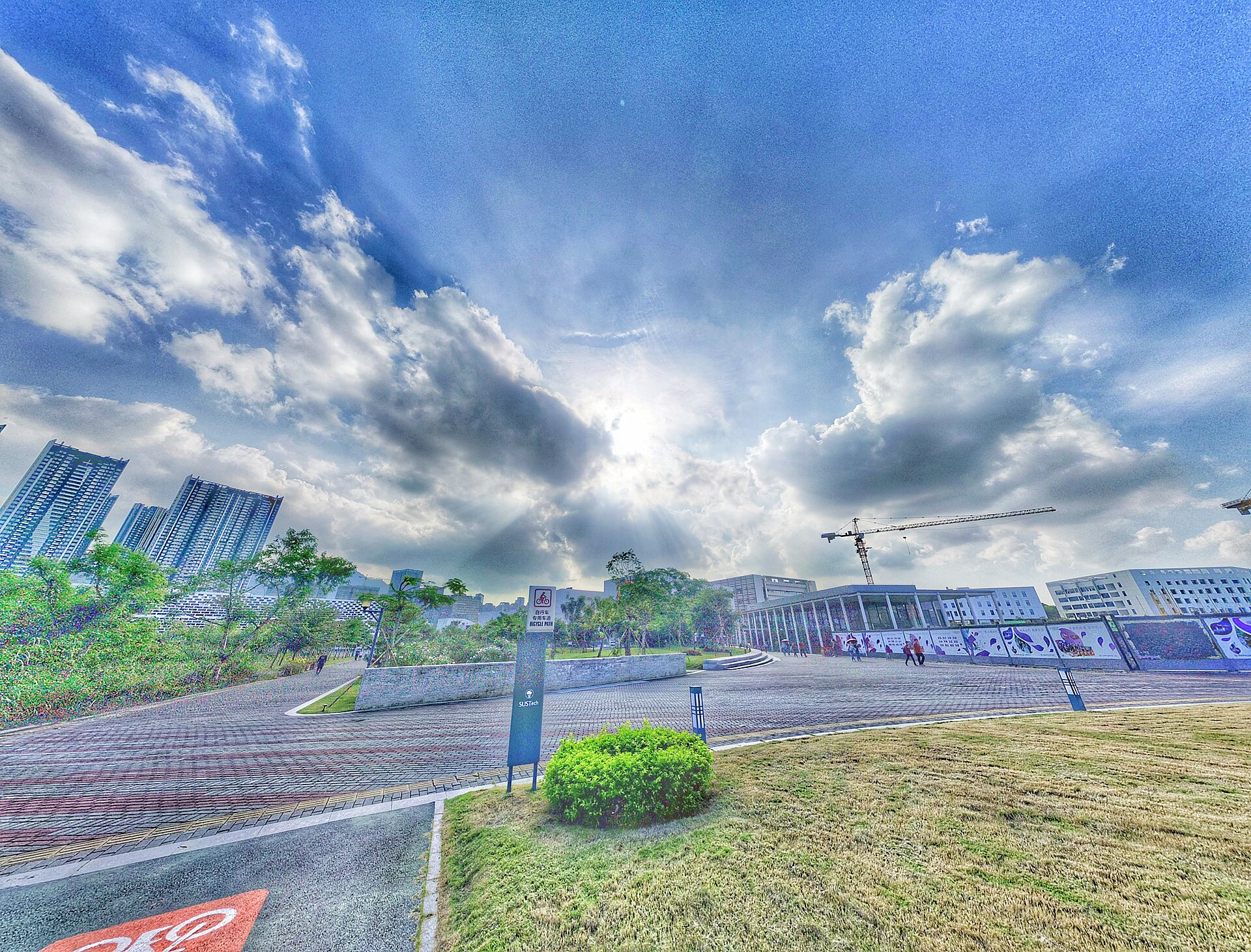
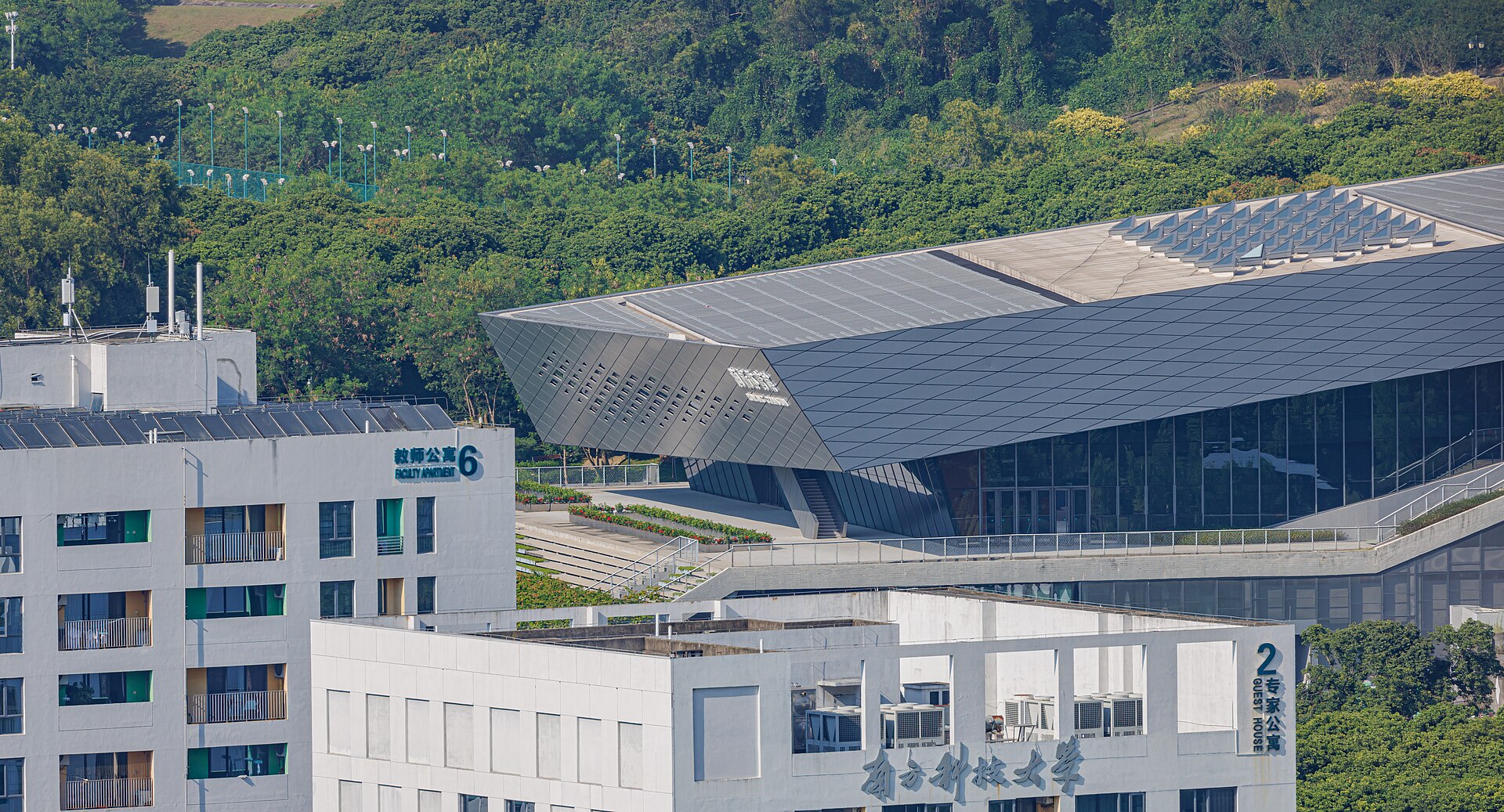
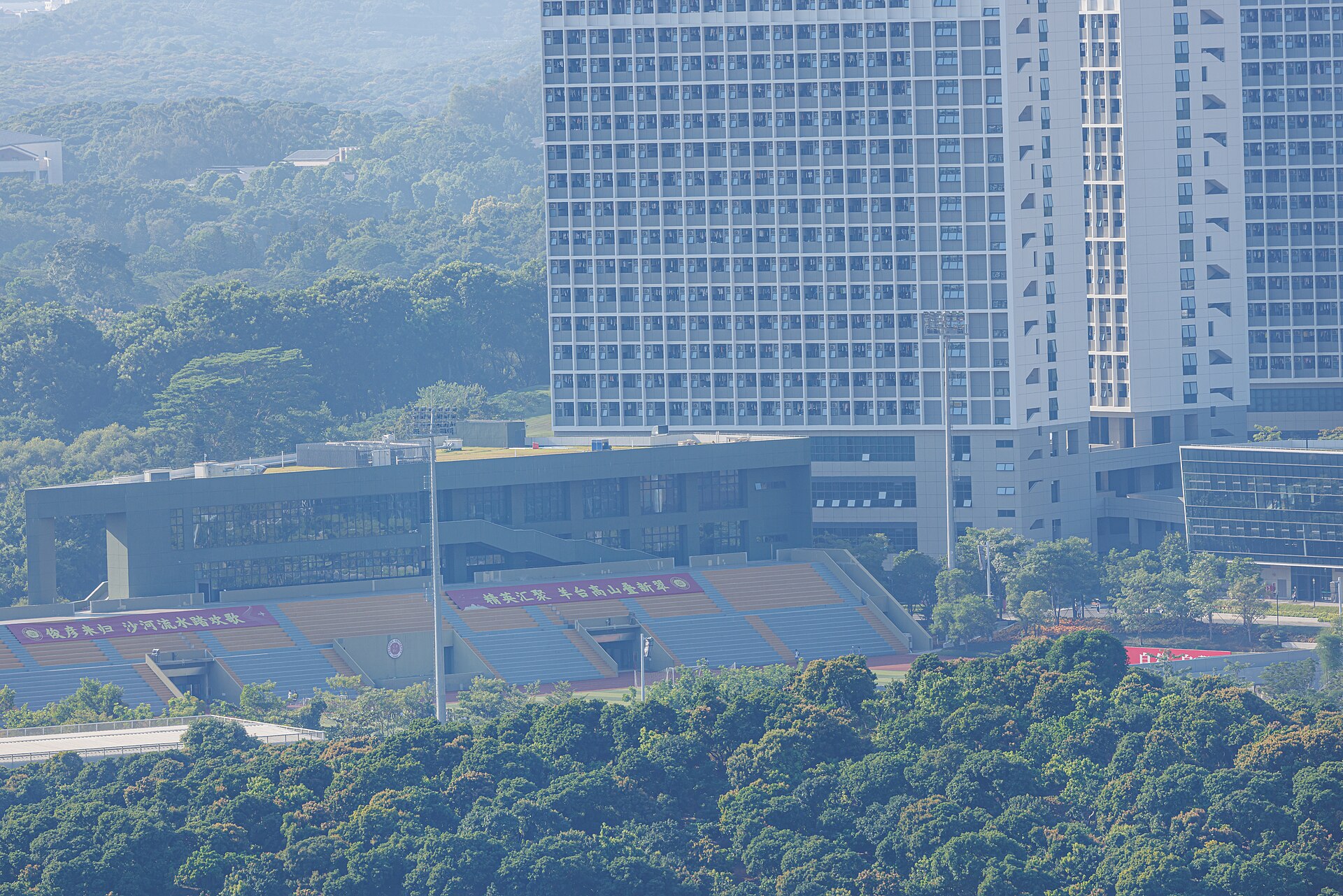
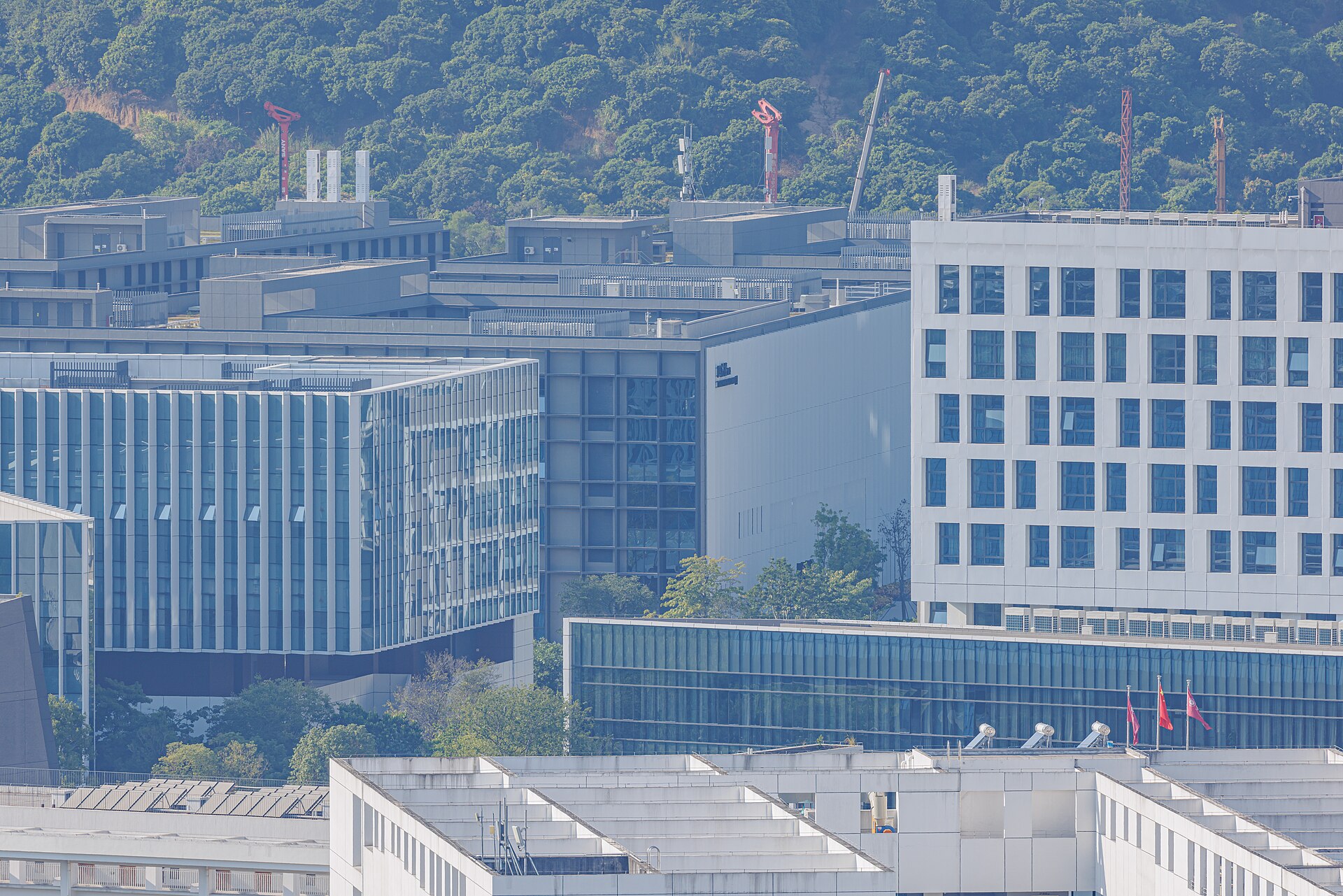
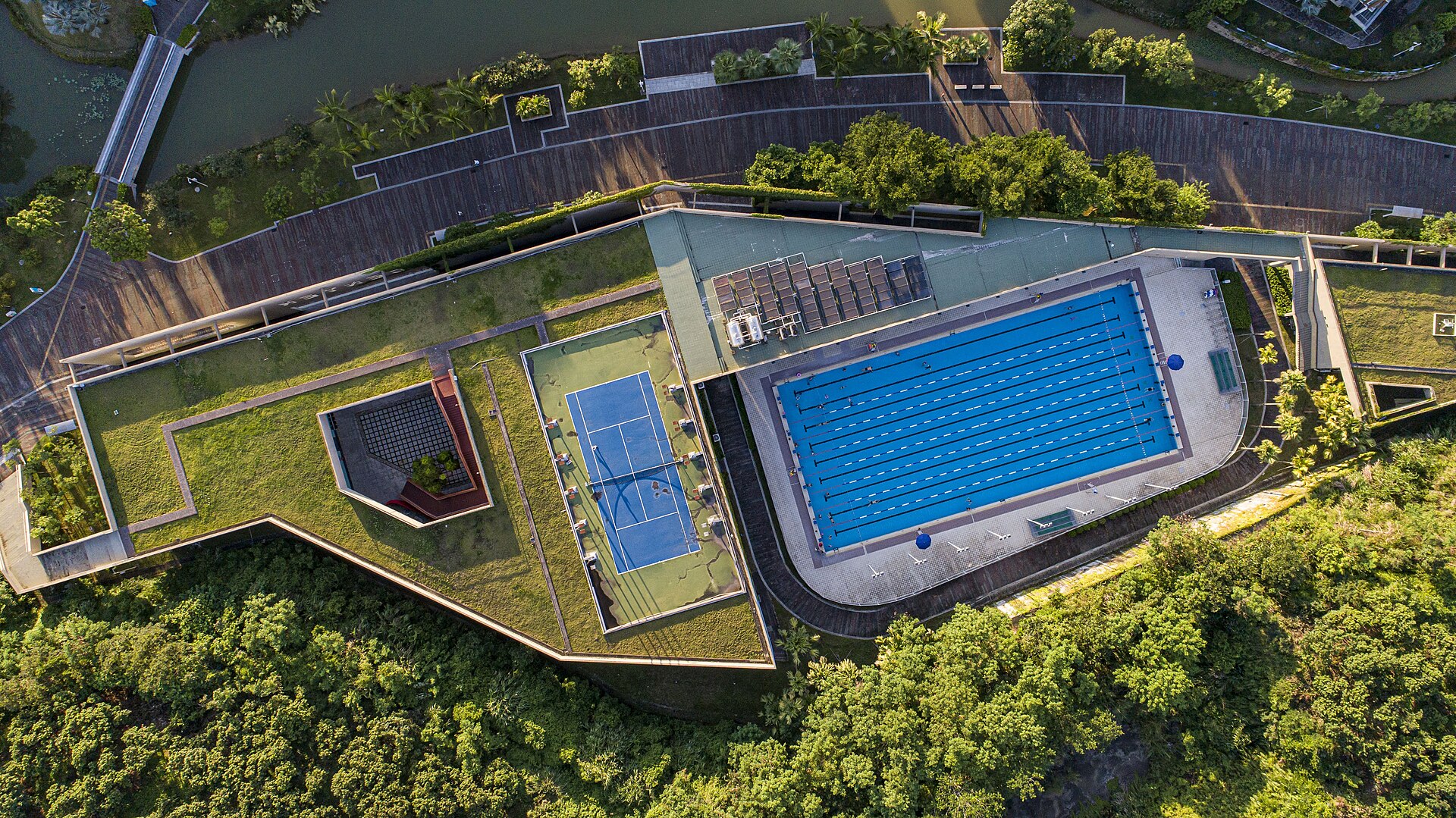
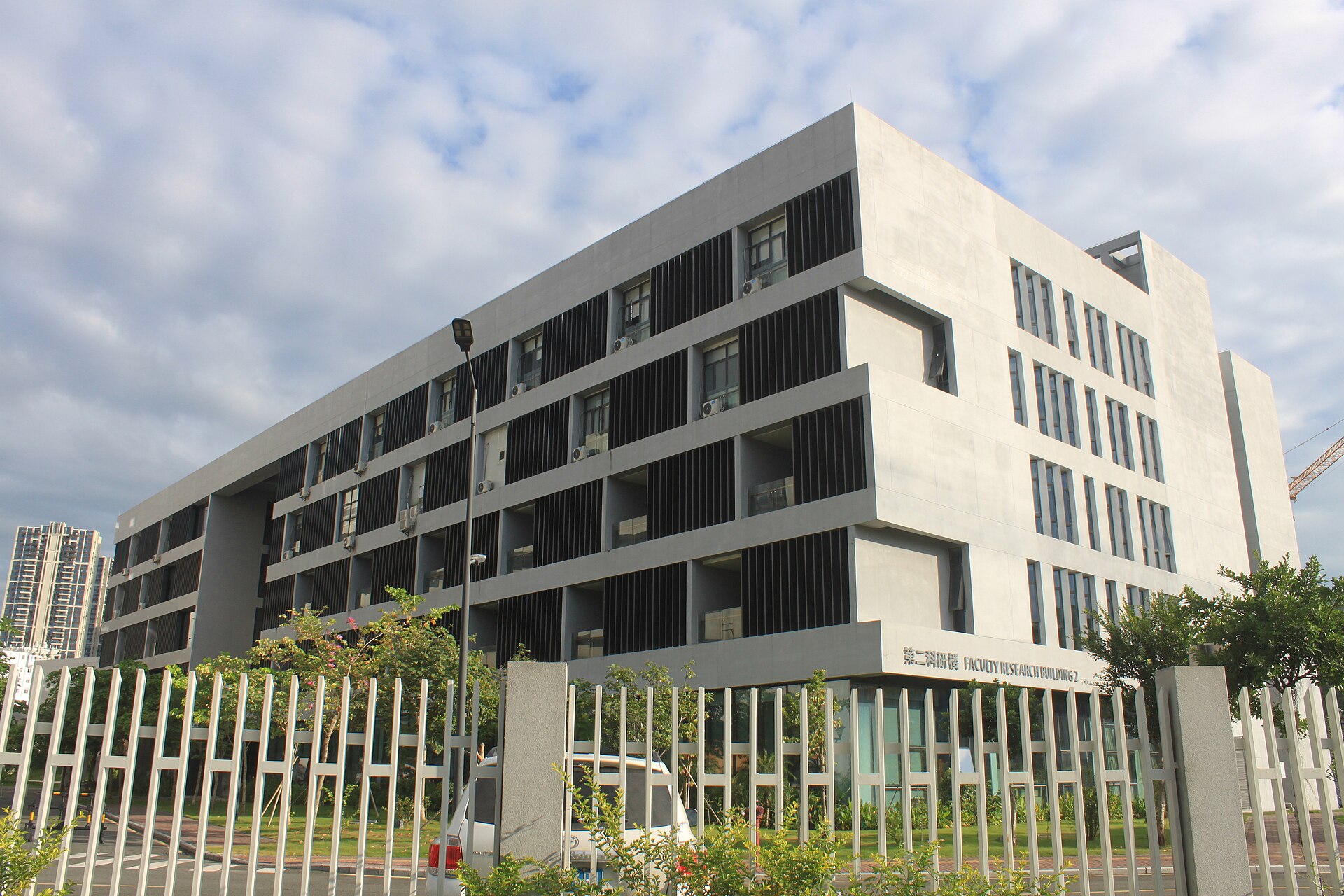
Southern University of Science and Technology (SUSTech) — campus in pictures
Real, freely-licensed photographs of the campus (via Wikimedia Commons).
Why SUSTech — Research, Innovation & Shenzhen Advantage
SUSTech is not a traditional Chinese university. It was designed from the ground up to be different — with smaller classes, international faculty, English-medium instruction, and a culture of research from Year 1. In barely fifteen years it has become one of the most compelling research universities in Asia for ambitious international students.
SUSTech Acceptance Rate & International Applicant Profile
The 30% figure includes both domestic gaokao applicants and international track applicants. International applicants are reviewed holistically through a separate process. The competitive benchmark for international applicants is an IB score of 34+ or equivalent, combined with strong research orientation. Verify current-cycle statistics with the International Admissions Office.
Stats
Profile Stats
Rea Vs Rd
SUSTech Admissions Requirements — Academics, English & Qualifications
- Minimum GPA of 3.2 on a 4.0 scale (or equivalent) required
- Strong performance in mathematics and sciences for STEM programmes
- Upward grade trajectory valued — improvement across years matters
- Course rigour evaluated relative to what was available at your school
- IELTS Academic minimum 6.0 overall
- TOEFL iBT minimum 80 total
- English-medium schooling may be eligible for waiver
- Scoring above minimums (IELTS 6.5+, TOEFL 90+) is strongly recommended
- IB Diploma: 34+ is the competitive minimum; 36+ for top STEM programmes
- A-Level: AAB to A*AA depending on programme, with mathematics required for STEM
- AP: 4–5 across relevant subjects (Calculus BC, Physics, Chemistry, CS)
- National qualifications evaluated case by case
SUSTech Application Components — Direct Portal, Study Plan & Supporting Documents
SUSTech uses its own international admissions portal (infoadmin.sustech.edu.cn) for all international undergraduate applications. Below is every component of a complete SUSTech application — required and optional — with strategic notes for each.
SUSTech Study Plan — Writing Your Application Statement
Tips
Prompts
What SUSTech Admissions Is Looking For
SUSTech's admissions philosophy is grounded in intellectual curiosity, research drive, and innovative thinking rather than test scores alone. The university's motto — 'Dedicate yourself to science, innovation and entrepreneurship' — is a genuine guide to what they value in applicants. Understanding what reviewers are looking for, and why, is the foundation of a strong application strategy.
SUSTech Financial Aid & Scholarships for International Students
SUSTech offers financial support to international students through multiple channels: the university's own scholarship programme, the Chinese Government Scholarship (CSC) administered by the China Scholarship Council, and provincial and municipal scholarships from Guangdong Province and Shenzhen City. On average, approximately 40% of eligible costs are covered through available aid for recipients.
Aid amounts are estimates. Scholarship availability and amounts change annually. Always verify current-cycle information with the International Admissions Office at intladmissions@sustech.edu.cn.
Stats
Contribution Tiers
| Note | Range | Percent | Percent Value |
|---|---|---|---|
| Tuition — per academic year | Tuition | ~$4,200 | 37 |
| Accommodation, food, local transport in Shenzhen | Living Costs | ~$6,500 | 57 |
| One-time, non-refundable | Application Fee | $60 | 1 |
| Including tuition and living; excludes flights | Total CoA | ~$11,400 | 100 |
Key Dates
Advantages
- Full funding possible: CSC covers tuition, accommodation, and a monthly stipend
- CSC is the most prestigious scholarship route for international students in China
- Early clarity — CSC decisions come before the September intake
- Applying for CSC signals commitment and research seriousness to the university
- Stackable with provincial/municipal Guangdong and Shenzhen awards
Disadvantages
- CSC deadline (March) comes before direct admission deadlines — you must be ready earlier
- CSC is extremely competitive — plan to apply to multiple funding routes simultaneously
- If CSC is not awarded, self-funded fees are still low (~$4,200/year tuition)
- CSC applications require additional health certificates, notarised documents, and a detailed study plan
SUSTech Interview — Format, Questions & Preparation
Not all SUSTech international applicants are interviewed — the interview is most common for competitive scholarship tracks (SUSTech Presidential Scholarship, CSC nominees) and for oversubscribed programmes such as Computer Science, AI, and Biomedical Engineering. If invited, the interview is conducted online in English by faculty from your intended department. It is an intellectual assessment, not a pastoral conversation — prepare to discuss your research interests in substantive depth.
Meta
Questions
SUSTech Residential College System
SUSTech organises its undergraduate student life around a residential college system inspired by the Oxbridge and American liberal-arts college models. All undergraduates live on campus in residential colleges that intentionally mix students from different faculties and disciplines, building interdisciplinary connections from Year 1. Faculty tutors and advisors are embedded in the colleges, making academic and personal mentoring a daily reality rather than an office-hours appointment.
The specific college names and structure are subject to update as SUSTech continues to expand. Confirm current residential college arrangements with the International Admissions Office.
Houses
Lottery Steps
- All first-year undergraduates are assigned to a residential college upon enrolment
- Each college has its own common spaces, dining access, faculty associates, and student activities
- Students from different departments and disciplines live together — cross-disciplinary connection is by design
- Faculty tutors embedded in each college provide academic and pastoral support
- On-campus housing is guaranteed for undergraduates; cost is included in the cost-of-living estimate (~$6,500/year)
SUSTech Schools, Departments & Key Programmes
- {"label":"Top ESI disciplines","value":"9"}
- {"label":"Nature Index rank (approx.)","value":"Top 25 globally"}
- {"label":"Nobel Laureate Labs","value":"3"}
- {"label":"Research platforms","value":"106+"}
- {"label":"Key disciplines","value":"Mechanical, EE, Materials, Biomedical"}
- {"label":"Industry partners","value":"Huawei, DJI, BYD, CITIC"}
- {"label":"Campus location","value":"Nanshan, Shenzhen"}
- {"label":"ESI top 1%","value":"Engineering"}
- {"label":"Key tracks","value":"CS, AI, Data Science"}
- {"label":"Industry neighbours","value":"Tencent, Huawei AI labs"}
- {"label":"Language","value":"Primarily English-medium"}
- {"label":"Most competitive intake","value":"AI programme"}
- {"label":"KCL Partnership","value":"Joint Medicine Programme"}
- {"label":"ESI top 1%","value":"Clinical Medicine"}
- {"label":"Signature facility","value":"Cryo-EM Centre"}
- {"label":"Research focus","value":"Structural biology, genomics"}
- {"label":"Setting","value":"Shenzhen tech ecosystem"}
- {"label":"Focus","value":"Deep-tech startups"}
- {"label":"Ecosystem","value":"Pearl River Delta GBA"}
- {"label":"Type","value":"Cross-disciplinary, not standalone degree"}
Research & Extracurricular Opportunities at SUSTech
Career Outcomes & SUSTech Graduate Prospects
SUSTech's employment rate of 94% within six months reflects both the quality of its graduates and the extraordinary job market in Shenzhen's tech sector. For international graduates, careers in China's tech and research industries are the primary pathway — alongside graduate programmes at leading global universities. The Shenzhen location is not incidental to careers: it is the career opportunity.
Stats
Categories
Our SUSTech Admissions Track Record & Student Success Stories
Faqs
Do I need to speak Mandarin Chinese to study at SUSTech?+
Not for many programmes. SUSTech is one of China's most English-friendly universities, with a large proportion of course materials and lectures delivered in English. That said, learning basic Mandarin will greatly enhance your daily life in Shenzhen. Confirm the language of instruction for your specific programme with the admissions office before applying.
Is SUSTech a good choice for a research career?+
Exceptionally so. SUSTech ranked among the world's top 25 universities in the Nature Index — among the top young universities globally for research output. Every undergraduate has access to faculty-supervised research from Year 1 under the dual-advisor system, and the university's 106 research platforms include national-level centres across physics, chemistry, biology, materials science, and engineering.
How competitive is admission for international students?+
SUSTech's overall acceptance rate is approximately 30%, but this figure encompasses both domestic and international applicants. The international track is holistic and evaluates academic records, research potential, and language proficiency. An IB score of 34 or above and a GPA of 3.2/4.0 minimum are required entry benchmarks; competitive programmes in AI and CS set the bar significantly higher. Strong research experience or STEM olympiad results can substantially strengthen an application.
Is financial aid available for international students?+
Yes. The primary funding route is the Chinese Government Scholarship (CSC), which can cover tuition, accommodation, and a monthly stipend for eligible students. SUSTech also has its own Presidential Scholarship. On average, approximately 40% of eligible costs are covered through available aid for recipients. CSC deadlines are typically in March — apply early and to multiple funding routes simultaneously.
What is the admissions process for international undergraduates?+
International undergraduates apply through SUSTech's dedicated online portal at infoadmin.sustech.edu.cn, submitting transcripts, proof of qualification (IB, A-Level, or equivalent), English proficiency scores (IELTS 6.0 / TOEFL 80 minimum), a Study Plan, and two reference letters. Some scholarship tracks and programmes include an online interview. The domestic gaokao is not required for international applicants.
Can I pursue a joint degree or international exchange?+
SUSTech offers a joint medicine programme with King's College London and has international exchange partnerships with universities worldwide. Credit transfer and exchange options vary by programme and partner institution. Contact the Global Office for current exchange and joint-degree opportunities.
What is it like to live in Shenzhen as an international student?+
Shenzhen is modern, safe, and internationally connected. It has an excellent metro system, a vibrant food scene, beaches, and a 30-minute high-speed train connection to Hong Kong. English is spoken widely in tech and commercial areas. Cost of living is estimated at approximately USD 6,500 per year — higher than inland China but very reasonable compared to Hong Kong, Singapore, or major Western cities.
How does SUSTech compare to other Chinese universities?+
SUSTech ranks #28 nationally and #265 in QS World University Rankings and #250 in THE. It is a Double First-Class University — China's designation for elite research institutions. Given it was founded only in 2011, these rankings are remarkable and reflect extraordinary research velocity. For research-oriented international students who want a genuine English-friendly environment, it is a compelling alternative to Peking University, Tsinghua, or Fudan for those who value small cohorts and direct research access over historical prestige.
Book a Free SUSTech Admissions Strategy Session
In 60 minutes our SUSTech admissions specialists will evaluate your academic profile, identify your application strengths and gaps, develop your Study Plan and scholarship strategy, and determine whether to prioritise the CSC route or the direct track for your specific situation.
- No commitment required
- SUSTech and China admissions specialists
- Personalised strategy — not generic advice
SUSTech Academic Requirements
SUSTech Academic Requirements — The Honest Breakdown for International Students
What GPA, qualifications, and academic profile do SUSTech's admitted international students actually need? And what does the university's research-first, English-friendly model mean for students from IB, A-Level, and other international curricula?
GPA & Academic Record
SUSTech and GPA — What the Requirements Show
The honest picture: SUSTech publishes a minimum GPA of 3.2/4.0 for international applicants. In practice, competitive applicants for flagship programmes in Computer Science, AI, Physics, and Chemistry typically exceed this significantly.
The minimum GPA is a baseline, not a target. What distinguishes admitted international students is the combination of strong grades in rigorous STEM subjects, demonstrated research orientation, and a compelling Study Plan that articulates specific intellectual goals.
Academic Context
School Context — How SUSTech Reads International Academic Performance
SUSTech evaluates international students' academic records in the context of their specific school system and qualification type. Admissions reviewers are experienced with major international curricula — IB, A-Level, AP, CBSE/ISC, and major Asian national systems.
SAT — Test-Optional
SAT Scores at SUSTech — What You Actually Need
SUSTech is test-optional for international undergraduates. SAT scores are not required. No official SAT score band is published for international admits. If you choose to submit SAT scores, they are treated as supplementary supporting evidence.
| Label | Score | Percent |
|---|---|---|
| Official minimum SAT | Not published | 0 |
| Recommended if submitting | 1400+ | 75 |
| Math subscore (STEM programmes) | 720+ | 80 |
ACT — Test-Optional
ACT Scores at SUSTech — Low Strategic Priority
ACT scores are not required at SUSTech and no official ACT benchmarks exist for international admits. The ACT carries even less weight than the SAT for SUSTech applications, as its Science section is primarily relevant to the US curriculum context.
Metrics
Comparison Cards
Testing Strategy
SUSTech Test-Optional Policy — What It Means for International Applicants
SUSTech's test policy for international applicants is test-optional. SAT and ACT scores are not required for admission. The primary academic evidence is your international qualification (IB Diploma, A-Level, AP, or national leaving certificate) combined with your official transcripts.
Submit Items
Withhold Items
International Curricula
IB and A-Levels at SUSTech — Specific Benchmarks
- {"label":"Competitive minimum","value":"34+ points"}
- {"label":"Recommended for top STEM programmes","value":"36–40+ points"}
- {"label":"HL expectations (STEM)","value":"HL Mathematics: AA plus at least one HL science (Physics, Chemistry, or Biology)"}
- {"label":"Extended Essay","value":"Science or mathematics EE at A or B grade viewed positively as research evidence"}
- {"label":"Competitive range","value":"AAB to A*AA"}
- {"label":"Mandatory for STEM","value":"A-Level Mathematics (Further Mathematics highly recommended for Physics/CS)"}
- {"label":"Science combination","value":"Mathematics + Physics or Chemistry for engineering applications"}
- {"label":"Predicted grades","value":"Accepted; supported by teacher reference confirming trajectory"}
Advanced Placement
AP Courses at SUSTech — What Counts and What to Take
Advanced Placement (AP) scores are accepted by SUSTech as part of an international qualification profile. For students in the US curriculum or at AP-offering schools worldwide, a strong AP portfolio in relevant subjects can support admission — particularly when combined with strong high-school GPA.
Academic Rigour
Rigour of Secondary School Record — SUSTech's Core Academic Signal
SUSTech values the rigour of your secondary school record. For a research-first STEM university, this means taking the most challenging mathematics and science courses available at your school — not grade optimisation through easier options.
Taking the most challenging STEM courses available at your specific school, in the subjects most relevant to your intended research area.
STEM Preparation
Mathematics and Science Preparation — What SUSTech Expects
SUSTech is primarily a STEM research university. Even for programmes outside core STEM, a strong quantitative and analytical foundation is expected. For flagship programmes, the mathematical and scientific preparation expected from admitted students goes significantly beyond standard secondary school curricula.
English Language Requirements
English Language Proficiency — Requirements for International SUSTech Applicants
Non-native English speakers must provide IELTS or TOEFL results as part of the international admissions process. These are mandatory requirements, not optional supplements — no application without English proficiency evidence will be considered unless a waiver has been granted.
The Study Plan you submit is itself an English language demonstration. A Study Plan with grammatical errors, unclear academic writing, or poor sentence structure undermines the application regardless of test scores. Take your English proficiency preparation seriously — both for the test and for the quality of your written application materials.
By Programme
Academic Requirements by Programme — What Different Paths Expect
SUSTech admits students to specific programmes rather than to the university broadly. The academic profile should be clearly coherent with the programme applied to — mismatches between stated interests and academic record are noted by faculty reviewers.
| Signals | Expectation | Concentration |
|---|---|---|
| Olympiad results; proof-based thinking; competition mathematics | HL Maths AA / A-Level Further Maths | Mathematics |
| Competitive programming (ICPC, USACO); original CS projects; GitHub portfolio | HL Maths + CS background | Computer Science |
| Machine learning projects; research in CV/NLP/robotics; Kaggle competition results | HL Maths + programming proficiency | Artificial Intelligence |
| Physics olympiad; experimental or theoretical physics projects | HL Maths + HL Physics | Physics |
| Chemistry olympiad; wet-lab experience; materials projects | HL Chemistry + HL Physics or Maths | Chemistry / Materials Science |
| Biology olympiad; biomedical project; life sciences research | HL Biology + HL Chemistry | Life Sciences / Biomedical Eng |
| Engineering competition (robotics, drone design); design projects | HL Maths + Physics | Mechanical / Electrical Eng |
| Environmental data projects; climate research; fieldwork | Strong science profile + maths | Environmental Science |
International Education Systems
SUSTech and International Education Systems — How Your Curriculum Is Evaluated
Profile Roadmap
Building an Academic Profile for SUSTech — What to Do at Each Stage
- Prioritise mathematics and science subjects — these are the core of SUSTech's curriculum.
- Begin exploring STEM competitions at regional level: mathematics, physics, chemistry, biology olympiads.
- Learn Python or another programming language if Computer Science or AI interests you.
- Select IB HL or A-Level subjects that maximise your STEM rigour for Year 11–12.
- Seek out a university summer programme, online research opportunity, or local lab internship.
- A small research project with any faculty supervisor demonstrates the research orientation SUSTech values.
- Sit IELTS or TOEFL in Grade 11 — target IELTS 6.5+ or TOEFL 90+ as early as possible.
- Identify whether you want to apply for the Chinese Government Scholarship (CSC) — preparation begins 6 months before the March deadline.
- Enter STEM competitions, hackathons, or science fairs — tangible results make your Study Plan concrete.
- Research specific SUSTech labs, faculty members, and research problems in your intended field.
- Begin drafting your Study Plan to understand what gaps remain in your profile.
- If aiming for CSC scholarship, prepare all documentation by November–December of Grade 12.
- Ensure your predicted IB/A-Level grades meet the benchmark (IB 34+; A-Level AAB minimum).
- Request reference letters from mathematics and science teachers who know your research orientation.
- Write and refine your Study Plan with faculty-specific references and concrete research goals.
- Submit CSC application by March if pursuing scholarship; direct applications by April–May.
Common Pitfalls
Academic Mistakes That Weaken SUSTech Applications — And How to Avoid Them
Illustrative Profiles
What Academic Profiles Work for SUSTech — Illustrative Examples
The following profiles illustrate the academic backgrounds of students Tychr has helped gain admission to SUSTech or comparable research universities in China and Asia. They show the range of academic preparation that works — and what made each compelling.
Faqs
Is a 3.2 GPA enough for SUSTech?+
A GPA of 3.2/4.0 is the published minimum. For competitive programmes in AI, CS, Physics, and Chemistry, competitive applicants typically have GPAs of 3.5 or above, combined with strong qualification results (IB 36+ or A-Level A*AA) and research or competition engagement.
What IB score do I need for SUSTech?+
An IB score of 34 is the published minimum benchmark. For flagship STEM programmes, competitive applicants typically have 36–40+ points, with strong HL scores in Mathematics and relevant sciences. The EE and IAs in science subjects add useful research-readiness signals.
Do I need SAT or ACT scores for SUSTech?+
No. SUSTech is test-optional for international undergraduates. IB Diploma, A-Level, AP, and other recognised qualifications provide the primary academic evidence. If you have strong scores (1400+ SAT, particularly in Math), submitting can add supplementary value — but the absence of scores does not disadvantage applicants with recognised international qualifications.
What IELTS or TOEFL score does SUSTech require?+
IELTS Academic 6.0 overall or TOEFL iBT 80 total are the minimum requirements. Students from schools where English was the primary language of instruction may be eligible for a waiver — confirm with the admissions office. Scoring above the minimum (IELTS 6.5–7.0, TOEFL 90+) is strongly recommended for comfort in English-medium courses.
How long should the Study Plan be?+
No fixed word count is published, but 500–800 words in English is the practical norm for the Study Plan / Personal Statement. Be direct and substantive — faculty reviewers value intellectual depth and specificity over length. Structure it around: academic background, why this field and why SUSTech, research goals, and long-term vision.
Cost & Financial Aid
SUSTech May Be More Affordable Than You Think — Here Is the Full Picture.
SUSTech's tuition is approximately USD 4,200 per year — dramatically cheaper than comparable research universities in the US, UK, or Singapore. Combined with the Chinese Government Scholarship and the university's own awards, a significant proportion of international students receive substantial financial support. Here is exactly what SUSTech costs and how to access every available funding route.
Cost Transparency
What SUSTech Actually Costs — The Full Annual Figure
All figures are USD equivalents and estimates. Actual costs depend on RMB/USD exchange rates and individual lifestyle. Budget a 10–15% buffer for exchange rate fluctuations and personal travel.
At approximately USD 4,200 per year in tuition, SUSTech is one of the most affordable routes to a top-300 global research university in Asia. The total cost of attendance — approximately USD 11,400 per year — is a fraction of comparable institutions in the US (USD 60,000–85,000+/year), UK (USD 30,000–50,000/year), or Singapore (USD 20,000–35,000/year).
Financial Aid Policy
Financial Aid for International Students at SUSTech — How It Works
Unlike the small number of US universities that offer need-blind, no-loan aid to all international students, SUSTech's financial support is primarily merit-based and scholarship-driven. The good news: the low base tuition means the financial barrier is dramatically lower than Western peers even without scholarship support.
Affordability Reality
Why SUSTech Can Offer Low Fees — and What It Means for You
Financial Aid Process
Applying for SUSTech Financial Aid — The Process Step by Step
Financial aid at SUSTech is not automatic — it requires a separate scholarship application with its own documentation and earlier deadlines than standard admission. Here is the complete step-by-step process.
- Chinese Government Scholarship (CSC) — available at csc.edu.cn
- SUSTech Presidential Scholarship — contact intladmissions@sustech.edu.cn
- Guangdong Government Scholarship — provincial award
- Shenzhen City Scholarship — municipal award
- Certified transcripts and qualification certificates
- IELTS/TOEFL score certificates
- Health certificate (required for CSC)
- Study plan / research proposal
- Two reference letters
- Passport copy
- Notarised translations of all non-English/Chinese documents
- Create an account at csc.edu.cn
- Select SUSTech as your host university
- Complete and submit all required materials before the March deadline
- Contact SUSTech International Admissions to confirm your CSC nomination status
- Apply at infoadmin.sustech.edu.cn
- Indicate your CSC scholarship application in your Study Plan
- Pay the USD 60 application fee
- Submit before the April–May direct deadline
- Scholarship and admission decisions may arrive at different times (June–August)
- Accept offers within the stated deadlines
- If scholarship falls short, inquire about Guangdong/Shenzhen supplementary awards
International Aid Detail
SUSTech Financial Aid for International Students — How It Works
SUSTech's approach to international student funding is scholarship-driven rather than need-based. The Chinese Government Scholarship (CSC) is the flagship programme; the university's own Presidential Scholarship and provincial/municipal awards complement it. Here is how international aid works in practice.
Aid Overview
SUSTech Financial Aid — Who Gets What
Aid Level by Track (Approximate)
Aid figures are approximate estimates based on published CSC programme information and university data. Actual award amounts change annually — verify current-cycle amounts with the admissions office.
Unlike US universities with nuanced income-band formulas, SUSTech's aid is primarily binary: either you secure a competitive scholarship (CSC, Presidential, or provincial) or you pay the self-funded rate of ~$11,400/year. The self-funded rate is still extremely low by global standards.
| Grant | Income | Contribution |
|---|---|---|
| Full: tuition + accommodation + stipend | CSC Scholarship Recipients | ~$0 |
| Partial: varies by award | Presidential / Provincial Award Recipients | Partial (self-fund the remainder) |
| None | Self-Funded Track | ~$11,400/year total |
Table Headers
Merit-Based Aid
SUSTech Scholarships — Who Qualifies and How Awards Are Made
SUSTech's financial aid model is merit-based rather than need-based. Scholarships are awarded on academic achievement, research potential, and application quality — not calculated from family income in the way US need-based aid is.
External Funding
External Scholarships — Additional Funding for SUSTech-Bound Students
Beyond SUSTech's own awards and the CSC, international students may also be eligible for scholarships from their home countries, international foundations, and subject-specific awards. These can supplement university and government scholarships to reduce the net cost further.
Loan Policy
SUSTech Loan Policy — No Institutional Loans; Grant and Scholarship Funding Only
SUSTech does not operate a loan-based financial aid programme. There are no institutional student loans offered by the university to international students. Financial support comes entirely in the form of non-repayable scholarships and grants — or, for self-funded students, the low base tuition of approximately USD 4,200 per year.
Student Employment
Student Employment at SUSTech — What International Students Should Know
SUSTech does not operate a formal work-study programme equivalent to what US universities offer. However, students can earn income through on-campus roles and, with appropriate visa authorisation, limited off-campus work.
- Teaching assistant and tutoring roles (subject to academic performance)
- Research assistant positions in faculty labs (provides both income and research experience)
- Administrative and student services roles in the Global Office
- Student ambassador and admissions event roles
- Entrepreneurship and startup activities through the School of Innovation
Benchmarking
SUSTech vs. Peer Institutions — Financial Aid Comparison
| Policy | School | No Loans | Typical Cost |
|---|---|---|---|
| Merit-based scholarships; CSC full funding available | SUSTech | No institutional loans | ~$0 (CSC) to ~$11,400/year (self-funded) |
| Need-based; need-blind for internationals | Harvard / MIT / Princeton | No loans (grant only) | $0–$20,000 depending on income |
| Need-aware for internationals | Yale / Columbia | Minimal loans | $15,000–$40,000 |
| Limited international aid | UK Russell Group | n/a | £25,000–£40,000/year |
| MOE Tuition Grant (service bond) | NUS / NTU (Singapore) | n/a | ~$10,000–$15,000/year after grant |
| Merit-based; partial aid | HKUST / CUHK (Hong Kong) | n/a | ~$10,000–$20,000/year |
True Cost Analysis
SUSTech vs. Alternatives — What You Actually Pay
For a self-funded international student, SUSTech at ~$11,400/year is one of the most affordable routes to a top research university in Asia — cheaper than NUS/NTU, far cheaper than UK or US peers. For a CSC scholarship recipient, the effective cost is near zero: a top-ranked research experience in one of the world's most dynamic cities, fully funded.
| Policy | School | Contribution | Four Year Cost |
|---|---|---|---|
| Merit scholarships; CSC full funding | SUSTech (CSC recipient) | ~$0 | ~$0 |
| Self-funded track | SUSTech (self-funded) | ~$11,400/year | ~$45,600 |
| MOE Tuition Grant (3-year work bond) | NUS / NTU Singapore | ~$10,000–$15,000/year | ~$40,000–$60,000 |
| Limited aid for internationals | UK Russell Group (London) | ~$30,000–$40,000/year | ~$120,000–$160,000 |
| Need-blind, full-need, no loans | Harvard / MIT (financial aid student) | ~$0 | ~$0 |
| No or limited aid for internationals | US Top-50 (no aid) | ~$60,000–$85,000/year | ~$240,000–$340,000 |
Scholarship Appeals & Alternatives
What to Do If Your Scholarship Application Is Unsuccessful
SUSTech does not operate a formal need-based financial aid appeals process in the way US universities do. However, if your scholarship application was unsuccessful, there are several productive steps to take.
The honest note: scholarship competition at SUSTech is intense and some qualified applicants are not funded in a given cycle. The low self-funded tuition (~$4,200/year) means the financial gap is far smaller than at Western universities — for many families, self-funding at SUSTech is more affordable than a scholarship to a mediocre Western institution.
How To Appeal
- Contact the International Admissions Office (intladmissions@sustech.edu.cn) to ask whether any additional scholarship rounds or alternative awards are available
- Inquire about the Guangdong Province or Shenzhen City awards if you did not apply to those separately
- Ask whether your CSC application can be reconsidered under a different quota or in the following cycle
- Explore home-country government scholarships for citizens studying in China — these are independent of SUSTech's process
When To Appeal
- You received an admission offer but your CSC application was unsuccessful
- Your financial circumstances have changed since initial application
- You believe your scholarship application contained an error or was incomplete
- A new scholarship round opens that you had not previously applied for
Timeline & Planning
Planning for SUSTech Costs — What to Do and When
Application & Study Plan
Applying to SUSTech — No US-Style Essays, But Your Study Plan Is Everything
SUSTech is a Chinese university and does not use the US Common Application, UCAS, Coalition, or any other third-party application platform. International undergraduate applicants apply directly through SUSTech's own online portal. There are no supplemental essays in the American sense — instead, you will write a Study Plan (sometimes called a Personal Statement or Motivation Letter), which is a focused academic document explaining your research interests, academic goals, and reasons for choosing SUSTech.
This tab explains exactly how the international application process works, what the Study Plan must contain, and how to present yourself most effectively. Do not try to write a 'college essay' in the US narrative style — the Study Plan is a different document with a different purpose and a different audience (faculty reviewers, not admissions counsellors).
Application Overview
How International Students Apply to SUSTech
International undergraduates apply through a dedicated portal at infoadmin.sustech.edu.cn. The application is reviewed by the International Admissions Office and relevant academic departments. Deadlines vary by scholarship track: Chinese Government Scholarship applications close in March; direct applications typically close in April–May. Begin the process at least 6 months before you intend to submit.
Study Plan
The Study Plan — What SUSTech Asks For
SUSTech's international application includes a Study Plan (sometimes called a Personal Statement or Motivation Letter). This is not a narrative personal essay in the US style — it is a focused academic document. While SUSTech does not publish a fixed prompt with a word limit in the way US universities do, the expected content is well established from faculty feedback and successful applications. Think of it as answering four core questions.
Strategy
Study Plan Strategy — What Makes the Difference
SUSTech's Study Plan is fundamentally about research motivation and academic fit. It is read by faculty in the department you are applying to, not just an administrative admissions team. This means academic specificity and intellectual depth matter more than storytelling polish — the opposite emphasis from a US personal essay.
Aim for 500–800 words. Be direct and structured. Chinese academic culture values clarity and precision over narrative ambiguity. Open with a clear statement of your intended field and primary research interest. Follow with your most relevant academic experience and evidence of research orientation. Then explain why SUSTech specifically — name faculty, labs, or research problems. Close with your goals and vision.
Avoid clichés such as 'from a young age I have been fascinated by...', long personal backstories unrelated to academic purpose, and vague expressions of admiration for China or Shenzhen. What matters to faculty reviewers is intellectual content: what you know, what you have done, and what you want to discover — stated with precision and evidenced with specifics.
Supporting Materials
Making the Most of Supporting Materials
Beyond the Study Plan, the following components give you additional opportunities to demonstrate your profile. Each should be approached strategically, not treated as a bureaucratic requirement.
Topic Selection
What to Emphasise in Your Study Plan — By Programme
The Study Plan should be tailored to your intended programme. Here is how to think about emphasis and evidence by intended field of study.
Common Mistakes
Study Plan & Application Pitfalls to Avoid
- Writing a US-style personal narrative essay instead of a focused Study Plan: SUSTech wants academic purpose and research motivation, not a coming-of-age story. Faculty reviewers find personal backstory without intellectual content actively unhelpful.
- Vague research interests: 'I am interested in AI' is insufficient. 'I am interested in graph neural networks for drug discovery, and I want to explore this through the computational chemistry group at SUSTech' is what the faculty reviewer wants to read.
- Failing to research SUSTech's specific programmes, labs, and faculty before writing: A generic Study Plan that could apply to any Chinese university signals low genuine interest. This is the single most common weakness in international applications.
- Submitting a Study Plan with grammatical errors or unclear English: The Study Plan is read as a demonstration of English academic writing ability. An application with a strong IELTS score but a poorly written Study Plan is self-contradictory and raises questions about research communication ability.
- Missing the CSC scholarship deadline: The Chinese Government Scholarship deadline (typically March) comes significantly before standard admission deadlines. Missing it means paying full fees. Plan all applications backwards from the March CSC deadline.
- Requesting reference letters too late: Give referees at least 6 weeks' notice. A rushed reference letter is generic and unhelpful. Brief your referees specifically about your intended programme and what aspects of your work you want highlighted.
- Not verifying the language of instruction: Some SUSTech undergraduate programmes are primarily Chinese-medium. Apply to a Chinese-medium programme without Mandarin proficiency is a fundamental mismatch that wastes your application fee and time.
Application FAQs
Application & Study Plan — Frequently Asked Questions
Does SUSTech use the Common Application or UCAS?+
No. SUSTech has its own international admissions portal at infoadmin.sustech.edu.cn. There is no Common App, Coalition App, or UCAS route for SUSTech. International applicants apply directly through the university's portal, which is separate from the Chinese gaokao system used by domestic applicants.
What is the Study Plan and how long should it be?+
The Study Plan (also called a Personal Statement or Motivation Letter) is a focused academic document explaining your research interests, relevant academic background, reasons for choosing SUSTech and your specific programme, and your academic goals. Aim for 500–800 words. Be clear, specific, and intellectually substantive. It is read by faculty in your intended department — not just an administrative admissions team.
Can I write my Study Plan in English?+
Yes. English is the standard language for the Study Plan in international track applications. If you are applying to a Chinese-medium programme, a Chinese-language Study Plan may be preferred or required — verify with the International Admissions Office.
Are there interviews?+
Some programmes and scholarship tracks include an online interview. Prepare to discuss your Study Plan in depth, explain your research interests coherently, and demonstrate intellectual curiosity under questioning. Not all applicants are interviewed — it depends on the programme and the competitiveness of the applicant pool in a given cycle.
How important is the Study Plan compared to my grades?+
For international applicants, the Study Plan is reviewed by faculty in your intended department and can significantly influence decisions, particularly when multiple applicants meet the academic threshold. A specific, well-researched Study Plan that references actual SUSTech labs or faculty can distinguish you from an equally qualified candidate with a generic statement — especially for competitive programmes like Computer Science and AI.
Can I mention specific faculty members I want to work with?+
Yes, and it is strongly encouraged. Mentioning specific faculty members whose research you find compelling — and explaining precisely why — demonstrates genuine engagement with SUSTech's academic identity. This is one of the most powerful differentiating moves in an international application. Only mention faculty whose work you have actually read and can discuss substantively.
What if my intended programme is taught primarily in Chinese?+
Some undergraduate programmes at SUSTech are primarily delivered in Mandarin. Verify the language of instruction for your specific programme before applying. If the programme requires Mandarin proficiency, you will need to provide evidence of Chinese language ability (HSK scores or equivalent). Applying to a Chinese-medium programme without Mandarin is a fundamental mismatch — confirm language of instruction first.
How do I apply for the Chinese Government Scholarship alongside admission?+
The CSC scholarship application is a completely separate process from the admission application. Apply for CSC at csc.edu.cn (select SUSTech as your host university) before the March deadline. Simultaneously submit your admission application at infoadmin.sustech.edu.cn. Contact SUSTech International Admissions to confirm they have nominated you for the CSC scholarship — this nomination step is essential and separate from your CSC application submission.
Courses — schools, degrees & intake
37 degrees across 5 groupings.
College of Science · 7 degrees
Financial Mathematics
Applied Mathematics
Physics
Applied Physics
Chemistry
Geophysics
Statistics
College of Engineering · 20 degrees
Theoretical and Applied Mechanics
Aerospace Engineering
Mechanical Engineering
Robotics Engineering
Science and Engineering for Renewables
Materials Science and Engineering
Electronic and Photonic Materials and Devices
Opto-electronic Information Science and Engineering
Communication Engineering
Information Engineering
Automation
Computer Science and Technology
Intelligence Science and Technology
Oceanography
Offshore Engineering and Technology
Biomedical Engineering
Intelligent Medical Engineering
Environmental Science and Engineering
Hydrology and Water Resources Engineering
Microelectronics Science and Engineering
School of Life Sciences · 3 degrees
Bioinformatics
Biotechnology
Biological Sciences
Business School · 5 degrees
Finance
Financial Engineering (Fintech)
Big Data Management and Application
Industrial Engineering
Accounting
School of Medicine · 2 degrees
Clinical Medicine
Biomedical Sciences
Want your real chances at Southern University of Science and Technology (SUSTech)?
Create a free TYCHR account for your personalised admit-chance, a shortlist you can track, exact entry requirements, and essay + counselling help.