Simon Fraser University
Burnaby, Canada · Suburban
BURNABY, BRITISH COLUMBIA, CANADA
Simon Fraser University — Admissions Guide for International Students
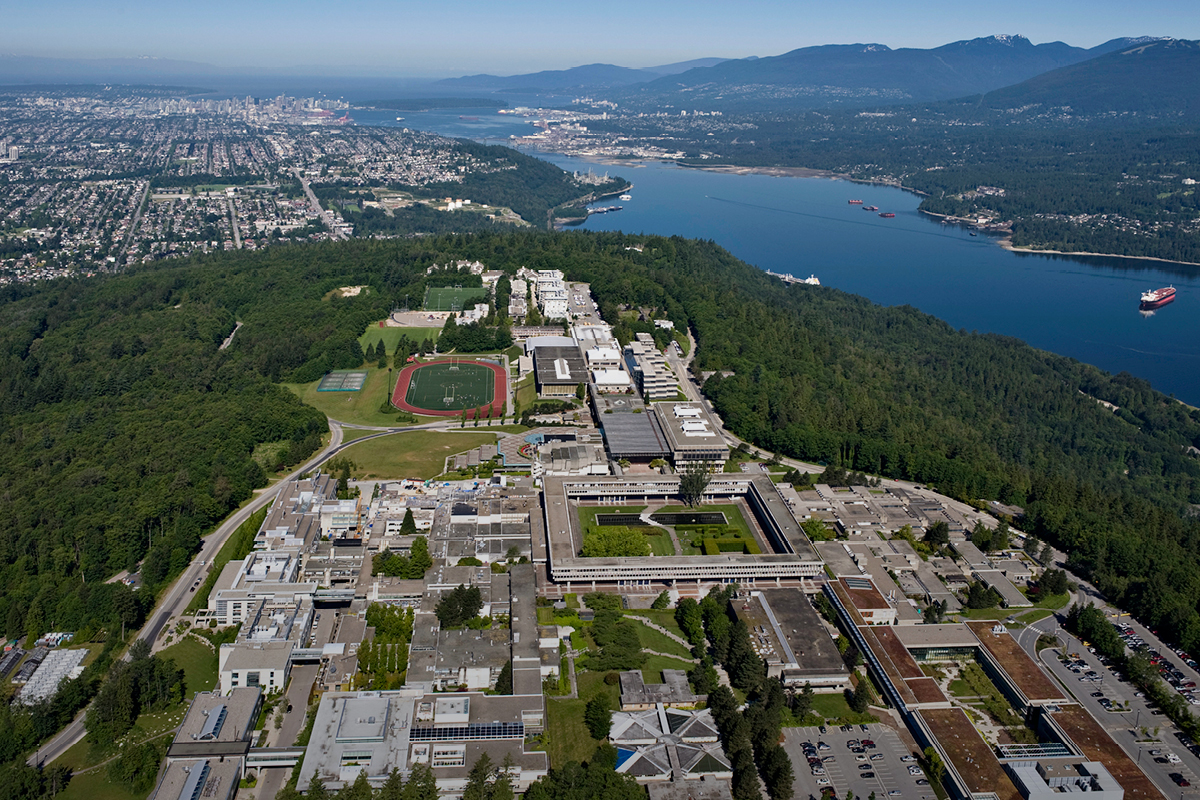
Perched atop Burnaby Mountain with sweeping views of Metro Vancouver, Simon Fraser University is Canada's top-ranked comprehensive university — a designation Maclean's has awarded it consistently for over three decades. SFU blends a semester-on, semester-off co-op culture with research intensity and a strikingly diverse student body, making it the standout choice for international students who want a Vancouver address, deep industry connections, and a genuinely global campus community.
With 37,000 students from more than 150 countries, SFU has built a reputation as a place where hands-on learning meets world-class research. Its Computing Science, Beedie School of Business, Criminology, and Interactive Arts & Technology programmes consistently attract top students, while SFU's trimester calendar means you can progress faster, intern longer, and graduate into British Columbia's booming tech and business sectors with real professional experience already behind you.
Campus
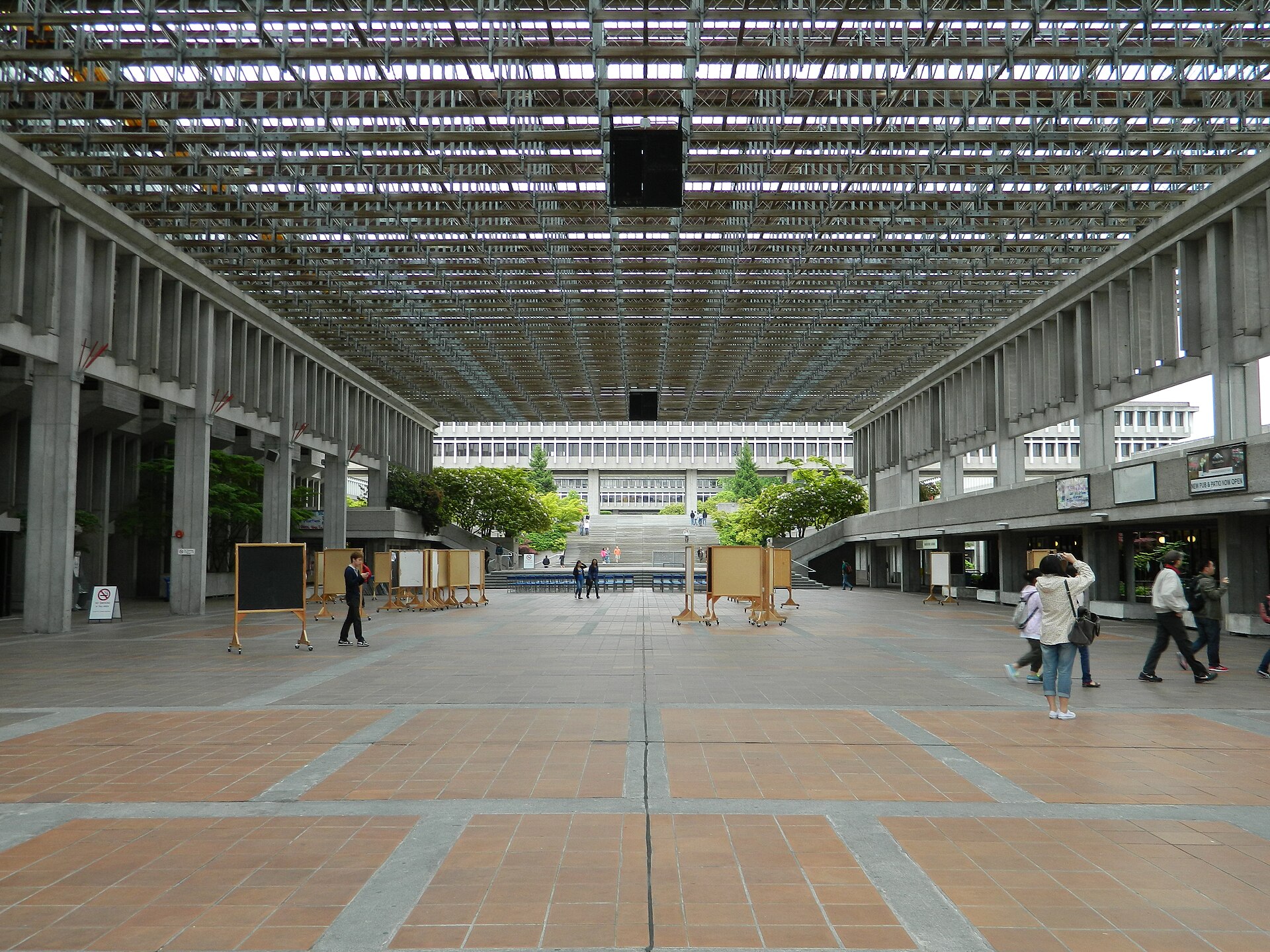
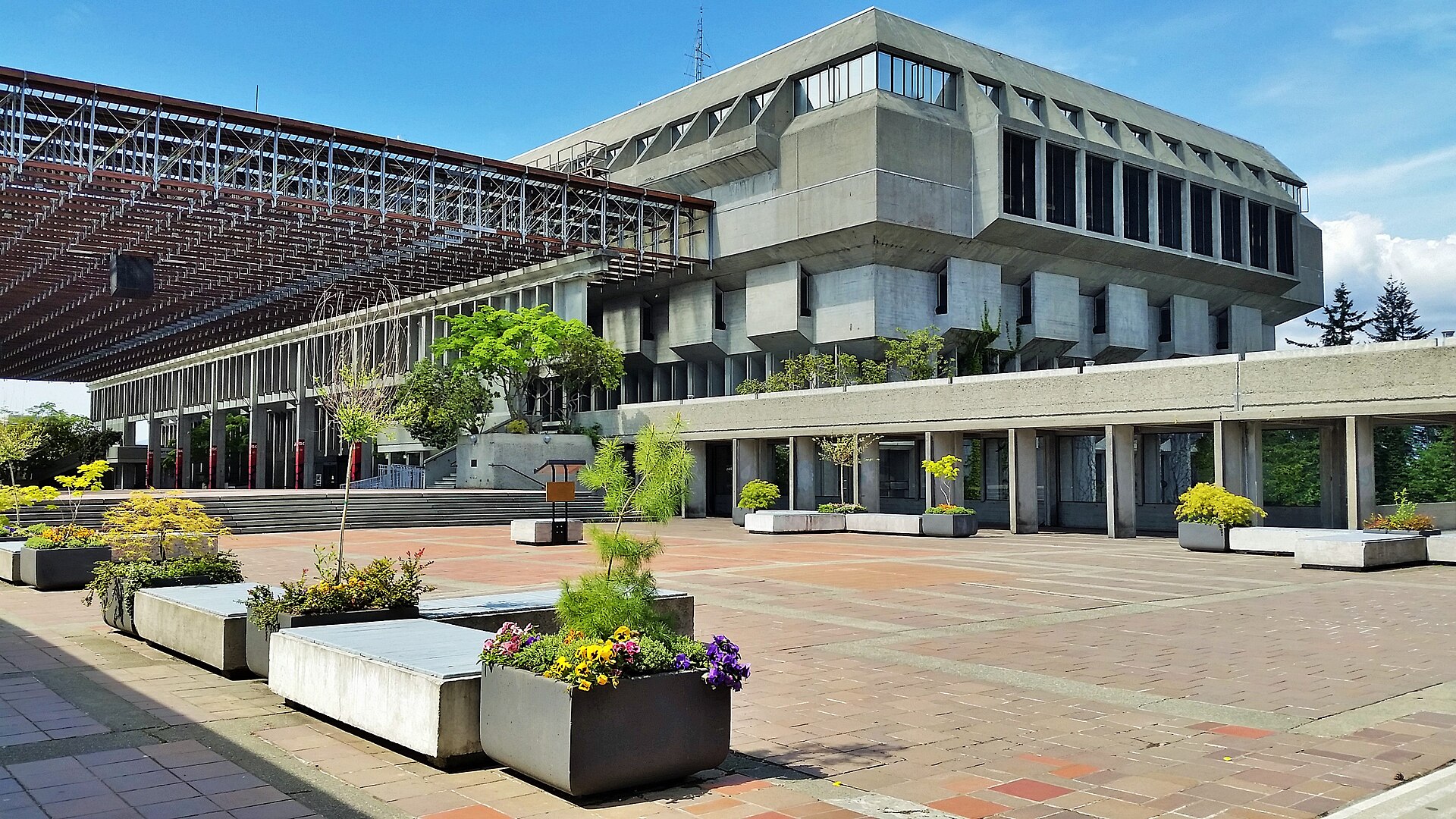
Simon Fraser University — campus in pictures
Real, freely-licensed photographs of the campus (via Wikimedia Commons).



WHY SFU
Why Simon Fraser University — Canada's Comprehensive Leader
SFU's combination of research depth, co-op breadth, and Vancouver's cosmopolitan ecosystem creates an undergraduate experience that is genuinely hard to replicate elsewhere in Canada.
SELECTIVITY
Acceptance Rate & Admission Profile
SFU admits just over half of applicants, but admission varies significantly by faculty and programme. Computing Science, Beedie School of Business, and Health Sciences are considerably more competitive than the university-wide average, while programmes in the humanities and social sciences tend to be more accessible. Strong predicted IB scores and a competitive GPA remain the primary differentiators for international applicants.
Competitive programmes such as Computing Science and Beedie Business admit a smaller fraction of applicants and typically require grades well above the minimum. Applicants to these faculties should aim for an IB score of 35 or higher and a strong predicted grade profile in relevant subjects.
AT A GLANCE
Simon Fraser University — Quick Facts
APPLICATION COMPONENTS
What Your SFU Application Consists Of
SFU uses EducationPlannerBC (EPBC), British Columbia's centralised post-secondary application portal. Unlike US universities, SFU's admissions decision rests primarily on academic performance. There are no application essays in the traditional sense, though some competitive programmes require supplementary applications.
WHAT SFU SEEKS
The Profile SFU Admits
SFU's admissions philosophy is transparent and grades-focused: the primary evaluation criterion is your predicted and final academic performance in your final two years of secondary school. Course selection matters — SFU wants to see that you have challenged yourself in subjects relevant to your intended programme. For competitive programmes, demonstrated interest, extracurricular achievement, and a thoughtful supplementary application become meaningful differentiators.
DEADLINES
Application Dates & Deadlines
SFU offers three entry points: Fall (September), Spring (January), and Summer (May). Most international students apply for the Fall intake, which offers the broadest programme availability. Applications are submitted through EducationPlannerBC.
SFU processes applications on a rolling basis within each intake window. Applying early — especially for Fall — maximises your chances since popular programmes may fill before the deadline. International students are advised to have all documents ready to submit immediately after opening the application.
| Intake | Application Open | Application Deadline | Notes |
|---|---|---|---|
| Fall 2027 | Check EPBC for opening date | Typically early spring 2027 | Most programmes; broadest availability |
| Spring 2027 | July 1, 2026 | September 15, 2026 | Limited programme availability |
| Summer 2027 | Dates TBA | TBA | Restricted programme availability |
CAMPUS LIFE
Student Life at SFU
SFU's main campus sits atop Burnaby Mountain, a dramatic perch above Metro Vancouver that gives the university a genuinely unique character. The mountain campus has its own ecology — fog, bluebell seasons, and rare silence — while being 30 minutes by SkyTrain from downtown Vancouver's restaurants, arts scene, and nightlife. SFU also maintains a downtown Vancouver campus (Harbour Centre) and a Surrey campus, giving students genuine urban presence alongside the mountaintop home.
On campus, you'll find over 200 student clubs ranging from the SFU Esports Club to cultural societies representing every major country in the international student community. The Clan Athletics programme competes at the university level in sports from soccer to wrestling. Residence options on Burnaby Mountain include traditional residence halls and apartment-style suites, and the campus has recently added new housing capacity to meet international student demand. The AQ (Academic Quadrangle) and the Saywell Hall are social hubs where you're as likely to find a study group as a club fair.
CAREERS
Where SFU Graduates Go
SFU's location in Metro Vancouver — one of North America's fastest-growing technology and business ecosystems — gives its graduates a structural advantage. The university's 91% post-graduation employment rate reflects not just the SFU brand but the city's hungry labour market for skilled graduates in technology, health, business, and the creative industries.
Computing Science graduates pursue roles at Vancouver's major tech employers including Amazon, Apple, Electronic Arts, Hootsuite, and Slack (now Salesforce), as well as homegrown companies like Hootsuite and AbCellera. Beedie graduates enter finance, consulting, and entrepreneurship both locally and internationally. Criminology alumni are highly placed in law enforcement, policy, and legal services throughout Canada. The co-op programme is SFU's most powerful career tool: students typically have one or two job offers before graduation, often from the companies where they completed their work terms.
FAQS
Frequently Asked Questions — SFU International Admissions
Does SFU require SAT or ACT scores from international students?+
No. SFU has a test-optional policy and does not require SAT or ACT scores. Admission for international students is based primarily on secondary school academic performance. Submitting strong SAT/ACT scores is unlikely to compensate for a weak academic record.
What IB score do I need to get into SFU?+
SFU's benchmark IB score is 31, but this is a minimum threshold — not a target. Competitive programmes like Computing Science and Beedie Business typically admit students with predicted IB scores of 35 or above, with strong results in relevant Higher Level subjects.
Can I start in January (Spring semester)?+
Yes. SFU offers three entry points per year: Fall (September), Spring (January), and Summer (May). Spring intake applications are open from July 1 to September 15. However, not all programmes are available at every entry point — check your specific programme's page.
What is EducationPlannerBC and do I have to use it?+
EducationPlannerBC (EPBC) is British Columbia's centralised undergraduate application portal, similar to UCAS in the UK. All SFU undergraduate applications — including those from international students — must be submitted through EPBC at www.educationplannerbc.ca. You cannot apply directly to SFU.
Is financial aid available to international students?+
SFU offers scholarships and awards to international students. Entrance scholarships are automatically considered when you apply, and on average, aided students receive aid covering around 25% of costs. Most scholarships are merit-based, tied to academic performance. Detailed scholarship information is available from SFU's Financial Aid and Awards Office.
How does the co-op programme work for international students?+
International students on a valid study permit are typically eligible to participate in co-op work terms under the co-op work permit stream. SFU's co-op office guides you through the permit process. You must have completed a set number of academic credits and meet GPA requirements to register for co-op, which varies by faculty.
What is the $5,000 admission deposit for international students?+
SFU requires a $5,000 CAD admission deposit from international students to confirm your place. This deposit is refundable (minus a $150 processing fee) if your Canadian study permit is denied. If you withdraw for any other reason, the deposit is non-refundable. The deposit is applied to your first semester tuition.
Does SFU offer any English-language exemptions for IB students?+
Students who have completed at least three years of secondary schooling in an English-language institution in a recognised country may be exempt from submitting English proficiency test scores. IB students who studied in English may qualify — confirm this with SFU's admissions office for your specific school and country.
ACADEMICS
Academic Expectations at SFU A Guide for International Students
Simon Fraser University's academic environment is demanding, fast-paced, and designed around the trimester calendar — a schedule that rewards organised, self-directed learners. For international students arriving from IB, A-Level, or equivalent programmes, the transition to SFU is generally smooth, but understanding what the university actually values academically will help you present yourself — and prepare — most effectively.
SFU is a comprehensive research university, not a liberal arts college. Its academic culture prizes quantitative rigour, practical application, and student-initiated research. Professors are active researchers and the best courses often blend lecture content with lab, studio, or field components that tie directly to real-world problems. Classes at SFU can be large at the introductory level (200+ students in lectures), but upper-year courses, co-op work terms, and research opportunities shrink the world considerably.
ACADEMIC PROFILE
Typical Academic Profile of Admitted Students
For competitive programmes: aim for an IB score of 35+ with HL 6s in subject-relevant areas. For Beedie Business, strong Math and English results are essential. For Computing Science and Engineering, HL Mathematics and Physics results carry the most weight.
TEST POLICY
SFU's Approach to Standardised Tests
SFU operates a test-optional policy: SAT and ACT scores are not required and are not a standard part of the application review. Admissions decisions for undergraduate programmes are based almost entirely on secondary school academic performance in your final two years, along with English language proficiency scores if required.
Unlike many US universities, SFU does not use standardised test scores to compensate for weaker transcripts. If your academic grades are strong, submitting an SAT or ACT score will have minimal additional impact. If your grades are below the competitive threshold for a selective programme, a high SAT score is unlikely to change the outcome. Focus your preparation energy on maximising your IB or A-Level predicted scores and meeting English proficiency requirements.
SAT & ACT
SAT & ACT — What You Should Know
SFU is test-optional. SAT and ACT scores are not factored into standard undergraduate admissions decisions for international students from IB, A-Level, or equivalent international curricula. You do not need to submit them, and they will not unlock access to selective programmes that have minimum grade requirements.
IB & A-LEVEL
How SFU Reads IB Diplomas and A-Levels
SFU has well-established frameworks for evaluating IB Diploma and A-Level results, and both are warmly received as strong preparation for undergraduate study. The university's admissions team converts your results into SFU's internal grade equivalent for comparative review.
For IB students, the minimum benchmark is 31 points on the full IB Diploma. Competitive programmes typically require 35 or higher. Subject-level results matter enormously: a student with a 31 total but HL 7 in Mathematics and HL 6 in Physics will be seen as a stronger Computing Science candidate than one with a 33 total but HL 4 in Mathematics. SFU awards advanced credit (course exemptions) for IB HL subjects scored at 4 or above, allowing strong IB students to begin at a more advanced level and potentially accelerate their degree.
SUBJECT PREPARATION
Subject Rigour SFU Expects
SFU's admissions team looks at whether your course selection demonstrates genuine readiness for your intended programme. These are the key subject areas and what SFU considers adequate preparation.
ENGLISH PROFICIENCY
English Language Requirements
International students whose secondary school instruction was not conducted solely in English must submit English language proficiency scores. Scores must be sent directly from the testing body — self-reported or photocopied scores are not accepted.
Some competitive programmes may require higher English scores than the university minimum. Always check your specific programme's requirements. Scores must be from a test taken within the past two years.
| Test | Minimum | Notes |
|---|---|---|
| IELTS (Academic) | 6.5 overall | No band below 6.0 accepted |
| TOEFL iBT | 88 total | Sent directly via ETS |
| Duolingo English Test | 125 | Accepted for most programmes |
| Cambridge C1/C2 | Verify with SFU | May be accepted; confirm directly |
YEAR-BY-YEAR PLAN
Building Your Profile from Grade 9 to 12
For SFU, the academic record is everything. Here is a realistic, year-by-year approach to building the profile that competitive programmes will want to see.
COMMON PITFALLS
Academic Mistakes That Cost SFU Applicants
- Applying to competitive programmes like Computing Science or Beedie with a minimum-threshold IB score — the university-wide minimum is not the competitive programme minimum.
- Choosing Standard Level Mathematics when your intended programme (Engineering, Computing Science, Economics) expects HL. This is a red flag admissions teams notice immediately.
- Submitting your application early but neglecting to submit supporting documents promptly — SFU reviews on a rolling basis and you can lose your place if documents arrive late.
- Assuming a high SAT or ACT score compensates for below-benchmark IB predicted grades. It does not — SFU is a grades-first Canadian institution.
- Ignoring the $5,000 CAD admission deposit deadline after receiving your offer — failing to pay this deposit will result in your offer being withdrawn.
- Failing to secure an English proficiency score if it is required for your country/schooling background — this is a hard requirement and exemptions are specific and narrow.
- Not checking whether your intended programme requires a supplementary application — missing this step means your application is incomplete and cannot be assessed.
COST & AID
The Honest Cost Picture at SFU For International Students
SFU is a public Canadian university with tuition that is substantially lower than comparable universities in the United States or United Kingdom, but higher than domestic Canadian rates for international students. British Columbia's cost of living — particularly in Metro Vancouver — is significant, and students should budget realistically for accommodation, transit, and living expenses beyond tuition.
The good news: SFU's co-op programme gives international students a genuine pathway to reduce the net cost of their degree by earning professional salaries during work terms. Students who complete two or more co-op work terms in Vancouver's technology or business sectors often offset a meaningful portion of their total degree cost while building the resume that makes them highly employable after graduation.
COST BREAKDOWN
Annual Cost Estimates for International Students
All figures are annual estimates in USD equivalent and are sourced from SFU's published data. Actual costs may vary by programme, campus, and individual lifestyle. CAD/USD fluctuations will affect real costs — budget in Canadian dollars where possible.
Cost of living in Burnaby/Vancouver is significant. On-campus residence costs vary by room type. Off-campus housing in Metro Vancouver is expensive — students should research current rental market conditions carefully.
| Component | Annual Estimate Usd | Notes |
|---|---|---|
| International Tuition | $24,800 | Varies slightly by programme |
| Cost of Attendance (total) | $38,800 | Includes tuition + living + fees |
| Living Expenses | $14,000 | Accommodation, food, transport, personal |
| Application Fee | $90 | Non-refundable; paid through EPBC |
| Admission Deposit (intl) | ~$3,600 CAD equivalent | $5,000 CAD; credited to first-semester tuition |
FINANCIAL AID
Financial Aid Policy for International Students
SFU does offer financial aid and scholarships to international students, though the volume of need-based aid available to internationals is more limited than at some US universities. On average, international students who receive aid receive approximately 25% of their costs covered through scholarships and awards.
SFU's financial aid for international students is primarily merit-based: strong academic performance is the primary qualification criterion. Most entrance scholarships are automatically considered when you apply — you do not need to file a separate financial need application to be eligible for merit scholarships. Need-based bursaries may be available in limited circumstances; contact the Financial Aid and Awards Office (fiassist@sfu.ca) for details.
SFU does not participate in US federal financial aid programmes except for US citizens/permanent residents under specific loan programmes. Canadian government student loans are not available to international students.
SCHOLARSHIPS
Scholarships & Awards for International Students
SFU offers both entrance-level and in-course scholarships to international students. While specific amounts and names vary by year and programme, the following categories represent SFU's scholarship landscape for international applicants. Always verify current offerings at sfu.ca/students/financialaid.
AFFORDABILITY
Understanding the Net Price Reality
SFU sits in a middle tier of international cost: more affordable than top US private universities (which often exceed $80,000 USD per year total) and comparable US public flagship schools, but more expensive than universities in Germany, the Netherlands, or other low-tuition European systems.
The realistic net cost for most international students — before co-op earnings — is approximately $38,800 USD per year in total costs. With strong co-op performance, many students effectively reduce this by 20–40% over the course of their degree. SFU does not offer a no-loan policy like some elite US institutions; most international students fund their education through a combination of family resources, scholarships, and co-op earnings. Students should arrive with a clear multi-year financial plan that accounts for Vancouver's high cost of living and the potential timing gaps between work terms.
HOW TO FUND YOUR DEGREE
Steps to Secure Funding for SFU
COST FAQS
Frequently Asked Questions — Cost & Aid
Is SFU need-blind for international students?+
No. SFU does not have a need-blind admissions policy for international students. Financial need is not a stated factor in admissions decisions, but the scholarship and aid pool available to international students is merit-based and limited in volume compared to top US need-blind institutions.
What is the $5,000 CAD admission deposit?+
Upon receiving an offer of admission, international students must pay a $5,000 CAD deposit to confirm their place. This deposit is credited to your first-semester tuition. It is refundable (minus a $150 processing fee) if your Canadian study permit application is denied. It is non-refundable if you withdraw for other reasons.
Can international students work on-campus or part-time?+
Yes. International students with a valid study permit are permitted to work up to 20 hours per week off-campus during academic sessions and full-time during scheduled breaks. Many SFU students supplement their income through on-campus jobs at the library, recreation centre, and student-run services.
Are there scholarships that cover full tuition?+
Full-tuition scholarships for international undergraduate students at SFU are rare. Most entrance scholarships cover a partial amount. Students seeking full funding are typically better positioned applying to Canadian graduate programmes (where funded positions are more common) or to select US schools with need-blind international aid policies.
How does SFU's cost compare to other Canadian universities?+
SFU's international tuition is broadly comparable to other major Canadian research universities (UBC, University of Toronto, McMaster, Queen's). It tends to be slightly lower than UBC Vancouver and U of T, but the higher cost of living in Metro Vancouver versus cities like Waterloo or Halifax is a meaningful offset.
APPLICATION & STATEMENT
SFU's Grades-First Admissions — Understanding the Canadian Application System
Unlike US universities, Simon Fraser University does not require a Common Application personal essay or a portfolio of supplemental short-answer questions for most programmes. SFU follows Canada's grades-first admissions model: your academic record is the primary — and in most cases decisive — factor. However, for competitive programmes like Beedie School of Business and some Engineering and Computing Science streams, a Supplementary Application with short written responses is part of the process.
This tab guides you through what writing you will need to produce for an SFU application, how to approach any supplementary questions honestly and effectively, and how to think about the personal statement if you are simultaneously applying to UK, US, or Australian universities — because SFU will not require it but those applications will.
WHAT IS REQUIRED
Essays & Written Components — What SFU Actually Asks For
The SFU undergraduate application through EducationPlannerBC (EPBC) does not include a traditional personal essay for most programmes. Admissions is primarily based on your academic grades and English proficiency. The exception is a subset of competitive programmes that require a Supplementary Application — a separate set of short written questions submitted after your initial EPBC application is processed.
SUPPLEMENTARY QUESTIONS
Supplementary Application — How to Approach It
For programmes that require a Supplementary Application, the questions typically focus on your motivation for the programme, relevant experiences, and your understanding of what the programme involves. Specific prompts vary by programme and year — always retrieve current prompts directly from the official programme page.
PERSONAL STATEMENT STRATEGY
If You Are Applying to SFU Alongside UK or US Schools
Many international students applying to SFU are also applying to universities in the United Kingdom (UCAS personal statement), the United States (Common App personal essay), or Australia (no essay). Your SFU application requires no personal essay — but your other applications do.
The UCAS personal statement (three-question format from 2026 onward) asks about your interest in the subject, preparation, and what you will contribute. The Common App personal essay (650 words) is a narrative piece about who you are. Neither should be repurposed for the other — they serve different functions. If SFU is your primary target, allocate your writing energy to the Supplementary Application for competitive programmes rather than crafting a lengthy personal essay that SFU will never read.
If you are applying to Beedie School of Business alongside LSE, Warwick, or US business-adjacent programmes, the skills you develop writing your UCAS or Common App statement — precision, honesty, specificity — are directly transferable to SFU's Supplementary Application. Do not write the UCAS or Common App essay after the SFU application. Build them together.
SUPPLEMENT STRATEGY
How to Make Your Supplementary Application Competitive
TOPIC SELECTION
Choosing What to Write About for SFU Supplementary Applications
The best topic for a supplementary response is the one that is most specific, most honest, and most directly connected to the programme you are applying to. This is not a creative writing contest — it is a professional application.
COMMON MISTAKES
Essay & Application Writing Mistakes to Avoid
- Submitting generic responses that could apply to any university — SFU admissions readers see thousands of applications and immediately recognise when a student has not done programme-specific research.
- Exceeding word limits — supplementary questions at SFU tend to be short, and overlong responses suggest poor judgment and inability to edit.
- Copying or reusing your UCAS personal statement or Common App essay as a supplementary response — the format, purpose, and audience are different.
- Focusing entirely on achievements without connecting them to your intended programme or future goals — the reader needs to understand why the achievement is relevant.
- Neglecting to proofread for grammar and clarity — errors in a short written response are more visible, not less, than in a long essay.
- Fabricating or exaggerating experiences — SFU admissions can check claims during enrolment, and implausible achievements undermine your credibility.
- Failing to check whether your specific programme requires a supplementary application at all — missing a required component makes your application incomplete.
FAQS
Frequently Asked Questions — Applications & Statements
Does SFU require a personal essay like the Common App?+
No. SFU's standard undergraduate application through EducationPlannerBC does not require a personal essay. Most programme decisions are based entirely on academic grades and English proficiency scores.
What is a Supplementary Application and which programmes require it?+
A Supplementary Application is a set of short written responses required by select competitive programmes at SFU, including Beedie School of Business and some others. It is triggered after your EPBC application is received and is submitted through SFU's own portal. Always check your specific programme's admissions page for whether it is required.
How long are the supplementary responses?+
Supplementary responses at SFU are typically short — 200 to 400 words per question. Specific word limits are provided in the supplementary application instructions. Do not exceed them.
Can I use AI to help write my supplementary application?+
SFU expects supplementary applications to represent your own thinking and writing. Using AI to draft responses that you then submit as your own is considered academically dishonest. Using AI as an editing or proofreading tool — to catch grammar errors, for example — is in a different category, but the ideas, experiences, and specific details must be genuinely yours.
Do I need to write anything for scholarships?+
Entrance scholarships at SFU are automatically considered based on your EPBC application — no separate essay is required. Some in-course awards and specific scholarships require a short personal statement submitted through SFU's awards portal. Check the specific award requirements.
Is there an interview component at SFU?+
Most SFU undergraduate programmes do not require interviews. Some highly selective or professional programmes (such as certain Health Sciences streams) may include an interview as part of a holistic admissions process. Check your programme's admissions page for current requirements.
Courses — schools, degrees & intake
71 degrees across 8 groupings.
Faculty of Applied Sciences · 8 degrees
Biomedical Engineering
Computer Engineering
Computing Science
Electronics Engineering
Engineering Science
Mechatronic Systems Engineering
Software Systems
Sustainable Energy Engineering
Faculty of Arts and Social Sciences · 18 degrees
Anthropology
Cognitive Science
Criminology
Economics
English
French and Francophone Studies
Gender, Sexuality, and Women's Studies
Global Humanities
History
Indigenous Studies
International Studies
Labour Studies
Linguistics
Philosophy
Political Science
Psychology
Sociology
World Literature
Beedie School of Business · 6 degrees
Business Administration
Business and Communication
Business and Economics
Business and Psychology
Business Technology Management
Mechatronic Systems Engineering and Business
Faculty of Communication, Art and Technology · 10 degrees
Art, Performance and Cinema Studies
Communication
Creative Technologies in Digital Journalism
Dance
Film
Interactive Arts and Technology
Music and Sound
Performance Production and Design
Theatre and Performance
Visual Art
Faculty of Education · 1 degrees
General Studies in Education
Faculty of Environment · 8 degrees
Archaeology
Environmental Science
Geographic Information Science
Global Environmental Systems
Human Geography
Physical Geography
Resource and Environmental Management
Urban Studies
Faculty of Health Sciences · 2 degrees
Health Sciences (BA)
Health Sciences (BSc)
Faculty of Science · 18 degrees
Actuarial Science
Applied Mathematics
Applied Physics
Behavioural Neuroscience
Biological Physics
Biological Sciences
Biomedical Physiology
Chemical Physics
Chemistry
Data Science
Earth Sciences
Kinesiology
Mathematical Physics
Mathematics
Molecular Biology and Biochemistry
Operations Research
Physics
Statistics
Want your real chances at Simon Fraser University?
Create a free TYCHR account for your personalised admit-chance, a shortlist you can track, exact entry requirements, and essay + counselling help.