← All universities

Seoul National University

Seoul, South Korea · Urban

SKYPublicResearch
Acceptance
17.0%
QS World
#31
Tuition/yr
$5,000
Students
28,000
Founded
1946

SOUTH KOREA'S #1 UNIVERSITY

Seoul National University Admissions Guide for International Students

Seoul National University (SNU) is South Korea's most prestigious institution — ranked #1 nationally and #31 globally by QS — and the flagship of the SKY group alongside Korea University and Yonsei University. Founded in 1946 as the country's first national university, SNU combines formidable research output, exceptional graduate employability, and one of Asia's most affordable tuition structures. For international students, SNU offers a direct-admission track with two intakes per year, a growing suite of English-taught programmes, and access to the Global Korea Scholarship — one of the most generous fully funded scholarships available anywhere.

Campus

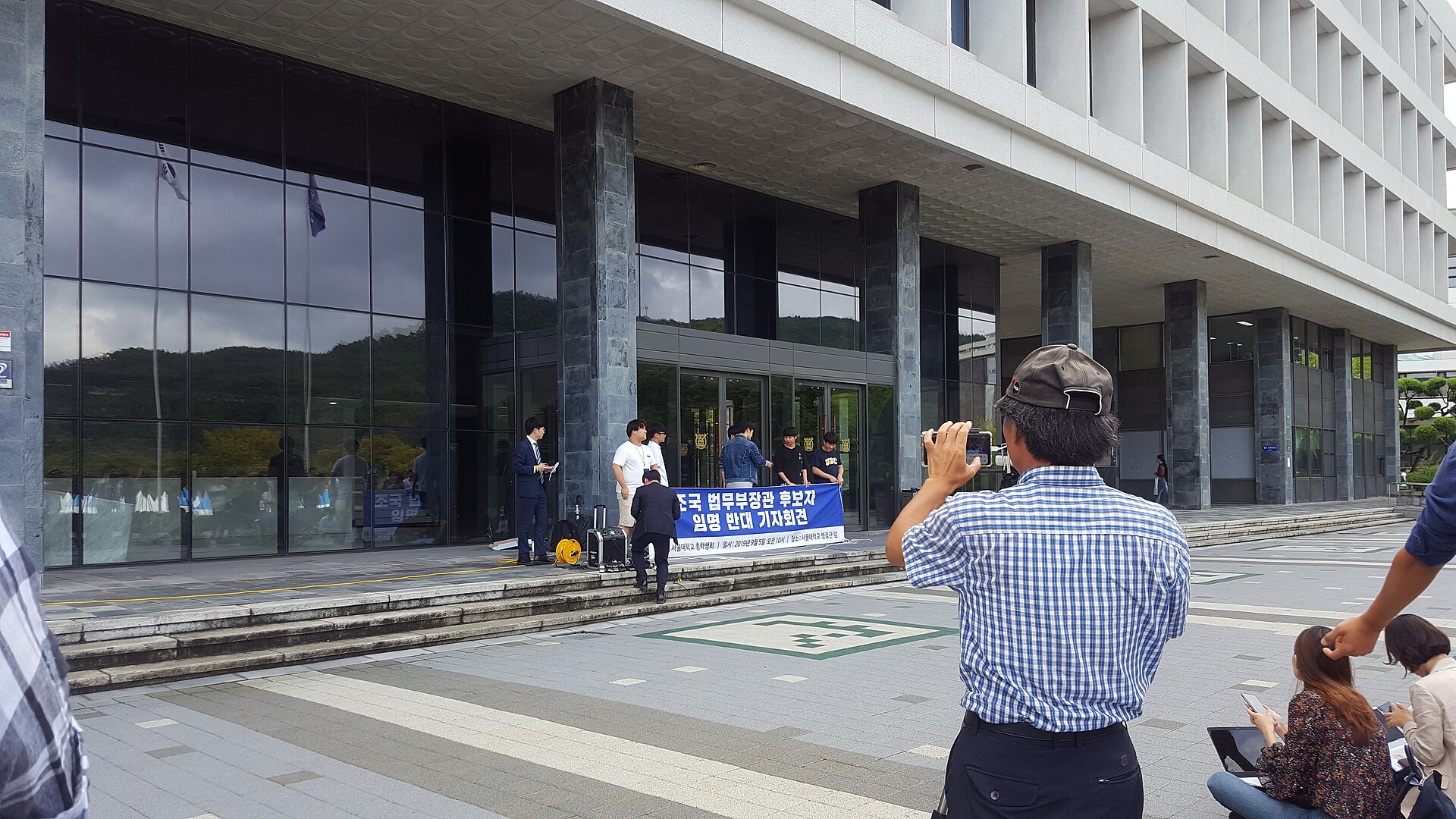
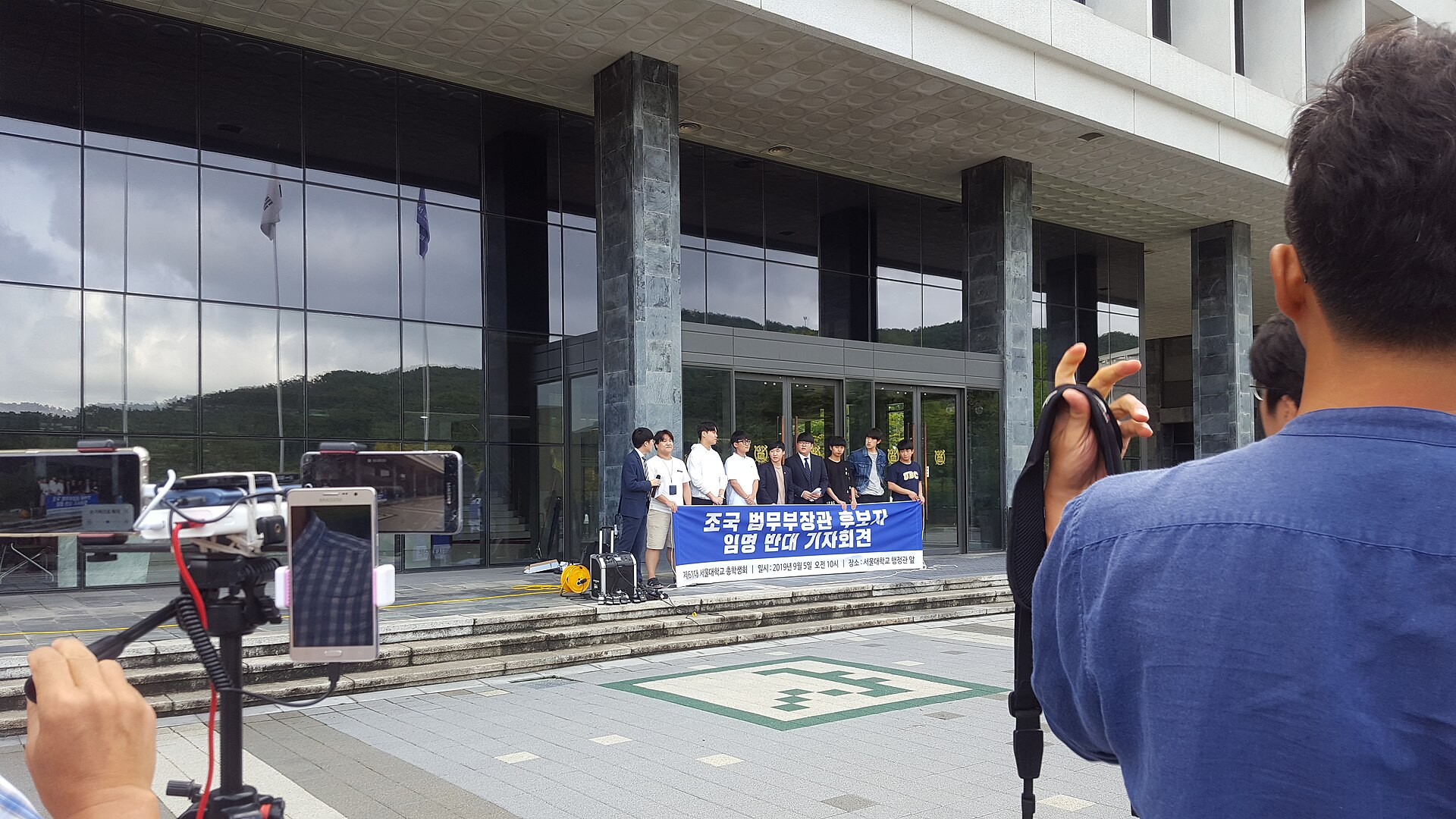
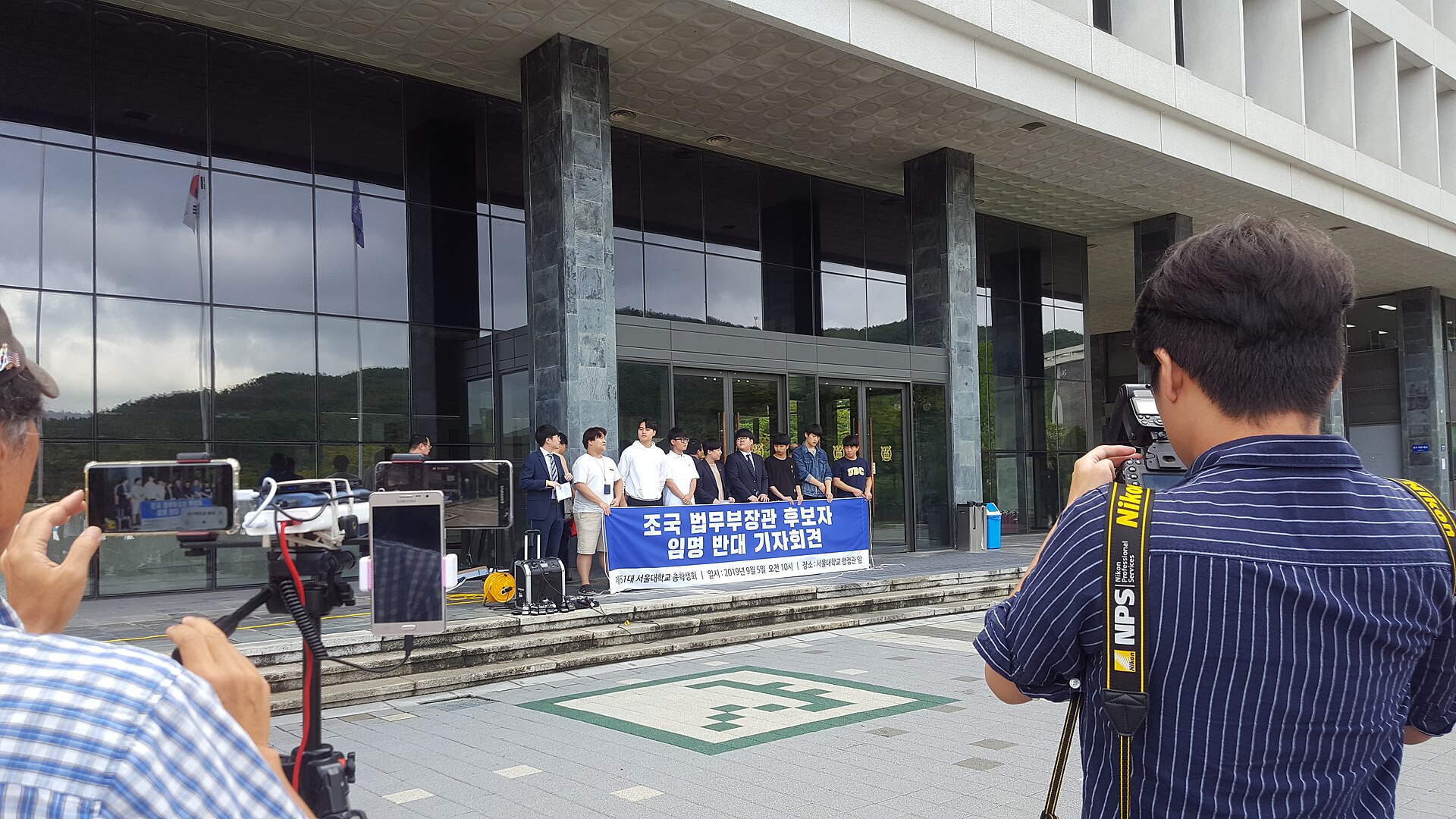
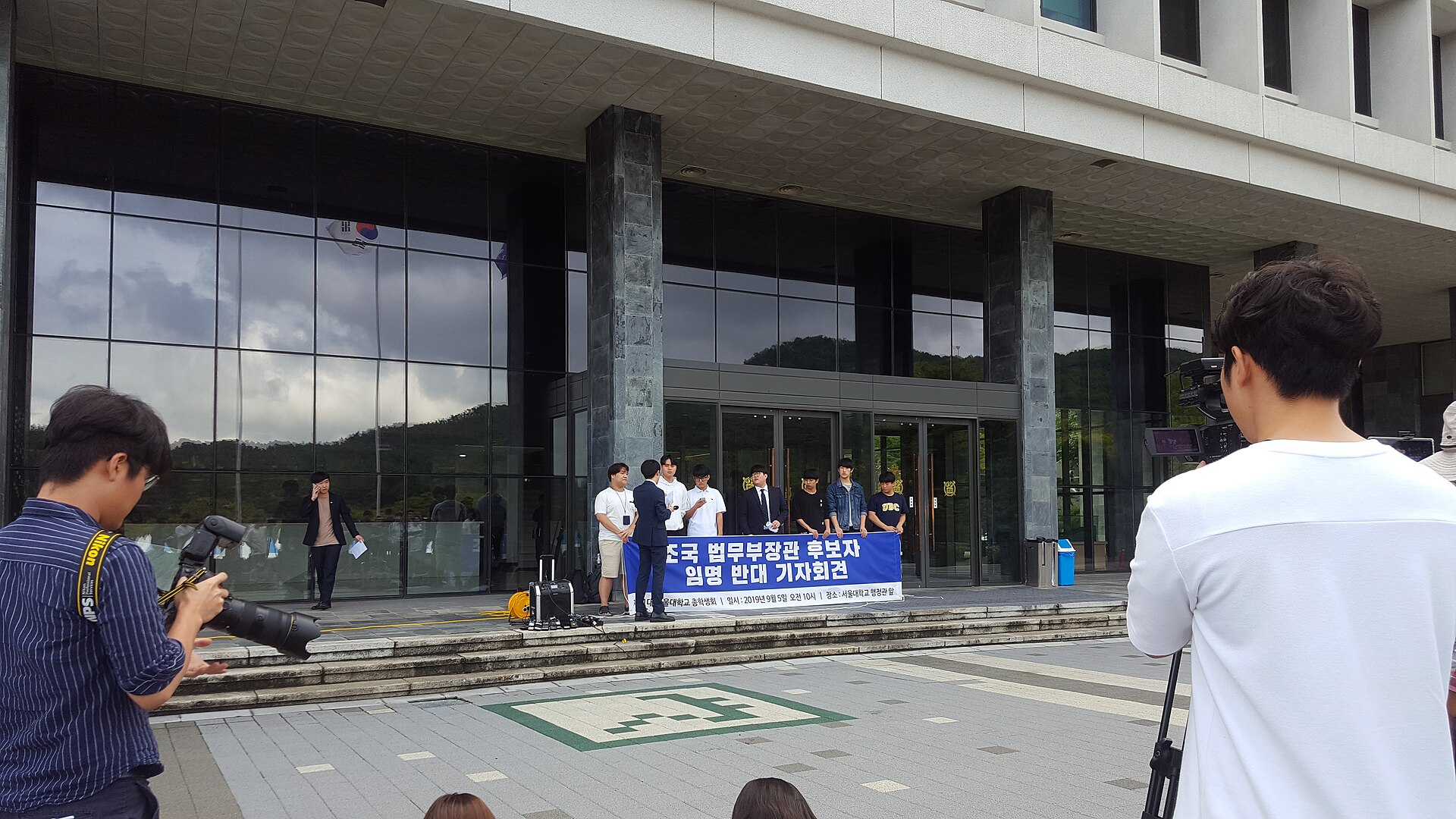
Seoul National University — campus in pictures

Real, freely-licensed photographs of the campus (via Wikimedia Commons).
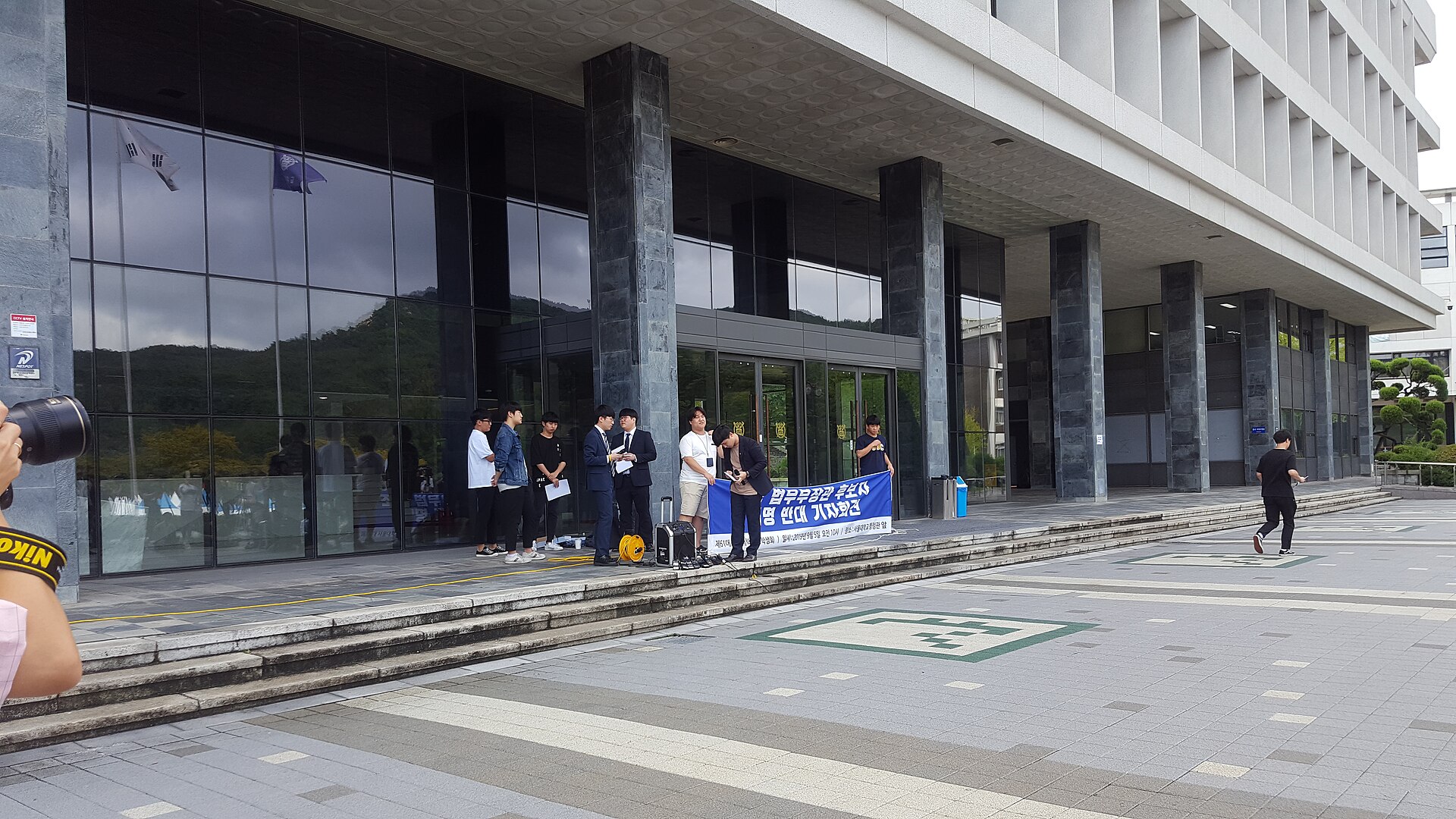
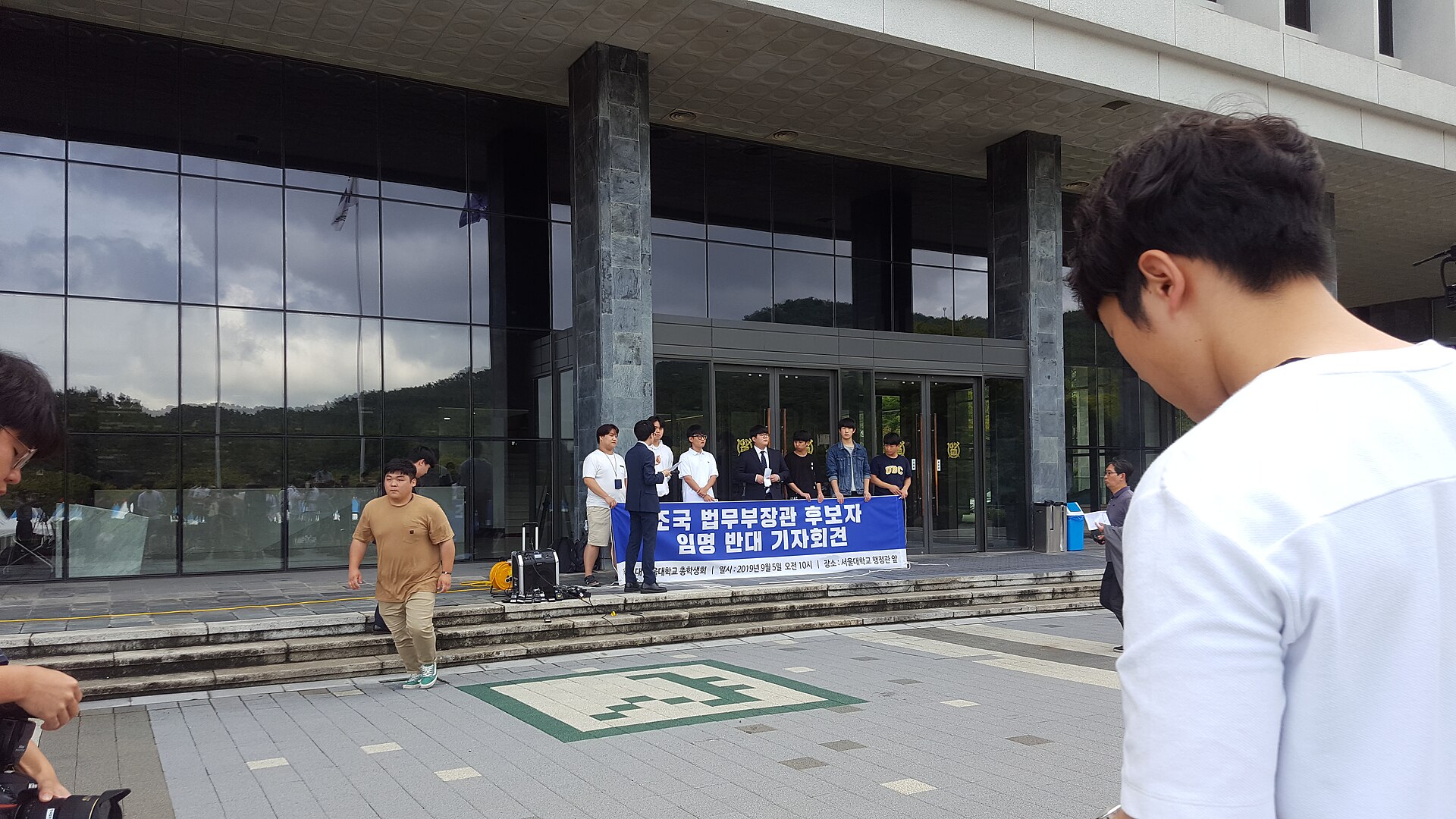
The 61st Seoul National University student council "Neil" is conducting a press conference against the appointment of Cho Kuk, the nominee f
The 61st Seoul National University student council "Neil" is conducting a press conference against the appointment of Cho Kuk, the nominee f고려 · CC BY 4.0 · via Wikimedia Commons

Why SNU — Asia's Elite, Exceptional Value & Seoul

SNU sits at the intersection of academic excellence, research intensity, and a location in one of the world's most dynamic technology hubs. Here is what sets it apart for internationally minded students.

01Asia's Elite Tier
Ranked #31 globally by QS and #1 in South Korea, SNU is consistently placed among Asia's top research universities. Its engineering, natural sciences, and business programmes carry genuine global name recognition — particularly in East Asia, where an SNU credential opens executive doors.
02SKY Prestige
SNU is the apex of the SKY trio (Seoul National, Korea, Yonsei) — Korea's collective shorthand comparable to Oxbridge in the UK or the Ivy League in the US. Membership shapes hiring decisions across Korean conglomerates and international firms operating in the region.
03Research Power
SNU hosts nationally designated research institutes across engineering, life sciences, and social sciences. Undergraduates in competitive departments gain hands-on lab access from year one, and the university's research partnerships span Samsung, LG, POSCO, and international agencies including the WHO and OECD.
04Exceptional Value
Annual tuition for international students runs approximately $5,000 — a fraction of comparable-ranked institutions in the US, UK, or Singapore. Combined with generous scholarship coverage, the total cost of attendance can be dramatically reduced for eligible students.
05Seoul: A Global City
The Gwanak campus sits in southern Seoul — a city of 10 million that ranks among the world's top technology, finance, and creative-industry hubs. Students have immediate access to Korea's leading corporations, a thriving start-up ecosystem, world-class public transport, and a rich cultural scene.
06Dedicated International Track
SNU runs a separate International Admissions process (Types I and II) with two intakes per year, English-language application support, and a designated international student office. Over 400 courses are offered in English, and most of SNU's 70 undergraduate programmes have English-taught options.
https://en.snu.ac.kr/admission/undergraduate/application

SNU Acceptance Rate & Admitted Student Profile

Stats

~28,000+
Applications (annual, all tracks)
28,000
Student Body
~10%
International Students

Profile Stats

38+
IB Competitive Score
3.5
Minimum GPA (4.0 scale)
#31
QS World Rank
#1
National Rank
~10%
Int'l Students in Body
76%
Graduate Employment Rate
Overall acceptance rate (all applicants, all tracks)

Rea Vs Rd

Rea Label: Spring Intake (March start)
Rea Value: Apply ~July prior
Rd Label: Fall Intake (September start)
Rd Value: Apply ~March

SNU Admissions Requirements — Academics, Language & Documents

Academic Grades
Value: 3.5+ GPA / IB 38+
Strong, upward-trending transcripts are the primary evaluation criterion. SNU expects applicants who challenged themselves in Mathematics, Sciences, and subjects relevant to their target faculty. IB students should aim for 38+ points with relevant Higher Level choices.
  • Minimum GPA expectation: 3.5 on a 4.0 scale
  • IB Diploma: competitive candidates score 38+ total
  • A-Level: three A/A* grades in relevant subjects
  • Full secondary-school transcript from Year 9 onward
Language Proficiency
Value: IELTS 6.5 / TOEFL 88
Language documentation is mandatory. English-taught programmes require English proficiency; Korean-taught programmes require TOPIK Level 3 minimum. Competitive applicants present IELTS 7.0+ or TOEFL iBT 95+.
  • IELTS Academic: minimum 6.5 (competitive: 7.0+)
  • TOEFL iBT: minimum 88 (competitive: 95+)
  • TOPIK Level 3+ required for Korean-taught programmes
  • TEPS 551 also accepted as an alternative
Programme Fit
Value: Study Plan Quality
SNU reviews your Personal Statement and Study Plan carefully. Reviewers want a specific, well-researched rationale for your programme choice — naming research groups, faculty, or industry partnerships relevant to your goals significantly strengthens your file.
  • Personal Statement: academic background and motivations
  • Study Plan: specific degree goals and post-graduation path
  • One to two recommendation letters from academic teachers
  • Passport and nationality/family relationship documents

SNU Application Components — Documents, Essays & Recommendations

SNU international admissions is document-driven. There is no Common App, no UCAS, and no standardised-test requirement. The core evaluation rests on your academic record, language ability, and supporting materials submitted through SNU's online portal.

01RequiredAcademic Transcripts
Official high school transcripts covering your full secondary-school career. Scanned copies are accepted at application stage; verified originals are only required after preliminary admission is announced.
02RequiredGraduation Certificate
Official certificate of graduation (or expected graduation) from your secondary institution. Any institution-issued document equivalent to a Korean high-school diploma is accepted.
03RequiredPersonal Statement & Study Plan
A written statement explaining your academic background, reasons for choosing SNU and your intended programme, and your study and career goals. This is the closest equivalent to a motivation letter and is a key differentiator among academically comparable applicants.
04RequiredRecommendation Letters
One or two recommendation letters submitted online via SNU's dedicated recommender portal. Academic recommenders — teachers or school counsellors in your intended field of study — are strongly preferred.
05RequiredLanguage Proficiency Evidence
Proof of either English (TOEFL iBT 88 / IELTS 6.5 / TEPS 551) or Korean proficiency (TOPIK Level 3+). English-taught programmes require English proof; Korean-taught programmes require Korean proof.
06RequiredNationality & Family Documents
Passports for both the applicant and parents. For Type II applicants, proof that all schooling was completed outside Korea is also required. Birth certificates or parent-child relationship documents as applicable.
07OptionalSAT / ACT / Other Test Scores
Standardised test scores are optional and neither required nor a primary criterion. Strong scores (SAT 1450+ or ACT 31+) can serve as supplementary evidence of academic ability if you choose to include them.
https://en.snu.ac.kr/admission/overview/faq/admission

SNU Essays — Writing a Compelling Personal Statement & Study Plan

SNU does not use the Common App, UCAS, or any US-style supplement system. International applicants submit a Personal Statement and Study Plan directly through SNU's online application portal. Getting these right is one of the few differentiators available when transcripts are comparable.

Prompts

Personal Statement
A statement describing your academic background, personal qualities, and reasons for applying to Seoul National University and your chosen programme. Specific prompt text and length requirements are published in the official admissions guide PDF for each cycle.
Study Plan
A plan detailing what you intend to study at SNU, how your current preparation aligns with the programme, and your academic and professional goals after graduation. Specific requirements are confirmed in the official admissions guide for your cycle.

Tips

Write academically, not personally
SNU reviewers are faculty members in your target department. They want to see intellectual seriousness — specific subjects, academic achievements, and intellectual experiences that connect to your intended field. Life-story narratives that drift away from your academic identity are a common mistake.
Research SNU specifically
Name specific departments, research laboratories, or faculty at SNU that align with your interests. Generic plans that could have been submitted to any Korean university are immediately identifiable and unconvincing.
Articulate a credible post-graduation path
SNU is a national university that takes its role in Korean and global society seriously. Admissions reviewers respond to applicants who have thought carefully about career direction: a specific sector, type of organisation, or research question they plan to pursue.
Address Korean language investment
Even if applying to an English-taught programme, acknowledging your Korean language learning demonstrates that you intend to integrate genuinely into SNU's community and Korean professional life — this matters more than many applicants realise.
The most common SNU application writing mistake. Praising SNU's ranking and prestige without demonstrating specific knowledge of your target programme — generic flattery is obvious and unconvincing to the faculty reviewing your file.
https://en.snu.ac.kr/admission/overview/notice

What SNU Admissions Officers Are Looking For

Unlike US universities that weight extracurriculars heavily, SNU international admissions is fundamentally academic. The evaluation committee reviews your transcript trajectory, language preparation, and the coherence of your study plan. Below are the key signals that define strong candidates.

01Academic Excellence Above All
A strong, upward-trending transcript is the single most important factor. SNU expects applicants who have challenged themselves in Mathematics, Sciences, and core subjects relevant to their intended faculty. IB students should aim for 38+ total; A-Level students should target A/A* in relevant subjects.
02Language Readiness
For English-taught programmes, IELTS 6.5 or TOEFL iBT 88 is SNU's minimum; competitive applicants present IELTS 7.0+. For Korean-taught programmes, TOPIK Level 3 is the floor — but students targeting research-heavy or elite programmes are well-advised to reach TOPIK 4 before applying.
03Programme Fit in the Study Plan
Reviewers want to see a specific, well-researched rationale for why SNU and why this exact programme — not generic praise. Applicants who can name faculty research groups or industry partnerships relevant to their goals stand out significantly from the pool.
04Credible Career Direction
SNU sees itself as an institution for future national and international contributors. Study plans that articulate a plausible path from degree to career — whether in Korean industry, research, or international service — resonate strongly with reviewers.
05Commitment to Korea
Students who demonstrate genuine interest in Korean language, culture, and society — not just SNU's ranking — are viewed as stronger long-term fits. Even basic Korean language investment is noticed and valued in the review process.
06Document Quality & Completeness
The application window is typically only three to five days. Incomplete or poorly prepared documents are a disqualifying factor. Experienced reviewers can tell the difference between authentic, prepared applicants and those who assembled documents at the last minute.

SNU Financial Aid & Scholarships for International Students

SNU does not operate a US-style need-blind admissions policy, and need-based aid in the Harvard sense is not available. However, the cost structure at SNU is dramatically lower than comparable Western institutions — and the Global Korea Scholarship (GKS) is one of the world's most generous fully funded study-abroad scholarships.

Aid amounts are based on publicly available NIIED and SNU scholarship information. Individual award amounts may vary. Verify current figures directly with the Korean embassy in your country or SNU's Office of International Affairs.

~$5,000
Annual tuition (approx.)
~$17,000
Total cost of attendance
₩1.1M+
GKS monthly living allowance
Full tuition
GKS coverage
Value vs. US Peers — The Real Comparison. At $5,000 per year in tuition alone, SNU provides QS top-35 education at a cost that is 5–10x lower than comparable-ranked US or UK institutions. For students who secure the Global Korea Scholarship, the total net cost is effectively zero: full tuition, living allowance, airfare, and Korean language training are all covered.
https://en.snu.ac.kr/admission/undergraduate/scholarships/before_admission

Key Dates

Spring Intake Application Window Opens
Date: ~Early July
Spring Intake Decisions Released
Date: ~October
Fall Intake Application Window Opens
Date: ~Early March
Fall Intake Decisions Released
Date: ~May–June

Advantages

  • Larger intake cohort — more places typically available in September
  • More preparation time if applying from the current academic year
  • Korean language courses more widely available for September starters
  • More Korean students starting simultaneously — stronger community integration
  • GKS application cycle aligns most naturally with fall intake

Disadvantages

  • Smaller cohort — fewer classmates starting together in March
  • Application window falls in July — during northern-hemisphere summer
  • Less alignment with most international academic calendars (June/July finish)
  • GKS scholarship timeline can be tighter for March enrolment
  • Fewer English-taught programme sections may be offered in spring
Spring vs Fall Intake. SNU admits international undergraduates twice per year. Understanding the timing, strategic differences, and document readiness requirements for each intake is essential for a successful application.
Tychr's Intake Recommendation. Apply for the Fall (September) intake if your academic year ends in June or July — this gives you the most natural preparation timeline and the strongest alignment with GKS scholarship deadlines. Apply for Spring only if you have a specific reason (graduating in November/December, or reapplying after a missed fall cycle).
SNU Two-Intake System — Strategy & Timing

SNU Interview — What to Expect and How to Prepare

SNU does not conduct interviews as a standard part of its international undergraduate admissions process. For the majority of programmes and applicants, admission is decided entirely on submitted documents: transcripts, language proficiency evidence, personal statement, study plan, and recommendation letters. This is one of the key differences between SNU's process and US or UK elite university admissions.

Meta

No interview for most international undergraduate applicants
Standard Process
Some faculties (particularly Medicine) may conduct interviews for specific programmes
Exceptions
Admission decided on submitted documents only
Evaluates
Quality and specificity of the Personal Statement & Study Plan
What replaces it

Questions

Why does my Study Plan not describe a specific SNU faculty's research area?
Tip: Reviewers flag generic study plans immediately. Before submitting, check the target department's website and cite a specific research cluster or named laboratory that aligns with your interests.
What will I actually contribute to SNU's academic community?
Tip: Without an interview to demonstrate personality and engagement, your documents must answer this question implicitly. The personal statement and recommendations are your only voice — use them fully.
Do my language scores and my stated programme truly align?
Tip: Applying to a Korean-taught programme with only English scores — or an English-taught programme with only TOPIK — is a document mismatch that will end the review. Double-check this before submission.
Is my study plan specific enough to be credible?
Tip: A plan with vague post-graduation goals ('contribute to society') reads as unprepared. Name a specific sector, company type, or research direction — even if it changes, the specificity signals maturity.
How does my previous academic trajectory support this programme choice?
Tip: Reviewers look for coherence between your prior subject choices and your intended field. A sudden pivot with no explanation raises questions that an interview could resolve — but since there is no interview, the personal statement must address it proactively.

SNU Campus Housing & Residential Life

SNU does not operate a Harvard-style residential house system with integrated academic communities. Housing at SNU is managed through the university's dormitory system — large residential halls on the Gwanak campus that accommodate students by availability, not by programme or college affiliation.

Lottery Steps

  • Apply for on-campus housing immediately upon receiving your admission offer — spaces fill quickly, especially for fall intake
  • Gwanak Residence Halls accommodate over 5,970 students across 27 residential wings on the main campus
  • International students are also eligible for the International House dormitory near the Yeongeon medical campus
  • Monthly dormitory costs: approximately ₩140,000–₩280,000 — significantly cheaper than Seoul's private rental market
  • The Gwanak Homestay programme offers a cultural immersion option with local families in the surrounding neighbourhood
  • Off-campus options (officetel, shared flats) in Gwanak-gu and Sillim-dong are available but cost substantially more

Houses

Gwanak Residence Hall A–G
Tag: Gwanak
Traditional dormitory wings; double and single rooms; shared dining
Gwanak Residence Hall H–N
Tag: Gwanak
Newer wings with improved facilities; popular with upper-year students
Graduate & Research Residential Wings
Tag: Gwanak
Graduate student priority; some undergraduate overflow allocation
International House
Tag: Yeongeon
Near the medical campus; mixed Korean and international residents; Korean language immersion environment
Gwanak Homestay Programme
Tag: Gwanak
Live with a local Korean family; cultural immersion; language acceleration
Gwanak-gu Private Rentals
Tag: Off-Campus
Officetels and shared flats within walking distance of campus; significantly higher cost than dormitory

SNU Colleges, Schools & Undergraduate Programmes

College of Engineering
Label: Flagship Faculty
Electrical & Computer Engineering, Mechanical Engineering, Materials Science, Chemical Engineering, Civil Engineering, Industrial Engineering, Computer Science & Engineering. Korea's most prestigious engineering college — Samsung, LG, and Hyundai are primary recruiters.
  • {"label":"Undergraduate departments","value":"14"}
  • {"label":"QS Engineering rank","value":"Top 30"}
  • {"label":"Research institutes","value":"40+"}
  • {"label":"Industry partnerships","value":"Samsung, LG, POSCO"}
College of Business Administration
Label: SNU Business School
One of Korea's top business schools with strong quantitative orientation. Emphasis on management, finance, marketing, and operations research. MBA (graduate) and BBA (undergraduate) programmes.
  • {"label":"Programme type","value":"BBA + MBA"}
  • {"label":"Korea business rank","value":"Top 1–2"}
  • {"label":"Employer pipeline","value":"Big 4, Chaebol groups"}
  • {"label":"International exchange","value":"100+ partner universities"}
College of Natural Sciences
Label: Mathematics & Life Sciences
Mathematics, Physics, Chemistry, Biology, Earth Science, and Statistics. Feeds directly into SNU's graduate research programmes and Korean government research institutes (KAIST-affiliated labs, KIST).
  • {"label":"QS Natural Sciences rank","value":"Top 50"}
  • {"label":"Departments","value":"7"}
  • {"label":"Research labs","value":"50+"}
  • {"label":"Graduate school pipeline","value":"Strong PhD placement"}
College of Medicine
Label: Medical Programme
One of Korea's most prestigious medical colleges. Primarily Korean-taught. Extremely competitive even within SNU — international students should verify language requirements and admission eligibility carefully before applying.
  • {"label":"Language of instruction","value":"Korean (primary)"}
  • {"label":"Duration","value":"6 years"}
  • {"label":"Affiliated hospital","value":"SNU Hospital"}
  • {"label":"Selectivity","value":"Extremely high"}
College of Social Sciences
Label: Economics, Political Science & Sociology
Economics, Political Science & International Relations, Sociology, Psychology, Geography, Anthropology. Strong pipeline into Korean government ministries, the diplomatic service, and international organisations.
  • {"label":"Departments","value":"8"}
  • {"label":"Notable programme","value":"International Relations"}
  • {"label":"Career pipeline","value":"Government, UN, OECD"}
  • {"label":"Research centres","value":"20+"}
College of Humanities
Label: Languages, History & Philosophy
Korean Language & Literature, East Asian Languages, Western Languages (English, French, German, Spanish), History, Philosophy, Religion. Particularly strong Korean Studies and East Asian Studies programmes attractive to international students.
  • {"label":"Departments","value":"14"}
  • {"label":"Languages taught","value":"20+"}
  • {"label":"Notable programme","value":"Korean Studies (international track)"}
  • {"label":"Research centres","value":"15+"}

Research & Extracurricular Opportunities at SNU

Undergraduate Research Participation
Category: Lab Research
SNU's engineering and natural sciences departments actively recruit undergraduate research assistants from second year onward. Students can approach professors directly through department notice boards and faculty homepages. Participation in a professor's lab is the most direct way to build a research profile and strengthen graduate school applications.
Global Korea Scholarship Research Track
Category: Scholarship & Research
GKS scholars at SNU are encouraged to participate in faculty research from early in their programme. The NIIED-funded scholarship includes a preliminary year of Korean language study, during which scholars can begin identifying research groups and initiating faculty relationships.
SNU Institute for Research in Finance and Economics (SIFE)
Category: Economics Research
Undergraduate research assistantships in economics and finance — competitive but available to outstanding undergraduates. Research on Korean capital markets, trade, and economic development provides globally relevant working experience.
Student Clubs & Activities
Category: 150+ Active Groups
SNU has over 150 registered student clubs spanning sports, arts, academic disciplines, language exchange, and cultural activities. The Student Council organises international orientation events each semester. Student-run academic societies in engineering and sciences are particularly active.
Scroll to explore SNU's research programmes and student life opportunities.

Career Outcomes & SNU Alumni Network

SNU alumni hold leading positions across Korean conglomerates, government ministries, international organisations, and top global universities. An SNU degree is the single most recognised credential in the Korean professional market — and its Asia-wide recognition is growing rapidly.

Stats

76%
Graduate employment rate
$35,000
Average starting salary (USD equiv.)
#31
QS World Rank
#62
THE World Rank
#1 in Korea
National rank
Leading share
SNU alumni in Korean government & judiciary

Categories

Korean Conglomerates
Samsung, LG, SK, Hyundai, POSCO, and Lotte — Korea's major chaebol groups actively recruit SNU graduates across engineering, business, and social science disciplines. An SNU degree from a relevant faculty is the single most effective credential for entering these organisations.
Government & Public Service
SNU alumni disproportionately populate Korea's senior civil service, foreign ministry, judiciary, and national assembly. For international students interested in Korean policy roles, international NGOs, or UN agencies with Asia mandates, an SNU credential is highly valued.
Graduate Research & Academia
SNU's strongest graduate pipeline leads into Korean government research institutes (KIST, ETRI, KAERI), Korean graduate schools, and — for outstanding students — PhD programmes at US, UK, and European research universities. SNU faculty letters of recommendation carry significant weight at global graduate programmes.

Our SNU Admissions Track Record & Student Success Stories

Aryan S.
Country: India
Program: SNU — Electrical & Computer Engineering
Class Year: Class of 2025
Academic Profile: IB 40 · IELTS 7.5
Tychr helped me understand that my IB subject choices mattered as much as my total score. Switching from HL Psychology to HL Physics in my study plan — and explaining the change coherently in my study plan — made my engineering application far more credible. I received preliminary admission within three months of applying.
Mei L.
Country: China
Program: SNU — Business Administration
Class Year: Class of 2026
Academic Profile: A-Levels A*AA · TOEFL 104
The SNU study plan was the part of the application I almost ignored. My Tychr counsellor pushed me to visit the SNU Business School website, identify specific faculty research areas, and connect my career goals to them explicitly. That specificity is what differentiated my application in a competitive pool.
Sofia O.
Country: Nigeria
Program: SNU — Political Science & International Relations
Class Year: Class of 2024
Academic Profile: IB 39 · IELTS 7.0 · GKS Recipient
Tychr guided me through both the SNU application and the Global Korea Scholarship process simultaneously. The GKS application through my local Korean embassy had different requirements than the SNU portal — having a counsellor who knew both processes saved me weeks of confusion and helped me secure full funding.

Faqs

What is the difference between International Admissions Type I and Type II?+

Type I is for applicants where both the student and both parents hold non-Korean citizenship. Type II covers Korean citizens or mixed-nationality applicants who completed their entire education (elementary through high school) outside of Korea. Both types follow the same general application process. If you are unsure which type applies, contact the SNU admissions office directly.

Can I apply if I have not yet graduated from high school?+

Yes. If you are still in school at the time of application, submit your most recent available transcript and indicate your expected graduation date on your graduation certificate. Original verified documents are only required after SNU announces preliminary admission.

Do I need to apostille my documents for the application?+

No — apostille or consular authentication of original documents is only required after SNU announces preliminary admission results. At the application stage, scanned copies are accepted. Countries not party to the Apostille Convention must authenticate through the Korean embassy in their country instead.

Can I apply to more than one programme at SNU?+

No. SNU's international admissions policy restricts applicants to one programme per admissions season. Choose your programme carefully before submitting — you cannot split your application across multiple departments.

Is Korean language ability required for English-taught programmes?+

English-taught programmes accept TOEFL iBT 88 / IELTS 6.5 / TEPS 551 in place of Korean proficiency. However, daily campus life and social interactions are predominantly in Korean, and most career opportunities in Korea require Korean ability. Students are strongly encouraged to learn Korean even if enrolled in an English-track programme.

Is it possible to defer admission if I receive a preliminary offer?+

No. Preliminary admission cannot be deferred to a future semester. If you cannot enrol in the offered semester, you must reapply in a future cycle.

What scholarships are available for international undergraduate applicants?+

The most significant scholarship is the Global Korea Scholarship (GKS), administered by the Korean government through NIIED and applied for via Korean embassies — it covers full tuition, a monthly living allowance of approximately ₩1,133,330, and round-trip airfare. SNU also offers the Global Talent Scholarship (internal, partial tuition + living costs) to selected admitted students. GKS applications are submitted separately to your local Korean embassy, not through SNU's own portal.

How long is the SNU application window?+

Application windows are short — typically three to five days. The Spring intake window generally opens in early July for the following March start; the Fall intake window opens in early March. All supporting documents must be ready to upload before the window opens. Late submissions are not accepted.

https://en.snu.ac.kr/admission/overview/faq/admission

Book a Free SNU Admissions Strategy Session

In 60 minutes, our SNU admissions specialists will evaluate your academic profile, identify your application strengths and gaps, develop your Personal Statement and Study Plan strategy, determine which intake cycle gives you the strongest timing, and identify scholarship pathways including the Global Korea Scholarship.

  • No commitment required
  • SNU-specific specialists with Korea admissions knowledge
  • Personalised strategy covering both admissions and GKS scholarship
Getting into SNU is not just about grades — it is about presenting the right academic story to the right faculty reviewer.

SNU Academic Requirements

SNU Academic Requirements — The Honest Breakdown for International Students

What GPA, IB score, A-Level results, and academic profile do SNU's admitted students actually have? And what does SNU's document-driven evaluation mean for students from IB, A-Level, AP, and other international curricula?

3.5
Minimum GPA (4.0 scale)
University-stated minimum
38+
IB Score Benchmark
Typical competitive total
6.5
IELTS Minimum
English-taught programmes
88
TOEFL iBT Minimum
English-taught programmes
17%
Acceptance Rate
All applicants, all tracks
#31
QS World Rank
2025 QS ranking

GPA & Grades

SNU and GPA — What the Data Shows

SNU states a minimum GPA of 3.5 on a 4.0 scale for international applicants. In practice, competitive candidates from strong IB or A-Level programmes present significantly higher academic records — typically the equivalent of 3.8+ — combined with rigorous subject selections that match their target faculty.

A strong GPA is a baseline expectation, not a distinguishing feature. What distinguishes admitted international students is the combination of strong grades in rigorous subjects aligned with their target SNU faculty.

3.5
University-stated minimum GPA
38+
Typical competitive IB total
What this means for international students. International students from systems without formal class rank (IB, UK A-Levels, many Asian curricula) are evaluated on their grades relative to their school's known performance range and the subject choices they made. A 3.5 GPA is the floor, not the target — competitive applicants from well-regarded international schools typically present grades significantly above this threshold.
Grade trajectory matters. SNU reviews the full transcript from Year 9 (or equivalent) onward. An upward trajectory — improving from moderate to strong performance in later years — reads positively. A student whose grades have declined in senior years despite an overall strong average raises questions that the personal statement must address directly.

Academic Context

Class Rank and School Context — How SNU Reads Academic Performance

SNU's admissions committee is experienced in evaluating international qualifications from dozens of educational systems. Your grades are never assessed in isolation — they are read within the context of your specific school, curriculum, and national education system.

How SNU contextualises your academic record
Every application is evaluated with reference to the specific school's curriculum, grading norms, and course offerings. An IB student at a school with limited HL options is evaluated differently from one at a school with a full HL sciences offering. Admissions reviewers are trained to understand the difference between a 38 at a competitive international school and a 38 at a school with inflated grading.
What this means practically
Taking the most rigorous courses available at your specific school matters. A student who takes HL Mathematics when SL would have been easier — and maintains strong grades — sends a stronger signal than one who optimised for a higher total score by selecting easier HLs. Subject selection is evaluated as a proxy for intellectual ambition and faculty-readiness.
For students at less well-known international schools. If your school is unlikely to be familiar to Korean reviewers, ensure your personal statement and recommendations provide sufficient context about your school's academic standards, curriculum, and the grading scale used. A counsellor letter explaining the school's academic environment can be a significant asset.

Standardised Testing

SAT Scores at SNU — What You Actually Need

SNU does not publish SAT middle-50% bands for international admitted students because SAT scores are optional and not a primary evaluation criterion. The following guidance reflects the role SAT scores can play if submitted.

LabelScorePercent
SAT required?No0
Threshold worth submitting1450+72
Strong supplementary signal1550+90
The SAT Math subscore. For STEM-focused applicants submitting SAT scores, a strong Math subscore (750–800) provides additional evidence of quantitative ability relevant to SNU's engineering and sciences faculties. A weak Math subscore submitted alongside a STEM application can raise questions rather than help.
Submitting vs. withholding scores. Given that SNU's primary evaluation is transcript-based, SAT scores are genuinely supplementary. Submit only if your scores are above approximately 1450 and your overall academic profile is strong. There is no benefit to submitting a 1300 SAT to SNU — and it creates a potential negative data point.
Preparation. If you are applying to SNU as part of a portfolio that includes US universities, prepare your SAT seriously for the US applications — and if the scores are strong, include them with SNU as a minor positive. Do not prepare for the SAT specifically for SNU.

Standardised Testing

ACT Scores at SNU — The Data and the Strategy

ACT scores are optional at SNU and carry no weight in the primary admissions evaluation. The following guidance applies if you are submitting ACT scores as supplementary evidence.

Metrics

ACT required?
Score: No
Threshold worth submitting
Score: 31+

Comparison Cards

Both equally optional
SNU does not prefer one standardised test over another. If submitting either, choose whichever reflects your strongest performance.
Neither is a primary factor
Unlike US universities, SNU's primary academic evidence is the secondary school transcript, not standardised test scores. Do not delay your application or weaken your profile by over-investing in test preparation for SNU.
For dual-applying students
Students applying to SNU and US universities simultaneously should prepare SAT/ACT seriously for US applications. If scores are strong, include them with SNU — but the SNU decision will be made primarily on your transcript.
Score submission. SNU has no formal superscore policy for either SAT or ACT, as test scores are optional supplementary documents rather than primary criteria.
Tychr's recommendation. Invest your preparation time first in maximising your IB or A-Level grades and achieving strong language proficiency scores (IELTS/TOEFL) — these are SNU's actual primary criteria. SAT/ACT preparation should be a secondary priority unless you are also applying to US universities.

Testing Strategy

SNU Test-Optional Policy — The Strategic Decision Explained

SNU's international admissions track is functionally test-optional — standardised test scores (SAT, ACT) are neither required nor a primary evaluation criterion. Understanding what this means strategically is important for SNU applicants who may also be applying to US universities.

Submit Items

Your SAT is at or above 1450 — submit as a minor positive supplementary signal.
Your ACT is at or above 31 — submit.
You are also applying to US universities and have strong scores — include them with SNU at no cost.

Withhold Items

Your score is below 1400 (SAT) or below 30 (ACT) — withholding is the better strategy.
You have not taken the test — do not sit the SAT/ACT specifically for SNU; invest the preparation time in IELTS/TOEFL instead.
Current policy. SNU accepts applications without SAT or ACT scores and does not disadvantage students who don't submit. The primary academic evidence is the secondary school transcript, combined with IB or A-Level results (or equivalent), language proficiency scores, and application documents.
The misconception. Some international applicants assume that submitting any standardised test score strengthens their SNU application. This is not correct — a below-average score submitted alongside a strong transcript introduces a negative data point. SNU's reviewers are not looking to be impressed by SAT scores; they are looking for evidence of academic readiness for their specific programme.

Curricula

A-Levels and IB at SNU — Specific Benchmarks

IB Diploma
  • {"label":"Competitive range","value":"38–45 points"}
  • {"label":"HL expectations","value":"Three HLs in subjects relevant to target faculty; 6,6,6 or 7,6,6 minimum at HL"}
  • {"label":"Subject rigour","value":"HL Mathematics (AA preferred for engineering/science), HL sciences for STEM faculties"}
  • {"label":"Extended Essay","value":"B or above; used as supplementary evidence of independent research capability"}
Note: SNU's admissions committee is well-versed in the IB Diploma. An IB student with 38+ points and strong HL choices aligned with their target faculty is a genuinely competitive applicant. The EE subject and grade can contextualise your intellectual interests — choose your EE topic with this in mind.
A-Levels
  • {"label":"Competitive range","value":"AAA to A*AA"}
  • {"label":"Subject rigour","value":"Mathematics and at least one science for engineering/sciences; Economics and Mathematics for business"}
  • {"label":"Predicted grades","value":"Accepted at the application stage; strong AS results support predicted grade credibility"}
Note: A-Level applicants should target three A/A* grades in subjects that directly align with their intended SNU faculty. SNU reviewers understand the A-Level system and evaluate subject combination as a signal of faculty readiness — not just total grade points.

Advanced Placement

AP Courses at SNU — What Counts and What to Take

For students in the US curriculum or at schools offering AP courses, Advanced Placement performance provides additional academic context in the SNU review. However, AP scores are supplementary — the US high school transcript GPA and course rigor are the primary academic documents.

What SNU is looking for
Strong AP performance (4s and 5s) in subjects relevant to your target faculty: AP Calculus BC, AP Physics C, AP Chemistry for engineering; AP Economics for business; AP Statistics for quantitative fields. The pattern of AP subject choices reflects intellectual priorities.
How many APs?
SNU does not specify a required number of AP courses. A GPA of 3.5+ in a challenging course load — including relevant APs — is the primary signal. Four to six AP courses in relevant subjects with 4s and 5s is a strong profile.
AP vs. IB for SNU
Both are well-recognised. Students at IB schools should not artificially pursue AP alongside IB. Students at AP schools should not switch to IB just for SNU — your native curriculum, pursued to the highest level, is always the right choice.
SNU does not award course credit for AP scores in the same way US universities do. AP performance is read as evidence of academic rigour, not as a basis for course exemptions.
International students at schools that don't offer AP should not pursue AP outside their curriculum just for SNU. The IB Diploma or A-Level system is appropriate for their context and evaluated accordingly.

Academic Rigour

Rigour of Secondary School Record — SNU's Most Important Academic Factor

Like the world's leading universities, SNU places exceptional weight on the rigour of your secondary school record — not just your grades, but the challenge level of the courses you chose relative to what was available to you.

Taking the most challenging courses available at your specific school, in the subjects most relevant to your intended SNU faculty.

What rigour means. This does not mean taking every possible challenging course simultaneously. It means demonstrating genuine academic ambition through subject selection. A student who takes HL Mathematics when SL would have been sufficient — and maintains strong performance — signals the kind of intellectual self-demand that SNU's rigorous academic environment requires.
The contextual element. Rigour is always evaluated relative to what was available. A student at a school offering only five IB Higher Level options is evaluated differently from one at a school with a comprehensive HL sciences offering. What matters is whether the student challenged themselves relative to what was possible at their institution.
What SNU is looking for. A student who takes IB HL Mathematics, HL Physics, and HL Chemistry simultaneously — while maintaining strong grades and a coherent study plan — demonstrates the academic seriousness that SNU's engineering and sciences faculties require. Reviewers can distinguish between grade-optimised subject choices and genuinely ambitious academic programmes.

STEM Preparation

Mathematics and Science Preparation — What SNU Expects

SNU's engineering and natural sciences faculties are among Korea's most demanding. International students targeting these programmes need strong mathematics and science preparation significantly beyond the standard curriculum.

Mathematics
HL Mathematics: Analysis & Approaches (IB) or A-Level Mathematics (and preferably Further Mathematics for the most competitive engineering programmes) is strongly expected for engineering, CS, and natural sciences. Korean university mathematics is calculus-intensive from year one — students who enter with only SL Mathematics or equivalent often struggle significantly.
Sciences
HL sciences at the IB level (Chemistry, Physics, or Biology with strong grades) or A-Level sciences with A/A* performance. Research experience or participation in science olympiads is a meaningful differentiator in competitive departments — Korea has a strong olympiad culture and SNU reviewers recognise such achievements.
Computer Science
For SNU Computer Science & Engineering, the faculty expects strong mathematics preparation above all. Programming experience (in Python, C++, or Java) is a positive signal but not a formal prerequisite. Korea's tech industry — Samsung, Kakao, Naver — is a primary recruiter, making CS at SNU one of the most competitive and career-relevant programmes available in Asia.

Language Proficiency

English Language Requirements for International SNU Applicants

English proficiency tests are mandatory for students applying to English-taught programmes. The minimum thresholds below are university-wide; specific departments may set higher internal standards.

The minimum IELTS 6.5 / TOEFL 88 is a floor, not a competitive benchmark. Most admitted international students in popular programmes present IELTS 7.0+ or TOEFL iBT 95+. A score at the minimum signals language readiness but does not strengthen your file.

Test: IELTS Academic
Score: 6.5
Test: TOEFL iBT
Score: 88
Test: TEPS
Score: 551
Practical guidance. Students whose primary language of instruction is English typically present IELTS and TOEFL scores well above the minimum. Non-native English speakers should budget significant preparation time — language proficiency is a binary requirement (meet it or your application is not processed) and a differentiator above the minimum.

By Programme

Academic Requirements by Programme — What Different Paths Expect

SNU admits students to specific programmes (not to a general college as Harvard does). Subject alignment between your secondary-school preparation and your target programme is a formal part of the review — mismatched subject choices are a red flag.

ConcentrationExpectationSignals
Electrical & Computer EngineeringHL Maths AA / A-Level Maths + PhysicsStrong mathematics; programming background
Mechanical EngineeringHL Maths + HL PhysicsPhysics excellence; design or robotics experience
Computer Science & EngineeringHL Maths AA; strong CS backgroundCompetitive programming; coding projects
Business AdministrationHL Maths + HL Economics or equivalentQuantitative project; economic research
EconomicsHL Maths + HL EconomicsEconometric interest; research or data projects
Natural Sciences (Chemistry/Biology)HL sciences (two of Chemistry/Bio/Physics)Science olympiad; lab or research experience
Political Science & International RelationsStrong humanities profile; HL History or EconomicsMUN; policy writing; Korean interest
Korean Studies / HumanitiesStrong languages/humanities; Korean language study valuedKorean language (TOPIK); cultural engagement

International Systems

SNU and International Education Systems — How Your Curriculum Is Evaluated

IB Diploma
Well understood and valued. SNU's admissions committee has significant experience evaluating IB transcripts. The HL/SL distinction, the Extended Essay, and Theory of Knowledge grades are all considered. An IB student who challenged themselves with demanding HLs reads more favourably than one who optimised for a higher total score with easier choices.
A-Levels (Cambridge and Edexcel)
Equally well recognised. A-Levels are common among international applicants from UK, international schools, and Commonwealth countries. The combination of A-Level subjects and predicted/achieved grades is carefully evaluated against the requirements of the target faculty.
US High School Diploma + AP
Accepted and evaluated carefully. GPA on a 4.0 scale is the primary metric, supplemented by AP course selections and scores. A strong GPA (3.8+) in AP-heavy coursework with strong AP scores (4s and 5s) in relevant subjects is a competitive profile.
Indian Boards (CBSE / ISC)
Accepted and evaluated. SNU reviewers contextualise Indian board grades — a 95%+ aggregate in relevant subjects from CBSE or ISC is competitive. Supplementary evidence of intellectual engagement (Olympiad performance, research projects) strengthens Indian board applications significantly.
Other Asian Curricula (Chinese Gaokao, Japanese Senmon, etc.)
Accepted with context. Applicants from Chinese, Japanese, or other Asian curricula are evaluated based on national examination performance and high school grades. SNU has particular familiarity with East Asian curricula and can contextualise performance accurately.

Roadmap

Building an Academic Profile for SNU — What to Do at Each Stage

Year 10 (Grade 9–10)Lay the foundation
Year: Year 10 (Grade 9–10)
  • Begin Korean language study — even TOPIK Level 1 by Year 12 demonstrates commitment and will support campus life.
  • Select IGCSE/MYP subjects that leave the widest possible options for IB or A-Level, particularly mathematics and sciences.
  • Research SNU's target faculty — identify specific departments and their academic culture.
  • Identify academic interests and explore them beyond the curriculum through reading or independent projects.
Year 11 (Grade 10–11)The critical academic year
Year: Year 11 (Grade 10–11)
  • IB Higher Level selection: choose HLs that align with your target SNU faculty, not those that inflate your predicted total.
  • A-Level subject combination finalised — three subjects in relevant fields.
  • Take your first IELTS or TOEFL diagnostic — aim to reach the minimum threshold by Year 12.
  • Begin researching GKS scholarship eligibility for your nationality.
  • Aim for predicted IB 38+ or A-Level A/A* in relevant subjects.
Year 12 (Grade 11–12)Build the evidence
Year: Year 12 (Grade 11–12)
  • Achieve IELTS 6.5+ or TOEFL 88+ — retake if needed before application window.
  • Draft your Personal Statement and Study Plan early — the SNU study plan requires programme-specific research that takes time.
  • Visit SNU faculty department pages and identify specific research clusters or faculty whose work aligns with your interests.
  • Ask teachers in your target subject area to write your recommendation letters well in advance.
Year 13 (Grade 12)Application year
Year: Year 13 (Grade 12)
  • Predicted grades confirmed — IB 38+ or A-Level A/A* in relevant subjects.
  • Language scores finalised and above minimum thresholds.
  • GKS scholarship application submitted to Korean embassy (if applicable) — separate from SNU portal.
  • SNU application submitted during the intake window (typically 3–5 days in March for fall or July for spring).

Common Pitfalls

Academic Mistakes That Cost SNU Applications — And How to Avoid Them

Choosing IB or A-Level subjects that don't match your target SNU faculty
SNU admits to specific programmes. An engineering applicant with HL Psychology and HL Geography instead of HL Mathematics and HL Physics creates a visible mismatch that the admissions committee cannot ignore. Subject alignment is assessed formally.
Assuming SAT/ACT scores compensate for a weak transcript
They don't — not at SNU. Transcripts are the primary academic document. A 1500 SAT submitted alongside a 3.4 GPA does not rescue the application. Focus preparation time on your IB or A-Level grades and language proficiency scores first.
Applying without the correct language proficiency evidence
Applying to a Korean-taught programme with only English scores, or an English-taught programme without IELTS/TOEFL, is a disqualifying document mismatch. Applications without the correct language documentation are not processed.
Preparing a vague, generic Study Plan
The study plan must be programme-specific and SNU-specific. 'I want to study at SNU because it is a great university and South Korea is an exciting country' demonstrates no research and no genuine fit. Competitive applicants name specific departments, research areas, and post-graduation directions.
Waiting until the last minute
The SNU application window is typically only three to five days. All documents — transcripts, language scores, personal statement, study plan — must be ready to upload before the window opens. Late submissions are not possible.

Real Outcomes

What Academic Profiles Tychr's SNU-Admitted Students Had

The following profiles represent the academic backgrounds of students Tychr has helped gain SNU admission. They illustrate the range of preparation that works — and what made each application compelling.

Profile 1 — Engineering Focus
Stats: IB 40 · IELTS 7.5 · HL Maths AA (7), HL Physics (7), HL Chemistry (6)
Strong HL sciences with genuine alignment to the Engineering faculty. The study plan cited a specific SNU engineering research group and described a plausible path into the Korean semiconductor industry. Korean language at TOPIK Level 2 demonstrated genuine commitment.
Takeaway: Subject alignment and a specific study plan were decisive — the IB score was competitive but not exceptional by SNU standards.
Profile 2 — Business Administration
Stats: A-Levels A*AA (Maths, Economics, Business) · TOEFL 104
Strong quantitative A-Level profile directly aligned with SNU's BBA requirements. The personal statement emphasised interest in the Korean tech industry and named specific Korean companies the student intended to target post-graduation. Recommendation from Economics teacher was specific and detailed.
Takeaway: The career direction articulated in the study plan was concrete and Korea-specific — this differentiated the application from others with similar grade profiles.
Profile 3 — Global Korea Scholarship Recipient
Stats: IB 39 · IELTS 7.0 · GKS Recipient (full funding)
Applied to SNU Political Science via both the SNU portal and the GKS scholarship track simultaneously. The GKS application required a separate set of documents submitted through the Korean embassy. Both processes succeeded independently. Korean language study at TOPIK Level 2 was a significant GKS differentiator.
Takeaway: Managing the dual SNU + GKS application processes simultaneously required careful timeline management — this is where Tychr's knowledge of both processes added the most value.

Faqs

Is a 3.5 GPA enough for SNU?+

3.5 is SNU's stated minimum — not the competitive target. Most admitted international students in popular programmes present GPAs significantly above this, combined with rigorous subject selections aligned with their target faculty. A 3.5 in non-rigorous coursework is unlikely to be competitive for engineering or business programmes.

What IB score do I need for SNU?+

Competitive IB applicants typically present 38+ total points, with Higher Level subjects aligned with their target faculty. Scores below 35 are below the competitive range for most SNU faculties. The HL subject combination matters as much as the total score.

Do I need Korean language ability to study at SNU?+

For English-taught programmes, English proficiency scores (IELTS 6.5 / TOEFL 88) are sufficient for admission. However, daily campus life, administrative interactions, and career networking at SNU are predominantly in Korean. Students are strongly encouraged to learn Korean regardless of their programme's language of instruction.

Can I apply to SNU without SAT or ACT scores?+

Yes. SAT and ACT scores are optional at SNU. The primary academic evidence is your secondary school transcript and IB/A-Level grades. There is no disadvantage to not submitting test scores.

Does SNU prefer students who have top grades in easy subjects or moderate grades in hard subjects?+

SNU's evaluation explicitly considers curriculum rigour. A student with strong grades in rigorous subjects aligned with their target faculty is preferred over one with higher grades in easier subjects. The admissions committee is experienced at reading international transcripts and identifying grade-optimised versus academically ambitious course selections.

Financial Aid & Scholarships

SNU May Cost Far Less Than You Think — Here's the Full Picture.

At approximately $5,000 per year in tuition, SNU is among the world's most affordable top-35 global universities. Add the Global Korea Scholarship — which covers full tuition, living costs, and airfare — and SNU can be genuinely free for eligible international students.

~$5,000/year Tuition
A fraction of comparable-ranked US or UK institutions
Global Korea Scholarship
Fully funded option: tuition + living allowance + airfare
https://en.snu.ac.kr/admission/undergraduate/scholarships/before_admission

Cost Transparency

What SNU Actually Costs — The Full Annual Figure

All figures are approximate annual estimates for international undergraduate students. Tuition varies by faculty — science and engineering programmes are slightly higher than humanities. All costs are in USD for comparison; SNU bills in Korean Won (KRW). Always verify current tuition directly with SNU.

SNU provides QS top-35 academic quality at a total cost that is 4–5x lower than comparable-ranked institutions in the US or UK. For students who access the Global Korea Scholarship, the economic case for SNU versus a Western institution is exceptionally strong.

Tuition (annual)
Cost: ~$5,000 USD
On-campus dormitory (annual estimate)
Cost: ~$2,000–$4,000 USD
Food & university cafeteria
Cost: ~$2,500–$4,000 USD
Transport (Seoul metro pass, annual)
Cost: ~$600–$900 USD
Books & supplies
Cost: ~$500–$1,000 USD
Personal expenses
Cost: ~$2,000–$3,000 USD
Total Cost of Attendance (annual)
Cost: ~$17,000 USD
Approximate Total Annual Cost. ~$17,000
For GKS Recipients. ~$0 Net Cost
SNU International Student Cost of Attendance (Approximate Annual Figures)
Without scholarship, all-in annual estimate for an international student at SNU.
Global Korea Scholarship covers full tuition, living allowance, and airfare.

Aid Policy

SNU Financial Aid for International Students — What Actually Exists

SNU does not operate a US-style need-blind admissions policy. There is no Harvard-equivalent programme that meets 100% of demonstrated financial need for every admitted student. Financial aid at SNU for international undergraduates flows through two channels: the Korean government's Global Korea Scholarship (applied for externally through Korean embassies) and SNU's own internal Global Talent Scholarship (awarded to selected admitted students).

What happens after admission. Admitted students who were not awarded the GKS may be considered for the SNU Global Talent Scholarship — a partial award reviewed as part of the admissions process. There is no separate application; eligible students are notified alongside their admission offer. Most students without scholarship coverage pay full tuition of approximately $5,000/year.
Why SNU's aid model is still a strong value proposition. Even without scholarship coverage, $5,000/year tuition from a QS top-35 institution is exceptional value. At comparable-ranked US universities (Yale, Columbia, UCLA), tuition alone exceeds $55,000–$65,000/year. SNU's 'no aid' scenario is still dramatically cheaper than Western alternatives with aid.
No need-blind admissions — but dramatically lower costs
For most international students, the primary financial aid route is the Global Korea Scholarship — a government-funded programme administered by NIIED (National Institute for International Education), applied for through Korean embassies worldwide, not through SNU's own portal.

Institutional Value

Why SNU Is Affordable — The National University Model

Public University Funding Model
Subtitle: Government-Subsidised Tuition
SNU's low tuition reflects its status as a Korean national university — heavily funded by the Korean government. This is structurally similar to the low-tuition model of Germany's TU Munich or France's grandes écoles, where high rankings coexist with dramatically lower tuition than private Western peers.
GKS: Government-Funded Global Access
Subtitle: 80+ Countries Eligible
The Korean government actively funds international students through the GKS programme as part of a deliberate strategy to increase Korea's soft power and attract global talent. This government commitment to funding international students has been sustained and expanded for over two decades.
Korea's National University — Publicly Funded. As a national university established and funded by the Korean government, SNU's tuition is deliberately kept low relative to private universities. This public-funding model is what makes SNU's low tuition sustainable — it is not subsidised by endowment returns, as Harvard's aid is, but by consistent government support as Korea's premier public institution.
"SNU was established to be accessible to Korea's brightest students — and to attract the world's best international talent to Korean academia and industry."

Financial Aid Walkthrough

Applying for GKS and SNU Scholarships — The Process Step by Step

SNU does not have a single central financial aid application. The two major funding routes — the GKS and the SNU Global Talent Scholarship — have separate processes, timelines, and administering bodies.

01Research GKS Eligibility Early
Determine whether you are eligible for the Global Korea Scholarship based on your nationality, age, GPA, and other criteria. NIIED publishes eligibility requirements annually.
  • Must not hold Korean citizenship
  • Both applicant and parents must be non-Korean nationals for the standard track
  • GPA typically required at 2.64+ on a 4.0 scale (minimum — actual competition is much higher)
  • Age restriction applies (typically under 25 for undergraduate GKS)
02Contact the Korean Embassy in Your Country
GKS applications are submitted to the Korean embassy — not to SNU. Contact your local Korean embassy to confirm their selection criteria, document requirements, and internal deadlines, which may differ from NIIED's published dates.
Notes: Embassy selection processes vary significantly by country. Some countries have highly competitive embassy-level screening before forwarding applications to NIIED.
03Apply to SNU Directly AND Through GKS
You must apply to SNU through the university portal AND apply for the GKS through the Korean embassy simultaneously. These are independent processes — acceptance to SNU alone does not grant GKS funding, and GKS selection alone does not guarantee an SNU place.
  • SNU application: submitted through the SNU online portal during the intake window (3–5 days)
  • GKS application: submitted through the Korean embassy — separate documents and deadlines
04Monitor SNU Internal Scholarship Notices
After receiving your SNU admission offer, check the SNU Office of International Affairs scholarship announcements page for the Global Talent Scholarship and any other internal awards. Deadlines for internal scholarships typically fall within weeks of admission decisions.
05Explore Home Country Government Aid
Many countries have government grants or study-abroad scholarships for citizens studying at high-ranked institutions. Check with your country's ministry of education — SNU's QS #31 ranking may qualify your programme for such funding.

INTERNATIONAL AID

SNU Financial Aid for International Students — How It Actually Works

International undergraduate financial aid at SNU flows through two distinct channels. Understanding both — and engaging with both simultaneously — is essential for maximising funding access.

Global Korea Scholarship (GKS) — the primary route
The GKS is administered by NIIED (National Institute for International Education) under Korea's Ministry of Education. It is not an SNU scholarship — it is a Korean government programme for which SNU is an eligible host university. Coverage: full tuition for eight semesters, monthly living allowance of approximately ₩1,133,330, one round-trip economy airfare, one year of Korean language training, and basic medical insurance. Applications are submitted to Korean embassies in the applicant's home country.
Overseas Koreans Scholarship — for heritage students
For students of Korean heritage who completed their schooling entirely outside Korea. Coverage: full tuition exemption for up to eight semesters, monthly living allowance of ₩900,000, one round-trip airfare, and six months of Korean language training fees. Applications submitted through Korean embassies in February or March annually.
SNU Global Talent Scholarship — internal, merit-based
An internal SNU award made to selected admitted international students. Covers partial tuition and a living cost contribution. No separate application is required — eligible students are notified with their admission offer. Award amounts are not published in advance and vary by case.
How SNU evaluates international economic circumstances
Unlike Harvard's need-based formula, SNU does not use a CSS Profile equivalent. The Global Talent Scholarship is merit-driven rather than need-based. Students from lower-income countries may have slightly higher priority in GKS embassy-level screening, but there is no formal means-testing mechanism at the SNU level.

SCHOLARSHIP COVERAGE

What SNU Scholarships Actually Cover

Coverage Comparison: Key Scholarships Available to International Undergraduates

Scholarship amounts are based on publicly available NIIED and SNU information. Living allowance figures are approximate and may change each cycle. Always verify current amounts with the administering body.

For students who secure the GKS or Overseas Koreans Scholarship, SNU's net cost is effectively zero. For students without scholarship coverage, the $17,000/year total cost of attendance still represents extraordinary value compared to Western peer institutions.

ScholarshipEligibilityCoverageNet Cost
Global Korea Scholarship (GKS)International students (non-Korean), embassy routeFull tuition + ₩1,133,330/month + airfare + Korean language year~$0
Overseas Koreans ScholarshipKorean heritage; full schooling abroadFull tuition + ₩900,000/month + airfare + 6 months language training~$0
SNU Global Talent ScholarshipSelected admitted international students (SNU discretion)Partial tuition + living cost contribution~$3,000–$10,000/year (estimate)
No ScholarshipAll admitted studentsSelf-funded~$17,000/year
The GKS monthly living allowance of approximately ₩1,133,330 (roughly $850 USD at mid-2026 exchange rates) covers the majority of living costs for students in on-campus dormitories — making the total funded experience genuinely comprehensive.

Table Headers

Scholarship: Scholarship
Eligibility: Eligibility
Coverage: What It Covers
Net Cost: Estimated Net Annual Cost

QUALIFICATION CRITERIA

SNU Scholarships — What Exists and Who Qualifies

Unlike Harvard, SNU does not award need-based financial aid in the US sense. SNU's scholarship system for international undergraduates is merit-based and government-linked, not income-dependent.

GKS is merit and commitment-based, not need-based
The Global Korea Scholarship selects students based on academic excellence, commitment to Korea, and personal potential — not family income. A student from a high-income family with strong academic records and genuine Korean engagement is equally eligible as a student from a low-income background.
Why there is no US-style need-based aid
SNU's low tuition structure (approximately $5,000/year) means the 'access problem' that drives Harvard's need-blind model is far less acute. A student who cannot afford $5,000 per year in tuition can apply for the GKS; students from families that cannot afford tuition but are not GKS-eligible face a genuine funding gap that currently has no institutional solution.
What 'scholarship' means at SNU
At SNU, scholarship typically means either the GKS (an externally funded, highly competitive government grant) or the internal Global Talent Scholarship (a partial, discretionary merit award). There are no equivalent of Harvard's formula-based need grants.
Post-admission merit awards
SNU does award academic excellence scholarships to currently enrolled students who maintain strong GPAs — these are renewal awards for students performing in the top ranks of their programme. Successful admitted international students should be aware that strong academic performance after arrival can unlock continued financial support.

EXTERNAL FUNDING

External Scholarships — Additional Funding for SNU Students

While SNU's own internal aid is limited to the Global Talent Scholarship, numerous external organisations — including home-country governments and international foundations — provide scholarships to students studying at high-ranked Asian institutions including SNU.

Home Country Government Scholarships
Many governments fund study-abroad scholarships for citizens attending top-ranked universities. SNU's QS #31 ranking makes it eligible for most such programmes. Check with your country's ministry of education or national scholarship body.
Asia Foundation Fellowships
Various Asia-focused foundations fund students studying in Korea, Japan, and other Asian nations. Programmes vary by country and field of study — research available awards in your home country and field.
Korean Cultural Center Grants
Korean Cultural Centers in many countries offer small grants and support for students pursuing Korean studies or attending Korean institutions. Check with your local Korean Cultural Center or Korean embassy.
Bilateral Government Agreements
Korea has bilateral educational cooperation agreements with dozens of countries. Students whose home country has such an agreement with Korea may have access to additional funding channels — check with your country's ministry of education.
External scholarships may or may not be combinable with SNU internal scholarships or the GKS. Confirm with SNU's Office of International Affairs and the GKS administration before assuming awards are stackable.
Tychr's scholarship database: As part of every full admissions programme, Tychr identifies external scholarship opportunities relevant to the student's country of origin, intended field, and academic profile. SNU's strong QS ranking makes its students eligible for a wide range of external funding programmes.

BORROWING OPTIONS

Student Loans at SNU — What Is and Isn't Available

Unlike Harvard (which has a formal no-loan policy), SNU does not have an institutional loan programme for international undergraduate students. International students at SNU who are not funded by the GKS or internal scholarships are expected to self-fund or access funding from their home country.

No institutional loan programme for international undergraduates
SNU does not offer institutional student loans to international undergraduates. This is not unique to SNU — most Asian universities, particularly those with low public tuition structures, do not operate the loan programmes common in US and UK higher education.
The case for self-funding at $5,000/year
At approximately $5,000/year in tuition, the financial ask of self-funding SNU is dramatically lower than the $55,000–$65,000/year that self-funding a comparable US university would require. For many families, SNU's tuition level is accessible without institutional loans — particularly when living costs are managed through on-campus dormitory housing.
Home-country bank loans
Some international students finance their SNU education through personal or family bank loans in their home country. At $5,000/year tuition, a four-year total tuition debt of approximately $20,000 USD is manageable relative to an SNU degree's career outcomes in Korea's competitive job market.
Korean student loan schemes for eligible students
Certain Korean government student loan programmes (administered through the Korea Student Aid Foundation) may be available to long-term residents or students with Korean citizenship or permanent residency. International students on student visas are generally not eligible — check current eligibility with the Korea Student Aid Foundation directly.

STUDENT EMPLOYMENT

Part-Time Work at SNU — What to Expect

International students on a D-2 student visa in Korea may apply for part-time work permission after completing their first semester. Work is restricted to a specified number of hours per week during term time under current Korean immigration rules. Unlike Harvard's formal work-study component within financial aid packages, SNU does not include a student employment expectation in financial aid calculations.

  • English tutoring (high demand in Korea; Korean residents willing to pay premium rates)
  • University cafeteria and campus service roles
  • Research assistant positions in faculty labs (paid RA positions for top students)
  • International-facing hospitality and service roles in Seoul
  • Translation or proofreading work for Korean businesses
Students who wish to work part-time must apply for work permission through the Korea Immigration Service (Hi Korea portal). Permission is granted on a per-case basis. Work is restricted during term time — hours are specified in current immigration regulations and should be verified directly as rules change.
Part-time work in Korea — typically tutoring English, working in international-friendly hospitality, or supporting Korean companies requiring English-speaking staff — can meaningfully offset living costs. An hourly rate of ₩10,000–₩15,000 (Korean minimum wage vicinity) for 15–20 hours per week supplements the student's budget significantly.
Part-time work is entirely optional and not a component of any SNU financial aid package. Students should not assume they can work to fund their education in Korea — immigration rules change, and work income is supplementary rather than a primary funding source.

BENCHMARKING

SNU vs. Global Alternatives — Cost and Value Comparison

SchoolPolicyNo LoansTypical Cost
SNU (no scholarship)Self-fundedN/A~$17,000/yr
SNU (GKS scholarship)Government-fundedYes~$0/yr
Harvard (full need-based aid)Need-blind, full needYes$0–$15,000/yr
UK Russell Group (international)No need-based aid for internationalsNo$30,000–$45,000/yr
NUS Singapore (non-MOE funded)Tuition Grant available (service bond)No$15,000–$20,000/yr
KAIST South KoreaFull scholarship common for top STEM admitsN/A~$0–$5,000/yr
Top US state university (out-of-state)Limited international aidNo$35,000–$55,000/yr
For international students applying to SNU and Western universities simultaneously, the financial comparison strongly favours SNU — especially for students without access to Harvard-level need-based aid or full scholarships at US universities.
For many international students, the choice between SNU and a lower-ranked Western university is financially straightforward: $17,000/year total cost at SNU vs. $50,000–$80,000/year at a comparable or lower-ranked US or UK institution. The question is career geography — if you want to work in Korea or East Asia, SNU is hard to beat at any price point.

COST ANALYSIS

SNU vs. Alternatives — What You Actually Pay

For an international student without scholarship access, SNU's $17,000/year total cost of attendance is 3–4x cheaper than a comparable US university and 2x cheaper than most UK alternatives. The SNU 'self-funded' cost is comparable to a fully funded scholarship at many mid-tier Western institutions.

SchoolPolicyContributionFour Year Cost
SNU (GKS funded)Full scholarship, Korean gov't funded~$0~$0
SNU (self-funded)Public tuition structure~$17,000/yr~$68,000
NUS Singapore (Tuition Grant)MOE grant + 3-yr work bond~$5,000–$8,000/yr~$20,000–$32,000
UK Russell Group (London)No international aid~$35,000–$45,000/yr~$140,000–$180,000
Top US Private (no substantial aid)Limited international aid~$65,000–$80,000/yr~$260,000–$320,000
Harvard (full need-based aid, low income)Need-blind, full need, no loans~$0~$0
Illustrative Comparison: Self-Funded International Student

SCHOLARSHIP APPEALS

Appealing or Requesting Scholarship Review at SNU

SNU does not have a formal financial aid appeals process equivalent to Harvard's CSS Profile appeal. However, there are legitimate pathways for admitted students who believe their scholarship eligibility was overlooked or who have new information to present.

SNU's scholarship awards are primarily competitive and merit-based. 'Appeals' in the Harvard sense — where you argue for additional need-based aid based on family circumstances — are not part of SNU's model. Requests for reconsideration are most relevant when there is new academic information or a documented error in your initial file.

When To Appeal

  • You received admission but were not considered for the Global Talent Scholarship and believe you meet the criteria
  • Your academic results improved significantly after application (e.g., final IB results were significantly better than predicted)
  • You have been awarded an external scholarship that may interact with SNU internal awards
  • There was a factual error or omission in your submitted application documents

How To Appeal

  • Contact the SNU Office of International Affairs (OIA) directly with a formal written request
  • Provide documentation supporting the request (updated transcripts, scholarship award letters, corrected documents)
  • Allow 2–4 weeks for a response — SNU OIA handles large volumes of post-admission communications
SNU's OIA will review requests individually. Scholarship awards are ultimately at the university's discretion and are not governed by a formal appeal procedure. Documenting your case clearly and professionally is the most effective approach.

TIMELINE & PLANNING

Planning for SNU Costs — What to Do and When

Research GKS eligibility and timeline early
Timeframe: Grade 10–11
The Global Korea Scholarship application typically opens in September for the following March intake and February/March for the fall intake. Research eligibility requirements for your nationality at least one year before your intended enrolment. Different Korean embassies have varying internal deadlines and requirements.
Prepare GKS and SNU application documents in parallel
Timeframe: Grade 12, September–January
GKS and SNU application documents overlap significantly — transcripts, language scores, personal statement — but the GKS requires additional documents (personal statement to the embassy, health certificate, recommendation forms in Korean or with Korean translations). Prepare both sets simultaneously to avoid timeline conflicts.
Submit GKS application to Korean embassy
Timeframe: Grade 12, September–February (varies by country)
Submit the GKS application through the Korean embassy in your home country before their internal deadline. This is entirely separate from the SNU portal submission and happens independently. Confirm your local embassy's exact deadline — it often differs from the NIIED-published date.
Submit SNU application during intake window
Timeframe: Grade 12, March (fall intake) or July (spring intake)
The SNU application window is typically three to five days. Have all documents — transcripts, language scores, personal statement, study plan, recommendations — ready to upload before the window opens. Late submissions are not possible.
Receive SNU admission and scholarship decisions
Timeframe: Grade 12, May–June (fall) or October (spring)
SNU announces preliminary admission results approximately 2–3 months after the application window. Global Talent Scholarship decisions are typically included with or shortly after the admission offer. GKS decisions follow the separate NIIED timeline.

Application Writing

SNU Personal Statement & Study Plan — Everything You Need to Write Them Well.

A complete guide to SNU's written application requirements, what the documents ask for, how SNU evaluates written work, and the specific strategies that produce personal statements reviewers remember.

https://en.snu.ac.kr/admission/overview/notice

Requirement Overview

SNU Application Writing — The Honest Picture

SNU does not use the Common App, UCAS, or any US-style supplemental essay system. International applicants submit a Personal Statement and Study Plan directly through SNU's online application portal. There are no thematic 'Why us?' supplements, no activity lists in Common App format, and no additional short-answer questions as there are in US applications.

The personal statement and study plan are read by admissions reviewers in the context of your academic transcript, language proficiency scores, and recommendation letters. A well-crafted document cannot rescue a weak transcript — but a weak or generic document can sink an academically competitive file by failing to demonstrate genuine programme fit. Think of your writing task as making the academic case for your admission, not sharing your personal story.

Always download the most recent admissions guide PDF from the SNU announcements page for your target intake cycle to confirm the exact document format required — guidance is updated each cycle.

Required Items

RequiredPersonal Statement
Word Count: As specified per cycle
A statement describing your academic background, personal qualities, and reasons for applying to Seoul National University and your chosen programme.
RequiredStudy Plan
Word Count: As specified per cycle
A plan detailing what you intend to study at SNU, how your preparation aligns with the programme, and your academic and professional goals after graduation.

Optional Items

OptionalAdditional Supporting Documents
Some departments may request portfolios, research abstracts, or additional supporting materials. Check the official admissions guide for your target programme and cycle.
https://en.snu.ac.kr/admission/overview/notice

What to Address

Personal Statement & Study Plan — Key Components

SNU does not publish fixed verbatim essay prompts in the way US universities do. The Personal Statement and Study Plan should address the following areas, which are consistently required across admission cycles. Confirm exact requirements in the official guide for your intake.

REQUIREDPersonal Statement
Official Text: A statement describing your academic background, personal qualities, and reasons for applying to Seoul National University and your chosen programme. Specific prompt text and length requirements are published in the official admissions guide PDF — confirm via the SNU announcements page for your cycle.
Strategic Guide: This is your opportunity to establish your academic identity. Describe your educational journey with precision — not generalities. Mention specific subjects, academic achievements, and intellectual experiences that connect directly to your intended field of study. Avoid life-story narratives that drift away from your academic and intellectual profile. Reviewers are faculty members in your target department trying to determine whether you are prepared for SNU's rigorous environment — every paragraph should reinforce that you are.
Source: https://en.snu.ac.kr/admission/overview/notice
REQUIREDStudy Plan
Official Text: A plan detailing what you intend to study at SNU, how your current preparation aligns with the programme, and your academic and professional goals after graduation. Specific prompt text is provided in the official admissions guide PDF for your cycle.
Strategic Guide: The study plan is where most international applicants write generically — and where strong applicants distinguish themselves. Name specific departments, research areas, or faculty at SNU that align with your interests. Explain the connection between your current academic preparation and the SNU curriculum. Articulate a plausible, specific post-graduation path: what role do you aspire to, in what sector, and how does the SNU degree bridge the gap? 'I hope to contribute to global society' is not a plan — 'I intend to work in semiconductor design for a Korean technology company, and SNU's Electrical Engineering programme provides the most direct entry into this industry in Korea' is.
Source: https://en.snu.ac.kr/admission/overview/notice

Writing Strategy

How to Write a Compelling SNU Personal Statement

Unlike the Common App personal statement (which rewards personal storytelling) or the UCAS personal statement (which blends motivation and academic interest), the SNU personal statement is primarily academic and motivational in character. The tone should be clear, professional, and evidence-based.

Lead with academic substance: your strongest subject interests, intellectual turning points, and relevant academic achievements. The document is reviewed by academics in your target faculty — they want to see intellectual seriousness, not a moving personal narrative. Cultural fit matters too: if you can demonstrate Korean language investment or familiarity with Korean academic culture, include it — it signals long-term commitment rather than SNU as a fallback option.

Write in English for English-programme applications. For Korean-programme applications, Korean is preferred. If writing in your second or third language, have a native speaker review for clarity and grammar — poor language quality in the personal statement undermines an otherwise strong academic file.

Looking For List

  • Clear, specific academic identity tied to the target programme
  • Intellectual seriousness demonstrated through subject depth and named interests
  • Programme-specific research (named SNU departments, labs, or faculty)
  • Credible, specific post-graduation direction in Korean industry or academia
  • Evidence of Korean language investment or cultural engagement

Tired Of List

  • Generic praise of SNU's ranking without demonstrating programme knowledge
  • US-style personal narrative focused on personal struggles or life stories
  • Vague post-graduation goals ('contribute to world society', 'make a difference')
  • Personal statements that could have been submitted to any Asian university
  • AI-generated text — hollow, structurally smooth writing is easily identified

Study Plan Strategy

Writing a Strong Study Plan for SNU

Research SNU Specifically — Not Korea Generally
Visit the department page of your intended faculty. Identify research clusters, laboratories, or academic themes that interest you. Quote or paraphrase specific aspects of the SNU programme that align with your academic goals. Generic plans that could have been submitted to any Korean university are immediately identifiable and unconvincing.
Connect Past to Future Coherently
The best study plans trace a coherent arc: here is what I have studied → here is what interested me most → here is what SNU's programme offers that advances this → here is where I intend to go after. Each step should follow naturally from the last. Gaps or abrupt pivots without explanation raise questions.
Be Specific About Post-Graduation Plans
SNU is a national university that takes its role in Korean and global society seriously. Admissions reviewers respond positively to applicants who have thought carefully about career direction: a specific sector (Korean semiconductor industry, Korean public policy, Asian financial markets), a type of organisation, or a research question they want to pursue. Vague aspiration is the most common weakness in international study plans.
Address Korean Language Investment
Even if applying to an English-taught programme, acknowledging your Korean language learning — current level, study plan, and commitment — demonstrates that you intend to integrate genuinely into SNU's community and Korean professional life. Reviewers notice this. A student with TOPIK Level 2 applying to an English-taught programme signals seriousness; a student who has made zero effort to learn Korean signals the opposite.
Use SNU Faculty Research as Evidence of Fit
Name a specific SNU professor or research group whose work aligns with your interests. Do not write 'I hope to join SNU's excellent research environment' — write 'Professor Kim Seong-hwan's work on photovoltaic materials within the Department of Materials Science aligns directly with my interest in energy-efficient semiconductor design.' This level of specificity demonstrates research and genuine fit.

Focus & Approach

What to Prioritise in Your SNU Writing

Given the document-focused, academic nature of SNU's international admissions, your writing choices should reflect a different calculus than a US application. You are not trying to show who you are as a person — you are making an academic case for your readiness and fit for a specific SNU programme.

Academic Over Personal
Prioritise academic substance. Personal stories are appropriate only insofar as they connect directly to your intellectual development or academic interests. A paragraph about a specific biology experiment that led you to your interest in SNU's bioengineering programme is far stronger than a paragraph about a personal experience that led to a vague interest in science.
Programme-Specific Over Generic
Write for your specific SNU programme, not for 'SNU in general.' A student applying to Computer Science and Engineering should write a study plan that speaks to the CS&E department's actual research areas and Korea's tech industry — not to SNU's overall reputation. Department-level reviewers notice when a plan is clearly generic.
Korean Context Awareness
Demonstrating some awareness of Korea's academic and professional landscape — why Korean research or industry in your field is world-leading, what specific Korean companies or institutions you hope to work with — signals that you have done your research and have a credible reason to study in Korea rather than elsewhere. This contextual awareness differentiates serious candidates from those who applied to SNU as a backup option.
Credibility Over Ambition
A post-graduation plan that is specific and plausible is far stronger than one that is ambitious but vague. 'I aim to work as a VLSI design engineer at Samsung Semiconductor upon graduating from SNU's ECE programme' is credible and specific. 'I aim to change the world through technology' is aspirational but uninformative.

What Not to Do

Common Writing Mistakes for SNU Applications

  • Writing a US-style personal narrative essay focused on personal struggles or life stories — SNU reviewers expect academic and motivational writing, not memoir.
  • Praising SNU's prestige and ranking without demonstrating specific knowledge of your target programme — generic flattery is obvious and unconvincing.
  • Submitting a study plan with vague or unrealistic post-graduation goals — 'I hope to contribute to world peace' is not a plan.
  • Failing to address Korean language study or integration — for a Korean national university, applicants who show zero interest in Korean language or culture raise questions about long-term suitability.
  • Applying to a programme that clearly mismatches your subject preparation without explaining the discrepancy — reviewers will notice the gap between your transcript and your stated interests.
  • Writing in a language other than the language of instruction of your target programme without the proficiency evidence to support it.
  • Using AI-generated text verbatim — generic, structurally smooth but intellectually hollow writing is now easily identified by experienced academic reviewers.
  • Ignoring the specific format requirements in the official admissions guide — the guide specifies exactly what the personal statement and study plan should contain each cycle.
  • Recycling a personal statement written for a US or UK application without substantial revision — SNU's academic framing is fundamentally different from Common App or UCAS writing.
  • Submitting without having a proficient reader review the language quality — grammar and clarity in your second language matters enormously when your documents are the primary evaluation tool.

Application FAQs

Writing & Application FAQs

Is there a word or page limit for the Personal Statement and Study Plan?+

Specific length requirements are published in the official admissions guide PDF for each cycle — download the guide for your target intake from the SNU announcements page. Limits vary and must be respected exactly. Do not exceed specified limits; reviewers may discard excess content or score the document down for not following instructions.

Can I write in Korean even if I am applying to an English-taught programme?+

The personal statement should generally be written in the language of instruction of your target programme. For English-taught programmes, write in English. If you have strong Korean ability and are applying to a Korean-taught programme, Korean is preferred. Check the specific cycle's admissions guide to confirm the language requirement.

How important is the Personal Statement relative to my transcript?+

The transcript is more heavily weighted — a weak academic record cannot be rescued by outstanding writing. However, among applicants with similar academic profiles (which is common in a competitive pool), the quality and specificity of the personal statement and study plan can be decisive. Think of the transcript as the primary gate and the writing as the tiebreaker.

Who should I ask to write my recommendation letters?+

Academic recommenders — teachers from subjects relevant to your intended programme — are strongly preferred. A Physics or Mathematics teacher for an engineering applicant, or an Economics teacher for a business applicant, is ideal. Choose recommenders who know your academic work in depth and can speak specifically to your abilities and preparation, not just your character.

Can I apply using the same personal statement I used for other universities?+

No — not without substantial revision. SNU expects a study plan specific to your intended SNU programme. A statement that uses US or UK application language, references other universities, or fails to name specific SNU departments or research areas will read as a recycled document, which significantly weakens your file.

Is an interview required?+

Interviews are not a standard part of SNU's international undergraduate admissions process. Some faculties may conduct interviews for specific programmes — check the admissions guide for your target faculty and cycle. In most cases, admission is decided entirely on submitted documents, which is why the personal statement and study plan carry exceptional weight.

What happens if the application window closes before I finish submitting?+

SNU's application windows are firm — typically three to five days. There are no extensions or late submissions under any circumstances. Prepare all documents at least two weeks before the window opens and do a trial run of the online portal to understand the submission flow. A rushed submission is far worse than a thorough one.

Should I mention the GKS scholarship in my personal statement?+

The GKS application is submitted separately through the Korean embassy — it is not part of your SNU portal submission. Do not incorporate GKS references into your SNU personal statement or study plan. Keep the two applications entirely separate in content and submission.

https://en.snu.ac.kr/admission/overview/faq/admission

Courses — schools, degrees & intake

94 degrees across 15 groupings.

College of Humanities · 16 degrees

Korean Language and Literature

BachelorsEntry IB 38 overall; GPA 3.5; TOEFL 88 or IELTS 6.5

Chinese Language and Literature

BachelorsEntry IB 38 overall; GPA 3.5; TOEFL 88 or IELTS 6.5

English Language and Literature

BachelorsEntry IB 38 overall; GPA 3.5; TOEFL 88 or IELTS 6.5

French Language and Literature

BachelorsEntry IB 38 overall; GPA 3.5; TOEFL 88 or IELTS 6.5

German Language and Literature

BachelorsEntry IB 38 overall; GPA 3.5; TOEFL 88 or IELTS 6.5

Russian Language and Literature

BachelorsEntry IB 38 overall; GPA 3.5; TOEFL 88 or IELTS 6.5

Hispanic Language and Literature

BachelorsEntry IB 38 overall; GPA 3.5; TOEFL 88 or IELTS 6.5

Linguistics

BachelorsEntry IB 38 overall; GPA 3.5; TOEFL 88 or IELTS 6.5

Asian Languages and Civilizations

BachelorsEntry IB 38 overall; GPA 3.5; TOEFL 88 or IELTS 6.5

Korean History

BachelorsEntry IB 38 overall; GPA 3.5; TOEFL 88 or IELTS 6.5

Asian History

BachelorsEntry IB 38 overall; GPA 3.5; TOEFL 88 or IELTS 6.5

Western History

BachelorsEntry IB 38 overall; GPA 3.5; TOEFL 88 or IELTS 6.5

Archaeology and Art History

BachelorsEntry IB 38 overall; GPA 3.5; TOEFL 88 or IELTS 6.5

Philosophy

BachelorsEntry IB 38 overall; GPA 3.5; TOEFL 88 or IELTS 6.5

Religious Studies

BachelorsEntry IB 38 overall; GPA 3.5; TOEFL 88 or IELTS 6.5

Aesthetics

BachelorsEntry IB 38 overall; GPA 3.5; TOEFL 88 or IELTS 6.5

College of Social Sciences · 11 degrees

Political Science and International Relations

BachelorsEntry IB 38 overall; GPA 3.5; TOEFL 88 or IELTS 6.5

Economics

BachelorsEntry IB 38 overall; GPA 3.5; TOEFL 88 or IELTS 6.5

Sociology

BachelorsEntry IB 38 overall; GPA 3.5; TOEFL 88 or IELTS 6.5

Anthropology

BachelorsEntry IB 38 overall; GPA 3.5; TOEFL 88 or IELTS 6.5

Psychology

BachelorsEntry IB 38 overall; GPA 3.5; TOEFL 88 or IELTS 6.5

Geography

BachelorsEntry IB 38 overall; GPA 3.5; TOEFL 88 or IELTS 6.5

Social Welfare

BachelorsEntry IB 38 overall; GPA 3.5; TOEFL 88 or IELTS 6.5

Communication

BachelorsEntry IB 38 overall; GPA 3.5; TOEFL 88 or IELTS 6.5

Gender Studies

BachelorsEntry IB 38 overall; GPA 3.5; TOEFL 88 or IELTS 6.5

Peace and Unification Studies

BachelorsEntry IB 38 overall; GPA 3.5; TOEFL 88 or IELTS 6.5

Information and Culture Technology Studies

BachelorsEntry IB 38 overall; GPA 3.5; TOEFL 88 or IELTS 6.5

College of Natural Sciences · 7 degrees

Mathematical Sciences

BachelorsEntry IB 38 overall; GPA 3.5; TOEFL 88 or IELTS 6.5

Statistics

BachelorsEntry IB 38 overall; GPA 3.5; TOEFL 88 or IELTS 6.5

Physics and Astronomy

BachelorsEntry IB 38 overall; GPA 3.5; TOEFL 88 or IELTS 6.5

Chemistry

BachelorsEntry IB 38 overall; GPA 3.5; TOEFL 88 or IELTS 6.5

Biological Sciences

BachelorsEntry IB 38 overall; GPA 3.5; TOEFL 88 or IELTS 6.5

Earth and Environmental Sciences

BachelorsEntry IB 38 overall; GPA 3.5; TOEFL 88 or IELTS 6.5

Brain and Cognitive Sciences

BachelorsEntry IB 38 overall; GPA 3.5; TOEFL 88 or IELTS 6.5

College of Agriculture and Life Sciences · 8 degrees

Plant Science (Crop Science and Biotechnology)

BachelorsEntry IB 38 overall; GPA 3.5; TOEFL 88 or IELTS 6.5

Forest Sciences

BachelorsEntry IB 38 overall; GPA 3.5; TOEFL 88 or IELTS 6.5

Food and Animal Biotechnology

BachelorsEntry IB 38 overall; GPA 3.5; TOEFL 88 or IELTS 6.5

Applied Biology and Chemistry

BachelorsEntry IB 38 overall; GPA 3.5; TOEFL 88 or IELTS 6.5

Landscape Architecture and Rural Systems Engineering

BachelorsEntry IB 38 overall; GPA 3.5; TOEFL 88 or IELTS 6.5

Biosystems and Biomaterials Science and Engineering

BachelorsEntry IB 38 overall; GPA 3.5; TOEFL 88 or IELTS 6.5

Agricultural Economics and Rural Development

BachelorsEntry IB 38 overall; GPA 3.5; TOEFL 88 or IELTS 6.5

Smart Systems

BachelorsEntry IB 38 overall; GPA 3.5; TOEFL 88 or IELTS 6.5

College of Business Administration · 1 degrees

Business Administration

BachelorsEntry IB 38 overall; GPA 3.5; TOEFL 88 or IELTS 6.5

College of Education · 16 degrees

Education

BachelorsEntry IB 38 overall; GPA 3.5; TOEFL 88 or IELTS 6.5

Korean Language Education

BachelorsEntry IB 38 overall; GPA 3.5; TOEFL 88 or IELTS 6.5

English Language Education

BachelorsEntry IB 38 overall; GPA 3.5; TOEFL 88 or IELTS 6.5

German Language Education

BachelorsEntry IB 38 overall; GPA 3.5; TOEFL 88 or IELTS 6.5

French Language Education

BachelorsEntry IB 38 overall; GPA 3.5; TOEFL 88 or IELTS 6.5

Social Studies Education

BachelorsEntry IB 38 overall; GPA 3.5; TOEFL 88 or IELTS 6.5

History Education

BachelorsEntry IB 38 overall; GPA 3.5; TOEFL 88 or IELTS 6.5

Geography Education

BachelorsEntry IB 38 overall; GPA 3.5; TOEFL 88 or IELTS 6.5

Ethics Education

BachelorsEntry IB 38 overall; GPA 3.5; TOEFL 88 or IELTS 6.5

Mathematics Education

BachelorsEntry IB 38 overall; GPA 3.5; TOEFL 88 or IELTS 6.5

Physics Education

BachelorsEntry IB 38 overall; GPA 3.5; TOEFL 88 or IELTS 6.5

Chemistry Education

BachelorsEntry IB 38 overall; GPA 3.5; TOEFL 88 or IELTS 6.5

Biology Education

BachelorsEntry IB 38 overall; GPA 3.5; TOEFL 88 or IELTS 6.5

Earth Science Education

BachelorsEntry IB 38 overall; GPA 3.5; TOEFL 88 or IELTS 6.5

Physical Education

BachelorsEntry IB 38 overall; GPA 3.5; TOEFL 88 or IELTS 6.5

Transdisciplinary Learning Sciences

BachelorsEntry IB 38 overall; GPA 3.5; TOEFL 88 or IELTS 6.5

College of Engineering · 12 degrees

Civil, Urban and Environmental Engineering

BachelorsEntry IB 38 overall; GPA 3.5; TOEFL 88 or IELTS 6.5

Architecture and Architectural Engineering

BachelorsEntry IB 38 overall; GPA 3.5; TOEFL 88 or IELTS 6.5

Mechanical Engineering

BachelorsEntry IB 38 overall; GPA 3.5; TOEFL 88 or IELTS 6.5

Industrial Engineering

BachelorsEntry IB 38 overall; GPA 3.5; TOEFL 88 or IELTS 6.5

Energy Resources Engineering

BachelorsEntry IB 38 overall; GPA 3.5; TOEFL 88 or IELTS 6.5

Nuclear Engineering

BachelorsEntry IB 38 overall; GPA 3.5; TOEFL 88 or IELTS 6.5

Materials Science and Engineering

BachelorsEntry IB 38 overall; GPA 3.5; TOEFL 88 or IELTS 6.5

Electrical and Computer Engineering

BachelorsEntry IB 38 overall; GPA 3.5; TOEFL 88 or IELTS 6.5

Naval Architecture and Ocean Engineering

BachelorsEntry IB 38 overall; GPA 3.5; TOEFL 88 or IELTS 6.5

Computer Science and Engineering

BachelorsEntry IB 38 overall; GPA 3.5; TOEFL 88 or IELTS 6.5

Aerospace Engineering

BachelorsEntry IB 38 overall; GPA 3.5; TOEFL 88 or IELTS 6.5

Chemical and Biological Engineering

BachelorsEntry IB 38 overall; GPA 3.5; TOEFL 88 or IELTS 6.5

College of Fine Arts · 8 degrees

Oriental Painting

BachelorsEntry IB 38 overall; GPA 3.5; TOEFL 88 or IELTS 6.5

Painting

BachelorsEntry IB 38 overall; GPA 3.5; TOEFL 88 or IELTS 6.5

Sculpture

BachelorsEntry IB 38 overall; GPA 3.5; TOEFL 88 or IELTS 6.5

Craft

BachelorsEntry IB 38 overall; GPA 3.5; TOEFL 88 or IELTS 6.5

Design

BachelorsEntry IB 38 overall; GPA 3.5; TOEFL 88 or IELTS 6.5

Media Arts

BachelorsEntry IB 38 overall; GPA 3.5; TOEFL 88 or IELTS 6.5

Art Management

BachelorsEntry IB 38 overall; GPA 3.5; TOEFL 88 or IELTS 6.5

Art Education

BachelorsEntry IB 38 overall; GPA 3.5; TOEFL 88 or IELTS 6.5

College of Human Ecology · 4 degrees

Consumer Science

BachelorsEntry IB 38 overall; GPA 3.5; TOEFL 88 or IELTS 6.5

Child Development and Family Studies

BachelorsEntry IB 38 overall; GPA 3.5; TOEFL 88 or IELTS 6.5

Food and Nutrition

BachelorsEntry IB 38 overall; GPA 3.5; TOEFL 88 or IELTS 6.5

Clothing and Textiles

BachelorsEntry IB 38 overall; GPA 3.5; TOEFL 88 or IELTS 6.5

College of Music · 6 degrees

Vocal Music

BachelorsEntry IB 38 overall; GPA 3.5; TOEFL 88 or IELTS 6.5

Composition

BachelorsEntry IB 38 overall; GPA 3.5; TOEFL 88 or IELTS 6.5

Musicology

BachelorsEntry IB 38 overall; GPA 3.5; TOEFL 88 or IELTS 6.5

Piano

BachelorsEntry IB 38 overall; GPA 3.5; TOEFL 88 or IELTS 6.5

Orchestral and Chamber Music

BachelorsEntry IB 38 overall; GPA 3.5; TOEFL 88 or IELTS 6.5

Korean Traditional Music

BachelorsEntry IB 38 overall; GPA 3.5; TOEFL 88 or IELTS 6.5

College of Medicine · 1 degrees

Medicine (MD)

BachelorsEntry IB 38 overall; GPA 3.5; TOEFL 88 or IELTS 6.5; extremely competitive

College of Nursing · 1 degrees

Nursing

BachelorsEntry IB 38 overall; GPA 3.5; TOEFL 88 or IELTS 6.5

College of Pharmacy · 1 degrees

Pharmacy

BachelorsEntry IB 38 overall; GPA 3.5; TOEFL 88 or IELTS 6.5

College of Veterinary Medicine · 1 degrees

Veterinary Medicine (DVM)

BachelorsEntry IB 38 overall; GPA 3.5; TOEFL 88 or IELTS 6.5

College of Liberal Studies · 1 degrees

Liberal Studies (Self-Designed Major)

BachelorsEntry IB 38 overall; GPA 3.5; TOEFL 88 or IELTS 6.5

Want your real chances at Seoul National University?

Create a free TYCHR account for your personalised admit-chance, a shortlist you can track, exact entry requirements, and essay + counselling help.