Rutgers University-New Brunswick
New Brunswick, United States · Suburban
NEW JERSEY'S AAU FLAGSHIP
Founded in 1766, Rutgers–New Brunswick is one of America's nine colonial colleges and New Jersey's AAU-member research flagship. With 51,000 students across five interconnected campuses, a direct rail link to Manhattan, and nationally ranked programmes in pharmacy, supply chain management, and philosophy, Rutgers combines genuine research depth with a public university price point — and places graduates inside the world's most competitive job market.
For international students, Rutgers represents a compelling balance: selective enough to carry global weight (QS #330, THE #170, US national #41), accessible enough that strong candidates have a real chance, and positioned in the New York metro so internships and employer relationships are built into the geography.
Campus
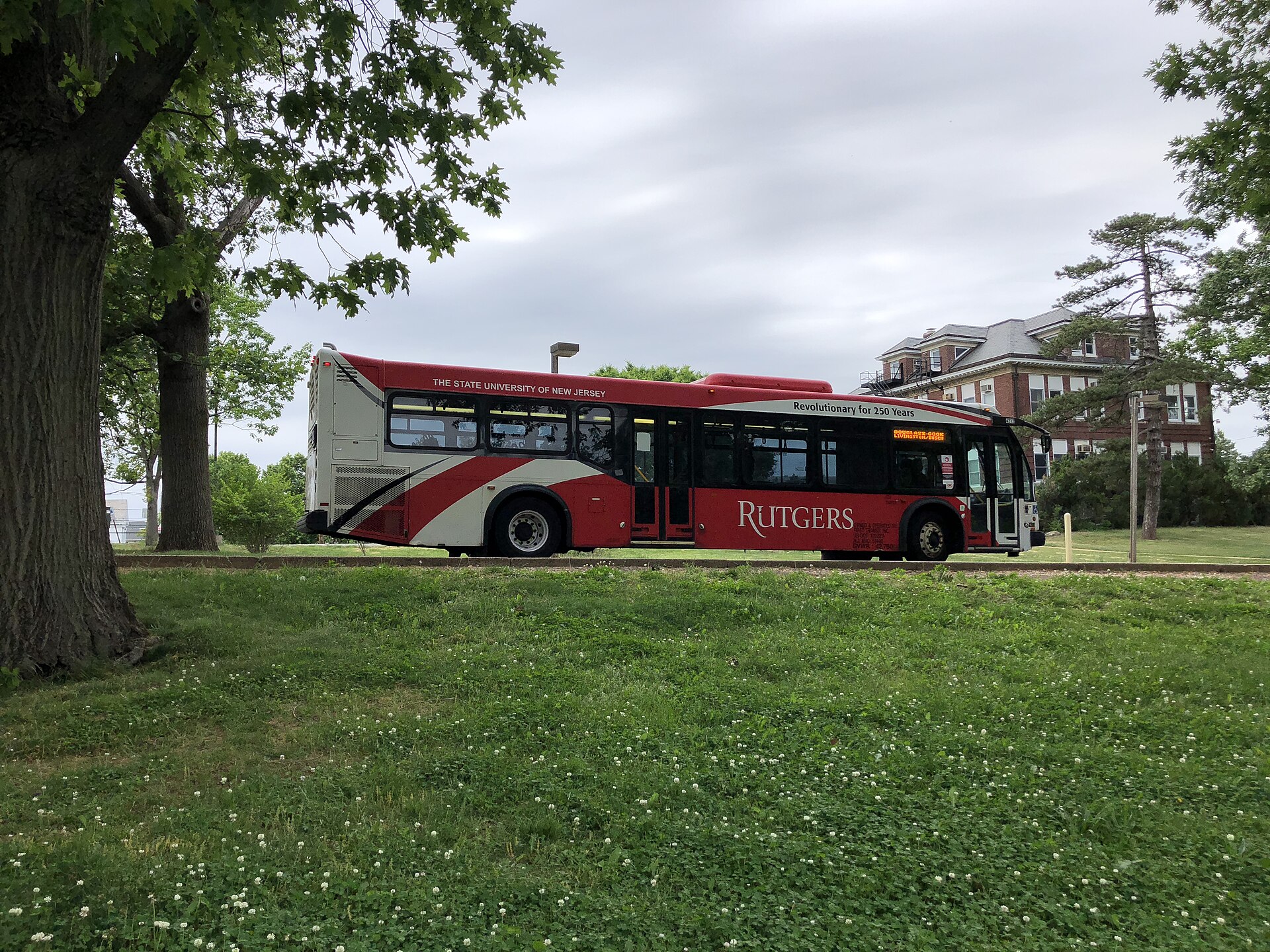
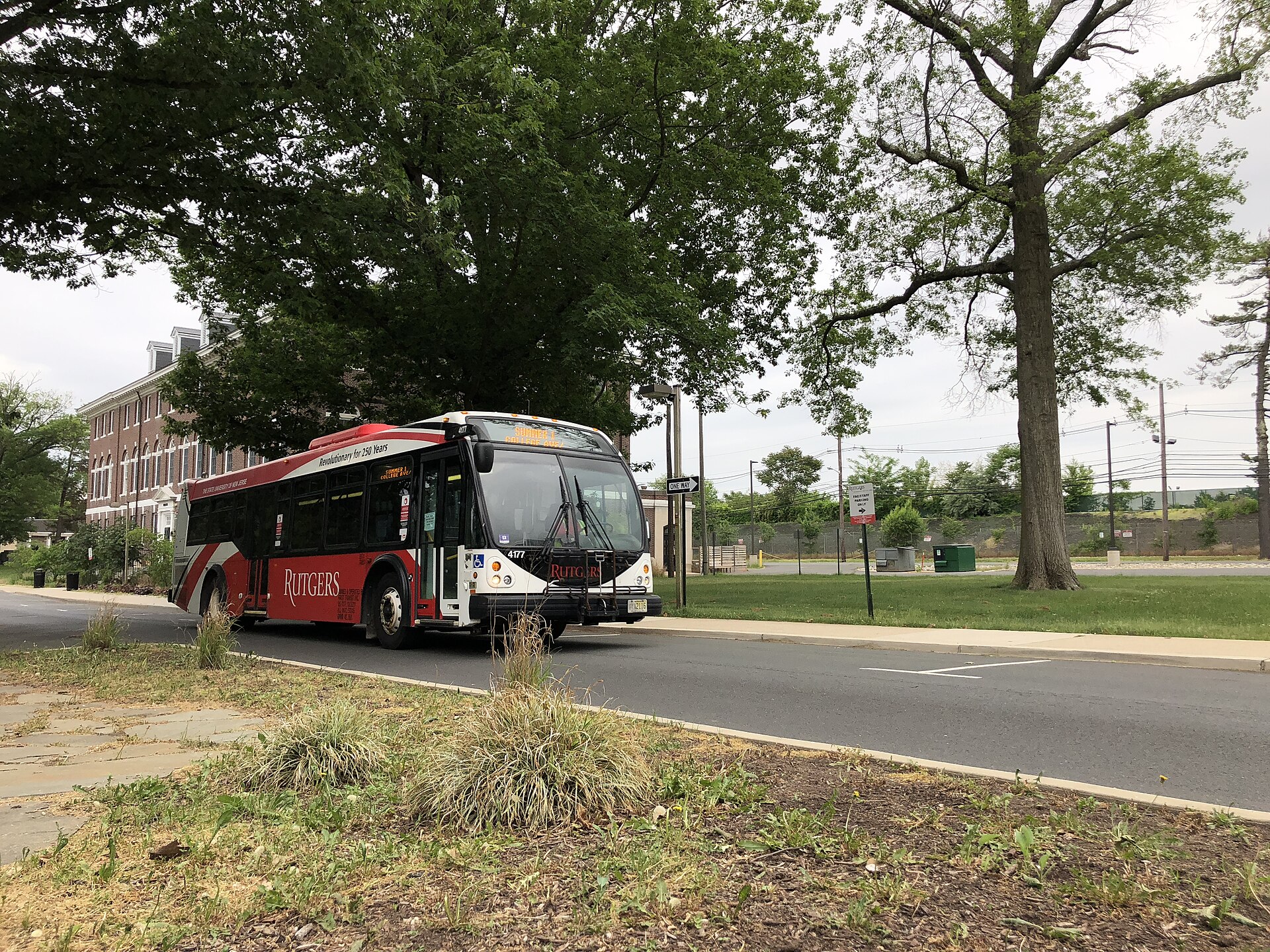
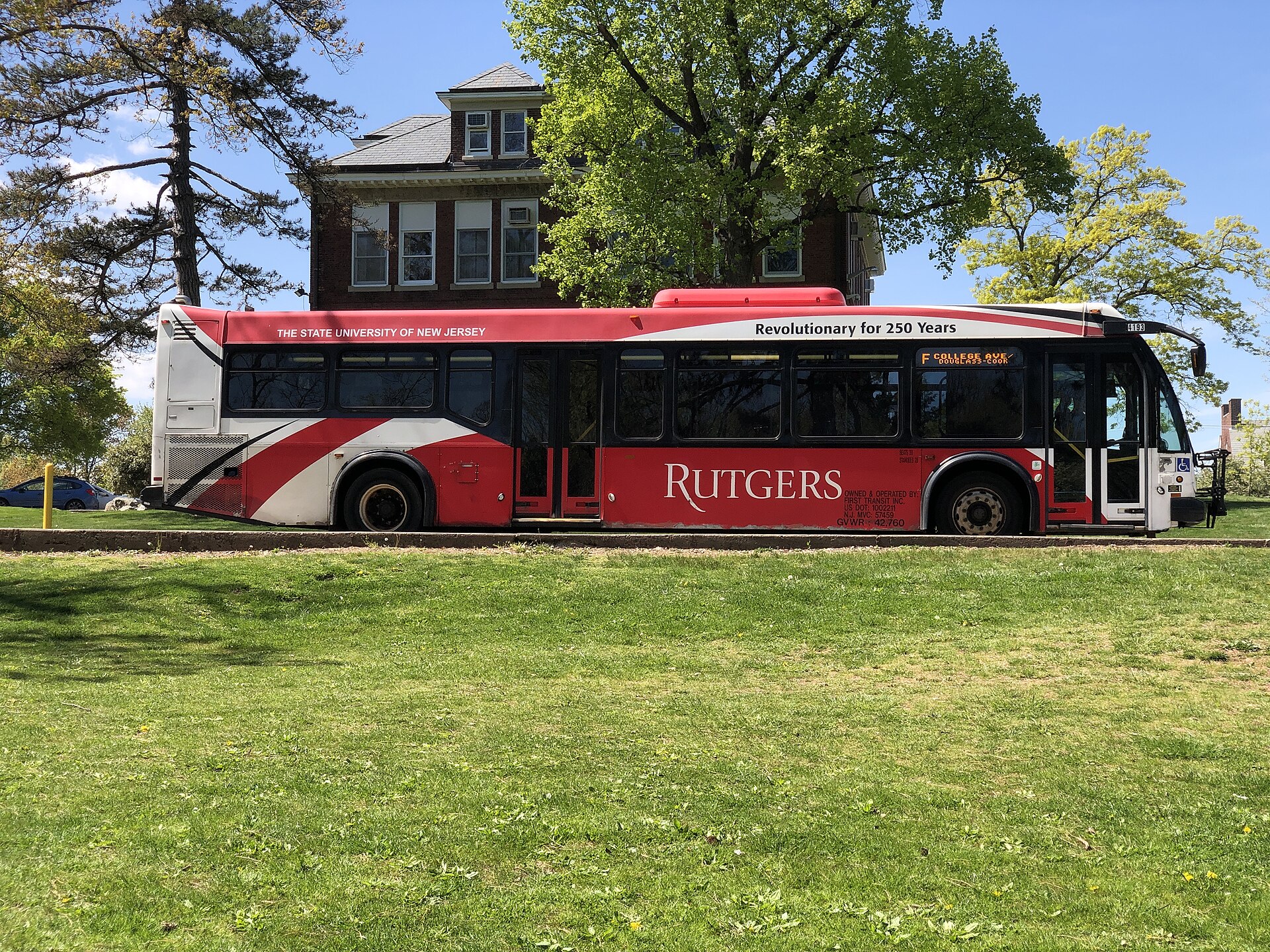
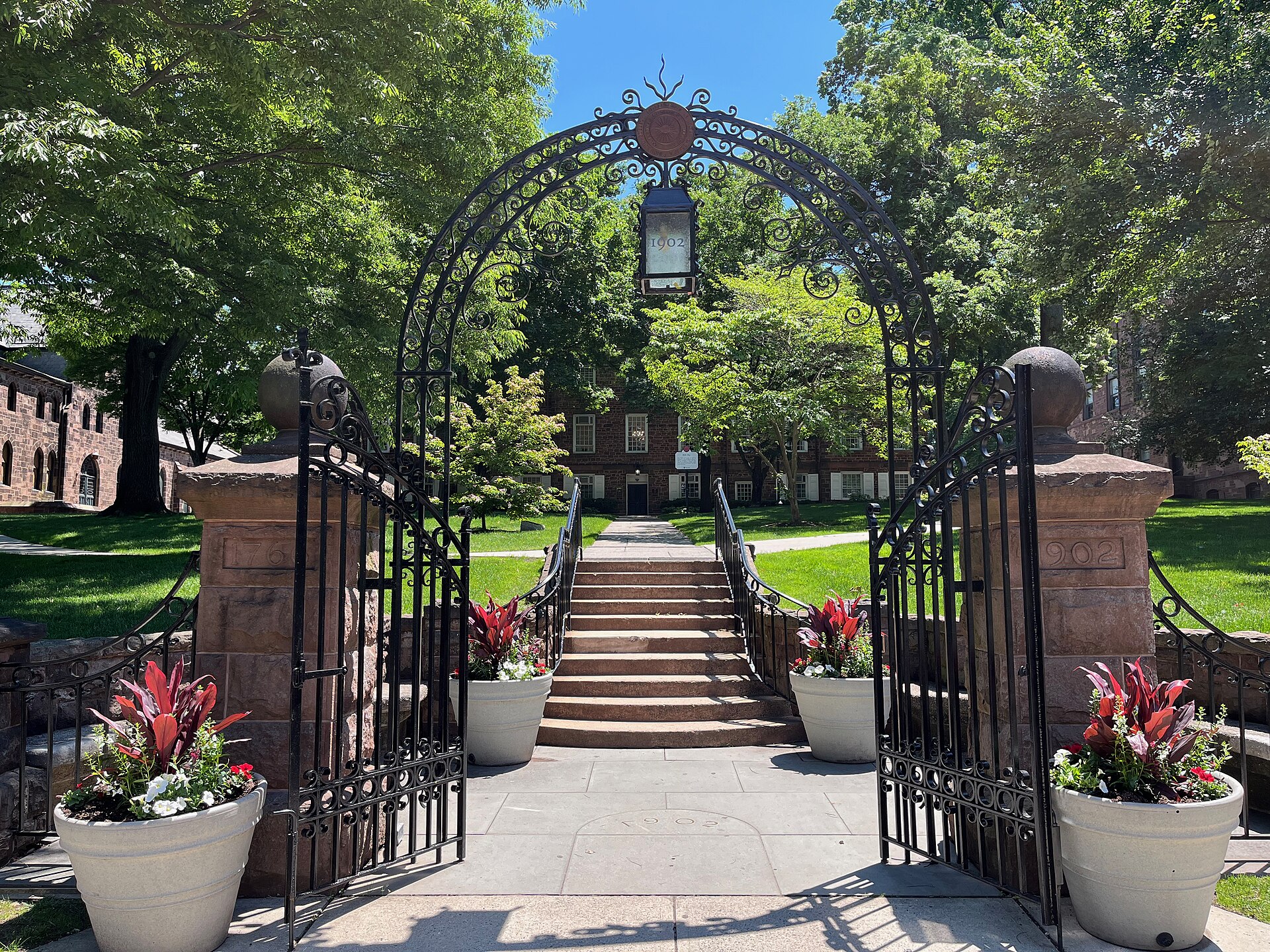
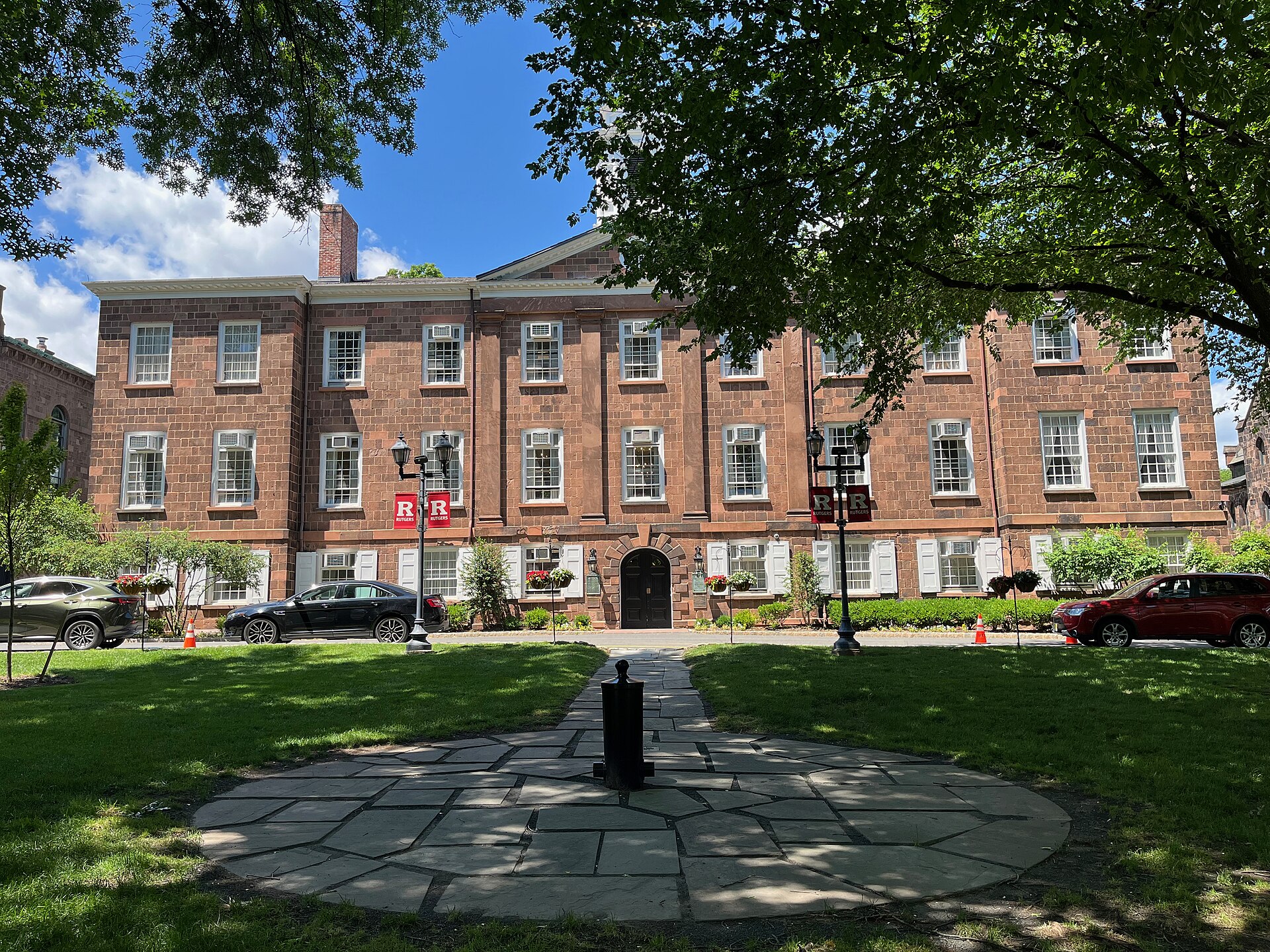
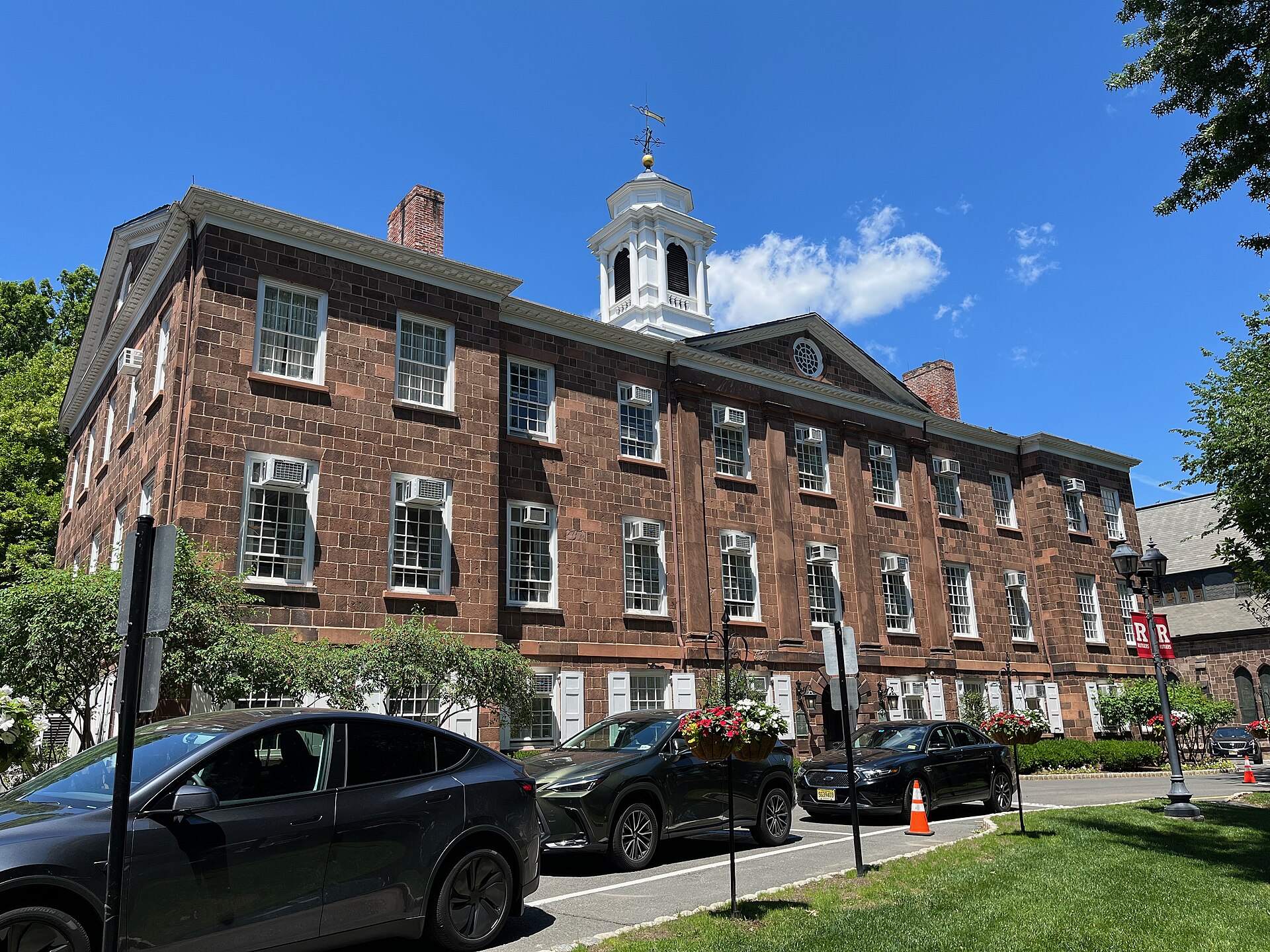
Rutgers University-New Brunswick — campus in pictures
Real, freely-licensed photographs of the campus (via Wikimedia Commons).
Why Rutgers New Brunswick — Research, NYC Access & Alumni Reach
Rutgers–New Brunswick is more than New Jersey's state university. It is an AAU research institution, a Big Ten member, and a gateway into the most concentrated professional job market in the world. Here is why ambitious international students choose it.
Rutgers New Brunswick Acceptance Rate & Class Profile
Stats
Profile Stats
Rea Vs Rd
Rutgers Admissions Requirements — Academics, GPA & Test Scores
- Stated minimum GPA: 3.3 on a 4.0 scale
- Competitive range for selective schools: 3.5–3.9+
- Full academic trajectory reviewed from Grade 9 onward
- Most rigorous curriculum available to you is expected
- SAT middle 50%: 1290–1470
- ACT middle 50%: 28–33
- Test-optional through 2026–27 application cycle
- English proficiency tests (TOEFL/IELTS) are separate and still required
- IB Diploma typical admitted score: 33 out of 45
- A-Level: ABB or above in relevant subjects
- CBSE/ISC and other national boards evaluated contextually
- Strong HL/advanced subject performance is particularly noted for STEM programmes
Rutgers Application Components — Common App, Essay & Transcript
Rutgers runs a notably streamlined application by US university standards — no supplemental essays, no letters of recommendation. The application centres on your academic record and one personal essay. International applicants have additional English proficiency and financial documentation requirements.
Rutgers Essays — Writing the Personal Statement
Rutgers asks for one essay. No supplements. No 'Why Rutgers?' This unusual approach among US universities changes the stakes: your 650-word personal statement must carry the full weight of your narrative voice — making it more important, not less.
Prompts
Tips
What Rutgers Admissions Officers Are Looking For
Rutgers conducts holistic review with academic achievement as the primary driver. Unlike many private universities, Rutgers does not use letters of recommendation. Your academic record speaks first; the personal essay adds colour and context.
Rutgers Financial Aid & Scholarships for International Students
International (F-1) students are not eligible for US federal financial aid. Rutgers' large-scale domestic aid programme primarily serves New Jersey residents and domestic students. For international applicants, institutional merit consideration, external scholarships, and on-campus work are the main funding pathways.
Aid availability for international students can change year to year. Contact the Rutgers Office of Financial Aid directly after receiving an admission offer to understand current institutional aid options for your specific programme and year.
Key Dates
Advantages
- Earlier decision — mid-December, before most other US schools decide
- Non-binding — you remain free to apply to any other university simultaneously
- Rolling admissions means earlier EA applicants are reviewed first
- More time to arrange financial documentation and visa process after admission
- Signals genuine interest in Rutgers without the obligation of binding ED
Disadvantages
- Application must be complete — essay finalised and STARS accurately filled — by 1 November
- Less time to improve senior-year grades before submission
- Financial aid packages for international students are not meaningfully better under EA vs RD
- If deferred, you enter the Regular Decision pool with everyone else
Rutgers Interview — What International Applicants Should Know
Rutgers–New Brunswick does not conduct formal admissions interviews for undergraduate applicants. There are no alumni interviews, no video interviews, and no required on-campus visits as part of the admissions process. Your application is evaluated entirely on the materials you submit.
Meta
Questions
Rutgers Residential Communities & Campus Life
Rutgers New Brunswick is not a single campus but five interconnected sub-campuses spread across New Brunswick and Piscataway, connected by the free Rutgers bus system. First-year students are guaranteed on-campus housing. Each sub-campus has its own residential communities, dining halls, and academic buildings.
Lottery Steps
- First-year students are guaranteed on-campus housing — apply early after admission to secure your preference
- Housing assignments are made by lottery within your preferred sub-campus choice
- Busch Campus: STEM-heavy, near the engineering and life sciences facilities, popular with pre-med and engineering students
- Livingston Campus: Business school proximity, modern residence halls, popular with RBS students
- College Avenue Campus: The historic social hub — closest to downtown New Brunswick, athletic facilities, and arts venues
- Cook/Douglass Campus: Agricultural and environmental sciences focus, quieter residential feel
Houses
Rutgers Schools & Undergraduate Programmes
- {"label":"Largest undergraduate school at Rutgers NB","value":"SAS"}
- {"label":"Academic disciplines","value":"40+"}
- {"label":"Notable strength","value":"Philosophy (top-10 nationally)"}
- {"label":"Application pathway","value":"Common App or Rutgers App"}
- {"label":"Flagship strength","value":"Supply Chain Management (top-5 US)"}
- {"label":"NYC employer partners","value":"300+"}
- {"label":"Degree awarded","value":"B.S. in Business"}
- {"label":"Application selectivity","value":"More selective than campus average"}
- {"label":"Engineering disciplines","value":"8"}
- {"label":"Research partnerships","value":"AAU network"}
- {"label":"Selectivity","value":"Among most selective schools at NB"}
- {"label":"Career pathway","value":"NJ/NYC tech & pharma belt"}
- {"label":"National pharmacy ranking","value":"Perennial top-10"}
- {"label":"Degree pathway","value":"Direct Pharm.D."}
- {"label":"Admission selectivity","value":"Significantly above campus average"}
- {"label":"Industry location","value":"NJ pharma corridor"}
- {"label":"Clinical partner","value":"RWJ University Hospital"}
- {"label":"Degree","value":"B.S. in Nursing (BSN)"}
- {"label":"Career pathway","value":"NYC/NJ healthcare market"}
- {"label":"Admission selectivity","value":"Competitive within NB campus"}
- {"label":"Location","value":"Cook Campus, New Brunswick"}
- {"label":"Research access","value":"Agricultural extension station"}
- {"label":"Notable programmes","value":"Marine Science, Environmental Policy"}
- {"label":"Campus atmosphere","value":"Research-focused, smaller scale"}
Research & Extracurricular Opportunities at Rutgers
Career Outcomes & Rutgers Alumni Network
Rutgers graduates benefit from a powerful geographic advantage: proximity to the New York City job market, a Big Ten alumni network of nearly half a million, and deep employer partnerships across a century of placing graduates in New Jersey's industrial, financial, and pharmaceutical corridors.
Stats
Categories
Our Rutgers Admissions Track Record & Student Profiles
Faqs
Does Rutgers require supplemental essays?+
No. Rutgers–New Brunswick requires only ONE essay — the personal statement submitted through Common App or the Rutgers Application. There are no school-specific supplemental essays. This is notably different from most selective US universities.
Does Rutgers require letters of recommendation?+
No. Letters of recommendation are not used in Rutgers' admissions process. Your academic record and personal essay carry the full narrative weight of your application.
Is Rutgers test-optional for international applicants?+
Yes. Rutgers' test-optional policy applies to all applicants including international students through the 2026–27 cycle. Note that English proficiency tests (TOEFL, IELTS, Duolingo) are completely separate and remain required for most international applicants regardless.
Can international students at Rutgers receive financial aid?+
International F-1 students are not eligible for US federal financial aid. Rutgers' aid programme primarily serves domestic students. Some institutional merit consideration may be available — contact the Office of Financial Aid directly after receiving your admission offer. External scholarships and on-campus employment are the most reliable funding options.
Which Rutgers campus should I apply to?+
Each Rutgers campus (New Brunswick, Newark, Camden) has a separate admissions process and decision. New Brunswick is the flagship research campus and this guide's focus. You may apply to multiple campuses. Decisions are separate — admission to one campus does not affect others.
Can I apply to a specific school within New Brunswick?+
Yes. Your application indicates your intended school (SAS, Business, Engineering, Pharmacy, Nursing, SEBS) and major. Each school has different admission standards — Engineering and Pharmacy are notably more selective than the campus-wide 65% rate suggests.
What is the difference between the Common App and the Rutgers Application?+
Both are fully valid — neither is preferred over the other. Common App lets you reuse your personal statement across multiple schools. The Rutgers Application is a standalone platform with a character-limit (3,800 characters) rather than word-limit essay. Choose one and do not submit both.
How long does Rutgers take to issue a decision?+
Rutgers uses rolling admissions. Early Action applicants (deadline 1 November) typically receive decisions by mid-December. Regular Decision applicants (deadline 1 December) receive decisions from January through March on a rolling basis. Applying earlier within each round means earlier review.
Book a Free Rutgers Admissions Strategy Session
In 60 minutes, our Rutgers specialists will evaluate your academic profile, identify strengths and gaps in your application, develop your personal essay strategy, and determine whether Early Action or Regular Decision gives you the best chance at your target school within New Brunswick.
- No commitment required
- School-specific strategy — Engineering, Pharmacy, Business, SAS
- Essay coaching from the only writing component Rutgers reviews
- International aid and visa planning included
Rutgers Academic Requirements
Rutgers New Brunswick Academic Requirements — The Honest Breakdown for International Students
What GPA, test scores, and academic profile do Rutgers' admitted students actually have? And how does Rutgers evaluate IB, A-Level, AP, and other international curricula in practice?
GPA & Class Rank
Rutgers and GPA — What the Data Shows
Rutgers publishes a minimum GPA of 3.3 on a 4.0 scale. In practice, competitive applicants to the more selective schools — Engineering, Pharmacy, Business — typically present 3.5 or above, with the strongest admits in these programmes at 3.7–3.9+.
A 3.3 GPA clears the minimum bar but does not make you competitive for selective schools within Rutgers. The gap between 'admitted somewhere at Rutgers' and 'admitted to Rutgers Pharmacy or Engineering' is significant.
Academic Context
Class Rank and School Context — How Rutgers Reads Academic Performance
Rutgers does not require class rank, and many international schools do not provide it. Rutgers' admissions office is experienced at evaluating performance across widely different school systems without relying on relative ranking.
Standardised Testing
SAT Scores at Rutgers — What You Actually Need
Rutgers SAT Data — Admitted Students
| Label | Score | Percent |
|---|---|---|
| 25th percentile | 1290 | 52 |
| 75th percentile | 1470 | 88 |
| Target for competitive programmes | 1400+ | 75 |
Standardised Testing
ACT Scores at Rutgers — The Data and the Strategy
Rutgers ACT Data — Admitted Students
Metrics
Comparison Cards
Testing Strategy
Rutgers Test-Optional Policy — The Strategic Decision Explained
Rutgers has maintained a test-optional policy that runs through the 2026–27 application cycle. Understanding what this actually means — and when not submitting is or isn't advantageous — is important for international applicants.
Submit Items
Withhold Items
Curricula
A-Levels and IB at Rutgers — Specific Benchmarks
- {"label":"Typical admitted score","value":"33 out of 45"}
- {"label":"HL expectations","value":"5–7 in relevant Higher Level subjects"}
- {"label":"For competitive programmes","value":"35+ for Engineering/Pharmacy/Business"}
- {"label":"Extended Essay","value":"Used as supporting context for research interest"}
- {"label":"Typical admitted grade profile","value":"ABB or above in 3 relevant subjects"}
- {"label":"For competitive programmes","value":"AAB–AAA for Engineering/Pharmacy"}
- {"label":"Subject rigour","value":"Mathematics and sciences for STEM; relevant humanities for SAS"}
- {"label":"AS results","value":"Reviewed alongside A-Level predictions where available"}
Advanced Placement
AP Courses at Rutgers — What Counts and What to Take
For students in the US system or at schools offering AP courses, Advanced Placement performance is a meaningful component of the academic profile — both for admissions and for course credit after enrollment.
Academic Rigour
Rigour of Secondary School Record — Rutgers' Primary Academic Factor
Rutgers' admissions materials consistently cite academic record strength and course rigour as the most important factor. Understanding what this means for international students is the foundation of a competitive application strategy.
Taking the most challenging courses available at your specific school — in subjects most relevant to your intended programme — and performing consistently well in them.
STEM Preparation
Mathematics and Science Preparation — What Rutgers Expects by Programme
Different schools within Rutgers New Brunswick have meaningfully different academic expectations. Aligning your pre-university coursework to your intended programme is important — particularly for Engineering, Pharmacy, and the Sciences.
Language Proficiency
English Language Requirements for International Rutgers Applicants
All applicants whose secondary schooling was conducted outside the US in a non-English-speaking country are required to submit English proficiency test scores. Scores must be from tests taken within two years of application.
Exemption: If you completed your entire secondary education in English (in an English-medium school in your country, or in an English-speaking country), you may petition for an English proficiency exemption. Contact Rutgers' international admissions office to confirm eligibility before omitting this requirement.
By Programme
Academic Requirements by Programme — What Different Paths Expect
Rutgers admits students to specific schools and programmes. The academic profile that is competitive for SAS general admission differs from Pharmacy or Engineering. Match your preparation to your target programme.
| Concentration | Expectation | Signals |
|---|---|---|
| Computer Science (SAS) | HL Maths or AP Calculus BC; programming background | Independent projects; competitive programming; CS coursework |
| Mathematics / Statistics | HL Maths AA or equivalent; strong test scores | Competition mathematics; quantitative research |
| Economics / Finance (RBS) | HL Maths + Economics or equivalent; strong quantitative profile | Supply chain or finance projects; business experience |
| Mechanical / Electrical Engineering | HL Maths + Physics; Chemistry HL an asset | Engineering projects; design competitions; lab experience |
| Pharmacy (Pharm.D.) | Strong Chemistry + Biology at HL or A-Level | Healthcare or lab experience; science research |
| Biological Sciences / Pre-Med | HL Biology + Chemistry; strong Mathematics | Clinical exposure; science fair; research |
| Psychology / Social Sciences | Strong academic foundation; writing ability | Research projects; community work; writing awards |
| English / Philosophy / History | Strong humanities profile; writing quality | Published writing; debate; extended essays |
International Systems
Rutgers and International Education Systems — How Your Curriculum Is Evaluated
Roadmap
Building an Academic Profile for Rutgers — What to Do at Each Stage
- Choose the most rigorous curriculum available at your school: IB Diploma, A-Levels, or a strong national board track.
- Establish consistent strong grades from the start — Rutgers reviews your full academic history.
- Explore genuine academic interests beyond the curriculum: reading, online courses, subject competitions.
- Maintain or improve grades in advanced subjects most relevant to your intended programme.
- Begin TOEFL or IELTS preparation if English is not your first language — completing this early removes pressure from the application year.
- If considering the SAT or ACT, begin preparation in Grade 11 to allow multiple test dates.
- Engage with research, internship, or leadership experiences that build genuine extracurricular depth.
- Complete the SAT or ACT if you plan to submit scores. Aim to finish by August before Grade 12 starts.
- Apply to summer research or academic enrichment programmes — Rutgers' Aresty programme and similar initiatives begin building the research profile valued for selective admissions.
- Draft early versions of your personal essay based on summer experiences and reflections.
- Apply by 1 November for Early Action. Rutgers' rolling admissions means earlier applicants within the round receive earlier decisions.
- Complete STARS self-reported transcript carefully — errors delay processing.
- Finalise your personal essay through multiple drafts and feedback rounds.
- Confirm TOEFL/IELTS score delivery to Rutgers' official institutional code.
- Complete the Rutgers Global portal: passport copy, International Student Financial Statement, and bank documentation (dated within 6 months) to receive your I-20.
- Begin the F-1 visa appointment process promptly — consulate appointment slots fill months in advance in some countries.
- Research on-campus employment and external scholarship opportunities available to enrolled F-1 students.
Common Pitfalls
Academic Mistakes That Cost Rutgers Applications — And How to Avoid Them
Real Outcomes
What Academic Profiles Tychr's Rutgers-Admitted Students Had
The following profiles represent the academic backgrounds of students Tychr has helped gain Rutgers admission across different schools. They illustrate the range of academic preparation that works and what made each compelling.
Faqs
Is a 3.3 GPA enough for Rutgers?+
A 3.3 GPA clears Rutgers' stated minimum, but it is not competitive for selective schools like Engineering, Pharmacy, or the Rutgers Business School. Competitive applicants to these programmes typically present 3.5 or above. For SAS general admissions, a 3.3 is workable with a strong essay and relevant test scores.
What IB score do I need for Rutgers?+
The typical admitted IB score at Rutgers New Brunswick is approximately 33 out of 45. For competitive programmes (Engineering, Pharmacy, RBS), aim for 35+. Strong HL scores in relevant subjects (7s or 6s) matter as much as the total points. A student with 33 points but 7s in HL Chemistry and Biology is competitive for Pharmacy.
Can I apply without SAT/ACT scores?+
Yes. Rutgers is test-optional through the 2026–27 cycle. If your scores fall below the 25th percentile (SAT 1290 / ACT 28), withholding them is genuinely the right strategy — Rutgers will not penalise the non-submission. Note that English proficiency tests (TOEFL/IELTS) remain required and are a completely separate requirement.
Does Rutgers prefer SAT or ACT?+
No preference. Both are accepted equally. The choice should be based on which test plays to your strengths. Take a diagnostic of both if you are deciding — the test you naturally score higher on is the right one.
Can I transfer from SAS to Engineering or Business after admission?+
Transfers between schools within Rutgers are possible but not guaranteed. Each school has different internal transfer requirements. If you are genuinely interested in Engineering or Business, apply directly to those schools — a transfer pathway is not a reliable fallback.
Cost & Financial Aid
Rutgers New Brunswick May Cost Less Than Private Alternatives — Here's the Full Picture.
At $56,000 annual cost of attendance, Rutgers is significantly cheaper than comparable private research universities. But international students face a different financial reality than domestic students: federal aid is unavailable, institutional merit awards are limited, and costs must largely be self-funded. Here is an honest breakdown of what Rutgers costs, what aid is realistically available, and how to plan effectively.
Cost Transparency
What Rutgers Actually Costs — The Full Annual Figure
Rutgers' $56,000 annual cost of attendance is significantly below comparable private AAU research universities, which routinely exceed $80,000–$90,000 per year. For international students who cannot access US federal aid, a lower sticker price is a genuine advantage — the gap between Rutgers and a private peer institution is $100,000–$140,000 over four years.
Aid Policy for Internationals
Rutgers Financial Aid — The Reality for International Students
F-1 visa holders cannot access Pell Grants, federal subsidised or unsubsidised loans, or federal work-study programmes. The large-scale aid Rutgers distributes — over $120 million to first-year students in recent years — primarily serves New Jersey residents through FAFSA-based programmes unavailable to international applicants.
Public University Value
Why Rutgers Represents Real Value — Despite Limited International Aid
Funding Walkthrough
How to Fund Your Rutgers Education — Step by Step
International students must be proactive and systematic about funding their Rutgers degree. Federal aid is not available. Here is the process that maximises funding access.
- Indonesian LPDP
- Malaysian MARA/JPA
- Saudi KASP
- Chinese Government Scholarship (CSC)
- Various national scholarship programmes — research your country's outbound study funding
- Rutgers scholarship search portal
- Institute of International Education (IIE)
- Fastweb and Scholarships.com — filter for international-student eligible awards
- Discipline-specific associations (ASHP for pharmacy, CSCMP for supply chain)
F-1 Students Specifically
Financial Aid for International Students at Rutgers — How It Actually Works
Understanding the financial landscape for F-1 students at Rutgers requires distinguishing clearly between what is and is not available. The most important facts are often misunderstood.
Aid Data
Average Financial Aid at Rutgers — What the Numbers Show
Aid Distribution at Rutgers New Brunswick
The 30% average aid figure reflects all students including domestic recipients. International student aid averages are not separately published. The domestic average is presented to illustrate the scale of Rutgers' overall aid programme, not as a projection of international student awards.
For international students, realistic aid expectations should be anchored in home-government scholarship eligibility, external awards, and on-campus employment — not in the domestic aid percentages that are primarily funded through FAFSA mechanisms unavailable to F-1 students.
| Income | Grant | Contribution |
|---|---|---|
| Domestic NJ Residents | Significant institutional + state aid | Often under $10,000–$15,000/year net |
| Domestic Out-of-State | Limited state aid; some institutional | Varies widely by income and awards |
| International F-1 Students | Limited institutional merit; no federal/state aid | Primarily full $56,000 unless externally funded |
Table Headers
Scholarships & Merit Awards
Merit and Need-Based Opportunities at Rutgers for International Students
Rutgers' scholarship landscape for international students is more limited than at many private universities. Named international merit scholarships with significant amounts are not prominently published. However, several pathways exist.
External Funding
External Scholarships — The Most Reliable Funding for International Students
For most international F-1 students at Rutgers, external scholarships — from home governments, international foundations, and professional associations — represent the most reliable and substantial funding pathway.
Loans & Debt
Loans at Rutgers — What International Students Can and Cannot Access
F-1 international students cannot access US federal student loans — the most common debt instrument used by domestic students to fund a US degree. This makes upfront funding planning essential for international applicants.
Student Employment
Working While Studying at Rutgers — What F-1 Students Can Do
F-1 students at Rutgers can work on campus during the academic semester (up to 20 hours per week) and full-time during official university breaks. On-campus employment is the only work permitted without prior authorisation in the first year.
- Research assistant in SAS, Engineering, or SEBS faculty labs (provides income and builds research credentials)
- Library positions across Rutgers' multiple library branches
- Administrative roles in university departments
- Dining services (flexible hours; immediate income)
- IT support and computing services
- Rutgers Global office positions (international student support work, particularly valuable)
Benchmarking
Rutgers vs. Alternatives — Financial Aid Comparison for International Students
| School | Policy | No Loans | Typical Cost |
|---|---|---|---|
| Harvard / MIT / Princeton | Need-blind internationally; full-need grants | Yes | $0–$20K for lower/middle income families |
| Yale / Columbia / Penn (Ivies) | Need-aware internationally; partial-need grants | Varies | $15K–$40K for middle-income families |
| Rutgers New Brunswick | Need-aware; limited international aid | N/A (loans unavailable) | ~$56K (largely self-funded) |
| Other US Public Flagships | Limited international aid; out-of-state rate | N/A | $40K–$65K |
| UK Russell Group (London) | No needs-based grants; international rate | N/A | £28K–£40K/year |
Cost Analysis
Rutgers vs. Alternatives — What You Actually Pay as an International Student
For international students who cannot access need-based aid at any institution, Rutgers' lower sticker price ($56,000) is genuinely meaningful compared to private peers ($80,000–$90,000). The four-year saving of $96,000–$136,000 is substantial. However, for families with lower incomes who qualify for generous need-based aid at Harvard, MIT, or Princeton, those institutions may cost less than Rutgers despite higher sticker prices.
| School | Policy | Contribution | Four Year Cost |
|---|---|---|---|
| Rutgers New Brunswick | Public AAU research university | ~$56,000/year | ~$224,000 |
| Harvard (low-income family) | Need-blind; full-need grants | ~$0–$5,000/year | ~$0–$20,000 |
| Top Private (mid-income) | Need-aware; partial grants | ~$30,000–$50,000/year | ~$120,000–$200,000 |
| UK Top University (London) | International tuition; no grants | ~£28,000–£40,000/year | ~£112,000–£160,000 |
| Rutgers + STEM OPT (earning) | 3 years post-grad US work | Net positive over 7 years | Positive ROI within 4 years of graduation |
Financial Appeals
Appealing a Rutgers Financial Aid Decision — When and How
If Rutgers issues a financial aid offer that does not reflect your family's actual financial circumstances — or if circumstances have changed since you applied — the financial aid appeal process is available.
For international students, Rutgers' institutional aid landscape for F-1 students is limited. The appeal process is real, but the available pool is smaller than at well-endowed private universities. External scholarships secured before or after admission are typically a more productive funding strategy.
When To Appeal
- Family financial circumstances have changed since submitting your application (job loss, medical expenses, significant income change)
- The initial aid offer does not reflect a submitted home-government scholarship that reduces out-of-pocket cost
- There was an error in your STARS transcript or financial documentation that affected your review
- Another US university has offered substantially better institutional support for an equivalent programme
How To Appeal
- Contact the Rutgers Office of Financial Aid directly — for international students, also contact Rutgers Global
- Submit a written appeal explaining the specific circumstances
- Provide supporting documentation: income verification, changed financial circumstances, competing offers
Timeline & Planning
Planning for Rutgers Costs — What to Do and When
ESSAYS & PERSONAL STATEMENT
The Rutgers Essay — Your Only Direct Voice in the File
Rutgers–New Brunswick takes an unusual approach among US universities: there are no supplemental essays and no letters of recommendation. The single personal essay you submit — through Common App or the Rutgers Application — is your only extended narrative in the file. That changes the stakes significantly: this essay cannot be generic.
Because Rutgers admissions officers cannot triangulate your personality from multiple essays or from recommenders' perspectives, your one essay must convey specificity, genuine voice, and a sense of who you are as a person and learner. A well-written, personal essay can meaningfully distinguish otherwise similar academic profiles.
APPLICATION WRITING OVERVIEW
Essay Overview — What Rutgers Actually Requires
The Rutgers writing requirement is deliberately streamlined for a large public university that processes tens of thousands of applications. Understanding what is and is not required prevents both under-preparation and wasted effort.
ESSAY PROMPTS
The Seven Essay Prompts
Choose ONE of the following seven prompts. These mirror the Common App personal statement options and are used for both the Rutgers Application and Common App pathway. Your essay should address your chosen prompt but may extend beyond it naturally.
PERSONAL STATEMENT STRATEGY
Writing Your Personal Statement for Rutgers
Because this is Rutgers' only essay and there are no supplemental prompts to add context, the personal statement must work harder than it would at universities that also require a 'Why Us?' or activity essay.
The most effective Rutgers essays share three characteristics: they open on a scene rather than a thesis ('In the fluorescent glow of my father's pharmacy at midnight…' not 'Since childhood, I have been fascinated by medicine'); they maintain a single, coherent thread rather than cataloguing achievements; and they close with forward momentum — not a neat bow, but a sense of what question or project this experience opens up next. For international students, the temptation is to frame everything through the lens of cultural difference ('In my country, we…'). Resist this. Your cultural background can be present in the essay, but the essay should be about you as an individual, not your country as a concept.
If you are applying via Common App to multiple US universities, your personal statement is shared across all schools. Write the essay to be genuinely yours — not tailored to any one school. Rutgers does not include a 'Why Rutgers?' component, so you will not have the opportunity to demonstrate school-specific fit through an additional essay. Your one essay must be the best version of you on paper.
NO SUPPLEMENTS — WHAT THIS MEANS
The No-Supplement Advantage
Rutgers' decision not to require supplemental essays is a feature, not a limitation. It means your application package — transcript, test scores (optional), and one essay — is evaluated on its merits without the noise of multiple, rushed supplemental responses.
CHOOSING YOUR TOPIC
How to Choose Your Essay Topic
The single most important decision in the Rutgers application is which of the seven prompts you choose and what specific story you tell. Generic topics — regardless of how well-written — blend into the pile at a university receiving tens of thousands of applications.
ESSAY PITFALLS
Common Essay Mistakes
- Summarising your resume rather than revealing your inner life — Rutgers already has your activity list
- Writing about your country or culture in abstract, generalising terms rather than through specific personal experience
- Choosing Prompt 7 (free choice) and writing about your academic goals — this reads as a motivation letter, not a personal statement
- Opening with a dictionary definition or a famous quote — these openings signal that the writer couldn't find their own voice
- Waiting until November to write the essay — with rolling admissions, earlier applicants benefit from applying closer to the opening of the round
- Making the essay entirely about hardship without demonstrating agency or learning — resilience must be shown, not just claimed
- Using the essay to extensively explain a weakness (like a grade drop) — a single honest sentence suffices; the essay should spend most of its words on growth, not justification
- Submitting a first draft or a recycled essay written for a different school without adapting it and reviewing it in the Rutgers context
ESSAY FAQS
Essay FAQs — Rutgers
Do I need to write a 'Why Rutgers?' essay?+
No. Rutgers does not require a 'Why Rutgers?' supplement or any school-specific essay. Your single personal statement is the only writing component. You do not need to demonstrate school-specific fit through an additional essay.
Can I submit the same personal statement to Rutgers that I'm sending to other schools?+
Yes. If applying via Common App, your personal statement is automatically shared across all schools. Rutgers does not require a Rutgers-specific supplement, so your Common App personal statement serves as your complete writing submission.
Is there a word minimum for the essay?+
For Common App applicants, the essay must be between 250 and 650 words. For the Rutgers Application, the essay is capped at 3,800 characters including spaces. Essays well under 400 words risk appearing underdeveloped — aim for 500–650 words for most topics.
What if English is not my first language — will my essay be at a disadvantage?+
Rutgers admissions officers understand that many applicants write in English as a second or third language. Grammatical perfection is less important than authenticity, specificity, and genuine voice. Have your essay reviewed by a fluent English reader for clarity, but do not let them rewrite your voice out of the essay.
Should I explain my country's education system in the essay?+
No. Rutgers' admissions team has extensive experience with international secondary school systems. You do not need to explain IB, A-Levels, national boards, or your country's grading system in your personal essay. STARS and the international applicant pathway handle that context.
Can I write about a topic that doesn't perfectly fit any of the seven prompts?+
Yes — Prompt 7 (free topic) allows you to write about any subject at all. Use this if you have a story that is genuinely more compelling than anything that fits the other six prompts. Do not choose Prompt 7 simply because you haven't engaged seriously with the other options.
Will my essay be penalised if it is under 650 words?+
Not explicitly — quality matters more than length. However, essays significantly under 400 words risk leaving the reader wanting more context or depth. Most successful essays use between 500 and 650 words without padding.
Can I submit letters of recommendation even though Rutgers doesn't require them?+
Rutgers does not use letters of recommendation in its admissions review process. Submitting them will not help and does not hurt — they simply will not be read as part of your evaluation. Save your recommenders' time and your application energy for the components that are actually reviewed.
Courses — schools, degrees & intake
103 degrees across 7 groupings.
School of Arts and Sciences · 53 degrees
Astrophysics
Biological Sciences
Biomathematics
Cell Biology and Neuroscience
Chemistry
Computer Science
Data Science
Earth and Planetary Sciences
Exercise Science
Genetics and Genomics
Molecular Biology and Biochemistry
Physics
Statistics
Mathematics
English
Comparative Literature
French
German
Spanish
Italian
Chinese
Japanese
Korean
Russian
Portuguese
Linguistics
Classics
Philosophy
History
Religion
Global Humanities
Africana Studies
American Studies
Anthropology
Criminal Justice
Economics
Political Science
Psychology
Sociology
Cognitive Science
Environmental Studies
Women's, Gender, and Sexuality Studies
Medieval Studies
Art History
Cinema Studies
Asian Studies
European Studies
Latin American Studies
Latino and Caribbean Studies
Middle Eastern Studies
Labor Studies and Employment Relations
Sport Management
Human Resource Management
School of Engineering · 11 degrees
Aerospace Engineering
Biomedical Engineering
Chemical Engineering
Civil Engineering
Electrical and Computer Engineering
Environmental Engineering
Industrial Engineering
Materials Science and Engineering
Mechanical Engineering
Packaging Engineering
Applied Sciences in Engineering
Rutgers Business School – New Brunswick · 6 degrees
Accounting and Information Systems
Business Analytics and Information Technology
Finance
Leadership and Management
Marketing
Supply Chain Management
School of Environmental and Biological Sciences · 19 degrees
Agricultural Business and Food Systems
Animal Sciences
Biochemistry
Biological Sciences
Biotechnology
Ecology, Evolution and Natural Resources
Entomology
Environmental and Business Economics
Environmental Planning
Environmental Policy, Institutions and Behaviors
Environmental Sciences
Food Science
Landscape Architecture
Marine Science
Meteorology
Microbiology
Nutritional Sciences
Plant Science
Public Health
Edward J. Bloustein School of Planning and Public Policy · 5 degrees
City and Regional Planning
Health Administration
Public Health
Public Policy
Urban Planning and Design
Mason Gross School of the Arts · 6 degrees
Music – Bachelor of Music
Music – Bachelor of Arts
Art and Design
Dance
Theater
Filmmaking
School of Communication and Information · 3 degrees
Communication
Information Technology and Informatics
Journalism and Media Studies
Want your real chances at Rutgers University-New Brunswick?
Create a free TYCHR account for your personalised admit-chance, a shortlist you can track, exact entry requirements, and essay + counselling help.