← All universities

Radboud University

Nijmegen, Netherlands · Suburban

The GuildPublicResearchReligiously affiliatedCoed
Acceptance
70.0%
QS World
#222
Tuition/yr
$15,300
Students
24,500
Founded
1923

Navigating admission to one of the Netherlands' top research universities requires understanding a fundamentally different system — qualification-based, direct, and free of the standardised-test culture that governs US admissions.

Campus

Radboud University — campus in pictures

Real, freely-licensed photographs of the campus (via Wikimedia Commons).
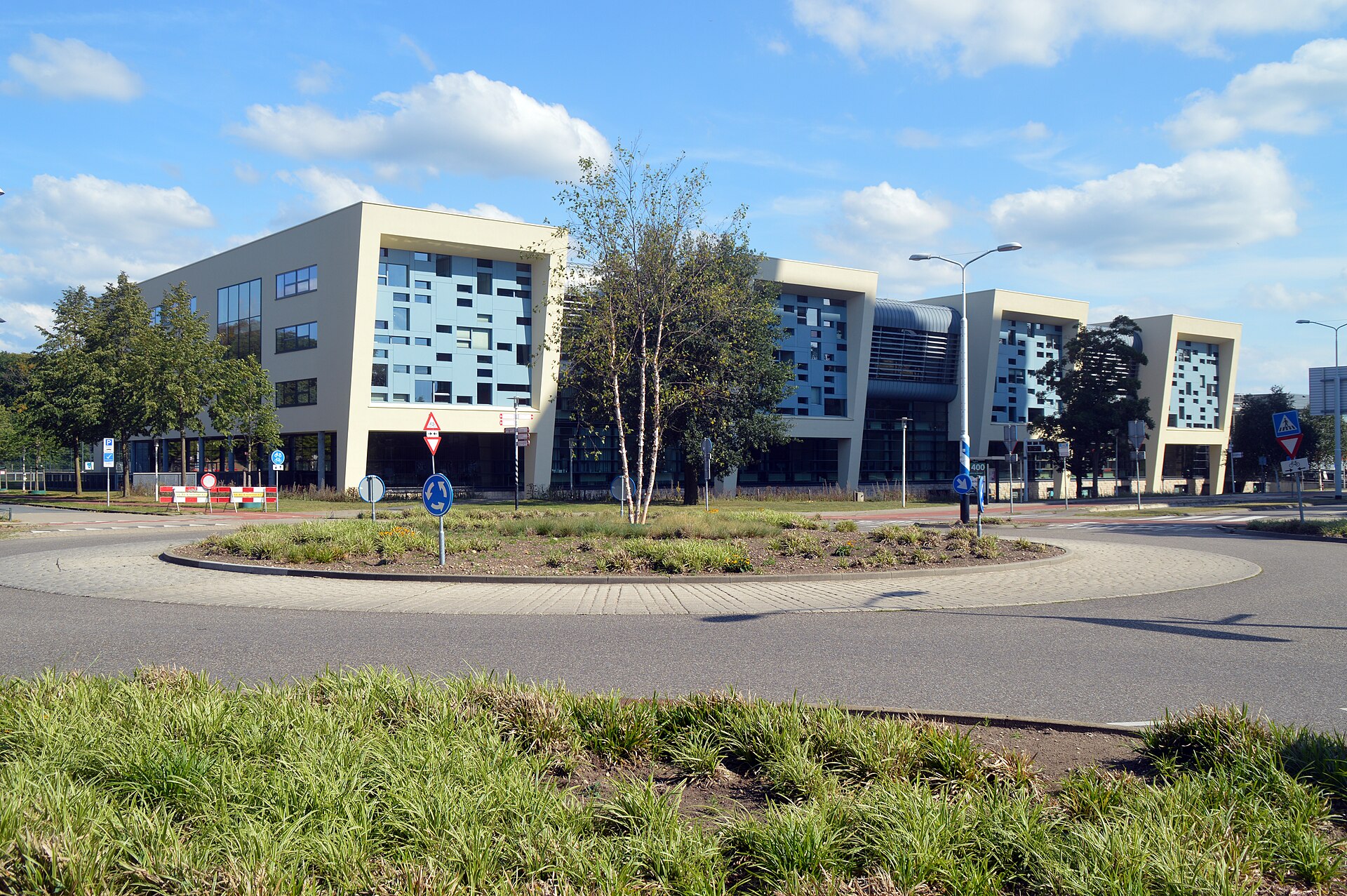
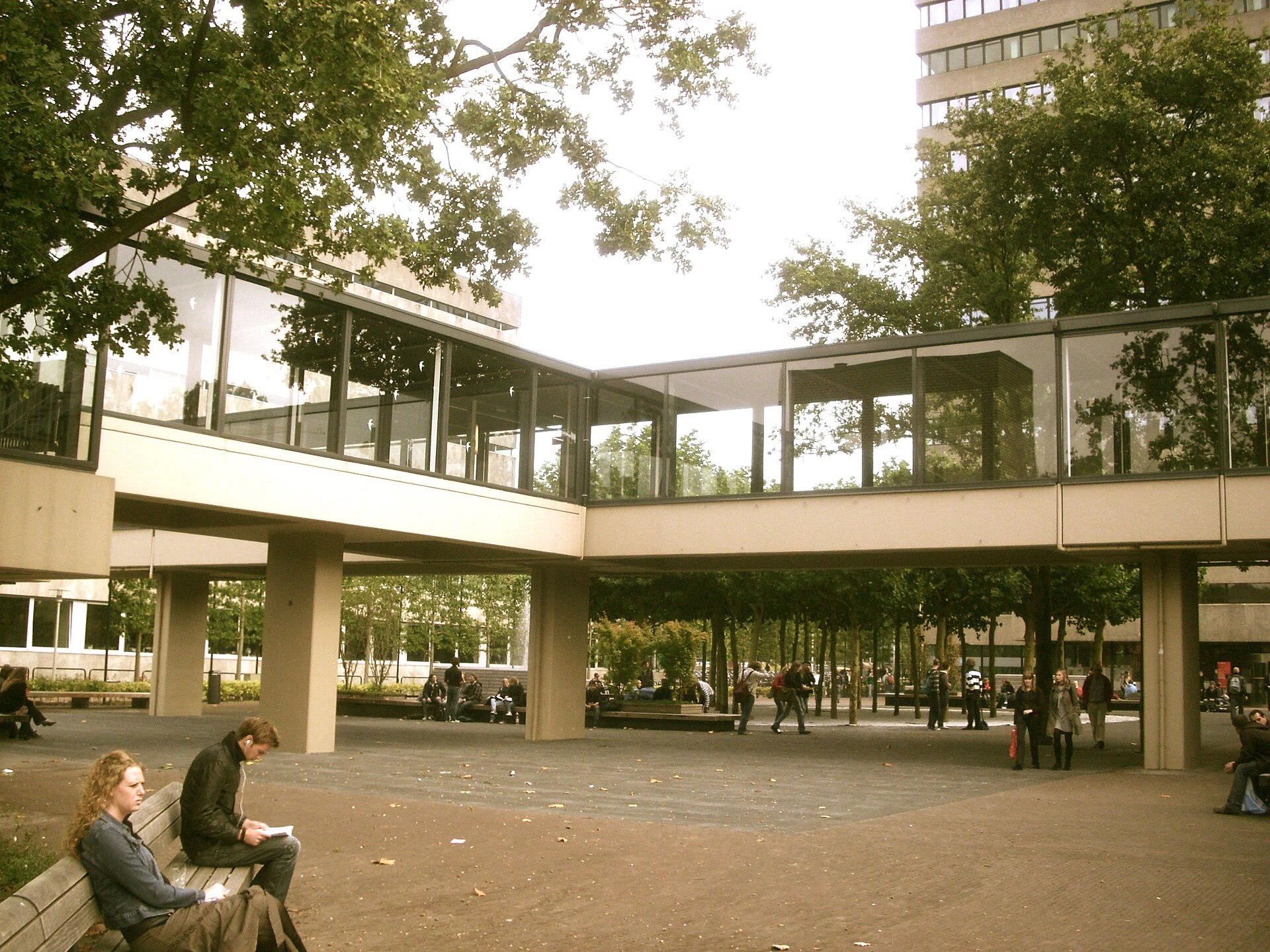
Gymnasion AGS Architekten & Planners Heyendaalseweg 141 Radboud University Nijmegen
Gymnasion AGS Architekten & Planners Heyendaalseweg 141 Radboud University NijmegenRoger Veringmeier · CC BY 3.0 · via Wikimedia Commons
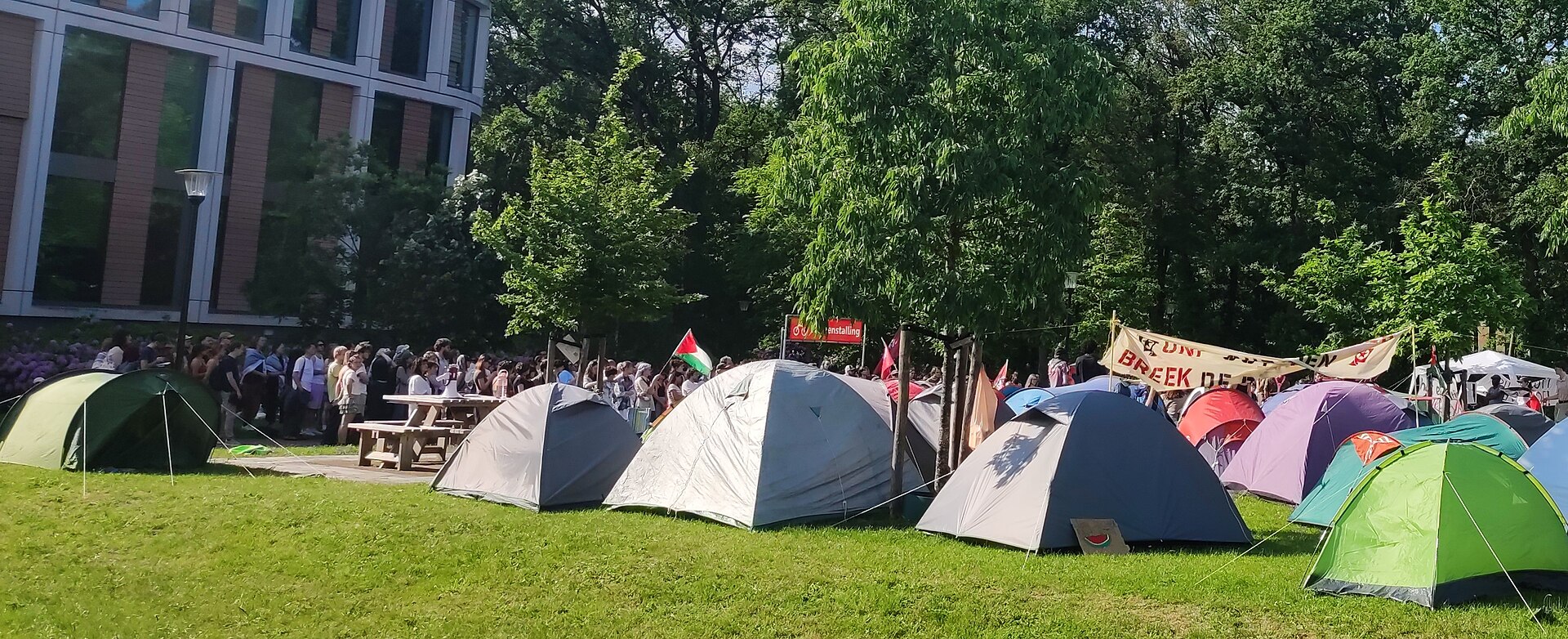
Radboud University Nijmegen campus
Radboud University Nijmegen campusCinelab · CC BY-SA 3.0 · via Wikimedia Commons
Second Day of Pro-Palestine Encampment at Radboud University
Second Day of Pro-Palestine Encampment at Radboud UniversityScriptese · CC BY-SA 4.0 · via Wikimedia Commons
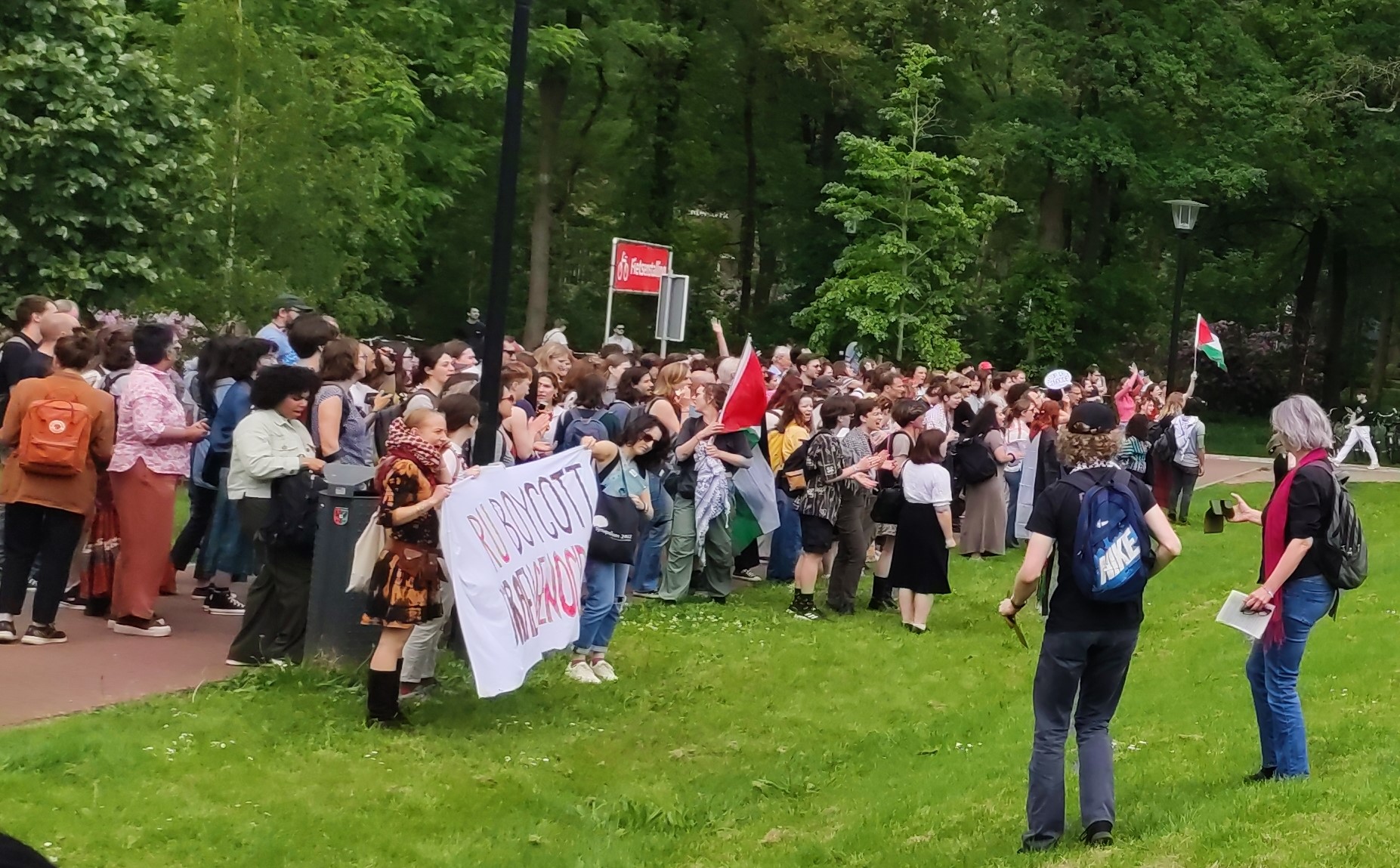
Pro-Palestine Protesters at Radboud University, second day of encampment May 2024
Pro-Palestine Protesters at Radboud University, second day of encampment May 2024Scriptese · CC BY-SA 4.0 · via Wikimedia Commons
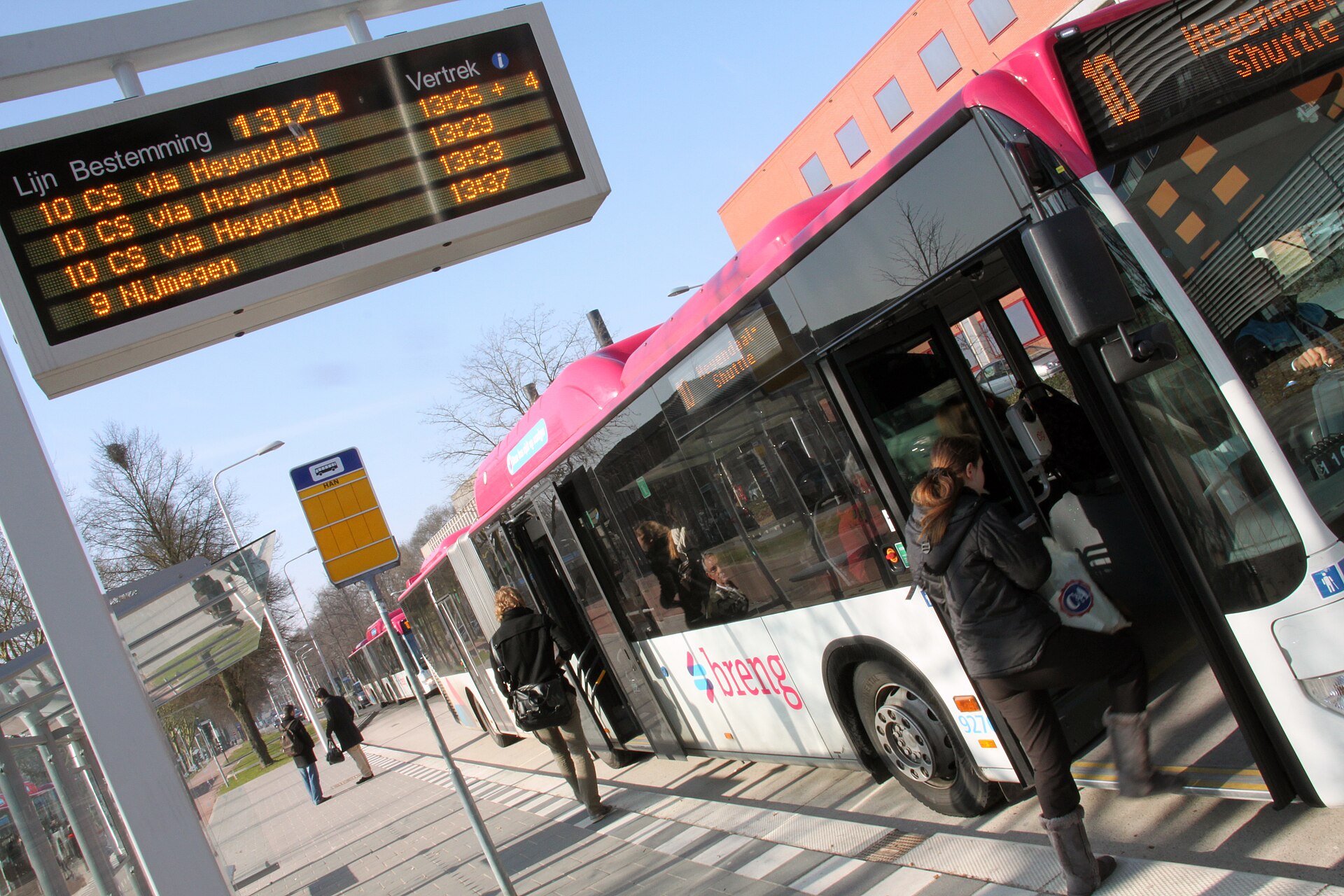
Een bushalte op de campus Heyendaal in Nijmegen. Links een DRIS-paneel dat de actuele vertrektijden van de bussen laat zien.
Een bushalte op de campus Heyendaal in Nijmegen. Links een DRIS-paneel dat de actuele vertrektijden van de bussen laat zien.Maurits90 · CC0 · via Wikimedia Commons
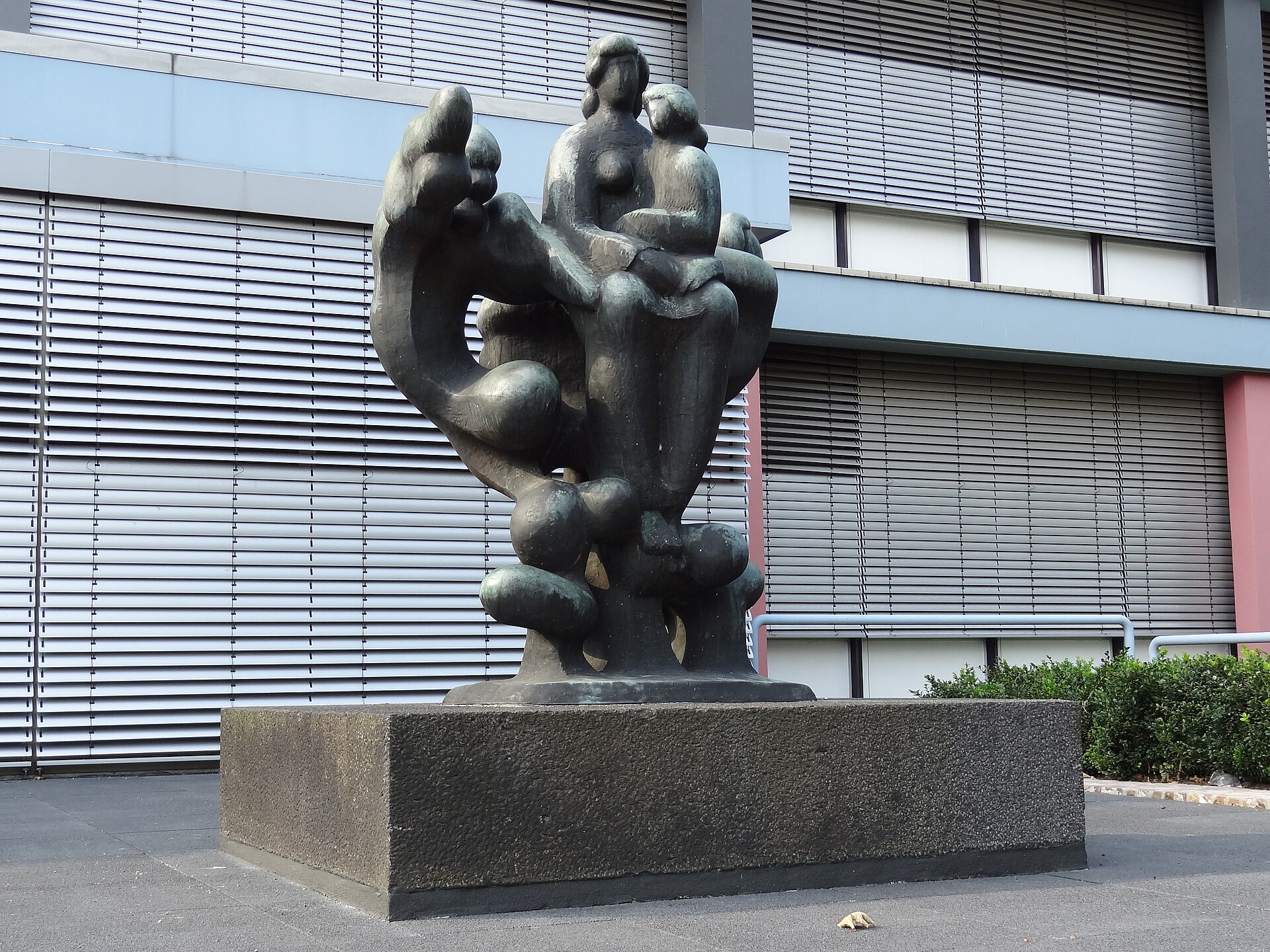
Sculpture "Alma Mater" created by Nic Jonk in front of the administration building of the Radboud University in Nijmegen, The Netherlands
Sculpture "Alma Mater" created by Nic Jonk in front of the administration building of the Radboud University in Nijmegen, The NetherlandsWillem Nabuurs · CC BY-SA 3.0 · via Wikimedia Commons

Why Radboud — Research, Rankings & Distinctive Programmes

Radboud University is not the most famous Dutch name internationally — that goes to Delft, Leiden, or Amsterdam. But for the right student, it is the most distinctive: a research university where neuroscience, AI, and cognitive science converge on a single green campus, at a fraction of the cost of comparable Anglo-American universities.

01World-Class Neuroscience Hub
The Donders Institute for Brain, Cognition and Behaviour is one of Europe's largest neuroscience research centres, co-located with the Max Planck Institute for Psycholinguistics. Undergraduates in AI, Psychology, and Cognitive Neuroscience work in its orbit from Year 1.
02Pioneer AI Bachelor's Degree
Radboud's Bachelor's in Artificial Intelligence — among Europe's oldest — combines computing science with cognitive science and neuroscience. No other programme at this level makes that interdisciplinary connection so deeply.
03Strong Global Rankings
Ranked #140 globally by Times Higher Education and #222 by QS, Radboud is the 7th-ranked university in the Netherlands — a compact country of highly competitive research institutions. Subject rankings in Neuroscience and Linguistics place it in the global top 50–75.
04Green Campus in a Liveable City
Nijmegen is the Netherlands' oldest city and consistently rated one of the country's best student cities. The compact campus — with its own lake — sits within cycling distance of the city centre, with direct trains to Amsterdam (1h 15m) and Utrecht (40m).
05Affordable by European Standards
Non-EU tuition at Radboud (approximately $15,300/year) is significantly lower than equivalent-ranked UK, Australian, or US research universities. Total cost of attendance is approximately $28,300/year — less than a single semester at many US privates.
06Societal Impact & The Guild
Radboud is a founding member of The Guild of European Research-Intensive Universities and publishes a clear mission around contributing to 'a healthy, free world with equal opportunities.' Its curriculum connects rigour with real-world application across law, health, environment, and technology.

Radboud Admissions — Selectivity & Entry Profile & Entry Requirements

Stats

24,500
Total students enrolled
13%
International students
#7
National rank (Netherlands)

Profile Stats

33 pts
IB Diploma minimum
3.0
Minimum GPA equivalent
6.5
IELTS minimum (English programmes)
90
TOEFL iBT minimum
13%
International students in cohort
92%
Graduate employment rate
University-wide acceptance rate (estimate); varies by programme

Rea Vs Rd

Rd Label: Standard (September) Intake
Rd Value: ~70%
Rea Label: Numerus Fixus Programmes
Rea Value: Selective

Radboud Admissions Requirements — Diploma, Language & Subject Prerequisites

Secondary Diploma
Value: VWO Equivalent
  • IB Diploma (33+ total) or A-Levels (BBC–AAA) are directly recognised
  • Subject prerequisites vary by programme — check each programme's page
  • Conditional admission possible with subject deficiency remediation
  • Nuffic equivalency tables govern most international diplomas
Admission is based on diploma equivalency to the Dutch VWO (pre-university secondary school). This is assessed programme by programme. Radboud's Eligibility Check tool (ru.nl) guides you through the process for your specific qualification.
English Proficiency
Value: IELTS 6.5 / TOEFL 90
  • IELTS Academic 6.5 overall (no sub-score below 6.0 recommended)
  • TOEFL iBT 90 overall
  • Cambridge C1 Advanced (169+) also accepted
  • IB or A-Level English may exempt you from a separate test
All English-taught programmes require demonstrated English proficiency. SAT/ACT scores are not required, recognised, or submitted — Radboud is test-blind for standardised university admissions tests.
Subject Prerequisites
Value: Programme-Specific
  • AI & Computing Science: Mathematics prerequisite strictly required
  • Biology & Chemistry: Biology and Chemistry at secondary level required
  • Economics: Mathematics (including statistics) required
  • Humanities: Strong written English; high-level analytical writing
Each programme has subject-level prerequisites beyond general diploma equivalency. Missing a required subject can be remediated via Dutch proficiency tests (OMPT/CCVX) or, in some cases, an SAT Mathematics score of 600+.

Radboud Application Components — Studielink, Motivation Letter & Documents

Radboud uses the Dutch national Studielink portal, not the Common App, UCAS, or Coalition. Below is every component of a complete Radboud international application — required and conditional — with strategic notes for each.

01RequiredStudielink Registration
All bachelor applicants must register through Studielink (studielink.nl), the Dutch national higher-education application portal. Applications open October 1 for the following September intake.
02RequiredDiploma & Official Transcripts
Official secondary school diploma and transcripts covering at least the final two years, signed and stamped by your school. Documents not in Dutch, English, or German require sworn translations from a certified translator.
03RequiredMotivation Letter (Personal Statement)
A focused motivation letter explaining why you have chosen this specific programme at Radboud and how it fits your previous education and future goals. This is the primary written piece assessed — aim for 400–600 words.
04RequiredCV / Education Overview
A resume or structured overview of your educational background, relevant extracurricular activities, and any work or research experience relevant to your chosen programme.
05Required (if applicable)English Language Proof
IELTS Academic (6.5+) or TOEFL iBT (90+) results, unless your previous education was in English or you hold qualifying English-medium qualifications (IB Diploma, A-Levels from an English-medium institution).
06ConditionalSubject Deficiency Tests
If your diploma lacks a required subject prerequisite, some programmes allow remediation via Dutch OMPT/CCVX tests or, for Mathematics, an SAT Math score of 600+. Assessed case-by-case by the programme admissions officer.
07ConditionalAdditional Selection Materials
Numerus fixus programmes may require additional materials for the selection procedure — portfolio, written assignment, or additional references. Check your specific programme page.
https://www.ru.nl/en/education/bachelors/artificial-intelligence/admission-and-application

Radboud Motivation Letter — Writing the Perfect Personal Statement

Tips

Name specific things about Radboud — not rankings
Radboud admissions readers see hundreds of letters that say 'Radboud is a world-class university.' The letters that stand out say 'I am applying because the Donders Institute's research on predictive coding directly connects to my IB Extended Essay in cognitive science.'
Structure it professionally, not creatively
The Dutch motivation letter is closer to a professional cover letter than a US personal essay. Three to four clear paragraphs: your background, why this programme, why Radboud specifically, and your trajectory. No anecdotes about childhood dreams.
Connect your prerequisites explicitly
The admissions officer needs to know you can handle the first-year curriculum. Name your IB Mathematics HL grade, your programming projects, your relevant A-Level subjects. Connect the dots — do not leave inference to the reader.
400–600 words is the right length
Radboud does not publish a word limit, but a well-structured 400–600 word letter is optimal. Shorter reads as unmotivated; longer dilutes the argument. Every paragraph must earn its place.

Prompts

Core Prompt 1 — Why This Programme at Radboud?
A brief description of why you have chosen this specific Bachelor's programme and how it fits your previous education. (Radboud official admissions guidance)
Core Prompt 2 — Your Academic Preparation
How the programme fits your previous education. (Radboud official admissions guidance)
Optional — Future Goals & Career Direction
Not formally required, but expected in competitive programmes: what you aim to do after graduation and how this programme is the right path there.
The most common Radboud motivation letter mistake. Writing a generic letter that could be sent to any European university, and forgetting to name what specifically about Radboud drew you here.

What Radboud Admissions Officers Are Looking For

Radboud's admissions process is qualification-based rather than holistic in the US sense. The evaluation criteria are more transparent and more specific than at US selective universities — but meeting them requires careful preparation and a well-constructed motivation letter.

01Diploma Equivalency
The first and most important question: does your secondary qualification meet the Dutch VWO standard? For most international students with IB, A-Levels, or recognised national diplomas, the answer is yes — but the subject composition matters enormously for programme fit.
02Subject-Level Readiness
Each programme has specific subject prerequisites. Radboud admissions officers evaluate whether your prior education has genuinely prepared you for Year 1 of that specific curriculum — not just that you have a diploma, but that you have the right subjects at the right level.
03English Proficiency
For English-taught programmes, the admissions officer needs confidence you can study, write essays, participate in seminars, and succeed in examinations in English. Your language test score and the quality of your motivation letter both speak to this.
04Genuine Programme Motivation
The motivation letter is evaluated for specific, credible reasons for choosing this programme at Radboud. Generic enthusiasm is easily spotted. Officers want to see that you understand what the programme involves, what makes Radboud's approach distinctive, and how it fits your trajectory.
05Academic Coherence
Your academic record, subject choices, and personal statement should tell a coherent story. A student applying to AI whose transcript shows strong Mathematics, a relevant Extended Essay, and programming experience presents a coherent profile. Mismatches raise questions.
06Practical Readiness for the Netherlands
Radboud's admissions culture values students who have researched what studying in Nijmegen actually means — housing, language, academic culture. Demonstrating awareness of the Dutch academic system and student life in Nijmegen signals you are serious and prepared.

Radboud Financial Aid & Scholarships for International Students

Radboud does not operate a US-style need-based financial aid programme for non-EU international students. Instead, financial support comes through competitive scholarships — primarily the Holland Scholarship, country-specific Orange Tulip programmes, and government bilateral agreements. Understanding the landscape early is essential, as many scholarships require applications several months before the study start date.

There is no automatic need-based financial aid for non-EU international students at Radboud. All financial support is competitive and scholarship-based. Amounts change annually — verify on the official Radboud scholarship page.

Stats

~10%
of international students receive some form of support
€5,000
Holland Scholarship (one-time grant, non-EEA)
$15,300
Annual non-EU tuition (USD estimate)
$28,300
Total cost of attendance (annual, USD estimate)

Contribution Tiers

NoteRangePercentPercent Value
Dutch statutory tuition rate (government-subsidised)EU/EEA Students~€2,500/yr15
Full institutional international rateNon-EU/EEA Students~$15,300/yr100
Holland Scholarship (one-time, competitive)Scholarship Recipients-€5,00030
Student Finance in the Netherlands — What Exists. The Netherlands operates a government student loan system (DUO — Dienst Uitvoering Onderwijs) for EU/EEA students who work in the Netherlands alongside their studies. Non-EU students are generally not eligible for DUO grants. The Holland Scholarship and country-specific bilateral scholarships are the primary non-loan options for international students.

Key Dates

Studielink Applications Open
Date: 1 Oct
Preferred Deadline (housing lottery)
Date: 1 May
Final Deadline (non-EU international)
Date: 1 Jul
Decision Timeframe After Docs Received
Date: ~3 weeks

Advantages

  • Applying early (before May 1) enters you in the SSH& housing lottery — critical given Nijmegen's tight housing market
  • Early applications give the admissions office more time to assess your dossier without deadline pressure
  • Early decision allows more time for Dutch visa (MVV) processing — non-EU students need significant lead time
  • Earlier decision means earlier language prep, housing arrangement, and pre-departure Dutch courses
  • Some numerus fixus selection procedures require early registration — late applicants may miss selection rounds

Disadvantages

  • If applying very early (October–November), predicted grades may not be finalised — apply once your academic profile is strong
  • Housing lottery registration requires parallel Studielink application — two deadlines to track simultaneously
  • Document upload must occur within 56 days of Studielink registration — do not register before documents are ready
  • Some supporting documents (sworn translations, IELTS certificates) require lead time to obtain
Application Timing — Early vs Late. Unlike US or UK universities, Radboud uses rolling admission without defined early/regular rounds. However, the May 1 date is functionally the most important: it is the housing lottery cutoff and the de facto competitive deadline.
TYCHR's Application Timing Recommendation. Apply in October or November of your final school year — as soon as Studielink opens. Do not wait until May or July unless circumstances require it. The May 1 date is the housing lottery cutoff, and in Nijmegen, student housing through SSH& is allocated by lottery. Missing it means spending significant time and money on private rentals in a competitive market.
Dutch Admissions Timeline — Rolling Admission, Key Windows

Radboud Interview Process — What to Expect

Radboud University does not conduct formal admissions interviews for standard bachelor's programme admission. The application is evaluated entirely on the basis of your written dossier: diploma, transcripts, English test scores, and the motivation letter. For numerus fixus programmes operating under direct selection (decentrale selectie), a small number of programmes may invite applicants to an assessment day or request additional written work — but this is programme-specific, not university-wide. Always check your specific programme's admissions page.

Meta

No formal interview for standard bachelor admission
Format
Some numerus fixus selection procedures may include one
Exceptions
Programme fit and motivation (via written statement)
Evaluates
Motivation letter carries primary written weight
Weighted

Questions

Why this programme, specifically? (Addressed in your motivation letter)
Tip: Not an interview question, but equivalent: the motivation letter opening paragraph should immediately signal genuine intellectual engagement with the specific discipline.
Can you handle the Year 1 curriculum? (Assessed via transcript and prerequisites)
Tip: The admissions officer will verify that your prior mathematics, science, or subject background is genuinely adequate. Your transcript speaks; your letter reinforces it.
Additional selection materials (numerus fixus programmes only)
Tip: For numerus fixus programmes with direct selection, some programmes may request additional written work or a portfolio. This is the closest equivalent to a 'supplement' — always check the programme page.

Residential Life & Student Housing in Nijmegen

Radboud does not operate a US-style residential college system with named Houses. Instead, student housing is managed primarily by SSH&, the student housing corporation serving Nijmegen's universities. All first-year international students are strongly encouraged to apply for SSH& housing as early as possible — the lottery system allocates rooms at the start of the academic year and spots fill quickly.

Houses

Dobbelman Complex
Tag: SSH& Managed
Large, well-connected student complex near campus, popular with international students
Heyendaal Campus Housing
Tag: SSH& Managed
On-campus student rooms, shortest commute, lottery priority for new internationals
City Centre Accommodation
Tag: SSH& Managed
SSH& properties in and around Nijmegen centre, 15–20 min cycle to campus
Private Rooms (Kamers)
Tag: Private Rental
Independent rooms in shared houses; sites: Kamernet, HousingAnywhere, Funda
Studio Apartments
Tag: Private Rental
Available in Nijmegen city, typically €600–900/month; more expensive than rooms

Lottery Steps

  • Register on Studielink by May 1 to enter the SSH& housing lottery for the September intake
  • Create an SSH& account at sshnijmegen.nl — this is a separate process from your Radboud application
  • SSH& operates a lottery for new applicants: rooms are not guaranteed, but early registration increases your chances
  • International Student Services at Radboud publishes a housing guide each spring — read it carefully
  • If SSH& housing is not available, use Kamernet, HousingAnywhere, or Nijmegen Facebook housing groups as backup

Radboud University Faculties & English-Taught Bachelor's

Faculty of Science
Label: AI, Computing, Biology, Chemistry, Physics
  • {"label":"English-taught bachelor's","value":"4+"}
  • {"label":"Research institutes on campus","value":"3+"}
  • {"label":"Flagship programme","value":"Artificial Intelligence"}
  • {"label":"Mathematics prerequisite","value":"Required for AI/CS"}
Home to Radboud's most distinctive English-taught programmes: Artificial Intelligence, Computing Science, Biology, Chemistry, Physics and Astronomy, and Molecular Life Sciences. The Donders Institute and Max Planck Institute sit adjacent to this faculty.
Nijmegen School of Management
Label: Economics, Business, International Management
  • {"label":"English-taught bachelor's","value":"2"}
  • {"label":"Flagship programme","value":"Economics & Business Economics"}
  • {"label":"Focus","value":"Research-led economics"}
  • {"label":"Key prerequisite","value":"Mathematics required"}
Offers Economics and Business Economics (English) and International Business Administration. Research-driven rather than vocational — students should expect a quantitative, analytical economics curriculum alongside business strategy.
Faculty of Arts
Label: Languages, Communication, Culture
  • {"label":"English-taught bachelor's","value":"3+"}
  • {"label":"Notable programmes","value":"American Studies, English Language and Culture"}
  • {"label":"Flagship (international)","value":"International Business Communication"}
  • {"label":"Primary requirement","value":"Strong written English"}
Includes American Studies, English Language and Culture, and International Business Communication — all taught in English. Most other Arts programmes are in Dutch. High writing and analytical reading load.
Faculty of Social Sciences
Label: Psychology, Sociology, Political Science
  • {"label":"Bachelor's language","value":"Primarily Dutch (bachelor's)"}
  • {"label":"English access point","value":"Some master's programmes"}
  • {"label":"Research centre","value":"Donders Institute (Cognitive Neuro)"}
  • {"label":"Note","value":"Psychology bachelor's: Dutch-taught"}
The psychology bachelor's at Radboud is taught in Dutch — an important fact for international students who research this faculty. English-medium access to psychology and social science is primarily at master's level. The Donders Institute's undergraduate research ties in through the AI and Cognitive Neuroscience route.
Radboud Law School
Label: European Law School (English-Taught)
  • {"label":"Language","value":"English (European Law School track)"}
  • {"label":"Focus","value":"European Union and comparative law"}
  • {"label":"Career pipeline","value":"EU institutions, international law firms"}
  • {"label":"Note","value":"Dutch law track is Dutch-language only"}
The European Law School (ELS) at Radboud is one of the few English-taught law programmes in the Netherlands, combining EU law, comparative law, and international legal studies. A distinct and underrated option for internationally mobile law students.
Radboudumc (Medical Centre)
Label: Medicine (Dutch-Taught)
  • {"label":"Language","value":"Dutch only (bachelor's)"}
  • {"label":"Entry","value":"National selection procedure"}
  • {"label":"International access","value":"Master's programmes (some English)"}
  • {"label":"Note","value":"Not accessible to most non-Dutch internationals at bachelor's level"}
Radboudumc is one of the Netherlands' leading academic medical centres and a major research hospital. The bachelor's in Medicine is taught entirely in Dutch and uses a nationally regulated selection procedure — it is not accessible to most international students at bachelor's level. English-taught research master's programmes do exist.

Research & Extracurricular Opportunities at Radboud

Donders Institute — Undergraduate Research
Category: Flagship Research Opportunity
The Donders Institute for Brain, Cognition and Behaviour is open to advanced bachelor's students in AI, Psychology, and Cognitive Neuroscience for research internships and thesis projects. Working with Donders researchers is one of Radboud's most distinctive undergraduate opportunities — directly relevant for students who intend to pursue research careers or competitive master's programmes.
Max Planck Institute for Psycholinguistics
Category: Adjacent Research Partner
The Max Planck Institute for Psycholinguistics sits directly on the Radboud campus, sharing researchers and facilities with Linguistics, AI, and Cognitive Science students. Bachelor's students in AI and Linguistics have access to a research environment that no other European university can match at this level.
Study Associations (Disputen)
Category: Student Community
Each faculty has its own student study association — VIA (AI students), Thalia (Computing Science), Loco (Economics), and others — that organise academic lectures, industry days, career events, and social activities. These associations form the backbone of academic social life at Radboud.
Erasmus Student Network (ESN) Nijmegen
Category: International Student Life
ESN Nijmegen runs orientation events, buddy programmes, weekend trips, and cultural activities for international students throughout the year. September orientation is particularly active, helping new international arrivals build community before lectures begin.
Scroll right to explore Radboud's research programmes and student life opportunities.

Career Outcomes & Radboud Graduate Network

Radboud graduates benefit from the Zoekjaar (Orientation Year) visa: non-EU graduates from Dutch universities can remain in the Netherlands for up to one year after graduation to seek employment or start a business. The Netherlands' knowledge economy — top-ranked for business environment and internationalisation — provides strong graduate employment conditions, particularly for tech, health, and policy-oriented graduates.

Stats

92%
Graduate employment rate (within one year)
$48,000
Average starting salary (USD equivalent)
1 Year
Post-graduation orientation year visa available
#222
QS world ranking
#140
Times Higher Education world ranking
#7
Netherlands national rank

Categories

Technology & AI
AI, Computing Science, and data graduates find strong demand in the Dutch tech sector (ASML, Philips, NXP, Booking.com, Adyen, IMEC) and internationally. The Donders Institute pipeline feeds directly into top AI and cognitive science research groups worldwide.
Life Sciences & Healthcare
Radboudumc creates a natural pipeline for Biology, Chemistry, and Molecular Life Sciences graduates into healthcare research, pharmaceutical companies (Organon, Synthon, MSD), and clinical research organisations operating across Europe.
Law, Policy & Finance
European Law School graduates enter EU institutions in Brussels and Luxembourg, The Hague-based international courts and organisations, and European law firms. The Dutch legal and financial sector (ING, Rabobank, ABN AMRO) also recruits Nijmegen School of Management graduates.

Our Radboud Admissions Track Record & Student Success Stories

Ananya S.
TYCHR helped me understand that my IB Extended Essay in Cognitive Science was actually my strongest application asset — connecting it directly to the Donders Institute made my motivation letter specific in a way that generic letters are not. I was admitted to AI in March.
Country: India
Program: Radboud — Artificial Intelligence
Class Year: Class of 2026
Residential: SSH& Heyendaal
Academic Profile: IB 38 · Mathematics AA HL 6
Lucas R.
I had applied to three Dutch universities and received generic rejections before working with TYCHR. The difference was the quality of the subject prerequisite section in my letter — TYCHR's coach pushed me to be explicit about my A-Level Mathematics grade and my programming background rather than assuming the admissions officer would connect those dots.
Country: Brazil
Program: Radboud — Computing Science
Class Year: Class of 2027
Residential: Private rental, Nijmegen Centre
Academic Profile: A-Levels AAB · A in Mathematics
Mei-Lin C.
The Holland Scholarship application was something I almost missed entirely — TYCHR flagged the February deadline and helped me draft the scholarship essay alongside my motivation letter. The €5,000 grant made a meaningful difference to my first year's costs.
Country: Taiwan
Program: Radboud — Economics and Business Economics
Class Year: Class of 2026
Residential: SSH& City Centre
Academic Profile: IB 36 · Holland Scholarship recipient

Faqs

Is Radboud University a good choice for non-Dutch speakers?+

Yes, for the right programmes. Radboud offers approximately 14 bachelor's programmes fully taught in English, covering AI, Computing Science, Biology, Chemistry, Physics, Economics, American Studies, English Language and Culture, International Business Communication, and the European Law School track. However, many popular programmes — including Medicine, Law (Dutch track), and most Social Sciences at bachelor's level — are in Dutch. Research your specific programme carefully.

Do I need SAT or ACT scores to apply to Radboud?+

No. Radboud is test-blind — SAT and ACT scores are neither required nor considered. The Netherlands uses secondary school leaving qualifications (IB, A-Levels, national diplomas) as the basis for admission. The only exception is if your diploma is missing a required subject prerequisite, in which case an SAT Mathematics score of 600+ may be accepted as remediation evidence for specific programmes.

Can I use my IB Diploma to apply?+

Yes. The IB Diploma is well-recognised in the Netherlands and generally satisfies the VWO equivalency requirement. An IB total score of 33 is the minimum benchmark, and specific Higher Level subject requirements apply by programme. Competitive candidates for AI and Computing Science typically have IB 35+ with strong Mathematics HL.

Is a numerus fixus programme harder to enter as an international student?+

Numerus fixus programmes cap the total number of places. For Dutch students, selection often uses a weighted lottery. For international students, places may be limited within that cap. If targeting a numerus fixus programme, apply as early as possible and verify the international student allocation on the specific programme page.

What is the Donders Institute and can undergraduates get involved?+

The Donders Institute for Brain, Cognition and Behaviour is one of Europe's leading neuroscience research centres, co-located with the Max Planck Institute for Psycholinguistics on campus. Advanced bachelor's students in AI, Psychology, and Cognitive Neuroscience can access research internships and thesis projects within Donders labs — this is one of Radboud's most distinctive undergraduate research opportunities globally.

How competitive is housing in Nijmegen?+

Housing is tight across the Netherlands and Nijmegen is no exception. Register for SSH& student housing as early as possible — ideally before May 1 — to enter the lottery for September intake housing. Missing the May 1 deadline means competing for a much smaller supply of private rentals, which are also competitive and more expensive.

Can I stay and work in the Netherlands after graduating?+

Non-EU graduates from Dutch universities are eligible for the Orientation Year visa (Zoekjaar), allowing up to one year after graduation to seek employment or start a business in the Netherlands. Given the Netherlands' knowledge economy and high graduate salaries in tech, finance, and healthcare, this makes Dutch degrees particularly attractive for internationally mobile students.

Are there scholarships specifically for international students at Radboud?+

Yes. The Holland Scholarship (€5,000 one-time grant for non-EEA students) and the Orange Tulip Scholarship (country-specific amounts, through Dutch embassies) are the primary options at bachelor's level. The Radboud Scholarship Programme is for master's students only. Check the Radboud scholarship page and your home-country Dutch embassy for the most current opportunities.

Book a Free Radboud Admissions Strategy Session

In 60 minutes, our Radboud admissions specialists will evaluate your academic profile and diploma equivalency, identify any subject deficiencies and remediation options, develop your motivation letter strategy with Radboud-specific content, and advise on the Holland Scholarship and housing application timeline.

  • No commitment required
  • Dutch university admissions specialists
  • Personalised strategy — not generic European university advice
Getting into Radboud is not complicated — but it requires precision: the right diploma, the right subjects, and a motivation letter that is genuinely specific to this programme.

Radboud Academic Requirements

Radboud University Academic Requirements — The Honest Breakdown for International Students

What IB score, A-Level grades, and academic profile do Radboud-admitted students have? And what does the Dutch qualification-based system mean for students from IB, A-Level, AP, and other international curricula?

33
IB Diploma minimum
University-wide minimum
3.0
Minimum GPA equivalent
US GPA standard
Test-Blind
Test policy
SAT/ACT not used
6.5
IELTS minimum
English-taught programmes
90
TOEFL iBT minimum
English-taught programmes
#140
THE world ranking
Times Higher Education

Grades & Academic Level

Radboud and Grades — What the Entry Standards Actually Mean

Radboud does not use GPA as a primary admissions criterion. The entry benchmark comes from the minimum GPA equivalency in the facts file, set at 3.0 on the US scale. In practice, Radboud evaluates the overall level and subject composition of your diploma — not a single aggregate number.

A 3.0 GPA equivalent is the floor, not the target. For competitive programmes like AI, Computing Science, and Economics, you should expect the cohort to average well above this minimum. The practical question is not 'will I be admitted' but 'do I have the right subjects at the right level to thrive in Year 1'.

3.0
Minimum GPA equivalent (US scale) for general admission
33
IB Diploma minimum total points
What this means for international students. International students from systems without direct GPA equivalency (IB, UK A-Levels, many Asian curricula) are evaluated via Nuffic — the Dutch education internationalisation agency. Nuffic has published equivalency norms for all major national diploma systems, mapping them to the Dutch VWO standard. The subject composition of your diploma matters as much as the overall grade.
Grade trajectory at Radboud. Unlike some UK and US universities, Radboud does not engage in significant trajectory analysis. The key question is whether your current (or predicted) diploma meets the minimum standard and the subject prerequisites. A strong upward trajectory in Mathematics heading into your final IB year is relevant context in your motivation letter — but the final result is what the admissions decision rests on.

Academic Context

Diploma Equivalency and School Context — How Radboud Reads International Qualifications

The Dutch higher education system uses Nuffic — the Netherlands Organisation for Internationalisation in Education — to provide equivalency norms for all major international qualifications. Radboud's admissions officers use these norms, not arbitrary judgement, to evaluate international diplomas.

How Radboud contextualises your academic record
Every application is evaluated against the Nuffic equivalency table for the student's country and diploma type. A student holding a Singapore A-Level, an Indian ISC, a Nigerian WAEC/NECO, or a South Korean CSAT has a defined equivalency pathway. Radboud provides an online Eligibility Check tool (ru.nl) that allows prospective students to verify their own equivalency status before applying.
Subject prerequisites within the diploma
Meeting general diploma equivalency is necessary but not sufficient. Each programme at Radboud has specific subject prerequisites — and these are evaluated separately from the overall diploma level. A student with an excellent diploma who lacks the required Mathematics subject for the AI programme will be required to demonstrate that competency through alternative means before admission.
For students with non-standard or borderline qualifications. Radboud's admissions process is relatively transparent about requirements compared to US or UK holistic admissions. Use the Eligibility Check tool early in your application journey — before investing significant time in the motivation letter. If your diploma is borderline or your subject profile has gaps, identify remediation options in Year 12, not after receiving a conditional admission offer.

Standardised Testing

SAT Scores at Radboud — Why They Are Not Relevant

Radboud University is test-blind. SAT scores are neither required nor considered in the standard admissions process.

LabelScorePercent
SAT required?No0
SAT considered?No0
SAT as deficiency remedy (Mathematics only)600+ Math40
The only SAT exception. The one narrow exception: if your secondary diploma is missing a required Mathematics component for a Science or Computing programme, Radboud may accept an SAT Mathematics score of 600+ as proof of mathematics proficiency. This is a deficiency-remediation route, not an admissions factor.
If you have been preparing for the SAT. Students targeting Radboud who have been preparing for the SAT need not abandon that preparation — but should understand that the SAT will not help your Radboud application directly. Your IB predicted grades, A-Level results, or national diploma results are the primary academic evidence Radboud uses.
What to do instead. Do not submit SAT scores to Radboud — they will not be considered and the submission serves no purpose. If you are applying to both US and Dutch universities, prepare for each system separately. Radboud's admissions decision will be based entirely on your school-based qualifications.

Standardised Testing

ACT Scores at Radboud — Test-Blind Policy Explained

Radboud University does not accept, require, or consider ACT scores at any stage of its admissions process.

Metrics

ACT required?
Score: No
ACT accepted as evidence of anything?
Score: No

Comparison Cards

What Radboud does evaluate
Radboud evaluates IB Diploma total score and HL subject grades, A-Level subjects and predicted/achieved grades, and Nuffic-mapped national diplomas.
What Radboud does not evaluate
Radboud does not evaluate SAT, ACT, AP exam scores (except as context), GMAT, GRE, or any other externally administered standardised entrance test.
Language tests are different
English language tests (IELTS 6.5+ / TOEFL iBT 90+) are required for non-native English speakers applying to English-taught programmes — but these are language proficiency tests, not admissions tests.
No superscore concept applies. The ACT superscore concept is entirely irrelevant to Radboud admissions. The Dutch higher education system evaluates secondary school qualifications awarded by recognised examination boards — not performance on university-entrance tests administered by external testing organisations.
TYCHR's guidance for dual-track applicants. If you are a student who has prepared for the ACT or SAT primarily for US applications and is also considering Radboud, understand that this preparation is for a parallel admissions track. Your Dutch application rests entirely on your school-based qualifications and the motivation letter.

Test Policy

Radboud's Test-Blind Policy — What It Means in Practice

Radboud's test-blind policy is not a COVID-era accommodation or a temporary measure — it reflects the fundamental philosophy of the Dutch higher education system, which evaluates students through their school-based qualifications rather than through standardised university entrance testing.

Submit Items

IELTS or TOEFL (required for non-native English speakers applying to English-taught programmes)
Cambridge C1 Advanced / C2 Proficiency (accepted as English language proof)
SAT Mathematics 600+ (only if using it to remedy a missing Mathematics prerequisite)

Withhold Items

SAT total score — not relevant and not considered
ACT score — not relevant and not considered
AP exam scores — not formally considered (may be mentioned as context in motivation letter, but carry no weight)
Official policy. Radboud University does not require, accept, or consider SAT, ACT, or similar standardised admissions tests as part of its undergraduate admissions process. Admission is based on secondary school leaving qualifications (IB, A-Levels, or national equivalents) and their subject composition relative to the programme's requirements.
The common misconception for US-track applicants. Many international students familiar with the US system assume that high SAT or ACT scores will strengthen their Dutch application. They will not. The Dutch system's test-blind approach is not a compromise — it is the design. Redirect your energy from standardised test preparation to ensuring your IB or A-Level subject profile and grades genuinely meet the programme's prerequisites.

International Qualifications

IB Diploma and A-Levels at Radboud — Specific Benchmarks

IB Diploma
Note: For AI applicants specifically: IB Mathematics Analysis and Approaches HL (preferred over Applications and Interpretation) signals the kind of rigorous mathematical preparation the AI curriculum assumes. A 7 in Mathematics HL is the benchmark for strong candidates. The Extended Essay in a STEM subject (CS, Maths, Physics, Biology) adds relevant context in the motivation letter.
  • {"label":"Minimum total score","value":"33 points"}
  • {"label":"Competitive target","value":"35–40 points for popular programmes"}
  • {"label":"HL expectations for Science/AI","value":"Mathematics HL (AA preferred); relevant Science or CS HL"}
  • {"label":"Extended Essay","value":"Relevant subject EE strengthens the motivation letter narrative"}
A-Levels
Note: A-Level applicants should note that the three-subject A-Level combination is standard for Dutch VWO equivalency. Two A-Levels plus AS results may be assessed differently — always use Radboud's Eligibility Check tool to verify. A-Level English (Literature or Language) from an English-medium school may exempt you from IELTS/TOEFL.
  • {"label":"Typical offer range","value":"BBC to AAA depending on programme"}
  • {"label":"AI/Computing Science","value":"Mathematics A required; A or B in relevant third subject"}
  • {"label":"Economics","value":"Mathematics A required"}
  • {"label":"Humanities programmes","value":"Strong English; relevant subject A-Level"}

AP Courses & US Curriculum

AP Courses at Radboud — How US-Curriculum Students Apply

AP courses and scores are not formally evaluated by Radboud as part of the admissions process. However, for students studying at a US-curriculum school without an IB or A-Level track, AP courses alongside a standard US High School diploma can form the basis of an admissible qualification package.

How AP courses factor in
A US High School diploma with strong AP results (particularly Mathematics, Sciences, or relevant subjects) can satisfy VWO equivalency when assessed via Nuffic norms. The admissions officer evaluates the package holistically — diploma plus AP results — not AP scores in isolation.
Which APs are most relevant
AP Calculus BC (grade 4 or 5) and AP Statistics are relevant for AI, Computing, and Economics applicants. AP Computer Science A demonstrates programming background. AP Biology and AP Chemistry matter for life science programmes. These strengthen the subject-prerequisite evidence alongside your diploma.
AP in the motivation letter
AP results can be mentioned in your motivation letter as evidence of subject-level preparation, particularly if your diploma lacks a formal Mathematics or Science requirement. They do not substitute for a full diploma equivalency check via the Eligibility Check tool.
Radboud does not grant course credit or exemptions for AP scores in the way US universities do. AP results function as additional academic evidence, not credit transfers.
Students at IB or A-Level schools should not pursue AP courses specifically for a Radboud application — their own system's qualifications are the appropriate and expected evidence. AP is only relevant for students at US-curriculum schools who are applying alongside IB or A-Level applicants.

Academic Rigour

Secondary School Rigour — What Radboud Expects from Your Pre-University Record

Radboud, like all Dutch research universities, evaluates whether your secondary qualification is genuinely equivalent to the Dutch VWO (pre-university secondary school) diploma — the most academically rigorous track in the Dutch secondary system. VWO emphasises analytical thinking, independent study skills, and subject depth.

Choosing the right subjects at the right level — particularly Mathematics — is more important than perfect grades across easy subjects.

What the VWO standard means. The Dutch VWO diploma requires students to take between six and eight subjects at varying levels, including compulsory Mathematics and at least two sciences or social sciences depending on track. When Radboud assesses international qualifications, it is asking: does this diploma demonstrate the same depth and subject range as a VWO profile relevant to the chosen programme?
What rigour means in practice. For a Science or AI applicant, this means strong Mathematics at a level equivalent to Dutch Mathematics B (calculus, trigonometry, analytical thinking) or C (more abstract); relevant science subjects; and generally a rigorous selection across the full qualification. Gaming grades by selecting easy subjects is less effective in the Dutch system than in US holistic admissions — subject choice is evaluated directly.
What Radboud is looking for. An IB student who takes Mathematics AA HL, Physics HL, and Computer Science SL alongside a STEM Extended Essay is presenting a profile coherent with the AI programme's expectations. An IB student with Mathematics SL, Visual Arts HL, and Psychology HL is presenting a very different profile — and may face subject deficiency issues for the same programme regardless of total score.

Subject Preparation

Subject Preparation by Programme — What Radboud Expects in Each Field

Radboud's English-taught programmes each have specific subject prerequisites beyond general diploma equivalency. Understanding these requirements before applying — ideally by Year 11 — allows you to make subject choices that keep your options open.

Artificial Intelligence
Mathematics is non-negotiable. IB Mathematics Analysis and Approaches HL (or IB Mathematics HL in the old syllabus) is the expected preparation. Physics and/or Computer Science at secondary level are significant advantages. Prior programming experience (Python, Java, or any language) is useful but not formally required — the programme teaches from first principles.
Computing Science
Mathematics is required (IB Mathematics AA or AI at HL, or A-Level Mathematics). Discrete mathematics, logic, and proof-based thinking from secondary level give a strong foundation. Computer science courses help but are not prerequisites. The first year's workload in algorithms and formal methods is demanding.
Biology & Molecular Life Sciences
Biology and Chemistry at secondary level (IB HL or A-Level A/B). Physics and Mathematics are useful for quantitative biology modules. Laboratory experience is expected from the first practical week. Students from systems with limited laboratory teaching should prepare for a significant adjustment.
Economics and Business Economics
Mathematics (including calculus and statistics) is required for all Economics and Business Economics applicants. Economics at secondary level (IB Economics HL, or A-Level Economics) is strongly advantageous. This is a rigorous academic economics programme — not a vocational business degree. Quantitative literacy is assessed from Week 1.

Language Proficiency

English Language Requirements for International Radboud Applicants

For all English-taught bachelor's programmes at Radboud, non-native English speakers must demonstrate proficiency. The university's minimum standards are published in the facts file and verified by the programme admissions officer.

The motivation letter you submit to Radboud also functions as a practical demonstration of your English writing ability. A letter that is grammatically clean, logically structured, and clear in its argumentation reassures the admissions officer that you can manage an English-medium academic curriculum. A poorly written letter — even with a valid IELTS score — raises legitimate concerns.

Test: IELTS Academic
Score: 6.5+
Test: TOEFL iBT
Score: 90+
Test: Cambridge C1/C2
Score: 169+ (C1 level)
Exemptions and sub-score requirements. Students who completed their entire secondary education in English (IB Diploma at an English-medium school, A-Levels at a UK or international school) may be exempt from submitting a separate language test. This is assessed case by case — do not assume exemption without confirming with the admissions office. Some programmes set their own sub-score requirements beyond the university minimum.

By Programme

Academic Requirements by Programme — What Different Paths Expect

Radboud admits students directly to specific programmes — there is no undeclared or liberal arts track. Subject prerequisites are therefore programme-specific and must be met before enrolment, not after. Check the specific programme page for the most current requirements.

SignalsExpectationConcentration
Programming project; Maths competition; IB CS HLMathematics HL/A required; programming background helpfulArtificial Intelligence
Algorithms interest; Maths HL/A grade A/7Mathematics required (HL or A-Level A)Computing Science
Biology HL 6/7; lab experience; ecology interestBiology + Chemistry at secondary level requiredBiology
Chemistry HL 6/7; lab work; research interestChemistry required; Physics advantageousChemistry
Economics HL 6/7; quantitative projectsMathematics required; Economics advantageousEconomics & Business Economics
Strong analytical essay-writing; linguistic interestHigh-level English; relevant humanities subjectsEnglish Language and Culture
Legal/policy interest; strong English; writing abilityGeneral diploma equivalency; strong humanities profileEuropean Law School (English track)

International Systems

Radboud and International Education Systems — How Your Curriculum Is Evaluated

IB Diploma
Fully recognised and well understood by Radboud admissions officers. The IB is mapped to VWO equivalency in the Nuffic database. A total score of 33 is the minimum; competitive programmes expect 35+. HL subject choices are critically important — the admissions officer checks whether the HL subjects align with the programme's prerequisites.
A-Levels (Cambridge and Edexcel)
Recognised and directly assessed against VWO equivalency. Three A-Levels are the standard equivalency package. Grade expectations vary by programme (BBC to AAA). Cambridge and Edexcel are both recognised. A-Level English from an English-medium institution may substitute for IELTS/TOEFL.
Indian Boards (CBSE / ISC)
Assessed via Nuffic equivalency norms. Indian students should use the Eligibility Check tool to confirm whether their CBSE/ISC result meets VWO equivalency for their chosen programme. Mathematics and Science subjects are usually well-recognised; overall marks above 80% are typically required for VWO-level equivalency.
Singapore A-Levels
Singapore A-Levels (H2 subjects) are generally well-recognised and map cleanly to VWO level for most STEM and humanities programmes. Verify via the Eligibility Check tool for your specific subject combination.
Other National Diplomas
Most major national leaving certificates (Nigerian WAEC/NECO, Kenyan KCSE, South African NSC, Pakistani HSSC) are assessed via Nuffic norms. Some may require additional qualifying tests or conditional admission. Always verify before applying.

Roadmap

Building an Academic Profile for Radboud — What to Do at Each Stage

Year 10 (Grade 9–10)Identify your discipline and build subject depth
Year: Year 10 (Grade 9–10)
  • Identify your likely field of study at Radboud early: AI/CS, Biology, Economics, Law, or Humanities.
  • Select IGCSE or pre-IB/pre-A-Level subjects that leave the widest options for the required subjects at HL/A-Level.
  • Prioritise Mathematics at the highest available level — it is the most common prerequisite across Radboud's English programmes.
  • Begin building programming or laboratory familiarity if targeting Science or AI.
Year 11 (Grade 10–11)Select subjects that meet Radboud's prerequisites
Year: Year 11 (Grade 10–11)
  • Choose IB Higher Level subjects that directly match your target programme's prerequisites (e.g. Maths AA HL for AI/CS; Biology + Chemistry HL for life sciences).
  • A-Level choices: three subjects with at least one being the required prerequisite for your programme.
  • Check Radboud's Eligibility Check tool with your planned subject combination — do this before committing to final subject choices.
  • Identify any English language test requirements and plan when to sit them.
Year 12 (Grade 11–12)Build evidence and sit language tests
Year: Year 12 (Grade 11–12)
  • Sit IELTS Academic or TOEFL iBT — aim to score above the minimum (IELTS 7.0+ / TOEFL 100+) to avoid borderline queries.
  • Begin developing the specific intellectual interests you will reference in the motivation letter — read relevant research, undertake a project, or explore the Donders Institute's published work if targeting AI.
  • Begin preliminary research on the Holland Scholarship and its application timeline (typically February–April of your application year).
Year 13 (Grade 12)Apply early and apply well
Year: Year 13 (Grade 12)
  • Applications open October 1 via Studielink — register as early as possible.
  • Draft and refine your motivation letter: start in September, revise at least three times, have it reviewed externally.
  • Submit all documents to OSIRIS Application within 56 days of Studielink registration.
  • Register for SSH& student housing by May 1 — do not wait for your admission decision.

Common Pitfalls

Academic Mistakes That Cost Radboud Applications — And How to Avoid Them

Applying to a Dutch-taught programme as a non-Dutch speaker
Applying to a Dutch-taught programme without confirming the language of instruction. Law (Dutch track), Medicine, and most Social Sciences bachelor's programmes at Radboud are in Dutch. International students who arrive at this realisation after applying have wasted months.
Missing the Mathematics prerequisite
Mathematics is a hard prerequisite for AI, Computing Science, Chemistry, and Economics. Missing this subject in your diploma is not a minor issue — you must either remediate it (via OMPT/CCVX) or reconsider your programme choice. Do not assume your general academic strength compensates for a missing subject.
Submitting SAT/ACT scores
Submitting SAT or ACT scores — or highlighting them in your motivation letter — signals a lack of understanding of the Dutch admissions system. Radboud admissions officers are not impressed; they are simply not relevant metrics in this context.
Applying too late and missing the housing lottery
Applying in June or July for a September intake. The housing lottery closes May 1. A late application results in spending Year 1 in expensive private rentals in a competitive market — a significant quality-of-life and financial impact.
Submitting unofficial document translations
Documents not in Dutch, English, or German require sworn translations from a certified translator. Submitting documents with unofficial translations (Google Translate printouts, personal translations) will delay or invalidate your application.
A motivation letter with no Radboud-specific content
Writing a motivation letter that would read identically if sent to Leiden, Utrecht, or TU Delft. Radboud admissions officers read hundreds of letters. Generic enthusiasm for 'the Netherlands' or 'research universities' is not compelling. Specific references to Radboud's faculty, research centres, or curriculum features are required.

Illustrative Outcomes

What Academic Profiles TYCHR's Radboud-Admitted Students Had

The following profiles represent the academic backgrounds of students TYCHR has helped gain Radboud admission or equivalent Dutch university outcomes. They illustrate the range of academic preparation that works, and what made each compelling.

Profile 1 — AI Applicant
IB Mathematics AA HL (6), Physics HL (6), Computer Science SL (7). Extended Essay in Computer Science on neural networks. Had prior Python programming experience from a personal robotics project.
Stats: IB 36 · IELTS 7.0
Takeaway: The combination of Mathematics HL, CS SL, and a relevant Extended Essay directly addressed the AI programme's prerequisites. The motivation letter connected the robotics project to the Donders Institute's cognitive robotics research.
Profile 2 — Biology Applicant
A-Levels: Mathematics A, Chemistry A, Biology B. Completed an AS in Further Mathematics. Relevant laboratory project on enzyme kinetics submitted as part of a school science fair.
Stats: A-Levels AAB · IELTS 7.5
Takeaway: The A-Level combination directly satisfied Biology + Chemistry prerequisites. The motivation letter referenced Radboud's RIBES institute and made a specific case for how the programme's cell biology focus matched the student's Extended Science project.
Profile 3 — Economics Applicant
Indian ISC with 87% aggregate: Mathematics 92, Economics 88, Business Studies 85, English 89. Completed a school-level research project on Indian agricultural policy.
Stats: ISC 87% average · TOEFL 95
Takeaway: ISC equivalency was confirmed via Nuffic norms. The key risk was the Mathematics score — at 92% it was strong but not exceptional. The motivation letter tied the agricultural policy project to development economics, referencing specific Radboud faculty research.

Faqs

What IB score do I need for Radboud?+

IB 33 is the published minimum. Competitive programmes like AI, Computing Science, and Chemistry typically admit students with 35+ and relevant HL subjects at grade 6–7. The IB total is one data point; HL subject performance is evaluated separately.

Can I apply to Radboud with a US High School diploma and AP courses instead of IB or A-Levels?+

You cannot directly substitute, but a US High School diploma with strong AP courses (especially AP Calculus BC, AP Chemistry, AP Computer Science) can satisfy VWO equivalency when assessed by Radboud. Use the Eligibility Check tool to verify your specific combination before applying.

Should I submit my SAT score to Radboud?+

No. Radboud is test-blind. SAT and ACT scores are neither required nor considered. Do not submit them as part of your application — they carry no weight.

Can I use the Duolingo English Test for Radboud?+

No. The only language tests considered are IELTS, TOEFL iBT, and Cambridge C1/C2. Duolingo English Test is not accepted by Radboud for bachelor's admissions (as of current guidance — verify on the official page before applying).

Will my national secondary school diploma be recognised at Radboud?+

Yes, for most programmes. The Nuffic equivalency framework assesses most major national leaving certificates. Equivalency is not guaranteed — use Radboud's Eligibility Check tool to verify your specific diploma before investing time in the application.

Cost & Financial Aid

Radboud May Cost Less Than You Think. Here's the Full Picture.

Radboud University offers research-university quality at a fraction of UK, US, or Australian prices. Here is exactly what Radboud costs, how the Dutch funding system works, and what scholarship options exist for non-EU international students.

~70% Lower Than UK Equivalents
Non-EU tuition at Radboud vs. comparable UK Russell Group programmes
3-Year Bachelor's
Total cost approximately $85,000 — less than one year at many US privates

Cost Transparency

What Radboud Actually Costs — The Full Annual Figure

The Netherlands is mid-range in European cost of living — more expensive than Eastern Europe but significantly cheaper than the UK or Scandinavia. Nijmegen specifically is one of the more affordable Dutch university cities: rents and food costs are lower than Amsterdam, Utrecht, Leiden, or Delft.

Tuition (non-EU/EEA international rate)
Cost: ~$15,300
Student housing (SSH& or private room)
Cost: ~$8,400
Food and groceries
Cost: ~$4,600
Dutch health insurance (mandatory)
Cost: ~$1,500
Transport, books, personal expenses
Cost: ~$1,200
Application fee (one-time)
Cost: ~$100
Total Estimated Annual Cost
Cost: ~$28,300
EU/EEA Students Pay. ~$2,700/yr
Non-EU/EEA Annual Cost. ~$28,300
Radboud University Estimated Annual Cost of Attendance (USD)
Why Nijmegen Is Cheaper Than Other Dutch Cities
EU/EEA students pay the Dutch statutory tuition rate — a government-subsidised rate approximately 80% lower than the international rate.
All-in estimated annual cost for a non-EU/EEA international student (tuition + living).

Aid Policy

Financial Aid Policy for International Students — What Exists at Dutch Universities

The Dutch higher education system provides generous government-subsidised statutory tuition for EU/EEA students — approximately €2,500/year. This is effectively a form of public financial aid built into the tuition structure. Non-EU/EEA students pay the higher institutional rate and are not automatically eligible for Dutch government student finance (DUO).

Dutch Aid vs. US/UK Systems — A Key Difference. Unlike US or Australian universities, Dutch universities do not operate discretionary need-based financial aid systems for non-EU international students. There is no Dutch equivalent of the FAFSA or CSS Profile for international applicants. Financial support comes exclusively through competitive scholarships — primarily the Holland Scholarship, Orange Tulip, and bilateral government agreements.
What to Do After Receiving Admission. After receiving a Radboud admission offer, you have a clear window to apply for the Holland Scholarship and other competitive awards. These applications require the admission letter as supporting documentation — securing your admission offer first is the prerequisite for most scholarship applications.
EU/EEA Statutory Tuition — Built-In Aid for European Students
Approximately 10% of Radboud's international student population receives some form of scholarship or financial support. This figure reflects the competitive, limited nature of Dutch scholarship provision for non-EU students — most students fund their education through personal or family resources, home-country loans, or external scholarships.

Dutch Education System

Why Radboud Can Offer This Price — The Dutch Education Funding Model

Government Block Grant Funding
The Dutch government subsidises tuition at all recognised public universities for EU/EEA students through a block grant system. This is what makes Dutch statutory tuition approximately €2,500/year for EU students — a fraction of UK, US, or Australian rates. Non-EU students pay the unsubsidised institutional rate, which Radboud sets at approximately $15,300/year — still competitive internationally.
Subtitle: Why Dutch Tuition Is Lower
Historical Context — Value Remains Strong
The Netherlands has progressively increased the international student rate at Dutch universities while keeping statutory rates low for EU students. However, the value proposition for non-EU students remains strong: a research university education at Radboud's level costs approximately $85,000 over three years — comparable to one year at many UK or US institutions.
Subtitle: Three-Year Degree at ~$85K Total
Typical 3-Year Total (Non-EU). A three-year bachelor's degree at Radboud (the standard Dutch bachelor's length) costs approximately $85,000 all-in for a non-EU student — the equivalent of one year's total cost at many US Ivy League or UK Russell Group universities.
"Radboud University stands for a healthy, free world with equal opportunities for all."

Funding Walkthrough

Applying for Scholarships at Radboud — The Process Step by Step

Radboud has no automatic financial aid for non-EU students. Funding requires active scholarship applications, often with separate portals and earlier deadlines than the admission process. Here is the complete funding pathway.

01Secure your Radboud admission offer first
  • Register via Studielink and upload all documents to OSIRIS Application
  • Receive your conditional or unconditional admission offer
Almost all scholarship applications require proof of admission. Get your Radboud offer first, then begin scholarship applications.
02Check Holland Scholarship eligibility and deadline
  • Verify non-EEA nationality and that you have not studied in the Netherlands before
  • Check the Holland Scholarship portal (ru.nl/scholarships) — the application window typically opens in November and closes in February–April
  • Prepare your academic motivation statement for the scholarship application
The Holland Scholarship has its own application portal separate from the Radboud admission process. The deadline is typically several months before the September study start.
03Contact your home country's Dutch embassy
  • Find your country's Dutch embassy scholarship page at studyinholland.nl
  • Identify the Orange Tulip Scholarship or bilateral agreement applicable to your country
  • Note country-specific deadlines — these differ from Radboud's own scholarship deadlines
Orange Tulip Scholarships and bilateral agreements are administered through Dutch embassies or your home government's education ministry, not through Radboud directly.
04Explore your home country's outbound scholarships
  • Check your national ministry of education's study-abroad scholarship database
  • Search studyinholland.nl for scholarships available to your nationality
  • Identify any NUFFIC-facilitated awards for your country
Many national governments fund citizens studying at recognised research universities abroad. Research this in parallel with Radboud-specific scholarships.
05Plan for part-time work to offset living costs
  • Non-EU students on a Dutch student visa (MVV/VVR) can work up to 16 hours/week during term time
  • Full-time during official vacation periods (July–August)
  • Campus jobs, hospitality, tutoring are commonly available in Nijmegen
Part-time work in Nijmegen meaningfully offsets living costs — particularly housing and food. Budget this as part of your financial planning from Year 1.

Aid for Non-EU Students

Radboud Financial Aid for International Students — How It Actually Works

The Netherlands does not operate a US-style need-based financial aid system for non-EU international students. Public Dutch universities receive government block funding that subsidises tuition for EU/EEA students, but non-EU students pay the full institutional rate without automatic reduction for financial need.

No automatic need-based aid
Unlike Harvard, Princeton, or a number of US universities, Radboud does not award financial aid based on family income for non-EU international students. All financial support is competitive and scholarship-based — it requires an application and is awarded on academic merit, not financial need.
The Holland Scholarship — the primary option
The Holland Scholarship (€5,000 one-time grant) is the most accessible scholarship for non-EEA students at Dutch research universities including Radboud. It is competitive and requires a separate application, but it is specifically designed for non-EEA students beginning their first Dutch bachelor's or master's programme.
EU/EEA students have a structural advantage
EU and EEA students pay the Dutch statutory tuition rate of approximately €2,500/year (roughly $2,700) — about 80% less than the non-EU institutional rate. If you hold an EU/EEA passport or are eligible for EU tuition status, this is a significant financial benefit that changes the total cost calculation entirely.
DUO student finance — EU/EEA workers only
The Dutch government's DUO student finance scheme (student loans and grants) is accessible to EU/EEA students who are working in the Netherlands alongside their studies. Non-EU students are generally not eligible. Check your specific nationality and visa status with Radboud's student services.

Aid Overview

What Financial Support Actually Looks Like at Radboud

Support by Student Category (Approximate)

All figures are estimates in USD based on current facts file data and exchange rates. Actual EUR amounts vary. Statutory tuition rates are set annually by the Dutch government and subject to change.

For EU/EEA students, Radboud is genuinely affordable — statutory tuition plus living costs is approximately $15,700/year total. For non-EU students, the Holland Scholarship (€5,000 one-time) reduces the first-year cost meaningfully but does not transform the overall financial picture. The three-year investment for non-EU students is approximately $85,000.

GrantIncomeContribution
~$2,700/yr (statutory rate)EU/EEA student~$2,700 tuition + living
€5,000 (one-time Holland Scholarship)Non-EEA, Holland Scholarship recipient~$15,300 tuition + living, minus one-time €5K
Varies (country-specific bilateral)Orange Tulip / bilateral scholarshipVaries by country and scholarship level
NoneNon-EEA, no scholarship~$28,300/year full cost
Total 3-year cost for non-EU student: approximately $28,300 × 3 = ~$85,000. Less Holland Scholarship (if awarded): ~$79,700 total. This compares to ~$260,000 for four years at a US private university, or ~$120,000–$160,000 for three years at a UK Russell Group university.

Table Headers

Grant: Support Available
Income: Student Category
Contribution: Annual Contribution

Scholarship Types

Radboud Scholarships — What Exists and Who Qualifies

Unlike US universities that offer both need-based and merit-based scholarships, Dutch scholarship provision at bachelor's level is primarily merit-based and nationally or internationally administered. Radboud itself does not award a wide portfolio of institutional merit scholarships at bachelor's level.

The Holland Scholarship — merit and origin based
The Holland Scholarship (€5,000, one-time, non-EEA) is merit-based — applicants are assessed on academic performance and motivation. It is the primary institutional-level scholarship for non-EEA bachelor's students at Radboud. Approximately 10% of non-EEA international students receive some form of support, with the Holland Scholarship being the most common route.
Orange Tulip and bilateral — merit and country-based
The Orange Tulip Scholarship and similar bilateral programmes are administered through Dutch embassies and are typically based on both academic merit and the bilateral relationship between the Netherlands and the student's home country. Amounts vary significantly — from €5,000 to full-cost coverage depending on the specific programme.
Radboud Scholarship Programme — master's level only
The Radboud Scholarship Programme is a highly competitive award for master's-level study. It provides a tuition waiver (reducing international fees to EU statutory level) plus a living allowance. This is not applicable at bachelor's level — it is strictly for master's applicants from non-EEA countries.
No automatic need-based aid for non-EU students
There is no automatic need-based reduction in tuition for non-EU bachelor's students at Radboud. Financial need alone does not qualify a student for reduced tuition. All financial support requires a separate, competitive scholarship application.

External Funding Sources

External Scholarships for Radboud Students — Where to Look

Beyond Radboud's own limited scholarship portfolio, numerous national and international scholarship programmes fund students studying at Dutch research universities. Research these in parallel with your Radboud application — many have earlier deadlines than the university application itself.

Holland Scholarship
€5,000 one-time grant; non-EEA students; separate application via Radboud portal; deadline typically February–April
Orange Tulip Scholarship
Country-specific amounts; administered through Dutch embassies; countries include India, Indonesia, China, South Korea, Vietnam, and others
Nuffic Scholarships
Various programmes under the Netherlands' internationalisation agency; studyinholland.nl lists all current offerings by country
Home-country government scholarships
India (ICCR), Indonesia (LPDP), Nigeria (various), Gulf states (various) — research your home country's outbound scholarship landscape
TYCHR's scholarship guidance: As part of every full admissions programme for Dutch university applicants, TYCHR identifies external scholarship opportunities relevant to the student's country of origin, intended programme, and application timeline. This includes country-specific bilateral programmes that are not widely publicised.
Stacking scholarships at Radboud: External scholarships do not typically reduce the Holland Scholarship award — they are separate programmes. However, if you receive a national government scholarship that fully funds your studies, the Holland Scholarship may be withheld. Clarify with Radboud's scholarship office.
Many national governments fund citizens studying at recognised research universities in the Netherlands. These vary enormously by country — some cover full costs, others provide supplementary funding. TYCHR maintains awareness of major country-specific scholarship programmes and advises relevant students as part of the application process.

Loan Policy

Student Loans and Debt at Radboud — What Non-EU Students Need to Know

Radboud University does not issue student loans directly. Dutch student finance (DUO) provides loans and grants to eligible students, but non-EU international students are generally not eligible. Understanding the loan landscape is important before committing to Radboud.

DUO — Dutch government student finance
DUO (Dienst Uitvoering Onderwijs) is the Dutch government student finance body. It offers study loans, tuition fee loans, and supplementary grants to Dutch citizens and EU/EEA students who are working in the Netherlands. Non-EU students on a student visa are generally not eligible for DUO loans or grants.
Financing options for non-EU students
Non-EU international students who need to finance their Radboud education through debt typically do so through home-country student loan programmes, private bank loans in their home country, or family financing. The Dutch banking system does not generally offer student loans to non-EU international students without Dutch co-signatories.
The loan burden in context
The relatively low total cost of a Radboud degree ($85,000 over three years for non-EU students) makes the loan burden more manageable than a UK or US alternative. A student who finances entirely through loans faces a smaller debt load than a comparable UK or US graduate, particularly given Dutch graduate salary levels in the knowledge economy.
Post-graduation financial opportunities
Non-EU graduates on the Orientation Year visa (Zoekjaar) who secure Dutch employment can access the Dutch tax system and, in some cases, become eligible for DUO loan repayment assistance if they subsequently obtain EU residency. This is a complex pathway — seek specialist immigration and financial advice.

Part-Time Work

Working While Studying at Radboud — What to Expect

Non-EU students in the Netherlands on a Dutch student visa (MVV/VVR) are permitted to work up to 16 hours per week during the academic year and full-time during official vacation periods (July and August). This is a meaningful opportunity to offset living costs in Nijmegen.

  • Campus teaching assistant or lab support roles (typically from Year 2 onward)
  • Library and administrative positions within the university
  • Nijmegen hospitality sector (cafes, restaurants) — a significant employer of students
  • Tutoring in your subject area (independently or through platforms like Superprof)
  • Student association committee roles (typically voluntary but networking-valuable)
  • Research assistant positions in Donders Institute or faculty labs (Year 2+; competitive)
Your Dutch visa stipulates the maximum hours you may work. Your employer must hold a Work Permit (TWV) for non-EU employees, or you must be registered with the IND under your student visa conditions. Radboud's International Student Services office can advise on the practical requirements. Campus and local jobs are the most accessible options — start by checking the Radboud student jobs board and the NSA Nijmegen student union.
At €12–15/hour (typical Nijmegen student wages), working 10–12 hours per week generates approximately €500–650/month — enough to cover most food and transport costs, significantly reducing the draw on savings or family support. The Netherlands has a living wage structure that makes part-time student work relatively well-compensated compared to many other European student cities.
Part-time work is optional — but for non-EU students without scholarships, it is a practical and important component of making the finances work. Unlike some countries, the Netherlands' student visa permits work, and the Dutch labour market is generally accessible to English-speaking international students in service and campus roles.

Benchmarking

Radboud vs. Other Universities — Financial Aid and Cost Comparison

PolicySchoolNo LoansTypical Cost
Statutory tuition ~$2,700/yrRadboud (EU/EEA students)DUO loans available~$15,700/yr total
Full international rateRadboud (non-EU students)DUO not available~$28,300/yr
Full international tuitionUniversity of Amsterdam (non-EU)DUO not available~$30,000–$35,000/yr
Full international feesTU Delft (non-EU, Engineering)DUO not available~$33,000–$40,000/yr
Full international feesUCL / King's College London (non-EU)UK loans available (some restrictions)~$40,000–$55,000/yr
Full international feesUniversity of Melbourne (non-EU)Limited~$35,000–$45,000/yr
Need-blind; full-need; no-loanHarvard (low-income families)Yes (grants only)$0–$5,000/yr for qualifying families
Unlike the US system, Dutch admissions does not involve binding Early Decision — there is no financial aid comparison risk from a timing commitment. You can apply to Radboud and multiple other universities simultaneously without restriction.
For international students focused on research-university quality at manageable cost, Radboud is a strong value proposition in the European context. It is significantly cheaper than UK and Australian alternatives of comparable rank, and — unlike US private universities — there is no selective-but-expensive financial aid gamble involved.

Cost Analysis

Radboud vs. Alternatives — What You Actually Pay

A three-year Radboud degree costs approximately $85,000 for a non-EU student — less than a single year at many US Ivy League universities. For families who cannot access need-based aid at US institutions, Radboud represents a genuine research-university education at a fraction of the transatlantic price.

PolicySchoolContributionFour Year Cost
3-year bachelor's; non-EU rateRadboud University~$28,300/yr~$85,000 (3 years)
3-year bachelor's; non-EU rateUniversity of Amsterdam~$32,000/yr~$96,000 (3 years)
3-year bachelor's; internationalUCL London~$48,000/yr~$144,000 (3 years)
3-year bachelor's; internationalUniversity of Edinburgh~$38,000/yr~$114,000 (3 years)
4-year bachelor's; full costUS Public (out-of-state)~$40,000/yr~$160,000 (4 years)
4-year bachelor's; full costUS Private (mid-tier, no aid)~$70,000/yr~$280,000 (4 years)
Illustrative Comparison: Non-EU/EEA International Student, No Scholarship

Scholarships & Appeals

Scholarship Decisions at Radboud — What to Do If You Are Not Awarded

Radboud does not have a formal financial aid appeal process equivalent to US universities — because it does not award need-based aid. However, if you receive a scholarship award and believe there has been an error, or if your financial circumstances change significantly after the scholarship application, contact Radboud's scholarship office directly.

The honest note: Radboud's scholarship portfolio at bachelor's level is limited. If you are not awarded the Holland Scholarship, the next steps are to explore home-country government scholarships, bilateral programmes through your Dutch embassy, and to revisit part-time work options. There is no formal appeal process for competitive scholarship non-awards.

How To Appeal

  • Contact Radboud's scholarship office (scholarships@ru.nl or the relevant programme office) with specific reference to your application and the basis for the appeal
  • Provide any updated documentation that was not available at the time of the original application
  • For bilateral or embassy-administered scholarships, contact the administering body (Dutch embassy or home-country ministry) directly

When To Appeal

  • If there was a factual error in your scholarship application (wrong grade submitted, missing document that has since been provided)
  • If your financial circumstances changed significantly between the application and the decision
  • If you believe your application was assessed against incorrect eligibility criteria
Radboud's response: The scholarship office reviews appeals on a case-by-case basis. Decisions are typically communicated within 2–4 weeks. Most scholarship programmes have fixed budgets and limited flexibility — the most effective approach is to apply as early as possible and to ensure your application is complete and accurate from the outset.

Timeline & Planning

Planning for Radboud Costs — What to Do and When

Understand total cost before applying
Timeframe: Grade 11
Calculate the full three-year cost of a Radboud education: approximately $28,300/year × 3 = ~$85,000 for non-EU students. Identify whether family resources, home-country scholarships, or part-time work can cover this before committing to the Dutch application pathway.
Research the Holland Scholarship timeline
Timeframe: Grade 12, September–October
The Holland Scholarship application window typically opens in November and closes in February–April for the September intake. Review eligibility (non-EEA nationality, first-time study in the Netherlands, meeting academic thresholds) and begin preparing the scholarship motivation statement alongside your Radboud application.
Apply for Radboud admission first
Timeframe: Grade 12, October–November
Register on Studielink from October 1. Upload all documents to OSIRIS Application. Most scholarships require an admission offer as supporting documentation — secure your Radboud offer first, then apply for scholarships.
Apply for Holland Scholarship and country-specific scholarships
Timeframe: Grade 12, November–March
Submit Holland Scholarship application via the Radboud portal. Contact your Dutch embassy or home-country ministry for Orange Tulip or bilateral scholarship applications. Each scholarship has its own deadline and documentation requirements.
Plan living cost management
Timeframe: Before arrival
Apply for SSH& housing by May 1 (housing lottery). Budget for mandatory Dutch health insurance (~€100–160/month). Register with the IND on arrival. Identify campus or local part-time work opportunities for Year 1. Build a monthly budget based on Nijmegen's actual cost of living (~€1,000–1,200/month for comfortable student life).

APPLICATION & MOTIVATION

Applying to Radboud University — The Motivation Letter & Application Guide

Radboud uses the Dutch Studielink system — not the Common App, UCAS, or any US-style supplemental essay platform. Instead, one focused motivation letter determines a significant part of your admissions outcome. Here is everything you need to write it well.

Student writing a university motivation letter

THE SYSTEM

How the Dutch Application System Works — Studielink & the Motivation Letter

All bachelor's applications to Dutch research universities, including Radboud, go through Studielink — the national higher-education application portal. After registering there, international applicants submit supporting documents (including the motivation letter) via Radboud's OSIRIS Application portal, within 56 days of Studielink registration.

Required Items

RequiredStudielink Registration
Word Count: Online portal
All applicants must register on Studielink (studielink.nl). Applications open October 1. International students can register without a Dutch DigiD.
RequiredMotivation Letter (Personal Statement)
Word Count: 400–600 words
One focused motivation letter per programme. Not a series of themed essay prompts — a single, structured case for why you are applying to this programme at Radboud and how your background prepares you.
RequiredDiploma & Transcripts
Word Count: Official documents
Official secondary school diploma and transcripts. Sworn translations required for documents not in Dutch, English, or German.

Optional Items

ConditionalAdditional Selection Materials
Numerus fixus programmes with direct selection may require portfolio, written assignment, or additional references. Check your programme page.
Student using a university application portal

WHAT RADBOUD ASKS

The Motivation Letter — Official Guidance and What to Address

Radboud's official admissions guidance states that the motivation letter should address two core questions. These are not verbatim essay prompts with word limits — they are the evaluative framework the admissions officer uses to assess your written submission.

CORE — REQUIREDWhy This Programme at Radboud?
Official Text: A brief description of why you have chosen this specific Bachelor's programme and how it fits your previous education. (Radboud official admissions guidance)
Strategic Guide: Avoid generic praise of Radboud as a 'world-class university'. Name specific things: the Donders Institute and its neuroscience research (for AI/Psychology applicants), the European Law School's comparative law curriculum (for Law applicants), a specific professor whose research interests you, or the programme's distinctive approach that no other Dutch university offers. The admissions reader wants to know you have done your homework.
Source: https://www.ru.nl/en/education/bachelors/artificial-intelligence/admission-and-application
CORE — REQUIREDHow Does This Fit Your Previous Education?
Official Text: How the programme fits your previous education. (Radboud official admissions guidance)
Strategic Guide: Be concrete and specific. AI applicants: name your IB Mathematics HL grade, describe a programming project, reference research experience. Economics applicants: explain the economic question your IB Extended Essay addressed. Biology applicants: describe your laboratory project and the relevant subjects in your A-Level or IB profile. Connect the dots explicitly — the admissions officer cannot infer what is not stated.
Source: https://www.ru.nl/en/education/bachelors/artificial-intelligence/admission-and-application
OPTIONAL — STRENGTHENS APPLICATIONFuture Goals and Career Direction
Official Text: Not officially required by Radboud, but expected in competitive and numerus fixus programmes.
Strategic Guide: A brief closing paragraph on what you aim to do after the programme significantly strengthens the application. For AI: name specific research areas or industries (machine learning, cognitive robotics, language AI). For Economics: a policy area or sector. For Law: an intended practice area or career in EU institutions. This demonstrates the programme fits into a coherent personal journey, not just 'I want to study in Europe'.

WRITING STRATEGY

Writing a Strong Radboud Motivation Letter — Structure and Approach

The Dutch motivation letter is shorter and more structured than a US Common App essay or a UCAS personal statement. Think of it as a professional case for admission, not a creative memoir. It should answer three questions clearly: Why this field? Why Radboud? Why you?

The motivation letter must do the work that a US personal statement does in 650 words — but in a more formal, direct, analytical mode. Dutch academic culture values intellectual directness over stylistic flourish. Write clearly, argue specifically, and avoid padding. Three to four paragraphs done well are more effective than six paragraphs of generic enthusiasm.

Looking For List

  • Programme-specific intellectual engagement: you have researched the curriculum and know what distinguishes Radboud's approach
  • Subject-level preparation: your academic background directly qualifies you for the prerequisite requirements
  • Specific Radboud connections: named faculty, research institutes, curriculum features — not generic European university appeal
  • Professional tone: structured, clear, formal — not conversational or anecdotal

Tired Of List

  • Generic motivation that could be submitted to any Dutch university
  • Opening lines about having 'always dreamed of studying in the Netherlands'
  • Listing activities without connecting them to the programme's requirements
  • Failing to name any Radboud-specific features — faculty, research centres, curriculum structure
What makes a Radboud motivation letter stand out

SELECTION PROCEDURES

Selection Procedures for Numerus Fixus Programmes — Beyond the Motivation Letter

Some Radboud bachelor's programmes operate with a numerus fixus — a fixed number of available places — and a competitive selection procedure. Understanding what each procedure involves is essential if you are targeting one of these programmes.

DUTCH & EU APPLICANTSWeighted Lottery (Gewogen Loting)
Official Text: Some numerus fixus programmes allocate Dutch and EU student places via a weighted lottery, where academic performance adjusts lottery probability.
Strategic Guide: For international students, places may be allocated in a separate pool or through direct selection rather than lottery. Always verify the specific international student allocation procedure on your programme's admissions page — do not assume the Dutch lottery rules apply to you directly.
INCREASINGLY COMMONDirect Selection (Decentrale Selectie)
Official Text: An assessed selection procedure based on academic performance, written motivation, and sometimes additional materials.
Strategic Guide: For numerus fixus programmes using direct selection, the written motivation letter typically carries the most weight. Some programmes may additionally request a CV review, portfolio, or supplementary written work. This is the process most international students will encounter — and it is where a high-quality motivation letter is most consequential.
PROGRAMME-SPECIFICPortfolio or Written Assignment
Official Text: Certain creative or interdisciplinary programmes may request a portfolio submission or specific written task as part of the selection procedure.
Strategic Guide: Always read the admissions page for your specific programme at ru.nl before finalising your application materials. Never assume the standard motivation letter is sufficient for a numerus fixus programme without confirming what the selection procedure involves.
Student preparing a portfolio for selection

WHAT TO WRITE ABOUT

Choosing the Focus of Your Radboud Motivation Letter

The strongest Radboud motivation letters share one quality: specificity. Vague enthusiasm for a discipline does not impress admissions readers who see hundreds of similar letters. Choose your focal points with the admissions officer's evaluation criteria clearly in mind.

Criteria

Academic Projects With Concrete Outcomes
An IB Extended Essay in Cognitive Science, a mathematics competition result, a self-directed programming project, a chemistry laboratory project — these demonstrate the kind of active intellectual engagement Radboud's research culture rewards. Name the project, the question you investigated, what you found or built, and how it connects to your target programme.
Programme-Specific Research Hooks
AI applicants: reference the Donders Institute's cognitive science approach, or the adjacent Max Planck Institute for Psycholinguistics. Computing Science applicants: name a systems or security topic you have explored. Economics applicants: reference a real economic question that drives your interest — and name a Radboud faculty member or research group working in that area.
Authentic Intellectual Trajectory
The best letters read as a logical narrative: this is what I have studied, this is what I found intellectually compelling, this is why Radboud's specific approach to this field is the right next step. The letter should feel inevitable — not like you are explaining choices, but demonstrating a consistent intellectual direction.

Caution Topics

  • Describing your programme choice as driven purely by Radboud's 'prestige' or 'ranking'
  • Writing about why the Netherlands is a great country to study in without connecting this to your specific programme
  • Opening with a life story rather than a direct, confident statement of your academic purpose
  • Listing your extracurricular activities without explaining their relevance to the programme's subject matter
Student thinking about their application narrative

COMMON MISTAKES

Motivation Letter Mistakes to Avoid — Radboud Application Pitfalls

Writing a letter that could go to any university
Generic letters that could be sent to any European university are the most common failure. Every claim about Radboud should be specific to Radboud — its faculties, research institutes, curriculum structure, or faculty. Generic praise reads as a failure to research.
Opening with a personal story or anecdote
The Dutch motivation letter is formal and professional. It is not a US personal essay with an anecdotal opening — start directly with your academic purpose and programme connection. Dutch academic culture values directness over narrative warmth.
Submitting a first draft without external review
For English-taught programmes, the motivation letter is also an implicit English proficiency test. A letter with grammatical errors, unclear argumentation, or casual register raises legitimate concerns about academic readiness. Have it reviewed by a native English speaker or TYCHR counsellor before submission.
Writing too long without a compelling reason
A 700+ word motivation letter at Radboud is usually too long. Concision is valued in Dutch academic culture — every paragraph must earn its place. Write to 400–600 words, then review each sentence for whether it adds something new.
Sending the same letter to multiple programmes
Sending an identical letter to the AI programme and the Computing Science programme (or to Radboud and TU Delft) signals you have not engaged seriously with what makes each programme different. Tailor at minimum the Radboud-specific hooks, programme structure references, and career direction section.
Missing numerus fixus selection deadlines
For numerus fixus programmes, missing the selection registration deadline means missing the process entirely — regardless of how strong your motivation letter is. Always verify the numerus fixus-specific deadline on your programme page, separate from the general application deadline.
Student reviewing a motivation letter draft

APPLICATION FAQs

Application & Personal Statement — Frequently Asked Questions

Does Radboud have supplemental essays like US universities?+

No. Radboud uses the Dutch Studielink system, not the Common App or UCAS. You submit one motivation letter (personal statement) per programme. There are no themed supplemental essay prompts. If you apply to multiple programmes, you need a separate, tailored letter for each.

How long should my motivation letter be?+

Radboud does not specify a strict word limit across all programmes, but 400–600 words is the standard expectation for most English-taught bachelor's programmes. Some numerus fixus programmes with direct selection may expect a more detailed submission — always check the specific programme page.

Can I use the same motivation letter for multiple Radboud programmes?+

You should not. Each programme has different entry requirements, faculty strengths, and admissions readers. Tailor at minimum the programme-specific hooks, prerequisite references, and career direction section for each application.

Is the personal statement assessed by faculty or by a central admissions office?+

At Radboud, each faculty has its own admissions officer who assesses international applications. For Science programmes (AI, Computing, Biology, Chemistry), the Faculty of Science's Admissions Officer makes the decision. The letter is read in the context of your full application dossier.

What if English is not my first language — will my writing quality matter?+

Yes. For English-taught programmes, the motivation letter is also an implicit language proficiency indicator. A letter that is grammatically clean, logically structured, and clearly written reassures the admissions officer that you can cope with an English-medium academic curriculum. Have your letter reviewed by a native English speaker or a TYCHR counsellor.

Can I contact programme faculty before applying?+

Yes, and it can help. Radboud faculty and programme coordinators are generally accessible by email. A well-formulated email to a professor whose research interests you — referencing a specific paper or project — demonstrates genuine intellectual curiosity. Do not mass-email faculty; research one or two whose work directly connects to your statement.

When should I start writing the motivation letter?+

Start in September of your final school year (Year 13 / final IB year), when Studielink applications open (October 1). Give yourself 4–6 weeks for drafting, revision, and external feedback. A rushed letter submitted in June is a competitive disadvantage against well-prepared applicants who submitted in November.

Does the Common App personal essay I wrote for US applications help at all with Radboud?+

Not directly — the formats are fundamentally different. A US Common App personal essay is typically narrative, personal, and anecdotal. A Radboud motivation letter is analytical, structured, and programme-specific. You may be able to draw on themes or content from your Common App essay, but the Dutch letter needs to be written fresh for the Dutch academic context.

Courses — schools, degrees & intake

50 degrees across 7 groupings.

Faculty of Science · 7 degrees

Biology

BachelorsEntry IB 33; IB Diploma accepted as English proficiency proofDeadline 2026-05-01

Chemistry

BachelorsEntry IB 33; IB Diploma accepted as English proficiency proofDeadline 2026-05-01

Computing Science

BachelorsEntry IB 33; IB Diploma accepted as English proficiency proofDeadline 2026-07-01

Mathematics

BachelorsEntry IB 33 (VWO equivalent required); Dutch-taught programmeDeadline 2026-05-01

Molecular Life Sciences

BachelorsEntry IB 33; IB Diploma accepted as English proficiency proofDeadline 2026-05-01

Natural Sciences

BachelorsEntry IB 33; IB Diploma accepted as English proficiency proofDeadline 2026-05-01

Physics and Astronomy

BachelorsEntry IB 33 (VWO equivalent required); Dutch-taught programmeDeadline 2026-05-01

Faculty of Social Sciences · 12 degrees

Artificial Intelligence

BachelorsEntry IB 33; IB Diploma accepted as English proficiency proof; IELTS ≥6.0 or TOEFL iBT ≥80 (all subscores) if no IB DiplomaDeadline 2026-05-01

Communication Science

BachelorsEntry IB 33 (VWO equivalent required); Dutch-taught programmeDeadline 2026-05-01

Cultural Anthropology and Development Sociology

BachelorsEntry IB 33 (VWO equivalent required); Dutch-taught programmeDeadline 2026-05-01

Human Neuroscience

BachelorsEntry IB 33 (VWO equivalent required); Dutch-taught programmeDeadline 2026-05-01

Pedagogical Sciences

BachelorsEntry IB 33 (VWO equivalent required); Dutch-taught programmeDeadline 2026-05-01

Pedagogical Sciences (ALPO traject)

BachelorsEntry IB 33 (VWO equivalent required); Dutch-taught programmeDeadline 2026-05-01

Pedagogical Sciences of Primary Education

BachelorsEntry IB 33 (VWO equivalent required); Dutch-taught programmeDeadline 2026-05-01

Political Science

BachelorsEntry IB 33 (VWO equivalent required); Dutch-taught programmeDeadline 2026-05-01

Psychology (Dutch)

BachelorsEntry IB 33 (VWO equivalent required); Dutch-taught programme; Numerus Fixus — selection lottery appliesDeadline 2026-01-15

Psychology (English)

BachelorsEntry IB 33; Numerus Fixus — selection procedure applies; IELTS ≥6.5 or TOEFL iBT ≥90Deadline 2026-01-15

Public Administration

BachelorsEntry IB 33 (VWO equivalent required); Dutch-taught programmeDeadline 2026-05-01

Sociology

BachelorsEntry IB 33 (VWO equivalent required); Dutch-taught programmeDeadline 2026-05-01

Faculty of Arts · 14 degrees

American Studies

BachelorsEntry IB 33; IB Diploma accepted as English proficiency proofDeadline 2026-05-01

Art History

BachelorsEntry IB 33 (VWO equivalent required); Dutch-taught programmeDeadline 2026-05-01

Arts and Culture Studies

BachelorsEntry IB 33; partially English-taughtDeadline 2026-05-01

Classics

BachelorsEntry IB 33 (VWO equivalent required); Dutch-taught programmeDeadline 2026-05-01

Communication and Information Studies

BachelorsEntry IB 33 (VWO equivalent required); Dutch-taught programmeDeadline 2026-05-01

Dutch Language and Culture

BachelorsEntry IB 33 (VWO equivalent required); Dutch-taught programme; Dutch language proficiency requiredDeadline 2026-05-01

English Language and Culture

BachelorsEntry IB 33; IB Diploma accepted as English proficiency proofDeadline 2026-05-01

French Language and Culture

BachelorsEntry IB 33; IB Diploma accepted as English proficiency proofDeadline 2026-05-01

German Language and Culture

BachelorsEntry IB 33; IB Diploma accepted as English proficiency proofDeadline 2026-05-01

History

BachelorsEntry IB 33 (VWO equivalent required); Dutch-taught programmeDeadline 2026-05-01

Islam, Politics and Society

BachelorsEntry IB 33 (VWO equivalent required); Dutch-taught programmeDeadline 2026-05-01

Linguistics

BachelorsEntry IB 33 (VWO equivalent required); Dutch-taught programmeDeadline 2026-05-01

Society, Language and Culture

BachelorsEntry IB 33 (VWO equivalent required); Dutch-taught programmeDeadline 2026-05-01

Spanish Language and Culture

BachelorsEntry IB 33; IB Diploma accepted as language proficiency proofDeadline 2026-05-01

Faculty of Law · 5 degrees

Dutch, European and International Law

BachelorsEntry IB 33 (VWO equivalent required); Dutch-taught programmeDeadline 2026-05-01

Law

BachelorsEntry IB 33 (VWO equivalent required); Dutch-taught programmeDeadline 2026-05-01

Law and Economics

BachelorsEntry IB 33 (VWO equivalent required); Dutch-taught programmeDeadline 2026-05-01

Law and Management

BachelorsEntry IB 33 (VWO equivalent required); Dutch-taught programmeDeadline 2026-05-01

Notarial Law

BachelorsEntry IB 33 (VWO equivalent required); Dutch-taught programmeDeadline 2026-05-01

Nijmegen School of Management · 5 degrees

Business Administration

BachelorsEntry IB 33 (VWO equivalent required); Dutch-taught programmeDeadline 2026-05-01

Economics and Business Economics

BachelorsEntry IB 33; both English and Dutch tracks availableDeadline 2026-05-01

Geography, Spatial Planning and Environment

BachelorsEntry IB 33 (VWO equivalent required); Dutch-taught programmeDeadline 2026-05-01

International Business Administration

BachelorsEntry IB 33; IB Diploma accepted as English proficiency proofDeadline 2026-05-01

International Business Communication

BachelorsEntry IB 33; IB Diploma accepted as English proficiency proofDeadline 2026-05-01

Faculty of Philosophy, Theology and Religious Studies · 4 degrees

Philosophy

BachelorsEntry IB 33 (VWO equivalent required); Dutch-taught programmeDeadline 2026-05-01

Philosophy, Politics and Society

BachelorsEntry IB 33; IB Diploma accepted as English proficiency proofDeadline 2026-05-01

Religion, Politics and Society

BachelorsEntry IB 33 (VWO equivalent required); Dutch-taught programmeDeadline 2026-05-01

Theology

BachelorsEntry IB 33 (VWO equivalent required); Dutch-taught programmeDeadline 2026-05-01

Faculty of Medical Sciences (Radboudumc) · 3 degrees

Biomedical Sciences

BachelorsEntry IB 33 (VWO equivalent required); Dutch-taught programme; Numerus Fixus — selection procedure appliesDeadline 2026-01-15

Dentistry

BachelorsEntry IB 33 (VWO equivalent required); Dutch-taught programme; Numerus Fixus — selection procedure appliesDeadline 2026-01-15

Medicine

BachelorsEntry IB 33 (VWO equivalent required); Dutch-taught programme; Numerus Fixus — selection procedure appliesDeadline 2026-01-15

Want your real chances at Radboud University?

Create a free TYCHR account for your personalised admit-chance, a shortlist you can track, exact entry requirements, and essay + counselling help.