Queensland University of Technology (QUT)
Brisbane, Australia · Urban
BRISBANE, AUSTRALIA
QUT — the self-described 'university for the real world' — sits at the centre of one of Australia's fastest-growing cities and offers one of the most industry-connected undergraduate educations in the southern hemisphere. With twin campuses in Brisbane's CBD and the Kelvin Grove creative precinct, QUT combines hands-on learning, triple-crown business accreditation, and a graduate employment record that consistently outperforms Australian peers.
Whether you are drawn by QUT's world-leading Creative Industries faculty, its Science and Engineering Precinct, or its globally ranked Business School, this guide walks you through every step of the Australian direct-admissions process — qualifications, English requirements, scholarships, and what life in Brisbane really looks like.
Campus
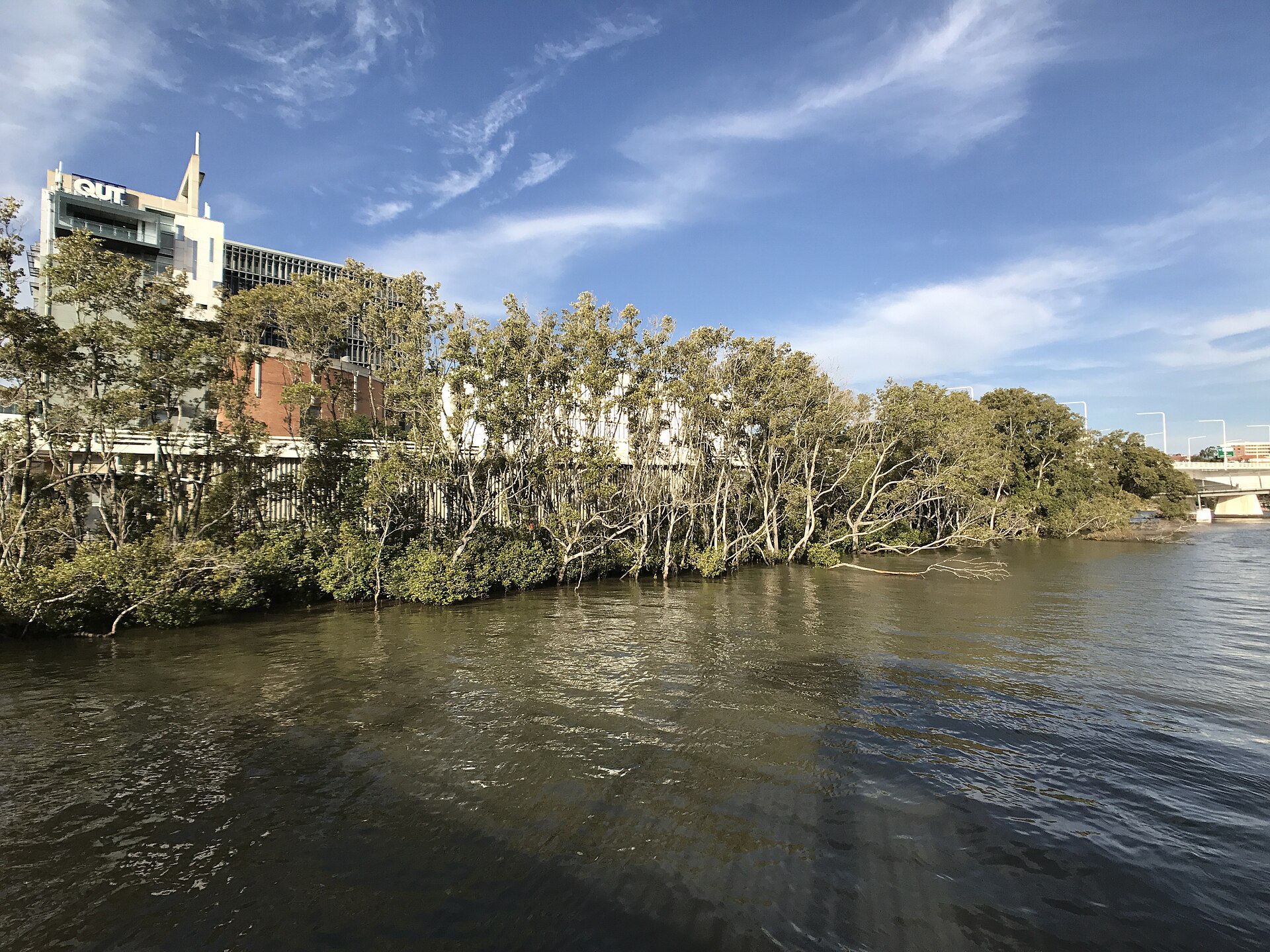
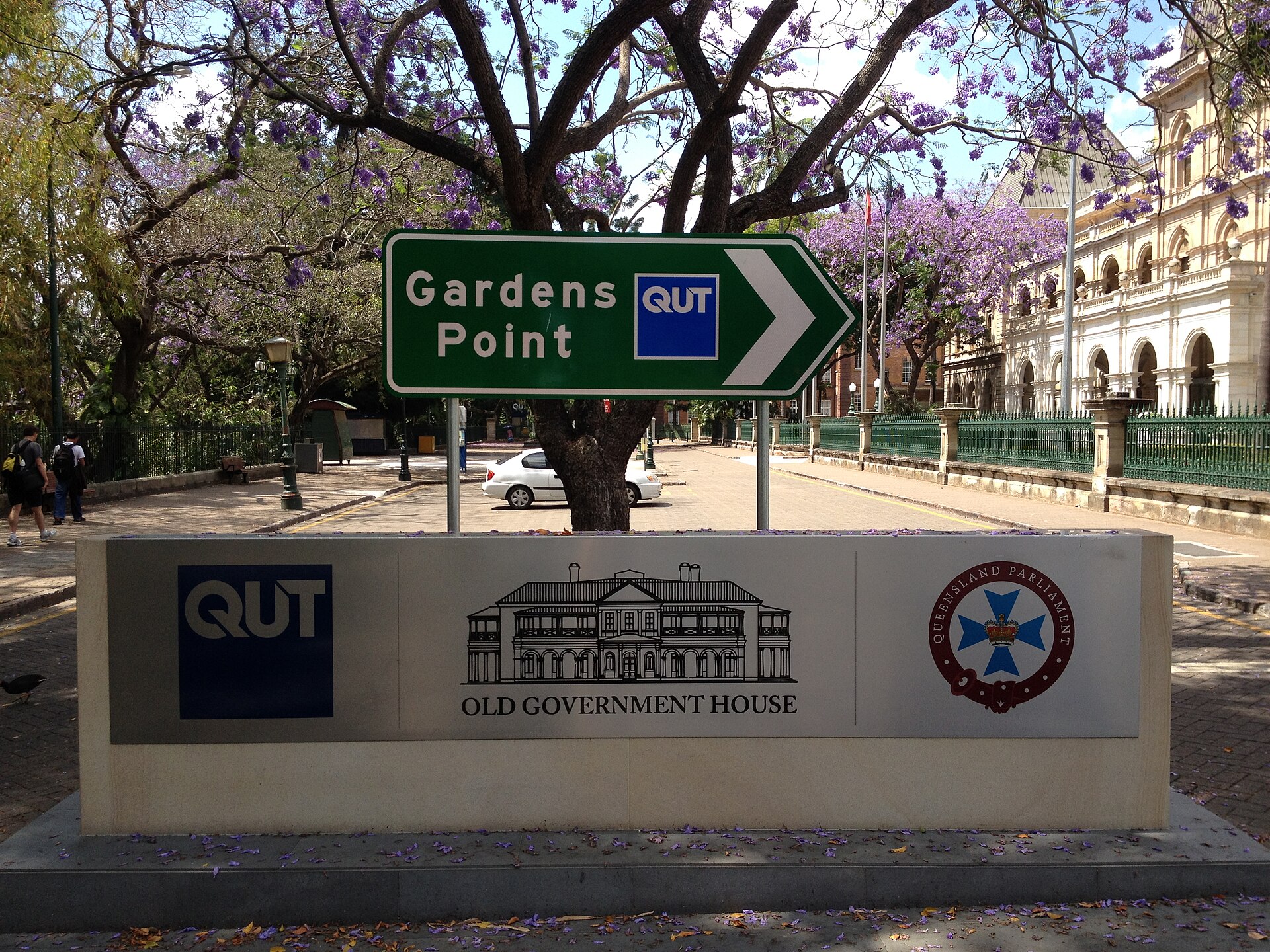
Queensland University of Technology (QUT) — campus in pictures
Real, freely-licensed photographs of the campus (via Wikimedia Commons).




Why QUT — Real World, Real Outcomes
QUT occupies a distinct niche in Australian higher education: a research-intensive public university that never loses sight of graduate employability. Here is why ambitious international students choose it.
QUT Acceptance Rate & Admissions Profile
Stats
Profile Stats
Rea Vs Rd
QUT Admissions Requirements — Academics, English & Qualifications
- University minimum: 30 IB Diploma points
- Competitive programs typically expect 33–36+ points
- HL Mathematics strongly expected for STEM programs
- Biology and Chemistry HL for Biomedical and Health programs
- Cambridge A-Levels accepted; BBB or above for competitive programs
- Indian CBSE/ISC: typically 85%+ aggregate in relevant subjects
- US High School Diploma accepted with SAT/ACT and strong AP results
- All qualifications assessed against Australian Year 12 equivalency benchmarks
- IELTS Academic: 6.5 overall (no band below 6.0)
- TOEFL iBT: 79 minimum
- Duolingo English Test: 110 minimum
- PTE Academic: 58 minimum (50 per skill)
QUT Application Components — Direct Apply, Documents & Requirements
QUT uses a direct online application — no central clearing house like UCAS is required for international students. The application is document-based and straightforward, but requires careful attention to certification and English-test timing.
QUT Applications — No Essays, But Preparation Still Matters
Prompts
Tips
What QUT Admissions Officers Are Looking For
QUT's admissions are primarily merit-based on academic results, but the university is explicit that it values diversity, real-world readiness, and genuine interest in professional outcomes. Understanding these dimensions helps international students present their credentials most effectively.
QUT Financial Aid & Scholarships for International Students
Australia does not have a federal need-based financial aid system for international undergraduate students equivalent to the US FAFSA. However, QUT offers a competitive merit scholarship program, and the Australian Government's Australia Awards Scholarships provide comprehensive support for eligible students from developing countries.
Tuition and cost figures are approximate annual estimates in USD. Exchange rates fluctuate — confirm current AUD figures on qut.edu.au/international/future-students/fees.
Stats
Contribution Tiers
| Range | Percent | Note | Percent Value |
|---|---|---|---|
| Top academic results (IB 38+, A-Level AAA+) | Vice-Chancellor's Scholarship | Highest-value award; limited places; assessed automatically | 100 |
| Strong results (IB 33–37, A-Level BBB–AAB) | International Merit Scholarship | 10–25% tuition reduction; no separate application required | 60 |
| Australia Awards-eligible countries | Full Scholarship (Govt) | Tuition + living allowance + return airfare; apply 12–18 months ahead | 100 |
| Faculty-specific prizes (continuing students) | Supplementary Awards | Based on Year 1 performance; not available at application stage | 30 |
| Standard direct entry (no scholarship) | Full tuition applies | Budget USD 24,400/year tuition plus USD 15,000 living | 0 |
Key Dates
Advantages
- Largest intake — most programs, most courses, and most social connections available
- Full academic year begins from the start — no partial-year awkwardness
- More scholarship budget typically available in Semester 1
- Aligns with the majority of international student arrivals — easiest transition socially
- On-campus accommodation more available for Semester 1 applicants
Disadvantages
- Some programs are not offered in Semester 2 intake — always verify your specific course
- Smaller cohort means fewer new students to connect with at orientation
- Scholarship availability may be more limited
- July arrivals in Brisbane winter (mild, but a contrast to tropical home countries)
- Visa processing must still complete before July — apply no later than April–May
QUT Interview Process — What to Expect
QUT does not conduct admissions interviews for standard undergraduate programs. Unlike Oxbridge or some US universities, the decision is based entirely on your academic qualifications and supporting documents. However, for specific programs and pathways, there are exceptions.
Meta
Questions
QUT Residential Life & Campus Housing
QUT does not operate a residential college or 'house' system in the Oxbridge tradition. Instead, QUT offers on-campus student housing at its Kelvin Grove campus and maintains partnerships with off-campus providers near Gardens Point. Understanding your accommodation options early is important — on-campus places are limited and popular.
Lottery Steps
- On-campus: QUT Student Housing at Kelvin Grove — self-catered studio, twin, and shared apartments; apply simultaneously with your course application
- Off-campus partnership providers: QUT maintains preferred-provider relationships with nearby residential complexes in Kelvin Grove and Bowen Hills
- Private rental market: Brisbane rental market is competitive; Gardens Point students typically rent in Fortitude Valley, New Farm, or the inner-CBD
- Homestay: QUT's International Student Services team can connect students with vetted homestay hosts — a popular option for Semester 1 first-year international students
- QUT's International Student Advisory team provides housing guidance as part of the pre-arrival support package — use it
Houses
QUT Faculties & Undergraduate Programs
- {"label":"International accreditations","value":"3 (AACSB, EQUIS, AMBA)"}
- {"label":"Business schools globally with triple crown","value":"<1%"}
- {"label":"Flagship degree","value":"Bachelor of Business"}
- {"label":"Industry partner projects per year","value":"500+"}
- {"label":"Engineering disciplines offered","value":"8+"}
- {"label":"Research centres","value":"40+"}
- {"label":"Flagship research unit","value":"QUT Centre for Robotics"}
- {"label":"Industry partnerships","value":"Active with Airbus, Boeing, Rio Tinto"}
- {"label":"Flagship program","value":"Bachelor of Biomedical Science"}
- {"label":"Clinical hospital partnerships","value":"Multiple (PA Hospital, RBWH)"}
- {"label":"Research institute","value":"IHBI (Institute for Health and Biomedical Innovation)"}
- {"label":"Entry: Nursing IELTS minimum","value":"7.0"}
- {"label":"Programs offered","value":"20+"}
- {"label":"Performance venues on campus","value":"Roundhouse Theatre (La Boite)"}
- {"label":"Graduate industry","value":"Film, advertising, game dev, digital content"}
- {"label":"Portfolio required","value":"Yes (most creative programs)"}
- {"label":"Flagship degree","value":"Bachelor of Laws (LLB)"}
- {"label":"Dual-degree options","value":"5+ (Business, IT, Justice, CI)"}
- {"label":"IELTS requirement","value":"7.0"}
- {"label":"Innovation","value":"QUT LawBot (AI-powered legal tool)"}
- {"label":"Flagship degree","value":"Bachelor of Information Technology"}
- {"label":"New discipline","value":"Cybersecurity (high demand)"}
- {"label":"Industry integration","value":"Atlassian, Canva, Tech industry partnerships"}
- {"label":"Entry math requirement","value":"HL Mathematics strongly expected"}
Research & Extracurricular Opportunities at QUT
Career Outcomes & QUT Alumni Network
QUT consistently ranks among Australia's top universities for graduate employment. The university's industry-first curriculum design — with embedded placements, capstone projects with real clients, and mandatory work-integrated learning in many programs — means graduates enter the workforce with practical credentials, not just academic ones.
Stats
Categories
Our QUT Admissions Track Record & Student Success Stories
Faqs
Do I need to sit the SAT, ACT, or any Australian entrance exam to apply to QUT?+
No. QUT does not require the SAT, ACT, or Australia's ATAR exam from international applicants. Admission is based on your international qualification — IB Diploma, A-Levels, national board results, or equivalent. QUT assesses these against Australian Year 12 equivalency benchmarks.
Is there an application fee?+
No. QUT does not charge an application fee for international undergraduate or postgraduate applicants. This is one less financial barrier compared to US and UK universities.
Can I apply to more than one program at QUT?+
Yes. You may list preferences in your application. If you are not accepted to your first-choice program due to entry requirements, QUT may offer you an alternative program or pathway through QUT International College (QUTIC).
What is QUT International College and do I need it?+
QUTIC offers diploma and foundation programs that feed directly into QUT degrees for students who do not yet meet direct entry academic or English requirements. Completing QUTIC is a recognised pathway — not a lesser option. Many international students use it strategically when their results are close to but not quite at the direct-entry threshold.
What English test score do I need?+
The university-wide minimum is IELTS Academic 6.5 (no band below 6.0), TOEFL iBT 79, or Duolingo 110. Some programs — particularly Nursing, Education, and Law — require IELTS 7.0 or above. Always check your specific program's English requirements, not just the university minimum.
When should I apply for a Student Visa (subclass 500)?+
Apply for your visa as soon as you receive your Confirmation of Enrolment (CoE) from QUT. Visa processing times vary but allow at least 4–8 weeks. Apply for your CoE immediately after accepting your offer and paying the tuition deposit.
Is Brisbane significantly cheaper than Sydney or Melbourne?+
Yes. Rent in Brisbane typically runs 20–30% below equivalent accommodation in Sydney, and grocery and transport costs are comparable to or slightly below Melbourne. The QUT cost-of-living estimate of approximately USD 15,000 per year reflects this advantage.
Can I work while studying at QUT on a student visa?+
Australian Student Visa holders are permitted to work up to 48 hours per fortnight during term and unlimited hours during scheduled breaks. QUT's career services and QUT Talent (the university's graduate employment platform) help international students find on-campus and local part-time work.
Book a Free QUT Admissions Strategy Session
In 60 minutes our QUT admissions specialists will evaluate your academic profile, identify your application strengths and gaps, advise on which intake and program gives you the best outcome, and help you navigate scholarships, visa requirements, and the direct application process.
- No commitment required
- QUT and Australian university specialists
- Personalised strategy — not generic advice
QUT Academic Requirements
QUT Academic Requirements — The Honest Breakdown for International Students
What IB score, A-Level grades, and English test result do you actually need for QUT? And what does 'real world' learning mean for how you prepare academically?
GPA & Academic Standing
QUT and GPA — What the Entry Standards Show
QUT's minimum GPA equivalent for direct undergraduate entry is 3.0 on a 4.0 scale. This is the university-wide floor — competitive programs, particularly Biomedical Science, Law, and selective Engineering streams, set higher effective thresholds based on the applicant pool each intake.
A GPA of 3.0 is the minimum, not the goal. For high-demand programs, treat 3.5+ as your realistic target. And remember: in Australia, your academic record is essentially your entire application — there is no essay to compensate for weaker grades.
Academic Context
How QUT Contextualises Your Academic Record
QUT assesses international qualifications against Australian Year 12 equivalency benchmarks using a published conversion framework. The university's international admissions team is experienced at reading results from IB, A-Levels, Indian boards, US High School, and many other systems.
Standardised Tests — US Context
SAT Scores at QUT — Relevant Only for US-Curriculum Applicants
QUT does not require the SAT from international applicants as a condition of admission. For most students, SAT scores are simply not part of the QUT application. However, US-curriculum students (US High School Diploma) may find that submitting SAT results helps QUT assess their academic equivalency alongside their diploma.
| Label | Score | Percent |
|---|---|---|
| SAT required for Australian university entry | Not required | 0 |
| US High School applicants — may submit SAT as supporting evidence | Optional | 50 |
| Strong AP results (4–5) enhance US applicant profile | Helpful | 70 |
ACT — Context for US-Curriculum Students
ACT Scores at QUT — Not Required, But Contextually Useful
QUT does not require the ACT. For students applying with a US High School Diploma, ACT scores can be submitted as supplementary evidence of academic capability — they are not evaluated as a primary admission criterion.
Metrics
Comparison Cards
Test Policy
QUT's Test Policy — Grades-First, Not Test-Driven
QUT does not participate in test-optional or test-flexible policies in the US sense — it has never required standardised tests like the SAT or ACT from most international applicants. Australian university admissions are fundamentally grades-first: your secondary qualification (IB, A-Levels, national boards) is the primary determinant.
Submit Items
Withhold Items
Curricula
A-Levels and IB at QUT — Specific Benchmarks
- {"label":"University minimum","value":"30 points"}
- {"label":"Competitive programs (Biomedical, Law, Engineering)","value":"Typically 33–36+"}
- {"label":"Mathematics for STEM programs","value":"HL Mathematics: Analysis and Approaches preferred"}
- {"label":"Health programs","value":"Biology and Chemistry HL strongly expected"}
- {"label":"Minimum entry (3 A-Levels)","value":"Grade C or above in each subject"}
- {"label":"Competitive programs","value":"BBB or above as a practical threshold"}
- {"label":"Engineering / IT","value":"Mathematics A-Level strongly expected"}
- {"label":"Health programs","value":"Biology A-Level expected for Nursing / Biomedical"}
AP Courses — Context for US Students
AP Courses at QUT — What Counts for US-Curriculum Applicants
For students in the US system or at schools that offer AP courses, Advanced Placement performance is a meaningful signal for Australian universities — not because QUT requires AP, but because strong AP results demonstrate academic capability at a level that assists with qualification equivalency assessment.
Academic Rigour
Subject Rigour — QUT's Most Important Academic Signal
While QUT does not formally publish 'rigour of secondary school record' as an admissions criterion in the way Harvard does, subject selection within your IB or A-Level program profoundly affects your competitiveness for program-specific entry and your academic readiness in first year.
Taking the relevant rigorous subjects for your intended program — not just the ones that maximise your total score.
STEM Preparation
Mathematics and Science Preparation — What QUT Expects
QUT's STEM programs (Engineering, IT, Data Science, Biomedical Science) have rigorous first-year content that assumes solid foundational preparation. Unlike some Australian universities, QUT's Science and Engineering Precinct is research-intensive, and first-year units are designed to connect directly to industry and research contexts.
Language Proficiency
English Language Requirements for International QUT Applicants
All international applicants whose first language is not English must provide evidence of English proficiency. These are the official, published QUT minimums — individual programs (Nursing, Education, Law) may require higher scores. Results must be no more than two years old at time of application.
QUT's assessments are writing-intensive across all faculties. Business case analyses, Engineering reports, Creative program critiques, and Nursing clinical documentation all demand strong academic English. Students who arrive at the minimum threshold often find themselves spending significant time on writing support in first year — time that could be better spent on content learning.
By Program Area
Academic Requirements by Program Area — What Different Paths Expect
QUT students are admitted to specific programs, not to the university broadly. Unlike Harvard (where concentration is chosen after admission), your program choice is locked at application. Subject requirements below are drawn from QUT's published course pages and reflect typical expectations for the most competitive intake cycles.
| Concentration | Expectation | Signals |
|---|---|---|
| Engineering (all streams) | HL Maths AA / A-Level Maths | Strong mathematics performance; physics for electrical / mechanical |
| Information Technology | HL or SL Maths + programming background | Coding projects; AP CS; IB Computer Science |
| Data Science | HL Maths AA strongly preferred | Statistics aptitude; analytical projects; programming |
| Business (all majors) | No strict prerequisites; Maths and Economics helpful | IB Economics; A-Level Business; leadership experience |
| Biomedical Science | Biology + Chemistry (HL or equivalent) | Lab experience; science olympiad; research interest |
| Nursing | Biology expected; IELTS 7.0 required | Care/health work experience; clinical aptitude |
| Law (LLB) | Strong English; IELTS 7.0 required | Debate; Model UN; essay writing competitions |
| Creative Industries (Film, Design, Animation) | Portfolio required; academic results less critical | Portfolio range; personal creative projects; artist's statement |
International Systems
How QUT Evaluates International Education Systems
Year-by-Year Roadmap
Building an Academic Profile for QUT — What to Do at Each Stage
- Choose subjects that align with your intended QUT program area. If considering Engineering or IT, commit early to Mathematics.
- Begin English test preparation awareness — Australian universities require an English proficiency test that most students underestimate the preparation time for.
- If creative programs interest you, begin building a portfolio with personal projects now. The strongest portfolios reflect years of work, not months.
- Research Brisbane and QUT — understanding the city and campus early helps with the accommodation and lifestyle planning that Australian admissions require.
- IB: select HL subjects that match your target QUT program (see requirements by program above). HL Mathematics for STEM; Biology and Chemistry for Health.
- A-Level: choose three subjects with clear career-relevance to your intended QUT program.
- Discuss your intended QUT program with your school counsellor to confirm subject alignment with known entry requirements.
- Research IELTS or TOEFL requirements for your target program — some programs (Nursing, Law, Education) require 7.0 rather than the university minimum of 6.5.
- Sit your IELTS, TOEFL, PTE, or Duolingo test early in Year 12. If your result falls short of the program minimum, you have time to resit.
- Build vocabulary and academic writing skills from Term 1 — not just for the test, but for QUT's writing-intensive assessments.
- For Semester 1 (February) entry, applications should be submitted October–November. Begin preparing documents in Term 1.
- Creative Industries applicants: finalise and curate your portfolio in Term 1–2. Do not leave portfolio preparation to the last few weeks.
- Apply through the QUT online portal with certified transcripts, English test results, passport, and any program-specific requirements.
- Conditional offer: QUT may issue a conditional offer on your predicted/preliminary results — meet conditions with final results.
- Upon unconditional offer: accept the offer, pay the tuition deposit, and receive your Confirmation of Enrolment (CoE).
- Apply for your Australian Student Visa (subclass 500) immediately upon receiving your CoE. Allow 4–8 weeks for processing. Apply for on-campus accommodation simultaneously — places fill quickly.
Common Pitfalls
Academic Mistakes That Cost QUT Applications — And How to Avoid Them
Illustrative Profiles
What Academic Profiles Tychr's QUT-Admitted Students Had
The following profiles illustrate the academic backgrounds of students Tychr has helped gain QUT admission. They show the range of preparation that works — and what made each application successful.
Faqs
What IB score do I need for QUT?+
The university-wide minimum is 30 IB Diploma points. Competitive programs — Biomedical Science, Law, selective Engineering streams — typically require 33–36+ in practice, based on each semester's applicant pool. Treat 30 as the floor and 33+ as your target for high-demand programs.
Does QUT require the SAT or ACT?+
No. QUT does not require SAT or ACT from international applicants. US-curriculum students (US High School Diploma) may submit SAT/ACT as supplementary evidence to assist with equivalency assessment, but it is not a requirement.
Is IELTS 6.5 enough for all QUT programs?+
No. IELTS 6.5 is the university-wide minimum, but Nursing, Education, and Law programs require IELTS 7.0 overall. Always check the English requirement on the individual course page for your intended program.
Can I apply to QUT with predicted grades?+
Yes. QUT issues conditional offers based on predicted or in-progress grades. Final, certified results must be submitted once available before you can receive an unconditional offer and Confirmation of Enrolment.
Does QUT interview international undergraduate applicants?+
Generally no. Most undergraduate programs have no interview component. Some Nursing and Education pathways may include additional assessments; check individual course pages. Research degree (MPhil, PhD) applicants are expected to identify and communicate with a prospective supervisor before applying.
Cost & Financial Aid
What QUT Actually Costs International Students — And How to Fund It.
QUT is a public Australian university with a strong value proposition relative to equivalent-ranked UK and US universities. But the financial reality for international students is different from domestic: full-fee tuition, no need-based aid, and a requirement to demonstrate funds for your visa. Here is what you actually need to know.
Cost Transparency
What QUT Actually Costs — The Full Annual Figure
QUT's total annual cost is significantly lower than equivalent-ranked UK universities (where tuition alone often exceeds USD 30,000/year in London) and most US universities. Brisbane's cost of living — 20–30% below Sydney and Melbourne — further reduces the total financial burden for international students who manage their budget carefully.
Financial Aid Policy
Financial Aid for International QUT Students — The Honest Picture
Unlike US elite universities (which offer need-blind, full-need grants for international students) or some UK universities (which offer partial bursaries), all Australian public universities operate on a full-fee model for international undergraduates. The financial planning reality is therefore very different: you must arrive financially self-sufficient.
Value Proposition
Why QUT Still Represents Good Value — The Full Picture
Scholarship Application Process
Applying for QUT Scholarships and Australian Government Funding — Step by Step
QUT's institutional merit scholarships are assessed automatically during the admissions process — there is no separate scholarship application. External funding (Australia Awards, home-government scholarships) requires separate applications, often well before your QUT application itself.
- Check eligibility at australiaawards.gov.au
- Awards cover tuition, living allowance, return airfare, and OSHC
- Apply 12–18 months ahead of intended commencement
- Applications close in a specific window — check your country's timeline
- No separate scholarship application form required
- Scholarship assessment is automatic during admissions review
- Scholarship noted in your Letter of Offer if awarded
- Apply at least 3–4 months before your intended intake for best scholarship consideration
- India: check ICCR and state government schemes
- Malaysia: MARA, JPA, and state scholarship boards
- Indonesia: LPDP (funded by Indonesian Ministry of Finance)
- Saudi Arabia: Saudi Cultural Mission (SACM)
- China: CSC (China Scholarship Council)
- Pay initial tuition deposit to trigger CoE issuance
- OSHC is arranged automatically through QUT/Medibank
- OSHC cost is typically AUD 600–800/year; factor this into your budget
- CoE is the key document for your student visa application
- Required: evidence of funds covering tuition + AUD 21,041/year living (current government benchmark)
- Bank statements typically need to show 3+ months of consistent balance
- Scholarship letters can be used as evidence if available
- Apply for visa immediately upon receiving your CoE
International Students Specifically
Financial Aid for International QUT Students — How It Works
The financial landscape for international undergraduate students at QUT is fundamentally different from the US or UK experience. There is no need-based grant system, no income-contingent loan scheme, and no government subsidy. Here is what actually exists for international students.
Scholarship Landscape
What Financial Support Actually Looks Like at QUT
Approximate Scholarship Value by Award Type
These are approximate illustrative ranges. Actual scholarship amounts, availability, and conditions change each intake cycle. Verify current awards at qut.edu.au/international/scholarships.
For most international undergraduate students without external government support, the QUT Merit Scholarship reduces annual tuition by AUD 3,000–8,000 — a meaningful but partial reduction. The most significant funding opportunities (Australia Awards, government scholarships) require separate applications well before you apply to QUT itself.
| Income | Grant | Contribution |
|---|---|---|
| QUT International Merit Scholarship | AUD 3,000–8,000 | 10–25% of first-year tuition; renewable |
| QUT Vice-Chancellor's Scholarship | AUD 8,000–15,000+ | Larger reduction; limited places; high-achievers only |
| Australia Awards Scholarship (Govt) | Full tuition + AUD 21,041 living + airfare | Full comprehensive coverage; separate application |
| Destination Australia (Govt, regional) | AUD 15,000/year | Supplementary; regional campuses only |
| Home-government scholarships (e.g., LPDP, MARA, CSC) | Varies widely | Often full cost coverage; apply through home country |
| QUT Faculty Prizes (continuing students only) | AUD 500–3,000 | Supplementary; awarded after Year 1 performance |
Table Headers
Qualification Criteria
QUT Scholarships — What Exists and Who Qualifies
All QUT institutional support for international undergraduate students is merit-based — assessed on academic results and awarded automatically during the admissions process. There is no need-based institutional aid.
External Funding
External Scholarships — Additional Funding for QUT Students
The most significant funding opportunities for international QUT students come from outside QUT itself — Australian government programs and home-country government scholarship schemes. These often cover full costs and deserve serious research before you finalize your funding plan.
Loans & Debt
Student Loans at QUT — What's Available to International Students
International undergraduate students at QUT (and all Australian public universities) do not have access to the Australian Government's HECS-HELP income-contingent loan scheme, which is restricted to Australian citizens and permanent residents. There is no institutional loan program at QUT for international students.
Student Employment
Working While Studying at QUT — What to Expect
Australian Student Visa holders may work up to 48 hours per fortnight during academic term and unlimited hours during scheduled university breaks. QUT actively supports students in finding on-campus and local employment through its QUT Talent (careers and employment) platform.
- On-campus retail and food service (Student Guild, QUT cafés)
- Library and administrative assistant roles
- Student ambassador and campus tour guide (popular with international students)
- Research assistant positions (typically Year 2+ via VRES programme)
- Casual tutoring and academic support (for high-performing students in their subjects)
- Local hospitality, retail, and customer service (Brisbane CBD and Kelvin Grove village)
Benchmarking
QUT vs. Other Australian Universities — Financial Aid Comparison
| School | Policy | No Loans | Typical Cost |
|---|---|---|---|
| QUT | Merit-based only | No HECS-HELP for intl. | ~USD 24,400/year tuition |
| University of Queensland (UQ) | Merit-based only | No HECS-HELP for intl. | ~USD 28,000–33,000/year tuition |
| Griffith University | Merit-based only | No HECS-HELP for intl. | ~USD 20,000–26,000/year tuition |
| University of Sydney | Merit-based only | No HECS-HELP for intl. | ~USD 30,000–40,000/year tuition |
| University of Melbourne | Merit-based only | No HECS-HELP for intl. | ~USD 32,000–45,000/year tuition |
| UK Russell Group (London) | Partial bursaries for some | Tuition loans available | ~USD 28,000–40,000/year (4 years) |
| US State University (out-of-state) | Limited intl. aid | Some loan options | ~USD 35,000–50,000/year (4 years) |
True Cost Analysis
QUT vs. Alternatives — What You Actually Pay Over the Degree
QUT's 3-year standard Australian degree structure means the total degree cost — even without scholarships — is often lower than a comparable 4-year US or UK degree when tuition and living costs are compared across the full program duration. Brisbane's cost-of-living advantage over Sydney, Melbourne, London, and most US cities amplifies this difference.
| School | Policy | Contribution | Four Year Cost |
|---|---|---|---|
| QUT (Brisbane, 3 years) | Merit-based, no need-based aid | ~USD 39,400/year | ~USD 118,200 (3 years) |
| Griffith University (Brisbane, 3 years) | Merit-based, no need-based aid | ~USD 33,000–36,000/year | ~USD 99,000–108,000 (3 years) |
| University of Sydney (4 years) | Merit-based, no need-based aid | ~USD 48,000–58,000/year | ~USD 192,000–232,000 (4 years) |
| UK University London (4 years) | Limited bursaries | ~USD 42,000–55,000/year | ~USD 168,000–220,000 (4 years) |
| US State University, out-of-state (4 years) | Limited intl. aid | ~USD 45,000–60,000/year | ~USD 180,000–240,000 (4 years) |
Scholarship Appeals
Appealing a QUT Scholarship Decision — When and How
QUT does not have a formal financial aid appeals process equivalent to US universities (since there is no need-based aid to appeal). However, if you believe your merit scholarship assessment did not accurately reflect your academic profile, or if your circumstances have changed significantly since your initial application, there are steps you can take.
The honest note: QUT's merit scholarship assessment is based primarily on your final academic results at the time of application. If your results improve (e.g., your final IB score is higher than predicted), resubmit your final results and explicitly request a scholarship reassessment. Strong final results sometimes trigger scholarship offers that were not in the initial conditional offer.
When To Appeal
- Your final academic results (IB, A-Level, CBSE) are significantly stronger than the predicted results used in your initial offer
- You received a scholarship at a comparable Australian university that was not matched by QUT
- Your financial circumstances changed materially between application and enrolment (family financial hardship)
- You believe your academic profile was assessed incorrectly due to a documentation issue
How To Appeal
- Contact QUT International Scholarships office directly (scholarships@qut.edu.au or via the QUT website)
- Submit your final academic results alongside a written request for reassessment
- Provide documentation for any changed financial circumstances
- Reference any comparable scholarship offers from other Australian universities (sometimes effective)
Timeline & Planning
Planning for QUT Costs — What to Do and When
Application & Personal Statement
QUT Applications — No Essays Required, But Preparation Still Matters.
Unlike US universities, QUT does not require a personal essay for standard undergraduate admission. But that does not mean preparation is irrelevant — document certification, English testing, portfolio preparation (for creative programs), and scholarship statements all require significant lead time. This guide covers what you actually need to do.
Requirement Overview
The QUT Direct Application — What Is Required
International students apply directly through QUT's online application portal at qut.edu.au/international. The application is document-based, not essay-based. There is no word-count personal statement required for standard undergraduate entry. Understanding what IS required — and what needs advance preparation — is the foundation of a strong QUT application.
Required Items
Optional Items
No Personal Statement for Standard Entry
No Essay Required — What This Means for Your QUT Application Strategy
The absence of a personal essay at QUT is both a relief and a strategic reality. Without an essay to differentiate yourself, your academic record, English test score, and (for creative programs) your portfolio ARE your application. The preparation energy that US applicants invest in essays must be redirected toward document quality and English proficiency.
Your strategic challenge at QUT is not essay writing — it is operational excellence. Get your certification done early, sit your English test with time to resit if needed, start your portfolio in Year 11, and apply at least 3–4 months before your intended intake. These are the levers that determine your QUT outcome.
Looking For List
- Complete, correctly certified academic documentation submitted on time
- English test scores that meet or exceed the program minimum — ideally 7.0+ even when 6.5 is the threshold
- For creative programs: a portfolio that demonstrates genuine range, technical skill, and conceptual thinking
- For external scholarship applications: a specific, well-argued personal statement connecting your goals to national development
Tired Of List
- Applications with pending English test results (creates delays and potential offer lapses)
- Plain-scanned, uncertified transcripts that cannot be processed
- Last-minute creative portfolios assembled in weeks rather than months
- Generic scholarship statements that could apply to any university in any country
Portfolio Strategy (Creative Programs)
Choosing What to Include in Your QUT Creative Portfolio
For students applying to QUT's Creative Industries faculty — Film, Animation, Game Design, Graphic Design, Fashion, Interior Design, Architecture — the portfolio is your most important application document. It deserves the same strategic attention that US applicants give to their personal statement. Here is how to approach it.
Criteria
Caution Topics
- Portfolios assembled entirely from school-assignment briefs (shows compliance, not initiative)
- Technically proficient work that lacks a conceptual point of view (execution without ideas)
- Inconsistent presentation — a strong body of work undermined by a poorly formatted PDF
- Work included to show quantity rather than quality
When a Statement Is Required
Writing Statements for QUT Pathways and External Scholarships
While QUT's standard undergraduate application requires no personal essay, written statements are required for some QUT pathways, scholarship applications, and research degree entry. These statements are evaluated competitively and deserve serious preparation.
Application Strategy
How to Make Your QUT Application as Strong as Possible
Since there is no essay to differentiate yourself on paper, your academic record, document quality, and strategic positioning ARE your application. The following strategies help you present your credentials most effectively in QUT's document-based admissions process.
Scholarship Statement Strategy
Writing a Strong Statement for Competitive Scholarships
For students pursuing Australia Awards, home-government scholarships, or QUT research degree entry, the written statement is evaluated with the same rigour that Harvard evaluates a personal essay. Weak statements — generic, unpersonalised, or misaligned with the evaluating panel's priorities — are frequently eliminated early in selection processes.
Avoid These Pitfalls
Common Application Mistakes at QUT
- Assuming that because there is no essay, no preparation is needed — document certification, English testing, and portfolio preparation all require significant lead time, often months before your application deadline.
- Submitting uncertified (plain-scanned) academic transcripts — QUT requires officially certified copies; uncertified documents will delay your offer or trigger a request for resubmission.
- Applying without checking program-specific English requirements — the university minimum of IELTS 6.5 is not the program minimum for Nursing, Education, or Law, which require 7.0.
- Leaving creative portfolio preparation to the final weeks before the application deadline — a rushed portfolio rarely reflects your best work and significantly weakens your application for creative programs.
- For external scholarship applications: writing generic personal statements that could apply to any scholarship or any university — specific, contextualised arguments always outperform generic ambition statements.
- Not applying for on-campus accommodation simultaneously with your course application — Kelvin Grove accommodation places are limited and fill quickly each semester.
- Missing the recommended application deadline and applying too close to the intake start date — late applications may receive offers too close to the visa processing window, making timely arrival impossible.
- Applying with IELTS results below the program minimum and expecting an exception — QUT cannot and does not waive statutory English proficiency requirements; resit the test or apply to the QUTIC English pathway instead.
Faqs
Do I need to write a personal statement to apply to QUT?+
No, not for standard undergraduate entry. QUT's international admissions are based on your academic results and English proficiency. The only exceptions are portfolio-based creative programs (where the portfolio replaces the personal statement) and postgraduate research applications (which require a research proposal).
Does QUT require a portfolio for all Creative Industries programs?+
Not all. Portfolio requirements vary by program — some require a portfolio, some require a statement of creative intent, and some have no supplementary requirement beyond academic results. Always check the individual course page at qut.edu.au/courses for your intended program.
Will a strong personal statement help my undergraduate application to QUT?+
There is no personal statement in the standard QUT undergraduate application, so submitting one voluntarily has no formal impact. If you have exceptional circumstances you want QUT to know about (e.g., disrupted schooling, extraordinary achievement), you may include a brief note in the application comments — but it will not substitute for academic results or English proficiency.
Does QUT conduct admissions interviews for undergraduate applicants?+
Generally no. Most undergraduate programs have no interview component. Some Nursing and Education pathways may include additional assessments. Research degree applicants should correspond with a prospective supervisor before applying — an informal conversation with your potential supervisor is expected, and it is effectively a pre-application interview.
I need to write a statement for the Australia Awards Scholarship. What should it focus on?+
Australia Awards scholarship applications typically require a Statement of Purpose of 500–1,000 words. Focus on specificity: your career goals, the connection between your proposed QUT study and your home country's development priorities, your demonstrated leadership or community contribution, and why you specifically need to study in Australia to achieve your goals. Consult the Australia Awards website and your country's application instructions for exact requirements.
Can I apply to QUT for postgraduate coursework study as an international student?+
Yes. QUT accepts applications for coursework Masters and Graduate Certificates/Diplomas from international students. Coursework Masters applications typically require a relevant bachelor's degree transcript, English test results (IELTS 6.5 minimum, some programs 7.0+), and sometimes a professional CV. Contact QUT Admissions or the specific faculty directly for program-specific requirements.
What happens if I receive a conditional offer and my final results are stronger than predicted?+
Submit your final certified results to QUT as soon as they are available. If your final results meet the unconditional offer threshold, QUT will issue an unconditional offer. If your results are significantly stronger than predicted — potentially elevating you into scholarship eligibility — contact QUT International Scholarships explicitly with your final results and request a reassessment. Strong final results sometimes trigger scholarship awards that were not in the initial offer.
Is the QUTIC pathway equivalent to direct entry to QUT?+
QUTIC (QUT International College) is a recognised pathway — not a lesser alternative. Students who complete a QUTIC diploma program with strong results (typically 65%+ across all units) receive a direct articulation into the second year of many QUT bachelor's degree programs. The programs are run on QUT's campuses, and QUTIC students have access to QUT facilities, libraries, and student services throughout their studies.
Courses — schools, degrees & intake
42 degrees across 6 groupings.
QUT Business School · 3 degrees
Bachelor of Business
Bachelor of Accountancy
Bachelor of Business / Bachelor of Laws
Faculty of Creative Industries, Education and Social Justice · 10 degrees
Bachelor of Communication
Bachelor of Creative Industries
Bachelor of Design
Bachelor of Education (Early Childhood and Primary)
Bachelor of Education (Primary)
Bachelor of Education (Secondary)
Bachelor of Games and Interactive Environments
Bachelor of Music
Bachelor of Social Work
Bachelor of Fine Arts
Faculty of Engineering · 12 degrees
Bachelor of Engineering (Honours) — Civil Engineering
Bachelor of Engineering (Honours) — Electrical Engineering
Bachelor of Engineering (Honours) — Electronic and Computer Engineering
Bachelor of Engineering (Honours) — Mechanical Engineering
Bachelor of Engineering (Honours) — Mechatronic Engineering
Bachelor of Engineering (Honours) — Chemical and Process Engineering
Bachelor of Engineering (Honours) — Environmental Engineering
Bachelor of Engineering (Honours) — Aerospace Engineering
Bachelor of Urban Development (Construction Management)
Bachelor of Urban Development (Property Economics)
Bachelor of Urban Development (Quantity Surveying)
Bachelor of Urban Development (Town Planning)
Faculty of Health · 10 degrees
Bachelor of Nursing
Bachelor of Paramedicine
Bachelor of Biomedical Science
Bachelor of Health Science
Bachelor of Optometry
Bachelor of Oral Health
Bachelor of Speech Pathology
Bachelor of Physiotherapy
Bachelor of Exercise Science
Bachelor of Podiatry
Faculty of Law · 2 degrees
Bachelor of Laws
Bachelor of Justice
Faculty of Science · 5 degrees
Bachelor of Science
Bachelor of Information Technology
Bachelor of Computer Science
Bachelor of Data Science
Bachelor of Mathematics
Want your real chances at Queensland University of Technology (QUT)?
Create a free TYCHR account for your personalised admit-chance, a shortlist you can track, exact entry requirements, and essay + counselling help.