Queen's University
Kingston, Canada · Suburban
CANADA · ONTARIO · U15 RESEARCH UNIVERSITY
Queen's University Admissions Guide for International Students
Founded in 1841 in Kingston, Ontario, Queen's University is one of Canada's most storied research universities and a proud member of the U15 group of leading research-intensive institutions. Renowned for its Smith School of Business, world-class engineering faculty, and one of the most spirited campus communities in the country, Queen's blends academic rigour with an extraordinarily tight-knit residential experience. For international students, it offers a nationally ranked, globally recognised degree at a fraction of the cost of comparable US institutions — with strong career outcomes, automatic merit scholarships, and a clear post-graduation work pathway in Canada.
Campus
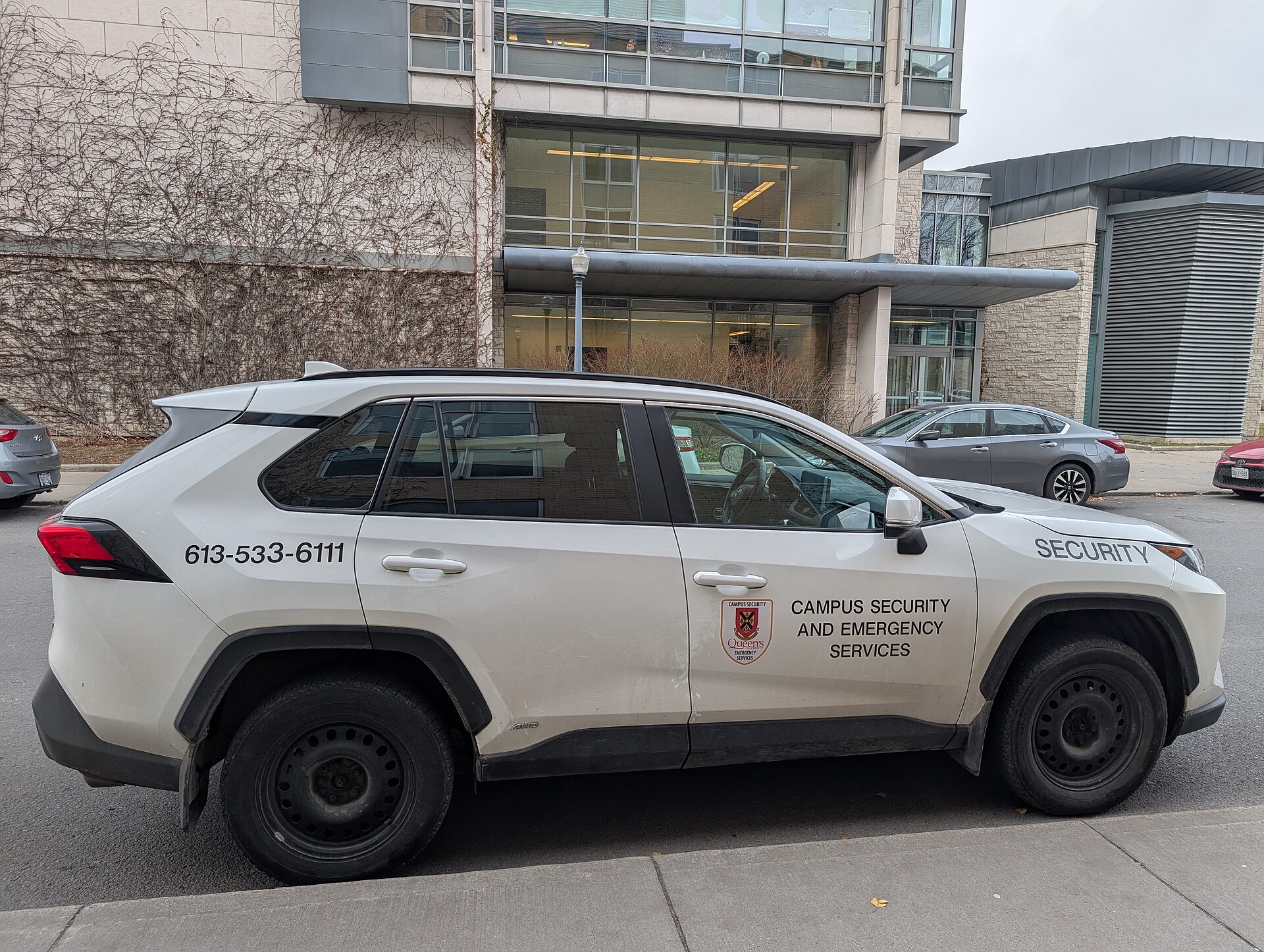
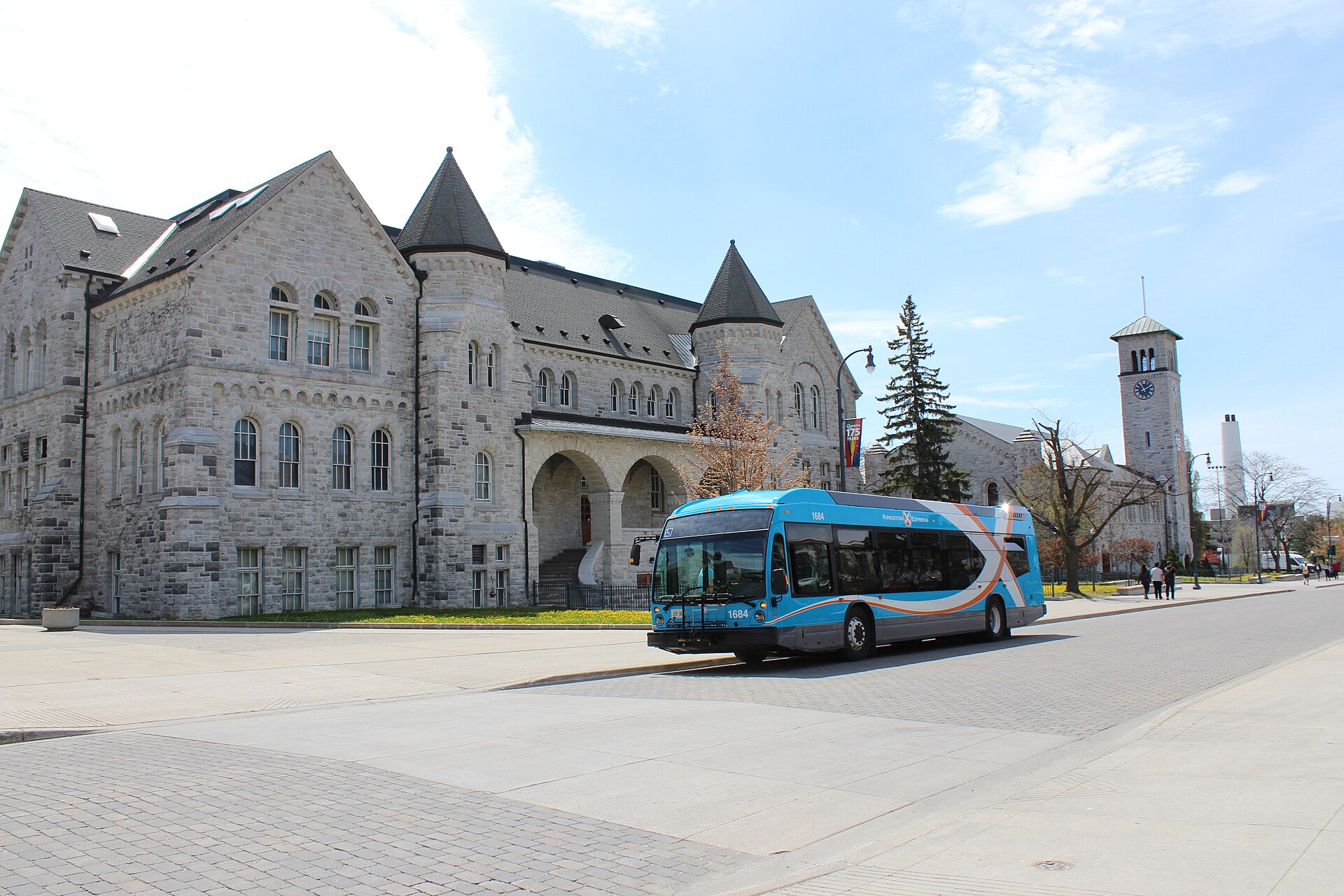
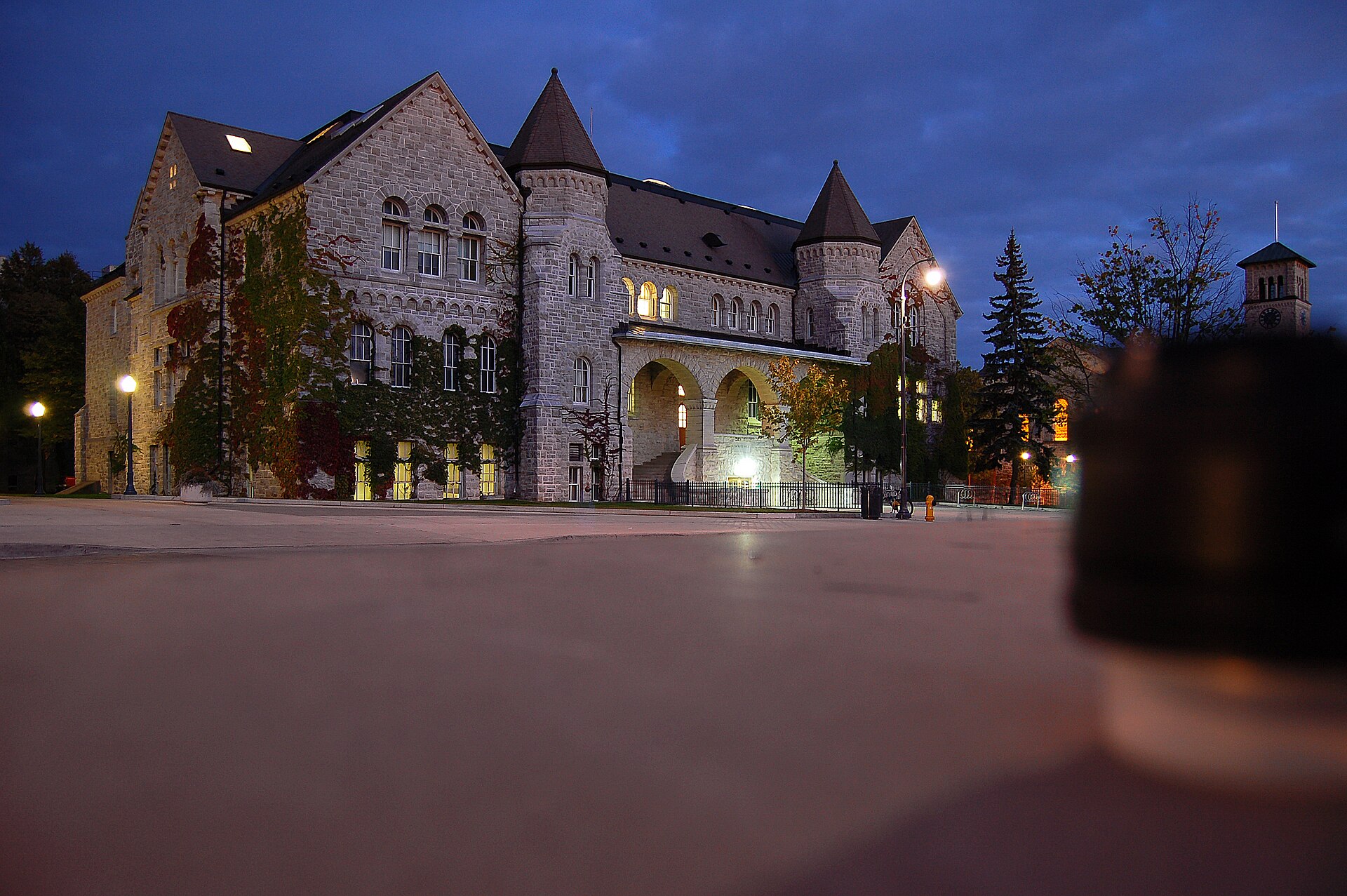
Queen's University — campus in pictures
Real, freely-licensed photographs of the campus (via Wikimedia Commons).



WHY QUEEN'S
Why Queen's — Prestige, Community & Career Outcomes
Queen's sits in the top 5 universities in Canada nationally and top 210 globally (QS 2025). It combines the research output of a major institution with the culture and community of a smaller campus — a combination that is genuinely rare.
Queen's University Acceptance Rate & Class Profile
The 42% overall acceptance rate is misleading for competitive programmes. Smith Commerce, Health Sciences, and Nursing are far more selective. Programme-level selectivity — not university-wide averages — should inform how you assess your competitiveness.
Stats
Profile Stats
Rea Vs Rd
Queen's Admissions Requirements — Grades, Supplementary & English Proficiency
- IB Diploma: 35+ competitive; 37+ for Commerce and Health Sciences
- A-Levels: AAB to AAA in relevant subjects
- National curricula (CBSE, WASSCE, etc.) assessed via Queen's conversion table
- All-round strong performance across relevant subjects matters
- Commerce, Health Sciences, Nursing ONLY — other programmes do not require it
- Deadline: February 15 — hard, no extensions
- Asynchronous video recording via Kira Talent platform
- Assesses motivation, communication, and programme fit
- IELTS Academic: 6.5 overall minimum
- TOEFL iBT: 88 minimum
- Waived if 4+ years of full-time English-medium secondary schooling
- Video supplementary is also an implicit English assessment
Queen's Application Components — OUAC, Supplementary & Documents
Queen's is a grades-first Canadian university — your predicted or final academic average is the primary admissions criterion. However, for competitive programmes, additional materials carry significant weight.
Queen's Supplementary Application — Strategy for Commerce, Health Sciences & Nursing
Tips
Prompts
What Queen's Admissions Officers Are Looking For
Queen's evaluates international applicants primarily on the strength of their predicted and final academic results. For most programmes, a competitive academic average — well above the minimum — is the primary selection criterion. For Commerce, Health Sciences, and Nursing, the supplementary application plays a decisive secondary role.
Queen's Financial Aid & Scholarships for International Students
Queen's University offers merit-based automatic scholarships and need-based bursaries to international students. Unlike US universities such as Harvard, Queen's does not meet 100% of demonstrated financial need — but its automatic merit awards make a meaningful reduction in costs for high-achieving applicants, with no separate application required.
Scholarship amounts are sourced from Queen's published scholarship information. CAD/USD exchange rates affect USD equivalent. Confirm current award values with the Queen's Student Awards office.
Stats
Contribution Tiers
| Range | Percent | Note | Percent Value |
|---|---|---|---|
| Strong academic average | Up to $25,000/yr | Automatic, renewable up to 4 years | 60 |
| Merit-based (top 3%) | Principal's Award | $7,000 CAD one-time | 30 |
| Global Scholars | Renewable award | For displaced/underrepresented international students | 40 |
Key Dates
Advantages
- Apply by November 20 for Major Admission Award (MAA) eligibility
- Earlier applications receive earlier decisions — helpful for planning
- Competitive programmes (Commerce/Health Sci/Nursing) close February 1
- Early application demonstrates genuine interest and intent
- More time to address any missing documents before the March 31 deadline
Disadvantages
- No Early Decision binding commitment — Queen's has no ED round
- Commerce/Health Sci/Nursing deadline is strict; late applications not accepted
- Kira supplementary must be completed by February 15 — independent of main application
- Admissions decisions may arrive as rolling offers — no single release date
- Study permit application must follow offer acceptance — allow 8–12 weeks
Queen's Admissions Process — No Traditional Interview; Kira Talent Instead
Queen's University does not conduct traditional admissions interviews for undergraduate applicants. For the three most competitive programmes — Smith Commerce, Health Sciences, and Nursing — the Kira Talent video supplementary serves as the assessment equivalent: an asynchronous video-and-written evaluation that reveals communication skills, motivation, and programme fit.
For all other Queen's programmes (Arts & Science, Engineering, Computing, Law, etc.), there is no supplementary and no interview — admission is decided entirely on academic results. No preparation for an interview is needed for these programmes.
Meta
Questions
Queen's Residential Life & Housing
Queen's guarantees first-year international students a place in on-campus residence — an enormous practical advantage when arriving in a new country. All first-year students are housed together on campus, creating the community integration that Queen's is known for before any upperclassman traditions begin.
Houses
Lottery Steps
- International students are guaranteed first-year residence — accept your offer and apply for residence by the stated deadline
- First-year students are placed in traditional residence halls; not a lottery system like Harvard's houses
- All first-year students eat in the Queen's dining hall (ARC or Leonard) — facilitating cross-programme friendships
- Upper-year students typically move to university-managed apartments or off-campus housing in Kingston's West Campus area
- The Queen's International Centre runs pre-arrival and early-arrival programming to help international students integrate before Frosh Week
Queen's Schools, Faculties & Undergraduate Programmes
- {"label":"Programme structure","value":"Interdisciplinary Year 1"}
- {"label":"Majors available","value":"60+"}
- {"label":"Application deadline","value":"March 1"}
- {"label":"Supplementary required","value":"No"}
- {"label":"Programme","value":"Bachelor of Commerce (BCom)"}
- {"label":"Accreditation","value":"AACSB, EQUIS, AMBA"}
- {"label":"Supplementary required","value":"Yes — Kira Talent"}
- {"label":"Application deadline","value":"February 1"}
- {"label":"Disciplines","value":"Chemical, Civil, Computing, Electrical, Engineering Physics, Geological, Mathematics, Mechanical, Mining"}
- {"label":"Accreditation","value":"Engineers Canada (CEAB)"}
- {"label":"Supplementary required","value":"No"}
- {"label":"Application deadline","value":"March 1"}
- {"label":"Flagship programme","value":"Bachelor of Health Sciences"}
- {"label":"Also offered","value":"Bachelor of Nursing Science (BNSc)"}
- {"label":"Supplementary required","value":"Yes — Kira Talent"}
- {"label":"Application deadline","value":"February 1"}
- {"label":"Flagship programme","value":"Juris Doctor (JD)"}
- {"label":"Entry level","value":"Graduate (post-undergraduate)"}
- {"label":"LSAT required","value":"Yes"}
- {"label":"National rank","value":"Top tier in Canada"}
- {"label":"Flagship programme","value":"Doctor of Medicine (MD)"}
- {"label":"Entry level","value":"Graduate (post-undergraduate)"}
- {"label":"Clinical affiliation","value":"Kingston Health Sciences Centre"}
- {"label":"Undergraduate feeder","value":"Health Sciences & Life Sciences"}
Research & Extracurricular Opportunities at Queen's
Career Outcomes & Queen's Alumni Network
Queen's consistently produces graduates who enter the workforce quickly and at strong salary levels. The Queen's Commerce Alumni Network (QCA) is one of the most active and tightly organised alumni networks in Canada, running mentorship programmes, internship pipelines, and annual recruiting events.
Stats
Categories
Our Queen's Admissions Track Record & Student Success Stories
Faqs
Can international students apply via Common App?+
Yes. Queen's accepts applications through OUAC, Common App, and the Queen's International Application Portal. Common App is a familiar choice for students also applying to US universities. Whichever portal you use, academic requirements and deadlines are the same.
Is the supplementary application required for all programmes?+
No. The Kira Talent supplementary (written + video) is mandatory only for Commerce, Health Sciences, and Nursing. Music programmes require an audition. All other programmes — including Engineering, Arts & Science, and Computing — admit on academics alone.
Do I need to submit SAT/ACT scores?+
Queen's test policy is optional for standardised tests like SAT/ACT. Applications are evaluated primarily on academic transcripts. Standardised test scores may be submitted for supplementary context but are not required or central to the admissions decision.
What IB score is competitive for Queen's?+
A total IB Diploma score of 35 or above is within the competitive range. For more selective programmes such as Smith Commerce, Health Sciences, and Engineering, higher scores are typically expected. Individual subject requirements also apply — check programme-specific requirements on the Queen's admissions site.
Are there automatic scholarships for international students?+
Yes. The Dean's International Award Program automatically considers all eligible international students entering first-year undergraduate programmes in Arts & Science, Engineering, Commerce, and Health Sciences. Awards can reach $25,000 per year and are renewable for three additional years based on maintained academic performance — no separate application is required.
Is a study permit required before I can enrol?+
Yes. You will need a valid Canadian student visa (study permit) to enrol at Queen's. Queen's International provides support with study permit applications and pre-arrival immigration guidance. Allow 8–12 weeks after receiving your offer to complete the study permit process.
Can I work in Canada after graduation?+
Yes. Queen's graduates are eligible to apply for a Post-Graduation Work Permit (PGWP), which allows you to work in Canada for up to three years after completing a degree programme of two years or more. This is a major pathway toward Canadian permanent residency via programs such as the Canadian Experience Class.
Is residence guaranteed for international students?+
Yes. Queen's guarantees first-year international students a place in on-campus residence, provided they accept their offer and apply for residence by the stated deadline. Living in residence accelerates community integration and is highly recommended.
Book a Free Queen's Admissions Strategy Session
In 60 minutes our Queen's University admissions specialists will evaluate your academic profile, identify your application strengths and gaps, develop your Kira Talent supplementary strategy (for Commerce, Health Sciences, or Nursing), and map the scholarship opportunities available to your profile.
- No commitment required
- Queen's and Canadian university specialists
- Personalised strategy — not generic advice
- Kira Talent video coaching included
Queen's Academic Requirements
Queen's University Academic Requirements — The Honest Breakdown for International Students
What grades, IB scores, and academic profile do Queen's University admitted students actually have? And what does Queen's grades-first admissions model mean for students from IB, A-Level, AP, and other international curricula?
GPA & Academic Average
Queen's and GPA — What the Data Shows
The honest picture: Queen's does not publish a precise minimum GPA for international students, and the Canadian percentage equivalent system means GPA comparisons require careful conversion. In practice, the vast majority of admitted students to competitive programmes rank in the top 10–20% of their year group.
A minimum GPA of 3.0 is a threshold, not a target. Admitted students at competitive programmes such as Commerce and Health Sciences will have substantially higher averages. Do not treat the minimum as your goal — treat the competitive average as your floor.
Academic Context
How Queen's Contextualises Your Academic Record
Queen's does not require class rank, and many international schools do not provide it. Queen's admissions office is experienced at evaluating academic performance across widely different school systems, using conversion tables and established benchmark ranges for every major international curriculum.
Standardised Testing
SAT Scores at Queen's — Context for International Applicants
Queen's does not publish SAT middle-50% bands because the SAT is not central to its admissions process. The university's admitted international student profile is characterised by strong performance in national and international secondary school curricula, not standardised test scores.
| Label | Score | Percent |
|---|---|---|
| SAT requirement | Optional | 0 |
| Published admitted SAT band | Not published | 0 |
Standardised Testing
ACT Scores at Queen's — The Data and the Strategy
Like the SAT, the ACT is not central to Queen's admissions. Queen's does not publish ACT bands for admitted students.
Metrics
Comparison Cards
Testing Strategy
Queen's Test-Optional Policy — What It Actually Means
Queen's has always operated on a grades-first basis for most international applicants, and its test-optional stance for SAT/ACT reflects the Canadian norm rather than a COVID-era exception. Understanding what this means for your application strategy is important.
Submit Items
Withhold Items
Curricula
A-Levels and IB at Queen's — Specific Benchmarks
- {"label":"Competitive range","value":"35–45 points"}
- {"label":"Commerce / Health Sci competitive band","value":"37–40+ points"}
- {"label":"HL subject requirements","value":"Vary by programme — HL Mathematics required for Engineering and Commerce; HL Biology/Chemistry for Health Sciences and Nursing"}
- {"label":"EE and TOK","value":"Included in total; A/B in EE noted positively for research-oriented programmes"}
- {"label":"Competitive range","value":"AAB to AAA in relevant subjects"}
- {"label":"Subject expectations","value":"Mathematics and a relevant science for Engineering; Mathematics and Economics for Commerce; Biology and Chemistry for Health Sciences"}
- {"label":"AS results","value":"Reviewed alongside predicted A-Level grades as supporting evidence"}
Advanced Placement
AP Courses at Queen's — What Counts and What to Know
For students in the US curriculum or at schools offering AP courses, Advanced Placement performance is a component of the academic profile — but plays a different role at Queen's than at US universities.
Academic Rigour
Rigour of Secondary School Record — A Key Factor at Queen's
Queen's considers the rigour of your secondary school course selection as part of its academic assessment. This means not just your grades, but whether you challenged yourself within your curriculum's options.
Take the most rigorous available courses in the subjects relevant to your target programme — not easier options that inflate your converted average.
Programme Preparation
Programme-Specific Academic Expectations — What Queen's Expects
Queen's has defined prerequisite subject expectations for each programme. Unlike Harvard, which admits students broadly and lets them choose concentrations later, Queen's admits directly into programmes — making subject prerequisites at admission non-negotiable.
Language Proficiency
English Language Requirements for International Queen's Applicants
Queen's requires proof of English proficiency for international applicants whose first language is not English and who have not completed at least four years of full-time secondary education in English. The requirements are clearly published and have hard minimums.
The Kira Talent video supplementary is effectively a second English language assessment for programmes that require it. A student who meets the IELTS minimum but struggles with spontaneous spoken English will find this reflected in their video response score. Spoken English preparation should be part of supplementary application readiness.
By Programme
Academic Requirements by Programme — What Different Paths Expect
Queen's admits directly into programmes; subject prerequisites are non-negotiable. Verify current subject requirements on the Queen's admissions page for your specific programme before finalising your IB or A-Level subject choices.
| Concentration | Expectation | Signals |
|---|---|---|
| Smith Commerce (BCom) | HL Mathematics (AA preferred) + Supplementary | Leadership, business experience, communication in Kira |
| Engineering (all disciplines) | HL Mathematics + HL Physics/Chemistry (programme-dependent) | Engineering competition; design projects; coding |
| Health Sciences | HL Biology + HL Chemistry + Supplementary | Healthcare exposure; research interest; community involvement |
| Nursing (BNSc) | HL Biology (senior level) + Supplementary | Healthcare/caregiving experience; empathy; clinical awareness |
| Computing | HL Mathematics + Computing background | Programming projects; competitive coding; software work |
| Arts & Science | Strong all-round profile; lighter prerequisite burden | Broad intellectual curiosity; interdisciplinary interests |
| Life Sciences / Pre-Med | HL Biology + HL Chemistry | Research; clinical shadowing; MCAT prep for later MD |
| Psychology | Strong overall average; arts/science balance | Research methods; statistical thinking; writing quality |
International Systems
How Queen's Reads International Education Systems
Roadmap
Building an Academic Profile for Queen's — What to Do at Each Stage
- Select IGCSE/MYP or equivalent subjects that leave the widest range of IB HL options.
- Prioritise Mathematics and Sciences from the start if targeting Engineering, Commerce, or Health Sciences.
- Begin developing interests and activities that will support the Kira Talent supplementary — leadership, community involvement, business or health-related experiences.
- Confirm HL subjects aligned with your target Queen's programme — HL Mathematics for Engineering and Commerce, HL Biology and HL Chemistry for Health Sciences.
- Research the Kira Talent supplementary process for your target programme and begin accumulating specific experiences to draw on.
- Aim for strong Grade 11 results — Queen's uses these for early decision-making for competitive programme applicants.
- Begin SAT/ACT preparation only if also targeting US universities.
- Applications open October 1. Target the November 20 date for Major Admission Award eligibility.
- Submit the MAA application on SOLUS by December 8.
- For Commerce, Health Sciences, or Nursing — apply as early in November as possible, since your programme deadline is February 1.
- The Kira supplementary opens once your main application is submitted. Do not wait until February 14.
- Practise with Kira's built-in practice mode multiple times — get comfortable with the video format.
- Prepare specific, evidence-backed responses about your motivations, experiences, and programme fit.
- Written and video responses due February 15 — hard deadline, no extensions.
- Maintain your predicted grades through final IB exams or national curriculum finals.
- Queen's makes conditional offers — your offer is conditional on achieving the required results.
- A late slip in grades can result in an offer being withdrawn.
- Begin study permit application as soon as your offer is received — allow 8–12 weeks.
Common Pitfalls
Academic Mistakes That Cost Queen's Applications — And How to Avoid Them
Real Outcomes
Illustrative Admitted Student Profiles — What Academic Preparation Works at Queen's
The following profiles illustrate the range of academic backgrounds among Tychr-supported students who have been admitted to Queen's University. They are illustrative — not statistical guarantees — and show how different curriculum strengths translate into successful applications.
Faqs
What IB score do I need for Queen's?+
An IB Diploma score of 35 or above is within the competitive range for most Queen's programmes. For Commerce and Health Sciences, students with 37–40 are typically the most competitive. Individual Higher Level subject requirements also apply — verify these on the Queen's admissions requirements page for your programme.
Does Queen's require the IB diploma, or will certificate results suffice?+
Queen's expects the full IB Diploma for most international IB applicants. Certificate results (individual subject scores without completing the full diploma) may be considered in some circumstances — contact Queen's admissions directly to confirm eligibility for your situation.
Can I apply to Queen's with CBSE results?+
Yes. CBSE results are accepted and converted to a Canadian percentage equivalent using Queen's published conversion table. Strong marks in relevant prerequisite subjects are important. Verify the current conversion table on the Queen's admission requirements page.
Does Queen's require SAT or ACT scores?+
No. Queen's test policy is optional — SAT and ACT scores are not required for any programme. Applications are evaluated primarily on academic transcripts. Submitting scores is permitted but will not substitute for a strong academic average.
What happens if my final IB results are lower than my predicted grades?+
Queen's offers are conditional on achieving specified final results. If your final IB scores fall significantly below your predicted grades — below the conditional offer requirement — Queen's may withdraw the offer. Maintaining your predicted grades through the final exam season is critical.
Financial Aid & Scholarships
Understanding the True Cost of Queen's University — For International Students
Queen's charges international tuition higher than domestic rates — as is standard at Canadian public universities. However, compared to US universities of equivalent prestige, Queen's represents exceptional value: automatic merit scholarships, Kingston's lower cost of living, Canada's post-graduation work pathway, and strong career outcomes make the full financial picture far more attractive than the headline tuition figure suggests.
All USD figures are approximate annual estimates based on the university's facts data. Actual amounts are in CAD — check the Queen's Registrar's fee schedule for current CAD tuition figures. CAD/USD exchange rates affect all USD comparisons.
Cost Transparency
What Queen's Actually Costs — The Full Annual Figures
Tuition varies by programme. Engineering and Commerce may have higher programme fees than Arts & Science. Always verify current programme-specific tuition on the Queen's Registrar's website. All USD figures are based on facts data and approximate exchange rate conversion.
Kingston has one of the lower costs of living among major Canadian university cities. A student who might pay CAD $25,000–$30,000/year in living costs in Toronto or Vancouver can expect to pay approximately CAD $15,000–$17,000/year in Kingston — a difference that compounds significantly over four years.
Financial Aid Policy
Queen's Financial Aid for International Students — How It Works
Eligible international students entering first-year programmes in Arts & Science, Engineering, Commerce, and Health Sciences are automatically considered for the Dean's International Award with no separate scholarship application required. The award is factored into the admissions process for eligible applicants.
Institutional Value
Why Queen's Represents Strong Value — The Full Affordability Picture
Financial Aid Walkthrough
Applying for Queen's Scholarships and Financial Support — Step by Step
Queen's scholarship process is largely automatic for merit awards — but timing and documentation still matter. Here is the complete step-by-step process for maximising financial support.
- Use OUAC, Common App, or the Queen's International Application Portal
- Applications open October 1 — begin as early as possible
- Apply by November 20 to be considered for the MAA
- Access the SOLUS student portal
- Complete and submit the MAA application by December 8
- Ensure your main application is submitted before accessing SOLUS
- Commitment Scholars: for students who applied early
- Promise Scholars: for students demonstrating additional criteria
- Deadline: February 15 via SOLUS
- Official transcripts from all secondary schools
- IELTS or TOEFL scores (where applicable)
- Any additional supporting documents requested
- Contact Student Awards Office: registrar.queensu.ca/financial-aid
- Bursaries are assessed on demonstrated financial need
- Documentation of family financial situation may be required
INTERNATIONAL STUDENTS
Queen's Financial Aid for International Students — What's Actually Available
Queen's financial support for international students is primarily merit-based, with the Dean's International Award Program as the flagship mechanism. Here is what is genuinely available — and what is not.
FINANCIAL AID ESTIMATES
What Queen's Financial Support Actually Looks Like
Illustrative Aid Scenarios — International Students
The average aid percentage for Queen's international students (avgAidPct) is not published and cannot be independently verified. The scenarios below illustrate the merit scholarship structure based on published scholarship information. Actual individual awards depend on academic profile and Student Awards office assessment. Figures in CAD.
For a high-achieving international student who qualifies for the maximum Dean's International Award ($25,000 CAD/year), the effective net tuition is substantially reduced over four years. Over four years, a $20,000/year average award translates to $80,000 CAD in total scholarship support — a material reduction in total cost of attendance.
| Income | Grant | Contribution |
|---|---|---|
| Top of competitive range (IB 40+) | Maximum Dean's Award (~$25,000 CAD/yr) | Net tuition: ~$35,000–$40,000 CAD/yr (before living costs) |
| Strong academic average (IB 37–39) | Mid-range Dean's Award (~$15,000–$20,000 CAD/yr) | Net tuition: ~$40,000–$45,000 CAD/yr |
| Competitive average (IB 35–36) | Lower Dean's Award (~$10,000 CAD/yr) | Net tuition: ~$50,000 CAD/yr |
| Below competitive average | No Dean's Award | Full international tuition + living costs |
Table Headers
SCHOLARSHIP LANDSCAPE
Merit and Need-Based Opportunities at Queen's
Queen's primary scholarship model is merit-based and automatic — unlike Harvard's need-based-only model. Understanding the difference matters for planning your finances.
EXTERNAL FUNDING
External Scholarships — Additional Funding for Queen's Students
While Queen's itself offers automatic merit scholarships and need-based bursaries, international students can also access external scholarship funding from government programmes, foundations, and bilateral agreements.
LOANS & DEBT
Loan Policy at Queen's — The Honest Picture for International Students
Queen's University does not have a no-loan policy for international students. Unlike Harvard or Princeton, which provide all institutional aid as grants, Queen's aid package is merit-based scholarships and need-based bursaries — not a loan-elimination programme. International students who need to borrow to fund their education must do so through private means, as Canadian government student loan programmes are generally not available to international students.
WORK & INCOME
Working While Studying at Queen's — Options and Limits
International students at Queen's on a Canadian study permit are eligible to work in Canada during their studies. This is a meaningful financial resource that can offset living costs in Kingston — and it is fully legal under the terms of a study permit issued for programmes longer than six months.
- Research assistant positions in faculty labs — Queen's has significant NSERC-funded research across sciences and engineering
- Library and administrative roles across Queen's departments
- Dining services at ARC Dining Hall and other campus food services
- Student tutoring and academic support through the Queen's Learning Commons
- Student Recruitment and Admissions ambassador and campus tour guide roles
- Athletics and Recreation Centre staff positions
BENCHMARKING
Queen's vs. Other Top Canadian Universities — Financial Aid Comparison
| School | Policy | No Loans | Typical Cost |
|---|---|---|---|
| Queen's University | Merit-based automatic | No guarantee | ~$40,000 USD/yr tuition; automatic award up to $25K CAD/yr |
| University of Toronto | Merit-based (awards vary) | No guarantee | Higher tuition (~$45,000–$60,000 USD/yr); larger city living costs |
| University of British Columbia | Merit and need-based | No guarantee | Similar tuition to UofT; Vancouver living costs significantly higher |
| McGill University | Merit-based (awards vary) | No guarantee | Lower Quebec tuition for some; Montreal living costs moderate |
| Western University | Merit-based (awards vary) | No guarantee | Similar tuition; London Ontario living costs lower than Toronto |
COST ANALYSIS
What You Actually Pay at Queen's — The Net Cost Picture
With an average Dean's International Award of $15,000 CAD/year over four years ($60,000 CAD total) and Kingston's lower cost of living versus Toronto or Vancouver, the effective four-year cost of a Queen's degree can be materially lower than a comparable degree at a higher-tuition Canadian university in a more expensive city — even before factoring in post-graduation earning potential through the PGWP.
| School | Policy | Contribution | Four Year Cost |
|---|---|---|---|
| Queen's (with ~$15,000 CAD/yr Dean's Award) | Merit award, PGWP eligible | ~$25,000–$30,000 CAD/yr net tuition | ~$100,000–$120,000 CAD total (4 years) |
| UofT (no automatic international award) | Merit awards competitive, not guaranteed | ~$55,000–$65,000 CAD/yr full tuition | ~$220,000–$260,000 CAD total (4 years) |
| US state university (out-of-state/international) | Limited international aid | ~$40,000–$55,000 USD/yr | ~$160,000–$220,000 USD total (4 years) |
| Harvard / Princeton (family income $75K) | Need-blind, full-need, no loans | ~$0/yr for qualifying families | ~$0 total for qualifying families |
FINANCIAL APPEALS
Appealing a Queen's Financial Aid Decision — When and How
If your Dean's International Award is lower than expected, or if your financial circumstances change after receiving your offer, Queen's has a process for requesting reconsideration of financial aid awards.
The honest note: Queen's automatic scholarship formula is straightforward — it scales with your competitive admission average. Appeals based on 'I deserved more' without supporting evidence are unlikely to succeed. Appeals based on changed circumstances or documented competing offers have a more realistic prospect of adjustment.
When To Appeal
- Your family financial circumstances have changed significantly since your application was submitted (job loss, medical expenses, family crisis)
- You believe the initial award does not accurately reflect your competitive admission average
- You have received a substantially higher scholarship offer from a comparable Canadian university
- New financial documentation is available that wasn't submitted with your original application
How To Appeal
- Contact the Queen's Student Awards and Financial Aid office directly at registrar.queensu.ca
- Submit a written explanation of the specific grounds for your appeal
- Provide supporting documentation (financial statements, revised income information, competing offers)
- Allow 2–4 weeks for a response from the Student Awards office
TIMELINE & PLANNING
Planning for Queen's Costs — What to Do and When
APPLICATION & SUPPLEMENTARY
Queen's Supplementary Application Guide For Competitive Programmes
Queen's University is a Canadian institution where most programmes admit on the basis of academic grades, with no personal statement or essay required. However, for three highly competitive programmes — Smith Commerce (BCom), Health Sciences, and Nursing — a mandatory supplementary application on the Kira Talent platform (one written response + one video response) is the decisive differentiator between equally qualified applicants. This guide focuses on how to approach that supplementary, and how to present yourself most effectively across the full application.
CANADA APPLICATION SYSTEM
How the Queen's Application Works
Queen's uses three application channels: OUAC (Ontario Universities' Application Centre) for Canadian and many international applicants; Common App (for students also applying to US universities); and the Queen's International Application Portal (for international applicants not using OUAC). All channels lead to the same admissions process.
For the majority of Queen's programmes, there is NO personal statement, essay, or supplementary application. Admission is determined entirely by your academic results. For Commerce, Health Sciences, and Nursing, you must also complete the Kira Talent supplementary application (one written response + one video response) by February 15. Failure to submit the supplementary disqualifies you regardless of your academic average.
SUPPLEMENTARY APPLICATION
The Kira Talent Supplementary — What to Expect
The Kira Talent supplementary for Queen's Commerce, Health Sciences, and Nursing consists of one written response and one video response. The specific questions change each cycle and are not publicly disclosed in advance. The platform does provide a practice mode — use it extensively before your real submission.
COMMON APP APPLICANTS
Using Common App to Apply to Queen's
If you are applying to both US universities and Queen's simultaneously, using Common App is the most efficient route. Queen's accepts Common App without requiring a Common App essay as a condition of admission for most programmes.
Queen's accepts Common App and receives the personal statement as part of your application file, but evaluates it differently than US universities. Understand this distinction before deciding how to approach your essays.
When applying to Queen's via Common App, your personal statement (if required by Common App for your US applications) is visible to Queen's but is NOT the primary driver of admission decisions. Queen's admission officers focus on your academic profile. However, if you are also completing the Kira Talent supplementary for Commerce or Health Sciences, ensure the themes and narrative in your personal statement are consistent with your video and written responses — contradictions or disconnects between the two can raise questions. The personal statement is a supporting document at Queen's; the Kira supplementary is the evaluated written/video component.
STRATEGY
Supplementary Strategy by Programme
Each of the three programmes requiring a supplementary has a distinct culture and assessment focus. Tailor your approach to the specific programme you are applying to — generic responses that could apply to any of the three programmes will not perform well.
TOPIC SELECTION
Choosing What to Write and Say — Making Your Response Specific and Memorable
The most common mistake in the Kira Talent supplementary is generic, unfocused content. Assessors review hundreds of responses. Here is how to ensure yours is specific, credible, and memorable.
MISTAKES TO AVOID
Common Supplementary Application Mistakes at Queen's
- Missing the February 15 supplementary deadline — it is hard, will not be extended under any circumstances, and disqualifies you from Commerce, Health Sciences, and Nursing regardless of academic record.
- Submitting a generic written response that could apply to any business or health programme at any Canadian university — assessors identify these immediately and they score poorly.
- Reading from a script in the video response — it is immediately apparent and signals low communication ability and poor preparation.
- Mentioning medical school or another programme as your real goal when applying for Health Sciences or Nursing — it signals misalignment with the programme's mission and typically results in a poor supplementary score.
- Spending all preparation time on the video and neglecting the written response (or vice versa) — both components are evaluated and both require preparation.
- Failing to use Kira's practice mode before the real submission — the interface, timing constraints, and format can be genuinely disorienting without prior exposure.
- Being overly formal or overly casual in the video — aim for confident, professional, and genuine. Think polished conversation, not formal presentation.
- Ignoring the English proficiency dimension of the video — speak clearly, at a controlled pace. The video is also an implicit English language assessment.
- Not researching Queen's specific programme in enough depth — generic comments about 'the excellent business programme' without naming any specific element of the Queen's BCom or Health Sciences curriculum.
- Submitting the main application but forgetting to monitor the Kira Talent portal for supplementary access — after submitting your main application, access Kira immediately and complete the supplementary well before February 15.
SUPPLEMENTARY FAQs
Frequently Asked Questions — Queen's Supplementary Application
Is the supplementary application required for all Queen's programmes?+
No. Only Commerce, Health Sciences, and Nursing require the Kira Talent supplementary (written + video). Music programmes require an audition instead. All other programmes — including Engineering, Computing, Arts & Science, and Psychology — admit on academics alone. No supplementary preparation is needed if you are applying to those programmes.
Can I see the supplementary questions before starting?+
The specific questions change each cycle and are not publicly disclosed in advance. You will see them when you access the Kira Talent platform after submitting your main application. Kira does provide a practice mode — use it extensively before your real submission. The practice questions give you a strong sense of the format and typical question types.
How is the video supplementary assessed?+
The programme-specific assessment rubrics are published on the Smith Commerce, Health Sciences, and Nursing admissions pages. Generally, assessors evaluate communication clarity and quality, evidence of genuine programme fit, the specificity and substance of your responses, and professionalism of delivery. Review the official rubric for your programme before submitting.
Does Queen's use the Common App essay in its admissions decision?+
Queen's focuses on academic records for most programmes. The Common App personal statement is visible when you apply via Common App, but it is not the primary evaluation criterion. For competitive programmes, the Kira Talent supplementary is the relevant assessed written and video component — not the personal statement.
What if I submit my Kira supplementary late?+
Queen's states explicitly that it will not accept late supplementary applications for any programme. Missing the February 15 deadline means disqualification from Commerce, Health Sciences, and Nursing consideration, regardless of your academic record. Treat this deadline as an absolute — do not rely on extensions.
Should I apply if I want Commerce but my grades might not be competitive enough?+
Yes — apply, but be realistic. A strong supplementary will not override a significantly below-competitive academic average. At the same time, a borderline academic average combined with an outstanding supplementary can tip the balance. Apply your strongest effort to both components and let the process run its course.
Is there any personal statement or letter of intent for programmes that don't require a supplementary?+
Generally, no. For Arts & Science, Engineering, Computing, and most other Queen's programmes, the application consists of your academic transcript and supporting documents only. Your grades speak for you — there is no essay component. This is the standard Canadian university model.
How different is the Kira video format from a real interview?+
Significantly different. The Kira Talent platform is asynchronous — you record independently, without a human interviewer on the other end. You see the question, receive a brief preparation window, then record within a set time limit. There is no back-and-forth, no ability to elaborate after time expires, and no second chance once the recording is submitted. Practising with Kira's own practice mode is the only way to truly prepare for this format.
Courses — schools, degrees & intake
74 degrees across 5 groupings.
Faculty of Arts and Science · 58 degrees
Applied Economics
Art History
Astrophysics
Biochemistry
Biology
Biology - Mathematics
Biology - Psychology
Biomedical Computing
Biotechnology
Black Studies
Chemistry
Classical Studies
Cognitive Science
Computing
Computing and the Creative Arts
Computing, Mathematics, and Analytics
Drama
Earth and Energy Resources Leadership
Earth Systems Science
Economics
Employment Relations
English and Creative Writing
Environmental Biology
Environmental Chemistry
Environmental Geology
Environmental Life Sciences
Environmental Science
Environmental Studies
Environmental Toxicology
Film and Media
French Studies
Gender Studies
Geographic Information Science
Geography
Geological Sciences
Global Development Studies
Health Studies
History
Indigenous Studies
Kinesiology
Languages, Literatures and Cultures
Linguistics
Mathematical Physics
Mathematics
Mathematics & Engineering
Media and Performance Production
Music
Philosophy
Physics & Astronomy
Political Studies
Politics, Philosophy and Economics (PPE)
Psychology
Religious Studies
Sociology
Software Design
Spanish and Latin American Studies
Statistics
World Language Studies
Smith Engineering (Faculty of Engineering and Applied Science) · 10 degrees
Chemical Engineering
Civil Engineering
Computer Engineering
Electrical Engineering
Engineering Chemistry
Engineering Physics
Geological Engineering
Mechanical and Materials Engineering
Mechatronics and Robotics Engineering
Mining Engineering
Smith School of Business · 2 degrees
Bachelor of Commerce (BCom)
Bachelor of Commerce + Juris Doctor (BCom/JD)
Faculty of Education · 2 degrees
Bachelor of Education - Concurrent (BEd)
Bachelor of Education - Consecutive (BEd)
Faculty of Health Sciences · 2 degrees
Bachelor of Health Sciences (BHSc)
Bachelor of Nursing Science (BNSc)
Want your real chances at Queen's University?
Create a free TYCHR account for your personalised admit-chance, a shortlist you can track, exact entry requirements, and essay + counselling help.