← All universities
QU

Queen Mary University of London

London, United Kingdom · Urban

Russell GroupUniversity of LondonPublicResearch
Acceptance
45.0%
QS World
#145
Tuition/yr
$36,000
Students
31,000
Founded
1785

Queen Mary University of London (QMUL) is a member of the prestigious Russell Group and part of the University of London federation, with roots tracing back to 1785. Anchored on a self-contained campus in Mile End, East London, QMUL stands out for its exceptional diversity — drawing students from over 170 countries — and its world-class strengths in Medicine and Dentistry, Law, Economics, and Engineering. For international students who want a research-intensive UK university with real London immersion, QMUL offers a compelling combination of academic rigour, global community, and professional connectivity.

Queen Mary University of London Admissions Guide for

Campus

Queen Mary University of London — campus in pictures

Real, freely-licensed photographs of the campus (via Wikimedia Commons).

G.E. Fogg Building on the Mile End campus of Queen Mary University of London
G.E. Fogg Building on the Mile End campus of Queen Mary University of LondonThe wub · CC BY-SA 4.0 · via Wikimedia Commons
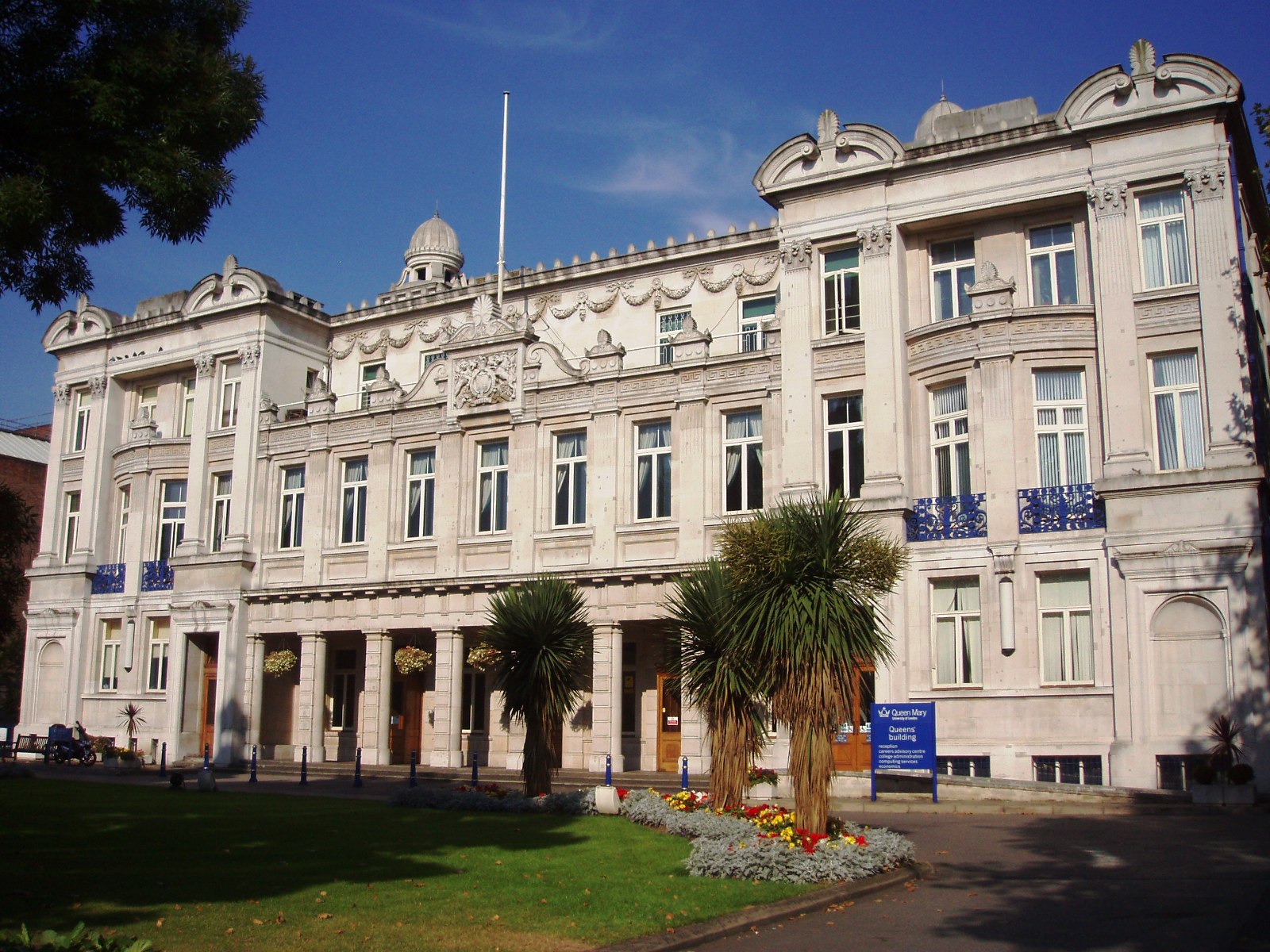
Main admin building for Queen Mary University (QMUL), I believe. (Photo of clocktower out the front.)

Address: Mile End Road.
Main admin building for Queen Mary University (QMUL), I believe. (Photo of clocktower out the front.) Address: Mile End Road.Ewan Munro from London, UK · CC BY-SA 2.0 · via Wikimedia Commons
Blizard building of Queen Mary University of London, Whitechapel campus, housing the Institute of Cell and Molecular Sciences
Blizard building of Queen Mary University of London, Whitechapel campus, housing the Institute of Cell and Molecular SciencesQMUL · CC-BY-SA-3.0 · via Wikimedia Commons
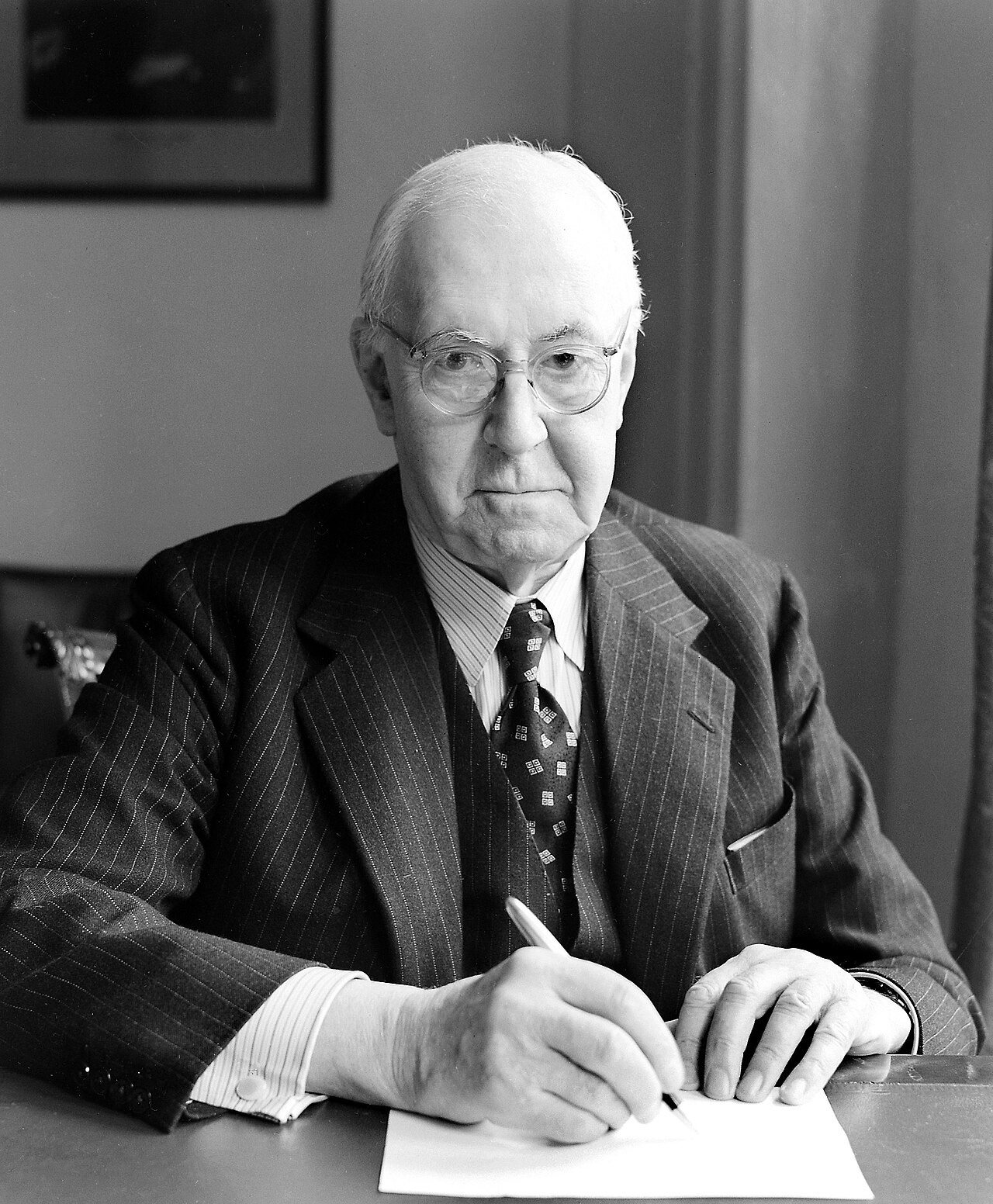
Henry Hallett Dale
Henry Hallett DaleMichieli · CC BY 4.0 · via Wikimedia Commons
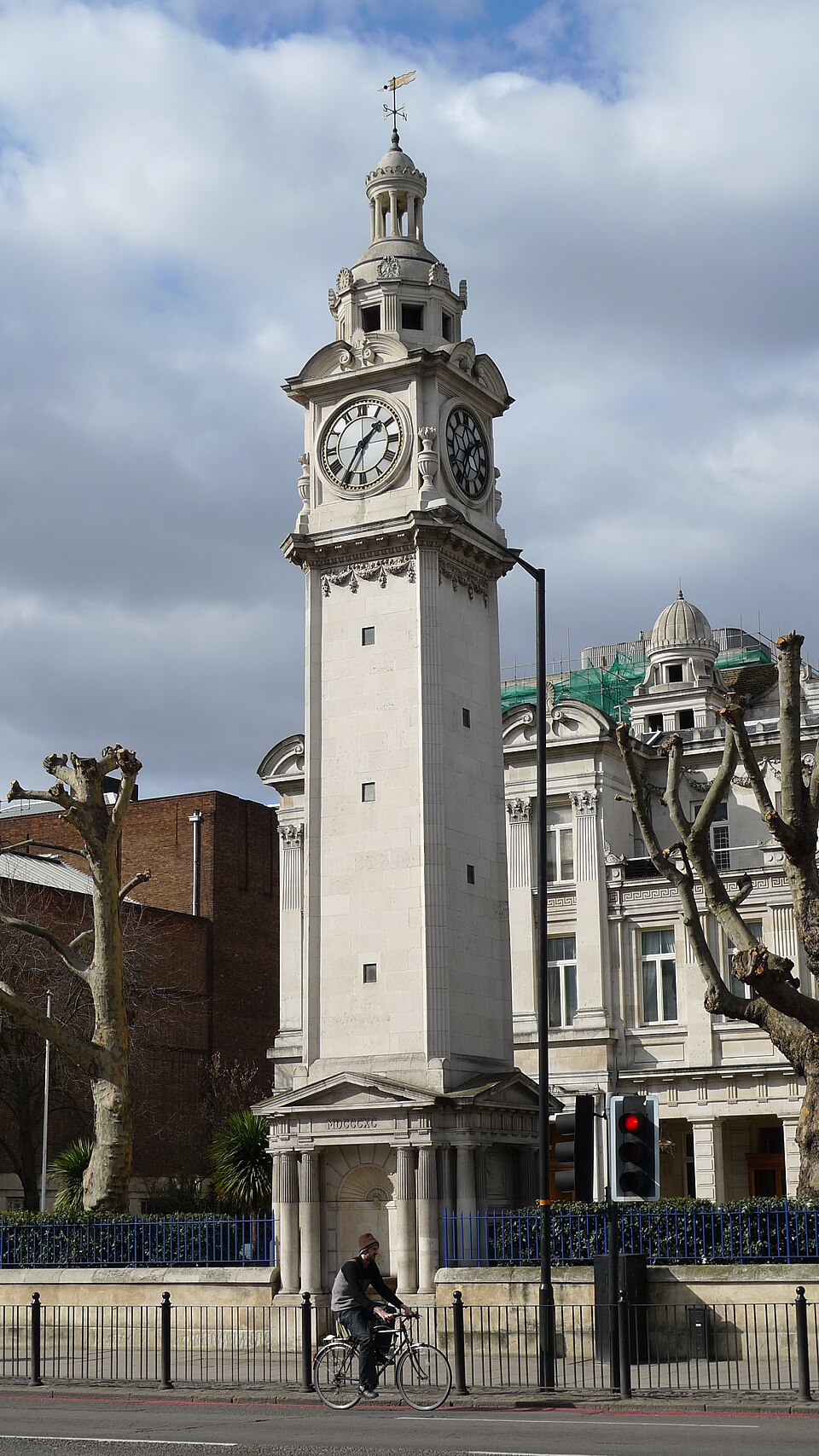
The clocktower outside the Queens' building, part of Queen Mary University of London (QMUL).

Address: Mile End Road.
The clocktower outside the Queens' building, part of Queen Mary University of London (QMUL). Address: Mile End Road.Ewan Munro from London, UK · CC BY-SA 2.0 · via Wikimedia Commons
This is a photo of listed building number 1065155.
This is a photo of listed building number 1065155.Matt Brown · CC BY 2.0 · via Wikimedia Commons

Why Queen Mary — Russell Group, London & Global Community

QMUL is one of the few Russell Group universities that combines genuine academic excellence with one of the most internationally diverse campuses in the UK. Here is what sets it apart for ambitious international applicants.

01Russell Group Research Power
As one of only 24 Russell Group universities, QMUL sits alongside Oxford, Cambridge, and Imperial College London in the UK's most selective research consortium. Ranked 145th globally by QS and 117th by Times Higher Education, it is particularly strong in law, medicine, and engineering.
02Unrivalled International Community
With 40% of its 31,000-strong student body drawn from outside the UK — one of the highest ratios among Russell Group institutions — QMUL is genuinely cosmopolitan. Students from 170+ countries share lecture halls, laboratories, and a self-contained East London campus.
03Distinctive Strengths: Law, Medicine & Beyond
QMUL's School of Law is globally recognised for commercial and international law. Barts and The London School of Medicine and Dentistry is one of the UK's oldest and most respected medical schools. The School of Economics and Finance feeds directly into London's finance and fintech sectors.
04Real London Campus in a Global City
Unlike dispersed London universities, QMUL's Mile End campus is a coherent, walkable community with its own halls, sports facilities, Students' Union, and green spaces. Canary Wharf, the City of London, and Tech City are minutes away by tube — unparalleled for internships and networking.

QMUL Acceptance Rate & Admissions Profile

Stats

31,000
Student Population
40%
International Students
15th
National Rank (UK)

Profile Stats

34 points
IB Points (Typical Offer)
40%
International Students
14:1
Student:Faculty Ratio
82%
Employment / Further Study
145
QS Global Rank
117
THE Global Rank
Overall acceptance rate — varies significantly by course

Rea Vs Rd

Rd Label: Standard UCAS Route
Rd Value: ~45%
Rea Label: Medicine / Dentistry / Law
Rea Value: Far more selective

QMUL Admissions Requirements — Grades, Admissions Tests & English Language

A-Level / IB Grades
Value: ABB – A*AA
  • A-Level typical range: ABB (standard courses) to A*AA (Medicine, Law, top Economics)
  • IB Diploma: approximately 34 points overall (higher for competitive courses)
  • Specific subject requirements apply — check individual course pages
  • Predicted grades submitted by school; confirmed offers based on results
QMUL sets course-specific entry requirements. As a Russell Group institution, the standard is high and subject-specific. Most competitive courses (Medicine, Law, Economics) require grades at the upper end of the range.
Admissions Tests
Value: UCAT / LNAT
  • Medicine & Dentistry: UCAT required before October UCAS deadline
  • Law (LLB): LNAT may be required — check current course page
  • Most other courses: no additional admissions test required
  • UCAT must be booked in summer (July–September) before applying
Selected QMUL courses require standardised admissions tests. The UCAT is mandatory for all Barts Medicine and Dentistry applicants. A competitive UCAT score (top 2–3 deciles) is typically required to be shortlisted for interview.
English Language
Value: IELTS 6.5+
  • IELTS Academic: 6.5 overall (standard minimum)
  • TOEFL iBT: 92 minimum
  • Duolingo English Test: 120 minimum
  • Some courses (Medicine, Law, English) require higher scores
International students whose first language is not English must submit an approved English language qualification. The standard minimum is IELTS 6.5, but competitive courses often require 7.0 or higher.

QMUL Application Components — UCAS, Personal Statement & Admissions Tests

QMUL uses UCAS exclusively for undergraduate admissions. Below is every component of a complete QMUL application — required and optional — with strategic notes for each.

01RequiredUCAS Application
All UK undergraduate applications go through UCAS (ucas.com). You may list up to five UK university choices on one form, submitted at the same time. QMUL receives your application via UCAS and responds directly through the system.
02RequiredUCAS Personal Statement (2026 Format)
From 2026 entry, the personal statement uses a structured three-question format: (1) Why do you want to study this subject? (2) How have your qualifications prepared you? (3) What else have you done to prepare? Each question has its own character limit.
03RequiredPredicted Grades & Academic Transcripts
Your school submits your current grades and predicted final grades via UCAS. QMUL makes conditional offers based on these predicted grades and confirms admission when final results are released.
04RequiredUCAS Reference
One academic reference from your school — your form tutor, head of year, or subject teacher — submitted alongside your application. The reference provides contextual information about your academic performance and character.
05Course-SpecificUCAT (Medicine / Dentistry)
Barts and The London School of Medicine and Dentistry requires the UCAT (University Clinical Aptitude Test), sat in July–October before the UCAS October deadline. A strong UCAT score is necessary to be shortlisted for interview.
06International ApplicantsEnglish Language Qualification
If English is not your first language, submit an IELTS, TOEFL, Duolingo, or equivalent result meeting the course minimum. The standard QMUL minimum is IELTS 6.5 overall; competitive courses require higher.
07OptionalUCAS Extra / Adjustment
If you did not receive offers through the main UCAS round, UCAS Extra allows additional applications in February–July. Adjustment allows you to upgrade your firm choice if your final results exceed your offer conditions.

UCAS Personal Statement — Writing for a QMUL Application

Tips

Write about your subject, not yourself
The UCAS personal statement is not a personal narrative — it is an intellectual case for why you are ready to study this subject. QMUL admissions tutors are asking one question: will this student thrive academically? Answer that with evidence.
Be specific about what you have read and done
QMUL readers see thousands of statements. 'I have always been interested in law' is meaningless. Name the case, the statute, the debate. Show that your interest is real and developed, not generic.
The three-question format requires three distinct answers
The new 2026 UCAS format is not a single essay split into three sections. Each question has a specific purpose and character limit. Treat each as a standalone evidence document.
Never mention a specific university by name
Your personal statement goes to all five of your UCAS choices. Mentioning 'Queen Mary' or 'Barts' in the text is a common and embarrassing mistake. Keep the statement subject-focused and institution-neutral.

Prompts

Question 1: Why This Subject?
Why do you want to study this subject or subjects at degree level? Focus on intellectual motivation, specific engagement with the discipline, and what drew you to it.
Question 2: Academic Preparation
How have your qualifications and studies prepared you for this course? Map specific subjects, topics, and assessments to degree-level study.
Question 3: Beyond the Classroom
What else have you done to prepare outside of your qualifications, and why does this make you a suitable candidate? Extracurricular reading, work experience, projects, and relevant activities.
The most common UCAS personal statement mistake. Writing a generic personal narrative about your character instead of a subject-specific intellectual case for your readiness to study at degree level.

What QMUL Admissions Tutors Are Looking For

QMUL's admissions process is primarily academic and subject-focused. Unlike US universities, holistic personal branding plays a secondary role. Understanding what each course's admissions tutor is looking for — and why — is the foundation of a strong application strategy.

01Strong Predicted Grades in Relevant Subjects
QMUL makes conditional offers based on predicted grades. For most competitive courses, this means high A-Level grades (up to A*AA) or strong IB scores (34+ points). Subject-specific requirements are non-negotiable — Economics requires Maths; Medicine requires Biology and Chemistry.
02Genuine Intellectual Motivation for the Subject
The UCAS personal statement must demonstrate clear, specific engagement with your chosen discipline. Independent reading, real-world application, academic events, and critical thinking about the field are the hallmarks QMUL tutors look for.
03Evidence of Preparation Beyond the Classroom
Work experience, clinical volunteering (Medicine), legal exposure (Law), coding projects (Computer Science), or substantive independent study. The 2026 UCAS format explicitly asks what you have done beyond your qualifications — QMUL takes this seriously.
04Admissions Test Performance (Where Required)
For Medicine and Dentistry, a competitive UCAT score is essential — it is the primary shortlisting mechanism. For Law, the LNAT (if required) reinforces the application. These tests must be prepared for systematically, not crammed.
05Interview Performance (Medicine & Dentistry)
Shortlisted medical and dental applicants attend a Multiple Mini Interview (MMI). Strong MMI performance — demonstrating communication skills, ethical reasoning, empathy, and situational judgement — is decisive for these programmes.
06Contextual Factors
QMUL participates in contextual admissions. Applicants from disadvantaged socioeconomic backgrounds or underrepresented schools may receive offers one grade lower than the standard. This is an important avenue for international students from under-resourced environments.

QMUL Financial Aid & Scholarships for International Students

As a UK public university, QMUL does not offer large-scale need-based financial aid to international undergraduates. The primary funding mechanism is merit-based scholarships — principally the Global Talent Scholarship — alongside external funding from home governments and bilateral programmes.

Scholarship amounts and eligibility are subject to change each admissions cycle. Verify current awards on qmul.ac.uk/scholarships before planning finances.

Stats

40%
International students
£12,000
Global Talent Scholarship (max)
£3,000
Foundation scholarships available
20 hrs/wk
Part-time work allowance (Student Visa)

Contribution Tiers

NoteRangePercentPercent Value
Flagship merit scholarship for highly qualified international offer-holdersGlobal Talent ScholarshipUp to £12,000100
For international foundation programme entrants to Science & EngineeringFoundation Scholarship — S&E£3,00025
For international foundation programme entrants to Humanities & Social SciencesFoundation Scholarship — H&SS£3,00025
For students progressing from Kaplan Foundation pathwaysKaplan Excellence Scholarship£5,00040
Commonwealth, Chevening (postgraduate), and bilateral government schemesExternal / Government ScholarshipsVaries50
UK Aid vs. US Aid — The Key Difference. Unlike the elite US universities that offer need-blind, no-loan aid to international students, UK universities including QMUL primarily offer merit-based scholarships rather than need-based grants. International students must fund the majority of their studies independently, through scholarships, or home-government schemes.
Primary Scholarship Options for International Students

Key Dates

UCAS Deadline — Medicine & Dentistry
Date: 15 October
UCAS Deadline — All Other UG Courses
Date: 29 January
UCAT Registration & Sitting Window
Date: July–Sept
Clearing — Remaining Places
Date: August (Results Day)

Advantages

  • Only one UK application form (UCAS) — no separate supplemental applications
  • UCAS allows up to five choices in a single application
  • Conditional offers confirmed after final exam results — no binding early commitment
  • Adjustment allows upgrading your firm choice if you exceed offer conditions
  • UCAS Clearing provides a second-chance route if results disappoint

Disadvantages

  • Medicine and Dentistry have a hard 15 October deadline — no exceptions
  • One personal statement goes to all five choices — cannot be university-specific
  • Offers are conditional — admission is confirmed only after final results
  • No early notification equivalent to US REA/ED — most decisions arrive after January
  • UCAT must be sat before applying — inadequate preparation forecloses Barts entirely
UCAS Application Routes. Unlike the US system with its Early Action, Early Decision, and Regular Decision rounds, UK undergraduate applications use UCAS — a single centralised application submitted once, to up to five universities simultaneously. There is no binding commitment at application stage.
Tychr's UCAS Strategy Recommendation. Apply to QMUL well before the January deadline for non-medical courses. For Medicine or Dentistry, the October 15 deadline is absolute — begin UCAT preparation in spring and register to sit in July–August. Build a balanced UCAS list of five choices across realistic, target, and ambitious tiers.
UCAS — How the UK Application System Works for QMUL

QMUL Interview — Medicine MMI & Other Programme Assessments

For most QMUL courses, there is no interview. However, Medicine and Dentistry applicants who meet the UCAT score threshold are invited to a Multiple Mini Interview (MMI) at Barts and The London. MMI stations are timed (typically 5–8 minutes each) and present scenarios testing communication, ethics, empathy, and situational judgement — not medical knowledge.

Meta

Medicine & Dentistry applicants shortlisted by UCAT score
Who is interviewed
Multiple Mini Interview (MMI) — rotational stations
Format
Barts and The London campus (Whitechapel)
Location
Communication, empathy, ethics, situational judgement
Evaluates

Questions

Why do you want to study medicine / dentistry?
Tip: Research the NHS Constitution and its core values. Frame your answer around service, not status.
A patient refuses a treatment that you believe is in their best interest. What do you do?
Tip: Use a structured ethical framework (autonomy, beneficence, non-maleficence, justice). Show reasoning, not just instinct.
Tell me about a healthcare experience that challenged or changed your perspective.
Tip: Be honest and reflective. Avoid rehearsed answers. What did the experience actually teach you about healthcare?
Describe a time you worked effectively as part of a team.
Tip: Show teamwork, communication, and awareness of your own limitations.
What are the biggest challenges facing the NHS today?
Tip: Engage with current NHS issues (waiting times, mental health, workforce). Show you are informed, not just enthusiastic.

QMUL Accommodation & Residential Life

Queen Mary guarantees accommodation to all international first-year undergraduate students who apply by the deadline. The self-contained Mile End campus has multiple halls of residence within or adjacent to the campus grounds, allowing first-year students to live within walking distance of lectures, the library, the Students' Union, and the campus sports centre.

Houses

Pooley House
Tag: On-Campus
Modern en-suite rooms, Mile End campus, popular with first-year international students
Hatton House
Tag: On-Campus
Self-catered, mixed-room types, close to the main library and Students' Union
Dawson Hall
Tag: On-Campus
Traditional-style halls with shared facilities, strong community feel
Ifor Evans Place
Tag: On-Campus
On-campus accommodation with easy access to all Mile End facilities
Surrey House
Tag: Nearby
Short walk from campus, self-catered, mix of single and shared rooms
Feilden House
Tag: Nearby
Located near campus, offers a quieter residential environment

Lottery Steps

  • International first-year undergraduates who apply by the deadline are guaranteed a place in halls
  • Accommodation offers are made after accepting your firm UCAS offer through QMUL's accommodation portal
  • Choices include en-suite and standard rooms across several on-campus and nearby halls
  • Most first-year students live in halls; second- and third-year students typically move to private rented accommodation in East London
  • East London (E1–E3 postcodes) is significantly more affordable than central London accommodation

QMUL Faculties, Schools & Key Programmes

Faculty of Medicine and Dentistry
Label: Barts and The London
  • {"label":"School name","value":"Barts and The London"}
  • {"label":"One of the UK's oldest medical schools","value":"Est. 1785"}
  • {"label":"UCAT required","value":"Yes"}
  • {"label":"UCAS deadline","value":"15 October"}
Barts and The London School of Medicine and Dentistry is one of the UK's most respected medical schools, with direct links to Barts Health NHS Trust — one of England's largest NHS trusts. Programmes: Medicine (MBBS), Dentistry (BDS), Biomedical Sciences.
The School of Law
Label: Commercial & International Law
  • {"label":"QS ranking","value":"Top 100 globally"}
  • {"label":"Flagship degree","value":"LLB Law"}
  • {"label":"Key strength","value":"Commercial & International"}
  • {"label":"Admissions test","value":"LNAT (check course page)"}
QMUL's School of Law is globally recognised, particularly in commercial and international law. The LLB is a highly sought-after route into London's Magic Circle and international law firms. Joint degrees with European and international universities are available.
School of Economics and Finance
Label: Economics, Finance & Business
  • {"label":"Key requirement","value":"Mathematics A-Level / IB HL"}
  • {"label":"Key programmes","value":"BSc Economics, BSc Finance"}
  • {"label":"Industry pipeline","value":"City of London, fintech"}
  • {"label":"Location advantage","value":"Minutes from Canary Wharf"}
The School of Economics and Finance produces graduates who flow into banking, investment management, consulting, and fintech. Its proximity to Canary Wharf and the City of London is a structural career advantage. Mathematics is typically required.
Faculty of Science and Engineering
Label: STEM Programmes
  • {"label":"Key subjects","value":"Computer Science, Engineering, Physics, Chemistry"}
  • {"label":"Research focus","value":"Materials, electronic engineering, computing"}
  • {"label":"Maths requirement","value":"Required for most programmes"}
  • {"label":"Industry links","value":"London tech ecosystem, NHS"}
A large and research-active faculty spanning computer science, electronic engineering, physics, chemistry, and biomedical engineering. Strong links to London's tech start-up scene and NHS research institutes.
Faculty of Humanities and Social Sciences
Label: Arts, Social Sciences & Business Management
  • {"label":"Flagship programmes","value":"English & Drama, History, Politics, Business"}
  • {"label":"International reputation","value":"English & Drama research globally recognised"}
  • {"label":"Student societies","value":"200+ clubs and societies"}
  • {"label":"Notable alumni","value":"Leading figures in law, arts, media, policy"}
QMUL's humanities tradition is strong, particularly in English and Drama, History, and Politics. The faculty provides direct routes into law, media, public policy, and the creative industries — all of which are richly represented in London.

Research & Extracurricular Opportunities at QMUL

Undergraduate Research Opportunities
Category: Research
QMUL offers undergraduate research projects and dissertation opportunities across all faculties. Barts medical students engage in research throughout the MBBS programme. Science and Engineering students can participate in lab-based research from Year 2 through final-year projects with active research groups.
QMSU — 200+ Clubs and Societies
Category: Student Life
The Queen Mary Students' Union (QMSU) runs over 200 clubs and societies spanning academic, cultural, sporting, and recreational interests. The student body's extraordinary diversity means cultural societies from almost every region of the world are active — one of the most culturally varied student unions in the UK.
Barts Health NHS Trust Partnership
Category: Clinical Placement
Medicine and Dentistry students at Barts have direct clinical placements within Barts Health NHS Trust — one of England's largest NHS trusts, covering hospitals across East London. Students encounter real patient diversity from early in their studies.
London as Extended Campus
Category: Professional Development
London's professional ecosystem is uniquely accessible from the QMUL campus. Law students attend court hearings and law firm open days in the City; Economics students connect with Canary Wharf employers; Computer Science students engage with the Tech City start-up scene — all within 20 minutes.
Scroll right to explore QMUL's research programmes and student life.

Career Outcomes & QMUL Alumni Network

Queen Mary's location in London is its most powerful career asset. With 82% of graduates in employment or further study within six months, QMUL alumni enter competitive industries directly from graduation. London's graduate job market in law, finance, medicine, and technology gives QMUL graduates access to opportunities unavailable at almost any other university location.

Stats

82%
In employment or further study within 6 months
~$35,000
Average starting salary (USD equivalent)
40%
International students in the student body
145
QS Global Rank
117
THE Global Rank
15th
National Rank (UK)

Categories

Law & Medicine
QMUL's School of Law has a particularly strong reputation in commercial law. Graduates enter Magic Circle, Silver Circle, and international commercial firms. Barts graduates enter NHS foundation training and specialty training across the UK.
Finance & Banking
Economics and Finance graduates flow into investment banking, fintech, consulting, and the City. QMUL's proximity to Canary Wharf gives students direct access to some of the world's largest financial institutions.
Technology
Computer Science and Engineering alumni increasingly join London's tech ecosystem, from early-stage start-ups to multinationals. London is the largest tech hub in Europe and one of the world's leading technology centres.

Our QMUL Admissions Track Record & Student Success Stories

Priya S.
Tychr helped me understand that the new UCAS three-question format required a completely different approach from the old personal statement. My tutor challenged me to go beyond listing what I had done and explain specifically how my Biology and Chemistry HL courses prepared me for clinical study. My Barts interview went far better than I expected.
Country: India
Program: QMUL — Medicine (MBBS)
Class Year: Entry 2025
Residential: Mile End Halls
Academic Profile: IB 41 · UCAT 2800+
James O.
I had always been interested in commercial law but my personal statement felt like a list of activities. My Tychr counsellor pushed me to write specifically about the contract law cases I had read and what they revealed about how markets work. The QMUL Law tutors told me it was one of the most intellectually engaged statements they had read from an overseas applicant.
Country: Nigeria
Program: QMUL — LLB Law
Class Year: Entry 2024
Residential: Pooley House
Academic Profile: A-Levels: AAA · LNAT: 27
Lin W.
Navigating UCAS from China was confusing. Tychr explained the system end-to-end, helped me build a balanced five-choice list, and coached me through the personal statement for Economics. I received offers from QMUL and two other Russell Group universities. QMUL's location next to Canary Wharf was the deciding factor.
Country: China
Program: QMUL — BSc Economics
Class Year: Entry 2025
Residential: Hatton House
Academic Profile: A-Levels (International): AAB · Maths A*

Faqs

Is Queen Mary a Russell Group university?+

Yes. QMUL is one of 24 Russell Group universities — the UK's most selective research-intensive institutions. This places it in the same tier as the University of Edinburgh, King's College London, and the University of Birmingham.

How does QMUL compare to other London universities for international students?+

QMUL has one of the highest international student percentages (40%) in the Russell Group. Its campus community is more self-contained than UCL or King's, which many international students prefer. It tends to be slightly less selective than UCL, LSE, or Imperial for most subjects, making it an excellent target for ambitious applicants.

Do I apply directly to QMUL or through UCAS?+

Through UCAS. You submit one UCAS application listing up to five UK university choices — QMUL is one of those choices. QMUL receives your application via UCAS and responds with an offer (or rejection) directly through the UCAS system.

Can I apply to Medicine at QMUL as an international student?+

Yes. Barts and The London School of Medicine and Dentistry accepts international applicants. You must sit the UCAT before the October UCAS deadline. Competition is intense — most offers go to applicants with very strong UCAT scores, top A-Level or IB predicted grades, and a competitive MMI interview.

Will I need an admissions test?+

It depends on your course. Medicine and Dentistry require UCAT. Some Law programmes may require LNAT. Most other courses at QMUL do not require additional admissions tests beyond your standard qualifications. Always check the specific course page.

Is there a scholarship for international undergraduate students?+

Yes. The Global Talent Scholarship offers up to £12,000 for highly qualified international undergraduate offer holders. Foundation route students may be eligible for International Foundation Scholarships of £3,000. See qmul.ac.uk/scholarships for the full database.

Is accommodation guaranteed for international students?+

Queen Mary guarantees accommodation to all international first-year undergraduates who apply by the deadline. The campus-based halls mean you can live within walking distance of your lectures during your first year.

What is the new UCAS personal statement format?+

From 2026 UCAS entry, the personal statement changed to a three-question structured format: (1) Why this subject? (2) How have your qualifications and studies prepared you? (3) What else have you done to prepare, and why does this make you a suitable candidate? Consult ucas.com for exact character limits.

Book a Free QMUL Admissions Strategy Session

In 60 minutes our UK admissions specialists will evaluate your academic profile, map your subjects to QMUL's entry requirements, develop your personal statement strategy for the 2026 UCAS format, and build a balanced five-choice UCAS list with realistic, target, and ambitious options.

  • No commitment required
  • UK university specialists with UCAS expertise
  • Personalised strategy — not generic advice
Getting into a Russell Group university is not about meeting a checklist — it is about showing exactly why you are ready to study your subject at degree level.

QMUL Academic Requirements

QMUL Academic Requirements — The Honest Breakdown for International Students

What grades, qualifications, and academic profile do QMUL's admitted students actually have? And what does holistic admissions mean for students from IB, A-Level, and other international curricula applying to a Russell Group university?

34
IB Diploma (Typical Offer)
Higher for Medicine, Law, top Economics
45%
Overall Acceptance Rate
Varies significantly by course
14:1
Student:Faculty Ratio
Smaller than many London peers
6.5
IELTS Minimum
Some courses require 7.0+
ABB–A*AA
A-Level Offer Range
Depends on course competitiveness
145
QS Global Rank
Russell Group research university

Grades & Academic Performance

QMUL and Grades — What the Academic Benchmarks Actually Mean

UK universities do not use GPA as a metric. QMUL, like all Russell Group institutions, assesses academic performance through national and international secondary school qualifications — principally A-Levels and the IB Diploma. For international students, the equivalent of a strong GPA is consistently high predicted and achieved grades in rigorous subjects relevant to the course.

Strong grades are necessary but not sufficient for competitive QMUL courses. Medicine, Law, and Economics also require admissions tests and strong personal statement responses. The academic profile is the foundation; the personal statement is the case for your readiness.

34 points
IB Diploma typical offer (most courses)
ABB to A*AA
A-Level typical range (competitive courses)
What this means for international students. QMUL sets entry requirements course-by-course, not as a university-wide minimum. This means a student applying to Computer Science faces different requirements from one applying to English Literature. Always check the specific course page for the exact conditional offer for your qualification type.
Grade trajectory matters. A strong upward trajectory — improving significantly in the final year — is read positively by QMUL admissions tutors. It demonstrates academic recovery and ability. An early weak period followed by sustained improvement is context, not necessarily a disqualifier, especially for less competitive programmes.

Academic Context

Contextual Admissions — How QMUL Reads Academic Performance in Context

QMUL participates in contextual admissions — a formal programme that recognises when an applicant's academic environment has shaped their results. Understanding how this works is particularly important for international students from under-resourced school environments.

How QMUL contextualises your academic record
QMUL uses contextual data from UCAS and other sources to identify applicants who have performed strongly despite attending schools with lower average attainment, or who come from socioeconomically disadvantaged backgrounds. Eligible applicants may receive a conditional offer one grade lower than the standard entry requirement.
What this means for international students
International students from countries with systemic educational inequality — where access to strong secondary education varies enormously by family income or geography — may be considered for contextual admission. The UCAS reference and school profile are important documents for establishing this context.
For students from less advantaged educational environments. The school reference submitted via UCAS is your best opportunity to contextualise your academic performance. If your school environment, personal circumstances, or educational system created barriers that affected your grades, your school counsellor's reference should address this explicitly. Tychr coaches school counsellors on how to provide this context effectively.

SAT Scores at QMUL

SAT Scores at QMUL — What You Need to Know

QMUL does not publish SAT score requirements and does not use SAT scores as a primary admissions criterion. As a UK Russell Group university, QMUL's admissions process is built around secondary school qualifications — A-Levels, IB Diploma, and their international equivalents.

LabelScorePercent
SAT — primary admissions criterionNot used0
SAT — can be submitted as supporting evidenceCase by case30
IB Diploma — primary international qualification34 points typical75
Mathematics — the UK way. For STEM applicants, mathematical ability is demonstrated through A-Level or IB Higher Level Mathematics — not through the SAT Math section. QMUL's Computer Science, Engineering, Economics, and Mathematics courses specify Maths qualifications directly in their entry requirements.
Preparation for US-curriculum students. If you are a US-curriculum student, focus your preparation on AP courses in relevant subjects rather than SAT preparation. A strong GPA with 4–5 AP courses in subjects relevant to your intended degree is the profile QMUL is looking for.
When SAT scores may be relevant. If you have a strong SAT score (1450+) and are applying as a US-curriculum student without A-Levels or IB, your SAT may serve as supporting evidence alongside your GPA and AP results. Contact QMUL's international admissions office to confirm how your full academic profile will be assessed before applying.

ACT Scores at QMUL

ACT Scores at QMUL — Why They Are Not the Focus

QMUL does not use ACT scores in its admissions process. The ACT is a US-specific standardised test and is not part of the UK admissions landscape. International students applying from a US curriculum should focus on their GPA, AP course grades, and subject-specific preparation for their QMUL course rather than ACT performance.

Metrics

ACT — required for QMUL admission
Score: No
ACT — accepted as supporting evidence
Score: Contact admissions

Comparison Cards

What QMUL uses
A-Level, IB, and international equivalents are the primary assessment. Grades in specific subjects are the most important academic signal for QMUL admissions tutors.
US Curriculum Equivalent
For US-curriculum applicants, a strong GPA with rigorous AP courses in relevant subjects is equivalent to strong A-Level or IB performance.
What replaces standardised tests
Admissions tests required by specific courses (UCAT for Medicine, LNAT for some Law programmes) serve the function that standardised tests play in the US — as a standardised comparator between applicants.
No superscore policy. QMUL does not superscore standardised tests because it does not use them in the same way as US universities. The UK admissions process is built around qualifications (A-Level grades, IB points, equivalents) rather than standardised test composites.
Tychr's recommendation for US-curriculum applicants. US-curriculum students applying to QMUL should focus on building a strong AP profile in subjects directly relevant to their intended degree. For Medicine, APs in Biology and Chemistry are essential signals. For Economics, AP Calculus BC and AP Microeconomics / Macroeconomics are the natural equivalent of Maths and Economics A-Level.

Standardised Test Policy

QMUL's Test Policy — What 'Optional' Actually Means in a UK Context

For A-Level and IB students, SAT and ACT submission is genuinely optional at QMUL — and in practice almost never submitted. The test-optional framework here is not a strategic choice (as it is at US universities) but a structural reality: UK admissions does not centre on standardised tests.

Submit Items

You are a US-curriculum student without A-Levels or IB — your GPA, AP results, and SAT score together form your academic profile.
Your home country qualification is less familiar to UK admissions offices, and a strong SAT score provides an internationally recognised comparator.

Withhold Items

You are an A-Level or IB student — QMUL has all the academic evidence it needs from your qualifications.
Your SAT score is below 1400 — submitting a weak score creates a negative data point without the compensating framework that exists at US universities.
Current policy. QMUL's admissions decisions for most students are based entirely on secondary school qualifications (A-Level/IB predicted grades and results), the personal statement, and the UCAS reference. SAT/ACT scores are neither required nor expected for the vast majority of applicants.
The dual-application student's dilemma. Many international students from US-curriculum schools apply to both US and UK universities simultaneously. For the UK applications, the strategic calculation is different: UK admissions tutors are not trained to weight SAT scores as US admissions offices are. An excellent SAT score is worth mentioning as supporting evidence for a US-curriculum applicant, but a weak score should simply be omitted.
When submitting a standardised test score may help

IB · A-Level · International Qualifications

A-Levels and IB at QMUL — Specific Benchmarks and What They Mean

IB Diploma
Note: QMUL admissions tutors are experienced IB readers. The IB Diploma is the best-understood international qualification at QMUL after A-Levels. Conditional offers specify total points AND often specific minimum HL grades in relevant subjects. A strong Extended Essay in a subject relevant to your degree can add useful supporting evidence.
  • {"label":"Typical offer (standard courses)","value":"34 points overall"}
  • {"label":"HL expectations (competitive courses)","value":"6,6,5 minimum; Medicine/Law require higher"}
  • {"label":"Subject requirements","value":"HL Biology + Chemistry for Medicine; HL Maths for Economics/CS; varies by course"}
  • {"label":"Extended Essay","value":"Can support application; especially valued if in the degree subject area"}
A-Levels
Note: A-Level predicted grades are the standard QMUL offer format for UK and many international students. QMUL understands that predicted grades are teacher assessments of likely performance, not guarantees. Strong AS-Level (or equivalent) results provide supporting evidence for the predicted grade argument.
  • {"label":"Range across courses","value":"ABB (standard) to A*AA (Medicine, Law, top Economics)"}
  • {"label":"Subject requirements","value":"Maths for Economics/CS/Engineering; Biology + Chemistry for Medicine; no fixed requirements for Law (essay subjects valued)"}
  • {"label":"AS results","value":"Support predicted grades where available"}
  • {"label":"EPQ","value":"Extended Project Qualification viewed positively; may substitute for one grade in some cases"}

Advanced Placement

AP Courses at QMUL — How the US Curriculum Is Assessed

Advanced Placement (AP) courses are a US curriculum qualification that QMUL recognises for US-curriculum applicants who do not have A-Levels or the IB Diploma. QMUL assesses AP applicants on a case-by-case basis, considering the full academic profile including GPA, number of AP courses, and AP exam scores.

What QMUL is looking for in AP applicants
4 or 5 AP scores in subjects directly relevant to the intended degree (e.g., AP Biology and AP Chemistry for Medicine; AP Calculus BC for Economics; AP Computer Science for CS); a strong overall GPA; and subject coherence — the AP courses should signal preparation for degree-level study in the chosen field.
How many APs?
QMUL does not publish a formal minimum number of AP courses for US-curriculum applicants. However, 4–5 AP courses in relevant subjects is a reasonable benchmark, comparable to the breadth of an A-Level or IB programme.
AP scores as supporting evidence
AP scores of 4 or 5 in relevant subjects reinforce the GPA as a measure of genuine academic performance. They also provide a standardised comparator that QMUL admissions can use alongside the school-reported GPA.
QMUL does not offer course credit for AP scores in the same way that US universities do. However, strong AP performance in your degree subject may allow you to engage with advanced content more quickly in your first year.
International students studying in non-US curricula (IB, A-Level, Indian boards, French Baccalauréat, German Abitur, etc.) should not artificially pursue AP qualifications. QMUL is experienced at assessing all major international qualifications and has a dedicated international admissions team for queries about specific systems.

Academic Rigour

Rigour of Secondary School Record — QMUL's Most Important Academic Signal

QMUL, like all Russell Group universities, evaluates not just your grades but the rigour of your secondary school programme. In the UK context, this means taking the most demanding A-Level or IB subject combination available to you — specifically, subjects directly relevant to your intended degree.

Taking the most challenging and relevant subjects available to you — not the ones that protect your predicted grades.

The contextual element. Rigour is always assessed relative to what was available. A student whose school offers only three A-Level subjects is assessed differently from one at a school with fifteen options. What matters is whether you challenged yourself within your specific educational context. QMUL admissions tutors are experienced at reading international transcripts and school profiles.
What rigour means for QMUL applicants. For QMUL specifically, rigour means choosing subjects that directly prepare you for degree-level study in your intended field. An Economics applicant who avoids Mathematics to protect their predicted grade average is sending the wrong signal. A Medicine applicant who drops Chemistry in Year 13 is a red flag.
What QMUL is looking for. A QMUL Medicine applicant who took A-Level Biology, Chemistry, and Mathematics simultaneously — or IB HL Biology, HL Chemistry, and HL Mathematics — demonstrates the academic courage and subject preparation that QMUL's competitive courses reward. Subject coherence (every subject choice building toward the degree) is a powerful signal.

Subject Preparation by Faculty

What QMUL Expects Academically — By Subject Area

QMUL's course-specific subject requirements are non-negotiable. Unlike some universities that list requirements as 'preferred,' QMUL typically specifies required subjects on the course page. Missing a required subject is an automatic rejection at the application screening stage.

Medicine & Dentistry (Barts)
Biology and Chemistry at A-Level (or IB HL) are typically mandatory. A strong UCAT score (aim for top 3 deciles) is essential for shortlisting. Clinical volunteering or healthcare work experience is expected as evidence of motivation. The MMI interview tests ethical reasoning and communication skills, not medical knowledge.
Law (LLB)
No specific A-Level or IB subjects are formally required, but essay-heavy subjects — History, English Literature, Politics, Philosophy — demonstrate the analytical writing skills legal study demands. Some law applications may require the LNAT. The personal statement must engage with the law as an intellectual discipline, not just a career.
Economics & Finance
A-Level or IB Higher Level Mathematics is strongly recommended and often required. Some programmes may require or prefer Further Mathematics. Quantitative ability is tested from Week 1 of the Economics and Finance programme — applicants should ensure their Maths preparation is solid.
Computer Science & Engineering
Mathematics is typically required. Physics or Computer Science at A-Level/IB HL is often expected or preferred. Prior coding experience (Python, Java, or similar) is not always mandatory but is a significant advantage for Computer Science applicants. Strong mathematical intuition is essential from Year 1.

English Language Requirements

English Language Requirements for International QMUL Applicants

If English is not your first language, QMUL requires you to demonstrate English proficiency through an approved test. Minimum scores vary by course; professional programmes (Medicine, Law, Education) typically require higher scores than the standard institutional minimum.

The UCAS personal statement is your most important English language demonstration. A student who writes a clear, well-reasoned, and specific personal statement in English is already demonstrating a level of English proficiency that meets and exceeds most courses' requirements. Invest time in writing well, not just in meeting the minimum test threshold.

Test: IELTS Academic
Score: 6.5 overall
Test: TOEFL iBT
Score: 92
Test: Duolingo English Test
Score: 120
If you miss the English language threshold. Students who narrowly miss QMUL's language requirements may be eligible for the Pre-Sessional English programme, completed before the start of studies. A successful Pre-Sessional can satisfy the English language entry condition. Check the QMUL international students' page for current Pre-Sessional dates and eligibility.

By Programme

Academic Requirements by Programme — What Each Course Expects

QMUL sets requirements per course, not per concentration. The table below maps typical academic requirements to key programmes. Always verify on the QMUL course finder (qmul.ac.uk/courses) for the current cycle's exact requirements.

SignalsExpectationConcentration
UCAT top 3 deciles; clinical volunteering; MMI performanceA*AA (A-Level: Bio+Chem required) / IB 38+ with HL Bio+ChemMedicine (MBBS)
UCAT; clinical volunteering; MMI performanceA*AA (A-Level: Bio+Chem required) / IB 38+ with HL Bio+ChemDentistry (BDS)
LNAT (if required); analytical writing; legal awarenessAAA–A*AA; essay subjects valuedLaw (LLB)
Maths HL/A-Level; quantitative reasoning evidenceABB–AAA with Maths required; IB 34+ with HL MathsEconomics / Finance
Maths required; coding projects; problem-solving evidenceABB–AAA with Maths; IB 34+ with HL MathsComputer Science
Maths + Physics/Chemistry; engineering design interestABB–AAA with Maths + Physics/ChemistryElectronic Engineering
Bio/Chem preparation; laboratory interestABB–AAA with Bio+ChemBiomedical Sciences
English Literature A-Level/HL; critical writing abilityBBB–ABB with English LiteratureEnglish Literature & Drama

International Curriculum Assessment

How QMUL Evaluates International Education Systems

IB Diploma
Well understood and consistently evaluated. QMUL admissions tutors know the IB curriculum thoroughly. They evaluate both the total points and the HL subject combination. A strong Extended Essay in a degree-relevant subject adds further evidence. Students who challenge themselves with demanding HL subjects are evaluated more favourably than those who choose easier options to protect their predicted points total.
A-Levels (all major boards)
The standard UK path and the qualification QMUL is most experienced with. A-Level subject choice, predicted grades, and contextual information from the school counsellor all feed into the conditional offer. QMUL understands grade inflation patterns at different A-Level centres and contextualises school-reported predictions accordingly.
Indian Boards (CBSE / ISC)
CBSE and ISC students are assessed case-by-case. High percentage scores in relevant subjects (Biology, Chemistry, Mathematics, Physics) are considered alongside the UCAS personal statement. QMUL's international admissions team can advise on how your specific board results map to A-Level equivalency.
Chinese Gaokao
QMUL accepts applications from Chinese students studying the Chinese High School curriculum. A-Levels or IB studied alongside or instead of the Gaokao are typically the preferred route for the most competitive programmes. The international admissions team can advise on qualification equivalency for Gaokao applicants.
Other International Qualifications
QMUL recognises qualifications from over 100 countries including the German Abitur, French Baccalauréat, Nigerian WAEC/NECO, South African NSC, and many others. The international equivalency guide on the QMUL website gives indicative grade equivalents for most national qualifications.

Year-by-Year Roadmap

Building an Academic Profile for QMUL — What to Do at Each Stage

Years 9–10 (GCSE / MYP)Choose the right subjects
Year: Years 9–10 (GCSE / MYP)
  • Select GCSE or equivalent subjects that preserve your A-Level or IB options in your intended degree subject.
  • Ensure Biology and Chemistry are on your list if considering Medicine or Biomedical Sciences.
  • Prioritise Mathematics — it unlocks Economics, Computer Science, Engineering, and many Science programmes.
  • Begin exploring your intended subject through independent reading and online content.
Year 11Signal academic trajectory
Year: Year 11
  • Achieve strong grades in your penultimate year to support predicted grades in Year 13.
  • Begin exploring university courses: visit QMUL's course finder, read department pages.
  • For Medicine/Dentistry: start UCAT familiarisation — understand the test structure and question types.
  • Seek first work experience opportunities relevant to your subject (clinical volunteering, work shadowing).
Year 12Build your personal statement evidence base
Year: Year 12
  • Engage deeply with your subject beyond the classroom — academic journals, relevant reading, lectures.
  • For Medicine: begin clinical volunteering. For Law: attend court hearings, mooting events. For CS: start personal projects.
  • The 2026 UCAS three-question format will explicitly ask what you have done to prepare — build this material consciously.
  • Identify all five of your UCAS choices and understand the specific entry requirements for each.
Summer Before Year 13UCAT preparation and application readiness
Year: Summer Before Year 13
  • Register for and sit UCAT in July–September if applying for Medicine or Dentistry at Barts.
  • Begin drafting your UCAS personal statement. The three-question format requires a different approach from the old essay.
  • Request your UCAS reference from your school — give your teacher or tutor at least six weeks.
  • Research QMUL's specific course requirements one final time on the QMUL course page.
Year 13Apply and achieve
Year: Year 13
  • Submit your UCAS application before the deadline (15 October for Medicine; 29 January for all other courses).
  • Your school submits predicted grades alongside your application.
  • If invited to interview (Medicine/Dentistry MMI), prepare rigorously — the MMI is a separate, demanding process.
  • Once offers arrive, focus entirely on achieving your conditional grades in final exams.

Common Pitfalls

Academic Mistakes That Weaken QMUL Applications — and How to Avoid Them

Underestimating the admissions tests
Medicine, Dentistry, and increasingly other competitive QMUL courses use admissions tests (UCAT, LNAT) as primary shortlisting tools. No matter how strong your academic grades, a poor UCAT score will exclude you from interview consideration for Barts. Begin systematic preparation months before sitting.
Applying to the wrong course code
UCAS allows up to five university choices, but each choice must specify the exact course code. Applying to the wrong programme — joint honours instead of single honours, BSc instead of BA — means you are assessed against different entry requirements. Double-check every course code before submitting.
Missing a required subject
QMUL specifies required subjects on each course page. Applying to Economics without A-Level Mathematics, or to Medicine without Biology and Chemistry, results in an automatic rejection at screening. These are not preferences — they are requirements.
A generic personal statement that ignores the new format
The new 2026 UCAS three-question format makes generic personal statements even more visible. Question 1 explicitly asks why you want to study this subject — 'I have always been interested in science' fails this question. Be specific about what you have read, engaged with, and experienced in the field.
Missing the October deadline for Medicine
Medicine at Barts has a hard 15 October UCAS deadline. Submitting in October rather than earlier is not advisable — popular courses may review applications as they arrive. The UCAT must be sat before this deadline, requiring summer preparation.

Student Profiles

What Academic Profiles QMUL-Admitted Tychr Students Have Had

The following profiles represent the academic backgrounds of international students Tychr has helped gain places at QMUL or equivalent Russell Group universities. They illustrate the range of academic preparation that works — and what made each compelling.

Profile 1 — Medicine (Barts)
IB: HL Biology 7, HL Chemistry 7, HL Mathematics AA 6. UCAT score: top 2 deciles. Clinical volunteering at a teaching hospital for 12 months prior to application. Personal statement focused on a specific patient interaction that crystallised the motivation for medicine.
Stats: IB 39 · UCAT Decile 2 · MMI: Strong
Takeaway: The UCAT score and clinical experience were the differentiators. The personal statement was specific, honest, and directly addressed why medicine and why now — not why medicine in general.
Profile 2 — Law (LLB)
A-Levels: History A*, English Literature A, Politics A. Attended a law open day and mooting competition in Year 12. UCAS personal statement focused on a specific contract law case and its implications for commercial relationships.
Stats: A-Levels AAA* · No LNAT required that cycle
Takeaway: The personal statement was intellectually serious — it engaged with law as a discipline, not as a career aspiration. QMUL Law admissions value analytical depth in the statement significantly.
Profile 3 — Economics & Finance
IB: HL Mathematics AA 7, HL Economics 7, HL Physics 6. Independent reading of academic economics papers (Acemoglu, Tirole). Work experience at a financial services firm in the summer before Year 13.
Stats: IB 40 · Work experience · Economics personal statement
Takeaway: The combination of strong HL Maths, a subject-specific personal statement, and real-world engagement with economics made this application stand out. The personal statement cited specific economic ideas, not generic interest in finance.

Faqs

What IB score do I need for QMUL?+

The typical offer is around 34 IB points for standard courses. Competitive courses (Medicine, Law) require higher totals with strong HL scores in relevant subjects. Always check the specific course page — offers are set per programme.

Does QMUL require SAT or ACT scores?+

No. QMUL is a UK university and does not use SAT or ACT scores as primary admissions criteria. For A-Level and IB students, your secondary school qualifications are all that QMUL needs. US-curriculum students can contact the international admissions team for guidance.

What is the UCAT and do I need it?+

The UCAT (University Clinical Aptitude Test) is required for Medicine and Dentistry at Barts. It is a computer-based test covering verbal reasoning, decision making, quantitative reasoning, abstract reasoning, and situational judgement. It must be sat in the summer–autumn before your UCAS application.

Does QMUL offer contextual admissions for international students?+

QMUL participates in contextual admissions. If you meet the contextual eligibility criteria (based on school type, postcode, or other factors), you may receive an offer one grade lower than the standard entry requirement. Contextual status is assessed by QMUL internally — you cannot directly apply for it.

What is the 2026 UCAS personal statement format?+

The 2026 UCAS format uses three structured questions with individual character limits: (1) Why this subject? (2) How have your qualifications prepared you? (3) What else have you done to prepare? Verify exact character limits on ucas.com for your application cycle.

Cost & Scholarships

What Queen Mary Actually Costs for International Students — The Full Picture

Studying at QMUL as an international student is a significant financial commitment, but QMUL is among the more affordable Russell Group options in a major global city. Here is the full cost breakdown, the scholarships available, and the financial planning steps you need to take.

~$36,000/yr
Approximate international tuition (USD equivalent)
~$60,000/yr
Estimated total cost of attendance

Cost Transparency

What QMUL Actually Costs — The Full Annual Figure

East London is meaningfully less expensive than central London for accommodation and living costs. The QMUL campus location in Mile End (E1) gives international students access to a major global city while avoiding the highest-cost central London postcodes. Students in halls typically pay less than those in private rented accommodation.

International tuition
Cost: ~$36,000
On-campus accommodation (campus halls)
Cost: ~$12,000
Food and groceries
Cost: ~$4,000
Transport (London Zones 1–2)
Cost: ~$1,200
Books, materials, and study costs
Cost: ~$1,500
Personal expenses
Cost: ~$1,300
Total estimated cost of attendance
Cost: ~$60,000
Best-case (Global Talent Scholarship recipient). ~$47,000/yr
Full international tuition + living estimate. ~$60,000/yr
QMUL Estimated Cost of Attendance (Annual, International Undergraduate)
After the maximum Global Talent Scholarship award (approx. £4,000/year spread)

UK Aid System

Financial Aid at QMUL — How the UK System Works for International Students

Unlike elite US universities (Harvard, Princeton, MIT) which offer need-blind, full-need, no-loan aid to international students, UK universities operate a fundamentally different model. QMUL, like all UK public universities, primarily provides merit-based scholarships to international undergraduates — not need-based grants. International students must demonstrate financial self-sufficiency as part of the UK Student Visa application.

UK vs US Aid: What International Students Need to Know. The UK Student Finance scheme (maintenance loans and tuition fee loans) is available to UK/settled students only. International students on Student Visas are not eligible. This means international students must fund the full cost of attendance through personal/family funds, scholarships, home-government programmes, or external awards.
What to Do After Receiving Your Offer. After receiving your QMUL offer, check the scholarships database (qmul.ac.uk/scholarships) for all awards you may be eligible for. Most scholarships require a separate application after your offer has been issued. Plan your full budget assuming no scholarship, then apply for every award you are eligible for.
How UK University Aid Differs from US Aid
QMUL's primary aid mechanism for international students is merit-based scholarships awarded to highly qualified applicants — principally the Global Talent Scholarship (up to £12,000). Need-based grants are not available to international undergraduates in the way they are at leading US universities.

Institutional Commitment

QMUL's Commitment to Making University Accessible

Rewarding Academic Merit
QMUL's Global Talent Scholarship is the flagship commitment to rewarding academic excellence among international students. It is competitive and merit-based — awarded to the highest-achieving offer-holders. The university reviews and refreshes its scholarship programme annually.
Subtitle: Up to £12,000 available
Widening Participation
QMUL participates in contextual admissions — offering places to students from disadvantaged backgrounds at slightly lower grade requirements. This commitment to access extends to international students from under-resourced educational environments.
Subtitle: Contextual offers available
International students in the student body. 40% of QMUL's 31,000 students are international — one of the highest proportions in the Russell Group. This commitment to international diversity is reflected in the university's scholarship programme, accommodation guarantee for international first-years, and comprehensive international student support services.
"We are committed to ensuring that talented students from around the world can access a QMUL education regardless of their background."

Scholarship Application Process

How to Apply for QMUL Scholarships — Step by Step

QMUL scholarships are not automatic. They require separate applications, most of which open after you have received your conditional or unconditional offer. Here is the complete process.

01Research Scholarships Early
  • Visit qmul.ac.uk/scholarships
  • Filter by your country, faculty, and level of study
  • Note application deadlines for all awards you may be eligible for
The QMUL scholarships database is the primary resource. Research all available awards before applying — many require you to hold an offer first, so understanding the landscape early is essential.
02Submit Your UCAS Application
Notes: UCAS applications open in September. For Medicine and Dentistry, the deadline is 15 October. For all other courses, 29 January. Apply early — some popular programmes review applications as they arrive.
  • Complete UCAS application at ucas.com
  • List QMUL as one of up to five choices
  • Submit by 15 October (Medicine/Dentistry) or 29 January (all other courses)
Most QMUL scholarships require you to hold a conditional or unconditional offer before applying. Getting your UCAS application in early means receiving your offer earlier and having more time to apply for scholarships.
03Apply for the Global Talent Scholarship
After receiving your QMUL offer, apply directly through the scholarships database. The Global Talent Scholarship is competitive — a strong academic profile and, where required, a clear scholarship statement are important.
04Research Home-Country Funding
Contact your home government's education authority or national scholarship body. Many countries have bilateral scholarship programmes for students attending Russell Group universities in the UK. The British Council maintains partnerships in many countries.
05Demonstrate Full Financial Coverage for Your Visa
UK Student Visa requirements include showing you have sufficient funds for at least the first year of study. Even if you expect a scholarship, demonstrate full financial coverage in your visa application — only factor in confirmed, awarded scholarships.
Student reviewing scholarship application

International Student Aid

Financial Aid for International Students at QMUL — The Full Picture

International students at QMUL are not eligible for UK government student finance (tuition fee loans or maintenance loans). This is a structural feature of the UK higher education system — the Student Finance scheme is reserved for UK nationals and those with settled or pre-settled status. Understanding this clearly is essential for financial planning.

What is available to international students
QMUL merit scholarships (Global Talent Scholarship up to £12,000, foundation programme scholarships of £3,000). External scholarships from home governments, bilateral agreements, and organisations such as the Commonwealth Scholarship Commission and British Council partnerships. Part-time work (up to 20 hours per week during term time on a Student Visa) as income supplementation.
What is NOT available to international students
UK government student loans (tuition and maintenance). Need-based grants from QMUL. The kinds of large-scale, need-blind financial aid packages available at leading US universities. Any financial support tied to UK residency or settled status.
Visa financial requirements
When applying for a UK Student Visa (Student Route), you must show proof of funds covering tuition fees for the first year of study plus living costs (approximately £1,334 per month for studies in London, as set by UK Visas and Immigration). This proof must be from your own or a family member's accounts.
The honest bottom line
For most international students, QMUL will represent a total annual cost of approximately $60,000 USD, of which $36,000 is tuition. This compares to approximately $87,000 at Harvard (before financial aid) but also to approximately $30,000–$40,000 at leading European universities with lower tuition. Families must plan for the full cost unless a specific scholarship or government programme has been confirmed.

Financial Aid Reality

What QMUL Financial Aid Actually Looks Like — Honest Breakdown

QMUL Aid by Scholarship Type

Figures are estimates based on institutional data. Exchange rates fluctuate — verify current GBP scholarship values and tuition fees on qmul.ac.uk before financial planning.

The Global Talent Scholarship is the most meaningful available, but even at £12,000 total over three years (approximately £4,000/year), it reduces the annual cost to approximately $51,000 USD rather than eliminating it. The majority of international students at QMUL pay full international tuition. This is very different from the aid model at need-blind US universities.

GrantIncomeContribution
Up to £12,000 totalAll income levels (merit-based)~£4,000/yr offset over 3 years
£3,000 totalFoundation programme entrants~£1,000/yr offset over 3 years
£5,000 totalKaplan pathway students~£1,667/yr offset over 3 years
VariesHome-government scholarship recipientsVaries by country and programme
No grantMost international students (no scholarship)Full tuition and living costs (~$60,000/yr)
Unlike the US, where aid is need-based and calculated against family income, QMUL's scholarships are merit-based and fixed in GBP. They provide a partial offset, not a comprehensive funding solution for most families.

Table Headers

Grant: Available Grant/Scholarship
Income: Eligibility Basis
Contribution: Effective Annual Reduction

Merit vs. Need at QMUL

QMUL Scholarships — Merit-Based Awards and What Is Available

QMUL's primary scholarship mechanism for international undergraduates is merit-based, not need-based. The Global Talent Scholarship rewards exceptional academic achievement regardless of financial circumstances. There is no need-based grant equivalent at QMUL for international undergraduates.

Merit-based: what this means
The Global Talent Scholarship is awarded on academic merit to the most highly qualified international offer-holders. A student with outstanding predicted grades and a strong application is the target profile. Family income is not part of the eligibility calculation.
Need-based: what is not available
QMUL does not offer need-based financial aid to international undergraduates in the way US universities do. Families facing genuine financial hardship cannot appeal for increased funding on the basis of need alone — the primary support is merit-based awards, which many academically strong students will not receive.
External need-aware funding
Home-government scholarship programmes, bilateral agreements, and organisations like the Commonwealth Scholarship Commission provide need-aware funding for some international students. These are external to QMUL and must be researched and applied for separately.
Part-time work as supplementary income
International students on a UK Student Visa are permitted to work up to 20 hours per week during term time and full-time during vacations. This provides meaningful supplementary income but should not be relied upon as the primary funding source.

External Funding

External Scholarships for QMUL International Students

Many governments, foundations, and bilateral programmes provide scholarship funding for international students studying at Russell Group universities in the UK. These external awards can significantly supplement or entirely cover QMUL's tuition and living costs for eligible students.

Commonwealth Scholarships (postgraduate)
Primarily for postgraduate study; check Commonwealth Scholarship Commission for any undergraduate routes available to your country
Chevening Scholarships
Postgraduate only; for future leaders from eligible countries. Worth researching as a postgraduate follow-on to undergraduate at QMUL
British Council Country Partnerships
The British Council manages bilateral scholarship and exchange agreements with many countries. Check the British Council website for your country's specific programmes
Home-government scholarships
Many countries have national programmes for students attending Russell Group universities: India (ICCR), Nigeria (various), UAE, Saudi Arabia (King Abdullah Scholarship), and others. Research your home country's education ministry as a starting point
Tychr's scholarship support: As part of every UK admissions programme, Tychr identifies external scholarship opportunities relevant to the student's country of origin, intended field, and eligibility profile. This guidance is provided alongside personal statement coaching and UCAS strategy.
Scholarship stacking: External scholarships received by QMUL students may or may not affect QMUL's own scholarship award. Check with QMUL's scholarships office to confirm the current policy on combining external and QMUL awards.
Country-specific government scholarships can vary enormously — some cover full tuition and living costs, others provide supplementary funding. Tychr maintains awareness of major country-specific scholarship programmes and advises relevant students during the admissions process.

Loan Policy

QMUL and Student Loans — What International Students Need to Know

International students on a UK Student Visa are not eligible for UK government student loans. All study costs must be funded through personal/family funds, scholarships, or external awards. Unlike Harvard's no-loan, full-need model, QMUL's financial architecture for international students involves no institutional loans — because there is no institutional loan programme.

UK government loans — not available
UK government maintenance loans and tuition fee loans are available only to UK nationals and those with settled or pre-settled status. If you are an international student on a Student Visa, you do not have access to this system regardless of financial need.
Institutional loans — not available
QMUL does not offer institutional loan programmes to international students. Some commercial loan providers (UK-based or from the student's home country) may offer education loans — but these carry interest rates, repayment requirements, and credit conditions that must be assessed carefully.
Private loans — possible but external
Some students fund part of their studies through private education loans from banks in their home country. These are entirely separate from QMUL and must be arranged independently. QMUL cannot advise on or endorse specific loan providers.
The practical funding model
For most QMUL international students, the practical funding model is: personal/family savings + any scholarships received + part-time work earnings during term and vacation. Building a clear multi-year financial plan before applying is essential.

Work While Studying

Working While Studying at QMUL — What the Student Visa Allows

International students at QMUL on a UK Student Visa are permitted to work up to 20 hours per week during term time and full-time during vacation periods. This is a UK government condition of the Student Visa, not a QMUL-specific programme.

  • On-campus roles through QMUL's student employment portal (library, catering, administration, student ambassador roles)
  • Off-campus part-time work in London's service sector, retail, and hospitality
  • Internship roles during vacation periods (full-time permitted) — particularly valuable in London's law, finance, and tech sectors
  • Research assistant or lab assistant roles within the university (Science and Engineering faculty)
  • QMSU student union positions
The UK Student Visa (Student Route) specifies a maximum of 20 hours per week during term time. This condition is enforced and violations can result in visa complications. During official vacation periods (summer, Christmas, Easter), international students can work full-time. Many QMUL international students use the long summer vacation for paid internships in London — a significant career advantage.
20 hours per week at London's National Living Wage (approximately £11.44/hour as of 2024) generates approximately £9,000–£10,000 per year — a meaningful contribution to living costs. This should be factored into financial planning as a realistic supplement, not a primary funding source.
Working is optional — it is a right granted by the visa, not a requirement. Students who prioritise study time, particularly in demanding programmes like Medicine and Law, may choose to work minimally or not at all during term time and focus work on vacation periods.

Benchmarking

QMUL vs. Other Universities — Financial Aid Comparison

PolicySchoolNo LoansTypical Cost
Need-blind, full-need, no loansHarvard University (US)Yes$0–$15,000/yr (for families under $150K)
Need-blind, full-need, no loansPrinceton University (US)Yes$0–$15,000/yr (for families under $150K)
Merit scholarships only for internationalsQMUL (UK)N/A~$51,000–$60,000/yr (full tuition ± scholarship)
Merit scholarships, some need-basedUCL (UK)N/A~$45,000–$65,000/yr
Merit scholarships, some need-basedKing's College London (UK)N/A~$45,000–$65,000/yr
Very low tuition (EU/EEA students)TU Delft / LMU Munich (EU)N/A~$3,000–$20,000/yr (non-EU: higher)
Unlike US ED/EA applications where aid comparison is a strategic consideration, UCAS does not have binding early commitment. You can hold offers from multiple UK universities and compare costs before accepting, which is a genuine advantage of the UCAS system.
For families with significant financial need, leading US universities with need-blind international admissions (Harvard, Princeton, MIT, Amherst, Williams) may ultimately be more affordable than QMUL despite higher list prices. Families should apply to a portfolio that includes both UK and US options if cost is a primary consideration.

Real Cost Analysis

The True Cost of QMUL vs. Alternatives

For families with significant financial need, Harvard with its need-blind full-grant model may be genuinely cheaper than QMUL over four years. QMUL is a strong and competitive option, but its cost profile is typical of UK Russell Group universities — it does not have the transformative aid model of the top US need-blind institutions.

PolicySchoolContributionFour Year Cost
Full tuition, East London livingQMUL (no scholarship)~$60,000/yr~$180,000
Full tuition minus max scholarshipQMUL (Global Talent Scholarship)~$55,000/yr~$165,000
Full tuition, central London livingUCL / King's College London~$55,000–$70,000/yr~$220,000–$280,000
Need-blind, full-need, no loansHarvard (family income $75K)~$0–$5,000/yr~$0–$20,000
Very low tuition (international student)Top German university (English-taught)~$5,000–$15,000/yr~$20,000–$60,000
Illustrative Comparison — International Student Perspective

Scholarship Appeals

What to Do If Your QMUL Scholarship Application Is Unsuccessful

QMUL does not have a formal financial aid appeal process for international students in the same way as US universities, because need-based financial aid is not offered to international undergraduates. However, if a scholarship application was unsuccessful or if your financial circumstances change significantly after enrolment, there may be options.

The honest note: The Global Talent Scholarship is competitive and many highly qualified applicants will not receive it. If your application is unsuccessful, this does not affect your academic offer or enrolment. Focus financial planning on full-cost scenarios and treat any scholarship as a welcome reduction rather than a given.

How To Appeal

  • Contact QMUL's scholarships office to request feedback on your scholarship application
  • Enquire whether you are eligible for any other awards in the scholarships database that you may have missed
  • If your financial circumstances have changed significantly after enrolment, contact QMUL's Student Finance team to discuss any hardship funds that may be available

When To Appeal

  • You believe you met the eligibility criteria but were not considered (e.g., a technical error in the application)
  • Your financial situation has changed significantly after accepting your offer (e.g., family financial hardship)
  • You wish to understand why your application was unsuccessful and whether reapplication is possible in a future year
QMUL's scholarships team will review enquiries individually. Scholarships are competitive and fixed in number — the primary outcome of an enquiry may be guidance on alternative funding sources rather than a revised award.

Financial Planning Timeline

Planning for QMUL Costs — What to Do and When

Understand the full cost picture
Timeframe: Year 11 (2 years before entry)
Research QMUL's current international tuition fees and living cost estimates. Factor in the full three-year degree cost (~$180,000 USD at current rates). Use this early estimate to have honest conversations with your family about financial planning. Identify which scholarships and government programmes you may be eligible for.
Research and list scholarship opportunities
Timeframe: Year 12 (1 year before entry)
Consult qmul.ac.uk/scholarships and filter by your country, faculty, and entry year. Research home-government scholarship programmes through your national education ministry. Note eligibility requirements and deadlines for all programmes you may qualify for.
Submit UCAS application early
Timeframe: Autumn of application year
Apply via UCAS before the deadline. Receiving your conditional offer as early as possible gives you maximum time to apply for scholarships — most require an active offer. For Medicine (Barts), the October 15 deadline is absolute.
Apply for all eligible scholarships
Timeframe: After receiving your UCAS offer
Apply for the Global Talent Scholarship and any other QMUL awards you are eligible for. Simultaneously apply for any home-government or bilateral programmes with their own deadlines. Gather all required documentation (academic transcripts, scholarship statements, proof of offer).
Demonstrate financial sufficiency for your visa
Timeframe: After accepting your firm UCAS choice
UK Student Visa applications require proof of funds for Year 1 tuition plus living costs (approx. £1,334/month for London, as set by UKVI). This must be demonstrated regardless of scholarship status — include only confirmed, awarded scholarships in your financial evidence. Funds typically need to have been held for at least 28 consecutive days.

UCAS PERSONAL STATEMENT

Essays & Personal Statement at Queen Mary — The UCAS Application System Explained

Queen Mary University of London is a UK institution, which means the application system is UCAS — not the Common App. There are no QMUL-specific supplemental essays. The single most important written element of your application is the UCAS Personal Statement, which from 2026 uses a new three-question structured format. Mastering this statement is the key essay task for every QMUL applicant.

APPLICATION SYSTEM

How the UK Application System Works — UCAS for International Students

Unlike the US Common App with its institutional supplements, the UK UCAS system involves one application with one personal statement submitted to up to five universities simultaneously. Every university on your UCAS list — including QMUL — reads the same personal statement.

This means your personal statement must be focused on your chosen subject rather than on any specific university. You cannot write a QMUL-specific personal statement (as you would with a Common App supplement). Instead, you write a subject-focused statement that works for all five of your choices. The admissions tutor at QMUL is therefore evaluating your passion and preparedness for the discipline, not your enthusiasm for QMUL specifically.

If all five of your UCAS choices are the same subject (e.g., all Economics), this is straightforward. If you have split choices across related subjects (e.g., Economics and Business Management), be aware that a subject-specific statement may appear weaker to admissions tutors in the non-primary subject.

THE 2026 FORMAT

The New UCAS Personal Statement — Three Questions (2026 Entry)

From 2026 UCAS entry, the personal statement changed from a single free-form essay to a three-question structured format. The questions are designed to elicit more focused and comparable responses. Below are the questions as published by UCAS, with strategic guidance for QMUL applicants.

REQUIREDQuestion 1: Why This Subject?
Official Text: Why do you want to study this subject or subjects at degree level?
Strategic Guide: This is your intellectual motivation question. For QMUL, where subject strength is a key attraction (Law, Medicine, Economics), be specific: cite books, papers, real-world events, or experiences that ignited and deepened your interest. Avoid generic statements ('I have always been interested in science'). For Medicine, connect clinical encounters or volunteering to your conviction. For Law, reference a case, legislation, or justice issue that captivated you. For Economics, engage with a specific economic phenomenon or idea. Aim for intellectual depth over breadth — one thread developed fully beats five threads mentioned superficially.
Source: https://www.ucas.com/
REQUIREDQuestion 2: How Have You Prepared Academically?
Official Text: How have your qualifications and studies prepared you for this course?
Strategic Guide: Map your IB, A-Level, or equivalent subjects explicitly to university-level study. If you are applying to Economics at QMUL, explain what Maths HL taught you about quantitative reasoning. If applying to Law, discuss how History or English Literature developed your analytical writing. Be specific about curriculum content — QMUL admissions tutors know what IB Higher Level Biology covers and can tell if you are being generic. Mention specific topics, projects, or extended essays that relate directly to your degree subject.
Source: https://www.ucas.com/
REQUIREDQuestion 3: What Else Have You Done to Prepare?
Official Text: What else have you done to prepare outside of your qualification(s), and why does this make you a suitable candidate?
Strategic Guide: This is your extracurricular and self-directed learning section. For QMUL Medicine applicants: clinical volunteering, hospital shadowing, care work. For Law: mooting, debating, legal work experience, reading legal commentary. For Computer Science: personal projects, hackathons, open-source contributions. For Economics: reading The Economist, attending events, any relevant work experience. Be honest and specific — QMUL does not expect a portfolio equivalent to a US Ivy application, but it does expect evidence of genuine self-motivation beyond the classroom.
Source: https://www.ucas.com/

PERSONAL STATEMENT STRATEGY

Writing the UCAS Personal Statement for a QMUL Application

The transition to the three-question format in 2026 is the most significant change to UK admissions in years. Students who adapt their thinking from 'personal narrative' to 'structured intellectual case' will perform significantly better.

The most important shift in mindset: a UCAS personal statement is not about you as a person — it is about you as a prospective student of a specific subject. Admissions tutors at QMUL are asking one fundamental question: 'Will this student thrive academically in our programme?' Everything in your personal statement should be aimed at answering that question with evidence. Your background story, personal challenges, and character are relevant only insofar as they explain your motivation or preparation. Unlike the US Common App, a personal narrative about overcoming adversity — unless it directly connects to your subject interest — is unlikely to strengthen a UK personal statement.

If you are applying to multiple subjects across your five UCAS choices (e.g., Economics at QMUL and Business Management at another university), discuss this with your school counsellor. A split-subject application requires a carefully balanced personal statement that does not appear to favour one discipline over the other.

NO SUPPLEMENTS

QMUL Has No Supplemental Essays — But Other Elements Matter

Unlike US universities, QMUL does not ask you to write additional essays specific to the institution. There is no 'Why QMUL?' prompt, no short-answer section, and no activity list submission. However, other application components require strategic attention.

The UCAS Reference
Your school counsellor or teacher writes one reference for your entire UCAS application. Brief them thoroughly on what you want highlighted — your academic strengths, subject depth, and any context (e.g., school environment, personal challenges) that would be helpful for QMUL's contextual admissions consideration.
The UCAT (Medicine / Dentistry Only)
For Barts applicants, the UCAT is arguably as important as your grades. It is a timed aptitude test covering verbal reasoning, decision making, quantitative reasoning, abstract reasoning, and situational judgement. A strong UCAT score (in the top 2–3 deciles) is what gets you shortlisted for interview.
The MMI Interview (Medicine / Dentistry)
If shortlisted, you will attend a Multiple Mini Interview (MMI) at Barts. Each station presents a scenario or question — ethical dilemmas, role play, data interpretation. Preparation should include practising out loud with timed stations, studying medical ethics, and understanding NHS values.
The LNAT (Law — if required)
Check the QMUL Law course page to confirm whether the LNAT is currently required for your entry cycle. The LNAT tests logical reasoning (multiple choice) and essay writing under pressure. Strong LNAT performance reinforces a law application significantly.

WHAT TO WRITE ABOUT

Choosing What to Write About in Your UCAS Personal Statement

The structured three-question format makes topic selection more straightforward than the old free-form essay — each question directs you to a specific type of content. But within each question, the content choices still matter enormously.

Be Subject-Specific, Not Course-Generic
Write about Law — not 'justice and society in general.' Write about Economics — not 'I am interested in business and finance.' UK admissions tutors spot generic content immediately. The more precisely you name a case, theorem, author, or policy debate, the more credible your intellectual engagement appears.
Prioritise Depth Over Breadth
Developing one or two intellectual threads with genuine depth is far more impressive than listing ten activities or five books you 'read.' Show that you engaged seriously — not that you collected credentials. For QMUL Medicine, one well-described clinical experience with real reflection is worth more than five brief mentions.
Show Progression
The three-question structure naturally invites a narrative arc: your initial interest (Q1) → how your studies deepened it (Q2) → how you pursued it independently (Q3). Write your three responses with this progression in mind so they read as a coherent intellectual biography, not three separate sections.
Honesty Over Polish
UK admissions tutors — particularly at Russell Group universities — are skilled at distinguishing genuine intellectual engagement from coached or embellished statements. Write honestly about what you have actually read, done, and experienced. A genuine if modest statement will outperform a polished but hollow one.

COMMON MISTAKES

Personal Statement Pitfalls — What Weakens UCAS Applications

  • Writing a 'life story' personal statement that focuses on personal background and character rather than subject passion and academic preparation — the UCAS system wants subject evidence first.
  • Using the old free-form essay approach for the new 2026 three-question format. Each question has a distinct purpose and character limit — treat them separately, not as a single broken-up essay.
  • Mentioning specific universities in your personal statement. Because UCAS shares one statement with all five choices, naming 'Queen Mary' or 'Barts' in your text is an embarrassing error that will be visible to all your other choices.
  • Being vague about your subject interest. 'I have always loved science' is not a substitute for engaging with a specific concept, experiment, paper, or real-world application.
  • Listing extracurriculars without connecting them to your subject. UCAS Question 3 asks what you have done to prepare for this course — not what activities you have done in general. Make the connection explicit.
  • Waiting until Year 13 to start preparation. The evidence base for Questions 2 and 3 — extended reading, work experience, relevant projects — must be built over time. Begin in Year 11–12.
  • Under-preparing for UCAT or LNAT if applying to Medicine or Law. These tests require months of systematic preparation and cannot be crammed in the weeks before the application deadline.
  • Ignoring the character limits. The new format has specific character limits per question. Practise editing ruthlessly — verbose drafts that exceed the limit will be cut off.

ESSAY FAQS

Personal Statement & Application — FAQs

Is the UCAS personal statement the only written component of my QMUL application?+

For most courses, yes — along with the UCAS reference. Medicine and Dentistry applicants also sit the UCAT and, if shortlisted, attend an interview. Law applicants may need to sit the LNAT. But QMUL itself does not add supplemental essays to the UCAS application.

What is the new 2026 UCAS three-question format?+

From 2026 UCAS entry, the personal statement replaced the old single free-form essay with three structured questions: (1) Why do you want to study this subject? (2) How have your qualifications and studies prepared you? (3) What else have you done to prepare, and why does this make you a suitable candidate? Each question has its own character limit.

Can my personal statement mention that Queen Mary is my first choice?+

No. UCAS sends the same personal statement to all five of your university choices simultaneously. Mentioning QMUL by name in your statement is a common mistake — it will be read by every university on your list, including those that are not QMUL. Keep the statement subject-focused and institution-neutral.

How long should each personal statement question answer be?+

UCAS publishes the character limits for each question in the 2026 format. Verify the exact limits on ucas.com for your application cycle — they may be refined ahead of each admissions season. Plan to write close to (but not at) the character limit for each question.

Do I need work experience to apply to QMUL for Law or Economics?+

Work experience is not formally required for most courses outside Medicine. However, Question 3 asks what you have done to prepare outside your qualifications — work experience, internships, or relevant projects will strengthen your answer. For Law, any exposure to legal settings (a law firm, court observation, legal aid clinic) is highly valuable.

Should I apply to QMUL as my firm or insurance choice?+

This depends on your overall profile and UCAS strategy. QMUL is a strong Russell Group university and can be a realistic firm choice for many applicants. For Medicine and Law at QMUL, competition is intense and it may be appropriate as a firm choice only if it is your top achievable offer. Work with your school counsellor to build a balanced UCAS list.

Can I contact QMUL admissions if I have questions about my application?+

Yes. QMUL's international admissions team is reachable through the 'Contact us' section on qmul.ac.uk. For course-specific queries (entry requirements, UCAT thresholds, IB subject requirements), contacting the relevant academic department or admissions office directly often yields the most accurate and current information.

How is the UCAS personal statement different from the US Common App essay?+

The UCAS personal statement is primarily about your subject — why you want to study it, how your qualifications prepared you, and what you have done independently to develop your knowledge. The Common App personal statement is primarily about you as a person — your character, your story, your identity. Writing a US-style personal essay for a UK UCAS application is one of the most common and costly mistakes international students make.

Courses — schools, degrees & intake

57 degrees across 12 groupings.

Barts and The London School of Medicine and Dentistry · 3 degrees

Medicine MBBS (5-Year Programme)

BachelorsEntry A-Level A*AA including Biology or Chemistry plus one further science (Chemistry, Biology, Physics or Maths); IB 37 points with 666 HL including Chemistry or Biology plus one further scienceDeadline 2025-10-15

Medicine Graduate Entry MBBS (4-Year Programme)

BachelorsEntry Graduate entry: minimum 2:1 degree in a biomedical subject; IB or A-Level science background required for non-graduatesDeadline 2025-10-15

Dentistry BDS

BachelorsEntry A-Level A*AA including Biology or Chemistry plus one further science (Chemistry, Biology, Physics or Maths); IB 37 points with 666 HL including Chemistry or Biology plus one further scienceDeadline 2025-10-15

School of Electronic Engineering and Computer Science (EECS) · 6 degrees

Computer Science BSc (Hons)

BachelorsEntry A-Level AAA including Mathematics, Computer Science, or Physics; IB 36 points with 666 HL including Mathematics, Computer Science, or PhysicsDeadline 2026-01-15

Computer Science MSci (Hons)

Integrated MastersEntry A-Level AAA including Mathematics, Computer Science, or Physics; IB 36 points with 666 HL including Mathematics, Computer Science, or PhysicsDeadline 2026-01-15

Computer Science and Artificial Intelligence BSc (Hons)

BachelorsEntry A-Level AAA including Mathematics, Computer Science, or Physics; IB 36 points with 666 HL including Mathematics, Computer Science, or PhysicsDeadline 2026-01-15

Computer Science and Artificial Intelligence MSci (Hons)

Integrated MastersEntry A-Level AAA including Mathematics, Computer Science, or Physics; IB 36 points with 666 HL including Mathematics, Computer Science, or PhysicsDeadline 2026-01-15

Electrical and Electronic Engineering BEng (Hons)

BachelorsEntry A-Level ABB including Mathematics plus a second science (Physics, Computer Science, Electronics, Biology, Chemistry or Further Mathematics); IB 32 points with 655 HL including Mathematics HLDeadline 2026-01-15

Computer Systems Engineering BEng (Hons)

BachelorsEntry A-Level ABB including Mathematics; IB 32 points with 655 HL including MathematicsDeadline 2026-01-15

School of Engineering and Materials Science (SEMS) · 7 degrees

Mechanical Engineering BEng (Hons)

BachelorsEntry A-Level AAB including Mathematics and Physics or Chemistry; IB 34 points with 665 HL including Mathematics HL and Physics or Chemistry HLDeadline 2026-01-15

Aerospace Engineering BEng (Hons)

BachelorsEntry A-Level AAB including Mathematics and Physics or Chemistry; IB 34 points with 665 HL including Mathematics HL and Physics or Chemistry HLDeadline 2026-01-15

Chemical Engineering BEng (Hons)

BachelorsEntry A-Level AAB including Mathematics and Physics or Chemistry; IB 34 points with 665 HL including Mathematics HL and Physics or Chemistry HLDeadline 2026-01-15

Biomedical Engineering BEng (Hons)

BachelorsEntry A-Level AAB including Mathematics and Physics, Chemistry, or Biology; IB 34 points with 665 HL including Mathematics HL and Physics, Chemistry, or Biology HLDeadline 2026-01-15

Robotics Engineering BEng (Hons)

BachelorsEntry A-Level AAB including Mathematics plus a second science (Physics, Electronics, Chemistry, Computer Science, Digital Technology, IT, Further Maths or Statistics); IB 34 points with 665 HL including Mathematics HL and Physics or Chemistry HLDeadline 2026-01-15

Design Engineering BEng (Hons)

BachelorsDeadline 2026-01-15

Materials Science and Engineering BEng (Hons)

BachelorsDeadline 2026-01-15

School of Biological and Behavioural Sciences · 8 degrees

Biology BSc (Hons)

BachelorsEntry A-Level ABB including Biology; IB 32 points with 655 HL including Biology HLDeadline 2026-01-15

Zoology BSc (Hons)

BachelorsEntry A-Level ABB including Biology; IB 32 points with 655 HL including Biology HLDeadline 2026-01-15

Biomedical Sciences BSc (Hons)

BachelorsEntry A-Level AAB including Biology plus a second science (Chemistry, Maths, Further Maths, Physics or Psychology); IB 34 points with 665 HL including Biology HL plus a second science HLDeadline 2026-01-15

Biochemistry BSc (Hons)

BachelorsEntry A-Level ABB including Chemistry; IB 32 points with 655 HL including Chemistry HLDeadline 2026-01-15

Medical Genetics BSc (Hons)

BachelorsEntry A-Level ABB including Biology; IB 32 points with 655 HL including Biology HLDeadline 2026-01-15

Neuroscience BSc (Hons)

BachelorsEntry A-Level ABB including Biology or Chemistry plus a second science (Biology, Chemistry, Maths or Physics); IB 32 points with 655 HL including Biology and Chemistry HLDeadline 2026-01-15

Psychology BSc (Hons)

BachelorsEntry A-Level AAA including at least one science (Biology, Chemistry, Maths, Further Maths, Physics or Psychology); IB 36 points with 666 HL including one science HLDeadline 2026-01-15

Pharmacology BSc (Hons)

BachelorsDeadline 2026-01-15

School of Economics and Finance · 4 degrees

Economics BSc (Hons)

BachelorsEntry A-Level AAA including Mathematics; IB 36 points with 666 HL, minimum 6 in Standard Level Mathematics if not at Higher LevelDeadline 2026-01-15

Finance BSc (Hons)

BachelorsEntry A-Level AAA including Mathematics; IB 36 points with 666 HL, minimum 6 in Mathematics (Standard or Higher Level)Deadline 2026-01-15

Accounting and Finance BSc (Hons)

BachelorsEntry A-Level AAA; IB 36 points with 666 HL, minimum 4 in Standard Level MathematicsDeadline 2026-01-15

Economics and International Relations BSc (Hons)

BachelorsEntry A-Level AAA including Mathematics; IB 36 points with 666 HL, minimum 6 in Standard Level Mathematics if not at Higher LevelDeadline 2026-01-15

School of Business and Management · 3 degrees

Business Management BSc (Hons)

BachelorsEntry A-Level AAA; IB 36 points with 666 HL, minimum 4 in Standard Level MathematicsDeadline 2026-01-15

Marketing and Management BSc (Hons)

BachelorsDeadline 2026-01-15

International Business Analytics BSc (Hons)

BachelorsDeadline 2026-01-15

School of Law · 6 degrees

Law LLB (Hons)

BachelorsEntry A-Level A*AA; IB 36 points with 666 HLDeadline 2026-01-15

Global Law LLB (Hons)

BachelorsEntry A-Level A*AA; IB 36 points with 666 HLDeadline 2026-01-15

English and European Law LLB (Hons)

BachelorsEntry A-Level A*AA; IB 36 points with 666 HLDeadline 2026-01-15

Law and Politics LLB (Hons)

BachelorsEntry A-Level A*AA; IB 36 points with 666 HLDeadline 2026-01-15

Law with Business LLB (Hons)

BachelorsEntry A-Level A*AA; IB 36 points with 666 HLDeadline 2026-01-15

English and French Law LLB (Hons)

BachelorsEntry A-Level A*AA; IB 36 points with 666 HLDeadline 2026-01-15

School of Mathematical Sciences · 4 degrees

Mathematics BSc (Hons)

BachelorsEntry A-Level ABB including grade A or above in Mathematics; IB 32 points with 655 HL including Mathematics HLDeadline 2026-01-15

Mathematics MSci (Hons)

Integrated MastersEntry A-Level AAA including Mathematics; IB 36 points with 666 HL including Mathematics HLDeadline 2026-01-15

Financial Mathematics MSci (Hons)

Integrated MastersEntry A-Level AAA including Mathematics; IB 36 points with 666 HL including Mathematics HLDeadline 2026-01-15

Actuarial Science BSc (Hons)

BachelorsEntry A-Level AAA including grade A or above in Mathematics; IB 36 points with 666 HL including Mathematics HLDeadline 2026-01-15

School of Physics and Astronomy · 2 degrees

Physics BSc (Hons)

BachelorsEntry A-Level ABB including grade A or above in at least one of Mathematics or Physics; both Mathematics and Physics required; IB 32 points with 655 HL including both Mathematics and Physics HL with at least 6 in oneDeadline 2026-01-15

Physics MSci (Hons)

Integrated MastersEntry A-Level AAB including grade A or above in both Mathematics and Physics; IB 34 points with 665 HL including both Mathematics and Physics HL with at least 6 in bothDeadline 2026-01-15

School of History · 1 degrees

History BA (Hons)

BachelorsEntry A-Level BBB; IB 30 points with 555 HLDeadline 2026-01-15

School of Society and Environment · 6 degrees

Geography BSc (Hons)

BachelorsEntry A-Level ABB; IB 32 points with 655 HLDeadline 2026-01-15

Geography BA (Hons)

BachelorsEntry A-Level ABB; IB 32 points with 655 HLDeadline 2026-01-15

Environmental Science BSc (Hons)

BachelorsEntry A-Level ABB including at least one of Biology, Chemistry, Physics, Mathematics, Geography, Geology, Psychology, Environmental Studies or Environmental Science; IB 32 points with 655 HL including one relevant subject HLDeadline 2026-01-15

Politics BA (Hons)

BachelorsEntry A-Level ABB; IB 32 points with 655 HLDeadline 2026-01-15

International Relations BA (Hons)

BachelorsEntry A-Level ABB; IB 32 points with 655 HLDeadline 2026-01-15

Global Development BA (Hons)

BachelorsEntry A-Level ABB; IB 32 points with 655 HLDeadline 2026-01-15

School of Languages, Linguistics and Film · 7 degrees

English BA (Hons)

BachelorsEntry A-Level BBB; IB 30 points with 555 HLDeadline 2026-01-15

Linguistics BA (Hons)

BachelorsEntry A-Level BBB; IB 30 points with 555 HLDeadline 2026-01-15

Film Studies BA (Hons)

BachelorsDeadline 2026-01-15

Theatre and Performance BA (Hons)

BachelorsEntry A-Level BBB including at least one arts, humanities or social sciences subject; IB 30 points with 555 HL including one arts, humanities or social sciences subjectDeadline 2026-01-15

Liberal Arts BA (Hons)

BachelorsEntry A-Level BBB; IB 30 points with 555 HLDeadline 2026-01-15

Modern Languages and Cultures BA (Hons)

BachelorsDeadline 2026-01-15

Comparative Literature BA (Hons)

BachelorsDeadline 2026-01-15

Want your real chances at Queen Mary University of London?

Create a free TYCHR account for your personalised admit-chance, a shortlist you can track, exact entry requirements, and essay + counselling help.