← All universities
QA

Qatar University

Doha, Qatar · Urban

PublicResearch
Acceptance
45.0%
QS World
#173
Tuition/yr
$11,500
Students
22,000
Founded
1977

Qatar University is the oldest and most prestigious public university in Qatar — ranked #1 nationally and #173 globally by QS. Founded in 1977 and located in Doha, QU educates over 22,000 students from 70+ countries across 13 colleges spanning engineering, medicine, pharmacy, law, business, Islamic studies, and sport sciences. For international students, it is a gateway to the Gulf's most dynamic economy, at a cost fraction of comparable universities in the West.

Campus

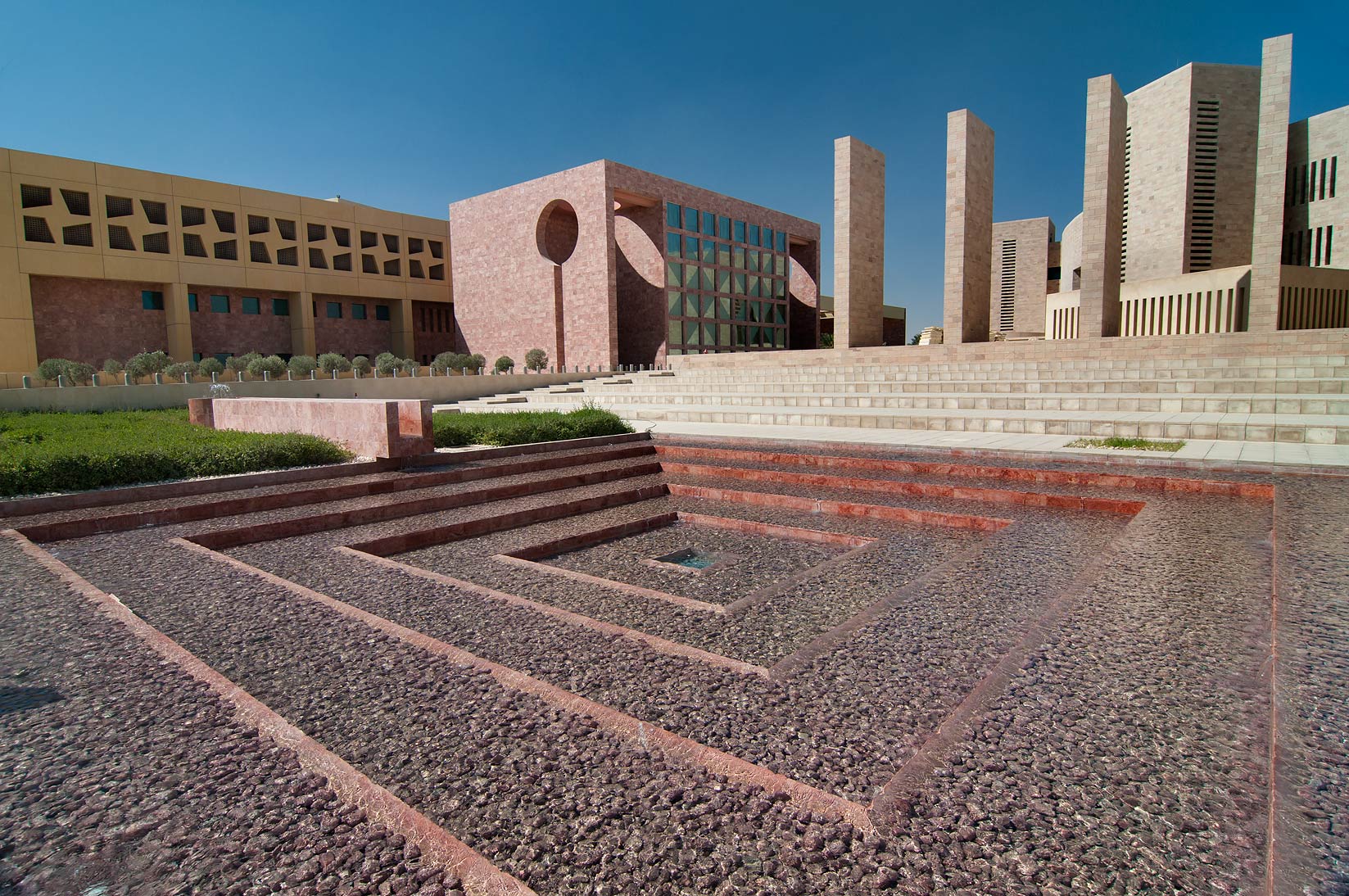
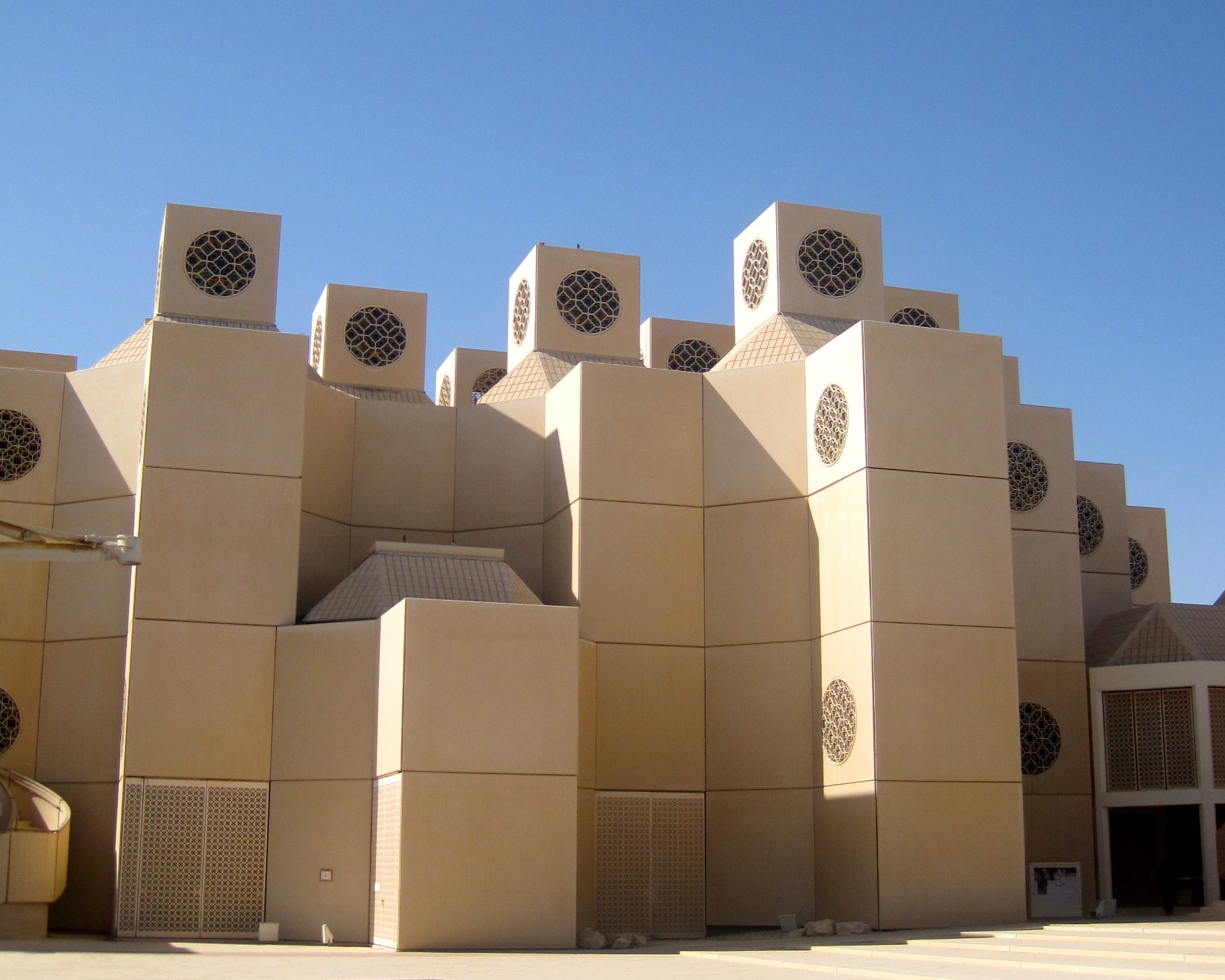
Qatar University — campus in pictures

Real, freely-licensed photographs of the campus (via Wikimedia Commons).

research vessel Janan-Qatar University
research vessel Janan-Qatar UniversityCcpoka1971 · CC BY-SA 4.0 · via Wikimedia Commons
Northwestern students study on campus at Qatar.
Northwestern students study on campus at Qatar.Alanna Alexander · CC BY-SA 4.0 · via Wikimedia Commons
Stage  Architecture and Representation  the Arab City
Stage Architecture and Representation the Arab CityColumbia GSAPP · CC BY 2.0 · via Wikimedia Commons
Image of the Texas A&M University at Qatar building.
Image of the Texas A&M University at Qatar building.Arwcheek · Public domain · via Wikimedia Commons
Fountain in backyard of Carnegie Mellon University in Education City
Fountain in backyard of Carnegie Mellon University in Education CityAlex Sergeev (www.asergeev.com) · CC BY-SA 3.0 · via Wikimedia Commons
Qatar University.Campus
Qatar University.CampusSky2105 · CC BY-SA 3.0 · via Wikimedia Commons

Why Qatar University — Gulf Prestige, Research & Career Access

Qatar University occupies a unique position: it is the flagship institution of one of the world's wealthiest countries, backed by substantial state investment, and it educates a student body that is 35% international. For ambitious students from across the globe, QU offers a compelling combination of rigorous professional education, meaningful GCC career access, and genuine affordability.

01Qatar's #1 University
Ranked #1 in Qatar and #173 globally by QS, Qatar University is the benchmark of academic achievement in the GCC. A QU degree carries strong institutional recognition across the Gulf and increasingly in international professional markets.
02State-Backed Research Investment
Qatar's government funds QU's research agenda in alignment with Qatar National Vision 2030, with major centres focused on energy, environment, health, and social policy. Undergraduates can access funded research from early in their studies.
03Genuinely Multinational Campus
35% of QU's 22,000+ students are international, representing 70+ countries. The campus reflects Qatar's cosmopolitan character — a genuine mix of Arab, South Asian, African, and Western peers.
0413 Colleges, Unique Programmes
From Qatar's only CCAPP-accredited pharmacy programme to the country's first law college, QU has systematically built unique professional schools not available elsewhere in the region.
05GCC Employment Advantage
With an 85% graduate employment rate and an average starting salary of USD 35,000, QU graduates enter a job market energised by Qatar's energy sector, infrastructure build-out, and growing services economy.
06Affordable by Global Standards
At USD 11,500 per year in tuition and approximately USD 23,000 total cost of attendance, QU is significantly more affordable than comparable institutions in the UK, US, or Australia — without sacrificing academic quality.

Qatar University Acceptance Rate & Admitted Student Profile

Stats

~22,000+
Applications
~45%
Acceptance Rate
22,000+
Student Population

Profile Stats

1050–1250
SAT Middle 50%
30+
IB Score Band
6.0
IELTS Minimum
79
TOEFL iBT Minimum
35%
International Students
14:1
Student:Faculty Ratio
Overall acceptance rate — varies sharply by programme

Rea Vs Rd

Rd Label: General Programmes
Rd Value: ~45%
Rea Label: Competitive Programmes (Medicine, Pharmacy)
Rea Value: Much lower

Qatar University Admissions Requirements — Grades, Tests & Profile

Academic Grades
Value: Strong High School Record
  • Consistently strong grades across core subjects
  • Subject alignment with intended college is essential
  • Medicine, Pharmacy, Engineering admit highest-performing tier
  • No published minimum GPA — programme-specific academic bars vary
Qatar University evaluates academic performance as the primary admissions criterion. For competitive programmes — Medicine, Dental Medicine, Pharmacy, Engineering — grades must be well above the general minimum. Your subject preparation relative to your intended college matters as much as your overall grade.
Standardised Tests & English
Value: 1050–1250 SAT
  • SAT middle 50%: 1050–1250 (from facts file)
  • ACT band not published — SAT is the primary standardised benchmark
  • IELTS minimum 6.0 overall (confirmed)
  • TOEFL iBT minimum 79 (confirmed)
  • IB Diploma typical admitted band: 30+ overall
Tests are required at QU — not optional. Submit your best SAT result (aim for 1200+ for general programmes; 1280+ for STEM/health), and provide IELTS or TOEFL results. For IB Diploma students, your DP total is your primary academic credential.
International Qualifications
Value: Programme Suitability
  • IB: 30+ overall; 33+ for Medicine, Engineering, Pharmacy
  • A-Levels: BBC minimum; ABB–AAB for competitive programmes
  • Science subjects required for Medicine, Pharmacy, Engineering
  • Mathematics required for Engineering and Computer Science
IB Diploma, British A-Levels, Indian CBSE/ISC, American High School Diploma with strong GPA, and other national qualifications are all accepted. QU evaluates each system on its own terms. Ensure your subject profile matches the requirements of your intended college.

Qatar University Application Components — Direct Portal, Documents & Tests

Qatar University uses a direct online application portal managed by its own Scholarships and International Admissions Section. The application is document and grades driven — there are no personal essays required as a standard component. Every element listed below must be complete before QU will process your application.

01RequiredOnline Application Form
Apply directly via QU's official online admissions portal at qu.edu.qa. There is no Common App or UCAS — this is a direct application. Create an account, select your programme, complete the form, and pay the USD 55 application fee.
02RequiredOfficial Academic Transcripts
High school transcripts must be official, stamped, and signed. Documents in languages other than English or Arabic require certified translation. Transfer applicants must provide university transcripts in addition.
03RequiredEnglish Proficiency Certificate
IELTS Academic (minimum 6.0 overall) or TOEFL iBT (minimum 79) required for non-native English speakers. Submit official score reports directly from the testing authority. Some programmes require higher scores — confirm on the QU admissions portal.
04RequiredPassport Copy
A clear copy of your valid passport is required. Residence permit and other ID documents may also be requested depending on your nationality and current country of residence.
05As ApplicableSAT Score Report
SAT scores should be submitted directly from College Board to Qatar University. The admitted middle 50% is 1050–1250. Aim for 1200+ for general programmes; 1280+ for STEM and health sciences programmes.
06Programme-SpecificAdditional Supporting Documents
Some programmes or scholarship applications may require additional materials — portfolios for design or arts-related programmes, or achievement documents for merit scholarship consideration. Confirm requirements per programme on the admissions portal.
07One-Time FeeApplication Fee
A non-refundable application fee of USD 55 is required at submission. Pay this through the online portal during your application. The fee applies once per application cycle.

Qatar University Application — No Essays, But Strategy Still Matters

Tips

Documents speak where essays don't
At QU, your academic record is your application. Ensure transcripts are official, clearly legible, and accompanied by certified translations if needed. A perfectly assembled document file is the QU equivalent of a brilliant Common App essay.
Scholarship statements matter more than you think
If you apply for QU's competitive merit scholarships, any statement or portfolio material becomes important. Treat scholarship supporting materials with the same rigour as an essay — specificity and genuine purpose beat generic enthusiasm.
Programme selection is your strategic essay
Choosing the right programme for your subject profile is the most consequential decision in your application. A well-aligned programme choice signals academic seriousness. Misaligned applications rarely succeed.
Use 'additional information' fields purposefully
If the QU portal offers any optional field for additional context — exceptional achievements, unusual circumstances, major awards — use it briefly and factually. An Olympiad medal or national championship deserves mention. This is not an essay, but it counts.

Prompts

Personal Statement
Qatar University does not require a personal statement or supplemental essays for standard undergraduate admission. The application is document and grades based.
Scholarship Supporting Statement
Some QU scholarship programmes — particularly for merit-based awards — may require supporting statements or portfolios. Contact the Scholarships and International Admissions Section to confirm requirements for your specific scholarship category.
Foundation Programme Statement
Students applying through the Foundation Programme pathway may be asked for additional context on their academic background and goals. Use any available space to demonstrate commitment and a clear sense of purpose.
The most common QU application mistake. Assuming that because there is no essay, the application requires minimal effort. At QU, document quality, completeness, and subject alignment are the entire application — they deserve the same attention Harvard students give their essays.
Application Strategy — Where to Invest Your Energy

What Qatar University Admissions Looks For

Qatar University evaluates undergraduate international applicants on a primarily merit-based, document-driven model. Academic grades and subject preparation are front and centre. Understanding what each part of the QU review looks for — and why — is the foundation of a strong application strategy.

01Academic Achievement
Strong, consistent grades across core subjects are the primary admissions criterion. QU's evaluation begins with academic performance — particularly in subjects directly relevant to your intended college. There is no holistic offset for weak grades.
02Programme Suitability
Your subject profile must align with your chosen college. Engineering applicants need Mathematics and Physics; Medicine requires Biology and Chemistry; Business benefits from Economics and Mathematics. Subject misalignment is a common rejection reason.
03English Language Readiness
Most QU programmes are taught in English, and language proficiency is verified formally. IELTS 6.0 or TOEFL 79 is the minimum. Competitive applicants at 6.5 IELTS or higher have a stronger position, especially in text-heavy programmes like Law or Business.
04Standardised Test Evidence
SAT is the primary standardised test for international undergraduate applicants. A score in the upper range of the middle 50% (towards 1250) strengthens applications to competitive programmes. IB total and A-Level grades serve the same function for students in those systems.
05Document Completeness
QU's process is document-driven. A complete, accurately assembled application with official documents, valid translations, and correct supporting materials is itself a demonstration of the organisational capability QU values.
06Competitive Programme Standing
For Medicine, Dental Medicine, Pharmacy, Engineering, and Nursing, QU admits from the strongest tier of the applicant pool. If your profile is borderline for your first-choice programme, a strategically chosen second preference can be the difference between an offer and a rejection.

Qatar University Financial Aid & Scholarships for International Students

Qatar University is a state-subsidised public institution. At USD 11,500 per year in tuition and approximately USD 23,000 total cost of attendance, it is significantly more affordable than comparable universities in the West. Merit-based scholarship support is available for exceptional international applicants, though the published average aid percentage is not available — contact QU's admissions office for specific guidance.

Aid amounts and scholarship details should be confirmed directly with QU's Scholarships and International Admissions Section. Published data on average aid percentages for international students is not available.

Stats

$11,500
Annual tuition (international)
$23,000
Total cost of attendance (est.)
$55
Application fee (one-time)
Yes
Merit scholarships available

Contribution Tiers

NoteRangePercentPercent Value
QU annual tuition fee — significantly below Western equivalentsTuitionUSD 11,50025
Living in Doha — food, transport, housing, personal expensesCost of LivingUSD 16,00070
All-in annual estimateTotal Cost of AttendanceUSD 23,00050
One-time, non-refundableApplication FeeUSD 551
Scholarship Options — What Exists for International Students. Qatar University's scholarship system includes competitive (merit-based) and non-competitive categories open to qualifying international applicants. The Talent and STEM Sponsorship programmes, which include monthly stipends and textbook coverage, are restricted to Qatari nationals. International students seeking financial support should contact QU directly for current eligibility and award details.

Key Dates

Fall Semester Application Opens
Date: Jan–Feb
Fall Semester Application Deadline
Date: Apr–May
Fall Semester Decision
Date: Jun–Jul
Spring Semester Application Opens
Date: Aug–Sep
Spring Semester Application Deadline
Date: Oct–Nov
Spring Semester Decision
Date: Nov–Dec

Advantages

  • More time to strengthen your final-year grades before applying
  • Can finalise IELTS/TOEFL scores before the deadline
  • Opportunity to gather additional supporting documents carefully
  • Apply to multiple universities in your home country as a backup simultaneously
  • Fall intake typically offers the broadest programme availability

Disadvantages

  • Spring intake may have fewer programme options in some colleges
  • Some scholarships are only available for Fall intake applicants
  • Spring admitted students may miss orientation and community-building events
  • Housing availability may be more limited for Spring intake
  • Summer waiting period if you apply for Fall but are from the Southern Hemisphere
Fall vs Spring Intake. QU does not use US-style Early Action or Early Decision rounds. Applications are accepted for Fall and Spring intakes on a rolling basis within each cycle's window. The Fall intake is the primary entry point with the broadest programme options.
Tychr's QU Application Timing Recommendation. Apply for Fall intake if at all possible — it is QU's primary entry window, offers the most programme options, and aligns your academic year with the majority of your cohort. Apply as early in the window as your documents allow, since some competitive programmes fill quickly. Always verify exact deadlines on the official QU admissions portal before each cycle.
Key Dates (Typical Pattern — Verify Official Dates Each Year)
Qatar University Fall vs Spring Intake — Strategy Guide

Qatar University Interviews — What to Know

Qatar University does not conduct interviews as a standard part of its undergraduate admissions process for international students. Admissions decisions are based on academic credentials, standardised test scores, English proficiency results, and document review. Students should not expect to receive an interview invitation as part of their general application. If you are applying for a specific scholarship that includes an interview component, QU will communicate this to shortlisted candidates.

Meta

No — not part of standard undergraduate admissions
Interview Required?
Some scholarship streams (e.g. Talent Sponsorship) require interview for Qatari nationals
Exception
Document review, grade analysis, test scores
What Replaces It
No interview is typically required in the general admissions process
For International Students

Questions

What replaces the interview at QU?
Tip: The QU portal is document-driven. Any 'additional information' field is your closest equivalent to an interview statement — use it for achievements that don't fit elsewhere.
Is there any way to present myself beyond my documents?
Tip: Contact the Scholarships and International Admissions Section directly. Some merit scholarship streams may involve additional review steps not widely advertised.
Does the Foundation Programme involve an interview?
Tip: QU's Foundation Programme sometimes involves an English placement or proficiency assessment rather than a traditional interview. Confirm the specifics with the Foundation Programme office.
What if my specific programme has additional selection steps?
Tip: Research QU's specific programme pages, college websites, and any communication from the admissions office for your programme, as requirements can vary.

Qatar University — Campus Housing & Residential Life

Qatar University's residential system reflects the country's cultural context. The campus offers on-site housing for both male and female students in gender-separated residential zones, with modern facilities, communal dining, and proximity to all academic buildings. Unlike Harvard's residential house system, QU does not use a college-within-a-university model — all students share the same campus community infrastructure.

Houses

Male Student Residences
Tag: Male
Dedicated housing blocks for male students within the QU campus
Female Student Residences
Tag: Female
Separate, modern residential facilities for female students on campus
Postgraduate Housing
Tag: Postgraduate
Additional accommodation options for graduate and mature students

Lottery Steps

  • International students are encouraged to apply for on-campus housing as early as possible — demand is high and places are limited
  • Housing is separated by gender in line with QU's campus culture
  • On-campus facilities include residential blocks, dining facilities, fitness centres, and communal study areas
  • Housing costs are included in the overall cost of living estimate of USD 16,000 per year
  • Off-campus housing in Doha is also available — Doha has a wide range of apartment options at varying price points

Qatar University's 13 Colleges & Programmes

College of Engineering
Label: Engineering & Technology
  • {"label":"Flagship disciplines","value":"Civil, Mechanical, Electrical, Computer"}
  • {"label":"Typical admission bar","value":"Competitive — strong Maths and Physics required"}
  • {"label":"Research centres","value":"Energy, environment, infrastructure"}
  • {"label":"Industry links","value":"QatarEnergy, Qatar Rail, Ashghal"}
QU's College of Engineering is among the largest and most research-active in the GCC, offering degrees aligned with Qatar's infrastructure and energy ambitions.
College of Medicine
Label: Medicine & Clinical Sciences
  • {"label":"Degree","value":"MBBS / Medical Doctor"}
  • {"label":"Admission","value":"Highly competitive — Biology, Chemistry essential"}
  • {"label":"Clinical partner","value":"Hamad Medical Corporation"}
  • {"label":"Language of instruction","value":"English"}
The College of Medicine is one of Qatar's most competitive programmes, partnering with Hamad Medical Corporation for clinical training in Qatar's world-class healthcare system.
College of Pharmacy
Label: Pharmacy Sciences
  • {"label":"Accreditation","value":"CCAPP (Canadian Accreditation)"}
  • {"label":"Status","value":"Qatar's only accredited pharmacy programme"}
  • {"label":"Admission","value":"Competitive — Chemistry and Biology required"}
  • {"label":"Degree","value":"B.Pharm"}
Qatar's only CCAPP-accredited pharmacy programme. The international accreditation means QU pharmacy graduates can pursue licensure in Canada and other markets.
College of Business and Economics
Label: Business, Finance & Economics
  • {"label":"Flagship programmes","value":"Business Administration, Accounting, Finance, Economics"}
  • {"label":"Admission","value":"Accessible to strong general applicants"}
  • {"label":"Accreditation","value":"AACSB-accredited"}
  • {"label":"Industry links","value":"Qatar National Bank, QIA, Qatar Stock Exchange"}
AACSB-accredited with strong ties to Qatar's finance and business sector. The College of Business and Economics is QU's most internationally recognised management school.
College of Law
Label: Law & Legal Studies
  • {"label":"Status","value":"Qatar's first law college"}
  • {"label":"Teaching language","value":"Arabic and English components"}
  • {"label":"Degree","value":"Bachelor of Laws (LLB)"}
  • {"label":"Focus","value":"Qatari and Islamic legal systems + comparative law"}
Founded as Qatar's first law college, QU Law combines Qatari legal tradition with comparative and international law, serving the growing legal profession in the GCC.
College of Health Sciences
Label: Nursing & Allied Health
  • {"label":"Programmes","value":"Nursing, Health Information Management, Biomedical Science"}
  • {"label":"Admission","value":"Competitive — Biology and Chemistry"}
  • {"label":"Clinical links","value":"Hamad Medical Corporation"}
  • {"label":"Demand","value":"High — Qatar's healthcare expansion drives recruitment"}
A rapidly growing college supporting Qatar's healthcare workforce goals, with direct clinical pathways into the Hamad Medical Corporation network.

Research & Extracurricular Opportunities at Qatar University

Qatar University Research Centres
Category: Undergraduate Research
QU operates multiple state-funded research centres across energy, environment, health, and social sciences. Undergraduate students can seek placement in research projects aligned with their college, gaining hands-on research experience as early as Year 2.
Education City Access
Category: Regional Ecosystem
Doha's Education City hosts international branch campuses of Georgetown, Carnegie Mellon, Northwestern, Cornell Medicine, and others. QU students benefit from proximity to this academic ecosystem, with occasional cross-institutional events and networking opportunities.
Student Clubs & Activities
Category: Campus Life
More than 40 active student clubs and organisations span academic, cultural, sporting, and social interests. The QU Student Union organises campus-wide events that celebrate the diversity of the international student community.
Internships & GCC Employers
Category: Professional Development
QU's location in Doha positions students for internships and industry exposure with QatarEnergy, Qatar National Bank, Hamad Medical Corporation, Qatar Airways, and a growing innovation and start-up ecosystem aligned with Qatar National Vision 2030.
Scroll right to explore QU's research programmes and student life opportunities.

Career Outcomes & the QU Alumni Advantage

Qatar University's alumni network spans the GCC's most important institutions. With an 85% employment rate and an average starting salary of USD 35,000, QU graduates enter a market energised by one of the world's highest per-capita income countries. For international graduates, Doha offers a professional environment with genuine career trajectories in energy, healthcare, finance, and public administration.

Stats

85%
Graduate employment rate
$35,000
Average starting salary (all fields)
35%
International students on campus
#173
QS Global Rank
#1
National rank in Qatar
Energy, Healthcare, Finance
Top employer sectors

Categories

Engineering & Energy
QatarEnergy, Qatar Rail, Ashghal Public Works Authority, and the growing tech and start-up scene in Qatar are key destinations for QU engineering graduates. Qatar's massive infrastructure investment under Vision 2030 drives sustained demand.
Healthcare
Hamad Medical Corporation — Qatar's primary public health provider — is the leading employer for Medicine, Pharmacy, Nursing, and Health Sciences graduates. Qatar's healthcare expansion creates exceptional employment stability.
Finance & Business
Qatar National Bank, Qatar Islamic Bank, the Qatar Investment Authority, Qatar Stock Exchange, and major international firms with GCC offices actively recruit QU Business and Economics graduates.

Tychr Students at Qatar University — Admissions Success Stories

Anika S.
I was applying to Medicine and was nervous my IB score wasn't high enough for QU's competitive programme. Tychr helped me understand exactly which documents to prioritise, how to present my subject profile, and that my HL Biology and Chemistry combination was actually a strong fit. I received an offer for Fall intake.
Country: India
Program: Qatar University — Medicine
Class Year: Class of 2026
Residential: QU Campus Housing
Academic Profile: IB 34 · IELTS 7.0
Omar K.
As a student from Egypt applying to Engineering, I wasn't sure whether my SAT score was competitive. Tychr helped me understand the middle 50% band and how my Mathematics HL score could strengthen the application. My offer came through much faster than I expected.
Country: Egypt
Program: Qatar University — Electrical Engineering
Class Year: Class of 2025
Residential: Off-Campus Doha
Academic Profile: SAT 1230 · IB 32
Priya M.
The QU application seemed simple compared to US applications, but Tychr pointed out that the programme selection was the most important strategic decision I had to make. I applied to Business and Economics with a backup in Arts and Sciences — I got my first choice.
Country: Sri Lanka
Program: Qatar University — Business and Economics
Class Year: Class of 2027
Residential: QU Campus Housing
Academic Profile: A-Levels ABB · IELTS 6.5

Faqs

Can international students apply directly to Qatar University?+

Yes. International students apply directly through QU's online admissions portal at qu.edu.qa, under the jurisdiction of the Scholarships and International Admissions Section. There is no Common App, UCAS, or central clearing system — you apply directly to QU for your chosen programme.

Is Qatar University taught in English?+

Most undergraduate programmes at QU are taught in English. Some programmes in Islamic Studies, Arabic Language, and Law may have Arabic-medium components. Always confirm the language of instruction for your specific programme on the official QU admissions page before applying.

Does Qatar University accept IB Diploma students?+

Yes. Qatar University accepts the International Baccalaureate Diploma. The typical admitted band is an IB score of 30 or above, though competitive programmes like Medicine, Engineering, and Pharmacy may expect higher scores. Confirm exact requirements for your programme with the admissions office.

What English test scores does QU require?+

The minimum requirements are IELTS 6.0 overall or TOEFL iBT 79. Programme-specific requirements may be higher. Students who do not meet the minimum may be offered a place in the Foundation Programme to develop English skills before entering their degree.

What is the acceptance rate and how competitive is admission?+

The overall acceptance rate is approximately 45%, but QU itself notes that meeting minimum requirements does not guarantee admission. Competitive programmes like Medicine, Pharmacy, and Engineering admit far fewer applicants. Apply with a complete, accurate file, and meet or exceed the academic benchmarks for your chosen programme.

Is on-campus housing available for international students?+

Yes. QU offers on-campus residential facilities for both male and female students. Housing costs are included in the overall cost of living estimate of approximately USD 16,000 per year. Apply for housing early — demand from international students is high.

Are there scholarships available for international students?+

QU offers competitive (merit-based) and non-competitive scholarship categories. The primary Talent and STEM Sponsorship programmes are restricted to Qatari nationals. International students should contact the Scholarships and International Admissions Section directly to understand current award availability for their nationality and programme.

What is it like to live in Qatar as an international student?+

Qatar is one of the safest countries in the world, with an extremely high standard of living. Doha is a modern, cosmopolitan city with a large expatriate community. On-campus housing is available, the climate is warm year-round, and the city offers world-class infrastructure, healthcare, and cultural amenities.

Book a Free Qatar University Admissions Strategy Session

In 60 minutes, our Qatar University admissions specialists will evaluate your academic profile, identify your programme fit, assess your document readiness, and develop a strategy for a complete and competitive QU application.

  • No commitment required
  • Qatar University and Gulf admissions expertise
  • Personalised programme and document strategy
At Qatar University, your academic record is your application. Getting it right requires strategy — not guesswork.

Qatar University Admissions Requirements

Qatar University Academic Requirements, The Honest Breakdown for International Students

What grades, test scores, and academic profile does Qatar University actually expect? And how are IB, A-Level, AP, and other international curricula evaluated in QU's admissions process?

1050–1250
SAT Middle 50%
Admitted band
30+
IB Typical Band
Overall admitted minimum
6.0
IELTS Minimum
Overall band score required
79
TOEFL iBT Minimum
Internet-Based Test
~45%
Acceptance Rate
Varies sharply by programme
Required
Test Policy
Tests are not optional at QU

GPA & Academic Standing

Qatar University and GPA, What Academic Standards the Data Reveals

Qatar University does not publish a minimum GPA in the Western sense. Its admissions process is grades-based but measured through subject-specific performance and programme alignment rather than a single cumulative GPA figure. For competitive programmes — Medicine, Pharmacy, Engineering — only the top tier of applicants will be admitted.

A strong overall grade is a baseline expectation, not a distinguishing feature. What distinguishes admitted students for QU's most competitive programmes is the combination of strong grades in subjects directly relevant to the degree — not simply high marks overall.

45%
Students meeting minimum requirements are not guaranteed a place — programme competition matters
~45%
Overall acceptance rate; Medicine and Pharmacy are significantly more selective
What this means for international students. International students from systems without a formal GPA (IB, UK A-Levels, Indian boards, Gulf secondary curricula) are evaluated on their performance relative to the norms of their specific educational system. QU's admissions office has experience assessing a wide range of international qualifications.
Grade trajectory matters. A student with an upward grade trajectory in the critical final two years of high school demonstrates academic momentum. QU's admissions readers look at final-year performance as the most recent and therefore most relevant evidence of academic capability.

Academic Context

School System and Context, How Qatar University Reads Academic Performance

Qatar University evaluates academic performance in the context of the student's specific educational system and school. A student from an Indian CBSE board is evaluated differently from a British A-Level student or a student from a Gulf Cooperation Council national curriculum school.

How QU contextualises your academic record
QU's admissions office maintains equivalency tables for most major international qualifications. Applications from unusual or less well-known educational systems should contact the admissions office directly to confirm how their qualifications will be evaluated. Where a qualification is unfamiliar, QU may request a transcript evaluation from an approved credential evaluation agency.
What this means practically
Subject preparation directly relevant to your intended college is more important than raw GPA. A student with slightly lower overall grades but strong subject-specific preparation in Biology and Chemistry is better positioned for a Medicine application than one with higher overall grades but weaker science subjects.
For students at less well-known international schools. If your school or examination board is less well-known internationally, contact QU's Scholarships and International Admissions Section directly before applying. They can confirm how your qualification is evaluated and whether a credential evaluation is required. This is particularly important for students from national examination systems in Africa, Central Asia, or Southeast Asia.

Standardised Testing

SAT Scores at Qatar University, What You Actually Need

Qatar University SAT Data — Admitted Student Profile

LabelScorePercent
25th percentile105045
75th percentile125075
Target for competitive programmes1280+80
The SAT Math subscore for STEM applicants. For STEM-focused applicants — Engineering, Computer Science, Medicine — a strong SAT Math subscore is particularly meaningful. QU's STEM programmes are quantitatively demanding, and a high Math subscore signals the numerical readiness these colleges expect.
Preparation. Students targeting QU's competitive STEM or health programmes should aim for a composite score of 1250+ and an SAT Math subscore of 650 or above. Tychr's SAT preparation programme helps students identify their baseline, target a realistic improvement trajectory, and approach the test with a clear subject-specific strategy.
SAT strategy for QU applicants. Unlike US universities, QU does not offer a test-optional path — tests are required. For students from IB or A-Level systems who have strong qualification scores, SAT is supplementary evidence rather than the primary credential. Submit your SAT if it supports the application; if your qualification scores are strong and your SAT is below 1050, focus on your qualification performance in your application narrative.

Standardised Testing

ACT Scores at Qatar University, The Data and the Strategy

Qatar University ACT Data

Metrics

ACT band
Score: Not published
Recommended alternative
Score: SAT

Comparison Cards

SAT — primary benchmark
SAT is the primary standardised test with a published admitted band (1050–1250). This is the clearest benchmark for QU applicants.
ACT — confirm first
ACT is not listed in QU's published data. If you are a strong ACT student, confirm acceptance with the admissions office before relying on it as your sole test credential.
Qualification first
For IB or A-Level students, your qualification scores are typically the primary academic credential. SAT and ACT serve a supplementary function — submit them if they are strong, but your qualification is what QU cares about most.
ACT policy. Qatar University does not publish an ACT band, and SAT is the primary standardised test for international undergraduate applicants. If you have ACT results, contact QU's admissions office to confirm whether they are accepted and how they are evaluated relative to SAT.
Tychr's recommendation. If you have only taken the ACT, contact QU's admissions office directly to confirm acceptance and equivalent evaluation methodology. If you have not yet taken any standardised test, prepare for the SAT — it is the clear and documented benchmark for QU applicants.

Testing Policy

Qatar University Test Policy, Tests Are Required

Qatar University explicitly requires standardised test scores as part of its undergraduate international admissions process. Tests are not optional. This is an important distinction from many Western universities that have adopted test-optional or test-blind policies.

Submit Items

You are applying to any undergraduate programme — tests are required, not optional.
Your SAT is 1200 or above — this positions you well within the published middle 50% range.
You are targeting a competitive programme (Medicine, Engineering, Pharmacy) — aim for 1250+ to be in the upper band.

Withhold Items

There is no 'withhold' option at QU — tests are required. If your score is low, focus on strengthening other credentials (qualification scores, English proficiency) while preparing to retake.
If you are an IB or A-Level student with strong qualification scores and a below-average SAT, emphasise your qualification performance clearly in your application and confirm with QU's admissions office how the two are weighted for your programme.
Current policy. QU's test requirement reflects its merit-based, document-driven admissions model. Standardised tests provide a comparable academic benchmark across the many different educational systems represented in its applicant pool. A complete application requires test scores.
The misconception. Some international applicants assume that QU's 45% acceptance rate means tests are taken less seriously. This is incorrect. For competitive programmes, tests are an important component of the merit-based evaluation. Meeting the published minimum does not guarantee admission — your score relative to the pool for your specific programme matters.

Curricula

A-Levels and IB at Qatar University, Specific Benchmarks

IB Diploma
Note: QU values IB students who have taken Higher Level subjects directly aligned with their intended college. For Engineering and STEM programmes, HL Mathematics and HL Physics or HL Chemistry are the strongest preparation. For Medicine, HL Biology and HL Chemistry are essential. The Extended Essay is acknowledged as evidence of independent research capability.
  • {"label":"Competitive range","value":"30+ points overall (facts file minimum); 33+ for Medicine, Engineering, Pharmacy"}
  • {"label":"HL subject alignment","value":"Sciences (Biology, Chemistry, Physics) for health/STEM; Mathematics for Engineering and CS"}
  • {"label":"Extended Essay","value":"Recognised as evidence of research capacity; subject should align with intended field"}
  • {"label":"Language of Instruction","value":"Most QU programmes taught in English — IB English language qualification satisfies proficiency if the course was English-medium"}
A-Levels
Note: A-Level students should ensure their three A-Level subjects are clearly aligned with their intended QU programme. QU requires that your subject profile demonstrates readiness for your chosen degree. A-Level students from the UK, Pakistan, Bangladesh, Sri Lanka, Zimbabwe, and many other countries are common at QU and well-understood by admissions staff.
  • {"label":"Competitive range","value":"BBC minimum; ABB–AAA for competitive programmes"}
  • {"label":"Subject alignment","value":"Sciences for STEM/health; Mathematics for Engineering; Humanities for Law and Social Sciences"}
  • {"label":"AS results","value":"Strong AS results support the A-Level application, particularly if predicted grades are high"}

Advanced Placement

AP Courses at Qatar University, What Counts

Qatar University does not formally require AP scores and does not publish an AP band. For students from the American curriculum system or international schools that offer AP courses, AP performance can supplement the application but is not a primary evaluation criterion in the way it is for US university applications.

What QU looks for in AP results
Strong AP scores (4 or 5) in subjects aligned with your intended college — AP Calculus, AP Physics, AP Chemistry, AP Biology — can strengthen your application by providing additional evidence of subject-specific readiness. Contact QU's admissions office to confirm how AP results are integrated into the evaluation for your programme.
When AP matters
AP is most useful as supplementary evidence for students whose primary credential is a US high school transcript rather than an IB Diploma or A-Level qualification. QU's admissions office will look at your full academic record — AP results add context to your GPA.
Credit recognition
Some QU colleges may grant credit for high AP scores, potentially allowing students to skip introductory courses. Confirm this directly with your intended college's academic advising office after admission.
QU's AP credit recognition policy should be confirmed directly with the relevant college after admission. Credit recognition varies by programme and subject.
Students from IB or A-Level systems should not attempt to artificially pursue AP. Your qualification is appropriate to your curriculum and will be evaluated accordingly. AP is relevant primarily for students from US or American international school curricula.

Academic Rigour

Rigour of Secondary School Record, What Qatar University Expects

Qatar University evaluates the rigour of your secondary school record in the context of what was available at your specific school and in your educational system. The key question is not whether you attended a selective school, but whether you took the most challenging relevant preparation available to you.

Taking the most rigorous subject preparation available at your school and directly aligned with your intended QU college — particularly in sciences, mathematics, or humanities as appropriate.

The contextual element. Rigour is evaluated relative to what was available. A student at a school with limited STEM offerings who maximised their science preparation is evaluated differently from one at a full IB school who chose easier subjects. The admissions team at QU reads your school profile alongside your transcript.
What rigour means at QU. For QU specifically, academic rigour means: strong subject preparation in the specific disciplines your chosen college requires, not simply high marks in easier subjects. An Engineering applicant who took HL Mathematics and HL Physics demonstrates rigour; one who took HL Psychology and HL Art to protect their GPA does not — regardless of overall points.
What QU is looking for. QU's competitive colleges — Medicine, Engineering, Pharmacy — look for applicants who have genuinely challenged themselves in the relevant disciplines. An IB student with HL Biology and HL Chemistry alongside HL Mathematics demonstrates the scientific preparation these colleges require. A-Level students who took Biology, Chemistry, and Mathematics at A-Level in preparation for Medicine are the benchmark profile.

Subject Preparation by College

Subject Preparation by College, What Qatar University Expects

Qatar University's colleges have specific subject preparation expectations that go beyond general academic ability. Understanding what each major college expects in terms of high school subject preparation is essential for a competitive application.

Engineering
HL Mathematics (IB Analysis & Approaches or Equivalent) and HL Physics or equivalent A-Level is the expected preparation. Strong mathematical ability is assessed through both your qualification scores and, where submitted, SAT Math. Students with competition mathematics experience (Olympiad participation, STEP) are particularly strong candidates.
Medicine / Health Sciences
HL Biology and HL Chemistry are essential for Medicine, Dental Medicine, Pharmacy, and Nursing applicants. A-Level Biology + Chemistry is the equivalent requirement. These are the most competitive QU programmes — scores in the upper range of qualification benchmarks (IB 33+, A-Levels ABB+) are typical for admitted students.
Business and Economics
Mathematics and Economics or equivalent quantitative subjects at high school level provide the strongest preparation for QU's AACSB-accredited business programmes. Accounting, Statistics, and Social Sciences backgrounds are also valued.

Language Proficiency

English Language Requirements for International QU Applicants

Qatar University requires formal proof of English language proficiency for non-native English speakers applying to English-medium programmes. Unlike some US or UK universities where the essay itself demonstrates language ability, QU requires an official test score.

The IELTS 6.0 or TOEFL 79 minimum is the floor, not the target. Students applying to competitive programmes or seeking a stronger application position should aim for IELTS 6.5–7.0 or TOEFL 90+. English proficiency affects not just admission but your ability to succeed in QU's English-medium programmes.

Test: IELTS Academic
Score: 6.0 minimum
Test: TOEFL iBT
Score: 79 minimum
Test: Duolingo
Score: Not confirmed — verify with QU
Practical guidance for international students. Students who have completed their secondary education in an English-medium environment (e.g. British curriculum schools, IB schools, American curriculum schools) may still be required to submit IELTS or TOEFL results. Confirm whether an exemption is available for students with English as the primary language of instruction from the official QU admissions page. If your English proficiency score is below the minimum, the Foundation Programme offers a pathway to degree entry after language preparation.

By Programme

Academic Requirements by Programme, What Each QU College Expects

Qatar University admits students directly to specific colleges and programmes — not to a general undergraduate degree. Programme selection happens at the application stage, not after arrival. Academic requirements therefore vary significantly by college. The table below reflects the academic profile that makes applicants competitive for each major area.

SignalsExpectationConcentration
Competition mathematics; strong SAT Math; HL PhysicsIB HL Maths + Physics, or A-Level Maths + Physics; SAT 1250+Engineering
HL Biology + Chemistry; clinical exposure; strong EnglishIB HL Biology + Chemistry, or A-Level Biology + Chemistry; 33+ IB or ABB+ A-LevelMedicine / Dental Medicine
Biology + Chemistry; CCAPP accreditation focusIB HL Biology + Chemistry or A-Level equivalent; competitive applicationPharmacy
SAT Math; IB Business Management or EconomicsStrong quantitative background; AACSB-accredited programmeBusiness and Economics
Strong English; humanities background; analytical writingArabic component — confirm language requirements; humanities A-Levels or IB equivalentLaw
Nursing or allied health preparation; Biology backgroundBiology at A-Level or IB HL; compassionate care profileHealth Sciences / Nursing
Broad academic profile; interest in science or artsGeneral strong academic record; confirm specific programme requirementsArts, Sciences & Education

International Systems

Qatar University and International Education Systems, How Your Curriculum Is Evaluated

IB Diploma
IB is well understood by QU's admissions staff and is among the most valued international qualifications. The programme's demanding nature, particularly for HL subjects, is recognised. QU knows the difference between a student who challenged themselves with HL Maths and HL Sciences and one who took easier HL subjects to protect their total score.
A-Levels (Cambridge and Edexcel)
A-Levels are among the most familiar qualifications to QU's admissions staff, given the large numbers of students from Pakistan, Bangladesh, Sri Lanka, UK, and East Africa who apply. Three A-Level subjects at strong grades with clear programme alignment is the expected profile.
Indian Boards (CBSE / ISC)
CBSE and ISC are accepted and evaluated against QU's equivalency tables. Students from Indian boards typically need to confirm how their 10+2 results are evaluated relative to QU's programme requirements. Strong subject performance (85%+ in relevant subjects) is typical for competitive programme applicants.
GCC National Curricula
Students from Gulf Cooperation Council national curricula (Qatari, Saudi, Emirati, Kuwaiti, Bahraini, Omani secondary systems) are a significant part of QU's applicant pool. These students are evaluated through QU's established benchmarks for their specific national qualification.
American High School Diploma
American High School Diploma with strong GPA, alongside SAT results, is evaluated in the context of QU's general admissions benchmarks. AP scores can supplement the profile for STEM programmes. Confirm with QU's admissions office how your specific transcript is assessed.

Roadmap

Building an Academic Profile for Qatar University, What to Do at Each Stage

Grade 9–10Lay the Foundation
Year: Grade 9–10
  • Choose your subject combination with your intended QU college in mind from the outset.
  • STEM students: ensure access to Mathematics, Physics, Biology, and Chemistry in later years.
  • Humanities and business students: build strong English, Economics, and Social Studies foundations.
  • If your school offers IB MYP or IGCSE, make subject choices that preserve the strongest options at HL/A-Level.
Grade 10–11The Critical Academic Year
Year: Grade 10–11
  • IB subject and level selection: HL subjects must be aligned with your intended QU college — do not optimise for total points at the expense of relevant HL preparation.
  • A-Level students: confirm your three subjects match QU's subject requirements for your programme.
  • Begin IELTS or TOEFL preparation — aim to sit your first attempt no later than late Grade 11.
  • Research QU's admissions requirements specifically for your target programme.
Grade 11–12Build the Evidence
Year: Grade 11–12
  • Maintain or improve academic performance — final-year grades are the most scrutinised.
  • If SAT scores are part of your plan, complete SAT preparation and sit the exam in Grade 11.
  • Gather all required documents: transcripts, ID, English proficiency certificates, test score reports.
  • Research scholarship opportunities through QU's Scholarships and International Admissions Section.
Grade 12Application Year
Year: Grade 12
  • Verify current application deadlines on the official QU portal — dates shift between cycles.
  • Finalise predicted grades or final results as applicable.
  • Submit your application well before the deadline — early complete applications are processed first.
  • Apply for on-campus housing simultaneously with your programme application.

Common Pitfalls

Academic Mistakes That Cost QU Applications, And How to Avoid Them

Treating the 45% acceptance rate as universal
QU's overall acceptance rate is approximately 45%, but Medicine, Pharmacy, Dental Medicine, and competitive Engineering programmes admit a much smaller proportion. Applying to these programmes without a genuinely competitive academic profile wastes the application fee and the intake cycle.
Submitting below-minimum English proficiency scores
An IELTS 5.5 or TOEFL 70 is below QU's published minimum. Applications with below-minimum English scores will not proceed to the competitive review stage. Plan your English proficiency test early and allow for a retake if necessary.
Ignoring subject alignment
A strong overall IB or A-Level score in subjects unrelated to your intended programme does not compensate for weak performance in the directly relevant subjects. An Engineering applicant with HL Mathematics 4 and HL Physics 4 will not be competitive regardless of overall total.
Missing the deadline
QU's deadlines change each cycle. An application submitted after the deadline — even by a day — will not be processed. Verify current dates at qu.edu.qa well before the cycle opens.
Poor document quality
Uploading blurry, incomplete, or unofficial document copies is a common rejection trigger at direct-application universities. Every document must be official, clear, and accompanied by certified translation if in a language other than English or Arabic.

Real Outcomes

What Academic Profiles Tychr's QU-Admitted Students Had

The following profiles represent the academic backgrounds of students Tychr has helped gain Qatar University admission. They illustrate the range of academic preparation that works and what made each application compelling in QU's merit-based review.

Profile 1 — Medicine (Admitted)
HL Biology (6), HL Chemistry (6), HL Mathematics (5). IELTS 7.0. Strong secondary school grades throughout Grade 11 and 12 with consistent A grades in Biology and Chemistry.
Stats: IB 33 · IELTS 7.0 · A in Biology and Chemistry
Takeaway: The subject alignment was the key strength. HL Biology and HL Chemistry at 6 each demonstrated the scientific readiness QU's College of Medicine requires. Overall IB score was competitive but not exceptional — subject profile was decisive.
Profile 2 — Electrical Engineering (Admitted)
A-Level Mathematics (A), Physics (A), Chemistry (B). TOEFL 92. Strong foundation in quantitative subjects. Participated in a school-level engineering project in Grade 12.
Stats: A-Levels ABB · TOEFL 92
Takeaway: A-Level subject alignment was excellent. The engineering project added an engagement signal that strengthened the application beyond grades. The TOEFL score above the minimum gave the application additional strength.
Profile 3 — Business and Economics (Admitted)
CBSE 10+2 with 88% aggregate. Strong marks in Economics, Business Studies, Mathematics. IELTS 6.5.
Stats: CBSE 88% · IELTS 6.5 · Economics and Mathematics
Takeaway: QU's Business programme is accessible to a broad range of well-qualified international applicants. The subject alignment (Economics + Mathematics) and IELTS above the minimum were the key factors. An IELTS of 6.0 minimum would have been accepted but 6.5 strengthened the file.

Faqs

Is Qatar University test-optional?+

No. Qatar University requires standardised test scores. The process is not test-optional. Submit SAT results alongside your qualification credentials.

What IB score do I need for Qatar University?+

The published minimum is 30+ overall (facts file). For competitive programmes — Medicine, Engineering, Pharmacy — aim for 33 or above, with strong Higher Level scores in relevant subjects.

Does Qatar University prefer SAT or ACT?+

SAT is the primary standardised test with a published admitted band (1050–1250). ACT is not published in QU's data — if you only have ACT results, contact QU's admissions office to confirm their evaluation methodology.

Are A-Levels accepted at Qatar University?+

A-Levels are well-understood and common among QU international applicants, particularly from Pakistan, Bangladesh, Sri Lanka, and UK-curriculum schools. Three A-Level subjects at BBC minimum, with subject alignment to your intended programme, is the expected profile.

What if I don't meet the minimum academic requirements?+

Yes, through the Foundation Programme. It is a structured, supported pathway into undergraduate study and is not a disadvantage — many international students complete it successfully and go on to excel in their degree programmes.

Financial Aid & Cost

Qatar University May Cost Less Than You Think, Here's the Full Picture.

Qatar University is a state-subsidised public institution with tuition significantly below comparable universities in the US, UK, and Australia. Here is exactly what QU costs, what financial support is available for international students, and how to plan your finances.

USD 11,500 Annual Tuition
Significantly below Western university equivalents
Merit Scholarships Available
Competitive awards for exceptional international applicants

Cost Transparency

What Qatar University Actually Costs, The Full Annual Figure

Qatar University is funded primarily by the State of Qatar, which keeps tuition significantly below market rates for comparable international universities. The total cost of attendance of approximately USD 23,000 per year compares favourably to USD 50,000–$80,000 at comparable US or UK universities. For international families considering a high-quality education in a safe, prosperous country, QU represents strong value.

Tuition and Fees
Cost: ~$11,500
Cost of Living in Doha (housing, food, transport, personal)
Cost: ~$16,000
Application Fee (one-time, non-refundable)
Cost: ~$55
Total Cost of Attendance (estimated)
Cost: ~$23,000
vs. Comparable Western Peers. ~50% cheaper
QU Annual Cost of Attendance. ~$23,000
Qatar University Cost of Attendance — Annual Estimates (USD)
QU's cost is approximately half of comparable institutions in the UK, US, and Australia.
The estimated all-in cost including tuition, living, and personal expenses.

Scholarship Availability

Qatar University Financial Aid for International Students, What Exists

Qatar University offers merit-based scholarship support through its competitive and non-competitive scholarship categories. Specific scholarship amounts and eligibility criteria for international students are not published in aggregate form — individual awards are determined by the Scholarships and International Admissions Section on a case-by-case basis.

How QU Aid Compares to Western Universities. Unlike Harvard or other US need-blind universities, QU does not operate a comprehensive need-based aid programme open to all international applicants. Financial support at QU is primarily merit-based, aimed at the top academic performers in each intake. Families with financial need should contact QU's admissions office directly to understand what options may be available.
What Happens After Admission. After receiving an offer of admission, international students interested in scholarship support should contact QU's Scholarships and International Admissions Section directly. Scholarship applications for some categories may need to be submitted separately from the programme application — confirm the timeline and requirements as early as possible.
Merit Scholarships Available for Exceptional International Applicants
Qatar University's scholarship system has three main categories: Competitive Scholarships (awarded to top academic performers), Non-Competitive Scholarships (based on specific eligibility criteria), and Sponsorship Programmes (Talent and STEM — restricted to Qatari nationals). International students may be eligible for the first two categories.

State Investment

Why QU Is Affordable, The State Investment Behind the Price

State-Subsidised Education
Qatar University is funded by the State of Qatar as the country's flagship public institution. This state investment keeps tuition well below international market rates, making QU accessible to a broad international student population as part of Qatar's National Vision 2030 goals for education and knowledge economy development.
Subtitle: Qatar's Flagship Public Institution
Growing Investment Over Time
Qatar's commitment to QU has grown over time. The university has expanded from two original colleges to thirteen, with significant capital investment in facilities, research infrastructure, and faculty development. This trajectory reflects a sustained national commitment to making QU genuinely world-class.
Subtitle: From Two Colleges to Thirteen
Qatar National Vision 2030. Education is a declared national priority under Qatar National Vision 2030. Qatar's sovereign wealth and gas revenues fund QU's operating budget, enabling the university to charge below-market tuition while building world-class research and teaching infrastructure.
"Qatar University strives to be a research-intensive university that serves Qatar and the international community."

Financial Aid Walkthrough

Applying for Qatar University Scholarships, The Process Step by Step

QU's scholarship process is managed separately from the programme admissions process but should be pursued in parallel. Here is the complete step-by-step approach for international students.

01Research Available Scholarships
  • Visit qu.edu.qa/scholarships
  • Identify which categories are open to international students from your country
Visit QU's official scholarships portal at qu.edu.qa and the international students admissions section. Identify which scholarship categories are currently open to international applicants from your country and programme.
02Contact the Scholarships and International Admissions Section
  • Email or call QU's dedicated international admissions section
  • Ask specifically which merit awards are available for your nationality and programme
  • Confirm whether a separate scholarship application is required
QU's Scholarships and International Admissions Section is the authoritative source on current award availability. Not all scholarships are publicly advertised — direct contact is essential to understand what is available.
03Optimise Your Academic Profile
Notes: Merit scholarships are awarded to top academic performers. Your grades, IB/A-Level scores, and test results are the primary criterion for award consideration.
Title_alt: Build Your Academic Credentials
  • Target the upper range of QU's admitted SAT band (towards 1250+)
  • Ensure IELTS is 6.5 or above if possible
  • Maintain consistent top-tier grades in relevant subjects
Competitive merit scholarships go to the highest-performing international applicants. Make your academic profile as strong as possible before applying.
04Explore External Funding Sources
  • Research your home country's Ministry of Education scholarship programmes
  • Identify bilateral education agreements between Qatar and your country
  • Check Gulf country scholarships open to your nationality
Many students combine QU study with scholarships from their home country's government, bilateral agreements between Qatar and their country, or third-party scholarship organisations.
05Submit Applications Simultaneously
  • Apply for your programme and scholarship at the same time where possible
  • Keep copies of all submitted financial and scholarship documentation
  • Follow up with the admissions office if you have not heard within the stated decision timeline
Apply for scholarships at the same time as your programme application where possible. Late applications for financial support rarely succeed.

AID FOR INTERNATIONAL STUDENTS

Qatar University Financial Aid for International Students, The Honest Picture

Qatar University's financial support landscape for international students differs significantly from US Ivy League models. Understanding what actually exists, and what doesn't, is essential for realistic financial planning.

Merit-based, not need-based
QU's primary scholarship categories for international students are merit-based — they go to the top academic performers in each intake cycle. Unlike Harvard or Princeton, QU does not operate a comprehensive need-blind, full-need aid programme for international applicants.
Nationality and programme can affect eligibility
Some scholarship categories at QU are linked to bilateral agreements with specific countries or to priority programmes aligned with Qatar National Vision 2030. Your nationality and chosen programme may affect what awards you are eligible for.
Direct enquiry is essential
QU does not publish a comprehensive list of international student scholarship amounts online. The Scholarships and International Admissions Section is the authoritative source. Contact them directly with your nationality, programme, and academic profile to understand what is available in your cycle.
State investment keeps base tuition low
Even without a scholarship, QU's tuition of USD 11,500 per year is significantly below Western equivalents. The total cost of attendance of approximately USD 23,000 is competitive with many mid-ranked universities globally.

FINANCIAL AID REALITY

What Qatar University Financial Aid Actually Looks Like

QU Aid by Academic Profile (Qualitative — Published Income Band Data Not Available)

Income-band aid tables are not available for Qatar University. The information above is a qualitative summary. Contact QU's Scholarships and International Admissions Section directly for current award availability and amounts.

QU does not publish income-band aid tables. The average aid percentage for international students is not available in published data. What is clear: competitive merit awards exist for top academic performers, and the baseline tuition is already significantly lower than Western alternatives.

GrantIncomeContribution
Contact QU directlyAll income levelsUSD 11,500 tuition (without scholarship)
Possible merit reductionTop academic performersReduced by merit scholarship award amount
QU's scholarship awards are merit-based. There is no documented formula tying aid to family income in the way US need-based aid is calculated. Financial need-based aid, if available, should be confirmed directly with QU's admissions office.

Table Headers

Grant: Typical QU Support
Income: Applicant Profile
Contribution: Baseline Contribution

SCHOLARSHIP TYPES

Qatar University Scholarships, What Exists and Who Qualifies

Qatar University's primary scholarship categories for international students are merit-based. Unlike Harvard, which awards all aid based purely on financial need, QU's competitive scholarship awards recognise academic achievement.

What merit means at QU
A top academic performer — high IB total, strong A-Levels, or excellent national qualification results in relevant subjects — may qualify for competitive merit scholarship consideration. The exact award amount and conditions should be confirmed with QU's Scholarships and International Admissions Section.
The Talent and STEM Sponsorships (Qatari nationals only)
The Talent Sponsorship Programme (3,000 QAR monthly stipend + textbook exemption + laptop) and the STEM Sponsorship Programme are the most well-documented scholarship types at QU. However, both are restricted to Qatari nationals. International students are not eligible for these specific programmes.
Non-competitive scholarships
QU's non-competitive scholarship category is based on specific eligibility criteria other than academic ranking — which may include country of origin, programme of study, or other factors. Details for international applicants should be confirmed directly with QU.
Academic excellence recognition (post-admission)
Students who excel academically at QU after admission may be eligible for continuation scholarships or internal awards. Top-performing students in each college are often recognised with merit awards in subsequent years.

EXTERNAL FUNDING

External Scholarships, Additional Funding for Qatar University Students

Many international students attending Qatar University combine QU's affordable tuition with external scholarship funding from home country governments, bilateral agreements, or third-party organisations. This can significantly reduce or eliminate the out-of-pocket cost for qualified students.

Home Country Government Scholarships
Many governments (India: ICCR, Egypt: Egyptian Cultural Affairs Bureau, Pakistan: HEC, various African governments) offer scholarships for study abroad including in Qatar. Research your home country's scholarship landscape.
Qatar Government Scholarships for Specific Nationalities
Bilateral education agreements between Qatar and specific countries may fund students to study at QU. Check whether such agreements exist between Qatar and your country through your country's Ministry of Education.
OIC and Arab League Scholarships
Students from Organisation of Islamic Cooperation member states and Arab League countries may have access to specific regional scholarship programmes. Research current offerings from these organisations.
University-Specific Competitive Awards
Contact QU's Scholarships and International Admissions Section directly for the most current list of competitive awards open to international students in your programme and intake cycle.
Tychr's scholarship database: As part of every full admissions programme, Tychr identifies external scholarship opportunities relevant to the student's country of origin, intended field, and QU programme. We provide guidance on bilateral Qatar scholarships as well as home-country government programmes.
Stacking scholarships: External awards may be stackable with QU scholarships depending on the terms of each award. Confirm with QU's Scholarships and International Admissions Section whether an external scholarship affects any QU institutional award you may receive.
Country-specific government scholarships for study in Qatar: Several governments maintain bilateral scholarship arrangements with Qatar that fund citizens to study at QU specifically. These vary significantly by country and are not always widely advertised — research through your country's Ministry of Education or equivalent body.

DEBT AND FINANCING

Qatar University Loan Policy, What You Need to Know

Qatar University does not operate a student loan programme for international students in the way that US or UK universities do. There is no institutional loan facility that international students can access through QU. Students are expected to fund their studies through family resources, scholarships, or home-country student financing.

No institutional loans for international students
Unlike US universities where institutional loans are often packaged into aid awards, QU does not include loan components in its scholarship or aid packages. All QU financial support takes the form of scholarship grants. International students should not expect a loan option from QU directly.
Home country loan options
Some students' home country governments or banking systems offer student loans for study abroad. These are country-specific and not provided by QU. Research whether your home country has a student loan scheme for international study before finalising your financial plan.
Qatar's financial context
Qatar has no domestic student loan industry in the Western sense. Students studying in Qatar on a student visa are typically not eligible for Qatari consumer credit for educational purposes. Financial planning should be based on family resources plus scholarship funding.
The affordability upside
With a total cost of attendance of approximately USD 23,000 per year — significantly below Western alternatives — families who can fund the base cost without loans will find QU more financially accessible than most comparable universities internationally.

STUDENT EMPLOYMENT

Working While Studying at Qatar University

Qatar University does not operate a formal US-style work-study programme as part of financial aid packages. Student employment on campus is possible but is not typically linked to scholarship or aid awards in the way Harvard's work-study component is.

  • Research assistant positions in faculty research centres (available to high-performing students in relevant disciplines)
  • Library and administrative support roles on campus
  • Teaching assistant positions for senior students
  • Student ambassador and events support roles
  • College-specific laboratory or technical support
On-campus employment opportunities at QU are available to enrolled students. However, these are separate from financial aid packaging. Students should check with QU's student affairs office and the relevant college for current on-campus employment opportunities.
Qatar's student visa conditions should be checked carefully before pursuing off-campus employment. Qatar's visa regulations for student work have evolved and may be subject to change. On-campus opportunities generally have fewer visa complications, but students should verify current rules with QU's international student support office before undertaking any employment.
Work on campus is optional and not a standard component of any financial aid or scholarship package at QU. Students who work on campus do so voluntarily for professional experience or supplementary income, not as a required contribution to an aid package.

BENCHMARKING

Qatar University vs. Global Alternatives, Financial Aid Comparison

PolicySchoolNo LoansTypical Cost
State-subsidised, merit scholarshipsQatar UniversityN/A — no institutional loans~$11,500/yr tuition + ~$16,000 living
Need-blind, full-need, no loansHarvard University (US)Yes (grants only)$0 for families under $85K
International students pay full feesUCL / King's College London (UK)No institutional grants for most internationals~$35,000–$45,000/yr
International students pay full feesUniversity of Sydney (Australia)Limited grants~$30,000–$40,000/yr
Other GCC universitiesKFUPM / AUS / KUVaries by institutionComparable to QU range
QU does not have an Early Decision system, so there is no equivalent risk to comparing financial aid packages. Apply for Fall or Spring intake and pursue scholarship applications simultaneously.
For families where total cost is the primary consideration, Qatar University's combination of below-market tuition and affordable Doha living costs makes it one of the most cost-effective ways to access an internationally recognised, QS-ranked university education. The challenge is that it does not have a comprehensive need-based aid system like Harvard — families need to fund the base cost and pursue merit scholarships on top.

COST ANALYSIS

Qatar University vs. Global Alternatives, What You Actually Pay

For families who do not qualify for need-based aid at Western universities but find those institutions unaffordable, Qatar University's state-subsidised tuition and Doha's manageable cost of living can make QU significantly cheaper than comparable-ranking universities in the UK, Australia, or the United States. The total four-year cost at QU can be one-third to one-quarter of the equivalent at a top Western university.

PolicySchoolContributionFour Year Cost
State-subsidised; merit scholarshipsQatar University~$11,500/yr tuition~$46,000 tuition over 4 years
Need-blind, full-need, no loansHarvard (family income $75K)~$0~$0
International fees, limited aidUniversity of Manchester (UK)~$30,000/yr~$120,000
International fees, limited aidUniversity of Melbourne (Australia)~$35,000/yr~$140,000
International feesTop US State University (out-of-state)~$40,000/yr~$160,000
Illustrative Comparison: Standard International Student Without Scholarship

FINANCIAL APPEALS

Appealing a Qatar University Scholarship Decision

If you receive a scholarship offer from Qatar University that does not fully meet your expectations, or if your financial circumstances have changed since you submitted your application, there may be grounds to contact QU's Scholarships and International Admissions Section to discuss your situation.

The honest note: QU's scholarship system is primarily merit-based and competitive. Appeals are most meaningful when they are based on a genuine change in financial circumstances, a factual error in the initial assessment, or evidence of academic achievement not reflected in the initial application. Appeals on the basis of disagreement with the award amount alone are unlikely to succeed.

How To Appeal

  • Contact QU's Scholarships and International Admissions Section directly by email or phone
  • Clearly state the reason for your appeal with specific, documented evidence
  • Provide updated financial documentation if your circumstances have changed
  • Request a timeline for the review decision

When To Appeal

  • Your financial circumstances have changed significantly since you submitted your application
  • There was a factual error in your initial application that affected the scholarship assessment
  • You have received a significantly different scholarship offer from a comparable institution
  • You have achieved additional academic recognition (e.g. a major competition result) after submitting your application
QU's response timeline for scholarship appeals is not published. Follow up promptly after submitting your appeal and maintain contact with the admissions section. Be professional and specific — a well-documented appeal with clear evidence is more likely to receive a response than a general dissatisfaction.

TIMELINE & PLANNING

Planning for Qatar University Costs, What to Do and When

Research costs and scholarships early
Timeframe: Grade 10–11
Begin researching QU's cost of attendance and scholarship landscape early. Review the facts: tuition is approximately USD 11,500 per year; total cost of attendance approximately USD 23,000. Use this as the baseline financial planning figure and research which scholarships are currently available for international students in your intended programme.
Prepare your academic profile for merit awards
Timeframe: Grade 11–12
Merit scholarships at QU go to top academic performers. In Grade 11 and 12, focus on maximising your grades in relevant subjects, achieving a strong IELTS or TOEFL score, and building a competitive SAT result. These are the criteria that determine scholarship eligibility.
Contact QU's Scholarships Section before applying
Timeframe: Grade 12, before application deadline
Contact QU's Scholarships and International Admissions Section before submitting your application to understand what is currently available in your intake cycle. Ask specifically about awards open to your nationality and programme. Some scholarship applications need to be submitted separately.
Receive admission and scholarship offer
Timeframe: Post-deadline, 1–2 months
Admission decisions for Fall intake typically arrive in June–July; Spring intake decisions in November–December. Any scholarship offer will be communicated alongside or shortly after your admission decision. Review the offer carefully and contact QU if there are questions.
Annual renewal and financial review
Timeframe: Each academic year
Merit scholarships at QU may require maintaining a minimum academic performance level to renew the award each year. Confirm the renewal conditions of any scholarship you receive with QU's Scholarships Section at the time of award.

Application Strategy

Qatar University Application — No Essays, But Documents and Strategy Decide Everything.

A complete guide to Qatar University's application process, what the direct-apply system requires, how QU evaluates submitted materials, and the specific strategies that produce a complete and competitive file.

APPLICATION SYSTEM

How Qatar University's Application Works

There is no standardised personal statement or motivational essay required as a mandatory component of the standard undergraduate application. Some special programmes or scholarships (like the Talent Sponsorship, for Qatari nationals) require a portfolio and interview, but these are separate from the general admissions process. For most international applicants, the application is entirely document-based.

QU uses a direct online application portal managed by its own Scholarships and International Admissions Section. You do not apply through a third-party platform. The process involves creating an account, selecting your programme, uploading required documents, paying the application fee, and submitting before the deadline.

Where to Apply
Apply via Qatar University's official online admissions portal at qu.edu.qa. Navigate to the Admissions section and select 'Undergraduate Admission' for international students.
Application Fee
A non-refundable application fee of USD 55 is required. Pay this through the online portal during your application submission.
Document Upload
All required documents — transcripts, test scores, English proficiency certificates, passport copy, photographs — must be uploaded in clear, legible formats. Documents not in English or Arabic must be accompanied by certified translations.
https://www.qu.edu.qa/en-us/students/admission/undergraduate/Pages/default.aspx

STATEMENTS & PORTFOLIOS

When Statements and Portfolios Matter

While the standard QU undergraduate application does not require a personal essay, there are two contexts where a written statement or portfolio may be relevant for international applicants:

WHERE APPLICABLEScholarship and Sponsorship Applications
Official Text: Some QU scholarship programmes require applicants to submit supporting materials demonstrating their talent, achievements, or academic goals. The Talent Sponsorship Programme (restricted to Qatari nationals) explicitly requires a portfolio and personal interview. For other scholarship categories, contact QU's Scholarships and International Admissions Section to confirm what supporting materials are expected.
Strategic Guide: If you are applying for any QU scholarship category that requests a statement or supporting materials, treat it seriously. Be specific about your academic goals, how your chosen programme aligns with Qatar National Vision 2030, and what you bring to the QU community. Vague, generic statements will not stand out in a competitive scholarship pool.
Source: https://www.qu.edu.qa/en-us/students/admission/sponsorship-programs
PATHWAY APPLICANTSFoundation Programme Application Statement
Official Text: Students applying through the QU Foundation Programme pathway may be asked to provide additional context about their academic background and their intention to transition into a degree programme. Confirm specific requirements with QU's Foundation Programme office.
Strategic Guide: If you are entering through the Foundation Programme, use any optional statement space to demonstrate your commitment to academic improvement, your clear understanding of why you want to study at QU, and your longer-term career goals in Qatar or the wider Gulf region. This reassures admissions staff that you are a motivated, capable student who will benefit from the preparatory programme.
Source: https://www.qu.edu.qa/en-us/students/admission/undergraduate/Pages/default.aspx

STRATEGY

Making Your Application Strong Without an Essay

Your transcript, test scores, and English proficiency certificate collectively form your 'story' in the QU application. Make sure they are current, accurate, officially stamped, and clearly legible when uploaded. If your grading system is unusual or your school is not well-known internationally, consider including a brief letter from your school that explains the grading scale — this is not an essay, but it can help QU's admissions officers understand where you rank in your class context. For students with genuinely exceptional achievements (Olympiad medals, major research publications, national competition wins), noting these in any 'additional information' field available in the application form is worthwhile.

Since QU's process is almost entirely grades and documents based, the strategic focus shifts to three things: ensuring your academic record is as strong as possible, preparing your documents immaculately, and communicating directly with the admissions office to confirm all requirements are met.

DOCUMENT STRATEGY

Optimising Your Application Documents

Academic Transcripts
Obtain official transcripts directly from your school or examination board. Ensure they are stamped and signed. If in a language other than English or Arabic, arrange certified translation well in advance.
English Proficiency Certificate
Book IELTS or TOEFL at least 3–4 months before your application deadline. Allow time for a retake if needed. Request official score reports to be sent directly to Qatar University. IELTS 6.5 is a stronger position than the 6.0 minimum.
SAT Score Report
If submitting SAT scores, request an official score report from College Board to be sent directly to QU. Your best sitting is what matters — aim for 1200+ overall and emphasise your Math section strength for STEM programmes.
Supporting Achievements
Any optional field for additional information should reference outstanding academic or co-curricular achievements: science Olympiads, national championships, published research, significant community impact. Keep it factual and verifiable.

PROGRAMME SELECTION

Choosing the Right Programme

Research each college's entry requirements thoroughly before applying. If you are interested in Medicine but your science grades are not at the level required, consider applying to Biomedical Sciences or Health Sciences as a stepping stone. If Engineering is your goal but your Mathematics preparation needs strengthening, the Foundation Programme can be a route in. Be strategic about programme choice — it is better to gain admission and transfer pathways than to apply to a highly competitive programme you are not yet qualified for.

One of the most consequential decisions in your QU application is not what you write but what programme you select. QU's 13 colleges vary significantly in competitiveness and in their specific entry requirements. Applying to the wrong programme — one where your subject background doesn't align — is a common and avoidable reason for rejection.

Most Competitive Programmes
Medicine, Dental Medicine, Pharmacy, Nursing, and leading Engineering streams are the most competitive. These require the strongest academic profiles and should only be applied to if your grades and test scores genuinely meet or exceed the upper range of typical benchmarks.
Strong but Accessible
Business and Economics, Computer Science, Law, and Arts and Sciences programmes are competitive but accessible to a wider range of well-qualified international applicants. These are strong choices for students with solid academic profiles.
Foundation Pathway
If you do not yet meet the minimum academic or English requirements, QU's Foundation Programme is a legitimate, well-supported pathway. Many international students use it successfully to transition into their chosen degree programme.

COMMON MISTAKES

Application Pitfalls to Avoid

  • Applying to a programme without first verifying that your subjects and grades meet the college-specific entry requirements.
  • Submitting unofficial or unclear copies of transcripts — all documents must be official and legible.
  • Missing the application deadline by underestimating how long it takes to gather official documents and certified translations.
  • Not verifying current deadlines and requirements on the official QU portal each cycle — they change.
  • Assuming that because there is no essay, the application requires minimal effort — document quality and completeness is everything.
  • Failing to meet the English proficiency minimum and expecting an exemption.
  • Applying for a scholarship without contacting the Scholarships and International Admissions Section first to confirm eligibility.
  • Not requesting official test score reports to be sent directly from College Board or the IELTS/TOEFL authority to QU.

APPLICATION FAQS

Application Process FAQs

Does Qatar University require a personal statement or essay?+

No. The standard undergraduate application for international students at Qatar University does not require a personal statement, motivational essay, or supplemental essays. The process is document and grades based. Some scholarship applications may require supporting materials — confirm with QU directly.

Where do I submit my QU application?+

All applications are submitted through Qatar University's official online admissions portal at qu.edu.qa. Navigate to Admissions > Undergraduate Admission > International Students to begin.

How long does the QU admissions process take?+

After the application deadline, decisions are typically announced 1–2 months later. For Fall intake, deadlines typically fall in April–May and decisions come in June–July. For Spring intake, deadlines are typically October–November with decisions in November–December. Verify current timelines on the official portal.

Can I apply to more than one programme at QU?+

Contact QU's admissions office to confirm the current policy on multiple programme applications. Some universities allow you to list a second programme preference; the QU portal will guide you through the available options.

What happens if my documents are in a language other than English or Arabic?+

All documents in other languages must be accompanied by certified English or Arabic translations. Arrange translations well in advance of your deadline — certified translation services can take time.

Is there an interview as part of the QU admissions process?+

Interviews are not a standard part of the general undergraduate admissions process. Some special programmes or scholarship streams (notably the Talent Sponsorship for Qatari nationals) require an interview. Confirm with QU's admissions office for your specific programme.

Can I apply to QU if I am currently studying in the IB Diploma Programme in my final year?+

Yes. Like most universities, QU accepts applications from students who are still completing their IB Diploma. You will typically be admitted conditionally and required to submit final results once they are released. Ensure your predicted grades are competitive.

What is the Foundation Programme and is it a disadvantage to enter through it?+

The Foundation Programme is QU's preparatory pathway for students who do not yet meet the full entry requirements for their chosen degree. It is not a disadvantage — it is a structured, supported route to a QU degree. Many international students complete the Foundation Programme successfully and go on to excel in their undergraduate studies.

Courses — schools, degrees & intake

52 degrees across 12 groupings.

College of Arts and Sciences · 15 degrees

Bachelor of Arts in Arabic Language

BachelorsEntry IB 30

Bachelor of Science in Biological Science

BachelorsEntry IB 30

Bachelor of Science in Chemistry

BachelorsEntry IB 30

Bachelor of Science in Physics

BachelorsEntry IB 30

Bachelor of Arts in English Literature and Linguistics

BachelorsEntry IB 30

Bachelor of Science in Environmental Science

BachelorsEntry IB 30

Bachelor of Arts in History

BachelorsEntry IB 30

Bachelor of Arts in International Affairs

BachelorsEntry IB 30

Bachelor of Arts in Mass Communications

BachelorsEntry IB 30

Bachelor of Science in Mathematics

BachelorsEntry IB 30

Bachelor of Arts in Policy, Planning and Development

BachelorsEntry IB 30

Bachelor of Arts in Psychology

BachelorsEntry IB 30

Bachelor of Arts in Social Work

BachelorsEntry IB 30

Bachelor of Arts in Sociology

BachelorsEntry IB 30

Bachelor of Science in Statistics

BachelorsEntry IB 30

College of Business and Economics · 6 degrees

Bachelor of Business Administration in Accounting

BachelorsEntry IB 30

Bachelor of Business Administration in Finance

BachelorsEntry IB 30

Bachelor of Business Administration in Economics

BachelorsEntry IB 30

Bachelor of Business Administration in Management

BachelorsEntry IB 30

Bachelor of Business Administration in Marketing

BachelorsEntry IB 30

Bachelor of Business Administration in Management Information Systems

BachelorsEntry IB 30

College of Education · 5 degrees

Bachelor of Education in Primary Education

BachelorsEntry IB 30

Bachelor of Education in Secondary Education

BachelorsEntry IB 30

Bachelor of Education in Special Education

BachelorsEntry IB 30

Bachelor of Education in Physical Education

BachelorsEntry IB 30

Bachelor of Education in Art Education

BachelorsEntry IB 30

College of Engineering · 10 degrees

Bachelor of Architecture

BachelorsEntry IB 30

Bachelor of Science in Chemical Engineering

BachelorsEntry IB 30

Bachelor of Science in Civil Engineering

BachelorsEntry IB 30

Bachelor of Science in Computer Science

BachelorsEntry IB 30

Bachelor of Science in Computer Engineering

BachelorsEntry IB 30

Bachelor of Science in Artificial Intelligence

BachelorsEntry IB 30

Bachelor of Science in Electrical Engineering

BachelorsEntry IB 30

Bachelor of Science in Mechatronics Engineering

BachelorsEntry IB 30

Bachelor of Science in Mechanical Engineering

BachelorsEntry IB 30

Bachelor of Science in Industrial and Systems Engineering

BachelorsEntry IB 30

College of Law · 1 degrees

Bachelor of Laws (LLB)

BachelorsEntry IB 30

College of Health Sciences · 5 degrees

Bachelor of Science in Biomedical Sciences

BachelorsEntry IB 30

Bachelor of Science in Nutrition Sciences

BachelorsEntry IB 30

Bachelor of Science in Physiotherapy

BachelorsEntry IB 30

Bachelor of Science in Speech and Language Pathology

BachelorsEntry IB 30

Bachelor of Science in Public Health

BachelorsEntry IB 30

College of Pharmacy · 1 degrees

Bachelor of Science in Pharmacy

BachelorsEntry IB 30

College of Medicine · 1 degrees

Doctor of Medicine (MD)

BachelorsEntry IB 30

College of Nursing · 1 degrees

Bachelor of Science in Nursing

BachelorsEntry IB 30

College of Dental Medicine · 1 degrees

Doctor of Dental Medicine (DDM)

BachelorsEntry IB 30

College of Sharia and Islamic Studies · 4 degrees

Bachelor of Islamic Studies

BachelorsEntry IB 30

Bachelor of Creed and Dawah

BachelorsEntry IB 30

Bachelor of Jurisprudence and Its Foundations

BachelorsEntry IB 30

Bachelor of Qur'an and Sunnah

BachelorsEntry IB 30

College of Sport Sciences · 2 degrees

Bachelor of Science in Sport Coaching

BachelorsEntry IB 30

Bachelor of Science in Sport Management

BachelorsEntry IB 30

Want your real chances at Qatar University?

Create a free TYCHR account for your personalised admit-chance, a shortlist you can track, exact entry requirements, and essay + counselling help.