Pontificia Universidad Católica de Chile
Santiago, Chile · Urban
CHILE'S TOP UNIVERSITY · QS #93 WORLD
Navigating admission to Chile's most prestigious university requires understanding a unique system — and the Spanish commitment that underpins every programme.
Campus
Pontificia Universidad Católica de Chile — campus in pictures
Real, freely-licensed photographs of the campus (via Wikimedia Commons).
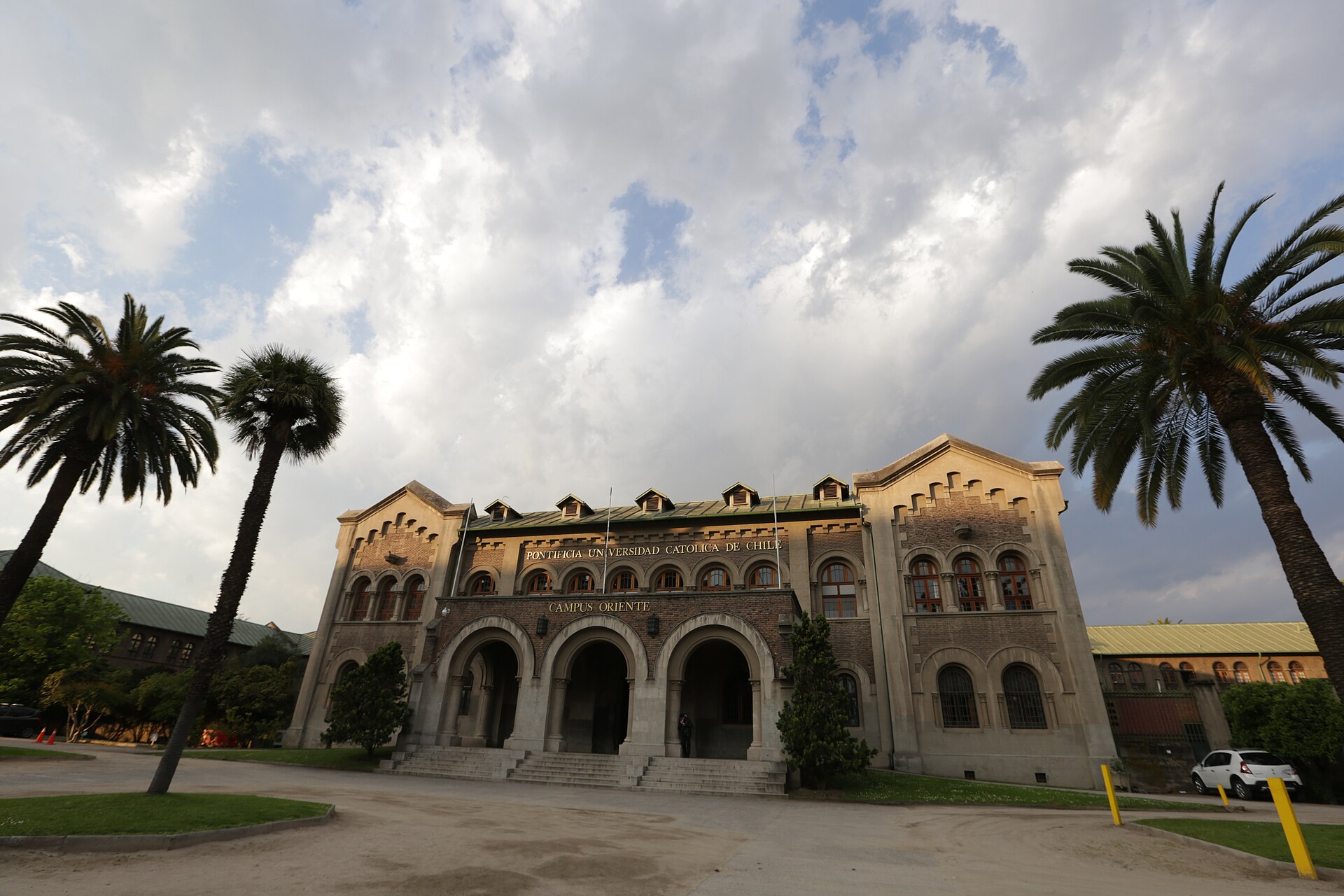
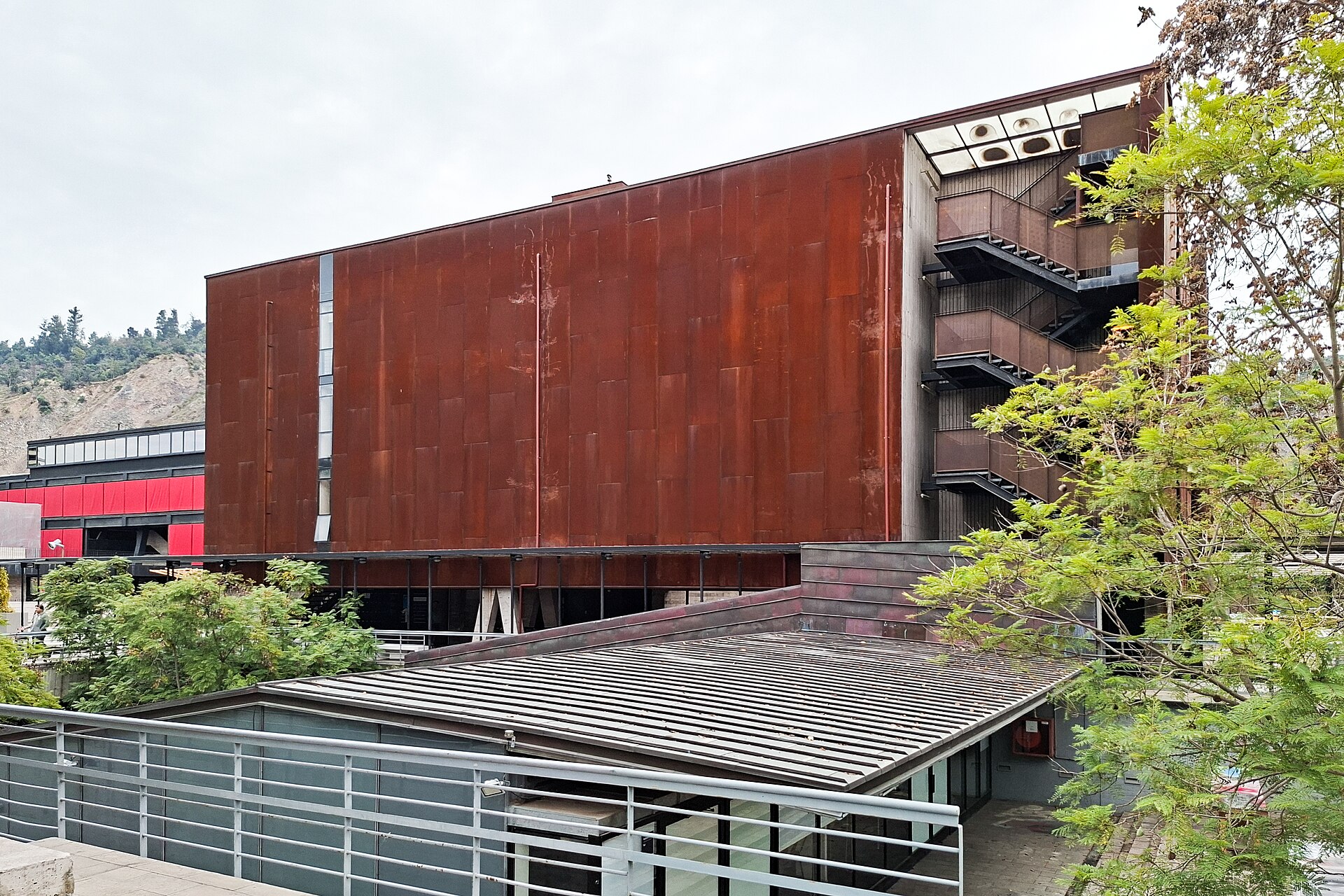
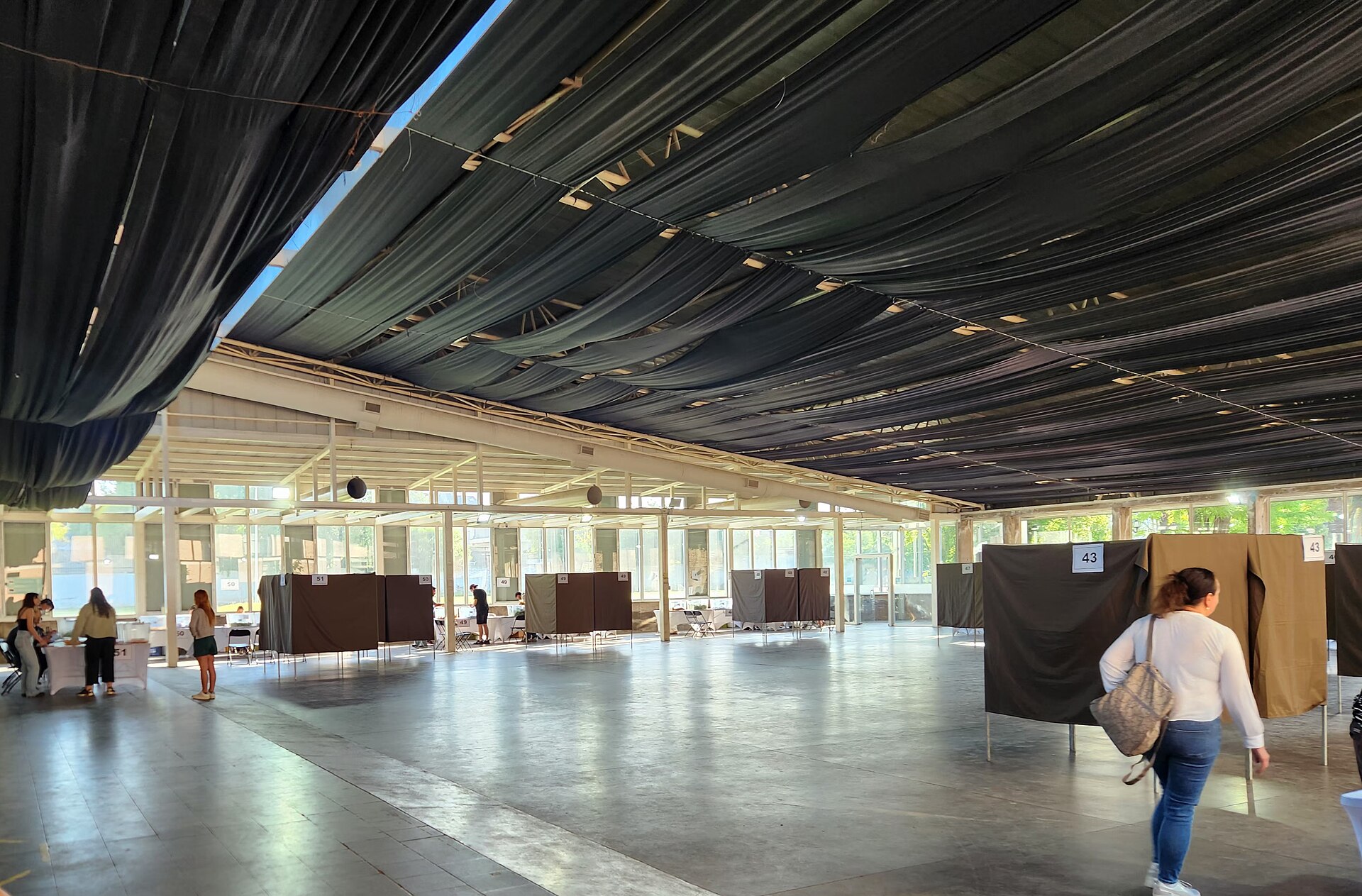
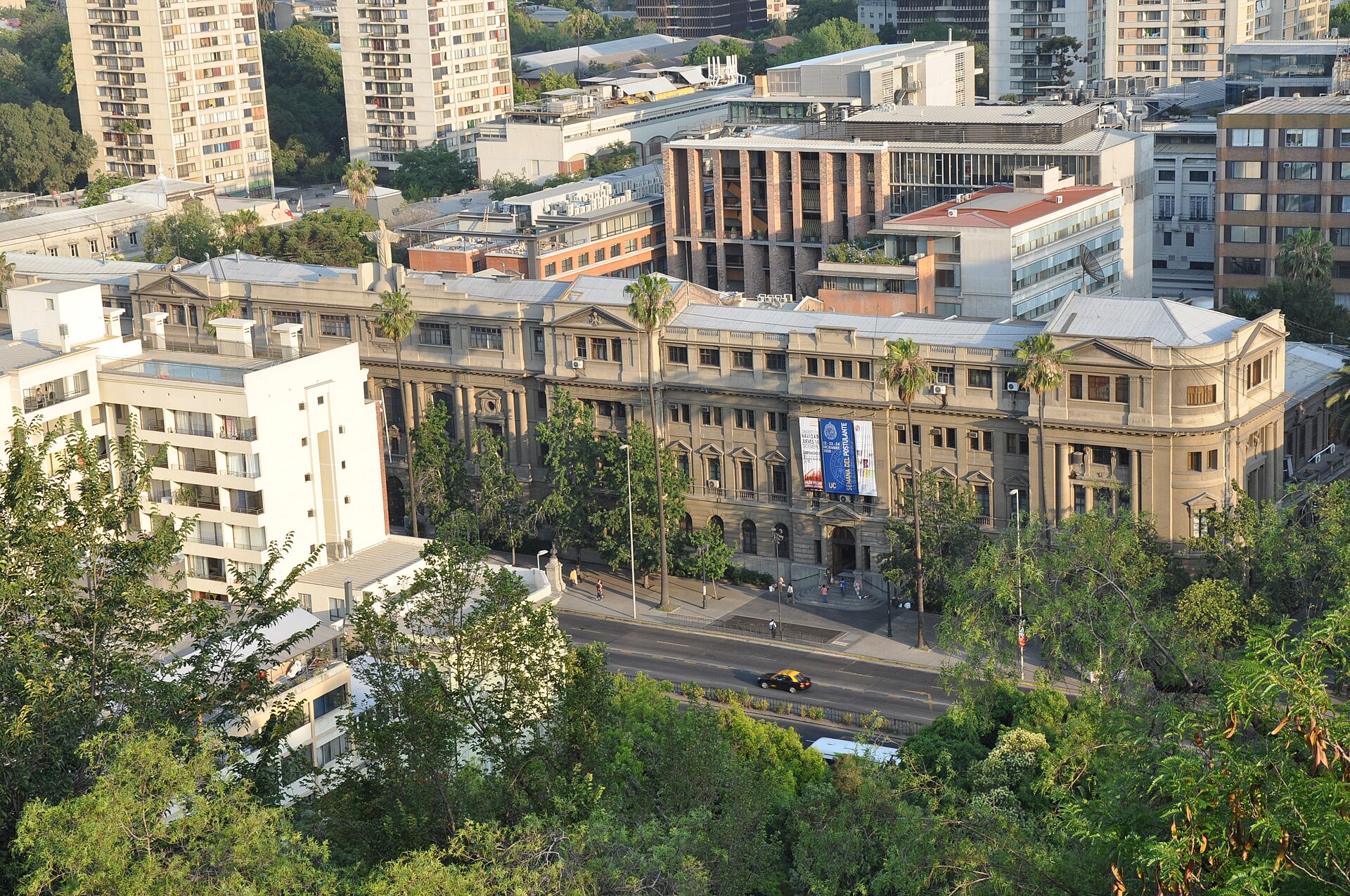
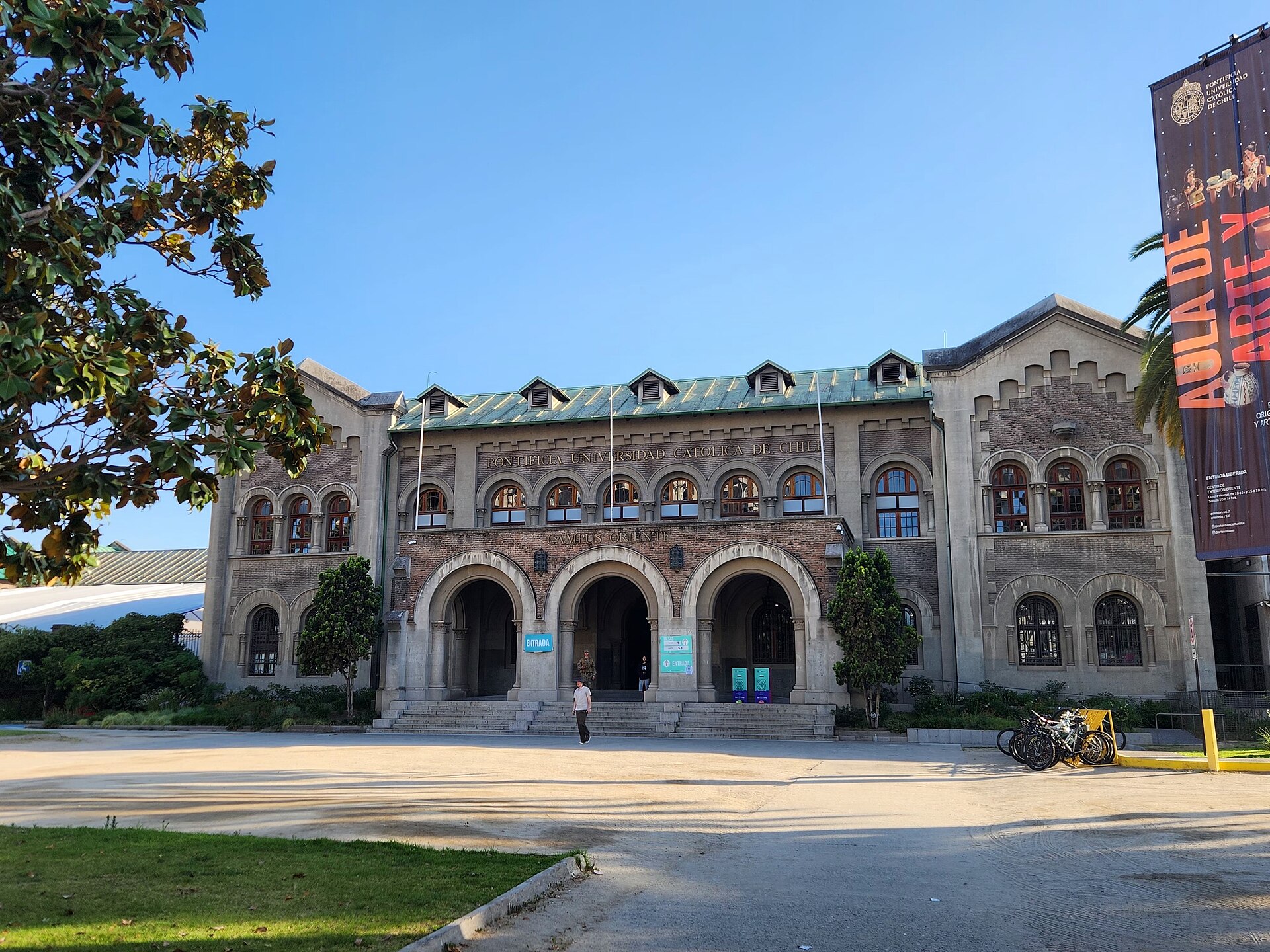
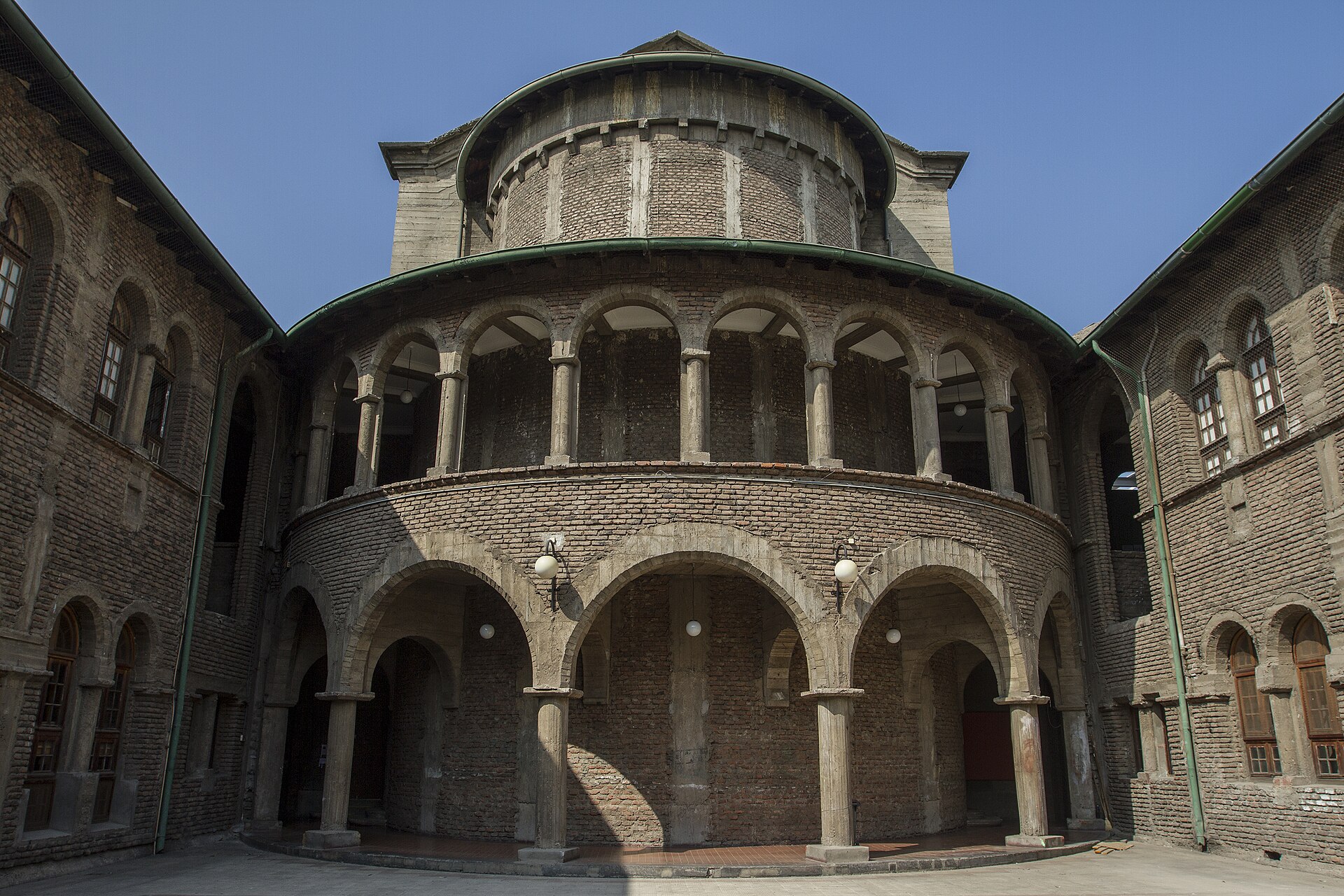
Why UC Chile — Latin America's Elite, Research & Santiago
Pontificia Universidad Católica de Chile (UC Chile) is not merely the top university in Chile — it is one of a handful of Latin American institutions with genuine global standing. Ranked #93 globally by QS, UC Chile consistently outranks every other Chilean university and sits alongside institutions like the University of São Paulo and UNAM as one of the region's genuine research powerhouses. For international students willing to make the Spanish commitment, UC Chile offers an unmatched combination of academic rigour, career access, and affordable prestige.
UC Chile Acceptance Rate & Admitted Student Profile
Stats
Profile Stats
Rea Vs Rd
UC Chile Admissions Requirements — Academics, Spanish & International Qualifications
- Full secondary school transcripts required (apostilled where applicable)
- Particular weight on subjects directly relevant to your chosen carrera
- IB scores of 34+ are competitive; top programmes (Medicine, Law) expect higher
- No published minimum GPA — but competitive applicants are typically top performers
- IB Diploma: 34+ overall (37+ for Medicine, Law, Architecture)
- A-Levels: AAA or above in relevant subjects
- AP results and SAT/ACT may be submitted as supplementary evidence
- National qualifications from all regions evaluated on a case-by-case basis
- No official DELE/SIELE minimum published, but B2–C1 is the practical threshold
- Motivation letter (if required) should be written in Spanish
- Spanish-language support courses are available but supplement existing skills — they do not substitute
- Non-native speakers should be honest about their level before applying
UC Chile Application Components — Documents, Pathway & Requirements
UC Chile uses a direct application system for international students — not Common App or UCAS. International students who completed secondary education outside Chile apply through the Enseñanza Media en el Extranjero (Secondary Education Abroad) pathway, submitting official documents directly to UC Chile's admissions portal.
UC Chile Application — Motivation Letter & Written Components
Prompts
Tips
What UC Chile Admissions Is Looking For
UC Chile evaluates international applicants through a holistic but academically-anchored process. Because this is a discipline-specific, Spanish-medium institution, the profile that succeeds here differs significantly from what succeeds at US or UK universities.
UC Chile Cost & Financial Aid for International Students
UC Chile represents extraordinary value by global standards. At approximately $8,998 USD in annual tuition — at a QS Top 100 institution — it is one of the most cost-accessible globally ranked universities in the world. Total cost of attendance (including living in Santiago) is estimated at approximately $17,000 USD per year.
Cost figures are from the university's published data and may vary by programme and exchange rate. Verify current tuition (arancel) for your specific carrera on the UC Chile website.
Stats
Contribution Tiers
| Range | Percent | Note | Percent Value |
|---|---|---|---|
| UC Chile (Chile) | ~$17,000 USD | Total cost of attendance — tuition + living | 17 |
| University of São Paulo (Brazil) | ~$10,000–15,000 USD | Public institution; low tuition but variable living | 12 |
| University of Edinburgh (UK) | ~$35,000–42,000 USD | International student fees + UK living costs | 38 |
| University of Melbourne (Australia) | ~$40,000–48,000 AUD | International fees + Melbourne living | 44 |
| US Private University (peer) | ~$75,000–85,000 USD | Tuition + room/board + fees | 80 |
Key Dates
Advantages
- Earlier submission gives the admissions office more time to evaluate your file
- Document processing (apostilles, translations) takes time — earlier applications avoid deadline pressure
- Visa processing for Chile can take 4–8 weeks — earlier admission gives more lead time
- More time to plan accommodation and logistics in Santiago
- If not admitted in the first window, there may be time to reapply in the second
Disadvantages
- IB results (July) may not be available for the first window — second window aligns better for IB students
- Final A-Level results (August) are better submitted in the second window
- Some programmes may have limited places in the second window
- Less lead time for visa and travel logistics before the March intake
- Document gathering may need to be accelerated
UC Chile Interviews — What to Expect
Interviews are not a standard component of UC Chile's undergraduate admissions process for most programmes. For the majority of international applicants applying through the Enseñanza Media en el Extranjero pathway, admission is determined by your academic documents, qualifications, and any required written components — not a formal interview.
Meta
Questions
UC Chile Campuses & Residential Life
UC Chile does not operate a residential house or college system in the Harvard or Oxbridge sense. The university is spread across multiple campuses in Santiago, each associated with specific faculties. Student accommodation is primarily arranged privately in the surrounding neighbourhoods, with limited on-campus residence options.
Lottery Steps
- Casa Central (Alameda): Historic main campus near downtown — Houses Law, Theology, Humanities, and central administration
- San Joaquín Campus: The main science, engineering, and medical campus — largest and most modern
- Lo Contador Campus: Architecture, Urban Planning, and Design — in the Providencia district
- Oriente Campus: Philosophy, Education, and Social Sciences — smaller and residential in character
- Villarrica Campus: Regional campus in the Araucanía region — serves local community and education programmes
- International students typically based at San Joaquín (Engineering/Science) or Casa Central (Humanities/Law)
Houses
UC Chile Faculties & Undergraduate Programmes
- {"label":"Programme length","value":"5–6 years"}
- {"label":"Key strength","value":"Mining, computing, energy"}
- {"label":"Campus","value":"San Joaquín"}
- {"label":"IB competitive band","value":"34–38+"}
- {"label":"Programme length","value":"7 years"}
- {"label":"Affiliated hospital","value":"Hospital Clínico UC"}
- {"label":"Campus","value":"San Joaquín / Clínico"}
- {"label":"Selectivity","value":"Extremely competitive"}
- {"label":"Programme length","value":"5 years"}
- {"label":"System","value":"Chilean Civil Law (Continental)"}
- {"label":"Campus","value":"Casa Central"}
- {"label":"Instruction language","value":"Spanish"}
- {"label":"Programme length","value":"5 years"}
- {"label":"Top recruiters","value":"McKinsey, BCG, Bain, banks"}
- {"label":"Key preparation","value":"HL Maths + Economics"}
- {"label":"IB competitive band","value":"34–37+"}
- {"label":"Programme length","value":"5 years"}
- {"label":"Campus","value":"Lo Contador (Providencia)"}
- {"label":"Additional requirement","value":"Portfolio (verify)"}
- {"label":"Specialisations","value":"Architecture, Design, Urban Planning"}
- {"label":"Programme length","value":"5 years"}
- {"label":"Key sectors","value":"Agriculture, forestry, viticulture"}
- {"label":"Campus","value":"San Joaquín"}
- {"label":"Key strength","value":"Sustainable agriculture"}
Research & Extracurricular Opportunities at UC Chile
Career Outcomes & UC Chile Alumni Network
UC Chile graduates are the most sought-after professionals in Chile and are increasingly competitive across Latin America and internationally. The university's dominance in Chile's professional hierarchy translates into genuine career advantage for its graduates.
Stats
Categories
Tychr's UC Chile Admissions Track Record & Student Success Stories
Faqs
Do I need to speak Spanish to study at UC Chile?+
Yes. UC Chile delivers almost all undergraduate instruction in Spanish. If Spanish is not your first language, you must demonstrate meaningful academic proficiency before you begin. Some graduate programmes offer coursework in English, but at undergraduate level, Spanish is essential. A functional B2–C1 level is the practical threshold to succeed academically.
Do international students need to take the Chilean PAES exam?+
No. Students who completed secondary education outside Chile apply through the Enseñanza Media en el Extranjero (Secondary Education Abroad) pathway, which evaluates your international qualifications — IB, A-Levels, national leaving certificates, SAT/ACT — rather than the Chilean national exam. Only students who studied their final years inside Chile are assessed via PAES.
Is the IB Diploma recognised at UC Chile?+
Yes, and it is well-regarded. A total IB score of 34 or above is generally considered competitive for most UC Chile programmes. Top programmes such as Medicine and Law expect scores closer to 37–40, though no official band is published. HL subject grades in relevant disciplines are given particular attention.
When does the UC Chile academic year start?+
UC Chile follows a Southern Hemisphere calendar. The academic year begins in March and runs through December, with a semester break in July–August. Most international students should plan to arrive in late February for orientation and administrative registration.
Can I do an exchange semester at UC Chile rather than a full degree?+
Yes. UC Chile has an extensive exchange programme with over 500 partner universities in 62+ countries. Exchange students study for one or two semesters, access programmes across disciplines, and can take Spanish-language courses for academic credit. Exchange applications go through your home university's international office.
What visa do I need to study in Chile?+
Once admitted, you apply for a Temporary Student Visa (Visa de Estudiante) at the Chilean consulate in your home country. Upon arrival, you must register the visa and obtain a Cédula de Identidad (Chilean national ID / RUT) — a standard process that UC Chile's international office guides students through. Plan for 4–8 weeks of consulate processing time.
Is tuition at UC Chile significantly lower than European or US universities?+
Yes, dramatically so. Annual tuition is approximately $8,998 USD, with total cost of attendance (including living in Santiago) estimated at around $17,000 USD per year — roughly 25% of what a comparable-prestige university in the US or UK charges. For students willing to make the Spanish commitment, UC Chile offers exceptional value.
What is the acceptance rate at UC Chile?+
The overall acceptance rate across all programmes is approximately 30%. However, this overall figure masks significant variation: Medicine, Law, and Architecture are among the most competitive programmes in Chile and far more selective than the average figure suggests. International applicants are evaluated through the separate foreign secondary education pathway.
Book a Free UC Chile Admissions Strategy Session
In 60 minutes our UC Chile and Latin America admissions specialists will evaluate your academic profile, assess your Spanish readiness, identify the right application timing, guide your document preparation strategy, and help you position your application for success in Chile's direct-application system.
- No commitment required
- UC Chile and Latin America admissions specialists
- Personalised strategy for Chile's unique application system
UC CHILE ACADEMIC REQUIREMENTS
UC Chile Academic Requirements — The Honest Breakdown for International Students
What academic profile, qualifications, and Spanish level do successful UC Chile applicants actually have? And what does studying in a Spanish-language elite university mean for students coming from IB, A-Level, and other international curricula?
GPA & Academic Performance
UC Chile and Academic Grades — What the Data Shows
UC Chile does not publish a minimum GPA for international applicants. The evaluation is based on your full secondary school transcript and final qualification results. In practice, successful applicants to competitive programmes are consistently top academic performers in their school systems.
Strong, consistent academic performance is the baseline expectation. UC Chile's holistic evaluation for international applicants looks at your full academic picture — not a single score or grade point. A clear upward trajectory and strength in subjects relevant to your chosen programme are both positive signals.
Academic Context
How UC Chile Reads Academic Performance Across Different School Systems
UC Chile's admissions office evaluates international qualifications from a wide range of school systems. Unlike Chilean students who are all assessed via the standardised PAES national exam, international applicants are assessed on the specific qualifications of their own country's system.
Standardised Testing
SAT Scores at UC Chile — Optional Context, Not a Requirement
UC Chile does not require SAT scores and does not publish SAT score bands for admitted students. SAT/ACT are accepted as optional, supplementary evidence — they may provide useful context when your home country's grading system is less familiar to Chilean evaluators.
| Label | Score | Percent |
|---|---|---|
| SAT requirement | None (optional) | 0 |
| Useful supplementary benchmark (SAT) | 1300+ | 65 |
| UC Chile published band | Not published | 0 |
Standardised Testing
ACT Scores at UC Chile
Like the SAT, the ACT is accepted as optional supplementary evidence at UC Chile. No published minimum or band exists. The ACT is less commonly encountered by Chilean admissions staff than the SAT, so if you submit ACT scores, a brief contextual note on how the ACT compares to local Chilean exam standards may be useful.
Metrics
Comparison Cards
Testing Strategy
UC Chile Test-Optional Policy — What It Actually Means
UC Chile's test policy for international applicants is optional. This means standardised tests (SAT/ACT) are neither required nor expected. The university evaluates international students primarily on their secondary school qualifications and transcripts.
Submit Items
Withhold Items
Curricula
A-Levels, IB, and Other Qualifications at UC Chile
- {"label":"General competitive range","value":"34–40 points"}
- {"label":"Top programmes (Medicine, Law)","value":"37–40 points (estimated)"}
- {"label":"HL subject expectations","value":"6–7 in subjects relevant to chosen programme"}
- {"label":"Extended Essay","value":"Reviewed as evidence of independent research capability"}
- {"label":"Competitive range","value":"AAA or above in relevant subjects"}
- {"label":"Subject combination","value":"Maths + Sciences for STEM; Humanities + Languages for Law"}
- {"label":"AS results","value":"Reviewed alongside predicted/confirmed A-Level grades"}
- {"label":"GCSE/IGCSE","value":"May be reviewed as supporting context"}
Advanced Placement
AP Courses at UC Chile — Supplementary Evidence
AP courses and scores are accepted as supplementary evidence at UC Chile, but they are not the primary evaluation tool. For applicants from US-curriculum schools, AP results can reinforce academic rigour alongside GPA and school transcripts.
Academic Rigour
Rigour of Secondary School Record — How UC Chile Weighs It
UC Chile, like all highly selective universities, evaluates not just your grades but the rigour of the curriculum you completed. A student who achieved top marks in the most challenging available programme demonstrates a different academic profile from one who achieved similar marks with less academic ambition.
Taking the most challenging courses available in your specific school system, in the subjects most relevant to your intended carrera.
Subject Preparation
Mathematics, Science, and Language — What UC Chile Expects by Programme
UC Chile is a discipline-first institution. You apply to a specific carrera (programme) from day one, and the expected academic preparation differs significantly across disciplines. Below is the expected profile for UC Chile's most competitive programmes.
Language Requirements
Language Requirements at UC Chile — Spanish is the Requirement
Unlike most globally-ranked universities that require IELTS or TOEFL for English proficiency, UC Chile's language requirement is Spanish. The university does not publish minimum English language test scores for admission — because English is not the language of instruction.
The honest language reality: UC Chile's application process is itself largely in Spanish. The motivation letter, if required, should be written in Spanish. And from your first week of classes, everything — lectures, seminars, written assignments, exams — will be in Spanish. No English-language support is available in standard undergraduate programmes. This is the most important single factor for non-native Spanish speakers to understand before applying.
Programme Requirements
Academic Requirements by Carrera (Programme) at UC Chile
UC Chile does not publish specific academic requirements per programme for international applicants. The table below reflects generally expected preparation based on programme content. Verify specific requirements with the relevant faculty.
| Concentration | Expectation | Signals |
|---|---|---|
| Ingeniería Civil | HL Maths + HL Physics | Maths competitions; physics projects; technical aptitude |
| Ingeniería Comercial (Business) | HL Maths + Economics | Quantitative projects; economics analysis; debate |
| Medicina | HL Bio + HL Chemistry (6–7) | Science research; community health experience; strong all-round record |
| Derecho (Law) | History + Language at advanced level | Debate; model UN; writing ability; social sciences distinction |
| Economía | HL Maths + Economics or equivalent | Econometric interest; data projects; academic research |
| Arquitectura | Visual arts + Maths; portfolio | Design portfolio; studio practice; spatial reasoning |
| Agronomía | Biology + Chemistry or Physics | Environmental interest; agricultural background; fieldwork |
| Psicología | Biology + Social Sciences | Research interest; community work; analytical writing |
Curriculum Evaluation
How UC Chile Evaluates Different International Curricula
Because UC Chile's admissions office sees qualifications from across Latin America, Europe, Asia, and beyond, it has developed consistent practices for comparing different school systems. Understanding how your curriculum is read can help you frame your application effectively.
Year-by-Year Plan
Building Your Academic Profile for UC Chile — Grade 9 to Application
Because UC Chile evaluates your full secondary school record and places primary weight on academic performance and Spanish proficiency, the most successful international applicants begin preparing deliberately from early secondary school.
Common Pitfalls
Academic Mistakes to Avoid When Applying to UC Chile
- Applying without functional Spanish — UC Chile delivers all undergraduate instruction in Spanish; arriving without B2+ language skills is the single biggest risk factor for academic failure.
- Treating UC Chile like a US application — there are no supplemental essays, no Common App, and no Early Action. The process is documentation-focused and direct.
- Choosing a programme based on prestige rather than genuine commitment — UC Chile's top programmes are 5–7 years long and intensely demanding; you must be genuinely prepared for the specific carrera you apply to.
- Submitting uncertified, un-apostilled, or untranslated documents — Chilean universities require official, legalised documentation; missing certification causes significant delays.
- Underestimating the Southern Hemisphere calendar — the academic year begins in March; visa, travel, and accommodation logistics require planning months in advance.
- Not verifying programme-specific requirements — Architecture requires portfolio evidence; some medical-adjacent programmes have additional requirements; do not assume the standard pathway covers your specific carrera.
- Assuming SAT/ACT replace the primary academic record — at UC Chile, standardised tests are supplementary context only. Your qualification results (IB, A-Level, national exam) drive the decision.
- Not contacting the admissions office directly — UC Chile's international team is accessible and willing to answer specific questions. Relying solely on the website may leave programme-specific questions unanswered.
Admitted Student Profiles
Profile Examples — Competitive UC Chile International Applicants
These are illustrative academic profiles of internationally-competitive applicants to UC Chile's main programmes. Individual results will vary; these reflect the general competitive band based on available data and programme selectivity.
Academic FAQs
Frequently Asked Questions — Academic Requirements
What IB score do I need for UC Chile?+
An IB score of 34 is generally considered the competitive threshold for most UC Chile programmes. For highly selective programmes such as Medicine and Law, scores in the 37–40 range are more typical. No official band is published for international applicants — these figures reflect the competitive reality based on known programme selectivity.
Does UC Chile require the PAES entrance exam?+
No. The PAES (Prueba de Acceso a la Educación Superior) is Chile's national university entrance exam for domestic students. International applicants who completed their secondary education outside Chile are explicitly exempt and follow the Enseñanza Media en el Extranjero (Foreign Secondary Education) pathway instead.
Are SAT or ACT scores required?+
No. UC Chile's test policy is optional. SAT/ACT scores may be submitted as supplementary evidence but are not required and do not drive the admission decision. Your IB, A-Level, or national qualification results are the primary academic credentials.
Do I need to submit A-Level predicted grades, or can I wait for results?+
Either may be possible depending on your application timing. If you apply in the first window (August–September), A-Level results may not yet be available — predicted grades from your school are accepted. If you apply in the second window (after A-Level results in August), submitting confirmed results strengthens your application. Contact the admissions office to confirm current-year policy.
How does UC Chile evaluate grades from my country's school system?+
UC Chile's admissions office has experience evaluating qualifications from across Latin America, Europe, North America, and Asia. Provide full documentation of your results, any national ranking or percentile if available, and school context information. For less commonly known systems, a brief explanation of your school's standing can be helpful.
Is there a GPA minimum?+
No published minimum GPA exists for international applicants. In practice, competitive applicants are consistently strong academic performers in the top tier of their school cohort. The full academic record across secondary school is reviewed, not just a single GPA figure.
Are there subject prerequisites for specific programmes?+
No formal published subject prerequisites for international applicants, but the expected preparation profile varies significantly by programme. Engineering and Sciences require strong Mathematics and Sciences. Medicine expects advanced Biology and Chemistry. Law benefits from Humanities and Language strength. Choose your advanced subjects to align with your intended carrera.
COST & AFFORDABILITY
Cost of Studying at UC Chile — Elite Education at Latin American Prices
UC Chile is one of the most affordable QS Top 100 universities in the world for international students. At approximately $8,998 USD in annual tuition and $17,000 USD in total annual cost, it offers a fraction of the financial burden of comparable universities in North America, Europe, or Australia.
For international students who make the Spanish commitment, UC Chile represents arguably the best value-for-prestige ratio of any globally-ranked university. This guide walks you through the real cost, what funding is available, and how to build a financial plan for studying in Santiago.
Cost Breakdown
Annual Cost of Attendance at UC Chile — Full Breakdown
All figures are approximate annual estimates in USD. Actual costs vary by programme (some carreras carry higher tuition), individual lifestyle, and USD/Chilean Peso exchange rate fluctuations. Verify current programme-specific tuition (arancel) on the UC Chile website.
| Component | Annual Cost U S D | Notes |
|---|---|---|
| Tuition (Arancel) | ~$8,998 USD | Average across programmes; Medicine and some Engineering specialisations may be higher |
| Accommodation | $4,800–6,000 USD | Shared flat near campus (Ñuñoa/Macul); varies by neighbourhood and arrangement |
| Food & Groceries | ~$2,400 USD | Self-catering; Santiago supermarkets and UC canteen |
| Local Transport | ~$600 USD | Santiago Metro + bus (Bip card); very affordable public transport system |
| Books & Academic Materials | ~$400–600 USD | Varies by programme; engineering texts can be expensive |
| Personal Expenses | ~$800–1,200 USD | Mobile phone, clothing, entertainment, personal care |
| Health Insurance | ~$500–800 USD | Student health coverage (Fonasa or private plan) |
| Total Estimated Annual Cost | ~$17,000 USD | Combined estimate; budget with 10–15% buffer for exchange rate movements |
Financial Aid
Financial Aid at UC Chile for International Students
UC Chile's financial aid landscape for international degree-seeking students differs significantly from the generous need-blind models of US elite universities. Chilean state financial aid (gratuidad, Fondo Solidario) is restricted primarily to Chilean citizens and permanent residents. International students should plan to fund the majority of their studies independently.
That said, the fundamentally lower cost structure at UC Chile means the absolute funding gap is far more manageable than at higher-cost institutions. Self-funding $17,000 USD per year is achievable for a much broader range of families than self-funding $75,000+ at a US private university of comparable standing.
Affordability in Context
How Affordable Is UC Chile Really? An Honest Global Comparison
At approximately $17,000 USD per year total cost, UC Chile is one of the most affordable QS Top 100 universities in the world for international students — significantly more accessible than comparable institutions in North America, Europe, or Australia.
For context: a year at a UK Russell Group university costs £28,000–45,000 per year (~$35,000–57,000 USD); a US private peer costs $65,000–80,000 per year; an Australian Go8 university charges AUD $35,000–48,000. UC Chile's total cost of attendance is 25–30% of what equivalent-prestige universities in the English-speaking world charge. The primary trade-off is language: the instruction is in Spanish, and the credential has stronger recognition regionally than globally (though a QS Top 100 rank provides meaningful baseline international recognition). For students willing to make that commitment, UC Chile is arguably the world's best value elite university.
Funding Steps
How to Apply for Financial Aid and Scholarships at UC Chile
Aid for International Students
Financial Aid Specifically for International Degree-Seeking Students
The direct availability of financial aid for international degree-seeking students at UC Chile is limited. Unlike US institutions where need-blind admissions and extensive international aid are features, UC Chile's model relies on its inherently lower cost structure to serve as the affordability mechanism for international students.
International students at UC Chile are primarily expected to self-fund or bring external scholarship funding. The most viable financial support routes for international students are: (1) home-country government outbound scholarships; (2) bilateral education agreements between Chile and the student's home country; (3) limited institutional support available on direct enquiry; and (4) regional development bank fellowships (primarily for graduate students). The underlying good news remains: the total cost to fund is dramatically lower than at comparable global universities.
Average Aid
Average Financial Aid for UC Chile Students
Published average financial aid figures specifically for international students at UC Chile are not available in the university's public data. The information below provides what is known and qualitatively describes the aid environment.
UC Chile does not publish an average aid package for international students comparable to US universities' published averages. The university's low cost structure ($17,000 USD/year total) is the primary mechanism that makes UC Chile accessible — not a grant-based aid system. International students should approach their financial planning on the basis of meeting the full cost independently, with the expectation that some form of additional support may be identified through direct engagement with the university.
Merit & Need-Based Opportunities
Merit and Need-Based Scholarships at UC Chile
UC Chile's primary scholarship system (becas) is designed for Chilean students and is largely means-tested for domestic students. Limited merit-based institutional support may be available to outstanding international applicants — this is best investigated through direct enquiry.
External Scholarships
External Scholarship Opportunities for Studying at UC Chile
The most viable funding routes for international students at UC Chile come from external scholarship bodies — home country governments, regional organisations, and bilateral programmes. Research these in parallel with your university application.
Scholarship availability and deadlines change each cycle. Always verify directly with the scholarship body and confirm that UC Chile is an eligible host institution before applying.
Loan Policy
Loans for International Students at UC Chile
UC Chile does not offer a significant institutional loan programme for international degree-seeking students. The Chilean state loan system (CAE — Crédito con Aval del Estado) is restricted to Chilean citizens. International students should plan to fund their studies without institutional loan support.
In practice, the very low absolute cost of study at UC Chile ($17,000 USD/year) makes the loan question less acute than at higher-cost institutions. Many families can manage this cost through savings, parental support, or modest personal income, without needing institutional loans. Students who do require loan financing should explore options through their home country banking systems before arrival — Chilean bank accounts require legal residency status and are not readily available to new arrivals.
Work & Study
Work Opportunities for International Students in Santiago
Chilean student visas (Visa de Estudiante) generally permit limited employment. Santiago's labour market does offer work opportunities for students with Spanish proficiency, but the academic demands of UC Chile's programmes — particularly in Engineering, Medicine, and Law — make full part-time employment difficult to sustain alongside study.
The most viable part-time work opportunities for international students at UC Chile are: tutoring in English or other languages; language instruction through private academies; entry-level service, hospitality, or retail roles; and freelance or remote work in fields the student is already skilled in. UC Chile students should not plan their financial model around part-time work income — treat it as supplementary, not structural.
Global Comparison
UC Chile Financial Aid vs. Global Peer Universities — An Honest Comparison
UC Chile does not offer the need-blind, 100%-of-need aid model of US elite universities. But this comparison is incomplete without accounting for the dramatically lower sticker price.
The net cost comparison strongly favours UC Chile for most international families: even without significant financial aid, $17,000 USD/year is more manageable than full sticker at higher-cost peer institutions — even when those peers offer some aid discounts.
| University | Annual Cost | Intl Aid | Net Cost |
|---|---|---|---|
| Harvard University (US) | ~$80,000 USD | Need-blind, 100% need met | Variable — $0 to $80K based on income |
| University of Edinburgh (UK) | ~$35,000–42,000 USD | Limited scholarships; no need-blind | Typically full sticker for most internationals |
| University of Melbourne (AU) | ~$35,000–45,000 AUD | Merit scholarships; no need-blind | Typically full sticker + merit offsets |
| UC Chile (CL) | ~$17,000 USD | Limited institutional aid; external scholarships | Typically full sticker — but sticker is very low |
True Cost
The True Cost of a UC Chile Education — What No One Tells You
The published tuition and cost-of-attendance figures are the starting point for financial planning — but there are additional financial considerations that international students at UC Chile should account for.
Beyond the $17,000 USD annual estimate, the real costs of an international education in Santiago include: one-way airfare to Santiago (typically $600–1,500 USD depending on origin); settling-in costs in the first month (deposits, initial supplies, local transport cards — budget $500–1,000 USD); annual home travel (typically 1–2 trips per year at $600–1,500 USD per trip); health insurance (Fonasa or private, approximately $500–800 USD/year); and a buffer for the Chilean Peso exchange rate fluctuation.
Aid Appeals
How to Request Additional Financial Support at UC Chile
UC Chile does not have a formal US-style financial aid appeal process for international students. However, students who experience financial difficulty after enrollment, or exceptional cases where additional support may be warranted, have several avenues to explore.
Financial Planning
Financial Planning for Your UC Chile Education
The key to successfully funding a UC Chile education is accurate, conservative planning — accounting for the full programme duration, exchange rate risk, annual travel, and one-time setup costs.
APPLICATION & STATEMENT
Applying to UC Chile — How Essays and Statements Work in Chile's System
Chile's university admissions system is fundamentally different from the US Common App or UK UCAS models. UC Chile does not use a Common Application, Coalition Application, or equivalent multi-essay platform. For most programmes, the application is direct — based primarily on your academic record and qualifications. Personal statements and motivation letters play a supporting but not central role.
This guide explains what written components exist in the UC Chile application, how to approach them, and how to think about presenting yourself as a candidate in a system where your grades and programme choice matter most.
THE APPLICATION SYSTEM
How UC Chile's Application System Works
International applicants apply directly through UC Chile's admissions portal (admision.uc.cl) via the Enseñanza Media en el Extranjero (Secondary Education Abroad) pathway. The application is programme-specific: you choose one carrera and apply to it.
Unlike the US system, where you write 5–7 essays across multiple institutions on a shared platform, UC Chile's international application is shorter and more documentation-focused. The central question is: does your academic record show you can handle this programme's demands? Any written components serve to contextualise, not compensate for, your academic record.
WRITTEN COMPONENTS
Written Components of the UC Chile Application
Rather than formal essay prompts, UC Chile's international pathway may include the following written components. Confirm current requirements directly with the admissions office, as requirements may vary by programme.
THE MOTIVATION LETTER
How to Write a Strong UC Chile Motivation Letter
If a motivation letter is required for your application, it is your primary opportunity to speak directly to the admissions committee. Unlike the US personal statement (which can explore identity, background, or transformation), a Chilean motivation letter is closer to a focused statement of academic and professional intent.
Write the letter in Spanish where possible — submitting in Spanish demonstrates the language proficiency UC Chile requires and shows genuine commitment to studying in a Spanish-language environment. If your Spanish is not yet at letter-writing level, you may need to either delay your application or work with a Spanish tutor to produce a well-written draft. A motivation letter with poor Spanish grammar would signal readiness problems.
APPLICATION STRATEGY
Strategy for Your UC Chile Application
Because UC Chile's international pathway is documentation-heavy and academically-focused, your preparation strategy is different from a US or UK application.
WHAT TO WRITE ABOUT
What to Write About in Your Motivation Letter
For a Chilean motivation letter, topic selection follows different logic than a US personal essay. You are not writing a coming-of-age narrative or a story of personal transformation. You are making an academic and professional case.
WHAT TO AVOID
Common Application Mistakes to Avoid
- Writing the motivation letter in English when Spanish is expected — this signals language unreadiness for a Spanish-medium institution.
- Using a generic motivation letter that could apply to any university — UC Chile admissions can recognise copy-paste applications immediately.
- Focusing on personal story at the expense of academic and professional content — Chilean motivation letters prioritise programme-specific reasoning, not personal narrative.
- Understating your Spanish proficiency concerns — if your Spanish is weak, address it honestly and explain what you are doing to improve it rather than hoping evaluators won't notice.
- Applying to a programme you are unsure about — in Chile's system, your commitment to the specific carrera is taken at face value; apply only to the programme you genuinely intend to pursue.
- Missing document deadlines or submitting incomplete documentation — UC Chile's international admissions is document-intensive; an incomplete file will not be evaluated.
- Not reaching out to the admissions office — unlike some large US universities where the admissions office is inaccessible, UC Chile's team welcomes direct queries and can provide programme-specific guidance.
APPLICATION FAQs
Application & Statement FAQs
Does UC Chile require a personal statement or essays like US universities?+
No. UC Chile does not use a Common Application or require a set of personal essays. The primary application components are your academic documents. A motivation letter (carta de motivación) may be requested by some programmes, but it is supplementary to your academic record.
Do I need to write my application in Spanish?+
Supporting documents such as transcripts must be translated into Spanish. If a motivation letter is requested, writing it in Spanish is strongly advisable — it demonstrates the language ability needed to study at UC Chile and signals genuine commitment. Confirm the language requirements with the specific programme.
How long should a UC Chile motivation letter be?+
Typically one to two pages (400–700 words). Focus on clarity and specificity rather than length. A concise, well-structured letter in strong Spanish is more impressive than a longer, repetitive one.
Does UC Chile require letters of recommendation?+
Some programmes request teacher or academic recommendations as part of the international application. Check the requirements for your specific carrera on the UC admissions portal and contact the admissions office to confirm.
Can I apply to multiple programmes at UC Chile simultaneously?+
Verify with the admissions office. The Chilean centralised admissions system typically allows students to list multiple programmes in order of preference. For international applicants on the special pathway, confirm whether parallel applications to multiple carreras are permitted.
Is there an interview as part of the application?+
Interviews are not a standard part of UC Chile's undergraduate admissions process for most programmes. Some postgraduate programmes and competitive specialisations may include an interview. Verify for your specific programme.
What happens if I am applying from a country without a Chilean consulate?+
The UC Chile admissions office can advise on document submission procedures for applicants from countries with limited Chilean diplomatic representation. Contact them early to clarify the process for your specific country of residence.
Can I submit my motivation letter using AI translation or writing assistance?+
You may use tools to assist with translation or proofreading, but the letter must genuinely represent your own voice and thinking. A formulaic or clearly AI-generated letter is recognisable and signals lack of authentic engagement. More importantly, the Spanish in your letter is itself a demonstration of language readiness — it should represent your actual ability, not an idealised AI-generated version.
Courses — schools, degrees & intake
60 degrees across 19 groupings.
Facultad de Ingeniería · 4 degrees
Ingeniería Civil (Civil Engineering)
Licenciatura en Ingeniería en Ciencia de Datos (Data Science Engineering)
Licenciatura en Ingeniería en Ciencia de la Computación (Computer Science Engineering)
Construcción Civil (Civil Construction)
Facultad de Medicina (Faculty of Medicine) · 8 degrees
Medicina (Medicine)
Odontología (Dentistry)
Enfermería (Nursing)
Kinesiología (Kinesiology / Physical Therapy)
Fonoaudiología (Speech-Language Pathology)
Nutrición y Dietética (Nutrition and Dietetics)
Terapia Ocupacional (Occupational Therapy)
Medicina Veterinaria (Veterinary Medicine)
Facultad de Arquitectura, Diseño y Estudios Urbanos (FADEU) · 3 degrees
Arquitectura (Architecture)
Diseño (Design)
Planificación Urbana (Urban Planning)
Facultad de Derecho (Faculty of Law) · 1 degrees
Derecho (Law)
Facultad de Economía y Administración (Faculty of Economics and Administration) · 1 degrees
Ingeniería Comercial (Commercial Engineering / Business Administration)
Facultad de Ciencias Sociales (Faculty of Social Sciences) · 4 degrees
Psicología (Psychology)
Sociología (Sociology)
Antropología (Anthropology)
Trabajo Social (Social Work)
Facultad de Agronomía e Ingeniería Forestal (Faculty of Agronomy and Forestry Engineering) · 3 degrees
Agronomía (Agronomy)
Ingeniería Forestal (Forestry Engineering)
Ingeniería en Recursos Naturales (Natural Resources Engineering)
Facultad de Comunicaciones (Faculty of Communications) · 3 degrees
Periodismo (Journalism)
Publicidad (Advertising)
Dirección Audiovisual (Audiovisual Direction)
Facultad de Artes (Faculty of Arts) · 4 degrees
Actuación (Acting / Theatre)
Arte (Fine Arts)
Música (Music)
Interpretación Musical (Music Performance)
Facultad de Física (Faculty of Physics) · 2 degrees
Astronomía (Astronomy)
Física (Physics)
Facultad de Ciencias Biológicas (Faculty of Biological Sciences) · 3 degrees
Biología (Biology)
Biología Marina (Marine Biology)
Bioquímica (Biochemistry)
Facultad de Matemáticas (Faculty of Mathematics) · 2 degrees
Matemática (Mathematics)
Estadística (Statistics)
Facultad de Historia, Geografía y Ciencia Política (Faculty of History, Geography and Political Science) · 4 degrees
Historia (History)
Geografía (Geography)
Arqueología (Archaeology)
Ciencia Política (Political Science)
Facultad de Filosofía (Faculty of Philosophy) · 2 degrees
Filosofía (Philosophy)
Estética (Aesthetics)
Facultad de Letras (Faculty of Letters) · 2 degrees
Letras Hispánicas (Spanish Language and Literature)
Letras Inglesas (English Language and Literature)
Facultad de Química y de Farmacia (Faculty of Chemistry and Pharmacy) · 2 degrees
Química (Chemistry)
Química y Farmacia (Chemistry and Pharmacy)
Facultad de Educación (Faculty of Education) · 10 degrees
Pedagogía en Educación General Básica (Primary Education Teaching)
Pedagogía en Educación Parvularia (Early Childhood Education)
Pedagogía en Educación Especial (Special Education Teaching)
Pedagogía en Educación Física y Salud (Physical Education and Health Teaching)
Pedagogía en Educación Media en Matemática (Secondary Mathematics Teaching)
Pedagogía en Educación Media en Física (Secondary Physics Teaching)
Pedagogía en Educación Media en Química (Secondary Chemistry Teaching)
Pedagogía en Educación Media en Ciencias Naturales y Biología (Secondary Natural Sciences and Biology Teaching)
Pedagogía en Inglés para Educación Básica y Media (English Language Teaching)
Pedagogía en Religión Católica (Catholic Religious Education Teaching)
Facultad de Teología (Faculty of Theology) · 1 degrees
Teología (Theology)
Escuela de Gobierno (School of Government) · 1 degrees
Administración Pública (Public Administration)
Want your real chances at Pontificia Universidad Católica de Chile?
Create a free TYCHR account for your personalised admit-chance, a shortlist you can track, exact entry requirements, and essay + counselling help.