← All universities

Politecnico di Torino

Turin, Italy · Urban

PublicTechnologicalResearchCoed
Acceptance
50.0%
QS World
#252
Tuition/yr
$4,400
Students
35,000
Founded
1859

Founded in 1859 in the heart of Turin, Politecnico di Torino is one of Europe's oldest and most prestigious technical universities. Ranked #252 globally by QS and #7 nationally in Italy, it offers world-class engineering, architecture, and design programmes at a fraction of the cost of equivalent universities in the UK or US. For ambitious international students who want European industry access, strong English-taught programmes, and a city that hosts Stellantis, Ferrari suppliers, and one of Italy's most dynamic aerospace clusters, PoliTO is a rare proposition.

Politecnico di Torino Admissions Guide for

Campus

Politecnico di Torino — campus in pictures

Real, freely-licensed photographs of the campus (via Wikimedia Commons).

Green stripes
Green stripesFulvio Spada from Torino, Italy · CC BY-SA 2.0 · via Wikimedia Commons
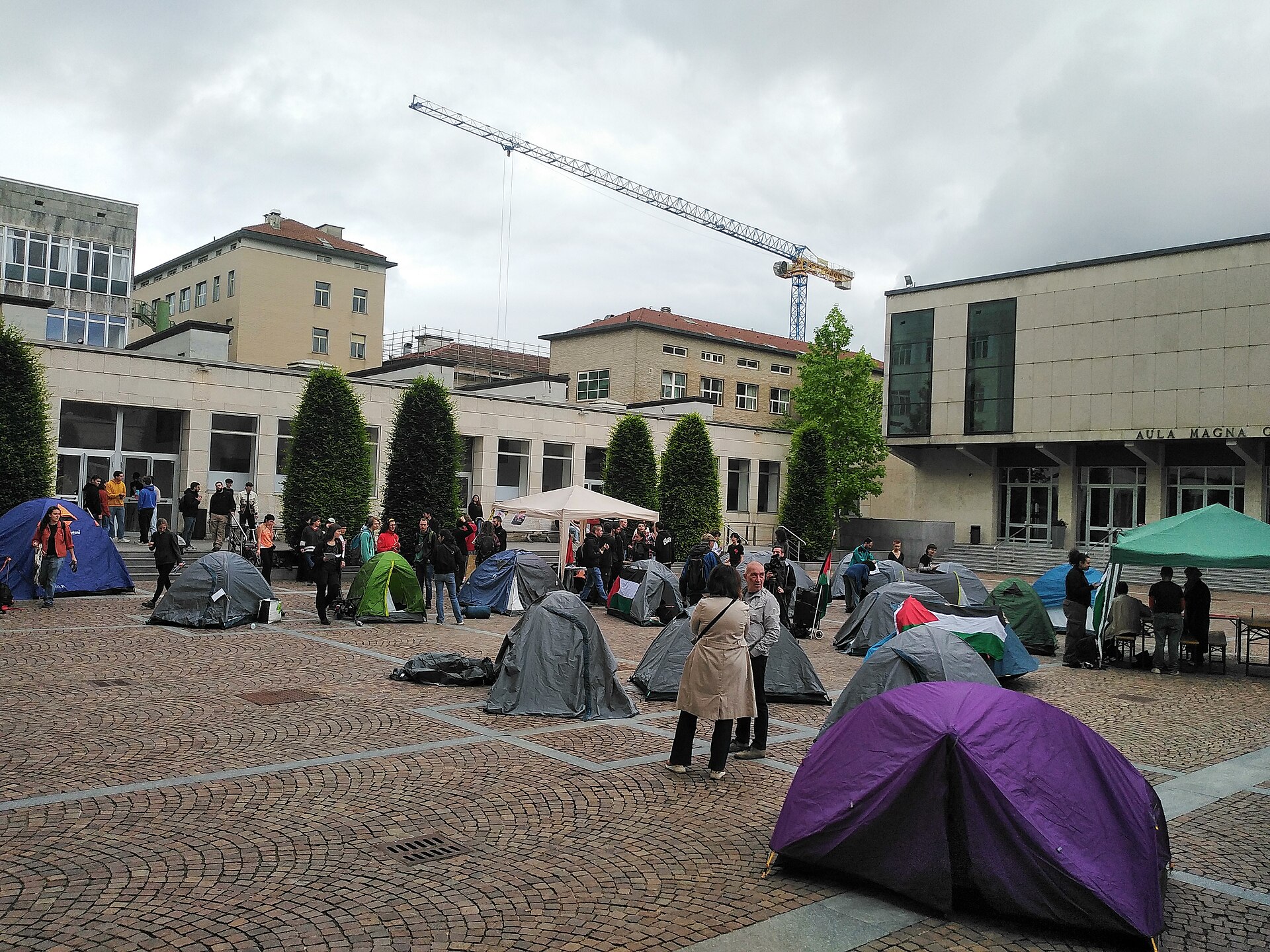
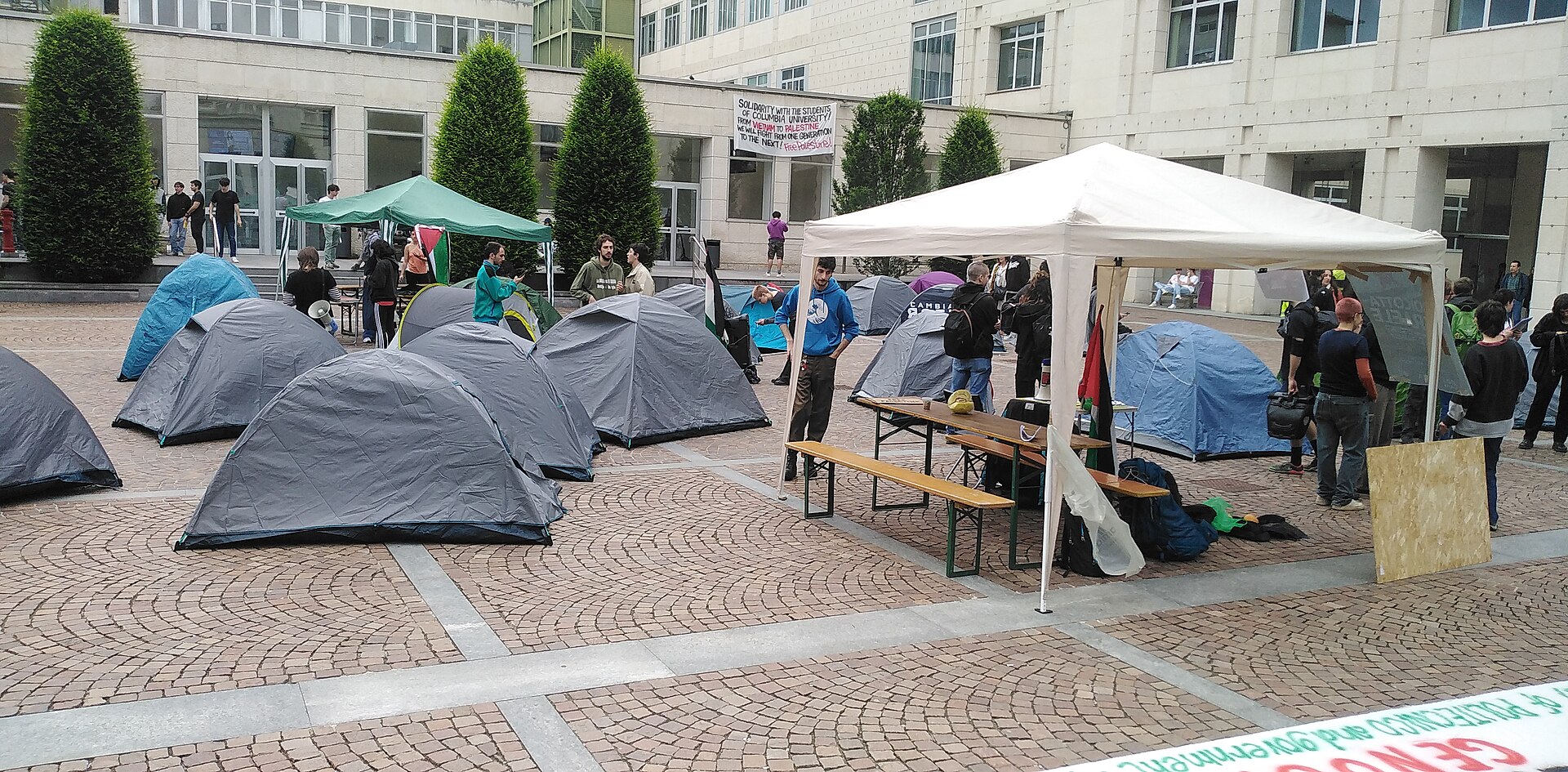
Pro-Palestinian students at the politencico di Torino University of Italy erected tents in a Campus
Pro-Palestinian students at the politencico di Torino University of Italy erected tents in a CampusBoffin 2024 · CC BY 4.0 · via Wikimedia Commons
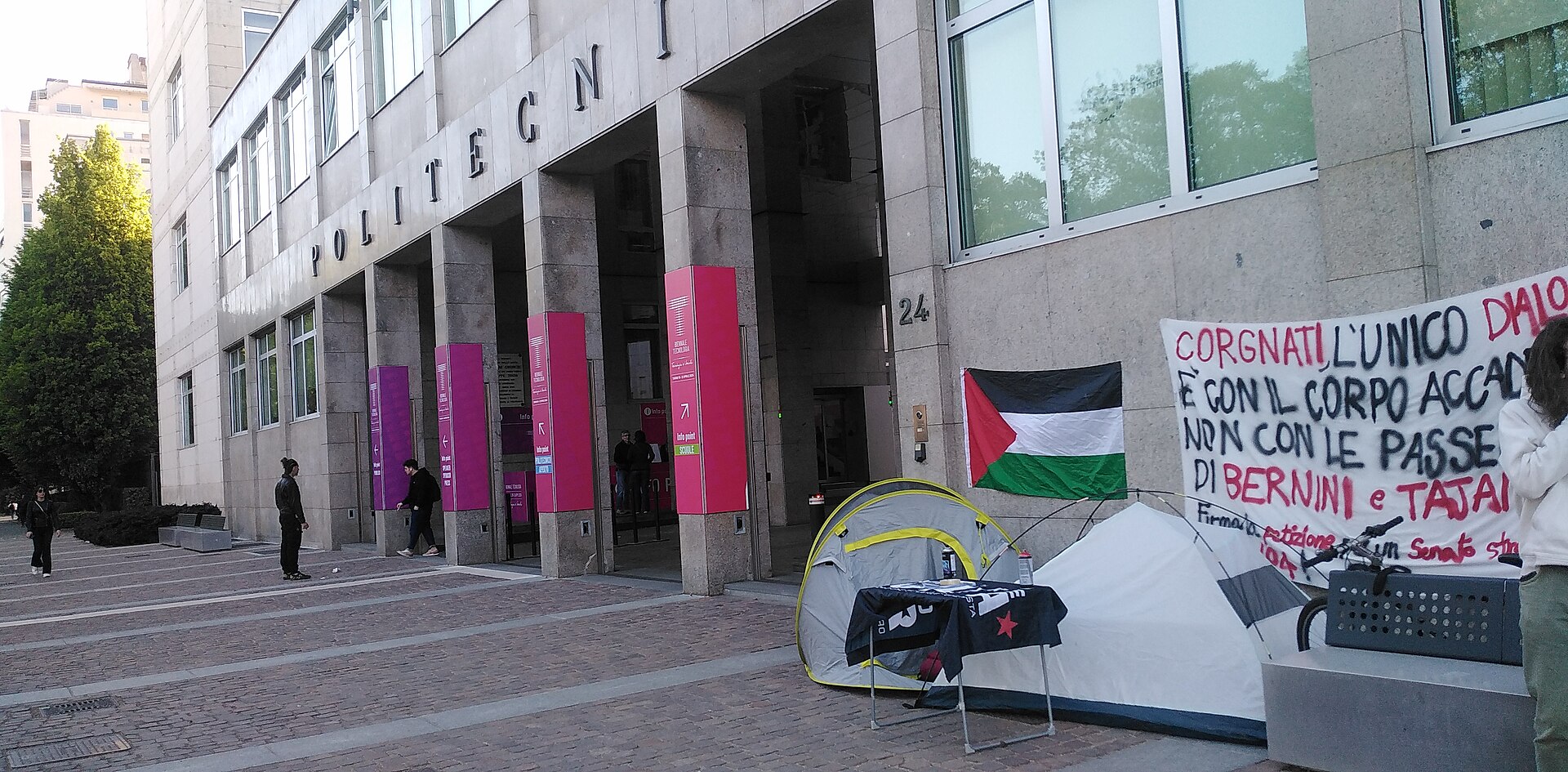
Pro palestinian protest at politencico di torino
Pro palestinian protest at politencico di torinoBoffin 2024 · CC BY 4.0 · via Wikimedia Commons
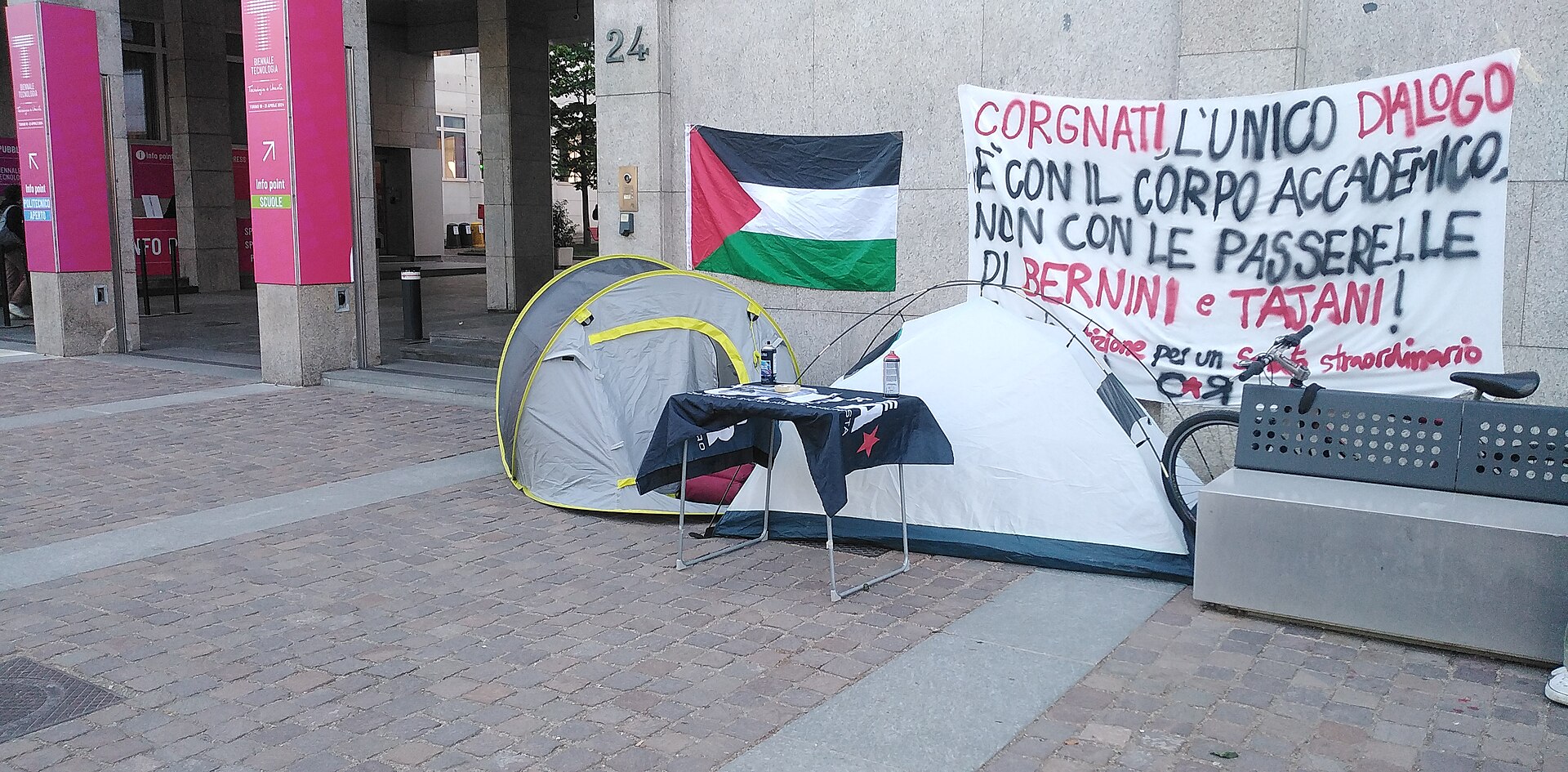
Pro palestinian protest at politencico di torino 2
Pro palestinian protest at politencico di torino 2Boffin 2024 · CC BY 4.0 · via Wikimedia Commons
Pro-Palestinian students at the politencico di Torino University of Italy erected tents in a Campus
Pro-Palestinian students at the politencico di Torino University of Italy erected tents in a CampusBoffin 2024 · CC BY 4.0 · via Wikimedia Commons
Centrale Politecnico Iren
Centrale Politecnico IrenFulvio Spada from Torino, Italy · CC BY-SA 2.0 · via Wikimedia Commons

Why Politecnico di Torino — Technical Prestige, Affordable Cost, European Industry Access

PoliTO combines genuine research prestige with the practical advantages of Italian public-university tuition. For engineering, architecture, and design students, it may offer the best cost-to-quality ratio in Europe. 92% of Master's graduates are employed within one year — among the highest rates of any Italian university.

01Top-250 Global Technical University
QS World University Ranking #252 overall and consistently ranked among the best in Europe for Civil Engineering, Architecture, and Mechanical & Aerospace Engineering. A PoliTO degree is recognised by engineering employers across Europe and beyond.
02Italian Public Tuition — Exceptional Value
Annual tuition starts around USD 4,400 for international students — dramatically below equivalent programmes in the UK (£25,000+/year) or the Netherlands. Total cost of attendance is approximately USD 16,000/year including living costs in Turin.
03Turin's Automotive & Aerospace Ecosystem
Turin is Italy's industrial capital. Stellantis, Ferrari suppliers, Leonardo Aerospace, and hundreds of high-tech SMEs are headquartered here. PoliTO graduates access this ecosystem through internships, capstone projects, and direct recruitment from Year 1.
04Broad English-Taught Offering
Dozens of Bachelor's and Master's programmes are delivered entirely in English — including Automotive Engineering, Cybersecurity Engineering, Data Science and Engineering, Mechatronic Engineering, and Quantum Engineering. No Italian required for academic study.

PoliTO Admissions Profile & Class Profile

Stats

35,000+
Total Students
16%
International Students
#252
QS World Rank

Profile Stats

32
Minimum IB Total
3.0
Minimum GPA (4.0 scale)
16%
International Students
92%
Employment Within 1 Year
#7
National Rank (Italy)
401–500
THE World Rank
Indicative Academic Profile — Competitive Applicants
Overall acceptance rate — English-taught MSc programmes more selective

Rea Vs Rd

Rd Label: 2nd Call (April close)
Rd Value: Results by June
Rea Label: 1st Call (February close)
Rea Value: Results by April

PoliTO Admissions Requirements — Grades, Tests & International Qualifications

Academic Grades
Value: 3.0+ GPA
  • Minimum indicative GPA of 3.0 on a 4.0 scale
  • Grades in mathematics and physics carry the most weight
  • Upward trajectory is considered positively
  • Italian 110/110 or 90+/110 equivalent is competitive
Strong grades in a STEM-focused secondary or undergraduate programme are the primary selection criterion. For Master's programmes, your undergraduate transcript is evaluated by an academic committee that checks prerequisite coverage as well as overall performance.
Entrance Test (Bachelor's)
Value: TOLC / SAT (Bachelor's)
  • TOLC-I is Italy's national university entrance test
  • SAT accepted as alternative for international Bachelor's applicants
  • Strong SAT Math score (650+) important for engineering programmes
  • No SAT/ACT required for Master's programmes
Politecnico di Torino is test-blind for SAT/ACT in the context of Master's admissions. For Bachelor's programmes, the TOLC-I entrance test (or SAT as an alternative) is used to rank applicants. Master's admissions relies entirely on academic record review.
International Qualifications
Value: IB 32+ / A-Level BBB+
  • IB Diploma minimum 32 points; competitive programmes expect more
  • HL Mathematics (AA preferred) and HL Physics strongly valued
  • A-Levels: BBB minimum, with Mathematics required for engineering
  • US High School Diploma with 3 AP exams (4–5 scores) accepted
The IB Diploma, British A-Levels, US High School Diploma with AP, and Scottish Highers are all recognised. For engineering programmes, strong performance in mathematics and relevant sciences is the key signal regardless of curriculum.

PoliTO Application Components — Apply@PoliTO, Documents & Requirements

Politecnico di Torino uses a direct online application system (Apply@PoliTO) — not the Common App, UCAS, or any centralised platform. There are no personal essays for engineering programmes. The application is evaluated primarily on academic credentials and, for Master's programmes, on curricular fit assessed by an academic committee.

01RequiredOnline Application (Apply@PoliTO)
PoliTO's direct online application portal. Register, complete the application form (approximately 20 minutes), and upload all required documents in PDF/JPEG format. Submit before the Call deadline — late submissions are not considered.
02RequiredAcademic Transcripts & Degree Certificate
Official transcripts from your secondary school (Bachelor's applications) or undergraduate university (Master's applications), with English or Italian translation. For non-EU applicants, a Dichiarazione di Valore or CIMEA Statement of Comparability is required at enrolment.
03RequiredEnglish Language Certificate
IELTS 5.5+, TOEFL iBT 78+, or Cambridge B2/C1 certificate for English-taught programmes. Native English speakers and graduates of English-medium schools may be exempt — confirm with the admissions office.
04RequiredEntrance Test (Bachelor's) or Academic Evaluation (Master's)
Bachelor's applicants: TOLC-I or SAT scores. Master's applicants: academic committee review of transcript and course syllabi — no additional standardised test required for most programmes.
05RequiredPassport / Valid ID
Valid passport for non-EU citizens; national ID accepted for EU citizens. Non-Latin script documents require certified translation.
06Master'sCourse Syllabi & CV
Descriptions of undergraduate courses taken, so the academic committee can verify prerequisite coverage for the target programme. A structured CV highlighting academic trajectory, relevant coursework, and technical skills is strongly recommended.
07Selected ProgrammesPortfolio (Architecture & Design)
Required for Architecture and Industrial Design programmes. Should demonstrate spatial reasoning, technical drawing, creative problem-solving, and design process — not just finished artwork.

PoliTO Application Strategy — CVs, Documents & Portfolio

Tips

PoliTO does not require personal essays — but documents still need strategy
Unlike US or UK universities, PoliTO evaluates you on academic credentials. However, your CV and course syllabi are your narrative documents — they should be carefully structured to communicate your academic trajectory and prerequisite coverage.
The CV is your most important narrative document
For Master's applicants, your CV is the closest thing to a personal statement. Make it specific: list key courses with descriptions, quantify your academic performance where possible, and highlight any research or project work relevant to your target programme.
Architecture and Design applicants: your portfolio is weighted heavily
For Architecture and Industrial Design programmes, the portfolio functions as your statement. Curate 8–12 projects that demonstrate your design process, spatial reasoning, and technical skills. Show process, not just finished outcomes.
If submitting a motivation letter, be concise and technical
Some programmes accept a motivation letter. If you have this opportunity, use it to state clearly: why this specific programme, why PoliTO, and what you plan to do with the degree. Keep it to one page; this is a professional-academic statement, not a narrative essay.

Prompts

No Essay Requirement
No personal statement is required for standard engineering, architecture (general), computer science, or energy programmes. The application is evaluated on academic documents.
Curriculum Vitae (Master's)
A Curriculum Vitae is required for all Master's applicants. Structure clearly: education with grades, relevant coursework and projects, research experience, internships, technical skills, and language proficiencies. Keep to 2 pages maximum.
Course Syllabi (Master's)
Course syllabi and descriptions of undergraduate courses taken are required to allow the academic committee to assess curricular match to the target Master's programme.
Portfolio (Architecture & Design)
A portfolio of design work is required for Architecture and Industrial Design programmes. Demonstrate your design process and spatial reasoning across 8–12 projects.
The most common PoliTO application mistake. Applying to a Master's programme without verifying that your undergraduate transcript covers the listed prerequisites — the academic committee will flag the gap and may reject your application.

What PoliTO Admissions Committees Look For

Unlike US universities with holistic admissions, PoliTO's selection is primarily academic and technical. Every element of the evaluation is aimed at one question: does this student have the preparation to succeed in a demanding technical degree programme? Understanding this logic transforms how you approach the application.

01Strong Mathematics Foundation
Mathematics is the core language of every PoliTO programme. Calculus, linear algebra, and differential equations are used heavily from Week 1. Gaps in mathematical preparation surface quickly and are difficult to close mid-semester.
02Prerequisite Coverage (Master's)
Academic committees for Master's programmes carefully check whether your undergraduate degree covered the prerequisites listed in the programme sheet. This is the single most important factor in Master's admission decisions — more important than overall GPA.
03Academic Grades in Relevant Subjects
Overall GPA matters, but grades in mathematics, physics, and the core engineering sciences carry the most weight. A 3.5 GPA in relevant subjects is more valuable than a 4.0 GPA in unrelated ones.
04English Proficiency at Working Level
The formal minimum is B2 (IELTS 5.5 / TOEFL 78). In practice, English-taught technical lectures at PoliTO assume fluency above this minimum. Students who can read textbooks and write technical reports fluently in English will be significantly better positioned.
05Genuine Commitment to a Technical Field
PoliTO is a specialist institution — it trains engineers, architects, and designers. The committee is looking for students who have made a clear choice and whose academic record is coherent with it. A physics student who chose Computer Engineering, a mechanical engineering graduate who applies to Automotive — these transitions make sense. Random course histories do not.
06Entrance Test Performance (Bachelor's)
For Bachelor's programmes, TOLC-I or SAT scores determine your position in the admission ranking. This is not holistic — it is a direct ranking by test score within your applicant pool. Strong test preparation is therefore directly rewarded.

Financial Aid & Scholarships at Politecnico di Torino

Politecnico di Torino's greatest financial advantage is its status as a public Italian university. Tuition is income-adjusted and genuinely low. Additional support is available through the TOPoliTO merit scholarship, Italian government MAECI grants, and EDISU Piemonte (the regional student welfare authority).

Figures are annual estimates. Actual tuition depends on income declaration and the applicable fee band. Scholarship availability varies by academic year — always confirm current cycle details on the PoliTO Financial Aid page.

Stats

~$4,400
Annual tuition (indicative)
~$16,000
Total annual cost of attendance
~20%
Average aid coverage for recipients
€8,000/year
TOPoliTO scholarship value

Contribution Tiers

NoteRangePercentPercent Value
Minimum tuition band — exact threshold confirmed annuallyLowest income bracketMinimum fee applies20
Sliding scale between minimum and maximum feeMiddle income bracketsScaled tuition50
Maximum indicative fee for international studentsHigher income / undeclared~$4,400/year100
How PoliTO Affordability Differs from US Universities. Unlike Harvard's endowment-funded no-loan model, PoliTO's affordability comes from Italy's public university system — low tuition set by government policy for all students. There is no formal 'no-loan' guarantee, but the base cost ($4,400/year tuition) is already low enough that many families fund a PoliTO degree without institutional debt.
Tuition Band by Income Level (Indicative)

Key Dates

1st Call Opens
Date: ~December
1st Call Closes (2 p.m. Italian time)
Date: ~February
1st Call Results
Date: ~April
2nd Call Opens
Date: ~March
2nd Call Closes (2 p.m. Italian time)
Date: ~April
2nd Call Results
Date: ~June

Advantages

  • Earlier results (April) — more time for visa and accommodation planning
  • Non-EU students needing a study visa should prioritise the 1st Call
  • June 30 pre-enrolment deadline on UNIVERSITALY suits 1st Call timeline
  • More time to secure EDISU housing allocation before the year begins
  • Application is more settled — no final-semester grade pressure

Disadvantages

  • Deadline is typically February — before many students have final Bachelor's results
  • Less time to gather and certify all documents (Dichiarazione di Valore takes 6–12 weeks)
  • Language certificates must be ready well in advance
1st Call vs 2nd Call. Master's degree programmes for international students run two application calls per year. Unlike US Early Action, both calls evaluate you for the same academic year — but timing matters significantly for visa processing and accommodation.
Tychr's Call Timing Recommendation. Non-EU students who need a study visa should apply in the 1st Call wherever possible. The visa process through the Italian Embassy — including UNIVERSITALY pre-enrolment (deadline June 30 for 1st Call) — takes time. Students whose Bachelor's results are not confirmed until May or June may need to use the 2nd Call, but should plan their visa timeline carefully. EU students have more flexibility between the two calls.
Key Dates (Representative — Confirm Each Year)
PoliTO Application Rounds — 1st Call vs 2nd Call Strategy
Considerations — 2nd Call Suits Some Applicants

Interviews at PoliTO — What You Need to Know

Politecnico di Torino does NOT conduct admission interviews for its standard engineering, computer science, energy, or architecture programmes. This is standard for Italian public universities. Admission is based entirely on documents: your transcript, course syllabi, CV, entrance test score (Bachelor's), and English certificate. For Architecture and Design, the portfolio review functions as a practical demonstration of your capabilities.

Meta

No — for most engineering and architecture programmes
Interviews Required?
Academic committee review of transcript and course syllabi
What Replaces It
Functions as a practical demonstration (design programmes)
Architecture Portfolio Review
English certificate (IELTS/TOEFL) is the only verified spoken test
Language Test

Questions

Does PoliTO ever contact applicants directly?
Tip: This is not an interview question — but if a programme coordinator contacts you with questions, respond promptly and professionally in English. It is rare but can happen for conditional admissions.
How do I 'perform' in the application without an interview?
Tip: Your application documents are your interview. Prepare a strong CV, clear syllabi, and (for Architecture) a well-curated portfolio.
Is there any way to communicate directly with the programme?
Tip: Contact the programme coordinator before applying if you have a borderline background or specific prerequisite concerns. This proactive outreach can clarify whether your profile is competitive.

Accommodation & Student Life in Turin

Politecnico di Torino does not have a residential college system like Harvard or Oxford. Accommodation is arranged independently — either through EDISU Piemonte (the regional student welfare authority, which provides subsidised housing to eligible students) or through the private rental market in Turin. Planning early is important: demand from PoliTO and UniTO students means good rooms go quickly.

Houses

Residenza Olimpia
Tag: EDISU
Modern EDISU residence, central location near the university
Residenza Romita
Tag: EDISU
Located in the Lingotto district close to PoliTO campus
Residenza Borsellino
Tag: EDISU
Available to income-eligible students; merit-and-need assessed
San Salvario District
Tag: Private
Most popular student neighbourhood; shared apartments €400–600/month
Lingotto / Nizza Millefonti
Tag: Private
Close to the main PoliTO campus; modern and well-connected
Centro Storico
Tag: Private
Historic centre; higher rents but walkable to campus buildings
On-Campus Spaces
Tag: PoliTO
Limited university-managed accommodation; check the housing portal

Lottery Steps

  • Register with EDISU Piemonte once enrolled — housing applications typically open in September/October for the following academic year
  • EDISU housing is allocated by merit and income; submit your income declaration through the Italian Embassy well in advance
  • Private market: begin searching in July–August for September semester start; platforms include Idealista, Immobiliare.it, Erasmusu, and PoliTO's dedicated notice boards
  • Budget €400–600/month for a single room in a shared apartment in the student areas (San Salvario, Lingotto, Nizza Millefonti)
  • Monthly student transport pass: approximately €26 — Turin's metro, trams, and buses connect all campus buildings efficiently

PoliTO Departments & Programmes — What You Can Study

Department of Engineering — Mechanical & Aerospace
Label: Flagship Engineering
  • {"label":"Flagship programmes","value":"Mechanical, Automotive, Aerospace Engineering"}
  • {"label":"Industry ties","value":"Stellantis, Avio, Leonardo"}
  • {"label":"Teaching language","value":"English (MSc), bilingual (BSc)"}
  • {"label":"Employment rate","value":"92%"}
Home to PoliTO's signature Automotive Engineering and Aerospace Engineering programmes — among the strongest in southern Europe. Direct connections to Turin's automotive OEM and supplier ecosystem.
Department of ICT & Engineering
Label: Computer, Electronic & ICT
  • {"label":"Key programmes","value":"Computer Engineering, Cybersecurity, Data Science"}
  • {"label":"Industry ties","value":"Reply, TIM, Accenture, startups"}
  • {"label":"Teaching language","value":"English (all MSc)"}
  • {"label":"QS subject rank","value":"Top 300"}
Fast-growing department covering Computer Engineering, Electronic Engineering, Cybersecurity Engineering, and Data Science and Engineering. All Master's programmes are taught in English.
Department of Architecture & Design
Label: Architecture, Urban & Industrial Design
  • {"label":"Portfolio required","value":"Yes"}
  • {"label":"Teaching language","value":"English and Italian tracks"}
  • {"label":"QS Architecture rank","value":"Top 150 globally"}
  • {"label":"Industry connections","value":"Pininfarina, Italdesign"}
PoliTO's Architecture and Industrial Design programmes are among the most respected in Europe. Pininfarina and Italdesign — the design firms behind Ferrari and Volkswagen Group aesthetics — recruit from the Industrial Design programme.
Department of Civil & Environmental Engineering
Label: Civil, Structural & Environmental
  • {"label":"QS Civil Engineering rank","value":"Top 150 globally"}
  • {"label":"Key programmes","value":"Civil Engineering, Environmental Engineering"}
  • {"label":"Teaching language","value":"English (MSc)"}
  • {"label":"Research strength","value":"Structural analysis, geotechnics"}
Civil and Structural Engineering are among PoliTO's strongest subjects globally. The department has extensive research collaborations with ANAS, SACE, and major European infrastructure firms.
Department of Energy
Label: Energy Engineering
  • {"label":"Key programmes","value":"Energy Engineering, Nuclear Engineering"}
  • {"label":"Industry ties","value":"Eni, Enel, Snam"}
  • {"label":"Teaching language","value":"English (MSc)"}
  • {"label":"Focus areas","value":"Renewables, nuclear, energy systems"}
Energy engineering programmes with strong links to Italy's major energy companies (Eni, Enel, Snam) and growing relevance in the energy transition sector. Nuclear Engineering is a rare offering at European university level.
Mathematical Engineering
Label: Applied Mathematics & Statistics
  • {"label":"Character","value":"Quantitative, interdisciplinary"}
  • {"label":"Typical graduate path","value":"Finance, data science, research"}
  • {"label":"Teaching language","value":"English"}
  • {"label":"Prerequisite","value":"Strong university-level mathematics"}
Mathematical Engineering sits at the intersection of applied mathematics, statistics, and computational science. Graduates enter quantitative finance, machine learning, and engineering research roles.

Research & Extracurricular Opportunities at PoliTO

Interdepartmental Research Centres
Category: Research Infrastructure
PoliTO hosts over 30 interdepartmental research centres covering areas from Smart Infrastructure to Automotive Excellence (CARS@PoliTO) and Aerospace (ASTRA). Undergraduate and Master's students can participate in research through thesis projects and research assistant positions.
Team H2politO — Hydrogen Racing
Category: Student Engineering Team
One of the most prestigious student engineering projects at PoliTO. Team H2politO designs and builds hydrogen-powered racing vehicles, competing internationally and working directly with industry partners on real engineering challenges.
CubeSat & Space Projects
Category: Aerospace Student Teams
PoliTO has a strong tradition of student-led satellite and space projects, with links to the Italian Space Agency (ASI) and the European Space Agency. Students have contributed to real CubeSat missions deployed from the ISS.
100+ Student Associations
Category: Student Life & Culture
From motorsport engineering and robotics to photography, mountaineering, cultural associations, and sustainability groups. Welcome@PoliTO programmes connect incoming international students with existing student communities from day one.
Scroll right to explore PoliTO's research programmes and student life opportunities.

Career Outcomes & PoliTO Alumni Network

PoliTO's 92% employment rate within one year of Master's graduation is among the highest in Italy. The university's position in Turin's automotive, aerospace, and energy ecosystem translates into direct access to internships, capstone projects, and graduate recruitment from Italy's most prominent engineering employers. Many graduates also move to Germany, the UK, Switzerland, or the UAE, where the PoliTO brand is well-known in engineering circles.

Stats

92%
Employed within 1 year of Master's graduation
$36,000
Average starting salary (USD equivalent)
#252
QS World Rank
16%
International student community
#7
National rank in Italy
35,000+
Total student population

Categories

Automotive & Manufacturing
Stellantis (formerly Fiat Chrysler), Ferrari, Iveco, CNH Industrial, Lamborghini supply chain — Turin's automotive cluster is among the largest in Europe and provides a natural graduate pipeline for Automotive and Mechanical Engineering graduates.
Aerospace & Defence
Leonardo Aerospace, Thales Alenia Space, Avio, and growing NewSpace companies. Italy's aerospace sector is concentrated in Turin and the Campania region, with PoliTO providing a strong talent pipeline for graduate engineers.
ICT & Consulting
Reply, Accenture, Deloitte, TIM, and Italian and European tech companies. Data Science and Computer Engineering graduates increasingly go into consulting, fintech, and international tech firms in Milan, London, Munich, and beyond.

Tychr Students at Politecnico di Torino — Admissions Outcomes

Ayaan S.
Tychr helped me understand exactly which prerequisite courses I needed to highlight in my CV and syllabi. My background was in general mechanical engineering — the coach helped me frame it clearly for the Automotive Engineering MSc committee. I received my offer in the 1st Call.
Country: India
Program: PoliTO — Automotive Engineering MSc
Class Year: Class of 2025
Residential: San Salvario District
Academic Profile: GPA 3.6 · IELTS 7.0
Mei L.
My biggest challenge was the Dichiarazione di Valore — my home Italian Embassy was slow and I almost missed the deadline. Tychr flagged this risk early and I started the process 3 months before the application closed. Every international student needs this advice.
Country: China
Program: PoliTO — Data Science and Engineering MSc
Class Year: Class of 2026
Residential: EDISU Residence
Academic Profile: GPA 3.8 · TOEFL 95
Fatima K.
I was surprised by how affordable the whole experience turned out to be. My income band qualified me for a reduced tuition rate, I got the TOPoliTO scholarship, and EDISU gave me subsidised housing. My actual cost ended up well below the headline $16,000 estimate.
Country: Morocco
Program: PoliTO — Civil Engineering MSc
Class Year: Class of 2024
Residential: EDISU Romita Residence
Academic Profile: GPA 3.4 · IELTS 6.5

Faqs

Do I need to speak Italian to study at Politecnico di Torino?+

No. Dozens of Bachelor's and Master's programmes are delivered entirely in English. You will benefit from learning some Italian for daily life in Turin, but academic study in English-taught programmes does not require Italian.

How much does PoliTO cost for international students?+

The indicative annual tuition for international students is approximately USD 4,400, but your actual fee may be lower if your family income qualifies for a reduced band. Total cost of attendance including living in Turin is approximately USD 16,000 per year.

What is the difference between the 1st and 2nd Call?+

Both calls evaluate you for the same programmes in the same academic year. The 1st Call (closing ~February) gives earlier results (~April) and more time for visa and accommodation. The 2nd Call (closing ~April, results by June) suits students whose Bachelor's results are confirmed later. Non-EU students needing a visa should prioritise the 1st Call.

Is a GMAT or GRE required?+

Most engineering and architecture programmes do NOT require GRE. Some specific programmes may list it as an optional strengthening element — check the individual programme page. Management-focused Master's may have different requirements.

What is a Dichiarazione di Valore and CIMEA Statement?+

These are official documents verifying that your foreign degree is valid and equivalent to Italian standards. The Dichiarazione di Valore is issued by the Italian Embassy in your home country; the CIMEA Statement of Comparability is an alternative. Both are required for non-EU enrolment. The process takes 6–12 weeks — start early.

How does the Italian study visa process work?+

Yes. Non-EU students pre-enrol through the UNIVERSITALY portal (managed by the Italian Ministry) and then apply for a Type D study visa at the Italian Embassy. PoliTO sets pre-enrolment deadlines tied to each call (June 30 for 1st Call non-EU applicants). Missing this window means missing the academic year.

Is accommodation guaranteed for international students?+

PoliTO does not guarantee university housing, but it works with EDISU Piemonte which provides rooms to eligible students based on merit and income. Many international students rent privately in Turin — budget €400–600/month for a single room in a shared apartment.

Are there scholarships for non-EU international students?+

Yes. The TOPoliTO programme offers annual scholarships of €8,000. The Italian government's MAECI scholarship and the Invest Your Talent in Italy programme also support international Master's students. Afghan students have dedicated scholarships through the Josephine Teresa Pratt bequest.

Book a Free PoliTO Admissions Strategy Session

In 60 minutes our PoliTO admissions specialists will evaluate your academic profile and prerequisite coverage, identify your programme fit, guide your document preparation strategy (including the DoV/CIMEA process), and map out your application timeline — Call 1 or Call 2.

  • No commitment required
  • Italian university specialists with hands-on experience
  • Personalised document and prerequisite strategy
Getting into PoliTO is straightforward if your academic preparation is right. The challenge is ensuring your documents tell that story clearly — and navigating Italy's bureaucracy without missing a critical deadline.

PoliTO Academic Requirements

What PoliTO Actually Expects Academically — The Honest Breakdown for International Students

Politecnico di Torino is a rigorous technical university. The academic standards are high — not in the holistic, essay-based sense of top US universities, but in pure technical depth. Mathematics, physics, and engineering fundamentals are taught at an uncompromising level. This guide lays out exactly what qualifications PoliTO accepts and how to position yourself competitively.

32
Minimum IB Score
Indicative floor; competitive programmes expect higher
3.0
Minimum GPA
On a 4.0 US scale
5.5
IELTS Minimum
For English-taught programmes
78
TOEFL Minimum
Internet-based total
#252
QS World Rank
2025 rankings
Test-Blind
Test Policy
SAT/ACT not used for Master's admissions

GPA & Academic Performance

PoliTO and GPA — What the Thresholds Actually Mean

PoliTO does not publish explicit GPA cut-offs, and it does not use a single standardised grading scale. Grades from different countries are evaluated and converted to assess academic quality. The minimum indicative GPA threshold is 3.0 on a 4.0 US scale.

A 3.0 GPA is the floor, not the target. For competitive English-taught programmes that attract a global applicant pool, a GPA significantly above 3.0 — especially in the core technical subjects — positions you much more strongly. Grades in mathematics and physics carry disproportionate weight.

3.0
Minimum indicative GPA (international applicants)
25–30/30 per course
Italian equivalent (on 30/30 scale): competitive Master's
How Italian academic committees interpret international grades. Italian universities use a 30-point scale (18/30 is the pass mark; 30/30 cum laude is the highest). When evaluating international transcripts, PoliTO converts grades to assess equivalence. A GPA of 3.5–4.0 in a rigorous STEM programme is clearly competitive. A GPA of 3.0–3.5 may be competitive if the prerequisite subjects are strong.
Final year performance matters. For Master's applicants who completed a three-year Bachelor's, the academic committee will look at your performance trajectory and the quality and relevance of the courses you took. Strong performance in the final year — when core technical courses dominate — often matters more than an average across all years.

Academic Context

How PoliTO Reads International Academic Backgrounds

Politecnico di Torino evaluates academic qualifications from over 100 countries. The academic committees for each programme are experienced at reading international transcripts — but they focus primarily on one question: does this student's academic background cover the prerequisites for this programme?

How PoliTO contextualises your academic record
PoliTO does not apply a single conversion formula to all international grades. Instead, programme committees review the specific courses you took, the marks you received in them, and whether they constitute adequate preparation for the Master's programme. A student from a Bologna Process country (Europe, UK post-2002) is assessed differently from a student from a three-year US programme. All evaluations are programme-specific.
Why course syllabi matter as much as grades
Course syllabi are a critical document. They allow the committee to look inside your transcript — to understand what was actually taught in the courses you took, not just their titles. A course called 'Advanced Mechanics' at one university might cover entirely different material than at another. Submitting detailed syllabi is how you demonstrate that your preparation is genuine.
Helping the committee understand your grades. International students from countries with grade inflation concerns should provide the academic committee with context: a grading scale explanation, your rank within your cohort (if available), and a note on the academic rigour of your institution. Your CV's education section should include this context.

SAT at PoliTO (Bachelor's Only)

SAT Scores at PoliTO — When They Matter and When They Don't

SAT scores are only relevant for Bachelor's degree applicants at PoliTO. The SAT is accepted as an alternative to the TOLC-I entrance test for international students who cannot easily sit the Italian test.

LabelScorePercent
SAT accepted forBachelor's only100
SAT required for Master's?No0
Math subscore importanceHigh (engineering)80
SAT Math for Engineering Programmes. For engineering Bachelor's programmes, a strong SAT Math score (650+) is the most important component if submitting SAT scores. This is analogous to the TOLC-I's mathematics section, which tests calculus, algebra, and logic.
SAT Preparation Strategy for PoliTO Bachelor's. If you are a Bachelor's applicant using the SAT route, focus your preparation on the Mathematics section. A score of 650+ in SAT Math signals engineering readiness to PoliTO's committee.
For Master's applicants: SAT is irrelevant. If you are applying to a Master's programme, do not spend time on SAT preparation — it is not part of the evaluation. Focus instead on demonstrating academic excellence through your transcript and documenting your prerequisite coverage through detailed syllabi.

ACT at PoliTO

ACT Scores at PoliTO — Not Used

Politecnico di Torino does not accept or use ACT scores for any purpose — Bachelor's or Master's admission. The ACT is a US-specific test and is not part of the Italian university admissions system.

Metrics

ACT accepted?
Score: No
What replaces it
Score: TOLC-I or SAT (Bachelor's only)

Comparison Cards

What PoliTO uses instead
TOLC-I or SAT (Bachelor's programmes only) serve as the standardised assessment. Both test mathematics, logic, and comprehension.
Master's admission
No standardised test is used for Master's admission. The transcript and course syllabi are the only academic assessment.
If you already have an ACT score
Your existing ACT score can still be useful if you are applying simultaneously to US or Canadian universities — it just has no role at PoliTO.
Note for Students Holding ACT Scores. PoliTO does not use ACT scores. If you have ACT scores, they carry no weight in the PoliTO application. Redirect your preparation time to TOLC-I practice (Bachelor's applicants) or academic transcript quality (Master's applicants).
Tychr's guidance. Applicants who have spent time preparing for the ACT for US university applications need not feel that preparation was wasted. But it will not help the PoliTO application — and for Bachelor's applicants who want a standardised-test route into PoliTO, the TOLC-I or SAT is the correct vehicle.

Test Policy

PoliTO's Test Policy — What Test-Blind Actually Means Here

Politecnico di Torino is effectively test-blind for standardised international tests (SAT, ACT, GMAT, GRE) in the context of Master's admissions. The only exception is Bachelor's programmes, where TOLC-I or SAT serves as a ranking mechanism.

Submit Items

You are applying for a Bachelor's programme — submit TOLC-I or SAT scores as the ranking mechanism.
Some specific MSc programmes list GRE as optional — check the programme page. If listed, a strong score (Q165+) can strengthen an application.

Withhold Items

Applying to any Master's programme where GRE is not listed as required or optional — the committee does not want it.
Submitting GMAT or ACT scores to any PoliTO programme — these are not used and may confuse the application.
Master's programmes: fully test-blind. For Master's programmes, PoliTO does not request SAT, ACT, GMAT, or GRE scores and does not consider them. Academic record and prerequisite coverage are the basis of evaluation. This is the standard model for Italian public technical universities.
The common misconception. Many international students assume that a high SAT or GRE score will strengthen a European university application. At PoliTO's Master's level, this is incorrect. The evaluation is entirely academic-record-based. Your effort is better invested in ensuring your course syllabi are detailed and your CV is well-structured.

Curricula

IB and A-Levels at PoliTO — Specific Benchmarks for International Applicants

IB Diploma
Note: What PoliTO values in IB applicants: course selection that demonstrates genuine STEM ambition. HL Mathematics (Analysis and Approaches is strongly preferred over Applications and Interpretation for engineering), HL Physics, and a relevant third HL subject (Chemistry, Computer Science, or a second science) create the strongest engineering profile. The IB Extended Essay in a STEM subject provides useful supplementary evidence of research capability.
  • {"label":"Minimum total","value":"32 points"}
  • {"label":"Competitive range for engineering","value":"35+ points"}
  • {"label":"HL expectations","value":"HL Mathematics AA and HL Physics (engineering); HL Maths AA and HL Chemistry (chemical engineering)"}
  • {"label":"SL combination","value":"Strong SL scores in relevant sciences reinforce the HL picture"}
A-Levels
Note: Predicted grades: PoliTO admissions officers understand A-Level conventions. For engineering, three A-Levels including Mathematics (and ideally Physics) are the standard. Students with ABB or above in relevant subjects are in the competitive range; AAA or A*AB places you solidly above the threshold. For Architecture, Art/Design at A-Level alongside Mathematics is the typical profile.
  • {"label":"Minimum combination","value":"BBB or equivalent in relevant subjects"}
  • {"label":"Competitive range","value":"ABB–A*AA depending on programme"}
  • {"label":"Required for engineering","value":"A-Level Mathematics is effectively mandatory"}
  • {"label":"Physics","value":"Strongly recommended for most engineering tracks"}

Advanced Placement

AP Courses at PoliTO — What Counts for US Applicants

US High School Diploma applicants can qualify for PoliTO Bachelor's programmes by completing at least three Advanced Placement examinations. For engineering programmes, the subject choices matter significantly.

What PoliTO looks for in AP applicants
For engineering Bachelor's programmes: AP Calculus BC (score 4–5) and AP Physics C (score 4–5) are the most directly relevant. AP Computer Science Principles or AP Computer Science A suits ICT tracks. AP Chemistry supports Chemical and Environmental Engineering.
How many APs and which scores?
PoliTO requires a minimum of three AP examinations with qualifying scores. Three APs with scores of 4–5 in relevant subjects clearly meets the entry requirement. Fewer than three, or APs primarily in humanities subjects for an engineering application, may not satisfy the technical prerequisite.
AP scores as preparation evidence
AP results validate the level of your secondary school preparation. A US student with AP Calculus BC (5) and AP Physics C (5) demonstrates mathematical and physics preparation comparable to an IB student with HL Maths AA (7) and HL Physics (7) — both are well-prepared for PoliTO engineering.
PoliTO does not award course credit for AP scores in the way some US universities do. Your AP results qualify you for entry — after admission, you complete the full programme regardless of AP performance.
International students not on the US curriculum system should not artificially pursue AP exams. IB, A-Level, national university entrance exam results, or equivalent qualifications are assessed on their own terms. AP is not universally superior to these systems for PoliTO admission.

Academic Rigour

Academic Rigour — PoliTO's Core Evaluation Criterion

For Bachelor's applicants, PoliTO evaluates the rigour of your secondary school record — specifically whether you have chosen the most technically demanding courses available to you and performed well in them. For Master's applicants, the equivalent question is whether your undergraduate programme had genuine technical depth.

Strong grades in genuinely demanding mathematics and science courses — not the highest marks in the easiest options.

Relative rigour matters. Rigour is always evaluated relative to what was available. A student who took HL Mathematics AA, HL Physics, and HL Chemistry in IB — all simultaneously — demonstrates the academic courage and capability that PoliTO's engineering programmes are built for. A student who chose HL Visual Arts and HL Business Management alongside HL Maths has a weaker signal for engineering, regardless of the total IB score.
What rigour means in practice. For Bachelor's applicants: choose the most demanding mathematics and science combination available in your curriculum. For Master's applicants: ensure your undergraduate programme included the prerequisite courses for your target PoliTO programme. Gaps in prerequisite coverage are the primary reason for Master's rejection.
What PoliTO committee reviewers look for. Academic committees reviewing Master's applications specifically check that core engineering courses (mechanics, thermodynamics, control systems, electromagnetic theory — depending on the programme) appear in your transcript with strong grades. A transcript that shows only theory without lab courses, or lab courses without quantitative methods, may raise concerns about preparation depth.

STEM Preparation by Field

Subject Preparation — What PoliTO Expects by Programme

Every programme at PoliTO has formal prerequisites listed in its programme sheet. These are not aspirational — they are the actual technical knowledge assumed in Year 1 of the programme. Checking and covering these prerequisites is the single most important preparation step for international Master's applicants.

Mathematics
Non-negotiable for all engineering programmes. Calculus (single and multivariable), linear algebra, differential equations, and probability/statistics are all used in Year 1. IB Math AA HL, A-Level Further Mathematics, or AP Calculus BC are the gold standard for Bachelor's entry. Master's applicants should have university-level mathematics firmly in place.
Physics & Engineering Sciences
Classical mechanics, electromagnetism, waves, and thermodynamics are core in the first year of most engineering programmes. IB HL Physics (6–7) or A-Level Physics (A–A*) demonstrates readiness. For Quantum Engineering or Aerospace programmes, university-level quantum mechanics and aerodynamics are expected.
Computer Science & Programming
For Computer Engineering, Data Science, and Cybersecurity tracks: prior programming experience in Python, C/C++, or similar is strongly advantageous. Formal CS coursework or substantive personal projects both count. Network fundamentals and basic algorithms are assumed from Year 1 in Computer Engineering.

English Language Proficiency

English Language Requirements for International PoliTO Applicants

For English-taught programmes, proof of English proficiency at B2 level or above is required. The minimum thresholds from PoliTO's official requirements are listed below.

The formal IELTS 5.5 minimum is lower than many applicants expect for a top-250 global university. In practice, engineering lectures, technical reports, and academic reading at PoliTO are demanding — students with IELTS 6.0–7.0 (or TOEFL 85–100) will be significantly more comfortable. Meeting the minimum is not the goal; meeting the level needed to genuinely succeed is.

Test: IELTS Academic
Score: 5.5
Test: TOEFL iBT
Score: 78
Test: Cambridge B2 First
Score: B2 grade
Test: Cambridge C1 Advanced
Score: Accepted
Submission deadlines and exemptions. Language certificates must be submitted by the Call deadline (typically May for non-EU students, July for EU students) and must still be valid at time of application. Native English speakers and graduates of accredited English-medium secondary or tertiary institutions may be eligible for exemption — contact the admissions office to confirm.

By Programme

Academic Requirements by Programme — What Each PoliTO Committee Expects

PoliTO students are admitted directly to a specific programme. The academic requirements below reflect what each programme's committee typically expects to see in an application. Check the specific programme page for official prerequisite lists.

SignalsExpectationConcentration
Strong calculus, mechanics, and thermodynamics; design projects or CAD experienceHL Maths AA / A-Level Maths + Physics; university-level mechanicsMechanical Engineering (MSc)
Vehicle dynamics coursework; internship at automotive supplier; CAE softwareMechanical or vehicle engineering background; strong thermofluidsAutomotive Engineering (MSc)
Aerodynamics coursework; space/flight interest; structural mechanicsAerospace or mechanical background; fluid mechanics; mathematicsAerospace Engineering (MSc)
Programming proficiency; algorithms; data structures; OS fundamentalsComputer science or electronic engineering background; C/PythonComputer Engineering (MSc)
Network security; cryptography; operating systems; programmingCS or ICT background; formal security coursework advantageousCybersecurity Engineering (MSc)
Statistics and probability; machine learning basics; programming (Python/R)Maths, CS, or engineering with strong statistics componentData Science and Engineering (MSc)
Thermodynamics; renewable energy coursework; sustainability interestMechanical, chemical, or environmental engineering backgroundEnergy Engineering (MSc)
Design portfolio; spatial reasoning; architecture studio workArchitecture degree or strong secondary art/design background; portfolio requiredArchitecture (MSc)

International Systems

How PoliTO Evaluates Different International Education Systems

IB Diploma
Well understood and valued for Bachelor's entry. IB HL Mathematics AA and HL Physics are exactly the kind of rigorous preparation PoliTO's engineering programmes are built for. The Extended Essay in a STEM subject adds useful research signal. IB is common among PoliTO's international applicant pool.
A-Levels
Straightforwardly understood. A-Levels with Mathematics and Physics are the standard engineering entry qualification from UK and international schools. Predicted grades and achieved grades are both considered for conditional and unconditional offers respectively.
US Curriculum (AP + SAT)
US High School Diploma with three AP exams (scores 4–5) in relevant subjects is the qualifying route. The SAT is also accepted as a Bachelor's entrance alternative to the TOLC-I. US applicants are a smaller proportion of PoliTO's international cohort but are evaluated clearly.
Other National Qualifications
National secondary qualifications from most countries are assessed for equivalence. Engineering applicants from India (CBSE/ISC) with strong marks in Mathematics and Physics, from China (Gaokao), or from Brazil, Pakistan, and other major source countries are regularly admitted. CIMEA or Dichiarazione di Valore at enrolment verifies equivalence formally.
Bologna Process Bachelor's Degrees
Bologna Process degrees (three-year first-cycle programmes) from European countries are directly recognised as the standard entry qualification for PoliTO's Master's programmes. Non-Bologna qualifications are assessed for equivalence by the admissions office.

Roadmap

Building an Academic Profile for PoliTO — What to Do at Each Stage

Secondary School (Grade 9–10)Build the STEM Foundation
Year: Secondary School (Grade 9–10)
  • Choose the most technically demanding mathematics and science track available — IB Diploma (HL Maths AA + HL Physics or HL Chemistry), A-Levels (Mathematics + Physics), or equivalent.
  • Begin programming if interested in Computer or Data Engineering tracks.
  • Explore PoliTO's programme catalogue early to understand which prerequisites you will need to cover.
Secondary School (Grade 11–12)Confirm Your Engineering Direction
Year: Secondary School (Grade 11–12)
  • Identify your target programme and read its prerequisite list on the PoliTO website.
  • Ensure your subject choices are building toward those prerequisites.
  • For Bachelor's: understand the TOLC-I or SAT route and plan your test sitting.
  • For eventual Master's: maximise your secondary school grades in mathematics and sciences — these become your undergraduate baseline.
Undergraduate (Year 1–2)Cover the Prerequisite Subjects
Year: Undergraduate (Year 1–2)
  • Cross-reference your undergraduate programme's course list against PoliTO's prerequisite list for your target Master's.
  • If gaps exist, take elective courses or request to add courses to your programme.
  • Begin building your CV: include research projects, lab work, and relevant coursework.
  • Maintain strong grades — particularly in the core technical courses relevant to your target MSc.
Undergraduate (Final Year)Gather Documents and Apply
Year: Undergraduate (Final Year)
  • Complete your IELTS or TOEFL (certificate must be valid at application date).
  • Obtain official transcripts, translations, and course syllabi.
  • For non-EU applicants: begin the Dichiarazione di Valore or CIMEA process — allow 6–12 weeks.
  • Apply in the 1st Call (closing ~February) if you need a study visa.

Common Pitfalls

Academic Mistakes That Cost PoliTO Applications — And How to Avoid Them

Ignoring prerequisite coverage
Applying to a Master's programme without checking and covering the prerequisite course list. The academic committee will identify missing subjects — gaps in mechanics, control theory, numerical methods, or programming are the most common rejection reasons.
Underestimating the Bachelor's entrance test
Many international students treat the TOLC-I as a formality. It is a competitive test that determines your position in the admission ranking. Past papers are available through CISIA — practise seriously, especially the mathematics section.
Starting the Dichiarazione di Valore too late
The Italian Embassy process for Dichiarazione di Valore typically takes 6–12 weeks. Students who start this after receiving an admission offer often find themselves unable to enrol on time. Start in your final undergraduate year.
Submitting inadequate document translations
Submitting untranslated documents, machine-translated documents, or translations from non-sworn translators. All non-English/Italian documents must be officially translated by sworn translators (traduttori giurati).
Missing the Call deadline
PoliTO sets a precise submission time (typically 2:00 p.m. Italian time). Late submissions are not accepted. Plan to submit at least 48 hours before the deadline to allow for portal technical issues.

Real Outcomes

What Academic Profiles Tychr's PoliTO-Admitted Students Had

The following profiles represent the academic backgrounds of students Tychr has helped gain admission to Politecnico di Torino's Master's programmes. They illustrate what successful applications look like across different engineering disciplines.

Profile 1 — Automotive Engineering MSc
Bachelor's in Mechanical Engineering from IIT Bombay. Strong grades in Thermofluids, Control Systems, and Manufacturing. Submitted course syllabi covering all Automotive Engineering prerequisites listed on PoliTO's programme sheet. CV highlighted a vehicle dynamics research project.
Stats: GPA 8.7/10 (≈3.6/4.0) · IELTS 7.0 · 1st Call
Takeaway: The prerequisite match was complete and clearly documented. The CV project gave the committee concrete evidence of relevant engineering experience.
Profile 2 — Data Science and Engineering MSc
Bachelor's in Information Technology from a European university. Programming in Python and C++, strong algorithms and data structures marks. Applied to Data Science and Engineering MSc.
Stats: GPA 3.8/4.0 · TOEFL 95 · 1st Call
Takeaway: Strong mathematics and programming background, well-documented in syllabi. Early application allowed time for EDISU scholarship and UNIVERSITALY pre-enrolment.
Profile 3 — Aerospace Engineering Bachelor's
IB Diploma graduate (38 points) applying for Bachelor's in Aerospace Engineering. HL Mathematics AA (6), HL Physics (6), HL Chemistry (5). SAT route used (SAT Math 720).
Stats: IB 38 · SAT 1350 (Math 720) · Enrolled September
Takeaway: IB profile with strong STEM HLs and a solid SAT Math score placed this student well in the Bachelor's ranking. Language certificate submitted ahead of the EU deadline.

Faqs

Is a 3.0 GPA enough for PoliTO's Master's?+

A 3.0 GPA meets the minimum threshold but is not competitive for the most popular English-taught programmes. Aim for 3.3–3.5+ for Data Science, Computer Engineering, or Automotive Engineering MSc programmes that attract strong international applicant pools.

What IB score do I need for PoliTO?+

Minimum 32 points for the IB Diploma, but competitive engineering programmes typically see applicants with 35+ points, strong HL Mathematics AA, and HL Physics or HL Chemistry. IB students below 32 should consider whether the Bachelor's route (with entrance test) or a gap year to improve qualifications is more appropriate.

Which standardised tests does PoliTO accept?+

For Bachelor's programmes, submit TOLC-I or SAT scores. For Master's programmes, no standardised test is required unless the specific programme lists GRE as optional or required. ACT scores are never used.

My IELTS score is 5.5 — is that enough?+

The IELTS 5.5 minimum is a formal threshold. In practice, students with IELTS 6.0–7.0 are better equipped to follow technical English-language lectures and write engineering reports fluently. If your score is at 5.5, consider resitting before the application deadline.

Can I apply if my degree is from outside Italy or the EU?+

Yes, provided your undergraduate programme covered the prerequisite courses for your target programme. The key is documenting this coverage clearly in your course syllabi — the committee cannot assume what they cannot see.

Cost & Financial Aid

Politecnico di Torino May Be the Most Affordable Top-250 Technical University in Europe.

As a public Italian university, PoliTO offers tuition far below comparable technical institutions in the UK, Netherlands, or US. Here is exactly what studying at PoliTO costs, what financial aid is available, and how to access it.

Income-Adjusted Tuition
Tuition scales with family income — lower earners pay less
Merit Scholarships Available
TOPoliTO and MAECI programmes open to international students

Cost Transparency

What PoliTO Actually Costs — The Full Annual Figure

PoliTO's affordability derives from Italy's public university funding model — the government subsidises tuition costs for all students, domestic and international. The result is a tuition fee ($4,400/year) that is 5–8x lower than comparable UK, Dutch, or Australian engineering Master's programmes.

Tuition & University Fees
Cost: ~$4,400
Cost of Living (Turin)
Cost: ~$11,000
Application Fee (one-time)
Cost: ~$55
Books, Materials & Misc
Cost: ~$500–$800
Total Annual Cost of Attendance
Cost: ~$16,000
For Eligible Scholarship Recipients. Significantly Reduced Net Cost
Full Annual Cost of Attendance. ~$16,000
PoliTO Annual Cost of Attendance (Indicative, International Students)
TOPoliTO scholarship (€8,000/year) can cover nearly all tuition costs for merit recipients.
Tuition ~$4,400 + living ~$11,000 + fees — the full annual figure for most international students.

Italian Public University Model

How Financial Aid Works at PoliTO — The Italian Model Explained

Italy's public university system keeps fees low for all students — domestic and international — as a matter of government policy. Additional support is available through income-adjusted tuition bands and dedicated scholarship programmes. International students are eligible for the same tuition adjustment system as Italian students.

PoliTO vs. Harvard Financial Aid Model. Unlike Harvard's need-blind, full-need model (funded by a $53B endowment), PoliTO's affordability is systemic — it comes from Italian government subsidies rather than university financial aid. This means there is no formal 'meets 100% of demonstrated need' guarantee, but the base cost is already dramatically lower than US, UK, or Australian equivalents.
What to Do After Receiving Admission. Once admitted, non-EU students should immediately contact the financial aid office to understand the income declaration process. Submitting documentation early (ideally before or shortly after the application deadline) ensures fee band assessment is complete before enrolment.
Tuition Adjustment Available to All International Students
Income-adjusted tuition: PoliTO sets tuition on a sliding scale based on family income. Students who submit a certified income declaration through the Italian Embassy in their home country may qualify for a reduced fee band. The maximum indicative fee for international students is approximately USD 4,400/year.

Why PoliTO Is Affordable

Why PoliTO Can Keep Tuition This Low

Italian Government Subsidy Model
Italy's Constitution establishes the right to higher education and requires the state to fund public universities substantially. PoliTO receives government funding that covers the majority of its operating costs — tuition fees are supplemental, not the primary revenue source. This is fundamentally different from UK or US universities where tuition is the primary funding mechanism.
Subtitle: State-Funded Education
Policy Stability
Italy has maintained relatively stable public university tuition fees for decades, with increases significantly below those of UK, Australian, or US institutions. The policy commitment to accessible higher education is embedded in the legislative framework, not just institutional preference.
Subtitle: Decades of Affordable Education
QS World University Ranking. Politecnico di Torino is ranked #252 globally by QS and #7 nationally in Italy. Its tuition is a fraction of universities with equivalent or lower rankings in the UK, US, or Australia — not because quality is lower, but because funding comes from a different source.
"Access to higher education is a right, not a privilege — our mission is to train the engineers and architects who will build Italy and the world."
Politecnico di Torino Institutional Mission

Financial Aid Process

How to Apply for Financial Aid at PoliTO — Step by Step

Financial aid at PoliTO comes through multiple channels — university scholarships, Italian government grants, regional welfare authority (EDISU), and income-adjusted tuition bands. Each requires a separate application process. Here is the complete step-by-step guide.

01Check TOPoliTO Scholarship Deadlines
  • Visit polito.it financial aid page
  • Identify current cycle deadline (typically linked to 1st Call)
The TOPoliTO scholarship is PoliTO's primary merit award for international students. It has its own application cycle and deadline — check the Financial Aid page before submitting your admission application.
02Apply for MAECI Italian Government Scholarship
Notes: MAECI scholarship applications are submitted through the Italian government's Study in Italy platform — not through PoliTO directly. Deadlines are typically in May for the following academic year.
  • Visit studyinitaly.esteri.it
  • Create account and submit application
  • Coordinate with Italian Embassy in your home country
  • Deadline typically May for following September intake
The Italian Ministry of Foreign Affairs (MAECI) awards government scholarships to foreign students for study at Italian universities, including PoliTO engineering and architecture programmes.
03Submit Income Declaration via Italian Embassy
Income-adjusted tuition bands require a certified income declaration processed through the Italian Embassy in your home country. This document is separate from the Dichiarazione di Valore and takes 4–8 weeks. Start early.
04Register with EDISU Piemonte After Enrolment
EDISU Piemonte is the regional student welfare authority that provides grants and subsidised housing to eligible students. Register immediately after enrolment — EDISU applications are merit and income-based.
  • {"date":"Typically September/October","label":"EDISU registration window (new students)"}
05Explore Country-Specific Programmes
Check whether your home country's government offers bilateral scholarships for study in Italy. Colombian students (COLFUTURO), Afghan students (Pratt bequest), and students from countries with Italian bilateral agreements have dedicated funding routes.

Financial Aid for Internationals

Financial Aid for International Students at PoliTO — The Full Picture

International students at Politecnico di Torino are eligible for the same financial support mechanisms as domestic students — income-adjusted tuition, EDISU grants, and merit scholarships. Here is what this means in practice for a student arriving from outside Italy.

Income-adjusted tuition applies to all students
The tuition sliding scale applies to international students as well as domestic ones. To access a reduced band, you must submit a certified income declaration through the Italian Embassy in your home country. Without this declaration, you pay the maximum indicative fee (~$4,400/year). With a low-income declaration, your actual tuition may be significantly lower.
TOPoliTO scholarship — merit-based, open internationally
The TOPoliTO programme awards €8,000/year to high-quality international applicants at both Bachelor's and Master's level. It is competitive and merit-based — strong academic performance is required. The scholarship has its own application cycle, typically linked to the 1st Call.
EDISU Piemonte — grants and subsidised housing
EDISU is the regional authority for student welfare in Piedmont. It provides study grants and subsidised accommodation to students who meet income and merit thresholds. International students are eligible. Applications open shortly after enrolment and have strict deadlines.
Part-time work rights in Italy
Non-EU students on a study visa may work up to 20 hours per week during term time and full-time during academic breaks. Campus employment opportunities are posted through PoliTO's internal systems. This provides a modest income supplement without compromising visa conditions.

Tuition Reduction and Scholarship Bands

How Much Does PoliTO Actually Cost — Income Bands and Scholarships

PoliTO Tuition by Income Level (Indicative)

Tuition band thresholds are set annually by PoliTO and the Italian Ministry of University and Research. Exact income thresholds are confirmed each academic year. This table is illustrative — confirm current rates on the PoliTO financial aid page.

For low-income international students who submit a certified income declaration AND receive the TOPoliTO scholarship, tuition costs can be near zero. Living costs in Turin (~$11,000/year) remain the primary expense. Students without scholarship support pay the indicative tuition of ~$4,400/year — still dramatically lower than UK, Dutch, or Australian equivalents.

GrantIncomeContribution
Possible reduction + EDISU grantLow income (with certified declaration)Below ~$4,400 tuition
Sliding scale reductionMiddle income (with certified declaration)Between minimum and ~$4,400
No reductionHigher income or no declaration submitted~$4,400/year
€8,000/year (TOPoliTO)Merit-based (any income level)Near zero net tuition for scholarship recipients
The income declaration process requires your family's income certified by the Italian Embassy in your home country. This is distinct from the Dichiarazione di Valore — it is a separate document certifying your family's financial situation. Both processes take time; start both well before the application deadline.

Table Headers

Grant: Aid or Scholarship
Income: Income / Situation
Contribution: Indicative Tuition Cost

Merit and Need

Merit vs. Need-Based Aid at PoliTO — What Exists and Who Qualifies

Politecnico di Torino offers merit scholarships (TOPoliTO) that are not income-dependent — any high-performing international student can apply. Additional income-based support comes through EDISU and tuition band adjustments.

Merit-only scholarships exist at PoliTO
The TOPoliTO programme is a merit scholarship — it does not require demonstrated financial need. Any international student with strong academic performance can apply. It is awarded to both Bachelor's and Master's level students.
Income-based support is available
The EDISU grant and income-adjusted tuition are need-based. Both require submitting an income declaration. EDISU additionally requires good academic performance after the first year — it is renewed annually based on credits achieved.
Combined merit-and-need programmes
The Invest Your Talent in Italy programme and certain bilateral government scholarships provide combined merit-and-need support for students from specific countries. Check the PoliTO financial aid page for the current cycle.
PoliTO vs. Harvard-model aid
Unlike Harvard's endowment-funded model where all institutional aid is need-based grants, PoliTO's merit awards (TOPoliTO) are funded from university reserves and are available to strong students regardless of financial need. The total award pool is smaller, but the scholarship is genuinely available.

External Funding Sources

External Scholarships for PoliTO Students — Additional Funding Routes

In addition to PoliTO's own financial support, numerous external programmes fund study at Italian universities. Some are government-to-government programmes; others are foundation awards for specific nationalities or fields.

MAECI Italian Government Scholarship
Available to foreign citizens for study at Italian universities. Apply via studyinitaly.esteri.it. Covers Bachelor's, Master's, and PhD programmes including engineering.
Invest Your Talent in Italy
Supports international Master's students in Engineering, Architecture, Design, Economics, and Management. Combined scholarship and networking programme.
Afghan Students Scholarship (Pratt Bequest)
14 annual scholarships of €8,000 for Afghan students pursuing Master of Science programmes at PoliTO. Specific annual deadlines — check the Financial Aid page.
COLFUTURO (Colombian Students)
Up to US$25,000/year for Colombian students at PoliTO, for Master's and PhD programmes. Apply through COLFUTURO's own platform.
Tychr's scholarship guidance: As part of every PoliTO admissions programme, Tychr identifies external scholarship opportunities relevant to the student's country of origin, intended field, and application timeline. This includes MAECI, Invest Your Talent, EDISU, and country-specific bilateral scholarships.
Scholarship stacking: External scholarships awarded to PoliTO students interact with the university's own aid according to current regulations. In general, external awards supplement rather than replace PoliTO's own grants. Confirm the current policy with the Financial Aid office at time of application.
Country-specific bilateral scholarships: Italy has educational cooperation agreements with many countries. Students from Brazil, Morocco, Tunisia, Pakistan, Mexico, and other partner countries should check whether their home government has a bilateral scholarship programme for study in Italy.

Loan Policy

Student Loans at PoliTO — What You Should Know

Politecnico di Torino does not offer a formal no-loan policy in the manner of Harvard, Princeton, or MIT. However, the university's affordability means that the debt burden of studying at PoliTO is typically far lower than at comparable universities elsewhere.

The cost is low enough that loans are often unnecessary
At approximately $4,400/year in tuition and $16,000/year in total cost of attendance, the total four-year cost for a Bachelor's degree is approximately $64,000 — a fraction of the cost at a UK, Australian, or US equivalent. For a two-year Master's, the total cost is approximately $32,000. Many families fund this without institutional debt.
Loan options for international students
Italian students can access government-backed student loans through Inps Gestione Ex-INPDAP and other state programmes. Non-EU international students typically cannot access these Italian state loan products. Private international student loans from lenders in the student's home country remain an option.
Part-time work as an alternative to loans
Non-EU students on a study visa in Italy can work up to 20 hours per week during term time and full-time during breaks. This part-time employment, combined with PoliTO's low tuition, means many students can partially or fully self-fund through work, particularly for Master's programmes where they arrive with prior savings.
Grant-first philosophy of Italian student support
EDISU Piemonte provides grants (not loans) to eligible students. These do not need to be repaid. Merit-based grants from TOPoliTO are also non-repayable. The Italian system prioritises grants over loans as the primary student support mechanism.

Student Employment

Working While Studying at PoliTO — What is Possible

Politecnico di Torino does not operate a formal work-study programme in the US sense. However, on-campus employment opportunities are available to all students, and the Italian visa framework permits non-EU students to work up to 20 hours per week during term time.

  • Teaching assistant and tutoring roles (awarded to top students in specific courses)
  • Research assistant positions in faculty labs and interdepartmental research centres
  • Library and administrative roles across campus
  • Welcome@PoliTO ambassadors and international student support roles
  • PoliTO student associations often have paid coordination or project roles
  • Off-campus: internship positions with Turin's automotive, aerospace, and ICT employers during the academic year
On-campus positions at PoliTO are advertised through the university's internal job board and through student association networks. Research assistant positions are often arranged directly through the supervisor of a thesis or research project. Italian law (Decreto Legislativo 286/1998 as amended) permits non-EU study visa holders to work up to 20 hours/week — ensure you maintain this limit to preserve visa compliance.
At Turin wages for student roles (typically €10–15/hour), 15–20 hours per week generates €600–1,200/month — a meaningful contribution toward the €900–1,100/month typical student living budget. Many students in the Automotive Engineering programme also undertake paid internships at supplier companies during the academic year through PoliTO's industry placement partnerships.
Working is entirely optional and not required for any financial aid programme at PoliTO. Students who choose to work should ensure it does not compromise academic performance — PoliTO's programmes are demanding, and the first year in particular has a heavy mathematics and engineering fundamentals load.

European University Cost Comparison

PoliTO vs. Other European Technical Universities — Cost Comparison

PolicySchoolNo LoansTypical Cost
Public university, income-adjusted, merit scholarshipsPolitecnico di TorinoGrants available (not guaranteed)~$4,400/year tuition
Public university, low tuitionTU Munich (Germany)No formal aid for internationals€3,000–€4,000/year (some programmes)
Public university, numerus fixus selectedTU Delft (Netherlands)Limited non-EU aid€18,750/year (non-EU)
Public university, international feesUCL (UK)Limited scholarships£28,000–£37,000/year
Public university, international feesETH Zurich (Switzerland)Limited aid for internationalsCHF 1,500/semester
Public university, modest feesPolitecnico di Milano (Italy)Similar model to PoliTO~€3,000–€4,000/year
Note: TU Delft's non-EU tuition (€18,750/year) is more than 4x PoliTO's indicative tuition. For equivalent or comparable engineering quality, PoliTO represents dramatically better value. The main tradeoff is that PoliTO operates in Italian (though English-taught programmes exist) and the Turin job market is primarily Italian.
For families where cost is a significant factor, PoliTO and ETH Zurich offer the strongest cost-to-quality ratios in European technical engineering education. ETH Zurich has lower fees but higher living costs in Zurich; PoliTO has slightly higher fees but lower living costs in Turin. Both are clearly competitive with UK, Dutch, and Australian alternatives on cost.

True Cost Analysis

PoliTO vs. Alternatives — What You Actually Pay Over the Full Degree

For an international engineering student, a PoliTO Master's degree costs approximately $32,000 in total (tuition + living over 2 years). An equivalent programme at TU Delft costs approximately €75,000. A UK MEng at UCL costs approximately £112,000–£148,000. PoliTO's QS rank (#252) and employment outcomes (92%) make it genuinely competitive — at a fraction of the cost.

PolicySchoolContributionFour Year Cost
Public, income-adjusted, merit scholarships availablePolitecnico di Torino~$4,400/year tuition~$64,000 (BSc) / ~$32,000 (MSc, 2yr)
Public university, low fees, high living costsETH Zurich (Switzerland)~CHF 1,500/semester~CHF 12,000 fees + CHF 80,000 living
Public, full non-EU fees, merit aid availableTU Munich (Germany)€0–€4,000/year (varies by programme)~€20,000–€36,000 total
Public, non-EU international feesTU Delft (Netherlands)~€18,750/year~€75,000–€112,500 (MSc)
Public, international feesUCL (UK)~£28,000–£37,000/year~£112,000–£148,000 (MEng)
Total Cost Comparison for International Engineering Students

Financial Appeals

Appealing a PoliTO Financial Aid or Tuition Band Decision

If your tuition band assessment or scholarship application did not reflect your family's actual financial situation, you have options to request a review. Italian universities have formal processes for appeals on both fee band assessments and scholarship decisions.

PoliTO's income assessment is based on officially certified documents. Appeals are most effective when the certified income declaration was incomplete or contained an error, or when family financial circumstances changed significantly after submission. Appeals based on disagreement with the system's design are typically unsuccessful.

How To Appeal

  • Contact the Student Secretariat (Segreteria Studenti) at PoliTO with your case in writing
  • Provide updated or corrected income documentation certified through the Italian Embassy
  • Contact the EDISU Piemonte office for appeals on welfare grant or housing decisions
  • For scholarship appeals (TOPoliTO): contact the Financial Aid office directly with supporting academic documentation

When To Appeal

  • Your certified income declaration contained an error or was based on an incorrect income year
  • Family financial circumstances changed significantly between income declaration submission and enrolment (job loss, major medical expenses)
  • Your EDISU application was rejected due to a documentation error rather than ineligibility
  • Your TOPoliTO scholarship application was incomplete due to an administrative error
PoliTO's administrative offices handle appeals within their normal processing timelines — typically 4–8 weeks. For tuition band corrections, changes are typically applied from the following fee payment date. For housing appeals, contact EDISU directly as their timelines are independent of PoliTO.

Timeline & Planning

Planning for PoliTO Costs — What to Do and When

Research the financial aid landscape early
Timeframe: 1–2 years before application
Identify the TOPoliTO scholarship cycle, MAECI scholarship deadlines (typically May for the following September), and whether your home country has bilateral agreements with Italy. These require advance planning — particularly MAECI, which requires coordination with your home Italian Embassy.
Begin the income declaration process
Timeframe: 6–12 months before enrolment
Contact the Italian Embassy in your home country to understand their process for certifying family income for Italian university tuition adjustment. This document — separate from the Dichiarazione di Valore — takes time to obtain. Start early in your final undergraduate year.
Apply for TOPoliTO scholarship with your admission application
Timeframe: Application Call deadline
The TOPoliTO scholarship has deadlines aligned with PoliTO's application calls. Ensure you apply for the scholarship at the same time as submitting your admission application — they are not automatically combined.
Register with EDISU Piemonte after enrolment
Timeframe: September/October (after enrolment)
Register with EDISU Piemonte as soon as possible after enrolling. The EDISU grant and housing allocation are merit-and-income-based — apply with your income documentation ready. EDISU housing allocations are limited and competitive.
Annual renewal planning
Timeframe: Each academic year
EDISU grants are renewed annually based on academic progress (credits achieved) and continued income eligibility. TOPoliTO scholarships may also have annual renewal criteria. Maintain good academic standing to preserve aid eligibility.

Application Strategy

Applying to Politecnico di Torino — No Essays, But Your Documents Still Tell a Story.

Politecnico di Torino does not use the Common App, UCAS, or any system that requires personal essays for standard engineering programmes. But the documents you submit — your CV, course syllabi, and portfolio (if applicable) — function as your application narrative. This guide shows you how to make them work.

Application System Overview

How PoliTO Applications Work — The Full Picture

Politecnico di Torino uses a direct online application system called Apply@PoliTO. There are no personal statements, supplemental essays, or activity lists in the US or UK sense. The application is submitted through the portal and evaluated on academic documents alone — transcript, degree certificate, course syllabi, language certificate, CV (Master's), and entrance test score (Bachelor's).

Optional Items

Optional (Some Programmes)Motivation Letter
Some programmes or specific academic committees may invite or accept a motivation letter. Not required by default — check your specific programme page.
Programme-SpecificLetters of Recommendation
Not required as standard. Some PhD programmes or competitive MSc tracks may request academic references — confirm with the programme coordinator.

Required Items

RequiredAcademic Transcript with Grades
Word Count: All years
Official transcripts from your secondary school or undergraduate university, with official English or Italian translation. The primary evaluation document.
Required (Master's)Curriculum Vitae
Word Count: 2 pages maximum
Structured CV covering education (with grades and institution details), relevant coursework and projects, research experience, technical skills, and language proficiencies. Your most important narrative document.
Required (Master's)Course Syllabi
Word Count: All core courses
Descriptions of undergraduate courses taken, for academic committee prerequisite assessment. Include the course content description, not just the course title.
Architecture & DesignPortfolio
Word Count: 8–12 projects
Required for Architecture and Industrial Design programmes. Demonstrates spatial reasoning, technical drawing, and design process.

The CV — Your Primary Document

Writing Your PoliTO CV — What the Academic Committee Is Looking For

There is no Common App or personal statement at PoliTO. Your CV is the document that comes closest to a personal statement in the US sense — it is your primary narrative tool. Unlike a personal statement, it must be precise, structured, and technical rather than reflective and personal.

Your CV must communicate two things simultaneously: that your academic record is strong, and that your specific coursework covers the prerequisites for the programme you are applying to. Many applicants have one without the other — a strong GPA but with the wrong courses, or the right courses but with weak performance. Both components are necessary.

Tired Of List

  • Generic CVs that list only degree titles and dates without course details or performance context
  • CVs longer than 2 pages that bury the relevant technical experience
  • CVs that omit GPA or grade context — the committee cannot assume your performance without seeing it
  • English CVs that include a photograph, nationality, or personal details — European academic CVs are professional-technical documents, not personal profiles

Looking For List

  • Clear education section with institution, programme, GPA, and key courses listed explicitly
  • Evidence that you have taken the prerequisite courses for your target PoliTO programme
  • Quantified academic or project achievements where possible ('28/30 thesis in Structural Dynamics', 'Python project with 500 GitHub stars')
  • Relevant research experience, internships, or capstone projects that demonstrate engineering application, not just theory

Programme Selection Strategy

Choosing the Right PoliTO Programme — The Decision That Shapes Everything

Programme choice at PoliTO is not just about interest — it is a strategic decision with academic and career implications. The programme you apply to determines which academic committee evaluates you, which prerequisite list is checked, and which industry connections you access after graduation.

Criteria

Match your background to the prerequisites
Read the prerequisite course list for your target programme and cross-reference with your transcript. If more than one or two prerequisites are missing, you are a high-risk applicant for that programme. Choose a programme whose prerequisites you have genuinely covered, or address the gaps through additional coursework before applying.
Choose depth over breadth
Do not apply to multiple programmes simultaneously hoping one committee will say yes. Identify the one or two programmes that genuinely fit your background and apply with strong, programme-specific documentation. A targeted, well-prepared application to one programme is more effective than a scatter-gun approach to five.
Consider the career trajectory
PoliTO has specific industry connections: Automotive Engineering feeds Stellantis/Ferrari supply chain; Data Science and Engineering feeds Milan/Turin tech companies; Energy Engineering feeds Eni/Enel. Choose a programme whose career trajectory aligns with where you want to be in 3–5 years.

Caution Topics

  • Applying to Automotive Engineering without vehicle dynamics, thermofluids, or mechanics coursework — the committee will identify the gaps immediately
  • Applying to Cybersecurity Engineering with only theoretical CS background and no networking or security courses
  • Choosing Architecture without a portfolio or any prior design coursework — the portfolio review will reveal the gap
  • Applying to the most competitive English-taught programme simply because it is the most competitive — prerequisite match matters more than programme prestige
The Tychr Programme Selection Framework. A structured 60-minute session exploring your undergraduate background, prerequisite coverage, and career goals — before deciding which PoliTO programme to target. Most students discover that their best-fit programme is not necessarily the most prestigious-sounding one, but the one where they have the strongest prerequisite match and clearest career direction.

Document Strategy

PoliTO Application Documents — Strategic Preparation for Each

Unlike US universities with multiple supplemental essays, PoliTO's 'supplemental' documents are functional and technical. Each requires a clear strategy — not for emotional resonance, but for accurate communication of your academic preparation and professional direction.

MASTER'S — KEY DOCUMENTCurriculum Vitae
Official Text: A Curriculum Vitae is required for all Master's degree applicants at Politecnico di Torino.
Strategic Guide: Structure your CV with these sections in order: (1) Personal Information (name, contact, LinkedIn if technical — no photo, nationality, or personal details); (2) Education: institution, programme, dates, GPA/grade average, and a 5–8 line list of key courses; (3) Thesis or Capstone Project (if applicable): title, supervisor, brief technical description; (4) Research Experience or Internships; (5) Technical Skills: programming languages, software tools, lab equipment; (6) Language Proficiencies with certificate levels. Keep to 2 pages maximum. Quantify where possible.
MASTER'S — REQUIREDCourse Syllabi
Official Text: Syllabi or descriptions of courses taken during the Bachelor's degree are required for academic committee review.
Strategic Guide: The committee will use these to verify prerequisite coverage. For each core technical course, include: the full course title and year taken, a 3–5 sentence description of course content (not a paraphrase of the course name), and the assessment method (exam, project, lab). If your university provides an official Diploma Supplement, include it — but supplement it with per-course descriptions for the most relevant subjects. Do not submit just course names — the committee needs to see what you actually studied.
ARCHITECTURE & DESIGNPortfolio
Official Text: A portfolio is required for certain Architecture and Industrial Design programmes.
Strategic Guide: Curate 8–12 projects. For Architecture: include work across scales (furniture to urban), demonstrating structural understanding alongside spatial design. Show hand sketches alongside digital renders to demonstrate process. For Industrial Design: prioritise user-research evidence, iterative design documentation, and prototyping (physical or digital). Both portfolios should show process, not just finished outcomes — the committee wants to see how you think, not just what you produced.
OPTIONAL (SOME PROGRAMMES)Motivation Letter
Official Text: A motivation letter is not required for most programmes but may be accepted as supplementary documentation.
Strategic Guide: If the portal provides a field for a motivation letter, use it. Structure: (1) Why this specific programme at PoliTO (name specific programme features, research areas, or faculty; avoid generic 'prestigious university' language); (2) What your undergraduate background has prepared you for (reference specific courses or projects); (3) What you plan to do with the degree (be concrete — not 'contribute to engineering' but 'work in ADAS development for European automotive OEMs'). Keep to one page. This is a professional-academic document, not a personal statement.

Application Documents in Detail

Key Application Documents — What to Submit and How

Rather than essay prompts, PoliTO's application consists of structured documentary evidence. Here is how to approach each document strategically for maximum impact.

REQUIRED — ALL APPLICANTSOfficial Academic Transcript
Official Text: Official transcripts from all secondary schools and/or undergraduate universities attended, with official translation into English or Italian.
Strategic Guide: Include a grading scale legend to help the Italian committee understand your system. If your institution ranks students, include your cohort rank or decile. Request official transcripts well in advance — many universities take 2–4 weeks to issue them, and they must be official (stamped, signed) not self-certified.
Source: https://www.polito.it/en/education/applying-studying-graduating/admissions-and-enrolment/master-s-degree-programmes/applicants-with-a-non-italian-qualification
REQUIRED — ALL APPLICANTSDegree Certificate or Diploma
Official Text: Certified copy of your secondary school diploma (Bachelor's applications) or Bachelor's degree certificate (Master's applications).
Strategic Guide: Non-EU applicants need a Dichiarazione di Valore (issued by the Italian Embassy) or a CIMEA Statement of Comparability at enrolment. Start this process immediately after admission — or ideally in your final year before applying. The process takes 6–12 weeks.
Source: https://www.polito.it/en/education/applying-studying-graduating/admissions-and-enrolment/master-s-degree-programmes/applicants-with-a-non-italian-qualification
REQUIRED — ENGLISH-TAUGHT PROGRAMMESEnglish Language Certificate
Official Text: Proof of English proficiency: IELTS minimum 5.5, TOEFL iBT minimum 78, Cambridge B2/C1, or equivalent.
Strategic Guide: Submit the strongest certificate you have — meeting the minimum (IELTS 5.5) will be accepted, but a score of 6.5–7.0 signals greater preparedness for technical English-language study. Certificates must be valid at time of application and submitted by the Call deadline (typically May for non-EU, July for EU).
Source: https://www.polito.it/en/education/applying-studying-graduating/admissions-and-enrolment/master-s-degree-programmes/applicants-with-a-non-italian-qualification

Document Enhancement Strategy

Strengthening Your PoliTO Application Documents

Make Your Transcript Legible to Italian Readers
Italian academic committees will review your grades but may not be familiar with your home country's grading scale. Include a grading scale legend (e.g., 'A = 90–100%; national cohort average is 72%') and, if available, your class rank or cohort percentile. Context prevents misinterpretation of strong grades from systems with compressed distributions.
Translate Everything Officially
All documents in languages other than English or Italian must be officially translated by sworn translators (traduttori giurati). Machine translations and informal translations are not accepted. Plan for 1–2 weeks for sworn translation of multi-page academic documents.
Start the Dichiarazione di Valore Process Early
Non-EU students need a Dichiarazione di Valore issued by the Italian Embassy in their home country, or a CIMEA Statement of Comparability. These verify your foreign degree's equivalence to Italian standards. The process takes 6–12 weeks. Do not wait for admission — start in your final year to have the document ready for enrolment.
Document Your Prerequisites in the CV
Your CV's education section should list not just your degree title but the specific key courses relevant to your target PoliTO programme. If the programme requires Fluid Mechanics, Control Systems, or Numerical Methods, make sure these appear clearly in your CV and are backed up by your syllabi. The committee should not have to guess.
Verify Programme-Specific Requirements
Some programmes have requirements beyond the general list — GRE for certain MSc tracks, portfolio for Architecture and Design, or country-specific documentation. Check your specific programme page directly, not just the general admissions page.

Programme Selection

Choosing the Right PoliTO Programme — Academic Fit Comes First

Politecnico di Torino offers over 30 Master's programmes and multiple Bachelor's tracks. Choosing the right one — not just by interest but by academic fit — is critical, because the academic committee evaluates how well your background matches the programme's prerequisites.

If you are interested in the automotive sector, Automotive Engineering is the flagship programme and directly feeds into Stellantis, Ferrari, and the Turin supplier ecosystem. If your background is in computer science or electronics, Computer Engineering, Cybersecurity Engineering, or Data Science and Engineering offer strong employment prospects in Italian and European tech markets. Energy and Nuclear Engineering suits students from chemical or mechanical backgrounds interested in sustainability and energy transition. Mechatronic Engineering is ideal if your interests bridge mechanical, electrical, and control systems. Architecture in English is a full degree taught in English with strong design studio culture.

Do not apply to a programme whose prerequisites you have not covered, hoping the committee will overlook the gap. They will not. If you have a borderline background, contact the programme coordinator before applying to understand whether there is a path to admission with a bridging course or additional prerequisites.

https://www.polito.it/en/education/master-s-degree-programmes

Mistakes to Avoid

Common Application Mistakes at PoliTO

  • Applying without checking the prerequisite course list for your target Master's programme — academic committees reject applicants whose transcripts show significant gaps in required subjects
  • Submitting uncertified or unofficial document translations — not accepted and delay or invalidate the application
  • Missing the Call deadline by even one hour — the PoliTO system enforces a precise time (2:00 p.m. Italian time) and late submissions are not considered
  • Not starting the Dichiarazione di Valore process in advance — Italian Embassy processing times are 6–12 weeks and the document is required for enrolment
  • Treating the CV as an afterthought — it is the primary narrative document for Master's applicants and should be carefully structured to highlight prerequisite coverage and academic performance
  • Applying for a bilingual or Italian-taught programme without Italian B2 certification — rejected at the language verification stage
  • Failing to pre-enrol on UNIVERSITALY before the visa pre-enrolment deadline (June 30 for non-EU 1st Call) — missing this window means missing the academic year
  • Not submitting a portfolio for Architecture or Industrial Design programmes — required and cannot be submitted after the Call deadline

Application Questions

Application FAQs

Do I need to write a personal statement or essay to apply to PoliTO?+

No. Politecnico di Torino does not require a personal statement or essays for standard engineering, computer science, or energy programmes. The application is evaluated on academic documents. Some Architecture and Design programmes require a portfolio, which serves a similar purpose.

What is the Apply@PoliTO portal?+

Apply@PoliTO is the university's online application system. You register, complete the application form (approximately 20 minutes), upload required documents in PDF or JPEG format, and submit before the Call deadline. It is the only official channel for international applications.

Can I apply to more than one programme at the same time?+

Check the Calls for Applications document for the current cycle's rules on multiple programme applications. In some cycles, applicants may rank multiple programmes; in others, a single programme is specified per application. Confirm this on the official portal before submitting.

My Bachelor's degree is a 3-year Bologna Process degree — is it recognised?+

Yes. A first-cycle (Bachelor's) degree from a Bologna Process country is recognised as the standard entry qualification for PoliTO's Master's programmes. If your degree is from outside the Bologna area, your academic credentials will be assessed for equivalence.

What is the UNIVERSITALY portal and do I need it?+

UNIVERSITALY is the Italian government's pre-enrolment platform for international students requiring a study visa. Non-EU students must complete pre-enrolment there and then use the pre-enrolment confirmation to apply for a Type D study visa at the Italian Embassy. EU students do not need UNIVERSITALY.

Is the application process the same for Bachelor's and Master's degrees?+

No. Bachelor's admission uses an entrance test (TOLC-I or SAT) to rank applicants. Master's admission is based on academic committee review of documents. The Apply@PoliTO portal is used for both, but the process and deadlines differ significantly. Read the relevant Call for Applications carefully for your target degree level.

What if my admission results in a conditional offer?+

A conditional offer typically means the academic committee found a minor gap in prerequisites or is waiting for a final transcript or certificate. You must satisfy the conditions by the stated deadline. Contact the admissions office immediately to understand exactly what is required.

Should I submit a motivation letter even if it is not listed as required?+

If the application portal provides a field for it, yes — use it. Write a concise, professional-academic statement (one page) explaining why this specific programme at PoliTO, what your background has prepared you for, and what you plan to do after graduation. Do not attach it to a different document field if no specific field is provided.

https://www.polito.it/en/education/applying-studying-graduating/admissions-and-enrolment/master-s-degree-programmes/applicants-with-a-non-italian-qualification

Courses — schools, degrees & intake

26 degrees across 8 groupings.

Collegio di Ingegneria Meccanica, Aerospaziale e dell'Autoveicolo · 7 degrees

Aerospace Engineering

BachelorsEntry IB 32; TIL admission test required; 12 years secondary educationDeadline 2026-06-30

Automotive Engineering

BachelorsEntry IB 32; TIL admission test required; 12 years secondary educationDeadline 2026-06-30

Mechanical Engineering

BachelorsEntry IB 32; TIL admission test required; 12 years secondary educationDeadline 2026-06-30

Biomedical Engineering

BachelorsEntry IB 32; TIL admission test required; 12 years secondary educationDeadline 2026-06-30

Materials Engineering

BachelorsEntry IB 32; TIL admission test required; 12 years secondary educationDeadline 2026-06-30

Industrial Manufacturing Technologies

BachelorsEntry IB 32; TIL admission test required; 12 years secondary educationDeadline 2026-06-30

Industrial Production Engineering

BachelorsEntry IB 32; TIL admission test required; 12 years secondary educationDeadline 2026-06-30

Collegio di Ingegneria Informatica, del Cinema e Meccatronica · 4 degrees

Computer Engineering

BachelorsEntry IB 32; TIL admission test required; 12 years secondary educationDeadline 2026-06-30

Electronic Engineering

BachelorsEntry IB 32; TIL admission test required; 12 years secondary educationDeadline 2026-06-30

Electronic and Communications Engineering

BachelorsEntry IB 32; TIL admission test required; B2 English (IELTS 5.5 / TOEFL 78); 12 years secondary educationDeadline 2026-06-30

Cinema and Digital Media Engineering

BachelorsEntry IB 32; TIL admission test required; 12 years secondary educationDeadline 2026-06-30

Collegio di Ingegneria Civile e Ambientale · 4 degrees

Civil Engineering

BachelorsEntry IB 32; TIL admission test required; 12 years secondary educationDeadline 2026-06-30

Civil and Environmental Engineering

BachelorsEntry IB 32; TIL admission test required; B2 English (IELTS 5.5 / TOEFL 78); 12 years secondary educationDeadline 2026-06-30

Environmental and Land Engineering

BachelorsEntry IB 32; TIL admission test required; 12 years secondary educationDeadline 2026-06-30

Building Engineering

BachelorsEntry IB 32; TIL admission test required; 12 years secondary educationDeadline 2026-06-30

Collegio di Ingegneria Energetica e Chimica · 4 degrees

Energy Engineering

BachelorsEntry IB 32; TIL admission test required; 12 years secondary educationDeadline 2026-06-30

Chemical and Food Engineering

BachelorsEntry IB 32; TIL admission test required; 12 years secondary educationDeadline 2026-06-30

Physical Engineering

BachelorsEntry IB 32; TIL admission test required; 12 years secondary educationDeadline 2026-06-30

Electrical Engineering

BachelorsEntry IB 32; TIL admission test required; 12 years secondary educationDeadline 2026-06-30

Collegio di Ingegneria Gestionale · 1 degrees

Engineering and Management

BachelorsEntry IB 32; TIL admission test required; 12 years secondary educationDeadline 2026-06-30

Dipartimento di Architettura e Design (DAD) · 3 degrees

Architecture

BachelorsEntry IB 32; TIL admission test required (SAT not accepted for Architecture); portfolio may be required; 12 years secondary educationDeadline 2026-06-30

Design and Communication

BachelorsEntry IB 32; TIL admission test required; 12 years secondary educationDeadline 2026-06-30

Territorial, Urban, Environmental and Landscape Planning

BachelorsEntry IB 32; TIL admission test required; 12 years secondary educationDeadline 2026-06-30

Collegio di Matematica per l'Ingegneria · 1 degrees

Mathematics for Engineering

BachelorsEntry IB 32; TIL admission test required; 12 years secondary educationDeadline 2026-06-30

Joint and Partner Programmes · 2 degrees

Food Tech for Ecological Transition

BachelorsEntry IB 32; TIL admission test required; 12 years secondary educationDeadline 2026-06-30

Sustainable Design for Food Systems

BachelorsEntry IB 32; TIL admission test required; 12 years secondary educationDeadline 2026-06-30

Want your real chances at Politecnico di Torino?

Create a free TYCHR account for your personalised admit-chance, a shortlist you can track, exact entry requirements, and essay + counselling help.