Pohang University of Science and Technology (POSTECH)
Pohang, South Korea · Suburban
POSTECH — Pohang University of Science and Technology — is South Korea's most concentrated research university: fewer than 3,400 students, a 6:1 student-to-faculty ratio, and on-campus access to one of the world's most powerful synchrotron light sources. If you are an international student driven by pure science or engineering research, there is no equivalent in Asia at this scale of intensity. This guide walks you through every step of the international admissions journey.
Campus
Pohang University of Science and Technology (POSTECH) — campus in pictures
Real, freely-licensed photographs of the campus (via Wikimedia Commons).
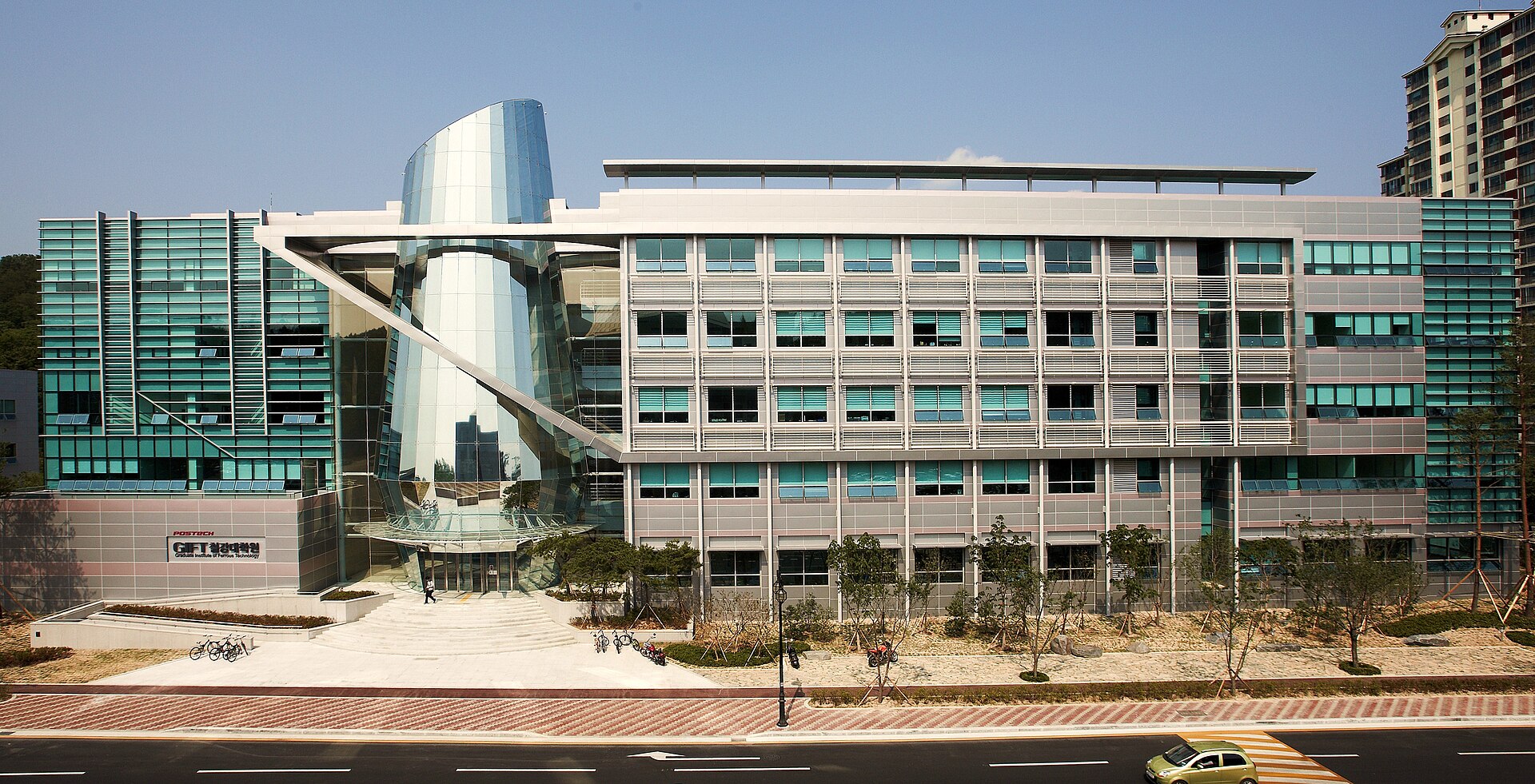
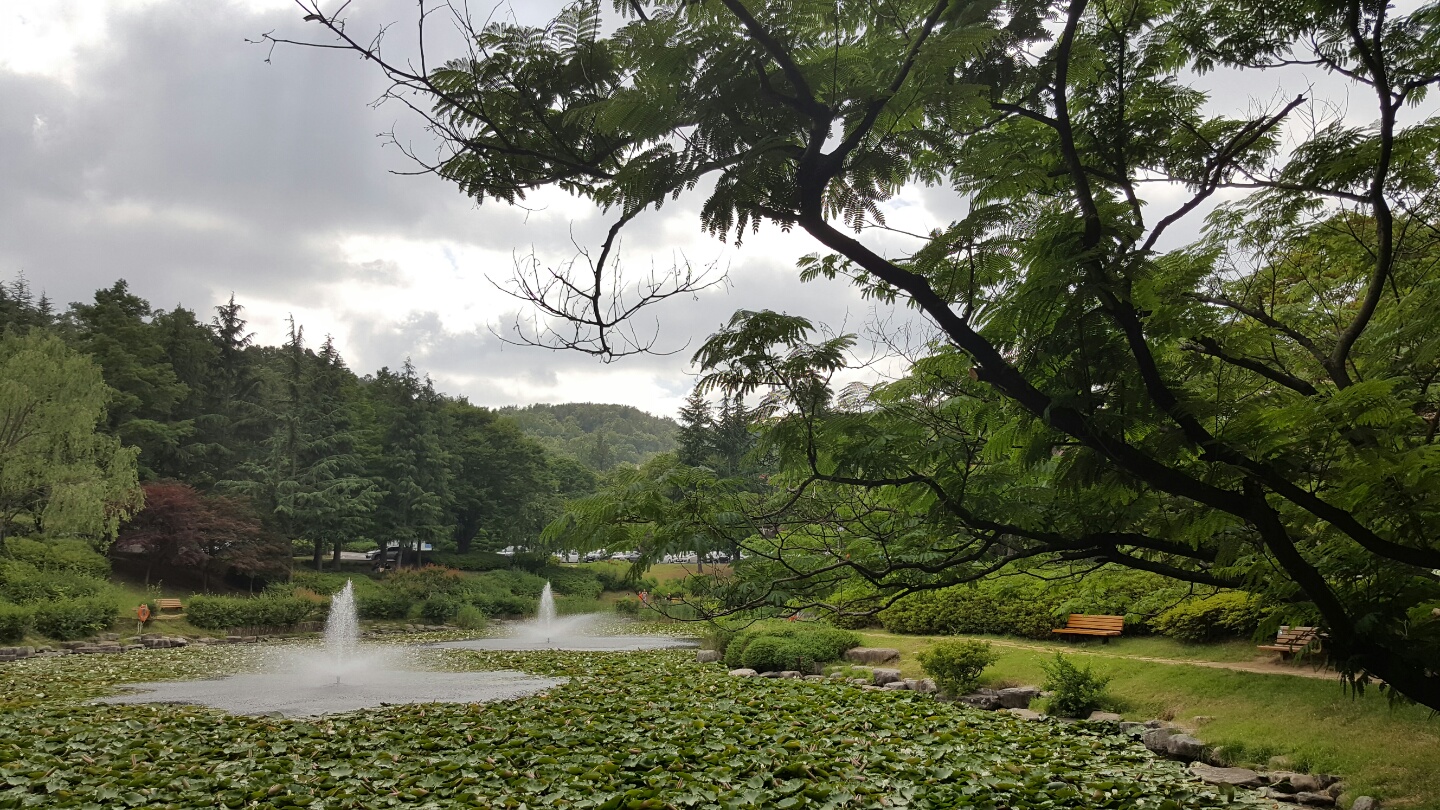
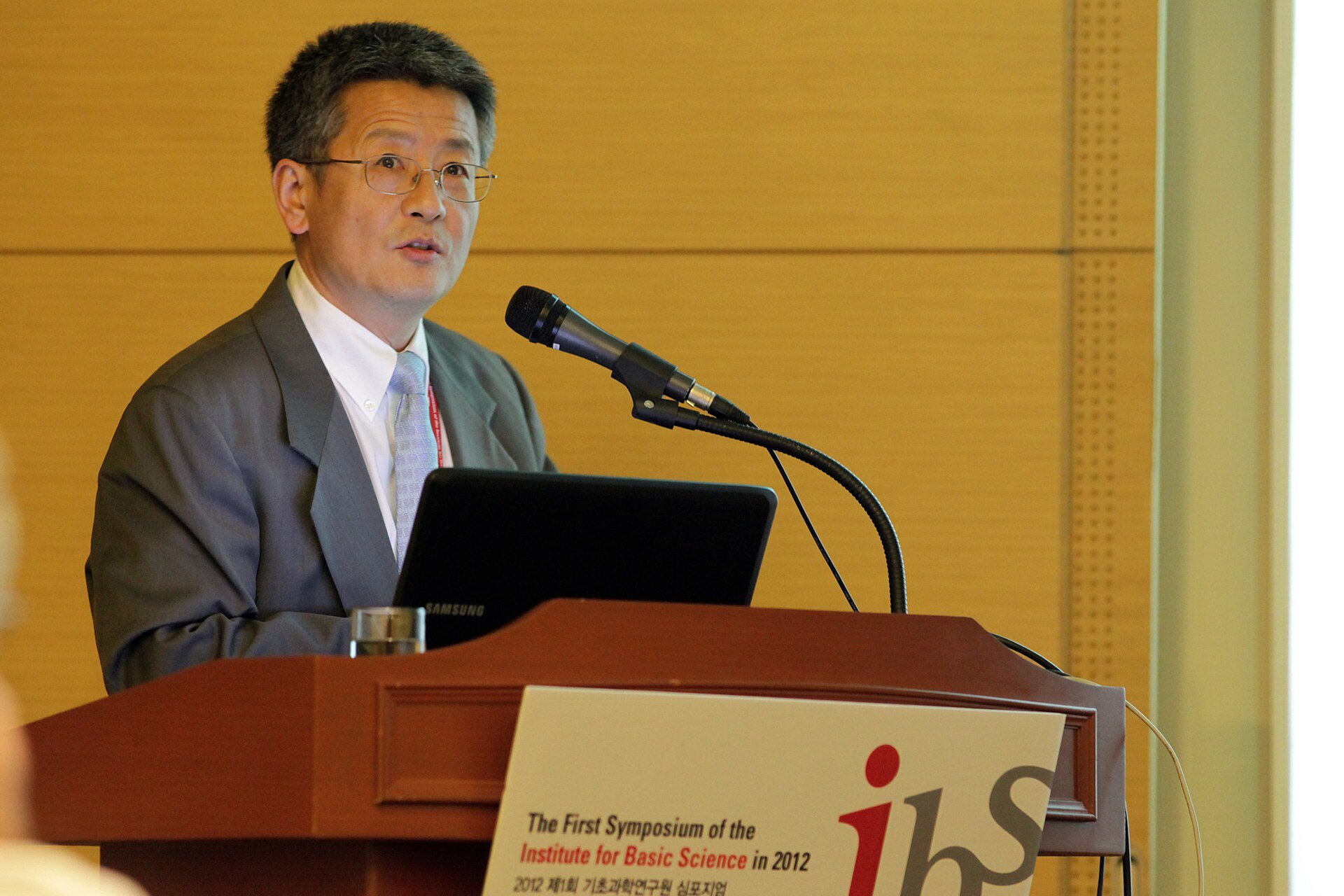
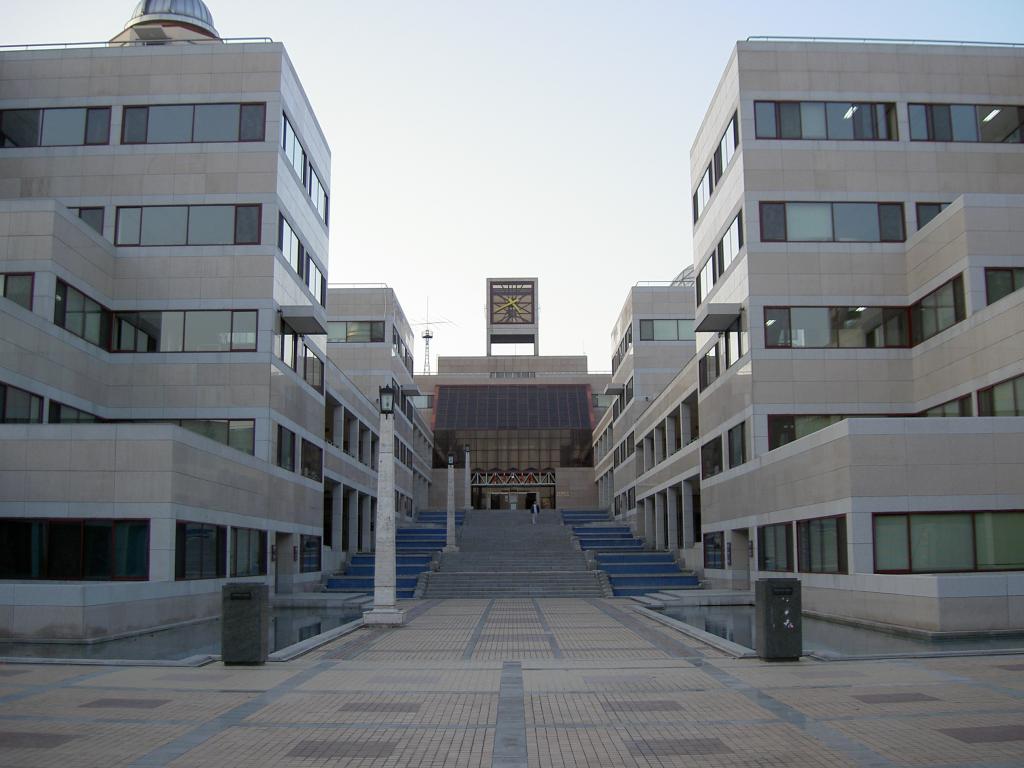
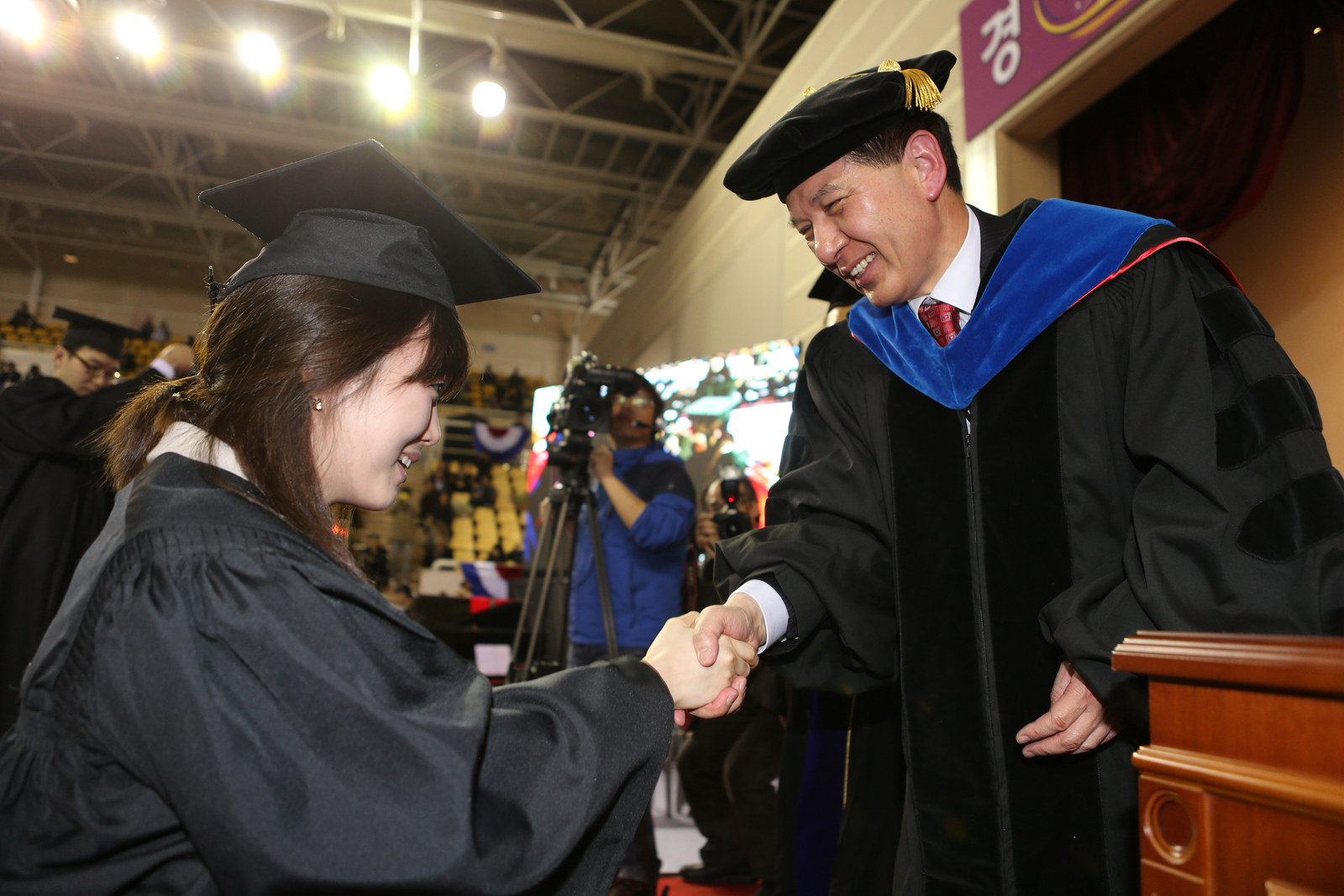

Why POSTECH — Asia's Caltech, Research & Full Tuition
Founded in 1986 and modelled on Caltech, POSTECH was built from day one as a research-first institution. It is South Korea's most selective science and engineering university and one of the few elite global institutions where international students pay no tuition. For ambitious students who want to do real science from Year 1, POSTECH is a singular opportunity.
POSTECH Acceptance Rate & Admitted Student Profile
Stats
Profile Stats
Rea Vs Rd
POSTECH Admissions Requirements — GPA, English & Research Potential
- Minimum stated GPA of 3.5 on a 4.0 scale
- Strong performance in mathematics and sciences is scrutinised most closely
- IB score of 40+ is the competitive benchmark
- Course rigour in STEM subjects matters as much as overall grade
- IELTS Academic minimum 6.5 overall
- TOEFL iBT minimum 80 total
- Duolingo English Test minimum 130
- Native English speakers or English-medium school graduates may request waiver
- Science olympiad medals (IPhO, IChO, IMO, IOI) are significant positives
- Independent lab work, research internships, or published findings
- Coding projects, science fair achievements, or independent study
- POSTECH wants future researchers, not just top students
POSTECH Application Components — Study Plan, Transcripts & Recommendations
POSTECH does not use the Common App, UCAS, or any US/UK admissions framework. Applications are submitted directly through POSTECH's own portal or the Study in Korea platform. The process is document-centred: your transcript, Study Plan, and recommendations are your entire application — there are no supplemental essays or activity lists.
POSTECH Study Plan — Writing the Perfect Application Statement
Tips
Prompts
What POSTECH Admissions Reviewers Are Looking For
POSTECH does not admit generalists. It admits future scientists and engineers. The evaluation is document-based and holistic within a STEM frame: reviewers assess academic preparation, research potential, and whether the applicant has a compelling reason to be at POSTECH specifically — not just at a good university.
POSTECH Financial Aid & Scholarships for International Students
POSTECH's financial model for international undergraduates is straightforward and unusually generous: admission equals a full tuition scholarship for all 8 semesters of the standard programme. Beyond tuition, additional institutional support and external scholarship programmes can further reduce the cost of attendance. The result is that POSTECH is one of the most affordable elite institutions in the world for international students.
Cost estimates are based on POSTECH's published figures. Living costs are denominated in Korean won and may vary with exchange rates. Individual scholarship eligibility may vary.
Stats
Contribution Tiers
| Note | Range | Percent | Percent Value |
|---|---|---|---|
| Covered by automatic tuition scholarship for all international admits | Tuition | 0% | 0 |
| Estimated annual total cost of attendance (POSTECH-published) | Cost of Attendance | ~$8,000 | 8000 |
| Including housing, food, transport, personal expenses in Pohang | Cost of Living | ~$10,000 | 10000 |
| Global Korea Scholarship can reduce living costs further | With GKS Scholarship | Much Lower | 0 |
Key Dates
Advantages
- Fall intake is the main round — most international students begin in September
- Spring intake (March start) is available for eligible programmes
- Applications assessed on rolling basis — earlier submission can be beneficial
- No binding 'early decision' restriction — you may apply elsewhere simultaneously
- Application portal opens seasonally — confirm exact dates each cycle
Disadvantages
- POSTECH does not offer an Early Action or Early Decision advantage over a regular applicant
- Spring intake has a smaller cohort and fewer available departmental places
- Application deadlines may differ between POSTECH's portal and the Study in Korea platform
- Visa processing timelines must be factored into your decision on which intake to target
- Some departments or scholarships may only accept fall intake applications — verify before applying
POSTECH Interview — Format and What to Expect
POSTECH's standard international undergraduate admissions process is document-based — there is no formal interview stage for most applicants, unlike Oxbridge or some US university processes. Your entire case is made through the Study Plan, transcripts, English proficiency scores, and recommendation letters. This makes every document more important, not less. The Study Plan is effectively your interview in written form.
Meta
Questions
POSTECH Residential Life & Campus Community
POSTECH does not operate a Harvard-style residential house system with distinct cultures and dining halls. Instead, all undergraduates live in on-campus dormitories, keeping the academic community tightly integrated. The POSCO International Center provides dedicated housing and community facilities for international students and researchers.
Houses
Lottery Steps
- All admitted international undergraduates are eligible for on-campus dormitory housing
- Housing applications are managed through POSTECH's student affairs office upon admission
- The POSCO International Center provides orientation, Korean language courses, counselling, and cultural programming for international students
- On-campus dormitory housing reduces commute and makes interdisciplinary collaboration natural
- Pohang's lower cost of living means even off-campus housing is affordable by global standards
POSTECH Departments & Undergraduate Programmes
- {"label":"Focus areas","value":"Analysis, Algebra, Topology, Applied Math"}
- {"label":"Research strength","value":"Mathematical physics, data science"}
- {"label":"Graduate pathway","value":"PhD programmes worldwide"}
- {"label":"IB HL requirement","value":"AA preferred"}
- {"label":"PAL-XFEL access","value":"Yes — on campus"}
- {"label":"Research strength","value":"Condensed matter, quantum, photonics"}
- {"label":"IBS affiliation","value":"Yes"}
- {"label":"Nobel-level research","value":"Synchrotron-based studies"}
- {"label":"Focus areas","value":"AI, algorithms, systems, HCI"}
- {"label":"Apple Developer Academy","value":"On-campus (C5 Building)"}
- {"label":"Industry links","value":"Samsung, Kakao, Naver, SK Hynix"}
- {"label":"Graduate pathway","value":"Industry + PhD"}
- {"label":"Focus areas","value":"Semiconductors, signal processing, photonics"}
- {"label":"Industry ties","value":"Samsung Electronics, SK Hynix"}
- {"label":"Semiconductor Engineering","value":"Dedicated track available"}
- {"label":"Research output","value":"Top-tier international journals"}
- {"label":"Focus areas","value":"Process engineering, polymer science, bioengineering"}
- {"label":"POSCO links","value":"Steel and petrochemical industries"}
- {"label":"Pohang Biotech Center","value":"Adjacent research facility"}
- {"label":"IB prerequisite","value":"HL Chemistry recommended"}
- {"label":"Focus areas","value":"Metals, ceramics, polymers, nanomaterials"}
- {"label":"PAL synchrotron use","value":"Extensive — materials characterisation"}
- {"label":"Industry links","value":"POSCO, Samsung, LG Energy Solution"}
- {"label":"Research rank","value":"World-leading by citation impact"}
Research & Extracurricular Opportunities at POSTECH
Career Outcomes & POSTECH Alumni Network
POSTECH's alumni network, while smaller than that of a large national university, is concentrated in elite science, engineering, and technology roles. The employment rate of 95% reflects the strength of industry demand for POSTECH graduates. For students aiming at graduate research, the POSTECH credential is globally recognised at the doctoral admissions level.
Stats
Categories
Our POSTECH & South Korea Admissions Track Record
Faqs
Is POSTECH taught in English?+
Many courses at the undergraduate level are offered in English, particularly in science and engineering disciplines. However, some lectures — especially introductory and humanities courses — may be conducted in Korean. The medium of instruction depends on the department and individual professor. Confirm current English-medium offerings directly with POSTECH before applying.
Is POSTECH tuition-free for all international students?+
Yes — all admitted international undergraduate students receive a full tuition scholarship covering all 8 semesters of the standard programme, provided they maintain the required academic standing. This is not income-tested; it is awarded automatically upon admission through the international track.
Can I apply to POSTECH with IB qualifications?+
Yes. International Baccalaureate results are accepted. The benchmark for competitive admission is an IB score of 40 or above, with strong Higher Level results in mathematics and at least one science subject. HL Mathematics: Analysis & Approaches (or Applications & Interpretation) combined with HL Physics, Chemistry, or Biology is the expected profile for most departments.
Does POSTECH require SAT or ACT scores?+
No. POSTECH's test policy is optional for standardised tests. SAT or ACT scores may be submitted if you believe they strengthen your application, but they are not required. Your academic transcript and English proficiency score carry more weight.
How does POSTECH compare to KAIST and Seoul National University for internationals?+
POSTECH, KAIST, and SNU are all elite South Korean institutions. POSTECH is the smallest and most research-intensive. Its 6:1 student-to-faculty ratio and access to PAL (the synchrotron laboratory) make it the strongest choice for students whose goal is deep research engagement from undergraduate level. KAIST has a slightly larger campus with more programme diversity. SNU offers the broadest range of disciplines and a large city campus. If you want a research-centric STEM environment from Day 1, POSTECH is the right choice.
Is Korean language required?+
Korean language skills are not required for admission, but learning Korean will significantly enhance your experience in Pohang, a city with limited English-language infrastructure compared to Seoul. POSTECH provides Korean language courses for international students through ISSS and its King Sejong Institute partnership.
What is the approximate annual cost for an international undergraduate?+
With the full tuition scholarship, your primary annual costs are living expenses — estimated at approximately $8,000–$10,000 USD per year in Pohang. This covers dormitory housing, food, transport, and personal expenses. Pohang is significantly more affordable than Seoul.
Is POSTECH only for science and engineering students?+
Effectively yes. POSTECH's entire undergraduate curriculum is built around STEM disciplines. There is a Division of Humanities and Social Sciences providing foundational liberal arts courses, but it does not offer an independent degree programme. All undergraduate majors are science or engineering disciplines.
Book a Free POSTECH Admissions Strategy Session
In 60 minutes our POSTECH admissions specialists will evaluate your academic profile, identify your application strengths and gaps, develop your Study Plan strategy, and advise on scholarship applications including the Global Korea Scholarship and POSCO TJ Park Foundation award.
- No commitment required
- POSTECH and South Korea admissions specialists
- Personalised Study Plan strategy — not generic advice
POSTECH Academic Requirements
POSTECH Academic Requirements — The Honest Breakdown for International Students
What grades, test scores, and academic profile do POSTECH's admitted international students actually have? What does a research-first admissions process mean for students from IB, A-Level, AP, and other international curricula?
GPA & Academic Record
POSTECH GPA Requirements — What the Admitted Profile Actually Shows
POSTECH states a minimum GPA of 3.5 on a 4.0 scale for international undergraduate applicants. In practice, the admitted international cohort reflects students at the top of their graduating class in mathematics and science subjects. The minimum is an eligibility floor, not the competitive target.
A 3.5 GPA is an eligibility floor, not a differentiator. The students who receive POSTECH's full tuition scholarship offer are typically in the top 5–10% of their secondary school cohort, with outstanding performance specifically in mathematics and science courses.
Academic Context
How POSTECH Reads Academic Performance Across Different School Systems
POSTECH's international admissions office evaluates academic performance across a wide range of school systems. Unlike many South Korean universities primarily oriented toward domestic CSAT applicants, POSTECH's international track has experience assessing IB, A-Level, AP, and other national credentials.
SAT Scores (Optional)
SAT Scores at POSTECH — Whether and How to Submit
POSTECH operates a test-optional policy and does not publish SAT score bands for admitted students. There is no minimum SAT score requirement. If submitting, aim for scores that are clearly competitive at a QS Top 100 institution.
| Label | Score | Percent |
|---|---|---|
| Minimum required | None | 0 |
| Recommended threshold if submitting | 1400+ | 75 |
| SAT Math (more relevant for POSTECH) | 700+ | 80 |
ACT Scores (Optional)
ACT Scores at POSTECH — The Data and the Strategy
POSTECH accepts ACT scores as optional supporting evidence. No minimum is published. As with the SAT, the decision to submit depends on whether your score strengthens your overall academic profile.
Metrics
Comparison Cards
Test-Optional Policy
POSTECH's Test-Optional Policy — The Strategic Decision Explained
POSTECH maintains a test-optional policy for international undergraduate applicants. SAT and ACT scores are accepted but not required. Understanding when submitting or withholding scores is the better strategy is an important application decision.
Submit Items
Withhold Items
IB & A-Levels
IB and A-Level Results at POSTECH — Specific Benchmarks
- {"label":"Competitive benchmark","value":"40+ total points"}
- {"label":"HL expectations","value":"7 in HL Mathematics (AA preferred), 6+ in relevant science HL"}
- {"label":"Mathematics track","value":"HL Mathematics: Analysis & Approaches strongly preferred over Applications & Interpretation"}
- {"label":"Extended Essay","value":"A or B grade in a science or mathematics EE adds positive research signal"}
- {"label":"Competitive range","value":"A*AA minimum, A*A*A for the most competitive departments"}
- {"label":"Essential subject","value":"A* in Mathematics"}
- {"label":"Further Mathematics","value":"Strongly recommended for Physics, Engineering, Mathematics applicants; effectively expected in competitive years"}
- {"label":"Science subjects","value":"A grades in Physics and/or Chemistry supporting the primary field"}
Advanced Placement (For US Curriculum Applicants)
AP Courses and POSTECH — What Counts for US-Curriculum Applicants
Advanced Placement courses and exams are not a standard part of POSTECH's international admissions landscape — most of POSTECH's international applicants come from IB, A-Level, or other national curriculum backgrounds. AP scores, where submitted, are read as supplementary evidence of academic capability.
Academic Rigour
Secondary School Rigour — POSTECH's Primary Academic Criterion
For POSTECH, the rigour of your secondary school record is evaluated almost entirely through the lens of mathematics and science: how advanced was your mathematics? How deeply did you engage with physics, chemistry, or computer science? How much of what you know about science came from going beyond what your school assigned?
Taking the most advanced mathematics available to you and demonstrating depth in at least one science discipline — then going beyond both through competitions, research, or independent study.
Subject Preparation
Mathematics and Science Preparation — What POSTECH Expects from Day 1
POSTECH's entire undergraduate curriculum is built on the assumption that students arrive with strong mathematical and scientific preparation. Unlike many universities where introductory courses scaffold from basic principles, POSTECH's first-year programme moves quickly and assumes readiness. Subject preparation before arrival is not optional — it is essential.
English Language Requirements
English Language Requirements for International POSTECH Applicants
English language proficiency is a hard admissions requirement at POSTECH — it is not factored holistically against academic strength. All international undergraduate applicants must submit an approved English proficiency score unless eligible for a waiver. Scores must typically be within 2 years of application.
The IELTS 6.5 and TOEFL 80 minimums represent the eligibility floor, not the competitive standard. POSTECH's research environment requires you to read technical papers, write lab reports, present findings, and collaborate with international researchers — all in English. Students who score at the minimum will find the academic environment challenging.
POSTECH expects students to identify a target department at the time of application. Your Study Plan will be reviewed by faculty in that department, so your academic profile must be coherent with your stated choice. Switching departments after admission is possible but not straightforward.
Rows
| Signals | Expectation | Concentration |
|---|---|---|
| Math olympiad (IMO/national); proof-based thinking | HL Maths AA 7 / A-Level Further Maths A* | Mathematics |
| USACO/IOI; coding projects; algorithm competition | HL Maths + programming background | Computer Science & Engineering |
| IPhO / physics olympiad; PAL-XFEL interest | HL Maths + HL Physics; A* in both A-Level | Physics |
| IChO / chemistry olympiad; lab experience | HL or A-Level Chemistry; strong Maths | Chemistry |
| Semiconductor interest; electronics projects; EE competition | HL Maths + HL Physics / A-Level equivalent | Electrical Engineering |
| Materials characterisation; POSCO / battery interest | HL Chemistry + HL Physics / A-Level equivalent | Materials Science & Engineering |
| Biotech interest; molecular biology; PBC lab | HL Biology + HL Chemistry | Life Sciences |
| Process engineering; polymer projects; POSCO ties | HL Chemistry + HL Maths | Chemical Engineering |
| Technology management; startup interest; Apple Dev Academy | Strong Maths + broad STEM profile | Industrial & Management Engineering |
Curriculum Evaluation
How POSTECH Reads Different International Curricula
POSTECH's international admissions office evaluates a diverse range of curricula from applicants worldwide. Understanding how your specific curriculum is read helps you present it most effectively.
Grade 9 → 12 Roadmap
Building a POSTECH-Competitive Academic Profile
Academic Pitfalls
Academic Mistakes That Sink POSTECH International Applications
- Applying with a standard IB score (36–38) and expecting the full-tuition scholarship offer to substitute for selectivity — POSTECH's academic bar is high regardless of financial incentives.
- Choosing IB Mathematics: Applications & Interpretation (especially at Standard Level) when targeting engineering, physics, or mathematics programmes — A&A is effectively expected for these departments.
- Submitting a Study Plan that is generic — 'I want to study science to benefit humanity' rather than naming specific POSTECH research programmes, labs, or faculty.
- Not preparing to study in a research environment: if you have never engaged with science beyond the classroom, your application will struggle to stand out against applicants with olympiad medals or research experience.
- Missing the English proficiency minimum and hoping the academic record compensates — proficiency is a hard requirement, not a holistic factor.
- Applying with a strong record in biology alone without mathematical depth — POSTECH's curriculum requires mathematical maturity across all departments from Week 1.
- Assuming Korean language is irrelevant to your POSTECH experience — life in Pohang is significantly easier with some Korean, and POSTECH provides the courses to learn it.
- Underestimating the Study Plan — students who treat it as a secondary document behind the transcript consistently submit weaker applications than those who invest equal effort in both.
Admitted Profiles
What Admitted International Students at POSTECH Look Like
These profiles are illustrative of the type of academic and research narrative that characterises competitive POSTECH international applicants. The common thread is not just grades — it is demonstrated engagement with science beyond the classroom, and a Study Plan that connects that engagement to what POSTECH specifically offers.
Academic FAQ
Academic Requirements — Common Questions
What is the minimum GPA to apply to POSTECH as an international student?+
The stated minimum GPA for international undergraduate applicants is 3.5 on a 4.0 scale. This is an eligibility floor, not a competitive target. Admitted students are consistently at the top of their secondary school cohort in mathematics and science subjects.
What IB score do I need for POSTECH?+
The stated benchmark for competitive admission is 40 or above, with strong Higher Level results in mathematics and at least one science subject. HL Mathematics: Analysis & Approaches is strongly preferred over Applications & Interpretation for most departments.
Is SAT or ACT required for POSTECH?+
No. POSTECH operates a test-optional policy for international applicants. Standardised test scores may be submitted as supplementary evidence but are not required. Your transcript, English proficiency score, and Study Plan carry more weight.
Do I need a maths A-Level or IB HL Maths to apply?+
It depends on your target department. For Mathematics, Physics, Engineering (all types), and Computer Science departments, advanced mathematics at the HL or A-Level level is effectively required — not just recommended. For Chemistry and Life Sciences, strong mathematics alongside HL Chemistry or Biology is expected. Confirm the specific expectation for your department with POSTECH's admissions office.
How important is research experience for POSTECH admission?+
Very important, particularly for international applicants. POSTECH is a research university, and the admissions process selects for research-readiness. Olympiad competition results, lab internships, independent projects, or self-directed study beyond the curriculum are all meaningful evidence. Students with no research experience face a higher burden of proof in their Study Plan.
POSTECH Cost & Financial Aid
The Real Cost of POSTECH — Remarkably Affordable for International Students
POSTECH is one of the few elite global universities where all admitted international undergraduate students pay zero tuition. The challenge is gaining admission — not affording it. This section breaks down every cost dimension honestly.
Annual Cost Breakdown
Estimated Annual Costs for International Undergraduates
All figures are annual estimates in USD. Tuition is covered by the full tuition scholarship for all admitted international undergraduate students. Remaining costs reflect living expenses in Pohang, South Korea — significantly lower than Seoul or other major Asian cities.
All estimates are in USD and based on POSTECH's published cost figures. Actual costs are denominated in Korean won (KRW). Build in a 10–15% buffer for exchange rate volatility over a multi-year degree. On-campus dormitory housing significantly reduces food and transport costs.
| Item | Annual Cost U S D | Notes |
|---|---|---|
| Tuition | $0 | Full tuition scholarship — all 8 semesters of standard programme |
| Cost of Attendance (POSTECH estimate) | ~$8,000 | Total annual estimate including all expenses, per published POSTECH figure |
| Cost of Living — Pohang | ~$10,000 | Housing, food, transport, personal expenses for a full academic year |
| Application Fee | $80 USD | Non-refundable, paid once at application |
| Health Insurance | Variable | International students on D-2 visa are eligible for National Health Insurance; confirm current premium with POSTECH ISSS |
| Round-Trip Airfare (Home Country) | Variable | Budget 1–2 trips home per year; GKS scholarship covers initial airfare for eligible students |
Financial Aid Overview
Financial Aid at POSTECH — How the System Works
POSTECH's financial aid model for international undergraduates is built around a single, automatic, and universal award: a full tuition scholarship for all admitted students in the international track. Beyond tuition, supplementary support is available through institutional and external programmes.
Stats
Cards
Affordability Reality
What POSTECH Actually Costs You — The Honest Net Price
For admitted international undergraduates, POSTECH is one of the most financially accessible elite universities in the world. The combination of a full tuition scholarship, low Pohang cost of living, and on-campus dormitory housing creates a total annual cost in the $8,000–$10,000 USD range.
Compare this with a US or UK private university at $60,000–$80,000 USD per year in total cost, or a Singapore or Hong Kong elite institution at $30,000–$50,000 USD. POSTECH's financial proposition is genuinely exceptional for its global ranking. The challenge is not affording POSTECH — it is gaining admission.
How to Apply for Aid
Steps to Secure Financial Support at POSTECH
Aid for International Students
Financial Aid Specifically Available to International Undergraduates
POSTECH's financial aid landscape for international undergraduates is distinct from need-based models used at US universities. Aid is structured around institutional scholarships (automatic for all admits), government scholarships (nationality-dependent), and foundation awards (nationality-dependent). There is no income-tested need-based aid in the Harvard sense.
Average Aid
What the Typical International Student Receives
Because POSTECH's tuition is zero for all admitted international undergraduates, the 'average financial aid' question is better framed as the total annual financial advantage compared to market-rate alternatives.
POSTECH does not publish an 'average aid package' figure for international students in the way US universities do. The universal tuition scholarship is the primary mechanism. Living expense support varies by the specific additional scholarship programme secured. All amounts denominated in KRW are subject to exchange rate fluctuation.
Merit & Need-Based Programmes
Merit and Need-Based Financial Opportunities at POSTECH
POSTECH's financial support for international undergraduates is primarily merit-based (tied to admission and academic standing), not need-based in the US sense. Understanding the distinction is important for financial planning.
External Scholarships
External Scholarship Opportunities for POSTECH Students
Beyond POSTECH's own support, several external scholarships are specifically available to international students studying at Korean universities. These are the primary routes to supplementary living expense support.
Loan Policy
Loans at POSTECH — What You Need to Know
POSTECH does not offer institutional student loans to international undergraduates. The Korean student loan system (Korean Student Aid Foundation, KOSAF) is primarily for domestic Korean students. International students should not plan on loan-based funding for their POSTECH education.
The financial model for international students at POSTECH is grant-based: the tuition scholarship covers the largest cost (tuition), and additional support through GKS and foundation scholarships can address living expenses for eligible students. Students who need to fund living expenses beyond scholarship support should plan through personal savings, family support, or permitted part-time work income.
This is a significant structural difference from US universities, where federal student loans and institutional loan programmes are widely available to international students. At POSTECH, plan conservatively: arrive with adequate personal financial reserves for at least the first semester before any supplementary scholarship income begins.
Work & Study
Part-Time Work and Work-Study at POSTECH
International students holding a D-2 (student) visa in South Korea may engage in part-time work under Korean immigration regulations, subject to hour restrictions during the academic term.
Comparative Cost Analysis
How POSTECH's Financial Package Compares to Alternatives
For an international student considering elite global universities, POSTECH's financial model is genuinely unusual. This comparison helps frame the decision.
All figures are estimates based on publicly available data and are subject to change. Non-USD figures converted at indicative rates. KAIST scholarship amounts depend on programme and eligibility. NUS figures assume the Tuition Grant (which requires a 3-year employment commitment in Singapore after graduation).
| University | Tuition Annual | Living Annual | Total Annual | Qs Rank |
|---|---|---|---|---|
| POSTECH (South Korea) | $0 (Full scholarship for all admits) | ~$8,000–$10,000 | ~$8,000–$10,000 | #98 |
| KAIST (South Korea) | Scholarship available (varies) | ~$10,000–$14,000 (Daejeon) | ~$14,000–$22,000 | #63 |
| NUS (Singapore) | ~$17,000–$22,000 (with Tuition Grant, service bond) | ~$12,000–$18,000 | ~$29,000–$40,000 | #8 |
| Typical UK Russell Group | £25,000–£45,000 | £12,000–£20,000 | £37,000–£65,000 | #50–150 |
| Typical US Private (QS 50–100) | $55,000–$65,000 | $18,000–$25,000 | $73,000–$90,000 | #50–100 |
True Cost of POSTECH
The True All-In Cost of a POSTECH Education
For admitted international undergraduates, the all-in cost of a 4-year POSTECH degree is dominated by living expenses, not tuition. This section models the total investment.
At $8,000–$10,000 USD per year in total costs (after the tuition scholarship), a 4-year POSTECH degree costs approximately $32,000–$40,000 USD in total living and personal expenses. This is less than the annual cost of attendance at most comparable UK or US institutions. If you secure the GKS scholarship in addition to POSTECH's own award, the out-of-pocket living costs can be reduced further by the GKS monthly allowance.
Scholarship Appeals
How to Address Financial Aid Issues at POSTECH
Since POSTECH's primary financial mechanism for international undergraduates is the automatic tuition scholarship, the most common financial concern is not 'how do I get more aid' but 'what happens if my scholarship is at risk.'
Financial Planning
Year-by-Year Financial Planning for POSTECH
A realistic financial plan for a 4-year POSTECH undergraduate education should account for the following phases and cost drivers.
Application & Study Plan
Applying to POSTECH: No Common App, No Supplements — Just Your Research Story
POSTECH is a South Korean university that operates entirely outside US and UK admissions frameworks. There is no Common App, no UCAS form, no coalition of supplemental essay prompts. Applications go through POSTECH's own international admissions portal or the Study in Korea platform. Instead of essays, you submit a Study Plan — a document that is part personal statement, part research proposal, and part statement of purpose. This is the document that determines whether POSTECH sees you as a future researcher or just another applicant.
Application System
How International Students Apply to POSTECH
POSTECH's international undergraduate admissions are document-centred. There are no numbered supplemental essay prompts, activity lists, or short-answer sections. Your case is made through your transcript, English proficiency score, Study Plan, and letters of recommendation.
The Study Plan
POSTECH's Study Plan — Your Most Important Document
The Study Plan is the heart of the POSTECH international undergraduate application. It is not a US-style personal narrative about a formative experience. It is a forward-looking document that demonstrates you have thought carefully about what you want to study, why POSTECH is the right environment, and how you plan to contribute as a researcher.
Exact Study Plan prompts and word limits are specified in the official admissions guideline published for each intake cycle. The elements above represent the typical structural requirements based on POSTECH's admissions model. Always verify current requirements at adm-iu.postech.ac.kr before drafting.
Study Plan Strategy
Writing a Study Plan That Works
Most international students underestimate the Study Plan because it is not called an 'essay.' It carries the same weight as a top-tier personal statement but requires a different kind of writing: research-oriented, specific, and forward-looking rather than retrospective and narrative.
Supporting Documents
Supplementary Documents — How to Strengthen Your Application
Beyond the Study Plan, the quality of your supplementary documents significantly shapes the admissions committee's assessment. Unlike US applications with short-answer activity descriptions and additional essay prompts, POSTECH's supplementary evidence comes entirely through official documents and the Study Plan itself.
Choosing Your Focus
Selecting Your Department and Research Direction
Unlike many universities where declaring a major is deferred until Year 2, POSTECH's admissions process expects you to identify a target department or field of study. Your Study Plan will be read by faculty in that department, and the alignment between your stated interests and your academic profile matters significantly.
Common Mistakes
What Undermines International Applications to POSTECH
- Writing a Study Plan as if it were a US Common App personal essay — POSTECH wants a research-oriented statement, not an emotional narrative about overcoming adversity or personal growth.
- Failing to name specific POSTECH departments, labs, research centres, or faculty — generic praise for 'POSTECH's reputation' signals that you have not done your research.
- Submitting a Study Plan that could apply equally to any science university — POSTECH's reviewers read dozens of applications describing a passion for science; only specific, grounded statements stand out.
- Not researching Korean visa requirements early — the D-2 student visa process has documentation requirements (medical check, financial proof, notarised documents) that take time to fulfil; start early after receiving your admission offer.
- Underestimating the importance of recommendation letters — a lukewarm letter from a well-known professor is less valuable than a specific, enthusiastic letter from a teacher who knows your work deeply and can describe concrete evidence of your research capability.
- Mistaking the 'optional' test policy for an invitation to skip academic evidence — if you do not submit standardised tests, your transcript and Study Plan carry the entire evidential burden of your academic profile.
- Assuming Pohang is like Seoul — the campus is intentionally self-contained and the city is quieter. Ignoring this reality in your Study Plan reads as naivety about where you are going. POSTECH rewards students who are motivated by the work, not by the city.
- Applying with a biology-only background without mathematical depth — POSTECH's curriculum requires mathematical maturity across all departments from the first week of classes.
Application FAQ
Application & Study Plan — Common Questions
Does POSTECH use the Common App?+
No. POSTECH has its own international undergraduate admissions portal at adm-iu.postech.ac.kr and also participates in the Study in Korea central platform (studyinkorea.go.kr). There is no Common App, Coalition, or UCAS route for POSTECH.
Is there a personal statement requirement?+
Yes — the Study Plan is POSTECH's equivalent of a personal statement, but it is more research-focused than a UK personal statement or US Common App essay. It requires you to articulate your academic background, research interests, reason for choosing POSTECH specifically, and future plans as a scientist or engineer.
How long should the Study Plan be?+
Length requirements are specified in the official admissions guideline published for each intake cycle. Confirm the exact word or page limit at adm-iu.postech.ac.kr before drafting. Typically, a Study Plan of 1–2 pages of focused, specific content is expected. Quality matters more than length — reviewers remember specific plans, not comprehensive ones.
Are there interviews for international undergraduate applicants?+
POSTECH's standard international undergraduate admissions process is document-based — there is no formal interview stage for most applicants. This is different from domestic Korean admissions and from Oxbridge or selective US university processes. Your Study Plan, transcripts, and recommendations are your complete case. Some specific programmes or circumstances may involve additional assessment — confirm with postech-iuadmission@postech.ac.kr.
Can I apply to multiple departments?+
Your application is typically directed toward a primary department or field of study. Check the current admissions guideline for whether multiple preferences can be listed. Your Study Plan must align with your stated department choice — a mismatch between stated department and Study Plan content is a common application error.
Should I write my Study Plan in English or Korean?+
For international undergraduate applicants applying through the international track, English is the standard language of the Study Plan. Confirm the language requirement in the current admissions guideline. If you have Korean language ability, you may wish to note it in your application, but the Study Plan itself should be in English unless instructed otherwise.
What if I cannot access the official admissions portal from my country?+
Contact POSTECH's international undergraduate admissions office directly: postech-iuadmission@postech.ac.kr or +82-54-279-3629. They can advise on alternative submission routes if the online portal is inaccessible from your location.
How do I research POSTECH's faculty and labs before writing my Study Plan?+
Start with postech.ac.kr/eng and navigate to each department's faculty pages and research centre pages. The Pohang Accelerator Laboratory (pal.postech.ac.kr), the Institute for Basic Science affiliation, and each department's research groups have web presences. Read 1–2 recent papers from faculty whose work connects to your interests — this level of preparation is detectable in the Study Plan and is exactly what POSTECH's reviewers are looking for.
Courses — schools, degrees & intake
12 degrees across 3 groupings.
School of Natural Sciences · 4 degrees
Bachelor of Science in Mathematics
Bachelor of Science in Physics
Bachelor of Science in Chemistry
Bachelor of Science in Life Sciences
School of Engineering · 7 degrees
Bachelor of Engineering in Materials Science and Engineering
Bachelor of Engineering in Mechanical Engineering
Bachelor of Engineering in Industrial and Management Engineering
Bachelor of Engineering in Electrical Engineering
Bachelor of Engineering in Computer Science and Engineering
Bachelor of Engineering in Chemical Engineering
Bachelor of Engineering in Convergence IT Engineering
Integrated BS+MS Programs · 1 degrees
Integrated BS+MS in Semiconductor Engineering
Want your real chances at Pohang University of Science and Technology (POSTECH)?
Create a free TYCHR account for your personalised admit-chance, a shortlist you can track, exact entry requirements, and essay + counselling help.