Norwegian University of Science and Technology (NTNU)
Trondheim, Norway · Urban
Norway's largest university and Scandinavia's engineering powerhouse, NTNU sits at the crossroads of Nordic innovation, Nobel-winning neuroscience, and world-class marine and energy technology. If you're an ambitious international student drawn to rigorous STEM education in a student-shaped city with direct links to Norway's technology economy, NTNU offers a genuinely distinctive path.
Campus
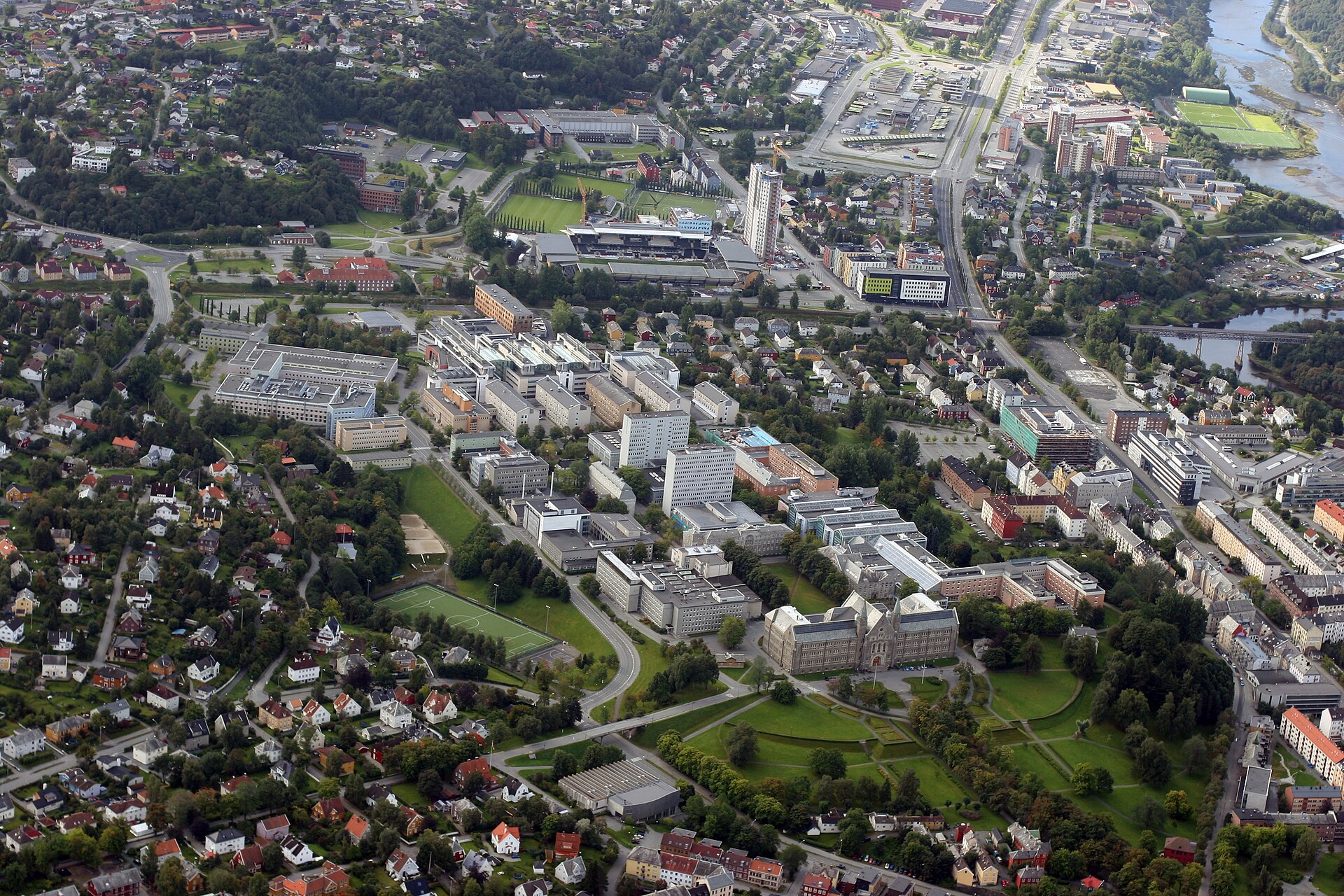
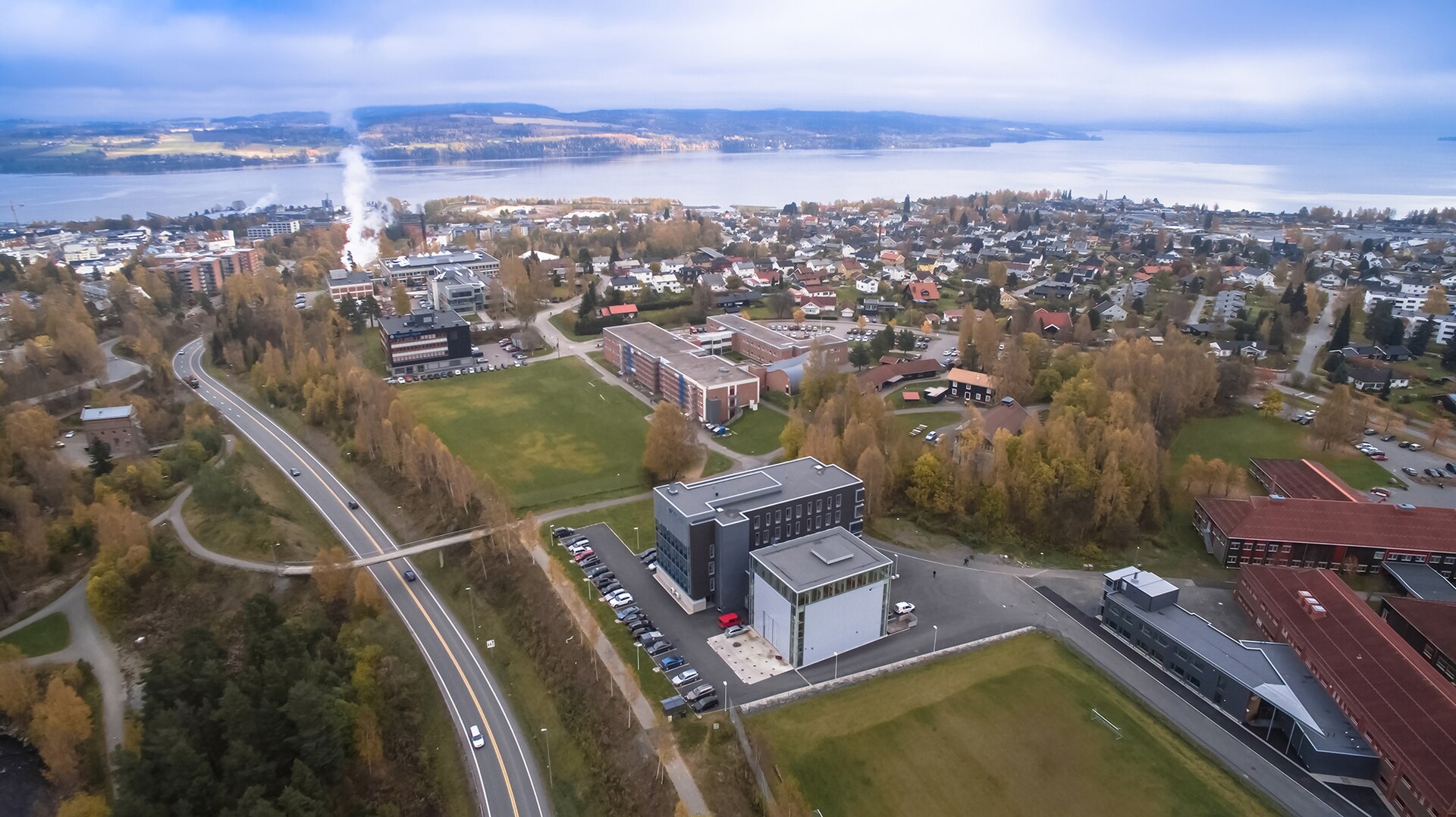
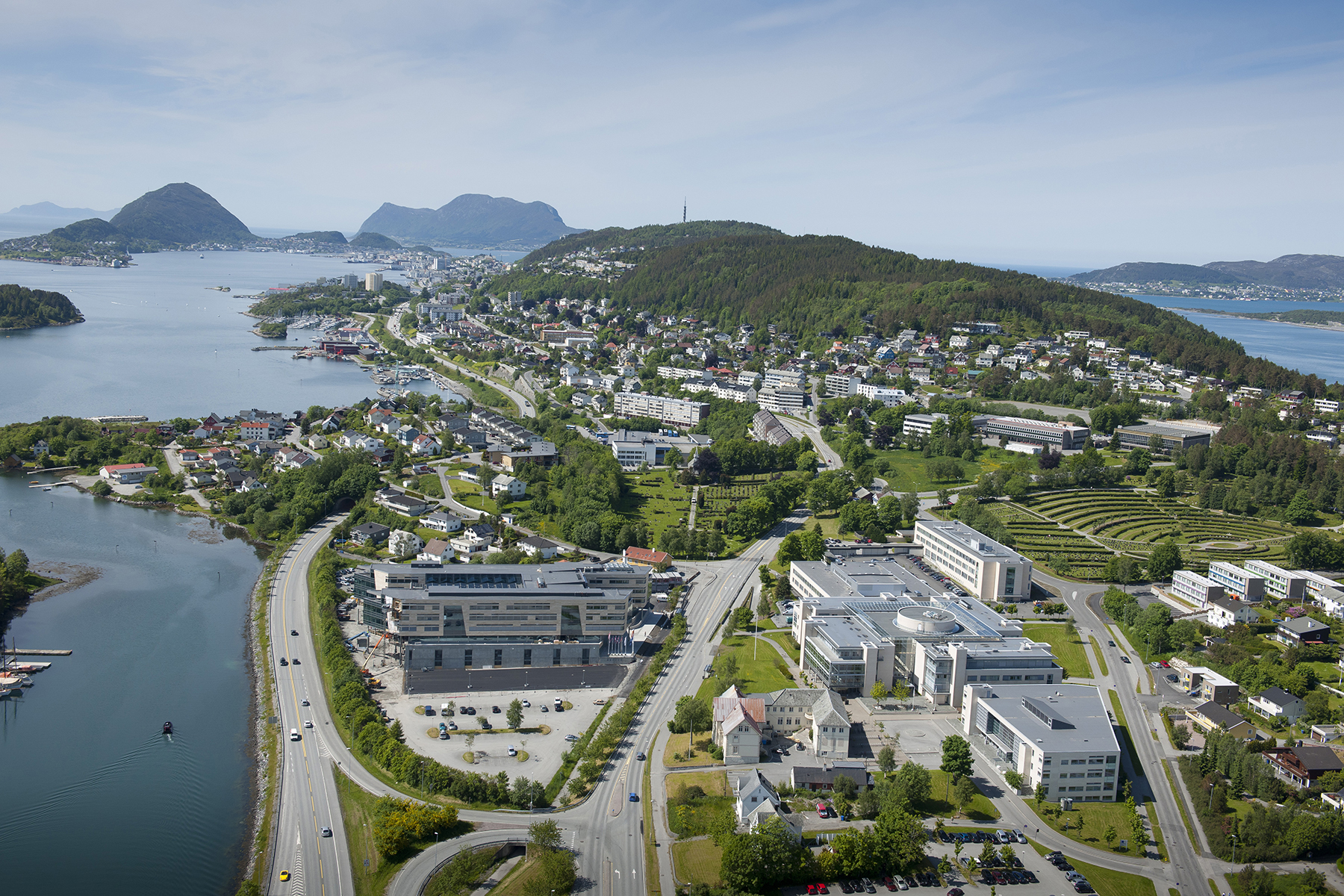
Norwegian University of Science and Technology (NTNU) — campus in pictures
Real, freely-licensed photographs of the campus (via Wikimedia Commons).



Why NTNU — Engineering Excellence, Research & Nordic Network
NTNU is not simply a Norwegian institution — it is the flagship of the Nordic Five Tech alliance, a hub for offshore energy and neuroscience research, and the university that trained the engineers who built Norway's offshore petroleum industry. For international students, it combines serious academic rigour with an open, transparent admissions process and one of the most student-centric campus cities in Europe.
NTNU Admission Profile & Entry Benchmarks
Stats
Profile Stats
Rea Vs Rd
NTNU Admissions Requirements — GPA, English Proficiency & Degree Relevance
- Minimum ECTS grade C equivalent across all courses
- Popular programmes admit significantly above the minimum
- Your bachelor's GPA is converted via NTNU's equivalency methodology
- Upward grade trajectory noted but final GPA is the primary metric
- IELTS Academic 6.5 overall — no individual band minimum stated generally
- TOEFL iBT total score of 90 or above
- Exemption possible if entire bachelor's was taught in English
- Some programmes specify higher minimum scores — always check the programme page
- Your bachelor's major must align with the master's programme prerequisites
- NTNU checks course content, not just degree title
- A background mismatch leads to rejection regardless of GPA
- IB 34+ is the benchmark for applicants from IB secondary education
NTNU Application Components — Søknadsweb, Transcripts & Documents
NTNU uses the Søknadsweb application portal. Applications are document-based — there are no personal essays or interviews for most programmes. Every document must meet NTNU's format and naming requirements exactly; non-compliant submissions are not processed.
Written Application at NTNU — No Essays, Clear Documents
Tips
Prompts
What NTNU Admissions Evaluates
NTNU's admissions process is transparent, grade-based, and document-driven. There is no holistic review, subjective essay evaluation, or extracurricular weighting — the selection criteria are fixed and publicly stated. Understanding exactly what is evaluated — and what is not — is the foundation of a strong NTNU application.
Costs & Financial Support at NTNU
Norway introduced tuition fees for non-EU/EEA students in 2023, changing the previously free Norwegian higher education model. International students must budget approximately $36,000 USD per year total — substantially below US or UK private university costs, but requiring careful financial planning given Norway's high cost of living.
Cost figures are approximate USD estimates from the facts file. Actual fees are published in NOK on NTNU's programme pages. Exchange rate fluctuation affects USD equivalents — always check current NOK costs directly with NTNU.
Stats
Contribution Tiers
| Note | Range | Percent | Percent Value |
|---|---|---|---|
| Significantly reduced or no tuition — verify on programme page | EU/EEA/Swiss Citizens | Reduced | 30 |
| Anglo-Norse Society award of £3,000 — automatic for admitted British students | British Citizens | £3,000 award | 15 |
| Full scholarship for selected Erasmus Mundus joint master's applicants | Erasmus Mundus Eligible | Full funding | 100 |
| Available to outstanding students from developing nations in energy disciplines | GSEP Eligible Students | Competitive | 50 |
| Standard non-EU/EEA tuition; self-funded; external scholarships only route | All Other Internationals | ~5% via external | 5 |
Key Dates
Advantages
- Earliest decision — allows maximum time for visa preparation
- Visa applications for Norway take time; early admission is a genuine advantage
- More time to secure student housing through SiT before places fill
- More time to research and apply for external scholarships
- More time to arrange proof-of-funds documentation for UDI
Disadvantages
- Non-EU/EEA deadline of 1 December falls during A2/IB examinations for some students
- Documents (transcripts, English tests) must all be ready by 1 December
- No rolling admissions — there is no advantage to applying before the deadline
- Some programmes have programme-specific earlier deadlines — check carefully
- Missing the December deadline means waiting an entire year to reapply
NTNU Interviews — Not Part of Standard Admissions
NTNU does not conduct interviews as part of its standard international master's degree admissions process. Decisions are made entirely on submitted documents — transcripts, English proficiency results, CV, and any programme-specific requirements. This contrasts with Oxford and Cambridge-style admissions where interviews are central, and with some US universities where alumni interviews are standard. At NTNU, your documents are your interview.
Meta
Questions
NTNU Housing & Residential Life
NTNU does not operate a 'house system' in the Harvard or Oxbridge sense. Student housing is managed by SiT (Studentsamskipnaden i Trondheim), a student welfare organisation that operates accommodation across Trondheim and the wider NTNU campus network. International students are prioritised for housing in their first year — demand is high and applications must be submitted as soon as the admission letter is received.
Houses
Lottery Steps
- Receive your NTNU admission letter (January–May depending on your category)
- Apply for SiT housing immediately — do not wait, places are limited
- International students receive priority for the first year of study
- From Year 2 onwards, housing is allocated by standard application — apply early each year
- Private rentals in Trondheim are available but significantly more expensive than SiT housing
- Trondheim also has student housing across different city districts — Moholt is the largest and most social
NTNU Faculties & Programmes
- {"label":"Flagship degree","value":"Sivilingeniør (5-year)"}
- {"label":"English master's programmes","value":"Multiple"}
- {"label":"Key specialisms","value":"Marine, Civil, Mechanical, Chemical"}
- {"label":"Industry partnerships","value":"Equinor, Kongsberg, DNV"}
- {"label":"Flagship master's","value":"CS, Informatics, Cybersecurity"}
- {"label":"Research centre","value":"IDI (Dept. of Computer Science)"}
- {"label":"Key partners","value":"SINTEF Digital, Cisco, Microsoft"}
- {"label":"Graduate demand","value":"High in Oslo tech sector"}
- {"label":"Nobel connection","value":"Moser neuroscience labs"}
- {"label":"Key programmes","value":"Physics, Chemistry, Neuroscience"}
- {"label":"Research centres","value":"K.G. Jebsen Centres"}
- {"label":"PhD pipeline","value":"Strong to top European universities"}
- {"label":"Portfolio required","value":"Yes"}
- {"label":"Key programmes","value":"Architecture, Industrial Design"}
- {"label":"Special admission","value":"Portfolio review"}
- {"label":"Studio culture","value":"Research-active design faculty"}
- {"label":"Flagship degree","value":"MD (Norwegian taught)"}
- {"label":"International track","value":"Limited — primarily Norwegian-taught"}
- {"label":"Research strength","value":"Neuroscience, public health"}
- {"label":"Hospital partner","value":"St. Olavs Hospital"}
- {"label":"Flagship master's","value":"Economics & Technology Management"}
- {"label":"Language of instruction","value":"English (master's level)"}
- {"label":"Quantitative focus","value":"Strong"}
- {"label":"Industry outcome","value":"Consulting, finance, tech"}
Research & Student Life Opportunities at NTNU
Career Outcomes & NTNU Graduate Network
NTNU's 93% employment rate and average starting salary of approximately $58,000 USD reflect the strength of Norway's technology-intensive economy and the direct employer relationships NTNU has built with Norway's industrial base. International graduates can leverage Norway's 12-month job-seeker visa to remain in Norway after graduation — a significant differentiator from many other European study destinations.
Stats
Categories
Tychr's NTNU Admissions Support & Student Outcomes
Faqs
Are NTNU's master's programmes taught in English?+
Yes — NTNU offers more than 60 English-taught international master's programmes. Bachelor's level programmes are primarily taught in Norwegian. Verify the language of instruction on the specific programme page before applying — most English-taught programmes are at master's level and designed for international applicants.
What is the application deadline for students from India, UAE, or Southeast Asia?+
Students from countries outside the EU/EEA (which includes India, UAE, Saudi Arabia, Singapore, Malaysia, and many others) must submit their application by 1 December. This is a firm, non-negotiable deadline. Late applications are not considered under any circumstances.
Does NTNU charge tuition fees for non-EU/EEA students?+
Yes — from 2023 onwards, Norway introduced tuition fees for students from outside the EU/EEA/EFTA area. Annual tuition is approximately $20,000 USD (confirmed from facts file), but varies by programme. EU/EEA and Swiss students continue to pay significantly reduced or no tuition. Always confirm exact fees on the specific programme page.
Can I get a scholarship for NTNU?+
NTNU itself does not award direct scholarships. External options include the Anglo-Norse Society award (£3,000, automatic for admitted British students), Erasmus Mundus funding (for eligible joint master's applicants), and the GSEP scholarship (for exceptional students from developing nations in sustainable energy). Most students are self-funded or rely on home-country government scholarships.
Do I need to speak Norwegian to study at NTNU?+
Not for English-taught master's programmes. All instruction, exams, and programme administration are in English. However, daily life in Trondheim is easier with some Norwegian, and NTNU offers free or subsidised language courses to enrolled students. For a long-term career in Norway, Norwegian language proficiency is strongly recommended.
Is the IB Diploma accepted, and what score do I need?+
Yes. The IB Diploma is well-recognised by NTNU. A score of 34 or above is the benchmark for competitive programmes. Strong Higher Level scores in Mathematics (Analysis and Approaches HL) and relevant sciences are particularly important for engineering applications. However, NTNU's master's programmes require a completed bachelor's degree — the IB Diploma is your secondary school qualification, not your entry credential for master's applications.
Can I stay and work in Norway after graduation?+
Yes. Norway offers a 12-month job-seeker residence permit for graduates from Norwegian universities, allowing you to remain and search for employment after completing your degree. Given Norway's strong demand for engineering and technology talent, this is a genuine and well-used pathway to a career in Scandinavia.
What happens if my application is rejected?+
NTNU provides a formal appeals process for procedural errors. Grade-based rejections (qualifications below programme requirements) are generally final. Many applicants apply to multiple NTNU programmes simultaneously to improve their chances — if you meet the grade requirements for several programmes, applying to more than one is a sensible strategy.
Book a Free NTNU Admissions Strategy Session
In 60 minutes our NTNU admissions specialists will evaluate your academic profile and degree relevance, confirm your deadline category and document checklist, review your CV and any motivation letter requirements, and identify scholarship opportunities specific to your background.
- No commitment required
- Nordic university specialists with first-hand knowledge
- Personalised document strategy — not generic advice
NTNU Academic Requirements
NTNU Academic Standards — The Honest Breakdown for International Students
What GPA, degree background, and academic profile do NTNU's admitted students need? And what does NTNU's grade-based admissions mean for students from IB, A-Level, Indian boards, and other international curricula?
GPA & Grade Equivalency
NTNU and GPA — What the Requirements Actually Mean
NTNU sets a transparent minimum: your bachelor's degree GPA must be equivalent to at least a C on the European ECTS scale (approximately 3.2/4.0 in the US system). This is the floor, not the target — popular programmes in Computer Science, Marine Technology, and Energy Engineering admit students significantly above this threshold.
A 3.2 GPA is the documented minimum — not a competitive target. For oversubscribed programmes, the effective threshold is higher. If your GPA is close to the minimum, NTNU will generally not admit you to a popular English-taught programme. Exceeding the minimum by a meaningful margin, combined with full document compliance, is the realistic strategy.
Academic Context
How NTNU Reads International Academic Records
NTNU evaluates academic performance against a transparent ECTS equivalency system, not school-by-school in the US holistic manner. Context still matters — primarily in the form of degree relevance, not subjective school prestige.
SAT Policy
SAT Scores at NTNU — Not Applicable
NTNU does not use SAT scores in its admissions process. The university is test-blind for all standardised aptitude tests — SAT, ACT, GRE, GMAT — consistent with European university practice.
| Label | Score | Percent |
|---|---|---|
| SAT accepted | No | 0 |
| SAT considered | No | 0 |
| Minimum SAT requirement | None | 0 |
ACT Policy
ACT Scores at NTNU — Not Part of the Process
NTNU does not use ACT scores in its admissions process. Like SAT and GRE, ACT results are not submitted, not evaluated, and not considered. This is standard practice for European universities.
Metrics
Comparison Cards
Testing Policy
NTNU Test Policy — Test-Blind, Not Test-Optional
NTNU is entirely test-blind for academic aptitude tests (SAT, ACT, GRE, GMAT). This is not a 'test-optional' policy in the US sense — it is a complete non-consideration. These tests are not submitted, not accepted, and play no role whatsoever in NTNU's admissions process.
Submit Items
Withhold Items
Secondary Qualifications
IB and A-Levels at NTNU — How Secondary Qualifications Are Read
- {"label":"IB benchmark for NTNU-level programmes","value":"34 or above"}
- {"label":"Key subjects for engineering master's","value":"HL Mathematics (AA), HL Physics or Chemistry"}
- {"label":"IB recognition","value":"Well-recognised by NTNU's equivalency system"}
- {"label":"What matters for master's applications","value":"Your bachelor's GPA — not your IB score directly"}
- {"label":"A-Level profile for engineering","value":"A/A* in Mathematics, Physics or Chemistry"}
- {"label":"A-Level recognition at NTNU","value":"Well-recognised within ECTS equivalency system"}
- {"label":"For undergraduate Norwegian programmes","value":"AAB or above in relevant subjects"}
- {"label":"Key consideration","value":"Choose an undergraduate degree relevant to your NTNU target programme"}
AP Courses
AP Courses at NTNU — Not Part of Master's Admissions
AP courses are not directly evaluated in NTNU's master's degree admissions — they form part of a US secondary education profile that informs the bachelor's degree pursued. NTNU's evaluation focuses entirely on the bachelor's degree performance.
Academic Rigour
Academic Rigour at NTNU — What Matters and at What Level
For NTNU's master's degree programmes, the concept of secondary school academic rigour matters indirectly — it shapes the undergraduate preparation that determines master's applicant quality. The primary rigour criterion at NTNU is your bachelor's degree programme's relevance and your academic performance within it.
Choosing the most relevant bachelor's degree for your NTNU target programme — and performing strongly within it — is NTNU's equivalent of Harvard's 'rigour of secondary school record.'
Subject Preparation
Subject Preparation for NTNU — What Your Background Needs to Include
NTNU is primarily a STEM-focused research university. Subject-specific preparation at the bachelor's level matters enormously. Here is what you need in your academic background for NTNU's key programme clusters.
Language Proficiency
English Language Requirements at NTNU — Tests, Minimums & Exemptions
All international applicants to NTNU's English-taught programmes must demonstrate English proficiency through a recognised test — unless their entire previous degree was conducted in English at an accredited institution.
IELTS 6.5 and TOEFL 90 are the institutional minimums — but individual programmes may require higher scores. Always confirm the minimum for your specific programme page, not just the general institutional requirement. Aiming for 7.0+ IELTS or 100+ TOEFL puts you comfortably above the threshold for all programmes and demonstrates genuine proficiency.
By Programme
Academic Requirements by NTNU Programme — What Each Needs
NTNU admits students to specific master's programmes, not to a general university pool. Academic requirements vary by programme — this table reflects the prerequisite backgrounds for NTNU's major English-taught programmes.
| Signals | Expectation | Concentration |
|---|---|---|
| Fluid mechanics, structural analysis, naval architecture coursework | Engineering bachelor's with relevant marine focus | Marine Technology |
| Thermodynamics, environmental chemistry, process engineering background | Engineering bachelor's with energy/environmental components | Energy & Environmental Engineering |
| Algorithms, data structures, programming proficiency, theoretical CS | CS, software engineering, or closely related engineering bachelor's | Computer Science / Informatics |
| Biological sciences, statistics, neuroscience or psychology coursework | Life sciences, biomedical or neuroscience bachelor's | Neuroscience |
| Mathematical analysis, classical mechanics, physics research background | Physics or mathematics bachelor's with strong quantitative foundation | Physics & Mathematics |
| Quantitative economics, statistics, econometrics, business modelling | Economics, engineering, or quantitative business bachelor's | Economics & Technology Management |
| Portfolio of creative and technical design work; design thinking background | Design, architecture, or related creative/technical bachelor's + portfolio | Architecture & Industrial Design |
International Education Systems
How NTNU Evaluates International Qualifications — By Educational System
Roadmap
Building Your Academic Profile for NTNU — A Stage-by-Stage Roadmap
- Prioritise mathematics (HL Maths AA for IB, Further Mathematics for A-Level) if targeting engineering or sciences.
- Take relevant sciences at the highest available level — Physics and Chemistry for engineering, Biology for life sciences.
- Aim for the highest possible secondary grades to maximise your university entrance options for bachelor's study.
- Select your bachelor's major deliberately to align with your NTNU master's target.
- NTNU GPA requirements start from a C average — perform at B+ or above to remain competitive for popular programmes.
- Identify the specific NTNU master's programme you're targeting and review its prerequisite course list.
- Maintain or improve your GPA — the final cumulative GPA is what NTNU uses.
- Take the IELTS or TOEFL before your penultimate year of bachelor's study to allow time for retesting.
- Research NTNU programme-specific requirements and identify your deadline category (non-EU/EEA = December 1).
- Pursue any research assistantship or relevant internship opportunities to strengthen your CV.
- Compile all required documents: transcripts, diploma (or pending graduation letter), English test results, passport copy, CV.
- Confirm country-specific requirements (e.g. APS certificate for Chinese applicants).
- Submit to Søknadsweb portal well before the deadline — non-EU/EEA by 1 December, EU/EEA by 1 March.
Common Pitfalls
Academic Mistakes That Cost NTNU Applications
Real Outcomes
What Academic Profiles Tychr's NTNU-Admitted Students Had
The following profiles represent the academic backgrounds of students Tychr has supported in gaining NTNU admission. They illustrate the range of preparation that works and what distinguished each application in a document-based process.
Faqs
What GPA do I need for NTNU?+
The minimum is an ECTS C equivalent (approximately 3.2/4.0 US GPA). For popular English-taught programmes, the competitive threshold is higher — students with GPAs well above the minimum are the typical admits. Treat 3.2 as a floor, not a target.
What IB score do I need for NTNU?+
IB 34 is the documented benchmark. However, for NTNU's master's programmes, the IB Diploma is your secondary school qualification — your bachelor's degree GPA is the primary evaluation criterion.
Does NTNU require SAT or ACT?+
No. NTNU is test-blind for SAT, ACT, GRE, and GMAT. These tests are not submitted and not considered. Only English language proficiency tests (IELTS/TOEFL) matter.
What is the application deadline?+
For non-EU/EEA applicants: 1 December. For EU/EEA/Swiss: 1 March. For Nordic citizens: 15 April. These are hard deadlines with no grace period.
I have an IB Diploma — does that directly qualify me for NTNU?+
The IB Diploma is your secondary school qualification. For NTNU's master's programmes, you need a completed bachelor's degree. The IB Diploma informed the bachelor's programme you pursued — it is that bachelor's degree GPA which NTNU evaluates.
Cost & Financial Planning
What It Really Costs to Study at NTNU — An Honest Breakdown for International Students.
Norway introduced tuition fees for non-EU/EEA students in 2023. Here is the full cost picture — what you will pay, what financial support exists, and how to plan your budget for studying in Trondheim.
Cost Transparency
What NTNU Actually Costs — The Full Annual Figure
All USD figures are approximations converted from NOK costs. Exchange rate fluctuation affects USD equivalents. Always check current tuition in NOK directly on your programme page and calculate your own conversion.
Norway has one of the highest costs of living in Europe. Even with student housing subsidies from SiT, living costs are substantial compared to other European or Asian study destinations. The introduction of tuition fees in 2023 made NTNU more expensive for non-EU/EEA students, though still significantly below US or UK private university costs.
Aid Policy
NTNU's Financial Aid Reality — What Exists and What Doesn't
Unlike US private universities with large endowments and need-blind financial aid, NTNU does not operate a central institutional financial aid or grant programme for international degree students. The average aid rate across all students is approximately 5% — reflecting the limited external scholarship landscape rather than a structured need-based aid system.
Value Proposition
Why NTNU Remains Affordable Despite Tuition Fees
Aid & Funding Steps
How to Secure Funding for NTNU — A Step-by-Step Process
NTNU does not have a central financial aid application process for international students. Funding is secured through external scholarships, home-country programmes, and personal means. Here is the step-by-step process.
- Contact your national higher education ministry or funding body
- Research bilateral scholarship agreements between Norway and your country
- Check Erasmus+ national agency if you're an EU citizen
- Identify which NTNU programmes are Erasmus Mundus joint degrees
- Submit your Erasmus Mundus scholarship application alongside the programme application
- These are merit-based and highly competitive
- Confirm current NOK threshold with UDI (udi.no)
- Prepare bank statements or sponsor letters demonstrating sufficient funds
- This step is separate from NTNU's admissions process
Aid for Internationals
Financial Aid for International Students at NTNU — What Exists
The financial reality for non-EU/EEA international students at NTNU is straightforward: NTNU itself does not provide need-based financial aid. The funding landscape is limited to external scholarships, and most students are self-funded or rely on home-country government programmes.
Aid Landscape
What Financial Support Looks Like at NTNU — By Student Category
Aid Availability by Applicant Type
All figures are approximate. Erasmus Mundus scholarship amounts vary by programme. Anglo-Norse Society award amounts confirmed from public sources. Always verify current scholarship amounts on official programme pages.
The honest picture: unless you qualify for Erasmus Mundus, the GSEP scholarship, or the Anglo-Norse Society award, most non-EU/EEA international students at NTNU are effectively self-funded. Financial planning, not financial aid, is the primary tool.
| Grant | Income | Contribution |
|---|---|---|
| Full scholarship (tuition + living) | Erasmus Mundus selected students | ~$0 |
| £3,000 (~$3,800 USD) | British citizens (admitted students) | ~$32,000 USD remaining |
| Competitive — partial to full | GSEP eligible (developing nations, energy) | Varies |
| Reduced/eliminated tuition | EU/EEA/Swiss citizens | Living costs only (~$14,500–$16,000) |
| Minimal (~5% average across all students) | All other non-EU/EEA students | ~$34,000–$36,000 USD full self-funding |
Table Headers
Merit & Need Scholarships
NTNU Scholarships — What Exists and Who Qualifies
NTNU does not award merit-based or need-based tuition scholarships directly. The university's scholarship landscape consists of a small number of external programmes — none of which cover the full cost of attendance for most non-EU/EEA students.
External Funding
External Scholarships Available to NTNU Students
External scholarships are the primary source of financial support for non-EU/EEA NTNU students. Research these early — many have deadlines 12–18 months before your study begins.
Loan Policy
Loans at NTNU — What International Students Should Know
NTNU does not offer institutional student loans. Norway's national student loan agency, Lånekassen, provides student loans and grants to Norwegian citizens and certain EU/EEA students — but non-EU/EEA international students are not eligible for Lånekassen support.
Part-Time Work
Working While Studying at NTNU — What International Students Can Do
International students holding a Norwegian student residence permit are generally permitted to work part-time alongside their studies. Norway's high minimum wage makes part-time work a meaningful supplement to living costs.
- Student assistant and teaching assistant roles at NTNU (paid, competitive, directly relevant experience)
- Research assistant positions in NTNU's labs (engineering, CS, neuroscience)
- SiT student welfare organisation administrative and operational roles
- Retail, hospitality, and service sector positions in Trondheim
- English-language tutoring and online freelancing (accessible without Norwegian language skills)
Benchmarking
NTNU vs. Other Top European & Global Universities — Cost Comparison
| Policy | School | No Loans | Typical Cost |
|---|---|---|---|
| No institutional aid; limited external scholarships | NTNU (Norway) | No institutional loans | ~$36,000/year (non-EU/EEA) |
| No institutional aid; EU tuition reduced/free | TU Delft (Netherlands) | No institutional loans | ~$25,000–$35,000/year (non-EU) |
| No institutional aid; strong national scholarships | TU Munich (Germany) | No institutional loans | ~$15,000–$25,000/year (all students) |
| Need-aware for internationals; limited aid | UCL (UK) | Some institutional loans | ~$45,000–$55,000/year |
| Need-aware; significant aid available | Cambridge (UK) | Limited | ~$40,000–$50,000/year (international) |
| Need-blind, full-need, no loans | Harvard/MIT (US) | Yes — no loans in aid | ~$0 (for qualifying income bands) |
True Cost Analysis
NTNU vs. Alternatives — What You Actually Pay
For non-EU/EEA students without scholarships, NTNU at ~$36,000/year is significantly cheaper than UK or US alternatives — but more expensive than German or Dutch universities and substantially above what US need-blind universities would cost for qualifying income families. The value proposition depends on your career goals: if you want to work in Norway or the Nordic region, NTNU's industry connections and post-graduation visa pathway make it distinctively worthwhile.
| Policy | School | Contribution | Four Year Cost |
|---|---|---|---|
| Full non-EU tuition; high cost of living | NTNU — non-EU/EEA | ~$36,000/year | ~$72,000 (2-year master's) |
| Reduced/no tuition; same living costs | NTNU — EU/EEA student | ~$14,500–$16,000/year | ~$29,000–$32,000 (2-year master's) |
| Low tuition; lower cost of living | TU Munich (Germany) | ~$15,000–$25,000/year | ~$30,000–$50,000 (2-year master's) |
| High tuition; high cost of living | UCL (UK) — international | ~$45,000–$55,000/year | ~$45,000–$55,000 (1-year master's) |
| Need-blind, full-need, no loans (for qualifying families) | Harvard/MIT (US) — low income | ~$0/year | ~$0 (4-year bachelor's) |
Appeals & Reconsideration
Reconsideration at NTNU — Appeals for Admissions and Cost
NTNU does not have a financial aid package to appeal in the way US universities do. However, there are structured processes for addressing specific admissions and cost concerns.
NTNU's admissions process is transparent and criteria-based. If you meet the academic requirements and submitted all documents correctly, you should receive an offer. If rejected on procedural grounds (document error, missed deadline), there is no reconsideration pathway. If rejected on academic grounds (GPA below threshold), the same applies. The appeals process is for procedural errors — not for disagreement with academic assessments.
How To Appeal
- Contact NTNU's admissions office directly via the Søknadsweb messaging system or official email
- Specify the procedural error or circumstance clearly
- Provide supporting documentation
- Allow sufficient time for review — responses may take several weeks
When To Appeal
- You received a rejection you believe was based on a procedural error (e.g. your documents were complete but incorrectly assessed)
- Your admission was rescinded due to a circumstance beyond your control
- Your programme tuition fee was quoted incorrectly and you need clarification
Cost Planning Timeline
Planning for NTNU Costs — What to Do and When
Application & Written Documents
Applying to NTNU — Documents, Not Essays
NTNU follows the Nordic university tradition: admissions are grade-based and transparent, not holistic. There are no US-style personal statements, Common App essays, or narrative supplements in the standard application. What you write — and how — still matters, but the frame is entirely different from US or UK admissions.
This guide covers what NTNU's application actually requires in written form: whether motivation letters are expected, how your CV should be structured, and — where optional written statements are relevant — how to approach them as an international applicant.
Written Components Overview
What NTNU Actually Requires in Writing
For the vast majority of NTNU's English-taught international master's programmes, the application through the Søknadsweb portal requires NO motivation letter, personal essay, or statement of purpose. Applications are evaluated on academic documents: transcripts, diplomas, English test results, and a CV.
Some individual programmes — particularly in research-intensive or interdisciplinary areas, and for Architecture/Design — may request a motivation letter or portfolio as an additional document. This varies by programme and can change between application cycles. Always check the specific programme's application requirements page, not just the general admissions guidelines.
If your target programme does not list a motivation letter or personal statement as a required document, do NOT submit one unless explicitly invited to do so. Unsolicited essays are not evaluated in NTNU's document-based admissions process.
When Writing Is Required
The NTNU Motivation Letter — When and How
A small number of NTNU programmes do request a motivation letter. When they do, the brief is typically: why this specific programme, why NTNU, and what you plan to do with the degree. It is not a US-style narrative essay.
The NTNU CV
Your CV — The Most Important Written Document at NTNU
At NTNU, the CV carries the narrative weight that a personal statement carries at US universities. It is the only written document universally required, and it is the primary vehicle through which you communicate your academic background, relevant experience, and professional trajectory.
Unlike a US personal statement, your CV should not tell a story — it should present a clear, verifiable record. NTNU's assessors are programme specialists; they can immediately tell whether your bachelor's background and experience are genuinely relevant to the master's you're applying for. Clarity and relevance are the goals.
Tired Of List
- CVs with personal photos — European convention generally excludes photos (check your country's norms)
- CVs that list unrelated extracurricular activities without filtering for programme relevance
- CVs longer than two pages — conciseness signals professionalism
- Narrative-style CVs that read like essays rather than structured academic documents
Looking For List
- Education history in reverse chronological order with GPA and relevant course highlights
- Research assistantships, lab work, or industry internships directly relevant to the target programme
- Technical skills listed factually with proficiency level where relevant
- Language proficiencies using CEFR scale — and honest English proficiency levels
Document Strategy
How to Approach Each NTNU Written Component
Without essays, your written documents are your CV and — where required — a motivation letter. Both should be clear, factual, and specifically matched to your target programme.
Positioning Strategy
How to Position Yourself as a Candidate Without Essays
Without holistic essays, your positioning at NTNU is about making the academic fit undeniably clear. There are no places to compensate for a weak GPA with a compelling story — but there are ways to distinguish yourself within the document-based framework.
First, ensure your bachelor's degree major and coursework are directly relevant to your target master's programme — this is the highest-impact factor. Second, where a CV or motivation letter is permitted, demonstrate familiarity with NTNU's specific research profile: faculty names, research centres, industry partnerships. Third, if you have any published research, conference presentations, or a distinguished bachelor's thesis, highlight it — these are differentiators in a grade-based system where many applicants meet the minimum threshold. Finally, if applying from a country with specific additional requirements (China, Pakistan), ensure those verification steps are complete well before the deadline.
Common Written Application Mistakes
Written Application Pitfalls to Avoid at NTNU
- Submitting a US-style personal narrative as a motivation letter — NTNU reviewers expect structured academic documents, not storytelling essays about personal growth or overcoming adversity.
- Writing a generic motivation letter that could apply to any university — name specific NTNU programmes, faculty, research groups, or industry partnerships. Generic statements signal shallow research.
- Padding the CV with extracurricular activities unrelated to the academic programme — European academic CVs prioritise education, research, and relevant technical experience.
- Exceeding recommended length — motivation letters should be one page maximum; CVs two pages maximum. Longer submissions read as inability to prioritise.
- Submitting files in incorrect format or with incorrect naming — NTNU specifies PDF format and exact file naming conventions; non-compliant files may not be processed.
- Submitting a motivation letter when the programme does not require one — unsolicited documents are not evaluated and waste your effort while potentially signalling that you haven't read the requirements.
- Failing to tailor your CV to the programme — a CV that lists every activity without filtering for relevance to the target field appears unfocused to specialist reviewers.
- Claiming English-medium exemption without documentary evidence — if you claim exemption from the English test based on an English-medium bachelor's, you must provide documentary proof. The claim without evidence does not suffice.
Application FAQs
Application & Statement Frequently Asked Questions
Do I need to write a personal statement to apply to NTNU?+
No — for the vast majority of NTNU's English-taught international master's programmes, no motivation letter, personal statement, or essay is required. The application is document-based: transcripts, diploma, English test results, and a CV. Always check your specific programme's requirements page to confirm before submitting.
If a motivation letter is required, how long should it be?+
One page maximum — typically 400–600 words. NTNU is a technical university; admissions reviewers are looking for clear, structured statements of academic fit, not lengthy personal narratives. Be concise and specific to the programme.
Will submitting an unsolicited motivation letter help my application?+
No — NTNU's admissions process evaluates the required documents specified for each programme. Submitting additional materials not requested in the programme requirements does not strengthen your application and may signal that you have not read the requirements carefully.
How important is the CV compared to transcripts?+
Transcripts and academic qualifications are the primary evaluation criteria. The CV is required but plays a secondary role — it provides context (research experience, technical skills, language proficiencies) rather than being the main selection criterion. For research-intensive programmes, a CV demonstrating research experience carries more weight.
Do any NTNU programmes require a research statement or portfolio?+
Architecture and Industrial Design programmes require a portfolio — check the specific programme requirements page for format, content, and submission instructions. Some research-intensive master's programmes may request a brief research interest statement. This is programme-specific and will be stated explicitly in the application requirements.
Is there an interview as part of the NTNU application process?+
No — standard NTNU master's programme admissions do not involve interviews. Decisions are based entirely on submitted documents. Some specialised scholarship competitions (e.g. GSEP) or PhD programmes may include interviews, but this is the exception rather than the norm for taught master's programmes.
I'm applying from India/UAE/Singapore — is the written application process different?+
The document requirements and writing expectations are the same. The primary country-specific difference is the deadline (1 December for non-EU/EEA applicants) and any country-specific verification requirements (e.g. APS certificate for Chinese applicants). There are no country-specific essay or statement requirements.
How should I structure my motivation letter if my programme requires one?+
Three clear sections: (1) Why this specific master's programme — explicitly connecting your bachelor's coursework to the programme's content and prerequisites; (2) Why NTNU specifically — name a research group, lab, faculty member, or industry partnership that is genuinely relevant to your interests; (3) Post-degree plans — where you want to work or research after graduation, and how this programme connects. Keep each section to 1–2 paragraphs. One page total. No personal narrative, no story about discovering your passion — just clear academic and professional fit.
Courses — schools, degrees & intake
57 degrees across 7 groupings.
Faculty of Architecture and Design · 4 degrees
Fine Art
Graphic Design
Interaction Design
Traditional Building Crafts
Faculty of Information Technology and Electrical Engineering · 9 degrees
Automation and Intelligent Systems
Computer Science
Digital Business Development
Digital Infrastructure and Cyber Security
Electrical Engineering
Electrification and Digitalisation
Informatics
Mathematical Sciences
Programming
Faculty of Engineering · 10 degrees
Civil Engineering
Geology
Geomatics
Mechanical Engineering
Mechatronics and Product Design
Nautical Studies
Renewable Energy
Ship Design
Shipping Management
Technology Design and Management
Faculty of Medicine and Health Sciences · 9 degrees
Audiology
Human Movement Science
Medicine
Nursing
Occupational Therapy
Paramedic Science
Physiotherapy
Radiography
Social Education
Faculty of Natural Sciences · 8 degrees
Biology
Biomedical Laboratory Science
Biomarine Innovation
Chemistry
Chemistry and Materials Engineering
Engineering, Aquaculture
Food Science, Technology and Sustainability
Physics
Faculty of Social and Educational Sciences · 12 degrees
Archive and Collection Management
Child Welfare Work
Counselling and Adult Learning
Education
Geography
Psychology
Social Anthropology
Social Science and Political Science
Social Sciences and Sport Sciences
Social Work
Sociology
Vocational Teacher Education
Faculty of Economics and Management · 5 degrees
Business Administration
Economics
Logistics Engineering
Logistics Management
Marketing, Innovation and Management
Want your real chances at Norwegian University of Science and Technology (NTNU)?
Create a free TYCHR account for your personalised admit-chance, a shortlist you can track, exact entry requirements, and essay + counselling help.