← All universities

North Carolina State University

Raleigh, United States · Urban

Atlantic Coast ConferencePublicStateResearchTechnologicalCoed
Acceptance
40.0%
QS World
#305
Tuition/yr
$33,800
Students
37,000
Founded
1887

NC State University sits at the heart of the Research Triangle — one of the world's most dynamic technology and life-sciences corridors. With a 40% acceptance rate among a strong applicant pool, an extraordinary co-op ecosystem, and flagship strength in engineering, statistics, and computer science, NC State is the launchpad of choice for STEM-focused international students who want rigorous academics embedded in industry.

Campus

North Carolina State University — campus in pictures

Real, freely-licensed photographs of the campus (via Wikimedia Commons).
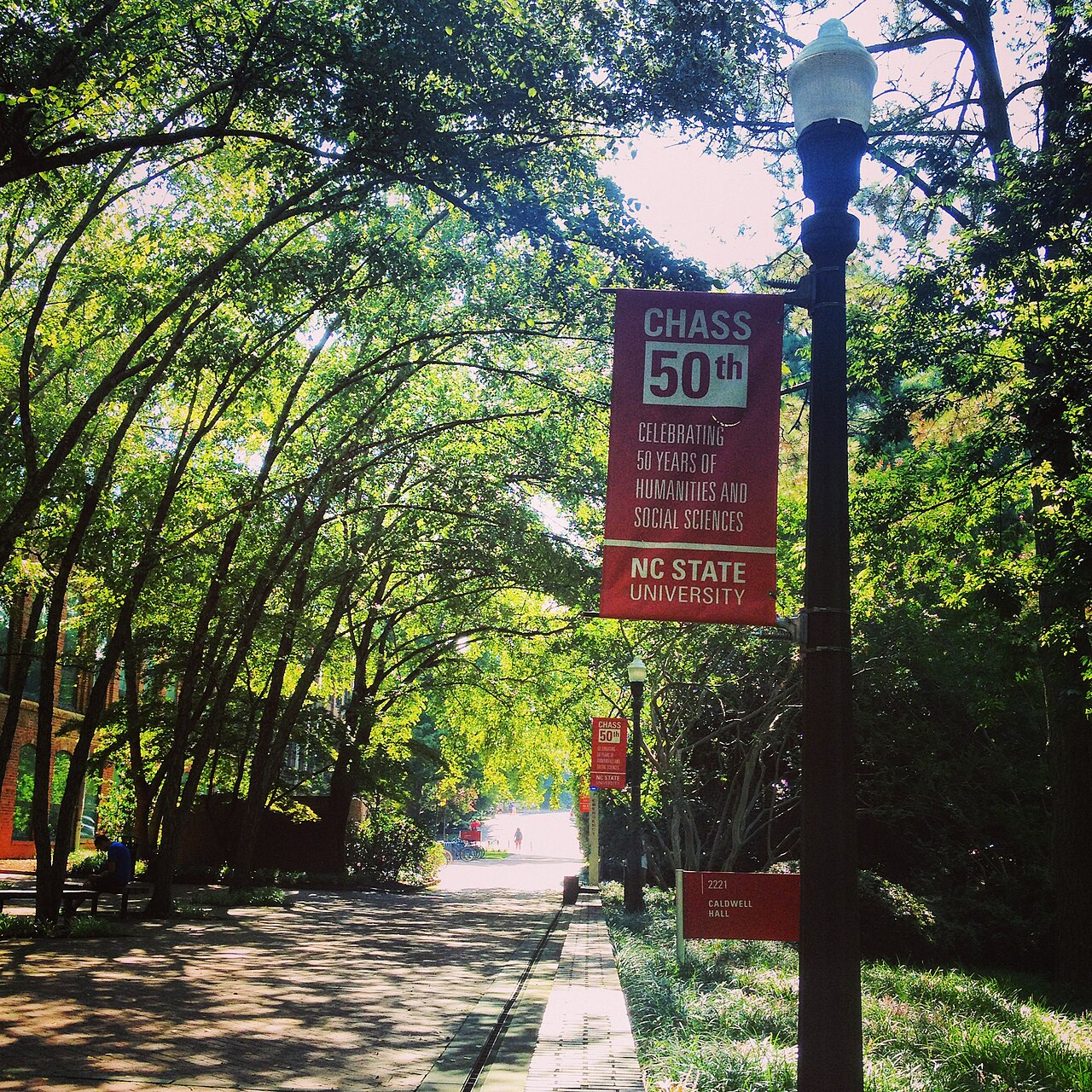
College of Humanities and Social Science - NC State
College of Humanities and Social Science - NC StateMelizabethi123 · CC BY-SA 3.0 · via Wikimedia Commons
NCSU wolf sculpture
NCSU wolf sculptureCramBetter.com · CC BY 4.0 · via Wikimedia Commons
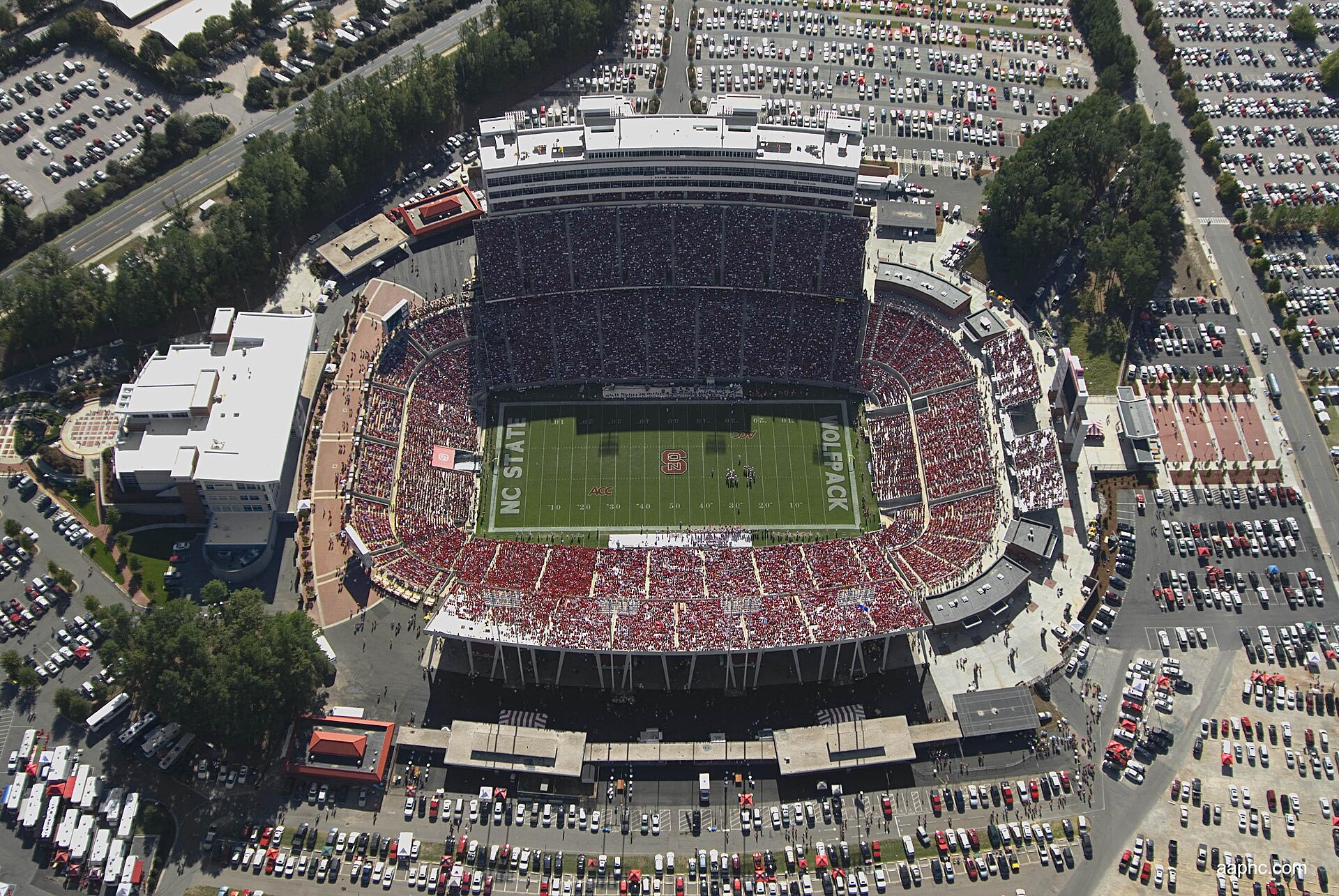
Carter-Finley Stadium, North Carolina State University, Raleigh NC, USA
Carter-Finley Stadium, North Carolina State University, Raleigh NC, USASMaloney · CC BY 3.0 · via Wikimedia Commons
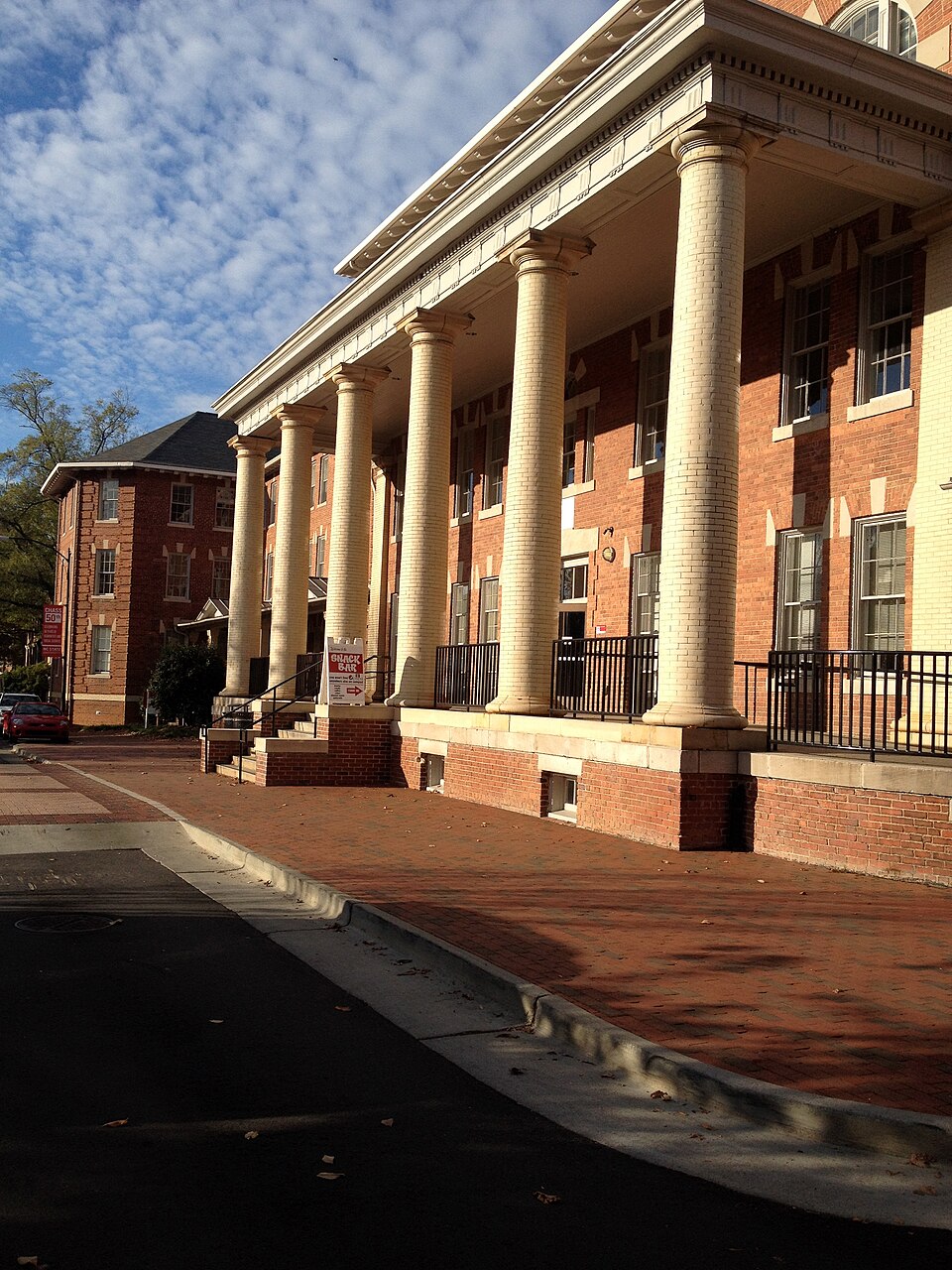
The 1911 building on North Carolina State's Main Campus
The 1911 building on North Carolina State's Main CampusMelizabethi123 · CC BY-SA 3.0 · via Wikimedia Commons
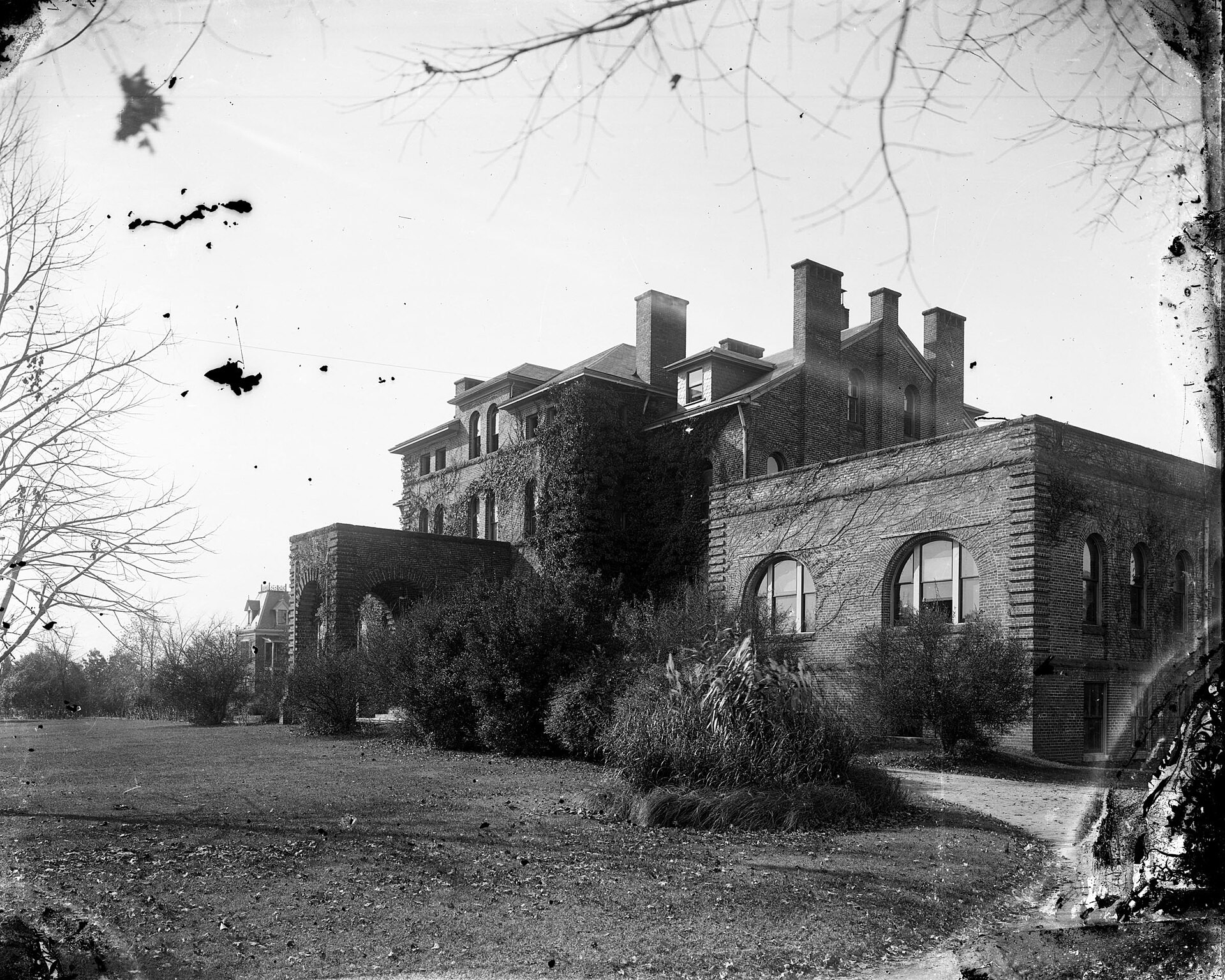
Holladay Hall, North Carolina State University (NC A&M College) campus, Raleigh, NC, c.1910's. Original glass plate negative is from the J.
Holladay Hall, North Carolina State University (NC A&M College) campus, Raleigh, NC, c.1910's. Original glass plate negative is from the J. State Archives of North Carolina · No restrictions · via Wikimedia Commons
North Carolina State University (NC A&M College) football practice, Riddick Field, Park Shops, power plant, and rear of Winston Hall in back
North Carolina State University (NC A&M College) football practice, Riddick Field, Park Shops, power plant, and rear of Winston Hall in backState Archives of North Carolina · No restrictions · via Wikimedia Commons

Why NC State — Research Triangle, Industry & Outcomes

A land-grant research university that combines public-university scale with exceptional STEM depth, located in a city that has become a magnet for Fortune 500 technology employers. NC State's 'Think and Do' motto is not marketing — it is a structural feature of how the university operates.

01Research Triangle Advantage
Raleigh-Durham-Chapel Hill is one of the densest concentrations of research universities, biotech firms, and tech companies in the world. NC State students benefit from a job market that recruits actively from campus every semester.
02Centennial Campus — Industry Embedded
NC State's Centennial Campus is a world-first model: 300+ corporate and government partners co-located on campus alongside students. From IBM and Cisco to the US EPA, the proximity translates directly into internships, co-ops, and first jobs.
03World-Leading Statistics Department
NC State's Department of Statistics is consistently ranked among the global top five. The department invented experimental-design methods used in agriculture and pharmaceuticals today, and its graduate pipeline into data science is exceptional.
04Engineering & CS Powerhouse
The College of Engineering is among the largest and most productive in the US Southeast. Co-op pipelines, Centennial Campus industry ties, and research funding rivals schools twice NC State's tuition cost.
05Strong Career Outcomes at a Public Price
93% employment within six months of graduation and a $66,000 average starting salary — outcomes that match many more expensive private universities at out-of-state tuition significantly below peer private institutions.
06Unique Signature Programmes
NC State is one of only a handful of universities globally offering Textile Engineering, Paper Science, and a nationally accredited College of Veterinary Medicine. For students with niche STEM interests, this depth is unmatched.

NC State Acceptance Rate & Admitted Student Profile

Stats

~26,000
Applications
40%
Overall acceptance rate
~24,000
Undergraduate enrolment

Profile Stats

1290-1450
SAT Middle 50%
28-33
ACT Middle 50%
34+
IB Benchmark
3.5
Minimum GPA (competitive)
5%
International Students
93%
STEM Employment (6 months)

Rea Vs Rd

Rd Label: Regular Decision
Rd Value: ~40%
Rea Label: Early Action
Rea Value: Higher (non-disclosed)

NC State Admissions Requirements — Academics, Tests & International Profile

GPA & Coursework
Value: 3.5+ Unweighted
  • Most competitive admits: 3.7+ unweighted GPA
  • All-A/A- record in most rigorous courses available
  • Course rigour valued equally alongside grades
  • STEM programmes expect advanced math through calculus
NC State expects a minimum 3.5 unweighted GPA for competitive consideration. The admissions team evaluates grades in context of the rigour of courses taken — IB, A-Levels, AP, or the most demanding courses available at your school.
SAT / ACT
Value: 1290-1450 / 28-33
  • Test-optional for applicants with GPA 2.8 or above
  • No official superscore policy stated
  • Strong SAT Math subscore valuable for Engineering/CS
  • TOEFL/IELTS required for non-native English speakers
Test-optional at NC State. Middle 50%: SAT 1290-1450; ACT 28-33. For competitive STEM programmes, submitted scores at the upper band (SAT 1380+ / ACT 31+) strengthen an application where GPAs cluster together.
International Grades
Value: IB 34+ / A / A*
  • IB: 34+ total, with 6-7 in HL relevant subjects
  • A-Levels: A or A* in subjects relevant to programme
  • CBSE/ISC: Strong performance in relevant subjects
  • National Olympiad and competition results valued
For international students: IB 34+ total (higher for competitive programmes); A-Level A/A* in relevant subjects; Indian CBSE strong percentage in programme-relevant subjects. NC State admissions officers evaluate international curricula holistically.

NC State Application Components — Common App, Essays & Requirements

NC State accepts Common App and Coalition on Scoir. Below is every required and optional component of a complete NC State application, with strategic notes for international students at each step.

01RequiredCommon App or Coalition on Scoir
NC State accepts both Common App and Coalition on Scoir. No preference is stated — use whichever platform you are already using for other applications. The platform opens August 1.
02RequiredTwo Major Choices
A unique NC State requirement: you must select two different academic programmes (preferably from different colleges) on your application. This broadens your admission consideration and requires strategic thought.
03RequiredAcademic Transcripts
Official secondary school transcripts with certified English translations if originals are in another language. Transcripts must reflect your full academic record through the most recent term completed.
04RequiredProgramme-Specific Short Answer
Prompt: 'Explain why you selected the academic program(s) above and why you are interested in studying these at NC State.' This is the most consequential document in the NC State application — be specific, researched, and concrete.
05RequiredPersonal Statement (650 words)
One personal statement from the prompts of your chosen platform (Common App or Coalition). This is shared across all your applications — write it authentically, not NC State-specifically. Save your NC State-specific content for the short answer.
06Required for InternationalsEnglish Proficiency Scores
TOEFL (85 iBT minimum), IELTS (6.5 minimum), Duolingo (110 minimum), or PTE Academic. Scores must be submitted electronically from the testing agency — self-reported scores are not accepted.
07OptionalSAT / ACT Scores
Test-optional for applicants with 2.8+ GPA. If submitting, ensure scores are at or above the 50th percentile band (SAT 1370+, ACT 30+). Scores below the 25th percentile (SAT <1290, ACT <28) may weaken an application.
https://admissions.ncsu.edu/apply/freshmen/

NC State Essays — Writing the Short Answer & Personal Statement

Tips

The short answer is the most important document in your NC State application
NC State is unusual among major public universities in requiring a programme-specific short answer. Generic responses — 'I've always loved engineering' — actively hurt applications. Research Centennial Campus, specific research groups, and co-op pipelines before writing.
Use the personal statement for character, not career goals
Your personal statement should reveal who you are, not what you want to study. Save the programme and career narrative for the required short answer. NC State readers notice applicants who blur these two functions.
Name specific NC State features in the short answer
The most effective short answers name specific research centres, labs, or Centennial Campus industry partners. 'I want to join the Bioinformatics Research Center on Centennial Campus' is more powerful than 'NC State has great research opportunities.'
Complete the University Honors optional question if you qualify
The University Honors Programme optional question (600 words) is low-cost and high-reward for strong applicants. It unlocks smaller classes, priority registration, and dedicated research opportunities. Do not skip it if your profile is competitive.

Prompts

Personal Statement
Choose from standard Common App prompts (7 options) or Coalition essay prompts. 650 words maximum. This essay is about you — not NC State specifically.
NC State Required Short Answer
Explain why you selected the academic program(s) above and why you are interested in studying these at NC State.
University Honors Optional (600 words)
Optional: Additional question for University Honors Programme consideration — up to 600 words. Completing this increases your consideration for honours admission and merit recognition.
The most common NC State essay mistake. Writing a short answer that could apply to any engineering university — without naming a single specific feature, research group, or industry partner at NC State.

What NC State Admissions Officers Are Looking For

NC State uses holistic review for all applicants. Academic performance carries the most weight, but programme fit, demonstrated interest, and the quality of the required short answer are meaningfully evaluated. Understanding what each element communicates is the foundation of a strong application strategy.

01Academic Rigour in Relevant Subjects
NC State expects students to have challenged themselves in subjects directly relevant to their intended programme. A computer science applicant who completed advanced mathematics and programming coursework is more compelling than one with a high GPA in unrelated subjects.
02Clarity of Academic Purpose
The required short answer is NC State's litmus test for purpose. Admissions officers are looking for students who have thought specifically about what they want to study and why NC State is the right place to study it — not students who are applying broadly.
03'Think and Do' Evidence
NC State's motto is 'Think and Do.' Admissions officers look for students who do things — build, research, lead, create. Competition results, project work, research experiences, and real-world applications of academic interests all speak to this value.
04Leadership & Community Contribution
NC State values students who have contributed meaningfully to their school or community. Depth over breadth — one sustained leadership role or community project is more compelling than a list of passive memberships.
05Programme Fit
The two-major requirement is a deliberate feature. NC State looks for students who have genuinely thought about both choices — not just listed a backup. Coherent, well-reasoned programme selection signals mature thinking.
06Context of Opportunity
NC State evaluates academic performance in context. A strong GPA from a school with limited advanced offerings reads differently from one at a full IB school — but what matters is whether the student challenged themselves relative to what was available.

NC State Financial Aid & Scholarships for International Students

NC State offers a limited pool of competitive merit scholarships to international students through its PACK ASSIST portal. There is no guaranteed institutional aid for international applicants, and funding should not be assumed when planning finances.

International students at NC State are not eligible for US federal financial aid. Institutional merit aid is available in limited quantities through the PACK ASSIST portal. Most international students should plan to self-fund.

Stats

~30%
of all students receive some form of aid
$33,800
out-of-state annual tuition
$52,000
total annual cost of attendance (intl)
93%
employment rate within 6 months of graduation

Contribution Tiers

NoteRangePercentPercent Value
Non-resident tuition — all programmesTuition$33,80065
Mandatory fees, housing, food, personalLiving & Other Costs$18,20035
Total annual cost of attendanceTotal CoA$52,000100
Required to demonstrate for I-20 issuanceFinancial Documentation$58,423100
Honest Note on Aid Availability. Unlike Harvard or MIT, NC State does not have a no-loan policy or need-blind admissions for international students. The university is need-aware for international applicants. However, NC State's public university tuition ($33,800/year) is meaningfully lower than comparable private research universities, and Raleigh's cost of living reduces the total financial burden significantly.
Estimated Annual Cost for International Students

Key Dates

Early Action Deadline
Date: Nov 1
EA Decision Released (non-NC residents)
Date: Late January
Regular Decision Deadline
Date: Jan 15
RD Decisions Released
Date: March–April
Enrolment Deposit Deadline
Date: May 1

Advantages

  • Typically higher acceptance rate than Regular Decision
  • Earlier decision — late January for non-NC residents
  • First consideration for limited scholarship pools (PACK ASSIST)
  • More time for visa preparation and financial planning
  • Signals demonstrated interest and programme commitment
  • Non-binding — you can still compare other offers until May 1

Disadvantages

  • Application must be complete by November 1
  • Less time to submit final senior-year grades or test scores
  • If denied, you may not be deferred — RD requires a new application
  • Scholarship pools are limited regardless of round
EA vs Regular Decision. NC State offers non-binding Early Action and Regular Decision. Unlike Harvard's REA, NC State's EA does not restrict you from applying early to other universities. The strategic benefit is primarily scholarship access and earlier visa planning time.
Tychr's EA Recommendation. Apply Early Action if your application is complete by late October. The non-binding nature means there is no downside to applying early — you preserve all your options while gaining earlier notification and first consideration for scholarship pools. International students especially benefit from the additional time that an early decision provides for visa and financial documentation.
NC State Early Action vs Regular Decision — Pros, Cons & Strategy

NC State Interviews — What to Expect (and Why There Aren't Any)

NC State does not conduct admissions interviews for undergraduate applicants — domestic or international. The absence of interviews places even greater weight on the quality of your written application, particularly the required short answer. Every aspect of how you think, what you care about, and why you chose NC State must come through in your essays and application materials.

Meta

NC State does not conduct formal admissions interviews
Format
The required short answer serves as the primary programme-fit evaluation
Replaces
Academic purpose and programme fit — through written application only
Evaluates
Your entire first impression is made through your written application
Implication

Questions

Why NC State specifically? (Short answer, not interview)
Tip: Since there is no interview, invest this energy into making your short answer as specific and compelling as possible. Name a research centre, a professor's work, or a Centennial Campus partner you have researched.
What context would you provide an interviewer? (Use additional information)
Tip: Use the additional information section to provide context about your academic environment, curriculum, or extenuating circumstances — context an interviewer would otherwise elicit through questions.
For Honours applicants: the optional question is your interview equivalent
Tip: The University Honors optional question (600 words) is the closest equivalent to an interview conversation. Use it to reveal your intellectual depth and genuine curiosity.

NC State Residential Life & Housing

NC State does not operate a Harvard-style residential house system. First-year students are housed in traditional residence halls on Main Campus, with upper-class students having access to apartment-style communities at Wolf Village and other facilities. Many first-year halls host academic learning communities — special residential groups organised by shared academic interests.

Houses

Bragaw Hall
Tag: Main Campus
First-year residence, academic learning community
Turlington Hall
Tag: Main Campus
Learning community, close to core engineering buildings
Lee Hall
Tag: Main Campus
Traditional residence hall, central location
Metcalf Hall
Tag: Main Campus
Suite-style living, engineering focus
Alexander Hall
Tag: Main Campus
First-year community, strong social culture
Wolf Ridge Apartments
Tag: Wolf Village
Modern apartment-style, upper-class students
Wolf Village Apartments
Tag: Wolf Village
On-campus apartments with full amenities
Avent Ferry Complex
Tag: Centennial
Near Centennial Campus, graduate and upper-class housing

Lottery Steps

  • First-year international students: apply for housing through the University Housing portal (opens March–April)
  • First-year residential halls on Main Campus are closest to the core academic buildings
  • Learning communities (Engineering Learning Community, First Year College, etc.) assign residents by shared major interests
  • Upper-class students apply for Wolf Village apartments or choose off-campus housing in Raleigh
  • Centennial Campus area has additional housing options for students in programmes based there
How NC State Housing Works for International Students

NC State Colleges & Undergraduate Programmes

College of Engineering
Label: Flagship — Largest College
  • {"label":"Undergraduate enrolment","value":"~9,000"}
  • {"label":"Engineering disciplines","value":"10+"}
  • {"label":"Centennial Campus partner companies","value":"300+"}
  • {"label":"Co-op programme","value":"One of US's most active"}
Mechanical, Electrical & Computer, Chemical & Biomolecular, Civil & Environmental, Industrial & Systems, Aerospace, Nuclear, and more. The engineering co-op pipeline and Centennial Campus industry integration are defining features.
College of Sciences
Label: Natural & Life Sciences
  • {"label":"Departments","value":"7"}
  • {"label":"Research centres","value":"20+"}
  • {"label":"Notable strength","value":"Statistics — global top 5"}
  • {"label":"Key programmes","value":"Statistics, Physics, Biology, Chemistry, Mathematics"}
Home to one of the world's foremost Statistics departments. Also offers strong programmes in biological sciences, chemistry, physics, mathematics, and marine/earth sciences.
Poole College of Management
Label: Business School
  • {"label":"Undergraduate business programmes","value":"6+"}
  • {"label":"Graduate programmes","value":"Jenkins MBA, MS programmes"}
  • {"label":"Triangle employer network","value":"Extensive"}
  • {"label":"Notable recruiters","value":"Red Hat, SAS, Deloitte"}
AACSB-accredited undergraduate and graduate business programmes. Strong connections to Triangle-area technology and financial services employers through active career placement programmes.
College of Agriculture & Life Sciences (CALS)
Label: Flagship Land-Grant College
  • {"label":"Founding mission","value":"Land-grant (1887)"}
  • {"label":"Departments","value":"20+"}
  • {"label":"Unique programmes","value":"Agricultural Business, Animal Science"}
  • {"label":"Research impact","value":"NC agriculture & food systems"}
As NC State's founding college, CALS offers programmes from Agricultural Business to Biomanufacturing, Poultry Science, Animal Science, and Food Science — with deep industry ties to NC's agricultural sector.
College of Textiles
Label: One-of-a-Kind Global Programme
  • {"label":"Global peer institutions","value":"< 5"}
  • {"label":"Industry partnerships","value":"International brands"}
  • {"label":"Programmes","value":"Textile Engineering, Textile Technology, Fashion & Textile Management"}
  • {"label":"Location","value":"Centennial Campus"}
NC State's College of Textiles is one of the world's only dedicated textile colleges. Its Textile Engineering programme is unique in the US and serves an industry worth $1 trillion globally.
College of Design
Label: Design & Architecture
  • {"label":"Accreditation","value":"NAAB-accredited Architecture"}
  • {"label":"Early application deadline","value":"November 1 (studio-based)"}
  • {"label":"Programmes","value":"Architecture, Industrial Design, Graphic Design"}
  • {"label":"Location","value":"Raleigh campus"}
Studio-based programmes require application by the November 1 deadline. Architecture is NAAB-accredited, and the college maintains strong ties to Raleigh's growing design and tech creative economy.

Research & Extracurricular Opportunities at NC State

Centennial Campus Research Ecosystem
Category: Industry-Integrated Research
300+ corporate and government partners co-located on Centennial Campus. Undergraduate research assistants at NC State work alongside professionals at companies including SAS Institute, IBM, Cisco, Lenovo, and the US Department of Agriculture's Animal & Plant Health Inspection Service.
Undergraduate Research Programme
Category: Faculty Research
NC State's Undergraduate Research Programme (URP) connects students with faculty research projects in engineering, life sciences, statistics, and the humanities. Applications are open each semester, and many international students use research experience to strengthen graduate applications.
Engineering Co-op Programme
Category: Paid Industry Rotations
One of the most active co-op programmes at any US university. Engineering students alternate semesters of coursework with paid rotations at companies including Red Hat, Wolfspeed (formerly Cree), and hundreds of Triangle-area employers. Typical co-op pay: $18–$30/hour.
Student Organisations & Athletics
Category: 600+ Active Groups
From the Formula SAE racing team and the Bangladeshi Student Association to robotics clubs and pre-med societies, NC State has over 600 student organisations. Wolfpack basketball and football are central to campus culture — the PNC Arena is a defining undergraduate experience.
Scroll right to explore NC State's research programmes and student life opportunities.

Career Outcomes & NC State Alumni Network

NC State graduates are among the most in-demand in the US Southeast — and increasingly globally — thanks to the university's deep ties to Research Triangle employers and its structured co-op programme. The location in Raleigh, consistently ranked one of the best US cities for job opportunities and quality of life, is a genuine career advantage.

Stats

93%
Employed or in graduate school within 6 months
$66K
Average starting salary, undergraduates
37K+
Total enrolment
#305
QS World Ranking
#58
US News National University Ranking
IBM, SAS, Red Hat, Lenovo
Top employer in the Research Triangle

Categories

Technology
IBM, Cisco, Lenovo, Red Hat, and hundreds of Triangle startups recruit directly from NC State's Engineering College. The co-op pipeline places students before graduation — making full-time offers common.
Analytics & Finance
SAS Institute (headquartered in Cary, NC), Bank of America, and consulting firms including Deloitte and EY actively recruit NC State Statistics, Business, and Engineering graduates.
STEM OPT Pathway
NC State's STEM OPT extension (24 months beyond the standard 12-month OPT) gives STEM graduates up to 36 months of US work authorisation — a significant advantage for international students launching careers in the US.

Our NC State Admissions Track Record & Student Success Stories

Priya S.
My first short answer draft for NC State read like a cover letter for any engineering school. My Tychr counsellor pushed me to actually research Centennial Campus and name the Bioinformatics Research Center specifically. The revised answer was two paragraphs and changed everything — I received my admission offer in early February.
Country: India
Program: NC State — Computer Science
Class Year: Class of 2027
Residential: Metcalf Hall
Academic Profile: IB 38 · 3.8 GPA
Tariq M.
I had applied to several US universities and written generic short answers for all of them. Tychr helped me understand that NC State's short answer is different — it is literally asking you to justify your programme choices. The specific, honest response I wrote for their Statistics programme was the most useful thing I did in the entire application cycle.
Country: Nigeria
Program: NC State — Statistics
Class Year: Class of 2026
Residential: Avent Ferry Complex
Academic Profile: SAT 1420 · 3.9 GPA
Ji-Ho K.
The co-op programme was the deciding factor for me. Tychr helped me connect my background in embedded systems to NC State's Engineering co-op pipeline in a way that made my short answer compelling. I'm now finishing my second co-op rotation at a semiconductor company in Cary — exactly what I came to NC State to do.
Country: South Korea
Program: NC State — Electrical Engineering
Class Year: Class of 2025
Residential: Wolf Village
Academic Profile: ACT 32 · GPA 3.95

Faqs

Is NC State need-blind for international applicants?+

No. NC State is need-aware for international applicants. International students are not eligible for US federal financial aid. The university offers a limited pool of competitive merit scholarships to international students through the PACK ASSIST portal, but funding is not guaranteed. Most international students should plan to self-fund.

Can I apply test-optional as an international student?+

Yes, if your unweighted GPA is 2.8 or above. However, for competitive STEM programmes, submitting strong SAT or ACT scores can meaningfully distinguish an application. The SAT middle 50% for admitted students is 1290–1450; aim for 1380+ for competitive engineering and CS programmes.

What English proficiency scores does NC State accept?+

NC State accepts TOEFL (minimum 85 iBT), IELTS (minimum 6.5), Duolingo English Test (minimum 110), and PTE Academic. Scores must be sent electronically from the testing agency — self-reported scores are not accepted. Students who attended a US high school from grade 9 onward may be exempt.

Is Early Action binding?+

No. NC State's Early Action is non-binding. You can apply EA by November 1 and still compare offers from other universities before committing by May 1. There is no Early Decision (binding) option at NC State — a significant advantage for international students who need flexibility.

How competitive is NC State's engineering programme internationally?+

NC State's College of Engineering holds strong QS and THE subject rankings, particularly in mechanical, electrical, and chemical engineering. Its co-op pipeline, Centennial Campus industry integration, and research output rival schools with significantly higher tuition. It is consistently cited as one of the best-value engineering schools in the US.

Are Park Scholarships available to international students?+

No. Park Scholarships require applicants to be US citizens, US permanent residents, or students graduating from a US high school. International students attending schools outside the US are not eligible for Park Scholarships.

How much money do I need to demonstrate to get an F-1 visa?+

NC State requires international applicants to demonstrate approximately $58,423 in available funds annually for I-20 issuance. Your actual estimated cost of attendance is approximately $52,000 per year. The documentation requirement is slightly higher to provide a buffer.

What is the application fee for international students?+

The application fee is $85 via Common App or Coalition on Scoir. International applicants should verify the current fee on the admissions website at the time of application.

Book a Free NC State Admissions Strategy Session

In 60 minutes our NC State admissions specialists will evaluate your academic profile, identify your application strengths and gaps, develop your short answer and programme selection strategy, and determine whether Early Action is the right timing for your application.

  • No commitment required
  • NC State and US public university specialists
  • Personalised short answer strategy — not generic advice
NC State rewards applicants who know exactly what they want and can articulate why NC State is the right place to pursue it.

NC State Admissions Requirements

NC State Academic Requirements, The Honest Breakdown for International Students

What GPA, test scores, and academic profile do NC State's admitted students actually have? And what does NC State's holistic review mean for students from IB, A-Level, AP, and other international curricula?

3.5
Minimum Competitive GPA
Unweighted, 4.0 scale
1370
SAT Median Band
Middle 50%: 1290–1450
30
ACT Median Band
Middle 50%: 28–33
34+
IB Benchmark
For competitive programmes
Optional
Test Policy
For GPA 2.8+
40%
Acceptance Rate
All programmes

GPA & Class Rank

NC State and GPA — What the Data Shows

NC State publishes a minimum GPA expectation of 3.5 (unweighted, on a 4.0 scale) for competitive consideration. In practice, admitted students — particularly in engineering, computer science, and statistics — typically present significantly stronger academic records.

A 3.5 GPA meets the threshold but does not distinguish an application in competitive programmes. What distinguishes admitted STEM students is the combination of strong grades in advanced, programme-relevant coursework — not GPA alone. Course rigour in mathematics, sciences, and technical subjects matters as much as the number on the transcript.

3.5
Minimum competitive GPA for holistic review
3.7–4.0
Typical GPA for Engineering/CS admits (estimated upper range)
What this means for international students. International students from systems without formal class rank (IB, UK A-Levels, many Asian curricula) are evaluated on their grades relative to their school's known performance range and in comparison to other applicants from the same educational background. NC State admissions officers are experienced in reading international transcripts and understanding how grading norms vary by country and system.
Grade trajectory and senior-year performance. NC State reviews grade trends across all reported semesters. An upward trajectory — improving from moderate to strong performance — is viewed positively. Declining grades in senior year, especially after an admission offer is made, can result in rescission. NC State reserves this right explicitly in its admission conditions.

Academic Context

Class Rank and School Context — How NC State Reads Academic Performance

NC State does not require class rank, and many international schools do not report it. NC State's admissions office is experienced at evaluating academic performance across widely different school systems — from IB programmes in Singapore to A-Level schools in the UK to CBSE boards in India.

How NC State contextualises your academic record
Every NC State application is reviewed with reference to the student's specific school context. A student at a school that offers no IB or A-Level options is not penalised for the absence of those qualifications. Admissions officers use school profiles and contextual information to calibrate academic records fairly. Applying through the Common App or Coalition provides NC State with school-level context alongside your individual transcript.
What this means practically
NC State explicitly states that course rigour is evaluated in the context of what was available at the specific school. Taking the most challenging courses available to you — even if your school offers only limited advanced options — is more meaningful than a high GPA in undemanding coursework. The 'Think and Do' institutional philosophy values students who push themselves toward real challenges.
For students at less well-known international schools. For international students at schools not well-known to US admissions officers, the school counsellor letter (or equivalent) is an important contextual document. It allows NC State to understand the grading scale, available courses, and typical performance range at your school. Ask your counsellor to explicitly describe the academic environment and your performance relative to peers.

Standardised Testing

SAT Scores at NC State — What You Actually Need

NC State SAT Data — Admitted Students

LabelScorePercent
25th percentile129040
75th percentile145085
Recommended for STEM programmes1380+70
The SAT Math subscore for STEM programmes. For STEM-focused applicants — engineering, computer science, statistics — a strong SAT Math subscore is particularly important. NC State's engineering programmes are quantitatively demanding from the first semester, and a high Math subscore signals readiness for calculus and physics-based coursework directly.
Preparation guidance. Tychr's SAT preparation programme targets 150+ point improvement over 8–12 weeks. International students targeting Engineering, CS, or Statistics at NC State should aim for a combined score of 1380+ before considering submission, with a Math subscore of 680 or higher.
Submitting vs. withholding scores. NC State is test-optional for applicants with a GPA of 2.8 or above. For international students, Tychr generally recommends submitting scores that fall at or above the 50th percentile of the admitted band (approximately SAT 1370+). Scores between 1290 and 1370 are judgment calls; scores below 1290 are typically better withheld, as they fall below the 25th percentile of admitted students.

Standardised Testing

ACT Scores at NC State — The Data and the Strategy

NC State ACT Data — Admitted Students

Metrics

25th percentile
Score: 28
75th percentile
Score: 33

Comparison Cards

Both accepted equally
NC State does not prefer one over the other. Choose the test that plays to your strengths — take a diagnostic of both before committing.
SAT rewards
Careful reading comprehension, precise mathematical reasoning, and time management under structured conditions.
ACT rewards
Speed, the Science section's data interpretation format, and comfort with a broader range of question types in a timed context.
Superscore policy. NC State does not publish an explicit superscore policy. If submitting multiple ACT sittings, confirm the current policy with admissions, as this can affect whether the highest composite or best sitting is reported. For the SAT, review NC State's current superscore policy at the time of application.
Tychr's recommendation. Take a diagnostic of both tests before committing. If your ACT diagnostic is 29 or above, it is worth pursuing. For engineering applicants, compare your SAT Math subscore performance — a 680+ SAT Math is often more compelling evidence of quantitative ability than a strong ACT composite with a weaker Math subsection.

Testing Strategy

NC State Test-Optional — The Strategic Decision Explained

NC State has been test-optional for applicants with a GPA of 2.8 or above. Understanding when submitting scores helps and when it hurts is important for international applicants — the answer depends heavily on which programme you are applying to.

Submit Items

Your SAT is at or above 1380 — submit. Above the 50th percentile, scores add positive value for STEM programme applications.
Your ACT is at or above 30 — submit.
You are applying to competitive programmes (Engineering, CS, Statistics) and scores are in the upper band — submission helps distinguish your application from others with similar GPAs.
You are an international student with an IB or A-Level curriculum — a strong test score provides additional standardised benchmarking that admissions officers find useful alongside international transcripts.

Withhold Items

Your score falls below 1290 (SAT) or below 28 (ACT) — withholding is the correct strategy; these scores fall below the 25th percentile of admitted students.
Submitting would draw attention to a significantly weaker dimension of your academic profile than your GPA and curriculum suggest.
Your IB or A-Level results are strong and you have a high GPA — the test score would add little additional positive signal.
Current policy. NC State accepts applications without test scores for applicants with a GPA of 2.8 or above and does not penalise students who don't submit. Applications are reviewed holistically whether or not scores are included. Confirm the current test-optional policy status at the time of application on the official admissions website.
The misconception about test-optional. Test-optional at NC State does not mean test-irrelevant — it means test scores are not required. For competitive STEM programmes where many applicants have similar GPAs, a strong test score can be a meaningful differentiator. The decision to submit or withhold should be made strategically based on where your specific score falls in the admitted band.

Curricula

A-Levels and IB at NC State — Specific Benchmarks

IB Diploma
Note: NC State is familiar with the IB Diploma and evaluates it holistically. Subject selection at Higher Level matters — IB HL Mathematics (Analysis & Approaches preferred for STEM applicants) combined with HL Physics or HL Chemistry creates a strong foundation for engineering admission. The Extended Essay demonstrates independent research capability, which is valued at a research university.
  • {"label":"Competitive total score","value":"34+ points"}
  • {"label":"HL expectations for Engineering/CS","value":"6–7 in HL Mathematics, HL Physics or HL Computer Science"}
  • {"label":"HL expectations for Sciences","value":"6–7 in relevant HL sciences"}
  • {"label":"Extended Essay","value":"A or B preferred; used as supplementary evidence of research ability"}
A-Levels
Note: A-Level applicants should present A or A* grades in subjects directly relevant to their intended programme. NC State's admissions team understands predicted grade conventions and evaluates A-Level candidates in the context of their GCSE/IGCSE record and teacher predictions. Three A-Levels in relevant subjects is the standard expectation.
  • {"label":"Competitive grade range","value":"AAB – A*A*A"}
  • {"label":"For Engineering","value":"Mathematics + Further Mathematics or Physics required"}
  • {"label":"For Sciences","value":"Three science/mathematics A-Levels with A or A* grades"}
  • {"label":"AS results","value":"Reviewed alongside predicted A-Level grades"}

Advanced Placement

AP Courses at NC State — What Counts and What to Take

For students in the US system or at international schools that offer AP courses, Advanced Placement performance is a meaningful component of the academic profile — both for admission and for credit towards the NC State degree.

What NC State looks for
AP 4s and 5s in programme-relevant subjects (Calculus BC, Physics C: Mechanics, Chemistry, Computer Science Principles, Computer Science A, Statistics, Biology, and English Language); the pattern of AP subject choices reflecting genuine preparation for the intended programme; AP performance relative to school grade record.
AP credit at NC State
NC State awards credit for AP scores of 3, 4, or 5 in many subjects — with the credit amount and course equivalency varying by department. Students can use AP credit to satisfy general education requirements or place into higher-level coursework. Confirm current AP credit policies on the NC State Registrar's website before making assumptions.
A note for international students
International students at schools that do not offer AP should not artificially pursue AP courses. The IB Diploma or A-Level system is appropriate for their context and evaluated accordingly. NC State admissions officers evaluate AP performance relative to what was accessible and typical for the student's school and context.
NC State awards course credit for qualifying AP scores, allowing students to place out of introductory courses and accelerate their academic programme. Engineering students who arrive with AP Calculus BC (5) and AP Physics C credits can sometimes begin second-year coursework immediately, which can affect co-op eligibility timelines.
AP is evaluated in context. International students completing AP coursework in their home-country curricula should clearly indicate this on their application — it demonstrates initiative and academic ambition beyond the standard national curriculum.

Academic Rigour

'Strength of Secondary School Curriculum' — NC State's Key Academic Factor

NC State's holistic review identifies 'strength of curriculum' as a key academic factor alongside GPA. The practical implication is straightforward: taking the most challenging courses available at your school in the subjects relevant to your intended programme matters significantly.

Taking the most challenging courses available at your specific school, in the subjects most relevant to your intended programme area at NC State.

The contextual element. Rigour is always evaluated relative to what was available. A student at a school that offers three AP courses is evaluated differently from one at a school with 25 AP options. What matters is whether the student challenged themselves relative to what was possible within their academic environment. NC State's experienced international readers understand the difference between a strong performance in a limited environment and a mediocre performance in a rich one.
What curriculum rigour means by programme. For engineering applicants: this means advanced mathematics (calculus level or beyond), physics, and chemistry in the most rigorous format available. For CS applicants: advanced mathematics and programming courses. For statistics applicants: mathematics through probability and statistics, with data science exposure if available.
What NC State is looking for. A student who took IB HL Maths AA, HL Physics, and HL Chemistry simultaneously demonstrates the academic capability and intellectual courage that NC State's rigour criterion rewards. Conversely, a student who chose easier HL options to protect their GPA at the expense of programme-relevant challenge will read as less compelling to NC State engineering admissions officers, who are experienced readers of international transcripts.

Programme Preparation

Subject Preparation by Programme — What NC State Expects

NC State's flagship programmes have specific subject foundations that underpin first-year coursework. Engineering students encounter calculus, physics, and chemistry in their first two semesters regardless of major; building these foundations before arrival is both academically necessary and a signal of genuine programme readiness.

Engineering
Pre-calculus and calculus through integration (at minimum), physics covering mechanics and electricity/magnetism, and chemistry are required first-year content in all engineering programmes. IB HL Mathematics AA or A-Level Mathematics + Further Mathematics is excellent preparation. A-Level Further Maths is a strong differentiator for competitive programmes.
Computer Science
Programming experience in Python, Java, or C++ through personal projects, competitions (USACO, competitive programming platforms), or formal coursework. Discrete mathematics and algorithmic thinking underpin the first-semester CS curriculum. NC State CS is highly competitive — demonstrated programming capability beyond coursework strengthens the application.
Statistics & Data Science
Strong mathematics through statistics and probability at an advanced level. Exposure to data analysis tools (Python, R) is increasingly common among admitted Statistics students. A demonstrated interest in data through independent projects, competitions, or research distinguishes applications for one of the world's top-ranked statistics departments.
Business (Poole College)
Strong performance in economics, mathematics (calculus preferred), and written communication. Poole College of Management business programmes require the same programme short answer as other colleges — specificity about the Poole curriculum or Triangle employer connections is valued.
Life Sciences & Veterinary
Biology and chemistry at an advanced level (IB HL or A-Level equivalent) form the backbone. For veterinary-track students, demonstrating animal care or veterinary shadowing experience is important contextual information. The College of Veterinary Medicine is highly competitive and requires a separate DVM application post-undergraduate degree.

Language Proficiency

English Language Requirements for International NC State Applicants

All international applicants must demonstrate English proficiency. NC State accepts multiple tests and scores must be submitted electronically from the testing agency. Self-reported scores are not accepted.

NC State's required short answer and personal statement are the practical English language evaluation embedded in the application. A student whose writing is unclear, grammatically inconsistent, or obviously non-native in register will face challenges throughout both the application and the academic programme. Strong English writing is not just an admissions threshold — it is a genuine academic necessity at an English-instruction university.

Test: TOEFL iBT
Score: 85+
Test: IELTS
Score: 6.5+
Test: Duolingo
Score: 110+
Test: PTE Academic
Score: Accepted — confirm minimum
Conditional admission for English proficiency. Students who do not meet the minimum English proficiency threshold but are otherwise academically strong may be offered conditional admission through NC State's Intensive English Program (IEP). IEP completion enables entry into the degree programme. If your English proficiency scores are borderline, discuss the conditional admission pathway with NC State's International Admissions Office before applying.

By Programme

Academic Requirements by Programme — What Different Paths Expect

NC State requires applicants to select two academic programmes at the time of application. The academic profile should demonstrate clear preparation for the first-choice programme, with the second choice reflecting genuine academic interest rather than a backup.

SignalsExpectationConcentration
Calculus coursework; physics preparation; hands-on project workHL Maths + HL Physics / Further Maths A-LevelMechanical Engineering
Circuit projects; USACO; programming experience; roboticsHL Maths + Physics; programming backgroundElectrical & Computer Engineering
USACO; competitive programming; GitHub portfolio; CS courseworkHL Maths + CS background; programming projectsComputer Science
Data projects in Python/R; mathematics olympiad; probability exposureHL Maths AA; statistics interestStatistics
Biology and chemistry A-levels or IB HL; research experienceHL Biology + HL ChemistryBiological Sciences
Economics coursework; quantitative research; data analysisStrong Maths + Economics backgroundBusiness Administration (Poole)
Design portfolio; studio coursework; creative projectsPortfolio submission; November 1 deadlineDesign / Architecture
Agricultural background; biology/chemistry; animal care experienceBiology and Chemistry foundationAgricultural & Life Sciences

International Systems

NC State and International Education Systems — How Your Curriculum Is Evaluated

IB Diploma
Well understood and valued. NC State admissions officers review IB Diploma students' HL subject selections, predicted scores, and Extended Essay topics. A student who took IB HL Maths AA alongside HL Physics and HL Chemistry — particularly at a well-regarded IB school — reads as genuinely prepared for NC State's STEM programmes. The EE topic can serve as an additional indicator of research interest.
A-Levels (Cambridge and Edexcel)
Fully understood and evaluated carefully. A-Level Mathematics and Further Mathematics are the primary qualification signal for UK engineering applicants to NC State. The combination of subjects chosen, the predicted/achieved grades, and the AS-Level record are all reviewed.
Indian Boards (CBSE / ISC)
Evaluated in context. NC State is aware of the grading profiles in Indian board examinations. High percentages in relevant subjects are valued. Supplementary evidence — JEE performance (for engineering-track students), science olympiad results, or research experience — can meaningfully strengthen the academic picture for CBSE and ISC applicants.
Chinese Gaokao
Chinese applicants are typically evaluated on their Gaokao performance alongside other academic indicators. Students who have completed additional international qualifications (A-Level, IB, or SAT preparation) alongside the Gaokao present a clearer academic profile for NC State's international admissions team.
Other International Curricula
NC State accepts applications from students in other national curricula — French Baccalauréat, German Abitur, HKDSE, and others. When in doubt, contact NC State's International Admissions Office to discuss how your specific qualification will be evaluated. Attaching a school profile in the additional information section helps contextualise your academic environment.

Roadmap

Building an Academic Profile for NC State — What to Do at Each Stage

Grade 9–10Lay the foundation
Year: Grade 9–10
  • Select IGCSE/MYP or national advanced-track subjects that keep your options open for IB HL or A-Level.
  • Prioritise mathematics and sciences from the start — these are non-negotiable for most NC State programmes.
  • Identify STEM interests through clubs, competitions, or independent projects. NC State's 'Think and Do' culture rewards students who have already been doing, not just planning.
  • Explore competitive platforms (USACO, robotics competitions, science olympiads) appropriate for your interests.
Grade 10–11The critical academic year
Year: Grade 10–11
  • IB HL subject or A-Level subject selection: choose subjects that demonstrate genuine preparation for your intended NC State programme, not grade optimisation.
  • Begin SAT or ACT preparation if planning to submit scores.
  • Identify and apply for summer research programmes, industry internships, or project-based experiences that align with your intended programme.
  • Start researching NC State specifically — visit Centennial Campus virtually, read about specific research groups, and identify faculty or programmes you can reference in your short answer.
Grade 11–12Build the evidence
Year: Grade 11–12
  • Pursue meaningful extracurricular or research engagement — quality and depth matter more than quantity.
  • Engage with competitions relevant to your intended programme (engineering competitions, coding contests, data science challenges).
  • Maintain or improve academic performance — Grade 11 marks are often the most important on your transcript for Early Action applicants.
  • Complete English proficiency testing (TOEFL/IELTS/Duolingo) and confirm your scores meet NC State minimums.
Grade 12Application year
Year: Grade 12
  • Apply Early Action by November 1 — this is the recommended route for most international applicants.
  • Write a specific, researched short answer that names NC State features by name.
  • Maintain senior-year grades at or above your established level — NC State monitors academic performance after admission offers are made.
  • Prepare financial documentation demonstrating at least $58,423 per year for I-20 issuance.

Common Pitfalls

Academic Mistakes That Cost NC State Applications — And How to Avoid Them

Choosing easier courses to protect GPA
NC State's holistic review places significant weight on course rigour. Choosing easier HL subjects to protect GPA at the expense of programme-relevant preparation (e.g., taking HL Visual Arts instead of HL Mathematics for an engineering application) sends the wrong signal to admissions officers who read international transcripts regularly.
Submitting below-band test scores
A submitted SAT below 1290 or ACT below 28 falls in the bottom 25% of NC State's admitted band. Going test-optional is a valid and supported choice — but submitting a score at or below the 25th percentile brings attention to a weak dimension of the application. Withhold scores below the 25th percentile.
Writing a generic short answer
The required short answer is NC State-specific and programme-specific. Students who write a generic short answer — 'NC State has great resources and I've always been passionate about engineering' — are easily identified against applicants who name specific research centres, faculty, or Centennial Campus industry partners. Research before writing.
Senior-year grade decline after early admission
NC State explicitly reserves the right to rescind admission offers for significant senior-year grade declines. Students who reduce course rigour or allow grades to slip after receiving an early admission offer risk having that offer rescinded before enrolment.
Self-reporting English proficiency scores
International students must submit English proficiency scores electronically from the testing agency. Self-reported scores or unofficial score reports are not accepted. Failing to arrange official score transmission results in an incomplete application.

Real Outcomes

What Academic Profiles Tychr's NC State-Admitted Students Had

The following profiles represent the academic backgrounds of students Tychr has helped gain NC State admission. They illustrate the range of preparation that works — and what made each compelling to NC State's holistic review.

Profile 1 — Computer Science
HL Maths AA (7), HL Physics (6), HL Computer Science (7). USACO Silver division. GitHub portfolio with three independent projects, one of which was presented at a school technology fair.
Stats: IB 38 · SAT 1430 · USACO Silver
Takeaway: The IB score was competitive but not exceptional — the USACO ranking and independent projects demonstrated genuine CS capability beyond the classroom and made the short answer credible when referencing NC State's CS co-op programme.
Profile 2 — Mechanical Engineering
A-Level Maths (A*), Further Maths (A*), Physics (A). Robotics competition finalist. Two years of Engineering Design Club leadership at school.
Stats: A-Levels A*A*A · ACT 31
Takeaway: The A-Level profile was strong and directly relevant. The robotics competition experience provided concrete 'Think and Do' evidence — NC State's engineering admissions team responded well to the combination of academic rigour and hands-on leadership.
Profile 3 — Statistics
CBSE 94% in Mathematics, Physics, and Chemistry. Mathematics Olympiad state qualifier. Self-taught Python through Coursera; data analysis project on local air quality submitted to a regional environmental competition.
Stats: CBSE 94% · SAT 1390 · Math Olympiad qualifier
Takeaway: The CBSE result was strong in programme-relevant subjects. The self-taught Python and real-world data project — referenced specifically in the short answer with a connection to NC State's Department of Statistics — made the application stand out in a field where many applicants have similar academic profiles.

Faqs

Is a 3.5 GPA sufficient for NC State?+

A 3.5 GPA is the minimum threshold for competitive consideration. For engineering, CS, and statistics — NC State's most competitive programmes — admitted students typically present stronger academic records, often in the 3.7–4.0 range. GPA alone is not sufficient; course rigour in relevant subjects matters equally.

What IB score do I need for NC State?+

A competitive IB benchmark for NC State's STEM programmes is 34+ total points. For top engineering and CS programmes, 36+ is more competitive. HL scores in Mathematics, Physics, and Computer Science are specifically relevant for these programmes.

Does NC State prefer SAT or ACT?+

No preference is stated. The choice should be based on which test you score higher on. For STEM applicants, a strong SAT Math subscore (680+) can be a meaningful differentiator.

Can I apply to NC State without test scores?+

Yes, NC State is test-optional for applicants with a 2.8+ GPA. For competitive STEM programmes, Tychr generally recommends submitting scores at or above the 50th percentile band (SAT 1370+, ACT 30+). Withhold scores below the 25th percentile.

Are my international qualifications (IB, A-Levels, CBSE) accepted?+

Yes, NC State evaluates all international qualifications — IB, A-Levels, CBSE, French Bac, German Abitur, and others. Admissions officers are experienced with international curricula and evaluate grades in the context of what was available at the student's specific school.

Cost & Financial Aid

NC State is More Affordable Than Most US Research Universities — Here's the Full Picture.

NC State's public university tuition is meaningfully lower than comparable US private research universities. Understanding what international students actually pay, what limited aid is available, and how to plan finances is essential before applying.

Need-Aware Admissions
Financial need can affect international admissions decisions
Limited Institutional Aid
Merit scholarships available through PACK ASSIST — competitive and limited

Cost Transparency

What NC State Actually Costs — The Full Annual Figure for International Students

NC State's $33,800 out-of-state tuition is significantly lower than comparable US private research universities, which often charge $55,000–$65,000 in tuition alone. Raleigh's cost of living — moderate compared to Boston, New York, or San Francisco — keeps the non-tuition component of costs manageable. The total cost of attendance of $52,000 per year represents strong value for the quality of education and career outcomes NC State delivers.

Tuition (non-resident)
Cost: $33,800
Mandatory fees
Cost: Included in CoA
Housing (on-campus or off-campus)
Cost: Varies
Meal plan
Cost: Varies
Estimated living expenses (housing, food, transport, personal)
Cost: $15,000
Application fee (one-time)
Cost: $85
Estimated Total Annual Cost of Attendance
Cost: $52,000
Engineering co-op earnings. $18–30/hr
Annual sticker price (international). $52,000
NC State Estimated Cost of Attendance 2024–25 (International Students)
The Key Insight — Public University Value
Engineering co-op rotations partially offset living costs during work semesters.
Estimated total annual cost of attendance for international (non-resident) students.

Aid Availability

NC State Financial Aid for International Students — What's Actually Available

International students at NC State are not eligible for US federal financial aid programmes (Pell Grants, federal student loans, or federal work-study). NC State is need-aware for international applicants — meaning financial need can influence admission decisions. A limited pool of competitive merit scholarships is available to international students through the PACK ASSIST portal.

Why This Matters: NC State vs. Need-Blind Universities. At need-blind universities (Harvard, Princeton, MIT), financial need has no bearing on the admission decision and aid covers full demonstrated need for all admitted students. NC State, as a public university, operates under a different model: most international students pay the full cost of attendance, with a small minority receiving institutional merit awards. Planning finances around self-funding is the correct approach for most international applicants.
What Happens After Admission. After admission, NC State encourages all students (domestic and international) to apply for merit scholarships through the PACK ASSIST portal. International students should complete this application promptly after receiving an admission offer — scholarship pools are competitive and deadlines fall within weeks of admission notification.
International Students Are Not Eligible for Federal Aid
NC State is need-aware for international undergraduate applicants. This means that demonstrated inability to pay can reduce the probability of admission for international students, compared to need-blind universities where financial circumstances have no bearing on the admissions decision.

Public Mission

Why NC State Offers Competitive Value — The Public University Model

Land-Grant Mission and Tuition
As a land-grant public university established in 1887, NC State's founding mission is to provide accessible, practical higher education. This mission is expressed today in tuition levels ($33,800 out-of-state) that are significantly lower than comparable private research universities — even as the quality of programmes, research infrastructure, and career outcomes rival many private peers.
Subtitle: Public University Commitment to Access
Co-op Earnings and Research Ecosystem
NC State's Centennial Campus model — where 300+ industry partners co-locate with students — generates significant research revenue and industry partnership funding. The co-op programme provides students with paid work experience that offsets living costs during rotations. These structural features of NC State's model keep the effective cost of attendance lower than the sticker price suggests for many students.
Subtitle: Industry Integration Reduces Net Cost
Average Starting Salary — NC State Graduates. NC State graduates earn an average starting salary of $66,000, with a 93% employment rate within six months of graduation. Over a 40-year career, this career-ready outcome delivers strong return on the $52,000 annual cost of attendance — particularly for international students who leverage the STEM OPT extension to build US careers.
"Think and Do — NC State combines intellectual rigor with practical, industry-embedded education to develop leaders who change the world."

Financial Aid Walkthrough

Applying for Aid and Scholarships at NC State — The Process Step by Step

NC State institutional aid for international students is not automatic — it requires proactive engagement with the PACK ASSIST portal and, where relevant, external scholarship research. Here is the complete process.

01Apply for Admission Through Common App or Coalition on Scoir
  • Apply Early Action by November 1 for first consideration for scholarship pools
  • Regular Decision deadline is January 15
Scholarship consideration begins with the admissions application. Early Action applicants typically receive first access to institutional merit scholarship pools.
02Access PACK ASSIST After Admission
Notes: PACK ASSIST is NC State's institutional scholarship portal. International students should check eligibility for specific awards carefully — many named scholarships are restricted to US citizens or domestic applicants.
  • Log in to PACK ASSIST immediately after receiving admission
  • Review available scholarships for international student eligibility
  • Complete all required scholarship application materials
  • Note deadlines — these often fall within weeks of admission notification
NC State's institutional merit scholarships are administered through the PACK ASSIST portal. Eligible international students should apply promptly after admission.
03Research Home-Country and External Scholarships
International students should proactively research scholarship opportunities from their home governments, international foundations, and bilateral education programmes. Many of these can be applied to NC State's tuition.
  • Research your country's government scholarship programmes
  • Check international foundations (regional, professional, alumni-based)
  • Confirm with NC State whether external scholarships offset or supplement institutional aid
04Explore the Engineering Co-op Programme
If applying to engineering or technical programmes, build your curriculum plan around the co-op programme. Co-op rotations are paid and provide income that offsets living expenses during work semesters.
05Prepare Full Financial Documentation for I-20
Assemble bank statements and financial documentation demonstrating at least $58,423 per year before requesting your I-20. This documentation is required for F-1 visa issuance.

International Aid Reality

Financial Aid for International Students at NC State — The Honest Picture

The honest picture for international students at NC State is markedly different from the picture for domestic students or for students at need-blind private universities. Understanding what is and is not available is essential for financial planning.

No federal aid — ever
International students on F-1 visas are categorically ineligible for US federal financial aid programmes: Pell Grants, federal student loans, and federal work-study. This is a federal law constraint that applies at all US universities, not a policy specific to NC State.
Limited institutional merit aid
NC State offers a competitive pool of institutional merit scholarships through PACK ASSIST. A small number of these awards are available to international students. Award amounts and the total international pool are not publicly disclosed. Do not assume merit aid will be offered at admission — treat any institutional award as a welcome supplement to a self-funding plan.
On-campus employment for F-1 students
F-1 visa holders may work on campus for up to 20 hours per week during the academic year and full-time during scheduled breaks. On-campus employment provides income but does not typically cover a significant portion of the cost of attendance. Off-campus work requires CPT or OPT authorisation through the OISS.
STEM OPT extension — significant long-term value
International graduates in STEM programmes (engineering, CS, statistics, and others) qualify for a 24-month STEM OPT extension, providing up to 36 months of post-graduation US work authorisation. This is not financial aid, but it is a significant structural benefit that helps international students recover their investment in US education through US-market salary levels.

Aid Estimates

NC State Financial Aid for International Students — What to Realistically Expect

Financial Aid Reality for International (F-1) Students at NC State

NC State does not publish detailed international student aid data by income band. These figures represent general guidance based on the university's publicly stated aid policies for international students. Confirm current award availability with NC State's Office of International Students and Scholars (OISS).

The overwhelming majority of international students at NC State self-fund their education. The limited pool of institutional merit scholarships through PACK ASSIST provides awards for a small minority. Engineering co-op rotations provide the most predictable income offset for eligible students. Build your financial plan around full cost of attendance ($52,000/year) and treat any award as a supplement.

GrantIncomeContribution
Varies — competitive merit awardsAny (merit-based)~$52,000 minus any award
Limited institutional poolInternational (all income levels)Most pay full CoA of ~$52,000
$18–$30/hour (co-op rotations)Engineering students — co-opReduced during co-op semesters
NC State's institutional aid for international students is merit-based, not need-based. Award decisions are made holistically based on academic achievement, and the total pool available to international students is limited.

Table Headers

Grant: Typical Award / Income Offset
Income: Student Category
Contribution: Expected Out-of-Pocket

Scholarship Landscape

NC State Scholarships — What Exists and Who Qualifies

NC State's most prestigious scholarships — including the full-cost Park Scholarships — are restricted to US citizens, permanent residents, or students graduating from a US high school. International students attending schools outside the US are not eligible for Park Scholarships. Understanding the eligibility landscape before investing application energy is essential.

Park Scholarships — Not Available to Most International Students
Park Scholarships cover full cost of attendance (tuition, housing, and meals) for four years and include a leadership development curriculum. They are awarded to approximately 40 scholars per year. They are explicitly restricted to US citizens, US permanent residents, or students graduating from a high school located in the United States. International students attending schools outside the US are not eligible.
PACK ASSIST Institutional Awards
NC State's PACK ASSIST portal administers institutional merit scholarships, some of which have international student eligibility. Award amounts, specific scholarship names, and eligibility criteria change annually. The portal opens after admission — log in promptly and review all available awards. Apply for every award for which you are eligible.
Departmental Scholarships
Departmental scholarships within specific colleges (Engineering, Sciences, Textiles, Design) may have separate applications and eligibility criteria. Contact the relevant college's scholarships office after admission to identify all available awards.
Graduate Assistantships — Available at Graduate Level
Graduate students in engineering, computer science, and the sciences are widely eligible for Research Assistantships (RA) and Teaching Assistantships (TA) that typically cover tuition plus a stipend. These are not available to undergraduate international students. If graduate school is in your plans, this changes the financial picture significantly after your undergraduate degree.

External Funding

External Scholarships — Additional Funding Sources for NC State International Students

While NC State's institutional aid for international students is limited, numerous external scholarship programmes fund students to attend accredited US universities including NC State. Proactive research into these opportunities is one of the most impactful financial planning steps an international student can take.

Home-country government scholarships
India: ICCR scholarships for US study; Gulf states: various government scholarship programmes; Nigeria: government merit awards; others vary significantly by country
Bilateral and foundation scholarships
Fulbright (primarily graduate-level); AAUW International Fellowships; regional foundation scholarships specific to your country or discipline
QuestBridge
US-focused programme for first-generation, low-income high school students seeking full scholarships at partner universities. NC State is a QuestBridge partner — confirm current eligibility for international students.
Professional body scholarships
Engineering societies (IEEE, ASME, AICHE), statistics organisations (ASA), and business associations offer discipline-specific scholarships — often open to international students regardless of home institution
Tychr's scholarship guidance: As part of every full admissions programme, Tychr identifies external scholarship opportunities relevant to the student's country of origin, intended field, and academic profile. This guidance is provided alongside application strategy coaching and financial planning support.
Stacking with institutional aid: External scholarships awarded to NC State students may or may not be stackable with institutional PACK ASSIST awards. Confirm NC State's current policy on scholarship stacking — the treatment of external awards alongside institutional aid varies by programme and award type.
Country-specific government scholarships vary enormously — some cover full costs at approved US universities, others provide supplementary funding. Research your home country's scholarship landscape before applying to NC State. Some government scholarships require application simultaneous with or prior to university applications, so start this research early.

Loan Reality

NC State and Student Loans — What International Students Need to Know

Unlike Harvard and a small number of elite private universities that have eliminated loans from financial aid packages, NC State does not have a no-loan policy. International students are also ineligible for US federal student loans. The practical implication is that most international NC State students finance their education through family funds, co-op earnings, or external scholarships — without access to institutional loan funding.

No federal or institutional loans for international students
International students on F-1 visas cannot access US federal student loans (Stafford Loans, PLUS Loans). They are also categorically ineligible for state-funded loan programmes. This means international students have essentially no institutional loan options at NC State — self-funding is the standard mode of financing.
Private loan options
Some private lenders (international student loan specialists and international branches of banks) offer loans to international students studying in the US. These are private loans, typically at higher interest rates than federal loans, and may require a US co-signer. Tychr does not recommend treating private international student loans as a primary financial strategy — they are an expensive last resort.
Co-op as a funding offset (Engineering)
NC State Engineering students who participate in the co-op programme earn $18–$30/hour during paid industry rotations. Over two or three co-op semesters, this can offset a meaningful portion of living expenses. Co-op earnings are not a substitute for full cost-of-attendance funding, but they reduce the effective net cost for eligible students.
On-campus employment — F-1 authorised income
F-1 students may work on campus for up to 20 hours per week during term and full-time during vacations. At Raleigh wage levels, on-campus employment can contribute $5,000–$10,000 per year toward living expenses. This does not significantly offset tuition but provides useful supplementary income.

Student Employment

Working During Your Studies at NC State — What F-1 Students Can and Cannot Do

NC State's Federal Work-Study programme is available to eligible domestic students but not to international students on F-1 visas. International F-1 students have a separate pathway for on-campus employment under their visa status.

  • Research assistant positions in faculty labs (popular with STEM students; provides both income and research experience)
  • Library and administrative roles across campus
  • Dining services and campus food facilities
  • Tutoring and academic support services
  • University computing and IT support positions
  • Campus visitor services and university ambassador roles
F-1 international students are authorised to work on campus for up to 20 hours per week during the academic term and full-time during scheduled academic breaks. On-campus employment does not require separate visa authorisation beyond the standard F-1 status. Students can find on-campus positions through NC State's Wolfpack Talent platform and individual department postings.
At Raleigh wage levels for campus positions (typically $12–$18/hour), a student working 15 hours per week during a 34-week academic year can earn approximately $6,000–$9,000 annually. This can cover a significant portion of personal expenses but does not offset tuition costs directly.
On-campus employment is entirely optional for F-1 students. It is not a requirement of the visa, and students who prefer to focus on academics can choose not to work. The 20-hour per week limit is a visa restriction, not an NC State policy — violating it has visa consequences. For students in the co-op programme, co-op rotations are the primary employment mechanism and typically pay significantly more than on-campus positions.

Benchmarking

NC State vs. Peer Institutions — Financial Aid Comparison for International Students

PolicySchoolNo LoansTypical Cost
Need-aware, limited international merit aidNC StateN/A (no institutional loans for intl)~$52,000/year
Need-aware, some merit aid for internationalsGeorgia Tech (out-of-state)N/A~$48,000–$55,000/year
Need-aware, limited merit aidUniversity of Virginia (out-of-state)N/A~$55,000–$62,000/year
Need-aware, very limited for internationalsUniversity of Michigan (out-of-state)N/A~$62,000–$70,000/year
Need-blind, full-need, no loans (for all)Harvard / MIT / PrincetonYes$0–$20,000 (for qualifying families)
Need-aware, partial aid for internationalsDuke UniversityNo~$60,000–$80,000/year
NC State's non-binding Early Action means you are not locked into an NC State offer before seeing financial options. You can apply EA to NC State and Regular Decision to other universities, then compare all offers by May 1.
For international students who cannot access need-blind, full-need aid at schools like Harvard or MIT, NC State's lower base tuition ($33,800 vs. $59,000+ at private universities) makes it genuinely more affordable on a sticker-price basis. When combined with co-op earnings and on-campus employment, the effective cost can be meaningfully lower than the $52,000 cost of attendance.

Cost Analysis

NC State vs. Alternatives — What You Actually Pay

For international students who do not qualify for need-blind, full-need aid at elite private universities, NC State's public university tuition ($33,800) is significantly more affordable than comparable private research universities. The $52,000 total cost of attendance — comparable to or lower than many peer public universities — combined with strong employment outcomes ($66,000 average starting salary, 93% employment rate) and STEM OPT eligibility creates a compelling return-on-investment case.

PolicySchoolContributionFour Year Cost
Need-aware; no intl federal aid; limited meritNC State (no aid)~$52,000/year~$208,000
NC State with co-op earnings offsetNC State (Engineering co-op)~$44,000–$48,000/year (effective)~$180,000–$195,000
Need-blind, full-need, no loansHarvard (family income under $85K)~$0~$0
Need-aware, limited international aidGeorgia Tech (comparable public)~$48,000–$55,000/year~$192,000–$220,000
Need-aware, limited international aidUS private research university~$65,000–$85,000/year (sticker)~$260,000–$340,000
Illustrative Comparison: International Student Without Institutional Aid

Financial Appeals

Appealing or Adjusting NC State Financial Support — When and How

NC State does not operate the same financial aid appeal process as need-blind private universities, since most international students receive no institutional aid in the first place. However, if you have received a PACK ASSIST scholarship award that does not reflect your circumstances, or if your financial situation has changed significantly after applying, there is a process.

For most international students, financial appeal at NC State is not about adjusting a need-based award (as at Harvard) but about ensuring all scholarship options have been explored. The most effective financial strategy is proactive — applying early, completing PACK ASSIST promptly, and researching external scholarships simultaneously.

How To Appeal

  • Contact NC State's Student Financial Aid office and explain your specific situation
  • Submit documentation of changed financial circumstances (income change, family crisis, medical expenses)
  • Contact the relevant College's scholarships office to ask about additional departmental awards you may have been missed for
  • Request information on any available emergency funding programmes for enrolled international students

When To Appeal

  • Your family financial situation has changed significantly since your application was submitted
  • You received a PACK ASSIST award but believe your circumstances qualify you for additional consideration
  • You have a competing offer from a comparable university that you wish to bring to NC State's attention (applies primarily to merit-based decisions)
  • An administrative error appears to have affected your scholarship review
NC State's Financial Aid office responds to appeals individually. Timing varies by volume and circumstance. For the most effective outcome, document your situation clearly and contact the relevant office as early as possible — preferably before the academic year begins rather than after.

Timeline & Planning

Planning for NC State Costs — What to Do and When

Establish total funding before applying
Timeframe: Grade 10–11
Calculate whether your family can fund the full cost of attendance ($52,000/year for four years = approximately $208,000 total) before applying. If full funding is not available, research external scholarship deadlines — many require applications in Grade 11 or early Grade 12, simultaneous with or prior to university applications.
Apply Early Action and PACK ASSIST simultaneously
Timeframe: Grade 12, October–November
Apply Early Action by November 1 for first consideration for scholarship pools. PACK ASSIST will open after admission notification — be ready to access it immediately. Complete all available scholarship applications within the first two weeks of receiving your admission offer.
Research co-op programme integration
Timeframe: Grade 12, November–April
If applying to Engineering, understand how the co-op programme works and plan your curriculum around it from the start. Co-op rotations (paid) can offset living costs significantly during work semesters. Discuss co-op plans with your academic advisor during the first semester.
Prepare I-20 financial documentation
Timeframe: Grade 12, March–May
After receiving your admission offer, prepare bank statements and financial documentation demonstrating at least $58,423 per year. Submit these to NC State's OISS to receive your I-20 — required for your F-1 visa application. Start this process at least 8–10 weeks before your intended visa appointment date.
Annual financial check-in and renewal
Timeframe: Every August
NC State's institutional scholarships (if received) are typically renewable annually based on academic performance conditions. Confirm renewal criteria and maintain the required GPA. External scholarships may have their own renewal conditions — track these separately.

ESSAYS & APPLICATION

Why Essays Matter at NC State

NC State's essay requirement is distinctive among major US public universities: in addition to the standard personal statement from your chosen application platform, a required programme-specific short answer asks you to directly justify why you chose your academic programmes and why NC State specifically. This short answer is the most consequential piece of writing in your application.

NC State is not looking for the most eloquent prose — it is looking for the clearest sense of academic purpose. A student who can articulate a specific connection between their background, their chosen programme, and what NC State offers (through Centennial Campus, a specific research lab, or the co-op programme) stands out immediately from generic 'I've always loved science' responses.

https://admissions.ncsu.edu/apply/freshmen/

ESSAY OVERVIEW

Application Essay Components

NC State accepts applications through Common App and Coalition on Scoir. Both platforms use similar, but not identical, personal statement prompts. NC State adds one required short answer and one optional question for University Honors consideration.

REQUIRED · 650 WORDSPersonal Statement / Main Essay
One essay from the prompts of your chosen application platform (Common App personal statement or Coalition essay). Choose the prompt that gives you the most to say authentically. This is the same personal statement you use for all your applications on that platform — write it universally, not NC State-specifically. Save your NC State-specific content for the required short answer.
REQUIREDNC State Required Short Answer
Prompt: 'Explain why you selected the academic program(s) above and why you are interested in studying these at NC State.' This is programme-specific and NC State-specific. It is arguably the most important piece of writing in your NC State application. A focused, specific, honest, and well-researched response is required — generic responses actively hurt applications.
OPTIONAL · 600 WORDSUniversity Honors Optional Question
Applicants seeking consideration for the University Honors Programme may respond to an additional optional question of up to 600 words. Completing this increases your consideration for honours admission and associated merit recognition. Strong applicants should not skip this — the Honors Programme offers smaller classes, dedicated research opportunities, and priority registration.
https://admissions.ncsu.edu/apply/freshmen/

ESSAY PROMPTS

Required Short Answer — NC State's Key Prompt

REQUIREDNC State Programme Short Answer
Official Text: Explain why you selected the academic program(s) above and why you are interested in studying these at NC State.
Strategic Guide: This is not a general 'why engineering' question — it asks you to connect your background and goals specifically to NC State. Mention Centennial Campus and its industry partners if you are in engineering or CS. Reference specific research groups, co-op opportunities, or distinctive programmes (Statistics, Textile Engineering, Paper Science). Name specific reasons you chose your second programme choice if you can articulate them genuinely. The best answers are 150–300 words: focused, specific, and concrete. Avoid clichés about 'the best university for my future.' Research before writing — spend one hour on NC State's website identifying something specific you can name.
Source: https://admissions.ncsu.edu/apply/freshmen/
REQUIRED · 650 WORDSCommon App Personal Statement
Official Text: NC State accepts the standard Common App personal statement prompts (seven options including open-ended choice). Choose the prompt that allows you to write most authentically. Verify the current prompts at commonapp.org.
Strategic Guide: The personal statement is your chance to present a dimension of yourself that the rest of your application cannot. For NC State, a story about intellectual curiosity, a hands-on project, or overcoming a specific challenge works well — and connects naturally to the 'Think and Do' culture. This essay is shared across all your Common App schools. Write it to reveal who you are as a person and thinker, not what you plan to study. Save the NC State-specific voice entirely for the required short answer.
Source: https://www.commonapp.org/apply/essay-prompts
OPTIONAL · 600 WORDSUniversity Honors Programme Optional Question
Official Text: An additional essay question for students seeking consideration for NC State's University Honors Programme. Verify the current prompt on the NC State Honors admissions page.
Strategic Guide: If you are a strong applicant — strong GPA, rigorous curriculum, meaningful extracurricular engagement — do not skip this question. The 600-word limit gives you genuine space to demonstrate intellectual depth, curiosity, or a specific academic project. The Honors Programme provides smaller classes (often 15–20 students), priority registration, dedicated advising, and a distinguished academic peer community. The optional question is your primary route to consideration.
Source: https://honors.dasa.ncsu.edu/

PERSONAL STATEMENT STRATEGY

Writing Your Personal Statement

The Common App personal statement is 650 words. NC State reads it as a window into who you are beyond your grades and test scores — your intellectual character, the way you think, and your personal journey. For NC State specifically, STEM students should resist the temptation to write purely technical essays; context, humanity, and the 'Think and Do' spirit matter.

The most effective personal statements for research-oriented universities like NC State combine a specific story or experience with a genuine reflection on what it revealed about you. A student who built a weather-monitoring station at home, debugged a circuit until 2am, and connected that persistence to how they learn — is far more compelling than a student who lists every robotics competition they entered. NC State values the 'Think and Do' ethos: show evidence of that combination in action. For international students specifically, the personal statement is also an opportunity to contextualise your educational background — if your national curriculum is unfamiliar to US readers, briefly illuminate what your academic environment looked like and how you thrived within it.

Do not spend your personal statement explaining why you chose NC State or what programmes interest you. That is precisely what the required short answer is for. The personal statement should be entirely about you — your story, your thinking, your character. The moment you start explaining programme choices in the personal statement, you are writing the wrong document.

SHORT ANSWER STRATEGY

Mastering the NC State Short Answer

The programme-specific short answer is where most international applicants underinvest. A generic response — 'I've always been passionate about engineering' — actively hurts your application relative to applicants who have done their research. A specific, well-researched, and honest response is one of the highest-leverage improvements you can make to your NC State application.

Name Specific NC State Resources
Reference programmes, research centres, co-ops, or campus partnerships by name. Examples: the Department of Statistics (consistently global top-5), Centennial Campus and its 300+ industry partners, the College of Engineering co-op programme, specific research labs or faculty whose work you have read, or the College of Textiles' unique global position.
Connect Your Background to the Programme
Don't just describe what the programme offers — explain why your specific background (what you have studied, built, researched, or experienced) leads naturally to this programme at this university. The connection must feel earned and specific to you, not generic to any applicant interested in the same field.
Address Both Major Choices Genuinely
You selected two programmes on your application. NC State requires this deliberately. Explain why each choice interests you — even briefly. An applicant who can articulate genuine interest in both a first and second programme signals thoughtful decision-making; one who clearly chose an arbitrary backup signals the opposite.
Be Honest About Career Goals
NC State is a career-outcomes-focused university embedded in a vibrant industry ecosystem. It is entirely appropriate — and authentic — to connect your programme choice to a specific career path or industry. 'I want to work in semiconductor manufacturing in the Research Triangle and NC State's co-op programme with Wolfspeed is the most direct route to that goal' is a legitimate and compelling short answer.

TOPIC SELECTION

Choosing the Right Essay Topics

With two required essays — the personal statement and the short answer — and one optional question for Honours consideration, the topic choices for each should be strategically distinct. Use the personal statement for narrative and character; use the short answer for academic purpose and programme fit; use the Honours question for intellectual depth.

Personal Statement: Show Who You Are
The best personal statement topics are specific, personal, and reflective. Avoid: generic topics (sports injury, mission trip transformation, 'I've always loved science'), topics everyone else writes about, and topics that are just a resume in prose form. Strong topics: a specific intellectual turning point, an unexpected failure that taught you something concrete, a technical project that went wrong and then right, a cultural experience that genuinely reshaped how you see a problem in your field.
Short Answer: Show Academic Purpose
The best short answer is research-driven. Spend one hour on NC State's website before writing: identify a specific professor whose work interests you, a specific research centre that aligns with your background, or a specific feature of the Centennial Campus model that connects to your career goals. Build the short answer around that specificity. Generic interest in the field goes in the bin; specific connection to NC State's unique offering gets remembered.
Avoid Duplication Across Documents
Your personal statement and short answer should not cover the same ground. If your personal statement is about a robotics project, your short answer should connect to what NC State's engineering co-op programme offers you next — not re-describe the same project. Each document should add new information about who you are and what you will bring to NC State's community.

ESSAY PITFALLS

Common Essay Mistakes at NC State

  • Writing a generic short answer that could apply to any engineering school — NC State-specific reasons (by name) are required to stand out in a competitive applicant pool.
  • Using the personal statement to explain your programme choice — that is the short answer's job; the personal statement should reveal character, not academic intentions.
  • Ignoring the University Honors optional question if you are a strong candidate — this is low-cost and potentially high-reward; do not skip it if your academic profile qualifies you for consideration.
  • Exceeding the 650-word limit on the personal statement — readers notice, and it signals poor editing discipline; every word must earn its place.
  • Treating the required short answer as an afterthought written in 20 minutes — it is the single most NC State-specific document in your application and likely the first thing a programme reader focuses on.
  • Writing essays that focus entirely on future ambitions without grounding in specific past experiences — admissions readers want evidence of who you already are and what you have already done, not promises about who you might become.
  • Using AI-generated text that you have not heavily personalised — NC State readers are experienced and can identify generic, unvoiced prose; your authentic voice is the point.
  • Failing to proofread both essays thoroughly — as an international student, having a trusted reviewer (teacher, counsellor, or writing tutor) check grammar, clarity, and flow is essential before submitting.

ESSAY FAQs

Essay Frequently Asked Questions

Is the NC State short answer different from my personal statement?+

Yes, completely. The personal statement (650 words) comes from Common App or Coalition prompts and is about you as a person — your story, character, and thinking. The required short answer is entirely about your academic programme choices and why you want to study those specific programmes at NC State specifically. They must cover entirely different ground. Using the personal statement to discuss programme choices is one of the most common mistakes in the NC State application.

How long should the NC State required short answer be?+

NC State does not state a strict word limit for the short answer. In practice, 150–300 words is typically sufficient. Focus on being specific and concrete rather than long. Admissions readers appreciate brevity paired with precision — a 180-word response that names specific NC State features by name is more effective than a 400-word generic statement.

Should I apply through Common App or Coalition on Scoir?+

NC State states no preference between the two platforms. Use whichever you are already using for other universities on your list. If this is your only US application, Common App is the more widely used platform and has broader counsellor familiarity. Both platforms deliver the same application to NC State — the choice is purely logistical.

Does NC State interview applicants?+

No. NC State does not conduct formal admissions interviews for undergraduate applicants — domestic or international. Your entire first impression is made through your written application. This makes the quality of your short answer even more important: it is the only NC State-specific, programme-specific document you control.

Can I mention NC State's Centennial Campus in my short answer?+

Absolutely — and you should if you are applying to a STEM programme. NC State's Centennial Campus is a genuinely world-unique feature: 300+ corporate and government partners co-located with students. Referencing it specifically and explaining how it connects to your career goals or research interests demonstrates real research into what makes NC State different from any other engineering or science university.

Is the University Honors optional question worth completing?+

Yes, for strong applicants. The University Honors Programme offers smaller classes (often 15–20 students), dedicated research opportunities, priority registration, and a distinguished academic peer community. The 600-word optional question is your primary entry point for Honors consideration. If your profile is competitive — strong GPA, rigorous curriculum, meaningful engagement — do not skip it.

Do I need to explain my international academic background in the essays?+

Not in the essays specifically. Your transcript and the additional information section are better places for this context. However, if your academic journey took an unusual path — if you self-studied for national exams, your school had very limited advanced coursework, or you experienced unusual circumstances — briefly contextualising this in the additional information section is appropriate and helpful. The essays should focus on who you are and what you want to study, not on explaining your academic system.

What if my English writing is not at a native level?+

NC State expects clear, effective English writing in the application — not literary prose. As an international student applying in English, grammatical clarity and logical argument are the priority. Have a trusted teacher, school counsellor, or writing tutor review both essays before submission. Focus on clarity and specificity rather than impressive vocabulary. The NC State short answer rewards concrete, direct language over flowery writing.

Courses — schools, degrees & intake

88 degrees across 9 groupings.

College of Agriculture and Life Sciences · 16 degrees

Agricultural Business Management

BachelorsEntry SAT 1290–1450 / ACT 28–33 / IB 34+ / GPA 3.5+Deadline 2026-11-01

Agricultural Education

BachelorsEntry SAT 1290–1450 / ACT 28–33 / IB 34+ / GPA 3.5+Deadline 2026-11-01

Agricultural Science

BachelorsEntry SAT 1290–1450 / ACT 28–33 / IB 34+ / GPA 3.5+Deadline 2026-11-01

Animal Science

BachelorsEntry SAT 1290–1450 / ACT 28–33 / IB 34+ / GPA 3.5+Deadline 2026-11-01

Biological and Agricultural Engineering Technology

BachelorsEntry SAT 1290–1450 / ACT 28–33 / IB 34+ / GPA 3.5+Deadline 2026-11-01

Biological Engineering

BachelorsEntry SAT 1290–1450 / ACT 28–33 / IB 34+ / GPA 3.5+Deadline 2026-11-01

Agroecology and Sustainable Food Systems

BachelorsEntry SAT 1290–1450 / ACT 28–33 / IB 34+ / GPA 3.5+Deadline 2026-11-01

Crop and Soil Sciences

BachelorsEntry SAT 1290–1450 / ACT 28–33 / IB 34+ / GPA 3.5+Deadline 2026-11-01

Entomology and Plant Pathology

BachelorsEntry SAT 1290–1450 / ACT 28–33 / IB 34+ / GPA 3.5+Deadline 2026-11-01

Bioprocessing Science

BachelorsEntry SAT 1290–1450 / ACT 28–33 / IB 34+ / GPA 3.5+Deadline 2026-11-01

Food Science

BachelorsEntry SAT 1290–1450 / ACT 28–33 / IB 34+ / GPA 3.5+Deadline 2026-11-01

Nutrition Science

BachelorsEntry SAT 1290–1450 / ACT 28–33 / IB 34+ / GPA 3.5+Deadline 2026-11-01

Horticultural Science

BachelorsEntry SAT 1290–1450 / ACT 28–33 / IB 34+ / GPA 3.5+Deadline 2026-11-01

Biochemistry

BachelorsEntry SAT 1290–1450 / ACT 28–33 / IB 34+ / GPA 3.5+Deadline 2026-11-01

Plant Biology

BachelorsEntry SAT 1290–1450 / ACT 28–33 / IB 34+ / GPA 3.5+Deadline 2026-11-01

Poultry Science

BachelorsEntry SAT 1290–1450 / ACT 28–33 / IB 34+ / GPA 3.5+Deadline 2026-11-01

College of Design · 5 degrees

Architecture

BachelorsEntry SAT 1290–1450 / ACT 28–33 / IB 34+ / GPA 3.5+Deadline 2026-11-01

Environmental Design in Architecture

BachelorsEntry SAT 1290–1450 / ACT 28–33 / IB 34+ / GPA 3.5+Deadline 2026-11-01

Graphic and Experience Design

BachelorsEntry SAT 1290–1450 / ACT 28–33 / IB 34+ / GPA 3.5+Deadline 2026-11-01

Industrial Design

BachelorsEntry SAT 1290–1450 / ACT 28–33 / IB 34+ / GPA 3.5+Deadline 2026-11-01

Media Arts, Design and Technology

BachelorsEntry SAT 1290–1450 / ACT 28–33 / IB 34+ / GPA 3.5+Deadline 2026-11-01

College of Education · 6 degrees

Applied Education Studies: Learning Design and Technology

BachelorsEntry SAT 1290–1450 / ACT 28–33 / IB 34+ / GPA 3.5+Deadline 2026-11-01

Elementary Education (Grades K-6)

BachelorsEntry SAT 1290–1450 / ACT 28–33 / IB 34+ / GPA 3.5+Deadline 2026-11-01

English Language Arts and Social Studies Education (Grades 6-9)

BachelorsEntry SAT 1290–1450 / ACT 28–33 / IB 34+ / GPA 3.5+Deadline 2026-11-01

Mathematics Education (Grades 6-12)

BachelorsEntry SAT 1290–1450 / ACT 28–33 / IB 34+ / GPA 3.5+Deadline 2026-11-01

Science Education (Grades 6-12)

BachelorsEntry SAT 1290–1450 / ACT 28–33 / IB 34+ / GPA 3.5+Deadline 2026-11-01

Technology, Engineering, and Design Education (Grades 6-12)

BachelorsEntry SAT 1290–1450 / ACT 28–33 / IB 34+ / GPA 3.5+Deadline 2026-11-01

College of Engineering · 13 degrees

Aerospace Engineering

BachelorsEntry SAT 1290–1450 / ACT 28–33 / IB 34+ / GPA 3.5+Deadline 2026-11-01

Biomedical Engineering

BachelorsEntry SAT 1290–1450 / ACT 28–33 / IB 34+ / GPA 3.5+Deadline 2026-11-01

Chemical Engineering

BachelorsEntry SAT 1290–1450 / ACT 28–33 / IB 34+ / GPA 3.5+Deadline 2026-11-01

Civil Engineering

BachelorsEntry SAT 1290–1450 / ACT 28–33 / IB 34+ / GPA 3.5+Deadline 2026-11-01

Computer Engineering

BachelorsEntry SAT 1290–1450 / ACT 28–33 / IB 34+ / GPA 3.5+Deadline 2026-11-01

Computer Science

BachelorsEntry SAT 1290–1450 / ACT 28–33 / IB 34+ / GPA 3.5+Deadline 2026-11-01

Construction Engineering

BachelorsEntry SAT 1290–1450 / ACT 28–33 / IB 34+ / GPA 3.5+Deadline 2026-11-01

Electrical Engineering

BachelorsEntry SAT 1290–1450 / ACT 28–33 / IB 34+ / GPA 3.5+Deadline 2026-11-01

Environmental Engineering

BachelorsEntry SAT 1290–1450 / ACT 28–33 / IB 34+ / GPA 3.5+Deadline 2026-11-01

Industrial Engineering

BachelorsEntry SAT 1290–1450 / ACT 28–33 / IB 34+ / GPA 3.5+Deadline 2026-11-01

Materials Science and Engineering

BachelorsEntry SAT 1290–1450 / ACT 28–33 / IB 34+ / GPA 3.5+Deadline 2026-11-01

Mechanical Engineering

BachelorsEntry SAT 1290–1450 / ACT 28–33 / IB 34+ / GPA 3.5+Deadline 2026-11-01

Nuclear Engineering

BachelorsEntry SAT 1290–1450 / ACT 28–33 / IB 34+ / GPA 3.5+Deadline 2026-11-01

College of Humanities and Social Sciences · 17 degrees

Africana Studies

BachelorsEntry SAT 1290–1450 / ACT 28–33 / IB 34+ / GPA 3.5+Deadline 2026-11-01

Anthropology

BachelorsEntry SAT 1290–1450 / ACT 28–33 / IB 34+ / GPA 3.5+Deadline 2026-11-01

Arts Studies

BachelorsEntry SAT 1290–1450 / ACT 28–33 / IB 34+ / GPA 3.5+Deadline 2026-11-01

Communication

BachelorsEntry SAT 1290–1450 / ACT 28–33 / IB 34+ / GPA 3.5+Deadline 2026-11-01

Criminology

BachelorsEntry SAT 1290–1450 / ACT 28–33 / IB 34+ / GPA 3.5+Deadline 2026-11-01

English

BachelorsEntry SAT 1290–1450 / ACT 28–33 / IB 34+ / GPA 3.5+Deadline 2026-11-01

Foreign Languages and Literatures

BachelorsEntry SAT 1290–1450 / ACT 28–33 / IB 34+ / GPA 3.5+Deadline 2026-11-01

History

BachelorsEntry SAT 1290–1450 / ACT 28–33 / IB 34+ / GPA 3.5+Deadline 2026-11-01

International Studies

BachelorsEntry SAT 1290–1450 / ACT 28–33 / IB 34+ / GPA 3.5+Deadline 2026-11-01

Philosophy

BachelorsEntry SAT 1290–1450 / ACT 28–33 / IB 34+ / GPA 3.5+Deadline 2026-11-01

Political Science

BachelorsEntry SAT 1290–1450 / ACT 28–33 / IB 34+ / GPA 3.5+Deadline 2026-11-01

Psychology

BachelorsEntry SAT 1290–1450 / ACT 28–33 / IB 34+ / GPA 3.5+Deadline 2026-11-01

Religious Studies

BachelorsEntry SAT 1290–1450 / ACT 28–33 / IB 34+ / GPA 3.5+Deadline 2026-11-01

Science, Technology, and Society

BachelorsEntry SAT 1290–1450 / ACT 28–33 / IB 34+ / GPA 3.5+Deadline 2026-11-01

Social Work

BachelorsEntry SAT 1290–1450 / ACT 28–33 / IB 34+ / GPA 3.5+Deadline 2026-11-01

Sociology

BachelorsEntry SAT 1290–1450 / ACT 28–33 / IB 34+ / GPA 3.5+Deadline 2026-11-01

Women's, Gender, and Sexuality Studies

BachelorsEntry SAT 1290–1450 / ACT 28–33 / IB 34+ / GPA 3.5+Deadline 2026-11-01

College of Natural Resources · 9 degrees

Environmental Sciences

BachelorsEntry SAT 1290–1450 / ACT 28–33 / IB 34+ / GPA 3.5+Deadline 2026-11-01

Environmental Technology and Management

BachelorsEntry SAT 1290–1450 / ACT 28–33 / IB 34+ / GPA 3.5+Deadline 2026-11-01

Fisheries, Wildlife and Conservation Biology

BachelorsEntry SAT 1290–1450 / ACT 28–33 / IB 34+ / GPA 3.5+Deadline 2026-11-01

Forest Management

BachelorsEntry SAT 1290–1450 / ACT 28–33 / IB 34+ / GPA 3.5+Deadline 2026-11-01

Natural Resources

BachelorsEntry SAT 1290–1450 / ACT 28–33 / IB 34+ / GPA 3.5+Deadline 2026-11-01

Paper Science and Engineering

BachelorsEntry SAT 1290–1450 / ACT 28–33 / IB 34+ / GPA 3.5+Deadline 2026-11-01

Parks, Recreation and Tourism Management

BachelorsEntry SAT 1290–1450 / ACT 28–33 / IB 34+ / GPA 3.5+Deadline 2026-11-01

Sport Management

BachelorsEntry SAT 1290–1450 / ACT 28–33 / IB 34+ / GPA 3.5+Deadline 2026-11-01

Sustainable Materials and Technology

BachelorsEntry SAT 1290–1450 / ACT 28–33 / IB 34+ / GPA 3.5+Deadline 2026-11-01

College of Sciences · 12 degrees

Applied Mathematics

BachelorsEntry SAT 1290–1450 / ACT 28–33 / IB 34+ / GPA 3.5+Deadline 2026-11-01

Biological Sciences

BachelorsEntry SAT 1290–1450 / ACT 28–33 / IB 34+ / GPA 3.5+Deadline 2026-11-01

Chemistry

BachelorsEntry SAT 1290–1450 / ACT 28–33 / IB 34+ / GPA 3.5+Deadline 2026-11-01

Genetics

BachelorsEntry SAT 1290–1450 / ACT 28–33 / IB 34+ / GPA 3.5+Deadline 2026-11-01

Geology

BachelorsEntry SAT 1290–1450 / ACT 28–33 / IB 34+ / GPA 3.5+Deadline 2026-11-01

Marine Sciences

BachelorsEntry SAT 1290–1450 / ACT 28–33 / IB 34+ / GPA 3.5+Deadline 2026-11-01

Mathematics

BachelorsEntry SAT 1290–1450 / ACT 28–33 / IB 34+ / GPA 3.5+Deadline 2026-11-01

Meteorology

BachelorsEntry SAT 1290–1450 / ACT 28–33 / IB 34+ / GPA 3.5+Deadline 2026-11-01

Microbiology

BachelorsEntry SAT 1290–1450 / ACT 28–33 / IB 34+ / GPA 3.5+Deadline 2026-11-01

Physics

BachelorsEntry SAT 1290–1450 / ACT 28–33 / IB 34+ / GPA 3.5+Deadline 2026-11-01

Statistics

BachelorsEntry SAT 1290–1450 / ACT 28–33 / IB 34+ / GPA 3.5+Deadline 2026-11-01

Zoology

BachelorsEntry SAT 1290–1450 / ACT 28–33 / IB 34+ / GPA 3.5+Deadline 2026-11-01

Poole College of Management · 3 degrees

Accounting

BachelorsEntry SAT 1290–1450 / ACT 28–33 / IB 34+ / GPA 3.5+Deadline 2026-11-01

Business Administration

BachelorsEntry SAT 1290–1450 / ACT 28–33 / IB 34+ / GPA 3.5+Deadline 2026-11-01

Economics

BachelorsEntry SAT 1290–1450 / ACT 28–33 / IB 34+ / GPA 3.5+Deadline 2026-11-01

Wilson College of Textiles · 7 degrees

Fashion Design

BachelorsEntry SAT 1290–1450 / ACT 28–33 / IB 34+ / GPA 3.5+Deadline 2026-11-01

Textile Design

BachelorsEntry SAT 1290–1450 / ACT 28–33 / IB 34+ / GPA 3.5+Deadline 2026-11-01

Brand Management and Marketing

BachelorsEntry SAT 1290–1450 / ACT 28–33 / IB 34+ / GPA 3.5+Deadline 2026-11-01

Fashion Development and Product Management

BachelorsEntry SAT 1290–1450 / ACT 28–33 / IB 34+ / GPA 3.5+Deadline 2026-11-01

Polymer and Color Chemistry

BachelorsEntry SAT 1290–1450 / ACT 28–33 / IB 34+ / GPA 3.5+Deadline 2026-11-01

Textile Engineering

BachelorsEntry SAT 1290–1450 / ACT 28–33 / IB 34+ / GPA 3.5+Deadline 2026-11-01

Textile Technology

BachelorsEntry SAT 1290–1450 / ACT 28–33 / IB 34+ / GPA 3.5+Deadline 2026-11-01

Want your real chances at North Carolina State University?

Create a free TYCHR account for your personalised admit-chance, a shortlist you can track, exact entry requirements, and essay + counselling help.