← All universities
NE

New York University

New York, United States · Urban

AAUPrivateResearch
Acceptance
9.0%
QS World
#35
Tuition/yr
$68,576
Students
59,000
Founded
1831

New York University is not a campus in New York City — it is a campus that is New York City. Founded in 1831, NYU embeds its 59,000 students directly into Greenwich Village and Manhattan, a global financial, cultural, and creative capital that functions as an extension of the classroom.

Campus

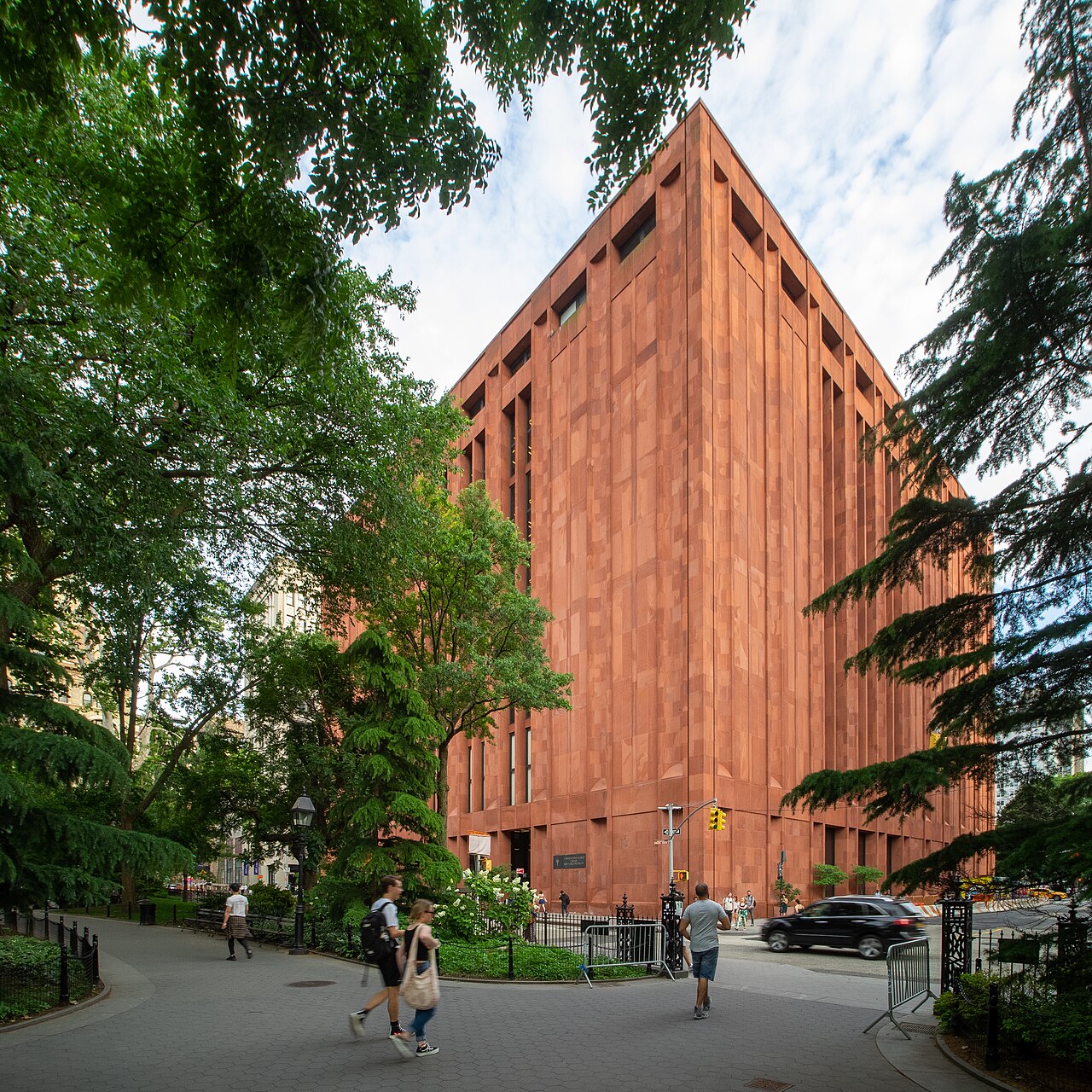
New York University — campus in pictures

Real, freely-licensed photographs of the campus (via Wikimedia Commons).

NYC - Washington Square Park - Arche dédiée à George Washington
NYC - Washington Square Park - Arche dédiée à George WashingtonJean-Christophe BENOIST · CC BY 3.0 · via Wikimedia Commons
NYU, Greenwich Village, NYC
NYU, Greenwich Village, NYCAjay Suresh from New York, NY, USA · CC BY 2.0 · via Wikimedia Commons
Washington Square Village Jul 2007
Washington Square Village Jul 2007You may select the license of your choice. · CC BY-SA 3.0 · via Wikimedia Commons
NYU Shanghai Lujiazui Building (centre) and Shanghai Futures Building (right)
NYU Shanghai Lujiazui Building (centre) and Shanghai Futures Building (right)JACK728 · CC BY-SA 4.0 · via Wikimedia Commons
Downtown Brooklyn, Brooklyn, New York City
Downtown Brooklyn, Brooklyn, New York CityAjay Suresh from New York, NY, USA · CC BY 2.0 · via Wikimedia Commons
Campus of New York University in Saadiyat Island, Abu Dhabi, UAE
Campus of New York University in Saadiyat Island, Abu Dhabi, UAEAndresmh · CC0 · via Wikimedia Commons

Why NYU — City, Global Network & Distinctive Schools

NYU ranks #35 globally (QS 2024), #29 (Times Higher Education), and #30 nationally. It enrolls one of the largest international student populations of any US university — 22% of a 59,000-strong student body. The convergence of location, global network, and world-leading schools in arts, business, and mathematics is singular.

01New York City as Campus
NYU has no walled campus — Greenwich Village and Lower Manhattan are your classroom. Internships at Goldman Sachs, sets at Broadway, and shoots at film studios are blocks from lecture halls. No US university integrates city and campus more completely.
02Three-Portal Global University
NYU is one of the only universities with three full degree-granting campuses: New York, Abu Dhabi, and Shanghai — plus 14+ global academic centres on five continents. NYU New York students can study away at any of them at no extra tuition.
03Tisch School of the Arts
NYU Tisch is one of the world's premier arts conservatories — film, drama, dance, game design. Alumni include Martin Scorsese, Spike Lee, and Lady Gaga. For serious artists, Tisch's industry connections in the capital of American media are unmatched.
04Stern School of Business
NYU Stern is one of the most consistently top-ranked undergraduate business schools in the US. Its Wall Street proximity translates into some of the strongest investment banking, consulting, and finance recruiting pipelines of any US university.

NYU Acceptance Rate & Admitted Class Profile

Stats

120,000+
Applications
9%
Overall acceptance rate
59,000
Total enrolment

Profile Stats

1470–1570
SAT Middle 50%
33–35
ACT Middle 50%
38+
Typical IB Score
22%
International Students
3.7
Minimum GPA (floor)
Overall acceptance rate — highly selective

Rea Vs Rd

Rd Label: Regular Decision
Rd Value: ~7-8%
Rea Label: Early Decision (ED I/II)
Rea Value: ~20-25%

NYU Admissions Requirements — GPA, SAT/ACT & International Grades

GPA & Coursework
Value: 3.7+ GPA
  • 3.7 is the minimum floor — competitive applicants are significantly higher
  • Stern and Tisch admit students with profiles well above the general floor
  • Course rigour evaluated alongside grades — IB HL, AP 5s, A-Level A/A* matter
  • Upward grade trajectory read positively across the application
NYU expects strong grades in a rigorous curriculum. A 3.7 is the minimum floor; the most competitive applicants for Stern, Tisch, and Courant typically present significantly stronger profiles. What matters is not just the number but the challenge level of your coursework.
SAT / ACT
Value: 1470–1570 / 33–35
  • NYU is test-optional — submitting is a choice, not a requirement
  • SAT middle 50%: 1470–1570; ACT middle 50%: 33–35
  • Above-band scores are a genuine positive academic signal
  • TOEFL/IELTS required separately for non-native English instruction students
Test-optional since the pandemic, NYU has maintained the policy. If submitting, scores at or above the 25th percentile (SAT 1470 / ACT 33) strengthen the application. Scores significantly below the lower bound are better withheld.
International Grades
Value: IB 38+
  • IB: 38+ total; 40+ competitive for Stern and Tisch
  • A-Levels: A*AA or better; strong subject alignment with intended school
  • CBSE/ISC: very strong aggregate with rigorous subject choices
  • NYU is experienced with IB, A-Level, and major Asian examination systems
For international students: IB 38 is the competitive floor; A-Level A*AA or better; Indian boards with very strong aggregates in relevant subjects. NYU evaluates every transcript in context of school and national system.

NYU Application Components — Common App, Essays & Creative Materials

NYU uses the Common Application exclusively. You apply to a specific school within NYU — school selection is a strategic decision, not an administrative one. Below is every component of a complete NYU application with notes for international students.

01RequiredCommon Application
NYU accepts only the Common App. You apply to a specific NYU school — CAS, Stern, Tisch, Tandon, Steinhardt, Gallatin, or others. The platform opens August 1 each cycle. School selection determines which admissions committee reads your file.
02Strongly RecommendedNYU Supplemental Essay
A 250-word bridge-builder supplement is technically optional. With 120,000+ applicants and a 9% acceptance rate, skipping it removes one of the few tools to distinguish yourself as an individual beyond grades and scores.
03RequiredSchool Transcripts & Counsellor Report
Official secondary transcripts from all schools attended. NYU also requires a counsellor school report. International applicants from non-English-medium schools must include certified translations of academic records.
04RequiredTeacher Recommendation (1)
One academic teacher recommendation is required. A second optional recommendation may be submitted. Choose a teacher who can speak directly to your intellectual engagement and academic character — not just the class in which you performed best.
05RequiredCounsellor Recommendation
A school counsellor letter is required. This provides NYU with institutional context about your school's curriculum, academic norms, and how you compare within your cohort — especially valuable for international applicants from less-known school systems.
06OptionalSAT / ACT Scores
Test-optional. If submitting, scores go directly from College Board or ACT. English proficiency tests (TOEFL 100+, IELTS 7.5+, Duolingo 130+) are separately required for students whose language of instruction is not English — not covered by test-optional policy.
07Required for Tisch & SteinhardtArts Portfolio / Audition
Students applying to Tisch (film, drama, dance, game design) and Steinhardt (music, media) must submit an arts supplement, audition, or creative portfolio. This is a primary evaluation component — the academic profile alone will not secure admission to Tisch.

NYU Essays — The Common App Personal Statement & Bridge-Builder Supplement

Tips

Specificity is credibility
NYU reads 120,000+ essays. The ones remembered are specific — a named moment, a real relationship, an actual argument. Essays that begin with 'I believe in the power of diversity' disappear. Essays about a real encounter that changed something concrete are remembered.
The supplement is not optional in practice
The bridge-builder prompt is 250 words — short writing is harder writing. Every sentence must earn its place. At 9% acceptance, submitting nothing in the optional space is a missed opportunity most competitive applicants cannot afford.
NYU values the global, the urban, and the specific
NYU's community is 22% international and its campus is New York City. Essays that reflect cultural navigation, global perspective, or an authentic relationship with urban complexity resonate here more than at schools with traditional campus settings.
International students: write personally, not formally
Many international applicants write admissions essays with the register of a job application or academic paper. Admissions essays are personal documents. Fluent, direct, conversational English prose reads more powerfully than elevated academic language, even if it is grammatically simpler.

Prompts

Common App Personal Essay
Choose from 7 Common App prompts or write your own topic. Up to 650 words. The personal essay is the centrepiece of every Common App application — at NYU, where supplemental requirements are minimal, this essay carries significant evaluative weight.
NYU Supplemental — Bridge Builders (250 words, Optional)
We are looking for students who want to be bridge builders — students who can connect people, groups, and ideas to span divides. Guiding questions: (1) Describe an encounter with a viewpoint unlike your own. (2) Recount working alongside individuals with differing perspectives. (3) Identify someone who facilitates thoughtful group engagement.
The most common NYU essay mistake. Skipping the 250-word supplement because it says 'optional' — in a pool of 120,000 applicants, every tool of distinction matters.

What NYU Admissions Officers Are Looking For

NYU uses a holistic admissions process evaluated by individual school admissions committees. Every file is read with reference to the student's stated school of interest. Understanding what each school's committee values — and why — is the foundation of a strong application strategy.

01Academic Strength in Context
NYU expects strong grades in the most rigorous curriculum available. A 3.7 is the floor — competitive applicants are well above it. Course rigour, the challenge level of IB/A-Level/AP subject choices, is evaluated alongside raw grades.
02Intellectual Initiative
NYU values students who pursue ideas beyond the classroom. Independent research, creative projects, entrepreneurship, or deep engagement with a subject outside coursework signals the intellectual curiosity NYU's faculty-intensive environment rewards.
03Global Perspective
With 22% international enrolment, NYU explicitly seeks students who will thrive in and contribute to a globally diverse community. Students who have navigated multiple cultures, languages, or value systems bring something distinctive to NYU's most internationally diverse classrooms.
04Creative and Artistic Distinction
For Tisch applicants, creative achievement is the primary evaluation criterion — more important than grades or test scores. NYU Tisch is looking for artists who are making work, not for well-rounded students who are also interested in art.
05Bridge-Building Values
The supplemental prompt is a signal of NYU's values: students who connect people and ideas across difference, foster collaboration, and contribute to something larger than themselves. This is a community-oriented university in the most diverse city on earth.
06Fit with Specific School
NYU admits to specific schools — Stern, Tisch, Tandon, CAS — not to the university broadly. Admissions readers evaluate fit with their specific programme. Your stated interests and your academic profile should align coherently with your school of choice.

NYU Financial Aid — The NYU Promise & Aid for International Students

NYU's financial aid landscape changed significantly in 2023 with the launch of the NYU Promise. For admitted students with demonstrated need, NYU now meets 100% of that need through grants. The key caveat for international students: NYU is need-aware, meaning demonstrated financial need is a factor in the admissions decision itself.

NYU is need-aware for international applicants — financial need may factor into admissions decisions. Aid amounts depend on CSS Profile assessment and individual circumstances. Contact NYU's financial aid office for an individualised estimate.

Stats

$68,576
Annual tuition
$100,998
Total cost of attendance
$0
Families under $100K — no tuition
100%
Demonstrated need met — NYU Promise

Contribution Tiers

NoteRangePercentPercent Value
No tuition expected under NYU PromiseUnder $100,000100%100
Significant grant aid available; scaled contribution$100K–$150K75%75
Merit and need-based grants reviewed$150K–$200K50%50
Primarily merit-based institutional aid$200K–$250K25%25
Sticker price approaches; merit scholarships may partially offsetOver $250K10%10
The NYU Promise — What It Means for International Students. The NYU Promise, launched December 2023 and extended to international students in 2024, commits NYU to meeting 100% of demonstrated financial need for every admitted first-year student on the New York campus. Families earning under $100,000 annually with typical assets pay no tuition. Aid is provided primarily as grants, not loans. Critical distinction: unlike Harvard, MIT, and Princeton, NYU is need-aware for international applicants — your financial need may affect the admission decision.
Approximate Contribution by Family Income (Illustrative)

Key Dates

Early Decision I Deadline
Date: Nov 1
ED I Decision Released
Date: Dec 15
Early Decision II Deadline
Date: Jan 1
ED II Decision Released
Date: Feb 15
Regular Decision Deadline
Date: Jan 5
RD Decisions Released
Date: Apr 1

Advantages

  • Meaningfully higher acceptance rates in ED rounds vs Regular Decision
  • Earlier decision — December (ED I) or February (ED II) notification
  • Signals genuine first-choice commitment to the admissions committee
  • ED II provides a second binding opportunity if ED I is not used
  • More focused, less crowded review pool in early rounds

Disadvantages

  • ED is binding — you must enrol and withdraw all other applications if admitted
  • Financial aid comparison not possible before committing
  • International students who need aid will have only one offer to evaluate
  • Application must be complete and strong by November 1 (ED I)
  • Need-aware policy means financial need may factor into the ED decision
ED I / ED II vs Regular Decision. NYU offers two binding Early Decision rounds and one Regular Decision round. Early Decision provides a meaningful acceptance rate advantage but comes with binding commitment. For international students requiring financial aid, the need-aware policy makes this a particularly important strategic decision.
Tychr's ED Recommendation. Apply ED I (November 1) if NYU is your genuine first choice, your application is strong, and you have clarity on the financial picture. If you need to compare financial aid offers before committing, Regular Decision preserves that flexibility. ED II (January 1) is an excellent option for students who did not use ED I elsewhere — it offers early-round advantages with more preparation time.
NYU Early Decision — ED I, ED II, and Regular Decision Strategy

NYU Interviews — Why NYU Doesn't Conduct Them & What This Means

NYU does not conduct admissions or alumni interviews for undergraduate applicants. Unlike Harvard, Yale, or Princeton, there is no interview component in the NYU undergraduate application. Your written application — essays, transcripts, recommendations, and any creative supplements — carries the full evaluative weight. There is no interview opportunity to strengthen or recover a weak application.

Meta

No undergraduate admissions interviews conducted
Format
Not offered for NYU undergraduate applicants
Alumni Interviews
Written application carries full evaluative weight
Evaluates
Essays, recommendations, creative supplements (Tisch/Steinhardt)
What replaces it

Questions

How do I show NYU who I am beyond grades? (via your essays)
Tip: NYU does not conduct interviews. Your personal essay must answer 'who are you' entirely in writing.
What replaces the interview in the evaluation? (the supplement)
Tip: The 250-word bridge-builder supplement is your 'character conversation' with NYU. Treat it as seriously as you would an interview answer.
Are there exceptions for arts school applicants? (yes — creative materials)
Tip: For Tisch and Steinhardt, the creative supplement, audition, or portfolio is the closest equivalent to an interview — it demonstrates you in action.
Strategic implication: your first impression is your only impression
Tip: Since there is no interview to recover from a weak written application, invest accordingly in essay revision cycles.
Can I show interest in other ways?
Tip: Attend information sessions, virtual open days, or contact admissions directly — demonstrated interest, while not formally tracked, shows genuine engagement.

NYU Residential Life — Housing in the City

NYU does not have residential 'houses' in the Harvard or Yale sense. Instead, NYU's residence halls are distributed across several Manhattan neighbourhoods — with some facilities in Brooklyn for Tandon students. The city is the campus. Washington Square Park is the de facto quad. Housing is guaranteed for first-year students, and the experience is immersive urban life from day one.

Houses

University Hall
Tag: Village
NYU's flagship residence, steps from Washington Square Park — freshman hub
Lipton Hall
Tag: Village
Greenwich Village, close to most CAS and Stern academic buildings
Rubin Hall
Tag: Village
Washington Square area; popular with first-years, smaller and community-oriented
Hayden Hall
Tag: Village
Located on Washington Square South; central to arts and humanities campus
Third Avenue North
Tag: East Village
East Village location; large modern tower; diverse community
Lafayette Hall
Tag: East Village
East Village; close to Tisch School of the Arts buildings
Tandon Residence Hall
Tag: Brooklyn
NYU Brooklyn campus; for Tandon (Engineering) students; newer facilities

Lottery Steps

  • First-year students: NYU guarantees on-campus housing — apply through the residential services portal after admission
  • Residence assignments are made based on school affiliation, application timing, and stated preferences
  • Greenwich Village halls (University Hall, Lipton, Rubin, Hayden) are closest to CAS, Stern, and most academic buildings
  • Tisch students typically prefer East Village halls (Lafayette, Third Avenue North) close to arts facilities
  • Tandon (Engineering) students at the Brooklyn campus have a dedicated residence hall
  • Upperclass students typically live in NYU-affiliated housing or independently in Manhattan, Brooklyn, or Queens

NYU's Schools & Undergraduate Programmes

College of Arts & Science (CAS)
Label: Liberal Arts & Sciences — Largest School
  • {"label":"Majors and programmes","value":"100+"}
  • {"label":"Setting","value":"Greenwich Village"}
  • {"label":"Entry approach","value":"General CAS application"}
  • {"label":"Most popular majors","value":"Economics, Political Science, Psychology, Biology"}
NYU's foundational liberal arts college. Broad academic offering across humanities, social sciences, and natural sciences. Students who are academically strong but undecided on a specific professional path typically apply here.
Stern School of Business
Label: Undergraduate Business — Wall Street Pipeline
  • {"label":"Programme","value":"BBA (4 years)"}
  • {"label":"Selectivity","value":"Most competitive NYU school"}
  • {"label":"Location","value":"Greenwich Village, 10 min from Wall Street"}
  • {"label":"Top recruiters","value":"Goldman Sachs, JPMorgan, McKinsey, Blackstone"}
Consistently ranked among the top undergraduate business programmes in the US. Stern's proximity to Wall Street and strong finance recruiting pipeline make it one of the most sought-after schools for international students interested in business.
Tisch School of the Arts
Label: Film, Drama, Dance, Game Design
  • {"label":"Programmes","value":"Film, TV, Drama, Dance, Game Design, Musical Theatre"}
  • {"label":"Evaluation primary","value":"Creative portfolio / audition"}
  • {"label":"Notable alumni","value":"Scorsese, Spike Lee, Lady Gaga, Alec Baldwin"}
  • {"label":"Location","value":"Multiple Manhattan sites"}
One of the world's premier arts conservatories, embedded in the cultural capital of the US. For serious artists, Tisch's industry connections, faculty, and New York location are unmatched. Creative supplement or audition is the primary evaluation vehicle.
Tandon School of Engineering
Label: Engineering & Applied Sciences — Brooklyn
  • {"label":"Programmes","value":"CS, EE, Civil, Chemical, Biomedical, Mechanical"}
  • {"label":"Location","value":"Brooklyn (MetroTech Center)"}
  • {"label":"Campus culture","value":"Distinct from Village campus — research-focused"}
  • {"label":"Partnerships","value":"Strong NYC tech ecosystem connections"}
NYU's engineering school, based in Brooklyn's MetroTech Center. Tandon has its own campus culture distinct from the Greenwich Village main campus. International students should research this specifically before applying — it is a different environment.
Courant Institute of Mathematical Sciences
Label: Mathematics & Computer Science
  • {"label":"Founded","value":"1935"}
  • {"label":"Reputation","value":"One of world's premier applied math institutes"}
  • {"label":"CS ranking","value":"Top 10 US"}
  • {"label":"Undergraduate entry","value":"Via CAS (Mathematics or CS major)"}
NYU's Courant Institute is one of the oldest and most prestigious mathematics and computer science research institutes in the world. Mathematics and CS students at NYU access Courant's world-class faculty and research from year one. Competition mathematics background is a meaningful differentiator.
Steinhardt School
Label: Education, Media, Music, Nutrition
  • {"label":"Programmes","value":"Music Performance, Music Ed, Media, Nutrition, Speech Pathology"}
  • {"label":"Creative supplement","value":"Required for music and performance programmes"}
  • {"label":"Entry approach","value":"School-specific application"}
  • {"label":"Location","value":"Greenwich Village"}
Steinhardt spans education, the arts, media, and health sciences. Music and performance programmes require auditions. Media, culture, and communications programmes attract internationally diverse cohorts. A distinct academic culture from Stern or CAS.

Research & Extracurricular Opportunities at NYU

Undergraduate Research Programme
Category: Faculty Research Access
NYU's Office of Undergraduate Research connects students with faculty research opportunities across all schools. CAS and Courant students access research labs from year one. The Dean's Undergraduate Research Fund provides grants for student-initiated projects.
NYU Entrepreneurship & Innovation
Category: Startup Ecosystem
NYU Tandon's Future Labs, the Leslie eLab in the Village, and NYU's connections to New York's tech ecosystem give students access to one of the US's most active startup environments. Stern students have deep connections to finance, PE, and venture capital through club networks and Wall Street proximity.
Tisch Film & Arts Production
Category: Professional Creative Practice
Tisch students produce real films, theatrical productions, and creative work from year one. Industry internships in film, television, and theatre are accessible through NYU's New York networks. Tisch alumni working in the industry provide mentorship and professional connections throughout undergraduate study.
Student Organisations & City Life
Category: 500+ Active Groups
NYU has 500+ clubs and organisations — cultural associations from every world region, pre-professional clubs, advocacy groups, performing arts organisations, and media outlets. NYU Violets compete in Division III athletics. Washington Square Park and New York City amplify every dimension of student life beyond what any traditional campus can offer.
Scroll to explore NYU's research programmes, entrepreneurship ecosystem, and student life.

Career Outcomes & NYU Alumni Network

NYU's 500,000+ alumni network is heavily concentrated in New York — one of the world's most competitive professional markets — and spans finance, media, technology, law, and the arts. The NYU connection is particularly strong in entertainment, financial services, and the non-profit sector. For international students, NYU's genuinely global alumni community provides a bridge to professional networks in virtually every country.

Stats

90%
Employed or in graduate school post-graduation
$72,000
Average starting salary across all schools
22%
International students in student body
14+
Global academic centres on five continents
#35
QS World University Ranking
#29
Times Higher Education World Ranking

Categories

Finance & Consulting
Goldman Sachs, JPMorgan, Morgan Stanley, Blackstone, and major PE and consulting firms recruit heavily from Stern's undergraduate class. Wall Street proximity is a structural recruiting advantage unique to NYU among US business schools.
Film, Arts & Entertainment
Tisch alumni are embedded throughout American film, television, and theatre. The proximity of NYU to the entire media industry translates into internships, assistantships, and industry connections built before graduation.
Technology & Engineering
NYU Tandon and the Courant Institute feed graduates into New York's expanding tech ecosystem. The Courant Institute produces alumni who lead in applied mathematics, data science, and financial technology.

Our NYU Admissions Track Record & Student Success Stories

Priya S.
I applied to Stern knowing it was the most competitive school at NYU. My Tychr counsellor pushed me to make the quantitative thread of my application explicit — IB HL Maths score, economics research, the finance internship I had done. The application told one coherent story. I got in ED I.
Country: India
Program: NYU Stern — Finance
Class Year: Class of 2027
Residential: Lipton Hall
Academic Profile: IB 41 · SAT 1550
Lucas F.
Tisch was a dream application. Tychr helped me understand that the portfolio was the application — not the grades, not the essay. Three months of serious portfolio development, working with a Tychr arts advisor, made the difference. I had been rejected from conservatories with a better academic record but a weaker portfolio.
Country: Brazil
Program: NYU Tisch — Film
Class Year: Class of 2026
Residential: Lafayette Hall
Academic Profile: IB 38 · Strong film portfolio
Yoon-Ji P.
My bridge-builder supplement was the essay I rewrote four times. The first version was about a school club — too generic. By the fourth version, I was writing about navigating a genuine cultural conflict in a community organisation back home. My counsellor said that version was the one that actually sounded like me.
Country: South Korea
Program: NYU CAS — International Relations
Class Year: Class of 2025
Residential: Third Avenue North
Academic Profile: IB 40 · ACT 35

Faqs

Does NYU have a traditional campus?+

No. NYU's campus is Greenwich Village and surrounding Manhattan, with buildings distributed across several blocks around Washington Square Park. There are no gates or contained campus perimeter. Students who thrive at NYU are energised by the city. Those who want a traditional campus with a central quad may find the urban immersion disorienting — this is worth honestly assessing before applying.

Should I apply Early Decision to NYU?+

If NYU is genuinely your first choice and your application is complete, ED I (November 1) offers a meaningful acceptance rate advantage — early rounds are accepted at meaningfully higher rates than Regular Decision. However, ED is binding. For international students requiring significant financial aid, be aware NYU is need-aware — your financial need may factor into the decision, and you'll have only one aid offer before committing.

Can international students receive financial aid at NYU?+

Yes. Through the NYU Promise (launched December 2023, extended to internationals in 2024), NYU commits to meeting 100% of demonstrated financial need for admitted first-year students on the New York campus, including internationals. Families earning under $100,000 pay no tuition. Critical caveat: NYU is need-aware for international applicants, unlike fully need-blind schools such as Harvard, MIT, and Princeton. Submit the CSS Profile by your round's deadline.

Is NYU test-optional for international students?+

Yes — for SAT/ACT. NYU is test-optional for all applicants. English language proficiency tests (TOEFL minimum 100, IELTS minimum 7.5, Duolingo minimum 130) are separately required for students whose primary language of instruction is not English. These are not optional and are entirely distinct from the SAT/ACT policy.

Do I apply to NYU broadly or to a specific school?+

You apply to a specific school: College of Arts and Science, Stern (Business), Tisch (Arts), Tandon (Engineering, Brooklyn), Steinhardt, Gallatin, or others. The school you select determines which admissions committee evaluates your file. Internal transfer is possible but competitive — choosing the right school from the start matters significantly.

Does NYU conduct undergraduate admissions interviews?+

No. NYU does not conduct admissions or alumni interviews for undergraduate applicants. Your written application — essays, transcripts, recommendations, and any creative supplements — carries the full evaluative weight. There is no interview opportunity to strengthen a weak written application.

Is the supplemental essay really optional?+

Technically yes. In practice, with 120,000+ applications and a 9% acceptance rate, submitting a thoughtful, specific 250-word supplement is strongly advisable. The bridge-builder prompt is an opportunity to show NYU what you value and how you engage across difference. Most competitive applicants should not skip it.

What is the NYU Global Network?+

NYU has three full degree-granting portal campuses: New York, Abu Dhabi, and Shanghai. NYU New York students can apply to study away for one or more semesters at Abu Dhabi, Shanghai, or any of NYU's 14+ global academic centres in Berlin, Florence, Buenos Aires, Paris, London, Madrid, Sydney, and more. There is typically no additional tuition for study away within the NYU network.

Book a Free NYU Admissions Strategy Session

In 60 minutes our NYU admissions specialists will evaluate your academic profile, identify which NYU school is the right fit, develop your essay and creative supplement strategy, and determine whether ED I, ED II, or Regular Decision gives you the best odds.

  • No commitment required
  • NYU specialists with school-specific insight
  • Personalised strategy — not generic advice
Getting into NYU is not about loving New York — it's about showing you are ready to learn from it.

NYU Academic Requirements

NYU Academic Requirements — The Honest Breakdown for International Students

What GPA, test scores, and academic profile do NYU's admitted students actually have? And what does holistic review mean at a university that admits you to a specific school — Stern, Tisch, CAS, Tandon — not to NYU generally?

3.7
Minimum GPA (floor)
Competitive applicants higher
1470–1570
SAT Middle 50%
Submitted scores band
33–35
ACT Middle 50%
Submitted scores band
38+
IB Typical Score
Competitive range
A*AA+
A-Level Typical
Competitive profile
9%
Acceptance Rate
Highly selective

GPA & Class Rank

NYU and GPA — What the Data Shows

NYU publishes a minimum GPA guideline of 3.7. In practice, this is a floor that indicates who cannot compete, not who will be admitted. Competitive applicants — especially for Stern and Tisch — typically present significantly stronger profiles.

A 3.7 GPA is the minimum, not a distinguishing feature. What distinguishes admitted students is the combination of strong grades in rigorous courses alongside specific achievement in the school of application — creative work for Tisch, quantitative depth for Stern, or research for CAS and Courant.

3.7
Published minimum GPA guideline
3.9+
Stern and Tisch: typical competitive range
What this means for international students. International students from systems without formal class rank (IB, UK A-Levels, many Asian curricula) are evaluated on their grades relative to their school's known performance range and in comparison to other applicants from the same educational system. NYU's admissions teams are experienced readers of international transcripts.
Grade trajectory matters. An upward grade trajectory — improving from moderate to strong performance in the later years of secondary school — is read positively by NYU's admissions committees. An early academic dip followed by sustained strong performance provides a narrative of growth rather than a disqualifying record.

Academic Context

School-Specific Context — How NYU Reads Academic Performance

NYU admits students to specific schools — Stern, Tisch, Tandon, CAS, Steinhardt, Gallatin. This means academic context is evaluated with the intended school in mind, not just in absolute terms.

School-specific academic context at NYU
Every application is evaluated with reference to the specific school's requirements and academic norms. A student applying to Stern is evaluated as a potential business student — their quantitative coursework, mathematics preparation, and economic or business-related engagement is weighted accordingly. A Tisch applicant is evaluated primarily on creative work, with the academic profile providing a threshold baseline.
What this means practically
For all NYU applicants, taking the most rigorous courses available at your school — IB HL over SL where possible, AP over standard where available, A-Level over AS-only — signals the academic ambition that NYU values. Grade-optimised course selections (easy courses for high grades) are a visible pattern in international applications.
For students at less well-known international schools. Your school counsellor's letter is important for providing NYU with institutional context about your school's curriculum and academic norms. For students at less well-known international schools, the counsellor's description of the school's offerings and the student's relative performance within the cohort is particularly valuable.

Standardised Testing

SAT Scores at NYU — What You Actually Need

NYU SAT Data — Admitted Class

LabelScorePercent
25th percentile147065
75th percentile157090
Competitive target1530+80
The SAT Math subscore for Stern and Tandon applicants. For Stern (Business) and Tandon/Courant (Engineering and Math/CS) applicants, a strong SAT Math subscore (750–800) is particularly important. It signals quantitative readiness directly relevant to the programme — a weak Math subscore for a Stern applicant is a specific coherence problem, not just a general academic concern.
Preparation. Students targeting NYU should aim for a composite above 1470 (25th percentile) before considering submission — and ideally above 1530 to be comfortably within the competitive band. Tychr's SAT preparation programme averages 150+ point improvement over 8–12 weeks for motivated students.
Submitting vs. withholding scores at NYU. NYU is test-optional. For international students, Tychr generally recommends submitting scores at or above 1470. Scores between 1400 and 1469 are a judgment call based on the strength of the rest of the application. Scores below 1400 are typically better withheld to avoid drawing attention to a dimension significantly below the admitted band.

Standardised Testing

ACT Scores at NYU — The Data and the Strategy

NYU ACT Data — Admitted Class

Metrics

25th percentile
Score: 33
75th percentile
Score: 35

Comparison Cards

Both accepted equally
NYU does not state a preference between SAT and ACT. Take the test you score higher on after a diagnostic of both.
SAT rewards
Careful reading and precise mathematical reasoning — particularly advantageous for Stern and Courant applicants with strong quantitative preparation.
ACT rewards
Speed, breadth, and familiarity with the Science section's data interpretation format — often advantageous for students with strong IB science backgrounds.
Superscore policy. NYU accepts superscoring for the SAT (highest section scores from multiple sittings). For the ACT, policies should be confirmed with NYU directly for the current cycle. Submitting multiple sittings with complementary strong sections can be advantageous for SAT superscoring.
Tychr's recommendation. Take a diagnostic of both tests before committing to either. If your ACT diagnostic is at 32 or above, it is worth pursuing alongside SAT preparation. The ACT Science section's data interpretation format is particularly manageable for IB science students — this is a common structural advantage for international applicants.

Testing Strategy

NYU Test-Optional Policy — The Strategic Decision Explained

NYU has maintained a test-optional policy since the pandemic. Understanding what this means in the NYU context — including which English proficiency tests are still required — is essential for international applicants.

Submit Items

Your SAT is at or above 1470 (the 25th percentile) — submit. Scores within or above the band add positive academic value.
Your ACT is at or above 33 — submit.
You are an international student — a strong score provides a standardised academic benchmark that is particularly useful in a globally competitive pool.

Withhold Items

Your SAT is below 1400 or ACT below 30 — withholding is typically the better strategy.
Submitting would draw attention to a significantly weaker dimension of your academic profile and create an incoherence problem.
Current policy. NYU accepts applications without SAT or ACT scores and does not penalise students who don't submit. Applications are reviewed holistically whether or not scores are included. However, test-optional does not mean test-irrelevant — a strong score is a positive academic signal.
The most common misconception — English proficiency tests. CRITICAL for international students: NYU's test-optional policy applies ONLY to SAT and ACT. English language proficiency tests (TOEFL minimum 100, IELTS minimum 7.5, Duolingo minimum 130) are separately required for all students whose primary language of instruction is not English. These requirements are not affected by the test-optional policy and are not optional.

International Curricula

IB and A-Levels at NYU — School-Specific Benchmarks

IB Diploma
Note: What NYU values in IB applicants: HL subject choices that align with the intended school — HL Mathematics and relevant sciences for Stern and Tandon; strong English and humanities HLs for CAS; arts HL subjects for Tisch. The Extended Essay grade and subject can add contextual evidence of research engagement.
  • {"label":"Competitive range","value":"38+ points overall"}
  • {"label":"Stern/Tisch target","value":"40+ points with strong relevant HLs"}
  • {"label":"HL expectations","value":"6s and 7s in subjects relevant to intended school"}
  • {"label":"Extended Essay","value":"A or B; adds contextual depth as research evidence"}
A-Levels
Note: NYU understands UK A-Level predicted grade conventions. Strong AS results support predicted grades. GCSE/IGCSE performance provides additional academic context. Students applying to Stern should have A-Level Mathematics — ideally Further Mathematics — as a core component of the profile.
  • {"label":"Competitive range","value":"A*AA or better"}
  • {"label":"Subject alignment","value":"Mathematics + relevant subject for Stern/Tandon; English/History for CAS"}
  • {"label":"AS results","value":"Strong AS performance supports predicted grades"}

Advanced Placement

AP Courses at NYU — What Counts and What to Take

For students in the US system or at international schools offering AP courses, Advanced Placement performance is a significant component of the academic profile — particularly for Stern and Courant applicants.

What NYU is looking for
AP 5s in subjects relevant to the intended school: Calculus BC and Statistics for Stern; Physics C, Chemistry, Computer Science A for Tandon; English Language, US History, Psychology for CAS. Rigour of AP subject selection is evaluated alongside scores — easy AP choices for high grades are noticed.
How many APs?
There is no published target number. Competitive applicants typically have 4–8 AP exams with predominantly 5s. Rigour of subjects matters more than count — AP Environmental Science and AP Psychology alongside AP Calculus BC creates a less coherent quantitative profile than AP Calculus BC, AP Statistics, and AP Physics C.
AP credit at NYU
NYU awards course credit for AP scores of 4 or 5 in many subjects, allowing students to skip introductory courses and pursue higher-level work sooner. This is particularly valuable at Stern, where students can accelerate into core business coursework from the start.
NYU's AP credit policy is documented on the NYU Registrar's website. Credit is typically awarded for scores of 4 or 5. Students should confirm current credit policies for their specific school within NYU, as policies may vary between CAS, Stern, and Tandon.
International students at schools that don't offer AP courses should not artificially pursue AP self-study at the expense of their IB or A-Level performance. The IB Diploma and A-Levels are appropriate and well-understood credentials at NYU — AP is evaluated relative to what was genuinely accessible to the student.

Academic Rigour

Curriculum Rigour — NYU's Approach to Academic Challenge

NYU lists academic achievement and rigour of secondary curriculum among its most important admissions factors. For a university that admits to specific schools, this means demonstrating the specific academic preparation relevant to your intended programme.

Taking the most challenging courses available at your specific school, in the subjects most relevant to your intended school within NYU.

Contextual rigour evaluation. Rigour is always evaluated relative to what was available. A student at a school offering only five AP courses is evaluated differently from one at a school with thirty AP options. What matters is whether the student challenged themselves relative to what was possible at their specific school.
What curriculum rigour means at NYU. For NYU, this has a school-specific dimension: a student applying to Stern who has not taken rigorous mathematics courses has a coherence problem in their application, even if their overall grade profile is strong. Academic rigour must align with the school you are applying to.
What NYU is looking for. NYU's admissions readers are looking for students who have pushed themselves academically in the subjects relevant to their intended school — not students who have maximised grades through careful selection of easier options. An IB student applying to Stern with SL Mathematics in a 38-point profile raises a specific concern; one with HL Mathematics AA in a 38-point profile does not.

School-Specific Preparation

Academic Preparation by NYU School — What Each Expects

Because NYU admits to specific schools, academic preparation expectations vary significantly by programme. Students should understand what their intended school expects — not just what NYU expects generally.

Stern & Courant Mathematics
IB HL Mathematics (Analysis & Approaches preferred) or A-Level Mathematics and Further Mathematics. Strong SAT Math subscore (750+) is particularly relevant. Competition mathematics experience (AMC, national Olympiads, or equivalent) is a meaningful differentiator for Courant Mathematics applicants. Data projects or economic research evidence the quantitative engagement that Stern values.
Tandon Engineering & CS
IB HL sciences and HL Mathematics, or A-Level Mathematics/Physics/Chemistry with strong results. Programming experience (USACO or equivalent competitive programming background) is a strong differentiator for Tandon CS applicants. Original engineering projects, robotics, or design competition achievement signals practical engineering engagement.
Tisch Arts
Strong creative portfolio or audition material is the primary requirement — the academic threshold for Tisch is lower than for Stern. A defined creative practice, a body of existing work, and genuine artistic development are what Tisch evaluates. Students should have been making creative work — films, plays, musical compositions, games — not just studying it.

Language Proficiency

English Language Requirements for International NYU Applicants

NYU requires English language proficiency demonstration for all students whose primary language of instruction is not English. These requirements are separate from the test-optional policy for SAT/ACT.

NYU's application essays are themselves an English language evaluation. A student whose primary language is not English but who writes compelling, fluent application essays demonstrates practical English competency in the most directly relevant form. Strong essays and a TOEFL above the minimum create a mutually reinforcing academic picture.

Test: TOEFL iBT
Score: 100+
Test: IELTS Academic
Score: 7.5+
Test: Duolingo
Score: 130+
Exemptions and practical guidance. Students who have completed at least three years of full-time study at an English-medium secondary school may qualify for an exemption from the English proficiency requirement. Verify current exemption criteria directly with NYU's admissions office, as policies may be updated between cycles. The TOEFL and IELTS minimums are thresholds — scores well above minimums are advisable for Stern and CAS applicants.

By School

Academic Requirements by NYU School — What Different Paths Expect

NYU admits students to specific schools, not to the university broadly. The academic profile must be coherent with the school you are applying to. A mismatch between your transcript and your stated school is an avoidable weakness.

SignalsExpectationConcentration
Quantitative internship/research; econometric projectsHL Maths AA / A-Level Maths strong resultStern — Finance/Business
USACO; original projects; competitive programmingHL Maths + strong CS backgroundCourant — Computer Science
AMC/AIME; proof-level thinking; researchHL Maths AA / Further MathsCourant — Mathematics
Engineering competition; design/robotics projectHL Maths + HL Physics or A-Level equivalentsTandon — Engineering
Published writing; debate/MUN; research essayStrong humanities profile across subjectsCAS — Political Science / Economics
Film portfolio; theatre work; musical compositionsCreative portfolio is primary — academic thresholdTisch — Film/Drama/Music
Clinical volunteering; science research; strong sciencesHL Chemistry + HL BiologyCAS — Pre-Health track

International Systems

NYU and International Education Systems — How Your Curriculum Is Evaluated

IB Diploma
Well understood and highly valued. NYU's admissions teams are experienced IB readers — they know what a rigorous HL combination looks like versus a grade-optimised one. The EE and IAs are taken seriously as evidence of research and independent thinking. IB HL choices must align with the intended school.
A-Levels (Cambridge and Edexcel)
Fully understood. A-Levels are one of NYU's most common international credentials. The combination of subjects chosen, predicted grades, and AS results are evaluated together. UK students applying to Stern should have A-Level Mathematics as a core component.
Indian Boards (CBSE / ISC)
Accepted and evaluated in context. NYU is aware of board-level grade patterns and contextualises high aggregates accordingly. Supplementary evidence (JEE performance, Olympiad results, research projects) is particularly valuable for CBSE/ISC applicants to Stern and Tandon.
Chinese Gaokao
Gaokao results are one data point for Chinese applicants. A-Level or IB study alongside or instead of the Gaokao, supplemented by strong SAT scores and creative or research work, typically creates a more complete NYU application.
Homeschooled students
NYU accepts applications from homeschooled students. Academic preparation is evaluated through externally validated qualifications (IB, AP, A-Level), standardised test scores, and the counsellor letter provided by the supervising parent.

Roadmap

Building an Academic Profile for NYU — What to Do at Each Stage

Grade 9–10Lay the foundations
Year: Grade 9–10
  • Select secondary course options that leave the widest possible IB HL or A-Level paths open.
  • Prioritise mathematics and the sciences alongside strong humanities — keep all options open.
  • Identify which NYU school interests you and research its academic profile early.
  • Explore extracurricular and creative interests broadly — genuine engagement discovered early is more compelling than constructed activities added later.
Grade 11Align academics with intended school
Year: Grade 11
  • Decide which NYU school you are targeting and align IB HL or A-Level subject choices accordingly.
  • Stern/Courant: ensure HL Mathematics is in your course selection.
  • Tisch: begin developing a portfolio or creative practice that represents genuine artistic development.
  • Take a SAT/ACT diagnostic to identify which test suits you better.
  • Sit English proficiency test (TOEFL/IELTS) in Grade 11 to allow a resit if needed.
Grade 11–12Build evidence and standardised scores
Year: Grade 11–12
  • Sit your first full SAT or ACT by spring of Grade 11; allow one resit in early Grade 12.
  • Target at or above the middle 50% band (SAT 1470+ / ACT 33+) before considering submission.
  • Develop depth in your primary extracurricular commitment — leadership, creative work, research, or entrepreneurship.
  • For Tisch: portfolio development is the most important work of this period.
Grade 12Application and submission
Year: Grade 12
  • Draft the Common App personal essay before summer — the earliest possible start.
  • Draft the bridge-builder supplement across multiple revision cycles.
  • If applying ED I (deadline November 1), everything must be finalised and submitted.
  • Confirm teacher and counsellor recommendations are submitted before each deadline.
  • CSS Profile for financial aid: ED I deadline November 10; ED II January 10; RD February 1.

Common Pitfalls

Academic Mistakes That Cost NYU Applications — And How to Avoid Them

Applying to the wrong school within NYU
NYU is not a single undifferentiated admissions process — you apply to a specific school. Applying to CAS when you want business (Stern) or to Gallatin when you mean film (Tisch) is a significant strategic error that wastes the application.
Confusing test-optional with English-proficiency-optional
Many international applicants believe NYU's test-optional policy means no tests are required. TOEFL, IELTS, and Duolingo requirements apply to all students whose language of instruction is not English. These are not waived by the SAT/ACT optional policy.
Misaligned subject choices for the intended school
A student applying to Stern with SL Mathematics in their IB profile has a specific coherence problem — the academic preparation does not match the intended school. Quantitative rigour must be present in the transcript for Stern and Tandon applicants.
Submitting a weak standardised test score
Submitting a score significantly below the 25th percentile (SAT 1470 / ACT 33) actively introduces a negative academic signal into the file. Test-optional means you have a genuine choice — exercise it.
Skipping the supplemental essay
With a 9% acceptance rate and 120,000+ applicants, skipping the 250-word bridge-builder supplement removes one of the few tools available to distinguish yourself as an individual beyond grades and scores.

Real Outcomes

What Academic Profiles Tychr's NYU-Admitted Students Had

The following profiles represent the academic backgrounds of students Tychr has helped gain NYU admission or NYU-equivalent outcomes. They illustrate the range of academic preparation that works and what made each application compelling.

Profile 1 — Stern, Finance
HL Mathematics AA (7), HL Economics (7), HL History (6). Original econometrics research project submitted to NYU's supplemental materials. Quantitative finance internship through family network, documented in activities list.
Stats: IB 41 · SAT 1550 · Stern ED I
Takeaway: The academic profile was aligned with Stern expectations, but the differentiator was the combination of research engagement and a specific internship that made the finance interest credible rather than generic.
Profile 2 — Tisch, Film
HL Film Studies (7), HL English A Literature (7), HL Visual Arts (6). Three short films submitted as portfolio. Drama experience across four years of secondary school. IB score was 38 — below Stern expectations but appropriate for Tisch.
Stats: IB 38 · Portfolio Primary
Takeaway: The academic profile met Tisch's threshold. The differentiator was a developed creative portfolio that demonstrated serious filmmaking practice — not aspiration, but work already made.
Profile 3 — Tandon Engineering
A-Levels: A* Mathematics, A* Chemistry, A Biology. Strong AS results. TOEFL 108. No SAT submitted (test-optional cycle). Applied to Tandon School of Engineering, Brooklyn campus.
Stats: A-Levels A*A*A · TOEFL 108
Takeaway: The A-Level profile was coherent with Tandon's expectations. The student had researched Tandon's specific culture and referenced it specifically in their personal statement — a detail that demonstrated genuine school-fit research.

Faqs

Is a 3.7 GPA enough for NYU?+

A 3.7 is the minimum floor — it signals who cannot compete, not who will be admitted. Competitive applicants for Stern typically present above a 3.9, while Tisch applicants are evaluated more on creative work than academic GPA. The 3.7 minimum is a threshold, not a target.

What IB score do I need for NYU?+

The competitive IB range for NYU varies by school. For CAS, 36–38 is the competitive floor. For Stern and Tisch, 38–40+ is more typical. Higher Level subject choices — particularly HL Mathematics for Stern — matter as much as the total score.

Does NYU prefer SAT or ACT?+

No preference is stated. Take the test you score higher on based on a diagnostic of both. IB science students often find the ACT Science section more manageable. Stern applicants with strong quantitative preparation may find SAT Math an opportunity to signal quantitative strength.

Can I apply to NYU without SAT/ACT test scores?+

Yes. NYU is test-optional for SAT and ACT. English proficiency tests (TOEFL, IELTS, Duolingo) are separately required for students whose primary language of instruction is not English — these are not affected by the test-optional policy.

Does NYU accept students with less than a 3.7 GPA?+

NYU's minimum GPA is 3.7, but it is evaluated in the context of your specific school and curriculum. A 3.7 from a school with a rigorous curriculum and tough grading norms reads differently from a 3.7 from a school with known grade inflation. Context matters, but the 3.7 is a published floor.

Financial Aid & Cost

NYU's Real Cost — And How the NYU Promise Changes It for International Students

NYU approaches $101,000 per year at full sticker price. But the NYU Promise — launched in December 2023 and extended to international students in 2024 — has fundamentally changed the financial landscape for families with demonstrated need. Here is the honest picture.

NYU Promise
Meets 100% of demonstrated need for admitted students
Need-Aware (International)
Financial need may factor into the admission decision

Cost Transparency

What NYU Actually Costs — The Full Annual Figure

New York City is one of the most expensive cities in the world to live in. Housing, food, and transportation costs at NYU are substantially higher than at universities in smaller cities. International students should also budget separately for visa fees, international travel, and health insurance requirements not included in the standard cost of attendance estimate.

Tuition
Cost: $68,576
Living expenses (housing, food, personal)
Cost: $25,000
Books, supplies, fees, health insurance
Cost: ~$7,422
Application fee (one-time)
Cost: $80
Total Cost of Attendance (Annual Estimate)
Cost: $100,998
For Families Under $100K/Year. $0 Tuition
Annual Sticker Price. $100,998
NYU Annual Cost of Attendance (Estimates)
Under the NYU Promise, families earning under $100,000 with typical assets pay no tuition.
The full annual cost a family with no financial aid would pay.

The NYU Promise

NYU Promise — Need-Aware Admissions + 100% Need Met After Admission

The NYU Promise was extended to international students in 2024. For admitted international first-year students on the New York campus, NYU commits to meeting 100% of demonstrated financial need through grants. Families earning under $100,000 annually with typical assets pay no tuition.

Critical Distinction: Need-Aware vs. Need-Blind. Unlike Harvard, MIT, and Princeton — which are need-blind for international students — NYU is need-aware. This means that applying for financial aid as an international student may reduce your probability of admission, particularly at NYU's most competitive schools (Stern). Once admitted, however, the NYU Promise's full commitment applies.
What Happens After Admission. After admission, NYU calculates the expected family contribution using the CSS Profile. The difference between this expected contribution and the full cost of attendance is covered by NYU institutional grants — primarily grant aid, not loans. The NYU Promise is a commitment that applies from the first year through graduation, with annual renewal.
https://www.nyu.edu/about/news-publications/news/2023/december/-the-nyu-promise----major-new-financial-aid-initiative-introduce.html
International Students Covered Under the NYU Promise
The NYU Promise means that once admitted, NYU will meet 100% of a student's demonstrated financial need — the gap between the family's expected contribution (determined by CSS Profile) and the full cost of attendance — through institutional grants.

Institutional Commitment

Why NYU Made the Promise — and What It Means Going Forward

NYU's Financial Aid Commitment
NYU's endowment supports the financial aid programme, but NYU's endowment is substantially smaller than Harvard's or Princeton's. NYU has relied on tuition revenue more heavily than endowment-rich Ivy League universities. The NYU Promise represents a significant institutional commitment to expanding access — a strategic choice, not just an endowment-funded inevitability.
Subtitle: Institutional Priority, Not Just Endowment
The NYU Promise — Context
The NYU Promise (December 2023) represents the most significant expansion of NYU financial aid in the institution's history. The extension to international students in 2024 was a direct response to the reality that NYU draws more international students than almost any other US university — and that cost had been a barrier.
Subtitle: Launched 2023, Expanded 2024
NYU Annual Cost of Attendance. NYU's total annual cost of attendance — tuition $68,576 plus living costs of $25,000 and additional fees — approaches $101,000. Without the NYU Promise, this would place NYU among the most expensive universities in the world for international students. The Promise fundamentally changes this for qualifying families.
"NYU is committed to ensuring that the cost of attendance is never a barrier for talented students who have earned a place here."
NYU Promise Launch Statement, December 2023

Financial Aid Walkthrough

Applying for NYU Financial Aid — The Process Step by Step

NYU financial aid under the NYU Promise requires a separate CSS Profile application. Here is the complete process.

01Indicate Financial Aid on Common App
  • When completing the Common Application, indicate that you wish to be considered for financial aid
  • This flags your file for the financial aid review process
Signal your intent to apply for aid when you begin the Common App. This ensures your CSS Profile is linked to your admissions file.
02Create a College Board Account for CSS Profile
  • Visit cssprofile.collegeboard.org
  • Create or log into a College Board account
  • Begin the CSS Profile — it is more detailed than the FAFSA
The CSS Profile is administered by College Board and is more comprehensive than the FAFSA. International families complete non-US tax sections using home-country income documentation.
03Complete the CSS Profile Fully
Notes: For international families: report income and assets in US dollars using current exchange rates. Prepare certified English translations of financial documents if in another language.
  • Parent income from all sources (most recent tax returns or equivalent)
  • Parent assets (savings, investments, real estate, business interests)
  • Student income and assets
  • Household size and number currently in higher education
  • Any unusual financial circumstances
The CSS Profile is detailed and requires accurate financial documentation. Accuracy and completeness are essential — NYU may request verification documents.
04Submit CSS Profile Before Your Round's Deadline
Submit by the financial aid deadline for your application round — not the application deadline itself.
  • {"date":"November 10","label":"ED I Applicants"}
  • {"date":"January 10","label":"ED II Applicants"}
  • {"date":"February 1","label":"Regular Decision Applicants"}
05Review Your Financial Aid Award
If admitted, your financial aid award will accompany or shortly follow your admissions decision. Read it carefully — note what is grants versus work-study components. Contact NYU's financial aid office if circumstances have changed since the CSS Profile.
06Appeal If Circumstances Warrant
If family financial circumstances have changed significantly since the CSS Profile, or if the initial offer appears inconsistent with your family's situation, contact NYU's financial aid office to request a review. Document the specific change with supporting evidence.

INTERNATIONAL AID

NYU Financial Aid for International Students — How the Promise Works

The NYU Promise's extension to international students in 2024 is one of the most significant recent changes in US university financial aid for international applicants. Here is what it means in practice.

The same Promise, for international students
Admitted international first-year students on the New York campus are covered by exactly the same NYU Promise as domestic students. The CSS Profile formula is applied to the family's financial situation in their home country, converted to US dollars.
How NYU evaluates international income
NYU's financial aid office assesses international income in US dollar terms using current exchange rates. Family financial situations in higher cost-of-living countries may be contextualised differently from those in lower cost-of-living environments — contact NYU's financial aid office for guidance specific to your country.
The need-aware caveat that international students must understand
Unlike Harvard, MIT, and Princeton, NYU is need-aware for international applicants. This means the admissions committee knows whether you are applying for financial aid, and demonstrated financial need may be a factor in the admissions decision. This is a genuine and important distinction — not a technicality.
Aid awarded in US dollars covers all NYU costs
NYU institutional grant aid is awarded in US dollars and applied directly to the cost of attendance. For families receiving full-need coverage, no currency conversion or international payment mechanisms are required for the tuition component — NYU's grant covers it.

FINANCIAL AID BY INCOME

What NYU Financial Aid Looks Like — Income Ranges

NYU Aid Availability by Family Income (Qualitative — CSS Profile determines actual amounts)

Figures are qualitative guidance based on the NYU Promise's published income threshold ($100K) and general financial aid principles. Individual packages depend entirely on full CSS Profile assessment. Do not treat this table as a commitment or guarantee.

For families earning under $100,000/year, the NYU Promise means no tuition. For families earning between $100,000 and $175,000, significant grant aid is typically available under the Promise. Above $175,000, aid shifts increasingly toward merit-based institutional scholarships. Actual amounts are determined by the CSS Profile — contact NYU's financial aid office for an individualised estimate.

GrantIncomeContribution
No tuition expected; full need metUnder $100,000$0 tuition
Significant grant aid; scaled contribution$100,000–$150,000Scaled to income level
Partial grant aid likely$150,000–$200,000Meaningful contribution expected
Merit scholarships reviewed; limited need-based$200,000–$250,000Significant contribution
Primarily merit scholarshipsAbove $250,000Approaches full sticker price
NYU's expected family contribution is calculated through the CSS Profile formula. Families should use NYU's Net Price Calculator on the NYU website for a preliminary personalised estimate before applying.

Table Headers

Grant: Grant Aid Availability
Income: Family Income (Annual)
Contribution: Expected Contribution

SCHOLARSHIPS

NYU Scholarships — Merit, Need, and the Dean's Awards

NYU awards both need-based aid (through the NYU Promise) and merit-based institutional scholarships. Understanding the distinction — and how each affects international students — is important for financial planning.

Merit scholarships at NYU
All applicants are automatically considered for merit-based institutional scholarships — no separate application is required. Award amounts vary and are determined at the admissions committee's discretion based on the overall application file. There is no published merit threshold or guaranteed award amount.
Need-based aid under the NYU Promise
Need-based aid under the NYU Promise is available to international students who submit the CSS Profile by the applicable deadline. The Promise commits to meeting 100% of demonstrated need through grants for admitted students. The critical condition: demonstrated financial need may be a factor in the admissions decision (need-aware policy).
Stern Dean's Scholarship
Stern offers the Dean's Scholarship — a full-tuition award to a small number of exceptional incoming Stern students. It is awarded at the admissions committee's discretion, requires no separate application, and is among the most competitive institutional awards at NYU.
Grants vs. loans at NYU
NYU Promise aid is awarded as grants — money you do not repay. Merit scholarships are also grants. This distinguishes NYU's institutional aid from loan-heavy packages at many other universities, where 'financial aid' often includes significant loan components.

EXTERNAL FUNDING

External Scholarships for NYU Students

Beyond NYU's own institutional aid, numerous external scholarships are available to NYU applicants and enrolled students. These can supplement institutional grants, particularly for international students who do not qualify for the full NYU Promise benefit.

QuestBridge
US programme connecting high-achieving, low-income students with full-scholarship partnerships. NYU is a QuestBridge partner university.
Government Scholarships (Country-Specific)
Many governments award scholarships for citizens attending US universities. Check your national education ministry or scholarship board. India: ICCR; UAE and Gulf states: various national programmes; Nigeria: various.
Fulbright (Graduate Level)
For graduate study — not undergraduate. Included here for reference for students planning long-term US study paths.
University-Bilateral Agreements
Some countries have bilateral education agreements with NYU or with the US Department of State that provide supplementary funding. Research your home country's specific arrangements.
Tychr's scholarship database: As part of every full admissions programme, Tychr identifies external scholarship opportunities relevant to the student's country of origin, intended field, and financial need. This guidance is provided alongside financial aid application coaching.
External scholarships at NYU: External scholarships may reduce the NYU institutional grant dollar-for-dollar (the grant fills the gap between expected contribution and cost; an external scholarship reduces that gap). Verify NYU's current policy on scholarship stacking for enrolled students — some universities preserve aid levels when students receive modest external awards.
Country-specific government funding: research your home country's scholarship landscape before assuming the full cost of attendance must come from family resources. External funding can meaningfully reduce the total financial burden, particularly for families above the $100,000 NYU Promise threshold.

AID STRUCTURE

NYU Promise Aid — Grants, Not Loans

The NYU Promise commits to meeting demonstrated financial need primarily through grants — money that does not need to be repaid. This is a significant distinction from universities that mix loans into aid packages.

NYU Promise aid is grant-based
Under the NYU Promise, institutional aid is provided as grants rather than loans. A student receiving NYU grant aid does not accumulate institutional debt. This distinguishes NYU's commitment from loan-heavy aid packages common at many universities where 'financial aid' includes significant borrowing requirements.
Work-study may accompany grants
Individual NYU aid packages may include a student work-study or employment component alongside grants. The work component is typically a modest amount — students earn it through on-campus employment rather than borrowing. The core of the NYU Promise is grant-based, not loan-based.
Optional external borrowing
Students who wish to take out federal or private loans for any personal reason (for expenses beyond the Promise coverage or for families who don't qualify for full-need coverage) can do so separately from the institutional grant process.
Long-term impact: no institutional debt
The NYU Promise's grant-based structure means that for qualifying families, graduating from NYU creates no institutional debt from financial aid. This changes the long-term financial calculus of attendance significantly compared to universities where students graduate with $50,000–$100,000 of loan debt.

STUDENT EMPLOYMENT

Work-Study and Student Employment at NYU

NYU financial aid packages may include a student employment component alongside institutional grants. Understanding what this involves helps students plan their time and finances accurately.

  • Research assistant positions in NYU faculty labs (CAS, Courant, Tandon)
  • Library and administrative roles across NYU's distributed buildings
  • Dining services at NYU campus locations
  • Office of Undergraduate Admissions tour guide and ambassador roles
  • IT support and computing services across campuses
  • Student media, publications, and creative production roles
  • Internship and industry roles in New York City (typically in later years of study)
Students with a work-study employment component in their aid package must find and work qualifying jobs to earn the contribution amount. NYU's Student Employment Office lists hundreds of on-campus positions across departments. New York City also offers extensive off-campus employment opportunities accessible to students — internships, part-time roles, and industry positions are common from second year onward.
A typical employment contribution in a financial aid package is a manageable number of hours per week. Many NYU students find their work positions professionally valuable — particularly those in research labs, media roles, or industry internships. New York City's density of professional opportunities means student employment at NYU often has career dimensions beyond financial necessity.
The work component is technically an expected contribution within the aid formula. Students who choose not to work must replace the expected employment contribution from other sources. For most financial aid students, the work component is both manageable and professionally beneficial in a city where every employer is a potential career connection.

BENCHMARKING

NYU vs. Peer Universities — Financial Aid Comparison

PolicySchoolNo LoansTypical Cost
Need-aware for internationalsNYUYes (NYU Promise)$0 tuition (under $100K income)
Need-blind for internationalsHarvardYes$0 (under $85K income)
Need-blind for internationalsPrincetonYes$0 (under $100K income)
Need-blind for internationalsMITYes$0 (under $90K income)
Need-aware for internationalsYaleMinimal~$5,000–$15,000
Need-aware for internationalsColumbiaNo~$10,000–$20,000
Need-aware for internationalsUPennNo~$10,000–$25,000
For international students applying ED at need-aware schools including NYU, binding Early Decision before evaluating the financial aid offer is a genuine risk. If the aid package does not meet full need after commitment, the options are limited. Assess the expected NYU Promise coverage for your family's income level before applying ED.
The critical strategic distinction for international students with financial need: Harvard, MIT, and Princeton are need-blind and meet full need — they are the most financially advantageous applications for lower-income international students. NYU meets full need post-admission but considers need in the admission decision. Yale, Columbia, UPenn, and others are need-aware and may not meet full need.

TRUE COST ANALYSIS

NYU vs. Alternatives — What Families with Demonstrated Need Actually Pay

For a family earning $75,000/year, NYU — with a $101,000 sticker price — may cost no tuition under the NYU Promise, while a UK Russell Group university or out-of-state US public university charges $30,000–$50,000/year. The sticker price is not the real price. Living costs in New York City remain regardless of aid.

PolicySchoolContributionFour Year Cost
Need-aware; full need met post-admission; grantsNYU (family earning $75K)~$0 tuition~$0 tuition (living costs remain)
Need-blind; full need met; no loansHarvard (family earning $75K)~$0~$0
Need-aware; partial aid typicalUS Top-30 National University~$15,000–$30,000/year~$60,000–$120,000
Limited international aidUK Russell Group (London)~$30,000–$40,000/year~$120,000–$160,000
Minimal international aidTop state university (out-of-state)~$35,000–$50,000/year~$140,000–$200,000
Illustrative Comparison: Family Income $75,000/Year

FINANCIAL APPEALS

Appealing an NYU Financial Aid Decision — When and How

NYU's initial financial aid offer is based on the information provided in the CSS Profile. If circumstances have changed, or if the offer appears inconsistent with your family's situation, NYU has an appeals process.

Appeals are most effective when based on a genuine, documented change in financial circumstances or a clear error in the CSS Profile. They are less effective as general disagreement with the formula's assessment of a stable financial situation. Document any changed circumstances with supporting evidence.

How To Appeal

  • Contact NYU's Office of Financial Aid directly — use the contact information provided in your award letter
  • Submit a written appeal explaining the specific circumstances clearly and concisely
  • Provide supporting documentation: recent income changes, medical expenses, family crises, or other relevant financial evidence
  • Request a specific review — explain what changed and what outcome you are seeking

When To Appeal

  • Family financial circumstances have changed significantly since the CSS Profile was submitted (job loss, medical emergency, divorce, or death)
  • The CSS Profile contained a verifiable error or omission of important information
  • The initial offer appears significantly inconsistent with the family's actual demonstrated financial situation
  • You have received a substantially different aid offer from a comparable university (less commonly effective at NYU but worth noting)
NYU's Office of Financial Aid reviews appeals individually. Provide as much documentation as possible at the time of appeal — this is not a negotiation, it is a documentation review. Well-documented appeals reflecting genuine circumstance changes are taken seriously.

TIMELINE & PLANNING

Planning for NYU Costs — What to Do and When

Research NYU's Net Price Calculator
Timeframe: Grade 10–11
Use NYU's Net Price Calculator on the NYU website to get a preliminary estimate of expected family contribution based on your current income and assets. This is not a formal determination, but it provides a realistic expectation before committing significant application resources to NYU. If the estimated contribution is far above what your family can pay, factor this into your university list strategy.
Decide on Application Round Based on Financial Situation
Timeframe: Grade 12, Summer
If applying ED (binding), be clear on the financial picture before committing. Under the NYU Promise, families under $100,000 income pay no tuition — for these families, ED carries lower financial risk. For families above this threshold, Regular Decision preserves the ability to compare offers before committing.
Complete and Submit the CSS Profile
Timeframe: Grade 12, October–November
Open the CSS Profile in October and gather all required financial documentation: most recent tax returns or equivalent income documents, bank and investment statements, property valuations, and business income documentation if applicable. Submit by your round's deadline — November 10 (ED I), January 10 (ED II), February 1 (Regular Decision).
Review and Act on Your Aid Award
Timeframe: Grade 12, December–April
ED I admitted students receive financial aid determinations in December alongside admissions decisions. Review the award letter carefully. If the award meets your full demonstrated need under the Promise, the ED commitment is financially sound. If it does not reflect your expectation, contact financial aid before the enrolment deadline.
Annual Aid Renewal
Timeframe: Ongoing
NYU's aid is renewed annually. Students must resubmit financial information each year through the CSS Profile renewal process. Aid is adjusted if family financial circumstances change significantly — both upward and downward.

NYU ESSAYS

NYU Essays — Why They Matter and How to Approach Them

NYU receives more than 120,000 applications each year. With a 9% acceptance rate, the essays — especially the supplemental bridge-builder essay — are one of the few opportunities to present yourself as a person, not just an academic profile.

NYU's essay requirements are deliberately minimal: one Common App personal essay and one optional 250-word supplement. Shorter requirements mean every word carries more weight. This guide explains what NYU is looking for and how to deliver it in a competitive international applicant pool.

OVERVIEW

How Many Essays Does NYU Require?

NYU uses the Common Application. For the current cycle, the writing requirements are: one required Common App Personal Essay (up to 650 words) and one optional NYU Supplemental Essay (250 words, the bridge-builder prompt). Tisch, Steinhardt, and some other schools require additional creative supplements or auditions.

Gallatin School of Individualized Study has distinct essay requirements — applicants design their own academic programme and must articulate this clearly in their application. Verify Gallatin's specific requirements on NYU's website as they differ from standard school requirements.

1REQUIRED · UP TO 650 WORDSCommon App Personal Essay
Choose from the Common App's seven prompts or an open topic. This essay goes to every university on your Common App list. At NYU, where supplemental requirements are minimal, the personal essay carries significant evaluative weight — it is the centrepiece of your written application.
2OPTIONAL · 250 WORDSNYU Bridge-Builder Supplement
The bridge-builder supplemental essay is technically optional. You may respond to one, two, or all three guiding questions within the 250-word limit. Strongly recommended for all competitive applicants — in a 120,000+ application pool at 9% acceptance, submitting nothing optional is a missed differentiation opportunity.
3REQUIRED FOR ARTS SCHOOL APPLICANTSArts Creative Supplement (Tisch/Steinhardt)
Students applying to Tisch (film, drama, dance, game design) and Steinhardt (music, media) must submit an arts supplement, audition recording, or creative portfolio. These are primary evaluation components — the academic application alone is not sufficient for arts school admission at NYU.
https://meet.nyu.edu/advice/application-tips/your-guide-to-the-nyu-supplemental-essay/

PROMPTS

NYU Essay Prompts — Current Cycle (Verified)

REQUIRED · UP TO 650 WORDSCommon App Personal Essay
Official Text: The Common App provides seven prompts (plus an open topic option). Prompts address: identity and background; challenge or failure; a belief you questioned; problem-solving; significant event or realisation; transition to adulthood; and any topic of your choice. Choose the prompt that gives you the most freedom to write the most authentic version of yourself.
Strategic Guide: The personal essay is the centrepiece of your application. At NYU specifically — where supplemental requirements are minimal — the personal essay carries significant evaluative weight. Choose the prompt that lets you write the most specific, honest, and memorable essay. NYU's community is internationally diverse, creatively serious, and intellectually restless: these qualities should be present in your writing. Draft toward a real moment, a named person, an actual argument you hold. Cut anything that could have been written by anyone else.
Source: https://www.commonapp.org/apply/essay-prompts
OPTIONAL · 250 WORDSNYU Supplemental — Bridge Builders
Official Text: We are looking for students who want to be bridge builders — students who can connect people, groups, and ideas to span divides, foster understanding, and promote collaboration within a dynamic, interconnected, and vibrant global academic community. We are eager for you to tell us how your experiences have helped you understand what qualities and efforts are needed to bridge divides so that people can better learn and work together. Guiding questions (address one or more): (1) Describe an encounter with a viewpoint unlike your own and reflect on what you gained about yourself, others, or society. (2) Recount working alongside individuals with differing perspectives, explain your collaborative role, and examine lessons learned. (3) Identify someone you admire for facilitating thoughtful group engagement, analyse their methods, and articulate valued qualities.
Strategic Guide: The bridge-builder prompt is a values prompt disguised as an experience prompt. NYU is not asking for a teamwork story — it is asking what you believe about how people connect across difference, and what you have done that reflects those beliefs. In 250 words, every sentence must earn its place. The best responses are specific: a real encounter, a genuine conflict navigated well or poorly, a person you have actually observed building bridges. Avoid abstract diversity platitudes. At NYU — the most internationally diverse research university in the US — bridge building is daily campus reality. Your answer should feel like it belongs here.
Source: https://meet.nyu.edu/advice/application-tips/your-guide-to-the-nyu-supplemental-essay/
https://meet.nyu.edu/advice/application-tips/your-guide-to-the-nyu-supplemental-essay/

PERSONAL ESSAY STRATEGY

Writing the Common App Personal Essay for NYU

The personal essay is not NYU-specific — it goes to every university on your Common App list. But NYU's admissions readers evaluate it with their specific community in mind: a globally diverse, creatively serious, intellectually restless student body based in the most dynamic city on earth.

The most effective personal essays for NYU follow one principle: specificity is credibility. A reader who finishes your essay should be able to picture you as a distinct individual — not a well-credentialed archetype. Draft toward the specific: a named moment, a real idea you wrestled with, an actual relationship that changed how you think. Cut the windup and get to what matters.

NYU values a specific type of energy — urban, globally minded, specific, and unafraid of difference. Your personal essay does not need to mention New York. But the intellectual directness, personal specificity, and cultural self-awareness that characterise strong NYU applicants should be present in your writing. Avoid generic inspirational narratives. Avoid essays that begin with a broad statement about society and work backward to a single personal example.

International students sometimes write personal essays that are overly formal, erring toward professionalism over authenticity. Admissions essays are personal documents, not job applications or academic papers. Fluent, direct, conversational English prose reads more powerfully than elevated academic language — even if it is grammatically simpler.

SUPPLEMENT STRATEGY

How to Approach the NYU Bridge-Builder Supplement

250 words is roughly one page double-spaced — a tight limit that demands precision. Within this space, you need to make a real argument about what you believe and ground it in a specific example. Here is how to approach each guiding question.

Guiding Q1: Encounter with a Different Viewpoint
Do not reach for a safe disagreement — a classroom debate, a friendly argument about food or sports. Find a real encounter with a perspective genuinely unlike your own: politically, culturally, or morally different. What you gained must be concrete: a revised belief, a new question, a shifted way of seeing the world. 'I learned to respect different perspectives' is not specific — it is the generic version of what every candidate writes.
Guiding Q2: Collaboration Across Difference
This is about your specific role and what you learned — not the team's collective achievement. Describe a real situation: a group project, a community organisation, a cultural clash requiring resolution. What did you actually do? What worked? What failed? Honesty about difficulty is more compelling than a polished success story. NYU's diverse student body encounters these tensions constantly — your response should feel earned, not rehearsed.
Guiding Q3: Someone Who Bridges Divides
This question asks you to analyse a specific person you have observed or worked with closely. The test: can you be specific about what they actually do and why it works? 'They listened well and brought people together' is not analysis. What specific decision, habit, or quality do you find illuminating — and what does it mean for how you want to engage with others at NYU?
Using Multiple Guiding Questions
You may address one, two, or all three questions in 250 words. Depth on one question is typically more effective than breadth across all three. 250 words spread thinly across three guiding questions produces three incomplete answers. 250 words focused on one specific, well-developed experience produces one complete and memorable answer.

TOPIC SELECTION

Choosing Your NYU Essay Topic

Topic selection is the most consequential decision in the essay process. A specific, honest essay on an unexpected topic is more memorable than a polished essay on a predictable one.

Choose Specificity Over Impressiveness
An essay about a real conversation that changed how you understand a political issue is more distinctive than an essay about founding a non-profit. Choose the experience that gives you the most honest, specific material — not the most externally impressive credential. Admissions readers can tell the difference.
Align with NYU's Community Identity
NYU values global perspective, creative courage, urban engagement, and the ability to connect across difference. An essay that touches authentically on intercultural experience, intellectual humility, or navigating complex social environments resonates specifically with NYU's admissions values — more so than generic achievement narratives.
Avoid Over-Represented Topics Without Distinction
Sports injury as resilience. Mission trip that changed your worldview. Academic failure as personal growth. These topics are overrepresented in every application pool. They are not banned — but your version must be so specific that no other applicant could have written it. The specific details are what save common topics.
For the Bridge-Builder Supplement: Start with a Real Experience
The most common mistake in the supplement is beginning with the abstract statement you want to make and then reaching for an experience to illustrate it. Reverse the process: start with a real experience — a specific encounter, a real conflict, a person you have actually observed — and then articulate what it reveals about how you engage across difference.

COMMON MISTAKES

Essay Mistakes That Cost NYU Applicants

  • Skipping the supplemental essay because it is 'optional' — in a pool of 120,000+ applicants at 9% acceptance, this removes one of the few available differentiation tools
  • Treating the bridge-builder prompt as a diversity platitude exercise — 'I believe in respecting all cultures' is not an answer to the prompt
  • Writing about how much you love New York City without demonstrating specific knowledge of NYU's programmes, faculty, or community
  • Using formal, academic English register in the personal essay — admissions essays should be personal, direct, and specific, not professional in tone
  • Addressing all three bridge-builder guiding questions superficially instead of developing one response with genuine depth and specificity
  • Exceeding the 250-word limit on the supplement — the limit is enforced, and exceeding it signals poor editing judgment to a committee that values precision
  • Submitting a first draft — the essay in the reader's hands should be the product of multiple serious revision cycles with feedback from a fluent English reader
  • Writing what you think NYU wants to hear rather than writing the most honest, specific version of your own story
  • For arts school applicants: treating the written essays as the primary application rather than the creative supplement — Tisch and Steinhardt evaluate creative work first

ESSAY FAQ

NYU Essay Frequently Asked Questions

Is the NYU supplemental essay really optional?+

Technically yes. In practice, with over 120,000 applicants and a 9% acceptance rate, submitting a thoughtful, specific 250-word supplement is strongly advisable for competitive applicants. Skipping it removes one of the few tools to present yourself as a distinctive individual beyond grades and scores. The cost of writing it — one afternoon of serious work — is low relative to the benefit.

Can I address more than one of the three guiding questions in the supplement?+

Yes. The prompt explicitly invites you to respond to one or more of the guiding questions within the 250-word limit. You may focus deeply on one question or address more than one briefly. Quality and specificity matter more than covering multiple questions — 250 words spread across all three typically produces three thin answers rather than one complete and memorable response.

Should my personal essay mention NYU specifically?+

The Common App personal essay goes to every school you apply to — it should not be NYU-specific and should not name NYU. Save any NYU-specific content for the supplemental essay if relevant. The ethos and specificity of your personal essay can resonate with NYU's values without explicitly naming the university.

Does NYU conduct undergraduate admissions interviews?+

No. NYU does not conduct alumni or admissions interviews for undergraduate applicants, unlike Harvard, Yale, or Princeton. Your written application — essays, transcripts, recommendations, and any creative supplements — carries the full evaluative weight. There is no interview opportunity to strengthen or recover a weak written application.

How long should each essay component be?+

Common App personal essay: up to 650 words (use close to the full limit if you can fill it with substance — leaving 200 words unused on a 650-word limit is a signal that more could have been said). NYU supplemental essay: up to 250 words (the limit is firm — do not exceed it). For Tisch or Steinhardt applicants, arts supplement requirements vary by programme — check the specific instructions for your intended school.

Did the NYU supplemental prompt change recently?+

Yes. NYU's supplemental essay changed to the bridge-builder theme for recent cycles. Earlier cycles used a 'why NYU' style prompt. If you are working from resources prepared for an earlier application cycle, verify that the prompt text matches the current cycle before submitting — outdated strategies can produce essays that answer the wrong question.

What makes Tisch essays different from standard NYU essays?+

Tisch applicants submit the same Common App personal essay as all NYU applicants, plus the optional bridge-builder supplement. But Tisch's primary evaluation is through the creative supplement — a portfolio of work, an audition recording, or creative materials specific to the programme. The written essays provide threshold context; the creative work is the primary evaluation vehicle for Tisch admission.

How important is the personal essay for international students specifically?+

Especially important. For international students, the personal essay and supplement are the primary tools for demonstrating English fluency, cultural self-awareness, and the global perspective that NYU's community values. International students should invest significantly in multiple revision cycles with feedback from a fluent English speaker — not just for language correctness, but for tone, specificity, and authenticity.

Courses — schools, degrees & intake

84 degrees across 10 groupings.

College of Arts and Science (CAS) · 34 degrees

Anthropology

BachelorsEntry SAT 1470–1570 (mid-50%); ACT 33–35; IB 38+; GPA 3.7+ recommended; test-optional

Art History

BachelorsEntry SAT 1470–1570 (mid-50%); ACT 33–35; IB 38+; GPA 3.7+ recommended; test-optional

Biochemistry

BachelorsEntry SAT 1470–1570 (mid-50%); ACT 33–35; IB 38+; GPA 3.7+ recommended; test-optional

Biology

BachelorsEntry SAT 1470–1570 (mid-50%); ACT 33–35; IB 38+; GPA 3.7+ recommended; test-optional

Chemistry

BachelorsEntry SAT 1470–1570 (mid-50%); ACT 33–35; IB 38+; GPA 3.7+ recommended; test-optional

Cinema Studies

BachelorsEntry SAT 1470–1570 (mid-50%); ACT 33–35; IB 38+; GPA 3.7+ recommended; test-optional

Classics

BachelorsEntry SAT 1470–1570 (mid-50%); ACT 33–35; IB 38+; GPA 3.7+ recommended; test-optional

Comparative Literature

BachelorsEntry SAT 1470–1570 (mid-50%); ACT 33–35; IB 38+; GPA 3.7+ recommended; test-optional

Computer Science

BachelorsEntry SAT 1470–1570 (mid-50%); ACT 33–35; IB 38+; GPA 3.7+ recommended; test-optional

East Asian Studies

BachelorsEntry SAT 1470–1570 (mid-50%); ACT 33–35; IB 38+; GPA 3.7+ recommended; test-optional

Economics

BachelorsEntry SAT 1470–1570 (mid-50%); ACT 33–35; IB 38+; GPA 3.7+ recommended; test-optional

English

BachelorsEntry SAT 1470–1570 (mid-50%); ACT 33–35; IB 38+; GPA 3.7+ recommended; test-optional

Environmental Studies

BachelorsEntry SAT 1470–1570 (mid-50%); ACT 33–35; IB 38+; GPA 3.7+ recommended; test-optional

European and Mediterranean Studies

BachelorsEntry SAT 1470–1570 (mid-50%); ACT 33–35; IB 38+; GPA 3.7+ recommended; test-optional

French Studies

BachelorsEntry SAT 1470–1570 (mid-50%); ACT 33–35; IB 38+; GPA 3.7+ recommended; test-optional

German

BachelorsEntry SAT 1470–1570 (mid-50%); ACT 33–35; IB 38+; GPA 3.7+ recommended; test-optional

History

BachelorsEntry SAT 1470–1570 (mid-50%); ACT 33–35; IB 38+; GPA 3.7+ recommended; test-optional

Italian Studies

BachelorsEntry SAT 1470–1570 (mid-50%); ACT 33–35; IB 38+; GPA 3.7+ recommended; test-optional

Jewish Studies

BachelorsEntry SAT 1470–1570 (mid-50%); ACT 33–35; IB 38+; GPA 3.7+ recommended; test-optional

Linguistics

BachelorsEntry SAT 1470–1570 (mid-50%); ACT 33–35; IB 38+; GPA 3.7+ recommended; test-optional

Mathematics

BachelorsEntry SAT 1470–1570 (mid-50%); ACT 33–35; IB 38+; GPA 3.7+ recommended; test-optional

Middle Eastern and Islamic Studies

BachelorsEntry SAT 1470–1570 (mid-50%); ACT 33–35; IB 38+; GPA 3.7+ recommended; test-optional

Music

BachelorsEntry SAT 1470–1570 (mid-50%); ACT 33–35; IB 38+; GPA 3.7+ recommended; test-optional

Neural Science

BachelorsEntry SAT 1470–1570 (mid-50%); ACT 33–35; IB 38+; GPA 3.7+ recommended; test-optional

Philosophy

BachelorsEntry SAT 1470–1570 (mid-50%); ACT 33–35; IB 38+; GPA 3.7+ recommended; test-optional

Physics

BachelorsEntry SAT 1470–1570 (mid-50%); ACT 33–35; IB 38+; GPA 3.7+ recommended; test-optional

Political Science

BachelorsEntry SAT 1470–1570 (mid-50%); ACT 33–35; IB 38+; GPA 3.7+ recommended; test-optional

Psychology

BachelorsEntry SAT 1470–1570 (mid-50%); ACT 33–35; IB 38+; GPA 3.7+ recommended; test-optional

Religious Studies

BachelorsEntry SAT 1470–1570 (mid-50%); ACT 33–35; IB 38+; GPA 3.7+ recommended; test-optional

Russian and Slavic Studies

BachelorsEntry SAT 1470–1570 (mid-50%); ACT 33–35; IB 38+; GPA 3.7+ recommended; test-optional

Social and Cultural Analysis

BachelorsEntry SAT 1470–1570 (mid-50%); ACT 33–35; IB 38+; GPA 3.7+ recommended; test-optional

Sociology

BachelorsEntry SAT 1470–1570 (mid-50%); ACT 33–35; IB 38+; GPA 3.7+ recommended; test-optional

Spanish and Latin American Studies

BachelorsEntry SAT 1470–1570 (mid-50%); ACT 33–35; IB 38+; GPA 3.7+ recommended; test-optional

Urban Design and Architecture Studies

BachelorsEntry SAT 1470–1570 (mid-50%); ACT 33–35; IB 38+; GPA 3.7+ recommended; test-optional

Stern School of Business · 5 degrees

BS in Business

BachelorsEntry SAT 1470–1570 (mid-50%); ACT 33–35; IB 38+; GPA 3.7+ recommended; test-optional

BS in Business and Political Economy

BachelorsEntry SAT 1470–1570 (mid-50%); ACT 33–35; IB 38+; GPA 3.7+ recommended; test-optional

BS in Business, Technology and Entrepreneurship

BachelorsEntry SAT 1470–1570 (mid-50%); ACT 33–35; IB 38+; GPA 3.7+ recommended; test-optional

BS in Business / MS in Accounting (4-year dual degree)

BachelorsEntry SAT 1470–1570 (mid-50%); ACT 33–35; IB 38+; GPA 3.7+ recommended; test-optional

BS in Business / BFA in Film and Television (5-year dual degree with Tisch)

BachelorsEntry SAT 1470–1570 (mid-50%); ACT 33–35; IB 38+; GPA 3.7+ recommended; test-optional

Tisch School of the Arts · 9 degrees

BFA in Film and Television

BachelorsEntry SAT 1470–1570 (mid-50%); ACT 33–35; IB 38+; GPA 3.7+ recommended; test-optional; audition/portfolio required

BFA in Drama

BachelorsEntry SAT 1470–1570 (mid-50%); ACT 33–35; IB 38+; GPA 3.7+ recommended; test-optional; audition required

BFA in Dance

BachelorsEntry SAT 1470–1570 (mid-50%); ACT 33–35; IB 38+; GPA 3.7+ recommended; test-optional; audition required

BFA in Dramatic Writing

BachelorsEntry SAT 1470–1570 (mid-50%); ACT 33–35; IB 38+; GPA 3.7+ recommended; test-optional; portfolio required

BFA in Photography

BachelorsEntry SAT 1470–1570 (mid-50%); ACT 33–35; IB 38+; GPA 3.7+ recommended; test-optional; portfolio required

BFA in Recorded Music (Clive Davis Institute)

BachelorsEntry SAT 1470–1570 (mid-50%); ACT 33–35; IB 38+; GPA 3.7+ recommended; test-optional; audition/portfolio required

BFA in Game Design

BachelorsEntry SAT 1470–1570 (mid-50%); ACT 33–35; IB 38+; GPA 3.7+ recommended; test-optional; portfolio required

BFA in Interactive Media Arts

BachelorsEntry SAT 1470–1570 (mid-50%); ACT 33–35; IB 38+; GPA 3.7+ recommended; test-optional; portfolio required

BFA in Design for Stage and Film

BachelorsEntry SAT 1470–1570 (mid-50%); ACT 33–35; IB 38+; GPA 3.7+ recommended; test-optional; portfolio required

Tandon School of Engineering · 11 degrees

BS in Applied Physics

BachelorsEntry SAT 1470–1570 (mid-50%); ACT 33–35; IB 38+; GPA 3.7+ recommended; test-optional

BS in Biomedical Engineering

BachelorsEntry SAT 1470–1570 (mid-50%); ACT 33–35; IB 38+; GPA 3.7+ recommended; test-optional

BS in Chemical and Biomolecular Engineering

BachelorsEntry SAT 1470–1570 (mid-50%); ACT 33–35; IB 38+; GPA 3.7+ recommended; test-optional

BS in Civil, Urban, and Environmental Engineering

BachelorsEntry SAT 1470–1570 (mid-50%); ACT 33–35; IB 38+; GPA 3.7+ recommended; test-optional

BS in Computer Science

BachelorsEntry SAT 1470–1570 (mid-50%); ACT 33–35; IB 38+; GPA 3.7+ recommended; test-optional

BS in Electrical and Computer Engineering

BachelorsEntry SAT 1470–1570 (mid-50%); ACT 33–35; IB 38+; GPA 3.7+ recommended; test-optional

BS in Finance and Risk Engineering

BachelorsEntry SAT 1470–1570 (mid-50%); ACT 33–35; IB 38+; GPA 3.7+ recommended; test-optional

BS in Mathematics

BachelorsEntry SAT 1470–1570 (mid-50%); ACT 33–35; IB 38+; GPA 3.7+ recommended; test-optional

BS in Mechanical and Aerospace Engineering

BachelorsEntry SAT 1470–1570 (mid-50%); ACT 33–35; IB 38+; GPA 3.7+ recommended; test-optional

BS in Technology, Culture and Society

BachelorsEntry SAT 1470–1570 (mid-50%); ACT 33–35; IB 38+; GPA 3.7+ recommended; test-optional

BS in Technology Management and Innovation

BachelorsEntry SAT 1470–1570 (mid-50%); ACT 33–35; IB 38+; GPA 3.7+ recommended; test-optional

Steinhardt School of Culture, Education, and Human Development · 17 degrees

BS in Applied Psychology

BachelorsEntry SAT 1470–1570 (mid-50%); ACT 33–35; IB 38+; GPA 3.7+ recommended; test-optional

BS in Childhood Education and Childhood Special Education (Grades 1–6)

BachelorsEntry SAT 1470–1570 (mid-50%); ACT 33–35; IB 38+; GPA 3.7+ recommended; test-optional

BS in Communicative Sciences and Disorders

BachelorsEntry SAT 1470–1570 (mid-50%); ACT 33–35; IB 38+; GPA 3.7+ recommended; test-optional

BS in Early Childhood Education and Early Childhood Special Education (Birth–Grade 2)

BachelorsEntry SAT 1470–1570 (mid-50%); ACT 33–35; IB 38+; GPA 3.7+ recommended; test-optional

BS in Educational Theatre

BachelorsEntry SAT 1470–1570 (mid-50%); ACT 33–35; IB 38+; GPA 3.7+ recommended; test-optional

BS in Health and Wellbeing Studies

BachelorsEntry SAT 1470–1570 (mid-50%); ACT 33–35; IB 38+; GPA 3.7+ recommended; test-optional

BS in Media, Culture, and Communication

BachelorsEntry SAT 1470–1570 (mid-50%); ACT 33–35; IB 38+; GPA 3.7+ recommended; test-optional

BS in Music Business

BachelorsEntry SAT 1470–1570 (mid-50%); ACT 33–35; IB 38+; GPA 3.7+ recommended; test-optional

BS in Nutrition and Food Studies

BachelorsEntry SAT 1470–1570 (mid-50%); ACT 33–35; IB 38+; GPA 3.7+ recommended; test-optional

BS in Teaching Adolescents (Grades 7–12)

BachelorsEntry SAT 1470–1570 (mid-50%); ACT 33–35; IB 38+; GPA 3.7+ recommended; test-optional

BA in Education Studies

BachelorsEntry SAT 1470–1570 (mid-50%); ACT 33–35; IB 38+; GPA 3.7+ recommended; test-optional

BFA in Studio Art

BachelorsEntry SAT 1470–1570 (mid-50%); ACT 33–35; IB 38+; GPA 3.7+ recommended; test-optional; portfolio required

BM in Jazz Studies

BachelorsEntry SAT 1470–1570 (mid-50%); ACT 33–35; IB 38+; GPA 3.7+ recommended; test-optional; audition required

BM in Music Technology

BachelorsEntry SAT 1470–1570 (mid-50%); ACT 33–35; IB 38+; GPA 3.7+ recommended; test-optional; audition required

BM in Music Theory and Composition

BachelorsEntry SAT 1470–1570 (mid-50%); ACT 33–35; IB 38+; GPA 3.7+ recommended; test-optional; audition required

BM in Vocal Performance

BachelorsEntry SAT 1470–1570 (mid-50%); ACT 33–35; IB 38+; GPA 3.7+ recommended; test-optional; audition required

BM in Instrumental Performance (Brass, Woodwind, String, Percussion, or Piano)

BachelorsEntry SAT 1470–1570 (mid-50%); ACT 33–35; IB 38+; GPA 3.7+ recommended; test-optional; audition required

Rory Meyers College of Nursing · 3 degrees

BS in Nursing (Traditional 4-Year)

BachelorsEntry SAT 1470–1570 (mid-50%); ACT 33–35; IB 38+; GPA 3.7+ recommended; test-optional

BS in Nursing / Global Public Health (Dual Major)

BachelorsEntry SAT 1470–1570 (mid-50%); ACT 33–35; IB 38+; GPA 3.7+ recommended; test-optional

BS/MS in Nursing (LEAD Honors)

BachelorsEntry SAT 1470–1570 (mid-50%); ACT 33–35; IB 38+; GPA 3.7+ recommended; test-optional

Gallatin School of Individualized Study · 1 degrees

BA in Individualized Study

BachelorsEntry SAT 1470–1570 (mid-50%); ACT 33–35; IB 38+; GPA 3.7+ recommended; test-optional

Silver School of Social Work · 1 degrees

BSW (Bachelor of Social Work)

BachelorsEntry SAT 1470–1570 (mid-50%); ACT 33–35; IB 38+; GPA 3.7+ recommended; test-optional

Liberal Studies · 2 degrees

BA in Liberal Studies

BachelorsEntry SAT 1470–1570 (mid-50%); ACT 33–35; IB 38+; GPA 3.7+ recommended; test-optional

BA in Global Liberal Studies

BachelorsEntry SAT 1470–1570 (mid-50%); ACT 33–35; IB 38+; GPA 3.7+ recommended; test-optional

School of Global Public Health · 1 degrees

BS in Public Health

BachelorsEntry SAT 1470–1570 (mid-50%); ACT 33–35; IB 38+; GPA 3.7+ recommended; test-optional

Want your real chances at New York University?

Create a free TYCHR account for your personalised admit-chance, a shortlist you can track, exact entry requirements, and essay + counselling help.