← All universities
NA

National Yang Ming Chiao Tung University

Hsinchu, Taiwan · Suburban

PublicResearch
QS World
#191
Tuition/yr
$3,400
Students
17,000
Founded
1958

Born from the 2021 merger of National Yang-Ming University and National Chiao Tung University, NYCU unites world-class biomedical research with unrivalled depth in semiconductors, electronics, and computer science. Situated at the heart of Asia's technology ecosystem — with campuses in Hsinchu's Science Park corridor and Taipei's Beitou district — NYCU offers international students a uniquely dual identity: cutting-edge engineering meets pioneering medicine, all at remarkably affordable tuition.

National Yang Ming Chiao Tung University Admissions Guide for

Campus

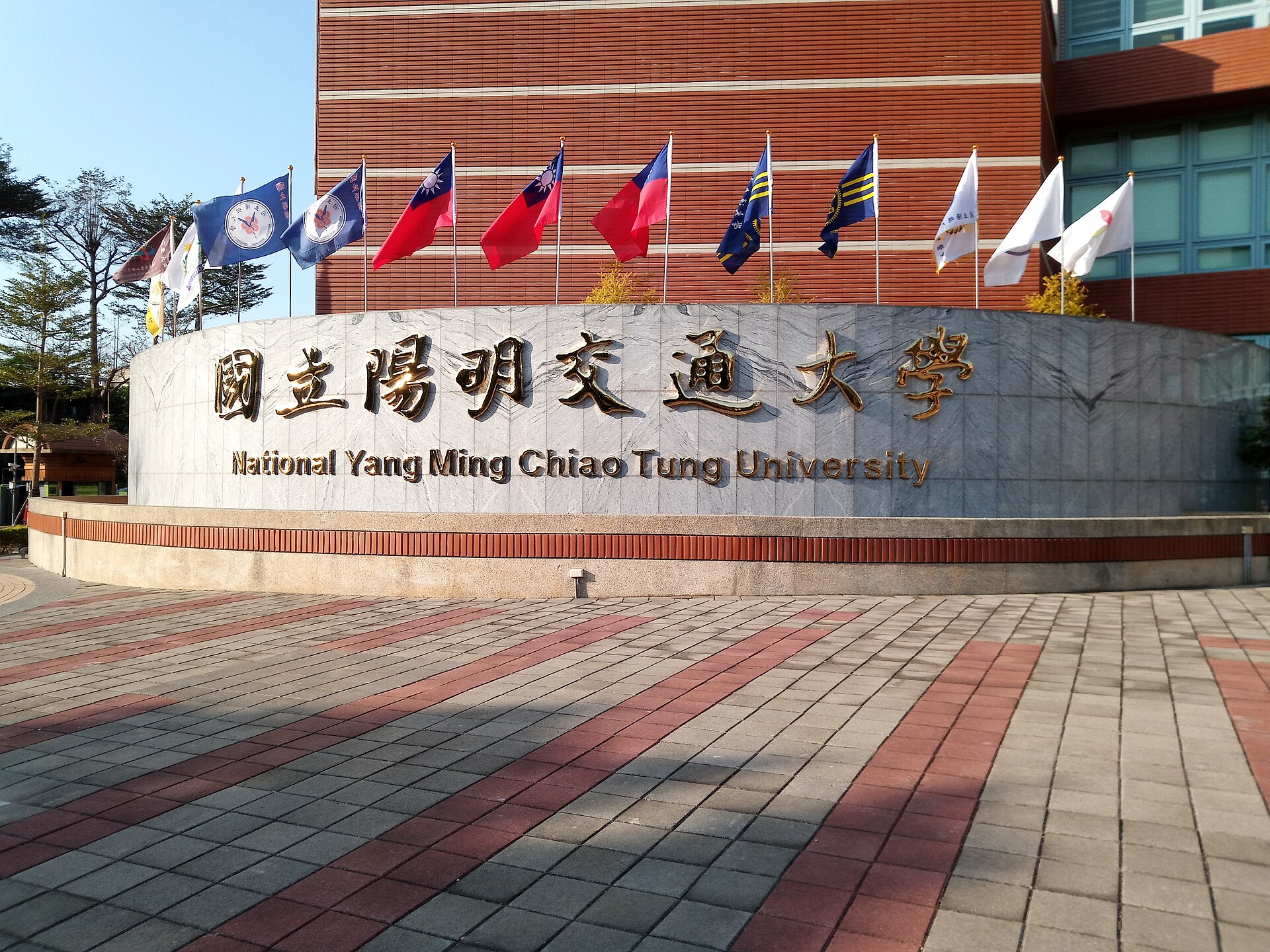
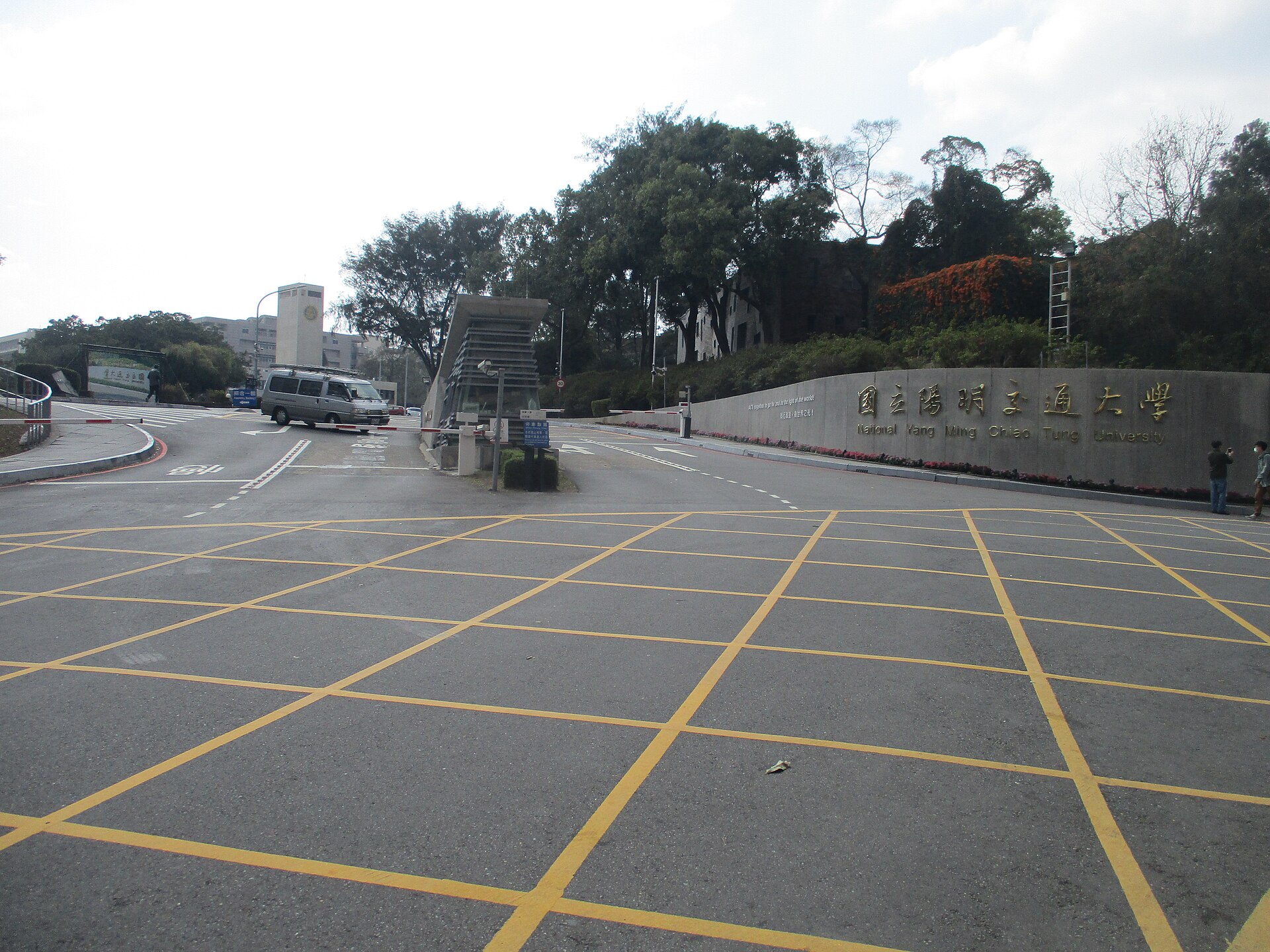
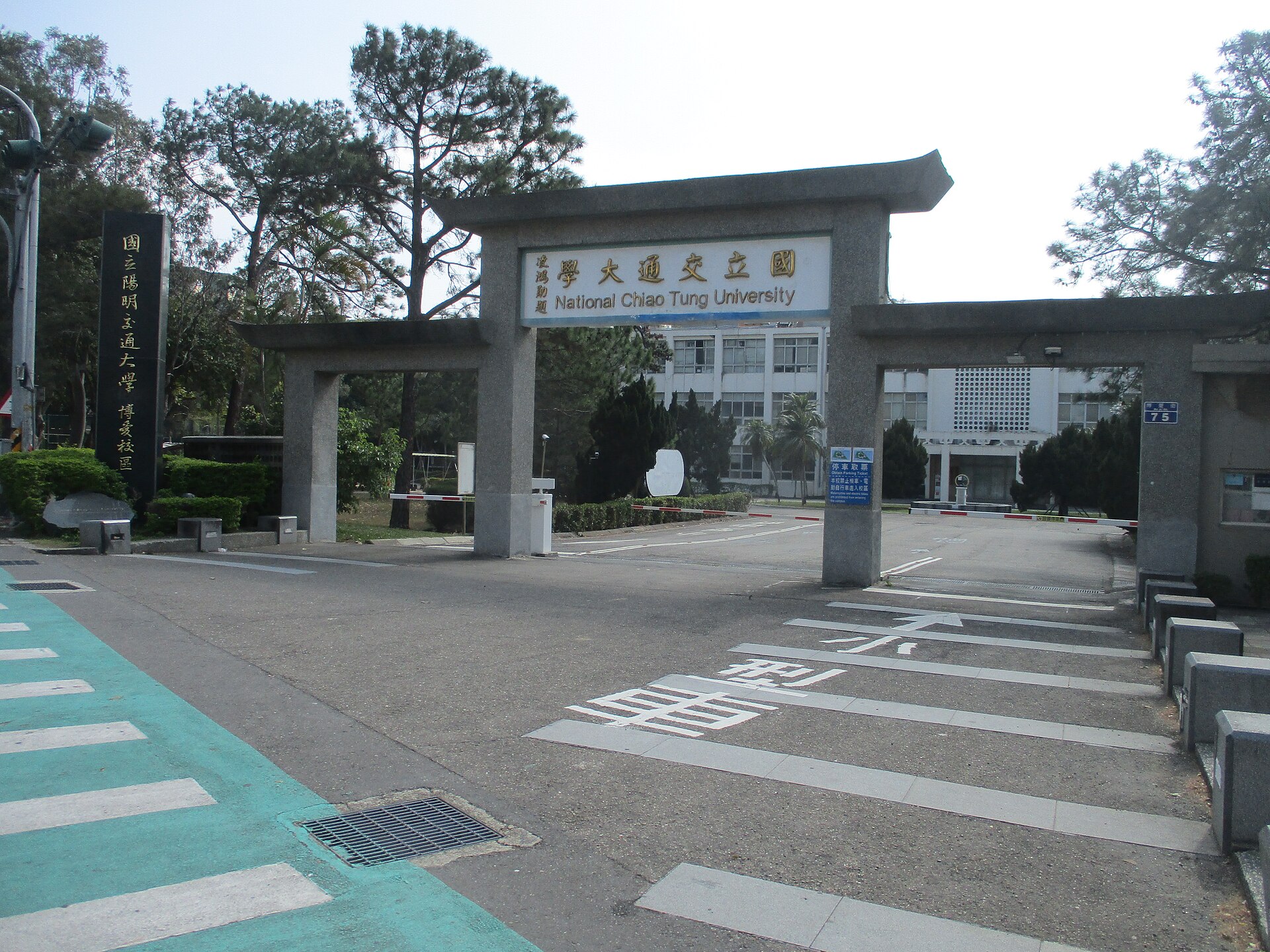
National Yang Ming Chiao Tung University — campus in pictures

Real, freely-licensed photographs of the campus (via Wikimedia Commons).
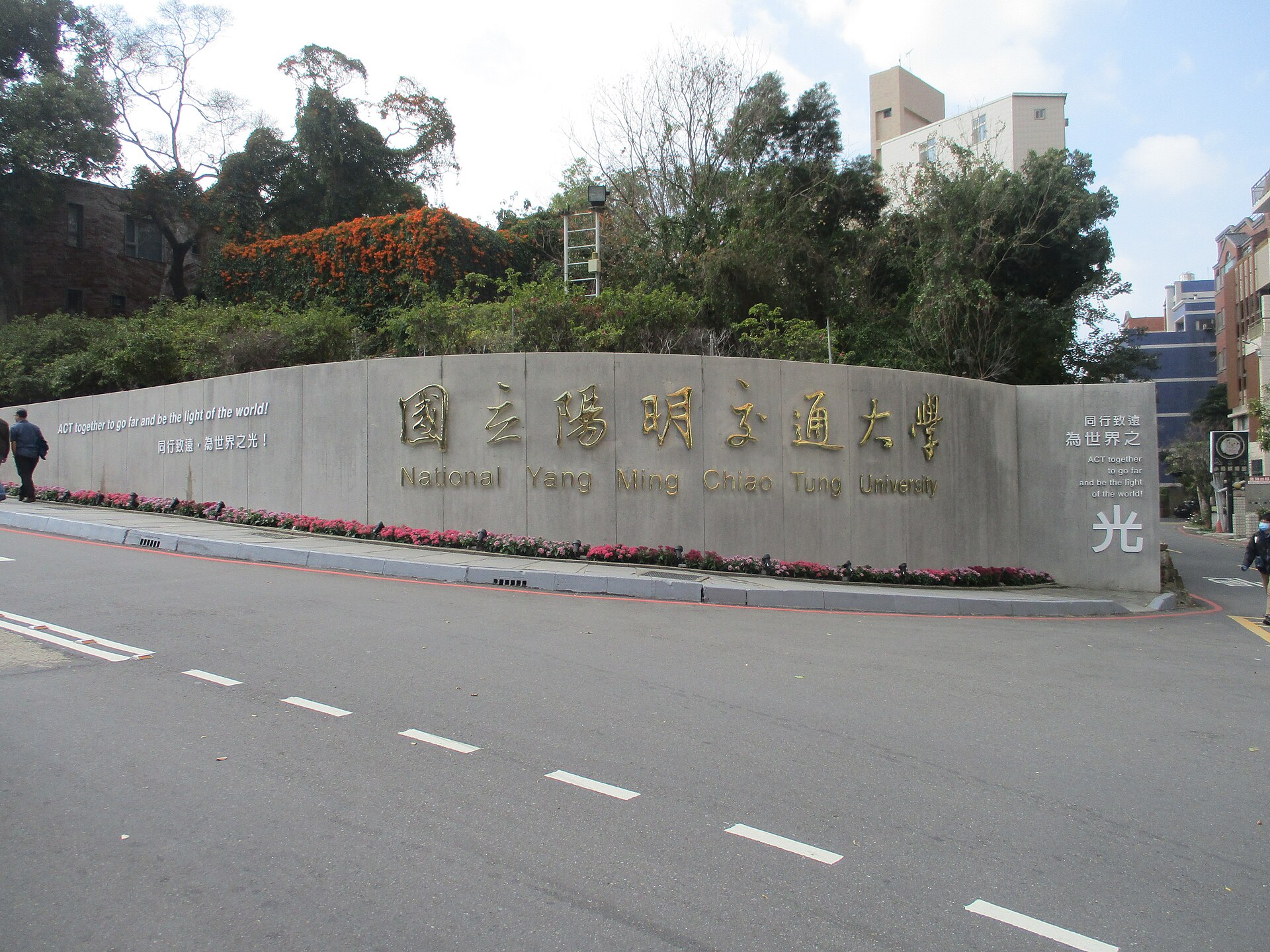
North Gate, National Yang Ming Chiao Tung University Kuang-Fu Campus
North Gate, National Yang Ming Chiao Tung University Kuang-Fu CampusT Gordon Cheng · CC BY-SA 4.0 · via Wikimedia Commons
​國立陽明交通大學陽明校區校門口。
​國立陽明交通大學陽明校區校門口。陳增澤 · CC BY-SA 4.0 · via Wikimedia Commons
National Chiao Tung University Kuang-Fu Campus‎ South Gate
National Chiao Tung University Kuang-Fu Campus‎ South GateT Gordon Cheng · CC BY-SA 4.0 · via Wikimedia Commons
National Yang Ming Chiao Tung University Kuang-Fu Campus‎ North Gate
National Yang Ming Chiao Tung University Kuang-Fu Campus‎ North GateT Gordon Cheng · CC BY-SA 4.0 · via Wikimedia Commons
National Chiao Tung University Boai Campus‎ North Gate
National Chiao Tung University Boai Campus‎ North GateT Gordon Cheng · CC BY-SA 4.0 · via Wikimedia Commons
National Yang Ming Chiao Tung University Kuang-Fu Campus‎ South Gate
National Yang Ming Chiao Tung University Kuang-Fu Campus‎ South GateT Gordon Cheng · CC BY-SA 4.0 · via Wikimedia Commons

Why NYCU — Semiconductors, Biomedicine & the Taiwan Advantage

NYCU is not just a top research university — it is the academic engine behind Taiwan's technology miracle. Its graduates power TSMC, MediaTek, and the world's semiconductor supply chain, while its medical alumni lead hospitals and research institutes across Asia.

01QS #191 — Taiwan's Second-Ranked University
Ranked #191 globally by QS World University Rankings and #2 in Taiwan, NYCU consistently leads in Engineering & Technology and Life Sciences. Its Electrical Engineering programme is among the strongest in Asia.
02Semiconductor Capital Access
NYCU sits adjacent to the Hsinchu Science Park, home to TSMC, UMC, and over 600 tech companies. Students gain unparalleled internship access and research collaboration with the companies manufacturing over 60% of the world's advanced chips.
03Dual Research Powerhouse
The 2021 merger united NCTU's electronics and computing heritage with NYMU's medical legacy. The result: 19 colleges, 74 research centres, and 7 national laboratories — rare breadth for a focused research university.
04Exceptional Value
Annual tuition of approximately USD 3,400 makes NYCU one of the most affordable research-intensive universities globally. Total cost of attendance including housing and living is estimated at around USD 10,000 per year.

NYCU Admissions Profile & Admissions Data

Stats

#191
QS World Ranking
#2
National Rank (Taiwan)
17,000
Student Population

Profile Stats

8%
International Students
90%
Graduate Employment Rate
Optional
Test Policy
6.0
IELTS Minimum (English programmes)
NYCU does not publish a single university-wide acceptance rate for international applicants. Admission is managed programme-by-programme through the Office of International Affairs.

Rea Vs Rd

Rd Label: February (Spring) Intake
Rd Value: Limited programmes
Rea Label: September (Autumn) Intake
Rea Value: Main intake — Jan–Mar window

NYCU Admissions Requirements — Academic Record, English Proficiency & Documents

Academic Record
Value: Top of class
  • No published GPA minimum — performance assessed programme-by-programme
  • Sustained excellence in mathematics and sciences for STEM programmes
  • Relevant subject depth (HL Maths, Physics for Engineering; Biology, Chemistry for Biomedical)
  • Academic transcripts from all previous institutions required, officially certified
NYCU evaluates academic credentials from your home country's education system directly. Strong, consistent performance in relevant STEM subjects is the primary academic criterion. There is no published minimum GPA, but competitive programmes are genuinely selective.
Standardised Tests
Value: Optional
  • SAT and ACT are not required for NYCU admission
  • Test policy is listed as optional — scores may be submitted as supplementary evidence
  • IELTS minimum 6.0 or TOEFL iBT 79 required for English-taught programmes
  • National exam results from your home system are the primary academic input
Unlike US universities, NYCU does not require or prioritise the SAT or ACT. English proficiency tests (IELTS or TOEFL) are required for English-medium programmes. Your home country's academic results — IB, A-Levels, national board exams — are used directly.
International Qualifications
Value: Varies by programme
  • IB Diploma: strong HL scores in relevant subjects recommended
  • A-Levels: very strong grades in discipline-relevant subjects
  • National board exams (CBSE, Korean CSAT, etc.) assessed on home-system basis
  • Research-based postgraduate: prior research experience and supervisor contact essential
NYCU explicitly accepts the IB Diploma, A-Level, and other internationally recognised qualifications. No published minimum point thresholds exist — contact the OIA or your target department for current expectations relevant to your qualification.

NYCU Application Components — Direct Portal, Study Plan & Documents

NYCU uses a direct application system managed by its Office of International Affairs (OIA). There is no centralised application platform. The application is document-driven — your academic credentials, English proficiency, and study plan are the core of what reviewers evaluate.

01RequiredOIA Online Application
Apply directly through NYCU's Office of International Affairs online portal at oia.nycu.edu.tw. There is no Common App, UCAS, or centralised platform. The portal opens each intake cycle — confirm the current window on the OIA website.
02RequiredAcademic Transcripts
Official transcripts from all previous institutions. Documents not in English or Chinese must be accompanied by certified translations. NYCU verifies academic credentials directly.
03RequiredGraduation Certificate / Diploma
Proof of completion of your qualifying qualification — secondary diploma for undergraduate, bachelor's degree certificate for postgraduate programmes.
04RequiredEnglish Proficiency Certificate
IELTS Academic (minimum 6.0 overall) or TOEFL iBT (minimum 79) for English-taught programmes. Students from English-medium secondary schools may apply for exemption — confirm with your target department.
05RequiredStudy Plan / Motivation Letter
Most programmes require a written Study Plan (學習計畫) explaining your academic background, research interests, reasons for choosing NYCU, and career goals. This is the closest equivalent to a personal statement and carries meaningful weight, particularly at postgraduate level.
06RequiredPassport Copy
A clear colour copy of your valid passport identity page. Ensure your passport remains valid throughout your intended period of study in Taiwan.
07Varies by ProgrammeLetters of Recommendation
Postgraduate applicants typically need two to three academic recommendations. Undergraduate requirements vary by department. Check your programme's specific admissions notice carefully.

NYCU Application Statement — Study Plan Strategy

Tips

Write to NYCU specifically — not generically
The most effective Study Plans reference NYCU's specific strengths: the Hsinchu Science Park proximity, named research centres, affiliated hospitals, or specific faculty. Generic motivations — 'I have always loved technology' — are the weakest possible submission.
For postgraduate: identify your supervisor first
NYCU's research-based master's and PhD programmes are supervisor-led. Email potential supervisors before applying, reference their published work, and describe your research interests specifically. A positive response dramatically strengthens your application.
Quality and clarity over length
The Study Plan is not a US-style personal essay. Reviewers want clear, professional writing that addresses the required content areas. One to three pages, well-structured, is far more effective than a long, unfocused document.
Connect your past to your programme
The strongest Study Plans trace a coherent line from your secondary school subject choices → prior research or project experience → your specific NYCU programme → your career direction. Specificity signals preparation and genuine intent.

Prompts

Study Plan / 學習計畫 (Undergraduate)
No fixed prompt. A Study Plan (學習計畫) covering: your academic background and preparation, reasons for choosing NYCU and your specific programme, learning goals during your degree, and future career or further study plans. Format and length set by each department — check the current admissions notice.
Research Proposal / Study Plan (Postgraduate)
A detailed research proposal or Study Plan covering: prior academic and research background, intended research area at NYCU, potential faculty supervisor(s), and career or research goals. Should demonstrate familiarity with current research in the field.
Portfolio / Supporting Materials (Optional)
Most departments allow or require a research or project portfolio for applicants with relevant prior experience. STEM projects, thesis abstracts, or competition results can be appended.
The most common NYCU application mistake. Writing a Study Plan so generic it could apply to any university — without a single reference to NYCU's specific programmes, research centres, or Science Park ecosystem.
https://oia.nycu.edu.tw/oia/ch/app/folder/382

What NYCU Admissions Is Looking For

NYCU's international admissions process is primarily academic-credential-based. Unlike US or UK universities, there is no holistic 'fit' review weighing extracurriculars, interviews, and personal narratives. Your academic record, English proficiency, and Study Plan are the three main inputs. Understanding what each reviewer is prioritising is the foundation of a strong application strategy.

01Strong STEM Academic Foundation
Engineering and CS programmes expect excellent performance in mathematics, physics, and relevant sciences throughout secondary school. Biomedical programmes look for strong biology and chemistry records. Consistent performance in rigorous subjects is the baseline expectation.
02Programme-Relevant Subject Depth
NYCU reviewers assess whether your subject choices align with your intended programme. An Engineering applicant with minimal mathematics coursework sends a misaligned signal. Depth in directly relevant subjects — IB HL Mathematics, A-Level Physics — is more meaningful than breadth.
03Clarity of Research Interest (Postgraduate)
Research-based master's and PhD applicants should demonstrate a specific, informed research interest that aligns with a faculty member's ongoing work. Vague interest statements are significantly weaker than proposals that name a research question and cite relevant literature.
04English Proficiency
For English-medium programmes, the quality of your written English — in the Study Plan, transcripts, and supporting documents — signals whether you can succeed in an English-taught academic environment. Minimum scores (IELTS 6.0 / TOEFL 79) are floors, not targets.
05Genuine Motivation for NYCU
A Study Plan that demonstrates real knowledge of NYCU's programmes, research environment, and industry ecosystem is far more compelling than a generic statement of interest. Reviewers can recognise — and are underwhelmed by — applications that treat NYCU as interchangeable with any other university.
06Completeness and Professional Presentation
Document-based applications live or die on completeness. Missing documents, untranslated certificates, or poorly presented materials create administrative barriers that delay or disqualify applications. Professional, complete, carefully prepared submissions signal the organised approach NYCU's research environment demands.

NYCU Financial Aid & Scholarships for International Students

As a Taiwanese public university, NYCU charges remarkably low tuition compared to peers in the US, UK, or Singapore. International students access funding primarily through government scholarships — particularly the Taiwan Ministry of Education Scholarship Program — and NYCU institutional awards. There is no need-blind or full-need institutional aid programme comparable to US universities.

Cost figures are from the university facts file and are approximate annual estimates. Individual costs vary by programme, campus, and lifestyle. Confirm current fee schedules at oia.nycu.edu.tw.

Stats

~USD 3,400
Approximate annual tuition (international)
~USD 10,000
Estimated total cost of attendance
Tuition + stipend
Taiwan Scholarship Program
90%
Graduate employment rate (reported)

Contribution Tiers

NoteRangePercentPercent Value
Main government merit award — covers tuition + monthly stipendTaiwan MOE ScholarshipFull tuition100
Targets Southeast Asian students; New Southbound Policy initiativeYushan ScholarshipPartial–full75
Department and college-level awards; amounts vary by yearNYCU Institutional AwardsPartial50
Rotary and private donor awards listed on OIA scholarship boardExternal Donor AwardsSupplementary25
PhD supervisor fellowships can cover tuition and stipend for research studentsResearch Supervisor FellowshipsFull (research track)90
How NYCU Funding Works. NYCU does not operate a US-style need-based financial aid system. Funding for international students is primarily through merit-based scholarships — from NYCU and the Taiwanese government — and Taiwan's dramatically lower cost base. The most impactful funding pathway is the Taiwan Scholarship Program, administered by the Ministry of Education, which can cover tuition and a monthly living stipend for qualifying applicants.

Key Dates

September Intake Application Window
Date: Typically Jan–Mar
September Intake Decisions
Date: Typically Apr–May
February Intake Application Window
Date: Typically Sep–Oct
February Intake Decisions
Date: Typically Nov–Dec

Advantages

  • September is the main intake — the widest programme selection is available
  • Applying in January–February gives maximum time to prepare documents and English test scores
  • Most scholarships (Taiwan MOE, Yushan) align with the September intake cycle
  • More faculty available to respond to pre-application contact in the spring
  • Result in April–May leaves time to arrange visa, housing, and relocation before September

Disadvantages

  • February intake has a significantly narrower programme selection
  • Scholarship programmes may not align with the February cycle — check eligibility carefully
  • Less time between offer and start for February admits to arrange logistics
  • Some research programmes and supervision arrangements are structured for the September start
  • Late October application deadlines for February may conflict with university exam periods
September vs. February Intake. NYCU offers two annual intakes: September (the main intake) and February (limited programmes). Unlike US universities with restrictive early/regular decision rounds, NYCU's application is direct and rolling within each intake window. Most international students should target the September intake.
Tychr's Intake Recommendation. Apply for the September intake unless you have a compelling programme-specific reason to start in February. The September cycle has broader programme availability, better alignment with scholarship calendars, and the most established support for arriving international students. Always confirm exact dates for the current cycle at oia.nycu.edu.tw.
Why September Is Usually the Right Choice
NYCU Application Rounds — September vs. February Intake

NYCU Interviews — What to Expect

NYCU does not conduct standard alumni interviews or formal admissions interviews for undergraduate international applicants — admission is document-based. At postgraduate level (master's and PhD), some departments hold informal or formal interviews, particularly for research-based programmes. These are conducted by faculty members and focus on research fit and technical preparation. If your target department indicates an interview, treat it as a research alignment conversation rather than a holistic character assessment.

Meta

Not standard for undergraduate admissions; varies by department at postgraduate level
Format
Faculty members or department admissions committees (postgraduate)
Who conducts interviews
Research fit, language ability, technical preparation (postgraduate)
What it evaluates
Formal interviews are not a standard component — document-based review is the norm
Undergraduate applicants

Questions

Why did you choose this specific programme at NYCU?
Tip: Be specific about the programme curriculum, named labs, or affiliated research centres — not just 'NYCU is highly ranked'.
Describe your most relevant technical or research experience.
Tip: Describe a specific project, competition, or research experience. Concrete examples carry far more weight than general statements of enthusiasm.
Which faculty member's work are you interested in, and why?
Tip: Research your potential supervisor's recent publications before any interview. Name specific papers and explain why the research direction interests you.
What research question would you want to explore at NYCU?
Tip: Show you understand the programme's research areas and have a direction — even if the specific question is still forming.
Are you prepared to live and study in Taiwan? What do you know about the environment?
Tip: Demonstrate you understand the Taiwan context — language, culture, working environment in Hsinchu or Taipei — and have prepared for it.

NYCU Dormitories & Student Residential Life

NYCU's residential system operates across its two campuses — Hsinchu (Chiao Tung) and Taipei/Beitou (Yangming). Unlike Harvard's house lottery, NYCU assigns dormitory accommodation based on campus, programme, and student category. International students are given priority for on-campus housing, particularly in the first year.

Houses

Chiao Tung Campus Dormitories
Tag: Hsinchu
Engineering, CS, Management — Science Park corridor, industry networking
Yangming Campus Dormitories
Tag: Taipei
Medicine, Biomedical — Beitou mountain district, hospital access
Graduate Student Housing
Tag: Graduate
Research-focused graduate students; both campuses; priority for international students
International Student Housing
Tag: International
Dedicated blocks on both campuses; priority allocation for new international arrivals

Lottery Steps

  • Apply for dormitory housing through the OIA when you receive your admission offer — demand is high, apply immediately
  • Hsinchu campus housing is assigned to engineering, CS, photonics, management, and related programme students
  • Yangming campus housing serves medicine, biomedical, nursing, and life sciences students in Beitou, Taipei
  • International students have dedicated housing allocations with priority over domestic students for first-year placement
  • Graduate students typically access separate graduate student housing blocks; confirm availability with your department
  • Off-campus housing in Hsinchu and Beitou is available and affordable — OIA maintains a housing resource list

NYCU Colleges & Academic Programmes

College of Electrical and Computer Engineering
Label: Core NYCU Strength
  • {"label":"Flagship discipline","value":"Electrical Engineering"}
  • {"label":"Key programmes","value":"EE, Computer Engineering, Photonics"}
  • {"label":"Industry link","value":"Hsinchu Science Park / TSMC"}
  • {"label":"Research profile","value":"Semiconductors, photonics, communications"}
NYCU's founding strength. EE and Computer Engineering graduates are the dominant talent pipeline for Taiwan's semiconductor and electronics industry. Research centres in photonics and communications are internationally recognised.
College of Computer Science
Label: AI & Software
  • {"label":"Key programmes","value":"CS, AI, Data Science, Cybersecurity"}
  • {"label":"Industry link","value":"Global tech + Taiwan AI initiatives"}
  • {"label":"Graduate pathway","value":"MS/PhD in CS, AI"}
  • {"label":"Campus","value":"Chiao Tung (Hsinchu)"}
A rapidly growing college reflecting Taiwan's national investment in AI and computing. Strong graduate programme with connections to global tech companies and Taiwan's AI development ecosystem.
College of Medicine
Label: Yangming Campus
  • {"label":"Key programmes","value":"Medicine (M.D.), Nursing, Public Health"}
  • {"label":"Clinical training","value":"Affiliated Taipei hospitals"}
  • {"label":"Campus","value":"Yangming (Taipei/Beitou)"}
  • {"label":"International intake","value":"Limited — confirm current policy"}
The former National Yang-Ming University's medical core. Clinical training takes place at NYCU-affiliated hospitals across Taipei. International admission to the M.D. programme is limited and should be confirmed directly with the college.
College of Biological Science and Technology
Label: Biomedical Research
  • {"label":"Key programmes","value":"Biomedical Engineering, Biotechnology"}
  • {"label":"Research focus","value":"Genomics, biotech, clinical engineering"}
  • {"label":"Campus","value":"Yangming + Chiao Tung"}
  • {"label":"Industry link","value":"Taiwan biotech sector"}
Spans both campuses. Strong interdisciplinary profile combining the former NYMU's life science heritage with NCTU's biomedical engineering expertise. Excellent platform for graduate research in biotech and clinical applications.
College of Management
Label: Business & Engineering
  • {"label":"Key programmes","value":"Management Science, Finance, Transportation"}
  • {"label":"Distinctive strength","value":"Technology management"}
  • {"label":"Campus","value":"Chiao Tung (Hsinchu)"}
  • {"label":"Industry link","value":"Science Park supply chain management"}
Technology-focused management education with deep ties to the Hsinchu industrial ecosystem. Transportation and logistics programmes are internationally recognised in Asia.
College of Semiconductor Research
Label: National-Level Priority
  • {"label":"Flagship programme","value":"Semiconductor Engineering"}
  • {"label":"National designation","value":"Taiwan National Semiconductor Research College"}
  • {"label":"Industry partner","value":"TSMC, UMC, ASE"}
  • {"label":"Focus","value":"Advanced node process, packaging, design"}
A newly established national priority college focused on semiconductor engineering in direct collaboration with Taiwan's chip industry. Receives dedicated government investment under Taiwan's semiconductor talent development strategy. One of the world's few institutions with this level of direct industry integration.

Research & Extracurricular Opportunities at NYCU

Industry-Linked Research Centres
Category: Research
NYCU operates 74+ research centres in areas spanning semiconductors, photonics, AI, biomedical engineering, and transportation. International students at postgraduate level can engage directly with faculty research from enrolment. Many centres maintain formal partnerships with Science Park companies.
Hsinchu Science Park Internships
Category: Industry Engagement
The Science Park's proximity to campus makes NYCU unique. TSMC, MediaTek, Novatek, and 600+ other firms actively recruit NYCU students for internships and full-time roles. Engineering and CS students gain access to working environments that are unavailable at most universities in the world.
International Student Association & Cultural Events
Category: Student Life
The NYCU OIA coordinates orientation programmes, Mandarin language classes, cultural events, and buddy schemes pairing new internationals with Taiwanese students. The international student community of approximately 8% is active and supported across both campuses.
National Laboratory Access
Category: Research Infrastructure
NYCU faculty direct 7 national laboratories, giving graduate students access to research infrastructure that is rare even among well-funded global research universities. Areas include nano-electronics, photonics, computational neuroscience, and biomedical imaging.
Scroll right to explore NYCU's research programmes and student life opportunities.

Career Outcomes & NYCU Alumni Network

NYCU's location at the nexus of Taiwan's technology and biomedical industries is its defining career asset. The university reports a 90% graduate employment rate, with average starting salaries of approximately USD 25,000 per year — competitive within Taiwan and increasingly significant for roles at international tech companies. A significant portion of NYCU undergraduates also proceed to competitive graduate programmes in the US, Europe, and Japan.

Stats

90%
Graduate employment rate (reported by NYCU)
~USD 25,000
Average starting salary (annual estimate)
8%
International students in total enrolment
#191
QS World Ranking

Categories

Semiconductors & Electronics
TSMC, MediaTek, Realtek, Novatek, ASE Group — NYCU graduates dominate Taiwan's semiconductor industry, from chip design and process engineering to advanced packaging and embedded systems.
Software, AI & Global Tech
Google, Microsoft, Meta, and major Taiwanese tech companies actively recruit NYCU CS and EE graduates. The university's AI and computing programmes feed into global software engineering and data science roles.
Biomedical & Healthcare
NYCU-affiliated hospitals, biotech firms, and clinical research institutes across Taiwan and Asia provide pathways for Biomedical Engineering and Life Sciences graduates into clinical, research, and industry roles.

Tychr Students at NYCU & Taiwan's Top Universities

Karan S.
I applied to NYCU's EE programme with an IB diploma and wasn't sure how it would be evaluated. Tychr helped me frame my Study Plan around NYCU's semiconductor research specifically — I referenced two faculty papers and described my electronics project experience. I received my offer within six weeks of applying.
Country: India
Program: Electrical Engineering
Class Year: Class of 2026
Residential: Chiao Tung Campus
Academic Profile: IB 40 · HL Mathematics, Physics, Computer Science
Mei-Lin T.
Getting into NYCU's Biomedical Engineering master's required me to contact a supervisor first. Tychr coached me on how to write that initial email — specific, concise, referencing the professor's latest publication. She agreed to supervise me, and the formal application was largely a formality after that.
Country: Malaysia
Program: Biomedical Engineering (Master's)
Class Year: Class of 2025
Residential: Yangming Campus
Academic Profile: Bachelor's in Life Sciences, First Class Honours
Park J.
I was drawn to NYCU's CS and AI programme specifically because of the Science Park access. Tychr helped me understand that NYCU's admissions team wants to see concrete motivation — I wrote about MediaTek's AI chip work and how NYCU's research pipeline connects to it. That specificity stood out.
Country: South Korea
Program: Computer Science & AI
Class Year: Class of 2027
Residential: Chiao Tung Campus
Academic Profile: Korean CSAT top 3% · Strong IELTS 7.0

Faqs

Do I apply through Common App or another centralised platform?+

No. NYCU does not use Common App, UCAS, or any external centralised system. International students apply directly through the NYCU Office of International Affairs (OIA) online portal at oia.nycu.edu.tw. Each programme may have slightly different requirements, so always check the specific admissions notice for your department and intake.

Which campus will I study on — Hsinchu or Taipei?+

This depends on your programme. Engineering, computer science, management, semiconductor, and technology programmes are based on the Chiao Tung Campus in Hsinchu. Medicine, nursing, biomedical sciences, and life sciences are based on the Yangming Campus in Taipei (Beitou). Some interdisciplinary programmes involve both campuses. Confirm with your target department.

Are programmes taught in English?+

Many graduate programmes are offered in English, particularly in Engineering, Computer Science, and selected Biomedical fields. However, a significant number of undergraduate-level courses are taught in Mandarin. Always verify the language of instruction for your specific programme before applying — do not assume an English-medium environment without confirming.

Do I need to take the SAT or ACT?+

No. The SAT and ACT are not required for NYCU admissions. NYCU's test policy is listed as optional — international applicants are assessed on their academic credentials from their home country's education system. English proficiency (IELTS or TOEFL) is required for English-taught programmes, but this is a language test, not a US admissions test.

Is there a minimum GPA requirement?+

NYCU does not publish a single university-wide minimum GPA. Each department sets its own standards, and competitive programmes are genuinely selective. Strong academic performance in relevant subjects — especially mathematics and sciences for STEM programmes — is expected. Contact your target department directly for current expectations.

Are there scholarships available for international students?+

Yes. The primary scholarship pathway is the Taiwan Scholarship Program from the Ministry of Education, which covers tuition and a monthly stipend for qualifying students. The Yushan Scholarship targets students from Southeast Asian countries. NYCU also offers some institutional awards. Check oia.nycu.edu.tw and the official Taiwan MOE scholarship portal for current listings and deadlines.

Should I contact a faculty member before applying to a master's or PhD?+

Yes — strongly recommended, and in practice often essential. Email potential supervisors with your CV and a brief description of your research interests, referencing their specific work. A positive response dramatically improves your chances, and some departments treat supervisor confirmation as a de facto requirement for research-based postgraduate applications.

Is housing guaranteed for international students?+

NYCU prioritises housing allocation for new international students, particularly in the first year. Apply for dormitory housing immediately upon receiving your admission offer — spaces are limited. Off-campus housing in Hsinchu and Taipei is available and reasonably priced compared to most major cities in the Asia-Pacific region.

Book a Free NYCU Admissions Strategy Session

In 60 minutes our NYCU admissions specialists will evaluate your academic profile, advise on programme selection between Hsinchu and Yangming campuses, coach your Study Plan and supervisor outreach, and identify your best scholarship pathway through Taiwan's MOE and NYCU institutional awards.

  • No commitment required
  • Taiwan and Asia-Pacific admissions specialists
  • Personalised strategy — Study Plan, supervisor contact, scholarships
Getting into NYCU is not just about grades — it's about demonstrating that you belong in Asia's most important technology and biomedical research ecosystem.

NYCU Admissions Requirements

NYCU Academic Requirements — The Honest Breakdown for International Students

What academic profile do NYCU-admitted international students actually have? How does NYCU evaluate IB, A-Level, and other international qualifications? And what does it mean for your preparation strategy that SAT and ACT scores are not part of the equation?

#191
QS World Ranking
2025 global ranking
#2
National Rank (Taiwan)
Among all Taiwan universities
6.0
IELTS Minimum
English-taught programmes
79
TOEFL iBT Minimum
English-taught programmes
Optional
Test Policy
SAT/ACT not required
USD 65
Application Fee
International applicants

GPA & Academic Record

Academic Performance at NYCU — What the Data Shows

NYCU does not publish a minimum GPA for international students. Admission is managed programme-by-programme through departmental review. In practice, competitive STEM programmes expect strong, consistent academic performance in relevant subjects throughout secondary school — not just in the final year.

Strong grades in relevant subjects are a baseline expectation, not a distinguishing feature by themselves. What elevates competitive NYCU applicants is the combination of strong academic performance in rigorous, discipline-relevant courses, a clear and specific study plan, and — for postgraduate applicants — prior research or project experience.

Programme-specific
No published minimum GPA — competitive performance in relevant subjects expected
90%
Graduate employment rate — reflecting academic preparation quality
What this means for international students. International students from systems without formal class rank (IB, UK A-Levels, Korean CSAT, Indian boards) are evaluated on their academic results in the context of their national system's norms. NYCU's OIA has experience assessing qualifications from across Asia, Europe, and beyond — contact the OIA directly for guidance on how your specific qualification is evaluated.
Grade trajectory matters. A student whose grades show a consistent upward trajectory — improving in relevant STEM subjects over the secondary school years — reads differently from one whose grades have plateaued or declined. NYCU reviewers assess the full transcript, not just the most recent results. An early weaker period followed by sustained excellence is context, not disqualification.

Academic Context

School Context and National Systems — How NYCU Reads Academic Performance

NYCU does not require class rank, and many international schools do not provide it. NYCU's admissions staff are experienced at evaluating academic performance across diverse national systems — from the IB Diploma to Korea's CSAT to India's CBSE board examinations.

How NYCU contextualises your academic record
Every application is evaluated with reference to the specific qualification and national context. A student from an IB school in Singapore is evaluated differently from one sitting the Taiwan Gaokao or the Indian CBSE boards. NYCU's OIA is familiar with the major international qualification systems and evaluates academic performance accordingly. For less common qualification systems, the OIA evaluates equivalency on a case-by-case basis.
What this means practically
Taking the most rigorous courses available within your system — IB Higher Level subjects, A-Level sciences and mathematics, advanced national board exam tracks — is more meaningful than achieving top grades in less demanding options. NYCU's programme reviewers understand the difference between grade-optimised course selection and genuinely challenging preparation.
For students from less commonly represented systems. If you are applying from a less well-known school or a less commonly represented national education system, it is worth contacting the NYCU OIA directly before submitting your application. A brief inquiry about how your specific qualification is assessed — and what additional documentation may strengthen your file — can prevent misunderstandings and ensure your application is fairly evaluated.

SAT at NYCU

SAT Scores at NYCU — Not Required, Not the Focus

NYCU does not publish SAT score bands for admitted students because the SAT is not a required or primary input in the international admissions process.

LabelScorePercent
SAT requiredNo0
SAT used as primary criterionNo0
SAT accepted as supplementaryOptional50
What matters instead: mathematics in the transcript. For STEM-focused applicants, strong mathematical preparation is critical — but this is demonstrated through your secondary school mathematics courses (IB HL Mathematics, A-Level Further Mathematics, advanced national board maths tracks), not through a standardised test score. NYCU reviewers focus on mathematics coursework in your transcript, not a single test day score.
Strategy for applicants with SAT scores. If you have strong SAT scores already (1450+), you may include them as supplementary evidence. However, do not spend significant preparation time on SAT if you do not already have strong scores — the same time is better invested in strengthening your English proficiency score (IELTS/TOEFL), which is an actual requirement for English-taught programmes.
Where to focus your preparation energy. The SAT is irrelevant to NYCU's core evaluation process. Your IELTS or TOEFL score is the English language assessment that directly affects eligibility for English-taught programmes. Prioritise achieving a strong IELTS (6.5+) or TOEFL iBT (90+) score over any standardised test preparation for a US audience.

ACT at NYCU

ACT at NYCU — Not Part of the Process

The ACT is not used in NYCU's international admissions process. Like the SAT, it is not required, not listed as a criterion in departmental admissions notices, and not part of the academic evaluation framework.

Metrics

ACT required
Score: No
ACT considered
Score: Optional supplement only

Comparison Cards

SAT vs. ACT for NYCU
For NYCU: neither is used. Both are supplementary at most. The IELTS and TOEFL are the relevant standardised tests.
What NYCU uses instead
NYCU assesses academic preparation through your national secondary qualification — not a single standardised test score.
Dual-application strategy
If you are applying to both NYCU and US universities, your SAT/ACT preparation for US schools is still valuable — just not for NYCU.
Superscore Policy. NYCU does not maintain superscore policies for either the SAT or ACT because these scores are not part of the standard international admissions process. Superscore policies are irrelevant to a Taiwan direct-application framework.
Tychr's Recommendation. If you are applying exclusively to NYCU and similar Asian universities, do not invest preparation time in the SAT or ACT. Invest instead in your IELTS or TOEFL preparation and in developing a strong Study Plan that demonstrates genuine motivation and programme fit.

Test Policy

NYCU Test-Optional Policy — What It Actually Means

NYCU lists its test policy as 'optional' for international students. Understanding what this means in practice — and how to allocate your preparation time — is important for international applicants who may be comparing NYCU with US or UK universities that use standardised tests more prominently.

Submit Items

You have a strong SAT score (1450+) from US-curriculum preparation and want to include it as supplementary context for a STEM programme.
You are applying to multiple universities (including US schools) and have recent strong scores already prepared.

Withhold Items

You would need to prepare specifically for the SAT or ACT — invest that time in IELTS/TOEFL preparation instead.
Your scores are below competitive US-university thresholds and would not add positive information to your file.
What 'optional' means at NYCU. Optional in NYCU's context means the SAT and ACT are neither required nor a meaningful factor in the international admissions decision. Academic credentials from your national system and your English proficiency score (IELTS/TOEFL) are the relevant standardised inputs. The 'optional' classification reflects NYCU's awareness of applicants coming from US-curriculum schools who may have SAT scores — it does not represent a test-optional movement in the way that phrase is understood in American higher education.
The critical difference from US test-optional. Unlike US test-optional schools where 'optional' still signals that submitted scores carry weight, at NYCU, the SAT/ACT play no meaningful role in the international admissions decision either way. The relevant 'test' for NYCU's purposes is your national secondary qualification and your English proficiency examination.

International Qualifications

IB, A-Level & Other Qualifications at NYCU — Specific Benchmarks

IB Diploma
Note: What NYCU values in IB applicants: subject selection that demonstrates discipline-relevant preparation. Engineering and CS applicants with IB HL Mathematics: Analysis & Approaches plus HL Physics or HL Computer Science signal the mathematical and technical foundation these programmes expect. The Extended Essay is noted as evidence of independent research capability, particularly valued at postgraduate level.
  • {"label":"Recommended for Engineering/CS","value":"HL Mathematics (Analysis & Approaches), HL Physics or HL Computer Science"}
  • {"label":"Recommended for Biomedical/Life Sciences","value":"HL Biology, HL Chemistry; HL Mathematics beneficial"}
  • {"label":"Total points","value":"No published minimum — strong overall profile in relevant HLs expected"}
  • {"label":"Extended Essay","value":"Research-oriented EE in a relevant subject strengthens postgraduate applications"}
A-Levels
Note: A-Levels are well-recognised at NYCU. For Engineering and EE programmes, Mathematics, Further Mathematics, and Physics at A-Level demonstrate the quantitative preparation expected. For Biomedical applicants, Biology and Chemistry A-Levels are core. Very strong grades (A/A* range across three relevant subjects) are advisable for competitive programmes.
  • {"label":"Engineering/EE recommended","value":"Mathematics, Further Mathematics, Physics — A/A* range"}
  • {"label":"Biomedical recommended","value":"Biology, Chemistry; Mathematics beneficial — A/A* range"}
  • {"label":"CS recommended","value":"Mathematics, Further Mathematics, Computer Science — A/A* range"}

AP Exams

AP Exams at NYCU — Supplementary, Not Primary

AP Exams are not a primary element of NYCU's international admissions process, but students on US curriculum tracks who have strong AP results in STEM subjects can include them as supplementary evidence of academic rigour.

Relevant AP results for NYCU STEM programmes
AP Calculus BC (5), AP Physics C (5), AP Chemistry (5), AP Computer Science A (5) — these are the AP results that add meaningful signal for NYCU Engineering and CS applicants. AP scores in humanities subjects add less specific value for STEM-focused programmes.
AP credit policy
NYCU does not grant formal course credit for AP scores in the same way US universities do. AP results are supplementary evidence of academic preparation, not a pathway to advanced course standing.
IB/A-Level students: no need to add AP
For students on IB or A-Level tracks, the IB/A-Level results are the primary qualification — do not supplement with AP exams unless you are already on a US curriculum. NYCU evaluates each qualification in its proper context.
NYCU does not publish an AP credit equivalency table. Students interested in advanced standing based on prior qualification results should contact their target department directly after receiving an admission offer.
International students outside the US curriculum system should not attempt to add AP examinations to their application. NYCU's reviewers evaluate each qualification appropriately within its national system context — a student on the IB should maximise their IB performance, not add an AP examination that is external to their curriculum.

Academic Rigour

Rigour of Secondary School Record — NYCU's Most Important Academic Criterion

Academic preparation rigour is the most important element of an NYCU international admissions file. Reviewers assess whether a student has genuinely challenged themselves in subjects relevant to their intended programme — not simply whether they have achieved high grades in comfortable courses.

Taking the most demanding courses available in your system in the subjects that are directly relevant to your NYCU programme.

The contextual element. Rigour is always evaluated relative to what was available and appropriate for the student's context. A student from a school offering only the standard national curriculum is evaluated differently from one with access to the IB Diploma or A-Level programmes. What matters is whether the student challenged themselves appropriately within their system.
What rigour means for NYCU. An Engineering applicant who took the highest available mathematics and physics courses — and performed strongly — has demonstrated the academic preparation NYCU's programmes demand. A student who avoided challenging mathematics courses but achieved high grades in other subjects sends a misaligned signal for a mathematically intensive programme.
What NYCU programme reviewers are looking for. NYCU's programme reviewers look for coherence between subject choices and intended programme. An EE applicant with IB HL Mathematics AA and HL Physics demonstrates preparation. An EE applicant who took mathematics at Standard Level to protect their GPA signals grade optimisation over genuine preparation. The choice of courses tells reviewers as much as the grades achieved.

Subject Preparation

Subject Preparation — What NYCU's Core Programmes Expect

NYCU's core programmes — Electrical Engineering, Computer Science, Biomedical Engineering, and Semiconductor Technology — have specific subject preparation expectations. Understanding these before applying (and building toward them in secondary school) is the foundation of a competitive profile.

Mathematics
IB Mathematics: Analysis & Approaches (HL) or A-Level Mathematics + Further Mathematics is strongly recommended for Engineering, CS, Semiconductor, and Photonics programmes. Calculus, linear algebra, and probability theory are first-year curriculum foundations — students without HL-equivalent mathematics preparation will find the transition demanding.
Physics & Electrical Sciences
HL Physics (IB) or A-Level Physics is expected for Electrical Engineering, Photonics, and Electronics applicants. Strong understanding of electromagnetism, wave physics, and optics from secondary school is the expected baseline. Students with weaker physics backgrounds should consider whether programme expectations align with their preparation.
Biology & Chemistry (Biomedical Track)
For Medicine, Biomedical Engineering, Biotechnology, and Life Sciences: HL Biology and HL Chemistry (or A-Level equivalents) are expected. Biochemistry knowledge at secondary or early undergraduate level is advantageous. Medicine international intake should be confirmed directly with the College of Medicine — admission of international students to the M.D. programme is limited.
Computer Science & Programming
CS and AI applicants with prior programming experience (Python, C++, Java) and comfort with discrete mathematics, algorithms, and data structures will find NYCU's undergraduate curriculum more accessible from day one. This is not published as a formal requirement, but reflects the practical reality of a competitive, technically demanding programme.

English Language Proficiency

English Language Requirements for International Students at NYCU

NYCU requires proof of English proficiency for applicants to English-medium programmes. The thresholds below come from the university's confirmed data. Individual departments may set higher thresholds, and students from English-medium education backgrounds may qualify for exemptions.

The IELTS 6.0 and TOEFL 79 minimums are floors, not targets. Competitive programmes in Engineering, CS, and Biomedical Engineering attract applicants with significantly higher scores. A score at the minimum threshold may be sufficient for eligibility but may not strengthen your application relative to other candidates. Aim for IELTS 6.5–7.0 or TOEFL 90+ for competitive positioning.

Test: IELTS Academic
Score: 6.0 minimum
Test: TOEFL iBT
Score: 79 minimum
Test: Duolingo English Test
Score: Not specified — confirm with department
Exemptions and waivers. Students who completed their entire secondary or undergraduate education in English (IB in English, A-Levels at an English-medium school, bachelor's degree at an English-language university) may apply for a language proficiency exemption. The exemption criteria are set by each department — confirm directly before applying without a formal test score. Having a test score is always the safest approach.

By Programme

Academic Requirements by Programme — What Different Disciplines Expect

NYCU's programme-specific requirements are set by individual colleges and departments. The table below reflects typical expectations based on published curriculum content and NYCU's academic profile. Always verify current requirements in your target programme's admissions notice.

SignalsExpectationConcentration
HL Maths performance; electronics competition; programming projectsIB HL Maths AA / A-Level Maths + Further Maths; HL or A-Level PhysicsElectrical Engineering
Coding projects; USACO/IOI participation; algorithm backgroundStrong mathematics background; programming experience strongly recommendedComputer Science / AI
Physics Olympiad; semiconductor interest; lab experienceHL Maths + HL Physics; strong physics and materials backgroundSemiconductor Engineering
Photonics/optics background; HL Physics performanceHL Maths + HL Physics; optics and wave physics preparationPhotonics
Biology/chemistry research; science fair; HL Bio and ChemHL Biology + HL Chemistry (IB) or equivalent A-LevelsBiomedical Engineering
Lab experience; HL Sciences; research interestHL Biology, HL Chemistry; HL Mathematics beneficialBiotechnology / Life Sciences
Clinical interest; strong sciences across biology, chemistry, physicsStrong HL Sciences across three subjects; Medicine programme — confirm international intakeMedicine (M.D.)
Quantitative background; business interest in tech contextStrong mathematics; management interestManagement Science

International Systems

NYCU and International Education Systems — How Your Qualification Is Evaluated

IB Diploma
Well recognised at NYCU. Reviewers understand the IB curriculum and the difference between a student who challenged themselves with demanding HL choices and one who optimised for total points. The Extended Essay, if in a STEM subject, is useful evidence of research capability at undergraduate or postgraduate level.
A-Levels (Cambridge and Edexcel)
Equally well recognised. A-Levels are a clear and well-understood framework for NYCU reviewers. The combination of subjects and grades provides a direct signal of academic preparation for specific disciplines.
Indian Boards (CBSE / ISC)
Accepted and evaluated in context. NYCU's OIA is familiar with CBSE, ISC, and state board qualifications from India. Supplementary evidence — Olympiad results, JEE performance, research project experience — can strengthen an application beyond board exam scores.
Korean CSAT (수능)
Korea's CSAT is understood and accepted. Top-performing CSAT students from mathematics and science tracks are competitive for NYCU's Engineering and CS programmes. Include your CSAT results in your application documents.
Other Asian National Systems
Taiwan's own national examination system (CSAT/Gaokao equivalent) is fully understood, but international students applying from foreign school systems are evaluated under the international admissions process at the OIA, separate from the domestic examination-based system.

Roadmap

Building an Academic Profile for NYCU — What to Do at Each Stage

Grade 9–10Lay the STEM foundation
Year: Grade 9–10
  • Prioritise mathematics — ensure you are on track for the highest available mathematics courses in your system (IB HL, A-Level Further Mathematics, or equivalent).
  • Build strong foundations in physics and chemistry/biology depending on your intended track.
  • Begin exploring NYCU's academic profile — read about the Hsinchu Science Park, NYCU's colleges, and Taiwan's technology ecosystem.
  • Start learning basic programming (Python or C++) if you are interested in CS or EE — this is practical preparation, not just an application credential.
Grade 11Commit to your discipline
Year: Grade 11
  • IB subject and level selection: Engineering students should take HL Maths AA and HL Physics. Biomedical students: HL Biology and HL Chemistry.
  • A-Level subject combination should be finalised with a clear STEM focus relevant to your target NYCU programme.
  • Begin researching NYCU faculty in your area of interest — particularly for postgraduate applicants who will need supervisor contact.
  • Identify English proficiency test preparation (IELTS or TOEFL) — sit the exam by end of Grade 11 or early Grade 12.
Grade 11–12Build research and project experience
Year: Grade 11–12
  • Participate in science olympiads (physics, chemistry, biology, informatics) or robotics/engineering competitions — these are meaningful signals for NYCU programme reviewers.
  • Pursue a science fair project, research internship, or self-directed engineering project in your intended field.
  • For postgraduate applicants: begin reading academic papers in your intended research area and identify potential NYCU supervisors.
Grade 12Application year
Year: Grade 12
  • Achieve English proficiency: sit IELTS or TOEFL early — aim for IELTS 6.5+ or TOEFL 90+ for competitive positioning.
  • Write your Study Plan: specific to NYCU and your target programme, connecting your academic background to NYCU's research environment and the Science Park ecosystem.
  • For postgraduate applicants: contact potential supervisors before or alongside formal application submission.
  • Prepare all required documents: certified transcripts, diploma, English proficiency certificate, passport copy, recommendation letters as required.
  • Submit through the OIA online portal within the application window for your target intake (January–March for September; September–October for February).

Common Pitfalls

Academic Mistakes That Cost NYCU Applications — And How to Avoid Them

Assuming all NYCU courses are in English
Many NYCU undergraduate courses — especially in the first two years — are taught in Mandarin. Applying to an apparently English-medium programme without verifying each course's language of instruction is one of the most common and costly mistakes for international students.
Applying to postgraduate without a supervisor contact
For research-based master's and PhD programmes, applying without first identifying a willing supervisor often results in applications being deprioritised or rejected. Supervisor alignment is a practical prerequisite, not just a strategic advantage.
Submitting an English score at the minimum threshold
NYCU's English minimum (IELTS 6.0 / TOEFL 79) is a threshold for eligibility, not a competitive target. Applications from students at the minimum threshold compete against others with 6.5–7.0 IELTS or 90–100 TOEFL — aim significantly above the floor.
Applying to STEM programmes with weak mathematics preparation
NYCU's competitive STEM programmes expect strong, consistent mathematics and science grades throughout secondary school. An application with a weak mathematics record for an Engineering programme — without addressing this in the Study Plan — is a significant red flag.
Submitting a generic Study Plan
A Study Plan that is generic, could apply to any university, or fails to reference NYCU's specific research environment, college strengths, or Science Park ecosystem signals low motivation and poor preparation. Specificity is the minimum standard for a competitive submission.

Real Outcomes

What Academic Profiles Tychr's NYCU-Admitted Students Had

The following profiles represent international students Tychr has helped gain admission to NYCU and comparable Taiwan and Asia-Pacific research universities. They illustrate the range of academic preparation that is competitive, and what made each application compelling.

Profile 1 — IB Engineering Applicant
HL Mathematics AA (7), HL Physics (7), HL Chemistry (6). IB Diploma total 41. Science Olympiad national finalist. Study Plan referenced the NYCU EE department's photonics research and the applicant's electronics project experience.
Stats: IB 41 · IELTS 6.5 · Electronics project experience
Takeaway: The academic profile was strong and coherent with the Engineering programme. The Study Plan's specificity — naming a faculty research group and connecting it to the applicant's own project — elevated the application significantly above generic submissions.
Profile 2 — A-Level Biomedical Applicant
A-Levels: A* Mathematics, A Physics, A Chemistry. Extended Project Qualification (EPQ) in biomedical engineering topic. IELTS 7.0. Study Plan focused on NYCU's Biomedical Engineering college and cited specific affiliated hospital research programmes.
Stats: A-Levels: A* Maths, A Physics, A Chemistry · IELTS 7.0
Takeaway: The A-Level profile was appropriate and the IELTS score was comfortably above the minimum. The EPQ in a biomedical topic demonstrated research readiness that few undergraduate applicants demonstrate at this level.
Profile 3 — Postgraduate (Master's) Applicant
Korean CSAT top 3%. Bachelor's degree in Electrical Engineering from a Korean university (GPA 3.8/4.0). Prior research experience in a Korean university lab. Contacted the NYCU EE professor directly and received positive supervisor response before submitting the formal OIA application.
Stats: CSAT top 3% · Bachelor's GPA 3.8 · Prior lab research
Takeaway: The supervisor contact was the critical differentiator. The applicant had done thorough research on the faculty member's publications and wrote a specific, informed inquiry. The formal application came after the supervisor had already expressed willingness to take a student.

Faqs

What grades do I need for NYCU?+

NYCU does not publish minimum grade requirements. In practice, strong performance in relevant subjects — especially mathematics and sciences for STEM programmes — throughout secondary school is expected. There is no published GPA floor, but competitive programmes are genuinely selective.

Do I need to take the SAT or ACT for NYCU?+

No. The SAT and ACT are not required for NYCU admission and are not a primary factor in the evaluation of international applicants. Your academic credentials from your home country's system are the primary academic input. IELTS or TOEFL is the relevant English-language test.

What IB subjects does NYCU look for?+

IB applicants should take Higher Level subjects relevant to their intended programme. Engineering: HL Maths AA and HL Physics. Biomedical: HL Biology and HL Chemistry. CS: HL Maths and ideally HL Computer Science. No minimum total points are published, but strong HL performance in discipline-relevant subjects is the expectation.

What English score do I need for NYCU?+

IELTS Academic minimum 6.0 overall, or TOEFL iBT minimum 79, for English-taught programmes. These are minimum eligibility thresholds — competitive applicants typically present higher scores. Students from English-medium secondary or university education may apply for an exemption — confirm with your target department.

Is supervisor contact required for postgraduate programmes?+

Yes, for research-based master's and PhD programmes, identifying and contacting a potential supervisor before or alongside your formal application is strongly recommended — and often a de facto requirement. Email faculty with your CV and a specific description of your research interests, referencing their published work. A positive response significantly strengthens your application.

Cost & Financial Aid

Studying at NYCU Costs a Fraction of Comparable Universities — Here's the Full Picture.

NYCU offers one of the most compelling cost-to-quality ratios among the world's top research universities. Annual tuition of approximately USD 3,400 — less than one-tenth of a comparable US research university — combined with Taiwan's genuinely low cost of living makes NYCU exceptionally affordable for international students. Here is exactly what NYCU costs, what scholarships are available, and how to fund your studies.

~USD 3,400 Annual Tuition
International student rate at one of Asia's top research universities
~USD 10,000 Total Cost of Attendance
Tuition + housing + living — annual estimate

Cost Transparency

What NYCU Actually Costs — The Full Annual Figure

Taiwan's cost base is significantly lower than North America, Europe, or Singapore. On-campus dormitories are subsidised and far cheaper than off-campus alternatives in either Hsinchu or Taipei. National Health Insurance — one of Asia's most comprehensive public health systems — is available to enrolled international students at very low cost, eliminating a major budget line that international students elsewhere must account for.

Tuition (Annual)
Cost: ~USD 3,400
On-campus dormitory (Annual)
Cost: ~USD 2,000–3,000
Food and daily expenses (Annual)
Cost: ~USD 2,000–3,000
Transport and personal expenses
Cost: ~USD 500–1,000
Books and academic materials
Cost: ~USD 300–500
National Health Insurance (compulsory)
Cost: ~USD 200–400
Total Estimated Annual Cost
Cost: ~USD 10,000
With Taiwan MOE Scholarship. Tuition Covered
Annual Sticker Price. ~USD 10,000
NYCU Cost of Attendance for International Students (Annual Estimate)
Plus a monthly living stipend for qualifying scholarship recipients — potentially covering most of the cost of attendance.
The total estimated annual cost before any scholarship or financial support is applied.

Financial Support Policy

NYCU's Financial Support for International Students — What Exists and What Doesn't

The primary financial support pathway for international students at NYCU operates at the government level — the Taiwan Ministry of Education Scholarship Program is available to students from all countries, and the Yushan Scholarship is specifically targeted at Southeast Asian students. NYCU itself offers institutional awards with varying availability by year and programme.

NYCU vs. US Universities — A Fundamentally Different System. Unlike US need-blind universities that cover full demonstrated financial need through institutional grants, NYCU does not operate a need-based institutional aid programme for international students. Financial support comes primarily through merit-based government scholarships and NYCU departmental awards. Students who require significant financial support should pursue scholarship applications well before the main admissions deadline.
What Happens After Admission. Upon receiving an offer of admission from NYCU, students can apply for the NYCU institutional scholarship programme through the OIA. Government scholarships (Taiwan MOE, Yushan) require applications through separate channels — often through Taiwan's representative offices abroad — and may have earlier deadlines than the main OIA admissions process. Plan scholarship applications in parallel with the admissions application.
Main Funding is Government-Level, Not Institutional Need-Based
NYCU is a Taiwanese public university. Public universities in Taiwan charge significantly lower tuition than private or overseas institutions — the approximately USD 3,400 annual tuition already reflects a heavily subsidised public rate. Additional scholarship support is merit-based, not income-based.

Taiwan's Value Proposition

Why Studying at NYCU is Affordable — The Structural Reasons

Government Investment in Public Education
Taiwan's government invests heavily in public higher education, maintaining low tuition at national universities including NYCU as a matter of policy. The approximately USD 3,400 annual tuition is a consequence of sustained public funding — it is not a temporary promotional rate. This structural affordability has been a feature of Taiwan's higher education system for decades.
Subtitle: Structurally Low Tuition
Expanding Scholarship Investment
Taiwan's government has actively expanded its international student scholarship programmes — particularly the Taiwan Scholarship Program and the Yushan Scholarship — as part of its New Southbound Policy and broader international education strategy. Scholarship budgets have grown, and eligible countries have expanded. The trajectory for international student financial support has been upward.
Subtitle: Growing International Support
Annual tuition for international students. At approximately USD 3,400 per year, NYCU's international tuition rate is less than one-tenth of comparable research universities in the US (USD 45,000–65,000) and less than one-quarter of comparable institutions in Singapore (approximately USD 17,000–25,000). This is not a special international rate — it is the standard public university rate, reflecting Taiwan's commitment to accessible public higher education.
"National Yang Ming Chiao Tung University is committed to attracting global talent to Taiwan's most important research ecosystem."

Financial Aid Process

Applying for Financial Support at NYCU — Step by Step

Financial support for NYCU international students comes through a combination of government scholarships, NYCU institutional awards, and research fellowships. Unlike the US CSS Profile system, there is no single application form — different funding sources have different processes and deadlines.

01Research Taiwan MOE Scholarship Early
  • Visit the Taiwan Ministry of Education International Student Scholarship portal
  • Identify the representative office of Taiwan in your country (TECRO or equivalent)
  • Note the application window — typically several months before the September enrolment date
The Taiwan Scholarship Program is the most significant financial support available to NYCU international students. Applications are submitted through Taiwan's overseas representative offices, not through NYCU directly.
02Check Yushan Scholarship Eligibility (Southeast Asia)
Notes: If you are from a Southeast Asian country, check the Yushan Scholarship eligibility separately — it has its own application process and may offer different benefits.
  • Yushan Scholarship targets students from ASEAN and New Southbound Policy partner countries
  • Administered by Taiwan's Ministry of Education and relevant representative offices
  • Confirm current eligibility criteria and application deadlines
For students from Southeast Asian countries, the Yushan Scholarship is a distinct and significant funding source aligned with Taiwan's regional engagement policy.
03Contact NYCU OIA About Institutional Awards
Contact the NYCU OIA (oia@nycu.edu.tw) and your target department to enquire about programme-specific scholarships, fee waivers, or research stipends available for your intake year.
04Submit NYCU OIA Application and Indicate Scholarship Interest
When completing your online OIA application, indicate your interest in financial support. Some institutional awards require a separate application at the time of admission. For PhD applicants, also contact potential supervisors about research fellowship funding — supervisor-administered stipends can cover tuition and living costs.
05Prepare Financial Evidence for Visa Application
Taiwan's student visa application requires evidence of sufficient financial resources. Scholarship award letters, bank statements, or family financial guarantees are typically required. Prepare these documents as soon as you receive your admission offer.
Student reviewing scholarship application

Aid for International Students

Financial Aid for International Students at NYCU — How It Actually Works

Understanding how financial support actually works for international students at NYCU — and what it does not include — is essential for realistic planning.

No institutional need-based aid programme
NYCU does not operate a need-blind or full-need financial aid programme for international students comparable to Harvard, Princeton, or MIT. There is no CSS Profile-equivalent process and no guaranteed institutional grant based on demonstrated need.
Government scholarships are the primary pathway
The Taiwan Ministry of Education Scholarship Program and the Yushan Scholarship are administered by the Taiwanese government, not NYCU. Applications go through Taiwan's representative offices abroad. These scholarships are merit-based, not need-based, and are awarded competitively.
Research fellowships for graduate students
PhD students accepted by a faculty supervisor may be supported through research fellowship funding administered by the supervisor's research grants. This can cover tuition and a monthly stipend, but availability depends on the supervisor's funding and the research area. Enquire during your supervisor contact process.
The structural advantage: very low tuition
NYCU's most important financial advantage for international students is structural: approximately USD 3,400 annual tuition and a total cost of attendance of approximately USD 10,000. Even without scholarship support, NYCU is dramatically more affordable than comparable universities in the US, UK, or Singapore.

Scholarship Scenarios

Financial Support Scenarios at NYCU — What Different Pathways Look Like

NYCU Financial Support by Funding Pathway

Scholarship amounts are subject to annual review and should be confirmed on official government and university websites for the current application cycle. Figures are illustrative, not guaranteed.

Even without scholarship support, NYCU's approximately USD 10,000 annual cost of attendance makes it dramatically more affordable than comparable-ranked universities in the US or UK. With Taiwan MOE scholarship support, the effective cost approaches zero for qualifying students.

GrantIncomeContribution
Tuition + monthly stipendTaiwan MOE Scholarship (merit-based)Minimal to zero tuition cost
Tuition + stipend (SE Asia focus)Yushan ScholarshipSignificant reduction for eligible students
Partial award — varies by year and departmentNYCU Institutional AwardTuition reduction — confirm amounts with OIA
Tuition + living stipend (research students)PhD Research Fellowship (supervisor-administered)Potentially zero for fully-funded PhD research positions
No institutional supportNo scholarship — self-funded~USD 10,000/year (approx. total cost of attendance)
Taiwan MOE Scholarship typically covers full tuition plus a monthly living stipend — historically NTD 15,000–25,000 per month (approximately USD 470–780/month). Confirm current stipend amounts on the official Taiwan scholarship portal.

Table Headers

Grant: What the Scholarship Covers
Income: Funding Source
Contribution: Student's Approximate Contribution

Scholarship Landscape

Merit Scholarships at NYCU — What Exists and Who Qualifies

NYCU's financial support landscape is merit-based, not need-based. The university does not operate a need-blind admissions programme or a full-need grant system. All scholarship pathways at NYCU and through the Taiwanese government are awarded based on academic merit and eligibility criteria, not on demonstrated financial need.

Merit-based government scholarships
Taiwan's government scholarship programmes (Taiwan MOE, Yushan) are merit-based competitive awards. Applicants compete on academic performance and their intended contribution to Taiwan's international academic community. Financial need is not a criterion for most scholarship programmes.
NYCU institutional awards are competitive
NYCU does not operate a 'scholarship for all admitted students' model. Institutional awards are limited in number and distributed through OIA and departmental channels on a merit and availability basis. Apply proactively and enquire early — do not assume an award will be offered without application.
Research fellowships as functional scholarships
For PhD students in research programmes, the most financially significant support may come through the research fellowship system — supervisor-administered from research grants. This is functionally equivalent to a scholarship for students in well-funded labs, covering both tuition and a living stipend.
The base cost as the primary financial advantage
Even without any scholarship support, NYCU's structural affordability — approximately USD 3,400 tuition per year — makes it financially accessible to a far wider range of international students than comparable universities in the US, UK, or Singapore. The base cost is the lowest financial barrier of any research-intensive university in this ranking tier.

External Funding

External Scholarships — Additional Funding for NYCU Students

Beyond NYCU institutional awards and Taiwan government scholarships, international students at NYCU may be eligible for external scholarships from their home country governments, international organisations, and private foundations.

Taiwan Scholarship Program (Ministry of Education)
Full tuition + monthly stipend; merit-based; available to students from most countries via Taiwan representative offices abroad
Yushan Scholarship
Specifically targets Southeast Asian students; part of Taiwan's New Southbound Policy; confirm current eligibility and amounts
Home country government scholarships
Many governments (India: ICCR, Malaysia: JPA, Indonesia: LPDP, Philippines: various) offer scholarships for citizens studying at top Asian research universities — check your home country's official scholarship portals
ASEAN scholarships and AISA awards
Various ASEAN-aligned scholarship programmes for students studying at partner institutions across the Asia-Pacific region — check current availability
Tychr's scholarship advisory: As part of full admissions support for NYCU applicants, Tychr identifies external scholarship opportunities relevant to the student's country of origin, intended field of study, and target programme at NYCU. This guidance is provided alongside Study Plan coaching and supervisor contact strategy.
Scholarship stacking: External scholarships may interact with Taiwan government or NYCU institutional awards — confirm the policy for any specific combination with the OIA and the relevant scholarship administrators before assuming awards can be combined.
Country-specific government scholarships: Several Asian governments actively fund their citizens to study at Taiwan's national research universities. These vary enormously by country and year — some cover full costs, others provide supplementary funding. Tychr maintains awareness of major country-specific scholarship programmes relevant to NYCU applicants.

Loans & Debt

Student Loans at NYCU — What You Need to Know

Unlike many US or UK universities, NYCU does not have a student loan programme embedded in its financial support structure for international students. Financial support comes through grants and scholarships — there is no institutional student loan system. This reflects the different role that loans play in Taiwan's public higher education framework.

Low tuition reduces the need for loans
NYCU's approximately USD 3,400 annual tuition and approximately USD 10,000 total cost of attendance means that even the full self-funded cost is manageable for many international families compared to USD 60,000–80,000 annual costs at US institutions. The need for large educational loans is structurally lower.
International students and Taiwan's loan system
Taiwan's domestic student loan system is available to Taiwanese citizens and permanent residents. International students on student visas are not eligible for Taiwan's domestic educational loan programmes. International students requiring financial support should pursue scholarships rather than loans.
Research fellowships as the no-loan graduate pathway
PhD research students who secure supervisor-administered fellowships effectively receive grant funding that covers both tuition and living costs — no repayment required. This is the graduate student equivalent of a no-loan scholarship and is the most complete financial support pathway available at NYCU.
Home-country loan options
Students who require borrowing to fund their NYCU studies should explore student loan options in their home country — some national systems offer loans for study abroad. This is an individual and home-country-specific consideration, not part of NYCU's financial support framework.

Part-Time Work

Part-Time Work for International Students at NYCU

International students enrolled at NYCU on a valid student visa may apply for permission to work part-time. Taiwan's labour regulations permit international students to work a defined number of hours per week — confirm current rules with the NYCU OIA as regulations can change.

  • Research assistant positions in faculty labs (provides both income and research experience — especially valuable for graduate students)
  • Teaching assistant roles in departments (for graduate students with strong academic performance)
  • Campus administrative and library positions
  • Tutoring and academic support roles
  • Hsinchu Science Park internships (structured internship programmes with Science Park companies — a significant career and income opportunity unique to NYCU's location)
International students must apply for a work permit from Taiwan's Ministry of Labour. The application is typically submitted through the university's international office. Work is usually limited to 20 hours per week during term time (confirm current limits with the OIA). Campus positions are often available through departmental notice boards and the career centre.
Part-time income in Taiwan can meaningfully supplement living costs. At Taiwan's minimum wage (confirmed with OIA for current rate), working 15–20 hours per week can cover a significant portion of the estimated USD 7,000 annual cost of living — reducing the effective net cost of studies further. Hsinchu Science Park internships often pay above minimum wage in technical roles.
Part-time work is entirely optional for international students at NYCU. Students who have scholarship or fellowship funding covering living costs may choose not to work. Students without full funding may find part-time positions on campus or at Science Park companies a practical and professionally valuable supplement to their studies.

Global Comparison

NYCU vs. Global Peers — Cost and Financial Support Comparison

PolicySchoolNo LoansTypical Cost
Public university — low structural tuitionNYCU (Taiwan)No loan programme — grant/scholarship based~USD 3,400 tuition / ~USD 10,000 total
Need-blind, full-need, no loansHarvard / Princeton / MIT (US)Yes (institutional grants)USD 0–20,000 (for qualifying families)
Need-aware for internationals — limited aidOther US Ivies / top privatesPartial / noUSD 30,000–60,000+ for most internationals
Government-subsidised — higher than TaiwanNUS / NTU (Singapore)Tuition Grant (bond-based)~USD 17,000–25,000 tuition + bond obligation
Home/EU/international differentialUK Russell GroupLimited international aid~USD 25,000–40,000 tuition for internationals
Public — low domestic, higher internationalAustralia Group of EightLimited scholarships~USD 25,000–45,000 tuition for internationals
For families considering multiple universities, NYCU's structural cost advantage is most significant when comparing against US need-aware schools or UK/Australian universities with limited international aid — where the effective cost can be five to ten times higher than NYCU's total annual cost of attendance.
NYCU is genuinely one of the most cost-effective top-200 global research universities for international students. For families and students who need to be cost-conscious, NYCU's approximately USD 10,000 total annual cost — potentially reduced to near-zero with government scholarship support — is a compelling financial argument alongside its academic and research strengths.

True Cost Analysis

What You Actually Pay at NYCU vs. Global Alternatives

For an international student without access to need-based aid from US universities, NYCU represents a dramatically more affordable path to a world-ranked research education. The four-year self-funded cost at NYCU (approximately USD 40,000) is less than one year's tuition at many comparable-ranked US private universities. With Taiwan MOE scholarship support, the four-year cost approaches zero.

PolicySchoolContributionFour Year Cost
Public university, subsidised tuition, scholarship pathwayNYCU (Taiwan) — self-funded~USD 10,000/year~USD 40,000
Public university + Taiwan MOE ScholarshipNYCU (Taiwan) — scholarship student~USD 0–2,000/year~USD 0–8,000
Need-blind, full-need, no loansHarvard / Princeton / MIT (USD 75,000 family income)~USD 0~USD 0
Need-aware, limited international aidTypical US top-50 private (international)~USD 40,000–65,000/year~USD 160,000–260,000
Tuition Grant with bond obligation (Singapore)NUS / NTU~USD 8,000–12,000/year + 3-year work bond~USD 32,000–48,000 + bond
International student fee rateUK Russell Group (London)~USD 30,000–40,000/year~USD 90,000–120,000 (3-year degree)
Comparative Four-Year Cost — International Student

Financial Aid Follow-Up

Following Up on Financial Support at NYCU — When and How

NYCU's scholarship and financial support decisions are made through specific scholarship administrators — the Taiwan MOE for government awards, and the NYCU OIA or department for institutional awards. If you believe your application for financial support was not fully considered or if your circumstances have changed, there are channels for follow-up.

Honest note: NYCU's institutional scholarship funding is limited and competitive. Follow-up is most productive when based on a genuine change in circumstances, a missing document, or an enquiry about additional funding sources — not on general disagreement with a decision. For government scholarships (Taiwan MOE, Yushan), appeals are processed through the administering government office, not through NYCU.

How To Appeal

  • Contact the NYCU OIA directly at oia@nycu.edu.tw to enquire about any additional institutional awards you may not have applied for
  • If your financial circumstances have changed since your initial application, inform the OIA in writing with supporting documentation
  • For government scholarship applications, contact the Taiwan representative office in your country or the relevant scholarship administrator

When To Appeal

  • You applied for NYCU institutional scholarship support and did not receive a response or clear decision
  • Your financial circumstances have changed significantly since application (job loss, family emergency)
  • You were not aware of a scholarship opportunity at time of application and wish to enquire if late consideration is possible
  • A document may have been missing from your initial scholarship application
NYCU's OIA team typically responds to enquiries within one to two weeks. Institutional scholarship decisions are reviewed annually by departmental and university committees. Scholarship availability varies by intake year, and follow-up in a subsequent intake cycle may be more productive if initial support is not available.

Timeline & Planning

Planning for NYCU Costs — What to Do and When

Understand the scholarship landscape early
Timeframe: Grade 10–11
Begin researching Taiwan government scholarship programmes — the MOE Scholarship and Yushan Scholarship. Identify the Taiwan representative office in your country. Note the application windows, which typically open several months before the September enrolment date. This research should begin at least 12–18 months before your intended start.
Apply for government scholarships in parallel with NYCU application
Timeframe: Grade 12, January–March
Taiwan MOE and Yushan Scholarship applications are typically made through Taiwan's overseas representative offices in the same cycle as the main September intake OIA application. Apply for both simultaneously — do not wait for an NYCU admission offer before starting the scholarship application.
Contact NYCU OIA about institutional awards
Timeframe: Grade 12, during application
Email the NYCU OIA and your target department to enquire about institutional scholarship availability for your intake year. For PhD applicants, also contact potential supervisors about research fellowship funding — this conversation should begin before the formal application submission.
Receive and review admission and scholarship outcomes
Timeframe: April–May (September intake)
NYCU admission decisions are typically released in April–May for the September intake. Review the admission offer alongside any scholarship decisions from NYCU and government scholarship administrators.
Prepare financial evidence for visa
Timeframe: After admission offer
Taiwan's student visa application requires evidence of sufficient financial resources. Scholarship award letters, bank statements showing at least one year's living costs, or family financial guarantee documents are typically accepted. The NYCU OIA will guide admitted students through the visa application requirements.

APPLICATION STATEMENT & MOTIVATION

NYCU Application Statement — No Essays, But Your Study Plan Matters

Unlike US or UK universities, NYCU does not use a Common App personal statement, UCAS personal statement, or formal supplemental essays. Application is document-based and submitted directly through the OIA online portal. However, most programmes — especially at graduate level — require a Study Plan (學習計畫) or Motivation Letter. This document is the closest equivalent to an admissions essay, and getting it right can meaningfully strengthen your application.

APPLICATION SYSTEM

How NYCU's Application Works for International Students

NYCU uses a direct application system managed by its Office of International Affairs (OIA) at oia.nycu.edu.tw. There is no Common App, UCAS, or Coalition platform. Applications are submitted through the OIA's online portal, and the primary written component is a Study Plan (學習計畫), which functions as a hybrid of a personal statement and a research or academic purpose document.

For undergraduate applicants, the Study Plan is typically shorter and more focused on your academic interests and reasons for choosing NYCU and your specific programme. For postgraduate (master's and PhD) applicants, the Study Plan is substantially more detailed — covering your research background, intended research area, potential supervisor, and career goals. Specific requirements are set by each department — verify on the OIA website and in your target programme's admissions notice.

Current-cycle application requirements should be confirmed at oia.nycu.edu.tw. Requirements differ between departments and are updated annually. What is described here reflects standard practice — always verify before submitting.

https://oia.nycu.edu.tw/oia/ch/app/folder/382

WRITTEN COMPONENTS

What You Will Write — The Study Plan and Supporting Documents

NYCU does not publish fixed verbatim essay prompts in the way US universities do. Instead, the Study Plan is an open-format document addressing specific content areas. The guidance below reflects standard expectations — verify requirements with your target department.

TYPICALLY REQUIREDStudy Plan / 學習計畫 (Undergraduate)
Official Text: A Study Plan describing your academic background, reasons for choosing your target programme at NYCU, your learning goals during your degree, and your future career or further study plans. Format and specific length requirements are set by each department — check the current admissions notice for your programme.
Strategic Guide: For undergraduate applicants, focus your Study Plan on: (1) Why your secondary school subjects have specifically prepared you for this programme — name the courses and performance. (2) What specifically draws you to NYCU rather than other universities — be concrete about the Science Park ecosystem, named research labs, or specific faculty if relevant. (3) What you plan to do after graduation. Avoid generic sentences. Specificity is the standard that distinguishes strong submissions.
Source: https://oia.nycu.edu.tw/oia/ch/app/folder/382
REQUIRED FOR MASTER'S & PHDResearch Proposal / Study Plan (Postgraduate Master's and PhD)
Official Text: A detailed Study Plan or Research Proposal covering your prior academic and research background, your intended research topic or area of focus at NYCU, the faculty member(s) you wish to work with, and your career or research goals. The document should demonstrate familiarity with the research field and understanding of current literature.
Strategic Guide: For master's and PhD applicants, this document is evaluated very seriously. Research your potential supervisor's recent publications and explicitly reference specific papers. Demonstrate that you understand the current state of research in your area and can articulate how your proposed work would fit within or extend the faculty member's programme. Generic proposals without supervisor alignment and without literature awareness significantly weaken postgraduate applications at NYCU.
Source: https://oia.nycu.edu.tw/oia/ch/app/folder/382
OPTIONAL — CHECK WITH DEPARTMENTPortfolio / Supporting Materials
Official Text: Some departments invite or accept additional portfolio materials — research papers, project documentation, competition results, or thesis abstracts — as supplementary evidence of technical capability and research experience.
Strategic Guide: If you have a science fair project, a published paper, a thesis abstract, or documented engineering project, attach it if the department allows. STEM portfolio evidence is particularly strong supplementary material for competitive programmes where the difference between admitted and waitlisted applicants may be narrow. Do not pad with irrelevant materials — include only content that directly strengthens your profile for the specific programme.
Source: https://oia.nycu.edu.tw/en

UNDERSTANDING THE CONTEXT

No Personal Statement System — A Different Admissions Culture

NYCU is not part of the US or UK admissions ecosystem. You are not crafting a narrative arc designed to show 'who you are' in the holistic sense demanded by Common App or UCAS. Taiwanese university admissions are more direct in their purpose: the institution wants to know you are academically prepared, that you have specific and informed reasons for choosing NYCU and your particular programme, and — for postgraduate students — that you are a credible and motivated research collaborator for a specific faculty member.

This is an advantage for students who find personal essay writing challenging — you are not required to present a performed version of yourself across 650 carefully crafted words. However, this is not a reason to be careless with your Study Plan. A poorly written, vague, or generic Study Plan signals a lack of preparation and a lack of genuine motivation. A well-written Study Plan — even in a non-essay, professional format — demonstrates organisational capability, clarity of purpose, and genuine alignment with what NYCU's specific programmes offer. In a document-driven process, the quality of your writing is a direct signal of the quality of your thinking.

DOCUMENT STRATEGY

How to Make Your NYCU Application Package Strong

Study Plan: Specific, Structured, and Concise
Aim for a focused, well-structured document — typically one to three pages. Address all required content areas without padding or repetition. The strongest Study Plans connect the applicant's academic trajectory to specific aspects of NYCU's research environment, not to generic descriptions of the field. Clarity and specificity are valued far more than length.
Academic Transcripts: The Core of Your Application
Your academic record is the primary decision-making input at NYCU. Ensure all transcripts are official, certified, and accompanied by certified English or Chinese translations if they are in other languages. Strong, consistent performance in directly relevant subjects — mathematics and physics for Engineering; biology and chemistry for Biomedical — is the most powerful element of an undergraduate application.
English Proficiency: Above the Floor, Not at It
Submit an IELTS or TOEFL score that is meaningfully above the minimum threshold. IELTS 6.0 or TOEFL 79 are floors — competitive applicants typically present IELTS 6.5–7.0 or TOEFL 90+. If your score is at the minimum, consider retesting before your application deadline to improve your competitive positioning.
Supervisor Contact (Postgraduate — Non-Negotiable)
For master's and PhD programmes, make faculty contact before submitting your formal OIA application. Email the faculty member with a brief, specific introduction: attach your CV, describe your research interests in terms of their specific work, and reference one or two of their recent papers. A positive informal response from a potential supervisor transforms a cold application into a warm one. Without this, research-based postgraduate applications at NYCU often stall.
Recommendation Letters: Research-Focused for Graduate Applicants
For postgraduate applications, recommendation letters from academic supervisors, thesis advisors, or professors who can speak directly to your research capacity are far more valuable than general character references. Ask recommenders who have supervised your thesis, independent projects, or laboratory work — not simply those who taught you in lecture courses.

WHAT TO WRITE ABOUT

Choosing the Right Content for Your NYCU Study Plan

The Study Plan's strength lies in being specific to you and specific to NYCU. The content that distinguishes a strong submission from a weak one is not eloquence — it is the degree to which the applicant has done genuine research about their programme, the faculty, and the research environment at NYCU, and can articulate why their background and interests make them a credible fit.

Connect to NYCU's Distinctive Research Environment
Reference the Hsinchu Science Park and what proximity to TSMC, MediaTek, or other Science Park firms means for your intended career path. For biomedical applicants, mention NYCU's affiliated hospitals or specific research centres relevant to your field. For AI and CS applicants, reference NYCU's computing and AI lab groups. Show you have looked at what NYCU specifically offers — not what any top engineering university offers.
Connect Your Academic Background Concretely
Name the specific courses, projects, or competitions in your secondary school or undergraduate background that have prepared you for this programme. If you have done a science fair project, research internship, olympiad participation, or engineering competition, describe it briefly and connect it to your NYCU programme goals. Even secondary school independent study counts if it is relevant.
Name the Programme and Confirm You Understand It
State the exact programme you are applying to and confirm — through the content of your Study Plan — that you understand what it covers. Mismatches between stated interests and the actual programme content are red flags. Read the curriculum, identify two or three specific modules or research areas that align with your interests, and reference them naturally.
Career Direction — Specific, Not Certain
You do not need to have your entire career determined. But articulate a clear direction: industry R&D in semiconductors, clinical research in biomedical sciences, doctoral study at an international university, entrepreneurship in Taiwan's technology ecosystem. Specificity of direction signals seriousness and informed choice — which is all a reviewer needs from this section of the Study Plan.

AVOID THESE MISTAKES

Study Plan and Application Pitfalls at NYCU

  • Writing a Study Plan so generic that every sentence could apply to any university in any country — NYCU-specific content is not optional, it is the baseline standard.
  • For postgraduate applicants: submitting a formal application without first contacting a potential supervisor — this is the most common reason research-based postgraduate applications at NYCU stall or are rejected.
  • Submitting a Study Plan with grammatical errors, unclear sentence structure, or unprofessional tone — professional written English (or Chinese, for Chinese-medium programmes) is a minimum standard.
  • Applying to English-taught programmes without verifying that all your target courses are genuinely taught in English — many NYCU undergraduate courses, including in nominally English-medium programmes, include Mandarin-language elements.
  • Missing the Taiwan MOE Scholarship or Yushan Scholarship application window — these have separate, earlier deadlines that many applicants miss by focusing only on the OIA application.
  • Submitting uncertified or untranslated documents — all academic documents not in English or Chinese must be officially translated and notarised before submission.
  • Applying to Medicine without confirming that international students are eligible for the M.D. programme in the current cycle — international intake to the NYCU medical degree programme is limited.
  • Treating the minimum English proficiency threshold (IELTS 6.0 / TOEFL 79) as a target — competitive applicants present significantly higher scores, and submitting at the exact minimum may disadvantage your application in competitive intakes.

APPLICATION FAQS

Application Statement and Process FAQs

Does NYCU have essay prompts like US universities?+

No. NYCU does not use Common App, UCAS, or any system with fixed essay prompts. The primary written component is a Study Plan (學習計畫) submitted directly through the OIA online portal at oia.nycu.edu.tw. The content areas covered in the Study Plan are set by each department — check the specific admissions notice for your programme.

How long should my Study Plan be?+

Most Study Plans are one to three pages. Focus on quality, specificity, and relevance to NYCU's specific programme rather than on length. Postgraduate research proposals may be longer. Check the guidelines in your target department's admissions notice — some departments specify a maximum length or format.

Should I contact faculty before applying to a master's or PhD programme?+

Yes — strongly recommended, and in practice often essential. Email potential supervisors with your CV and a brief, specific description of your research interests referencing their published work. A positive informal response from a faculty member dramatically improves your chances and transforms a cold application into a warm one. Some departments at NYCU treat supervisor confirmation as a practical prerequisite for postgraduate research applications.

Can I write my Study Plan in Chinese or only in English?+

For English-taught programmes, your Study Plan should be in English. Chinese-taught programmes may accept or prefer Chinese. If you are applying to both English- and Chinese-medium programmes, prepare separate versions. Confirm language requirements with your target department before drafting.

Do I need recommendation letters for undergraduate applications at NYCU?+

Requirements vary by department. Some undergraduate programmes do not require recommendation letters; others do. Check the specific admissions notice for your programme. For graduate applications, letters of recommendation from academic supervisors or professors who can speak to your research capacity are typically required — two to three letters is standard.

What happens after I submit my OIA application?+

NYCU departments review applications and issue admission decisions through the OIA. Successful applicants receive an admission notice (入學許可函), after which they must complete enrolment procedures including student visa application, health examination, and dormitory registration. The OIA guides students through each post-admission step. Decision timelines vary — September intake decisions are typically released in April–May for applications submitted January–March.

Can I apply to multiple NYCU programmes simultaneously?+

NYCU's application process typically allows applicants to indicate one programme priority per application. Check the current OIA application portal for whether simultaneous applications to multiple departments are permitted in the current cycle — policies can vary. If applying to multiple departments, you would typically need to submit separate applications with department-specific Study Plans tailored to each programme.

How important is the Study Plan relative to transcripts?+

For undergraduate applications, academic transcripts are the primary evaluation input and the Study Plan is a supporting document — important for demonstrating motivation and fit, but secondary to your grades. For postgraduate research applications, the Study Plan and supervisor alignment often carry more weight — a postgraduate application with a weak Study Plan but strong grades is less competitive than one that also demonstrates specific research alignment and supervisor support.

Courses — schools, degrees & intake

30 degrees across 14 groupings.

College of Medicine · 2 degrees

Medicine

BachelorsEntry High school diploma; IELTS 6.0 / TOEFL iBT 79; strong science background required; 6-year M.D. programme

Chinese Medicine

BachelorsEntry High school diploma; IELTS 6.0 / TOEFL iBT 79; 6-year M.D. programme; Chinese proficiency required

College of Dentistry · 1 degrees

Dentistry

BachelorsEntry High school diploma; IELTS 6.0 / TOEFL iBT 79; 6-year D.D.S. programme; Chinese proficiency required

College of Nursing · 1 degrees

Nursing

BachelorsEntry High school diploma; IELTS 6.0 / TOEFL iBT 79

College of Pharmaceutical Sciences · 1 degrees

Pharmacy

BachelorsEntry High school diploma; IELTS 6.0 / TOEFL iBT 79; Pharm.D. professional programme

College of Life Sciences · 1 degrees

Life Sciences

BachelorsEntry High school diploma; IELTS 6.0 / TOEFL iBT 79

College of Biomedical Science and Engineering · 5 degrees

Biomedical Engineering

BachelorsEntry High school diploma; IELTS 6.0 / TOEFL iBT 79

Biomedical Imaging and Radiological Sciences

BachelorsEntry High school diploma; IELTS 6.0 / TOEFL iBT 79

Biotechnology and Laboratory Science in Medicine

BachelorsEntry High school diploma; IELTS 6.0 / TOEFL iBT 79

Digital Healthcare

BachelorsEntry High school diploma; IELTS 6.0 / TOEFL iBT 79

Physical Therapy and Assistive Technology

BachelorsEntry High school diploma; IELTS 6.0 / TOEFL iBT 79; D.P.T. professional programme

College of Science · 4 degrees

Applied Chemistry

BachelorsEntry High school diploma; IELTS 6.0 / TOEFL iBT 79

Applied Mathematics

BachelorsEntry High school diploma; IELTS 6.0 / TOEFL iBT 79

Electrophysics

BachelorsEntry High school diploma; IELTS 6.0 / TOEFL iBT 79

Interdisciplinary Science

BachelorsEntry High school diploma; IELTS 6.0 / TOEFL iBT 79

College of Electrical and Computer Engineering · 2 degrees

Electronics and Electrical Engineering

BachelorsEntry High school diploma; IELTS 6.0 / TOEFL iBT 79

Photonics

BachelorsEntry High school diploma; IELTS 6.0 / TOEFL iBT 79

College of Computer Science · 1 degrees

Computer Science

BachelorsEntry High school diploma; IELTS 6.0 / TOEFL iBT 79

College of Engineering · 4 degrees

Civil Engineering

BachelorsEntry High school diploma; IELTS 6.0 / TOEFL iBT 79

Materials Science and Engineering

BachelorsEntry High school diploma; IELTS 6.0 / TOEFL iBT 79

Mechanical Engineering

BachelorsEntry High school diploma; IELTS 6.0 / TOEFL iBT 79

Nano Science and Engineering

BachelorsEntry High school diploma; IELTS 6.0 / TOEFL iBT 79

College of Biological Science and Technology · 1 degrees

Biological Science and Technology

BachelorsEntry High school diploma; IELTS 6.0 / TOEFL iBT 79

College of Management · 4 degrees

Industrial Engineering and Management

BachelorsEntry High school diploma; IELTS 6.0 / TOEFL iBT 79

Information Management and Finance

BachelorsEntry High school diploma; IELTS 6.0 / TOEFL iBT 79

Management Science

BachelorsEntry High school diploma; IELTS 6.0 / TOEFL iBT 79

Transportation and Logistics Management

BachelorsEntry High school diploma; IELTS 6.0 / TOEFL iBT 79

College of Humanities Arts and Social Sciences · 1 degrees

Foreign Languages and Literatures

BachelorsEntry High school diploma; IELTS 6.0 / TOEFL iBT 79

College of Hakka Studies · 2 degrees

Communication and Technology

BachelorsEntry High school diploma; IELTS 6.0 / TOEFL iBT 79; Chinese proficiency recommended

Humanities and Social Sciences

BachelorsEntry High school diploma; IELTS 6.0 / TOEFL iBT 79; Chinese proficiency recommended

Want your real chances at National Yang Ming Chiao Tung University?

Create a free TYCHR account for your personalised admit-chance, a shortlist you can track, exact entry requirements, and essay + counselling help.