Monash University
Melbourne, Australia · Suburban
Australia's largest university and a global research powerhouse, Monash combines world-class academic programmes with a vibrant multicultural campus in Melbourne — one of the world's most liveable cities.
Campus
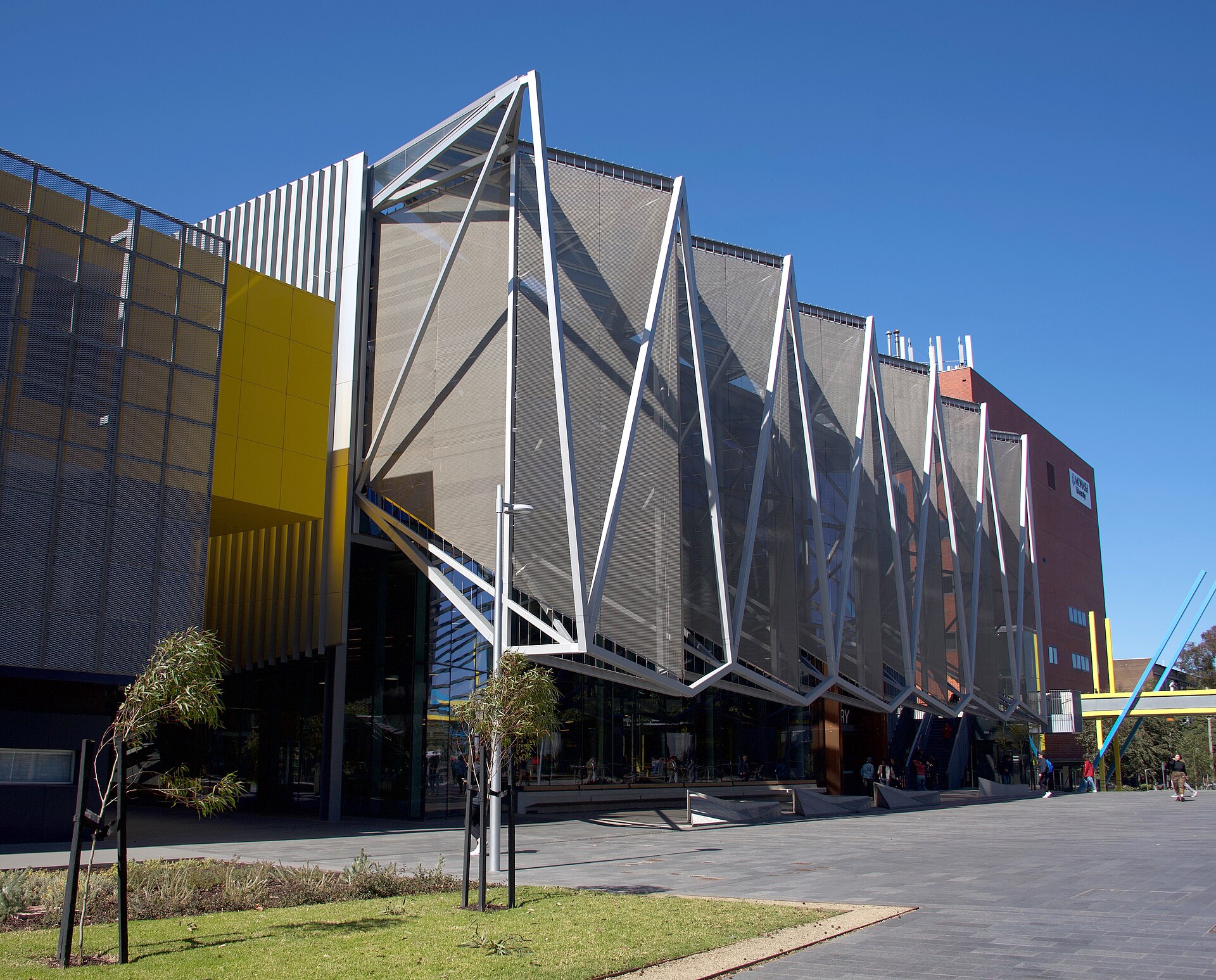
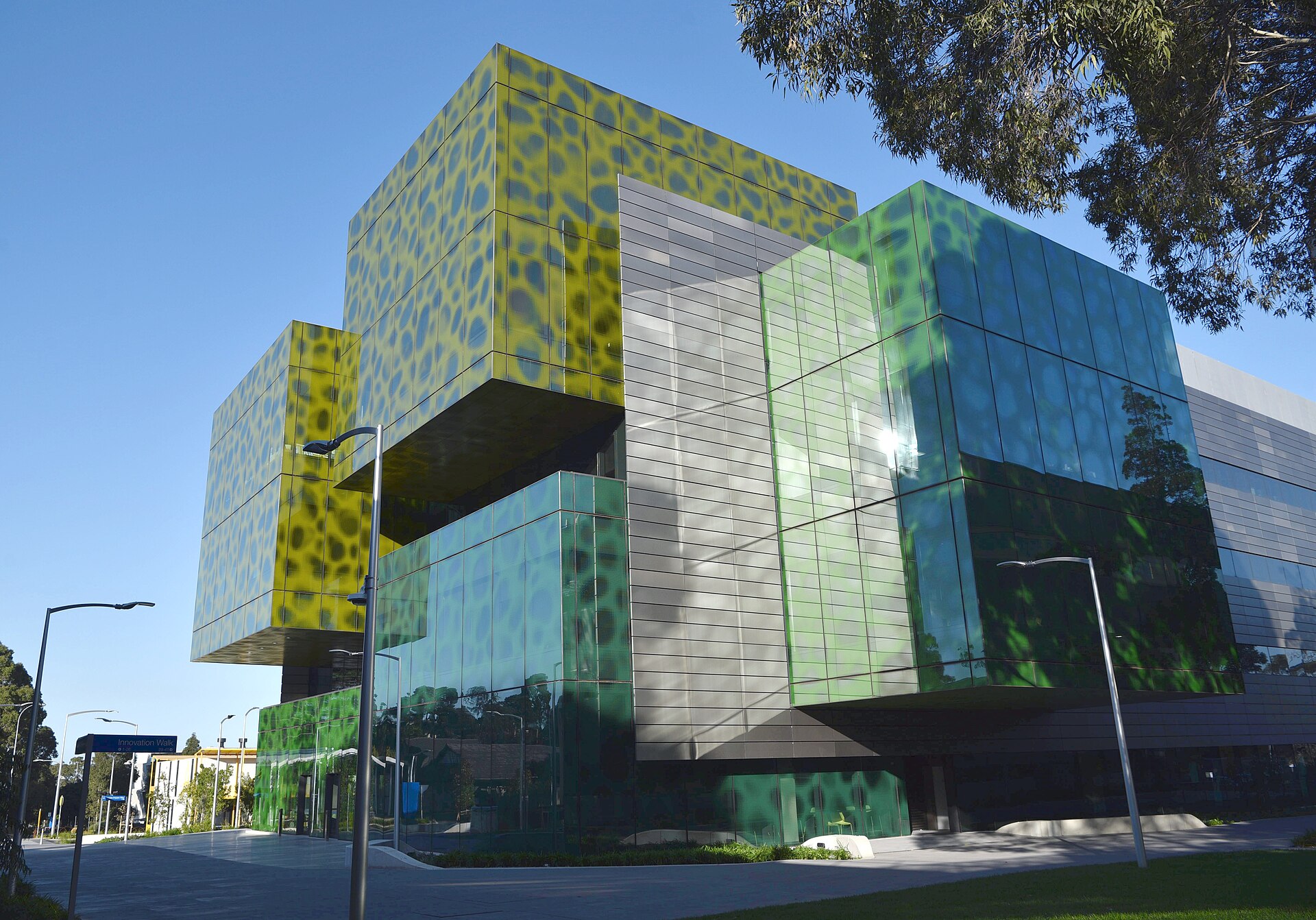
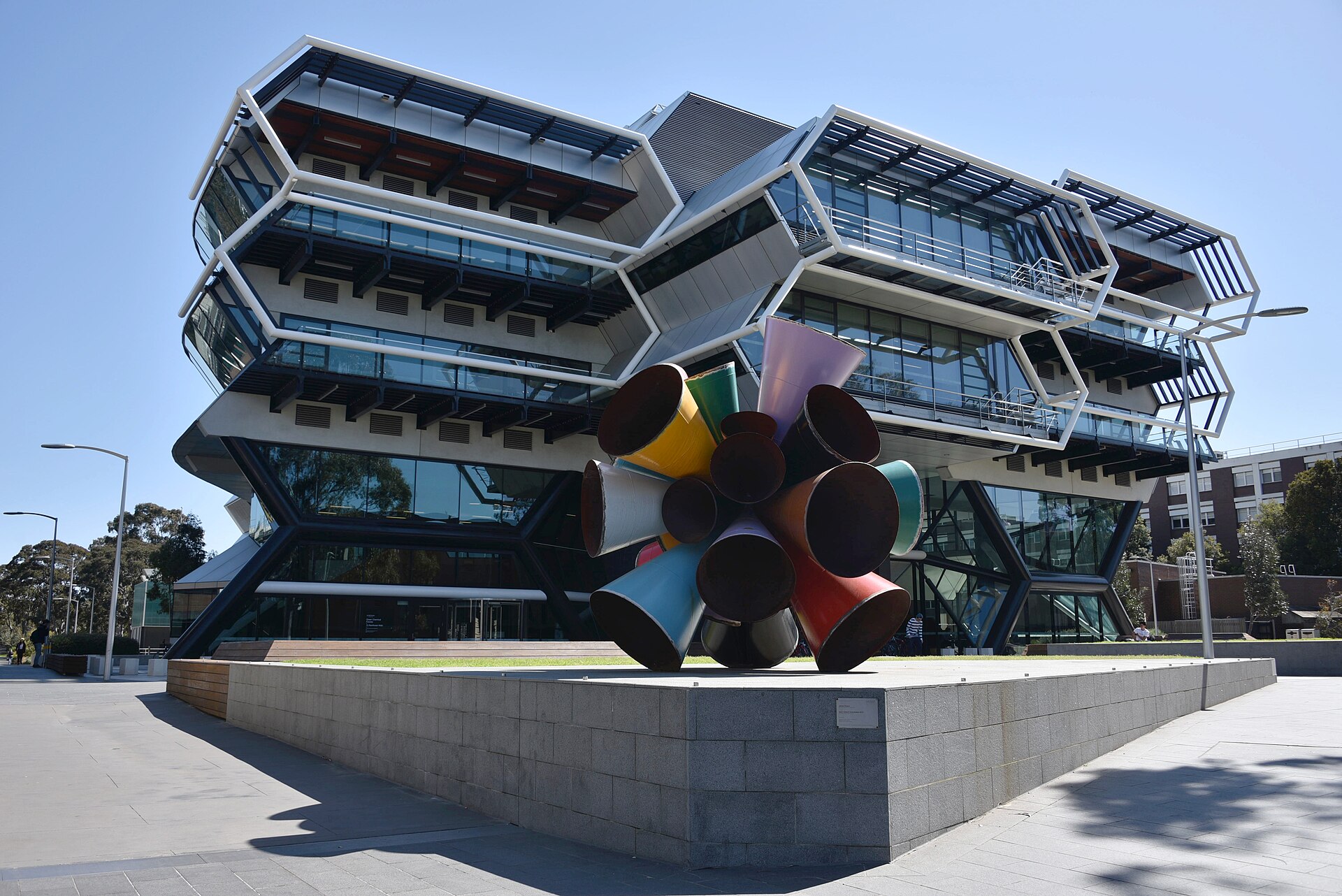
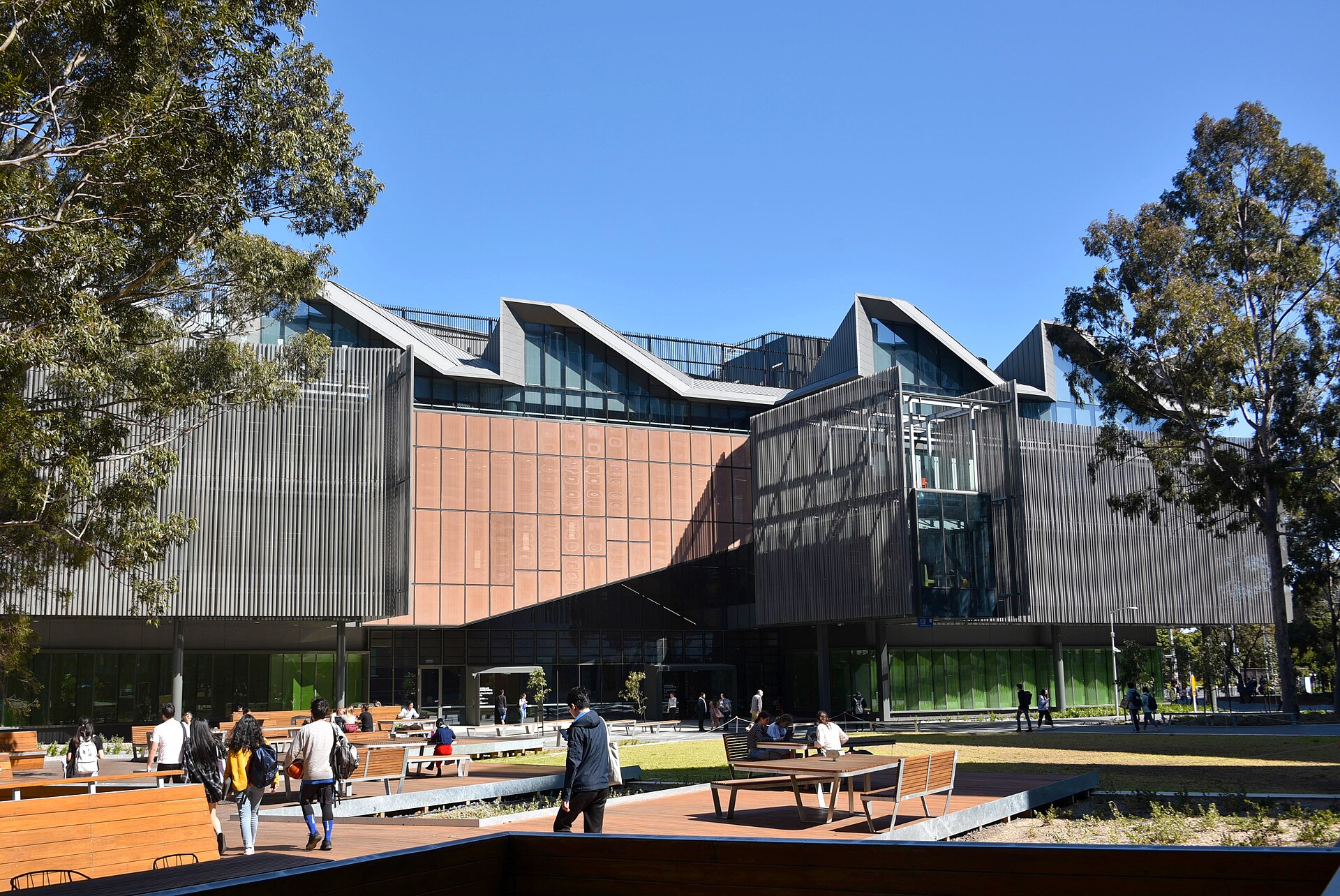
Monash University — campus in pictures
Real, freely-licensed photographs of the campus (via Wikimedia Commons).

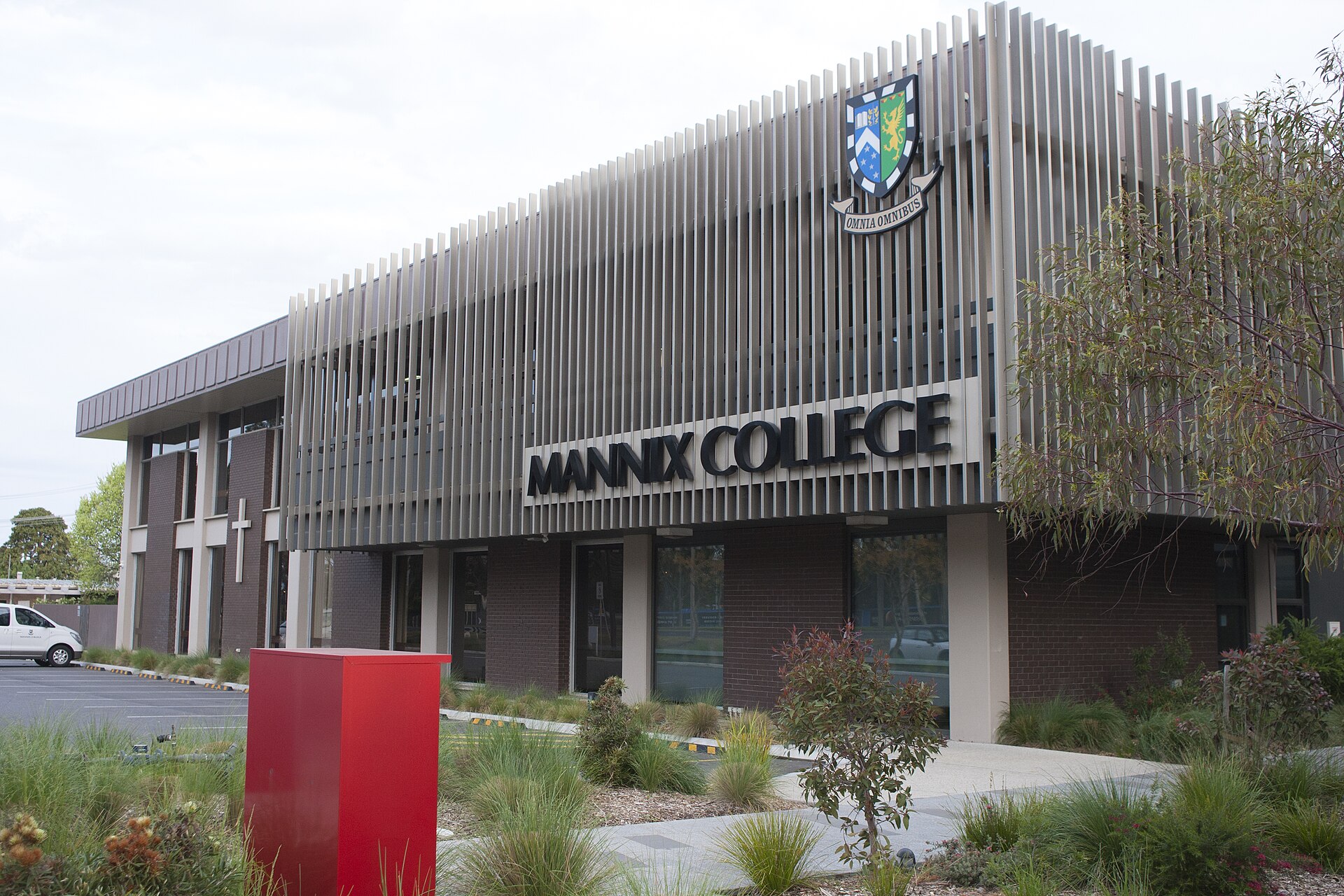
Why Monash — Research, Rankings & Melbourne
Monash is one of the most remarkable stories in global higher education. Founded in 1958, it has become one of the 50 best universities on earth within a single generation — driven by research intensity, strategic global partnerships, and a relentless focus on graduate outcomes. For ambitious international students, it offers a compelling combination of elite rankings, genuine international community, and outstanding post-study work rights in Australia.
Monash Acceptance Rate & Admissions Profile
Stats
Profile Stats
Rea Vs Rd
Monash Admissions Requirements — Academic Qualifications, English & Prerequisites
- IB Diploma minimum 31 total (facts file)
- Medicine and Law require significantly higher scores
- ATAR equivalent — Monash converts your qualification internally
- Prerequisite subjects mandatory for many programmes
- IELTS Academic minimum 6.5 overall (no band below 6.0)
- TOEFL iBT minimum 79
- Duolingo English Test minimum 120
- Medicine/Education require IELTS 7.0–7.5
- Engineering: Mathematics (Specialist/HL level) required
- Medicine: Chemistry required; UCAT ANZ compulsory
- Pharmacy: Chemistry and Biology required
- Commerce: Mathematics typically required
Monash Application Components — Direct Online Application
Unlike US or UK universities, Monash uses a direct online application system. There is no Common App, no UCAS, and no standardised personal essay required for undergraduate admission. Below is every component of a complete Monash application — required and conditional — with strategic notes for each.
Monash Application — No Essays, But Your Scholarship Statement Matters
Tips
Prompts
What Monash Admissions Is Looking For
Monash's undergraduate admissions for international students is merit-based and transparent. Unlike holistic US-style review, Monash applies a structured equivalency process to your qualification. Understanding what each stage of that process evaluates — and what disqualifies otherwise strong applications — is the foundation of a competitive strategy.
Monash Scholarships & Financial Support for International Students
Monash's approach to international student support is merit-scholarship-based rather than need-based. The flagship International Merit Scholarship is automatically assessed upon admission — no separate application needed. For elite students, the International Leadership Scholarship provides full tuition coverage. Understanding what is available and how to position yourself for it is an important part of your planning.
Scholarship amounts are listed in AUD. USD equivalents are approximate based on current exchange rates. Values and eligibility may change each intake — verify on the official Monash scholarships finder.
Stats
Contribution Tiers
| Note | Range | Percent | Percent Value |
|---|---|---|---|
| Flagship merit award; auto-assessed on admission; renewable annually | International Merit Scholarship | AUD $10,000/yr | 30 |
| Highly competitive; full tuition; separate application required | International Leadership Scholarship | 100% tuition | 100 |
| One-time faculty-level award; AUD $10,000; varies by faculty | Dean's Study Grant | AUD $10,000 | 30 |
| Fully funded; for eligible developing-country nationals; separate process | Australian Awards Scholarship | Full funding | 100 |
| Country-specific (India ICCR, Indonesia LPDP, Malaysia MARA/JPA) | Home-Country Government Scholarships | Varies | 60 |
Key Dates
Advantages
- More time for visa application processing (4–8 weeks)
- Better scholarship consideration — earlier offers = earlier eligibility assessed
- Largest course availability for Semester 1 intake
- More time to secure accommodation in competitive Melbourne rental market
- Earlier offer = conditional acceptance while final results are pending
Disadvantages
- Applying too early without final results — conditional offers only
- Scholarship deadlines may close before late applicants receive offers
- High-demand courses (Medicine, Law) fill earlier in rolling process
- Semester 2 has fewer programme options for some faculties
- Later applications risk missing preferred intake if documents are delayed
Monash Interviews — Who Gets One and What to Expect
Most Monash undergraduate programmes have no interview. Admission is based on academic results and English proficiency. The significant exception is Medicine (MBBS): after an initial academic screen and UCAT ANZ score assessment, shortlisted applicants are invited to a Multiple Mini Interview (MMI). The MMI is not a formality — it is a decisive stage. Strong academic results and a high UCAT score open the door; the MMI determines who enters.
Meta
Questions
Monash Residential Life — Colleges, Halls & Campus Housing
Unlike Harvard's residential house system, Monash does not operate an all-undergraduate college system. Instead, the Clayton campus offers a range of on-campus accommodation options — residential colleges, student halls, and self-contained apartments — primarily for first-year and continuing international students. Five residential colleges (Mannix, Farrer, Richardson, Deakin, Roberts) sit on or adjacent to the Clayton campus. Each has a distinct culture, dining arrangements, and community programming.
Houses
Lottery Steps
- Applications for on-campus accommodation open approximately six months before your intake
- Priority is typically given to first-year international students arriving from overseas
- Residential colleges (Mannix, Farrer, Richardson, Deakin, Roberts) include meals and community programming
- Campus apartments and studio halls provide more independence for returning students
- After Year 1, many international students move to private share houses in Clayton, Caulfield, or inner Melbourne suburbs
Monash Faculties & Undergraduate Programmes
- {"label":"Flagship degree","value":"MBBS"}
- {"label":"Entry requirement","value":"UCAT ANZ + academic screen + MMI"}
- {"label":"Clinical placements","value":"From Year 1"}
- {"label":"Monash Health partnership","value":"Largest health service in Victoria"}
- {"label":"Specialisations","value":"10+"}
- {"label":"Key prerequisite","value":"Specialist Mathematics"}
- {"label":"Industry partnerships","value":"BHP, Siemens, IBM"}
- {"label":"QS Engineering rank","value":"Top 50 globally"}
- {"label":"QS World Rank","value":"#2 globally"}
- {"label":"Flagship degree","value":"Bachelor of Pharmacy (Honours)"}
- {"label":"Key prerequisite","value":"Chemistry + Biology"}
- {"label":"Industry links","value":"Major pharmaceutical companies"}
- {"label":"Flagship degree","value":"Bachelor of Commerce"}
- {"label":"Top recruiters","value":"Big 4 accounting, major banks"}
- {"label":"Campus location","value":"Clayton + Caulfield"}
- {"label":"Double degree options","value":"Law, IT, Engineering"}
- {"label":"Flagship undergraduate degree","value":"Bachelor of Laws (LLB)"}
- {"label":"Postgraduate entry","value":"Juris Doctor (JD)"}
- {"label":"Combined degrees","value":"Law/Commerce, Law/Arts"}
- {"label":"National rank","value":"Top 5 Australian law schools"}
- {"label":"Disciplines","value":"Biological, Chemical, Mathematical, Physical Sciences"}
- {"label":"Research intensity","value":"High — undergraduate research from Year 1"}
- {"label":"Pathway","value":"Honours then PhD"}
- {"label":"Key advantage","value":"Monash's research infrastructure"}
Research & Extracurricular Opportunities at Monash
Career Outcomes & Monash Graduate Network
Monash graduates enter a strong Australian and international job market. The university ranks #42 globally for graduate employability (QS) and consistently outperforms its Australian peers on employment outcomes. The Graduate Visa (subclass 485) provides 2–4 years of post-study work rights in Australia — a compelling pathway that transforms the financial calculation of an Australian degree.
Stats
Categories
Our Monash Admissions Track Record & Student Success Stories
Faqs
Does Monash require a personal essay for undergraduate admission?+
No. Standard undergraduate admission at Monash is grades-based and requires no personal essay. You need academic transcripts, English test results, and supporting documents. A personal statement is only required for the International Leadership Scholarship and certain creative programme portfolios.
What is the minimum IB score for Monash?+
The minimum IB Diploma total is 31 (from the Monash facts file), which maps to approximately ATAR 70. However, competitive programmes require significantly higher — Medicine and Law typically require scores that map to ATAR 90+ or above. Always check your specific course's entry requirement, not just the institutional minimum.
Is Monash part of a prestigious university group?+
Yes. Monash is a member of the Group of Eight (Go8) — Australia's eight leading research-intensive universities. Go8 membership is the closest Australian equivalent to the US Ivy League and is recognised by graduate employers and scholarship committees worldwide.
Does Monash offer pathways if I miss direct undergraduate entry?+
Yes. Monash College offers a Diploma and Foundation Year programme providing direct entry to Monash undergraduate degrees upon successful completion. This is a legitimate and common route for students who fall slightly short of direct entry requirements.
Can I work while studying at Monash?+
Australian student visa (subclass 500) holders can currently work up to 48 hours per fortnight during study periods and unlimited hours during scheduled course breaks. This allows many international students to contribute meaningfully to living costs through part-time work in Melbourne.
What is the Graduate Visa and how does it benefit Monash graduates?+
The Graduate Visa (subclass 485) allows international students who graduate from an Australian university to remain and work in Australia for 2–4 years. This provides direct access to Australian salary levels — significantly higher than in most home countries — and creates pathways to permanent residency for graduates in skilled occupations.
Does Monash have a campus in Malaysia — is the degree equivalent?+
Monash University Malaysia (Sunway, Kuala Lumpur) is a full branch campus — not a partner institution. Degrees are issued by Monash University Australia and are equivalent to degrees from the Clayton campus. Tuition at the Malaysia campus is significantly lower than the Australian campuses.
How long does it take to receive an offer from Monash?+
For complete applications, most offers are issued within 2–6 weeks. Applications submitted well before the intake typically receive faster responses. Ensure all documents are certified and translated before submission to avoid delays.
Book a Free Monash Admissions Strategy Session
In 60 minutes our Monash admissions specialists will evaluate your academic profile, confirm prerequisite compliance for your target programme, identify the best application timing, and advise on scholarship positioning — including whether you are competitive for the International Leadership Scholarship (full tuition).
- No commitment required
- Monash and Australian university specialists
- Personalised strategy — not generic advice
Monash Admissions Requirements
Monash Academic Requirements — The Honest Breakdown for International Students
What IB score, A-Level grades, or national qualification do Monash's admitted students actually need? And what does Monash's qualification-based admissions mean for students from IB, A-Level, CBSE, and other international curricula?
GPA & Academic Standards
Monash and Academic Qualifications — What the Data Shows
The honest picture: Monash does not use a GPA-based admissions process in the US sense. Admission is based on your national secondary qualification, converted to the Australian ATAR scale. The minimum equivalent is ATAR 70 (roughly IB 31), but the competitive reality for popular programmes is significantly higher.
Meeting the minimum is necessary but insufficient for Medicine, Pharmacy, Law, and competitive Engineering programmes. These courses attract applicants with the strongest academic profiles in their country. A minimum-entry IB score of 31 will not secure a place in Medicine, which in practice requires scores mapping to ATAR 95+.
Academic Context
How Monash Reads International Academic Performance
Monash does not use class rank in the US sense. Your performance is assessed against the grading norms and qualification structure of your specific national system. Monash's admissions team has significant experience reading qualifications from over 100 countries.
Standardised Testing
SAT at Monash — Supplementary Evidence, Not Primary Criterion
SAT scores are accepted at Monash as supplementary evidence but are not the primary admissions credential. Monash's test policy is 'optional' — meaning the SAT is not required and will not substitute for a weak secondary school qualification.
| Label | Score | Percent |
|---|---|---|
| SAT policy at Monash | Optional | 50 |
| Useful if qualification is less common | Submit if strong | 65 |
| Will not substitute for weak Year 12 results | Supplementary only | 30 |
Standardised Testing
ACT at Monash — When It Adds Value
ACT scores are similarly accepted as supplementary evidence at Monash. The same strategic logic applies as for the SAT — supplementary for students from less common qualification systems, not a substitute for primary credentials.
Metrics
Comparison Cards
Testing Strategy
Monash Test Policy — What Optional Actually Means
Monash's 'optional' test policy means the SAT and ACT are neither required nor strongly expected for most international applicants. Understanding what this means — and when standardised tests are genuinely useful for Monash applications — prevents wasted preparation effort.
Submit Items
Withhold Items
Key Curricula
IB and A-Levels at Monash — Specific Benchmarks
- {"label":"Minimum IB total","value":"31 (from facts file)"}
- {"label":"Competitive range for Medicine/Pharmacy","value":"38–45 (programme-dependent)"}
- {"label":"HL expectations","value":"HL subjects must include programme prerequisites (e.g. HL Chemistry for Medicine)"}
- {"label":"Extended Essay","value":"A or B grade preferred; subject relevant to intended programme"}
- {"label":"Standard entry range","value":"ABB–AAA depending on programme"}
- {"label":"Medicine/Law","value":"AAA–A*AA or equivalent UCAT/MMI performance"}
- {"label":"Subject requirements","value":"Chemistry for Medicine/Pharmacy; Mathematics for Engineering"}
- {"label":"AS results","value":"Reviewed alongside predicted A-Level grades"}
Advanced Placement
AP Courses at Monash — Limited Relevance, Specific Contexts
AP courses are not a standard part of Australian secondary education and are not the primary admissions signal at Monash. For students in international schools that offer AP, AP scores can provide supplementary evidence of academic preparation — but the same caveats apply as for the SAT/ACT.
Academic Rigour
Academic Rigour at Monash — Prerequisites and the Right Subject Choices
Monash evaluates the rigour of your secondary school record in a specific way: the match between your qualification and the prerequisites of your chosen programme is assessed first, and then your total score is compared against the programme's entry cut-off on the ATAR equivalency scale.
Taking the most relevant, rigorous subjects for your target Monash programme — and meeting or exceeding their prerequisite thresholds.
Programme-Specific Preparation
What Monash Expects by Programme — The Practical Guide
Monash's entry requirements are course-specific and explicitly listed on the Monash course finder. Understanding what each major programme expects — not just the institutional minimum — is the foundation of a realistic application strategy.
Language Proficiency
English Language Requirements at Monash — The Hard Filter
English proficiency is a hard filter at Monash — unlike US universities where essay quality is itself the language test. Failing to meet the IELTS or TOEFL minimum results in a conditional or declined offer regardless of academic results.
Many international applicants with excellent academic results receive conditional offers or find their applications stalled because of borderline English test scores. The IELTS 6.5 overall minimum with no band below 6.0 is a real filter — a 6.5 overall with a 5.5 in Writing does not meet the requirement. Sit your test early, allow time to resit if needed, and aim for scores comfortably above the minimum to remove this as a risk factor.
By Programme
Academic Requirements by Programme — What Each Path Expects at Monash
Unlike Harvard, Monash admits students to specific programmes, not to a general undergraduate college. Your programme must be declared at application, and entry requirements are assessed against that specific programme's criteria.
| Signals | Expectation | Concentration |
|---|---|---|
| UCAT ANZ score; MMI performance; strong sciences | HL Chemistry + HL Biology; IB 38–45 equivalent | Medicine (MBBS) |
| Chemistry and Biology at HL; strong science profile | HL Chemistry + HL Biology; upper-quartile IB score | Pharmacy (Honours) |
| Mathematics competition; strong quantitative profile | HL Mathematics (AA preferred); Physics HL | Engineering |
| Mathematical aptitude; programming projects | HL Mathematics; strong computing background | Computer Science / IT |
| Strong humanities; English proficiency | Strong overall IB; English HL preferred | Law (LLB) |
| Mathematics; economics or business exposure | Mathematics prerequisite; strong overall result | Commerce / Economics |
| Biology, Chemistry, or Physics focus | Relevant science subjects at HL or A-Level | Science (BSc) |
International Systems
Monash and International Education Systems — How Your Curriculum Is Evaluated
Roadmap
Building an Academic Profile for Monash — What to Do at Each Stage
- Research your target Monash programme's prerequisites on the official course page.
- Choose Year 11–12 subjects to meet those prerequisites — particularly for Medicine (Chemistry, Biology), Engineering (Maths, Physics), and Pharmacy (Chemistry, Biology).
- Dropping a prerequisite subject in Year 10 may close programme pathways that are expensive to reopen.
- First-year IB or A-Level results establish predicted grade trajectory.
- Aim for consistency across all subjects — particularly in prerequisites.
- Register for UCAT ANZ if Medicine is your target (registration typically opens in February).
- Begin planning English proficiency test sitting — target completion before Year 12 exam season.
- Complete IELTS, TOEFL, PTE, or Duolingo ideally in Term 1–2 of Year 12.
- Submit Monash application once predicted or provisional results are available.
- Conditional offers can be received and visa preparation begun before final results arrive.
- Achieve or exceed the grades stated in your conditional offer.
- Submit final results to Monash as soon as they are available.
- Apply for student visa (subclass 500) with Confirmation of Enrolment once offer is unconditional.
Common Pitfalls
Academic Mistakes That Cost Monash Applications — And How to Avoid Them
Real Outcomes
Academic Profiles of Tychr's Monash-Admitted Students
The following profiles represent the academic backgrounds of students Tychr has helped gain Monash admission or Monash-equivalent outcomes. They illustrate the range of preparation that works — and what made each profile compelling.
Faqs
What IB score do I need for Monash?+
The minimum is IB 31 (facts file), but this is the institutional floor, not the competitive threshold. Medicine typically requires scores mapping to ATAR 95+ (IB 38–45). Pharmacy is similarly competitive. Engineering typically maps to ATAR 80–90. Always check your specific course's entry requirement.
Do I need SAT or ACT scores for Monash?+
No. Monash's primary admissions credential is your national secondary qualification. SAT/ACT are optional and supplementary. For students with well-mapped qualifications (IB, A-Levels, CBSE), test scores add minimal value to the Monash application.
How does Monash assess A-Level grades?+
Monash converts your A-Level grades to an ATAR equivalent using a published conversion table. Three A-Level subjects with grades ABB–AAA typically map to ATAR 80–95 depending on subject choice and grade combination. Chemistry and Maths at A or A* are the expected signals for competitive programmes.
What is UCAT ANZ and how do I prepare for it?+
UCAT ANZ is the University Clinical Aptitude Test required for Monash Medicine. It is a separate cognitive and behavioural aptitude test — not part of the standard Monash application. You must register independently through the ACER UCAT ANZ website. Registration opens in February each year; test sittings are mid-year. A competitive UCAT percentile is required in addition to strong academic results.
What if my results fall slightly short of the entry requirement?+
Yes. Monash College offers Foundation and Diploma programmes that provide direct entry to Monash undergraduate degrees. If you narrowly miss direct entry, a Monash College pathway is typically faster than repeating Year 12. Many international students use this route successfully.
Cost & Scholarships
Monash May Cost Less Than You Think — Here's the Full Picture.
Monash has no need-based aid, but its merit scholarship, part-time work rights, and Australia's Graduate Visa make the real cost of an Australian degree substantially different from the sticker price. Here's exactly what Monash costs, what scholarships exist, and how to maximise your funding.
Cost Transparency
What Monash Actually Costs — The Full Annual Figure
The AUD/USD exchange rate affects USD-denominated figures. All official Monash course fees are listed in Australian dollars. The International Merit Scholarship (AUD $10,000/year) meaningfully reduces net tuition. Part-time work rights under the student visa provide an important supplementary income source during study.
Financial Support Policy
Monash Financial Support for International Students — The Honest Assessment
Monash does not operate need-based financial aid equivalent to US or UK institutions. There is no equivalent of Harvard's CSS Profile, Princeton's no-loan guarantee, or the Oxford bursary system. International students at Monash are expected to self-fund their degrees through personal funds, family support, merit scholarships, and part-time work. This is standard across Australian universities.
Value Proposition
Why Monash Represents Real Value for International Students
Funding Walkthrough
Securing Funding for Monash — The Process Step by Step
Monash financial support is primarily through merit scholarships, home-country government awards, and part-time work rights. Here is the complete step-by-step funding process for international undergraduates.
- Apply through monash.edu/study/international/how-to-apply
- Scholarship eligibility for the International Merit Scholarship is assessed automatically at admission
- Earlier applications allow more time for scholarship assessment before intake
- Separate application required — check the Monash scholarships page for opening dates
- Requires a personal merit statement and evidence of academic achievement and leadership
- Highly competitive — a small number of awards per intake
- Australian Awards: open to developing-country nationals, covers full costs including living allowance
- India: ICCR scholarships for study in Australia
- Indonesia: LPDP fully funded
- Malaysia: JPA and MARA schemes
- Apply for a TFN through the Australian Taxation Office (ato.gov.au) within the first week of arrival
- Required to work legally in Australia
- Student visa (subclass 500) work rights: 48 hours/fortnight during semester, unlimited during breaks
- Apply through ImmiAccount at homeaffairs.gov.au
- Required documents: Confirmation of Enrolment (CoE), OSHC, financial evidence, English test results
- Apply at least 6–8 weeks before your intake date
INTERNATIONAL STUDENT FUNDING
Financial Aid for International Undergraduates at Monash — What Exists and What Doesn't
Understanding the financial support landscape for international undergraduates at Monash is essential before applying. Here is what genuinely exists, and what does not.
SCHOLARSHIP COVERAGE
What Financial Support Actually Looks Like at Monash — By Student Profile
Monash Scholarship Coverage by Student Profile
Scholarship amounts are in AUD. USD equivalents vary with exchange rates. Values and eligibility confirmed on the Monash scholarships finder before application.
Unlike US need-blind institutions, Monash's financial support is merit-driven and does not scale with financial need. The International Merit Scholarship provides meaningful but not transformative support. For the most significant funding, students must either achieve the highly competitive Leadership Scholarship or pursue home-country government awards.
| Grant | Income | Contribution |
|---|---|---|
| AUD $10,000/yr (auto-assessed) | All eligible admitted international students | ~AUD $33,000–$43,000/yr tuition net |
| Full tuition (competitive application) | Exceptional academic + leadership profile | ~AUD $0 tuition; living costs remain |
| Full costs + living allowance | Developing-country nationals (Australian Awards) | ~AUD $0 total (all-inclusive) |
| AUD $10,000 one-time (faculty-specific) | High-achieving students in select faculties (Dean's Grant) | Partial first-year offset |
| No institutional aid | Students without scholarship eligibility | Full tuition + living costs (~AUD $53,000/yr) |
Table Headers
MERIT MODEL
Monash Scholarships — What Exists, Who Qualifies, and How It Works
Monash operates on a merit-scholarship model. There is no need-based aid system for international undergraduate students. All meaningful financial support is awarded based on academic performance, not family income.
EXTERNAL FUNDING
External Scholarships for Monash Students — The Full Landscape
Monash's institutional scholarships are complemented by a wide range of external scholarship programmes from governments, foundations, and employers. For international students — particularly from developing countries — external scholarships are often the most financially significant funding source available.
LOAN LANDSCAPE
Loans and Deferred Payment at Monash — What International Students Need to Know
There are no Australian government loans available to international undergraduate students at Monash. The HECS-HELP loan system — which allows domestic Australian students to defer tuition fees until they earn above a threshold income — is not available to international students. International students must pay their tuition upfront each semester.
STUDENT WORK RIGHTS
Part-Time Work for Monash International Students — Your Rights and Options
Australian student visa holders (subclass 500) can work up to 48 hours per fortnight during semester and unlimited hours during official university breaks. This is not a formal work-study programme like those at US universities — it is a legal right attached to the student visa that most Monash international students make active use of.
- On-campus: tutoring, student ambassador, library assistant, administrative roles
- Hospitality and food service: Melbourne has extensive café, restaurant, and catering employment
- Retail: Melbourne's retail sector is a major employer of international students
- Healthcare: for Medicine, Nursing, and Allied Health students — hospital and clinic support roles
- Professional services: internships and part-time roles in finance, consulting, and technology firms
BENCHMARKING
Monash vs. Peer Universities — Financial Support Comparison
| Policy | School | No Loans | Typical Cost |
|---|---|---|---|
| Merit scholarship (auto-assessed) | Monash University | N/A (no need-based system) | ~AUD $23,000–$43,000/yr after scholarship |
| Merit scholarship (auto-assessed) | University of Melbourne | N/A | ~AUD $35,000–$48,000/yr |
| Merit scholarship + bursary | University of Sydney | N/A | ~AUD $35,000–$50,000/yr |
| Need-blind, full-need, no loans | Harvard / Princeton / MIT | Yes | ~$0 for families under $85K (USD) |
| UK fee loan available to international | UCL / King's College London | Loans available | ~£25,000–£35,000/yr (GBP) |
| Tuition grant model | NUS / NTU Singapore | Tuition Grant (bond) | ~SGD $10,000–$17,000/yr net (with bond) |
COST ANALYSIS
Monash vs. Global Alternatives — What You Actually Pay
For families who do not qualify for US need-blind aid, Monash's three-year degree structure, AUD $10,000/year scholarship, and work rights combine to make it among the most cost-effective elite university options in the English-speaking world. A three-year Bachelor's degree at Monash costs approximately AUD $70,000–$100,000 all-in, compared to four or more years at equivalent UK, US, or Canadian institutions.
| Policy | School | Contribution | Four Year Cost |
|---|---|---|---|
| AUD $10K/yr merit scholarship + work rights | Monash University | ~AUD $23,000–$33,000/yr | ~AUD $92,000–$132,000 (3–4 yrs) |
| Need-blind, full-need, no loans | Harvard / Princeton | ~$0 for families under $85K | ~$0–$40,000 (4 yrs) |
| Tuition Grant (with 3-yr work bond in Singapore) | NUS / NTU | ~SGD $10,000–$17,000/yr | ~SGD $40,000–$68,000 (4 yrs) |
| UK fees, limited international aid | Russell Group (London) | ~£25,000–£35,000/yr | ~£100,000–£140,000 (3–4 yrs) |
| Full cost, limited scholarships | Top US Liberal Arts College | ~$60,000–$85,000/yr | ~$240,000–$340,000 (4 yrs) |
SCHOLARSHIP RECONSIDERATION
Scholarship Reconsideration and Hardship Support at Monash
Monash does not have a financial aid appeal process equivalent to US universities (where CSS Profile assessments can be appealed). What Monash does offer are deferral arrangements, emergency hardship grants, and scholarship reconsideration in limited circumstances.
The honest note: Monash's scholarship system is largely formulaic. The International Merit Scholarship eligibility is determined by published academic criteria at the time of admission. It is generally not reconsidered post-offer except in cases of administrative error. If you narrowly miss the eligibility threshold, the most effective approach is to apply for the Leadership Scholarship or external government scholarships, not to appeal the Merit Scholarship decision.
How To Appeal
- Contact Monash International Scholarships team directly if you believe there was an error in the eligibility assessment
- Provide updated academic evidence if final results are stronger than the predicted grades on which your offer was made
- For financial hardship during enrolment, contact Monash Financial Wellbeing via the student portal
When To Appeal
- Your final results are stronger than the predicted grades on which your conditional offer and scholarship assessment were made
- You believe there was an administrative error in your scholarship eligibility assessment
- You have experienced a significant unexpected financial change since accepting your offer (relevant for hardship support, not scholarship)
TIMELINE & PLANNING
Planning for Monash Costs — What to Do and When
APPLICATION & PERSONAL STATEMENT
Applying to Monash — No Standard Essay, But Writing Still Matters.
Monash University does not require a personal essay for standard undergraduate admission. But for scholarship applications and creative programme portfolios, your writing and presentation are decisive. This guide explains the Australian direct-application system and where written expression genuinely matters.
HOW AUSTRALIANS APPLY
The Australian Direct Application System — How It Works
Australia's university admissions system is fundamentally different from the US or UK. There is no Common App, no UCAS, and no standardised essay requirement for undergraduate admission. Monash — like all Australian universities — admits students primarily on academic results.
International students apply directly through the Monash University International Application Portal (monash.edu/study/international/how-to-apply). You submit academic transcripts, English test results, and supporting documents. Most offers are issued within 2–6 weeks of a complete application. There is no interview for most undergraduate programmes, no letters of recommendation, and no personal essay in the standard application. The one exception: creative programmes (Design, Architecture, Music) require a portfolio or audition. For scholarship consideration — particularly the International Leadership Scholarship — a personal merit statement is required and is where writing quality is genuinely evaluated.
WHAT MONASH ASKS FOR
What Monash Actually Asks You to Write — When Writing Matters
Unlike US universities with standardised essay prompts, Monash has no published personal essay prompts for undergraduate admission. The following describes the written components that may be required, and when.
SCHOLARSHIP STATEMENT STRATEGY
Writing the Monash Scholarship Statement — What Works
The International Leadership Scholarship (full tuition) and some faculty scholarships require a personal merit statement. This is the closest Monash comes to the personal essay component of US admissions — and it is where most applicants produce generic, forgettable writing.
A strong scholarship statement for Monash does three things: it demonstrates genuine academic ambition in a specific field (not general intellectual curiosity), connects your background and track record to specific Monash opportunities (name the research centre, the programme feature, the faculty member whose work aligns with yours), and articulates what you plan to accomplish — not just who you want to become. Committees respond to specificity because it demonstrates real research and real commitment. Generic statements about contributing to humanity or solving global problems, without specific mechanisms, are the most common failure mode. Monash is particularly strong in Pharmacy and Pharmacology, Medicine, Engineering, and Business. Scholarship statements that engage specifically with those programme strengths, not just Monash's rankings, read as more credible.
The scholarship statement must answer an implicit question: why will Monash specifically produce a better outcome for your goals than any other university? The answer cannot be 'because Monash is ranked #37.' It must be programme-specific, resource-specific, and tied to a concrete ambition that only Monash can fulfil.
PORTFOLIO STRATEGY
Creative Programme Portfolio — Strategy for Design, Architecture & Music
For Design, Fine Art, Architecture, and Music applicants, the portfolio or audition replaces the essay as the primary differentiating submission. These are competitive programmes and the quality of the portfolio matters significantly.
SCHOLARSHIP STATEMENT TOPIC
How to Choose What to Write About in Your Monash Scholarship Statement
Topic selection for the scholarship statement is as important as writing quality. The wrong topic, well-written, is less effective than the right topic, imperfectly written.
The most effective Monash scholarship statements are built around a specific academic or professional problem the applicant wants to solve, evidence from the applicant's track record that they have the capability to pursue it, and a clear explanation of why Monash — with specific programmes, research centres, or industry partnerships — is the right context. Monash's known strengths are genuine leverage points: if you are applying for Pharmacy, the world #2 ranking is relevant but only if you connect it to a specific research capability or industry link that matches your goal. If you are applying for Engineering, Monash's industry partnerships (BHP, Siemens, major infrastructure firms) are more compelling hooks than the generic ranking. Statements that engage with Monash's real identity — large, internationally diverse, research-intensive, Melbourne-based — resonate more than those that would work equally well for any other university.
COMMON PITFALLS
Application Mistakes to Avoid — Monash Edition
- Applying without checking prerequisite subjects — the most common reason for declined Medicine, Pharmacy, and Engineering offers at Monash.
- Submitting uncertified or untranslated documents — causes weeks of delay and may result in missing your target intake.
- Forgetting to register for UCAT ANZ if applying for Medicine — UCAT has limited sittings per year and registration opens in February.
- Missing portfolio submission deadlines for creative programmes — portfolio deadlines are often set before general application cutoffs.
- Writing a scholarship statement with no specific mention of Monash programmes, research opportunities, or faculty — generic statements do not win competitive scholarships.
- Ignoring the student visa timeline — many students receive their offer but delay the visa application and miss their intake. Allow 6–8 weeks.
- Not researching home-country government scholarships before concluding Monash is unaffordable — Australian Awards, ICCR, LPDP, and similar schemes can provide full funding.
APPLICATION FAQs
Application FAQs — Monash International Undergraduates
Does Monash require a personal statement for undergraduate admission?+
No. Standard undergraduate admission at Monash is grades-based and requires no personal essay. A personal statement or merit statement is only required for the International Leadership Scholarship and certain creative programme portfolio submissions.
Does Monash require letters of recommendation?+
No. Letters of recommendation are not part of the standard Monash undergraduate international application. They may be requested for some scholarship applications but are not typical.
How do I apply for creative programmes like Architecture or Design?+
Creative programmes require a portfolio submission in addition to standard application documents. Specific folio requirements (format, number of pieces, digital vs. physical) are published by the Faculty of Art, Design & Architecture. Submit your portfolio by the deadline stated on the faculty page — this is separate from the general application deadline.
Can I apply for Medicine directly from high school?+
Yes. Monash offers undergraduate-entry MBBS (Bachelor of Medicine and Bachelor of Surgery) for direct entry from school. You must meet the academic entry requirement AND sit the UCAT ANZ. The MBBS is among the most competitive programmes at Monash — only the strongest IB/A-Level results combined with a high UCAT score and MMI performance will be successful.
Is there an interview for Monash undergraduate programmes?+
Most undergraduate programmes have no interview. Medicine is the key exception — after an academic screen and UCAT ANZ assessment, shortlisted Medicine applicants are invited to a Multiple Mini Interview (MMI). Some programmes may have portfolio reviews that approximate an interview; confirm for your specific course.
What happens if I am offered a place in a course I did not rank first?+
Monash may offer you a place in an alternative course if you do not meet entry requirements for your first preference. You can accept or decline this alternative offer. If your goal is your original first-choice course, consider applying to Monash College for a pathway qualification, then transferring after Year 1 or 2.
How do I make my International Leadership Scholarship statement competitive?+
Be specific. Name a Monash research centre, faculty member, programme feature, or industry partnership that connects to your goal. Show a concrete track record — academic prizes, competition results, research, leadership — not just potential. Explain why Monash specifically, not just why Australia or why a top-ranked university.
Can I apply for both Semester 1 and Semester 2 intakes?+
Yes. You can indicate your preferred intake and list alternative intakes in your application. If Semester 1 for your course is full or unavailable, Monash may offer you Semester 2. For most programmes, Semester 1 (February) is the main intake with the widest course availability.
Courses — schools, degrees & intake
47 degrees across 10 groupings.
Faculty of Arts · 8 degrees
Bachelor of Arts
Bachelor of Global Studies
Bachelor of Media Communication
Bachelor of Criminology
Bachelor of Politics, Philosophy and Economics
Bachelor of Digital Media and Communication
Bachelor of Criminology and Policing
Bachelor of International Relations
Faculty of Art, Design & Architecture (MADA) · 4 degrees
Bachelor of Music
Bachelor of Architectural Design
Bachelor of Fine Art
Bachelor of Design
Faculty of Business and Economics · 2 degrees
Bachelor of Business
Bachelor of Commerce
Faculty of Information Technology · 2 degrees
Bachelor of Computer Science
Bachelor of Information Technology
Faculty of Education · 3 degrees
Bachelor of Education (Honours)
Bachelor of Education in Early Childhood
Bachelor of Learning Design and Technology
Faculty of Engineering · 4 degrees
Bachelor of Engineering (Honours)
Bachelor of Engineering (Honours) and Bachelor of Commerce
Bachelor of Engineering (Honours) and Bachelor of Computer Science
Bachelor of Engineering (Honours) and Bachelor of Science
Faculty of Law · 5 degrees
Bachelor of Laws (Honours)
Bachelor of Laws (Honours) and Bachelor of Arts
Bachelor of Laws (Honours) and Bachelor of Commerce
Bachelor of Laws (Honours) and Bachelor of Science
Bachelor of Laws (Honours) and Bachelor of Global Studies
Faculty of Medicine, Nursing and Health Sciences · 10 degrees
Bachelor of Biomedical Science
Bachelor of Nursing
Bachelor of Nutrition Science
Bachelor of Public Health
Bachelor of Health Sciences
Bachelor of Human Nutrition
Bachelor of Radiation Sciences
Bachelor of Psychology
Bachelor of Occupational Therapy (Honours)
Bachelor of Physiotherapy (Honours)
Faculty of Pharmacy and Pharmaceutical Sciences · 2 degrees
Bachelor of Pharmacy (Honours)
Bachelor of Pharmaceutical Science Advanced (Honours)
Faculty of Science · 7 degrees
Bachelor of Science
Bachelor of Science Advanced - Global Challenges (Honours)
Bachelor of Science Advanced - Research (Honours)
Bachelor of Applied Data Science
Bachelor of Applied Data Science Advanced (Honours)
Bachelor of Medical Bioscience
Bachelor of Food Science and Technology
Want your real chances at Monash University?
Create a free TYCHR account for your personalised admit-chance, a shortlist you can track, exact entry requirements, and essay + counselling help.