← All universities

Michigan State University

East Lansing, United States · Suburban

Association of American UniversitiesBig TenPublicResearchLand-grant
Acceptance
85.0%
QS World
#158
Tuition/yr
$44,850
Students
50,000
Founded
1855

Founded in 1855 as America's first land-grant university, Michigan State is a Big Ten research powerhouse that blends access with world-class programmes — ranked #1 in supply chain management, home to FRIB, and one of the largest campuses on the continent. For internationally ambitious students who want genuine research depth, a nationally ranked business or STEM programme, and a welcoming admissions culture, MSU makes a compelling case.

Michigan State University Admissions Guide for

Campus

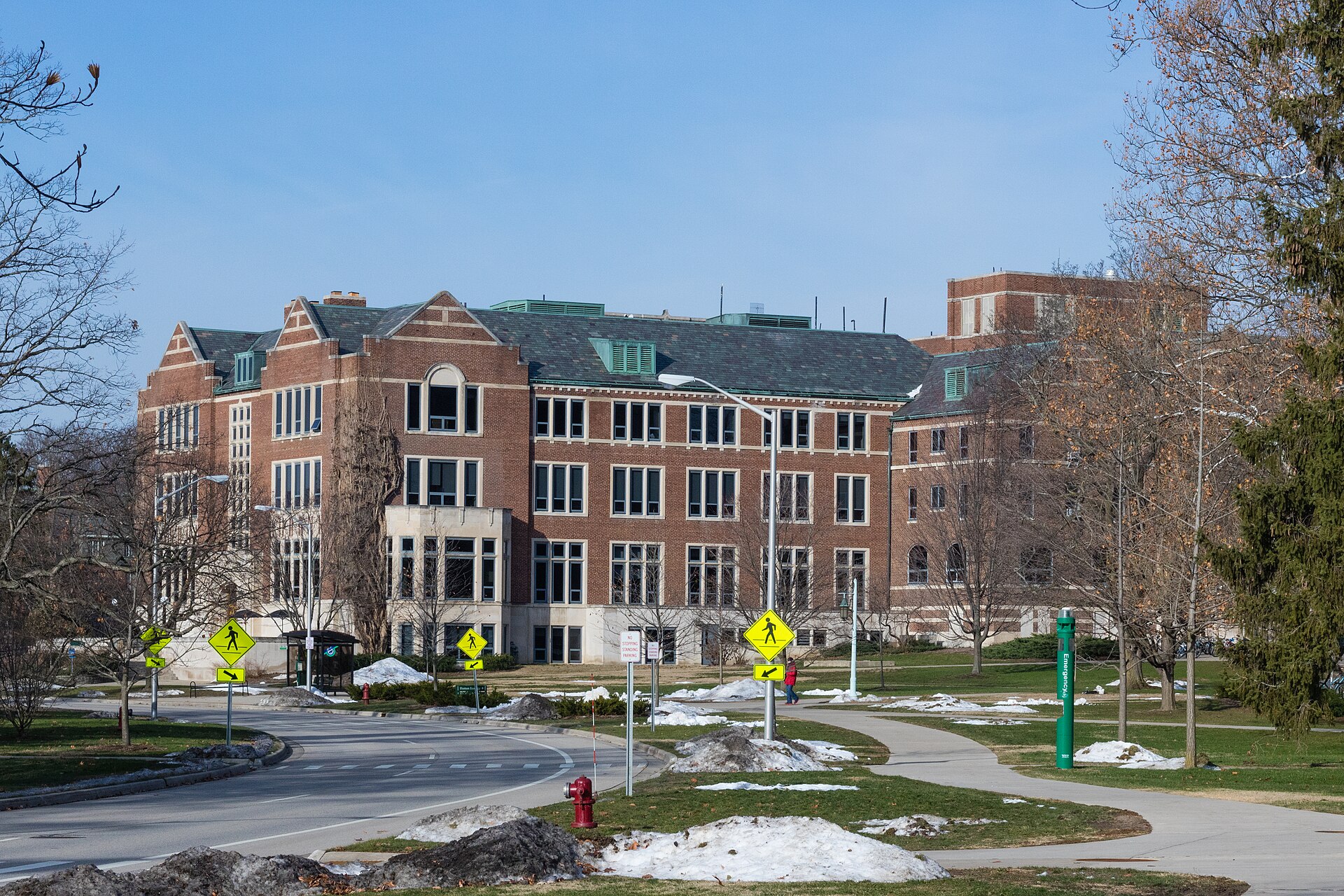
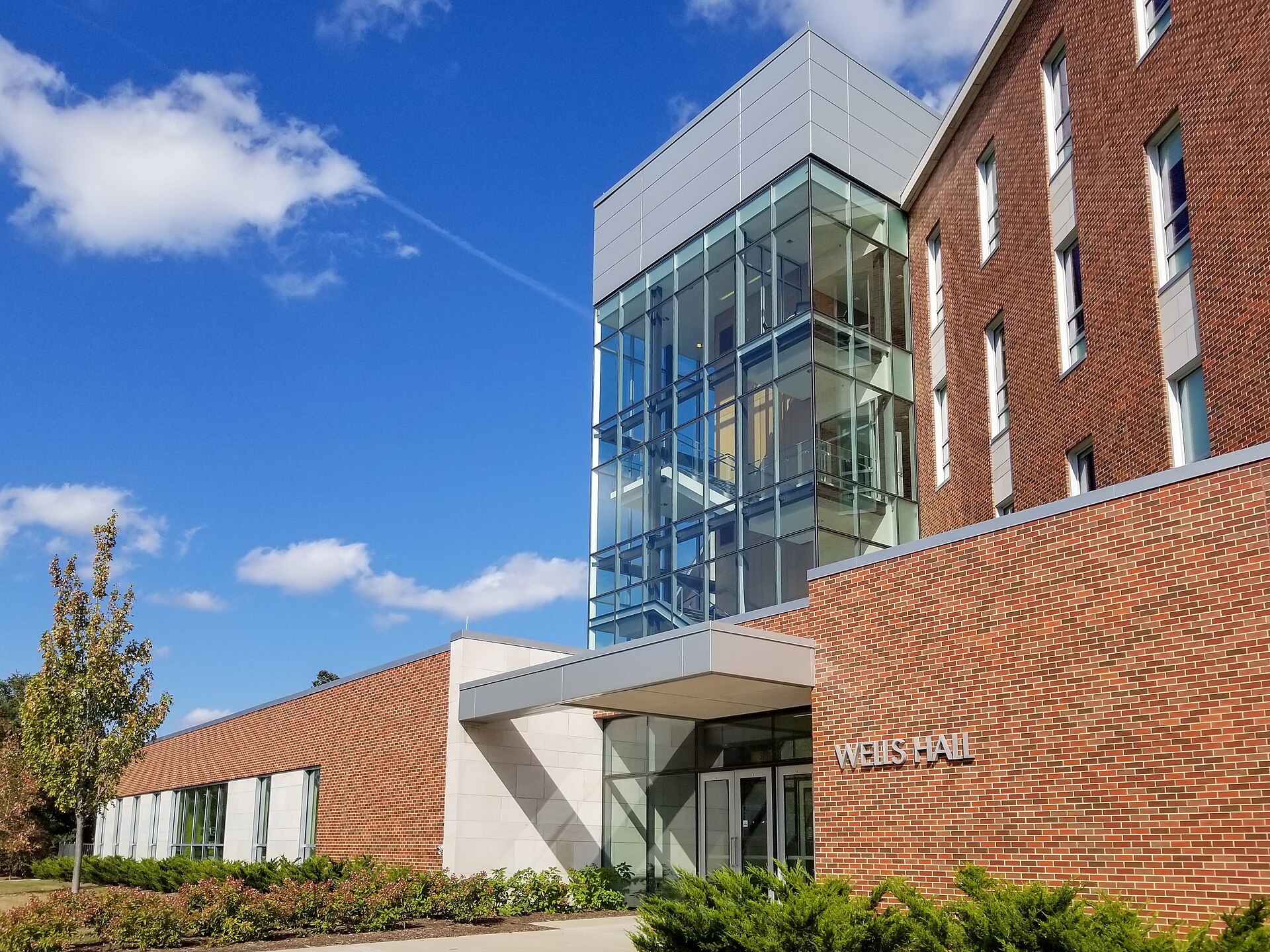
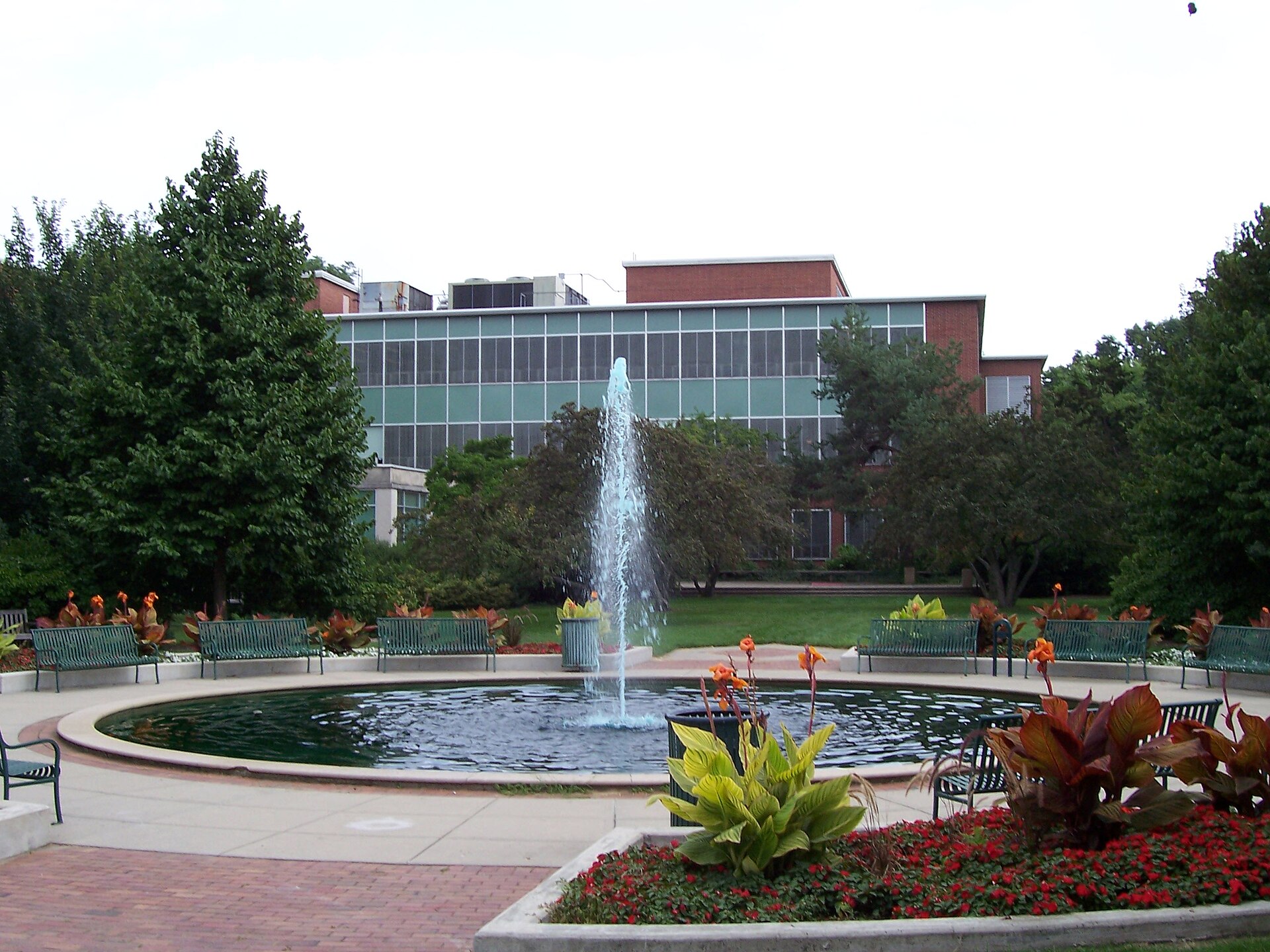
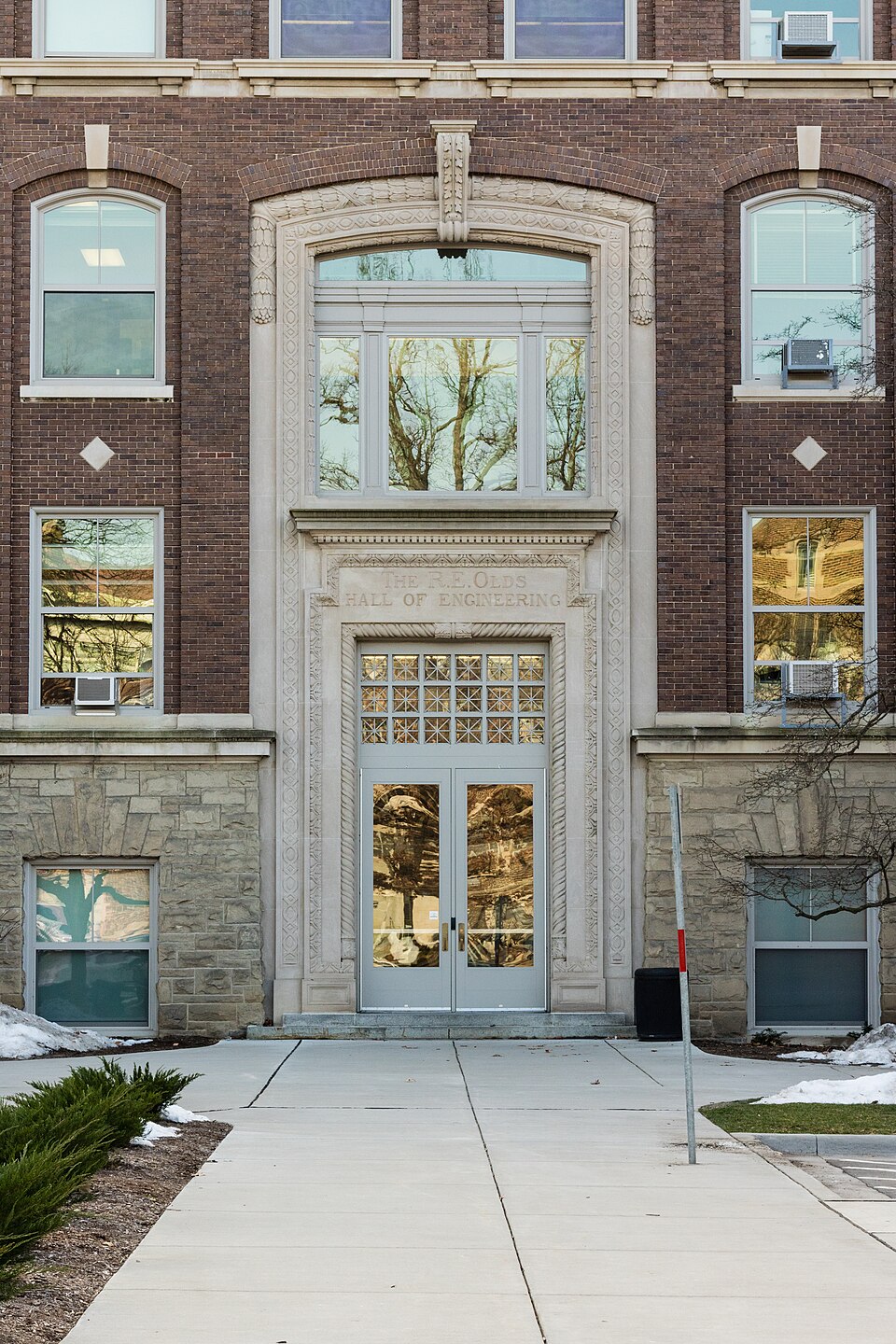
Michigan State University — campus in pictures

Real, freely-licensed photographs of the campus (via Wikimedia Commons).
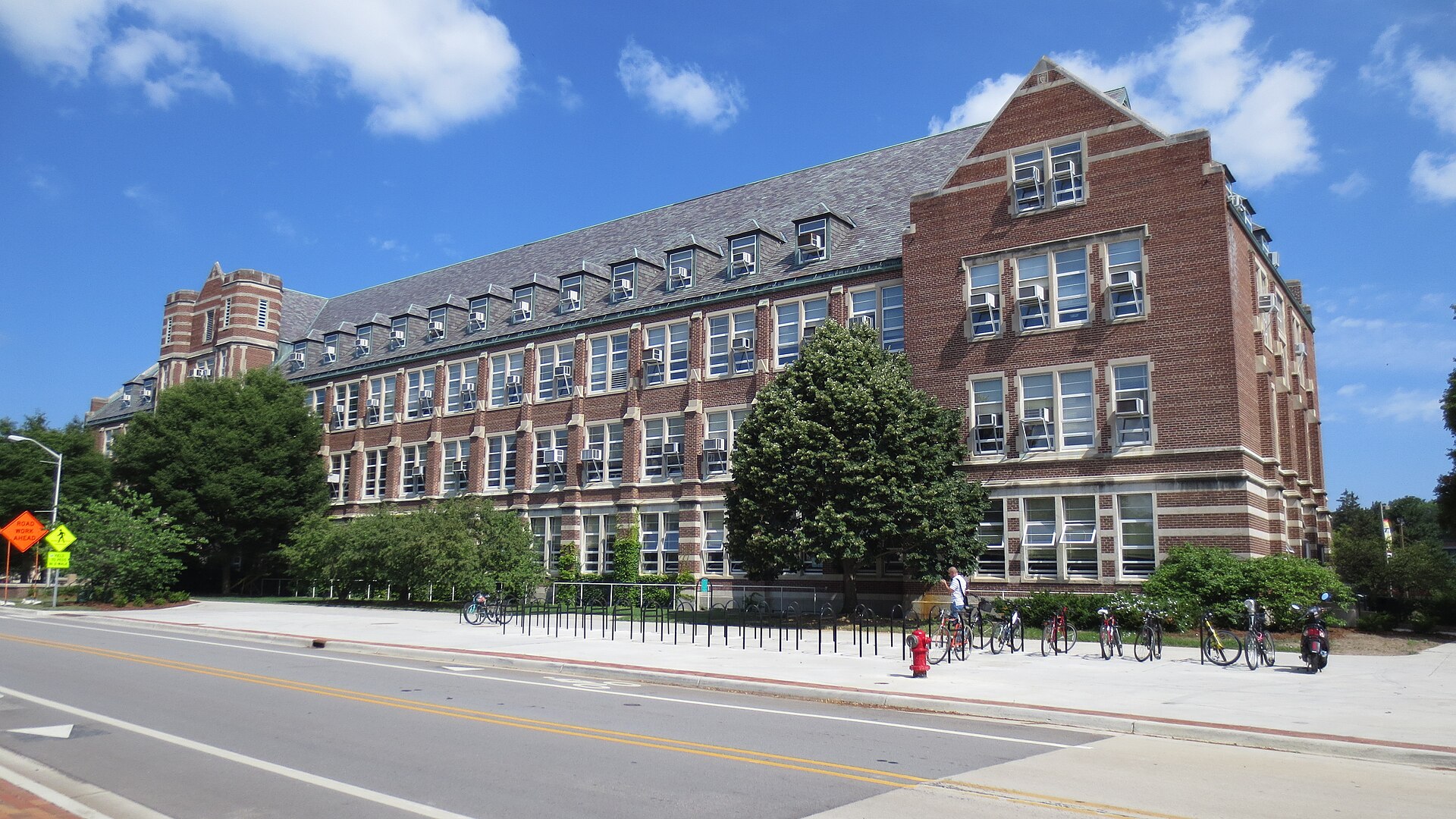
Berkey Hall, East Lansing
Berkey Hall, East LansingAndrew Martin · CC BY 3.0 · via Wikimedia Commons
MSU Union, Michigan State University, East Lansing, Michigan.
MSU Union, Michigan State University, East Lansing, Michigan.Paul R. Burley · CC BY-SA 4.0 · via Wikimedia Commons
The Wells Hall in Michigan State University
The Wells Hall in Michigan State UniversityIswzo · CC BY-SA 4.0 · via Wikimedia Commons
Student Services Building
Student Services BuildingNo machine-readable author provided. Lovelac7~commonswiki assumed (based on copyright claims). · CC BY 2.5 · via Wikimedia Commons
Michigan State University Olds Hall, East Lansing, Michigan.
Michigan State University Olds Hall, East Lansing, Michigan.Paul R. Burley · CC BY-SA 4.0 · via Wikimedia Commons
Linton Hall, Michigan State University, East Lansing, Michigan.
Linton Hall, Michigan State University, East Lansing, Michigan.Paul R. Burley · CC BY-SA 4.0 · via Wikimedia Commons

Why Michigan State — Research Power, Rankings & Global Reach

MSU is not simply a large state school. It is a research powerhouse with distinct national strengths, a deeply engaged alumni network, and a campus culture that combines the energy of a Big Ten institution with genuine accessibility for international students.

01FRIB: World Nuclear Science Leader
The Facility for Rare Isotope Beams — a U.S. Department of Energy user facility on MSU's campus — is one of the most advanced nuclear science installations in the world. Undergraduates can work alongside world-leading physicists in a programme with no equivalent at any other university.
02#1 Supply Chain in the Nation
The Broad College of Business Supply Chain Management programme is consistently ranked #1 in the United States. In a world reshaped by global logistics disruption, this is among the most career-valuable degrees at any American university.
03Big Ten Prestige & AAU Research Scale
As a founding Big Ten member and Association of American Universities institution, MSU commands over $1 billion in annual research expenditure, access to the Big Ten Academic Alliance's shared libraries and collaborative networks, and a faculty culture built around discovery.
04600,000+ Alumni Worldwide
MSU's alumni community spans every continent and virtually every major industry — from Fortune 500 C-suites to international development organisations, government agencies, and academic institutions. The Spartan network is one of the most active public-university alumni communities in America.
05Accessible Admissions, Real Outcomes
With an acceptance rate around 85%, MSU is intentionally inclusive — but with 88% employment within six months and an average starting salary of $58,000, outcomes rival those of far more selective institutions in specific fields.
06East Lansing: Safe, Affordable, Connected
East Lansing is a classic American college town — walkable, affordable, and directly adjacent to Michigan's state capital. Two hours from Detroit, accessible to Chicago, and home to one of the most self-contained university communities in the United States.

MSU Acceptance Rate & Admitted Student Profile

Stats

~40,000+
Applications (recent cycle)
~85%
Acceptance Rate
50,000+
Total Enrollment

Profile Stats

1100–1310
SAT Middle 50%
24–30
ACT Middle 50%
3.0
Minimum GPA
32+
IB Competitive Benchmark
~10%
International Students
#158
QS World Ranking

Rea Vs Rd

Rd Label: Regular Decision
Rd Value: Rolling
Rea Label: Early Action (Non-Binding)
Rea Value: Preferred

MSU Admissions Requirements — Academics, Tests & International Qualifications

GPA & Academic Record
Value: 3.0+ GPA
  • Minimum GPA of 3.0 on a 4.0 scale required
  • Competitive scholarship applicants typically present 3.5+
  • Course rigour in Years 10–12 matters significantly
  • Upward trajectory is valued — improvement is rewarded
MSU evaluates the full secondary school transcript, with the strongest weight on Years 10–12. A 3.0 GPA is the minimum floor; competitive scholarship applicants typically present 3.5 or above. Rigorous coursework (AP, IB, A-Level, or equivalent) is viewed favourably.
SAT / ACT (Optional)
Value: 1100–1310 / 24–30
  • SAT and ACT are test-optional at MSU
  • Middle 50% SAT: 1100–1310
  • Middle 50% ACT: 24–30
  • Scores above 75th percentile can support scholarship tiers
MSU is test-optional. Submitting scores is not required but can enhance scholarship consideration, particularly for applicants in the upper academic range. A score above the 75th percentile (SAT 1310+, ACT 30+) adds positive value.
International Qualifications
Value: IB 32+
  • IB full Diploma: competitive at 32 or above
  • HL scores of 5+ typically earn college credit
  • A-Level grades of B or above are competitive
  • CBSE / ISC: 75%+ in core subjects is a baseline
IB Diploma students are competitive at 32 or above. Higher Level scores of 4 or above typically earn college credit at MSU. A-Level students with B grades or better are well-positioned. CBSE and ISC students should present strong aggregate scores with particular strength in subjects relevant to their intended major.

MSU Application Components — Common App, Essays & Requirements

MSU accepts applications through Common App, Coalition (Scoir), and its own MSU portal. Below is every component of a complete MSU application — with strategic notes for international applicants.

01RequiredApplication Platform
MSU accepts applications through three platforms: MSU's own portal, Common App, and Coalition (via Scoir). Submit through only one. Common App opens each August.
02RequiredOne Personal Essay
A 250–650 word essay responding to one of seven prompts. No supplemental essays are required or accepted. This is your only written self-presentation in the application.
03RequiredOfficial Transcripts
Official transcripts from all secondary schools attended, with certified English translations if the originals are not in English. MSU reviews the full academic record across all years.
04RequiredEnglish Proficiency Test
Required for all applicants whose primary language is not English. MSU accepts TOEFL iBT (minimum 79), IELTS (minimum 6.5), Duolingo (minimum 120), MSUELT, and MELAB.
05RequiredApplication Fee
A non-refundable $75 application fee is due at submission. Fee waivers are available for qualifying students through Common App or the MSU portal.
06Post-AdmissionAffidavit of Support
After admission, you must submit a signed Affidavit of Support and bank statements confirming sufficient funds for your studies. This is a visa requirement, not an admissions factor.
07Not AcceptedLetters of Recommendation / Extra Essays
MSU explicitly advises against submitting letters of recommendation, photographs, portfolios, or additional essays. These are not reviewed and will delay your application processing.
https://admissions.msu.edu/apply/international/how-to-apply

MSU Essays — Writing the Perfect Personal Statement

Tips

One essay, seven choices — pick the story only you can tell
MSU reviewers read tens of thousands of essays each cycle. The ones that stand out are specific — a real moment, a named person, an actual intellectual shift. Vague inspiration stories disappear into the pile.
Your essay is also your scholarship application
The essay you submit for admission is also used for scholarship consideration. This raises the stakes significantly — it must work on both levels: as an admissions document and as a merit differentiator.
No supplements — your essay carries everything
Unlike Harvard, Yale, or Stanford, MSU has no supplemental essays. Your single 250–650 word essay is the only piece of writing reviewed. Allocate the effort accordingly.
Write in your actual voice
MSU reviewers are reading for authenticity and self-awareness, not literary mastery. Read your essay aloud. If it sounds like your exam-essay voice rather than your natural voice, rewrite it.

Prompts

MSU Personal Essay
Choose from 7 prompts — 250 to 650 words. The same seven options as the Common App Personal Statement. No supplemental essays required.
Option 1 — Meaningful Interest or Talent
Describe a meaningful interest or talent you have, and explain how it has shaped who you are.
Option 2 — Challenge or Setback
Describe a challenge, setback, or failure you have experienced, and explain what you learned from it.
Option 3 — Questioning a Belief
Reflect on a time when you questioned or challenged a belief or idea — what prompted your thinking and what was the outcome?
Option 5 — Accomplishment & Growth
Describe an accomplishment, event, or realisation that sparked a period of personal growth.
Option 6 — Engaging Topic
Describe a topic, idea, or concept you find so engaging that it makes you lose track of time, and explain why.
The most common MSU essay mistake. Submitting a generic essay that could have been written by any applicant — or worse, sending extra essays and recommendations that delay your application and are never read.

What MSU Admissions Officers Are Looking For

MSU uses a holistic admissions review that is academically anchored. Unlike highly selective private universities where every dimension carries equal weight, MSU places strongest emphasis on academic performance in the most rigorous available courses.

01Strong Academic Trajectory
MSU evaluates the full secondary school transcript, with heaviest weight on the junior and senior years. A minimum 3.0 GPA is the floor, but competitive applicants — particularly those seeking merit scholarships — typically present 3.5 or above, with demonstrated rigour in their coursework.
02Upward Momentum
MSU explicitly values academic growth. A student who enters with modest grades and steadily improves to a strong Year 12 performance is viewed more favourably than one whose grades have plateaued or declined from an earlier high.
03Major Fit and Intentionality
Naming a specific major and demonstrating informed knowledge of it — particularly for competitive programmes like Business, Engineering, or Veterinary Medicine — signals thoughtful application. MSU is a large university, and programmes within it have their own competitive benchmarks.
04Authentic Voice in the Essay
With no supplemental essays, the personal statement is the primary written signal. Reviewers look for clarity of thought, genuine self-awareness, and a voice that sounds distinctively like the person who wrote it — not polished prose for its own sake.
05Genuine Engagement Beyond Class
MSU does not require an activity list with thirty entries. They look for students who pursued something — a sport, a research interest, a community role, an entrepreneurial project — with genuine depth and commitment.
06English Proficiency
For international students, demonstrated English language ability is both a practical requirement and an evaluative signal. Students who write compelling, fluent essays in English may reduce the need for additional proficiency evidence — but formal test scores are still required for most.

MSU Financial Aid & Scholarships for International Students

International students at MSU are not eligible for U.S. federal financial aid. However, MSU offers a genuine automatic merit scholarship programme — no separate application required — that awards up to $15,000/year to the strongest academic performers. Approximately 59% of international first-year students receive some form of grant or scholarship.

Aid figures are based on MSU's 2025–26 published data and official scholarship pages. Individual awards depend on academic profile at time of admission and scholarship tier placement.

Stats

59%
of international first-year students received grants/scholarships
$14,084
average grant per international recipient
$15,000/yr
Maximum merit scholarship (President's)
$13,000/yr
Honors College Excellence Scholarship

Contribution Tiers

NoteRangePercentPercent Value
Top academic performance — automatic consideration, no separate applicationPresident's Scholarship$15,000/yr100
Strong academic profile — most common award for high-achieving internationalsProvost's Scholarship$12,000/yr80
Competitive academic recordDean's Scholarship$10,000/yr67
Mid-tier award1855 Scholarship$7,000/yr47
Entry-level merit awardGlobal Community Scholars$3,000/yr20
Merit-Based Aid — The Realistic Picture. Unlike Harvard, MSU does not offer need-blind admission or no-loan aid. However, MSU's automatic merit scholarship ladder — with the top tier (President's) at $15,000/year — and the Honors College Excellence Scholarship at $13,000/year represent real cost reductions for high-achieving international applicants. Strategic scholarship stacking can meaningfully reduce the net annual cost.

Key Dates

Early Action Deadline
Date: Nov 1
EA Decision Released
Date: Jan 15
Priority Regular Decision
Date: Feb 1
Enrollment Confirmation Deadline
Date: May 1

Advantages

  • Maximum scholarship consideration — including President's tier
  • Decision by January 15 — complete picture before May 1
  • Non-binding — you are not committed until May 1
  • Earlier I-20 processing for F-1 visa applicants
  • Honors College invitation more likely considered for EA applicants

Disadvantages

  • Application must be complete, with TOEFL/IELTS scores, by November 1
  • Less time in Year 12 to strengthen academic record
  • Some international students' school transcripts may not be complete by November
  • TOEFL/IELTS testing must be completed by October at the latest
Early Action vs Regular Decision. MSU's Early Action is non-binding — unlike ED at many private universities. Applying early commits you to nothing but unlocks your best scholarship chance and gives you certainty earlier in the year.
Tychr's EA Recommendation. Apply Early Action if your application is complete by November 1. The scholarship advantage — particularly for the President's ($15,000) and Honors College Excellence ($13,000) tiers — makes EA the strategic choice for virtually every international applicant whose English test scores are ready in time. Regular Decision (February 1 priority) is the fallback if your TOEFL or IELTS results are delayed.

MSU Does Not Conduct Admissions Interviews

Michigan State University does not conduct admissions interviews for undergraduate applicants — domestic or international. Your application is evaluated entirely on your written submission: transcript, essay, test scores (if submitted), and activity list. This makes the quality of your written application more important than at universities where an interview provides a separate evaluation channel.

Meta

Not conducted for undergraduate admissions
Interviews
The personal essay, activity list, and academic transcript
What replaces it
Campus visit programmes available; no evaluative component
For admitted students
Your written application must do all the work
Strategic implication

Questions

What should my essay accomplish instead of an interview?
Tip: MSU reviewers read your essay looking for clarity of thought and authentic voice. Write specifically — a real moment, a named person, an actual shift in how you think.
How do I demonstrate depth of engagement without an interview?
Tip: Use the activity list to show depth, not breadth. A single sustained commitment described in concrete terms communicates more than ten surface-level activities.
How do I show I belong in a specific MSU programme?
Tip: Choose a major that genuinely aligns with your academic background. MSU programmes like Engineering and Business review applications with a sense of fit — your transcript and essay should cohere.
What tone is appropriate for MSU's essay?
Tip: The essay is not a place for formal academic register. MSU reviewers want your actual voice. Read your draft aloud to test whether it sounds like you.
How far in advance should I prepare my application?
Tip: Tychr recommends having your English test scores, transcripts, and final essay ready by mid-October to comfortably meet the November 1 EA deadline.

MSU Residential Life & Living-Learning Communities

MSU operates one of the largest on-campus housing systems in the United States. Unlike Harvard's residential house system, MSU does not randomly assign all students to a common house — instead, it offers a large number of residence halls organised into neighbourhoods, plus a distinctive set of Living-Learning Communities (LLCs) that place students with shared academic interests in the same building.

Houses

Brody Neighborhood
Tag: On-Campus
Large residential neighbourhood with multiple connected halls, dining, and programming
River Trail Neighborhood
Tag: On-Campus
Newer complex along the Red Cedar River — popular with international students
South Neighborhood
Tag: On-Campus
Central campus location, close to the Main Library and academic buildings
Lyman Briggs LLC
Tag: Living-Learning
Residential community for students in science and mathematics
James Madison LLC
Tag: Living-Learning
Residential college for public affairs, political theory, and social justice
Residential College in Arts & Humanities
Tag: Living-Learning
Thematic community for students in creative and humanistic disciplines
Engineering LLC
Tag: Living-Learning
Residential community for engineering students — close to the Engineering building
Business LLC
Tag: Living-Learning
Broad College of Business residential learning community
East Lansing Private Housing
Tag: Off-Campus
Many students move off campus after Year 1 — affordable apartments within walking distance

Lottery Steps

  • First-year students are typically guaranteed on-campus housing if they apply before the housing deadline
  • Students select a residence hall preference — international students are encouraged to apply early as demand is high
  • Living-Learning Communities (LLCs) are available for students in specific academic streams — applications required
  • Most students transition to off-campus housing in East Lansing after Year 1 for lower cost and greater independence
  • Campus is a 5,200+ acre environment — a bus system and bike paths connect residential areas to academic buildings

MSU Colleges & Undergraduate Programmes

Broad College of Business
Label: #1 Supply Chain in the U.S.
  • {"label":"National ranking — Supply Chain Management","value":"#1"}
  • {"label":"Undergraduate programmes","value":"10+"}
  • {"label":"Flagship programmes","value":"SCM, Finance, Accounting, Marketing"}
  • {"label":"Competitive direct admission","value":"Required"}
Home to the nation's top-ranked Supply Chain Management programme. Competitive entry for Business majors — strong GPA in Year 12 and demonstrated interest in the field are key. Finance, Accounting, and Entrepreneurship are equally strong.
College of Engineering
Label: ABET-Accredited Programmes
  • {"label":"Undergraduate engineering programmes","value":"12+"}
  • {"label":"Research emphasis","value":"Electrical, Mechanical, Civil, Chemical"}
  • {"label":"Adjacent research facility","value":"FRIB"}
  • {"label":"Typical SAT for Engineering admits","value":"Upper 50% band"}
Strong ABET-accredited programmes in Electrical, Mechanical, Computer Science, Chemical, and Civil Engineering. FRIB affiliation gives physics and nuclear engineering students a world-class research platform.
College of Natural Science
Label: Research-Intensive Science
  • {"label":"Undergraduate majors","value":"25+"}
  • {"label":"Flagship programmes","value":"Biology, Chemistry, Physics, Mathematics"}
  • {"label":"Notable facility","value":"FRIB on campus"}
  • {"label":"Pre-med pathway","value":"Strong track record"}
One of MSU's most research-active colleges, with programmes in Biology, Chemistry, Physics, Biochemistry, and Mathematics. Home to MSU's pre-medical track — strong pre-med outcomes in an environment that supports undergraduate research.
College of Communication Arts & Sciences
Label: One of America's Oldest Journalism Schools
  • {"label":"Founding year of Journalism","value":"1903"}
  • {"label":"Undergraduate programmes","value":"Journalism, Advertising, PR, Media"}
  • {"label":"Industry connection","value":"Strong Midwest + national media"}
  • {"label":"Notable graduate","value":"Multiple Pulitzer Prize winners"}
MSU's journalism programme is one of the oldest in the United States and consistently produces graduates working in national and international media. Advertising, Public Relations, and Media Studies complete the college's offering.
College of Agriculture & Natural Resources
Label: Land-Grant Heritage Programme
  • {"label":"Founded with the university","value":"1855"}
  • {"label":"Undergraduate majors","value":"30+"}
  • {"label":"International relevance","value":"Agriculture, Food Security, Environment"}
  • {"label":"Research farms","value":"Active on-campus farms"}
The original programme that defined MSU as a land-grant institution. Today it offers programmes in Food Science, Environmental Studies, Horticulture, Animal Science, and Agricultural Business — with direct relevance for students from agriculture-dependent economies worldwide.
College of Education
Label: One of America's Most Respected Ed Schools
  • {"label":"National reputation","value":"Top-tier teacher preparation"}
  • {"label":"Undergraduate programmes","value":"Elementary, Secondary, Special Ed"}
  • {"label":"International alumni","value":"Active in education ministries worldwide"}
  • {"label":"Research focus","value":"Policy, curriculum, equity"}
MSU's College of Education is one of the oldest and most respected teacher-preparation institutions in the United States. Particularly relevant for international students who plan to return to their home countries to contribute to education systems.

Research & Extracurricular Opportunities at MSU

FRIB — Facility for Rare Isotope Beams
Category: World-Class Research Facility
A U.S. Department of Energy user facility on MSU's campus — one of the most advanced nuclear science installations in the world. Undergraduate researchers can participate in lab work alongside faculty and PhD students from their first year.
Undergraduate Research Office (URO)
Category: Undergraduate Research
MSU's URO connects undergraduates with faculty research across all colleges. Funding opportunities, structured mentorship, and a research symposium give students the resources to publish and present from as early as Year 1.
Broad College Career Services
Category: Career Placement
Dedicated career placement for Business students — with active recruiting relationships with Fortune 500 employers in supply chain, finance, and consulting. On-campus recruiting events draw Amazon, Ford, Deloitte, and more.
500+ Student Organisations
Category: Campus Life
From student government and cultural associations to entrepreneurship competitions, STEM clubs, and Big Ten varsity athletics, MSU's student organisation ecosystem provides community for every interest and background — including a strong international student community.
Scroll right to explore MSU's research programmes and student life.

Career Outcomes & MSU Alumni Network

MSU's 600,000+ alumni network is one of the most geographically diverse and professionally active of any U.S. public university. The Spartan alumni community is known for genuine mutual support — and in specific industries like supply chain, agriculture, and education, MSU alumni communities dominate at the most senior levels.

Stats

88%
Employed or in graduate school within 6 months
$58,000
Average starting salary, across all majors
600,000+
Alumni worldwide
#1
National rank — Supply Chain Management
#158
QS World University Ranking
1964
AAU member since

Categories

Business & Supply Chain
Amazon, Ford, General Motors, Procter & Gamble, Target, Deloitte — MSU supply chain and business graduates are disproportionately recruited by the companies that define global logistics and corporate operations.
STEM & Research
Technology firms, national laboratories, and academic research programmes across the U.S. and globally. FRIB alumni have careers at DOE facilities, aerospace, and defence-sector research organisations.
Education & Public Service
MSU's College of Education and James Madison College alumni work in government, policy, NGOs, and education systems worldwide — particularly relevant for international students returning home to serve in public roles.

Our MSU Admissions Track Record & Student Success Stories

Priya S.
Tychr helped me understand that MSU's essay carried far more weight than I initially thought. We spent three weeks refining it until it was genuinely mine — not a polished exercise. I was admitted with the Provost's Scholarship ($12,000/year) and an Honors College invitation.
Country: India
Program: MSU — Supply Chain Management (Broad College)
Class Year: Class of 2027
Residential: South Neighborhood
Academic Profile: IB 36 · 3.8 GPA
Kwame A.
I had a strong STEM background but a very thin extracurricular profile. Tychr helped me reframe my lab work from a local university as genuine research experience — and my essay made that connection clearly. I received the Dean's Scholarship and a research placement in my first semester.
Country: Ghana
Program: MSU — Computer Science (Engineering)
Class Year: Class of 2026
Residential: Engineering LLC
Academic Profile: SAT 1290 · 3.9 GPA
Linh N.
The most important advice Tychr gave me was to apply Early Action — I almost didn't because I thought it didn't matter at a less selective school. It mattered enormously for scholarships. I was placed in the 1855 Scholarship tier and had my financial picture confirmed in January.
Country: Vietnam
Program: MSU — Journalism (Communication Arts & Sciences)
Class Year: Class of 2025
Residential: Brody Neighborhood
Academic Profile: TOEFL 107 · 3.7 GPA

Faqs

Is Michigan State test-optional for international students?+

Yes. MSU is test-optional for all applicants, including international students. You are not required to submit SAT or ACT scores. However, submitting strong scores (above the middle 50%) can support scholarship tier placement — particularly for the President's and Provost's levels.

Can I apply using the Common App?+

Yes. MSU accepts applications through three platforms: the MSU application portal, Common App, and Coalition (via Scoir). Submit through only one. Common App typically opens mid-August each year for fall entry.

Are international students eligible for financial aid at MSU?+

International students are not eligible for U.S. federal financial aid (FAFSA). Your primary sources of funding are MSU's automatic merit-based Non-Resident Scholarship programme and the Honors College Excellence Scholarship. Approximately 59% of international first-year students receive some form of grant or scholarship.

Is the MSU Early Action binding?+

No. MSU's Early Action is entirely non-binding. You can apply by November 1 and receive a decision (with scholarship placement) by January 15, while retaining the freedom to decide until May 1 whether to enrol.

Does MSU have a specific programme for high-achieving international students?+

Yes — the Honors College. Admission is by invitation, extended to incoming students with exceptional academic profiles. Honors College members receive the Excellence Scholarship ($13,000/year), small seminars, research access, and priority course registration.

What is the IB score expected for admission?+

MSU considers 32 or above on the IB Diploma competitive. Higher Level scores of 4 or above typically earn college credit, and a 7 in a Higher Level subject can exempt you from introductory coursework in that area.

Does MSU require letters of recommendation?+

No. MSU explicitly states it does not require or accept letters of recommendation. Submitting them will not strengthen your application and may delay processing. MSU's admissions decision is based on your transcript, essay, test scores (if submitted), and English proficiency test.

What happens if I am not directly admitted to my first-choice major?+

Some competitive programmes (Business, Engineering) have their own admission requirements. Students not directly admitted to a specific college can often gain internal transfer after meeting GPA requirements in their first year. MSU has well-established internal transfer pathways.

Book a Free MSU Admissions Strategy Session

In 60 minutes our MSU admissions specialists will evaluate your academic profile, identify your scholarship tier potential, develop your essay strategy, and determine whether Early Action gives you the best combination of decision speed and merit award.

  • No commitment required
  • MSU specialists who know the scholarship tiers
  • Personalised strategy — not generic advice
At MSU, the gap between a good application and a scholarship-winning one is often a single essay — and the decision of whether to apply Early Action.

MSU Academic Requirements

MSU Academic Expectations — The Honest Breakdown for International Students

What GPA, test scores, and academic profile do admitted MSU students actually have? And what do MSU's scholarship tiers demand — for IB, A-Level, AP, CBSE, and other international curricula?

3.0
Minimum GPA
4.0 scale; competitive admits typically 3.5+
1100–1310
SAT Middle 50%
Evidence-Based Reading + Math
24–30
ACT Middle 50%
Composite
32+
IB Competitive Benchmark
Full Diploma
Optional
Test Policy
All applicants including international
~85%
Acceptance Rate
Recent cycle

GPA & Academic Record

MSU and GPA — What the Data Shows

MSU publishes a minimum GPA of 3.0 on a 4.0 scale as the floor for admission. In practice, competitive applicants — particularly those targeting merit scholarships — typically present significantly stronger academic records.

A 3.0 GPA is the minimum, not the expectation. Competitive applicants who receive the President's or Provost's Scholarship typically present GPAs of 3.8 or above, strong course rigour, and an upward trajectory through Year 12.

3.0
Published minimum GPA for admission
3.8+
Typical GPA for President's Scholarship consideration
What this means for international students. International students from systems without formal GPA reporting (IB, A-Level, many Asian curricula) are evaluated on their grade record in the context of their educational system. MSU's admissions office is experienced at translating IB scores, A-Level grades, and CBSE/ISC percentages into comparative context.
Upward trajectory matters. MSU explicitly values upward academic momentum. A student who began secondary school with moderate grades and significantly improved by Year 12 is viewed favourably. MSU's admissions process rewards demonstrated growth, not just a peak performance.

Academic Context

Class Rank and School Context — How MSU Reads Academic Performance

MSU does not require class rank for admissions, and many international schools don't provide it. MSU's admissions team is experienced at evaluating academic performance across widely different school systems — including IB, A-Level, CBSE, WAEC, and others.

How MSU contextualises your academic record
Every application is evaluated with reference to the specific school's curriculum, grading norms, and course offerings. A student at a school that offers no AP or IB courses is evaluated differently from one with full IB Diploma access. MSU's experience with international transcripts means your results are interpreted in their educational context.
What this means practically
Taking the most rigorous courses available at your specific school is more important than achieving perfect grades in easier options. For MSU scholarship consideration, both the level of challenge and the outcome matter — a strong IB HL result is weighted more favourably than a high mark in a standard-level course.
For students at less well-known international schools. For students from less well-known international schools, your application may benefit from providing context — explaining your school's grading scale, curriculum type, and how your performance compares to peers. The Common App school profile section allows your school to provide this context directly.

Standardised Testing

SAT Scores at MSU — What You Actually Need

MSU SAT Data — Admitted Students

LabelScorePercent
25th percentile110040
75th percentile131080
Target for scholarship consideration1250+68
SAT Math subscore for STEM applicants. For STEM-focused applicants — particularly those targeting Engineering, Computer Science, or Natural Science — a strong Math subscore (650+) is important. MSU engineering programmes draw students with quantitatively strong academic profiles.
Preparation. Tychr's SAT preparation programme averages significant score improvement over 8–12 weeks. Students targeting MSU's upper scholarship tiers (President's and Provost's) should aim for 1250+ before deciding whether to submit.
Submitting vs. withholding scores. MSU is test-optional. For international students, Tychr generally recommends submitting if your SAT is at or above 1200 — above the middle of the admitted band. Scores in the 1100–1200 range are judgment calls; scores below 1100 are typically better withheld, as they fall below the 25th percentile.

Standardised Testing

ACT Scores at MSU — The Data and the Strategy

MSU ACT Data — Admitted Students

Metrics

25th percentile
Score: 24
75th percentile
Score: 30

Comparison Cards

Both accepted equally
MSU does not prefer one test over the other. Choose based on which one you score higher on after taking a diagnostic practice test for both.
SAT rewards
Careful reading and precise mathematical reasoning across two sections.
ACT rewards
Speed and familiarity with the Science section's data-interpretation format — a particular challenge for some international students.
Score policy. MSU accepts the highest composite ACT score from any single sitting. MSU does not publicly confirm superscore policy for ACT — submit your strongest single-sitting composite and note this on your application.
Tychr's recommendation. Take a diagnostic of both tests before committing. If your ACT Science section is a weakness, the SAT is likely the better vehicle. Students from mathematics-heavy backgrounds (IB HL Math, A-Level Further Maths) often find the SAT Math section more straightforward.

Testing Strategy

MSU Test-Optional — The Strategic Decision Explained

MSU has maintained a test-optional policy that applies to all applicants, including international students. Understanding when submitting scores helps — and when it doesn't — is important strategy.

Submit Items

Your SAT is at or above 1200 — submit. Above the midpoint of the admitted band, scores add positive scholarship value.
Your ACT is at or above 27 — submit.
You are an international student with non-US transcripts — a strong score provides standardised context that can help admissions officers contextualise your record.
You are targeting the President's or Provost's Scholarship — scores above the 75th percentile (SAT 1310+, ACT 30+) strengthen your scholarship candidacy.

Withhold Items

Your score is below 1100 (SAT) or below 24 (ACT) — withholding is the better strategy; below-band scores draw negative attention.
Submitting would highlight a dimension of your academic profile that is significantly weaker than your GPA and course record.
Current policy. MSU accepts applications without test scores and does not penalise students who don't submit. Applications are reviewed holistically whether or not scores are included.
The misconception. Test-optional does not mean test-irrelevant at MSU. For scholarship consideration, strong scores provide an additional positive signal. For international students whose transcripts may be less familiar to reviewers, a strong score provides additional academic context. It is a different evaluation — not a level playing field.
https://admissions.msu.edu/apply/international/act-sat-test-optional

Curricula

A-Levels and IB at MSU — Credit and Competitive Benchmarks

IB Diploma
Note: IB HL courses scoring 4 or above typically earn MSU college credit, reducing first-year course load. A 7 in a relevant HL subject can exempt you from the introductory course in that area. The full IB Diploma is positively noted in holistic review.
  • {"label":"Competitive full Diploma range","value":"32 or above"}
  • {"label":"HL expectations","value":"5 or above in subjects relevant to intended major"}
  • {"label":"Credit policy","value":"HL scores of 4+ typically earn college credit; verify with MSU Transfer Credit Evaluation"}
  • {"label":"Full Diploma vs. courses only","value":"Full IB Diploma viewed more favourably in holistic review"}
A-Levels
Note: MSU evaluates A-Level results as part of the international credential assessment. B grades or above in relevant subjects are generally competitive. MSU's Transfer Credit Evaluation office handles credit awards on a case-by-case basis — contact them before enrolment.
  • {"label":"Competitive range","value":"B or above in relevant A-Level subjects"}
  • {"label":"Credit policy","value":"Specific credit awards depend on subject and grade — contact Transfer Credit Evaluation"}
  • {"label":"AS results","value":"Reviewed as part of the holistic academic record"}
https://admissions.msu.edu/apply/international/advanced-credits

Advanced Placement

AP Courses at MSU — What Counts and What to Take

For students in the U.S. system or at schools that offer AP courses, Advanced Placement performance is a meaningful component of the academic profile and a potential source of college credit at MSU.

AP credit at MSU
AP scores of 3 or above in many subjects earn credit at MSU. Scores of 4 and 5 typically earn more credit and can exempt students from introductory requirements. The specific AP credit policy is published on MSU's Transfer Credit Evaluation page and changes periodically — verify before applying.
How many APs?
MSU does not publish a required number of AP courses. Taking 4–8 AP courses over Years 11–12 with strong scores demonstrates academic rigour. Scores of 4 or 5 are the most impactful.
Grade credibility
Consistent AP 4s and 5s reinforce grade validity against the school-reported GPA and signal readiness for university-level work — particularly relevant for competitive programme admission within MSU.
MSU awards college credit for AP scores of 3 and above in many subjects, allowing students to skip introductory courses and potentially graduate earlier or with a lighter first-year load. Check MSU's current AP credit chart for the specific subjects you are taking.
International students at schools that don't offer AP should not artificially pursue AP — the IB Diploma or A-Level system is appropriate for their context and evaluated accordingly. MSU is experienced at assessing both systems.

Academic Rigour

Rigour of Secondary School Record — MSU's Key Academic Signal

MSU lists course rigour as a key academic factor in its holistic review. For international students, this means demonstrating that you challenged yourself with the most demanding programme available at your school — whether IB, A-Level, AP, or a national advanced curriculum.

Taking the most challenging courses available at your specific school, in subjects that align with your intellectual strengths and intended major.

The contextual element. Rigour is always evaluated relative to what was available. A student at a school that offers only standard national curriculum is evaluated differently from one with full IB Diploma access. What matters is whether the student challenged themselves relative to what was possible.
What rigour means at MSU. This does not mean taking every possible advanced course simultaneously. It means making deliberate, ambitious choices in the subjects most relevant to your intended field — and performing well in them.
What MSU looks for. A student applying to Engineering who has taken HL Mathematics, HL Physics, and completed competitive science coursework demonstrates the academic preparation MSU's engineering colleges expect. A Business applicant with strong Economics and Mathematics performance signals readiness for Broad College coursework.

Subject Preparation

Subject Preparation — What MSU Expects by Programme Area

MSU has no universal formal prerequisites — students are admitted to a specific major or exploratory track. However, competitive programmes within MSU have distinct academic expectations, and international students should demonstrate subject preparation that matches their intended field.

Mathematics
Engineering, Computer Science, Economics, and Natural Science all require strong mathematical foundations. Students targeting these programmes should be fluent through calculus — IB HL Math Analysis & Approaches or A-Level Further Mathematics is excellent preparation.
Sciences
Pre-medicine, Biology, Chemistry, and Agriculture programmes require strong preparation in Biology, Chemistry, and Physics. IB HL Sciences or A-Level sciences with strong grades provide the best foundation. Lab experience before arrival is valuable.
English Writing
All MSU undergraduates complete Tier I writing requirements. Students from non-English educational systems should develop academic writing skills in English before arrival. The ability to construct clear, structured arguments in English is a core expectation from day one.

Language Proficiency

English Language Requirements for International MSU Applicants

MSU requires all international applicants whose primary language is not English to submit a recognised English proficiency test score. Minimum requirements are published by the university and apply regardless of whether you are applying test-optional for SAT/ACT.

MSU's essay is itself an English language demonstration. A student who writes a compelling, fluent 650-word essay in English signals strong language proficiency through the application itself — but this does not substitute for the formal test score requirement.

Test: TOEFL iBT
Score: 79
Test: IELTS Academic
Score: 6.5
Test: Duolingo English Test
Score: 120
Test: MSUELT / MELAB
Score: Varies — verify with MSU
Practical guidance — aim above the floor. Students should aim to exceed the minimum thresholds rather than meet them exactly. A TOEFL score of 90+ or IELTS 7.0+ gives you flexibility and supports scholarship consideration. Scores at the minimum floor may raise questions about language readiness for degree-level academic work in English.
https://admissions.msu.edu/apply/international/language-requirements

By Major

Academic Requirements by Programme — What Different Paths Expect

MSU admits students to a specific programme or exploratory track. The table below summarises the typical academic profile for competitive applicants in MSU's major programme areas.

SignalsExpectationConcentration
Strong Math (HL AA or A-Level Further); CS project experienceHigh quantitative SAT/ACT; HL Maths or equivalentComputer Science (Engineering)
HL Maths + Physics; problem-solving competitionsStrong maths and science preparationMechanical / Electrical Engineering
Economics or Business knowledge; quantitative skillsStrong GPA; quant background valuedSupply Chain / Business (Broad)
Biology and Chemistry HL or A-Level; research or clinic experienceStrong sciences; pre-med preparationPre-Medicine / Biology
Writing portfolio; journalism work; media experienceStrong English; creative or analytical writingJournalism / Communications
Agriculture background; natural science interest; field experienceStrong sciences; genuine agricultural interestAgriculture & Natural Resources
Education interest; volunteer teaching; community workStrong GPA; interpersonal engagementEducation

International Systems

How MSU Evaluates International Education Systems

IB Diploma
Well understood and valued. MSU's admissions office regularly evaluates IB applications from around the world. A competitive IB score (32+) with HL subjects in areas relevant to your intended major is the expected profile. The full IB Diploma is viewed more favourably than individual IB courses only.
A-Levels (Cambridge / Edexcel / OCR)
Evaluated as equivalent to rigorous AP-level coursework. A-Level grades of B or above in relevant subjects are generally competitive. MSU's Transfer Credit Evaluation office awards credit on a subject-by-subject basis.
Indian Boards (CBSE / ISC)
Evaluated carefully in context. MSU recognises that CBSE and ISC grading conventions differ from U.S. norms. Supplementary evidence — JEE results, Olympiad performance, science fair achievements — can strengthen the academic picture for Indian applicants.
Chinese Gaokao
MSU evaluates Gaokao results as one component of the holistic application. Chinese applicants who have also completed IB, AP, or A-Level coursework alongside the Gaokao can provide additional academic context.
WAEC / Nigerian Curriculum
West African Examinations Council (WAEC) and NECO results are evaluated in the context of the Nigerian and West African educational systems. Strong O-Level results combined with an A-Level programme (where available) is the strongest profile for MSU consideration.

Roadmap

Building an Academic Profile for MSU — What to Do at Each Stage

Year 9–10Lay the Foundation
Year: Year 9–10
  • Select IGCSE or national Year 10 subjects that maximise your options for IB or A-Level in Year 11.
  • Prioritise mathematics and your intended subject area — early strength in these is the baseline for competitive MSU scholarship consideration.
  • Begin exploring MSU's specific colleges and programmes — identify whether your interest is in Business, Engineering, Natural Science, or another area.
Year 10–11The Critical Academic Year
Year: Year 10–11
  • Choose IB HL subjects or A-Level subject combinations that align with your intended major and demonstrate genuine academic ambition.
  • If planning to submit SAT or ACT, begin preparation — target test date in Year 11 to allow retakes.
  • Begin building one extracurricular pursuit with depth — a research project, a community role, or a sustained creative commitment.
Year 11–12Build the Evidence
Year: Year 11–12
  • Take TOEFL, IELTS, or Duolingo by September–October of Year 12 to have scores ready for the November 1 Early Action deadline.
  • Maintain or strengthen academic performance — scholarship tiers are determined by the academic record at time of admission.
  • Research MSU's Honors College — if your profile is strong (high GPA, rigorous curriculum), position yourself for an Honors invitation.
Year 12 (Application Year)Apply and Secure Funding
Year: Year 12 (Application Year)
  • Submit Early Action application by November 1 — do not wait for Regular Decision if scholarship consideration is a priority.
  • Finalise your essay — allow at least 4–6 drafts with feedback from someone who can read it critically.
  • Prepare financial documentation (Affidavit of Support + bank statements) for post-admission I-20 processing.

Common Pitfalls

Academic Mistakes That Cost MSU Applications — And How to Avoid Them

Applying without an English proficiency test score
MSU cannot process your international application without a valid TOEFL, IELTS, or Duolingo score. Forgetting to schedule this early enough is the most common logistical error — TOEFL seats fill up, and scores take 2–4 weeks to arrive.
Sending unsolicited materials
MSU explicitly states that letters of recommendation and additional essays are not reviewed and will delay processing. Sending them is not a differentiator — it is a hindrance.
Underestimating the GPA requirement
Even with strong test scores or a compelling essay, a GPA below 3.0 makes admission significantly harder. The academic record is the heaviest factor in MSU's holistic review.
Applying in the final round
MSU has noted that qualified applicant numbers have exceeded available space in recent years. Waiting until the April 1 final deadline is a genuine risk — and the Regular Decision round offers less scholarship consideration.
Applying to competitive programmes without researching internal requirements
Applying to a highly competitive internal programme (Engineering, Business) with a profile significantly below what those programmes typically admit sets you up for internal transfer challenges.

Real Outcomes

Academic Profiles of Successful MSU Applicants — Tychr Outcomes

The following profiles represent the academic backgrounds of students Tychr has supported to MSU and comparable U.S. public research universities. They illustrate the academic range that is competitive — and what made each application successful.

Profile 1 — STEM / Pre-Medicine
IB Diploma with HL Mathematics AA (6), HL Chemistry (6), HL Economics (7). Research internship at a local university lab. Applied Early Action.
Stats: IB 36 · TOEFL 104 · GPA 3.9
Takeaway: The IB profile was strong and directly relevant to Natural Science. The lab internship — described specifically in the essay — provided the depth signal that earned an Honors College invitation.
Profile 2 — Business / Supply Chain
A-Level grades: Mathematics (A), Economics (A*), Business Studies (A). SAT 1280 submitted. Applied Early Action.
Stats: A-Levels AAA* · SAT 1280 · GPA 3.8
Takeaway: Strong quantitative A-Level profile aligned with the Broad College. SAT submitted above the 75th percentile, supporting a Provost's Scholarship placement. Essay connected economics coursework to supply chain interest with a specific real-world example.
Profile 3 — Communications / Journalism
CBSE 12th Board: 91% aggregate. Active student journalist with published articles. SAT not submitted (test-optional). Applied by February 1 Priority deadline.
Stats: CBSE 91% · IELTS 7.5 · No SAT submitted
Takeaway: The published journalism portfolio — linked in the activity list — demonstrated genuine field engagement that complemented the academic record. Test-optional strategy worked because the CBSE percentage and IELTS score provided strong academic context.

Faqs

Is a 3.0 GPA enough for MSU admission and scholarships?+

A 3.0 GPA is the published minimum — not the typical competitive profile. Students receiving merit scholarships generally present 3.5 or above, with strong course rigour. For Honors College consideration, 3.8+ is typical.

What IB score do I need for MSU?+

A competitive IB score for MSU is 32 or above. Scores of 32–36 position you in the admitted range; 37+ may support scholarship tier consideration alongside the rest of your profile. Higher Level scores of 4 or above typically earn college credit.

Does MSU prefer SAT or ACT?+

No preference. Choose the test you score higher on after a diagnostic practice test. MSU's SAT middle 50% is 1100–1310 and ACT is 24–30 — submitting a score above these ranges adds positive value.

Can I apply to MSU without test scores as an international student?+

Yes, MSU is fully test-optional. For international students, Tychr generally recommends submitting if your score is at or above the 75th percentile (SAT 1310+, ACT 30+). Below the 25th percentile, withholding is typically the better strategy.

If I took the SAT, do I still need to submit an English proficiency test?+

No. The formal English proficiency test (TOEFL, IELTS, or Duolingo) is required for international applicants regardless of your SAT score or medium of instruction. Verify current exemptions with MSU admissions directly.

Cost & Financial Aid

What MSU Really Costs for International Students — and How to Reduce It

MSU's total cost of attendance exceeds $70,000/year at sticker price. But automatic merit scholarships, the Honors College award, and a lower-than-coastal cost of living mean the realistic net cost for strong applicants can be meaningfully lower. Here is the complete picture.

Merit-Based Aid
Automatic scholarship consideration for all admitted international students
59% Receive Aid
59% of international first-year students received grants or scholarships in 2025–26

Cost Transparency

What MSU Actually Costs — The Full Annual Figure

MSU's cost of attendance is substantially lower than private U.S. universities (where costs can exceed $85,000/year), and the East Lansing cost of living is considerably lower than major coastal cities. After merit scholarships, the realistic net annual cost for a strong academic performer can be significantly below the sticker price.

Tuition (Non-Resident / International)
Cost: $44,300
Fees and taxes
Cost: $1,958
Food and housing (on-campus estimate)
Cost: $13,443
Books and supplies
Cost: $1,420
Personal and miscellaneous
Cost: $3,930
Medical / health insurance
Cost: $3,054
Travel
Cost: $2,620
Total Estimated Cost of Attendance
Cost: $70,725
Average Aid per Recipient. $14,084
Sticker Price (Annual). $70,725
MSU Estimated Cost of Attendance 2025–26 (International Undergraduates)
Average grant received by international first-year students who received aid in 2025–26.
Total estimated annual cost before any merit aid or scholarships.

Aid Policy

MSU Financial Aid Policy — What International Students Need to Know

International students at MSU are not eligible for U.S. federal financial aid (FAFSA). MSU does not offer institutional need-based aid for international undergraduates in any significant form. The primary funding mechanism available to international students is MSU's automatic merit scholarship programme — the Non-Resident Scholarship ladder — and the Honors College Excellence Scholarship for invited students.

MSU vs. Private Universities — The Aid Difference. Unlike need-blind private universities (Harvard, Princeton, MIT) where your family's financial circumstances do not affect admission or your ability to receive grant aid, MSU does not have a need-blind policy and does not offer comparable need-based aid. Financial planning for MSU must assume self-funding supplemented by merit awards.
What Happens After Admission. After admission, you will receive a scholarship notification that details your merit award tier. Separately, you will need to submit financial documentation (Affidavit of Support and bank statements) to obtain your I-20 for F-1 visa processing. Financial need documentation is a visa requirement, not an aid application.
https://admissions.msu.edu/cost-aid/financial-aid
No Federal Aid — Merit Scholarships Are the Primary Option
MSU's Non-Resident Scholarship programme automatically considers all admitted international students based on their academic profile at the time of admission. No separate application is required. Scholarship level is determined by GPA, course rigour, test scores (if submitted), and other academic factors.

Institutional Context

Why MSU's Real Cost Is Lower Than the Sticker Price

Public University Funding Model
As a public land-grant university, MSU's funding model relies primarily on state appropriations and tuition revenue rather than an endowment-driven aid programme. International students pay non-resident tuition rates — the university's primary mechanism for supporting international affordability is the merit scholarship ladder, not endowment grants.
Subtitle: Land-Grant + State-Supported
East Lansing Affordability
MSU's cost of living in East Lansing is considerably lower than comparable universities in Boston, New York, Los Angeles, or San Francisco. On-campus room and board is included in the $70,725 estimate; many students find off-campus shared housing for significantly less after their first year.
Subtitle: Lower Cost Than Coastal Peers
Average Scholarship for International Recipients. In 2025–26, approximately 59% of international first-year students at MSU received some form of grant or scholarship, averaging $14,084 per recipient. The top scholarship tier (President's, $15,000/year) combined with the Honors College Excellence Scholarship ($13,000/year) can total $28,000/year for the strongest academic performers.
"MSU's merit scholarship programme automatically considers every admitted international student — no separate application needed."

Financial Aid Walkthrough

How to Secure Funding for MSU — A Step-by-Step Guide

MSU's merit scholarship programme is automatic — no separate application. But maximising your scholarship tier, accessing the Honors College award, and supplementing with external funding requires proactive planning.

01Apply Early Action (November 1)
  • Submit your complete application through MSU, Common App, or Coalition
  • Ensure TOEFL/IELTS scores, transcripts, and essay are all included
  • Early Action maximises scholarship tier consideration
Your scholarship is determined at the time of your admissions decision. Applying Early Action gives you maximum consideration for the top scholarship tiers.
02Position for Honors College Consideration
Notes: The Honors College does not accept separate applications — it selects top-performing applicants during the admissions review.
  • Maintain the strongest possible GPA through Year 12
  • Choose rigorous coursework (IB, A-Level, AP) aligned to your major
  • Write a compelling, specific essay — Honors College reviewers read the same application
The Honors College Excellence Scholarship ($13,000/year) is awarded by invitation based on your admissions application file. There is no separate scholarship application.
03Research Home-Country Government Scholarships
  • National government scholarship programmes (many fund AAU university study)
  • Central bank or petroleum authority scholarships (Nigeria, Gulf states, others)
  • Education ministry programmes for study abroad
Many governments fund students to study at AAU member universities like MSU. Apply 12–18 months before enrolment for many government scholarship programmes.
04Investigate External Foundation Awards
  • Rotary Foundation Ambassadorial Scholarships
  • Aga Khan Foundation International Scholarships
  • Regional foundations and diaspora organisation awards
Numerous external organisations fund U.S. university study for international students. These require early application and strong community engagement records.
05Prepare Financial Documentation for I-20
  • Signed Affidavit of Support
  • Bank statements showing sufficient funds for one year of study
  • Submit within the enrollment confirmation deadline
After receiving your admission and scholarship offer, you will need to confirm enrollment and submit financial documentation for your I-20 visa document. Have this ready before May 1.

International Aid

MSU Financial Aid for International Students — How the Merit System Works

The honest picture for international students at MSU: institutional need-based aid is not available. Your primary university-funded support is merit-based. Here is how the programme works in practice.

Automatic consideration — no application needed
All admitted international students are automatically considered for the MSU Non-Resident Scholarship programme. Your academic record at the time of admission determines your tier. You do not need to submit a separate scholarship application.
Scholarship determined at admission
Your scholarship tier is included in your admissions decision letter. You will know your scholarship level when you receive your offer — giving you a complete financial picture before the May 1 enrollment deadline.
Applying Early Action maximises your tier
The scholarship determination process is most comprehensive for Early Action applicants. Applying by November 1 ensures your application receives full scholarship consideration before the funding pools are most constrained.
Honors College Excellence Scholarship — the biggest award
The $13,000/year Honors College Excellence Scholarship is awarded by invitation to select non-resident and international students who demonstrate exceptional academic profiles. It can be combined with a Non-Resident Scholarship tier, representing up to $28,000/year in university-funded aid.
https://admissions.msu.edu/cost-aid/scholarships/international

Scholarship Awards

MSU Merit Scholarship Tiers — What International Students Can Receive

Non-Resident Scholarship Programme + Honors College Award

Scholarship amounts from MSU's official 2025–26 scholarship page. Awards are renewable subject to academic standing — confirm renewal requirements with MSU's Office of Admissions.

The most generous combination available to international students is the Honors College Excellence Scholarship ($13,000/year) plus the President's Scholarship ($15,000/year) — totalling $28,000/year and reducing the annual tuition from $44,300 to $16,300. This level is achievable for exceptional academic performers who apply Early Action.

GrantScholarshipAnnual Award
$13,000Honors College Excellence$13,000/yr
$15,000President's Scholarship$15,000/yr
$12,000Provost's Scholarship$12,000/yr
$10,000Dean's Scholarship$10,000/yr
$7,0001855 Scholarship$7,000/yr
$5,000Beaumont Tower Scholarship$5,000/yr
$3,000Global Community Scholars$3,000/yr
https://admissions.msu.edu/cost-aid/scholarships/international

Table Headers

Grant: Annual Award
Scholarship: Scholarship Name
Annual Award: Renewable Annual Value

Merit vs. Need

MSU Scholarships — Who Qualifies and What Is Available

MSU's scholarship programme for international students is entirely merit-based. Unlike Harvard, which offers only need-based grants, MSU awards scholarships based on academic achievement regardless of family income. This is a meaningful difference for international students from middle- and higher-income families who would receive no aid at a need-based-only institution.

Merit-based means income-neutral
A student with a 3.9 GPA, IB 37, and TOEFL 108 may receive the President's Scholarship ($15,000/year) regardless of family income. At Harvard, the same student from an affluent family would receive no institutional aid at all. MSU's merit model benefits academic high-performers from all income levels.
The limitation: no need-based safety net
MSU has no need-based aid programme for international undergraduates. Family financial circumstances do not affect the scholarship tier. If your family cannot self-fund the gap between scholarship and full cost, you will need external funding sources.
Honors College — the biggest single award
The Honors College Excellence Scholarship, at $13,000/year renewable for eight semesters, is the single largest merit award MSU offers to international students. It is available only by invitation — you cannot apply separately. Positioning for an Honors College invitation requires a very strong academic profile.
Post-admission scholarship opportunities
Additionally, the Presidential Study Abroad Scholarship ($3,000 or $5,000 depending on programme length) and the Professorial Assistantship (~$3,500 stipend for select Honors College invitees) provide supplementary funding opportunities after enrolment.

External Funding

External Scholarships for MSU International Students

MSU's institutional aid for international students is purely merit-based and limited to the programmes described above. External scholarships — from government, foundation, or private sources — can meaningfully supplement this funding.

Rotary Foundation Ambassadorial Scholarships
Available to students of many nationalities; fund study at accredited international universities including MSU
Aga Khan Foundation International Scholarship
For students from developing countries in Asia and Africa; competitive; requires strong academic record and demonstrated financial need
Home-country government scholarships
Many governments (Nigeria, Ghana, UAE, Saudi Arabia, Indonesia, India) fund students at AAU universities. Research your national government scholarship programmes early — many have 12–18 month lead times
QuestBridge
U.S.-citizen focused; for high-achieving, low-income students. Not applicable to most international students on F-1 visas
Tychr's scholarship database: As part of every full admissions programme, Tychr identifies external scholarship opportunities relevant to the student's country of origin, intended field, and academic profile. This guidance is provided alongside the MSU admissions strategy.
Scholarship stacking: External scholarships awarded to enrolled MSU students may be used in addition to or in place of some institutional awards — contact MSU's Office of Financial Aid to understand the current stacking policy for your specific combination of awards.
Country-specific government scholarships vary enormously. Some cover full costs; others provide supplementary funding. Tychr maintains awareness of major country-specific programmes and advises relevant students on eligibility and application timelines.

Loans & Financing

Loan Policy for International Students at MSU

International students at MSU are not eligible for U.S. federal student loans. This means financing must come from scholarships, personal savings, family funds, home-country loans, or private international student loans. There is no institutional no-loan guarantee — unlike Harvard, where aid is entirely grant-based.

No federal loans for internationals
F-1 visa holders are ineligible for U.S. federal student loans (Stafford, PLUS, Perkins). Federal work-study is also unavailable to international students. Your primary institutional funding is the merit scholarship — there is no institutional loan option to fill remaining gaps.
Private international student loans
Some private lenders and international banks offer educational loans for study at accredited U.S. universities. Interest rates, repayment terms, and eligibility criteria vary significantly by country and lender. Prodigy Finance and MPOWER Financing are examples of lenders that serve international students at U.S. universities — research current terms carefully.
On-campus employment
F-1 students are permitted to work on campus up to 20 hours per week during the academic year and full-time during official breaks. On-campus employment is widely available at MSU across dining, library, administrative, and research roles. This provides supplementary income but is unlikely to cover significant tuition gaps.
Planning recommendation
Build a four-year cost plan before committing to enrolment. Factor in tuition increases (typically 2–5% per year), living cost increases, health insurance, visa renewal fees, and an emergency reserve. Knowing the full four-year picture before you arrive prevents difficult mid-degree financial pressure.

On-Campus Employment

On-Campus Work for International Students at MSU

F-1 international students at MSU are permitted to work on campus up to 20 hours per week during the academic year and full-time during official university breaks. On-campus employment is the only work authorisation available during the first year of F-1 status without additional approval.

  • Dining services — widely available across campus dining halls
  • Library assistants and circulation desk roles
  • Research assistant positions in faculty labs (competitive; provides income and research experience)
  • Administrative and office support across university departments
  • Information technology and computing support
  • Student recreation centre and athletics facility roles
On-campus positions are posted through MSU's student employment portal. International students must obtain a Social Security Number to begin paid employment — apply through the Social Security Administration after securing a job offer. The International Student Services office (OISS) provides guidance on work authorisation documentation.
On-campus earnings of $10–$15/hour at 15–20 hours/week provides roughly $600–$1,200/month in additional income. This is meaningful supplementary funding for living expenses but will not cover tuition costs. Treat it as a monthly expense buffer, not a primary funding strategy.
On-campus work is entirely optional for F-1 students who do not need the income. After graduation, eligible MSU graduates can apply for Optional Practical Training (OPT) — up to 12 months of authorised full-time work in a field related to their degree, with a STEM OPT extension of 24 additional months for qualifying STEM graduates.

Aid Comparison

MSU vs. Peer Institutions — Financial Aid for International Students

PolicySchoolNo LoansTypical Cost
Merit-based, automaticMichigan State (MSU)N/A (merit only)$56,000–$70,000/yr (after merit)
Need-blind, full-need, no loansHarvardYes$0 (under $85K income)
Need-blind, full-need, no loansPrincetonYes$0 (under $100K income)
Need-aware for intlMichigan (U of M)No$65,000–$75,000/yr (limited intl aid)
Limited intl aidPurdue UniversityNo$45,000–$65,000/yr
Merit-based, automaticOhio State UniversityN/A$55,000–$70,000/yr
Unlike private universities with binding ED, MSU's Early Action is non-binding. Applying early for scholarship consideration does not commit you to enrolling — you retain the ability to compare offers from other institutions before deciding.
For international students who cannot access need-based aid at Harvard or Princeton, MSU's merit scholarship ladder is a meaningful alternative — particularly for students who qualify for the President's or Honors College tier. The net cost for a high-achieving MSU scholar can be lower than many less generous private institutions.

True Cost Analysis

What You Actually Pay at MSU — The Four-Year Picture

For a very strong international student qualifying for the Honors College Excellence Scholarship plus the President's Scholarship ($28,000/year combined), MSU's effective annual tuition drops to approximately $16,300 — with a total annual cost including living expenses of roughly $42,000. This is substantially lower than private universities without aid, and comparable to many UK and European alternatives.

PolicySchoolContributionFour Year Cost
Merit-based (Pres + Honors)MSU — Top Scholar$42,725/yr~$170,900
Merit-based (Provost's only)MSU — Strong Applicant$58,725/yr~$234,900
No merit aidMSU — Sticker Price$70,725/yr~$282,900
Need-blind, full-need, no loansHarvard (income $75K)~$0/yr~$0
Limited international aidUK Russell Group~$35,000–$45,000/yr~$140,000–$180,000
Cost by Scholarship Tier (Annual, 2025–26 Rates)

Scholarship Reconsideration

Reconsidering Your MSU Scholarship Placement — What to Do

MSU's merit scholarship is determined at admission. If you believe your scholarship tier does not accurately reflect your academic profile, or if your financial circumstances have changed after admission, there are pathways to seek reconsideration.

Honest note: MSU's automatic scholarship tiers are formula-based on the academic record at the time of admission. Reconsideration appeals are most successful when based on a genuine change in circumstance or new academic information not reflected in your initial application.

How To Appeal

  • Contact MSU's Office of Admissions directly with your scholarship reconsideration request
  • Provide any new academic information not included in your original application (e.g. final IB scores, A-Level results)
  • Submit documentation supporting any change in financial circumstances

When To Appeal

  • Final academic results (IB, A-Level) are significantly stronger than your predicted grades at the time of admission
  • You received a substantially different merit award from a comparable peer institution
  • Your family's financial circumstances changed significantly after application
MSU's admissions office reviews reconsideration requests on a case-by-case basis. Students whose final IB or A-Level results significantly exceed their predicted grades at admission time have the strongest basis for a scholarship tier review.

Financial Planning Timeline

Planning for MSU Costs — What to Do and When

Understand the scholarship landscape
Timeframe: Year 10–11
Research MSU's Non-Resident Scholarship tiers early. Understand that your scholarship is determined by your academic record at the time of admission — every GPA point and every rigorous course choice in Year 11–12 affects your scholarship tier, not just your admission outcome.
Build toward Honors College eligibility
Timeframe: Year 11–12
The Honors College Excellence Scholarship ($13,000/year) is the largest single award MSU offers to international students. It is awarded by invitation based on your admissions application — you cannot apply separately. Position your academic profile to warrant an invitation.
Research external funding in parallel
Timeframe: Year 11–12
Identify government scholarships, foundation awards, and diaspora organisation funding relevant to your country. Many require applications 12–18 months before enrolment. Do not wait until you have your MSU offer to begin external scholarship research.
Submit Early Action (November 1)
Timeframe: Year 12, October–November
Apply by November 1 to maximise scholarship tier consideration. You will receive your scholarship placement with your admission decision in January — giving you a complete financial picture before the May 1 enrollment confirmation deadline.
Build a four-year cost plan before enrolling
Timeframe: Year 12, January–April
Before confirming enrollment in May, build a complete four-year funding plan. Factor in tuition increases, living cost escalation, health insurance, visa fees, and a financial buffer. Know your full four-year picture — not just Year 1.

Essays & Application Writing

MSU Essays — One Essay, One Chance to Show Who You Are Writing the Essay That Wins Scholarships

MSU requires a single essay of 250–650 words from seven prompts. There are no supplemental essays. This simplicity is both a gift and a responsibility — your entire written self-presentation rests on a single document. For international students whose transcripts may be less familiar to reviewers, the essay is often the most compelling differentiator in the file.

This guide explains MSU's essay system, the seven prompts, how to choose your topic, and the specific mistakes international applicants make most often. Note: the essay is used for both admissions review and merit scholarship consideration — making it doubly important.

Essay System

How MSU's Essay Works

MSU accepts three application platforms — its own MSU portal, Common App, and Coalition (via Scoir). All three use the same essay requirement: one essay, 250–650 words, from seven prompts. The essay you write for one platform is the same essay you would write for any other. Choose your platform, not your essay, based on logistics.

Unlike Harvard, Princeton, or Stanford — which require multiple supplemental essays — MSU's written application consists of one essay only. This is the only piece of first-person writing in your entire application. MSU reviewers use it to understand who you are beyond your transcript, to assess your written English ability, and (in part) to determine your scholarship placement tier. MSU explicitly states it does not accept or review additional essays, letters of recommendation, or portfolios. Sending these delays your application and is not advantageous.

MSU does not conduct admissions interviews. Your essay is your only spoken voice in the application. Treat it with the weight it deserves.

https://admissions.msu.edu/apply/international/how-to-apply

The Prompts

MSU's Seven Essay Prompts

Choose one prompt from the seven options below. There is no definitively better prompt — choose the one that unlocks your most authentic story. These are the same seven prompt options as the Common App Personal Statement.

OPTION 1 · 250–650 WORDSMeaningful Interest or Talent
Official Text: Describe a meaningful interest or talent you have, and explain how it has shaped who you are.
Strategic Guide: The best choice if you have a genuine, sustained passion — a scientific research interest, an artistic practice, a programming project, or a cultural tradition. The key word is 'meaningful': describe HOW it shaped your thinking, values, or direction, not just what it is. International students who can connect their passion to a specific cultural or educational context often write the most distinctive versions of this essay.
OPTION 2 · 250–650 WORDSOvercoming Challenge, Setback, or Failure
Official Text: Describe a challenge, setback, or failure you have experienced, and explain what you learned from it.
Strategic Guide: The most commonly attempted prompt — and the easiest to write badly. The trap is over-dramatising the challenge without demonstrating genuine growth. The best essays spend more words on 'what I learned' than 'what happened'. Choose a challenge that is specific and personal, not a cliché (immigration, family sacrifice) unless you can write it with genuine freshness and specificity.
OPTION 3 · 250–650 WORDSQuestioning a Belief
Official Text: Reflect on a time when you questioned or challenged a belief or idea — what prompted your thinking and what was the outcome?
Strategic Guide: An excellent prompt for intellectually curious students. It can be a belief you held, a belief your community holds, or an idea in an academic field. Avoid political controversy without a clear intellectual purpose. The strongest essays name a specific idea, describe the moment of friction, and articulate a nuanced evolved perspective — not a simple reversal of your former view.
OPTION 4 · 250–650 WORDSUnexpected Gratitude or Kindness
Official Text: Describe a time when you experienced or witnessed unexpected gratitude or kindness, and reflect on its significance.
Strategic Guide: A less commonly chosen prompt that can be powerful when genuinely personal. It works well for students who received significant mentorship, community support, or unexpected generosity. The reflection should go beyond 'it made me grateful' — connect it to a shift in how you see people, community, or your own obligations to others.
OPTION 5 · 250–650 WORDSAccomplishment and Personal Growth
Official Text: Describe an accomplishment, event, or realisation that sparked a period of personal growth, and explain how it has shaped who you are.
Strategic Guide: Broad and flexible — you can use an academic achievement, a community project, a performance, or a quiet personal moment. The best essays here focus on the internal growth narrative, not the accomplishment itself. MSU reviewers want to see how you think about your own development, not just a list of what you achieved.
OPTION 6 · 250–650 WORDSAn Engaging Topic
Official Text: Describe a topic, idea, or concept you find so engaging that it makes you lose track of time, and explain why.
Strategic Guide: An ideal prompt for STEM-inclined students, humanities enthusiasts, or anyone with a genuine intellectual obsession. Strength lies in specificity — not 'I love science' but 'the moment I understood how isotope decay curves reveal stellar ages, I spent three days reading every paper I could find on stellar nucleosynthesis'. Pair intellectual passion with why it connects to your intended major or future direction.
OPTION 7 · 250–650 WORDSTopic of Your Choice
Official Text: Share an essay on any topic of your choice. It can be one you've already written, one that responds to a different prompt, or one of your own design.
Strategic Guide: Choose this only if you have a story that genuinely does not fit the other six prompts, or if you are repurposing a strong essay from another application. The freedom is real, but it requires strong self-direction. Students who choose this and write a vague hybrid of two other prompts usually produce weaker essays. If you are reusing a Common App personal statement, ensure it reads as intentional and not recycled.
https://admissions.msu.edu/apply/international/how-to-apply

Writing Strategy

Crafting Your MSU Essay as an International Student

Writing for MSU specifically, keep three principles in mind. First, you are writing for reviewers who want to understand you as a person and confirm you are capable of reflective, organised written expression in English — not for the most selective admissions office in the world. Second, international context is an asset: your cultural background, educational system, and personal journey are genuinely different from the median American applicant, and authentically describing that context helps reviewers understand your record. Third, avoid the generic international student essay — the story of working hard after moving countries is real, but it is also very common. What makes your version worth remembering?

Most international students applying to MSU are also applying to other U.S. universities via Common App. Your MSU essay can be the same as your Common App Personal Statement — the seven prompts are identical. Submit through Common App and your personal statement is automatically included. Submit through MSU's own portal and paste the same essay in the designated field.

Structure your essay with a strong, specific opening image or moment (not 'Since I was a child, I have always loved…'), a body that develops one central insight or transformation with concrete detail, and a closing that looks forward without being generic. 650 words is sufficient — use them precisely. Read your essay aloud before submitting: if it sounds like a formal academic paper rather than a real person's voice, rewrite it.

No Supplements

The Absence of Supplements — What It Means for Your Application

No 'Why MSU' Essay Required
Unlike Cornell, Michigan, or many selective universities, MSU does not require a supplemental 'Why Us?' essay. Demonstrating fit happens through your major selection and the coherence of your personal essay — not through a dedicated school-specific prompt. Choosing a major that genuinely connects to your academic background and essay topic implicitly signals fit.
No Activity Essay
MSU does not ask you to describe your most meaningful extracurricular activity in a separate essay. Your activity list on Common App or the MSU application carries this information. Spend time on your activity descriptions — they serve a narrative function that supplements cannot fill. Concrete, specific descriptions of what you did and what resulted are far more useful than vague titles.
One Shot — Allocate Effort Accordingly
The single essay is not a formality. It is MSU's only window into who you are as a person — your values, growth, and voice. Unlike applications with 3–5 supplemental essays, you have one opportunity to make a written impression. Spend proportionate time: at minimum 4–6 drafts, with feedback from someone who can read it critically for content and not just grammar.

Topic Selection

How to Choose Your MSU Essay Topic

Choosing a topic is often harder than writing the essay. Here is a practical framework for international students approaching MSU's seven-prompt menu.

Write About Something Genuinely Real
The topic must be something you have genuinely experienced or thought deeply about. Fabricated or exaggerated narratives are more obvious to experienced readers than students expect. Authenticity is the foundation of a compelling essay at any selectivity level — and MSU's reviewers are experienced.
Avoid Overly Broad Topics
An essay about 'my love of learning' or 'how moving to a new country changed me' rarely succeeds because it is too broad to be specific. Anchor your essay in a single, vivid, concrete moment or experience and build outward from there. Specificity is the marker of a strong essay.
Identify the Insight Before the Story
Every strong essay has a central insight — something the writer understood or came to believe through the experience they describe. Identify your insight first, then find the story that illustrates it. Students who choose a story first and search for a lesson later often produce weaker essays.
Consider Your Major — But Don't Force It
You do not have to write about your intended major. But if your strongest story is genuinely connected to it — a physics experiment that unlocked your interest in nuclear science, a logistics challenge you solved that led you to supply chain management — make that connection. For MSU, where major selection matters and scholarship tiers are tied to fit, intellectual alignment in your essay can add value.

Common Essay Mistakes

Essay Pitfalls to Avoid

  • Submitting additional essays or letters of recommendation — MSU explicitly states these are not reviewed and will delay your application processing. This is not a differentiator; it is a logistical problem.
  • Using your essay to list achievements — describing your awards, grades, or activities in essay form is the most common international applicant mistake. The essay is not a narrative CV. The activity list exists for accomplishments; the essay exists for character.
  • Writing in a formal academic register — MSU reviewers want your natural voice. Read your essay aloud. If it sounds like an exam response, rewrite it.
  • Starting with a quotation — immediately signals a generic approach. Open with a scene, a question, a surprising statement, or a specific moment.
  • Writing about a famous person as the primary subject — essays centred on a mentor, historical figure, or public leader push you out of the frame. You are the subject. The other person can appear, but you must remain central.
  • Exceeding 650 words — the limit is firm. Anything over may be cut off or flagged. Editing for precision is a writing skill, not a formatting chore.
  • Closing generically — 'I look forward to contributing to MSU's vibrant community' communicates nothing. Close with something specific: what you want to learn, research, or build at MSU — ideally grounded in concrete knowledge of a specific programme, professor, or facility (like FRIB for physics students).

Essay FAQ

MSU Essay Questions — Answered

Does MSU require supplemental essays in addition to the main personal essay?+

No. MSU requires only one essay (250–650 words) from seven prompts. There are no supplemental essays. MSU actively advises against submitting additional essays or materials, as they delay processing and are not reviewed.

Can I use the same essay I am writing for the Common App personal statement?+

Yes, in most cases. MSU's seven essay prompts are the same as the Common App Personal Statement options. If applying through Common App, your personal statement is automatically included. If applying through MSU's direct portal or Coalition, paste the same essay in the designated field.

Which prompt should I choose?+

There is no definitively better prompt. Choose the one that unlocks your most authentic story. Most counsellors recommend Option 2 (Challenge) for genuine resilience narratives, Option 5 (Accomplishment) for meaningful growth journeys, and Option 6 (Engaging Topic) for intellectually passionate students — but the best choice is always the one you can write most authentically.

How important is the essay compared to GPA and test scores at MSU?+

For MSU, academic record (GPA and course rigour) is the heaviest factor. However, the essay matters meaningfully for scholarship tier consideration and for borderline candidates. It matters more for international students whose academic records may be less familiar to reviewers — a strong essay provides interpretive context that the transcript alone cannot.

Should I mention specific MSU programmes, professors, or facilities in my essay?+

There is no 'Why MSU?' supplement, so there is no standard place for this. If you can organically and specifically reference an MSU programme, research opportunity (like FRIB for physics or nuclear science students), or aspect of campus life within your 650 words, it can reinforce fit — but do not force a reference that reads as superficial name-dropping. Quality of writing matters more.

What do MSU reviewers actually look for in the essay?+

Based on MSU's published guidance and what we know about access-oriented admissions culture, reviewers look for clarity of thought, authentic voice, and self-awareness. They want to understand who you are as a person beyond your transcript. They are not expecting literary mastery — they want to see that you are capable of reflective, organised written expression in English, and that you have something genuine to say.

Is my essay used for scholarship consideration?+

Yes. The essay submitted with your admissions application is also used in merit scholarship consideration. This raises the stakes: your essay must serve both as an admissions document and as a differentiator among scholarship candidates. Write it at the level you would for a scholarship competition, not just an admissions form.

How many drafts should I write?+

At minimum four to six drafts, with feedback from someone who can read for content and argument — not just grammar and spelling. The first draft is typically too broad or too formal; the final draft should be specific, personal, and read in your natural voice. Tychr coaches students through this process with structured feedback at each stage.

Courses — schools, degrees & intake

123 degrees across 11 groupings.

Broad College of Business · 7 degrees

Accounting

BachelorsEntry SAT 1100–1310 / ACT 24–30 / IB 32; GPA ≥ 3.0; test-optionalDeadline 2025-11-01

Finance

BachelorsEntry SAT 1100–1310 / ACT 24–30 / IB 32; GPA ≥ 3.0; test-optionalDeadline 2025-11-01

Hospitality Business

BachelorsEntry SAT 1100–1310 / ACT 24–30 / IB 32; GPA ≥ 3.0; test-optionalDeadline 2025-11-01

Human Resource Management

BachelorsEntry SAT 1100–1310 / ACT 24–30 / IB 32; GPA ≥ 3.0; test-optionalDeadline 2025-11-01

Management

BachelorsEntry SAT 1100–1310 / ACT 24–30 / IB 32; GPA ≥ 3.0; test-optionalDeadline 2025-11-01

Marketing

BachelorsEntry SAT 1100–1310 / ACT 24–30 / IB 32; GPA ≥ 3.0; test-optionalDeadline 2025-11-01

Supply Chain Management

BachelorsEntry SAT 1100–1310 / ACT 24–30 / IB 32; GPA ≥ 3.0; test-optionalDeadline 2025-11-01

College of Agriculture and Natural Resources · 23 degrees

Agribusiness Management

BachelorsEntry SAT 1100–1310 / ACT 24–30 / IB 32; GPA ≥ 3.0; test-optionalDeadline 2025-11-01

Food Industry Management

BachelorsEntry SAT 1100–1310 / ACT 24–30 / IB 32; GPA ≥ 3.0; test-optionalDeadline 2025-11-01

Agriculture, Food and Natural Resources Education

BachelorsEntry SAT 1100–1310 / ACT 24–30 / IB 32; GPA ≥ 3.0; test-optionalDeadline 2025-11-01

Animal Science

BachelorsEntry SAT 1100–1310 / ACT 24–30 / IB 32; GPA ≥ 3.0; test-optionalDeadline 2025-11-01

Entomology

BachelorsEntry SAT 1100–1310 / ACT 24–30 / IB 32; GPA ≥ 3.0; test-optionalDeadline 2025-11-01

Dietetics

BachelorsEntry SAT 1100–1310 / ACT 24–30 / IB 32; GPA ≥ 3.0; test-optionalDeadline 2025-11-01

Nutritional Sciences

BachelorsEntry SAT 1100–1310 / ACT 24–30 / IB 32; GPA ≥ 3.0; test-optionalDeadline 2025-11-01

Food Science

BachelorsEntry SAT 1100–1310 / ACT 24–30 / IB 32; GPA ≥ 3.0; test-optionalDeadline 2025-11-01

Applied Conservation Biology

BachelorsEntry SAT 1100–1310 / ACT 24–30 / IB 32; GPA ≥ 3.0; test-optionalDeadline 2025-11-01

Aquatic Ecology and Management

BachelorsEntry SAT 1100–1310 / ACT 24–30 / IB 32; GPA ≥ 3.0; test-optionalDeadline 2025-11-01

Fish Ecology and Management

BachelorsEntry SAT 1100–1310 / ACT 24–30 / IB 32; GPA ≥ 3.0; test-optionalDeadline 2025-11-01

Wildlife Ecology and Management

BachelorsEntry SAT 1100–1310 / ACT 24–30 / IB 32; GPA ≥ 3.0; test-optionalDeadline 2025-11-01

Forestry

BachelorsEntry SAT 1100–1310 / ACT 24–30 / IB 32; GPA ≥ 3.0; test-optionalDeadline 2025-11-01

Environmental Economics and Management

BachelorsEntry SAT 1100–1310 / ACT 24–30 / IB 32; GPA ≥ 3.0; test-optionalDeadline 2025-11-01

Environmental Studies and Sustainability

BachelorsEntry SAT 1100–1310 / ACT 24–30 / IB 32; GPA ≥ 3.0; test-optionalDeadline 2025-11-01

Landscape Architecture

BachelorsEntry SAT 1100–1310 / ACT 24–30 / IB 32; GPA ≥ 3.0; test-optionalDeadline 2025-11-01

Interior Design

BachelorsEntry SAT 1100–1310 / ACT 24–30 / IB 32; GPA ≥ 3.0; test-optionalDeadline 2025-11-01

Urban and Regional Planning

BachelorsEntry SAT 1100–1310 / ACT 24–30 / IB 32; GPA ≥ 3.0; test-optionalDeadline 2025-11-01

Biosystems Engineering

BachelorsEntry SAT 1100–1310 / ACT 24–30 / IB 32; GPA ≥ 3.0; test-optionalDeadline 2025-11-01

Construction Management

BachelorsEntry SAT 1100–1310 / ACT 24–30 / IB 32; GPA ≥ 3.0; test-optionalDeadline 2025-11-01

Packaging

BachelorsEntry SAT 1100–1310 / ACT 24–30 / IB 32; GPA ≥ 3.0; test-optionalDeadline 2025-11-01

Sustainable Parks, Recreation and Tourism

BachelorsEntry SAT 1100–1310 / ACT 24–30 / IB 32; GPA ≥ 3.0; test-optionalDeadline 2025-11-01

Horticulture

BachelorsEntry SAT 1100–1310 / ACT 24–30 / IB 32; GPA ≥ 3.0; test-optionalDeadline 2025-11-01

College of Arts and Letters · 22 degrees

African American and African Studies

BachelorsEntry SAT 1100–1310 / ACT 24–30 / IB 32; GPA ≥ 3.0; test-optionalDeadline 2025-11-01

Apparel and Textile Design

BachelorsEntry SAT 1100–1310 / ACT 24–30 / IB 32; GPA ≥ 3.0; test-optionalDeadline 2025-11-01

Art History and Visual Culture

BachelorsEntry SAT 1100–1310 / ACT 24–30 / IB 32; GPA ≥ 3.0; test-optionalDeadline 2025-11-01

Arts and Humanities

BachelorsEntry SAT 1100–1310 / ACT 24–30 / IB 32; GPA ≥ 3.0; test-optionalDeadline 2025-11-01

English

BachelorsEntry SAT 1100–1310 / ACT 24–30 / IB 32; GPA ≥ 3.0; test-optionalDeadline 2025-11-01

Experience Architecture

BachelorsEntry SAT 1100–1310 / ACT 24–30 / IB 32; GPA ≥ 3.0; test-optionalDeadline 2025-11-01

Film Studies

BachelorsEntry SAT 1100–1310 / ACT 24–30 / IB 32; GPA ≥ 3.0; test-optionalDeadline 2025-11-01

French and Francophone Studies

BachelorsEntry SAT 1100–1310 / ACT 24–30 / IB 32; GPA ≥ 3.0; test-optionalDeadline 2025-11-01

German

BachelorsEntry SAT 1100–1310 / ACT 24–30 / IB 32; GPA ≥ 3.0; test-optionalDeadline 2025-11-01

Global Studies in the Arts and Humanities

BachelorsEntry SAT 1100–1310 / ACT 24–30 / IB 32; GPA ≥ 3.0; test-optionalDeadline 2025-11-01

Graphic Design

BachelorsEntry SAT 1100–1310 / ACT 24–30 / IB 32; GPA ≥ 3.0; test-optionalDeadline 2025-11-01

Interdisciplinary Humanities

BachelorsEntry SAT 1100–1310 / ACT 24–30 / IB 32; GPA ≥ 3.0; test-optionalDeadline 2025-11-01

Japanese

BachelorsEntry SAT 1100–1310 / ACT 24–30 / IB 32; GPA ≥ 3.0; test-optionalDeadline 2025-11-01

Linguistics

BachelorsEntry SAT 1100–1310 / ACT 24–30 / IB 32; GPA ≥ 3.0; test-optionalDeadline 2025-11-01

Philosophy

BachelorsEntry SAT 1100–1310 / ACT 24–30 / IB 32; GPA ≥ 3.0; test-optionalDeadline 2025-11-01

Professional and Public Writing

BachelorsEntry SAT 1100–1310 / ACT 24–30 / IB 32; GPA ≥ 3.0; test-optionalDeadline 2025-11-01

Religious Studies

BachelorsEntry SAT 1100–1310 / ACT 24–30 / IB 32; GPA ≥ 3.0; test-optionalDeadline 2025-11-01

Russian

BachelorsEntry SAT 1100–1310 / ACT 24–30 / IB 32; GPA ≥ 3.0; test-optionalDeadline 2025-11-01

Spanish

BachelorsEntry SAT 1100–1310 / ACT 24–30 / IB 32; GPA ≥ 3.0; test-optionalDeadline 2025-11-01

Studio Art

BachelorsEntry SAT 1100–1310 / ACT 24–30 / IB 32; GPA ≥ 3.0; test-optionalDeadline 2025-11-01

Theatre

BachelorsEntry SAT 1100–1310 / ACT 24–30 / IB 32; GPA ≥ 3.0; test-optionalDeadline 2025-11-01

Women's and Gender Studies

BachelorsEntry SAT 1100–1310 / ACT 24–30 / IB 32; GPA ≥ 3.0; test-optionalDeadline 2025-11-01

College of Communication Arts and Sciences · 10 degrees

Advertising Management

BachelorsEntry SAT 1100–1310 / ACT 24–30 / IB 32; GPA ≥ 3.0; test-optionalDeadline 2025-11-01

Communication

BachelorsEntry SAT 1100–1310 / ACT 24–30 / IB 32; GPA ≥ 3.0; test-optionalDeadline 2025-11-01

Communication Leadership and Strategy

BachelorsEntry SAT 1100–1310 / ACT 24–30 / IB 32; GPA ≥ 3.0; test-optionalDeadline 2025-11-01

Communicative Sciences and Disorders

BachelorsEntry SAT 1100–1310 / ACT 24–30 / IB 32; GPA ≥ 3.0; test-optionalDeadline 2025-11-01

Creative Advertising

BachelorsEntry SAT 1100–1310 / ACT 24–30 / IB 32; GPA ≥ 3.0; test-optionalDeadline 2025-11-01

Digital Storytelling

BachelorsEntry SAT 1100–1310 / ACT 24–30 / IB 32; GPA ≥ 3.0; test-optionalDeadline 2025-11-01

Games and Interactive Media

BachelorsEntry SAT 1100–1310 / ACT 24–30 / IB 32; GPA ≥ 3.0; test-optionalDeadline 2025-11-01

Information Science

BachelorsEntry SAT 1100–1310 / ACT 24–30 / IB 32; GPA ≥ 3.0; test-optionalDeadline 2025-11-01

Journalism

BachelorsEntry SAT 1100–1310 / ACT 24–30 / IB 32; GPA ≥ 3.0; test-optionalDeadline 2025-11-01

Public Relations

BachelorsEntry SAT 1100–1310 / ACT 24–30 / IB 32; GPA ≥ 3.0; test-optionalDeadline 2025-11-01

College of Education · 4 degrees

Kinesiology

BachelorsEntry SAT 1100–1310 / ACT 24–30 / IB 32; GPA ≥ 3.0; test-optionalDeadline 2025-11-01

Elementary Education

BachelorsEntry SAT 1100–1310 / ACT 24–30 / IB 32; GPA ≥ 3.0; test-optionalDeadline 2025-11-01

Secondary Education

BachelorsEntry SAT 1100–1310 / ACT 24–30 / IB 32; GPA ≥ 3.0; test-optionalDeadline 2025-11-01

Special Education

BachelorsEntry SAT 1100–1310 / ACT 24–30 / IB 32; GPA ≥ 3.0; test-optionalDeadline 2025-11-01

College of Engineering · 11 degrees

Applied Engineering Sciences

BachelorsEntry SAT 1100–1310 / ACT 24–30 / IB 32; GPA ≥ 3.0; test-optionalDeadline 2025-11-01

Chemical Engineering

BachelorsEntry SAT 1100–1310 / ACT 24–30 / IB 32; GPA ≥ 3.0; test-optionalDeadline 2025-11-01

Civil Engineering

BachelorsEntry SAT 1100–1310 / ACT 24–30 / IB 32; GPA ≥ 3.0; test-optionalDeadline 2025-11-01

Computational Data Science

BachelorsEntry SAT 1100–1310 / ACT 24–30 / IB 32; GPA ≥ 3.0; test-optionalDeadline 2025-11-01

Computer Engineering

BachelorsEntry SAT 1100–1310 / ACT 24–30 / IB 32; GPA ≥ 3.0; test-optionalDeadline 2025-11-01

Computer Science

BachelorsEntry SAT 1100–1310 / ACT 24–30 / IB 32; GPA ≥ 3.0; test-optionalDeadline 2025-11-01

Electrical Engineering

BachelorsEntry SAT 1100–1310 / ACT 24–30 / IB 32; GPA ≥ 3.0; test-optionalDeadline 2025-11-01

Environmental Engineering

BachelorsEntry SAT 1100–1310 / ACT 24–30 / IB 32; GPA ≥ 3.0; test-optionalDeadline 2025-11-01

Materials Science and Engineering

BachelorsEntry SAT 1100–1310 / ACT 24–30 / IB 32; GPA ≥ 3.0; test-optionalDeadline 2025-11-01

Mechanical Engineering

BachelorsEntry SAT 1100–1310 / ACT 24–30 / IB 32; GPA ≥ 3.0; test-optionalDeadline 2025-11-01

Technology Engineering

BachelorsEntry SAT 1100–1310 / ACT 24–30 / IB 32; GPA ≥ 3.0; test-optionalDeadline 2025-11-01

College of Natural Science · 21 degrees

Actuarial Science

BachelorsEntry SAT 1100–1310 / ACT 24–30 / IB 32; GPA ≥ 3.0; test-optionalDeadline 2025-11-01

Astrophysics

BachelorsEntry SAT 1100–1310 / ACT 24–30 / IB 32; GPA ≥ 3.0; test-optionalDeadline 2025-11-01

Biochemistry and Molecular Biology

BachelorsEntry SAT 1100–1310 / ACT 24–30 / IB 32; GPA ≥ 3.0; test-optionalDeadline 2025-11-01

Biomedical Laboratory Science

BachelorsEntry SAT 1100–1310 / ACT 24–30 / IB 32; GPA ≥ 3.0; test-optionalDeadline 2025-11-01

Chemistry

BachelorsEntry SAT 1100–1310 / ACT 24–30 / IB 32; GPA ≥ 3.0; test-optionalDeadline 2025-11-01

Chemical Physics

BachelorsEntry SAT 1100–1310 / ACT 24–30 / IB 32; GPA ≥ 3.0; test-optionalDeadline 2025-11-01

Data Science

BachelorsEntry SAT 1100–1310 / ACT 24–30 / IB 32; GPA ≥ 3.0; test-optionalDeadline 2025-11-01

Environmental Geosciences

BachelorsEntry SAT 1100–1310 / ACT 24–30 / IB 32; GPA ≥ 3.0; test-optionalDeadline 2025-11-01

Genetics and Genomics

BachelorsEntry SAT 1100–1310 / ACT 24–30 / IB 32; GPA ≥ 3.0; test-optionalDeadline 2025-11-01

Geological Sciences

BachelorsEntry SAT 1100–1310 / ACT 24–30 / IB 32; GPA ≥ 3.0; test-optionalDeadline 2025-11-01

Human Biology

BachelorsEntry SAT 1100–1310 / ACT 24–30 / IB 32; GPA ≥ 3.0; test-optionalDeadline 2025-11-01

Integrative Biology

BachelorsEntry SAT 1100–1310 / ACT 24–30 / IB 32; GPA ≥ 3.0; test-optionalDeadline 2025-11-01

Mathematics

BachelorsEntry SAT 1100–1310 / ACT 24–30 / IB 32; GPA ≥ 3.0; test-optionalDeadline 2025-11-01

Microbiology

BachelorsEntry SAT 1100–1310 / ACT 24–30 / IB 32; GPA ≥ 3.0; test-optionalDeadline 2025-11-01

Neuroscience

BachelorsEntry SAT 1100–1310 / ACT 24–30 / IB 32; GPA ≥ 3.0; test-optionalDeadline 2025-11-01

Physics

BachelorsEntry SAT 1100–1310 / ACT 24–30 / IB 32; GPA ≥ 3.0; test-optionalDeadline 2025-11-01

Physiology

BachelorsEntry SAT 1100–1310 / ACT 24–30 / IB 32; GPA ≥ 3.0; test-optionalDeadline 2025-11-01

Plant Biology

BachelorsEntry SAT 1100–1310 / ACT 24–30 / IB 32; GPA ≥ 3.0; test-optionalDeadline 2025-11-01

Quantitative Risk Analytics

BachelorsEntry SAT 1100–1310 / ACT 24–30 / IB 32; GPA ≥ 3.0; test-optionalDeadline 2025-11-01

Statistics

BachelorsEntry SAT 1100–1310 / ACT 24–30 / IB 32; GPA ≥ 3.0; test-optionalDeadline 2025-11-01

Zoology

BachelorsEntry SAT 1100–1310 / ACT 24–30 / IB 32; GPA ≥ 3.0; test-optionalDeadline 2025-11-01

College of Social Science · 14 degrees

Anthropology

BachelorsEntry SAT 1100–1310 / ACT 24–30 / IB 32; GPA ≥ 3.0; test-optionalDeadline 2025-11-01

Chicano and Latino Studies

BachelorsEntry SAT 1100–1310 / ACT 24–30 / IB 32; GPA ≥ 3.0; test-optionalDeadline 2025-11-01

Criminal Justice

BachelorsEntry SAT 1100–1310 / ACT 24–30 / IB 32; GPA ≥ 3.0; test-optionalDeadline 2025-11-01

Economics

BachelorsEntry SAT 1100–1310 / ACT 24–30 / IB 32; GPA ≥ 3.0; test-optionalDeadline 2025-11-01

Environmental Science and Policy

BachelorsEntry SAT 1100–1310 / ACT 24–30 / IB 32; GPA ≥ 3.0; test-optionalDeadline 2025-11-01

Geography, Environment, and Spatial Sciences

BachelorsEntry SAT 1100–1310 / ACT 24–30 / IB 32; GPA ≥ 3.0; test-optionalDeadline 2025-11-01

History

BachelorsEntry SAT 1100–1310 / ACT 24–30 / IB 32; GPA ≥ 3.0; test-optionalDeadline 2025-11-01

Human Development and Family Studies

BachelorsEntry SAT 1100–1310 / ACT 24–30 / IB 32; GPA ≥ 3.0; test-optionalDeadline 2025-11-01

Human Resources and Labor Relations

BachelorsEntry SAT 1100–1310 / ACT 24–30 / IB 32; GPA ≥ 3.0; test-optionalDeadline 2025-11-01

Integrative Studies in Social Science

BachelorsEntry SAT 1100–1310 / ACT 24–30 / IB 32; GPA ≥ 3.0; test-optionalDeadline 2025-11-01

Political Science

BachelorsEntry SAT 1100–1310 / ACT 24–30 / IB 32; GPA ≥ 3.0; test-optionalDeadline 2025-11-01

Psychology

BachelorsEntry SAT 1100–1310 / ACT 24–30 / IB 32; GPA ≥ 3.0; test-optionalDeadline 2025-11-01

Social Work

BachelorsEntry SAT 1100–1310 / ACT 24–30 / IB 32; GPA ≥ 3.0; test-optionalDeadline 2025-11-01

Sociology

BachelorsEntry SAT 1100–1310 / ACT 24–30 / IB 32; GPA ≥ 3.0; test-optionalDeadline 2025-11-01

College of Music · 5 degrees

Music

BachelorsEntry SAT 1100–1310 / ACT 24–30 / IB 32; GPA ≥ 3.0; test-optionalDeadline 2025-11-01

Music Composition

BachelorsEntry SAT 1100–1310 / ACT 24–30 / IB 32; GPA ≥ 3.0; test-optionalDeadline 2025-11-01

Jazz Studies

BachelorsEntry SAT 1100–1310 / ACT 24–30 / IB 32; GPA ≥ 3.0; test-optionalDeadline 2025-11-01

Music Education

BachelorsEntry SAT 1100–1310 / ACT 24–30 / IB 32; GPA ≥ 3.0; test-optionalDeadline 2025-11-01

Music Performance

BachelorsEntry SAT 1100–1310 / ACT 24–30 / IB 32; GPA ≥ 3.0; test-optionalDeadline 2025-11-01

James Madison College · 5 degrees

International Relations

BachelorsEntry SAT 1100–1310 / ACT 24–30 / IB 32; GPA ≥ 3.0; test-optionalDeadline 2025-11-01

Political Theory and Constitutional Democracy

BachelorsEntry SAT 1100–1310 / ACT 24–30 / IB 32; GPA ≥ 3.0; test-optionalDeadline 2025-11-01

Politics, Rights, and Culture

BachelorsEntry SAT 1100–1310 / ACT 24–30 / IB 32; GPA ≥ 3.0; test-optionalDeadline 2025-11-01

Public Affairs for Secondary Education

BachelorsEntry SAT 1100–1310 / ACT 24–30 / IB 32; GPA ≥ 3.0; test-optionalDeadline 2025-11-01

Social Relations and Policy

BachelorsEntry SAT 1100–1310 / ACT 24–30 / IB 32; GPA ≥ 3.0; test-optionalDeadline 2025-11-01

College of Nursing · 1 degrees

Bachelor of Science in Nursing

BachelorsEntry SAT 1100–1310 / ACT 24–30 / IB 32; GPA ≥ 3.0; test-optionalDeadline 2025-11-01

Want your real chances at Michigan State University?

Create a free TYCHR account for your personalised admit-chance, a shortlist you can track, exact entry requirements, and essay + counselling help.