McMaster University
Hamilton, Canada · Suburban
MCMASTER UNIVERSITY — HAMILTON, ONTARIO
McMaster University Admissions Guide for International Students
McMaster University is one of Canada's most research-intensive universities and the birthplace of problem-based learning in health sciences education. Ranked 4th nationally and in the global top 200, McMaster combines world-class research with a genuinely innovative pedagogy — particularly in its legendary Health Sciences program — that attracts ambitious students from across the globe.
This guide is written for international students who want an honest, complete picture of what it takes to gain admission to McMaster, what life looks like inside its gates, and how to build an application that stands out in one of the most competitive undergraduate admissions landscapes in Canada.
Campus
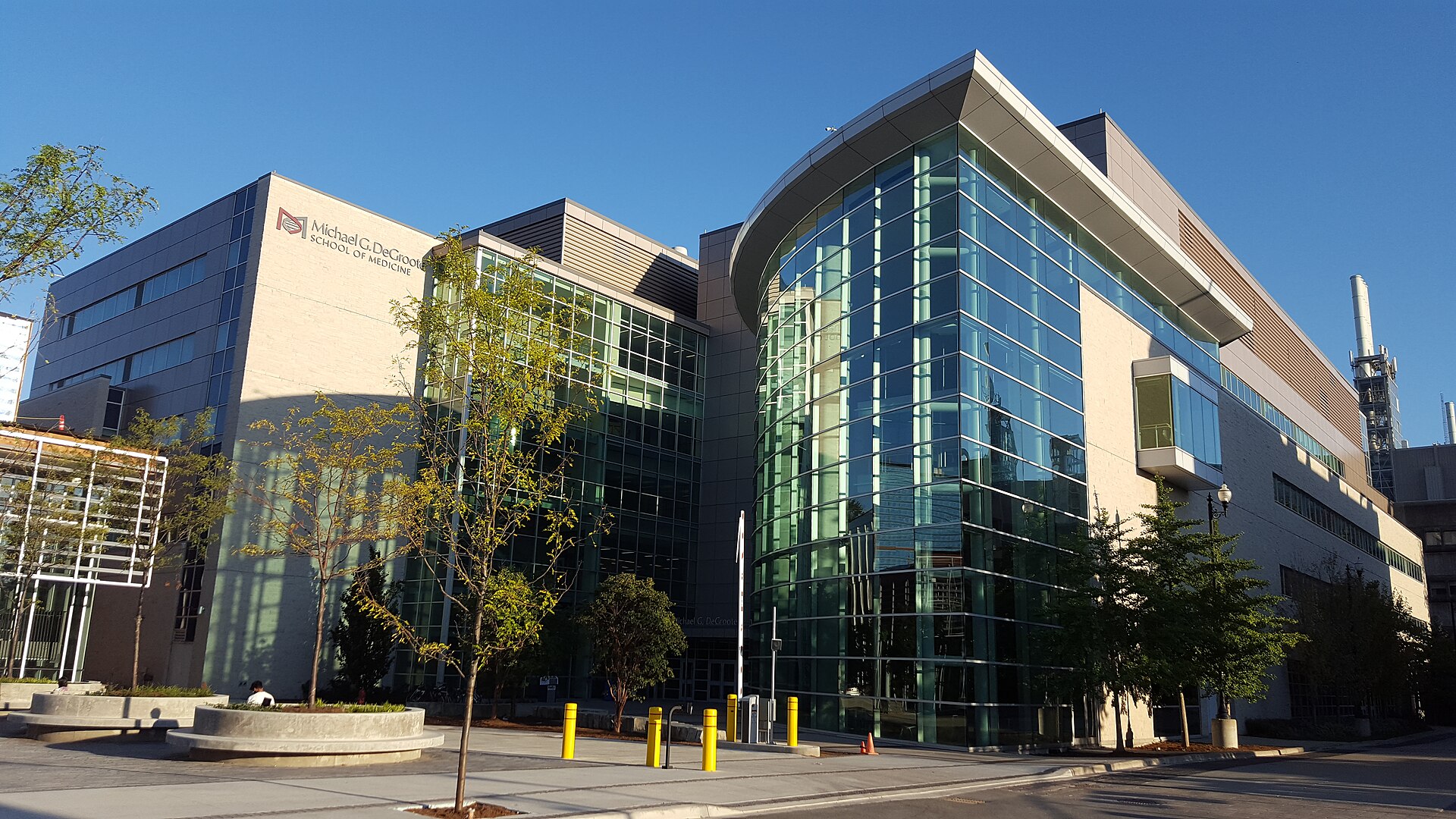
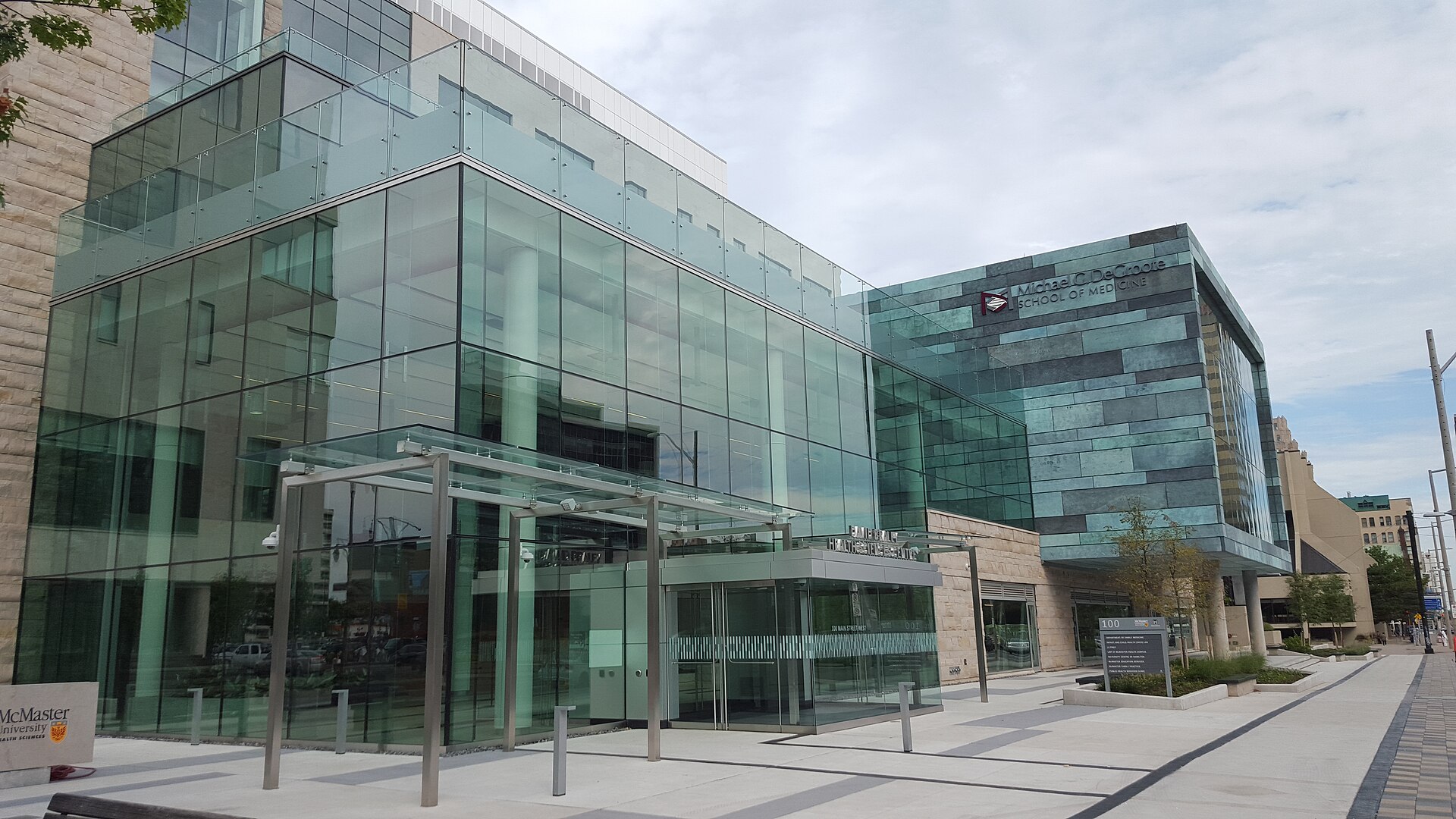
McMaster University — campus in pictures
Real, freely-licensed photographs of the campus (via Wikimedia Commons).
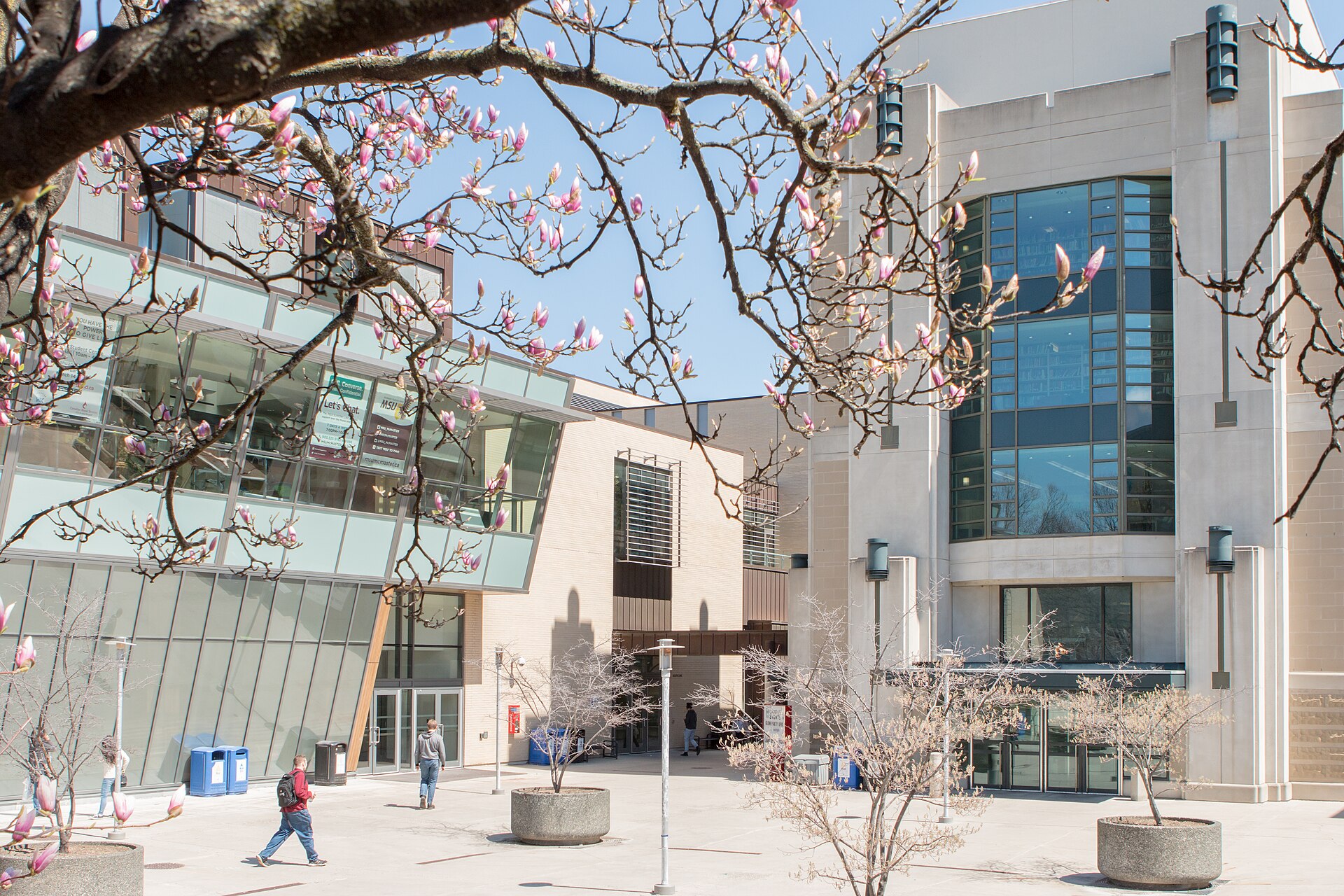
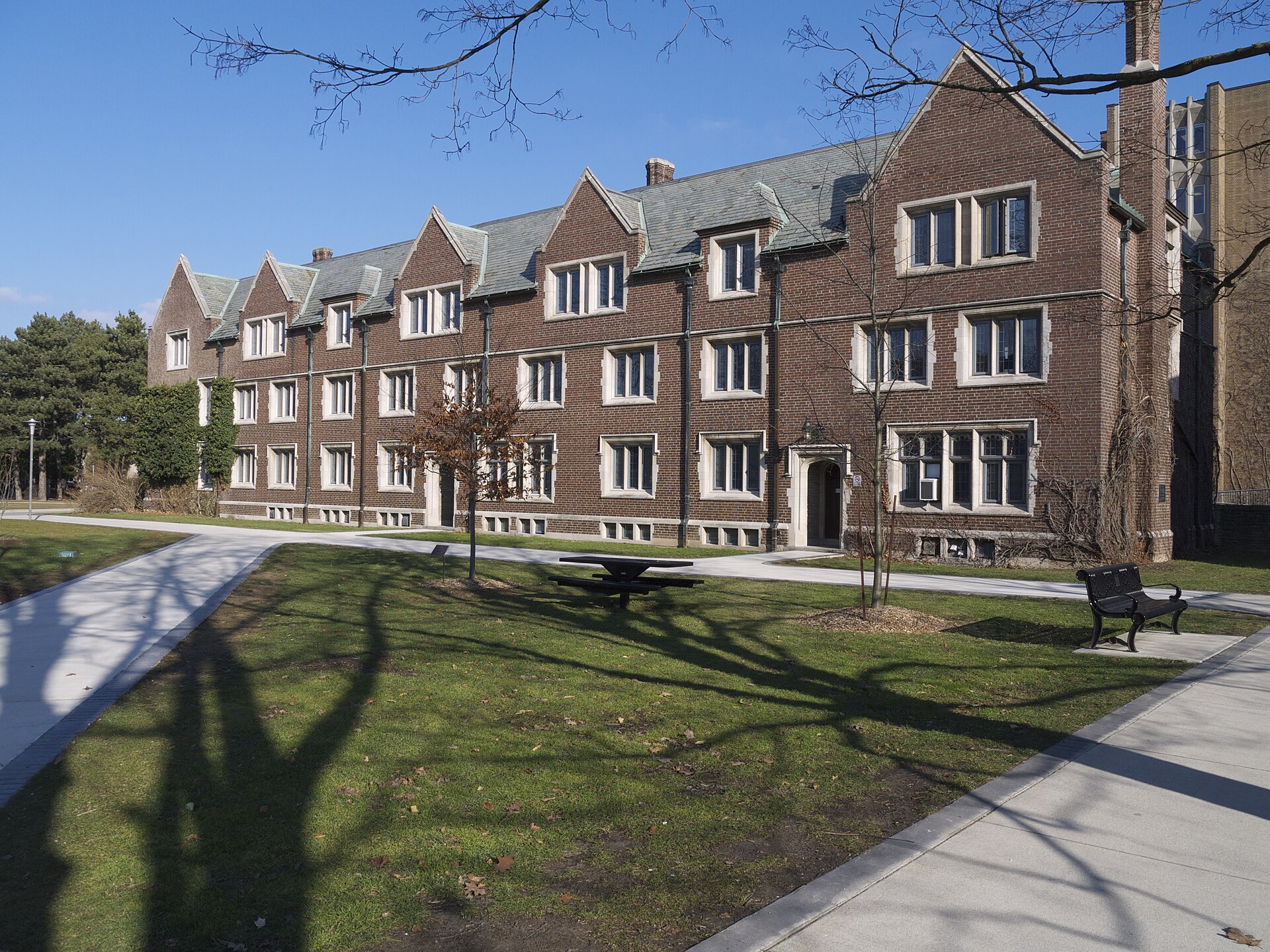
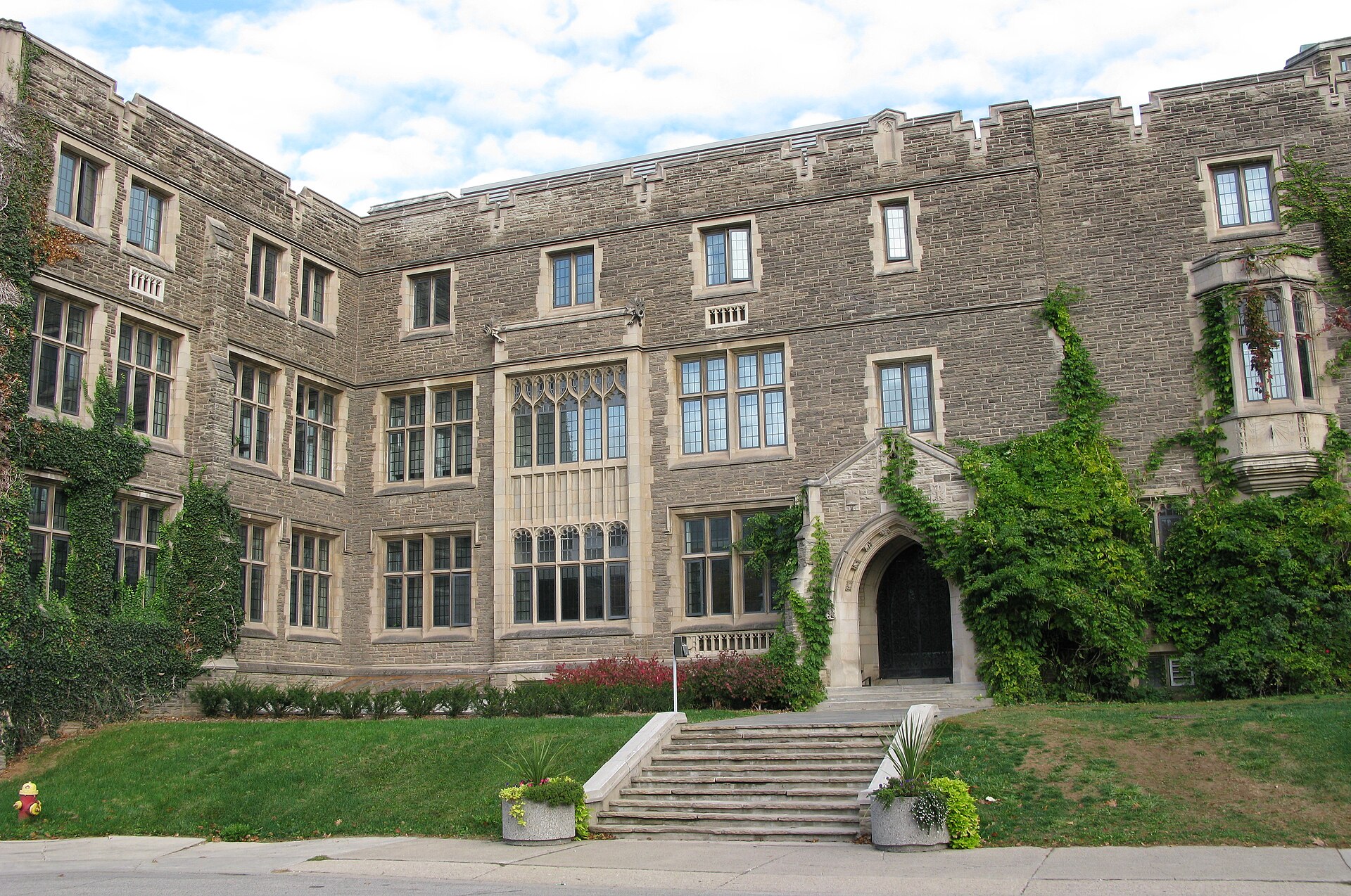
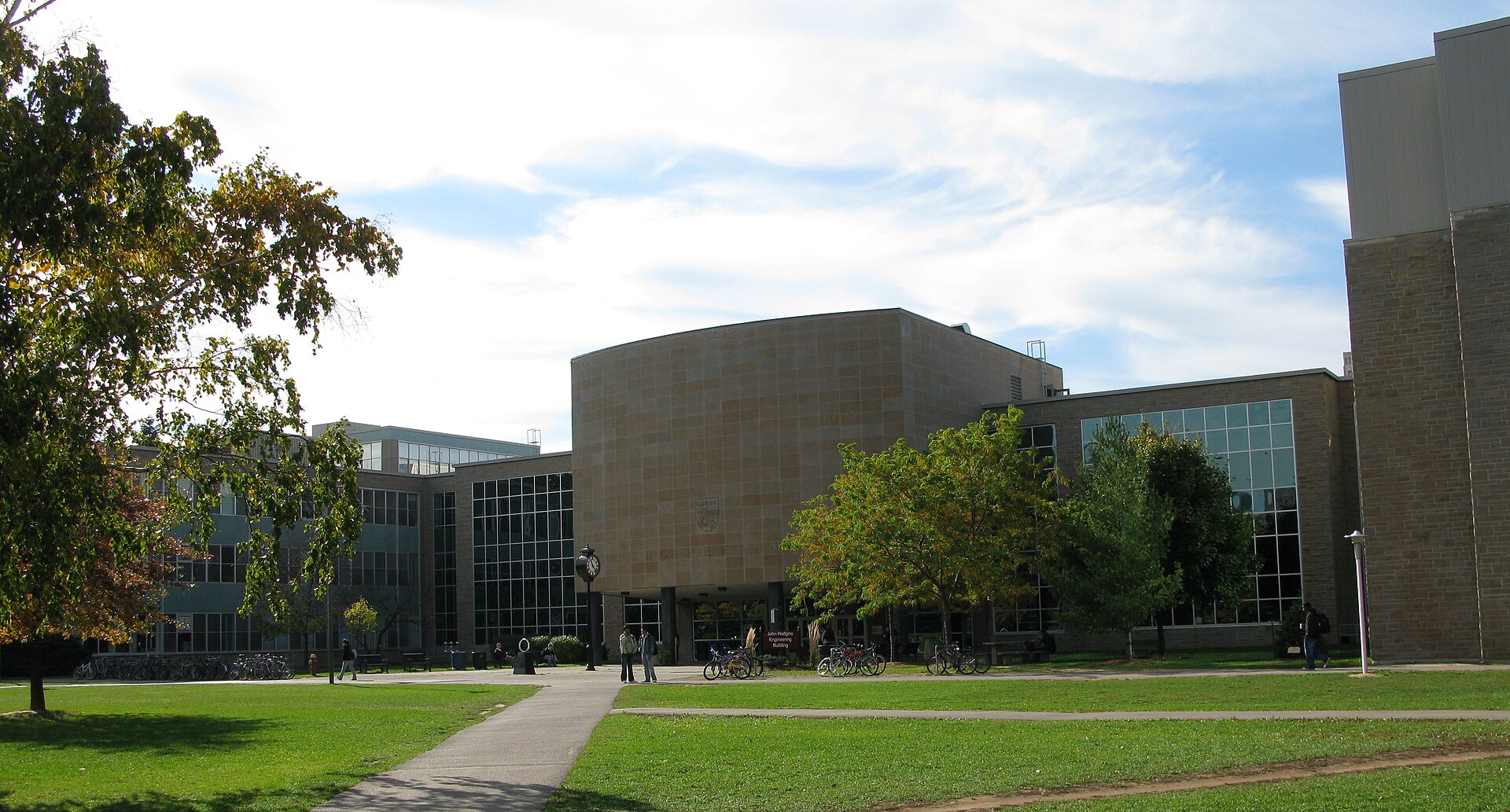
WHY MCMASTER
Why McMaster University — Research, Innovation & Problem-Based Learning
McMaster is not simply another strong Canadian university — it is an institution that shaped the way the world teaches medicine and health sciences, and that continues to push the frontiers of undergraduate education. For international students, McMaster offers the rare combination of a rigorous research environment, genuine pedagogical innovation, and a city that punches well above its weight culturally and commercially.
SELECTIVITY
McMaster Acceptance Rate & Admissions Profile
McMaster's overall acceptance rate is approximately 60% — but this number is misleading for competitive programs. Honours Health Sciences, Integrated Biomedical Engineering, Computer Science, and Nursing attract far more applicants than available spots, and in practice require averages well above 90% alongside strong supplementary applications. International students must understand that program-level competition — not the university-wide acceptance rate — is what determines your real admissions challenge.
For Health Sciences and other elite McMaster programs, admission averages of 95%+ and a standout supplementary application are the realistic threshold. The overall acceptance rate should not create false confidence if your target program is one of McMaster's high-demand offerings.
QUICK FACTS
McMaster University — By the Numbers
APPLICATION COMPONENTS
McMaster Application Components — OUAC, Supplements & English Tests
McMaster uses the Ontario Universities' Application Centre (OUAC) for all undergraduate applications. Unlike US universities using Common App, OUAC applications are shorter and more grades-focused. But many of McMaster's most competitive programs layer supplementary applications on top — and those supplements carry enormous weight in the admissions decision.
ADMISSIONS PROFILE
What McMaster Looks For — Grades, Fit & Supplementary Performance
McMaster's admissions philosophy is grades-first at the university level, but genuinely holistic for its most competitive programs. For the majority of programs, your academic average is the primary determinant. For Health Sciences, Nursing, Engineering, Arts & Science, and other supplementary-required programs, the full application is evaluated — and the supplement can matter as much as or more than a few percentage points in average.
KEY DATES
McMaster Application Deadlines & Key Dates
McMaster uses OUAC for all undergraduate applications. Supplementary application deadlines are program-specific and fall in January–February — missing them is disqualifying. All dates below are approximate from recent cycles; always verify on McMaster's official website before planning your timeline.
After you submit your OUAC application, McMaster will email login instructions to access your supplementary application portal. This email sometimes goes to spam — check immediately and add McMaster's domain to your safe senders list.
| Milestone | Date | Notes |
|---|---|---|
| OUAC Applications Open | September (prior year) | Apply early — high-demand programs may review on a rolling or volume basis |
| Engineering, CS & iBioMed Supplement (Kira Talent) | ~January 29 | Complete once for all engineering-stream programs — applies to Engineering, CS, iBioMed |
| Arts & Science Supplement | ~February 1 | Written supplementary application |
| Leadership & Civic Studies / Wilson College Supplement | ~February 1 | Written supplementary application |
| Health Sciences Supplement | ~Early–mid February | Written responses; among the most competitive supplements in Canada |
| Nursing CASPer | ~February (CASPer test date) | Register for CASPer separately at altus.asc-assessments.com; results sent directly to McMaster |
| International Entrance Award Applications | ~February 19 | Award applications open November 1 |
| Document Submission Deadline | May 1 | Final deadline to submit all application materials to McMaster |
STUDENT LIFE
Campus Life at McMaster — Hamilton, Westdale & Research Culture
McMaster's 121-hectare campus sits in the Westdale neighbourhood of Hamilton — a walkable, tree-lined community with cafes, grocery stores, a vintage cinema, and restaurants immediately surrounding the university gates. The city of Hamilton, with a population exceeding 500,000, has undergone a remarkable cultural transformation, becoming a destination for artists, chefs, and young professionals.
Hamilton is 45 minutes from Toronto by GO Train or highway, putting Canada's largest city within reach on weekends while you benefit from Hamilton's significantly lower cost of living. The Niagara Escarpment and dozens of waterfalls lie minutes from campus — Hamilton is known as the 'Waterfall Capital of the World' and a genuine outdoor recreation hub. Locke Street and the downtown core offer restaurants, galleries, and music venues that rank among Ontario's most vibrant for a non-Toronto city.
CAREER OUTCOMES
McMaster Graduate Outcomes — Employment, Salaries & Industry Pathways
McMaster graduates enter the workforce with strong practical foundations. The university's emphasis on inquiry-based learning and cooperative education — particularly in Engineering — produces graduates who are prepared to apply knowledge, not just recall it.
Stats
Cards
FAQS
Frequently Asked Questions — McMaster Admissions
Do I need to take the SAT or ACT to apply to McMaster as an international student?+
No. McMaster does not require, request, or consider SAT or ACT scores. Admission is based on your academic grades in required subjects, English language proficiency (if applicable), and any supplementary application required by your program. Your energy is better spent on achieving the highest possible grades and on preparing a strong supplementary application.
How competitive is McMaster's Honours Health Sciences program for international students?+
Honours Health Sciences is among the most competitive undergraduate programs in Canada. In practice, admitted students typically have academic averages of 95%+ and a compelling supplementary application. The program is particularly valued as a pathway to Canadian medical schools, driving demand far beyond available spots. International students are considered in the same admissions pool and must meet the same academic and supplementary standards as domestic applicants.
Does McMaster use the Common App?+
No. McMaster uses the Ontario Universities' Application Centre (OUAC) at ouac.on.ca. International applicants not currently attending an Ontario high school apply through the OUAC 105 international applicant stream. The process is different from Common App — it is more grades-focused and does not include a personal essay. Supplementary applications are handled separately by each faculty after you submit your OUAC application.
What is the IB score requirement for McMaster?+
The minimum IB score confirmed in McMaster's data is 34 overall. However, competitive programs like Health Sciences and Engineering require substantially higher converted averages. IB applicants should confirm that their Higher Level subjects meet the specific prerequisites for their intended program — strong HL results in Biology and Chemistry are typically needed for Health Sciences, and HL Mathematics for Engineering.
Is on-campus housing guaranteed for international students?+
First-year students — including international students — are guaranteed on-campus housing at McMaster, provided they apply by the housing deadline. This is a significant practical advantage for international students arriving from abroad who need immediate accommodation support.
Can I apply to multiple McMaster programs through OUAC?+
Yes. OUAC allows you to list multiple programs at McMaster and other Ontario universities. If you apply to both Engineering and Computer Science at McMaster, you typically complete one Kira Talent assessment that applies to all engineering-stream programs. Programs requiring different supplements (e.g., Health Sciences and Engineering) each require their own supplementary applications.
What international student support does McMaster offer?+
McMaster provides dedicated international student services including immigration advising and study permit support, an International Student Services office, peer mentorship programmes, cultural associations, and academic English support. McMaster was ranked #1 in Canada for student services by Maclean's in 2025.
Is CASPer required for all McMaster programs?+
No — CASPer is specifically required for Nursing applicants. Health Sciences has its own written supplementary application. Engineering and CS use Kira Talent. Arts & Science has a written supplement. Each program has a distinct supplementary format — verify your specific program's requirements at future.mcmaster.ca/supplementary-applications/.
MCMASTER ACADEMIC REQUIREMENTS
Academic Requirements at McMaster — The Honest Picture for International Students
McMaster's admissions criteria are grade-centric — but what 'grade-centric' means depends enormously on which program you target. Understanding exactly which grades McMaster counts, at what thresholds your target program becomes competitive, and what subject prerequisites you must satisfy is the foundation of any sound application strategy.
Unlike US universities with holistic review from the outset, McMaster's initial evaluation is primarily academic: does your grade in the required subjects meet the threshold for your program? For most programs, this is the primary gate. For competitive supplementary-required programs, it is the first gate — not the only one.
ACADEMIC PROFILE
McMaster Academic Profile — Key Numbers at a Glance
Admission averages at McMaster are calculated from senior-year required courses. The minimum GPA of 3.0 and minimum IB of 34 represent the university-wide floor — not the competitive threshold. For Health Sciences and Engineering, an average below 90% is unlikely to result in an offer. For Health Sciences specifically, 95%+ is the realistic competitive range.
TEST POLICY
McMaster & Standardised Tests — SAT/ACT Not Required or Considered
McMaster University does not require, request, or consider SAT or ACT scores in its undergraduate admissions process. As a Canadian public university operating within the Ontario system, McMaster's admissions framework is built around secondary school grades, program subject prerequisites, and — for competitive programs — structured supplementary assessments.
This is a practical advantage for international students who may have strong academic records but have not prepared for US-style standardised tests. Do not submit SAT or ACT scores — they are not evaluated and will not benefit your application. Your preparation time is better invested in achieving the highest possible grades in your required subjects and, if applying to a supplementary-required program, in developing a compelling supplementary application.
Test policy: optional / not applicable. McMaster does not use US standardised test scores in any part of its admissions evaluation.
CANADIAN ADMISSIONS CONTEXT
What McMaster Uses Instead of SAT/ACT — The Ontario University System
In the Ontario university system, admissions are determined primarily through secondary school grades, with universities receiving grade reports directly from Ontario schools or from official documents for international applicants. McMaster supplements this with program-specific assessments for its most competitive programs.
IB & A-LEVELS
IB and A-Level Applicants at McMaster — Benchmarks and Equivalencies
McMaster is experienced with international curricula and has established conversion tables for IB Diploma, British A-Level, and other international qualifications. Understanding how your international grades translate into McMaster's admission average — and whether they satisfy the prerequisites for your program — is essential planning that should happen in Grade 11, not Grade 12.
SUBJECT PREREQUISITES
Prerequisites by Faculty at McMaster — What Each Program Requires
Unlike US universities where academic preparation is evaluated holistically, McMaster has firm subject prerequisites for each program. Missing a prerequisite is disqualifying regardless of overall average. Planning your subject selection in Grades 11 and 12 around these requirements is critical — do not discover a missing prerequisite in your final year.
ENGLISH REQUIREMENTS
English Language Proficiency — McMaster's Requirements for International Students
International students whose primary language of instruction has not been English must submit official English proficiency test results. McMaster accepts multiple tests; results must be no older than two years at the time of application. Meeting component minimums is required — an overall score that meets the threshold but includes a failing component will result in conditional or rejected admission.
MELD and STEP conditional programmes offer pathways for students who fall slightly below these thresholds, combining language preparation with early academic study. Some McMaster programs may have higher language requirements than these university minimums — always verify for your specific program.
| Test | Overall | Components | Notes |
|---|---|---|---|
| IELTS Academic | 6.5 | 6.0 minimum in each of the four bands | Academic UKVI version also accepted; valid 2 years |
| TOEFL iBT | 86 | 20 minimum in all components | Home Edition accepted; Essentials & MyBest not accepted; valid 2 years |
| Duolingo English Test | 120 | Reading 115, Writing 125, Listening 110, Speaking 115 | Verify current acceptance status; newer addition to McMaster's accepted list |
| PTE Academic | 60 | Writing and Speaking: 60 minimum each | Pearson Test of English Academic |
| Cambridge CAE | 180 | 176 minimum in each component | Certificate in Advanced English; valid 2 years |
| CAEL | 70 | No component below 60 | Canadian Academic English Language Assessment |
GRADE 9–12 ROADMAP
Building Your Academic Profile — A Four-Year Roadmap to McMaster
COMMON PITFALLS
Academic Mistakes That Hurt McMaster Applications — What to Avoid
McMaster's straightforward grade-based admissions criteria can create a false sense of simplicity. These are the most common academic errors that undermine strong applications.
- Treating the university-wide 60% acceptance rate as a benchmark — competitive programs like Health Sciences and Engineering are in an entirely different admissions category.
- Missing a subject prerequisite — McMaster does not grant exceptions for prerequisite gaps, regardless of overall average strength.
- Confusing the minimum IB score of 34 with a competitive threshold — for Health Sciences and other elite programs, the realistic competitive range is 36–40+ with strong HL scores in required subjects.
- Submitting supplementary applications without adequate preparation — competitive supplementary applications require genuine preparation, not a last-minute response written the evening before the deadline.
- Failing to verify IB or A-Level conversion for your specific program before finalising subject choices in Grade 11.
- Not meeting the English test component minimums — an overall IELTS of 6.5 with a 5.5 in Speaking or Listening will result in a conditional or rejected offer.
- Assuming all McMaster programs are equally competitive — Computer Science, iBioMed, and Health Sciences are in a different admissions category from many Humanities and Social Sciences programs.
- Waiting until Grade 12 to research supplementary application requirements — by then, you have no time to develop the experiences and skills that make a compelling supplement.
COST & FINANCIAL AID
McMaster Cost of Attendance — A Realistic Picture for International Students
For international students, McMaster represents genuine value in the global higher education landscape. Its tuition is substantially lower than comparable research universities in the US and UK, while Hamilton's cost of living is dramatically lower than Toronto. Understanding the full cost picture — and the substantial entrance award funding available — is essential to making an informed decision.
McMaster explicitly offers over $20 million in entrance awards for international fee-paying students, with individual awards ranging from $7,500 to $200,000. Many automatic awards are tied to your admission average, rewarding strong academic performance without requiring a separate application.
COST BREAKDOWN
Annual Cost of Attendance at McMaster — International Student Estimates
All figures below are annual estimates for international fee-paying students, expressed in USD equivalent based on facts data. Actual costs vary by program — Engineering and Health Sciences programs often carry higher program-specific fees — and by individual lifestyle. These figures should be treated as planning estimates, not guarantees.
McMaster's tuition is quoted in CAD on official sources. Use the current CAD/USD exchange rate for your own financial planning. Total attendance cost at McMaster compares favourably to US and UK peer institutions with comparable global rankings — often by a margin of $30,000–$50,000 USD per year.
| Item | Amount | Notes |
|---|---|---|
| International Tuition (annual estimate) | $35,200 USD | Varies by program; professional programs may be higher |
| Cost of Living — Hamilton estimate | $14,000 USD | Includes housing, food, personal expenses; significantly lower than Toronto |
| Total Estimated Cost of Attendance | $45,800 USD | Includes tuition, living, books, and personal expenses annually |
| OUAC Application Fee | $90 USD | Paid through OUAC at time of application submission |
FINANCIAL AID
Financial Aid for International Students — Entrance Awards & Funding Landscape
McMaster does not offer comprehensive need-based financial aid to international students in the way US need-blind universities do. International financial support comes primarily through entrance awards — merit-based and some equity-based — which are substantial and widely distributed across all six faculties.
McMaster has invested meaningfully in international student funding. The awards range from $7,500 to $200,000 across all faculties, with a total pool exceeding $20 million annually. The most common automatic awards are tied to admission average — rewarding academic excellence without requiring a separate application. Larger awards require applications with deadlines in February.
International students are not eligible for most Canadian government grants, provincial bursaries, or Canada-citizen-restricted programmes such as the Loran Award. McMaster's own entrance award ecosystem is the primary institutional funding source for international applicants.
SCHOLARSHIPS & AWARDS
McMaster Entrance Awards — Named and International Scholarships
The following scholarships and awards are offered by McMaster. Some are automatic upon admission; others require a separate application. Always verify current amounts, eligibility, and deadlines on McMaster's official Registrar website.
THE HAMILTON ADVANTAGE
The McMaster Affordability Advantage — Hamilton vs. Toronto
One of McMaster's most concrete financial advantages is the city itself. Hamilton is dramatically more affordable than Toronto — where the University of Toronto, York, and Toronto Metropolitan University are located — while offering its own strong cultural and recreational amenities.
Students attending universities in Toronto face a housing market where average student rental costs approach or exceed $1,500–$2,000 CAD per month. Hamilton students typically pay significantly less for comparable or better accommodation in Westdale and surrounding neighbourhoods. This gap compounds over four years, meaningfully reducing total degree cost relative to Toronto-based competitors even if nominal tuition rates are similar. The GO Train connects Hamilton to Toronto Union Station in approximately 65 minutes, making Toronto's employers, internships, and cultural resources accessible without paying Toronto's cost of living.
HOW TO SECURE FUNDING
Securing Financial Aid at McMaster — Step by Step
COST FAQS
Cost & Aid FAQs — McMaster International Students
Does McMaster offer need-based financial aid to international students?+
McMaster does not offer comprehensive need-based financial aid packages to international students comparable to US need-blind universities. International financial support comes primarily through merit-based entrance awards and limited equity-based funding. Most bursaries and need-based grants at McMaster are restricted to Canadian citizens and permanent residents.
How much do international students actually pay in tuition at McMaster?+
The estimated international tuition is approximately $35,200 USD equivalent annually — but this varies by program. Engineering and Health Sciences programs typically carry higher program-specific fees. Tuition is quoted in CAD on McMaster's official sources; use the current CAD/USD exchange rate and McMaster's Cost Estimator tool for your specific program and year of entry.
Are the international entrance awards competitive or automatic?+
Both. Some automatic awards are tied to your admission average and require no separate application — notably the McMaster Entrance Award ($3,000 for most faculties). The larger international awards (ranging up to $200,000) typically require a separate application with a deadline around February 19. The total international award pool exceeds $20 million across all faculties.
How does McMaster's total cost compare to US research universities?+
McMaster's total estimated cost of attendance of approximately $45,800 USD per year is substantially lower than comparable US research universities, where total annual costs frequently reach $75,000–$90,000 USD. Combined with Hamilton's lower living costs, McMaster offers strong value relative to peers with comparable global research rankings.
Can I work while studying at McMaster on a student visa?+
International students studying in Canada on a valid study permit are generally eligible to work up to 20 hours per week during academic terms and full-time during scheduled breaks, subject to current Canadian immigration regulations. Confirm your specific eligibility with IRCC (Immigration, Refugees and Citizenship Canada) and McMaster's International Student Services office, as rules can change.
SUPPLEMENTARY APPLICATIONS
McMaster Supplementary Applications — The Hidden Gate to Competitive Programs
McMaster does not use a traditional essay-heavy application like Common App. But for its most competitive programs — Health Sciences, Engineering, Nursing, Arts & Science, and others — supplementary applications are the most consequential component of your file. A student with a 98% average who submits a weak supplement will lose a spot to a student with a 93% average who demonstrates exactly what the faculty is looking for.
This section explains the McMaster supplementary application ecosystem: what each format involves, how to prepare strategically, and the most common mistakes applicants make. For international students unfamiliar with Canadian university applications, understanding these components early — before Grade 12 — is critical.
APPLICATION SYSTEM OVERVIEW
McMaster's Application System — OUAC + Program-Specific Supplements
McMaster uses OUAC (Ontario Universities' Application Centre) for all undergraduate applications. The OUAC application is primarily administrative — it captures your academic history, program choices, and contact information. It does not include a Common App-style personal essay.
The evaluative writing in a McMaster application lives almost entirely in the supplementary applications that specific programs require. These are accessed after submitting OUAC and have their own separate deadlines — typically late January or early February. Missing these deadlines eliminates you from consideration for competitive programs regardless of your academic record.
Not all McMaster programs require supplementary applications. If your program does not require one, admission is determined primarily by your academic average and subject prerequisite satisfaction. The programs most international students target — Health Sciences, Engineering, Nursing — all require supplements.
SUPPLEMENTARY FORMATS
McMaster Supplementary Application Formats — Program by Program
Each McMaster faculty uses a different supplementary format. Understand which format applies to your target program and prepare accordingly — the skills required for Kira Talent video responses differ from those needed for written Health Sciences prompts, which differ from CASPer situational judgment scenarios.
THE OUAC APPLICATION
Understanding OUAC — Canada's University Application System
The OUAC application is the gateway through which McMaster first sees your file. It is more straightforward than Common App or UCAS — but completing it accurately and early is important, because it triggers access to your supplementary application portals.
STRATEGIC PREPARATION
Supplementary Application Strategy — What Distinguishes Admitted Students
Whether you face a video assessment, a written supplement, or CASPer, the same underlying principle applies: demonstrate that you genuinely understand what this specific program is — and that you have the qualities it actually needs, not the qualities you assume look impressive.
WHAT TO WRITE ABOUT
Topic Selection for McMaster Supplements — Finding Your Strongest Material
For programs with open-ended written prompts, what you write about matters as much as how you write it. McMaster's competitive programs receive thousands of applications. The topics that stand out are not the most dramatic — they are the most specific and the most honest.
For Health Sciences applicants: resist writing about wanting to become a doctor. Health Sciences is explicitly not a pre-med stream — it is an inquiry-based science degree that examines health across biological, behavioural, and population dimensions. Write about a genuine health question you investigated independently, a community health issue you engaged with directly, or an experience that revealed the complexity of health in ways a traditional science course did not. For Engineering applicants on Kira Talent: draw from experiences where you actually built, designed, solved, or collaborated — not experiences you think sound impressive for an engineering application.
COMMON MISTAKES
Supplementary Application Mistakes — What Eliminates Strong Applicants
- Missing the supplementary application deadline — this is the single most common and most avoidable reason academically strong applicants are rejected from competitive McMaster programs.
- Treating Health Sciences as a pre-med application — the program is a rigorous inquiry-based science degree, not a pathway to medicine; framing your entire supplement around medical school ambitions signals a fundamental misunderstanding of the program.
- Recording unprepared video responses for Kira Talent — applicants who have not practised thinking on camera under time pressure produce visibly rushed, incoherent responses that score poorly regardless of underlying intelligence.
- Giving 'right answer' CASPer responses without showing reasoning — jumping to conclusions without walking through your thinking process is a consistent low-score pattern in CASPer evaluations.
- Using generic language: 'I want to help people,' 'I have always been passionate about health' — these phrases appear in tens of thousands of applications and differentiate no one.
- Applying through OUAC and failing to monitor your email for the supplementary application invitation — the email linking you to your supplement portal sometimes goes to spam; missing this invitation means missing the supplement deadline.
- Not designating McMaster as a CASPer recipient within the CASPer platform before the deadline — CASPer results are not automatically sent to any institution; you must actively designate recipients.
- Over-rehearsing Kira Talent responses to the point of sounding scripted — assessors recognise memorised delivery; authenticity and clear structured thinking under genuine time pressure are what the platform is designed to evaluate.
SUPPLEMENT FAQS
Supplementary Application FAQs — McMaster-Specific Questions
Does McMaster have a personal essay like the Common App?+
No. OUAC, the system McMaster uses, does not include a Common App-style personal essay. The evaluative writing at McMaster lives in program-specific supplementary applications — which vary by format (written responses, Kira Talent video, CASPer). If your target program does not require a supplementary application, there is no personal writing component in your application at all.
How long are Health Sciences supplementary application responses?+
McMaster does not publish word limits for Health Sciences supplementary prompts in advance — these are revealed when you access your portal after submitting through OUAC. Based on the program's evaluation philosophy, responses should be substantive but focused. Padding does not help; precision does. Start preparing your thinking about PBL, interdisciplinary health, and your specific academic interests early — before prompt specifics are revealed.
Can I prepare for CASPer in advance?+
You cannot see CASPer's actual questions before the assessment. However, you can prepare meaningfully: practise responding to situational judgment scenarios, work on thinking through competing interests and stakeholders clearly and quickly, and practise structured typing under time constraints. Official CASPer preparation resources are available through Altus Suite's website. Register early — test slots fill up, and you need to designate McMaster as a score recipient before the faculty deadline.
If I apply to both Engineering and Computer Science at McMaster, do I complete two Kira Talent assessments?+
No. McMaster's Engineering and Computer Science programs share the Kira Talent assessment platform — applicants complete one assessment that counts for all engineering-stream programs at McMaster. This is confirmed on McMaster's supplementary applications page.
What happens if I miss the supplementary application deadline?+
Missing the supplementary deadline for a competitive McMaster program is effectively disqualifying. McMaster does not grant late submission extensions for supplementary applications. Set calendar reminders well in advance — late January and early February deadlines arrive during a period when many students are managing exams, other university applications, and OUAC submissions simultaneously.
Does McMaster interview applicants at the undergraduate level?+
McMaster does not conduct traditional live admissions interviews for most undergraduate programs. The Kira Talent video assessment for Engineering and CS is asynchronous — you record responses to prompts without a live interviewer present. There is no live interview component in the standard undergraduate admissions process.
Is the Health Sciences supplementary the same every year?+
The format and evaluation criteria are consistent, but specific prompt questions may change from cycle to cycle. You will not see the exact prompts until you access your supplementary portal after submitting OUAC. This is why preparing the underlying thinking — about PBL, health as an interdisciplinary subject, your own intellectual curiosity — matters more than memorising prepared answers to last year's prompts.
Courses — schools, degrees & intake
57 degrees across 7 groupings.
Faculty of Engineering · 11 degrees
Chemical Engineering
Chemical Engineering & Bioengineering
Civil Engineering
Computer Engineering
Electrical Engineering
Engineering Physics
Materials Engineering
Mechanical Engineering
Mechatronics Engineering
Software Engineering
Integrated Biomedical Engineering & Health Sciences
Faculty of Health Sciences · 7 degrees
Honours Health Sciences
Nursing
Midwifery
Medical Radiation Sciences
Physician Assistant
Health and Society
Kinesiology
Faculty of Humanities · 12 degrees
Greek & Roman Studies
Cognitive Science of Language
Communication Studies
English & Cultural Studies
French
Global Peace & Social Justice
History
Justice, Political Philosophy and Law
Linguistics & Languages
Media Arts
Music
Philosophy
Faculty of Social Sciences · 12 degrees
Anthropology
Economics
Environment & Society
Health, Aging & Society
Indigenous Studies
Political Science
Psychology, Neuroscience & Behaviour
Social Psychology
Social Work
Society, Culture & Religion
Sociology
Work and Labour Studies
Faculty of Science · 9 degrees
Biology
Chemistry
Biochemistry
Physics & Astronomy
Mathematics
Statistics
Computer Science
Earth, Environment & Society
Honours Integrated Science
DeGroote School of Business · 3 degrees
Bachelor of Commerce (BCom)
Bachelor of Commerce with Internship
Integrated Business & Humanities
Interdisciplinary Programs & Wilson College · 3 degrees
Arts & Science
iArts (Integrated Arts)
Leadership & Civic Studies (Wilson College)
Want your real chances at McMaster University?
Create a free TYCHR account for your personalised admit-chance, a shortlist you can track, exact entry requirements, and essay + counselling help.