← All universities

Maastricht University

Maastricht, Netherlands · Urban

YERUNPublicResearchCoed
Acceptance
55.0%
QS World
#250
Tuition/yr
$16,900
Students
22,500
Founded
1976

MAASTRICHT UNIVERSITY — NETHERLANDS

Maastricht University Admissions Guide for International Students

Maastricht University is the Netherlands' most international research university, where more than half the student body comes from abroad and every programme is taught through small-group Problem-Based Learning (PBL). Nestled at the tri-border crossroads of the Netherlands, Belgium, and Germany, UM blends historic European city life with a genuinely global academic community — making it one of the most distinctive choices for ambitious international students seeking a rigorous, collaborative European education.

Campus

Maastricht University — campus in pictures

Real, freely-licensed photographs of the campus (via Wikimedia Commons).
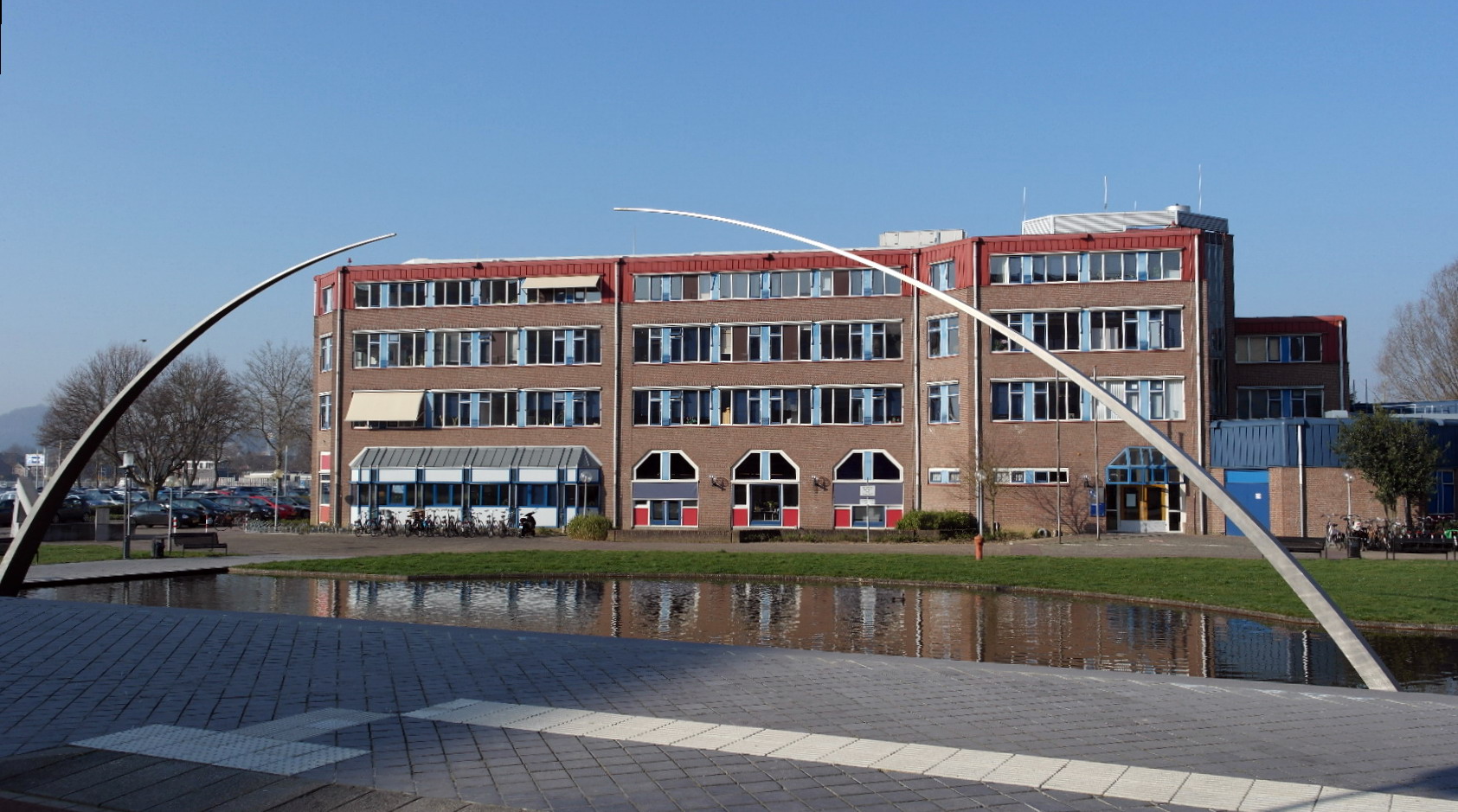
Maastricht, Randwyck, UM building1
Maastricht, Randwyck, UM building1Kleon3 · CC BY-SA 3.0 · via Wikimedia Commons
20130504 Maastricht View over Maastricht from Sint Pietersberg 01(cropped)
20130504 Maastricht View over Maastricht from Sint Pietersberg 01(cropped)Mark Ahsmann · CC BY-SA 3.0 · via Wikimedia Commons
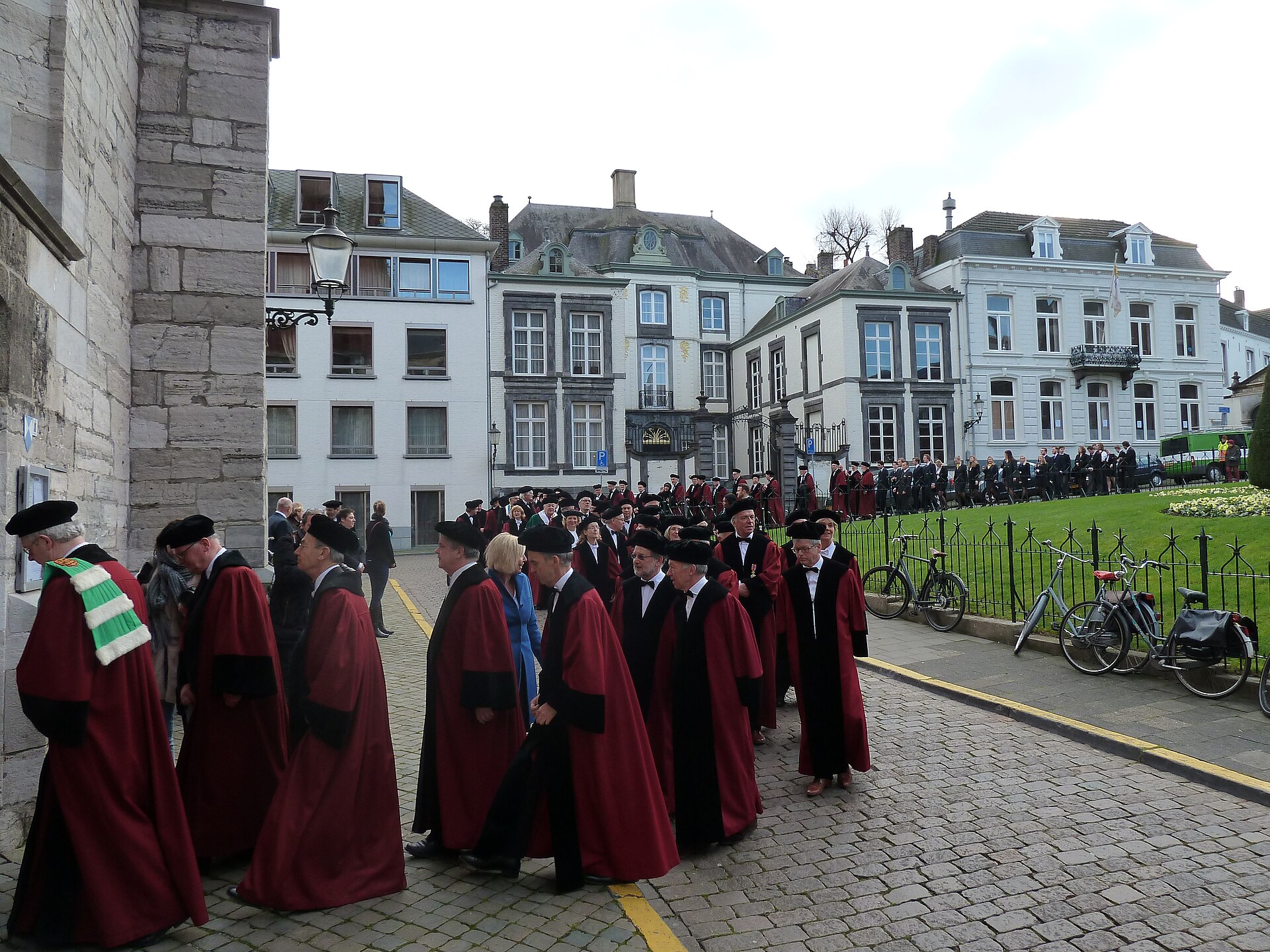
39th Dies Natalis of Maastricht University
39th Dies Natalis of Maastricht UniversityRomaine · CC0 · via Wikimedia Commons
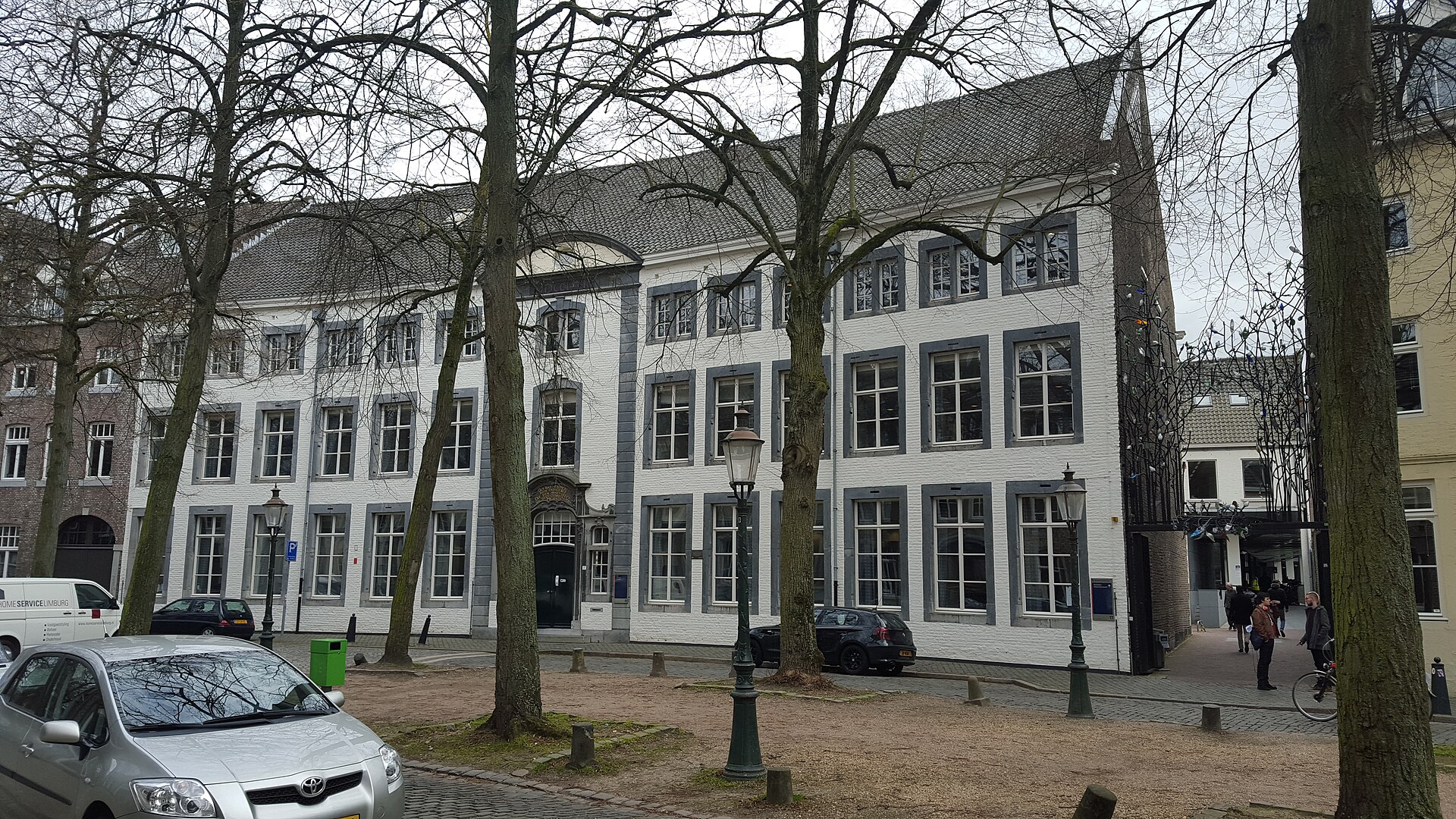
University Library at the Grote Looiersstraat 17, Maastricht, Netherlands
University Library at the Grote Looiersstraat 17, Maastricht, NetherlandsRomaine · CC0 · via Wikimedia Commons
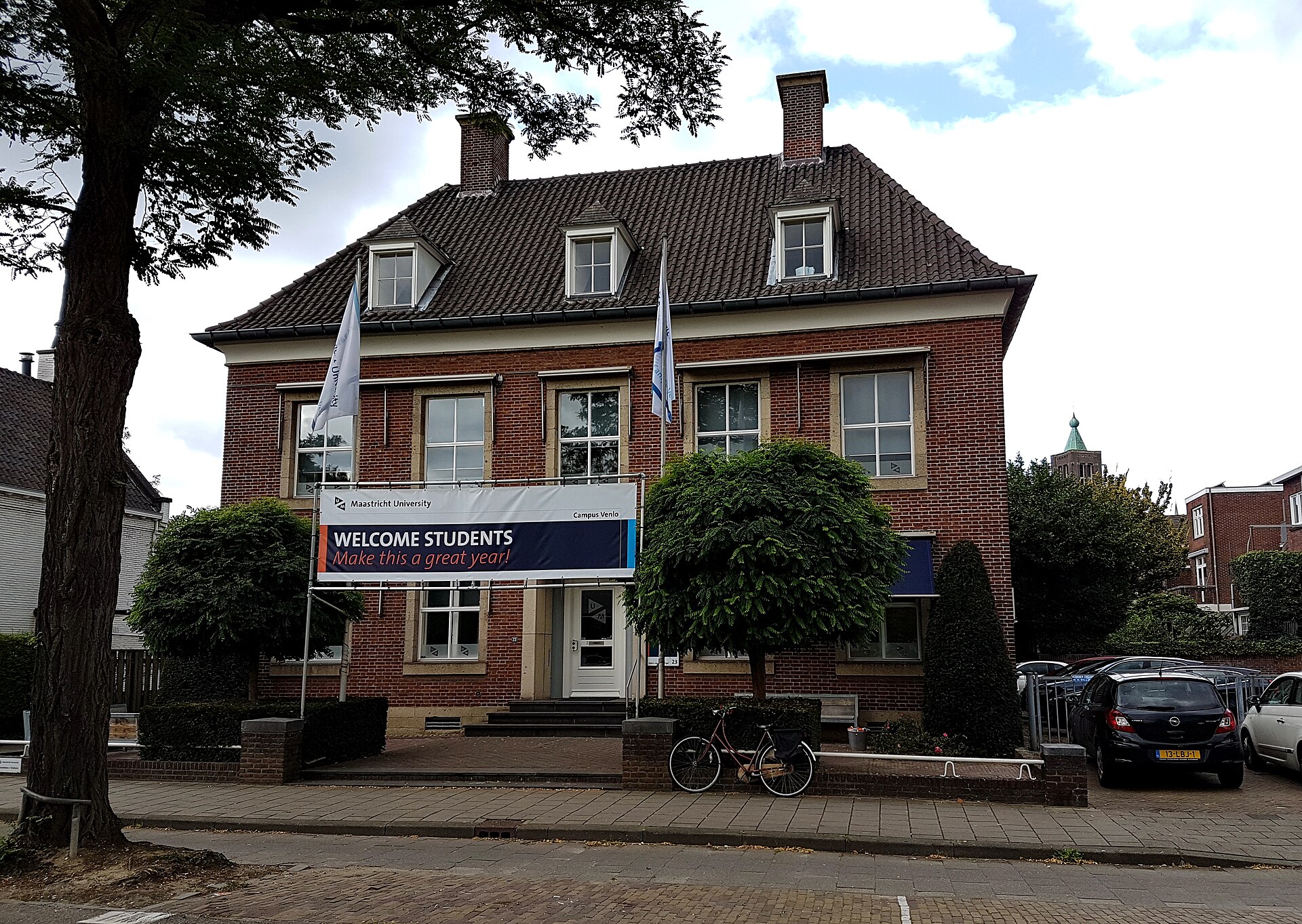
Universiteit Maastricht, UM Campus Venlo, gebouw Deken van Oppensingel 23 in Venlo.
Universiteit Maastricht, UM Campus Venlo, gebouw Deken van Oppensingel 23 in Venlo.Kleon3 · CC BY-SA 4.0 · via Wikimedia Commons
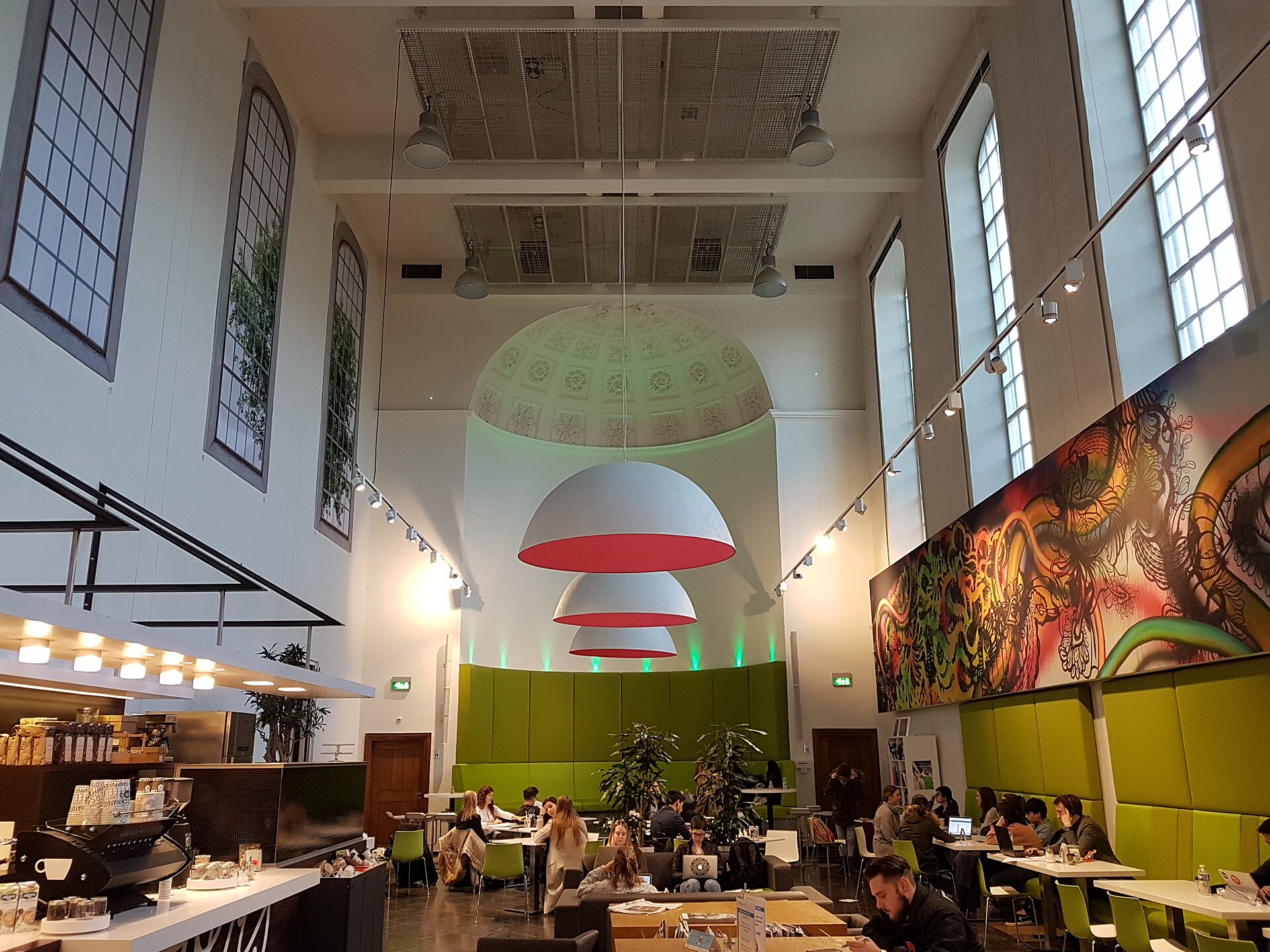
2018 Maastricht, Bonnefantenkerk, interieur
2018 Maastricht, Bonnefantenkerk, interieurKleon3 · CC BY-SA 4.0 · via Wikimedia Commons

Why Maastricht University — PBL, Triple Crown & Europe's Crossroads

Maastricht University is not a conventional lecture-hall university. Its Problem-Based Learning method, extraordinary international community, and location at Europe's cultural crossroads set it apart from every other research university in the Netherlands. For international students, it offers something rare: a genuinely global classroom in a historic European city at the heart of the continent.

01Pioneer of Problem-Based Learning
UM is the only Dutch university that applies Problem-Based Learning across every single programme. Small tutorial groups of 10–15 students work collaboratively on real-world problems, developing analytical thinking and teamwork skills that employers actively seek. Graduates consistently credit PBL as the reason they hit the ground running in their careers.
02The Netherlands' Most International University
With 57% of the student body coming from over 100 countries, Maastricht is the most internationally diverse university in the Netherlands. Your classmates are as likely to be from Germany, Belgium, or the UK as from the Netherlands itself — making every tutorial group a genuinely global classroom.
03Triple-Crown Business School
The School of Business and Economics holds the prestigious Triple Crown accreditation — EQUIS, AACSB, and AMBA — placing it in the top 1% of business schools worldwide. International Business and Economics programmes at UM consistently attract top students from across Europe and beyond.
04Rising Rankings, Young University
Founded in 1976 — one of the youngest of the Dutch universities — UM has climbed to a THE World Ranking of #145 and QS ranking of #250. It ranks among the top young universities globally. A young institution moving fast is one where students help shape a story still being written.
05Strong Career Outcomes
A 92% graduate employment rate and an average starting salary above USD 50,000 reflect the practical orientation of PBL education. UM graduates are highly sought across European businesses, NGOs, law firms, and health institutions — and the network of alumni across 150+ countries is a powerful career asset.
06Europe's Tri-Border Location
Maastricht sits minutes from the Belgian and German borders. Students routinely weekend in Liège, Aachen, or Cologne. The city itself is one of the Netherlands' most charming — Roman heritage, a vibrant café culture, student-friendly cycling infrastructure, and excellent rail links to Amsterdam, Brussels, and Paris.

Maastricht University Acceptance Rate & Admissions Profile

SAT and ACT scores are not used at Maastricht University. Selectivity varies dramatically by programme: open programmes admit all qualified applicants, while numerus fixus programmes (Medicine, Psychology, some Health Sciences) use strict selection procedures. Always check your specific programme's admissions page.

Stats

~22,500
Applications per year
22,500
Student body
57%
International students

Profile Stats

33+
IB Score (minimum benchmark)
3.0 / 4.0
Min. GPA equivalent
57%
International students
6.5
IELTS minimum
90
TOEFL minimum
Test-blind
Test policy
Overall acceptance rate — varies sharply by programme

Rea Vs Rd

Rea Label: Numerus Fixus (e.g. Medicine, Psychology)
Rea Value: Competitive
Rd Label: Open Enrolment Programmes
Rd Value: ~55%+

Maastricht University Admissions Requirements — Qualifications, English & Programme Fit

Secondary School Qualifications
Value: IB 33+ / ABB A-Levels
UM evaluates international qualifications from over 150 countries. An IB Diploma total of 33 or above is the broadly accepted benchmark for competitive programmes. A-Level ABB or above is typical for most programmes. Subject mix matters as much as overall grades.
  • IB Diploma: minimum 33 points; aim higher for selective programmes
  • A-Levels: ABB as a general minimum; subject relevance is key
  • National leaving certificates: evaluated against Dutch entry standards
  • US high school diploma requires supplementary AP credits for most programmes
English Proficiency
Value: IELTS 6.5 / TOEFL 90
All English-taught programmes require formal English proficiency evidence. The minimum is IELTS 6.5 Academic or TOEFL iBT 90. Some selective programmes set higher thresholds. Students who completed full secondary education in English may be exempt.
  • IELTS Academic: 6.5 overall (no band below 6.0 for most programmes)
  • TOEFL iBT: 90 overall
  • Cambridge C1 Advanced: grade B or above
  • Exemptions for students educated entirely in English — verify with programme
Programme Motivation (Selective Programmes)
Value: Motivation Letter
For selective and numerus fixus programmes, a well-crafted motivation letter explaining why you chose this programme and why PBL suits your learning style is a critical differentiator. Some programmes also require a CV, portfolio, or participation in a selection day.
  • Motivation letter: 500–1,000 words for most selective programmes
  • CV may be required for selective and fixus programmes
  • Some programmes require a selection day (UCM, Data Science & AI, Maastricht Science Programme)
  • Numerus fixus: apply via Studielink before 15 January
https://www.maastrichtuniversity.nl/study/admission-enrolment/applying-maastricht-university

Maastricht University Application Components — Studielink, Documents & Selection

Maastricht University uses the Dutch national portal Studielink as the primary application gateway. Unlike US universities, there is no Common App or UCAS. Different programme types require different supporting documents — here is what you will typically need.

01RequiredStudielink Registration
All applicants must register through Studielink (studielink.nl), the national Dutch higher-education application platform. You select your programme, faculty, and start date. Studielink connects directly to UM's own admissions system. Non-EU/EEA students should apply early — before 15 January for numerus fixus programmes.
02RequiredSecondary School Transcripts & Diploma
Certified copies of your final-year transcripts and diploma (or predicted grades if applying before graduation). UM evaluates IB, A-Levels, national leaving certificates, and equivalent credentials. Minimum IB benchmark is 33 points for most programmes.
03Required for mostEnglish Proficiency Certificate
All English-taught programmes require IELTS Academic (6.5+) or TOEFL iBT (90+). Some programmes set higher sub-score requirements. Native English speakers and students who completed secondary education in English may be exempt — verify with your specific programme.
04Selective programmesMotivation Letter
For selective and numerus fixus programmes, a motivation letter is a key differentiator. It should explain why you chose this programme, why PBL suits your learning style, and what you plan to do with the qualification. Typically 500–1,000 words.
05Selective programmesCV / Résumé
Some selective programmes — particularly those with decentralised selection — ask for a CV listing academic achievements, extracurricular activities, work experience, and relevant skills. Quality and relevance matter more than length.
06RequiredPassport / Identity Document
A copy of your valid passport or national identity document. Non-EU/EEA students will need to provide documentation supporting their visa and residence permit application once admitted. Apply early — MVV visa processing takes time.
07Some programmesSelection Day / Interview
UCM, Data Science & AI, the Maastricht Science Programme, and some numerus fixus programmes require attendance at a selection day — which may include a written test, group assignment, or individual interview. Dates are usually between February and April.
https://www.maastrichtuniversity.nl/study/admission-enrolment/applying-maastricht-university

Maastricht University Application Writing — The Motivation Letter

Maastricht University does not use US-style supplemental essays or a Common App personal statement. For most competitive programmes, the motivation letter (motivatiebrief) is the only written document that lets you communicate beyond your grades. It is not a formality — for numerus fixus and selective programmes, it is often the deciding factor between equally qualified candidates.

Prompts

Why This Programme?
Connect your academic background and intellectual interests directly to the programme curriculum. Reference specific modules or UM research themes where possible. Generic statements read as unresearched.
Why Maastricht University and PBL?
Demonstrate genuine understanding of what Problem-Based Learning means in practice — small tutorial groups, self-directed research, collaborative problem-solving. Explain with a concrete example why this pedagogy suits you.
What Do You Bring to the Tutorial Group?
PBL depends on every member contributing meaningfully. Describe your collaborative abilities, international experience, and intellectual curiosity. For numerus fixus programmes, the selection committee assesses tutorial-group fit explicitly.
Career Goals (Selective Programmes)
Be specific and realistic. Articulate a credible career direction and explain concretely how this UM programme is the most logical next step toward it. Vague ambitions land flat without substance.

Tips

Be specific to Maastricht
The moment your letter could be sent to any other university without editing, it loses its power. Reference UM's PBL method, specific programme modules, or the European/tri-border academic environment.
Show you understand PBL
Many international applicants are unfamiliar with Problem-Based Learning. Demonstrating that you know what it means — and have thought about whether it suits you — immediately sets you apart.
Open with substance, not biography
'I have always been interested in X since childhood' is the weakest possible opening. Start with a specific intellectual moment, question, or experience that reveals genuine curiosity.
Numerus fixus: apply by 15 January
For Medicine, Psychology, and other capacity-limited programmes, the deadline is firm. Missing it means missing the entire admissions cycle. No exceptions are made.
The most common UM motivation letter mistake. Writing a generic letter that could be sent to any university — and not explaining why PBL, the defining feature of a UM education, suits you personally.

What Maastricht University Admissions Looks For

Maastricht University's admissions process differs fundamentally from US or UK holistic review. Because PBL requires every student to actively contribute in small-group settings, UM looks for a particular type of learner — self-directed, collaborative, and genuinely curious. The ideal UM applicant is not just academically strong — they are someone who can ask the right questions, engage peers in discussion, and take ownership of their learning.

01Academic Readiness
Strong secondary school performance in subjects relevant to your chosen programme. Subject mix matters as much as overall grade — UM evaluates whether your school qualifications give you the foundation the programme requires.
02Self-Directed Learning
PBL demands that you drive your own learning between tutorial sessions. Students who have demonstrated initiative through independent projects, self-study, research, or competitive academic engagement stand out.
03Collaborative Character
Tutorial groups live or die on contribution. Evidence of teamwork — in school projects, sports, volunteering, or community organisations — shows you can be a valued group member rather than a passive participant.
04Clear Programme Motivation
UM wants to know why you chose this exact programme at this exact university. A convincing narrative connecting your background, interests, and UM's specific curriculum is far more persuasive than generic enthusiasm.
05English Proficiency
Since tutorials are conducted entirely in English, strong verbal and written communication in English is not just a formal requirement — it is a functional necessity for contributing meaningfully from day one.
06International Mindset
Given the cosmopolitan nature of the student body — 57% international, 100+ nationalities — cultural curiosity and openness to diverse perspectives are genuine assets in tutorials and in the wider student community.

Maastricht University Financial Aid & Scholarships for International Students

The Netherlands does not operate a US-style need-based financial aid system for non-EU/EEA students. The primary form of institutional support for international students is merit-based scholarships. Dutch student finance (DUO) is generally available only to EU/EEA students. For most non-EU students, the funding strategy centres on merit scholarships, home-country government aid, and self-funding.

Scholarship availability and amounts change annually. Always verify current offerings on the official UM scholarships page before applying.

Stats

~10%
Average aid as % of costs
18
NL-High Potential Scholarships awarded annually
Yes
Holland Scholarship (available at UM)
No
Need-blind admissions

Contribution Tiers

RangePercentPercent ValueNote
EU/EEA studentsStatutory fee20Dutch government statutory tuition — substantially lower than non-EU rate; set nationally each year
Non-EU + NL-High Potential ScholarTuition waived100Full tuition waiver + monthly stipend (master's only; 18 awards per year)
Non-EU + Holland ScholarshipPartial support40Partial scholarship contribution for non-EU students; amount varies by year
Non-EU, self-fundedFull cost0~USD 29,900/year total cost of attendance (tuition + living)
No Need-Blind Policy — What This Means. Unlike Harvard or Princeton, Maastricht University does not operate a need-blind admissions process. Institutional scholarships are merit-based and highly competitive. Most international students fund their UM education through family resources, home-country government loans, or external scholarships. The relatively lower tuition (compared to UK/US) makes self-funding more feasible.
https://www.maastrichtuniversity.nl/studeren/toelating-inschrijving/financing-your-studies/scholarships/maastricht-university-nl-high

Key Dates

Numerus Fixus Registration Deadline (Studielink)
Date: 15 Jan
Selection Procedure / Selection Days
Date: Feb–Mar
Selective Programme Deadline (Non-EU)
Date: 1 Apr
Selective Programme Deadline (EU/EEA)
Date: 1 May
Open Programme Deadline (Non-EU)
Date: 1 May
Open Programme Deadline (EU/EEA)
Date: 1 Sep

Advantages

  • 15 January deadline for numerus fixus is strict — no exceptions for late applicants
  • Earlier application allows more preparation time for the selection procedure
  • Non-EU students compete in the decentralised selection track — strong motivation letters matter most
  • Capacity limits mean even excellent students may not receive an offer; have alternatives ready
  • Earlier Studielink registration secures your place in the selection process

Disadvantages

  • Medicine at UM is largely Dutch-medium — international students must confirm language of instruction
  • Psychology is numerus fixus with very competitive selection — a fallback plan is essential
  • Selection days for UCM and Data Science & AI require travel to Maastricht in February–March
  • Conditional offers depend on final grades matching predicted results
  • Non-EU visa and residence permit processing requires lead time after receiving an offer
Numerus Fixus vs Open Enrolment. Unlike US universities with Early Action/Decision rounds, Maastricht uses the Dutch Studielink system with programme-type deadlines. The most critical strategic decision is whether your programme is open, selective, or numerus fixus — this determines your deadline, your competition, and the selection procedure you will face.
Tychr's Timing Recommendation. For numerus fixus programmes (Medicine, Psychology, European Law School fixus track), register on Studielink as soon as the portal opens — aim well before 15 January. For selective programmes like UCM and Global Studies, submit all documents by 1 April. For open programmes, non-EU students should still aim for 1 April rather than the later deadline to allow time for visa processing.
Maastricht Application Rounds — Strategy & Timing
https://www.maastrichtuniversity.nl/study/admission-enrolment/applying-maastricht-university/free-selective-and-fixus-bachelors

Maastricht University Interview — Who Gets One, Format & Preparation

Unlike Oxford, Cambridge, or some US universities, Maastricht University does not conduct admissions interviews for most of its programmes. However, for numerus fixus and highly selective programmes — including University College Maastricht (UCM), Data Science & Artificial Intelligence, and the Maastricht Science Programme — a selection day is part of the formal selection procedure, which may include an individual interview, group assignment, written test, or a combination.

Meta

Selective & numerus fixus programmes only
Who gets an interview
Individual interview, group activity, or written test — varies by programme
Format
Maastricht campus; some programmes offer online alternatives
Location
Typically February–April, after Studielink registration
When

Questions

Why did you choose this specific programme at Maastricht University?
Tip: Reference specific modules, research themes, or UM's PBL pedagogy. Generic answers ('I heard it's a good school') immediately fail.
How does Problem-Based Learning suit your learning style?
Tip: Give a concrete example of a time you thrived in a self-directed, collaborative learning environment. Interviewers are explicitly assessing PBL fit.
What does your academic background bring to a tutorial group?
Tip: Highlight how your subject background, international experience, or multilingualism adds specific value to the diverse UM tutorial group.
What are your career goals and how does this programme help you reach them?
Tip: Be specific and credible. Show you have thought beyond 'I want to work in finance/law/medicine' — name specific roles, organisations, or policy areas.
What is a current challenge or issue in your intended field?
Tip: For UCM, Data Science, and Global Studies in particular, demonstrating awareness of real-world complexity signals genuine intellectual engagement.

Maastricht University Housing & Residential Life

Maastricht University does not have a traditional residential college or 'house' system like Harvard or Oxford. There are no residential colleges that serve as the organising social unit of student life. Instead, UM students live in the city of Maastricht itself — in private rental apartments, shared student houses, or university-affiliated accommodation — and community forms around tutorial groups, student associations, and the city's vibrant café culture.

Lottery Steps

  • UM has no on-campus residential halls; students live in the city of Maastricht
  • The UM Guesthouse provides short-term accommodation for new international arrivals
  • UM's International Student Helpdesk connects incoming students with verified housing providers
  • Most students rent privately — shared houses (studentenhuizen) are the most common arrangement
  • Apply for accommodation immediately upon receiving an offer — the Maastricht rental market moves quickly
  • Average monthly housing cost: EUR 400–700 for a room in a shared house
  • Both campuses (city-centre and Randwyck) are within cycling distance of most accommodation

Houses

Historic Inner City
Tag: City Centre
Arts, Law, Business, and Psychology faculty buildings occupy beautifully restored historic buildings around the Vrijthof and Dominicanen area
Randwyck Campus
Tag: Randwyck
A 10-minute cycle from the city centre; home to Medicine, Health Sciences, and Biosciences. More modern facilities.
Wyck & Statenkwartier
Tag: Student Area
Popular student neighbourhoods close to the train station and main city-centre campus
Wolder & Brusselsepoort
Tag: Student Area
More affordable residential areas, a short cycle ride from both campuses
UM Guesthouse Randwyck
Tag: UM Guesthouse
Short-term rooms for new international students arriving before finding private accommodation

Maastricht University Faculties & Programmes

School of Business and Economics (SBE)
Label: Triple Crown Accredited
International Business, Economics and Business Economics, Business Engineering. Triple Crown (EQUIS, AACSB, AMBA) accreditation places SBE in the top 1% of business schools worldwide.
  • {"label":"Accreditations","value":"EQUIS, AACSB, AMBA"}
  • {"label":"Flagship programme","value":"International Business"}
  • {"label":"Language of instruction","value":"English"}
  • {"label":"PBL tutorial groups","value":"10–15 students"}
Faculty of Law
Label: European Law School
European Law School (including numerus fixus track), International and European Law. A European-focused legal education in the heart of the EU.
  • {"label":"Flagship programme","value":"European Law School"}
  • {"label":"Language","value":"English (some Dutch tracks)"}
  • {"label":"Programme type","value":"Open + Numerus Fixus tracks"}
  • {"label":"Focus","value":"EU law, international law"}
Faculty of Health, Medicine and Life Sciences
Label: Medicine & Biomedical Sciences
Medicine, Health Sciences, Biomedical Sciences. Note: Medicine is largely Dutch-medium and numerus fixus. Biomedical Sciences and Health Sciences programmes are English-taught.
  • {"label":"Medicine language","value":"Primarily Dutch"}
  • {"label":"Biomedical Sciences","value":"English-taught"}
  • {"label":"Programme type","value":"Numerus fixus"}
  • {"label":"Randwyck campus","value":"Modern facilities"}
Faculty of Psychology and Neuroscience
Label: Psychology — Numerus Fixus
Psychology is one of UM's most competitive programmes — numerus fixus with a formal selection procedure. The PBL format and small tutorial groups make it a distinctive psychology education.
  • {"label":"Programme type","value":"Numerus fixus"}
  • {"label":"Language","value":"English"}
  • {"label":"Deadline","value":"15 January"}
  • {"label":"Selection","value":"Decentralised selection"}
Faculty of Science and Engineering
Label: Data Science, AI & Engineering
Data Science and Artificial Intelligence, Business Engineering, Maastricht Science Programme. Quantitatively rigorous programmes with growing industry demand.
  • {"label":"Flagship","value":"Data Science & AI"}
  • {"label":"Language","value":"English"}
  • {"label":"Selection","value":"Selective — selection day required"}
  • {"label":"Maths requirement","value":"HL Maths / A-Level Maths"}
University College Maastricht (UCM)
Label: Liberal Arts and Sciences
UCM is UM's most selective and prestigious undergraduate programme — a broad interdisciplinary Liberal Arts and Sciences degree taught in small seminars. Requires a formal selection day in Maastricht.
  • {"label":"Programme type","value":"Selective — most competitive"}
  • {"label":"Language","value":"English"}
  • {"label":"Teaching format","value":"Seminar-based, interdisciplinary"}
  • {"label":"Selection day","value":"Required; Feb–Mar"}

Research & Extracurricular Opportunities at Maastricht University

Undergraduate Research at UM
Category: Research
UM's PBL philosophy integrates research thinking from Year 1 — students engage with primary literature, design small-scale investigations, and present findings in tutorial groups. The Maastricht Science Programme offers the most intensive research track at the undergraduate level, combining laboratory work with PBL seminars.
Faculty & Discipline Associations
Category: Student Associations
A rich ecosystem of student associations covers every faculty — the Economics and Business Association, the Law Society, the Psychology Study Association, and more. Each organises guest lectures, career events, case competitions, and social events that extend the tutorial-group community.
UM SPORTS
Category: Sports & Wellbeing
UM SPORTS offers over 100 sports and fitness activities — from climbing and swimming to padel, tennis, yoga, and martial arts. Both the city-centre and Randwyck campuses have UM SPORTS facilities. Student membership is affordable and heavily used by the international community.
Erasmus+ Exchange
Category: International Programmes
UM participates in the Erasmus+ programme, giving students the opportunity to study or undertake a work placement at partner institutions across Europe. With over 350 partner universities, UM's Erasmus network is one of the strongest in the Netherlands.
Scroll right to explore UM's research programmes and student life opportunities.

Career Outcomes & Maastricht University Alumni Network

Maastricht University's PBL approach is explicitly designed to produce graduates who are work-ready from day one. The active, problem-solving pedagogy builds the competencies employers consistently say they struggle to find in conventionally trained graduates.

Stats

92%
Graduate employment rate
~USD 50,000
Average starting salary
100+
Nationalities in alumni network
Triple Crown
SBE accreditations
#145
THE World Ranking
#250
QS World Ranking

Categories

Business & Consulting
SBE's Triple Crown accreditation opens doors to top-tier European and global recruiters. International Business and Economics graduates enter consulting (McKinsey, BCG, Deloitte European offices), finance (Deutsche Bank, ABN AMRO, ING), and multinational corporate roles.
Law & EU Institutions
European Law School graduates pursue careers in EU institutions (European Commission, European Parliament, European Court of Justice), international law firms, and NGOs. The Maastricht location — close to Brussels and Luxembourg — creates genuine networking advantages.
Health & Public Sector
Health Sciences and Biomedical Sciences graduates enter the Dutch and broader European healthcare and life sciences sector. Psychology graduates work across clinical, organisational, and research roles. UM's European network is a significant employment multiplier.

Our Maastricht University Admissions Track Record & Student Success Stories

Amira S.
Country: Egypt
Program: International Business — SBE
Class Year: Class of 2026
Academic Profile: IB 38 · IELTS 7.5
Tychr helped me understand that the motivation letter for UM is essentially a written interview — it needs to answer 'why PBL' as much as 'why this programme.' My first draft was completely generic. After four revisions, the final version was genuinely mine.
Marcus T.
Country: South Africa
Program: University College Maastricht
Class Year: Class of 2025
Academic Profile: A-Levels AAB · IB 36
UCM's selection day is unlike anything I'd prepared for — a mix of written exercises and group discussion. Tychr's mock selection day practice was the reason I walked in confidently. The actual session felt familiar because I'd already done the hardest version.
Priya N.
Country: India
Program: European Law School
Class Year: Class of 2027
Academic Profile: CBSE 94% · TOEFL 105
I had no idea about numerus fixus or the 15 January deadline until Tychr flagged it. If I'd applied in April like I planned, I would have missed the entire selection cycle. The timeline support alone was worth it.

Faqs

Is Maastricht University taught in English or Dutch?+

The majority of UM's bachelor programmes are taught entirely in English — including International Business, European Studies, European Law School, UCM, Data Science & AI, Global Studies, Business Engineering, and most health and science programmes. A small number of programmes are (partly or fully) Dutch-medium. Medicine in particular is largely Dutch. Always verify the language of instruction on the specific programme page before applying.

Do I need SAT or ACT scores to apply?+

No. Maastricht University is test-blind — SAT and ACT scores are not required, accepted, or considered at any stage. Admissions decisions are based on your secondary school qualifications (IB, A-Levels, national leaving certificate) and English proficiency test results.

What is a numerus fixus programme and how do I apply?+

Numerus fixus programmes have a government-set annual capacity limit. When more students apply than spaces exist, a selection procedure determines who is admitted. Medicine, Psychology, European Law School (fixus track), and some Health Sciences programmes are typically numerus fixus at UM. Apply via Studielink before 15 January to be considered. Non-EU students compete in the decentralised selection track, which typically includes a motivation letter and selection day.

What is Problem-Based Learning and will it suit me?+

PBL replaces traditional lectures with small tutorial groups (10–15 students) that work collaboratively on a 'problem' — a real-world case or scenario. You research the problem independently between sessions, then bring your findings to the group for discussion. If you learn well independently, enjoy active discussion, and prefer depth over breadth, PBL is likely a strong fit. Students who prefer passive learning from lectures may find the transition demanding.

Is financial aid available for non-EU international students?+

The Netherlands does not offer US-style need-based aid for non-EU students. UM has merit-based scholarships — most notably the NL-High Potential Scholarship (18 awards per year, primarily for master's students) and the Holland Scholarship for non-EU bachelor's applicants. On average, about 10% of costs are covered through aid for students who receive it. Most non-EU students fund their studies through family resources, home-country loans, or external scholarships.

How competitive is admission to UCM (University College Maastricht)?+

UCM is UM's most selective programme. It uses a formal selection procedure requiring attendance at a selection day in Maastricht (typically February or March). The selection day assesses intellectual breadth, written and verbal communication, and collaborative capability. Strong candidates have a genuine portfolio of interdisciplinary interests and can demonstrate why Liberal Arts suits them specifically.

Can I apply from outside the EU without a Dutch school leaving certificate?+

Yes. UM explicitly welcomes international applicants with IB diplomas, A-Levels, national leaving certificates, and other internationally recognised qualifications. The admissions team assesses your qualification against Dutch entry standards. An IB score of 33 or above is the commonly cited benchmark for competitive programmes.

Where do UM students live?+

Most students live in the city of Maastricht — in private rental apartments or shared student houses. There is no traditional residential campus. The UM Guesthouse provides short-term accommodation for new arrivals. Start your housing search immediately upon receiving an offer — the Maastricht rental market moves quickly, especially at the start of the academic year.

Book a Free Maastricht University Admissions Strategy Session

In 60 minutes our specialists will evaluate your academic profile for UM admission, help you identify which programme type (open, selective, or numerus fixus) fits your goals, develop your motivation letter strategy, and map the exact timeline you need to follow — including visa and housing steps.

  • No commitment required
  • UM and Dutch university specialists
  • Personalised strategy — not generic advice
At Maastricht, the motivation letter is not a formality — it is your interview. Write it like one.

Maastricht University Academic Requirements

Maastricht University Academic Requirements — The Honest Breakdown for International Students

What IB score, A-Level grades, and academic profile do Maastricht University's admitted students actually have? And what does UM's admissions process mean for students from IB, A-Level, AP, and other international curricula?

33+
IB Benchmark
Minimum for most programmes
3.0 / 4.0
Min. GPA Equivalent
US scale minimum
Test-Blind
Test Policy
No SAT/ACT required or used
6.5
IELTS Minimum
Academic; some programmes higher
90
TOEFL Minimum
iBT
~55%
Acceptance Rate
Varies by programme

GPA & Academic Standards

Maastricht University and Academic Performance — What the Data Shows

Maastricht University does not publish a minimum GPA in the conventional sense. The minimum benchmark used in the facts data is a 3.0 GPA equivalent on the US scale — but this is a floor, not a target. For competitive programmes like UCM, Psychology, and European Law School, the realistic profile of admitted students is considerably stronger.

Strong grades in relevant subjects are a baseline requirement, not a differentiator. For selective programmes, the motivation letter, CV, and selection day performance carry as much weight as the academic record.

3.0 / 4.0
Minimum GPA equivalent for consideration
33+
IB benchmark for competitive programmes
What this means for international students. UM evaluates academic qualifications from over 150 countries. There is no single GPA threshold — instead, the admissions team assesses whether your school-leaving qualification meets the Dutch entry standard for your chosen programme. A 3.0 GPA equivalent is the floor for most programmes; selective and numerus fixus programmes see stronger profiles in practice.
Grade trajectory matters. An upward grade trajectory is viewed positively. Students who improved from moderate to strong performance over their secondary schooling demonstrate academic resilience and growth — which aligns well with PBL's emphasis on self-directed learning.

Academic Context

How UM Reads International Academic Records

Maastricht University's admissions team has experience evaluating qualifications from over 150 countries. Rather than applying a single global GPA formula, UM assesses each qualification against its country-specific equivalency tables and Dutch entry standards.

Country-specific equivalency
UM maintains published equivalency tables for most major secondary school systems. Your qualification is assessed against the Dutch HBO/WO entry standard for your chosen programme level. For some qualifications, an additional foundation year or preparatory course may be recommended if the qualification does not fully meet the entry standard.
Subject relevance is assessed separately from overall grades
UM explicitly evaluates whether the subjects you studied give you the foundation your chosen programme requires. An Economics programme expects mathematics; a Law programme expects strong analytical writing; a Science programme expects biology and chemistry. Choosing the wrong subject mix at school can lead to a conditional or rejected offer regardless of overall grade.
For students at less well-known international schools. UM's admissions team is experienced with international qualifications but may request additional documentation for less common systems. If your school is not well-known internationally, a strong English proficiency test result and a compelling motivation letter carry additional weight in making your case.

Standardised Testing — SAT

SAT Scores at Maastricht University — Not Required, Not Used

Maastricht University is test-blind for the SAT. This means SAT scores are not required, not accepted, and not considered at any stage of the admissions process. This applies to all programmes and all nationalities.

LabelScorePercent
SAT requiredNo0
SAT accepted/consideredNo0
Impact of submitting SATNone0
If you have SAT scores. If you have taken the SAT for other applications (US universities, etc.), you do not need to submit these scores to UM. They will have no effect on your application outcome — positive or negative.
Where to invest your preparation effort. The equivalent effort at UM is invested in your secondary school grades, English proficiency test, and — for selective programmes — a compelling motivation letter. These are the three levers that move UM admissions.
Applying to both US and Dutch universities. International students applying to both US universities (which use SAT/ACT) and UM simultaneously should note that their UM application is entirely independent of standardised test performance. A weak SAT score that might be withheld from US applications has no bearing on the UM decision.

Standardised Testing — ACT

ACT Scores at Maastricht University — Test-Blind Policy

Like the SAT, the ACT is not required, not accepted, and not considered at Maastricht University. UM operates a fully test-blind admissions policy for both major North American standardised tests.

Metrics

ACT required
Score: No
ACT considered
Score: No

Comparison Cards

Secondary school qualifications
IB, A-Levels, national leaving certificates — the primary academic credential for all UM applicants.
English proficiency tests
IELTS Academic (6.5+) or TOEFL iBT (90+) serve as the formal language assessment for all non-native English speakers.
Motivation letter
For selective and numerus fixus programmes, the motivation letter and selection day assessment replace standardised tests as the primary differentiating tool.
Superscore policy. Not applicable — UM does not accept or consider ACT scores.
Tychr's guidance. Students simultaneously applying to US universities and UM should prepare SAT/ACT for the US applications and invest separate effort in IELTS/TOEFL preparation for UM. The two application processes are entirely parallel tracks.

Test Policy

Maastricht University Is Test-Blind — What This Means in Practice

Maastricht University is not 'test-optional' — it is 'test-blind.' Test-optional means you may choose whether to submit scores. Test-blind means scores are not accepted or considered regardless of whether you submit them. UM's admissions decisions are made entirely on secondary school qualifications and English proficiency tests.

Submit Items

Your primary language of instruction was not English throughout secondary school
You did not complete full secondary education in a recognised English-speaking country
Your programme page explicitly requires an English proficiency certificate

Withhold Items

You completed your entire secondary education in English in the UK, Ireland, US, Canada, Australia, New Zealand, or South Africa
You are a native English speaker who studied at an English-medium international school — verify with the specific programme
Current policy. UM does not accept SAT, ACT, GRE, or GMAT scores for undergraduate admissions. The admissions process relies on secondary school qualifications (IB, A-Levels, national certificates), English proficiency (IELTS/TOEFL), and — for selective programmes — the motivation letter and selection procedure.
The key distinction from US test-optional. At Harvard or other US test-optional universities, submitting a strong SAT score can add positive value. At Maastricht, submitting any SAT/ACT score has zero effect — the admissions file does not include a space for it. The entire admissions framework is built around a different set of criteria.
When you may be exempt from English tests

International Qualifications

IB, A-Levels, and Other Qualifications at UM — Specific Benchmarks

IB Diploma
  • {"label":"Minimum benchmark","value":"33 points overall"}
  • {"label":"Competitive range (selective programmes)","value":"36+ advised"}
  • {"label":"Subject mix","value":"Subjects relevant to chosen programme; HL Mathematics for Science/Economics programmes"}
  • {"label":"Extended Essay","value":"Considered as supplementary evidence of research capability and intellectual ambition"}
Note: The IB Diploma is well-recognised and strongly preferred by UM. An overall score of 33 is the commonly cited minimum benchmark. For highly competitive numerus fixus programmes (Medicine, Psychology), 36 or above is advisable. Subject selection matters: Science and Engineering programmes expect strong Higher Level mathematics and sciences; Business programmes look for analytical subjects.
A-Levels
  • {"label":"Minimum benchmark","value":"BBB in three A-Levels"}
  • {"label":"Competitive range","value":"ABB–AAB for most selective programmes"}
  • {"label":"Subject mix","value":"Relevant to chosen programme — e.g. Mathematics for Economics; Biology/Chemistry for Biomedical Sciences"}
  • {"label":"AS results","value":"Reviewed alongside predicted A-Level grades"}
Note: British A-Levels are accepted and well-understood by UM admissions. Three A-Levels at grades BBB or above is a general minimum; ABB–AAB is typical for competitive programmes. Subject relevance is key — choose A-Level subjects aligned with your intended programme.

Advanced Placement — US Curriculum

AP Courses at Maastricht University — What Counts for US-Curriculum Applicants

US high school students applying to Maastricht University face a specific challenge: the US high school diploma alone typically does not meet Dutch entry standards. AP courses and scores are the standard way US-curriculum students strengthen their applications to Dutch universities.

What UM requires of US diploma holders
A US high school diploma is generally not sufficient on its own for UM admission. Students are typically required to supplement with AP examination results to demonstrate subject-level academic achievement equivalent to Dutch pre-university (VWO) standards.
Which APs matter most
Strong AP scores (4 or 5) in relevant subjects are the primary academic signal for US-curriculum applicants. For Economics or Business: AP Calculus, AP Microeconomics, AP Statistics. For Science/Engineering: AP Calculus BC, AP Physics, AP Chemistry or Biology. For Law/Social Science: AP Language, AP History, AP Government.
How many APs are needed
UM does not publish a specific AP count requirement. Tychr's guidance for US-curriculum applicants targeting UM is a minimum of three to four APs in relevant subjects, with scores of 4 or 5, to satisfy the entry-standard assessment.
Students in IB or A-Level systems should not pursue AP specifically for UM — their existing qualifications are more appropriate and better understood by UM's admissions team. AP is relevant only for US high school students who need to supplement their diploma.
Unlike US universities, Maastricht University does not grant AP credit for course exemptions. AP scores are an admission credential for US applicants, not a course-bypass mechanism.

Academic Rigour

Secondary School Rigour — How UM Evaluates Course Selection

While Maastricht University does not use the phrase 'rigour of secondary school record' the way US admissions offices do, the principle is the same: UM's admissions team explicitly assesses whether the subjects you studied at school give you the foundation your chosen programme requires. Relevant subject choice is the Dutch equivalent of 'academic rigour.'

Taking the most relevant, most demanding subjects available in your curriculum for your intended programme of study.

What rigour means in the Dutch context. UM evaluates subject mix against programme requirements. A student applying for Economics who took Mathematics Studies (IB SL) is disadvantaged compared to one who took Mathematics: Analysis & Approaches HL. A student applying for Biomedical Sciences without Higher Level Biology or Chemistry faces a significant barrier. The choice of subjects in Year 10–11 directly affects your competitiveness two years later.
Contextual evaluation. UM's admissions team assesses academic background relative to what was available to each student. A student from a school that offers limited course options is evaluated accordingly. What matters is whether you made the strongest academic choices available to you.
What UM looks for. For each faculty, UM looks for evidence that the student has the subject-level foundation to engage with Year 1 coursework from day one. For Science and Engineering programmes, this means demonstrated mathematical and scientific ability. For Law, it means analytical reading and argumentation. For Business, it means quantitative literacy. The motivation letter is then expected to bridge from this academic foundation to the specific programme and PBL.

Programme-Level Preparation

Subject Preparation by Faculty — What UM Expects

Maastricht University's six faculties expect different academic foundations. Planning your secondary school subject selection with your intended UM faculty in mind is the most important academic preparation decision you can make.

School of Business and Economics
Strong performance in mathematics is essential — particularly for Economics and Business Engineering programmes. Statistics, accounting, and analytical reading are all used from Year 1. HL or A-Level Mathematics is strongly recommended for Economics; Business tracks accept Mathematics Studies/SL but advantage goes to higher-level takers.
Faculty of Law
The European Law School draws students from across Europe and beyond. Strong analytical essay writing, reading comprehension, and argumentation skills matter. No specific subject requirements, but History, Philosophy, Politics, and English Literature backgrounds all translate well.
Health, Medicine and Life Sciences
Medicine and Biomedical Sciences require strong foundations in Biology and Chemistry at the highest level your curriculum offers. Physics and Mathematics are also important. Note: Medicine at UM is largely in Dutch — international applicants must verify language of instruction carefully.
Faculty of Psychology and Neuroscience
Psychology is numerus fixus and highly competitive. A background in Biology, Mathematics, and strong reading/writing skills is advantageous. Verbal communication skills are just as important as written ones in PBL tutorial groups.
Faculty of Science and Engineering — Data Science & AI
Data Science and Artificial Intelligence, Business Engineering, and related programmes require Higher Level / A-Level Mathematics and Physics or Computer Science. Demonstrating quantitative ability in your prior education is critical. Some programmes hold selection days with quantitative assessments.
University College Maastricht — Liberal Arts
UCM is interdisciplinary. Strong essay writing, intellectual breadth, and the ability to connect ideas across disciplines are what UCM tutors look for. A genuine portfolio of interests — rather than deep specialism — strengthens your UCM application and selection-day performance.

Language Proficiency

English Language Requirements for International Maastricht Applicants

All English-taught programmes at Maastricht University require formal proof of English proficiency unless you are exempt. Exemptions typically apply to students who completed full secondary education in English in a recognised English-speaking country.

Prepare for IELTS or TOEFL earlier than you think necessary. Many students underestimate how much dedicated preparation is required to achieve their target score. Aim to sit the test by the end of Grade 11, giving time to resit if needed before January deadlines.

Test: IELTS Academic
Score: 6.5+
Test: TOEFL iBT
Score: 90+
Test: Cambridge C1 Advanced
Score: Grade B+
Practical guidance. A 6.5 IELTS is a minimum, not a target. For selective and numerus fixus programmes where the motivation letter and potential interview are conducted in English, a higher proficiency level — IELTS 7.0+ or TOEFL 100+ — gives you a genuine advantage. Tutorial groups are conducted in English; students who struggle verbally in English find PBL significantly harder.
https://www.maastrichtuniversity.nl/study/admission-enrolment

By Programme

Academic Requirements by Programme — What Different Paths Expect

UM admits students to specific programmes, not to a general undergraduate school. Academic requirements vary meaningfully by faculty and programme. The table below shows indicative expectations — always verify on the specific programme page.

ConcentrationExpectationSignals
International BusinessStrong Maths; IB 33+ or ABB A-LevelsQuantitative subjects; analytical essay writing
Economics and Business EconomicsHL Maths AA or A-Level Maths; IB 35+ advisedMaths at higher level; econometric or statistical thinking
European Law SchoolIB 33+ or ABB; analytical humanities subjectsHistory, Philosophy, Politics backgrounds; strong written argumentation
Psychology (numerus fixus)IB 33+ or ABB; Biology advantageous; 15 Jan deadlineScientific background; verbal communication ability; PBL motivation
Medicine (numerus fixus, Dutch)IB 36+ or AAB; Biology + Chemistry HL; Dutch proficiencyScience HL subjects; Dutch language certification; clinical or care experience
Biomedical SciencesIB 33+ or ABB; HL Biology + Chemistry strongly preferredScience subjects at higher level; research curiosity
Data Science & AIIB 33+ or ABB with strong Maths; selection day requiredHL Maths; programming exposure; quantitative problem-solving competition
University College MaastrichtIB 33+ or ABB; selection day in Maastricht requiredIntellectual breadth; interdisciplinary interests; strong writing and discussion skills
Global StudiesIB 33+ or ABB; selective programmeInternational engagement; language skills; social science background
Health SciencesIB 33+ or ABB; Science subjects preferredHealth sector interest; Biology or psychology background

International Education Systems

How UM Evaluates Different International Education Systems

IB Diploma
Well recognised and strongly preferred by UM. Admissions staff are experienced IB readers. The IB's international curriculum and emphasis on inquiry-based learning aligns naturally with PBL. The Extended Essay and TOK are considered as supplementary evidence of intellectual ambition.
A-Levels (Cambridge/Edexcel/OCR)
Fully accepted and well understood. Three A-Levels with relevant subject selection and strong grades meet the Dutch VWO-equivalent standard for most programmes. Predicted grades are taken seriously — British schools have an established convention that UM recognises.
Indian Boards (CBSE / ISC)
UM accepts CBSE and ISC results but typically requires very strong overall percentages and relevant subject combinations. A 90%+ aggregate with relevant science or commerce subjects is the realistic benchmark. English proficiency certification is always required.
US High School Diploma + AP
A US diploma alone typically does not meet Dutch entry standards. Three to four AP scores of 4 or 5 in relevant subjects are the standard supplement. Students from US-curriculum international schools should verify their specific qualification status with UM's admissions team.
Other European Leaving Certificates (Abitur, Baccalauréat, etc.)
Major European leaving certificates — German Abitur, French Baccalauréat, Spanish Selectividad, Italian Maturità — are well-understood and accepted. UM maintains equivalency tables for all major EU systems. Students from EU countries typically apply under EU/EEA tuition fee conditions.

Year-by-Year Roadmap

Building Your Academic Profile for Maastricht University — What to Do at Each Stage

Grade 9–10Choose subjects with your target UM faculty in mind
Year: Grade 9–10
  • Research your target UM programme and work backwards to the subjects it requires.
  • For Science/Engineering: choose the highest level of Mathematics and at least one Science.
  • For Law/Social Sciences: prioritise languages, History, and essay-heavy subjects.
  • For Business: choose Mathematics and optionally Economics.
  • For UCM: prioritise breadth — diverse academic interests are the goal.
Grade 10–11Develop your English formally and build relevant experience
Year: Grade 10–11
  • Start preparing for IELTS or TOEFL early — aim to sit the test by end of Grade 11.
  • Pursue activities, volunteering, part-time work, or projects connected to your intended field.
  • These experiences become the substance of your motivation letter — generic letters fail.
  • If applying for UCM, start thinking about your intellectual breadth portfolio now.
Grade 11–12 (September–December)Apply early — especially for numerus fixus programmes
Year: Grade 11–12 (September–December)
  • For numerus fixus programmes (Medicine, Psychology, ELS fixus track): register on Studielink well before 15 January.
  • For UCM, Global Studies, and other selective programmes: aim to submit all documents by 1 April.
  • Begin drafting your motivation letter — allow at least six weeks for revision.
  • Research your programme's specific selection procedure.
Grade 12 (January–April)Selection procedure and conditional offer
Year: Grade 12 (January–April)
  • If invited to a selection day, prepare thoroughly — mock exercises, group discussion practice.
  • Continue performing well academically — conditional offers depend on final grades matching predicted results.
  • Begin visa and housing research as soon as you receive an offer.
  • Apply for UM and Holland Scholarships if applicable — deadlines often fall in this window.

Common Pitfalls

Academic Mistakes That Cost UM Applications — And How to Avoid Them

Applying late to numerus fixus programmes
The 15 January Studielink deadline for Medicine, Psychology, and other fixus programmes is firm. No exceptions are made for late submissions. Missing this deadline means missing the entire admissions cycle.
Underestimating the English test requirements
A 6.5 IELTS is a minimum, not a comfortable target. For selective programmes with interviews and group discussions conducted in English, a higher proficiency level gives a genuine advantage. Many applicants sit the test too late and cannot resit before deadlines.
Choosing a Dutch-taught programme without confirming language proficiency
Medicine at UM is largely Dutch-medium. International students who apply without checking the language of instruction face rejection based on language requirements, regardless of academic strength.
Treating the motivation letter as a formality
For selective and fixus programmes, the motivation letter is a primary differentiator between equally qualified candidates. A generic letter is a reliable path to rejection for competitive programmes.
Ignoring subject prerequisites
UM evaluates whether your chosen subjects give you the foundation for your programme. Taking the wrong subject mix at school — e.g. Maths Studies SL for an Economics application — can result in a conditional or rejected offer regardless of overall grade.
Not understanding PBL before applying
Applicants who arrive at a selection day or motivation letter stage without understanding what Problem-Based Learning means in practice are immediately at a disadvantage. UM explicitly assesses PBL fit as part of the selection process.

Real Outcomes

What Academic Profiles Tychr's UM-Admitted Students Had

The following profiles illustrate the academic backgrounds of students Tychr has helped gain admission to Maastricht University programmes. They show the range of preparation that works, and what made each application compelling.

Profile 1 — International Business (SBE)
Stats: IB 38 · IELTS 7.5 · Germany (Gymnasium)
HL Mathematics AA (6), HL Economics (7), HL English Literature (7). Active in the school's EU simulation programme. Strong motivation letter connecting family's cross-border trade business to UM's International Business curriculum.
Takeaway: The IB score was solid but not exceptional — the motivation letter's specificity about cross-border European business (UM's geographic context) and the EU simulation extracurricular made the application stand out.
Profile 2 — University College Maastricht
Stats: A-Levels AAB · TOEFL 108 · South Africa
A-Levels in English Literature, History, and Biology. Founded school environmental journalism project. Attended UCM selection day — demonstrated interdisciplinary thinking by connecting climate science to media ethics.
Takeaway: UCM selection days assess intellectual breadth in real time. The student's journalism project showed cross-disciplinary thinking; the Biology A-Level gave scientific credibility; the motivation letter connected these to UCM's liberal arts mission.
Profile 3 — Data Science & AI
Stats: IB 40 · IELTS 7.0 · India (IBDP at international school)
HL Mathematics AA (7), HL Physics (7), HL Computer Science (6). Competed in regional programming Olympiad. Built a personal machine-learning project on public transport data.
Takeaway: The technical extracurricular — Olympiad + independent project — gave the application differentiation beyond grades. The selection day included a quantitative problem-solving component where prior competition preparation was directly relevant.

Faqs

What IB score do I need for Maastricht University?+

The broadly accepted minimum IB benchmark at UM is 33 points. For highly competitive programmes such as Medicine, Psychology, UCM, and European Law School (fixus track), 36 or above is advisable. Subject mix matters as much as total score — relevant Higher Level subjects are explicitly evaluated.

Does UM require SAT or ACT scores?+

No. Maastricht University is test-blind — SAT and ACT scores are not required, accepted, or considered. Admissions decisions are based on secondary school qualifications and English proficiency tests only.

Can I apply to UM with a US high school diploma?+

A US diploma alone typically does not meet Dutch entry standards. US-curriculum students should supplement with three to four AP examination results (scores of 4 or 5) in subjects relevant to their intended programme. Verify with UM's admissions team for your specific qualification.

Is a 3.0 GPA enough for Maastricht University?+

A 3.0 GPA equivalent is the stated minimum for consideration. For competitive programmes it is a floor, not a target. UCM, Psychology, Medicine, and Data Science & AI see stronger profiles in practice. A 3.0 GPA with strong relevant subjects and a compelling motivation letter may be competitive for open programmes.

How important is the IELTS score for UM?+

IELTS 6.5 Academic is the standard minimum. For selective programmes and those with interviews or selection days conducted in English, a higher score (7.0+) gives you a practical advantage. Some specialist programmes set higher minimums — always verify on the specific programme page.

Financial Aid & Cost Overview

Maastricht University Costs — The Honest Picture for International Students

For non-EU/EEA international students, Maastricht University charges an institutional fee that is higher than the statutory fee paid by EU/EEA students. However, compared to UK or US universities, UM remains significantly more affordable — particularly given the Triple Crown business school, the breadth of English-taught programmes, and the European location. This guide explains exactly what UM costs, what scholarships exist, and how to fund your studies.

~USD 16,900/year
Non-EU/EEA tuition (institutional fee; verify current EUR amount)
~USD 29,900/year
Total cost of attendance including living costs
https://www.maastrichtuniversity.nl/study/admission-enrolment/tuition-fees

Cost Transparency

What Maastricht University Actually Costs — The Full Annual Figure

Tuition figure from university facts file (USD 16,900). Living costs from facts file (USD 13,000). Actual EUR amounts vary — always check current figures on the official UM tuition page. EU/EEA students pay the Dutch statutory fee, which is set nationally each year and substantially lower.

Maastricht is consistently cited as one of the more affordable student cities in the Netherlands. Housing and daily living costs are meaningfully lower than Amsterdam, Leiden, or Utrecht. The entire three-year bachelor degree at UM costs roughly USD 89,700 all-in for a non-EU student with no scholarship — compared to USD 250,000+ at a comparable UK or US university.

Tuition fee (non-EU/EEA institutional fee)
Cost: ~USD 16,900
Housing (room in shared student house)
Cost: ~USD 6,000–8,400
Food and daily expenses
Cost: ~USD 3,600–4,800
Health insurance
Cost: ~USD 600–1,200
Books and study materials
Cost: ~USD 600–900
Transport and personal expenses
Cost: ~USD 1,200–1,800
Total cost of attendance (estimated)
Cost: ~USD 29,900
Annual sticker price (non-EU). ~USD 29,900
UM Annual Cost of Attendance (Estimated, Non-EU/EEA Students)
Total annual cost for non-EU/EEA students with no scholarship
https://www.maastrichtuniversity.nl/study/admission-enrolment/tuition-fees

Financial Aid Policy

Financial Aid at Maastricht University — What Exists and Who Qualifies

EU/EEA students pay the Dutch statutory tuition fee, which is set nationally each year and is substantially lower than the institutional fee paid by non-EU students. This is not a scholarship — it is the standard fee structure. If you hold EU/EEA citizenship or a dual passport, clarifying this status is the most important first financial step.

Why This Matters vs. US Universities. Harvard, Princeton, and MIT meet 100% of demonstrated financial need for international students. Maastricht does not have an equivalent programme. The funding philosophy is fundamentally different: UM's relatively lower tuition (vs. US/UK) is the primary affordability mechanism, not a comprehensive need-based aid system.
What to do after admission. After receiving an offer, immediately research the Holland Scholarship and UM merit scholarships — these typically have deadlines in the months following Studielink registration. Missing the scholarship window is a common and entirely avoidable mistake.
Maastricht University does not operate a US-style need-based financial aid system for non-EU/EEA international students. The primary form of institutional support is merit-based scholarships — competitive, supply-limited, and primarily targeted at outstanding academic performers.
EU/EEA Students Have Lower Tuition by Default
https://www.maastrichtuniversity.nl/studeren/toelating-inschrijving/financing-your-studies

Affordability in Context

UM's Commitment to Accessibility — Realistic Framing

Lower Cost Compared to UK/US Peers
Subtitle: ~1/3 the cost of UK alternatives
At roughly USD 16,900 per year in tuition for non-EU students, UM is significantly more affordable than comparable UK universities (where international fees run USD 25,000–40,000/year) or US universities (USD 50,000–80,000/year in tuition alone). Maastricht city living costs are also lower than London, Edinburgh, or most major US university cities.
EU Tuition Fee Advantage
Subtitle: Statutory fee for EU/EEA students
EU/EEA students pay the Dutch statutory tuition fee — a government-regulated amount substantially lower than the institutional non-EU fee. For students with EU/EEA citizenship (including dual nationals), this is a significant cost advantage that makes UM extremely competitive on affordability.
Annual total cost of attendance (non-EU, no scholarship). UM's annual non-EU total cost is approximately one-third to one-half of comparable UK or US universities. For a three-year bachelor's degree, the all-in cost is approximately USD 89,700 — compared to USD 200,000+ at Russell Group or Ivy League alternatives.
"Maastricht University aims to provide a high-quality international education at a cost significantly below comparable US and UK alternatives — particularly for students in STEM, Business, and Law."
UM Financial Guidance for International Students

Aid Application Walkthrough

How to Apply for Scholarships at Maastricht University — Step by Step

Scholarship applications at UM run on separate timelines from the Studielink admissions application. You must typically receive an offer of admission before you can apply for most UM scholarships. Here is the complete process.

01Register on Studielink and Complete Your Admissions Application
Scholarship eligibility requires that you have been admitted (or are in the process of being admitted) to a UM programme. Begin with the admissions application.
  • Register at studielink.nl with your chosen programme
  • Submit all required admissions documents (transcripts, English test, motivation letter)
02Check Current Scholarship Availability
Visit the official UM scholarships page to see which scholarships are currently open for your programme level and nationality.
  • Holland Scholarship: for non-EU/EEA students in their first year
  • UM NL-High Potential Scholarship: primarily for master's students; 18 awards per year
  • External scholarships: home-country government programmes, bilateral scholarships
Notes: Scholarship availability and deadlines change annually — always check the current academic year's offerings on the official page
03Prepare Your Scholarship Application Materials
Most UM scholarships require: proof of admission or application, academic transcripts, a motivation letter specific to the scholarship, and proof of nationality.
  • Academic transcripts (same as admissions file)
  • Scholarship-specific motivation letter (distinct from admissions letter)
  • Proof of non-EU/EEA nationality (passport)
  • Any additional requirements specified on the scholarship page
04Submit by the Scholarship Deadline
Scholarship deadlines at UM typically fall between February and April for September starts. Missing the deadline means waiting an entire academic year.
  • {"date":"Typically Feb–Apr","label":"Holland Scholarship and UM merit scholarships"}
  • {"date":"Programme-specific","label":"NL-High Potential Scholarship (master's)"}
05Receive Decision and Confirm Enrolment
Scholarship decisions are typically communicated alongside or shortly after admission decisions. Once you receive both an offer and a scholarship award, confirm your enrolment via Studielink by the deadline.
Notes: Begin visa and housing applications immediately after receiving an offer — do not wait for scholarship confirmation to start these processes

International Student Aid

Financial Aid for International Students at UM — How It Works

For non-EU/EEA international students, the Dutch financial aid landscape is fundamentally different from the US or UK system. Understanding the actual sources of support available to you as an international student is essential for realistic financial planning.

Dutch DUO Student Finance — Not Available to Most Non-EU Students
The Dutch government student finance system (DUO — Dienst Uitvoering Onderwijs) provides loans and grants to students in the Netherlands. For most non-EU/EEA students, DUO support is not available. EU/EEA students studying in the Netherlands may access DUO loans under specific conditions — verify with UM's Student Services.
UM Institutional Scholarships — Merit-Based, Competitive
UM's institutional scholarships are merit-based and highly competitive. The NL-High Potential Scholarship (18 awards per year, primarily for master's) and the Holland Scholarship are the primary options. Application requires strong academic achievement; being admitted alone does not guarantee scholarship consideration.
Home-Country Government Scholarships
Many UM source countries — India, China, Nigeria, Indonesia, Malaysia, South Korea — have government scholarship programmes for study in the Netherlands. These often have deadlines 12–18 months before the programme start date. Contact your Ministry of Education or equivalent scholarship body early.
Part-Time Work Rights
Non-EU/EEA students in the Netherlands on a student residence permit can work a limited number of hours per year without a separate work permit. This can supplement income during studies — verify the exact terms of your permit with UM's International Student Helpdesk and the IND (Dutch Immigration and Naturalisation Service).
https://www.maastrichtuniversity.nl/studeren/toelating-inschrijving/financing-your-studies

Aid in Numbers

What Financial Support Actually Looks Like at UM

Estimated Aid Scenarios for Non-EU Students

Aid availability and amounts change annually. All figures are illustrative. Verify current scholarship values on the official UM scholarships page.

For most non-EU students without a scholarship, the realistic annual self-fund requirement is approximately USD 29,900. Families should plan for the full three-year bachelor cost of approximately USD 89,700 before applying.

IncomeGrantContribution
EU/EEA student (statutory fee)Lower statutory tuition by default~USD 13,000/year living costs
Non-EU + NL-High Potential Scholar (master's)Full tuition waiver + monthly stipend (€15,925 / 13 months)Minimal — stipend covers most living costs
Non-EU + Holland ScholarshipPartial scholarship (amount varies by year)Majority of tuition + full living costs
Non-EU, no scholarshipNone from UM~USD 29,900/year (full cost)
Non-EU + home-country government scholarshipVaries by programme — may cover tuition or full costDepends on scholarship coverage
On average, approximately 10% of costs are covered through aid for students at UM who receive it. This means that for the majority of non-EU students, the primary funding strategy is self-funding, home-country loans, or external scholarships.
https://www.maastrichtuniversity.nl/studeren/toelating-inschrijving/financing-your-studies/scholarships/maastricht-university-nl-high

Table Headers

Income: Student Scenario
Grant: Estimated UM Institutional Support
Contribution: Typical Self-Fund Requirement

Scholarships at UM

UM Scholarships — What Exists and Who Qualifies

Maastricht University's scholarship programme is merit-based, not need-based. There is no comprehensive income-tested aid system equivalent to US need-based grants. The primary scholarships available are described below.

UM NL-High Potential Scholarship
18 full scholarships per year for outstanding non-EU/EEA master's students. Covers tuition, monthly stipend (€15,925 for 13 months or €30,625 for 25 months), health insurance, and visa costs. Applicants must be under 35 as of 1 September of the award year. This is the most generous scholarship UM offers — and among the most competitive.
Holland Scholarship
A Dutch government and university collaboration available to non-EU/EEA students in their first year of a Dutch bachelor's or master's programme. UM participates in this scheme. Amounts and deadlines vary by year — the scholarship provides a partial contribution, not a full tuition waiver. Apply as early as possible as funds are limited.
Why there is no need-based aid at UM
UM is a public research university funded by the Dutch government. The Netherlands' higher education funding model relies on relatively low tuition fees (for EU students) and government student loans (DUO), rather than the endowment-funded need-based aid model of elite US private universities. The affordability mechanism is lower tuition, not comprehensive grants.
External and government scholarships
Many students fund UM studies through external bodies — home-country government scholarships, Erasmus+ (for eligible exchange components), Commonwealth scholarships (relevant nationalities), and NGO scholarships. These often have earlier deadlines than UM's own scholarships and should be researched at least 12–18 months before your intended start.

External Funding

External Scholarships for Maastricht University Students

While UM's own scholarship programme is limited, numerous external organisations offer scholarships to students at Dutch universities including UM. These should be a central part of your funding strategy.

Holland Scholarship
Dutch government/UM collaboration for non-EU/EEA first-year bachelor's and master's students. Amount and availability vary annually.
UM NL-High Potential Scholarship
Full scholarship for 18 outstanding non-EU/EEA master's students per year. Under-35 age restriction.
Home-country government scholarships
India: ICCR; Indonesia: LPDP (covers Dutch study); Nigeria: various bilateral schemes; Malaysia: JPA. Research your home country's scholarship landscape for Netherlands-bound students.
Erasmus+ Mobility Grants
If your home university is an Erasmus+ partner, incoming exchange components may be covered. Verify eligibility with your home institution.
Tychr maintains awareness of major country-specific scholarship programmes relevant to UM applicants. As part of our admissions support, we identify external scholarship opportunities relevant to your country of origin, intended programme, and timeline.
External scholarships awarded to UM students are typically additive — unlike US universities where external scholarships may reduce institutional grants, UM's institutional support is already limited, so external scholarships directly reduce your self-fund requirement.
Many UM source countries have government scholarship programmes specifically for study in the Netherlands — a destination with a strong bilateral education relationship across Asia, Africa, and Latin America. Tychr advises students on identifying and applying to country-specific programmes as part of a full funding strategy.
https://www.maastrichtuniversity.nl/studeren/toelating-inschrijving/financing-your-studies/scholarships

Loans & Debt

Loans at Maastricht University — What You Need to Know

Maastricht University does not have a no-loan policy like Harvard. UM does not provide institutional loans. The loan landscape for international students at UM operates through Dutch government finance (DUO), home-country loans, and private financing.

Dutch DUO Student Loans
The Dutch government student finance system (DUO) provides loans and grants to students in the Netherlands. EU/EEA students working and studying in the Netherlands may access DUO loans under specific conditions. Most non-EU/EEA international students are not eligible for DUO loans — verify your specific eligibility with UM Student Services.
Home-Country Student Loans
Many UM international students use loan programmes from their home countries to fund Dutch study. These vary significantly by country — some (India, UK, US, Canada) have accessible student loan programmes; others do not. Research your home country's options for study-abroad financing.
Private and Family Financing
For most non-EU/EEA UM students without a scholarship, family resources are the primary funding source. The three-year total cost of approximately USD 89,700 should be planned for before applying. UM's admissions process does not assess financial need — but your ability to fund your studies will be verified as part of the visa process.
The Visa Financing Requirement
Non-EU/EEA students applying for a Dutch student visa (MVV) must demonstrate sufficient financial resources to fund their stay in the Netherlands. The IND (Immigration and Naturalisation Service) publishes the required minimum financial capacity — typically equivalent to one year's living costs. This verification is separate from the admissions process.

Part-Time Work

Working While Studying at Maastricht University

Non-EU/EEA students in the Netherlands on a student residence permit can work a limited number of hours per year without a separate work permit. This can supplement income during studies and provide valuable European work experience.

  • Tutorial group assistant or student tutor (paid academic support roles within UM)
  • Student association committee positions (some include stipends)
  • Part-time retail, hospitality, or service roles in Maastricht city
  • Research assistant positions in UM faculties (paid RA roles for strong students)
  • International student ambassador roles at UM (paid; valuable for CV and network)
The Dutch student residence permit typically allows non-EU students to work up to 16 hours per week (or full-time in June, July, and August) without a separate TWV (work permit). This is subject to your employer notifying the IND. Verify the exact terms of your specific permit with UM's International Student Helpdesk before taking employment.
Part-time work in Maastricht can realistically contribute EUR 400–800/month to student income — meaningful supplementary income that can help cover living costs without significantly affecting study commitments, provided work hours remain within the permitted limit.
Unlike Harvard's work-study component, there is no institutional expectation that UM students work. Working is an entirely voluntary decision. The decision should be based on your financial needs, your programme workload (PBL is demanding), and your visa conditions.

Benchmarking

UM vs. Peer Universities — Cost and Aid Comparison

SchoolPolicyNo LoansTypical Cost
Maastricht University (non-EU)Merit-based scholarships onlyNo institutional loans~USD 29,900/year
Maastricht University (EU/EEA)Statutory fee + DUO loans eligibleDUO loans available~USD 13,000/year (living) + statutory fee
UCL / King's (UK — non-EU)Limited international bursariesNo~USD 55,000–70,000/year
Harvard (need-based)100% need-met grants; no-loanYes$0 for families under $85K income
Leiden University (Netherlands, non-EU)Excellence scholarships; Holland ScholarshipLimited~USD 25,000–30,000/year
Groningen University (Netherlands, non-EU)Holland Scholarship; limited merit aidLimited~USD 22,000–28,000/year
For non-EU international students without access to comprehensive need-based aid, Maastricht University's significantly lower tuition fee (vs. UK or US alternatives) is itself the primary affordability advantage. A student who cannot access US need-based aid and is choosing between UM and a UK Russell Group university will typically pay significantly less at UM — even without a scholarship.
UM has no binding early decision round, so there is no risk of committing before comparing financial offers. Students can apply to UM and other universities simultaneously and compare actual cost before deciding.

Real Cost Analysis

Maastricht vs. Alternatives — What You Actually Pay

For international students who cannot access US need-based aid and are comparing UM against UK or US alternatives, Maastricht is typically the most affordable high-quality English-medium option in Western Europe. The three-year bachelor structure also saves one full year of costs compared to four-year US or some UK programmes.

SchoolPolicyContributionFour Year Cost
Maastricht UniversityMerit scholarships only; lower tuition base~USD 29,900/year~USD 89,700 (3 years)
UCL / Imperial (UK)Limited international bursaries~USD 55,000–70,000/year~USD 165,000–210,000 (3 years)
US State University (out-of-state)Limited international aid~USD 45,000–60,000/year~USD 180,000–240,000 (4 years)
Harvard (family income $75K/year)Need-blind; full need-met grants~$0/year~$0
Another Dutch university (non-EU)Similar structure; Holland Scholarship available~USD 22,000–30,000/year~USD 66,000–90,000 (3 years)
Illustrative Three-Year Bachelor's Cost Comparison (Non-EU Student, No Scholarship)

Scholarship Appeals

What to Do If You Don't Receive a Scholarship — Next Steps

Unlike US universities with formal financial aid appeal processes, UM's scholarship system is merit-based and non-negotiable after the decision. However, there are constructive next steps if you do not receive scholarship support.

UM does not have a financial aid appeal process equivalent to Harvard's CSS Profile appeal. Scholarship decisions are based on merit criteria applied uniformly to all applicants. The most effective response to a rejected scholarship application is to pursue alternative funding sources.

When To Appeal

  • Scholarship application contained a factual error or missing document
  • Your financial circumstances have changed significantly since application
  • You believe an exemption criterion was misapplied to your application

How To Appeal

  • Contact UM's Scholarships Office directly with specific grounds for reconsideration
  • Provide documentation supporting any factual correction
  • Simultaneously pursue external and home-country scholarship sources
UM's scholarship office response timelines vary. Do not delay visa or housing applications while waiting for scholarship appeal outcomes — these processes run in parallel and cannot be paused.

Financial Planning Timeline

Planning for UM Costs — What to Do and When

Understand your EU/EEA status
Timeframe: As early as possible
If you hold any EU/EEA citizenship — including dual nationality — you pay the statutory fee rather than the institutional non-EU fee. Clarifying this single factor has the largest possible impact on total cost. Check passport status for all nationalities you hold.
Research scholarships 12+ months before your start
Timeframe: Grade 11 / 18 months before start
Visit the official UM scholarships page and your home country's scholarship landscape. Identify application deadlines. Home-country government scholarships often have deadlines 12–18 months before the programme start date — missing them forecloses the option for an entire year.
Apply to UM via Studielink
Timeframe: Grade 12 / by January–April depending on programme
Scholarship eligibility typically requires an admissions application or offer. Complete the Studielink application early. For numerus fixus programmes: by 15 January. For selective programmes: by 1 April. For open programmes (non-EU): by 1 May.
Apply for scholarships after receiving admission offer
Timeframe: January–April
Most UM scholarships open for application after the admissions process begins. Apply for the Holland Scholarship and any UM merit scholarships as soon as they open. Prepare a separate motivation letter for scholarship applications — distinct from your admissions motivation letter.
Plan visa financing documentation
Timeframe: 2–3 months before start
The Dutch student visa (MVV) process requires proof of financial resources to fund your stay. The IND minimum financial capacity requirement typically equates to one year's living costs. Prepare bank statements and financial documentation well in advance of the visa appointment.
Open a Dutch bank account upon arrival
Timeframe: First week in Maastricht
Tuition payment and housing deposits in the Netherlands require a Dutch IBAN. Open a student account (ING, Rabobank, Bunq, or Revolut) as soon as you have a registered address in Maastricht. UM's International Student Helpdesk can guide you through this process.

APPLICATION & MOTIVATION

Applying to Maastricht University — The Motivation Letter Guide

Maastricht University does not use US-style supplemental essays or a Common App personal statement. The Dutch university application system operates through Studielink and, for selective and numerus fixus programmes, a motivation letter and sometimes a decentralised selection procedure. This guide explains what the motivation letter is, why it matters deeply for competitive programmes, and how to write one that works.

https://www.maastrichtuniversity.nl/study/admission-enrolment

Application System

How Maastricht University Applications Work — Studielink, Not Common App

Unlike US or UK university applications, Maastricht University applications run through Studielink — the Dutch national higher-education application platform. The process is direct and document-based for most programmes, with a structured selection procedure for competitive ones. There is no personal statement in the UCAS sense and no supplemental essay system.

Required Items

Required — All ProgrammesStudielink Registration
Word Count: N/A
All applicants register through studielink.nl, select their programme, and upload required documents. Studielink is the authoritative application portal for all Dutch universities.
Selective & Fixus ProgrammesMotivation Letter (Motivatiebrief)
Word Count: 500–1,000 words
For selective and numerus fixus programmes, the motivation letter is the only document that lets you communicate beyond your grades. It is not optional for these programmes — it is the central differentiating tool.

Optional Items

Some ProgrammesCV / Portfolio
Some selective programmes request a CV or portfolio alongside the motivation letter. UCM may also require a short written exercise as part of the selection day.
Selective / Fixus ProgrammesSelection Day Participation
UCM, Data Science & AI, the Maastricht Science Programme, and some numerus fixus programmes require attendance at a selection day in Maastricht — which may include interviews, group assignments, or written tests.
https://www.maastrichtuniversity.nl/study/admission-enrolment/applying-maastricht-university

Motivation Letter

What the Motivation Letter Asks — The Core Questions You Must Answer

Maastricht University does not publish a single standardised prompt. The motivation letter is a free-form document — but selective and fixus programmes expect you to address specific themes. Below are the core questions your letter must implicitly and explicitly answer.

Maastricht University does not publish a uniform motivation letter prompt. The questions above represent the core themes selective programmes expect you to address, based on UM's educational philosophy and admissions approach. Always check your specific programme's admissions page for any formally stated requirements.

CORE QUESTION — ALL SELECTIVE PROGRAMMESWhy This Programme?
Official Text: Not a verbatim published prompt — UM does not issue a single standardised question. Verify any programme-specific requirements on your programme's admissions page.
Strategic Guide: Connect your academic background and intellectual interests directly to the programme curriculum. If you are applying for International Business, explain what dimension of international business compels you — is it cross-border supply chains, European trade policy, or multinational strategy? Generic 'I love business' answers read as unresearched. Reference specific UM programme modules or research themes where possible.
Source: https://www.maastrichtuniversity.nl/study/admission-enrolment/applying-maastricht-university
CORE QUESTION — ALL PROGRAMMESWhy Maastricht University and PBL?
Official Text: Not a verbatim published prompt — see above. This is the question where many international applicants fail.
Strategic Guide: Demonstrate genuine understanding of what Problem-Based Learning means in practice: small tutorial groups, self-directed research between sessions, collaborative problem-solving with peers from 100+ countries. Explain how your learning style fits PBL specifically. Give a concrete example of a time you thrived in a collaborative, inquiry-based environment — a school project, research, debate team, or any context where you drove your own learning.
Source: https://www.maastrichtuniversity.nl/study/admission-enrolment/applying-maastricht-university
SELECTIVE & FIXUS PROGRAMMESWhat Do You Bring to the Tutorial Group?
Official Text: Not a verbatim prompt — see above.
Strategic Guide: PBL depends on every member contributing meaningfully to group discussions. Describe your ability to collaborate, facilitate discussion, and engage peers with different academic and cultural backgrounds. Extracurricular activities, team leadership, debate, community involvement, or international experience are all relevant. At UM — where 57% of students are international — multilingualism and cross-cultural experience are genuine differentiators.
Source: https://www.maastrichtuniversity.nl/study/admission-enrolment/applying-maastricht-university
ALL SELECTIVE PROGRAMMESWhat Are Your Career Goals?
Official Text: Not a verbatim prompt — see above.
Strategic Guide: Be specific and realistic. Admissions tutors have read thousands of letters claiming ambitions to 'change the world' — these land flat without substance. Articulate a credible career direction and explain concretely how this UM programme is the most logical next step toward it. If you are applying for European Law School, name a specific area of EU law or a type of legal career. If applying for Global Studies, identify a specific policy challenge or region you want to work on.
Source: https://www.maastrichtuniversity.nl/study/admission-enrolment/applying-maastricht-university

Writing Strategy

How to Write a Compelling UM Motivation Letter

The motivation letter (typically 500–1,000 words) is your only opportunity to communicate beyond your grades. For competitive UM programmes, it is often the differentiating factor between equally qualified applicants. Here is the strategic framework that produces letters that work.

The single most important rule: be specific to Maastricht University. The moment your letter could be cut-and-pasted to a different university without editing, it loses its power. Admissions staff read hundreds of letters. The ones they remember reference UM's PBL method, specific programme modules, the tri-border European context, or research themes that connect to the student's genuine interests.

Looking For List

  • A specific, credible connection between your academic background and the programme curriculum
  • Genuine understanding of PBL — not just the phrase, but what it means in practice
  • A concrete example of self-directed or collaborative learning from your own experience
  • Specific career direction that makes this programme the logical next step
  • Your distinctive contribution to tutorial group discussions — what you bring that no one else does

Tired Of List

  • Generic enthusiasm that could apply to any university: 'Maastricht University is a world-class institution'
  • A biographical timeline of everything you have done in school — the transcript covers that
  • Claims about PBL that reveal you do not understand it: 'I love group work' is not enough
  • Career goals so vague they have no meaning: 'I want to make a positive impact on the world'
  • Letters that are primarily about past achievements rather than future fit and contribution

Programme-Specific Tips

Motivation Letter Strategy by Programme

Each UM programme has a distinct identity and selection culture. What works for International Business will not work for UCM. Here is programme-specific strategy for the most competitive applications.

SELECTIVEInternational Business & Economics (SBE)
Official Text: Not a verbatim prompt — see above.
Strategic Guide: Emphasise analytical depth, international exposure, and business-relevant experience. SBE's Triple Crown accreditation signals rigour — match that tone in your letter. Reference specific programme modules, the SBE's European business focus, or a quantitative project you have completed. A generic 'I am interested in international business' letter fails; a specific argument about why European business education at a Triple Crown school uniquely prepares you for your career trajectory succeeds.
SELECTIVE + FIXUS TRACKEuropean Law School
Official Text: Not a verbatim prompt.
Strategic Guide: Connect your letter to specific areas of European law that genuinely interest you — EU competition law, human rights law, cross-border civil law, or international trade regulation. Analytical precision in your prose is itself an audition for legal training: write with structure, precision, and logical flow. Avoid vague statements about 'justice'; be specific about which legal questions you want to study and why UM's European Law School is the right place to study them.
HIGHLY SELECTIVE — SELECTION DAYUniversity College Maastricht (UCM) — Liberal Arts
Official Text: UCM selection includes a formal selection day in Maastricht, typically February–March.
Strategic Guide: UCM is UM's most competitive undergraduate programme. Your motivation letter must reflect genuine intellectual breadth — the capacity to connect ideas across disciplines. Describe a project, paper, or experience where you drew on multiple fields simultaneously. The UCM selection day may include a written exercise and group discussion — treat your letter as a preview of how you engage in intellectual discourse. The letter should be intellectually ambitious and stylistically polished.
SELECTIVE — SELECTION DAYData Science & Artificial Intelligence
Official Text: Selection day typically includes a quantitative assessment component.
Strategic Guide: Demonstrate quantitative ability and genuine intellectual curiosity about the intersection of mathematics, computer science, and real-world applications. Mention specific projects — school competitions, programming experience, mathematical olympiads, data analysis projects. The field moves fast; showing awareness of current developments in AI and data science signals that your interest is active, not retrospective.
NUMERUS FIXUS — 15 JAN DEADLINEMedicine & Health Sciences
Official Text: Medicine at UM is largely Dutch-medium. International applicants must confirm language of instruction.
Strategic Guide: Health Sciences programmes taught in English are separately listed from Medicine. For all health programmes, your motivation letter should reflect any patient-facing or research experience you have had, and a clear understanding of the Dutch healthcare context. If applying for Medicine in Dutch, your letter must also demonstrate Dutch language proficiency. For Psychology (numerus fixus), your letter should reflect academic curiosity about human behaviour and clear reasoning for why the PBL format suits psychological education specifically.

Topic & Narrative

Choosing the Right Narrative for Your Motivation Letter

The strongest motivation letters are not the most dramatic — they are the most honest and specific. An admissions tutor reading your letter is trying to answer one question: 'Is this person genuinely suited to PBL at Maastricht University, and will they contribute meaningfully to our tutorial groups?'

Criteria

Start with a Specific Intellectual Moment
Open with a concrete intellectual experience — a book that changed how you think, a problem you could not stop working on, a classroom debate that sparked a new question. This signals the kind of self-directed curiosity that PBL rewards. 'I have always been interested in economics since I was young' is the weakest possible opening.
Show You Understand PBL — with Evidence
Explicitly demonstrate that you know what PBL means and have thought about whether it suits you. Give a specific example of self-directed or collaborative learning from your own experience. Applicants who clearly understand the pedagogy are far more convincing than those who seem unaware that UM teaches differently.
Make the European Dimension Count
Maastricht is one of the most European universities in the world — geographically, culturally, and academically. If you have European heritage, language skills, work experience in Europe, or intellectual interest in European integration, include this. It connects your story to UM's identity in a way that immediately feels authentic.
Avoid the Biographical Timeline
The structure 'First I did X, then I did Y, then I decided to apply' tells the reader nothing distinctive. Open with substance, not autobiography. The letter should reveal how you think, not just what you have done.

Caution Topics

  • A generic description of your academic record — the transcript does that job
  • Any claim about 'global impact' without specific, grounded content
  • Programme name-dropping without demonstrating knowledge of the actual curriculum
  • Confusing UM with another Dutch university in your letter — a surprisingly common error that immediately signals a generic, non-specific approach
The Tychr Brainstorming Framework. Before writing a single word, Tychr coaches spend 60–90 minutes with each student exploring their genuine intellectual interests, formative experiences, and specific motivation for their chosen UM programme. The strongest letters emerge from this conversation — and are rarely the ones students initially planned to write.

Pitfalls to Avoid

Motivation Letter Mistakes That Cost UM Applications

  • Writing a generic letter that could be sent to any university — the fastest route to rejection for competitive programmes
  • Not explaining why PBL suits you personally — the most distinctive feature of a UM education, and the most common omission in international applicants' letters
  • Confusing the Netherlands system with UCAS or Common App: UM does not use a personal statement in the UCAS sense; the motivation letter is programme-specific and direct
  • Exceeding the word limit (typically 500–1,000 words) — brevity and precision are qualities that PBL itself rewards; a 2,000-word letter signals poor self-editing
  • Making career claims without connecting them to the programme curriculum — 'I want to work in finance' is not a motivation letter; 'I want to work in European cross-border M&A and the SBE's focus on quantitative business analysis gives me the specific analytical foundation for that' is
  • Applying for a Dutch-taught programme (such as Medicine) without confirming language proficiency in Dutch — a common mistake for international students unfamiliar with the programme language
  • Submitting a letter that is primarily about past achievements — the academic transcript does that job; the letter should reveal character, curiosity, and fit for PBL at UM specifically
  • Leaving the letter until the week before the deadline — especially for numerus fixus programmes where the deadline is 15 January and competition is highest; allow six weeks minimum for multiple revision rounds

Application FAQs

Application & Motivation Letter — Frequently Asked Questions

Does Maastricht University use Common App or UCAS?+

No. Maastricht University uses Studielink — the Dutch national higher-education application platform. You do not apply through Common App, Coalition App, or UCAS. After registering on Studielink, you complete the programme-specific documentation requirements through UM's admissions system. There are no supplemental essays in the US/UK sense.

How long should my motivation letter be?+

Typically 500–1,000 words (approximately one to two pages). Check your specific programme's requirements, as some programmes may specify a different limit. Quality and precision matter far more than length — a tightly argued 600-word letter consistently outperforms a rambling 1,200-word one. Admissions tutors read hundreds of letters; respect their time.

Do I need to write a separate motivation letter for each programme?+

Yes — if you are applying to multiple programmes at UM via Studielink, each selective programme requires its own programme-specific motivation letter. A single generic letter submitted to multiple programmes is immediately detectable and undermines every application. Write each letter specifically for its programme.

Will I have an interview?+

For numerus fixus programmes and some selective programmes (UCM, Data Science & AI, Maastricht Science Programme), a selection day may include an individual interview, group assessment, or written test. Most open enrolment and standard selective programmes do not conduct interviews. Check your specific programme's selection procedure page well in advance.

Can I apply to multiple programmes at UM simultaneously?+

Yes. Studielink allows you to apply to multiple programmes. For numerus fixus programmes, your Studielink ranking among your chosen programmes matters. Apply with realistic priorities — and note that for fixus programmes, applying to more than one does not increase your overall chances if all are oversubscribed.

What language should I write the motivation letter in?+

For English-taught programmes, write in English. For Dutch-taught programmes, write in Dutch. When in doubt, confirm with the specific programme's admissions team. Writing a Dutch-language letter for an English-taught programme or vice versa is a confusing signal that suggests you have not fully researched your application.

How important is the motivation letter relative to grades?+

For open programmes, grades are the primary admissions criterion. For selective and numerus fixus programmes, the motivation letter becomes a significant differentiator when grades are similar across the applicant pool. Strong grades get you into the selection pool; the motivation letter and selection day determine your place within it.

Is there a portfolio requirement?+

Some specialist programmes may request a portfolio — for example, in certain arts programmes. Verify requirements on your specific programme page. Most Business, Law, Science, and Health programmes do not require a portfolio. UCM may ask for a writing sample or short written exercise as part of the selection day — not a creative portfolio.

Courses — schools, degrees & intake

19 degrees across 6 groupings.

School of Business and Economics · 5 degrees

International Business

BachelorsEntry IB 33; selective (numerus fixus, ~550 places); Mathematics prerequisite recommendedDeadline 2026-01-15

Business Engineering

BachelorsEntry IB 33; selective programme; Mathematics prerequisite requiredDeadline 2026-01-15

Economics and Business Economics

BachelorsEntry IB 33; Mathematics at higher/standard level requiredDeadline 2026-04-01

Fiscal Economics

BachelorsEntry IB 33; Mathematics prerequisite requiredDeadline 2026-04-01

Econometrics and Operations Research

BachelorsEntry IB 33; Mathematics HL strongly recommendedDeadline 2026-04-01

Faculty of Law · 3 degrees

European Law School (English-language)

BachelorsEntry IB 33; IELTS 6.5 / TOEFL iBT 90Deadline 2026-01-15

Dutch Law (Nederlands Recht)

BachelorsEntry IB 33; Dutch language proficiency required (NT2 level II)Deadline 2026-04-01

Tax Law (Fiscaal Recht)

BachelorsEntry IB 33; Dutch language proficiency required (NT2 level II)Deadline 2026-04-01

Faculty of Arts and Social Sciences · 4 degrees

European Studies

BachelorsEntry IB 33; IELTS 6.5 / TOEFL iBT 90; selective admissionDeadline 2026-01-15

Global Studies

BachelorsEntry IB 33; IELTS 6.5 / TOEFL iBT 90Deadline 2026-04-01

Arts and Culture

BachelorsEntry IB 33; IELTS 6.5 / TOEFL iBT 90Deadline 2026-04-01

Digital Society

BachelorsEntry IB 33; IELTS 6.5 / TOEFL iBT 90Deadline 2026-04-01

Faculty of Health, Medicine and Life Sciences · 3 degrees

Medicine (Geneeskunde)

BachelorsEntry IB 33; Biology and Chemistry prerequisites required; numerus fixus with lottery; Dutch language requiredDeadline 2026-01-15

Health Sciences

BachelorsEntry IB 33; Biology and/or Chemistry recommended; IELTS 6.5 / TOEFL iBT 90 for English trackDeadline 2026-04-01

Biomedical Sciences

BachelorsEntry IB 33; Biology and Chemistry prerequisites required; IELTS 6.5 / TOEFL iBT 90 for English trackDeadline 2026-04-01

Faculty of Psychology and Neuroscience · 1 degrees

Psychology

BachelorsEntry IB 33; IELTS 6.5 / TOEFL iBT 90 for English trackDeadline 2026-04-01

Faculty of Science and Engineering · 3 degrees

Data Science and Artificial Intelligence

BachelorsEntry IB 33; Mathematics HL required; selective programme; IELTS 6.5 / TOEFL iBT 90Deadline 2026-01-15

Liberal Arts and Sciences (University College Maastricht)

BachelorsEntry IB 33; IELTS 6.5 / TOEFL iBT 90; selective admission with interviewDeadline 2026-01-15

Science, Business and Innovation (University College Venlo)

BachelorsEntry IB 33; Mathematics and/or Science prerequisite recommended; IELTS 6.5 / TOEFL iBT 90Deadline 2026-04-01

Want your real chances at Maastricht University?

Create a free TYCHR account for your personalised admit-chance, a shortlist you can track, exact entry requirements, and essay + counselling help.