← All universities

Lund University

Lund, Sweden · Urban

LERUUniversitas 21PublicResearch
Acceptance
30.0%
QS World
#75
Tuition/yr
$12,500
Students
40,000
Founded
1666

LUND UNIVERSITY — SWEDEN

Lund University Admissions Guide for International Students

Founded in 1666, Lund University is Scandinavia's most internationally cited research university and ranks among Europe's top institutions. Situated in the compact, student-shaped city of Lund in southern Sweden, it draws ambitious international students into one of the world's most progressive academic environments — combining world-class research facilities like MAX IV and ESS with an inclusive campus culture and affordable tuition by global standards.

This guide walks you through every step of applying to Lund as an international student: what the Swedish admissions system looks like, how the motivation letter works, which scholarships are real and how to win them, and what the academic profile of a competitive applicant looks like.

Campus

Lund University — campus in pictures

Real, freely-licensed photographs of the campus (via Wikimedia Commons).
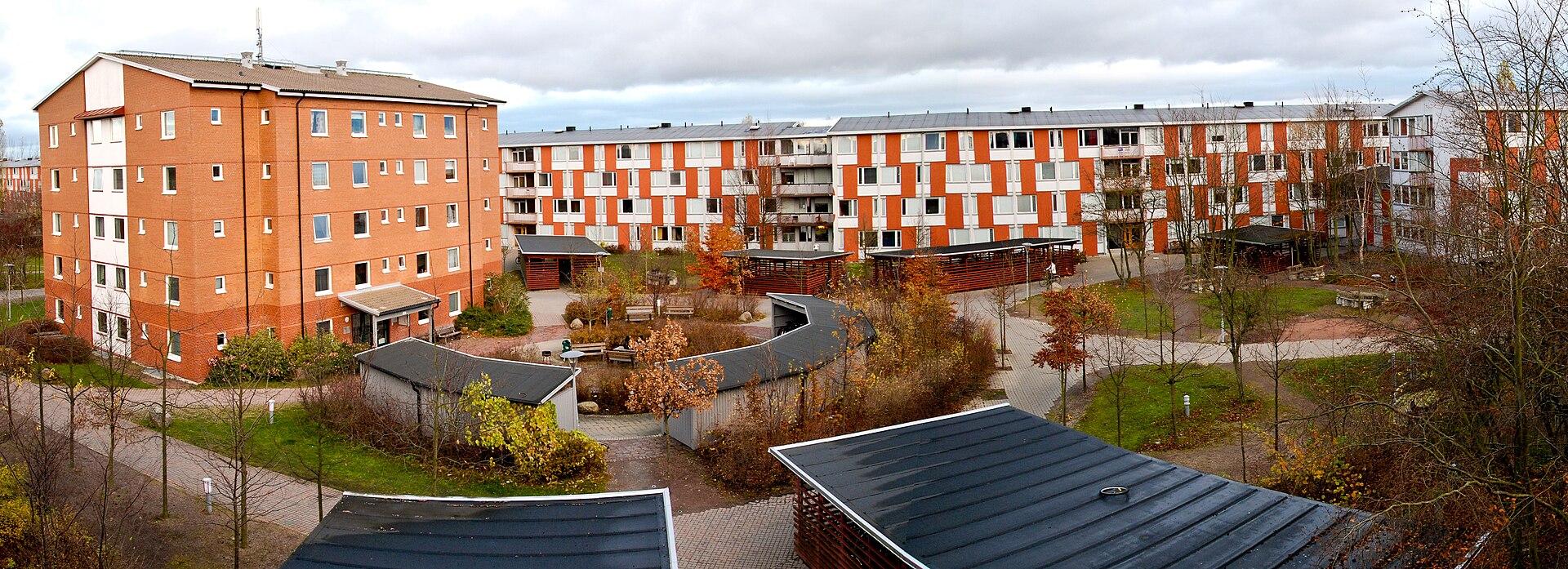
Panorama-vy över Delphi studentområde, hösten 2007. Tagit från hus K, våning 4.
Panorama-vy över Delphi studentområde, hösten 2007. Tagit från hus K, våning 4.Anton Holmqust Soasta · CC BY-SA 4.0 · via Wikimedia Commons
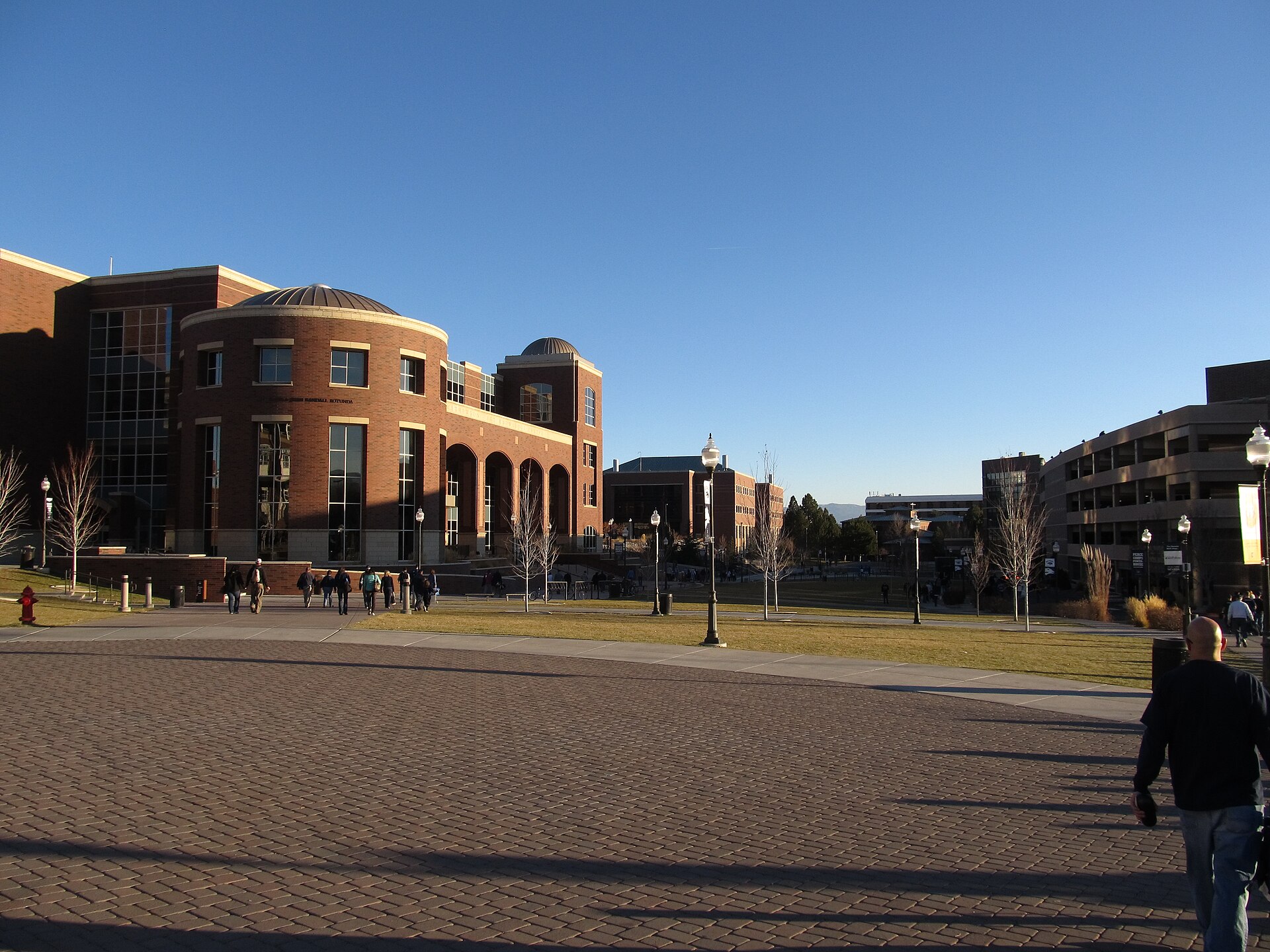
Mathewson IGT Knowledge Center, University of Nevada Campus, Reno, Nevada
Mathewson IGT Knowledge Center, University of Nevada Campus, Reno, NevadaKen Lund · CC BY-SA 2.0 · via Wikimedia Commons
Campus of University of Nevada Las Vegas, Las Vegas, Nevada (15831136897)
Campus of University of Nevada Las Vegas, Las Vegas, Nevada (15831136897)Ken Lund from Reno, Nevada, USA · CC BY-SA 2.0 · via Wikimedia Commons
Campus of University of Nevada Las Vegas, Las Vegas, Nevada (16261499245)
Campus of University of Nevada Las Vegas, Las Vegas, Nevada (16261499245)Ken Lund from Reno, Nevada, USA · CC BY-SA 2.0 · via Wikimedia Commons
University of Colorado Anschutz Medical Campus, Aurora, Colorado (43921861701)
University of Colorado Anschutz Medical Campus, Aurora, Colorado (43921861701)Ken Lund from Reno, Nevada, USA · CC BY-SA 2.0 · via Wikimedia Commons
University of Colorado Anschutz Medical Campus, Aurora, Colorado (43921872231)
University of Colorado Anschutz Medical Campus, Aurora, Colorado (43921872231)Ken Lund from Reno, Nevada, USA · CC BY-SA 2.0 · via Wikimedia Commons

Why Lund University — Research, Prestige & European Opportunity

Lund is not simply a well-ranked university — it is home to two of the world's most powerful scientific instruments and a campus culture that has been student-led since the 17th century. For international students, it offers an unusually compelling combination: genuine research access, English-taught programmes, a liveable city, and a springboard into the Scandinavian and EU job market.

01Global Research Powerhouse
Lund hosts MAX IV — the world's brightest synchrotron light source — and the European Spallation Source (ESS), the most powerful neutron source ever built. Both facilities are metres from campus, giving students in physics, materials science, and life sciences research access unavailable anywhere else.
02Top-75 World Ranking
Ranked #75 globally by QS and #106 by Times Higher Education, Lund sits in the top tier of European research universities and is Sweden's #2 institution. These rankings translate into strong recognition from employers and graduate schools worldwide.
03English-Taught Programme Portfolio
Lund offers one of Sweden's widest portfolios of English-taught master's programmes — spanning engineering (LTH), business (LUSEM), law, international development, life sciences, political science, and the arts. This gives international students genuine academic breadth without needing to learn Swedish.
04A City Built for Students
With 40,000 students in a city of roughly 100,000 residents, Lund is a university town in the truest sense. Mediaeval architecture, year-round student nation life, and a 15-minute train ride to Malmö and 40 minutes to Copenhagen make it exceptionally liveable and internationally connected.
05Scandinavian Gateway
A Lund degree opens doors across the Oresund region — one of Northern Europe's most innovation-dense corridors — and into the broader EU job market. The university's LERU and Universitas 21 memberships provide global academic exchange networks. Graduate employment stands at 88%.
06Affordable by Global Standards
While non-EU/EEA students pay tuition, fees at Lund are substantially lower than comparable programmes in the US, UK, or Australia. EU/EEA students pay zero tuition. The Lund University Global Scholarship can reduce or eliminate tuition costs for the most competitive non-EU/EEA applicants.

Lund University Acceptance Rate & Class Profile

Profile Stats

34+
IB Diploma (competitive band)
3.0
Minimum GPA equivalent
20%
International students
#75
QS World Ranking
88%
Graduate employment rate
15:1
Student:faculty ratio

Stats

40,000
Student population
#2
Sweden national rank
1666
Founded
Overall acceptance rate — varies significantly by programme

Rea Vs Rd

Rd Label: Standard Autumn Round
Rd Value: ~30%
Rea Label: Selective Programmes (LTH/LUSEM/Law)
Rea Value: Much lower

Lund Admissions Requirements — Grades, English & Prerequisites

Academic Grades
Value: 3.0+ GPA
Selection at Lund is primarily grade-driven. Your academic record in prerequisite subjects is the dominant factor. For competitive programmes (LTH, LUSEM, Law), effective entry standards are considerably higher than the published minimum.
  • Grades in prerequisite subjects matter most — not overall GPA alone
  • IB Diploma: 34+ total; HL grades in relevant subjects scrutinised closely
  • A-Levels: A/A* in directly relevant subjects expected for competitive programmes
  • Final two years carry the most weight in the selection formula
English Proficiency
Value: IELTS 6.5 / TOEFL 90
All English-taught programmes require a language certificate. The minimum is IELTS 6.5 overall or TOEFL iBT 90. Some faculties set higher thresholds — always verify on the specific programme page.
  • IELTS Academic minimum: 6.5 overall
  • TOEFL iBT minimum: 90 total
  • Certificate must be submitted by the document deadline (typically February 1–2)
  • Students who completed full secondary or tertiary education in English may be exempt — verify on universityadmissions.se
Subject Prerequisites
Value: Programme Prerequisites
Each Lund programme publishes specific prerequisite subjects. Applying without meeting these is an automatic disqualification — not a competitive disadvantage. Check the individual programme page before applying.
  • Engineering (LTH): Mathematics and Physics at high level are non-negotiable
  • Economics/Business (LUSEM): Mathematics, often including calculus or statistics
  • Life Sciences/Medicine: Biology and Chemistry at Higher Level
  • Law/Social Sciences: Humanities-strong profile; analytical writing evidence

Lund Application Components — universityadmissions.se & Supporting Documents

Lund University uses Sweden's national admissions portal — universityadmissions.se — not Common App or UCAS. The application is streamlined but documentation-intensive. Here is every component of a complete Lund application.

01RequiredOnline Application (universityadmissions.se)
All applications are submitted through Sweden's national admissions portal. You can list up to 20 programmes and rank them by preference. Ranking matters — the Global Scholarship gives priority to applicants who rank a Lund programme first.
02RequiredOfficial Academic Transcripts
Certified copies of all previous academic records following country-specific instructions on universityadmissions.se. Final-year students can apply with provisional transcripts but must submit completed documents before programme start.
03RequiredEnglish Language Certificate
IELTS Academic (minimum 6.5 overall) or TOEFL iBT (minimum 90). Certificates must be submitted by the document deadline. Some programmes have higher requirements — verify per programme page.
04Required (non-EU/EEA)Application Fee
Non-EU/EEA citizens pay an application fee per application round (approximately $90). EU/EEA citizens are exempt when they submit proof of citizenship by the document deadline.
05Programme-SpecificStatement of Purpose / CV
Most Master's programmes require a Statement of Purpose and CV. Some also request letters of recommendation or writing samples. Check each programme's individual page on lu.se — requirements vary significantly by faculty.
06Scholarship ApplicantsGlobal Scholarship Motivation Letter
A separate 600-word motivation letter submitted through the scholarship portal (opens early February). Distinct from your programme SoP — write it separately, tailored to the scholarship's merit criteria.
07Arts ProgrammesPortfolio or Audition
Required for Fine and Performing Arts programmes. Separate application timelines may apply. Consult the specific programme's admissions page — the portfolio is the primary selection input for these programmes.
https://www.lunduniversity.lu.se/admissions/bachelors-and-masters-studies/applying-studies-when-apply/application-checklist

Lund Application Statement — Writing a Competitive Statement of Purpose

Lund University does not use supplemental essays in the US sense. For competitive Master's programmes, the Statement of Purpose (SoP) is your only qualitative document in an otherwise purely grade-based process. Writing it well is not optional.

Prompts

Standard Master's SoP (most programmes)
Most Lund Master's programmes ask for a statement explaining your academic background, why you are applying to this specific programme, and what you intend to do with the degree. No universal prompt exists — requirements are programme-specific. Always check the individual programme page on lu.se.
LUSEM SoP + CV
LUSEM programmes require both a Statement of Purpose and a CV. The SoP should explain motivation for the specific programme, relevant academic background, and professional goals. Word limits and sub-questions vary by programme.
Global Scholarship Motivation Letter (600 words)
The scholarship letter should explain why you chose Lund University specifically and why you merit a scholarship based on academic achievement. This is separate from your programme SoP — write it independently.

Tips

Be specific to this programme
Name courses, research groups, or faculty at Lund that connect to your interests. A generic statement that could apply to any university will not distinguish you in a competitive pool.
Lead with intellectual substance
Open with your field or research question — not your life story. Faculty readers are assessing academic fit, not narrative arc. Structure: past → present → future, or research-question framing.
The SoP is not a prose CV
Don't list accomplishments — analyse their relevance to the programme. The SoP should add qualitative context that your transcript and CV cannot provide.
Keep the scholarship letter separate
The Global Scholarship motivation letter (600 words) has a different purpose from your programme SoP. Write them as separate documents for separate audiences.
The most common Lund SoP mistake. Submitting a generic statement that does not name specific Lund programmes, courses, or research areas — signalling that Lund is an afterthought rather than a deliberate first choice.

What Lund Admissions Is Looking For

Unlike US universities, Lund does not use a holistic evaluation weighing extracurriculars, character references, and essays equally alongside grades. Selection is primarily academic — but competitive programmes look for specific indicators beyond raw GPA.

01Academic Excellence in Relevant Subjects
High grades in prerequisite subjects — mathematics for engineering, biology/chemistry for life sciences, social sciences for political science — carry more weight than overall GPA. Lund reads your transcript relative to your qualification system and the specific prerequisites for your target programme.
02Appropriate Qualification Level & Equivalence
Your degree or secondary qualification must be assessed as equivalent to the Swedish standard for your programme level. This is done through universityadmissions.se using country-specific guidelines. Non-standard qualifications should be verified before applying.
03English Language Mastery
The ability to engage academically in English — not just meeting the minimum test score — matters. The threshold is IELTS 6.5 or TOEFL 90, but competitive programmes effectively expect stronger performance. Your SoP is also an implicit English language demonstration.
04Programme-Specific Intellectual Fit
For competitive Master's programmes with selective intake, a focused and credible Statement of Purpose becomes a tie-breaker. Programmes want evidence that you understand the programme's content — not just its reputation.
05Upward Grade Trajectory
A consistent record of strong performance in relevant subjects across your final two years is more persuasive than a mixed history with one exceptional semester. Lund's formula weights recent performance heavily.
06Context of Your Qualification
Lund's admissions machinery (via universityadmissions.se) is designed to compare applicants from vastly different educational systems. High grades in a rigorous curriculum carry more weight than the same GPA from a less demanding programme.

Lund University Scholarships & Financial Support for International Students

Lund University does not offer institutional need-based financial aid in the way US universities do. The primary institutional mechanism is the Lund University Global Scholarship — a merit-only award for non-EU/EEA students. EU/EEA citizens pay no tuition at all.

Figures are annual USD estimates from the university's published facts profile. Actual tuition is denominated in Swedish kronor (SEK) and varies by programme. Always verify current SEK figures at universityadmissions.se.

Stats

~$12,500
Annual tuition (non-EU/EEA)
~$12,000
Cost of living (annual)
~$23,000
Total cost of attendance
$0
Tuition for EU/EEA students

Contribution Tiers

RangePercentPercent ValueNote
EU/EEA citizens100%100Free — zero tuition, only living costs apply
Non-EU/EEA without scholarship0%0Full tuition (~$12,500/yr) plus living costs
Non-EU/EEA with 100% Global Scholarship100%100Tuition waived; living costs remain
Non-EU/EEA with 50% Global Scholarship50%50~$6,250/yr tuition + living costs
Swedish Institute Scholarship (eligible countries)100%100Full tuition + monthly stipend; government-funded
No Institutional Need-Based Aid Pool. Unlike Harvard or Princeton, Lund does not have a need-blind, full-need grant programme for international students. Financial planning must be done independently. The Global Scholarship covers tuition only — not living costs. Budget for the full cost of attendance before applying.
https://www.lunduniversity.lu.se/study/admission-degree-studies/scholarships-and-awards/lund-university-global-scholarship

Key Dates

Applications Open (universityadmissions.se)
Date: Mid-Oct
Application Deadline (most programmes)
Date: 15 Jan
Document Deadline (transcripts, English proof, fee)
Date: 1–2 Feb
Global Scholarship Portal Opens
Date: Early Feb
Scholarship Motivation Letter Deadline
Date: Mid-Feb
Admission Results Released
Date: Late Mar/Apr
Autumn Semester Begins
Date: Late Aug

Advantages

  • Rank your Lund programme as your first choice — the Global Scholarship prioritises first-choice applicants
  • Submit all documents well before the February deadline — late submissions are typically disqualified
  • Apply for the Swedish Institute Scholarship in parallel if your country is eligible
  • Research your target programme's specific requirements before the October application opening
  • Contact the faculty admissions office with questions about prerequisites before applying — not after

Disadvantages

  • Missing the scholarship window (mid-February) — the Global Scholarship portal closes quickly after the programme deadline
  • Applying with a spring-start programme goal — virtually all English-taught degrees start in autumn
  • Treating the January 15 deadline as the document deadline — documents are due a week later, but late is still disqualifying
  • Expecting US-style deferral or waitlist — Lund's reserve list works differently and does not guarantee a space
  • Submitting an identical SoP to multiple Lund programmes in different faculties — always tailor per programme
Application Rounds. Unlike US universities with EA/ED/RD rounds, Lund University uses Sweden's centralised single-round application calendar. There is no early decision advantage — but applying early within the window and ranking Lund first materially improves your scholarship chances.
Tychr's Application Strategy. For most international students, there is one competitive round to get right. Begin preparing in October, submit a complete application with all documents before the February deadline, and immediately monitor the scholarship portal when it opens. The scholarship window is typically only 2–3 weeks long.
Lund Application Strategy — Single Round & Scholarship Window

Lund University Interviews — Format & What to Expect

For most Lund programmes, there is no admissions interview. Selection is based entirely on your academic record, qualification equivalence, and (where required) your Statement of Purpose. This is fundamentally different from Oxbridge, US Ivy League, or some Asian university processes.

Meta

No interview required
Standard programmes
May include shortlisting interview — verify per programme
Some joint European master's
Secondary selection stage possible for shortlisted applicants
LUSEM selective programmes
Portfolio review or audition replaces interview
Arts programmes

Questions

Why did you choose this specific programme at Lund?
Tip: The SoP is your pre-emptive answer. If you reach an interview stage, be ready to speak specifically — name courses, research groups, or aspects of the programme that connect to your stated goals.
How does your bachelor's degree prepare you for this master's?
Tip: Trace the logical connection between your undergraduate work and the master's subject. Be honest if there is a field transition — explain the preparatory steps you have taken.
What do you intend to do after completing this programme?
Tip: Have a credible, specific answer. 'I want to work in the industry' is weak. Name a role, a region, or a type of organisation. Lund programmes produce employable graduates — they want to see you have thought this through.
What aspects of Swedish or European professional culture interest you?
Tip: Shows genuine awareness of where Lund sits geographically and professionally. The Oresund region's innovation economy, Scandinavian work culture, and EU career pathways are all legitimate angles.
Describe a research experience or project that shaped your interests.
Tip: If you have relevant research, thesis, or project experience, have it ready in detail. Programmes at LTH and in the natural sciences weight this particularly highly.

Student Housing & Residential Life at Lund

Lund does not have a residential college system like Oxbridge or Yale. Housing is managed through LU Accommodation and AF Bostäder (the Academic Association's housing company), both of which provide short- and long-term student accommodation.

Lottery Steps

  • Apply for LU Accommodation or AF Bostäder housing when you receive your admission offer — do not wait, demand is high
  • Most student housing is within cycling distance of the main university campus — Lund is flat and small enough to cycle everywhere
  • Housing options range from single rooms in student corridors to studio apartments; prices are subsidised relative to the open market
  • The Student Nations (13 historic student organisations) also manage some housing, particularly for members
  • Malmö is 15 minutes by train and offers additional housing options for students who prefer a larger city environment

Houses

LU Accommodation
Tag: University
University-managed student housing close to the main campus. Most international students apply here first. Apply early — availability is competitive.
AF Bostäder
Tag: AF
The Academic Association's housing company, offering a range of student apartments in Lund and surrounding areas. Longer queue than LU Accommodation for some properties.
Student Nations Housing
Tag: Nations
Each of Lund's 13 student nations manages some housing. Nation membership (optional but culturally central) can provide access to additional accommodation options.
Helsingkrona Nation
Tag: Nations
One of the larger student nations with significant social facilities. Nations host regular dinners, pub nights, and events — they function as second homes for many students.
Östgöta Nation
Tag: Nations
Known for an active social calendar and welcoming international students. Nations are open to all students regardless of home region or nationality.
Private Market (Lund/Malmö)
Tag: Private
Private rental market available but pricier than student housing. Malmö's rental market is larger and accessible by the 15-minute direct train — viable for students priced out of Lund.

Lund University Faculties & Programmes

LTH — Faculty of Engineering
Label: Engineering, Technology & Science
One of Sweden's most prestigious engineering schools. Master's programmes in civil, mechanical, electrical, computer science, and materials engineering. Close collaboration with MAX IV and ESS enables cutting-edge research projects.
  • {"label":"Programme areas","value":"10+"}
  • {"label":"Research facilities on campus","value":"MAX IV + ESS"}
  • {"label":"Prerequisites","value":"Mathematics + Physics essential"}
  • {"label":"QS Engineering ranking","value":"Strong European position"}
LUSEM — School of Economics & Management
Label: Business, Economics & Management
Lund's business school with a wide portfolio of English-taught Master's programmes including International Business, Economics, Business Administration, and Finance. Selective intake; quantitative prerequisites matter.
  • {"label":"English master's programmes","value":"10+"}
  • {"label":"Key prerequisite","value":"Mathematics/Statistics"}
  • {"label":"Student body","value":"Highly international"}
  • {"label":"Location","value":"Lund city centre"}
Faculty of Law
Label: Law & Jurisprudence
One of Sweden's oldest law faculties, offering the full Swedish law degree (Juristprogrammet) primarily in Swedish, plus some English-taught master's programmes in international and European law. International applicants to the full law degree must demonstrate Swedish proficiency.
  • {"label":"Swedish law degree","value":"5.5 years (Swedish-taught)"}
  • {"label":"English master's options","value":"International law focus"}
  • {"label":"Teaching language (LLM)","value":"English"}
  • {"label":"National reputation","value":"Top 3 in Sweden"}
Faculty of Medicine
Label: Medicine & Health Sciences
Medical education at Lund is primarily conducted in Swedish and places for international students in the main Medicine programme are extremely limited. Biomedicine and global health programmes offer English-language options at master's level.
  • {"label":"Main medicine degree","value":"Swedish-taught; very limited international access"}
  • {"label":"English options","value":"Biomedicine, Global Health (master's)"}
  • {"label":"Grade requirements","value":"Extremely high — top decile"}
  • {"label":"Research strength","value":"Clinical research and biomedicine"}
Faculty of Science
Label: Natural Sciences & Physics
Strong in physics, chemistry, biology, mathematics, and environmental science. Uniquely positioned by proximity to MAX IV and ESS — master's and doctoral students in physics and materials science have research access unavailable at most universities globally.
  • {"label":"Proximity to MAX IV","value":"On-campus"}
  • {"label":"English master's","value":"Multiple options in physics, chemistry, biology"}
  • {"label":"Prerequisites","value":"HL sciences and mathematics essential"}
  • {"label":"Research intensity","value":"High — LERU member institution"}
Faculty of Social Sciences, Humanities & Arts
Label: Social Sciences, Humanities & Arts
Broad range of English-taught master's in political science, international development, sociology, media studies, and the humanities. Fine and Performing Arts programmes require portfolio or audition. Selection for these programmes places more weight on the Statement of Purpose than pure grades.
  • {"label":"English master's options","value":"Political science, development, media, humanities"}
  • {"label":"Arts entry","value":"Portfolio/audition required"}
  • {"label":"SoP weight","value":"High — more qualitative selection"}
  • {"label":"Notable programme","value":"International Development and Management"}

Research & Extracurricular Opportunities at Lund

MAX IV Synchrotron
Category: World's Brightest Light Source
On-campus access to MAX IV — the world's most brilliant synchrotron light source — is a defining feature of Lund's physics, materials science, and life science programmes. Master's and doctoral students from LTH and the Faculty of Science regularly conduct research at MAX IV, an opportunity impossible at most universities globally.
European Spallation Source (ESS)
Category: World's Most Powerful Neutron Source
ESS is being built directly adjacent to Lund's campus. Once fully operational, it will be the most powerful neutron source ever constructed. Students in physics, chemistry, materials science, and biomedicine gain proximity to research that will define their fields for decades.
AF — Akademiska Föreningen
Category: Historic Student Organisation
The Academic Association is a student-run organisation operating the main student union building, concert hall, pub, and cinema. It funds hundreds of student clubs — from debate and entrepreneurship to theatre and international policy groups. AF membership is open to all students.
Student Nations
Category: 13 Historic Nations
Lund's 13 student nations date back centuries and are unique to the universities of Lund and Uppsala. They host regular dinners, concerts, pub nights, and sporting events. Nations are the easiest entry point into Swedish social life for international students — membership is voluntary but culturally central.
Scroll right to explore Lund's research facilities and student life.

Career Outcomes & Lund Graduate Prospects

Lund graduates have strong employment outcomes with an 88% graduate employment rate. The university's location in the Oresund region — a cross-border innovation corridor linking Malmö and Copenhagen — means graduates access one of Northern Europe's densest concentrations of pharmaceutical, biotech, sustainability, and technology employers.

Stats

88%
Graduate employment rate
$40,000
Average starting salary (USD equivalent)
130+
Countries represented in student body
#75
QS World Ranking
Top European Research University
LERU membership
40 minutes
Train to Copenhagen

Categories

Technology & Engineering
Alfa Laval, Axis Communications, Sony Mobile, and a dense cluster of cleantech and medtech start-ups are headquartered in the Oresund region. LTH graduates are in demand across Europe's advanced manufacturing and technology sectors.
Life Sciences & Pharma
The region hosts major pharmaceutical operations including AstraZeneca (Gothenburg, accessible) and Novo Nordisk (Copenhagen, 40 min away). Lund's biomedicine and life sciences programmes have strong links to the regional industry cluster.
International Development & Policy
Lund's international development, political science, and law programmes produce graduates who move into NGOs, international organisations, and European public-sector roles. The university's EU location and English-language programmes are a practical advantage.

Our Lund University Admissions Track Record & Student Success Stories

Ananya S.
My Statement of Purpose for the LTH master's was initially too generic. Tychr pushed me to write specifically about MAX IV and how its capabilities connected to my materials research thesis. That specificity made the application coherent in a way my first draft wasn't.
Country: India
Program: LTH — Materials Science
Class Year: Class of 2025
Academic Profile: IB 38 · IELTS 7.5
Mateus C.
I was sceptical about applying to Lund without a European background. Tychr clarified the universityadmissions.se process, the Global Scholarship timeline, and the fact that my Brazilian credentials were fully accepted. The scholarship cut my tuition to zero.
Country: Brazil
Program: LUSEM — International Business
Class Year: Class of 2024
Academic Profile: GPA 3.8 · TOEFL 102
Layla A.
The hardest part was understanding that Lund's admissions is nothing like US or UK applications. No extracurriculars, no alumni interviews — just grades and the SoP. Tychr helped me shift my energy to what actually matters at a Swedish university.
Country: UAE
Program: Faculty of Social Sciences — Political Science
Class Year: Class of 2025
Academic Profile: IB 36 · IELTS 7.0

Faqs

Do I need to know Swedish to study at Lund University?+

For English-taught Master's programmes — no. These are conducted entirely in English, and Lund has a large English-speaking international community. However, most Bachelor's programmes are taught in Swedish. Confirm the language of instruction on the individual programme page before applying.

Is there a separate application for international students?+

There is one system for all — universityadmissions.se. Non-EU/EEA applicants have a specific round with a January 15 deadline and pay an application fee. EU/EEA applicants also use this system but may access additional rounds (March/April) via antagning.se.

Can I apply if I haven't finished my bachelor's degree yet?+

Yes. Final-year bachelor's students can apply for Master's programmes. You must submit transcripts to date and confirmation of your expected graduation date. Final admission is conditional on completing your degree with the required grades before the programme starts.

How does Lund assess IB Diploma applicants?+

The IB Diploma is fully recognised. The competitive threshold for most programmes is 34+ points, though popular programmes may effectively require higher. Higher Level grades in relevant subjects are scrutinised closely — engineering programmes will examine HL Mathematics and Physics results carefully.

What is the Lund University Global Scholarship and how do I apply?+

The Global Scholarship is a merit-based programme open to non-EU/EEA applicants who pay tuition. It can cover 25–100% of tuition fees and requires a separate 600-word motivation letter submitted through the scholarship portal after you have submitted your degree application. The portal typically opens early February and closes mid-February — do not miss this window.

Can I work in Sweden after graduating from Lund?+

Non-EU/EEA graduates can apply for a Swedish residence permit to search for employment after graduation. Sweden's framework allows graduates from Swedish universities a period to seek work before needing a work permit. Check current Swedish Migration Agency guidelines as these rules can change.

Do I need SAT or ACT scores to apply to Lund?+

No. SAT and ACT scores are not required or used in Lund's selection process. Admission is based on your academic qualification and English language proficiency — not standardised US-style tests.

Is Lund good for international students who want to stay in Europe after graduation?+

Very much so. Lund's location in the Oresund region — adjacent to Copenhagen and close to major European transport links — makes it a practical base for European career development. Sweden's graduate job-search permit and the region's dense innovation economy are genuine advantages.

Book a Free Lund University Admissions Strategy Session

In 60 minutes our Lund admissions specialists will evaluate your academic profile, assess your prerequisite coverage, review your Statement of Purpose strategy, advise on the Global Scholarship application, and determine your strongest programme choices within Lund's faculty structure.

  • No commitment required
  • Sweden-specialist counsellors with university-specific knowledge
  • Personalised strategy — not generic advice
Getting into Lund is not about performing holistically — it is about presenting your grades and intellectual purpose with absolute precision.

Lund University Academic Requirements

Lund Academic Requirements — The Honest Breakdown for International Students

What grades, qualification levels, and academic profiles are competitive at Lund University? And what does Sweden's academic system mean for students from IB, A-Level, or other international curricula?

34+
IB Competitive Band
Total; HL subject grades scrutinised
3.0
Minimum GPA Equivalent
US GPA; programme thresholds vary
6.5
IELTS Minimum
Academic; some programmes higher
90
TOEFL Minimum
iBT total
#75
QS Ranking
QS World University Rankings
#2
National Rank
Sweden

GPA & Academic Performance

Lund and GPA — What the Selection Data Shows

Lund University does not publish a single minimum GPA cutoff for most programmes — admission thresholds shift each cycle based on the applicant pool. The minimum GPA equivalent is 3.0, but for competitive programmes, effective entry standards are considerably higher.

For international applicants, the key question is not 'what is my GPA?' but 'do I meet the specific subject prerequisites for my programme, and are my grades in those subjects competitive in this year's applicant pool?' Check programme-specific admission statistics on universityadmissions.se after each round closes.

3.0
Published minimum GPA equivalent
34+
Competitive IB band
What this means for international students. Lund's admissions machinery assesses your grades relative to your qualification system and the specific prerequisites for your target programme. A 3.0 GPA minimum is a floor, not a target. For LTH engineering and LUSEM economics programmes, applicants in the top decile of the pool are competitive — which typically means 36+ IB or near-maximum grades in the most rigorous curriculum available.
Grade trajectory matters. The Swedish merit rating formula weights recent academic performance heavily. Consistent, excellent grades across your final two years — particularly in prerequisite subjects — outweigh an earlier mixed record. An upward trajectory is a positive signal; a declining one is a liability.

Academic Context

How Lund Reads Academic Performance Across Different School Systems

Sweden's national admissions system (universityadmissions.se) is designed to compare applicants from vastly different educational backgrounds. Your qualification is assessed for equivalence to the Swedish standard before your grades are compared with other applicants.

How Lund contextualises your academic record
universityadmissions.se applies country-specific conversion guidelines to translate your grades and qualification level into a comparable Swedish standard. The IB Diploma, A-Levels, US High School Diploma with AP, Indian boards, and most national curricula are all handled through established frameworks. The key is that your qualification must meet the minimum level requirement — equivalence is pass/fail before grade comparison begins.
What this means practically
A student with the IB Diploma scoring 34 in relevant Higher Level subjects is in a better position than a student with a national curriculum qualification that converts to a lower equivalence level — even if the national curriculum student's percentage looks higher. Understanding how your qualification converts is essential before applying.
For students at less well-known international schools. If your school or qualification system is less commonly represented in Sweden, verify your qualification's equivalence on universityadmissions.se before applying. The equivalence database covers most major curricula, but edge cases exist. If your qualification is not listed, contact universityadmissions.se directly — do not assume equivalence.

SAT Scores at Lund

SAT Scores — Not Used in Lund's Selection Process

Lund University does not require or use SAT scores in its admissions process. Selection is based entirely on your academic transcript and English language certificate. This section explains what that means for applicants who are simultaneously applying to US universities.

LabelScorePercent
SAT requiredNo0
SAT used in selectionNo0
What to focus on instead of SAT preparation. If Lund is on your list alongside US universities, SAT preparation for US applications does not harm your Lund candidacy. However, do not divert time from courses that directly feed Lund's subject prerequisites — your transcript is everything at a Swedish university. A 1550 SAT with a 32 IB adds nothing to a Lund application; a 40 IB with prerequisite 7s adds significantly more.
If you are only applying to Lund. Do not take the SAT unless you are also applying to US universities. The time is better spent achieving the highest possible grades in the prerequisite subjects for your Lund programme and preparing an excellent Statement of Purpose for competitive programmes.
The Tychr recommendation. For Lund-focused students: zero SAT preparation budget is the correct allocation. For students with a US-and-Sweden list: balance SAT preparation against prerequisite subject performance. Never let SAT prep lower your final IB or A-Level grades.

ACT Scores at Lund

ACT Scores — Not Part of Lund's Admissions Process

Like the SAT, the ACT is not required, used, or relevant to Lund University admissions. This section is for students applying to both US and Swedish universities who need clarity on how to allocate preparation time.

Metrics

ACT required
Score: No
ACT used in selection
Score: No

Comparison Cards

For Lund only
Neither SAT nor ACT is relevant. Focus entirely on your academic transcript and English proficiency certificate.
For US + Lund
Choose whichever standardised test suits your strengths for US applications — neither will influence Lund. Then ensure your US test prep does not come at the cost of prerequisite subject grades, which determine Lund.
What Lund tests you on
Your subject-specific knowledge, assessed through your secondary or university academic transcript. The Swedish system has no equivalent of the SAT/ACT as a universal admissions gate.
No superscore needed. Lund does not superscore, consider single sittings, or weight test dates. There is simply no test score input in the Swedish national admissions formula.
Tychr's recommendation. For students focused on Lund, do not take the ACT. For students with a US list, take the test that fits your profile — but schedule it so it does not interfere with your IB or A-Level preparation timeline.
SAT vs. ACT for a Lund-and-US application list

Testing Policy

Lund Test Policy — What 'Optional' Actually Means in Sweden

Lund University's test policy is listed as 'optional' — but this means something very different from the US test-optional movement. At Lund, standardised tests (SAT/ACT/GRE/GMAT) are simply not part of the selection process for most programmes. There is no 'submitting vs. withholding' decision to make.

Submit Items

Official academic transcripts, assessed for equivalence to the Swedish standard
English language certificate (IELTS Academic ≥6.5 or TOEFL iBT ≥90)
Statement of Purpose and CV (for Master's programmes — where required)
Application fee (non-EU/EEA applicants only)

Withhold Items

SAT or ACT scores — not requested, not used
GRE or GMAT — not required for most programmes; check LUSEM specific pages
Activity lists or extracurricular portfolios — not a factor in Lund's selection
The Swedish admissions framework. Swedish public universities use a nationally standardised admissions formula that weights your academic transcript in your qualification system. There is no institutional preference for standardised tests as a signal of academic ability. The IELTS/TOEFL are required for English-taught programmes — but those are language proficiency certificates, not academic selection tools.
The key insight for international students. Students from US-educated backgrounds sometimes assume Lund's 'optional' test policy means they can strengthen their application by submitting a strong SAT. This is incorrect — unsolicited test scores neither help nor harm your Lund application. Your transcript is your application.

IB / A-Level / AP

A-Levels and IB at Lund — Specific Benchmarks

IB Diploma
  • {"label":"Competitive range","value":"34–45 points"}
  • {"label":"HL expectations","value":"6s and 7s in prerequisite subjects"}
  • {"label":"Engineering (LTH)","value":"HL Mathematics AA or AI; HL Physics — 6s or 7s"}
  • {"label":"Economics/Business (LUSEM)","value":"HL Mathematics — 6 or 7"}
  • {"label":"Life Sciences","value":"HL Biology and HL Chemistry — 6s or 7s"}
Note: The IB Diploma is one of the most straightforwardly assessed qualifications for Swedish university applications. universityadmissions.se has a well-established conversion framework. HL grades in prerequisite subjects are the dominant signal — a 34 with relevant 7s is more competitive than a 38 with only SL in the required subject.
A-Levels (Cambridge & Edexcel)
  • {"label":"Competitive range","value":"A/A* in relevant subjects"}
  • {"label":"Engineering","value":"A or A* in Mathematics and Physics"}
  • {"label":"Economics","value":"A or A* in Mathematics; Economics useful"}
  • {"label":"Life Sciences","value":"A or A* in Biology and Chemistry"}
Note: A-Levels are fully recognised and assessed through the universityadmissions.se equivalence framework. The assessment focuses on grades in the subjects that map to your programme's prerequisites. A combination of 3 A-Levels plus AS subjects is reviewed collectively.

AP Courses

AP Courses at Lund — The Honest Picture

Advanced Placement (AP) courses are primarily a US-curriculum credential. At Lund University, AP scores are not a primary selection input — and unlike US universities, there is no formal AP credit-transfer scheme that allows students to skip introductory courses.

What AP courses signal at Lund
universityadmissions.se assesses the US High School Diploma alongside AP scores as a package when determining equivalence. A US curriculum student with a strong AP record in relevant subjects can establish prerequisite equivalence — but the key is whether the overall qualification meets the Swedish equivalence level, not the AP scores themselves.
If you are on a US curriculum applying to Lund
Take AP courses in subjects directly relevant to your intended programme (AP Calculus BC and AP Physics C for LTH; AP Economics and AP Statistics for LUSEM). These strengthen your equivalence assessment and signal preparation — but they function as prerequisite evidence, not a scoring advantage.
For IB students: don't switch to AP for Lund
IB is better recognised and more cleanly assessed in the Swedish system than a US High School Diploma + AP combination. If you are in an IB school and considering Lund, stay on the IB track — it is the cleaner path to establishing prerequisite equivalence.
Lund does not operate a formal AP credit system. Course exemptions or advanced standing, where available, are assessed case-by-case by individual programme coordinators after enrolment — not at the admissions stage.
Non-US international students should not pursue AP courses specifically for Lund's benefit. Your national curriculum or IB is the appropriate qualification for Swedish university equivalence assessment.

Academic Rigour

Rigour of Secondary School Record — Sweden's Perspective

Sweden's national admissions system assesses academic rigour through a combination of qualification level (does the credential meet the minimum level for this programme?) and grade performance within that system. Unlike US holistic admissions, course rigour is evaluated structurally — through the qualification type and its equivalence to the Swedish standard.

Meeting the subject prerequisites at the highest level available in your school system — not just achieving the highest grade in the easiest available option.

What rigour means in the Swedish system. A student who took HL Mathematics Analysis & Approaches alongside HL Physics in the IB demonstrates the mathematical rigour expected for LTH engineering programmes. A student who substituted these with lower-level options — even achieving higher grades — presents a weaker candidacy for those programmes, regardless of overall GPA.
The contextual element. Rigour is always evaluated relative to what was available. A student whose school only offered SL Mathematics but achieved perfect grades in every subject offered is assessed differently from one who had HL options and chose SL. The admissions system is designed to be fair across different school environments.
The practical implication. Identify the prerequisites for your target programme before you choose your Year 11 or 12 subject options. Course selection decisions made at 15–16 directly determine Lund eligibility at 18. A student who took HL Mathematics and HL Physics in IB has far more Lund options than one who took HL Theatre and HL Visual Arts — regardless of final grade totals.

Subject Preparation by Programme

Subject Preparation — What Lund Expects by Field

Every Lund programme publishes specific subject prerequisites. Meeting these is a binary requirement — not a competitive edge. Failing to meet any single prerequisite typically results in disqualification regardless of overall academic strength.

Engineering (LTH)
Mathematics at the highest level available (HL Mathematics AA preferred for IB; A-Level Mathematics for A-Level students) and Physics at Higher Level or A-Level. For specialist areas like computer science: additional programming or applied mathematics background valued. These are non-negotiable — do not apply without them.
Economics & Business (LUSEM)
Mathematics is core. Statistics, econometrics, and quantitative coursework at the highest available level strengthen the application significantly. For international business programmes, economic analysis background matters alongside — but does not replace — mathematical preparation.
Life Sciences, Biomedicine & Medicine
Biology and Chemistry at Higher Level (IB) or A-Level A/A* are prerequisites for most programmes. Medical programmes have extremely high grade requirements — effectively top percentile — and international access to the Swedish medical degree is highly restricted. Verify directly on lu.se before targeting medicine.

English Language Requirements

English Language Proficiency Requirements for Lund International Applicants

All students applying to English-taught programmes at Lund must demonstrate English proficiency. The minimum requirements are consistent across most programmes, though competitive programmes may expect scores above the floor.

The minimum score is a floor, not a target. For competitive programmes at LUSEM and LTH, a higher English proficiency score signals stronger academic readiness. If you are close to the minimum, take IELTS or TOEFL again to improve before applying.

Test: IELTS Academic
Score: 6.5+
Test: TOEFL iBT
Score: 90+
Test: Duolingo
Score: Not confirmed — verify on official site
Exemptions. Students who completed secondary or tertiary education fully in English (in qualifying countries and schools) may be exempt from submitting a language certificate. The exemption criteria are country-specific and are assessed through universityadmissions.se — verify your eligibility explicitly before relying on it. An exemption that does not apply leads to disqualification after the document deadline.
https://www.lunduniversity.lu.se/admissions/bachelors-and-masters-studies/applying-studies-when-apply/application-checklist

Requirements by Programme

Academic Requirements by Programme Area — What Different Fields Expect

Lund selects students into specific programmes, not into the university broadly. The prerequisites listed below are representative — always check the individual programme page on universityadmissions.se for the exact requirements.

ConcentrationExpectationSignals
Engineering (LTH)HL Maths AA / A-Level Maths + PhysicsStrong quantitative record; research or project exposure
Computer Science / ITHL Maths + CS or programming backgroundCoding projects; applied mathematics
Economics (LUSEM)HL Maths + Economics or StatisticsQuantitative coursework; econometric projects
International Business (LUSEM)HL Maths + relevant social sciencesBusiness exposure; multilingualism
Biomedicine / Life SciencesHL Biology + HL Chemistry (or A-Levels equivalent)Laboratory experience; strong science profile
Physics / Natural SciencesHL Maths + HL Physics (7s preferred)MAX IV/ESS interest; research engagement
Political Science / DevelopmentStrong humanities/social sciences profilePolicy writing; international exposure
Law (International LLM)Bachelor's in Law or related fieldAnalytical writing; international law interest

International Curricula

How Lund Evaluates International Education Systems

IB Diploma
One of the most cleanly assessed qualifications in Sweden's national admissions system. The conversion framework is well-established on universityadmissions.se. HL grades in prerequisite subjects are the dominant evaluation signal. The Extended Essay and Theory of Knowledge count toward the total points — maximise these alongside subject grades.
A-Levels (Cambridge / Edexcel / Pearson)
Fully recognised and assessed through the equivalence framework. A and A* grades in the 3–4 A-Levels most relevant to your programme are expected for competitive entry. AS-level results are also reviewed. Students who completed GCSEs alongside A-Levels may have those factored into the overall profile.
Indian Boards (CBSE / ISC)
Indian board qualifications are assessed through universityadmissions.se's India-specific equivalence guidelines. The board percentage in relevant subjects, alongside the overall performance, feeds into the conversion. Students from CBSE or ISC aiming for competitive Lund programmes (LTH, LUSEM) should verify their qualification's equivalence level carefully — some programmes require IB or A-Level for prerequisite subject equivalence.
US High School Diploma + AP
A standard US High School Diploma may not, by itself, meet the eligibility requirements for some programmes in the same way as an IB Diploma or A-Levels. The combination of diploma + AP courses in relevant subjects is assessed collectively. US applicants should verify their qualification's equivalence on universityadmissions.se before applying to engineering or sciences programmes.
Other National Curricula
Lund accepts qualifications from most major national systems. Country-specific conversion guidelines are published on universityadmissions.se. If your qualification is not listed, contact the admissions office for guidance. Never assume equivalence for non-standard qualifications.

Year-by-Year Roadmap

Building an Academic Profile for Lund — What to Do at Each Stage

Year 9–10Lay the Subject Foundation
Year: Year 9–10
  • Identify the Lund programme you want to apply to and trace back its subject prerequisites.
  • If engineering or natural sciences interest you, ensure you are on the highest mathematics and physics pathway available in your school system.
  • Do not make course selection choices at this stage that foreclose IB HL or A-Level options later.
Year 11Choose Your Curriculum Track Strategically
Year: Year 11
  • If you have access to the IB Diploma, select Higher Level subjects that align with your programme's prerequisites.
  • For A-Level students: identify the 3–4 subjects that matter most for Swedish university prerequisite equivalence and commit to them at the highest level.
  • Do not sacrifice subject relevance for grade optimisation — a 7 in SL Mathematics is less valuable for LTH than a 6 in HL Mathematics AA.
Year 12Achieve and Document
Year: Year 12
  • The grades in your final two years are the primary selection input. Aim for the highest performance in prerequisite subjects.
  • Take an IELTS Academic or TOEFL iBT — these have clear minimum standards and should be cleared early so you can retake if needed.
  • Begin drafting your Statement of Purpose if applying to a Master's programme.
October–JanuaryApply
Year: October–January
  • Submit your application via universityadmissions.se from mid-October.
  • Gather certified documents early — do not wait until the February deadline.
  • Pay the application fee promptly.
  • Monitor the Global Scholarship portal when it opens in early February.

Common Pitfalls

Academic Mistakes That Cost Lund Applications — And How to Avoid Them

Applying without meeting subject prerequisites
Many applicants are rejected not on grades but because they are missing a single required prerequisite subject. This is an automatic disqualification — not a competitive disadvantage that can be overcome with a strong SoP. Verify prerequisites before applying.
Choosing easier courses to optimise overall GPA
A student with 40 IB points from HL Visual Arts, HL Psychology, and HL Geography is not a competitive engineering applicant at LTH — regardless of overall score. Lund reads the specific subjects you studied, not just the headline grade.
Missing the document deadline
The document deadline (approximately February 1–2) is separate from and later than the application deadline (January 15). Missing the document deadline typically results in disqualification — not a grace period. Late document submissions are rarely processed.
Assuming IELTS exemption without verifying
Not all English-medium schooling systems qualify for the language test exemption. Check universityadmissions.se's country-specific guidance explicitly. An exemption that does not apply leads to disqualification.
Missing the scholarship application window
The Lund Global Scholarship portal opens in early February — typically within days of the application deadline — and closes mid-February. Students who miss it cannot apply retroactively. This 2–3 week window is the most time-sensitive element of the entire Lund application process.

Real Outcomes

What Academic Profiles Tychr's Lund-Admitted Students Had

The following profiles represent the academic backgrounds of students Tychr has helped gain Lund University admission. They illustrate the range of preparation that works — and what made each application credible.

Profile 1 — LTH Engineering
Stats: IB 36 · HL Maths AA: 7 · HL Physics: 6 · IELTS 7.0
HL Mathematics Analysis and Approaches (7), HL Physics (6), HL Chemistry (5). Student completed a supervised engineering project as part of an IB Internal Assessment, demonstrating applied mathematical thinking.
Takeaway: The HL Maths AA 7 and HL Physics 6 cleared the LTH prerequisites decisively. The total IB score was not exceptional — the subject profile in the right subjects was.
Profile 2 — LUSEM Economics
Stats: IB 40 · HL Maths AA: 7 · HL Economics: 7 · TOEFL 105
HL Mathematics AA (7), HL Economics (7), HL History (6). Extended Essay in Economics analysing inflation dynamics in the student's home country. Global Scholarship recipient at 50% tuition coverage.
Takeaway: The quantitative profile (HL Maths 7 + HL Economics 7) was perfectly aligned with LUSEM's prerequisites. The scholarship was won on the strength of a precise, programme-specific 600-word motivation letter.
Profile 3 — Faculty of Social Sciences
Stats: A-Levels AAB · Politics A · Sociology A · Geography B · IELTS 7.5
A-Level Politics (A), Sociology (A), Geography (B). Independent research paper on migration policy in Southeast Asia. Statement of Purpose specifically addressed Lund's Global Studies programme and named two faculty research groups.
Takeaway: For Social Sciences programmes, the Statement of Purpose carried more weight than for STEM. The faculty-specific research in the SoP made the application competitive against a pool of applicants with similar grade profiles.

Faqs

What IB score is competitive for LTH engineering programmes?+

The minimum IB band for most programmes is 34 points, but for LTH engineering programmes, effective entry in competitive years requires higher — often 36–40+, with HL Mathematics AA at 6 or 7 and HL Physics at 6 or 7. The total score matters less than the specific HL grades in prerequisite subjects.

Does Lund prefer SAT or ACT?+

Neither. Lund does not use standardised tests (SAT or ACT) in its admissions process. This question is irrelevant for Lund applications — focus on your academic transcript and English proficiency certificate instead.

Can I get in with a 3.0 GPA?+

The minimum published GPA equivalent is 3.0, but this is a floor. For competitive programmes at LTH, LUSEM, and Law, effective entry requires higher performance — particularly in prerequisite subjects. Check historical admission statistics on universityadmissions.se for your specific target programme.

How does Lund evaluate students from schools that don't offer IB or A-Levels?+

universityadmissions.se applies country-specific conversion guidelines to all national curricula. If your qualification system is less common in Sweden, verify your qualification's equivalence level on the admissions portal before applying. The key question is whether your qualification meets the minimum level requirement — not just whether your grades are strong.

Is research experience important for Lund applications?+

Unlike US Ivy League admissions, research experience is not a selection criterion for most Lund undergraduate or master's programmes. It can add useful context to a Statement of Purpose — particularly for science and engineering programmes that want to see how you think about the field — but it is never a requirement and does not compensate for grade shortfalls.

Financial Aid & Scholarships

What Lund University Costs — And How to Fund It as an International Student

Lund University is a Swedish public university. EU/EEA students pay zero tuition. Non-EU/EEA students pay tuition, but it is substantially lower than US, UK, or Australian equivalents. The Lund Global Scholarship can reduce or eliminate tuition for the most competitive applicants.

EU/EEA Students
Zero tuition — only living costs apply
Non-EU/EEA Tuition
~$12,500/year — lower than most UK/US programmes

Cost Transparency

What Lund Actually Costs — The Full Annual Figure

Lund's total annual cost for non-EU/EEA students (~$23,000) is substantially lower than equivalent programmes at US, UK, or Australian universities where costs can reach $50,000–$90,000 per year. A Lund Master's degree (2 years) costs approximately $46,000 all-in before scholarships — less than one year at many UK Russell Group universities.

Tuition (non-EU/EEA)
Cost: ~$12,500
Housing (student accommodation)
Cost: ~$5,000–$7,000
Food and personal expenses
Cost: ~$4,000–$6,000
Books, materials, and transport
Cost: ~$1,000–$2,000
Application fee (one-time, non-EU/EEA)
Cost: ~$90
Total cost of attendance (annual)
Cost: ~$23,000
Non-EU/EEA Annual Cost. ~$23,000
EU/EEA Annual Cost. ~$12,000
Lund University Annual Cost Estimates (Non-EU/EEA)
EU/EEA students pay zero tuition — only living costs
Tuition + living costs combined for non-EU/EEA students

Financial Aid Policy

Lund's Financial Aid Policy — What Exists and What Doesn't

Lund University does not offer institutional need-based financial aid to non-EU/EEA students. There is no income-based grant programme, no FAFSA equivalent, and no demonstrated-need scholarship pool at the institutional level. The primary institutional mechanism is the merit-only Global Scholarship.

Lund vs. Need-Blind Universities. Lund is fundamentally different from Harvard, Princeton, or MIT in its approach to international student funding. Those universities have need-blind admissions and meet 100% of demonstrated financial need. Lund does not. Financial planning must be done independently — do not expect aid to materialise post-admission.
What this means in practice. Plan your full cost of attendance before applying. The Global Scholarship is competitive and covers tuition only. If you receive the scholarship at 100%, you still need to fund living costs (~$12,000/year). If you don't receive it, you fund the full ~$23,000/year yourself. Budget conservatively.
The Lund University Global Scholarship is based entirely on academic merit — not financial need. It covers 25–100% of tuition fees (not living costs). All other funding routes are external: Swedish government scholarships, bilateral agreements, and home-country government programmes.

Cost Context

Why Lund Remains Affordable Despite Tuition — The European Context

EU/EEA Fee Parity
Subtitle: Zero Tuition
Swedish law requires all public universities to charge zero tuition to EU/EEA citizens. This policy extends to approximately 40% of Lund's international intake, making Lund one of Europe's most accessible research universities for European students. Only living costs apply.
Non-EU Tuition Below Market Rate
Subtitle: ~$12,500/year
Lund's tuition for non-EU/EEA students — while not free — is substantially lower than comparable programmes at US, UK, or Australian universities. A top-75 global university at ~$23,000/year all-in is a genuinely affordable option relative to the alternatives.
Tuition for EU/EEA citizens at all Swedish public universities. Sweden's model of free public university education for EU/EEA citizens makes Lund genuinely free for a large portion of its international intake. For non-EU/EEA students, the cost structure is different from US private universities but more comparable to EU public university norms.
"Education is an investment in society, not a consumer product."

Funding Walkthrough

How to Apply for Funding at Lund — Step by Step

Funding for Lund studies follows a specific sequence. Miss any step and you miss the funding window. This is the complete process.

01Apply to your programme first (by January 15)
All scholarship applications follow your degree programme application. Submit a complete application via universityadmissions.se with your Lund programme ranked first.
  • Select your target Lund programme(s) on universityadmissions.se
  • Rank your Lund programme first for scholarship priority
  • Submit before January 15 — late applications are not accepted
02Pay the application fee (by early February)
Non-EU/EEA applicants must pay the application fee before the document deadline.
  • Fee is per application round, not per programme
  • EU/EEA citizens are exempt with proof of citizenship
  • Scholarship applications from applicants who have not paid are typically not processed
03Submit all documents (by approximately February 1–2)
Upload all required documents: transcripts, English certificate, and any programme-specific documents.
  • Official transcripts (certified copies per country-specific instructions)
  • English language certificate (IELTS Academic ≥6.5 or TOEFL iBT ≥90)
  • Statement of Purpose and CV (if required by your programme)
04Monitor the Global Scholarship portal (early February)
The scholarship portal opens within days of the application deadline closing. Watch for the announcement on lunduniversity.lu.se.
  • Portal typically opens early February
  • Deadline typically mid-February
  • 600-word motivation letter required — write it in advance
05Apply for Swedish Institute Scholarship in parallel
If your country is eligible, the SI Scholarship for Global Professionals runs its own cycle with substantial funding (full tuition + stipend).
  • Check eligibility by country at si.se
  • A Lund programme application is typically required as the study plan
  • Apply concurrently — do not wait for Lund results first
06Research home-country and bilateral funding options
Many countries have bilateral educational agreements with Sweden. This research is most productive when done 12–18 months before your intended start date.
  • Contact your national ministry of education
  • Check bilateral agreements between your country and Sweden
  • Explore private foundation scholarships in your home country

International Students

Financial Aid for International Students at Lund — How It Works

The financial aid landscape at Lund differs significantly based on your citizenship. Understanding these differences is essential before planning your application.

EU/EEA citizens — the simplest case
EU/EEA (and Swiss) citizens pay zero tuition at all Swedish public universities, including Lund. This is a legal requirement under Swedish higher education law. Financial planning covers only living costs — approximately $12,000/year — making Lund one of the most affordable research universities in the world for European students.
Non-EU/EEA citizens — tuition applies
Non-EU/EEA international students pay tuition, denominated in Swedish kronor (SEK). The USD equivalent is approximately $12,500/year, though this varies by programme and exchange rate. The Lund University Global Scholarship is the primary institutional mechanism for reducing this cost.
The Global Scholarship — what it covers
The Global Scholarship covers 25–100% of tuition fees. It does not cover living costs. The award is merit-based only — financial need is not considered. Approximately SEK 26 million in annual total funding is distributed across all eligible non-EU/EEA students. Ranking Lund as your first choice is a prerequisite for consideration.
Swedish Institute Scholarship — government-funded alternative
The Swedish Institute Scholarship for Global Professionals is a government-funded award for students from select countries. It typically includes full tuition coverage and a monthly living stipend — making it more comprehensive than the Lund institutional scholarship. Eligibility is nationality-dependent; check si.se for current eligible countries.

Scholarship Value

What Lund Financial Support Actually Looks Like — Award Estimates

Estimated Annual Funding Value by Scholarship Type

Figures are estimates. Actual scholarship amounts are denominated in Swedish kronor (SEK) and vary by programme tuition level. Conversion to USD is approximate.

For EU/EEA students, Lund is essentially free. For non-EU/EEA students, the Global Scholarship can meaningfully reduce costs, but living expenses remain the student's responsibility in all cases. Budget for the full living cost regardless of scholarship outcome.

IncomeGrantContribution
EU/EEA citizenship100% tuition waiver (by law)$0 tuition; ~$12,000 living costs only
Non-EU/EEA + 100% Global Scholarship~$12,500 tuition waiver~$12,000 living costs only
Non-EU/EEA + 50% Global Scholarship~$6,250 tuition reduction~$6,250 tuition + ~$12,000 living costs
Non-EU/EEA + 25% Global Scholarship~$3,125 tuition reduction~$9,375 tuition + ~$12,000 living costs
Non-EU/EEA + SI Scholarship (eligible countries)Full tuition + monthly stipend (~€9,000/year)Significantly subsidised or near-zero
Non-EU/EEA, no scholarshipNoneFull ~$23,000/year
Lund's Global Scholarship does not have a published income-band formula. It is assessed based on academic merit, programme fit, and the quality of the 600-word motivation letter. Financial need is not a factor in the award calculation.

Table Headers

Income: Student Situation
Grant: Institutional Support
Contribution: Remaining Cost (Approximate)

Scholarship Types

Lund Scholarships — What Exists and Who Qualifies

Lund University offers merit-based scholarships only — not need-based institutional aid. All students are assessed on academic record and scholarship motivation, regardless of family income.

Lund University Global Scholarship
The flagship institutional scholarship for non-EU/EEA students. Covers 25–100% of tuition fees. Assessed on academic merit and the quality of a 600-word motivation letter. Applicants must rank a Lund programme first on universityadmissions.se. The selection is competitive — not all applicants receive it.
Swedish Institute Scholarship for Global Professionals
Government-funded scholarship for students from eligible countries applying to Swedish universities. Typically covers full tuition and includes a monthly stipend. Administered by the Swedish Institute, not Lund directly. Eligibility is country-specific — verify at si.se.
Faculty or Programme-Specific Awards
Some Lund faculties — particularly LTH and LUSEM — may offer their own funding opportunities. These are not systematically published at the university level. Direct inquiry to your target faculty's admissions or student finance office is the most reliable way to discover these.
No Need-Based Aid Pool
Unlike Harvard, Princeton, or MIT, Lund does not have an institutional need-based grant programme for international students. Financial need cannot compensate for a weaker academic profile at Lund — scholarships are merit-only. Financial planning must account for the possibility of receiving no institutional support.

External Funding

External Scholarships — Additional Funding for Lund Students

Beyond Lund's own programmes and the Swedish Institute, a range of external scholarships are available to international students. These vary significantly by country of origin, field of study, and year of study.

Swedish Institute Scholarship
For eligible nationalities — full tuition + stipend; see si.se for eligible countries
Erasmus+ (EU students)
EU mobility funding for European students on certain exchange components
ICCR (India)
Indian Council for Cultural Relations — government scholarship for Indian students abroad
National scholarship boards (various)
Many countries have national scholarship programmes for citizens studying at ranked foreign universities — research your home country's specific options
Tychr's scholarship database: As part of every full admissions programme, Tychr identifies external scholarship opportunities relevant to the student's country of origin, intended field, and academic profile. This guidance is provided alongside the funding planning process.
Stacking scholarships: If you receive both the Lund Global Scholarship and an external scholarship, confirm with Lund's Student Finance Office how the awards interact. In some cases, external scholarships reduce the institutional award; in others they stack. Verify before planning your budget.
Home-country government scholarships: Many governments fund citizens who gain admission to top-75 ranked global universities. Indian students may explore ICCR; Gulf students may have government sponsorship routes; students from ASEAN countries should check bilateral agreements with Sweden. The Swedish embassy in your home country is a useful starting point.

Loans Policy

Loans at Lund — What International Students Should Know

Lund University does not offer institutional loans to international students. Unlike Harvard's no-loan, full-need model, Lund's financial support ecosystem is merit-scholarship based, with no loan component. International students who need to borrow must do so through their home country's student loan systems or private lenders.

Swedish Student Loan (CSN) — for Swedish residents only
Sweden's national student loan programme (CSN — Centrala studiestödsnämnden) provides loans and grants to students studying in Sweden, but eligibility is restricted to Swedish citizens and long-term residents. Non-EU/EEA international students on a student visa are generally not eligible for CSN funding.
Home-country student loans
Many countries have government student loan systems that extend to international study at accredited foreign universities. Lund University is accredited and recognised globally — check whether your home country's loan system supports study abroad at Lund. Eligibility conditions vary significantly.
Private or family funding
For most non-EU/EEA international students, Lund's cost is covered through a combination of personal or family savings, home-country loans, institutional scholarships, and part-time work during studies. Plan this mix concretely before applying — do not assume that admission generates funding.
The no-loan institutional commitment
Lund's institutional scholarships are grants — they do not need to be repaid. This is a meaningful distinction: if you receive the Global Scholarship at 100%, the tuition covered is a grant, not a debt. However, unlike Harvard, this only applies to the scholarship amount — no institution-wide loan-replacement guarantee exists.

Working During Studies

Working in Sweden During Your Lund Studies

International students on a Swedish student residence permit are generally permitted to work alongside full-time studies. Lund's proximity to Malmö and the broader Oresund region creates part-time employment opportunities, though Swedish-language proficiency often determines access to service-sector roles.

  • Research assistant positions in faculty labs — particularly at LTH, Faculty of Science, and life sciences departments
  • Teaching assistant or tutor roles in your area of study
  • Student nation staff positions — waitstaff, bartending, event management
  • AF (Academic Association) student organisation roles
  • IT and technical support at the university
  • Internships and part-time roles in Malmö's tech and sustainability sector (15 min by train)
Students holding a valid Swedish residence permit for studies are entitled to work without separate employment authorisation. There is no formal hours cap under Swedish law for students on residence permits, though your programme's workload practically limits viable working hours. Lund's Student Career Centre (Karriär) supports job searching and internship placement.
Part-time work in Sweden can meaningfully offset living costs but is unlikely to fully cover them. A reasonable estimate for English-language part-time work in the Lund/Malmö area is 10–15 hours per week, contributing approximately $5,000–$8,000 annually. Swedish is often required for service roles; academic and tech-adjacent roles are more accessible in English.
Working during studies is entirely optional and is not required by any financial aid condition at Lund. It can supplement scholarship and personal funding, but should not be budgeted as the primary funding source — employment is not guaranteed, especially in the first semester while you are establishing yourself.

Cost Benchmarking

Lund vs. Global Alternatives — Annual Cost Comparison

SchoolPolicyNo LoansTypical Cost
Lund University (EU/EEA student)Zero tuitionN/A — no institutional loan~$12,000/year living only
Lund University (non-EU/EEA, no scholarship)Merit scholarship availableNo institutional loan~$23,000/year
Lund University (non-EU/EEA, 100% scholarship)Tuition waivedNo institutional loan~$12,000/year living only
KTH Royal Institute (Sweden, non-EU/EEA)Similar fee structureNo institutional loan~$22,000–$25,000/year
UCL / Edinburgh (UK, international)No need-based aidN/A~$40,000–$55,000/year
US state universities (out-of-state/international)Limited aidSome offer loans~$35,000–$50,000/year
Harvard / Princeton (with full aid)Need-blind, full-needYes — grant-only$0–$5,000/year for qualifying families
For a non-EU/EEA student, Lund at ~$23,000/year all-in compares favourably to most English-language master's programmes globally. The scholarship — if received — reduces this to living costs only (~$12,000), making Lund among the most cost-effective top-100 global university options available.
Lund has no binding early decision round. Unlike US ED applications where you commit before knowing your aid package, Lund's single-round system allows you to receive your admission result and scholarship outcome before making a final commitment.

True Cost Analysis

The True Cost of Lund — What You Actually Pay

A Lund Master's degree at full non-EU/EEA cost (~$46,000 over 2 years) is less than the cost of a single year at many UK or US equivalent programmes. With the Global Scholarship, the cost falls to roughly the same as living costs alone — making Lund among the most cost-effective top-100 global university master's options in the world.

SchoolPolicyContributionFour Year Cost
Lund (EU/EEA)Zero tuition~$12,000/year~$24,000 total (2 years)
Lund (non-EU/EEA, full scholarship)Tuition waived~$12,000/year~$24,000 total (2 years)
Lund (non-EU/EEA, no scholarship)~$12,500 tuition~$23,000/year~$46,000 total (2 years)
UCL London (international MSc)~$35,000+ tuition~$50,000/year~$50,000–$60,000 (1 year)
US top-50 master's (international)~$45,000 tuition~$60,000/year~$120,000 (2 years)
Two-Year Master's Degree Total Cost Comparison

Scholarship Appeals

Can You Appeal a Lund Scholarship Decision?

Lund's Global Scholarship is a competitive merit award. Unlike need-based financial aid at US universities, there is no formal appeals process for scholarship decisions based on changed financial circumstances — the award is merit-based and allocated in a single competitive round.

If you did not receive the Global Scholarship, the most effective path forward is: (1) apply for the Swedish Institute Scholarship if eligible; (2) explore home-country government loans or scholarships; (3) contact your target faculty to ask about programme-specific funding opportunities that may not be publicly listed.

When To Appeal

  • If you believe there was an administrative error in your scholarship application processing
  • If your circumstances change materially after application — contact Lund's Student Finance Office
  • If you have received scholarship offers from comparable universities and wish to discuss your Lund funding options

How To Appeal

  • Contact Lund University's Student Finance Office or International Admissions team directly
  • Provide documentation of any changed circumstances or comparable offers
  • Ask explicitly about any remaining funding pools or late-round scholarship opportunities
Lund's Student Finance Office is generally responsive to direct enquiries. While formal appeals of competitive scholarship decisions are not guaranteed outcomes, direct communication about funding needs sometimes uncovers options not publicly advertised.

Cost Planning Timeline

Planning for Lund Costs — What to Do and When

Research all funding options
Timeframe: 12–18 months before start
Research the Global Scholarship, Swedish Institute Scholarship, and any home-country government loans or scholarships. Begin the SI Scholarship investigation early — eligibility by country can change. Contact your home country's Swedish embassy for bilateral funding information.
Submit your programme application
Timeframe: October–January (application year)
Apply via universityadmissions.se before January 15. Rank your Lund programme first if the scholarship is important to you. Pay the application fee promptly. Submit all documents before the February 1–2 document deadline.
Submit the scholarship motivation letter
Timeframe: Early–mid February
The Global Scholarship portal opens in early February — typically within days of the January 15 deadline. Write your 600-word motivation letter in advance so you are ready to submit immediately when the portal opens. The window is typically 2–3 weeks.
Receive admission and scholarship decisions
Timeframe: March–April (admission results)
Review your admission outcome and any scholarship award. If you received a scholarship, confirm the renewal conditions. If you did not, finalise your alternative funding plan before accepting your offer.
Arrange housing and living cost funding
Timeframe: Before programme start
Apply for LU Accommodation or AF Bostäder housing early — availability is competitive. Confirm your total funding (scholarship + personal funds + any home-country loans) covers at least the first full academic year before arriving in Sweden.

Application & Statement

The Lund Application — No US-Style Essays, But Your Statement Still Matters

Lund University does not use Common App, UCAS, or supplemental essays in the US sense. There is no personal statement prompt required from everyone, no 'Why This University' essay, and no activity list submission. But for competitive Master's programmes, a programme-specific Statement of Purpose is the only qualitative document in an otherwise grade-based process — and it matters more than many applicants realise.

This section explains exactly how the Swedish application system works, what the Statement of Purpose needs to do, and how to write one that strengthens a competitive application. If you are applying to an undergraduate programme that does not require a statement, this section also tells you what to focus on instead.

Application Overview

How the Lund Application System Works

Applications to Lund University are submitted via universityadmissions.se — Sweden's national admissions portal. This is a centralised, document-based process that is fundamentally different from US or UK applications.

The Swedish application system is simpler than the US system in structure but more demanding in one specific way: there is no space for extracurricular portfolios, character essays, or alumni recommendations. Your grades either qualify you or they don't. The Statement of Purpose is your only chance to add qualitative context.

The application itself is a structured online form. You select and rank programmes, upload documents, pay the fee, and submit by January 15. The Statement of Purpose — where required — is a programme-specific document uploaded alongside your academic transcripts. It is not universal: some programmes require it, others do not. Always check the individual programme page on lu.se or universityadmissions.se.

Required Items

Required (all)Online Application Form
Word Count: Structured form
Programme selection, personal information, and document uploads via universityadmissions.se. No narrative essay component in the form itself.
Required (all)Academic Transcripts
Word Count: Document upload
Certified copies of all previous academic records. Assessed for equivalence to the Swedish standard before grade comparison.
Required (English-taught)English Language Certificate
Word Count: IELTS/TOEFL
IELTS Academic ≥6.5 or TOEFL iBT ≥90. This is a proficiency certificate, not a competitive selection tool in the way SAT/ACT function for US universities.

Optional Items

Programme-specificStatement of Purpose
Required by most competitive Master's programmes — but not all. Check the individual programme page. Where required, this is the only qualitative document in your application.
Programme-specificCV and Supporting Documents
Required alongside the SoP for LUSEM and most LTH programmes. Letters of recommendation and writing samples are required by some programmes — verify per page.
Scholarship applicantsGlobal Scholarship Motivation Letter
A separate 600-word motivation letter for the Lund University Global Scholarship. Not your programme SoP — write it separately for a different audience and purpose.
https://www.lunduniversity.lu.se/admissions/bachelors-and-masters-studies/applying-studies-when-apply

Statement of Purpose

The Statement of Purpose — What Lund Programmes Ask For

There is no single universal prompt at Lund — each programme sets its own Statement of Purpose instructions. The content expected varies from programme to programme. Always read the specific requirements on your target programme's page.

COMMON REQUIREMENTWhy This Programme? (Standard framing across most Master's)
Official Text: Most Lund Master's programmes ask for a statement explaining your academic background, why you are applying to this specific programme, and what you intend to do with the degree. No single universal prompt text exists — requirements are programme-specific. Verify on the individual programme page.
Strategic Guide: Your statement must be specific, not generic. Admissions readers at competitive programmes see hundreds of statements that open with 'I have always been interested in [field]'. What distinguishes strong applicants: they name specific courses, research groups, or faculty at Lund that connect to their interests; they articulate a clear trajectory — what they have done, what they want to do, and how this programme bridges the two; they demonstrate genuine knowledge of the programme content, not just its reputation.
SCHOOL-SPECIFICLUSEM (School of Economics and Management) — SoP + CV
Official Text: LUSEM programmes require both a Statement of Purpose and a CV. The SoP should explain your motivation for applying to the specific programme, your relevant academic background, and your professional goals. Exact word limits and sub-questions vary by programme — check the LUSEM programme page.
Strategic Guide: LUSEM is one of Lund's most selective faculties. The CV should be academic-professional: education, relevant work experience, research or projects, language skills. The SoP should be crisp and analytical — avoid flowery prose and focus on the logical link between your past, the programme, and your future. LUSEM readers are economists: precision and logical structure are signals of fit.
ENGINEERINGLTH (Faculty of Engineering) — Subject Prerequisites & Motivation
Official Text: Many LTH Master's programmes request a statement of purpose and CV, with particular attention to mathematical and technical background. Requirements vary by programme — verify on the LTH admissions page.
Strategic Guide: For LTH programmes, your grades in mathematics and sciences carry most of the weight. The statement is an opportunity to explain any unusual trajectory and to demonstrate engagement with the technical areas — research projects, relevant coursework, or professional exposure. Lead with technical substance rather than personal motivation.
SCHOLARSHIP — SEPARATEGlobal Scholarship Motivation Letter (600 words max)
Official Text: The Lund University Global Scholarship requires applicants to submit a motivation letter of maximum 600 words via the scholarship portal. The letter should explain why you have applied to Lund University and why you merit a scholarship.
Strategic Guide: This letter is different from your programme SoP. It should be direct and achievement-oriented: your academic record and what distinguishes it, why you chose Lund specifically (not generic 'Sweden is innovative'), and why this programme at this institution is the right next step. The selection is merit-based — make your academic case explicitly. 600 words requires discipline: every sentence must earn its place. Avoid repeating your CV and avoid abstract personal anecdotes.
https://www.lusem.lu.se/study/application-and-admission/supporting-documents-application-masters-programmes/sharpen-your-statement-purpose-and-cv

Statement Strategy

How to Approach the Lund Statement of Purpose

The Statement of Purpose at Lund functions differently from US college essays. There is no narrative arc from childhood to ambition, no audience warm-up, no discussion of character. The reader is a faculty member assessing programme fit. Think of it as an academic-professional cover letter, not a personal essay.

The three most effective structures for a Lund SoP are: (1) Past → Present → Future — what have you studied or done, where you are academically, and what you will do post-degree; (2) Research-question framing — identify a specific intellectual question that motivated your application, and show how the Lund programme equips you to address it; (3) Direct Programme Mapping — name specific courses, faculty research areas, or programme features at Lund and explain how they connect to your stated goals.

The SoP at Lund is your only qualitative differentiator. In a stack of applications where most documents are transcripts and test certificates, the SoP is the one place you can make a distinctive impression. Use it to be memorable for the right reasons — intellectual clarity, programme specificity, and a credible argument for why you and this programme are a good match.

Looking For List

  • Specificity to this programme — not a generic motivation for the field
  • A clear, credible trajectory: past experience → this programme → future goal
  • Evidence you know what this programme actually contains — not just its reputation
  • Academic English that demonstrates language proficiency implicitly
  • Analytical precision — especially for quantitative and scientific programmes

Tired Of List

  • Opening with 'I have always been passionate about...' — signals generic thinking
  • Listing achievements without analysing their relevance to this programme
  • Generic statements that could apply to any university or any programme
  • Statements that mention 'your renowned university' rather than Lund specifically
  • Prose that reads as a CV converted to paragraphs — the SoP should add qualitative information, not duplicate your transcript

Additional Documents

CVs, Letters of Recommendation & Writing Samples at Lund

Beyond the Statement of Purpose, some Lund programmes require additional supporting materials. These are specified on the individual programme page — not all programmes request them.

Academic / Professional CV
Required by LUSEM and many LTH programmes. Keep it academic and concise: education (most recent first), relevant research or professional experience, publications or projects, language skills, and academic awards. Limit to 1–2 pages. Lund admissions staff are experienced readers — inflated CVs with unrelated activities are visible and unhelpful.
Letters of Recommendation
Required by some programmes — check individual pages. Lund's approach to recommendation letters is functional: they should speak to your academic capacity in the relevant field, ideally from professors or supervisors who can assess your potential for the specific programme. Generic letters from people who don't know your academic work are weak signals.
Writing Sample
Some programmes — particularly in Social Sciences, Law, and Media — request a writing sample (a seminar paper, thesis excerpt, or academic essay). This is assessed for analytical clarity, academic English, and subject-matter competence. Submit your best academic writing, not your most polished personal prose.
Portfolio (Arts Programmes)
Fine and Performing Arts programmes require a portfolio or audition. Separate timelines and instructions apply. For arts programmes, the portfolio is the primary selection input — not grades or statements. Read the specific programme's instructions carefully, as they vary significantly.

What to Write About

Choosing the Right Topic and Approach for Your Lund Statement

The topic of your Statement of Purpose should emerge from the intersection of your academic history and the specific programme you are applying to. There is no approved or disapproved topic — the question is whether your writing makes a clear, credible, specific case for why you and this programme are a good fit.

Cards

Lead with Academic Substance
Begin with your field — not your life story. A strong opening situates you in an intellectual context: a research question you worked on, a course that changed how you think, or a specific problem you intend to work on after this degree. Save biographical context for where it is directly relevant to the programme.
Identify Genuine Programme Fit
Lund offers many Master's programmes in adjacent fields. The most competitive applicants demonstrate that they know the difference — they reference specific courses, concentration options, or research areas within their target programme and explain why that specific offering suits their goals.
Show Intellectual Growth, Not Just Achievement
The statement does not need to be a list of accomplishments. Programmes want to see intellectual development — how your thinking has evolved, what questions you are sitting with, and how graduate study at Lund will help you address them. This is especially effective in Social Sciences and Humanities applications.
Address Gaps or Transitions Honestly
If you are switching fields between your bachelor's and intended master's, or if there is a gap in your academic record, the statement is the place to address it honestly and constructively — not defensively. Show the logic of the transition and the preparatory steps you have taken.

Caution Topics

  • Generic 'I want to contribute to global development' openings — without specific connection to Lund's programme
  • Statements that describe your CV rather than analysing its relevance
  • Statements that read as if written for a different university and lightly edited
  • Overly long statements that ignore programme word/page limits

Criteria

Specificity
The topic should be specific enough that the statement could not have been written by any other applicant to any other programme.
Programme Relevance
Every element of the statement should connect visibly to the specific Lund programme being applied to.
Intellectual Credibility
The statement should demonstrate that you understand the field and the programme's content — not just its prestige.
The Tychr SoP Brainstorming Framework. Tychr's SoP coaching begins not with writing, but with a structured interview exploring your intellectual trajectory, the specific programme's requirements, and what makes your profile distinctive relative to other applicants in the same field. The most effective Lund SoPs emerge from this process — not from trying to produce a perfect first draft in isolation.

Common Mistakes

Statement of Purpose Pitfalls at Lund — What Not to Do

  • Submitting the same statement to multiple universities without adapting it — Lund programmes are specific, and a statement that mentions 'your university's reputation' rather than Lund's actual content signals disengagement.
  • Opening with a generic childhood story or life motivation — 'I have always been fascinated by science' reads as filler in an academic context. Begin with intellectual substance.
  • Treating the SoP as a CV in prose form — listing achievements without articulating their relevance to the programme. The SoP should add qualitative information, not duplicate your transcript.
  • Exceeding or ignoring word/page limits — if the programme specifies a one-page statement, write one page. Length discipline is a signal of ability to communicate concisely.
  • Confusing the programme SoP with the scholarship motivation letter — these are separate documents with different purposes, audiences, and criteria. Write them separately and tailor each.
  • Failing to proofread for academic English — your statement is an implicit demonstration of your English proficiency. Grammar errors, awkward phrasing, and informal register undermine an otherwise strong application.
  • Not verifying whether a statement is actually required — some Lund programmes do not require one. Research the actual requirement for your target programme; do not assume.

Application FAQs

Application & Statement — Frequently Asked Questions

Does Lund use the Common App or UCAS?+

No. Lund University uses Sweden's national admissions portal — universityadmissions.se. All programme selections, document uploads, and application fee payments are handled through this platform. The process is quite different from US or UK systems.

Is a Statement of Purpose required for all Lund Master's programmes?+

No — requirements vary by programme. Most competitive English-taught Master's programmes require one, but not all. Check the specific programme page on lu.se or universityadmissions.se for the exact list of required supporting documents.

How long should the Statement of Purpose be?+

Programme-specific instructions vary. Many programmes request approximately 500–1,000 words or one page. The Lund Global Scholarship motivation letter is capped at 600 words. Always follow the specific guidance for your target programme — generic length guidance is secondary to explicit instructions.

Can I submit one statement for multiple programmes?+

Technically yes — you upload it with each application. But using an identical statement for programmes in different fields or faculties is strategically weak. If you are applying to multiple Lund programmes, write tailored versions for each.

Does Lund conduct admissions interviews?+

For most programmes, no. Some competitive programmes — particularly joint European master's degrees and some at LUSEM — may include shortlisting or interviews as part of a secondary selection stage. Verify on the specific programme page before applying.

How important is the statement relative to grades?+

For most programmes, grades remain the dominant selection factor. The statement matters most when a programme has limited places and multiple applicants meet grade thresholds — it then becomes a tie-breaker and quality signal. For programmes in Social Sciences and Humanities where grade profiles are more uniform, the statement carries more relative weight.

What language should the Statement of Purpose be written in?+

For English-taught programmes, the statement must be in English. It is also a direct demonstration of your academic language ability. Aim for clear, precise academic English — this is not the place for creative prose style or casual register.

How is the scholarship motivation letter different from the programme SoP?+

The programme SoP addresses the faculty admissions team and focuses on academic fit with the programme. The scholarship motivation letter (600 words) addresses the scholarship committee and focuses on why you merit a merit award: your academic achievements, why you chose Lund specifically, and how the scholarship enables your goals. Write them as separate documents for separate audiences.

Courses — schools, degrees & intake

59 degrees across 8 groupings.

Faculty of Engineering (LTH) · 24 degrees

Biotechnology (Civilingenjör)

BachelorsEntry IB 34 typical; prerequisites: Mathematics, Chemistry, Biology at upper secondary levelDeadline 2026-01-15

Fire Safety Engineering (Civilingenjör)

BachelorsEntry IB 34 typical; prerequisites: Mathematics, Physics at upper secondary levelDeadline 2026-01-15

Computer Engineering (Civilingenjör)

BachelorsEntry IB 34 typical; prerequisites: Mathematics, Physics at upper secondary levelDeadline 2026-01-15

Ecosystem Engineering (Civilingenjör)

BachelorsEntry IB 34 typical; prerequisites: Mathematics, Biology, Chemistry at upper secondary levelDeadline 2026-01-15

Electrical Engineering (Civilingenjör)

BachelorsEntry IB 34 typical; prerequisites: Mathematics, Physics at upper secondary levelDeadline 2026-01-15

Industrial Management (Civilingenjör)

BachelorsEntry IB 34 typical; prerequisites: Mathematics, Physics at upper secondary levelDeadline 2026-01-15

Information and Communication Technology (Civilingenjör)

BachelorsEntry IB 34 typical; prerequisites: Mathematics, Physics at upper secondary levelDeadline 2026-01-15

Chemical Engineering (Civilingenjör)

BachelorsEntry IB 34 typical; prerequisites: Mathematics, Chemistry, Physics at upper secondary levelDeadline 2026-01-15

Surveying (Lantmäteri) (Civilingenjör)

BachelorsEntry IB 34 typical; prerequisites: Mathematics, Physics at upper secondary levelDeadline 2026-01-15

Mechanical Engineering (Civilingenjör)

BachelorsEntry IB 34 typical; prerequisites: Mathematics, Physics at upper secondary levelDeadline 2026-01-15

Mechanical Engineering with Technical Design (Civilingenjör)

BachelorsEntry IB 34 typical; prerequisites: Mathematics, Physics at upper secondary levelDeadline 2026-01-15

Biomedical Engineering (Civilingenjör)

BachelorsEntry IB 34 typical; prerequisites: Mathematics, Physics, Biology at upper secondary levelDeadline 2026-01-15

Risk, Safety and Crisis Management (Civilingenjör)

BachelorsEntry IB 34 typical; prerequisites: Mathematics, Physics at upper secondary levelDeadline 2026-01-15

Engineering Physics (Civilingenjör)

BachelorsEntry IB 34 typical; prerequisites: Mathematics, Physics at upper secondary levelDeadline 2026-01-15

Engineering Mathematics (Civilingenjör)

BachelorsEntry IB 34 typical; prerequisites: Mathematics, Physics at upper secondary levelDeadline 2026-01-15

Engineering Nanotechnology (Civilingenjör)

BachelorsEntry IB 34 typical; prerequisites: Mathematics, Physics, Chemistry at upper secondary levelDeadline 2026-01-15

Civil Engineering (Väg- och vattenbyggnad) (Civilingenjör)

BachelorsEntry IB 34 typical; prerequisites: Mathematics, Physics at upper secondary levelDeadline 2026-01-15

Building Technology with Architecture (Högskoleingenjör)

BachelorsEntry IB 34 typical; prerequisites: Mathematics, Physics at upper secondary levelDeadline 2026-01-15

Building Technology – Infrastructure (Högskoleingenjör)

BachelorsEntry IB 34 typical; prerequisites: Mathematics, Physics at upper secondary levelDeadline 2026-01-15

Computer Engineering – Applied (Högskoleingenjör)

BachelorsEntry IB 34 typical; prerequisites: Mathematics, Physics at upper secondary levelDeadline 2026-01-15

Electrical Engineering with Automation (Högskoleingenjör)

BachelorsEntry IB 34 typical; prerequisites: Mathematics, Physics at upper secondary levelDeadline 2026-01-15

Architecture

BachelorsEntry IB 34 typical; portfolio required; prerequisites: Mathematics, Physics at upper secondary levelDeadline 2026-01-15

Industrial Design (Kandidat)

BachelorsEntry IB 34 typical; portfolio requiredDeadline 2026-01-15

Food Technology (Kandidat)

BachelorsEntry IB 34 typical; prerequisites: Chemistry, Biology at upper secondary levelDeadline 2026-01-15

Faculty of Science · 3 degrees

Mathematics

BachelorsEntry IB 34 typical; IELTS 6.5 / TOEFL 90; prerequisites: Mathematics at upper secondary levelDeadline 2026-01-15

Physical Geography and Ecosystem Science

BachelorsEntry IB 34 typical; IELTS 6.5 / TOEFL 90; prerequisites: Biology, Mathematics at upper secondary levelDeadline 2026-01-15

Physics

BachelorsEntry IB 34 typical; IELTS 6.5 / TOEFL 90; prerequisites: Mathematics, Physics at upper secondary levelDeadline 2026-01-15

Faculty of Social Sciences · 1 degrees

Development Studies

BachelorsEntry IB 34 typical; IELTS 6.5 / TOEFL 90Deadline 2026-01-15

Faculties of Humanities and Theology · 13 degrees

European Studies

BachelorsEntry IB 34 typical; IELTS 6.5 / TOEFL 90Deadline 2026-01-15

Digital Cultures

BachelorsEntry IB 34 typical; IELTS 6.5 / TOEFL 90Deadline 2026-01-15

Fashion Studies

BachelorsEntry IB 34 typical; IELTS 6.5 / TOEFL 90Deadline 2026-01-15

History

BachelorsEntry IB 34 typical; IELTS 6.5 / TOEFL 90Deadline 2026-01-15

Human Rights Studies

BachelorsEntry IB 34 typical; IELTS 6.5 / TOEFL 90Deadline 2026-01-15

Japanese

BachelorsEntry IB 34 typical; IELTS 6.5 / TOEFL 90Deadline 2026-01-15

Philosophy, Politics and Economics

BachelorsEntry IB 34 typical; IELTS 6.5 / TOEFL 90Deadline 2026-01-15

Religious Studies and Theology

BachelorsEntry IB 34 typical; IELTS 6.5 / TOEFL 90Deadline 2026-01-15

Translation

BachelorsEntry IB 34 typical; IELTS 6.5 / TOEFL 90Deadline 2026-01-15

Comparative Literature

BachelorsEntry IB 34 typical; IELTS 6.5 / TOEFL 90Deadline 2026-01-15

English Studies

BachelorsEntry IB 34 typical; IELTS 6.5 / TOEFL 90Deadline 2026-01-15

Theoretical Philosophy: Critical Investigator

BachelorsEntry IB 34 typical; IELTS 6.5 / TOEFL 90Deadline 2026-01-15

Swedish Language Consultancy

BachelorsEntry IB 34 typical; Swedish proficiency requiredDeadline 2026-01-15

Faculty of Medicine · 8 degrees

Biomedicine

BachelorsEntry IB 34 typical; IELTS 6.5 / TOEFL 90; prerequisites: Biology, Chemistry at upper secondary levelDeadline 2026-01-15

Audiology

BachelorsEntry IB 34 typical; Swedish proficiency requiredDeadline 2026-01-15

Medicine (Doctor of Medicine)

BachelorsEntry IB 34 typical; Swedish proficiency required; highly competitiveDeadline 2026-01-15

Nursing

BachelorsEntry IB 34 typical; Swedish proficiency requiredDeadline 2026-01-15

Occupational Therapy

BachelorsEntry IB 34 typical; Swedish proficiency requiredDeadline 2026-01-15

Physiotherapy

BachelorsEntry IB 34 typical; Swedish proficiency requiredDeadline 2026-01-15

Radiography

BachelorsEntry IB 34 typical; Swedish proficiency requiredDeadline 2026-01-15

Speech-Language Pathology

BachelorsEntry IB 34 typical; Swedish proficiency requiredDeadline 2026-01-15

Faculty of Law · 1 degrees

Swedish Professional Law Degree (Juristprogrammet)

BachelorsEntry IB 34 typical; Swedish proficiency required; highly competitiveDeadline 2026-01-15

School of Economics and Management (LUSEM) · 2 degrees

Economics (Ekonomie kandidatprogrammet)

BachelorsEntry IB 34 typical; prerequisites: Mathematics at upper secondary level; Swedish proficiency requiredDeadline 2026-01-15

Informatics / Systems Science (Systemvetenskapliga kandidatprogrammet)

BachelorsEntry IB 34 typical; Swedish proficiency requiredDeadline 2026-01-15

Faculty of Fine and Performing Arts (Malmö Academies) · 7 degrees

Classical Solo Performance – Singing

BachelorsEntry Audition required; IB 34 typicalDeadline 2026-01-15

Classical Solo Performance – Piano

BachelorsEntry Audition required; IB 34 typicalDeadline 2026-01-15

Classical Solo Performance – Guitar

BachelorsEntry Audition required; IB 34 typicalDeadline 2026-01-15

Composition

BachelorsEntry Audition and portfolio required; IB 34 typicalDeadline 2026-01-15

Jazz / Improvisation

BachelorsEntry Audition required; IB 34 typicalDeadline 2026-01-15

Folk and World Music

BachelorsEntry Audition required; IB 34 typicalDeadline 2026-01-15

Church Music (Cantor Programme)

BachelorsEntry Audition required; IB 34 typicalDeadline 2026-01-15

Want your real chances at Lund University?

Create a free TYCHR account for your personalised admit-chance, a shortlist you can track, exact entry requirements, and essay + counselling help.