Ludwig-Maximilians-Universität München (LMU Munich)
Munich, Germany · Urban
GERMANY'S #1 UNIVERSITY
LMU Munich Admissions Guide for International Students
Ludwig-Maximilians-Universität München, founded in 1472, is Germany's most prestigious and oldest research university — a place where Nobel laureates have studied and taught, where physics, medicine, law, and the humanities converge at the highest level, and where tuition is essentially free. For ambitious international students seeking world-class education in the heart of Europe without the financial burden of US or UK universities, LMU Munich is one of the most compelling choices on the planet.
Ranked #59 globally by QS and #38 by Times Higher Education, LMU Munich draws students from over 130 countries. Understanding its German application system, language requirements, and academic culture is essential — this guide gives you the honest picture.
Campus
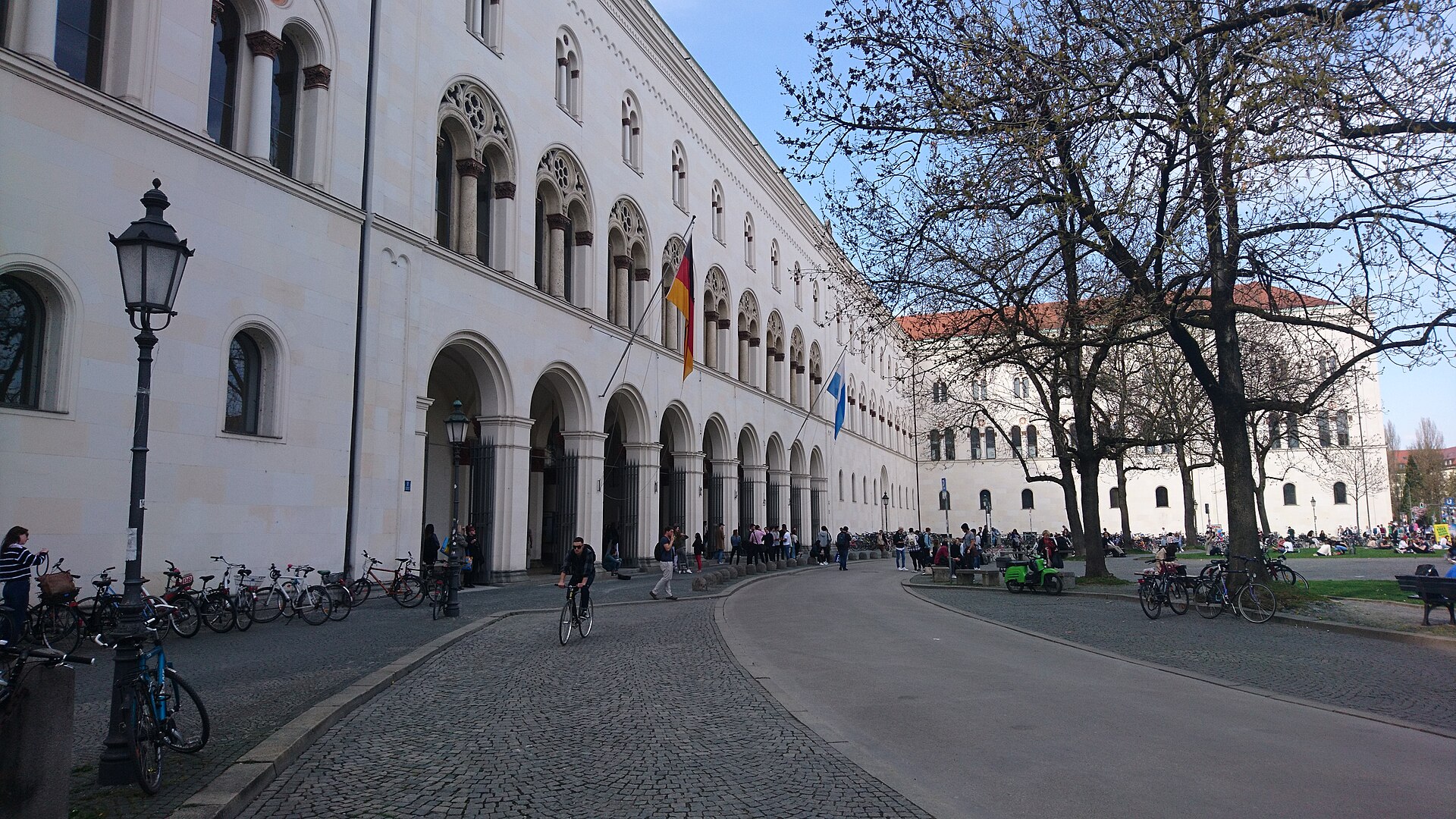
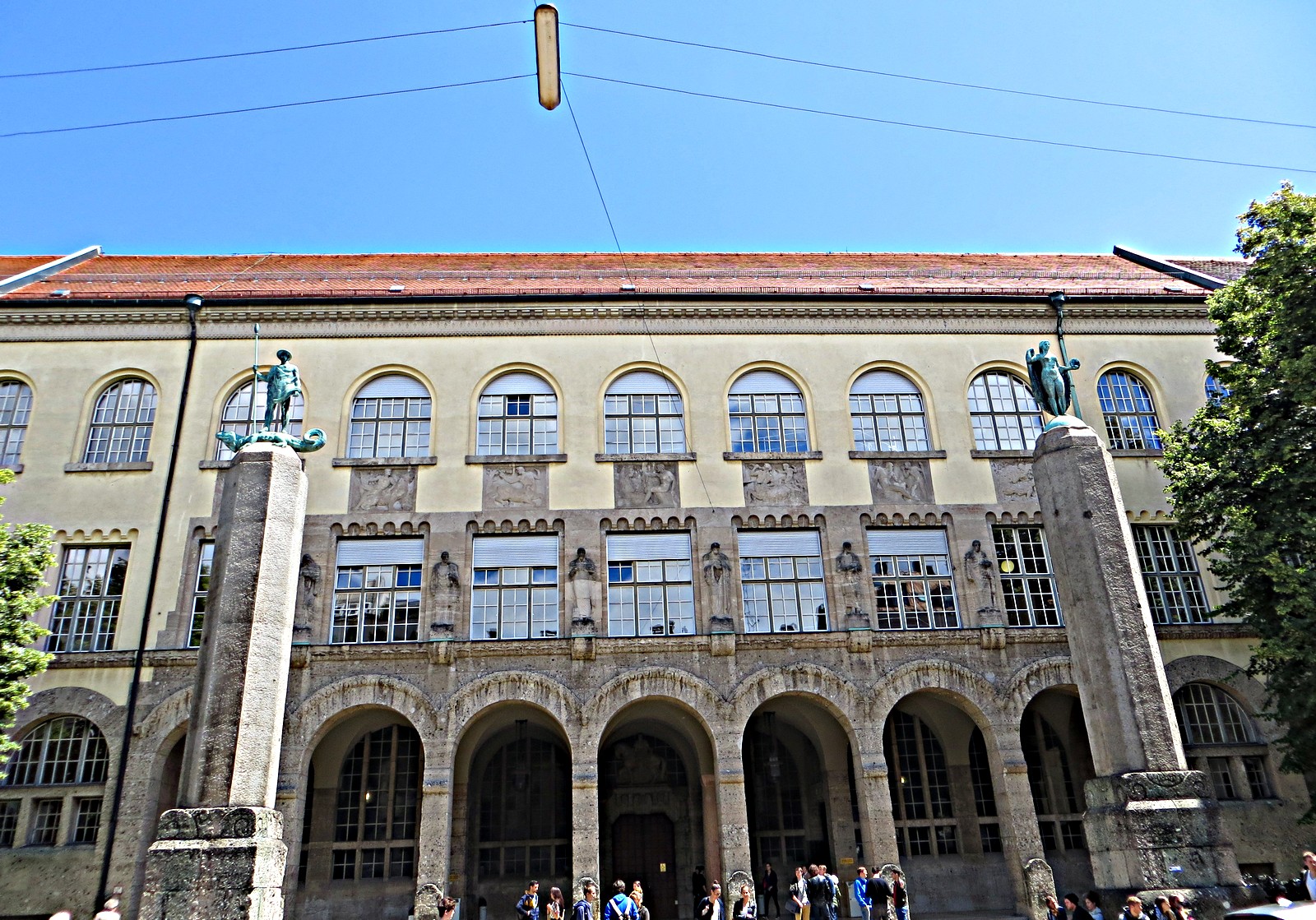
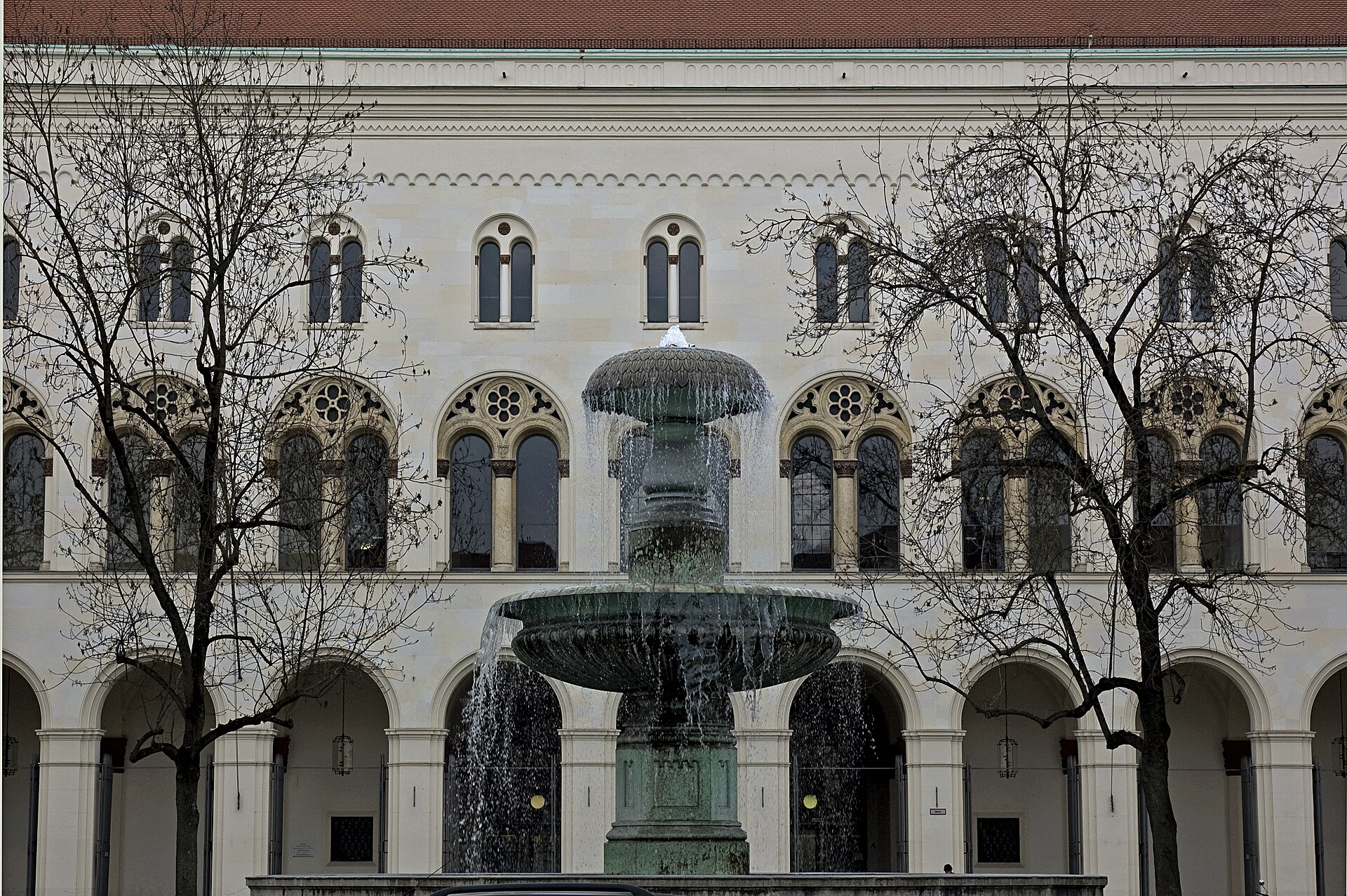
Ludwig-Maximilians-Universität München (LMU Munich) — campus in pictures
Real, freely-licensed photographs of the campus (via Wikimedia Commons).



Why LMU Munich — Research Excellence, Zero Tuition & European Prestige
LMU Munich is not simply Germany's top university — it is one of Europe's most influential academic institutions, home to 42 Nobel laureates among its faculty and alumni, and a founding member of the elite League of European Research Universities (LERU). Here is what sets it apart for international students.
LMU Munich Acceptance Rate & Admissions Profile
LMU uses a Numerus Clausus (NC) system for many of its most popular programmes — medicine, law, business, and psychology are among the most competitive. The NC is recalculated each admissions cycle, so it shifts year to year. The most reliable strategy is to aim for grades in the top 10–15% of your school cohort and ensure your international qualification is properly recognised as equivalent to the German Abitur.
Profile Stats
Stats
Rea Vs Rd
LMU Munich Admissions Requirements — Grades, Language & Qualification Recognition
- IB Diploma: 36+ overall (38–42+ for Medicine/Law)
- A-Levels: ABB minimum; A*AA well-positioned
- Strong performance in programme-relevant subjects
- Grade trajectory and rigour of curriculum both matter
- German programmes: TestDaF TDN 4 (all sections) or DSH-2
- English Master's: IELTS 6.5 overall or TOEFL iBT 88
- Goethe-Zertifikat C1/C2 also accepted
- Language requirement is separate from academic grades
- IB Diploma: Recognised as direct Abitur equivalent
- UK A-Levels: Minimum 3 subjects assessed via Anabin
- Other qualifications: Check via anabin.kmk.org
- Some qualifications require a Studienkolleg foundation year
LMU Munich Application Components — What You Need to Submit
LMU Munich applications are submitted directly to the LMU International Office — not through Common App, UCAS, or any centralised portal. Knowing exactly what is required avoids delays and rejections.
LMU Munich Application Writing — No US Essays; German Academic Writing
LMU Munich does not use a Common App, UCAS, or supplemental essay system. There is no personal statement for most undergraduate programmes. Where writing is required — primarily for Master's motivation letters — the style and standards are very different from US essays.
Prompts
Tips
What LMU Munich Admissions Looks For Academic Merit, Language Readiness & Qualification Recognition
Unlike US universities, LMU Munich does not use a holistic admissions process with essays, extracurriculars, or personal narrative as primary criteria. Admission is predominantly merit-based, centred on academic grades and language proficiency. Here is what actually determines your chances.
LMU Munich Financial Aid & Scholarships for International Students
LMU Munich does not operate a centralised need-based financial aid programme comparable to US universities. The primary financial advantage is structural: no tuition fees for most programmes. Additional support comes through competitive scholarships, external grants, and state-level assistance.
Scholarship amounts and eligibility criteria change annually. Always verify current details with LMU's International Office and DAAD.
Stats
Contribution Tiers
| Range | Percent | Note | Percent Value |
|---|---|---|---|
| DAAD Scholarships | Monthly stipend (varies) | German Academic Exchange Service — competitive, open to most nationalities | 70 |
| Deutschlandstipendium | €300/month | Merit + social engagement; available to enrolled LMU students | 40 |
| SIST LMU Scholarships | Partial support | LMU's own scholarships for enrolled international students | 30 |
| CSC (Chinese applicants) | Full support possible | LMU has formal CSC cooperation | 60 |
| LMU Nothilfe (Emergency) | €650 one-time | Bridge support for enrolled students facing hardship | 20 |
Key Dates
Advantages
- Most programmes available — broadest choice of courses and subjects
- Primary intake: the majority of international students start in October
- Orientation events and International Office support optimised for October arrivals
- Studierendenwerk housing allocation works best for October start
- German academic year aligns with most international secondary school graduation timelines
Disadvantages
- Limited programme availability — many programmes are winter-start only
- Fewer orientation resources for April arrivals
- Housing is more difficult mid-academic year
- German winter (January) document deadlines fall during many international final exams
- Late IB/A-Level results may complicate January documentation requirements
LMU Munich Interviews — What to Expect (and What Doesn't Exist)
LMU Munich does not conduct individual admissions interviews for the vast majority of undergraduate or Master's applicants. Admission is determined by grades, qualification equivalency, and language proficiency — not by personal interviews. This is fundamentally different from US, UK Oxbridge, or some other European university processes.
Meta
Questions
LMU Munich Residential Life — Housing, Studierendenwerk & Living in Munich
Unlike Oxford, Cambridge, or US residential colleges, LMU Munich does not have a residential college or house system. Students arrange their own accommodation independently, either through the Studierendenwerk München Oberbayern (student union housing) or the private market. Munich's housing market is competitive — planning early is essential.
Lottery Steps
- Apply to Studierendenwerk housing immediately upon receiving your admission offer — waiting lists are long
- Studierendenwerk operates 34 student residences across Munich and surrounding areas
- Dormitory rooms range from single rooms to shared flats — typically €300–450/month, well below Munich market rates
- Private room shares (Wohngemeinschaft / WG) are the most common alternative for students who don't get a dorm place
- LMU's International Office maintains a housing search resource and partners with accommodation platforms
- Factor in transit time from accommodation to your faculty buildings — LMU's faculties are spread across Munich
Houses
LMU Munich Faculties & Programme Areas 18 Faculties Across All Disciplines
- {"label":"Teaching hospital","value":"LMU Klinikum"}
- {"label":"Admission type","value":"NC + HAM-Nat"}
- {"label":"Language of instruction","value":"German (C1/C2 required)"}
- {"label":"Programme duration","value":"6 years"}
- {"label":"Qualification awarded","value":"Staatsexamen"}
- {"label":"Language of instruction","value":"German only"}
- {"label":"Admission type","value":"NC — very competitive"}
- {"label":"Programme duration","value":"~4.5 years standard"}
- {"label":"Bachelor's language","value":"German"}
- {"label":"Master's language","value":"German + English options"}
- {"label":"Admission type","value":"NC (Bachelor's)"}
- {"label":"Career destinations","value":"Consulting, Finance, Industry"}
- {"label":"Nobel laureates affiliated","value":"Multiple"}
- {"label":"English Master's","value":"Available"}
- {"label":"Research partner","value":"Max Planck Institute"}
- {"label":"Admission type","value":"Open / NC varies"}
- {"label":"English Master's","value":"Several available"}
- {"label":"Industry links","value":"Pharmaceutical, biotech"}
- {"label":"Key research partner","value":"Helmholtz Association"}
- {"label":"City advantage","value":"Munich biotech cluster"}
- {"label":"Total faculties","value":"18"}
- {"label":"Psychology admission","value":"NC — competitive"}
- {"label":"Languages offered","value":"30+"}
- {"label":"International Master's","value":"Selected programmes"}
Research & Extracurricular Opportunities at LMU Munich
Career Outcomes & LMU Munich Alumni Network
An LMU Munich degree opens doors across Europe and globally. Munich's position as Germany's economic powerhouse — home to BMW, Siemens, Allianz, MAN, and a growing technology sector — means graduates have direct access to some of Germany's most prestigious employers.
Stats
Categories
Our LMU Munich Admissions Track Record & Student Success Stories
Frequently Asked Questions — LMU Munich for International Students
Do I need to speak German to study at LMU Munich?+
For Bachelor's programmes, yes — almost all are taught in German and require C1/C2 proficiency. At the Master's level, LMU offers over 50 English-taught programmes, including in biochemistry, mathematics, statistics, informatics, economics, and political science. Doctoral research is often conducted in English even in German-medium faculties. If you are committed to studying in English, target LMU's English-taught Master's portfolio specifically.
Is LMU Munich really free?+
Yes, for the vast majority of degree programmes, LMU charges no tuition fees — only a semester fee of approximately €97 per semester. This covers administration costs and contributes to your student transit pass for Munich's public transport system. There is an application processing fee (approximately $75 equivalent), but there is no annual tuition.
What is the Numerus Clausus (NC) and how does it affect me?+
The Numerus Clausus is a grade cutoff used for oversubscribed programmes. It is not a fixed number — it is recalculated each semester based on actual applicants. For Medicine, Law, Business Administration, and Psychology, the NC is extremely competitive. For less competitive programmes, there is no NC and all qualified applicants are admitted. As an international applicant, you will be placed in a separate quota, which can differ from the domestic NC.
How is my IB Diploma assessed for LMU admission?+
IB Diplomas are generally recognised as equivalent to the German Abitur. Your total IB score and performance in Higher Level subjects relevant to your intended programme are assessed. An IB score of around 36+ is typically competitive for most programmes, though the most selective fields (Medicine, Law) may expect scores in the upper range. Always verify equivalency via Anabin (anabin.kmk.org) or contact LMU's International Office.
Can I apply to more than one programme at LMU?+
Yes — you may apply to a maximum of two programmes simultaneously. However, only one of those two programmes may be a restricted-admission (Numerus Clausus) programme. This rule applies per intake cycle.
Is there financial support available for international students at LMU?+
Several scholarships are available: the SIST LMU Study Scholarship (for students with academic excellence and financial need), the Deutschlandstipendium (€300/month, widely available), DAAD scholarships for various categories, and emergency financial assistance (LMU Nothilfe, €650 one-time). External funding from organisations like the CSC (for Chinese students), national government scholarships, and European grants may also apply depending on your country of origin.
Does LMU Munich offer support for international students after arrival?+
Yes. LMU's International Office provides pre-arrival guidance, orientation events, buddy programmes pairing new international students with experienced LMU students, German language courses, counselling services, and career support specifically targeted at international graduates seeking employment in Germany or Europe.
What is the difference between LMU Munich and TU Munich (TUM)?+
LMU Munich is strongest in medicine, law, humanities, natural sciences, economics, and psychology. TU Munich (Technical University of Munich) focuses on engineering, technology, and applied sciences. Many students and academics interact across both institutions — they are near each other and collaborate extensively. Your programme choice should drive which institution you target.
Book a Free LMU Munich Admissions Strategy Session
In 60 minutes our LMU Munich specialists will evaluate your academic profile, assess your German language pathway, confirm your qualification equivalency, and map out a realistic application strategy — whether you are targeting a Bachelor's, Master's, or Doctoral programme.
- No commitment required
- LMU Munich specialists with Germany-specific expertise
- Personalised strategy — grade assessment, language planning, document preparation
ACADEMIC REQUIREMENTS
LMU Munich Academic Requirements — The Honest Breakdown for International Students
What grades, language scores, and academic profile do LMU Munich's admitted students actually need? And what does Germany's grade-driven, holistic-free system mean for students from IB, A-Level, AP, and other international curricula?
GPA & Grade Standards
LMU Munich and Grades — What the Data Shows
The honest picture: LMU Munich admission is almost entirely grade-driven. There is no holistic review, no essays offsetting grades, and no extracurricular consideration at the undergraduate level. Your grade average relative to your qualification system's scale is the primary determinant.
A 3.0 GPA equivalent is a floor, not a target. For competitive programmes like Medicine and Law, only applicants in the top 1–5% of their national qualification cohort are admitted. For other programmes, the top 10–20% is typically competitive.
Academic Context
How LMU Munich Reads International Academic Records
LMU Munich is experienced at evaluating academic performance across widely different national qualification systems. The primary tool is the Anabin database — Germany's official recognition database for international qualifications. Understanding how your specific qualification is evaluated is essential.
Standardised Testing at LMU
SAT Scores at LMU Munich — They Are Not Required or Considered
LMU Munich does not use SAT scores in its admissions process. There is no SAT requirement, no SAT optional pathway, and no consideration of SAT scores even if submitted. This is a fundamental difference from US university admissions.
| Label | Score | Percent |
|---|---|---|
| SAT required | No | 0 |
| SAT considered if submitted | No | 0 |
| Primary academic credential | School certificate grades | 100 |
Standardised Testing at LMU
ACT Scores at LMU Munich — Not Part of the Admissions Process
Like the SAT, the ACT is not used in LMU Munich admissions. LMU's admission process does not include any role for ACT scores.
Metrics
Comparison Cards
Test Policy
LMU Munich Test Policy — Grades and Language, Not SAT/ACT
LMU Munich's test policy is fundamentally different from US or UK universities. The university is 'test-optional' with respect to SAT/ACT in the sense that these tests are entirely irrelevant — not optional-but-recommended. What LMU requires are language proficiency tests, which are strictly required for all international students.
Submit Items
Withhold Items
International Qualifications
IB Diploma & A-Levels at LMU Munich — Equivalency & Benchmarks
- {"label":"Competitive range","value":"36–42 points (higher for Medicine/Law)"}
- {"label":"Recognition status","value":"Direct Abitur equivalent (H+)"}
- {"label":"HL expectations","value":"Subject choice should align with intended programme"}
- {"label":"German language","value":"TestDaF/DSH required separately for German-taught programmes"}
- {"label":"Competitive range","value":"ABB minimum; A*AA well-positioned"}
- {"label":"Number of A-Levels","value":"Minimum 3 subjects expected"}
- {"label":"Recognition","value":"Assessed via Anabin; H+ status for most UK A-Level qualifications"}
- {"label":"German language","value":"TestDaF/DSH required for German-taught programmes; GCSE German not sufficient"}
- {"label":"Indian CBSE/ISC","value":"H+/- status in most cases; additional requirements may apply"}
- {"label":"French Baccalaureate","value":"Generally recognised; check Anabin for your institution"}
- {"label":"Chinese Gaokao","value":"Typically requires Studienkolleg year for direct entry"}
- {"label":"US High School Diploma + SAT","value":"H+/- status; SAT provides additional evidence for equivalency"}
AP Courses at LMU Munich
AP Courses and LMU Munich — Limited Direct Role, But Important Context
Advanced Placement (AP) courses and scores play a fundamentally different role at LMU Munich than at US universities. AP scores are not required for LMU admission and do not contribute to the admissions decision. However, they may be relevant in specific contexts.
Academic Rigour at LMU
Academic Rigour at LMU Munich — What Germany's System Values
While LMU Munich does not use the US concept of 'rigour of secondary school record' as an explicit admissions criterion, the principle of taking the most challenging available courses — and excelling in subjects relevant to your intended programme — applies across all qualification systems.
Maximise performance in programme-relevant subjects within the most challenging version of your national qualification system.
Subject Preparation
Subject-Level Preparation — What LMU Expects by Programme
Programme admission at LMU is often tied to performance in specific subjects. Here is what each major field expects from international applicants in terms of academic preparation.
Language Proficiency
Language Requirements at LMU Munich — English and German
Language proficiency is the primary gatekeeping requirement for international students at LMU Munich — far more so than in most US or UK university systems. The specific requirement depends entirely on whether your target programme is German-taught or English-taught.
C1 German is a genuinely high standard — equivalent to an advanced secondary school or early university level of German. Reaching it from zero typically takes 3–4 years of structured study for motivated learners. Students planning to apply to LMU Bachelor's programmes should begin German language study no later than Year 9–10.
By Programme
Academic Requirements by Programme — What Different Fields at LMU Expect
LMU considers programme-relevant subject performance carefully. The table below reflects what competitive applicants typically present — not published minimums, but honest assessments based on the qualification system and programme competitiveness.
| Concentration | Expectation | Signals |
|---|---|---|
| Medicine (Medizin) | Top 1–5% grades; HL Biology + Chemistry (IB) | HAM-Nat aptitude test; consistent sciences performance |
| Law (Rechtswissenschaft) | Top 5% grades; strong German proficiency C1/C2 | NC grade; analytical writing in German |
| Physics | HL Maths + HL Physics (IB) or A* equivalents | Mathematical competitions; strong quantitative profile |
| Mathematics | HL Mathematics AA (IB) or Further Maths (A-Level) | Mathematical Olympiad participation; proof-based thinking |
| Computer Science / Informatics | Strong Mathematics background; programming experience | Coding projects; competitive programming; MoveIN portal for Master's |
| Economics / Business | Strong Maths; IB HL Economics or equivalent | Quantitative research; English Master's pathway available |
| Biology / Chemistry / Biochemistry | HL Biology + Chemistry (IB); strong lab sciences | Research experience; pharmaceutical industry links in Munich |
| Psychology | Top grades; NC applies; strong analytical profile | Statistics background; German C1 for Bachelor's |
| Political Science / Social Sciences | Strong humanities profile; English Master's available | International background; thesis writing ability |
International Systems
How LMU Munich Evaluates International Curricula
Roadmap
Building Your Academic Profile for LMU Munich — What to Do at Each Stage
- If targeting German-taught Bachelor's programmes, begin structured German language study now — aim for B1–B2 by end of Year 10.
- Choose IGCSE/MYP subjects that leave the widest possible options for IB or A-Level — strong Maths and Sciences for STEM; strong Languages and Humanities for Law/Social Sciences.
- Identify your target programme and check Anabin equivalency for your qualification type early.
- Select IB Higher Level subjects or A-Level subjects that align with your intended LMU programme.
- HL Mathematics (Analysis & Approaches) for STEM and Economics; HL Biology + Chemistry for Medicine; strong language and humanities HLs for Law.
- Begin TestDaF practice and assess how much German preparation time you need.
- Schedule TestDaF or DSH preparation to achieve TDN 4 certification by end of Year 12 at the latest.
- Maximise performance in the subjects most relevant to your intended programme.
- Verify your qualification's Anabin status and confirm whether a direct application or Studienkolleg year is required.
- Obtain certified copies and certified translations of your academic certificates.
- Prepare your tabular CV using LMU's official template.
- For Master's applicants: draft your motivation letter well before the July 15 deadline.
- Submit application by July 15 (Winter Semester) or January 15 (Summer Semester); ensure ALL documents reach LMU by August 21.
Common Pitfalls
Academic Mistakes That Cost LMU Munich Applications — And How to Avoid Them
Real Outcomes
What Academic Profiles Tychr's LMU Munich-Admitted Students Had
The following profiles represent the academic backgrounds of students Tychr has helped gain LMU Munich admission. They illustrate what makes a competitive profile — and why grades and language preparation are the determining factors.
Faqs
What GPA equivalent do I need for LMU Munich?+
The minimum GPA equivalent is approximately 3.0 (German grade 2.5 or better). However, this is a floor, not a target. For competitive programmes like Medicine and Law, you need to be in the top 1–5% of your national qualification cohort. For non-NC programmes, the top 10–20% is typically competitive. Always aim higher than the minimum.
What IB score do I need for LMU Munich?+
An IB score of 36 or above is broadly competitive across most LMU programmes. For Medicine and Law — Germany's most selective university programmes — scores in the 38–42 range and above are typically needed to be competitive. The IB converts to the German 1–6 scale via a published formula, with 45 points converting to the best German grade (1.0).
Can I apply to LMU Munich without speaking German?+
For English-taught Master's programmes, yes. LMU offers over 50 English-taught programmes at Master's level. For Bachelor's programmes, no — almost all are German-taught and require C1/C2 German proficiency. Without this, you cannot be admitted to an undergraduate programme regardless of academic strength.
Does LMU Munich accept students who don't have a top grade?+
For open-admission programmes (those without NC), any student whose qualification is recognised as Abitur-equivalent and who meets the language requirement can be admitted. There are many LMU programmes without NC restrictions — the university is not exclusively for top-grade students. NC applies only to oversubscribed programmes.
Is it harder for international students to get into LMU Munich?+
International students compete in a separate quota from domestic (German) applicants for NC-restricted programmes. The international quota NC cutoff can differ from the domestic cutoff — sometimes more favourable, sometimes less, depending on the programme. For open-admission programmes, there is no special disadvantage for international applicants who meet the qualification and language requirements.
Cost & Financial Aid
LMU Munich May Be the Most Affordable World-Class University Available to You. Here's the Full Picture.
LMU Munich charges no tuition fees for most degree programmes — making it one of the most extraordinary value propositions in global higher education. Munich's cost of living is the primary financial challenge. Here is exactly what studying at LMU Munich costs and how to fund it.
Cost Transparency
What LMU Munich Actually Costs — The Full Annual Figure
The $14,000 annual estimated cost of attendance at LMU Munich compares with $80,000–$90,000 at leading US universities and £45,000–£55,000 at UK Russell Group universities. The structural absence of tuition makes LMU extraordinary value for money — the challenge is Munich's living costs, not tuition.
Financial Aid at LMU
LMU Munich Financial Aid Policy — No Tuition Is the Aid
Unlike US need-blind aid programmes that require extensive financial documentation, LMU's zero-tuition policy applies automatically to all enrolled students regardless of nationality or financial background. No aid application is required to access the no-tuition benefit — it is the starting condition for all students.
Institutional Commitment
Why LMU Munich Can Maintain Zero Tuition — The Public University Model
Scholarship Application Walkthrough
Applying for Financial Support at LMU Munich — The Process Step by Step
Unlike US universities where financial aid flows through a single CSS Profile application, LMU Munich financial support comes from multiple separate sources, each with its own application process and timeline. Here is how to navigate it.
- Home country government study-abroad scholarships
- Bilateral Germany-specific scholarships (e.g. Sino-German programmes, DAAD country-specific)
- International foundations (Aga Khan, specific national programmes)
- Apply 6–12 months before your intended start date
- Prepare academic transcripts, CV, and reference letters
- Understand the distinction between DAAD study scholarships and DAAD research fellowships
- Confirm enrolment by completing LMU's Immatrikulation process
- Obtain your student ID (Matrikelnummer) — required for all LMU scholarship applications
- Enrol in statutory health insurance and provide proof to LMU
- SIST LMU Study Scholarship — merit + financial need
- SIST LMU Completion Scholarship — final year only
- SIST LMU Equality Scholarship — disability/chronic illness/refugee background
- Prepare academic evidence of excellence
- Note social engagement activities and community contributions
- Application is competitive — not all strong students are awarded
International Students Specifically
Financial Support for International Students at LMU Munich — How It Works
Scholarship Amounts
Typical Financial Support Available to LMU Munich International Students
Scholarship Overview (Annual/Monthly Amounts)
Scholarship amounts are subject to change. Verify current figures with LMU's International Office and DAAD before applying.
No single scholarship at LMU covers full costs for most international students. The strongest financial strategy combines the zero-tuition baseline with DAAD or national government scholarships and/or part-time work income.
| Income | Grant | Contribution |
|---|---|---|
| Deutschlandstipendium | €300/month (€3,600/year) | All nationalities; merit + social engagement |
| DAAD Study Scholarship (Bachelor's) | ~€850/month + health insurance contribution | Competitive; nationality and subject dependent |
| DAAD Study Scholarship (Master's/PhD) | ~€1,000–1,200/month + health insurance | Competitive; nationality and subject dependent |
| SIST LMU Study Scholarship | Partial support (amount varies annually) | Enrolled LMU students; merit + financial need |
| LMU Nothilfe (Emergency Assistance) | €650 one-time payment | Enrolled LMU students facing unexpected hardship |
| CSC-LMU Cooperation (Chinese students) | Full living support + fees (varies) | Chinese nationals; doctoral level primarily |
| Part-time work (Hiwi/other) | ~€400–800/month (10–15 hrs/week) | All enrolled students up to 120 full days/year |
Table Headers
Scholarship Landscape
LMU Munich Scholarships — Named Awards and Who Qualifies
LMU Munich offers several named scholarships for international students, primarily merit-based with a financial need component. Unlike US merit scholarships, these are awarded post-admission to enrolled students, not as part of the admissions offer.
External Funding
External Scholarships for LMU Munich Students
Beyond LMU's own scholarships, numerous external organisations award scholarships to international students at German universities. These can significantly supplement — or in some cases fully cover — the cost of studying at LMU.
Debt-Free Education
Student Loans at LMU Munich — The German Approach
German public universities, including LMU Munich, do not package institutional student loans the way US or UK universities do. The zero-tuition model means the primary financial burden is living costs, not tuition debt — fundamentally changing the loan equation.
Student Employment
Working While Studying at LMU Munich — Rights and Opportunities
International students at LMU Munich from non-EU countries are permitted to work up to 120 full days or 240 half-days per year under German immigration rules. This is a meaningful financial contribution and a professional development opportunity.
- Studentische Hilfskraft / Hiwi positions — student research assistant roles at LMU labs, libraries, and administrative departments (€12–15/hour typical)
- Tutoring and teaching assistant positions within LMU faculties
- Munich's extensive hospitality and retail sector (cafes, restaurants, shops)
- Technology and startup roles in Munich's tech ecosystem (often flexible hours)
- University administration and student services (International Office, language centre, IT support)
Benchmarking
LMU Munich vs. Other Top Universities — Cost Comparison
| School | Policy | No Loans | Typical Cost |
|---|---|---|---|
| LMU Munich | Zero tuition; state-funded | No institutional loans | ~$14,000/year (living only) |
| TU Munich (TUM) | Zero tuition; state-funded | No institutional loans | ~$14,000/year (living only) |
| University of Edinburgh | International tuition ~£26,000/year | Loans available but limited for internationals | ~$40,000–50,000/year |
| UCL London | International tuition ~£30,000+/year | Limited international aid | ~$50,000–60,000/year |
| University of Toronto | International tuition ~C$40,000–60,000/year | Limited international aid | ~$45,000–65,000/year |
| Harvard University | Need-blind, full-need grant aid | No institutional loans | $0 for families under $85,000/yr income |
| ETH Zurich | CHF 730/semester (~$1,600/year) | Limited Swiss aid for internationals | ~$25,000–30,000/year (high Swiss living costs) |
Cost Analysis
What You Actually Pay for an LMU Munich Degree — The 3-Year Total
A 3-year Bachelor's degree at LMU Munich costs approximately €42,000 in total living expenses — with zero tuition. A comparable degree at a UK Russell Group university costs £120,000–£160,000 including tuition over three years. At a comparable US university, $240,000–$360,000 over four years. LMU Munich is not just affordable — it is a structural financial anomaly in global higher education.
| School | Policy | Contribution | Four Year Cost |
|---|---|---|---|
| LMU Munich (3 years) | Zero tuition | ~€14,000/year | ~€42,000 total |
| UK Russell Group (3 years) | £26,000–£35,000 tuition + living | ~£40,000–£50,000/year | ~£120,000–£150,000 total |
| US Top University (4 years) | Tuition + room + board | ~$80,000–$90,000/year (no aid) | ~$320,000–$360,000 total |
| US Top University (4 years, with aid) | Need-based grant; families <$85K | $0–$5,000/year | $0–$20,000 total |
| Australian Go8 University (3 years) | AUD 35,000–50,000/year tuition + living | ~AUD 55,000–70,000/year | ~AUD 165,000–210,000 total |
Scholarship Appeals & Renewals
Addressing Financial Difficulties at LMU Munich — When and How to Act
Because LMU Munich does not have a personalised need-based aid package, there is no formal 'financial aid appeal' process equivalent to US universities. However, students facing unexpected financial hardship have specific options.
The most important financial planning at LMU Munich happens before you arrive — not after. Securing DAAD or national scholarships before starting, arranging a Sperrkonto sufficient for the visa, and understanding your work rights from day one puts you in a stronger position than reacting to financial difficulties mid-study.
When To Appeal
- You are facing a sudden unexpected financial emergency (LMU Nothilfe emergency assistance is the relevant mechanism)
- Your Deutschlandstipendium or SIST scholarship application was unsuccessful and you believe new information is relevant
- Your financial situation has changed significantly since your scholarship application
- You need guidance on additional funding sources you may not have considered
How To Appeal
- Contact LMU's International Office (zulassung.international@lmu.de) to discuss your specific situation
- For emergency assistance: apply for LMU Nothilfe by November 30 of the relevant year with documentation of the hardship
- Explore BAföG eligibility if your residence status has changed
- Seek guidance from the Studierendenwerk München Oberbayern — the student services organisation offers financial counselling for all LMU students
Timeline & Planning
Planning Your LMU Munich Finances — What to Do and When
APPLICATION & MOTIVATION
LMU Munich Application Guide — How to Apply Without US-Style Essays
LMU Munich does not use a Common App, UCAS, or supplemental essay system. There is no personal statement for most undergraduate programmes and no essay prompts to respond to. Instead, the application centres on your academic qualifications, a structured CV, and — for Master's programmes — often a motivation letter. This section guides you through what actually matters in the LMU application.
Germany's university application system is fundamentally different from the US and UK. Understanding this distinction is the first step to a successful LMU application. Your grades are your application; your documents are your application; your language proficiency is your application. The narrative components, where they exist, are secondary and programme-specific.
APPLICATION SYSTEM OVERVIEW
How LMU Munich Applications Work — Direct Application, No Essays Required
LMU Munich uses a direct online application system managed by the LMU International Office. There is no centralised German university application portal comparable to UCAS or Common App for international students applying to most programmes.
For Bachelor's applicants: the International Office explicitly states that expert reports, letters of recommendation, and internship certificates are NOT required. The application consists of your completed form, certified copies of qualifications, language proficiency documents, and a structured CV. No personal essay or statement is required by the International Office for undergraduate admission.
LANGUAGE AS ENTRY TICKET
German Language Proficiency — The Most Important Requirement for Bachelor's Applicants
For the vast majority of LMU Munich Bachelor's programmes, demonstrating C1 or C2 German language proficiency is more important than any essay, personal statement, or extracurricular record. If you cannot demonstrate this, you will not be admitted — regardless of your grades.
Many international students underestimate how high the C1/C2 bar is. The TestDaF at TDN 4 level requires sustained academic reading comprehension, formal writing, and nuanced spoken German. Reaching this level from zero typically requires 2–3 years of structured study for motivated learners. Students planning to apply to LMU for Bachelor's programmes should ideally begin German study no later than Year 9 or 10 of secondary school.
YOUR KEY DOCUMENT
The Tabular CV — LMU's Primary Personal Document
For undergraduate applications at LMU Munich, the tabular CV (tabellarischer Lebenslauf) is the primary personal document you submit. Think of it as your application's narrative backbone — structured, chronological, and factual.
The LMU CV template (available on the International Office website) requires: personal details, complete chronological education history with exact dates, all qualifications and examinations taken, and a list of language skills with proficiency levels. It is not a creative document — it is a comprehensive, honest record of your academic life to date.
MASTER'S APPLICATIONS
Writing a Motivation Letter for LMU Master's Programmes
For Master's programmes that require a motivation letter (Motivationsschreiben), this is your one opportunity to demonstrate why you specifically want this programme at LMU and what you bring to it. Here is how to write it effectively.
The LMU motivation letter is not a US personal statement — it is a focused, formal document (typically 1–2 pages) that demonstrates academic fit, specific interest in the programme, and professional or intellectual motivation. Tone is formal; content is specific. Generic statements of passion or ambition without substance are immediately recognisable and ineffective.
MASTER'S STRATEGY
Choosing What to Write About in Your Motivation Letter
German academic motivation letters reward specificity and intellectual honesty. The most effective approach is direct, structured, and evidence-based. Here is how to choose your approach.
The strongest motivation letters for LMU Master's programmes are built around a clear intellectual or professional thread: what drew you to this field, what you have done in it, and what you specifically want to do next. Avoid the common mistake of writing a document that could apply to any programme anywhere — every claim should be anchored to something specific about LMU, Munich, or this programme's distinctive features.
COMMON MISTAKES
Application Mistakes to Avoid at LMU Munich
- Submitting application documents late — LMU strictly enforces document deadlines and will not process incomplete files received after the cutoff
- Using uncertified translations — all academic certificates and transcripts must be submitted as certified copies with certified translations; notarised copies only for originals
- Writing a generic motivation letter that does not reference the specific LMU programme, faculty, or curriculum
- Applying without first confirming your qualification is recognised via Anabin — discovering you need a Studienkolleg year after applying loses an admissions cycle
- Assuming English fluency is sufficient for a Bachelor's programme — almost all undergraduate programmes require C1/C2 German; confirm before applying
- Leaving 'why Germany / why Munich' vague — for Master's motivation letters, non-specific answers about Germany's reputation are unconvincing; research the actual programme
- Not preparing for health insurance — proof of statutory German health insurance must be provided at enrolment; arrange this before you arrive in Munich
- Applying to two restricted-admission (NC) programmes simultaneously — LMU rules allow only one NC programme per application
- Writing your motivation letter in the wrong language — use English for English-taught programmes; use formal German for German-taught programmes
- Ignoring the MoveIN portal timeline for applicable Master's programmes — the MoveIN window (May 15 – July 15) differs from the general International Office deadline
APPLICATION FAQs
Application & Motivation FAQs — LMU Munich
Do I need to write a personal statement for LMU Munich Bachelor's programmes?+
No — for standard undergraduate applications submitted through LMU's International Office, no personal statement, motivation letter, or letters of recommendation are required. The application consists of your academic qualifications, language certificates, and a structured CV. This is explicitly confirmed by LMU's admissions guidelines.
Do all LMU Master's programmes require a motivation letter?+
No — requirements vary by programme. Some require a motivation letter as part of the programme-specific admissions process; others do not. Always check the admissions requirements listed on the individual programme's page at lmu.de, not the general International Office guidelines.
How long should a motivation letter for an LMU Master's programme be?+
Typically 1–2 pages (approximately 400–600 words), though individual programmes may specify a length. German academic culture tends to prefer concise, substantive writing over lengthy personal narratives. Follow the programme's instructions if they specify a limit.
Should I write my motivation letter in German or English?+
For English-taught Master's programmes, write in English. For German-taught programmes, write in German. If the programme does not specify, English is appropriate for international applicants unless the programme is conducted entirely in German, in which case German is strongly preferred and demonstrates language readiness.
Can I use AI tools to write my motivation letter?+
Using AI to generate your motivation letter is strongly inadvisable. LMU faculty and admissions committees read many motivation letters and recognise generic AI-generated phrasing. More importantly, a good motivation letter for a German university requires specific, personally grounded references to your background, the programme's content, and faculty research — content an AI cannot generate accurately for your specific situation.
How do I contact LMU Munich's International Office with questions?+
LMU's International Office can be reached at zulassung.international@lmu.de. For specific programme questions, contact the relevant faculty's admissions coordinator directly — programme-specific admissions are often handled at the faculty level for Master's applications.
What is the MoveIN portal and does it require different application materials?+
The MoveIN online portal is used for selected LMU Master's programmes (including Biochemistry, Chemistry, Informatics, Mathematics, Statistics & Data Science, and others). It has its own application interface and may require different components from the general International Office process. If your target programme uses MoveIN, apply through that portal between May 15 and July 15. Check lmu.de for the current list of MoveIN programmes.
What makes a strong doctoral supervisor outreach email for LMU?+
A strong outreach email to a potential LMU doctoral supervisor is concise (under one page), includes a clear research proposal or research interest statement that intersects with the professor's published work, and attaches your CV and academic transcripts. Reference one or two of the professor's recent publications by name to demonstrate that you have read their work. Avoid generic 'I would love to join your group' emails — specificity about the research connection is essential.
Courses — schools, degrees & intake
56 degrees across 18 groupings.
Faculty of Catholic Theology · 1 degrees
Bachelor of Arts in Catholic Theology (Katholische Theologie)
Faculty of Protestant Theology · 1 degrees
Bachelor of Arts in Protestant Theology (Evangelische Theologie)
Faculty of Law · 2 degrees
First State Examination in Law (Erstes Juristisches Staatsexamen)
Bachelor of Arts with Minor in Law
Faculty of Business Administration — Munich School of Management · 1 degrees
Bachelor of Science in Business Administration (Betriebswirtschaftslehre — BWL)
Faculty of Economics · 1 degrees
Bachelor of Science in Economics (Volkswirtschaftslehre — VWL)
Faculty of Medicine · 2 degrees
Medicine (Staatsexamen — Human Medicine)
Dentistry (Staatsexamen — Zahnmedizin)
Faculty of Veterinary Medicine · 1 degrees
Veterinary Medicine (Staatsexamen — Tiermedizin)
Faculty of History and the Arts · 5 degrees
Bachelor of Arts in History (Geschichte)
Bachelor of Arts in Classical Studies (Klassische Philologie/Griechisch und Latein)
Bachelor of Arts in Art History (Kunstgeschichte)
Bachelor of Arts in Musicology (Musikwissenschaft)
Bachelor of Arts in Theater Studies (Theaterwissenschaft)
Faculty of Philosophy, Philosophy of Science and Religious Studies · 2 degrees
Bachelor of Arts in Philosophy
Bachelor of Arts in Religious Studies (Religionswissenschaft)
Faculty of Psychology and Educational Sciences · 3 degrees
Bachelor of Science in Psychology
Bachelor of Arts in Educational Sciences / Pedagogy (Pädagogik — Allgemeine Pädagogik und Empirische Bildungsforschung)
Bachelor of Science in Special Needs Education / Rehabilitation Sciences (Pädagogik bei Behinderung und Benachteiligung)
Faculty for the Study of Culture · 7 degrees
Bachelor of Arts in Ethnology (Ethnologie)
Bachelor of Arts in European Ethnology / Volkskunde (Europäische Ethnologie/Volkskunde)
Bachelor of Arts in Sinology / Chinese Studies (Sinologie)
Bachelor of Arts in Japanology / Japanese Studies (Japanologie)
Bachelor of Arts in Jewish Studies (Judaistik)
Bachelor of Arts in Near Eastern Studies (Vorderasiatische Archäologie und Vorderer Orient)
Bachelor of Arts in Classical Studies (Klassische Archäologie und Antike Kulturen)
Faculty of Languages and Literatures · 15 degrees
Bachelor of Arts in General and Comparative Literature (Allgemeine und Vergleichende Literaturwissenschaft)
Bachelor of Arts in English Studies / Anglistics (Anglistik)
Bachelor of Arts in Book Studies (Buchwissenschaft)
Bachelor of Arts in Computational Linguistics (Computerlinguistik)
Bachelor of Arts in German Studies (Germanistik)
Bachelor of Arts in German as a Foreign Language (Deutsch als Fremdsprache — DaF)
Bachelor of Arts in Italian Studies (Italianistik)
Bachelor of Arts in Media and Cultural Studies (Medienkulturwissenschaft)
Bachelor of Arts in North American Studies (Nordamerikastudien)
Bachelor of Arts in Phonetics and Speech Processing (Phonetik und Sprachverarbeitung)
Bachelor of Arts in Romance Studies (Romanistik)
Bachelor of Arts in Slavic Studies (Slavistik)
Bachelor of Arts in Scandinavian Studies (Skandinavistik)
Bachelor of Science in Speech Therapy (Sprachtherapie)
Bachelor of Arts in Historical and General Linguistics (Historische und allgemeine Sprachwissenschaft)
Faculty of Social Sciences · 3 degrees
Bachelor of Arts in Political Science (Politikwissenschaft)
Bachelor of Arts in Sociology (Soziologie)
Bachelor of Arts in Communications and Media Studies (Kommunikations- und Medienwissenschaft)
Faculty of Mathematics, Informatics and Statistics · 5 degrees
Bachelor of Science in Mathematics (Mathematik)
Bachelor of Science in Computer Science (Informatik)
Bachelor of Science in Bioinformatics (Bioinformatik)
Bachelor of Science in Media Informatics (Medieninformatik)
Bachelor of Science in Statistics (Statistik)
Faculty of Physics · 3 degrees
Bachelor of Science in Physics (Physik)
Bachelor of Science in Astrophysics (Astrophysik)
Bachelor of Science in Meteorology (Meteorologie)
Faculty of Chemistry and Pharmacy · 2 degrees
Bachelor of Science in Chemistry and Biochemistry (Chemie und Biochemie)
Bachelor of Science in Pharmaceutical Sciences (Pharmazeutische Wissenschaften)
Faculty of Biology · 1 degrees
Bachelor of Science in Biology (Biologie)
Faculty of Geosciences · 1 degrees
Bachelor of Science in Geosciences (Geowissenschaften)
Want your real chances at Ludwig-Maximilians-Universität München (LMU Munich)?
Create a free TYCHR account for your personalised admit-chance, a shortlist you can track, exact entry requirements, and essay + counselling help.