← All universities

Lomonosov Moscow State University

Moscow, Russia · Urban

PublicResearch
Acceptance
10.0%
QS World
#94
Tuition/yr
$6,700
Students
40,000
Founded
1755

Founded in 1755 and anchored by its iconic Stalinist main building on Moscow's Sparrow Hills, Lomonosov Moscow State University (MGU) is Russia's undisputed academic flagship. Admission rests on rigorous faculty-specific entrance examinations — making early subject preparation and Russian language acquisition essential for international applicants who want to succeed here.

Lomonosov Moscow State University Admissions Guide for

Campus

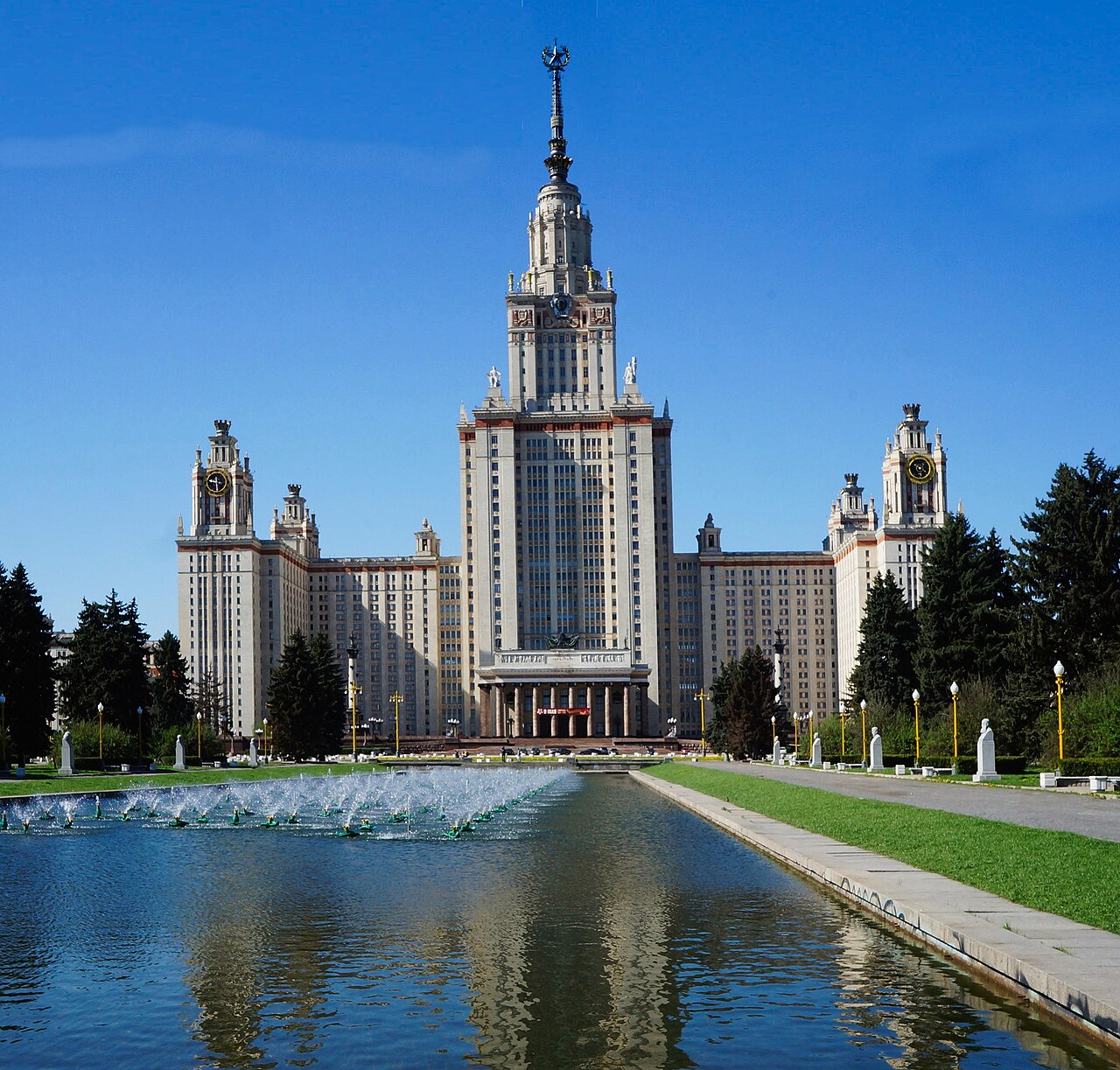
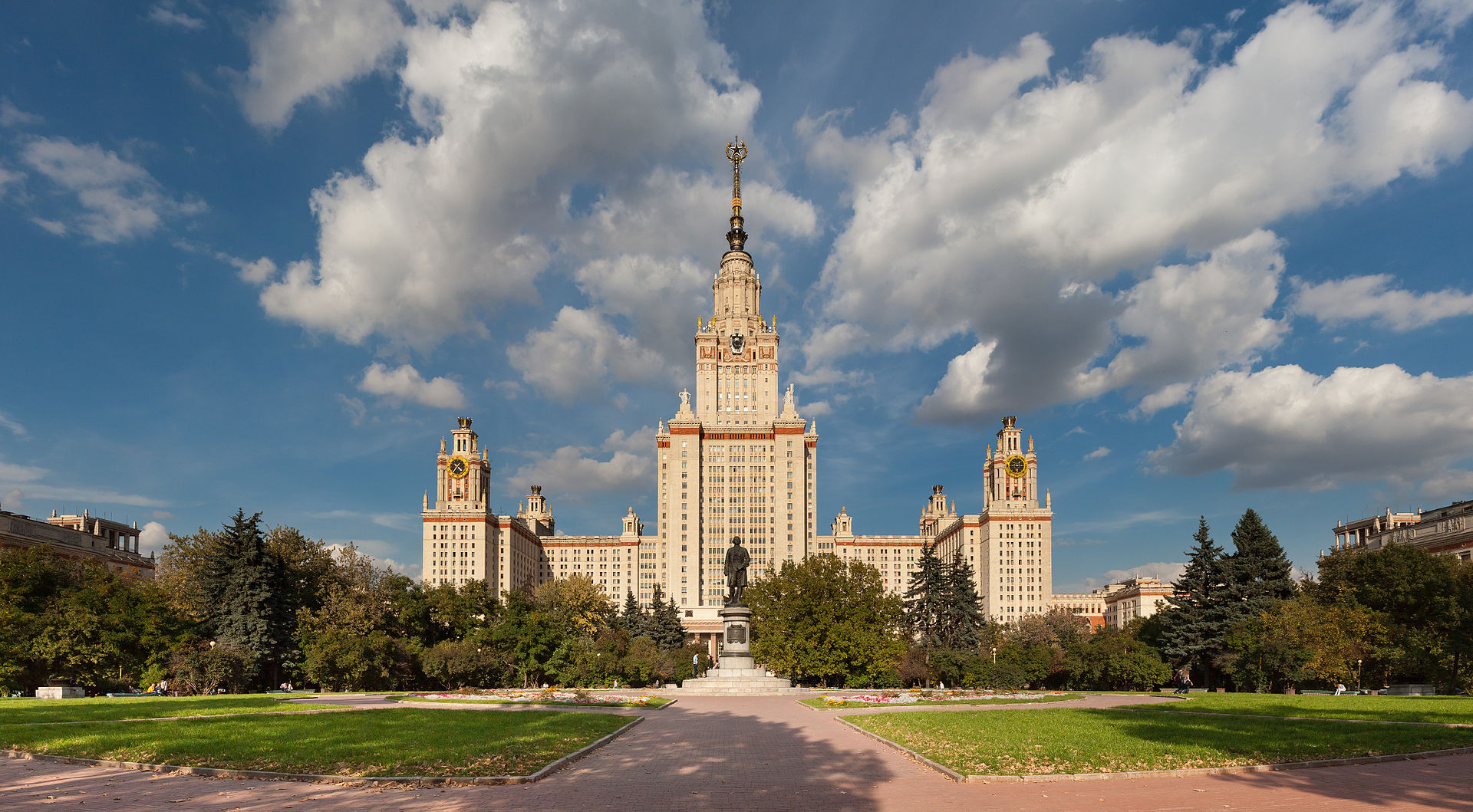
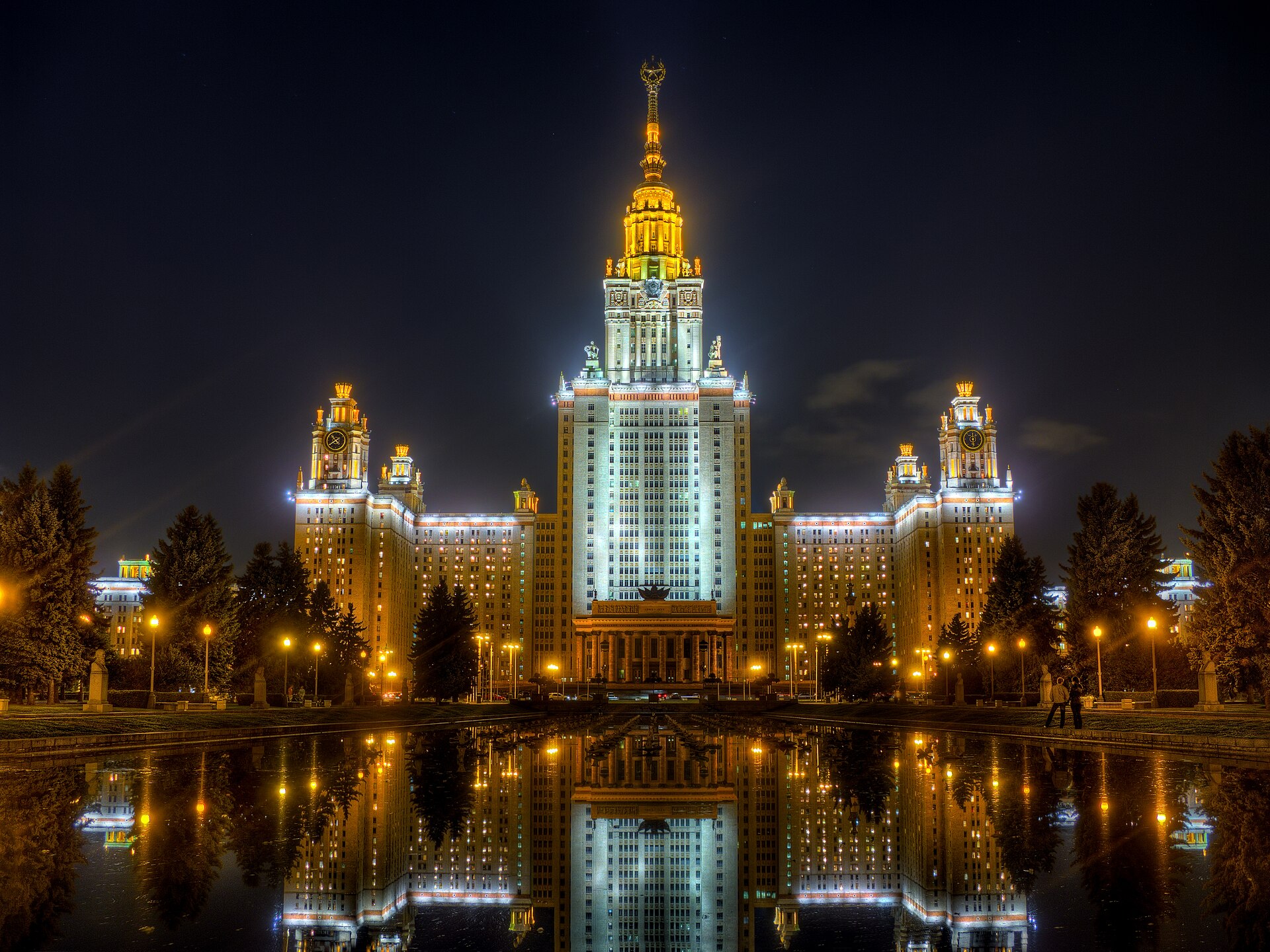
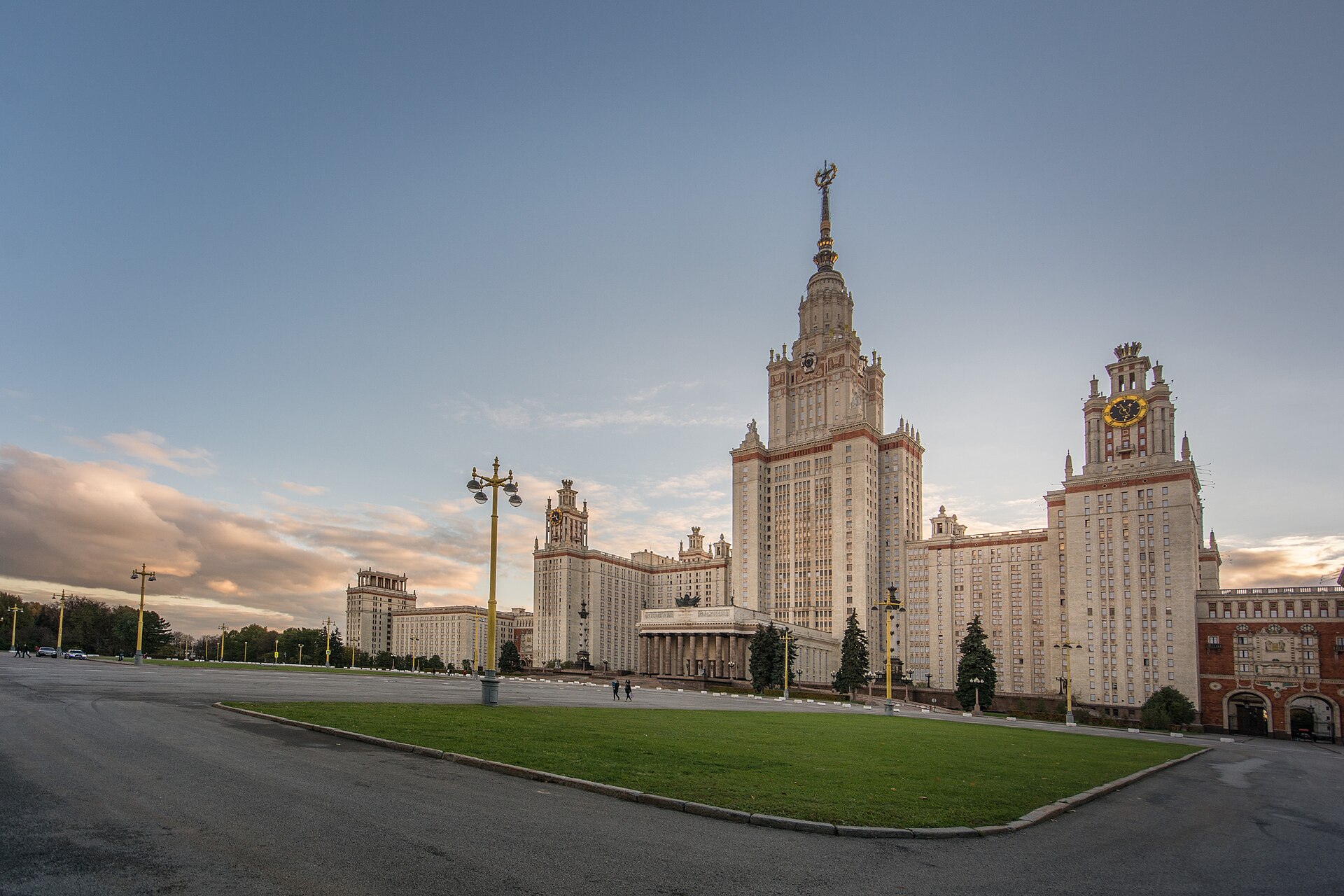
Lomonosov Moscow State University — campus in pictures

Real, freely-licensed photographs of the campus (via Wikimedia Commons).
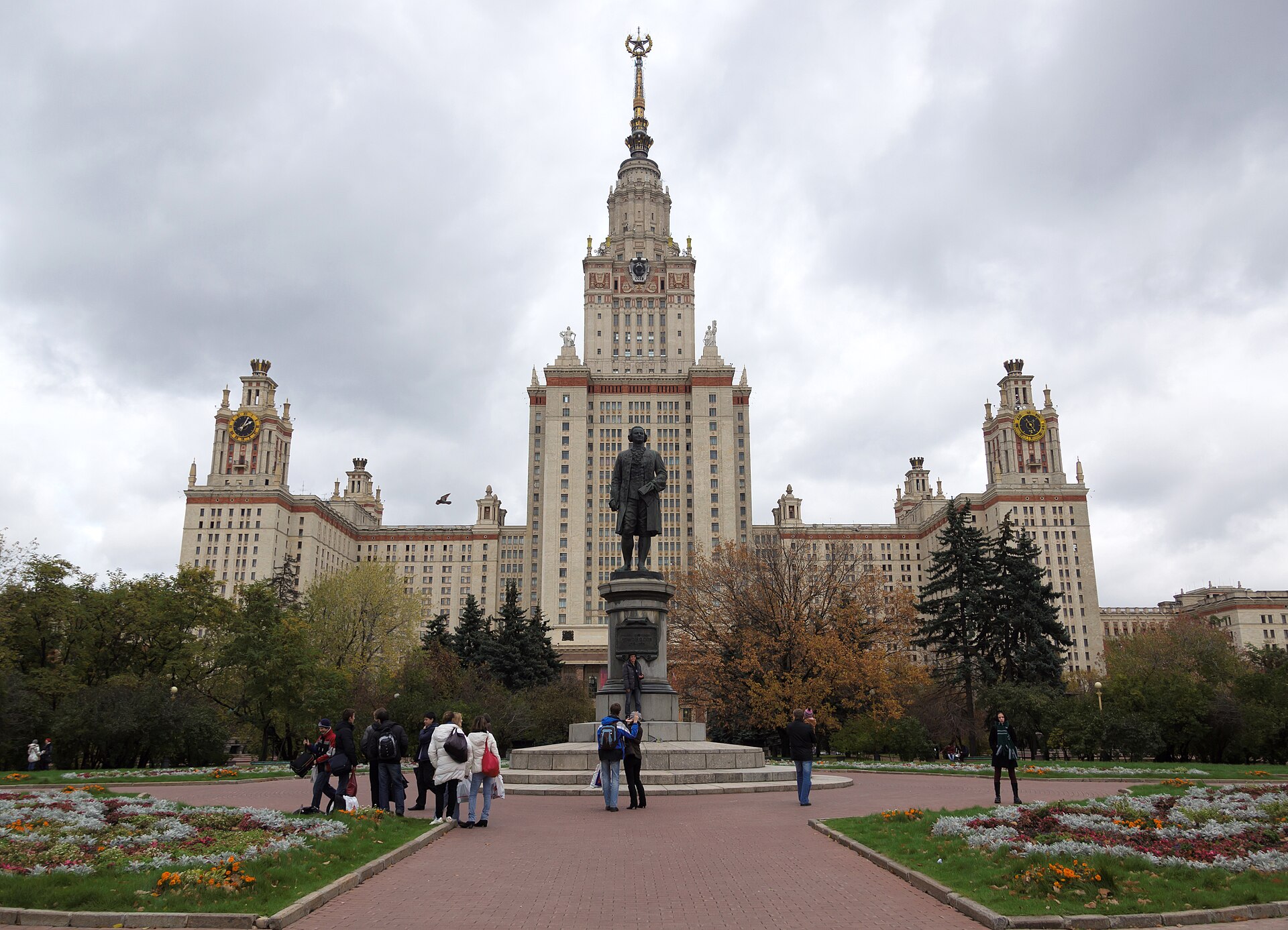
Le bâtiment principal de l'Université d'Etat de Moscou. Monument à MV Lomonosov. Vue depuis le côté de l'avenue Lomonosov.
Le bâtiment principal de l'Université d'Etat de Moscou. Monument à MV Lomonosov. Vue depuis le côté de l'avenue Lomonosov.© Pierre André · CC BY-SA 4.0 · via Wikimedia Commons
Le bâtiment principal de l'Université d'Etat de Moscou. Monument à MV Lomonosov. Vue depuis le côté de l'avenue Lomonosov.
Le bâtiment principal de l'Université d'Etat de Moscou. Monument à MV Lomonosov. Vue depuis le côté de l'avenue Lomonosov.© Pierre André · CC BY-SA 4.0 · via Wikimedia Commons
Main building of Moscow State University (Lomonosov University) in Moscow, Russia.
Main building of Moscow State University (Lomonosov University) in Moscow, Russia.Dmitry A. Mottl · CC BY-SA 3.0 · via Wikimedia Commons
Lomonosov Moscow State University (MSU) (5526916718)
Lomonosov Moscow State University (MSU) (5526916718)Alexey Kljatov from Moscow, Russia · CC BY 2.0 · via Wikimedia Commons
Wide angle shot of the main building of the famous Moscow State University.
Wide angle shot of the main building of the famous Moscow State University.kuhnmi · CC BY 2.0 · via Wikimedia Commons
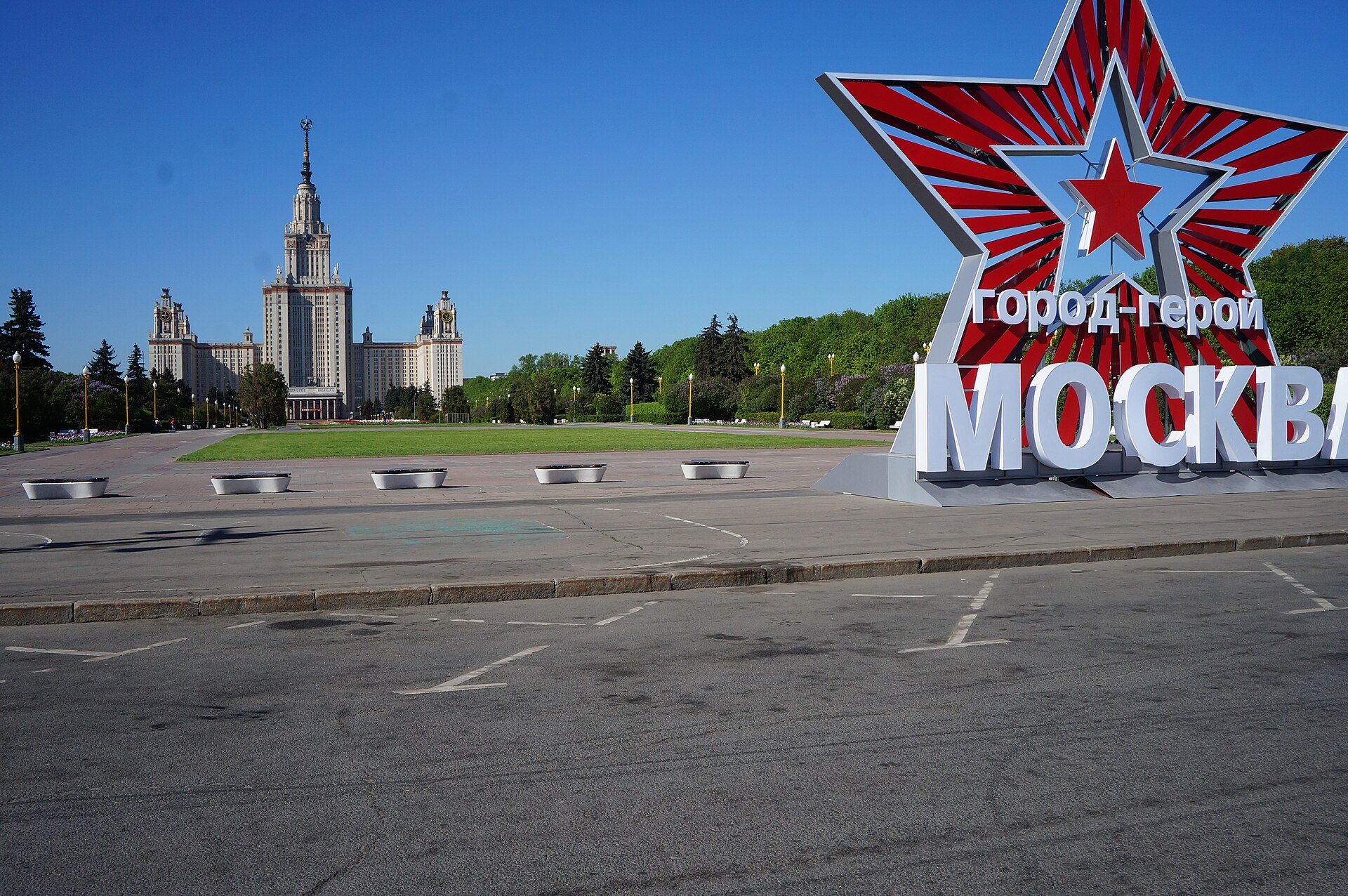
Moscow State University (MSU). Lomonosov's Square. Moscow, Russia.
Moscow State University (MSU). Lomonosov's Square. Moscow, Russia.Vyacheslav Argenberg · CC BY 4.0 · via Wikimedia Commons

Why Moscow State University — Prestige, Research & Value

MGU is not merely Russia's highest-ranked university — it is one of the world's great research institutions, with a legacy stretching back to the Enlightenment, Nobel Prize-winning faculty, and a uniquely immersive academic culture rooted in the Russian scientific tradition.

01Global Research Standing
Ranked #94 globally by QS and #133 by Times Higher Education, MGU is the #1 university in Russia and among the leading research institutions in the Eastern Hemisphere. Its mathematics and physics departments are regarded as world-class.
02Legendary Faculty Legacy
13 Nobel laureates and 6 Fields Medal winners have been affiliated with MGU. Over 5,000 active researchers span fundamental science, applied technology, and the humanities across 15 research institutes.
03Iconic Campus & Moscow
The 240-metre Stalinist main building on Sparrow Hills is one of Moscow's defining landmarks. The campus is a self-contained world — dormitories, museums, gardens, sports facilities, and cultural venues — set in one of Europe's greatest cities.
04Outstanding Value for Money
Tuition of approximately $6,700 per year and a total estimated cost of attendance around $14,000 annually make MGU dramatically more affordable than comparable top-100 institutions in the US, UK, or Australia.

MGU Selectivity & Admitted Student Profile

Stats

40,000
Total Enrolment
~20%
International Students
#94
QS World Rank

Profile Stats

36+
IB Benchmark
~20%
International Students
4:1
Student:Faculty Ratio
#1
National Rank
Overall acceptance rate across all faculties

Rea Vs Rd

Rd Label: Fee-Paying Direct
Rd Value: Competitive
Rea Label: Russian Government Quota
Rea Value: Highly Competitive

MGU Admissions Requirements — Entrance Exams, Qualifications & Language

Academic Qualifications
Value: IB 36+
  • Indicative IB benchmark from facts data
  • HL 6–7 in the subject of your intended faculty
  • IB results are a foundation — not a guarantee of admission
  • A-Level, national leaving certificates assessed case-by-case
Strong secondary school results in your chosen discipline are necessary but not sufficient. MGU reads your academic record as evidence of subject readiness to attempt its entrance examinations — not as the primary admission criterion.
Entrance Examinations
Value: Faculty Exams
  • Subject-specific written examinations for each faculty
  • Mathematics & Mechanics: olympiad-level problem-solving
  • Physics: mechanics, electromagnetism, modern physics
  • Chemistry/Biology: advanced subject examination + practicals
  • Exams are the decisive admission criterion — not school grades
MGU's faculty entrance examinations are the primary admission filter. These are rigorous, subject-specific tests that probe knowledge well beyond standard secondary curricula. Preparation should begin 12–18 months before entry.
Russian Language
Value: Russian B2+
  • TORFL (ТРКИ) Level 2 / B2 required for Russian-medium programmes
  • Beginners welcome in the Preparatory Faculty year
  • Most undergraduate programmes taught exclusively in Russian
  • English-taught master's programmes available (verify with faculty)
The Russian language requirement is the single most distinctive element of an MGU application. Most undergraduate programmes are taught entirely in Russian. Students without B2 proficiency should plan to complete the Preparatory Faculty year first.

MGU Application Components — Entrance Exams, Documents & Russian Language

MGU does not use the Common App, UCAS, or a similar essay-based system. Admission turns on academic documentation and performance in the university's own entrance examinations. The process is unlike Western university applications in almost every way.

01RequiredAcademic Transcripts & School Certificate
Official secondary school transcripts and graduation certificate, with certified Russian-language translation where required. Authenticated copies only.
02RequiredFaculty Entrance Examinations
Each faculty sets its own subject-specific entrance exams. International students sit the same competitive exams as domestic applicants. Preparation at olympiad level is essential.
03RequiredRussian Language Proficiency
TORFL B2 / Level 2 for direct entry to Russian-medium programmes, or enrolment in the Preparatory Faculty. Documentation of language level is a mandatory part of the application package.
04RequiredPassport & Visa Documents
Valid passport, completed application form, medical certificate (including HIV status), and — for scholarship applicants — documents from your home country's relevant ministry or embassy.
05Faculty-DependentMotivation Letter
Some faculties request a formal motivation letter (мотивационное письмо) describing your academic background, reasons for choosing MGU, and post-graduation intentions.
06OptionalPortfolio / Creative Assessment
Certain faculties — journalism, fine arts, architecture — may require a creative portfolio or assessment in addition to written examinations. Confirm with your target faculty.
07Scholarship RouteRussian Government Quota Application
For the tuition-free scholarship route, a separate RGQ application is submitted through your home country's Ministry of Education, not directly to MGU. Begin this process at least one year in advance.

MGU Written Application — Motivation Letter & Application Documents

Tips

The motivation letter is a formal academic document, not a personal narrative
Russian academic culture values precision and clarity over storytelling. Structure your letter with clear paragraphs: academic background, programme interest, specific achievements, future intentions. Literary devices and emotional openings are not appropriate here.
Lead with olympiad achievements
MGU's admissions committees — particularly in mathematics and the sciences — weight academic competition results heavily. If you have participated in national or international olympiads, this is your strongest material. Name the competition, the year, and the result precisely.
Be specific about your language plan
The admissions committee knows Russian is hard for most international students. A credible, honest plan — 'I will complete the Preparatory Faculty year to reach C1 before my main programme' — is far more persuasive than vague claims of existing proficiency.
Name what draws you to MGU specifically
Reference MGU's research institutes, specific faculty members, or the Russian mathematical tradition by name. Generic statements that could apply to any good university are the most common weakness in motivation letters from international applicants.

Prompts

Why This Faculty & Programme
Not a standardised published prompt. Typically: explain your reasons for choosing this programme, your academic background, and how MGU's specific resources will support your development.
Academic & Olympiad Achievements
Not a standardised published prompt. Typically: describe your most significant academic achievements, including olympiad participation, prizes, and any research experience.
Russian Language Readiness
Not a standardised published prompt. Typically: describe your current Russian language proficiency and your concrete plan for reaching programme-entry level.
Research Goals (Postgraduate)
For master's and PhD applicants. Typically: describe your intended research direction, relevant prior experience, and how MGU's research environment will support your work.
The most common MGU written application mistake. Writing a US-style narrative personal essay with emotional storytelling and personal anecdotes — MGU's motivation letter is a formal academic document where content precision and intellectual substance matter far more than creative writing.

What MGU Admissions Committees Are Looking For

MGU's admission process centres on its entrance examinations, but the overall profile the university seeks is distinctive: a student who has prepared with the seriousness of a science olympiad contestant, is willing to commit to the Russian language, and brings genuine intellectual ambition to one of the world's great research environments.

01Advanced Subject Mastery
Deep disciplinary knowledge at the level of national or international olympiad competition. MGU's entrance examinations specifically test this — and the committee knows immediately whether a candidate has prepared seriously or merely done well in school.
02Russian Language Commitment
Either existing proficiency at B2+, or a credible, specific plan to acquire it. The university values students who treat Russian as an intellectual asset — the language of Kolmogorov, Landau, and Chebyshev — rather than an inconvenient hurdle.
03Olympiad & Competition Record
Participation in international or national olympiads in mathematics, physics, chemistry, or biology is a powerful signal. MGU actively recruits medal-holders from IMO, IPhO, IChO, and IBO. Even regional or national-level participation demonstrates the right kind of preparation.
04Academic Consistency Across Years
Strong grades across all years of secondary school, with particular rigour in the sciences and mathematics relevant to the intended faculty. A declining grade trajectory raises questions that a motivation letter alone cannot answer.
05Intellectual Curiosity Beyond Curriculum
Evidence of study beyond the school timetable — olympiad preparation books, independent reading in the discipline, science circles (кружки), or research projects. MGU values students who are drawn to knowledge, not just to qualifications.
06Realistic Self-Awareness
A student who honestly assesses their Russian language level and presents a credible preparation plan is viewed more positively than one who overstates proficiency. The first year at MGU will make the truth clear — the admissions committee knows this.

MGU Financial Aid & Scholarships for International Students

For international students, MGU's cost structure offers a genuine alternative to the expense of Western higher education. The Russian Government Quota programme provides full scholarship places through home country governments. Self-funded students pay approximately $6,700 per year in tuition against a total cost of attendance of approximately $14,000 — a fraction of comparable institutions elsewhere.

Cost figures are estimates from facts data and subject to change. Verify current fees and payment logistics directly with MGU's International Admissions Office. Geopolitical conditions may affect payment channels — always confirm before committing.

Stats

~$6,700
Annual tuition (fee-paying international)
~$14,000
Total cost of attendance (estimated)
~$8,000
Annual cost of living in Moscow
Tuition-free
Primary scholarship: Russian Government Quota

Contribution Tiers

NoteRangePercentPercent Value
Full tuition waiver + monthly living stipend via home governmentRussian Government Quota100%100
Tuition ~$6,700 + living ~$8,000 = ~$14,000 total estimatedSelf-FundedSelf-funded0
Limited university merit awards for top olympiad candidatesMGU Merit AwardVaries50
No Institutional Need-Based Aid — What This Means. MGU does not have an institutional need-based aid programme equivalent to US universities. The primary funding route is the Russian Government Quota (RGQ) — a government-administered scholarship providing full tuition waiver and a monthly stipend. For self-funded students, MGU's tuition is dramatically lower than comparable Western institutions, making it one of the most accessible top-100 universities in the world by cost.
Estimated Annual Cost for International Students

Key Dates

RGQ applications open in most countries
Date: Autumn (varies)
RGQ submission deadline to home Ministry of Education
Date: Early spring (varies)
MGU entrance examinations (direct route)
Date: June–July
Academic year begins; Preparatory Faculty intake also September
Date: September

Advantages

  • Full tuition waiver — zero tuition cost
  • Monthly living stipend included
  • Processed through your home government (broader institutional support)
  • Quota places are country-specific — competition is national, not global
  • Strong signal of academic distinction if awarded

Disadvantages

  • Application goes through your Ministry of Education, not MGU — complex bureaucracy
  • Number of places per country is limited and varies annually
  • Timeline is earlier — the process can begin 12–18 months before entry
  • Not all countries have equal quota allocations
  • Still requires passing MGU's entrance examinations
RGQ vs Direct Application. The RGQ offers a tuition-free degree with a living stipend — but requires navigating your home country's government process and begins well in advance. The direct route is simpler administratively, but you pay tuition. The right choice depends on your country's quota allocation and your timeline.
Tychr's Application Route Recommendation. Apply for the RGQ if your country has an allocation and you can begin the process in time. Even with competitive selection within your country, the financial advantage is substantial. If you miss the RGQ window or your country has no allocation, the direct fee-paying route at ~$6,700/year is genuinely affordable. In either case, your entrance examination performance is what determines whether MGU admits you.
Russian Government Quota vs Direct Application — Pros, Cons & Strategy

MGU Admissions Process — Entrance Exams Instead of Interviews

MGU does not conduct admissions interviews in the Western sense for most faculties. The entrance examinations serve the filtering and evaluation function that interviews perform at universities like Oxford. The examination is your one decisive opportunity — prepare for it with the same intensity you would prepare for a major competition, because that is effectively what it is.

Meta

No traditional interview for most faculties
Format
Faculty-specific written entrance examinations
What replaces it
Portfolio review / creative assessment may apply
Creative faculties
Entrance exam performance is the decisive factor
Weighted

Questions

Mathematics Faculty: Prove that for all integers n, n³ − n is divisible by 6. (Illustrative example of exam-level question)
Tip: This is not an interview question — it is an examination problem. The answer needs to be mathematically rigorous, step-by-step, and complete. Practise writing out full solutions to olympiad problems, not just getting the answer.
Physics Faculty: A charged particle enters a uniform magnetic field perpendicular to the field lines. Describe its motion and derive the expression for the radius of its trajectory. (Illustrative)
Tip: Physics examination problems require both conceptual understanding and the mathematical tools to solve them. Practise with Irodov's Problems in General Physics. Show your derivation fully — the examiner marks the method, not just the final number.
Chemistry Faculty: Identify the compound and propose a synthesis route. (Illustrative of the level expected)
Tip: Chemistry examinations test organic, inorganic, physical, and analytical chemistry. Treat IChO preparation materials as your benchmark. Show all reaction mechanisms and stoichiometry clearly.
Creative Faculties: Portfolio review and discussion of creative work (Journalism, Fine Arts, Architecture)
Tip: For the Journalism and Fine Arts faculties, a creative portfolio assessment may involve presenting and discussing your work. Be prepared to explain your creative choices in Russian.
Informal Faculty Interaction: What draws you to this specific area of study?
Tip: This is not a formal part of the process, but if you attend the examination in Moscow, you may have informal conversations with faculty staff. Demonstrating genuine curiosity about your subject always makes a positive impression.

MGU Campus Housing & Residential Life

MGU operates a network of on-campus dormitories (общежития) across the Sparrow Hills campus and nearby university-managed properties. International students are generally guaranteed a place in university accommodation, particularly in the first year — at rates substantially below Moscow's commercial rental market.

Houses

Main Building (GZ) Dormitory
Tag: Main Campus
Rooms within the iconic 240-metre Stalinist main building — the most prestigious address on campus
Dormitory Block A (Zone A)
Tag: Main Campus
Adjacent to the main building; standard double rooms; well-connected to faculties
Dormitory Block B (Zone B)
Tag: Main Campus
Close to the sports complex; popular with science faculty students
Dormitory Block V (Zone V)
Tag: Main Campus
Slightly further from main faculties but spacious; international student concentration
Humanities Dormitories
Tag: Philological Zone
Dedicated accommodation for philology, history, and philosophy faculty students
Off-Campus University Housing
Tag: Sportivnaya
Additional MGU-managed accommodation near Sportivnaya metro; connected to campus by university shuttle

Lottery Steps

  • International students apply for dormitory housing through the MGU International Office alongside their main application
  • First-year students and Preparatory Faculty students are given priority placement in on-campus accommodation
  • The main building (GZ) contains the most sought-after rooms — allocated by academic standing and year of study
  • Upper-year students may re-apply annually; placement depends on availability and academic record
  • Off-campus MGU-managed housing provides an alternative for students who prefer more space or privacy at slightly higher cost

MGU Faculties & Major Departments

Faculty of Mathematics & Mechanics
Label: World-Class Mathematics
  • {"label":"Global reputation","value":"Top tier"}
  • {"label":"Fields Medal affiliates","value":"6"}
  • {"label":"IMO medalist pathway","value":"Active"}
  • {"label":"Entry requirement","value":"Advanced maths exam"}
One of the world's pre-eminent mathematics departments. Trains professional mathematicians from the first year. Graduates have won every major prize in mathematics.
Faculty of Physics
Label: Theoretical & Experimental Physics
  • {"label":"Nobel laureate affiliates","value":"13"}
  • {"label":"Core tradition","value":"Landau school"}
  • {"label":"Entry requirement","value":"Physics + maths exam"}
  • {"label":"Laboratory access","value":"From year 1"}
Rooted in the Landau school of theoretical physics. Combines rigorous mathematics with experimental laboratory work from the first year.
Faculty of Computational Mathematics & Cybernetics
Label: Computer Science & Applied Maths
  • {"label":"Founded","value":"1970"}
  • {"label":"Key strengths","value":"ML, optimisation, algorithms"}
  • {"label":"Industry links","value":"Yandex, Sbertech"}
  • {"label":"Entry requirement","value":"Mathematics + informatics exam"}
Russia's leading computer science faculty. Strong links to Moscow's technology industry. Emphasis on mathematical foundations of computation.
Faculty of Chemistry
Label: Fundamental & Applied Chemistry
  • {"label":"IChO tradition","value":"Strong preparation"}
  • {"label":"Research institutes","value":"Multiple affiliated"}
  • {"label":"Entry requirement","value":"Chemistry + maths exam"}
  • {"label":"Lab practicals","value":"Core from year 1"}
World-leading in organic, inorganic, and physical chemistry. Close ties to MGU's research institutes and Russia's chemical industry.
Faculty of Biology
Label: Life Sciences & Ecology
  • {"label":"IBO tradition","value":"Strong preparation"}
  • {"label":"Key areas","value":"Molecular biology, ecology, genetics"}
  • {"label":"Entry requirement","value":"Biology + chemistry exam"}
  • {"label":"Field stations","value":"Multiple across Russia"}
One of Russia's leading biology departments with strengths in molecular biology, genetics, ecology, and physiology.
Faculty of Economics
Label: Mathematical Economics
  • {"label":"Approach","value":"Mathematically rigorous"}
  • {"label":"Language","value":"Russian (predominantly)"}
  • {"label":"Entry requirement","value":"Mathematics + social science exam"}
  • {"label":"English programmes","value":"Some master's available"}
Economics at MGU is mathematically intensive. Graduates enter finance, consulting, and research roles across Russia and internationally.

Research & Extracurricular Opportunities at MGU

International Olympiad Network
Category: Competition & Research
MGU maintains active ties to international mathematics, physics, chemistry, and biology olympiad networks. Faculty members frequently coach national teams and supervise post-olympiad student research. Medal-holders are actively recruited.
Research Institutes
Category: Undergraduate Research
MGU hosts 15 research institutes including the Sternberg Astronomical Institute, the Belozersky Institute of Physico-Chemical Biology, and the Shternberg State Astronomical Institute. Undergraduate research involvement begins as early as year 2.
Student Organisations & Clubs
Category: 100+ Active Groups
Over 100 student clubs span academic, sporting, cultural, and volunteer activities. The MGU Cultural Centre hosts theatrical, music, and film events. The sports complex offers facilities matching professional standards.
International Student Community
Category: Global Community
With approximately 8,000 international students from over 100 countries, MGU's International Student Association organises orientation programmes, cultural events, and language exchange opportunities throughout the academic year.
Scroll right to explore MGU's research institutes and student life.

Career Outcomes & MGU Graduate Pathways

An MGU degree carries exceptional weight within Russia and across post-Soviet and Eastern European labour markets. For international students who develop strong Russian language skills alongside their technical degree, the combination opens doors in Moscow's technology sector and beyond. For those returning home, an MGU degree in mathematics or natural sciences is internationally recognised and competitive for doctoral programmes worldwide.

Stats

85%
Graduate employment rate within 6 months
$12,000
Average starting salary
~8,000
International students
#94
QS World University Rank
13
Nobel laureate affiliates
6
Fields Medal winners affiliated

Categories

Technology & Research
Yandex, Sbertech, Mail.ru Group, and Russia's growing technology sector actively recruit MGU mathematics, physics, and computer science graduates. Top graduates frequently move into global technology roles at companies including Google DeepMind and international research labs.
Finance
Russia's largest banks and financial institutions — Sberbank, VTB, and international firms with Russian operations — recruit heavily from MGU's economics faculty. Quantitative finance is a natural pathway for mathematics and computational mathematics graduates.
Graduate School & Academia
MGU's strongest graduates in mathematics and physics frequently progress to PhD programmes at leading European and North American research universities. Graduate school placement at world-leading institutions is common among top-tier MGU graduates.

Our MGU Admissions Track Record & Student Success Stories

Arjun S.
I had strong IB scores but had never studied Russian. Tychr helped me map out a two-year plan — Preparatory Faculty first, then the mathematics programme. The entrance exam preparation guidance was exactly what I needed. The faculty's olympiad-style problems were unlike anything from my school curriculum.
Country: India
Program: MGU — Faculty of Mathematics & Mechanics
Class Year: Class of 2026
Residential: Dormitory Block A
Academic Profile: IB 41 · IMO Honourable Mention
Li Wei
The Russian Government Quota process in my country was complicated and the deadlines were unclear. Tychr helped me understand the timeline, connect with the right ministry contact, and prepare the full document package. Without that support I would have missed the window.
Country: China
Program: MGU — Faculty of Physics
Class Year: Class of 2025
Residential: Main Building (GZ)
Academic Profile: IB 43 · IPhO Silver Medal
Fatima A.
I chose MGU over a UK university because the maths faculty's depth is unmatched. Tychr's coaching helped me prepare for the entrance examination — working through past papers at olympiad level — and helped me write a motivation letter that actually reflected serious mathematical interest rather than generic enthusiasm.
Country: Egypt
Program: MGU — Faculty of Mathematics & Mechanics
Class Year: Class of 2027
Residential: Dormitory Zone V
Academic Profile: A-Levels A*A*A · National Mathematics Olympiad Gold

Faqs

Do I need to speak Russian to study at MGU?+

For the vast majority of undergraduate programmes, yes — instruction is in Russian. If your Russian is not yet at B2 level, MGU's Preparatory Faculty offers a one-year intensive course before you join the main programme. A small number of master's programmes are offered in English — verify availability on the MGU website.

Is there a tuition-free option for international students?+

Yes. The Russian Government Quota (RGQ) programme allocates tuition-free places with a monthly stipend to international students via their home country governments. Competition is intense, and the application goes through your Ministry of Education — not directly to MGU. Start the process at least one year in advance.

Does MGU accept the IB Diploma?+

MGU considers the IB Diploma as part of the admission documentation. The indicative benchmark is 36 points, though competitive faculties may expect higher profiles. IB results alone are not sufficient — you must also pass the faculty entrance examinations.

Are SAT or ACT scores required?+

No. MGU's admission is driven by faculty-specific entrance examinations, not by SAT or ACT scores. These standardised tests are optional and not part of the primary evaluation.

What subjects are the entrance exams in?+

The subjects depend on your chosen faculty. Mathematics & Mechanics requires advanced mathematics. Physics requires physics and mathematics. Biology requires chemistry and biology. Each faculty publishes its own examination syllabus — consult the relevant faculty page on the MGU website and begin preparing at least 12 months in advance.

What is the cost of studying at MGU as an international student?+

For fee-paying international students, tuition is approximately $6,700 per year. The total estimated cost of attendance, including accommodation, food, and living expenses, is approximately $14,000 per year — substantially lower than comparable universities in Western Europe or North America.

How does Russia's geopolitical context affect international students?+

Russia's international situation since 2022 has created complications around visa processing, payment methods, and institutional relationships. Some nationalities may face additional administrative hurdles. Check the current situation with your country's embassy, MGU's international office, and any relevant governmental advisory before committing.

Can I complete a degree at MGU in English?+

At the undergraduate level, very few options exist in English. At the master's level, MGU has a growing portfolio of English-taught programmes in economics, computer science, and some applied sciences. Verify the current English-taught offering directly with the faculty of interest, as the range expands each year.

Book a Free MGU Admissions Strategy Session

In 60 minutes our MGU admissions specialists will evaluate your academic profile against the entrance examination requirements, identify your optimal application route (RGQ or direct), map your Russian language development plan, and design a 12–18 month preparation strategy.

  • No commitment required
  • MGU and Russia-specialist guidance
  • Personalised roadmap — entrance exam prep, RGQ strategy, language plan
Getting into MGU is not about having the best grades — it is about being prepared for the examination that matters.

MGU Academic Requirements

MGU Academic Requirements — The Honest Breakdown for International Students

What academic preparation, language proficiency, and examination performance does MGU actually require? And what does that mean for students coming from IB, A-Level, AP, and other international systems?

36+
IB Benchmark
Indicative — exams are decisive
4:1
Student:Faculty Ratio
Close research mentorship
#94
QS World Rank
QS 2024
#133
Times Higher Ed Rank
THE 2024
#1
National Rank
Russia's most prestigious university
~10%
Acceptance Rate
Across all faculties

Academic Profile

MGU and School Grades — What the Data Shows

MGU does not publish a minimum GPA or school grade requirement. In practice, admitted students have typically excelled in their secondary education — but the decisive factor is performance in MGU's own entrance examinations, not school grades.

Strong school grades are a necessary baseline but not the determining factor at MGU. Thousands of students with strong grades fail the entrance examinations. Preparation specifically for the examination — at olympiad level — is what determines admission.

36+
IB indicative benchmark from facts data
4:1
Student:Faculty ratio — exceptional supervision access
What this means for international students. International students from systems without formal class rank (IB, UK A-Levels, many Asian curricula) are evaluated on their grades and qualifications as evidence of readiness to sit the entrance examination. The examination result then takes precedence over qualification scores.
Grade trajectory and examination readiness. A student with a strong upward trajectory in mathematics and science — particularly one who has moved into olympiad preparation — is viewed positively regardless of earlier grade profile. MGU's scientific faculties care about what you can do now and what your preparation suggests about your ceiling.

Academic Context

School Grades and Context — How MGU Reads Academic Performance

MGU does not formally use school rank in its admissions process. What it does use — decisively — is the entrance examination. Every application is therefore evaluated through the lens of examination readiness, not school context.

How MGU contextualises your academic record
MGU's admissions committees know the international qualification landscape. An IB student from a school in Singapore with a 40-point diploma applying to Physics is evaluated differently from one with the same score from a school with limited science resources. Context informs how examiners read your academic preparation — but the examination is the common equaliser across all backgrounds.
What this means practically
The most important practical implication: do not choose your secondary school subjects based on what will produce the highest grade. Choose them based on the depth of preparation they provide in your intended faculty's discipline. HL Mathematics AA, HL Physics, and HL Chemistry taken seriously are better preparation for the Physics Faculty entrance exam than HL Visual Arts, HL Psychology, and HL Mathematics AA — regardless of which grades you achieve.
For students at less well-known international schools. If you attend a less well-known international school, your entrance examination performance matters even more — because your school's profile is not a signal the committee can rely on. Focus all preparation energy on the examination itself.

Entrance Examination System

MGU Entrance Examinations — What Replaces SAT/ACT

SAT scores are not required or used by MGU for international student admissions. MGU uses its own faculty-specific entrance examinations as the primary academic filter. The following outlines how the examination system works as the equivalent metric.

LabelScorePercent
SAT — not requiredN/A0
Faculty entrance exam — decisiveRequired100
IB benchmark (indicative, from facts)36+70
The mathematics examination. For STEM faculties, mathematical problem-solving is tested at a level equivalent to national mathematics olympiad competitions. This is substantially above what IB HL Mathematics AA or A-Level Further Mathematics covers, though both are excellent preparation starting points.
Preparation. Tychr's MGU examination preparation programme works through past faculty papers, olympiad problem sets in the relevant subject, and Russian-language academic vocabulary preparation for students who need it. The examination cannot be prepared for in weeks — 12–18 months is the realistic minimum.
One chance per year — the strategic implication. Unlike SAT/ACT, you cannot simply retake MGU's entrance examination — it is held once per year, typically in June–July for the September intake. This means your preparation must be complete before the examination sitting. There is no test-optional strategy: the examination is mandatory.

Examination Types

MGU's Examination System — Written, Practical, and Oral Components

ACT scores are not used by MGU. This section describes the faculty-specific oral examination components where they exist, and the comparison between MGU's examination system and Western standardised tests.

Metrics

Written component (all faculties)
Score: Required
Practical/oral component (select faculties)
Score: Faculty-specific

Comparison Cards

What MGU examinations test
MGU tests deep subject knowledge, multi-step reasoning, and problem-solving stamina — not speed across a broad curriculum.
What SAT/ACT tests
SAT/ACT tests breadth, reading comprehension, and data analysis across multiple subject areas.
How results work
An MGU examination score is not reported numerically to the student in the same way — you either advance past the examination threshold or you do not.
Single-sitting, no retake within the cycle. Unlike ACT superscoring, MGU offers no such system. The examination is a single, high-stakes event. Preparation quality — not examination gaming — is the only strategy.
If you have SAT/ACT scores — how to use them. If you have strong SAT or ACT scores, they are not wasted — use them as a benchmark signal for your academic level. A student scoring 800 on SAT Math has a strong quantitative foundation, but will still need substantial additional preparation for MGU's mathematics examination. Use your test results diagnostically, not as admission currency.

Test Policy

MGU Test Policy — What 'Optional' Actually Means Here

MGU's test policy is officially optional with respect to Western standardised tests (SAT, ACT). However, 'optional' in MGU's context means something different from US universities — it is not a strategic choice that helps or hurts you. It simply means these tests are irrelevant to the primary admission decision.

Submit Items

You are applying to an English-taught master's programme that requests IELTS or TOEFL — submit these scores to the requesting faculty.
You have TORFL certification at B2 or above — submit this as evidence of language readiness.

Withhold Items

SAT, ACT, AP, and IB results are supporting documentation at most — they establish academic readiness but do not substitute for or meaningfully strengthen your entrance examination performance.
Current policy. SAT, ACT, and similar Western standardised tests are not considered in MGU's undergraduate admission process. The TORFL (Russian language proficiency test) is required for Russian-medium programmes. No IELTS or TOEFL minimum is published in the facts data — confirm with your target faculty for English-taught programmes.
The fundamental misconception to correct. The biggest misconception among international applicants to MGU is believing that strong IB or A-Level scores will secure admission. They will not. MGU's entrance examination is the decisive criterion regardless of your qualification results. A student with an IB of 44 who has not prepared for the examination is significantly less competitive than a student with an IB of 36 who has worked through two years of olympiad problem sets.

International Qualifications

IB, A-Levels, and International Qualifications at MGU — Specific Benchmarks

IB Diploma
Note: IB students should focus preparation for the entrance examinations in their HL subjects. The IB Extended Essay can demonstrate research capability if written in a science subject at an appropriate level. TOK is not relevant to the MGU admissions process.
  • {"label":"Indicative benchmark","value":"36+ points (from facts data)"}
  • {"label":"HL expectations","value":"6–7 in the subject of your intended faculty"}
  • {"label":"Subject rigour","value":"HL Mathematics AA, HL Physics/Chemistry/Biology for science faculties"}
  • {"label":"Role in admission","value":"Supporting documentation; entrance exam is decisive"}
A-Levels
Note: A-Level students should similarly focus examination preparation in their specialist subject. A* performance in the relevant subject is indicative of strong preparation, but the MGU examination tests at a higher level than A-Level in most subjects.
  • {"label":"Indicative range","value":"AAA–A*A*A in relevant subjects"}
  • {"label":"Subject rigour","value":"Mathematics, Further Mathematics, Physics/Chemistry/Biology depending on faculty"}
  • {"label":"How evaluated","value":"As evidence of subject preparation for the entrance examination"}

AP and International Coursework

AP Scores at MGU — Supporting Evidence, Not the Primary Filter

AP courses and examination scores are not a primary factor in MGU admissions. However, for students in the US curriculum who take AP Calculus BC, AP Physics C, AP Chemistry, or AP Biology with top scores, these are useful evidence of academic preparation at a level approaching the MGU entrance examination foundation.

What MGU faculty committees see in AP scores
AP 5s in Calculus BC, Physics C (Mechanics and E&M), Chemistry, or Biology demonstrate strong subject preparation. However, even AP 5 performance does not fully prepare a student for MGU's entrance examinations, which test at the olympiad problem-solving level, not the AP exam level.
AP vs olympiad preparation
AP preparation and olympiad preparation are complementary but different. AP builds subject breadth and procedural mastery; olympiad training builds creative problem-solving and proof-writing. MGU's examinations require the latter. A student who has done both is better prepared than one who has done only AP.
Using AP scores strategically
If you have strong AP scores, list them in your application documents. They are positive supporting evidence. But do not assume they substitute for entrance examination preparation.
MGU does not award course credit for AP examinations. Students begin the MGU curriculum from the first year regardless of prior AP, IB, or A-Level performance.
For international students not in the US curriculum system, AP is not expected. IB or A-Level preparation in the relevant subject area is entirely appropriate and evaluated accordingly.

Academic Rigour

Rigour of Secondary School Record — What MGU Is Actually Measuring

MGU values the rigour of your secondary school preparation, but evaluates it specifically as preparation for the entrance examination in your chosen discipline — not as a general measure of academic quality.

Taking the most mathematically and scientifically demanding courses available at your school, in the subjects directly relevant to your intended faculty — and studying beyond the curriculum through olympiad preparation.

The contextual element. A student at a school that offers only standard Mathematics and Physics courses who additionally works through olympiad problem books independently shows more relevant rigour than one who takes the highest school-level courses available but does nothing beyond the classroom. MGU's faculty committees can assess this from the entrance examination performance — and from what students describe in their motivation letters.
What rigour means in the MGU context. Rigour at MGU is not about curriculum breadth. The university does not reward students for taking many different subjects at a high level. It rewards depth in the chosen discipline — particularly demonstrated through competition mathematics or science at a level that goes beyond the school curriculum.
What MGU is looking for. A student who has taken HL Mathematics AA and HL Physics at the IB level while simultaneously working through Irodov's Problems in General Physics and participating in national physics olympiads shows the profile MGU's Physics Faculty is specifically seeking. The curriculum choice and the beyond-curriculum preparation combine to signal genuine readiness.

Subject Preparation

Subject Preparation — What MGU Expects You to Know

MGU's undergraduate faculties expect applicants to arrive with subject knowledge that in many cases goes beyond standard secondary school curricula. The Russian scientific education tradition, rooted in systematic olympiad preparation from an early age, sets a high baseline.

Mathematics
All science and engineering faculties require advanced mathematics. Beyond your school curriculum: study calculus at the level of Apostol or Spivak, linear algebra fundamentals, combinatorics, number theory, and geometric proof through olympiad problem books. AMC/AIME, IMO shortlist problems, and Russian-language olympiad collections (Сборник задач по математике) are standard preparation resources.
Physics
For the Physics Faculty, study at the level of introductory university physics: Irodov's Problems in General Physics is the standard benchmark. Cover mechanics, electrostatics, optics, thermodynamics, and modern physics with rigorous analytical problem-solving. IPhO preparation materials are directly applicable.
Chemistry
For the Chemistry Faculty, cover organic, inorganic, physical, and analytical chemistry at the international olympiad (IChO) level. Laboratory technique and experimental reasoning are also examined. Work through IChO preparatory problems and national chemistry olympiad archives.
Biology
For the Biology Faculty, cover cell biology, genetics, evolution, physiology, biochemistry, and ecology at the IBO level. Strong chemistry knowledge is also required. The examination tests both factual knowledge and experimental reasoning.

Language Requirements

Language Requirements for International MGU Applicants

MGU's primary language requirement is Russian, not English. The following describes the language requirements for both Russian-medium (the majority) and English-taught programmes.

The Russian language requirement is the single highest barrier for most international students applying to MGU. Unlike English language requirements at Western universities — which can be demonstrated by IELTS/TOEFL well before the application deadline — Russian language acquisition requires years of study. Start early, or plan the Preparatory Faculty year from the outset.

Test: TORFL / ТРКИ
Score: B2 (Level 2) for direct entry
Test: Preparatory Faculty
Score: Beginners accepted
Test: IELTS/TOEFL
Score: No official minimum published — verify with faculty for English programmes
Practical guidance for non-Russian speakers. The most practical path for international students who do not yet speak Russian: plan for the Preparatory Faculty year as a strategic investment. This one year of intensive Russian and subject preparation typically produces students who are linguistically and academically ready for the main programme — and who have already formed their Moscow social network before the intensity of the degree programme begins.

By Faculty

Academic Requirements by Faculty — What Different Programmes Expect

MGU students are admitted to a specific faculty and programme. Admission is to the faculty, not to the university broadly — making the choice of faculty and the corresponding entrance examination preparation critical from the outset.

SignalsExpectationConcentration
IMO/AMO; olympiad problem sets; proof-writingAdvanced mathematics at olympiad levelMathematics & Mechanics
IPhO; Irodov; mechanics + electromagnetism masteryPhysics + advanced mathematicsPhysics
Programming competitions; algorithmic problem-solvingMathematics + informatics examinationComputational Mathematics & Cybernetics
IChO; organic synthesis knowledge; analytical reasoningAdvanced chemistry + mathematicsChemistry
IBO; strong biochemistry; ecology knowledgeBiology + chemistry examinationBiology
Quantitative coursework; mathematical maturityMathematics + social science examinationEconomics
Russian language proficiency; literature engagementRussian language + literature examinationPhilology
Russian language proficiency; legal reasoningRussian language + social science examinationLaw

International Education Systems

MGU and International Education Systems — How Your Curriculum Is Evaluated

IB Diploma
Well understood by MGU's international admissions office. IB HL scores in the relevant science or mathematics subject are read as indicators of subject preparation level. The EE is relevant if written in a science or mathematics subject at an appropriate depth. IB results are supporting documentation — they do not substitute for entrance examination performance.
A-Levels (Cambridge / Edexcel)
Accepted and evaluated. A-Level Mathematics and Further Mathematics, or the equivalent sciences, are read as preparation evidence for the corresponding faculty. A* grades in relevant subjects signal strong preparation. Russian admissions committees are familiar with the British qualification system.
Indian Boards (CBSE / ISC)
Accepted with contextual reading. High CBSE or ISC percentage scores in science and mathematics subjects are read in the context of the board's known grading norms. Supplementary evidence of olympiad performance (HBCSE, RMO/IMO) significantly strengthens the profile.
Chinese Gaokao
Gaokao results are considered for Chinese applicants. China has strong bilateral educational relationships with Russia, and Russian universities are experienced at evaluating Gaokao profiles. Strong Gaokao performance in mathematics and science combined with Chinese olympiad participation is a well-recognised pathway.
Post-Soviet National Certificates
National leaving certificates from post-Soviet states (Ukrainian ZNO, Kazakh UNT, Belarusian EGKI, etc.) are well-understood by MGU's admissions office, which has decades of experience with these systems. Students from these backgrounds may also have the advantage of some prior Russian exposure.

Year-by-Year Roadmap

Building an Academic Profile for MGU — What to Do at Each Stage

Grade 9–10Foundation & Language
Year: Grade 9–10
  • Begin studying Russian from scratch if you have not already — commit to a structured course.
  • Identify your strongest academic subject and begin olympiad preparation in that area.
  • Research MGU's faculties and identify which aligns with your intellectual interest.
  • Aim for top grades across science and mathematics subjects in school.
Grade 10–11Deepen Subject Knowledge
Year: Grade 10–11
  • Advance your Russian to A2–B1; begin working with subject-specific Russian vocabulary.
  • Start working through olympiad problem books in your target subject.
  • Research the Russian Government Quota process in your country — contact your Ministry of Education.
  • Identify IB HL or A-Level subjects that maximise preparation for your target faculty.
Grade 11–12Olympiad Competition
Year: Grade 11–12
  • Participate in national and international olympiads in your subject.
  • Aim for Russian B1–B2; consider a summer immersion programme in Russia or an online intensive.
  • If the RGQ is available in your country, confirm the application timeline and begin gathering documents.
  • Work through past MGU entrance examination papers for your target faculty.
Grade 12Apply & Examine
Year: Grade 12
  • Submit your RGQ application or MGU direct application with all required documents.
  • Continue intensive entrance examination preparation — at least 2–3 hours daily in your subject.
  • If your Russian is not yet B2, confirm your Preparatory Faculty enrolment plan.
  • Obtain certified translations of all school documents in Russian.

Common Pitfalls

Academic Mistakes That Cost MGU Applications — And How to Avoid Them

Assuming strong qualifications guarantee admission
An IB score of 40+ or A-Level A*A*A does not secure admission to MGU. The entrance examination is the decisive filter. Strong qualifications establish that you are ready to attempt the examination — they do not replace it.
Preparing only from school curriculum materials
MGU's entrance examinations are not designed to be passed by students who prepare only from school curriculum materials. They test at olympiad problem-solving level. Preparation must come from olympiad problem archives and past examination papers.
Underestimating the Russian language requirement
The Russian language requirement is the most underestimated barrier. Students who plan to 'pick it up' during their first year of the main programme do not succeed. Either arrive at B2+ or commit to the Preparatory Faculty year from the start.
Starting the Russian Government Quota process too late
The RGQ application process runs through your home country government and can require 12–18 months. Leaving it until Grade 12 often means missing the application cycle entirely.
Not verifying current administrative requirements
Russia's geopolitical context means that visa, payment, and enrolment procedures change. A plan that worked for a student two years ago may not apply today. Always verify current requirements directly with MGU and your country's embassy.

Real Outcomes

What Academic Profiles MGU-Admitted Students Had

The following profiles represent the academic backgrounds of students Tychr has supported through the MGU admissions process. They illustrate what preparation actually works, and what made each application compelling to the admissions committee.

Profile 1 — Physics Faculty
HL Mathematics AA (7), HL Physics (7), HL Chemistry (6). Worked through Irodov and AMC/AIME problem sets over 18 months. Competed in national physics olympiad (silver medal). Russian B1 on entry to Preparatory Faculty.
Stats: IB 41 · IPhO national silver
Takeaway: The examination preparation depth was what mattered. The student's IB score was not exceptional — the olympiad background and systematic Irodov preparation were the difference.
Profile 2 — Chemistry Faculty
A-Levels A*A*A in Mathematics, Further Mathematics, and Chemistry. IChO national team participant. Began Russian study in Grade 9. Reached B2 before main programme entry without the Preparatory Faculty.
Stats: A-Levels A*A*A · IChO national representative
Takeaway: The Russian language investment starting from Grade 9 allowed direct entry to the main programme — avoiding an additional preparatory year and demonstrating exceptional commitment to the faculty committee.
Profile 3 — Mathematics & Mechanics
National curriculum (Kazakhstan). Mathematics olympiad — national gold medal, international participation. Russian as a second language (near-native). Applied through the RGQ route with strong ministerial recommendation.
Stats: National curriculum · IMO participant
Takeaway: Russian-proficient students from post-Soviet states with strong olympiad backgrounds have a structural advantage in both the examination and the RGQ process. This profile illustrates the ideal combination.

Faqs

Are top school grades enough for MGU admission?+

Strong school grades are a prerequisite but not the decisive factor. The entrance examination is the primary filter. A student with an IB of 38 who has prepared intensively for the examination is more competitive than one with an IB of 44 who has not.

What IB score do I need for MGU?+

The indicative IB benchmark from the facts data is 36 points, with 6–7 at HL in the subject relevant to your intended faculty. However, the entrance examination is what determines admission — IB score is supporting context.

Does MGU require SAT or ACT scores?+

No. MGU does not use SAT or ACT scores in its undergraduate admissions process. Its own faculty entrance examinations serve this function.

Is Russian language really mandatory for most programmes?+

Yes. Most undergraduate programmes are taught in Russian. Exceptions exist at the master's level. If you do not yet have B2 Russian, plan to complete the Preparatory Faculty year before your main programme.

Should I apply through the RGQ or directly?+

It depends on your country's quota allocation and your individual profile. For students with strong olympiad backgrounds and some Russian language preparation, the RGQ is the most valuable route. For students with neither, the direct fee-paying route with a Preparatory Faculty year is more realistic.

Cost & Financial Aid

MGU May Cost Dramatically Less Than You Think — Here's the Full Picture.

MGU is one of the most affordable top-100 universities in the world. Annual tuition for self-funded international students is approximately $6,700, and a full tuition-free scholarship pathway exists through the Russian Government Quota. Here is exactly what MGU costs, how the funding works, and what to do to access it.

~$6,700/year Tuition
Among the lowest tuition of any top-100 global university
RGQ Tuition-Free Route
Full scholarship available via government programme

Cost Transparency

What MGU Actually Costs — The Full Annual Figure

MGU's extraordinary value is a function of Russia's public university funding model — the state heavily subsidises tuition. For self-funded international students, the $6,700 annual tuition makes a top-100 global university accessible at a cost similar to some community colleges in the United States. The cost advantage is real and substantial.

Tuition (fee-paying international)
Cost: ~$6,700
On-campus dormitory accommodation
Cost: Included in total
Living expenses (food, transport, personal)
Cost: ~$8,000
Application fee (verify with MGU)
Cost: Not published
Total estimated annual cost of attendance
Cost: ~$14,000
Via Russian Government Quota. $0 Tuition
Self-Funded Annual Cost. ~$14,000
MGU Annual Cost of Attendance for International Students (Estimated)
Full tuition waiver plus monthly living stipend for successful RGQ applicants.
Total estimated annual cost for a self-funded international student including tuition and living.

Scholarship Access

The Russian Government Quota — What It Is and How It Works

The RGQ is not administered by MGU itself — it is a Russian government programme operated through bilateral educational agreements with over 150 countries. Allocation sizes vary by country; some countries receive tens of places annually, others only a handful. The programme has operated for decades and is the primary access pathway for international students seeking free education at Russia's top universities.

How the RGQ Compares to Western Financial Aid. Unlike US need-blind financial aid — where the university itself determines and funds the award — RGQ places are set by the Russian Ministry of Education and allocated country-by-country. Your competition for an RGQ place is primarily against other students from your own country, not global applicants.
What Happens After Quota Selection. Once a student is selected for the RGQ, they are nominated to MGU and must still pass the faculty entrance examinations. Selection for the quota does not guarantee MGU admission — the examination remains a separate and mandatory hurdle.
Administered Through Your Home Country Government
The Russian Government Quota (RGQ) is a scholarship programme funded by the Russian federal government, providing full tuition waivers and monthly stipends to international students at Russian universities, including MGU. Places are allocated to each country through bilateral agreements and administered through national education ministries.

Institutional Context

Why MGU Costs So Little — The Funding Model

State-Subsidised Tuition Model
MGU's low tuition reflects Russia's long-standing model of heavily state-subsidised public higher education. The university is funded primarily by the federal government, with tuition fees representing a relatively small portion of institutional revenue. This is structurally different from US or UK universities where tuition is the primary revenue source.
Subtitle: Government-Funded Education
Decades of Scholarship History
The Russian Government Quota programme has provided tuition-free study to international students for several decades. It represents Russia's soft-power investment in building international educational relationships. The programme's continuation and scale reflect a genuine institutional commitment — though quota allocations vary year to year.
Subtitle: Long-Term Programme
QS World University Rank. At QS #94 and THE #133, MGU is among the world's top 100 universities — with a tuition cost of approximately $6,700/year that is a fraction of comparable institutions in the US, UK, or Australia. The value proposition is exceptional for high-achieving students who can meet the admission requirements.
"To prepare highly qualified specialists capable of solving complex scientific, technological and social problems."

Scholarship Application Walkthrough

Applying for the Russian Government Quota — Step by Step

The RGQ scholarship is not automatic — it requires a structured application through your home country government, followed by the MGU entrance examinations. Here is the complete process.

01Research Your Country's RGQ Allocation
  • Contact your national Ministry of Education or Higher Education
  • Identify how many quota places are allocated to your country annually
  • Find out the application deadline and selection criteria
The RGQ is not applied for through MGU — you apply through your home country's relevant ministry. The first step is finding out your country's allocation and process.
02Register on the Russia.study Portal
  • Go to https://russia.study/en/
  • Create a profile and fill in your academic information
  • Select MGU as your preferred university and your target faculty
The official online portal for international students seeking Russian Government Scholarships. Register and submit your preferences here.
03Prepare Your Document Package
  • Official secondary school transcripts and graduation certificate
  • Certified Russian-language translations of all documents
  • Passport copy
  • Medical certificate (including HIV status)
  • Proof of any olympiad results, awards, or academic achievements
  • TORFL certificate if held
The document package for RGQ is substantial. Certified translations into Russian are typically required. Begin gathering documents at least 6 months before the deadline.
04Submit to Your Ministry and Await Nomination
Submit your application through your country's designated process by the national deadline. Successful candidates are nominated to MGU by the ministry.
05Sit the MGU Entrance Examinations
Even quota-selected candidates must pass MGU's faculty entrance examinations. Prepare intensively. Entrance exams are typically held in June–July in Moscow.

International Student Aid

MGU Financial Aid for International Students — How It Works

Unlike US universities which offer need-based institutional aid directly to admitted students, MGU's primary scholarship mechanism for international students operates through the Russian Government Quota — a government-to-government programme. Here is what this means in practice.

Competition is within your country, not globally
RGQ places are allocated country-by-country. If your country receives 50 places across all Russian universities, you are competing against other students from your country for those 50 places — not against applicants from 150 other countries simultaneously.
The scholarship covers tuition, not all costs
The RGQ provides a full tuition waiver. It also includes a monthly stipend for living expenses, though the stipend amount varies and may not cover Moscow's full cost of living. Some students supplement the stipend through part-time work or family support.
MGU itself has limited institutional aid outside the RGQ
MGU offers a small number of university-level merit awards, primarily for exceptional olympiad candidates. These are not a systematic financial aid programme — they are discretionary awards for outstanding applicants.
Self-funded students are not disadvantaged in the entrance examination
The entrance examination evaluation is the same for RGQ-nominated and self-funded candidates. The scholarship status does not influence the admissions committee's assessment of examination performance.

Funding Scenarios

What MGU Financial Support Actually Looks Like — By Route

MGU Aid by Application Route

Cost figures are from the university facts data. The RGQ monthly stipend amount varies and should be confirmed with the Russia.study portal. Individual circumstances and country allocations vary.

For students who secure an RGQ place, MGU is tuition-free with a living stipend. For self-funded students, the $6,700 annual tuition and ~$14,000 total cost of attendance remain significantly below comparable top-100 universities globally. No published average aid percentage is available in the facts data.

GrantIncomeContribution
Full tuition waiver + monthly stipendRussian Government Quota$0 tuition
Limited — verify with facultyMGU Merit Award (olympiad candidates)Partial reduction
None — full fee appliesSelf-funded (no scholarship)~$6,700/year tuition
MGU's self-funded cost of ~$14,000/year total represents approximately 16% of the cost of a comparable US private research university, and approximately 40% of UK international student costs at comparable institutions.

Table Headers

Grant: Available Support
Income: Funding Route
Contribution: Student Cost

Scholarship Landscape

MGU Scholarships — What Exists and Who Qualifies

MGU does not have a systematic merit scholarship programme for international students comparable to US or UK universities. The primary scholarship route is the RGQ, which is government-administered and not merit-only in the Western sense.

MGU Rector's Scholarship
The Rector's Scholarship is a limited, discretionary award given to exceptionally strong candidates — typically international olympiad medal-holders. It is not publicly advertised with a formal application process. Contact the MGU International Office to inquire about current availability.
Olympiad recognition
MGU actively values and recognises olympiad achievement. Students who have won medals at the IMO, IPhO, IChO, or IBO are in the strongest position for any discretionary scholarship consideration and for preferential admissions treatment.
In-programme academic awards
Once enrolled, MGU students may compete for annual academic performance scholarships awarded within their faculty. These are small stipend supplements recognising top student performance each academic year.
No institutional need-based aid
There is no institutional need-based financial aid programme at MGU equivalent to US university financial aid. The RGQ is the primary free-tuition route; beyond that, self-funded students pay the published tuition rate.

External Funding

External Scholarships — Additional Funding for MGU Students

Beyond the Russian Government Quota, a number of external organisations offer funding to students studying at Russian universities or travelling to Russia for academic purposes. These vary significantly by country of origin.

Russian Government Quota (RGQ)
Primary route — tuition-free + stipend via home country government (russia.study)
Bilateral government agreements
Some countries have additional Russian-education funding beyond the standard RGQ allocation — check with your national Ministry of Education
Home country STEM scholarships
Many countries offer national scholarships for citizens studying STEM disciplines abroad — these can sometimes be held alongside RGQ
Foundation awards (country-specific)
Research your home country's national science and education foundations for study-abroad awards applicable to Russian universities
Tychr's scholarship research: As part of every MGU admissions programme, Tychr identifies external funding opportunities relevant to the student's country, intended field, and individual profile — including bilateral programmes, national scholarships for study abroad, and foundation awards.
Stacking with RGQ: Some external scholarships can be held alongside the RGQ. Confirm with your home ministry and with MGU's International Office whether additional external awards affect your stipend or scholarship status.
The Russia.study portal (https://russia.study/en/) is the authoritative source for all Russian government-funded scholarship opportunities at MGU and other Russian universities.

Payment Structure

MGU Payment Structure — No Loans, Direct Fees

MGU does not offer student loans as part of its support structure. Self-funded students pay tuition directly from personal or family funds. There is no institutional loan programme, and Russian university student finance does not operate with the loan-based model common in the US or UK.

What this means
International students at MGU pay their tuition fees directly — typically semester by semester. There is no loan to repay after graduation, because there is no loan to take out. This is not a 'no-loan policy' in the Harvard sense — it simply reflects that the Russian university system does not have an institutional loan infrastructure for international students.
The cost context
The entire cost structure is lower than Western alternatives. At ~$6,700/year in tuition and ~$14,000/year total cost of attendance, a four-year MGU degree costs approximately $56,000 total for a self-funded student — compared to $300,000+ at a comparable US research university and $150,000+ at a comparable UK university.
For RGQ recipients
RGQ recipients pay nothing in tuition and receive a monthly stipend. For these students, the total out-of-pocket cost of studying at one of the world's top-100 universities is minimal — making MGU one of the most cost-effective research university options in the world.
Payment logistics caveat
International banking and payment logistics for Russia have become more complex since 2022. Self-funded students should confirm the current payment mechanism with MGU's finance office and their bank before committing to enrolment. This situation evolves and must be verified at the time of application.

Student Employment

Paid Work Opportunities for International Students at MGU

MGU does not have a formal work-study programme built into its financial aid structure as US universities do. However, international students at MGU do engage in paid academic and research work within the university in various ways.

  • Research assistant positions in faculty laboratories (available from year 2–3 for strong students)
  • Teaching assistant roles (laboratory supervision, tutorial sections) for advanced students
  • Language tutoring (students with strong English or other languages can tutor classmates)
  • Cultural and international student events coordination through the International Student Office
  • Translation and language support work within university departments
Paid positions within MGU are not formally structured into financial aid packages. Students identify opportunities through faculty relationships, departmental notice boards, and the university's employment office. Competition for research assistant positions is based on academic performance in the relevant subject.
The Moscow student labour market also provides part-time employment opportunities outside the university — English tutoring, translation, and technology work are accessible for students with strong English or technical skills. However, visa restrictions on paid work for international students should be confirmed with the MGU International Office.
Part-time work is not expected or required as part of any financial support package at MGU. For students on the RGQ, the monthly stipend is intended to cover basic living expenses without the need for additional employment.

Global Comparison

MGU vs Global Alternatives — Cost and Aid Comparison

PolicySchoolNo LoansTypical Cost
Government quota (tuition-free) / self-funded ~$6,700/yrMGU (Russia)No loan system$0–$14,000/yr
Need-blind, full-need, no loansHarvard (US)Yes$0 (for qualifying families)
Need-aware for internationalsOxford / Cambridge (UK)No (UK loan system, limited for intl)~£28,000–£35,000/yr
Limited scholarship for internationalsETH Zurich (Switzerland)No loan system~CHF 1,500/yr tuition (EU/non-EU varies)
Need-aware for internationalsTop Australian Go8 universitiesNo~AUD 40,000–50,000/yr
Very low public tuitionGerman public universitiesNo~€300–€500/semester tuition
Unlike US ED applications, there is no early commitment mechanism at MGU that locks you in before knowing your financial situation. The cost is known upfront and is consistent.
For cost-conscious high-achievers, MGU offers a genuinely exceptional value proposition: top-100 global university, world-class science faculties, at $6,700/year tuition (or free via RGQ). The trade-off is the Russian language requirement and the current geopolitical context affecting logistics.

True Cost Analysis

MGU vs Global Alternatives — What You Actually Pay

For a self-funded international student, MGU at ~$56,000 over four years is among the lowest total costs of any top-100 global research university. For an RGQ recipient, the cost is effectively zero in tuition terms. The value is genuine — conditioned on the language and geopolitical considerations.

PolicySchoolContributionFour Year Cost
RGQ tuition-free + stipendMGU (RGQ route)$0 tuition~$0 tuition
Self-funded, low state tuitionMGU (self-funded)~$14,000/yr~$56,000 total
Need-blind, full-need, no loansHarvard (qualifying income)$0$0
International fee, limited aidImperial College London~£33,000/yr~£132,000
International fee, limited scholarshipsUniversity of Melbourne~AUD 45,000/yr~AUD 180,000
Out-of-state tuition, limited aidTop US public university~$35,000/yr~$140,000
Comparison: International Student, Self-Funded, No Scholarship

Scholarship Appeals & Adjustments

What to Do If Your Funding Situation Changes

MGU does not have a formal financial aid appeals process equivalent to US universities. However, there are several avenues for students who face financial difficulty or who believe their scholarship assessment was incorrect.

The honest note: MGU's scholarship landscape is more limited than Western universities'. If the RGQ is your primary funding route and you are not selected, the self-funded option at ~$6,700/year is the realistic alternative. There is no institutional safety net equivalent to US financial aid offices.

How To Appeal

  • Contact the MGU International Office directly if you believe your application documents were incorrectly processed
  • For RGQ concerns, contact your home country Ministry of Education — they manage the quota selection, not MGU
  • For mid-degree financial difficulty, speak with the MGU International Student Support Office about hardship options and any available university assistance
  • Explore external scholarships and bilateral government programmes that can be added after enrolment

When To Appeal

  • Your RGQ application was rejected but you believe documentation errors occurred
  • Your financial circumstances changed significantly after enrolment
  • You were admitted and expected RGQ funding that was not confirmed
  • You have received an external scholarship and need to confirm compatibility with your MGU status
MGU's International Office will respond to formal written inquiries. For RGQ matters, your home country's educational authority is typically the more relevant contact. Response timelines vary.

Timeline & Planning

Planning for MGU Costs — What to Do and When

Research your country's RGQ allocation
Timeframe: Grade 10–11
Contact your national Ministry of Education to find out how many Russian Government Quota places are allocated to your country annually, what the selection criteria are, and when the application cycle opens. This information varies significantly by country and is not always easy to find — start early.
Confirm payment logistics if self-funding
Timeframe: Grade 11–12
If you are not pursuing the RGQ route, confirm with MGU's International Finance Office how tuition payments can be made from your country. Current international banking restrictions affecting Russia vary by country — verify the specific situation for your nationality well before committing.
Submit RGQ application through your Ministry
Timeframe: Grade 12 — varies by country
Submit your Russia.study registration and all required documents to your national Ministry of Education by the national deadline. Gather certified translations of all documents. Apply for your preferred faculty at MGU within the portal.
Prepare for entrance examinations
Timeframe: Ongoing from Grade 10
Whether RGQ or self-funded, you must sit and pass MGU's entrance examinations. This preparation is the most important academic investment — begin working through past papers and olympiad problem sets at least 18 months before your intended entry.
Confirm living cost budget
Timeframe: Before arrival
The estimated annual cost of living in Moscow is ~$8,000 based on the facts data. Confirm your accommodation arrangements through the MGU International Office. On-campus dormitory rates are substantially below Moscow's commercial rental market. RGQ stipends partially offset living costs — confirm the current stipend amount with the Russia.study portal.

Application & Statement Guide

Applying to MGU — Written Application & Motivation Letter No Essays in the Western Sense

Lomonosov Moscow State University does not use a Common App, UCAS, or similar essay-based application system. Admission turns on entrance examinations and academic documents. Where a written statement is required, it is a formal motivation letter — a structured academic document, not a personal narrative.

Understanding what written components MGU requires — and how to approach them strategically — is the foundation of a strong international application. This guide explains what to write, how to structure it, and what mistakes to avoid.

Written Components Overview

What Written Submissions Does MGU Require?

The MGU application for international students typically includes the following written components. Requirements vary by faculty — always confirm with the specific faculty's admissions page.

MGU's application system is fundamentally different from Western universities. The written components serve primarily to document your academic background and motivation — not to differentiate your personality through creative writing.

Required Items

RequiredAcademic Transcripts & School Certificate
Word Count: Official documents
Official secondary school transcripts and graduation certificate with certified Russian-language translation. These form the foundation of your written application.
Faculty-DependentMotivation Letter (мотивационное письмо)
Word Count: 400–800 words
Some faculties request a formal motivation letter describing your academic background, reasons for choosing MGU and this faculty, and post-graduation intentions. Confirm with your target faculty.

Optional Items

PostgraduateStatement of Purpose
For master's and PhD programmes, a more detailed statement of purpose is typically required, outlining prior research, academic interests, and intended research direction at MGU.
Select FacultiesCreative Portfolio
Journalism and Fine Arts faculties may require portfolio materials or written work samples.
https://www.msu.ru/en/studying/applicants/

Motivation Letter Themes

The Motivation Letter — What to Write

MGU does not publish standardised essay prompts. Where a motivation letter is required, it typically addresses the following themes. These are guidance frameworks, not verbatim prompts — confirm exact requirements with your target faculty.

Specific prompt text is not published by MGU. The guidance below is based on standard Russian university motivation letter practice. Always confirm requirements directly with the MGU faculty admissions office.

CORE COMPONENTWhy This Faculty & Programme
Official Text: Not a standardised published prompt. Typical theme: explain your reasons for choosing this programme, how it connects to your academic background, and what you intend to do with your degree.
Strategic Guide: Be specific and academic. Describe which area of mathematics, physics, chemistry, or biology excites you and why. Reference specific courses, olympiad topics, or research questions that drew you to this field. Generic statements will not differentiate you. Reference MGU's specific research institutes or faculty traditions if genuinely relevant.
CORE COMPONENTAcademic & Olympiad Achievements
Official Text: Not a standardised published prompt. Typical theme: describe your most significant academic achievements, including competitions, olympiads, prizes, and research experiences.
Strategic Guide: MGU values academic olympiad performance highly. If you have participated in international, national, or regional mathematics, physics, chemistry, or biology olympiads, list these prominently with the year, level, and result. Be factual and precise — this is a record of achievement, not a personal essay.
FREQUENTLY REQUIREDRussian Language Proficiency & Plan
Official Text: Not a standardised published prompt. Typical theme: describe your current Russian language level and your plan for reaching programme-entry proficiency.
Strategic Guide: Be honest and show a concrete plan. If you hold a TORFL certificate, state the level and when you obtained it. If you plan to complete the Preparatory Faculty year, say so explicitly and explain why. Admissions officers understand the language challenge — a credible, realistic plan is respected.
MASTER'S & PHDResearch Goals (Postgraduate)
Official Text: Not a standardised published prompt. Typical theme: describe your intended research direction and how MGU's resources, faculty, or research institutes will support your development.
Strategic Guide: For master's and PhD applicants, name the research area or laboratory group you are interested in. Reference MGU's relevant institutes (e.g. the Sternberg Astronomical Institute, the Belozersky Research Institute of Physico-Chemical Biology). Demonstrating genuine knowledge of the faculty's specific research substantially strengthens your application.
https://www.msu.ru/en/studying/applicants/

Motivation Letter Strategy

Writing an Effective MGU Motivation Letter

The MGU motivation letter is fundamentally different from a US personal statement or UK UCAS statement. It is a formal, structured document — closer to a professional cover letter than a personal narrative.

Write in clear, direct language. Structure your letter: one paragraph on academic background, one on specific motivation for this programme, one on relevant achievements, one on post-graduation intentions. If writing in Russian, have it reviewed by a native speaker. Length should typically be 400–800 words.

Looking For List

  • Clear academic preparation relevant to the faculty's examination requirements
  • Specific and genuine motivation for this faculty and programme — not MGU generically
  • Documented olympiad and competition achievements where they exist
  • A credible, honest plan for Russian language acquisition
  • Precision and directness — Russian academic writing values these qualities

Tired Of List

  • US-style personal narratives with emotional storytelling and anecdotes
  • Generic statements that could apply to any good university
  • Claims of Russian language proficiency that are not supported by documentation
  • Lists of extracurricular activities unrelated to the academic discipline

Faculty-Specific Approach

Adapting Your Application by Faculty

Your written application should reflect the values and culture of your specific faculty, not MGU generically.

Each MGU faculty has a distinct culture and different emphases in what it values in applicants' written materials.

Mathematics & PhysicsMathematics & Mechanics / Physics Faculties
Official Text: Not standardised — but the committee is composed of working mathematicians and physicists.
Strategic Guide: Lead with olympiad achievements and specific mathematical or physical problems or areas that genuinely fascinate you. Document any experience of self-study beyond the curriculum — olympiad preparation, university-level courses online, or independent projects. Emotional language is unnecessary; precision and intellectual content are what the committee responds to.
Chemistry & BiologyChemistry & Biology Faculties
Official Text: Not standardised.
Strategic Guide: Document any laboratory experience, research internships, or science fair participation. Mention specific areas of scientific interest with precision. IChO or IBO participation is particularly valued. Demonstrate familiarity with the scientific method, not just enthusiasm for the subject.
EconomicsFaculty of Economics
Official Text: Not standardised.
Strategic Guide: Demonstrate quantitative maturity — Economics at MGU is mathematically intensive. Mention relevant coursework, research reading, or competitions in economics or mathematics. Make clear that you understand this is not a social science programme in the Western sense.
Humanities & LawPhilology, History & Law Faculties
Official Text: Not standardised.
Strategic Guide: Russian language proficiency is especially critical for these faculties — the material is entirely in Russian, and the culture is deeply embedded in Russian literary and legal tradition. Document all Russian language study. Show engagement with Russian literature or legal thinking. These faculties are highly competitive for international students.

What to Emphasise

Choosing What to Write About

You have limited space in a motivation letter. Prioritise content that is specific, verifiable, and genuinely relevant to your faculty of choice.

The most common mistake in MGU motivation letters is misallocating space — writing about the wrong things for this specific application context.

Criteria

Olympiad & Competition Record
This is your strongest material. Be specific: which competition, which year, which result. Even regional or national-level participation demonstrates the right preparation. International medal-holders should lead with this.
Specific Academic Fascinations
Name a specific theorem, physical phenomenon, chemical reaction class, or biological question that genuinely excites you. This demonstrates that your interest is real and disciplinary — not generic enthusiasm for 'science.'
Russian Language Commitment
A concrete, credible language plan is more valuable than vague proficiency claims. State your current level, your certification if any, and your plan for the next stage — whether independent study, the Preparatory Faculty, or an immersion programme.
Avoid: Extracurriculars Irrelevant to Your Faculty
MGU's culture values deep academic achievement. If you play a sport, volunteer, or have other activities, mention them briefly — but do not let them dominate a letter where your mathematics olympiad results should be the headline.

Caution Topics

  • Generic 'I have always loved science' openings without specific disciplinary content
  • Long descriptions of personal challenges or emotional journeys
  • Lists of activities with no connection to your intended faculty
  • Claims about MGU's prestige as your motivation — be specific about the faculty's unique strengths

Common Mistakes

Written Application Pitfalls to Avoid at MGU

  • Writing a US-style personal narrative with personal anecdotes and emotional storytelling — MGU's motivation letter is a formal academic document
  • Being vague about which programme and faculty you are applying to — always be specific about the faculty and explain your choice
  • Failing to mention Russian language proficiency or a credible acquisition plan — this is a red flag for the admissions committee
  • Overstating research experience — be precise and honest; science faculty committees can tell the difference between real lab experience and inflated descriptions
  • Submitting a motivation letter in Russian with language errors — have it reviewed by a native speaker before submission
  • Treating the motivation letter as the primary admission strategy — the entrance examination is the decisive factor, and no motivation letter quality compensates for poor examination performance
  • Submitting documents without certified Russian translation — all official documents typically require certified translations
  • Ignoring the geopolitical context — not checking current visa requirements, payment logistics, and travel permissions for your nationality before committing to an application

Application FAQs

Written Application — Frequently Asked Questions

Does MGU require a personal essay like the Common App or UCAS personal statement?+

No. MGU does not use the Common App or a similar essay-based application system. Where a written statement is required, it is a structured motivation letter — a formal academic document, not a narrative personal essay.

Should I write my motivation letter in Russian or English?+

For Russian-medium programmes, submitting in Russian strongly demonstrates your language capability and commitment. For English-taught master's programmes, English is typically accepted or required. Always confirm the language of submission with the faculty's admissions office.

How important is the motivation letter compared to the entrance exam?+

The entrance exam is the decisive factor for admission to MGU. The motivation letter is a supporting document providing context for your academic profile. A strong exam performance combined with a clear, credible motivation letter is the optimal combination — but no letter quality compensates for a weak examination result.

Do I need letters of recommendation for MGU?+

Recommendations are not a standard requirement for MGU undergraduate admission in the way they are for US universities. However, some faculties and the Russian Government Quota process may request a recommendation from a teacher or school principal. Check the specific requirements for your faculty and scholarship route.

Is there an interview as part of the MGU admissions process?+

Most faculties at MGU do not conduct traditional admissions interviews. The entrance examinations serve the filtering function that interviews perform elsewhere. Some creative faculties (journalism, fine arts) may include a creative assessment or portfolio discussion — confirm with the relevant faculty.

Can I apply to multiple MGU faculties simultaneously?+

Typically, international applicants apply to one faculty at MGU. Confirm the current policy with the International Admissions Office, as simultaneous applications across faculties may not be permitted.

Where do I find the official application requirements for my faculty?+

Visit the MGU International website at https://www.msu.ru/en/studying/applicants/ and navigate to your target faculty's page. Requirements vary significantly between faculties and are updated annually.

What is the role of the motivation letter if the exam is what really matters?+

The motivation letter provides the admissions committee with context that the exam cannot — your academic background, the journey that led you to this faculty, your language plan, and your post-graduation intentions. In closely competitive cases between students with similar exam results, the motivation letter can be a differentiating factor. Write it seriously even though it is secondary to the exam.

Courses — schools, degrees & intake

52 degrees across 29 groupings.

Faculty of Mechanics and Mathematics · 2 degrees

Mathematics

BachelorsEntry IB 36 or equivalent; entrance exams in Mathematics and Russian

Mechanics

BachelorsEntry IB 36 or equivalent; entrance exams in Mathematics and Physics

Faculty of Computational Mathematics and Cybernetics · 2 degrees

Applied Mathematics and Computer Science

BachelorsEntry IB 36 or equivalent; entrance exams in Mathematics and Computer Science

Computer Science and Information Technology

BachelorsEntry IB 36 or equivalent; entrance exams in Mathematics and Computer Science

Faculty of Physics · 1 degrees

Physics

BachelorsEntry IB 36 or equivalent; entrance exams in Mathematics and Physics

Faculty of Chemistry · 1 degrees

Chemistry

BachelorsEntry IB 36 or equivalent; entrance exams in Chemistry and Mathematics

Faculty of Materials Science · 1 degrees

Materials Science

BachelorsEntry IB 36 or equivalent; entrance exams in Chemistry and Mathematics

Faculty of Biology · 1 degrees

Biology

BachelorsEntry IB 36 or equivalent; entrance exams in Biology and Chemistry

Faculty of Bioengineering and Bioinformatics · 1 degrees

Bioengineering and Bioinformatics

BachelorsEntry IB 36 or equivalent; entrance exams in Biology, Chemistry and Mathematics

Faculty of Soil Science · 2 degrees

Soil Science

BachelorsEntry IB 36 or equivalent; entrance exams in Chemistry and Biology

Ecology and Nature Management

BachelorsEntry IB 36 or equivalent; entrance exams in Chemistry and Biology

Faculty of Geology · 2 degrees

Geology

BachelorsEntry IB 36 or equivalent; entrance exams in Mathematics and Chemistry

Geophysics

BachelorsEntry IB 36 or equivalent; entrance exams in Mathematics and Physics

Faculty of Geography · 4 degrees

Geography

BachelorsEntry IB 36 or equivalent; entrance exams in Geography and Russian

Cartography and Geoinformatics

BachelorsEntry IB 36 or equivalent; entrance exams in Geography and Mathematics

Hydrology

BachelorsEntry IB 36 or equivalent; entrance exams in Geography and Mathematics

Tourism

BachelorsEntry IB 36 or equivalent; entrance exams in Geography and Russian

Faculty of Fundamental Medicine · 2 degrees

Clinical Medicine (General Physician)

BachelorsEntry IB 36 or equivalent; entrance exams in Biology, Chemistry and Russian

Pharmacy

BachelorsEntry IB 36 or equivalent; entrance exams in Chemistry and Biology

Faculty of Space Research · 1 degrees

Space Sciences and Technologies

BachelorsEntry IB 36 or equivalent; entrance exams in Mathematics and Physics

Faculty of History · 3 degrees

History

BachelorsEntry IB 36 or equivalent; entrance exams in History and Russian

Art History

BachelorsEntry IB 36 or equivalent; entrance exams in History and Russian

Museum Studies and Protection of Cultural and Natural Heritage

BachelorsEntry IB 36 or equivalent; entrance exams in History and Russian

Faculty of Philology · 2 degrees

Philology

BachelorsEntry IB 36 or equivalent; entrance exams in Russian Language, Literature

Applied Linguistics

BachelorsEntry IB 36 or equivalent; entrance exams in Russian and Foreign Language

Faculty of Philosophy · 2 degrees

Philosophy

BachelorsEntry IB 36 or equivalent; entrance exams in Russian and Social Studies

Religious Studies

BachelorsEntry IB 36 or equivalent; entrance exams in Russian and Social Studies

Faculty of Economics · 4 degrees

Economics

BachelorsEntry IB 36 or equivalent; entrance exams in Mathematics and Social Studies

Management

BachelorsEntry IB 36 or equivalent; entrance exams in Mathematics and Social Studies

Business Informatics

BachelorsEntry IB 36 or equivalent; entrance exams in Mathematics and Computer Science

Mathematical Methods in Economics

BachelorsEntry IB 36 or equivalent; entrance exams in Mathematics and Economics

Faculty of Law · 1 degrees

Jurisprudence

BachelorsEntry IB 36 or equivalent; entrance exams in Russian Language, Social Studies and History

Faculty of Journalism · 3 degrees

Journalism

BachelorsEntry IB 36 or equivalent; entrance exams in Russian Language, Literature and Creative Writing

Advertising and Public Relations

BachelorsEntry IB 36 or equivalent; entrance exams in Russian Language, Social Studies

Television and Radio Broadcasting

BachelorsEntry IB 36 or equivalent; entrance exams in Russian Language and Creative Writing

Faculty of Psychology · 2 degrees

Psychology

BachelorsEntry IB 36 or equivalent; entrance exams in Biology and Russian

Clinical Psychology

BachelorsEntry IB 36 or equivalent; entrance exams in Biology and Russian

Institute of Asian and African Countries · 2 degrees

Oriental and African Studies

BachelorsEntry IB 36 or equivalent; entrance exams in Foreign Language and Russian

Linguistics (Asian and African Languages)

BachelorsEntry IB 36 or equivalent; entrance exams in Foreign Language and Russian

Faculty of Sociology · 2 degrees

Sociology

BachelorsEntry IB 36 or equivalent; entrance exams in Social Studies and Russian

Social Work

BachelorsEntry IB 36 or equivalent; entrance exams in Social Studies and Russian

Faculty of Foreign Languages and Area Studies · 2 degrees

Linguistics and Intercultural Communication

BachelorsEntry IB 36 or equivalent; entrance exams in Foreign Language and Russian

Foreign Regional Studies

BachelorsEntry IB 36 or equivalent; entrance exams in Foreign Language, History

Faculty of Public Administration · 1 degrees

State and Municipal Administration

BachelorsEntry IB 36 or equivalent; entrance exams in Social Studies and Russian

Faculty of World Politics · 2 degrees

International Relations

BachelorsEntry IB 36 or equivalent; entrance exams in History and Foreign Language

Foreign Area Studies

BachelorsEntry IB 36 or equivalent; entrance exams in History and Foreign Language

Faculty of Political Science · 1 degrees

Political Science

BachelorsEntry IB 36 or equivalent; entrance exams in Social Studies and History

Faculty of Fine and Performing Arts · 1 degrees

Theory and History of Art

BachelorsEntry IB 36 or equivalent; entrance exams in Russian, History and Creative Portfolio

Faculty of Global Studies · 1 degrees

Global Studies

BachelorsEntry IB 36 or equivalent; entrance exams in Social Studies and Foreign Language

Faculty of Education · 2 degrees

Pedagogical Education

BachelorsEntry IB 36 or equivalent; entrance exams in Social Studies and Russian

Psychology and Pedagogy of Education

BachelorsEntry IB 36 or equivalent; entrance exams in Biology and Russian

Faculty of Physics and Chemistry · 1 degrees

Fundamental and Applied Chemistry

BachelorsEntry IB 36 or equivalent; entrance exams in Chemistry and Physics

Want your real chances at Lomonosov Moscow State University?

Create a free TYCHR account for your personalised admit-chance, a shortlist you can track, exact entry requirements, and essay + counselling help.