← All universities

Linköping University

Linköping, Sweden · Suburban

ECIUPublicResearchTechnologicalCoed
Acceptance
45.0%
QS World
#275
Tuition/yr
$13,300
Students
36,000
Founded
1975

Linköping University (LiU) is one of Sweden's most innovative public universities — young, engineering-led, and deeply connected to the Swedish tech and aerospace industries. Founded in 1975, it has quickly risen to national rank #7 and QS #275 globally, built on pioneering programmes in Industrial Engineering, Cognitive Science, and Applied Physics. With 36,000 students across campuses in Linköping and Norrköping, and fully English-taught international programmes, LiU is designed for ambitious students who want a rigorous European education at a fraction of Ivy League costs.

Linköping University Admissions Guide for

Campus

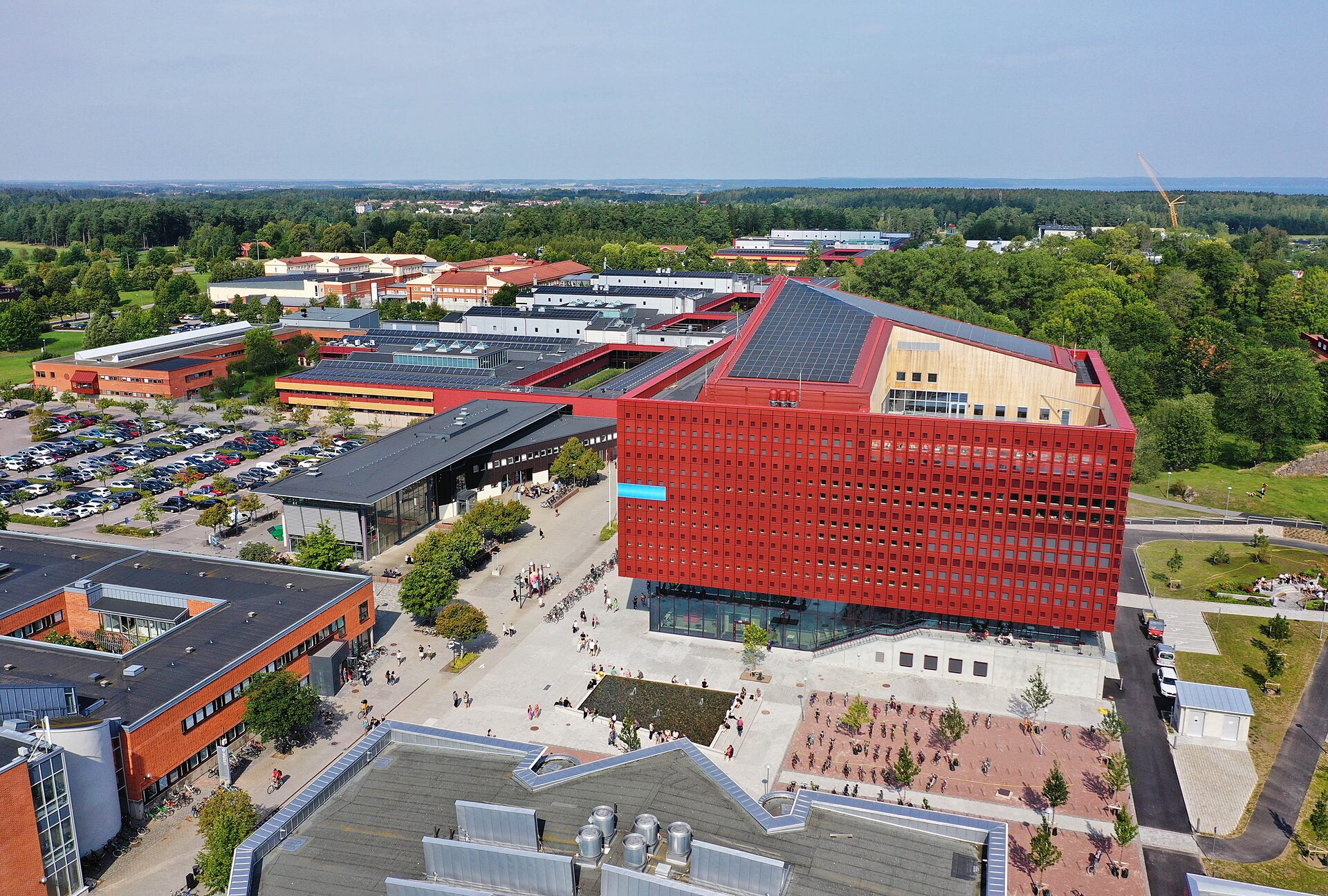
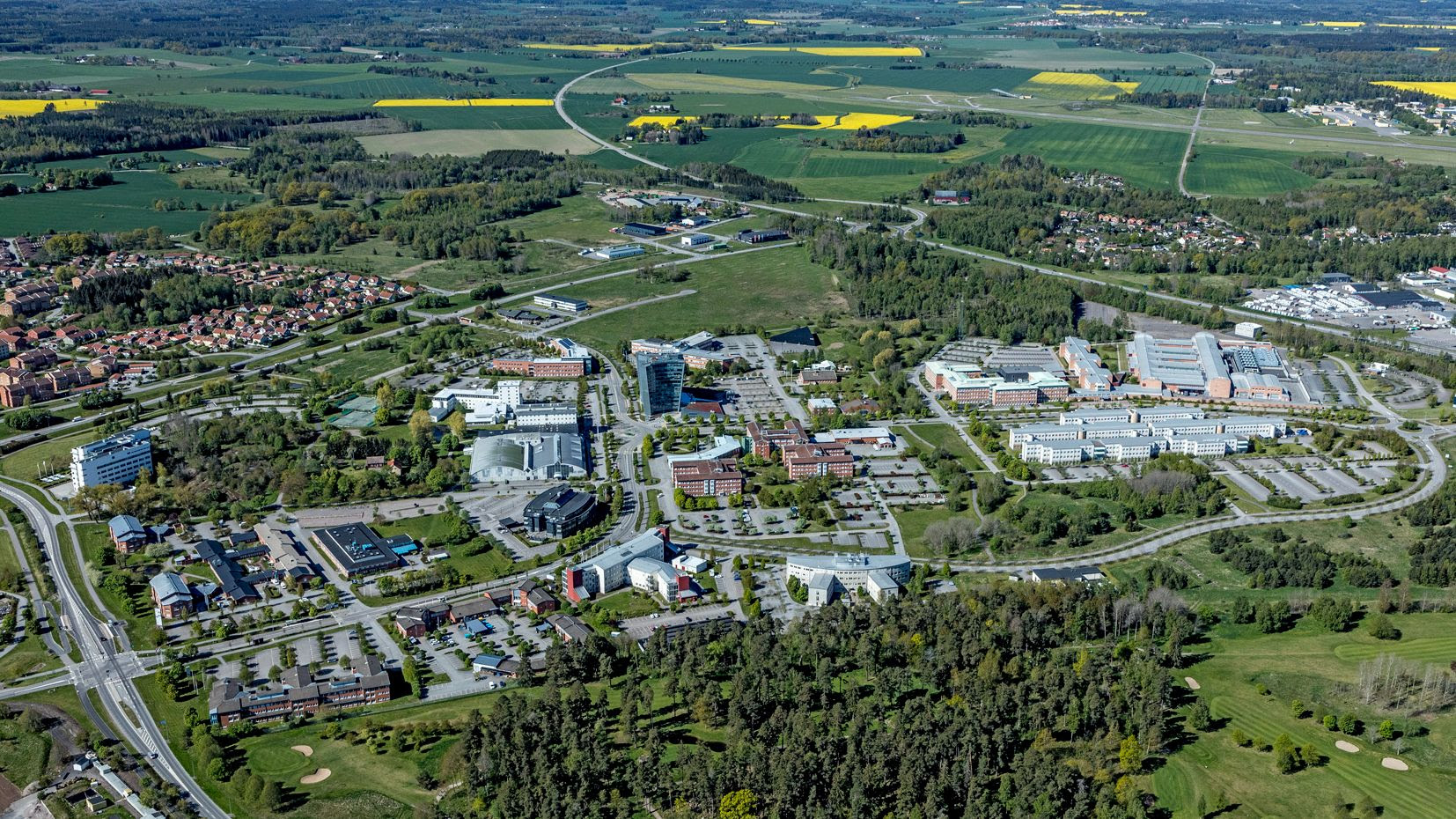
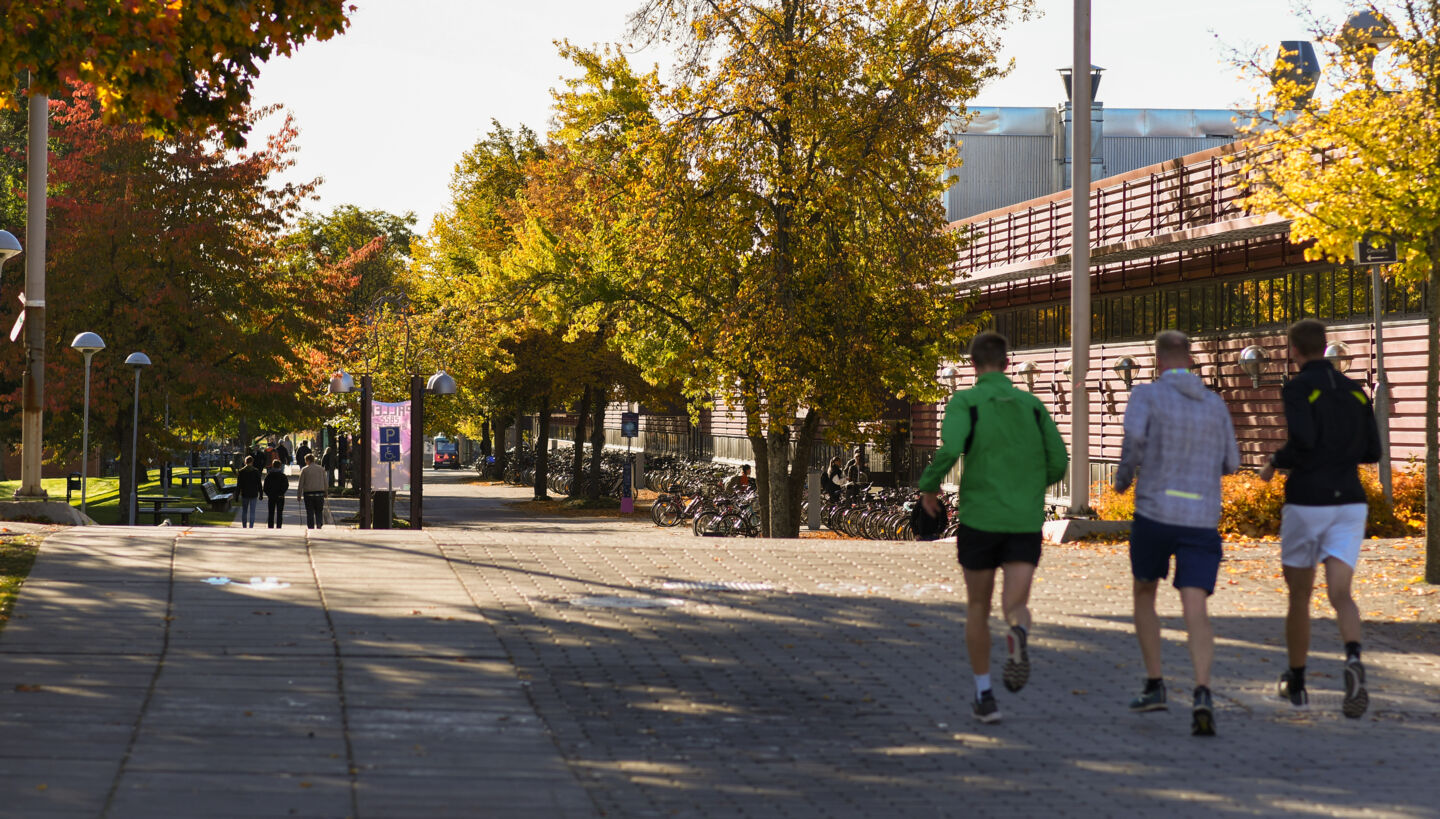
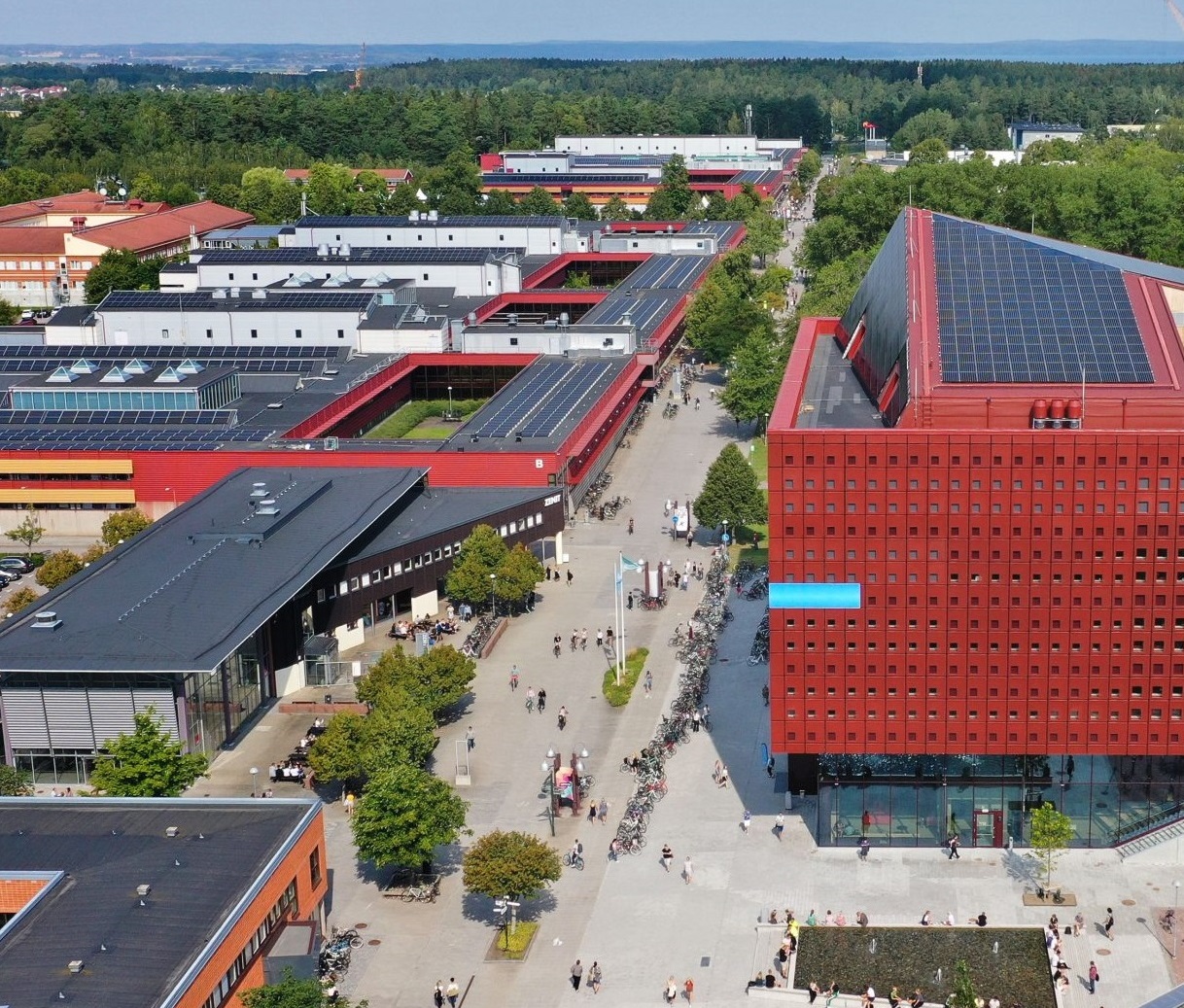
Linköping University — campus in pictures

Real, freely-licensed photographs of the campus (via Wikimedia Commons).

Vy över Kåkenhus, Campus Norrköping, Linköpings universitet.
Vy över Kåkenhus, Campus Norrköping, Linköpings universitet.Anna Nilsen (LiU) · CC BY-SA 4.0 · via Wikimedia Commons
The east wing of Kåkenhus on Campus Norrköping.
The east wing of Kåkenhus on Campus Norrköping.Erik And30 · CC BY-SA 4.0 · via Wikimedia Commons
campus valla linköping above
campus valla linköping aboveErik And30 · CC BY-SA 4.0 · via Wikimedia Commons
Mjardevi Aerial
Mjardevi AerialErik And30 · CC BY-SA 4.0 · via Wikimedia Commons
Campus-Valla-hT2022
Campus-Valla-hT2022Erik And30 · CC BY-SA 4.0 · via Wikimedia Commons
Corson aerial
Corson aerialErik And30 · CC BY-SA 4.0 · via Wikimedia Commons

Why Linköping University — Innovation, Industry Links & Nordic Excellence

LiU occupies a sweet spot that few universities can match: elite European research quality, deep real-world industry partnerships, and a tight-knit campus culture — all in one of Sweden's most liveable cities. For international students, it offers direct access to the Nordic tech ecosystem at a cost of attendance far below comparable universities in the UK or US.

01Ranked #275 Globally (QS)
Linköping ranks #7 nationally and #275 in QS World Rankings — a remarkable achievement for a university founded only in 1975. Its engineering and natural sciences faculties consistently lead Swedish league tables.
02Saab & Swedish Tech Cluster
LiU is located in Linköping, home to Saab's aerospace and defence headquarters. Engineering students routinely complete internships and theses with Saab, Ericsson, ABB, and regional tech companies — translating directly into Sweden's 91% graduate employment rate.
03Pioneer in Cognitive Science
LiU created Sweden's first Cognitive Science programme and remains the national leader in this interdisciplinary field bridging AI, linguistics, psychology, and neuroscience — a significant differentiator for students interested in human-machine interaction.
04English-Taught International Programmes
All international programmes are fully taught in English, from Applied Physics to Business Administration. This gives non-Swedish-speaking students genuine access to the university's full academic offer.
05Nordic Quality of Life at Accessible Cost
Sweden consistently ranks among the world's safest, happiest, and most gender-equal countries. Linköping's cost of living is lower than Stockholm, and LiU's tuition for non-EU students (approx. USD 13,300/year) is substantially more affordable than equivalent UK or US institutions.
06Norrköping Creative Campus
LiU's Norrköping campus houses the Visualization Center C — a world-class digital visualisation facility open to students — alongside programmes in Design, Media Technology, and Industrial Economics.

LiU Acceptance Rate & Admission Profile

Stats

36,000
Student Population
9%
International Students
#7
National Rank

Profile Stats

~45%
Overall acceptance rate
33+
IB Diploma benchmark
3.0
Min GPA equivalent
9%
International students
91%
Graduate employment rate
#275
QS Global Rank
Overall acceptance rate — selectivity varies sharply by programme

Rea Vs Rd

Rd Label: Competitive STEM Programmes
Rd Value: High selectivity
Rea Label: Overall Acceptance Rate
Rea Value: ~45%

LiU Admissions Requirements — Grades, Qualifications & English Proficiency

Academic Grades
Value: 3.0+ / 33+ IB
  • Upper-secondary grades are the primary selection criterion
  • IB Diploma benchmark is 33+ points; competitive programmes require higher
  • Engineering programmes need Mathematics HL preparation
  • No holistic essays or activity review — grades determine your standing
Swedish admissions are grade-based and transparently meritocratic. Your upper-secondary results (IB, A-Level, national board exams) are converted to a standardised Swedish merit score (meritpoäng) and ranked against other applicants.
Standardised Tests
Value: Test-Blind
  • SAT and ACT play zero role in Swedish university admissions
  • The SweSAT (Högskoleprovet) is for domestic Swedish applicants only
  • International qualifications are assessed through UHR's official conversion tables
  • IELTS 6.5+ or TOEFL iBT 90+ for English proficiency
Linköping University, like all Swedish public universities, is completely test-blind with respect to SAT/ACT. English proficiency is required (IELTS 6.5 / TOEFL 90) unless exempt. No aptitude testing beyond your secondary qualification.
International Qualifications
Value: Full Qualification
  • IB Diploma: 33+ points minimum; engineering may need 36+
  • A-Levels: 3 subjects with Mathematics for STEM programmes
  • CBSE/ISC: strong marks in Class 12, especially in STEM subjects
  • Certified, translated documents required for non-English qualifications
All recognised upper-secondary qualifications are accepted and converted by UHR (Swedish Council for Higher Education). IB, A-Levels, CBSE, and most national qualifications all qualify. The conversion table is public and transparent.

LiU Application Components — universityadmissions.se, Documents & English Proof

International students apply to LiU through universityadmissions.se — Sweden's national admissions portal. The process is centralised, transparent, and grade-based. There are no application essays for most programmes; selection is driven primarily by your upper-secondary qualification results.

01RequiredApplication via universityadmissions.se
All international applicants use Sweden's national admissions portal. You can apply to up to 20 programmes across Sweden in one application. The application fee is approximately USD 85 (SEK 900) per cycle.
02RequiredUpper-Secondary Transcripts
Certified copies of all upper-secondary school transcripts and your final diploma or predicted grades. Documents not in English or a Scandinavian language must be professionally translated.
03RequiredEnglish Proficiency Certificate
IELTS Academic (minimum 6.5 overall) or TOEFL iBT (minimum 90). Students who completed secondary schooling in English may be exempt — verify on universityadmissions.se.
04RequiredPassport / ID Copy
A copy of your valid passport confirms your nationality for tuition fee purposes. EU/EEA and Swiss citizens are exempt from fees; non-EU/EEA students pay the published tuition rate.
05ConditionalPortfolio or Motivation Letter
Most LiU programmes require no personal statement. However, Design, Media Technology, and some master's specialisations may request a portfolio or motivation letter. Check each programme on universityadmissions.se.
06OptionalScholarship Motivation Letter
If applying for the LiU Scholarship or Swedish Institute (SI) Scholarship, a structured motivation letter is required and carries significant weight. This is the primary high-stakes written document in the LiU process.
07ConditionalResidence Permit (non-EU/EEA)
Non-EU/EEA students must apply for a Swedish residence permit for studies after receiving an offer. Apply early through Migrationsverket — processing can take several months.

LiU Application Materials — Motivation Letters & Scholarship Essays

Tips

Be specific about LiU's programme, not just Sweden
If a motivation letter is required, name specific aspects of LiU's curriculum, research groups, or industry partnerships that attracted you. 'I want to study in a Nordic country' is not motivation — 'LiU's Industrial Engineering programme offers direct access to Saab's product lifecycle management division' is.
Swedish academics value directness over narrative
Unlike US or UK personal statements, Swedish motivation letters work best when they are structured, factual, and outcome-focused. Skip the childhood story. Lead with your academic background and why it fits this programme.
The scholarship letter is the highest-stakes document
For the 15% of students who receive scholarship support, the motivation letter is the deciding factor. Treat it with the same rigour as a US supplemental essay — draft, revise, and have it reviewed.
Grades are the essay in Sweden
For standard LiU programme applications, your transcript is your application. Maximising your final grades is far more valuable than perfecting a personal statement — because no personal statement is required.

Prompts

Standard Programme Application
Most LiU programmes require no personal statement. Admission is grade-based through universityadmissions.se. Your upper-secondary results are the application.
LiU Scholarship Motivation Letter
LiU Scholarship applicants typically write a motivation letter covering: academic background, why you chose LiU specifically, and how the scholarship will support your studies. Verify exact format on liu.se.
Swedish Institute (SI) Scholarship Essay
SI Scholarships require a motivation letter addressing leadership experience, how your studies in Sweden will benefit your home country, and your connection to sustainable development goals. Exact prompts are published on si.se each cycle.
Portfolio / Statement of Purpose (Select Programmes)
Design and select master's programmes may require a portfolio of creative work or a statement of purpose. Follow the exact format specified on universityadmissions.se for your programme.
The most common LiU application mistake. Writing a US-style narrative personal statement and submitting it as a motivation letter — Swedish selectors want structured, factual motivation, not storytelling.

What LiU Admissions Looks For in International Applicants

Swedish university admissions are refreshingly transparent: the primary criterion is your upper-secondary academic record. There are no holistic 'fit' essays or personality assessments for most programmes. Selection points are calculated based on your grades using a standardised Swedish conversion system, and your ranking among applicants for each programme determines admission.

01Strong Upper-Secondary Grades
Your grades in your final two years of secondary school are the primary admission criterion. In Sweden's transparent, merit-based system, your converted grade score determines your ranking among applicants for each programme.
02Relevant Subject Background
Engineering programmes expect strong preparation in Mathematics (IB HL level or A-Level Further Mathematics) and Physics. Computer Science values Mathematics highly. Design requires a portfolio. Subject coherence matters — study what the programme requires.
03English Language Proficiency
You must demonstrate English at IELTS 6.5+ or TOEFL iBT 90+. IB students who completed the diploma in English typically meet the exemption criteria. This is a hard requirement — applications without proof are not considered.
04Complete and Timely Documentation
In Swedish admissions, a complete application with verified, certified documents submitted before the deadline is non-negotiable. Missing or late documents mean automatic rejection for that round — there is no deferral process.
05Academic Trajectory
An upward grade trajectory is read positively. If your IB predicted grades are significantly above your Grade 11 performance, be prepared to explain. Predicted grades that match historical performance are more credible.
06Commitment to the Programme
For the small number of programmes that request motivation letters, selectors look for evidence that your choice of LiU's specific programme is deliberate and informed — not generic 'I love Sweden' statements.

LiU Financial Aid & Scholarships for International Students

LiU offers limited institutional financial aid to non-EU/EEA fee-paying students, primarily in the form of tuition waivers (scholarships). Approximately 15% of non-EU/EEA students receive some form of scholarship support. The primary pathways are the LiU Scholarship and the Swedish Institute Scholarship programme.

Aid amounts and scholarship availability are subject to change annually. Verify current figures on liu.se and si.se before applying.

Stats

~15%
of non-EU students receive scholarship support
~USD 13,300
annual tuition (non-EU/EEA students)
0
EU/EEA students pay in tuition
91%
graduate employment rate

Contribution Tiers

NoteRangePercentPercent Value
Tuition-free at all Swedish public universities by legal rightEU/EEA/Swiss students100%100
LiU Scholarship covers part of tuition; competitiveNon-EU/EEA with LiU ScholarshipPartial waiver50
SI Scholarship covers tuition + living costs; highly competitiveNon-EU/EEA with SI ScholarshipFull coverage80
Full tuition ~USD 13,300/year plus living costsNon-EU/EEA no scholarshipFull fees0
Aid Structure — What Is and Is Not Available. Unlike US need-blind grant programmes, LiU's institutional support is limited — primarily partial tuition waivers for outstanding students. The Swedish Institute (SI) Scholarship is the most comprehensive award available, covering tuition and living costs, but is available only to students from specific countries. EU/EEA students face no tuition at all, making LiU one of Europe's most affordable research universities for European passport holders.

Key Dates

Round 1 Application Deadline (Autumn Entry)
Date: ~15 January
Round 1 Decisions Released
Date: March–April
Round 2 Application Deadline
Date: ~15 March
Round 2 Decisions Released
Date: May–June

Advantages

  • Access to the most places — Round 1 has more seats in every programme
  • More time to arrange Swedish student housing (which fills quickly)
  • More time to process your Swedish residence permit (non-EU/EEA students)
  • Decisions arrive in March–April giving you flexibility to compare options
  • Most scholarship deadlines align with Round 1 — applying in R2 may disqualify you from scholarships

Disadvantages

  • January 15 deadline arrives while IB/A-Level results are predicted, not final
  • If deferred or rejected in Round 1, Round 2 has fewer remaining places
  • Some competitive programmes fill entirely in Round 1
  • You must update your application with final results once available
Round 1 vs Round 2. Unlike US Early Action/Decision, Swedish admissions have no binding commitment. Round 1 is simply earlier and gives access to more places — applying in Round 1 is almost always the better strategy for international applicants.
Tychr's Round 1 Recommendation. Apply in Round 1 (January 15 deadline) for every programme you are seriously considering. The Swedish system allows you to rank up to 20 programmes in priority order in a single application — you are not committed by applying early. Round 2 should be a backup, not a primary strategy.
Round 1 vs Round 2 — Swedish Admissions Rounds Strategy

LiU Interview — Does Linköping University Interview Applicants?

Linköping University does not conduct standard admissions interviews for the vast majority of its programmes. Selection is entirely grade-based through universityadmissions.se. Interviews are only relevant if you are applying for the Swedish Institute (SI) Scholarship or certain competitive scholarship programmes. If you reach the interview stage of a scholarship process, it indicates your application is already strong on paper.

Meta

No standard interview for most LiU programmes
Format
Some SI Scholarship processes include an interview
Exception
Grade-based merit score; portfolio for Design
Selection basis
Prepare for scholarship interviews if applying for SI or LiU awards
Practical note

Questions

How will your studies in Sweden benefit your home country? (SI Scholarship)
Tip: SI Scholarship interview: Frame your answer around concrete development challenges in your home country that your LiU education will equip you to address.
Why Linköping University and this specific programme?
Tip: Demonstrate that your choice of LiU's specific programme (not just Sweden in general) is informed and deliberate. Name specific research groups or partnerships.
Describe a leadership experience and its impact. (Scholarship)
Tip: Scholarship panels look for leadership evidence. Describe a specific initiative you led and what it changed, not a title you held.
Why do you need this scholarship? (Scholarship)
Tip: Be honest about your financial situation for need-based scholarships. Panels can verify context — over-claiming is worse than honest explanation.
What specifically about LiU's environment attracted you?
Tip: Specificity matters: name Saab, RISE, or LiU's specific labs. 'Sweden is innovative' is not a reason.

LiU Housing & Residential Life

Unlike Harvard's residential House system, Linköping University does not operate a college-based residential community model. Housing is managed by Stångåstaden and affiliated student housing companies, and international students are prioritised for first-year accommodation. Apply for housing immediately upon receiving your admission offer — the link is provided in your acceptance materials.

Houses

Rydsvägen Student Housing
Tag: Linköping
Large, affordable student housing complex near Valla campus — popular with international students
Flamman / Valla Area
Tag: Linköping
Close to the main engineering campus; corridors and shared flats
Ryd District Housing
Tag: Linköping
Student area with cycling distance to Valla campus; lower costs
City Centre Accommodation
Tag: Linköping
Limited supply; higher cost but closer to city amenities
Norrköping Student Housing
Tag: Norrköping
University-affiliated housing near Norrköping campus; Design and Media Technology students
Private Market (Blocket/Bostad Direct)
Tag: Private
Private rental market in Linköping; longer waitlists but more options; typically longer lease commitments

Lottery Steps

  • Receive your admission offer from universityadmissions.se
  • Immediately apply for student housing via the link in your offer email
  • International new students are given priority in the first-year housing allocation
  • Linköping campus (Valla) has the densest concentration of student housing in Ryd district
  • Norrköping campus students apply through the Norrköping student housing service
  • If university housing is full, the Linköping private market (Blocket, Bostad Direct) is the next option

LiU Faculties, Schools & Programmes

Faculty of Science & Engineering
Label: Engineering, Technology & Natural Science
  • {"label":"Flagship programme","value":"Applied Physics & Electrical Engineering (Y-programme)"}
  • {"label":"Other key programmes","value":"Industrial Engineering, CS, Mechanical Engineering"}
  • {"label":"Industry partnership","value":"Saab, Ericsson, ABB"}
  • {"label":"Campus","value":"Valla, Linköping"}
Sweden's most mathematically demanding undergraduate engineering education. The Y-programme (Applied Physics & Electrical Engineering) is LiU's flagship, while Industrial Engineering & Management is among Sweden's most sought-after by employers.
Faculty of Arts & Sciences
Label: Humanities, Social Sciences & Cognitive Science
  • {"label":"Distinctive programme","value":"Cognitive Science — Sweden's first"}
  • {"label":"Key areas","value":"Psychology, Language, Linguistics, Political Science"}
  • {"label":"Teaching language","value":"English and Swedish programmes available"}
  • {"label":"Campus","value":"Campus Valla"}
Home to LiU's pioneering Cognitive Science programme — bridging AI, linguistics, psychology, and neuroscience. Strong social science and humanities offerings in both Swedish and English.
Faculty of Medicine & Health Sciences
Label: Medicine, Nursing & Biomedical Science
  • {"label":"Primary language","value":"Swedish (most clinical programmes)"}
  • {"label":"English-taught options","value":"Biomedical Engineering, select master's"}
  • {"label":"Note for internationals","value":"Medical degree primarily in Swedish"}
  • {"label":"Affiliated hospital","value":"University Hospital Linköping"}
LiU's medical faculty trains physicians in collaboration with University Hospital Linköping. The medical degree is primarily taught in Swedish — international students interested in medicine should verify current English-language pathways directly with the faculty.
Linköping University School of Education & Communication (IEI/HLK)
Label: Teacher Education & Communication
  • {"label":"Programme types","value":"Teacher education, Communication studies"}
  • {"label":"International students","value":"Limited English-taught programmes"}
  • {"label":"Campus","value":"Valla"}
  • {"label":"Verify","value":"English-taught options on liu.se"}
Offers teacher education and communication programmes. English-taught programme availability is more limited — verify specific offerings on liu.se before applying.
Norrköping Campus — Design & Media Technology
Label: Design, Creative Technology & Visualisation
  • {"label":"Distinctive facility","value":"Visualization Center C — world-class immersive research"}
  • {"label":"Key programmes","value":"Design, Media Technology, Industrial Economics"}
  • {"label":"Special requirement","value":"Portfolio for Design programmes"}
  • {"label":"Distance from Linköping","value":"~30 min by train"}
LiU's Norrköping campus is home to Design and Media Technology programmes, set in a renovated industrial heritage city with world-class digital visualisation infrastructure. Design programmes typically require a portfolio as part of the selection process.
Linköping Business School (ELIT)
Label: Business Administration & Economics
  • {"label":"Key programme","value":"Business Administration (English-taught)"}
  • {"label":"Teaching approach","value":"Case-based, international focus"}
  • {"label":"Industry connections","value":"Östergötland business community"}
  • {"label":"Campus","value":"Valla"}
Business Administration at LiU has a strong international focus and offers English-taught programmes. The school's proximity to Sweden's industrial heartland gives students access to corporate partnerships and placement opportunities.

Research & Extracurricular Opportunities at LiU

Industry-Academic Research Projects
Category: Applied Research
LiU's engineering and technology programmes integrate industry-sponsored research projects throughout the curriculum. Students frequently work on live briefs from Saab, Ericsson, and regional tech companies — producing real-world research experience as a standard part of their degree, not an optional extra.
Visualization Center C
Category: Research Infrastructure
One of Europe's most advanced digital visualisation research facilities, hosted on the Norrköping campus. Open to students in relevant programmes, the centre hosts public science exhibitions and cutting-edge research in immersive environments, data visualisation, and human-computer interaction.
Student Sections (Sektioner)
Category: Student Life & Community
LiU's student sections (teknologsektioner for engineering, humanistsektioner for arts) organise professional networking events, study groups, and social traditions. Joining your section from Day 1 is the fastest way to integrate into Swedish student culture as an international student.
International Student Community
Category: International Network
With 9% international students and 31 English-taught international programmes, LiU has a well-developed international student office and a range of integration activities — mentorship programmes, language exchanges, and cultural events — run in collaboration with the student union (Kårallen).
Scroll right to explore LiU's research programmes and student life opportunities.

Career Outcomes & Graduate Prospects from LiU

Linköping University's graduate employment rate stands at 91% — above the Swedish national average and reflecting the university's deep industry connections. The relationship with Saab, Ericsson, ABB, and a dense local tech startup ecosystem means that many LiU engineering graduates receive employment offers before graduation. Sweden's compressed salary scale at entry level comes with generous social benefits, high union coverage, and excellent quality of life.

Stats

91%
Graduate employment rate within one year
~USD 43,000
Average starting salary (approximate USD equivalent)
36,000
Total student population
#275
QS Global Rank
#7
National rank in Sweden
9%
International student percentage

Categories

Engineering & Aerospace
Saab, Ericsson, ABB, Autoliv — LiU engineering graduates are heavily recruited by Sweden's aerospace, defence, and electronics industries. Many students receive employment offers before graduation through project and thesis partnerships.
Technology & Startups
Sweden's growing startup ecosystem (including Einride, Sinch, and Voi) actively recruits LiU Computer Science and Cognitive Science graduates. Stockholm's tech scene is 200km away — many LiU graduates move there upon graduation.
Cognitive Science & AI
LiU's Cognitive Science and Human-Computer Interaction programmes have a strong pipeline into UX, AI, and product management roles — both within Sweden and at international firms. The programme's interdisciplinary nature (psychology, AI, linguistics) is increasingly valued in product development contexts.

Why International Students Choose Tychr for LiU Applications

Priya S.
Tychr helped me understand that LiU's admissions are entirely grade-based — so instead of writing essays, I focused on maximising my IB predicted grades. I was admitted to Industrial Engineering with an IB 37. The process was far more straightforward than applying to US universities, but the stakes on grades were just as high.
Country: India
Program: LiU — Industrial Engineering & Management
Class Year: Class of 2026
Residential: Ryd Student Housing
Academic Profile: IB 37 · Grade: 3.8 equivalent
Tobias M.
I almost applied to UK universities before Tychr showed me that LiU's Y-programme rivalled Oxbridge-level engineering rigour at a fraction of the cost — and that with an EU passport, tuition was zero. The guidance on navigating universityadmissions.se and UHR conversion tables was invaluable.
Country: Germany
Program: LiU — Applied Physics & Electrical Engineering
Class Year: Class of 2025
Residential: Flamman District
Academic Profile: Abitur 1.1 · IB 40
Aisha K.
The scholarship motivation letter for the SI Scholarship was the most important document in my entire LiU application. Tychr helped me reframe my letter around the development impact angle that SI specifically looks for. I received the scholarship and cover both tuition and living costs.
Country: Kenya
Program: LiU — Cognitive Science
Class Year: Class of 2027
Residential: City Centre, Linköping
Academic Profile: KCSE A-plain · IELTS 7.5

Faqs

Do I apply directly to Linköping University or through a portal?+

You apply through universityadmissions.se — Sweden's national university admissions portal. You do not apply directly to LiU. The portal handles the full process including document submission, decision notifications, and acceptance.

Are there application essays required?+

For the vast majority of LiU programmes, no — selection is based on your upper-secondary grades converted to a Swedish merit scale. A small number of programmes (such as Design) may require a portfolio or supplementary material. Check the specific programme listing on universityadmissions.se.

Do EU/EEA students pay tuition at LiU?+

No. EU, EEA, and Swiss citizens study tuition-free at Swedish public universities, including LiU. Non-EU/EEA citizens pay tuition fees — approximately USD 13,300 per year depending on the programme.

Is my IB Diploma accepted? What score do I need?+

Yes, the IB Diploma is widely accepted. The general benchmark is 33 points or higher, but competitive programmes like Engineering or Computer Science may effectively require higher scores. Check the merit conversion on universityadmissions.se for your specific IB results.

How does housing work for international students?+

LiU prioritises international students for university-affiliated housing in the first year. Apply for housing immediately after accepting your offer — the link is usually provided in your acceptance materials. Linköping's student housing is substantially cheaper than Stockholm.

Do I need a Swedish student visa?+

Non-EU/EEA students whose programme exceeds 90 days need a Swedish residence permit for studies (not a visa). Apply through the Swedish Migration Agency (Migrationsverket) after receiving your admission decision. Apply early — processing can take several months.

Can I work in Sweden while studying?+

Yes. Students with a Swedish residence permit for studies are permitted to work without restrictions on hours. Many LiU students work part-time in Linköping or Norrköping, and student jobs are readily available in the local tech sector.

Is English sufficient to study and live in Linköping?+

Yes. LiU's international programmes are fully taught in English. Swedes have among the highest English proficiency rates in the world, and daily life in Linköping is very manageable in English. Learning some basic Swedish will enhance your social integration but is not required.

Book a Free LiU Admissions Strategy Session

In 60 minutes our LiU admissions specialists will evaluate your academic profile, identify your IB/A-Level grade targets, map your documentation requirements, assess scholarship eligibility, and build a timeline from application to residence permit.

  • No commitment required
  • Swedish university specialists with insider knowledge
  • Personalised grade and documentation strategy
Getting into LiU is about one thing: your grades. Maximise them — and know the system. That is what Tychr helps you do.

LiU Academic Requirements

LiU Academic Requirements — The Honest Breakdown for International Students

What grades, qualifications, and academic profile do LiU's admitted students actually have? And what does Sweden's merit-based admissions system mean for students from IB, A-Level, CBSE, and other international curricula?

33+
IB Diploma Benchmark
General minimum; STEM may need higher
3.0
Min GPA Equivalent
Competitive programmes require more
Test-Blind
Test Policy
SAT/ACT not used in Sweden
6.5
IELTS Minimum
Or TOEFL iBT 90
#275
QS Global Rank
National rank #7 in Sweden
~45%
Acceptance Rate
Programme-dependent

GPA & Grades

LiU and Grades — What the Admission System Shows

LiU does not publish a minimum GPA in the US sense. Swedish admissions use a national merit conversion system (UHR) that translates your upper-secondary grades to a standardised meritpoäng score. A US GPA equivalent of 3.0 is the minimum threshold; competitive STEM programmes require meaningfully higher performance.

A 3.0 GPA is a minimum, not a guarantee. In competitive programmes like Applied Physics, Computer Science, or Industrial Engineering, the effective cut-off in recent cycles has been higher. Always check the published selection results (from previous cycles) on universityadmissions.se for your specific target programme.

3.0
Minimum GPA equivalent (US scale) — baseline
33+
IB Diploma benchmark for competitive programmes
What this means for international students. International students from systems without a direct GPA (IB, UK A-Levels, Indian CBSE, German Abitur) are evaluated through UHR's official conversion tables. The conversion is transparent and publicly available. Your converted merit score is ranked against all other applicants for your chosen programme — no additional factors intervene.
Predicted vs. final grades. In Swedish admissions, grade trajectory matters primarily through your final year results. Predicted grades (submitted for Round 1) are later updated with your final certificate. If your Round 1 application shows predicted grades significantly above your Year 11 performance, admission may be provisional pending final results.

Academic Context

Grade Conversion and Context — How Sweden Reads Academic Performance

Sweden's admissions system is entirely transparent: conversion tables for every international qualification are published by UHR and accessible to any student. There is no contextualised or holistic review — your merit score is your merit score.

How Sweden evaluates international grades
UHR (Swedish Council for Higher Education) maintains official conversion tables for most national upper-secondary qualifications. These tables convert your grades to Swedish merit points (meritpoäng) on a 0–22.5 scale. The conversion rules are published on antagning.se. Your final ranking among applicants for each programme is determined by this score — every step of the process is traceable and auditable.
What this means practically
Unlike the US, where counsellor letters explain your school's academic context, Swedish admissions do not accommodate contextual explanations. A strong result at a less well-known school counts the same as the same result at a prestigious one. The conversion is uniform. This means that maximising your actual grades — not your narrative — is the only lever available.
You can predict your own standing. Because Swedish conversion tables are public, you can calculate your own merit score before applying. Use universityadmissions.se's merit calculator to model different grade scenarios and understand exactly how competitive you are for your target programmes.

Standardised Testing

SAT at LiU — Not Required or Accepted

LiU and the Swedish admissions system are completely test-blind with respect to the SAT. SAT scores are not requested, not submitted, and not evaluated in any Swedish university admissions process. This section explains how academic merit is assessed instead.

LabelScorePercent
SAT relevance to Swedish admissionsZero0
IELTS minimum (English proficiency)6.565
TOEFL iBT minimum9075
The mathematics signal for STEM applicants. For STEM applicants, the equivalent signal in the Swedish system is the Mathematics component of your IB score or A-Level grade. IB Mathematics: Analysis and Approaches (HL) is the expected preparation level for engineering and computer science programmes at LiU.
Preparation advice. If you are applying to LiU alongside US universities and have strong SAT scores, your score preparation energy is better directed toward IB/A-Level performance for the LiU application. Strong SAT scores have no bearing on your LiU merit score.
Strategy: what to focus on instead. Do not submit SAT scores with your LiU application — there is no field for them and they are not considered. Instead, focus entirely on maximising your IB, A-Level, or national qualification final results.

Standardised Testing

ACT at LiU — Not Part of the Swedish Admissions System

Like the SAT, the ACT plays zero role in Swedish university admissions. LiU evaluates academic merit solely through upper-secondary qualification results converted by UHR's standardised tables.

Metrics

ACT relevance to LiU admissions
Score: Not applicable
Swedish equivalent aptitude test
Score: SweSAT (Högskoleprovet)

Comparison Cards

International applicants: qualification-based
For international applicants, IB/A-Level/national qualification results are the primary academic measure. There is no separate aptitude test.
English proficiency: IELTS/TOEFL only
The only English proficiency test required is IELTS 6.5+ or TOEFL iBT 90+. This is a language test, not an academic aptitude test.
US-curriculum students
For US-curriculum students at international schools who have AP or SAT scores, these do not factor into LiU admissions — only your final school transcript and IB/AP results as translated by UHR.
The SweSAT (Högskoleprovet) — for context. The Swedish equivalent of an aptitude test is the Högskoleprovet (SweSAT). However, this is a Swedish-language test designed for domestic applicants; it is not available to or relevant for international students applying through the international qualifications route.
Tychr's recommendation. Focus all test-preparation energy on your IB, A-Level, or equivalent final examinations. These are the academic credentials that determine your LiU admission standing. English proficiency (IELTS/TOEFL) preparation is the only standardised test that matters for LiU.
How merit is assessed at LiU vs. US universities

Test Policy

LiU is Test-Blind — What This Means for Your Application Strategy

Linköping University and all Swedish public universities operate a test-blind admissions policy with respect to the SAT, ACT, and all US-style standardised tests. This is not a 'test-optional' policy — it is complete test-blindness. No standardised aptitude test plays any role in Swedish university admissions for international students.

Submit Items

You do not need to submit any standardised test scores to apply to LiU — no SAT, ACT, GRE, or SweSAT is required for international applicants.
IELTS 6.5+ or TOEFL iBT 90+ must be submitted as evidence of English proficiency unless you are exempt.
Your upper-secondary transcript and final certificate are the documents that determine admission.

Withhold Items

SAT, ACT, and any US-style aptitude tests — there is no submission mechanism and they are not evaluated.
Teacher recommendations and counsellor letters — not part of the Swedish admissions system.
The official policy. Swedish law governs admissions to public universities. Selection is based on upper-secondary academic qualifications using a nationally standardised merit conversion. There is no discretionary holistic review that could incorporate test scores even if submitted.
The common misconception. Many students applying to Sweden from the US or international schools assume they should include SAT/ACT scores alongside their LiU application 'for context'. This is unnecessary — the Swedish system has no capacity to evaluate them, and submitting them does not enhance your application.

International Curricula

IB and A-Levels at LiU — Specific Benchmarks and Preparation

IB Diploma
Note: IB bonus points (for EE and ToK combined) are included in the Swedish UHR conversion — your full 45-point diploma score counts. Write a genuinely strong EE in a STEM subject to maximise your merit points. IB students who completed the diploma in English are typically exempt from IELTS/TOEFL.
  • {"label":"Competitive range","value":"33+ points (general minimum); 36+ for engineering/CS"}
  • {"label":"HL expectations","value":"Mathematics HL (AA preferred for engineering); Physics HL for Applied Physics and EE; relevant HLs for your target programme"}
  • {"label":"Subject rigour","value":"IB Mathematics: Analysis & Approaches (HL) is the correct preparation for STEM — not Applications & Interpretation"}
  • {"label":"Extended Essay","value":"Contributes to final IB score; a STEM EE in a subject related to your programme adds relevant signal"}
A-Levels (UK / Cambridge International)
Note: Swedish admissions via UHR convert A-Level grades to merit points using official conversion tables. Three A-Levels is the standard expectation. A-Level Mathematics is essential for STEM programmes; Further Mathematics is excellent preparation for the Y-programme.
  • {"label":"Competitive range","value":"AAA in relevant subjects for most LiU engineering programmes"}
  • {"label":"Subject rigour","value":"Mathematics (and ideally Further Mathematics) + Physics for engineering; Mathematics + relevant science for CS"}
  • {"label":"AS results","value":"Reviewed as part of UHR conversion if reported"}

Advanced Placement

AP Courses and LiU — How They Are Treated in the Swedish System

AP courses are not part of the Swedish admissions system in the same way as the US. However, students at international schools who have taken AP examinations alongside IB or as their primary qualification may find AP results contribute to their UHR conversion score. The key is how UHR converts your overall qualification, not individual AP scores.

How AP fits into Swedish admissions
AP courses taken alongside IB may contribute additional merit points under UHR's bonus point rules. Specifically, AP examinations with grades of 3 or above in subjects relevant to your programme can add bonus points to your merit score. Check UHR's current bonus point rules on antagning.se.
AP as a primary qualification
For students whose primary qualification is an AP-based US diploma (not IB or A-Level), UHR will convert this through the American curriculum conversion route. Strong performance in AP Calculus BC, AP Physics C, and AP Chemistry is particularly valuable for STEM programme applicants.
AP credit at LiU
LiU awards course credit for advanced qualification performance in some cases, allowing students to skip introductory modules. Verify credit transfer opportunities directly with the specific programme coordinator after admission.
Course credit transfer at LiU is handled on a programme-by-programme basis after admission. Contact the programme coordinator once you have been offered a place.
International students at IB or A-Level schools should not artificially pursue AP examinations for LiU admissions purposes. Maximise your IB or A-Level results instead — that is what UHR's conversion primarily uses.

Academic Rigour

Rigour of Secondary School Record — How It Matters in Swedish Admissions

Swedish admissions are grade-based, but the UHR conversion system does incorporate the level and type of subjects taken through its bonus point mechanism. Taking more demanding subjects (higher-level mathematics, sciences) can add bonus points to your merit score beyond the basic grade conversion.

Taking Mathematics at the highest available level in your school system is the single most important course selection decision for LiU STEM applicants.

How it applies in the Swedish system. Unlike US admissions, LiU does not conduct a holistic contextual review of your transcript. The conversion is rule-based and uniform. However, subject choice determines whether you qualify for programme-specific prerequisites — taking Mathematics AI (Applications and Interpretation) at IB HL instead of Mathematics AA HL may disqualify you from engineering programmes regardless of your overall score.
What rigour means at LiU. Rigour at LiU means: (1) meeting hard prerequisite requirements in Mathematics and Sciences for STEM programmes, and (2) taking subjects at the level that maximises your converted merit score through bonus point mechanisms. Check programme prerequisites carefully on universityadmissions.se before finalising your IB or A-Level subject choices.
Programme-specific rigour expectations. For engineering applicants: IB Mathematics AA HL + Physics HL (or equivalent A-Level). For Computer Science: Mathematics at HL. For Design: a strong portfolio of creative work. For Business: Mathematics at a reasonable level across any strong qualification. Prerequisites are published programme-by-programme.

STEM Preparation

Mathematics and Science Preparation — What LiU Engineering Expects

LiU's engineering and science programmes are mathematically demanding from week one. The Y-programme (Applied Physics & Electrical Engineering) is considered the most mathematically rigorous undergraduate engineering degree in Sweden. Arrive prepared — the level of preparation expected is high, and first-year attrition in programmes with inadequate preparation is real.

Mathematics
Calculus, linear algebra, and differential equations appear in the first semester of every engineering programme. IB Mathematics: Analysis & Approaches (HL) or A-Level Mathematics (plus Further Mathematics if possible) provides the best preparation. Do not arrive at the Y-programme with IB Mathematics AI — it is inadequate preparation and may not meet prerequisite requirements.
Physics & Engineering Sciences
Classical mechanics, electromagnetism, and thermodynamics are first-year requirements in Applied Physics, Mechanical Engineering, and Electrical Engineering. IB Physics HL or A-Level Physics is the correct preparation level. Arrive with a working understanding of vectors and differential calculus in physics contexts.
Programming & Computer Science
LiU's Computer Science and Engineering programmes begin programming from Day 1 (typically in Java, Python, or C). Prior programming experience is not formally required but is a significant advantage. Complete at least one Python or Java online course before arriving.

Language Proficiency

English Language Requirements for International LiU Applicants

As all international programmes at LiU are taught in English, you must demonstrate English proficiency unless you are exempt. Exemption routes include completing secondary schooling in English (IB Diploma in English, British A-Levels) or holding citizenship in a majority English-speaking country.

Sweden's general population has extremely high English proficiency — daily life in Linköping is fully manageable in English. The English proficiency requirement is about academic writing and comprehension, not conversational ability. If you completed the IB in English, you are almost certainly exempt from submitting a separate test.

Test: IELTS Academic
Score: 6.5 overall
Test: TOEFL iBT
Score: 90 total
Test: Duolingo English Test
Score: Not confirmed — verify on universityadmissions.se
Practical guidance for IB and A-Level students. IB students who completed the full diploma in English (including Language A: Literature or Language A: Language & Literature in English) are typically exempt. A-Level students who took English are typically exempt. Verify your specific school's exemption status through universityadmissions.se before applying — do not assume exemption without confirming.

By Programme

Academic Requirements by Programme — What Different Paths Expect at LiU

LiU's prerequisites are stated explicitly per programme on universityadmissions.se. The table below reflects general expectations — always verify programme-specific prerequisites on the official portal.

SignalsExpectationConcentration
Strong mathematics foundation; prior programming experience helpfulIB Math AA HL / A-Level Further MathComputer Science
Mathematics + Physics HL; high overall IB scoreIB Math AA HL + Physics HL / A-Level Maths + PhysicsApplied Physics & Electrical Engineering (Y-programme)
Mathematics + Physics/Chemistry HLIB Math AA HL + Physics or Chemistry / A-Level equivalentsIndustrial Engineering & Management
Mathematics + Physics HLIB Math AA HL + Physics HLMechanical Engineering
Chemistry + Biology HL; confirm international medical intake directly with LiUStrong science profile; primarily Swedish-language programmeMedicine
AI, linguistics, psychology, or neuroscience background; interdisciplinary interestStrong general academic profile; Mathematics helpfulCognitive Science
Portfolio of creative work; design thinking backgroundStrong general academic profile + creative portfolioDesign
Mathematics + Economics backgroundIB Math SL minimum; Economics or Business HL helpfulBusiness Administration

International Systems

LiU and International Education Systems — How Your Curriculum Is Evaluated

IB Diploma Programme
Well recognised and converted via UHR's official IB table. The full 45-point scale including bonus points is used. IB students who completed the diploma in English are typically exempt from IELTS/TOEFL. The EE and ToK bonus points are included — write a strong EE in a relevant subject.
A-Levels (UK / Cambridge International)
Accepted and converted through UHR's A-Level table. Three A-Levels with strong grades in Mathematics and Physics (for engineering) are the standard expectation. Further Mathematics is excellent preparation for the Y-programme.
Indian Boards (CBSE / ISC)
Accepted and converted through UHR's Indian qualification tables. CBSE and ISC Class 12 results are used. Strong performance in Mathematics, Physics, and Chemistry is important for STEM programmes. IELTS or TOEFL is typically required (English-medium school exemption may apply — verify).
German Abitur
The German Abitur is recognised and converted by UHR. Sweden has a well-established relationship with German qualifications. EU passport holders also pay no tuition — making LiU extremely accessible for German students.
Other National Qualifications
Most recognised national upper-secondary qualifications worldwide are accepted. UHR maintains conversion tables for a wide range of countries. If your qualification is not on the standard list, UHR can conduct an individual assessment — apply early as this takes additional time.

Roadmap

Building an Academic Profile for LiU — What to Do at Each Stage

Year 9–10 (Grade 8–10)Lay the mathematical foundation
Year: Year 9–10 (Grade 8–10)
  • Secure strong grades in Mathematics and Sciences in your middle years.
  • If on an IB track, choose the Mathematics: Analysis and Approaches pathway rather than Applications and Interpretation if you intend to pursue engineering or CS at LiU.
  • Begin exploring Swedish universities — visit liu.se and universityadmissions.se to understand how the conversion system works.
Year 11 (IB Year 1 / AS-Level)Choose the right subjects for LiU prerequisites
Year: Year 11 (IB Year 1 / AS-Level)
  • For engineering: Mathematics HL (AA), Physics HL, and one further STEM or language subject.
  • Check LiU's programme-specific prerequisites on universityadmissions.se — verify your subject choices meet them before finalising.
  • Use UHR's merit conversion calculator to model how your predicted grades translate to Swedish merit points.
  • Do not underestimate the IB's Extended Essay — it contributes bonus points to your Swedish merit score.
Year 12 (IB Year 2 / A2)Research programmes and build your profile
Year: Year 12 (IB Year 2 / A2)
  • Check historical selection results (previous cut-offs) on universityadmissions.se for your target programmes.
  • Focus entirely on maximising your predicted and final grades — this is the only lever in Swedish admissions.
  • If applying for the SI Scholarship, begin drafting your motivation letter and check eligibility at si.se by October–November.
  • Prepare for potential scholarship interviews if your profile is competitive for SI or LiU awards.
Year 12 JanuarySubmit your Round 1 application
Year: Year 12 January
  • Apply by approximately 15 January for autumn entry through universityadmissions.se.
  • You may apply to up to 20 programme choices — rank by genuine preference.
  • Complete and upload all required documents: transcripts, English proficiency certificate, passport copy.
  • Apply for the LiU Scholarship simultaneously if your programme is eligible.
Year 12 May–JuneFinal results, acceptance, and permit
Year: Year 12 May–June
  • Once final IB or A-Level results arrive, update your application on universityadmissions.se with your final certificate.
  • Accept your offer and immediately apply for student housing.
  • Non-EU/EEA students: apply for your Swedish residence permit through Migrationsverket immediately — do not delay.

Common Pitfalls

Academic Mistakes That Cost LiU Applications — And How to Avoid Them

Choosing IB Mathematics AI instead of AA for engineering programmes
IB Mathematics: Applications & Interpretation (AI) at HL is not the same preparation level as Analysis & Approaches (AA) HL. Many LiU engineering and CS programmes explicitly require AA-level mathematics preparation or equivalent. Taking AI HL may disqualify you from your target programme regardless of your overall score.
Submitting uncertified or untranslated documents
All documents not in English or a Scandinavian language must be officially translated by a certified translator. Submitting uncertified translations or no translations equals automatic rejection for that application cycle — not a request to resubmit.
Missing the January Round 1 deadline
Many engineering and CS programmes fill entirely in Round 1 (January). Applying only in Round 2 (March) leaves you competing for very few remaining places. Round 2 should be a backup, not a primary strategy.
Assuming English proficiency exemption without verifying
Not all English-medium schools automatically qualify for the IELTS/TOEFL exemption. Verify your specific school's status on universityadmissions.se. Assuming exemption and not submitting a test can result in rejection.
Delaying housing application after offer
Student housing in Linköping fills quickly. International students who receive their offer in March–April and delay housing applications may struggle to find affordable accommodation near campus for the September start.

Real Outcomes

What Academic Profiles Tychr's LiU-Admitted Students Had

The following profiles represent the academic backgrounds of students Tychr has helped gain admission to LiU and comparable Nordic STEM universities. They illustrate the range of academic preparation that works in the Swedish system.

Profile 1 — Computer Science
IB Mathematics AA HL (7), Physics HL (6), Computer Science HL (7). Strong predicted grades submitted by January deadline. Round 1 applicant.
Stats: IB 38 · IELTS exempted (IB in English)
Takeaway: The high Mathematics score (7) was the primary differentiator. Being a Round 1 applicant gave access to the maximum number of available places.
Profile 2 — Mechanical Engineering
A-Level Mathematics (A*), Physics (A), Chemistry (A). German-speaking student (EU passport — zero tuition). IELTS submitted: 7.0 overall.
Stats: A-Levels A*AA · EU passport (tuition-free)
Takeaway: EU passport status made LiU one of the most cost-effective research university options globally. Strong A-Level Mathematics + Physics profile met all prerequisites.
Profile 3 — Industrial Engineering
CBSE Class 12: 97% aggregate (Mathematics 99, Physics 98, Chemistry 95). IELTS 7.5. Applied in Round 1. SI Scholarship motivation letter — clear development narrative.
Stats: CBSE 97% · IELTS 7.5 · SI Scholarship applicant
Takeaway: Strong CBSE results converted well through UHR tables. The SI Scholarship application was the difference-maker — requiring a well-prepared motivation letter framing the degree's impact on the student's home country.

Faqs

What IB score do I need for LiU?+

The IB benchmark for LiU is 33 points overall. However, competitive programmes like Applied Physics & Electrical Engineering or Computer Science may see effective cut-offs of 36 or higher in competitive years. Check historical selection results on universityadmissions.se for your specific programme.

Does LiU require or accept SAT/ACT scores?+

Sweden's admissions system is completely test-blind regarding SAT and ACT. These scores are not submitted, not requested, and not considered at any Swedish university.

Is LiU a good university for engineering?+

Yes, LiU is well-regarded for engineering and STEM. It ranks #7 nationally and #275 globally (QS). Its Applied Physics & Electrical Engineering (Y-programme) is considered Sweden's most mathematically demanding engineering degree. Saab and Ericsson are directly connected to LiU's engineering programmes.

How does a student from India or Southeast Asia apply to LiU?+

The primary route is through the Swedish national portal (universityadmissions.se). Submit before the January 15 Round 1 deadline. Check programme prerequisites carefully — Medicine is primarily taught in Swedish and has very limited international pathways.

Does LiU consider extracurricular activities?+

No. Activities, recommendations, extracurriculars, and personal essays are not part of the standard LiU admissions process. Grades are the only academic selection criterion. Relevant internships or work experience may be mentioned in a scholarship motivation letter.

Cost & Financial Aid

LiU May Cost Far Less Than You Think — Here Is the Full Picture.

For non-EU students, LiU charges approximately USD 13,300/year in tuition — a fraction of comparable UK or US research universities. For EU/EEA students, tuition is zero. Here is exactly what LiU costs, how limited scholarship support works, and what to do to access it.

EU/EEA Students: Free
Zero tuition by legal right for EU, EEA, and Swiss citizens
Non-EU: ~USD 13,300/year
Significantly cheaper than comparable UK, US, or Australian universities

Cost Transparency

What LiU Actually Costs — The Full Annual Figure

LiU's cost of living benefits from Linköping being a smaller Swedish city with substantially lower housing costs than Stockholm or Gothenburg. The total cost of attendance (~USD 25,000/year) is considerably less than comparable-ranked universities in the UK, US, or Australia, where total annual costs for international students often exceed USD 45,000–65,000.

Tuition (non-EU/EEA students)
Cost: ~$13,300
Tuition (EU/EEA/Swiss students)
Cost: $0
Housing (Linköping student accommodation)
Cost: ~$5,500–$6,500
Food & groceries
Cost: ~$2,500–$3,500
Local transport (bicycle + occasional train)
Cost: ~$500–$800
Private health insurance (non-EU students)
Cost: ~$500–$1,000
Books & course materials
Cost: ~$500–$800
Personal expenses
Cost: ~$800–$1,200
Application fee (one-time, SEK 900)
Cost: ~$85
Total estimated cost of attendance (non-EU/EEA)
Cost: ~$25,000
For EU/EEA Students. $0 Tuition
Non-EU List Price. ~$25,000/year
LiU Cost of Attendance — Approximate Annual Estimates (USD)
EU, EEA, and Swiss citizens pay zero tuition by legal right — only the application fee.
Estimated total annual cost for non-EU/EEA students including tuition and living costs.

Aid Availability

Financial Aid at LiU — What Exists and How It Works

LiU's institutional scholarship support is limited compared to US Ivy League schools. Approximately 15% of non-EU/EEA students receive some form of scholarship support, primarily partial tuition waivers. The most comprehensive scholarships available are external — the Swedish Institute (SI) Scholarship, which is funded by the Swedish government and covers tuition and living costs for eligible students from specific countries.

LiU vs. US Universities: Aid Philosophy. Unlike Harvard or Princeton's need-blind, full-need, no-loan model, LiU's institutional aid programme is far more limited. The university does not have a large endowment-based aid infrastructure. However, the fundamentally lower tuition cost means that the net cost burden is significantly smaller than at US universities even without additional aid.
What Scholarship Coverage Looks Like. If you receive the LiU Scholarship, the partial tuition waiver is applied directly to your fees. The remaining tuition and all living costs are your responsibility. The scholarship does not cover housing, food, or personal expenses.
Institutional Support Is Modest — External Scholarships Are Key
LiU offers partial tuition waivers (the LiU Scholarship) to academically outstanding non-EU/EEA students. Selection is competitive and based on academic merit. Approximately 15% of fee-paying students receive some form of institutional scholarship support.

Why Sweden

Why LiU Is Genuinely Affordable — The Structural Reasons

Sweden's Public Education Commitment
Sweden's publicly funded university system is designed to make quality higher education accessible to all EU/EEA citizens. The political commitment to free education for EU students is enshrined in EU freedom of movement principles and Swedish higher education law. This structural commitment is more durable than an endowment-funded aid programme.
Subtitle: Zero tuition for EU/EEA students by law
Growing International Commitment
LiU has consistently invested in expanding its English-taught programmes and improving international student support services. From 9% international enrolment today, LiU continues to recruit internationally — its QS #275 ranking and employer connections make it an increasingly sought-after destination for non-EU students as well.
Subtitle: 9% international students and growing
QS World University Ranking. LiU ranks #275 in QS World University Rankings and #7 nationally in Sweden — exceptional value for money compared to similarly ranked institutions in English-speaking countries that charge international students USD 40,000–60,000+ per year.
"A university that contributes to Sweden and the world through excellent research and education."

Financial Aid Walkthrough

Applying for Financial Aid at LiU — The Process Step by Step

LiU's financial aid process is simpler than US CSS Profile-based aid but requires proactive research. Here is the complete process for securing funding as an international student.

01Check your eligibility for the LiU Scholarship
  • Visit liu.se/en/education for current scholarship information
  • Verify whether your target programme is included in the scholarship scheme
  • Confirm you are a non-EU/EEA fee-paying applicant — EU/EEA students pay no tuition and do not need the LiU Scholarship
The LiU Scholarship is for non-EU/EEA students admitted to specific programmes. Verify eligibility before applying.
02Apply for the LiU Scholarship during your universityadmissions.se application
  • The scholarship application is typically integrated with the universityadmissions.se process
  • Check for an optional scholarship application form during your programme application
  • Deadline typically aligns with the Round 1 (January) or Round 2 (March) application deadline
Apply for the LiU Scholarship at the same time as your programme application — not separately.
03Check SI Scholarship eligibility immediately
  • Visit si.se to determine if your home country is on the eligible country list
  • SI scholarships typically have an early spring deadline (often February–March) for the following autumn
  • Start your SI application as early as October–November of the year before you plan to start
The Swedish Institute Scholarship has its own application process and earlier deadlines. Check eligibility at si.se immediately.
04Research home country and external scholarships
Notes: Many home governments offer scholarships for study in Sweden. Research these early — they often have earlier deadlines than LiU's own process and require separate applications.
  • Indian students: Inlaks Foundation, government merit scholarships
  • African students: SI Scholarship is often the primary route
  • All students: Erasmus+ mobility programmes where applicable
Home country outbound scholarship programmes often have October–December deadlines — research them in parallel.
05Build a financial plan for the full year without scholarship
Scholarship competition is intense. Construct a financial plan that assumes no institutional scholarship for Year 1. If you receive one, it is a bonus — but do not plan your finances around an uncertain award.
Student reviewing scholarship application

International Students & Aid

LiU Financial Aid for International Students — How It Works

Understanding LiU's financial support landscape for international students requires understanding the difference between EU/EEA students (who pay nothing) and non-EU/EEA students (who pay tuition and are eligible for limited scholarships). Here is how each situation works.

EU/EEA and Swiss students: tuition-free by law
Citizens of EU and EEA countries (plus Switzerland) are entitled to study at Swedish public universities without tuition fees under EU freedom of movement principles. This is not a scholarship — it is a legal right. All that EU/EEA students pay is the universityadmissions.se application fee (~USD 85). LiU is genuinely one of the most affordable world-ranked universities for European passport holders.
Non-EU/EEA students: LiU Scholarship route
Non-EU/EEA fee-paying students can apply for the LiU Scholarship during their programme application. The scholarship provides a partial tuition waiver to academically outstanding students. Approximately 15% of eligible students receive some form of support. The selection is competitive — strong grades are essential, and the motivation letter (where required) carries real weight.
Swedish Institute (SI) Scholarship: the comprehensive option
The SI Scholarship is funded by the Swedish government and is the most comprehensive aid available to international students in Sweden. It covers tuition fees and provides a living stipend. However, it is available only to students from specific eligible countries (primarily developing nations and select partner countries). Eligibility and deadlines are published annually on si.se.
Working while studying
International students with a Swedish residence permit for studies are permitted to work in Sweden without any restriction on hours. This is a meaningful supplementary income source — many LiU students work 10–15 hours per week in the local tech sector, campus jobs, or hospitality, contributing significantly to their living costs.

Aid Landscape

Financial Aid at LiU — What the Numbers Look Like

LiU Aid by Student Category

Aid figures are based on facts file data and official published information. Individual circumstances and scholarship availability change annually — verify on liu.se and si.se.

For EU/EEA students, LiU is essentially free (tuition only). For non-EU/EEA students, the total annual cost of approximately USD 25,000 is substantially lower than comparable-ranked universities in the UK, US, or Australia. The LiU Scholarship (partial) and SI Scholarship (comprehensive) provide additional support to a minority of eligible students.

GrantIncomeContribution
Zero tuition (legal right)EU/EEA/Swiss students (any income)$0 tuition; living costs apply
Partial tuition waiver (LiU Scholarship — ~15% receive this)Non-EU/EEA — high academic meritReduced tuition + full living costs
Tuition + living stipend (SI Scholarship — highly competitive)Non-EU/EEA — eligible country + merit + needMinimal — covered by SI grant
No institutional aidNon-EU/EEA — most applicants~$25,000/year total
LiU's tuition (~USD 13,300/year) represents roughly 53% of total cost of attendance (~USD 25,000/year). Living costs (~USD 10,500/year) account for the remainder. This ratio is more favourable than many UK or Australian universities where living costs exceed tuition for international students.

Table Headers

Grant: Financial Support Available
Income: Student Category
Contribution: Expected Annual Cost

Merit vs. Need

LiU Scholarships — What Exists and Who Qualifies

LiU's institutional scholarships are primarily merit-based — academic excellence is the primary selection criterion, not financial need. The Swedish Institute Scholarship is the exception, incorporating both merit and need/development context into its selection.

LiU Scholarship — merit-based partial waiver
The LiU Scholarship provides a partial tuition waiver to academically outstanding non-EU/EEA applicants. Selection is based on academic performance — strong grades in relevant subjects are the primary criterion. A motivation letter may be required.
Swedish Institute Scholarship — merit + development focus
The SI Scholarship from the Swedish government is the most comprehensive scholarship available. It combines merit and need considerations, with particular emphasis on the student's potential to contribute to development in their home country. Available only to students from eligible countries.
External merit awards
A small number of external merit awards are available from industry partners and foundations. These vary annually and are not guaranteed. Check liu.se's financial aid pages for current external scholarship listings.
What LiU does not have: US-style need-blind aid
Unlike Harvard, LiU has no large-scale need-blind, full-need aid programme. If your primary motivation for studying at LiU is financial (as an EU/EEA student, tuition is zero; as a non-EU student, costs are still significantly lower than comparable alternatives), this should factor prominently in your university shortlisting.

External Funding

External Scholarships — Additional Funding for LiU Students

Given that LiU's institutional scholarship pool is limited, external scholarships are particularly important for non-EU/EEA students. Researching and applying for relevant external scholarships in parallel with your LiU application is strongly recommended.

Swedish Institute (SI) Scholarship
Government-funded; covers tuition + living stipend; eligible countries only — check si.se
LiU Scholarship for Fee-Paying Students
Institutional partial tuition waiver; merit-based; apply through universityadmissions.se
ECIU University Initiatives
As an ECIU founding member, LiU participates in challenge-based learning with potential stipends for short programmes
Home Country Government Scholarships
Indian: Inlaks Foundation, ICCR; various government outbound programmes; country-specific — research early
Tychr's scholarship guidance: As part of every full admissions programme, Tychr identifies external scholarship opportunities relevant to the student's country of origin, intended field, and academic profile. Swedish Institute Scholarship motivation letter coaching is a specialist service Tychr offers for eligible students.
Scholarship stacking: If you receive both the LiU Scholarship and an external scholarship, verify with LiU's student finance office whether the awards are stackable or whether one reduces the other.
Country-specific government scholarships: Many governments offer scholarships for citizens attending Swedish universities. Deadlines vary significantly — some require applications 12–18 months in advance. Tychr maintains awareness of major country-specific programmes for Indian, African, and Southeast Asian students.

Loans & Borrowing

Student Loans at LiU — What Is and Is Not Available

LiU does not offer its own loan programme for international students. The Swedish student loan system (CSN — Centrala studiestödsnämnden) is available to EU/EEA students and those with Swedish permanent residence permits, but not typically to non-EU international students in the first instance.

Swedish student loans (CSN) — for EU/EEA
CSN (Sweden's national student finance authority) provides low-interest loans and grants to eligible students in Sweden. EU/EEA students are eligible for CSN from the start of their studies. Non-EU students on a residence permit are typically not eligible until they have established a longer-term connection to Sweden.
Non-EU students: no institutional loan available
Non-EU/EEA students are generally not eligible for CSN loans. They must fund their studies from personal savings, family support, scholarships, or part-time work income. LiU does not offer its own institutional loan programme.
Part-time work as an alternative
Working is a meaningful alternative to borrowing for LiU students. International students with a Swedish residence permit are permitted to work without restriction on hours. Many students work 10–15 hours/week, contributing USD 500–1,000/month to their living costs.
Home country student loan programmes
Some students from countries with active bilateral relationships with Sweden may be eligible for home country student loan programmes that cover overseas study. Research your national student finance authority before ruling out loan-funded study.

Part-Time Work

Working While Studying at LiU — What to Expect

Unlike US universities with formal work-study components built into financial aid packages, LiU does not have a structured work-study programme. However, the right to work without hour restrictions is a genuine financial benefit for international students with a Swedish residence permit.

  • Student assistant (amanuens) positions in LiU departments and research groups
  • Teaching assistant roles in introductory courses (typically available to second-year+ students)
  • Saab, Ericsson, and regional tech company student jobs and internships
  • Campus restaurant and student union (Kårallen) employment
  • Linköping city and county public sector student work
  • Freelance and remote work in digital fields (permitted on a Swedish residence permit)
Sweden has no formal work permit requirement for students already holding a Swedish residence permit for studies. Students may work for any employer without separate approval. The job market in Linköping is smaller than Stockholm but has meaningful student employment in the tech, engineering, and public sectors. Swedish is helpful but not always essential in the local tech sector.
Working 10–15 hours/week at Swedish student job rates (typically SEK 130–180/hour, approximately USD 12–17) generates approximately USD 500–1,000/month — enough to meaningfully offset living costs for the year. Many LiU engineering students find part-time project work with local companies that also builds their professional network for employment after graduation.
Part-time work is entirely optional and not required by LiU. Students who can fully fund their studies without working may prefer to focus entirely on academics — particularly in the first semester, when engineering programmes have the steepest learning curve.

Benchmarking

LiU vs. Comparable Universities — Financial Aid Comparison

PolicySchoolNo LoansTypical Cost
EU/EEA: Zero tuition; limited institutional aid for non-EULiU (Sweden)No institutional loansEU: ~$10,500/yr living | Non-EU: ~$25,000/yr
EU: Zero tuition (Studielink/direct); competitive programmesTU Delft (Netherlands)No institutional loansEU: ~$12,000/yr | Non-EU: ~$25,000–35,000/yr
EU: ~EUR 130/semester registration; non-EU variesTU Munich (Germany)No institutional loansEU: ~$10,000/yr | Non-EU: ~$22,000–28,000/yr
International fees; limited scholarshipsUniversity of Manchester (UK)Student Finance UK (domestic only)International: ~$35,000–50,000/yr
International fees; scholarships availableUniversity of Melbourne (Australia)HECS (domestic only)International: ~$40,000–55,000/yr
Need-blind, full-need, no-loan (top endowment schools)Harvard / MIT (USA)Yes (institutional grants only)Income-dependent: $0–$86K/yr
Unlike US early decision, Swedish admissions carry no financial risk — you apply in Round 1 without committing to attend, and you can compare any offers before accepting.
For EU/EEA students, LiU and other Nordic/German universities are the most cost-effective high-quality options in the world. For non-EU students, LiU's total cost (~USD 25,000/year) is significantly lower than comparable-ranked UK, Australian, or US alternatives — making it excellent value at QS #275.

Cost Analysis

LiU vs. Alternatives — What You Actually Pay

For an EU/EEA student, LiU is one of the most affordable globally ranked research universities in the world — you pay only living costs. For a non-EU student paying full fees, LiU's four-year cost (~USD 100,000) is substantially lower than UK or Australian alternatives at a similar global ranking.

PolicySchoolContributionFour Year Cost
EU/EEA: zero tuition by lawLiU (Sweden) — EU/EEA student~$0 tuition~$42,000 (living costs only)
Non-EU: tuition + livingLiU (Sweden) — non-EU student~$25,000/yr~$100,000
EU: low tuition; non-EU: variesTU Delft / TU Munich (EU/Germany)EU: ~$12,000/yr | Non-EU: ~$26,000/yr~$50,000 EU | ~$104,000 non-EU
International feesUniversity of Edinburgh (UK)~$38,000–48,000/yr~$152,000–192,000
International feesUNSW Sydney (Australia)~$40,000–55,000/yr~$160,000–220,000
Need-blind, full need (for qualifying families)Harvard (USA — qualifying family income)~$0–$86,815/yr$0 to ~$347,000 depending on income
Illustrative Four-Year Cost Comparison by Student Category

Scholarship Reconsideration

If You Did Not Receive a Scholarship — What You Can Do

LiU's scholarship decisions are not subject to a formal appeals process in the way Harvard's CSS Profile-based aid is. However, if you believe your scholarship application was incorrectly evaluated or if your financial circumstances have materially changed, there are some pathways to reconsideration.

LiU's institutional scholarship pool is genuinely limited. A rejected LiU Scholarship application does not necessarily reflect academic weakness — it may simply reflect the limited number of awards available. The SI Scholarship is a separate process with its own evaluation. Focus your energy on the right scholarships for your profile rather than appealing a missed award.

How To Appeal

  • Contact LiU's International Student Office to confirm your scholarship application was fully received and evaluated
  • For the SI Scholarship, contact si.se directly with any questions about the evaluation process
  • If your financial circumstances have materially changed since application, notify LiU's student finance office in writing with documentation

When To Appeal

  • You believe a document error affected your scholarship evaluation
  • Your family's financial circumstances have materially changed since applying
  • You received a scholarship from another source that changes your overall funding picture
  • You have new academic achievements (final IB/A-Level results) that significantly exceed your predicted grades
LiU's response to scholarship reconsideration requests is not formally structured like a US financial aid appeals process. Contact the International Admissions Office (int.admissions@liu.se) with clear written documentation of your specific situation.

Timeline & Planning

Planning for LiU Costs — What to Do and When

Understand the cost structure for your citizenship category
Timeframe: Grade 10–11
Determine early whether you are an EU/EEA student (zero tuition) or non-EU student (approximately USD 13,300/year in tuition). This fundamentally changes your financial planning. EU students need only plan for living costs (~USD 10,500/year).
Research scholarship options and deadlines
Timeframe: Grade 11–12, October–November
Check SI Scholarship eligibility at si.se. Check LiU Scholarship details at liu.se. Research home country outbound scholarship programmes. Many scholarships have October–December deadlines for the following September entry.
Apply in Round 1 and apply for the LiU Scholarship simultaneously
Timeframe: Grade 12, January
Submit your programme application by approximately 15 January. Apply for the LiU Scholarship through the universityadmissions.se portal at the same time if your programme is eligible. Missing this window may mean waiting another cycle.
Receive offer and arrange finances
Timeframe: Grade 12, March–April
Offers from Round 1 are typically released in March–April. Upon receiving an offer, confirm your full-year financial plan: tuition payment schedule, housing costs, insurance, and a living cost buffer. Non-EU students should have a full academic year's funds available before the Swedish Migration Agency residence permit application.
Apply for residence permit with financial proof
Timeframe: Grade 12, May–June
Non-EU/EEA students must apply for a Swedish residence permit through Migrationsverket and demonstrate sufficient funds for the full year of study (approximately SEK 8,514/month is the standard requirement). Apply as soon as you have your offer letter — processing takes time.

APPLICATION & MOTIVATION

Applying to Linköping University — No Essays, But Your Application Still Matters

Linköping University uses Sweden's national admissions system (universityadmissions.se), which is grade-based and transparent. Unlike US universities, there are no personal statement essays, supplemental essays, or letters of recommendation for the vast majority of LiU programmes. Your upper-secondary grades are almost entirely what determines admission. That said, for a small number of programmes and for scholarship applications, a motivation letter or portfolio is required — and quality matters there.

This tab explains exactly how the Swedish application system works, what written materials (if any) your chosen LiU programme requires, and how to write a compelling motivation letter for those programmes and scholarships that ask for one.

APPLICATION SYSTEM

How the Swedish Admissions System Works

Sweden operates a centralised, nationally standardised university admissions system. All applications — whether to LiU or any other Swedish university — go through universityadmissions.se. The system converts your upper-secondary grades to a standardised merit score (meritpoäng) and ranks applicants for each programme by merit. Places are allocated in order of merit score until the programme is full.

No Personal Statement (Most Programmes)
The standard LiU bachelor's and master's programme application requires no personal statement, no extracurricular record, no teacher recommendations, and no interview. Grades are everything. This is radically different from US or UK Oxbridge admissions.
Motivation Letter (Select Programmes)
A minority of programmes — particularly in Design, Creative Technology, and some master's specialisations — require a motivation letter (motivationsbrev) or portfolio as a supplementary selection criterion. Check each programme's specific requirements on universityadmissions.se.
Scholarship Motivation Letters
If you apply for the LiU Scholarship or Swedish Institute (SI) Scholarship, a structured motivation letter is required and carries significant weight. This is the primary context in which your writing and self-presentation matter in Swedish admissions.
No Interview for Most Programmes
Interviews are not part of the standard LiU admissions process. The Medicine programme (if it admits international students) may have a different process — verify directly with LiU's medical faculty. SI Scholarship processes may include an interview.

MOTIVATION LETTER GUIDANCE

When a Motivation Letter Is Required

If your chosen LiU programme requires a motivation letter, it will be listed as a required supplementary document on universityadmissions.se. The prompts and formats vary by programme. Because these requirements change annually and are programme-specific, verify the current requirements on the official programme page before drafting.

If your programme does NOT require a motivation letter, focus your energy on maximising your predicted grades — that is where your application stands or falls in Swedish admissions.

CONDITIONAL — CHECK YOUR PROGRAMMEProgramme Motivation Letter
Official Text: Requirements vary by programme. Some LiU master's programmes and the Design bachelor's may require a letter explaining your motivation to study this specific programme, your relevant background, and your career plans. Check universityadmissions.se for your programme's exact instructions.
Strategic Guide: If required: keep it focused and honest. Swedish academics value directness. A strong motivation letter explains (1) why this specific programme at LiU matches your academic background, (2) what you intend to do with the degree professionally, and (3) a brief account of any relevant project or practical experience. Avoid generic statements about 'passion for learning' — be concrete and specific.
Source: https://www.universityadmissions.se
REQUIRED IF APPLYING FOR SCHOLARSHIPLiU Scholarship Motivation Letter
Official Text: LiU Scholarship applicants are typically asked to write a motivation letter explaining their academic background, why they chose LiU specifically, and how the scholarship will support their studies. Exact instructions are provided in the scholarship application section — verify on liu.se.
Strategic Guide: This letter matters. Be specific about why LiU's particular programme — not just 'Sweden' or 'a prestigious university' — is the right fit. Reference specific research groups, teaching methods, or industry partnerships that attracted you. Explain your financial situation honestly but professionally. Demonstrate awareness of Sweden's innovation ecosystem and how your studies at LiU fit your career trajectory.
Source: https://liu.se/en/education
REQUIRED IF APPLYING FOR SI AWARDSwedish Institute (SI) Scholarship Essay
Official Text: SI Scholarships require a motivation letter and often ask about your leadership experience, how your studies in Sweden will benefit your home country, and your connection to Swedish society or development goals. Exact prompts and word limits are published on si.se each cycle.
Strategic Guide: The SI scholarship explicitly looks for students who will bring knowledge back to contribute to development in their home country or region. Frame your letter around this: how does a master's at LiU help you solve a specific problem in your home context? Be specific about the development challenge and your proposed contribution. SI is not looking for students who simply want to stay in Sweden.
Source: https://si.se/en/apply/scholarships/
REQUIRED FOR DESIGN PROGRAMMESDesign / Creative Portfolio
Official Text: LiU's Design and Media Technology programmes typically require a portfolio of creative work as part of the selection process. Exact format and submission instructions are programme-specific — check universityadmissions.se for your programme.
Strategic Guide: Portfolios should demonstrate range, process thinking, and technical skill — not just final polished outputs. Include process documentation (sketches, prototypes, iterations) alongside final pieces. Follow the exact format and submission instructions precisely — deviations from specified formats can result in disqualification.
Source: https://www.universityadmissions.se

PERSONAL STATEMENT

There Is No Common App Personal Statement in Swedish Admissions

Unlike UK universities (UCAS personal statement) or US universities (Common App essay), Swedish university admissions through universityadmissions.se do not involve a general personal statement. If you are applying to LiU alongside US or UK universities, you will be writing those essays for those applications — but do not expect to reuse them for LiU.

Sweden operates the most transparent, grade-based university admissions system in the world. There is no narrative component, no extracurricular review, and no counsellor recommendation in standard LiU applications. The application is your transcript.

The only context in which a personal or motivation letter matters at LiU is: (1) scholarship applications (LiU Scholarship, SI Scholarship), or (2) specific programmes that list a motivation letter as a required supplementary document. In all other cases, your energy is far better spent maximising your final grades than crafting admissions essays.

If you are applying to both US/UK universities and LiU simultaneously, treat them as entirely separate processes. Your US Common App personal statement and UK UCAS statement are irrelevant to LiU. Focus your LiU application effort on maximising your predicted grades and, if applicable, your scholarship motivation letter.

Looking For List

  • Outstanding upper-secondary grades — converted to Swedish merit points
  • Relevant subject background for your chosen programme (Mathematics HL for STEM, portfolio for Design)
  • English proficiency proof (IELTS 6.5+ or TOEFL iBT 90+)
  • Complete, certified documentation submitted before the deadline

Tired Of List

  • US-style personal statements submitted as motivation letters
  • Generic 'I love Sweden' motivation without specific reference to LiU's programmes
  • Applications missing certified translations of non-English documents
  • Round 2-only applications for competitive STEM programmes that filled in Round 1

SUPPLEMENTARY MATERIALS

Supplementary Application Materials at LiU

The following supplementary materials may be required depending on your programme. Check universityadmissions.se for your specific programme's requirements before applying.

PORTFOLIO POSSIBLEDesign / Creative Programmes
LiU's Design and Media Technology programmes may require a portfolio of creative work as part of the selection process. Portfolios should demonstrate range, process thinking, and technical skill — not just final outcomes. Follow the specific format and submission instructions exactly as stated on universityadmissions.se.
MOTIVATION LETTERMaster's Research Programmes
Some research-oriented master's programmes may request a statement of purpose or CV. These are typically structured documents (CV + short letter) rather than narrative personal essays. Clarity, relevant experience, and a specific research interest are what selectors look for.
MOTIVATION LETTERScholarship Applications
Both the LiU Scholarship and SI Scholarship require structured motivation letters. These are the only high-stakes written materials in the LiU application process. Treat them with the same seriousness you would a US supplemental essay.
VERIFYMedicine (If Applicable)
Medical education in Sweden is primarily in Swedish and highly competitive. International admission routes are very limited. If you are interested in Medicine at LiU, contact LiU's medical faculty directly to understand current international student pathways before applying.

MOTIVATION LETTER STRATEGY

How to Write a Strong Motivation Letter for LiU

If your programme or scholarship requires a motivation letter, here is how to approach it. Swedish academics and scholarship panels value directness, specificity, and evidence over flowery prose or inflated self-description.

Be specific about the programme, not just the country
Explain why this specific LiU programme — its curriculum, its research focus, its industry partners — suits your background and goals. 'I want to study in Sweden because it is innovative' is not a motivation; 'I chose LiU's Industrial Engineering programme because of its established link to Saab's Product Lifecycle Management division, which aligns directly with my internship at [company]' is one.
Connect your academic background to the programme requirements
Show that your grades and subjects are the right preparation. If you took IB Math AA HL and Physics HL for engineering, say so explicitly and explain what those subjects taught you that is directly relevant to your target programme.
State your career plan clearly and concisely
A one-paragraph, realistic account of what you intend to do after your LiU degree is more persuasive than vague ambitions. It demonstrates that your choice of LiU is deliberate and purposeful.
Keep it short and well-structured
Swedish motivation letters are typically 500–800 words. Use clear paragraph breaks. Avoid long preambles about your childhood. Start with why this programme, then your background, then your goals. Proofread carefully — clarity in English writing matters.

COMMON MISTAKES

Application Mistakes to Avoid at LiU

  • Writing a US-style personal statement narrative and submitting it as a 'motivation letter' — Swedish selectors want structured, factual motivation, not storytelling.
  • Applying to LiU assuming it works like UCAS — it does not. There is no personal statement submission on universityadmissions.se for most programmes. Prepare the right documents for the right system.
  • Neglecting the scholarship motivation letter — for the minority of students eligible for the LiU Scholarship or SI Scholarship, this letter is the most important written document in your entire Swedish application. Do not treat it as an afterthought.
  • Submitting a portfolio for Design programmes without reading the format instructions — LiU specifies exactly how portfolios should be formatted and submitted. Deviations result in disqualification.
  • Using your UK UCAS personal statement verbatim for an LiU scholarship letter — the framing, tone, and purpose are different. Adapt it substantially.
  • Not checking if your specific programme requires supplementary materials — universityadmissions.se lists requirements programme-by-programme. Many students assume all LiU programmes are essay-free and miss a mandatory letter.
  • Applying for SI Scholarship without confirming your home country is on the eligible list — the SI scholarship is only available to citizens of specific countries. Applying without checking wastes time.
  • Generic motivation letters that could have been written for any university — selectors can tell when a student has not researched the specific programme. Name LiU's specific industry partnerships, faculty research groups, or programme features.

APPLICATION FAQs

Application & Motivation — Frequently Asked Questions

Do I need to write a personal statement to apply to LiU?+

For most LiU programmes, no. Admission is grade-based through universityadmissions.se. A minority of programmes (particularly Design and some master's specialisations) require a motivation letter — check your specific programme listing.

Is there an interview process at LiU?+

Interviews are not part of standard LiU admissions. Some scholarship programmes (including SI) may include an interview as part of the selection process. Confirm with the specific scholarship body.

Can I reuse my UCAS personal statement for a LiU motivation letter?+

Not directly. UK UCAS personal statements are narrative and subject-focused. Swedish motivation letters are structured, concise, and outcome-focused. Use your UCAS statement as raw material but rewrite it substantially for the Swedish format.

What should I include in a LiU Scholarship motivation letter?+

Cover: (1) your academic background and why it prepares you for this programme, (2) why LiU specifically — reference concrete programme features, industry partnerships, or research groups, (3) your financial situation and why the scholarship is necessary, and (4) your career plan post-graduation.

Does LiU look at extracurricular activities?+

No. The standard Swedish admissions process does not consider extracurricular activities, volunteer work, sports achievements, or club involvement. Unlike US admissions, grades are the sole academic selection criterion. However, relevant internships or work experience may be mentioned in a scholarship motivation letter.

How long should a LiU motivation letter be?+

Typically 500–800 words unless the programme or scholarship specifies otherwise. Always follow the word count and format instructions given in the application system — Swedish admissions processes are rules-based.

I am applying to both LiU and US universities. How should I manage the different essay requirements?+

Treat them as entirely separate processes. Your US Common App personal statement and supplemental essays are irrelevant to LiU. Focus your LiU application effort on maximising your predicted grades and, if applicable, your scholarship motivation letter. The two application processes require different mindsets: holistic narrative (US) vs. grade-based merit (Sweden).

What makes a good SI Scholarship motivation letter?+

The SI Scholarship specifically looks for students who will contribute to development in their home country after graduating. A strong SI letter: (1) clearly identifies a development challenge in your home country, (2) explains how a master's at LiU equips you to address it, and (3) demonstrates leadership experience relevant to this goal. Avoid letters that focus primarily on wanting to live in Sweden or benefit personally from the degree.

Courses — schools, degrees & intake

61 degrees across 4 groupings.

Faculty of Science and Engineering · 29 degrees

Master of Science in Computer Science Engineering (Civilingenjör i datateknik)

Integrated MastersEntry Upper secondary diploma with Math 4/E, Physics 2, Chemistry 1; IB 33Deadline 2027-01-15

Master of Science in Design and Product Development (Civilingenjör i design och produktutveckling)

Integrated MastersEntry Upper secondary diploma with Math 4/E, Physics 2, Chemistry 1; IB 33Deadline 2027-01-15

Master of Science in Electronics and System Design (Civilingenjör i elektronik och systemdesign)

Integrated MastersEntry Upper secondary diploma with Math 4/E, Physics 2, Chemistry 1; IB 33Deadline 2027-01-15

Master of Science in Energy – Environment – Management (Civilingenjör i energi - miljö - management)

Integrated MastersEntry Upper secondary diploma with Math 4/E, Physics 2, Chemistry 1; IB 33Deadline 2027-01-15

Master of Science in Industrial Engineering and Management (Civilingenjör i industriell ekonomi)

Integrated MastersEntry Upper secondary diploma with Math 4/E, Physics 2, Chemistry 1; IB 33Deadline 2027-01-15

Master of Science in Information Technology (Civilingenjör i informationsteknologi)

Integrated MastersEntry Upper secondary diploma with Math 4/E, Physics 2, Chemistry 1; IB 33Deadline 2027-01-15

Master of Science in Chemical Biology (Civilingenjör i kemisk biologi)

Integrated MastersEntry Upper secondary diploma with Math 4/E, Physics 2, Chemistry 1; IB 33Deadline 2027-01-15

Master of Science in Mechanical Engineering (Civilingenjör i maskinteknik)

Integrated MastersEntry Upper secondary diploma with Math 4/E, Physics 2, Chemistry 1; IB 33Deadline 2027-01-15

Master of Science in Medical Engineering (Civilingenjör i medicinsk teknik)

Integrated MastersEntry Upper secondary diploma with Math 4/E, Physics 2, Chemistry 1; IB 33Deadline 2027-01-15

Master of Science in Media Technology and AI (Civilingenjör i medieteknik och AI)

Integrated MastersEntry Upper secondary diploma with Math 4/E, Physics 2, Chemistry 1; IB 33Deadline 2027-01-15

Master of Science in Software Engineering (Civilingenjör i mjukvaruteknik)

Integrated MastersEntry Upper secondary diploma with Math 4/E, Physics 2, Chemistry 1; IB 33Deadline 2027-01-15

Master of Science in Civil Engineering and Logistics (Civilingenjör i samhällsbyggnad och logistik)

Integrated MastersEntry Upper secondary diploma with Math 4/E, Physics 2, Chemistry 1; IB 33Deadline 2027-01-15

Master of Science in Strategic Systems Analysis (Civilingenjör i strategisk systemanalys)

Integrated MastersEntry Upper secondary diploma with Math 4/E, Physics 2, Chemistry 1; IB 33Deadline 2027-01-15

Master of Science in Technical Biology (Civilingenjör i teknisk biologi)

Integrated MastersEntry Upper secondary diploma with Math 4/E, Physics 2, Chemistry 1; IB 33Deadline 2027-01-15

Master of Science in Applied Physics and Electrical Engineering (Civilingenjör i teknisk fysik och elektroteknik)

Integrated MastersEntry Upper secondary diploma with Math 4/E, Physics 2, Chemistry 1; IB 33Deadline 2027-01-15

Master of Science in Applied Mathematics (Civilingenjör i teknisk matematik)

Integrated MastersEntry Upper secondary diploma with Math 4/E, Physics 2, Chemistry 1; IB 33Deadline 2027-01-15

BSc in Civil and Construction Engineering (Högskoleingenjör i byggnadsteknik)

BachelorsEntry Upper secondary diploma with Math 3b/3c, Physics 2; IB 33Deadline 2027-01-15

BSc in Computer Engineering (Högskoleingenjör i datateknik)

BachelorsEntry Upper secondary diploma with Math 3b/3c, Physics 2; IB 33Deadline 2027-01-15

BSc in Electronics Engineering (Högskoleingenjör i elektronik)

BachelorsEntry Upper secondary diploma with Math 3b/3c, Physics 2; IB 33Deadline 2027-01-15

BSc in Chemical Analysis Technology (Högskoleingenjör i kemisk analysteknik)

BachelorsEntry Upper secondary diploma with Math 3b/3c, Chemistry 1; IB 33Deadline 2027-01-15

BSc in Mechanical Engineering (Högskoleingenjör i maskinteknik)

BachelorsEntry Upper secondary diploma with Math 3b/3c, Physics 2; IB 33Deadline 2027-01-15

BSc in Air Transport and Logistics (Kandidatprogram i flygtransport och logistik)

BachelorsEntry Upper secondary diploma with English 6, Math 3b/3c; IB 33Deadline 2027-01-15

BSc in Innovative Programming (Kandidatprogram i innovativ programmering)

BachelorsEntry Upper secondary diploma; IB 33Deadline 2027-01-15

BSc in Society's Logistics (Kandidatprogram i samhällets logistik)

BachelorsEntry Upper secondary diploma; IB 33Deadline 2027-01-15

BSc in Graphic Design and Communication (Kandidatprogram i grafisk design och kommunikation)

BachelorsEntry Upper secondary diploma; IB 33Deadline 2027-01-15

BSc in Biology (Kandidatprogram i biologi)

BachelorsEntry Upper secondary diploma with Biology 2, Chemistry 1, Math 3; IB 33Deadline 2027-01-15

BSc in Animal Psychology (Kandidatprogram i djurpsykologi)

BachelorsEntry Upper secondary diploma; IB 33Deadline 2027-01-15

BSc in Chemistry – Molecular Design (Kandidatprogram i kemi - molekylär design)

BachelorsEntry Upper secondary diploma with Chemistry 1, Math 3; IB 33Deadline 2027-01-15

BSc in Mathematics (Kandidatprogram i matematik)

BachelorsEntry Upper secondary diploma with Math 4; IB 33Deadline 2027-01-15

Faculty of Arts and Sciences · 19 degrees

Master of Science in Business and Economics (Civilekonom)

Integrated MastersEntry Upper secondary diploma with Social Studies 1b, English 6, Math 3b/3c; IB 33Deadline 2027-01-15

International Master of Science in Business and Economics (Internationella civilekonomprogrammet)

Integrated MastersEntry Upper secondary diploma with Social Studies 1b, English 6, Math 3b/3c; IB 33Deadline 2027-01-15

BSc in Behavioural Science (Beteendevetenskapligt kandidatprogram)

BachelorsEntry Upper secondary diploma; IB 33Deadline 2027-01-15

BSc in Human Resources (HR kandidatprogram)

BachelorsEntry Upper secondary diploma; IB 33Deadline 2027-01-15

BSc in Cognitive Science (Kognitionsvetenskap, kandidatprogram)

BachelorsEntry Upper secondary diploma; IB 33Deadline 2027-01-15

Bachelor of Political Science (Politices kandidat)

BachelorsEntry Upper secondary diploma; IB 33Deadline 2027-01-15

BSc in Social and Cultural Analysis (Samhälls- och kulturanalys, kandidatprogram)

BachelorsEntry Upper secondary diploma; IB 33Deadline 2027-01-15

BSc in Urban Planning (Samhällsplanering, kandidatprogram)

BachelorsEntry Upper secondary diploma; IB 33Deadline 2027-01-15

BSc in Statistics and Data Analysis (Statistik och dataanalys, kandidatprogram)

BachelorsEntry Upper secondary diploma with Math 3; IB 33Deadline 2027-01-15

BSc in Information Systems (Systemvetenskap, kandidatprogram)

BachelorsEntry Upper secondary diploma; IB 33Deadline 2027-01-15

BSc in Global Studies (Globala studier, kandidatprogram)

BachelorsEntry Upper secondary diploma; IB 33Deadline 2027-01-15

BSc in Communication, Society and Media Production (Kommunikation, samhälle, medieproduktion)

BachelorsEntry Upper secondary diploma; IB 33Deadline 2027-01-15

BSc in Languages, Literature and Media (Språk, litteratur och medier, kandidatprogram)

BachelorsEntry Upper secondary diploma; IB 33Deadline 2027-01-15

BSc in Business Law (Affärsjuridiska kandidatprogrammet)

BachelorsEntry Upper secondary diploma; IB 33Deadline 2027-01-15

BSc in Environment, Climate and Sustainable Development (Miljö, klimat och hållbar utveckling, kandidatprogram)

BachelorsEntry Upper secondary diploma; IB 33Deadline 2027-01-15

BSc in Physical Geography (Naturgeografi - teknik och landskap, kandidatprogram)

BachelorsEntry Upper secondary diploma; IB 33Deadline 2027-01-15

BSc in Furniture Design (Möbeldesign, kandidatprogram)

BachelorsEntry Upper secondary diploma; IB 33; portfolio requiredDeadline 2027-01-15

Professional Degree in Psychology (Psykologprogrammet)

Professional DegreeEntry Upper secondary diploma; IB 33; highly competitiveDeadline 2027-01-15

Professional Degree in Social Work (Socionomprogrammet)

Professional DegreeEntry Upper secondary diploma; IB 33Deadline 2027-01-15

Faculty of Medicine and Health Sciences · 7 degrees

Degree of Doctor of Medicine (Läkarprogrammet)

Professional DegreeEntry Upper secondary diploma with Biology 2, Physics 2, Chemistry 2, Math 4; IB 33; highly competitiveDeadline 2027-01-15

BSc in Occupational Therapy (Arbetsterapeutprogrammet)

BachelorsEntry Upper secondary diploma; IB 33Deadline 2027-01-15

BSc in Biomedical Laboratory Science (Biomedicinska analytikerprogrammet)

BachelorsEntry Upper secondary diploma with Biology 2, Chemistry 1; IB 33Deadline 2027-01-15

BSc in Experimental and Industrial Biomedicine (Experimentell och industriell biomedicin)

BachelorsEntry Upper secondary diploma with Biology 2, Chemistry 1, Math 3; IB 33Deadline 2027-01-15

BSc in Physiotherapy (Fysioterapeutprogrammet)

BachelorsEntry Upper secondary diploma; IB 33Deadline 2027-01-15

Professional Degree in Speech and Language Pathology (Logopedprogrammet)

Professional DegreeEntry Upper secondary diploma; IB 33Deadline 2027-01-15

BSc in Nursing (Sjuksköterskeprogrammet)

BachelorsEntry Upper secondary diploma; IB 33Deadline 2027-01-15

Faculty of Educational Sciences · 6 degrees

Professional Degree in Preschool Teaching (Förskollärare)

Professional DegreeEntry Upper secondary diploma; IB 33Deadline 2027-01-15

Professional Degree in Primary Education, Grades F-3 (Grundlärare i förskoleklass och årskurs 1-3)

Professional DegreeEntry Upper secondary diploma; IB 33Deadline 2027-01-15

Professional Degree in Primary Education, Grades 4-6 (Grundlärare i årskurs 4-6)

Professional DegreeEntry Upper secondary diploma; IB 33Deadline 2027-01-15

Professional Degree in Leisure-Time Centre Teaching (Grundlärare i fritidshem)

Professional DegreeEntry Upper secondary diploma; IB 33Deadline 2027-01-15

Professional Degree in Secondary Subject Teaching, Grades 7-9 (Ämneslärare i årskurs 7-9)

Professional DegreeEntry Upper secondary diploma; IB 33Deadline 2027-01-15

Professional Degree in Upper Secondary Subject Teaching (Ämneslärare i gymnasieskolan)

Professional DegreeEntry Upper secondary diploma; IB 33Deadline 2027-01-15

Want your real chances at Linköping University?

Create a free TYCHR account for your personalised admit-chance, a shortlist you can track, exact entry requirements, and essay + counselling help.