← All universities

Lancaster University

Lancaster, United Kingdom · Suburban

N8 Research PartnershipPublicResearch
Acceptance
62.0%
QS World
#122
Tuition/yr
$34,000
Students
15,000
Founded
1964

In the heart of Lancashire, one of the UK's most consistently high-performing universities awaits — with a collegiate campus, a world-ranked management school, and a genuine international community. Lancaster is where academic rigour meets a human scale.

Lancaster University Admissions Guide for

Campus

Lancaster University — campus in pictures

Real, freely-licensed photographs of the campus (via Wikimedia Commons).
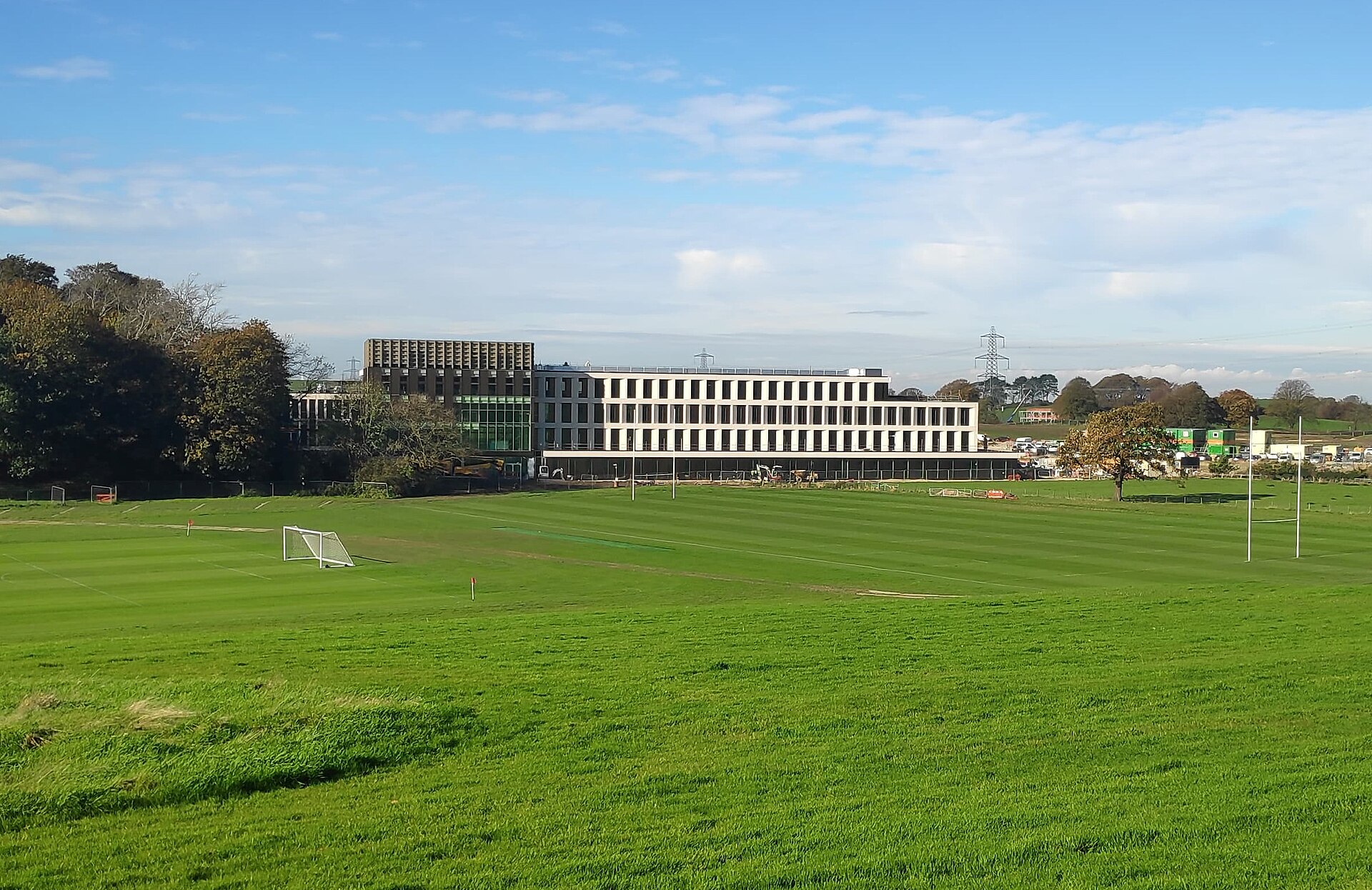
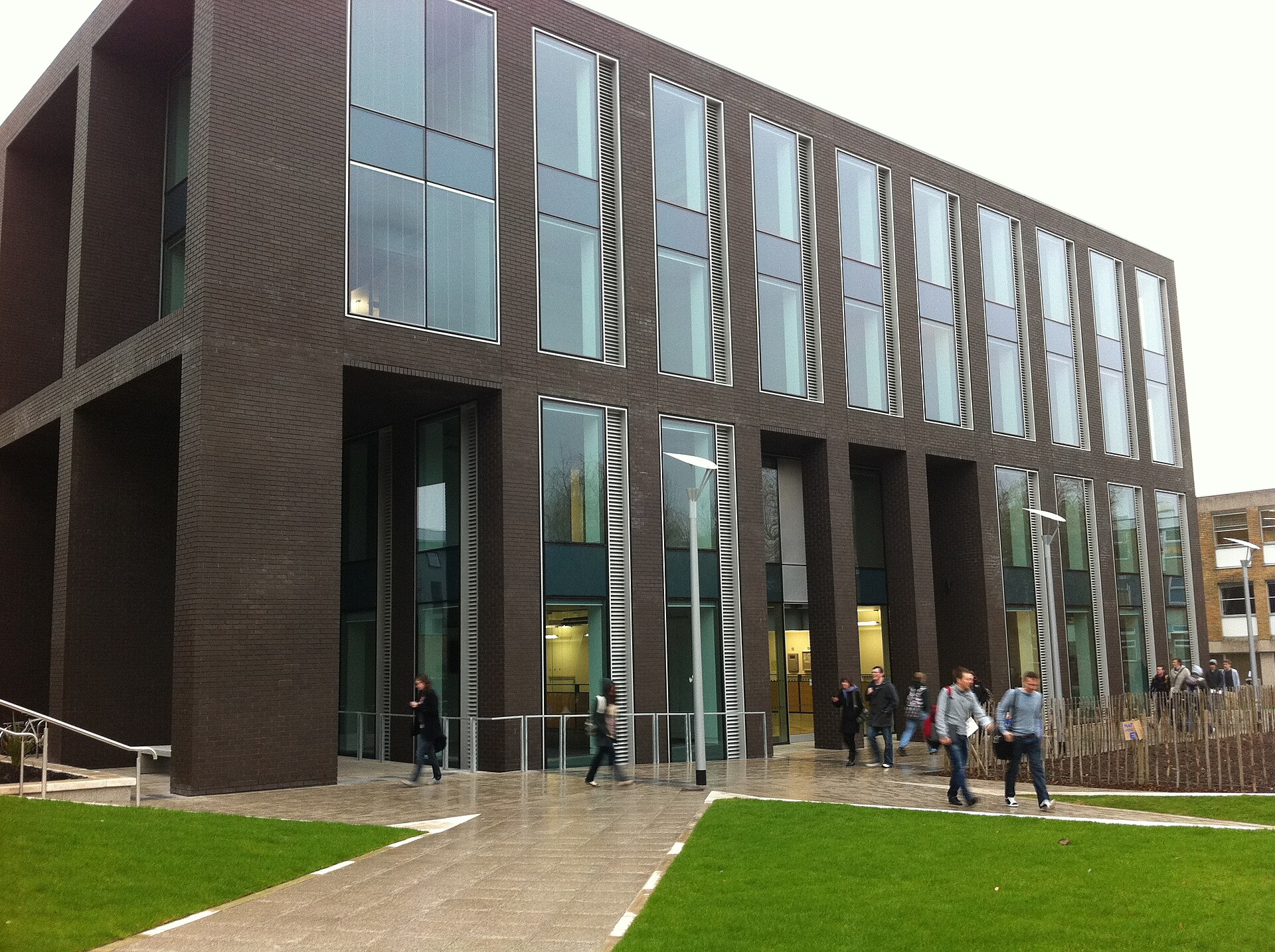
Health Innovation Campus at Lancaster University under construction in October 2019.
Health Innovation Campus at Lancaster University under construction in October 2019.Bellowhead678 · CC BY-SA 4.0 · via Wikimedia Commons
Charles Carter Building
Charles Carter BuildingJ1mjam2112 · CC BY-SA 3.0 · via Wikimedia Commons
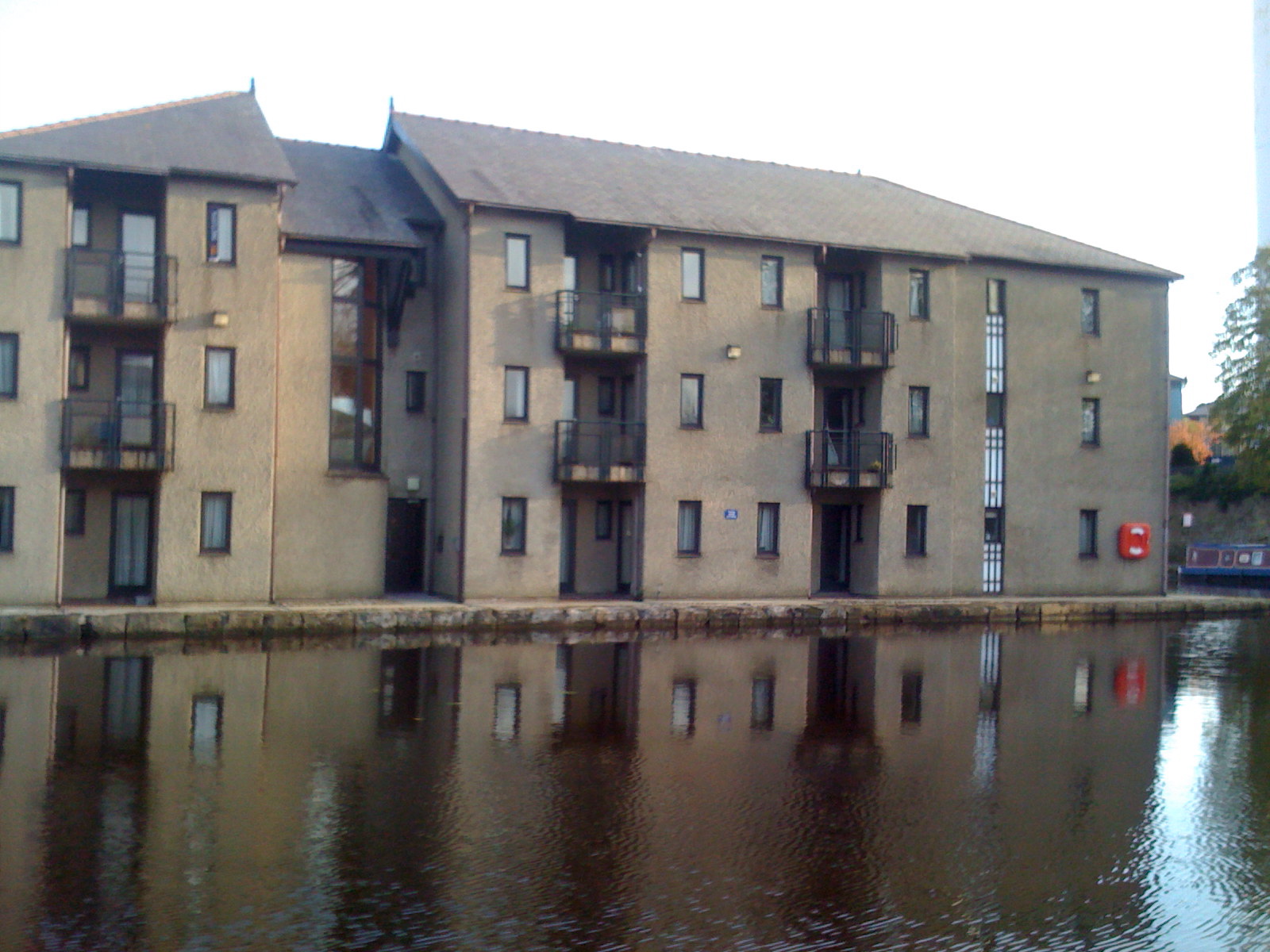
Chancellors Wharf a Lancaster University property on Aldcliffe Road, Lancaster
Chancellors Wharf a Lancaster University property on Aldcliffe Road, LancasterX CheshireCat x (talk) · Public domain · via Wikimedia Commons
Graduate College, Lancaster Universitf. Taken by myself.
Graduate College, Lancaster Universitf. Taken by myself.The original uploader was 9cds at English Wikipedia. · CC BY-SA 2.5 · via Wikimedia Commons
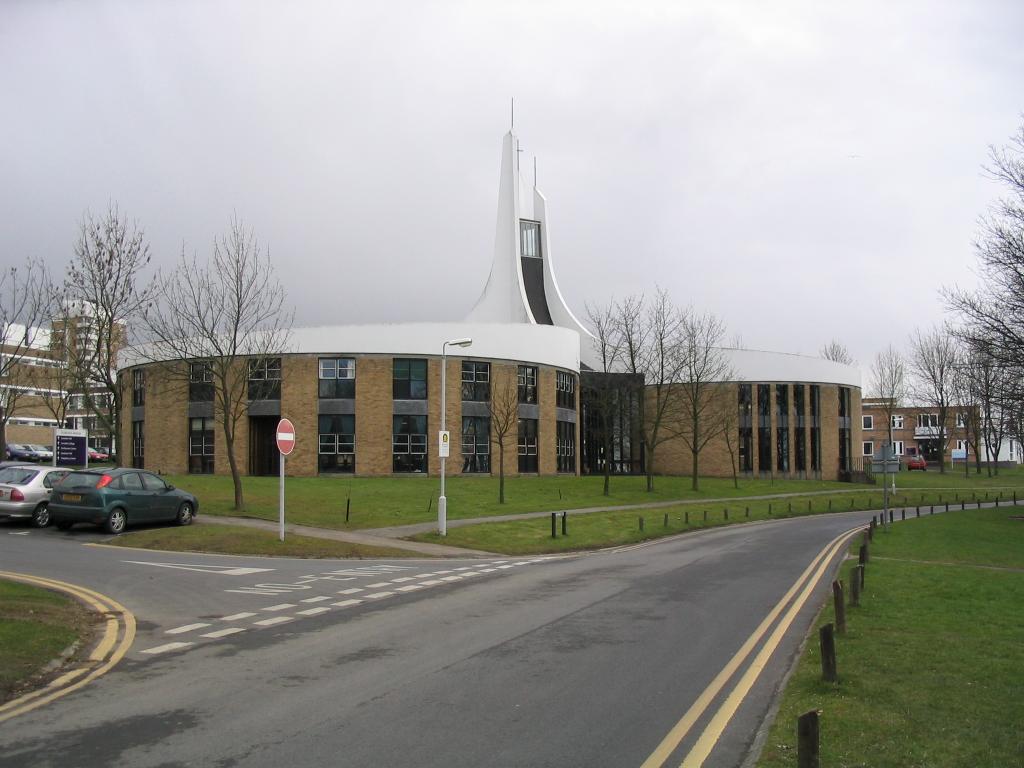
Lancaster University Chaplaincy Centre
Lancaster University Chaplaincy CentreLupin (talk) (Uploads) · CC BY-SA 3.0 · via Wikimedia Commons
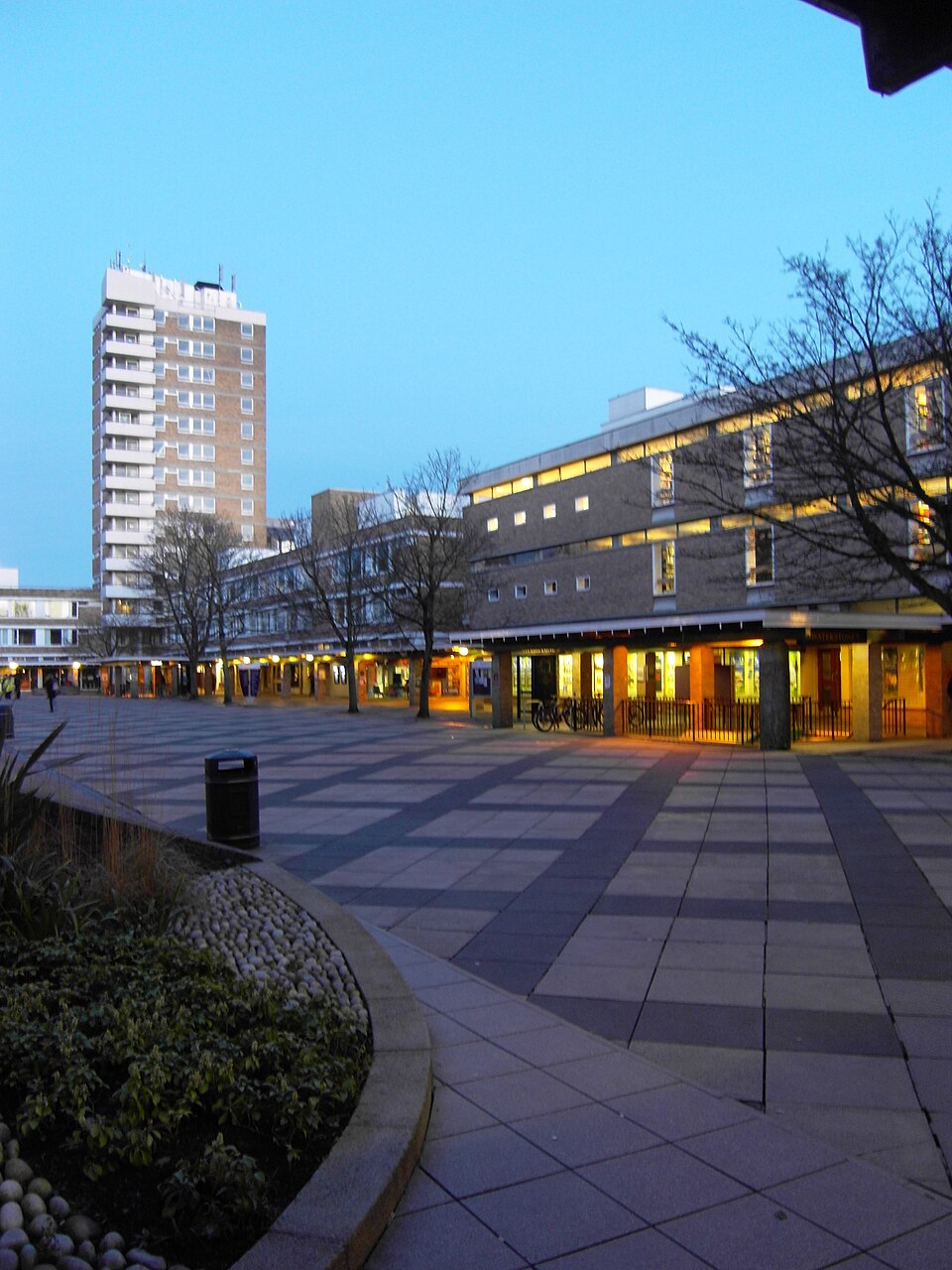
Central courtyard of Lancaster University
Central courtyard of Lancaster UniversityChristoph Michels · CC BY-SA 4.0 · via Wikimedia Commons

Why Lancaster — Rankings, Research & Real-World Outcomes

Lancaster University is not merely a regional success story — it is a genuine research university that consistently punches at or above Russell Group level in rankings, graduate outcomes, and research impact. For international students, it offers a rare combination: academic seriousness, an affordable cost of living, and a campus culture that makes integration natural rather than effortful.

01Consistent UK Top-15 Ranking
QS rank 122 globally and #11 nationally. Lancaster ranks among Britain's elite universities in every major world ranking table — above many Russell Group institutions.
02World-Class Management School (LUMS)
The Lancaster University Management School holds quadruple accreditation (AACSB, EQUIS, AMBA, Small Business Charter), placing it among the top UK business schools for research impact globally.
03Research Excellence — N8 Partnership
Lancaster is a founding member of the N8 Research Partnership — the eight most research-intensive universities in Northern England. Physics and Environmental Science are internationally recognised for world-leading output.
04Collegiate Campus Culture
Nine residential colleges give every student a close-knit community within a larger university. Lancaster's self-contained parkland campus is among the UK's most distinctive and welcoming for international arrivals.

Lancaster Acceptance Rate & Class Profile

Stats

#122
QS World Rank
#136
THE World Rank
#11
UK National Rank

Profile Stats

33 pts
IB Diploma (typical offer)
3.3
Minimum GPA Benchmark
30%
International Students
91%
Employment / Further Study
13:1
Student : Faculty Ratio
15,000
Student Population
Overall acceptance rate — varies significantly by programme

Rea Vs Rd

Rd Label: Late / Clearing Applications
Rd Value: Lower priority
Rea Label: January Equal Consideration
Rea Value: Recommended deadline

Lancaster Admissions Requirements — Grades, English Proficiency & International Qualifications

Grades & Academic Profile
Value: 33 IB / 3.3 GPA
  • IB 33 points is a typical minimum — competitive courses require higher
  • A-Level offers range from AAA to ABB depending on programme
  • Strong Higher Level subject grades in relevant disciplines
  • GPA of 3.3 is the published international benchmark
Lancaster's entry is grade-conditional — it makes offers based on predicted or achieved results. The IB Diploma is well understood; A-Levels are the standard UK route. The 33-point IB figure is a minimum benchmark; LUMS Management and Computer Science typically require higher.
SAT / ACT (Supplementary)
Value: Optional
  • SAT/ACT are not required for standard UK entry
  • Strong SAT/ACT scores may be submitted as supplementary evidence
  • US applicants: GPA + SAT/ACT + AP results reviewed holistically
  • International boards assessed on their own merit
Unlike US universities, Lancaster does not require or primarily evaluate SAT or ACT scores. UK entry is grades-first. US-curriculum applicants may include standardised test scores as supplementary context — they support but do not replace your grade profile.
English Language
Value: IELTS 6.5+
  • IELTS Academic: 6.5 overall (no band below 6.0)
  • TOEFL iBT: 87 overall
  • Duolingo English Test: 120
  • Pre-sessional English courses available for borderline scores
Non-native English speakers must provide evidence of English proficiency. Lancaster's minimums are standard for UK universities; professional or specialist programmes may require higher scores. Some nationalities with full English-medium secondary education are exempt — confirm with the admissions office.

Lancaster Application Components — UCAS, Personal Statement & Requirements

Lancaster University is applied to through UCAS — the UK's centralised admissions system. There is no Lancaster-specific application portal or supplement. Every component below contributes to the holistic review of your candidacy.

01RequiredUCAS Application
All undergraduate applications are submitted through UCAS (ucas.com). One application covers up to five university choices. Lancaster receives your application through UCAS — there is no separate Lancaster portal for standard entry.
02RequiredUCAS Personal Statement (3-Question Format)
From 2026 entry, UCAS uses three structured questions: Why this subject? How have you prepared? What else have you done? Each has a defined character limit. This replaces the old single personal statement essay.
03RequiredPredicted or Achieved Grades
For students still studying, your school provides predicted grades. Lancaster makes conditional offers based on these predictions — you fulfil the condition when final results arrive in August. Achieved grades must be certified/transcribed.
04RequiredAcademic Reference
Your school counsellor, form tutor, or head of year submits a reference on your academic ability and character through UCAS. Give them at least six weeks' notice. A specific, detailed reference is significantly more effective than a generic one.
05Required (if applicable)English Language Proof
Non-native English speakers must submit IELTS (6.5+), TOEFL iBT (87+), or Duolingo (120+) scores. Some students with English-medium secondary education in certain countries may be exempt — verify with the international admissions office.
06Course-SpecificAdmissions Tests / Portfolio / Interview
Some courses have additional requirements: Mathematics applicants may need STEP; Creative Arts and Architecture require portfolio submissions; select programmes invite interviews. Check your specific course page on lancaster.ac.uk.
07OptionalSAT / ACT / AP Scores
US-curriculum applicants may include standardised test scores as supplementary context. These are not required but can help admissions staff contextualise a US GPA alongside international peers.
https://www.lancaster.ac.uk/study/undergraduate/how-to-apply/

Lancaster UCAS Personal Statement — Writing the Perfect Application

Tips

Write about your subject, not about Lancaster
Your UCAS personal statement goes to all five universities simultaneously. Never name a specific university in the statement — focus entirely on your intellectual passion for the subject itself.
Specificity beats enthusiasm
Admissions readers see thousands of statements claiming passion for Management or Physics. A statement that cites a specific book, names a particular economic model, or describes a real experiment reads as genuinely curious rather than generically motivated.
Question 3 is an opportunity, not an afterthought
Many applicants write a strong Question 1 and an adequate Question 2, then use Question 3 to list activities without connecting them to the subject. The best statements use all three questions to build a coherent intellectual narrative.
Start drafting in the summer before Year 13
The January UCAS deadline requires at least 3–4 months of drafting, feedback, and revision to produce a personal statement that genuinely stands out. Starting in December is too late.

Prompts

Question 1 — Why This Subject?
Why do you want to study this subject at university? What makes you passionate or interested in it, and how has this developed?
Question 2 — Academic Preparation
How have your studies so far prepared you for this subject? Tell us about relevant qualifications, subjects, or skills you have gained.
Question 3 — Beyond the Classroom
What else have you done to prepare for this course, beyond your studies? This could include work experience, volunteering, personal projects, or other activities.
The most common Lancaster personal statement mistake. Writing a general statement about liking a subject rather than demonstrating real intellectual engagement with it — citing specific books, ideas, research, and experiences that are genuinely yours.
https://www.ucas.com/undergraduate/applying-university/how-write-ucas-undergraduate-personal-statement

What Lancaster Admissions Is Looking For

Lancaster's review process is holistic but grades-anchored. Your UCAS personal statement, academic reference, and qualification profile are evaluated together. Understanding what each element is expected to contribute helps you build a more complete and effective application.

01Academic Strength in Relevant Subjects
Lancaster prioritises grades in subjects that directly prepare you for your chosen degree. A strong overall profile matters, but weak performance in the key subjects for your course — Mathematics for Management Science, sciences for Physics, English for Law — is a significant concern.
02Genuine Subject Enthusiasm
Especially for single-honours degrees, Lancaster looks for evidence that you have engaged with the subject beyond the curriculum. Books read, competitions entered, research undertaken, or industry experience all demonstrate intellectual curiosity that transcends grade performance.
03Coherent Application Narrative
Admissions staff can see all five universities in your UCAS list. A consistent application — applying to the same subject at five places — signals genuine commitment. Scatter-shot applications across unrelated subjects suggest uncertainty that undermines the personal statement.
04Strong Academic Reference
A specific, evidenced reference from a teacher who knows your work in detail is far more useful than generic praise. Lancaster's admissions team uses the reference to understand your potential and to contextualise your grade predictions.
05Contextual Factors
Lancaster operates a contextual admissions policy. Students from disadvantaged backgrounds, schools with lower progression rates, or under-represented regions may receive lower conditional offers. International students from under-represented countries may also be eligible for targeted scholarships.
06Evidence of Preparation
For international students, the UCAS personal statement is the primary vehicle for demonstrating subject readiness. Work experience, self-directed study, competitions, and relevant projects — properly explained in the context of your academic direction — distinguish you from applicants with similar grades.

Lancaster Funding & Scholarships for International Students

Lancaster does not operate a US-style need-blind, full-need financial aid programme for international students. UK government student loans are available only to UK-domiciled applicants. International students should plan for the full cost of attendance and pursue Lancaster's named scholarships, home-country government funding, and external programmes such as Chevening and GREAT.

Cost figures are annual estimates in USD based on published Lancaster University data. Actual amounts are published in GBP on the Lancaster fees page and fluctuate with exchange rates.

Stats

~$34K
International tuition (annual estimate)
~$50K
Total cost of attendance (annual estimate)
~$13K
Cost of living in Lancaster (annual estimate)
~$35
UCAS application fee

Contribution Tiers

NoteRangePercentPercent Value
Automatic consideration upon UCAS applicationRegional Scholarship (14 countries)Partial tuition offset40
Triggered when you make Lancaster your firm UCAS choiceExcellence Scholarship — InternationalMerit-based award30
Named scholarship for Indian applicants — automatic considerationIndia ScholarshipSubstantial partial award50
UK government flagship — separate Chevening application requiredChevening ScholarshipFully-funded (tuition + living)100
British Council-managed; separate application requiredGREAT ScholarshipsPartial tuition award35
What This Means for International Families. Unlike elite US universities with need-blind endowment-funded programmes, Lancaster does not offer systematic need-based grant funding to international undergraduates. However, the combination of Lancaster's relatively lower international fees and Lancaster's significantly lower-cost city setting means the total cost of a Lancaster degree is meaningfully below London institutions and comparable to mid-tier Australian or Canadian alternatives.
https://www.lancaster.ac.uk/study/undergraduate/fees-and-funding/scholarships-and-bursaries/

Key Dates

UCAS deadline (Medicine/Oxbridge only — not Lancaster)
Date: 15 October
Equal Consideration Deadline (all Lancaster courses)
Date: 14 January
Late application deadline (if places remain)
Date: 30 June
Clearing opens for remaining places
Date: Results Day (Aug)

Advantages

  • Equal consideration — all January applicants reviewed on the same basis
  • Maximum places available — the pool is fullest before summer
  • Strongest scholarship eligibility — most awards require January application
  • Your personal statement has time for multiple drafts and teacher feedback
  • Time to take IELTS/TOEFL before the deadline if not yet done

Disadvantages

  • January is also the busiest UCAS period — your personal statement competes with more applicants
  • Predicted grades must be strong — results come months later in August
  • You cannot customise your statement per university — one statement goes to all five
  • If Lancaster is your first choice, you cannot signal this through a binding early decision
UCAS Timeline — January vs Late Applications. The UK does not have EA/ED/RD rounds like US universities. UCAS has one recommended deadline (14 January) for equal consideration. Lancaster processes applications on a rolling basis after this deadline — submitting early within the window is advisable for competitive programmes.
Tychr's Recommendation. Apply by the 14 January UCAS equal-consideration deadline — without exception, for all Lancaster courses. International applicants benefit from maximum places being available, full scholarship eligibility, and the rolling review process that begins immediately after the deadline. Late applications are considered only if spaces remain, and competitive programmes at LUMS typically fill before summer.
Why the January Deadline Is Best — Advantages
UCAS Application Rounds — Strategy for Lancaster Applicants
https://www.lancaster.ac.uk/study/undergraduate/how-to-apply/

Lancaster Interviews — Policy, Exceptions & Preparation

The great majority of Lancaster programmes do not interview applicants. Offers are made based on predicted grades, the UCAS personal statement, and the academic reference alone. A small number of creative and specialist courses — particularly Architecture — require a portfolio review or informal interview. If invited to one, treat it as a subject-passion conversation, not a formal interrogation.

Meta

No interview required for most programmes
Standard Policy
Architecture (portfolio review), some creative arts, occasional Management interviews
Exceptions
Subject-focused conversation or portfolio review
Format (where used)
Supplementary — grades and personal statement dominate
Decision Weight

Questions

Portfolio Review (Architecture / Creative Arts)
Tip: For Architecture and Creative Arts: prepare a physical or digital portfolio with 8–15 pieces that demonstrate range and process, not just finished work.
Why this specific subject at Lancaster?
Tip: If invited to interview, know why you chose this subject over related alternatives — 'I chose Management Science over straight Business because I'm interested in optimisation modelling' is a stronger position than 'I love business'.
Tell me about something you've read or explored in your field recently.
Tip: Be prepared to discuss something you've read, a news story in your field, or a problem in your subject area — show genuine intellectual currency, not textbook recall.
What aspect of the degree are you most looking forward to — and why?
Tip: Interviewers at Lancaster typically want to see subject enthusiasm and readiness for degree-level thinking — not polished corporate answers. Be honest and curious.
What do you hope to gain from university beyond your degree?
Tip: The Lancaster Award is a co-curricular programme many students use to develop employability skills — knowing about it signals you have researched the university properly.

Lancaster's College System & Residential Life

Lancaster operates a collegiate system: nine colleges, each with its own common room, bar, social calendar, and support staff. Every undergraduate student is assigned to a college — this becomes their social home within the wider university community. Unlike Oxbridge colleges, Lancaster colleges are not academic divisions; all academic study takes place in the departments, but the college provides a built-in community from day one.

Houses

Bowland College
Tag: College
The largest college; home of the Principal's Lecture Series
Cartmel College
Tag: College
Arts & Social Sciences focus; vibrant social scene
County College
Tag: College
One of the original three colleges; strong sports culture
Furness College
Tag: College
STEM-leaning culture; named after Furness Railway
Fylde College
Tag: College
Known for music and performance; compact community
Grizedale College
Tag: College
Newer college; modern facilities; active student life
Lonsdale College
Tag: College
International community hub; welcoming to overseas students
Pendle College
Tag: College
Named after Pendle Hill; community-focused, newer accommodation
Graduate College
Tag: Postgraduate
Dedicated postgraduate college; research student community

Lottery Steps

  • You are assigned to a college when you accept your place at Lancaster
  • First-year students live in accommodation affiliated with their college — typically on or near campus
  • All first-year undergraduates are guaranteed accommodation if they firm Lancaster by the specified date
  • International students receive priority consideration and support from the International Student Advisory Service
  • You remain a member of your college throughout your degree — for sports, socials, and representation
https://www.lancaster.ac.uk/study/undergraduate/student-life/colleges/

Lancaster's Faculties & Key Departments

Lancaster University Management School (LUMS)
Label: Quadruple-Accredited
  • {"label":"Accreditations held","value":"AACSB, EQUIS, AMBA, SBC"}
  • {"label":"Key programmes","value":"Management, Accounting & Finance, Economics, MgmtSci"}
  • {"label":"Research focus","value":"Behavioural economics, operations research, sustainability"}
  • {"label":"Industry links","value":"Big 4, FTSE-100, global banks"}
LUMS is Lancaster's flagship school and one of the UK's most internationally recognised business schools. Undergraduate programmes include straight Management, Management with a Year in Industry, Economics, Accounting & Finance, and Management Science.
Faculty of Science & Technology
Label: Research-Intensive
  • {"label":"Key programmes","value":"Physics, Computer Science, Engineering, Environmental Science"}
  • {"label":"Research strengths","value":"Particle physics, sustainable energy, data science"}
  • {"label":"Research partnership","value":"N8 Research Partnership member"}
  • {"label":"Industry pipeline","value":"Tech sector, defence, energy, environmental consultancy"}
Lancaster's Physics department is internationally recognised for research quality. Computer Science and Environmental Science consistently rank highly in subject rankings. Engineering programmes span Civil, Mechanical, and Electronic disciplines.
Faculty of Arts & Social Sciences
Label: Broad Humanities & Social Sciences
  • {"label":"Key programmes","value":"Law, Psychology, Sociology, History, English, Linguistics"}
  • {"label":"Law ranking","value":"Consistently top-20 UK Law schools"}
  • {"label":"Psychology strength","value":"BPS accredited; strong research methods focus"}
  • {"label":"Linguistics distinction","value":"One of the UK's leading Linguistics departments"}
Lancaster's Linguistics department is one of the most respected in the UK. Law, Psychology, and Sociology attract strong student cohorts and have excellent professional outcome rates.
Faculty of Health & Medicine
Label: Medicine & Allied Health
  • {"label":"Medical school","value":"Lancaster Medical School (MBBS)"}
  • {"label":"Clinical partner","value":"University Hospitals of Morecambe Bay NHS"}
  • {"label":"Programme length","value":"5 years (MBChB)"}
  • {"label":"Entry requirement","value":"UCAT required; separate application route"}
Lancaster Medical School is a modern medical school with a community-oriented curriculum. Entry is highly competitive and requires UCAT results in addition to strong A-Level or IB science grades. Biomedical Science and Sport and Exercise Science are also offered.

Research & Extracurricular Opportunities at Lancaster

Undergraduate Research Opportunities
Category: Research Exposure
Lancaster actively involves undergraduates in research from Year 1. The Faculty of Science & Technology integrates research-active staff into undergraduate teaching; LUMS connects students with live management consultancy projects and industry partnerships. The Lancaster Award can be gained partly through supervised research projects.
The Lancaster Award
Category: Employability Programme
The Lancaster Award is a voluntary co-curricular accreditation scheme that helps students document skills gained through work experience, volunteering, leadership, and global engagement. It is widely recognised by graduate recruiters and is one of Lancaster's most distinctive non-academic offerings.
LUSU & Student Societies
Category: 180+ Clubs & Societies
Lancaster University Students' Union operates over 180 clubs and societies covering academic, cultural, sporting, and creative pursuits. The college system means social life is naturally organised — each college has its own bar, events calendar, and intra-university competitions (Roses Tournament).
Sports & Outdoor Recreation
Category: BUCS Competition + Lake District
Lancaster competes in BUCS (British Universities & Colleges Sport) across dozens of sports. The Sports Centre offers gym, swimming, climbing wall, and courts. The Lake District National Park — 30 minutes away — is a natural playground for hiking, climbing, kayaking, and outdoor pursuits.
Scroll right to explore Lancaster's research programmes and student life opportunities.

Career Outcomes & Lancaster Alumni Network

With 91% of graduates in employment or further study within 15 months and an average starting salary of approximately $33,000 USD, Lancaster delivers strong and measurable graduate outcomes. For international students, Lancaster's strong employer relationships and the Lancaster Award provide structured pathways to professional opportunity in the UK and internationally.

Stats

91%
Employed or in further study within 15 months
~$33K
Average starting salary (USD equivalent)
30%
International students in cohort
#122
QS World University Rank
#11
UK National Rank
Yes
N8 Research Partnership member

Categories

Finance, Consulting & Business
LUMS graduates are heavily recruited by the Big 4 accounting and consulting firms, global banks, and FTSE-100 companies. The LUMS global alumni network spans over 130 countries — directly useful for international students seeking professional connections beyond the UK.
Technology, Engineering & Science
Lancaster Computer Science and Engineering graduates enter major technology employers including BAE Systems, GCHQ, Google UK, and a growing regional tech sector in Manchester and Leeds. Physics graduates are sought across research, defence, and energy industries.
Public Sector, Law & Environment
Lancaster's Law and Psychology graduates enter the legal profession, public service, NHS, and civil society. Environmental Science graduates feed into sustainability consulting, government environmental agencies, and the growing green economy sector.

Our Lancaster Admissions Track Record & Student Success Stories

Priya S.
Tychr helped me realise my UCAS personal statement was listing achievements rather than exploring ideas. We rewrote Question 1 entirely around a specific econometrics paper I had read. Lancaster's LUMS team mentioned it in their offer letter — they do read carefully.
Country: India
Program: Lancaster — Management Science
Class Year: Class of 2026
Residential: Lonsdale College
Academic Profile: IB 36 · IELTS 7.5
Ahmed K.
I was applying to five different subjects on UCAS — Economics, Business, Accounting, Finance, Management. My Tychr counsellor explained that admissions staff see all five choices and that a scattered list undermines the personal statement. Consolidating to four Economics/Finance choices and rewriting Question 2 to focus on quantitative preparation made all the difference.
Country: Egypt
Program: Lancaster — Economics
Class Year: Class of 2027
Residential: Fylde College
Academic Profile: A-Levels AAB · IELTS 7.0
Mia T.
Lancaster's Environmental Science programme was my first choice because of the N8 research access. My Tychr counsellor pushed me to make that research connection explicit in Question 3 — I had done conservation fieldwork in Thailand but hadn't framed it academically. The reframing turned a list of activities into evidence of genuine scientific preparation.
Country: Thailand
Program: Lancaster — Environmental Science
Class Year: Class of 2025
Residential: Grizedale College
Academic Profile: IB 35 · TOEFL 98

Faqs

Do I apply directly to Lancaster or through UCAS?+

All full-time undergraduate applications are made through UCAS (ucas.com). You submit one application covering up to five universities — including Lancaster. Lancaster does not accept direct applications for standard undergraduate entry.

Is Lancaster University a Russell Group university?+

No. Lancaster is not a Russell Group member. However, it consistently ranks in the UK top 11 nationally and is a member of the N8 Research Partnership, which aligns it with the most research-intensive universities in Northern England. Its graduate outcomes and research rankings are fully competitive with many Russell Group institutions.

What IB score do I need for Lancaster?+

The typical IB offer is 33 points overall, but this varies significantly by programme. LUMS Management, Computer Science, and Economics typically require higher. Always check the specific course entry requirements on the Lancaster website for the current cycle.

Does Lancaster require SAT or ACT scores?+

SAT and ACT are not required for Lancaster's standard undergraduate entry. Lancaster primarily evaluates international applicants on their national qualifications (IB, A-Level, US GPA, Indian boards, etc.). Test scores may be submitted as supplementary context but are not a prerequisite.

Can I apply to Lancaster from the Indian curriculum (CBSE/ISC)?+

Yes. Lancaster is experienced in assessing CBSE and ISC results. Submit predicted and/or achieved marks with your UCAS application. Contact Lancaster's international admissions team to confirm the grade equivalency required for your chosen course.

Is accommodation guaranteed for international students at Lancaster?+

First-year undergraduates — including all international students — are guaranteed accommodation on or near campus, provided they accept Lancaster as their firm UCAS choice by the specified deadline. International students receive priority allocation and dedicated support from the International Student Advisory Service.

What is the Lancaster Award and why does it matter?+

The Lancaster Award is a voluntary co-curricular accreditation programme helping students document skills gained through work, volunteering, leadership, and global engagement. It is recognised by major graduate recruiters and strengthens your employability profile alongside your degree.

How does Lancaster's cost compare to London universities?+

Lancaster is significantly cheaper than London universities for both tuition and living costs. Lancaster's international tuition is approximately $34,000 annually, and the cost of living in Lancaster city is approximately $13,000 — substantially below London's comparable figures. Total annual cost of attendance is estimated at around $50,000.

Book a Free Lancaster Admissions Strategy Session

In 60 minutes, our Lancaster admissions specialists will evaluate your academic profile against Lancaster's entry requirements, audit your UCAS personal statement strategy, identify scholarship opportunities relevant to your background, and map out the clearest path to a strong conditional offer.

  • No commitment required
  • UK university specialists with UCAS expertise
  • Personalised strategy — not generic advice
Getting into Lancaster is about more than your grades — it's about building an application that makes your subject passion undeniable.

Lancaster Academic Requirements

Lancaster Academic Requirements — The Honest Breakdown for International Students

What grades, qualifications, and academic profile does Lancaster expect? And how does the UK UCAS process evaluate IB, A-Levels, US High School, and other international curricula?

33 pts
Typical IB Offer
Points; competitive courses higher
3.3
Min. GPA Benchmark
International qualification standard
6.5
IELTS Minimum
No individual band below 6.0
87
TOEFL iBT Minimum
Check per-section requirements
62%
Acceptance Rate
Varies widely by programme
#122
QS World Rank
Consistent UK top 15

GPA & Predicted Grades

Lancaster and GPA — What the Entry Standards Show

Lancaster does not operate a GPA-based admissions system in the US sense. UK entry is grade-conditional — the university makes an offer specifying the grades you must achieve, and your place is confirmed or withdrawn based on actual results. A GPA of 3.3 is the published international benchmark, but this is best understood as a threshold rather than a target.

For international students from GPA-based systems, a 3.3 GPA is a floor, not a ceiling. Competitive Lancaster programmes — LUMS Management, Computer Science, Physics — typically require a profile equivalent to a 3.6–3.8 GPA in relevant subjects.

33 pts
IB Diploma — typical minimum offer across programmes
3.3
International GPA benchmark
What this means for international students. Lancaster's admissions staff are experienced in converting GPA and international grade profiles to UK grade equivalents. Your national qualification is assessed relative to what is typical from your country and curriculum. A 3.3 GPA from a rigorous US school with strong AP performance reads differently from a 3.3 GPA from a school with no advanced coursework.
Predicted grades vs. achieved grades. For conditional offer applicants (those still studying), predicted grades set the offer level. If actual results in August exceed the offer, Lancaster will generally still admit you. If results fall below the condition — especially in key subjects — you may need to go through Clearing or reapply. Planning to exceed predicted grades, not just meet them, is the right mindset.

Academic Context

How Lancaster Reads International Academic Records

Lancaster University evaluates academic performance in context. The qualifications you hold, the school you attended, and the subject choices you made within your qualification all influence how your grades are read. Understanding this contextual evaluation is important for international applicants.

How Lancaster contextualises your academic record
Every application is evaluated with reference to the specific qualification system, its typical grade distribution, and the subjects studied. A student from a highly competitive national board (India's CBSE, China's Gaokao, Singapore's A-Levels) is assessed differently from one applying through an IB or UK A-Level route. Lancaster's admissions team references established conversion frameworks for major international qualifications.
Subject rigour within your qualification
Subject choice within a qualification matters as much as overall grade. IB students who chose HL Mathematics AA and HL Physics are regarded differently for a LUMS Management Science application than those who chose HL Economics and HL Business Management. Lancaster expects to see subject rigour appropriate to the degree sought, not just high overall marks.
For students at less well-known international schools. Your academic reference — submitted by your school counsellor, head of year, or form tutor through UCAS — provides Lancaster with the institutional context needed to evaluate your performance fairly. A reference that explains the grading scale of your school, your rank within the cohort, and the typical range of grades achieved at your institution significantly strengthens an application from a less well-known school.

SAT at Lancaster

SAT Scores at Lancaster — When and Why They Matter

Lancaster does not use SAT scores as a primary admission criterion. The UK UCAS system is grades-first: A-Level or IB results (predicted or achieved) are the foundation of your application. However, SAT scores can serve as supplementary evidence for certain applicant groups.

LabelScorePercent
SAT required for entryNo0
SAT accepted as supplementary evidenceYes50
Best use caseUS applicants contextualising GPA70
When SAT Math matters. For US-educated applicants applying with a high school GPA and SAT scores, strong SAT Mathematics performance (750+) is a useful signal for STEM or quantitative programmes. It provides standardised evidence of mathematical preparation that a GPA alone may not convey to UK admissions staff.
Strategy for US applicants. If you are a US-curriculum applicant applying to Lancaster, a strong SAT (1350+) alongside your GPA and AP results gives admissions staff a comprehensive academic picture. However, an SAT alone cannot substitute for a strong grade profile and subject choices relevant to your intended degree.
Submit or withhold?. If your SAT score is strong (above 1350) and you are a US applicant, include it. If your score is below 1200, withhold it and ensure your GPA, AP scores, and teacher reference do the work instead. UK admissions staff are more confident reading national qualifications than standardised test scores — the test is genuinely supplementary.

ACT at Lancaster

ACT Scores at Lancaster — The UK Context

Like the SAT, the ACT is not a standard requirement for Lancaster University entry. Its role is supplementary — useful for US applicants as part of a holistic academic picture, but not a prerequisite for anyone.

Metrics

ACT required
Score: No
ACT considered if submitted
Score: Yes (US applicants)

Comparison Cards

SAT vs. ACT — Equal standing
Lancaster evaluates both equally as supplementary context for US applicants. Your GPA and AP results are typically the stronger academic signal.
Quantitative programmes
For STEM or quantitative programmes, the SAT Math subscore or ACT Math/Science subscore can be specifically useful context.
Humanities programmes
For humanities and social sciences, neither the SAT nor ACT provides more signal than your essay, history, and English results.
Superscore policy. Lancaster does not superscore SAT or ACT — these tests are supplementary context only, not scored against a specific Lancaster band. A high composite ACT score is a positive supplementary signal; a low score is worth withholding.
Tychr's recommendation. For US-educated applicants, include your best ACT or SAT score if it is strong (ACT 30+ / SAT 1350+). Focus the bulk of your application energy on your GPA, AP results, and UCAS personal statement — these are far more important than your standardised test scores in a UK admissions context.

Testing Policy

Lancaster's Test Policy — What 'Optional' Actually Means in the UK Context

Lancaster's official test policy is 'optional' for SAT and ACT. This reflects the UK UCAS system's fundamental structure: standardised tests are simply not part of standard UK undergraduate entry. Understanding this correctly prevents students from misallocating effort.

Submit Items

You are applying from a US high school and your SAT/ACT score is strong (1350+ SAT / 30+ ACT) — it provides useful supplementary context alongside your GPA.
Your national qualification grade system is less familiar to UK admissions staff and a strong standardised score helps contextualise your academic ability.

Withhold Items

Your score is below 1200 (SAT) or 27 (ACT) — it adds no positive signal and may draw attention to a weaker dimension of your profile.
You are an IB or A-Level student — your qualification is fully understood without any standardised test score.
Current policy (permanent, not temporary). Lancaster accepts applications without SAT or ACT scores. This is not a special COVID-era accommodation — it is the permanent, normal state of UK undergraduate admissions. No UK university has ever required SAT or ACT as a standard entry condition. English language tests (IELTS, TOEFL, Duolingo) are a completely separate requirement and are required, not optional, for non-native English speakers.
The misconception — UK is not the same as US admissions. Many international students applying from countries that heavily emphasise SAT preparation assume the test carries the same weight in UK admissions. It does not. For IB and A-Level applicants to Lancaster, the time spent on SAT preparation is significantly better invested in academic breadth, subject enrichment, and personal statement drafting.

Qualifications

A-Levels and IB at Lancaster — Entry Benchmarks and Subject Expectations

IB Diploma
Note: What Lancaster values in IB applicants: relevant Higher Level subjects chosen with genuine intellectual purpose rather than grade optimisation. For LUMS, HL Mathematics is strongly valued. For Sciences, HL Sciences with strong grade predictions are expected. The Extended Essay grade and subject can provide useful insight into research capability.
  • {"label":"Typical IB offer","value":"33 points overall"}
  • {"label":"HL expectations","value":"Relevant HL subjects with grades of 6–7 for competitive programmes"}
  • {"label":"Subject rigour","value":"HL Mathematics (Analysis & Approaches preferred for STEM and Economics); HL Sciences or Humanities depending on programme"}
  • {"label":"Extended Essay","value":"Subject-relevant EE demonstrates research initiative; A or B grade expected for competitive applicants"}
A-Levels (UK / International)
Note: Predicted grades: Lancaster's admissions team understands A-Level predicted grade conventions. Strong AS (Year 12) results alongside predicted A2 grades reinforce the case. Specific subject conditions apply for competitive programmes — Mathematics A or A* for Management Science, three sciences including Chemistry for pre-medical entry.
  • {"label":"Typical competitive offer","value":"AAA (LUMS Management, CS, Physics) to ABB (most other programmes)"}
  • {"label":"Subject conditions","value":"Programme-specific — check each course page on lancaster.ac.uk"}
  • {"label":"AS results","value":"Strong AS performance supports predicted grade credibility"}
  • {"label":"Cambridge A-Levels / Edexcel / AQA","value":"All major awarding bodies accepted"}

Advanced Placement (US Curriculum)

AP Courses at Lancaster — How They Are Read and What They Signal

Advanced Placement courses are primarily a US qualification and are not a standard component of UK undergraduate admissions. However, for US-educated applicants to Lancaster, AP scores form part of the holistic academic picture alongside GPA and SAT/ACT results.

What Lancaster looks for in AP results
Strong AP scores (4–5) in subjects relevant to your intended degree are positive supplementary signals. Calculus BC and Statistics for Management Science; Physics C and Chemistry for Sciences; Macroeconomics for Economics. Scores of 3 or below are worth omitting.
How AP scores are assessed
Lancaster does not use AP scores as a primary entry criterion and does not publish AP score equivalency tables. The admissions team assesses them as evidence of academic preparation within a US high school context — alongside GPA, teacher reference, and personal statement.
Do AP scores grant credit at Lancaster?
Lancaster does not grant course credit for AP scores in the way some US universities do. You will be expected to complete the full degree curriculum regardless of prior AP performance.
Unlike many US universities, Lancaster does not award course credit or exemptions for AP results. The degree is three years (four with a Year in Industry or Study Abroad) regardless of prior advanced study.
Non-US international students should not artificially pursue AP courses. IB, A-Level, and national board qualifications are the appropriate vehicles for international students and are fully understood by Lancaster's admissions team without supplementary AP evidence.

Academic Rigour

Course Rigour — Lancaster's Secondary School Expectations

Lancaster's admissions process evaluates not just the grades you achieved but the difficulty of the courses in which you achieved them. Choosing the most rigorous available subjects within your qualification system — even at some risk to your overall grade — is generally the right strategy for competitive Lancaster programmes.

The right HL subjects for your intended Lancaster programme, studied seriously and deeply, matter more than a maximised point score in softer subjects.

Contextual rigour — relative to your school's options. Rigour is always evaluated relative to what was available and appropriate. An IB student at a school offering limited HL options is assessed differently from one at a school with the full HL palette. What matters is whether your subject choices reflect genuine intellectual ambition appropriate to the programme you are applying for.
What rigour means for Lancaster applicants. For Lancaster, rigour means: choosing HL Mathematics (not just SL) for quantitative programmes; taking three sciences at HL for Medical School entry; studying English and History alongside sciences for Law rather than stacking easier subjects. The admissions team is experienced at identifying grade-protective course selections.
What Lancaster admissions is looking for. A student who took HL Mathematics AA, HL Chemistry, and HL Physics simultaneously — even if their overall score is 34 rather than 38 — presents a more academically credible case for Lancaster's Physics or Engineering programmes than a student with 38 points in HL Economics, HL Geography, and HL Psychology.

Subject-Level Preparation

Subject-Level Academic Expectations — What Lancaster's Key Programmes Require

Lancaster's strongest programmes have specific subject prerequisites. Understanding what each department expects in terms of prior academic preparation — beyond just the IB or A-Level offer level — is essential for international applicants.

Mathematics
HL Mathematics (Analysis & Approaches preferred) or A-Level Mathematics is strongly expected for Management Science, Economics, Computer Science, and Physics. Further Mathematics (IB SL or A-Level) significantly strengthens STEM applications. Quantitative olympiad or competition performance is a meaningful positive signal.
Sciences
For Physics, Engineering, and Environmental Science, HL sciences (6–7) or A-Level sciences at A or A* are standard. Research exposure through school projects, summer programmes, or science fairs is valued in competitive applications. Lancaster's Environmental Science department values field research and real-world conservation experience.
Management & Business (LUMS)
LUMS expects numeracy alongside business curiosity. Work experience in a relevant industry, entrepreneurial projects, or formal business competitions (Young Enterprise, Junior Achievement) demonstrate genuine interest beyond academic study. The UCAS personal statement should cite specific business issues, economic concepts, or management ideas that interest you.

Language Proficiency

English Language Requirements at Lancaster — Full Guide for International Applicants

Lancaster requires evidence of English language proficiency from applicants whose first language is not English. The minimum thresholds below apply across most undergraduate programmes — professional and intensive courses may require higher minimums.

IELTS and TOEFL scores are a requirement but not a substitute for good English writing. Your UCAS personal statement — written in English — is itself evidence of your ability to communicate at degree level. Students who meet the IELTS minimum but write a poorly structured, grammatically inconsistent personal statement create a contradictory impression.

Test: IELTS Academic
Score: 6.5 (no band below 6.0)
Test: TOEFL iBT
Score: 87
Test: Duolingo English Test
Score: 120
What to do if your score is borderline. If your English language score is borderline (e.g., IELTS 6.0 overall with one band at 5.5), Lancaster offers pre-sessional English courses of 6–10 weeks that can fulfil the language requirement and prepare you for degree-level study. These are available on campus and run immediately before the academic year begins.

By Programme

Academic Requirements by Lancaster Programme — What Each Course Expects

Lancaster makes conditional offers by programme — you apply to a specific course, not to the university generally. Entry requirements therefore vary by department. The table below summarises typical academic expectations per programme area.

SignalsExpectationConcentration
HL Maths AA preferred; economics competition experienceIB 36+ / AAA A-Levels (with Maths)Management Science / Economics
Self-directed coding projects; Maths competition resultsIB 35+ / AAA A-Levels (Maths required)Computer Science
Physics olympiad; research science exposureIB 36+ / AAA (Physics + Maths)Physics
Fieldwork; conservation volunteering; geography researchIB 33+ / ABB (with relevant science)Environmental Science
Work experience; entrepreneurial activity; business readingIB 35+ / AAA (LUMS)Management (LUMS)
Accounting work experience; strong maths backgroundIB 35+ / AAA (LUMS, with Maths)Accounting & Finance
UCAT score; clinical experience; science researchIB 38+ / AAA (Chem + Bio); UCAT requiredMedicine (MBChB)
Wide reading in psychology; research methods awarenessIB 33+ / ABB (Biology/Psychology preferred)Psychology
Legal reading; debating; philosophy/ethics engagementIB 33+ / ABB (no fixed subjects)Law

International Systems

How Lancaster Evaluates International Qualifications — A Curriculum-by-Curriculum Guide

IB Diploma
Well understood and strongly valued at Lancaster. Admissions staff are experienced IB readers and understand the difference between ambitious HL selections and grade-optimised choices. The EE, TOK, and IAs are considered genuine indicators of research capability. The Total Points offer (e.g., 33) is always accompanied by specific HL grade conditions for competitive courses.
A-Levels (UK / Cambridge International / Pearson)
The primary and most familiar qualification for Lancaster admissions. Offers are expressed in A-Level grade combinations (e.g., AAA, AAB). All major awarding bodies — Cambridge International, Pearson Edexcel, AQA, OCR — are accepted. Predicted grades submitted through UCAS form the basis for conditional offers.
Indian Boards (CBSE / ISC)
Lancaster has a strong Indian student community and is experienced in assessing CBSE and ISC results. Minimum percentage thresholds vary by programme and year — the Lancaster website maintains a country-specific entry requirements page that is updated annually. Indian applicants should also note the IELTS requirement; students who studied in English-medium schools may be exempt.
US High School (GPA + SAT/ACT + AP)
US students applying with GPA, SAT/ACT, and AP results are assessed holistically. Lancaster is familiar with the US high school system. Strong AP scores (4–5) in relevant subjects significantly strengthen an application. A GPA of 3.3 is the published minimum benchmark.
Other International Qualifications
Sri Lankan A-Levels, South African Matric, Nigerian WASSCE, and many other national qualifications are assessed against published international equivalency frameworks. Contact Lancaster's international admissions team to confirm the specific grade equivalency for your qualification before applying.

Profile Roadmap

Building an Academic Profile for Lancaster — What to Do at Each Stage

Year 9–10 (IGCSE / MYP)Establish your academic direction
Year: Year 9–10 (IGCSE / MYP)
  • Select IGCSE or MYP subjects that keep maximum options open for IB or A-Level selection.
  • Identify your core subject interest and begin reading beyond the curriculum in that field.
  • Explore summer enrichment programmes — Lancaster runs a summer school for pre-university students.
Year 11 (Critical qualification choice year)Choose the right HL or A-Level subjects
Year: Year 11 (Critical qualification choice year)
  • IB: select HL subjects that align with your intended Lancaster programme — not the ones that are easiest to score 7 in.
  • A-Level: confirm your three (or four) subjects with intended programme requirements in mind.
  • Begin UCAS personal statement research — identify books, papers, or experiences to draw on in each question.
  • Explore science Olympiads, business competitions, or subject-specific enrichment relevant to your target department.
Year 12 (Build the evidence year)Deepen subject preparation and build the personal statement
Year: Year 12 (Build the evidence year)
  • Pursue relevant work experience, internships, or research projects — these feed directly into UCAS Question 3.
  • Maintain or improve academic grades — teachers form impressions that feed into your UCAS reference.
  • Begin drafting personal statement responses in summer of Year 12.
  • Sit IELTS or TOEFL early enough for retakes if needed.
Year 13 (Application year — September to January)Submit a complete, polished UCAS application
Year: Year 13 (Application year — September to January)
  • Finalise all three UCAS personal statement responses with multiple rounds of teacher feedback.
  • Confirm your five UCAS choices are consistent (same or closely related subjects).
  • Ensure your referee has adequate time — at least 6 weeks — to write a specific, evidenced reference.
  • Submit by 14 January for equal consideration. For Mathematics with STEP, begin STEP preparation in Year 12.

Common Pitfalls

Academic Mistakes That Cost Lancaster Applications — And How to Avoid Them

Mismatched subject choices for your intended programme
Choosing IB HL Visual Arts and HL Psychology for a LUMS Management Science application, or A-Level Media Studies and ICT instead of Mathematics and a Science for Computer Science, signals a disconnect between your application's subject claim and your academic preparation. Admissions staff notice this immediately.
Applying after the January deadline
Applications processed after the 14 January equal consideration deadline are considered only if spaces remain. Popular LUMS courses and Computer Science often fill before Clearing. Late applicants cannot access most scholarship schemes.
Not booking English language tests early enough
IELTS and TOEFL test bookings need 6–8 weeks lead time in peak periods. If you submit your UCAS application without a valid language test result, Lancaster cannot make you a formal offer until one is received.
A personal statement that describes but does not analyse
A personal statement that lists achievements without explaining why they deepened your subject interest is a wasted opportunity. Every activity, competition, or experience cited in UCAS Question 3 must connect explicitly back to the academic direction you are pursuing.
Underestimating the academic reference
The teacher who submits your UCAS reference has significant impact on your application's credibility. A generic reference that could apply to any student, or one that simply repeats predicted grades, does not help Lancaster differentiate you from other applicants with similar profiles.

Real Outcomes

What Academic Profiles Tychr's Lancaster-Placed Students Had

The following profiles illustrate the academic backgrounds of students Tychr has helped gain Lancaster University admissions or equivalent outcomes at UK top-15 universities. They show the range of academic preparation that works — and what made each application distinctive.

Profile 1 — LUMS Management
HL Mathematics AA (7), HL Economics (6), HL Business Management (6). IB 35 total. Conducted an independent project on supply-chain optimisation for a family business, cited in UCAS Question 2. Work experience at a Big 4 accounting firm cited in Question 3.
Stats: IB 35 · IELTS 7.0 · India (CBSE background, switched to IB in Year 10)
Takeaway: The IB offer (33) was met comfortably, but the differentiator was the connection between the independent quantitative project and the Management Science programme — cited specifically in Question 1.
Profile 2 — Physics
A-Levels: Mathematics A*, Physics A, Chemistry A. Attended a residential physics camp (National Physics Summer School). No SAT submitted. Personal statement focused on particle physics — cited Lancaster's proximity to the Daresbury Laboratory as context for Question 1.
Stats: A-Levels A*AA · IELTS 6.5 · Pakistan
Takeaway: The academic profile met the offer condition. The personal statement's specific reference to Lancaster's research context — without naming Lancaster (UCAS policy) — showed real knowledge of the field and the department.
Profile 3 — Environmental Science
US high school GPA 3.8, SAT 1380, AP Environmental Science (5), AP Biology (4). Extensive conservation volunteering in Malaysia. Personal statement highlighted field research conducted in a protected rainforest reserve.
Stats: GPA 3.8 · SAT 1380 · Malaysia · Duolingo 125
Takeaway: The grades met Lancaster's benchmark; the real differentiator was the field research experience, which directly answered UCAS Question 3 in a way that was both specific and subject-relevant.

Faqs

What IB score do I need for Lancaster?+

The typical IB offer is 33 points overall, but this varies significantly by programme. LUMS Management, Computer Science, and Physics may require 35–38 points with specific HL subject conditions. Always check the individual course page on the Lancaster website for the current entry requirements.

Do I need SAT or ACT scores for Lancaster?+

Lancaster does not require SAT or ACT for standard UK entry. These tests are supplementary context for US-educated applicants only. Your national qualification (IB, A-Level, CBSE, etc.) is the primary academic signal.

Which IB subjects should I take for Lancaster?+

IB HL subjects should directly support your intended degree. HL Mathematics AA is strongly preferred for Management Science, Economics, Computer Science, and Physics. Taking HL subjects purely for grade optimisation rather than relevance to your programme weakens your application profile.

Does Lancaster accept Indian board results (CBSE/ISC)?+

Yes. Lancaster is experienced in assessing CBSE and ISC results. Minimum percentage thresholds vary by course — consult the country-specific entry requirements page on the Lancaster website and contact the international admissions office for your specific programme.

How important is the UCAS personal statement for Lancaster?+

Yes. The UCAS personal statement is a significant differentiator at Lancaster, especially for competitive programmes where many applicants have similar grade profiles. A well-constructed personal statement demonstrating genuine intellectual engagement with the subject, specific preparation, and relevant experience directly influences admissions decisions.

Fees & Funding

What Lancaster Actually Costs — and How to Fund It as an International Student.

International students pay fees distinct from UK domestic students, but Lancaster's lower-cost campus city and named scholarship schemes make it significantly more affordable than London institutions or US private universities of comparable standing.

Lower-Cost City
Lancaster city living costs are significantly below London
Named Scholarships
Auto-considered for most international scholarship schemes

Cost Transparency

What Lancaster Actually Costs — The Full Annual Breakdown

Lancaster is one of the few UK top-15 universities located outside a major city. Lancaster city's cost of living — accommodation, food, transport — is materially lower than London, Edinburgh, or Bristol. This is not a minor advantage: over a three-year degree, the living cost saving versus a London equivalent can exceed $15,000–$20,000.

International Tuition (annual)
Cost: ~$34,000
Accommodation (on-campus, first year)
Cost: ~$7,000
Food and dining
Cost: ~$3,500
Books and materials
Cost: ~$1,200
Local transport
Cost: ~$800
Personal expenses
Cost: ~$500
Total (annual estimate)
Cost: ~$50,000
vs. London equivalent. ~15% lower total cost
Annual Sticker Price (no aid). ~$50,000
Lancaster International Cost of Attendance (Annual USD Estimate)
Lancaster's smaller-city setting delivers genuine cost savings on living expenses versus London.
The full annual cost for an international student with no scholarship offset.
https://www.lancaster.ac.uk/study/undergraduate/fees-and-funding/

International Aid Policy

Financial Aid at Lancaster — What International Students Can Access

Lancaster does not operate a need-blind, full-need financial aid programme comparable to elite US universities. UK government student loans are not available to international students — these are exclusively for UK-domiciled applicants. International students must fund their studies through a combination of personal/family resources, Lancaster-named scholarships, and external funding.

How This Differs From US Need-Blind Policies. Unlike Harvard, Princeton, or MIT — which guarantee to meet 100% of financial need for all admitted students — Lancaster does not make this guarantee for international undergraduates. Families should plan for the full cost of attendance and then pursue every available scholarship avenue to reduce the net cost.
Scholarship Timeline After Your Offer. Once you receive your conditional offer and make Lancaster your firm UCAS choice, you become eligible for confirmation-stage scholarship awards including the Excellence Scholarship — International. The Regional Scholarship is considered at the application stage. Chevening and GREAT scholarships require separate applications before the relevant deadlines.
What International Students Can Actually Access
Lancaster does offer several named merit and region-based scholarship schemes that partially offset tuition fees. These are automatically considered at various stages of the application process — you do not need to submit a separate scholarship application for most of them.

Affordability Commitment

Why Lancaster Is More Affordable Than Its Ranking Suggests

Regional Access Commitment
Lancaster's scholarship programme for international students — while not covering full fees — reflects the university's active commitment to global access. The Regional Scholarship scheme specifically targets 14 underrepresented countries, demonstrating awareness of the access challenge international families face.
Subtitle: 14 Target Countries
Cost-Effective Location Strategy
Lancaster's city-centre location means total cost of attendance is meaningfully lower than comparably-ranked London universities. This is an institutional advantage the university actively communicates — it is a feature, not an accident of geography.
Subtitle: Substantially Below London Peers
UK national rank — within the top 15. Lancaster ranks #11 nationally and #122 globally (QS) — while maintaining a total cost of attendance approximately 15–20% lower than comparably-ranked London institutions. The combination of ranking, research quality, and affordability is Lancaster's distinctive value proposition for international families.
"We are committed to ensuring that talented students from around the world can access a Lancaster education, regardless of background."
Lancaster University International Admissions

Funding Walkthrough

Applying for Lancaster Scholarships — Step-by-Step Process

Funding your Lancaster degree as an international student requires proactive action — most schemes require you to initiate the application, not wait to be invited.

01Research home-country government scholarships
  • Chevening (UK government, all eligible countries)
  • GREAT Scholarships (British Council, selected countries)
  • CSC — China Scholarship Council (Chinese applicants)
  • LPDP — Indonesia Endowment Fund (Indonesian applicants)
  • Commonwealth Scholarship Commission (Commonwealth nations)
Many government-sponsored scholarship schemes have application deadlines up to 12 months before your intended start date. Begin researching in Year 12 or even Year 11.
02Submit your UCAS application by 14 January
Notes: The earlier you submit, the sooner Lancaster can begin processing your application and scholarship eligibility. Earlier applications also benefit from a fuller availability of places.
  • Complete all three UCAS personal statement questions
  • Ensure your academic reference is ready
  • Confirm English language test results are attached or pending
The January UCAS deadline triggers automatic scholarship consideration for most Lancaster named awards.
03Accept Lancaster as your firm UCAS choice
Several Lancaster scholarship awards — including the Excellence Scholarship — International — are triggered when you make Lancaster your firm UCAS choice. Do this promptly upon receiving your offer.
04Apply for GREAT / Chevening separately
External scholarship programmes require completely independent applications on their own timelines. Set calendar reminders and do not assume your UCAS application triggers consideration for these.
  • {"date":"Typically September–November","label":"Chevening applications"}
  • {"date":"Typically March–May","label":"GREAT Scholarship applications"}
05Prepare financial documentation for Student Visa
The UK Student Visa requires evidence of sufficient funds to cover one year of tuition plus living costs. Prepare financial statements, scholarship award letters, and parental financial evidence well before the visa application deadline.

International Aid Guide

Financial Aid for International Students at Lancaster — What Is Actually Available

International students at Lancaster do not have access to UK government student loans or the UK Student Finance England system. These are exclusively for UK-domiciled students. Here is what international students can actually access and how to maximise funding.

Lancaster-funded scholarships (merit and region-based)
Lancaster's Undergraduate International Regional Scholarship targets students from 14 underrepresented countries and is automatically considered upon application. The Excellence Scholarship — International is triggered upon confirmation. The India Scholarship is automatically considered for eligible Indian applicants. Specific award amounts are updated annually on the Lancaster fees page.
Home-country government funding
Many governments provide scholarships for citizens to study at reputable international universities. Chevening (UK government), GREAT (British Council), CSC (China), LPDP (Indonesia), and Commonwealth scholarships are the most widely applicable. These require separate applications with their own timelines — often 6–12 months before the course start date.
Part-time work rights
International students on a UK Student Visa are typically permitted to work up to 20 hours per week during term time and full-time during official vacation periods. This can partially offset living costs — approximately $4,000–$6,000 annually at minimum wage — but should not be the primary funding strategy.
Year in Industry / Placement Year
Several Lancaster programmes offer optional Year in Industry placements (paid industry work during Year 3 of a 4-year degree). Students typically earn a full salary during this year, significantly offsetting the total degree cost. The placement year also dramatically strengthens graduate employment prospects.

Aid Landscape

Lancaster Scholarship Overview — What Is Available and Who Qualifies

Lancaster Scholarship and Funding Landscape

Specific scholarship amounts are not published as fixed figures by Lancaster and may vary by year and programme. This table reflects the types of funding available, not guaranteed award amounts. Visit lancaster.ac.uk/study/undergraduate/fees-and-funding for current details.

No single Lancaster scholarship covers the full cost of attendance for international undergraduates. The most advantageous funding combination is a Lancaster named scholarship (partial offset) + home-country government funding (Chevening/GREAT if eligible) + part-time work allowance. Exact scholarship amounts are published annually by Lancaster — check the current year's fees and funding page.

GrantIncomeContribution
Regional Scholarship (auto-considered)Students from 14 target countriesPartial tuition offset
Excellence Scholarship — InternationalHigh academic achievers (firm choice)Merit-based partial award
India ScholarshipIndian applicants (auto-considered)Substantial partial award
CheveningOutstanding emerging leaders (UK govt)Fully funded (tuition + living)
GREAT ScholarshipSelected countries (British Council)Partial tuition award
Year in Industry salary4-year programme studentsFull industry salary (Year 3)
Lancaster's international scholarship awards are partial — they reduce but do not eliminate the annual tuition fee. Families should budget for the full cost of attendance (~$50,000/year) and treat any scholarship received as a reduction from that baseline.
https://www.lancaster.ac.uk/study/undergraduate/fees-and-funding/scholarships-and-bursaries/

Table Headers

Grant: Funding Type
Income: Eligible Applicants
Contribution: Award Level

Scholarship Qualification

Lancaster Scholarships — How the Merit and Regional System Works

Lancaster's scholarship programme for international undergraduates is merit and region-based — not need-based in the way US programmes are. There is no formal need-blind admissions or full-need guarantee for international students.

Merit vs. need: the Lancaster model
Most Lancaster international scholarships are awarded based on academic achievement and regional eligibility, not family income. This is different from the US need-based model where aid scales with financial need. At Lancaster, strong grades make you competitive for merit scholarships; low income alone does not trigger institutional aid.
Regional diversity scholarship
The Undergraduate International Regional Scholarship targets 14 specific countries to improve the geographic diversity of Lancaster's international cohort. Students from these countries receive automatic consideration — the specific countries and award amounts are updated each year.
Year in Industry as financial strategy
Several Lancaster programmes include a paid Year in Industry option. Students on a 4-year programme earn a full professional salary in Year 3 — typically equivalent to £25,000–£35,000 GBP depending on the employer. This is one of the most financially significant opportunities available to international students and should be factored into total degree cost calculations.
No separate scholarship application for most awards
Scholarships at Lancaster do not typically require a separate application beyond your UCAS form and confirmation of your firm choice. This simplicity is an advantage — you do not need to write additional scholarship essays for most Lancaster awards.

External Funding

External Scholarships for Lancaster International Students

External scholarships provide additional funding beyond what Lancaster itself offers. The most impactful external awards for Lancaster students come from UK government programmes, country-specific government initiatives, and international foundations.

Chevening Scholarships
UK government flagship; fully funded for outstanding emerging leaders from eligible countries. Requires separate application through chevening.org — apply up to 12 months before study start.
GREAT Scholarships
UK government-funded via British Council; available in selected countries. Partial tuition awards. Lancaster participates. Apply through britishcouncil.org.
Commonwealth Scholarship Commission
For students from Commonwealth nations. Lancaster is an eligible institution. Multiple award types (full funding, split-site, etc.). Apply through cscuk.fcdo.gov.uk.
China Scholarship Council (CSC)
For Chinese nationals studying abroad. Covers tuition and living allowance for approved programmes at Lancaster. Apply through the CSC China portal.
Tychr's scholarship database: As part of every full UK university admissions programme, Tychr identifies external scholarship opportunities relevant to the student's country of origin, intended field, and academic profile — including home-country government schemes, industry bursaries, and foundation awards.
Stacking external scholarships: Some external awards (e.g., Chevening) are fully funded and do not stack with Lancaster-funded scholarships — they replace institutional funding. Others (e.g., GREAT Scholarships) may be stackable. Check the terms of each award and confirm with Lancaster's fees office.
Home-country government scholarships: Many governments fund citizens studying at reputable UK universities. Indonesia (LPDP), Malaysia (JPA), Brunei (JPKE), Nigeria (various state schemes), and others all have active programmes covering Lancaster-eligible students. Research your country's specific scheme through the relevant government ministry.

Loan Landscape

Student Loans at Lancaster — What Is and Is Not Available to Internationals

UK government student loans — administered by Student Finance England (SFE) — are not available to international students. These loans are exclusively for UK-domiciled students, regardless of the university attended. This is a fundamental difference from the US system where international students can sometimes access private loans.

Why UK student loans are not available to internationals
UK Student Finance England provides tuition fee loans and maintenance loans to UK-domiciled students, enabling them to defer tuition payments until after graduation. International students cannot access this system — full tuition fees must typically be paid in advance of each academic year.
Private loans from home countries
Some international students explore private commercial loans in their home countries to fund UK study. These are entirely separate from any Lancaster or UK government system. If pursuing this route, ensure loan terms, interest rates, and repayment obligations are fully understood before committing.
Fee payment by instalments
Lancaster allows tuition fee payment in instalments for international students — this can ease cash-flow requirements without requiring a formal loan. Contact the Lancaster finance office to understand the current instalment options available.
Postgraduate loans (future planning)
The UK Postgraduate Loan is available for UK-domiciled postgraduate students and is not applicable to international undergraduate students. Future postgraduate study in the UK may involve different loan considerations.

Work During Study

Part-Time Work at Lancaster — What International Students Can Earn

International students on a UK Student Visa are typically permitted to work up to 20 hours per week during term time and full-time during official vacation periods. This is a meaningful contribution to living costs and should be actively planned for.

  • Student Union bar and events staff (flexible, term-time)
  • Campus catering and dining services
  • Library and administrative support roles
  • Research assistant positions in Lancaster faculty labs
  • Peer mentoring and academic support (Lancaster Award eligible)
  • Retail and hospitality in Lancaster city centre
  • Internships during vacation periods (full-time permitted)
International students on a standard Student Visa may work up to 20 hours per week during term time. During official university vacations (winter, spring, and summer), there is typically no hourly restriction — full-time work is permitted. Students should check the exact conditions on their visa Confirmation of Acceptance for Studies (CAS).
At the current UK minimum wage, 20 hours per week during term time (approximately 30 weeks) generates roughly £6,000–£8,000 GBP (approximately $7,500–$10,000 USD) annually. This meaningfully offsets living costs but is insufficient to fund tuition — treat it as a supplement, not a primary funding mechanism.
Part-time work is entirely optional. Students choosing not to work should ensure their scholarship, personal savings, and family contribution cover full living expenses from the outset. Lancaster's International Student Advisory Service can advise on work rights for specific visa conditions.

Benchmarking

Lancaster vs. Peer Institutions — Financial Aid Comparison

PolicySchoolNo LoansTypical Cost
Merit/regional scholarships; no need-blindLancaster UniversityN/A (UK system)~$34K–$50K/yr
Similar UK merit scholarship modelUniversity of ExeterN/A~$35K–$52K/yr
Named scholarships; London premium on living costsKing's College LondonN/A~$38K–$58K/yr
Named scholarships; London premiumUniversity College London (UCL)N/A~$40K–$62K/yr
Need-blind, full-need, no loans — top endowmentHarvard UniversityYes~$0 (under $85K family income)
Limited international need-based aidUniversity of Toronto (Canada)Limited~$35K–$55K/yr
Unlike US ED applications, UCAS does not have a binding early decision round. You can apply to Lancaster and compare any scholarship offers before committing — this is a genuine advantage of the UCAS system.
Lancaster's cost advantage over London universities is primarily in living expenses, not tuition. Families for whom total annual cost matters most should factor in the Lancaster city cost-of-living difference when comparing against UCL, KCL, or LSE. Over three years, the saving is meaningful.

True Cost Analysis

The True Cost of Lancaster vs. Alternatives — What You Actually Pay Over the Degree

Lancaster's three-year degree structure is itself a meaningful cost advantage over four-year US or Canadian programmes. Even at a similar annual cost, a Lancaster student completes their degree in 75% of the time — saving one full year of tuition and living costs. For families comparing total degree spend, a Lancaster degree typically costs $40,000–$60,000 less than a four-year comparable US private university at the same annual outlay.

PolicySchoolContributionFour Year Cost
Merit/regional scholarships; low city living costsLancaster University~$34K–$50K/yr (full cost)~$102K–$150K (3-year degree)
Merit scholarships; London living cost premiumUCL / KCL (London)~$40K–$62K/yr~$120K–$186K (3-year degree)
Need-blind, full-need, no loans (family income <$85K = free)Harvard / Princeton / MIT~$0–$20K/yr (income-dependent)~$0–$80K (4-year degree)
Australian G8; limited international aidUniversity of Sydney / Melbourne~$35K–$50K/yr~$105K–$200K (3–4 years)
Canadian direct; limited international aidUniversity of Toronto~$40K–$55K/yr~$160K–$220K (4-year degree)
Illustrative Comparison: International Student, No Scholarship

Scholarship Review

Requesting Scholarship Reconsideration at Lancaster — When and How

Lancaster's scholarship programme has specific eligibility criteria and award processes. If you believe you have been incorrectly excluded from consideration, or if your circumstances have changed significantly since application, there is a process for raising this with the fees and funding office.

Lancaster's scholarship awards are transparent and formula-based for most programmes. The most common reason for reconsideration requests is a change in circumstances (late acceptance, change of programme, new financial information). These are handled by the fees and funding team — not the admissions office.

How To Appeal

  • Contact the Lancaster Fees and Funding office directly via the contact form on the fees page
  • Provide your UCAS applicant number and Lancaster offer reference
  • Explain specifically why you believe your eligibility or circumstances have changed
  • Attach supporting documentation where relevant (change of programme, new scholarship award letter from an external body, etc.)

When To Appeal

  • You believe you are from one of the 14 Regional Scholarship eligible countries but were not automatically considered
  • Your programme choice has changed since initial application and you wish to confirm scholarship eligibility still applies
  • An external scholarship award (e.g., Chevening) has been awarded and you want to confirm how this interacts with your Lancaster award
  • A significant change in family financial circumstances has occurred between application and course start
The Lancaster Fees and Funding team reviews requests individually and typically responds within 2–3 weeks. Outcomes are communicated in writing. Scholarship awards, once made, are not typically reconsidered on grounds of disagreement with the award level — only on grounds of error or changed circumstances.

Timeline & Planning

Planning Your Lancaster Finances — A Year-by-Year Roadmap

Research your total budget and scholarship landscape
Timeframe: Year 11 / Grade 10
Calculate the full annual cost of attendance (~$50,000 USD) and determine what your family can contribute without scholarship support. Identify government scholarships in your home country with early deadlines (Chevening applications open approximately 12 months before study start). Build a funding gap estimate.
Apply for external scholarships with early deadlines
Timeframe: Year 12 / Grade 11
Chevening and GREAT Scholarship deadlines typically fall 8–12 months before the course start. Apply in Year 12 if your intended entry is Year 13 / Grade 12. Prepare your scholarship personal statement alongside (but separately from) your UCAS personal statement.
Submit UCAS by 14 January
Timeframe: Year 13 / Grade 12 — January
Submitting by the equal-consideration deadline triggers automatic scholarship consideration for Lancaster-funded awards. Ensure your UCAS application is complete — personal statement, predicted grades, and academic reference.
Make Lancaster your firm UCAS choice
Timeframe: Year 13 — Spring (after receiving offers)
Accepting Lancaster as your firm choice triggers eligibility for the Excellence Scholarship — International and any confirmation-stage awards. Do this promptly once you have compared your offers.
Prepare Student Visa financial evidence
Timeframe: Year 13 — Summer (after results)
The UK Student Visa requires evidence of sufficient funds for one year of tuition plus living costs. Gather financial statements, scholarship letters, and parental support letters well in advance of the visa application deadline. The exact required amounts are published on the UK Home Office visa guidance page.
Plan Year in Industry (if applicable)
Timeframe: Year 1 of study
If enrolled in a 4-year programme with a Year in Industry, begin preparing for placement recruitment in your first year. Competitive Year in Industry placements at major firms can provide substantial earnings in Year 3 — a financially significant benefit worth planning for from the outset.

UCAS PERSONAL STATEMENT

Your UCAS Personal Statement for Lancaster University

Lancaster University is applied to through UCAS — the UK's centralised admissions service. Unlike US universities, there are no institution-specific essays or supplements. Your UCAS personal statement is the single written component of your application beyond the academic reference, and it is read by every university on your five-choice list, including Lancaster. From 2026 entry, UCAS uses a structured three-question format that replaces the old single-page essay.

There are no Lancaster-specific essays. The UCAS personal statement is the only writing in your application. Getting all three questions right — and making them work together as a coherent intellectual narrative — is the entire essay challenge.

HOW THE SYSTEM WORKS

The UCAS Application & Personal Statement — An Overview

From 2026 entry, UCAS has replaced the traditional single 4,000-character personal statement with three structured questions. Each question has its own defined character limit and serves a specific evaluative purpose. Your responses are submitted through UCAS Hub and are sent simultaneously to all five universities on your list.

Because one set of responses goes to all five universities simultaneously, your personal statement must work for all your choices at once. If you are applying to Lancaster alongside other UK universities for the same subject, your writing should focus entirely on the subject itself — not on institution-specific reasons for choosing Lancaster. Never name a university in your personal statement.

REQUIREDQuestion 1 — Why This Subject?
The academic motivation question. Why do you want to study this specific degree? What intellectual experience, book, problem, or real-world application triggered your interest? This is where your genuine curiosity about the subject must be demonstrated — not just asserted.
REQUIREDQuestion 2 — How Have You Prepared?
The academic preparation question. What coursework, independent reading, research, competitions, or formal study have you completed to prepare for degree-level work in this subject? Specific examples that connect directly to the programme you are applying for are far stronger than general claims.
REQUIREDQuestion 3 — What Else Have You Done?
The wider engagement question. Activities, experiences, and development beyond formal coursework — work experience, volunteering, leadership, creative projects, or any other meaningful endeavour. Connect these to your academic direction wherever possible.
https://www.ucas.com/undergraduate/applying-university/how-write-ucas-undergraduate-personal-statement

THE QUESTIONS

2026 UCAS Personal Statement Questions — Verbatim

The three questions below are the official UCAS personal statement questions for 2026 entry, applicable to all applicants regardless of their university choices. They are the same whether you apply to Lancaster, Oxford, or Exeter. Strategic guidance below each question is specific to how Lancaster's admissions team evaluates the responses.

REQUIREDQuestion 1 — Why This Subject?
Official Text: Why do you want to study this subject at university? What makes you passionate or interested in it, and how has this developed?
Strategic Guide: For Lancaster — especially for competitive programmes like LUMS Management, Economics, Computer Science, and Physics — this question must demonstrate intellectual engagement, not just enthusiasm. Cite a specific book you read, a paper or concept that challenged your thinking, a problem in your field that you found compelling. 'I have always loved business' tells Lancaster nothing a thousand other applicants haven't said. 'Reading Kahneman's thinking on loss aversion made me question the rational-actor model I was taught in A-Level Economics and drove me towards studying behavioural economics at degree level' gives Lancaster specific evidence of intellectual curiosity.
Source: https://www.ucas.com/undergraduate/applying-university/how-write-ucas-undergraduate-personal-statement
REQUIREDQuestion 2 — Academic Preparation
Official Text: How have your studies so far prepared you for this subject? Tell us about relevant qualifications, subjects, or skills you have gained.
Strategic Guide: This is where your IB Higher Level subjects, A-Level choices, or equivalent coursework become central. Name specific modules, your Extended Essay topic (if IB), or research projects that directly connect to your intended programme. For LUMS Management applicants: 'My HL Mathematics Internal Assessment modelling supply-chain optimisation introduced me to linear programming techniques I want to study further in Management Science.' For Computer Science: cite the programming languages you have learned, projects you have built, and any competitive programming results. For Environmental Science: reference your fieldwork or specific ecological studies. The more specific and subject-relevant, the more effective.
Source: https://www.ucas.com/undergraduate/applying-university/how-write-ucas-undergraduate-personal-statement
REQUIREDQuestion 3 — Beyond the Classroom
Official Text: What else have you done to prepare for this course, beyond your studies? This could include work experience, volunteering, personal projects, or other activities that have shaped your readiness for university.
Strategic Guide: For international applicants to Lancaster, this question is an opportunity to bring your global perspective and distinctive experiences into your application. Work experience in a relevant industry, internships, student-led organisations, cultural projects, or self-directed learning all count — but only if you connect them to your subject direction. For Environmental Science: field research or conservation work is compelling. For Management: entrepreneurial activity, investment clubs, or real-world business projects. For Physics: research exposure at a university or science camp. Always ask: does this activity demonstrate that I am genuinely preparing for this degree — not just collecting impressive experiences?
Source: https://www.ucas.com/undergraduate/applying-university/how-write-ucas-undergraduate-personal-statement

STRATEGY

Personal Statement Strategy for Lancaster — How to Write It Right

Your UCAS personal statement is not addressed to Lancaster directly — it goes simultaneously to all five universities on your list. This is fundamentally different from the US Common App, where you write institution-specific supplements. The strategic implication is critical: write about the subject, not the university.

Do not write 'I want to study at Lancaster because of LUMS's triple accreditation' — this will undermine your application to the other four universities who read the same statement. Instead, write about what draws you to Management Science itself: the quantitative methods, the real-world optimisation problems, the intersection of operations research and strategic decision-making. Lancaster's admissions staff will evaluate this through the lens of their own programme — you do not need to name them to convince them.

Lancaster's UCAS personal statement review is focused on three things: your genuine intellectual engagement with the subject, the quality and relevance of your academic preparation, and the credibility of the activities you cite in Question 3. Building a statement that is specific, evidenced, and coherent across all three questions is the entire task.

NO SUPPLEMENTS

Are There Lancaster-Specific Essays or Supplements?

Lancaster does not require any supplementary essays, institution-specific short answers, or additional writing beyond the UCAS personal statement. This is standard for UK universities. Only the UCAS personal statement and your academic reference form the written components of a standard Lancaster application.

No Common App
Lancaster does not use the Common App, Coalition App, or any US-style application platform. All UK undergraduate applications go through UCAS exclusively. If you encounter a site offering 'direct applications' to Lancaster outside of UCAS, verify carefully with the official Lancaster admissions office.
Admissions Tests for Some Courses
While not essays, some Lancaster programmes have admissions tests that function as additional written components. Mathematics applicants may need STEP (Sixth Term Examination Paper); Creative Arts and Architecture require portfolio submissions; Medical School entry requires the UCAT. These are assessed independently of the personal statement.
Interviews (Where Required)
A small number of Lancaster courses — including Architecture and some Creative Arts — may invite selected applicants to a portfolio review or informal interview. These are subject-knowledge conversations focused on your academic readiness, not additional essay-writing tests.
Academic Reference
Your academic reference — submitted by your school counsellor or teacher through UCAS — is a significant written component of your application, even though you do not write it. Brief your referee thoroughly: share your personal statement drafts with them so their reference reinforces rather than duplicates your narrative.

WHAT TO WRITE ABOUT

Choosing Your Personal Statement Angle — What Works and What Doesn't

The three-question format makes the structure clear — but the fundamental creative challenge remains: making your application feel genuinely individual and intellectually alive, not like a form dutifully completed.

Anchor to a Specific Intellectual Moment
The strongest Question 1 responses begin with a specific, named intellectual experience — a chapter in a book, a news story, an experiment, a mathematical proof that surprised you. This specificity instantly signals genuine engagement rather than generic enthusiasm. Compare 'I've always been interested in Economics' with 'Reading about the Diamond-Water Paradox in Year 10 made me realise that value is not about objective utility — and that insight has driven every economics reading I've done since.'
Show Subject Depth, Not Academic Performance
Lancaster receives applications from students worldwide with strong grade profiles. Your grades are already visible in your UCAS application. The personal statement's purpose is to show what you do with your intellectual curiosity beyond achieving those grades. Books read beyond the syllabus, research encountered, debates engaged with — these differentiate you from applicants with identical grade profiles.
Make Question 3 Subject-Connected
Many applicants treat Question 3 as a list of extracurricular achievements. The strongest responses treat it as an opportunity to provide additional evidence of subject engagement through action — not through classroom study. Everything cited should answer an implicit 'so what?' in terms of your academic direction.
Apply Consistently Across Your Five Choices
Admissions staff see all five universities on your UCAS list. Applying to Management, Psychology, Law, Economics, and Engineering simultaneously signals uncertainty that contradicts any personal statement claiming deep subject commitment. A consistent subject list — five closely related programmes — reinforces your statement's credibility.

AVOID THESE MISTAKES

Common UCAS Personal Statement Mistakes — What Lancaster's Admissions Team Sees

  • Mentioning specific universities by name — your statement goes to all five institutions simultaneously; naming Lancaster (or any university) is a significant error
  • Beginning Question 1 with a cliché: 'From a young age I have always been passionate about...' — this is one of the most common openers in the pool and signals low effort to admissions readers
  • Listing activities in Question 3 without explaining what each activity revealed about the subject you want to study — connection to academic purpose is the entire point of this question
  • Using AI to generate personal statement responses or copying examples from online sources — UK universities have invested in AI-detection tools and are experienced at identifying non-authentic writing
  • Starting your personal statement in October for a January deadline — three-question responses at this level require 3–4 months of drafting, teacher feedback, and revision
  • Writing different subjects in your five UCAS choices (e.g., Management, Law, English, Chemistry, Engineering) — this signals applicant uncertainty and undermines a focused personal statement
  • Failing to coordinate with your referee early — your teacher or counsellor needs at least 6 weeks to write a specific, evidenced reference. A generic reference is a lost opportunity
  • Treating the English language threshold (IELTS 6.5) as a ceiling — aiming for 7.0 or 7.5 gives you a more comfortable buffer and signals stronger English capability to admissions staff

PERSONAL STATEMENT FAQs

UCAS Personal Statement FAQs for Lancaster Applicants

Does Lancaster read my personal statement carefully?+

Yes. For competitive Lancaster programmes — particularly LUMS Management, Computer Science, Economics, and Physics — the personal statement is a meaningful differentiator when multiple applicants have similar predicted grade profiles. For less competitive courses, grades may dominate, but the personal statement is always read.

What is the new 2026 UCAS personal statement format?+

From 2026 entry, UCAS replaced the traditional single 4,000-character personal statement essay with three structured questions: (1) Why this subject? (2) How have you prepared academically? (3) What have you done beyond academics? Each has its own character limit. Check the UCAS website for current limits as these may be updated.

Can I write different personal statements for different universities?+

No. UCAS uses a single set of personal statement responses sent simultaneously to all five universities. You cannot customise your statement per institution. This is fundamentally different from the US Common App, where you write different supplements for each university.

Should I mention LUMS or Lancaster's research strengths in my personal statement?+

No — you should never mention specific universities in your UCAS personal statement, as the same responses go to all five institutions. Focus entirely on your passion for the subject. You may mention Lancaster-specific features in an interview, if invited to one, or in any pre-arrival welcome activity.

When should I start writing my personal statement?+

Begin drafting in the summer between Year 12 and Year 13. You need at least 3–4 months for multiple drafts, teacher feedback, and revision before the October (Medicine/Oxbridge) or January UCAS deadline. Starting in October or December for a January deadline leaves almost no buffer for meaningful quality improvement.

Do I need to write differently as an international student?+

The questions are identical for all applicants. However, international students can leverage their distinctive global experiences — cross-cultural perspective, different educational systems, internationally-focused work — as authentic material for Question 3. Authenticity and subject-connection are more important than fitting a perceived 'British' tone.

What if English is not my first language — will my writing be judged differently?+

Lancaster's admissions team reads applications from students worldwide and is experienced evaluating personal statements from non-native English speakers. Clarity and intellectual substance matter more than flawless native-speaker idiom. However, your IELTS or TOEFL score must meet the minimum threshold separately — a well-written personal statement does not substitute for the language test.

Can I get Tychr's help with my Lancaster personal statement?+

Yes. Tychr's UK admissions specialists work with students through the full UCAS personal statement — from initial brainstorming through final polish. Our coaches are familiar with Lancaster's admissions profile and how different programmes weight the three UCAS questions, giving you a significant strategic advantage over applicants working without specialist guidance.

Courses — schools, degrees & intake

45 degrees across 7 groupings.

Lancaster University Management School (LUMS) · 17 degrees

Accounting and Finance BSc Hons

BachelorsEntry IB 35 with 16 from best 3 HL subjectsDeadline 2026-01-29

Accounting and Management BSc Hons

BachelorsEntry IB 35 with 16 from best 3 HL subjectsDeadline 2026-01-29

Finance BSc Hons

BachelorsEntry IB 35 with 16 from best 3 HL subjects, including 6 in Mathematics HLDeadline 2026-01-29

Economics BSc Hons

BachelorsEntry IB 35 with 16 from best 3 HL subjects, including 6 in Mathematics HLDeadline 2026-01-29

Economics BA Hons

BachelorsEntry IB 35 with 16 from best 3 HL subjectsDeadline 2026-01-29

Business Economics BSc Hons

BachelorsEntry IB 35 with 16 from best 3 HL subjectsDeadline 2026-01-29

Economics and Finance BSc Hons

BachelorsEntry IB 35 with 16 from best 3 HL subjects, including 6 in Mathematics HLDeadline 2026-01-29

Economics and Politics BA Hons

BachelorsEntry IB 35 with 16 from best 3 HL subjectsDeadline 2026-01-29

Marketing BSc Hons

BachelorsEntry IB 32 with 16 from best 3 HL subjectsDeadline 2026-01-29

Advertising and Digital Marketing BSc Hons

BachelorsEntry IB 32 with 16 from best 3 HL subjectsDeadline 2026-01-29

Marketing and Design BSc Hons

BachelorsEntry IB 32 with 16 from best 3 HL subjectsDeadline 2026-01-29

Marketing with Psychology BSc Hons

BachelorsEntry IB 32 with 16 from best 3 HL subjectsDeadline 2026-01-29

Business Analytics BSc Hons

BachelorsEntry IB 32 with 16 from best 3 HL subjectsDeadline 2026-01-29

Business Management BSc Hons

BachelorsEntry IB 32 with 16 from best 3 HL subjectsDeadline 2026-01-29

Business Management for Entrepreneurship BSc Hons

BachelorsEntry IB 32 with 16 from best 3 HL subjectsDeadline 2026-01-29

Business and Human Resource Management BSc Hons

BachelorsEntry IB 32 with 16 from best 3 HL subjectsDeadline 2026-01-29

International Management BSc Hons

BachelorsEntry IB 32 with 16 from best 3 HL subjectsDeadline 2026-01-29

Faculty of Health and Medicine · 7 degrees

Medicine and Surgery MBChB

BachelorsEntry IB 36 with at least 6 in 3 HL subjects including any 2 of Biology, Chemistry and PsychologyDeadline 2025-10-15

Biomedical Science BSc Hons

BachelorsEntry IB 35 with 16 from best 3 HL subjects, including 6 in HL Biology and 6 in one further HL scienceDeadline 2026-01-29

Biochemistry BSc Hons

BachelorsEntry IB 35 with 16 from best 3 HL subjects, including 6 in HL Biology and 6 in HL ChemistryDeadline 2026-01-29

Neuroscience BSc Hons

BachelorsEntry IB 35 with 16 from best 3 HL subjects, including 6 in HL Biology and 6 in one further HL scienceDeadline 2026-01-29

Pharmaceutical Science BSc Hons

BachelorsEntry IB 35 with 16 from best 3 HL subjects, including 6 in HL Biology and 6 in HL ChemistryDeadline 2026-01-29

Pharmacology BSc Hons

BachelorsEntry IB 35 with 16 from best 3 HL subjects, including 6 in HL Biology and 6 in HL ChemistryDeadline 2026-01-29

Sports and Exercise Science BSc Hons

BachelorsEntry IB 32 with 16 from best 3 HL subjects, including 6 in one HL scienceDeadline 2026-01-29

Faculty of Science and Technology · 11 degrees

Physics BSc Hons

BachelorsEntry IB 36 with 16 from best 3 HL subjects, including 6 in Mathematics HL and 6 in Physics HLDeadline 2026-01-29

Mathematics BSc Hons

BachelorsEntry IB 36 with 16 from best 3 HL subjects, including 6 in Mathematics HLDeadline 2026-01-29

Mathematics and Statistics BSc Hons

BachelorsEntry IB 36 with 16 from best 3 HL subjects, including 6 in Mathematics HLDeadline 2026-01-29

Computer Science BSc Hons

BachelorsEntry IB 35 with 16 from best 3 HL subjectsDeadline 2026-01-29

Chemistry BSc Hons

BachelorsEntry IB 32 with 16 from best 3 HL subjects, including 6 in Chemistry HL and 6 in a further HL scienceDeadline 2026-01-29

Psychology BSc Hons

BachelorsEntry IB 35 with 16 from best 3 HL subjectsDeadline 2026-01-29

Engineering BEng Hons

BachelorsEntry IB 32 with 16 from best 3 HL subjects, including Mathematics HL 6 and a physical science HL 6Deadline 2026-01-29

Biology BSc Hons

BachelorsEntry IB 35 with 16 from best 3 HL subjects, including 6 in Biology HL and 6 in one other HL scienceDeadline 2026-01-29

Ecology and Conservation BSc Hons

BachelorsEntry IB 30 with 15 from best 3 HL subjects, including two HL sciences at grade 6Deadline 2026-01-29

Geography BSc Hons

BachelorsEntry IB 30 with 15 from best 3 HL subjects, including Geography or cognate subject at HL grade 6Deadline 2026-01-29

Zoology BSc Hons

BachelorsEntry IB 32 with 16 from best 3 HL subjects, including two HL sciences at grade 6Deadline 2026-01-29

Faculty of Arts and Social Sciences (FASS) — School of Arts · 2 degrees

English Literature BA Hons

BachelorsEntry IB 32 with 16 from best 3 HL subjectsDeadline 2026-01-29

Fine Art BA Hons

BachelorsEntry IB 32 with 16 from best 3 HL subjectsDeadline 2026-01-29

Faculty of Arts and Social Sciences (FASS) — School of Global Affairs · 4 degrees

History BA Hons

BachelorsEntry IB 35 with 16 from best 3 HL subjectsDeadline 2026-01-29

Politics BA Hons

BachelorsEntry IB 32 with 16 from best 3 HL subjectsDeadline 2026-01-29

Politics and International Relations BA Hons

BachelorsEntry IB 32 with 16 from best 3 HL subjectsDeadline 2026-01-29

Philosophy BA Hons

BachelorsEntry IB 32 with 16 from best 3 HL subjectsDeadline 2026-01-29

Faculty of Arts and Social Sciences (FASS) — School of Law · 1 degrees

Law LLB Hons

BachelorsEntry IB 35 with 16 from best 3 HL subjectsDeadline 2026-01-29

Faculty of Arts and Social Sciences (FASS) — School of Social Sciences · 3 degrees

Sociology BA Hons

BachelorsEntry IB 30 with 15 from best 3 HL subjectsDeadline 2026-01-29

Criminology BA Hons

BachelorsEntry IB 30 with 15 from best 3 HL subjectsDeadline 2026-01-29

Linguistics BA Hons

BachelorsEntry IB 35 with 16 from best 3 HL subjectsDeadline 2026-01-29

Want your real chances at Lancaster University?

Create a free TYCHR account for your personalised admit-chance, a shortlist you can track, exact entry requirements, and essay + counselling help.