Kyushu University
Fukuoka, Japan · Suburban
FUKUOKA, JAPAN · FORMER IMPERIAL UNIVERSITY
Kyushu University Admissions Guide for International Students
Kyushu University is one of Japan's most prestigious national research universities and a member of the elite group of former Imperial Universities — a distinction shared by only seven institutions in the country. Founded in 1911 and anchored on the vast, modern Ito campus in Fukuoka, it offers ambitious international students a rare combination: world-class research intensity, genuinely affordable tuition, and a growing suite of English-taught programmes that do not require Japanese language proficiency. For students who want a rigorous STEM or interdisciplinary education in an internationally minded Japanese city, Kyushu University is among the most strategically compelling destinations in Asia.
Campus
Kyushu University — campus in pictures
Real, freely-licensed photographs of the campus (via Wikimedia Commons).
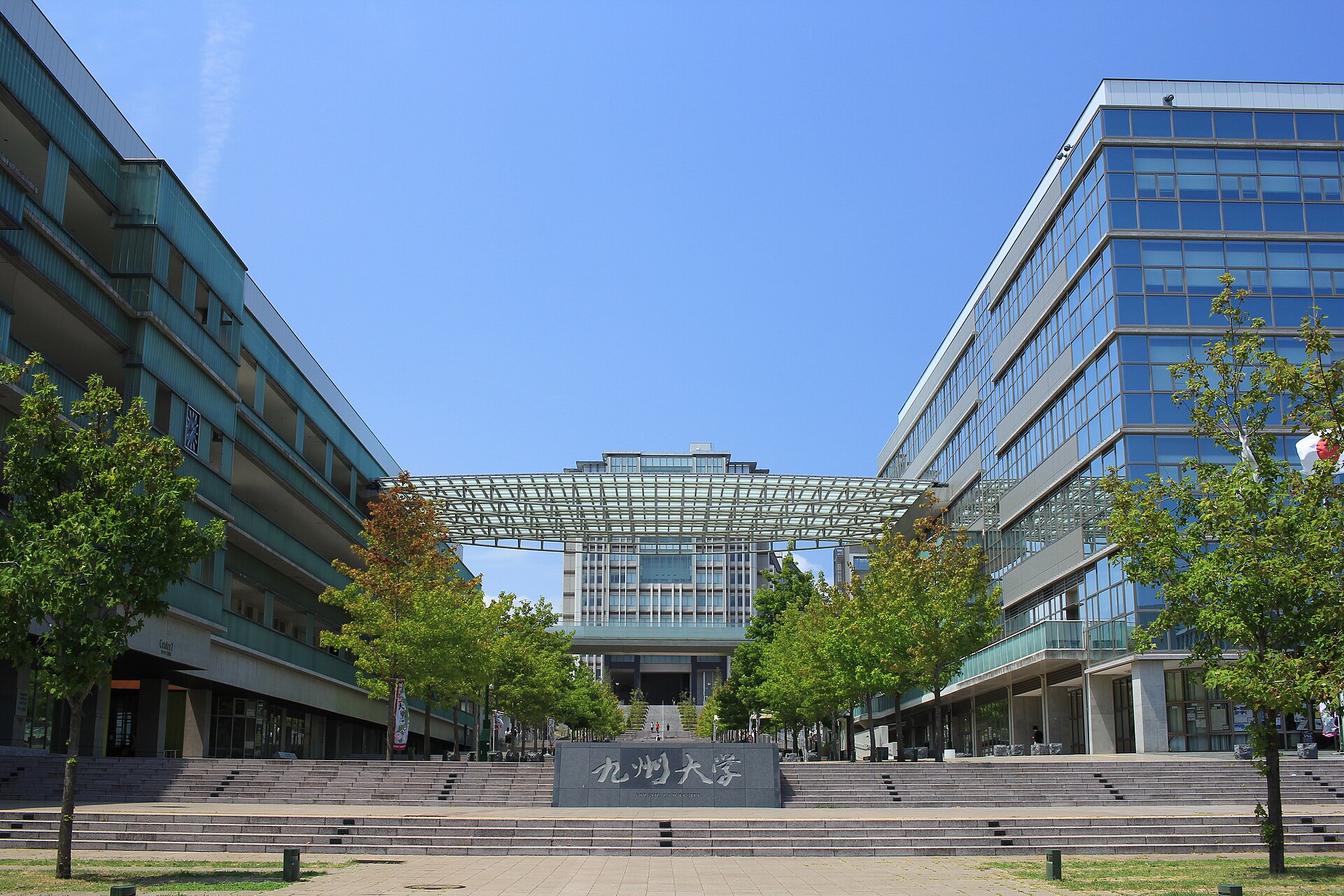

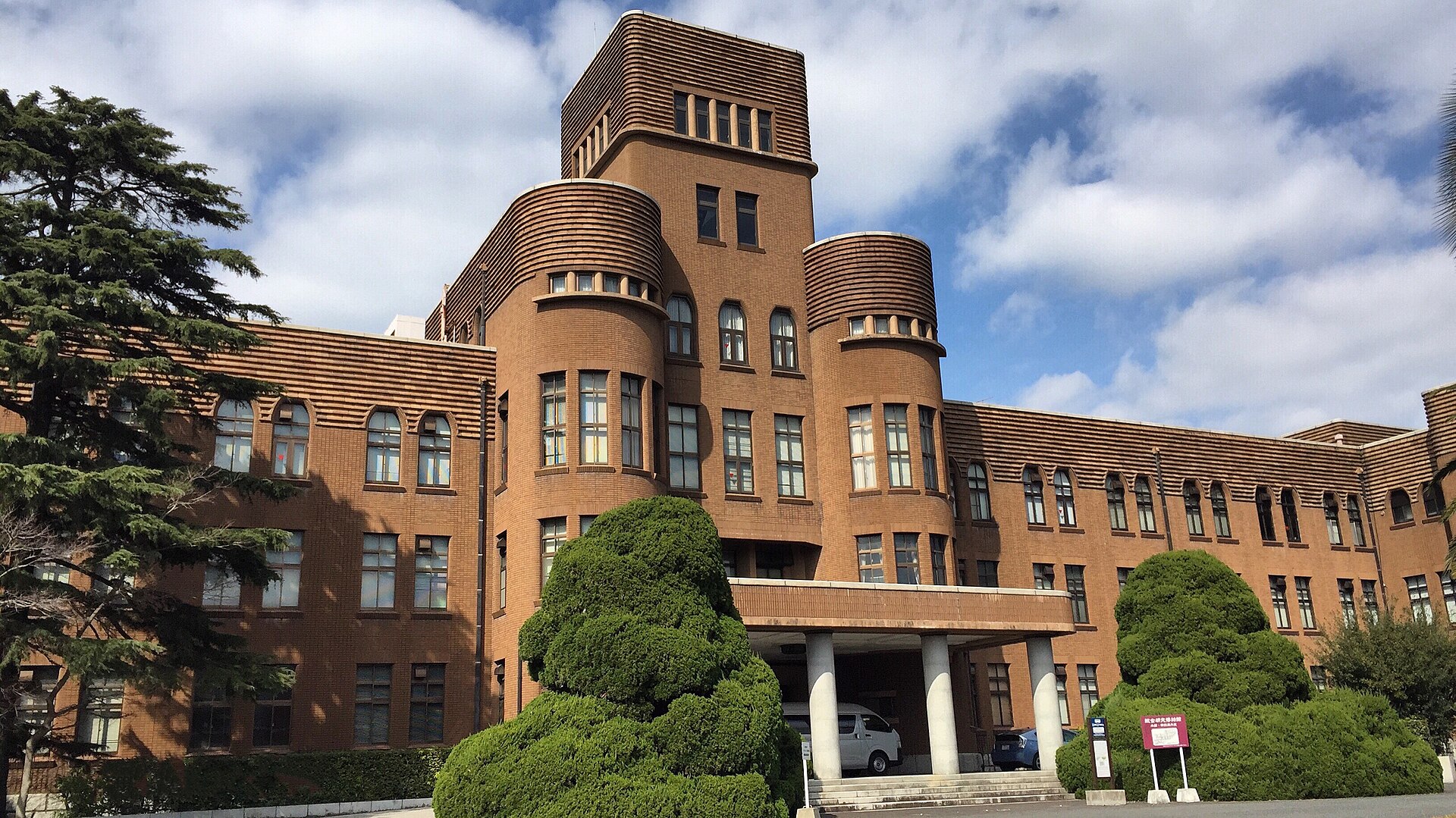
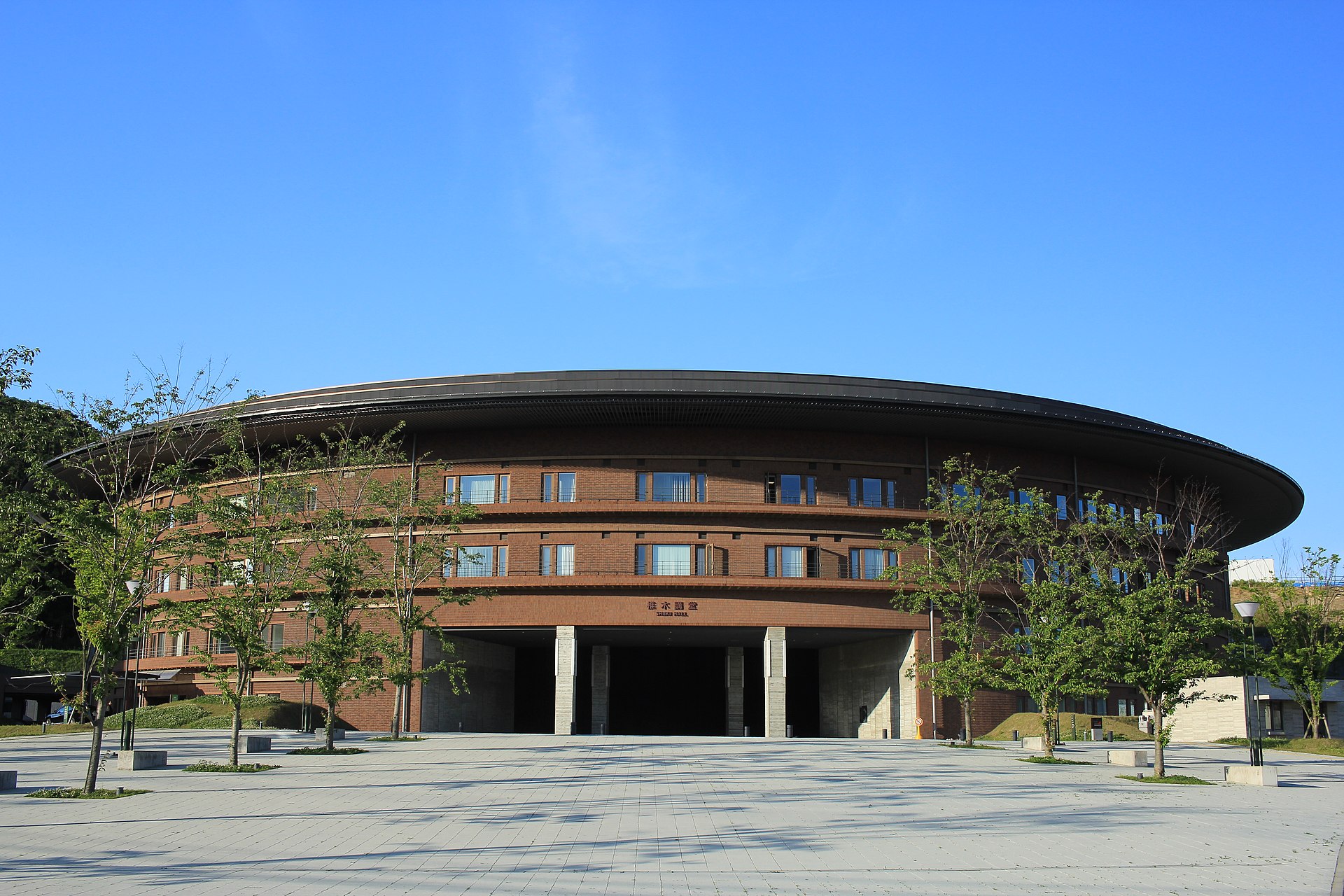


WHY KYUSHU UNIVERSITY
Why Kyushu University — Prestige, Research & Affordability
Kyushu University's standing as a former Imperial University translates into tangible advantages for international graduates: research depth, government backing, and an alumni network embedded in Japan's leading corporations and research institutes.
SELECTIVITY
Kyushu University Acceptance Rate & Admissions Profile
Kyushu University is a selective national research university. With an overall acceptance rate of approximately 14%, competition is meaningful — but the international admissions track for English-taught programmes evaluates applicants on academic records, English proficiency, and motivation rather than a holistic US-style portfolio. A strong IB score (the university benchmarks around 36 points), consistent academic performance across your curriculum, and a clear research or academic motivation are the core differentiators.
ADMISSIONS REQUIREMENTS
Kyushu University Admissions Requirements — Academics, English & Profile
- IB Diploma: minimum 36 points; competitive applicants typically 38–42
- A-Level: A/A* in Mathematics and Physics for Engineering applicants
- National leaving certificates assessed case by case
- Strong subject performance in relevant disciplines carries the highest weight
- IELTS Academic minimum 6.5 overall — academic module required
- TOEFL iBT minimum 79 — institutional TOEFL not accepted
- Exemption possible if all prior education was in English
- Competitive applicants typically score above the minimum floor
- Specific knowledge of your chosen Kyushu programme and faculty
- Clear articulation of why Japan and why Kyushu University specifically
- Concrete post-graduation plans
- Academic and research motivation — not generic enthusiasm
HOW TO APPLY
Kyushu University Application Components — Direct Application, Essays & Documents
Kyushu University operates its own direct admissions system — there is no Common App, UCAS, or central portal for international students. Applications are submitted directly to the relevant faculty or to the International Affairs Department. Below is every component of a complete Kyushu University application with strategic notes for each.
MOTIVATION LETTER
Kyushu University Essays — Writing the Perfect Motivation Letter
Kyushu University does not use Common App supplements or multiple essay prompts. The single written component is a motivation letter that must do all the work in one structured document. Here is how to approach it.
Prompts
Tips
ADMISSIONS PHILOSOPHY
What Kyushu University Admissions Officers Are Looking For
Kyushu University's international admissions process is academically driven. Unlike holistic US admissions, it does not weigh extracurriculars, demonstrated interest, or personal narrative as primary factors. The university looks for students with strong subject-specific foundations and genuine, articulated motivation for studying in Japan.
COST & FINANCIAL SUPPORT
Kyushu University Cost & Scholarships for International Students
Kyushu University does not operate a US-style need-blind or need-aware aid programme with institutionally funded grants calculated against family income. However, the combination of Japan's government-standardised very low tuition and the prestigious MEXT scholarship programme makes it one of the most affordable world-ranked universities for international students. Many admitted international students cover all or most of their costs through MEXT.
Cost figures are approximate USD equivalents based on government-published JPY amounts. Exchange rates fluctuate — verify current figures on the official admissions site.
APPLICATION ROUNDS
Key Dates
Advantages
- Larger cohort of students — more peers entering simultaneously
- More programme options available for April intake
- Aligns with standard Japanese academic calendar
- MEXT Embassy Recommendation timeline typically targets April entry
- More time to prepare between application submission and start
Disadvantages
- Fewer programmes offer October entry — confirm your programme's availability
- Smaller entering cohort
- Japanese language intensive courses may be available only in April cohort
- MEXT scholarship availability may differ for October intake
- Some accommodation options prioritise April arrivals
INTERVIEWS
Kyushu University Interview — Format, Process & Preparation
Undergraduate admissions to most Kyushu University English-taught programmes are primarily document-based — your academic record, English proficiency certificate, and motivation letter are the main evaluation instruments. However, some programmes and all graduate applications may include an online or in-person interview with a faculty member.
Meta
Questions
CAMPUS & RESIDENTIAL LIFE
Kyushu University's Campuses & Residential Life
Kyushu University does not use a residential house or college system like Harvard or Oxford. Instead, students live in university dormitories (for those who apply and are accepted) or in private apartments near campus. International students are strongly encouraged to apply for university accommodation, particularly in their first year.
Lottery Steps
- Ito Campus (main campus): the largest campus in Japan by area — modern facilities, Engineering, Science, Agriculture, ISI, and general facilities for all students
- Ohashi Campus: home of the School of Design and School of Music — creative arts and interdisciplinary design programmes
- Hakozaki Campus (historical): now largely relocated to Ito; some legacy buildings remain
- Hospital Campus: Kyushu University Hospital, Faculty of Medicine and Dentistry, and health sciences programmes
- Chikushi Campus: Physics and Chemistry research institutes
Houses
FACULTIES & SCHOOLS
Kyushu University's Faculties & Undergraduate Schools
- {"label":"Programme language","value":"English"}
- {"label":"Specialisations","value":"4 tracks"}
- {"label":"Programme type","value":"International-specific"}
- {"label":"Eligibility","value":"International students"}
- {"label":"Programme language","value":"English"}
- {"label":"Core disciplines","value":"Biology, Agriculture, Environment"}
- {"label":"Programme type","value":"International-specific"}
- {"label":"Key subjects","value":"Biology, Chemistry"}
- {"label":"Programme language","value":"English"}
- {"label":"Focus","value":"Cross-disciplinary innovation"}
- {"label":"Programme type","value":"International-specific"}
- {"label":"Academic style","value":"Project and seminar-based"}
- {"label":"Campus","value":"Ohashi"}
- {"label":"Distinction","value":"Art-Engineering integration"}
- {"label":"Language note","value":"Japanese required for some tracks"}
- {"label":"Graduate programmes","value":"English-taught options exist"}
- {"label":"Language","value":"Primarily Japanese"}
- {"label":"Competitiveness","value":"Extremely high"}
- {"label":"Duration","value":"6 years (Medicine/Dentistry)"}
- {"label":"Pathway for internationals","value":"Graduate level recommended"}
- {"label":"English graduate programmes","value":"~60"}
- {"label":"Graduate schools","value":"18"}
- {"label":"Doctoral supervision","value":"Supervisor-matched"}
- {"label":"Scholarship availability","value":"MEXT + institutional"}
RESEARCH & STUDENT LIFE
Research & Extracurricular Opportunities at Kyushu University
CAREERS & OUTCOMES
Career Outcomes & Kyushu University Alumni Network
Kyushu University graduates enjoy strong employment outcomes. With a 96% employment rate and average starting salaries of approximately $28,000 USD per year, the university's graduates move into careers in engineering, manufacturing, research, public administration, and the life sciences. As a former Imperial University, the institution has deep relationships with major Japanese corporations.
Stats
Categories
TYCHR TRACK RECORD
Our Kyushu University Admissions Track Record & Student Success Stories
FREQUENTLY ASKED QUESTIONS
Common Questions About Kyushu University
Do I need to speak Japanese to study at Kyushu University?+
Not for the English-taught international programmes. The IUPE engineering track, the Bioresource and Bioenvironmental Sciences programme, and many graduate programmes are conducted fully in English. Some knowledge of Japanese significantly enriches daily life in Fukuoka and is encouraged — the university offers Japanese language courses for international students.
Is Kyushu University a good university internationally?+
Yes — it ranks #136 in the QS World University Rankings and #7 in Japan. As one of only seven former Imperial Universities, it carries prestige that is well recognised across Asia, particularly in engineering, medicine, and the natural sciences.
What is the IUPE programme?+
IUPE stands for International Undergraduate Programme in Engineering. It is a fully English-taught four-year undergraduate degree within the Faculty of Engineering, covering specialisations in Applied Chemistry, Civil Engineering, Electrical Engineering and Computer Science, and Mechanical and Aerospace Engineering. It is specifically designed for international students.
Can I apply for the MEXT Scholarship?+
Yes. The Japanese Government MEXT Scholarship is one of the most prestigious scholarships for studying in Japan. It is available through Embassy Recommendation (you apply via the Japanese embassy in your home country) and University Recommendation. It covers tuition, living stipend, and travel. Competition is high; begin preparing at least a year before your intended start date.
How affordable is Kyushu University?+
Very affordable by international standards. Annual tuition is approximately $3,313 USD — a government-standardised rate for all Japanese national universities. Total cost of attendance (tuition + living) is estimated at around $11,000 USD per year, with cost of living alone around $9,000 USD. Fukuoka is one of Japan's most affordable major cities.
What English test score do I need?+
The minimum is IELTS Academic 6.5 or TOEFL iBT 79. Students whose prior education was entirely in English may be considered for an exemption. Always check the specific programme requirements as some may set a higher bar.
Is on-campus housing available?+
Yes. Kyushu University offers dormitory accommodation for international students on and near the Ito campus. Demand is high, especially among new international arrivals, so applying as early as possible is recommended. The university's International Student Center can assist with housing guidance.
Does Kyushu University accept the IB Diploma?+
Yes. The IB Diploma is an accepted international qualification. The university benchmarks around 36 IB points, and subject-specific HL results (particularly Mathematics and Sciences for engineering applicants) are assessed carefully. Predicted scores are used during the application process, with final results required for confirmation.
GET EXPERT GUIDANCE
Book a Free Kyushu University Admissions Strategy Session
In 60 minutes our Japan admissions specialists will evaluate your academic profile, identify your application strengths and gaps, develop your motivation letter strategy, and determine which MEXT scholarship pathway gives you the best odds of full funding.
- No commitment required
- Japan specialist counsellors with MEXT knowledge
- Personalised strategy — not generic advice
ACADEMIC EXPECTATIONS
Kyushu University Academic Requirements, The Honest Breakdown for International Students
What IB score, English level, and academic profile do Kyushu University's admitted international students actually need? And what does a Japanese national university's evaluation process mean for students from IB, A-Level, and other international curricula?
GPA & Academic Record
Kyushu University and GPA — What the Data Shows
The honest picture: Kyushu University publishes a minimum GPA of 3.0 on a 4.0 scale for international applicants. In practice, students admitted to the competitive English-taught programmes typically present academic records significantly above this floor.
A 3.0 GPA is the entry floor, not a competitive target. Students admitted to IUPE Engineering or the Bioresource programme typically present academic records well above the minimum, with strong performance specifically in the subjects relevant to their chosen programme.
Academic Context
School Context and Academic Record — How Kyushu University Reads International Applications
Kyushu University does not rank schools or apply a school-context scaling in the way Harvard or Cambridge might. However, it is experienced at evaluating diverse international credentials and takes the nature of your specific curriculum into account.
Standardised Testing — SAT
SAT Scores at Kyushu University — Not Required
Kyushu University does not require SAT scores for undergraduate international admissions. The SAT is a US-centric test and is not part of the Japanese national university admissions framework.
Standardised Testing — ACT
ACT Scores at Kyushu University — Not Required
ACT scores are not required for Kyushu University international admissions. As with the SAT, the ACT is not part of the Japanese national university evaluation framework.
Testing Strategy
Kyushu University Testing Policy — No SAT/ACT, Mandatory English Proficiency
Unlike many US and some UK universities, Kyushu University is not simply test-optional — it requires a specific language proficiency test (IELTS or TOEFL) but does not use general academic standardised tests (SAT, ACT, GRE for undergraduates).
Submit Items
Withhold Items
Curricula
A-Levels and IB at Kyushu University — Specific Benchmarks
- {"label":"Minimum benchmark","value":"36 points"}
- {"label":"Competitive range (Engineering)","value":"38–42 points, HL Maths + HL Science(s)"}
- {"label":"HL Mathematics","value":"AA or AI; AA preferred for Engineering"}
- {"label":"Agriculture / Bioresource","value":"HL Biology + HL Chemistry recommended"}
- {"label":"Engineering expectation","value":"A/A* in Mathematics and Physics"}
- {"label":"Agriculture expectation","value":"A/A* in Biology and Chemistry"}
- {"label":"ISI (Interdisciplinary)","value":"Strong overall profile, no specific subject combination required"}
- {"label":"EPQ","value":"A strong EPQ supports the research potential argument"}
- {"label":"Process","value":"Case-by-case assessment"}
- {"label":"Key criterion","value":"Recognised as equivalent to Japanese secondary completion"}
- {"label":"Recommendation","value":"Contact admissions office in advance to confirm"}
- {"label":"Subject requirement","value":"Strong performance in programme-relevant subjects"}
AP Courses
AP Courses at Kyushu University — Not a Standard Component
Advanced Placement (AP) courses are not a standard component of Kyushu University's international admissions evaluation. Unlike US universities where AP scores carry significant academic signalling weight, Japanese national universities evaluate applicants primarily on their school-leaving qualifications (IB, A-Level, national certificates).
Academic Rigour
Rigour of Secondary School Record — What Kyushu University Values Most
In Japanese national university admissions for English-taught programmes, the rigour of your secondary school record — particularly in subjects directly relevant to your intended programme — is the single most decisive academic factor.
Taking the most challenging available options in the subjects relevant to your chosen programme, and achieving strong results in them.
STEM Preparation
Mathematics and Subject Preparation — What Kyushu University Expects
The English-taught programmes at Kyushu University are technically demanding. The university's expectations for subject-specific preparation are high, particularly for Engineering and Agriculture students who will be working in advanced content from their first semester.
Language Proficiency
English Language Requirements for International Kyushu University Applicants
Kyushu University requires a formal English proficiency test for all applicants to English-taught programmes who have not completed their full prior education in English. The test is a mandatory component of the application — not optional.
Meeting the minimum (IELTS 6.5 / TOEFL 79) makes you eligible, not competitive. In cohorts of qualified international applicants, candidates with IELTS 7.0–7.5 or TOEFL 90+ are meaningfully more appealing to a programme that must be confident you can thrive in English-medium academic work. The quality of your motivation letter is also itself an English proficiency demonstration.
By Programme
Academic Requirements by Programme — What Different Tracks Expect
Kyushu University's English-taught programmes have distinct academic requirements. Below is a programme-by-programme breakdown of the academic profile that signals readiness.
| Concentration | Expectation | Signals |
|---|---|---|
| IUPE — Civil Engineering | HL Maths AA or AI / A-Level Maths | Structural/materials projects; mathematics competition |
| IUPE — Electrical Engineering & CS | HL Maths + Physics / Computing experience | Coding projects; electronics; physics olympiad |
| IUPE — Mechanical & Aerospace Engineering | HL Maths + HL Physics / A-Level equivalents | Physics-based research; robotics; aviation interest |
| IUPE — Applied Chemistry | HL Chemistry + HL Maths / A-Level Chemistry | Lab experience; chemistry IA; materials interest |
| Bioresource & Bioenvironmental Sciences | HL Biology + HL Chemistry / A-Level equivalents | Environmental projects; biology research; sustainability focus |
| Interdisciplinary Science and Innovation (ISI) | Strong overall IB/A-Level with breadth | Cross-disciplinary projects; social + science combination |
| Graduate Programmes (STEM) | Undergraduate degree in relevant field + research experience | Research publications; supervisor contact; research plan |
International Systems
Kyushu University and International Education Systems — How Your Curriculum Is Evaluated
Roadmap
Building an Academic Profile for Kyushu University — What to Do at Each Stage
- Choose subjects at GCSE/MYP level that keep options open for strong HL or A-Level selection in Mathematics and Sciences.
- Identify which Kyushu English-taught programme interests you — IUPE Engineering, Bioresource, or ISI — and understand what subjects each requires.
- Begin developing scientific reading habits — following research news in your area of interest signals genuine engagement when it appears in your motivation letter.
- Select HL subjects (if IB) or A-Level subjects that align with your target programme — Mathematics at the highest available level for Engineering; Biology and Chemistry for Agriculture.
- Research MEXT scholarship requirements and timelines — Embassy Recommendation applications are submitted well in advance of university admission, sometimes in Grade 12 first semester.
- Begin IELTS or TOEFL diagnostic preparation — understanding your current level reveals how much preparation time you need.
- Pursue your IB Extended Essay, science fair project, or independent research in a topic relevant to your target programme — this content goes directly into your motivation letter.
- Research Kyushu University specifically: read faculty pages, research group profiles, and the VISION 2030 strategy. Genuine knowledge shows in the letter.
- Begin MEXT Embassy Recommendation process if applying via that route — timelines vary by country but often fall in Grade 12 first semester.
- Sit your official IELTS or TOEFL exam with enough time to resit if needed — summer of Year 13 or early autumn.
- Obtain and complete the application package from the specific faculty website — deadlines for April intake typically fall October–December.
- Submit IB predicted scores with your application; IB final results forwarded on release in July.
Common Pitfalls
Academic Mistakes That Cost Kyushu University Applications — And How to Avoid Them
Real Outcomes
What Academic Profiles Tychr's Kyushu-Admitted Students Had
The following profiles represent the academic backgrounds of students Tychr has helped gain Kyushu University admission or equivalent Japanese university outcomes. They illustrate the range of preparation that works — and what made each compelling.
Faqs
What IB score do I need for Kyushu University?+
The published minimum is 36 IB points. Competitive applicants for Engineering and Bioresource programmes typically present scores in the 38–42 range, with strong HL results in subjects directly relevant to their programme. A 36 makes you eligible; scores above 38 in the right subjects make you competitive.
Can I apply to Kyushu University without IELTS or TOEFL?+
Only if you can document that your full prior education was conducted in English and make a formal exemption request. For most international applicants, the IELTS Academic (6.5 minimum) or TOEFL iBT (79 minimum) is a mandatory component — not optional.
Is a 3.0 GPA enough to get into Kyushu University?+
A 3.0 GPA is the published minimum floor — not a competitive target. The most meaningful academic indicator is your performance in subjects directly relevant to your target programme. A 3.5 overall GPA with strong subject-specific grades in Mathematics and Sciences is more competitive for Engineering than a 3.8 GPA with weak Mathematics.
Does Kyushu University evaluate my school's ranking or reputation?+
Not in the explicit, published way that some US universities do. However, the admissions office has familiarity with major international schools and school systems. A strong academic record from a less well-known school is evaluated on its own merits — with a counsellor letter or school profile providing useful context.
Do I need Japanese language ability to succeed at Kyushu University in an English programme?+
Not academically — the English-taught programmes conduct all coursework, exams, and thesis work in English. Practically, some knowledge of Japanese improves daily life significantly. The university offers Japanese language courses for enrolled international students, and beginner level is the realistic expectation at entry.
Cost & Financial Support
Kyushu University May Cost Your Family Far Less Than You Think — Here's the Full Picture.
Kyushu University's government-standardised tuition is among the lowest of any top-150 global university. Combined with the MEXT scholarship programme and Fukuoka's affordable cost of living, a world-ranked former Imperial University education is genuinely accessible. Here's exactly what Kyushu costs, how the support mechanisms work, and what you need to do to access them.
Cost Transparency
What Kyushu University Actually Costs — The Full Annual Figure
Japan's national universities have extremely low tuition because the government subsidises the operating cost — similar to how public universities in Europe maintain low fees. This is not a scholarship; it is the standard published tuition for every student, domestic and international. The financial barrier at Kyushu University is the cost of living, not tuition.
Financial Support Policy
Kyushu University's Financial Support for International Students — What It Is and What It Isn't
At US need-blind universities, aid is calculated against family income and awarded institutionally. At Kyushu University, the baseline tuition is simply very low — already $3,313 versus $60,000+ at a US private university. Additional support comes through competitive scholarships (primarily MEXT) applied for separately from the university application. The result for a successful MEXT recipient is similar: a near-zero-cost world-ranked education.
Institutional Context
Why Kyushu University Can Offer This — Government Funding and National Mission
Scholarship Application Walkthrough
Applying for MEXT and Kyushu Scholarships — The Process Step by Step
MEXT is not applied for through Kyushu University's admissions portal — it is a separate application process. Here is the complete step-by-step guidance.
- Visit the Japanese Embassy website in your country
- Confirm the Embassy Recommendation MEXT timeline and document requirements
- Note: Embassy timelines are different from — and often earlier than — university application deadlines
- Academic transcripts (certified, official)
- Study plan or research plan (for research-track applicants)
- Recommendation letters from school
- Health certificate (official medical examination)
- Proof of qualification (IB, A-Level, national certificate)
- IELTS/TOEFL score certificate
Financial Aid for International Students
Financial Support for International Students at Kyushu University — How It Works
International students at Kyushu University access financial support through a different mechanism than at US need-blind institutions — but the outcomes can be equally compelling for students who navigate it well. Here is what each mechanism does and who can access it.
Scholarship Coverage Analysis
What MEXT and Other Scholarships Actually Cover — The Numbers
MEXT Scholarship Coverage (Approximate Annual Values in USD)
Figures are approximate USD equivalents based on current MEXT stipend amounts and average exchange rates. MEXT stipend amounts are set by the Japanese government and subject to change. Verify current amounts on the MEXT official website.
A student on MEXT essentially studies at Kyushu University at near-zero annual cost — tuition is waived, the monthly stipend covers living expenses, and travel is covered. MEXT recipients are in a financially more secure position than most financial aid recipients at expensive US or UK universities, for whom aid still leaves a significant family contribution.
| Income | Grant | Contribution |
|---|---|---|
| Tuition (~$3,313) | Covered in full | $0 |
| Living Stipend (~$9,000 needed) | ~$8,640/year (¥117,000/month UG) | ~$360 supplementary |
| Travel (Round-trip airfare) | Covered once at arrival/departure | $0 for initial travel |
| Books and Supplies (~$400) | Not covered | ~$400 |
| Total Annual Cost (~$11,000) | ~$11,000+ covered | ~$0–$800 |
Table Headers
Scholarship Types
MEXT, Kyushu University Scholarships and Private Foundations — Who Qualifies
Unlike Harvard's exclusively need-based grant model, Kyushu University's scholarship landscape combines merit (MEXT selects on academic excellence) and need (Friendship Scholarship requires demonstrated financial need). Understanding the qualifying criteria for each mechanism is essential for funding strategy.
External Funding
External Scholarships — Additional Funding for International Students at Kyushu
Beyond MEXT and Kyushu's own scholarships, numerous external organisations and government programmes provide funding for international students studying in Japan. These can supplement the primary scholarship or help students who did not receive MEXT.
Student Loans — Japan
Student Loans in Japan — JASSO and the Loan Landscape
Unlike the US private loan market, the primary student loan mechanism in Japan is operated by the Japan Student Services Organisation (JASSO). International students on scholarship are typically not eligible for JASSO loans, but understanding the loan landscape is relevant for students who self-fund their studies.
Part-Time Work
Part-Time Work in Japan — What International Students at Kyushu University Can Do
International students on a Japanese Student Visa are legally permitted to work up to 28 hours per week during term time (40 hours per week during official university holidays). This requires a 'Permission to Engage in Activity Other Than That Permitted Under the Status of Residence' from immigration — obtained at arrival or through the local immigration office.
- Convenience store / konbini (ubiquitous and very accessible entry-level work)
- Restaurant and hospitality service
- Tutoring in English or other subjects (high demand, higher hourly rates)
- On-campus research assistant positions (competitive but available, especially for graduate students)
- Tourism and international-facing roles (Fukuoka's tourism economy provides English-accessible opportunities)
- Online work and freelancing (accessible from Japan on a student visa — confirm visa conditions)
Cost Benchmarking
Kyushu University vs. Alternatives — Cost and Financial Support Comparison
| School | Policy | No Loans | Typical Cost |
|---|---|---|---|
| Kyushu University (with MEXT) | MEXT full scholarship + low tuition | ~$0 | ~$0/year |
| Kyushu University (self-funded) | Government-standardised low tuition | ~$11,000 | ~$11,000/year |
| University of Tokyo (MEXT) | Same national tuition + MEXT available | ~$0 | ~$0/year |
| NUS Singapore (self-funded, intl) | MOE Tuition Grant + bond | ~$13,000–$17,000 | ~$13,000–$17,000/year |
| University of Melbourne (intl) | Limited international scholarships | ~$35,000–$45,000 | ~$35,000–$45,000/year |
| Imperial College London (intl) | Limited international scholarships | ~$40,000–$55,000 | ~$40,000–$55,000/year |
| US Private University (Top 50, intl) | Need-aware or limited aid | ~$50,000–$80,000 | ~$50,000–$80,000/year |
Real Cost Analysis
Kyushu University vs. Alternatives — What You Actually Pay
For a family earning $60,000/year, Kyushu University at $11,000/year total cost of attendance is already more affordable than most alternatives. With MEXT, it is essentially free. A comparable-ranking US university at $60,000–$80,000/year represents a financial commitment roughly 5–7x larger — even accounting for US need-based aid, which is not available at all US universities for international students.
| School | Policy | Contribution | Four Year Cost |
|---|---|---|---|
| Kyushu University + MEXT | Full scholarship, low tuition | ~$0 | ~$0 |
| Kyushu University (self-funded) | Government-standardised low tuition | ~$11,000/year | ~$44,000 |
| Osaka University / Tokyo Institute of Technology | Same national tuition model | ~$11,000–$13,000/year | ~$44,000–$52,000 |
| NUS Singapore (intl, with tuition grant) | Reduced tuition + bond | ~$13,000–$17,000/year | ~$52,000–$68,000 |
| UK Russell Group (London) | Full international fee | ~$35,000–$50,000/year | ~$140,000–$200,000 |
| US Top-50 Private (need-aware for intl) | Limited or no aid for internationals | ~$60,000–$80,000/year | ~$240,000–$320,000 |
Scholarship Appeals and Issues
Addressing Financial Difficulties at Kyushu University — What to Do
Because Kyushu University does not operate a formula-based institutional aid programme comparable to Harvard's, there is no formal financial aid 'appeal' process in the US sense. However, if you face financial difficulties during your studies, there are formal mechanisms to access support.
The honest note: the MEXT scholarship, once awarded, is not easily 'appealed' for a higher amount — it is a fixed award. The mechanisms for addressing financial hardship are post-arrival scholarship access and work permission, not a negotiation with an aid office.
When To Appeal
- Your financial circumstances change significantly after enrolment (family income loss, medical emergency, etc.)
- You believe you are eligible for private foundation scholarships but have not yet applied
- Your MEXT renewal is at risk due to academic performance concerns
- You need guidance on legal work options on your student visa
How To Appeal
- Contact the Kyushu University International Student Center promptly — they have student welfare counsellors
- Inquire about emergency support through the university's student support system
- Explore private foundation scholarship applications that may not have been open at your time of arrival
- Confirm your work permit status and maximise legal part-time work hours if needed
Timeline & Planning
Planning for Kyushu University Costs — What to Do and When
APPLICATION WRITING — JAPAN SYSTEM
Kyushu University Application Writing — Everything You Need to Know
Kyushu University is a Japanese national university — it does not use the Common App, UCAS, or any central application portal with US-style supplemental essay questions. The primary written component of your international application is a motivation letter, in which you explain who you are academically, why you want to study your chosen subject, and why at Kyushu University specifically. This document carries significant weight — in a process that is otherwise grades-and-test-driven, it is your only chance to speak directly to the admissions reviewers.
APPLICATION SYSTEM
How International Students Apply to Kyushu University
International applications to Kyushu University's English-taught programmes are submitted directly to the relevant faculty (e.g., the Faculty of Engineering for IUPE, the Faculty of Agriculture for Bioresource programmes). There is no Common App or UCAS intermediary. The written components typically include a motivation letter and sometimes a research statement or study plan. Requirements vary slightly by programme — always download the official application package from the faculty website.
Unlike universities in the US or UK, Kyushu University does not ask multiple short-answer prompts or supplemental essay questions. The expected written submission is typically a single, well-structured motivation letter of one to two pages, focused on academic content. There is no word-count game, no 'Why this specific residential college?' question, and no activities list to curate for narrative purposes. The Japanese academic culture values clarity, seriousness, and respect — your letter should reflect all three.
WHAT TO ADDRESS
What Your Motivation Letter Must Cover
Kyushu University does not publish standardised essay prompts the way US universities do. Instead, the motivation letter is an open-form document. However, based on what Japanese national university admissions offices consistently expect, your letter should address the following areas. These are not official verbatim prompts — they are the questions your letter must implicitly answer.
WRITING STRATEGY
How to Write a Strong Motivation Letter for Kyushu University
A strong motivation letter for Kyushu University is structured, academically substantive, and specific. It is not a personal narrative about childhood experiences or an inspirational story about overcoming adversity — those approaches, common in US Common App essays, are largely irrelevant here and may even seem off-tone to Japanese academic reviewers. The document should read as the letter of a serious young scholar who knows what they want to study, has prepared for it, and has good reasons for choosing this institution and this country.
The motivation letter is the only personal writing component of your Kyushu University application. It cannot be generic — and it cannot read like a US Common App essay.
Aim for approximately 500–800 words (one to one-and-a-half pages, single-spaced, in 11 or 12pt font). Structure it with a clear introduction, three to four focused body paragraphs covering your academic background, programme fit, research interests if applicable, and future goals, and a concise conclusion. Write in formal but accessible academic English. Have it reviewed by a teacher or counsellor who can check both the English quality and the logical flow. Treat this document with the same seriousness you would bring to an IB Internal Assessment or Extended Essay — because in this context, it carries equivalent weight.
The strategic challenge of the Kyushu motivation letter is specificity. You must demonstrate that you have genuinely researched this institution, this programme, and this country — not just the broad concept of studying engineering or agriculture in Asia. Reviewers can immediately distinguish a letter written for Kyushu from one that could have been submitted anywhere.
Looking For List
- A precise statement of your intellectual interests, grounded in specific coursework and projects
- Specific and evidenced reasons for choosing Kyushu University — not generic praise for Japan or 'world-class research'
- A credible and concrete account of post-graduation plans
- Formal academic English demonstrating the ability to write clearly in the medium of instruction
Tired Of List
- Generic motivation that could apply to any university anywhere in the world
- US-style personal narratives about formative childhood experiences
- Vague praise for Japan's culture without specific connection to the student's academic field
- Restating the CV in prose — transcripts and recommendation letters already do that
FOR GRADUATE APPLICANTS
Graduate Applications — The Research Statement
For graduate admissions to Kyushu University's master's and doctoral programmes, the written submission is typically a research statement or research proposal rather than a personal motivation letter. This is a significantly different document — more technical, more specific, and typically reviewed by your prospective supervisor before formal admission.
WHAT TO WRITE ABOUT
Choosing What to Include in Your Motivation Letter
For an undergraduate motivation letter to Kyushu University, focus on academic content rather than personal narrative. The most effective letters combine: (1) a clear statement of your intellectual interests in the subject, grounded in your actual coursework and discoveries; (2) specific and evidenced reasons for choosing Kyushu University's programme; and (3) a credible account of what you plan to do after graduation.
MISTAKES TO AVOID
Common Motivation Letter Pitfalls
- Writing a US-style personal narrative essay focused on a personal story rather than academic motivation.
- Failing to name Kyushu University specifically — letters that feel interchangeable across all universities are transparent to reviewers.
- Describing the programme vaguely ('I want to study engineering') without demonstrating knowledge of the specific curriculum or research environment.
- Using informal language — the tone should be formal academic English, not conversational.
- Overstating research experience that you don't have — reviewers have seen thousands of letters and can spot inflation.
- Neglecting to address why Japan — for applicants not from East Asia, this is a real gap if left unexplained.
- Submitting a first draft — strong motivation letters go through multiple revisions, ideally with feedback from a teacher and an admissions counsellor.
- Ignoring word/page limits or formatting guidance in the application package — attention to instructions signals professionalism.
APPLICATION FAQs
Your Questions About the Application Process
Does Kyushu University use Common App or UCAS?+
No. Kyushu University uses a direct application process. Applications are submitted to the relevant faculty or to the International Affairs Department. There is no centralised portal equivalent to Common App or UCAS.
How long should my motivation letter be?+
Typically one to one-and-a-half pages (approximately 500–800 words). Check the specific application package for the programme you are applying to, as some may specify a page limit or word count. Quality matters more than length — a tightly written 600-word letter that is specific and substantive outperforms a vague 1,000-word one.
Can I write my motivation letter in Japanese?+
For English-taught programmes, the motivation letter should be written in English. For Japanese-taught programmes, Japanese is expected. If you are bilingual, writing your letter in English and optionally attaching a Japanese version is a thoughtful gesture, but confirm this approach with the admissions office.
Do I need to have researched specific professors before applying as an undergraduate?+
Not required for undergraduate admissions, but it strengthens your letter if you can reference specific research groups or faculty whose work relates to your interests. For graduate admissions, contacting a prospective supervisor before applying is strongly advisable and is standard practice in Japanese higher education.
What if I cannot verify the exact application prompts or requirements?+
Download the official application package from the specific faculty's admissions page, or contact the admissions office directly. Requirements can change annually, so always use the current year's official materials.
Is there an interview as part of the application?+
Some programmes, particularly at the graduate level, may include an online interview with a faculty member. For undergraduate admissions, this varies by programme — the IUPE track may include a document screening and in some cycles an online interview. Check the current year's application guidelines carefully.
How different is the Kyushu motivation letter from a US Common App essay?+
Significantly different in tone and purpose. The Common App essay is a personal narrative designed to reveal your character and voice. The Kyushu motivation letter is an academic document designed to demonstrate your subject-specific preparation, your knowledge of the programme, and your post-graduation seriousness. The writing style should be formal rather than conversational, and the content should be academically grounded rather than personally revealing.
Should I mention the MEXT scholarship in my application to Kyushu University?+
If you are applying simultaneously for MEXT Embassy Recommendation, it is appropriate to mention this in your application — it signals to the university that you are a serious, well-prepared candidate who has already navigated a competitive selection process. It does not guarantee admission, but it adds useful context.
Courses — schools, degrees & intake
38 degrees across 12 groupings.
School of Engineering · 12 degrees
Electrical Engineering and Computer Science
Materials Science and Engineering
Applied Chemistry
Chemical Engineering
Interdisciplinary Engineering
Mechanical Engineering
Aeronautics and Astronautics
Applied Quantum Physics and Nuclear Engineering
Naval Architecture and Ocean Engineering
Earth Resources Engineering
Civil Engineering
Architecture
School of Science · 5 degrees
Physics
Chemistry
Earth and Planetary Science
Mathematics
Biology
School of Design · 5 degrees
Environmental Design
Industrial Design
Design Futures
Media Design
Acoustic Design
School of Agriculture · 5 degrees
Agricultural Resources, Engineering and Economics
Applied Biosciences
Forestry and Forest Products
Animal and Marine Resources
Bioresource and Bioenvironment (International Course)
School of Economics · 2 degrees
Economics and Business
Economic Engineering
School of Law · 1 degrees
Law and Political Science
School of Letters · 1 degrees
Humanities
School of Education · 1 degrees
Education
School of Medicine · 2 degrees
Medicine
Health Sciences
School of Dentistry · 1 degrees
Dentistry
School of Pharmaceutical Sciences · 2 degrees
Pharmaceutical Sciences
Clinical Pharmacy
School of Interdisciplinary Science and Innovation · 1 degrees
Interdisciplinary Science and Innovation
Want your real chances at Kyushu University?
Create a free TYCHR account for your personalised admit-chance, a shortlist you can track, exact entry requirements, and essay + counselling help.