← All universities

KU Leuven

Leuven, Belgium · Urban

LERUCoimbra GroupPublicResearch
Acceptance
60.0%
QS World
#61
Tuition/yr
$4,960
Students
65,000
Founded
1425

Founded in 1425 and ranked among Europe's most innovative universities, KU Leuven delivers research-intensive education at tuition rates a fraction of comparable US or UK institutions. Based in the vibrant university town of Leuven — 25 minutes from Brussels — it is Belgium's highest-ranked university and a LERU member alongside Oxford, Cambridge, and ETH Zurich. This guide covers everything an international student needs to navigate the KU Leuven application successfully.

Campus

KU Leuven — campus in pictures

Real, freely-licensed photographs of the campus (via Wikimedia Commons).
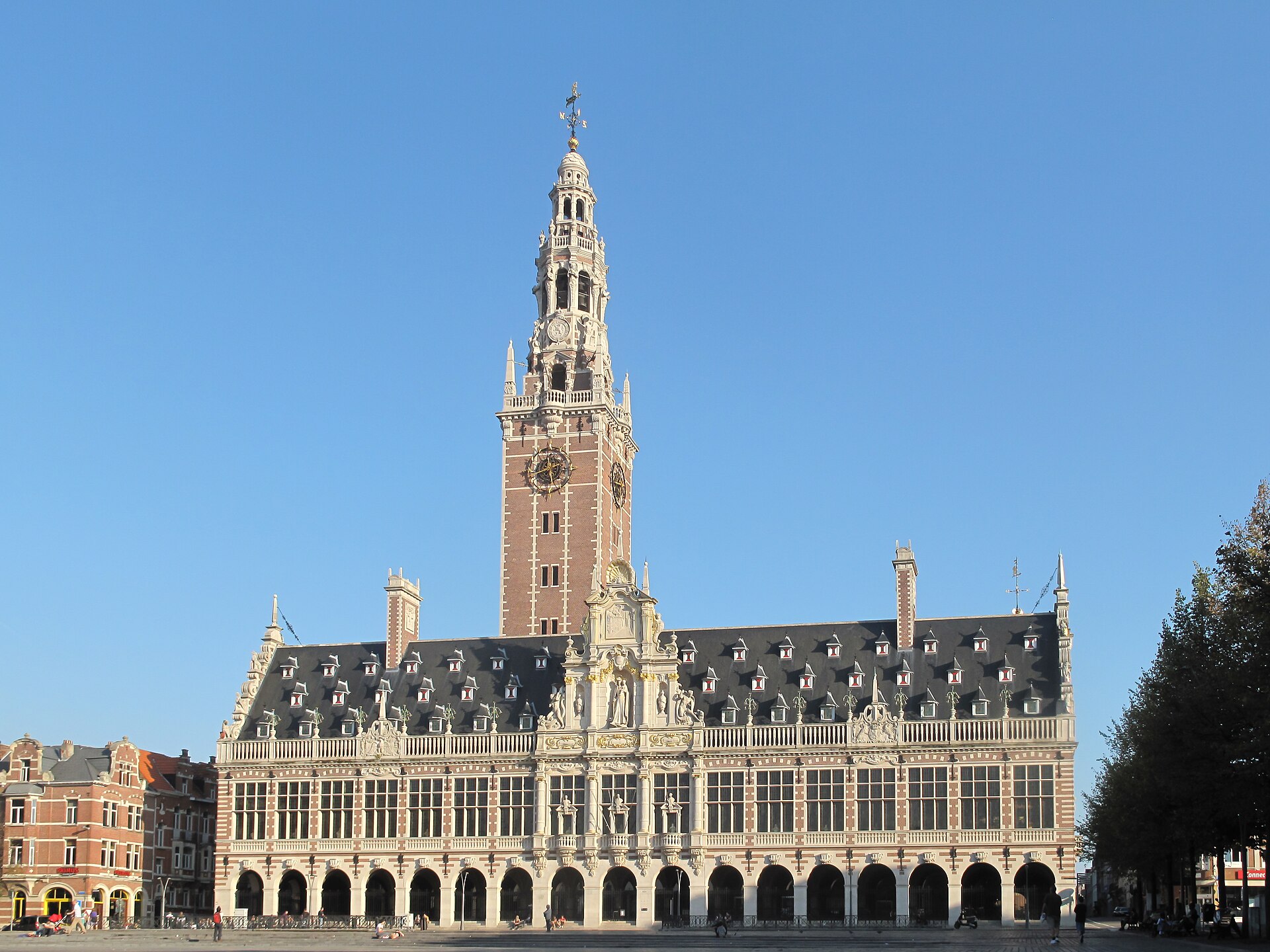
Leuven, university library ceg74154
Leuven, university library ceg74154Michielverbeek · CC BY-SA 3.0 · via Wikimedia Commons
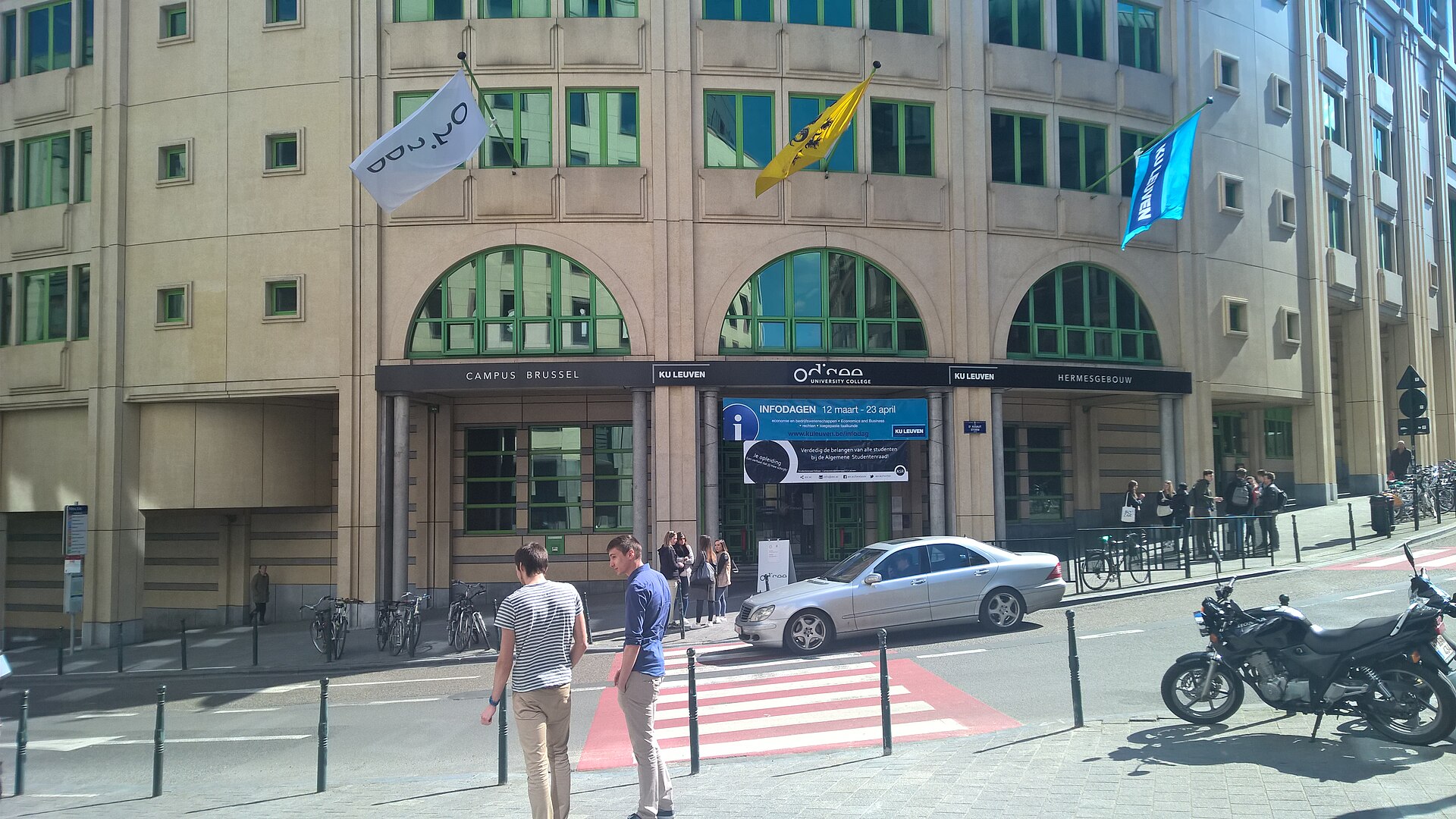
KU Leuven Campus Brussels Hermes building
KU Leuven Campus Brussels Hermes buildingKvdh · CC BY-SA 4.0 · via Wikimedia Commons
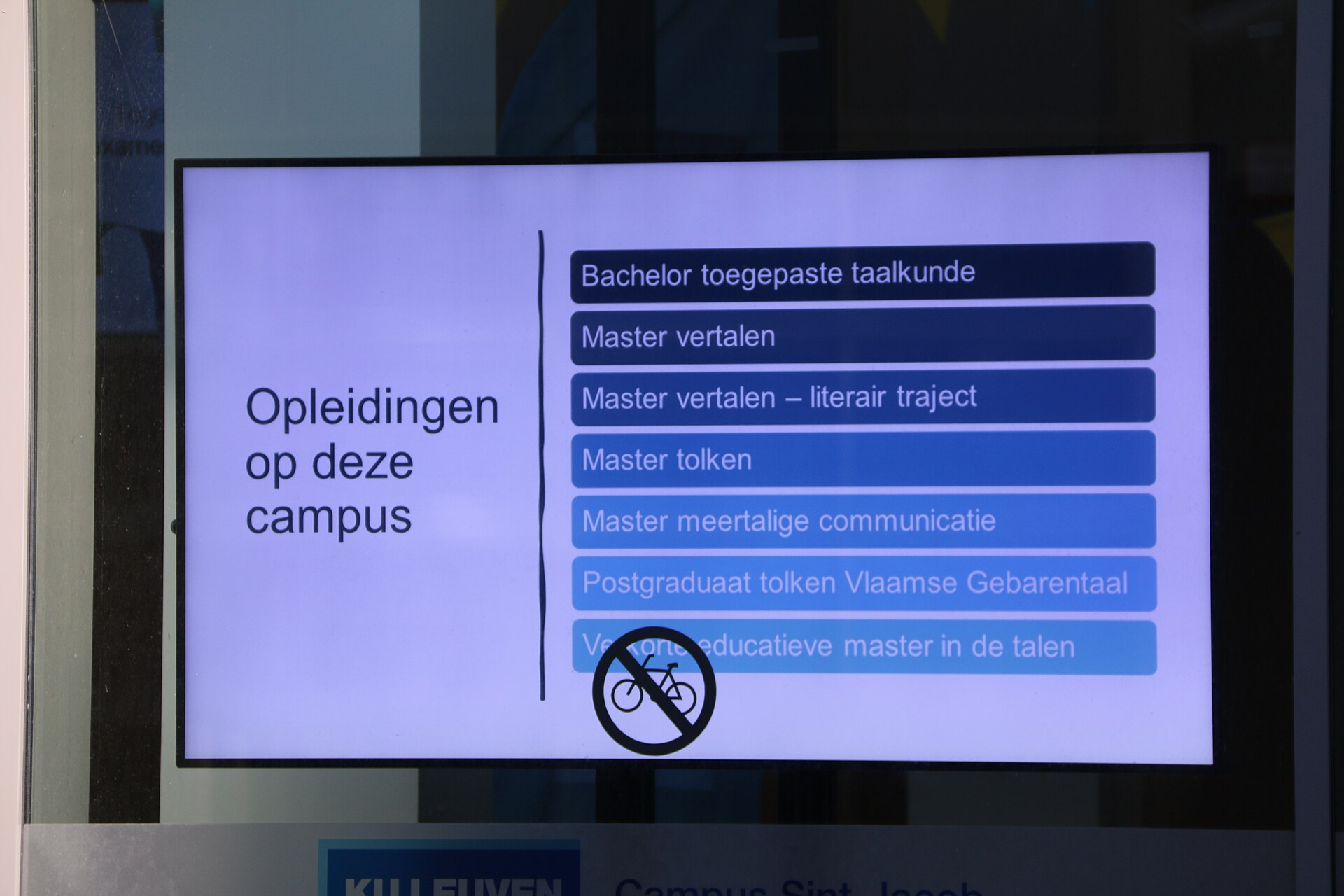
Katholieke Universitei Leuven Campus Antwerpen Sint-Jacob
Katholieke Universitei Leuven Campus Antwerpen Sint-JacobFrDr · CC BY-SA 4.0 · via Wikimedia Commons
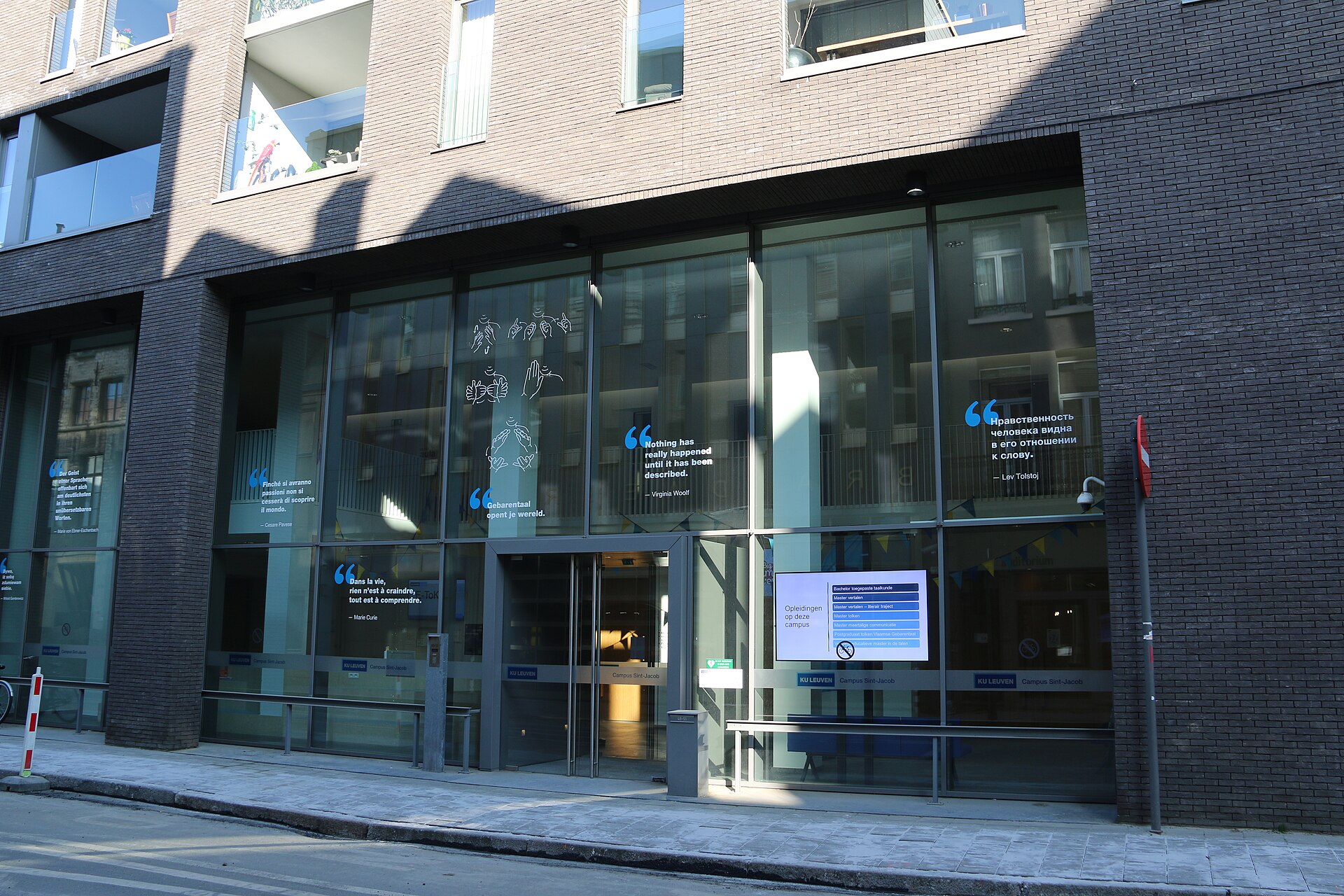
Katholieke Universitei Leuven Campus Antwerpen Sint-Jacob
Katholieke Universitei Leuven Campus Antwerpen Sint-JacobFrDr · CC BY-SA 4.0 · via Wikimedia Commons
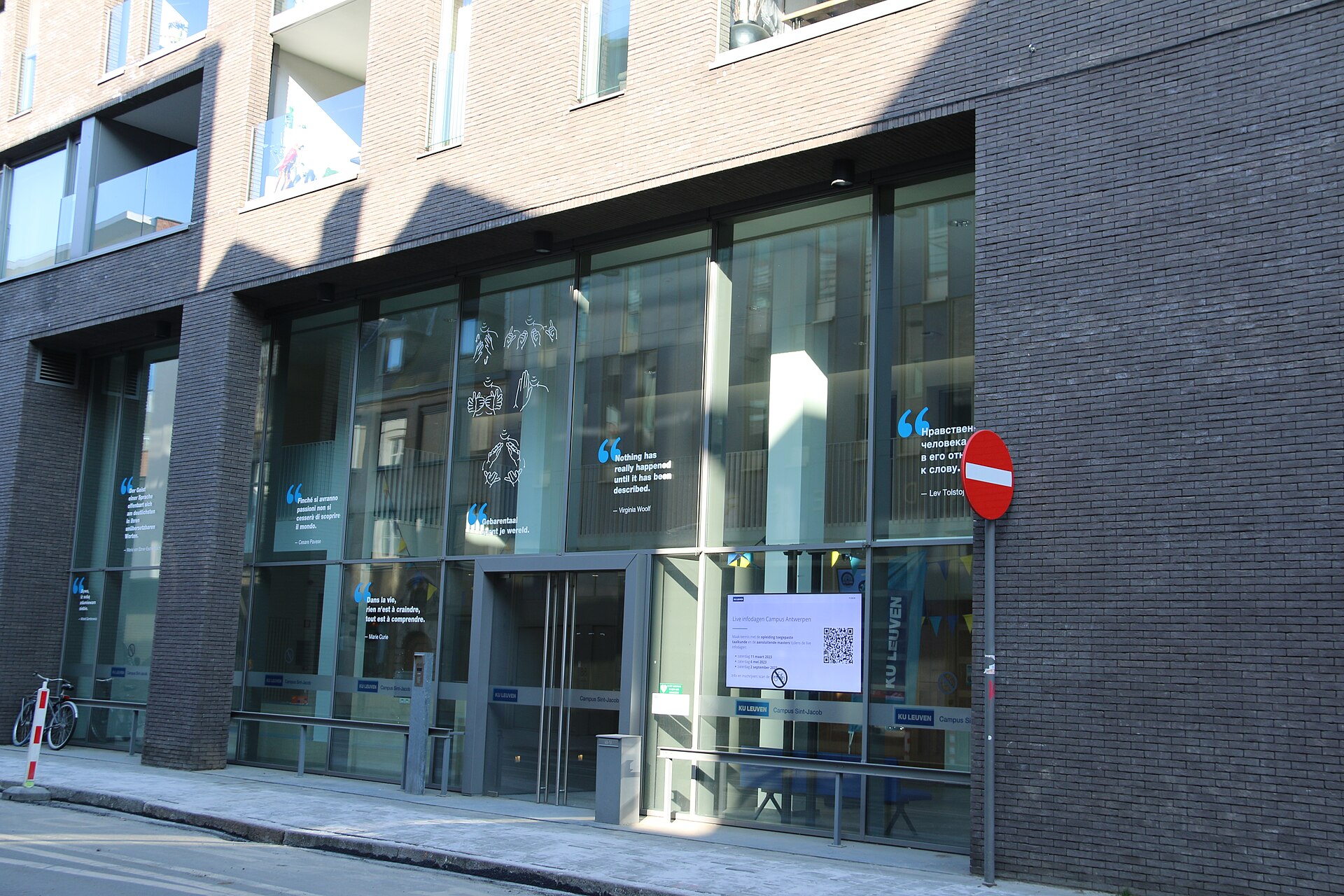
Katholieke Universitei Leuven Campus Antwerpen Sint-Jacob
Katholieke Universitei Leuven Campus Antwerpen Sint-JacobFrDr · CC BY-SA 4.0 · via Wikimedia Commons
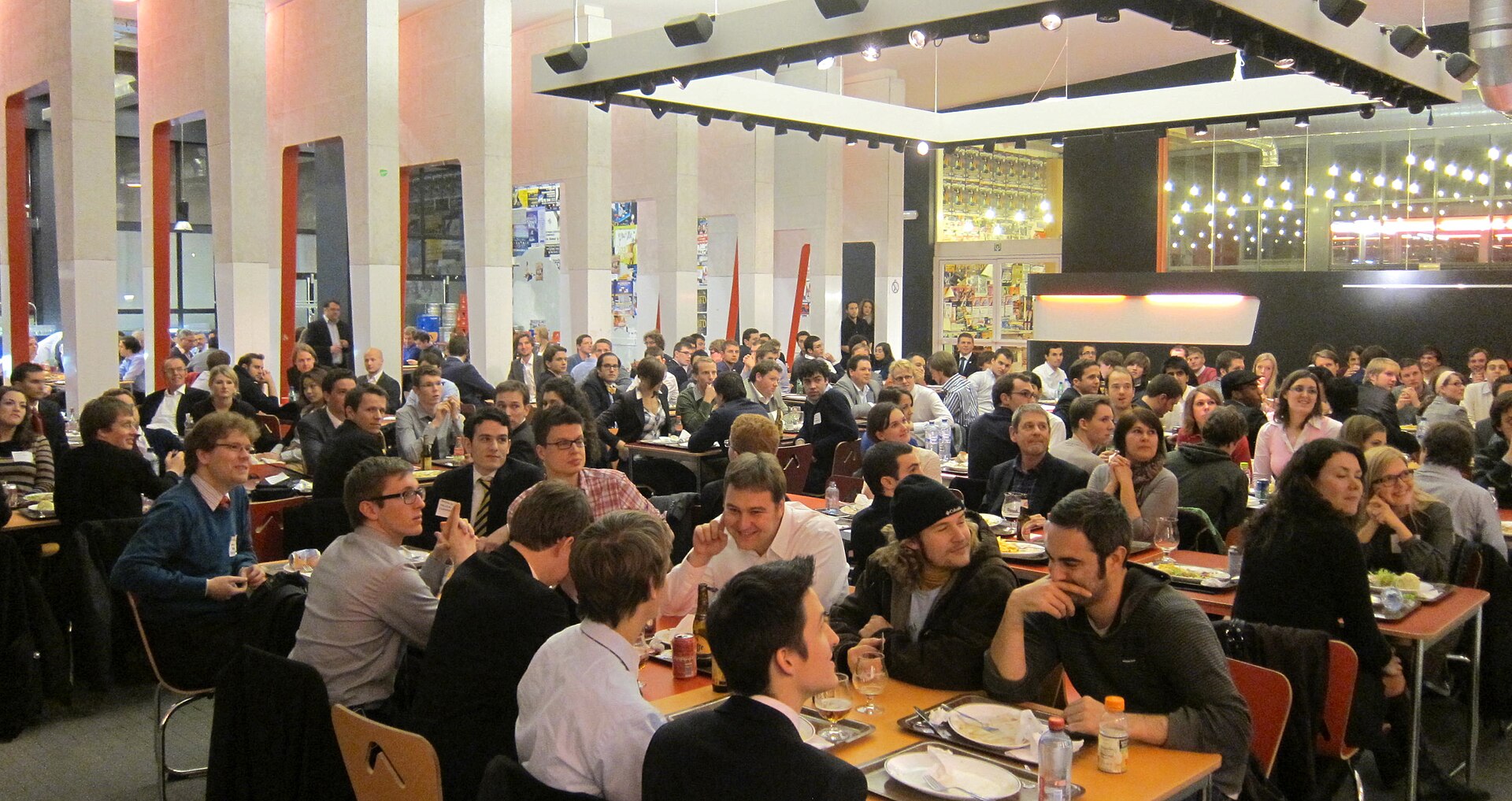
The first Students For Liberty European conference at the Katholieke Universiteit Leuven in Leuven, Belgium.
The first Students For Liberty European conference at the Katholieke Universiteit Leuven in Leuven, Belgium.Gregory Rehmke · CC BY 2.0 · via Wikimedia Commons

Why KU Leuven — Europe's Most Innovative University

KU Leuven is not simply Belgium's top university — it is consistently ranked Europe's most innovative institution by Reuters, outperforming peers twice its size in patents, spinoffs, and research citations. For international students who want genuine research depth at an exceptional cost-to-quality ratio, Leuven is one of Europe's most compelling choices.

01Europe's Most Innovative University
Reuters ranks KU Leuven Europe's most innovative university for several consecutive years — more patents, more spinoffs, and more research citations per researcher than nearly any institution on the continent. Students embed in active research from day one.
02LERU Membership & Global Standing
QS #61, THE #45, and Belgium's #1. As a League of European Research Universities (LERU) member — alongside Oxford, Cambridge, Imperial, and ETH Zurich — KU Leuven carries genuine academic prestige that opens doors across Europe and globally.
03Biomedical & Engineering Powerhouse
The Rega Institute for Medical Research and imec — Europe's leading semiconductor R&D centre — are embedded in the university. Graduate students in biomedical sciences and engineering gain access to infrastructure that no private university can replicate.
04Exceptional Value: ~$18K Total Annual Cost
At approximately $4,960 in tuition per year and an estimated $18,000 total cost of attendance, KU Leuven delivers top-60 world research quality for roughly one-fifth the cost of a comparable US private university. Scholarships like Science@Leuven and VLIR-UOS can reduce this to near zero.
05Leuven: Europe's Ideal University Town
65,000 students share a city of 100,000 — making Leuven entirely shaped by university life. Brussels Airport is 15 minutes away; Paris, Amsterdam, and London are reachable by train. Internships at EU institutions and multinationals are genuinely accessible.
06Industry Network & 130+ Spinoffs
KU Leuven's innovation ecosystem has spawned over 130 spinoff companies. Graduates enter roles at AB InBev, Janssen Pharmaceutica, ASML, Siemens, McKinsey Brussels, and EU institutions. Employment rates among graduates exceed 90% within one year.

KU Leuven Acceptance Rate & Admissions Profile

Profile Stats

32+
IB Score (minimum indicative)
3.0
Minimum GPA (US scale)
7.0
IELTS Minimum
94
TOEFL iBT Minimum
18%
International Students
#61
QS World Rank

Stats

65,000
Total Enrolment
#45
THE World Rank
#1
Belgium National Rank
Overall acceptance rate (master's, international applicants)

Rea Vs Rd

Rea Label: Non-EU/EEA Deadline
Rea Value: 1 March
Rd Label: EU/EEA Deadline
Rd Value: 1 June

KU Leuven Admissions Requirements — Academics, Language & Motivation

Academic Record
Value: GPA 3.0+ / Distinction
KU Leuven evaluates undergraduate transcripts closely for academic merit and subject relevance. Competitive programmes in engineering, biomedical sciences, and CS expect records well above the minimum threshold.
  • Minimum GPA equivalent to 3.0 on US scale (Distinction level)
  • Strong subject alignment with the chosen programme
  • Rigour of undergraduate institution is contextualised
  • Competitive programmes typically require 3.5+ equivalent
English Proficiency
Value: IELTS 7.0 / TOEFL 94
Strict English language requirements apply to all English-taught master's programmes. Meeting the minimum is non-negotiable; higher scores are advantageous in competitive programmes.
  • IELTS Academic: 7.0 overall (no sub-band below 6.5)
  • TOEFL iBT: 94 total score minimum
  • Cambridge C1 Advanced (185+) accepted
  • Native English speakers / English-medium degree holders may be exempt
IB / Secondary Qualifications
Value: IB 32+ / A-Level AAB+
The IB Diploma is recognised as a valid entry qualification. Competitive STEM programmes typically expect higher scores with relevant HL subjects. A-Levels are equally accepted.
  • IB Diploma: 32+ points minimum indicative benchmark
  • Competitive programmes (Engineering, Biomed): IB 35+ typical
  • A-Levels: AAA–AAB in relevant subjects for competitive programmes
  • HL Mathematics and sciences required for STEM tracks

KU Leuven Application Components — Direct Portal, Motivation Letter & Documents

KU Leuven uses its own direct online application system (KU Loket). There is no Common App, UCAS, or central European clearing system for master's-level applications. Each programme is applied to separately. Here is every component of a complete KU Leuven application.

01RequiredOnline Application via KU Loket
All applications are submitted through kuleuven.be's own portal. Create a profile, select your programme, upload documents, and pay the application fee. Non-EU applicants apply by 1 March; EU/EEA by 1 June.
02RequiredMotivation Letter
One to two pages. This is the primary written component — name specific research groups, professors, and career goals. Generic letters are rejected. This document carries the most weight after your academic record.
03RequiredAcademic Transcripts & Degree
Official transcripts from all previous institutions, translated into English, Dutch, French, or German. Your degree must be assessed equivalent to a KU Leuven bachelor's (typically 180 ECTS / 3-year degree minimum).
04RequiredTwo Academic Reference Letters
References must come from university faculty who can speak to your academic ability and research potential. Industry references alone are insufficient for research-oriented programmes.
05RequiredEnglish Language Certificate
IELTS 7.0 overall (no band below 6.5), TOEFL iBT 94, or Cambridge C1 Advanced (185+). Some programmes require higher scores — confirm with your specific faculty page.
06RequiredCV / Résumé
Academic CV format preferred. Include education (with grades), research experience, publications, technical skills, and language proficiencies. Two pages maximum; chronological format is standard.
07RequiredApplication Fee
A non-refundable application fee of approximately $100 (€ equivalent) is required at time of submission. Each programme requires its own application and separate fee.

KU Leuven Motivation Letter — Writing the Application That Works

Prompts

Why This Programme at KU Leuven
Explain your motivation for applying to this specific programme and why KU Leuven is the right institution for your goals. Name specific research groups, professors, and what distinguishes this programme from alternatives.
Academic & Professional Background
Describe your undergraduate coursework and how it qualifies you for this master's programme. Address the programme's prerequisite knowledge list directly.
Career & Research Goals
Articulate your post-graduation career or research direction. Make it specific — vague aspirations carry no weight with KU Leuven admissions committees.

Tips

Name specific research groups and professors
KU Leuven reviewers immediately identify generic letters. Name the ESAT STADIUS Centre, the Rega Institute, specific IMEC research tracks, or the faculty members whose published work you have read.
This is an academic document, not a personal narrative
Unlike US or UK essays, KU Leuven motivation letters are professional-academic. Lead with programme fit, academic preparation, and career direction — not a personal origin story.
Address prerequisite gaps proactively
Each KU Leuven programme publishes a prerequisite knowledge list. If your undergraduate background has gaps, address them directly — ignoring them signals you have not read the programme page.
Two pages is the target length
One page feels thin for a doctoral-level research application. Three pages is indulgent. 600–900 words, well structured, is the standard that reviewers expect.
The most common KU Leuven motivation letter mistake. Submitting a letter that could have been sent to any European university — with no reference to specific KU Leuven research groups, programmes, or professors.
Writing Strategy — What KU Leuven Admissions Actually Looks For

What KU Leuven Admissions Committees Are Looking For

KU Leuven's admissions process for international master's students is fundamentally different from US holistic admissions. Committees evaluate programme fit, academic merit, and research potential — not extracurriculars, sport achievements, or 'well-roundedness'. Understanding this distinction is the foundation of a strong application strategy.

01Academic Merit & Grade Quality
The undergraduate transcript is the primary filter. Committees assess your GPA, the rigour of your courses, and the reputation of your institution. Applications below a Distinction equivalent are rarely advanced regardless of motivation letter strength.
02Subject Alignment & Prerequisite Coverage
KU Leuven programmes publish detailed prerequisite knowledge lists. Committees verify that your undergraduate coursework covers the foundations required. Gaps that are unaddressed or unexplained are a significant concern.
03Research Awareness & Institutional Engagement
For research-intensive programmes, demonstrating genuine awareness of KU Leuven's specific research groups and faculty publications is a meaningful differentiator. It signals that you chose KU Leuven deliberately — not generically.
04Clarity of Professional or Research Direction
Reviewers want to understand exactly where you are going after this degree. A student with a clear, specific post-graduation direction — whether research, industry, or EU-facing policy — is more compelling than one with vague aspirations.
05English Proficiency as a Genuine Threshold
Meeting the language requirement is necessary but not sufficient. Your motivation letter itself demonstrates your written English ability — errors, awkward constructions, or lack of fluency will concern committees whose programmes are taught entirely in English.
06Professional Presentation
KU Leuven is a graduate research environment. Applications that are sloppily formatted, contain factual errors about the programme, or reference the wrong university are disqualified. Precision matters at every level.

KU Leuven Financial Aid & Scholarships for International Students

KU Leuven does not offer US-style need-based financial aid for international students. However, several merit-based scholarship programmes can substantially offset or fully cover costs for eligible non-EEA candidates. The combination of already-low tuition and targeted scholarships makes KU Leuven one of the best-value world-ranked universities for international students.

Tuition figures are approximate and subject to exchange rate variation. Scholarship details should be confirmed on the official KU Leuven scholarship pages before applying.

Stats

~$4,960
Annual tuition (non-EEA)
~$18,000
Total cost of attendance
€12,000/yr
Science@Leuven award
Fully funded
VLIR-UOS coverage

Contribution Tiers

RangePercentPercent ValueNote
Science@Leuven (Faculty of Science)Up to 80%80€12,000/yr + reduced non-EEA tuition fee; apply by 15 Feb
VLIR-UOS ICP Connect (eligible countries)100%100Full tuition, living, flights; apply by 1 Feb
Erasmus Mundus Joint Master Degrees100%100EU-funded; full costs + stipend; very competitive
EU/EEA nationals (tuition only)~80%80EU fee band: under €1,000/yr tuition in many programmes
Home-country government scholarshipsVaries50CSC, HEC Pakistan, UAE, Oman — varies by government
Low Tuition + Merit Scholarships — The KU Leuven Value Model. Unlike the US need-blind model, KU Leuven's financial architecture works differently: very low public tuition (set by the Belgian government) plus competitive merit scholarships for outstanding non-EEA candidates. EU/EEA students pay under €1,000 per year in many programmes — comparable to a zero-tuition experience.

Key Dates

VLIR-UOS Scholarship Deadline
Date: 1 Feb
Science@Leuven Scholarship Deadline
Date: 15 Feb
Non-EU/EEA Programme Application Deadline
Date: 1 Mar
EU/EEA Programme Application Deadline
Date: 1 Jun
Academic Year Begins
Date: Sep

Advantages

  • Non-EU visa processing takes 6–8 weeks — earlier offer = more visa processing time
  • Scholarship deadlines (1–15 February) precede the programme deadline (1 March)
  • University housing priority for international students who apply early
  • Some competitive programmes may fill cohorts before the 1 March deadline
  • More time to arrange the Belgian student visa (Type D) after receiving offer

Disadvantages

  • Missing the scholarship deadline (1–15 Feb) by applying too close to the 1 March programme deadline
  • Confusing the scholarship application with the programme application — they are separate processes
  • Assuming the June EU deadline applies to non-EU nationals (it does not)
  • Starting the visa application after offer receipt, then missing the September intake due to processing delays
  • Applying to Dutch-taught bachelor's programmes without Dutch proficiency — most bachelor's are not in English
Non-EU vs EU/EEA Application Rounds. KU Leuven operates a direct application system with two main deadline tracks based on nationality. There is no early decision advantage as at US universities — but applying early as a non-EU applicant, and meeting scholarship deadlines, is a meaningful strategic choice.
TYCHR's Application Strategy Recommendation. If applying for the Science@Leuven scholarship or VLIR-UOS, target completion of your full application by mid-January — giving time to submit the scholarship forms by their February deadlines and the programme application by 1 March. Non-EU applicants should begin the Belgian visa application process immediately upon receiving an offer.
KU Leuven Application Deadlines — Strategy for Non-EU and EU Applicants
Apply as a Non-EU Applicant — Earlier Is Better

KU Leuven Interviews — Format, Questions & Preparation

KU Leuven does not conduct interviews for all programmes, but several competitive master's — particularly in Biomedical Sciences, Architecture, and some Engineering tracks — do invite shortlisted candidates for an online interview. Where interviews occur, they are academic and professional in nature, not conversational in the Harvard alumni style.

Meta

20–30 min online video call (where applicable)
Format
Programme coordinator or faculty member
Who interviews
Research interests, programme alignment, prior background
Focus
Not universal — check your specific programme page
Frequency

Questions

Why did you choose this specific programme at KU Leuven?
Tip: Reference specific research groups, professors, or labs. 'KU Leuven has a strong reputation' is insufficient — name the Rega Institute, imec, ESAT, or the relevant faculty's published work.
Walk me through your undergraduate thesis or most significant research project.
Tip: This is the core of the interview for research-intensive programmes. Know your own work deeply — methodology, results, limitations, and how it connects to your proposed programme.
What specific area within this programme interests you most?
Tip: Demonstrates that you have read beyond the brochure. Reference a specific course, research module, or faculty specialisation — not just the programme title.
Are there gaps in your prerequisite knowledge, and how have you addressed them?
Tip: Honesty combined with evidence of self-directed study is respected. Claiming no gaps when the programme list shows clear ones is immediately visible to the faculty member interviewing you.
Where do you see your career in five years?
Tip: A specific direction (PhD at a named institution, a role in the Leuven biotech cluster, EU policy research) is far more convincing than 'contribute to society' — which tells the committee nothing.

KU Leuven Student Housing & Residential Life

KU Leuven does not operate a residential college system in the Harvard or Oxbridge sense. Instead, the university manages a network of student residences ('koten') across Leuven and its satellite campuses, and the city's private rental market provides abundant additional options. International students are given priority consideration for university-managed accommodation.

Lottery Steps

  • Apply for university housing through the International Student Desk as soon as you receive your offer — allocation is on a first-come, first-served basis
  • University residences (Official KU Leuven koten) are managed across multiple locations in Leuven — rooms are single-occupancy with shared facilities
  • Private koten (student rooms) are widely available in Leuven from independent landlords — the university provides a certified landlord list
  • Monthly costs in university or private student rooms typically range from approximately €350–700/month depending on type and location
  • Satellite campuses (Bruges, Ghent, Antwerp, Kortrijk) have their own housing infrastructure for students enrolled there

Houses

KU Leuven Official Residences
Tag: University
Single rooms, shared kitchen/bathrooms; university-managed; priority for internationals
Private Koten (Leuven)
Tag: City Centre
Abundant in the city; certified landlord list available; €350–600/month typical
Student Flat-Shares (Kot-à-Projet)
Tag: Shared
Themed shared houses for community engagement; apply via student associations
Arenberg Campus Area
Tag: Campus
Housing near the engineering and science faculties; popular with STEM students
Gasthuisberg Area
Tag: Campus
Near the medical campus and university hospital; preferred by biomedical students
Bruges / Ghent / Antwerp
Tag: Satellite
Separate housing options for students enrolled at KU Leuven's Flemish satellite campuses

KU Leuven Faculties & Programmes

Faculty of Engineering Science
Label: ESAT & Engineering Departments
One of Europe's leading engineering faculties. Home to imec (microelectronics) and ESAT (electrical engineering). Programmes in civil, mechanical, electrical, materials, and computer science engineering. Highly competitive at master's level for international applicants.
  • {"label":"Key research centre","value":"imec"}
  • {"label":"Flagship institute","value":"ESAT"}
  • {"label":"Industry links","value":"ASML, Intel, Siemens"}
  • {"label":"Master's taught in English","value":"Yes"}
Faculty of Medicine
Label: Biomedical Sciences & Clinical
Among Europe's most cited biomedical faculties. Home to the Rega Institute for Medical Research. Master's programmes include Biomedical Sciences, Epidemiology, and Global Health. KU Leuven University Hospitals are directly integrated.
  • {"label":"Key research institute","value":"Rega Institute"}
  • {"label":"Teaching hospital","value":"UZ Leuven"}
  • {"label":"Competitive rating","value":"High"}
  • {"label":"English-taught masters","value":"Yes (selected)"}
Faculty of Economics & Business
Label: Business Engineering & Economics
Offers Business Engineering (highly quantitative), Economics, and Management programmes. Business Engineering is treated closer to engineering than a traditional MBA — expect rigorous quantitative coursework. Industry links with major Belgian and European multinationals.
  • {"label":"Flagship programme","value":"Business Engineering"}
  • {"label":"Approach","value":"Quantitative / Analytical"}
  • {"label":"Industry employers","value":"McKinsey, BCG, AB InBev"}
  • {"label":"English-taught masters","value":"Yes"}
Faculty of Sciences
Label: Mathematics, Physics, Chemistry, Biology
Strong research-intensive faculty across natural sciences. Home to the Science@Leuven scholarship programme. Particularly strong in chemistry, biology, and mathematics. Master's students integrate directly into research labs.
  • {"label":"Scholarship","value":"Science@Leuven"}
  • {"label":"Research groups","value":"150+"}
  • {"label":"LERU research ranking","value":"Top tier"}
  • {"label":"English-taught masters","value":"Yes"}
Faculty of Philosophy
Label: Philosophy & Ethics
One of Europe's pre-eminent philosophy faculties — ranked among the world's best. Deep tradition in analytic and continental philosophy, philosophy of science, and ethics. The Higher Institute of Philosophy (HIW) is a globally recognised research centre.
  • {"label":"Research centre","value":"Higher Institute of Philosophy"}
  • {"label":"Tradition","value":"Founded 1425"}
  • {"label":"World ranking in philosophy","value":"Top 20"}
  • {"label":"Teaching language","value":"English (masters)"}
Faculty of Law
Label: Law & LLM Programmes
Offers LLM programmes in European and international law. Belgium's mixed legal tradition (civil law with EU law overlay) makes KU Leuven uniquely relevant for students aiming at EU institutions, international arbitration, or comparative law. Higher IELTS requirements apply.
  • {"label":"Flagship LLM","value":"European Law"}
  • {"label":"IELTS requirement","value":"7.0 (bands 7.0+)"}
  • {"label":"Career path","value":"EU institutions, arbitration"}
  • {"label":"Language","value":"English (LLM)"}

Research & Extracurricular Opportunities at KU Leuven

imec Research Integration
Category: Engineering & Technology Research
imec is Europe's leading independent nanoelectronics and digital technology research centre, based at KU Leuven. Master's and PhD students in engineering and CS can integrate into imec research tracks, gaining access to semiconductor, AI chip, and health-tech research infrastructure.
Rega Institute for Medical Research
Category: Biomedical & Pharmaceutical Research
The Rega Institute is one of Europe's most productive antiviral and biomedical research centres — KU Leuven contributed to HIV/AIDS research and COVID-19 vaccine science through Rega. Biomedical master's students may participate in lab rotations and research projects.
KU Leuven Student Associations (200+)
Category: Student Life & Clubs
Over 200 student associations ranging from faculty-based circles (Leuven's unique 'kringenstelsel') to sports, culture, debate, and international student clubs. The Leuven student social scene is distinct — built on centuries of university tradition and highly active year-round.
KU Leuven Sport Facilities
Category: Sports & Wellness
KU Leuven Sport operates multiple facilities including swimming pools, a climbing wall, tennis courts, fitness centres, and team sports. Student membership is subsidised. Leuven's flat terrain makes cycling the primary transport mode — the city is entirely bicycle-friendly.
Scroll right to explore KU Leuven's research programmes and student life opportunities.

Career Outcomes & KU Leuven Graduate Network

KU Leuven graduates are highly sought across European and global employers. The university's research spinoff ecosystem, imec partnerships, and proximity to Brussels — home to EU institutions, NATO, and hundreds of multinationals — creates career pathways that are genuinely distinctive.

Stats

90%
Employed or in further study within 1 year
$38,000
Estimated average starting salary
130+
University spinoff companies
150+
Countries represented in student body
#61
QS World University Rank
#45
THE World University Rank

Categories

Technology & Engineering
ASML, Intel, Siemens, Ericsson, and Leuven's own imec spinoff ecosystem recruit heavily from KU Leuven engineering graduates. The imec connection is a direct pipeline into semiconductor and AI hardware roles.
Biotech & Pharma
Janssen Pharmaceutica, UCB, Galapagos, and the growing Leuven biotech cluster recruit KU Leuven biomedical and pharmacy graduates. Leuven is one of Europe's most active biotech hubs.
Consulting & Finance
McKinsey Brussels, BCG, Deloitte, and major Belgian financial institutions recruit from the Economics & Business faculty. Business Engineering graduates command strong positions at top-tier firms.

Our KU Leuven Admissions Track Record & Student Success Stories

Priya S.
Country: India
Program: KU Leuven — Biomedical Sciences
Class Year: Class of 2024
Residential: Private kot, Gasthuisberg area
Academic Profile: IB 40 · GPA 3.7 · IELTS 7.5
My first motivation letter was too general — I talked about KU Leuven's research reputation without naming a single professor. Tychr pushed me to read publications from the Rega Institute specifically and build the letter around that. The admissions tutor later said my familiarity with their viral immunology work made my application stand out.
Carlos M.
Country: Brazil
Program: KU Leuven — Electrical Engineering (ESAT)
Class Year: Class of 2025
Residential: KU Leuven official residence, Arenberg
Academic Profile: GPA 3.9 · TOEFL 104 · Research internship at USP
The VLIR-UOS scholarship application was something I had no idea existed. Tychr identified it, helped me target the eligible KU Leuven programme, and coached me through the separate scholarship letter. I'm now fully funded — tuition, living expenses, and flights — which I couldn't have navigated alone.
Yuki T.
Country: Japan
Program: KU Leuven — Philosophy (Higher Institute of Philosophy)
Class Year: Class of 2024
Residential: Private kot, Leuven city centre
Academic Profile: GPA 3.8 · IELTS 7.0 · Undergraduate thesis on philosophy of mind
I almost made the mistake of writing my motivation letter the way I would for a Japanese university — very formal and general. Tychr explained that European academic letters need to demonstrate specific intellectual engagement with the faculty's research. That shift made the difference.

Faqs

Are KU Leuven bachelor's programmes taught in English?+

Most bachelor's programmes at KU Leuven are taught in Dutch and are not accessible to international students without Dutch proficiency. The university's English-taught offerings are primarily at master's level (100+ programmes). If you are an undergraduate international student, check the programme page carefully — a Dutch preparatory track or language qualification is typically required.

Does KU Leuven use the Common App or UCAS?+

Neither. KU Leuven uses its own direct online application system (KU Loket). You apply programme-by-programme through kuleuven.be. Non-EU applicants must apply by 1 March; EU/EEA applicants by 1 June.

What is the minimum IELTS score for KU Leuven?+

The general minimum is IELTS 7.0 overall with no individual band below 6.5, or TOEFL iBT 94. Some programmes — particularly Law and Biomedical research tracks — require higher scores. Always confirm on the specific programme page.

Can I apply for financial aid as an international student?+

KU Leuven does not offer need-based financial aid on the US model. However, merit-based scholarships exist: Science@Leuven (Faculty of Science), VLIR-UOS ICP Connect (for students from 30 developing countries), and various Erasmus Mundus programmes. These cover tuition and living costs for eligible candidates.

Is there a Belgian student visa requirement?+

Non-EU/EEA students require a long-stay visa (Type D) to study in Belgium. After receiving an admission offer, apply at the Belgian Embassy in your country. Processing times vary (6–8 weeks is typical). Upon arrival, register with the local authority in Leuven to obtain a residence permit.

What IB score do I need for KU Leuven?+

The IB Diploma benchmark is 32 points as a minimum indicative score. Competitive programmes in engineering and the sciences typically expect higher — IB 35+ with relevant Higher Level subjects. Your IB total must also demonstrate subject alignment with your intended master's field.

How competitive are Engineering and Biomedical Sciences at KU Leuven?+

These are among the most competitive programmes. The overall institutional acceptance rate of approximately 60% does not reflect selectivity in Engineering, Computer Science, or Biomedical Sciences, where competition is considerably higher. A strong motivation letter referencing specific research groups is essential.

Can I study part-time while at KU Leuven?+

International students on a Belgian student visa may work up to 20 hours per week during term time. Brussels provides a large multilingual jobs market within 25 minutes by train, including roles at EU institutions, multinationals, and NGOs.

Book a Free KU Leuven Admissions Strategy Session

In 60 minutes, Tychr's European university specialists will evaluate your academic profile, identify your competitive position for your target KU Leuven programme, develop your motivation letter strategy, and determine which scholarship opportunities you are eligible for.

  • No commitment required
  • KU Leuven and European university specialists
  • Motivation letter strategy — not generic advice
Getting into KU Leuven's competitive master's programmes is not about prestige-collecting — it is about demonstrating genuine programme fit and research purpose.

KU Leuven Academic Requirements

KU Leuven Academic Standards — The Honest Breakdown for International Students

What academic record, language scores, and undergraduate profile do KU Leuven master's programmes actually expect? And how does KU Leuven evaluate IB, A-Level, and international qualifications from over 150 countries?

32
IB Minimum Score
Indicative; competitive programmes require more
3.0
Min GPA (US Scale)
Distinction equivalent
7.0
IELTS Minimum
No sub-band below 6.5
94
TOEFL iBT Minimum
Standard requirement
~60%
Acceptance Rate
Master's, international applicants
#61
QS World Rank
QS World University Rankings

GPA & Academic Merit

KU Leuven and GPA — What the Benchmarks Actually Mean

KU Leuven does not have a single universal GPA cutoff — requirements differ by programme. The published minimum equivalent of 3.0 on a US scale (approximately a Distinction in European grading) is a floor, not a target. Competitive programmes in engineering, biomedical sciences, and computer science admit students well above this baseline.

A 3.0 GPA is the entry point for consideration, not a competitive position. For programmes like Biomedical Sciences, Computer Science, and Business Engineering, a GPA equivalent to 3.5 or above — combined with strong relevant coursework — is typically required to be competitive.

3.0
Minimum GPA (US scale) for general consideration
3.5+
Typical GPA for competitive programmes (Engineering, Biomed, CS)
What this means for international students. KU Leuven's admissions office assesses grades relative to the grading norms of your specific institution and country. A 3.0 at a highly competitive technical university in India or China may be read differently from a 3.0 at a less selective institution. Institutional reputation and course rigour are factored into the evaluation.
Grade trajectory matters. A student whose grades improved significantly from Year 1 to Year 3 of their undergraduate degree tells a more compelling story than one whose performance plateaued after a strong start. Address trajectory in your motivation letter where it is a strength — or proactively explain a dip if one exists.

Academic Context

How KU Leuven Reads Academic Performance Across Different Educational Systems

KU Leuven receives applications from students educated in over 150 countries. The admissions office is experienced at contextualising grades across widely different grading systems, institutional reputations, and curriculum structures.

How KU Leuven contextualises your academic record
KU Leuven uses the NARIC/Anabin reference databases as starting points for equivalency assessment, but the actual evaluation is nuanced. A First Class Honours from a recognised UK or Australian university, a cum laude from a German or Dutch institution, or a distinction from a South Asian university are each assessed in their national context. Grades are not compared across systems mechanically.
What this means practically
Your transcript should be accompanied by a clear explanation of your institution's grading scale — many international applicants lose evaluation quality because reviewers must guess at the grading convention. If submitting a non-European transcript, a brief note (or NARIC equivalency statement) on what your institution's top grade represents is useful.
For students at less well-known international institutions. A strong GPA from an institution the KU Leuven reviewer does not recognise is evaluated with more uncertainty than the same GPA from a globally known university. Supporting evidence — publications, conference presentations, competitive exam performance, strong reference letters from known faculty — can compensate for institutional unfamiliarity.

SAT at KU Leuven

SAT Scores at KU Leuven — Not Required, Not Relevant

KU Leuven does not use SAT scores in its admissions process. The SAT is a US-specific standardised test designed for US university admissions; Belgian and European universities assess academic merit through secondary school leaving certificates (IB, A-Levels, national qualifications) and undergraduate academic records for master's entry.

LabelScorePercent
SAT requiredNo0
SAT consideredNo0
What to focus on instead of SAT. Invest preparation time in achieving the strongest possible results in your IB, A-Level, or national secondary qualification. For applicants pursuing STEM programmes, ensuring your undergraduate mathematics and science foundations are strong — and clearly demonstrated in your transcript — carries far more weight than any standardised test score.
If you have strong SAT scores. Excellent SAT scores (1500+) may be noted in your application, but they will not substitute for missing prerequisite coursework or an inadequate GPA. KU Leuven evaluators focus on academic record relevance, not US test benchmarks.
English language tests DO matter. The standardised tests that genuinely matter for KU Leuven are IELTS and TOEFL. A strong IELTS score (7.5+) or TOEFL score (100+) above the minimum threshold is a positive signal, particularly for competitive programmes. Invest in these, not SAT/ACT.

ACT at KU Leuven

ACT Scores at KU Leuven — Also Not Required

Like the SAT, the ACT is not used in KU Leuven's admissions process. European universities, including KU Leuven, do not assess undergraduate applicants using US standardised tests.

Metrics

ACT required
Score: No
ACT considered
Score: No

Comparison Cards

Not relevant at KU Leuven
Neither SAT nor ACT scores are requested, evaluated, or useful for a KU Leuven application. Do not include them in your application documents.
What matters instead
Undergraduate GPA and transcript, IB/A-Level results for secondary qualifications, IELTS/TOEFL proficiency scores, motivation letter, and academic references.
For US-curriculum students applying to KU Leuven
Your AP scores and GPA are relevant. A rigorous AP curriculum with strong grades (particularly in relevant subjects) demonstrates secondary school academic preparation that KU Leuven can evaluate.
Language tests superscore equivalent. Unlike the SAT, IELTS and TOEFL cannot be superscored across sittings. Your most recent result is typically reported. If your first attempt falls short of 7.0 IELTS or 94 TOEFL, prepare carefully before a second sitting — KU Leuven sees all submitted scores.
TYCHR's recommendation. Do not sit SAT or ACT specifically for a KU Leuven application. If you are applying both to US and Belgian universities simultaneously, your US test scores belong on your US applications and need not appear on the KU Leuven application at all.
SAT / ACT vs. What KU Leuven Actually Evaluates

Test Policy

KU Leuven Test Policy — SAT/ACT Optional in the European Sense

KU Leuven's test policy for SAT and ACT is 'optional' in the technical sense that these tests are not required — but this is different from a US university's 'test-optional' policy. At US universities, test-optional means you choose whether to submit SAT/ACT scores. At KU Leuven, these tests are simply irrelevant to the admissions process.

Submit Items

IELTS Academic (minimum 7.0 overall): submit your score report through the official IELTS sharing system.
TOEFL iBT (minimum 94): submit via ETS score reporting to KU Leuven's institutional code.
Cambridge C1 Advanced (185+) or C2 Proficiency: certificate copy submitted with application documents.

Withhold Items

SAT score reports — not requested and not useful.
ACT score reports — same as SAT.
GRE scores — not required for most KU Leuven master's programmes (some PhD applications may request them; confirm on the specific programme page).
Current policy. KU Leuven does not request, evaluate, or weight SAT or ACT scores in any programme's admission process. The relevant standardised tests are English language proficiency assessments (IELTS, TOEFL, Cambridge), which are mandatory for non-native English speakers applying to English-taught programmes.
The misconception. Many international students — particularly those applying to both US and European universities simultaneously — assume standardised test scores are universally valued. They are not. A strong IELTS or TOEFL score is genuinely useful at KU Leuven; a strong SAT score is not.
What standardised tests SHOULD be submitted

Curricula

IB Diploma, A-Levels & International Qualifications at KU Leuven

IB Diploma
  • {"label":"Minimum score","value":"32 points (indicative)"}
  • {"label":"Competitive range","value":"35–40+ for Engineering, Biomed, CS"}
  • {"label":"HL subjects","value":"Relevant to intended programme (HL Maths, Sciences, or Humanities as appropriate)"}
  • {"label":"EE and TOK","value":"Noted as indicators of independent research capability"}
Note: KU Leuven is familiar with the IB Diploma and understands the difference between an IB student who challenged themselves academically and one who selected safer options. HL Mathematics (Analysis & Approaches) is particularly valued for STEM programmes. A well-evidenced research engagement (EE grade A or B) adds context.
A-Levels (UK & International)
  • {"label":"Typical competitive offer","value":"AAA–AAB in relevant subjects"}
  • {"label":"STEM requirements","value":"Mathematics + Physics/Chemistry at A-Level"}
  • {"label":"Humanities requirements","value":"History, English, or relevant social science A-Levels"}
  • {"label":"AS results","value":"Reviewed alongside predicted A-Level grades"}
Note: A-Levels are well recognised and commonly held by KU Leuven's international applicant pool, particularly from the UK, Nigeria, India (international schools), and Singapore. Three relevant A-Levels at AAA are a strong foundation for competitive programmes.

Advanced Placement

AP Courses at KU Leuven — How They Are Treated

Advanced Placement (AP) courses are a US-designed qualification less directly relevant in the Belgian university context than IB or A-Levels. However, for students from US-curriculum schools applying to KU Leuven, AP results do contribute to the academic profile evaluation.

What KU Leuven considers in AP applications
AP scores of 4 or 5 in relevant subjects (Calculus BC, Physics, Chemistry, Biology, Computer Science, Statistics) demonstrate secondary school academic preparation. They are evaluated alongside your undergraduate transcript, not instead of it — KU Leuven master's admissions focus primarily on undergraduate academic performance.
AP vs. IB for KU Leuven applications
If you attended a school that offers both AP and IB, the IB Diploma is the more holistically understood qualification in the European context. If your school offers only AP, present your AP results clearly with the school's grading context.
Grade validity
Strong AP scores (4s and 5s) reinforce your undergraduate GPA by confirming academic rigour in secondary school. A student with AP Calculus BC (5) and AP Physics C (5) entering an Engineering master's programme has relevant demonstrated mathematical preparation.
KU Leuven does not award course credit for AP scores in the way US universities do. AP results are one component of the overall academic picture, not a standalone qualification.
International students educated outside the US should not pursue AP courses artificially for a KU Leuven application. Your national curriculum (IB, A-Levels, Abitur, Gaokao, etc.) is the appropriate and expected qualification for your educational context.

Academic Rigour

Secondary School Rigour — What KU Leuven Expects Before Your Undergraduate Degree

For master's-level applicants, KU Leuven's primary academic evaluation is of the undergraduate transcript. However, secondary school rigour is still considered — particularly for applicants where the undergraduate degree is from a less internationally known institution, or where secondary school qualifications provide useful supplementary context.

Choosing the most relevant, rigorous secondary school qualification available to you — with subject selections that align with your intended field of study.

What rigour means in the KU Leuven context. For secondary school: rigour means choosing IB HL or A-Level subjects in the disciplines most relevant to your intended master's field, rather than optimising for grade outcomes. For undergraduate study: rigour means a degree programme that genuinely prepared you for graduate-level work in the field — not a loosely related degree with strong grades.
The contextual element. KU Leuven evaluates rigour in context. A student from a developing country whose secondary school did not offer IB or A-Levels is evaluated on the quality of their national leaving qualification — not penalised for not having had access to IB. What matters is whether the student challenged themselves relative to what was available.
What KU Leuven is specifically looking for. A student who completed HL Mathematics + HL Physics at IB level, or A-Level Mathematics + Further Mathematics, demonstrates secondary school mathematical preparation that directly supports Engineering or quantitative master's programme applications. This kind of coherent subject selection — relevant, rigorous, and forward-pointing — is what KU Leuven's evaluators reward.

Subject Preparation

Subject-Specific Preparation — What KU Leuven Expects by Field

Each KU Leuven programme publishes a prerequisite knowledge list — the foundational academic content the programme assumes you have already mastered before beginning. Understanding these prerequisites and demonstrating you have covered them is essential for a competitive application.

Engineering Science
Strong foundations in mathematics (calculus, linear algebra, differential equations), physics, and programming. For specialisations: signals and systems for electrical engineering, thermodynamics for mechanical, algorithms for computer science. HL IB Mathematics AA or A-Level Mathematics + Further Mathematics expected at secondary level.
Biomedical Sciences
Undergraduate foundation in biology, chemistry, and biochemistry is essential. Laboratory experience — even at undergraduate project level — is a meaningful differentiator. For molecular tracks: genetics and cell biology backgrounds are specifically valued. Knowledge of basic statistics and research methodology is expected.
Business Engineering & Economics
Quantitative skills are central — mathematics, statistics, and econometrics are core rather than optional. Business Engineering is more rigorous than a traditional business degree; expect integration of engineering and economic analysis. Accounting fundamentals and microeconomics are typically assumed as prerequisites.
Philosophy
Familiarity with the history of Western philosophy (ancient through contemporary), demonstrated analytical writing ability, and engagement with philosophical argumentation. Students from non-Western philosophical traditions are encouraged to demonstrate cross-cultural philosophical literacy — KU Leuven's philosophy faculty engages broadly.
Computer Science
Algorithms and data structures, programming proficiency (Python, C++, Java), discrete mathematics, and operating systems basics are the typical core prerequisites. For AI/ML tracks: linear algebra, probability, and some machine learning foundations are increasingly assumed in competitive applicant pools.

Language Proficiency

English Language Requirements for International KU Leuven Applicants

As a Belgian university whose bachelor's programmes are primarily in Dutch, KU Leuven imposes strict English language requirements for its English-taught master's programmes. The language requirement is a formal threshold — not meeting it results in automatic rejection regardless of academic strength.

Your motivation letter is itself a demonstration of English writing ability. A student who submits IELTS 7.0 but writes a motivation letter full of grammatical errors creates a contradictory picture that raises questions about the validity of the language certificate. Write your letter with the same care you would apply to a formal academic document.

Test: IELTS Academic
Score: 7.0 overall
Test: IELTS (bands)
Score: No band below 6.5
Test: TOEFL iBT
Score: 94 total
Test: Cambridge C1 Advanced
Score: 185+
Practical guidance on exemptions. Students who completed their full previous university degree taught entirely in English at a recognised institution may be eligible for exemption. Native English speakers with passports from recognised English-speaking countries (UK, USA, Australia, Canada, Ireland, New Zealand, South Africa) are typically exempt with documentation. Confirm your specific programme's exemption policy on the faculty page before assuming exemption.

By Programme

Academic Requirements by KU Leuven Programme — What Different Fields Expect

KU Leuven admits students to specific programmes — there is no undeclared entry and later selection as at some US universities. The academic profile must be coherent with and relevant to the specific programme applied to.

ConcentrationExpectationSignals
Electrical Engineering (ESAT)HL Maths AA or A-Level Maths + Further Maths; Physics backgroundimec/semiconductor research; programming projects; physics Olympiad
Computer ScienceStrong programming background; algorithms; discrete mathsCompetitive programming; original software projects; CS coursework
Biomedical SciencesBiology + Chemistry + Biochemistry undergrad foundation; lab experienceResearch internships; publication; lab project; IELTS 7.5+
Business EngineeringQuantitative undergrad degree (maths, economics, engineering)Econometric analysis projects; case competition; quantitative research
MathematicsStrong undergraduate mathematics; proof-based courseworkCompetition mathematics; advanced coursework; mathematical research
Philosophy (HIW)Undergraduate philosophy degree or demonstrable philosophical trainingEE in philosophy; philosophical writing; cross-cultural engagement
Law (LLM)Recognised law degree; IELTS 7.0 (all bands 7.0+)EU law knowledge; civil law background; moot court / mooting experience
ArchitectureArchitecture undergraduate degree; portfolio of design workDesign portfolio; studio project quality; cross-disciplinary thinking

International Systems

How KU Leuven Evaluates International Education Systems

IB Diploma
Well understood and valued. KU Leuven admissions staff are experienced IB readers and understand the demands of HL combinations. The Extended Essay and Theory of Knowledge are noted as indicators of independent research capability and intellectual breadth.
A-Levels (Cambridge & Edexcel)
Equally well understood. A-Levels are a primary qualification for UK, Nigerian, Singaporean, and international school applicants. Three relevant A-Levels with strong grades (AAA) provide a clear and credible secondary school academic picture.
Indian Boards (CBSE / ISC / JEE)
Evaluated in the context of India's high-stakes academic environment. JEE performance (particularly JEE Advanced) is a recognised signal of mathematical and scientific rigour for engineering applicants. CBSE 90%+ or ISC high distinctions are contextualised appropriately.
Chinese Gaokao
Gaokao results are recognised and contextualised within Chinese provincial performance ranges. Students who have also completed an international qualification (IB, A-Level) alongside or instead of Gaokao tend to have stronger application profiles for European universities.
US High School Diploma + AP
Evaluated on the combination of GPA, AP course rigour, and AP exam scores. Students from the US curriculum are expected to have strong AP scores (4–5) in relevant subjects for STEM programmes. The full undergraduate transcript carries the most weight.

Roadmap

Building an Academic Profile for KU Leuven — What to Do at Each Stage

Secondary School (Years 10–11)Choose Relevant, Rigorous Subjects
Year: Secondary School (Years 10–11)
  • Select IB Higher Level or A-Level subjects aligned with your intended master's field.
  • Mathematics and sciences for STEM tracks; philosophy, history, and languages for humanities.
  • Avoid broad, unfocused selections — coherence between secondary and proposed master's subjects matters.
Year 12 — Final Secondary YearSecure Strong Qualifications
Year: Year 12 — Final Secondary Year
  • Aim for IB 35+ or AAA at A-Level in relevant subjects.
  • Sit IELTS or TOEFL if English is not your first language — a score above 7.0 / 94 is your target.
  • Begin identifying KU Leuven research groups and professors in your field of interest — this groundwork feeds your motivation letter.
Undergraduate Years 1–2Build Your Undergraduate Academic Foundation
Year: Undergraduate Years 1–2
  • KU Leuven is primarily a postgraduate destination for international students — your undergraduate GPA is the most important number.
  • Engage with research early: join a professor's research group, seek summer research internships, aim for at least one significant academic project.
  • Cover the prerequisite knowledge list for your intended KU Leuven programme through your coursework choices.
Undergraduate Year 3Align Research Interests & Secure References
Year: Undergraduate Year 3
  • Complete your bachelor's thesis or capstone in an area that directly connects to your intended KU Leuven programme.
  • Begin reading publications from KU Leuven research groups in your field.
  • Approach two university professors for reference letters well in advance — strong references are specific and research-focused.
6–12 Months Before DeadlineDraft Your Motivation Letter
Year: 6–12 Months Before Deadline
  • Begin drafting your motivation letter with named KU Leuven professors, research groups, and projects.
  • Scholarship applicants (Science@Leuven, VLIR-UOS): target submission by January — scholarship deadlines are 1–15 February.
  • Non-EU programme applicants must apply by 1 March.
  • Have your motivation letter reviewed by an academic mentor or Tychr specialist before submission.

Common Pitfalls

Academic Mistakes That Cost KU Leuven Applications — And How to Avoid Them

Applying to Dutch-taught bachelor's programmes without Dutch proficiency
The vast majority of KU Leuven's bachelor's programmes are in Dutch. International students without Dutch language qualifications cannot access these programmes. Confirm the teaching language of any programme before applying.
Meeting IELTS 7.0 but no higher — and showing it in your letter
The language minimum is a filter, not a target. A student who writes a motivation letter with grammatical errors and submits IELTS 7.0 has created a contradiction that weakens confidence in the language result. Aim for 7.5+ and write impeccably.
Ignoring the prerequisite knowledge list
Every KU Leuven programme publishes the background knowledge expected. Reviewers check whether your undergraduate transcript covers these prerequisites. Unexplained gaps are read as a lack of preparation — or a lack of attention to the programme page.
Treating all programmes as equally selective
The overall 60% acceptance rate masks significant variation. Biomedical Sciences, Computer Science, and Business Engineering are considerably more selective than other programmes. A strong application for a less competitive programme may not be competitive for these fields.
Applying only to KU Leuven without checking subject language
Not all KU Leuven master's programmes are English-taught. Some programmes at smaller faculties or in Belgian-focused fields are taught in Dutch or French. Always verify the teaching language on the specific programme page before starting an application.

Real Outcomes

Academic Profiles of KU Leuven-Admitted Students Tychr Has Supported

The following profiles illustrate the academic backgrounds of students Tychr has helped gain admission to KU Leuven or comparable European research universities. They show the range of preparation that works — and what made each application compelling.

Profile 1 — Engineering (ESAT / imec Track)
Stats: GPA 3.8 · IB 38 (HL Maths AA, Physics, CS) · TOEFL 101
Strong undergraduate degree in electronics from a respected Indian technical university. Final-year project in signal processing was directly referenced in the motivation letter alongside two ESAT research publications the student had read.
Takeaway: The motivation letter's specificity — naming the STADIUS research group and a specific paper — was identified by the programme coordinator as the differentiating factor.
Profile 2 — Biomedical Sciences (Rega Institute Interest)
Stats: GPA 3.7 · A-Levels AAB (Biology, Chemistry, Maths) · IELTS 7.5
Undergraduate in biomedical science from a UK Russell Group university. Six-week summer research placement in a virology lab. Motivation letter referenced specific Rega Institute antiviral research and a clear PhD aspiration.
Takeaway: The research experience — even brief — and the clear PhD trajectory made this application significantly stronger than those from students with higher grades but no research engagement.
Profile 3 — Philosophy (Higher Institute of Philosophy)
Stats: GPA 3.9 · IB 41 (HL Philosophy, English, History) · IELTS 7.0
Undergraduate in philosophy from a well-regarded Asian university. Extended Essay in philosophy of mind graded A. The motivation letter engaged specifically with the HIW's research in phenomenology and philosophy of science.
Takeaway: KU Leuven's HIW values cross-cultural philosophical literacy. The student's engagement with both Western and Asian philosophical traditions was explicitly noted by the programme.

Faqs

Is a GPA of 3.0 enough to get into KU Leuven?+

A 3.0 GPA meets the minimum threshold for general consideration, but it is not a competitive position for programmes like Biomedical Sciences, Computer Science, or Business Engineering. For these fields, a GPA equivalent of 3.5 or above is typical among admitted international students. The minimum is the floor, not the target.

What IB score do I need for KU Leuven?+

The indicative minimum IB score is 32 points. For competitive programmes in engineering and the sciences, 35 or above with relevant HL subjects is more typical. Your IB score must also demonstrate subject coherence with your intended programme.

Does KU Leuven require a GRE or GMAT?+

Most KU Leuven master's programmes do not require GRE or GMAT. Some business and management programmes may request GMAT; some PhD applications may request GRE. Always confirm on the specific programme page — do not submit these tests unless requested.

How important is the IELTS score above the minimum?+

Meeting the minimum (7.0 / 94 TOEFL) is non-negotiable. A score above the minimum — 7.5 IELTS or 100+ TOEFL — is a positive signal, particularly for competitive programmes where the admissions committee wants confidence in academic English participation. Aim for above the minimum.

Will a gap year affect my KU Leuven application?+

A gap year is not penalised if well explained. Productive gap years (research experience, relevant work, language study) can strengthen a motivation letter. An unexplained gap may prompt questions — address it briefly in your application or motivation letter.

Tuition & Cost of Attendance

KU Leuven Costs — Exceptional Value for a World Top-60 Research University

At approximately $18,000 total annual cost of attendance, KU Leuven delivers genuine research excellence at roughly one-fifth the cost of a comparable US private university. This guide breaks down what KU Leuven actually costs, what scholarships are available, and how to fund your studies.

Low Public Tuition
~$4,960/year for non-EEA students
Scholarship Opportunities
Science@Leuven, VLIR-UOS, Erasmus Mundus

Cost Transparency

What KU Leuven Actually Costs — The Full Annual Figure

KU Leuven's tuition is set by the Belgian government, not by market rates. As a public university in Belgium, non-EEA tuition is regulated and capped at levels far below US, UK, or Australian equivalents. The total cost of attendance — tuition plus living — is approximately $18,000 per year, compared to $70,000–$90,000 at a comparably ranked US private university.

Tuition (non-EEA student)
Cost: ~$4,960
Accommodation (Leuven)
Cost: ~$6,000–$8,400
Food & groceries
Cost: ~$2,400–$3,600
Transport (local + occasional travel)
Cost: ~$600–$1,200
Health insurance (mandatory)
Cost: ~$400–$800
Books & materials
Cost: ~$300–$600
Personal expenses
Cost: ~$600–$1,200
Total Estimated Annual Cost
Cost: ~$18,000
Non-EEA Annual Total. ~$18,000
EU/EEA Student Annual Total. ~$13,000–$14,000
KU Leuven Annual Cost Estimate (Non-EEA International Student)
Full-cost annual estimate including tuition and living.
EU/EEA students pay under €1,000 in tuition for most programmes.

Aid Policy

KU Leuven's Aid Model — Merit Scholarships in a Public University System

Belgian universities are funded primarily by the Flemish government, which sets tuition fee bands. This is why KU Leuven's tuition is so low compared to US or UK equivalents — it operates as a public institution with a social access mission, not a profit-maximising one. Financial accessibility is built into the tuition structure rather than delivered through need-based aid.

Why this matters: KU Leuven vs. US universities. At Harvard, MIT, or Princeton, a low-income international student may receive a full need-based grant because the university has an enormous endowment. At KU Leuven, a low-income international student benefits from the fact that tuition is already very low — and can further reduce costs through scholarships. The result is comparable accessibility, through a completely different mechanism.
What happens after admission. Once admitted, scholarship decisions (where applicable) are communicated separately. Science@Leuven offers are typically confirmed alongside or shortly after the admission offer. VLIR-UOS and Erasmus Mundus awards are determined independently by those scholarship bodies.
Students discussing scholarship applications
KU Leuven does not operate a US-style need-based financial aid programme. International student support is provided through merit-based scholarships awarded on academic excellence, programme fit, and (for VLIR-UOS) country of origin. Applying for aid is a separate process from applying to the programme.
Belgium's Public Funding Model for Universities

Institutional Value

Why KU Leuven Is One of the Best-Value Research Universities in the World

Public Funding Model
Subtitle: Government-set tuition fees
KU Leuven operates as a Flemish public university with government-regulated tuition. This structural feature — not an endowment or cross-subsidy — keeps tuition permanently low for both EU and non-EU students compared to private university equivalents.
Nearly 600 Years of Research Excellence
Subtitle: Founded 1425
As one of the world's oldest continuously operating universities (founded 1425), KU Leuven's research reputation is built on centuries of scholarship — not recent marketing. Its LERU membership and Reuters innovation ranking reflect genuine, long-established research depth.
QS World University Rank. KU Leuven is ranked #61 globally by QS and #45 by Times Higher Education — placing it in the global top 1% of universities — while charging non-EEA students approximately $4,960 per year in tuition. No US private university ranked in the global top 100 comes close to this cost-to-quality ratio.
"KU Leuven is committed to being a research university that is accessible to talented students from all backgrounds and all countries."

Scholarship Application Walkthrough

Applying for KU Leuven Scholarships — The Process Step by Step

Scholarship applications at KU Leuven are separate from programme applications and have earlier deadlines. The key scholarships are Science@Leuven, VLIR-UOS ICP Connect, and Erasmus Mundus. Each requires a distinct application process.

01Determine Which Scholarships You Are Eligible For
Check your eligibility for each scholarship before starting applications. Key factors: nationality (VLIR-UOS has a 30-country eligible list), programme (Science@Leuven is Faculty of Science only), and academic standing (Distinction-level grades required for all).
  • Science@Leuven: Faculty of Science programmes, non-EEA nationality, Distinction-equivalent GPA
  • VLIR-UOS ICP Connect: Students from 30 eligible developing countries; specific eligible KU Leuven programmes
  • Erasmus Mundus: Non-EU students worldwide; must apply to a specific Erasmus Mundus consortium
02Prepare Scholarship-Specific Documents
Scholarships require additional documents beyond the standard programme application. Prepare these in parallel.
  • Motivation letter tailored to the scholarship (different from your programme motivation letter)
  • Academic transcript with certified grade equivalency
  • Two academic reference letters (same as programme references, but give referees advance warning)
  • CV highlighting research experience and academic achievements
03Submit Scholarship Applications First
Scholarship deadlines precede programme deadlines. Submit scholarship applications in January/early February.
  • {"label":"VLIR-UOS ICP Connect","date":"1 February"}
  • {"label":"Science@Leuven","date":"15 February"}
  • {"label":"Erasmus Mundus (varies)","date":"January (consortium-specific)"}
04Submit Programme Application
After or alongside scholarship applications, submit your full programme application through KU Loket by 1 March (non-EU) or 1 June (EU/EEA).
  • Complete all required documents: transcripts, motivation letter, references, language certificate, CV
  • Pay the application fee (~$100 equivalent)
  • Track your application status through KU Loket
05Receive Offer and Act Quickly
Upon receiving an offer, accept promptly. Non-EU students should immediately begin Belgian student visa (Type D) processing — this takes 6–8 weeks.
  • Accept offer through KU Loket
  • Apply for Belgian student visa (Type D) at your country's Belgian Embassy
  • Apply for KU Leuven housing through the International Student Desk
  • Arrange health insurance — mandatory in Belgium

International Student Aid

Financial Aid for International Students at KU Leuven — The Full Picture

International students at KU Leuven do not have access to Belgian government study grants (these are reserved for Belgian and EU residents meeting specific criteria). However, several well-funded scholarship programmes are specifically designed for high-achieving non-EU international students.

The baseline advantage: low tuition
Even without any scholarship, non-EEA students at KU Leuven pay approximately $4,960 per year in tuition — a fraction of equivalent programmes in the US, UK, or Australia. The financial case for KU Leuven is strong before scholarships are even considered.
EU/EEA students: near-zero tuition
Students holding EU or EEA nationality (including through EU parentage or EU permanent residency) pay the domestic tuition rate — in many programmes, under €1,000 per year. If you hold EU citizenship through any route, confirm your fee status before applying.
Non-EEA merit scholarships: Science@Leuven
The Science@Leuven scholarship awards up to €12,000 per year to outstanding non-EEA students admitted to Faculty of Science master's programmes. The scholarship also provides a reduced tuition fee. Apply by 15 February for September entry.
Developing-country scholarships: VLIR-UOS
Students from 30 eligible developing countries can apply for the VLIR-UOS ICP Connect scholarship — a fully funded opportunity covering tuition, accommodation, health insurance, and flights. Apply by 1 February. Not all KU Leuven programmes participate — check the eligible list.

Scholarship Benchmarks

What KU Leuven Scholarship Support Actually Looks Like

KU Leuven Scholarship Coverage Estimates by Student Category

Scholarship values are approximate and subject to annual revision. Confirm current award values on the official scholarship pages before applying.

For non-EEA students without scholarship, the annual cost of ~$18,000 is already far below comparable world-ranked universities. For Science@Leuven winners, it drops to approximately $4,000–$6,000 per year (living costs only). For VLIR-UOS and Erasmus Mundus recipients, costs approach zero.

IncomeGrantContribution
EU/EEA national (any income)EU tuition rate (~€800–€1,000/yr)~$13,000–$14,000 (tuition minimal)
Non-EEA, Science@Leuven winner (Faculty of Science)€12,000/yr + reduced tuition (~€1,651)~$4,000–$6,000 (living costs)
VLIR-UOS eligible country + eligible programmeFully funded (tuition + living + flights)Near zero
Erasmus Mundus award winnerFull tuition across partner unis + monthly stipendNear zero
Non-EEA, no scholarshipNo institutional aid~$18,000 (full cost)
Home-government scholarship holderVaries by country (CSC, HEC, UAE, etc.)Varies
Unlike US financial aid formulas, KU Leuven scholarship amounts are fixed per programme type — not calculated from family income. The Science@Leuven award is a fixed €12,000 per year plus reduced tuition. VLIR-UOS is fully funded at a fixed stipend rate per programme.

Table Headers

Income: Student Category
Grant: Scholarship Available
Contribution: Estimated Remaining Annual Cost

Scholarships

KU Leuven Scholarships — What Exists and Who Qualifies

KU Leuven does not award need-based financial aid in the US sense. All scholarship support is merit-based — awarded based on academic excellence and programme fit, not family income. Understanding which scholarships exist, which you are eligible for, and how to maximise your chances is the core of the cost strategy.

Science@Leuven Scholarship
The flagship KU Leuven scholarship for non-EEA master's students in the Faculty of Science. Awards up to €12,000 per year plus a reduced tuition fee (approximately €1,651 instead of full non-EEA rate). Requires Distinction-equivalent grades, a strong application, and a separate scholarship application by 15 February. Renewable for the full programme duration subject to satisfactory academic progress.
VLIR-UOS ICP Connect
Fully funded scholarships for students from 30 eligible developing countries in Africa, Asia, and Latin America. Coverage includes tuition, accommodation, health insurance, and return flights. Available only for specific participating KU Leuven programmes — check the eligible programme and country lists on the VLIR-UOS website. Apply by 1 February.
Erasmus Mundus Joint Master Degrees
Several KU Leuven programmes participate in EU-funded Erasmus Mundus consortia, which offer full scholarships to non-EU students from anywhere in the world — covering tuition across partner universities, travel grants, and a monthly living stipend. Competition is very high; deadlines typically fall in January.
KU Leuven PhD Funding (Research Assistant Positions)
For PhD-level applicants, funding works differently. PhD students at KU Leuven are typically employed as research assistants on funded projects (FWO, BOF, or ERC-funded positions) with a full salary and social security coverage. Contact research groups directly and apply for funded assistant positions — these are distinct from master's scholarships.

External Funding

External Scholarships for KU Leuven Students — Additional Funding Sources

Beyond KU Leuven's own scholarships, international students can access a range of external funding sources from home governments, bilateral agreements, and independent foundations.

Chinese Government Scholarship (CSC)
Covers full costs for Chinese students at partner institutions including KU Leuven; highly competitive
Pakistan HEC Overseas Scholarship
For Pakistani students admitted to world-ranked master's and PhD programmes
Indonesian LPDP Scholarship
For Indonesian students pursuing graduate study abroad at ranked institutions
UAE Government Scholarships
Various Emirates-specific programmes for Emirati students studying at world-ranked universities
Aga Khan Foundation International Scholarship
For talented students from developing countries, covering tuition and living; based on merit and need
As part of Tychr's full European admissions service, we identify external scholarship opportunities relevant to each student's country of origin, intended field, and academic profile — ensuring no eligible funding source is missed.
External scholarships at KU Leuven: Unlike some US universities that reduce institutional grants when external scholarships are received, KU Leuven does not typically offset its own scholarship awards against external funding. Confirm the current policy for your specific scholarship with the KU Leuven International Relations Office.
Many governments fund citizens studying at world-ranked European universities. Apply through your home government's scholarship body, which typically has separate EU and global application tracks. Lead times for government scholarships can be 12–18 months — research and apply early.

Student Loans

Student Loans at KU Leuven — What Exists for International Students

KU Leuven does not operate a university-managed loan programme for international students. Belgium does not have a federal student loan system comparable to US federal loans. International students at KU Leuven self-fund their studies, receive scholarships, or use home-country financing options.

No university loan programme for internationals
Unlike US universities where students can borrow directly from the institution or government, KU Leuven does not lend money to international students. This is the standard model across European public universities — low tuition reduces the need for loan structures.
Belgian student social system for enrolled students
International students enrolled at KU Leuven may access certain Belgian social benefits (subsidised healthcare through the mutuality system, subsidised canteen meals, student transport discounts) that reduce day-to-day living costs beyond what the tuition figure captures.
Home-country financing options
Students who need to borrow to study at KU Leuven typically access home-country bank loans or government-backed education loans. Given the low total cost (~$18,000/year), the loan quantum required is substantially less than for US or UK study — making home-country financing a more viable option.
Part-time work during studies
Non-EU students on a Belgian student visa may work up to 20 hours per week during term time. Brussels provides a large, multilingual jobs market with roles ranging from EU institution internships to multilingual customer service. Many KU Leuven students partially self-fund through term-time work.

Student Employment

Working During Your KU Leuven Studies — Opportunities and Rules

Unlike the formal work-study component of US financial aid packages, work during KU Leuven studies is not administered by the university but is permitted and common. Non-EU students may work up to 20 hours per week during academic term.

  • Student assistant positions within KU Leuven (research assistance, teaching assistance for senior students)
  • EU institution internships and traineeships in Brussels (25 minutes by train from Leuven)
  • Multilingual roles at Brussels-based multinationals (English, French, or Dutch-speaking)
  • Hospitality and retail in Leuven city centre
  • Freelance technical or professional work (subject to Belgian tax registration requirements)
  • Paid research internships at KU Leuven partner companies (imec, Janssen Pharmaceutica, etc.)
Non-EU/EEA students on a Belgian student visa (Type D) are legally permitted to work up to 20 hours per week during term time and full-time during official holiday periods (summer, Christmas, Easter). Work must be declared — Belgium has strict employment regulations and undeclared work carries serious legal risk.
At 20 hours per week at Belgian minimum wage rates, term-time work can contribute approximately €400–600 per month — enough to cover a significant portion of accommodation costs. Many students find term-time work in Brussels that also provides relevant career experience.
Working is entirely voluntary, not a required component of any financial arrangement at KU Leuven. Students who receive the VLIR-UOS scholarship typically do not need to work, as the scholarship covers living expenses.

Benchmarking

KU Leuven vs. Other World-Ranked Universities — Cost Comparison

SchoolPolicyNo LoansTypical Cost
KU LeuvenLow public tuition + merit scholarshipsNo university loans; not needed at this cost level~$18,000/yr
UCL (London)High international tuition; some bursariesUK SFE not available to internationals~$35,000–$45,000/yr
TU Delft (Netherlands)Moderate EU public tuition + Holland ScholarshipsNo university loans~$20,000–$28,000/yr
ETH Zurich (Switzerland)Very low tuition (~CHF 730/semester) + cost of livingNo university loans~$25,000–$35,000/yr (high living costs)
University of Melbourne (Australia)High international tuition; some merit awardsNo university loans for internationals~$30,000–$40,000/yr
Carnegie Mellon (USA)Very high tuition; limited international aidFederal loans for US citizens; limited international~$65,000–$80,000/yr
For international students comparing KU Leuven with UK, US, or Australian alternatives of comparable global rank, the cost differential is substantial. A student choosing between KU Leuven and a Russell Group UK university, or a top-50 US university, is comparing $18,000 against $40,000–$90,000 per year — for comparable or superior research quality in several disciplines.
Unlike US Early Decision where financial aid comparison is forfeited, KU Leuven's application process allows students to hold multiple offers simultaneously and compare funding packages before accepting. There is no ED-equivalent commitment requirement.

Cost Analysis

KU Leuven vs. Alternatives — What You Actually Pay

A non-EEA international student choosing KU Leuven over a comparably ranked US or UK university can save $50,000–$280,000 over a two-year master's — while studying at an institution ranked #61 globally with stronger research infrastructure in several disciplines than many US or UK counterparts.

SchoolPolicyContributionFour Year Cost
KU LeuvenPublic Belgian university, regulated tuition~$18,000/yr~$36,000 (2-yr master's)
KU Leuven + Science@Leuven ScholarshipScholarship covers tuition + €12K/yr stipend~$4,000–$6,000/yr~$8,000–$12,000 (2-yr master's)
KU Leuven + VLIR-UOS / Erasmus MundusFully funded~$0~$0
Russell Group UK (London)High international fees + living~$40,000–$50,000/yr~$80,000–$100,000 (2-yr)
US private top-50 (e.g. Carnegie Mellon)Full sticker; limited intl aid~$65,000–$80,000/yr~$130,000–$160,000 (2-yr)
Australian Go8 (e.g. Melbourne)High international fees + living~$35,000–$45,000/yr~$70,000–$90,000 (2-yr)
Illustrative Comparison: Non-EEA International Student, No Scholarship

Scholarship Appeals

Appealing a KU Leuven Scholarship Decision — When and How

KU Leuven's scholarship processes are administered by different bodies — the Faculty (Science@Leuven), VLIR-UOS (an independent Belgian development organisation), and the EU (Erasmus Mundus). Appeal processes differ accordingly.

Scholarship appeals at KU Leuven are less common than at US universities because the amounts are fixed rather than calculated from individual financial assessments. An appeal is most appropriate when there has been an administrative error, a missing document, or a significant change in your circumstances since application.

When To Appeal

  • You received a rejection but believe your application was not fully reviewed (e.g., document upload error)
  • Significant new academic achievement (publication, award, major grade improvement) occurred after the deadline
  • You applied to an ineligible programme and can demonstrate eligibility for a different eligible programme
  • Administrative error in the assessment of your nationality or eligibility

How To Appeal

  • Contact the specific scholarship body directly (KU Leuven International Office for Science@Leuven; VLIR-UOS secretariat for ICP Connect)
  • Submit a written explanation of grounds for appeal with supporting documentation
  • Be specific and factual — emotion-based appeals are not effective; document-based appeals may be
  • Act quickly — scholarship bodies have fixed decision windows
Response times vary. Science@Leuven decisions are handled by the Faculty of Science. VLIR-UOS appeals are handled by the VLIR-UOS Brussels secretariat. Erasmus Mundus appeals (where allowed) are handled by the consortium coordinator. Expect 2–6 weeks for a response.

Timeline & Planning

Planning for KU Leuven Costs — What to Do and When

Understand your fee band
Timeframe: 12–18 months before application
Determine whether you are an EU/EEA national or a non-EEA student. This single factor determines whether your tuition is under €1,000 or approximately €4,000–€5,000 per year. If you hold dual citizenship or EU residency through a parent, this is the moment to verify fee status.
Research scholarship eligibility
Timeframe: 12 months before application
Check eligibility for Science@Leuven (Faculty of Science only, non-EEA), VLIR-UOS (30-country eligible list), and any Erasmus Mundus programmes that include KU Leuven as a partner institution. Research home-country government scholarship deadlines — these can be 12–18 months ahead.
Submit scholarship applications
Timeframe: January–February (year of intended entry)
VLIR-UOS: 1 February. Science@Leuven: 15 February. Erasmus Mundus: consortium-specific (typically January). These deadlines are firm — late applications are not considered. Submit programme application to KU Loket by 1 March (non-EU) after or alongside scholarship applications.
Receive offer and financial assessment
Timeframe: March–May
Programme offers are typically communicated between March and May for September entry. Scholarship decisions may arrive separately. Accept your programme offer through KU Loket and confirm scholarship acceptance if awarded.
Arrange visa, housing, and insurance
Timeframe: May–August
Apply for Belgian student visa (Type D) immediately after offer acceptance — processing takes 6–8 weeks minimum. Apply for KU Leuven housing through the International Student Desk. Arrange Belgian mandatory health insurance (mutuality registration upon arrival in Leuven).

The Motivation Letter

KU Leuven Essays & Application — The Motivation Letter Is Everything.

Belgium's university admissions system is not essay-heavy in the US or UK sense. Academic record carries the most weight. But for competitive KU Leuven master's programmes — Biomedical Sciences, Computer Science, Engineering, Business Engineering — the Motivation Letter is the document that separates strong candidates from outstanding ones.

KU Leuven does not use the Common App, UCAS, or US-style supplemental essays. The primary written component of your application is a Motivation Letter — an academic-professional document that must demonstrate programme fit, research awareness, and career direction. This guide tells you exactly how to write one that works.

Application System

How KU Leuven Applications Work

KU Leuven uses a direct, programme-level application system via KU Loket (its own online student portal). There is no central Belgian clearing system for master's applications, no Common App, and no UCAS. You apply directly to each programme individually through kuleuven.be.

Direct Online Application (KU Loket)
All applications are submitted through KU Leuven's own portal. Create a profile, select your programme, upload all required documents, and pay the application fee. The system is self-managed — there is no counsellor portal or third-party submission platform.
Motivation Letter — The Core Written Component
Typically one to two pages (sometimes up to three for research-intensive tracks). This is an academic-professional document focused on programme fit, research interest, and career direction — not a personal statement in the US or UK sense.
No Personal Statement / Common App Essay
There is no 650-word Common App personal essay, no UCAS 4,000-character personal statement, and no Why School / Why Major supplemental essay format. The Motivation Letter IS the primary written component.
Optional Research Proposal (PhD Applicants)
For PhD applications, a research proposal (typically 2–5 pages) replaces or supplements the motivation letter. It should articulate a specific research question, methodology, and fit with the target research group at KU Leuven.
https://www.kuleuven.be/english/studie/eng/international-students

The Motivation Letter

What Your KU Leuven Motivation Letter Must Address

KU Leuven does not publish specific essay prompts in the way US universities do. Instead, motivation letters are expected to address three core dimensions. These are not optional — each is mentally scored by the admissions reviewer.

CORE · REQUIREDWhy This Programme at KU Leuven
Official Text: Explain your motivation for applying to this specific programme and why KU Leuven is the right institution for your goals. (KU Leuven Motivation Letter — standard requirement for English-taught master's programmes.)
Strategic Guide: This is where most applicants fail. Generic phrases like 'KU Leuven is a world-class university' carry zero weight. Instead: name specific research groups (the STADIUS Centre for Dynamical Systems, the Rega Institute for Medical Research, the Centre for IT and IP Law, imec's health-tech research). Name professors whose published work you have read. Describe what specifically drew you to this programme rather than similar ones at other Belgian or European universities.
Source: https://www.kuleuven.be/english/studie/eng/international-students
REQUIREDAcademic & Professional Background
Official Text: Describe your academic preparation and any relevant professional or research experience, and explain how it qualifies you for this master's programme.
Strategic Guide: Be concrete about what your undergraduate coursework covered and how it aligns with the prerequisite knowledge list for your KU Leuven programme. If there are gaps, acknowledge them and explain how you have addressed them independently. Research internships, publications, thesis work, and lab experience should be highlighted — not buried in a generic paragraph about 'passion for the field'.
Source: https://www.kuleuven.be/english/studie/eng/international-students
REQUIREDCareer & Research Goals
Official Text: Articulate your post-graduation career or research direction and explain how this specific programme at KU Leuven enables those goals.
Strategic Guide: Reviewers want to see that this is a deliberate step in a coherent trajectory. Whether your goal is a PhD at a named institution, a career in European biotech at one of Leuven's 130+ spinoffs, a role at the EU Commission or in international policy, or research in the imec ecosystem — make it specific. Vague aspirations ('I want to contribute to innovation in the field') are unconvincing. Concrete directions are compelling.
Source: https://www.kuleuven.be/english/studie/eng/international-students

Strategy

Writing the KU Leuven Motivation Letter — Complete Strategy Guide

A KU Leuven motivation letter is fundamentally different from a UK personal statement or US Common App essay. It is closer to a cover letter for a competitive academic position than a personal narrative. Structure, precision, and specificity matter far more than storytelling or emotional resonance.

Structure matters more than storytelling. Unlike the UCAS personal statement, you are not expected to share a personal journey or formative experience. You are expected to make a professional, academic case for your admission. Begin with a direct statement of which programme you are applying for and your primary motivation. Move quickly into substantive academic content: which courses in your undergraduate programme are most relevant, which research at KU Leuven most interests you, and what specific career or research direction you are pursuing. Do not spend more than one short paragraph on your personal background — the remainder should be programme-facing and research-focused.

Target length: two pages (600–900 words). One page feels thin for a graduate research application. Three pages is indulgent unless you have substantial research output to document. Use clear paragraph breaks for: (1) Programme motivation and KU Leuven specifics, (2) Academic background and prerequisite coverage, (3) Research or professional experience, (4) Career or research goals.

Document Strategy

Supporting Documents — How to Strengthen Your Full Application

Transcript Presentation
If your institution uses a grading system unfamiliar to European reviewers, include a brief note on what top grades represent at your institution (e.g. '9.2/10 corresponds to the top 5% of graduating class'). KU Leuven reviewers assess thousands of international transcripts — making it easy for them to understand your grade context is a professional courtesy that helps your evaluation.
Reference Letters
Two academic references are required. Choose professors who know your work specifically — the ideal referee has supervised a thesis or research project, collaborated with you, or taught a relevant advanced course. Brief your referees on your KU Leuven application, the specific programme, and which aspects of your work you want highlighted. Generic praise ('a hardworking and dedicated student') adds no value to your file.
Academic CV
Academic CV format is preferred over a commercial one-page résumé. Include: education (institution, degree, grades, dissertation topic), research experience, publications or conference presentations, technical skills, and language proficiencies. Two pages maximum. Chronological format is standard in European academic applications.
Portfolio (Architecture, Arts, Design Programmes)
Architecture and design programmes require a portfolio of creative work as a core application component. Check specific programme requirements on the faculty pages — formats, file size limits, and content guidelines are published and must be followed precisely. Curate for quality over quantity.

What to Include

What to Include (and Exclude) in Your KU Leuven Motivation Letter

Many applicants fill motivation letters with content that KU Leuven reviewers neither expect nor value. Use this guide to calibrate your letter before submitting.

INCLUDE: Named KU Leuven Research
Name at least one or two specific KU Leuven professors or research groups and articulate what precisely about their work interests you. This proves genuine engagement with the programme — not a copy-paste application sent to multiple universities.
INCLUDE: Prerequisite Coverage Walk-Through
If the programme lists prerequisite knowledge, walk through how your undergraduate studies covered them — module by module if helpful. If you have gaps, address them directly: either through additional study you have undertaken, or explain why your broader background compensates.
INCLUDE: Specific Post-Graduation Direction
Name a concrete career goal or research trajectory. 'I aim to work in computational immunology, building toward a PhD in a Rega Institute virology group' is compelling. 'I wish to contribute to advancing science and society' is meaningless.
EXCLUDE: Generic European Study Aspirations
Phrases like 'I have always wanted to study in Europe' or 'KU Leuven's international reputation drew me' add nothing. Every applicant could write these. Replace them with content specific to this programme at this institution.
EXCLUDE: Long Personal Narratives
KU Leuven is not looking for your childhood-to-university origin story. A brief sentence on personal motivation is acceptable. A three-paragraph personal narrative is not appropriate for this document type and signals unfamiliarity with European academic application conventions.

Common Mistakes

Motivation Letter Mistakes That Get Applications Rejected at KU Leuven

  • Sending the same motivation letter to multiple universities — KU Leuven reviewers immediately notice when a letter contains no programme-specific references, named professors, or KU Leuven-specific research engagement.
  • Failing to name specific research groups or professors — generic statements about 'world-class research' are the clearest sign of a copy-paste application and are actively harmful.
  • Writing in the style of a US Common App essay (emotional narrative, metaphorical opening, childhood anecdote) — this format is misaligned with European academic professional expectations.
  • Exceeding three pages — conciseness is valued; a four-page letter is not more persuasive than a well-structured two-page one.
  • Submitting a letter with grammatical or spelling errors — given that English proficiency is a formal requirement, errors in your motivation letter raise doubts about your IELTS or TOEFL certificate.
  • Referencing the wrong programme or university name — this happens when applicants recycle letters; it is immediately disqualifying.
  • Being vague about career goals — 'I want to contribute to innovation' without a concrete direction tells the committee nothing about whether this programme is the right fit for your trajectory.
  • Ignoring the prerequisite knowledge list — if your undergraduate background has relevant gaps, address them; if you do not mention them, reviewers wonder if you are aware of them or of the programme requirements.

FAQs

Motivation Letter & Application — Frequently Asked Questions

Is there a specific word limit for the KU Leuven motivation letter?+

Most programmes do not specify a strict word limit, but one to two pages (approximately 500–900 words) is the convention. Some programmes specify a limit on the application portal — follow it exactly if stated. Longer letters are rarely more effective and may signal poor editing.

Should I write a different motivation letter for each programme?+

Yes, without exception. Each letter should be specific to the programme and faculty. If you are applying to two different KU Leuven programmes (e.g., Biomedical Sciences and Molecular Biotechnology), each letter must name different research groups, reference different prerequisite coverage, and explain different aspects of your background relevant to each programme.

Can I contact professors before applying?+

Yes, and for research-intensive programmes it is encouraged. A brief, professional email to a professor whose work interests you — introducing yourself, referencing a specific paper or research project, and asking a focused question — can establish a connection that makes your application more credible. Do not send mass cold-contact emails to multiple professors at once.

Does KU Leuven interview applicants?+

Some programmes conduct online interviews, particularly in competitive fields like Biomedical Sciences and Architecture. Interviews are typically 20–30 minutes, academic in nature, and focus on research interests and programme alignment. Not all programmes interview — check the specific programme page on kuleuven.be.

Can I apply to multiple KU Leuven programmes in the same application cycle?+

Yes. You can apply to multiple programmes via the same KU Loket portal, but each programme requires its own separate application, documents, application fee, and — crucially — a separately tailored motivation letter.

How much does the motivation letter matter compared to grades?+

In most programmes, academic grades are the primary filter — applications that do not meet the academic threshold are not advanced regardless of letter quality. Among candidates who clear the academic bar, the motivation letter becomes the key differentiator. In highly competitive programmes like Biomedical Sciences and Computer Science, a weak or generic letter from a strong student will lose to a targeted, research-specific letter from a student with a marginally lower GPA.

What is the difference between a motivation letter and a personal statement?+

A UK/US personal statement tells your personal story and journey toward the subject. A KU Leuven motivation letter makes a professional academic case for your admission to a specific programme. The former is narrative; the latter is argumentative and structured. If you have experience writing personal statements, you will need to substantially reframe your approach for a KU Leuven application.

Can I submit the same application to KU Leuven and other European universities?+

You can apply to multiple European universities simultaneously — unlike US Early Decision, KU Leuven does not require exclusivity. However, your motivation letter for KU Leuven must be specific to KU Leuven and cannot be a generic European university letter. Other European universities may use similar direct systems (TU Delft, Ghent University, etc.) but each requires a separately tailored letter.

Courses — schools, degrees & intake

45 degrees across 15 groupings.

Faculty of Theology and Religious Studies · 1 degrees

Bachelor of Theology and Religious Studies

BachelorsEntry IB: 32 overall; secondary school diploma equivalent; Dutch B2 or IELTS 7.0/TOEFL 94 depending on language section

Institute of Philosophy · 1 degrees

Bachelor of Philosophy

BachelorsEntry IB: 32 overall; secondary school diploma equivalent; IELTS 7.0/TOEFL 94 (English section); Dutch B2 (Dutch section)

Faculty of Law and Criminology · 2 degrees

Bachelor of Laws

BachelorsEntry IB: 32 overall; secondary school diploma equivalent; Dutch B2 required

Bachelor of Criminology

BachelorsEntry IB: 32 overall; secondary school diploma equivalent; Dutch B2 required

Faculty of Economics and Business · 5 degrees

Bachelor of Economic Sciences

BachelorsEntry IB: 32 overall; secondary school diploma equivalent; Dutch B2 required

Bachelor of Applied Economic Sciences

BachelorsEntry IB: 32 overall; secondary school diploma equivalent; Dutch B2 required

Bachelor of Business Administration

BachelorsEntry IB: 32 overall; secondary school diploma equivalent; Dutch B2 required

Bachelor of Business Engineering

BachelorsEntry IB: 32 overall; secondary school diploma equivalent; Dutch B2 or IELTS 7.0/TOEFL 94 (English track)

Bachelor of Business Engineering in Policy Informatics

BachelorsEntry IB: 32 overall; secondary school diploma equivalent; Dutch B2 required

Faculty of Social Sciences · 3 degrees

Bachelor of Communication Sciences

BachelorsEntry IB: 32 overall; secondary school diploma equivalent; Dutch B2 required

Bachelor of Political Sciences and Sociology

BachelorsEntry IB: 32 overall; secondary school diploma equivalent; Dutch B2 required

Bachelor of European Studies

BachelorsEntry IB: 32 overall; secondary school diploma equivalent; IELTS 7.0/TOEFL 94

Faculty of Arts · 9 degrees

Bachelor of Archaeology

BachelorsEntry IB: 32 overall; secondary school diploma equivalent; Dutch B2 required

Bachelor of History

BachelorsEntry IB: 32 overall; secondary school diploma equivalent; Dutch B2 required

Bachelor of History of Art

BachelorsEntry IB: 32 overall; secondary school diploma equivalent; Dutch B2 required

Bachelor of Musicology

BachelorsEntry IB: 32 overall; secondary school diploma equivalent; Dutch B2 required

Bachelor of Language and Literature

BachelorsEntry IB: 32 overall; secondary school diploma equivalent; Dutch B2 required

Bachelor of Arabic and Islamic Studies

BachelorsEntry IB: 32 overall; secondary school diploma equivalent; Dutch B2 required

Bachelor of Chinese Studies

BachelorsEntry IB: 32 overall; secondary school diploma equivalent; Dutch B2 required

Bachelor of Japanese Studies

BachelorsEntry IB: 32 overall; secondary school diploma equivalent; Dutch B2 required

Bachelor of Applied Linguistics

BachelorsEntry IB: 32 overall; secondary school diploma equivalent; Dutch B2 required

Faculty of Psychology and Educational Sciences · 3 degrees

Bachelor of Psychology

BachelorsEntry IB: 32 overall; secondary school diploma equivalent; Dutch B2 required

Bachelor of Educational Sciences

BachelorsEntry IB: 32 overall; secondary school diploma equivalent; Dutch B2 required

Bachelor of Educational Studies

BachelorsEntry IB: 32 overall; secondary school diploma equivalent; Dutch B2 required

Faculty of Science · 7 degrees

Bachelor of Biology

BachelorsEntry IB: 32 overall; secondary school diploma equivalent; Dutch B2 required

Bachelor of Biochemistry and Biotechnology

BachelorsEntry IB: 32 overall; secondary school diploma equivalent; Dutch B2 required

Bachelor of Chemistry

BachelorsEntry IB: 32 overall; secondary school diploma equivalent; Dutch B2 required

Bachelor of Physics

BachelorsEntry IB: 32 overall; secondary school diploma equivalent; Dutch B2 required

Bachelor of Computer Science

BachelorsEntry IB: 32 overall; secondary school diploma equivalent; Dutch B2 required

Bachelor of Mathematics

BachelorsEntry IB: 32 overall; secondary school diploma equivalent; Dutch B2 required

Bachelor of Earth Sciences

BachelorsEntry IB: 32 overall; secondary school diploma equivalent; Dutch B2 required

Faculty of Engineering Science · 2 degrees

Bachelor of Engineering Sciences

BachelorsEntry IB: 32 overall; secondary school diploma equivalent; strong advanced mathematics background; Dutch B2 required; non-binding entrance assessment (starttoets) required

Bachelor of Engineering Sciences: Architecture

BachelorsEntry IB: 32 overall; secondary school diploma equivalent; advanced mathematics; Dutch B2 required

Faculty of Bioscience Engineering · 1 degrees

Bachelor of Bioscience Engineering

BachelorsEntry IB: 32 overall; secondary school diploma equivalent; Dutch B2 required

Faculty of Engineering Technology · 2 degrees

Bachelor of Engineering Technology

BachelorsEntry IB: 32 overall; secondary school diploma equivalent; IELTS 7.0/TOEFL 94 (English-taught track); Dutch B2 (Dutch tracks)

Bachelor of Bioscience Technology (Industrial Engineering)

BachelorsEntry IB: 32 overall; secondary school diploma equivalent; Dutch B2 required

Faculty of Architecture · 2 degrees

Bachelor of Architecture

BachelorsEntry IB: 32 overall; secondary school diploma equivalent; Dutch B2 required; entrance portfolio assessment required

Bachelor of Interior Architecture

BachelorsEntry IB: 32 overall; secondary school diploma equivalent; Dutch B2 required; entrance portfolio assessment required

Faculty of Medicine · 4 degrees

Bachelor of Medicine

BachelorsEntry IB: 32 overall; secondary school diploma equivalent; Dutch B2 required; compulsory Flemish entrance examination (toelatingsproef geneeskunde en tandheelkunde)

Bachelor of Dentistry

BachelorsEntry IB: 32 overall; secondary school diploma equivalent; Dutch B2 required; compulsory Flemish entrance examination (toelatingsproef geneeskunde en tandheelkunde)

Bachelor of Biomedical Sciences

BachelorsEntry IB: 32 overall; secondary school diploma equivalent; Dutch B2 required

Bachelor of Speech-Language Pathology and Audiology

BachelorsEntry IB: 32 overall; secondary school diploma equivalent; Dutch B2 required

Faculty of Pharmaceutical Sciences · 1 degrees

Bachelor of Pharmaceutical Sciences

BachelorsEntry IB: 32 overall; secondary school diploma equivalent; Dutch B2 required

Faculty of Movement and Rehabilitation Sciences · 2 degrees

Bachelor of Physical Education and Movement Sciences

BachelorsEntry IB: 32 overall; secondary school diploma equivalent; Dutch B2 required

Bachelor of Rehabilitation Sciences and Physiotherapy

BachelorsEntry IB: 32 overall; secondary school diploma equivalent; Dutch B2 required

Want your real chances at KU Leuven?

Create a free TYCHR account for your personalised admit-chance, a shortlist you can track, exact entry requirements, and essay + counselling help.