← All universities
KO

Korea University

Seoul, South Korea · Urban

SKYUniversitas 21PrivateResearch
Acceptance
40.0%
QS World
#67
Tuition/yr
$7,200
Students
37,000
Founded
1905

Navigating admissions to one of Asia's most prestigious universities requires more than strong grades — it demands cultural readiness, a clear sense of purpose, and a strategic understanding of how Korean university admissions work.

Campus

Korea University — campus in pictures

Real, freely-licensed photographs of the campus (via Wikimedia Commons).
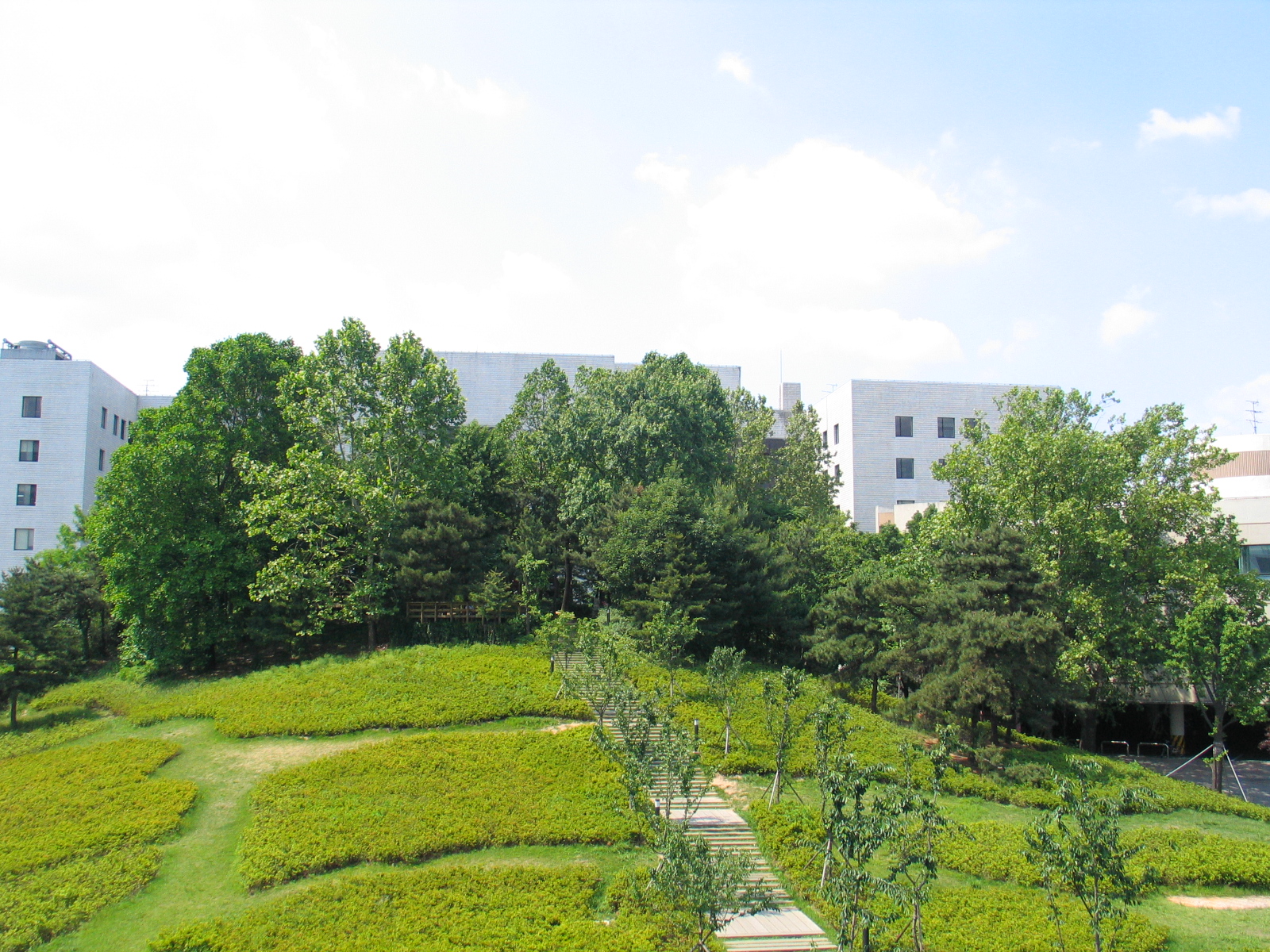
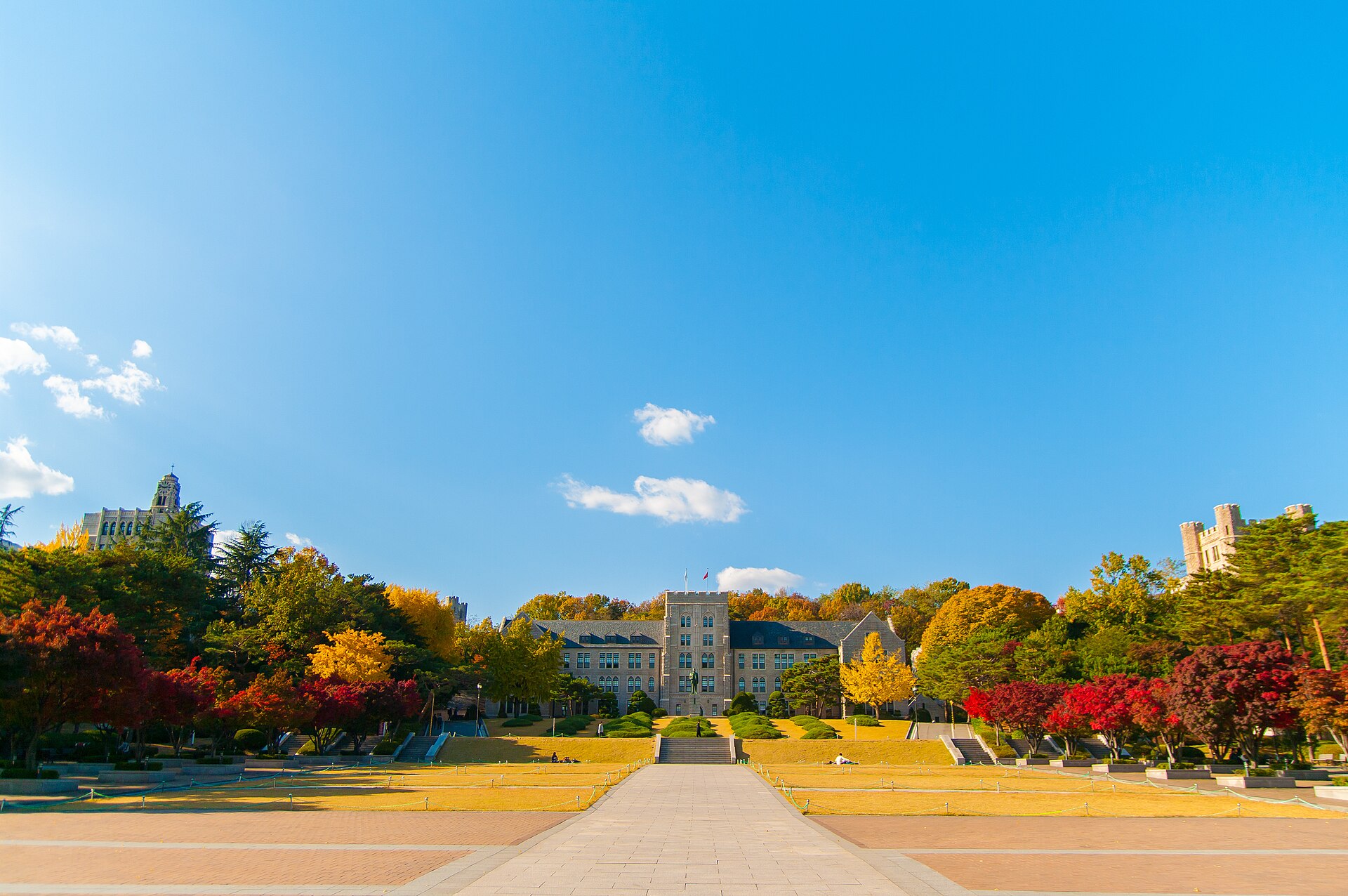
Aegineung Park in Science Campus of Korea University
Aegineung Park in Science Campus of Korea UniversityCho's · CC BY-SA 3.0 · via Wikimedia Commons
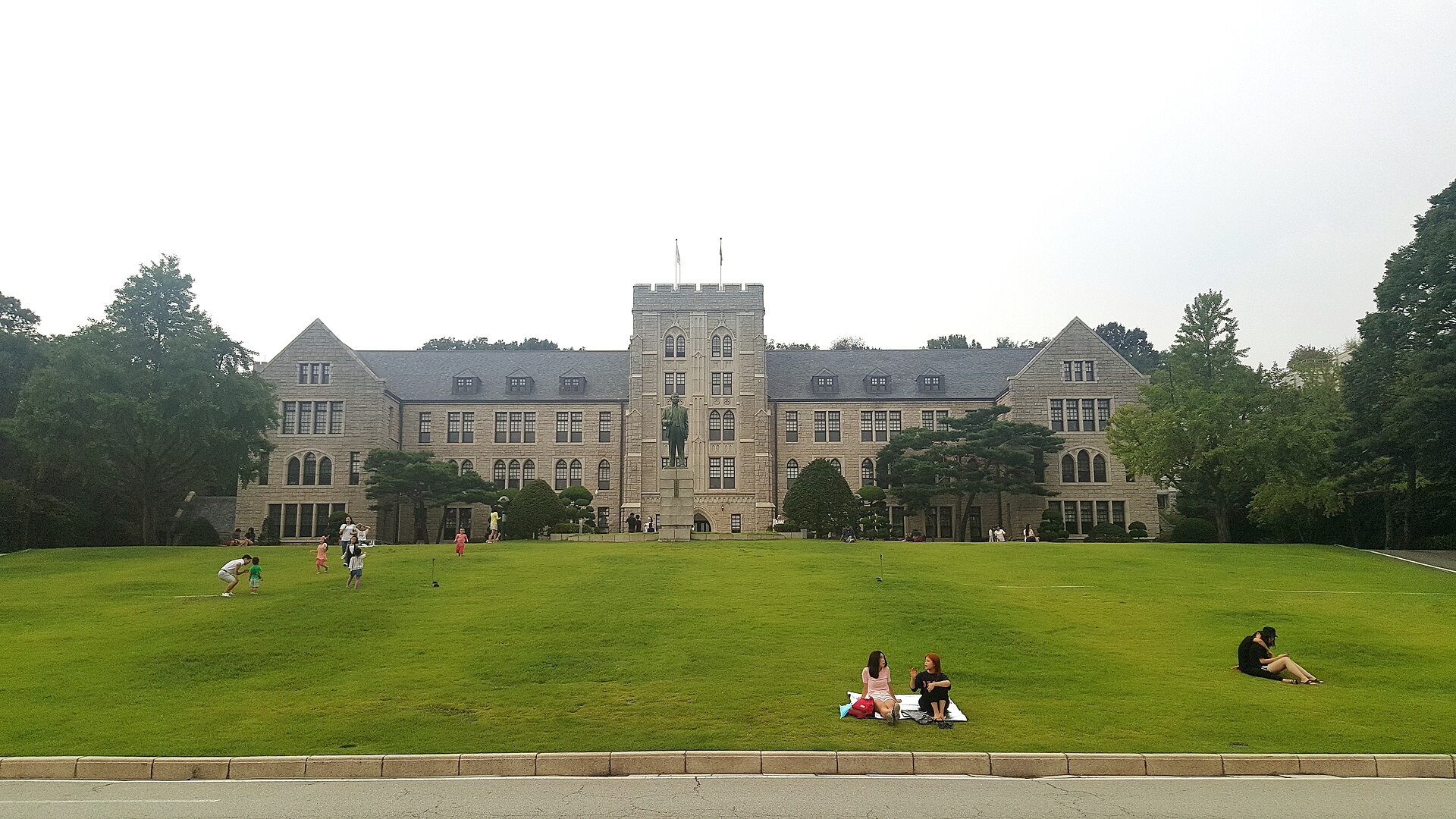
고려대학교 본관
고려대학교 본관Goodbye4ever · CC BY-SA 4.0 · via Wikimedia Commons
고려대학교 본관
고려대학교 본관CYAN · CC BY-SA 4.0 · via Wikimedia Commons
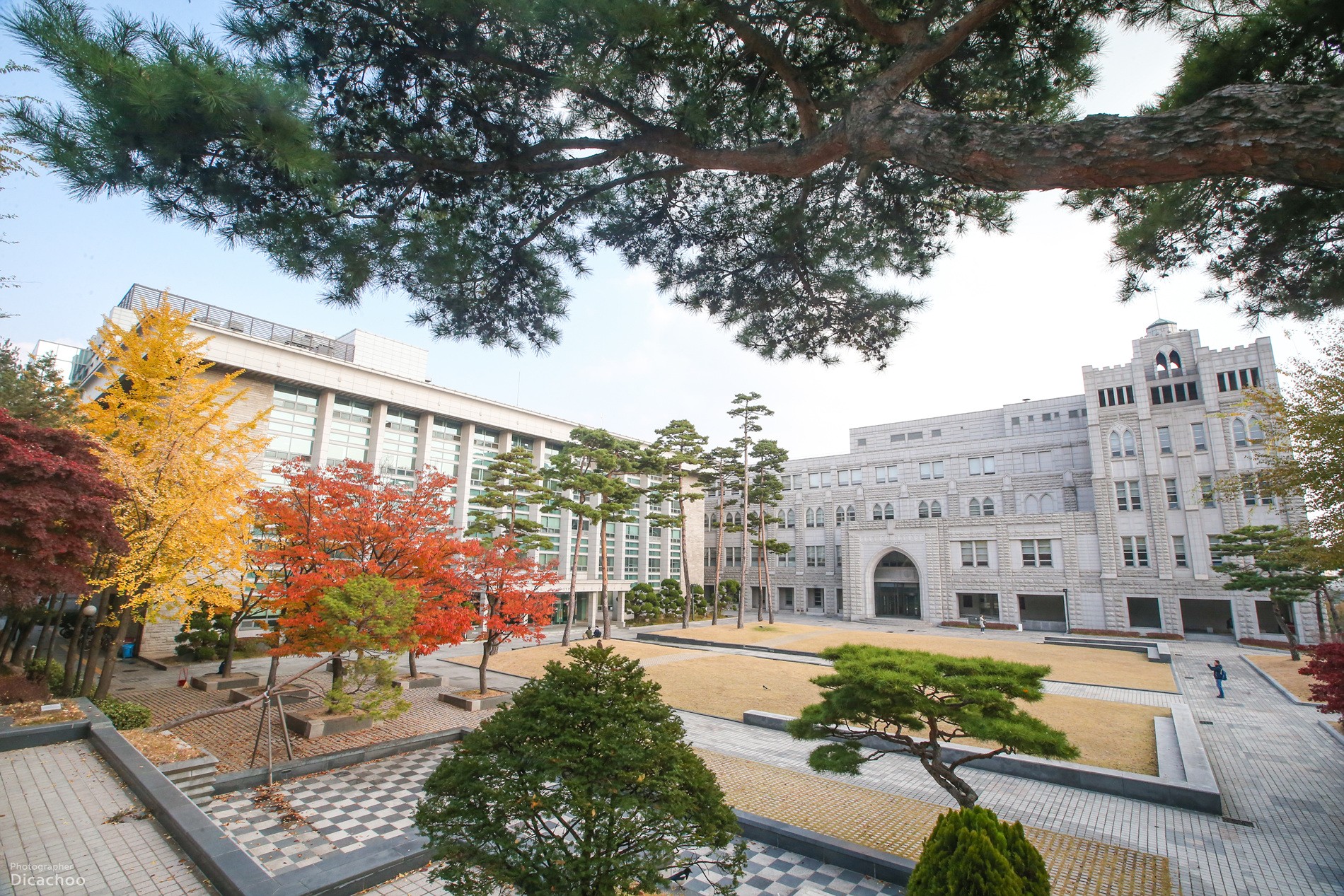
LG-POSCO Hall
LG-POSCO HallChocolatte2 · CC BY-SA 4.0 · via Wikimedia Commons
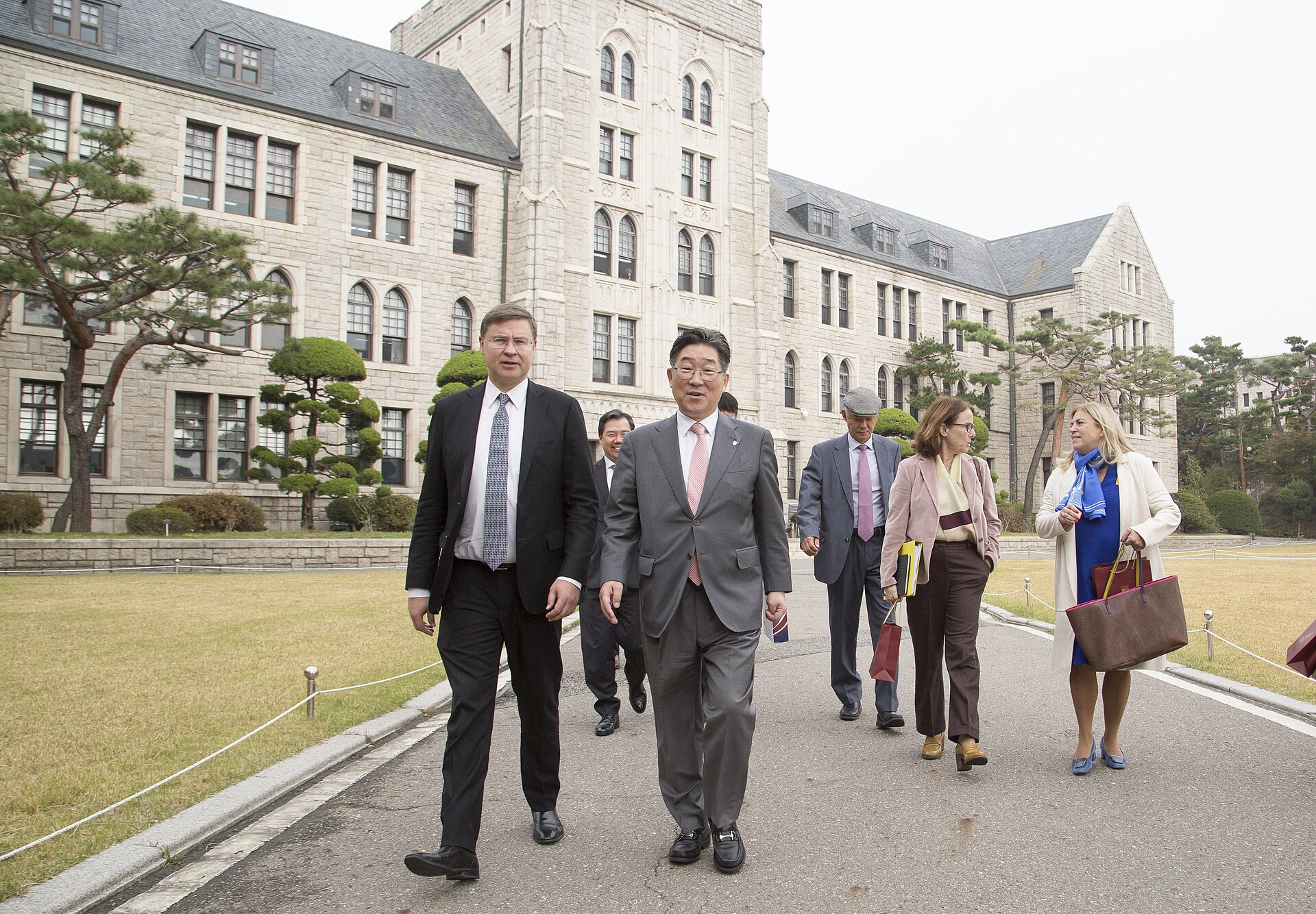
Valdis Dombrovskis & Kim Dong one, 2023
Valdis Dombrovskis & Kim Dong one, 2023Lee Jae-Won / European Union, 2023 / EC - Audiovisual Service · CC BY 4.0 · via Wikimedia Commons
Korea National Open University Incheon Regional Campus.
Korea National Open University Incheon Regional Campus.User:IRTC1015 · Public domain · via Wikimedia Commons

Why Korea University — SKY Prestige, Research & Value

Korea University is not merely a high-ranked institution — it is a century-old institution with a singular campus culture, an extraordinary alumni network within one of the world's most dynamic economies, and growing global recognition. For international students seeking elite-level education in Asia at a fraction of Western costs, KU is a compelling choice.

01SKY Prestige — Asia's Elite Tier
Korea University sits in the SKY group — the three most prestigious universities in South Korea alongside Seoul National and Yonsei. Ranked #67 globally by QS, a KU degree commands recognition across Korean industry, government, and international organisations throughout Asia.
02World-Class Business, Law & International Studies
KU's College of Business Administration and School of Law are Korea's most respected. The College of International Studies (CIS) delivers fully English-taught undergraduate degrees — International Studies, Political Science, Economics — designed for ambitious international students.
03Research Intensity
Korea University is a leading research institution with active centres in AI, biotechnology, materials science, and international economics. Undergraduates engage with faculty research from their first year, and the university is a Universitas 21 member.
04Unmatched Alumni Network in Korea
KU alumni disproportionately occupy senior positions in Samsung, LG, Hyundai, SK, the Korean judiciary, and the Ministry of Foreign Affairs. The KU network is one of the most powerful professional communities in Northeast Asia.
05Seoul — Asia's Most Dynamic City
Seoul is a global hub for K-culture, semiconductors, fintech, and entertainment. KU's Anam campus sits in Seoul's Seongbuk-gu district, connected to the city via Metro Line 6, with world-class infrastructure and a student-friendly cost of living far below London, Sydney, or New York.
06Exceptional Value for a Top-100 University
Annual tuition of approximately USD 7,200 — a fraction of comparable US, UK, or Australian institutions — combined with Seoul's manageable living costs makes KU one of the world's best-value elite universities. Total cost of attendance is approximately USD 18,000 per year.

Korea University Selectivity & International Student Profile

Stats

37,000
Total Enrolment
12%
International Students
#67
QS World Rank

Profile Stats

~40%
Overall Acceptance Rate
36+
IB Score Benchmark
3.5
Minimum GPA (4.0 scale)
12%
International Student Share
6.5
IELTS Minimum
80
TOEFL iBT Minimum
International track acceptance rate (varies by programme)

Rea Vs Rd

Rd Label: Fall Intake
Rd Value: Sep start
Rea Label: Spring Intake
Rea Value: Mar start

Korea University Admissions Requirements — Grades, Qualifications & Language

GPA & Transcripts
Value: 3.5+ GPA
  • Minimum 3.5 on a 4.0 scale; competitive admits typically exceed this
  • Consistency across all four years of secondary school expected
  • Upward grade trajectory is viewed favourably
  • Official transcripts must be apostilled or officially certified
Academic transcripts are the primary evaluation criterion. KU requires strong grades across all secondary school years. The minimum GPA is 3.5 (4.0 scale); competitive CIS admits typically sit well above this, particularly for popular programmes.
International Qualifications
Value: IB 36 / AAB
  • IB Diploma: 36+ is a competitive benchmark; 38–42 for top CIS programmes
  • A-Levels: AAB or above in relevant subjects
  • French Baccalaureate, German Abitur, CBSE/ISC (Class XII) all accepted
  • No SAT/ACT requirement; test-optional for international students
Korea University recognises the IB Diploma, A-Levels, and all major international qualifications. SAT and ACT are not required but may be submitted as supplementary evidence. IB Higher Level subjects relevant to your intended programme strengthen your file.
Language Proficiency
Value: IELTS 6.5 / TOEFL 80
  • IELTS Academic: minimum 6.5 overall (all bands 6.0+)
  • TOEFL iBT: minimum 80
  • TOPIK Level 3+ required for Korean-taught programmes
  • Waiver possible for students educated entirely in English — confirm with OIA
English proficiency certification is mandatory for English-taught programmes unless prior schooling was conducted entirely in English. Scores must be from tests taken within two years of application.

Korea University Application Components — Portal, Documents & Statement

Korea University uses a direct application system — international students apply via KU's own online portal (oku.korea.ac.kr), followed by hard-copy document submission to the Office of International Affairs. Below is every required component with strategic guidance.

01RequiredOnline Application (oku.korea.ac.kr)
All international freshman applications are submitted via KU's own portal. There is no Common App, UCAS, or central Korean clearing system. Create your account early and familiarise yourself with the document upload interface.
02RequiredOfficial High School Transcripts
Grades 9–12 (or equivalent) transcripts are required in full. Documents must be apostilled or officially authenticated. Unofficial or unverified copies are not accepted under any circumstances.
03RequiredGraduation Certificate
An official graduation certificate (or expected-graduation letter for final-year applicants) must be included. This must be officially issued and authenticated.
04RequiredStatement of Purpose
Mandatory for all international applicants since the fall 2025 intake. Your statement should address academic background, motivation for your programme and KU, career goals, and cultural readiness for studying in South Korea.
05RequiredEnglish Proficiency Test (IELTS/TOEFL)
IELTS 6.5 or TOEFL iBT 80 minimum for English-taught programmes. Scores must be from within the last two years. A waiver may apply if all prior schooling was in English — contact OIA to confirm.
06RequiredLetters of Recommendation
One to two letters from teachers or school counsellors. Letters should address academic ability, intellectual character, and suitability for university-level study. Give recommenders at least six weeks' notice.
07RequiredPassport Copy
A valid passport with at least six months' validity beyond your intended enrolment date is required for identification purposes.

Korea University Statement of Purpose — Strategy & What Works

Tips

Write toward KU specifically — not universities in general
Korea University admissions can immediately tell when a statement of purpose lacks genuine research. Name specific CIS courses, faculty research areas, or institutes at KU. Generic aspirational statements read as indifference.
Address South Korea directly — don't ignore the context
Applying to study in South Korea is a significant life decision. Your statement must explain why South Korea is the right environment for your goals. Silence on this point is a critical omission.
Clarity and structure over creative voice
Korean academic culture values logical structure, academic seriousness, and clear argumentation over narrative experimentation. Write in formal, clear English with explicit paragraph structure.
Honesty about Korean language preparation
If you are at beginner level in Korean, say so and describe your plan. Exaggerating language ability is discoverable and damages credibility. Genuine humility and a clear plan read as mature self-awareness.

Prompts

Academic Background & Achievements
Address your academic background and achievements in secondary school, with specific reference to courses, projects, or competitions that developed your interest in your intended field.
Motivation for Programme & University
Explain why you have chosen your specific programme at Korea University, and why South Korea is the right context for your academic and career goals.
Career Goals & Post-Graduation Plans
Describe your career aspirations and explain how a degree at Korea University positions you to achieve them.
Cultural Preparation & Adaptability
Demonstrate your readiness to adapt to the Korean academic environment and engage with Korean culture beyond the international student community.
The most common KU statement mistake. Writing a generic statement that makes no specific reference to Korea University, its programmes, faculty, or the South Korean academic context.
Writing Strategy — What Works at Korean Universities

What Korea University Admissions Looks For

Korea University evaluates international applicants through document screening (서류전형) — a holistic review of academic transcripts, test scores, the statement of purpose, and supporting materials. Understanding what reviewers are actually assessing — and why — is the foundation of a strong application.

01Academic Excellence & Consistency
KU expects strong, consistent grades across all secondary school years. An upward trajectory is valued. The minimum GPA threshold is 3.5, but competitive CIS admits typically exceed this, especially for Business, International Studies, and Computer Science.
02Clarity of Academic Purpose
Your statement of purpose must convey a specific, well-reasoned motivation for your chosen programme and for choosing KU. Vague aspirations signal a lack of research. KU wants students who have genuinely thought about why this university and this programme.
03Language Readiness
English proficiency certification (IELTS 6.5 / TOEFL 80) meets the threshold, but the quality of your written statement itself signals real English capability. Basic Korean language preparation — or a clear plan to develop it — is looked upon favourably.
04Cross-Cultural Engagement
Evidence of genuine interest in Korean culture, Asia-Pacific affairs, or international engagement strengthens your profile. Model UN, foreign language study, exchange experience, or relevant internships all signal genuine cultural readiness — not merely geographic curiosity.
05Extracurricular Depth
KU values sustained involvement over scattered activity. A meaningful commitment — student leadership, community service, arts, academic competition, or research — with real depth and impact is more compelling than a long list of surface-level participation.
06Fit for the Korean Academic Environment
KU evaluates readiness for academic culture: rigorous study expectations, group project norms, competitive grading, and engagement with Korean peers. Demonstrating self-awareness about this transition, and a genuine plan for it, distinguishes serious applicants.

Korea University Financial Aid & Scholarships for International Students

KU's affordability stems from its inherently low tuition relative to peer institutions globally, not from a comprehensive need-based aid programme. At approximately USD 7,200 per year, the university's fees are a fraction of comparable US, UK, or Australian institutions of equivalent ranking. Institutional merit scholarships and the Korean government's GKS programme are the primary funding routes for international students.

Aid amounts and scholarship details are subject to change each cycle. Confirm current-cycle information with the Office of International Affairs at oia.korea.ac.kr before applying.

Stats

USD 7,200
Annual tuition (approx.)
USD 18,000
Total cost of attendance (est.)
USD 80
Application fee
KRW 400K/mo
On-campus dorm (approx.)

Contribution Tiers

NoteRangePercentPercent Value
Full government scholarship — tuition, stipend, airfareGlobal Korea Scholarship (GKS)100%100
Partial tuition support — merit-basedKU Global Leader ScholarshipUp to 50%50
Ongoing GPA-contingent tuition waiverCIS Academic ScholarshipVaries30
Bilateral or home-government awardsExternal / Government ScholarshipsVaries25
Financial Aid Reality for International Students. Korea University does not operate a large need-blind endowment-funded financial aid system comparable to leading US institutions. The primary routes to significant financial support are merit-based institutional scholarships (including the KU Global Leader Scholarship) and South Korea's government-funded Global Korea Scholarship (GKS), which covers full tuition, living allowance, and airfare for eligible graduate-track recipients.
Scholarship Routes for International Students

Key Dates

Fall 2026 Online Application Window
Date: Mar 2–27
Fall 2026 Hard-Copy Document Deadline
Date: Mar 31
Fall 2026 Decision Released
Date: May–Jun
Spring 2027 Application Window (approx.)
Date: Sep–Oct
Spring 2027 Decision Released (approx.)
Date: Nov–Dec

Advantages

  • Fall intake (September) offers the larger and more active cohort
  • Most scholarships are tied to the Fall intake cycle
  • Fall semester aligns with the standard academic-year start globally
  • More clubs, orientation events, and integration programmes launch in Fall
  • Wider programme availability in the Fall semester

Disadvantages

  • Spring intake (March) has a shorter application window than Fall
  • Fewer scholarships available for Spring-intake students
  • Some CIS programmes may have limited enrolment in Spring
  • Spring integration into existing student cohorts requires more self-initiative
Spring vs. Fall Intake. Korea University admits international undergraduates twice yearly: Fall (September) and Spring (March). Fall is the primary intake with the largest cohort, widest scholarship availability, and most complete orientation infrastructure. Spring is a genuine option for students who miss the Fall window.
Tychr's Intake Recommendation. Apply for Fall intake if at all possible. The Fall cohort is significantly larger, scholarships are more widely available, and the orientation infrastructure — buddy programmes, club fairs, international student events — is optimised for September arrivals. Apply for Spring only if you have missed the Fall deadline or have a specific reason for a March start.
Korea University Application Rounds — Spring vs. Fall Intake
https://oia.korea.ac.kr/_res/oia/etc/Application_Guide_for_Fall_2026_Freshman(ENG).pdf

Korea University Interview — Format, Likelihood & Preparation

Not all Korea University programmes conduct formal interviews. Some programmes — particularly in the College of International Studies — may invite shortlisted applicants for a virtual interview after the document-screening stage. The interview assesses motivation, English communication (or Korean for Korean-track programmes), and academic readiness. If no interview is scheduled, document quality alone determines admission.

Meta

Virtual or in-person — programme-dependent
Format
Not universal; some programmes shortlist for interview
Frequency
Motivation, communication, academic readiness
Evaluates
English for English-taught programmes; Korean for Korean-track
Language

Questions

Why Korea University — and why this specific programme?
Tip: Be specific. Name CIS courses, faculty research, or KU institutes. Avoid referencing rankings alone.
Why did you choose to study in South Korea?
Tip: Show genuine engagement with Korea. Reference language study, cultural interest, or Asia-Pacific career goals — not just KU's ranking.
What are your career goals after graduating from KU?
Tip: Be concrete and realistic. Connect your goals to what the programme actually delivers, not to sweeping global ambitions.
How have you prepared for studying in a Korean academic environment?
Tip: Demonstrate that you have thought about the cultural and academic adjustment. Interviewers are looking for self-awareness, not performance.
What aspect of your intended programme interests you most?
Tip: Reference a specific research problem, faculty member, or centre at KU that connects to your intellectual interests.

Korea University Housing & Residential Life

Korea University does not operate a Harvard-style residential house system. Students live in on-campus dormitories or off-campus accommodation in the Anam neighbourhood. Two dedicated international student dormitories — CJ International House and Anam Global House — are the most popular for incoming international students, offering affordable, campus-proximate accommodation.

Houses

CJ International House
Tag: International
Dedicated international student dormitory; highly sought-after
Anam Global House
Tag: International
Second international dorm; modern facilities, shorter wait
On-campus General Dormitories
Tag: General
Mixed Korean and international students; Korean language immersion environment
Goshiwon (고시원)
Tag: Off-Campus
Small private study-rooms near campus; very affordable, minimal space
One-Room Apartment (원룸)
Tag: Off-Campus
Private studio; greater independence, higher monthly cost (~KRW 500K–800K)
Shared Apartment
Tag: Off-Campus
Shared accommodation near Anam or Sinchon; social, cost-effective option

Lottery Steps

  • Apply for on-campus housing as part of the admissions process — spaces are limited and competitive
  • International student housing applications are coordinated by the Office of International Affairs
  • Priority is typically given to first-year international students
  • CJ International House and Anam Global House charge approximately KRW 400,000/month (~USD 300)
  • Off-campus alternatives in the Anam-dong neighbourhood are plentiful and affordable by Seoul standards
  • Seoul Metro Line 6 connects the campus directly to central Seoul and other university districts
How KU Housing Works for International Students

Korea University Colleges & International Programmes

College of International Studies (CIS)
Label: English-Taught Undergraduate Programmes
  • {"label":"Primary English-taught undergraduate track","value":"CIS"}
  • {"label":"Key programmes","value":"International Studies, Political Science, Economics, Global Business"}
  • {"label":"Language of instruction","value":"100% English"}
  • {"label":"Designed for","value":"International students"}
The CIS is the primary entry point for international undergraduates without Korean proficiency. Degrees are taught entirely in English across international affairs, economics, political science, and global business tracks.
College of Business Administration
Label: Korea's Most Prestigious Business School
  • {"label":"Founded","value":"1905"}
  • {"label":"Programme types","value":"Undergraduate + Graduate (MBA)"}
  • {"label":"Teaching language","value":"Korean (some English-track courses)"}
  • {"label":"Recruiter pipeline","value":"Samsung, LG, McKinsey, Goldman"}
One of Korea's most renowned business schools with deep chaebol and global firm recruitment pipelines. International students typically access business education through the CIS Global Business track unless they have Korean proficiency.
College of Engineering
Label: Research-Intensive Technical Education
  • {"label":"Key disciplines","value":"CS, Electrical, Mechanical, Chemical, Civil"}
  • {"label":"Language of instruction","value":"Primarily Korean"}
  • {"label":"Research centres","value":"AI, semiconductor, bioengineering"}
  • {"label":"International access","value":"Some English-taught courses; CIS Computer Science track"}
Strong research reputation in AI, semiconductor engineering, and materials science. International students with Korean proficiency may apply directly; others access Computer Science through the CIS track.
School of Law (KU Law)
Label: Korea's Leading Law Institution
  • {"label":"Key programme","value":"Law (J.D.-equivalent)"}
  • {"label":"Language","value":"Korean"}
  • {"label":"Track record","value":"Korean bar exam, judiciary, foreign affairs"}
  • {"label":"International note","value":"Requires strong Korean proficiency"}
KU's School of Law is among Korea's most prestigious with exceptional bar exam and judicial placement rates. International students require advanced Korean proficiency for direct admission.
College of Medicine / Life Sciences
Label: Medical & Life Science Research
  • {"label":"Flagship","value":"Medicine (6-year programme)"}
  • {"label":"Affiliated hospital","value":"Korea University Medical Center"}
  • {"label":"Language","value":"Korean"}
  • {"label":"Research strength","value":"Biotechnology, genomics, cancer research"}
KU's medical programme is one of Korea's most selective. International applicants generally require exceptional academic profiles and Korean proficiency. Life sciences research centres are strong at the graduate level.
Graduate School of International Studies (GSIS)
Label: English-Taught Graduate Programmes
  • {"label":"Programme type","value":"Master's & PhD"}
  • {"label":"Language","value":"English"}
  • {"label":"Scholarships","value":"50–100% tuition waiver available"}
  • {"label":"Focus","value":"International affairs, Korean studies, development"}
GSIS is the premier graduate-level English-taught programme. Significant institutional scholarships are available based on academic merit — a more generous aid environment than the undergraduate track.

Research & Extracurricular Opportunities at Korea University

Undergraduate Research Participation
Category: Faculty Research
KU encourages undergraduate research engagement from the first year. The university's research centres in AI, biotechnology, semiconductor science, and international economics actively involve undergraduates. CIS students may connect with the Asiatic Research Institute and the Institute for Korean Studies for social science and humanities research.
Student Clubs & Academic Circles
Category: 80+ Active Groups
Over 80 student clubs span academic circles (경영학회, 국제학회), performing arts, sports, and cultural organisations. International students join the general KU club ecosystem alongside Korean peers — the fastest path to genuine cultural integration and language practice.
Ko-Yon-Jeon (고연전)
Category: Annual Rivalry Festival
The legendary annual sports festival pitting KU against Yonsei University in baseball, basketball, ice hockey, football, and rugby. The multi-day event draws nationwide media attention and is one of the defining experiences of KU campus life for all students — Korean and international.
Granite Tower Festival (석탑대동제)
Category: Campus Culture
KU's major annual campus festival held every May — K-pop performances, street food, cultural events, and student showcases across the Anam campus. One of Seoul's premier student cultural events and a key integration point for international students arriving in Spring.
Scroll right to explore KU's research programmes and student life.

Career Outcomes & Korea University Alumni Network

A Korea University degree is one of the most powerful professional credentials in Northeast Asia. The SKY alumni network actively supports graduates across industries. International students who build Korean language skills alongside their degree are positioned for careers that bridge global and Korean contexts — an increasingly valuable combination in Asia-facing sectors.

Stats

78%
Graduate employment rate
USD 35,000
Average starting salary (Korea market)
12%
International student share
#67
QS World Rank
Yes
Universitas 21 member
Dominant
SKY alumni in Korean senior leadership

Categories

Corporate & Conglomerate
Samsung, LG, Hyundai, SK, Lotte, Kakao, Naver — KU alumni disproportionately occupy senior positions across Korea's major chaebols and tech companies. The SKY brand is the single most powerful professional credential in Korean corporate hiring.
Finance, Consulting & Advisory
Big 4 consulting, global investment banks with Korea offices, and boutique advisory firms operating across Northeast Asia actively recruit from KU's Business and CIS programmes.
Government, Law & Diplomacy
KU's School of Law and Political Science/International Relations programmes feed directly into the Korean judiciary, Ministry of Foreign Affairs, and UN-affiliated organisations. CIS International Studies alumni are well-represented in Korean diplomatic corps and multilateral institutions.

Our Korea University Admissions Track Record & Student Success Stories

Priya S.
Tychr helped me understand that my statement of purpose was too vague — it could have been submitted to any university. My counsellor pushed me to research specific CIS faculty and articulate exactly why Korea University's International Studies programme aligned with my interest in Korean economic diplomacy. The final statement was completely different and genuinely mine.
Country: India
Program: CIS — International Studies
Class Year: Class of 2027
Residential: CJ International House
Academic Profile: IB 39 · GPA 3.9
Lucas M.
I applied to KU without a strong statement of purpose and was rejected. Tychr helped me understand what Korean admissions actually evaluate — structure, clarity, academic seriousness, and genuine cultural motivation. My second application was fundamentally different. I was admitted to the CIS Global Business track with a partial scholarship.
Country: Brazil
Program: CIS — Global Business
Class Year: Class of 2026
Residential: Anam Global House
Academic Profile: A-Levels: AAB · IELTS 7.5
Aisha K.
The Ko-Yon-Jeon is not a myth — it's one of the most extraordinary campus experiences I've had. Tychr's guidance on the application helped me get here, but the culture at KU has exceeded everything I expected. The network I'm building — Korean and international — feels genuinely different from anything I could have built elsewhere.
Country: Nigeria
Program: CIS — Political Science
Class Year: Class of 2025
Residential: Off-campus Anam-dong
Academic Profile: IB 37 · TOEFL 102

Faqs

Do I need to know Korean to study at Korea University?+

Not for the College of International Studies (CIS) English-taught programmes, which are conducted entirely in English. However, the majority of KU's programmes are taught in Korean. If applying outside the CIS, Korean language proficiency (typically TOPIK Level 3+) is required. Developing basic Korean skills is strongly recommended for daily life integration regardless of programme.

What is the SKY group and what does membership mean for KU graduates?+

SKY refers to Seoul National University (S), Korea University (K), and Yonsei University (Y) — South Korea's three most prestigious universities. A KU degree carries enormous brand recognition in Korean society, industry, and government. SKY alumni disproportionately occupy senior leadership in major chaebols, the Korean judiciary, and diplomatic corps.

What is the difference between the CIS and regular KU undergraduate programmes?+

The CIS is specifically designed for international students and taught entirely in English. Regular KU undergraduate programmes are conducted in Korean. Most international undergraduates without Korean proficiency enrol through the CIS. Students with strong Korean may be admitted to regular Korean-taught departments.

Is the Global Korea Scholarship (GKS) available for Korea University?+

The GKS undergraduate track assigns students to universities — you cannot select KU directly through the undergraduate programme. However, the GKS graduate scholarship (for master's and PhD students) can be used at KU. Contact your home country's Korean Embassy or NIIED (www.studyinkorea.go.kr) for current eligibility and deadlines.

When is the application deadline for Korea University's Fall 2026 intake?+

For Fall 2026: the online application window runs approximately March 2–27, 2026, with hard-copy documents due by March 31, 2026. Decisions are released approximately May–June. Always verify exact dates on the official OIA site (oia.korea.ac.kr) as deadlines shift annually.

Can I work part-time in South Korea as an international student?+

International students in South Korea on a D-2 student visa are generally permitted to work up to 20 hours per week during the semester and full-time during academic breaks, subject to visa conditions. Seoul offers tutoring, hospitality, and English-language part-time opportunities accessible to international students.

How does the statement of purpose differ from a US Common App personal essay?+

The Korean statement of purpose is evaluated on clarity, logical structure, academic seriousness, and specificity of motivation — not on creative narrative voice or emotional resonance. Write in formal English with clear topic sentences and explicit connections between your academic background, goals, and KU's specific programme. Avoid generic inspiration stories.

What support does KU provide to international students?+

The Office of International Affairs provides an International Student Buddy Programme pairing new arrivals with Korean student guides, orientation programmes, visa support, housing assistance, and career counselling. The CIS has a dedicated student affairs office for English-taught programme students.

Book a Free Korea University Admissions Strategy Session

In 60 minutes our Korea University admissions specialists will evaluate your academic profile, review your statement of purpose strategy, identify scholarship opportunities, and advise on the Spring vs. Fall intake decision — so you apply once, and get it right.

  • No commitment required
  • Korea University and SKY admissions specialists
  • Personalised strategy — not generic advice
Getting into Korea University as an international student is not about being the strongest applicant globally — it's about being the most purposeful one.

Korea University Academic Requirements

What Korea University Expects Academically — The Honest Breakdown for International Students

What GPA, IB score, and academic profile do KU's admitted international students actually need? And how does KU's document-screening process evaluate students from IB, A-Level, AP, and other international curricula?

36
IB Score Benchmark
Competitive admit profile
3.5
Minimum GPA
On a 4.0 scale
6.5
IELTS Minimum
All bands 6.0+
80
TOEFL iBT Minimum
For English-taught programmes
Optional
SAT/ACT Policy
Not required for international track
#67
QS World Rank
2025 QS World Rankings

GPA & Academic Record

Korea University and GPA — What the Data Shows

Korea University publishes a minimum GPA of 3.5 on a 4.0 scale for international applicants. In practice, competitive admits for popular CIS programmes (International Studies, Global Business, Computer Science) typically sit well above this threshold.

A 3.5 GPA is a threshold, not a distinguishing feature. What differentiates competitive admits is consistency across all four years, course rigour aligned with the intended programme, and a strong statement of purpose that contextualises the academic record.

3.5
Published minimum GPA for international applicants
3.7–4.0
Typical competitive CIS admit GPA range
What this means for international qualification systems. International students from systems without a 4.0 GPA scale (IB, UK A-Levels, French Baccalaureate, Indian boards) are evaluated on an equivalent basis. KU's OIA has established equivalency criteria for the most common international qualification systems. A strong IB diploma score or AAB+ at A-Level translates clearly in the document screening process.
Grade trajectory matters. An upward grade trajectory — improving from a moderate start to strong performance in Grades 11 and 12 — reads positively. Korean academic culture values sustained improvement and demonstrated capacity for hard work. A weak Grade 9 or 10 followed by strong final years is a context, not a disqualifier, if explained in the statement of purpose.

Academic Context

Academic Context — How KU Reads International Performance

Korea University does not require class rank, and many international schools do not provide it. KU's OIA evaluates academic performance relative to the student's school system and qualification framework.

How KU contextualises your academic record
Every international application is reviewed relative to the applicant's school and qualification system. An IB student is compared against IB norms; an A-Level student against A-Level expectations; an Indian board student against CBSE/ISC grade distributions. KU's OIA has long experience evaluating applications from over 70 countries.
Course rigour within your system
Taking the most rigorous courses available at your specific school — and choosing Higher Level subjects aligned with your intended programme — is more valuable than optimising for grades in easier options. KU's document-screening process examines subject choices, not just totals.
For students at less well-known international schools. For students at less internationally recognised schools, the school profile section of your application and your recommender letters are especially important. They provide KU's admissions reviewers with the institutional context needed to interpret your grades fairly. Tychr coaches students and counsellors on providing this context effectively.

SAT — Not Required

SAT Scores at Korea University — What You Actually Need

SAT scores are not required for international applicants to Korea University. KU's international admissions process is transcript and qualification-based.

LabelScorePercent
SAT requirementNone0
SAT as supplementaryPermitted50
Primary academic criterionTranscripts + IB/A-Level100
When SAT adds value for KU applicants. If you have sat the SAT and scored above 1400, submitting it can provide additional academic context. For STEM-focused applicants to Engineering or Computer Science programmes, a strong Math subscore (750+) can reinforce quantitative capability alongside IB or A-Level mathematics performance.
Preparation priority. Tychr does not recommend pursuing SAT preparation solely for the KU application. Priority should be given to IB/A-Level performance, English proficiency testing (IELTS/TOEFL), and the statement of purpose. SAT is an optional supplement, not a core evaluation factor.
The role of SAT in KU admissions. For most international applicants to KU, SAT scores are simply not part of the evaluation framework. Korean universities use domestic entrance exams (CSAT) for Korean applicants and transcript-based review for international students. SAT is neither expected nor disadvantageous to omit.

ACT — Not Required

ACT Scores at Korea University

ACT scores are not required for international applicants to Korea University.

Metrics

ACT requirement
Score: None
Primary credential
Score: IB / A-Level / equivalent

Comparison Cards

Korean admissions vs. US admissions
IB Diploma, A-Levels, French Baccalaureate, Indian boards, and other national qualifications are evaluated on their own merits. SAT/ACT are not required.
The CSAT — for Korean students, not internationals
The CSAT (수능) is the domestic university entrance exam used for Korean applicants. International students are not expected to take it — separate international admissions tracks exist precisely for this reason.
What to focus on instead. KU does not conduct ACT superscoring — the test is not part of the evaluation framework for international applicants. Focus preparation time on your IB final exams or A-Level performance, English proficiency tests, and your statement of purpose.
Tychr's recommendation for KU applicants. Invest your preparation time in maximising your IB or A-Level performance, achieving IELTS 7.0+ or TOEFL 95+ (above the minimums), and crafting a genuinely specific, well-researched statement of purpose. These three factors drive KU admissions decisions for international students.
US Tests vs. Korean University Admissions

Testing Strategy

Korea University Test Policy — What Test-Optional Means Here

Korea University's international admissions process is effectively test-optional for standardised tests like SAT and ACT. The university's evaluation centres on secondary school academic performance, qualifications, and language proficiency certification.

Submit Items

Your SAT score is 1400 or above — it can serve as supplementary evidence of academic ability.
You are applying to Engineering or Computer Science and your SAT Math subscore is 750+.
Your IB or A-Level performance is close to the minimum threshold and a strong SAT can reinforce the academic picture.

Withhold Items

Your SAT or ACT score is below 1300 — withholding avoids drawing attention to a weak standardised test result.
You have not taken either test — this is normal for KU applicants and carries no penalty.
Current test policy. KU does not require SAT or ACT scores from international applicants. Admission decisions for international students rest on transcripts, GPA, international qualifications (IB/A-Level/equivalent), and language test scores (IELTS/TOEFL). Standardised tests like SAT are truly supplementary.
The key difference from US admissions. Unlike Harvard or MIT where test-optional is a genuine strategic decision, at Korea University the SAT and ACT are genuinely peripheral. Not submitting does not disadvantage you. KU has built its international admissions framework around qualifications (IB/A-Level) and transcripts, not US-style standardised tests.

International Curricula

IB, A-Levels & International Qualifications at KU — Specific Benchmarks

IB Diploma
Note: For IB applicants: course selection alignment with intended programme is carefully reviewed. HL Mathematics for Engineering and Computer Science; HL Economics or Global Politics for CIS International Studies. The Extended Essay subject and grade may be reviewed as evidence of research capability and intellectual seriousness.
  • {"label":"Competitive score range","value":"36–42 (IB total)"}
  • {"label":"HL expectations","value":"Strong HL scores in subjects relevant to intended programme"}
  • {"label":"Subject alignment","value":"HL Maths for STEM; HL Economics/History/Politics for CIS social sciences"}
  • {"label":"Extended Essay","value":"A or B grade; relevant topic strengthens narrative in statement of purpose"}
A-Levels
Note: A-Levels are well understood by KU admissions. Three A-Level subjects are standard; AAB or above is competitive. Subject alignment with intended programme is important — Economics + Mathematics for Business programmes; History + Politics for International Studies; Physics + Mathematics for Engineering.
  • {"label":"Competitive range","value":"AAB – AAA"}
  • {"label":"Subject rigour","value":"Mathematics required for STEM programmes; strong humanities for social sciences"}
  • {"label":"GCSE/IGCSE results","value":"Reviewed alongside predicted/achieved A-Level grades"}
Other International Qualifications
Note: The French Baccalaureate, German Abitur, and Indian CBSE/ISC Class XII board results are all accepted. KU's OIA evaluates these on a case-by-case equivalency basis. If your qualification is unusual or from a less internationally recognised system, contact OIA at admission@korea.ac.kr for equivalency guidance before applying.
  • {"label":"French Baccalaureate","value":"Accepted; Mention Très Bien is competitive"}
  • {"label":"German Abitur","value":"Accepted; 1.0–1.5 GPA is competitive"}
  • {"label":"Indian CBSE/ISC","value":"Accepted; 90%+ overall is competitive for CIS"}

Advanced Placement

AP Courses at Korea University — What They Count For

AP (Advanced Placement) courses are not part of the Korean university admissions framework. Korea University does not require or expect AP coursework from international applicants.

AP as supplementary evidence
If you attend a US-curriculum school and have AP scores, you may submit them as supplementary evidence. AP 5s in subjects relevant to your intended programme — Calculus, Economics, Computer Science, Physics, Chemistry — can reinforce your academic profile. AP 4s are generally not worth including.
IB/A-Level students need not pursue AP
International students at IB or A-Level schools should not pursue AP courses specifically for the KU application. Their own qualification system is evaluated on its own terms.
No AP credit transfer at KU
KU does not award course credit for AP scores in the way US universities do. AP performance is purely an admissions signal, not a credit-transfer mechanism.
AP credit transfer to KU is not available. For students coming from US-curriculum schools, focus on AP 5s in your strongest and most relevant subjects as supplementary evidence only.
International students at IB or A-Level schools should not artificially pursue AP. The IB Diploma and A-Level system are the appropriate and expected qualifications for their context, and KU evaluates them accordingly.

Academic Rigour

Rigour of Secondary School Record — KU's Academic Evaluation

Korea University's document-screening process evaluates not just grades but the calibre of the curriculum taken. Subject choice and level — particularly Higher Level selections in IB or A-Level combinations — signal academic seriousness and readiness for university-level work.

Choosing Higher Level subjects in fields directly relevant to your intended programme — and performing well in them — is the clearest academic signal available to Korean university admissions.

Evaluated in context. Rigour is always evaluated relative to what was available. A student at a school offering a limited IB curriculum who challenges themselves at HL in all available relevant subjects reads differently from a student at a resource-rich school who avoided difficult HL choices. What matters is demonstrated academic ambition within your school context.
What rigour means at KU. This does not mean taking every possible challenging course. It means coherent, programme-aligned choices at the highest level available — and performing well in them. For CIS applicants, social science HL choices alongside strong language performance are what KU reviewers look for.
What KU looks for. An IB student who took HL Economics, HL Global Politics, and HL English — with a 38+ total score — applying to CIS International Studies is presenting an academically coherent and rigorous profile. The subject choice signals genuine intellectual preparation for the programme, not just grade optimisation.

Programme Preparation

Mathematics, Science & Subject Preparation — What KU Expects

Korea University's CIS and regular-track programmes have distinct preparation expectations. The most competitive CIS programmes in Business, International Studies, and Computer Science require demonstrated preparation in relevant subjects beyond bare minimum thresholds.

Mathematics
HL Mathematics (Analysis & Approaches or Applications & Interpretation) for Engineering, Computer Science, and Economics programmes. For CIS Economics, strong IB HL Economics alongside mathematics background is expected. Competition mathematics (national olympiads or equivalent) is an additional differentiating signal.
Sciences
HL Physics and/or Chemistry (IB) or A-Level Sciences for Engineering, Biotechnology, and Life Sciences. KU's science-track programmes are demanding; students with weak mathematics or science foundations at HL/A-Level typically struggle.
English Language & Writing
Strong written English — evidenced both in the statement of purpose and in formal proficiency scores above minimum thresholds. For CIS programmes, written academic English is assessed throughout coursework. Students with formal debate, essay competition, or academic writing experience adapt most successfully.

Language Requirements

English Language Requirements for International KU Applicants

All English-taught programmes at Korea University require formal English proficiency certification unless prior schooling was conducted entirely in English. Score requirements are enforced strictly.

The quality of your statement of purpose is also an implicit English language assessment. Grammatical errors, informal language, or unclear argumentation in the statement of purpose directly undermine the application — beyond the formal test score, your writing quality is visible to reviewers.

Test: IELTS Academic
Score: 6.5 (all bands 6.0+)
Test: TOEFL iBT
Score: 80
Test: TOPIK
Score: Level 3+ (Korean-taught programmes)
Practical guidance — aim above the minimum. IELTS 6.5 and TOEFL 80 are thresholds, not targets. A student scoring IELTS 7.5 or TOEFL 100+ demonstrates meaningfully stronger English capability and positions their application above the minimum. Tychr generally recommends targeting IELTS 7.0 or TOEFL 95 for a competitive CIS application.

By Programme Track

Academic Requirements by Programme Track — What Different Paths Expect

Korea University's CIS admits students to specific programme tracks. The academic profile should be coherent with the intended track. The table below reflects typical expectations for the most popular CIS and KU international-access programmes.

SignalsExpectationConcentration
HL Economics; quantitative projectsHL Maths + HL Economics or equivalentInternational Studies / Economics
HL Global Politics; MUN; debate achievementStrong humanities — History, Politics, English HLPolitical Science / International Relations
Finance internship; quantitative courseworkHL Maths + Economics backgroundGlobal Business
USACO; original coding projects; HL CSHL Maths + CS or Physics backgroundComputer Science (CIS track)
Science olympiad; biology/chemistry researchHL Biology + ChemistryLife Sciences / Pre-Medical adjacent
Engineering competition; robotics; HL PhysicsHL Maths + Physics A-Level equivalentEngineering (Korean-taught, proficiency required)
Korean language study; cultural engagement; TOPIKTOPIK Level 3+ alongside academic profileKorean Studies / Korean-taught programmes

International Systems

How Korea University Evaluates International Education Systems

IB Diploma
Well understood and actively valued by KU admissions. A competitive IB score (36+) with strong HL performance in relevant subjects is the clearest academic credential for CIS programmes. The Extended Essay and TOK grades may be referenced as evidence of research capability and intellectual maturity.
A-Levels (Cambridge and Edexcel)
A-Levels are well recognised. Three A-Level subjects at AAB or above in relevant fields is the competitive benchmark. Subject combination alignment with the intended programme is carefully reviewed.
Indian Boards (CBSE / ISC)
CBSE and ISC results are accepted and evaluated in the context of Indian board norms. 90%+ overall with strong performance in relevant subjects is competitive for CIS. National-level competition results (JEE, olympiads) can supplement the board academic profile.
Chinese Gaokao
The Gaokao is evaluated for Chinese applicants but is one data point among several. Students with IB or A-Level study supplemented by strong IELTS/TOEFL scores typically present stronger files for international-track programmes.
French Baccalaureate / German Abitur
The French Baccalaureate (Mention Très Bien for top-programme competitiveness), German Abitur (1.0–1.5), and other European national qualifications are accepted and evaluated on established equivalency criteria by KU's OIA.

Year-by-Year Roadmap

Building an Academic Profile for Korea University — What to Do at Each Stage

Grade 9–10Foundations and direction
Year: Grade 9–10
  • Select IB subject levels or A-Level subjects that align with your intended programme — prioritise relevance and rigour over grade optimisation.
  • Begin Korean language study early. Even A1–A2 Korean by the time you apply signals genuine cultural commitment.
  • Explore activities with a Korea/Asia-Pacific or international dimension: Model UN, Korean cultural clubs, language exchange.
Grade 11Deepen expertise and build the narrative
Year: Grade 11
  • Pursue your IB Extended Essay or A-Level coursework on a topic relevant to your intended major — ideally with a Korea or Asia-Pacific angle if applying to CIS International Studies or Political Science.
  • Take IELTS or TOEFL by the end of Grade 11 to allow for a resit if needed. Target IELTS 7.0+ or TOEFL 95+.
  • Build one or two sustained extracurricular commitments with demonstrable depth.
Grade 12 (Sep–Nov)Statement of purpose and application preparation
Year: Grade 12 (Sep–Nov)
  • Draft your statement of purpose. Research specific CIS faculty, courses, and institutes at KU. Your statement should be unmistakably about Korea University.
  • Request letters of recommendation from teachers who know your academic work in relevant subjects — give them at least six weeks.
  • Confirm English proficiency test scores; retake if needed to reach IELTS 7.0 / TOEFL 95.
Grade 12 (Dec–Mar)Application submission and follow-up
Year: Grade 12 (Dec–Mar)
  • Submit your online application via oku.korea.ac.kr within the specified window (approximately March for Fall intake).
  • Arrange for official apostilled transcripts, recommendation letters, and authenticated certificates to reach OIA by the hard-copy deadline.
  • Track application status through the portal and respond promptly to any additional document requests.

Common Pitfalls

Academic Mistakes That Cost KU Applications — And How to Avoid Them

Choosing HL subjects for GPA rather than programme alignment
KU's document-screening process looks at HL subject choices. A student with 38 IB points across HL Visual Arts, HL Psychology, and HL English Literature applying to CIS Computer Science presents a misaligned profile. HL subject choices should match the intended programme.
Submitting English proficiency scores below the minimum
KU enforces IELTS 6.5 / TOEFL 80 thresholds strictly. Submitting scores below these minimums results in immediate disqualification — no exceptions. Allow time for retakes.
Treating the statement of purpose as a formality
Since the fall 2025 intake, the statement of purpose is a mandatory, substantive evaluation component. A generic, vague, or formulaic statement — even with a strong academic profile — weakens the application significantly.
Submitting unauthenticated or unofficial documents
KU requires apostilled or officially authenticated hard-copy transcripts and certificates. Unofficial, unverified, or digital-only copies are rejected. The hard-copy deadline is binding even after online application submission.
Applying to Korean-taught programmes without Korean proficiency
Most KU undergraduate departments teach entirely in Korean. Applying to Korean-taught programmes without TOPIK Level 3+ will result in admission issues or serious academic difficulty.

Real Outcomes

What Academic Profiles Tychr's KU-Admitted Students Had

The following profiles represent the academic backgrounds of students Tychr has helped gain admission to Korea University's CIS and equivalent programmes. They illustrate what competitive KU admission looks like in practice.

Profile 1 — CIS International Studies
HL Economics (7), HL History (6), HL English (7). Strong statement of purpose specifically referencing KU's Asiatic Research Institute and CIS International Studies curriculum.
Stats: IB 39 · IELTS 7.5 · GPA 3.9
Takeaway: The academic profile was solid but not exceptional; the differentiator was a statement of purpose that demonstrated genuine, specific research into KU's CIS faculty and programme.
Profile 2 — CIS Global Business
A-Levels AAB: Mathematics, Economics, Business Studies. Debate competition regional winner. TOEFL 101.
Stats: A-Levels AAB · TOEFL 101
Takeaway: The A-Level subject alignment with the Business programme was strong. The debate competition achievement and a well-structured statement of purpose completed a compelling file.
Profile 3 — CIS Computer Science Track
IB 37: HL Maths AA (6), HL Physics (6), HL Computer Science (7). IELTS 7.0. Coding projects with demonstrable impact. Korean language study (A2 level).
Stats: IB 37 · IELTS 7.0 · Korean A2
Takeaway: The technical profile was strong and coherent. The Korean language preparation — even at A2 — and reference to Seoul's tech ecosystem in the statement of purpose distinguished this applicant.

Faqs

Is a 3.5 GPA enough for Korea University's CIS programmes?+

A 3.5 GPA is the published minimum, not a competitive target. For popular CIS programmes, competitive admits typically have GPAs of 3.7–4.0. Pair the GPA with a strong IB or A-Level qualification and a specific, well-crafted statement of purpose.

What IB score do I need for Korea University?+

An IB score of 36 is the published competitive benchmark. For the most competitive CIS programmes (International Studies, Business, Computer Science), scores of 38–42 with strong HL performance in relevant subjects are typical.

What IELTS or TOEFL score do I need?+

IELTS 6.5 is the minimum; target 7.0 or above for a competitive application. TOEFL 80 is the minimum; target 95 or above. These are enforced strictly — below-minimum scores result in disqualification.

Do I need to take the SAT or ACT to apply to Korea University?+

SAT and ACT are not required and are genuinely peripheral to KU admissions. Focus on IB or A-Level performance, English proficiency testing, and the statement of purpose.

Do I need to know Korean to study at KU?+

Not for CIS (English-taught) programmes. However, basic Korean language skills are valued and strengthen the cultural readiness dimension of your application. For Korean-taught programmes, TOPIK Level 3+ is required.

Cost & Financial Aid

Korea University Costs Less Than You Might Expect — Here's the Full Picture.

At QS #67 globally, Korea University offers tuition of approximately USD 7,200 per year — a fraction of comparable US, UK, or Australian universities. Here's the complete cost breakdown, scholarship landscape, and funding strategy for international students.

USD 7,200/year Tuition
Fraction of comparable US/UK institutions
USD 18,000 Total COA
All-in annual estimate including living costs

Cost Transparency

What Korea University Actually Costs — The Full Annual Figure

At approximately USD 7,200 per year in tuition, Korea University (QS #67) costs less annually than most European universities charge international students, less than a semester at many US public universities, and a small fraction of comparable private US or UK institutions. The total all-in cost of approximately USD 18,000 per year includes housing, food, insurance, and books in one of Asia's most liveable and student-friendly cities.

Tuition (undergraduate)
Cost: ~$7,200
On-campus housing (CJ Int'l House / Anam Global House)
Cost: ~$3,600–$4,800
Food & personal expenses
Cost: ~$4,000–$5,000
Health insurance (NHIS — mandatory)
Cost: ~$600–$900
Books & supplies
Cost: ~$500–$800
Application fee (one-time)
Cost: ~$80
Total estimated cost of attendance
Cost: ~$18,000
Tuition Only. ~USD 7,200/yr
All-In Annual Estimate. ~USD 18,000
Korea University Estimated Cost of Attendance 2025–26 (Annual, Approximate)
Annual tuition at one of Asia's top 5 universities by QS ranking.
Total estimated cost including housing, food, insurance, and books.

Financial Aid Policy

Korea University Financial Aid for International Students — What Exists

Korea University does not operate a need-blind, endowment-funded financial aid system comparable to Harvard, Princeton, or MIT. Need-based aid for international undergraduates at KU is limited. The university's low tuition structure is itself the primary affordability mechanism — the cost at KU is inherently far lower than comparable Western institutions without requiring a separate aid programme.

KU vs. US Need-Based Aid — Understanding the Difference. At US Ivy League institutions, need-based aid can bring the effective cost down from $87,000/year to near zero for qualifying families. At Korea University, the headline tuition is already USD 7,200/year — the university's affordability advantage is structural. Institutional aid narrows the gap further through merit scholarships and government-sponsored programmes.
What Happens After Admission. Once admitted, students may be notified of institutional scholarship eligibility alongside the admission offer. Some CIS scholarships are contingent on maintaining a minimum GPA during enrolment. Graduate students at GSIS may access significantly more institutional funding — 50–100% tuition waivers are available based on academic performance.
Aid Is Merit-Based and Government-Supported, Not Need-Based
Korea University's financial aid for international undergraduates consists primarily of: merit-based institutional scholarships (KU Global Leader Scholarship; CIS academic awards), and externally administered government scholarships (Global Korea Scholarship administered by NIIED). Need-based aid in the Western sense is not systematically available at the undergraduate level.

Value & Affordability

Why KU's Cost Structure Is Different From Western Universities

Structural Affordability
At USD 7,200 per year in tuition and USD 18,000 in total estimated costs, Korea University delivers a QS top-100 education at a price point that requires no institutional aid programme to be genuinely accessible. This structural affordability — not a large endowment aid mechanism — is KU's primary financial advantage over Western peer institutions.
Subtitle: QS #67 at USD 18,000/year Total
Seoul as a Low-Cost Global Hub
Seoul's cost of living is meaningfully lower than London, Sydney, New York, or Boston. On-campus housing at KRW 400,000/month (~USD 300) is among the most affordable of any major research university city globally. Student cafeteria meals cost KRW 3,000–6,000. Seoul's public transit network is excellent, extensive, and inexpensive.
Subtitle: World-class city at affordable prices
Annual Tuition. Korea University charges approximately USD 7,200 per year in undergraduate tuition — lower than most European university fees for international students, and a fraction of equivalent US or UK private university fees. The full cost of attendance including housing is approximately USD 18,000 per year.
"Korea University's affordability is not a financial aid story — it is a pricing story. The tuition is genuinely low by global standards for a university of this calibre."
Tychr Korea University Admissions Advisors

Funding Roadmap

How to Fund Your Korea University Education — Step by Step

Unlike US universities with CSS Profile–based need-assessment, KU financial support for international undergraduates is primarily merit-based and government-administered. Here is the complete process.

01Research the Global Korea Scholarship (GKS)
  • Visit www.studyinkorea.go.kr
  • Contact your home country's Korean Embassy or consulate
  • Review eligibility requirements — citizenship, academic standing, age
The GKS (formerly KGSP) is the most comprehensive funding available. Undergraduate GKS assigns university placement; graduate GKS can be used at KU. Apply through NIIED or your home country's Korean Embassy.
02Apply to KU Institutional Scholarships
  • Check whether a separate scholarship form is required at oia.korea.ac.kr
  • Apply for the KU Global Leader Scholarship alongside your admissions application
  • Inquire about CIS-specific scholarship programmes when submitting
Institutional scholarships may not be automatic — confirm whether a separate application form is required and submit within the application window.
03Check Home-Government and Bilateral Scholarships
  • Consult your national Ministry of Education for Korea-targeted scholarship programmes
  • Research KOICA and other bilateral assistance programmes
  • Some countries have specific agreements with Korean universities for funded placements
Many governments — particularly in Southeast Asia, Central Asia, Africa, and Latin America — fund scholarships for citizens at Korean universities. This is often an overlooked route to significant financial support.
04Budget Comprehensively
  • Include initial setup costs: bedding, winter clothing, visa fees (~USD 500–1,000)
  • Budget KRW 60,000–80,000/month for mandatory NHIS health insurance
  • Plan for currency conversion costs and international transfer fees
Even with scholarship support, build a comprehensive budget including initial setup costs, health insurance, transport, books, and personal expenses.
05Maintain GPA for Ongoing Support
  • Several KU scholarships require a minimum GPA during enrolment
  • Check GPA requirements for each scholarship at enrolment
  • Academic performance in Semester 1 sets the tone for ongoing scholarship renewal
KU institutional scholarships are typically contingent on academic performance. Maintaining a strong GPA — especially in your first two semesters — is the primary route to ongoing tuition support.

International Student Aid

Korea University Financial Aid for International Students — How It Actually Works

Korea University's financial support landscape for international undergraduates differs fundamentally from the US university model. Understanding the actual mechanisms available — and being realistic about what is not available — is essential for financial planning.

KU Global Leader Scholarship
Korea University's own merit scholarship for outstanding international undergraduate students. Provides partial tuition support of up to KRW 1,600,000. Apply as part of the regular KU application process — confirm the current-cycle process with OIA.
CIS Academic Scholarship
The College of International Studies administers scholarship awards for enrolled international undergraduate students. Awards range from partial to near-full tuition waivers based on maintained GPA. Maintaining a high GPA at KU is the primary pathway to ongoing scholarship support.
Global Korea Scholarship (GKS) — Government
South Korea's premier government scholarship administered by NIIED. Covers full tuition, monthly stipend, airfare, and Korean language training. For the undergraduate track, university placement is assigned by NIIED — applicants cannot directly select KU. The graduate-track GKS can be used at KU.
Region-Specific Bilateral Scholarships
Many Korean government bilateral agreements with Southeast Asian, Central Asian, African, and Latin American countries fund scholarships for students at Korean universities including KU. Check with your home country's Ministry of Education and the Korean Embassy in your country.

Aid Summary

What Financial Support Actually Looks Like at KU — By Source

KU Financial Support Routes for International Undergraduate Students

Aid amounts are approximate and subject to change each cycle. Confirm current-cycle scholarship details with OIA at oia.korea.ac.kr and with NIIED at studyinkorea.go.kr.

For most international undergraduate students at KU, financial support is either zero (self-funded) or through a merit scholarship reducing tuition by a partial amount. The baseline cost — approximately USD 18,000/year — is already low by global standards. Students seeking substantial government support should prioritise the GKS and home-country bilateral programmes.

GrantIncomeContribution
Full tuition + stipend + airfareGKS Government (graduate track)~USD 0
Up to KRW 1,600,000 (~USD 1,200)KU Global Leader ScholarshipReduced by award amount
Partial–near-full tuition waiverCIS Academic Scholarship (GPA-contingent)Varies by GPA
Not availableNeed-based institutional aidFull tuition expected
Varies by sourceHome-government / bilateral scholarshipsVaries
KU's institutional merit scholarships provide partial tuition relief rather than comprehensive cost coverage. The GKS is the only available route to a genuinely comprehensive funding package for most international students.

Table Headers

Grant: Typical Support
Income: Scholarship / Aid Route
Contribution: Expected Student Contribution

Merit vs. Need

Korea University Scholarships — Who Qualifies and What Exists

Korea University's scholarship landscape for international undergraduates is merit-based, not need-based. Institutional scholarships reward academic excellence, not financial need.

Merit drives institutional scholarships
The KU Global Leader Scholarship and CIS Academic Scholarship are awarded based on academic merit — strong IB/A-Level results, high GPA, and demonstrated academic excellence. Financial need is not a criterion for these awards.
Government scholarships may incorporate need
Some bilateral government scholarships (GKS and home-country equivalents) may incorporate need criteria alongside academic merit. These are administered externally to KU and vary by country and programme.
Low tuition reduces the need for need-based aid
KU's total cost of attendance (~USD 18,000/year) is low enough that the absence of need-based aid is less severe a constraint than it would be at a USD 87,000/year US institution. For most international families, KU is genuinely accessible without institutional need-based support.
In-programme performance is the key
Maintaining a strong GPA after enrolment — particularly in the first two semesters — is the primary lever for accessing ongoing institutional scholarship support at KU. Academic performance at KU is the scholarship.

External Funding

External Scholarships for Korea University Students

Beyond KU's own institutional awards and the South Korean government's GKS, numerous external organisations and home-country governments fund scholarships for students at Korean universities. These are often the most significant source of financial support available.

Global Korea Scholarship (GKS / KGSP)
South Korean government — most comprehensive available; apply through home-country Korean Embassy or NIIED; undergraduate track assigns university
KOICA Scholarships
Korea International Cooperation Agency — for developing country citizens; graduate level; confirm KU eligibility
Home-Government Ministry of Education
Many countries (Indonesia, Mongolia, Vietnam, Uzbekistan, etc.) have bilateral education agreements with South Korea — check with your national Ministry
POSCO Asia Fellowship
For graduate students in relevant fields — confirm current availability at graduate level for KU
As part of every full KU admissions programme, Tychr identifies external scholarship opportunities relevant to the student's country of origin, intended field, and academic profile. This guidance is provided alongside application coaching.
Stacking external scholarships with KU institutional awards: KU's scholarship office manages the interaction between institutional and external awards on a case-by-case basis. Confirm the stacking policy with OIA before accepting multiple awards.
Country-specific government scholarships: Korea has bilateral educational agreements with dozens of countries. The degree of financial support available varies substantially by country. Students from Southeast Asia, Central Asia, Africa, and parts of Latin America often have access to more government-supported funding routes for Korean university study than students from Western countries.

Loan Landscape

Student Loans at Korea University — What International Students Should Know

Korea University does not offer institutional loan programmes to international undergraduate students. Unlike US universities where student loans are a common component of financial aid packages, KU's aid landscape is grant-only (merit scholarships) with no institutional loan mechanism.

KU scholarships are grants, not loans
KU institutional scholarships are grants — amounts awarded do not need to be repaid. There is no loan component in KU's institutional financial aid framework.
No Korean government loans for international students
International students in South Korea are generally not eligible for Korean government student loans (Korean citizens only). Some home-country government loan programmes may fund study in Korea — check with your national student loan authority.
Low tuition reduces loan need
Because KU's total cost of attendance is approximately USD 18,000/year — already low by global standards — many international student families fund KU study through savings and family contribution without needing a loan mechanism.
Part-time work as an income supplement
Part-time work on a D-2 student visa (up to 20 hours/week during semester; full-time during breaks) is a genuine income supplement option in Seoul. Hourly rates for English tutoring and service jobs can meaningfully offset personal expenses.

Part-Time Work

Working While Studying at KU — What International Students Can Do

Korea University does not operate a formal work-study programme as part of financial aid packages in the US sense. However, international students on D-2 visas may work part-time in South Korea, providing a genuine income supplement.

  • English tutoring (well-paid in Seoul — KRW 30,000–50,000/hour is common)
  • Café and restaurant work in the Anam and university district neighbourhoods
  • University library and administrative roles
  • Campus ambassador and tour guide roles for the Office of International Affairs
  • Research assistant positions in faculty labs (paid by research grant budget)
  • Online content creation and translation work
D-2 visa holders may work up to 20 hours per week during the academic semester and full-time during official academic breaks (winter January–February and summer July–August). Students must register their part-time work with the Korean Immigration Service if working off-campus. Confirm current visa conditions at the time of enrolment as regulations can change.
20 hours per week at KRW 10,000–30,000/hour (minimum wage to English tutoring rates) can generate KRW 800,000–2,400,000/month — meaningfully offsetting food, transport, and personal expenses. English tutoring is the highest-value part-time work for international students in Seoul.
Part-time work is entirely optional — there is no financial aid-mandated work expectation as at US universities. It is a practical supplement for students managing a tight budget, and many international KU students find it also accelerates their integration into Korean society.

Global Benchmarking

Korea University vs. Global Peers — Financial Aid & Cost Comparison

PolicySchoolNo LoansTypical Cost
Low tuition; merit scholarships; GKS availableKorea University (KU)N/A — grant-only~USD 7,200–18,000/yr
Need-blind; full-need; no loansHarvard (US)YesUSD 0 (families <$85K)
Need-blind; full-need; no loansPrinceton (US)YesUSD 0 (families <$75K)
High tuition; partial need-based aidUCL / King's (UK)No~GBP 25,000–35,000/yr
ATAR/IB-based; minimal aidUniversity of Melbourne (AU)No~AUD 40,000–50,000/yr
Low EU tuition; moderate non-EU feesNUS / NTU (Singapore)Tuition grant bond available~SGD 17,000/yr + bond obligation
Low tuition; merit-based aidYonsei University (Korea)N/A — grant-only~USD 7,000–17,000/yr
Unlike US need-aware schools where Early Decision locks you into a financial aid offer, KU's two-intake system does not create the same bind. Both Fall and Spring intake applicants receive the same cost and scholarship framework.
For families who cannot access Harvard-level need-based aid (most international families), Korea University at USD 18,000/year total cost is one of the most financially compelling elite university options in the world. The combination of QS #67 ranking and USD 7,200 tuition is essentially unmatched globally.

True Cost Analysis

Korea University vs. Global Alternatives — What You Actually Pay Over Four Years

For a self-funded international family not qualifying for Harvard-level need-based aid, Korea University at approximately USD 72,000 over four years is dramatically more affordable than comparable-calibre alternatives in the US, UK, or Australia — while delivering a QS top-100 degree and access to one of Asia's most powerful alumni networks.

PolicySchoolContributionFour Year Cost
Low tuition; merit scholarshipsKorea University~USD 18,000/yr~USD 72,000
Need-blind; full-need; no loansHarvard (qualifying family)~USD 0/yr~USD 0
High tuition; limited international aidUK Russell Group (London)~GBP 30,000/yr~GBP 120,000
High tuition; limited international aidUS private university (non-need-blind)~USD 60,000+/yr~USD 240,000+
Moderate tuition; ATAR-basedUniversity of Melbourne~AUD 44,000/yr~AUD 176,000
Low public tuitionYonsei University~USD 17,000/yr~USD 68,000
Four-Year Cost Comparison: Self-Funded International Student

Scholarship Appeals

Appealing a Korea University Scholarship Decision — When and How

Korea University does not have a formal financial aid appeal process in the US CSS Profile sense. However, students who believe their scholarship assessment is incorrect, or who experience a significant change in financial circumstances after enrolment, should contact the OIA and scholarship office directly.

KU's institutional scholarship amounts are modest relative to US need-based aid. An appeal to KU for additional financial support is unlikely to result in a dramatically different outcome for most applicants. The more productive route is to maximise external funding (GKS, home-government scholarships) before enrolment rather than appealing institutional decisions after.

How To Appeal

  • Contact the KU Office of International Affairs (OIA) at admission@korea.ac.kr
  • Explain the specific circumstances that you believe were not reflected in the initial assessment
  • Provide supporting documentation (financial statements, evidence of changed circumstances)
  • For in-programme scholarship continuity issues, contact the Scholarship Office through the OIA

When To Appeal

  • You believe your academic profile was significantly stronger than the scholarship awarded reflects
  • Your financial circumstances have changed materially since the initial application
  • You have received a substantially better scholarship offer from a peer Korean institution
  • An administrative error appears to have affected your scholarship assessment
KU's scholarship office reviews appeals on a case-by-case basis. Response timelines vary. Approach with clear, factual documentation rather than general requests for more support. The most effective appeals are specific and evidence-based.

Planning Timeline

Planning for Korea University Costs — What to Do and When

Understand the cost landscape
Timeframe: Grade 10–11
Research KU's tuition and total cost of attendance. At approximately USD 18,000/year all-in, KU is inherently affordable by global standards. Understand from the outset whether family funding, a government scholarship, or a combination will be your primary source.
Research and apply for GKS and bilateral scholarships
Timeframe: Grade 11–12 (12–18 months before study)
The GKS and bilateral government scholarships have deadlines typically in February–March of the year before study. Begin researching through your home-country Korean Embassy and NIIED (www.studyinkorea.go.kr) at least 12 months before your intended start date.
Apply for KU institutional scholarships alongside admissions
Timeframe: Grade 12 (application window)
Confirm whether a separate scholarship form is required when submitting your KU application. Apply for the KU Global Leader Scholarship and any CIS-specific scholarships within the admissions window. Do not assume automatic consideration.
Budget for the full cost including setup
Timeframe: Before departure
Budget USD 500–1,000 for initial setup costs: bedding, winter clothing, visa fees, and early settling-in expenses. Ensure mandatory NHIS health insurance premiums (~KRW 60,000–80,000/month) are included in your monthly budget.
Maintain GPA for ongoing scholarship renewal
Timeframe: During study
KU institutional scholarships are typically renewed annually based on academic performance. Maintaining a strong GPA — especially in Semesters 1 and 2 — is the primary mechanism for ongoing tuition support. Treat academic performance as your financial aid renewal process.

Application Strategy

Korea University Statement of Purpose — Everything You Need to Write It Well.

A complete guide to Korea University's application process — what the statement of purpose requires, how KU evaluates written work, and the specific strategies that produce applications reviewers remember.

Application Overview

Korea University Application Requirements — The Full Picture

Korea University uses a direct online application system — there is no Common App, UCAS, or centralised Korean university clearing house. International freshmen apply via KU's own portal (oku.korea.ac.kr). Since the fall 2025 intake, a Statement of Purpose is a mandatory written component for all international undergraduate applicants.

Optional Items

Programme-DependentVirtual Interview
Some CIS and specialist programmes may invite shortlisted applicants for a virtual interview after document screening. Not universal — confirm for your specific programme.
SupplementaryPortfolio (Arts/Design Programmes)
For arts, architecture, or design-related programmes, a portfolio may be required in addition to the statement of purpose. Confirm with OIA for creative field applications.

Required Items

RequiredStatement of Purpose (자기소개서)
Word Count: ~600–900 words (confirm current cycle)
Mandatory for all international undergraduate applicants since fall 2025. Addresses academic background, programme motivation, career goals, and cultural readiness. The sole written component — there are no supplemental essays in the US style.
RequiredOnline Application (oku.korea.ac.kr)
Word Count: N/A
All applications submitted via KU's direct portal. Personal details, programme selection, and document uploads completed here. No Common App, UCAS, or third-party system.

The Written Core

The Statement of Purpose at KU — What It Needs to Accomplish

Unlike Harvard or Oxford, where applicants submit multiple essays targeting different dimensions of their profile, Korea University's written application is a single document: the statement of purpose. This places the entire written burden on one coherent piece — making its quality critically important.

The statement of purpose must do the work of multiple documents in one — academic background, motivation, goals, and cultural readiness. The risk is trying to cover everything superficially rather than developing the most important themes with depth. Prioritise what is most distinctive, most genuine, and most specific to KU.

Tired Of List

  • Generic statements that make no specific reference to KU's programmes, faculty, or culture
  • Statements that could be copy-pasted to Seoul National University or Yonsei without changing a word
  • Vague aspirational language ('I want to contribute to global peace') without specific programme alignment
  • Statements that ignore South Korea entirely and treat KU as a generic university destination
  • Overstatement of Korean language ability — reviewers will probe this in interviews

Looking For List

  • A specific, well-reasoned explanation of why the applicant's academic background leads to this programme at KU
  • Genuine evidence of research into KU's CIS programmes, faculty, and institutional character
  • Clear, logical English prose with formal academic structure
  • Honest acknowledgement of the Korean academic and cultural context — and a credible plan for engaging with it
  • Career goals that are realistic and specifically enabled by the chosen programme

Topic Strategy

Choosing What to Write in Your KU Statement — The Decision That Shapes Everything

The statement of purpose topic framework — what you focus on and how you structure your argument — is the most consequential decision in the KU application. The wrong focus, well-written, is less effective than the right focus, imperfectly written.

Criteria

Specificity to KU
The statement should reference something about Korea University specifically that cannot be said of any other university. A particular CIS concentration, a faculty member's research area, an institute at KU, or KU's role in a specific regional network. Generic statements about 'a world-class institution with excellent facilities' read as indifference.
Genuine Cultural Motivation
Why South Korea? This question must be answered directly and convincingly. Whether the motivation is linguistic, cultural, professional, or intellectual, it must be authentic and specific. 'I am fascinated by Korean culture' is insufficient without substantiation. Reference actual engagement: language study, cultural activities, Korea-related coursework or reading, professional interest in the region.
Academic-to-Programme Coherence
The most compelling statements draw explicit connections between the applicant's secondary school academic choices (HL subjects, A-Level combination, CBSE subjects), their intellectual interests, and the specific CIS or KU programme they are applying to. The admissions reviewer should not have to guess the connection.

Caution Topics

  • A statement focused entirely on KU's QS ranking — this signals that any top-ranked university would do
  • Generic K-pop or K-drama cultural interest without substantive engagement with Korean academic or professional context
  • Ambitious global impact claims without specific, credible career pathway described
  • A statement that is structurally identical to a UCAS personal statement or US Common App essay — the format and evaluation criteria are different
Tychr's Statement Brainstorming Approach. Tychr's statement brainstorming process begins with 60–90 minutes of structured questions exploring the applicant's genuine academic interests, relevant experiences, and specific connection to Korea — before a single word of the statement is written. The strongest statements emerge from genuine reflection, not from template-filling.

Statement Components

The Four Statement Components — What to Write and How

The Korea University statement of purpose covers four substantive themes within a single document. Each component carries weight in the document-screening evaluation. Here is what to write for each — and how.

Academic FocusAcademic Background & Achievements
Official Text: Korea University's international admissions require a statement of purpose addressing academic background, aptitude for the field of study, and language proficiency. Specific current-cycle guidance is published in the Application Guide at oia.korea.ac.kr.
Strategic Guide: Open with a specific, concrete academic experience that anchors your intellectual journey. Name a particular course, project, research experience, or competition that developed your interest in your intended field. For IB students: reference your Extended Essay or a specific HL coursework experience. For A-Level students: reference specific coursework or a project. Avoid generic 'I have always loved learning' openings. KU wants evidence of genuine academic readiness for university-level study.
Source: https://oia.korea.ac.kr
Programme MotivationWhy KU & This Programme
Official Text: Applicants are expected to articulate why they are choosing their specific programme and why Korea University, with reference to their academic and career goals.
Strategic Guide: This is where generic statements lose applications. Name specific aspects of KU's programme that cannot be said of other universities — a faculty member's research area, a specific CIS course or concentration structure, an institute or centre at KU (e.g., the Asiatic Research Institute, the Korea Development Institute partnerships), or KU's unique position within the SKY group. Then connect these to your specific goals, not to abstract ambitions.
Source: https://oia.korea.ac.kr
Career GoalsPost-Graduation Plans
Official Text: The statement of purpose should include the applicant's career aspirations and how a degree at Korea University will contribute to achieving those goals.
Strategic Guide: Be specific and realistic. If you aim for a career in Korean-European trade policy, explain exactly how CIS International Studies + Korean language proficiency positions you for that track. If you are targeting the Korean fintech or semiconductor industry, articulate how KU's Business or Engineering pipeline gives you relevant access. The committee assesses whether your stated goals are genuinely enabled by their programme.
Source: https://oia.korea.ac.kr
Cultural ReadinessCultural Preparation & Adaptability
Official Text: Korean universities evaluate international applicants' readiness to adapt to the Korean academic environment and culture.
Strategic Guide: Demonstrate that applying to South Korea is a considered, informed decision — not a fallback or an impulsive one. Reference existing preparation: Korean language study (even A1–A2), engagement with Korean current affairs, academic interest in Northeast Asia, prior exposure to Korean culture or professional contexts. Acknowledge that adapting to Korean academic culture requires genuine effort, and articulate a specific plan for engagement with the Korean student community beyond the international bubble.
Source: https://oia.korea.ac.kr

Writing the Statement

Writing Process — How to Build Your KU Statement of Purpose

A strong KU statement of purpose is not written in one sitting. It is built through a structured drafting process: research, outline, draft, review, revise.

1Research KU specifically before writing a word
Visit the CIS programme pages, read faculty profiles in your intended department, review the Asiatic Research Institute website, and read KU's institutional mission statement. Have three to five specific things about KU that you could not say about Yonsei or SNU before you begin writing.
2Build a four-part outline before drafting
Structure your statement explicitly around the four required components: (1) academic background, (2) programme and university motivation, (3) career goals, (4) cultural readiness. Each section should have a clear topic sentence and 2–3 supporting points. Ensure the sections connect coherently — your academic background should logically lead to your programme choice, which should plausibly enable your career goals.
3Write the first draft at full length, then cut
Write your first draft longer than the target word count. Include everything you want to say without self-censoring. Then cut ruthlessly — every sentence that is generic, that repeats something said elsewhere, or that does not advance a specific argument should be removed.
4Have it reviewed for academic tone and cultural appropriateness
Ask a teacher or counsellor who knows Korean academic culture (or has reviewed Korean university applications) to read your statement. The tone should be formal, earnest, and structured — not experimental, emotional, or creative in the US Common App sense. If possible, have a Korean student or advisor read it for cultural appropriateness.

Additional Materials

Other Application Materials — Beyond the Statement of Purpose

Letters of Recommendation
One to two letters from teachers or counsellors should speak directly to academic ability in subjects relevant to your intended programme, intellectual character, and readiness for university-level study in an international context. Give recommenders your programme details and statement themes so they can reinforce — rather than merely repeat — your narrative.
Official Transcripts
All high school transcripts (Grades 9–12) must be apostilled or officially authenticated. These are the primary academic evaluation documents — treat them with the same care as the statement. Any discrepancy between self-reported grades and official transcripts is a disqualifying red flag.
English Proficiency Scores
IELTS and TOEFL official score reports must be sent directly from the testing agency to KU's OIA. Do not rely on self-submitted copies. Register for tests early — official score delivery can take 2–3 weeks after the test date.
Portfolio (For Creative Programmes)
Arts, architecture, design, and media-related programmes may require a portfolio. Confirm specific requirements on the relevant departmental admissions page or by contacting OIA at admission@korea.ac.kr before submitting.

Application Tips

Application Logistics — What International Students Must Know

Korea University's application is a two-stage process: online application via oku.korea.ac.kr, followed by hard-copy document submission to the Office of International Affairs by a separate, binding deadline. Missing the hard-copy deadline — even after submitting the online application — results in disqualification.

Two Deadlines — Both Binding
Submit your online application within the online window AND send hard-copy authenticated documents to OIA by the separate hard-copy deadline. The two deadlines are distinct and both enforced. Allow at least 10–14 days for international courier delivery of documents.
Document Authentication
Transcripts and graduation certificates must be apostilled or officially certified by the relevant authority in your home country. The process varies by country — research your country's apostille or authentication process at least 4–6 weeks before the hard-copy deadline.
Statement Word Limit
Confirm the current-cycle word or character limit in the official Application Guide at oia.korea.ac.kr before writing. If no specific limit is published, aim for 600–900 words — focused and structured, not padded.
https://oia.korea.ac.kr/_res/oia/etc/Application_Guide_for_Fall_2026_Freshman(ENG).pdf

Evaluation Criteria

How Korea University Evaluates Your Statement of Purpose

KU's document-screening committee evaluates the statement of purpose alongside academic transcripts and English proficiency scores. The written statement is assessed on four dimensions: academic readiness, clarity of motivation, career coherence, and cultural preparedness.

Academic Readiness
Does the statement demonstrate that the applicant's secondary school academic record genuinely prepares them for the chosen programme? Strong statements explicitly connect subject choices and achievements to programme requirements.
Clarity of Motivation
Is the applicant's motivation for this specific programme at this specific university clear, specific, and credible? Generic or interchangeable motivation is the most common weakness in KU international applications.
Career Coherence
Do the stated career goals logically follow from the programme, and are they realistic given what the programme actually delivers? Implausible or vague goals undermine credibility.
Cultural Preparedness
Does the applicant demonstrate genuine awareness of the Korean academic and cultural environment, and credible preparation for it? This dimension distinguishes thoughtful, well-prepared applicants from those treating Korea as an arbitrary geographic choice.

What Works

What Makes a Korea University Statement Stand Out

Across hundreds of KU applications, Tychr has identified the consistent markers of statements that succeed. They share three qualities: they are specific, they are coherent, and they demonstrate genuine preparation.

  • Specific references to KU faculty, courses, institutes, or programme elements that demonstrate real research
  • A clear, logical argument structure — topic sentences, supporting evidence, explicit connections between paragraphs
  • A credible, specific answer to 'Why South Korea?' rooted in academic or professional context, not cultural tourism
  • A career narrative that is realistic and specifically enabled by the chosen KU programme
  • Formal, grammatically precise English that signals strong written communication ability
  • Honest acknowledgement of Korean language level — and a concrete plan for development

What to Avoid

Common Statement of Purpose Mistakes at Korea University

  • Writing a generic statement that could apply to any university — KU reviewers identify generic statements immediately
  • Treating the statement like a US Common App essay — Korean academic documents are evaluated on structure and academic seriousness, not creative narrative voice
  • Ignoring South Korea in the statement — failing to address why you are choosing to study in Korea is a critical omission
  • Overpromising on Korean language ability — misrepresentation is discoverable and damaging to credibility
  • Listing accomplishments without connecting them to programme goals — the statement is not a resume
  • Missing the hard-copy document deadline after submitting the online application — both deadlines are binding
  • Failing to confirm current-cycle format requirements — word limits and specific questions may change each cycle
  • Submitting the same statement to multiple Korean universities without tailoring each one — institutions can detect generic content
  • Using informal English or experimental structure — formal, clear academic prose is expected
  • Making implausible career claims ('I will transform international relations') that signal a lack of realistic self-assessment

Writing Timeline

Statement of Purpose Writing Timeline — When to Do What

1Month 1 before deadline: Research
Spend one full week researching KU's specific CIS programmes, faculty research profiles, institutes, and recent news. Identify three to five specific things about KU that will appear in your statement. Take notes with source URLs.
2Month 1: First draft
Write your first draft following the four-component structure. Do not self-censor — write everything you want to say at full length. Target 1,000–1,200 words for the first draft.
3Month 2: Revise and cut
Cut the draft to the target word count, removing every generic sentence, every repeated point, and every claim that is not specifically grounded. Have one teacher review for content and tone.
42 weeks before deadline: Final review
Proofread for grammar, tone, and formal register. Confirm against the current-cycle Application Guide for format requirements. Have one final reader — ideally someone familiar with Korean academic culture — review before submission.

Tychr's Approach

How Tychr Coaches Korea University Statement of Purpose

Tychr's KU application coaching programme is structured around the four-component statement of purpose model. Our advisors with direct knowledge of Korean university admissions practices guide students through structured brainstorming, outline development, draft review, and final polishing.

KU Research Session
We begin every KU coaching engagement with a structured session in which the student researches KU's specific programmes and we identify the three to five most compelling and authentic points of connection between the student's background and KU's offerings.
Statement Outline Workshop
Before any writing begins, we build a structured four-component outline and ensure every claim has specific, verifiable support. Generic claims are identified and replaced with specific evidence before the first draft.
Tone and Cultural Review
We review final drafts for formal academic tone, grammatical precision, and cultural appropriateness for the Korean academic context. Where available, we have Korean advisors review statements for cultural register.

Real Outcomes

Statement of Purpose Approaches That Worked — KU Admitted Students

Approach 1 — The Asia-Pacific Policy Track
An Indian applicant to CIS International Studies opened with her extended research on ASEAN-Korea trade frameworks in her IB Extended Essay, then connected this to a specific KU faculty member's research on Korean foreign economic policy, and concluded with a clear 10-year career trajectory in multilateral trade advocacy. The statement was specific, coherent, and culturally grounded in Korea's regional role.
Approach 2 — The Technology-Korea Intersection
A Brazilian applicant to CIS Computer Science framed his statement around Seoul's semiconductor ecosystem and KU's proximity to Samsung's R&D network. He referenced a specific KU AI research centre, his IB HL Mathematics and Computer Science background, and his Korean language study (A2). The cultural preparation section was the strongest element — it demonstrated genuine planning, not performance.
Approach 3 — The Business-Korea Convergence
A Nigerian applicant to CIS Global Business anchored her statement in her family's business interests in the Korean-African trade corridor, referencing specific KU Business faculty research on emerging market expansion. The career goal section was particularly compelling — it was specific, realistic, and unmistakably enabled by KU's programme rather than any other.

International Student Guidance

Statement of Purpose Guidance by Student Background

IB Diploma Students
Reference your Extended Essay topic and relevant HL subject choices explicitly — these are the academic anchors Korean reviewers find most credible. If your EE or HL subject connects to Korea, East Asia, or your intended field, make that connection explicit. An IB student who wrote an EE on Korean economic development applying to CIS Economics has a natural and compelling narrative thread.
A-Level Students
Connect your A-Level subject combination directly to your programme. Three A-Levels at AAB in Economics, Mathematics, and History applying to CIS International Studies should explicitly articulate how each subject prepares you for the interdisciplinary demands of international studies. Avoid leaving the connection implicit.
Students from Non-Anglophone Countries
If English is your second or third language, the quality of your written statement is itself an English proficiency demonstration. Have your statement reviewed by a native English speaker for grammar, tone, and clarity. A strong IELTS or TOEFL score is necessary but not sufficient — the statement quality reinforces (or undermines) it.
Students with Limited Korea Connection
If you have no prior connection to Korea — no language study, no cultural engagement, no regional academic interest — your statement must work harder to build credibility on the 'Why Korea?' dimension. Reference Korea's specific role in your intended career sector (technology, finance, diplomacy, culture) and articulate a genuine plan for cultural engagement after arrival. Intellectual curiosity about Korea is a valid motivation if it is specific and evidenced.

Statement FAQs

Frequently Asked Questions on the KU Application

Does Korea University use the Common App or UCAS?+

No. Korea University uses its own direct online application portal (oku.korea.ac.kr). There is no Common App, UCAS, or centralised South Korean university application system. Each Korean university has its own portal and process.

When was the statement of purpose introduced as a mandatory requirement at KU?+

The statement of purpose was made mandatory for all international undergraduate applicants at KU from the fall 2025 intake, following South Korea's amendment of the Higher Education Act allowing universities to require personal statements from international applicants.

Is there a word limit for the statement of purpose?+

Specific word or character limits are published in each cycle's Application Guide at oia.korea.ac.kr. If no specific limit is stated, aim for a focused 600–900 words. Check the current-cycle guide before writing.

Should I write my statement in English or Korean?+

For English-taught programmes (CIS and international programme tracks), write your statement in English. For Korean-taught programmes where you have TOPIK proficiency, confirm the expected statement language with OIA before writing.

Are interviews part of KU's admissions process?+

Some programmes may conduct virtual interviews for shortlisted applicants after document screening. Not all programmes interview — check the Application Guide for your specific programme. Interviews assess motivation, communication in English, and academic readiness.

Can I reuse my statement for Seoul National University and Yonsei University?+

You can use the same structural framework and thematic content, but every KU-specific reference must be replaced with institution-specific content for SNU or Yonsei. Submitting the same generic statement to all three SKY universities is detectable and weakens all three applications.

Is a portfolio required for arts or design programmes at KU?+

For arts, architecture, and design-related programmes at KU, a portfolio may be required in addition to the statement of purpose. Confirm specific requirements on the departmental admissions page or by contacting OIA at admission@korea.ac.kr.

What happens if I miss the hard-copy document deadline?+

Missing the hard-copy document deadline — even if the online application is complete and submitted — typically results in disqualification. The two deadlines are separate and both binding. Allow 10–14 days for international courier delivery of authenticated documents.

Courses — schools, degrees & intake

62 degrees across 17 groupings.

Korea University Business School · 1 degrees

Business Administration

BachelorsEntry IB 36; GPA 3.5/4.0; IELTS 6.5 / TOEFL 80Deadline 2026-08-31

College of Liberal Arts · 14 degrees

Korean Language and Literature

BachelorsEntry IB 36; GPA 3.5/4.0; IELTS 6.5 / TOEFL 80Deadline 2026-08-31

Philosophy

BachelorsEntry IB 36; GPA 3.5/4.0; IELTS 6.5 / TOEFL 80Deadline 2026-08-31

Korean History

BachelorsEntry IB 36; GPA 3.5/4.0; IELTS 6.5 / TOEFL 80Deadline 2026-08-31

History

BachelorsEntry IB 36; GPA 3.5/4.0; IELTS 6.5 / TOEFL 80Deadline 2026-08-31

Sociology

BachelorsEntry IB 36; GPA 3.5/4.0; IELTS 6.5 / TOEFL 80Deadline 2026-08-31

Sinographic Literatures

BachelorsEntry IB 36; GPA 3.5/4.0; IELTS 6.5 / TOEFL 80Deadline 2026-08-31

English Language and Literature

BachelorsEntry IB 36; GPA 3.5/4.0; IELTS 6.5 / TOEFL 80Deadline 2026-08-31

German Language and Literature

BachelorsEntry IB 36; GPA 3.5/4.0; IELTS 6.5 / TOEFL 80Deadline 2026-08-31

French Language and Literature

BachelorsEntry IB 36; GPA 3.5/4.0; IELTS 6.5 / TOEFL 80Deadline 2026-08-31

Chinese Language and Literature

BachelorsEntry IB 36; GPA 3.5/4.0; IELTS 6.5 / TOEFL 80Deadline 2026-08-31

Russian Language and Literature

BachelorsEntry IB 36; GPA 3.5/4.0; IELTS 6.5 / TOEFL 80Deadline 2026-08-31

Japanese Language and Literature

BachelorsEntry IB 36; GPA 3.5/4.0; IELTS 6.5 / TOEFL 80Deadline 2026-08-31

Spanish Language and Literature

BachelorsEntry IB 36; GPA 3.5/4.0; IELTS 6.5 / TOEFL 80Deadline 2026-08-31

Linguistics

BachelorsEntry IB 36; GPA 3.5/4.0; IELTS 6.5 / TOEFL 80Deadline 2026-08-31

College of Life Sciences and Biotechnology · 5 degrees

Life Sciences

BachelorsEntry IB 36; GPA 3.5/4.0; IELTS 6.5 / TOEFL 80Deadline 2026-08-31

Biotechnology

BachelorsEntry IB 36; GPA 3.5/4.0; IELTS 6.5 / TOEFL 80Deadline 2026-08-31

Food Bioscience and Technology

BachelorsEntry IB 36; GPA 3.5/4.0; IELTS 6.5 / TOEFL 80Deadline 2026-08-31

Environmental Science and Ecological Engineering

BachelorsEntry IB 36; GPA 3.5/4.0; IELTS 6.5 / TOEFL 80Deadline 2026-08-31

Food and Resource Economics

BachelorsEntry IB 36; GPA 3.5/4.0; IELTS 6.5 / TOEFL 80Deadline 2026-08-31

College of Political Science and Economics · 4 degrees

Political Science and International Relations

BachelorsEntry IB 36; GPA 3.5/4.0; IELTS 6.5 / TOEFL 80Deadline 2026-08-31

Economics

BachelorsEntry IB 36; GPA 3.5/4.0; IELTS 6.5 / TOEFL 80Deadline 2026-08-31

Statistics

BachelorsEntry IB 36; GPA 3.5/4.0; IELTS 6.5 / TOEFL 80Deadline 2026-08-31

Public Administration

BachelorsEntry IB 36; GPA 3.5/4.0; IELTS 6.5 / TOEFL 80Deadline 2026-08-31

College of Science · 4 degrees

Mathematics

BachelorsEntry IB 36; GPA 3.5/4.0; IELTS 6.5 / TOEFL 80Deadline 2026-08-31

Physics

BachelorsEntry IB 36; GPA 3.5/4.0; IELTS 6.5 / TOEFL 80Deadline 2026-08-31

Chemistry

BachelorsEntry IB 36; GPA 3.5/4.0; IELTS 6.5 / TOEFL 80Deadline 2026-08-31

Earth and Environmental Sciences

BachelorsEntry IB 36; GPA 3.5/4.0; IELTS 6.5 / TOEFL 80Deadline 2026-08-31

College of Engineering · 8 degrees

Chemical & Biological Engineering

BachelorsEntry IB 36; GPA 3.5/4.0; IELTS 6.5 / TOEFL 80Deadline 2026-08-31

Materials Science & Engineering

BachelorsEntry IB 36; GPA 3.5/4.0; IELTS 6.5 / TOEFL 80Deadline 2026-08-31

Civil, Environmental, and Architectural Engineering

BachelorsEntry IB 36; GPA 3.5/4.0; IELTS 6.5 / TOEFL 80Deadline 2026-08-31

Architecture

BachelorsEntry IB 36; GPA 3.5/4.0; IELTS 6.5 / TOEFL 80Deadline 2026-08-31

Mechanical Engineering

BachelorsEntry IB 36; GPA 3.5/4.0; IELTS 6.5 / TOEFL 80Deadline 2026-08-31

Industrial Management Engineering

BachelorsEntry IB 36; GPA 3.5/4.0; IELTS 6.5 / TOEFL 80Deadline 2026-08-31

Electrical Engineering

BachelorsEntry IB 36; GPA 3.5/4.0; IELTS 6.5 / TOEFL 80Deadline 2026-08-31

Integrative Energy Engineering

BachelorsEntry IB 36; GPA 3.5/4.0; IELTS 6.5 / TOEFL 80Deadline 2026-08-31

College of Medicine · 1 degrees

Medicine

BachelorsEntry IB 36; GPA 3.5/4.0; IELTS 6.5 / TOEFL 80Deadline 2026-08-31

College of Education · 8 degrees

Education

BachelorsEntry IB 36; GPA 3.5/4.0; IELTS 6.5 / TOEFL 80Deadline 2026-08-31

Korean Language Education

BachelorsEntry IB 36; GPA 3.5/4.0; IELTS 6.5 / TOEFL 80Deadline 2026-08-31

English Education

BachelorsEntry IB 36; GPA 3.5/4.0; IELTS 6.5 / TOEFL 80Deadline 2026-08-31

Geography Education

BachelorsEntry IB 36; GPA 3.5/4.0; IELTS 6.5 / TOEFL 80Deadline 2026-08-31

History Education

BachelorsEntry IB 36; GPA 3.5/4.0; IELTS 6.5 / TOEFL 80Deadline 2026-08-31

Home Economics Education

BachelorsEntry IB 36; GPA 3.5/4.0; IELTS 6.5 / TOEFL 80Deadline 2026-08-31

Mathematics Education

BachelorsEntry IB 36; GPA 3.5/4.0; IELTS 6.5 / TOEFL 80Deadline 2026-08-31

Physical Education

BachelorsEntry IB 36; GPA 3.5/4.0; IELTS 6.5 / TOEFL 80Deadline 2026-08-31

College of Nursing · 1 degrees

Nursing

BachelorsEntry IB 36; GPA 3.5/4.0; IELTS 6.5 / TOEFL 80Deadline 2026-08-31

College of Informatics · 3 degrees

Computer Science & Engineering

BachelorsEntry IB 36; GPA 3.5/4.0; IELTS 6.5 / TOEFL 80Deadline 2026-08-31

Data Science

BachelorsEntry IB 36; GPA 3.5/4.0; IELTS 6.5 / TOEFL 80Deadline 2026-08-31

Artificial Intelligence

BachelorsEntry IB 36; GPA 3.5/4.0; IELTS 6.5 / TOEFL 80Deadline 2026-08-31

College of Health Science · 4 degrees

Biomedical Engineering

BachelorsEntry IB 36; GPA 3.5/4.0; IELTS 6.5 / TOEFL 80Deadline 2026-08-31

Biosystems & Biomedical Sciences

BachelorsEntry IB 36; GPA 3.5/4.0; IELTS 6.5 / TOEFL 80Deadline 2026-08-31

Health Policy & Management

BachelorsEntry IB 36; GPA 3.5/4.0; IELTS 6.5 / TOEFL 80Deadline 2026-08-31

Health Environmental Science

BachelorsEntry IB 36; GPA 3.5/4.0; IELTS 6.5 / TOEFL 80Deadline 2026-08-31

School of Art and Design · 1 degrees

Art and Design

BachelorsEntry IB 36; GPA 3.5/4.0; IELTS 6.5 / TOEFL 80Deadline 2026-08-31

College of International Studies · 3 degrees

International Studies

BachelorsEntry IB 36; GPA 3.5/4.0; IELTS 6.5 / TOEFL 80Deadline 2026-08-31

Global Korean Studies

BachelorsEntry IB 36; GPA 3.5/4.0; IELTS 6.5 / TOEFL 80Deadline 2026-08-31

Global Open Major

BachelorsEntry IB 36; GPA 3.5/4.0; IELTS 6.5 / TOEFL 80Deadline 2026-08-31

College of Media and Communication · 2 degrees

Media & Communication

BachelorsEntry IB 36; GPA 3.5/4.0; IELTS 6.5 / TOEFL 80Deadline 2026-08-31

Global Entertainment

BachelorsEntry IB 36; GPA 3.5/4.0; IELTS 6.5 / TOEFL 80Deadline 2026-08-31

School of Interdisciplinary Studies · 1 degrees

Interdisciplinary Studies

BachelorsEntry IB 36; GPA 3.5/4.0; IELTS 6.5 / TOEFL 80Deadline 2026-08-31

School of Smart Security · 1 degrees

Smart Security

BachelorsEntry IB 36; GPA 3.5/4.0; IELTS 6.5 / TOEFL 80Deadline 2026-08-31

School of Psychology Studies · 1 degrees

Psychology

BachelorsEntry IB 36; GPA 3.5/4.0; IELTS 6.5 / TOEFL 80Deadline 2026-08-31

Want your real chances at Korea University?

Create a free TYCHR account for your personalised admit-chance, a shortlist you can track, exact entry requirements, and essay + counselling help.